EP4464664A2 - Soec-sofc-hbr hybrid system for green ammonia production - Google Patents
Soec-sofc-hbr hybrid system for green ammonia production Download PDFInfo
- Publication number
- EP4464664A2 EP4464664A2 EP24152058.4A EP24152058A EP4464664A2 EP 4464664 A2 EP4464664 A2 EP 4464664A2 EP 24152058 A EP24152058 A EP 24152058A EP 4464664 A2 EP4464664 A2 EP 4464664A2
- Authority
- EP
- European Patent Office
- Prior art keywords
- solid oxide
- soec
- sofc
- fuel cell
- hbr
- Prior art date
- Legal status (The legal status is an assumption and is not a legal conclusion. Google has not performed a legal analysis and makes no representation as to the accuracy of the status listed.)
- Pending
Links
Images


Classifications
-
- C—CHEMISTRY; METALLURGY
- C01—INORGANIC CHEMISTRY
- C01C—AMMONIA; CYANOGEN; COMPOUNDS THEREOF
- C01C1/00—Ammonia; Compounds thereof
- C01C1/02—Preparation, purification or separation of ammonia
- C01C1/04—Preparation of ammonia by synthesis
- C01C1/0405—Preparation of ammonia by synthesis from N2 and H2 in presence of a catalyst
-
- C—CHEMISTRY; METALLURGY
- C25—ELECTROLYTIC OR ELECTROPHORETIC PROCESSES; APPARATUS THEREFOR
- C25B—ELECTROLYTIC OR ELECTROPHORETIC PROCESSES FOR THE PRODUCTION OF COMPOUNDS OR NON-METALS; APPARATUS THEREFOR
- C25B1/00—Electrolytic production of inorganic compounds or non-metals
- C25B1/01—Products
- C25B1/02—Hydrogen or oxygen
- C25B1/04—Hydrogen or oxygen by electrolysis of water
- C25B1/042—Hydrogen or oxygen by electrolysis of water by electrolysis of steam
-
- C—CHEMISTRY; METALLURGY
- C25—ELECTROLYTIC OR ELECTROPHORETIC PROCESSES; APPARATUS THEREFOR
- C25B—ELECTROLYTIC OR ELECTROPHORETIC PROCESSES FOR THE PRODUCTION OF COMPOUNDS OR NON-METALS; APPARATUS THEREFOR
- C25B15/00—Operating or servicing cells
- C25B15/08—Supplying or removing reactants or electrolytes; Regeneration of electrolytes
- C25B15/081—Supplying products to non-electrochemical reactors that are combined with the electrochemical cell, e.g. Sabatier reactor
-
- H—ELECTRICITY
- H01—ELECTRIC ELEMENTS
- H01M—PROCESSES OR MEANS, e.g. BATTERIES, FOR THE DIRECT CONVERSION OF CHEMICAL ENERGY INTO ELECTRICAL ENERGY
- H01M8/00—Fuel cells; Manufacture thereof
- H01M8/06—Combination of fuel cells with means for production of reactants or for treatment of residues
- H01M8/0606—Combination of fuel cells with means for production of reactants or for treatment of residues with means for production of gaseous reactants
-
- H—ELECTRICITY
- H01—ELECTRIC ELEMENTS
- H01M—PROCESSES OR MEANS, e.g. BATTERIES, FOR THE DIRECT CONVERSION OF CHEMICAL ENERGY INTO ELECTRICAL ENERGY
- H01M8/00—Fuel cells; Manufacture thereof
- H01M8/06—Combination of fuel cells with means for production of reactants or for treatment of residues
- H01M8/0606—Combination of fuel cells with means for production of reactants or for treatment of residues with means for production of gaseous reactants
- H01M8/0656—Combination of fuel cells with means for production of reactants or for treatment of residues with means for production of gaseous reactants by electrochemical means
-
- H—ELECTRICITY
- H01—ELECTRIC ELEMENTS
- H01M—PROCESSES OR MEANS, e.g. BATTERIES, FOR THE DIRECT CONVERSION OF CHEMICAL ENERGY INTO ELECTRICAL ENERGY
- H01M8/00—Fuel cells; Manufacture thereof
- H01M8/18—Regenerative fuel cells, e.g. redox flow batteries or secondary fuel cells
- H01M8/184—Regeneration by electrochemical means
- H01M8/186—Regeneration by electrochemical means by electrolytic decomposition of the electrolytic solution or the formed water product
-
- H—ELECTRICITY
- H01—ELECTRIC ELEMENTS
- H01M—PROCESSES OR MEANS, e.g. BATTERIES, FOR THE DIRECT CONVERSION OF CHEMICAL ENERGY INTO ELECTRICAL ENERGY
- H01M8/00—Fuel cells; Manufacture thereof
- H01M8/22—Fuel cells in which the fuel is based on materials comprising carbon or oxygen or hydrogen and other elements; Fuel cells in which the fuel is based on materials comprising only elements other than carbon, oxygen or hydrogen
- H01M8/222—Fuel cells in which the fuel is based on compounds containing nitrogen, e.g. hydrazine, ammonia
-
- H—ELECTRICITY
- H01—ELECTRIC ELEMENTS
- H01M—PROCESSES OR MEANS, e.g. BATTERIES, FOR THE DIRECT CONVERSION OF CHEMICAL ENERGY INTO ELECTRICAL ENERGY
- H01M8/00—Fuel cells; Manufacture thereof
- H01M8/10—Fuel cells with solid electrolytes
- H01M8/12—Fuel cells with solid electrolytes operating at high temperature, e.g. with stabilised ZrO2 electrolyte
- H01M2008/1293—Fuel cells with solid oxide electrolytes
Definitions
- the present invention relates to an SOEC-SOFC-HBR hybrid system for green ammonia production, and more particularly to an SOEC-SOFC-HBR hybrid system configured such that a solid oxide electrolysis cell (SOEC) is operated using electricity produced from a renewable energy source such as wind power or sunlight, intermittency of the renewable energy is complemented by a solid oxide fuel cell (SOFC), hydrogen produced by the solid oxide electrolysis cell (SOEC) and nitrogen provided by the solid oxide fuel cell (SOFC) are input to a Haber-Bosch reactor, and heat from the SOFC and the Haber-Bosch reactor is collected to efficiently and continuously produce green ammonia.
- SOEC solid oxide electrolysis cell
- Green ammonia is produced through reaction between green hydrogen generated as the result of electrolysis of renewable energy and nitrogen captured from the atmosphere. Green ammonia contains no carbon, resulting in near-zero net emissions in terms of life cycle assessment.
- Green ammonia is a synthetic fuel that can be converted into electricity and thermal energy; however, in recent years, the role of green ammonia as an energy carrier for storing and transporting green hydrogen produced through electrolysis of renewable energy in a liquid state has become more prominent.
- a new industry is emerging that produces ammonia, which is favorable for storage and transportation, without generation of carbon in regions rich in renewable energy, synthesizes green ammonia through Haber-Bosch reaction, and exports the synthesized green ammonia to regions such as Northeast Asia, North America, and Europe, where energy demand is high.
- Hybrid technologies have been proposed to produce green ammonia by combining a renewable energy source such as wind power or sunlight with a solid oxide electrolysis cell (SOEC) and a Haber-Bosch reactor (HBR).
- SOEC solid oxide electrolysis cell
- HBR Haber-Bosch reactor
- the conventional hybrid system has the following problems.
- the amount of power generated by renewable energy is not constant due to intermittent power generation characteristics thereof, whereby it is difficult to stably operate the solid oxide electrolysis cell (SOEC).
- SOEC solid oxide electrolysis cell
- ESS energy storage system
- Korean Registered Patent Publication No. 10-2186440 (prior art document), which relates to an electrochemical ammonia synthesis method, discloses a technology for synthesizing green ammonia using an electrochemical method without the use of fossil fuel.
- the prior art document appears to be an eco-friendly technology in that ammonia is produced using an electrochemical cell in which an anode unit and a cathode unit are separated by a cationic conductive membrane; however, the prior art document does not disclose which supply source provides nitrogen to be supplied to the electrochemical cell for ammonia synthesis or electricity necessary to operate the electrochemical cell. Consequently, the supply sources that provide nitrogen or electricity may cause carbon generation, and therefore the prior art document still has the aforementioned conventional problems.
- SOEC solid oxide electrolysis cell
- SOEC solid oxide electrolysis cell
- an SOEC-SOFC-HBR hybrid system for green ammonia production
- the SOEC-SOFC-HBR hybrid system including a solid oxide fuel cell (SOFC), a power compensator configured to adjust uniform supply power using a renewable energy source and the solid oxide fuel cell, a solid oxide electrolysis cell (SOEC) configured to produce hydrogen using the supply power adjusted by the power compensator, and a Haber-Bosch reactor configured to produce ammonia using the hydrogen produced by the solid oxide electrolysis cell and nitrogen provided by the solid oxide fuel cell.
- SOFC solid oxide fuel cell
- SOEC solid oxide electrolysis cell
- a Haber-Bosch reactor configured to produce ammonia using the hydrogen produced by the solid oxide electrolysis cell and nitrogen provided by the solid oxide fuel cell.
- the solid oxide electrolysis cell may turn supply water into steam using heat provided by at least one of the Haber-Bosch reactor and the solid oxide fuel cell.
- the solid oxide fuel cell may use ammonia as fuel, and at least some of the ammonia produced by the Haber-Bosch reactor may be reused as fuel of the solid oxide fuel cell.
- the solid oxide fuel cell (SOFC) 130 which is a fuel cell using an ionically conductive ceramic as an electrolyte, includes an oxygen ion conductive electrolyte and an air electrode (cathode) and a fuel electrode (anode) located at opposite sides thereof.
- the solid oxide fuel cell 130 pyrolyzes the supplied ammonia to generate nitrogen and hydrogen.
- the generated hydrogen is used to produce electricity, and nitrogen contained in off-gas is supplied to the Haber-Bosch reactor 120.
- the solid oxide fuel cell 130 may receive some of ammonia generated by the Haber-Bosch reactor 120 as fuel, or may receive ammonia through a separate route other than the Haber-Bosch reactor 120.
- Power generated by the solid oxide fuel cell 130 may be supplied or sold externally, or may be utilized as local power for a green ammonia hybrid plant.
- the power compensator 140 adjusts the supply of power from the renewable energy source 10 or the solid oxide fuel cell 130 to facilitate electrolysis by the solid oxide electrolysis cell 110.
- the power compensator 140 controls the output of the solid oxide fuel cell 130 such that the supply of power to the solid oxide electrolysis cell 110 is constant in the state in which the renewable energy source 10 is preferentially used as a power source.
- the hybrid system according to the first embodiment can be stably operated due to complementary supply of power from the renewable energy source and the solid oxide fuel cell, therefore, a separate energy storage system (ESS) configured to compensate for intermittency of renewable energy is not required, or only a minimum-capacity energy storage system is required, whereby it is possible to drastically reduce system construction cost.
- ESS energy storage system
- FIG. 2 is a block diagram of an SOEC-SOFC-HBR hybrid system according to a second embodiment of the present invention.
- FIG. 3 is a block diagram of an SOEC-SOFC-HBR hybrid system according to a third embodiment of the present invention.
- the Haber-Bosch reactor 320 and the power compensator 340 of the third embodiment are identical in technical configuration to the Haber-Bosch reactor 120 and the power compensator 140 of the first embodiment, and therefore a duplicate description will be omitted.
- the solid oxide fuel cell 330 is identical in technical configuration to the solid oxide fuel cell 130 of the first embodiment except that the solid oxide fuel cell 330 receives oxygen required by an air electrode thereof only from outside air AIR.
- the solid oxide electrolysis cell 310 may supply the produced oxygen to a burner (not shown) of the system, may store the produced oxygen in an external storage tank, or may utilize the produced oxygen for other purposes.
- a fourth embodiment relates to the case in which hydrogen is used as fuel of a solid oxide fuel cell and ammonia synthesized by a Haber-Bosch reactor is used for other purposes, such as full sale, compared to the first embodiment.
- FIG. 4 is a block diagram of an SOEC-SOFC-HBR hybrid system according to a fourth embodiment of the present invention.
- the SOEC-SOFC-HBR hybrid system includes a solid oxide electrolysis cell 410, a Haber-Bosch reactor 420, a solid oxide fuel cell 430, and a power compensator 440.
- the solid oxide fuel cell 430 uses hydrogen as fuel, wherein pure hydrogen may be used or hydrogen reformed from hydrocarbon may be used.
- the solid oxide fuel cell 430 is identical in other technical configuration to the solid oxide fuel cell 130 of the first embodiment
- a modification for regulating the amount of ammonia produced by the hybrid system may be derived from each of the first to fourth embodiments described above.
- the power compensator 140, 240, 340, or 440 may further have a function to adjust the amount of power supplied to the solid oxide electrolysis cell 110, 210, 310, or 410 in addition to a function to maintain a constant amount of power. It is possible to decrease or increase the amount of hydrogen generated by the solid oxide electrolysis cell 110, 210, 310, or 410 by adjusting the amount of power supplied to the solid oxide electrolysis cell.
- the controller of the solid oxide fuel cell 130, 230, 330, or 430 may adjust the amount of power generated by the fuel cell to decrease or increase the amount of nitrogen supplied to the solid oxide electrolysis cell 110, 210, 310, or 410.
- HBR Haber-Bosch reactor
Landscapes
- Chemical & Material Sciences (AREA)
- Chemical Kinetics & Catalysis (AREA)
- Engineering & Computer Science (AREA)
- Electrochemistry (AREA)
- General Chemical & Material Sciences (AREA)
- Organic Chemistry (AREA)
- Life Sciences & Earth Sciences (AREA)
- Manufacturing & Machinery (AREA)
- Sustainable Development (AREA)
- Sustainable Energy (AREA)
- Metallurgy (AREA)
- Inorganic Chemistry (AREA)
- Materials Engineering (AREA)
- Analytical Chemistry (AREA)
- Electrolytic Production Of Non-Metals, Compounds, Apparatuses Therefor (AREA)
- Fuel Cell (AREA)
Abstract
Description
- The present invention relates to an SOEC-SOFC-HBR hybrid system for green ammonia production, and more particularly to an SOEC-SOFC-HBR hybrid system configured such that a solid oxide electrolysis cell (SOEC) is operated using electricity produced from a renewable energy source such as wind power or sunlight, intermittency of the renewable energy is complemented by a solid oxide fuel cell (SOFC), hydrogen produced by the solid oxide electrolysis cell (SOEC) and nitrogen provided by the solid oxide fuel cell (SOFC) are input to a Haber-Bosch reactor, and heat from the SOFC and the Haber-Bosch reactor is collected to efficiently and continuously produce green ammonia.
- Green ammonia is produced through reaction between green hydrogen generated as the result of electrolysis of renewable energy and nitrogen captured from the atmosphere. Green ammonia contains no carbon, resulting in near-zero net emissions in terms of life cycle assessment.
- Green ammonia is a synthetic fuel that can be converted into electricity and thermal energy; however, in recent years, the role of green ammonia as an energy carrier for storing and transporting green hydrogen produced through electrolysis of renewable energy in a liquid state has become more prominent. In particular, a new industry is emerging that produces ammonia, which is favorable for storage and transportation, without generation of carbon in regions rich in renewable energy, synthesizes green ammonia through Haber-Bosch reaction, and exports the synthesized green ammonia to regions such as Northeast Asia, North America, and Europe, where energy demand is high.
- Hybrid technologies have been proposed to produce green ammonia by combining a renewable energy source such as wind power or sunlight with a solid oxide electrolysis cell (SOEC) and a Haber-Bosch reactor (HBR).
- However, the conventional hybrid system has the following problems.
- First, the amount of power generated by renewable energy is not constant due to intermittent power generation characteristics thereof, whereby it is difficult to stably operate the solid oxide electrolysis cell (SOEC).
In order to compensate for unstable power generation of renewable energy, therefore, an energy storage system (ESS) is further provided. In this case, however, huge expenditure is inevitable. - Second, a low-temperature electrolysis cell, which is a type of solid oxide electrolysis cell (SOEC), requires an operating temperature of 20 to 200°C, and a high-temperature electrolysis cell, which is another type of solid oxide electrolysis cell (SOEC), requires an operating temperature of 500 to 1000°C, which depends on the type. Therefore, a separate heat source and heat exchanger are required to operate the solid oxide electrolysis cell (SOEC). If fossil fuel is used to produce heat, however, the goal of carbon neutrality will be defeated.
- Third, in order for the Haber-Bosch reactor (HBR) to produce ammonia, nitrogen is required in addition to hydrogen provided by the solid oxide electrolysis cell (SOEC). In order to supply nitrogen, therefore, a separate facility such as an air separation unit (ASU) must be further provided. However, a large amount of nitrous oxide (N2O) is generated during operation of the air separation unit, which contradicts the eco-friendly goal of green ammonia production.
- Fourth, oxygen as well as hydrogen is discharged as the result of operation of the solid oxide electrolysis cell (SOEC). A precision capture facility is required to utilize such by-product oxygen, which is another factor that increases system construction cost.
- For reference,
Korean Registered Patent Publication No. 10-2186440 - The prior art document appears to be an eco-friendly technology in that ammonia is produced using an electrochemical cell in which an anode unit and a cathode unit are separated by a cationic conductive membrane; however, the prior art document does not disclose which supply source provides nitrogen to be supplied to the electrochemical cell for ammonia synthesis or electricity necessary to operate the electrochemical cell. Consequently, the supply sources that provide nitrogen or electricity may cause carbon generation, and therefore the prior art document still has the aforementioned conventional problems.
-
Korean Registered Patent Publication No. 10-2186440 (2020.11.27 - The present invention has been made in view of the above problems, and it is an object of the present invention to provide a plan to supply stable power to a solid oxide electrolysis cell (SOEC) in an SOEC-HBR hybrid system for green ammonia production.
- It is another object of the present invention to provide a plan to generate and supply heat necessary to operate the solid oxide electrolysis cell (SOEC) in the SOEC-HBR hybrid system using an environmentally friendly method.
- It is another object of the present invention to provide a plan to generate and supply nitrogen necessary for a Haber-Bosch reactor (HBR) in the SOEC-HBR hybrid system using an environmentally friendly method.
- It is a further object of the present invention to provide a plan to recycle oxygen generated during operation of the solid oxide electrolysis cell (SOEC) so as to be usable in the system.
- In accordance with the present invention, the above and other objects can be accomplished by the provision of an SOEC-SOFC-HBR hybrid system for green ammonia production, the SOEC-SOFC-HBR hybrid system including a solid oxide fuel cell (SOFC), a power compensator configured to adjust uniform supply power using a renewable energy source and the solid oxide fuel cell, a solid oxide electrolysis cell (SOEC) configured to produce hydrogen using the supply power adjusted by the power compensator, and a Haber-Bosch reactor configured to produce ammonia using the hydrogen produced by the solid oxide electrolysis cell and nitrogen provided by the solid oxide fuel cell.
- In an embodiment, the solid oxide electrolysis cell may turn supply water into steam using heat provided by at least one of the Haber-Bosch reactor and the solid oxide fuel cell.
- In an embodiment, at least some of oxygen input to an air electrode of the solid oxide fuel cell may be supplied from the solid oxide electrolysis cell.
- In an embodiment, the solid oxide fuel cell may use ammonia as fuel, and at least some of the ammonia produced by the Haber-Bosch reactor may be reused as fuel of the solid oxide fuel cell.
- In an embodiment, the SOEC-SOFC-HBR hybrid system may further include a controller configured to control an output of the solid oxide fuel cell in order to adjust the amount of ammonia produced by the Haber-Bosch reactor.
- The above and other objects, features and other advantages of the present invention will be more clearly understood from the following detailed description taken in conjunction with the accompanying drawings, in which:
-
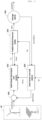
FIG. 1 is a block diagram of an SOEC-SOFC-HBR hybrid system according to a first embodiment of the present invention; -
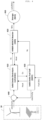
FIG. 2 is a block diagram of an SOEC-SOFC-HBR hybrid system according to a second embodiment of the present invention; -
FIG. 3 is a block diagram of an SOEC-SOFC-HBR hybrid system according to a third embodiment of the present invention; and -
FIG. 4 is a block diagram of an SOEC-SOFC-HBR hybrid system according to a fourth embodiment of the present invention. - Hereinafter, embodiments of the present invention will be described in detail with reference to the accompanying drawings. However, the present invention is not limited to a certain specific embodiment, and it should be understood that all transformations, equivalents, and substitutions including technical idea of the present invention are included in the scope of the present invention.
- In this specification, a singular representation includes a plural representation unless it represents a definitely different meaning from the context.
- When one element is referred to as "having", "comprising", or "including" another element in this specification, this means that other elements are not excluded but are further included, unless mentioned otherwise.
- As used herein, the term "... unit", "... module", or "component" refers to a unit that performs at least one function or operation and may be implemented in hardware, software, or a combination of hardware and software.
- When one element is referred to as being "connected to" another element in this specification, this may mean that the two elements are directly connected to each other; however, the present invention is not limited thereto, the two elements may be connected to each other via one or more other elements disposed therebetween.
-
FIG. 1 is a block diagram of an SOEC-SOFC-HBR hybrid system according to a first embodiment of the present invention. - The SOEC-SOFC-HBR hybrid system according to the first embodiment includes a solid
oxide electrolysis cell 110, a Haber-Boschreactor 120, a solidoxide fuel cell 130, and apower compensator 140. - In
FIG. 1 , arenewable power source 10 collectively refers to power generation means that generate power from natural forces such as wind, sunlight, river water, ocean current, and solar heat. The renewable power source is environmentally friendly because the renewable power source generates very little carbon in a process of generating power, but has the disadvantage that it is difficult to maintain homeostasis in power output because the supply of natural forces is not constant. - In order to compensate for the above disadvantage, the present embodiment uses a solid
oxide fuel cell 130 as an auxiliary means for stable supply of power. Specifically, when the power supplied by therenewable energy source 10 falls short of a predetermined threshold amount required by the hybrid system according to the present embodiment, the shortfall is supplemented by the power supplied by the solidoxide fuel cell 130 such that the solidoxide electrolysis cell 110 or the hybrid system according to the present embodiment including the same is always supplied with constant power. - Hereinafter, the elements constituting the SOEC-SOFC-HBR hybrid system according to the first embodiment will be described in detail.
- The solid oxide electrolysis cell (SOEC) 110, which is a ceramic cell that uses a solid oxide capable of transmitting oxygen ions as an electrolyte, electrolyzes water to produce hydrogen and oxygen. The solid
oxide electrolysis cell 110 receives energy for electrolysis from at least one of therenewable energy source 10 and the solidoxide fuel cell 130. - The solid
oxide electrolysis cell 110 may be implemented by a high-temperature electrolysis cell, which requires heat of 500°C to 1000°C, among electrolysis cells. - High temperature electrolysis used by the high-temperature electrolysis cell uses a phenomenon that the amount of electrical energy necessary for water electrolysis decreases with increasing temperature. High temperature electrolysis enables high-efficiency water electrolysis with less electrical energy, and the high-temperature electrolysis cell has the same structure and principle as the solid oxide fuel cell, whereby bidirectional operation using a single solid oxide fuel cell or a single solid oxide electrolysis cell is possible. In addition, since the solid electrolyte is used, resistance to corrosion is high, and electrolyte replenishment is not necessary, whereby easy maintenance is achieved. However, a lot of heat is necessary to heat vapor to 700°C or higher.
- Consequently, the solid
oxide electrolysis cell 110 according to the first embodiment basically receives heat required to turn water into steam from the Haber-Boschreactor 120, and receives supplemental heat from off-gas of the solidoxide fuel cell 130. Alternatively, the solidoxide electrolysis cell 110 according to the first embodiment may basically receive heat required to turn water into steam from off-gas of the solidoxide fuel cell 130, and may receive supplemental heat from the Haber-Boschreactor 120. - The Haber-Bosch reactor (HBR) 120 produces ammonia using hydrogen produced by the solid
oxide electrolysis cell 110 and nitrogen provided by the solidoxide fuel cell 130. - The Haber-
Bosch reactor 120 is an apparatus that produces ammonia using a Haber-Bosch process, which is chemical reaction that reacts nitrogen gas (N2) in the air with hydrogen gas (H2) derived from natural gas or other sources to synthesize ammonia (NH3). - For chemical reaction, a catalyst, such as iron or iron oxide, is required together with a small amount of another promoter, and chemical reaction occurs at high temperatures (>400°C) and high pressures (>200 Bar).
- Since the Haber-Bosch reaction is an exothermic reaction, at least some of high-temperature heat generated by the Haber-
Bosch reactor 120 may be collected by a heat exchanger (not shown), may be supplied to the solidoxide electrolysis cell 110, or may be utilized for other purposes. - The chemical formula of the Haber-Bosch process is as follows.
[Chemical Formula 1] N2(g) + 3H2(g) 2NH3(g)
- This process is an exothermic reaction which proceeds in a direction for ammonia synthesis while heat is discharged, whereby temperature is decreased.
- As shown in Chemical Formula 1, nitrogen is required for chemical reaction of the Haber-Bosch process. Conventionally, a separate air separation unit (ASU) is provided to supply nitrogen to the Haber-Bosch reactor. In the first embodiment, however, nitrogen contained in off-gas of the solid
oxide fuel cell 130 is supplied to the Haber-Bosch reactor 120, and therefore it is not necessary to provide a separate air separation unit in order to supply nitrogen, or only a minimum-capacity air separation unit is required to synthesize ammonia. Since the air separation unit is eliminated, it is possible to reduce facility construction cost and to reduce power used to operate the air separation unit. - Ammonia synthesized by the Haber-
Bosch reactor 120 is stored instorage 150. At least some of the stored ammonia is fed back to the solidoxide fuel cell 130 so as to be used as fuel, and the remainder of the stored ammonia is sold through distribution channels. - For reference, it is possible to liquefy and transport hydrogen itself without synthesizing hydrogen into ammonia. Since the liquefaction condition of hydrogen is -253°C under atmospheric pressure and the liquefaction condition of ammonia is -33°C, less energy is required to liquefy ammonia than hydrogen. Therefore, liquefying ammonia is more advantageous than liquefying hydrogen, and is advantageous in terms of efficient storage and transportation of a large amount of green energy.
- The solid oxide fuel cell (SOFC) 130, which is a fuel cell using an ionically conductive ceramic as an electrolyte, includes an oxygen ion conductive electrolyte and an air electrode (cathode) and a fuel electrode (anode) located at opposite sides thereof.
- When air and hydrogen are supplied to the air electrode and the fuel electrode, respectively, oxygen ions are generated by reduction reaction of oxygen at the air electrode, move to the fuel electrode through the electrolyte, and react with hydrogen supplied to the fuel electrode to generate water. At this time, electrons are generated at the fuel electrode and electrons are consumed at the air electrode. When the two electrodes are connected to each other, therefore, current flows therebetween, whereby electricity is produced.
- The solid
oxide fuel cell 130 may use pure hydrogen as fuel, may use hydrogen obtained by reforming hydrocarbon fuel such as liquefied natural gas (LNG), liquefied propane gas (LPG), or methane gas, as fuel, or may use ammonia as fuel. - In an embodiment using ammonia as fuel, the solid
oxide fuel cell 130 pyrolyzes the supplied ammonia to generate nitrogen and hydrogen. The generated hydrogen is used to produce electricity, and nitrogen contained in off-gas is supplied to the Haber-Bosch reactor 120. The solidoxide fuel cell 130 may receive some of ammonia generated by the Haber-Bosch reactor 120 as fuel, or may receive ammonia through a separate route other than the Haber-Bosch reactor 120. - In an embodiment using pure hydrogen or hydrogen produced by reforming as fuel, off-gas of the solid
oxide fuel cell 130 contains the entirety of nitrogen contained in outside air without being involved in chemical reaction in a stack, and nitrogen contained in the off-gas of the solidoxide fuel cell 130 is supplied to the Haber-Bosch reactor 120. - The solid
oxide fuel cell 130 supplies at least some of high-temperature heat contained in off-gas of the stack to the solidoxide electrolysis cell 110 via a heat exchanger (not shown). - The air electrode of the stack included in the solid
oxide fuel cell 130 may receive oxygen from outside air AIR, or may receive at least some of oxygen obtained through electrolysis of water in the solidoxide electrolysis cell 110. - In an embodiment, the air electrode of the solid
oxide fuel cell 130 preferentially receives oxygen from the solidoxide electrolysis cell 110, and may receive supplemental oxygen from outside air. Alternatively, in another embodiment, the air electrode of the solidoxide fuel cell 130 may preferentially receive oxygen from the outside air, and may receive supplemental oxygen from the solidoxide electrolysis cell 110. - Power generated by the solid
oxide fuel cell 130 may be supplied or sold externally, or may be utilized as local power for a green ammonia hybrid plant. - The
power compensator 140 adjusts the supply of power from therenewable energy source 10 or the solidoxide fuel cell 130 to facilitate electrolysis by the solidoxide electrolysis cell 110. In an embodiment, thepower compensator 140 controls the output of the solidoxide fuel cell 130 such that the supply of power to the solidoxide electrolysis cell 110 is constant in the state in which therenewable energy source 10 is preferentially used as a power source. - As a specific operation example, the
power compensator 140 senses the amount of power supplied from therenewable energy source 10 to the solidoxide electrolysis cell 110 and, if the amount of power supplied from therenewable energy source 10 falls short of the amount of power required by the solidoxide electrolysis cell 110, controls the solidoxide fuel cell 130 to make up the shortfall with electricity produced by the solidoxide fuel cell 130. In this sense, thepower compensator 140 may be considered a controller (not shown) of the solidoxide fuel cell 130. - Since the hybrid system according to the first embodiment can be stably operated due to complementary supply of power from the renewable energy source and the solid oxide fuel cell, therefore, a separate energy storage system (ESS) configured to compensate for intermittency of renewable energy is not required, or only a minimum-capacity energy storage system is required, whereby it is possible to drastically reduce system construction cost.
- A second embodiment relates to the case in which heat required for water evaporation in a solid oxide electrolysis cell is supplied only from a Haber-Bosch reactor, compared to the first embodiment.
-
FIG. 2 is a block diagram of an SOEC-SOFC-HBR hybrid system according to a second embodiment of the present invention. - The SOEC-SOFC-HBR hybrid system according to the second embodiment includes a solid
oxide electrolysis cell 210, a Haber-Bosch reactor 220, a solidoxide fuel cell 230, and apower compensator 240. - The solid
oxide electrolysis cell 210, the Haber-Bosch reactor 220, and thepower compensator 240 of the second embodiment are identical in technical configuration to the solidoxide electrolysis cell 110, the Haber-Bosch reactor 120, and thepower compensator 140 of the first embodiment, and therefore a duplicate description will be omitted. - The solid
oxide fuel cell 230 is identical in technical configuration to the solidoxide fuel cell 130 of the first embodiment except that the solidoxide fuel cell 230 does not supply heat generated in a stack thereof to the solidoxide electrolysis cell 210. - If heat supplied by the Haber-
Bosch reactor 220 is sufficient for steam generation in the solidoxide electrolysis cell 210, heat discharged from the solidoxide fuel cell 230 may be utilized for other purposes needed by the system. - A third embodiment relates to the case in which oxygen required by an air electrode of a solid oxide fuel cell is supplied only from outside air AIR, compared to the first embodiment.
-
FIG. 3 is a block diagram of an SOEC-SOFC-HBR hybrid system according to a third embodiment of the present invention. - The SOEC-SOFC-HBR hybrid system according to the third embodiment includes a solid
oxide electrolysis cell 310, a Haber-Bosch reactor 320, a solidoxide fuel cell 330, and apower compensator 340. - The Haber-
Bosch reactor 320 and thepower compensator 340 of the third embodiment are identical in technical configuration to the Haber-Bosch reactor 120 and thepower compensator 140 of the first embodiment, and therefore a duplicate description will be omitted. - The solid
oxide electrolysis cell 310 is identical in technical configuration to the solidoxide electrolysis cell 110 of the first embodiment except that the solidoxide electrolysis cell 310 does not supply oxygen produced by electrolysis to the solidoxide fuel cell 330. - In addition, the solid
oxide fuel cell 330 is identical in technical configuration to the solidoxide fuel cell 130 of the first embodiment except that the solidoxide fuel cell 330 receives oxygen required by an air electrode thereof only from outside air AIR. - The solid
oxide electrolysis cell 310 may supply the produced oxygen to a burner (not shown) of the system, may store the produced oxygen in an external storage tank, or may utilize the produced oxygen for other purposes. - A fourth embodiment relates to the case in which hydrogen is used as fuel of a solid oxide fuel cell and ammonia synthesized by a Haber-Bosch reactor is used for other purposes, such as full sale, compared to the first embodiment.
-
FIG. 4 is a block diagram of an SOEC-SOFC-HBR hybrid system according to a fourth embodiment of the present invention. - The SOEC-SOFC-HBR hybrid system according to the fourth embodiment includes a solid
oxide electrolysis cell 410, a Haber-Bosch reactor 420, a solidoxide fuel cell 430, and apower compensator 440. - The solid
oxide electrolysis cell 410, the Haber-Bosch reactor 420, and thepower compensator 440 of the fourth embodiment are identical in technical configuration to the solidoxide electrolysis cell 110, the Haber-Bosch reactor 120, and thepower compensator 140 of the first embodiment, and therefore a duplicate description will be omitted. - The solid
oxide fuel cell 430 uses hydrogen as fuel, wherein pure hydrogen may be used or hydrogen reformed from hydrocarbon may be used. The solidoxide fuel cell 430 is identical in other technical configuration to the solidoxide fuel cell 130 of the first embodiment - A modification for regulating the amount of ammonia produced by the hybrid system may be derived from each of the first to fourth embodiments described above.
- That is, in order to adjust the amount of ammonia synthesized by the Haber-
Bosch reactor oxide electrolysis cell oxide fuel cell - To this end, in an embodiment, the
power compensator oxide electrolysis cell oxide electrolysis cell - In another embodiment, the controller of the solid
oxide fuel cell oxide electrolysis cell - As is apparent from the above description, according to an embodiment of the present invention, it is possible to provide constant and stable power to a solid oxide electrolysis cell (SOEC) when renewable energy is used to operate a green ammonia production system based on the solid oxide electrolysis cell (SOEC) and a Haber-Bosch reactor (HBR).
- According to an embodiment of the invention, it is possible to generate and supply heat necessary to operate the solid oxide electrolysis cell (SOEC) in the green ammonia production system based on the solid oxide electrolysis cell (SOEC) and the Haber-Bosch reactor (HBR) in an environmentally friendly manner.
- According to an embodiment of the invention, it is possible to generate and supply nitrogen necessary for the Haber-Bosch reactor (HBR) in the green ammonia production system based on the solid oxide electrolysis cell (SOEC) and the Haber-Bosch reactor (HBR) in an environmentally friendly manner.
- According to an embodiment of the invention, it is possible to recycle oxygen generated during operation of the green ammonia production system based on the solid oxide electrolysis cell (SOEC) and the Haber-Bosch reactor (HBR) so as to be usable in the system.
- Although the present invention has been described with reference to the embodiments, it will be apparent to those skilled in the art that various modifications and variations can be made in the present invention without departing from the idea and category of the present invention defined by the appended claims.
Claims (5)
- An SOEC-SOFC-HBR hybrid system for green ammonia production, the SOEC-SOFC-HBR hybrid system comprising:a solid oxide fuel cell (SOFC);a power compensator configured to adjust uniform supply power using a renewable energy source and the solid oxide fuel cell;a solid oxide electrolysis cell (SOEC) configured to produce hydrogen using the supply power adjusted by the power compensator; anda Haber-Bosch reactor configured to produce ammonia using the hydrogen produced by the solid oxide electrolysis cell and nitrogen provided by the solid oxide fuel cell.
- The SOEC-SOFC-HBR hybrid system according to claim 1, wherein the solid oxide electrolysis cell turns supply water into steam using heat provided by at least one of the Haber-Bosch reactor and the solid oxide fuel cell.
- The SOEC-SOFC-HBR hybrid system according to claim 1, wherein at least some of oxygen input to an air electrode of the solid oxide fuel cell is supplied from the solid oxide electrolysis cell.
- The SOEC-SOFC-HBR hybrid system according to claim 1, whereinthe solid oxide fuel cell uses ammonia as fuel, andat least some of the ammonia produced by the Haber-Bosch reactor is reused as fuel of the solid oxide fuel cell.
- The SOEC-SOFC-HBR hybrid system according to claim 1, further comprising a controller configured to control an output of the solid oxide fuel cell in order to adjust the amount of ammonia produced by the Haber-Bosch reactor.
Applications Claiming Priority (2)
| Application Number | Priority Date | Filing Date | Title |
|---|---|---|---|
| KR20230063495 | 2023-05-17 | ||
| KR1020230154070A KR20240167574A (en) | 2023-05-17 | 2023-11-09 | Soec-sofc-hbr hybrid system for green ammonia production |
Publications (2)
| Publication Number | Publication Date |
|---|---|
| EP4464664A2 true EP4464664A2 (en) | 2024-11-20 |
| EP4464664A3 EP4464664A3 (en) | 2025-03-12 |
Family
ID=89620146
Family Applications (1)
| Application Number | Title | Priority Date | Filing Date |
|---|---|---|---|
| EP24152058.4A Pending EP4464664A3 (en) | 2023-05-17 | 2024-01-16 | Soec-sofc-hbr hybrid system for green ammonia production |
Country Status (1)
| Country | Link |
|---|---|
| EP (1) | EP4464664A3 (en) |
Citations (1)
| Publication number | Priority date | Publication date | Assignee | Title |
|---|---|---|---|---|
| KR102186440B1 (en) | 2018-12-24 | 2020-12-04 | 한국에너지기술연구원 | Electrochemical Ammonia Synthesis Method Using Recycling Process |
Family Cites Families (2)
| Publication number | Priority date | Publication date | Assignee | Title |
|---|---|---|---|---|
| CN208835760U (en) * | 2018-08-27 | 2019-05-07 | 赫普科技发展(北京)有限公司 | A kind of ammonia fuel cell power generation peak adjusting frequency modulation system |
| WO2024237405A1 (en) * | 2023-05-17 | 2024-11-21 | (주)에프씨아이 | Soec-sofc-hbr hybrid system for producing green ammonia |
-
2024
- 2024-01-16 EP EP24152058.4A patent/EP4464664A3/en active Pending
Patent Citations (1)
| Publication number | Priority date | Publication date | Assignee | Title |
|---|---|---|---|---|
| KR102186440B1 (en) | 2018-12-24 | 2020-12-04 | 한국에너지기술연구원 | Electrochemical Ammonia Synthesis Method Using Recycling Process |
Also Published As
| Publication number | Publication date |
|---|---|
| EP4464664A3 (en) | 2025-03-12 |
Similar Documents
| Publication | Publication Date | Title |
|---|---|---|
| US10680265B2 (en) | Energy storage using an REP with an engine | |
| KR102436677B1 (en) | Load-following power generation and power storage using REP and PEM technologies | |
| US11685865B2 (en) | System and method for production of hydrocarbons from carbon dioxide | |
| CA2937948A1 (en) | Reformer-electrolyzer-purifier (rep) assembly for hydrogen production, systems incorporation same and method of producing hydrogen | |
| Fuhrmann et al. | Energy storage based on electrochemical conversion of ammonia | |
| US20230193486A1 (en) | Systems and methods for generating synthesis gas for ammonia production | |
| US20210214849A1 (en) | Expander for soec applications | |
| US11619167B2 (en) | Energy storage for combustion turbine using molten carbonate electrolyzer cell | |
| JP5557255B2 (en) | Reactant manufacturing method and manufacturing system using exhaust heat and renewable energy | |
| Hansen et al. | Production of sustainable fuels by means of solid oxide electrolysis | |
| KR20240167574A (en) | Soec-sofc-hbr hybrid system for green ammonia production | |
| JP2025523324A (en) | SOEC-SOFC-HBR Hybrid System for Green Ammonia Production | |
| EP4464664A2 (en) | Soec-sofc-hbr hybrid system for green ammonia production | |
| KR101454290B1 (en) | Complex power generating system connected to the LNG Receiving terminal | |
| JP2025541916A (en) | System and method for balancing power systems that convert ammonia to electrical power | |
| CN217334159U (en) | Zero-carbon-emission high-temperature reversible fuel cell energy supply/storage system for LNG receiving station | |
| CN114583223A (en) | Zero-carbon-emission high-temperature reversible fuel cell energy supply/storage system for LNG receiving station | |
| US20240072339A1 (en) | Renewable energy integration with natural-gas based combined hydrogen and electricity production (chep) system and method | |
| EP4489152B1 (en) | Reversible solid oxide cell system | |
| EP4623472A1 (en) | Formic acid energy storage system and relative method | |
| JP7256074B2 (en) | Power supply and demand adjustment system | |
| KR101643103B1 (en) | Ship | |
| WO2026047273A1 (en) | Solid oxide steam electrolysis system and method | |
| KR20260019465A (en) | Fuel cell system and method for controllably separating hydrogen gas from anode exhaust gas and use thereof |
Legal Events
| Date | Code | Title | Description |
|---|---|---|---|
| PUAI | Public reference made under article 153(3) epc to a published international application that has entered the european phase |
Free format text: ORIGINAL CODE: 0009012 |
|
| STAA | Information on the status of an ep patent application or granted ep patent |
Free format text: STATUS: REQUEST FOR EXAMINATION WAS MADE |
|
| 17P | Request for examination filed |
Effective date: 20240418 |
|
| AK | Designated contracting states |
Kind code of ref document: A2 Designated state(s): AL AT BE BG CH CY CZ DE DK EE ES FI FR GB GR HR HU IE IS IT LI LT LU LV MC ME MK MT NL NO PL PT RO RS SE SI SK SM TR |
|
| PUAL | Search report despatched |
Free format text: ORIGINAL CODE: 0009013 |
|
| AK | Designated contracting states |
Kind code of ref document: A3 Designated state(s): AL AT BE BG CH CY CZ DE DK EE ES FI FR GB GR HR HU IE IS IT LI LT LU LV MC ME MK MT NL NO PL PT RO RS SE SI SK SM TR |
|
| RIC1 | Information provided on ipc code assigned before grant |
Ipc: H01M 8/18 20060101ALN20250206BHEP Ipc: H01M 8/12 20160101ALN20250206BHEP Ipc: H01M 8/0656 20160101ALN20250206BHEP Ipc: H01M 8/22 20060101ALI20250206BHEP Ipc: H01M 8/0606 20160101ALI20250206BHEP Ipc: C25B 1/00 20210101ALI20250206BHEP Ipc: C01C 1/04 20060101AFI20250206BHEP |