EP4462722A1 - A linearly homomorphic signature method and system for zero-knowledge proofs of subset membership - Google Patents
A linearly homomorphic signature method and system for zero-knowledge proofs of subset membership Download PDFInfo
- Publication number
- EP4462722A1 EP4462722A1 EP23315299.0A EP23315299A EP4462722A1 EP 4462722 A1 EP4462722 A1 EP 4462722A1 EP 23315299 A EP23315299 A EP 23315299A EP 4462722 A1 EP4462722 A1 EP 4462722A1
- Authority
- EP
- European Patent Office
- Prior art keywords
- tag
- proof
- module
- signature
- under
- Prior art date
- Legal status (The legal status is an assumption and is not a legal conclusion. Google has not performed a legal analysis and makes no representation as to the accuracy of the status listed.)
- Granted
Links
Images


Classifications
-
- H—ELECTRICITY
- H04—ELECTRIC COMMUNICATION TECHNIQUE
- H04L—TRANSMISSION OF DIGITAL INFORMATION, e.g. TELEGRAPHIC COMMUNICATION
- H04L9/00—Cryptographic mechanisms or cryptographic arrangements for secret or secure communications; Network security protocols
- H04L9/008—Cryptographic mechanisms or cryptographic arrangements for secret or secure communications; Network security protocols involving homomorphic encryption
-
- H—ELECTRICITY
- H04—ELECTRIC COMMUNICATION TECHNIQUE
- H04L—TRANSMISSION OF DIGITAL INFORMATION, e.g. TELEGRAPHIC COMMUNICATION
- H04L9/00—Cryptographic mechanisms or cryptographic arrangements for secret or secure communications; Network security protocols
- H04L9/08—Key distribution or management, e.g. generation, sharing or updating, of cryptographic keys or passwords
- H04L9/0816—Key establishment, i.e. cryptographic processes or cryptographic protocols whereby a shared secret becomes available to two or more parties, for subsequent use
- H04L9/085—Secret sharing or secret splitting, e.g. threshold schemes
-
- H—ELECTRICITY
- H04—ELECTRIC COMMUNICATION TECHNIQUE
- H04L—TRANSMISSION OF DIGITAL INFORMATION, e.g. TELEGRAPHIC COMMUNICATION
- H04L9/00—Cryptographic mechanisms or cryptographic arrangements for secret or secure communications; Network security protocols
- H04L9/32—Cryptographic mechanisms or cryptographic arrangements for secret or secure communications; Network security protocols including means for verifying the identity or authority of a user of the system or for message authentication, e.g. authorization, entity authentication, data integrity or data verification, non-repudiation, key authentication or verification of credentials
- H04L9/3218—Cryptographic mechanisms or cryptographic arrangements for secret or secure communications; Network security protocols including means for verifying the identity or authority of a user of the system or for message authentication, e.g. authorization, entity authentication, data integrity or data verification, non-repudiation, key authentication or verification of credentials using proof of knowledge, e.g. Fiat-Shamir, GQ, Schnorr, ornon-interactive zero-knowledge proofs
-
- H—ELECTRICITY
- H04—ELECTRIC COMMUNICATION TECHNIQUE
- H04L—TRANSMISSION OF DIGITAL INFORMATION, e.g. TELEGRAPHIC COMMUNICATION
- H04L9/00—Cryptographic mechanisms or cryptographic arrangements for secret or secure communications; Network security protocols
- H04L9/32—Cryptographic mechanisms or cryptographic arrangements for secret or secure communications; Network security protocols including means for verifying the identity or authority of a user of the system or for message authentication, e.g. authorization, entity authentication, data integrity or data verification, non-repudiation, key authentication or verification of credentials
- H04L9/3247—Cryptographic mechanisms or cryptographic arrangements for secret or secure communications; Network security protocols including means for verifying the identity or authority of a user of the system or for message authentication, e.g. authorization, entity authentication, data integrity or data verification, non-repudiation, key authentication or verification of credentials involving digital signatures
-
- H—ELECTRICITY
- H04—ELECTRIC COMMUNICATION TECHNIQUE
- H04L—TRANSMISSION OF DIGITAL INFORMATION, e.g. TELEGRAPHIC COMMUNICATION
- H04L2209/00—Additional information or applications relating to cryptographic mechanisms or cryptographic arrangements for secret or secure communication H04L9/00
- H04L2209/46—Secure multiparty computation, e.g. millionaire problem
- H04L2209/463—Electronic voting
Definitions
- the present invention relates to the technical field of cryptography.
- the invention relates to the technical field of cryptography applied in various areas such as in electronic voting system, for example in an internet of things environment.
- the present invention uses advantageously linearly homomorphic signatures to design short and efficient homomorphic proofs of subset membership on ElGamal ciphertexts. But contrarily to the prior art, that were using signatures on randomizable ciphertexts just for allowing randomization on the server-side, and thus for achieving receipt-freeness for a mixnet-based system that can check the validity of the ballots in the clear, the present invention additionally uses signatures on randomizable ciphertexts on the client-side, from multiple signatures generated at the setup phase, by the electoral board, i.e. the authority device AUT, to derive efficient proofs of valid ballots, in their encrypted form.
- One proof of subset membership has a constant size and takes a constant time for generation, whatever the size of the subset.
- the present invention avoids the need of a trusted third party, in the case where the signing-verification keys and the signatures can be efficiently generated in a distributed way, for example.
- the present invention uses tag-based signatures, where the tags target the vector sub-spaces, but still being randomizable and unlinkable, as in, to keep privacy of the ciphertexts. Signatures for proofs can only be generated for valid ballots, without revealing any information about the votes. Therefore, the present invention uses full-fledge linearly homomorphic signatures with tags, to have multiple vector sub-spaces, that cannot be combined and additional properties to make signatures unlinkable, whichever is the vector sub-space.
- the present invention allows to prove that some specific properties are satisfied by the text in the clear, without revealing any additional information.
- the present invention allows a higher level of privacy.
- the present invention is particularly well designed to be applied in a situation wherein the voters are maybe not all honest. Indeed, voters might deviate from the honest behaviour, for multiple reasons. Some might even be ready to change their votes for money or to break privacy. Then, the present invention allows more advanced protections to really achieve a high privacy level.
- the present invention protects the voting system against a coalition of voters that really wants to know the vote of a determined person. Even if they try to duplicate her encrypted ballot and cast it in their names, the present invention blocks them to get the vote of said determined person.
- a CS-attack see for example the following publication "Véronique Cortier and Ben Smyth. Attacking and Fixing Helios: An analysis of Ballot Secrecy. CSF 2011: 297-311."
- the present invention can use some non-malleability features, as discussed hereafter.
- Vote-selling is another major threat, when some voters may have strong incentive, with a reward or external pressures, to vote for someone when being able to prove it.
- any technique that encrypts the ballot on the client-side, without any modification before storing it in the public ballot-box, is subject to vote-selling attacks, see for example the following publication " J. C. Benaloh and D. Tuinstra. Receipt-Free Secret-Ballot Elections. STOC 1994 .”, and even at high scale: the client-side code can always be patched in order to reveal the randomness used during encryption, as a receipt to convince anybody of the content of the vote.
- the present invention allows to avoid vote-selling, also called a VS-attack. For example, by randomizing encrypted ballots before storage, the present invention prevents such an attack.
- the voter can use a one-time linearly homomorphic signature to trace and check his vote after randomization, and append a single Groth-Sahai Diffie-Hellman proof to avoid CS-attack as discussed further in the description. This provides strong receipt-freeness.
- the present invention relates also to a computer program product which, when executed on at least one processor unit, executes the method according to the present invention.
- the present invention relates also to a non-volatile memory comprising at least one computer program product according to the present invention.
- the present invention relates also to a voting system configured to execute the method according to the present invention, said system comprising at least:
- the present invention relates also to a use of the voting system according to the present invention.
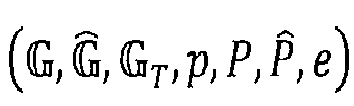
- four random points V ⁇ 1,1 , V ⁇ 1,2 , V ⁇ 2,1 , V ⁇ 2,2 ⁇ $ G ⁇ are generated and appended to the public parameters, preferably for the Groth-Sahai proofs, advantageously in a bilinear setting ( G , G ⁇ , G T , p , P , P ⁇ , e ) .
- the sending step from the sender device SEND to the receiver device REC comprises the sending of the value W and of the proof ⁇ .
- the verification step comprises the verification of the validity of the signature ⁇ such as ⁇ is a valid signature on ( , C' 0 , C ') under vk;
- the verification step comprises the verification of the validity of the signatures ⁇ 0 on ( , C 0 , C ) under vk and ⁇ 1 on (0, D 0 , D ) under vk;
- the verification step comprises the verification of the validity of the Diffie-Hellman proof ⁇ on the tuple
- the storing step comprises the storing of ( W', ⁇ ').
- the sending step from the sender device SEND to the receiver device REC comprises the sending of the proof comprising (Tag' 0 , Tag' 1 , ⁇ ' 0 , ⁇ ' 1 ), and ( W , W ', ⁇ , ⁇ ')
- the verification step comprises verifying that:
- the storing step comprises the storing of ( W ", ⁇ ").
- ⁇ ′ 2 1 / t ′ ⁇ ⁇ 2
- the storing step by the receiver in a storing module STM comprises the storing of ( W ', ⁇ ').
- one among the authority device AUT, the sender device SEND and the receiver device REC is taken among: a robot, a smartphone, an Internet of Thing device, an artificial intelligence.
- any functional block labeled as a "processor” or “module” may be provided through the use of dedicated hardware as well as hardware capable of executing software in association with appropriate software.
- the functions may be provided by a single dedicated processor, by a single shared processor, or by a plurality of individual processors, some of which may be shared.
- the processor may be a general-purpose processor, such as a central processing unit (CPU), for example.
- processor should not be construed to refer exclusively to hardware capable of executing software, and may implicitly include, without limitation, application specific integrated circuit (ASIC), field programmable gate array (FPGA), read-only memory (ROM) for storing software, random access memory (RAM), and non-volatile storage. Other hardware, conventional and/or custom, may also be included.
- ASIC application specific integrated circuit
- FPGA field programmable gate array
- ROM read-only memory
- RAM random access memory
- non-volatile storage Other hardware, conventional and/or custom, may also be included.
- modules may be represented herein as any combination of flowchart elements or other elements indicating performance of process steps and/or textual description. Such modules may be executed by hardware that is expressly or implicitly shown. Moreover, it should be understood that module may include for example, but without being limitative, computer program logic, computer program instructions, software, stack, firmware, hardware circuitry or a combination thereof which provides the required capabilities.
- the present invention relates preferably to a new technique to prove that a ciphertext, preferably an ElGamal ciphertext, contains a message from at least one specific subset , advantageously using linearly homomorphic signatures and tags.
- a ciphertext preferably an ElGamal ciphertext
- contains a message from at least one specific subset advantageously using linearly homomorphic signatures and tags.
- the proofs provided by the present invention are both quite efficient to generate, allowing the use of low-power devices to vote, and randomizable, which can be important for the strong receipt-freeness property.
- the present invention is well-suited to prevent vote-selling and replay attacks, which are the main threats against the privacy in electronic voting.
- GGM Generic Group Model
- AGM Algebraic Group Model
- EIGamal encryption scheme see for example the following publication " Taher El Gamal. A Public Key Cryptosystem and a Signature Scheme Based on Discrete Logarithms.
- the subset can be ⁇ 0,1 ⁇ c Z p 1 , to enforce bit values.
- the subset can then be a larger range 0 , ... , k ⁇ Z p 1 .
- the subset can be any list of specific vectors x ⁇ 1 , ... , x ⁇ N ⁇ Z p n that specifies the admissible votes of length n.
- Multiple matrices A and multiple subsets can be used simultaneously on the same EIGamal ciphertext ( C 0 , C ) for more complex proofs, with multiple proofs of subset membership and
- the first components and 0, later checked with respect to for ⁇ 0 implies the coefficient 1 on ( , 0, M j ) in the combination.
- the signatures ( ⁇ 0 , ⁇ 1 ) are valid under ⁇ j only, which reveals j.
- the present invention can use, according to an embodiment, the FHS signature (see for example the following publication " Georg Fuchsbauer, Christian Hanser, Daniel Slamanig. Structure-Preserving Signatures on Equivalence Classes and Constant-Size Anonymous Credentials. J. Cryptol.
- the present invention uses Linearly homomorphic Signatures with Randomizable Tags (LH-Sign-RTag) for zero-knowledge proofs of subset membership on EIGamal ciphertexts.
- LH-Sign-RTag Linearly homomorphic Signatures with Randomizable Tags
- OOT-LH-Sign One-Time Linearly homomorphic Signature
- additional, but optional, steps to make them non-malleable and traceable by the prover are possible and will be described hereafter.
- combinations of such proofs can be used for any kind of election, to prove the validity of at least one ballot, preferably with randomizability to provide receipt-freeness, i.e. to exclude VS-attacks, and/or non-malleability to provide the strong receipt-freeness, i.e. to exclude CS-attacks.
- the present invention relates to a method 100.
- Said method 100 involves at least preferably:
- the present invention considers at least one set of the N authorized plaintexts, and denote an element that characterizes the proof on (in case of multiple concurrent proofs, on the same ciphertext). It can be where is a full-domain hash function into .
- Advantageously, is configured to characterize at least one proof on the subset as described hereafter.
- the present invention relates to a linearly homomorphic signature method for zero-knowledge proofs of subset membership on at least one ElGamal ciphertext regarding at least one subset of N authorized plaintexts.
- said plaintexts are authorized by at least said authority device AUT 10.
- Said cyphertext is advantageously generated from a plaintext taken among said subset .
- Said method is configured to be executable by at least one computing system.
- said computing system is communicatively connected to at least one communication network.
- said method 100 uses randomizable tags.
- said method 100 comprising at least:
- the authority device AUT 10 in the initialization step 101, the authority device AUT 10 generates at least:
- the ciphertext, preferably with proof of subset membership, creation step 102 is executed by said sender device SEND 20.
- Said sender device SEND 20 is configured to:
- the sender device SEND 20 then outputs the ciphertext ( C 0 , C ), together with the proof that consists of (Tag', ⁇ ' 0 , ⁇ ' 1 ), and optionally the signatures (vk, ⁇ 0 , ⁇ 1 ) and ( W , ⁇ ).
- the receiver device REC 30 is configured to:
- the receiver device REC 30 is also configured to randomize the ElGamal ciphertext ( C 0 , C ) using a random scalar s ⁇ $ Z p :
- C ′ 0 C 0 + s ⁇ P
- C ⁇ ′ C ⁇ + s ⁇ Z ⁇
- ⁇ ' is a valid signature of ( , C' 0 , C ' ) under VK for the tag Tag'
- ⁇ is a valid signature of ( , C' 0 , C ' ) under vk. Thanks to the property of LH-Sign-RTag, with randomizable tags, Tag' can be randomized into Tag" and ⁇ ' can be computed, i.e. adapted, into ⁇ " : ⁇ " is a valid signature of ( , C' 0 , C ' ) under VK for the tag Tag".
- the receiver device REC 30 is configured to store the ciphertext ( C' 0 , C ' ), together with the proof that consists of (Tag", ⁇ " ), the signature (vk, ⁇ ), and ( W' , ⁇ ' ), which can be publicly verified:
- four random points V ⁇ 1,1 , V ⁇ 1,2 , V ⁇ 2,1 , V ⁇ 2,2 ⁇ $ G ⁇ are generated and appended to the public parameters, preferably for the Groth-Sahai proofs.
- the generation step 104 comprises generating a Groth-Sahai proof ⁇ of Diffie-Hellman tuple for ( P, C 0 , H, W ).
- the sending step 105 from the sender device SEND 20 to the receiver device REC 30 comprises the sending of the value W and of the proof ⁇ .
- the verification step 106 comprises the verification of the validity of the signature ⁇ such as ⁇ is a valid signature on ( , C' 0 , C ' ) under vk allowing the sender device SEND 20 to know that ( C' 0 , C ' ) contains the same plaintext as its initial ciphertext ( C 0 , C ), but without knowing the actual randomness, which excludes VS-attacks.
- the verification step 106 comprises the verification of the validity of the signatures ⁇ 0 on ( , C 0 , C ) under vk and ⁇ 1 on (0, P, Z ) under vk.
- the verification step 106 comprises the verification of the validity of the Diffie-Hellman proof ⁇ on the tuple
- the storing step 111 comprises the storing of ( W', ⁇ ' ).
- the present invention can use FHS LH-Sign-RTag (for Fuchsbauer-Hanser-Slamanig, see for example the following publication " Georg Fuchsbauer, Christian Hanser, Daniel Slamanig. Structure-Preserving Signatures on Equivalence Classes and Constant-Size Anonymous Credentials. J. Cryptol. 32(2): 498-546 .”).
- e ( P , ⁇ 2 ) e ( ⁇ 1 , P ⁇ ) wherein e ( Q, Q ⁇ ) is a pairing function between two elements of the two groups and G ⁇ .
- tags are self-verifiable tags, according to said embodiment, this approach is quite efficient, from both the computation and communication points of view.
- the initialization step 101 is not distributed among multiple users or authorities.
- the verifiable tags and/or the initial signatures are generated on at least one secure device, i.e. one authority device AUT 10.
- the authority device AUT 10 is configured to generate:
- the ciphertext, preferably with proof of subset membership, creation step 102 is executed by said sender device SEND 20.
- Said sender device SEND 20 is configured to generate at least:
- the sender device SEND 20 then outputs the ciphertext ( C 0 , C ), together with the proof that consists of (Tag', ⁇ ' 0 , ⁇ ' 1 ), the signatures (vk, ⁇ 0 , ⁇ 1 ), and ( W, ⁇ ).
- the receiver device REC 30 is configured to:
- ⁇ ′ 2 1 / t ′ ⁇ ⁇ 2
- the storing step 111 by the receiver device REC 30 in a storing module STM 35 comprises the storing of ( W' , ⁇ ' ).
- SDH embodiment a third embodiment will be described, called SDH embodiment. Some properties regarding said embodiment will be presented before the features of said embodiment.
- the set S can be written of non-trivial SDH tuples (where G ⁇ denotes the generators of ). Said set can be partitioned into for all x ⁇ Z p , which can be seen as classes of equivalences.
- any One-Time Linearly homomorphic signature (OT-LH-Sign) can be transformed into a Linearly homomorphic Signature.
- the unlinkability of the SDH tags make them randomizable tags (LH-Sign-RTag).
- the correctness can easily be verified, and parallelizing some steps, to generate the public parameters, also called the global parameters, param, several tags, and signatures on pre-determined messages, a three-round protocol is enough, with public communications, in the honest-but-curious setting.
- No additional proofs are required in the malicious setting, as each step is already verifiable: ( ⁇ k , ⁇ k ) is a DH proof on ( P, U k , U, V k ) for the commitment com k , and ⁇ k is a valid signature of ( ⁇ , M ) under vk k .
- Additional extractable commitments on every sent value allows perfect simulation even against adaptive adversaries: from the committed values, the simulator can generate all its contributions so that the final outcome corresponds to any pre-defined values.
- This can be done with a Groth-Sahai proof of Diffie-Hellman tuple for ( ⁇ 1 , ⁇ 2 , ⁇ 2 , ⁇ 3 ), with at least one commitment com and a proof proof.
- this third embodiment could be less efficient than other embodiments, while still constant time for the generation of the proofs of subset membership (independently of the size of the subset).
- the initialization can efficiently be distributed among multiple users, which avoids a unique trusted party.
- the authority device AUT 10 can comprise several sub-authority modules distributed between independent parties U k k .
- the authority device AUT 10 is configured to generate, in a bilinear setting ( G , G ⁇ , G T , p , P , P ⁇ , e ):
- the sender device SEND 20 is configured to generate at least one:
- the sender device SEND 20 then outputs, i.e. send to the receiver device REC 30, the ciphertext ( C 0 , C ), the randomizer ( D 0 , D ), together with the proof that consists of (Tag' 0 ,Tag' 1 , ⁇ ' 0 , ⁇ ' 1 ), the signatures (vk, ⁇ 0 , ⁇ 1 ), and ( W, W', ⁇ , ⁇ ') .
- the receiver device REC 30 is configured to:
- the receiver device REC 30 then stores the ciphertext ( C ' 0 , C '), together with the proof that consists of (Tag ", ⁇ ” ), the signature (vk, ⁇ ), and ( W", ⁇ ” ), which can be publicly verified.
- P D r' . Z with a random scalar r ′ ⁇ $ Z p
- the sending step 111 from the sender device SEND 20 to the receiver device REC 30 comprises the sending of the proof comprising (Tag' 0 ,Tag' 1 , ⁇ ' 0 , ⁇ ' 1 ), and ( W, W', ⁇ , ⁇ ' )
- the verification step 106 comprises verifying that:
- the storing step 111 comprises the storing of ( W" , ⁇ " ).
- the present invention relates also to a homomorphic voting system allowing efficiency and security.
- the public information i.e. public parameters
- the public information i.e. public parameters
- the public information i.e. public parameters
- the public information i.e. public parameters
- the public information i.e. public parameters
- the public information i.e. public parameters
- the public information i.e. public parameters
- the public information i.e. public parameters
- the public information i.e. public parameters
- the public information i.e. public parameters
- the public information i.e. public parameters
- the public information i.e. public parameters
- the public information i.e. public parameters
- the public information i.e. public parameters
- the public parameters generated at the initialization step 101, i.e. at the setup time, in a possibly distributed way, consists of VK ⁇ G ⁇ n + 4 , ⁇ i , 0 ⁇ i , 1 i ⁇ G 2 N , with the tags, but without the constant generator P , ⁇ i ,
- the sender device SEND 20 from the setup data, the sender device SEND 20 generates and sends the twin-ciphertexts , the twin-validity-proofs ⁇ 0 , ⁇ 1 , ⁇ ⁇ ′ 0 , proof ′ 0 , ⁇ ⁇ ′ 1 , proof ′ 1 , com ′ ⁇ G 10 ⁇ G ⁇ 2 , the twin-signatures vk ⁇ 0 ⁇ 1 ⁇ G ⁇ n + 2 ⁇ G 2 , and the twin-user-proofs W 0 W 1 proof 0 proof 1 com 0 com 1 ⁇ G 6 ⁇ G ⁇ 4 , using above notations.
- n + 20 elements from and n + 8 elements from G ⁇ in the twin-ballot that can be randomized, whatever N is.
- the ballot-box i.e. the receiver device REC 30, stores the randomized ciphertext the validity proof ⁇ " , ⁇ ⁇ " , proof “ ,com “ ⁇ G 5 ⁇ G ⁇ 2 , the user-signature (vk, ⁇ ) ⁇ G ⁇ n + 2 ⁇ G , and the user-proof W " , proof ,com ⁇ G 3 ⁇ G ⁇ 2 .
- EIGamal security unlinkable to M j under the DDH assumption
- ⁇ j and proof j under both the DDH and
- the voter needs the additional guarantee of no modification of his initial choice M j in ( C 0 , C ) after randomization in ( C 0 ', C ' ), by the receiver device REC 30: the voter, i.e. the sender device SEND 20, who has kept can ask for his vote, and check the validity of ⁇ ' with respect to ( H S , C ' 0 , C ') under vk.
- the voter i.e. the sender device SEND 20
- M k M j
- vk ephemeral and used only once. This individual verifiability convinces all the voters of the integrity of the ballot-box, with the presence of their votes.
- the present invention relates to an electronic voting system.
- Said electronic voting system comprise at least an authority device AUT 10, a sender device SEND 20 and a receiver device REC 30.
- Said authority device AUT 10 comprises at least one initialization module IM 11.
- Said initialization module IM 11 is configured to execute said initialization step.
- Said sender device SEND 20 comprises at least:
- Said receiver device REC 30 comprises at least:
- the authority device AUT 10 can be an electronic device comprising a user interface. Said user interface being configured to allow a user to control the authority device AUT 10.
- the authority device AUT 10 can be a robot, preferably said robot being part of an Internet of Things environment and advantageously being configured to cooperate with other robots or computers.
- the authority device AUT 10 can be an artificial intelligence configured to cooperate with robots and/or computers and/or other artificial intelligences.
- the authority device AUT 10 can comprise at least one processor, and preferably at least one non-volatile memory. Said processor is advantageously configured to execute the steps executed by the authority device AUT 10.
- the sender device SEND 20 can be an electronic device comprising a user interface. Said user interface being configured to allow a user to vote.
- the sender device SEND 20 can be a robot, preferably said robot being part of an Internet of Things environment and advantageously being configured to cooperate with other robots or computers.
- the sender device SEND 20 can be an artificial intelligence configured to cooperate with robots and/or computers and/or other artificial intelligences.
- the sender device SEND 20 can comprise at least one processor, and preferably at least one non-volatile memory.
- Said processor is advantageously configured to execute the steps executed by the sender device SEND 20.
- the receiver device REC 30 can be an electronic device comprising a user interface. Said user interface being configured to allow a user to evaluate the result of a voting session, for example.
- the receiver device REC 30 can be a robot, preferably said robot being part of an Internet of Things environment and advantageously being configured to cooperate with other robots or computers.
- the receiver device REC 30 can be an artificial intelligence configured to cooperate with robots and/or computers and/or other artificial intelligences.
- the receiver device REC 30 can comprise at least one processor, and preferably at least one non-volatile memory. Said processor is advantageously configured to execute the steps executed by the receiver device REC 30.
- the present invention can be used in a electronic environment, for example in a non-secured electronic environment, wherein a vote can be needed regarding at least one action to be taken.
- the present invention can be used to allow artificial intelligences to vote regarding a decision to be taken.
- the system according to the present invention can comprise a plurality of sender devices SEND 20a to 20g, such as a plurality of artificial intelligences, and regarding a decision to be taken, a vote can be organized. Each artificial intelligence 20a to 20g will therefore produce a vote using the present invention.
- one module can comprise several modules, one module can be formed of several modules.
- the present invention can be configured to cooperate with at least one input module including one or more user interface devices such as a keyboard, pointer, number pad, or touch screen.
- at least one input module including one or more user interface devices such as a keyboard, pointer, number pad, or touch screen.
- a processor may be any logic processing unit, such as one or more digital processors, microprocessors, central processing units, graphics processing units, application-specific integrated circuits, programmable gate arrays, programmed logic units, digital signal processors, network processors, and the like.
- a storage device or module is at least one non-transitory or tangible storage device or module.
- a storage module can, for example, include one or more volatile storage devices, for instance random access memory, and one or more non-volatile storage devices, for instance read only memory, flash memory, magnetic hard disk, optical disk, solid state disk, and the like.
- a storage module can include or store processor-executable instructions and/or processor-readable data associated with the operation of the present invention and/or with the execution of the method of the present invention. Execution of processor-executable instructions and/or data causes the at least one processor, and/or control modules or units, to carry out various processes and actions.
Landscapes
- Engineering & Computer Science (AREA)
- Computer Security & Cryptography (AREA)
- Computer Networks & Wireless Communication (AREA)
- Signal Processing (AREA)
- Arrangements For Transmission Of Measured Signals (AREA)
- Storage Device Security (AREA)
- Management, Administration, Business Operations System, And Electronic Commerce (AREA)
Abstract
Description
- The present invention relates to the technical field of cryptography. Particularly, the invention relates to the technical field of cryptography applied in various areas such as in electronic voting system, for example in an internet of things environment.
- With the all-digital society, and more recently with the pandemic and multiple lock-down periods, democracy is moving towards remote electronic voting, a.k.a. internet voting. Several solutions have been developed. They all encrypt the ballot on the voter-side to guarantee the voter's privacy.
- Thereafter, several approaches exist for counting the tally, according to the complexity of the election. For example, one applies a mixing-network, which permutes and randomizes the encrypted ballots, before decryption of all the individual ballots to perform the counting in the clear, as one does with paper-based voting systems when one opens the envelops after having mixed them to remove any link with the voters.
- It seems therefore that electronic voting is one of the most interesting applications of modern cryptography, as it involves many innovative tools to guarantee several a priori contradictory security properties: the integrity of the tally and the privacy of the individual votes. While many efficient solutions exist for honest-but-curious voters, that follow the official procedure but try to learn more than just the public result, preventing attacks from malicious voters is much more complex: when voters may have incentive to send biased ballots, the privacy of the ballots is much harder to satisfy, whereas this is the crucial security property for electronic voting. The present invention solves at least some of these technical issues.
- According to one aspect, the present invention relates to a linearly homomorphic signature method for zero-knowledge proofs of subset membership on at least one ciphertext, preferably at least one ElGamal ciphertext in a groupwith a generator P of prime order p, regarding at least one subset


- o An initialization step, preferably executed by said authority device AUT using at least one initialization module IM, said initialization step comprising at least a generation step of at least:
-
- one pair of ElGamal encryption keys (DK, EK) for plaintexts comprised by a group


z is the above private vector of scalars that defines the decryption key DK, and P is said generator of the groupof prime order p;
- one pair of linearly homomorphic signature keys (SK, VK) for messages in

- N verifiable tags Tag j , for j = 1, ..., N;
- N pairs of signatures (Σ j,0,Σ j,1), for j = 1, ...,N, on
M j =x j · P such as:

 , preferably,
 is a full-domain hash function into
 ;
;
- one pair of ElGamal encryption keys (DK, EK) for plaintexts comprised by a group
-
- Said initialization step generating a set of public parameters comprising:

- o A ciphertext creation step with at least one proof of subset membership, preferably executed by at least one sender device SEND using at least one encryption module EM, said ciphertext creation step comprising the generation of at least one ElGamal ciphertext (C 0,
C ) for at least one authorized plaintext


- o A proof creation step, preferably executed by at least said sender device SEND using at least a first proof module PM1, from Tag j and Σ j,0,Σ j,1, for the above fixed j, comprising:
- a first randomization step, preferably executed by said sender device SEND using at least a first randomization module RM1, said first randomization step comprising a randomization of at least one Tag j into Tag', for said given j;
- a first computation step, preferably executed by said sender device SEND using at least a first computational module CM1, of Σ'0 and Σ'1, wherein: Σ'0 is a valid signature of ( , C 0,

C ) under VK for the tag Tag' and Σ'1 is a valid signature of a randomizer (0, D 0,D ), under VK for the tag Tag';
- o A generation step, preferably executed by said sender device SEND using at least a generation module GM, comprising at least:
- generating a pair of linearly homomorphic signing-verification keys (sk,vk) for messages in

- generating signatures σ 0 and σ 1 wherein:


- generating a pair of linearly homomorphic signing-verification keys (sk,vk) for messages in
- o A sending step, preferably executed by said sender device SEND using at least a sending module SM, from the sender device SEND to at least one receiver device REC of the ciphertexts (C 0,
C ) and (D 0,D ), together with the proofcomprising (Tag',Σ'0,Σ'1) and with the signatures (vk, σ 0, σ 1) ;
- o A verification step, preferably executed by said receiver device REC using at least one verification module VM, said verification step comprising at least the verification of at least:
- the validity of Tag';
- the validity of the signature Σ'0 on ( , C 0,

C ) under VK for the tag Tag', and the validity of the signature Σ'1 on (0, D 0,D ), under VK for the tag Tag'; - the validity of the signatures σ 0 on (, C 0,

C ) under vk and σ 1 on (0, D 0,D ) under vk;
- o A second randomization step, preferably executed by said receiver device REC using at least a second randomization module RM2, of said EIGamal ciphertext (C 0,
C ) to generate the ciphertext (C'0,C ') using a random scalar
D ) such as:

- o A second computation step, preferably executed by said receiver device REC using at least a second computational module CM2, of a signature Σ :
 , C' 0,
C ') under VK for the tag Tag'; - o A third computation step, preferably executed by said receiver device REC using at least said computational module CM2, of a signature σ :
 , C' 0,
C ') under vk; - o A second proof creation step, preferably executed by at least said receiver device REC using at least a second proof module PR2, of a proof from said proof
 , (Tag',Σ'0,Σ'1), comprising:
- a third randomization step by at least said second randomization module RM2 of the tag Tag' into Tag" ;
- a fourth computation step by at least said second computational module CM2 of the signature Σ' into Σ": Σ" being a valid signature of (, C' 0,

C ') under VK for the tag Tag";
- o A storing step, preferably executed by the receiver device REC using at least a storing module STM, of the ciphertext (C'0,
C '), together with said proofcomprising (Tag", Σ"), and with the signature (vk,σ), which are configured to be publicly verified and wherein:
- Tag" is a valid tag;
- Σ" is a valid signature on (, C' 0,

C '), under VK for the tag Tag" allowing to prove that the plaintext is in the subset;
- σ is a valid signature on ( , C' 0,

C '), under vk.
- The present invention uses advantageously linearly homomorphic signatures to design short and efficient homomorphic proofs of subset membership on ElGamal ciphertexts. But contrarily to the prior art, that were using signatures on randomizable ciphertexts just for allowing randomization on the server-side, and thus for achieving receipt-freeness for a mixnet-based system that can check the validity of the ballots in the clear, the present invention additionally uses signatures on randomizable ciphertexts on the client-side, from multiple signatures generated at the setup phase, by the electoral board, i.e. the authority device AUT, to derive efficient proofs of valid ballots, in their encrypted form. One proof of subset membership has a constant size and takes a constant time for generation, whatever the size of the subset. The present invention avoids the need of a trusted third party, in the case where the signing-verification keys and the signatures can be efficiently generated in a distributed way, for example.
- The present invention uses tag-based signatures, where the tags target the vector sub-spaces, but still being randomizable and unlinkable, as in, to keep privacy of the ciphertexts. Signatures for proofs can only be generated for valid ballots, without revealing any information about the votes. Therefore, the present invention uses full-fledge linearly homomorphic signatures with tags, to have multiple vector sub-spaces, that cannot be combined and additional properties to make signatures unlinkable, whichever is the vector sub-space.
- Using zero-knowledge proofs, the present invention allows to prove that some specific properties are satisfied by the text in the clear, without revealing any additional information.
- The present invention allows a higher level of privacy. The present invention is particularly well designed to be applied in a situation wherein the voters are maybe not all honest. Indeed, voters might deviate from the honest behaviour, for multiple reasons. Some might even be ready to change their votes for money or to break privacy. Then, the present invention allows more advanced protections to really achieve a high privacy level.
- For example, the present invention protects the voting system against a coalition of voters that really wants to know the vote of a determined person. Even if they try to duplicate her encrypted ballot and cast it in their names, the present invention blocks them to get the vote of said determined person. To avoid such an attack, also called a CS-attack see for example the following publication "Véronique Cortier and Ben Smyth. Attacking and Fixing Helios: An analysis of Ballot Secrecy. CSF 2011: 297-311.", the present invention can use some non-malleability features, as discussed hereafter.
- Vote-selling is another major threat, when some voters may have strong incentive, with a reward or external pressures, to vote for someone when being able to prove it. Actually, any technique that encrypts the ballot on the client-side, without any modification before storing it in the public ballot-box, is subject to vote-selling attacks, see for example the following publication "J. C. Benaloh and D. Tuinstra. Receipt-Free Secret-Ballot Elections. STOC 1994.", and even at high scale: the client-side code can always be patched in order to reveal the randomness used during encryption, as a receipt to convince anybody of the content of the vote. The present invention allows to avoid vote-selling, also called a VS-attack. For example, by randomizing encrypted ballots before storage, the present invention prevents such an attack.
- The approach followed by the present invention excludes VS-attacks and is compatible with other improvements: the voter can use a one-time linearly homomorphic signature to trace and check his vote after randomization, and append a single Groth-Sahai Diffie-Hellman proof to avoid CS-attack as discussed further in the description. This provides strong receipt-freeness.
- The present invention relates also to a computer program product which, when executed on at least one processor unit, executes the method according to the present invention.
- The present invention relates also to a non-volatile memory comprising at least one computer program product according to the present invention.
- The present invention relates also to a voting system configured to execute the method according to the present invention, said system comprising at least:
- a. One authority device AUT comprising at least one initialization module IM, said initialization module IM being configured to execute said initialization step.
- b. One sender device SEND comprising at least:
- i. An encryption module EM being configured to execute said ciphertext creation step. '
- ii. A first proof module PM1 being configured to execute said proof creation step. Said first proof module PM1 comprising at least:
- o A first randomization module RM1 being configured to execute said first randomization step;
- o A first computational module CM1 being configured to execute said first computation step.
- iii. A generation module GM being configured to execute said generation step;
- iv. A sending module SM being configured to execute the sending step, and advantageously to communicate with at least one receiver device REC.
- c. One receiver device REC comprising at least:
- i. A verification module VM being configured to execute said verification step;
- ii. A second randomization module RM2 being configured to execute said second randomization step, and the third randomization step;
- iii. A second computational module CM2 being configured to execute said second computational step, said third computational step and said fourth randomization step;
- iv. A second proof module PM2 being configured to execute said second proof creation step, said proof module comprising at least:
- o a second randomization module RM2;
- o a second computational module CM2;
- v. A storing module STM being configured to execute said storing step.
- The present invention relates also to a use of the voting system according to the present invention.
- Before providing below a detailed review of embodiments of the invention, some optional characteristics that may be used in association or alternatively will be listed hereinafter:
- According to an example, the pair of linearly homomorphic signing-verification keys (sk,vk) for messages in

 and
and



- According to an example, in a bilinear setting (
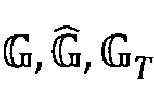


- According to an example, in a bilinear setting (


- According to an example, four random points


- According to an example, the proof, from Tag j and Σ j,0,Σ j,1, is generated such as:


 , C 0,
C ) under VK for the tag Tag = Tag j , and wherein Σ1 is a valid signature of the randomizer (0, D 0,D ) under VK for the tag Tag = Tag j ; - According to an example, the generation step comprises generating a Diffie-Hellman value W = r · H, for
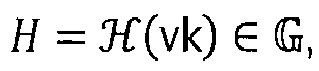
- According to an example, the sending step from the sender device SEND to the receiver device REC comprises the sending of the value W and of the proof π.
- According to an example, the verification step comprises the verification of the validity of the signature σ such as σ is a valid signature on (, C' 0,

C ') under vk; - According to an example, the verification step comprises the verification of the validity of the signatures σ 0 on (, C 0,

C ) under vk and σ 1 on (0, D 0,D ) under vk; - According to an example, the verification step comprises the verification of the validity of the Diffie-Hellman proof π on the tuple

- According to an example, the randomizer (0, D 0,
D ) is equal to (0,P,Z ) such as D 0 = P andD =Z wherein P is the generator ofand
Z is the public encryption key; - According to an example, the randomization of said EIGamal ciphertext (C 0,
C ) to generate the ciphertext (C'0,C ') using a random scalar

- According to an example, the second computation step comprises a computation of the randomized Groth-Sahai proof π' being a valid Diffie-Hellman proof on the tuple

- According to an example, the storing step comprises the storing of (W',π').
- According to an example, the pair of linearly homomorphic signing-verification keys SK and VK are generated such as


- According to an example, the N verifiable tags Tag j are generated such as Tag j =


- According to an example, the N pairs of signatures, for j = 1, ..., N, on
M j =x j · P are generated such as:

- According to an example, D 0 and
D are equal to:

- According to an example, the proofis generated, from Tag j and Σ j,0,Σ j,1 such as:

 , C 0,
C ) under VK for the tag Tag'0 = (r + 1) · Tag and wherein Σ'1 is a valid signatures of (0, D 0,D ) under VK for the tag Tag'1= r' · Tag; - According to an example, the generation step comprises the generation of Diffie-Hellman values W = r · H and W' = r'· H, for

- According to an example, the sending step from the sender device SEND to the receiver device REC comprises the sending of the proofcomprising (Tag'0, Tag'1, Σ'0, Σ'1), and (W, W', π, π')

- According to an example, the verification step comprises verifying that:
- the tags Tag'0 and Tag'1 are valid;
- the signature Σ'0 is valid on the message ( , C 0,

C ) and tag Tag'0 under VK; - the signature Σ'1 is valid on the message (0, D 0,
D ) and tag Tag'1 under VK; - the signature σ0 is valid on the message ( , C 0,

C ) under vk; - the signature σ 1 is valid on the message (0, D 0,
D ) under vk; - the Diffie-Hellman proofs π is valid on the tuples (P, C 0, H, W) and π' is valid on the tuples (P,D 0,H,W').
- According to an example, the third randomization step of the tags Tag'0 and Tag'1 into Tag" is such as:

- According to an example, the fourth computation step of the signatures Σ" and σ is such as:

- According to an example, the second computation step comprises a computation of the randomized Groth-Sahai proof π" of Diffie-Hellman tuple for W" = W + s · W', using π, π', and s.
- According to an example, the storing step comprises the storing of (W",π").
- According to an example, the N verifiable tags Tag j are generated such as Tag j = (τ j,1 = 1/tj · P, τ j,2 = 1/tj · P̂), with

- According to an example, the N pairs of signatures, for j = 1, ..., N, on
M j =x j · P are generated such as:

- According to an example, the randomization of at least Tag = (τ 1, τ 2) into Tag' = (τ'1, τ'2), for a random


- According to an example, the computation of Σ 0 and Σ 1 into Σ'0 and Σ'1, respectively, is such as:

- According to an example, the randomizer (0, D 0,
D ) is equal to (0, P,Z ), the signatures σ 0 and σ 1 such as:

- According to an example, the verification step comprises the verification of the following equalities:


- wherein e(Q, Q) is a pairing function between two elements of the two groups and


- and the validity of the Diffie-Hellman proof π = (com, proof) on the tuple

- According to an example, the third randomization step of the tag Tag' into Tag" is such as:

- According to an example, the second computation step of the signatures Σ into Σ': Σ' being a valid signature of (, C'0,

C ') under VK for the tag Tag", is such as:
- According to an example, the second computation step comprises a computation of the randomized Groth-Sahai proof π', for W' = W + s · H, using π and s.
- According to an example, the storing step by the receiver in a storing module STM comprises the storing of (W', π').
- According to an example, said public parameters VK, (V̂ 1,1,V̂ 1,2,V̂ 2,1,V̂ 2,2), and (Tag j ,Σ j,0,Σ j,1) for j = 1, ..., N, are generated in a distributed way between multiple independent parties

- o Said multiple independent parties


- o Each party


- o the pair of linearly homomorphic signing-verification keys SK and VK are generated by each party


- ∘ the N verifiable tags Tag j are generated in two steps, where each party


- Each

- Each

Generating V'j = Σ k Vj,k, Ψ'j = Σ k Ψj,k , and Ĉ' j = Σ k Ĉ j,k , D̂'j = Σ k D̂j,k ; Tag j = ((τ j,1 = P,τ j,2 = U'j,τ j,3 = V'j ),πj = (com j = (Ĉ' j,D̂' j ), proof j = (Θ'j ,Ψ'j ))), on random t'j = Σtj,k and v'j = Σvj,k ;
- Each
- o the N pairs of signatures, for j = 1, ..., N, on
M j =x j · P are also generated in a distributed way, where each


 , 0,
, 0,
M j ) and of (0, P, Z) respectively, under VK for said tag Tag j . - According to an example, one among the authority device AUT, the sender device SEND and the receiver device REC is taken among: a robot, a smartphone, an Internet of Thing device, an artificial intelligence.
- The aims, objects, as well as the technical features and advantages of the invention will emerge better from the detail description of an embodiment of the invention which is illustrated by the following figures in which:
-
Figure 1 is a general schematic view of an embodiment of the present invention. -
Figure 2 is a schematic view of a method according to an embodiment of the present invention. -
Figure 3 is a schematic view of a system according to an embodiment of the present invention. -
Figure 4 is a schematic view of an example of implementation of the present invention. - The drawings are given by way of example and do not limit the invention. They constitute representations of principle intended to facilitate understanding of the invention and are not necessarily on the scale of practical applications.
- The examples and conditional language recited herein are principally intended to aid the reader in understanding the principles of the present invention and not to limit its scope to such specifically recited examples and conditions. It will be appreciated that those skilled in the art may devise various arrangements which, although not explicitly described or shown herein, nonetheless embody the principles of the present invention and are included within its spirit and scope.
- Furthermore, as an aid to understanding, the following description may describe relatively simplified implementations of the present invention. As persons skilled in the art would understand, various implementations of the present technology may be of a greater complexity.
- Moreover, all statements herein reciting principles, aspects, and implementations of the present invention, as well as specific examples thereof, are intended to encompass both structural and functional equivalents thereof, whether they are currently known or developed in the future. Thus, for example, it will be appreciated by those skilled in the art that any block diagrams herein represent conceptual views of illustrative circuitry embodying the principles of the present invention. Similarly, it will be appreciated that any flowcharts, and the like represent various processes which may be substantially represented in computer-readable media and so executed by a computer or processor, whether or not such computer or processor is explicitly shown.
- The functions of the various elements shown in the figures, including any functional block labeled as a "processor" or "module", may be provided through the use of dedicated hardware as well as hardware capable of executing software in association with appropriate software. When provided by a processor, the functions may be provided by a single dedicated processor, by a single shared processor, or by a plurality of individual processors, some of which may be shared. In some embodiments of the present invention, the processor may be a general-purpose processor, such as a central processing unit (CPU), for example. Moreover, explicit use of the term a "processor" should not be construed to refer exclusively to hardware capable of executing software, and may implicitly include, without limitation, application specific integrated circuit (ASIC), field programmable gate array (FPGA), read-only memory (ROM) for storing software, random access memory (RAM), and non-volatile storage. Other hardware, conventional and/or custom, may also be included.
- Software modules, or simply modules which are implied to be software, may be represented herein as any combination of flowchart elements or other elements indicating performance of process steps and/or textual description. Such modules may be executed by hardware that is expressly or implicitly shown. Moreover, it should be understood that module may include for example, but without being limitative, computer program logic, computer program instructions, software, stack, firmware, hardware circuitry or a combination thereof which provides the required capabilities.
- The present disclosure is here described in detail with reference to non-limiting embodiments illustrated in the drawings.
- The present invention relates preferably to a new technique to prove that a ciphertext, preferably an ElGamal ciphertext, contains a message from at least one specific subset, advantageously using linearly homomorphic signatures and tags. As it will be described, the proofs provided by the present invention are both quite efficient to generate, allowing the use of low-power devices to vote, and randomizable, which can be important for the strong receipt-freeness property. The present invention is well-suited to prevent vote-selling and replay attacks, which are the main threats against the privacy in electronic voting.

- Before describing in more details, the present invention, some computational assumption will be presented hereafter.
- For the development and security analysis of the present invention, the Generic Group Model (GGM) and the Algebraic Group Model (AGM), see for example the following publications "Victor Shoup. Lower Bounds for Discrete Logarithms and Related Problems. EUROCRYPT 1997: 256-266." and "Georg Fuchsbauer, Eike Kiltz, Julian Loss. The Algebraic Group Model and its Applications. CRYPTO (2) 2018: 33-62.", have been used, where the adversary can make generic operations on the group and pairing evaluations. Hence, any new generated group element comes as a linear combination of the input group elements. The former GGM being a slightly stronger model than the latter AGM, as encodings of group elements can even be chosen at random. But in both cases, any group element provided by the adversary comes with the explicit coefficients of the linear combination of the input elements. This will provide the simulation extractability of the proofs generated by the present invention. The following classical assumptions in a group G of prime order p, for any generator

- a. Discrete Logarithm (DL) Assumption: Given (P, U = x · P), for

- b. Decisional Diffie-Hellman (DDH) Assumption: For

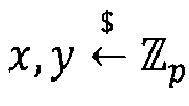 = {(P,x · P,U,x · U)} and

- c. Square Discrete Logarithm (SDL) Assumption: Given (P,U = x · P,V = x 2 · P), for

- d. Decisional Square Diffie-Hellman (DSDH) Assumption: For
 = {(P,x · P,x 2 · P)} and

- e. The SXDH assumption claims that the DDH assumption holds in both groups and


- On a high level, an ElGamal ciphertext (C 0 = r·P,
C =M + r ·Z ) encrypts a plaintext, seen as a vector


C can be transformed into A·C , for any matrix A, to get a ciphertext (C 0,A ·C ) ofy = A ·x , under the encryption keyY = A ·Z . The matrix A can be a projection matrix, such as A = (1,0, ...,0), to select one component ofx . As an example, the subsetcan be {0,1} c

x . The subsetcan then be a larger range
 can be any list of specific vectors


 can be used simultaneously on the same EIGamal ciphertext (C 0,
C ) for more complex proofs, with multiple proofs of subset membershipand

- According to the present invention, first an authority device AUT generates linearly homomorphic signatures under a verification key VK on all the possible trivial ciphertexts of
M 1, ... ,M N, as well as on the encryption key: the signatures Σ i,0 on (, 0,
M i ) and Σ i,1 on (0, P,Z ), under the common tag τ i, for i = 1, ..., N. Then, preferably, for any choice j, a random combination of the two signatures (with coefficient 1 for the former), leads to a valid signature under VK on a ciphertext ofM j : where Σ 0 = Σ j,0 + r · Σ j,1 is a valid signature on and 0, later checked with respect to
 for Σ 0, implies the coefficient 1 on (
 , 0,
, 0,
M j ) in the combination. One can also keep Σ1 = Σ j,1 as a valid signature on the randomizer (0, D 0 = P,D =Z ) under the tag τ = τj, for further randomization. - According to an embodiment, whereas the ciphertexts

M j and
0 do not reveal information about j, under the DDH assumption (EIGamal encryption), the signatures (Σ 0,Σ 1) are valid under τj only, which reveals j. Hence the need of randomizable tags to make the new tag τ and the new signatures (Σ 0,Σ 1) unlinkable to Σ j,0, Σ j,1, and τj. This is one of the main features of the present invention, which provides the first constant generation-time and constant proof-size for randomizable zero-knowledge proof of subset membership. - As described in the following, () and (Σ 0, Σ 1, τ) are modified before sending them to keep vote-privacy, thanks to the property of randomizable tags.

- As described hereafter, several embodiments of the present invention can be used.
- The present invention can use, according to an embodiment, the FHS signature (see for example the following publication "Georg Fuchsbauer, Christian Hanser, Daniel Slamanig. Structure-Preserving Signatures on Equivalence Classes and Constant-Size Anonymous Credentials. J. Cryptol. 32(2): 498-546.") for the Linearly homomorphic Signatures with Randomizable Tags (LH-Sign-RTag), for example in a type III pairing-friendly setting


 (with the (Σ i,0,Σ i,1,τi ) i for all the
 ) as the voter only has to generate a ciphertext C = (C 0,
C ) for appropriateM j, and to randomize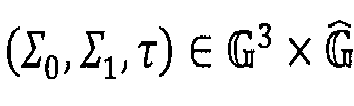
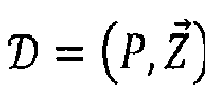

- According to a preferred embodiment, the present invention uses Linearly homomorphic Signatures with Randomizable Tags (LH-Sign-RTag) for zero-knowledge proofs of subset membership on EIGamal ciphertexts. The present invention can also use One-Time Linearly homomorphic Signature (OT-LH-Sign).
- According to some embodiments, additional, but optional, steps to make them non-malleable and traceable by the prover are possible and will be described hereafter. Then, combinations of such proofs can be used for any kind of election, to prove the validity of at least one ballot, preferably with randomizability to provide receipt-freeness, i.e. to exclude VS-attacks, and/or non-malleability to provide the strong receipt-freeness, i.e. to exclude CS-attacks.
- According to an embodiment and as illustrated by
figures 1 to 4 , the present invention relates to amethod 100.Said method 100 involves at least preferably: - a. an
authority device AUT 10, saidauthority device AUT 10 is configured to generate at least a set of public parameters, saidauthority device AUT 10 can be distributed among several parties; - b. a
sender device SEND 20, Saidsender device SEND 20 is configured to generates at least one ciphertext with at least one proof of subset membership, preferably with at least one non-malleable proof of subset membership; - c. a
receiver device REC 30, saidreceiver device REC 30 is configured to store at least one final ciphertext, preferably to randomize and/or store at least one final ciphertext. - As described hereafter, a pairing-friendly setting
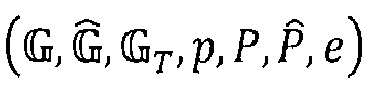
- The present invention considers at least one set

 (in case of multiple concurrent proofs, on the same ciphertext). It can be
 is a full-domain hash function into
 . Advantageously,
 is configured to characterize at least one proof
 on the subset
 as described hereafter.
- According to an embodiment, the present invention relates to a linearly homomorphic signature method for zero-knowledge proofs of subset membership on at least one ElGamal ciphertext regarding at least one subsetof N authorized plaintexts. Preferably, said plaintexts are authorized by at least said

authority device AUT 10. Said cyphertext is advantageously generated from a plaintext taken among said subset.
- Said method is configured to be executable by at least one computing system. Preferably said computing system is communicatively connected to at least one communication network.
- Advantageously, and as described hereafter, said
method 100 uses randomizable tags. - According to an embodiment, said
method 100 comprising at least: - a. An
initialization step 101, preferably executed by saidauthority device AUT 10, preferably using at least oneinitialization module IM 11. Saidinitialization step 101 comprises at least a generation step of at least:- i. one pair of ElGamal encryption keys (DK, EK) for plaintexts comprised by a group


- ii. one pair of linearly homomorphic signature keys (SK, VK) for messages in

- iii. N verifiable tags Tag j , for j = 1, ... , N;
- iv. N pairs of signatures (Σ j,0,Σ j,1), for j = 1, ..., N, on
M j =x j · P such as: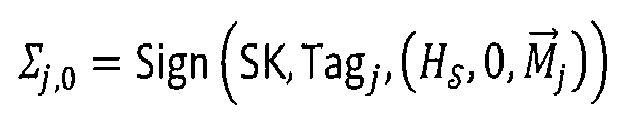

Said initialization step 101 generating at least a set of public parameters comprising:
EK,VK, and (Tag j ,Σ j,0,Σ j,1) for j = 1, ... , N
- i. one pair of ElGamal encryption keys (DK, EK) for plaintexts comprised by a group
- b. A
ciphertext creation step 102, preferably with proof of subset membership, preferably executed by at least saidsender device SEND 20 using at least oneencryption module EM 21. Saidciphertext creation step 102 comprises preferably the generation of at least one ElGamal ciphertext (C 0,C ) for at least one authorized plaintext


- c. A
proof creation step 103, preferably executed by at least saidsender device SEND 20 using at least a firstproof module PM1 22, of at least one proof, from Tag j and Σ j,0,Σ j,1 comprising at least:
- i. A first randomization step, preferably executed by at least a first
randomization module RM1 23. Said first randomization step comprises at least a randomization of at least one Tag j into Tag', for a given j; - ii. A first computation step, preferably executed by at least a first
computational module CM1 24, of Σ'0 and Σ'1, wherein: Σ'0 is a valid signature of (, C 0,
C ) under VK for the tag Tag' and Σ'1 is a valid signature of a randomizer (0, D 0,D ), under VK for the tag Tag';
- i. A first randomization step, preferably executed by at least a first
- d. A
generation step 104, preferably executed by at least saidsender device SEND 20 using at least ageneration module GM 25, comprising at least:- i. Generating at least a pair of linearly homomorphic signing-verification keys (sk, vk) for messages in
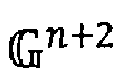


- ii. Generating at least signatures σ 0 and σ 1 wherein:


- i. Generating at least a pair of linearly homomorphic signing-verification keys (sk, vk) for messages in
- e. A sending
step 105, preferably executed by at least saidsender device SEND 20 using at least a sendingmodule SM 26, from thesender device SEND 20 to at least onereceiver device REC 30, of the ciphertexts (C0, ê) and (D 0,D ), together with the proof

- f. A
verification step 106, preferably executed by saidreceiver device REC 30 using at least oneverification module VM 31.Said verification step 106 comprises at least the verification of at least:- i. the validity of the tag Tag'
- ii. the validity of the signature Σ'0 on ( , C 0,

C ) under VK for the tag Tag', and the validity of the signature Σ'1 on (0, D 0,D ), under VK for the tag Tag'; - iii. the validity of the signatures σ 0 on ( , C 0,

C ) under vk and σ 1 on (0, D 0,D ) under vk;
- g. A
second randomization step 107, preferably executed by at least saidreceiver device REC 30 using a secondrandomization module RM2 32, of said ElGamal ciphertext (C0,C ) to generate the ciphertext (C'0,C ') using a random scalar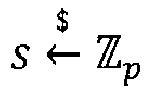
D ) such as:
- h. A
second computation step 108 of a signature Σ, preferably executed by at least saidreceiver device REC 30 using a second computational module CM2 33: , C' 0,
C ') under VK for the tag Tag'; . - i. A
third computation step 109 of a signature σ , preferably executed by at least saidreceiver device REC 30 using a second computational module CM2 33: , C' 0,
C ') under vk; - j. A second
proof creation step 110, preferably executed by at least saidreceiver device REC 30 using at least a secondproof module PM2 34, of a prooffrom said proof , (Tag',Σ'0,Σ'1), comprising at least:
- i. A third randomization step, preferably executed by the second
randomization module RM2 32, of the tag Tag' into Tag" ; - ii. A fourth computation step, preferably executed by the second
computational module CM2 33, of the signature Σ' into Σ": Σ" being a valid signature of (, C' 0,
C ') under VK for the tag Tag";
- i. A third randomization step, preferably executed by the second
- k. A storing
step 111, preferably executed by at least saidreceiver device REC 30 in astoring module STM 35, of the ciphertext (C'0,C '), together with said proofcomprising (Tag",Σ"), and with the signature (vk,σ), which are configured to be publicly verified and wherein:
- i. Tag" is a valid tag;
- ii. Σ" is a valid signature on ( , C' 0,

C ') under VK for the tag Tag" allowing to prove that the plaintext is in the subset;
- iii. σ is a valid signature on ( , C' 0,

C '), under vk.
- According to an embodiment, and in a bilinear setting

- a. The pair of linearly homomorphic signing-verification keys (sk,vk) for messages in


- b. The signatures σ 0 and σ 1 are generated such as:
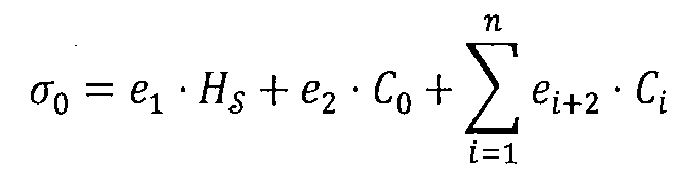

- According to said embodiment, in the
initialization step 101, theauthority device AUT 10 generates at least: - a. Encryption Keys: A pair of ElGamal encryption keys (DK, EK) for messages in


- b. Signature Keys: A pair of LH-Sign-RTag signing-verification keys (SK, VK) for messages in

- c. Verifiable Tags: N verifiable tags Tag j , for j = 1,..., N;
- d. Initial Signatures: N pairs of signatures (∑ j,0,∑ j,1), for j = 1, ...,N, on
M j =x j · P:
- Therefore, at the end of said
initialization step 101, public parameters are generated. Said public parameters comprise EK,VK, and (Tag j , ∑ j,0, ∑ j,1) for j = 1, ... , N. - Then, according to said embodiment, the ciphertext, preferably with proof of subset membership,
creation step 102 is executed by saidsender device SEND 20. Saidsender device SEND 20 is configured to: - a. Generate at least one ciphertext: The ElGamal ciphertext (C 0,
C ) for his authorized plaintext


- b. Generate at least one proof of subset membership: the proof , from Tag j and ∑ j,0,∑ j,1:

 , C 0 ,
C ) and (0, P,Z ) under VK for the tag Tag = Tag j . Thanks to the property of LH-Sign-RTag, with randomizable tags, Tag can be randomized into Tag' and ∑ 0 and ∑ 1 can be adapted, i.e. computed, into ∑' 0 and ∑' 1, respectively: ∑' 0 and ∑' 1 are valid signatures of (, C 0 ,
C ) and (0, P,Z ), respectively, under VK for the tag Tag'. - c. Optionally, allow individual verifiability (for further randomization): A pair of OT-LH-Sign signing-verification keys (sk, vk) for messages in


- d. Optionally, allow non-malleability: The Diffie-Hellman value W = r · H, for

- The
sender device SEND 20 then outputs the ciphertext (C 0,C ), together with the proofthat consists of (Tag', ∑' 0,∑' 1), and optionally the signatures (vk, σ 0, σ 1) and (W, π).
- Then, the
receiver device REC 30 is configured to: - a. Optionally, before storing the ciphertext, randomize said ciphertext, after having verified all the values (C 0,
C ), (Tag', ∑' 0,∑' 1), (vk, σ 0, σ 1), and (W, π). - b. Verify all these values, such as, for example:
- i. the validity of Tag'
- ii. the validity of the signatures ∑' 0 and ∑' 1 on (, C 0 ,

C ) and (0, P,Z ), respectively, under VK for the tag Tag'; - iii. the validity of the signatures σ 0 and σ 1 on ( C 0 ,

C ) and (0, P,Z ), respectively, under vk; - iv. the validity of the Diffie-Hellman proof π on the tuple

- The
receiver device REC 30 is also configured to randomize the ElGamal ciphertext (C 0,C ) using a random scalar

- The
receiver device REC 30 is also configured to compute, i.e. adapt, signatures:
- Preferably, ∑' is a valid signature of (, C' 0 ,

C ') under VK for the tag Tag', and σ is a valid signature of (, C' 0 ,
C ') under vk. Thanks to the property of LH-Sign-RTag, with randomizable tags, Tag' can be randomized into Tag" and ∑' can be computed, i.e. adapted, into ∑": ∑" is a valid signature of (, C' 0 ,
C ') under VK for the tag Tag". - The
receiver device REC 30 can also compute the randomized Groth-Sahai proof π', for W' = W + s · H, using s and π. - The
receiver device REC 30 is configured to store the ciphertext (C' 0,C '), together with the proof that consists of (Tag", ∑"), the signature (vk, σ), and (W', π'), which can be publicly verified: - a. Tag" is a valid tag;
- b. ∑" is a valid signature on (, C' 0 ,

C '), under VK for the tag Tag". This proves the plaintext must be in;
- c. σ is a valid signature on ( , C' 0 ,

C ') under vk. This ensures the sender that (C' 0,C ') contains the same plaintext as his initial ciphertext (C 0,C ), but without knowing the actual randomness, which exclude VS-attacks; - d. π' is a valid Diffie-Hellman proof on the tuple

- According to an embodiment, four random points

- According to an embodiment, the prooffrom Tag j and ∑ j,0 ,∑ j,1, is generated such as:


- Wherein ∑ 0 is a valid signature of (, C 0 ,

C ) under VK for the tag Tag = Tag j , and wherein ∑ 1 is a valid signature of (0, P,Z ) under VK for the tag Tag = Tag j ; - According to an embodiment, the
generation step 104 comprises generating a Diffie-Hellman value W = r · H, for
- According to an embodiment, the
generation step 104 comprises generating a Groth-Sahai proof π of Diffie-Hellman tuple for (P, C 0 , H, W). - According to an embodiment, the sending
step 105 from thesender device SEND 20 to thereceiver device REC 30 comprises the sending of the value W and of the proof π. - According to an embodiment, the
verification step 106 comprises the verification of the validity of the signature σ such as σ is a valid signature on (, C' 0 ,
C ') under vk allowing thesender device SEND 20 to know that (C' 0,C ') contains the same plaintext as its initial ciphertext (C 0,C ), but without knowing the actual randomness, which excludes VS-attacks. - According to an embodiment, the
verification step 106 comprises the verification of the validity of the signatures σ 0 on (, C 0 ,
C ) under vk and σ 1 on (0, P,Z ) under vk. - According to an embodiment, the
verification step 106 comprises the verification of the validity of the Diffie-Hellman proof π on the tuple
- According to an embodiment, the randomizer (0, D 0 ,
D ) is equal to (0, P,Z ) such as D 0 = P andD =Z wherein P is the generator ofand
Z is the public encryption key. - According to an embodiment, the randomization of said EIGamal ciphertext (C 0,
C ) to generate the ciphertext (C' 0,C ') using a random scalar

- According to an embodiment, the
second computation step 108 comprises a computation of the randomized Groth-Sahai proof π', π' being a valid Diffie-Hellman proof on the tuple
- According to an embodiment, the storing
step 111 comprises the storing of (W', π'). - According to another embodiment, the present invention can use FHS LH-Sign-RTag (for Fuchsbauer-Hanser-Slamanig, see for example the following publication "Georg Fuchsbauer, Christian Hanser, Daniel Slamanig. Structure-Preserving Signatures on Equivalence Classes and Constant-Size Anonymous Credentials. J. Cryptol. 32(2): 498-546."). According to said embodiment, the present invention uses tags of the form Tag = (τ 1 = 1/t · P, τ2 = 1/t · P̂), for a scalar
 and
and


s · P̂, that can be verified by e(Σ,τ 2) = Πe(Mi , VK i ). - Preferably, one can easily randomize Tag and adapt, i.e. compute, the signature Σ, in a perfectly unlinkable way: Tag' = 1/t' · Tag = (τ'1 = 1/t' · τ 1, τ' 2 = 1/t' · τ 2), for a scalar

- As the tags are self-verifiable tags, according to said embodiment, this approach is quite efficient, from both the computation and communication points of view.
- Preferably, the
initialization step 101 is not distributed among multiple users or authorities. Advantageously, the verifiable tags and/or the initial signatures are generated on at least one secure device, i.e. oneauthority device AUT 10. - According to said embodiment, called the FHS embodiment, the
authority device AUT 10 is configured to generate: - a. Encryption Keys: A pair of ElGamal encryption keys (DK, EK) for messages in


- b. Signature Keys: A pair of LH-Sign-RTag signing-verification keys


- c. Verifiable Tags: N verifiable tags Tag j = (τ j,1 = 1/tj · P, τ j,2 = 1/t, · P̂), with

- d. Initial Signatures: N pairs of signatures, for j = 1, ... , N, on
M j =x j · P:

- Therefore, at the end of said initialization step, public parameters are generated. Said public parameters comprise EK,VK, and (Tag j ,∑ j,0,∑ j,1) for j = 1, ... , N.
- Then, according to said embodiment, the ciphertext, preferably with proof of subset membership,
creation step 102 is executed by saidsender device SEND 20. Saidsender device SEND 20 is configured to generate at least: - a. One ciphertext: the EIGamal ciphertext (C 0,
C ) for its authorized plaintext


- b. Proof of subset membership: the proof , from Tag j and ∑ j,0,∑ j,1:

 ,C 0 ,
C ) and (0, P,Z ) under VK for the tag Tag = Tag j . Thanks to the property of LH-Sign-RTag, with randomizable tags, Tag = (τ 1, τ 2) can be randomized into Tag' = (τ' 1, τ' 2), for a random


- c. Individual verifiability: A pair of OT-LH-Sign signing-verification keys


- d. Non-Malleability: The Diffie-Hellman value W = r · H, for

- The
sender device SEND 20 then outputs the ciphertext (C 0,C ), together with the proof that consists of (Tag',∑' 0,∑' 1), the signatures (vk, σ 0, σ 1), and (W, π). - Then, according to said embodiment, the
receiver device REC 30 is configured to: - a. Before storing the ciphertext, randomize said ciphertext, after having verified all the values (C 0,
C ), (Tag' ∑' 0,∑' 1), (vk, σ 0, σ 1), and (W, π) such as:


- b. Randomize the ElGamal ciphertext (C 0,
C ) using a random scalar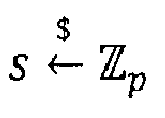

- c. Compute the signatures and randomize the tag, with


- d. Compute the randomized Groth-Sahai proof π', for W' = W + s · H, using s and π.
- e. Store the ciphertext (C' 0,
C '), together with the proof that consists of (Tag", ∑"), the signature (vk, σ), and (W',π'), which can be publicly verified. - According to said embodiment, the N verifiable tags Tag j are generated such as Tag j = (τ j,1 = 1/tj · P,τ j,2 = 1/tj · P̂), with

- According to said embodiment, the N pairs of signatures, for j = 1, ... , N, on
M j =x j · P are generated such as:
- According to said embodiment, the randomization of at least Tag = (τ 1, τ 2) into Tag' = (τ' 1, τ' 2), for a random


- According to said embodiment, the computation of ∑ 0 and ∑ 1 into ∑' 0 and ∑' 1, respectively, is such as:

- According to said embodiment, embodiment, the randomizer (0, D 0,
D ) is equal to (0, P,Z ) such as D 0 = P andD =Z wherein P is the generator ofand
Z is the public encryption key. The signatures σ 0 and σ 1 are such as:

- According to said embodiment, the verification step comprises the verification of the following equalities:


 and
and


- According to said embodiment, the third randomization step of the tag Tag' into Tag" is such as:

- According to said embodiment, the second computation step of the signatures ∑ into ∑': ∑' being a valid signature of (, C' 0 ,

C ') under VK for the tag Tag", is such as:
- According to said embodiment, the second computation step comprises a computation of the randomized Groth-Sahai proof π', for W' = W + s · H, using s and π.
- According to said embodiment, the storing
step 111 by thereceiver device REC 30 in astoring module STM 35 comprises the storing of (W',π'). - Therefore, according to said embodiment, for the OT-LH-Sign, one can use

s · P̂. Then,
- Preferably, for Groth-Sahai proofs (see for example the following publication "Jens Groth, Amit Sahai. Efficient Non-interactive Proof Systems for Bilinear Groups. EUROCRYPT 2008: 415-432"), one needs a random tuple

- Now, a third embodiment will be described, called SDH embodiment. Some properties regarding said embodiment will be presented before the features of said embodiment.
- According to said embodiment, the set S can be written

 ). Said set
 can be partitioned into


- As well known by the skilled person (see for example the following publication "Chloé Hébant, David Pointcheval. Traceable Constant-Size Multi-authority Credentials. SCN 2022: 411-434."), the DSDH and the DDH assumptions imply the unlinkability of two SDH tuples. Furthermore, under the SDL assumption, classes of equivalence cannot be mixed under known linear combinations: For any


- Given n SDH tuples (P, Ui = xi · P, Vi = xi · Ui), for any generator P, but random

- However, verifying an SDH tuple requires an additional proof, which can be done with the well-known Groth-Sahai methodology, with the CRS (V̂ 1,1, V̂ 1,2, V̂ 2,1, V̂ 2,2). Given an SDH tuple (H, U = x · H, V = x · U) in, knowing the witness

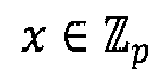

- According to said embodiment, an SDH tag is a tuple τ = (
τ , proof, com), with valid proof, and two tags are said equivalent if they not only are for the same scalar x, but also for the same commitment com. - Given n equivalent SDH tags, with
τ i = (Hi, Ui = x · Hi, Vi = x2 · Hi ), for the same
τ = ∑αi ·τ i , proof = (Θ = ∑αi · Θi, Ψ = ∑αi · Ψi ) is a valid proof for com. - Actually,
τ = (H, U, V) with H = ∑αi · Hi, hence the validity of proof. The proof and the commitment can thereafter be randomized, with a new
- According to said embodiment, and because of the non-miscibility of the SDH tags, any One-Time Linearly homomorphic signature (OT-LH-Sign) can be transformed into a Linearly homomorphic Signature. The unlinkability of the SDH tags make them randomizable tags (LH-Sign-RTag).
- Now we will describe a signature scheme with messages in

- a. Setup(1 κ ): Given κ, it outputs param, that contains a pairing-friendly setting


- b. Keygen(param, n): Given param and an integer n, it generates

s ·
- c. NewTag(param): Generates a tag τ = (
τ = (P, t · P, t 2 · P̂), proof, com), for random scalars
- d. Sign(sk, τ,
M ): Given a signing key sk, a tag τ = (τ , proof, com), and a vector-messageM =

M ∥τ =
- e.


M i in σi , under equivalent tags τi , it outputs the signature σ = ∑wi · σi, on the vector
τ ' = ∑wi ·τ i , and adapted proof proof, but the same commitment com; - f. Verif(vk, τ,
M ,σ): Given a verification key vk, a tag τ, a vector-messageM and a signature σ, it outputs 1 if
- One of the main advantages of proofs using SDH-based signatures, compared to the FHS-signatures, is the possible distributed setup, key generation, tag generation, and signatures, among multiple users

- a. Setup(1 κ , k): They all agree on the bilinear setting


- b. Keygen(param, n, k): Given the public parameters param,


- c. NewTag(param): each user


- i.

- ii.

This allows to compute V = ∑ k Vk, Ψ = ∑ k Ψk , and Ĉ = ∑ k Ĉk, D̂ = ∑ k D̂k . This leads to τ = (τ = (P, U, V), proof = (Θ, Ψ), com = (Ĉ, D̂)), on t = ∑tk and v = ∑vk .
- i.
- d. Sign(sk k , τ,
M = (Mi ) i ): Given signing-key shares sk k = (s i,k ) i , a tag τ = (i, proof, com) and a vector-message


- According to said third embodiment, said public parameters VK, (V̂ 1,1, V̂ 1,2, V̂ 2,1, V̂ 2,2), and (Tag j ,∑ j,0,∑ j,1) for j = 1, ...,N, are generated in a distributed way between multiple independent parties

- ∘ Said multiple independent parties

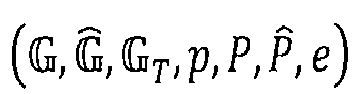
- ∘ Each party


- ∘ the pair of linearly homomorphic signing-verification keys SK and VK are generated by each party

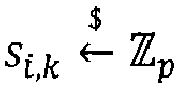
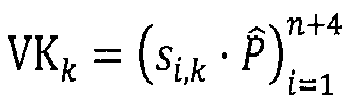


- ∘ the N verifiable tags Tag j are generated in two steps, where each party


- Each

- Each

- Each
- ∘ the N pairs of signatures, for j = 1, ... , N, on
M j =x j · P are also generated in a distributed way, where each


 , 0,
, 0,
M j) and of (0, P,Z ) respectively, under VK for said tag Tag j . - According to said third embodiment, the correctness can easily be verified, and parallelizing some steps, to generate the public parameters, also called the global parameters, param, several tags, and signatures on pre-determined messages, a three-round protocol is enough, with public communications, in the honest-but-curious setting. No additional proofs are required in the malicious setting, as each step is already verifiable: (Θk, Ψk ) is a DH proof on (P, Uk, U, Vk ) for the commitment com k , and σk is a valid signature of (τ,
M ) under vk k . Additional extractable commitments on every sent value allows perfect simulation even against adaptive adversaries: from the committed values, the simulator can generate all its contributions so that the final outcome corresponds to any pre-defined values. - The SDH LH-Sign-RTag (for Square Diffie-Hellman) uses tags of the form (τ 1 = U, τ 2 = t · U, τ 3 = t 2 · U), for


- According to said embodiment, the signature of




M andM ', with coefficient α and α' under the same (or equivalent) tags Tag and Tag', one gets a signature on α ·M + α' ·M ' under the tag (τ" 1, τ" 2, τ" 3) = α · (τ 1 , τ 2 , τ 3) + α' · (τ' 1, τ' 2, τ' 3). The proof can be computed, i.e. adapted, and randomized (preferably, if they both have the same com). In order to simplify the notation, one writes Tag" = α · Tag + α' · Tag'. - Because of the need of additional proofs of validity for the tags, this third embodiment could be less efficient than other embodiments, while still constant time for the generation of the proofs of subset membership (independently of the size of the subset). However, the initialization can efficiently be distributed among multiple users, which avoids a unique trusted party.
- According to said third embodiment, the
authority device AUT 10 can comprise several sub-authority modules distributed between independent parties
- According to said third embodiment, the
authority device AUT 10 is configured to generate, in a bilinear setting (
- a. four random points

- b. Encryption Keys: A pair of EIGamal encryption keys (DK,EK) for messages in


- c. Signature Keys: A pair of LH-Sign-RTag signing-verification keys


- d. Verifiable Tags: N verifiable tags


- e. Initial Signatures: N pairs of signatures, for j = 1, ..., N, on
M j =x j · P:

- According to said third embodiment, the public parameters, also called the global parameters, comprise EK,VK, and (Tag j ,Σ j,0,Σ j,1) for j = 1, ...,N.
- According to said embodiment, the
sender device SEND 20 is configured to generate at least one: - a. ciphertext: The ElGamal ciphertext (C 0,
C ) for its authorized plaintext


- b. optionally, randomizer: The randomizer (P,
Z ) is randomized with a random scalar

- c. proof of subset membership: The proof, from Tag j and Σ j,0,Σ j,1:


D ) under VK for the tags Tag'0 = (r + 1) · Tag and Tag'1 = r' . Tag, respectively. Note that using r and r', the validity proof πj of Tag j can be converted and randomized for Tag'0 and Tag'1, into π'0 and π'1, both with the same com' part. - d. optionally, individual verifiability: A pair of OT-LH-Sign signing-verification keys sk =


- e. optionally, non-malleability: The Diffie-Hellman values W = r · H and W' = r' · H, for H =

- According to said embodiment, the
sender device SEND 20 then outputs, i.e. send to thereceiver device REC 30, the ciphertext (C 0,C ), the randomizer (D 0,D ), together with the proof that consists of (Tag'0,Tag'1, Σ'0,Σ'1), the signatures (vk, σ 0, σ 1), and (W, W', π, π'). - According to said embodiment, the
receiver device REC 30 is configured to: - a. optionally, before storing the ciphertext, randomize said ciphertext, after having verified all the values (C 0,
C ), (D 0,D ), (Tag'0, Tag'1, Σ'0, Σ'1), (vk, σ 0, σ 1), and (W, W', π, π'). - b. verify that at least:
- i. the tags Tag'0 and Tag'1 are valid;
- ii. the signature Σ'0 is valid on the message ( , C 0,

C ) and tag Tag'0 under VK; - iii. the signature Σ' 1 is valid on the message (0, D 0,
D ) and tag Tag'1 under VK; - iv. the signature σ 0 is valid on the message ( , C 0,

C ) under vk; - v. the signature σ 1 is valid on the message (0, D 0,
D ) under vk; - vi. the Diffie-Hellman proofs π and π' are valid on the tuples (P, C 0, H, W) and (P, D 0, H, W'), respectively.
- c. randomizes the EIGamal ciphertext (C 0,
C ) using a random scalar
D ):
- d. compute and randomize the tags and the signatures:


- e. compute the randomized Groth-Sahai proof π", for W" = W + s · W', using s, π and π'.
- According to said embodiment, the
receiver device REC 30 then stores the ciphertext (C'0,C '), together with the proof that consists of (Tag", Σ"), the signature (vk, σ), and (W",π"), which can be publicly verified. - According to said third embodiment, the pair of linearly homomorphic signing-verification keys SK and VK are generated such as


- According to said third embodiment, the N verifiable tags Tag j are generated such as Tag j =


- According to said third embodiment, the N pairs of signatures, for j = 1, ..., N, on
M j =x j · P are generated such as:

- According to said third embodiment, D0 and D are equal to:
D 0 = r' . PD = r' .Z with a random scalar
- According to said third embodiment, the proofis generated, from Tag j and Σ j,0, Σ j,1 such as:


- wherein Σ'0 is a valid signature of ( , C 0,

C ) under VK for the tag Tag'0 = (r + 1) · Tag and - wherein Σ' 1 is a valid signature of (0, D 0,
D ) under VK for the tag Tag'1 = r' · Tag; - According to said third embodiment, the generation step comprises the generation of Diffie-Hellman values W = r · H and W' = r' · H, for

- According to said third embodiment, the sending
step 111 from thesender device SEND 20 to thereceiver device REC 30 comprises the sending of the proofcomprising (Tag'0,Tag'1,Σ' 0,Σ' 1), and (W, W', π, π')
- According to said third embodiment, the
verification step 106 comprises verifying that: - the tags Tag'0 and Tag'1 are valid;
- the signature Σ' 0 is valid on the message ( , C 0,

C ) and tag Tag'0 under VK; - the signature Σ' 1 is valid on the message (0, D 0,
D ) and tag Tag'1 under VK; - the signature σ 0 is valid on the message ( , C 0,

C ) under vk; - the signature σ 1 is valid on the message (0, D 0,
D ) under vk; - the Diffie-Hellman proofs π is valid on the tuples (P, C 0, H, W) and π' is valid on the tuples (P, D 0, H, W').
- According to said third embodiment, the third randomization step of the tag Tag' into Tag" is such as:

- According to said third embodiment, the fourth computation step of the signatures Σ" and σ is such as:
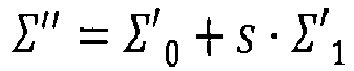

- According to said third embodiment, the second computation step comprises a computation of the randomized Groth-Sahai proofs π", for W" = W + s · W', using s, π and π'.
- According to said third embodiment, the storing
step 111 comprises the storing of (W", π"). - The present invention relates also to a homomorphic voting system allowing efficiency and security.
- For example, in the N-subset case, for ballots where n boxes could be checked:

- According to an embodiment, the public information, i.e. public parameters, generated at the
initialization step 101, i.e. at the setup time, in a possibly distributed way, consists of


 and n + 2N + 8 elements from

- According to an embodiment, from the setup data, the
sender device SEND 20 generates and sends the twin-ciphertexts


 and n + 8 elements from

- According to an embodiment, the ballot-box, i.e. the
receiver device REC 30, stores the randomized ciphertext

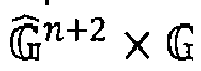
 and n + 6 elements from

- One can use the type III pairing-friendly curve BLS12-381 (see for example the following publication "Paulo S. L. M. Barreto, Ben Lynn, and Michael Scott. Constructing Elliptic Curves with Prescribed Embedding Degrees. SCN 2002: 257-267."), as in all the zk-SNARKs applications:group elements are encoded on 48 bytes, while


- According to the present invention, one of the main important properties in electronic voting is the privacy of the vote. The voter, i.e. the sender device SEND, derives the twin-ciphertexts (C 0,
C ) = (r · P,M j + r ·Z ) and (D 0,D ) = (s · P, s ·Z ), the twin-tagsτ '0 = (r + 1) ·τ i ,τ '1 = s ·τ i , and randomized proofs proof'0, proof'1 com', for random
M j under the DDH assumption (EIGamal security), toτ j and proof j under both the DDH and DSDH assumptions in(tag-unlinkability) and to com j under the DDH assumption in

- The further Groth-Sahai proofs are zero-knowledge under the SXDH assumption. This is under the assumption that the scalars in the tags generated during the setup are really private. One can stress that the ballot privacy (in the honest-but-curious setting) is achieved in the standard model, under quite standard DDH-like assumptions. Nevertheless, one needs stronger privacy properties, by preventing malicious voter behaviors, with replay and vote-selling attacks.
- When the voter has sent the ciphertext (C 0,
C ), he can open it with his randomness r. But the ciphertext in the public ballot-box is (C' 0,C ') that has been randomized with an unknown r': this excludes VS-attacks. The receiver must first check D 0 ≠ 0 for randomization to be effective. The additional Diffie-Hellman proof for
- According to the present invention, a formal proof of strong receipt-freeness is achieved.
- For example, from the unforgeability under chosen-message attacks of the OT-LH-Sign in the GGM, and the non-miscibility of the SDH-tags, the validity of signatures on (, C 0,

C ) or (, C'0,
C ') under the key VK (and a valid tag) implies that they are linear combinations of some (, 0,
M j) and (0, P,Z ), again under the assumption that the scalars in the tags generated during the setup are really private, and even destroyed after use. Hence, no new signature can be generated by anybody, excepted under linear combinations on equivalent tags. Because of the first component, this is necessarily for a valid ballot, but not necessarily for the same j: C 0 = r · P and
C = r ·Z +M j, and C' 0 = r' · P andC ' = r' ·Z +M k . Anyway, they are both valid ballots. Furthermore, the decryption of the tally is given with a proof of correct decryption, which provides the universal verifiability of ballots and tally. - However, the voter needs the additional guarantee of no modification of his initial choice
M j in (C 0,C ) after randomization in (C 0',C '), by the receiver device REC 30: the voter, i.e. thesender device SEND 20, who has kept

C ') under vk. This implies (C'0,C ') can only be a randomization of the initial ciphertext (C 0,C ):M k =M j, under the unforgeability of the OT-LH-Sign, as vk is ephemeral and used only once. This individual verifiability convinces all the voters of the integrity of the ballot-box, with the presence of their votes. - According to an embodiment, the present invention relates to an electronic voting system. Said electronic voting system comprise at least an
authority device AUT 10, asender device SEND 20 and areceiver device REC 30. - Said
authority device AUT 10 comprises at least oneinitialization module IM 11. Saidinitialization module IM 11 is configured to execute said initialization step. - Said
sender device SEND 20 comprises at least: - a. An
encryption module EM 21, preferably configured to execute saidciphertext creation step 102. - b. A first
proof module PM1 22, preferably configured to execute saidproof creation step 103. Said firstproof module PM1 22 comprising at least:- i. A first
randomization module RM1 23, preferably configured to execute said first randomization step; - ii. A first
computational module CM1 24, preferably configured to execute said first computation step
- i. A first
- c. A
generation module GM 25, preferably configured to execute saidgeneration step 104; - d. A sending
module SM 26, preferably configured to execute the sendingstep 105, and advantageously to communicate with at least thereceiver device REC 30, preferably using at least one communication network. - Said
receiver device REC 30 comprises at least: - a. A
verification module VM 31, preferably configured to execute saidverification step 106; - b. A second
randomization module RM2 32, preferably configured to execute saidsecond randomization step 107, the third randomization step, and said fourth randomization step; - c. A second
computational module CM2 33, preferably configured to execute said secondcomputational step 108, said thirdcomputational step 109; - d. A second
proof module PM2 34, preferably configured to execute said second proof creation step. Advantageously, said secondproof module PM2 34 comprising at least:- i. Said second
randomization module RM2 32; - ii. Said second
computational module CM2 33.
- i. Said second
- e. A
storing module STM 35, preferably configured to execute the storingstep 111. - According to an embodiment, the
authority device AUT 10 can be an electronic device comprising a user interface. Said user interface being configured to allow a user to control theauthority device AUT 10. - According to an embodiment, the
authority device AUT 10 can be a robot, preferably said robot being part of an Internet of Things environment and advantageously being configured to cooperate with other robots or computers. - According to an embodiment, the
authority device AUT 10 can be an artificial intelligence configured to cooperate with robots and/or computers and/or other artificial intelligences. - According to an embodiment, the
authority device AUT 10 can comprise at least one processor, and preferably at least one non-volatile memory. Said processor is advantageously configured to execute the steps executed by theauthority device AUT 10. - According to an embodiment, the
sender device SEND 20 can be an electronic device comprising a user interface. Said user interface being configured to allow a user to vote. - According to an embodiment, the
sender device SEND 20 can be a robot, preferably said robot being part of an Internet of Things environment and advantageously being configured to cooperate with other robots or computers. - According to an embodiment, the
sender device SEND 20 can be an artificial intelligence configured to cooperate with robots and/or computers and/or other artificial intelligences. - According to an embodiment, the
sender device SEND 20 can comprise at least one processor, and preferably at least one non-volatile memory. Said processor is advantageously configured to execute the steps executed by thesender device SEND 20. - According to an embodiment, the
receiver device REC 30 can be an electronic device comprising a user interface. Said user interface being configured to allow a user to evaluate the result of a voting session, for example. - According to an embodiment, the
receiver device REC 30 can be a robot, preferably said robot being part of an Internet of Things environment and advantageously being configured to cooperate with other robots or computers. - According to an embodiment, the
receiver device REC 30 can be an artificial intelligence configured to cooperate with robots and/or computers and/or other artificial intelligences. - According to an embodiment, the
receiver device REC 30 can comprise at least one processor, and preferably at least one non-volatile memory. Said processor is advantageously configured to execute the steps executed by thereceiver device REC 30. - According to an embodiment, the present invention can be used in a electronic environment, for example in a non-secured electronic environment, wherein a vote can be needed regarding at least one action to be taken. For example, the present invention can be used to allow artificial intelligences to vote regarding a decision to be taken. For example, as illustrated by
figure 4 , the system according to the present invention can comprise a plurality of sender devices SEND 20a to 20g, such as a plurality of artificial intelligences, and regarding a decision to be taken, a vote can be organized. Eachartificial intelligence 20a to 20g will therefore produce a vote using the present invention. - In the present description, one module can comprise several modules, one module can be formed of several modules.
- According to an embodiment, the present invention can be configured to cooperate with at least one input module including one or more user interface devices such as a keyboard, pointer, number pad, or touch screen.
- In the present description, a processor may be any logic processing unit, such as one or more digital processors, microprocessors, central processing units, graphics processing units, application-specific integrated circuits, programmable gate arrays, programmed logic units, digital signal processors, network processors, and the like.
- In the present description, a storage device or module is at least one non-transitory or tangible storage device or module. A storage module can, for example, include one or more volatile storage devices, for instance random access memory, and one or more non-volatile storage devices, for instance read only memory, flash memory, magnetic hard disk, optical disk, solid state disk, and the like.
- In the present description, a storage module can include or store processor-executable instructions and/or processor-readable data associated with the operation of the present invention and/or with the execution of the method of the present invention. Execution of processor-executable instructions and/or data causes the at least one processor, and/or control modules or units, to carry out various processes and actions.
- Unless otherwise specified herein, or unless the context clearly dictates otherwise the term about modifying a numerical quantity means plus or minus ten percent. Unless otherwise specified, or unless the context dictates otherwise, between two numerical values is to be read as between and including the two numerical values.
- In the present description, some specific details are included to provide an understanding of various disclosed implementations. The skilled person in the relevant art, however, will recognize that implementations may be practiced without one or more of these specific details, parts of a method, components, materials, etc.
- In the present description and appended claims "a", "an", "one", or "another" applied to "embodiment", "example", or."implementation" is used in the sense that a particular referent feature, structure, or characteristic described in connection with the embodiment, example, or implementation is included in at least one embodiment, example, or implementation. Thus, phrases like "in one embodiment", "in an embodiment", or "another embodiment" are not necessarily all referring to the same embodiment. Furthermore, the particular features, structures, or characteristics may be combined in any suitable manner in one or more embodiments, examples, or implementations.
- As used in this description and the appended claims, the singular forms of articles, such as "a", "an", and "the", can include plural referents unless the context mandates otherwise. Unless the context requires otherwise, throughout this description and appended claims, the word "comprise" and variations thereof, such as, "comprises" and "comprising" are to be interpreted in an open, inclusive sense, that is, as "including, but not limited to".
- All publications referred to in this description, are incorporated by reference in their entireties for all purposes herein.
- While certain features of the described embodiments and implementations have been described herein, many modifications, substitutions, changes and equivalents will now occur to the skilled person in the relevant art. It is, therefore, to be understood that the appended claims are intended to cover all such modifications and changes as fall within the scope of the described embodiments and implementations.
-
- 10
- Authority device
- 11
- Initialization module IM
- 20
- Sender device SEND
- 20a, ..., 20g
- Artificial intelligences
- 21
- Encryption module EM
- 22
- First proof module PM1
- 23
- First randomization module RM1
- 24
- First computational module CM1
- 25
- Generation module GM
- 26
- Sending module SM
- 30
- Receiver device REC
- 31
- Verification module
- 32
- Second randomization module RM2
- 33
- Second computational module CM2
- 34
- Second proof module PM2
- 35
- Storing module STM
- 100
- Method
- 101
- Initialization step
- 102
- Ciphertext creation step
- 103
- Proof creation step
- 104
- Generation step
- 105
- Sending step
- 106
- Verification step
- 107
- Second randomization step
- 108
- Second computation step
- 109
- Third computation step
- 110
- Second proof creation step
- 111
- Storing step
Claims (10)
- A linearly homomorphic signature method (100) for zero-knowledge proofs of subset membership on at least one EIGamal ciphertext in a groupwith a generator P of prime order p regarding at least one subset

 , said method being executable by at least one computing system, preferably said computing system being communicatively connected to at least one communication network, said method (100) using randomizable tags, said method (100) comprising at least:
 o An initialization step (101), preferably executed by said authority device AUT (10) using at least one initialization module IM (11), said initialization step (101) comprising at least a generation step of at least:• one pair of EIGamal encryption keys (DK, EK) for plaintexts comprised by a group


z is private vector of scalars and P is said generator of the groupof prime order p; • one pair of linearly homomorphic signature keys (SK, VK) for messages in
 • N verifiable tags Tag j , for j = 1, ..., N;• N pairs of signatures (Σ j,0,Σ j,1), for j = 1, ..., N, on
M j =x j · P such as:
 is configured to characterize a proof
 on the subset
 , preferably,
 is a full-domain hash function into
 ;
;
Said initialization step (101) generating a set of public parameters comprising: o A ciphertext creation step (102) with proof of subset membership, preferably executed by at least one sender device SEND (20) using at least one encryption module EM (21), said ciphertext creation step (102) comprising the generation of at least one EIGamal ciphertext (C 0,
C ) for at least one authorized plaintext

 o A proof creation step (103), preferably executed by at least said sender device SEND (20) using at least a first proof module PM1 (22), of at least said proof, from Tag j and Σ j,0,Σ j,1 comprising:
 • a first randomization step, preferably executed by said sender device SEND (20) using at least a first randomization module RM1 (23), said first randomization step comprising a randomization of at least one Tag j into Tag'1 for said given j;• a first computation step, preferably executed by said sender device SEND (20) using at least a first computational module CM1 (24), of Σ'0 and Σ'1, wherein: Σ'0 is a valid signature of (, C 0,
C ) under VK for the tag Tag' and Σ' 1 is a valid signature of a randomizer (0, D 0,D ), under VK for the tag Tag';o A generation step (104), preferably executed by said sender device SEND (20) using at least a generation module GM (25), comprising at least:• Generating a pair of linearly homomorphic signing-verification keys (sk,vk) for messages in • Generating signatures σ 0 and σ 1 wherein:
 o A sending step (105), preferably executed by said sender device SEND (20) using at least a sending module SM (26), from the sender device SEND (20) to at least one receiver device REC (30) of the ciphertexts (C 0,
C ) and (D 0,D ), together with the proofcomprising (Tag',Σ' 0,Σ'1) and with the signatures (vk,σ 0, σ1) ; o A verification step (106), preferably executed by said receiver device REC (30) using at least one verification module VM (31), said verification step comprising at least the verification of at least:• the validity of Tag';• the validity of the signature Σ' 0 on (, C 0,
C ) under VK for the tag Tag', and the validity of the signature Σ' 1 on (0, D 0,D ), under VK for the tag Tag';• the validity of the signatures σ 0 on (, C 0,
C ) under vk and σ 1 on (0, D 0,D ) under vk.o A second randomization step (107), preferably executed by said receiver device REC (30) using at least a second randomization module RM2 (32), of said ElGamal ciphertext (C 0, ê) to generate the ciphertext (C'0,C ') using a random scalar
D ) such as: o A second computation step (108), preferably executed by said receiver device REC (30) using at least a second computational module CM2 (33), of a signature Σ':
 , C'0,
C ') under VK for the tag Tag';o A third computation step (109), preferably executed by said receiver device REC (30) using at least said computational module CM2 (33), of a signature σ :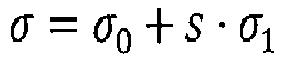 , C'0,
C ) under vk;o A second proof creation step (110), preferably executed by at least said receiver device REC (30) using at least a second proof module PR2 (34), of a prooffrom said proof , from Tag' and Σ' 0,Σ' 1 comprising:
 • A third randomization step by at least said second randomization module RM2 (32) of the tag Tag' into Tag" ;• A fourth computation step by at least said second computational module CM2 (33) of the signature Σ": Σ" being a valid signature of (, C'0,
C ') under VK for the tag Tag";o A storing step (111), preferably executed by the receiver device REC (30) using at least a storing module STM (35), of the ciphertext (C' 0,C '), together with said proofcomprising (Tag", Σ"), and with the signature (vk, σ), which are.configured to be publicly verified and wherein: • Tag" is a valid tag;• Σ" is a valid signature on (, C'0,
C '), under VK for the tag Tag" allowing.to prove that the plaintext is in the subset; • σ is a valid signature on (, C'0,
C '), under vk. - The method (100) according to the previous claim wherein, in a bilinear setting


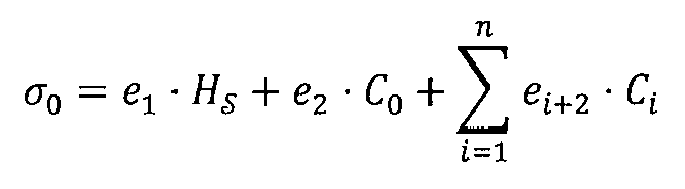

- The method (100) according to the previous claim wherein:o four random points
 o the proof, from Tag j and Σ j,0 ,Σ j,1, is generated such as:
 , C 0,
C ) under VK for the tag Tag = Tag j , and wherein Σ 1 is a valid signature of (0, P,Z ) under VK for the tag Tag = Tag j ;o the generation step comprises generating a Diffie-Hellman value W = r · H, for H = ∘ the sending step from the sender device SEND (20) to the receiver device REC (30) comprises the sending of the value W and of the proof π.∘ the verification step comprises the verification of the validity of the Diffie-Hellman proof π on the tuple
 ∘ the randomizer (0, D 0,
D ) is equal to (0, P,Z ) such as D 0 = P andD = Z wherein P is the generator ofand
Z is the public encryption key;o the randomization of said EIGamal ciphertext (C 0,C ) to generate the ciphertext (C'0,C ') using a random scalar
 o the second computation step comprises a computation of the randomized Groth-Sahai proof π', π' being a valid Diffie-Hellman proof on the tuple
 ∘ the storing step comprises the storing of (W', π').
 - The method (100) according to claim 1 wherein, in a bilinear setting (
 o four random points
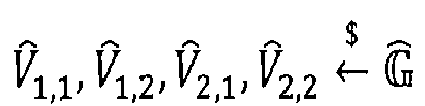 o the pair of linearly homomorphic signing-verification keys SK and VK are generated such as
 o the N verifiable tags Tag j are generated such as
 o the N pairs of signatures, for j = 1, ..., N, on
M j =x j · P are generated such as:
 o (D 0,
D ) are defined as:

 ∘ the proofis generated, from Tag j and Σj,0 ,Σ j,1 such as:
 wherein Σ'0 is a valid signature of (, C 0,
C ) under VK for the tag Tag'0 = (r + 1) · Tag andwherein Σ' 1 is a valid signature of (0, D 0,D ) under VK for the tag Tag'1 = r' · Tag;o the generation step (104) comprises the generation of Diffie-Hellman values W = r · H and W' = r' · H, for o the sending step (105) from the sender device SEND (20) to the receiver device REC (30) comprises the sending of the proofcomprising (Tag'0, Tag'1; Σ'0, Σ'1), and (W, W',π, π')
 o the verification step (106) comprises verifying that:• the tags Tag'0 and Tag'1 are valid;• the signature Σ'0 is valid on the message (, C 0,
C ) and tag Tag'0 under VK;• the signature Σ' 1 is valid on the message (0, D 0,D ) and tag Tag'1 under VK;• the signature σ 0 is valid on the message (, C 0,
C ) under vk;• the signature σ 1 is valid on the message (0, D 0,D ) under vk;• the Diffie-Hellman proofs π is valid on the tuples (P, C0, H, W) and π' is valid on the tuples (P, D 0, H, W').o the third randomization step of the tag Tag' into Tag" is such as: o the fourth computation step of the signatures Σ" and σ is such as:
 o the second computation step (108) comprises a computation of the randomized Groth-Sahai proof π", for W" = W + s · W', using s, π and π'.o the storing step (111) comprises the storing of (W", π").
 - The method (100) according to claim 4 wherein said, public parameters VK, (V̂ 1,1, V̂ 1,2, V̂ 2,1, V̂ 2,2), and (Tagj,Σ j,0,Σ j,1) for j = 1, ... , N, are generated in a distributed way between multiple independent parties
 o Said multiple independent parties
 o Each party
 o the pair of linearly homomorphic signing-verification keys SK and VK are generated by each party


 o the N verifiable tags Tag j are generated in two steps, where each party
 • Each
 • Each
 o the N pairs of signatures, for j = 1, ..., N, on
M j =x j · P are also generated in a distributed way, where each


 , 0,
, 0,
M j ) and of (0, P,Z ) respectively, under VK for said tag Tag j . - The method (100) according to claim 3 wherein:o the N verifiable tags Tag j are generated such as Tag j = (τ j,1 = 1/tj · P,τ j,2 = 1/tj · P̂), with
 o the N pairs of signatures, for j = 1, ..., N, on
M j =x j · P are generated such as: o the randomization of at least Tag = (τ 1, τ 2) into Tag' = (τ'1, τ' 2), for a random
 o the computation of Σ 0 and Σ 1 into Σ'0 and Σ'1, respectively, is such as:
 o the randomizer (0, D 0,
D ) is equal to (0, P,Z ) such as D 0 = P andD =Z wherein P is the generator ofand
Z is the public encryption key. The signatures σ 0 and σ 1 are such as:
 ∘ the verification step (106) comprises the verification of the following equalities:


 and
and

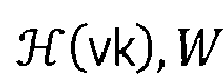 ∘ the third randomization step of the tag Tag' into Tag" is such as:
 ∘ the second computation step (108) of the signatures Σ into Σ': Σ' being a valid signature of (, C' 0 ,
C ') under VK for the tag Tag", is such as: ∘ the second computation step (108) comprises a computation of the randomized Groth-Sahai proof π', for W' = W + s · H, using s and π.∘ the storing step (111) comprises the storing of (W',π').
 - A computer program product which, when executed by at least one processor, executes the method according to any one of the previous claims.
- A non-volatile memory comprising at least one computer program product according to the previous claim.
- A voting system configured to execute the method according to any one of the claims 1 to 6, said voting system comprising at least:∘ One authority device AUT (10) comprising at least one initialization module IM (11), said initialization module IM (11) being configured to execute said initialization step (101).∘ One sender device SEND (20) comprising at least:• An encryption module EM (21) being configured to execute said ciphertext creation step (102).• A first proof module PM1 (22) being configured to execute said proof creation step (103). Said first proof module PM1 (22) comprising at least:▪ A first randomization module RM1 (23) being configured to execute said first randomization step;▪ A first computational module CM1 (24) being configured to execute said first computation step.• A generation module GM (25) being configured to execute said generation step (104);• A sending module SM (26) being configured to execute the sending step (105), and advantageously to communicate with at least one receiver device REC (30).∘ One receiver device REC (30) comprising at least:• A verification module VM (31) being configured to execute said verification step (106);• A second randomization module RM2 (32) being configured to execute said second randomization step (107), and the third randomization step;• A second computational module CM2 (33) being configured to execute said second computational step (108), said third computational step (109) and said fourth randomization step;• A second proof module PM2 (34) being configured to execute said second proof creation step (110);• A storing module STM (35) being configured to execute said storing step (111).
- The voting system according to claim 9 wherein at least one among the authority device AUT (10), the sender device SEND (20) and the receiver device REC (30) is taken among: a robot, a smartphone, an Internet of Thing device, an artificial intelligence, a computer.
Priority Applications (1)
| Application Number | Priority Date | Filing Date | Title |
|---|---|---|---|
| PCT/EP2024/062934 WO2024235853A1 (en) | 2023-05-12 | 2024-05-10 | A linearly homomorphic signature method and system for zero-knowledge proofs of subset membership |
Applications Claiming Priority (1)
| Application Number | Priority Date | Filing Date | Title |
|---|---|---|---|
| EP23173248 | 2023-05-12 |
Publications (3)
| Publication Number | Publication Date |
|---|---|
| EP4462722A1 true EP4462722A1 (en) | 2024-11-13 |
| EP4462722B1 EP4462722B1 (en) | 2025-12-31 |
| EP4462722C0 EP4462722C0 (en) | 2025-12-31 |
Family
ID=86383013
Family Applications (1)
| Application Number | Title | Priority Date | Filing Date |
|---|---|---|---|
| EP23315299.0A Active EP4462722B1 (en) | 2023-05-12 | 2023-07-28 | LINEAR HOMOMORPHETIC SIGNATURE METHOD AND SYSTEM FOR ZERO-KNOWLEDGE PROOF OF SUBJECT BELONGING |
Country Status (2)
| Country | Link |
|---|---|
| EP (1) | EP4462722B1 (en) |
| ES (1) | ES3059728T3 (en) |
-
2023
- 2023-07-28 ES ES23315299T patent/ES3059728T3/en active Active
- 2023-07-28 EP EP23315299.0A patent/EP4462722B1/en active Active
Non-Patent Citations (5)
| Title |
|---|
| DAVID POINTCHEVAL: "Linearly-Homomorphic Signatures for Short Randomizable Proofs of Subset Membership", vol. 20231001:152028, 1 October 2023 (2023-10-01), pages 1 - 22, XP061081414, Retrieved from the Internet <URL:https://eprint.iacr.org/archive/2023/1499/1696173628.pdf> [retrieved on 20231003] * |
| GEORG FUCHSBAUERCHRISTIAN HANSERDANIEL SLAMANIG: "Structure-Preserving Signatures on Equivalence Classes and Constant-Size Anonymous Credentials", J. CRYPTOL, vol. 32, no. 2, pages 498 - 546, XP037088140, DOI: 10.1007/s00145-018-9281-4 |
| H�BANT CHLO� ET AL: "Linearly-Homomorphic Signatures and Scalable Mix-Nets", 29 April 2020, PUBLIC-KEY CRYPTOGRAPHY - PKC 2020; [LECTURE NOTES IN COMPUTER SCIENCE; LECT.NOTES COMPUTER], SPRINGER INTERNATIONAL PUBLISHING, CHAM, PAGE(S) 597 - 627, ISBN: 978-3-030-45387-9, ISSN: 0302-9743, XP047659171 * |
| HENRI DEVILLEZ ET AL: "Traceable Receipt-Free Encryption", vol. 20220622:235217, 22 June 2022 (2022-06-22), pages 1 - 56, XP061073574, Retrieved from the Internet <URL:https://eprint.iacr.org/archive/2022/822/1655941937.pdf> [retrieved on 20220623] * |
| J. CRYPTOL., vol. 32, no. 2, pages 498 - 546 |
Also Published As
| Publication number | Publication date |
|---|---|
| EP4462722B1 (en) | 2025-12-31 |
| EP4462722C0 (en) | 2025-12-31 |
| ES3059728T3 (en) | 2026-03-23 |
Similar Documents
| Publication | Publication Date | Title |
|---|---|---|
| Kiayias et al. | End-to-end verifiable elections in the standard model | |
| Groth | Non-interactive zero-knowledge arguments for voting | |
| Gjøsteen | The Norwegian internet voting protocol | |
| Groth | Evaluating security of voting schemes in the universal composability framework | |
| Bernhard et al. | How not to prove yourself: Pitfalls of the fiat-shamir heuristic and applications to helios | |
| Grontas et al. | Towards everlasting privacy and efficient coercion resistance in remote electronic voting | |
| EP2860904A1 (en) | Method for signing a set of binary elements, and updating such signature, corresponding electronic device and computer program product | |
| US20170358161A1 (en) | End-to-end verifiable e-voting system without tallying authorities | |
| Araújo et al. | Towards practical and secure coercion-resistant electronic elections | |
| US20120294442A1 (en) | Joint encryption of data | |
| Haenni et al. | Cast-as-intended verification in electronic elections based on oblivious transfer | |
| Goh | Encryption schemes from bilinear maps | |
| Iovino et al. | Universal unconditional verifiability in e-voting without trusted parties | |
| WO2024235853A1 (en) | A linearly homomorphic signature method and system for zero-knowledge proofs of subset membership | |
| CN121690507A (en) | Randomizable label linear homomorphic signature electronic voting method and system based on algebraic group model | |
| Desmedt et al. | Applying divertibility to blind ballot copying in the helios internet voting system | |
| Pointcheval | Linearly-homomorphic signatures for short randomizable proofs of subset membership | |
| EP4462722B1 (en) | LINEAR HOMOMORPHETIC SIGNATURE METHOD AND SYSTEM FOR ZERO-KNOWLEDGE PROOF OF SUBJECT BELONGING | |
| Akinyokun et al. | Receipt-Free, Universally and Individually Verifiable Poll Attendance | |
| Kardaş et al. | Norwegian internet voting protocol revisited: ballot box and receipt generator are allowed to collude | |
| Blazy et al. | Round-optimal Constant-size Blind Signatures. | |
| Tsoutsos et al. | Cryptographic vote-stealing attacks against a partially homomorphic e-voting architecture | |
| Zeng et al. | Verifiable weighted electronic voting against tally leakage for popular voting methods | |
| Kohlweiss et al. | Accountable tracing signatures | |
| Yang et al. | RVBT: a remote voting scheme based on three-ballot |
Legal Events
| Date | Code | Title | Description |
|---|---|---|---|
| PUAI | Public reference made under article 153(3) epc to a published international application that has entered the european phase |
Free format text: ORIGINAL CODE: 0009012 |
|
| STAA | Information on the status of an ep patent application or granted ep patent |
Free format text: STATUS: THE APPLICATION HAS BEEN PUBLISHED |
|
| AK | Designated contracting states |
Kind code of ref document: A1 Designated state(s): AL AT BE BG CH CY CZ DE DK EE ES FI FR GB GR HR HU IE IS IT LI LT LU LV MC ME MK MT NL NO PL PT RO RS SE SI SK SM TR |
|
| STAA | Information on the status of an ep patent application or granted ep patent |
Free format text: STATUS: REQUEST FOR EXAMINATION WAS MADE |
|
| 17P | Request for examination filed |
Effective date: 20250512 |
|
| GRAP | Despatch of communication of intention to grant a patent |
Free format text: ORIGINAL CODE: EPIDOSNIGR1 |
|
| STAA | Information on the status of an ep patent application or granted ep patent |
Free format text: STATUS: GRANT OF PATENT IS INTENDED |
|
| INTG | Intention to grant announced |
Effective date: 20250721 |
|
| GRAS | Grant fee paid |
Free format text: ORIGINAL CODE: EPIDOSNIGR3 |
|
| GRAA | (expected) grant |
Free format text: ORIGINAL CODE: 0009210 |
|
| STAA | Information on the status of an ep patent application or granted ep patent |
Free format text: STATUS: THE PATENT HAS BEEN GRANTED |
|
| AK | Designated contracting states |
Kind code of ref document: B1 Designated state(s): AL AT BE BG CH CY CZ DE DK EE ES FI FR GB GR HR HU IE IS IT LI LT LU LV MC ME MK MT NL NO PL PT RO RS SE SI SK SM TR |
|
| REG | Reference to a national code |
Ref country code: CH Ref legal event code: F10 Free format text: ST27 STATUS EVENT CODE: U-0-0-F10-F00 (AS PROVIDED BY THE NATIONAL OFFICE) Effective date: 20251231 Ref country code: GB Ref legal event code: FG4D |
|
| REG | Reference to a national code |
Ref country code: DE Ref legal event code: R096 Ref document number: 602023010441 Country of ref document: DE |
|
| REG | Reference to a national code |
Ref country code: IE Ref legal event code: FG4D |
|
| REG | Reference to a national code |
Ref country code: CH Ref legal event code: R17 Free format text: ST27 STATUS EVENT CODE: U-0-0-R10-R17 (AS PROVIDED BY THE NATIONAL OFFICE) Effective date: 20260212 |
|
| U01 | Request for unitary effect filed |
Effective date: 20260122 |
|
| U07 | Unitary effect registered |
Designated state(s): AT BE BG DE DK EE FI FR IT LT LU LV MT NL PT RO SE SI Effective date: 20260128 |
|
| REG | Reference to a national code |
Ref country code: ES Ref legal event code: FG2A Ref document number: 3059728 Country of ref document: ES Kind code of ref document: T3 Effective date: 20260323 |
|
| PG25 | Lapsed in a contracting state [announced via postgrant information from national office to epo] |
Ref country code: NO Free format text: LAPSE BECAUSE OF FAILURE TO SUBMIT A TRANSLATION OF THE DESCRIPTION OR TO PAY THE FEE WITHIN THE PRESCRIBED TIME-LIMIT Effective date: 20260331 |
|
| PG25 | Lapsed in a contracting state [announced via postgrant information from national office to epo] |
Ref country code: HR Free format text: LAPSE BECAUSE OF FAILURE TO SUBMIT A TRANSLATION OF THE DESCRIPTION OR TO PAY THE FEE WITHIN THE PRESCRIBED TIME-LIMIT Effective date: 20251231 |
|
| PG25 | Lapsed in a contracting state [announced via postgrant information from national office to epo] |
Ref country code: RS Free format text: LAPSE BECAUSE OF FAILURE TO SUBMIT A TRANSLATION OF THE DESCRIPTION OR TO PAY THE FEE WITHIN THE PRESCRIBED TIME-LIMIT Effective date: 20260331 |
|
| PG25 | Lapsed in a contracting state [announced via postgrant information from national office to epo] |
Ref country code: SM Free format text: LAPSE BECAUSE OF FAILURE TO SUBMIT A TRANSLATION OF THE DESCRIPTION OR TO PAY THE FEE WITHIN THE PRESCRIBED TIME-LIMIT Effective date: 20251231 |
|
| PG25 | Lapsed in a contracting state [announced via postgrant information from national office to epo] |
Ref country code: PL Free format text: LAPSE BECAUSE OF FAILURE TO SUBMIT A TRANSLATION OF THE DESCRIPTION OR TO PAY THE FEE WITHIN THE PRESCRIBED TIME-LIMIT Effective date: 20251231 |
|
| PG25 | Lapsed in a contracting state [announced via postgrant information from national office to epo] |
Ref country code: IS Free format text: LAPSE BECAUSE OF FAILURE TO SUBMIT A TRANSLATION OF THE DESCRIPTION OR TO PAY THE FEE WITHIN THE PRESCRIBED TIME-LIMIT Effective date: 20260430 |
|
| PG25 | Lapsed in a contracting state [announced via postgrant information from national office to epo] |
Ref country code: CZ Free format text: LAPSE BECAUSE OF FAILURE TO SUBMIT A TRANSLATION OF THE DESCRIPTION OR TO PAY THE FEE WITHIN THE PRESCRIBED TIME-LIMIT Effective date: 20251231 |
|
| PG25 | Lapsed in a contracting state [announced via postgrant information from national office to epo] |
Ref country code: SK Free format text: LAPSE BECAUSE OF FAILURE TO SUBMIT A TRANSLATION OF THE DESCRIPTION OR TO PAY THE FEE WITHIN THE PRESCRIBED TIME-LIMIT Effective date: 20251231 |
|
| REG | Reference to a national code |
Ref country code: CH Ref legal event code: U11 Free format text: ST27 STATUS EVENT CODE: U-0-0-U10-U11 (AS PROVIDED BY THE NATIONAL OFFICE) Effective date: 20260801 |