EP4462375A1 - Apparatus and method for perceiving object - Google Patents
Apparatus and method for perceiving object Download PDFInfo
- Publication number
- EP4462375A1 EP4462375A1 EP23172553.2A EP23172553A EP4462375A1 EP 4462375 A1 EP4462375 A1 EP 4462375A1 EP 23172553 A EP23172553 A EP 23172553A EP 4462375 A1 EP4462375 A1 EP 4462375A1
- Authority
- EP
- European Patent Office
- Prior art keywords
- data
- labeling data
- labeling
- target object
- processor
- Prior art date
- Legal status (The legal status is an assumption and is not a legal conclusion. Google has not performed a legal analysis and makes no representation as to the accuracy of the status listed.)
- Granted
Links
Images


Classifications
-
- G—PHYSICS
- G06—COMPUTING OR CALCULATING; COUNTING
- G06V—IMAGE OR VIDEO RECOGNITION OR UNDERSTANDING
- G06V20/00—Scenes; Scene-specific elements
- G06V20/50—Context or environment of the image
- G06V20/56—Context or environment of the image exterior to a vehicle by using sensors mounted on the vehicle
- G06V20/58—Recognition of moving objects or obstacles, e.g. vehicles or pedestrians; Recognition of traffic objects, e.g. traffic signs, traffic lights or roads
-
- B—PERFORMING OPERATIONS; TRANSPORTING
- B60—VEHICLES IN GENERAL
- B60W—CONJOINT CONTROL OF VEHICLE SUB-UNITS OF DIFFERENT TYPE OR DIFFERENT FUNCTION; CONTROL SYSTEMS SPECIALLY ADAPTED FOR HYBRID VEHICLES; ROAD VEHICLE DRIVE CONTROL SYSTEMS FOR PURPOSES NOT RELATED TO THE CONTROL OF A PARTICULAR SUB-UNIT
- B60W40/00—Estimation or calculation of non-directly measurable driving parameters for road vehicle drive control systems not related to the control of a particular sub unit, e.g. by using mathematical models
- B60W40/02—Estimation or calculation of non-directly measurable driving parameters for road vehicle drive control systems not related to the control of a particular sub unit, e.g. by using mathematical models related to ambient conditions
-
- G—PHYSICS
- G06—COMPUTING OR CALCULATING; COUNTING
- G06F—ELECTRIC DIGITAL DATA PROCESSING
- G06F16/00—Information retrieval; Database structures therefor; File system structures therefor
- G06F16/20—Information retrieval; Database structures therefor; File system structures therefor of structured data, e.g. relational data
- G06F16/22—Indexing; Data structures therefor; Storage structures
- G06F16/2228—Indexing structures
-
- G—PHYSICS
- G06—COMPUTING OR CALCULATING; COUNTING
- G06F—ELECTRIC DIGITAL DATA PROCESSING
- G06F16/00—Information retrieval; Database structures therefor; File system structures therefor
- G06F16/20—Information retrieval; Database structures therefor; File system structures therefor of structured data, e.g. relational data
- G06F16/28—Databases characterised by their database models, e.g. relational or object models
- G06F16/284—Relational databases
- G06F16/285—Clustering or classification
-
- G—PHYSICS
- G06—COMPUTING OR CALCULATING; COUNTING
- G06V—IMAGE OR VIDEO RECOGNITION OR UNDERSTANDING
- G06V10/00—Arrangements for image or video recognition or understanding
- G06V10/20—Image preprocessing
- G06V10/255—Detecting or recognising potential candidate objects based on visual cues, e.g. shapes
-
- G—PHYSICS
- G06—COMPUTING OR CALCULATING; COUNTING
- G06V—IMAGE OR VIDEO RECOGNITION OR UNDERSTANDING
- G06V10/00—Arrangements for image or video recognition or understanding
- G06V10/70—Arrangements for image or video recognition or understanding using pattern recognition or machine learning
- G06V10/74—Image or video pattern matching; Proximity measures in feature spaces
- G06V10/75—Organisation of the matching processes, e.g. simultaneous or sequential comparisons of image or video features; Coarse-fine approaches, e.g. multi-scale approaches; using context analysis; Selection of dictionaries
- G06V10/751—Comparing pixel values or logical combinations thereof, or feature values having positional relevance, e.g. template matching
-
- B—PERFORMING OPERATIONS; TRANSPORTING
- B60—VEHICLES IN GENERAL
- B60W—CONJOINT CONTROL OF VEHICLE SUB-UNITS OF DIFFERENT TYPE OR DIFFERENT FUNCTION; CONTROL SYSTEMS SPECIALLY ADAPTED FOR HYBRID VEHICLES; ROAD VEHICLE DRIVE CONTROL SYSTEMS FOR PURPOSES NOT RELATED TO THE CONTROL OF A PARTICULAR SUB-UNIT
- B60W2420/00—Indexing codes relating to the type of sensors based on the principle of their operation
- B60W2420/40—Photo, light or radio wave sensitive means, e.g. infrared sensors
-
- B—PERFORMING OPERATIONS; TRANSPORTING
- B60—VEHICLES IN GENERAL
- B60W—CONJOINT CONTROL OF VEHICLE SUB-UNITS OF DIFFERENT TYPE OR DIFFERENT FUNCTION; CONTROL SYSTEMS SPECIALLY ADAPTED FOR HYBRID VEHICLES; ROAD VEHICLE DRIVE CONTROL SYSTEMS FOR PURPOSES NOT RELATED TO THE CONTROL OF A PARTICULAR SUB-UNIT
- B60W2420/00—Indexing codes relating to the type of sensors based on the principle of their operation
- B60W2420/40—Photo, light or radio wave sensitive means, e.g. infrared sensors
- B60W2420/403—Image sensing, e.g. optical camera
-
- B—PERFORMING OPERATIONS; TRANSPORTING
- B60—VEHICLES IN GENERAL
- B60W—CONJOINT CONTROL OF VEHICLE SUB-UNITS OF DIFFERENT TYPE OR DIFFERENT FUNCTION; CONTROL SYSTEMS SPECIALLY ADAPTED FOR HYBRID VEHICLES; ROAD VEHICLE DRIVE CONTROL SYSTEMS FOR PURPOSES NOT RELATED TO THE CONTROL OF A PARTICULAR SUB-UNIT
- B60W2420/00—Indexing codes relating to the type of sensors based on the principle of their operation
- B60W2420/40—Photo, light or radio wave sensitive means, e.g. infrared sensors
- B60W2420/408—Radar; Laser, e.g. lidar
-
- B—PERFORMING OPERATIONS; TRANSPORTING
- B60—VEHICLES IN GENERAL
- B60W—CONJOINT CONTROL OF VEHICLE SUB-UNITS OF DIFFERENT TYPE OR DIFFERENT FUNCTION; CONTROL SYSTEMS SPECIALLY ADAPTED FOR HYBRID VEHICLES; ROAD VEHICLE DRIVE CONTROL SYSTEMS FOR PURPOSES NOT RELATED TO THE CONTROL OF A PARTICULAR SUB-UNIT
- B60W2554/00—Input parameters relating to objects
- B60W2554/20—Static objects
-
- B—PERFORMING OPERATIONS; TRANSPORTING
- B60—VEHICLES IN GENERAL
- B60W—CONJOINT CONTROL OF VEHICLE SUB-UNITS OF DIFFERENT TYPE OR DIFFERENT FUNCTION; CONTROL SYSTEMS SPECIALLY ADAPTED FOR HYBRID VEHICLES; ROAD VEHICLE DRIVE CONTROL SYSTEMS FOR PURPOSES NOT RELATED TO THE CONTROL OF A PARTICULAR SUB-UNIT
- B60W2554/00—Input parameters relating to objects
- B60W2554/40—Dynamic objects, e.g. animals, windblown objects
Definitions
- Exemplary embodiments of the present disclosure relate to an apparatus and method for perceiving an object, and more particularly, to an apparatus and method for perceiving a surrounding object in an autonomous vehicle.
- An autonomous vehicle refers to a vehicle that autonomously determines its driving path by recognizing a surrounding environment by using a function for detecting and processing external information upon driving and that independently drives by using its electric power.
- the autonomous vehicle may drive up to its destination by itself while preventing a collision against an obstacle on a driving path although a driver does not manipulate a steering wheel, an acceleration pedal, or a brake and adjusting its vehicle speed and driving direction depending on a shape of a road.
- the autonomous vehicle may perform acceleration in a straight road and perform deceleration while changing its driving direction in accordance with curvature of a curved road in the curved road.
- the autonomous driving technology consists of perception, determination, and control functions.
- An autonomous driving system performs the perception function for recognizing, detecting, and tracking a moving object, a surrounding environment object, and a road situation by using a camera sensor, a LiDar sensor, and a radar sensor, performs the determination function for searching for a global path, analyzing a degree of risk, and determining a driving behavior based in the results of the perception function, and performs the control function for controlling the driving of a vehicle based on the results of the perception function and the determination function. Accordingly, in order to accurately and precisely determine and control an autonomous vehicle, an accurate perception function needs to be predetermined.
- Various embodiments are directed to providing an apparatus and method for perceiving an object, which can provide a more accurate and precise perception function in an autonomous driving system.
- an apparatus for perceiving an object includes memory that is memory for storing reference labeling data required to perceive an object around an ego vehicle, wherein the reference labeling data defines the type of object that is a target of perception, and a processor configured to extract actual labeling data, corresponding to the reference labeling data, from the results of the detection of a target object by a sensor of the ego vehicle and to perceive the target object by comparing the extracted actual labeling data and the reference labeling data.
- the reference labeling data includes one or more visible parameters detectable by the sensor.
- the one or more visible parameters include at least one of (i) the height of a head lamp based on the ground, (ii) the height of a tail lamp based on the ground, (iii) a distance between the head lamps on left and right sides thereof and a distance between the tail lamps on left and right sides thereof, (iv) reflectivity of an object or a part that constitutes the object, and (v) luminance of the head lamp or the tail lamp.
- the reference labeling data includes first to N-th reference labeling data (N is a natural number equal to or greater than 2).
- the reference labeling data define various types of objects, respectively.
- the processor determines whether the target object corresponds to an object that is defined by the M-th reference labeling data (M is a natural number greater than or equal to 1 and less than or equal to N) by using a labeling-based perception process.
- the labeling-based perception process is a process of determining whether a first condition in which each visible parameter included in the actual labeling data and each visible parameter included in the M-th reference labeling data (M is a natural number greater than or equal to 1 and less than or equal to N) are identical with each other is satisfied.
- the memory further stores reference shape data for perceiving the object around the ego vehicle along with the reference labeling data.
- the processor determines actual shape data of the target object based on the results of the detection of the target object by the sensor and perceives the target object by comparing the determined actual shape data and the reference shape data.
- the reference shape data includes first to N-th reference shape data (N is a natural number equal to or greater than 2).
- the reference shape data defines various types of objects, respectively.
- the processor determines whether the target object corresponds to an object that is defined by the M-th reference shape data by using a shape-based perception process.
- the shape-based perception process is a process of determining whether a second condition in which the actual shape data and the M-th reference shape data are identical with each other is satisfied.
- the processor performs the labeling-based perception process and the shape-based perception process in parallel.
- the processor perceives the target object as the object that is defined by the M-th reference labeling data if the first condition is determined to have been satisfied as a result of the labeling-based perception process and the second condition is determined to have been satisfied as a result of the shape-based perception process.
- a method of perceiving an object includes detecting, by a processor, a target object around an ego vehicle by using a sensor of the ego vehicle, extracting, by the processor, actual labeling data, corresponding to reference labeling data stored in memory, from results of the detection by the sensor, the reference labeling data is data required to perceive an object around the ego vehicle and defines the type of object that is a target of perception, comparing, by the processor, the extracted actual labeling data and the reference labeling data, and perceiving, by the processor, the target object based on a result of the comparison between the actual labeling data and the reference labeling data.
- perception accuracy of a target object can be improved by perceiving the target object around an ego vehicle in a way to apply labeling data and shape data that define the type of object, that is, a target of perception, in an overlapping manner.
- FIG. 1 is a block diagram illustrating an apparatus for perceiving an object according to the present embodiment.
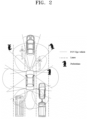
- FIG. 2 is an exemplary diagram illustrating a detection range of a sensor in the apparatus for perceiving an object according to the present embodiment.
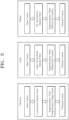
- FIG. 3 is an exemplary diagram illustrating an operation of a sensor in the apparatus for perceiving an object according to the present embodiment.
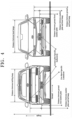
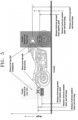
- FIGS. 4 and 5 are exemplary diagrams for describing labeling data in the apparatus for perceiving an object according to the present embodiment.
- the apparatus for perceiving an object includes a sensor module 100, memory 200, and a processor 300.
- the sensor module 100 may include a plurality of sensors for detecting an object around an ego vehicle.
- the sensor module 100 may include a camera sensor, a LiDar sensor, a radar sensor, or an infrared sensor.
- the sensor module 100 may be mounted at a specific location of a vehicle so that field of views (FOVs) for all the direction of the vehicle, such as FOVs illustrated in FIG. 2 , can be secured.
- FOVs field of views
- FIG. 3 a frame that is obtained by each sensor is transferred to the processor 300 to be described later through a plurality of filtering processes.
- the memory 200 stores various data that are necessary for the processor 300 to perceive an object around an ego vehicle.
- the memory 200 collectively refers to a nonvolatile storage device and a volatile storage device.
- the memory 200 may include NAND flash memory such as a compact flash (CF) card, a secure digital (SD) card, a memory stick, a solid-state drive (SSD), and a micro SD card, magnetic computer memory devices such as a hard disk drive (HDD), and optical disc drives such as CD-ROM and DVD-ROM.
- NAND flash memory such as a compact flash (CF) card, a secure digital (SD) card, a memory stick, a solid-state drive (SSD), and a micro SD card
- magnetic computer memory devices such as a hard disk drive (HDD)
- HDD hard disk drive
- optical disc drives such as CD-ROM and DVD-ROM.
- reference labeling data that is necessary to perceive an object around an ego vehicle is stored in the memory 200.
- the reference labeling data defines the type of object, that is, a target of perception, and may be constructed to include one or more visible parameters which may be detected by the sensor module 100.
- the visible parameters that are included in the reference labeling data may include at least one of (i) the height of a head lamp (hereinafter referred to as "H1") based on the ground, (ii) the height of a tail lamp (hereinafter referred to as "H2”) based on the ground, (iii) a distance between the head lamps on the left and right sides thereof and a distance between the tail lamps on the left and right sides thereof and (hereinafter referred to as "D"), (iv) reflectivity (hereinafter referred to as "R”) of an object (a vehicle itself) or a part (e.g., the license plate of a vehicle) that constitutes the object, (v) luminance (hereinafter referred to as "L”) of the head lamp or the tail lamp.
- FIG. 4 illustrates visible parameters by taking a four-wheel vehicle as an example.
- FIG. 5 illustrates visible parameters by taking a two-wheel vehicle as an example.
- the reference labeling data is constructed to include first to N-th reference labeling data (N is a natural number equal to or greater than 2).
- the reference labeling data defines various types of objects, respectively.
- a plurality of reference labeling data that define a passenger vehicle, a utility vehicle, a bus, a trailer, an ambulance, a fire truck, a recovery vehicle, and a cleaning vehicle (i.e., four-wheel vehicles), a motorcycle and a bicycle (i.e., two-wheel vehicles), and other three-wheel vehicles, respectively, may be defined in the memory 200.
- the memory 200 further stores reference shape data for perceiving an object around an ego vehicle along with the reference labeling data.
- the reference shape data is constructed to include first to N-th reference shape data.
- the reference shape data defines various types of objects, respectively. For example, a plurality of reference shape data that defines a passenger vehicle, a utility vehicle, a bus, a trailer, an ambulance, a fire truck, a recovery vehicle, a cleaning vehicle (i.e., four-wheel vehicles), a motorcycle and a bicycle (i.e., two-wheel vehicles), and other three-wheel vehicles, respectively, may be defined in the memory 200.
- the plurality of reference shape data functions as shape data of an object, which was used for a conventional autonomous driving system to perceive a surrounding object.
- the processor 300 is a main subject that perceives a target object based on the results of the detection of the target object around an ego vehicle by the sensor module 100, and may be implemented as a central processing unit (CPU) or a system on chip (SoC).
- the processor 300 may control a plurality of hardware or software components connected to the processor 300 by driving an operating system or an application, and may perform various types of data processing and operations.
- the processor 300 may be constructed to execute at least one instruction that has been stored in the memory 200 and to store the results of the execution in the memory 200 as data.
- the processor 300 operates to extract actual labeling data, corresponding to reference labeling data, from the results of the detection of a target object by the sensor module 100 and to perceive the target object by comparing the extracted actual labeling data and the reference labeling data.
- a process of perceiving a target object based on reference labeling data is defined as a labeling-based perception process.
- the labeling-based perception process is applied to determine whether a target object corresponds to an object that is defined by M-th reference labeling data, among first to N-th reference labeling data. Specifically, the processor 300 determines whether a first condition in which a visible parameter included in each actual labeling data and each visible parameter included in the M-th reference labeling data are identical with each other is satisfied through the labeling-based perception process.
- reference labeling data having a visible parameter identical with the visible parameter of the actual labeling data is M-th reference labeling data and the M-th reference labeling data defines a "passenger vehicle”
- the processor 300 perceives a target object as a passenger vehicle that is defined by the M-th reference labeling data.
- the processor 300 may operate to determine actual shape data of a target object from the results of the detection of the target object by a sensor and to perceive the target object by comparing the determined actual shape data and reference shape data.
- a process of perceiving a target object based on reference shape data is defined as a shape-based perception process.
- the shape-based perception process is applied to determine whether a target object corresponds to an object that is defined by M-th reference shape data, among first to N-th reference shape data. Specifically, the processor 300 determines whether a second condition in which actual shape data and the M-th reference shape data are identical with each other is satisfied through the shape-based perception process. That is, the shape-based perception process corresponds to a conventional perception process of perceiving the type of object by determining whether an actual shape of the corresponding object and a reference shape that has been stored in the memory 200 are identical with each other.
- the processor 300 performs the labeling-based perception process and the shape-based perception process in parallel. If the first condition is determined to have been satisfied based on the results of the labeling-based perception process and the second condition is determined to have been satisfied based on the results of the shape-based perception process, the processor 300 perceives a target object as an object that is defined by M-th reference labeling data. That is, if the first and second conditions according to each of the conventional shape-based perception process and the labeling-based perception process presented in the present embodiment are simultaneously satisfied by applying the conventional shape-based perception process and the labeling-based perception process in an overlapping manner, a target object may be perceived. Accordingly, perception accuracy of the target object can be improved. If any one of the first and second conditions has not been satisfied, the processor 300 may output, to a user, a warning that provides notification of the abnormality of the perception function of an autonomous driving system, and may discard corresponding actual data.
- FIG. 6 is a flowchart illustrating a method of perceiving an object according to the present embodiment. The method of perceiving an object according to the present embodiment is described with reference to FIG. 6 . A detailed description that is redundant with the aforementioned contents is omitted, and a time-series construction is basically described.
- the processor 300 detects a target object around an ego vehicle through the sensor module 100 (S100).
- the processor 300 extracts actual labeling data, corresponding to reference labeling data, from the results of the detection by the sensor module 100 (S200).
- the processor 300 determines actual shape data of the target object based on the results of the detection by the sensor module 100 (S300).
- the processor 300 determines whether the first condition according to the labeling-based perception process is satisfied and whether the second condition according to the shape-based perception process is satisfied (S400). That is, the processor 300 determines whether the first condition each visible parameter included in the actual labeling data and each visible parameter included in M-th reference labeling data are identical with each other is satisfied, and simultaneously determines whether the second condition in which the actual shape data and the M-th reference shape data are identical with each other is satisfied.
- step S400 the processor 300 perceives the target object as an object that is defined by the M-th reference labeling data (S500).
- step S400 the processor 300 outputs, to a user, a warning that provides notification of the abnormality of the perception function of an autonomous driving system, and discards corresponding actual data (S600).
- perception accuracy of a target object can be improved by perceiving the target object around an ego vehicle in a way to apply labeling data and shape data that define the type of object, that is, a target of perception, in an overlapping manner.
- An implementation described in this specification may be realized as a method or process, an apparatus, a software program, a data stream, or a signal, for example.
- the apparatus may be implemented as proper hardware, software, or firmware.
- the method may be implemented in an apparatus, such as a processor commonly referring to a processing device, including a computer, a microprocessor, an integrated circuit, or a programmable logic device, for example.
- the processor includes a communication device, such as a computer, a cell phone, a mobile phone/personal digital assistant ("PDA”), and another device which facilitate the communication of information between end users.
- PDA mobile phone/personal digital assistant
Landscapes
- Engineering & Computer Science (AREA)
- Theoretical Computer Science (AREA)
- Physics & Mathematics (AREA)
- Databases & Information Systems (AREA)
- General Physics & Mathematics (AREA)
- Multimedia (AREA)
- General Engineering & Computer Science (AREA)
- Data Mining & Analysis (AREA)
- Software Systems (AREA)
- Computer Vision & Pattern Recognition (AREA)
- Mechanical Engineering (AREA)
- Transportation (AREA)
- Mathematical Physics (AREA)
- Automation & Control Theory (AREA)
- Artificial Intelligence (AREA)
- Medical Informatics (AREA)
- General Health & Medical Sciences (AREA)
- Evolutionary Computation (AREA)
- Computing Systems (AREA)
- Health & Medical Sciences (AREA)
- Traffic Control Systems (AREA)
Abstract
Description
- Exemplary embodiments of the present disclosure relate to an apparatus and method for perceiving an object, and more particularly, to an apparatus and method for perceiving a surrounding object in an autonomous vehicle.
- Today, the auto industry proceeds to implement autonomous driving for minimizing the intervention of a driver in the driving of a vehicle. An autonomous vehicle refers to a vehicle that autonomously determines its driving path by recognizing a surrounding environment by using a function for detecting and processing external information upon driving and that independently drives by using its electric power.
- The autonomous vehicle may drive up to its destination by itself while preventing a collision against an obstacle on a driving path although a driver does not manipulate a steering wheel, an acceleration pedal, or a brake and adjusting its vehicle speed and driving direction depending on a shape of a road. For example, the autonomous vehicle may perform acceleration in a straight road and perform deceleration while changing its driving direction in accordance with curvature of a curved road in the curved road.
- The autonomous driving technology consists of perception, determination, and control functions. An autonomous driving system performs the perception function for recognizing, detecting, and tracking a moving object, a surrounding environment object, and a road situation by using a camera sensor, a LiDar sensor, and a radar sensor, performs the determination function for searching for a global path, analyzing a degree of risk, and determining a driving behavior based in the results of the perception function, and performs the control function for controlling the driving of a vehicle based on the results of the perception function and the determination function. Accordingly, in order to accurately and precisely determine and control an autonomous vehicle, an accurate perception function needs to be predetermined.
- The background of the present disclosure was disclosed in
Korean Patent Application Publication No. 10-2017-0078096 (laid open on July 7, 2017 - Various embodiments are directed to providing an apparatus and method for perceiving an object, which can provide a more accurate and precise perception function in an autonomous driving system.
- In an embodiment, an apparatus for perceiving an object includes memory that is memory for storing reference labeling data required to perceive an object around an ego vehicle, wherein the reference labeling data defines the type of object that is a target of perception, and a processor configured to extract actual labeling data, corresponding to the reference labeling data, from the results of the detection of a target object by a sensor of the ego vehicle and to perceive the target object by comparing the extracted actual labeling data and the reference labeling data.
- In an embodiment, the reference labeling data includes one or more visible parameters detectable by the sensor.
- In an embodiment, the one or more visible parameters include at least one of (i) the height of a head lamp based on the ground, (ii) the height of a tail lamp based on the ground, (iii) a distance between the head lamps on left and right sides thereof and a distance between the tail lamps on left and right sides thereof, (iv) reflectivity of an object or a part that constitutes the object, and (v) luminance of the head lamp or the tail lamp.
- In an embodiment, the reference labeling data includes first to N-th reference labeling data (N is a natural number equal to or greater than 2). The reference labeling data define various types of objects, respectively. The processor determines whether the target object corresponds to an object that is defined by the M-th reference labeling data (M is a natural number greater than or equal to 1 and less than or equal to N) by using a labeling-based perception process. The labeling-based perception process is a process of determining whether a first condition in which each visible parameter included in the actual labeling data and each visible parameter included in the M-th reference labeling data (M is a natural number greater than or equal to 1 and less than or equal to N) are identical with each other is satisfied.
- In an embodiment, the memory further stores reference shape data for perceiving the object around the ego vehicle along with the reference labeling data. The processor determines actual shape data of the target object based on the results of the detection of the target object by the sensor and perceives the target object by comparing the determined actual shape data and the reference shape data.
- In an embodiment, the reference shape data includes first to N-th reference shape data (N is a natural number equal to or greater than 2). The reference shape data defines various types of objects, respectively. The processor determines whether the target object corresponds to an object that is defined by the M-th reference shape data by using a shape-based perception process. The shape-based perception process is a process of determining whether a second condition in which the actual shape data and the M-th reference shape data are identical with each other is satisfied.
- In an embodiment, the processor performs the labeling-based perception process and the shape-based perception process in parallel.
- In an embodiment, the processor perceives the target object as the object that is defined by the M-th reference labeling data if the first condition is determined to have been satisfied as a result of the labeling-based perception process and the second condition is determined to have been satisfied as a result of the shape-based perception process.
- In an embodiment, a method of perceiving an object includes detecting, by a processor, a target object around an ego vehicle by using a sensor of the ego vehicle, extracting, by the processor, actual labeling data, corresponding to reference labeling data stored in memory, from results of the detection by the sensor, the reference labeling data is data required to perceive an object around the ego vehicle and defines the type of object that is a target of perception, comparing, by the processor, the extracted actual labeling data and the reference labeling data, and perceiving, by the processor, the target object based on a result of the comparison between the actual labeling data and the reference labeling data.
- According to the present disclosure, perception accuracy of a target object can be improved by perceiving the target object around an ego vehicle in a way to apply labeling data and shape data that define the type of object, that is, a target of perception, in an overlapping manner.
-
-
FIG. 1 is a block diagram illustrating an apparatus for perceiving an object according to an embodiment of the present disclosure. -
FIG. 2 is an exemplary diagram illustrating a detection range of a sensor module in the apparatus for perceiving an object according to an embodiment of the present disclosure. -
FIG. 3 is an exemplary diagram illustrating an operation of the sensor module in the apparatus for perceiving an object according to an embodiment of the present disclosure. -
FIGS. 4 and5 are exemplary diagrams for describing labeling data in the apparatus for perceiving an object according to an embodiment of the present disclosure. -
FIG. 6 is a flowchart illustrating a method of perceiving an object according to an embodiment of the present disclosure. - Hereinafter, an apparatus and method for perceiving an object according to embodiments of the present disclosure are described with reference to the accompanying drawings. In this process, the thicknesses of lines or the sizes of elements illustrated in the drawings may have been exaggerated for the clarity of a description and for convenience' sake. Terms to be described below have been defined by taking into consideration their functions in the present disclosure, and may be changed depending on a user or operator's intention or practice. Accordingly, such terms should be defined based on the overall contents of this specification.
-
FIG. 1 is a block diagram illustrating an apparatus for perceiving an object according to the present embodiment.FIG. 2 is an exemplary diagram illustrating a detection range of a sensor in the apparatus for perceiving an object according to the present embodiment.FIG. 3 is an exemplary diagram illustrating an operation of a sensor in the apparatus for perceiving an object according to the present embodiment.FIGS. 4 and5 are exemplary diagrams for describing labeling data in the apparatus for perceiving an object according to the present embodiment. - Referring to
FIG. 1 , the apparatus for perceiving an object according to the present embodiment includes asensor module 100,memory 200, and aprocessor 300. - The
sensor module 100 may include a plurality of sensors for detecting an object around an ego vehicle. For example, thesensor module 100 may include a camera sensor, a LiDar sensor, a radar sensor, or an infrared sensor. Thesensor module 100 may be mounted at a specific location of a vehicle so that field of views (FOVs) for all the direction of the vehicle, such as FOVs illustrated inFIG. 2 , can be secured. As illustrated inFIG. 3 , a frame that is obtained by each sensor is transferred to theprocessor 300 to be described later through a plurality of filtering processes. - The
memory 200 stores various data that are necessary for theprocessor 300 to perceive an object around an ego vehicle. Thememory 200 collectively refers to a nonvolatile storage device and a volatile storage device. For example, thememory 200 may include NAND flash memory such as a compact flash (CF) card, a secure digital (SD) card, a memory stick, a solid-state drive (SSD), and a micro SD card, magnetic computer memory devices such as a hard disk drive (HDD), and optical disc drives such as CD-ROM and DVD-ROM. - In the present embodiment, reference labeling data that is necessary to perceive an object around an ego vehicle is stored in the
memory 200. The reference labeling data defines the type of object, that is, a target of perception, and may be constructed to include one or more visible parameters which may be detected by thesensor module 100. - The visible parameters that are included in the reference labeling data may include at least one of (i) the height of a head lamp (hereinafter referred to as "H1") based on the ground, (ii) the height of a tail lamp (hereinafter referred to as "H2") based on the ground, (iii) a distance between the head lamps on the left and right sides thereof and a distance between the tail lamps on the left and right sides thereof and (hereinafter referred to as "D"), (iv) reflectivity (hereinafter referred to as "R") of an object (a vehicle itself) or a part (e.g., the license plate of a vehicle) that constitutes the object, (v) luminance (hereinafter referred to as "L") of the head lamp or the tail lamp.
FIG. 4 illustrates visible parameters by taking a four-wheel vehicle as an example.FIG. 5 illustrates visible parameters by taking a two-wheel vehicle as an example. - The reference labeling data is constructed to include first to N-th reference labeling data (N is a natural number equal to or greater than 2). The reference labeling data defines various types of objects, respectively. For example, a plurality of reference labeling data that define a passenger vehicle, a utility vehicle, a bus, a trailer, an ambulance, a fire truck, a recovery vehicle, and a cleaning vehicle (i.e., four-wheel vehicles), a motorcycle and a bicycle (i.e., two-wheel vehicles), and other three-wheel vehicles, respectively, may be defined in the
memory 200. - The
memory 200 further stores reference shape data for perceiving an object around an ego vehicle along with the reference labeling data. Like the reference labeling data, the reference shape data is constructed to include first to N-th reference shape data. The reference shape data defines various types of objects, respectively. For example, a plurality of reference shape data that defines a passenger vehicle, a utility vehicle, a bus, a trailer, an ambulance, a fire truck, a recovery vehicle, a cleaning vehicle (i.e., four-wheel vehicles), a motorcycle and a bicycle (i.e., two-wheel vehicles), and other three-wheel vehicles, respectively, may be defined in thememory 200. The plurality of reference shape data functions as shape data of an object, which was used for a conventional autonomous driving system to perceive a surrounding object. - The
processor 300 is a main subject that perceives a target object based on the results of the detection of the target object around an ego vehicle by thesensor module 100, and may be implemented as a central processing unit (CPU) or a system on chip (SoC). Theprocessor 300 may control a plurality of hardware or software components connected to theprocessor 300 by driving an operating system or an application, and may perform various types of data processing and operations. Theprocessor 300 may be constructed to execute at least one instruction that has been stored in thememory 200 and to store the results of the execution in thememory 200 as data. - In the present embodiment, the
processor 300 operates to extract actual labeling data, corresponding to reference labeling data, from the results of the detection of a target object by thesensor module 100 and to perceive the target object by comparing the extracted actual labeling data and the reference labeling data. A process of perceiving a target object based on reference labeling data is defined as a labeling-based perception process. - The labeling-based perception process is applied to determine whether a target object corresponds to an object that is defined by M-th reference labeling data, among first to N-th reference labeling data. Specifically, the
processor 300 determines whether a first condition in which a visible parameter included in each actual labeling data and each visible parameter included in the M-th reference labeling data are identical with each other is satisfied through the labeling-based perception process. - As a detailed example, when a visible parameter of actual labeling data corresponds to "(H1, H2, D, R, L) = (α, β, γ, δ, ε)", if reference labeling data having a visible parameter identical with the visible parameter of the actual labeling data is M-th reference labeling data and the M-th reference labeling data defines a "passenger vehicle", the
processor 300 perceives a target object as a passenger vehicle that is defined by the M-th reference labeling data. - In parallel to the labeling-based perception process, the
processor 300 may operate to determine actual shape data of a target object from the results of the detection of the target object by a sensor and to perceive the target object by comparing the determined actual shape data and reference shape data. A process of perceiving a target object based on reference shape data is defined as a shape-based perception process. - The shape-based perception process is applied to determine whether a target object corresponds to an object that is defined by M-th reference shape data, among first to N-th reference shape data. Specifically, the
processor 300 determines whether a second condition in which actual shape data and the M-th reference shape data are identical with each other is satisfied through the shape-based perception process. That is, the shape-based perception process corresponds to a conventional perception process of perceiving the type of object by determining whether an actual shape of the corresponding object and a reference shape that has been stored in thememory 200 are identical with each other. - The
processor 300 performs the labeling-based perception process and the shape-based perception process in parallel. If the first condition is determined to have been satisfied based on the results of the labeling-based perception process and the second condition is determined to have been satisfied based on the results of the shape-based perception process, theprocessor 300 perceives a target object as an object that is defined by M-th reference labeling data. That is, if the first and second conditions according to each of the conventional shape-based perception process and the labeling-based perception process presented in the present embodiment are simultaneously satisfied by applying the conventional shape-based perception process and the labeling-based perception process in an overlapping manner, a target object may be perceived. Accordingly, perception accuracy of the target object can be improved. If any one of the first and second conditions has not been satisfied, theprocessor 300 may output, to a user, a warning that provides notification of the abnormality of the perception function of an autonomous driving system, and may discard corresponding actual data. -
FIG. 6 is a flowchart illustrating a method of perceiving an object according to the present embodiment. The method of perceiving an object according to the present embodiment is described with reference toFIG. 6 . A detailed description that is redundant with the aforementioned contents is omitted, and a time-series construction is basically described. - First, the
processor 300 detects a target object around an ego vehicle through the sensor module 100 (S100). - Next, the
processor 300 extracts actual labeling data, corresponding to reference labeling data, from the results of the detection by the sensor module 100 (S200). - In parallel to step S200, the
processor 300 determines actual shape data of the target object based on the results of the detection by the sensor module 100 (S300). - After steps S200 and S300, the
processor 300 determines whether the first condition according to the labeling-based perception process is satisfied and whether the second condition according to the shape-based perception process is satisfied (S400). That is, theprocessor 300 determines whether the first condition each visible parameter included in the actual labeling data and each visible parameter included in M-th reference labeling data are identical with each other is satisfied, and simultaneously determines whether the second condition in which the actual shape data and the M-th reference shape data are identical with each other is satisfied. - If both the first and second conditions are satisfied in step S400, the
processor 300 perceives the target object as an object that is defined by the M-th reference labeling data (S500). - If any one of the first and second conditions is not satisfied in step S400, the
processor 300 outputs, to a user, a warning that provides notification of the abnormality of the perception function of an autonomous driving system, and discards corresponding actual data (S600). - As described above, according to the present embodiment, perception accuracy of a target object can be improved by perceiving the target object around an ego vehicle in a way to apply labeling data and shape data that define the type of object, that is, a target of perception, in an overlapping manner.
- An implementation described in this specification may be realized as a method or process, an apparatus, a software program, a data stream, or a signal, for example. Although the present disclosure has been discussed only in the context of a single form of an implementation (e.g., discussed as only a method), an implementation of a discussed characteristic may also be realized in another form (e.g., an apparatus or program). The apparatus may be implemented as proper hardware, software, or firmware. The method may be implemented in an apparatus, such as a processor commonly referring to a processing device, including a computer, a microprocessor, an integrated circuit, or a programmable logic device, for example. The processor includes a communication device, such as a computer, a cell phone, a mobile phone/personal digital assistant ("PDA"), and another device which facilitate the communication of information between end users.
- The present disclosure has been described above based on the embodiments illustrated in the accompanying drawings, but the embodiments are merely illustrative. A person having ordinary knowledge in the art to which the present disclosure pertains will understand that various modifications and other equivalent embodiments are possible from the embodiments. Accordingly, the true technical range of protection of the present disclosure should be determined by the technical spirit of the claims.
-
- 100: sensor module
- 200: memory
- 300: processor
Claims (15)
- An apparatus for perceiving an object, comprising:a memory that is a memory for storing reference labeling data required to perceive an object around an ego vehicle, wherein the reference labeling data defines a type of object that is a target of perception; anda processor configured to extract actual labeling data, corresponding to the reference labeling data, from results of a detection of a target object by a sensor of the ego vehicle and to perceive the target object by comparing the extracted actual labeling data and the reference labeling data.
- The apparatus of claim 1, wherein the reference labeling data comprises one or more visible parameters detectable by the sensor.
- The apparatus of claim 2, wherein the one or more visible parameters comprise at least one of (i) a height of a head lamp based on a ground, (ii) a height of a tail lamp based on the ground, (iii) a distance between the head lamps on left and right sides thereof and a distance between the tail lamps on left and right sides thereof, (iv) reflectivity of an object or a part that constitutes the object, and (v) luminance of the head lamp or the tail lamp.
- The apparatus of claim 2 or 3, wherein:the reference labeling data comprises first to N-th reference labeling data (N is a natural number equal to or greater than 2),the reference labeling data define various types of objects, respectively,the processor determines whether the target object corresponds to an object that is defined by the M-th reference labeling data (M is a natural number greater than or equal to 1 and less than or equal to N) by using a labeling-based perception process, andthe labeling-based perception process is a process of determining whether a first condition in which each visible parameter included in the actual labeling data and each visible parameter included in the M-th reference labeling data (M is a natural number greater than or equal to 1 and less than or equal to N) are identical with each other is satisfied.
- The apparatus of claim 4, wherein:the memory further stores reference shape data for perceiving the object around the ego vehicle along with the reference labeling data, andthe processor determines actual shape data of the target object based on the results of the detection of the target object by the sensor and perceives the target object by comparing the determined actual shape data and the reference shape data.
- The apparatus of claim 5, wherein:the reference shape data comprises first to N-th reference shape data (N is a natural number equal to or greater than 2),the reference shape data defines various types of objects, respectively,the processor determines whether the target object corresponds to an object that is defined by the M-th reference shape data by using a shape-based perception process, andthe shape-based perception process is a process of determining whether a second condition in which the actual shape data and the M-th reference shape data are identical with each other is satisfied.
- The apparatus of claim 6, wherein the processor performs the labeling-based perception process and the shape-based perception process in parallel.
- The apparatus of claim 6 or 7, wherein the processor perceives the target object as the object that is defined by the M-th reference labeling data if the first condition is determined to have been satisfied as a result of the labeling-based perception process and the second condition is determined to have been satisfied as a result of the shape-based perception process.
- A method of perceiving an object, comprising:detecting, by a processor, a target object around an ego vehicle by using a sensor of the ego vehicle;extracting, by the processor, actual labeling data, corresponding to reference labeling data stored in memory, from results of the detection by the sensor, the reference labeling data is data required to perceive an object around the ego vehicle and defines a type of object that is a target of perception;comparing, by the processor, the extracted actual labeling data and the reference labeling data; andperceiving, by the processor, the target object based on a result of the comparison between the actual labeling data and the reference labeling data.
- The method of claim 9, wherein the reference labeling data comprises one or more visible parameters detectable by the sensor.
- The method of claim 10, wherein the one or more visible parameters comprise at least one of (i) a height of a head lamp based on a ground, (ii) a height of a tail lamp based on the ground, (iii) a distance between the head lamps on left and right sides thereof and a distance between the tail lamps on left and right sides thereof, (iv) reflectivity of an object or a part that constitutes the object, and (v) luminance of the head lamp or the tail lamp.
- The method of claim 10 or 11, wherein:the reference labeling data comprises first to N-th reference labeling data (N is a natural number equal to or greater than 2),the reference labeling data define various types of objects, respectively,in the comparing of the extracted actual labeling data and the reference labeling data, the processor performs a labeling-based perception process that is defined as a process of determining whether a first condition in which each visible parameter included in the actual labeling data and each visible parameter included in the M-th reference labeling data (M is a natural number greater than or equal to 1 and less than or equal to N) are identical with each other is satisfied andin the perceiving of the target object, the processor perceives the target object based on a result of the labeling-based perception process.
- The method of claim 12, wherein:the memory further stores reference shape data for perceiving the object around the ego vehicle along with the reference labeling data,the method further comprises determining, by the processor, actual shape data of the target object based on the results of the detection of the target object by the sensor, andin the perceiving of the target object, the processor perceives the target object by comparing the determined actual shape data and the reference shape data.
- The method of claim 13, wherein:the reference shape data comprises first to N-th reference shape data (N is a natural number equal to or greater than 2),the reference shape data defines various types of objects, respectively,in the comparing of the extracted actual labeling data and the reference labeling data, the processor performs a shape-based perception process that is defined as a process of determining whether a second condition in which the actual shape data and the M-th reference shape data are identical with each other is satisfied, andin the perceiving of the target object, the processor perceives the target object based on a result of the shape-based perception process.
- The method of claim 13 or 14, wherein in the perceiving of the target object, the processor perceives the target object as the object that is defined by the M-th reference labeling data if the first condition is determined to have been satisfied as a result of the labeling-based perception process and the second condition is determined to have been satisfied as a result of the shape-based perception process.
Priority Applications (2)
| Application Number | Priority Date | Filing Date | Title |
|---|---|---|---|
| EP23172553.2A EP4462375B1 (en) | 2023-05-10 | 2023-05-10 | Apparatus and method for perceiving object |
| KR1020230061056A KR20240163483A (en) | 2023-05-10 | 2023-05-11 | Apparatus and method for perceiving object |
Applications Claiming Priority (1)
| Application Number | Priority Date | Filing Date | Title |
|---|---|---|---|
| EP23172553.2A EP4462375B1 (en) | 2023-05-10 | 2023-05-10 | Apparatus and method for perceiving object |
Publications (2)
| Publication Number | Publication Date |
|---|---|
| EP4462375A1 true EP4462375A1 (en) | 2024-11-13 |
| EP4462375B1 EP4462375B1 (en) | 2025-12-10 |
Family
ID=86331205
Family Applications (1)
| Application Number | Title | Priority Date | Filing Date |
|---|---|---|---|
| EP23172553.2A Active EP4462375B1 (en) | 2023-05-10 | 2023-05-10 | Apparatus and method for perceiving object |
Country Status (2)
| Country | Link |
|---|---|
| EP (1) | EP4462375B1 (en) |
| KR (1) | KR20240163483A (en) |
Citations (3)
| Publication number | Priority date | Publication date | Assignee | Title |
|---|---|---|---|---|
| US20150185003A1 (en) * | 2013-12-27 | 2015-07-02 | Mando Corporation | System for measuring vehicle distance and method thereof |
| KR20170078096A (en) | 2015-12-29 | 2017-07-07 | 서울대학교산학협력단 | Control method for self-control driving vehicle |
| WO2018127789A1 (en) * | 2017-01-03 | 2018-07-12 | Innoviz Technologies Ltd. | Lidar systems and methods for detection and classification of objects |
-
2023
- 2023-05-10 EP EP23172553.2A patent/EP4462375B1/en active Active
- 2023-05-11 KR KR1020230061056A patent/KR20240163483A/en active Pending
Patent Citations (3)
| Publication number | Priority date | Publication date | Assignee | Title |
|---|---|---|---|---|
| US20150185003A1 (en) * | 2013-12-27 | 2015-07-02 | Mando Corporation | System for measuring vehicle distance and method thereof |
| KR20170078096A (en) | 2015-12-29 | 2017-07-07 | 서울대학교산학협력단 | Control method for self-control driving vehicle |
| WO2018127789A1 (en) * | 2017-01-03 | 2018-07-12 | Innoviz Technologies Ltd. | Lidar systems and methods for detection and classification of objects |
Also Published As
| Publication number | Publication date |
|---|---|
| EP4462375B1 (en) | 2025-12-10 |
| KR20240163483A (en) | 2024-11-19 |
Similar Documents
| Publication | Publication Date | Title |
|---|---|---|
| KR102610743B1 (en) | Apparatus for controlling lane change of vehicle, system having the same and method thereof | |
| US10118617B2 (en) | Vehicle control system | |
| US9555807B2 (en) | Automated vehicle parameter modification based on operator override | |
| KR102400555B1 (en) | Method and apparatus of controlling vehicle | |
| CN112406892B (en) | An Endogenous Guarantee Method for Functional Safety and Network Security of Intelligent Connected Vehicle Perception Decision-Making Module | |
| EP3552906B1 (en) | Lane change controller for vehicle, system including the same, and method thereof | |
| CN110371135B (en) | Apparatus and method for providing vehicle safety strategy | |
| US9478137B1 (en) | Detecting and communicating lane splitting maneuver | |
| CN104742901A (en) | Method and control device and detection device for recognizing an entry of a motor vehicle into a traffic lane opposite a driving direction | |
| US12423953B2 (en) | Distance determination from image data | |
| CN114590269B (en) | Vehicle Control Systems | |
| CN113830100A (en) | Vehicle and its control method | |
| CN115691159A (en) | A method, device, smart base station, and storage medium for crossing traffic control | |
| US20250115247A1 (en) | Apparatus and method for determining road environment | |
| US11798287B2 (en) | Driver assistance apparatus and method of controlling the same | |
| US20230245470A1 (en) | Driving assistance apparatus, vehicle, driving assistance method, and storage medium | |
| US12128884B2 (en) | Vehicle control apparatus, vehicle control method, and storage medium | |
| EP3643586B1 (en) | Driver assistance system | |
| US20250362132A1 (en) | Vehicle Control Device and Vehicle Control Method | |
| EP4462375B1 (en) | Apparatus and method for perceiving object | |
| CN116665161A (en) | Apparatus and method for detecting road signs and system for measuring position using the same | |
| KR20240019414A (en) | Driver assistance system, and control method for the same | |
| US20240391473A1 (en) | Method and device for controlling a driving function of a motor vehicle | |
| US12420781B2 (en) | Apparatus and method for controlling vehicle | |
| KR20210144123A (en) | Apparatus for evalutating adaptive cruise control system for vehicle |
Legal Events
| Date | Code | Title | Description |
|---|---|---|---|
| PUAI | Public reference made under article 153(3) epc to a published international application that has entered the european phase |
Free format text: ORIGINAL CODE: 0009012 |
|
| STAA | Information on the status of an ep patent application or granted ep patent |
Free format text: STATUS: THE APPLICATION HAS BEEN PUBLISHED |
|
| AK | Designated contracting states |
Kind code of ref document: A1 Designated state(s): AL AT BE BG CH CY CZ DE DK EE ES FI FR GB GR HR HU IE IS IT LI LT LU LV MC ME MK MT NL NO PL PT RO RS SE SI SK SM TR |
|
| STAA | Information on the status of an ep patent application or granted ep patent |
Free format text: STATUS: REQUEST FOR EXAMINATION WAS MADE |
|
| 17P | Request for examination filed |
Effective date: 20250206 |
|
| GRAP | Despatch of communication of intention to grant a patent |
Free format text: ORIGINAL CODE: EPIDOSNIGR1 |
|
| STAA | Information on the status of an ep patent application or granted ep patent |
Free format text: STATUS: GRANT OF PATENT IS INTENDED |
|
| INTG | Intention to grant announced |
Effective date: 20250715 |
|
| P01 | Opt-out of the competence of the unified patent court (upc) registered |
Free format text: CASE NUMBER: UPC_APP_6008_4462375/2025 Effective date: 20250904 |
|
| GRAS | Grant fee paid |
Free format text: ORIGINAL CODE: EPIDOSNIGR3 |
|
| GRAA | (expected) grant |
Free format text: ORIGINAL CODE: 0009210 |
|
| STAA | Information on the status of an ep patent application or granted ep patent |
Free format text: STATUS: THE PATENT HAS BEEN GRANTED |
|
| AK | Designated contracting states |
Kind code of ref document: B1 Designated state(s): AL AT BE BG CH CY CZ DE DK EE ES FI FR GB GR HR HU IE IS IT LI LT LU LV MC ME MK MT NL NO PL PT RO RS SE SI SK SM TR |
|
| REG | Reference to a national code |
Ref country code: CH Ref legal event code: F10 Free format text: ST27 STATUS EVENT CODE: U-0-0-F10-F00 (AS PROVIDED BY THE NATIONAL OFFICE) Effective date: 20251210 Ref country code: GB Ref legal event code: FG4D |
|
| REG | Reference to a national code |
Ref country code: DE Ref legal event code: R096 Ref document number: 602023009444 Country of ref document: DE |
|
| REG | Reference to a national code |
Ref country code: IE Ref legal event code: FG4D |
|
| PG25 | Lapsed in a contracting state [announced via postgrant information from national office to epo] |
Ref country code: ES Free format text: LAPSE BECAUSE OF FAILURE TO SUBMIT A TRANSLATION OF THE DESCRIPTION OR TO PAY THE FEE WITHIN THE PRESCRIBED TIME-LIMIT Effective date: 20251210 |
|
| REG | Reference to a national code |
Ref country code: LT Ref legal event code: MG9D |
|
| PG25 | Lapsed in a contracting state [announced via postgrant information from national office to epo] |
Ref country code: NO Free format text: LAPSE BECAUSE OF FAILURE TO SUBMIT A TRANSLATION OF THE DESCRIPTION OR TO PAY THE FEE WITHIN THE PRESCRIBED TIME-LIMIT Effective date: 20260310 |
|
| PG25 | Lapsed in a contracting state [announced via postgrant information from national office to epo] |
Ref country code: FI Free format text: LAPSE BECAUSE OF FAILURE TO SUBMIT A TRANSLATION OF THE DESCRIPTION OR TO PAY THE FEE WITHIN THE PRESCRIBED TIME-LIMIT Effective date: 20251210 Ref country code: HR Free format text: LAPSE BECAUSE OF FAILURE TO SUBMIT A TRANSLATION OF THE DESCRIPTION OR TO PAY THE FEE WITHIN THE PRESCRIBED TIME-LIMIT Effective date: 20251210 |
|
| REG | Reference to a national code |
Ref country code: NL Ref legal event code: MP Effective date: 20251210 |
|
| PG25 | Lapsed in a contracting state [announced via postgrant information from national office to epo] |
Ref country code: RS Free format text: LAPSE BECAUSE OF FAILURE TO SUBMIT A TRANSLATION OF THE DESCRIPTION OR TO PAY THE FEE WITHIN THE PRESCRIBED TIME-LIMIT Effective date: 20260310 |
|
| PG25 | Lapsed in a contracting state [announced via postgrant information from national office to epo] |
Ref country code: LV Free format text: LAPSE BECAUSE OF FAILURE TO SUBMIT A TRANSLATION OF THE DESCRIPTION OR TO PAY THE FEE WITHIN THE PRESCRIBED TIME-LIMIT Effective date: 20251210 |
|
| PG25 | Lapsed in a contracting state [announced via postgrant information from national office to epo] |
Ref country code: BG Free format text: LAPSE BECAUSE OF FAILURE TO SUBMIT A TRANSLATION OF THE DESCRIPTION OR TO PAY THE FEE WITHIN THE PRESCRIBED TIME-LIMIT Effective date: 20251210 |
|
| REG | Reference to a national code |
Ref country code: AT Ref legal event code: MK05 Ref document number: 1866969 Country of ref document: AT Kind code of ref document: T Effective date: 20251210 |
|
| PG25 | Lapsed in a contracting state [announced via postgrant information from national office to epo] |
Ref country code: NL Free format text: LAPSE BECAUSE OF FAILURE TO SUBMIT A TRANSLATION OF THE DESCRIPTION OR TO PAY THE FEE WITHIN THE PRESCRIBED TIME-LIMIT Effective date: 20251210 |
|
| PG25 | Lapsed in a contracting state [announced via postgrant information from national office to epo] |
Ref country code: LT Free format text: LAPSE BECAUSE OF FAILURE TO SUBMIT A TRANSLATION OF THE DESCRIPTION OR TO PAY THE FEE WITHIN THE PRESCRIBED TIME-LIMIT Effective date: 20251210 |
|
| PG25 | Lapsed in a contracting state [announced via postgrant information from national office to epo] |
Ref country code: SM Free format text: LAPSE BECAUSE OF FAILURE TO SUBMIT A TRANSLATION OF THE DESCRIPTION OR TO PAY THE FEE WITHIN THE PRESCRIBED TIME-LIMIT Effective date: 20251210 |
|
| PG25 | Lapsed in a contracting state [announced via postgrant information from national office to epo] |
Ref country code: PL Free format text: LAPSE BECAUSE OF FAILURE TO SUBMIT A TRANSLATION OF THE DESCRIPTION OR TO PAY THE FEE WITHIN THE PRESCRIBED TIME-LIMIT Effective date: 20251210 |
|
| PG25 | Lapsed in a contracting state [announced via postgrant information from national office to epo] |
Ref country code: IT Free format text: LAPSE BECAUSE OF FAILURE TO SUBMIT A TRANSLATION OF THE DESCRIPTION OR TO PAY THE FEE WITHIN THE PRESCRIBED TIME-LIMIT Effective date: 20251210 |
|
| PGFP | Annual fee paid to national office [announced via postgrant information from national office to epo] |
Ref country code: DE Payment date: 20260520 Year of fee payment: 4 |
|
| PG25 | Lapsed in a contracting state [announced via postgrant information from national office to epo] |
Ref country code: AT Free format text: LAPSE BECAUSE OF FAILURE TO SUBMIT A TRANSLATION OF THE DESCRIPTION OR TO PAY THE FEE WITHIN THE PRESCRIBED TIME-LIMIT Effective date: 20251210 |
|
| PG25 | Lapsed in a contracting state [announced via postgrant information from national office to epo] |
Ref country code: EE Free format text: LAPSE BECAUSE OF FAILURE TO SUBMIT A TRANSLATION OF THE DESCRIPTION OR TO PAY THE FEE WITHIN THE PRESCRIBED TIME-LIMIT Effective date: 20251210 |
|
| PG25 | Lapsed in a contracting state [announced via postgrant information from national office to epo] |
Ref country code: PT Free format text: LAPSE BECAUSE OF FAILURE TO SUBMIT A TRANSLATION OF THE DESCRIPTION OR TO PAY THE FEE WITHIN THE PRESCRIBED TIME-LIMIT Effective date: 20260410 Ref country code: IS Free format text: LAPSE BECAUSE OF FAILURE TO SUBMIT A TRANSLATION OF THE DESCRIPTION OR TO PAY THE FEE WITHIN THE PRESCRIBED TIME-LIMIT Effective date: 20260410 |
|
| PG25 | Lapsed in a contracting state [announced via postgrant information from national office to epo] |
Ref country code: CZ Free format text: LAPSE BECAUSE OF FAILURE TO SUBMIT A TRANSLATION OF THE DESCRIPTION OR TO PAY THE FEE WITHIN THE PRESCRIBED TIME-LIMIT Effective date: 20251210 |
|
| PGFP | Annual fee paid to national office [announced via postgrant information from national office to epo] |
Ref country code: FR Payment date: 20260522 Year of fee payment: 4 |
|
| PG25 | Lapsed in a contracting state [announced via postgrant information from national office to epo] |
Ref country code: SK Free format text: LAPSE BECAUSE OF FAILURE TO SUBMIT A TRANSLATION OF THE DESCRIPTION OR TO PAY THE FEE WITHIN THE PRESCRIBED TIME-LIMIT Effective date: 20251210 |
|
| PG25 | Lapsed in a contracting state [announced via postgrant information from national office to epo] |
Ref country code: SE Free format text: LAPSE BECAUSE OF FAILURE TO SUBMIT A TRANSLATION OF THE DESCRIPTION OR TO PAY THE FEE WITHIN THE PRESCRIBED TIME-LIMIT Effective date: 20251210 |