EP4462294A1 - Data retrieval control - Google Patents
Data retrieval control Download PDFInfo
- Publication number
- EP4462294A1 EP4462294A1 EP23186680.7A EP23186680A EP4462294A1 EP 4462294 A1 EP4462294 A1 EP 4462294A1 EP 23186680 A EP23186680 A EP 23186680A EP 4462294 A1 EP4462294 A1 EP 4462294A1
- Authority
- EP
- European Patent Office
- Prior art keywords
- request
- data
- based variable
- score
- retrieval
- Prior art date
- Legal status (The legal status is an assumption and is not a legal conclusion. Google has not performed a legal analysis and makes no representation as to the accuracy of the status listed.)
- Granted
Links
Images





Classifications
-
- H—ELECTRICITY
- H04—ELECTRIC COMMUNICATION TECHNIQUE
- H04L—TRANSMISSION OF DIGITAL INFORMATION, e.g. TELEGRAPHIC COMMUNICATION
- H04L63/00—Network architectures or network communication protocols for network security
- H04L63/14—Network architectures or network communication protocols for network security for detecting or protecting against malicious traffic
- H04L63/1441—Countermeasures against malicious traffic
- H04L63/1458—Denial of Service
-
- G—PHYSICS
- G06—COMPUTING OR CALCULATING; COUNTING
- G06F—ELECTRIC DIGITAL DATA PROCESSING
- G06F21/00—Security arrangements for protecting computers, components thereof, programs or data against unauthorised activity
- G06F21/50—Monitoring users, programs or devices to maintain the integrity of platforms, e.g. of processors, firmware or operating systems
- G06F21/55—Detecting local intrusion or implementing counter-measures
- G06F21/552—Detecting local intrusion or implementing counter-measures involving long-term monitoring or reporting
-
- G—PHYSICS
- G06—COMPUTING OR CALCULATING; COUNTING
- G06N—COMPUTING ARRANGEMENTS BASED ON SPECIFIC COMPUTATIONAL MODELS
- G06N20/00—Machine learning
Definitions
- the present disclosure relates to data retrieval control.
- the present disclosure relates to measures (for example methods, systems, servers, and computer programs) to perform data retrieval control.
- a firewall may control incoming requests for data based on preconfigured security rules.
- a firewall can help to protect a computing resource behind the firewall, such as a server and/or data store, against denial-of-service (DoS) and distributed denial-of-service (DDoS) attacks, as well as other types of malicious activity.
- DoS attack is also known as a flood attack.
- AI Artificial intelligence
- a variable associated with an incoming request Such a variable will generally be referred to herein as a "request-based variable" accordingly.
- An example of a request-based variable is a risk score associated with the request.
- a request-based variable may be used, in-turn, to automate a decision such as whether the incoming request should be accepted or declined. Accuracy of such automated decisions generally increases as the amount of data used by the AI increases.
- a data retrieval control method comprising:
- a decisioning server comprising:
- a system, server and/or computer program configured to perform a method in accordance with the first aspect of the present disclosure.
- the present disclosure relates to data retrieval control and optimised data retrieval.
- data retrieval is used herein to mean retrieving, using any mechanism, data of any type and not to be limited to data recovery, i.e. recovering data that may have been lost, corrupted or the like.
- One example trade-off is data privacy.
- Using further data can increase the likelihood of incurring risks around individual privacy, i.e. data privacy of individuals.
- Using further data can also place additional requirements to adhere to local privacy regulation.
- Another example trade-off is data security. Transmitting and/or storing unnecessary data increases the exposure if security of a decisioning system and/or associated networks is breached.
- Another example trade-off is resiliency. Capturing or requesting further data adds complexity to the decision-making process. This increases the surface error for failures in obtaining the data and/or errors within the data. This can result in failures and/or inaccuracies when generating, e.g. calculating, a request-based variable. The lower the computational complexity, the more resilient the system may be.
- Another example trade-off is latency.
- Retrieving data from third party or local systems is not instantaneous. This is particularly the case when the data is sourced from outside of a local network. This therefore has an impact on the amount of time taken to generate a request-based variable, such as a risk score, and to communicate a decision to one or more entities, such as a requesting system. In time-critical, low-latency systems, this is particularly relevant.
- Another example trade-off is downstream computing resource impact. Retrieving further data may increase computing resource requirements for downstream systems, for example where the further data requires additional processing by the downstream system. While such additional processing may be tolerable, or even beneficial, in some scenarios, it may be undesirable in other situations. For example, if the downstream system is operating at a near-capacity level, additional processing requests may result in instability or even failure of the downstream system.
- Such losses may be related to data privacy, data sectary, resiliency, latency, or otherwise.
- Such losses may be related to consequences of inaccurate decisions. For example, the consequence of rejecting a legitimate request may be more significant for a premium user or subscriber than for a non-premium user or subscriber.
- Such losses may be dependent on an attribute of the request. For example, it may be more important to make an accurate decision (in other words, the losses may be more significant) on a high-priority request compared to a low-priority request, where priority is an attribute of the request.
- Another example attribute of a request is a requesting user device type.
- the losses may vary depending on whether the requesting user device is a desktop computing device or a mobile computing device.
- data retrieval loss may depend on a country of origin of the request, which may be indicated by an attribute of the request. In particular, a given country may have low quality data for a preferred provider, meaning that a secondary provider would need to be accessed for higher quality data. This comes with losses, for example in terms of latency.
- certain brands of user device may provide limited tracking data in connection with their users. It may therefore be more complex to validate user activity on such user devices than on another brand of user device.
- Examples described herein can maintain accuracy, while being more precise in terms of inputs used to arrive at the decision and therefore mitigating the losses and/or risks associated with a range of data practices.
- Examples described herein are compatible with high-volume requests, such as many thousands of requests per second. Request volumes may also vary over time, e.g. unexpectedly.
- a decisioning server can make a series of calculations and comparisons to decide whether to accept (or "authorise” or “allow”) a request or whether to decline (or “refuse” or “reject”) the request.
- the decisioning server can select which (if any) data is to be retrieved and/or data stores are to be accessed to obtain input needed to maintain accuracy of the decisions whilst optimising trade-offs such as data privacy, data security, resiliency, and latency.
- Such data stores may be internal and/or external as will be described in more detail below.
- the system 100 implements data retrieval control and may be referred to as a data retrieval control system accordingly.
- the system 100 comprises first and second user devices 102, 104.
- the term "user device” is used herein to mean any device that can be used by a user of the system 100.
- User devices may take various forms. Example forms include, but are not limited to, desktop computers, laptop computers, tablet computing devices and smartphones.
- system 100 comprises two user devices 102, 104 in this specific example, other example systems can include a different number of user devices.
- the system 100 comprises no user devices or comprises one user device. Other elements of the system 100 may be modified or omitted accordingly.
- the system 100 may have a service-to-service type architecture and may not comprise any user devices. Examples of such architectures include, but are not limited to, application programming interface (API)-based architectures and file sharing architectures.
- API application programming interface
- the first user device 102 is an originating user device and is associated with an originating entity (not shown).
- the originating user device may belong to the originating entity or may merely be being used by the originating entity.
- the originating entity originates a request in the system 100.
- the second user device 104 is a destination user device and is associated with a destination entity (not shown).
- the destination entity is an intended destination of a request and/or something associated with the request. As will be explained in more detail below, a request intended for a destination entity may not, in fact, reach the destination entity.
- the originating entity and/or the destination entity may take various different forms.
- Example forms include, but are not limited to, legal persons and natural persons.
- a natural person may be a user of the system 100.
- the originating user device 102 is communicatively coupled to a first network 106 via a first communicative coupling 108.
- network is used herein to mean a computer network, i.e. a set of computers that share resources.
- the term "communicative coupling” is used herein to mean any type of coupling that enables communication between entities.
- the coupling may be wired and/or wireless.
- the coupling may be direct or indirect.
- the destination user device 104 is communicatively coupled to a second network 110 via a second communicative coupling 112.
- a first server 114 which in this example is an originating server, is communicatively coupled to the first network 106 via a third communicative coupling 116.
- server is used herein to mean a computing entity that provides services to another computing entity.
- a server may be implemented in hardware and/or software.
- a server may comprise one or more server components. Server components may be co-located or may be geographically distributed.
- the originating server 114 handles requests associated with the originating user device 102.
- the originating server 114 may handle requests to and/or from the originating user device 102.
- a second server 118 which in this example is a destination server, is communicatively coupled to the second network 110 via a fourth communicative coupling 120.
- the destination server 118 handles requests associated with the destination user device 104.
- the destination server 118 may handle requests to and/or from the destination user device 104.
- originating server 114 and a single destination server 118 are shown in FIG. 1 , multiple originating servers 114 and/or multiple destination servers 118 may be provided in other example systems.
- the originating server 114 is communicatively coupled to a third network 122 via a fifth communicative coupling 124.
- the destination server 118 is communicatively coupled to a fourth network 126 via a sixth communicative coupling 128.
- a decisioning server 130 is communicatively coupled to the third network 122 via a seventh communicative coupling 132.
- the decisioning server 130 is also communicatively coupled to the fourth network 126 via an eighth communicative coupling 134.
- the decisioning server 130 makes decisions associated with requests communicated in the system 100.
- Such requests may ask that the decisioning server 130 make a decision associated with another request.
- an initial request may be received by an entity in the system 100 and that entity may send a decisioning request, based on the initial request, to the decisioning server 130.
- references to an "originating entity” should be understood to refer to an entity that originates a particular request in the system 100 and that such a request may be based on a request that originates from another entity.
- decisioning server 130 Although only a single decisioning server 130 is shown in FIG. 1 , multiple decisioning servers 130 may be provided in other example systems.
- the decisioning server 130 is communicatively coupled to a fifth network 136 via a ninth communicative coupling 138.
- a data store 140 is communicatively coupled to the fifth network 136 via a tenth communicative coupling 142.
- the term "data store” is used herein to mean any entity that can store data.
- the data store may comprise volatile and/or non-volatile memory. This includes, but is not limited to, random access memory (RAM), static RAM (SRAM), dynamic RAM (DRAM), magnetic storage, solid-state storage, and flash memory. Combinations of one or more of these may also be used for the storage of data, as technically appropriate (e.g. using faster access volatile memory for frequently accessed data).
- the data store may store data in various different ways, for example in one or more databases.
- a data store may comprise one or more data store components.
- Data store components may be co-located or may be geographically distributed.
- the data store 140 stores data.
- the data may comprise a signal (which may also be referred to as "signal data").
- data stores 140 may be provided in other examples. Some or all of the data stores 140 may be of the same type as each other. Some or all of the data stores 140 may be of different types from each other.
- the data store 140 is external to the decisioning server 130. However, in other examples, the data store 140 is internal (or "local") to the decisioning server 130. Where the system comprises multiple data stores 140, the data stores 140 may comprise a mix of internal and external data stores. Retrieving data from multiple data stores 140 may increase data privacy, data security, resiliency and latency risks, for example. The resources involved in retrieving data from an external data store 140 may be greater than the resources involved in retrieving data from an internal data store 140.
- the first to fifth networks 106, 110, 122, 126, 136 may take various different forms. Some or all of the first to fifth networks 106, 110, 122, 126, 136 may take the same form as each other. Some or all of the first to fifth networks 106, 110, 122, 126, 136 may take different forms from each other.
- one or more of the first to fifth networks 106, 110, 122, 126, 136 comprises a public network.
- a public network is the Internet.
- one or more of the first to fifth networks 106, 110, 122, 126, 136 comprises a private network.
- An example of such a public network is a local area network (LAN).
- LAN local area network
- networks and multiple communicative couplings are provided between the various system entities (the user devices 102, 104, servers 114, 118, 130 and data store 140), some or all of the networks may be replaced by direct couplings in other examples.
- the first to tenth communicative couplings 108, 112, 124, 128, 132, 134, 138, 142 may take various different forms. Some or all of the first to tenth communicative couplings 108, 112, 124, 128, 132, 134, 138, 142 may take the same form as each other. Some or all of the first to tenth communicative couplings 108, 112, 124, 128, 132, 134, 138, 142 may take different forms from each other.
- one or more of the first to tenth communicative couplings 108, 112, 124, 128, 132, 134, 138, 142 comprises a wireless coupling.
- a wireless coupling is a Wi-Fi TM coupling.
- one or more of the first to tenth communicative couplings 108, 112, 124, 128, 132, 134, 138, 142 comprises a wired coupling.
- a wired coupling is an Ethernet cable.
- the system 100 may be used to make decisions in relation to telephony requests.
- the originating user device 102 may transmit a telephone call setup request to the originating server 114.
- the originating server 114 may then forward the telephone call setup request to the decisioning server 130.
- the decisioning server 130 may decide that the telephone call setup request is legitimate and forward the telephone call setup request to the destination user device 104 via the destination server 118 accordingly.
- the decisioning server 130 may decide that the telephone call setup request is not legitimate and may refuse the telephone call setup request accordingly.
- FIG. 2 there is shown a part 200 of the example system 100 described above with reference to FIG. 1 .
- FIG. 2 shows, schematically, how the amount of data communicated between the decisioning server 130 and the data store 140 via the tenth communicative coupling 142 varies with and without the data retrieval control measures described herein.
- the amount of data communicated between the decisioning server 130 and the data store 140 is greater without the data retrieval control measures (to the left of the broken line 202 in FIG. 2 ) than with the data retrieval control measures (to the right of the broken line 202 in FIG. 2 ).
- the data retrieval control measures described herein can control, i.e. reduce, the amount of data communicated between the decisioning server 130 and the data store 140.
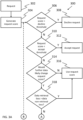
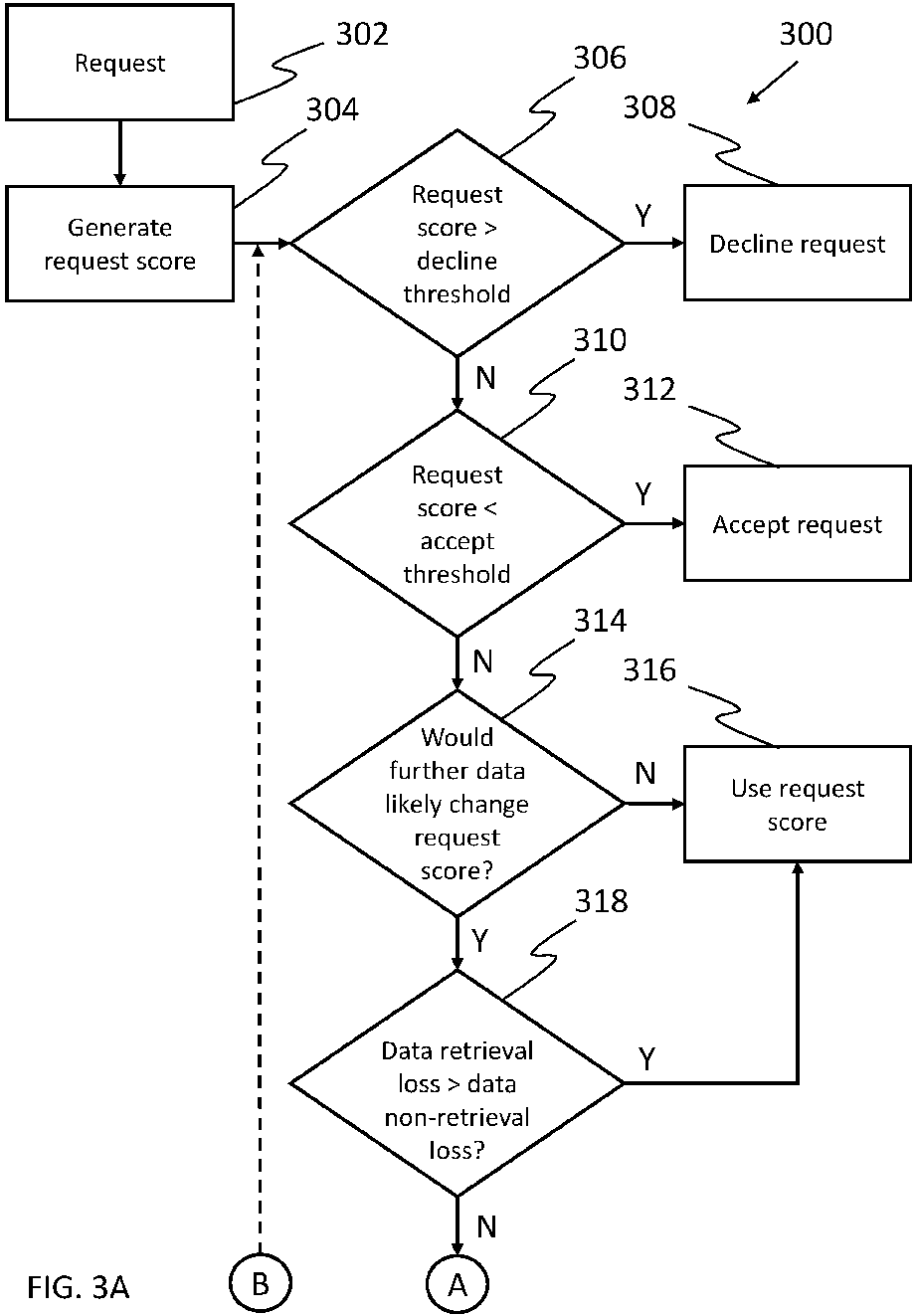
- FIGs. 3A and 3B there is shown an example data retrieval control method 300.
- the data retrieval control method 300 is performed by the decisioning server 130.
- one or more of the actions shown in FIGs. 3A and 3B may be performed at one or more other entities in other examples.
- the decisioning server 130 receives a request.
- the request may be received in various different ways.
- the request may be received over a communicative coupling, such as the fifth communicative coupling 132 described above.
- the decisioning server 130 may have received the request from the originating user device 102 via the originating server 114, or otherwise.
- the originating server 114 may have transmitted the request to the decisioning server 130 to be subject to request-related decisioning.
- request trigger may have caused the request to be received by the decisioning server 130.
- user interaction with the originating user device 102 may have triggered the request.
- an automated process on the originating user device 102 may have triggered the request, for example if the originating user device 102 is compromised and being used as part of an attack or other non-legitimate (or "malicious") activity.
- the decisioning server 130 generates a request-based variable associated with the request.
- the request-based variable may be referred to as a "primary" request-based variable.
- variable is used herein to mean anything that can change.
- a variable may, for example, comprise a value, number, amount, or otherwise.
- a variable may comprise one or more variable components, i.e. components of the variable.
- a variable, v may comprise variable components v 1 , v 2 , ....
- request-based variable is used herein to mean a variable that is generated using data associated with a request. Such generation may comprise derivation, calculation, look-up, or otherwise.
- the data associated with the request may include data comprised in the request and/or data not comprised in, but otherwise associated with, the request.
- request-based variables include, but are not limited to scores, instructions, predictions and confidence levels.
- a request-based variable may comprise a score component and a confidence level component.
- the confidence level component may indicate a level of confidence in the score component.
- score is used herein in a general sense to mean an evaluative measure.
- request score is used herein to mean a score that is generated using data associated with a request.
- Generating the request-based variable comprises using data associated with the request as input to a request-based variable generation model, i.e. a model that generates a request-based variable.
- model is used herein generally to encompass both machine leaning (ML) models and rule-based models.
- the request-based variable generation model may map one or more inputs to one or more outputs, with the one or more outputs comprising the request-based variable.
- the data associated with the request may comprise request data comprised in the request and/or other data not comprised in, but otherwise associated with, the request.
- the request-based variable may be generated based on a time of receipt of the request, a communication channel on which the request is received (e.g. where the decisioning server 130 can receive requests via multiple communication channels), etc.
- the time of receipt of the request and the communication channel on which the request is received may be stored in data that is not comprised in, but is otherwise associated with, the request.
- the request-based variable comprises a request score.
- the request-based variable may comprise one or more additional request-based variable components and/or one or more alternative request-based variable components in other examples.
- examples herein concerning request scores should be understood to be applicable to other types of request-based variable unless the context requires otherwise.
- references below to a "request score generation model" should be understood to encompass another type of request-based variable generation model, for example where a request-based variable other than a request score is being generated.
- a request score may comprise a numerical value. Where the request score comprises a numerical value, the request score may be in the range from 0 to 1. However, the request score may be in a different numerical range in other examples.
- a low request score within the relevant numerical range (e.g. a score of 0.1 in a range from 0 to 1) may correspond to a low level of risk and a high level of legitimacy.
- a high request score within the relevant numerical range (e.g. a score of 0.9 in a range from 0 to 1) may correspond to a high level of risk and a low level of legitimacy.
- the request score may take another form in other examples.
- the request score may comprise a letter from a predetermined set of letters, such as "A”, “B”, “C”, and “D”.
- the request score may comprise a label from a predetermined set of labels, such as "legitimate”, “non-legitimate” and "uncertain”.
- the decisioning server 130 generates the request score by calculating the request score.
- the decisioning server 130 may generate the request score in another manner in other examples.
- the decisioning server 130 may look up the request score.
- the decisioning server 130 may look up the request score in a table based on request data comprised in the request without performing calculations.
- references herein to calculating the request score also apply to other techniques to generate the request score unless the context requires otherwise.
- the decisioning server 130 compares the request score to a decline threshold.
- the term "decline threshold” is used herein to mean a threshold against which the request score can be compared and which indicates whether or not the request is to be declined. If the request score is greater than the decline threshold then, at item 308, the request is declined.
- the request score being greater than the decline threshold means, in this example, that the request is high-risk, low-legitimacy and should therefore be declined.
- the decisioning server 130 compares the request score to an accept threshold.
- accept threshold is used herein to mean a threshold against which the request score can be compared and which indicates whether or not the request is to be accepted.
- the request score is less than the accept threshold then, at item 312, the request is accepted.
- the request score being less than the accept threshold means, in this example, that the request is low-risk, high-legitimacy and should therefore be accepted.
- the decisioning server 130 determines whether further data may change the request score.
- further data is used herein to mean any data that can be used in generating a request score.
- the further data may be useable to regenerate the primary request score.
- the term "may” as used in the context of determining whether further data may change the request score indicates that the further data might result in the request score changing but not that the request score will necessarily change. This is because the request score is only regenerated when the further data has actually been retrieved.
- the decisioning server 130 may perform the determination of item 314 in various different ways.
- the decisioning server 130 may identify, for a certain type of request, that legitimate requests from a given originating entity should use a source Internet Protocol (IP) address that has been used in previous requests from that given originating entity.
- IP Internet Protocol
- retrieving historic IP address usage information can therefore influence the request score.
- historic IP address usage information may not be relevant to other types of request and/or other types of further data may not influence request scores for all types of request.
- the request score is used as a determinative request score.
- the term "determinative request score” is used herein to mean the request score that is used to determine what decision to make in connection with the request, for example to accept or decline the request.
- the request score is not above the decline threshold (see item 306) and is not below the accept threshold (see item 310), and so the request score does not indicate whether the request is (likely) legitimate or non-legitimate.
- One or more predetermined actions may be taken in such situations.
- the request may be subject to analyst review.
- the decisioning server 130 determines whether a data retrieval loss associated with retrieving the further data would outweigh a data non-retrieval loss associated with not retrieving the further data.
- data retrieval loss is used herein to mean a loss associated with retrieving (further) data.
- data non-retrieval loss is used herein to mean a loss associated with not retrieving (further) data.
- loss is used herein to mean something undesirable, unwanted or negative, for example in contrast to a desirable, wanted or positive gain.
- outweigh is used herein to mean more significant than. A number may be considered to outweigh another number if it is greater than the other number. However, in some implementations, a lower number could be indicative of a greater significance of what the number represents.
- the decisioning server 130 may perform the determination of item 318 in various different ways.
- Such parameters include, but are not limited to, a data privacy parameter, a data security parameter, a resiliency parameter, a latency parameter, an inaccurate decision consequence parameter, a request attribute parameter, an uncertainty parameter, and a request-score-change parameter.
- parameters include, but are not limited to, a data privacy parameter, a data security parameter, a resiliency parameter, a latency parameter, an inaccurate decision consequence parameter, a request attribute parameter, an uncertainty parameter, and a request-score-change parameter.
- each of the above-mentioned parameters P i and Q j may take a value, for example in a range from 0 to 1.
- the data retrieval loss indicator, I 1 , and the data non-retrieval loss indicator, I 2 may then be the sum of their respective parameter values.
- the values of the parameters P i and Q j may be set by an operator of the system and/or may be derived in another manner. For example, a latency value may be observed and/or measured.
- An inaccurate decision consequence parameter may indicate a measure of loss as a consequence of incorrectly classifying the request.
- This parameter may, in effect, weight in favour of retrieval or non-retrieval of the further data, for example based on whether the further data is likely to increase accuracy and the magnitude of the consequence.
- a request attribute parameter may indicate a measure of loss based on an attribute of the request. For example, a loss may be more significant for certain types of request, user, originating user device, etc. If, for example, retrieving certain further data for a certain type of request has historically increased accuracy of decision for that type of request, the request attribute parameter may be weighted in favour of retrieval. On the other hand, if retrieving that same further data (and/or other further data) for another type of request has historically resulted in negligible changes in accuracy, the request attribute parameter may be weighted in favour of non-retrieval.
- An uncertainty parameter may indicate a measure of uncertainty associated with the generated request score of item 304. For example, an IP address comprised in a request may have reduced the confidence (and so increased the uncertainty) of the generated request score by either a large amount or by a small amount. In such a situation, the uncertainty parameter may be weighted towards retrieval in the expectation that it may increase confidence.
- a request-score-change parameter may indicate a measure of likeliness of further data changing the generated request score.
- a request-score-change parameter may indicate a likelihood of the further data comprising IP address history information.
- a request-score-change parameter may indicate an accuracy of the further data. For example, data from certain countries may have relatively low accuracies.
- the request-score-change parameter may be derived as a result of item 314, or otherwise.
- the data retrieval loss indicator, I 1 , and the data non-retrieval loss indicator, I 2 may then be compared to each other to determine whether or not the data retrieval loss would outweigh the data non-retrieval loss.
- the (potential) data privacy loss in not retrieving further data may be high, for example 0.8 (in the range from 0 to 1). For example, if a non-legitimate login request is incorrectly classified as a legitimate login request, a malicious actor might be able to access account data.
- the (potential) data privacy loss in retrieving the further data may, however, be low, for example 0.2 (in the range from 0 to 1).
- data retrieval may be subject to authentication, encryption and/or other data security measures such that communicated data is highly secure.
- the (potential) latency loss in retrieving the further data may be very high, for example 0.9 (in the range from 0 to 1) and the (potential) latency loss in not retrieving the further data may be zero, for example 0 (in the range from 0 to 1).
- the latency loss in retrieving the further data may be high for various reasons. For example, there may be a significant amount of further data to retrieve, the further data retrieval connection may have a low bandwidth, the further data may be stored across multiple data stores, and so on.
- the determination may be that the data retrieval loss would outweigh the data non-retrieval loss, even though there is potentially a significant data privacy loss in not retrieving the further data.
- the above-mentioned parameters may be weighted and/or different parameter ranges may be used for the different parameters.
- the parameter weight, ⁇ i may be a numerical value in the range from 0 to 1 for example.
- the data non-retrieval loss indicator, I 2 may be defined accordingly.
- weights may be used in different scenarios. For example, in some scenarios such as voice communication applications, latency may be heavily weighted. In some scenarios such as where personal data of an individual is involved, data privacy may be heavily weighted.
- the same parameters are used for both the retrieval loss indicator, I 1 , and the data non-retrieval loss indicator, I 2 .
- different parameters may be used in other examples.
- the data non-retrieval loss indicator, I 2 may be based on a downstream server operating load parameter.
- the downstream server operating parameter may be indicative of an operating load of the downstream server.
- multiple parameters are used for both the retrieval loss indicator, I 1 , and the data non-retrieval loss indicator, I 2 .
- one or both may use a single parameter in other examples.
- the retrieval loss indicator, I 1 , and the data non-retrieval loss indicator, I 2 are calculated based on respective parameters P i and Q j .
- one of the retrieval loss indicator, I 1 , and the data non-retrieval loss indicator, I 2 is a predetermined threshold value.
- the data non-retrieval loss indicator, I 2 may be a predetermined threshold value, for example 0.7.
- the data retrieval loss indicator, I 1 may still be calculated as 1.1, but would be compared to the threshold value of 0.7 rather than being compared to the calculated value of 0.8.
- a predetermined threshold value may be static or may be dynamic.
- the data non-retrieval loss indicator, I 2 is still indicative of a loss associated with not retrieving the further data even though it is a predetermined threshold value.
- the predetermined threshold value is indicative of a value at which the loss associated with not retrieving the further data matches the loss associated with retrieving the further data.
- both the retrieval loss indicator, I 1 , and the data non-retrieval loss indicator, I 2 are compared to one or more predetermined threshold values. Such a comparison involves both the retrieval loss indicator, I 1 , and the data non-retrieval loss indicator, I 2 , in addition to the one or more predetermined threshold values.
- the retrieval loss indicator, I 1 , and the data non-retrieval loss indicator, I 2 are numerical values, they may take different forms in other examples. For example, they may be “high”, “medium” and “low”. A ranking rule may be configured such that “high” outweighs “medium” and “low”, and “medium” outweighs "low”.
- the method proceeds to item 316, where the request score is used as the determinative request score.
- the decisioning server 130 determines that the data retrieval loss would not outweigh the data non-retrieval loss then, at item 320, the decisioning server 130 retrieves the further data.
- the decisioning server 130 may identify that an originating entity is using a different originating user device from their usual originating user device.
- the originating entity may be using a user device of a family member.
- the decisioning server 130 may, accordingly, perform a device check. This may, for example, involve sending a one-time password (OTP) to a known user device of the originating entity and prompting the originating entity to enter the OTP into the new user device.
- OTP one-time password
- the result of the device check may correspond to the further data used to regenerate the request score.
- Processing then proceeds to item 322, where the decisioning server 130 regenerates the request score.
- Such regeneration uses at least some of the further data. The regeneration will likely result in a different request score compared to the primary request score. However, in some situations, the regenerated risk score is the same as the primary request score, for example where the further data does not, in fact, change the request score.
- the decisioning server 130 may not, at item 320, retrieve all data that could be used to regenerate the request score. For example, if there were additional data that could be used to regenerate the request score, but which would not, or would not be likely to, change the request score, such additional data may not be retrieved.
- the decisioning server 130 may be able to identify that certain pixels and/or regions of an image (e.g. in the centre of the image) are most influential on the request score.
- the decisioning server 130 may retrieve reference image data for only those pixels and/or regions and not retrieve reference image data for other pixels and/or regions (e.g. at the edge of the image).
- Processing then proceeds to item 324, where the decisioning server 130 uses the regenerated request score as the determinative request score.
- FIGs. 3A and 3B Some or all of the actions shown in FIGs. 3A and 3B may be omitted, varied or replaced in other examples.
- Actions may take place in a different order from the order shown in FIGs. 3A and 3B .
- item 314 could be performed prior to item 306. This may be particularly effective where the further data could change a primary request score that is above the decline threshold or below the accept threshold.
- Actions shown in FIGs. 3A and 3B may be divided or combined.
- One or more actions shown in FIGs. 3A and 3B may be performed again as part of a recursive procedure.
- the regenerated request score of item 322 may be compared to the decline threshold at item 306. If the regenerated request score is not above the decline threshold, the regenerated request score may be compared to the accept threshold at item 310. If the regenerated request score is not below the accept threshold, then items 314, 316, 318, 320, 322, 324 and 326 may be repeated as appropriate.
- the recursive procedure may be performed one or multiple times.
- the recursive procedure may be repeated until a predetermined condition is met.
- a predetermined condition is the recursive procedure having been performed a predetermined number of times.
- Another example of such a predetermined condition is the regenerated request score exceeding the decline threshold or being below the accept threshold.
- references to generating a request score encompass both generating a primary request score (i.e. a request score that is not a regenerated request score) and generating a regenerated request score.
- a regenerated request score may result from a single request score regeneration procedure, or from multiple recursions of a request score regeneration procedure.
- FIG. 4 there is shown an example graph 400 of request score versus density.
- FIG. 4 shows example request score versus density for legitimate requests (solid line) and for non-legitimate requests (broken line).
- FIG. 4 also shows a request score region 402 in which all requests are decisioned as non-legitimate requests.
- the upper request score value 404 of the request score region 402 is 1.00.
- the lower request score value 406 of the request score region 402 is around 0.85.
- the lower request score value 406 may correspond to the decline threshold described above.
- the example graph 500 corresponds generally to the example graph 400.
- FIG. 5 shows a request score region 502 in which all requests are decisioned as legitimate requests.
- the lower request score value 504 of the request score region 502 is 0.00.
- the upper request score value 506 of the request score region 502 is around 0.15.
- the upper request score value 506 may correspond to the accept threshold described above.
- FIG. 6 there is shown an example graph 600 of request score versus density.
- the example graph 600 corresponds generally to the example graphs 400, 500.
- FIG. 6 shows a request score region 602 with roughly similar densities of legitimate and non-legitimate requests across the request score region 602.
- the lower request score value 604 of the request score region 602 is around 0.15 and corresponds to the upper value 506 of the request score region 502 shown in FIG. 5 .
- the upper request score value 606 of the request score region 602 is around 0.85 and corresponds to the lower value 406 of the request score region 402 shown in FIG. 4 .
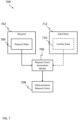
- FIG. 7 there is shown schematically a representation of a data retrieval control procedure 700.
- a request 702 is received.
- the request 702 comprises request data 704.
- a request score generation model 706 calculates a determinative request score 708 based on the request data 704 comprised in the request 702.
- the request score generation model 706 also uses further data 710 to calculate the determinative request score 708.
- the further data 710 is retrieved from a data store 712.
- the data store 712 may correspond to the data store 140 described above.
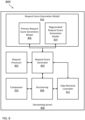
- FIG. 8 there is shown schematically a representation of a decisioning server 800.
- the decisioning server 800 may correspond to the decisioning server 130 described above.
- the decisioning server 800 is depicted as comprising various components. These should be understood to be logical components. Functionality of multiple components may be combined together. Some components shown in FIG. 8 may be omitted, replaced or divided into smaller components in other examples. The components may be implemented in hardware and/or software.
- the decisioning server 800 comprises a request processor 802.
- the request processor 802 receives and processes requests.
- processing a request comprises extracting request data from the request.
- the decisioning server 800 comprises a request score generator 804.
- the request processor 802 provides extracted request data to the request score generator 804.
- the request score generator 804 uses the extracted request data as input to a primary request score generation model 806.
- the primary request score generation model 806 outputs a primary request score.
- the request score generator 804 provides the primary request score to a decisioning component 808.
- the decisioning component 808 uses a comparator 810 to compare the primary request score to one or more threshold scores.
- the decisioning component 808 may use the primary request score as the determinative request score.
- the decisioning component 808 may instead use a data retrieval controller 812 to retrieve further data.
- the data retrieval controller 812 may provide the further data to the request score generator 804 directly and/or via the decisioning component 808 to regenerate the request score.
- the request score generator 804 uses a request score regeneration model 814 to regenerate the request score.
- the primary request score generation model 806 and the regenerated request score generation model 814 are depicted as separate components of the decisioning server 800, this separation should be understood to be logical.
- the primary request score generation model 806 is the same as the regenerated request score generation model 814.
- the primary request score generation model 806 is different from the regenerated request score generation model 814.
- the regenerated request score generation model 814 may be able to process the further data as an input whereas the primary request score generation model 806 may not be able to process the further data as an input.
- the request score generator 804 may use a request score generation model 816 to generate and/or regenerate a request score.
- the request score generator 804 may comprise a primary request score generation model 806 logical component and a regenerated request score generation model 814 logical component.
- the primary request score generation model 806 and the regenerated request score generation model 814 may be the same model as each other or may be different models.
- the regenerated request score is then used as the determinative request score.
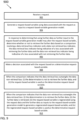
- FIG. 9 there is shown a representation of an example data retrieval control method 900.
- a request-based variable is generated using data associated with the request as input to a request-based variable generation model.
- the request-based variable may comprise a request score, an instruction, a predication and/or a risk score.
- a risk score is indicative of a level of risk associated with the request.
- the request score may comprise another type of request score, such as a priority score. For example, in times of high server load, high priority requests may be accepted, low priority requests may be rejected, and intermediate priority requests may be subject to further analysis, e.g. priority classification, to determine whether they should be accepted or rejected.
- the request-based variable generation model may comprise an ML model.
- An ML model can be trained using training data.
- the request-based variable generation model may be a rule-based model that does not use ML.
- Generating the request-based variable may comprise using request data comprised in the request.
- the request-based variable may be generated in other ways, for example by looking up the request-based variable.
- the request-based variable generation model in response to determining that using further data as further input to the request-based variable generation model may alter (or "change") the request-based variable, it is determined whether or not to retrieve the further data based on a comparison involving a data retrieval loss indicator and/or a data non-retrieval loss indicator.
- the data associated with the request is initially used as the input to the request-based variable generation model to generate a primary request-based variable. Subsequently, both the further data and the data associated with the request are used as inputs to the request-based variable generation model to generate a regenerated request-based variable.
- the comparison involving the data retrieval loss indicator and the data non-retrieval loss indicator may, for example, comprise determining whether the data retrieval loss indicator is greater than, less than, or the same as the data non-retrieval loss indicator.
- the data retrieval loss indicator and the data non-retrieval loss indicator are compared to each other.
- the data retrieval loss indicator and the data non-retrieval loss indicator may be compared to one or more other indicators, such as predetermined threshold values, in other examples.
- the data retrieval loss indicator may be indicative of a loss associated with retrieving the further data and/or the data non-retrieval loss indicator may be indicative of a loss associated with not retrieving the further data.
- the data retrieval loss indicator and/or the data non-retrieval loss indicator may be based on a data privacy parameter, a data security parameter, a resiliency parameter and/or a latency parameter. However, other parameters may be used, for example depending on the application.
- Retrieval of the further data may comprise retrieving the further data from local storage, retrieving the further data from external storage, and/or requesting and receiving the further data from an originating entity, where the originating entity originated the request.
- the further data may be retrieved in another manner in other examples.
- a decision associated with the request is made based on a determinative request-based variable.
- the determination is not to retrieve the further data, and the request-based variable is used as the determinative request-based variable.
- the determination is to retrieve the further data, the further data is retrieved, the request-based variable is regenerated using the request data and the further data as inputs to the request-based variable generation model to generate a regenerated request-based variable, and the regenerated request-based variable is used as the determinative request-based variable.
- the method 900 may be performed on a request-by-request basis. However, the method could be performed for groups of requests, for example for groups of two or more requests, in other examples. Requests may be grouped together based on content similarity, time of receipt, or otherwise.
- the method 900 may be performed in an anomalous behaviour detection system. However, the method may be performed in other types of systems, i.e. systems that do not detect anomalous behaviour.
- the further data may be retrieved for one of (i) the request and (ii) a subsequent request, and the further data may not be retrieved for the other of (i) the request and (ii) the subsequent request.
- further data may be retrieved for some but not all requests. In some situations, for example where both the request and the subsequent request are neither clearly legitimate nor clearly non-legitimate, the further data may be retrieved for both the request and the subsequent request. In other situations, for example where both the request and the subsequent request are clearly legitimate or clearly non-legitimate, the further data may be retrieved for neither the request nor the subsequent request.
- the decision of item 908 comprises performing an action associated with a high-risk request.
- a high-risk request may be a request having a request score above (or below, depending on implementation) a threshold, such as the above-described decline threshold.
- the action associated with the high-risk request may comprise refusing the request. Refusing the request may or may not involve communicating the refusal to a requestor. However, another possible action associated with the high-risk request is to process the request, but as a high-risk request.
- the decision of item 908 comprises performing an action associated with a low-risk request.
- a low-risk request may be a request having a request score below (or above, depending on implementation) a threshold, such as the above-described accept threshold.
- the action associated with the low-risk request may comprise accepting the request. Accepting the request may or may not involve communicating the acceptance to a requestor. However, a different action associated with the low-risk request may be performed in other examples. For example, the request may be forwarded to another entity for processing without a decision being made on whether the request should ultimately be accepted or declined.
- a medium-risk request may be a request having a request score between two thresholds, such as the above-described decline and accept thresholds.
- the action associated with the medium-risk request may comprise determining whether using the further data as further input to the request-based variable generation model may alter the request-based variable. In response to determining that retrieving the further data would not alter the request-based variable, the request-based variable may be used as the determinative request-based variable.
- the additional data in response to determining that using additional data as additional input to the request-based variable generation model would not alter the request-based variable, the additional data is not retrieved. As such, data can selectively be retrieved which influences the request-based variable.
- Measures (such as systems, servers, computer programs) described herein may implement the method 900.
- a system configured to perform the method 900 may be provided.
- a decisioning server configured to perform the method 900 may be provided.
- a computer program comprising instructions which, when executed by a processor, cause the processor to perform the method 900 may be provided.
- FIG. 10 there is shown another example system 1000.
- the example system 1000 has many features in common with the example system 100 as will now be explained.
- the example system 1000 comprises a user device 1002, which may correspond to the first and/or second user device 102, 104.
- the user device 1002 is communicatively coupled to a first network 1004 via a first communicative coupling 1006.
- the first network 1004 may correspond to the first and/or second network 106, 110.
- the first communicative coupling 1006 may correspond to the first and/or second communicative coupling 108, 112.
- the example system 1000 comprises a server 1008, which may correspond to the first and/or second server 114, 118.
- the server 1008 is communicatively coupled to the first network 1004 via a second communicative coupling 1010.
- the second communicative coupling 1010 may correspond to the third and/or fourth communicative coupling 116, 120.
- the server 1008 is communicatively coupled to a second network 1012 via a third communicative coupling 1014.
- the second network 1012 may correspond to the third and/or fourth network 122, 126.
- the third communicative coupling 1014 may correspond to the fifth and/or sixth communicative coupling 124, 128.
- the example system 1000 comprises a decisioning server 1016, which may correspond to the decisioning server 130.
- the decisioning server 1016 is communicatively coupled to the second network 1012 via a fourth communicative coupling 1018.
- the fourth communicative coupling 1018 may correspond to the seventh and/or eighth communicative coupling 132, 134.
- the decisioning server 1016 is communicatively coupled to a third network 1020 via a fifth communicative coupling 1022.
- the third network 1020 may correspond to the fifth network 136 and the fifth communicative coupling 1022 may correspond to the ninth communicative coupling 138.
- the example system 1000 comprises a data store 1024, which may correspond to the data store 140.
- the data store 1024 is communicatively coupled to the third network 1020 via a sixth communicative coupling 1026.
- the sixth communicative coupling 1026 may correspond to the tenth communicative coupling 142.
- the server 1008 may communicate a request to the decisioning server 1016.
- the decisioning server 1016 may perform data retrieval control as described herein in response to the request from the decisioning server 1016.
- the user device 1002 may communicate a request to the decisioning server 1016.
- the decisioning server 1016 may perform data retrieval control as described herein in response to the request from the user device 1002.
- the user device 1002 communicates such a request to the decisioning server 1016 via the server 1008.
- the user device 1002 may be able to communicate such a request to the decisioning server 1016 directly, i.e. without the request passing via the server 1008.
- the system 1000 may not include the server 1008 in some deployments and the user device 1002 may be able to communicate directly with the decisioning server 1016.
- Various decisioning request triggers may prompt the communication of the request to the decisioning server 1016.
- An example of such a decisioning request trigger is receiving another request in relation to which a decision is to be made.
- the system 1000 may be used to make decisions in relation to telephony requests.
- the server 1008 may correspond to the destination server 118 and the user device 1002 may correspond to the destination user device 104.
- the server 1008 may receive an incoming telephone call setup request destined for the user device 1002.
- the server 1008 may invoke the decisioning server 1016, as indicated by item 1028, to decide whether or not the incoming telephone call setup request should be forwarded to the user device 1002.
- the decisioning server 1016 may be performing data retrieval control in connection with such decisioning.
- the data retrieval control measures may be applied in connection with DoS and/or DDoS attack management.
- the data retrieval control may be relatively relaxed when downstream systems are not operating near capacity.
- the data retrieval control may be tightened to protect the downstream system from being overwhelmed by non-legitimate requests.
- the data retrieval control measures may be used to provide load management in respect of downstream systems.
- Another application is in connection with anomalous behaviour detection.
- the data retrieval control measures may enable accurate anomalous behaviour detection to be performed, while trading off other considerations such as data privacy.
- Methods described herein may be computer-implemented.
Landscapes
- Engineering & Computer Science (AREA)
- Computer Security & Cryptography (AREA)
- Software Systems (AREA)
- Theoretical Computer Science (AREA)
- General Engineering & Computer Science (AREA)
- Computing Systems (AREA)
- Physics & Mathematics (AREA)
- General Physics & Mathematics (AREA)
- Computer Hardware Design (AREA)
- Medical Informatics (AREA)
- Evolutionary Computation (AREA)
- Data Mining & Analysis (AREA)
- Mathematical Physics (AREA)
- Computer Vision & Pattern Recognition (AREA)
- Artificial Intelligence (AREA)
- Computer Networks & Wireless Communication (AREA)
- Signal Processing (AREA)
- Information Retrieval, Db Structures And Fs Structures Therefor (AREA)
Abstract
Description
- The present disclosure relates to data retrieval control.
- In particular, but not exclusively, the present disclosure relates to measures (for example methods, systems, servers, and computer programs) to perform data retrieval control.
- Various measures exist in the art for controlling data retrieval.
- For example, a firewall may control incoming requests for data based on preconfigured security rules. A firewall can help to protect a computing resource behind the firewall, such as a server and/or data store, against denial-of-service (DoS) and distributed denial-of-service (DDoS) attacks, as well as other types of malicious activity. A DoS attack is also known as a flood attack.
- Artificial intelligence (AI) may be used to calculate a variable associated with an incoming request. Such a variable will generally be referred to herein as a "request-based variable" accordingly. An example of a request-based variable is a risk score associated with the request. A request-based variable may be used, in-turn, to automate a decision such as whether the incoming request should be accepted or declined. Accuracy of such automated decisions generally increases as the amount of data used by the AI increases.
- According to a first aspect, there is provided a data retrieval control method, the method comprising:
- receiving a request;
- generating a request-based variable using data associated with the request, wherein the data is input to a request-based variable generation model to generate the request-based variable;
- in response to determining that using further data as further input to the request-based variable generation model may alter the request-based variable, determining whether or not to retrieve the further data based on a comparison involving a data retrieval loss indicator and a data non-retrieval loss indicator, the data retrieval loss indicator being indicative of a loss associated with retrieving the further data and the data non-retrieval loss indicator being indicative of a loss associated with not retrieving the further data; and
- making a decision associated with the request based on a determinative request-based variable,
- wherein, when the comparison indicates that the data retrieval loss outweighs the data non-retrieval loss:
- the determination is not to retrieve the further data; and
- the request-based variable is used as the determinative request-based variable, and
- wherein, when the comparison indicates that the data non-retrieval loss outweighs the data retrieval loss:
- the determination is to retrieve the further data;
- the further data is retrieved;
- the request-based variable is regenerated using the request data and the further data as inputs to the request-based variable generation model to generate a regenerated request-based variable; and
- the regenerated request-based variable is used as the determinative request-based variable.
- According to a second aspect, there is provided a decisioning server comprising:
- a request processor;
- a request-based variable generator;
- a request-based variable generation model;
- a decisioning component;
- a comparator; and
- a data retrieval controller,
- wherein the decisioning server is configured to perform a method in accordance with the first aspect of the present disclosure.
- According to a third aspect, there is provided a system, server and/or computer program configured to perform a method in accordance with the first aspect of the present disclosure.
- Certain embodiments of the present disclosure will now be described with reference to the accompanying drawings, in which:
-
FIG. 1 is a schematic diagram showing an example of a data retrieval control system. -
FIG. 2 is a schematic diagram showing part of the system shown inFIG. 1 with and without data retrieval control. -
FIGs. 3A and3B are flowcharts showing an example of a data retrieval control method. -
FIG. 4 is an example graph of request score versus density and showing a first example request score region. -
FIG. 5 is another example graph of request score versus density and showing a second example request score region. -
FIG. 6 is another example graph of request score versus density and showing a third example request score region. -
FIG. 7 is a schematic diagram showing an example of a data retrieval control procedure. -
FIG. 8 is a schematic block diagram showing an example of a decisioning server. -
FIG. 9 is a process flow diagram showing an example of a data retrieval control method. -
FIG. 10 is a schematic diagram showing another example of a data retrieval control system. - Without loss of generality, the present disclosure relates to data retrieval control and optimised data retrieval.
- The term "data retrieval" is used herein to mean retrieving, using any mechanism, data of any type and not to be limited to data recovery, i.e. recovering data that may have been lost, corrupted or the like.
- As explained above, existing AI-based decision automation systems are based on the premise that more data is better because it improves accuracy. This is generally true.
- However, using more data is not an inconsequential decision. For example, using further data creates several trade-offs.
- One example trade-off is data privacy. Using further data can increase the likelihood of incurring risks around individual privacy, i.e. data privacy of individuals. Using further data can also place additional requirements to adhere to local privacy regulation.
- Another example trade-off is data security. Transmitting and/or storing unnecessary data increases the exposure if security of a decisioning system and/or associated networks is breached.
- Another example trade-off is resiliency. Capturing or requesting further data adds complexity to the decision-making process. This increases the surface error for failures in obtaining the data and/or errors within the data. This can result in failures and/or inaccuracies when generating, e.g. calculating, a request-based variable. The lower the computational complexity, the more resilient the system may be.
- Another example trade-off is latency. Retrieving data from third party or local systems is not instantaneous. This is particularly the case when the data is sourced from outside of a local network. This therefore has an impact on the amount of time taken to generate a request-based variable, such as a risk score, and to communicate a decision to one or more entities, such as a requesting system. In time-critical, low-latency systems, this is particularly relevant.
- Another example trade-off is downstream computing resource impact. Retrieving further data may increase computing resource requirements for downstream systems, for example where the further data requires additional processing by the downstream system. While such additional processing may be tolerable, or even beneficial, in some scenarios, it may be undesirable in other situations. For example, if the downstream system is operating at a near-capacity level, additional processing requests may result in instability or even failure of the downstream system.
- Again, without loss of generality, examples described herein optimise trade-offs such as these, on a request-by-request basis, while maintaining accuracy.
- Making such decisions on a request-by-request enables highly tuned optimisation. In contrast, existing systems that acquire data to make automated decisions are managed as an optimisation over the entire population of requests rather than for individual requests.
- With the increased adoption of AI to make automated decisions, the loss or potential loss in generating these decisions is not insignificant.
- Such losses may be related to data privacy, data sectary, resiliency, latency, or otherwise.
- Such losses may be related to consequences of inaccurate decisions. For example, the consequence of rejecting a legitimate request may be more significant for a premium user or subscriber than for a non-premium user or subscriber.
- Such losses may be dependent on an attribute of the request. For example, it may be more important to make an accurate decision (in other words, the losses may be more significant) on a high-priority request compared to a low-priority request, where priority is an attribute of the request. Another example attribute of a request is a requesting user device type. For example, the losses may vary depending on whether the requesting user device is a desktop computing device or a mobile computing device. As another example, data retrieval loss may depend on a country of origin of the request, which may be indicated by an attribute of the request. In particular, a given country may have low quality data for a preferred provider, meaning that a secondary provider would need to be accessed for higher quality data. This comes with losses, for example in terms of latency. As another example, certain brands of user device may provide limited tracking data in connection with their users. It may therefore be more complex to validate user activity on such user devices than on another brand of user device.
- Examples described herein can maintain accuracy, while being more precise in terms of inputs used to arrive at the decision and therefore mitigating the losses and/or risks associated with a range of data practices.
- Examples described herein are compatible with high-volume requests, such as many thousands of requests per second. Request volumes may also vary over time, e.g. unexpectedly.
- As will be explained in more detail below, in examples, a decisioning server can make a series of calculations and comparisons to decide whether to accept (or "authorise" or "allow") a request or whether to decline (or "refuse" or "reject") the request. The decisioning server can select which (if any) data is to be retrieved and/or data stores are to be accessed to obtain input needed to maintain accuracy of the decisions whilst optimising trade-offs such as data privacy, data security, resiliency, and latency. Such data stores may be internal and/or external as will be described in more detail below.
- Referring to
FIG. 1 , there is shown anexample system 100. Thesystem 100 implements data retrieval control and may be referred to as a data retrieval control system accordingly. - The
system 100 comprises first andsecond user devices system 100. User devices may take various forms. Example forms include, but are not limited to, desktop computers, laptop computers, tablet computing devices and smartphones. - Although the
system 100 comprises twouser devices - In particular, in some examples, the
system 100 comprises no user devices or comprises one user device. Other elements of thesystem 100 may be modified or omitted accordingly. For example, thesystem 100 may have a service-to-service type architecture and may not comprise any user devices. Examples of such architectures include, but are not limited to, application programming interface (API)-based architectures and file sharing architectures. - In this example, the
first user device 102 is an originating user device and is associated with an originating entity (not shown). The originating user device may belong to the originating entity or may merely be being used by the originating entity. The originating entity originates a request in thesystem 100. - In this example, the
second user device 104 is a destination user device and is associated with a destination entity (not shown). The destination entity is an intended destination of a request and/or something associated with the request. As will be explained in more detail below, a request intended for a destination entity may not, in fact, reach the destination entity. - The originating entity and/or the destination entity may take various different forms. Example forms include, but are not limited to, legal persons and natural persons. A natural person may be a user of the
system 100. - The originating
user device 102 is communicatively coupled to afirst network 106 via a firstcommunicative coupling 108. - The term "network" is used herein to mean a computer network, i.e. a set of computers that share resources.
- The term "communicative coupling" is used herein to mean any type of coupling that enables communication between entities. The coupling may be wired and/or wireless. The coupling may be direct or indirect.
- The
destination user device 104 is communicatively coupled to asecond network 110 via a secondcommunicative coupling 112. - A
first server 114, which in this example is an originating server, is communicatively coupled to thefirst network 106 via a thirdcommunicative coupling 116. - The term "server" is used herein to mean a computing entity that provides services to another computing entity. A server may be implemented in hardware and/or software. A server may comprise one or more server components. Server components may be co-located or may be geographically distributed.
- The originating
server 114 handles requests associated with the originatinguser device 102. For example, the originatingserver 114 may handle requests to and/or from the originatinguser device 102. - A
second server 118, which in this example is a destination server, is communicatively coupled to thesecond network 110 via a fourthcommunicative coupling 120. - The
destination server 118 handles requests associated with thedestination user device 104. For example, thedestination server 118 may handle requests to and/or from thedestination user device 104. - Although only a
single originating server 114 and asingle destination server 118 are shown inFIG. 1 , multiple originatingservers 114 and/ormultiple destination servers 118 may be provided in other example systems. - The originating
server 114 is communicatively coupled to athird network 122 via a fifthcommunicative coupling 124. - The
destination server 118 is communicatively coupled to afourth network 126 via a sixthcommunicative coupling 128. - A
decisioning server 130 is communicatively coupled to thethird network 122 via a seventhcommunicative coupling 132. Thedecisioning server 130 is also communicatively coupled to thefourth network 126 via an eighthcommunicative coupling 134. - The
decisioning server 130 makes decisions associated with requests communicated in thesystem 100. - Such requests may ask that the
decisioning server 130 make a decision associated with another request. For example, an initial request may be received by an entity in thesystem 100 and that entity may send a decisioning request, based on the initial request, to thedecisioning server 130. - As such, references to an "originating entity" should be understood to refer to an entity that originates a particular request in the
system 100 and that such a request may be based on a request that originates from another entity. - Although only a
single decisioning server 130 is shown inFIG. 1 ,multiple decisioning servers 130 may be provided in other example systems. - The
decisioning server 130 is communicatively coupled to afifth network 136 via a ninthcommunicative coupling 138. - A
data store 140 is communicatively coupled to thefifth network 136 via a tenthcommunicative coupling 142. - The term "data store" is used herein to mean any entity that can store data. The data store may comprise volatile and/or non-volatile memory. This includes, but is not limited to, random access memory (RAM), static RAM (SRAM), dynamic RAM (DRAM), magnetic storage, solid-state storage, and flash memory. Combinations of one or more of these may also be used for the storage of data, as technically appropriate (e.g. using faster access volatile memory for frequently accessed data).
- The data store may store data in various different ways, for example in one or more databases. A data store may comprise one or more data store components. Data store components may be co-located or may be geographically distributed.
- The
data store 140 stores data. The data may comprise a signal (which may also be referred to as "signal data"). - Although only a
single data store 140 is shown inFIG. 1 ,multiple data stores 140 may be provided in other examples. Some or all of thedata stores 140 may be of the same type as each other. Some or all of thedata stores 140 may be of different types from each other. - In some examples, such as is shown in
FIG. 1 , thedata store 140 is external to thedecisioning server 130. However, in other examples, thedata store 140 is internal (or "local") to thedecisioning server 130. Where the system comprisesmultiple data stores 140, thedata stores 140 may comprise a mix of internal and external data stores. Retrieving data frommultiple data stores 140 may increase data privacy, data security, resiliency and latency risks, for example. The resources involved in retrieving data from anexternal data store 140 may be greater than the resources involved in retrieving data from aninternal data store 140. - The first to
fifth networks fifth networks fifth networks - In some examples, one or more of the first to
fifth networks - In some examples, one or more of the first to
fifth networks - Although, in the
example system 100, networks and multiple communicative couplings are provided between the various system entities (theuser devices servers - The first to tenth
communicative couplings communicative couplings communicative couplings - In some examples, one or more of the first to tenth
communicative couplings - In some examples, one or more of the first to tenth
communicative couplings - In a specific example, the
system 100 may be used to make decisions in relation to telephony requests. For example, the originatinguser device 102 may transmit a telephone call setup request to the originatingserver 114. The originatingserver 114 may then forward the telephone call setup request to thedecisioning server 130. Thedecisioning server 130 may decide that the telephone call setup request is legitimate and forward the telephone call setup request to thedestination user device 104 via thedestination server 118 accordingly. Alternatively, thedecisioning server 130 may decide that the telephone call setup request is not legitimate and may refuse the telephone call setup request accordingly. - Referring to
FIG. 2 , there is shown apart 200 of theexample system 100 described above with reference toFIG. 1 . -
FIG. 2 shows, schematically, how the amount of data communicated between thedecisioning server 130 and thedata store 140 via the tenthcommunicative coupling 142 varies with and without the data retrieval control measures described herein. - As shown schematically by the width of the representation of the tenth
communicative coupling 142 inFIG. 2 , the amount of data communicated between thedecisioning server 130 and thedata store 140 is greater without the data retrieval control measures (to the left of thebroken line 202 inFIG. 2 ) than with the data retrieval control measures (to the right of thebroken line 202 inFIG. 2 ). - As such, the data retrieval control measures described herein can control, i.e. reduce, the amount of data communicated between the
decisioning server 130 and thedata store 140. - Referring to
FIGs. 3A and3B , there is shown an example dataretrieval control method 300. - In this example, the data
retrieval control method 300 is performed by thedecisioning server 130. However, one or more of the actions shown inFIGs. 3A and3B may be performed at one or more other entities in other examples. - At
item 302, thedecisioning server 130 receives a request. The request may be received in various different ways. For example, the request may be received over a communicative coupling, such as the fifthcommunicative coupling 132 described above. - The
decisioning server 130 may have received the request from the originatinguser device 102 via the originatingserver 114, or otherwise. In particular, the originatingserver 114 may have transmitted the request to thedecisioning server 130 to be subject to request-related decisioning. - Various different types of request trigger may have caused the request to be received by the
decisioning server 130. For example, user interaction with the originatinguser device 102 may have triggered the request. Alternatively, an automated process on the originatinguser device 102 may have triggered the request, for example if the originatinguser device 102 is compromised and being used as part of an attack or other non-legitimate (or "malicious") activity. - At
item 304, thedecisioning server 130 generates a request-based variable associated with the request. The request-based variable may be referred to as a "primary" request-based variable. - The term "variable" is used herein to mean anything that can change. A variable may, for example, comprise a value, number, amount, or otherwise. As used herein, a variable may comprise one or more variable components, i.e. components of the variable. For example, a variable, v, may comprise variable components v 1, v 2, ....
- The term "request-based variable" is used herein to mean a variable that is generated using data associated with a request. Such generation may comprise derivation, calculation, look-up, or otherwise. The data associated with the request may include data comprised in the request and/or data not comprised in, but otherwise associated with, the request.
- Examples of request-based variables include, but are not limited to scores, instructions, predictions and confidence levels. For example, a request-based variable may comprise a score component and a confidence level component. The confidence level component may indicate a level of confidence in the score component.
- The term "score" is used herein in a general sense to mean an evaluative measure.
- The term "request score" is used herein to mean a score that is generated using data associated with a request.
- Generating the request-based variable comprises using data associated with the request as input to a request-based variable generation model, i.e. a model that generates a request-based variable.
- The term "model" is used herein generally to encompass both machine leaning (ML) models and rule-based models. The request-based variable generation model may map one or more inputs to one or more outputs, with the one or more outputs comprising the request-based variable.
- The data associated with the request may comprise request data comprised in the request and/or other data not comprised in, but otherwise associated with, the request. In particular, it may be possible to generate the request-based variable without using any request data comprised in the request. For example, the request-based variable may be generated based on a time of receipt of the request, a communication channel on which the request is received (e.g. where the
decisioning server 130 can receive requests via multiple communication channels), etc. The time of receipt of the request and the communication channel on which the request is received may be stored in data that is not comprised in, but is otherwise associated with, the request. - For convenience and brevity, in specific examples described below, the request-based variable comprises a request score. However, as explained above, the request-based variable may comprise one or more additional request-based variable components and/or one or more alternative request-based variable components in other examples. As such, examples herein concerning request scores should be understood to be applicable to other types of request-based variable unless the context requires otherwise. For example, references below to a "request score generation model" should be understood to encompass another type of request-based variable generation model, for example where a request-based variable other than a request score is being generated.
- A request score may comprise a numerical value. Where the request score comprises a numerical value, the request score may be in the range from 0 to 1. However, the request score may be in a different numerical range in other examples.
- A low request score within the relevant numerical range (e.g. a score of 0.1 in a range from 0 to 1) may correspond to a low level of risk and a high level of legitimacy. A high request score within the relevant numerical range (e.g. a score of 0.9 in a range from 0 to 1) may correspond to a high level of risk and a low level of legitimacy.
- However, the request score may take another form in other examples. For example, the request score may comprise a letter from a predetermined set of letters, such as "A", "B", "C", and "D". The request score may comprise a label from a predetermined set of labels, such as "legitimate", "non-legitimate" and "uncertain".
- In this example, the
decisioning server 130 generates the request score by calculating the request score. However, thedecisioning server 130 may generate the request score in another manner in other examples. For example, thedecisioning server 130 may look up the request score. For example, thedecisioning server 130 may look up the request score in a table based on request data comprised in the request without performing calculations. In this regard, references herein to calculating the request score also apply to other techniques to generate the request score unless the context requires otherwise. - At
item 306, thedecisioning server 130 compares the request score to a decline threshold. The term "decline threshold" is used herein to mean a threshold against which the request score can be compared and which indicates whether or not the request is to be declined. If the request score is greater than the decline threshold then, atitem 308, the request is declined. The request score being greater than the decline threshold means, in this example, that the request is high-risk, low-legitimacy and should therefore be declined. - If, at
item 306, the request score is not greater than the decline threshold then, atitem 310, thedecisioning server 130 compares the request score to an accept threshold. The term "accept threshold" is used herein to mean a threshold against which the request score can be compared and which indicates whether or not the request is to be accepted. - If the request score is less than the accept threshold then, at
item 312, the request is accepted. The request score being less than the accept threshold means, in this example, that the request is low-risk, high-legitimacy and should therefore be accepted. - If, at
item 310, the request score is not less than the accept threshold then, atitem 314, thedecisioning server 130 determines whether further data may change the request score. - The term "further data" is used herein to mean any data that can be used in generating a request score. For example, the further data may be useable to regenerate the primary request score.
- The term "may" as used in the context of determining whether further data may change the request score, indicates that the further data might result in the request score changing but not that the request score will necessarily change. This is because the request score is only regenerated when the further data has actually been retrieved.
- The
decisioning server 130 may perform the determination ofitem 314 in various different ways. - For example, the
decisioning server 130 may identify, for a certain type of request, that legitimate requests from a given originating entity should use a source Internet Protocol (IP) address that has been used in previous requests from that given originating entity. When such types of request are received, retrieving historic IP address usage information (listing previously used IP addresses for that given originating entity) can therefore influence the request score. However, historic IP address usage information may not be relevant to other types of request and/or other types of further data may not influence request scores for all types of request. - If the
decisioning server 130 determines that the further data would not likely change the request score then, atitem 316, the request score is used as a determinative request score. The term "determinative request score" is used herein to mean the request score that is used to determine what decision to make in connection with the request, for example to accept or decline the request. - At
item 316, the request score is not above the decline threshold (see item 306) and is not below the accept threshold (see item 310), and so the request score does not indicate whether the request is (likely) legitimate or non-legitimate. One or more predetermined actions may be taken in such situations. For example, the request may be subject to analyst review. - If the
decisioning server 130 determines that the further data would likely change the request score then, atitem 318, thedecisioning server 130 determines whether a data retrieval loss associated with retrieving the further data would outweigh a data non-retrieval loss associated with not retrieving the further data. - The term "data retrieval loss" is used herein to mean a loss associated with retrieving (further) data. The term "data non-retrieval loss" is used herein to mean a loss associated with not retrieving (further) data.
- The term "loss" is used herein to mean something undesirable, unwanted or negative, for example in contrast to a desirable, wanted or positive gain.
- The term "outweigh" is used herein to mean more significant than. A number may be considered to outweigh another number if it is greater than the other number. However, in some implementations, a lower number could be indicative of a greater significance of what the number represents.
- The
decisioning server 130 may perform the determination ofitem 318 in various different ways. - For example, a data retrieval loss indicator, I 1, may be defined as

- Examples of such parameters include, but are not limited to, a data privacy parameter, a data security parameter, a resiliency parameter, a latency parameter, an inaccurate decision consequence parameter, a request attribute parameter, an uncertainty parameter, and a request-score-change parameter.
- Similarly, a data non-retrieval loss indicator, I 2, may be defined as

- In a specific example, each of the above-mentioned parameters Pi and Qj may take a value, for example in a range from 0 to 1. The data retrieval loss indicator, I 1, and the data non-retrieval loss indicator, I 2, may then be the sum of their respective parameter values.
- The values of the parameters Pi and Qj may be set by an operator of the system and/or may be derived in another manner. For example, a latency value may be observed and/or measured.
- An inaccurate decision consequence parameter may indicate a measure of loss as a consequence of incorrectly classifying the request. This parameter may, in effect, weight in favour of retrieval or non-retrieval of the further data, for example based on whether the further data is likely to increase accuracy and the magnitude of the consequence.
- A request attribute parameter may indicate a measure of loss based on an attribute of the request. For example, a loss may be more significant for certain types of request, user, originating user device, etc. If, for example, retrieving certain further data for a certain type of request has historically increased accuracy of decision for that type of request, the request attribute parameter may be weighted in favour of retrieval. On the other hand, if retrieving that same further data (and/or other further data) for another type of request has historically resulted in negligible changes in accuracy, the request attribute parameter may be weighted in favour of non-retrieval.
- An uncertainty parameter may indicate a measure of uncertainty associated with the generated request score of
item 304. For example, an IP address comprised in a request may have reduced the confidence (and so increased the uncertainty) of the generated request score by either a large amount or by a small amount. In such a situation, the uncertainty parameter may be weighted towards retrieval in the expectation that it may increase confidence. - A request-score-change parameter may indicate a measure of likeliness of further data changing the generated request score. In one specific example, a request-score-change parameter may indicate a likelihood of the further data comprising IP address history information. In another specific example, a request-score-change parameter may indicate an accuracy of the further data. For example, data from certain countries may have relatively low accuracies. The request-score-change parameter may be derived as a result of
item 314, or otherwise. - The data retrieval loss indicator, I 1, and the data non-retrieval loss indicator, I 2, may then be compared to each other to determine whether or not the data retrieval loss would outweigh the data non-retrieval loss.
- By way of a specific numerical example, the (potential) data privacy loss in not retrieving further data may be high, for example 0.8 (in the range from 0 to 1). For example, if a non-legitimate login request is incorrectly classified as a legitimate login request, a malicious actor might be able to access account data.
- The (potential) data privacy loss in retrieving the further data may, however, be low, for example 0.2 (in the range from 0 to 1). For example, data retrieval may be subject to authentication, encryption and/or other data security measures such that communicated data is highly secure.
- However, the (potential) latency loss in retrieving the further data may be very high, for example 0.9 (in the range from 0 to 1) and the (potential) latency loss in not retrieving the further data may be zero, for example 0 (in the range from 0 to 1). The latency loss in retrieving the further data may be high for various reasons. For example, there may be a significant amount of further data to retrieve, the further data retrieval connection may have a low bandwidth, the further data may be stored across multiple data stores, and so on.
- The data retrieval loss indicator, I 1, may be calculated as I 1 = 0.2 + 0.9 = 1.1 and the data non-retrieval loss indicator, I 2, may be calculated as I 2 = 0.8 + 0 = 0.8.
- Since I 1 = 1.1 > 0.8 = I 2, the determination may be that the data retrieval loss would outweigh the data non-retrieval loss, even though there is potentially a significant data privacy loss in not retrieving the further data.
- The above-mentioned parameters may be weighted and/or different parameter ranges may be used for the different parameters. For example, the data retrieval loss indicator, I 1, may be defined as
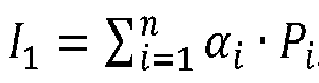
- Different weights may be used in different scenarios. For example, in some scenarios such as voice communication applications, latency may be heavily weighted. In some scenarios such as where personal data of an individual is involved, data privacy may be heavily weighted.
- In the above specific numerical example, the same parameters are used for both the retrieval loss indicator, I 1, and the data non-retrieval loss indicator, I 2. However, different parameters may be used in other examples.
- For example, the data non-retrieval loss indicator, I 2, may be based on a downstream server operating load parameter. The downstream server operating parameter may be indicative of an operating load of the downstream server.
- In the above specific numerical example, multiple parameters are used for both the retrieval loss indicator, I 1, and the data non-retrieval loss indicator, I 2. However, one or both may use a single parameter in other examples.
- Additionally, in this specific example, the retrieval loss indicator, I 1, and the data non-retrieval loss indicator, I 2, are calculated based on respective parameters Pi and Qj.
- In other examples, one of the retrieval loss indicator, I 1, and the data non-retrieval loss indicator, I 2, is a predetermined threshold value. For example, in the above specific numerical example, the data retrieval loss indicator, I 1, may be defined as
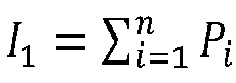
- In other examples, both the retrieval loss indicator, I 1, and the data non-retrieval loss indicator, I 2, are compared to one or more predetermined threshold values. Such a comparison involves both the retrieval loss indicator, I 1, and the data non-retrieval loss indicator, I 2, in addition to the one or more predetermined threshold values.
- In another example, the data retrieval loss indicator, I 1, may be defined as I 1 = max{Pi }, the data non-retrieval loss indicator, I 2, may be defined as I 2 = max(Qj }, and I 1 may be compared to I 2 in a similar manner to that described above.
- Although, in examples described above, the retrieval loss indicator, I 1, and the data non-retrieval loss indicator, I 2, are numerical values, they may take different forms in other examples. For example, they may be "high", "medium" and "low". A ranking rule may be configured such that "high" outweighs "medium" and "low", and "medium" outweighs "low".
- If the
decisioning server 130 determines that the data retrieval loss would outweigh the data non-retrieval loss, then the method proceeds toitem 316, where the request score is used as the determinative request score. - If the
decisioning server 130 determines that the data retrieval loss would not outweigh the data non-retrieval loss then, atitem 320, thedecisioning server 130 retrieves the further data. - In a specific example, the
decisioning server 130 may identify that an originating entity is using a different originating user device from their usual originating user device. For example, the originating entity may be using a user device of a family member. Thedecisioning server 130 may, accordingly, perform a device check. This may, for example, involve sending a one-time password (OTP) to a known user device of the originating entity and prompting the originating entity to enter the OTP into the new user device. The result of the device check may correspond to the further data used to regenerate the request score. - Processing then proceeds to
item 322, where thedecisioning server 130 regenerates the request score. Such regeneration uses at least some of the further data. The regeneration will likely result in a different request score compared to the primary request score. However, in some situations, the regenerated risk score is the same as the primary request score, for example where the further data does not, in fact, change the request score. - As explained above, the
decisioning server 130 may not, atitem 320, retrieve all data that could be used to regenerate the request score. For example, if there were additional data that could be used to regenerate the request score, but which would not, or would not be likely to, change the request score, such additional data may not be retrieved. - This can optimise the amount of data transferred in the
system 100, since data that is not likely to change the request score and, ultimately, the eventual decision is not communicated. - In the context of facial recognition, the
decisioning server 130 may be able to identify that certain pixels and/or regions of an image (e.g. in the centre of the image) are most influential on the request score. Thedecisioning server 130 may retrieve reference image data for only those pixels and/or regions and not retrieve reference image data for other pixels and/or regions (e.g. at the edge of the image). - Processing then proceeds to
item 324, where thedecisioning server 130 uses the regenerated request score as the determinative request score. - Some or all of the actions shown in
FIGs. 3A and3B may be omitted, varied or replaced in other examples. - Actions may take place in a different order from the order shown in
FIGs. 3A and3B . For example,item 314 could be performed prior toitem 306. This may be particularly effective where the further data could change a primary request score that is above the decline threshold or below the accept threshold. - Actions shown in
FIGs. 3A and3B may be divided or combined. - One or more actions shown in
FIGs. 3A and3B may be performed again as part of a recursive procedure. For example, as indicated byitem 326, instead of being used as the determinative request score (at item 324), the regenerated request score ofitem 322 may be compared to the decline threshold atitem 306. If the regenerated request score is not above the decline threshold, the regenerated request score may be compared to the accept threshold atitem 310. If the regenerated request score is not below the accept threshold, thenitems - The recursive procedure may be performed one or multiple times.
- The recursive procedure may be repeated until a predetermined condition is met. An example of such a predetermined condition is the recursive procedure having been performed a predetermined number of times. Another example of such a predetermined condition is the regenerated request score exceeding the decline threshold or being below the accept threshold.
- In this connection, it should be understood that references to generating a request score, for example as is performed at
item 304, encompass both generating a primary request score (i.e. a request score that is not a regenerated request score) and generating a regenerated request score. In addition, it should be understood that a regenerated request score may result from a single request score regeneration procedure, or from multiple recursions of a request score regeneration procedure. - Referring to
FIG. 4 , there is shown anexample graph 400 of request score versus density. -
FIG. 4 shows example request score versus density for legitimate requests (solid line) and for non-legitimate requests (broken line). -
FIG. 4 also shows arequest score region 402 in which all requests are decisioned as non-legitimate requests. - In this example, the upper
request score value 404 of therequest score region 402 is 1.00. - In this example, the lower
request score value 406 of therequest score region 402 is around 0.85. The lowerrequest score value 406 may correspond to the decline threshold described above. - Although most of the requests with request scores in the
request score region 402 are non-legitimate requests (broken line), a small number of legitimate requests (solid line) with request scores in therequest score region 402 have incorrectly been decisioned as non-legitimate. The latter represent a small number of false positives. - Referring to
FIG. 5 , there is shown anexample graph 500 of request score versus density. Theexample graph 500 corresponds generally to theexample graph 400. - However,
FIG. 5 shows arequest score region 502 in which all requests are decisioned as legitimate requests. - In this example, the lower
request score value 504 of therequest score region 502 is 0.00. - In this example, the upper
request score value 506 of therequest score region 502 is around 0.15. The upperrequest score value 506 may correspond to the accept threshold described above. - Although most of the requests with request scores in the
request score region 502 are legitimate requests (solid line), a small number of non-legitimate requests (broken line) with request scores in therequest score region 502 have incorrectly been decisioned as legitimate. - Referring to
FIG. 6 , there is shown anexample graph 600 of request score versus density. - The
example graph 600 corresponds generally to theexample graphs - However,
FIG. 6 shows arequest score region 602 with roughly similar densities of legitimate and non-legitimate requests across therequest score region 602. - In this example, the lower
request score value 604 of therequest score region 602 is around 0.15 and corresponds to theupper value 506 of therequest score region 502 shown inFIG. 5 . - In this example, the upper
request score value 606 of therequest score region 602 is around 0.85 and corresponds to thelower value 406 of therequest score region 402 shown inFIG. 4 . - Referring to
FIG. 7 , there is shown schematically a representation of a dataretrieval control procedure 700. - In this example, a
request 702 is received. Therequest 702 comprisesrequest data 704. A requestscore generation model 706 calculates adeterminative request score 708 based on therequest data 704 comprised in therequest 702. - In some examples, and as indicated by the use of broken lines, the request
score generation model 706 also usesfurther data 710 to calculate thedeterminative request score 708. When used, thefurther data 710 is retrieved from adata store 712. Thedata store 712 may correspond to thedata store 140 described above. - Referring to
FIG. 8 , there is shown schematically a representation of adecisioning server 800. - The
decisioning server 800 may correspond to thedecisioning server 130 described above. - The
decisioning server 800 is depicted as comprising various components. These should be understood to be logical components. Functionality of multiple components may be combined together. Some components shown inFIG. 8 may be omitted, replaced or divided into smaller components in other examples. The components may be implemented in hardware and/or software. - In this example, the
decisioning server 800 comprises arequest processor 802. In this example, therequest processor 802 receives and processes requests. In this example, processing a request comprises extracting request data from the request. - In this example, the
decisioning server 800 comprises arequest score generator 804. - In this example, the
request processor 802 provides extracted request data to therequest score generator 804. - In this example, the
request score generator 804 uses the extracted request data as input to a primary request score generation model 806. - In this example, the primary request score generation model 806 outputs a primary request score.
- In this example, the
request score generator 804 provides the primary request score to adecisioning component 808. - In this example, the
decisioning component 808 uses acomparator 810 to compare the primary request score to one or more threshold scores. - The
decisioning component 808 may use the primary request score as the determinative request score. - However, the
decisioning component 808 may instead use a data retrieval controller 812 to retrieve further data. - The data retrieval controller 812 may provide the further data to the
request score generator 804 directly and/or via thedecisioning component 808 to regenerate the request score. - The
request score generator 804 uses a request score regeneration model 814 to regenerate the request score. - Although the primary request score generation model 806 and the regenerated request score generation model 814 are depicted as separate components of the
decisioning server 800, this separation should be understood to be logical. - In some examples, the primary request score generation model 806 is the same as the regenerated request score generation model 814.
- In other examples, the primary request score generation model 806 is different from the regenerated request score generation model 814. For example, the regenerated request score generation model 814 may be able to process the further data as an input whereas the primary request score generation model 806 may not be able to process the further data as an input.
- More generally, the
request score generator 804 may use a requestscore generation model 816 to generate and/or regenerate a request score. Therequest score generator 804 may comprise a primary request score generation model 806 logical component and a regenerated request score generation model 814 logical component. The primary request score generation model 806 and the regenerated request score generation model 814 may be the same model as each other or may be different models. - The regenerated request score is then used as the determinative request score.
- Referring to
FIG. 9 , there is shown a representation of an example dataretrieval control method 900. - At
item 902, a request is received. - At
item 904, a request-based variable is generated using data associated with the request as input to a request-based variable generation model. - The request-based variable may comprise a request score, an instruction, a predication and/or a risk score. A risk score is indicative of a level of risk associated with the request. However, the request score may comprise another type of request score, such as a priority score. For example, in times of high server load, high priority requests may be accepted, low priority requests may be rejected, and intermediate priority requests may be subject to further analysis, e.g. priority classification, to determine whether they should be accepted or rejected.
- The request-based variable generation model may comprise an ML model. An ML model can be trained using training data. However, the request-based variable generation model may be a rule-based model that does not use ML.
- Generating the request-based variable may comprise using request data comprised in the request. However, as explained above, the request-based variable may be generated in other ways, for example by looking up the request-based variable.
- At item 906, in response to determining that using further data as further input to the request-based variable generation model may alter (or "change") the request-based variable, it is determined whether or not to retrieve the further data based on a comparison involving a data retrieval loss indicator and/or a data non-retrieval loss indicator.
- In examples, the data associated with the request is initially used as the input to the request-based variable generation model to generate a primary request-based variable. Subsequently, both the further data and the data associated with the request are used as inputs to the request-based variable generation model to generate a regenerated request-based variable.
- The comparison involving the data retrieval loss indicator and the data non-retrieval loss indicator may, for example, comprise determining whether the data retrieval loss indicator is greater than, less than, or the same as the data non-retrieval loss indicator. In such examples, the data retrieval loss indicator and the data non-retrieval loss indicator are compared to each other. However, the data retrieval loss indicator and the data non-retrieval loss indicator may be compared to one or more other indicators, such as predetermined threshold values, in other examples.
- The data retrieval loss indicator may be indicative of a loss associated with retrieving the further data and/or the data non-retrieval loss indicator may be indicative of a loss associated with not retrieving the further data.
- The data retrieval loss indicator and/or the data non-retrieval loss indicator may be based on a data privacy parameter, a data security parameter, a resiliency parameter and/or a latency parameter. However, other parameters may be used, for example depending on the application.
- Retrieval of the further data may comprise retrieving the further data from local storage, retrieving the further data from external storage, and/or requesting and receiving the further data from an originating entity, where the originating entity originated the request. However, the further data may be retrieved in another manner in other examples.
- At
item 908, a decision associated with the request is made based on a determinative request-based variable. - At
item 910, when the comparison indicates that the data retrieval loss outweighs the data non-retrieval loss, the determination is not to retrieve the further data, and the request-based variable is used as the determinative request-based variable. - At item 912, when the comparison indicates that the data non-retrieval loss outweighs the data retrieval loss, the determination is to retrieve the further data, the further data is retrieved, the request-based variable is regenerated using the request data and the further data as inputs to the request-based variable generation model to generate a regenerated request-based variable, and the regenerated request-based variable is used as the determinative request-based variable.
- The
method 900 may be performed on a request-by-request basis. However, the method could be performed for groups of requests, for example for groups of two or more requests, in other examples. Requests may be grouped together based on content similarity, time of receipt, or otherwise. - The
method 900 may be performed in an anomalous behaviour detection system. However, the method may be performed in other types of systems, i.e. systems that do not detect anomalous behaviour. - The further data may be retrieved for one of (i) the request and (ii) a subsequent request, and the further data may not be retrieved for the other of (i) the request and (ii) the subsequent request. As such, further data may be retrieved for some but not all requests. In some situations, for example where both the request and the subsequent request are neither clearly legitimate nor clearly non-legitimate, the further data may be retrieved for both the request and the subsequent request. In other situations, for example where both the request and the subsequent request are clearly legitimate or clearly non-legitimate, the further data may be retrieved for neither the request nor the subsequent request.
- In some examples, when the request-based variable and/or the regenerated request-based variable is indicative of the request being high-risk, the decision of
item 908 comprises performing an action associated with a high-risk request. A high-risk request may be a request having a request score above (or below, depending on implementation) a threshold, such as the above-described decline threshold. - The action associated with the high-risk request may comprise refusing the request. Refusing the request may or may not involve communicating the refusal to a requestor. However, another possible action associated with the high-risk request is to process the request, but as a high-risk request.
- In some examples, when the request-based variable and/or the regenerated request-based variable is indicative of the request being low-risk, the decision of
item 908 comprises performing an action associated with a low-risk request. A low-risk request may be a request having a request score below (or above, depending on implementation) a threshold, such as the above-described accept threshold. - The action associated with the low-risk request may comprise accepting the request. Accepting the request may or may not involve communicating the acceptance to a requestor. However, a different action associated with the low-risk request may be performed in other examples. For example, the request may be forwarded to another entity for processing without a decision being made on whether the request should ultimately be accepted or declined.
- In some examples, when the request-based variable and/or the regenerated request-based variable is indicative of the request being medium-risk, an action associated with a medium-risk request is performed. A medium-risk request may be a request having a request score between two thresholds, such as the above-described decline and accept thresholds.
- The action associated with the medium-risk request may comprise determining whether using the further data as further input to the request-based variable generation model may alter the request-based variable. In response to determining that retrieving the further data would not alter the request-based variable, the request-based variable may be used as the determinative request-based variable.
- In some examples, in response to determining that using additional data as additional input to the request-based variable generation model would not alter the request-based variable, the additional data is not retrieved. As such, data can selectively be retrieved which influences the request-based variable.
- Measures (such as systems, servers, computer programs) described herein may implement the
method 900. - In particular, a system configured to perform the
method 900 may be provided. - A decisioning server configured to perform the
method 900 may be provided. - A computer program comprising instructions which, when executed by a processor, cause the processor to perform the
method 900 may be provided. - Referring to
FIG. 10 , there is shown anotherexample system 1000. - The
example system 1000 has many features in common with theexample system 100 as will now be explained. - The
example system 1000 comprises auser device 1002, which may correspond to the first and/orsecond user device user device 1002 is communicatively coupled to afirst network 1004 via a firstcommunicative coupling 1006. Thefirst network 1004 may correspond to the first and/orsecond network communicative coupling 1006 may correspond to the first and/or secondcommunicative coupling - The
example system 1000 comprises aserver 1008, which may correspond to the first and/orsecond server server 1008 is communicatively coupled to thefirst network 1004 via a secondcommunicative coupling 1010. The secondcommunicative coupling 1010 may correspond to the third and/or fourthcommunicative coupling - The
server 1008 is communicatively coupled to asecond network 1012 via a thirdcommunicative coupling 1014. Thesecond network 1012 may correspond to the third and/orfourth network communicative coupling 1014 may correspond to the fifth and/or sixthcommunicative coupling - The
example system 1000 comprises adecisioning server 1016, which may correspond to thedecisioning server 130. Thedecisioning server 1016 is communicatively coupled to thesecond network 1012 via a fourthcommunicative coupling 1018. The fourthcommunicative coupling 1018 may correspond to the seventh and/or eighthcommunicative coupling - The
decisioning server 1016 is communicatively coupled to athird network 1020 via a fifthcommunicative coupling 1022. Thethird network 1020 may correspond to thefifth network 136 and the fifthcommunicative coupling 1022 may correspond to the ninthcommunicative coupling 138. - The
example system 1000 comprises adata store 1024, which may correspond to thedata store 140. Thedata store 1024 is communicatively coupled to thethird network 1020 via a sixthcommunicative coupling 1026. The sixthcommunicative coupling 1026 may correspond to the tenthcommunicative coupling 142. - As indicated by
item 1028, theserver 1008 may communicate a request to thedecisioning server 1016. Thedecisioning server 1016 may perform data retrieval control as described herein in response to the request from thedecisioning server 1016. - As indicated by
item 1030, theuser device 1002 may communicate a request to thedecisioning server 1016. Thedecisioning server 1016 may perform data retrieval control as described herein in response to the request from theuser device 1002. - In some examples, the
user device 1002 communicates such a request to thedecisioning server 1016 via theserver 1008. In other examples, theuser device 1002 may be able to communicate such a request to thedecisioning server 1016 directly, i.e. without the request passing via theserver 1008. For example, thesystem 1000 may not include theserver 1008 in some deployments and theuser device 1002 may be able to communicate directly with thedecisioning server 1016. - Various decisioning request triggers may prompt the communication of the request to the
decisioning server 1016. An example of such a decisioning request trigger is receiving another request in relation to which a decision is to be made. - With reference to an earlier specific example, the
system 1000 may be used to make decisions in relation to telephony requests. For example, theserver 1008 may correspond to thedestination server 118 and theuser device 1002 may correspond to thedestination user device 104. Theserver 1008 may receive an incoming telephone call setup request destined for theuser device 1002. Theserver 1008 may invoke thedecisioning server 1016, as indicated byitem 1028, to decide whether or not the incoming telephone call setup request should be forwarded to theuser device 1002. Thedecisioning server 1016 may be performing data retrieval control in connection with such decisioning. - The data retrieval control measures described herein have various applications.
- The data retrieval control measures may be applied in connection with DoS and/or DDoS attack management. For example, the data retrieval control may be relatively relaxed when downstream systems are not operating near capacity. However, when an increase in computing resource usage by downstream systems is detected, the data retrieval control may be tightened to protect the downstream system from being overwhelmed by non-legitimate requests.
- The data retrieval control measures may be used to provide load management in respect of downstream systems.
- Another application is in connection with anomalous behaviour detection. For example, the data retrieval control measures may enable accurate anomalous behaviour detection to be performed, while trading off other considerations such as data privacy.
- While specific embodiments of the present invention have been described in detail, it will be appreciated by those skilled in the art that the embodiments described in detail are not limiting on the scope of the claimed invention.
- It will also be appreciated that optional features described hereinabove in respect of aspects, embodiments and examples apply equally, where technically appropriate, to other aspects, embodiments and examples. Where technically appropriate, aspects, embodiments and examples may be combined.
- Methods described herein may be computer-implemented.
- The aspects, embodiments and examples described herein each extend to a non-transitory computer-readable medium comprising instructions that, when executed by a processor, cause the processor to carry out any method described herein.
- The aspects, embodiments and examples described herein each further extend to a computer software product comprising instructions that, when executed by a processor, cause the processor to carry out any method described herein.
- In the context of this specification "comprising" is to be interpreted as "including".
Claims (15)
- A data retrieval control method, the method comprising:receiving a request;generating a request-based variable using data associated with the request, wherein the data is input to a request-based variable generation model to generate the request-based variable;in response to determining that using further data as further input to the request-based variable generation model may alter the request-based variable, determining whether or not to retrieve the further data based on a comparison involving a data retrieval loss indicator and a data non-retrieval loss indicator, the data retrieval loss indicator being indicative of a loss associated with retrieving the further data and the data non-retrieval loss indicator being indicative of a loss associated with not retrieving the further data; andmaking a decision associated with the request based on a determinative request-based variable,wherein, when the comparison indicates that the data retrieval loss outweighs the data non-retrieval loss:the determination is not to retrieve the further data; andthe request-based variable is used as the determinative request-based variable, andwherein, when the comparison indicates that the data non-retrieval loss outweighs the data retrieval loss:the determination is to retrieve the further data;the further data is retrieved;the request-based variable is regenerated using the request data and the further data as inputs to the request-based variable generation model to generate a regenerated request-based variable; andthe regenerated request-based variable is used as the determinative request-based variable.
- A method according to claim 1, wherein the data retrieval loss indicator and/or the data non-retrieval loss indicator is based on a data privacy parameter.
- A method according to claim 1 or 2, wherein the data retrieval loss indicator and/or the data non-retrieval loss indicator is based on:a data security parameter;a resiliency parameter; and/ora latency parameter.
- A method according to any of claims 1 to 3, wherein the method is performed on a request-by-request basis.
- A method according to any of claims 1 to 4, wherein the further data is retrieved for one of the request and a subsequent request, and wherein the further data is not retrieved for the other of the request and the subsequent request.
- A method according to any of claims 1 to 5, wherein the request-based variable comprises a request score, an instruction, a predication and/or a risk score.
- A method according to any of claims 1 to 6, wherein:when the request-based variable and/or the regenerated request-based variable is indicative of the request being high-risk, the decision comprises performing an action associated with a high-risk request, optionally wherein the action associated with the high-risk request comprises refusing the request; and/orwherein, when the request-based variable and/or the regenerated request-based variable is indicative of the request being low-risk, the decision comprises performing an action associated with a low-risk request, optionally wherein the action associated with the low-risk request comprises accepting the request.
- A method according to any of claims 1 to 7, wherein, when the request-based variable and/or the regenerated request-based variable is indicative of the request being medium-risk, an action associated with a medium-risk request is performed,optionally wherein the action associated with the medium-risk request comprises determining whether using the further data as further input to the request-based variable generation model may alter the request-based variable,further optionally wherein, in response to determining that retrieving the further data would not alter the request-based variable, the request-based variable is used as the determinative request-based variable.
- A method according to any of claims 1 to 8, wherein the request-based variable generation model comprises a machine learning model.
- A method according to any of claims 1 to 9, wherein retrieval of the further data comprises:retrieving the further data from local storage;retrieving the further data from external storage; and/orrequesting and receiving the further data from an originating entity, the originating entity having originated the request.
- A method according to any of claims 1 to 10, wherein in response to determining that using additional data as additional input to the request-based variable generation model would not alter the request-based variable, the additional data is not retrieved.
- A method according to any of claims 1 to 11, wherein generating the request-based variable comprises using request data comprised in the request.
- A method according to any of claims 1 to 12, wherein the method is performed:by a decisioning server; and/orin an anomalous behaviour detection system.
- A decisioning server comprising:a request processor;a request-based variable generator;a request-based variable generation model;a decisioning component;a comparator; anda data retrieval controller,wherein the decisioning server is configured to perform a method according to any of claims 1 to 13.
- A system, server and/or computer program configured to perform a method according to any of claims 1 to 13.
Priority Applications (3)
| Application Number | Priority Date | Filing Date | Title |
|---|---|---|---|
| ARP240101203A AR132666A1 (en) | 2023-05-11 | 2024-05-10 | DATA RECOVERY CONTROL |
| CN202480030515.8A CN121079686A (en) | 2023-05-11 | 2024-05-13 | Data retrieval control |
| PCT/IB2024/054649 WO2024231904A1 (en) | 2023-05-11 | 2024-05-13 | Data retrieval control |
Applications Claiming Priority (1)
| Application Number | Priority Date | Filing Date | Title |
|---|---|---|---|
| US202363501446P | 2023-05-11 | 2023-05-11 |
Publications (2)
| Publication Number | Publication Date |
|---|---|
| EP4462294A1 true EP4462294A1 (en) | 2024-11-13 |
| EP4462294B1 EP4462294B1 (en) | 2025-07-23 |
Family
ID=93113242
Family Applications (1)
| Application Number | Title | Priority Date | Filing Date |
|---|---|---|---|
| EP23186680.7A Active EP4462294B1 (en) | 2023-05-11 | 2023-07-20 | Data retrieval control |
Country Status (1)
| Country | Link |
|---|---|
| EP (1) | EP4462294B1 (en) |
Citations (2)
| Publication number | Priority date | Publication date | Assignee | Title |
|---|---|---|---|---|
| EP3812929A1 (en) * | 2019-10-25 | 2021-04-28 | Accenture Global Solutions Limited | Utilizing a neural network model to determine risk associated with an application programming interface of a web application |
| US20220207135A1 (en) * | 2020-09-28 | 2022-06-30 | Kpmg Llp | System and method for monitoring, measuring, and mitigating cyber threats to a computer system |
-
2023
- 2023-07-20 EP EP23186680.7A patent/EP4462294B1/en active Active
Patent Citations (2)
| Publication number | Priority date | Publication date | Assignee | Title |
|---|---|---|---|---|
| EP3812929A1 (en) * | 2019-10-25 | 2021-04-28 | Accenture Global Solutions Limited | Utilizing a neural network model to determine risk associated with an application programming interface of a web application |
| US20220207135A1 (en) * | 2020-09-28 | 2022-06-30 | Kpmg Llp | System and method for monitoring, measuring, and mitigating cyber threats to a computer system |
Also Published As
| Publication number | Publication date |
|---|---|
| EP4462294B1 (en) | 2025-07-23 |
Similar Documents
| Publication | Publication Date | Title |
|---|---|---|
| US12041086B2 (en) | Message management platform for performing impersonation analysis and detection | |
| EP3487144B1 (en) | Malicious domain scoping recommendation system | |
| US20250220039A1 (en) | Real-time detection of online new-account creation fraud using graph-based neural network modeling | |
| AU2008207926B2 (en) | Correlation and analysis of entity attributes | |
| US7779156B2 (en) | Reputation based load balancing | |
| US9544272B2 (en) | Detecting image spam | |
| US7937480B2 (en) | Aggregation of reputation data | |
| AU2008207930B2 (en) | Multi-dimensional reputation scoring | |
| US8561167B2 (en) | Web reputation scoring | |
| US9369479B2 (en) | Detection of malware beaconing activities | |
| AU2008207924B2 (en) | Web reputation scoring | |
| US20260039689A1 (en) | Automated detection and mitigation of bot attacks using machine learning | |
| EP4462294B1 (en) | Data retrieval control | |
| US11394754B2 (en) | System and method of admission control of a communication session | |
| WO2024231904A1 (en) | Data retrieval control | |
| US20240267397A1 (en) | Intercepting worthless requests at the network edge using machine learning | |
| US20250139239A1 (en) | Credential-stuffing anomaly detection | |
| KR20110001850A (en) | Information leak detection system using text mining technique |
Legal Events
| Date | Code | Title | Description |
|---|---|---|---|
| PUAI | Public reference made under article 153(3) epc to a published international application that has entered the european phase |
Free format text: ORIGINAL CODE: 0009012 |
|
| STAA | Information on the status of an ep patent application or granted ep patent |
Free format text: STATUS: THE APPLICATION HAS BEEN PUBLISHED |
|
| AK | Designated contracting states |
Kind code of ref document: A1 Designated state(s): AL AT BE BG CH CY CZ DE DK EE ES FI FR GB GR HR HU IE IS IT LI LT LU LV MC ME MK MT NL NO PL PT RO RS SE SI SK SM TR |
|
| STAA | Information on the status of an ep patent application or granted ep patent |
Free format text: STATUS: REQUEST FOR EXAMINATION WAS MADE |
|
| 17P | Request for examination filed |
Effective date: 20250204 |
|
| GRAP | Despatch of communication of intention to grant a patent |
Free format text: ORIGINAL CODE: EPIDOSNIGR1 |
|
| STAA | Information on the status of an ep patent application or granted ep patent |
Free format text: STATUS: GRANT OF PATENT IS INTENDED |
|
| INTG | Intention to grant announced |
Effective date: 20250317 |
|
| GRAS | Grant fee paid |
Free format text: ORIGINAL CODE: EPIDOSNIGR3 |
|
| GRAA | (expected) grant |
Free format text: ORIGINAL CODE: 0009210 |
|
| STAA | Information on the status of an ep patent application or granted ep patent |
Free format text: STATUS: THE PATENT HAS BEEN GRANTED |
|
| AK | Designated contracting states |
Kind code of ref document: B1 Designated state(s): AL AT BE BG CH CY CZ DE DK EE ES FI FR GB GR HR HU IE IS IT LI LT LU LV MC ME MK MT NL NO PL PT RO RS SE SI SK SM TR |
|
| REG | Reference to a national code |
Ref country code: GB Ref legal event code: FG4D |
|
| REG | Reference to a national code |
Ref country code: CH Ref legal event code: EP |
|
| REG | Reference to a national code |
Ref country code: IE Ref legal event code: FG4D |
|
| REG | Reference to a national code |
Ref country code: DE Ref legal event code: R096 Ref document number: 602023004973 Country of ref document: DE |
|
| REG | Reference to a national code |
Ref country code: NL Ref legal event code: MP Effective date: 20250723 |
|
| PG25 | Lapsed in a contracting state [announced via postgrant information from national office to epo] |
Ref country code: PT Free format text: LAPSE BECAUSE OF FAILURE TO SUBMIT A TRANSLATION OF THE DESCRIPTION OR TO PAY THE FEE WITHIN THE PRESCRIBED TIME-LIMIT Effective date: 20251124 |
|
| PG25 | Lapsed in a contracting state [announced via postgrant information from national office to epo] |
Ref country code: NL Free format text: LAPSE BECAUSE OF FAILURE TO SUBMIT A TRANSLATION OF THE DESCRIPTION OR TO PAY THE FEE WITHIN THE PRESCRIBED TIME-LIMIT Effective date: 20250723 |
|
| REG | Reference to a national code |
Ref country code: AT Ref legal event code: MK05 Ref document number: 1817159 Country of ref document: AT Kind code of ref document: T Effective date: 20250723 |
|
| PG25 | Lapsed in a contracting state [announced via postgrant information from national office to epo] |
Ref country code: IS Free format text: LAPSE BECAUSE OF FAILURE TO SUBMIT A TRANSLATION OF THE DESCRIPTION OR TO PAY THE FEE WITHIN THE PRESCRIBED TIME-LIMIT Effective date: 20251123 |
|
| PG25 | Lapsed in a contracting state [announced via postgrant information from national office to epo] |
Ref country code: NO Free format text: LAPSE BECAUSE OF FAILURE TO SUBMIT A TRANSLATION OF THE DESCRIPTION OR TO PAY THE FEE WITHIN THE PRESCRIBED TIME-LIMIT Effective date: 20251023 |
|
| REG | Reference to a national code |
Ref country code: LT Ref legal event code: MG9D |
|
| PG25 | Lapsed in a contracting state [announced via postgrant information from national office to epo] |
Ref country code: AT Free format text: LAPSE BECAUSE OF FAILURE TO SUBMIT A TRANSLATION OF THE DESCRIPTION OR TO PAY THE FEE WITHIN THE PRESCRIBED TIME-LIMIT Effective date: 20250723 |
|
| PG25 | Lapsed in a contracting state [announced via postgrant information from national office to epo] |
Ref country code: FI Free format text: LAPSE BECAUSE OF FAILURE TO SUBMIT A TRANSLATION OF THE DESCRIPTION OR TO PAY THE FEE WITHIN THE PRESCRIBED TIME-LIMIT Effective date: 20250723 |
|
| PG25 | Lapsed in a contracting state [announced via postgrant information from national office to epo] |
Ref country code: HR Free format text: LAPSE BECAUSE OF FAILURE TO SUBMIT A TRANSLATION OF THE DESCRIPTION OR TO PAY THE FEE WITHIN THE PRESCRIBED TIME-LIMIT Effective date: 20250723 |
|
| PG25 | Lapsed in a contracting state [announced via postgrant information from national office to epo] |
Ref country code: GR Free format text: LAPSE BECAUSE OF FAILURE TO SUBMIT A TRANSLATION OF THE DESCRIPTION OR TO PAY THE FEE WITHIN THE PRESCRIBED TIME-LIMIT Effective date: 20251024 |
|
| PG25 | Lapsed in a contracting state [announced via postgrant information from national office to epo] |
Ref country code: SE Free format text: LAPSE BECAUSE OF FAILURE TO SUBMIT A TRANSLATION OF THE DESCRIPTION OR TO PAY THE FEE WITHIN THE PRESCRIBED TIME-LIMIT Effective date: 20250723 |
|
| PG25 | Lapsed in a contracting state [announced via postgrant information from national office to epo] |
Ref country code: LV Free format text: LAPSE BECAUSE OF FAILURE TO SUBMIT A TRANSLATION OF THE DESCRIPTION OR TO PAY THE FEE WITHIN THE PRESCRIBED TIME-LIMIT Effective date: 20250723 |
|
| PG25 | Lapsed in a contracting state [announced via postgrant information from national office to epo] |
Ref country code: BG Free format text: LAPSE BECAUSE OF FAILURE TO SUBMIT A TRANSLATION OF THE DESCRIPTION OR TO PAY THE FEE WITHIN THE PRESCRIBED TIME-LIMIT Effective date: 20250723 Ref country code: PL Free format text: LAPSE BECAUSE OF FAILURE TO SUBMIT A TRANSLATION OF THE DESCRIPTION OR TO PAY THE FEE WITHIN THE PRESCRIBED TIME-LIMIT Effective date: 20250723 |
|
| PG25 | Lapsed in a contracting state [announced via postgrant information from national office to epo] |
Ref country code: RS Free format text: LAPSE BECAUSE OF FAILURE TO SUBMIT A TRANSLATION OF THE DESCRIPTION OR TO PAY THE FEE WITHIN THE PRESCRIBED TIME-LIMIT Effective date: 20251023 |
|
| PG25 | Lapsed in a contracting state [announced via postgrant information from national office to epo] |
Ref country code: ES Free format text: LAPSE BECAUSE OF FAILURE TO SUBMIT A TRANSLATION OF THE DESCRIPTION OR TO PAY THE FEE WITHIN THE PRESCRIBED TIME-LIMIT Effective date: 20250723 |
|
| PG25 | Lapsed in a contracting state [announced via postgrant information from national office to epo] |
Ref country code: SM Free format text: LAPSE BECAUSE OF FAILURE TO SUBMIT A TRANSLATION OF THE DESCRIPTION OR TO PAY THE FEE WITHIN THE PRESCRIBED TIME-LIMIT Effective date: 20250723 |
|
| PG25 | Lapsed in a contracting state [announced via postgrant information from national office to epo] |
Ref country code: DK Free format text: LAPSE BECAUSE OF FAILURE TO SUBMIT A TRANSLATION OF THE DESCRIPTION OR TO PAY THE FEE WITHIN THE PRESCRIBED TIME-LIMIT Effective date: 20250723 |
|
| PG25 | Lapsed in a contracting state [announced via postgrant information from national office to epo] |
Ref country code: IT Free format text: LAPSE BECAUSE OF FAILURE TO SUBMIT A TRANSLATION OF THE DESCRIPTION OR TO PAY THE FEE WITHIN THE PRESCRIBED TIME-LIMIT Effective date: 20250723 |
|
| PG25 | Lapsed in a contracting state [announced via postgrant information from national office to epo] |
Ref country code: CZ Free format text: LAPSE BECAUSE OF FAILURE TO SUBMIT A TRANSLATION OF THE DESCRIPTION OR TO PAY THE FEE WITHIN THE PRESCRIBED TIME-LIMIT Effective date: 20250723 |
|
| PG25 | Lapsed in a contracting state [announced via postgrant information from national office to epo] |
Ref country code: SK Free format text: LAPSE BECAUSE OF FAILURE TO SUBMIT A TRANSLATION OF THE DESCRIPTION OR TO PAY THE FEE WITHIN THE PRESCRIBED TIME-LIMIT Effective date: 20250723 Ref country code: EE Free format text: LAPSE BECAUSE OF FAILURE TO SUBMIT A TRANSLATION OF THE DESCRIPTION OR TO PAY THE FEE WITHIN THE PRESCRIBED TIME-LIMIT Effective date: 20250723 |