EP4461754A1 - Method for making prediction related to addition polymerization reaction, information processing device, and program - Google Patents
Method for making prediction related to addition polymerization reaction, information processing device, and program Download PDFInfo
- Publication number
- EP4461754A1 EP4461754A1 EP23814347.3A EP23814347A EP4461754A1 EP 4461754 A1 EP4461754 A1 EP 4461754A1 EP 23814347 A EP23814347 A EP 23814347A EP 4461754 A1 EP4461754 A1 EP 4461754A1
- Authority
- EP
- European Patent Office
- Prior art keywords
- polymerization reaction
- addition polymerization
- information processing
- processing device
- objective factor
- Prior art date
- Legal status (The legal status is an assumption and is not a legal conclusion. Google has not performed a legal analysis and makes no representation as to the accuracy of the status listed.)
- Pending
Links
Images



Classifications
-
- G—PHYSICS
- G06—COMPUTING OR CALCULATING; COUNTING
- G06N—COMPUTING ARRANGEMENTS BASED ON SPECIFIC COMPUTATIONAL MODELS
- G06N3/00—Computing arrangements based on biological models
- G06N3/02—Neural networks
- G06N3/04—Architecture, e.g. interconnection topology
- G06N3/048—Activation functions
-
- G—PHYSICS
- G16—INFORMATION AND COMMUNICATION TECHNOLOGY [ICT] SPECIALLY ADAPTED FOR SPECIFIC APPLICATION FIELDS
- G16C—COMPUTATIONAL CHEMISTRY; CHEMOINFORMATICS; COMPUTATIONAL MATERIALS SCIENCE
- G16C60/00—Computational materials science, i.e. ICT specially adapted for investigating the physical or chemical properties of materials or phenomena associated with their design, synthesis, processing, characterisation or utilisation
-
- C—CHEMISTRY; METALLURGY
- C08—ORGANIC MACROMOLECULAR COMPOUNDS; THEIR PREPARATION OR CHEMICAL WORKING-UP; COMPOSITIONS BASED THEREON
- C08F—MACROMOLECULAR COMPOUNDS OBTAINED BY REACTIONS ONLY INVOLVING CARBON-TO-CARBON UNSATURATED BONDS
- C08F20/00—Homopolymers and copolymers of compounds having one or more unsaturated aliphatic radicals, each having only one carbon-to-carbon double bond, and only one being terminated by only one carboxyl radical or a salt, anhydride, ester, amide, imide or nitrile thereof
-
- G—PHYSICS
- G06—COMPUTING OR CALCULATING; COUNTING
- G06F—ELECTRIC DIGITAL DATA PROCESSING
- G06F18/00—Pattern recognition
- G06F18/20—Analysing
- G06F18/21—Design or setup of recognition systems or techniques; Extraction of features in feature space; Blind source separation
- G06F18/213—Feature extraction, e.g. by transforming the feature space; Summarisation; Mappings, e.g. subspace methods
- G06F18/2135—Feature extraction, e.g. by transforming the feature space; Summarisation; Mappings, e.g. subspace methods based on approximation criteria, e.g. principal component analysis
-
- G—PHYSICS
- G06—COMPUTING OR CALCULATING; COUNTING
- G06F—ELECTRIC DIGITAL DATA PROCESSING
- G06F18/00—Pattern recognition
- G06F18/20—Analysing
- G06F18/23—Clustering techniques
-
- G—PHYSICS
- G06—COMPUTING OR CALCULATING; COUNTING
- G06N—COMPUTING ARRANGEMENTS BASED ON SPECIFIC COMPUTATIONAL MODELS
- G06N3/00—Computing arrangements based on biological models
- G06N3/02—Neural networks
- G06N3/04—Architecture, e.g. interconnection topology
- G06N3/044—Recurrent networks, e.g. Hopfield networks
-
- G—PHYSICS
- G06—COMPUTING OR CALCULATING; COUNTING
- G06N—COMPUTING ARRANGEMENTS BASED ON SPECIFIC COMPUTATIONAL MODELS
- G06N3/00—Computing arrangements based on biological models
- G06N3/02—Neural networks
- G06N3/08—Learning methods
-
- G—PHYSICS
- G06—COMPUTING OR CALCULATING; COUNTING
- G06N—COMPUTING ARRANGEMENTS BASED ON SPECIFIC COMPUTATIONAL MODELS
- G06N3/00—Computing arrangements based on biological models
- G06N3/02—Neural networks
- G06N3/08—Learning methods
- G06N3/084—Backpropagation, e.g. using gradient descent
-
- G—PHYSICS
- G16—INFORMATION AND COMMUNICATION TECHNOLOGY [ICT] SPECIALLY ADAPTED FOR SPECIFIC APPLICATION FIELDS
- G16C—COMPUTATIONAL CHEMISTRY; CHEMOINFORMATICS; COMPUTATIONAL MATERIALS SCIENCE
- G16C20/00—Chemoinformatics, i.e. ICT specially adapted for the handling of physicochemical or structural data of chemical particles, elements, compounds or mixtures
- G16C20/10—Analysis or design of chemical reactions, syntheses or processes
-
- G—PHYSICS
- G16—INFORMATION AND COMMUNICATION TECHNOLOGY [ICT] SPECIALLY ADAPTED FOR SPECIFIC APPLICATION FIELDS
- G16C—COMPUTATIONAL CHEMISTRY; CHEMOINFORMATICS; COMPUTATIONAL MATERIALS SCIENCE
- G16C20/00—Chemoinformatics, i.e. ICT specially adapted for the handling of physicochemical or structural data of chemical particles, elements, compounds or mixtures
- G16C20/30—Prediction of properties of chemical compounds, compositions or mixtures
-
- G—PHYSICS
- G16—INFORMATION AND COMMUNICATION TECHNOLOGY [ICT] SPECIALLY ADAPTED FOR SPECIFIC APPLICATION FIELDS
- G16C—COMPUTATIONAL CHEMISTRY; CHEMOINFORMATICS; COMPUTATIONAL MATERIALS SCIENCE
- G16C20/00—Chemoinformatics, i.e. ICT specially adapted for the handling of physicochemical or structural data of chemical particles, elements, compounds or mixtures
- G16C20/70—Machine learning, data mining or chemometrics
Definitions
- the present disclosure relates to a method for performing prediction related to an addition polymerization reaction, an information processing device, and a program.
- the present application claims priority based on Japanese Patent Application No. 2023-048922 filed in Japan on March 24, 2023 , and the content thereof is incorporated herein.
- PTL 1 has described the use of modeling techniques such as neural networks, partial least squares, and principal component regression to optimize the control of reactor systems.
- modeling techniques such as neural networks, partial least squares, and principal component regression to optimize the control of reactor systems.
- specific design methods and optimization in performing predictions related to addition polymerization reactions have not been considered, and there has been room for improvement in the prediction technology related to the addition polymerization reactions.
- An object of the present disclosure made in view of such circumstances is to improve the prediction technology related to the addition polymerization reactions.
- the prediction technology related to the addition polymerization reaction can be improved.
- a prediction target according to the embodiment of the present disclosure includes both batch reaction and continuous reaction.
- the main polymer materials synthesized by the addition polymerization reaction according to the present embodiment include acrylic, poly(meth)acrylic acid esters, polyethylene, polypropylene, polystyrene, polyvinyl chloride, polyvinyl acetate, polyvinylidene chloride, polyacrylonitrile, and polytetrafluoroethylene.
- the addition polymerization reaction according to the present embodiment includes an addition polymerization reaction of the acrylic.
- the method for performing prediction related to an addition polymerization reaction in the present embodiment is executed by an information processing device 10.
- the information processing device 10 trains a prediction model based on actual data including a plurality of explanatory factors and an objective factor related to the addition polymerization reaction.
- the information processing device 10 predicts the objective factor during the addition polymerization reaction based on the explanatory factors related to the addition polymerization reaction by the trained prediction model.
- the explanatory factors include a plurality of feature values obtained by clustering analysis of time-series data from a plurality of measurement instruments at a temperature rising process and a dropwise addition process.
- the objective factor is characterized by including at least either an NV or a solution viscosity.
- the NV stands for Nonvolatile content or Non-volatile matter content and represents the nonvolatile content in a resin solution.
- the addition polymerization reaction is basically synthesized in a solvent. A polymerized polymer is considered the nonvolatile content, whereas a non-polymerized monomer is considered a volatile content. As the addition polymerization reaction proceeds and the monomer is consumed, the volatile content decreases and the nonvolatile content increases. Checking an increase in the nonvolatile content to a certain value allows a reaction ratio to be estimated.
- the explanatory factors include the feature values obtained by the clustering analysis of the time-series data from the measurement instruments at the temperature rising process and the dropwise addition process.
- the objective factor is characterized by including either an NV or a solution viscosity.
- the prediction accuracy can be improved by including, in the explanatory factors, the feature values obtained by the clustering analysis of the time-series data from the measurement instruments at the temperature rising process and the dropwise addition process as described later. Therefore, according the present embodiment, the prediction technology related to the addition polymerization reaction can be improved.
- the information processing device 10 is an arbitrary device used by users.
- personal computers, server computers, general-purpose electronic devices, or dedicated electronic devices can be employed as the information processing device 10.
- the information processing device 10 includes a control unit 11, a storage unit 12, an input unit 13, and an output unit 14.
- the control unit 11 includes at least one processor, at least one dedicated circuit, or a combination thereof.
- the processor is a general-purpose processor such as a central processing unit (CPU) or a graphics processing unit (GPU), or a dedicated processor specialized for specific processing.
- the dedicated circuit is, for example, a field-programmable gate array (FPGA) or an application specific integrated circuit (ASIC).
- the control unit 11 executes processes associated with the operation of the information processing device 10 while controlling each part of the information processing device 10.
- the storage unit 12 includes at least one semiconductor memory, at least one magnetic memory, at least one optical memory, or a combination of at least two of these memories.
- the semiconductor memory is, for example, a random-access memory (RAM) or a read-only memory (ROM).
- the RAM is, for example, a static random-access memory (SRAM) or a dynamic random-access memory (DRAM).
- the ROM is, for example, an electrically erasable programmable read-only memory (EEPROM).
- the storage unit 12 functions, for example, as a main memory device, an auxiliary memory device, or a cache memory. In the storage unit 12, data used in the operation of the information processing device 10 and data obtained by the operation of the information processing device 10 are stored.
- the input unit 13 includes at least one interface for input.
- the interface for input is, for example, physical keys, capacitive keys, pointing devices, or touch screens integrated with displays.
- the interface for input may be, for example, a microphone that accepts voice input or a camera that accepts gesture input.
- the input unit 13 accepts operations to input data used in the operation of the information processing device 10.
- the input unit 13 may be connected to the information processing device 10 as an external input device instead of being provided in the information processing device 10.
- any method such as universal serial bus (USB), high-definition multimedia interface (HDMI) (registered trademark), or Bluetooth (registered trademark) can be used as the connection method.
- USB universal serial bus
- HDMI high-definition multimedia interface
- Bluetooth registered trademark
- the output unit 14 includes at least one interface for output.
- the interface for output is, for example, a display that outputs information in the form of images.
- the display is, for example, a liquid crystal display (LCD) or an organic electroluminescence (EL) display.
- the output unit 14 displays and outputs data obtained by the operation of the information processing device 10.
- the output unit 14 may be connected to the information processing device 10 as an external output device instead of being provided in the information processing device 10.
- any method such as USB, HDMI (registered trademark), or Bluetooth (registered trademark) can be used as the connection method.
- the functions of the information processing device 10 are achieved by executing a program according to the present embodiment on a processor corresponding to the information processing device 10. In other words, the functions of the information processing device 10 are achieved by software.
- the program causes the computer to function as the information processing device 10 by causing the computer to execute the operations of the information processing device 10. In other words, the computer functions as the information processing device 10 by executing the operation of the information processing device 10 in accordance with the program.
- the program can be recorded on a computer-readable recording medium.
- the computer-readable recording media include non-transient computer-readable media, for example, magnetic recording devices, optical discs, magneto-optical recording media, or semiconductor memories.
- Program distribution is performed by, for example, selling, assigning, or lending removal recording media such as a digital versatile disc (DVD) or a compact disc read only memory (CD-ROM) on which the program is recorded.
- Program distribution may also be done by storing the program in a storage on an external server and transmitting the program from the external server to other computers.
- the program may also be provided as a program product.
- Some or all of the functions of the information processing device 10 may be achieved by a dedicated circuit corresponding to the control unit 11. In other words, some or all of the functions of the information processing device 10 may be achieved by hardware.
- the storage unit 12 stores therein, for example, actual data and prediction models.
- the actual data and the prediction model may be stored in an external device separate from the information processing device 10.
- the information processing device 10 may be equipped with an interface for external communication.
- the interface for communication may be either an interface of a wired communication or an interface of wireless communication.
- the interface for communication is, for example, a LAN interface or USB.
- the interface for communication is, for example, an interface compliant with mobile communication standards such as LTE, 4G, or 5G, or an interface compliant with short-range wireless communication such as Bluetooth (registered trademark).
- the interface for communication can receive data used in the operation of the information processing device 10 and can transmit data obtained by the operation of the information processing device 10.
- Step S101 The control unit 11 of the information processing device 10 trains a prediction model based on actual data related to the addition polymerization reaction.
- the actual data include the explanatory factors and the objective factor related to the addition polymerization reaction.
- the explanatory factors include the feature values obtained by the clustering analysis of the time-series data from the measurement instruments at the temperature rising process and the dropwise addition process.
- the objective factor includes at least either an NV or a solution viscosity.
- the control unit 11 trains the prediction model using these explanatory factors and objective factor included in the actual data as learning data.
- control unit 11 acquires the actual data from the storage unit 12.
- the control unit 11 may also acquire the actual data by accepting input of the actual data from the user by the input unit 13.
- the control unit 11 may acquire such actual data from an external device that stores therein the actual data through an interface for communication.
- the prediction model trained based on the learning data is cross-validated.
- the prediction related to the addition polymerization reaction is performed using the prediction model.
- Step S102 The control unit 11 predicts the objective factor related to the addition polymerization reaction based on the explanatory factors related to the addition polymerization reaction.
- the control unit 11 may acquire the explanatory factors by accepting input of the explanatory factors from the user by the input unit 13.
- Step S103 The control unit 11 outputs the objective factor predicted at Step S102 as the prediction result from the output unit 14.
- the explanatory factors are characterized by including the feature values obtained by the clustering analysis of the time-series data from the measurement instruments at the temperature rising process and the dropwise addition process.
- FIG. 3 is a conceptual view illustrating the addition polymerization reaction process.
- the addition polymerization reaction includes a charging process 410, a temperature rising process 420, a dropwise addition process 430, a holding process 440, a cooling process 450, and a post-cooling process 460.
- a graph 401 illustrates the temperature transition of a material to be synthesized. At the temperature rising process 420, the temperature of the material to be synthesized rises. In the holding process 440, the temperature of the material to be synthesized is kept constant. At a final stage 461 of the post-cooling process 460, the quality values of the material are analyzed.
- the above analytical values in the addition polymerization reaction correspond to the objective factor in the present embodiment.
- Such analytical values also depend on the temperature rising process and the dropwise addition process.
- a wide variety of time-series data are involved at the temperature rising process and the dropwise addition process, and thus using all of these time-series data as the explanatory variables is not realistic.
- the time-series data include measurement values at intervals of 1 second to 1 minute. Therefore, the present embodiment is characterized by using the feature values obtained by the clustering analysis of the time-series data from the measurement instruments at the temperature rising process and the dropwise addition process as the explanatory factors.
- the clustering analysis is performed at the end of the dropwise addition process 430 in FIG. 3 and, the reaction prediction is performed all at once for approximately 5 hours (the time of the holding process 440) ahead to determine the cooling timing in the cooling process 450 from the timing (at the end point of the dropwise addition process 431) when all the explanatory factors are collected.
- FIG. 4A and FIG. 4B illustrate a method for calculating the feature values in a certain lot (a lot having a lot number of D001).
- An item 501 in FIG. 4A represents the time transition of each piece of the data pertaining to the temperature rising process and the dropwise addition process related to such a lot. Such data include data related to a reaction vessel temperature, a capacitor temperature (atmospheric temperature difference), a reaction vessel jacket temperature, a monomer flow rate of dropwise addition, and a catalyst flow rate of dropwise addition.
- Each piece of the data in the item 501 is normalized.
- An item 502 in FIG. 4B represents the time transition of the categories related to the temperature rising process and the dropwise addition process. In the present embodiment, the categories include five steps of 0?4.
- the categories are determined by the clustering analysis of the time-series data from the measurement instruments at the temperature rising process and the dropwise addition process. Based on these categories, the feature values at the temperature rising process and the dropwise addition process are determined. For example, the feature values are determined based on the time rate of the categories.
- the time rate of the categories refers to a value obtained by dividing the cumulative residence time of each category by the overall time.
- the feature values are provided by the clustering analysis at the temperature rising process and the dropwise addition process.
- the explanatory factors include the feature values obtained by the clustering analysis of the time-series data from the measurement instruments at the temperature rising process and the dropwise addition process.
- the objective factor is characterized by including either an NV or a solution viscosity.
- the accuracy of the prediction model can be improved by including, in the explanatory factors, the feature values obtained by the clustering analysis of the temperature rising process and the dropwise addition process. Therefore, according the present embodiment, the prediction technology related to the addition polymerization reaction can be improved.
- FIG. 5 and FIG. 6 illustrate an example of the accuracy verification results of the prediction model according to the present embodiment.
- FIG. 5 is a graph illustrating the NV and the measured values of a certain lot (lot number D001) of an acrylic predicted by the prediction model. As illustrated in FIG. 5 , the NV predicted by the prediction model approximately agrees with the measured values.
- FIG. 6 is a graph illustrating the solution viscosity and the measured values of the above lot of the acrylic predicted by the prediction model. As illustrated in FIG. 6 , the solution viscosity predicted by the prediction model approximately agrees with the measured values. Therefore, it is found that the accuracy of the prediction model is sufficiently high.
- the explanatory factors may include theoretical values in a reaction physics model (reaction physics model theoretical values).
- the reaction physics model may serve as explanatory factors as a baseline of the reaction characteristics.
- the explanatory factors may include the amount of a charged raw material monomer, the amount of a charged raw material solvent, the amount of a charged initiator, the reaction vessel temperature, the capacitor temperature, the reaction vessel jacket temperature, and the like.
- the prediction model according to the present embodiment may be, for example, a neural network model.
- the coefficients of activation functions of the neural network model may be different between an intermediate layer and an output layer.
- the coefficient of the activation function related to the intermediate layer is larger than the coefficient of the activation function related to the output layer.
- FIG. 7 is a conceptual diagram of the neural network model according to the present embodiment.
- a neural network model includes an input layer 100, an intermediate layer 200, and an output layer 300.
- the neural network model in the present embodiment is fully connected.
- the number of layers in the neural network model is, for example, 2.
- Such number of layers is the number of layers excluding the input layer.
- the number of layers of the neural network model according to the present embodiment is not limited to this number of layers, and may be three layers or more. In the case where the number of layers in the neural network model is three or more, as the layer of the neural network model becomes more front side, the coefficient of the activation function may be set larger.
- the input layer 100 includes a plurality of elements 101 to 104 (also referred to as input elements 101 to 104).
- the number of the input elements is 4.
- the input elements 101 to 104 are also referred to as the first to fourth elements, respectively.
- each of the explanatory factors is input.
- the number of input elements is not limited to this and may be less than 4 or 5 or more.
- the intermediate layer 200 includes a plurality of elements 201 to 214 (also referred to as intermediate elements 201 to 214).
- the number of the intermediate elements is 14.
- the intermediate elements 201 to 214 are also referred to as the first to fourteenth elements, respectively.
- the number of intermediate elements is not limited to this, and may be less than 14 or 15 or more.
- the output layer 300 includes an element 301 (an output element 301).
- the number of the output elements is 1.
- the output element 301 is also referred to as the first element
- the number of the output elements is not limited to this, and may be 2 or more.
- the values input from the input elements 101 to 104 of the input layer 100 to the intermediate elements 201 to 214 of the intermediate layer 200 are converted in the intermediate layer 200 based on the activation function related to the intermediate layer 200.
- the converted values are output to the element 301 of the output layer 300.
- the activation function related to the intermediate layer 200 is, for example, a sigmoid function.
- the values input from the intermediate elements 201 to 214 of the intermediate layer 200 to the output element 301 of the output layer 300 are converted in the output layer 300 based on the activation function related to the output layer 300 and output.
- the activation function related to the output layer 300 is, for example, the sigmoid function.
- the activation functions related to the intermediate layer and the output layer are, for example, the respective sigmoid functions determined by the following formulas (1) and (2).
- f 1 u j 1 is the activation function related to the intermediate layer 200
- a 1 is the coefficient of the activation function related to the intermediate layer 200
- u j 1 is the input value input to the j-th element of the intermediate layer 200.
- the number of the intermediate elements is 14, and this j takes the value from 1 to 14.
- f 2 u j 2 is the activation function related to the output layer 300
- a 2 is the coefficient of the activation function related to the output layer 300
- u j 2 is the input value input to the j-th element of the output layer 300.
- j is 1 because the number of the output elements is 1.
- the coefficient of the activation function related to the intermediate layer 200 is larger than the coefficient of the activation function related to the output layer 300.
- a 1 and a 2 in the neural network model according to the present embodiment satisfy a 1 > a 2 .
- the coefficient of the activation function related to the intermediate layer is larger than the coefficient of the activation function related to the output layer. This allows the configuration of the neural network model to be optimized at the time of performing the prediction related to the addition polymerization reaction. Specifically, in the neural network model for performing the prediction related to the addition polymerization reaction, change in the explanatory factors is desirably viewed as obvious change. Therefore, by setting the coefficient of the activation functions related to the intermediate layer larger than the coefficient of the activation functions related to the output layer, the change in the input values to the intermediate layer can be transmitted to the output layer as the obvious change.
- the coefficient of the activation function related to the output layer is set smaller than the coefficient of the activation function related to the intermediate layer.
- the learning process of the neural network model is optimized. Specifically, the updated amounts of the weight variables in the output layer and the intermediate layer during the learning process can be adjusted by changing the coefficient of the activation function. In addition, updating the weight variables provides a significant impact on the learning process. Therefore, the learning process may be optimized based on the adjustment of the updated amounts.
- the updated amount of the weight variables related to the intermediate layer is preferably set to be relatively large. This allows the weight variables in the intermediate layer to vary more significantly during the learning process, and thus changes in the input values to the intermediate layer to be transferred to the output layer as obvious changes.
- the updated amount of weight variables related to the output layer is preferably set to be relatively small. This allows the weight variables in the output layer to vary less during the learning process and thus the values of the training data and the objective factor to be easily converged.
- a 1 > a L an arbitrary smooth function can be approximated with sufficient accuracy, eliminating the need to inadvertently increase the number of intermediate layers. This allows sufficient accuracy to be obtained even when the intermediate layer is one layer. Preparing fewer intermediate layers directly leads to reduction in generation of over-fitting and thus provides a secondary effect on stability of the learning process and, in addition, robustness of the model.
- the activation functions of the intermediate layer and the output layer are sigmoid functions.
- the activation functions are not limited to the sigmoid functions.
- the activation functions of the intermediate layer and the output layer may be functions such as a hyperbolic tangent function (tanh function) and a ramp functions (ReLU).
Landscapes
- Engineering & Computer Science (AREA)
- Theoretical Computer Science (AREA)
- Data Mining & Analysis (AREA)
- Life Sciences & Earth Sciences (AREA)
- Physics & Mathematics (AREA)
- Computing Systems (AREA)
- Artificial Intelligence (AREA)
- Evolutionary Computation (AREA)
- Chemical & Material Sciences (AREA)
- Bioinformatics & Computational Biology (AREA)
- Bioinformatics & Cheminformatics (AREA)
- General Engineering & Computer Science (AREA)
- General Physics & Mathematics (AREA)
- Health & Medical Sciences (AREA)
- Software Systems (AREA)
- General Health & Medical Sciences (AREA)
- Computer Vision & Pattern Recognition (AREA)
- Computational Linguistics (AREA)
- Molecular Biology (AREA)
- Biophysics (AREA)
- Mathematical Physics (AREA)
- Biomedical Technology (AREA)
- Crystallography & Structural Chemistry (AREA)
- Chemical Kinetics & Catalysis (AREA)
- Evolutionary Biology (AREA)
- Analytical Chemistry (AREA)
- Databases & Information Systems (AREA)
- Medical Informatics (AREA)
- Organic Chemistry (AREA)
- Polymers & Plastics (AREA)
- Medicinal Chemistry (AREA)
- Management, Administration, Business Operations System, And Electronic Commerce (AREA)
- Polymerisation Methods In General (AREA)
Abstract
Description
- The present disclosure relates to a method for performing prediction related to an addition polymerization reaction, an information processing device, and a program. The present application claims priority based on
Japanese Patent Application No. 2023-048922 filed in Japan on March 24, 2023 - Conventionally, methods for performing prediction related to chemical reactions have been developed (for example, PTL 1).
- PTL 1:
WO 2003/026791 - The technique described in
PTL 1 has described the use of modeling techniques such as neural networks, partial least squares, and principal component regression to optimize the control of reactor systems. However, specific design methods and optimization in performing predictions related to addition polymerization reactions have not been considered, and there has been room for improvement in the prediction technology related to the addition polymerization reactions. - An object of the present disclosure made in view of such circumstances is to improve the prediction technology related to the addition polymerization reactions.
-
- (1) A method in one embodiment of the present disclosure is a method for performing prediction related to an addition polymerization reaction executed by an information processing device, the method comprising:
- a step of training a prediction model based on actual data comprising a plurality of explanatory factors and an objective factor related to the addition polymerization reaction; and
- a step of predicting the objective factor during the addition polymerization reaction based on the explanatory factors related to the addition polymerization reaction by the prediction model, in which
- the explanatory factors include a plurality of feature values obtained by clustering analysis of time-series data from a plurality of measurement instruments at a temperature rising process and a dropwise addition process, and
- the objective factor includes at least either an NV or a solution viscosity.
- (2) The method in one embodiment of the present disclosure is the method according to (1), in which the explanatory factors include theoretical values in a reaction physics model.
- (3) The method in one embodiment of the present disclosure is the method according to (1) or (2), in which the addition polymerization reaction is an addition polymerization reaction of an acrylic.
- (4) The method in one embodiment of the present disclosure is the method according to any one of (1) to (6), in which the prediction model is a neural network model including an input layer, an intermediate layer, and an output layer and a coefficient of an activation function related to the intermediate layer is larger than a coefficient of an activation function related to the output layer.
- (5) An information processing device in one embodiment of the present disclosure is an information processing device performing prediction related to an addition polymerization reaction, the information processing device comprising a control unit, in which
- the control unit
- trains a prediction model based on actual data comprising a plurality of explanatory factors and an objective factor related to the addition polymerization reaction, and
- predicts the objective factor during the addition polymerization reaction based on the explanatory factors related to the addition polymerization reaction by the prediction model, and
- the explanatory factors include a plurality of feature values obtained by clustering analysis of time-series data from a plurality of measurement instruments at a temperature rising process and a dropwise addition process, and
- the objective factor includes at least either an NV or a solution viscosity.
- the control unit
- (6) A non-transitory computer-readable recording medium according to one embodiment of the present disclosure is a non-transitory computer-readable recording medium storing therein instructions, in which
- when the instruction is executed by a processor, the instruction causes the processor to execute:
- training of a prediction model based on actual data comprising a plurality of explanatory factors and an objective factor related to the addition polymerization reaction; and
- prediction of the objective factor during the addition polymerization reaction based on the explanatory factors related to the addition polymerization reaction by the prediction model,
- the explanatory factors include a plurality of feature values obtained by clustering analysis of time-series data from a plurality of measurement instruments at a temperature rising process and a dropwise addition process, and
- the objective factor includes at least either an NV or a solution viscosity.
- when the instruction is executed by a processor, the instruction causes the processor to execute:
- According to the method for performing prediction related to an addition polymerization reaction, the information processing device, and the program in one embodiment of the present disclosure, the prediction technology related to the addition polymerization reaction can be improved.
-
-
FIG. 1 is a block diagram illustrating the schematic configuration of an information processing device according to the present embodiment. -
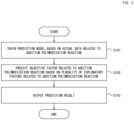
FIG. 2 is a flowchart illustrating operations of the information processing device according to the present embodiment. -
FIG. 3 is concept of an addition polymerization reaction process according to the present embodiment. -
FIG. 4A is a view illustrating the time transition of each piece of data pertaining to a temperature rising process and a dropwise addition process. -
FIG. 4B illustrates the time transition of categories related to the temperature rising process and the dropwise addition process. -
FIG. 5 illustrates one example of the accuracy verification result of a prediction model according to the present embodiment. -
FIG. 6 illustrates one example of the accuracy verification result of the prediction model according to the present embodiment. -
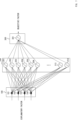
FIG. 7 is one example of the conceptual view of the prediction model in the present embodiment. - Hereinafter, a method for performing prediction related to an addition polymerization reaction, an information processing device, and a program in an embodiment of the present disclosure will be described with reference to the drawings. A prediction target according to the embodiment of the present disclosure includes both batch reaction and continuous reaction. Examples of the main polymer materials synthesized by the addition polymerization reaction according to the present embodiment include acrylic, poly(meth)acrylic acid esters, polyethylene, polypropylene, polystyrene, polyvinyl chloride, polyvinyl acetate, polyvinylidene chloride, polyacrylonitrile, and polytetrafluoroethylene. For example, the addition polymerization reaction according to the present embodiment includes an addition polymerization reaction of the acrylic.
- In each of the drawings, identical or equivalent parts are assigned the same symbols. In the description of the present embodiment, descriptions of the identical or equivalent parts are omitted or simplified as appropriate.
- First, the overview of the present embodiment will be described. The method for performing prediction related to an addition polymerization reaction in the present embodiment is executed by an
information processing device 10. Theinformation processing device 10 trains a prediction model based on actual data including a plurality of explanatory factors and an objective factor related to the addition polymerization reaction. Theinformation processing device 10 predicts the objective factor during the addition polymerization reaction based on the explanatory factors related to the addition polymerization reaction by the trained prediction model. The explanatory factors include a plurality of feature values obtained by clustering analysis of time-series data from a plurality of measurement instruments at a temperature rising process and a dropwise addition process. The objective factor is characterized by including at least either an NV or a solution viscosity. The NV stands for Nonvolatile content or Non-volatile matter content and represents the nonvolatile content in a resin solution. The addition polymerization reaction is basically synthesized in a solvent. A polymerized polymer is considered the nonvolatile content, whereas a non-polymerized monomer is considered a volatile content. As the addition polymerization reaction proceeds and the monomer is consumed, the volatile content decreases and the nonvolatile content increases. Checking an increase in the nonvolatile content to a certain value allows a reaction ratio to be estimated. - As described above, according to the present embodiment, the explanatory factors include the feature values obtained by the clustering analysis of the time-series data from the measurement instruments at the temperature rising process and the dropwise addition process. The objective factor is characterized by including either an NV or a solution viscosity. In the case where such an objective factor in the addition polymerization reaction is predicted, the prediction accuracy can be improved by including, in the explanatory factors, the feature values obtained by the clustering analysis of the time-series data from the measurement instruments at the temperature rising process and the dropwise addition process as described later. Therefore, according the present embodiment, the prediction technology related to the addition polymerization reaction can be improved.
- Subsequently, referring to
FIG. 1 , each configuration of theinformation processing device 10 will be described in detail. Theinformation processing device 10 is an arbitrary device used by users. For example, personal computers, server computers, general-purpose electronic devices, or dedicated electronic devices can be employed as theinformation processing device 10. - As illustrated in
FIG. 1 , theinformation processing device 10 includes acontrol unit 11, astorage unit 12, aninput unit 13, and anoutput unit 14. - The
control unit 11 includes at least one processor, at least one dedicated circuit, or a combination thereof. The processor is a general-purpose processor such as a central processing unit (CPU) or a graphics processing unit (GPU), or a dedicated processor specialized for specific processing. The dedicated circuit is, for example, a field-programmable gate array (FPGA) or an application specific integrated circuit (ASIC). Thecontrol unit 11 executes processes associated with the operation of theinformation processing device 10 while controlling each part of theinformation processing device 10. - The
storage unit 12 includes at least one semiconductor memory, at least one magnetic memory, at least one optical memory, or a combination of at least two of these memories. The semiconductor memory is, for example, a random-access memory (RAM) or a read-only memory (ROM). The RAM is, for example, a static random-access memory (SRAM) or a dynamic random-access memory (DRAM). The ROM is, for example, an electrically erasable programmable read-only memory (EEPROM). Thestorage unit 12 functions, for example, as a main memory device, an auxiliary memory device, or a cache memory. In thestorage unit 12, data used in the operation of theinformation processing device 10 and data obtained by the operation of theinformation processing device 10 are stored. - The
input unit 13 includes at least one interface for input. The interface for input is, for example, physical keys, capacitive keys, pointing devices, or touch screens integrated with displays. The interface for input may be, for example, a microphone that accepts voice input or a camera that accepts gesture input. Theinput unit 13 accepts operations to input data used in the operation of theinformation processing device 10. Theinput unit 13 may be connected to theinformation processing device 10 as an external input device instead of being provided in theinformation processing device 10. For example, any method such as universal serial bus (USB), high-definition multimedia interface (HDMI) (registered trademark), or Bluetooth (registered trademark) can be used as the connection method. - The
output unit 14 includes at least one interface for output. The interface for output is, for example, a display that outputs information in the form of images. The display is, for example, a liquid crystal display (LCD) or an organic electroluminescence (EL) display. Theoutput unit 14 displays and outputs data obtained by the operation of theinformation processing device 10. Theoutput unit 14 may be connected to theinformation processing device 10 as an external output device instead of being provided in theinformation processing device 10. For example, any method such as USB, HDMI (registered trademark), or Bluetooth (registered trademark) can be used as the connection method. - The functions of the
information processing device 10 are achieved by executing a program according to the present embodiment on a processor corresponding to theinformation processing device 10. In other words, the functions of theinformation processing device 10 are achieved by software. The program causes the computer to function as theinformation processing device 10 by causing the computer to execute the operations of theinformation processing device 10. In other words, the computer functions as theinformation processing device 10 by executing the operation of theinformation processing device 10 in accordance with the program. - In the present embodiment, the program can be recorded on a computer-readable recording medium. The computer-readable recording media include non-transient computer-readable media, for example, magnetic recording devices, optical discs, magneto-optical recording media, or semiconductor memories. Program distribution is performed by, for example, selling, assigning, or lending removal recording media such as a digital versatile disc (DVD) or a compact disc read only memory (CD-ROM) on which the program is recorded. Program distribution may also be done by storing the program in a storage on an external server and transmitting the program from the external server to other computers. The program may also be provided as a program product.
- Some or all of the functions of the
information processing device 10 may be achieved by a dedicated circuit corresponding to thecontrol unit 11. In other words, some or all of the functions of theinformation processing device 10 may be achieved by hardware. - In the present embodiment, the
storage unit 12 stores therein, for example, actual data and prediction models. The actual data and the prediction model may be stored in an external device separate from theinformation processing device 10. In this case, theinformation processing device 10 may be equipped with an interface for external communication. The interface for communication may be either an interface of a wired communication or an interface of wireless communication. In the case of the wired communication, the interface for communication is, for example, a LAN interface or USB. In the case of the wireless communication, the interface for communication is, for example, an interface compliant with mobile communication standards such as LTE, 4G, or 5G, or an interface compliant with short-range wireless communication such as Bluetooth (registered trademark). The interface for communication can receive data used in the operation of theinformation processing device 10 and can transmit data obtained by the operation of theinformation processing device 10. - Subsequently, with reference to
FIG. 2 , the operation of theinformation processing device 10 according to the present embodiment will be described. - Step S101: The
control unit 11 of theinformation processing device 10 trains a prediction model based on actual data related to the addition polymerization reaction. The actual data include the explanatory factors and the objective factor related to the addition polymerization reaction. The explanatory factors include the feature values obtained by the clustering analysis of the time-series data from the measurement instruments at the temperature rising process and the dropwise addition process. The objective factor includes at least either an NV or a solution viscosity. In other words, thecontrol unit 11 trains the prediction model using these explanatory factors and objective factor included in the actual data as learning data. - Any method can be employed to acquire the actual data. For example, the
control unit 11 acquires the actual data from thestorage unit 12. Thecontrol unit 11 may also acquire the actual data by accepting input of the actual data from the user by theinput unit 13. Alternatively, thecontrol unit 11 may acquire such actual data from an external device that stores therein the actual data through an interface for communication. - The prediction model trained based on the learning data is cross-validated. As a result of such cross-validation, in the case where an accuracy is within a practical range, the prediction related to the addition polymerization reaction is performed using the prediction model.
- Step S102: The
control unit 11 predicts the objective factor related to the addition polymerization reaction based on the explanatory factors related to the addition polymerization reaction. For example, thecontrol unit 11 may acquire the explanatory factors by accepting input of the explanatory factors from the user by theinput unit 13. - Step S103: The
control unit 11 outputs the objective factor predicted at Step S102 as the prediction result from theoutput unit 14. - Here, in the present embodiment, the explanatory factors are characterized by including the feature values obtained by the clustering analysis of the time-series data from the measurement instruments at the temperature rising process and the dropwise addition process.
FIG. 3 is a conceptual view illustrating the addition polymerization reaction process. As illustrated inFIG. 3 , the addition polymerization reaction includes acharging process 410, atemperature rising process 420, adropwise addition process 430, aholding process 440, acooling process 450, and apost-cooling process 460. Agraph 401 illustrates the temperature transition of a material to be synthesized. At thetemperature rising process 420, the temperature of the material to be synthesized rises. In theholding process 440, the temperature of the material to be synthesized is kept constant. At afinal stage 461 of thepost-cooling process 460, the quality values of the material are analyzed. - The above analytical values in the addition polymerization reaction correspond to the objective factor in the present embodiment. Such analytical values also depend on the temperature rising process and the dropwise addition process. On the other hand, a wide variety of time-series data are involved at the temperature rising process and the dropwise addition process, and thus using all of these time-series data as the explanatory variables is not realistic. Here, the time-series data include measurement values at intervals of 1 second to 1 minute. Therefore, the present embodiment is characterized by using the feature values obtained by the clustering analysis of the time-series data from the measurement instruments at the temperature rising process and the dropwise addition process as the explanatory factors. Specifically, the clustering analysis is performed at the end of the
dropwise addition process 430 inFIG. 3 and, the reaction prediction is performed all at once for approximately 5 hours (the time of the holding process 440) ahead to determine the cooling timing in thecooling process 450 from the timing (at the end point of the dropwise addition process 431) when all the explanatory factors are collected. -
FIG. 4A andFIG. 4B illustrate a method for calculating the feature values in a certain lot (a lot having a lot number of D001). Anitem 501 inFIG. 4A represents the time transition of each piece of the data pertaining to the temperature rising process and the dropwise addition process related to such a lot. Such data include data related to a reaction vessel temperature, a capacitor temperature (atmospheric temperature difference), a reaction vessel jacket temperature, a monomer flow rate of dropwise addition, and a catalyst flow rate of dropwise addition. Each piece of the data in theitem 501 is normalized. Anitem 502 inFIG. 4B represents the time transition of the categories related to the temperature rising process and the dropwise addition process. In the present embodiment, the categories include five steps of 0?4. Specifically, the categories are determined by the clustering analysis of the time-series data from the measurement instruments at the temperature rising process and the dropwise addition process. Based on these categories, the feature values at the temperature rising process and the dropwise addition process are determined. For example, the feature values are determined based on the time rate of the categories. The time rate of the categories refers to a value obtained by dividing the cumulative residence time of each category by the overall time. As described above, in the present embodiment, the feature values are provided by the clustering analysis at the temperature rising process and the dropwise addition process. - As described above, according to the present embodiment, the explanatory factors include the feature values obtained by the clustering analysis of the time-series data from the measurement instruments at the temperature rising process and the dropwise addition process. The objective factor is characterized by including either an NV or a solution viscosity. In the case where the prediction related to the addition polymerization reaction is performed, the accuracy of the prediction model can be improved by including, in the explanatory factors, the feature values obtained by the clustering analysis of the temperature rising process and the dropwise addition process. Therefore, according the present embodiment, the prediction technology related to the addition polymerization reaction can be improved.
-
FIG. 5 andFIG. 6 illustrate an example of the accuracy verification results of the prediction model according to the present embodiment.FIG. 5 is a graph illustrating the NV and the measured values of a certain lot (lot number D001) of an acrylic predicted by the prediction model. As illustrated inFIG. 5 , the NV predicted by the prediction model approximately agrees with the measured values.FIG. 6 is a graph illustrating the solution viscosity and the measured values of the above lot of the acrylic predicted by the prediction model. As illustrated inFIG. 6 , the solution viscosity predicted by the prediction model approximately agrees with the measured values. Therefore, it is found that the accuracy of the prediction model is sufficiently high. - Here, the explanatory factors may include theoretical values in a reaction physics model (reaction physics model theoretical values). As described above, the reaction physics model may serve as explanatory factors as a baseline of the reaction characteristics. Similarly, the explanatory factors may include the amount of a charged raw material monomer, the amount of a charged raw material solvent, the amount of a charged initiator, the reaction vessel temperature, the capacitor temperature, the reaction vessel jacket temperature, and the like.
- Here, the prediction model according to the present embodiment may be, for example, a neural network model. In the case where the prediction model is the neural network model, the coefficients of activation functions of the neural network model may be different between an intermediate layer and an output layer. For example, the coefficient of the activation function related to the intermediate layer is larger than the coefficient of the activation function related to the output layer.
-
FIG. 7 is a conceptual diagram of the neural network model according to the present embodiment. Such a neural network model includes aninput layer 100, anintermediate layer 200, and anoutput layer 300. The neural network model in the present embodiment is fully connected. In the present embodiment, the number of layers in the neural network model is, for example, 2. Such number of layers is the number of layers excluding the input layer. By setting the number of layers in the neural network model to 2, a model configuration can be prevented from becoming inappropriate to the physical phenomena in the addition polymerization reaction. In other words, the number of layers of neural network model can be kept to minimum necessary, whereby the model configuration suitable for the physical phenomena in the addition polymerization reaction can be achieved. The number of layers of the neural network model according to the present embodiment is not limited to this number of layers, and may be three layers or more. In the case where the number of layers in the neural network model is three or more, as the layer of the neural network model becomes more front side, the coefficient of the activation function may be set larger. - The
input layer 100 includes a plurality ofelements 101 to 104 (also referred to asinput elements 101 to 104). In the neural network model illustrated inFIG. 7 , the number of the input elements is 4. Theinput elements 101 to 104 are also referred to as the first to fourth elements, respectively. In theinput elements 101 to 104, each of the explanatory factors is input. The number of input elements is not limited to this and may be less than 4 or 5 or more. - The
intermediate layer 200 includes a plurality ofelements 201 to 214 (also referred to asintermediate elements 201 to 214). In the neural network model illustrated inFIG. 7 , the number of the intermediate elements is 14. Theintermediate elements 201 to 214 are also referred to as the first to fourteenth elements, respectively. The number of intermediate elements is not limited to this, and may be less than 14 or 15 or more. - The
output layer 300 includes an element 301 (an output element 301). In the neural network model illustrated inFIG. 7 , the number of the output elements is 1. Theoutput element 301 is also referred to as the first element The number of the output elements is not limited to this, and may be 2 or more. - The values input from the
input elements 101 to 104 of theinput layer 100 to theintermediate elements 201 to 214 of theintermediate layer 200 are converted in theintermediate layer 200 based on the activation function related to theintermediate layer 200. The converted values are output to theelement 301 of theoutput layer 300. The activation function related to theintermediate layer 200 is, for example, a sigmoid function. The values input from theintermediate elements 201 to 214 of theintermediate layer 200 to theoutput element 301 of theoutput layer 300 are converted in theoutput layer 300 based on the activation function related to theoutput layer 300 and output. The activation function related to theoutput layer 300 is, for example, the sigmoid function. Specifically, the activation functions related to the intermediate layer and the output layer are, for example, the respective sigmoid functions determined by the following formulas (1) and (2).
- Here,

intermediate layer 200, a 1 is the coefficient of the activation function related to theintermediate layer 200, and
intermediate layer 200. In the example inFIG. 7 , the number of the intermediate elements is 14, and this j takes the value from 1 to 14.
output layer 300, a 2 is the coefficient of the activation function related to theoutput layer 300, and
output layer 300. In the example inFIG. 7 , j is 1 because the number of the output elements is 1. As described above, in the neural network model according to the present embodiment, the coefficient of the activation function related to theintermediate layer 200 is larger than the coefficient of the activation function related to theoutput layer 300. In other words, a 1 and a 2 in the neural network model according to the present embodiment satisfy a 1 > a 2. - In the neural network model according to the present embodiment, the coefficient of the activation function related to the intermediate layer is larger than the coefficient of the activation function related to the output layer. This allows the configuration of the neural network model to be optimized at the time of performing the prediction related to the addition polymerization reaction. Specifically, in the neural network model for performing the prediction related to the addition polymerization reaction, change in the explanatory factors is desirably viewed as obvious change. Therefore, by setting the coefficient of the activation functions related to the intermediate layer larger than the coefficient of the activation functions related to the output layer, the change in the input values to the intermediate layer can be transmitted to the output layer as the obvious change. On the other hand, in the output layer of the neural network model for performing the prediction related to the addition polymerization reaction, the values of the training data and the objective factor are required to be converged. Therefore, the coefficient of the activation function related to the output layer is set smaller than the coefficient of the activation function related to the intermediate layer. By doing so, the value of the objective factor output from the output layer is finely adjusted.
- By setting the coefficients of the activation functions between the intermediate layer and the output layer to be different, the learning process of the neural network model is optimized. Specifically, the updated amounts of the weight variables in the output layer and the intermediate layer during the learning process can be adjusted by changing the coefficient of the activation function. In addition, updating the weight variables provides a significant impact on the learning process. Therefore, the learning process may be optimized based on the adjustment of the updated amounts.
- Specifically, in the neural network model at the time of performing prediction related to the addition polymerization reaction, the updated amount of the weight variables related to the intermediate layer is preferably set to be relatively large. This allows the weight variables in the intermediate layer to vary more significantly during the learning process, and thus changes in the input values to the intermediate layer to be transferred to the output layer as obvious changes. On the other hand, the updated amount of weight variables related to the output layer is preferably set to be relatively small. This allows the weight variables in the output layer to vary less during the learning process and thus the values of the training data and the objective factor to be easily converged. In addition, by satisfying a1 > aL, an arbitrary smooth function can be approximated with sufficient accuracy, eliminating the need to inadvertently increase the number of intermediate layers. This allows sufficient accuracy to be obtained even when the intermediate layer is one layer. Preparing fewer intermediate layers directly leads to reduction in generation of over-fitting and thus provides a secondary effect on stability of the learning process and, in addition, robustness of the model.
- The case where the activation functions of the intermediate layer and the output layer are sigmoid functions is described in the present embodiment. However, the activation functions are not limited to the sigmoid functions. For example, the activation functions of the intermediate layer and the output layer may be functions such as a hyperbolic tangent function (tanh function) and a ramp functions (ReLU).
- Although the present disclosure has been described based on the drawings and examples, it should be noted that those skilled in the art can easily make changes and modifications based on the present disclosure. Therefore, it should be noted that these changes and modifications are included within the scope of the present disclosure. For example, the functions and the like included in the units, steps, or the like can be rearranged so as not to be logically inconsistent, and a plurality of units, steps, or the like can be combined to one or divided.
-
- 10
- information processing device
- 11
- control unit
- 12
- storage unit
- 13
- input unit
- 14
- output unit
- 100
- input layer
- 200
- intermediate layer
- 300
- output layer
- 101 to 104, 201 to 214, and 301
- element
- 401
- graph
- 410
- charging process
- 420
- temperature rising process
- 430
- dropwise addition process
- 431
- end point of temperature rising process
- 440
- holding process
- 450
- cooling process
- 460
- post-cooling process
- 461
- final stage
- 501 and 502
- item
Claims (6)
- A method for performing prediction related to an addition polymerization reaction executed by an information processing device, the method comprising:a step of training a prediction model based on actual data comprising a plurality of explanatory factors and an objective factor related to the addition polymerization reaction; anda step of predicting the objective factor during the addition polymerization reaction based on the explanatory factors related to the addition polymerization reaction by the prediction model, whereinthe explanatory factors include a plurality of feature values obtained by clustering analysis of time-series data from a plurality of measurement instruments at a temperature rising process and a dropwise addition process, andthe objective factor includes at least either an NV or a solution viscosity.
- The method according to claim 1, wherein the explanatory factors include theoretical values in a reaction physics model.
- The method according to claim 1, wherein the addition polymerization reaction is an addition polymerization reaction of an acrylic.
- The method according to claim 1, wherein the prediction model is a neural network model including an input layer, an intermediate layer, and an output layer and a coefficient of an activation function related to the intermediate layer is larger than a coefficient of an activation function related to the output layer.
- An information processing device performing prediction related to an addition polymerization reaction, the information processing device comprising a control unit, whereinthe control unittrains a prediction model based on actual data comprising a plurality of explanatory factors and an objective factor related to the addition polymerization reaction, andpredicts the objective factor during the addition polymerization reaction based on the explanatory factors related to the addition polymerization reaction by the prediction model, andthe explanatory factors include a plurality of feature values obtained by clustering analysis of time-series data from a plurality of measurement instruments at a temperature rising process and a dropwise addition process, andthe objective factor includes at least either an NV or a solution viscosity.
- A program performing prediction related to an addition polymerization reaction that an information processing device executes, whereinthe program causes a computer to execute:training of a prediction model based on actual data comprising a plurality of explanatory factors and an objective factor related to the addition polymerization reaction; andprediction of the objective factor during the addition polymerization reaction based on the explanatory factors related to the addition polymerization reaction by the prediction model,the explanatory factors include a plurality of feature values obtained by clustering analysis of time-series data from a plurality of measurement instruments at a temperature rising process and a dropwise addition process, andthe objective factor includes at least either an NV or a solution viscosity.
Applications Claiming Priority (2)
| Application Number | Priority Date | Filing Date | Title |
|---|---|---|---|
| JP2023048922 | 2023-03-24 | ||
| PCT/JP2023/019014 WO2024202078A1 (en) | 2023-03-24 | 2023-05-22 | Method for making prediction related to addition polymerization reaction, information processing device, and program |
Publications (2)
| Publication Number | Publication Date |
|---|---|
| EP4461754A1 true EP4461754A1 (en) | 2024-11-13 |
| EP4461754A4 EP4461754A4 (en) | 2025-04-16 |
Family
ID=90802094
Family Applications (1)
| Application Number | Title | Priority Date | Filing Date |
|---|---|---|---|
| EP23814347.3A Pending EP4461754A4 (en) | 2023-03-24 | 2023-05-22 | METHOD FOR MAKING PREDICTION RELATED TO ADDITION POLYMERIZATION REACTION, INFORMATION PROCESSING DEVICE, AND PROGRAM |
Country Status (4)
| Country | Link |
|---|---|
| US (1) | US20250095797A1 (en) |
| EP (1) | EP4461754A4 (en) |
| JP (1) | JP7776525B2 (en) |
| CN (1) | CN117957615A (en) |
Families Citing this family (2)
| Publication number | Priority date | Publication date | Assignee | Title |
|---|---|---|---|---|
| CN118852687B (en) * | 2024-07-19 | 2025-02-21 | 巨鑫(江苏)新材料包装有限公司 | A method for preparing a drawing film composite packaging material and an automatic preparation device thereof |
| CN121402005B (en) * | 2025-12-30 | 2026-04-03 | 西安凯翔光电科技有限公司 | Method and system for accurately controlling addition rate of initiator in synthesis of OLED (organic light emitting diode) material |
Family Cites Families (2)
| Publication number | Priority date | Publication date | Assignee | Title |
|---|---|---|---|---|
| EP3734382A1 (en) | 2019-05-03 | 2020-11-04 | AB Sandvik Coromant | Method for establishing communication in a machine tool system and a communication apparatus therefor |
| JP7640236B2 (en) * | 2020-07-03 | 2025-03-05 | ダイキン工業株式会社 | Prediction device, calculation device, manufacturing device, and manufacturing method |
-
2023
- 2023-05-22 US US18/566,769 patent/US20250095797A1/en active Pending
- 2023-05-22 EP EP23814347.3A patent/EP4461754A4/en active Pending
- 2023-05-22 JP JP2023559854A patent/JP7776525B2/en active Active
- 2023-05-22 CN CN202380013171.5A patent/CN117957615A/en active Pending
Also Published As
| Publication number | Publication date |
|---|---|
| JPWO2024202078A1 (en) | 2024-10-03 |
| JP7776525B2 (en) | 2025-11-26 |
| CN117957615A (en) | 2024-04-30 |
| EP4461754A4 (en) | 2025-04-16 |
| US20250095797A1 (en) | 2025-03-20 |
Similar Documents
| Publication | Publication Date | Title |
|---|---|---|
| US9275116B2 (en) | Evaluation predicting device, evaluation predicting method, and program | |
| US20250095797A1 (en) | Method, information processing device, and recording medium for performing prediction related to addition polymerization reaction | |
| Jiang et al. | Smooth isotonic regression: a new method to calibrate predictive models | |
| US20200050921A1 (en) | Optimization system and control method thereof | |
| EP4398257A1 (en) | Property prediction device, property prediction method, and program | |
| CN114974397A (en) | Training method of protein structure prediction model and protein structure prediction method | |
| CN118747534A (en) | Prompt word optimization method and related equipment based on large model | |
| Zhou et al. | Hybrid regression model via multivariate adaptive regression spline and online sequential extreme learning machine and its application in vision servo system | |
| US20250094808A1 (en) | Method and device for processing flow signals in real time using artificial neural networks | |
| Gao et al. | Semi-supervised ROC analysis for reliable and streamlined evaluation of phenotyping algorithms | |
| US11727037B2 (en) | Continuously generalized ordinal regression | |
| EP4421687A1 (en) | Prediction method, information processing device, and program | |
| EP4446357A1 (en) | Method for making predictions related to polycondensation reaction, information processing device, and program | |
| WO2024202078A1 (en) | Method for making prediction related to addition polymerization reaction, information processing device, and program | |
| EP4435673A1 (en) | Method for assisting in evaluation of learning step in prediction model, information processing device, and program | |
| EP4456076A1 (en) | Design support device, design support method, and program | |
| JP2021135683A (en) | Learning device, deduction device, method for learning, and method for deduction | |
| TWI871650B (en) | Information processing method, information processing device, and program for supporting evaluation of a learning process of a prediction model | |
| JP2024009739A (en) | Information processing method, information processing device, and information processing program | |
| TWI875014B (en) | Prediction method of prediction object in neural network model, information processing device for executing prediction of prediction object in neural network model, and computer program | |
| WO2024176478A1 (en) | Method for making predictions related to polycondensation reaction, information processing device, and program | |
| JP7235158B1 (en) | Shaped material search method, information processing device, and program | |
| JP7449426B2 (en) | Information processing method, information processing device, and information processing program | |
| US20230334315A1 (en) | Information processing apparatus, control method of information processing apparatus, and storage medium | |
| JP7711246B1 (en) | Method for predicting resin physical properties, information processing device, and program |
Legal Events
| Date | Code | Title | Description |
|---|---|---|---|
| STAA | Information on the status of an ep patent application or granted ep patent |
Free format text: STATUS: UNKNOWN |
|
| STAA | Information on the status of an ep patent application or granted ep patent |
Free format text: STATUS: THE INTERNATIONAL PUBLICATION HAS BEEN MADE |
|
| PUAI | Public reference made under article 153(3) epc to a published international application that has entered the european phase |
Free format text: ORIGINAL CODE: 0009012 |
|
| STAA | Information on the status of an ep patent application or granted ep patent |
Free format text: STATUS: REQUEST FOR EXAMINATION WAS MADE |
|
| 17P | Request for examination filed |
Effective date: 20231208 |
|
| AK | Designated contracting states |
Kind code of ref document: A1 Designated state(s): AL AT BE BG CH CY CZ DE DK EE ES FI FR GB GR HR HU IE IS IT LI LT LU LV MC ME MK MT NL NO PL PT RO RS SE SI SK SM TR |
|
| REG | Reference to a national code |
Ref country code: DE Ref legal event code: R079 Free format text: PREVIOUS MAIN CLASS: C08F0020000000 Ipc: G16C0020100000 |
|
| STAA | Information on the status of an ep patent application or granted ep patent |
Free format text: STATUS: EXAMINATION IS IN PROGRESS |
|
| A4 | Supplementary search report drawn up and despatched |
Effective date: 20250312 |
|
| RIC1 | Information provided on ipc code assigned before grant |
Ipc: G16C 20/70 20190101ALN20250307BHEP Ipc: G06N 3/08 20230101ALI20250307BHEP Ipc: G06N 3/048 20230101ALI20250307BHEP Ipc: G06N 3/044 20230101ALI20250307BHEP Ipc: C08F 20/00 20060101ALI20250307BHEP Ipc: G16C 20/30 20190101ALI20250307BHEP Ipc: G16C 20/10 20190101AFI20250307BHEP |
|
| 17Q | First examination report despatched |
Effective date: 20250324 |
|
| GRAP | Despatch of communication of intention to grant a patent |
Free format text: ORIGINAL CODE: EPIDOSNIGR1 |
|
| STAA | Information on the status of an ep patent application or granted ep patent |
Free format text: STATUS: GRANT OF PATENT IS INTENDED |
|
| RIC1 | Information provided on ipc code assigned before grant |
Ipc: G16C 20/10 20190101AFI20260217BHEP Ipc: G16C 20/30 20190101ALI20260217BHEP Ipc: G06N 3/02 20060101ALI20260217BHEP Ipc: G06F 18/2135 20230101ALI20260217BHEP Ipc: G06F 18/23 20230101ALI20260217BHEP Ipc: G16C 20/70 20190101ALN20260217BHEP Ipc: G16C 60/00 20190101ALN20260217BHEP |
|
| INTG | Intention to grant announced |
Effective date: 20260227 |