EP4461296A1 - Pharmaceutical composition for preventing and/or treating heart failure - Google Patents
Pharmaceutical composition for preventing and/or treating heart failure Download PDFInfo
- Publication number
- EP4461296A1 EP4461296A1 EP22918793.5A EP22918793A EP4461296A1 EP 4461296 A1 EP4461296 A1 EP 4461296A1 EP 22918793 A EP22918793 A EP 22918793A EP 4461296 A1 EP4461296 A1 EP 4461296A1
- Authority
- EP
- European Patent Office
- Prior art keywords
- compound
- optionally substituted
- formula
- atom
- pharmaceutical composition
- Prior art date
- Legal status (The legal status is an assumption and is not a legal conclusion. Google has not performed a legal analysis and makes no representation as to the accuracy of the status listed.)
- Pending
Links
Images
Classifications
-
- A—HUMAN NECESSITIES
- A61—MEDICAL OR VETERINARY SCIENCE; HYGIENE
- A61K—PREPARATIONS FOR MEDICAL, DENTAL OR TOILETRY PURPOSES
- A61K31/00—Medicinal preparations containing organic active ingredients
- A61K31/33—Heterocyclic compounds
- A61K31/395—Heterocyclic compounds having nitrogen as a ring hetero atom, e.g. guanethidine or rifamycins
- A61K31/495—Heterocyclic compounds having nitrogen as a ring hetero atom, e.g. guanethidine or rifamycins having six-membered rings with two or more nitrogen atoms as the only ring heteroatoms, e.g. piperazine or tetrazines
- A61K31/496—Non-condensed piperazines containing further heterocyclic rings, e.g. rifampin, thiothixene or sparfloxacin
-
- A—HUMAN NECESSITIES
- A61—MEDICAL OR VETERINARY SCIENCE; HYGIENE
- A61K—PREPARATIONS FOR MEDICAL, DENTAL OR TOILETRY PURPOSES
- A61K31/00—Medicinal preparations containing organic active ingredients
- A61K31/33—Heterocyclic compounds
- A61K31/395—Heterocyclic compounds having nitrogen as a ring hetero atom, e.g. guanethidine or rifamycins
- A61K31/435—Heterocyclic compounds having nitrogen as a ring hetero atom, e.g. guanethidine or rifamycins having six-membered rings with one nitrogen as the only ring hetero atom
- A61K31/44—Non condensed pyridines; Hydrogenated derivatives thereof
- A61K31/4427—Non condensed pyridines; Hydrogenated derivatives thereof containing further heterocyclic ring systems
- A61K31/4439—Non condensed pyridines; Hydrogenated derivatives thereof containing further heterocyclic ring systems containing a five-membered ring with nitrogen as a ring hetero atom, e.g. omeprazole
-
- A—HUMAN NECESSITIES
- A61—MEDICAL OR VETERINARY SCIENCE; HYGIENE
- A61K—PREPARATIONS FOR MEDICAL, DENTAL OR TOILETRY PURPOSES
- A61K31/00—Medicinal preparations containing organic active ingredients
- A61K31/33—Heterocyclic compounds
- A61K31/395—Heterocyclic compounds having nitrogen as a ring hetero atom, e.g. guanethidine or rifamycins
- A61K31/435—Heterocyclic compounds having nitrogen as a ring hetero atom, e.g. guanethidine or rifamycins having six-membered rings with one nitrogen as the only ring hetero atom
- A61K31/44—Non condensed pyridines; Hydrogenated derivatives thereof
- A61K31/4427—Non condensed pyridines; Hydrogenated derivatives thereof containing further heterocyclic ring systems
- A61K31/444—Non condensed pyridines; Hydrogenated derivatives thereof containing further heterocyclic ring systems containing a six-membered ring with nitrogen as a ring heteroatom, e.g. amrinone
-
- A—HUMAN NECESSITIES
- A61—MEDICAL OR VETERINARY SCIENCE; HYGIENE
- A61K—PREPARATIONS FOR MEDICAL, DENTAL OR TOILETRY PURPOSES
- A61K31/00—Medicinal preparations containing organic active ingredients
- A61K31/33—Heterocyclic compounds
- A61K31/395—Heterocyclic compounds having nitrogen as a ring hetero atom, e.g. guanethidine or rifamycins
- A61K31/435—Heterocyclic compounds having nitrogen as a ring hetero atom, e.g. guanethidine or rifamycins having six-membered rings with one nitrogen as the only ring hetero atom
- A61K31/44—Non condensed pyridines; Hydrogenated derivatives thereof
- A61K31/445—Non condensed piperidines, e.g. piperocaine
- A61K31/4523—Non condensed piperidines, e.g. piperocaine containing further heterocyclic ring systems
- A61K31/454—Non condensed piperidines, e.g. piperocaine containing further heterocyclic ring systems containing a five-membered ring with nitrogen as a ring hetero atom, e.g. pimozide, domperidone
-
- A—HUMAN NECESSITIES
- A61—MEDICAL OR VETERINARY SCIENCE; HYGIENE
- A61K—PREPARATIONS FOR MEDICAL, DENTAL OR TOILETRY PURPOSES
- A61K31/00—Medicinal preparations containing organic active ingredients
- A61K31/33—Heterocyclic compounds
- A61K31/395—Heterocyclic compounds having nitrogen as a ring hetero atom, e.g. guanethidine or rifamycins
- A61K31/435—Heterocyclic compounds having nitrogen as a ring hetero atom, e.g. guanethidine or rifamycins having six-membered rings with one nitrogen as the only ring hetero atom
- A61K31/44—Non condensed pyridines; Hydrogenated derivatives thereof
- A61K31/445—Non condensed piperidines, e.g. piperocaine
- A61K31/4523—Non condensed piperidines, e.g. piperocaine containing further heterocyclic ring systems
- A61K31/4545—Non condensed piperidines, e.g. piperocaine containing further heterocyclic ring systems containing a six-membered ring with nitrogen as a ring hetero atom, e.g. pipamperone, anabasine
-
- A—HUMAN NECESSITIES
- A61—MEDICAL OR VETERINARY SCIENCE; HYGIENE
- A61K—PREPARATIONS FOR MEDICAL, DENTAL OR TOILETRY PURPOSES
- A61K31/00—Medicinal preparations containing organic active ingredients
- A61K31/33—Heterocyclic compounds
- A61K31/395—Heterocyclic compounds having nitrogen as a ring hetero atom, e.g. guanethidine or rifamycins
- A61K31/495—Heterocyclic compounds having nitrogen as a ring hetero atom, e.g. guanethidine or rifamycins having six-membered rings with two or more nitrogen atoms as the only ring heteroatoms, e.g. piperazine or tetrazines
- A61K31/4995—Pyrazines or piperazines forming part of bridged ring systems
-
- A—HUMAN NECESSITIES
- A61—MEDICAL OR VETERINARY SCIENCE; HYGIENE
- A61P—SPECIFIC THERAPEUTIC ACTIVITY OF CHEMICAL COMPOUNDS OR MEDICINAL PREPARATIONS
- A61P9/00—Drugs for disorders of the cardiovascular system
- A61P9/04—Inotropic agents, i.e. stimulants of cardiac contraction; Drugs for heart failure
Definitions
- the present invention relates to, for example, a pharmaceutical composition for preventing and/or treating heart failure.
- Heart failure in particular, congestive heart failure (CHF) is one of the main causes of death in developed countries.
- the factors underlying congestive heart failure include high blood pressure, ischemic heart disease, exposure to cardiotoxic compounds, such as anthracycline antibiotics, radiation exposure, physical trauma, and genetic defects associated with an increased risk of heart failure. Therefore, CHF often develops from an increase in workload on the heart due to high blood pressure disorder, damage to the myocardium induced by chronic ischemia, myocardial infarction, viral diseases, chemical toxicity, radiation, and other diseases, such as scleroderma. These conditions gradually cause a reduction in the pumping ability of the heart.
- the increased workload due to high blood pressure or reduced contractile tissue induces compensatory cardiomyocyte hypertrophy and thickening of the left ventricular wall, thereby enhancing contractility and maintaining cardiac function.
- the left ventricular chamber dilates, systolic pump function deteriorates, cardiomyocytes undergo apoptotic cell death, and myocardial function progressively deteriorates.
- NPL 1 Journal of Molecular and Cellular Cardiology, volume 97, August 2016, pp. 245-262
- An object is to provide a pharmaceutical composition useful for, for example, preventing and/or treating heart failure.
- a compound represented by formula (1), a compound represented by formula (2), a salt thereof, or a prodrug thereof, described below can attenuate heart failure, and can suppress deterioration of and/or ameliorate cardiac function.
- the present invention has thus been accomplished.
- Representative inventions of the present invention are as follows.
- a pharmaceutical composition for preventing and/or treating heart failure comprising a compound represented by formula (1), a salt thereof, or a prodrug thereof: wherein
- B is an optionally substituted monocyclic aryl or an optionally substituted monocyclic or bicyclic nitrogen-containing heteroaryl.
- A is a benzene ring optionally substituted with at least one substituent selected from the group consisting of the following A-1 to A-16:
- composition according to any one of Items 1 to 4, wherein the compound is Compound 011, Compound 021, Compound 031, Compound 041, Compound 061, Compound 071, Compound 081, Compound 091, Compound 101, Compound 111, Compound 121, Compound 131, Compound 141, Compound 151, Compound 161, Compound 171, Compound 191, Compound 221, Compound 281, Compound 311, Compound 321, Compound 331, Compound 341, Compound 351, Compound 361, Compound 371, Compound 381, Compound 391, Compound 401, Compound 431, or Compound 441, each represented by any of the following structures:
- a pharmaceutical composition for preventing and/or treating heart failure comprising a compound represented by formula (2), a salt thereof, or a prodrug thereof: wherein
- the pharmaceutical composition according to any one of Items 1 to 11, which is for oral administration.
- a pharmaceutical composition for suppressing deterioration of and/or ameliorating cardiac function comprising a compound represented by formula (1), a salt thereof, or a prodrug thereof,: wherein
- B is an optionally substituted monocyclic aryl or an optionally substituted monocyclic or bicyclic nitrogen-containing heteroaryl.
- A is a benzene ring optionally substituted with at least one substituent selected from the group consisting of the following A-1 to A-16:
- composition according to any one of Items 13 to 16, wherein the compound is Compound 011, Compound 021, Compound 031, Compound 041, Compound 061, Compound 071, Compound 081, Compound 091, Compound 101, Compound 111, Compound 121, Compound 131, Compound 141, Compound 151, Compound 161, Compound 171, Compound 191, Compound 221, Compound 281, Compound 311, Compound 321, Compound 331, Compound 341, Compound 351, Compound 361, Compound 371, Compound 381, Compound 391, Compound 401, Compound 431, or Compound 441, each represented by any of the following structures:
- a pharmaceutical composition for suppressing deterioration of and/or ameliorating cardiac function comprising a compound represented by formula (2), a salt thereof, or a prodrug thereof: wherein
- the pharmaceutical composition according to any one of Items 13 to 23, which is for oral administration.
- composition according to any one of Items 13 to 24, wherein the suppression of deterioration and/or amelioration of cardiac function is suppression of deterioration and/or amelioration of cardiac contractile function.
- composition according to any one of Items 13 to 26, wherein the suppression of deterioration and/or amelioration of cardiac function is suppression of deterioration and/or amelioration of cardiac function in a subject who has experienced cardiac hypertrophy or a subject who has not experienced cardiac hypertrophy.
- a compound represented by formula (1), a compound represented by formula (2), a salt thereof, or a prodrug thereof has an action of preventing and/or treating heart failure, as well as an action of suppressing deterioration of and/or ameliorating cardiac function.
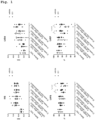
- Fig. 1 shows the results of echocardiographic observation (IVS, LVDd, LVFS, and LVEF) of the vehicle group and the Compound 011 group in Test Example 1.
- One embodiment of the present invention is directed to a pharmaceutical composition for preventing and/or treating heart failure, comprising a compound represented by the following formula (1), a salt thereof, or a prodrug thereof.
- Another embodiment is directed to a composition for attenuating the progression of heart failure, comprising a compound represented by the following formula (1), a salt thereof, or a prodrug thereof.
- Still another embodiment is directed to a pharmaceutical composition for suppressing deterioration of and/or ameliorating cardiac function, comprising a compound represented by the following formula (1), a salt thereof, or a prodrug thereof.
- substituents for the "optionally substituted benzene ring" include halogen; hydroxyl; nitro; cyano; carboxyl; optionally substituted amino; optionally substituted cyclic amino; optionally substituted lower alkyl; optionally substituted lower alkoxy; lower alkoxycarbonyl, lower alkylsulfonyl; carbamoyl optionally substituted with lower alkyl or lower alkylsulfonyl; optionally substituted cyclic aminocarbonyl; sulfamoyl optionally substituted with lower alkyl; optionally substituted cyclic aminosulfonyl; tetrazolyl; and the like.
- substituents may be used singly or in a combination of two or more.
- aryl may be, for example, a monocyclic or bicyclic aryl. Specific examples include phenyl, naphthyl, and the like.
- the aryl in the "optionally substituted aryl" is as defined above.
- substituents for the optionally substituted aryl include halogen; hydroxyl; nitro; cyano; carboxyl; optionally substituted amino; optionally substituted cyclic amino; optionally substituted lower alkyl; optionally substituted lower alkoxy; lower alkoxycarbonyl; lower alkylsulfonyl; carbamoyl optionally substituted with lower alkyl or lower alkylsulfonyl; optionally substituted cyclic aminocarbonyl; sulfamoyl optionally substituted with lower alkyl; optionally substituted cyclic aminosulfonyl; tetrazolyl; oxo; and the like.
- substituents may be used singly or in a combination of two or more.
- heteroaryl is, for example, a monocyclic or bicyclic nitrogen-containing heteroaryl.
- Specific examples include a monocyclic or bicyclic nitrogen-containing heteroaryl that contains one or more (for example, one to three, one or two, or one) nitrogen atoms on the ring and optionally further contains one or more (for example, one to three, one or two, or one) sulfur atoms or oxygen atoms as other heteroatoms.
- heteroaryl examples include pyrrolyl, imidazolyl, triazolyl, tetrazolyl, pyrazolyl, pyridyl, pyrazinyl, pyrimidinyl, pyrariainyl, furyl, thienyl, oxazolyl, isooxazolyl, thiazolyl, isothiazolyl, furazanyl, oxadiazolyl, thiadiazolyl, indolyl, isoindolyl, benzofuranyl, isobenzofuranyl, benzothienyl, isobenzothienyl, indazolyl, quinolyl, isoquinolyl, purinyl, phthalazinyl, pteridyl, naphthyridinyl, quinoxalinyl, quinazolinyl, cinnolinyl, benzoxazolyl, benzothiazolyl, benzimi
- the heteroaryl in the "optionally substituted heteroaryl” is as defined above.
- substituents for the optionally substituted heteroaryl include halogen; hydroxyl; nitro; cyano; carboxyl; optionally substituted amino; optionally substituted cyclic amino; optionally substituted lower alkyl; optionally substituted lower alkoxy; lower alkoxycarbonyl; lower alkylsulfonyl; carbamoyl optionally substituted with lower alkyl or lower alkylsulfonyl; optionally substituted cyclic aminocarbonyl; sulfamoyl optionally substituted with lower alkyl; optionally substituted cyclic aminosulfonyl; tetrazolyl; oxo; and the like.
- substituents may be used singly or in a combination of two or more.
- lower alkyl includes, for example, C 1 -C 8 alkyl, preferably C 1 -C 6 alkyl, more preferably C 1 -C 4 alkyl, and particularly preferably C 1 -C 3 alkyl, each containing a linear, branched, or cyclic structure.
- linear or branched lower alkyl include methyl, ethyl, 1-propyl, 2-propyl, 1-butyl, 2-butyl, isobutyl, t-butyl, n-pentyl, neopentyl, n-hexyl, isohexyl, 3-methylpentyl, and the like.
- lower alkyl containing a cyclic structure examples include cyclopropyl, cyclopropylmethyl, cyclobutyl, cyclobutylmethyl, cyclopentyl, cyclopentylmethyl, cyclohexyl, cyclohexylmethyl, cyclohexylethyl, and the like.
- Preferable examples include methyl, ethyl, 2-propyl, t-butyl, cyclopropyl, and the like.
- halogen examples include a fluorine atom, a chlorine atom, a bromine atom, an iodine atom, and the like.
- Preferable examples include a fluorine atom and a chlorine atom.
- optionally substituted amino refers to an optionally substituted acyclic amino group.
- substituents for the amino group include lower alkyl (e.g., methyl, ethyl, and propyl), C 1 -C 8 acyl (e.g., acetyl and propionyl), aryl (e.g., phenyl), and heteroaryl. Such substituents may be used singly or in a combination of two or more.
- optionally substituted amino examples include amino, methylamino, dimethylamino, ethylamino, diethylamino, cyclohexylamino, acetylamino, benzoylamino, phenylamino, and the like.
- cyclic amino may be, for example, a 5- to 7-membered cyclic amino group containing a nitrogen atom as a ring-constituting atom and optionally further containing one or more (for example, one to three, one or two, or one) oxygen atoms.
- Specific examples include pyrrolidino, piperidino, piperazino, morpholino, and the like.
- Preferable examples include pyrrolidino, morpholino, and the like.
- the cyclic amino in the "optionally substituted cyclic amino” is as defined above.
- substituents for the cyclic amino include lower alkyl, lower alkoxy, amino, hydroxyl, nitro, cyano, carboxyl, oxo, and the like.
- the cyclic amino may be substituted with at least one substituent selected from the group consisting of the substituents mentioned above.
- the number of substituents is, for example, 0, 1, 2, or 3, and preferably 0, 1, or 2.
- Specific examples of the optionally substituted cyclic amino include pyrrolidino, piperidino, piperazino, 4-methylpiperidino, morpholino, 2-pyrrolidonyl, and the like. Preferable examples include pyrrolidino, morpholino, and the like.
- the lower alkyl in the "optionally substituted lower alkyl” is as defined above.
- substituents for the lower alkyl include hydroxyl; amino; C 1 -C 8 alkylamino (e.g., methylamino, ethylamino, propylamino, and t-butylamino); C 1 -C 8 alkoxy (e.g., methoxy, ethoxy, 1-propyloxy, 2-propyloxy, and t-butyloxy); halogen (e.g., a fluorine atom, a chlorine atom, and a bromine atom); halo-C 1 -C 8 alkoxy (e.g., trifluoromethoxy); aliphatic heterocyclic groups (e.g., morpholino, piperidinyl, pyrrolidinyl, and 4-methyl-1-piperazino); aryl (e.g., phenyl and 1-nap
- substituents examples include methylamino, ethylamino, dimethylamino, diethylamino, methoxy, ethoxy, 2-propyloxy, t-butoxycarbonyl, hydroxyl, a fluorine atom, a chlorine atom, trichloromethyl, trifluoromethyl, trifluoromethoxy, morpholino, piperidino, pyrrolidino, carboxyl, methoxycarbonyl, ethoxycarbonyl, morpholinocarbonyl, phenyl, pyridyl, and the like.
- the optionally substituted lower alkyl may be substituted with at least one substituent selected from the group consisting of the substituents mentioned above.
- the number of substituents may be, for example, 0, 1, 2, or 3, and preferably 0, 1, or 2.
- halogen-substituted lower alkyl means that all the hydrogen atoms in the alkyl are replaced by halogens.
- the halogens and lower alkyl in the halogen-substituted lower alkyl are as defined above.
- the halogens with which the alkyl is substituted are preferably the same.
- the halogen-substituted lower alkyl is preferably trichloromethyl or trifluoromethyl, and more preferably trifluoromethyl.
- examples of "lower alkoxy” include C 1 -C 8 alkoxy, preferably C 1 -C 6 alkoxy, more preferably C 1 -C 4 alkoxy, and particularly preferably C 1 -C 3 alkoxy, each containing a linear, branched, or cyclic structure.
- linear or branched alkoxy include methoxy, ethoxy, 1-propoxy, 2-propoxy, 1-butoxy, 2-butoxy, isobutoxy, t-butoxy, n-pentyloxy, neopentyloxy, n-hexyloxy, isohexyloxy, 3-methylpentyloxy, and the like.
- alkoxy containing a cyclic structure examples include cyclopropoxy, cyclopropylmethoxy, cyclobutyloxy, cyclobutylmethoxy, cyclopentyloxy, cyclopentylmethoxy, cyclohexyloxy, cyclohexylmethoxy, cyclohexylethoxy, and the like.
- Preferable examples include methoxy, ethoxy, 2-propoxy, t-butoxy, cyclopropoxy, and the like.
- the lower alkoxy in the "optionally substituted lower alkoxy” is as defined above.
- substituents for the lower alkoxy include hydroxyl; amino; C 1 -C 8 alkylamino (e.g., methylamino, ethylamino, propylamino, and t-butylamino); C 1 -C 8 alkoxy (e.g., methoxy, ethoxy, 1-propyloxy, 2-propyloxy, and t-butoxy); halogen (e.g., a fluorine atom, a chlorine atom, and a bromine atom); halo-C 1 -C 8 alkoxy (e.g., trifluoromethoxy); aliphatic heterocyclic groups (e.g., morpholino, piperidinyl, pyrrolidinyl, and 4-methyl-1-piperazino); aryl (e.g., phenyl and 1-naphthyl,
- substituents examples include methylamino, ethylamino, dimethylamino, diethylamino, methoxy, ethoxy, 2-propyloxy, t-butoxycarbonyl, hydroxyl, a fluorine atom, a chlorine atom, trifluoro, morpholino, piperidino, pyrrolidino, carboxyl, methoxycarbonyl, morpholinocarbonyl, phenyl, pyridyl, and the like.
- the optionally substituted lower alkoxy may be substituted with at least one substituent selected from the group consisting of the substituents mentioned above.
- the number of substituents may be, for example, 0, 1, 2, or 3, and preferably 0, 1, or 2.
- the lower alkoxy in the "lower alkoxycarbonyl” is as defined above.
- the lower alkoxycarbonyl is a group in which lower alkoxy, such as those mentioned above, is bound to carbonyl.
- Examples of the lower alkoxycarbonyl include C 1 -C 8 alkoxycarbonyl containing a linear, branched, or cyclic structure.
- Specific examples of the linear or branched alkoxycarbonyl include methoxycarbonyl, ethoxycarbonyl, 1-propoxycarbonyl, 2-propoxycarbonyl, 1-butoxycarbonyl, 2-butoxycarbonyl, isobutoxycarbonyl, t-butoxycarbonyl, and the like.
- Examples of the C 1 -C 8 alkoxycarbonyl containing a cyclic structure include cyclopropoxycarbonyl, cyclopropylmethoxycarbonyl, cyclobutyloxycarbonyl, cyclobutylmethoxycarbonyl, cyclopentyloxycarbonyl, cyclopentylmethoxycarbonyl, cyclohexyloxycarbonyl, cyclohexylmethoxycarbonyl, cyclohexylethoxycarbonyl, and the like.
- Preferable examples of the lower alkoxycarbonyl include methoxycarbonyl, ethoxycarbonyl, 2-propoxycarbonyl, cyclopropoxycarbonyl, and the like.
- the lower alkyl in the "lower alkylsulfonyl” is as defined above.
- the lower alkylsulfonyl is a group in which lower alkyl, such as those mentioned above, is bound to sulfonyl.
- Examples of the lower alkylsulfonyl include C 1 -Cs alkylsulfonyl containing a linear, branched, or cyclic structure.
- linear or branched alkylsulfonyl examples include methanesulfonyl, ethanesulfonyl, 1-propylsulfonyl, 2-propylsulfonyl, 1-butylsulfonyl, 2-butylsulfonyl, isobutylsulfonyl, t-butylsulfonyl, and the like.
- Examples of the C 1 -C 8 alkylsulfonyl containing a cyclic structure include cyclopropylsulfonyl, cyclopropylmethylsulfonyl, cyclobutylsulfonyl, cyclobutylmethylsulfonyl, cyclopentylsulfonyl, cyclopentylmethylsulfonyl, cyclohexylsulfonyl, cyclohexylmethylsulfonyl, cyclohexylethylsulfonyl, and the like.
- Preferable examples include methanesulfonyl, ethanesulfonyl, 2-propanesulfonyl, cyclopropanesulfonyl, and the like.
- the lower alkyl and lower alkylsulfonyl in the "carbamoyl optionally substituted with lower alkyl or lower alkylsulfonyl" are as defined above.
- the carbamoyl optionally substituted with lower alkyl or lower alkylsulfonyl includes "carbamoyl optionally substituted with lower alkyl” and "carbamoyl optionally substituted with lower alkylsulfonyl.”
- the "carbamoyl optionally substituted with lower alkyl” is a group in which one or two lower alkyl groups, such as those mentioned above, may be bound to carbamoyl. When two lower alkyl groups are bound, the lower alkyl groups may be the same or different.
- Examples of the carbamoyl optionally substituted with lower alkyl include carbamoyl; aminocarbonyl substituted with C 1 -Cs alkyl containing a linear, branched, or cyclic structure; and the like.
- carbamoyl optionally substituted with lower alkyl examples include carbamoyl, methylaminocarbonyl, ethylaminocarbonyl, propylaminocarbonyl, 2-propylaminocarbonyl, dimethylaminocarbonyl, diethylaminocarbonyl, ethylmethylaminocarbonyl, methylpropylaminocarbonyl, dicyclohexylaminocarbonyl, and the like.
- the "carbamoyl optionally substituted with lower alkylsulfonyl” is a group in which one or two lower alkylsulfonyl groups, such as those mentioned above, may be bound to carbamoyl. When two lower alkylsulfonyl groups are bound, the lower alkylsulfonyl groups may be the same or different.
- Examples of the carbamoyl optionally substituted with lower alkylsulfonyl include carbamoyl; aminocarbonyl substituted with C 1 -C 8 alkylsulfonyl containing a linear, branched, or cyclic structure; and the like.
- Examples of the linear or branched C 1 -C 8 alkylsulfonylaminocarbonyl include methanesulfonylaminocarbonyl, ethanesulfonylaminocarbonyl, 1-propylsulfonylaminocarbonyl, 2-propylsulfonylaminocarbonyl, 1-butylsulfonylaminocarbonyl, 2-butylsulfonylaminocarbonyl, isobutylsulfonylaminocarbonyl, t-butylsulfonylaminocarbonyl, and the like.
- Examples of the C 1 -C 8 alkylsulfonylaminocarbonyl containing a cyclic structure include cyclopropylsulfonylaminocarbonyl, cyclopropylmethylsulfonylaminocarbonyl, cyclobutylsulfonylaminocarbonyl, cyclobutylmethylsulfonylaminocarbonyl, cyclopentylsulfonylaminocarbonyl, cyclopentylmethylsulfonylaminocarbonyl, cyclohexylsulfonylaminocarbonyl, cyclohexylmethylsulfonylaminocarbonyl, cyclohexylethylsulfonylaminocarbonyl, and the like.
- carbamoyl optionally substituted with lower alkylsulfonyl include carbamoyl, methanesulfonylaminocarbonyl, ethanesulfonylaminocarbonyl, 2-propylsulfonylaminocarbonyl, cyclopropylsulfonylaminocarbonyl, and the like.
- the optionally substituted cyclic amino in the "optionally substituted cyclic aminocarbonyl" is as defined above.
- the optionally substituted cyclic aminocarbonyl is a group in which optionally substituted cyclic amino, such as those mentioned above, is bound to carbonyl.
- Specific examples of the optionally substituted cyclic aminocarbonyl include pyrrolidinocarbonyl, piperidinocarbonyl, piperazinocarbonyl, 4-methylpiperidino, morpholinocarbonyl, 2-pyrrolidonylcarbonyl, and the like.
- Preferable examples are pyrrolidinocarbonyl, morpholinocarbonyl, and the like.
- the lower alkyl in the "sulfamoyl optionally substituted with lower alkyl” is as defined above.
- the sulfamoyl optionally substituted with lower alkyl is a group in which one or two lower alkyl groups, such as those mentioned above, may be bound to sulfamoyl. When two lower alkyl groups are bound, the lower alkyl groups may be the same or different.
- Examples of the sulfamoyl optionally substituted with lower alkyl include sulfamoyl; aminosulfonyl substituted with C 1 -Cs alkyl containing a linear, branched, or cyclic structure; and the like.
- Specific examples include sulfamoyl, methylaminosulfonyl, ethylaminosulfonyl, propylaminosulfonyl, 2-propylaminosulfonyl, dimethylaminophonyl, diethylaminosulfonyl, ethylmethylaminosulfonyl, methylpropylaminosulfonyl, dicyclohexylaminosulfonyl, and the like.
- the optionally substituted cyclic amino in the "optionally substituted cyclic aminosulfonyl" is as defined above.
- the optionally substituted cyclic aminosulfonyl is a group in which optionally substituted cyclic amino, such as those mentioned above, is bound to sulfonyl.
- Specific examples of the optionally substituted cyclic aminosulfonyl include pyrrolidinosulfonyl, piperidinosulfonyl, piperazinosulfonyl, 4-methylpiperidinosulfonyl, morpholinosulfonyl, 4-piperidonylsulfonyl, and the like.
- Preferable examples are pyrrolidinosulfonyl, morpholinosulfonyl, and the like.
- Y when Y is a carbon atom, is a single or double bond.
- Y when Y is a nitrogen atom, is a single bond.
- A is an optionally substituted benzene ring.
- substituent for A include at least one member selected from the group consisting of the following A-1 to A-16. When two or more substituents are present, the substituents may be the same or different from each other.
- the number of substituents for A is, for example, 0 to 5, 0 to 4, 0 to 3, preferably 0, 1, or 2, and more preferably 0 or 1. When two or more substituents are present, the substituents may be the same or different from each other.
- substituents for A include at least one member selected from the group consisting of the above A-1 and A-3 to A-16; at least one member selected from the group consisting of the above A-1 and A-3 to A-16 excluding methoxy; and the like.
- the substituent for A is preferably at least one member selected from the group consisting of halogen; lower alkoxy; carbamoyl optionally substituted with lower alkyl or lower alkylsulfonyl; and optionally halogen-substituted lower alkyl, more preferably at least one member selected from the group consisting of halogen; lower alkoxy; carbamoyl; and optionally halogen-substituted lower alkyl, even more preferably at least one member selected from the group consisting of halogen, methoxy, ethoxy, carbamoyl, fluoromethyl, difluoromethyl, trifluoromethyl, fluoroethyl, difluoroethyl, and trifluoroethyl, still more preferably at least one member selected from the group consisting of halogen, methoxy, ethoxy, carbamoyl, fluoromethyl, difluoromethyl, trifluoromethyl, fluoroethyl,
- the substituent for A may be bound to any of the carbon atoms at the 4-position, 5-position, 6-position, and 7-position of the benzisoxazole or benzisothiazole skeleton.
- the substituent is bound to at least one of the carbon atoms at the 4-position, 5-position, and 6-position, more preferably to carbon atoms at the 4-position and/or 5-position, and particularly preferably to the carbon atom at the 4-position.
- the position numbers of the atoms constituting the benzisoxazole or benzisothiazole skeleton are as follows. (wherein A and X are as defined above).
- particularly preferable A is a benzene ring wherein halogen, lower alkoxy, or optionally halogen-substituted lower alkyl is bound to the carbon atom at the 4-position of the benzisoxazole or benzisothiazole skeleton, and carbon atoms at the 5-, 6-, and 7-positions are not substituted.
- B is an optionally substituted aryl or an optionally substituted heteroaryl.
- the optionally substituted aryl or optionally substituted heteroaryl is as defined above.
- the aryl is, for example, phenyl or naphthyl, and is preferably phenyl.
- the heteroaryl is preferably a monocyclic nitrogen-containing heteroaryl that does not contain any other heteroatom as a ring-constituting atom, or benzimidazolyl.
- the monocyclic nitrogen-containing heteroaryl that does not contain any other heteroatom as a ring-constituting atom is preferably a 5- or 6-membered heteroaryl containing one nitrogen atom as a ring-constituting heteroatom. Examples include pyrrolyl and pyridyl, preferably pyridyl, and more preferably 2-pyridyl.
- the benzimidazolyl is preferably benzimidazol-3-yl.
- B When B is a monocyclic aryl, B may be substituted with at least one substituent selected from the group consisting of the following B-1 to B-16. When B is a monocyclic or bicyclic heteroaryl, B may be substituted with at least one substituent selected from the group consisting of the following B-1 to B-17:
- the number of substituents for B is, for example, 0 or at least 1, 0 to 5, 0 to 4, preferably 0 to 3, and more preferably 0, 1, or 2. When two or more substituents are present, the substituents may be the same or different from each other.
- the substituent for B is preferably, for example, at least one member selected from the group consisting of halogen; carboxyl; optionally substituted lower alkyl; lower alkoxycarbonyl; carbamoyl optionally substituted with lower alkyl or lower alkylsulfonyl; and optionally substituted cyclic aminocarbonyl.
- Specific examples include at least one member selected from the group consisting of halogen, carboxyl, methyl, ethyl, 1-propyl, 2-propyl, hydroxymethyl, carboxymethyl, trichloromethyl, trifluoromethyl, methoxycarbonyl, ethoxycarbonyl, t-butoxycarbonyl, methylaminocarbonyl, dimethylaminocarbonyl, ethylmethylaminocarbonyl, methanesulfonylaminocarbonyl, pyrrolidinocarbonyl, and morpholinocarbonyl.
- the substituent for B is preferably, for example, at least one member selected from the group consisting of halogen; carboxyl; lower alkyl; halogen-substituted lower alkyl; lower alkoxycarbonyl; and carbamoyl optionally substituted with lower alkyl.
- Specific examples include at least one member selected from the group consisting of halogen, carboxyl, methyl, ethyl, trichloromethyl, trifluoromethyl, methoxycarbonyl, ethoxycarbonyl, n-propoxycarbonyl, isopropoxycarbonyl, monomethylaminocarbonyl, and dimethylaminocarbonyl.
- substituents for B include at least one member selected from the group consisting of a chlorine atom, a fluorine atom, methyl, carboxyl, methoxycarbonyl, ethoxycarbonyl, methylaminocarbonyl, and dimethylaminocarbonyl.
- B when Y is a nitrogen atom, B is preferably an optionally substituted phenyl or an optionally substituted pyridyl.
- B when Y is a carbon atom, B is preferably an optionally substituted phenyl, an optionally substituted pyridyl, or 2-oxobenzoimidazol-3-yl, and more preferably an optionally substituted phenyl or an optionally substituted pyridyl.
- the substituent(s) bound to the carbon atom(s) in the ortho-position(s) may be any substituent for B, mentioned above.
- the substituent is preferably halogen, more preferably a chlorine atom or a fluorine atom, and even more preferably a chlorine atom.
- the carbon atom in the para-position with respect to the Y-bound carbon atom on the pyridine or benzene ring is preferably unsubstituted or substituted with carboxyl.
- B when B is substituted pyridyl or substituted phenyl, it is more preferable that one or two carbon atoms, more preferably one carbon atom, in the ortho-positions with respect to the Y-bound carbon atom on the pyridine or benzene ring are substituted with a chlorine atom or a fluorine atom, that carbon atoms in the meta-positions are unsubstituted, and that the carbon atom in the para-position is unsubstituted or substituted with carboxyl, methoxycarbonyl, or ethoxycarbonyl.
- Y is a nitrogen atom and B is substituted 2-pyridyl
- one of the carbon atoms in the ortho-positions with respect to the Y-bound carbon atom on the pyridine ring is substituted with a chlorine atom or a fluorine atom, that all the carbon atoms in the meta-positions are unsubstituted, and that the carbon atom in the para-position is unsubstituted or substituted with carboxyl.
- Y is a nitrogen atom and B is substituted phenyl
- one of the two carbon atoms in the ortho-positions with respect to the Y-bound carbon atom on the benzene ring is substituted with a chlorine atom or a fluorine atom, and that all the other carbon atoms that constitute the phenyl are unsubstituted.
- Y is a carbon atom and B is substituted 2-pyridyl
- one of the carbon atoms in the ortho-positions with respect to the Y-bound carbon atom on the pyridine ring is substituted with a chlorine atom or a fluorine atom, that all the carbon atoms in the meta-positions are unsubstituted, and that the carbon atom in the para-position is unsubstituted or substituted with carboxyl, methoxycarbonyl, or ethoxycarbonyl.
- Y is a carbon atom and B is substituted phenyl
- one of the two carbon atoms in the ortho-positions with respect to the Y-bound carbon atom on the benzene ring is substituted with a chlorine atom or a fluorine atom, that the other one of the carbon atoms in the ortho-positions is unsubstituted, that all the carbon atoms in the meta-positions are unsubstituted, and that the carbon atom in the para-position is unsubstituted or substituted with carboxyl, methoxycarbonyl, or ethoxycarbonyl.
- X is an oxygen atom or a sulfur atom, and is preferably an oxygen atom.
- Y is a nitrogen atom or a carbon atom, and is preferably a nitrogen atom.
- Y is a nitrogen atom or a carbon atom, and is preferably a nitrogen atom.
- each R 1 independently represents lower alkyl, or two R 1 s may be bound to each other to form a spiro ring or a crosslinked structure, or two R 1 s may be bound to each other to form a saturated fused heterocycle together with nitrogen and carbon atoms constituting a ring containing Y.
- R 1 When R 1 is lower alkyl, preferable examples of R 1 include linear or branched C 1 -C 3 alkyl. R 1 is more preferably methyl or ethyl, and even more preferably methyl.
- forming a spiro ring means that two R 1 s are both bound to one of the carbon atoms constituting the ring containing Y in formula (1) and the two R 1 s are bound to each other to form a ring together with the carbon atom.
- forming a crosslinked structure means that one R 1 group each is bound to two of the carbon atoms constituting the ring containing Y in formula (1) and the R 1 s are bound to each other.
- Examples of the case in which two R 1 s are bound to each other to form a spiro ring or a crosslinked structure include a case in which two R 1 s are bound to each other to form methylene, dimethylene, trimethylene, or tetramethylene, thus forming a crosslinked structure, and a case in which two R 1 s are bound to each other to form dimethylene or trimethylene, thus forming a spiro ring.
- a preferable example is a case in which two R 1 s are bound to each other to form methylene, dimethylene, or trimethylene, thus forming a crosslinked structure.
- a crosslinked structure formed by dimethylene which is represented by the following structural formula, is particularly preferable. (wherein Y and are as defined above.)
- the phrase "two R 1 s are bound to each other to form a saturated fused heterocycle together with nitrogen and carbon atoms constituting a ring containing Y" means that one R 1 each is bound to two adjacent carbon atoms among the carbon atoms that constitute a ring containing Y in formula (1) and the R 1 s are bound to each other to form a saturated fused heterocycle together with nitrogen and carbon atoms constituting a ring containing Y.
- the saturated fused heterocycle referred to herein means a fused bicyclic ring of a heterocycle containing Y (a pyrazine ring or a piperidine ring) and a saturated carbon ring containing R 1 .
- saturated fused heterocycle examples include a fused ring of a pyrazine ring or a piperidine ring and a cyclopentane ring or a cyclohexane ring.
- Specific examples of the saturated fused heterocycle include octahydrocyclopentapyridine, octahydrocyclopentapyrazine, decahydroquinoline, decahydroquinoxaline, and the like.
- R 1 is preferably a crosslinked structure formed by C 1 -C 3 alkyl or dimethylene, more preferably a crosslinked structure formed by methyl, ethyl, or dimethylene represented by the above structural formula.
- p is 0, 1, or 2.
- (R 1 ) p may be oxo.
- a compound represented by the following formula (1A), a salt thereof, or a prodrug thereof is preferable.
- a pharmaceutical composition for preventing and/or treating heart failure comprising a compound represented by the following formula (1A), a salt thereof, or a prodrug thereof is also included within the scope of the present invention.
- Another embodiment is directed to a composition for attenuating the progression of heart failure, comprising a compound represented by the following formula (1A), a salt thereof, or a prodrug thereof.
- Still another embodiment is directed to a pharmaceutical composition for suppressing deterioration of and/or ameliorating cardiac function, comprising a compound represented by the following formula (1A), a salt thereof, or a prodrug thereof.
- Z is a nitrogen atom or CH.
- Y is a nitrogen atom
- Z is preferably a nitrogen atom.
- Y is a nitrogen atom or a carbon atom.
- each R 11 independently represents methyl or ethyl, or two R 11 s may be bound to each other to form a crosslinked structure by methylene, dimethylene, or trimethylene.
- R 11 is preferably methyl or ethyl, or a crosslinked structure formed by dimethylene or trimethylene, and more preferably methyl or a crosslinked structure formed by diethylene.
- the case in which two R 11 s are bound to each other to form a crosslinked structure by methylene, dimethylene, or trimethylene refers to a case in which one R 11 each is bound to two carbon atoms among the carbon atoms that constitute the ring containing Y in formula (1A) and the R 11 s are bound to each other to form methylene, dimethylene, or trimethylene, thus forming a crosslinked structure on the piperazine ring.
- (R 11 ) p is preferably oxo, or the ring is preferably represented by the following structural formula. (wherein * represents the side bound to the carbon atom at the 3-position of isobenzoxazole, and R 111 represents C 1 -C 3 alkyl) .
- R 111 is preferably methyl or ethyl, and more preferably methyl.
- (R 11 ) p may be oxo.
- R 21 , R 22 , and R 23 independently represent a hydrogen atom, halogen, carbamoyl, or trifluoromethyl, and at least one of R 21 , R 22 , and R 23 is preferably halogen, carbamoyl, or trifluoromethyl.
- R 21 is preferably a chlorine atom, a fluorine atom, carbamoyl, or trifluoromethyl, and more preferably a chlorine atom or trifluoromethyl.
- R 22 is preferably a hydrogen atom, a chlorine atom, or trifluoromethyl, and more preferably a hydrogen atom.
- R 23 is preferably a hydrogen atom, a chlorine atom, or trifluoromethyl, and more preferably a hydrogen atom. It is particularly preferable that R 21 is halogen (preferably a chlorine atom or a fluorine atom) or trifluoromethyl, and that R 22 and R 23 are both a hydrogen atom.
- R 31 , R 32 , and R 33 independently represent a hydrogen atom, halogen, halogen-substituted lower alkyl, methyl, carboxyl, lower alkoxycarbonyl, monomethylaminocarbonyl, or dimethylaminocarbonyl.
- R 31 is preferably a hydrogen atom, halogen, trichloromethyl, trifluoromethyl, or methyl, and more preferably halogen, trichloromethyl, trifluoromethyl, or methyl, and particularly preferably a chlorine atom.
- R 32 is preferably a hydrogen atom, halogen, or methyl, and more preferably a hydrogen atom.
- R 33 is preferably a hydrogen atom, halogen, carboxyl, methoxycarbonyl, ethoxycarbonyl, monomethylaminocarbonyl, or dimethylaminocarbonyl, more preferably a hydrogen atom, carboxyl, methoxycarbonyl, or ethoxycarbonyl, and particularly preferably a hydrogen atom or carboxyl.
- R 31 is halogen (preferably a chlorine atom or a fluorine atom)
- R 32 is a hydrogen atom
- R 33 is a hydrogen atom or carboxyl.
- R 21 is halogen (preferably a chlorine atom)
- R 31 is halogen (preferably a chlorine atom or a fluorine atom)
- R 32 is a hydrogen atom
- R 33 is a hydrogen atom.
- R 31 is halogen (preferably a chlorine atom or a fluorine atom)
- R 32 is a hydrogen atom
- R 33 is a hydrogen atom, carboxyl, methoxycarbonyl, or ethoxycarbonyl.
- R 31 is halogen (preferably a chlorine atom or a fluorine atom, more preferably a chlorine atom)
- R 32 is a hydrogen atom
- R 33 is a hydrogen atom.
- R 21 is a chlorine atom or trifluoromethyl
- R 22 and R 23 are both a hydrogen atom
- R 31 is a chlorine atom
- R 32 is a hydrogen atom
- R 33 is a hydrogen atom or carboxyl.
- Specific examples of the compound represented by formula (1), a salt thereof, or a prodrug thereof include Compound 011, Compound 021, Compound 031, Compound 041, Compound 051, Compound 061, Compound 071, Compound 081, Compound 091, Compound 101, Compound 111, Compound 121, Compound 131, Compound 141, Compound 151, Compound 161, Compound 171, Compound 181, Compound 191, Compound 201, Compound 211, Compound 221, Compound 231, Compound 241, Compound 251, Compound 261, Compound 271, Compound 281, Compound 291, Compound 301, Compound 311, Compound 321, Compound 331, Compound 341, Compound 351, Compound 361, Compound 371, Compound 381, Compound 391, Compound 401, Compound 411, Compound 421, Compound 431, and Compound 441.
- Preferable examples include the following compounds, salts thereof, and prodrugs thereof.
- the compound represented by formula (1), a salt thereof, or a prodrug thereof is more preferably Compound 011, Compound 021, Compound 031, Compound 041, Compound 061, Compound 071, Compound 081, Compound 091, Compound 101, Compound 111, Compound 121, Compound 131, Compound 141, Compound 151, Compound 161, Compound 171, Compound 191, Compound 221, Compound 281, Compound 311, Compound 321, Compound 331, Compound 341, Compound 351, Compound 361, Compound 371, Compound 381, Compound 391, Compound 401, Compound 431, or Compound 441; a salt thereof; or a prodrug thereof, even more preferably Compound 011, Compound 021, Compound 031, Compound 041, Compound 061, Compound 071, Compound 081, Compound 091, Compound 101, Compound 111, Compound 121, Compound 131, Compound 141, Compound 151, Compound 161, Compound 171, Compound 191, Compound 321, Compound 351, Com
- One embodiment of the present invention includes a pharmaceutical composition for preventing and/or treating heart failure, comprising a compound represented by the following formula (2), a salt thereof, or a prodrug thereof.
- Another embodiment is directed to a composition for attenuating the progression of heart failure, comprising a compound represented by the following formula (2), a salt thereof, or a prodrug thereof.
- Still another embodiment is directed to a pharmaceutical composition for suppressing deterioration of and/or ameliorating cardiac function, comprising a compound represented by the following formula (2), a salt thereof, or a prodrug thereof.
- the compound represented by the following formula (2) is structurally similar to the compound represented by formula (1), the compound represented by the following formula (2), a salt thereof, or a prodrug thereof can have an effect of preventing and/or treating heart failure, can have an action of attenuating the progression of heart failure, and can have an action of suppressing deterioration of and/or ameliorating cardiac function. Further, the compound, a salt thereof, or a prodrug thereof can activate autophagy. Furthermore, the compound or a salt thereof can also be used as an intermediate compound for the compound represented by formula (1). (wherein A, B, Y, R 1 , p, and are as defined above).
- the substituents here may be the same as those for the A ring (benzene ring) in formula (1), unless otherwise stated.
- the substituents may be, for example, at least one substituent selected from the group consisting of A-1 to A-16 above.
- the bond between the nitrogen atom and the hydroxyl group is represented by a wavy line, which is a line indicated below.
- the compound represented by the following formula (2A), a salt thereof, or a prodrug thereof is preferable.
- the compound represented by the following formula (2B), a salt thereof, or a prodrug thereof is preferable.
- the compound represented by formula (2B) or a salt thereof is also preferable as an intermediate compound for producing the compound represented by formula (1): (wherein, A, B, Y, R 1 , p, and are as defined above, and G 1 is halogen, optionally halogen-substituted lower alkylsulfonyl, or benzenesulfonyl optionally substituted with lower alkyl or nitro).
- A, B, Y, R 1 , p, and are as defined above.
- the E-isomer is preferable.
- Examples of the halogen represented by G 1 include a chlorine atom, a fluorine atom, a bromine atom, and an iodine atom.
- the lower alkylsulfonyl in the optionally halogen-substituted lower alkylsulfonyl represented by G 1 is as defined above.
- the lower alkylsulfonyl is a group in which lower alkyl is bound to sulfonyl.
- the lower alkyl may be substituted with halogen.
- Examples of the optionally halogen-substituted lower alkylsulfonyl include linear or branched C 1 -C 6 alkyl (preferably C 1 -C 4 alkyl, and more preferably C 1 -C 3 alkyl) sulfonyl that may be substituted with one to three halogens. Specific examples include methanesulfonyl, ethanesulfonyl, trifluoromethanesulfonyl, and the like.
- Examples of the benzenesulfonyl optionally substituted with lower alkyl represented by G 1 include benzenesulfonyl that may be substituted with one to three (preferably one or two, and more preferably one) linear or branched C 1 -C 6 alkyl groups (preferably C 1 -C 4 alkyl, and more preferably C 1 -C 3 alkyl groups). Specific examples include p-toluenesulfonyl and the like.
- Examples of the benzenesulfonyl optionally substituted with nitro represented by G 1 include benzenesulfonyl that may be substituted with one to three (preferably one) nitro groups. Specific examples include o-nitrobenzenesulfonyl, p-nitrobenzenesulfonyl, and the like.
- G 1 is preferably a chlorine atom, a fluorine atom, a bromine atom, methanesulfonyl, ethanesulfonyl, trifluoromethanesulfonyl, p-toluenesulfonyl, or p-nitrobenzenesulfonyl.
- G 1 is more preferably a chlorine atom or a bromine atom.
- the compound represented by formula (2), a salt thereof, or a prodrug thereof includes, for example, the following compounds, salts thereof, or prodrugs thereof.
- the compound represented by formula (2), a salt thereof, or a prodrug thereof is preferably Compound 062, Compound 202, Compound 362, or Compound 372; a salt thereof; or a prodrug thereof; and is more preferably (E)-isomer of Compound 202, (E)-isomer of Compound 362, (Z)-isomer of Compound 362, or (Z)-isomer of Compound 372; a salt thereof; or a prodrug thereof.
- the compound described above can be produced, for example, by appropriate modification or a combination of any of the following: Production Methods 1 to 3 described below in detail, similar methods, known methods, and the like.
- the compounds to be used as starting material compounds may be used in the form of salts.
- the methods shown below are merely illustrative, and other methods can also be used as appropriate based on the knowledge of people skilled in organic synthesis.
- 1,2-benzisothiazole or a derivative thereof or 1,2-benzisoxazole or a derivative thereof that is not a commercial product is used as a starting material compound
- the compound can be produced and prepared with reference to the method disclosed in the following publication: Advances in Heterocyclic Chemistry, Heterocyclic Chemistry in the 21st Century: A Tribute to Alan Katritzky, Elsevier, Cambridge (2017 ).
- the compound represented by formula (1) can be produced by the synthesis scheme illustrated in the following Reaction Formula-1. Specifically, the compound represented by formula (1) can be produced from the compound represented by formula (3) and the compound represented by formula (4). (wherein A, B, Y, R 1 , p, and are as defined above; and G 2 represents halogen, optionally halogen-substituted lower alkylsulfonyl, or benzenesulfonyl optionally substituted with lower alkyl or nitro.)
- Reaction Formula-1 A, B, Y, R 1 , p, and are as defined above.
- halogen represented by G 2 examples include a chlorine atom, a fluorine atom, a bromine atom, and an iodine atom.
- the "lower alkyl" in the optionally halogen-substituted lower alkylsulfonyl represented by G 2 is as defined above.
- the lower alkylsulfonyl is a group in which lower alkyl is bound to sulfonyl, and the lower alkyl may optionally be substituted with one or more halogens.
- optionally halogen-substituted lower alkylsulfonyl examples include linear or branched C1-C6 alkyl (preferably C1-C4 alkyl, more preferably C1-C3 alkyl) sulfonyl that may be substituted with 1 to 3 halogens, and specifically, methanesulfonyl, ethanesulfonyl, trifluoromethanesulfonyl, and the like.
- Examples of the benzenesulfonyl optionally substituted with lower alkyl represented by G 2 include benzenesulfonyl that may be substituted with 1 to 3 linear or branched C1-C6 alkyl groups (preferably C1-C4 alkyl, more preferably C1-C3 alkyl), and specifically, p-toluenesulfonyl and the like.
- Examples of the benzenesulfonyl optionally substituted with nitro represented by G 2 include benzenesulfonyl that may be substituted with 1 to 3 (preferably 1) nitro groups, specifically, o-nitrobenzenesulfonyl, p-nitrobenzenesulfonyl, and the like.
- G 2 is preferably a chlorine atom, a fluorine atom, a bromine atom, methanesulfonyl, ethanesulfonyl, trifluoromethanesulfonyl, p-toluenesulfonyl, or p-nitrobenzenesulfonyl.
- the reaction of the compound represented by formula (3) with the compound represented by formula (4) can be performed, for example, in an inert solvent in the presence or absence of a base.
- An activating reagent may optionally be further added to the reaction system.
- the compound represented by formula (3) and the compound represented by formula (4) are known compounds and can be produced by a known method.
- inert solvents examples include ether solvents, such as diethyl ether, tetrahydrofuran (THF), dioxane, and dimethoxymethane; aromatic hydrocarbon solvents, such as toluene, benzene, and xylene; halogenated hydrocarbon solvents, such as dichloromethane, chloroform, dichloroethane, and carbon tetrachloride; ketone solvents, such as acetone; aprotic solvents, such as dimethylsulfoxide, N,N-dimethylformamide (DMF), and acetonitrile; and pyridine. These solvents may also be used in a combination of two or more in appropriate proportions.
- ether solvents such as diethyl ether, tetrahydrofuran (THF), dioxane, and dimethoxymethane
- aromatic hydrocarbon solvents such as toluene, benzene, and xylene
- bases include metal hydrides, such as sodium hydride and potassium hydride; metal hydroxides, such as potassium hydroxide and sodium hydroxide; metal carbonates, such as potassium carbonate, potassium hydrogen carbonate, sodium carbonate, sodium hydrogen carbonate, and cesium carbonate; alkyl amines, such as triethylamine and ethyldiisopropylamine; and metal alkoxides, such as sodium methoxide and potassium t-butoxide.
- metal hydrides such as sodium hydride and potassium hydride
- metal hydroxides such as potassium hydroxide and sodium hydroxide
- metal carbonates such as potassium carbonate, potassium hydrogen carbonate, sodium carbonate, sodium hydrogen carbonate, and cesium carbonate
- alkyl amines such as triethylamine and ethyldiisopropylamine
- metal alkoxides such as sodium methoxide and potassium t-butoxide.
- the amount of the base for use is typically 1 mol or more, preferably 1 to 5 mol, and more preferably 1 to 2 mol, per mol of the compound represented by formula (4).
- the amount of the compound represented by formula (3) for use is typically 0.2 mol or more, preferably 0.2 to 2 mol, and more preferably 0.2 to 1.5 mol, per mol of the compound represented by formula (4).
- the reaction temperature is typically -50°C to 180°C, preferably -30°C to 180°C, and more preferably -10°C to 180°C. Microwaves may be used for facilitating the reaction, and the reaction temperature in this case is, for example, 80°C to 180°C, and preferably 100°C to 180°C.
- the reaction time is typically 10 minutes to 48 hours, and preferably 10 minutes to 24 hours.
- the compound represented by formula (1B) can be produced by the synthesis scheme illustrated in the following Reaction Formula-2. Specifically, the compound represented by formula (1B) can be produced from the compound represented by formula (5) and the compound represented by formula (6). (wherein A, B, X, R 1 , and p are as defined above, and G 3 represents halogen, optionally halogen-substituted lower alkylsulfonyl, or benzenesulfonyl optionally substituted with lower alkyl or nitro.)
- Reaction Formula-2 A, B, X, R 1 , and p are as defined above.
- halogens represented by G 3 include a chlorine atom, a fluorine atom, a bromine atom, and an iodine atom.
- the "lower alkyl" in the optionally halogen-substituted lower alkylsulfonyl represented by G 3 is as defined above.
- the lower alkylsulfonyl is a group in which lower alkyl is bound to sulfonyl, and the lower alkyl may optionally be substituted with one or more halogens.
- optionally halogen-substituted lower alkylsulfonyl examples include linear or branched C1-C6 alkyl (preferably C1-C4 alkyl, more preferably C1-C3 alkyl) sulfonyl that may be substituted with 1 to 3 halogens, specifically, methanesulfonyl, ethanesulfonyl, trifluoromethanesulfonyl, and the like.
- Examples of the benzenesulfonyl optionally substituted with lower alkyl represented by G 3 include benzenesulfonyl that may be substituted with 1 to 3 linear or branched C1-C6 alkyl groups (preferably C1-C4 alkyl, more preferably C1-C3 alkyl), and specifically, p-toluenesulfonyl, and the like.
- Examples of the benzenesulfonyl optionally substituted with nitro represented by G 3 include benzenesulfonyl that may be substituted with 1 to 3 (preferably 1) nitro groups, specifically, o-nitrobenzenesulfonyl, p-nitrobenzenesulfonyl, and the like.
- G 3 is preferably a chlorine atom, a fluorine atom, a bromine atom, methanesulfonyl, ethanesulfonyl, trifluoromethanesulfonyl, p-toluenesulfonyl, or p-nitrobenzenesulfonyl.
- the compound represented by formula (1B) can be obtained by coupling the compound represented by formula (5) with the compound represented by formula (6).
- the compound represented by formula (5) and the compound represented by formula (6) are known compounds and can be produced by a known method.
- This reaction can be performed, for example, in an inert solvent in the presence of a base.
- inert solvents examples include ether solvents, such as diethyl ether, tetrahydrofuran (THF), dioxane, and dimethoxymethane; aromatic hydrocarbon solvents, such as toluene, benzene, and xylene; halogenated hydrocarbon solvents, such as dichloromethane, chloroform, dichloroethane, and carbon tetrachloride; ketone solvents, such as acetone; aprotic solvents, such as dimethylsulfoxide, N,N-dimethylformamide (DMF), and acetonitrile; and pyridine. These solvents may also be used in a combination of two or more in appropriate proportions.
- ether solvents such as diethyl ether, tetrahydrofuran (THF), dioxane, and dimethoxymethane
- aromatic hydrocarbon solvents such as toluene, benzene, and xylene
- bases include metal hydrides, such as sodium hydride and potassium hydride; metal hydroxides, such as potassium hydroxide and sodium hydroxide; metal carbonates, such as potassium carbonate, potassium hydrogen carbonate, sodium carbonate, sodium hydrogen carbonate, and cesium carbonate; alkyl amines, such as triethylamine and ethyldiisopropylamine; and metal alkoxides, such as sodium methoxide and potassium t-butoxide.
- metal hydrides such as sodium hydride and potassium hydride
- metal hydroxides such as potassium hydroxide and sodium hydroxide
- metal carbonates such as potassium carbonate, potassium hydrogen carbonate, sodium carbonate, sodium hydrogen carbonate, and cesium carbonate
- alkyl amines such as triethylamine and ethyldiisopropylamine
- metal alkoxides such as sodium methoxide and potassium t-butoxide.
- the amount of the compound represented by formula (6) for use is typically 0.5 mol or more, further 1 mol or more, preferably 0.9 to 2 mol, and more preferably 0.9 to 1.5 mol, per mol of the compound represented by formula (5).
- the amount of the base for use is typically 1 mol or more, preferably 1 to 5 mol, and more preferably 1 to 2 mol, per mol of the compound represented by formula (5).
- the reaction temperature is typically 30°C to a temperature higher than the boiling point of the solvent by 10°C, and preferably 80°C to a temperature higher than the boiling point of the solvent by 10°C.
- microwaves may be used.
- the reaction temperature in this case is, for example, 80°C to 180°C, and preferably 100°C to 180°C.
- the reaction time is typically 10 minutes to 48 hours, and preferably 10 minutes to 24 hours.
- reaction of the compound represented by formula (5) with the compound represented by formula (6) can be performed by using the Buchwald reaction.
- the compound represented by formula (5) is reacted with the compound represented by formula (6) in a solvent.
- palladium catalysts examples include divalent palladium catalysts, such as Pd(OAc) 2 , PdCl 2 , allyl palladium(II) chloride (dimer), bis(acetonitrile)palladium(II) dichloride, and bis(benzonitrile)palladium(II) dichloride; and zerovalent palladium catalysts, such as Pd 2 (dba) 3 (tris(dibenzylideneacetone) dipalladium(0)), bis(dibenzylideneacetone) palladium(0), and palladium carbon (Pd/C).
- divalent palladium catalysts such as Pd(OAc) 2 , PdCl 2 , allyl palladium(II) chloride (dimer), bis(acetonitrile)palladium(II) dichloride, and bis(benzonitrile)palladium(II) dichloride
- zerovalent palladium catalysts such as Pd 2 (db
- phosphine ligands include bidentate phosphine ligands, such as BINAP((2,2'-bis(diphenylphosphanyl)-1,1'-bisnaphthalene) and Xphos(2-dicyclohexylphosphino-2',4',6'-triisopropylbiphenyl).
- bases examples include strong bases, such as t-BuONa (tert-butoxysodium).
- the amount of the compound represented by formula (6) for use in this reaction is typically 0.5 mol or more, further 1 mol or more, preferably 0.9 to 2 mol, and more preferably 1 to 1.5 mol, per mol of the compound represented by formula (5).
- the amount of the palladium catalyst for use is typically 0.005 to 1 mol, and preferably 0.01 to 0.2 mol, per mol of the compound represented by formula (5).
- the amount of the phosphine ligand for use is typically 0.5 to 5 mol, and preferably 1 to 2 mol, per mol of the palladium catalyst.
- the amount of the base for use is typically 0.5 mol or more, further 1 mol or more, and preferably 1 to 2 mol, per mol of the compound represented by formula (5).
- the reaction temperature is typically 40°C to 150°C, and preferably 80°C to 110°C.
- the reaction time is typically 1 to 24 hours, and preferably 3 to 12 hours.
- the compound represented by formula (1) or (2) can be produced by the synthesis scheme illustrated in the following Reaction Formula-3.
- the compound represented by formula (1C) can be produced by converting the compound represented by formula (7) into the compound represented by formula (8), reacting the compound represented by formula (8) with the compound represented by formula (4) to produce the oxime compound represented by formula (2B), and ring-closing the oxime compound represented by formula (2B).
- the compound represented by formula (2) can be produced by using an appropriate, corresponding compound that has an optionally substituted benzene ring A, instead of the compound represented by formula (7) or (8), in the reaction illustrated in Reaction Formula-3.
- the compound represented by formula (7) is a known compound and can be produced by a known method. (wherein A, B, Y, R 1 , p, G 1 , and are as defined above; and G 4 represents halogen.)
- Reaction Formula-3 A, B, Y, R 1 , p, G 1 , and are as defined above.
- halogens represented by G 4 include a chlorine atom, a fluorine atom, a bromine atom, and an iodine atom.
- Step 1 i.e., the step of converting the compound represented by formula (7) into the compound represented by formula (8)
- Step 1 can be performed, for example, by reacting the compound represented by formula (7) with a halogenating agent in an inert solvent.
- inert solvents for use in this reaction include ether solvents, such as diethyl ether, tetrahydrofuran (THF), dioxane, and dimethoxymethane; aromatic hydrocarbon solvents, such as toluene, benzene, and xylene; halogenated hydrocarbon solvents, such as dichloromethane, chloroform, dichloroethane, and carbon tetrachloride; ketone solvents, such as acetone; aprotic solvents, such as dimethylsulfoxide, N,N-dimethylformamide (DMF), and acetonitrile; and pyridine. These solvents may also be used in a combination of two or more in appropriate proportions.
- ether solvents such as diethyl ether, tetrahydrofuran (THF), dioxane, and dimethoxymethane
- aromatic hydrocarbon solvents such as toluene, benzene, and xy
- halogenating agents include typical halogenating agents, such as N-bromosuccinimide and N-chlorosuccinimide.
- the amount of the halogenating agent for use is typically an equimolar amount to an excess molar amount, preferably 1- to 5-fold mol, and more preferably 1- to 2-fold mol, based on the compound represented by formula (7).
- the reaction temperature is typically -30 to 150°C, preferably -10 to 100°C, and more preferably -10 to 40°C.
- the reaction time is typically 10 minutes to 48 hours, preferably 10 minutes to 24 hours, and more preferably 30 minutes to 18 hours.
- Step 2 i.e., the step of reacting the compound represented by formula (8) with the compound represented by formula (4) to synthesize the compound represented by formula (2B)
- Step 2 can be performed, for example, in an inert solvent in the presence of a base.
- inert solvents for use in this reaction include ether solvents, such as diethyl ether, tetrahydrofuran (THF), dioxane, and dimethoxymethane; aromatic hydrocarbon solvents, such as toluene, benzene, and xylene; halogenated hydrocarbon solvents, such as dichloromethane, chloroform, dichloroethane, and carbon tetrachloride; ketone solvents, such as acetone; aprotic solvents, such as dimethylsulfoxide, N,N-dimethylformamide (DMF), and acetonitrile; and pyridine. These solvents may also be used in a combination of two or more in appropriate proportions.
- ether solvents such as diethyl ether, tetrahydrofuran (THF), dioxane, and dimethoxymethane
- aromatic hydrocarbon solvents such as toluene, benzene, and xy
- bases include metal hydrides, such as sodium hydride and potassium hydride; metal hydroxides, such as potassium hydroxide and sodium hydroxide; metal carbonates, such as potassium carbonate, potassium hydrogen carbonate, sodium carbonate, sodium hydrogen carbonate, and cesium carbonate; alkyl amines, such as triethylamine and ethyldiisopropylamine; and metal alkoxides, such as sodium methoxide and potassium t-butoxide.
- metal hydrides such as sodium hydride and potassium hydride
- metal hydroxides such as potassium hydroxide and sodium hydroxide
- metal carbonates such as potassium carbonate, potassium hydrogen carbonate, sodium carbonate, sodium hydrogen carbonate, and cesium carbonate
- alkyl amines such as triethylamine and ethyldiisopropylamine
- metal alkoxides such as sodium methoxide and potassium t-butoxide.
- the amount of the compound represented by formula (8) for use is typically 0.5 mol or more, 0.8 mol or more, preferably 0.9 to 2 mol, and more preferably 0.9 to 1.5 mol, per mol of the compound represented by formula (4).
- the amount of the base for use is typically 1 mol or more, preferably 1- to 5-fold mol, and more preferably 1- to 2-fold mol, per mol of the compound represented by formula (4).
- the reaction temperature is typically -20°C to a temperature higher than the boiling point of the solvent by 10°C, and preferably 0°C to 40°C.
- the reaction time is typically 10 minutes to 48 hours, preferably 10 minutes to 24 hours, and more preferably 30 minutes to 18 hours.
- Step 3 i.e., the step of ring-closing the compound represented by formula (2B) to convert the compound represented by formula (2B) into the compound represented by formula (1)
- Step 3 can be performed, for example, in an inert solvent in the presence of a base.
- the compound represented by formula (2B) exists in both forms of (E)-isomer and (Z)-isomer, which are geometric isomers. From the standpoint of less heating required in the ring-closing reaction, (E)-isomer is preferable.
- the (Z)-isomer is obtained as the main product.
- a preferable (E)-isomer can be obtained by isomerization.
- an (E)-isomer can be obtained almost quantitatively by treating a mixture of an (E)-isomer and (Z)-isomer with a catalytic amount of an acid in an inert solvent. Therefore, an isomerization reaction may be performed after step 2 and before step 3.
- inert solvents for the isomerization reaction examples include ether solvents, such as diethyl ether, tetrahydrofuran (THF), dioxane, and dimethoxymethane; aromatic hydrocarbon solvents, such as toluene, benzene, and xylene; halogenated hydrocarbon solvents, such as dichloromethane, chloroform, dichloroethane, and carbon tetrachloride; ketone solvents, such as acetone; aprotic solvents, such as dimethylsulfoxide, N,N-dimethylformamide (DMF), and acetonitrile; and pyridine. These solvents may also be used in a combination of two or more in appropriate proportions.
- ether solvents such as diethyl ether, tetrahydrofuran (THF), dioxane, and dimethoxymethane
- aromatic hydrocarbon solvents such as toluene, benzene, and
- acids for the isomerization reaction include inorganic acids, such as sulfuric acid, hydrochloric acid, bromic acid, and perchloric acid; carboxylic acids, such as acetic acid, lactic acid, oxalic acid, and trifluoroacetic acid; sulfonic acids, such as methanesulfonic acid, benzenesulfonic acid, p-toluenesulfonic acid, camphorsulfonic acid, and trifluoromethanesulfonic acid; and Lewis acids, such as aluminum chloride, boron trifluoride, titanium tetrachloride, copper acetate, copper chloride, iron chloride, zinc chloride, and tin chloride.
- inorganic acids such as sulfuric acid, hydrochloric acid, bromic acid, and perchloric acid
- carboxylic acids such as acetic acid, lactic acid, oxalic acid, and trifluoroacetic acid
- sulfonic acids such as me
- the amount of the acid for use may be a catalytic amount and is for example, 0.001- to 0.3-fold mol, and preferably 0.01- to 0.2-fold mol, per mol of the compound represented by formula (2B).
- the reaction temperature in the isomerization reaction is typically room temperature to the boiling point of the solvent, and preferably 40°C to the boiling point of the solvent.
- the reaction time is typically 10 minutes to 24 hours, and preferably 1 to 6 hours.
- inert solvents for step 3 include ether solvents, such as diethyl ether, tetrahydrofuran (THF), dioxane, and dimethoxymethane; aromatic hydrocarbon solvents, such as toluene, benzene, and xylene; halogenated hydrocarbon solvents, such as dichloromethane, chloroform, dichloroethane, and carbon tetrachloride; ketone solvents, such as acetone; aprotic solvents, such as dimethylsulfoxide, N,N-dimethylformamide (DMF), and acetonitrile; and pyridine. These solvents may also be used in a combination of two or more in appropriate proportions.
- ether solvents such as diethyl ether, tetrahydrofuran (THF), dioxane, and dimethoxymethane
- aromatic hydrocarbon solvents such as toluene, benzene, and xylene
- bases include metal hydrides, such as sodium hydride and potassium hydride; metal hydroxides, such as potassium hydroxide and sodium hydroxide; metal carbonates, such as potassium carbonate, potassium hydrogen carbonate, sodium carbonate, sodium hydrogen carbonate, and cesium carbonate; alkyl amines, such as triethylamine and ethyldiisopropylamine; and metal alkoxides, such as sodium methoxide and potassium t-butoxide.
- metal hydrides such as sodium hydride and potassium hydride
- metal hydroxides such as potassium hydroxide and sodium hydroxide
- metal carbonates such as potassium carbonate, potassium hydrogen carbonate, sodium carbonate, sodium hydrogen carbonate, and cesium carbonate
- alkyl amines such as triethylamine and ethyldiisopropylamine
- metal alkoxides such as sodium methoxide and potassium t-butoxide.
- the amount of the base for use is typically 1 mol or more, preferably 1- to 5-fold mol, and more preferably 1- to 2-fold mol, per mol of the compound represented by formula (2B).
- the reaction temperature is typically 50°C to a temperature higher than the boiling point of the solvent by 10°C, and preferably 80°C to a temperature higher than the boiling point of the solvent by 10°C.
- microwaves may be used.
- the reaction temperature is, for example 80°C to 180°C, and preferably 100°C to 180°C.
- the reaction time is typically 10 minutes to 8 hours, and preferably 10 minutes to 2 hours.
- the compound represented by formula (1) or (2) according to the present invention, intermediate compounds thereof, and starting material compounds thereof can be produced by the production methods described above, and can also be produced with reference to an already-known or publicly known technique at the time the present application was filed (e.g., B.R. Kiran et al., SYNTHESIS, EVALUATION OF ANALGESIC AND ANTIINFLAMMATORY ACTIVITIES OF SUBSTITUTED 1,2-BENZOXAZOLONE AND 3-CHLORO-1,2-BENZOXAZOLE DERIVATIVES, International Journal of Pharmaceutical Sciences and Research, 2015; 6: 2918-2925 ) in accordance with the synthesis methods disclosed in the Examples of the present specification.
- B.R. Kiran et al. SYNTHESIS, EVALUATION OF ANALGESIC AND ANTIINFLAMMATORY ACTIVITIES OF SUBSTITUTED 1,2-BENZOXAZOLONE AND 3-CHLORO-1,2-BENZOXAZ
- the functional groups of the starting material compounds and intermediate compounds illustrated in the reaction schemes above may optionally be protected by an appropriate protective group, using a known method, before the compounds are subjected to a reaction, and be deprotected using a known method after completion of the reaction.
- the target compounds obtained in accordance with the reaction schemes above can be isolated and purified.
- the crude reaction product is subjected to isolation procedures, such as filtration, concentration, and extraction, in order to separate the crude reaction product; the crude reaction product is then subjected to typical purification procedures, such as column chromatography and recrystallization, thereby isolating and purifying a target compound from the reaction mixture.
- the starting material compounds and the compound represented by formula (1) or (2) illustrated in the reaction schemes above include compounds in the form of solvate in which a solvent is added (e.g., a hydrate and solvate of ethanol).
- the compound represented by formula (1) or (2), the intermediate compounds obtained in the reaction schemes, or the starting material compounds have isomers
- the compound represented by formula (1) or (2), the intermediate compounds obtained in the reaction schemes, or the starting material compounds include all of these isomers.
- the isomers include an isomer due to a double bond, a ring, or a fused ring (an E-, Z-, sis-, or trans-form); an isomer, for example, due to the presence of an asymmetric carbon (an R or S-form, ⁇ or ⁇ -form, enantiomer, or diastereomer); an optically active form that exhibits optical rotations (a D-, L-, d-, or l-form); a polar form due to chromatographic separation (a high polar form and low polar form); an equilibrium compound; a rotamer; a mixture thereof of any proportions; and a racemic mixture (isomers such as a geometric isomer, a stereoisomer, and an
- the salt of the compound represented by formula (1) or (2) includes all pharmaceutically acceptable salts.
- the pharmaceutically acceptable salt can be any pharmaceutically acceptable salt. Examples include alkali metal salts, such as sodium salts and potassium salts; alkaline-earth metal salts, such as calcium salts and magnesium salts; inorganic metal salts, such as zinc salts; organic base salts, such as triethylamine, triethanolamine, trihydroxymethyl amino methane, and amino acid; inorganic acid salts, such as hydrochloride, hydrobromate, sulfate, phosphate, and nitrate; and organic acid salts, such as acetate, carbonate, propionate, succinate, lactate, malate, tartrate, citrate, maleate, fumarate, methanesulfonate, p-toluenesulfonate, benzenesulfonate, and ascorbate. These salts can be produced in accordance with an ordinary method.
- the variety of isomers can be isolated by a known separation method. For example, racemates can be led to sterically pure isomers by a typical optical resolution method (e.g., optical resolution by crystallization and direct optical resolution by chromatography).
- An optically active compound can be produced by using a suitable, optically active starting material.
- the starting material compounds, intermediate compounds, and target compounds described in the reaction schemes above can be used in their suitable salt form.
- one or multiple atoms may be replaced by one or multiple isotopes.
- isotopes include deuterium (2H), tritium (3H), 13C, 14N, 180, and the like.
- the pharmaceutical composition according to the present invention may be a preparation of the compound represented by formula (1) or (2), a salt thereof, or a prodrug thereof in a typical pharmaceutical composition form, and may be prepared by using the compound, a salt thereof, or a prodrug thereof and a pharmaceutically acceptable carrier.
- carriers include diluents and excipients, such as typically used fillers, extenders, binders, moisturizing agents, disintegrators, surfactants, and lubricants.
- the prodrug refers to a compound that is converted into the compound represented by formula (1) or (2) through a reaction in vivo (e.g., an enzyme reaction and a reaction caused by stomach acid).
- a reaction in vivo e.g., an enzyme reaction and a reaction caused by stomach acid.
- the prodrug is a compound in which the carboxyl is converted into an ester.
- esters examples include methyl ester, ethyl ester, 1-propyl ester, 2-propyl ester, pivaloyloxy methyl ester, acetyloxymethyl ester, cyclohexyl acetyloxymethyl ester, 1-methyl cyclohexyl carbonyloxy methyl ester, ethyloxy carbonyloxy-1-ethyl ester, cyclohexyloxy carbonyloxy-1-ethyl ester, and the like.
- the pharmaceutical composition according to the present invention can be selected from various dosage forms according to the purpose of treatment. Typical examples include tablets, pills, powders, liquids, suspensions, emulsions, granules, capsules, suppositories, injectable drugs (e.g., liquids and suspensions), ointments, inhalants, ear drops, and the like.
- the pharmaceutical composition according to the present invention is preferably a preparation for oral administration, a preparation for transdermal administration, a preparation for subcutaneous administration, a preparation for topical administration, or an injectable drug, and more preferably a preparation for oral administration.
- the carrier for use in forming tablets can be selected from a wide range of known carriers.
- excipients such as lactose, sucrose, sodium chloride, glucose, urea, starch, calcium carbonate, kaolin, and crystalline cellulose
- binders such as water, ethanol, propanol, simple syrup, a dextrose solution, a starch solution, a gelatin solution, methylcellulose, potassium phosphate, polyvinyl pyrrolidone, carboxy methylcellulose, and shellac
- disintegrators such as sodium alginate, dry starch, agar powder, laminaran powder, calcium carbonate, sodium hydrogen carbonate, polyoxyethylene sorbitan fatty acid esters, sodium lauryl sulfate, stearic acid monoglyceride, starch, and lactose
- sorbefacients such as a quaternary ammonium base and sodium lauryl sulfate
- disintegration inhibitors such as stearin
- Tablets may further optionally be formed into tablets with typical coating, such as sugarcoated tablets, gelatin-coated tablets, enteric coating tablets, film coating tablets, double-layered tablets, or multi-layered tablets.
- typical coating such as sugarcoated tablets, gelatin-coated tablets, enteric coating tablets, film coating tablets, double-layered tablets, or multi-layered tablets.
- Carriers for use in preparing pills can be selected from a wide range of known carriers. Examples include excipients, such as glucose, lactose, starch, cacao oil, hydrogenated vegetable oil, kaolin, and talc; binders, such as powdered gum arabic, powdered tragacanth, gelatin, and ethanol; and disintegrators, such as laminaran and agar.
- excipients such as glucose, lactose, starch, cacao oil, hydrogenated vegetable oil, kaolin, and talc
- binders such as powdered gum arabic, powdered tragacanth, gelatin, and ethanol
- disintegrators such as laminaran and agar.
- Carriers for use in preparing suppositories can be selected from a wide range of known carriers. Examples include polyethylene glycol, cacao oil, higher alcohols, esters of higher alcohols, gelatin, and semisynthetic glycerides.
- the liquid agent, emulsion, or suspension be sterilized and be isotonic with blood.
- Diluents for use in preparing the liquid agent, emulsion, and suspension can be selected from a wide range of known diluents. Examples include water, ethanol, propylene glycol, polyoxylated isostearyl alcohols, ethoxylated isostearyl alcohols, polyoxyethylene sorbitan fatty acid esters, and the like.
- the medical drug preparation can contain sodium chloride, glycerol, glucose, etc.
- an isotonic solution in an amount sufficient to form an isotonic solution; and further can contain a typical solubilizing agent, a buffer, a soothing agent, etc., with further optionally a colorant, a preservative, an aroma component, a flavoring, a sweetener, and other medical drugs.
- Ointments have forms such as a paste, cream, and gel.
- diluents for use in preparing an ointment of any of these forms include white petrolatum, paraffin, glycerol, cellulose derivatives, polyethylene glycol, silicone, and bentonite.
- Inhalants are preparations intended to be applied to the bronchus or lungs by making a subject inhale an active ingredient in the form of aerosol.
- Inhalants include powdered inhalants, inhalant liquid agents, inhalant aerosol agents, and the like.
- Powdered inhalants refer to the preparations by which powdered solid particles in the form of aerosol are inhaled. Powdered inhalants can be typically produced by mixing an active ingredient in the form of fine particles with optional additives, such as lactose, to form a homogeneous mixture.
- Inhalant liquid agents refer to liquid inhalants that are applied with a device, such as a nebulizer.
- Inhalant liquid agents are typically produced by adding a solvent, a suitable isotonic agent, a pH adjuster, etc. to an active ingredient, and mixing them.
- Inhalant aerosol agents refer to metered-dose spray inhalants that spray a specific amount of an active ingredient together with a propellant that fills a container.
- Inhalant aerosol agents can be typically produced by adding a solvent, a suitable dispersant, stabilizer, etc. to an active ingredient to form a solution or suspension, filling a pressure-resistant container with the solution or suspension together with a liquid propellant, and attaching a metering valve to the container.
- the pharmaceutical composition according to the present invention may optionally contain a colorant, a preservative, an aroma component, a flavoring, a sweetener, and other medical drugs.
- the amount of the compound represented by formula (1) or (2), a salt thereof, or a prodrug thereof contained in the pharmaceutical composition according to the present invention can be any amount and can be suitably selected from a wide range of amounts.
- the compound according to the present invention, a salt thereof, or a prodrug thereof is present in an amount of typically 0.5 to 90 wt%, 1 to 85 wt%, and preferably 1 to 80 wt% in the pharmaceutical composition.
- the method for administering the pharmaceutical composition according to the present invention is not particularly limited, and can be administered by a method according to the dosage form, patient's age, gender, disease condition, and other conditions.
- the pharmaceutical composition according to the present invention in the form of a tablet, pill, liquid agent, suspension, emulsion, granule, or capsule can be orally administered.
- the pharmaceutical composition according to the present invention in the form of an injectable drug alone or in the form of an injectable drug mixed with a typical replacement fluid, such as glucose and amino acids, can be intravenously administered; or the pharmaceutical composition in the form of an injectable drug alone can be optionally administered, for example, intramuscularly, intradermally, subcutaneously, or intraperitoneally.
- the pharmaceutical composition according to the present invention in the form of a suppository is intrarectally administered.
- the pharmaceutical composition according to the present invention in the form of an inhalant is administered nasally.
- the pharmaceutical composition according to the present invention in the form of an ear drop is administered intra-aurally.
- the administration method is preferably oral administration or injection administration (including subcutaneous administration, intramuscular administration, intravenous administration, and intrathecal administration), more preferably oral administration or subcutaneous administration, and even more preferably oral administration.
- the dose of the pharmaceutical composition according to the present invention can be determined taking into consideration the regimen, patient's age, gender, severity of disease, and other conditions.
- the pharmaceutical composition is administered such that the amount of the compound represented by formula (1) or (2), a salt thereof, or a prodrug thereof as an active ingredient is, for example, 0.01 to 100 mg, 0.05 to 100 mg, or 0.1 to 100 mg, and preferably 0.1 to 50 mg, per kilogram of body weight daily in one time or in several times per day, or every two days, three days, four days, five days, six days, one week, two weeks, or four weeks. Because the dose varies depending on various conditions, a dose lower than a dose within the ranges above may be sufficient in some cases, and a dose higher than a dose within the ranges above may be necessary in other cases.
- the pharmaceutical composition according to the present invention may be combined with one or more other medicinal agents to form a combination drug.
- other medicinal agents include medicinal agents having an action of attenuating heart failure, an action of suppressing deterioration of cardiac function, or an action of ameliorating cardiac function.
- the medicinal agents having an action of attenuating heart failure, an action of suppressing deterioration of cardiac function, or an action of ameliorating cardiac function for use may be known medicinal agents.
- Examples of the medicinal agents having an action of attenuating heart failure, an action of suppressing deterioration of cardiac function, or an action of ameliorating cardiac function for use in combination include diuretics, such as loop diuretics, e.g., furosemide, azosemide, and torasemide, and thiazide diuretics, e.g., indapamide and trichlormethiazide; ⁇ -blockers, such as bisoprolol and carvedilol; angiotensin II receptor antagonists, such as candesartan and valsartan; angiotensin-converting enzyme inhibitors, such as enalapril, imidapril, and perindopril; mineralocorticoid receptor antagonists, such as spironolactone and eplerenone; ARNI, such as sacubitril valsartan; SGLT2 inhibitors, such as dapagliflozin, empagliflozin,
- the present invention may include a method for preventing and/or treating heart failure, comprising administering an effective amount of the compound represented by formula (1) or (2), a pharmaceutically acceptable salt thereof, or a prodrug thereof to a patient in need of preventing and/or treating heart failure.
- the present invention may include a method for attenuating the progression of heart failure, comprising administering an effective amount of the compound represented by formula (1) or (2), a pharmaceutically acceptable salt thereof, or a prodrug thereof to a patient in need of attenuating the progression of heart failure.
- the present invention may include a method for suppressing deterioration of and/or ameliorating cardiac function, comprising administering an effective amount of the compound represented by formula (1) or (2), a pharmaceutically acceptable salt thereof, or a prodrug thereof to a patient in need of suppressing deterioration of and/or ameliorating cardiac function.
- the compound represented by formula (1) or (2), a salt thereof, or a prodrug thereof has an action of preventing and/or treating heart failure (in other words, an action of attenuating the progression of heart failure).
- the compound represented by formula (1) or (2), a salt thereof, or a prodrug thereof has an action of suppressing deterioration of and/or ameliorating cardiac function.
- the action of suppressing deterioration of and/or ameliorating cardiac function is, for example, an action of suppressing deterioration of and/or ameliorating cardiac contractile function.
- the action of suppressing deterioration of and/or ameliorating cardiac contractile function is an action of suppressing deterioration of left ventricular ejection fraction, an action of ameliorating left ventricular ejection fraction, an action of suppressing deterioration of left ventricular fractional shortening, an action of ameliorating left ventricular fractional shortening, and the like.
- cardiac hypertrophy may cause heart failure
- suppressing cardiac hypertrophy does not necessarily mean preventing the progression to heart failure.
- cardiac hypertrophy that occurs as a result of a compensation mechanism for continuing strong physical training or for mechanical stress on the local heart wall and that does not lead to deterioration of cardiac function is called "adaptive physiological hypertrophy" (physiological cardiac hypertrophy), and can be distinguished from pathological hypertrophy (pathological cardiac hypertrophy), in which fibrosis is observed, leading to deterioration of cardiac function (NPL 1).
- NPL 1 pathological cardiac hypertrophy
- suppressing cardiac hypertrophy does not necessarily mean suppressing heart failure.
- test compound was administered to TAC model mice after the phase of cardiac hypertrophy, and the impact on cardiac function was evaluated.
- the results indicate that the test compound is effective against deterioration of cardiac contractile function itself.
- the data also suggest that the test compound is effective in pathological conditions that cause deterioration of cardiac function without cardiac hypertrophy, as well as in suppressing deterioration of and/or ameliorating cardiac function.
- the pharmaceutical composition according to the present invention may be administered to a subject who has experienced cardiac hypertrophy or a subject who has not experienced cardiac hypertrophy.
- the pharmaceutical composition according to the present invention is preferably administered to a subject who has experienced cardiac hypertrophy.
- the pharmaceutical composition according to the present invention is the pharmaceutical composition for preventing and/or treating heart failure, as described above, or the pharmaceutical composition for suppressing deterioration of and/or ameliorating cardiac function, as described above, and is useful as a pharmaceutical composition for administering to a subject who has experienced cardiac hypertrophy.
- the pharmaceutical composition according to the present invention is the pharmaceutical composition for preventing and/or treating heart failure, as described above, or the pharmaceutical composition for suppressing deterioration of and/or ameliorating cardiac function, as described above, and is useful as a pharmaceutical composition for administering to a subject who has not experienced cardiac hypertrophy.
- the pharmaceutical composition according to the present invention is the pharmaceutical composition for suppressing deterioration of and/or ameliorating cardiac function, as described above, and is useful as a pharmaceutical composition wherein the suppression of deterioration and/or amelioration of cardiac function is suppression of deterioration and/or amelioration of cardiac function in a subject who has experienced cardiac hypertrophy.
- the pharmaceutical composition according to the present invention is the pharmaceutical composition for suppressing deterioration of and/or ameliorating cardiac function, as described above, and is useful as a pharmaceutical composition wherein the suppression of deterioration and/or amelioration of cardiac function is suppression of deterioration and/or amelioration of cardiac function in a subject who has not experienced cardiac hypertrophy.
- the subject who has experienced cardiac hypertrophy may be a subject who shows symptoms of cardiac hypertrophy or a subject who does not show symptoms of cardiac hypertrophy after experiencing cardiac hypertrophy.
- the subject who shows symptoms of cardiac hypertrophy is preferred.
- the suppression of deterioration and/or amelioration of cardiac function is, for example, suppression of deterioration and/or amelioration of cardiac contractile function.
- the suppression of deterioration and/or amelioration of cardiac contractile function refers to, for example, suppression of deterioration of left ventricular ejection fraction, amelioration of left ventricular ejection fraction, suppression of deterioration of left ventricular fractional shortening, amelioration of left ventricular fractional shortening, and the like.
- the compound represented by formula (1) or (2) is not easily metabolized in the liver. Furthermore, the compound is highly soluble in PBS and is thus advantageous in forming it into a preparation; additionally, due to its high membrane permeability, the compound is advantageous in bioavailability. Thus, the compound represented by formula (1) or (2) is excellent in pharmacokinetics.
- Test Example 1 Action of Compound 011 on the Heart
- TAC mice Ten-week-old male C57BL/6 mice (about 25 g) were treated with transverse aortic constriction (TAC) to produce left ventricular pressure-loaded model mice (TAC mice).
- TAC mice transverse aortic constriction mice
- TAC mice left ventricular pressure-loaded model mice
- an osmotic mini-pump (Alzet2006) was implanted subcutaneously, and continuous subcutaneous administration of Compound 011 or a vehicle (a solution obtained by mixing dimethyl sulfoxide and polyethylene glycol 300 in a weight ratio of 1:1) was started at a dose of 5 mg/kg/day.
- the left ventricular wall thickness (IVS), left ventricular end-diastolic diameter (LVDd), left ventricular fractional shortening (LVFS), and left ventricular ejection fraction (LVEF) were observed and evaluated by echocardiography every two weeks after the start of administration (Compound 011 group: 11 animals; vehicle group: 9 animals).
- Compound 011 was administered to non-TAC-treated mice at 5 mg/kg/day with an osmotic mini-pump (Alzet2006) in the same manner, and the blood level (tail vein blood sample) was measured at 2, 4, and 6 weeks after administration and the body blood pressure was measured at 2 weeks after administration to thus confirm that the dose of 5 mg/kg/day could be used for TAC mice.
- Fig. 1 shows echocardiographic results.
- the test compound Since the deterioration of LVFS and LVEF was significantly suppressed, the test compound was found to be effective in heart failure by suppressing deterioration of cardiac function.
Landscapes
- Health & Medical Sciences (AREA)
- Chemical & Material Sciences (AREA)
- Medicinal Chemistry (AREA)
- Pharmacology & Pharmacy (AREA)
- Life Sciences & Earth Sciences (AREA)
- Animal Behavior & Ethology (AREA)
- General Health & Medical Sciences (AREA)
- Public Health (AREA)
- Veterinary Medicine (AREA)
- Epidemiology (AREA)
- Engineering & Computer Science (AREA)
- Bioinformatics & Cheminformatics (AREA)
- Cardiology (AREA)
- Hospice & Palliative Care (AREA)
- Heart & Thoracic Surgery (AREA)
- Chemical Kinetics & Catalysis (AREA)
- General Chemical & Material Sciences (AREA)
- Nuclear Medicine, Radiotherapy & Molecular Imaging (AREA)
- Organic Chemistry (AREA)
- Pharmaceuticals Containing Other Organic And Inorganic Compounds (AREA)
Abstract

A is an optionally substituted benzene ring;
B is an optionally substituted aryl or an optionally substituted heteroaryl;
X is an oxygen atom or a sulfur atom;
Y is a nitrogen atom or a carbon atom;

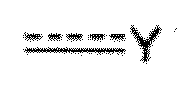

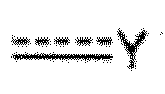
each R1 independently represents lower alkyl, or
two R1s may be bound to each other to form a spiro ring or a crosslinked structure, or
two R1s may be bound to each other to form a saturated fused heterocycle together with nitrogen and carbon atoms constituting a ring containing Y;
p is 0, 1, or 2; or
(R1)p is oxo.
Description
- The present invention relates to, for example, a pharmaceutical composition for preventing and/or treating heart failure.
- Heart failure, in particular, congestive heart failure (CHF) is one of the main causes of death in developed countries. The factors underlying congestive heart failure include high blood pressure, ischemic heart disease, exposure to cardiotoxic compounds, such as anthracycline antibiotics, radiation exposure, physical trauma, and genetic defects associated with an increased risk of heart failure. Therefore, CHF often develops from an increase in workload on the heart due to high blood pressure disorder, damage to the myocardium induced by chronic ischemia, myocardial infarction, viral diseases, chemical toxicity, radiation, and other diseases, such as scleroderma. These conditions gradually cause a reduction in the pumping ability of the heart. In the early stages, the increased workload due to high blood pressure or reduced contractile tissue induces compensatory cardiomyocyte hypertrophy and thickening of the left ventricular wall, thereby enhancing contractility and maintaining cardiac function. However, over time, the left ventricular chamber dilates, systolic pump function deteriorates, cardiomyocytes undergo apoptotic cell death, and myocardial function progressively deteriorates.
- NPL 1: Journal of Molecular and Cellular Cardiology, volume 97, August 2016, pp. 245-262
- An object is to provide a pharmaceutical composition useful for, for example, preventing and/or treating heart failure.
- To solve the above problem, the present inventors conducted extensive research and consequently found, for example, that a compound represented by formula (1), a compound represented by formula (2), a salt thereof, or a prodrug thereof, described below, can attenuate heart failure, and can suppress deterioration of and/or ameliorate cardiac function. The present invention has thus been accomplished. Representative inventions of the present invention are as follows.
- A pharmaceutical composition for preventing and/or treating heart failure, comprising a compound represented by formula (1), a salt thereof, or a prodrug thereof:

- A is an optionally substituted benzene ring;
- B is an optionally substituted aryl or an optionally substituted heteroaryl;
- X is an oxygen atom or a sulfur atom;
- Y is a nitrogen atom or a carbon atom;
-


-


- each R1 independently represents lower alkyl, or two R1s may be bound to each other to form a spiro ring or a crosslinked structure, or
- two R1s may be bound to each other to form a saturated fused heterocycle together with nitrogen and carbon atoms constituting a ring containing Y;
- p is 0, 1, or 2; or
- (R1)p is oxo.
- The pharmaceutical composition according to Item 1, wherein in formula (1),
B is an optionally substituted monocyclic aryl or an optionally substituted monocyclic or bicyclic nitrogen-containing heteroaryl. - The pharmaceutical composition according to
Item 1 or 2, wherein in formula (1),
A is a benzene ring optionally substituted with at least one substituent selected from the group consisting of the following A-1 to A-16: - A-1) halogen,
- A-2) hydroxyl,
- A-3) nitro,
- A-4) cyano,
- A-5) carboxyl,
- A-6) optionally substituted amino,
- A-7) optionally substituted cyclic amino,
- A-8) optionally substituted lower alkyl,
- A-9) optionally substituted lower alkoxy,
- A-10) lower alkoxycarbonyl,
- A-11) lower alkylsulfonyl,
- A-12) carbamoyl optionally substituted with lower alkyl or lower alkylsulfonyl,
- A-13) optionally substituted cyclic aminocarbonyl,
- A-14) sulfamoyl optionally substituted with lower alkyl,
- A-15) optionally substituted cyclic aminosulfonyl, and
- A-16) tetrazolyl.
- The pharmaceutical composition according to any one of Items 1 to 3, wherein in formula (1),
- B is a monocyclic aryl or a monocyclic or bicyclic heteroaryl, the monocyclic aryl is optionally substituted with at least one substituent selected from the group consisting of the following B-1 to B-16, and
- the monocyclic or bicyclic heteroaryl is optionally substituted with at least one substituent selected from the group consisting of the following B-1 to B-17:
- B-1) halogen,
- B-2) hydroxyl,
- B-3) nitro,
- B-4) cyano,
- B-5) carboxyl
- B-6) optionally substituted amino,
- B-7) optionally substituted cyclic amino,
- B-8) optionally substituted lower alkyl,
- B-9) optionally substituted lower alkoxy,
- B-10) lower alkoxycarbonyl,
- B-11) lower alkylsulfonyl,
- B-12) carbamoyl optionally substituted with lower alkyl or lower alkylsulfonyl,
- B-13) optionally substituted cyclic aminocarbonyl,
- B-14) sulfamoyl optionally substituted with lower alkyl,
- B-15) optionally substituted cyclic aminosulfonyl,
- B-16) tetrazolyl, and
- B-17) oxo.
- The pharmaceutical composition according to any one of Items 1 to 4, wherein in formula (1), the benzisoxazole or benzisothiazole skeleton is substituted at the 4-position.
- The pharmaceutical composition according to any one of Items 1 to 3, wherein in formula (1),
B is substituted pyridyl or substituted phenyl, and at least one of the carbon atoms in ortho-positions with respect to the Y-bound carbon atom on the pyridine or benzene ring is substituted. - The pharmaceutical composition according to any one of Items 1 to 4, wherein in formula (1),
- A is a benzene ring optionally substituted with at least one substituent selected from the group consisting of halogen, lower alkoxy, and optionally halogen-substituted lower alkyl;
- B is pyridyl or phenyl each optionally substituted with at least one substituent selected from the group consisting of the following B-1, B-5, B-8, B-10, B-12, and B-13:
- B-1) halogen,
- B-5) carboxyl,
- B-8) optionally substituted lower alkyl,
- B-10) lower alkoxycarbonyl,
- B-12) carbamoyl optionally substituted with lower alkyl or lower alkylsulfonyl, and
- B-13) optionally substituted cyclic aminocarbonyl; and
- each R1 independently represents C1-C3 alkyl, or
- two R1s are bound to each other to form a methylene group, a dimethylene group, or a trimethylene group, or
- (R1)p is oxo.
- Item 8.
- The pharmaceutical composition according to any one of Items 1 to 4 and 7, wherein the compound represented by formula (1) is a compound represented by formula (1A):

- Z is a nitrogen atom or CH;
- Y is a nitrogen atom or a carbon atom;
-


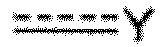
- each R11 independently represents methyl or ethyl, or
- two R11s may be bound to each other to form a crosslinked structure by methylene, dimethylene, or trimethylene;
- p is 0, 1, or 2; or
- (R11)p is oxo;
- R21, R22, and R23 independently represent a hydrogen atom, halogen, carbamoyl, or trifluoromethyl; and
- R31, R32, and R33 independently represent a hydrogen atom, halogen, halogen-substituted lower alkyl, methyl, carboxyl, lower alkoxycarbonyl, monomethylaminocarbonyl, or
- dimethylaminocarbonyl.
- The pharmaceutical composition according to Item 8, wherein in formula (1A),
- R21 is a chlorine atom or trifluoromethyl,
- R22 and R23 are each a hydrogen atom,
- R31 is a chlorine atom,
- R32 is a hydrogen atom, and
- R33 is a hydrogen atom, carboxyl, or lower alkoxycarbonyl.
- The pharmaceutical composition according to any one of Items 1 to 4, wherein the compound is
Compound 011, Compound 021, Compound 031, Compound 041, Compound 061, Compound 071, Compound 081, Compound 091, Compound 101, Compound 111, Compound 121, Compound 131, Compound 141, Compound 151, Compound 161, Compound 171, Compound 191, Compound 221, Compound 281, Compound 311, Compound 321, Compound 331, Compound 341, Compound 351, Compound 361, Compound 371, Compound 381, Compound 391, Compound 401, Compound 431, or Compound 441, each represented by any of the following structures:

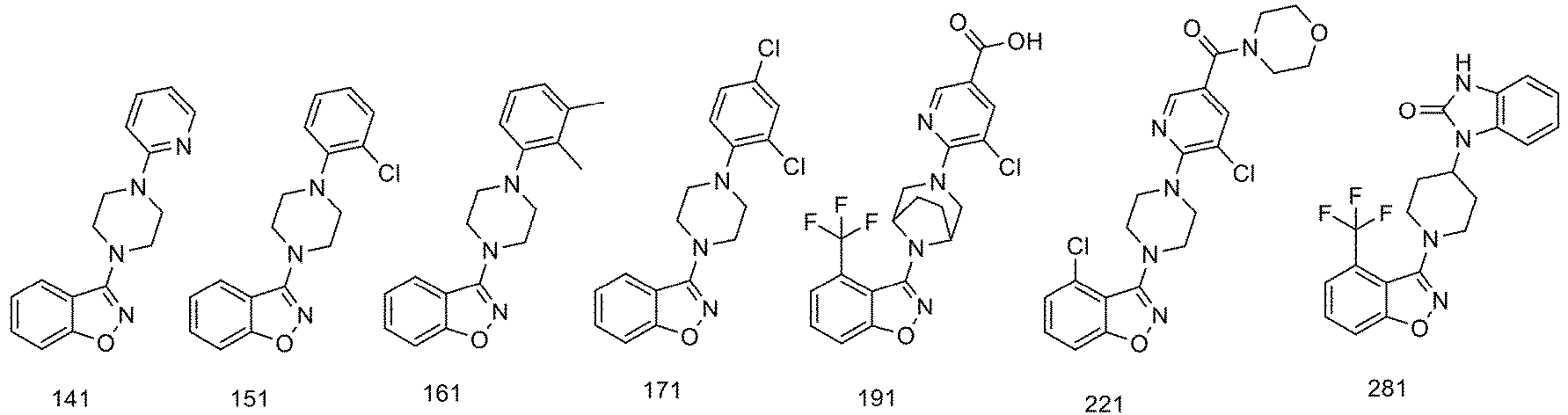
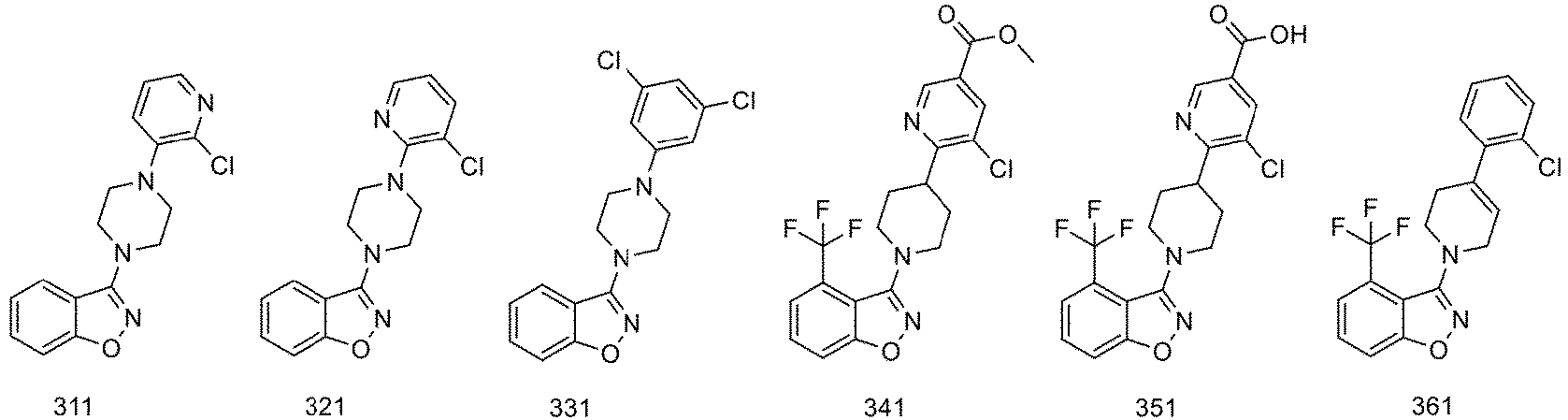

- A pharmaceutical composition for preventing and/or treating heart failure, comprising a compound represented by formula (2), a salt thereof, or a prodrug thereof:

- A is an optionally substituted benzene ring;
- B is an optionally substituted aryl or an optionally substituted heteroaryl;
- Y is a nitrogen atom or a carbon atom;
-
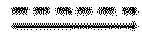

-


- each R1 independently represents lower alkyl, or
- two R1s may be bound to each other to form a spiro ring or a crosslinked structure, or
- two R1s may be bound to each other to form a saturated fused heterocycle together with nitrogen and carbon atoms constituting a ring containing Y;
- p is 0, 1, or 2; or
- (R1)p is oxo.
- The pharmaceutical composition according to any one of Items 1 to 11, which is for oral administration.
- A pharmaceutical composition for suppressing deterioration of and/or ameliorating cardiac function, comprising a compound represented by formula (1), a salt thereof, or a prodrug thereof,:

- A is an optionally substituted benzene ring;
- B is an optionally substituted aryl or an optionally substituted heteroaryl;
- X is an oxygen atom or a sulfur atom;
- Y is a nitrogen atom or a carbon atom;
-


-


- each R1 independently represents lower alkyl, or
- two R1s may be bound to each other to form a spiro ring or a crosslinked structure, or
- two R1s may be bound to each other to form a saturated fused heterocycle together with nitrogen and carbon atoms constituting a ring containing Y;
- p is 0, 1, or 2; or
- (R1)p is oxo.
- The pharmaceutical composition according to Item 13, wherein in formula (1),
B is an optionally substituted monocyclic aryl or an optionally substituted monocyclic or bicyclic nitrogen-containing heteroaryl. - The pharmaceutical composition according to Item 13 or 14, wherein in formula (1),
A is a benzene ring optionally substituted with at least one substituent selected from the group consisting of the following A-1 to A-16: - A-1) halogen,
- A-2) hydroxyl,
- A-3) nitro,
- A-4) cyano,
- A-5) carboxyl,
- A-6) optionally substituted amino,
- A-7) optionally substituted cyclic amino,
- A-8) optionally substituted lower alkyl,
- A-9) optionally substituted lower alkoxy,
- A-10) lower alkoxycarbonyl,
- A-11) lower alkylsulfonyl,
- A-12) carbamoyl optionally substituted with lower alkyl or lower alkylsulfonyl,
- A-13) optionally substituted cyclic aminocarbonyl,
- A-14) sulfamoyl optionally substituted with lower alkyl,
- A-15) optionally substituted cyclic aminosulfonyl, and
- A-16) tetrazolyl.
- The pharmaceutical composition according to any one of Items 13 to 15, wherein in formula (1),
- B is a monocyclic aryl or a monocyclic or bicyclic heteroaryl, the monocyclic aryl is optionally substituted with at least one substituent selected from the group consisting of the following B-1 to B-16, and
- the monocyclic or bicyclic heteroaryl is optionally substituted with at least one substituent selected from the group consisting of the following B-1 to B-17:
- B-1) halogen,
- B-2) hydroxyl,
- B-3) nitro,
- B-4) cyano,
- B-5) carboxyl
- B-6) optionally substituted amino,
- B-7) optionally substituted cyclic amino,
- B-8) optionally substituted lower alkyl,
- B-9) optionally substituted lower alkoxy,
- B-10) lower alkoxycarbonyl,
- B-11) lower alkylsulfonyl,
- B-12) carbamoyl optionally substituted with lower alkyl or lower alkylsulfonyl,
- B-13) optionally substituted cyclic aminocarbonyl,
- B-14) sulfamoyl optionally substituted with lower alkyl,
- B-15) optionally substituted cyclic aminosulfonyl,
- B-16) tetrazolyl, and
- B-17) oxo.
- The pharmaceutical composition according to any one of Items 13 to 16, wherein in formula (1), the benzisoxazole or benzisothiazole skeleton is substituted at the 4-position.
- The pharmaceutical composition according to any one of Items 13 to 15, wherein in formula (1),
B is substituted pyridyl or substituted phenyl, and at least one of the carbon atoms in ortho-positions with respect to the Y-bound carbon atom on the pyridine or benzene ring is substituted. - The pharmaceutical composition according to any one of Items 13 to 16, wherein in formula (1),
- A is a benzene ring optionally substituted with at least one substituent selected from the group consisting of halogen, lower alkoxy, and optionally halogen-substituted lower alkyl;
- B is pyridyl or phenyl each optionally substituted with at least one substituent selected from the group consisting of the following B-1, B-5, B-8, B-10, B-12, and B-13:
- B-1) halogen,
- B-5) carboxyl,
- B-8) optionally substituted lower alkyl,
- B-10) lower alkoxycarbonyl,
- B-12) carbamoyl optionally substituted with lower alkyl or lower alkylsulfonyl, and
- B-13) optionally substituted cyclic aminocarbonyl; and
- each R1 independently represents C1-C3 alkyl, or
- two R1s are bound to each other to form a methylene group, a dimethylene group, or a trimethylene group, or
- (R1)p is oxo.
- The pharmaceutical composition according to any one of Items 13 to 16 and 19, wherein the compound represented by formula (1) is a compound represented by formula (1A):

- Z is a nitrogen atom or CH;
- Y is a nitrogen atom or a carbon atom;
-

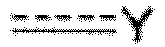


- each R11 independently represents methyl or ethyl, or
- two R11s may be bound to each other to form a crosslinked structure by methylene, dimethylene, or trimethylene;
- p is 0, 1, or 2; or
- (R11)p is oxo;
- R21, R22, and R23 independently represent a hydrogen atom, halogen, carbamoyl, or trifluoromethyl; and
- R31, R32, and R33 independently represent a hydrogen atom, halogen, halogen-substituted lower alkyl, methyl, carboxyl, lower alkoxycarbonyl, monomethylaminocarbonyl, or
- dimethylaminocarbonyl.
- The pharmaceutical composition according to
Item 20, wherein in formula (1A), - R21 is a chlorine atom or trifluoromethyl,
- R22 and R23 are each a hydrogen atom,
- R31 is a chlorine atom,
- R32 is a hydrogen atom, and
- R33 is a hydrogen atom, carboxyl, or lower alkoxycarbonyl.
- The pharmaceutical composition according to any one of Items 13 to 16, wherein the compound is
Compound 011, Compound 021, Compound 031, Compound 041, Compound 061, Compound 071, Compound 081, Compound 091, Compound 101, Compound 111, Compound 121, Compound 131, Compound 141, Compound 151, Compound 161, Compound 171, Compound 191, Compound 221, Compound 281, Compound 311, Compound 321, Compound 331, Compound 341, Compound 351, Compound 361, Compound 371, Compound 381, Compound 391, Compound 401, Compound 431, or Compound 441, each represented by any of the following structures:


- A pharmaceutical composition for suppressing deterioration of and/or ameliorating cardiac function, comprising a compound represented by formula (2), a salt thereof, or a prodrug thereof:

- A is an optionally substituted benzene ring;
- B is an optionally substituted aryl or an optionally substituted heteroaryl;
- Y is a nitrogen atom or a carbon atom;
-


-


- each R1 independently represents lower alkyl, or
- two R1s may be bound to each other to form a spiro ring or a crosslinked structure, or
- two R1s may be bound to each other to form a saturated fused heterocycle together with nitrogen and carbon atoms constituting a ring containing Y;
- p is 0, 1, or 2; or
- (R1)p is oxo.
- The pharmaceutical composition according to any one of Items 13 to 23, which is for oral administration.
- The pharmaceutical composition according to any one of Items 13 to 24, wherein the suppression of deterioration and/or amelioration of cardiac function is suppression of deterioration and/or amelioration of cardiac contractile function.
- The pharmaceutical composition according to Item 25, wherein the suppression of deterioration and/or amelioration of cardiac contractile function is one or more of suppression of deterioration of left ventricular ejection fraction, amelioration of left ventricular ejection fraction, suppression of deterioration of left ventricular fractional shortening, and amelioration of left ventricular fractional shortening.
- The pharmaceutical composition according to any one of Items 1 to 26, for administration to a subject who has experienced cardiac hypertrophy or a subject who has not experienced cardiac hypertrophy.
- The pharmaceutical composition according to any one of Items 13 to 26, wherein the suppression of deterioration and/or amelioration of cardiac function is suppression of deterioration and/or amelioration of cardiac function in a subject who has experienced cardiac hypertrophy or a subject who has not experienced cardiac hypertrophy.
- A compound represented by formula (1), a compound represented by formula (2), a salt thereof, or a prodrug thereof has an action of preventing and/or treating heart failure, as well as an action of suppressing deterioration of and/or ameliorating cardiac function.
-
Fig. 1 shows the results of echocardiographic observation (IVS, LVDd, LVFS, and LVEF) of the vehicle group and theCompound 011 group in Test Example 1. - One embodiment of the present invention is directed to a pharmaceutical composition for preventing and/or treating heart failure, comprising a compound represented by the following formula (1), a salt thereof, or a prodrug thereof. Another embodiment is directed to a composition for attenuating the progression of heart failure, comprising a compound represented by the following formula (1), a salt thereof, or a prodrug thereof. Still another embodiment is directed to a pharmaceutical composition for suppressing deterioration of and/or ameliorating cardiac function, comprising a compound represented by the following formula (1), a salt thereof, or a prodrug thereof.
-

- (wherein A is an optionally substituted benzene ring;
- B is an optionally substituted aryl or an optionally substituted heteroaryl;
- X is an oxygen atom or a sulfur atom;
- Y is a nitrogen atom or a carbon atom;
-


-


- each R1 independently represents lower alkyl, or
- two R1s may be bound to each other to form a spiro ring or a crosslinked structure, or
- two R1s may be bound to each other to form a saturated fused heterocycle together with nitrogen and carbon atoms constituting a ring containing Y;
- p is 0, 1, or 2; or
- (R1) p is oxo).
- In the present invention, examples of substituents for the "optionally substituted benzene ring" include halogen; hydroxyl; nitro; cyano; carboxyl; optionally substituted amino; optionally substituted cyclic amino; optionally substituted lower alkyl; optionally substituted lower alkoxy; lower alkoxycarbonyl, lower alkylsulfonyl; carbamoyl optionally substituted with lower alkyl or lower alkylsulfonyl; optionally substituted cyclic aminocarbonyl; sulfamoyl optionally substituted with lower alkyl; optionally substituted cyclic aminosulfonyl; tetrazolyl; and the like. Such substituents may be used singly or in a combination of two or more.
- In the present invention, "aryl" may be, for example, a monocyclic or bicyclic aryl. Specific examples include phenyl, naphthyl, and the like.
- In the present invention, the aryl in the "optionally substituted aryl" is as defined above. Examples of substituents for the optionally substituted aryl include halogen; hydroxyl; nitro; cyano; carboxyl; optionally substituted amino; optionally substituted cyclic amino; optionally substituted lower alkyl; optionally substituted lower alkoxy; lower alkoxycarbonyl; lower alkylsulfonyl; carbamoyl optionally substituted with lower alkyl or lower alkylsulfonyl; optionally substituted cyclic aminocarbonyl; sulfamoyl optionally substituted with lower alkyl; optionally substituted cyclic aminosulfonyl; tetrazolyl; oxo; and the like. Such substituents may be used singly or in a combination of two or more.
- In the present invention, "oxo" is a group represented by "=O".
- In the present invention, "heteroaryl" is, for example, a monocyclic or bicyclic nitrogen-containing heteroaryl. Specific examples include a monocyclic or bicyclic nitrogen-containing heteroaryl that contains one or more (for example, one to three, one or two, or one) nitrogen atoms on the ring and optionally further contains one or more (for example, one to three, one or two, or one) sulfur atoms or oxygen atoms as other heteroatoms. Specific examples of the heteroaryl include pyrrolyl, imidazolyl, triazolyl, tetrazolyl, pyrazolyl, pyridyl, pyrazinyl, pyrimidinyl, pyridadinyl, furyl, thienyl, oxazolyl, isooxazolyl, thiazolyl, isothiazolyl, furazanyl, oxadiazolyl, thiadiazolyl, indolyl, isoindolyl, benzofuranyl, isobenzofuranyl, benzothienyl, isobenzothienyl, indazolyl, quinolyl, isoquinolyl, purinyl, phthalazinyl, pteridyl, naphthyridinyl, quinoxalinyl, quinazolinyl, cinnolinyl, benzoxazolyl, benzothiazolyl, benzimidazolyl, benzofurazanyl, benzothiadiazolyl, benzotriazolyl, isoxazolo[4,5-d]pyridazyl, benzisoxazolyl, benzisothiazolyl, and the like. Preferred is a monocyclic nitrogen-containing heteroaryl or benzimidazolyl.
- In the present invention, the heteroaryl in the "optionally substituted heteroaryl" is as defined above. Examples of substituents for the optionally substituted heteroaryl include halogen; hydroxyl; nitro; cyano; carboxyl; optionally substituted amino; optionally substituted cyclic amino; optionally substituted lower alkyl; optionally substituted lower alkoxy; lower alkoxycarbonyl; lower alkylsulfonyl; carbamoyl optionally substituted with lower alkyl or lower alkylsulfonyl; optionally substituted cyclic aminocarbonyl; sulfamoyl optionally substituted with lower alkyl; optionally substituted cyclic aminosulfonyl; tetrazolyl; oxo; and the like. Such substituents may be used singly or in a combination of two or more.
- In the present invention, "lower alkyl" includes, for example, C1-C8 alkyl, preferably C1-C6 alkyl, more preferably C1-C4 alkyl, and particularly preferably C1-C3 alkyl, each containing a linear, branched, or cyclic structure. Specific examples of linear or branched lower alkyl include methyl, ethyl, 1-propyl, 2-propyl, 1-butyl, 2-butyl, isobutyl, t-butyl, n-pentyl, neopentyl, n-hexyl, isohexyl, 3-methylpentyl, and the like. Examples of lower alkyl containing a cyclic structure include cyclopropyl, cyclopropylmethyl, cyclobutyl, cyclobutylmethyl, cyclopentyl, cyclopentylmethyl, cyclohexyl, cyclohexylmethyl, cyclohexylethyl, and the like. Preferable examples include methyl, ethyl, 2-propyl, t-butyl, cyclopropyl, and the like.
- In the present invention, examples of "halogen" include a fluorine atom, a chlorine atom, a bromine atom, an iodine atom, and the like. Preferable examples include a fluorine atom and a chlorine atom.
- In the present invention, "optionally substituted amino" refers to an optionally substituted acyclic amino group. Examples of substituents for the amino group include lower alkyl (e.g., methyl, ethyl, and propyl), C1-C8 acyl (e.g., acetyl and propionyl), aryl (e.g., phenyl), and heteroaryl. Such substituents may be used singly or in a combination of two or more. Preferable examples of the optionally substituted amino include amino, methylamino, dimethylamino, ethylamino, diethylamino, cyclohexylamino, acetylamino, benzoylamino, phenylamino, and the like.
- In the present invention, "cyclic amino" may be, for example, a 5- to 7-membered cyclic amino group containing a nitrogen atom as a ring-constituting atom and optionally further containing one or more (for example, one to three, one or two, or one) oxygen atoms. Specific examples include pyrrolidino, piperidino, piperazino, morpholino, and the like. Preferable examples include pyrrolidino, morpholino, and the like.
- In the present invention, the cyclic amino in the "optionally substituted cyclic amino" is as defined above. Examples of substituents for the cyclic amino include lower alkyl, lower alkoxy, amino, hydroxyl, nitro, cyano, carboxyl, oxo, and the like. The cyclic amino may be substituted with at least one substituent selected from the group consisting of the substituents mentioned above. The number of substituents is, for example, 0, 1, 2, or 3, and preferably 0, 1, or 2. Specific examples of the optionally substituted cyclic amino include pyrrolidino, piperidino, piperazino, 4-methylpiperidino, morpholino, 2-pyrrolidonyl, and the like. Preferable examples include pyrrolidino, morpholino, and the like.
- In the present invention, the lower alkyl in the "optionally substituted lower alkyl" is as defined above. Examples of substituents for the lower alkyl include hydroxyl; amino; C1-C8 alkylamino (e.g., methylamino, ethylamino, propylamino, and t-butylamino); C1-C8 alkoxy (e.g., methoxy, ethoxy, 1-propyloxy, 2-propyloxy, and t-butyloxy); halogen (e.g., a fluorine atom, a chlorine atom, and a bromine atom); halo-C1-C8 alkoxy (e.g., trifluoromethoxy); aliphatic heterocyclic groups (e.g., morpholino, piperidinyl, pyrrolidinyl, and 4-methyl-1-piperazino); aryl (e.g., phenyl and 1-naphthyl); heteroaryl (e.g., pyridyl, thienyl, and furanyl); carboxyl; C1-C8 alkoxycarbonyl (e.g., methoxycarbonyl, ethoxycarbonyl, 1-propoxycarbonyl, 2-propoxycarbonyl, and t-butoxycarbonyl); carbamoyl optionally substituted with lower alkyl (e.g., carbamoyl, methylaminocarbonyl, dimethylaminocarbonyl, and diethylaminocarbonyl); cyclic aminocarbonyl (e.g., pyrrolidinocarbonyl, piperidinocarbonyl, and morpholinocarbonyl); and the like. Examples of preferable substituents include methylamino, ethylamino, dimethylamino, diethylamino, methoxy, ethoxy, 2-propyloxy, t-butoxycarbonyl, hydroxyl, a fluorine atom, a chlorine atom, trichloromethyl, trifluoromethyl, trifluoromethoxy, morpholino, piperidino, pyrrolidino, carboxyl, methoxycarbonyl, ethoxycarbonyl, morpholinocarbonyl, phenyl, pyridyl, and the like. The optionally substituted lower alkyl may be substituted with at least one substituent selected from the group consisting of the substituents mentioned above. The number of substituents may be, for example, 0, 1, 2, or 3, and preferably 0, 1, or 2.
- In the present invention, "halogen-substituted lower alkyl" means that all the hydrogen atoms in the alkyl are replaced by halogens. The halogens and lower alkyl in the halogen-substituted lower alkyl are as defined above. The halogens with which the alkyl is substituted are preferably the same. The halogen-substituted lower alkyl is preferably trichloromethyl or trifluoromethyl, and more preferably trifluoromethyl.
- In the present invention, examples of "lower alkoxy" include C1-C8 alkoxy, preferably C1-C6 alkoxy, more preferably C1-C4 alkoxy, and particularly preferably C1-C3 alkoxy, each containing a linear, branched, or cyclic structure. Specific examples of linear or branched alkoxy include methoxy, ethoxy, 1-propoxy, 2-propoxy, 1-butoxy, 2-butoxy, isobutoxy, t-butoxy, n-pentyloxy, neopentyloxy, n-hexyloxy, isohexyloxy, 3-methylpentyloxy, and the like. Examples of alkoxy containing a cyclic structure include cyclopropoxy, cyclopropylmethoxy, cyclobutyloxy, cyclobutylmethoxy, cyclopentyloxy, cyclopentylmethoxy, cyclohexyloxy, cyclohexylmethoxy, cyclohexylethoxy, and the like. Preferable examples include methoxy, ethoxy, 2-propoxy, t-butoxy, cyclopropoxy, and the like.
- In the present invention, the lower alkoxy in the "optionally substituted lower alkoxy" is as defined above. Examples of substituents for the lower alkoxy include hydroxyl; amino; C1-C8 alkylamino (e.g., methylamino, ethylamino, propylamino, and t-butylamino); C1-C8 alkoxy (e.g., methoxy, ethoxy, 1-propyloxy, 2-propyloxy, and t-butoxy); halogen (e.g., a fluorine atom, a chlorine atom, and a bromine atom); halo-C1-C8 alkoxy (e.g., trifluoromethoxy); aliphatic heterocyclic groups (e.g., morpholino, piperidinyl, pyrrolidinyl, and 4-methyl-1-piperazino); aryl (e.g., phenyl and 1-naphthyl); heteroaryl (e.g., pyridyl, thienyl, and furanyl); carboxyl; C1-C8 alkoxycarbonyl (e.g., methoxycarbonyl, ethoxycarbonyl, 1-propyloxycarbonyl, 2-propyloxycarbonyl, and t-butoxycarbonyl); carbamoyl optionally substituted with lower alkyl (e.g., carbamoyl, methylaminocarbonyl, dimethylaminocarbonyl, and diethylaminocarbonyl); cyclic aminocarbonyl (e.g., pyrrolidinocarbonyl, piperidinocarbonyl, and morpholinocarbonyl); and the like. Examples of preferable substituents include methylamino, ethylamino, dimethylamino, diethylamino, methoxy, ethoxy, 2-propyloxy, t-butoxycarbonyl, hydroxyl, a fluorine atom, a chlorine atom, trifluoro, morpholino, piperidino, pyrrolidino, carboxyl, methoxycarbonyl, morpholinocarbonyl, phenyl, pyridyl, and the like. The optionally substituted lower alkoxy may be substituted with at least one substituent selected from the group consisting of the substituents mentioned above. The number of substituents may be, for example, 0, 1, 2, or 3, and preferably 0, 1, or 2.
- In the present invention, the lower alkoxy in the "lower alkoxycarbonyl" is as defined above. The lower alkoxycarbonyl is a group in which lower alkoxy, such as those mentioned above, is bound to carbonyl. Examples of the lower alkoxycarbonyl include C1-C8 alkoxycarbonyl containing a linear, branched, or cyclic structure. Specific examples of the linear or branched alkoxycarbonyl include methoxycarbonyl, ethoxycarbonyl, 1-propoxycarbonyl, 2-propoxycarbonyl, 1-butoxycarbonyl, 2-butoxycarbonyl, isobutoxycarbonyl, t-butoxycarbonyl, and the like. Examples of the C1-C8 alkoxycarbonyl containing a cyclic structure include cyclopropoxycarbonyl, cyclopropylmethoxycarbonyl, cyclobutyloxycarbonyl, cyclobutylmethoxycarbonyl, cyclopentyloxycarbonyl, cyclopentylmethoxycarbonyl, cyclohexyloxycarbonyl, cyclohexylmethoxycarbonyl, cyclohexylethoxycarbonyl, and the like. Preferable examples of the lower alkoxycarbonyl include methoxycarbonyl, ethoxycarbonyl, 2-propoxycarbonyl, cyclopropoxycarbonyl, and the like.
- In the present invention, the lower alkyl in the "lower alkylsulfonyl" is as defined above. The lower alkylsulfonyl is a group in which lower alkyl, such as those mentioned above, is bound to sulfonyl. Examples of the lower alkylsulfonyl include C1-Cs alkylsulfonyl containing a linear, branched, or cyclic structure. Specific examples of the linear or branched alkylsulfonyl include methanesulfonyl, ethanesulfonyl, 1-propylsulfonyl, 2-propylsulfonyl, 1-butylsulfonyl, 2-butylsulfonyl, isobutylsulfonyl, t-butylsulfonyl, and the like. Examples of the C1-C8 alkylsulfonyl containing a cyclic structure include cyclopropylsulfonyl, cyclopropylmethylsulfonyl, cyclobutylsulfonyl, cyclobutylmethylsulfonyl, cyclopentylsulfonyl, cyclopentylmethylsulfonyl, cyclohexylsulfonyl, cyclohexylmethylsulfonyl, cyclohexylethylsulfonyl, and the like. Preferable examples include methanesulfonyl, ethanesulfonyl, 2-propanesulfonyl, cyclopropanesulfonyl, and the like.
- In the present invention, the lower alkyl and lower alkylsulfonyl in the "carbamoyl optionally substituted with lower alkyl or lower alkylsulfonyl" are as defined above. The carbamoyl optionally substituted with lower alkyl or lower alkylsulfonyl includes "carbamoyl optionally substituted with lower alkyl" and "carbamoyl optionally substituted with lower alkylsulfonyl."
- The "carbamoyl optionally substituted with lower alkyl" is a group in which one or two lower alkyl groups, such as those mentioned above, may be bound to carbamoyl. When two lower alkyl groups are bound, the lower alkyl groups may be the same or different. Examples of the carbamoyl optionally substituted with lower alkyl include carbamoyl; aminocarbonyl substituted with C1-Cs alkyl containing a linear, branched, or cyclic structure; and the like. Specific examples of the carbamoyl optionally substituted with lower alkyl include carbamoyl, methylaminocarbonyl, ethylaminocarbonyl, propylaminocarbonyl, 2-propylaminocarbonyl, dimethylaminocarbonyl, diethylaminocarbonyl, ethylmethylaminocarbonyl, methylpropylaminocarbonyl, dicyclohexylaminocarbonyl, and the like.
- The "carbamoyl optionally substituted with lower alkylsulfonyl" is a group in which one or two lower alkylsulfonyl groups, such as those mentioned above, may be bound to carbamoyl. When two lower alkylsulfonyl groups are bound, the lower alkylsulfonyl groups may be the same or different. Examples of the carbamoyl optionally substituted with lower alkylsulfonyl include carbamoyl; aminocarbonyl substituted with C1-C8 alkylsulfonyl containing a linear, branched, or cyclic structure; and the like. Examples of the linear or branched C1-C8 alkylsulfonylaminocarbonyl include methanesulfonylaminocarbonyl, ethanesulfonylaminocarbonyl, 1-propylsulfonylaminocarbonyl, 2-propylsulfonylaminocarbonyl, 1-butylsulfonylaminocarbonyl, 2-butylsulfonylaminocarbonyl, isobutylsulfonylaminocarbonyl, t-butylsulfonylaminocarbonyl, and the like. Examples of the C1-C8 alkylsulfonylaminocarbonyl containing a cyclic structure include cyclopropylsulfonylaminocarbonyl, cyclopropylmethylsulfonylaminocarbonyl, cyclobutylsulfonylaminocarbonyl, cyclobutylmethylsulfonylaminocarbonyl, cyclopentylsulfonylaminocarbonyl, cyclopentylmethylsulfonylaminocarbonyl, cyclohexylsulfonylaminocarbonyl, cyclohexylmethylsulfonylaminocarbonyl, cyclohexylethylsulfonylaminocarbonyl, and the like. Preferable examples of the carbamoyl optionally substituted with lower alkylsulfonyl include carbamoyl, methanesulfonylaminocarbonyl, ethanesulfonylaminocarbonyl, 2-propylsulfonylaminocarbonyl, cyclopropylsulfonylaminocarbonyl, and the like.
- In the present invention, the optionally substituted cyclic amino in the "optionally substituted cyclic aminocarbonyl" is as defined above. The optionally substituted cyclic aminocarbonyl is a group in which optionally substituted cyclic amino, such as those mentioned above, is bound to carbonyl. Specific examples of the optionally substituted cyclic aminocarbonyl include pyrrolidinocarbonyl, piperidinocarbonyl, piperazinocarbonyl, 4-methylpiperidino, morpholinocarbonyl, 2-pyrrolidonylcarbonyl, and the like. Preferable examples are pyrrolidinocarbonyl, morpholinocarbonyl, and the like.
- In the present invention, the lower alkyl in the "sulfamoyl optionally substituted with lower alkyl" is as defined above. The sulfamoyl optionally substituted with lower alkyl is a group in which one or two lower alkyl groups, such as those mentioned above, may be bound to sulfamoyl. When two lower alkyl groups are bound, the lower alkyl groups may be the same or different. Examples of the sulfamoyl optionally substituted with lower alkyl include sulfamoyl; aminosulfonyl substituted with C1-Cs alkyl containing a linear, branched, or cyclic structure; and the like. Specific examples include sulfamoyl, methylaminosulfonyl, ethylaminosulfonyl, propylaminosulfonyl, 2-propylaminosulfonyl, dimethylaminophonyl, diethylaminosulfonyl, ethylmethylaminosulfonyl, methylpropylaminosulfonyl, dicyclohexylaminosulfonyl, and the like.
- In the present invention, the optionally substituted cyclic amino in the "optionally substituted cyclic aminosulfonyl" is as defined above. The optionally substituted cyclic aminosulfonyl is a group in which optionally substituted cyclic amino, such as those mentioned above, is bound to sulfonyl. Specific examples of the optionally substituted cyclic aminosulfonyl include pyrrolidinosulfonyl, piperidinosulfonyl, piperazinosulfonyl, 4-methylpiperidinosulfonyl, morpholinosulfonyl, 4-piperidonylsulfonyl, and the like. Preferable examples are pyrrolidinosulfonyl, morpholinosulfonyl, and the like.
- In the present invention, when Y is a carbon atom,
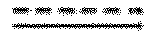

- In the compound represented by formula (1), A is an optionally substituted benzene ring. Examples of the substituent for A include at least one member selected from the group consisting of the following A-1 to A-16. When two or more substituents are present, the substituents may be the same or different from each other.
- A-1) halogen,
- A-2) hydroxyl,
- A-3) nitro,
- A-4) cyano,
- A-5) carboxyl,
- A-6) optionally substituted amino,
- A-7) optionally substituted cyclic amino,
- A-8) optionally substituted lower alkyl,
- A-9) optionally substituted lower alkoxy,
- A-10) lower alkoxycarbonyl,
- A-11) lower alkylsulfonyl,
- A-12) carbamoyl optionally substituted with lower alkyl or lower alkylsulfonyl,
- A-13) optionally substituted cyclic aminocarbonyl,
- A-14) sulfamoyl optionally substituted with lower alkyl,
- A-15) optionally substituted cyclic aminosulfonyl, and
- A-16) tetrazolyl.
- The number of substituents for A is, for example, 0 to 5, 0 to 4, 0 to 3, preferably 0, 1, or 2, and more preferably 0 or 1. When two or more substituents are present, the substituents may be the same or different from each other.
- Other examples of substituents for A include at least one member selected from the group consisting of the above A-1 and A-3 to A-16; at least one member selected from the group consisting of the above A-1 and A-3 to A-16 excluding methoxy; and the like.
- The substituent for A is preferably at least one member selected from the group consisting of halogen; lower alkoxy; carbamoyl optionally substituted with lower alkyl or lower alkylsulfonyl; and optionally halogen-substituted lower alkyl, more preferably at least one member selected from the group consisting of halogen; lower alkoxy; carbamoyl; and optionally halogen-substituted lower alkyl, even more preferably at least one member selected from the group consisting of halogen, methoxy, ethoxy, carbamoyl, fluoromethyl, difluoromethyl, trifluoromethyl, fluoroethyl, difluoroethyl, and trifluoroethyl, still more preferably at least one member selected from the group consisting of halogen, methoxy, ethoxy, carbamoyl, fluoromethyl, difluoromethyl, trifluoromethyl, fluoroethyl, difluoroethyl, and trifluoroethyl, and particularly preferably at least one member selected from the group consisting of a chlorine atom, a fluorine atom, and trifluoromethyl.
- In the compound represented by formula (1), the substituent for A may be bound to any of the carbon atoms at the 4-position, 5-position, 6-position, and 7-position of the benzisoxazole or benzisothiazole skeleton. Preferably, the substituent is bound to at least one of the carbon atoms at the 4-position, 5-position, and 6-position, more preferably to carbon atoms at the 4-position and/or 5-position, and particularly preferably to the carbon atom at the 4-position. In the present invention, the position numbers of the atoms constituting the benzisoxazole or benzisothiazole skeleton are as follows.

- In the compound represented by formula (1), particularly preferable A is a benzene ring wherein halogen, lower alkoxy, or optionally halogen-substituted lower alkyl is bound to the carbon atom at the 4-position of the benzisoxazole or benzisothiazole skeleton, and carbon atoms at the 5-, 6-, and 7-positions are not substituted.
- In the compound represented by formula (1), B is an optionally substituted aryl or an optionally substituted heteroaryl. The optionally substituted aryl or optionally substituted heteroaryl is as defined above. The aryl is, for example, phenyl or naphthyl, and is preferably phenyl. The heteroaryl is preferably a monocyclic nitrogen-containing heteroaryl that does not contain any other heteroatom as a ring-constituting atom, or benzimidazolyl. The monocyclic nitrogen-containing heteroaryl that does not contain any other heteroatom as a ring-constituting atom is preferably a 5- or 6-membered heteroaryl containing one nitrogen atom as a ring-constituting heteroatom. Examples include pyrrolyl and pyridyl, preferably pyridyl, and more preferably 2-pyridyl. The benzimidazolyl is preferably benzimidazol-3-yl.
- When B is a monocyclic aryl, B may be substituted with at least one substituent selected from the group consisting of the following B-1 to B-16. When B is a monocyclic or bicyclic heteroaryl, B may be substituted with at least one substituent selected from the group consisting of the following B-1 to B-17:
- B-1) halogen,
- B-2) hydroxyl,
- B-3) nitro,
- B-4) cyano,
- B-5) carboxyl,
- B-6) optionally substituted amino,
- B-7) optionally substituted cyclic amino,
- B-8) optionally substituted lower alkyl,
- B-9) optionally substituted lower alkoxy,
- B-10) lower alkoxycarbonyl,
- B-11) lower alkylsulfonyl,
- B-12) carbamoyl optionally substituted with lower alkyl or lower alkylsulfonyl,
- B-13) optionally substituted cyclic aminocarbonyl,
- B-14) sulfamoyl optionally substituted with lower alkyl,
- B-15) optionally substituted cyclic aminosulfonyl,
- B-16) tetrazolyl, and
- B-17) oxo.
- The number of substituents for B is, for example, 0 or at least 1, 0 to 5, 0 to 4, preferably 0 to 3, and more preferably 0, 1, or 2. When two or more substituents are present, the substituents may be the same or different from each other.
- The substituent for B is preferably, for example, at least one member selected from the group consisting of halogen; carboxyl; optionally substituted lower alkyl; lower alkoxycarbonyl; carbamoyl optionally substituted with lower alkyl or lower alkylsulfonyl; and optionally substituted cyclic aminocarbonyl. Specific examples include at least one member selected from the group consisting of halogen, carboxyl, methyl, ethyl, 1-propyl, 2-propyl, hydroxymethyl, carboxymethyl, trichloromethyl, trifluoromethyl, methoxycarbonyl, ethoxycarbonyl, t-butoxycarbonyl, methylaminocarbonyl, dimethylaminocarbonyl, ethylmethylaminocarbonyl, methanesulfonylaminocarbonyl, pyrrolidinocarbonyl, and morpholinocarbonyl.
- The substituent for B is preferably, for example, at least one member selected from the group consisting of halogen; carboxyl; lower alkyl; halogen-substituted lower alkyl; lower alkoxycarbonyl; and carbamoyl optionally substituted with lower alkyl. Specific examples include at least one member selected from the group consisting of halogen, carboxyl, methyl, ethyl, trichloromethyl, trifluoromethyl, methoxycarbonyl, ethoxycarbonyl, n-propoxycarbonyl, isopropoxycarbonyl, monomethylaminocarbonyl, and dimethylaminocarbonyl.
- Particularly preferable examples of substituents for B include at least one member selected from the group consisting of a chlorine atom, a fluorine atom, methyl, carboxyl, methoxycarbonyl, ethoxycarbonyl, methylaminocarbonyl, and dimethylaminocarbonyl.
- In the compound represented by formula (1), when Y is a nitrogen atom, B is preferably an optionally substituted phenyl or an optionally substituted pyridyl. When Y is a carbon atom, B is preferably an optionally substituted phenyl, an optionally substituted pyridyl, or 2-oxobenzoimidazol-3-yl, and more preferably an optionally substituted phenyl or an optionally substituted pyridyl.
- In the compound represented by formula (1), when B is substituted pyridyl or substituted phenyl, one or two carbon atoms, preferably one carbon atom, in the ortho-positions with respect to the Y-bound carbon atom on the pyridine or benzene ring are preferably substituted. The substituent(s) bound to the carbon atom(s) in the ortho-position(s) may be any substituent for B, mentioned above. The substituent is preferably halogen, more preferably a chlorine atom or a fluorine atom, and even more preferably a chlorine atom.
- In the compound represented by formula (1), when B is substituted pyridyl or substituted phenyl, the carbon atom in the para-position with respect to the Y-bound carbon atom on the pyridine or benzene ring is preferably unsubstituted or substituted with carboxyl.
- Further, in the compound represented by formula (1), when B is substituted pyridyl or substituted phenyl, all the carbon atoms in the meta-positions with respect to the Y-bound carbon atom on the pyridine or benzene ring are preferably unsubstituted.
- In the compound represented by formula (1), when B is substituted pyridyl or substituted phenyl, it is more preferable that one or two carbon atoms, more preferably one carbon atom, in the ortho-positions with respect to the Y-bound carbon atom on the pyridine or benzene ring are substituted with a chlorine atom or a fluorine atom, that carbon atoms in the meta-positions are unsubstituted, and that the carbon atom in the para-position is unsubstituted or substituted with carboxyl, methoxycarbonyl, or ethoxycarbonyl.
- When Y is a nitrogen atom and B is substituted 2-pyridyl, it is particularly preferable that one of the carbon atoms in the ortho-positions with respect to the Y-bound carbon atom on the pyridine ring is substituted with a chlorine atom or a fluorine atom, that all the carbon atoms in the meta-positions are unsubstituted, and that the carbon atom in the para-position is unsubstituted or substituted with carboxyl.
- When Y is a nitrogen atom and B is substituted phenyl, it is particularly preferable that one of the two carbon atoms in the ortho-positions with respect to the Y-bound carbon atom on the benzene ring is substituted with a chlorine atom or a fluorine atom, and that all the other carbon atoms that constitute the phenyl are unsubstituted.
- When Y is a carbon atom and B is substituted 2-pyridyl, it is particularly preferable that one of the carbon atoms in the ortho-positions with respect to the Y-bound carbon atom on the pyridine ring is substituted with a chlorine atom or a fluorine atom, that all the carbon atoms in the meta-positions are unsubstituted, and that the carbon atom in the para-position is unsubstituted or substituted with carboxyl, methoxycarbonyl, or ethoxycarbonyl.
- When Y is a carbon atom and B is substituted phenyl, it is particularly preferable that one of the two carbon atoms in the ortho-positions with respect to the Y-bound carbon atom on the benzene ring is substituted with a chlorine atom or a fluorine atom, that the other one of the carbon atoms in the ortho-positions is unsubstituted, that all the carbon atoms in the meta-positions are unsubstituted, and that the carbon atom in the para-position is unsubstituted or substituted with carboxyl, methoxycarbonyl, or ethoxycarbonyl.
- In the compound represented by formula (1), X is an oxygen atom or a sulfur atom, and is preferably an oxygen atom.
- In the compound represented by formula (1), Y is a nitrogen atom or a carbon atom, and is preferably a nitrogen atom.
- In the compound represented by formula (1), Y is a nitrogen atom or a carbon atom, and is preferably a nitrogen atom.
- When Y is a carbon atom,


- In the compound represented by formula (1), each R1 independently represents lower alkyl, or two R1s may be bound to each other to form a spiro ring or a crosslinked structure, or two R1s may be bound to each other to form a saturated fused heterocycle together with nitrogen and carbon atoms constituting a ring containing Y.
- When R1 is lower alkyl, preferable examples of R1 include linear or branched C1-C3 alkyl. R1 is more preferably methyl or ethyl, and even more preferably methyl.
- When two R1s are bound to each other to form a spiro ring or a crosslinked structure, forming a spiro ring means that two R1s are both bound to one of the carbon atoms constituting the ring containing Y in formula (1) and the two R1s are bound to each other to form a ring together with the carbon atom.
- When two R1s are bound to each other to form a spiro ring or a crosslinked structure, forming a crosslinked structure means that one R1 group each is bound to two of the carbon atoms constituting the ring containing Y in formula (1) and the R1s are bound to each other.
- Examples of the case in which two R1s are bound to each other to form a spiro ring or a crosslinked structure include a case in which two R1s are bound to each other to form methylene, dimethylene, trimethylene, or tetramethylene, thus forming a crosslinked structure, and a case in which two R1s are bound to each other to form dimethylene or trimethylene, thus forming a spiro ring. A preferable example is a case in which two R1s are bound to each other to form methylene, dimethylene, or trimethylene, thus forming a crosslinked structure. A crosslinked structure formed by dimethylene, which is represented by the following structural formula, is particularly preferable.


- The phrase "two R1s are bound to each other to form a saturated fused heterocycle together with nitrogen and carbon atoms constituting a ring containing Y" means that one R1 each is bound to two adjacent carbon atoms among the carbon atoms that constitute a ring containing Y in formula (1) and the R1s are bound to each other to form a saturated fused heterocycle together with nitrogen and carbon atoms constituting a ring containing Y. The saturated fused heterocycle referred to herein means a fused bicyclic ring of a heterocycle containing Y (a pyrazine ring or a piperidine ring) and a saturated carbon ring containing R1.
- Examples of the saturated fused heterocycle include a fused ring of a pyrazine ring or a piperidine ring and a cyclopentane ring or a cyclohexane ring. Specific examples of the saturated fused heterocycle include octahydrocyclopentapyridine, octahydrocyclopentapyrazine, decahydroquinoline, decahydroquinoxaline, and the like.
- R1 is preferably a crosslinked structure formed by C1-C3 alkyl or dimethylene, more preferably a crosslinked structure formed by methyl, ethyl, or dimethylene represented by the above structural formula.
- In the compound represented by formula (1), p is 0, 1, or 2.
- In the compound represented by formula (1), (R1)p may be oxo.
- Among the compounds represented by formula (1), salts thereof, or prodrugs thereof, a compound represented by the following formula (1A), a salt thereof, or a prodrug thereof is preferable. A pharmaceutical composition for preventing and/or treating heart failure, comprising a compound represented by the following formula (1A), a salt thereof, or a prodrug thereof is also included within the scope of the present invention. Another embodiment is directed to a composition for attenuating the progression of heart failure, comprising a compound represented by the following formula (1A), a salt thereof, or a prodrug thereof. Still another embodiment is directed to a pharmaceutical composition for suppressing deterioration of and/or ameliorating cardiac function, comprising a compound represented by the following formula (1A), a salt thereof, or a prodrug thereof.

- (wherein Z is a nitrogen atom or CH;
- Y is a nitrogen atom or a carbon atom;
-

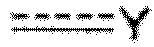
-


- each R11 independently represents methyl or ethyl, or
- two R11s may be bound to each other to form a crosslinked structure by methylene, dimethylene, or trimethylene;
- p is 0, 1, or 2; or
- (R11)p is oxo;
- R21, R22, and R23 independently represent a hydrogen atom, halogen, carbamoyl, or trifluoromethyl; and
- R31, R32, and R33 independently represent a hydrogen atom, halogen, halogen-substituted lower alkyl, methyl, carboxyl, lower alkoxycarbonyl, monomethylaminocarbonyl, or
- dimethylaminocarbonyl).
- In the compound represented by formula (1A), Z is a nitrogen atom or CH. When Y is a nitrogen atom, Z is preferably a nitrogen atom.
- In the compound represented by formula (1A), Y is a nitrogen atom or a carbon atom.
- In the compound represented by formula (1A), each R11 independently represents methyl or ethyl, or two R11s may be bound to each other to form a crosslinked structure by methylene, dimethylene, or trimethylene.
- R11 is preferably methyl or ethyl, or a crosslinked structure formed by dimethylene or trimethylene, and more preferably methyl or a crosslinked structure formed by diethylene.
- The case in which two R11s are bound to each other to form a crosslinked structure by methylene, dimethylene, or trimethylene refers to a case in which one R11 each is bound to two carbon atoms among the carbon atoms that constitute the ring containing Y in formula (1A) and the R11s are bound to each other to form methylene, dimethylene, or trimethylene, thus forming a crosslinked structure on the piperazine ring.
- When the ring containing Y in formula (1A) is substituted with R11, (R11)p is preferably oxo, or the ring is preferably represented by the following structural formula.

- In formula (1A), (R11)p may be oxo.
- In the compound represented by formula (1A), R21, R22, and R23 independently represent a hydrogen atom, halogen, carbamoyl, or trifluoromethyl, and at least one of R21, R22, and R23 is preferably halogen, carbamoyl, or trifluoromethyl. R21 is preferably a chlorine atom, a fluorine atom, carbamoyl, or trifluoromethyl, and more preferably a chlorine atom or trifluoromethyl. R22 is preferably a hydrogen atom, a chlorine atom, or trifluoromethyl, and more preferably a hydrogen atom. R23 is preferably a hydrogen atom, a chlorine atom, or trifluoromethyl, and more preferably a hydrogen atom. It is particularly preferable that R21 is halogen (preferably a chlorine atom or a fluorine atom) or trifluoromethyl, and that R22 and R23 are both a hydrogen atom.
- In the compound represented by formula (1A), R31, R32, and R33 independently represent a hydrogen atom, halogen, halogen-substituted lower alkyl, methyl, carboxyl, lower alkoxycarbonyl, monomethylaminocarbonyl, or dimethylaminocarbonyl. R31 is preferably a hydrogen atom, halogen, trichloromethyl, trifluoromethyl, or methyl, and more preferably halogen, trichloromethyl, trifluoromethyl, or methyl, and particularly preferably a chlorine atom. R32 is preferably a hydrogen atom, halogen, or methyl, and more preferably a hydrogen atom. R33 is preferably a hydrogen atom, halogen, carboxyl, methoxycarbonyl, ethoxycarbonyl, monomethylaminocarbonyl, or dimethylaminocarbonyl, more preferably a hydrogen atom, carboxyl, methoxycarbonyl, or ethoxycarbonyl, and particularly preferably a hydrogen atom or carboxyl.
- For R31, R32, and R33, it is preferable that R31 is halogen (preferably a chlorine atom or a fluorine atom), R32 is a hydrogen atom, and R33 is a hydrogen atom or carboxyl. When R21 is halogen (preferably a chlorine atom), it is preferable that R31 is halogen (preferably a chlorine atom or a fluorine atom), R32 is a hydrogen atom, and R33 is a hydrogen atom. When R21 is trihalomethyl (preferably trifluoromethyl), it is preferable that R31 is halogen (preferably a chlorine atom or a fluorine atom), R32 is a hydrogen atom, and R33 is a hydrogen atom, carboxyl, methoxycarbonyl, or ethoxycarbonyl. When R21 is carbamoyl, it is preferable that R31 is halogen (preferably a chlorine atom or a fluorine atom, more preferably a chlorine atom), R32 is a hydrogen atom, and R33 is a hydrogen atom. It is also preferable that R21 is a chlorine atom or trifluoromethyl, R22 and R23 are both a hydrogen atom, R31 is a chlorine atom, R32 is a hydrogen atom, and R33 is a hydrogen atom or carboxyl.
- Specific examples of the compound represented by formula (1), a salt thereof, or a prodrug thereof include
Compound 011, Compound 021, Compound 031, Compound 041, Compound 051, Compound 061, Compound 071, Compound 081, Compound 091, Compound 101, Compound 111, Compound 121, Compound 131, Compound 141, Compound 151, Compound 161, Compound 171, Compound 181, Compound 191, Compound 201, Compound 211, Compound 221, Compound 231, Compound 241, Compound 251, Compound 261, Compound 271, Compound 281, Compound 291, Compound 301, Compound 311, Compound 321, Compound 331, Compound 341, Compound 351, Compound 361, Compound 371, Compound 381, Compound 391, Compound 401, Compound 411, Compound 421, Compound 431, and Compound 441. Preferable examples include the following compounds, salts thereof, and prodrugs thereof.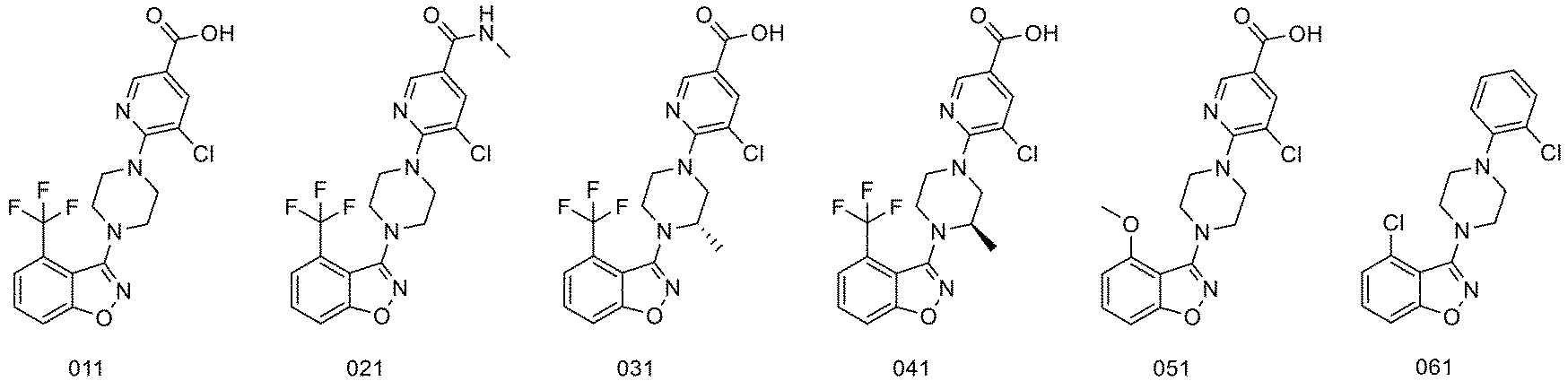
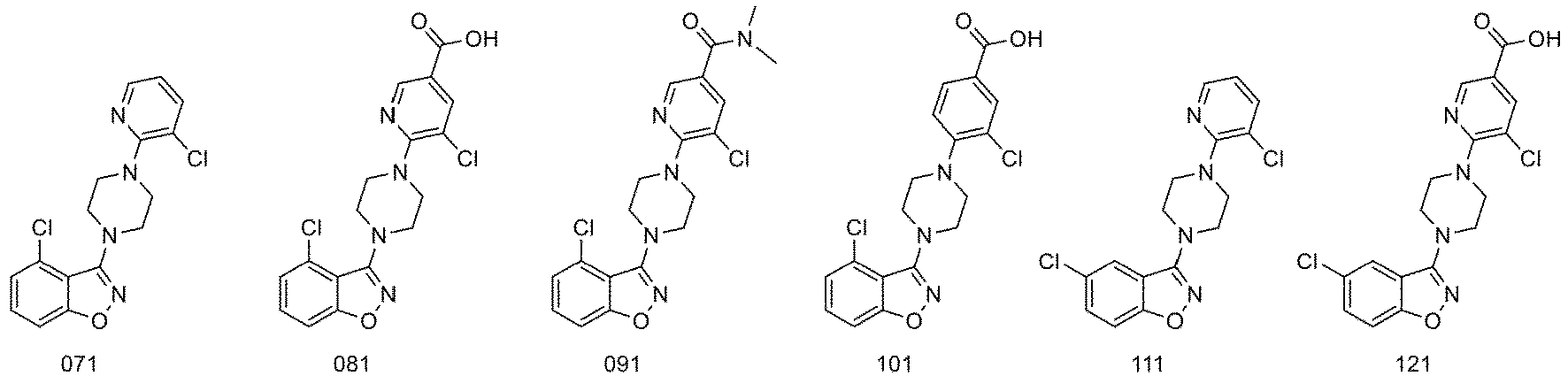


- The compound represented by formula (1), a salt thereof, or a prodrug thereof is more preferably Compound 011, Compound 021, Compound 031, Compound 041, Compound 061, Compound 071, Compound 081, Compound 091, Compound 101, Compound 111, Compound 121, Compound 131, Compound 141, Compound 151, Compound 161, Compound 171, Compound 191, Compound 221, Compound 281, Compound 311, Compound 321, Compound 331, Compound 341, Compound 351, Compound 361, Compound 371, Compound 381, Compound 391, Compound 401, Compound 431, or Compound 441; a salt thereof; or a prodrug thereof, even more preferably Compound 011, Compound 021, Compound 031, Compound 041, Compound 061, Compound 071, Compound 081, Compound 091, Compound 101, Compound 111, Compound 121, Compound 131, Compound 141, Compound 151, Compound 161, Compound 171, Compound 191, Compound 321, Compound 351, Compound 361, Compound 371, Compound 381, Compound 401, Compound 431, or Compound 441; a salt thereof; or a prodrug thereof, still more preferably Compound 011, Compound 031, Compound 041, Compound 061, Compound 071, Compound 191, Compound 361, Compound 371, Compound 381, Compound 401, Compound 431, or Compound 441; a salt thereof; or a prodrug thereof; and particularly preferably Compound 011, Compound 031, Compound 041, Compound 061, Compound 071, Compound 191, Compound 361, Compound 371, Compound 381, Compound 401, or Compound 441; a salt thereof; or a prodrug thereof.
- One embodiment of the present invention includes a pharmaceutical composition for preventing and/or treating heart failure, comprising a compound represented by the following formula (2), a salt thereof, or a prodrug thereof. Another embodiment is directed to a composition for attenuating the progression of heart failure, comprising a compound represented by the following formula (2), a salt thereof, or a prodrug thereof. Still another embodiment is directed to a pharmaceutical composition for suppressing deterioration of and/or ameliorating cardiac function, comprising a compound represented by the following formula (2), a salt thereof, or a prodrug thereof.
- Since the compound represented by the following formula (2) is structurally similar to the compound represented by formula (1), the compound represented by the following formula (2), a salt thereof, or a prodrug thereof can have an effect of preventing and/or treating heart failure, can have an action of attenuating the progression of heart failure, and can have an action of suppressing deterioration of and/or ameliorating cardiac function. Further, the compound, a salt thereof, or a prodrug thereof can activate autophagy. Furthermore, the compound or a salt thereof can also be used as an intermediate compound for the compound represented by formula (1).


- In the compound represented by formula (2), A, B, Y, R1, p, and

- In formula (2), it is preferable that one or two of the carbon atoms in the ortho-positions with respect to the A-ring (benzene-ring) carbon atom that is bound to the carbon atom constituting the oxime structure are substituted. The substituents here may be the same as those for the A ring (benzene ring) in formula (1), unless otherwise stated. Thus, the substituents may be, for example, at least one substituent selected from the group consisting of A-1 to A-16 above.
- Further, in formula (2), the bond between the nitrogen atom and the hydroxyl group is represented by a wavy line, which is a line indicated below. This line indicates that the compound represented by formula (2) may be an E-isomer, Z-isomer, or a blend thereof, wherein the E-isomer and Z-isomer are geometric isomers that are present due to the partial structure >C=N-OH of the compound. The same applies to compounds other than the compound of formula (2) that include the wavy line.

- Among the compounds represented by formula (2), salts thereof, or prodrugs thereof, the compound represented by the following formula (2A), a salt thereof, or a prodrug thereof is preferable.


- In the compound represented by formula (2A), Z, Y, R11, p, R21, R22, R23, R31, R32, R33, and

- Among the compounds represented by formula (2), salts thereof, or prodrugs thereof, the compound represented by the following formula (2B), a salt thereof, or a prodrug thereof is preferable. The compound represented by formula (2B) or a salt thereof is also preferable as an intermediate compound for producing the compound represented by formula (1):


- In the compound represented by formula (2B), A, B, Y, R1, p, and

- Examples of the halogen represented by G1 include a chlorine atom, a fluorine atom, a bromine atom, and an iodine atom.
- The lower alkylsulfonyl in the optionally halogen-substituted lower alkylsulfonyl represented by G1 is as defined above. The lower alkylsulfonyl is a group in which lower alkyl is bound to sulfonyl. The lower alkyl may be substituted with halogen. Examples of the optionally halogen-substituted lower alkylsulfonyl include linear or branched C1-C6 alkyl (preferably C1-C4 alkyl, and more preferably C1-C3 alkyl) sulfonyl that may be substituted with one to three halogens. Specific examples include methanesulfonyl, ethanesulfonyl, trifluoromethanesulfonyl, and the like.
- Examples of the benzenesulfonyl optionally substituted with lower alkyl represented by G1 include benzenesulfonyl that may be substituted with one to three (preferably one or two, and more preferably one) linear or branched C1-C6 alkyl groups (preferably C1-C4 alkyl, and more preferably C1-C3 alkyl groups). Specific examples include p-toluenesulfonyl and the like.
- Examples of the benzenesulfonyl optionally substituted with nitro represented by G1 include benzenesulfonyl that may be substituted with one to three (preferably one) nitro groups. Specific examples include o-nitrobenzenesulfonyl, p-nitrobenzenesulfonyl, and the like.
- G1 is preferably a chlorine atom, a fluorine atom, a bromine atom, methanesulfonyl, ethanesulfonyl, trifluoromethanesulfonyl, p-toluenesulfonyl, or p-nitrobenzenesulfonyl. G1 is more preferably a chlorine atom or a bromine atom.
- The compound represented by formula (2), a salt thereof, or a prodrug thereof includes, for example, the following compounds, salts thereof, or prodrugs thereof.


- The compound represented by formula (2), a salt thereof, or a prodrug thereof is preferably Compound 062, Compound 202, Compound 362, or Compound 372; a salt thereof; or a prodrug thereof; and is more preferably (E)-isomer of Compound 202, (E)-isomer of Compound 362, (Z)-isomer of Compound 362, or (Z)-isomer of Compound 372; a salt thereof; or a prodrug thereof.
- The compound described above can be produced, for example, by appropriate modification or a combination of any of the following: Production Methods 1 to 3 described below in detail, similar methods, known methods, and the like. The compounds to be used as starting material compounds may be used in the form of salts. The methods shown below are merely illustrative, and other methods can also be used as appropriate based on the knowledge of people skilled in organic synthesis. When 1,2-benzisothiazole or a derivative thereof or 1,2-benzisoxazole or a derivative thereof that is not a commercial product is used as a starting material compound, the compound can be produced and prepared with reference to the method disclosed in the following publication:
Advances in Heterocyclic Chemistry, Heterocyclic Chemistry in the 21st Century: A Tribute to Alan Katritzky, Elsevier, Cambridge (2017). R. A. Shastri, Review on Synthesis of 3-Substituted 1,2-Benzisoxazole Derivatives, Chem. Sci. Trans., 2016: 5; 8-20. - In each reaction for the production, functional groups can be protected as desired. With respect to the protecting groups and the technique of protection with protecting groups and deprotection, known methods, such as the method described in the following can be appropriately used: T. W. Greene and P. G. M. Wuts, Protective Groups in Organic Synthesis, 3rd Ed., John Wiley and Sons, Inc., New York (1999).
- In an embodiment, the compound represented by formula (1) can be produced by the synthesis scheme illustrated in the following Reaction Formula-1. Specifically, the compound represented by formula (1) can be produced from the compound represented by formula (3) and the compound represented by formula (4).


- In Reaction Formula-1, A, B, Y, R1, p, and

- Examples of halogen represented by G2 include a chlorine atom, a fluorine atom, a bromine atom, and an iodine atom.
- The "lower alkyl" in the optionally halogen-substituted lower alkylsulfonyl represented by G2 is as defined above. The lower alkylsulfonyl is a group in which lower alkyl is bound to sulfonyl, and the lower alkyl may optionally be substituted with one or more halogens. Examples of the optionally halogen-substituted lower alkylsulfonyl include linear or branched C1-C6 alkyl (preferably C1-C4 alkyl, more preferably C1-C3 alkyl) sulfonyl that may be substituted with 1 to 3 halogens, and specifically, methanesulfonyl, ethanesulfonyl, trifluoromethanesulfonyl, and the like.
- Examples of the benzenesulfonyl optionally substituted with lower alkyl represented by G2 include benzenesulfonyl that may be substituted with 1 to 3 linear or branched C1-C6 alkyl groups (preferably C1-C4 alkyl, more preferably C1-C3 alkyl), and specifically, p-toluenesulfonyl and the like.
- Examples of the benzenesulfonyl optionally substituted with nitro represented by G2 include benzenesulfonyl that may be substituted with 1 to 3 (preferably 1) nitro groups, specifically, o-nitrobenzenesulfonyl, p-nitrobenzenesulfonyl, and the like.
- G2 is preferably a chlorine atom, a fluorine atom, a bromine atom, methanesulfonyl, ethanesulfonyl, trifluoromethanesulfonyl, p-toluenesulfonyl, or p-nitrobenzenesulfonyl.
- The reaction of the compound represented by formula (3) with the compound represented by formula (4) can be performed, for example, in an inert solvent in the presence or absence of a base. An activating reagent may optionally be further added to the reaction system. The compound represented by formula (3) and the compound represented by formula (4) are known compounds and can be produced by a known method.
- Examples of inert solvents include ether solvents, such as diethyl ether, tetrahydrofuran (THF), dioxane, and dimethoxymethane; aromatic hydrocarbon solvents, such as toluene, benzene, and xylene; halogenated hydrocarbon solvents, such as dichloromethane, chloroform, dichloroethane, and carbon tetrachloride; ketone solvents, such as acetone; aprotic solvents, such as dimethylsulfoxide, N,N-dimethylformamide (DMF), and acetonitrile; and pyridine. These solvents may also be used in a combination of two or more in appropriate proportions.
- Examples of bases include metal hydrides, such as sodium hydride and potassium hydride; metal hydroxides, such as potassium hydroxide and sodium hydroxide; metal carbonates, such as potassium carbonate, potassium hydrogen carbonate, sodium carbonate, sodium hydrogen carbonate, and cesium carbonate; alkyl amines, such as triethylamine and ethyldiisopropylamine; and metal alkoxides, such as sodium methoxide and potassium t-butoxide.
- The amount of the base for use is typically 1 mol or more, preferably 1 to 5 mol, and more preferably 1 to 2 mol, per mol of the compound represented by formula (4).
- The amount of the compound represented by formula (3) for use is typically 0.2 mol or more, preferably 0.2 to 2 mol, and more preferably 0.2 to 1.5 mol, per mol of the compound represented by formula (4).
- The reaction temperature is typically -50°C to 180°C, preferably -30°C to 180°C, and more preferably -10°C to 180°C. Microwaves may be used for facilitating the reaction, and the reaction temperature in this case is, for example, 80°C to 180°C, and preferably 100°C to 180°C. The reaction time is typically 10 minutes to 48 hours, and preferably 10 minutes to 24 hours.
- In an embodiment, the compound represented by formula (1B) can be produced by the synthesis scheme illustrated in the following Reaction Formula-2. Specifically, the compound represented by formula (1B) can be produced from the compound represented by formula (5) and the compound represented by formula (6).


- In Reaction Formula-2, A, B, X, R1, and p are as defined above.
- Examples of halogens represented by G3 include a chlorine atom, a fluorine atom, a bromine atom, and an iodine atom.
- The "lower alkyl" in the optionally halogen-substituted lower alkylsulfonyl represented by G3 is as defined above. The lower alkylsulfonyl is a group in which lower alkyl is bound to sulfonyl, and the lower alkyl may optionally be substituted with one or more halogens. Examples of the optionally halogen-substituted lower alkylsulfonyl include linear or branched C1-C6 alkyl (preferably C1-C4 alkyl, more preferably C1-C3 alkyl) sulfonyl that may be substituted with 1 to 3 halogens, specifically, methanesulfonyl, ethanesulfonyl, trifluoromethanesulfonyl, and the like.
- Examples of the benzenesulfonyl optionally substituted with lower alkyl represented by G3 include benzenesulfonyl that may be substituted with 1 to 3 linear or branched C1-C6 alkyl groups (preferably C1-C4 alkyl, more preferably C1-C3 alkyl), and specifically, p-toluenesulfonyl, and the like.
- Examples of the benzenesulfonyl optionally substituted with nitro represented by G3 include benzenesulfonyl that may be substituted with 1 to 3 (preferably 1) nitro groups, specifically, o-nitrobenzenesulfonyl, p-nitrobenzenesulfonyl, and the like.
- G3 is preferably a chlorine atom, a fluorine atom, a bromine atom, methanesulfonyl, ethanesulfonyl, trifluoromethanesulfonyl, p-toluenesulfonyl, or p-nitrobenzenesulfonyl.
- The compound represented by formula (1B) can be obtained by coupling the compound represented by formula (5) with the compound represented by formula (6). The compound represented by formula (5) and the compound represented by formula (6) are known compounds and can be produced by a known method.
- This reaction can be performed, for example, in an inert solvent in the presence of a base.
- Examples of inert solvents include ether solvents, such as diethyl ether, tetrahydrofuran (THF), dioxane, and dimethoxymethane; aromatic hydrocarbon solvents, such as toluene, benzene, and xylene; halogenated hydrocarbon solvents, such as dichloromethane, chloroform, dichloroethane, and carbon tetrachloride; ketone solvents, such as acetone; aprotic solvents, such as dimethylsulfoxide, N,N-dimethylformamide (DMF), and acetonitrile; and pyridine. These solvents may also be used in a combination of two or more in appropriate proportions.
- Examples of bases include metal hydrides, such as sodium hydride and potassium hydride; metal hydroxides, such as potassium hydroxide and sodium hydroxide; metal carbonates, such as potassium carbonate, potassium hydrogen carbonate, sodium carbonate, sodium hydrogen carbonate, and cesium carbonate; alkyl amines, such as triethylamine and ethyldiisopropylamine; and metal alkoxides, such as sodium methoxide and potassium t-butoxide.
- The amount of the compound represented by formula (6) for use is typically 0.5 mol or more, further 1 mol or more, preferably 0.9 to 2 mol, and more preferably 0.9 to 1.5 mol, per mol of the compound represented by formula (5).
- The amount of the base for use is typically 1 mol or more, preferably 1 to 5 mol, and more preferably 1 to 2 mol, per mol of the compound represented by formula (5).
- The reaction temperature is typically 30°C to a temperature higher than the boiling point of the solvent by 10°C, and preferably 80°C to a temperature higher than the boiling point of the solvent by 10°C. To facilitate the reaction, microwaves may be used. The reaction temperature in this case is, for example, 80°C to 180°C, and preferably 100°C to 180°C. The reaction time is typically 10 minutes to 48 hours, and preferably 10 minutes to 24 hours.
- Additionally, the reaction of the compound represented by formula (5) with the compound represented by formula (6) can be performed by using the Buchwald reaction. For example, in the presence of a palladium catalyst, a phosphine ligand, and a base, the compound represented by formula (5) is reacted with the compound represented by formula (6) in a solvent.
- Examples of palladium catalysts include divalent palladium catalysts, such as Pd(OAc)2, PdCl2, allyl palladium(II) chloride (dimer), bis(acetonitrile)palladium(II) dichloride, and bis(benzonitrile)palladium(II) dichloride; and zerovalent palladium catalysts, such as Pd2(dba)3(tris(dibenzylideneacetone) dipalladium(0)), bis(dibenzylideneacetone) palladium(0), and palladium carbon (Pd/C).
- Examples of phosphine ligands include bidentate phosphine ligands, such as BINAP((2,2'-bis(diphenylphosphanyl)-1,1'-bisnaphthalene) and Xphos(2-dicyclohexylphosphino-2',4',6'-triisopropylbiphenyl).
- Examples of bases include strong bases, such as t-BuONa (tert-butoxysodium).
- The amount of the compound represented by formula (6) for use in this reaction is typically 0.5 mol or more, further 1 mol or more, preferably 0.9 to 2 mol, and more preferably 1 to 1.5 mol, per mol of the compound represented by formula (5).
- The amount of the palladium catalyst for use is typically 0.005 to 1 mol, and preferably 0.01 to 0.2 mol, per mol of the compound represented by formula (5).
- The amount of the phosphine ligand for use is typically 0.5 to 5 mol, and preferably 1 to 2 mol, per mol of the palladium catalyst.
- The amount of the base for use is typically 0.5 mol or more, further 1 mol or more, and preferably 1 to 2 mol, per mol of the compound represented by formula (5).
- The reaction temperature is typically 40°C to 150°C, and preferably 80°C to 110°C. The reaction time is typically 1 to 24 hours, and preferably 3 to 12 hours.
- In an embodiment, the compound represented by formula (1) or (2) can be produced by the synthesis scheme illustrated in the following Reaction Formula-3. Specifically, the compound represented by formula (1C) can be produced by converting the compound represented by formula (7) into the compound represented by formula (8), reacting the compound represented by formula (8) with the compound represented by formula (4) to produce the oxime compound represented by formula (2B), and ring-closing the oxime compound represented by formula (2B). A person skilled in the art would be able to understand that the compound represented by formula (2) can be produced by using an appropriate, corresponding compound that has an optionally substituted benzene ring A, instead of the compound represented by formula (7) or (8), in the reaction illustrated in Reaction Formula-3. The compound represented by formula (7) is a known compound and can be produced by a known method.


- In Reaction Formula-3, A, B, Y, R1, p, G1, and

- Examples of halogens represented by G4 include a chlorine atom, a fluorine atom, a bromine atom, and an iodine atom.
- Step 1 (i.e., the step of converting the compound represented by formula (7) into the compound represented by formula (8)) can be performed, for example, by reacting the compound represented by formula (7) with a halogenating agent in an inert solvent.
- Examples of inert solvents for use in this reaction include ether solvents, such as diethyl ether, tetrahydrofuran (THF), dioxane, and dimethoxymethane; aromatic hydrocarbon solvents, such as toluene, benzene, and xylene; halogenated hydrocarbon solvents, such as dichloromethane, chloroform, dichloroethane, and carbon tetrachloride; ketone solvents, such as acetone; aprotic solvents, such as dimethylsulfoxide, N,N-dimethylformamide (DMF), and acetonitrile; and pyridine. These solvents may also be used in a combination of two or more in appropriate proportions.
- Examples of halogenating agents include typical halogenating agents, such as N-bromosuccinimide and N-chlorosuccinimide.
- The amount of the halogenating agent for use is typically an equimolar amount to an excess molar amount, preferably 1- to 5-fold mol, and more preferably 1- to 2-fold mol, based on the compound represented by formula (7).
- The reaction temperature is typically -30 to 150°C, preferably -10 to 100°C, and more preferably -10 to 40°C. The reaction time is typically 10 minutes to 48 hours, preferably 10 minutes to 24 hours, and more preferably 30 minutes to 18 hours.
- Step 2 (i.e., the step of reacting the compound represented by formula (8) with the compound represented by formula (4) to synthesize the compound represented by formula (2B)) can be performed, for example, in an inert solvent in the presence of a base.
- Examples of inert solvents for use in this reaction include ether solvents, such as diethyl ether, tetrahydrofuran (THF), dioxane, and dimethoxymethane; aromatic hydrocarbon solvents, such as toluene, benzene, and xylene; halogenated hydrocarbon solvents, such as dichloromethane, chloroform, dichloroethane, and carbon tetrachloride; ketone solvents, such as acetone; aprotic solvents, such as dimethylsulfoxide, N,N-dimethylformamide (DMF), and acetonitrile; and pyridine. These solvents may also be used in a combination of two or more in appropriate proportions.
- Examples of bases include metal hydrides, such as sodium hydride and potassium hydride; metal hydroxides, such as potassium hydroxide and sodium hydroxide; metal carbonates, such as potassium carbonate, potassium hydrogen carbonate, sodium carbonate, sodium hydrogen carbonate, and cesium carbonate; alkyl amines, such as triethylamine and ethyldiisopropylamine; and metal alkoxides, such as sodium methoxide and potassium t-butoxide.
- The amount of the compound represented by formula (8) for use is typically 0.5 mol or more, 0.8 mol or more, preferably 0.9 to 2 mol, and more preferably 0.9 to 1.5 mol, per mol of the compound represented by formula (4).
- The amount of the base for use is typically 1 mol or more, preferably 1- to 5-fold mol, and more preferably 1- to 2-fold mol, per mol of the compound represented by formula (4).
- The reaction temperature is typically -20°C to a temperature higher than the boiling point of the solvent by 10°C, and preferably 0°C to 40°C. The reaction time is typically 10 minutes to 48 hours, preferably 10 minutes to 24 hours, and more preferably 30 minutes to 18 hours.
- Step 3 (i.e., the step of ring-closing the compound represented by formula (2B) to convert the compound represented by formula (2B) into the compound represented by formula (1)) can be performed, for example, in an inert solvent in the presence of a base.
- The compound represented by formula (2B) exists in both forms of (E)-isomer and (Z)-isomer, which are geometric isomers. From the standpoint of less heating required in the ring-closing reaction, (E)-isomer is preferable.
- In the reaction of
step 2, typically, the (Z)-isomer is obtained as the main product. By subjecting the (Z)-isomer to acidic conditions, a preferable (E)-isomer can be obtained by isomerization. For example, an (E)-isomer can be obtained almost quantitatively by treating a mixture of an (E)-isomer and (Z)-isomer with a catalytic amount of an acid in an inert solvent. Therefore, an isomerization reaction may be performed afterstep 2 and before step 3. - Examples of inert solvents for the isomerization reaction include ether solvents, such as diethyl ether, tetrahydrofuran (THF), dioxane, and dimethoxymethane; aromatic hydrocarbon solvents, such as toluene, benzene, and xylene; halogenated hydrocarbon solvents, such as dichloromethane, chloroform, dichloroethane, and carbon tetrachloride; ketone solvents, such as acetone; aprotic solvents, such as dimethylsulfoxide, N,N-dimethylformamide (DMF), and acetonitrile; and pyridine. These solvents may also be used in a combination of two or more in appropriate proportions.
- Examples of acids for the isomerization reaction include inorganic acids, such as sulfuric acid, hydrochloric acid, bromic acid, and perchloric acid; carboxylic acids, such as acetic acid, lactic acid, oxalic acid, and trifluoroacetic acid; sulfonic acids, such as methanesulfonic acid, benzenesulfonic acid, p-toluenesulfonic acid, camphorsulfonic acid, and trifluoromethanesulfonic acid; and Lewis acids, such as aluminum chloride, boron trifluoride, titanium tetrachloride, copper acetate, copper chloride, iron chloride, zinc chloride, and tin chloride.
- The amount of the acid for use may be a catalytic amount and is for example, 0.001- to 0.3-fold mol, and preferably 0.01- to 0.2-fold mol, per mol of the compound represented by formula (2B).
- The reaction temperature in the isomerization reaction is typically room temperature to the boiling point of the solvent, and preferably 40°C to the boiling point of the solvent. The reaction time is typically 10 minutes to 24 hours, and preferably 1 to 6 hours.
- Examples of inert solvents for step 3 include ether solvents, such as diethyl ether, tetrahydrofuran (THF), dioxane, and dimethoxymethane; aromatic hydrocarbon solvents, such as toluene, benzene, and xylene; halogenated hydrocarbon solvents, such as dichloromethane, chloroform, dichloroethane, and carbon tetrachloride; ketone solvents, such as acetone; aprotic solvents, such as dimethylsulfoxide, N,N-dimethylformamide (DMF), and acetonitrile; and pyridine. These solvents may also be used in a combination of two or more in appropriate proportions.
- Examples of bases include metal hydrides, such as sodium hydride and potassium hydride; metal hydroxides, such as potassium hydroxide and sodium hydroxide; metal carbonates, such as potassium carbonate, potassium hydrogen carbonate, sodium carbonate, sodium hydrogen carbonate, and cesium carbonate; alkyl amines, such as triethylamine and ethyldiisopropylamine; and metal alkoxides, such as sodium methoxide and potassium t-butoxide.
- The amount of the base for use is typically 1 mol or more, preferably 1- to 5-fold mol, and more preferably 1- to 2-fold mol, per mol of the compound represented by formula (2B).
- The reaction temperature is typically 50°C to a temperature higher than the boiling point of the solvent by 10°C, and preferably 80°C to a temperature higher than the boiling point of the solvent by 10°C. To facilitate the reaction, microwaves may be used. In this case, the reaction temperature is, for example 80°C to 180°C, and preferably 100°C to 180°C. The reaction time is typically 10 minutes to 8 hours, and preferably 10 minutes to 2 hours.
- The compound represented by formula (1) or (2) according to the present invention, intermediate compounds thereof, and starting material compounds thereof can be produced by the production methods described above, and can also be produced with reference to an already-known or publicly known technique at the time the present application was filed (e.g., B.R. Kiran et al., SYNTHESIS, EVALUATION OF ANALGESIC AND ANTIINFLAMMATORY ACTIVITIES OF SUBSTITUTED 1,2-BENZOXAZOLONE AND 3-CHLORO-1,2-BENZOXAZOLE DERIVATIVES, International Journal of Pharmaceutical Sciences and Research, 2015; 6: 2918-2925) in accordance with the synthesis methods disclosed in the Examples of the present specification.
- The functional groups of the starting material compounds and intermediate compounds illustrated in the reaction schemes above may optionally be protected by an appropriate protective group, using a known method, before the compounds are subjected to a reaction, and be deprotected using a known method after completion of the reaction.
- The target compounds obtained in accordance with the reaction schemes above can be isolated and purified. For example, after the reaction mixture is cooled, the crude reaction product is subjected to isolation procedures, such as filtration, concentration, and extraction, in order to separate the crude reaction product; the crude reaction product is then subjected to typical purification procedures, such as column chromatography and recrystallization, thereby isolating and purifying a target compound from the reaction mixture.
- The starting material compounds and the compound represented by formula (1) or (2) illustrated in the reaction schemes above include compounds in the form of solvate in which a solvent is added (e.g., a hydrate and solvate of ethanol).
- When the compound represented by formula (1) or (2), the intermediate compounds obtained in the reaction schemes, or the starting material compounds have isomers, the compound represented by formula (1) or (2), the intermediate compounds obtained in the reaction schemes, or the starting material compounds include all of these isomers. The isomers include an isomer due to a double bond, a ring, or a fused ring (an E-, Z-, sis-, or trans-form); an isomer, for example, due to the presence of an asymmetric carbon (an R or S-form, α or β-form, enantiomer, or diastereomer); an optically active form that exhibits optical rotations (a D-, L-, d-, or l-form); a polar form due to chromatographic separation (a high polar form and low polar form); an equilibrium compound; a rotamer; a mixture thereof of any proportions; and a racemic mixture (isomers such as a geometric isomer, a stereoisomer, and an optical isomer). For example, optical isomers can be separated by using various known resolution methods (e.g., optical resolution by crystallization and direct optical resolution by chromatography).
- The salt of the compound represented by formula (1) or (2) includes all pharmaceutically acceptable salts. The pharmaceutically acceptable salt can be any pharmaceutically acceptable salt. Examples include alkali metal salts, such as sodium salts and potassium salts; alkaline-earth metal salts, such as calcium salts and magnesium salts; inorganic metal salts, such as zinc salts; organic base salts, such as triethylamine, triethanolamine, trihydroxymethyl amino methane, and amino acid; inorganic acid salts, such as hydrochloride, hydrobromate, sulfate, phosphate, and nitrate; and organic acid salts, such as acetate, carbonate, propionate, succinate, lactate, malate, tartrate, citrate, maleate, fumarate, methanesulfonate, p-toluenesulfonate, benzenesulfonate, and ascorbate. These salts can be produced in accordance with an ordinary method.
- The variety of isomers can be isolated by a known separation method. For example, racemates can be led to sterically pure isomers by a typical optical resolution method (e.g., optical resolution by crystallization and direct optical resolution by chromatography). An optically active compound can be produced by using a suitable, optically active starting material.
- The starting material compounds, intermediate compounds, and target compounds described in the reaction schemes above can be used in their suitable salt form.
- In the present invention, in the compound represented by formula (1) or (2), a salt thereof, or a prodrug thereof, one or multiple atoms may be replaced by one or multiple isotopes. Examples of isotopes include deuterium (2H), tritium (3H), 13C, 14N, 180, and the like.
- The pharmaceutical composition according to the present invention may be a preparation of the compound represented by formula (1) or (2), a salt thereof, or a prodrug thereof in a typical pharmaceutical composition form, and may be prepared by using the compound, a salt thereof, or a prodrug thereof and a pharmaceutically acceptable carrier. Examples of carriers include diluents and excipients, such as typically used fillers, extenders, binders, moisturizing agents, disintegrators, surfactants, and lubricants.
- In the present invention, the prodrug refers to a compound that is converted into the compound represented by formula (1) or (2) through a reaction in vivo (e.g., an enzyme reaction and a reaction caused by stomach acid). For example, when the compound represented by formula (1) or (2) has carboxyl, the prodrug is a compound in which the carboxyl is converted into an ester. Examples of the esters include methyl ester, ethyl ester, 1-propyl ester, 2-propyl ester, pivaloyloxy methyl ester, acetyloxymethyl ester, cyclohexyl acetyloxymethyl ester, 1-methyl cyclohexyl carbonyloxy methyl ester, ethyloxy carbonyloxy-1-ethyl ester, cyclohexyloxy carbonyloxy-1-ethyl ester, and the like.
- The pharmaceutical composition according to the present invention can be selected from various dosage forms according to the purpose of treatment. Typical examples include tablets, pills, powders, liquids, suspensions, emulsions, granules, capsules, suppositories, injectable drugs (e.g., liquids and suspensions), ointments, inhalants, ear drops, and the like. Among these, the pharmaceutical composition according to the present invention is preferably a preparation for oral administration, a preparation for transdermal administration, a preparation for subcutaneous administration, a preparation for topical administration, or an injectable drug, and more preferably a preparation for oral administration.
- The carrier for use in forming tablets can be selected from a wide range of known carriers. Examples include excipients, such as lactose, sucrose, sodium chloride, glucose, urea, starch, calcium carbonate, kaolin, and crystalline cellulose; binders, such as water, ethanol, propanol, simple syrup, a dextrose solution, a starch solution, a gelatin solution, methylcellulose, potassium phosphate, polyvinyl pyrrolidone, carboxy methylcellulose, and shellac; disintegrators, such as sodium alginate, dry starch, agar powder, laminaran powder, calcium carbonate, sodium hydrogen carbonate, polyoxyethylene sorbitan fatty acid esters, sodium lauryl sulfate, stearic acid monoglyceride, starch, and lactose; sorbefacients, such as a quaternary ammonium base and sodium lauryl sulfate; disintegration inhibitors, such as stearin, cocoa butter, and hydrogenated oil; moisturizers, such as glycerol and starch; adsorbents, such as starch, lactose, kaolin, bentonite, and colloidal silica; lubricants, such as purified talc, stearate, boric acid powder, and polyethylene glycol; and the like.
- Tablets may further optionally be formed into tablets with typical coating, such as sugarcoated tablets, gelatin-coated tablets, enteric coating tablets, film coating tablets, double-layered tablets, or multi-layered tablets.
- Carriers for use in preparing pills can be selected from a wide range of known carriers. Examples include excipients, such as glucose, lactose, starch, cacao oil, hydrogenated vegetable oil, kaolin, and talc; binders, such as powdered gum arabic, powdered tragacanth, gelatin, and ethanol; and disintegrators, such as laminaran and agar.
- Carriers for use in preparing suppositories can be selected from a wide range of known carriers. Examples include polyethylene glycol, cacao oil, higher alcohols, esters of higher alcohols, gelatin, and semisynthetic glycerides.
- When the pharmaceutical composition according to the present invention is prepared into an injectable drug, it is preferred that the liquid agent, emulsion, or suspension be sterilized and be isotonic with blood. Diluents for use in preparing the liquid agent, emulsion, and suspension can be selected from a wide range of known diluents. Examples include water, ethanol, propylene glycol, polyoxylated isostearyl alcohols, ethoxylated isostearyl alcohols, polyoxyethylene sorbitan fatty acid esters, and the like. In the case of an injectable drug, the medical drug preparation can contain sodium chloride, glycerol, glucose, etc. in an amount sufficient to form an isotonic solution; and further can contain a typical solubilizing agent, a buffer, a soothing agent, etc., with further optionally a colorant, a preservative, an aroma component, a flavoring, a sweetener, and other medical drugs.
- Ointments have forms such as a paste, cream, and gel. Examples of diluents for use in preparing an ointment of any of these forms include white petrolatum, paraffin, glycerol, cellulose derivatives, polyethylene glycol, silicone, and bentonite.
- Inhalants are preparations intended to be applied to the bronchus or lungs by making a subject inhale an active ingredient in the form of aerosol. Inhalants include powdered inhalants, inhalant liquid agents, inhalant aerosol agents, and the like. Powdered inhalants refer to the preparations by which powdered solid particles in the form of aerosol are inhaled. Powdered inhalants can be typically produced by mixing an active ingredient in the form of fine particles with optional additives, such as lactose, to form a homogeneous mixture. Inhalant liquid agents refer to liquid inhalants that are applied with a device, such as a nebulizer. Inhalant liquid agents are typically produced by adding a solvent, a suitable isotonic agent, a pH adjuster, etc. to an active ingredient, and mixing them. Inhalant aerosol agents refer to metered-dose spray inhalants that spray a specific amount of an active ingredient together with a propellant that fills a container. Inhalant aerosol agents can be typically produced by adding a solvent, a suitable dispersant, stabilizer, etc. to an active ingredient to form a solution or suspension, filling a pressure-resistant container with the solution or suspension together with a liquid propellant, and attaching a metering valve to the container.
- The pharmaceutical composition according to the present invention may optionally contain a colorant, a preservative, an aroma component, a flavoring, a sweetener, and other medical drugs.
- The amount of the compound represented by formula (1) or (2), a salt thereof, or a prodrug thereof contained in the pharmaceutical composition according to the present invention can be any amount and can be suitably selected from a wide range of amounts. The compound according to the present invention, a salt thereof, or a prodrug thereof is present in an amount of typically 0.5 to 90 wt%, 1 to 85 wt%, and preferably 1 to 80 wt% in the pharmaceutical composition.
- The method for administering the pharmaceutical composition according to the present invention is not particularly limited, and can be administered by a method according to the dosage form, patient's age, gender, disease condition, and other conditions. For example, the pharmaceutical composition according to the present invention in the form of a tablet, pill, liquid agent, suspension, emulsion, granule, or capsule can be orally administered. The pharmaceutical composition according to the present invention in the form of an injectable drug alone or in the form of an injectable drug mixed with a typical replacement fluid, such as glucose and amino acids, can be intravenously administered; or the pharmaceutical composition in the form of an injectable drug alone can be optionally administered, for example, intramuscularly, intradermally, subcutaneously, or intraperitoneally. The pharmaceutical composition according to the present invention in the form of a suppository is intrarectally administered. The pharmaceutical composition according to the present invention in the form of an inhalant is administered nasally. The pharmaceutical composition according to the present invention in the form of an ear drop is administered intra-aurally. The administration method is preferably oral administration or injection administration (including subcutaneous administration, intramuscular administration, intravenous administration, and intrathecal administration), more preferably oral administration or subcutaneous administration, and even more preferably oral administration.
- The dose of the pharmaceutical composition according to the present invention can be determined taking into consideration the regimen, patient's age, gender, severity of disease, and other conditions. The pharmaceutical composition is administered such that the amount of the compound represented by formula (1) or (2), a salt thereof, or a prodrug thereof as an active ingredient is, for example, 0.01 to 100 mg, 0.05 to 100 mg, or 0.1 to 100 mg, and preferably 0.1 to 50 mg, per kilogram of body weight daily in one time or in several times per day, or every two days, three days, four days, five days, six days, one week, two weeks, or four weeks. Because the dose varies depending on various conditions, a dose lower than a dose within the ranges above may be sufficient in some cases, and a dose higher than a dose within the ranges above may be necessary in other cases.
- The pharmaceutical composition according to the present invention may be combined with one or more other medicinal agents to form a combination drug. Examples of other medicinal agents include medicinal agents having an action of attenuating heart failure, an action of suppressing deterioration of cardiac function, or an action of ameliorating cardiac function. The medicinal agents having an action of attenuating heart failure, an action of suppressing deterioration of cardiac function, or an action of ameliorating cardiac function for use may be known medicinal agents. Examples of the medicinal agents having an action of attenuating heart failure, an action of suppressing deterioration of cardiac function, or an action of ameliorating cardiac function for use in combination include diuretics, such as loop diuretics, e.g., furosemide, azosemide, and torasemide, and thiazide diuretics, e.g., indapamide and trichlormethiazide; β-blockers, such as bisoprolol and carvedilol; angiotensin II receptor antagonists, such as candesartan and valsartan; angiotensin-converting enzyme inhibitors, such as enalapril, imidapril, and perindopril; mineralocorticoid receptor antagonists, such as spironolactone and eplerenone; ARNI, such as sacubitril valsartan; SGLT2 inhibitors, such as dapagliflozin, empagliflozin, and canagliflozin; HCN channel blockers, such as ivabradine; soluble guanylate cyclase stimulants, such as belisiguat; atrial natriuretic peptides, such as carperitide; cardiotonic agents, such as pimobendan, milrinone, olprinone, dopamine, dobutamine, and noradrenaline; digitalis preparations, such as digoxin and digitoxin; nitrite drugs, such as nitroglycerin and isosorbide nitrite; calcium antagonists, such as amlodipine and nifedipine; and the like.
- The present invention may include a method for preventing and/or treating heart failure, comprising administering an effective amount of the compound represented by formula (1) or (2), a pharmaceutically acceptable salt thereof, or a prodrug thereof to a patient in need of preventing and/or treating heart failure. The present invention may include a method for attenuating the progression of heart failure, comprising administering an effective amount of the compound represented by formula (1) or (2), a pharmaceutically acceptable salt thereof, or a prodrug thereof to a patient in need of attenuating the progression of heart failure. Furthermore, the present invention may include a method for suppressing deterioration of and/or ameliorating cardiac function, comprising administering an effective amount of the compound represented by formula (1) or (2), a pharmaceutically acceptable salt thereof, or a prodrug thereof to a patient in need of suppressing deterioration of and/or ameliorating cardiac function.
- The compound represented by formula (1) or (2), a salt thereof, or a prodrug thereof has an action of preventing and/or treating heart failure (in other words, an action of attenuating the progression of heart failure). The compound represented by formula (1) or (2), a salt thereof, or a prodrug thereof has an action of suppressing deterioration of and/or ameliorating cardiac function. The action of suppressing deterioration of and/or ameliorating cardiac function is, for example, an action of suppressing deterioration of and/or ameliorating cardiac contractile function. More specifically, the action of suppressing deterioration of and/or ameliorating cardiac contractile function is an action of suppressing deterioration of left ventricular ejection fraction, an action of ameliorating left ventricular ejection fraction, an action of suppressing deterioration of left ventricular fractional shortening, an action of ameliorating left ventricular fractional shortening, and the like.
- Although cardiac hypertrophy may cause heart failure, suppressing cardiac hypertrophy does not necessarily mean preventing the progression to heart failure. As a concept, for example, the cardiac hypertrophy that occurs as a result of a compensation mechanism for continuing strong physical training or for mechanical stress on the local heart wall and that does not lead to deterioration of cardiac function is called "adaptive physiological hypertrophy" (physiological cardiac hypertrophy), and can be distinguished from pathological hypertrophy (pathological cardiac hypertrophy), in which fibrosis is observed, leading to deterioration of cardiac function (NPL 1). However, these cardiac hypertrophies cannot be clearly distinguished. For example, it is believed that the occurrence of cardiac hypertrophy in response to a pressure load is partly due to a factor of physiological cardiac hypertrophy to compensate for the pressure load, and that sustained pressure overload will result in pathological cardiac hypertrophy. Accordingly, suppressing cardiac hypertrophy does not necessarily mean suppressing heart failure.
- In order to prevent development of heart failure by suppressing cardiac hypertrophy, prophylactic administration of drugs is necessary before the occurrence of cardiac hypertrophy; however, such administration may possibly suppress physiological cardiac hypertrophy, as described above. For this reason, it is very meaningful that drug administration after the occurrence of cardiac hypertrophy can suppress subsequent deterioration of cardiac function. However, since there are no useful animal models for assessing the action of drugs on deterioration of cardiac function, evaluation of candidate heart failure drugs is typically performed by administering the drug after causing cardiac hypertrophy in a pressure-loaded cardiac hypertrophy model and confirming the action on deterioration of cardiac contractile function.
- In the Test Example of this application, the test compound was administered to TAC model mice after the phase of cardiac hypertrophy, and the impact on cardiac function was evaluated. The results indicate that the test compound is effective against deterioration of cardiac contractile function itself. The data also suggest that the test compound is effective in pathological conditions that cause deterioration of cardiac function without cardiac hypertrophy, as well as in suppressing deterioration of and/or ameliorating cardiac function.
- Accordingly, the pharmaceutical composition according to the present invention may be administered to a subject who has experienced cardiac hypertrophy or a subject who has not experienced cardiac hypertrophy. The pharmaceutical composition according to the present invention is preferably administered to a subject who has experienced cardiac hypertrophy.
- The pharmaceutical composition according to the present invention is the pharmaceutical composition for preventing and/or treating heart failure, as described above, or the pharmaceutical composition for suppressing deterioration of and/or ameliorating cardiac function, as described above, and is useful as a pharmaceutical composition for administering to a subject who has experienced cardiac hypertrophy.
- The pharmaceutical composition according to the present invention is the pharmaceutical composition for preventing and/or treating heart failure, as described above, or the pharmaceutical composition for suppressing deterioration of and/or ameliorating cardiac function, as described above, and is useful as a pharmaceutical composition for administering to a subject who has not experienced cardiac hypertrophy.
- The pharmaceutical composition according to the present invention is the pharmaceutical composition for suppressing deterioration of and/or ameliorating cardiac function, as described above, and is useful as a pharmaceutical composition wherein the suppression of deterioration and/or amelioration of cardiac function is suppression of deterioration and/or amelioration of cardiac function in a subject who has experienced cardiac hypertrophy.
- The pharmaceutical composition according to the present invention is the pharmaceutical composition for suppressing deterioration of and/or ameliorating cardiac function, as described above, and is useful as a pharmaceutical composition wherein the suppression of deterioration and/or amelioration of cardiac function is suppression of deterioration and/or amelioration of cardiac function in a subject who has not experienced cardiac hypertrophy.
- The subject who has experienced cardiac hypertrophy may be a subject who shows symptoms of cardiac hypertrophy or a subject who does not show symptoms of cardiac hypertrophy after experiencing cardiac hypertrophy. The subject who shows symptoms of cardiac hypertrophy is preferred.
- The suppression of deterioration and/or amelioration of cardiac function is, for example, suppression of deterioration and/or amelioration of cardiac contractile function. The suppression of deterioration and/or amelioration of cardiac contractile function refers to, for example, suppression of deterioration of left ventricular ejection fraction, amelioration of left ventricular ejection fraction, suppression of deterioration of left ventricular fractional shortening, amelioration of left ventricular fractional shortening, and the like.
- The compound represented by formula (1) or (2) is not easily metabolized in the liver. Furthermore, the compound is highly soluble in PBS and is thus advantageous in forming it into a preparation; additionally, due to its high membrane permeability, the compound is advantageous in bioavailability. Thus, the compound represented by formula (1) or (2) is excellent in pharmacokinetics.
- The present invention is described below in more detail with reference to Production Examples and Examples. However, the present invention is not limited to these Examples.
- In accordance with the methods described in Examples 1 to 43 of
WO2021/079962 , the following compounds were produced. - Compounds represented by formula (1):
Compound 011, Compound 021, Compound 031, Compound 041, Compound 051, Compound 061, Compound 071, Compound 081, Compound 091, Compound 101, Compound 111, Compound 121, Compound 131, Compound 141, Compound 151, Compound 161, Compound 171, Compound 181, Compound 191, Compound 201, Compound 211, Compound 221, Compound 231, Compound 241, Compound 251, Compound 261, Compound 271, Compound 281, Compound 291, Compound 301, Compound 311, Compound 321, Compound 331, Compound 341, Compound 351, Compound 361, Compound 371, Compound 381, Compound 391, Compound 401, Compound 411, Compound 421, and Compound 431; and - compounds represented by formula (2):
Compound 012, Compound 052, Compound 062, Compound 072, Compound 082, Compound 092, Compound 102, Compound 112, Compound 132, Compound 192, Compound 202, Compound 212, Compound 282, Compound 342, Compound 362, Compound 372, and Compound 412. - 5-Chloro-6-(4-(4-(trifluoromethyl)benzo[d]isoxazol-3-yl)piperazin-1-yl)nicotinic acid (Compound 011) (E)-5-Chloro-6-(4-((2-fluoro-6-(trifluoromethyl)phenyl)(hydroxyimino)methyl)piperazin-1-yl)nicotinic acid (Compound 012(E)) and its Z-isomer (Compound 012 (Z))
- 5-Chloro-N-methyl-6-(4-(4-(trifluoromethyl)benzo[d]isoxazol-3-yl)piperazin-1-yl)nicotinamide (Compound 021)
- (S)-5-Chloro-6-(3-methyl-4-(4-(trifluoromethyl)benzo[d]isoxazol-3-yl)piperazin-1-yl)nicotinic acid (Compound 031)
- (R)-5-Chloro-6-(3-methyl-4-(4-(trifluoromethyl)benzo[d]isoxazol-3-yl)piperazin-1-yl)nicotinic acid (Compound 041)
- 5-Chloro-6-(4-(4-(methoxy)benzo[d]isoxazol-3-yl)piperazin-1-yl)nicotinic acid (Compound 051)
- 5-Chloro-6-(4-((2-fluoro-6-methoxyphenyl(hydroxyimino)methyl)piperazin-1-yl)nicotinic acid (Compound 052)
- 4-Chloro-3-(4-(2-chlorophenyl)piperazin-1-yl)benzo[d]isoxazole (Compound 061)
- (E)-(4-(2-Chlorophenyl)piperazin-1-yl)(2,6-dichlorophenyl)methanone oxime (Compound 062(E)) and its Z-isomer (Compound 062(Z))
- 4-Chloro-3-(4-(3-chloropyridin-2-yl)piperazin-1-yl)benzo[d]isoxazole (Compound 071)
- (E)-(4-(3-Chloropyridin-2-yl)piperazin-1-yl)(2,6-dichlorophenyl)methanone oxime (Compound 072(E)) and its Z-isomer (Compound 072(Z))
- 5-Chloro-6-(4-(4-chlorobenzo[d]isoxazol-3-yl)piperazin-1-yl)nicotinic acid (Compound 081)
- 5-Chloro-6-(4-((2,6-dichlorophenyl)(hydroxyimino)methyl)piperazin-1-yl)nicotinic acid (Compound 082)
- 5-Chloro-6-(4-(4-chlorobenzo[d]isoxazol-3-yl)piperazin-1-yl)N,N-dimethylnicotinamide (Compound 091)
- (E)-5-Chloro-6-(4-((2,6-dichlorophenyl)(hydroxyimino)methyl)piperazin-1-yl)-N,N-dimethylnicotinamide (Compound 092(E)) and its Z-isomer (Compound 092(Z))
- 3-Chloro-4-(4-(4-chlorobenzo[d]isoxazol-3-yl)piperazin-1-yl)benzoic acid (Compound 101)
- 3-Chloro-4-(4-((2,6-dichlorophenyl)(hydroxyimino)methyl)piperazin-1-yl)benzoic acid methyl ester (Compound 102)
- 5-Chloro-3-(4-(3-chloropyridin-2-yl)piperazin-1-yl)benzo[d]isoxazole (Compound 111)
- (E)-(4-(3-Chloropyridin-2-yl)piperazin-1-yl)(2,5-dichlorophenyl)methanone oxime (Compound 112(E)) and its Z-isomer (Compound 112(Z))
- 5-Chloro-6-(4-(5-chlorobenzo[d]isoxazol-3-yl)piperazin-1-yl)nicotinic acid (Compound 121)
- 5-Chloro-6-(4-(5-(trifluoromethyl)benzo[d]isoxazol-3-yl)piperazin-1-yl)nicotinic acid (Compound 131)
- 5-Chloro-6-(4-((2-chloro-5-(trifluoromethyl)phenyl)(hydroxyimino)methyl)piperazin-1-yl)nicotinic acid (Compound 132)
- 3-(4-(Pyridin-2-yl)piperazin-1-yl)benzo[d]isoxazole (Compound 141)
- 3-(4-(2-Chlorophenyl)piperazin-1-yl)benzo[d]isoxazole (Compound 151)
- 3-(4-(2,3-Dimethylphenyl)piperazin-1-yl)benzo[d]isoxazole (Compound 161)
- 3-(4-(2,4-Dichlorophenyl)piperazin-1-yl)benzo[d]isoxazole (Compound 171)
- 3-(4-(3-Chloropyridin-2-yl)piperazin-1-yl)benzo[d]isothiazole (Compound 181)
- 5-Chloro-6-(8-(4-(trifluoromethyl)benzo[d]isoxazol-3-yl)-3,8-diazabicyclo[3,2,1]octan-3-yl)nicotinic acid (Compound 191)
- 5-Chloro-6-(8-((2-fluoro-6-(trifluoromethyl)phenyl(hydroxyimino)methyl)-3,8-diazabicyclo[3,2,1]octan-3-yl)nicotinic acid (Compound 192)
- 7-Chloro-3-(4-(2-chlorophenyl)piperazin-1-yl)benzo[d]isoxazole (Compound 201)
- (E)-(4-(2-Chlorophenyl)piperazin-1-yl)(2,3-dichlorophenyl)methanone oxime (Compound 202(E)) and its Z-isomer (Compound 202(Z))
- 6-Chloro-3-(4-(2-chlorophenyl)piperazin-1-yl)benzo[d]isoxazole (Compound 211)
- (E)-(4-(2-Chlorophenyl)piperazin-1-yl)(2,4-dichlorophenyl)methanone oxime (Compound 212(E)) and its Z-isomer (Compound 212(Z))
- 5-Chloro-6-(4-(4-chlorobenzo[d]isoxazol-3-yl)piperazin-1-yl)pyridin-3-yl)(morpholino)methanone (Compound 221)
- 5-Chloro-6-(4-(4-chlorobenzo[d]isoxazol-3-yl)piperazin-1-yl)-N-(methylsulfonyl)nicotinamide (Compound 231)
- Methyl 5-chloro-6-(4-(4-(trifluoromethyl)benzo[d]isoxazol-3-yl)piperazin-1-yl)nicotinate (Compound 241)
- (5-Chloro-6-(4-(4-(trifluoromethyl)benzo[d]isoxazol-3-yl)piperazin-1-yl)pyridin-3-yl)methanol (Compound 251)
- 3-(4-(3-Methylpyridin-2-yl)piperazin-1-yl)-4-(trifluoromethyl)benzo[d]isoxazole (Compound 261)
- 4-Methoxy-3-(4-(2-chlorophenyl)piperazin-1-yl)benzo[d]isoxazole (Compound 271)
- 1-(1-(4-Trifluoromethyl)benzo[d]isoxazol-3-yl)piperidin-4-yl)-1,3-dihydro-2H-benzo[d]imidazol-2-one (Compound 281)
- 1-(1-((2-Fluoro-6-(trifluoromethyl)phenyl(hydroxyimino)methyl)piperidin-4-yl)-1,3-dihydro-2H-benzo[d]imidazol-2-one (Compound 282
- 2-(2-Oxo-3-(1-(4-(trifluoromethyl)benzo[d]isoxazol-3-yl)piperidin-4-yl)-2,3-dihydro-1H-benzo[d]imidazol-1-yl)acetic acid tert-butyl ester (Compound 291)
- 2-(2-Oxo-3-(1-(4-(trifluoromethyl)benzo[d]isoxazol-3-yl)piperidin-4-yl)-2,3-dihydro-1H-benzo[d]imidazol-1-yl)acetic acid (Compound 301)
- 3-(4-(2-Chloropyridin-3-yl)piperazin-1-yl)benzo[d]isoxazole (Compound 311)
- 3-(4-(3-Chloropyridin-2-yl)piperazin-1-yl)benzo[d]isoxazole (Compound 321)
- 3-(4-(3,5-Dichlorophenyl)piperazin-1-yl)benzo[d]isoxazole (Compound 331)
- Methyl 5-chloro-6-(1-(4-(trifluoromethyl)benzo[d]isoxazol-3-yl)piperidin-4-yl)nicotinate (Compound 341)
- Methyl 5-chloro-6-(1-((2-fluoro-6-(trifluoromethyl)phenyl)(hydroxyimino)methyl)piperidin-4-yl)nicotinate (Compound 342)
- 5-Chloro-6-(1-(4-(trifluoromethyl)benzo[d]isoxazol-3-yl)piperidin-4-yl)nicotinic acid (Compound 351)
- 3-(4-(2-Chlorophenyl)-3,6-dihydropyridin-1(2H)-yl)-4-(trifluoromethyl)benzo[d]isoxazole (Compound 361)
- E-(4-(2-Chlorophenyl)-3,6-dihydropyridin-1(2H)-yl)(2-fluoro-6-(trifluoromethyl)phenyl)methanone oxime (Compound 362(E)) and its Z-isomer (Compound 362(Z))
- Ethyl 5-Chloro-6-(2-oxo-4-(4-(trifluoromethyl)benzo[d]isoxazol-3-yl)piperazin-1-yl)nicotinate (Compound 371)
- Ethyl (Z)-5-chloro-6-(4-((2-fluoro-6-(trifluoromethyl)phenyl)(hydroxyimino)methyl)-2-oxopiperazin-1-yl)nicotinate (Compound 372(Z))
- 5-Chloro-6-(2-oxo-4-(4-(trifluoromethyl)benzo[d]isoxazol-3-yl)piperazin-1-yl)nicotinic acid (Compound 381)
- Methyl 3-chloro-4-(1-(4-(trifluoromethyl)benzo[d]isoxazol-3-yl)-1,2,3,6-tetrahydropyridin-4-yl)benzoate (Compound 391)
- Methyl 3-chloro-4-(1-(4-(trifluoromethyl)benzo[d]isoxazol-3-yl)-1,2,3,6-tetrahydropyridin-4-yl)benzoic acid (Compound 401)
- 3-(4-(2-Chlorophenyl)piperazin-1-yl)-4-iodobenzo[d]isoxazole (Compound 411)
- (E)-(4-(2-Chlorophenyl)piperazin-1-yl)(2-fluoro-6-iodophenyl)methanone oxime (Compound 412(E)) and its Z isomer (Compound 412(Z))
- 3-(4-(2-Chlorophenyl)piperazin-1-yl)-4-cyanobenzo[d]isoxazole (Compound 421)
- 3-(4-(2-Chlorophenyl)piperazin-1-yl)benzo[d]isoxazole-4-carboxyamide (Compound 431)
- Synthesis of 3-chloro-4-(4-(4-trifluoromethylbenzo[d]isoxazol-3-yl)piperazin-1-yl)benzoic acid (Compound 441)

- The title compound was obtained as described in Example 1 of
WO2021/079962 , except that 3-chloro-4-(piperazin-1-yl)benzoic acid ethyl ester hydrochloride was used instead of 5-chloro-6-(piperazin-1-yl)nicotinic acid hydrochloride.
1H-NMR (CDCl3, 400 MHz) δ8.12 (d, 1 H, J = 2.4 Hz), 7.99 (dd, 1 H, J = 1.6, 8.0 Hz), 7.75 (bd, 1 H, J = 8.0 Hz), 7.66 (dd, 1 H, J = 2.0, 8.0 Hz), 7.63 (t, 1 H, J = 8.0 Hz), 7.14 (d, 1 H, J = 8.8 Hz), 3.55 - 3.48 (m, 4 H), 3.42 - 3.32 (m, 4 H), LC-MS: r.t. 3.06 min., m/z 425.9 (M+1) - Ten-week-old male C57BL/6 mice (about 25 g) were treated with transverse aortic constriction (TAC) to produce left ventricular pressure-loaded model mice (TAC mice). At 2 weeks after TAC (hypertrophic phase), an osmotic mini-pump (Alzet2006) was implanted subcutaneously, and continuous subcutaneous administration of
Compound 011 or a vehicle (a solution obtained by mixing dimethyl sulfoxide and polyethylene glycol 300 in a weight ratio of 1:1) was started at a dose of 5 mg/kg/day. The left ventricular wall thickness (IVS), left ventricular end-diastolic diameter (LVDd), left ventricular fractional shortening (LVFS), and left ventricular ejection fraction (LVEF) were observed and evaluated by echocardiography every two weeks after the start of administration (Compound 011 group: 11 animals; vehicle group: 9 animals). In advance,Compound 011 was administered to non-TAC-treated mice at 5 mg/kg/day with an osmotic mini-pump (Alzet2006) in the same manner, and the blood level (tail vein blood sample) was measured at 2, 4, and 6 weeks after administration and the body blood pressure was measured at 2 weeks after administration to thus confirm that the dose of 5 mg/kg/day could be used for TAC mice. -
Fig. 1 shows echocardiographic results. - Echocardiographic observation at 2 weeks after TAC and before the start of administration of
Compound 011 indicated significant thickening of the interventricular septum compared with before TAC, but indicated no reduction in LVFS or LVEF. - The echocardiographic observation at 8 weeks after TAC (6 weeks after the start of administration of Compound 011) indicated no significant difference between the vehicle group and
Compound 011 group in interventricular septum and left ventricular end-diastolic diameter (LVDd). On the other hand, progressive deterioration of LVFS and LVEF was observed in both the vehicle group andCompound 011 group; the deterioration was significantly suppressed in theCompound 011 group (LVFS at 8 weeks after TAC, vehicle group vs.Compound 011 group: 40.2±2.8% vs. 48.8±2.6%, p<0.05; LVEF, vehicle group vs.Compound 011 group: 70.9±3.3% vs. 80.2±2.7%, p<0.05). That is, the results demonstrate that theCompound 011 group suppressed deterioration of cardiac contractile function. - Since the deterioration of LVFS and LVEF was significantly suppressed, the test compound was found to be effective in heart failure by suppressing deterioration of cardiac function.
Claims (12)
- A pharmaceutical composition for preventing and/or treating heart failure, comprising a compound represented by formula (1), a salt thereof, or a prodrug thereof:
 A is an optionally substituted benzene ring;B is an optionally substituted aryl or an optionally substituted heteroaryl;X is an oxygen atom or a sulfur atom;Y is a nitrogen atom or a carbon atom;


 each R1 independently represents lower alkyl, ortwo R1s may be bound to each other to form a spiro ring or a crosslinked structure, ortwo R1s may be bound to each other to form a saturated fused heterocycle together with nitrogen and carbon atoms constituting a ring containing Y;p is 0, 1, or 2; or(R1)p is oxo.
 - The pharmaceutical composition according to claim 1, wherein in formula (1),
B is an optionally substituted monocyclic aryl or an optionally substituted monocyclic or bicyclic nitrogen-containing heteroaryl. - The pharmaceutical composition according to claim 1 or 2, wherein in formula (1),
A is a benzene ring optionally substituted with at least one substituent selected from the group consisting of the following A-1 to A-16:A-1) halogen,A-2) hydroxyl,A-3) nitro,A-4) cyano,A-5) carboxyl,A-6) optionally substituted amino,A-7) optionally substituted cyclic amino,A-8) optionally substituted lower alkyl,A-9) optionally substituted lower alkoxy,A-10) lower alkoxycarbonyl,A-11) lower alkylsulfonyl,A-12) carbamoyl optionally substituted with lower alkyl or lower alkylsulfonyl,A-13) optionally substituted cyclic aminocarbonyl,A-14) sulfamoyl optionally substituted with lower alkyl,A-15) optionally substituted cyclic aminosulfonyl, andA-16) tetrazolyl. - The pharmaceutical composition according to any one of claims 1 to 3, wherein in formula (1),B is a monocyclic aryl or a monocyclic or bicyclic heteroaryl, the monocyclic aryl is optionally substituted with at least one substituent selected from the group consisting of the following B-1 to B-16, andthe monocyclic or bicyclic heteroaryl is optionally substituted with at least one substituent selected from the group consisting of the following B-1 to B-17:B-1) halogen,B-2) hydroxyl,B-3) nitro,B-4) cyano,B-5) carboxylB-6) optionally substituted amino,B-7) optionally substituted cyclic amino,B-8) optionally substituted lower alkyl,B-9) optionally substituted lower alkoxy,B-10) lower alkoxycarbonyl,B-11) lower alkylsulfonyl,B-12) carbamoyl optionally substituted with lower alkyl or lower alkylsulfonyl,B-13) optionally substituted cyclic aminocarbonyl,B-14) sulfamoyl optionally substituted with lower alkyl,B-15) optionally substituted cyclic aminosulfonyl,B-16) tetrazolyl, andB-17) oxo.
- The pharmaceutical composition according to any one of claims 1 to 4, wherein in formula (1), the benzisoxazole or benzisothiazole skeleton is substituted at the 4-position.
- The pharmaceutical composition according to any one of claims 1 to 3, wherein in formula (1),
B is substituted pyridyl or substituted phenyl, and at least one of the carbon atoms in ortho-positions with respect to the Y-bound carbon atom on the pyridine or benzene ring is substituted. - The pharmaceutical composition according to any one of claims 1 to 4, wherein in formula (1),A is a benzene ring optionally substituted with at least one substituent selected from the group consisting of halogen, lower alkoxy, and optionally halogen-substituted lower alkyl;B is pyridyl or phenyl each optionally substituted with at least one substituent selected from the group consisting of the following B-1, B-5, B-8, B-10, B-12, and B-13:B-1) halogen,B-5) carboxyl,B-8) optionally substituted lower alkyl,B-10) lower alkoxycarbonyl,B-12) carbamoyl optionally substituted with lower alkyl or lower alkylsulfonyl, andB-13) optionally substituted cyclic aminocarbonyl; andeach R1 independently represents C1-C3 alkyl, ortwo R1s are bound to each other to form a methylene group, a dimethylene group, or a trimethylene group, or(R1)p is oxo.
- The pharmaceutical composition according to any one of claims 1 to 4 and 7, wherein the compound represented by formula (1) is a compound represented by formula (1A):
 Z is a nitrogen atom or CH;Y is a nitrogen atom or a carbon atom;


 each R11 independently represents methyl or ethyl, ortwo R21s may be bound to each other to form a crosslinked structure by methylene, dimethylene, or trimethylene;p is 0, 1, or 2; or(R11)p is oxo;R21, R22, and R23 independently represent a hydrogen atom, halogen, carbamoyl, or trifluoromethyl; andR31, R32, and R33 independently represent a hydrogen atom, halogen, halogen-substituted lower alkyl, methyl, carboxyl, lower alkoxycarbonyl, monomethylaminocarbonyl, ordimethylaminocarbonyl.
 - The pharmaceutical composition according to claim 8, wherein in formula (1A),R21 is a chlorine atom or trifluoromethyl,R22 and R23 are each a hydrogen atom,R31 is a chlorine atom,R32 is a hydrogen atom, andR33 is a hydrogen atom, carboxyl, or lower alkoxycarbonyl.
- The pharmaceutical composition according to any one of claims 1 to 4, wherein the compound is Compound 011, Compound 021, Compound 031, Compound 041, Compound 061, Compound 071, Compound 081, Compound 091, Compound 101, Compound 111, Compound 121, Compound 131, Compound 141, Compound 151, Compound 161, Compound 171, Compound 191, Compound 221, Compound 281, Compound 311, Compound 321, Compound 331, Compound 341, Compound 351, Compound 361, Compound 371, Compound 381, Compound 391, Compound 401, Compound 431, or Compound 441, each represented by any of the following structures:


- A pharmaceutical composition for preventing and/or treating heart failure, comprising a compound represented by formula (2), a salt thereof, or a prodrug thereof:
 A is an optionally substituted benzene ring;B is an optionally substituted aryl or an optionally substituted heteroaryl;Y is a nitrogen atom or a carbon atom;


 each R1 independently represents lower alkyl, ortwo R1s may be bound to each other to form a spiro ring or a crosslinked structure, ortwo R1s may be bound to each other to form a saturated fused heterocycle together with nitrogen and carbon atoms constituting a ring containing Y;p is 0, 1, or 2; or(R1)p is oxo.
 - The pharmaceutical composition according to any one of claims 1 to 11, which is for oral administration.
Applications Claiming Priority (2)
| Application Number | Priority Date | Filing Date | Title |
|---|---|---|---|
| JP2022001547 | 2022-01-07 | ||
| PCT/JP2022/046460 WO2023132208A1 (en) | 2022-01-07 | 2022-12-16 | Pharmaceutical composition for preventing and/or treating heart failure |
Publications (2)
| Publication Number | Publication Date |
|---|---|
| EP4461296A1 true EP4461296A1 (en) | 2024-11-13 |
| EP4461296A4 EP4461296A4 (en) | 2025-06-25 |
Family
ID=87073543
Family Applications (1)
| Application Number | Title | Priority Date | Filing Date |
|---|---|---|---|
| EP22918793.5A Pending EP4461296A4 (en) | 2022-01-07 | 2022-12-16 | Pharmaceutical composition for the prevention and/or treatment of heart failure |
Country Status (5)
| Country | Link |
|---|---|
| US (1) | US20250073229A1 (en) |
| EP (1) | EP4461296A4 (en) |
| JP (1) | JPWO2023132208A1 (en) |
| CN (1) | CN118678955A (en) |
| WO (1) | WO2023132208A1 (en) |
Families Citing this family (1)
| Publication number | Priority date | Publication date | Assignee | Title |
|---|---|---|---|---|
| JPWO2023276828A1 (en) * | 2021-06-29 | 2023-01-05 |
Family Cites Families (8)
| Publication number | Priority date | Publication date | Assignee | Title |
|---|---|---|---|---|
| JP2008539220A (en) * | 2005-04-26 | 2008-11-13 | ファイザー・リミテッド | Triazole derivatives as vasopressin antagonists |
| EP2078003B1 (en) * | 2006-10-31 | 2017-03-08 | Merck Sharp & Dohme Corp. | Anilinopiperazine derivatives and methods of use thereof |
| WO2010022055A2 (en) * | 2008-08-20 | 2010-02-25 | Amgen Inc. | Inhibitors of voltage-gated sodium channels |
| US8541572B2 (en) * | 2008-11-10 | 2013-09-24 | Merck Sharp & Dohme Corp. | Compounds for the treatment of inflammatory disorders |
| US9006450B2 (en) * | 2010-07-01 | 2015-04-14 | Boehringer Ingelheim International Gmbh | Compounds, pharmaceutical compositions and uses thereof |
| CN112204017B (en) * | 2018-04-27 | 2024-08-20 | 国立大学法人大阪大学 | Benzisoxazole compounds |
| WO2020102575A1 (en) * | 2018-11-16 | 2020-05-22 | Inception Ibd, Inc. | Heterocyclic aminothiazoles and uses thereof |
| JP7594274B2 (en) | 2019-10-24 | 2024-12-04 | 国立大学法人大阪大学 | Pharmaceutical composition for preventing and/or treating hearing loss |
-
2022
- 2022-12-16 WO PCT/JP2022/046460 patent/WO2023132208A1/en not_active Ceased
- 2022-12-16 JP JP2023572398A patent/JPWO2023132208A1/ja active Pending
- 2022-12-16 CN CN202280087486.XA patent/CN118678955A/en active Pending
- 2022-12-16 US US18/726,561 patent/US20250073229A1/en active Pending
- 2022-12-16 EP EP22918793.5A patent/EP4461296A4/en active Pending
Also Published As
| Publication number | Publication date |
|---|---|
| US20250073229A1 (en) | 2025-03-06 |
| CN118678955A (en) | 2024-09-20 |
| JPWO2023132208A1 (en) | 2023-07-13 |
| EP4461296A4 (en) | 2025-06-25 |
| WO2023132208A1 (en) | 2023-07-13 |
Similar Documents
| Publication | Publication Date | Title |
|---|---|---|
| US11976062B2 (en) | Benzisoxazole compound | |
| TWI898447B (en) | Cardiac sarcomere inhibitors | |
| CN110511219B (en) | Phenyl-substituted dihydronaphthyridine compound and application thereof | |
| CN112707854B (en) | Pyrrole amide compound and application thereof | |
| EP3359531B1 (en) | 2-oxo-1,2-dihydropyridine-3,5-dicarboxamide compounds as bromodomain inhibitors | |
| JP7594274B2 (en) | Pharmaceutical composition for preventing and/or treating hearing loss | |
| EP4364739A1 (en) | Pharmaceutical composition for preventing and/or treating kidney injury, and autophagy activator | |
| US20250073229A1 (en) | Pharmaceutical composition for preventing and/or treating heart failure | |
| EP4487848A1 (en) | Pharmaceutical composition for preventing and/or treating renal disease | |
| CN109721536B (en) | Phenyl-substituted fused tricyclic compounds and their uses | |
| KR102938808B1 (en) | Heteroaryl compounds as RIP2 kinase inhibitors, compositions and uses thereof | |
| TWI221152B (en) | Method for preparing sodium-hydrogen exchanger type 1 inhibitor | |
| HK40049264A (en) | Pyrrole amide compound and use thereof | |
| JP2020509044A (en) | Pyridyl derivatives as bromodomain inhibitors | |
| HK40049264B (en) | Pyrrole amide compound and use thereof | |
| CN116874468A (en) | Synthesis and application of small molecular compound with 2-pyridine substituted formamide structure | |
| WO2022188792A1 (en) | Heterocyclic compound having protein kinase inhibitory activity, pharmaceutical composition comprising same, preparation method therefor, and use thereof | |
| HK40039882B (en) | Dihydrobenzofuran and inden analogs as cardiac sarcomere inhibitors |
Legal Events
| Date | Code | Title | Description |
|---|---|---|---|
| STAA | Information on the status of an ep patent application or granted ep patent |
Free format text: STATUS: THE INTERNATIONAL PUBLICATION HAS BEEN MADE |
|
| PUAI | Public reference made under article 153(3) epc to a published international application that has entered the european phase |
Free format text: ORIGINAL CODE: 0009012 |
|
| STAA | Information on the status of an ep patent application or granted ep patent |
Free format text: STATUS: REQUEST FOR EXAMINATION WAS MADE |
|
| 17P | Request for examination filed |
Effective date: 20240805 |
|
| AK | Designated contracting states |
Kind code of ref document: A1 Designated state(s): AL AT BE BG CH CY CZ DE DK EE ES FI FR GB GR HR HU IE IS IT LI LT LU LV MC ME MK MT NL NO PL PT RO RS SE SI SK SM TR |
|
| DAV | Request for validation of the european patent (deleted) | ||
| DAX | Request for extension of the european patent (deleted) | ||
| A4 | Supplementary search report drawn up and despatched |
Effective date: 20250522 |
|
| RIC1 | Information provided on ipc code assigned before grant |
Ipc: A61K 31/4995 20060101ALI20250516BHEP Ipc: A61P 9/04 20060101ALI20250516BHEP Ipc: A61K 31/55 20060101ALI20250516BHEP Ipc: A61K 31/5377 20060101ALI20250516BHEP Ipc: A61K 31/496 20060101ALI20250516BHEP Ipc: A61K 31/495 20060101ALI20250516BHEP Ipc: A61K 31/4545 20060101ALI20250516BHEP Ipc: A61K 31/454 20060101ALI20250516BHEP Ipc: A61K 31/4418 20060101ALI20250516BHEP Ipc: A61K 31/4439 20060101AFI20250516BHEP |