EP4459477A1 - Temporary locking mechanism with shared assignment table - Google Patents
Temporary locking mechanism with shared assignment table Download PDFInfo
- Publication number
- EP4459477A1 EP4459477A1 EP24173438.3A EP24173438A EP4459477A1 EP 4459477 A1 EP4459477 A1 EP 4459477A1 EP 24173438 A EP24173438 A EP 24173438A EP 4459477 A1 EP4459477 A1 EP 4459477A1
- Authority
- EP
- European Patent Office
- Prior art keywords
- data item
- database
- request
- database request
- quantity value
- Prior art date
- Legal status (The legal status is an assumption and is not a legal conclusion. Google has not performed a legal analysis and makes no representation as to the accuracy of the status listed.)
- Pending
Links
Images




Classifications
-
- G—PHYSICS
- G06—COMPUTING OR CALCULATING; COUNTING
- G06F—ELECTRIC DIGITAL DATA PROCESSING
- G06F16/00—Information retrieval; Database structures therefor; File system structures therefor
- G06F16/20—Information retrieval; Database structures therefor; File system structures therefor of structured data, e.g. relational data
- G06F16/23—Updating
- G06F16/2308—Concurrency control
- G06F16/2336—Pessimistic concurrency control approaches, e.g. locking or multiple versions without time stamps
- G06F16/2343—Locking methods, e.g. distributed locking or locking implementation details
Definitions
- one of the drawbacks of setting an exclusive lock for an entire complex process is that the exclusive lock stays on the data item from start to finish of the process which could take a significant amount of time.
- the lock stays on the database object until the software program requests release of the lock. During this waiting period, the underlying data stored in the data object is not available for reading or modification by other programs.
- the exclusive lock can limit the number of requests that can be processed and even cause failures during peak hours of traffic.
- an organization may access a suite of software programs that are hosted by a provider which they can use to manage their business including accounting, supply chain, ordering, sales, and the like.
- the provider may also host a database where the records of the organization are stored and accessed by the third-party software applications.
- the provider can also make the software applications accessible to other parties via a website or application hosted at a uniform resource locator (URL).
- URL uniform resource locator
- a customer may access products of an organization and view prices and other information by accessing a URL of the organization's website which communicates with the organization's data stored in a backend database.
- the software application / website being used by the client may offer a "product availability check" feature which enables a customer to query a backend database to find out on which date and in which quantity a particular requirement may be fulfilled.
- the check may be sent to the backend database to lookup / query an available quantity value of the product from the database.
- the backend database may execute a lock on the product data where the data value is stored to ensure that the same quantity is not reserved by another / multiple orders.
- the lock may be placed on the field or other data record where the product data (e.g ., quantity value, etc.) is stored based on a unique identifier of a field, table, column, etc., where the product data is stored in the database.
- the lock may be performed by the temporary optimistic locking mechanism described herein.
- the temporary optimistic locking mechanism described herein may be used in other situations as well and is not limited to being used with an availability check.
- the product availability check answers the question of how much quantity of an item can be confirmed. If two programs attempt to perform a product availability check for an availability quantity of a same product at the same time then both programs will read the same available quantity. In this case both programs are requesting a quantity of the product. However, if they do not see each other and if the availability of the item is not enough to satisfy both requests, one or both of the programs may receive a positive answer from the system even though this is not feasible. Accordingly, a lock is necessary for performing a product availability check. Previous approaches to performing a product availability check required an exclusive lock on the product data for the entire duration of an availability check until the final consumption is published. However, this process requires additional time that can significantly increase ( e.g ., double, triple, etc) the time of the locking process on the product data.
- the product availability check includes a locking mechanism that temporarily locks on to a data record (e.g ., field, cell, column, table, etc.) and releases the lock prior to publishing any consumption of the quantity.
- a process may request a product availability check which includes a request for a particular amount of quantity.
- the request may be sent to a database where the host system described herein can perform a new optimistic locking mechanism within a database.
- the database may set an exclusive lock on the data record long enough to write a temporary quantity assignment (TQA) to a table there by assigning the entire requested among to the process without checking its actual availability.
- TQA temporary quantity assignment
- a timestamp at when the TQA is assigned may also be stored in the table. Even if there is not enough quantity available for the process, the system still assigns the quantity to the process via the table. Then, the system can release the lock.
- the product availability check is then performed for the requested quantity after the lock has been released.
- the database can preserve the available quantity temporarily assigned to the process in the table but not yet published to other processes in the database by reading all of the entries within the assignment table for the product that have a timestamp of persistence to the TQA table the comes before the timestamp of the TQA assigned to the process, prior to performing the product availability check.
- the database can subtract the quantity temporarily assigned to other processes in the table (e.g ., identified by earlier timestamps in the assignment table, etc.) from the total availability quantity read from the data record prior to determining whether the requested quantity can be confirmed.
- the database can release the lock enabling additional processes to perform another product availability check on the data record without having to wait for the assignment to publish which can take another period of time (e.g., 20 ms, 40 ms, 75 ms, etc.)
- the use of the temporary assignment table can reduce the total lock time needed for performing a product availability check.
- the lock can be released before publishing the temporary assignment because the host will consider the temporary assignments in the assignment table when performing subsequent checks.
- FIG. 1A illustrates an example of a computing environment 100 with a host platform 120 for executing a lock and a temporary assignment in accordance with an example embodiment
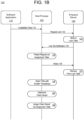
- FIG. 1B illustrates a process 130 of executing the lock based on the temporary assignment via the host platform in accordance with example embodiments
- the host platform 120 may include a server, a cloud platform, a database, a combination of devices and systems, and the like.
- the host platform 120 may also provide a live runtime environment where third-party applications and host applications are hosted and made available to client devices / user devices over the Internet.
- a software application 112 is hosted by the host platform 120 and made accessible to users at a uniform resource locator (URL) or other network location.
- the software application 112 may enable user to perform a product availability search via a host process 122 of the host platform 120.
- the host process 122 may be a back-end of the software application 112.
- the host process 122 may be a service or group of services that are accessible to applications such as the software application 112 via extensions, libraries, APIs, or the like.
- a user has used a user device 110 to access the software application 112 and interact with underlying data stored in a database 124 via the host process 122.
- the user may enter a command or otherwise select a button or other graphical element on a graphical user interface of the software application 112 to trigger a product availability search or other type of availability check on a database 124 of the host platform 120 or other connected storage.
- the request (e.g ., product availability check) from the software application 112 is transmitted to the host process 122 for retrieving the requested data from the database 124, in 131.
- the host process 122 may identify a data identifier (e.g ., a key, etc.) of the data record (e.g ., quantity field) in the database 124 and use the data identifier to request and set a lock (e.g ., an exclusive lock, etc.) on the data record within the database 124 in 132.
- a data identifier e.g ., a key, etc.
- a lock e.g ., an exclusive lock, etc.
- the host process 122 may transmit a lock request to an enqueue server 126 or other type of lock management system with an identifier of the data item and an identifier of the software application 112.
- the enqueue server 126 may check that the data item is not currently locked by referring to a lock table 128 of the data item.
- Each data item within the database 124 may have its own lock table or data items may share a lock table.
- the enqueue server 126 may set a lock for the software application 112 on the data item by writing a lock notification to the lock table 128 which identifies the software application 112, the data item, and a time at which the lock request was received (timestamp). Furthermore, in 134, the enqueue server 126 may notify the host process 122 of the successful lock.
- the host process 122 may protect the request by writing a temporary quantity assignment (TQA) for the request to a temporary quantity assignment table 121 for the data record which includes any amount of quantity that has temporarily been assigned to other programs / applications.
- the TQA may include an identifier of the requested amount (e.g ., requested quantity) and the timestamp of the request.
- the TQA written in 135 is not an assignment of the requested quantity but rather a posting / notification of the request and a preservation of the order in which the request is received.
- the lock may be released.
- the host process 122 may notify the server of the completion of the protection of the requested quantity and the enqueue server 126 may delete the lock from the lock table 128 in 137 thereby releasing the lock on the data item.
- the quantity of product that is being "protected" is not being assigned to the request yet because the host process has not confirmed whether such a quantity is even available.
- the order in which the request is received is preserved. requested has not been confirmed.
- the host process 122 read all recorded TQAs in the temporary quantity assignment table 121 and identify any TQAs which have a timestamp that is prior to / earlier than the timestamp of the "protected" request from the software application 112 and subtract the quantity values in these earlier TQAs from the available quantity found in the data record stored in the database 124.
- the TQAs stored in the temporary quantity assignment table 121 have yet to publish and therefore have not caused the underlying value stored in the data record within the database 124 to change.
- the TQAs with earlier timestamps should be given priority over the request from the software application 112. If not properly seen by the host process 122, there is a chance the too much quantity may be taken out from the available quantity.
- the host process 122 may subtract any quantity assignments to other processes which are recorded in the temporary quantity assignment table 121 and which have a timestamp prior to the timestamp of the request from the software application 112 to determine a resulting quantity assignment in 139. Furthermore, the host process 122 may adjust the previous entry (i.e ., the previous TQA written in 135) to reflect an assignment of an amount of quantity to the request in 140. In this case, the assigned quantity may satisfy the entire requested amount. However, there are also situations where there is some product left, but not enough to satisfy the entire requested amount. For example, the request may include a request for 100 pieces of a product, while only 75 pieces may be available after the analysis in 139.
- the host process 122 can assign a partial amount (e.g ., pieces) which the system can satisfy and which does not satisfy the entire amount requested, but only a partial amount. If the resulting process does not want the partial amount, they can request a cancellation of the request.
- a partial amount e.g ., pieces
- the host process 122 may preserve the temporary quantity assignment to the software application in the temporary quantity assignment table 121 in 135 without actually assigning any product to the request until 140.
- the host process 122 may create / write a new entry into the temporary quantity assignment table 121 which identifies the software application 112, the assigned quantity, and a timestamp of the availability request from the software application 112 in 135.
- the host process 122 may adjust the previous entry stored in the temporary quantity assignment table 121 in 135 (e.g., update the amount, etc.) and confirm the result without the lock being present.
- other programs can access the data item while the host process 122 is writing the TQA to the temporary quantity assignment table 121 in 140.
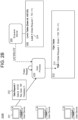
- FIGS. 2A-2D illustrate a process of executing a temporary lock and assigning a requested quantity of a data item in response to a first availability request for a quantity of the data item in accordance with an example embodiment.
- FIG. 2A illustrates a process 200A of a user device 201 requesting a product availability check of a data record corresponding to a product / item stored within a database (not shown) that is managed by a host process 210.
- the host process 210 may be a back-end of a software application that is accessible to the user device 201 over a network.
- the user device 201 submits an availability request 202 which is a message that identifies a data record by its data ID, a requested quantity value (e.g., 100 units), and a timestamp (11).
- the data ID "AX123" may correspond to a product that is being sold by an organization.
- the data record may store data such as receipts and the like which can be analyzed to determine an available quantity value of the product.
- the data identifier e.g., a number, key value, etc.
- the data record e.g., a field, a column, a row, a table, etc.
- the host process 210 may submit a lock request 231 to an enqueue server 220 with an identifier of the data field, a requested quantity, an identifier of the data request or the user, process, application, etc. which submitted the availability request 202, a timestamp of the availability request 202, and the like.
- the enqueue server 220 may set a lock on the data record within a database by storing a lock entry 224 within a lock table 222 which includes the identifier of the availability request 202 and the timestamp of the availability request 202. If another program, application, user, etc. requests a quantity of the same data record ( i.e ., AX123) while the lock is pending in the lock table 222, the host process 210 will return an error response or otherwise deny the lock.
- FIG. 2B illustrates a process 200B of preserving the temporary quantity assignment assigned to the availability request 202 within the TQA table 212.
- the host process 210 may protect the availability request 202 by writing an entry of the request into the TQA table 212.
- the TQA table 212 may be stored in a local memory of the host platform or in a remote storage.
- the TQA table may be managed by the enqueue server 220 or another entity.
- the host process 210 receives a notification 232 from the enqueue server 220 indicating that the lock has been granted on the data record.
- the host process records a TQA 214 within the TQA table 212 which identifies the availability request 202 (e.g ., user ID, application ID, program ID, etc.) along with a quantity amount requested via the availability request 202, and a timestamp at when the availability request 202 was received.
- the TQA is a "temporary" quantity assignment of product to the request. However, the amount requested has not been assigned / granted by the database at this point.
- the TQA 214 is meant to protect the order of the availability request 202 with respect to any subsequently received availability requests.
- the TQA table 212 may be used by the host process 210 to manage and keep track of existing temporary quantity assignments of an available quantity of an item ( e.g ., prior to the assignment being published)in the database.
- the host process 210 can release the lock before the temporary quantity assignment publishes because of the TQA table 212 which keeps track of all existing temporary quantity assignments of the quantity available until they publish. Accordingly, the lock on the data record where the available quantity of the data item is stored can be removed before the temporary quantity assignment publishes.
- FIG. 2C illustrates a process 200C of releasing the lock on the data record.
- the host process 210 may transmit a lock release request 233 to the enqueue server 220 in response to writing a TQA 214 which is an entry in the TQA table 212 which preserves the availability request 202 by the database into the TQA table 212.
- the enqueue server 220 may release the lock on the data record by deleting or otherwise removing the lock entry 224 from the lock table 222 of the data record (AX123).
- the parallel processes do not see the lock, but rather the optimistic TQA written for the requested quantity.
- the parallel processes may also access the product data while the actual availability check is being performed for the previously released lock request.
- FIG. 2D illustrates a process 200D of determining an available amount of quantity that can be assigned to the availability request 202 and confirming the determination via the TQA table 212.
- the host process 210 may read a quantity value of the item from the database.
- the available quantity may be enough to satisfy the request.
- the available quantity may be 150 units.
- the host process 210 may determine whether any TQAs exist in the TQA table 212 which are prior to the TQA 214. In this case, there are no other existing TQAs which have priority over the TQA 214. Therefore, the actual available quantity of the item is the same value as currently stored in the database ( i.e ., a quantity of 150 units).
- the host process 210 determines that the entire amount of quantity requested by the availability request 202 can be confirmed. To do so, the host process 210 may modify the TQA 214 with a flag or other indicator to notify that the quantity value has been assigned to the availability request 202.
- FIGS. 2E-2G illustrate a process of executing a temporary lock and assigning a partial quantity of the data item in response to a second availability request for a quantity of the data item in accordance with an example embodiment.
- FIG. 2E illustrates a process 200E of receiving an availability request 204 from a user device 203 with an additional product availability check for the same data record (AX123) after the previous lock for the previous availability request has been released in the process of FIG. 2B but before the assigned quantity to the TQA 214 determined in the process 200D of FIG. 2D has published within the database meaning the available product in the database is still listed as 150 units.
- the availability request 204 includes another requested quantity of the product (100 units).
- the host process 210 may lock onto the data record by requesting the enqueue server 220 to create and store another lock entry of the data record via the lock table 222.
- the host process 210 may submit a lock request 234 to the enqueue server 220 with an identifier the data record (AX 123), and a timestamp of the availability request 204.
- the enqueue server 220 may detect that no lock is currently present on the data record and execute a second lock on the data record by storing an entry 226 within the lock table 222 to identify the lock.
- the host process 210 may then write a TQA 216 of the requested quantity (100 units) to the TQA table 212 to "protect" the requested quantity included in the availability request 204.
- the host process 210 does not assign the availability request 204 the 100 units, yet.
- the host process 210 can preserve the requested quantity over any subsequent requests for the item.
- the host process 210 may add the TQA 216 to the TQA table 212 below the previous entry (the TQA 214).
- the TQA 216 includes an identifier of the availability request 204, another partial quantity assignment of the data item to the availability request 204 that satisfies some of the requested quantity but not all of the requested quantity, and a timestamp indicating when the availability request 204 was received.
- FIG. 2F illustrates a process 200F of releasing the second lock.
- the host process 210 transmits a request to release the lock 235 in response to writing the TQA 216 of the second quantity assignment into the TQA table 212.
- the enqueue server 220 deletes or otherwise releases the lock by removing the entry 226 from the lock table 222.
- FIG. 2G illustrates a process 200G of determining an available amount of the item that can be assigned to the availability request 204.
- the host process 210 may read the quantity value of the item from the database.
- the available quantity may be unchanged since the TQA 214 has not published. Thus, 150 unites still appear to be available.
- the host process 210 may determine whether any TQAs exist in the TQA table 212 which are prior to the TQA 216. In this case, there is an existing TQA (the TQA 214) which has an earlier timestamp and thus has priority over the TQA 216.
- the actual available quantity of the item is the value as currently stored in the database (i.e ., a quantity of 150 units) minus the assigned value to the TQA 214 ( i.e ., a quantity of 100 units) resulting in only 50 units being available for the availability request 204. Accordingly, the host process 210 determines that the entire amount of quantity requested by the availability request 202 cannot be confirmed. To do so, the host process 210 may modify a value 217 (quantity value) within the TQA 216 to confirm the quantity value that has been assigned to the availability request 204.
- the host process 210 determines that there is no product left to handle the requested quantity assignment. Accordingly, the host process 210 can return an error response or other alert to the user device 205. Thus, no lock request is needed and an error response is returned.
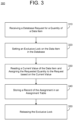
- FIG. 3 illustrates a method 300 of executing a lock request and assigning a quantity of value in accordance with an example embodiment.
- the method 300 may be performed by a software application, service, program, application programming interface, and/or combination thereof which are hosted by a host platform such as a cloud platform, a web server, a distributed system, a database, or the like.
- the method may include receiving a database request comprising a requested quantity value of a data item.
- the database request may include an availability check such as a product availability check (PAC).
- PAC product availability check
- the method may include setting an exclusive lock for the database request on the data item within a database.
- the method may include protecting the requested quantity value by posting a temporary quantity assignment (TQA) for the database request to a table, wherein the TQA comprises an identifier of the requested quantity value, an identifier of the database request, and a timestamp.
- the method may include releasing the exclusive lock for the database request on the data item within the database in response to recording the TQA. With the exclusive lock released, in 350, the method may include determining a quantity value of the data item which is available for the database request and confirming the determined quantity via the temporary quantity assignment table.
- the determining may include reading a previously assigned value of the data item to a different database request from the table and determining the quantity value of the data item which is available by subtracting the previously assigned value of the data item from the current value of the data item read from the database. In some embodiments, the determining may include determining that only a partial quantity value of the requested quantity value for the item is available, and confirm the partial quantity value by modifying the TQA posted in the table. In some embodiments, the method may further include transmitting a response to a software application that submitted the database request with an identifier of the confirmed partial quantity value.
- the receiving may include receiving an availability check request from a software application and generating the database request in response to the availability check request.
- the method may further include receiving a second database request for the data item comprising a second requested quantity value of the data item after the exclusive lock for the database request has been released, and setting a second exclusive lock on the data item within the database.
- the releasing may include releasing the exclusive lock for the database request on the data item within the database after detecting that the requested quantity value has been protected within the table.
- the determining may include excluding a quantity value in another TQA stored within the table when determining the quantity value that is available, in response to a timestamp within the assignment record being later in time than the timestamp of the database request.
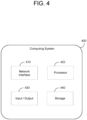
- FIG. 4 illustrates a computing system 400 that may be used in any of the methods and processes described herein, in accordance with an example embodiment.
- the computing system 400 may be a database node, a server, a cloud platform, or the like.
- the computing system 400 may be distributed across multiple computing devices such as multiple database nodes.
- the computing system 400 includes a network interface 410, a processor 420, an input / output 430, and a storage 440 such as an in-memory storage, and the like.
- the computing system 400 may also include or be electronically connected to other components such as a display, an input unit(s), a receiver, a transmitter, a persistent disk, and the like.
- the processor 420 may control the other components of the computing system 400.
- the network interface 410 may transmit and receive data over a network such as the Internet, a private network, a public network, an enterprise network, and the like.
- the network interface 410 may be a wireless interface, a wired interface, or a combination thereof.
- the processor 420 may include one or more processing devices each including one or more processing cores. In some examples, the processor 420 is a multicore processor or a plurality of multicore processors. Also, the processor 420 may be fixed or it may be reconfigurable.
- the input / output 430 may include an interface, a port, a cable, a bus, a board, a wire, and the like, for inputting and outputting data to and from the computing system 400.
- data may be output to an embedded display of the computing system 400, an externally connected display, a display connected to the cloud, another device, and the like.
- the network interface 410, the input / output 430, the storage 440, or a combination thereof, may interact with applications executing on other devices.
- the storage 440 is not limited to a particular storage device and may include any known memory device such as RAM, ROM, hard disk, and the like, and may or may not be included within a database system, a cloud environment, a web server, or the like.
- the storage 440 may store software modules or other instructions which can be executed by the processor 420 to perform the methods described herein.
- the storage 440 may include a data store having a plurality of tables, records, partitions and sub-partitions.
- the storage 440 may be used to store database records, documents, entries, and the like.
- the storage 440 may store a software application and a dependent data set that stores enterprise resource planning (ERP) data and other business data of an organization.
- the processor 420 may output a user interface of the software application for display and it may be accessible via a URL.
- the user interface may be used to trigger a product availability check based on the business data of the organization.
- the processor 420 may receive a database request comprising a requested quantity value of a data item.
- the processor 420 may set an exclusive lock for the database request on the data item within a database.
- the processor 420 may read a current value of the data item from the database and assign the requested quantity value of the data item to the database request based on the current value.
- the processor 420 may store a record of the assignment to the database request within a table, wherein the record comprises an identifier of the requested quantity value, an identifier of the database request, and a timestamp of the database request.
- the processor 420 may release the exclusive lock for the database request on the data item within the database in response to recording the assignment.
- the above-described examples of the disclosure may be implemented using computer programming or engineering techniques including computer software, firmware, hardware or any combination or subset thereof. Any such resulting program, having computer-readable code, may be embodied or provided within one or more non- transitory computer-readable media, thereby making a computer program product, i.e., an article of manufacture, according to the discussed examples of the disclosure.
- the non-transitory computer-readable media may be, but is not limited to, a fixed drive, diskette, optical disk, magnetic tape, flash memory, external drive, semiconductor memory such as read-only memory (ROM), random-access memory (RAM), and/or any other non-transitory medium.
- the computer programs may include machine instructions for a programmable processor, and may be implemented in a high-level procedural and/or object-oriented programming language, and/or in assembly/machine language.
- machine-readable medium and “computer-readable medium” refer to any computer program product, apparatus, cloud storage, and/or device ( e.g ., magnetic discs, optical disks, memory, programmable logic devices (PLDs)) used to provide machine instructions and/or data to a programmable processor, including a machine-readable medium that receives machine instructions as a machine-readable signal.
- PLDs programmable logic devices
- machine-readable signal refers to any signal that may be used to provide machine instructions and/or any other kind of data to a programmable processor.
Landscapes
- Engineering & Computer Science (AREA)
- Theoretical Computer Science (AREA)
- Data Mining & Analysis (AREA)
- Databases & Information Systems (AREA)
- Physics & Mathematics (AREA)
- General Engineering & Computer Science (AREA)
- General Physics & Mathematics (AREA)
- Information Retrieval, Db Structures And Fs Structures Therefor (AREA)
Abstract
The example embodiments are directed to systems and methods of a locking mechanism for a database which permits a partial quantity assignment of a data item to a database request. In one example, the method may include receiving a database request comprising a requested quantity value of a data item, setting an exclusive lock on the data item within a database, protecting the requested quantity value by posting a TQA to a table, wherein the TQA comprises an identifier of the requested quantity value, an identifier of the database request, and a timestamp, releasing the exclusive lock for the database request on the data item within the database in response to recording the TQA, and with the exclusive lock released, determining a quantity value of the data item which is available for the database request and confirming the determined quantity via the temporary quantity assignment table.
Description
- When a transaction issued from a software program to a database sets an exclusive lock on a database object, the object in question is only available for this transaction and can only be changed by this transaction via the software program. If a second software program submits a transaction which attempts to perform an exclusive lock on the same database object while the database object is still locked by the previous transaction, the database will reject the second transaction and continue to hold the exclusive lock for the initial transaction. The benefit of an exclusive lock is that it prevents conflicts from occurring and likewise prevents incorrect data from being saved out of order.
- However, one of the drawbacks of setting an exclusive lock for an entire complex process is that the exclusive lock stays on the data item from start to finish of the process which could take a significant amount of time. The lock stays on the database object until the software program requests release of the lock. During this waiting period, the underlying data stored in the data object is not available for reading or modification by other programs. For software applications that repeatedly perform locking mechanisms on the database, the exclusive lock can limit the number of requests that can be processed and even cause failures during peak hours of traffic.
- Features and advantages of the example embodiments, and the manner in which the same are accomplished, will become more readily apparent with reference to the following detailed description taken in conjunction with the accompanying drawings.
-
FIG. 1A is a diagram illustrating a computing environment with a host platform for executing a lock and a temporary assignment in accordance with an example embodiment. -
FIG. 1B is a diagram illustrating a process executing the lock based on the temporary assignment via the host platform in accordance with example embodiments. -
FIGS. 2A-2D are diagrams illustrating a process of executing a temporary lock and assigning a requested quantity of a data item in response to a first request for a quantity of the data item in accordance with an example embodiment. -
FIGS. 2E-2G are diagrams illustrating a process of executing a temporary lock and assigning a partial quantity of the data item in response to a second request for a quantity of the data item in accordance with an example embodiment. -
FIG. 3 is a diagram illustrating a method of executing a lock request and assigning a quantity of value in accordance with an example embodiment. -
FIG. 4 is a diagram illustrating a computing system for use in the examples herein in accordance with an example embodiment. - Throughout the drawings and the detailed description, unless otherwise described, the same drawing reference numerals will be understood to refer to the same elements, features, and structures. The relative size and depiction of these elements may be exaggerated or adjusted for clarity, illustration, and/or convenience.
- In the following description, specific details are set forth in order to provide a thorough understanding of the various example embodiments. It should be appreciated that various modifications to the embodiments will be readily apparent to those skilled in the art, and the generic principles defined herein may be applied to other embodiments and applications without departing from the spirit and scope of the disclosure. Moreover, in the following description, numerous details are set forth for the purpose of explanation. However, one of ordinary skill in the art should understand that embodiments may be practiced without the use of these specific details. In other instances, well-known structures and processes are not shown or described in order not to obscure the description with unnecessary detail. Thus, the present disclosure is not intended to be limited to the embodiments shown but is to be accorded the widest scope consistent with the principles and features disclosed herein.
- Many companies have integrated their daily enterprise resource planning operations into third-party software applications that are hosted by third parties on remote hosts such as cloud platforms, web servers, databases, and the like. As an example, an organization may access a suite of software programs that are hosted by a provider which they can use to manage their business including accounting, supply chain, ordering, sales, and the like. The provider may also host a database where the records of the organization are stored and accessed by the third-party software applications. The provider can also make the software applications accessible to other parties via a website or application hosted at a uniform resource locator (URL). Here, a customer may access products of an organization and view prices and other information by accessing a URL of the organization's website which communicates with the organization's data stored in a backend database.
- As part of this process, a customer may wish to find out how quickly their order can be satisfied. Here, the software application / website being used by the client may offer a "product availability check" feature which enables a customer to query a backend database to find out on which date and in which quantity a particular requirement may be fulfilled. Here, the check may be sent to the backend database to lookup / query an available quantity value of the product from the database. During this process, the backend database may execute a lock on the product data where the data value is stored to ensure that the same quantity is not reserved by another / multiple orders. Here, the lock may be placed on the field or other data record where the product data (e.g., quantity value, etc.) is stored based on a unique identifier of a field, table, column, etc., where the product data is stored in the database. The lock may be performed by the temporary optimistic locking mechanism described herein. However, it should be appreciated that the temporary optimistic locking mechanism described herein may be used in other situations as well and is not limited to being used with an availability check.
- The product availability check answers the question of how much quantity of an item can be confirmed. If two programs attempt to perform a product availability check for an availability quantity of a same product at the same time then both programs will read the same available quantity. In this case both programs are requesting a quantity of the product. However, if they do not see each other and if the availability of the item is not enough to satisfy both requests, one or both of the programs may receive a positive answer from the system even though this is not feasible. Accordingly, a lock is necessary for performing a product availability check. Previous approaches to performing a product availability check required an exclusive lock on the product data for the entire duration of an availability check until the final consumption is published. However, this process requires additional time that can significantly increase (e.g., double, triple, etc) the time of the locking process on the product data.
- In the example embodiments, the product availability check includes a locking mechanism that temporarily locks on to a data record (e.g., field, cell, column, table, etc.) and releases the lock prior to publishing any consumption of the quantity. In particular, a process may request a product availability check which includes a request for a particular amount of quantity. The request may be sent to a database where the host system described herein can perform a new optimistic locking mechanism within a database. Here, the database may set an exclusive lock on the data record long enough to write a temporary quantity assignment (TQA) to a table there by assigning the entire requested among to the process without checking its actual availability. In addition, a timestamp at when the TQA is assigned may also be stored in the table. Even if there is not enough quantity available for the process, the system still assigns the quantity to the process via the table. Then, the system can release the lock. The product availability check is then performed for the requested quantity after the lock has been released.
- During subsequent product availability checks on the same product, the database can preserve the available quantity temporarily assigned to the process in the table but not yet published to other processes in the database by reading all of the entries within the assignment table for the product that have a timestamp of persistence to the TQA table the comes before the timestamp of the TQA assigned to the process, prior to performing the product availability check. The database can subtract the quantity temporarily assigned to other processes in the table (e.g., identified by earlier timestamps in the assignment table, etc.) from the total availability quantity read from the data record prior to determining whether the requested quantity can be confirmed.
- Furthermore, with the assignment preserved, the database can release the lock enabling additional processes to perform another product availability check on the data record without having to wait for the assignment to publish which can take another period of time (e.g., 20 ms, 40 ms, 75 ms, etc.) Thus, the use of the temporary assignment table can reduce the total lock time needed for performing a product availability check. The lock can be released before publishing the temporary assignment because the host will consider the temporary assignments in the assignment table when performing subsequent checks.
-
FIG. 1A illustrates an example of acomputing environment 100 with ahost platform 120 for executing a lock and a temporary assignment in accordance with an example embodiment andFIG. 1B illustrates aprocess 130 of executing the lock based on the temporary assignment via the host platform in accordance with example embodiments. In these examples, thehost platform 120 may include a server, a cloud platform, a database, a combination of devices and systems, and the like. Thehost platform 120 may also provide a live runtime environment where third-party applications and host applications are hosted and made available to client devices / user devices over the Internet. - Referring to
FIGS. 1A and1B , asoftware application 112 is hosted by thehost platform 120 and made accessible to users at a uniform resource locator (URL) or other network location. For example, thesoftware application 112 may enable user to perform a product availability search via ahost process 122 of thehost platform 120. Thehost process 122 may be a back-end of thesoftware application 112. As another example, thehost process 122 may be a service or group of services that are accessible to applications such as thesoftware application 112 via extensions, libraries, APIs, or the like. Here, a user has used auser device 110 to access thesoftware application 112 and interact with underlying data stored in adatabase 124 via thehost process 122. The user may enter a command or otherwise select a button or other graphical element on a graphical user interface of thesoftware application 112 to trigger a product availability search or other type of availability check on adatabase 124 of thehost platform 120 or other connected storage. - In this example, the request (e.g., product availability check) from the
software application 112 is transmitted to thehost process 122 for retrieving the requested data from thedatabase 124, in 131. Thehost process 122 may identify a data identifier (e.g., a key, etc.) of the data record (e.g., quantity field) in thedatabase 124 and use the data identifier to request and set a lock (e.g., an exclusive lock, etc.) on the data record within thedatabase 124 in 132. - To set the lock, the
host process 122 may transmit a lock request to anenqueue server 126 or other type of lock management system with an identifier of the data item and an identifier of thesoftware application 112. In response, theenqueue server 126 may check that the data item is not currently locked by referring to a lock table 128 of the data item. Each data item within thedatabase 124 may have its own lock table or data items may share a lock table. If no lock is currently present on the data item, in 133, theenqueue server 126 may set a lock for thesoftware application 112 on the data item by writing a lock notification to the lock table 128 which identifies thesoftware application 112, the data item, and a time at which the lock request was received (timestamp). Furthermore, in 134, theenqueue server 126 may notify thehost process 122 of the successful lock. - With the lock set, in 135, the
host process 122 may protect the request by writing a temporary quantity assignment (TQA) for the request to a temporary quantity assignment table 121 for the data record which includes any amount of quantity that has temporarily been assigned to other programs / applications. The TQA may include an identifier of the requested amount (e.g., requested quantity) and the timestamp of the request. The TQA written in 135 is not an assignment of the requested quantity but rather a posting / notification of the request and a preservation of the order in which the request is received. - After the TQA is written, the lock may be released. For example, in 136, the
host process 122 may notify the server of the completion of the protection of the requested quantity and theenqueue server 126 may delete the lock from the lock table 128 in 137 thereby releasing the lock on the data item. Here, the quantity of product that is being "protected" is not being assigned to the request yet because the host process has not confirmed whether such a quantity is even available. However, by recording the TQA, the order in which the request is received is preserved. requested has not been confirmed. - With the lock released, in 138, the
host process 122 read all recorded TQAs in the temporary quantity assignment table 121 and identify any TQAs which have a timestamp that is prior to / earlier than the timestamp of the "protected" request from thesoftware application 112 and subtract the quantity values in these earlier TQAs from the available quantity found in the data record stored in thedatabase 124. In this case, the TQAs stored in the temporary quantity assignment table 121 have yet to publish and therefore have not caused the underlying value stored in the data record within thedatabase 124 to change. However, the TQAs with earlier timestamps should be given priority over the request from thesoftware application 112. If not properly seen by thehost process 122, there is a chance the too much quantity may be taken out from the available quantity. - According to various embodiment, with the lock released, the
host process 122 may subtract any quantity assignments to other processes which are recorded in the temporary quantity assignment table 121 and which have a timestamp prior to the timestamp of the request from thesoftware application 112 to determine a resulting quantity assignment in 139. Furthermore, thehost process 122 may adjust the previous entry (i.e., the previous TQA written in 135) to reflect an assignment of an amount of quantity to the request in 140. In this case, the assigned quantity may satisfy the entire requested amount. However, there are also situations where there is some product left, but not enough to satisfy the entire requested amount. For example, the request may include a request for 100 pieces of a product, while only 75 pieces may be available after the analysis in 139. In this case, thehost process 122 can assign a partial amount (e.g., pieces) which the system can satisfy and which does not satisfy the entire amount requested, but only a partial amount. If the resulting process does not want the partial amount, they can request a cancellation of the request. - According to various embodiments, the
host process 122 may preserve the temporary quantity assignment to the software application in the temporary quantity assignment table 121 in 135 without actually assigning any product to the request until 140. For example, thehost process 122 may create / write a new entry into the temporary quantity assignment table 121 which identifies thesoftware application 112, the assigned quantity, and a timestamp of the availability request from thesoftware application 112 in 135. When thehost process 122 changes the protected amount to an "assigned" amount in 140, thehost process 122 may adjust the previous entry stored in the temporary quantity assignment table 121 in 135 (e.g., update the amount, etc.) and confirm the result without the lock being present. Thus, other programs can access the data item while thehost process 122 is writing the TQA to the temporary quantity assignment table 121 in 140. -
FIGS. 2A-2D illustrate a process of executing a temporary lock and assigning a requested quantity of a data item in response to a first availability request for a quantity of the data item in accordance with an example embodiment. For example,FIG. 2A illustrates aprocess 200A of auser device 201 requesting a product availability check of a data record corresponding to a product / item stored within a database (not shown) that is managed by ahost process 210. For example, thehost process 210 may be a back-end of a software application that is accessible to theuser device 201 over a network. In this example, theuser device 201 submits anavailability request 202 which is a message that identifies a data record by its data ID, a requested quantity value (e.g., 100 units), and a timestamp (11). In this example, the data ID "AX123" may correspond to a product that is being sold by an organization. Here, the data record may store data such as receipts and the like which can be analyzed to determine an available quantity value of the product. The data identifier (e.g., a number, key value, etc.) may be used to find the data record (e.g., a field, a column, a row, a table, etc.) where the availability quantity value of the product is stored in the database. - In response to receiving the
availability request 202, thehost process 210 may submit alock request 231 to anenqueue server 220 with an identifier of the data field, a requested quantity, an identifier of the data request or the user, process, application, etc. which submitted theavailability request 202, a timestamp of theavailability request 202, and the like. In response, theenqueue server 220 may set a lock on the data record within a database by storing alock entry 224 within a lock table 222 which includes the identifier of theavailability request 202 and the timestamp of theavailability request 202. If another program, application, user, etc. requests a quantity of the same data record (i.e., AX123) while the lock is pending in the lock table 222, thehost process 210 will return an error response or otherwise deny the lock. -
FIG. 2B illustrates aprocess 200B of preserving the temporary quantity assignment assigned to theavailability request 202 within the TQA table 212. In response to the lock being set in theprocess 200A inFIG. 2A , thehost process 210 may protect theavailability request 202 by writing an entry of the request into the TQA table 212. The TQA table 212 may be stored in a local memory of the host platform or in a remote storage. As another example, the TQA table may be managed by theenqueue server 220 or another entity. In this example, thehost process 210 receives anotification 232 from theenqueue server 220 indicating that the lock has been granted on the data record. In response, the host process records aTQA 214 within the TQA table 212 which identifies the availability request 202 (e.g., user ID, application ID, program ID, etc.) along with a quantity amount requested via theavailability request 202, and a timestamp at when theavailability request 202 was received. The TQA is a "temporary" quantity assignment of product to the request. However, the amount requested has not been assigned / granted by the database at this point. TheTQA 214 is meant to protect the order of theavailability request 202 with respect to any subsequently received availability requests. - The TQA table 212 may be used by the
host process 210 to manage and keep track of existing temporary quantity assignments of an available quantity of an item (e.g., prior to the assignment being published)in the database. When a temporary quantity assignment of product / quantity to a process "publishes" within the database, the assignment is no longer "temporary". However, in the present application, thehost process 210 can release the lock before the temporary quantity assignment publishes because of the TQA table 212 which keeps track of all existing temporary quantity assignments of the quantity available until they publish. Accordingly, the lock on the data record where the available quantity of the data item is stored can be removed before the temporary quantity assignment publishes. -
FIG. 2C illustrates aprocess 200C of releasing the lock on the data record. Referring toFIG. 2C , thehost process 210 may transmit alock release request 233 to theenqueue server 220 in response to writing aTQA 214 which is an entry in the TQA table 212 which preserves theavailability request 202 by the database into the TQA table 212. In response, theenqueue server 220 may release the lock on the data record by deleting or otherwise removing thelock entry 224 from the lock table 222 of the data record (AX123). With the lock removed, other processes can now lock onto the data item within the database and perform an availability check simultaneously with the processes performed inFIGS. 2D-2F . The benefit here is that the parallel processes do not see the lock, but rather the optimistic TQA written for the requested quantity. Thus, the parallel processes may also access the product data while the actual availability check is being performed for the previously released lock request. - For example,
FIG. 2D illustrates aprocess 200D of determining an available amount of quantity that can be assigned to theavailability request 202 and confirming the determination via the TQA table 212. In this example, thehost process 210 may read a quantity value of the item from the database. Here, the available quantity may be enough to satisfy the request. For example, the available quantity may be 150 units. Furthermore, thehost process 210 may determine whether any TQAs exist in the TQA table 212 which are prior to theTQA 214. In this case, there are no other existing TQAs which have priority over theTQA 214. Therefore, the actual available quantity of the item is the same value as currently stored in the database (i.e., a quantity of 150 units). Accordingly, thehost process 210 determines that the entire amount of quantity requested by theavailability request 202 can be confirmed. To do so, thehost process 210 may modify theTQA 214 with a flag or other indicator to notify that the quantity value has been assigned to theavailability request 202. -
FIGS. 2E-2G illustrate a process of executing a temporary lock and assigning a partial quantity of the data item in response to a second availability request for a quantity of the data item in accordance with an example embodiment. Here,FIG. 2E illustrates aprocess 200E of receiving anavailability request 204 from auser device 203 with an additional product availability check for the same data record (AX123) after the previous lock for the previous availability request has been released in the process ofFIG. 2B but before the assigned quantity to theTQA 214 determined in theprocess 200D ofFIG. 2D has published within the database meaning the available product in the database is still listed as 150 units. Theavailability request 204 includes another requested quantity of the product (100 units). Here, thehost process 210 may lock onto the data record by requesting theenqueue server 220 to create and store another lock entry of the data record via the lock table 222. For example, thehost process 210 may submit alock request 234 to theenqueue server 220 with an identifier the data record (AX 123), and a timestamp of theavailability request 204. In response, theenqueue server 220 may detect that no lock is currently present on the data record and execute a second lock on the data record by storing anentry 226 within the lock table 222 to identify the lock. - With the data record locked, the
host process 210 may then write aTQA 216 of the requested quantity (100 units) to the TQA table 212 to "protect" the requested quantity included in theavailability request 204. However, it should be understood that thehost process 210 does not assign theavailability request 204 the 100 units, yet. However, by storing theTQA 216 with the requested quantity, thehost process 210 can preserve the requested quantity over any subsequent requests for the item. - In addition, the
host process 210 may add theTQA 216 to the TQA table 212 below the previous entry (the TQA 214). In this case, theTQA 216 includes an identifier of theavailability request 204, another partial quantity assignment of the data item to theavailability request 204 that satisfies some of the requested quantity but not all of the requested quantity, and a timestamp indicating when theavailability request 204 was received. In addition,FIG. 2F illustrates aprocess 200F of releasing the second lock. Here, thehost process 210 transmits a request to release thelock 235 in response to writing theTQA 216 of the second quantity assignment into the TQA table 212. In response, theenqueue server 220 deletes or otherwise releases the lock by removing theentry 226 from the lock table 222. -
FIG. 2G illustrates aprocess 200G of determining an available amount of the item that can be assigned to theavailability request 204. In this case, thehost process 210 may read the quantity value of the item from the database. Here, the available quantity may be unchanged since theTQA 214 has not published. Thus, 150 unites still appear to be available. Next, thehost process 210 may determine whether any TQAs exist in the TQA table 212 which are prior to theTQA 216. In this case, there is an existing TQA (the TQA 214) which has an earlier timestamp and thus has priority over theTQA 216. Therefore, the actual available quantity of the item is the value as currently stored in the database (i.e., a quantity of 150 units) minus the assigned value to the TQA 214 (i.e., a quantity of 100 units) resulting in only 50 units being available for theavailability request 204. Accordingly, thehost process 210 determines that the entire amount of quantity requested by theavailability request 202 cannot be confirmed. To do so, thehost process 210 may modify a value 217 (quantity value) within theTQA 216 to confirm the quantity value that has been assigned to theavailability request 204. - If a subsequent availability request were to be submitted for the data item from
user device 205, thehost process 210 determines that there is no product left to handle the requested quantity assignment. Accordingly, thehost process 210 can return an error response or other alert to theuser device 205. Thus, no lock request is needed and an error response is returned. -
FIG. 3 illustrates amethod 300 of executing a lock request and assigning a quantity of value in accordance with an example embodiment. For example, themethod 300 may be performed by a software application, service, program, application programming interface, and/or combination thereof which are hosted by a host platform such as a cloud platform, a web server, a distributed system, a database, or the like. Referring toFIG. 3 , in 310, the method may include receiving a database request comprising a requested quantity value of a data item. For example, the database request may include an availability check such as a product availability check (PAC). - In 320, the method may include setting an exclusive lock for the database request on the data item within a database. In 330, the method may include protecting the requested quantity value by posting a temporary quantity assignment (TQA) for the database request to a table, wherein the TQA comprises an identifier of the requested quantity value, an identifier of the database request, and a timestamp. In 340, the method may include releasing the exclusive lock for the database request on the data item within the database in response to recording the TQA. With the exclusive lock released, in 350, the method may include determining a quantity value of the data item which is available for the database request and confirming the determined quantity via the temporary quantity assignment table.
- In some embodiments, the determining may include reading a previously assigned value of the data item to a different database request from the table and determining the quantity value of the data item which is available by subtracting the previously assigned value of the data item from the current value of the data item read from the database. In some embodiments, the determining may include determining that only a partial quantity value of the requested quantity value for the item is available, and confirm the partial quantity value by modifying the TQA posted in the table. In some embodiments, the method may further include transmitting a response to a software application that submitted the database request with an identifier of the confirmed partial quantity value.
- In some embodiments, the receiving may include receiving an availability check request from a software application and generating the database request in response to the availability check request. In some embodiments, the method may further include receiving a second database request for the data item comprising a second requested quantity value of the data item after the exclusive lock for the database request has been released, and setting a second exclusive lock on the data item within the database. In some embodiments, the releasing may include releasing the exclusive lock for the database request on the data item within the database after detecting that the requested quantity value has been protected within the table. In some embodiments, the determining may include excluding a quantity value in another TQA stored within the table when determining the quantity value that is available, in response to a timestamp within the assignment record being later in time than the timestamp of the database request.
-
FIG. 4 illustrates acomputing system 400 that may be used in any of the methods and processes described herein, in accordance with an example embodiment. For example, thecomputing system 400 may be a database node, a server, a cloud platform, or the like. In some embodiments, thecomputing system 400 may be distributed across multiple computing devices such as multiple database nodes. Referring toFIG. 4 , thecomputing system 400 includes anetwork interface 410, aprocessor 420, an input /output 430, and astorage 440 such as an in-memory storage, and the like. Although not shown inFIG. 4 , thecomputing system 400 may also include or be electronically connected to other components such as a display, an input unit(s), a receiver, a transmitter, a persistent disk, and the like. Theprocessor 420 may control the other components of thecomputing system 400. - The
network interface 410 may transmit and receive data over a network such as the Internet, a private network, a public network, an enterprise network, and the like. Thenetwork interface 410 may be a wireless interface, a wired interface, or a combination thereof. Theprocessor 420 may include one or more processing devices each including one or more processing cores. In some examples, theprocessor 420 is a multicore processor or a plurality of multicore processors. Also, theprocessor 420 may be fixed or it may be reconfigurable. The input /output 430 may include an interface, a port, a cable, a bus, a board, a wire, and the like, for inputting and outputting data to and from thecomputing system 400. For example, data may be output to an embedded display of thecomputing system 400, an externally connected display, a display connected to the cloud, another device, and the like. Thenetwork interface 410, the input /output 430, thestorage 440, or a combination thereof, may interact with applications executing on other devices. - The
storage 440 is not limited to a particular storage device and may include any known memory device such as RAM, ROM, hard disk, and the like, and may or may not be included within a database system, a cloud environment, a web server, or the like. Thestorage 440 may store software modules or other instructions which can be executed by theprocessor 420 to perform the methods described herein. According to various embodiments, thestorage 440 may include a data store having a plurality of tables, records, partitions and sub-partitions. Thestorage 440 may be used to store database records, documents, entries, and the like. - According to various embodiments, the
storage 440 may store a software application and a dependent data set that stores enterprise resource planning (ERP) data and other business data of an organization. Theprocessor 420 may output a user interface of the software application for display and it may be accessible via a URL. The user interface may be used to trigger a product availability check based on the business data of the organization. - For example, the
processor 420 may receive a database request comprising a requested quantity value of a data item. Theprocessor 420 may set an exclusive lock for the database request on the data item within a database. Theprocessor 420 may read a current value of the data item from the database and assign the requested quantity value of the data item to the database request based on the current value. Furthermore, theprocessor 420 may store a record of the assignment to the database request within a table, wherein the record comprises an identifier of the requested quantity value, an identifier of the database request, and a timestamp of the database request. Theprocessor 420 may release the exclusive lock for the database request on the data item within the database in response to recording the assignment. - As will be appreciated based on the foregoing specification, the above-described examples of the disclosure may be implemented using computer programming or engineering techniques including computer software, firmware, hardware or any combination or subset thereof. Any such resulting program, having computer-readable code, may be embodied or provided within one or more non- transitory computer-readable media, thereby making a computer program product, i.e., an article of manufacture, according to the discussed examples of the disclosure. For example, the non-transitory computer-readable media may be, but is not limited to, a fixed drive, diskette, optical disk, magnetic tape, flash memory, external drive, semiconductor memory such as read-only memory (ROM), random-access memory (RAM), and/or any other non-transitory medium.
- The computer programs (also referred to as programs, software, software applications, "apps", or code) may include machine instructions for a programmable processor, and may be implemented in a high-level procedural and/or object-oriented programming language, and/or in assembly/machine language. As used herein, the terms "machine-readable medium" and "computer-readable medium" refer to any computer program product, apparatus, cloud storage, and/or device (e.g., magnetic discs, optical disks, memory, programmable logic devices (PLDs)) used to provide machine instructions and/or data to a programmable processor, including a machine-readable medium that receives machine instructions as a machine-readable signal. The "machine-readable medium" and "computer-readable medium," however, do not include transitory signals. The term "machine-readable signal" refers to any signal that may be used to provide machine instructions and/or any other kind of data to a programmable processor.
- The above descriptions and illustrations of processes herein should not be considered to imply a fixed order for performing the process steps. Rather, the process steps may be performed in any order that is practicable, including simultaneous performance of at least some steps. Although the disclosure has been described in connection with specific examples, it should be understood that various changes, substitutions, and alterations apparent to those skilled in the art can be made to the disclosed embodiments without departing from the spirit and scope of the disclosure as set forth in the appended claims.
Claims (15)
- A computing system comprising:
a processor configured toreceive a database request comprising a requested quantity value of a data item,set an exclusive lock for the database request on the data item within a database,protect the requested quantity value by posting a temporary quantity assignment (TQA) for the database request to a table, wherein the TQA comprises an identifier of the requested quantity value, an identifier of the database request, and a timestamp,release the exclusive lock for the database request on the data item within the database in response to recording the TQA, andwith the exclusive lock released, determine a quantity value of the data item which is available for the database request and confirm the determined quantity via the temporary quantity assignment table. - The computing system of claim 1, wherein the processor is further configured to read a previously assigned value of the data item to a different database request from the table and determine the quantity value of the data item which is available by subtracting the previously assigned value of the data item from a current value of the data item.
- The computing system of claim 2, wherein the processor is configured to determine that only a partial quantity value of the requested quantity value for the item is available, and confirm the partial quantity value by modifying the TQA posted in the table.
- The computing system of claim 3, wherein the processor is further configured to transmit a response to a software application that submitted the database request with an identifier of the confirmed partial quantity value.
- The computing system of any one of claims 1 to 4, wherein the processor is configured to receive an availability check request from a software application and generate the database request in response to the availability check request; and/or
wherein the processor is further configured to receive a second database request for the data item comprising a second requested quantity value of the data item after the exclusive lock for the database request has been released, and set a second exclusive lock on the data item within the database. - The computing system of any one of claims 1 to 5, wherein the processor is further configured to release the exclusive lock for the database request on the data item within the database after detecting that the requested quantity value has been protected within the table; and/or
wherein the processor is further configured to exclude a quantity value in another TQA stored within the table when determining the quantity value that is available, in response to a timestamp within the assignment record being later in time than the timestamp of the database request. - A method comprising:receiving a database request comprising a requested quantity value of a data item;setting an exclusive lock for the database request on the data item within a database;protecting the requested quantity value by posting a temporary quantity assignment (TQA) for the database request to a table, wherein the TQA comprises an identifier of the requested quantity value, an identifier of the database request, and a timestamp;releasing the exclusive lock for the database request on the data item within the database in response to recording the TQA; andwith the exclusive lock released, determining a quantity value of the data item which is available for the database request and confirming the determined quantity via the temporary quantity assignment table.
- The method of claim 7, wherein the determining comprises reading a previously assigned value of the data item to a different database request from the table and determining the quantity value of the data item which is available by subtracting the previously assigned value of the data item from a current value of the data item.
- The method of claim 8, wherein the determining comprises determining that only a partial quantity value of the requested quantity value for the item is available, and confirm the partial quantity value by modifying the TQA posted in the table.
- The method of claim 9, wherein the method further comprises transmitting a response to a software application that submitted the database request with an identifier of the confirmed partial quantity value.
- The method of any one of claims 7 to 10, wherein the receiving comprises receiving an availability check request from a software application and generating the database request in response to the availability check request; and/or
wherein the method further comprises receiving a second database request for the data item comprising a second requested quantity value of the data item after the exclusive lock for the database request has been released, and setting a second exclusive lock on the data item within the database. - The method of any one of claims 7 to 11, wherein the releasing comprises releasing the exclusive lock for the database request on the data item within the database after detecting that the requested quantity value has been protected within the table; and/or
wherein the determining comprises excluding a quantity value in another TQA stored within the table when determining the quantity value that is available, in response to a timestamp within the assignment record being later in time than the timestamp of the database request. - A computer-readable storage medium comprising instructions which when executed by a processor cause a computer to perform a method comprising:receiving a database request comprising a requested quantity value of a data item;setting an exclusive lock for the database request on the data item within a database;protecting the requested quantity value by posting a temporary quantity assignment (TQA) for the database request to a table, wherein the TQA comprises an identifier of the requested quantity value, an identifier of the database request, and a timestamp;releasing the exclusive lock for the database request on the data item within the database in response to recording the TQA; andwith the exclusive lock released, determining a quantity value of the data item which is available for the database request and confirming the determined quantity via the temporary quantity assignment table.
- The computer-readable medium of claim 13, wherein the method further comprises reading a previously assigned value of the data item to a different database request from the table and determining to assign the requested quantity value of the data item to the database request based on a current value of the data item minus the previously assigned value of the data item read from the table.
- The computer-readable medium of claim 13 or 14, wherein the receiving comprises receiving an availability check request from a software application and generate the database request in response to the availability check request; and/or
wherein the receiving comprises receiving a second database request for the data item comprising a second requested quantity value of the data item after the exclusive lock for the database request has been released, and setting a second exclusive lock on the data item within the database.
Applications Claiming Priority (1)
| Application Number | Priority Date | Filing Date | Title |
|---|---|---|---|
| US18/312,686 US12141120B1 (en) | 2023-05-05 | 2023-05-05 | Temporary locking mechanism with shared assignment table |
Publications (1)
| Publication Number | Publication Date |
|---|---|
| EP4459477A1 true EP4459477A1 (en) | 2024-11-06 |
Family
ID=90925121
Family Applications (1)
| Application Number | Title | Priority Date | Filing Date |
|---|---|---|---|
| EP24173438.3A Pending EP4459477A1 (en) | 2023-05-05 | 2024-04-30 | Temporary locking mechanism with shared assignment table |
Country Status (2)
| Country | Link |
|---|---|
| US (1) | US12141120B1 (en) |
| EP (1) | EP4459477A1 (en) |
Citations (1)
| Publication number | Priority date | Publication date | Assignee | Title |
|---|---|---|---|---|
| US20190258622A1 (en) * | 2011-09-02 | 2019-08-22 | Palantir Technologies, Inc. | Transaction protocol for reading database values |
Family Cites Families (29)
| Publication number | Priority date | Publication date | Assignee | Title |
|---|---|---|---|---|
| US6766399B1 (en) * | 2001-05-10 | 2004-07-20 | Microsoft Corporation | Application programming interface for temporary release of associated file locks on storage devices |
| EP3002703B1 (en) * | 2009-12-14 | 2017-08-30 | Citrix Systems Inc. | Methods and systems for communicating between trusted and non-trusted virtual machines |
| US8438355B2 (en) * | 2010-10-29 | 2013-05-07 | International Business Machines Corporation | Temporary VTOC locking during defragmentation |
| US20130138614A1 (en) * | 2011-11-30 | 2013-05-30 | Mark Travis | Two-phase data locking transaction processing with distributed partitions and mirroring |
| US9396227B2 (en) * | 2012-03-29 | 2016-07-19 | Hewlett Packard Enterprise Development Lp | Controlled lock violation for data transactions |
| US9208190B2 (en) * | 2012-05-03 | 2015-12-08 | Red Hat, Inc. | Lock reordering for optimistic locking of data on a single node to avoid transaction deadlock |
| US9037558B2 (en) * | 2012-05-25 | 2015-05-19 | International Business Machines Corporation | Management of long-running locks and transactions on database tables |
| US9104714B2 (en) * | 2012-05-31 | 2015-08-11 | Red Hat, Inc. | Incremental optimistic locking of data distributed on multiple nodes to avoid transaction deadlock |
| US20140040208A1 (en) * | 2012-07-31 | 2014-02-06 | Goetz Graefe | Early release of transaction locks based on tags |
| US9367346B2 (en) * | 2013-02-20 | 2016-06-14 | Nec Corporation | Accelerating distributed transactions on key-value stores through dynamic lock localization |
| JP2014186618A (en) * | 2013-03-25 | 2014-10-02 | Toshiba Corp | Shared memory control unit having lock transaction controller |
| US9411729B2 (en) * | 2014-02-27 | 2016-08-09 | International Business Machines Corporation | Salvaging lock elision transactions |
| EP3138013B1 (en) * | 2014-04-30 | 2019-02-27 | Oracle International Corporation | System and method for providing distributed transaction lock in transactional middleware machine environment |
| US10127260B2 (en) * | 2014-11-25 | 2018-11-13 | Sap Se | In-memory database system providing lockless read and write operations for OLAP and OLTP transactions |
| US10096065B2 (en) * | 2015-01-16 | 2018-10-09 | Red Hat, Inc. | Distributed transactions with extended locks |
| CN107977376B (en) * | 2016-10-24 | 2020-07-07 | 腾讯科技(深圳)有限公司 | Distributed database system and transaction processing method |
| US11481321B2 (en) * | 2017-03-27 | 2022-10-25 | Sap Se | Asynchronous garbage collection in parallel transaction system without locking |
| GB2567433B (en) * | 2017-10-10 | 2020-02-26 | Advanced Risc Mach Ltd | Checking lock variables for transactions in a system with transactional memory support |
| US11347712B2 (en) * | 2017-11-07 | 2022-05-31 | International Business Machines Corporation | Preventing long running transactions from holding record locks |
| US11620866B1 (en) * | 2018-10-10 | 2023-04-04 | Wells Fargo Bank, N.A. | Systems and methods for executing a transaction via a locker |
| US11874816B2 (en) * | 2018-10-23 | 2024-01-16 | Microsoft Technology Licensing, Llc | Lock free distributed transaction coordinator for in-memory database participants |
| GB201913990D0 (en) * | 2019-09-27 | 2019-11-13 | Nchain Holdings Ltd | Time-locked blockchain transactions and related blockchain technology |
| US12198142B2 (en) * | 2019-12-20 | 2025-01-14 | Capital One Services, Llc | Watchdog microservice to resolve locks when processing fails on a transaction exchange platform |
| US12198141B2 (en) * | 2019-12-20 | 2025-01-14 | Capital One Services, Llc | Consensus key locking with fast local storage for idempotent transactions |
| CN111797107B (en) * | 2020-07-08 | 2024-02-09 | 贵州易鲸捷信息技术有限公司 | Database transaction concurrency control method for hybrid optimistic lock and pessimistic lock |
| US11693690B2 (en) * | 2020-10-20 | 2023-07-04 | Micron Technology, Inc. | Method of completing a programmable atomic transaction by ensuring memory locks are cleared |
| US11755558B2 (en) * | 2021-06-25 | 2023-09-12 | Microsoft Technology Licensing, Llc | Transaction identifier locking with data row locks |
| US12475100B2 (en) * | 2021-08-19 | 2025-11-18 | Twilio Inc. | Using ad-hoc stored procedures for online transaction processing |
| US11853448B1 (en) * | 2023-01-31 | 2023-12-26 | Intuit, Inc. | Applying transactional locks in distributed transactions |
-
2023
- 2023-05-05 US US18/312,686 patent/US12141120B1/en active Active
-
2024
- 2024-04-30 EP EP24173438.3A patent/EP4459477A1/en active Pending
Patent Citations (1)
| Publication number | Priority date | Publication date | Assignee | Title |
|---|---|---|---|---|
| US20190258622A1 (en) * | 2011-09-02 | 2019-08-22 | Palantir Technologies, Inc. | Transaction protocol for reading database values |
Non-Patent Citations (1)
| Title |
|---|
| ANONYMOUS: "Record locking - Wikipedia", 25 February 2014 (2014-02-25), XP055488225, Retrieved from the Internet <URL:https://en.wikipedia.org/w/index.php?title=Record_locking&oldid=597030970> [retrieved on 20180627] * |
Also Published As
| Publication number | Publication date |
|---|---|
| US12141120B1 (en) | 2024-11-12 |
Similar Documents
| Publication | Publication Date | Title |
|---|---|---|
| US9996565B2 (en) | Managing an index of a table of a database | |
| US10002170B2 (en) | Managing a table of a database | |
| CN111814197A (en) | A data sharing method, device, server and storage medium | |
| EP3238421B1 (en) | System for high-throughput handling of transactions in data-partitioned, distributed, relational database management system | |
| US11620364B2 (en) | Layered-infrastructure blockchain-based system for software license distribution | |
| CN111815454B (en) | Data uplink method and device, electronic device, storage medium | |
| US12259848B2 (en) | Synchronous object placement for information lifecycle management | |
| WO2016131388A1 (en) | Resource allocation method and device | |
| CN110659303A (en) | Read-write control method and device for database nodes | |
| US12425238B2 (en) | Database tenant-level move | |
| KR20240119831A (en) | Data record correlation and migration | |
| US20210064602A1 (en) | Change service for shared database object | |
| US12141120B1 (en) | Temporary locking mechanism with shared assignment table | |
| CN114443937B (en) | Order query method, device, system and computer-readable storage medium | |
| CN112632117B (en) | Method and device for processing numbered data, electronic equipment and storage medium | |
| CN107291777A (en) | A kind of method and apparatus of hot spot data identification and processing | |
| CN111291127B (en) | Data synchronization method, device, server and storage medium | |
| US11520769B1 (en) | Block level lock on data table | |
| US9785358B2 (en) | Management of extent checking in a storage controller during copy services operations | |
| CN113660338A (en) | Data interaction method, device and system and server | |
| US8738864B2 (en) | Automated data interface generation | |
| CN112860746A (en) | Cache reduction-based method, equipment and system | |
| CN114647663A (en) | Resource processing method, device and system, electronic equipment and storage medium | |
| US20260093524A1 (en) | Scaling management in a distributed computing environment | |
| US12063266B2 (en) | Object-based transportation across tenants |
Legal Events
| Date | Code | Title | Description |
|---|---|---|---|
| PUAI | Public reference made under article 153(3) epc to a published international application that has entered the european phase |
Free format text: ORIGINAL CODE: 0009012 |
|
| STAA | Information on the status of an ep patent application or granted ep patent |
Free format text: STATUS: THE APPLICATION HAS BEEN PUBLISHED |
|
| AK | Designated contracting states |
Kind code of ref document: A1 Designated state(s): AL AT BE BG CH CY CZ DE DK EE ES FI FR GB GR HR HU IE IS IT LI LT LU LV MC ME MK MT NL NO PL PT RO RS SE SI SK SM TR |
|
| STAA | Information on the status of an ep patent application or granted ep patent |
Free format text: STATUS: REQUEST FOR EXAMINATION WAS MADE |
|
| 17P | Request for examination filed |
Effective date: 20250320 |