EP4459441A1 - Sleeve for operating pointing devices - Google Patents
Sleeve for operating pointing devices Download PDFInfo
- Publication number
- EP4459441A1 EP4459441A1 EP23743109.3A EP23743109A EP4459441A1 EP 4459441 A1 EP4459441 A1 EP 4459441A1 EP 23743109 A EP23743109 A EP 23743109A EP 4459441 A1 EP4459441 A1 EP 4459441A1
- Authority
- EP
- European Patent Office
- Prior art keywords
- cover
- palm
- sleeve
- arm
- player
- Prior art date
- Legal status (The legal status is an assumption and is not a legal conclusion. Google has not performed a legal analysis and makes no representation as to the accuracy of the status listed.)
- Pending
Links
Images






Classifications
-
- G—PHYSICS
- G06—COMPUTING OR CALCULATING; COUNTING
- G06F—ELECTRIC DIGITAL DATA PROCESSING
- G06F3/00—Input arrangements for transferring data to be processed into a form capable of being handled by the computer; Output arrangements for transferring data from processing unit to output unit, e.g. interface arrangements
- G06F3/01—Input arrangements or combined input and output arrangements for interaction between user and computer
- G06F3/03—Arrangements for converting the position or the displacement of a member into a coded form
- G06F3/033—Pointing devices displaced or positioned by the user, e.g. mice, trackballs, pens or joysticks; Accessories therefor
- G06F3/039—Accessories therefor, e.g. mouse pads
-
- G—PHYSICS
- G06—COMPUTING OR CALCULATING; COUNTING
- G06F—ELECTRIC DIGITAL DATA PROCESSING
- G06F3/00—Input arrangements for transferring data to be processed into a form capable of being handled by the computer; Output arrangements for transferring data from processing unit to output unit, e.g. interface arrangements
- G06F3/01—Input arrangements or combined input and output arrangements for interaction between user and computer
- G06F3/03—Arrangements for converting the position or the displacement of a member into a coded form
- G06F3/033—Pointing devices displaced or positioned by the user, e.g. mice, trackballs, pens or joysticks; Accessories therefor
- G06F3/0354—Pointing devices displaced or positioned by the user, e.g. mice, trackballs, pens or joysticks; Accessories therefor with detection of two-dimensional [2D] relative movements between the device, or an operating part thereof, and a plane or surface, e.g. 2D mice, trackballs, pens or pucks
- G06F3/03543—Mice or pucks
-
- A—HUMAN NECESSITIES
- A41—WEARING APPAREL
- A41D—OUTERWEAR; PROTECTIVE GARMENTS; ACCESSORIES
- A41D13/00—Professional, industrial or sporting protective garments, e.g. surgeons' gowns or garments protecting against blows or punches
- A41D13/05—Professional, industrial or sporting protective garments, e.g. surgeons' gowns or garments protecting against blows or punches protecting only a particular body part
- A41D13/08—Arm or hand
-
- A—HUMAN NECESSITIES
- A41—WEARING APPAREL
- A41D—OUTERWEAR; PROTECTIVE GARMENTS; ACCESSORIES
- A41D13/00—Professional, industrial or sporting protective garments, e.g. surgeons' gowns or garments protecting against blows or punches
- A41D13/05—Professional, industrial or sporting protective garments, e.g. surgeons' gowns or garments protecting against blows or punches protecting only a particular body part
- A41D13/08—Arm or hand
- A41D13/081—Hand protectors
- A41D13/082—Hand protectors especially for the inner part of the hand
-
- A—HUMAN NECESSITIES
- A41—WEARING APPAREL
- A41D—OUTERWEAR; PROTECTIVE GARMENTS; ACCESSORIES
- A41D19/00—Gloves
- A41D19/015—Protective gloves
-
- G—PHYSICS
- G06—COMPUTING OR CALCULATING; COUNTING
- G06F—ELECTRIC DIGITAL DATA PROCESSING
- G06F1/00—Details not covered by groups G06F3/00 - G06F13/00 and G06F21/00
- G06F1/16—Constructional details or arrangements
- G06F1/1613—Constructional details or arrangements for portable computers
- G06F1/163—Wearable computers, e.g. on a belt
-
- G—PHYSICS
- G06—COMPUTING OR CALCULATING; COUNTING
- G06F—ELECTRIC DIGITAL DATA PROCESSING
- G06F3/00—Input arrangements for transferring data to be processed into a form capable of being handled by the computer; Output arrangements for transferring data from processing unit to output unit, e.g. interface arrangements
- G06F3/01—Input arrangements or combined input and output arrangements for interaction between user and computer
- G06F3/011—Arrangements for interaction with the human body, e.g. for user immersion in virtual reality
- G06F3/014—Hand-worn input/output arrangements, e.g. data gloves
-
- G—PHYSICS
- G06—COMPUTING OR CALCULATING; COUNTING
- G06F—ELECTRIC DIGITAL DATA PROCESSING
- G06F2203/00—Indexing scheme relating to G06F3/00 - G06F3/048
- G06F2203/033—Indexing scheme relating to G06F3/033
- G06F2203/0333—Ergonomic shaped mouse for one hand
Definitions
- the present specification discloses a sleeve that is suitable for use in operating a pointing device included in, for example, a computer.
- Mouses have been widely used as computer pointing devices. An operator moves a mouse pointer on a screen by moving a mouse on a mouse pad (or on a table). A hand or an arm of the operator rubs against the mouse pad.
- Japanese Laid-Open Patent Application Publication No. 2001-265529 discloses a protective gear for reducing damage to the hand of the operator operating the mouse.
- E-sports are categorized into the following seven genres: shooting games (FPS/TPS); MOBA (Multiplayer online battle arena); RTS (Real Time Strategy); fighting games; sports video games; DCG (Digital Card Games); and puzzle games.
- a player playing a shooting game operates a mouse to participate in the game. The player is required to have agility. The player's hand rubs intensely against the mouse pad.
- the protective gear disclosed by Japanese Laid-Open Patent Application Publication No. 2001-265529 is not suitable for protecting a hand of an e-sports player. Moreover, the protective gear disclosed by Japanese Laid-Open Patent Application Publication No. 2001-265529 hinders an action made by the player.
- a preferable pointing device operating sleeve includes: a palm cover configured to cover a heel of a palm; an arm cover configured to cover at least a part of a forearm, the arm cover being continuous with the palm cover; and a stopper that suppresses displacement of the palm cover from the palm.
- the above pointing device operating sleeve is suitable for protecting a hand of an e-sports player. This sleeve is less likely to cause hindrance to an action made by the player.
- FIGS. 1 to 4 show a pointing device operating sleeve 2, which includes a palm cover 4 and an arm cover 6.
- the sleeve 2 further includes a band 8, which serves as a stopper.
- the sleeve 2 is worn on the right upper extremity of a player.
- a sleeve for the left upper extremity has a shape that is left-right reversed from the shape shown in FIG. 1 . In FIG. 1 , the right side is the outside, and the left side is the inside.
- the palm cover 4 is tubular.
- the palm cover 4 includes a first opening 10.
- the first opening 10 is inclined relative to the left-right direction of FIG. 1 (i.e., inclined relative to the width direction of the palm cover 4). Specifically, the first opening 10 extends to the right side in a direction upward in FIG. 1 .
- the arm cover 6 is tubular.
- the arm cover 6 is continuous with the palm cover 4.
- the arm cover 6 is integrated with the palm cover 4. Therefore, the sleeve 2 has no visible boundary between the palm cover 4 and the arm cover 6.
- the arm cover 6 includes a second opening 12.
- the band 8 is attached to the palm cover 4.
- the attachment of the band 8 to the palm cover 4 is achieved by sewing both ends of the band 8 and their vicinities on the palm cover 4.
- the band 8 may be attached to the palm cover 4 not by sewing, but by other means. As shown in FIG. 2 , the band 8 forms a hole 14 on the sleeve 2.
- FIG. 5 is a front view showing the pointing device operating sleeve 2 of FIG. 1 together with an upper limb 16 of the player.
- a hand 18 is passed through the palm cover 4. It is clear from FIGS. 1 and 5 that the diameter of the palm cover 4 increases from the wrist toward the fingertips. The palm cover 4 having such a shape fits to the hand 18.
- a forearm 20 (see FIG. 6 ) is passed through the arm cover 6.
- the arm cover 6 covers the entire forearm 20.
- a part of an upper arm 22 is also passed through the arm cover 6.
- the arm cover 6 covers the part of the upper arm 22. It is clear from FIGS. 1 and 5 that the diameter of the arm cover 6 decreases from the elbow toward the wrist. The arm cover 6 having such a shape fits to the forearm 20.
- FIG. 7 is a front view showing, in an enlarged manner, a part of the pointing device operating sleeve 2 of FIG. 5 together with the hand 18 of the player.
- FIG. 7 shows a back 24, a thumb 26, an index finger 28, a middle finger 30, a ring finger 32, and a little finger 34 of the hand 18.
- the first opening 10 is inclined relative to the width direction. Specifically, the first opening 10 extends from the inside to the outside in a direction toward the fingertips.
- the little finger 34 is passed through the hole 14 (see FIG. 2 ).
- the sleeve 2 may include the hole 14 through which the ring finger 32 is passable.
- the sleeve 2 may include the hole 14 through which the little finger 34 and the ring finger 32 are passable.
- the sleeve 2 includes the hole 14 through which only the little finger 34 is passed.
- FIG. 8 is a rear view showing, in an enlarged manner, a part of the pointing device operating sleeve 2 of FIG. 5 together with the hand 18 of the player.
- FIG. 8 shows a palm 36.
- reference sign 38 indicates a wrist crease of the palm 36
- reference sign 39 indicates a palm heel.
- the wrist crease 38 coincides with the boundary between the forearm 20 and the palm 36.
- the palm heel 39 is positioned on the fingertip side of the wrist crease 38. It is clear from FIG. 8 that the palm cover 4 covers the palm heel 39. In the present embodiment, the palm cover 4 covers the entire palm heel 39.
- reference sign 40 indicates a thenar eminence.
- the thenar eminence 40 is a fleshy mound on the palm 36 at the base of the thumb 26. It is clear from FIG. 8 that the palm cover 4 covers a part of the thenar eminence 40. The palm cover 4 may cover the entire thenar eminence 40.
- reference sign 42 indicates a hypothenar eminence.
- the hypothenar eminence 42 is a fleshy mound on the palm 36 at the base of the little finger 34. It is clear from FIG. 8 that the palm cover 4 covers the entire hypothenar eminence 42. The palm cover 4 may cover a part of the hypothenar eminence 42.
- FIG. 9 shows the sleeve 2 as seen from the inside.
- FIG. 9 further shows the hand 18 of the player, a mouse 44, and a mouse pad 46.
- FIG. 9 shows the thumb 26, the index finger 28, and the middle finger 30 of the hand 18.
- the mouse 44 is placed over the mouse pad 46.
- the player is holding the mouse 44 with the hand 18.
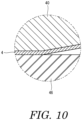
- FIG. 10 is an enlarged sectional view of a zone that is denoted by reference sign X of FIG. 9 .
- FIG. 10 shows the thenar eminence 40, the palm cover 4, and the mouse pad 46. It is clear from FIG. 10 that the palm cover 4 is present between the thenar eminence 40 and the mouse pad 46. When the player moves the mouse 44 intensely, the palm cover 4 suppresses direct rubbing between the thenar eminence 40 and the mouse pad 46. The palm cover 4 protects the thenar eminence 40.
- FIG. 11 shows the sleeve 2 as seen from the outside.
- FIG. 11 further shows the hand 18 of the player, the mouse 44, and the mouse pad 46.
- FIG. 11 shows the middle finger 30, the ring finger 32, and the little finger 34 of the hand 18.
- the mouse 44 is placed over the mouse pad 46. The player is holding the mouse 44 with the hand 18.
- FIG. 12 is an enlarged sectional view of a zone that is denoted by reference sign XII of FIG. 11 .
- FIG. 12 shows the hypothenar eminence 42, the palm cover 4, and the mouse pad 46. It is clear from FIG. 12 that the palm cover 4 is present between the hypothenar eminence 42 and the mouse pad 46. When the player moves the mouse 44 intensely, the palm cover 4 suppresses direct rubbing between the hypothenar eminence 42 and the mouse pad 46. The palm cover 4 protects the hypothenar eminence 42.
- the band 8 is engaged with a web 48 between the ring finger 32 and the little finger 34. Since the band 8 is attached to the palm cover 4, the band 8 suppresses the palm cover 4 from moving to the left in FIG. 11 . In other words, the band 8 suppresses displacement of the palm cover 4 from the palm 36.
- the sleeve 2 is less likely to cause exposure of the thenar eminence 40 and the hypothenar eminence 42. Further, the sleeve 2 is less likely to cause hindrance to an action made by the player, the hindrance being due to displacement of the palm cover 4.
- the band 8 Since the little finger 34 or the ring finger 32 is passed through the hole 14, the band 8 is away from the thumb 26, the index finger 28, and the middle finger 30. Further, as previously described, the first opening 10 is inclined. Accordingly, as shown in FIG. 7 , each of the thumb 26, the index finger 28, and the middle finger 30 is entirely exposed. The sleeve 2 does not hinder movements of the thumb 26, the index finger 28, and the middle finger 30 of the player. Therefore, the player can readily operate the buttons of the mouse 44 with the thumb 26, the index finger 28, or the middle finger 30.
- an arrow Lo represents the length of the outside of the sleeve 2
- an arrow Li represents the length of the inside of the sleeve 2.
- the lengths Lo and Li are measured in a manner to exclude the band 8.
- the first opening 10 extends from the inside to the outside in a direction toward the fingertips. Accordingly, the distance Lo is greater than the distance Li.
- an arrow D represents a height difference between the outside and the inside of the first opening 10.
- the difference D is preferably greater than or equal to 5 mm, more preferably greater than or equal to 10 mm, and particularly preferably greater than or equal to 15 mm from the viewpoints that the palm cover 4 sufficiently protects the hypothenar eminence 42 and that the sleeve 2 is less likely to hinder movements of the thumb 26, the index finger 28, and the middle finger 30.
- the difference D is measured in a state where nothing is passed through the sleeve 2.
- the difference D is measured in a state where no force, except the gravitational force, is applied to the sleeve 2.
- an arrow W indicates the width of the band 8.
- the width W is preferably less than or equal to 20 mm, more preferably less than or equal to 12 mm, and particularly preferably less than or equal to 8 mm from the viewpoint that the band 8 is less likely to hinder movements of the hand 18 of the player.
- the material of the arm cover 6 and the material of the palm cover 4 are the same.
- the arm cover 6 may include a material that is different from the material of the palm cover 4.
- Each of the palm cover 4 and the arm cover 6 may be obtained from a woven fabric, or may be obtained from a knitted material.
- the palm cover 4 has elasticity.
- the palm cover 4 having elasticity fits to the hand 18 of the player.
- the material of the palm cover 4 include polyester, polyurethane, nylon, rayon, and acrylic.
- the material of the palm cover 4 may be a mixture of a plurality of raw materials.
- the material of the palm cover 4 may be spandex.
- the arm cover 6 has elasticity.
- the arm cover 6 having elasticity and an internal diameter less than the diameter of the forearm 20 of the player moderately tightens the forearm 20. Such moderate tightening can reduce fatigue of the forearm 20.
- the material of the arm cover 6 include polyester, polyurethane, nylon, rayon, and acrylic.
- the material of the arm cover 6 may be a mixture of a plurality of raw materials.
- the material of the arm cover 6 may be spandex.
- the material of the band 8 may be an elastic material or a non-elastic material.
- Examples of the non-elastic material include cotton.
- the palm cover 4 has a low frictional property.
- the palm cover 4 having a low frictional property does not hinder movements of the hand 18 of the player.
- the palm cover 4 is more slidable against the mouse pad 46 than the hand 18 (i.e., human skin) is.
- the arm cover 6 has a low frictional property.
- the arm cover 6 having a low frictional property does not hinder movements of the forearm 20 of the player.
- the arm cover 6 is more slidable against the mouse pad 46 than the forearm 20 (i.e., human skin) is.
- the arm cover 6 is more slidable against a table than the forearm 20 (i.e., human skin) is.
- E-sports players can be roughly categorized, based on their play style, into low sensitivity players and high sensitivity players.
- a low sensitivity player operates the mouse 44 in a state where the heel of the palm 36, the vicinity of the heel of the palm 36, and the forearm 20 are placed on the mouse pad 46.
- the sleeve 2 is useful for the low sensitivity player.
- Each of the palm cover 4 and the arm cover 6 may be formed of a sweat-absorbing material.
- the sleeve 2 including the sweat-absorbing material can reduce the influence of sweat on mouse operation. This sleeve 2 can also contribute to the player's performance in e-sports competitions.
- Each of the palm cover 4 and the arm cover 6 may be formed of a sweatimpermeable material.
- the band 8 may be attached to the palm cover 4 by a hook-and-loop fastener.
- the band 8 thus configured is attachable to and detachable from the palm cover 4.
- the player can wear the sleeve 2 in a state where the band 8 is detached from the palm cover 4. Further, the player can adjust an attachment position where the band 8 is attached to the palm cover 4 to make the hole 14 be in a desired size.
- the band 8 attachable to and detachable from the palm cover 4 may be realized by different means other than the hook-and-loop fastener.
- the sleeve 2 is also suitable for operating a pointing device different from the mouse 44.
- the sleeve 2 is also suitable for operating a stick and a track ball.
- FIG. 13 is a front view showing a pointing device operating sleeve 50 according to another embodiment together with the upper limb 16 of the player.
- the sleeve 50 includes a palm cover 54, an arm cover 56, and a band 58.
- the structure of the palm cover 54 is the same as the structure of the palm cover 4 of the sleeve 2 shown in FIG. 5 .
- the structure of the band 58 is the same as the structure of the band 8 of the sleeve 2 shown in FIG. 5 .
- the arm cover 56 in FIG. 13 is shorter.
- the arm cover 56 covers a part of the forearm 20.
- the arm cover 56 does not cover the upper arm 22.
- the sleeve 50 can also contribute to the protection of the thenar eminence 40 and the hypothenar eminence 42.
- the sleeve 50 can also contribute to the slidability of the hand 18 and the forearm 20 of the player.
- FIG. 14 is a front view showing a pointing device operating sleeve 60 according to yet another embodiment
- FIG. 15 is a sectional view taken along line XV-XV of FIG. 14
- the sleeve 60 includes a palm cover 62 and an arm cover 64.
- the structure of the palm cover 62 is the same as the structure of the palm cover 4 of the sleeve 2 shown in FIG. 5 .
- the structure of the arm cover 64 is the same as the structure of the arm cover 6 of the sleeve 2 shown in FIG. 5 .
- the sleeve 60 further includes a tube 66 as a stopper.
- the tube 66 is integrated with the palm cover 62. As shown in FIG. 15 , the tube 66 includes a hole 68.
- FIG. 16 is a front view showing, in an enlarged manner, a part of the sleeve 60 of FIG. 14 together with the hand 18 of the player
- FIG. 17 is a rear view thereof.
- the little finger 34 is passed through the hole 68 (see FIG. 15 ).
- the tube 66 covers a part of the little finger 34. Since the tube 66 is integrated with the palm cover 62, the tube 66 suppresses displacement of the palm cover 62 from the palm.
- the sleeve 60 may include the hole 68 through which the ring finger 32 is passable.
- the sleeve 60 may include the hole 68 through which the little finger 34 and the ring finger 32 are passable.
- the sleeve 60 includes the hole 68 through which only the little finger 34 is passed.
- the palm cover 62 covers the entire palm heel 39.
- the palm cover 62 further covers a part of the thenar eminence 40 and the entire hypothenar eminence 42.
- the palm cover 62 protects the thenar eminence 40 and the hypothenar eminence 42.
- the palm cover 62 may cover the entire thenar eminence 40.
- the palm cover 62 may cover a part of the hypothenar eminence 42.
- the pointing device operating sleeve shown in FIGS. 1 to 12 was obtained.
- the sleeve includes the band as a stopper.
- the dimensions of the sleeve were as shown below.
- Example 2 A sleeve of Example 2 was obtained in the same manner as Example 1, except that the structure shown in FIGS. 14 to 17 was adopted as the structure of the stopper.
- a sleeve of Comparative Example was obtained in the same manner as Example 1, except that the sleeve was provided with no stopper.
- a pointing device operating sleeve including: a palm cover configured to cover a heel of a palm; an arm cover configured to cover at least a part of a forearm, the arm cover being continuous with the palm cover; and a stopper that suppresses displacement of the palm cover from the palm.
- the above-described sleeve is suitable for use by various e-sports players. This sleeve is also suitable for use in different applications other than e-sports.
Landscapes
- Engineering & Computer Science (AREA)
- Theoretical Computer Science (AREA)
- General Engineering & Computer Science (AREA)
- Physics & Mathematics (AREA)
- Human Computer Interaction (AREA)
- General Physics & Mathematics (AREA)
- Textile Engineering (AREA)
- Computer Hardware Design (AREA)
- Health & Medical Sciences (AREA)
- General Health & Medical Sciences (AREA)
- Physical Education & Sports Medicine (AREA)
- Position Input By Displaying (AREA)
- Professional, Industrial, Or Sporting Protective Garments (AREA)
- Gloves (AREA)
Abstract
Description
- The present specification discloses a sleeve that is suitable for use in operating a pointing device included in, for example, a computer.
- Mouses have been widely used as computer pointing devices. An operator moves a mouse pointer on a screen by moving a mouse on a mouse pad (or on a table). A hand or an arm of the operator rubs against the mouse pad.
Japanese Laid-Open Patent Application Publication No. 2001-265529 - PTL 1:
Japanese Laid-Open Patent Application Publication No. 2001-265529 - E-sports are categorized into the following seven genres: shooting games (FPS/TPS); MOBA (Multiplayer online battle arena); RTS (Real Time Strategy); fighting games; sports video games; DCG (Digital Card Games); and puzzle games. A player playing a shooting game operates a mouse to participate in the game. The player is required to have agility. The player's hand rubs intensely against the mouse pad. The protective gear disclosed by
Japanese Laid-Open Patent Application Publication No. 2001-265529 Japanese Laid-Open Patent Application Publication No. 2001-265529 - It is an intention of the applicant of the present application to provide a sleeve that sufficiently protects a hand of a person operating a pointing device and that is less likely to hinder an action made by the player.
- A preferable pointing device operating sleeve includes: a palm cover configured to cover a heel of a palm; an arm cover configured to cover at least a part of a forearm, the arm cover being continuous with the palm cover; and a stopper that suppresses displacement of the palm cover from the palm.
- The above pointing device operating sleeve is suitable for protecting a hand of an e-sports player. This sleeve is less likely to cause hindrance to an action made by the player.
-
-
FIG. 1 is a front view showing a pointing device operating sleeve according to one embodiment. -
FIG. 2 is a left side view of the pointing device operating sleeve ofFIG. 1 . -
FIG. 3 is a sectional view taken along line III-III ofFIG. 1 . -
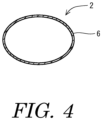
FIG. 4 is a sectional view taken along line IV-IV ofFIG. 1 . -
FIG. 5 is a front view showing the pointing device operating sleeve ofFIG. 1 together with an upper limb of a player. -
FIG. 6 is a sectional view taken along line VI-VI ofFIG. 5 . -
FIG. 7 is a front view showing, in an enlarged manner, a part of the pointing device operating sleeve ofFIG. 5 together with a hand of the player. -
FIG. 8 is a rear view showing, in an enlarged manner, a part of the pointing device operating sleeve ofFIG. 5 together with the hand of the player. -
FIG. 9 shows, in an enlarged manner, a part of the pointing device operating sleeve ofFIG. 5 together with the hand of the player. -
FIG. 10 is an enlarged sectional view of a zone that is denoted by reference sign X ofFIG. 9 . -
FIG. 11 shows, in an enlarged manner, a part of the pointing device operating sleeve ofFIG. 5 together with the hand of the player. -
FIG. 12 is an enlarged sectional view of a zone that is denoted by reference sign XII ofFIG. 11 . -
FIG. 13 is a front view showing a pointing device operating sleeve according to another embodiment together with the upper limb of the player. -
FIG. 14 is a front view showing a pointing device operating sleeve according to yet another embodiment. -
FIG. 15 is a sectional view taken along line XV-XV ofFIG. 14 . -
FIG. 16 is a front view showing, in an enlarged manner, a part of the pointing device operating sleeve ofFIG. 14 together with the hand of the player. -
FIG. 17 is a rear view showing, in an enlarged manner, a part of the pointing device operating sleeve ofFIG. 14 together with the hand of the player. - Hereinafter, preferred embodiments are described in detail with reference to the drawings as necessary.
-
FIGS. 1 to 4 show a pointingdevice operating sleeve 2, which includes apalm cover 4 and anarm cover 6. Thesleeve 2 further includes aband 8, which serves as a stopper. As described below in detail, thesleeve 2 is worn on the right upper extremity of a player. Although not illustrated, a sleeve for the left upper extremity has a shape that is left-right reversed from the shape shown inFIG. 1 . InFIG. 1 , the right side is the outside, and the left side is the inside. - It is clear from
FIG. 3 that thepalm cover 4 is tubular. Thepalm cover 4 includes afirst opening 10. Thefirst opening 10 is inclined relative to the left-right direction ofFIG. 1 (i.e., inclined relative to the width direction of the palm cover 4). Specifically, thefirst opening 10 extends to the right side in a direction upward inFIG. 1 . - It is clear from
FIG. 4 that thearm cover 6 is tubular. Thearm cover 6 is continuous with thepalm cover 4. In the present embodiment, thearm cover 6 is integrated with thepalm cover 4. Therefore, thesleeve 2 has no visible boundary between thepalm cover 4 and thearm cover 6. Thearm cover 6 includes asecond opening 12. - The
band 8 is attached to thepalm cover 4. The attachment of theband 8 to thepalm cover 4 is achieved by sewing both ends of theband 8 and their vicinities on thepalm cover 4. Theband 8 may be attached to thepalm cover 4 not by sewing, but by other means. As shown inFIG. 2 , theband 8 forms ahole 14 on thesleeve 2. -
FIG. 5 is a front view showing the pointingdevice operating sleeve 2 ofFIG. 1 together with anupper limb 16 of the player. InFIG. 5 , ahand 18 is passed through thepalm cover 4. It is clear fromFIGS. 1 and5 that the diameter of thepalm cover 4 increases from the wrist toward the fingertips. Thepalm cover 4 having such a shape fits to thehand 18. - A forearm 20 (see
FIG. 6 ) is passed through thearm cover 6. Thearm cover 6 covers theentire forearm 20. A part of anupper arm 22 is also passed through thearm cover 6. Thearm cover 6 covers the part of theupper arm 22. It is clear fromFIGS. 1 and5 that the diameter of thearm cover 6 decreases from the elbow toward the wrist. Thearm cover 6 having such a shape fits to theforearm 20. -
FIG. 7 is a front view showing, in an enlarged manner, a part of the pointingdevice operating sleeve 2 ofFIG. 5 together with thehand 18 of the player.FIG. 7 shows a back 24, athumb 26, anindex finger 28, amiddle finger 30, aring finger 32, and alittle finger 34 of thehand 18. As previously described, thefirst opening 10 is inclined relative to the width direction. Specifically, thefirst opening 10 extends from the inside to the outside in a direction toward the fingertips. InFIG. 7 , thelittle finger 34 is passed through the hole 14 (seeFIG. 2 ). Thesleeve 2 may include thehole 14 through which thering finger 32 is passable. Thesleeve 2 may include thehole 14 through which thelittle finger 34 and thering finger 32 are passable. Preferably, thesleeve 2 includes thehole 14 through which only thelittle finger 34 is passed. -
FIG. 8 is a rear view showing, in an enlarged manner, a part of the pointingdevice operating sleeve 2 ofFIG. 5 together with thehand 18 of the player.FIG. 8 shows apalm 36. InFIG. 8 ,reference sign 38 indicates a wrist crease of thepalm 36, andreference sign 39 indicates a palm heel. Thewrist crease 38 coincides with the boundary between theforearm 20 and thepalm 36. Thepalm heel 39 is positioned on the fingertip side of thewrist crease 38. It is clear fromFIG. 8 that thepalm cover 4 covers thepalm heel 39. In the present embodiment, thepalm cover 4 covers theentire palm heel 39. - In
FIG. 8 ,reference sign 40 indicates a thenar eminence. Thethenar eminence 40 is a fleshy mound on thepalm 36 at the base of thethumb 26. It is clear fromFIG. 8 that thepalm cover 4 covers a part of thethenar eminence 40. Thepalm cover 4 may cover the entirethenar eminence 40. - In
FIG. 8 ,reference sign 42 indicates a hypothenar eminence. Thehypothenar eminence 42 is a fleshy mound on thepalm 36 at the base of thelittle finger 34. It is clear fromFIG. 8 that thepalm cover 4 covers the entirehypothenar eminence 42. Thepalm cover 4 may cover a part of thehypothenar eminence 42. -
FIG. 9 shows thesleeve 2 as seen from the inside.FIG. 9 further shows thehand 18 of the player, amouse 44, and amouse pad 46.FIG. 9 shows thethumb 26, theindex finger 28, and themiddle finger 30 of thehand 18. Themouse 44 is placed over themouse pad 46. The player is holding themouse 44 with thehand 18. -
FIG. 10 is an enlarged sectional view of a zone that is denoted by reference sign X ofFIG. 9 .FIG. 10 shows thethenar eminence 40, thepalm cover 4, and themouse pad 46. It is clear fromFIG. 10 that thepalm cover 4 is present between thethenar eminence 40 and themouse pad 46. When the player moves themouse 44 intensely, thepalm cover 4 suppresses direct rubbing between thethenar eminence 40 and themouse pad 46. Thepalm cover 4 protects thethenar eminence 40. -
FIG. 11 shows thesleeve 2 as seen from the outside.FIG. 11 further shows thehand 18 of the player, themouse 44, and themouse pad 46.FIG. 11 shows themiddle finger 30, thering finger 32, and thelittle finger 34 of thehand 18. Themouse 44 is placed over themouse pad 46. The player is holding themouse 44 with thehand 18. -
FIG. 12 is an enlarged sectional view of a zone that is denoted by reference sign XII ofFIG. 11 .FIG. 12 shows thehypothenar eminence 42, thepalm cover 4, and themouse pad 46. It is clear fromFIG. 12 that thepalm cover 4 is present between thehypothenar eminence 42 and themouse pad 46. When the player moves themouse 44 intensely, thepalm cover 4 suppresses direct rubbing between thehypothenar eminence 42 and themouse pad 46. Thepalm cover 4 protects thehypothenar eminence 42. - As shown in
FIG. 11 , theband 8 is engaged with aweb 48 between thering finger 32 and thelittle finger 34. Since theband 8 is attached to thepalm cover 4, theband 8 suppresses thepalm cover 4 from moving to the left inFIG. 11 . In other words, theband 8 suppresses displacement of thepalm cover 4 from thepalm 36. Thesleeve 2 is less likely to cause exposure of thethenar eminence 40 and thehypothenar eminence 42. Further, thesleeve 2 is less likely to cause hindrance to an action made by the player, the hindrance being due to displacement of thepalm cover 4. - Since the
little finger 34 or thering finger 32 is passed through thehole 14, theband 8 is away from thethumb 26, theindex finger 28, and themiddle finger 30. Further, as previously described, thefirst opening 10 is inclined. Accordingly, as shown inFIG. 7 , each of thethumb 26, theindex finger 28, and themiddle finger 30 is entirely exposed. Thesleeve 2 does not hinder movements of thethumb 26, theindex finger 28, and themiddle finger 30 of the player. Therefore, the player can readily operate the buttons of themouse 44 with thethumb 26, theindex finger 28, or themiddle finger 30. - In
FIG. 1 , an arrow Lo represents the length of the outside of thesleeve 2, and an arrow Li represents the length of the inside of thesleeve 2. The lengths Lo and Li are measured in a manner to exclude theband 8. As previously described, thefirst opening 10 extends from the inside to the outside in a direction toward the fingertips. Accordingly, the distance Lo is greater than the distance Li. - In
FIG. 1 , an arrow D represents a height difference between the outside and the inside of thefirst opening 10. The difference D is preferably greater than or equal to 5 mm, more preferably greater than or equal to 10 mm, and particularly preferably greater than or equal to 15 mm from the viewpoints that thepalm cover 4 sufficiently protects thehypothenar eminence 42 and that thesleeve 2 is less likely to hinder movements of thethumb 26, theindex finger 28, and themiddle finger 30. The difference D is measured in a state where nothing is passed through thesleeve 2. The difference D is measured in a state where no force, except the gravitational force, is applied to thesleeve 2. - In
FIG. 1 , an arrow W indicates the width of theband 8. The width W is preferably less than or equal to 20 mm, more preferably less than or equal to 12 mm, and particularly preferably less than or equal to 8 mm from the viewpoint that theband 8 is less likely to hinder movements of thehand 18 of the player. - In the present embodiment, the material of the
arm cover 6 and the material of thepalm cover 4 are the same. Thearm cover 6 may include a material that is different from the material of thepalm cover 4. Each of thepalm cover 4 and thearm cover 6 may be obtained from a woven fabric, or may be obtained from a knitted material. - Preferably, the
palm cover 4 has elasticity. Thepalm cover 4 having elasticity fits to thehand 18 of the player. Preferable examples of the material of thepalm cover 4 include polyester, polyurethane, nylon, rayon, and acrylic. The material of thepalm cover 4 may be a mixture of a plurality of raw materials. The material of thepalm cover 4 may be spandex. - Preferably, the
arm cover 6 has elasticity. Thearm cover 6 having elasticity and an internal diameter less than the diameter of theforearm 20 of the player moderately tightens theforearm 20. Such moderate tightening can reduce fatigue of theforearm 20. Preferable examples of the material of thearm cover 6 include polyester, polyurethane, nylon, rayon, and acrylic. The material of thearm cover 6 may be a mixture of a plurality of raw materials. The material of thearm cover 6 may be spandex. - The material of the
band 8 may be an elastic material or a non-elastic material. Examples of the non-elastic material include cotton. - Preferably, the
palm cover 4 has a low frictional property. Thepalm cover 4 having a low frictional property does not hinder movements of thehand 18 of the player. Preferably, thepalm cover 4 is more slidable against themouse pad 46 than the hand 18 (i.e., human skin) is. - Preferably, the
arm cover 6 has a low frictional property. Thearm cover 6 having a low frictional property does not hinder movements of theforearm 20 of the player. Preferably, thearm cover 6 is more slidable against themouse pad 46 than the forearm 20 (i.e., human skin) is. Preferably, thearm cover 6 is more slidable against a table than the forearm 20 (i.e., human skin) is. - E-sports players can be roughly categorized, based on their play style, into low sensitivity players and high sensitivity players. A low sensitivity player operates the
mouse 44 in a state where the heel of thepalm 36, the vicinity of the heel of thepalm 36, and theforearm 20 are placed on themouse pad 46. In a case where thepalm cover 4 or thearm cover 6 of thesleeve 2 has a low frictional property, thesleeve 2 is useful for the low sensitivity player. - Each of the
palm cover 4 and thearm cover 6 may be formed of a sweat-absorbing material. Thesleeve 2 including the sweat-absorbing material can reduce the influence of sweat on mouse operation. Thissleeve 2 can also contribute to the player's performance in e-sports competitions. Each of thepalm cover 4 and thearm cover 6 may be formed of a sweatimpermeable material. - The
band 8 may be attached to thepalm cover 4 by a hook-and-loop fastener. Theband 8 thus configured is attachable to and detachable from thepalm cover 4. The player can wear thesleeve 2 in a state where theband 8 is detached from thepalm cover 4. Further, the player can adjust an attachment position where theband 8 is attached to thepalm cover 4 to make thehole 14 be in a desired size. Theband 8 attachable to and detachable from thepalm cover 4 may be realized by different means other than the hook-and-loop fastener. - The
sleeve 2 is also suitable for operating a pointing device different from themouse 44. For example, thesleeve 2 is also suitable for operating a stick and a track ball. -
FIG. 13 is a front view showing a pointingdevice operating sleeve 50 according to another embodiment together with theupper limb 16 of the player. Thesleeve 50 includes apalm cover 54, anarm cover 56, and aband 58. The structure of thepalm cover 54 is the same as the structure of thepalm cover 4 of thesleeve 2 shown inFIG. 5 . The structure of theband 58 is the same as the structure of theband 8 of thesleeve 2 shown inFIG. 5 . - It is clear from the comparison of
FIG. 5 andFIG. 13 that thearm cover 56 inFIG. 13 is shorter. Thearm cover 56 covers a part of theforearm 20. Thearm cover 56 does not cover theupper arm 22. Thesleeve 50 can also contribute to the protection of thethenar eminence 40 and thehypothenar eminence 42. Thesleeve 50 can also contribute to the slidability of thehand 18 and theforearm 20 of the player. -
FIG. 14 is a front view showing a pointingdevice operating sleeve 60 according to yet another embodiment, andFIG. 15 is a sectional view taken along line XV-XV ofFIG. 14 . Thesleeve 60 includes apalm cover 62 and anarm cover 64. The structure of thepalm cover 62 is the same as the structure of thepalm cover 4 of thesleeve 2 shown inFIG. 5 . The structure of thearm cover 64 is the same as the structure of thearm cover 6 of thesleeve 2 shown inFIG. 5 . - The
sleeve 60 further includes atube 66 as a stopper. Thetube 66 is integrated with thepalm cover 62. As shown inFIG. 15 , thetube 66 includes ahole 68. -
FIG. 16 is a front view showing, in an enlarged manner, a part of thesleeve 60 ofFIG. 14 together with thehand 18 of the player, andFIG. 17 is a rear view thereof. InFIGS. 16 and17 , thelittle finger 34 is passed through the hole 68 (seeFIG. 15 ). Thetube 66 covers a part of thelittle finger 34. Since thetube 66 is integrated with thepalm cover 62, thetube 66 suppresses displacement of thepalm cover 62 from the palm. Thesleeve 60 may include thehole 68 through which thering finger 32 is passable. Thesleeve 60 may include thehole 68 through which thelittle finger 34 and thering finger 32 are passable. Preferably, thesleeve 60 includes thehole 68 through which only thelittle finger 34 is passed. - It is clear from
FIG. 17 that thepalm cover 62 covers theentire palm heel 39. Thepalm cover 62 further covers a part of thethenar eminence 40 and the entirehypothenar eminence 42. Thepalm cover 62 protects thethenar eminence 40 and thehypothenar eminence 42. Thepalm cover 62 may cover the entirethenar eminence 40. Thepalm cover 62 may cover a part of thehypothenar eminence 42. - Hereinafter, advantageous effects of the present invention will become apparent according to Examples. However, the present invention should not be restrictively construed based on the description of these Examples.
- The pointing device operating sleeve shown in
FIGS. 1 to 12 was obtained. The sleeve includes the band as a stopper. The dimensions of the sleeve were as shown below. - Distance Lo: 400 mm
- Distance Li: 370 mm
- Difference D: 30 mm
- Width W: 8 mm
- A sleeve of Example 2 was obtained in the same manner as Example 1, except that the structure shown in
FIGS. 14 to 17 was adopted as the structure of the stopper. - A sleeve of Comparative Example was obtained in the same manner as Example 1, except that the sleeve was provided with no stopper.
- A low sensitivity player wore each sleeve and played an e-sport (a shooting game). A displacement of the sleeve was observed in Comparative Example, but no displacement of the sleeve was observed in Examples 1 and 2. The player evaluated the sleeve of Example 1 as "least hindering to the play". This result clearly indicates the superiority of the sleeve according to each Example.
- The following items each disclose a preferred embodiment.
- A pointing device operating sleeve including: a palm cover configured to cover a heel of a palm; an arm cover configured to cover at least a part of a forearm, the arm cover being continuous with the palm cover; and a stopper that suppresses displacement of the palm cover from the palm.
- The sleeve according to item 1, wherein the palm cover is configured to cover at least a part of a thenar eminence of the palm and at least a part of a hypothenar eminence of the palm.
- The sleeve according to
item 1 or 2, wherein the stopper forms a hole through which a little finger or a ring finger is passable. - The sleeve according to any one of items 1 to 3, wherein the palm cover is tubular, and a diameter of the palm cover increases from a wrist toward fingertips.
- The sleeve according to any one of items 1 to 4, wherein the arm cover is tubular, and a diameter of the arm cover decreases from an elbow toward a wrist.
- The sleeve according to any one of items 1 to 5, wherein the arm cover is configured to cover at least a part of an upper arm.
- The sleeve according to any one of items 1 to 6, wherein the palm cover or the arm cover has elasticity.
- The sleeve according to any one of items 1 to 7, wherein the palm cover or the arm cover has a low frictional property.
- The sleeve according to any one of items 1 to 8, wherein a length of an outside of the sleeve is greater than a length of an inside of the sleeve.
- The sleeve according to any one of items 1 to 9, wherein the palm cover includes an opening, and the opening extends from an inside of the sleeve to an outside of the sleeve in a direction toward fingertips.
- The sleeve according to
item 10, wherein a height difference D between the outside and the inside of the opening is greater than or equal to 5 mm. - The sleeve according to any one of items 1 to 11, wherein the stopper is attachable to and detachable from the palm cover.
- The above-described sleeve is suitable for use by various e-sports players. This sleeve is also suitable for use in different applications other than e-sports.
-
- 2
- sleeve
- 4
- palm cover
- 6
- arm cover
- 8
- band
- 10
- first opening
- 12
- second opening
- 14
- hole
- 32
- ring finger
- 34
- little finger
- 38
- wrist crease
- 39
- palm heel
- 40
- thenar eminence
- 42
- hypothenar eminence
- 50
- sleeve
- 54
- palm cover
- 56
- arm cover
- 58
- band
- 60
- sleeve
- 62
- palm cover
- 64
- arm cover
- 66
- tube
- 68
- hole
Claims (12)
- A pointing device operating sleeve comprising:a palm cover configured to cover a heel of a palm;an arm cover configured to cover at least a part of a forearm, the arm cover being continuous with the palm cover; anda stopper that suppresses displacement of the palm cover from the palm.
- The sleeve according to claim 1, wherein
the palm cover is configured to cover at least a part of a thenar eminence of the palm and at least a part of a hypothenar eminence of the palm. - The sleeve according to claim 1 or 2, wherein
the stopper forms a hole through which a little finger or a ring finger is passable. - The sleeve according to any one of claims 1 to 3, wherein
the palm cover is tubular, and a diameter of the palm cover increases from a wrist toward fingertips. - The sleeve according to any one of claims 1 to 4, wherein
the arm cover is tubular, and a diameter of the arm cover decreases from an elbow toward a wrist. - The sleeve according to any one of claims 1 to 5, wherein
the arm cover is configured to cover at least a part of an upper arm. - The sleeve according to any one of claims 1 to 6, wherein
the palm cover or the arm cover has elasticity. - The sleeve according to any one of claims 1 to 7, wherein
the palm cover or the arm cover has a low frictional property. - The sleeve according to any one of claims 1 to 8, wherein
a length of an outside of the sleeve is greater than a length of an inside of the sleeve. - The sleeve according to any one of claims 1 to 9, whereinthe palm cover includes an opening, andthe opening extends from an inside of the sleeve to an outside of the sleeve in a direction toward fingertips.
- The sleeve according to claim 10, wherein
a height difference D between the outside and the inside of the opening is greater than or equal to 5 mm. - The sleeve according to any one of claims 1 to 11, wherein
the stopper is attachable to and detachable from the palm cover.
Applications Claiming Priority (2)
| Application Number | Priority Date | Filing Date | Title |
|---|---|---|---|
| JP2022008475A JP2023107330A (en) | 2022-01-24 | 2022-01-24 | Sleeve for pointing device operation |
| PCT/JP2023/000068 WO2023140113A1 (en) | 2022-01-24 | 2023-01-05 | Sleeve for operating pointing devices |
Publications (2)
| Publication Number | Publication Date |
|---|---|
| EP4459441A1 true EP4459441A1 (en) | 2024-11-06 |
| EP4459441A4 EP4459441A4 (en) | 2025-04-02 |
Family
ID=87348699
Family Applications (1)
| Application Number | Title | Priority Date | Filing Date |
|---|---|---|---|
| EP23743109.3A Pending EP4459441A4 (en) | 2022-01-24 | 2023-01-05 | SLEEVE FOR OPERATING POINTING DEVICES |
Country Status (5)
| Country | Link |
|---|---|
| US (1) | US12373042B2 (en) |
| EP (1) | EP4459441A4 (en) |
| JP (1) | JP2023107330A (en) |
| KR (1) | KR20240134928A (en) |
| WO (1) | WO2023140113A1 (en) |
Families Citing this family (1)
| Publication number | Priority date | Publication date | Assignee | Title |
|---|---|---|---|---|
| JP2024043654A (en) * | 2022-09-20 | 2024-04-02 | 住友ゴム工業株式会社 | Sleeve for pointing device operation |
Family Cites Families (15)
| Publication number | Priority date | Publication date | Assignee | Title |
|---|---|---|---|---|
| CH589447A5 (en) * | 1975-03-14 | 1977-07-15 | Eschmann Peter | |
| JP2000282312A (en) * | 1999-03-30 | 2000-10-10 | Koji Ariki | Gloves |
| JP2001034412A (en) * | 1999-07-26 | 2001-02-09 | Isao Minamii | Supporter for operation of mouse for personal computer |
| JP2001265529A (en) | 2000-03-16 | 2001-09-28 | Nitto Kogyo Co Ltd | Protection tool for mouse operation of personal computer and mouse with protection tool |
| JP3109309U (en) * | 2004-08-12 | 2005-05-19 | 和彦 横矢 | PC mouse protector |
| US7537577B2 (en) * | 2005-01-03 | 2009-05-26 | Carolyn Hoyne Phelan | Low-profile, radial nerve splint with interchangeable resilient digit extensor elements and supination adjustment means |
| JP4313380B2 (en) * | 2006-06-30 | 2009-08-12 | 有限会社エイト | Professional gloves |
| JP2012133738A (en) * | 2010-12-17 | 2012-07-12 | Takayuki Iso | Slide plate for making operation with personal computer mouse smooth |
| JP6426384B2 (en) * | 2013-07-10 | 2018-11-21 | 上原 京正 | Holder and protective hand fitting |
| TW201937349A (en) * | 2018-02-13 | 2019-09-16 | 瑞典商費雷許遊戲集團有限公司 | Device for increasing performance, comfort and/or preventing injury of a user of a computer mouse |
| JP2020037756A (en) * | 2018-09-05 | 2020-03-12 | 裕子 増山 | PC wrist, forearm protection cover |
| JP2021025153A (en) * | 2019-08-04 | 2021-02-22 | 株式会社904 | Arm cover |
| KR20200063111A (en) | 2020-05-17 | 2020-06-04 | 구정민 | Gloves For Digital Drawing |
| SE546094C2 (en) * | 2020-06-25 | 2024-05-21 | Flashe Gaming Group Ab | Elastic low friction gaming sleeve |
| EP4188525A1 (en) * | 2020-07-30 | 2023-06-07 | Battelle Memorial Institute | Stretchable fabric sleeve for functional electrical stimulation and/or electromyography |
-
2022
- 2022-01-24 JP JP2022008475A patent/JP2023107330A/en active Pending
-
2023
- 2023-01-05 EP EP23743109.3A patent/EP4459441A4/en active Pending
- 2023-01-05 US US18/724,141 patent/US12373042B2/en active Active
- 2023-01-05 KR KR1020247026013A patent/KR20240134928A/en active Pending
- 2023-01-05 WO PCT/JP2023/000068 patent/WO2023140113A1/en not_active Ceased
Also Published As
| Publication number | Publication date |
|---|---|
| KR20240134928A (en) | 2024-09-10 |
| US12373042B2 (en) | 2025-07-29 |
| WO2023140113A1 (en) | 2023-07-27 |
| US20250060840A1 (en) | 2025-02-20 |
| EP4459441A4 (en) | 2025-04-02 |
| JP2023107330A (en) | 2023-08-03 |
Similar Documents
| Publication | Publication Date | Title |
|---|---|---|
| US6009557A (en) | Video game control glove | |
| US5511242A (en) | Protective sports glove | |
| CN207653644U (en) | Gloves | |
| US8341767B2 (en) | Protective glove having contoured wrist guard | |
| US5557803A (en) | Shock absorbent protective glove | |
| US7318241B2 (en) | Padded sports glove having improved flexibility and breathability | |
| CA2328337C (en) | Protective sporting glove | |
| CA2919472C (en) | Sports glove with inverted finger pads | |
| US6643844B2 (en) | Lacrosse goalie glove | |
| CA2751338C (en) | Lacrosse glove having reinforced fingers | |
| US6990690B2 (en) | Lacrosse glove | |
| US7620999B2 (en) | Trigger finger protective glove | |
| US20190387821A1 (en) | Article for improved grip and protection in athletics | |
| US8719963B2 (en) | Protective glove having segmented wrist guard | |
| CA2714313A1 (en) | Protective athletic glove | |
| US12373042B2 (en) | Pointing device operating sleeve | |
| US20090113592A1 (en) | Shock absorber for sports | |
| US20110173733A1 (en) | Hand wrist and forearm protection glove | |
| NO340139B1 (en) | Sports glove with wrist protection | |
| US20170173441A1 (en) | Sports glove | |
| CA2852819A1 (en) | Sports glove with an adjustable cuff | |
| US20150314189A1 (en) | Fitted wrist protective glove | |
| EP4579402A1 (en) | Sleeve for operating pointing devices | |
| CN206744656U (en) | Gloves for game | |
| EP2830727B1 (en) | Baseball glove with floating pad fit adjustment |
Legal Events
| Date | Code | Title | Description |
|---|---|---|---|
| STAA | Information on the status of an ep patent application or granted ep patent |
Free format text: STATUS: THE INTERNATIONAL PUBLICATION HAS BEEN MADE |
|
| PUAI | Public reference made under article 153(3) epc to a published international application that has entered the european phase |
Free format text: ORIGINAL CODE: 0009012 |
|
| STAA | Information on the status of an ep patent application or granted ep patent |
Free format text: STATUS: REQUEST FOR EXAMINATION WAS MADE |
|
| 17P | Request for examination filed |
Effective date: 20240730 |
|
| AK | Designated contracting states |
Kind code of ref document: A1 Designated state(s): AL AT BE BG CH CY CZ DE DK EE ES FI FR GB GR HR HU IE IS IT LI LT LU LV MC ME MK MT NL NO PL PT RO RS SE SI SK SM TR |
|
| A4 | Supplementary search report drawn up and despatched |
Effective date: 20250303 |
|
| RIC1 | Information provided on ipc code assigned before grant |
Ipc: G06F 3/01 20060101ALI20250226BHEP Ipc: A41D 19/015 20060101ALI20250226BHEP Ipc: A41D 13/08 20060101ALI20250226BHEP Ipc: G06F 3/039 20130101AFI20250226BHEP |
|
| P01 | Opt-out of the competence of the unified patent court (upc) registered |
Free format text: CASE NUMBER: APP_12432/2025 Effective date: 20250313 |
|
| DAV | Request for validation of the european patent (deleted) | ||
| DAX | Request for extension of the european patent (deleted) |