EP4459268A1 - Battery failure detection device, method, and system - Google Patents
Battery failure detection device, method, and system Download PDFInfo
- Publication number
- EP4459268A1 EP4459268A1 EP23763697.2A EP23763697A EP4459268A1 EP 4459268 A1 EP4459268 A1 EP 4459268A1 EP 23763697 A EP23763697 A EP 23763697A EP 4459268 A1 EP4459268 A1 EP 4459268A1
- Authority
- EP
- European Patent Office
- Prior art keywords
- image
- defect detection
- data
- subject product
- artificial intelligence
- Prior art date
- Legal status (The legal status is an assumption and is not a legal conclusion. Google has not performed a legal analysis and makes no representation as to the accuracy of the status listed.)
- Granted
Links
Images





Classifications
-
- G—PHYSICS
- G01—MEASURING; TESTING
- G01N—INVESTIGATING OR ANALYSING MATERIALS BY DETERMINING THEIR CHEMICAL OR PHYSICAL PROPERTIES
- G01N21/00—Investigating or analysing materials by the use of optical means, i.e. using sub-millimetre waves, infrared, visible or ultraviolet light
- G01N21/84—Systems specially adapted for particular applications
- G01N21/88—Investigating the presence of flaws or contamination
- G01N21/8851—Scan or image signal processing specially adapted therefor, e.g. for scan signal adjustment, for detecting different kinds of defects, for compensating for structures, markings, edges
-
- G—PHYSICS
- G01—MEASURING; TESTING
- G01N—INVESTIGATING OR ANALYSING MATERIALS BY DETERMINING THEIR CHEMICAL OR PHYSICAL PROPERTIES
- G01N21/00—Investigating or analysing materials by the use of optical means, i.e. using sub-millimetre waves, infrared, visible or ultraviolet light
- G01N21/84—Systems specially adapted for particular applications
- G01N21/88—Investigating the presence of flaws or contamination
-
- G—PHYSICS
- G01—MEASURING; TESTING
- G01N—INVESTIGATING OR ANALYSING MATERIALS BY DETERMINING THEIR CHEMICAL OR PHYSICAL PROPERTIES
- G01N21/00—Investigating or analysing materials by the use of optical means, i.e. using sub-millimetre waves, infrared, visible or ultraviolet light
- G01N21/84—Systems specially adapted for particular applications
- G01N21/88—Investigating the presence of flaws or contamination
- G01N21/95—Investigating the presence of flaws or contamination characterised by the material or shape of the object to be examined
-
- G—PHYSICS
- G06—COMPUTING OR CALCULATING; COUNTING
- G06N—COMPUTING ARRANGEMENTS BASED ON SPECIFIC COMPUTATIONAL MODELS
- G06N3/00—Computing arrangements based on biological models
- G06N3/02—Neural networks
- G06N3/04—Architecture, e.g. interconnection topology
-
- G—PHYSICS
- G06—COMPUTING OR CALCULATING; COUNTING
- G06N—COMPUTING ARRANGEMENTS BASED ON SPECIFIC COMPUTATIONAL MODELS
- G06N3/00—Computing arrangements based on biological models
- G06N3/02—Neural networks
- G06N3/04—Architecture, e.g. interconnection topology
- G06N3/045—Combinations of networks
-
- G—PHYSICS
- G06—COMPUTING OR CALCULATING; COUNTING
- G06N—COMPUTING ARRANGEMENTS BASED ON SPECIFIC COMPUTATIONAL MODELS
- G06N3/00—Computing arrangements based on biological models
- G06N3/02—Neural networks
- G06N3/08—Learning methods
-
- G—PHYSICS
- G06—COMPUTING OR CALCULATING; COUNTING
- G06T—IMAGE DATA PROCESSING OR GENERATION, IN GENERAL
- G06T7/00—Image analysis
-
- G—PHYSICS
- G06—COMPUTING OR CALCULATING; COUNTING
- G06T—IMAGE DATA PROCESSING OR GENERATION, IN GENERAL
- G06T7/00—Image analysis
- G06T7/0002—Inspection of images, e.g. flaw detection
- G06T7/0004—Industrial image inspection
-
- G—PHYSICS
- G06—COMPUTING OR CALCULATING; COUNTING
- G06T—IMAGE DATA PROCESSING OR GENERATION, IN GENERAL
- G06T7/00—Image analysis
- G06T7/0002—Inspection of images, e.g. flaw detection
- G06T7/0004—Industrial image inspection
- G06T7/001—Industrial image inspection using an image reference approach
-
- G—PHYSICS
- G06—COMPUTING OR CALCULATING; COUNTING
- G06V—IMAGE OR VIDEO RECOGNITION OR UNDERSTANDING
- G06V20/00—Scenes; Scene-specific elements
- G06V20/50—Context or environment of the image
- G06V20/52—Surveillance or monitoring of activities, e.g. for recognising suspicious objects
-
- H—ELECTRICITY
- H01—ELECTRIC ELEMENTS
- H01M—PROCESSES OR MEANS, e.g. BATTERIES, FOR THE DIRECT CONVERSION OF CHEMICAL ENERGY INTO ELECTRICAL ENERGY
- H01M10/00—Secondary cells; Manufacture thereof
- H01M10/42—Methods or arrangements for servicing or maintenance of secondary cells or secondary half-cells
- H01M10/425—Structural combination with electronic components, e.g. electronic circuits integrated to the outside of the casing
-
- H—ELECTRICITY
- H01—ELECTRIC ELEMENTS
- H01M—PROCESSES OR MEANS, e.g. BATTERIES, FOR THE DIRECT CONVERSION OF CHEMICAL ENERGY INTO ELECTRICAL ENERGY
- H01M10/00—Secondary cells; Manufacture thereof
- H01M10/42—Methods or arrangements for servicing or maintenance of secondary cells or secondary half-cells
- H01M10/48—Accumulators combined with arrangements for measuring, testing or indicating the condition of cells, e.g. the level or density of the electrolyte
-
- G—PHYSICS
- G01—MEASURING; TESTING
- G01N—INVESTIGATING OR ANALYSING MATERIALS BY DETERMINING THEIR CHEMICAL OR PHYSICAL PROPERTIES
- G01N21/00—Investigating or analysing materials by the use of optical means, i.e. using sub-millimetre waves, infrared, visible or ultraviolet light
- G01N21/84—Systems specially adapted for particular applications
- G01N21/88—Investigating the presence of flaws or contamination
- G01N21/8851—Scan or image signal processing specially adapted therefor, e.g. for scan signal adjustment, for detecting different kinds of defects, for compensating for structures, markings, edges
- G01N2021/8854—Grading and classifying of flaws
-
- G—PHYSICS
- G01—MEASURING; TESTING
- G01N—INVESTIGATING OR ANALYSING MATERIALS BY DETERMINING THEIR CHEMICAL OR PHYSICAL PROPERTIES
- G01N21/00—Investigating or analysing materials by the use of optical means, i.e. using sub-millimetre waves, infrared, visible or ultraviolet light
- G01N21/84—Systems specially adapted for particular applications
- G01N21/88—Investigating the presence of flaws or contamination
- G01N21/8851—Scan or image signal processing specially adapted therefor, e.g. for scan signal adjustment, for detecting different kinds of defects, for compensating for structures, markings, edges
- G01N2021/8883—Scan or image signal processing specially adapted therefor, e.g. for scan signal adjustment, for detecting different kinds of defects, for compensating for structures, markings, edges involving the calculation of gauges, generating models
-
- G—PHYSICS
- G01—MEASURING; TESTING
- G01N—INVESTIGATING OR ANALYSING MATERIALS BY DETERMINING THEIR CHEMICAL OR PHYSICAL PROPERTIES
- G01N21/00—Investigating or analysing materials by the use of optical means, i.e. using sub-millimetre waves, infrared, visible or ultraviolet light
- G01N21/84—Systems specially adapted for particular applications
- G01N21/88—Investigating the presence of flaws or contamination
- G01N21/8851—Scan or image signal processing specially adapted therefor, e.g. for scan signal adjustment, for detecting different kinds of defects, for compensating for structures, markings, edges
- G01N2021/8887—Scan or image signal processing specially adapted therefor, e.g. for scan signal adjustment, for detecting different kinds of defects, for compensating for structures, markings, edges based on image processing techniques
-
- G—PHYSICS
- G06—COMPUTING OR CALCULATING; COUNTING
- G06T—IMAGE DATA PROCESSING OR GENERATION, IN GENERAL
- G06T2207/00—Indexing scheme for image analysis or image enhancement
- G06T2207/20—Special algorithmic details
- G06T2207/20081—Training; Learning
-
- G—PHYSICS
- G06—COMPUTING OR CALCULATING; COUNTING
- G06T—IMAGE DATA PROCESSING OR GENERATION, IN GENERAL
- G06T2207/00—Indexing scheme for image analysis or image enhancement
- G06T2207/20—Special algorithmic details
- G06T2207/20084—Artificial neural networks [ANN]
-
- H—ELECTRICITY
- H01—ELECTRIC ELEMENTS
- H01M—PROCESSES OR MEANS, e.g. BATTERIES, FOR THE DIRECT CONVERSION OF CHEMICAL ENERGY INTO ELECTRICAL ENERGY
- H01M10/00—Secondary cells; Manufacture thereof
- H01M10/42—Methods or arrangements for servicing or maintenance of secondary cells or secondary half-cells
- H01M10/425—Structural combination with electronic components, e.g. electronic circuits integrated to the outside of the casing
- H01M2010/4271—Battery management systems including electronic circuits, e.g. control of current or voltage to keep battery in healthy state, cell balancing
-
- H—ELECTRICITY
- H01—ELECTRIC ELEMENTS
- H01M—PROCESSES OR MEANS, e.g. BATTERIES, FOR THE DIRECT CONVERSION OF CHEMICAL ENERGY INTO ELECTRICAL ENERGY
- H01M50/00—Constructional details or processes of manufacture of the non-active parts of electrochemical cells other than fuel cells, e.g. hybrid cells
- H01M50/10—Primary casings; Jackets or wrappings
- H01M50/102—Primary casings; Jackets or wrappings characterised by their shape or physical structure
- H01M50/105—Pouches or flexible bags
Definitions
- Embodiments disclosed herein relate to a battery defect detection apparatus, method, and system.
- an appearance defect of a battery pouch e.g., pressed edges, dents, scratches, wrinkles, electrolyte contamination, etc.
- the appearance defect of the pouch may affect the reliability and/or safety of a battery, it is important to detect a defect of the battery (e.g., the pouch) before distribution of the battery.
- a generally-used appearance inspector collects and learns each image of a good product type and a defective product type and inspects whether there is an appearance defect for a battery having undergone manufacturing and assembly processes.
- a defect of a new type rather than an existing learned type occurs, a battery may be determined as a good product.
- a rate of a defect of a new type is low, making it difficult to collect a defective product image suitable for learning of the appearance inspector.
- the present disclosure aims to prevent defect leakage by supplementing detection uncertainty of a new defect type.
- Other objects and advantages of the present disclosure may be understood by the following description, and will be more clearly understood by embodiments of the present disclosure.
- the object and advantages of the disclosure may be implemented by means provided in the claims and a combination thereof.
- a battery defect detection apparatus includes a communication module, a processor, and a memory configured to store a first artificial intelligence model, a second artificial intelligence model, and instructions, wherein the instructions cause, when executed by the processor, the battery defect detection apparatus, to obtain an image of a subject product by using the communication module, input the image of the subject product to the first artificial intelligence model to classify the subject product, and input the image of the subject product to the second artificial intelligence model to determine whether the image of the subject product corresponds to first data for classifying the subject product as normal among learning data of the first artificial intelligence model, when the subject product is classified as normal.
- the instructions may cause, when executed by the processor, the battery defect detection apparatus, to re-classify the subject product as defective when the image does not correspond to the first data.
- the instructions may cause, when executed by the processor, the battery defect detection apparatus, to determine the image as second data for classifying the subject product as defective, when the image does not correspond to the first data.
- the instructions may cause, when executed by the processor, the battery defect detection apparatus, to train the first artificial intelligence model based on the second data.
- the image of the subject product may be obtained by an image obtaining device through multiple channels.
- the instructions may cause, when executed by the processor, the battery defect detection apparatus, to obtain a similarity between the image and the first data through the second artificial intelligence model and re-classify the subject product as defective or normal based on the similarity.
- the instructions may cause, when executed by the processor, the battery defect detection apparatus, to determine the image as second data for classifying the subject product as defective, when the similarity of the image is less than a preset reference value.
- the instructions may cause, when executed by the processor, the battery defect detection apparatus, to train the first artificial intelligence model based on the second data.
- a battery defect detection method includes obtaining an image of a subject product, inputting the image of the subject product to the first artificial intelligence model to classify the subject product, and inputting the image of the subject product to the second artificial intelligence model to determine whether the image of the subject product corresponds to first data for classifying the subject product as normal among learning data of the first artificial intelligence model, when the subject product is classified as normal.
- the battery defect detection method may further include re-classifying the subject product as defective when the image does not correspond to the first data.
- the battery defect detection method may further include determining the image as second data for classifying the subject product as defective, when the image does not correspond to the first data.
- the battery defect detection method may further include training the first artificial intelligence model based on the second data.
- the image of the subject product may be obtained by an image obtaining device through multiple channels.
- the battery defect detection method may further include obtaining a similarity between the image and the first data through the second artificial intelligence model and re-classifying the subject product as defective or normal based on the similarity.
- the battery defect detection method may further include determining the image as second data for classifying the subject product as defective, when the similarity of the image is less than a preset reference value.
- the battery defect detection method may further include training the first artificial intelligence model based on the second data.
- a battery defect detection system includes a battery defect detection apparatus configured to obtain an image of a subject product and classify the subject product by using a first artificial intelligence model trained using the image of the subject product and previously stored learning data and a new defect detection device configured to input the image of the subject product to the second artificial intelligence model to determine whether the image of the subject product corresponds to first data for classifying the subject product as normal among the learning data of the first artificial intelligence model, when the subject product is classified as normal.
- a battery defect detection apparatus may detect a defective product of a new type not included in previously stored learning data, thereby preventing leakage of defective products.
- the battery defect detection apparatus may learn an image of a defective product of a new type, thereby improving a precision of defect detection.
- a battery defect detection system may use a new defect detection apparatus in addition to an existing defect detection apparatus together, thereby improving convenience in introduction of the new defect defection apparatus.
- each of such phrases as “A or B,” “at least one of A and B,” “at least one of A or B,” “A, B, or C,” “at least one of A, B, and C,” and “at least one of A, B, or C,” may include any one of, or all possible combinations of the items enumerated together in a corresponding one of the phrases.
- Such terms as “1 st “, “2 nd ,” “first”, “second”, “A”, “B”, “(a)”, or “(b)” may be used to simply distinguish a corresponding component from another, and does not limit the components in other aspect (e.g., importance or order), unless mentioned otherwise.
- a method may be included and provided in a computer program product.
- the computer program product may be traded as a product between a seller and a buyer.
- the computer program product may be distributed in the form of a machine-readable storage medium (e.g., compact disc read only memory (CD-ROM)), or be distributed (e.g., downloaded or uploaded) online via an application store, or between two user devices directly. If distributed online, at least part of the computer program product may be temporarily generated or at least temporarily stored in the machine-readable storage medium, such as memory of the manufacturer's server, a server of the application store, or a relay server.
- CD-ROM compact disc read only memory
- each component e.g., a module or a program of the above-described components may include a single entity or multiple entities, and some of the multiple entities may be separately disposed in different components. According to various embodiments, one or more of the above-described components may be omitted, or one or more other components may be added. Alternatively or additionally, a plurality of components (e.g., modules or programs) may be integrated into a single component. In such a case, according to various embodiments, the integrated component may still perform one or more functions of each of the plurality of components in the same or similar manner as they are performed by a corresponding one of the plurality of components before the integration.
- operations performed by the module, the program, or another component may be carried out sequentially, in parallel, repeatedly, or heuristically, or one or more of the operations may be executed in a different order or omitted, or one or more other operations may be added.
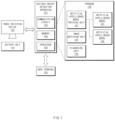
- FIG. 1 is a view showing a battery defect detection apparatus according to an embodiment disclosed herein.
- a battery defect detection apparatus 101 may be wiredly and/or wirelessly connected to an image obtaining device 103 and a user terminal 105.
- connection between the battery defect detection apparatus 101 and the image obtaining device 103 may be communication connection through a wired and/or wireless network.
- the wired network may be based on a local area network (LAN) communication or a power-line communication.
- the wireless network may be based on a short-range communication network (e.g., Bluetooth, Wireless Fidelity (WiFi), or Infrared Data Association (IrDA)) or a remote-range communication network (e.g., a cellular network, a 4 th -Generation (4G) network, a 5 th -Generation (5G) network).
- a short-range communication network e.g., Bluetooth, Wireless Fidelity (WiFi), or Infrared Data Association (IrDA)
- a remote-range communication network e.g., a cellular network, a 4 th -Generation (4G) network, a 5 th -Generation (5G) network.
- connection between the battery abnormality diagnosis apparatus 101 and the image obtaining device 103 may be connection using a device-to-device communication scheme (e.g., a bus, a general-purpose input and output (GPIO), a serial peripheral interface (SPI), or a mobile industry processor interface (MIPI)).
- a device-to-device communication scheme e.g., a bus, a general-purpose input and output (GPIO), a serial peripheral interface (SPI), or a mobile industry processor interface (MIPI)
- connection between the battery abnormality diagnosis apparatus 101 and the user terminal 105 may be communication connection through a wired and/or wireless network.
- the image obtaining device 103 may obtain an image of a subject product (e.g., a battery unit 115).
- the subject product e.g., the battery unit 115
- the secondary battery may include a pouch-type secondary battery, a prismatic secondary battery, and/or a cylindrical secondary battery.
- the image obtaining device 103 may obtain an image of the subject product by photographing the subject product. According to an embodiment, the image obtaining device 103 may be implemented as a camera. According to an embodiment, the image obtaining device 103 may obtain the image of the subject product through multiple channels.
- the user terminal 105 may be a mobile device (e.g., a mobile phone, a laptop computer, a smart phone, a smart pad), or a personal computer (PC). In an embodiment, the user terminal 105 may be a terminal used by a manager of the battery defect detection apparatus 101.
- a mobile device e.g., a mobile phone, a laptop computer, a smart phone, a smart pad
- PC personal computer
- the user terminal 105 may be a terminal used by a manager of the battery defect detection apparatus 101.
- the battery defect detection apparatus 101 may include a communication circuit 120, a memory 140, and a processor 150. According to an embodiment, the battery defect detection apparatus 101 shown in FIG. 1 may further include at least one component (e.g., a display, an input device, or an output device) in addition to components shown in FIG. 1 .
- a component e.g., a display, an input device, or an output device
- the communication circuit 120 may establish a wired communication channel and/or a wireless communication channel between the battery defect detection apparatus 101 and the image obtaining device 103 and/or the user terminal 105, and transmit and receive data to and from the image obtaining device 103 and/or the user terminal 105 through the established communication channel.
- the memory 140 may include a volatile and/or a nonvolatile memory.
- the memory 140 may store data used by at least one component (e.g., the processor 150) of the battery defect detection apparatus 101.
- the data may include a program 130 (or an instruction related thereto), input data, or output data.
- the instruction when executed by the processor 150, may cause the battery defect detection apparatus 101 to perform operations defined by the instruction.
- the program 130 may include one or more software (e.g., an artificial intelligence model training unit 141, an image obtaining unit 143, a diagnosing unit 145, and one or more artificial intelligence models 161 and 165).
- software e.g., an artificial intelligence model training unit 141, an image obtaining unit 143, a diagnosing unit 145, and one or more artificial intelligence models 161 and 165.
- the processor 150 may include a central processing unit, an application processor, a graphic processing unit, a neural processing unit (NPU), an image signal processor, a sensor hub processor, or a communication processor.
- a central processing unit an application processor, a graphic processing unit, a neural processing unit (NPU), an image signal processor, a sensor hub processor, or a communication processor.
- NPU neural processing unit
- image signal processor a sensor hub processor
- communication processor a communication processor.
- the processor 150 may execute software (e.g., the artificial intelligence model training unit 141, the image obtaining unit 143, the diagnosing unit 145, an abnormality processing unit 147, a pre-processing unit 149, and the one or more artificial intelligence models 161 and 165) to control at least one other component (e.g., a hardware or software component) of the battery defect detection apparatus 101 connected to the processor 150 and perform various data processing or operations.
- software e.g., the artificial intelligence model training unit 141, the image obtaining unit 143, the diagnosing unit 145, an abnormality processing unit 147, a pre-processing unit 149, and the one or more artificial intelligence models 161 and 165
- the processor 150 may execute software (e.g., the artificial intelligence model training unit 141, the image obtaining unit 143, the diagnosing unit 145, an abnormality processing unit 147, a pre-processing unit 149, and the one or more artificial intelligence models 161 and 165) to control at least one other component (e.g.,
- the battery defect detection apparatus 101 to diagnose abnormality of a subject product (e.g., the battery unit 115) through the artificial intelligence model training unit 141, the image obtaining unit 143, the diagnosing unit 145, and the one or more artificial intelligence models 161 and 165.
- a subject product e.g., the battery unit 115
- the artificial intelligence model training unit 141 the image obtaining unit 143
- the diagnosing unit 145 the one or more artificial intelligence models 161 and 165.
- FIG. 2 illustrates the artificial intelligence model 161 according to an embodiment disclosed herein.
- FIG. 3A is a view showing first data for classifying a subject product as normal among learning data according to an embodiment disclosed herein.
- FIG. 3B is a view showing second data for classifying a subject product as defective among learning data according to an embodiment disclosed herein.
- the artificial intelligence model training unit 141 may train the artificial intelligence model 161 based on previously obtained images 201 and images 205 for a subject product.
- the images 201 and the images 205 may be previously obtained learning data.
- the images 201 may mean first data for classifying a subject product as normal among the learning data.
- the images 205 may mean second data for classifying a subject product as defective among the learning data.
- the images 201 and the images 205 may include the entire image of the subject product or an image of each part of the subject product.
- the images 201 and the images 205 include the entire images, the images 201 may include an image of a subject product classified as a normal product and the images 205 may include an image of a subject product classified as a defective product.
- the images 201 and the images 205 include partial images
- the images 201 may include images classified as normal among images resulting from dividing the entire image of the subject product for each inspection item (e.g., dents, pressing, printed texts, welding), and the images 205 may include images classified as defective among images resulting from dividing the entire image of the subject product for inspection item.
- first data 310 may include images classified as normal among the divided images respectively for the inspection items.
- images 311 may include images having normal printed texts
- images 312 may include images with a dented level within a normal range.
- second data 350 may include images classified as defective among the divided images respectively for the inspection items.
- images 351 may include images having abnormal printed texts
- images 352 may include images with a dented or pressing level out of the normal range.
- the artificial intelligence model 161 may be subject to multinomial classification (e.g., a convolutional neural network (CNN)-based model). In an embodiment, the artificial intelligence model 161 may be trained to classify the subject product as normal or defective based on the images 201 and 205 for the subject product. In an embodiment, the artificial intelligence model 161 may be trained to classify the subject product as normal or defective for each of the inspection items, based on the images 201 and 205 for the subject product.
- CNN convolutional neural network
- the artificial intelligence model 161 may include an input layer 210, a hidden layer 220, and an output layer 230.
- the previously obtained images 201 and images 205 for the subject product may be input to the input layer 210.
- the hidden layer 220 may have a structure where multiple layers are sequentially connected.
- the output layer 230 may be a layer for outputting a multinomial classification result 209 of each of the images 201 and the images 205.
- the images 201 and the images 205 may include probability values for classes 241, 243, 245, and 247 according to the inspection items.
- the class 241 may indicate a probability of a printed text being normal, and the class 243 may indicate a probability of a printed text being defective.
- the class 245 may indicate a probability of a dented or pressed level being within a normal range, and the class 247 may indicate a probability of the dented or pressed level being out of the normal range.
- a sum of the probability values for the classes 241, 243, 245, and 247 may be 1.
- the artificial intelligence model training unit 141 may input the images 201 and the images 205 to the artificial intelligence model 161 to adjust parameters of the hidden layer 220 such that the obtained multinomial classification result 209 and a prior classification result of each of the images 201 and the images 205 are the same as each other or are different from each other by a reference difference value or less.
- FIG. 4 illustrates the artificial intelligence model 165 according to an embodiment disclosed herein.
- the artificial intelligence model training unit 141 may train the artificial intelligence model 165 based on the previously obtained images 201 for the subject product.
- images used for learning the artificial intelligence model 165 may be first data for classifying a subject product as normal among learning data.
- the artificial intelligence model 165 may be a model capable of multinomial classification (e.g., a CNN-based model).
- the artificial intelligence model 165 may be trained to output a similarity between normal images for each inspection items, based on the first data (i.e., the images 201) for the subject product.
- the similarity may mean a maximum value of a probability value according to a multinomial classification result obtained by the artificial intelligence model 165.
- the artificial intelligence model 165 may be trained to identify whether an image is in-distribution (i.e., corresponds to a previously trained image of a good product) or out-of-distribution (i.e., corresponds to an image of a defective product of a new type) by comparing a similarity based on the first data (i.e., the images 201) for the subject product with a reference value.
- the artificial intelligence model 165 may include an input layer 410, a hidden layer 420, and an output layer 430.
- the previously obtained images 201 for the subject product may be input to the input layer 410.
- the hidden layer 420 may have a structure where multiple layers are sequentially connected.
- the output layer 430 may be a layer for outputting a multinomial classification result 409 of each of the images 201.
- the images 201 may include probability values for classes according to the inspection items.
- the number of classes set in the artificial intelligence model 165 may be less than the number of classes set in the artificial intelligence model 161. For example, only classes indicating normal may be in the artificial intelligence model 165.
- the intelligence artificial model 165 may indicate a probability of a printed text being normal or include a class indicating the probability of the printed text being normal.
- a sum of probability values for classes of the artificial intelligence model 165 may be 1.
- the artificial intelligence model training unit 141 may input the images 201 to the artificial intelligence model 165 to adjust parameters of the hidden layer 420 such that a maximum value 441 of a probability value according to the multinomial classification result 409 exceeds a reference value 449.
- the artificial intelligence model training unit 141 may test the artificial intelligence model 165 by using the images 205. For example, the artificial intelligence model training unit 141 may determine whether the maximum value 445 of the probability value according to the multinomial classification result 409 of the images 205 is less than or equal to the reference value 449. In an embodiment, when the maximum value 445 of the probability value according to the multinominal classification result 409 of the images 205 exceeds the reference value 449, the artificial intelligence model training unit 141 may adjust the reference value 449 of the artificial intelligence model 165. For example, the artificial intelligence model training unit 141 may adjust the reference value 449 based on a baseline algorithm or an out-of-distribution detector for neural networks (ODIN) algorithm. Herein, adjustment of the reference value 449 may be distinguished from a training process for adjusting the parameters of the hidden layer 420.
- ODIN out-of-distribution detector for neural networks
- FIG. 5 illustrates the artificial intelligence model 161 and a process of detecting a good product and/or a defective product among subject products by using the artificial intelligence model 165, according to an embodiment disclosed herein.
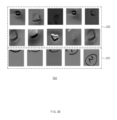
- FIG. 6 is a view showing images classified as normal by an artificial intelligence model.
- the processor 120 may detect a good product and/or a defective product among subject products, through the diagnosing unit 145.
- the processor 120 may classify a subject product as normal or defective to detect the good product and/or the defective product, through the diagnosing unit 145.
- the processor 120 may classify the subject product as normal or defective based on previously stored learning data, through the diagnosing unit 145.
- operations of the processor 120 are performed through the diagnosing unit 145, unless specially mentioned.
- the processor 120 may classify a subject product by using an image 501 of the subject product and previously stored learning data.
- the processor 120 may compare the image 501 of the subject product obtained by the image obtaining device 103 with the previously stored learning data.
- the processor 120 may obtain the image 501 of the subject product obtained in the image obtaining device 103, through the image obtaining unit 143.
- the image obtaining unit 143 may include a network driver for controlling the communication circuit 120.
- the processor 120 may compare the image 501 of the subject product with the previously stored learning data to classify the subject product.
- the processor 120 may classify the subject product based on the artificial intelligence model 161 to which the previously stored learning data is applied.
- the learning data may include at least one of each of data for classifying the subject product as normal and data for classifying the subject product as defective.
- the first data may mean data for classifying the subject product as normal among the learning data.
- the first data may include an image of a good product.
- the processor 120 may learn a criterion for classifying the subject product as normal by using the first data.
- the processor 120 may classify the subject product as normal or defective based on the previously stored learning data.
- the target subject product may mean a subject product classified as normal when the processor 120 classifies the subject product based on the previously stored learning data.
- the processor 120 may be likely to classify a defective product of a new type not trained by the previously learning data as normal.
- the target subject product may include not only a good product, but also a defective product of a new type.
- images 610 may include images of normal subject products of an existing type
- images 650 may include images of defective subject products of a new type.
- a subject product for the images 610 may be classified as normal (i.e., a good product).
- a subject product for the images 650 may be classified as normal (i.e., a good product).
- the processor 120 may obtain a target image (i.e., the images 610 and 650) corresponding to a target subject product.
- the processor 120 may determine characteristics of the target image by using the first data and the target image.
- the processor 120 may detect a defective product of a new type by using the characteristics of the target image.
- the processor 120 may re-classify the target subject product as normal or defective, by using the characteristics of the target image.
- the processor 120 may classify the subject product based on the artificial intelligence model 165 to which the first data is applied among the previously stored learning data.
- the processor 120 may compare a similarity obtained by inputting each target image (i.e., the images 610 and 650) to the artificial intelligence model 165 with a reference value to detect a defective product of a new type.
- the similarity may mean a maximum value of a probability value according to a multinomial classification result obtained by the artificial intelligence model 165. For example, for the images 610 with a similarity exceeding a reference value among the images 610 and 650, the processor 120 may determine corresponding subject products as normal. In another example, for the images 650 with a similarity less than the reference value among the images 610 and 650, the processor 120 may determine corresponding subject products as defective.
- the subject product re-classified as defective among the target subject products may correspond to the defective product of a new type.
- the processor 120 may detect the defective product of the new type by applying a re-classification process to the target subject products.
- the processor 120 may compare whether the target image corresponds to the first data. When the target image does not correspond to the first data, the processor 120 may re-classify the target subject product as defective.
- the processor 120 may determine a similarity between the target image and the first data.
- the processor 120 may determine the similarity between the target image and the first data according to a preset method.
- the processor 120 may re-classify the target subject product as defective or normal based on the similarity between the target image and the first data.
- the processor 120 may re-classify the target subject product as defective when the similarity is less than the preset reference value, and the target subject product as normal when the similarity is greater than or equal to the reference value.
- the processor 120 may determine a similarity between the target image and the first data and re-classify the target subject product as defective or normal based on the similarity, but the present disclosure is not limited thereto.
- the processor 120 may determine a dissimilarity between the target image and the first data and re-classify the target subject product as defective or normal based on the dissimilarity.
- the processor 120 may determine the target image as the second data when the target subject product is re-classified as defective.
- the second data may correspond to an image for classifying the subject product as defective.
- the second data may include an image of a defective product of a new type not included in the previously stored learning data.
- the processor 120 may include the second data in the learning data.
- the processor 120 may learn a defect of a new type by including the second data in the learning data.
- the processor 120 may train the artificial intelligence model 161 based on the image (e.g., the images 650) newly included in the second data.
- the processor 120 may determine a target image as the second data when the target image does not correspond to the first data. According to another embodiment, the processor 120 may determine a target image as the second data when a similarity of the target image does is less than a preset reference value.
- FIG. 7 is a view showing a battery defect detection method according to an embodiment disclosed herein.
- a battery defect detection method may include operation S100 of obtaining an image of a subject product, operation S 110 of classifying the subject product by using stored learning data, operation S 120 of obtaining a target image corresponding to a target subject product, and operation S130 of determining characteristics of the target image by using first data and the target image.
- the battery defect detection apparatus 101 may obtain an image of a subject product.
- the subject product may include a secondary battery.
- the battery defect detection apparatus 101 may obtain the image of the subject product through multiple channels. Operation S100 may be performed by the image obtaining unit 143 of the battery defect detection apparatus 101.
- the battery defect detection apparatus 101 may classify the subject product by using stored learning data. According to an embodiment, the battery defect detection apparatus 101 may compare the image of the subject product with previously stored learning data and classify the subject product according to a comparison result. According to an embodiment, the battery defect detection apparatus 101 may classify the subject product based on the artificial intelligence model 161 to which the previously stored learning data is applied. Operation S110 may be performed by the processor 120 of the battery defect detection apparatus 101.
- the learning data may include at least one data for classifying the subject product as normal or defective.
- the first data may mean data for classifying the subject product as normal among the learning data.
- the first data may include an image of a good product.
- the battery defect detection apparatus 101 may learn a criterion for classifying the subject product as normal by using the first data.
- the battery defect detection apparatus 101 may classify the subject product as normal or defective based on the learning data.
- the subject product classified as normal in operation S710 may be referred to as a target subject product.
- the battery defect detection apparatus 101 may classify the subject product as normal or defective based on the learning data and may be likely to classify a defective product of a new type not learned by the learning data as normal.
- the target subject product may include not only a good product, but also a defective product of a new type.
- the battery defect detection apparatus 101 may obtain a target image corresponding to the target subject product. According to an embodiment, the battery defect detection apparatus 101 may identify the target image corresponding to the target subject product among previously obtained images of the subject product. Operation S 120 may be performed by the processor 120 of the battery defect detection apparatus 101.
- the battery defect detection apparatus 101 may determine characteristics of the target image by using the first data and the target image.
- the first data may mean data for classifying the subject product as normal among the learning data.
- the first data may include an image of a good product.
- the battery defect detection apparatus 101 may determine characteristics of the target image by using the first data and the target image based on the artificial intelligence model 165 to which the first data is applied. Operation S130 may be performed by the processor 120 of the battery defect detection apparatus 101.
- the battery defect detection apparatus 101 may determine the characteristics of the target image. According to an embodiment, the battery defect detection apparatus 101 may determine whether the target image corresponds to the first data. According to another embodiment, the battery defect detection apparatus 101 may determine a similarity between the target image and the first data.
- the battery defect detection apparatus 101 may re-classify the target subject product as normal or defective based on the characteristics of the target image determined in operation S130. A detailed method of re-classifying the target subject product as normal or defective based on the characteristics of the target image determined by the battery defect detection apparatus 101 will be described later with reference to FIGS. 8 and 9 .
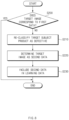
- FIG. 8 is a view showing a battery defect detection method according to an embodiment disclosed herein.
- a battery defect detection method may further include operation S200 of determining whether a target image corresponds to first data, operation S210 of re-classifying a target subject product as defective when the target image does not correspond to the first data, operation S220 of determining the target image as second data, and/or operation S230 of including second data in learning data.
- the battery defect detection apparatus 101 may determine whether the target image corresponds to the first data. Operation S200 may substantially correspond to a detailed example of operation S130 of FIG. 7 .
- the battery defect detection apparatus 101 may re-classify the target subject product as defective in operation S210.
- the target subject product is a subject product classified as normal by the battery defect detection apparatus 101 based on the learning data, but the target subject product may also include a defective product of a new type not included in the learning data.
- the battery defect detection apparatus 101 may detect a defective product of a new type included in the target subject product. Operation S200 may be performed by the processor 120 of the battery defect detection apparatus 101.
- the battery defect detection apparatus 101 may re-classify the target subject product as normal.
- the battery defect detection apparatus 101 may re-classify the target subject product as defective in operation S210.
- the target subject product re-classified as defective by the battery defect detection apparatus 101 in operation S210 may correspond to a defective product of a new type not included in the learning data. Operation S210 may be performed by the processor 120 of the battery defect detection apparatus 101.
- the battery defect detection apparatus 101 may determine the target image of the target subject product re-classified as defective in operation S210 as second data.
- the second data may include an image of the defective product of the new type in the battery defect detection apparatus 101.
- Operation S220 may be performed by the processor 120 of the battery defect detection apparatus 101.
- the battery defect detection apparatus 101 may include the second data in the learning data.
- the second data may include an image used for the battery defect detection apparatus 101 to classify the subject product as defective.
- the second data may include an image of a defective product of a new type not included in the previously stored learning data.
- the battery defect detection apparatus 101 may learn a defect of a new type by including the second data in the learning data. Operation S230 may be performed by the processor 120 of the battery defect detection apparatus 101.
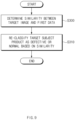
- FIG. 9 is a view showing a battery defect detection method according to an embodiment disclosed herein.
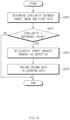
- a battery defect detection method may further include operation S300 of determining a similarity between a target image and first data and operation S310 of re-classifying a target subject product as defective or normal based on the similarity.
- the battery defect detection apparatus 101 may determine the similarity between the target image and the first data. Operation S300 may substantially correspond to a detailed example of operation S130 of FIG. 7 . Operation S300 may be performed by the processor 120 of the battery defect detection apparatus 101.
- the battery defect detection apparatus 101 may determine the similarity between the target image and the first data, according to a preset method. According to an embodiment, the battery defect detection apparatus 101 may quantify and determine the similarity between the target image and the first data. According to an embodiment disclosed herein, the battery defect detection apparatus 101 determines the similarity between the target image and the first data, but, without being limited thereto, may also determine a dissimilarity between the target image and the first data.
- the battery defect detection apparatus 101 may re-classify the target subject product as defective or normal based on the similarity between the target image and the first data.
- the battery defect detection apparatus 101 may re-classify the target subject product as defective or normal based on the similarity between the target image and the first data.
- the battery defect detection apparatus 101 may set a reference value for the similarity between the target image and the first data.
- the battery defect detection apparatus 101 may re-classify the target subject product as defective or normal by comparing the similarity determined in operation S300 with the reference value.
- the battery defect detection apparatus 101 may re-classify the target subject product corresponding to the target image as normal when the similarity between the target image and the first data is greater than or equal to the preset reference value.
- the battery defect detection apparatus 101 may re-classify the target subject product corresponding to the target image as defective when the similarity between the target image and the first data is less than the preset reference value.
- the target subject product re-classified as defective may correspond to the defective product of a new type.
- FIG. 10 is a view showing a battery defect detection method according to an embodiment disclosed herein.
- a battery defect detection method may further include operation S400 of determining the similarity between the target image and the first data, operation S410 of comparing the similarity between the target image and the first data with the preset reference value, operation S420 of determining the target image as the second data when the similarity between the target image and the first data is less than the reference value, and/or operation S430 of including the second data in the learning data.
- Operation S400 may be substantially the same as operation S300 of FIG. 4 .
- Operations S410, S420, and/or S430 may be performed simultaneously with or before or after operations S310 of FIG. 4 .
- the battery defect detection apparatus 101 may determine whether a similarity between the target subject product and the first data is less than a preset reference value.
- the reference value may correspond to a value set as a reference for the battery defect detection apparatus 101 to re-classify the target subject product as normal or defective based on the similarity between the target image and the first data.
- the target image determined to have a similarity greater than or equal to the reference value by the battery defect detection apparatus 101 in operation S410 may include an image of a good product. According to an embodiment, the battery defect detection apparatus 101 may not perform an additional operation on the target image determined to have the similarity greater than or equal to the reference value. According to another embodiment, the battery defect detection apparatus 101 may include the target image determined to have the similarity greater than or equal to the reference value, in the first data. According to an embodiment disclosed herein, the battery defect detection apparatus 101 may include the target image determined to have the similarity greater than or equal to the reference value, in the first data and learn the target image, thereby improving the precision of defect detection.
- the battery defect detection apparatus 101 may determine the target image determined to have the similarity less than the reference value as the second data.
- the target image determined as the second data may include an image of a defective product of a new type.
- the battery defect detection apparatus 101 may determine the target image corresponding to the defective product of the new type as the second data.
- the battery defect detection apparatus 101 may include the second data in the learning data.
- the second data may include an image used for the battery defect detection apparatus 101 to classify the subject product as defective.
- the second data may include an image of a defective product of a new type not included in the previously stored learning data.
- the battery defect detection apparatus 101 may learn a defect of a new type by including the second data in the learning data.
- FIG. 11 is a view showing a battery defect detection system according to an embodiment disclosed herein.
- a battery defect detection system 1000 may include an inspection device 1100 and a new defect detection device 1200.
- the inspection device 1000 may be based on the artificial intelligence model 161
- the new defect detection device 1100 may be based on the artificial intelligence model 165.
- the inspection device 1100 may obtain an image of a subject product and classify the subject product by using the image of the subject product and previously stored learning data.
- the inspection device 1100 may include an image obtaining unit 1110 and a processor 1120.
- the inspection device 1100 may obtain the image of the subject product. According to an embodiment, the inspection device 1100 may obtain the image of the subject product through the image obtaining unit 1110. According to an embodiment, the image obtaining unit 1110 may obtain an image from a remote image obtaining device that photographs the subject product and obtains the image thereof. According to an embodiment, the remote image obtaining device may be implemented as a camera. According to an embodiment, the remote image obtaining device may obtain the image of the subject product through multiple channels.
- the inspection device 1100 may classify the subject product by using the image of the subject product and previously stored learning data. According to an embodiment, the inspection device 1100 may classify the subject product through the processor 1120. According to an embodiment, the processor 1120 may compare the image of the subject product with the previously stored learning data. According to an embodiment, the processor 1120 may classify the subject product based on a deep learning model to which the previously stored learning data is applied.
- the processor 1120 may classify the subject product as normal or defective based on the previously stored learning data.
- the processor 1120 may classify the subject product based on the previously stored learning data and set the subject product, classified as normal, as a target subject product.
- the processor 1120 may classify a defective product of a new type not included in the learning data as normal among subject products, in which the target subject product may include a good product and a defective product of a new type together.
- the new defect detection device 1200 may obtain a target image corresponding to a target subject product classified as normal by the inspection device 1100 and determine characteristics of the target image by using first data for classifying a subject product as normal among the learning data and a target subject image.
- the new defect detection device 1200 may include a target image obtaining unit 1210 and a processor 1220.
- the new defect detection device 1200 may receive a target subject product from the inspection device 1100.
- the new defect detection device 1200 may obtain a target image corresponding to the target subject product.
- the new defect detection device 1200 may obtain the target image through the target image obtaining unit 1210.
- the new defect detection device 1200 may also receive the target image corresponding to the target subject product from the inspection device 1100.
- the target image obtaining unit 1210 may identify the target image corresponding to the target subject product among images of the subject product previously obtained by the inspection device 1100.
- the target image obtaining unit 1210 may be implemented as one module by being integrated with the processor 1220.
- the target image obtaining unit 1210 may capture the image of the target subject product received from the inspection device 1100 to obtain the target image.
- the target image obtaining unit 1210 may be implemented with a camera.
- the new defect detection device 1200 may determine characteristics of the target image by using the first data and the target image.
- the first data may mean data for the inspection device 1100 to classify the subject product as normal among the learning data.
- the new defect detection device 1200 may share the learning data with the inspection device 1100.
- the new defect detection device 1200 may determine characteristics of the target image through the processor 1220.
- the processor 1220 may determine whether the target image corresponds to the first data. According to another embodiment, the processor 1220 may determine a similarity between the target image and the first data.
- the processor 1220 may determine the characteristics of the target image and detect a defect of a new type by using the determined characteristics. According to an embodiment, the processor 1220 may determine a target image as the second data when the target image does not correspond to the first data. According to another embodiment, the processor 1220 may determine a target image as the second data when the similarity between the target image and the first data does is less than the preset reference value. According to an embodiment disclosed herein, the target subject product corresponding to the target image determined as the second data may correspond to a defective product of a new type. The processor 1220 may detect the defective product of the new type by detecting the target subject product corresponding to the target image.
- the processor 1220 may include the second data in the learning data.
- the processor 1220 may learn a defect of a new type by including the second data in the learning data.
- the new defect detection device 1200 may share the second data with the inspection device 1100.
- the inspection device 1100 may learn the second data, thereby improving the precision of defect detection.
Landscapes
- Engineering & Computer Science (AREA)
- Physics & Mathematics (AREA)
- General Physics & Mathematics (AREA)
- Theoretical Computer Science (AREA)
- Health & Medical Sciences (AREA)
- Life Sciences & Earth Sciences (AREA)
- General Health & Medical Sciences (AREA)
- Computer Vision & Pattern Recognition (AREA)
- Chemical & Material Sciences (AREA)
- Analytical Chemistry (AREA)
- Biochemistry (AREA)
- Immunology (AREA)
- Pathology (AREA)
- Quality & Reliability (AREA)
- Computing Systems (AREA)
- Molecular Biology (AREA)
- Software Systems (AREA)
- Artificial Intelligence (AREA)
- Biomedical Technology (AREA)
- Biophysics (AREA)
- Computational Linguistics (AREA)
- Data Mining & Analysis (AREA)
- Evolutionary Computation (AREA)
- Mathematical Physics (AREA)
- General Engineering & Computer Science (AREA)
- Signal Processing (AREA)
- Chemical Kinetics & Catalysis (AREA)
- Electrochemistry (AREA)
- General Chemical & Material Sciences (AREA)
- Manufacturing & Machinery (AREA)
- Microelectronics & Electronic Packaging (AREA)
- Multimedia (AREA)
- Image Analysis (AREA)
- Investigating Materials By The Use Of Optical Means Adapted For Particular Applications (AREA)
Abstract
Description
- This application claims priority to and the benefit of
Korean Patent Application No. 10-2022-0027072 filed in the Korean Intellectual Property Office on March 2, 2022 - Embodiments disclosed herein relate to a battery defect detection apparatus, method, and system.
- Recently, as the demand for portable electronic products such as laptop computers, video cameras, and mobile phones has increased rapidly, and development of electric vehicles, batteries for energy storage, robots, satellites, etc., has hit its stride, research on high-performance batteries that are repeatedly chargeable and dischargeable is being actively conducted.
- Current commercially available batteries include nickel cadmium batteries, nickel hydride batteries, nickel zinc batteries, lithium batteries, and so forth, among which the lithium batteries are in the limelight due to their advantages of free charge and discharge due to little memory effect, very low self-discharge rate, and high energy density, compared to nickel-based batteries.
- In battery manufacturing and assembling processes, due to deformation, crushing, or damage, etc., of a sealing part of a battery casing, an appearance defect of a battery pouch (e.g., pressed edges, dents, scratches, wrinkles, electrolyte contamination, etc.) may occur. As the appearance defect of the pouch may affect the reliability and/or safety of a battery, it is important to detect a defect of the battery (e.g., the pouch) before distribution of the battery.
- To detect the appearance defect of the battery (e.g., the pouch), a generally-used appearance inspector collects and learns each image of a good product type and a defective product type and inspects whether there is an appearance defect for a battery having undergone manufacturing and assembly processes. However, when a defect of a new type rather than an existing learned type occurs, a battery may be determined as a good product. In addition, in pouch manufacturing and assembly processes, a rate of a defect of a new type is low, making it difficult to collect a defective product image suitable for learning of the appearance inspector.
- Accordingly, the present disclosure aims to prevent defect leakage by supplementing detection uncertainty of a new defect type. Other objects and advantages of the present disclosure may be understood by the following description, and will be more clearly understood by embodiments of the present disclosure. In addition, it would be easily understood that the object and advantages of the disclosure may be implemented by means provided in the claims and a combination thereof.
- A battery defect detection apparatus according to an embodiment disclosed herein includes a communication module, a processor, and a memory configured to store a first artificial intelligence model, a second artificial intelligence model, and instructions, wherein the instructions cause, when executed by the processor, the battery defect detection apparatus, to obtain an image of a subject product by using the communication module, input the image of the subject product to the first artificial intelligence model to classify the subject product, and input the image of the subject product to the second artificial intelligence model to determine whether the image of the subject product corresponds to first data for classifying the subject product as normal among learning data of the first artificial intelligence model, when the subject product is classified as normal.
- According to an embodiment, the instructions may cause, when executed by the processor, the battery defect detection apparatus, to re-classify the subject product as defective when the image does not correspond to the first data.
- According to an embodiment, the instructions may cause, when executed by the processor, the battery defect detection apparatus, to determine the image as second data for classifying the subject product as defective, when the image does not correspond to the first data.
- According to an embodiment, the instructions may cause, when executed by the processor, the battery defect detection apparatus, to train the first artificial intelligence model based on the second data.
- According to an embodiment, the image of the subject product may be obtained by an image obtaining device through multiple channels.
- According to an embodiment, the instructions may cause, when executed by the processor, the battery defect detection apparatus, to obtain a similarity between the image and the first data through the second artificial intelligence model and re-classify the subject product as defective or normal based on the similarity.
- According to an embodiment, the instructions may cause, when executed by the processor, the battery defect detection apparatus, to determine the image as second data for classifying the subject product as defective, when the similarity of the image is less than a preset reference value.
- According to an embodiment, the instructions may cause, when executed by the processor, the battery defect detection apparatus, to train the first artificial intelligence model based on the second data.
- A battery defect detection method according to an embodiment disclosed herein includes obtaining an image of a subject product, inputting the image of the subject product to the first artificial intelligence model to classify the subject product, and inputting the image of the subject product to the second artificial intelligence model to determine whether the image of the subject product corresponds to first data for classifying the subject product as normal among learning data of the first artificial intelligence model, when the subject product is classified as normal.
- According to an embodiment, the battery defect detection method may further include re-classifying the subject product as defective when the image does not correspond to the first data.
- According to an embodiment, the battery defect detection method may further include determining the image as second data for classifying the subject product as defective, when the image does not correspond to the first data.
- According to an embodiment, the battery defect detection method may further include training the first artificial intelligence model based on the second data.
- According to an embodiment, the image of the subject product may be obtained by an image obtaining device through multiple channels.
- According to an embodiment, the battery defect detection method may further include obtaining a similarity between the image and the first data through the second artificial intelligence model and re-classifying the subject product as defective or normal based on the similarity.
- According to an embodiment, the battery defect detection method may further include determining the image as second data for classifying the subject product as defective, when the similarity of the image is less than a preset reference value.
- According to an embodiment, the battery defect detection method may further include training the first artificial intelligence model based on the second data.
- A battery defect detection system according to an embodiment disclosed herein includes a battery defect detection apparatus configured to obtain an image of a subject product and classify the subject product by using a first artificial intelligence model trained using the image of the subject product and previously stored learning data and a new defect detection device configured to input the image of the subject product to the second artificial intelligence model to determine whether the image of the subject product corresponds to first data for classifying the subject product as normal among the learning data of the first artificial intelligence model, when the subject product is classified as normal.
- A battery defect detection apparatus according to the disclosure may detect a defective product of a new type not included in previously stored learning data, thereby preventing leakage of defective products.
- The battery defect detection apparatus according to the disclosure may learn an image of a defective product of a new type, thereby improving a precision of defect detection.
- A battery defect detection system according to the disclosure may use a new defect detection apparatus in addition to an existing defect detection apparatus together, thereby improving convenience in introduction of the new defect defection apparatus.
- The effects of the battery defect detection apparatus, method, and system according to the disclosure of the present document are not limited to the effects mentioned above, and other effects not mentioned will be clearly understood by those of ordinary skill in the art according to the disclosure of the present document.
-
-
FIG. 1 is a view showing a battery defect detection apparatus according to an embodiment disclosed herein. -
FIG. 2 illustrates an artificial intelligence model according to an embodiment disclosed herein. -
FIG. 3A is a view showing first data for classifying a subject product as normal among learning data according to an embodiment disclosed herein. -
FIG. 3B is a view showing second data for classifying a subject product as defective among learning data according to an embodiment disclosed herein. -
FIG. 4 illustrates an artificial intelligence model according to an embodiment disclosed herein. -
FIG. 5 illustrates an artificial intelligence model and a process of detecting a good product and/or a defective product among subject products by using the artificial intelligence model, according to an embodiment disclosed herein. -
FIG. 6 is a view showing images classified as normal by an artificial intelligence model. -
FIG. 7 is a view showing a battery defect detection method according to an embodiment disclosed herein. -
FIG. 8 is a view showing a battery defect detection method according to an embodiment disclosed herein. -
FIG. 9 is a view showing a battery defect detection method according to an embodiment disclosed herein. -
FIG. 10 is a view showing a battery defect detection method according to an embodiment disclosed herein. -
FIG. 11 is a view showing a battery defect detection system according to an embodiment disclosed herein. - With regard to the description of the drawings, similar reference numerals may be used to refer to similar or related components.
- Hereinafter, various embodiments of the present disclosure will be disclosed with reference to the accompanying drawings. However, the description is not intended to limit the present disclosure to particular embodiments, and it should be construed as including various modifications, equivalents, and/or alternatives according to the embodiments of the present disclosure.
- It should be appreciated that various embodiments of the present disclosure and the terms used therein are not intended to limit the technological features set forth herein to particular embodiments and include various changes, equivalents, or replacements for a corresponding embodiment. With regard to the description of the drawings, similar reference numerals may be used to refer to similar or related elements. It is to be understood that a singular form of a noun corresponding to an item may include one or more of the things, unless the relevant context clearly indicates otherwise.
- As used herein, each of such phrases as "A or B," "at least one of A and B," "at least one of A or B," "A, B, or C," "at least one of A, B, and C," and "at least one of A, B, or C," may include any one of, or all possible combinations of the items enumerated together in a corresponding one of the phrases. Such terms as "1st", "2nd," "first", "second", "A", "B", "(a)", or "(b)" may be used to simply distinguish a corresponding component from another, and does not limit the components in other aspect (e.g., importance or order), unless mentioned otherwise.
- Herein, it is to be understood that when an element (e.g., a first element) is referred to, with or without the term "operatively" or "communicatively", as "connected with", "coupled with", or "linked with", or "coupled to" or "connected to" to another element (e.g., a second element), it means that the element may be connected with the other element directly (e.g., wiredly), wirelessly, or via a third element.
- According to an embodiment, a method according to various embodiments of the disclosure may be included and provided in a computer program product. The computer program product may be traded as a product between a seller and a buyer. The computer program product may be distributed in the form of a machine-readable storage medium (e.g., compact disc read only memory (CD-ROM)), or be distributed (e.g., downloaded or uploaded) online via an application store, or between two user devices directly. If distributed online, at least part of the computer program product may be temporarily generated or at least temporarily stored in the machine-readable storage medium, such as memory of the manufacturer's server, a server of the application store, or a relay server.
- According to various embodiments, each component (e.g., a module or a program) of the above-described components may include a single entity or multiple entities, and some of the multiple entities may be separately disposed in different components. According to various embodiments, one or more of the above-described components may be omitted, or one or more other components may be added. Alternatively or additionally, a plurality of components (e.g., modules or programs) may be integrated into a single component. In such a case, according to various embodiments, the integrated component may still perform one or more functions of each of the plurality of components in the same or similar manner as they are performed by a corresponding one of the plurality of components before the integration. According to various embodiments, operations performed by the module, the program, or another component may be carried out sequentially, in parallel, repeatedly, or heuristically, or one or more of the operations may be executed in a different order or omitted, or one or more other operations may be added.
-
FIG. 1 is a view showing a battery defect detection apparatus according to an embodiment disclosed herein. - Referring to
FIG. 1 , a batterydefect detection apparatus 101 according to an embodiment disclosed herein may be wiredly and/or wirelessly connected to animage obtaining device 103 and a user terminal 105. - In an embodiment, connection between the battery
defect detection apparatus 101 and theimage obtaining device 103 may be communication connection through a wired and/or wireless network. In an embodiment, the wired network may be based on a local area network (LAN) communication or a power-line communication. In an embodiment, the wireless network may be based on a short-range communication network (e.g., Bluetooth, Wireless Fidelity (WiFi), or Infrared Data Association (IrDA)) or a remote-range communication network (e.g., a cellular network, a 4th-Generation (4G) network, a 5th-Generation (5G) network). - In another embodiment, the connection between the battery
abnormality diagnosis apparatus 101 and theimage obtaining device 103 may be connection using a device-to-device communication scheme (e.g., a bus, a general-purpose input and output (GPIO), a serial peripheral interface (SPI), or a mobile industry processor interface (MIPI)). - In an embodiment, the connection between the battery
abnormality diagnosis apparatus 101 and the user terminal 105 may be communication connection through a wired and/or wireless network. - In an embodiment, the
image obtaining device 103 may obtain an image of a subject product (e.g., a battery unit 115). According to an embodiment, the subject product (e.g., the battery unit 115) may include a secondary battery. According to an embodiment, the secondary battery may include a pouch-type secondary battery, a prismatic secondary battery, and/or a cylindrical secondary battery. - The
image obtaining device 103 may obtain an image of the subject product by photographing the subject product. According to an embodiment, theimage obtaining device 103 may be implemented as a camera. According to an embodiment, theimage obtaining device 103 may obtain the image of the subject product through multiple channels. - In an embodiment, the user terminal 105 may be a mobile device (e.g., a mobile phone, a laptop computer, a smart phone, a smart pad), or a personal computer (PC). In an embodiment, the user terminal 105 may be a terminal used by a manager of the battery
defect detection apparatus 101. - In an embodiment, the battery
defect detection apparatus 101 may include acommunication circuit 120, amemory 140, and aprocessor 150. According to an embodiment, the batterydefect detection apparatus 101 shown inFIG. 1 may further include at least one component (e.g., a display, an input device, or an output device) in addition to components shown inFIG. 1 . - According to an embodiment, the
communication circuit 120 may establish a wired communication channel and/or a wireless communication channel between the batterydefect detection apparatus 101 and theimage obtaining device 103 and/or the user terminal 105, and transmit and receive data to and from theimage obtaining device 103 and/or the user terminal 105 through the established communication channel. - In an embodiment, the
memory 140 may include a volatile and/or a nonvolatile memory. - In an embodiment, the
memory 140 may store data used by at least one component (e.g., the processor 150) of the batterydefect detection apparatus 101. For example, the data may include a program 130 (or an instruction related thereto), input data, or output data. In an embodiment, the instruction, when executed by theprocessor 150, may cause the batterydefect detection apparatus 101 to perform operations defined by the instruction. - In an embodiment, the
program 130 may include one or more software (e.g., an artificial intelligence model training unit 141, an image obtaining unit 143, a diagnosingunit 145, and one or moreartificial intelligence models 161 and 165). - In an embodiment, the
processor 150 may include a central processing unit, an application processor, a graphic processing unit, a neural processing unit (NPU), an image signal processor, a sensor hub processor, or a communication processor. - In an embodiment, the
processor 150 may execute software (e.g., the artificial intelligence model training unit 141, the image obtaining unit 143, the diagnosingunit 145, an abnormality processing unit 147, a pre-processing unit 149, and the one or moreartificial intelligence models 161 and 165) to control at least one other component (e.g., a hardware or software component) of the batterydefect detection apparatus 101 connected to theprocessor 150 and perform various data processing or operations. - Hereinbelow, with reference to
FIGS. 2 to 5 , a description will be made of a method for the batterydefect detection apparatus 101 to diagnose abnormality of a subject product (e.g., the battery unit 115) through the artificial intelligence model training unit 141, the image obtaining unit 143, the diagnosingunit 145, and the one or moreartificial intelligence models -
FIG. 2 illustrates theartificial intelligence model 161 according to an embodiment disclosed herein.FIG. 3A is a view showing first data for classifying a subject product as normal among learning data according to an embodiment disclosed herein.FIG. 3B is a view showing second data for classifying a subject product as defective among learning data according to an embodiment disclosed herein. - In an embodiment, the artificial intelligence model training unit 141 may train the
artificial intelligence model 161 based on previously obtainedimages 201 andimages 205 for a subject product. Herein, theimages 201 and theimages 205 may be previously obtained learning data. Theimages 201 may mean first data for classifying a subject product as normal among the learning data. Theimages 205 may mean second data for classifying a subject product as defective among the learning data. In an embodiment, theimages 201 and theimages 205 may include the entire image of the subject product or an image of each part of the subject product. In an embodiment, theimages 201 and theimages 205 include the entire images, theimages 201 may include an image of a subject product classified as a normal product and theimages 205 may include an image of a subject product classified as a defective product. In an embodiment, when theimages 201 and theimages 205 include partial images, theimages 201 may include images classified as normal among images resulting from dividing the entire image of the subject product for each inspection item (e.g., dents, pressing, printed texts, welding), and theimages 205 may include images classified as defective among images resulting from dividing the entire image of the subject product for inspection item. - For example, referring to
FIG. 3A ,first data 310 may include images classified as normal among the divided images respectively for the inspection items. For example,images 311 may include images having normal printed texts, andimages 312 may include images with a dented level within a normal range. Likewise, referring toFIG. 3B ,second data 350 may include images classified as defective among the divided images respectively for the inspection items. For example,images 351 may include images having abnormal printed texts, andimages 352 may include images with a dented or pressing level out of the normal range. - In an embodiment, the
artificial intelligence model 161 may be subject to multinomial classification (e.g., a convolutional neural network (CNN)-based model). In an embodiment, theartificial intelligence model 161 may be trained to classify the subject product as normal or defective based on theimages artificial intelligence model 161 may be trained to classify the subject product as normal or defective for each of the inspection items, based on theimages - In an embodiment, the
artificial intelligence model 161 may include aninput layer 210, ahidden layer 220, and anoutput layer 230. Herein, the previously obtainedimages 201 andimages 205 for the subject product may be input to theinput layer 210. Thehidden layer 220 may have a structure where multiple layers are sequentially connected. Theoutput layer 230 may be a layer for outputting amultinomial classification result 209 of each of theimages 201 and theimages 205. In an embodiment, in themultinomial classification result 209, theimages 201 and theimages 205 may include probability values forclasses class 241 may indicate a probability of a printed text being normal, and theclass 243 may indicate a probability of a printed text being defective. In another example, theclass 245 may indicate a probability of a dented or pressed level being within a normal range, and theclass 247 may indicate a probability of the dented or pressed level being out of the normal range. A sum of the probability values for theclasses - In an embodiment, the artificial intelligence model training unit 141 may input the
images 201 and theimages 205 to theartificial intelligence model 161 to adjust parameters of the hiddenlayer 220 such that the obtainedmultinomial classification result 209 and a prior classification result of each of theimages 201 and theimages 205 are the same as each other or are different from each other by a reference difference value or less. -
FIG. 4 illustrates theartificial intelligence model 165 according to an embodiment disclosed herein. - In an embodiment, the artificial intelligence model training unit 141 may train the
artificial intelligence model 165 based on the previously obtainedimages 201 for the subject product. Herein, images used for learning theartificial intelligence model 165 may be first data for classifying a subject product as normal among learning data. - In an embodiment, the
artificial intelligence model 165 may be a model capable of multinomial classification (e.g., a CNN-based model). In an embodiment, theartificial intelligence model 165 may be trained to output a similarity between normal images for each inspection items, based on the first data (i.e., the images 201) for the subject product. Herein, the similarity may mean a maximum value of a probability value according to a multinomial classification result obtained by theartificial intelligence model 165. - In an embodiment, the
artificial intelligence model 165 may be trained to identify whether an image is in-distribution (i.e., corresponds to a previously trained image of a good product) or out-of-distribution (i.e., corresponds to an image of a defective product of a new type) by comparing a similarity based on the first data (i.e., the images 201) for the subject product with a reference value. - In an embodiment, the
artificial intelligence model 165 may include aninput layer 410, ahidden layer 420, and anoutput layer 430. Herein, the previously obtainedimages 201 for the subject product may be input to theinput layer 410. Thehidden layer 420 may have a structure where multiple layers are sequentially connected. Theoutput layer 430 may be a layer for outputting amultinomial classification result 409 of each of theimages 201. In an embodiment, in themultinomial classification result 409, theimages 201 may include probability values for classes according to the inspection items. The number of classes set in theartificial intelligence model 165 may be less than the number of classes set in theartificial intelligence model 161. For example, only classes indicating normal may be in theartificial intelligence model 165. For example, the intelligenceartificial model 165 may indicate a probability of a printed text being normal or include a class indicating the probability of the printed text being normal. A sum of probability values for classes of theartificial intelligence model 165 may be 1. - In an embodiment, the artificial intelligence model training unit 141 may input the
images 201 to theartificial intelligence model 165 to adjust parameters of the hiddenlayer 420 such that amaximum value 441 of a probability value according to themultinomial classification result 409 exceeds areference value 449. - In an embodiment, the artificial intelligence model training unit 141 may test the
artificial intelligence model 165 by using theimages 205. For example, the artificial intelligence model training unit 141 may determine whether themaximum value 445 of the probability value according to themultinomial classification result 409 of theimages 205 is less than or equal to thereference value 449. In an embodiment, when themaximum value 445 of the probability value according to themultinominal classification result 409 of theimages 205 exceeds thereference value 449, the artificial intelligence model training unit 141 may adjust thereference value 449 of theartificial intelligence model 165. For example, the artificial intelligence model training unit 141 may adjust thereference value 449 based on a baseline algorithm or an out-of-distribution detector for neural networks (ODIN) algorithm. Herein, adjustment of thereference value 449 may be distinguished from a training process for adjusting the parameters of the hiddenlayer 420. -
FIG. 5 illustrates theartificial intelligence model 161 and a process of detecting a good product and/or a defective product among subject products by using theartificial intelligence model 165, according to an embodiment disclosed herein.FIG. 6 is a view showing images classified as normal by an artificial intelligence model. - In an embodiment, the
processor 120 may detect a good product and/or a defective product among subject products, through the diagnosingunit 145. Theprocessor 120 may classify a subject product as normal or defective to detect the good product and/or the defective product, through the diagnosingunit 145. Theprocessor 120 may classify the subject product as normal or defective based on previously stored learning data, through the diagnosingunit 145. Hereinbelow, it may be understood that operations of theprocessor 120 are performed through the diagnosingunit 145, unless specially mentioned. - In an embodiment, the
processor 120 may classify a subject product by using animage 501 of the subject product and previously stored learning data. Theprocessor 120 may compare theimage 501 of the subject product obtained by theimage obtaining device 103 with the previously stored learning data. Herein, theprocessor 120 may obtain theimage 501 of the subject product obtained in theimage obtaining device 103, through the image obtaining unit 143. In an embodiment, the image obtaining unit 143 may include a network driver for controlling thecommunication circuit 120. According to an embodiment, theprocessor 120 may compare theimage 501 of the subject product with the previously stored learning data to classify the subject product. According to an embodiment, theprocessor 120 may classify the subject product based on theartificial intelligence model 161 to which the previously stored learning data is applied. - According to an embodiment, the learning data may include at least one of each of data for classifying the subject product as normal and data for classifying the subject product as defective. The first data may mean data for classifying the subject product as normal among the learning data. According to an embodiment, the first data may include an image of a good product. According to an embodiment, the
processor 120 may learn a criterion for classifying the subject product as normal by using the first data. - The
processor 120 may classify the subject product as normal or defective based on the previously stored learning data. The target subject product may mean a subject product classified as normal when theprocessor 120 classifies the subject product based on the previously stored learning data. According to an embodiment, theprocessor 120 may be likely to classify a defective product of a new type not trained by the previously learning data as normal. In this case, the target subject product may include not only a good product, but also a defective product of a new type. For example,images 610 may include images of normal subject products of an existing type, andimages 650 may include images of defective subject products of a new type. In this case, when theimages 610 are input to theartificial intelligence model 161, a subject product for theimages 610 may be classified as normal (i.e., a good product). In another example, when theimages 650 of defective products of a new type are input to theartificial intelligence model 161, a subject product for theimages 650 may be classified as normal (i.e., a good product). - The
processor 120 may obtain a target image (i.e., theimages 610 and 650) corresponding to a target subject product. Theprocessor 120 may determine characteristics of the target image by using the first data and the target image. Theprocessor 120 may detect a defective product of a new type by using the characteristics of the target image. According to an embodiment, theprocessor 120 may re-classify the target subject product as normal or defective, by using the characteristics of the target image. According to an embodiment, theprocessor 120 may classify the subject product based on theartificial intelligence model 165 to which the first data is applied among the previously stored learning data. In an embodiment, theprocessor 120 may compare a similarity obtained by inputting each target image (i.e., theimages 610 and 650) to theartificial intelligence model 165 with a reference value to detect a defective product of a new type. Herein, the similarity may mean a maximum value of a probability value according to a multinomial classification result obtained by theartificial intelligence model 165. For example, for theimages 610 with a similarity exceeding a reference value among theimages processor 120 may determine corresponding subject products as normal. In another example, for theimages 650 with a similarity less than the reference value among theimages processor 120 may determine corresponding subject products as defective. - The subject product re-classified as defective among the target subject products may correspond to the defective product of a new type. The
processor 120 may detect the defective product of the new type by applying a re-classification process to the target subject products. - According to an embodiment, the
processor 120 may compare whether the target image corresponds to the first data. When the target image does not correspond to the first data, theprocessor 120 may re-classify the target subject product as defective. - According to an embodiment, the
processor 120 may determine a similarity between the target image and the first data. Theprocessor 120 may determine the similarity between the target image and the first data according to a preset method. Theprocessor 120 may re-classify the target subject product as defective or normal based on the similarity between the target image and the first data. According to an embodiment, theprocessor 120 may re-classify the target subject product as defective when the similarity is less than the preset reference value, and the target subject product as normal when the similarity is greater than or equal to the reference value. According to an embodiment disclosed herein, theprocessor 120 may determine a similarity between the target image and the first data and re-classify the target subject product as defective or normal based on the similarity, but the present disclosure is not limited thereto. According to another embodiment disclosed herein, theprocessor 120 may determine a dissimilarity between the target image and the first data and re-classify the target subject product as defective or normal based on the dissimilarity. - The
processor 120 may determine the target image as the second data when the target subject product is re-classified as defective. The second data may correspond to an image for classifying the subject product as defective. The second data may include an image of a defective product of a new type not included in the previously stored learning data. According to an embodiment, theprocessor 120 may include the second data in the learning data. Theprocessor 120 may learn a defect of a new type by including the second data in the learning data. Theprocessor 120 may train theartificial intelligence model 161 based on the image (e.g., the images 650) newly included in the second data. - According to an embodiment, the
processor 120 may determine a target image as the second data when the target image does not correspond to the first data. According to another embodiment, theprocessor 120 may determine a target image as the second data when a similarity of the target image does is less than a preset reference value. -
FIG. 7 is a view showing a battery defect detection method according to an embodiment disclosed herein. - Referring to
FIG. 7 , a battery defect detection method according to an embodiment disclosed herein may include operation S100 of obtaining an image of a subject product,operation S 110 of classifying the subject product by using stored learning data,operation S 120 of obtaining a target image corresponding to a target subject product, and operation S130 of determining characteristics of the target image by using first data and the target image. - Hereinbelow, the battery defect detection method will be described in detail with reference to
FIG. 1 , and matters redundant to the above-described matters will be omitted or described in brief for convenience of description. - In operation S100, the battery
defect detection apparatus 101 may obtain an image of a subject product. According to an embodiment, the subject product may include a secondary battery. According to an embodiment, in operation S100, the batterydefect detection apparatus 101 may obtain the image of the subject product through multiple channels. Operation S100 may be performed by the image obtaining unit 143 of the batterydefect detection apparatus 101. - In operation S110, the battery
defect detection apparatus 101 may classify the subject product by using stored learning data. According to an embodiment, the batterydefect detection apparatus 101 may compare the image of the subject product with previously stored learning data and classify the subject product according to a comparison result. According to an embodiment, the batterydefect detection apparatus 101 may classify the subject product based on theartificial intelligence model 161 to which the previously stored learning data is applied. Operation S110 may be performed by theprocessor 120 of the batterydefect detection apparatus 101. - According to an embodiment, the learning data may include at least one data for classifying the subject product as normal or defective. The first data may mean data for classifying the subject product as normal among the learning data. According to an embodiment, the first data may include an image of a good product. According to an embodiment, the battery
defect detection apparatus 101 may learn a criterion for classifying the subject product as normal by using the first data. - In operation S110, the battery
defect detection apparatus 101 may classify the subject product as normal or defective based on the learning data. The subject product classified as normal in operation S710 may be referred to as a target subject product. According to an embodiment, the batterydefect detection apparatus 101 may classify the subject product as normal or defective based on the learning data and may be likely to classify a defective product of a new type not learned by the learning data as normal. In this case, the target subject product may include not only a good product, but also a defective product of a new type. - In operation S120, the battery
defect detection apparatus 101 may obtain a target image corresponding to the target subject product. According to an embodiment, the batterydefect detection apparatus 101 may identify the target image corresponding to the target subject product among previously obtained images of the subject product.Operation S 120 may be performed by theprocessor 120 of the batterydefect detection apparatus 101. - In operation S130, the battery
defect detection apparatus 101 may determine characteristics of the target image by using the first data and the target image. The first data may mean data for classifying the subject product as normal among the learning data. According to an embodiment, the first data may include an image of a good product. According to an embodiment, the batterydefect detection apparatus 101 may determine characteristics of the target image by using the first data and the target image based on theartificial intelligence model 165 to which the first data is applied. Operation S130 may be performed by theprocessor 120 of the batterydefect detection apparatus 101. - In operation S130, the battery
defect detection apparatus 101 may determine the characteristics of the target image. According to an embodiment, the batterydefect detection apparatus 101 may determine whether the target image corresponds to the first data. According to another embodiment, the batterydefect detection apparatus 101 may determine a similarity between the target image and the first data. - The battery
defect detection apparatus 101 may re-classify the target subject product as normal or defective based on the characteristics of the target image determined in operation S130. A detailed method of re-classifying the target subject product as normal or defective based on the characteristics of the target image determined by the batterydefect detection apparatus 101 will be described later with reference toFIGS. 8 and9 . -
FIG. 8 is a view showing a battery defect detection method according to an embodiment disclosed herein. - Referring to
FIG. 8 , a battery defect detection method according to an embodiment disclosed herein may further include operation S200 of determining whether a target image corresponds to first data, operation S210 of re-classifying a target subject product as defective when the target image does not correspond to the first data, operation S220 of determining the target image as second data, and/or operation S230 of including second data in learning data. - Hereinbelow, the battery defect detection method will be described in detail with reference to
FIGS. 1 and7 , and matters redundant to the above-described matters will be omitted or described in brief for convenience of description. - In operation S200, the battery
defect detection apparatus 101 may determine whether the target image corresponds to the first data. Operation S200 may substantially correspond to a detailed example of operation S130 ofFIG. 7 . - When determining that the target image does not correspond to the first data in operation S200, the battery
defect detection apparatus 101 may re-classify the target subject product as defective in operation S210. According to an embodiment, the target subject product is a subject product classified as normal by the batterydefect detection apparatus 101 based on the learning data, but the target subject product may also include a defective product of a new type not included in the learning data. By determining whether the target subject product corresponds to the first data in operation S200, the batterydefect detection apparatus 101 may detect a defective product of a new type included in the target subject product. Operation S200 may be performed by theprocessor 120 of the batterydefect detection apparatus 101. - When determining that the target image corresponds to the first data in operation S200, the battery
defect detection apparatus 101 may re-classify the target subject product as normal. - When determining that the target image does not correspond to the first data in operation S200, the battery
defect detection apparatus 101 may re-classify the target subject product as defective in operation S210. - The target subject product re-classified as defective by the battery
defect detection apparatus 101 in operation S210 may correspond to a defective product of a new type not included in the learning data. Operation S210 may be performed by theprocessor 120 of the batterydefect detection apparatus 101. - In operation S220, the battery
defect detection apparatus 101 may determine the target image of the target subject product re-classified as defective in operation S210 as second data. According to an embodiment, the second data may include an image of the defective product of the new type in the batterydefect detection apparatus 101. Operation S220 may be performed by theprocessor 120 of the batterydefect detection apparatus 101. - In operation S230, the battery
defect detection apparatus 101 may include the second data in the learning data. According to an embodiment, the second data may include an image used for the batterydefect detection apparatus 101 to classify the subject product as defective. According to an embodiment, the second data may include an image of a defective product of a new type not included in the previously stored learning data. In operation S230, the batterydefect detection apparatus 101 may learn a defect of a new type by including the second data in the learning data. Operation S230 may be performed by theprocessor 120 of the batterydefect detection apparatus 101. -
FIG. 9 is a view showing a battery defect detection method according to an embodiment disclosed herein. - Referring to
FIG. 9 , a battery defect detection method according to an embodiment disclosed herein may further include operation S300 of determining a similarity between a target image and first data and operation S310 of re-classifying a target subject product as defective or normal based on the similarity. - Hereinbelow, the battery defect detection method will be described in detail with reference to
FIGS. 1 ,7 , and8 and matters redundant to the above-described matters will be omitted or described in brief for convenience of description. - In operation S300, the battery
defect detection apparatus 101 may determine the similarity between the target image and the first data. Operation S300 may substantially correspond to a detailed example of operation S130 ofFIG. 7 . Operation S300 may be performed by theprocessor 120 of the batterydefect detection apparatus 101. - In operation S300, the battery
defect detection apparatus 101 may determine the similarity between the target image and the first data, according to a preset method. According to an embodiment, the batterydefect detection apparatus 101 may quantify and determine the similarity between the target image and the first data. According to an embodiment disclosed herein, the batterydefect detection apparatus 101 determines the similarity between the target image and the first data, but, without being limited thereto, may also determine a dissimilarity between the target image and the first data. - In operation S310, the battery
defect detection apparatus 101 may re-classify the target subject product as defective or normal based on the similarity between the target image and the first data. The batterydefect detection apparatus 101 may re-classify the target subject product as defective or normal based on the similarity between the target image and the first data. According to an embodiment, the batterydefect detection apparatus 101 may set a reference value for the similarity between the target image and the first data. According to an embodiment, the batterydefect detection apparatus 101 may re-classify the target subject product as defective or normal by comparing the similarity determined in operation S300 with the reference value. - According to an embodiment, the battery
defect detection apparatus 101 may re-classify the target subject product corresponding to the target image as normal when the similarity between the target image and the first data is greater than or equal to the preset reference value. - According to an embodiment, the battery
defect detection apparatus 101 may re-classify the target subject product corresponding to the target image as defective when the similarity between the target image and the first data is less than the preset reference value. The target subject product re-classified as defective may correspond to the defective product of a new type. -
FIG. 10 is a view showing a battery defect detection method according to an embodiment disclosed herein. - Referring to
FIG. 10 , a battery defect detection method according to an embodiment disclosed herein may further include operation S400 of determining the similarity between the target image and the first data, operation S410 of comparing the similarity between the target image and the first data with the preset reference value, operation S420 of determining the target image as the second data when the similarity between the target image and the first data is less than the reference value, and/or operation S430 of including the second data in the learning data. - Hereinbelow, the battery defect detection method will be described in detail with reference to
FIGS. 1 ,7 , and9 and matters redundant to the above-described matters will be omitted or described in brief for convenience of description. - Operation S400 may be substantially the same as operation S300 of
FIG. 4 . Operations S410, S420, and/or S430 may be performed simultaneously with or before or after operations S310 ofFIG. 4 . - In operation S410, the battery
defect detection apparatus 101 may determine whether a similarity between the target subject product and the first data is less than a preset reference value. The reference value may correspond to a value set as a reference for the batterydefect detection apparatus 101 to re-classify the target subject product as normal or defective based on the similarity between the target image and the first data. - The target image determined to have a similarity greater than or equal to the reference value by the battery
defect detection apparatus 101 in operation S410 may include an image of a good product. According to an embodiment, the batterydefect detection apparatus 101 may not perform an additional operation on the target image determined to have the similarity greater than or equal to the reference value. According to another embodiment, the batterydefect detection apparatus 101 may include the target image determined to have the similarity greater than or equal to the reference value, in the first data. According to an embodiment disclosed herein, the batterydefect detection apparatus 101 may include the target image determined to have the similarity greater than or equal to the reference value, in the first data and learn the target image, thereby improving the precision of defect detection. - In operation S420, the battery
defect detection apparatus 101 may determine the target image determined to have the similarity less than the reference value as the second data. According to an embodiment, the target image determined as the second data may include an image of a defective product of a new type. According to an embodiment, in operation S420, the batterydefect detection apparatus 101 may determine the target image corresponding to the defective product of the new type as the second data. - In operation S430, the battery
defect detection apparatus 101 may include the second data in the learning data. According to an embodiment, the second data may include an image used for the batterydefect detection apparatus 101 to classify the subject product as defective. According to an embodiment, the second data may include an image of a defective product of a new type not included in the previously stored learning data. In operation S430, the batterydefect detection apparatus 101 may learn a defect of a new type by including the second data in the learning data. -
FIG. 11 is a view showing a battery defect detection system according to an embodiment disclosed herein. - Referring to
FIG. 11 , a batterydefect detection system 1000 according to an embodiment disclosed herein may include aninspection device 1100 and a newdefect detection device 1200. Herein, theinspection device 1000 may be based on theartificial intelligence model 161, and the newdefect detection device 1100 may be based on theartificial intelligence model 165. - Hereinbelow, the battery defect detection system will be described in detail with reference to
FIGS. 1 ,7 , and10 and matters redundant to the above-described matters will be omitted or described in brief for convenience of description. - The
inspection device 1100 may obtain an image of a subject product and classify the subject product by using the image of the subject product and previously stored learning data. According to an embodiment, theinspection device 1100 may include animage obtaining unit 1110 and aprocessor 1120. - The
inspection device 1100 may obtain the image of the subject product. According to an embodiment, theinspection device 1100 may obtain the image of the subject product through theimage obtaining unit 1110. According to an embodiment, theimage obtaining unit 1110 may obtain an image from a remote image obtaining device that photographs the subject product and obtains the image thereof. According to an embodiment, the remote image obtaining device may be implemented as a camera. According to an embodiment, the remote image obtaining device may obtain the image of the subject product through multiple channels. - The
inspection device 1100 may classify the subject product by using the image of the subject product and previously stored learning data. According to an embodiment, theinspection device 1100 may classify the subject product through theprocessor 1120. According to an embodiment, theprocessor 1120 may compare the image of the subject product with the previously stored learning data. According to an embodiment, theprocessor 1120 may classify the subject product based on a deep learning model to which the previously stored learning data is applied. - The
processor 1120 may classify the subject product as normal or defective based on the previously stored learning data. Theprocessor 1120 may classify the subject product based on the previously stored learning data and set the subject product, classified as normal, as a target subject product. According to an embodiment, theprocessor 1120 may classify a defective product of a new type not included in the learning data as normal among subject products, in which the target subject product may include a good product and a defective product of a new type together. - The new
defect detection device 1200 may obtain a target image corresponding to a target subject product classified as normal by theinspection device 1100 and determine characteristics of the target image by using first data for classifying a subject product as normal among the learning data and a target subject image. According to an embodiment, the newdefect detection device 1200 may include a targetimage obtaining unit 1210 and aprocessor 1220. - The new
defect detection device 1200 may receive a target subject product from theinspection device 1100. The newdefect detection device 1200 may obtain a target image corresponding to the target subject product. According to an embodiment, the newdefect detection device 1200 may obtain the target image through the targetimage obtaining unit 1210. - According to an embodiment, the new
defect detection device 1200 may also receive the target image corresponding to the target subject product from theinspection device 1100. The targetimage obtaining unit 1210 may identify the target image corresponding to the target subject product among images of the subject product previously obtained by theinspection device 1100. According to an embodiment, the targetimage obtaining unit 1210 may be implemented as one module by being integrated with theprocessor 1220. - According to another embodiment, the target
image obtaining unit 1210 may capture the image of the target subject product received from theinspection device 1100 to obtain the target image. In this case, the targetimage obtaining unit 1210 may be implemented with a camera. - The new
defect detection device 1200 may determine characteristics of the target image by using the first data and the target image. The first data may mean data for theinspection device 1100 to classify the subject product as normal among the learning data. According to an embodiment, the newdefect detection device 1200 may share the learning data with theinspection device 1100. According to an embodiment, the newdefect detection device 1200 may determine characteristics of the target image through theprocessor 1220. - According to an embodiment, the
processor 1220 may determine whether the target image corresponds to the first data. According to another embodiment, theprocessor 1220 may determine a similarity between the target image and the first data. - The
processor 1220 may determine the characteristics of the target image and detect a defect of a new type by using the determined characteristics. According to an embodiment, theprocessor 1220 may determine a target image as the second data when the target image does not correspond to the first data. According to another embodiment, theprocessor 1220 may determine a target image as the second data when the similarity between the target image and the first data does is less than the preset reference value. According to an embodiment disclosed herein, the target subject product corresponding to the target image determined as the second data may correspond to a defective product of a new type. Theprocessor 1220 may detect the defective product of the new type by detecting the target subject product corresponding to the target image. - According to an embodiment, the
processor 1220 may include the second data in the learning data. Theprocessor 1220 may learn a defect of a new type by including the second data in the learning data. The newdefect detection device 1200 may share the second data with theinspection device 1100. According to an embodiment, theinspection device 1100 may learn the second data, thereby improving the precision of defect detection. - Terms such as "include", "constitute" or "have" described above may mean that the corresponding component may be inherent unless otherwise stated, and thus should be construed as further including other components rather than excluding other components. All terms including technical or scientific terms have the same meanings as those generally understood by those of ordinary skill in the art to which the embodiments disclosed herein pertain, unless defined otherwise. The terms used generally like terms defined in dictionaries should be interpreted as having meanings that are the same as the contextual meanings of the relevant technology and should not be interpreted as having ideal or excessively formal meanings unless they are clearly defined in the present document.
- The above description is merely illustrative of the technical idea of the present disclosure, and various modifications and variations will be possible without departing from the essential characteristics of embodiments of the present disclosure by those of ordinary skill in the art to which the embodiments disclosed herein pertains. Therefore, the embodiments disclosed herein are intended for description rather than limitation of the technical spirit of the embodiments disclosed herein and the scope of the technical spirit of the present disclosure is not limited by these embodiments disclosed herein. The protection scope of the technical spirit disclosed herein should be interpreted by the following claims, and all technical spirits within the same range should be understood to be included in the range of the present document.
Claims (17)
- A battery defect detection apparatus comprising:a communication module;a processor; anda memory configured to store a first artificial intelligence model, a second artificial intelligence model, and instructions,wherein the instructions cause, when executed by the processor, the battery defect detection apparatus, to:obtain an image of a subject product by using the communication module;input the image of the subject product to the first artificial intelligence model to classify the subject product; andinput the image of the subject product to the second artificial intelligence model to determine whether the image of the subject product corresponds to first data for classifying the subject product as normal among learning data of the first artificial intelligence model, when the subject product is classified as normal.
- The battery defect detection apparatus of claim 1, wherein the instructions cause, when executed by the processor, the battery defect detection apparatus, to re-classify the subject product as defective when the image does not correspond to the first data.
- The battery defect detection apparatus of claim 1, wherein the instructions cause, when executed by the processor, the battery defect detection apparatus, to determine the image as second data for classifying the subject product as defective, when the image does not correspond to the first data.
- The battery defect detection apparatus of claim 3, wherein the instructions cause, when executed by the processor, the battery defect detection apparatus, to train the first artificial intelligence model based on the second data.
- The battery defect detection apparatus of claim 1, wherein the image of the subject product is obtained by an image obtaining device through multiple channels.
- The battery defect detection apparatus of claim 1, wherein the instructions cause, when executed by the processor, the battery defect detection apparatus, to:obtain a similarity between the image and the first data through the second artificial intelligence model; andre-classify the subject product as defective or normal based on the similarity.
- The battery defect detection apparatus of claim 6, wherein the instructions cause, when executed by the processor, the battery defect detection apparatus, to determine the image as second data for classifying the subject product as defective, when the similarity of the image is less than a preset reference value.
- The battery defect detection apparatus of claim 7, wherein the instructions cause, when executed by the processor, the battery defect detection apparatus, to train the first artificial intelligence model based on the second data.
- A battery defect detection method comprising:obtaining an image of a subject product;inputting the image of the subject product to the first artificial intelligence model to classify the subject product; andinputting the image of the subject product to the second artificial intelligence model to determine whether the image of the subject product corresponds to first data for classifying the subject product as normal among learning data of the first artificial intelligence model, when the subject product is classified as normal.
- The battery defect detection method of claim 9, further comprising re-classifying the subject product as defective when the image does not correspond to the first data.
- The battery defect detection method of claim 9, further comprising determining the image as second data for classifying the subject product as defective, when the image does not correspond to the first data.
- The battery defect detection method of claim 11, further comprising training the first artificial intelligence model based on the second data.
- The battery defect detection method of claim 9, wherein the image of the subject product is obtained through multiple channels.
- The battery defect detection method of claim 9, further comprising:obtaining a similarity between the image and the first data through the second artificial intelligence model; andre-classifying the subject product as defective or normal based on the similarity.
- The battery defect detection method of claim 14, further comprising determining the image as second data for classifying the subject product as defective, when the similarity of the image is less than a preset reference value.
- The battery defect detection method of claim 15, further comprising training the first artificial intelligence model based on the second data.
- A battery defect detection system comprising:a battery defect detection apparatus configured to obtain an image of a subject product and classify the subject product by using a first artificial intelligence model trained using the image of the subject product and previously stored learning data; anda new defect detection device configured to input the image of the subject product to the second artificial intelligence model to determine whether the image of the subject product corresponds to first data for classifying the subject product as normal among the learning data of the first artificial intelligence model, when the subject product is classified as normal.
Applications Claiming Priority (2)
| Application Number | Priority Date | Filing Date | Title |
|---|---|---|---|
| KR20220027072 | 2022-03-02 | ||
| PCT/KR2023/002839 WO2023167498A1 (en) | 2022-03-02 | 2023-03-02 | Battery failure detection device, method, and system |
Publications (3)
| Publication Number | Publication Date |
|---|---|
| EP4459268A1 true EP4459268A1 (en) | 2024-11-06 |
| EP4459268A4 EP4459268A4 (en) | 2025-04-30 |
| EP4459268B1 EP4459268B1 (en) | 2026-04-29 |
Family
ID=87884026
Family Applications (1)
| Application Number | Title | Priority Date | Filing Date |
|---|---|---|---|
| EP23763697.2A Active EP4459268B1 (en) | 2022-03-02 | 2023-03-02 | Battery failure detection device, method, and system |
Country Status (6)
| Country | Link |
|---|---|
| US (1) | US20250123219A1 (en) |
| EP (1) | EP4459268B1 (en) |
| JP (1) | JP2025508771A (en) |
| KR (1) | KR20230129940A (en) |
| CN (1) | CN118613716A (en) |
| WO (1) | WO2023167498A1 (en) |
Families Citing this family (4)
| Publication number | Priority date | Publication date | Assignee | Title |
|---|---|---|---|---|
| KR20250046754A (en) * | 2023-09-27 | 2025-04-03 | 주식회사 더블유지에스 | Apparatus and method for inspecting substrate using plasma |
| KR102862701B1 (en) * | 2024-01-16 | 2025-09-19 | 주식회사 엘지에너지솔루션 | Secondary battery manufacturing system |
| KR102911543B1 (en) * | 2024-01-23 | 2026-01-13 | 주식회사 배러머신 | Method of generating learning model for battery state prediction through conditional learning |
| CN118706838B (en) * | 2024-02-18 | 2025-12-05 | 宁德时代新能源科技股份有限公司 | Testing methods, devices, and electronic equipment for product quality testing |
Family Cites Families (11)
| Publication number | Priority date | Publication date | Assignee | Title |
|---|---|---|---|---|
| KR102481885B1 (en) * | 2017-09-08 | 2022-12-28 | 삼성전자주식회사 | Method and device for learning neural network for recognizing class |
| CN109239075B (en) * | 2018-08-27 | 2021-11-30 | 北京百度网讯科技有限公司 | Battery detection method and device |
| KR102894409B1 (en) * | 2019-01-30 | 2025-12-01 | 삼성전자주식회사 | Method for detecting a face included in an image and a device therefor |
| CN114026859B (en) | 2019-06-28 | 2024-06-14 | 字节跳动有限公司 | Technique for modifying quantization parameters in transform skip mode |
| JP7317647B2 (en) * | 2019-09-19 | 2023-07-31 | 株式会社Screenホールディングス | LEARNING DEVICE, INSPECTION DEVICE, LEARNING METHOD AND INSPECTION METHOD |
| KR20210038143A (en) * | 2019-09-30 | 2021-04-07 | (주)쎄미시스코 | System and method of inspecting object based on artificial intelligence |
| JP7347114B2 (en) * | 2019-10-21 | 2023-09-20 | 株式会社Ihi | Inspection system and method |
| KR102430090B1 (en) * | 2020-04-20 | 2022-08-11 | 세이지리서치 주식회사 | Computer program, method, and device for generating virtual defect image using artificial intelligence model generated based on user input |
| JP7521778B2 (en) * | 2020-04-30 | 2024-07-24 | 学校法人梅村学園 | Abnormality determination method and abnormality determination device |
| CN115668286A (en) * | 2020-05-22 | 2023-01-31 | 日本电产理德股份有限公司 | Method and system for training automatic defect classification detection instrument |
| KR102904406B1 (en) * | 2020-07-21 | 2025-12-26 | 삼성전자주식회사 | Method for identifying status of battery, the electronic device and storage medium therefor |
-
2023
- 2023-03-02 EP EP23763697.2A patent/EP4459268B1/en active Active
- 2023-03-02 US US18/834,872 patent/US20250123219A1/en active Pending
- 2023-03-02 CN CN202380020012.8A patent/CN118613716A/en active Pending
- 2023-03-02 WO PCT/KR2023/002839 patent/WO2023167498A1/en not_active Ceased
- 2023-03-02 JP JP2024549200A patent/JP2025508771A/en active Pending
- 2023-03-02 KR KR1020230027673A patent/KR20230129940A/en active Pending
Also Published As
| Publication number | Publication date |
|---|---|
| WO2023167498A1 (en) | 2023-09-07 |
| KR20230129940A (en) | 2023-09-11 |
| EP4459268B1 (en) | 2026-04-29 |
| EP4459268A4 (en) | 2025-04-30 |
| JP2025508771A (en) | 2025-04-10 |
| US20250123219A1 (en) | 2025-04-17 |
| CN118613716A (en) | 2024-09-06 |
Similar Documents
| Publication | Publication Date | Title |
|---|---|---|
| US20250123219A1 (en) | Battery defect detection apparatus, method, and system | |
| AU2023376088A1 (en) | Battery diagnosis apparatus and operating method thereof | |
| EP4465025A1 (en) | Monitoring device and operating method therefor | |
| US20260086166A1 (en) | Battery Diagnosis Apparatus and Operating Method Thereof | |
| KR102932303B1 (en) | Monitoring device and operating method thereof | |
| EP4600676A1 (en) | Battery diagnosis device and operation method thereof | |
| EP4664061A2 (en) | Monitoring device and operation method therefor | |
| KR102859338B1 (en) | Device for detecting low voltage battery cell and operating method thereof | |
| EP4660645A1 (en) | Device for determining component state according to component type and operating method thereof | |
| EP4628840A1 (en) | Monitoring device and method for operating same | |
| EP4667867A1 (en) | Welding misalignment measurement device and method of operating same | |
| EP4664133A1 (en) | Battery diagnostic device and operating method thereof | |
| CN121816509A (en) | Battery diagnosis apparatus and method of operating the same | |
| EP4679111A1 (en) | Battery diagnosis device and operation method thereof | |
| EP4726415A1 (en) | Battery cell inspection device and operation method therefor | |
| KR20240151626A (en) | Device for measuring welding step and operating method thereof | |
| KR20240079096A (en) | Apparatus for processing battery data and operating method thereof | |
| CN121100288A (en) | Battery diagnosis apparatus and method of operating the same | |
| KR20250014991A (en) | Apparatus for diagnosing battery and operating method thereof | |
| CN121794587A (en) | Battery management apparatus and battery management method | |
| KR20250041286A (en) | Apparatus for diagnosing energy storage system and operating method thereof | |
| KR20250145297A (en) | Apparatus for diagnosing battery and operating method thereof | |
| KR20240108761A (en) | Monitoring device and operating method thereof | |
| KR20250130111A (en) | Apparatus for diagnosing battery and operating method thereof | |
| CN122003339A (en) | Battery data analysis system and method of operating the same |
Legal Events
| Date | Code | Title | Description |
|---|---|---|---|
| STAA | Information on the status of an ep patent application or granted ep patent |
Free format text: STATUS: THE INTERNATIONAL PUBLICATION HAS BEEN MADE |
|
| PUAI | Public reference made under article 153(3) epc to a published international application that has entered the european phase |
Free format text: ORIGINAL CODE: 0009012 |
|
| STAA | Information on the status of an ep patent application or granted ep patent |
Free format text: STATUS: REQUEST FOR EXAMINATION WAS MADE |
|
| 17P | Request for examination filed |
Effective date: 20240730 |
|
| AK | Designated contracting states |
Kind code of ref document: A1 Designated state(s): AL AT BE BG CH CY CZ DE DK EE ES FI FR GB GR HR HU IE IS IT LI LT LU LV MC ME MK MT NL NO PL PT RO RS SE SI SK SM TR |
|
| REG | Reference to a national code |
Ref country code: DE Ref legal event code: R079 Free format text: PREVIOUS MAIN CLASS: G01N0021880000 Ipc: G06T0007000000 Ref document number: 602023016335 Country of ref document: DE |
|
| A4 | Supplementary search report drawn up and despatched |
Effective date: 20250401 |
|
| RIC1 | Information provided on ipc code assigned before grant |
Ipc: G06V 20/52 20220101ALI20250326BHEP Ipc: G06N 3/04 20230101ALI20250326BHEP Ipc: G06N 3/045 20230101ALI20250326BHEP Ipc: H01M 50/105 20210101ALI20250326BHEP Ipc: G06N 3/08 20230101ALI20250326BHEP Ipc: G01N 21/88 20060101ALI20250326BHEP Ipc: G06T 7/00 20170101AFI20250326BHEP |
|
| DAV | Request for validation of the european patent (deleted) | ||
| DAX | Request for extension of the european patent (deleted) | ||
| GRAP | Despatch of communication of intention to grant a patent |
Free format text: ORIGINAL CODE: EPIDOSNIGR1 |
|
| STAA | Information on the status of an ep patent application or granted ep patent |
Free format text: STATUS: GRANT OF PATENT IS INTENDED |
|
| RIC1 | Information provided on ipc code assigned before grant |
Ipc: G06T 7/00 20170101AFI20251130BHEP Ipc: H01M 10/42 20060101ALI20251130BHEP Ipc: H01M 10/48 20060101ALI20251130BHEP Ipc: G01N 21/88 20060101ALI20251130BHEP Ipc: G06V 20/52 20220101ALI20251130BHEP Ipc: G06N 3/08 20230101ALI20251130BHEP Ipc: G06N 3/045 20230101ALI20251130BHEP Ipc: G06N 3/04 20230101ALI20251130BHEP |
|
| INTG | Intention to grant announced |
Effective date: 20251212 |
|
| GRAS | Grant fee paid |
Free format text: ORIGINAL CODE: EPIDOSNIGR3 |
|
| GRAA | (expected) grant |
Free format text: ORIGINAL CODE: 0009210 |
|
| STAA | Information on the status of an ep patent application or granted ep patent |
Free format text: STATUS: THE PATENT HAS BEEN GRANTED |
|
| P01 | Opt-out of the competence of the unified patent court (upc) registered |
Free format text: CASE NUMBER: UPC_APP_0006775_4459268/2026 Effective date: 20260225 |
|
| AK | Designated contracting states |
Kind code of ref document: B1 Designated state(s): AL AT BE BG CH CY CZ DE DK EE ES FI FR GB GR HR HU IE IS IT LI LT LU LV MC ME MK MT NL NO PL PT RO RS SE SI SK SM TR |
|
| REG | Reference to a national code |
Ref country code: CH Ref legal event code: F10 Free format text: ST27 STATUS EVENT CODE: U-0-0-F10-F00 (AS PROVIDED BY THE NATIONAL OFFICE) Effective date: 20260429 Ref country code: GB Ref legal event code: FG4D |