EP4459186B1 - Gas turbine engine - Google Patents
Gas turbine engine Download PDFInfo
- Publication number
- EP4459186B1 EP4459186B1 EP24165892.1A EP24165892A EP4459186B1 EP 4459186 B1 EP4459186 B1 EP 4459186B1 EP 24165892 A EP24165892 A EP 24165892A EP 4459186 B1 EP4459186 B1 EP 4459186B1
- Authority
- EP
- European Patent Office
- Prior art keywords
- fuel
- wall
- manifold
- outer casing
- combustion chamber
- Prior art date
- Legal status (The legal status is an assumption and is not a legal conclusion. Google has not performed a legal analysis and makes no representation as to the accuracy of the status listed.)
- Active
Links
Images



Classifications
-
- F—MECHANICAL ENGINEERING; LIGHTING; HEATING; WEAPONS; BLASTING
- F23—COMBUSTION APPARATUS; COMBUSTION PROCESSES
- F23R—GENERATING COMBUSTION PRODUCTS OF HIGH PRESSURE OR HIGH VELOCITY, e.g. GAS-TURBINE COMBUSTION CHAMBERS
- F23R3/00—Continuous combustion chambers using liquid or gaseous fuel
- F23R3/42—Continuous combustion chambers using liquid or gaseous fuel characterised by the arrangement or form of the flame tubes or combustion chambers
- F23R3/50—Combustion chambers comprising an annular flame tube within an annular casing
-
- F—MECHANICAL ENGINEERING; LIGHTING; HEATING; WEAPONS; BLASTING
- F02—COMBUSTION ENGINES; HOT-GAS OR COMBUSTION-PRODUCT ENGINE PLANTS
- F02C—GAS-TURBINE PLANTS; AIR INTAKES FOR JET-PROPULSION PLANTS; CONTROLLING FUEL SUPPLY IN AIR-BREATHING JET-PROPULSION PLANTS
- F02C7/00—Features, components parts, details or accessories, not provided for in, or of interest apart form groups F02C1/00 - F02C6/00; Air intakes for jet-propulsion plants
- F02C7/22—Fuel supply systems
- F02C7/222—Fuel flow conduits, e.g. manifolds
-
- F—MECHANICAL ENGINEERING; LIGHTING; HEATING; WEAPONS; BLASTING
- F23—COMBUSTION APPARATUS; COMBUSTION PROCESSES
- F23R—GENERATING COMBUSTION PRODUCTS OF HIGH PRESSURE OR HIGH VELOCITY, e.g. GAS-TURBINE COMBUSTION CHAMBERS
- F23R3/00—Continuous combustion chambers using liquid or gaseous fuel
- F23R3/002—Wall structures
-
- F—MECHANICAL ENGINEERING; LIGHTING; HEATING; WEAPONS; BLASTING
- F23—COMBUSTION APPARATUS; COMBUSTION PROCESSES
- F23R—GENERATING COMBUSTION PRODUCTS OF HIGH PRESSURE OR HIGH VELOCITY, e.g. GAS-TURBINE COMBUSTION CHAMBERS
- F23R3/00—Continuous combustion chambers using liquid or gaseous fuel
- F23R3/005—Combined with pressure or heat exchangers
-
- F—MECHANICAL ENGINEERING; LIGHTING; HEATING; WEAPONS; BLASTING
- F23—COMBUSTION APPARATUS; COMBUSTION PROCESSES
- F23R—GENERATING COMBUSTION PRODUCTS OF HIGH PRESSURE OR HIGH VELOCITY, e.g. GAS-TURBINE COMBUSTION CHAMBERS
- F23R3/00—Continuous combustion chambers using liquid or gaseous fuel
- F23R3/28—Continuous combustion chambers using liquid or gaseous fuel characterised by the fuel supply
- F23R3/283—Attaching or cooling of fuel injecting means including supports for fuel injectors, stems, or lances
-
- F—MECHANICAL ENGINEERING; LIGHTING; HEATING; WEAPONS; BLASTING
- F23—COMBUSTION APPARATUS; COMBUSTION PROCESSES
- F23R—GENERATING COMBUSTION PRODUCTS OF HIGH PRESSURE OR HIGH VELOCITY, e.g. GAS-TURBINE COMBUSTION CHAMBERS
- F23R2900/00—Special features of, or arrangements for continuous combustion chambers; Combustion processes therefor
- F23R2900/00002—Gas turbine combustors adapted for fuels having low heating value [LHV]
Definitions
- This disclosure relates to a hydrogen combusting gas turbine engine.
- Hydrogen combustion in aircraft gas turbines presents a number of challenges.
- the low storage temperature of hydrogen and the relatively high temperatures within the combustor can result in large temperature differentials, which may result in "thermal fight", where different components are contracting and expanding due to their different temperatures. Such temperature differences can cause stress in various components, affecting component life.
- hydrogen is difficult to contain, as it can readily leak through joints.
- fuel leakage in hot parts of the engine where oxygen is present can represent a significant safety hazard.
- United States patent application US 2021088215 discloses an additively manufactured attritable engine which includes an engine case, a fuel ring integral and conformal with the engine case, and a fuel manifold attached to the fuel ring and configured to deliver fuel to the fuel ring.
- the engine also includes a fuel injector attached to the fuel ring and configured to receive fuel from the fuel ring.
- the invention is directed towards a hydrogen combusting gas turbine engine.
- a gas turbine engine configured to combust gaseous hydrogen fuel, the gas turbine engine comprising:
- the invention provides a gas turbine engine having a fuel system with minimal joints, since a single fuel manifold which is integral to the combustion chamber outer casing is used to supply multiple fuel injectors.
- Each fuel injector is coupled to the fuel manifold via a coupling provided within the combustion chamber outer casing.
- the coupling is provided within the inner combustor case.
- the coupling which may be susceptible to leakage, is provided within a zone which is tolerant of the high temperatures which may be caused by leaking hydrogen combusting.
- Each fuel injector is coupled to the fuel manifold via a respective fuel feed arm.
- Each fuel feed arm is integral with the fuel manifold.
- each fuel feed arm may be joined to the manifold by a coupling provided within the combustion chamber outer casing.
- any leaks occur within the combustion chamber outer casing.
- Each fuel feed arm may be double walled, having an inner wall separated from an outer wall via an air gap.
- the relatively cold hydrogen fuel is insulated from the relatively hot compressor delivery air, thereby reducing thermal shock and stress.
- Each fuel feed arm may be mounted to an annular compressor gas washed wall of the combustion chamber outer casing by the outer wall, and may be mounted to each fuel injector by the outer wall.
- the fuel feed arm inner wall may have a lower stiffness than the outer wall.
- a relatively stiff mounting is provided, which also protects the inner gas tight wall from damage from Foreign Object Damage (FOD), while thermal expansion can be accommodated by the relatively less stiff inner wall.
- FOD Foreign Object Damage
- the fuel manifold is provided on a radially outer side of the combustion chamber outer casing annular wall.
- the fuel manifold is joined to the combustion chamber outer casing by the fuel feed arm, and is spaced from the combustion chamber outer casing annular wall by the fuel feed arm.
- the relatively cold fuel manifold is prevented from making direct contact with the annular wall of the combustion chamber outer casing.
- the fuel manifold may be generally toroidal.
- the high-pressure hydrogen gas is efficiently contained, and corners, which would act as stress concentrators, are avoided.
- the fuel manifold may comprise a box section.
- space within the gas turbine engine is more efficiently utilised.
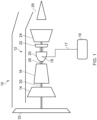
- FIG. 1 A block diagram of a hydrogen fuelled gas turbine engine 10 is shown in Figure 1 .
- the gas turbine engine 10 comprises a core gas turbine 12.
- the core gas turbine 12 comprises, in fluid flow series, a low-pressure compressor 14, a high-pressure compressor 16, a fuel injection system 18, a combustor 20, a high-pressure turbine 22, a low-pressure turbine 24, and a core nozzle 26.
- the high-pressure compressor 16 is driven by the high-pressure turbine 22 via a first shaft 28, and the low-pressure compressor 14 is driven by the low-pressure turbine 24 via a second shaft 30.
- the gas turbine also comprises a fan 32 driven by the second shaft 30. It will be appreciated that in alternative embodiments, the core gas turbine could be of three-shaft configuration.
- hydrogen fuel is pumped through a fuel line 17 from a hydrogen storage tank 19, in either a liquid, supercritical or gaseous state to the fuel injection system 18.
- the fuel is typically a gas or a supercritical fluid once it arrives at the fuel injection system, but may still be relatively cold.
- the combustor 20 comprises a plurality of fuel injectors 18, which are arranged in an annular configuration.
- the combustor 20 comprises a combustion chamber defined by radially inner 34 and outer 36 casings which extend annularly around the circumference of the combustor 20, and axially toward an outlet adjacent the high-pressure turbine 22.
- fuel flows into the combustion chamber through the fuel injectors 18, while air flows into the combustion chamber both through apertures 19 provided in the fuel injectors 18, and through dilution holes (not shown) in the combustion chamber inner wall 34.
- Substantially all combustion takes place within the inner casing 34, with the outer casing 36 providing structural support and cooling air.
- the combustion chamber outer casing 36 is a structural component, which forms part of the engine core outer casing, and bears flights loads in use. As such, the outer casing 36 is stiff, but may flex somewhat in use due to flight loads.
- the combustion chamber outer casing 36 comprises several components which are integrally formed. As will be understood, each of the integrally formed components are either produced as a single item, or are joined to form an integral whole.
- the outer casing 36 may be formed by machining a unitary billet of material. Suitable processing methods include Computerised Numerical Control (CNC) machining, and other similar processes. Other suitable processes include near-net-shape processes, such as sintering, or additive manufacturing processes such as selective laser sintering (SLS). A combination of such processes may be used.
- CNC Computerised Numerical Control
- SLS selective laser sintering
- combustion chamber outer casing 36 may be formed from separate sub-assemblies, and subsequently permanently joined together to form a unitary whole without removable fasteners.
- the combustion chamber outer casing 36 may be joined by welding. Accordingly, no seals or joints need be present in the unitary combustion chamber outer casing 36.
- the combustion chamber outer casing 36 comprises a generally cylindrical pressure chamber, configured to provide an air-tight containment for combustor entry air in use, and is joined to upstream and downstream engine components by joints 38.
- An annular wall 40 of the casing 36 is in direct contact with (i.e. is gas-washed with) compressor exit / combustor entry air in use.
- a generally toroidal hydrogen fuel manifold 42 At a radially outer side of the annular wall 40 is a generally toroidal hydrogen fuel manifold 42.
- the manifold 42 is supplied with hydrogen from the tank 19 via an inlet port (not shown) by a coupling. Consequently, a single (or relatively few) couplings are required to link the hydrogen tank 19 to the fuel supply.
- the manifold 42 is configured to be supplied with hydrogen in a gaseous or a supercritical state, at a pressure adequate to supply the fuel injectors 18.
- the manifold 42 is integral with the combustion chamber outer casing, and is joined to the outer casing wall 40 by a plurality of feed arms 44.
- Each feed arm 44 extends between the manifold and a respective fuel injector 18 through the annular wall 40. Since the annular wall 40, manifold 42 and feed arms 44 are formed of a single integral part, no joints, seals or fasteners penetrate the outer wall 40, which aids in maintaining a gas tight seal in operation.
- the manifold 42 is spaced from the outer casing wall 40 by a section of the feed arm 44 which extends from the radially outer side of the outer casing wall 40. Accordingly, the relatively cold manifold 42, which is cooled by the cold hydrogen therein, is spaced from the outer wall 40, which is subject to high temperatures by contact with the combustor entry air. Accordingly, thermal stress is reduced.
- the feed arm 44 portion which extends from the radially outer side of the outer casing wall 40 is typically single-walled, in view of the relatively low temperature environment. Additionally, the single wall can be relatively flexible, which allows for differential thermal expansion. Optionally, features such as undulations (not shown) in the feed arm 44 may be provided, to further reduce stiffness of the feed arm 44, and so permit movement of the manifold 42 relative to the outer casing wall 40.
- the feed arm 44 portion which extends from the radially inner side of the outer casing wall, which extends to the injector 18, is double-walled, having inner 46 and outer 48 tubular walls.
- the walls 46, 48 are spaced by an air gap through at least part of their length, such that thermal insulation is provided between the walls. Consequently, thermal expansion and contraction caused by the close proximity between the relatively cold hydrogen and the relatively hot combustor entry air is reduced.
- the inner wall 46 has a reduced stiffness, i.e. a greater flexibility than the outer wall 48.
- This reduced stiffness may be provided by the reduced diameter of the inner wall 46 relative to the outer wall, and / or reduced wall thickness and geometric features such as undulations. Consequently, the inner wall 46 can flex due to temperature fluctuations and differentials, while the outer wall 48 provides structural strength and resistance to damage from FOD.
- Each fuel injector 18 is coupled to the feed arm 44 by a coupling comprising a plurality of removable fasteners 50, which are provided at an axially forward end of the injectors 18, within the envelope defined by the combustor outer casing 36 and the inner casing 34. Consequently, individual fuel injectors 18 can be removed for maintenance, without removing the whole combustor 20.
- the joint between the injectors 18 and the feed arm 44 represents a potential leak risk. However, since the joint is provided within the outer casing 36, any leaks will flow into the combustor, where the hydrogen can be safely burned.
- Figure 3 illustrates an alternative combustor 120.
- the combustor 120 is similar to the combustor 20, differing only in the shape of the manifold 142.
- the manifold 142 forms an annulus having a box section, having rounded corners, as shown in figure 3 . Consequently, the manifold 142 is more space efficient than the arrangement shown in figure 2 . This is particularly advantageous, given that the area within the engine where the manifold is located is typically heavily populated with engine hardware.
- Figure 4 shows a further alternative combustor 220, which is not in accordance with the present invention. This embodiment differs from the first embodiment in two major ways.
- the fuel manifold 242 is configured differently. Rather than being toroidal, and spaced from the combustor outer wall, the combustor outer wall 240 of the casing 236 forms the radially inner wall of the fuel manifold 242, such that fuel within the manifold 242 is in contact with the combustor outer wall 240 in use. This design may save weight relative to the first embodiment. Additionally, hydrogen fuel within the fuel manifold 242 may cool the outer wall of the combustor, thereby reducing thermal stresses within the combustion system. Such an arrangement also further reduces the volume occupied by the fuel manifold 242.
- a radially outer wall 252 of the fuel manifold 242 is radially spaced from the inner wall 240, and is generally cylindrical. Side walls 254 extend radially from axially upstream and downstream ends, such that the manifold 242 is generally annular, having a box section. Such an arrangement forms a relatively stiff construction, thereby contributing to the stiffness of the casing. As such, the manifold 242 forms an integral structural component, thereby providing further weight savings.
- a second difference between the embodiments of figures 2 and 4 is the provision of a coupling 256 between the manifold 242 and feed arms 238.
- the coupling 256 is provided at the radially inner side of the combustor wall 240, within the combustor casing 236 envelope.
- the coupling comprises through holes provided in the feed arm 238, which coincide with threaded blind holes provided in the combustor casing outer wall 240, into which bolts are threaded. Consequently, the feed arms 238 can be removed separately to the combustor outer casing 236, which may be convenient for maintenance.
- the coupling 256 is provided within combustor casing 236, ensuring that any fuel leaks leak into the combustor, rather than other spaces of the engine where the fuel may represent a fire risk.
- Figure 5 shows a further embodiment, which combines features of the embodiments of figures 3 and 4 , and which is not in accordance with the present invention.
- the fuel manifold 342 is similar to that of figure 4 , in which the combustor casing outer wall 340 forms an inner wall of the manifold 342.
- the feed tube 338 is integral with the manifold 342 and casing 336, with no coupling being provided between the two.
- Figure 5 also illustrates the inlet port 358, which provides fuel to the manifold 342. This configuration presents a sealed fuel system with only one mechanical connection to the main fuel delivery pipe, minimising the chance of fuel leakage.
- Figures 6A and 6B illustrate a still further embodiment of a combustor 420, and which are not in accordance with the present invention.
- the manifold 442, combustor outer casing 436, feed arm 438 and at least part of the injectors 418 are integrally formed.
- the combustor casing 436 forms the radially outer wall 452 of the manifold 442, such that the manifold 442 is contained within the combustor outer casing 436, within the structural outer wall 440 of the combustor casing 436.
- the inlet port 458 is provided at a radially outer wall of the manifold, and is coupled to the fuel line 17 by a coupling 460.
- the manifold 442 is internal to the combustion chamber and therefore does not occupy the space within the volume surrounding the combustor outer casing 436, which may be at a premium. Consequently, this design is more volumetrically efficient, unless space within the combustor casing 436 is at a higher premium.
- An internal fuel manifold is also potentially safer than an external manifold, since any fuel will immediately automatically ignite. In the zone outside of the combustion chamber the temperature is typically not sufficient to automatically ignite the fuel, so any leaked fuel may collect and form an explosive pocket in the engine zone. Additionally, the feed arms 438 can be shorter, thereby resulting in a weight saving.
- the hydrogen fuel dwells within the manifold 442, which is surrounded by relatively hot high-pressure compressor exit air, and separated by the relatively thin, non-structural walls of the manifold 442. As such, the hydrogen is heated, which may reduce the heating requirement of hydrogen fuel upstream (which may be energy intensive and inefficient).
- Each injector 418 also differs from the previous designs.
- Each injector 418 includes a second annular fuel manifold 462, which supplies a plurality of fuel ports in each injector.
- the injectors 418 may be wholly integrally formed with the feed arm 438, manifold 442 and combustor casing 436, which may reduce production and assembly costs, or only part of each injector may be integrally formed.
- this configuration presents a sealed fuel system with only one mechanical connection to the main fuel delivery pipe, minimising the chance of fuel leakage.
- figure 7 shows a still further embodiment of the fuel injector 520, which is not in accordance with the present invention.
- This embodiment is similar to the fuel injector 420, but the manifold 542 and feed arms 538 are modified to include a double-walled structure comprising inner 564 and outer 566 walls, which extend around the inner wall of the manifold 542 and the feed arms, within a combustor casing 536 to form an air gap 568.
- Ports 570 are provided at a radially outer end and in communication with the air gap 570, which permit "zone 3" air from outside of the casing 536 to circulate within the air gap 570.
- the double wall provides additional safety from foreign body impact damage. It also provides better thermal transition and reduces thermal stresses in the walls as a result of the temperature difference between the inner zone and out zone. Additionally, the temperature of the hydrogen within the feed arm 538 and manifold 542 can be controlled by controlling air flow through the air gap.
- manifolds, fees arms and injectors could be single-walled or double-walled. Other construction methods could be employed.
Landscapes
- Engineering & Computer Science (AREA)
- Chemical & Material Sciences (AREA)
- Combustion & Propulsion (AREA)
- Mechanical Engineering (AREA)
- General Engineering & Computer Science (AREA)
- Output Control And Ontrol Of Special Type Engine (AREA)
- Fuel-Injection Apparatus (AREA)
- Filling Or Discharging Of Gas Storage Vessels (AREA)
Description
- This disclosure relates to a hydrogen combusting gas turbine engine.
- In order to limit emissions of carbon dioxide, use of hydrogen as an alternative to hydrocarbon fuel in gas turbine engines has historically only been practical in land-based installations. However, hydrogen fuelled airliners have recently been proposed.
- Hydrogen combustion in aircraft gas turbines presents a number of challenges. In particular, the low storage temperature of hydrogen and the relatively high temperatures within the combustor can result in large temperature differentials, which may result in "thermal fight", where different components are contracting and expanding due to their different temperatures. Such temperature differences can cause stress in various components, affecting component life. Additionally, hydrogen is difficult to contain, as it can readily leak through joints. In view of the high flammability of hydrogen, fuel leakage in hot parts of the engine where oxygen is present can represent a significant safety hazard.
- United States patent application
US 2021088215 discloses an additively manufactured attritable engine which includes an engine case, a fuel ring integral and conformal with the engine case, and a fuel manifold attached to the fuel ring and configured to deliver fuel to the fuel ring. The engine also includes a fuel injector attached to the fuel ring and configured to receive fuel from the fuel ring. - The invention is directed towards a hydrogen combusting gas turbine engine.
- According to the invention, there is provided a gas turbine engine configured to combust gaseous hydrogen fuel, the gas turbine engine comprising:
- a combustor comprising an annular combustion chamber outer casing having an annular wall, surrounding an inner combustor case and a fuel manifold configured to provide gaseous fuel to a plurality of fuel injectors; wherein
- the fuel manifold is formed integrally with the combustion chamber outer casing and
- each fuel injector is coupled to the fuel manifold via a coupling provided within the combustion chamber outer casing, wherein the fuel manifold is provided on a radially outer side of the combustion chamber outer casing wall;
- characterised in that:
- each fuel injector is coupled to the fuel manifold via a respective fuel feed arm; the fuel manifold is joined to the combustion chamber outer casing wall by the fuel feed arms, and is spaced from the combustion chamber outer casing annular wall by the fuel feed arms, wherein each fuel feed arm is integral with the fuel manifold.
- Advantageously, the invention provides a gas turbine engine having a fuel system with minimal joints, since a single fuel manifold which is integral to the combustion chamber outer casing is used to supply multiple fuel injectors.
- Each fuel injector is coupled to the fuel manifold via a coupling provided within the combustion chamber outer casing. The coupling is provided within the inner combustor case. Advantageously, the coupling, which may be susceptible to leakage, is provided within a zone which is tolerant of the high temperatures which may be caused by leaking hydrogen combusting.
- Each fuel injector is coupled to the fuel manifold via a respective fuel feed arm. Each fuel feed arm is integral with the fuel manifold.
- Advantageously, the number of joints is minimised. Alternatively, each fuel feed arm may be joined to the manifold by a coupling provided within the combustion chamber outer casing. Advantageously, any leaks occur within the combustion chamber outer casing.
- Each fuel feed arm may be double walled, having an inner wall separated from an outer wall via an air gap. Advantageously, the relatively cold hydrogen fuel is insulated from the relatively hot compressor delivery air, thereby reducing thermal shock and stress. Each fuel feed arm may be mounted to an annular compressor gas washed wall of the combustion chamber outer casing by the outer wall, and may be mounted to each fuel injector by the outer wall. The fuel feed arm inner wall may have a lower stiffness than the outer wall. Advantageously, a relatively stiff mounting is provided, which also protects the inner gas tight wall from damage from Foreign Object Damage (FOD), while thermal expansion can be accommodated by the relatively less stiff inner wall.
- The fuel manifold is provided on a radially outer side of the combustion chamber outer casing annular wall. The fuel manifold is joined to the combustion chamber outer casing by the fuel feed arm, and is spaced from the combustion chamber outer casing annular wall by the fuel feed arm. Advantageously, the relatively cold fuel manifold is prevented from making direct contact with the annular wall of the combustion chamber outer casing.
- The fuel manifold may be generally toroidal. Advantageously, the high-pressure hydrogen gas is efficiently contained, and corners, which would act as stress concentrators, are avoided. Alternatively, the fuel manifold may comprise a box section. Advantageously, space within the gas turbine engine is more efficiently utilised.
- Embodiments will now be described by way of example only with reference to the accompanying drawings, which are purely schematic and not to scale, and in which:
-
Figure 1 shows a block diagram of a hydrogen-fuelled turbofan engine; -
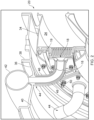
Figure 2 is an isometric view from a rear of part of a combustor for the engine offigure 1 , in accordance with the present invention; -
Figure 3 is an isometric view from a rear of part of a first alternative combustor for the engine offigure 1 , in accordance with the present invention; -
Figure 4 is an isometric view from a front of part of a second alternative combustor for the engine offigure 1 , which is not in accordance with the present invention; -
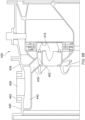
Figure 5 is a cross-sectional view from the side of a third alternative combustor of the engine offigure 1 , which is not in accordance with the present invention; -
Figures 6A and6B are an isometric view from a front side and a cross sectional view from the side respectively of a fourth alternative combustor of the engine offigure 1 , which is not in accordance with the present invention; and -
Figure 7 is an isometric view from a rear of part of a fifth alternative combustor for the engine offigure 1 , which is not in accordance with the present invention. - A block diagram of a hydrogen fuelled
gas turbine engine 10 is shown inFigure 1 . - The
gas turbine engine 10 comprises acore gas turbine 12. - The
core gas turbine 12 comprises, in fluid flow series, a low-pressure compressor 14, a high-pressure compressor 16, afuel injection system 18, acombustor 20, a high-pressure turbine 22, a low-pressure turbine 24, and acore nozzle 26. The high-pressure compressor 16 is driven by the high-pressure turbine 22 via afirst shaft 28, and the low-pressure compressor 14 is driven by the low-pressure turbine 24 via asecond shaft 30. The gas turbine also comprises a fan 32 driven by thesecond shaft 30. It will be appreciated that in alternative embodiments, the core gas turbine could be of three-shaft configuration. - In operation, hydrogen fuel is pumped through a fuel line 17 from a
hydrogen storage tank 19, in either a liquid, supercritical or gaseous state to thefuel injection system 18. The fuel is typically a gas or a supercritical fluid once it arrives at the fuel injection system, but may still be relatively cold. - Elements of a first embodiment of the
combustor 20 is shown in further detail infigure 2 . - The
combustor 20 comprises a plurality offuel injectors 18, which are arranged in an annular configuration. Thecombustor 20 comprises a combustion chamber defined by radially inner 34 and outer 36 casings which extend annularly around the circumference of thecombustor 20, and axially toward an outlet adjacent the high-pressure turbine 22. In use, fuel flows into the combustion chamber through thefuel injectors 18, while air flows into the combustion chamber both throughapertures 19 provided in thefuel injectors 18, and through dilution holes (not shown) in the combustion chamberinner wall 34. Substantially all combustion takes place within theinner casing 34, with theouter casing 36 providing structural support and cooling air. - The combustion chamber
outer casing 36 is a structural component, which forms part of the engine core outer casing, and bears flights loads in use. As such, theouter casing 36 is stiff, but may flex somewhat in use due to flight loads. The combustion chamberouter casing 36 comprises several components which are integrally formed. As will be understood, each of the integrally formed components are either produced as a single item, or are joined to form an integral whole. For example, theouter casing 36 may be formed by machining a unitary billet of material. Suitable processing methods include Computerised Numerical Control (CNC) machining, and other similar processes. Other suitable processes include near-net-shape processes, such as sintering, or additive manufacturing processes such as selective laser sintering (SLS). A combination of such processes may be used. In other cases, the combustion chamberouter casing 36 may be formed from separate sub-assemblies, and subsequently permanently joined together to form a unitary whole without removable fasteners. For example, the combustion chamberouter casing 36 may be joined by welding. Accordingly, no seals or joints need be present in the unitary combustion chamberouter casing 36. - The combustion chamber
outer casing 36 comprises a generally cylindrical pressure chamber, configured to provide an air-tight containment for combustor entry air in use, and is joined to upstream and downstream engine components byjoints 38. Anannular wall 40 of thecasing 36 is in direct contact with (i.e. is gas-washed with) compressor exit / combustor entry air in use. - At a radially outer side of the
annular wall 40 is a generally toroidalhydrogen fuel manifold 42. The manifold 42 is supplied with hydrogen from thetank 19 via an inlet port (not shown) by a coupling. Consequently, a single (or relatively few) couplings are required to link thehydrogen tank 19 to the fuel supply. Typically, the manifold 42 is configured to be supplied with hydrogen in a gaseous or a supercritical state, at a pressure adequate to supply thefuel injectors 18. - The manifold 42 is integral with the combustion chamber outer casing, and is joined to the
outer casing wall 40 by a plurality offeed arms 44. Eachfeed arm 44 extends between the manifold and arespective fuel injector 18 through theannular wall 40. Since theannular wall 40,manifold 42 and feedarms 44 are formed of a single integral part, no joints, seals or fasteners penetrate theouter wall 40, which aids in maintaining a gas tight seal in operation. - The manifold 42 is spaced from the
outer casing wall 40 by a section of thefeed arm 44 which extends from the radially outer side of theouter casing wall 40. Accordingly, the relativelycold manifold 42, which is cooled by the cold hydrogen therein, is spaced from theouter wall 40, which is subject to high temperatures by contact with the combustor entry air. Accordingly, thermal stress is reduced. - The
feed arm 44 portion which extends from the radially outer side of theouter casing wall 40 is typically single-walled, in view of the relatively low temperature environment. Additionally, the single wall can be relatively flexible, which allows for differential thermal expansion. Optionally, features such as undulations (not shown) in thefeed arm 44 may be provided, to further reduce stiffness of thefeed arm 44, and so permit movement of the manifold 42 relative to theouter casing wall 40. - The
feed arm 44 portion which extends from the radially inner side of the outer casing wall, which extends to theinjector 18, is double-walled, having inner 46 and outer 48 tubular walls. Thewalls - Preferably, the
inner wall 46 has a reduced stiffness, i.e. a greater flexibility than theouter wall 48. This reduced stiffness may be provided by the reduced diameter of theinner wall 46 relative to the outer wall, and / or reduced wall thickness and geometric features such as undulations. Consequently, theinner wall 46 can flex due to temperature fluctuations and differentials, while theouter wall 48 provides structural strength and resistance to damage from FOD. - Each
fuel injector 18 is coupled to thefeed arm 44 by a coupling comprising a plurality ofremovable fasteners 50, which are provided at an axially forward end of theinjectors 18, within the envelope defined by the combustorouter casing 36 and theinner casing 34. Consequently,individual fuel injectors 18 can be removed for maintenance, without removing thewhole combustor 20. On the other hand, the joint between theinjectors 18 and thefeed arm 44 represents a potential leak risk. However, since the joint is provided within theouter casing 36, any leaks will flow into the combustor, where the hydrogen can be safely burned. -
Figure 3 illustrates analternative combustor 120. Thecombustor 120 is similar to thecombustor 20, differing only in the shape of themanifold 142. In the embodiment offigure 3 , the manifold 142 forms an annulus having a box section, having rounded corners, as shown infigure 3 . Consequently, the manifold 142 is more space efficient than the arrangement shown infigure 2 . This is particularly advantageous, given that the area within the engine where the manifold is located is typically heavily populated with engine hardware. -
Figure 4 shows a furtheralternative combustor 220, which is not in accordance with the present invention. This embodiment differs from the first embodiment in two major ways. - Firstly, the
fuel manifold 242 is configured differently. Rather than being toroidal, and spaced from the combustor outer wall, the combustorouter wall 240 of thecasing 236 forms the radially inner wall of thefuel manifold 242, such that fuel within themanifold 242 is in contact with the combustorouter wall 240 in use. This design may save weight relative to the first embodiment. Additionally, hydrogen fuel within thefuel manifold 242 may cool the outer wall of the combustor, thereby reducing thermal stresses within the combustion system. Such an arrangement also further reduces the volume occupied by thefuel manifold 242. - A radially
outer wall 252 of thefuel manifold 242 is radially spaced from theinner wall 240, and is generally cylindrical.Side walls 254 extend radially from axially upstream and downstream ends, such that the manifold 242 is generally annular, having a box section. Such an arrangement forms a relatively stiff construction, thereby contributing to the stiffness of the casing. As such, the manifold 242 forms an integral structural component, thereby providing further weight savings. - A second difference between the embodiments of
figures 2 and4 , is the provision of acoupling 256 between the manifold 242 and feedarms 238. Thecoupling 256 is provided at the radially inner side of thecombustor wall 240, within thecombustor casing 236 envelope. Typically, the coupling comprises through holes provided in thefeed arm 238, which coincide with threaded blind holes provided in the combustor casingouter wall 240, into which bolts are threaded. Consequently, thefeed arms 238 can be removed separately to the combustorouter casing 236, which may be convenient for maintenance. Nevertheless, thecoupling 256 is provided withincombustor casing 236, ensuring that any fuel leaks leak into the combustor, rather than other spaces of the engine where the fuel may represent a fire risk. -
Figure 5 shows a further embodiment, which combines features of the embodiments offigures 3 and4 , and which is not in accordance with the present invention. Thefuel manifold 342 is similar to that offigure 4 , in which the combustor casingouter wall 340 forms an inner wall of themanifold 342. However, in this embodiment, thefeed tube 338 is integral with the manifold 342 and casing 336, with no coupling being provided between the two.Figure 5 also illustrates theinlet port 358, which provides fuel to themanifold 342. This configuration presents a sealed fuel system with only one mechanical connection to the main fuel delivery pipe, minimising the chance of fuel leakage. -
Figures 6A and6B illustrate a still further embodiment of acombustor 420, and which are not in accordance with the present invention. In this embodiment, the manifold 442, combustorouter casing 436,feed arm 438 and at least part of theinjectors 418 are integrally formed. In this embodiment, thecombustor casing 436 forms the radially outer wall 452 of the manifold 442, such that the manifold 442 is contained within the combustorouter casing 436, within the structuralouter wall 440 of thecombustor casing 436. Theinlet port 458 is provided at a radially outer wall of the manifold, and is coupled to the fuel line 17 by acoupling 460. - In this embodiment, the manifold 442 is internal to the combustion chamber and therefore does not occupy the space within the volume surrounding the combustor
outer casing 436, which may be at a premium. Consequently, this design is more volumetrically efficient, unless space within thecombustor casing 436 is at a higher premium. An internal fuel manifold is also potentially safer than an external manifold, since any fuel will immediately automatically ignite. In the zone outside of the combustion chamber the temperature is typically not sufficient to automatically ignite the fuel, so any leaked fuel may collect and form an explosive pocket in the engine zone. Additionally, thefeed arms 438 can be shorter, thereby resulting in a weight saving. Finally, the hydrogen fuel dwells within themanifold 442, which is surrounded by relatively hot high-pressure compressor exit air, and separated by the relatively thin, non-structural walls of themanifold 442. As such, the hydrogen is heated, which may reduce the heating requirement of hydrogen fuel upstream (which may be energy intensive and inefficient). - Each
injector 418 also differs from the previous designs. Eachinjector 418 includes a secondannular fuel manifold 462, which supplies a plurality of fuel ports in each injector. Theinjectors 418 may be wholly integrally formed with thefeed arm 438,manifold 442 andcombustor casing 436, which may reduce production and assembly costs, or only part of each injector may be integrally formed. In a similar manner to the embodiment shown infigure 5 , this configuration presents a sealed fuel system with only one mechanical connection to the main fuel delivery pipe, minimising the chance of fuel leakage. - Finally,
figure 7 shows a still further embodiment of thefuel injector 520, which is not in accordance with the present invention. This embodiment is similar to thefuel injector 420, but the manifold 542 and feedarms 538 are modified to include a double-walled structure comprising inner 564 and outer 566 walls, which extend around the inner wall of the manifold 542 and the feed arms, within acombustor casing 536 to form anair gap 568.Ports 570 are provided at a radially outer end and in communication with theair gap 570, which permit "zone 3" air from outside of thecasing 536 to circulate within theair gap 570. The double wall provides additional safety from foreign body impact damage. It also provides better thermal transition and reduces thermal stresses in the walls as a result of the temperature difference between the inner zone and out zone. Additionally, the temperature of the hydrogen within thefeed arm 538 andmanifold 542 can be controlled by controlling air flow through the air gap. - Any of the features disclosed herein may be employed separately or in combination with any other features and thus the disclosed subject-matter extends to and includes all such combinations and sub-combinations of the or more features described herein. Alternative embodiments of the disclosed design are also envisaged.
- For example, the manifolds, fees arms and injectors could be single-walled or double-walled. Other construction methods could be employed.
Claims (7)
- A gas turbine engine (10) configured to combust gaseous hydrogen fuel, the gas turbine engine (10) comprising:a combustor (20) comprising an annular combustion chamber outer casing (36) having an annular wall (40), surrounding an inner combustor case (34) and a fuel manifold (42) configured to provide gaseous fuel to a plurality of fuel injectors (18); whereinthe fuel manifold (42) is formed integrally with the combustion chamber outer casing (36); andeach fuel injector (18) is coupled to the fuel manifold (42) via a coupling (50) provided within the combustion chamber outer casing (36), wherein the fuel manifold (42) is provided on a radially outer side of the combustion chamber outer casing wall (40);characterised in that:each fuel injector (18) is coupled to the fuel manifold (42) via a respective fuel feed arm (44);the fuel manifold (42) is joined to the combustion chamber outer casing wall (40) by the fuel feed arms (44), and is spaced from the combustion chamber outer casing annular wall (40) by the fuel feed arms (44), wherein each fuel feed arm (44) is integral with the fuel manifold (42).
- A gas turbine engine according to claim 1, wherein each fuel feed arm (44) is double walled, having an inner wall (46) separated from an outer wall (48) via an air gap.
- A gas turbine engine according to claim 2, wherein each fuel feed arm (44) is mounted to the outer casing annular wall (40) of the combustion chamber outer casing (36) by the outer wall (48).
- A gas turbine engine according to claim 2 or claim 3, wherein each fuel injector feed arm (44) is mounted to each fuel injector (18) by the outer wall (48).
- A gas turbine engine according to any of claims 2 to 4, wherein the fuel feed arm inner wall (46) has a lower stiffness than the outer wall (48).
- A gas turbine engine according to any of the preceding claims, wherein the fuel manifold (42) is generally toroidal.
- A gas turbine engine according to any of claims 1 to 5, wherein the fuel manifold (142, 242, 342, 442, 542) comprises a box section.
Priority Applications (1)
| Application Number | Priority Date | Filing Date | Title |
|---|---|---|---|
| EP25155567.8A EP4524472B1 (en) | 2023-05-03 | 2024-03-25 | Gas turbine engine |
Applications Claiming Priority (1)
| Application Number | Priority Date | Filing Date | Title |
|---|---|---|---|
| GBGB2306498.3A GB202306498D0 (en) | 2023-05-03 | 2023-05-03 | Gas turbine engine |
Related Child Applications (2)
| Application Number | Title | Priority Date | Filing Date |
|---|---|---|---|
| EP25155567.8A Division EP4524472B1 (en) | 2023-05-03 | 2024-03-25 | Gas turbine engine |
| EP25155567.8A Division-Into EP4524472B1 (en) | 2023-05-03 | 2024-03-25 | Gas turbine engine |
Publications (2)
| Publication Number | Publication Date |
|---|---|
| EP4459186A1 EP4459186A1 (en) | 2024-11-06 |
| EP4459186B1 true EP4459186B1 (en) | 2025-03-26 |
Family
ID=86691898
Family Applications (2)
| Application Number | Title | Priority Date | Filing Date |
|---|---|---|---|
| EP25155567.8A Active EP4524472B1 (en) | 2023-05-03 | 2024-03-25 | Gas turbine engine |
| EP24165892.1A Active EP4459186B1 (en) | 2023-05-03 | 2024-03-25 | Gas turbine engine |
Family Applications Before (1)
| Application Number | Title | Priority Date | Filing Date |
|---|---|---|---|
| EP25155567.8A Active EP4524472B1 (en) | 2023-05-03 | 2024-03-25 | Gas turbine engine |
Country Status (3)
| Country | Link |
|---|---|
| US (1) | US12359624B2 (en) |
| EP (2) | EP4524472B1 (en) |
| GB (1) | GB202306498D0 (en) |
Family Cites Families (13)
| Publication number | Priority date | Publication date | Assignee | Title |
|---|---|---|---|---|
| US3991561A (en) * | 1975-06-19 | 1976-11-16 | Curtiss-Wright Corporation | Dual-fuel feed system for a gas turbine engine |
| US4312185A (en) * | 1980-02-19 | 1982-01-26 | General Electric Company | Low profile fuel injection system |
| US4467610A (en) * | 1981-04-17 | 1984-08-28 | General Electric Company | Gas turbine fuel system |
| US5771696A (en) * | 1996-10-21 | 1998-06-30 | General Electric Company | Internal manifold fuel injection assembly for gas turbine |
| US7565807B2 (en) * | 2005-01-18 | 2009-07-28 | Pratt & Whitney Canada Corp. | Heat shield for a fuel manifold and method |
| US20100330510A1 (en) * | 2005-05-23 | 2010-12-30 | Pfefferle William C | METHOD FOR LOW NOx COMBUSTION OF SYNGAS / HUGH HYDROGEN FUELS |
| US8240979B2 (en) * | 2007-10-24 | 2012-08-14 | United Technologies Corp. | Gas turbine engine systems involving integrated fluid conduits |
| US20100071377A1 (en) * | 2008-09-19 | 2010-03-25 | Fox Timothy A | Combustor Apparatus for Use in a Gas Turbine Engine |
| US8281594B2 (en) * | 2009-09-08 | 2012-10-09 | Siemens Energy, Inc. | Fuel injector for use in a gas turbine engine |
| KR101657535B1 (en) * | 2015-05-21 | 2016-09-19 | 두산중공업 주식회사 | Fuel supply nozzle to minimize burning damage. |
| US10578021B2 (en) | 2015-06-26 | 2020-03-03 | Delavan Inc | Combustion systems |
| US10605171B2 (en) | 2018-04-10 | 2020-03-31 | Delavan Inc. | Fuel nozzle manifold systems for turbomachines |
| US12044409B2 (en) * | 2019-09-20 | 2024-07-23 | Rtx Corporation | Casing integrated fluid distribution system |
-
2023
- 2023-05-03 GB GBGB2306498.3A patent/GB202306498D0/en not_active Ceased
-
2024
- 2024-03-25 EP EP25155567.8A patent/EP4524472B1/en active Active
- 2024-03-25 EP EP24165892.1A patent/EP4459186B1/en active Active
- 2024-04-09 US US18/630,099 patent/US12359624B2/en active Active
Also Published As
| Publication number | Publication date |
|---|---|
| EP4524472B1 (en) | 2025-09-10 |
| US12359624B2 (en) | 2025-07-15 |
| GB202306498D0 (en) | 2023-06-14 |
| EP4524472A2 (en) | 2025-03-19 |
| EP4459186A1 (en) | 2024-11-06 |
| EP4524472A3 (en) | 2025-04-16 |
| US20240369020A1 (en) | 2024-11-07 |
Similar Documents
| Publication | Publication Date | Title |
|---|---|---|
| EP3832208B1 (en) | Method for operating a multi-fuel injector for a gas turbine engine and combustor for a gas turbine engine | |
| EP3382280B1 (en) | Fuel injectors for multipoint arrays | |
| EP3066321B1 (en) | Cooled fuel injector system for a gas turbine engine and method thereof | |
| EP2902605B1 (en) | A fuel manifold and fuel injector arrangement for a gas turbine engine | |
| EP2739909B1 (en) | Cast manifold for dual fuel dual stage dry low nox gas turbine engine | |
| US20030182945A1 (en) | Nozzle with fluted tube | |
| US11092084B2 (en) | Fuel delivery system for a gas turbine engine | |
| US20140311152A1 (en) | Reverse flow ceramic matrix composite combustor | |
| US20140190171A1 (en) | Combustors with hybrid walled liners | |
| US11549437B2 (en) | Combustor for gas turbine engine and method of manufacture | |
| US11662096B2 (en) | Combustor swirler to pseudo-dome attachment and interface with a CMC dome | |
| US8752389B2 (en) | Fuel nozzle assembly for use with a gas turbine engine and method of assembling same | |
| EP2956635B1 (en) | Heat shield manifold system for a midframe case of a gas turbine engine | |
| EP3933268A1 (en) | Combustor air flow path | |
| EP4459186B1 (en) | Gas turbine engine | |
| EP4166772B1 (en) | Turbine engine with preheat of cryogenic fuel via intermediate fluid | |
| US12228284B2 (en) | Nozzle tip with shielded core for a dual combustion systems | |
| EP4339515B1 (en) | Fuel nozzle | |
| EP4067746B1 (en) | Combustor having a wake energizer | |
| EP3943816B1 (en) | Combustor and fuel distribution manifold | |
| CN114483321A (en) | Integrated combustion nozzle with integrated head end | |
| EP4711600A1 (en) | Gas turbine engine | |
| EP4008885B1 (en) | Gas turbine engine combustor | |
| US20180094816A1 (en) | Injector resonator for a gas turbine engine |
Legal Events
| Date | Code | Title | Description |
|---|---|---|---|
| PUAI | Public reference made under article 153(3) epc to a published international application that has entered the european phase |
Free format text: ORIGINAL CODE: 0009012 |
|
| STAA | Information on the status of an ep patent application or granted ep patent |
Free format text: STATUS: THE APPLICATION HAS BEEN PUBLISHED |
|
| AK | Designated contracting states |
Kind code of ref document: A1 Designated state(s): AL AT BE BG CH CY CZ DE DK EE ES FI FR GB GR HR HU IE IS IT LI LT LU LV MC ME MK MT NL NO PL PT RO RS SE SI SK SM TR |
|
| STAA | Information on the status of an ep patent application or granted ep patent |
Free format text: STATUS: REQUEST FOR EXAMINATION WAS MADE |
|
| 17P | Request for examination filed |
Effective date: 20241126 |
|
| RBV | Designated contracting states (corrected) |
Designated state(s): AL AT BE BG CH CY CZ DE DK EE ES FI FR GB GR HR HU IE IS IT LI LT LU LV MC ME MK MT NL NO PL PT RO RS SE SI SK SM TR |
|
| GRAP | Despatch of communication of intention to grant a patent |
Free format text: ORIGINAL CODE: EPIDOSNIGR1 |
|
| STAA | Information on the status of an ep patent application or granted ep patent |
Free format text: STATUS: GRANT OF PATENT IS INTENDED |
|
| GRAS | Grant fee paid |
Free format text: ORIGINAL CODE: EPIDOSNIGR3 |
|
| GRAA | (expected) grant |
Free format text: ORIGINAL CODE: 0009210 |
|
| STAA | Information on the status of an ep patent application or granted ep patent |
Free format text: STATUS: THE PATENT HAS BEEN GRANTED |
|
| INTG | Intention to grant announced |
Effective date: 20250203 |
|
| P01 | Opt-out of the competence of the unified patent court (upc) registered |
Free format text: CASE NUMBER: APP_6615/2025 Effective date: 20250207 |
|
| AK | Designated contracting states |
Kind code of ref document: B1 Designated state(s): AL AT BE BG CH CY CZ DE DK EE ES FI FR GB GR HR HU IE IS IT LI LT LU LV MC ME MK MT NL NO PL PT RO RS SE SI SK SM TR |
|
| REG | Reference to a national code |
Ref country code: GB Ref legal event code: FG4D |
|
| REG | Reference to a national code |
Ref country code: CH Ref legal event code: EP |
|
| REG | Reference to a national code |
Ref country code: DE Ref legal event code: R096 Ref document number: 602024000035 Country of ref document: DE |
|
| REG | Reference to a national code |
Ref country code: IE Ref legal event code: FG4D |
|
| PG25 | Lapsed in a contracting state [announced via postgrant information from national office to epo] |
Ref country code: RS Free format text: LAPSE BECAUSE OF FAILURE TO SUBMIT A TRANSLATION OF THE DESCRIPTION OR TO PAY THE FEE WITHIN THE PRESCRIBED TIME-LIMIT Effective date: 20250626 |
|
| PG25 | Lapsed in a contracting state [announced via postgrant information from national office to epo] |
Ref country code: FI Free format text: LAPSE BECAUSE OF FAILURE TO SUBMIT A TRANSLATION OF THE DESCRIPTION OR TO PAY THE FEE WITHIN THE PRESCRIBED TIME-LIMIT Effective date: 20250326 |
|
| REG | Reference to a national code |
Ref country code: LT Ref legal event code: MG9D |
|
| PG25 | Lapsed in a contracting state [announced via postgrant information from national office to epo] |
Ref country code: NO Free format text: LAPSE BECAUSE OF FAILURE TO SUBMIT A TRANSLATION OF THE DESCRIPTION OR TO PAY THE FEE WITHIN THE PRESCRIBED TIME-LIMIT Effective date: 20250626 |
|
| PG25 | Lapsed in a contracting state [announced via postgrant information from national office to epo] |
Ref country code: HR Free format text: LAPSE BECAUSE OF FAILURE TO SUBMIT A TRANSLATION OF THE DESCRIPTION OR TO PAY THE FEE WITHIN THE PRESCRIBED TIME-LIMIT Effective date: 20250326 |
|
| PG25 | Lapsed in a contracting state [announced via postgrant information from national office to epo] |
Ref country code: LV Free format text: LAPSE BECAUSE OF FAILURE TO SUBMIT A TRANSLATION OF THE DESCRIPTION OR TO PAY THE FEE WITHIN THE PRESCRIBED TIME-LIMIT Effective date: 20250326 |
|
| PG25 | Lapsed in a contracting state [announced via postgrant information from national office to epo] |
Ref country code: BG Free format text: LAPSE BECAUSE OF FAILURE TO SUBMIT A TRANSLATION OF THE DESCRIPTION OR TO PAY THE FEE WITHIN THE PRESCRIBED TIME-LIMIT Effective date: 20250326 Ref country code: GR Free format text: LAPSE BECAUSE OF FAILURE TO SUBMIT A TRANSLATION OF THE DESCRIPTION OR TO PAY THE FEE WITHIN THE PRESCRIBED TIME-LIMIT Effective date: 20250627 |
|
| REG | Reference to a national code |
Ref country code: NL Ref legal event code: MP Effective date: 20250326 |
|
| PG25 | Lapsed in a contracting state [announced via postgrant information from national office to epo] |
Ref country code: NL Free format text: LAPSE BECAUSE OF FAILURE TO SUBMIT A TRANSLATION OF THE DESCRIPTION OR TO PAY THE FEE WITHIN THE PRESCRIBED TIME-LIMIT Effective date: 20250326 |
|
| PG25 | Lapsed in a contracting state [announced via postgrant information from national office to epo] |
Ref country code: SE Free format text: LAPSE BECAUSE OF FAILURE TO SUBMIT A TRANSLATION OF THE DESCRIPTION OR TO PAY THE FEE WITHIN THE PRESCRIBED TIME-LIMIT Effective date: 20250326 |
|
| REG | Reference to a national code |
Ref country code: AT Ref legal event code: MK05 Ref document number: 1779292 Country of ref document: AT Kind code of ref document: T Effective date: 20250326 |
|
| PG25 | Lapsed in a contracting state [announced via postgrant information from national office to epo] |
Ref country code: SM Free format text: LAPSE BECAUSE OF FAILURE TO SUBMIT A TRANSLATION OF THE DESCRIPTION OR TO PAY THE FEE WITHIN THE PRESCRIBED TIME-LIMIT Effective date: 20250326 |
|
| PG25 | Lapsed in a contracting state [announced via postgrant information from national office to epo] |
Ref country code: ES Free format text: LAPSE BECAUSE OF FAILURE TO SUBMIT A TRANSLATION OF THE DESCRIPTION OR TO PAY THE FEE WITHIN THE PRESCRIBED TIME-LIMIT Effective date: 20250326 Ref country code: PT Free format text: LAPSE BECAUSE OF FAILURE TO SUBMIT A TRANSLATION OF THE DESCRIPTION OR TO PAY THE FEE WITHIN THE PRESCRIBED TIME-LIMIT Effective date: 20250728 |
|
| PG25 | Lapsed in a contracting state [announced via postgrant information from national office to epo] |
Ref country code: PL Free format text: LAPSE BECAUSE OF FAILURE TO SUBMIT A TRANSLATION OF THE DESCRIPTION OR TO PAY THE FEE WITHIN THE PRESCRIBED TIME-LIMIT Effective date: 20250326 Ref country code: IT Free format text: LAPSE BECAUSE OF FAILURE TO SUBMIT A TRANSLATION OF THE DESCRIPTION OR TO PAY THE FEE WITHIN THE PRESCRIBED TIME-LIMIT Effective date: 20250326 |
|
| PG25 | Lapsed in a contracting state [announced via postgrant information from national office to epo] |
Ref country code: AT Free format text: LAPSE BECAUSE OF FAILURE TO SUBMIT A TRANSLATION OF THE DESCRIPTION OR TO PAY THE FEE WITHIN THE PRESCRIBED TIME-LIMIT Effective date: 20250326 |
|
| PG25 | Lapsed in a contracting state [announced via postgrant information from national office to epo] |
Ref country code: EE Free format text: LAPSE BECAUSE OF FAILURE TO SUBMIT A TRANSLATION OF THE DESCRIPTION OR TO PAY THE FEE WITHIN THE PRESCRIBED TIME-LIMIT Effective date: 20250326 |
|
| PG25 | Lapsed in a contracting state [announced via postgrant information from national office to epo] |
Ref country code: SK Free format text: LAPSE BECAUSE OF FAILURE TO SUBMIT A TRANSLATION OF THE DESCRIPTION OR TO PAY THE FEE WITHIN THE PRESCRIBED TIME-LIMIT Effective date: 20250326 |
|
| PG25 | Lapsed in a contracting state [announced via postgrant information from national office to epo] |
Ref country code: IS Free format text: LAPSE BECAUSE OF FAILURE TO SUBMIT A TRANSLATION OF THE DESCRIPTION OR TO PAY THE FEE WITHIN THE PRESCRIBED TIME-LIMIT Effective date: 20250726 |
|
| REG | Reference to a national code |
Ref country code: DE Ref legal event code: R097 Ref document number: 602024000035 Country of ref document: DE |
|
| PG25 | Lapsed in a contracting state [announced via postgrant information from national office to epo] |
Ref country code: DK Free format text: LAPSE BECAUSE OF FAILURE TO SUBMIT A TRANSLATION OF THE DESCRIPTION OR TO PAY THE FEE WITHIN THE PRESCRIBED TIME-LIMIT Effective date: 20250326 |
|
| PG25 | Lapsed in a contracting state [announced via postgrant information from national office to epo] |
Ref country code: CZ Free format text: LAPSE BECAUSE OF FAILURE TO SUBMIT A TRANSLATION OF THE DESCRIPTION OR TO PAY THE FEE WITHIN THE PRESCRIBED TIME-LIMIT Effective date: 20250326 |
|
| PLBE | No opposition filed within time limit |
Free format text: ORIGINAL CODE: 0009261 |
|
| STAA | Information on the status of an ep patent application or granted ep patent |
Free format text: STATUS: NO OPPOSITION FILED WITHIN TIME LIMIT |
|
| REG | Reference to a national code |
Ref country code: CH Ref legal event code: L10 Free format text: ST27 STATUS EVENT CODE: U-0-0-L10-L00 (AS PROVIDED BY THE NATIONAL OFFICE) Effective date: 20260211 |
|
| 26N | No opposition filed |
Effective date: 20260105 |
|
| PGFP | Annual fee paid to national office [announced via postgrant information from national office to epo] |
Ref country code: DE Payment date: 20260320 Year of fee payment: 3 |
|
| PGFP | Annual fee paid to national office [announced via postgrant information from national office to epo] |
Ref country code: FR Payment date: 20260323 Year of fee payment: 3 |