EP4458995A1 - Method for separating iron element from brine and use thereof - Google Patents
Method for separating iron element from brine and use thereof Download PDFInfo
- Publication number
- EP4458995A1 EP4458995A1 EP22914190.8A EP22914190A EP4458995A1 EP 4458995 A1 EP4458995 A1 EP 4458995A1 EP 22914190 A EP22914190 A EP 22914190A EP 4458995 A1 EP4458995 A1 EP 4458995A1
- Authority
- EP
- European Patent Office
- Prior art keywords
- brine
- iron
- magnetic
- mol
- geothermal
- Prior art date
- Legal status (The legal status is an assumption and is not a legal conclusion. Google has not performed a legal analysis and makes no representation as to the accuracy of the status listed.)
- Pending
Links
Images



Classifications
-
- C—CHEMISTRY; METALLURGY
- C01—INORGANIC CHEMISTRY
- C01G—COMPOUNDS CONTAINING METALS NOT COVERED BY SUBCLASSES C01D OR C01F
- C01G49/00—Compounds of iron
- C01G49/02—Oxides; Hydroxides
- C01G49/04—Ferrous oxide [FeO]
-
- B—PERFORMING OPERATIONS; TRANSPORTING
- B01—PHYSICAL OR CHEMICAL PROCESSES OR APPARATUS IN GENERAL
- B01D—SEPARATION
- B01D15/00—Separating processes involving the treatment of liquids with solid sorbents; Apparatus therefor
- B01D15/08—Selective adsorption, e.g. chromatography
- B01D15/10—Selective adsorption, e.g. chromatography characterised by constructional or operational features
- B01D15/12—Selective adsorption, e.g. chromatography characterised by constructional or operational features relating to the preparation of the feed
-
- B—PERFORMING OPERATIONS; TRANSPORTING
- B01—PHYSICAL OR CHEMICAL PROCESSES OR APPARATUS IN GENERAL
- B01D—SEPARATION
- B01D15/00—Separating processes involving the treatment of liquids with solid sorbents; Apparatus therefor
- B01D15/08—Selective adsorption, e.g. chromatography
- B01D15/26—Selective adsorption, e.g. chromatography characterised by the separation mechanism
- B01D15/38—Selective adsorption, e.g. chromatography characterised by the separation mechanism involving specific interaction not covered by one or more of groups B01D15/265 and B01D15/30 - B01D15/36, e.g. affinity, ligand exchange or chiral chromatography
- B01D15/3861—Selective adsorption, e.g. chromatography characterised by the separation mechanism involving specific interaction not covered by one or more of groups B01D15/265 and B01D15/30 - B01D15/36, e.g. affinity, ligand exchange or chiral chromatography using an external stimulus
- B01D15/3885—Selective adsorption, e.g. chromatography characterised by the separation mechanism involving specific interaction not covered by one or more of groups B01D15/265 and B01D15/30 - B01D15/36, e.g. affinity, ligand exchange or chiral chromatography using an external stimulus using electrical or magnetic means
-
- C—CHEMISTRY; METALLURGY
- C01—INORGANIC CHEMISTRY
- C01D—COMPOUNDS OF ALKALI METALS, i.e. LITHIUM, SODIUM, POTASSIUM, RUBIDIUM, CAESIUM, OR FRANCIUM
- C01D3/00—Halides of sodium, potassium or alkali metals in general
- C01D3/04—Chlorides
- C01D3/06—Preparation by working up brines; seawater or spent lyes
-
- C—CHEMISTRY; METALLURGY
- C01—INORGANIC CHEMISTRY
- C01G—COMPOUNDS CONTAINING METALS NOT COVERED BY SUBCLASSES C01D OR C01F
- C01G49/00—Compounds of iron
- C01G49/0009—Preparation involving a liquid-liquid extraction, an adsorption or an ion-exchange
-
- C—CHEMISTRY; METALLURGY
- C01—INORGANIC CHEMISTRY
- C01G—COMPOUNDS CONTAINING METALS NOT COVERED BY SUBCLASSES C01D OR C01F
- C01G49/00—Compounds of iron
- C01G49/02—Oxides; Hydroxides
-
- C—CHEMISTRY; METALLURGY
- C01—INORGANIC CHEMISTRY
- C01G—COMPOUNDS CONTAINING METALS NOT COVERED BY SUBCLASSES C01D OR C01F
- C01G49/00—Compounds of iron
- C01G49/02—Oxides; Hydroxides
- C01G49/06—Ferric oxide [Fe2O3]
-
- C—CHEMISTRY; METALLURGY
- C01—INORGANIC CHEMISTRY
- C01G—COMPOUNDS CONTAINING METALS NOT COVERED BY SUBCLASSES C01D OR C01F
- C01G49/00—Compounds of iron
- C01G49/02—Oxides; Hydroxides
- C01G49/08—Ferroso-ferric oxide [Fe3O4]
-
- C—CHEMISTRY; METALLURGY
- C02—TREATMENT OF WATER, WASTE WATER, SEWAGE, OR SLUDGE
- C02F—TREATMENT OF WATER, WASTE WATER, SEWAGE, OR SLUDGE
- C02F9/00—Multistage treatment of water, waste water or sewage
-
- C—CHEMISTRY; METALLURGY
- C22—METALLURGY; FERROUS OR NON-FERROUS ALLOYS; TREATMENT OF ALLOYS OR NON-FERROUS METALS
- C22B—PRODUCTION AND REFINING OF METALS; PRETREATMENT OF RAW MATERIALS
- C22B26/00—Obtaining alkali, alkaline earth metals or magnesium
- C22B26/10—Obtaining alkali metals
-
- C—CHEMISTRY; METALLURGY
- C22—METALLURGY; FERROUS OR NON-FERROUS ALLOYS; TREATMENT OF ALLOYS OR NON-FERROUS METALS
- C22B—PRODUCTION AND REFINING OF METALS; PRETREATMENT OF RAW MATERIALS
- C22B3/00—Extraction of metal compounds from ores or concentrates by wet processes
- C22B3/20—Treatment or purification of solutions, e.g. obtained by leaching
- C22B3/22—Treatment or purification of solutions, e.g. obtained by leaching by physical processes, e.g. by filtration, by magnetic means, or by thermal decomposition
-
- C—CHEMISTRY; METALLURGY
- C22—METALLURGY; FERROUS OR NON-FERROUS ALLOYS; TREATMENT OF ALLOYS OR NON-FERROUS METALS
- C22B—PRODUCTION AND REFINING OF METALS; PRETREATMENT OF RAW MATERIALS
- C22B3/00—Extraction of metal compounds from ores or concentrates by wet processes
- C22B3/20—Treatment or purification of solutions, e.g. obtained by leaching
- C22B3/44—Treatment or purification of solutions, e.g. obtained by leaching by chemical processes
-
- C—CHEMISTRY; METALLURGY
- C01—INORGANIC CHEMISTRY
- C01P—INDEXING SCHEME RELATING TO STRUCTURAL AND PHYSICAL ASPECTS OF SOLID INORGANIC COMPOUNDS
- C01P2002/00—Crystal-structural characteristics
- C01P2002/70—Crystal-structural characteristics defined by measured X-ray, neutron or electron diffraction data
-
- C—CHEMISTRY; METALLURGY
- C01—INORGANIC CHEMISTRY
- C01P—INDEXING SCHEME RELATING TO STRUCTURAL AND PHYSICAL ASPECTS OF SOLID INORGANIC COMPOUNDS
- C01P2006/00—Physical properties of inorganic compounds
- C01P2006/42—Magnetic properties
-
- C—CHEMISTRY; METALLURGY
- C02—TREATMENT OF WATER, WASTE WATER, SEWAGE, OR SLUDGE
- C02F—TREATMENT OF WATER, WASTE WATER, SEWAGE, OR SLUDGE
- C02F1/00—Treatment of water, waste water, or sewage
- C02F1/001—Processes for the treatment of water whereby the filtration technique is of importance
- C02F1/004—Processes for the treatment of water whereby the filtration technique is of importance using large scale industrial sized filters
-
- C—CHEMISTRY; METALLURGY
- C02—TREATMENT OF WATER, WASTE WATER, SEWAGE, OR SLUDGE
- C02F—TREATMENT OF WATER, WASTE WATER, SEWAGE, OR SLUDGE
- C02F1/00—Treatment of water, waste water, or sewage
- C02F1/48—Treatment of water, waste water, or sewage with magnetic or electric fields
- C02F1/488—Treatment of water, waste water, or sewage with magnetic or electric fields for separation of magnetic materials, e.g. magnetic flocculation
-
- C—CHEMISTRY; METALLURGY
- C02—TREATMENT OF WATER, WASTE WATER, SEWAGE, OR SLUDGE
- C02F—TREATMENT OF WATER, WASTE WATER, SEWAGE, OR SLUDGE
- C02F1/00—Treatment of water, waste water, or sewage
- C02F1/66—Treatment of water, waste water, or sewage by neutralisation; pH adjustment
-
- C—CHEMISTRY; METALLURGY
- C02—TREATMENT OF WATER, WASTE WATER, SEWAGE, OR SLUDGE
- C02F—TREATMENT OF WATER, WASTE WATER, SEWAGE, OR SLUDGE
- C02F1/00—Treatment of water, waste water, or sewage
- C02F1/72—Treatment of water, waste water, or sewage by oxidation
- C02F1/727—Treatment of water, waste water, or sewage by oxidation using pure oxygen or oxygen rich gas
-
- C—CHEMISTRY; METALLURGY
- C02—TREATMENT OF WATER, WASTE WATER, SEWAGE, OR SLUDGE
- C02F—TREATMENT OF WATER, WASTE WATER, SEWAGE, OR SLUDGE
- C02F1/00—Treatment of water, waste water, or sewage
- C02F1/72—Treatment of water, waste water, or sewage by oxidation
- C02F1/74—Treatment of water, waste water, or sewage by oxidation with air
-
- C—CHEMISTRY; METALLURGY
- C02—TREATMENT OF WATER, WASTE WATER, SEWAGE, OR SLUDGE
- C02F—TREATMENT OF WATER, WASTE WATER, SEWAGE, OR SLUDGE
- C02F2101/00—Nature of the contaminant
- C02F2101/10—Inorganic compounds
- C02F2101/20—Heavy metals or heavy metal compounds
- C02F2101/203—Iron or iron compound
-
- C—CHEMISTRY; METALLURGY
- C02—TREATMENT OF WATER, WASTE WATER, SEWAGE, OR SLUDGE
- C02F—TREATMENT OF WATER, WASTE WATER, SEWAGE, OR SLUDGE
- C02F2103/00—Nature of the water, waste water, sewage or sludge to be treated
- C02F2103/08—Seawater, e.g. for desalination
-
- C—CHEMISTRY; METALLURGY
- C02—TREATMENT OF WATER, WASTE WATER, SEWAGE, OR SLUDGE
- C02F—TREATMENT OF WATER, WASTE WATER, SEWAGE, OR SLUDGE
- C02F2103/00—Nature of the water, waste water, sewage or sludge to be treated
- C02F2103/10—Nature of the water, waste water, sewage or sludge to be treated from quarries or from mining activities
-
- C—CHEMISTRY; METALLURGY
- C02—TREATMENT OF WATER, WASTE WATER, SEWAGE, OR SLUDGE
- C02F—TREATMENT OF WATER, WASTE WATER, SEWAGE, OR SLUDGE
- C02F2209/00—Controlling or monitoring parameters in water treatment
- C02F2209/02—Temperature
-
- C—CHEMISTRY; METALLURGY
- C02—TREATMENT OF WATER, WASTE WATER, SEWAGE, OR SLUDGE
- C02F—TREATMENT OF WATER, WASTE WATER, SEWAGE, OR SLUDGE
- C02F2209/00—Controlling or monitoring parameters in water treatment
- C02F2209/06—Controlling or monitoring parameters in water treatment pH
-
- C—CHEMISTRY; METALLURGY
- C22—METALLURGY; FERROUS OR NON-FERROUS ALLOYS; TREATMENT OF ALLOYS OR NON-FERROUS METALS
- C22B—PRODUCTION AND REFINING OF METALS; PRETREATMENT OF RAW MATERIALS
- C22B26/00—Obtaining alkali, alkaline earth metals or magnesium
- C22B26/10—Obtaining alkali metals
- C22B26/12—Obtaining lithium
-
- Y—GENERAL TAGGING OF NEW TECHNOLOGICAL DEVELOPMENTS; GENERAL TAGGING OF CROSS-SECTIONAL TECHNOLOGIES SPANNING OVER SEVERAL SECTIONS OF THE IPC; TECHNICAL SUBJECTS COVERED BY FORMER USPC CROSS-REFERENCE ART COLLECTIONS [XRACs] AND DIGESTS
- Y02—TECHNOLOGIES OR APPLICATIONS FOR MITIGATION OR ADAPTATION AGAINST CLIMATE CHANGE
- Y02P—CLIMATE CHANGE MITIGATION TECHNOLOGIES IN THE PRODUCTION OR PROCESSING OF GOODS
- Y02P10/00—Technologies related to metal processing
- Y02P10/20—Recycling
Definitions
- the present disclosure relates to the technical field of lithium extraction processes from brine, and particularly to a method for separating iron element in brine and applications thereof.
- Lithium plays an important role in the electronic, metallurgy, chemical, medicine and other fields. Lithium in nature mainly exists in lithium ores, salt lake brine, geothermal brine and seawater. For salt lake brine and geothermal brine, lithium can be extracted by the adsorbent method. However, the composition of brine is complex. In addition to lithium ions, it also contains a variety of metal ions such as iron ions, magnesium ions, manganese ions, calcium ions and sodium ions, etc. The iron ions therein tend to form ferric hydroxide colloids in the lithium extraction process, causing degraded adsorption performance of the adsorbent, and greatly reduced lithium extraction efficiency of the adsorbent.
- the present disclosure provides a method for separating iron element in brine.
- the iron element in brine can be converted into magnetic iron oxide, and then the iron element is removed from the brine by magnetic separation technology.
- This method can not only fully retain the lithium element in the brine, but also allow the obtained iron-removed brine to be directly used in the extraction of lithium by the adsorption method.
- the method is compatible with the existing process conditions for lithium extraction from brine, and has good applicability.
- the present disclosure provides a method for separating iron element in brine.
- the method includes the following steps:
- a pH adjusting agent is added to brine, to adjust the brine to pH between 6.0 and 7.0, and the temperature of the brine is controlled to between 75°C and 90°C.
- An oxygen-containing gas is introduced into the brine, to covert the iron element in the brine into a magnetic iron oxide.
- the magnetic iron oxide is separated from the brine by magnetic adsorption, to obtain an iron-removed brine.
- the temperature and pH of the brine are adjusted, and then ferrous ions in the brine are reacted with an oxygen-containing gas to form a magnetic iron oxide, to recover the ferrous ions in the form of magnetite (magnetic iron oxide).
- the iron element is separated from the brine by magnetic separation technology, thus greatly improving the efficiency of solid-liquid separation.
- this method can retain the lithium element in the brine, and the iron-removed brine obtained can be directly used in the subsequent lithium extraction process. Thus, this method has good applicability.
- the oxygen-containing gas contains oxygen molecules, and relative to one mole of iron in the brine, an introducing amount of the oxygen molecules is between 250 mol and 540 mol.
- an introducing rate of the oxygen molecules is between 4.5 mol/min and 10 mol/min.
- an introducing rate of the oxygen molecules is between 4.5 mol/min and 8 mol/min.
- the temperature of the brine is between 85°C and 90°C.
- the pH adjusting agent includes one or more of sodium hydroxide, potassium hydroxide and aqueous ammonia.
- the method further includes the following step: the iron-removed brine is filtered, to obtain sodium chloride.
- the pH of the iron-removed brine is between 4.5 and 6.0.
- the brine includes geothermal brine.
- the method is applicable to a lithium extraction process from brine.
- the pH of the brine is adjusted to between 6.3 and 6.8.
- the magnetic iron oxide can be separated from the brine by separating the magnetic iron oxide from the brine by a magnetic separator.
- the magnetic separator has a magnetic field strength of greater than or equal to 3000 Gs.
- the stirring speed of the magnetic separator is between 15 r/min and 50 r/min.
- the magnetic separator when the oxygen-containing gas is introduced to the brine, the magnetic separator is used to stir the brine.
- the brine includes one or more of salt lake brine and geothermal brine.
- the temperature of the brine when the temperature of the brine is greater than 90°C, the temperature of the brine is maintained at between 75°C and 90°C by cooling, and when the temperature of the brine is lower than 75°C, the temperature of the brine is maintained at between 75°C and 90°C by heating.
- Geothermal brine is geothermal water containing a variety of salts.
- Geothermal brine contains various metal ions, such as potassium ions, sodium ions, calcium ions, lithium ions, iron ions, magnesium ion and manganese ions, etc., and the anions therein mainly include chloride ions.
- the concentration of lithium ions in geothermal brine is between 0.01% and 0.028%
- the concentration of iron ions is between 0.07% and 0.15%
- the concentration of sodium ions is between 6% and 7.5%
- the concentration of magnesium ions is between 0.002% and 0.01%
- the concentration of manganese ions is between 0.1% and 0.2%
- the concentration of calcium ions is between 2.0% and 3.5%. It can be seen that the composition of brine is complex, and it is difficult to separate lithium ions from numerous metal ions in geothermal brine.
- the existing methods for extracting lithium from brine mainly include adsorption and membrane separation.
- Adsorption has the advantages of simple process, and low cost.
- iron ions in brine affects the adsorption performance of the adsorbent.
- iron ions tend to form ferric hydroxide colloids under the conditions of adsorption of lithium ions by the adsorbent, and the ferric hydroxide colloid will adhere to the adsorbent surface and block the pores of the adsorbent, causing decreased adsorption sites in the adsorbent, even reducing the permeability of an adsorption tower or column, thus causing the failure of the adsorption tower/column.
- wet iron removal includes jarosite method, goethite method, hematite method and phosphate method for iron removal.
- the above methods are not suitable for removing iron from brine systems.
- the composition of brine is complex, and a variety of precipitates or crystals will be produced during the iron removal process. These solids are mixed with the iron precipitate, and further separation and purification are required, increasing the complexity and cost of iron recovery. Therefore, it is necessary to provide a new method for separating iron element in brine, with which iron is rapidly and efficiently recovered from the brine without affecting the lithium content in the brine, to ensure the smooth progress of the lithium extraction process from brine.
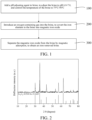
- FIG. 1 shows a method for separating iron element in brine provided in an embodiment of the present disclosure.
- the method includes:
- the iron element in brine can be converted into magnetic iron oxide, and then the iron element is removed from the brine by magnetic separation technology, to solve the problem that iron ions in brine interfere with the adsorption of lithium by the adsorbent.
- the iron-removed brine obtained by this method can be directly used in the extraction of lithium by the adsorption method.
- the method is compatible with the existing process conditions for lithium extraction from brine, and has good applicability.
- the brine includes one or more of salt lake brine and geothermal brine.
- the brine includes geothermal brine.
- the geothermal brine itself has thermal energy, and has a temperature reaching 150 °C or higher.
- the temperature of geothermal brine is maintained at 75°C-90°C by cooling; and for geothermal brine with a temperature of 75°C or lower, the temperature of geothermal brine is maintained at between 75°C and 90°C by heating. Therefore, when removing iron from geothermal brine, energy consumption for heating brine can be reduced, and the conversion of iron into magnetic iron oxide is realized by using the temperature condition of the geothermal brine itself.
- the temperature of the brine is between 75°C and 90°C.
- the temperature of the brine is specifically, but not limited to, 75°C, 80°C, 83°C, 85°C, 87°C or 90°C.
- the brine evaporates too quickly, and other ions in brine such as manganese ions are easy to precipitate.
- the magnetic iron oxide collected subsequently is mixed with manganese dioxide precipitate, increasing the complexity in iron recovery.
- the temperature of brine is lower than 75 °C, the ferrous ions cannot be efficiently converted into magnetic iron oxide.
- the temperature of brine is between 85°C and 90°C. Under this temperature condition, ferrous ions can be rapidly converted into magnetic iron oxide, to shorten the reaction time, and speed up the process.
- the temperature of brine is adjusted to between 75°C and 90°C before or after the pH adjusting agent is added provided that the brine temperature is between 75°C and 90°C when the oxygen-containing gas is introduced.
- a pH adjusting agent is added to the brine, and the pH adjusting agent includes one or more of sodium hydroxide, potassium hydroxide and aqueous ammonia.
- the pH adjusting agent includes sodium hydroxide.
- the pH of the brine is greater than or equal to 6.0 and less than or equal to 7.0.
- the pH of the brine can be, but not limited to, 6.0, 6.1, 6.2, 6.3, 6.4, 6.5, 6.6, 6.7, 6.8 or 7.0.
- the pH of brine is greater than 7.0, manganese ions and magnesium ions in the brine are precipitated.
- the precipitation of manganese ions and magnesium ions will lead to the entrainment of precipitates of manganese ions and magnesium ions, such as MnO 2 and Mg(OH) 2 , in the subsequently separated magnetic iron oxide and sodium chloride precipitate, which is not conducive to the separation of various elements in brine.
- the precipitates of manganese ions and magnesium ions will adsorb lithium ions in brine, leading to the reduction of lithium ion content in brine, and a low yield of lithium in the subsequent brine extraction process.
- the pH of brine is less than 6.0, the acidity of the solution is too high, and iron is converted into an amorphous iron oxide.
- the pH of the brine is between 6.3 and 6.8.
- the conversion rate of iron element to form magnetic iron oxide is high, and other metal ions in the brine are not easy to precipitate, so sufficient separation of the iron element in brine can be achieved.
- the control of the pH of the brine ensures the fully conversion of the iron element into magnetic iron oxide, and the setting of the pH value is also relevant to the subsequent extraction of lithium from brine.
- the pH of the brine changes. Specifically, when the oxygen-containing gas is introduced into the brine, ferrous ions in brine undergo the following reactions: Fe 2+ + 3 O 2 + H 2 O ⁇ Fe ( OH ) 3 + Fe 3+ Fe 3+ + OH - ⁇ Fe ( OH ) 3
- lithium adsorbents mainly include aluminum-based adsorbents and manganese-based adsorbents, which are used at a pH in the range of between 4 and 7.
- the pH of the brine is controlled to between 6.0 and 7.0 in the process of iron removal from brine. Under this pH condition, the pH of the iron-removed brine obtained after the reaction is consistent with the applicable pH of the adsorbent.
- the pH of the obtained iron-removed brine is between 4.5 and 6.0.
- the pH of the obtained iron-removed brine can be specifically, but not limited to, 4.5, 4.7, 5.0, 5.2, 5.5, 5.7 or 6.0.
- the oxygen-containing gas can be oxygen or an oxygen-containing mixed gas.
- the oxygen-containing gas can be air, or pure oxygen.
- air is used as the oxygen-containing gas, the cost of the iron removal process is low
- the oxygen-containing gas contains oxygen molecules.
- an introducing amount of the oxygen molecules is between 250 mol and 540 mol. The introducing amount of the oxygen molecules refers to the total amount of oxygen molecules introduced into the brine.
- the molar amount of oxygen molecules introduced when the total amount of iron element in the brine is 1 mol, the molar amount of oxygen molecules introduced is between 250 mol and 540 mol; and when the total amount of iron element in the brine is 2 mol, the molar amount of oxygen molecules introduced is between 500 mol and 1080 mol.
- the introducing amount of the oxygen molecules can be specifically, but not limited to, 250 mol, 280 mol, 300 mol, 400 mol or 540 mol relative to each mole of iron element.
- the ferrous ions can be fully converted into magnetic iron oxide, whereby they can be quickly separated from the brine by magnetic separation technology, to reduce the iron content in the brine, and ensure the smooth progress of the subsequent lithium extraction process by adsorption.
- an introducing rate of the oxygen molecules is between 4.5 mol/min and 10 mol/min.
- the introducing rate of the oxygen molecules refers to the amount of oxygen molecules introduced per minute. For example, when the total amount of iron element in the brine is 1 mol, the molar amount of oxygen molecules introduced into the brine is between 4.5 mol and 10 mol in 1 minute; and when the total amount of iron element in the brine is 2 mol, the molar amount of oxygen molecules introduced is between 18 mol and 40 mol in 2 minutes.
- the rate of oxygen molecules introduced into the brine can be specifically, but not limited to, 4.5 mol/min, 5 mol/min, 6 mol/min, 8 mol/min or 10 mol/min.
- the utilization of oxygen molecules in the oxygen-containing gas can be enhanced and the oxygen molecules are ensured to fully react with the ferrous ions in brine by controlling the rate of oxygen molecules introduced, to achieve a good oxidation effect, inhibit the acidification of the brine, and ensure that the ferrous ions in the brine can be fully converted into magnetic iron oxide, thereby realizing the effective separation of iron in the brine.
- an introducing rate of the oxygen molecules is between 4.5 mol/min and 8 mol/min.
- the magnetic iron oxide is separated from the brine by magnetic adsorption, to obtain an iron-removed brine.
- the magnetic iron oxide is separated from the brine by a magnetic separator having a magnetic field strength of greater than or equal to 3000 Gs.
- the magnetic field strength of the magnetic separator is specifically, but not limited to, 3000 Gs, 5000 Gs, 8000 Gs, 10000 Gs, 13000 Gs, 15000 Gs, 20000 Gs or 30000 Gs.
- the stirring speed of the magnetic separator is between 15 r/min and 50 r/min.
- the magnetic separator can operate simultaneously with the introduction of oxygen-containing gas, that is, when the oxygen-containing gas is introduced, the magnetic separator is used to stir the brine. This method can increase the rate of the reaction, to reduce the time of the iron removal process.
- the iron-removed brine is filtered to obtain sodium chloride.
- the brine is continuously evaporated, and sodium chloride in the brine is evolved to form a precipitate due to supersaturation.
- the magnetic iron oxide is separated from the precipitate by magnetic separation technology, and the remaining precipitate is substantially sodium chloride.
- the obtained precipitate is crude sodium chloride.
- the crude sodium chloride can be used as a by-product of the present disclosure, which can be purified later to obtain table salt.
- the pH and temperature of the brine are adjusted, so that the iron element in the brine can be fully converted into magnetic iron oxide, and then the magnetic iron oxide is separated by magnetic separation technology, to realize the recovery of iron in brine.
- the ferrous ions instead of pre-oxidizing the ferrous ions with an agent, the ferrous ions can be efficiently and quickly oxidized by introducing an oxygen-containing gas in the reaction process, and the oxidation of ferrous ions and the production of magnetic iron oxide occur at the same time, thus saving the reaction time.
- the method has simple operations, has no impact on lithium content in the brine, and can afford the by-product sodium chloride.
- the present disclosure further provides an iron-removed brine obtained by the method for separating iron element in brine, which can be directly used in the extraction process of lithium by the adsorption method, thus simplifying the extraction process of lithium from brine, and improving the extraction efficiency of lithium in brine.
- the present disclosure further provides applications of the method for separating iron element in brine in the extraction of lithium from brine.
- the method for separating iron element in brine provided in the present disclosure is applicable to the extraction process of lithium from brine.
- the adsorbent can be ensured to fully absorb the lithium ions in the brine by pretreatment of the brine to remove iron element therein, so as to achieve efficient lithium extraction.
- a method for separating iron element in brine includes the following steps.
- a method for separating iron element in brine includes the following steps.
- a method for separating iron element in brine includes the following steps.
- a method for separating iron element in brine includes the following steps.
- a method for separating iron element in brine includes the following steps.
- a method for separating iron element in brine includes the following steps.
- a method for separating iron element in brine includes the following steps.
- a method for separating iron element in brine includes the following steps.
- a method for separating iron element in brine includes the following steps.
- Comparative Example 1 differed from Example 1 in that the temperature of the geothermal brine in Comparative Example 1 was 105°C. In the method of Comparative Example 1, 66.92 g of sodium chloride per liter of brine was recovered.
- Comparative Example 2 differed from Example 1 in that the temperature of the geothermal brine in Comparative Example 2 was 70°C. A brown precipitate and white crystal were formed at the bottom of the brine. Since the obtained precipitate is non-magnetic, the brown precipitate and the white crystals (NaCl) were filtered out to obtain a wet precipitate. The wet precipitate was dissolved in water at a weight ratio of 1: 5 and separated to obtain a brown precipitate and a filtrate A. The residual NaCl in the brown precipitate was washed off with water, and the weight ratio of water to the brown precipitate was 60: 1. The washed brown precipitate was dried at 90°C to obtain an iron-containing precipitate. The filtrate A was dried to obtain sodium chloride. In the method of Comparative Example 2, 35.08 g of sodium chloride per liter of brine was recovered.
- Comparative Example 3 differed from Example 1 in that the geothermal brine was adjusted to pH 9.0 with NaOH in Comparative Example 3. A brown precipitate and white crystal were formed at the bottom of the brine. Since the resulting precipitate is non-magnetic, it could only be separated by filtration. The step of separation by filtration was the same as that in Comparative Example 2. In the method of Comparative Example 3, 54.52 g of sodium chloride per liter of brine was recovered.
- Comparative Example 4 differed from Example 1 in that the geothermal brine was adjusted to pH 5.5 with NaOH in Comparative Example 4. A brown precipitate and white crystal were formed at the bottom of the brine. Since the resulting precipitate is non-magnetic, it could only be separated by filtration. The step of separation by filtration was the same as that in Comparative Example 3. In the method of Comparative Example 4, 43.95g of sodium chloride per liter of brine was recovered.
- the pH values of the refined brine obtained in Examples 1-9 are in the range of between 4.0 and 5.5, meeting the requirements in adsorption by the adsorbent.
- the brine can be directly used in the subsequent process of adsorption of lithium ions by the adsorbent.
- the pH of the brine is adjusted to 9.0. Due to the too high initial pH of the brine, the pH of the resulting refined brine is greater than 8, so the refined brine cannot be directly used in the process of extracting lithium from brine.
- the pH of the brine is adjusted to 5.5. Due to the too low initial pH of the brine, the pH of the resulting refined brine is lower than 4.0, so the refined brine cannot be directly used in the process of extracting lithium from brine.
- iron of this content has almost no influence on the lithium extraction effect of the adsorbent, thus ensuring that the adsorbent can effectively adsorb lithium ions.
- the amount of refined brine obtained is 1070 g, and the amount of the lithium element in the refined brine after the reaction is 0.235 g.
- the volume change of brine is calculated and the amount of lithium element is estimated. After calculation, it is known that the amount of lithium in Examples 1-9 is not reduced. This shows that the methods of Comparative Example 1 and Comparative Example 3 cause the loss of lithium in brine, which is not conducive to their application in lithium extraction from brine.
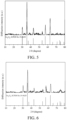
- FIG. 2 is a diffraction pattern of a magnetite recovered in Example 1;
- FIG. 3 is a diffraction pattern of a magnetite recovered in Example 2;
- FIG. 4 is a diffraction pattern of a magnetite recovered in Example 3;
- FIG. 5 is a diffraction pattern of a magnetite recovered in Example 4;
- FIG. 6 is a diffraction pattern of a magnetite recovered in Example 5;
- FIG. 7 is a diffraction pattern of a magnetite recovered in Example 6;
- FIG. 8 is a diffraction pattern of a magnetite recovered in Example 7;
- FIG. 9 is a diffraction pattern of a magnetite recovered in Example 8;
- FIG. 10 is a diffraction pattern of a magnetite recovered in Example 9;
- FIG. 11 is a diffraction pattern of a magnetite recovered in Comparative Example 1;
- FIG. 12 is a diffraction pattern of a magnetite recovered in Comparative Example 2;
- FIG. 13 is a diffraction pattern of a magnetite recovered in Comparative Example 3;
- FIG. 14 is a diffraction pattern of a magnetite recovered in Comparative Example 4.
- the 20 on the abscissa indicates the diffraction angle in degrees
- the intensity on the ordinate indicates the diffraction intensity.
- the upper curve in the diffraction pattern is the diffraction curve of the recovered magnetite
- the lower curve Fe 3 O 4 JCPDS No. 19-0629 is a diffraction curve of the standard sample of magnetic iron oxide, and they are provided for sample comparison.
- the magnetite recovered in Examples 1-9 has consistent diffraction peaks with magnetic iron oxide, indicating that the recovered magnetite has high purity. That is, by using the method, the iron element can be effectively converted into magnetic iron oxide and then separated from the brine, and the obtained magnetic iron oxide has high purity, which is convenient for the recycling of iron.
- the top curve in the diffraction pattern is the diffraction curve of the recovered magnetite
- the middle curve Fe 3 O 4 JCPDS No.19-0629 is a diffraction curve of the standard sample of magnetic iron oxide
- the bottom curve MnO 2 JCPDS No.24-0755 is a diffraction curve of the standard sample of manganese dioxide.
- the sample recovered in Comparative Example 2 has no characteristic peaks, and is an amorphous precipitate. This is because the temperature of the brine in Comparative Examples 2 is too low, the conditions for the formation of Fe 3 O 4 cannot be met, and the ferrous ions in the brine are mainly precipitated as amorphous iron oxide or hydroxide after being oxidized by oxygen. It can be seen from FIG. 13 that the sample recovered in Comparative Example 3 has no characteristic peaks, and is an amorphous precipitate. This is due to that the pH of the geothermal brine in Comparative Example 3 is too high, a variety of ions are precipitated in the brine.
- the sample recovered in Comparative Example 4 has weak characteristic peak and almost no obvious characteristic peak, and is an amorphous precipitate. This is due to that the pH of the brine in Comparative Example 4 is too low, the conditions for the formation of Fe 3 O 4 cannot be met, and the ferrous ions in the brine are mainly precipitated as amorphous iron oxide or hydroxide after being oxidized by the oxygen-containing gas.
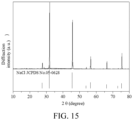
- Example 1 The white crystalline sodium chloride obtained in Example 1 was analyzed by X-ray diffraction (XRD). The test results are shown in FIG. 15.
- FIG. 15 is a diffraction pattern of sodium chloride recovered in Example 1.
- the top curve in the diffraction pattern is a diffraction curve of the recovered white crystal
- the bottom curve NaCl JCPDS No.05-0628 is a diffraction curve of the standard sample of sodium chloride.
- the sodium chloride recovered in Example 1 has a high purity. This suggests that with the method for separating iron element in brine provided in the present disclosure, by-product sodium chloride can also be obtained.
- the impurities in the crude sodium chloride are less, and high-purity sodium chloride can be obtained by simple dissolution and filtration.
- the present disclosure is beneficial to the full use of brine, and can obtain the by-product from brine conveniently.
Landscapes
- Chemical & Material Sciences (AREA)
- Organic Chemistry (AREA)
- Engineering & Computer Science (AREA)
- Inorganic Chemistry (AREA)
- Materials Engineering (AREA)
- Life Sciences & Earth Sciences (AREA)
- Environmental & Geological Engineering (AREA)
- Geology (AREA)
- Metallurgy (AREA)
- Mechanical Engineering (AREA)
- Manufacturing & Machinery (AREA)
- General Life Sciences & Earth Sciences (AREA)
- Chemical Kinetics & Catalysis (AREA)
- Geochemistry & Mineralogy (AREA)
- Analytical Chemistry (AREA)
- General Chemical & Material Sciences (AREA)
- Hydrology & Water Resources (AREA)
- Water Supply & Treatment (AREA)
- Solid-Sorbent Or Filter-Aiding Compositions (AREA)
- Compounds Of Iron (AREA)
- Heat Treatment Of Water, Waste Water Or Sewage (AREA)
- Inorganic Compounds Of Heavy Metals (AREA)
- Water Treatment By Sorption (AREA)
Abstract
Description
- The present disclosure claims priority to
Chinese Patent Application No. 202111682874.6 filed on December 31, 2021 - The present disclosure relates to the technical field of lithium extraction processes from brine, and particularly to a method for separating iron element in brine and applications thereof.
- Lithium plays an important role in the electronic, metallurgy, chemical, medicine and other fields. Lithium in nature mainly exists in lithium ores, salt lake brine, geothermal brine and seawater. For salt lake brine and geothermal brine, lithium can be extracted by the adsorbent method. However, the composition of brine is complex. In addition to lithium ions, it also contains a variety of metal ions such as iron ions, magnesium ions, manganese ions, calcium ions and sodium ions, etc. The iron ions therein tend to form ferric hydroxide colloids in the lithium extraction process, causing degraded adsorption performance of the adsorbent, and greatly reduced lithium extraction efficiency of the adsorbent. Therefore, it is necessary to provide a method for separating iron element suitable for the extraction process of lithium from brine, with which iron is separated out without causing loss of the lithium element in brine, to reduce the loss of the adsorbent, and ensure the efficient extraction of lithium in brine by the adsorbent, thereby achieving efficient lithium extraction.
- To solve the above technical problems, the present disclosure provides a method for separating iron element in brine. In the method, the iron element in brine can be converted into magnetic iron oxide, and then the iron element is removed from the brine by magnetic separation technology. This method can not only fully retain the lithium element in the brine, but also allow the obtained iron-removed brine to be directly used in the extraction of lithium by the adsorption method. The method is compatible with the existing process conditions for lithium extraction from brine, and has good applicability.
- In a first aspect, the present disclosure provides a method for separating iron element in brine. The method includes the following steps:
- A pH adjusting agent is added to brine, to adjust the brine to pH between 6.0 and 7.0, and the temperature of the brine is controlled to between 75°C and 90°C.
- An oxygen-containing gas is introduced into the brine, to covert the iron element in the brine into a magnetic iron oxide.
- The magnetic iron oxide is separated from the brine by magnetic adsorption, to obtain an iron-removed brine.
- In the method for separating iron element in brine provided in the present disclosure, the temperature and pH of the brine are adjusted, and then ferrous ions in the brine are reacted with an oxygen-containing gas to form a magnetic iron oxide, to recover the ferrous ions in the form of magnetite (magnetic iron oxide). In the method, the iron element is separated from the brine by magnetic separation technology, thus greatly improving the efficiency of solid-liquid separation. Moreover, this method can retain the lithium element in the brine, and the iron-removed brine obtained can be directly used in the subsequent lithium extraction process. Thus, this method has good applicability.
- In an embodiment, the oxygen-containing gas contains oxygen molecules, and relative to one mole of iron in the brine, an introducing amount of the oxygen molecules is between 250 mol and 540 mol.
- In an embodiment, relative to one mole of iron in the brine, an introducing rate of the oxygen molecules is between 4.5 mol/min and 10 mol/min.
- In an embodiment, an introducing rate of the oxygen molecules is between 4.5 mol/min and 8 mol/min.
- In an embodiment, the temperature of the brine is between 85°C and 90°C.
- In an embodiment, the pH adjusting agent includes one or more of sodium hydroxide, potassium hydroxide and aqueous ammonia.
- In an embodiment, the method further includes the following step: the iron-removed brine is filtered, to obtain sodium chloride.
- In an embodiment, the pH of the iron-removed brine is between 4.5 and 6.0.
- In an embodiment, the brine includes geothermal brine.
- In an embodiment, the method is applicable to a lithium extraction process from brine.
- In an embodiment, the pH of the brine is adjusted to between 6.3 and 6.8.
- In an embodiment, the magnetic iron oxide can be separated from the brine by separating the magnetic iron oxide from the brine by a magnetic separator.
- In an embodiment, the magnetic separator has a magnetic field strength of greater than or equal to 3000 Gs.
- In an embodiment, the stirring speed of the magnetic separator is between 15 r/min and 50 r/min.
- In an embodiment, when the oxygen-containing gas is introduced to the brine, the magnetic separator is used to stir the brine. In an embodiment, the brine includes one or more of salt lake brine and geothermal brine.
- In an embodiment, when the temperature of the brine is greater than 90°C, the temperature of the brine is maintained at between 75°C and 90°C by cooling, and when the temperature of the brine is lower than 75°C, the temperature of the brine is maintained at between 75°C and 90°C by heating.
-
-
FIG. 1 shows a flowchart of a method for separating iron element in brine provided in an embodiment of the present disclosure; -
FIG. 2 is a diffraction pattern of a magnetite recovered in Example 1; -
FIG. 3 is a diffraction pattern of a magnetite recovered in Example 2; -
FIG. 4 is a diffraction pattern of a magnetite recovered in Example 3; -
FIG. 5 is a diffraction pattern of a magnetite recovered in Example 4; -
FIG. 6 is a diffraction pattern of a magnetite recovered in Example 5; -
FIG. 7 is a diffraction pattern of a magnetite recovered in Example 6; -
FIG. 8 is a diffraction pattern of a magnetite recovered in Example 7; -
FIG. 9 is a diffraction pattern of a magnetite recovered in Example 8; -
FIG. 10 is a diffraction pattern of a magnetite recovered in Example 9; -
FIG. 11 is a diffraction pattern of a magnetite recovered in Comparative Example 1; -
FIG. 12 is a diffraction pattern of a magnetite recovered in Comparative Example 2; -
FIG. 13 is a diffraction pattern of a magnetite recovered in Comparative Example 3; -
FIG. 14 is a diffraction pattern of a magnetite recovered in Comparative Example 4; and -
FIG. 15 is a diffraction pattern of sodium chloride recovered in Example 1. - The technical solutions in embodiments of the present disclosure are clearly and completely described in the following with reference to the accompanying drawings in the embodiments of the present disclosure. Apparently, the described embodiments are merely some rather than all of the embodiments of the present disclosure. All other embodiments obtained by a person of ordinary skill in the art based on the embodiments of the present disclosure without making creative efforts shall fall within the protection scope of the present disclosure.
- Geothermal brine is geothermal water containing a variety of salts. Geothermal brine contains various metal ions, such as potassium ions, sodium ions, calcium ions, lithium ions, iron ions, magnesium ion and manganese ions, etc., and the anions therein mainly include chloride ions. Generally, the concentration of lithium ions in geothermal brine is between 0.01% and 0.028%, the concentration of iron ions is between 0.07% and 0.15%, the concentration of sodium ions is between 6% and 7.5%, the concentration of magnesium ions is between 0.002% and 0.01%, the concentration of manganese ions is between 0.1% and 0.2%, and the concentration of calcium ions is between 2.0% and 3.5%. It can be seen that the composition of brine is complex, and it is difficult to separate lithium ions from numerous metal ions in geothermal brine.
- The existing methods for extracting lithium from brine mainly include adsorption and membrane separation. Adsorption has the advantages of simple process, and low cost. However, the presence of iron ions in brine affects the adsorption performance of the adsorbent. Specifically, iron ions tend to form ferric hydroxide colloids under the conditions of adsorption of lithium ions by the adsorbent, and the ferric hydroxide colloid will adhere to the adsorbent surface and block the pores of the adsorbent, causing decreased adsorption sites in the adsorbent, even reducing the permeability of an adsorption tower or column, thus causing the failure of the adsorption tower/column. At present, wet iron removal includes jarosite method, goethite method, hematite method and phosphate method for iron removal. However, the above methods are not suitable for removing iron from brine systems. The composition of brine is complex, and a variety of precipitates or crystals will be produced during the iron removal process. These solids are mixed with the iron precipitate, and further separation and purification are required, increasing the complexity and cost of iron recovery. Therefore, it is necessary to provide a new method for separating iron element in brine, with which iron is rapidly and efficiently recovered from the brine without affecting the lithium content in the brine, to ensure the smooth progress of the lithium extraction process from brine.
-
FIG. 1 shows a method for separating iron element in brine provided in an embodiment of the present disclosure. The method includes: - Step 100: A pH adjusting agent is added to brine, to adjust the brine to pH between 6.0 and 7.0, and the temperature of the brine is controlled to between 75°C and 90°C.
- Step 200: An oxygen-containing gas is introduced into the brine, to covert the iron element in the brine into a magnetic iron oxide.
- Step 300: The magnetic iron oxide is separated from the brine by magnetic adsorption, to obtain an iron-removed brine.
- In the method, the iron element in brine can be converted into magnetic iron oxide, and then the iron element is removed from the brine by magnetic separation technology, to solve the problem that iron ions in brine interfere with the adsorption of lithium by the adsorbent. Moreover, the iron-removed brine obtained by this method can be directly used in the extraction of lithium by the adsorption method. The method is compatible with the existing process conditions for lithium extraction from brine, and has good applicability.
- In the present disclosure, the brine includes one or more of salt lake brine and geothermal brine. In some embodiments, the brine includes geothermal brine. the geothermal brine itself has thermal energy, and has a temperature reaching 150 °C or higher. For geothermal brine with a temperature of 90°C or higher, the temperature of geothermal brine is maintained at 75°C-90°C by cooling; and for geothermal brine with a temperature of 75°C or lower, the temperature of geothermal brine is maintained at between 75°C and 90°C by heating. Therefore, when removing iron from geothermal brine, energy consumption for heating brine can be reduced, and the conversion of iron into magnetic iron oxide is realized by using the temperature condition of the geothermal brine itself. This greatly improves the utilization of resources. In an embodiment of the present disclosure, the temperature of the brine is between 75°C and 90°C. The temperature of the brine is specifically, but not limited to, 75°C, 80°C, 83°C, 85°C, 87°C or 90°C. When the temperature of brine is higher than 90°C, the brine evaporates too quickly, and other ions in brine such as manganese ions are easy to precipitate. As a result, the magnetic iron oxide collected subsequently is mixed with manganese dioxide precipitate, increasing the complexity in iron recovery. When the temperature of brine is lower than 75 °C, the ferrous ions cannot be efficiently converted into magnetic iron oxide. In some embodiments of the present disclosure, the temperature of brine is between 85°C and 90°C. Under this temperature condition, ferrous ions can be rapidly converted into magnetic iron oxide, to shorten the reaction time, and speed up the process. In the present disclosure, the temperature of brine is adjusted to between 75°C and 90°C before or after the pH adjusting agent is added provided that the brine temperature is between 75°C and 90°C when the oxygen-containing gas is introduced.
- In an embodiment of the present disclosure, a pH adjusting agent is added to the brine, and the pH adjusting agent includes one or more of sodium hydroxide, potassium hydroxide and aqueous ammonia. In some embodiments, the pH adjusting agent includes sodium hydroxide. During the process of iron removal from brine, due to the continuous evaporation of water, sodium chloride in brine is evolved to form a precipitate. The precipitate can be recovered to produce table salt. When sodium hydroxide is used to adjust the pH of brine, the yield of sodium chloride, the by-product of iron removal from brine, can be greatly improved, to realize the full utilization of each component in the brine. In an embodiment of the present disclosure, after the pH adjusting agent is added, the pH of the brine is greater than or equal to 6.0 and less than or equal to 7.0. The pH of the brine can be, but not limited to, 6.0, 6.1, 6.2, 6.3, 6.4, 6.5, 6.6, 6.7, 6.8 or 7.0. When the pH of brine is greater than 7.0, manganese ions and magnesium ions in the brine are precipitated. On the one hand, the precipitation of manganese ions and magnesium ions will lead to the entrainment of precipitates of manganese ions and magnesium ions, such as MnO2 and Mg(OH)2, in the subsequently separated magnetic iron oxide and sodium chloride precipitate, which is not conducive to the separation of various elements in brine. On the other hand, the precipitates of manganese ions and magnesium ions will adsorb lithium ions in brine, leading to the reduction of lithium ion content in brine, and a low yield of lithium in the subsequent brine extraction process. When the pH of brine is less than 6.0, the acidity of the solution is too high, and iron is converted into an amorphous iron oxide. As a result, the iron in the brine cannot be fully separated by magnetic adsorption, and the separation efficiency is reduced. In some embodiments of the present disclosure, the pH of the brine is between 6.3 and 6.8. When the pH of the brine is between 6.3 and 6.8, the conversion rate of iron element to form magnetic iron oxide is high, and other metal ions in the brine are not easy to precipitate, so sufficient separation of the iron element in brine can be achieved.
- In the present disclosure, the control of the pH of the brine ensures the fully conversion of the iron element into magnetic iron oxide, and the setting of the pH value is also relevant to the subsequent extraction of lithium from brine. During the process of iron removal from brine, the pH of the brine changes. Specifically, when the oxygen-containing gas is introduced into the brine, ferrous ions in brine undergo the following reactions:
Fe2+ + 3O 2 + H 2 O → Fe(OH)3 + Fe3+
Fe3+ + OH- → Fe(OH)3

- After the above reactions are completed, the pH of the brine decreases. At present, commercially available lithium adsorbents mainly include aluminum-based adsorbents and manganese-based adsorbents, which are used at a pH in the range of between 4 and 7. In the present disclosure, to optimize the process of extracting lithium from brine, and ensure that the brine can be directly used for lithium adsorption after iron removal, the pH of the brine is controlled to between 6.0 and 7.0 in the process of iron removal from brine. Under this pH condition, the pH of the iron-removed brine obtained after the reaction is consistent with the applicable pH of the adsorbent. That is, there is no need to adjust the pH of the iron-removed brine again, and the iron-removed brine can be directly adsorbed. In some embodiments of the present disclosure, after the iron removal process, the pH of the obtained iron-removed brine is between 4.5 and 6.0. After the iron removal process, the pH of the obtained iron-removed brine can be specifically, but not limited to, 4.5, 4.7, 5.0, 5.2, 5.5, 5.7 or 6.0.
- In
Step 200, when an oxygen-containing gas is introduced into the brine, the oxygen-containing gas can be oxygen or an oxygen-containing mixed gas. For example, the oxygen-containing gas can be air, or pure oxygen. When air is used as the oxygen-containing gas, the cost of the iron removal process is low In the present disclosure, the oxygen-containing gas contains oxygen molecules. In some embodiments, relative to one mole of iron element in the brine, an introducing amount of the oxygen molecules is between 250 mol and 540 mol. The introducing amount of the oxygen molecules refers to the total amount of oxygen molecules introduced into the brine. For example, when the total amount of iron element in the brine is 1 mol, the molar amount of oxygen molecules introduced is between 250 mol and 540 mol; and when the total amount of iron element in the brine is 2 mol, the molar amount of oxygen molecules introduced is between 500 mol and 1080 mol. The introducing amount of the oxygen molecules can be specifically, but not limited to, 250 mol, 280 mol, 300 mol, 400 mol or 540 mol relative to each mole of iron element. When the introducing amount of the oxygen molecules is controlled to be in the above range, the ferrous ions can be fully converted into magnetic iron oxide, whereby they can be quickly separated from the brine by magnetic separation technology, to reduce the iron content in the brine, and ensure the smooth progress of the subsequent lithium extraction process by adsorption. - In some embodiments of the present disclosure, relative to one mole of iron element in the brine, an introducing rate of the oxygen molecules is between 4.5 mol/min and 10 mol/min. The introducing rate of the oxygen molecules refers to the amount of oxygen molecules introduced per minute. For example, when the total amount of iron element in the brine is 1 mol, the molar amount of oxygen molecules introduced into the brine is between 4.5 mol and 10 mol in 1 minute; and when the total amount of iron element in the brine is 2 mol, the molar amount of oxygen molecules introduced is between 18 mol and 40 mol in 2 minutes. Relative to one mole of iron element in the brine, the rate of oxygen molecules introduced into the brine can be specifically, but not limited to, 4.5 mol/min, 5 mol/min, 6 mol/min, 8 mol/min or 10 mol/min. The utilization of oxygen molecules in the oxygen-containing gas can be enhanced and the oxygen molecules are ensured to fully react with the ferrous ions in brine by controlling the rate of oxygen molecules introduced, to achieve a good oxidation effect, inhibit the acidification of the brine, and ensure that the ferrous ions in the brine can be fully converted into magnetic iron oxide, thereby realizing the effective separation of iron in the brine. In some embodiments of the present disclosure, relative to one mole of iron element in the brine, an introducing rate of the oxygen molecules is between 4.5 mol/min and 8 mol/min.
- In
Step 300 in the present disclosure, the magnetic iron oxide is separated from the brine by magnetic adsorption, to obtain an iron-removed brine. In some embodiments of the present disclosure, the magnetic iron oxide is separated from the brine by a magnetic separator having a magnetic field strength of greater than or equal to 3000 Gs. The magnetic field strength of the magnetic separator is specifically, but not limited to, 3000 Gs, 5000 Gs, 8000 Gs, 10000 Gs, 13000 Gs, 15000 Gs, 20000 Gs or 30000 Gs. In some embodiments of the present disclosure, the stirring speed of the magnetic separator is between 15 r/min and 50 r/min. In some embodiments of the present disclosure, the magnetic separator can operate simultaneously with the introduction of oxygen-containing gas, that is, when the oxygen-containing gas is introduced, the magnetic separator is used to stir the brine. This method can increase the rate of the reaction, to reduce the time of the iron removal process. - In some embodiments of the present disclosure, after the iron-removed brine is obtained, the iron-removed brine is filtered to obtain sodium chloride. During the iron removal process, due to the high temperature of the brine, the brine is continuously evaporated, and sodium chloride in the brine is evolved to form a precipitate due to supersaturation. In the present disclosure, the magnetic iron oxide is separated from the precipitate by magnetic separation technology, and the remaining precipitate is substantially sodium chloride. By filtering the iron-removed brine, the obtained precipitate is crude sodium chloride. The crude sodium chloride can be used as a by-product of the present disclosure, which can be purified later to obtain table salt.
- In the method for separating iron element in brine provided in the present disclosure, the pH and temperature of the brine are adjusted, so that the iron element in the brine can be fully converted into magnetic iron oxide, and then the magnetic iron oxide is separated by magnetic separation technology, to realize the recovery of iron in brine. In the method, instead of pre-oxidizing the ferrous ions with an agent, the ferrous ions can be efficiently and quickly oxidized by introducing an oxygen-containing gas in the reaction process, and the oxidation of ferrous ions and the production of magnetic iron oxide occur at the same time, thus saving the reaction time. The method has simple operations, has no impact on lithium content in the brine, and can afford the by-product sodium chloride.
- The present disclosure further provides an iron-removed brine obtained by the method for separating iron element in brine, which can be directly used in the extraction process of lithium by the adsorption method, thus simplifying the extraction process of lithium from brine, and improving the extraction efficiency of lithium in brine.
- The present disclosure further provides applications of the method for separating iron element in brine in the extraction of lithium from brine. The method for separating iron element in brine provided in the present disclosure is applicable to the extraction process of lithium from brine. The adsorbent can be ensured to fully absorb the lithium ions in the brine by pretreatment of the brine to remove iron element therein, so as to achieve efficient lithium extraction.
- The technical solution of the present disclosure will be further described in several examples below. The same geothermal brine is tested in Examples 1-9 and Comparative Examples 1-4. The total weight of geothermal brine is 1.2 kg, and the contents of various elements in the geothermal brine used are shown in Table 1.
Table 1. Contents of elements in geothermal brine in Examples 1-9 and Comparative Examples 1-4 Element Content (%) B 0.0346 K 1.776 Ca 2.828 Li 0.022 Mg 0.0062 Na 7.134 Ba 0.0089 Fe 0.091 Mn 0.1045 Pb 0.0057 Sr 0.0549 Zn 0.0292 Cl 18.2831 - It can be seen from Table 1 that the total amount of the iron element in the geothermal brine is 1.092 g, i.e. 0.0195 mol, and the total amount of the lithium element in the geothermal brine is 0.264 g.
- A method for separating iron element in brine includes the following steps.
- 1) The geothermal brine was cooled to 90°C and held at this temperature.
- 2) The geothermal brine was adjusted to pH 6.5 with NaOH, and an oxygen-containing gas containing oxygen molecules was introduced into the geothermal brine. Relative to one mole of iron element in the brine, an introducing amount of the oxygen molecules was 287 mol, and an introducing rate of the oxygen molecules was 4.79 mol/min.
- 3) A magnetic rod with a magnetic field strength of 8000Gs was inserted into the geothermal brine obtained in Step 2) and the geothermal brine was stirred for magnetic separation to obtain magnetite Fe3O4 and an iron-removed brine. The magnetite Fe3O4 on the magnetic rod was washed with water to wash away the NaCl contained therein, and the weight ratio of water to wet Fe3O4 was 60: 1. The washed magnetite was dried at 90°C.
- 4) After the iron-removed brine was cooled down, the iron-removed brine was filtered to obtain crude sodium chloride and refined brine. The crude sodium chloride was dissolved in water at a weight ratio of 1: 5 and filtered, and then the filtrate was dried to obtain white crystalline sodium chloride. 49.73 g of sodium chloride per liter of brine was recovered.
- A method for separating iron element in brine includes the following steps.
- 1) The geothermal brine was cooled to 80°C and held at this temperature.
- 2) The geothermal brine was adjusted to pH 6.5 with NaOH, and an oxygen-containing gas containing oxygen molecules was introduced into the geothermal brine. Relative to one mole of iron element in the brine, an introducing amount of the oxygen molecules was 287 mol, and an introducing rate of the oxygen molecules was 4.79 mol/min.
- 3) A magnetic rod with a magnetic field strength of 8000Gs was inserted into the geothermal brine obtained in Step 2) and the geothermal brine was stirred for magnetic separation to obtain magnetite Fe3O4 and an iron-removed brine. The magnetite Fe3O4 on the magnetic rod was washed with water to wash away the NaCl contained therein, and the weight ratio of water to wet Fe3O4 was 60: 1. The washed magnetite was dried at 90°C.
- 4) After the iron-removed brine was cooled down, the iron-removed brine was filtered to obtain crude sodium chloride and refined brine. The crude sodium chloride was dissolved in water at a weight ratio of 1: 5 and filtered, and then the filtrate was dried to obtain white crystalline sodium chloride. 44.02 g of sodium chloride per liter of brine was recovered.
- A method for separating iron element in brine includes the following steps.
- 1) The geothermal brine was cooled to 90°C and held at this temperature.
- 2) The geothermal brine was adjusted to pH 6.5 with NaOH, and an oxygen-containing gas containing oxygen molecules was introduced into the geothermal brine. Relative to one mole of iron element in the brine, an introducing amount of the oxygen molecules was 574 mol, and an introducing rate of the oxygen molecules was 4.79 mol/min.
- 3) A magnetic rod with a magnetic field strength of 8000Gs was inserted into the geothermal brine obtained in Step 2) and the geothermal brine was stirred for magnetic separation to obtain magnetite Fe3O4 and an iron-removed brine. The magnetite Fe3O4 on the magnetic rod was washed with water to wash away the NaCl contained therein, and the weight ratio of water to wet Fe3O4 was 60: 1. The magnetite was dried at 90°C.
- 4) After the iron-removed brine was cooled down, the iron-removed brine was filtered to obtain crude sodium chloride and refined brine. The crude sodium chloride was dissolved in water at a weight ratio of 1: 5 and filtered, and then the filtrate was dried to obtain white crystalline sodium chloride. 58.16 g of sodium chloride per liter of brine was recovered.
- A method for separating iron element in brine includes the following steps.
- 1) The geothermal brine was cooled to 90°C and held at this temperature.
- 2) The geothermal brine was adjusted to pH 6.3 with NaOH, and an oxygen-containing gas containing oxygen molecules was introduced into the geothermal brine. Relative to one mole of iron element in the brine, an introducing amount of the oxygen molecules was 287 mol, and an introducing rate of the oxygen molecules was 4.79 mol/min.
- 3) A magnetic rod with a magnetic field strength of 8000Gs was inserted into the geothermal brine obtained in Step 2) and the geothermal brine was stirred for magnetic separation to obtain magnetite Fe3O4 and an iron-removed brine. The magnetite Fe3O4 on the magnetic rod was washed with water to wash away the NaCl contained therein, and the weight ratio of water to wet Fe3O4 was 60: 1. The washed magnetite was dried at 90°C.
- 4) After the iron-removed brine was cooled down, the iron-removed brine was filtered to obtain crude sodium chloride and refined brine. The crude sodium chloride was dissolved in water at a weight ratio of 1: 5 and filtered, and then the filtrate was dried to obtain white crystalline sodium chloride. 46.77g of sodium chloride per liter of brine was recovered.
- A method for separating iron element in brine includes the following steps.
- 1) The geothermal brine was cooled to 90°C and held at this temperature.
- 2) The geothermal brine was adjusted to pH 6.8 with NaOH, and an oxygen-containing gas containing oxygen molecules was introduced into the geothermal brine. Relative to one mole of iron element in the brine, an introducing amount of the oxygen molecules was 287 mol, and an introducing rate of the oxygen molecules was 4.79 mol/min.
- 3) A magnetic rod with a magnetic field strength of 8000Gs was inserted into the geothermal brine obtained in Step 2) and the geothermal brine was stirred for magnetic separation to obtain magnetite Fe3O4 and an iron-removed brine. The magnetite Fe3O4 on the magnetic rod was washed with water to wash away the NaCl contained therein, and the weight ratio of water to wet Fe3O4 was 60: 1. The washed magnetite was dried at 90°C.
- 4) After the iron-removed brine was cooled down, the iron-removed brine was filtered to obtain crude sodium chloride and refined brine. The crude sodium chloride was dissolved in water at a weight ratio of 1: 5 and filtered, and then the filtrate was dried to obtain white crystalline sodium chloride. 50.37g of sodium chloride per liter of brine was recovered.
- A method for separating iron element in brine includes the following steps.
- 1) The geothermal brine was cooled to 90°C and held at this temperature.
- 2) The geothermal brine was adjusted to pH 6.8 with NaOH, and an oxygen-containing gas containing oxygen molecules was introduced into the geothermal brine. Relative to one mole of iron element in the brine, an introducing amount of the oxygen molecules was 287 mol, and an introducing rate of the oxygen molecules was 14.36mol/min.
- 3) A magnetic rod with a magnetic field strength of 8000Gs was inserted into the geothermal brine obtained in Step 2) and the geothermal brine was stirred for magnetic separation to obtain magnetite Fe3O4 and an iron-removed brine. The magnetite Fe3O4 on the magnetic rod was washed with water to wash away the NaCl contained therein, and the weight ratio of water to wet Fe3O4 was 60: 1. The washed magnetite was dried at 90°C.
- 4) After the iron-removed brine was cooled down, the iron-removed brine was filtered to obtain crude sodium chloride and refined brine. The crude sodium chloride was dissolved in water at a weight ratio of 1: 5 and filtered, and then the filtrate was dried to obtain white crystalline sodium chloride. 52.56g of sodium chloride per liter of brine was recovered.
- Example 7
- A method for separating iron element in brine includes the following steps.
- 1) The geothermal brine was cooled to 90°C and held at this temperature.
- 2) The geothermal brine was adjusted to pH 6.5 with NaOH, and an oxygen-containing gas containing oxygen molecules was introduced into the geothermal brine. Relative to one mole of iron element in the brine, an introducing amount of the oxygen molecules was 173 mol, and an introducing rate of the oxygen molecules was 4.79 mol/min.
- 3) A magnetic rod with a magnetic field strength of 8000Gs was inserted into the geothermal brine obtained in Step 2) and the geothermal brine was stirred for magnetic separation to obtain magnetite Fe3O4 and an iron-removed brine. The magnetite Fe3O4 on the magnetic rod was washed with water to wash away the NaCl contained therein, and the weight ratio of water to wet Fe3O4 was 60: 1. The washed magnetite was dried at 90°C.
- 4) After the iron-removed brine was cooled down, the iron-removed brine was filtered to obtain crude sodium chloride and refined brine. The crude sodium chloride was dissolved in water at a weight ratio of 1: 5 and filtered, and then the filtrate was dried to obtain white crystalline sodium chloride. 46.77g of sodium chloride per liter of brine was recovered.
- A method for separating iron element in brine includes the following steps.
- 1) The geothermal brine was cooled to 90°C and held at this temperature.
- 2) The geothermal brine was adjusted to pH 6.5 with NaOH, and an oxygen-containing gas containing oxygen molecules was introduced into the geothermal brine. Relative to one mole of iron element in the brine, an introducing amount of the oxygen molecules was 287 mol, and an introducing rate of the oxygen molecules was 1.91mol/min.
- 3) A magnetic rod with a magnetic field strength of 8000Gs was inserted into the geothermal brine obtained in Step 2) and the geothermal brine was stirred for magnetic separation to obtain magnetite Fe3O4 and an iron-removed brine. The magnetite Fe3O4 on the magnetic rod was washed with water to wash away the NaCl contained therein, and the weight ratio of water to wet Fe3O4 was 60: 1. The washed magnetite was dried at 90°C.
- 4) After the iron-removed brine was cooled down, the iron-removed brine was filtered to obtain crude sodium chloride and refined brine. The crude sodium chloride was dissolved in water at a weight ratio of 1: 5 and filtered, and then the filtrate was dried to obtain white crystalline sodium chloride. 51.21g of sodium chloride per liter of brine was recovered.
- A method for separating iron element in brine includes the following steps.
- 1) The geothermal brine was cooled to 90°C and held at this temperature.
- 2) The geothermal brine was adjusted to pH 6.0 with NaOH, and an oxygen-containing gas containing oxygen molecules was introduced into the geothermal brine. Relative to one mole of iron element in the brine, an introducing amount of the oxygen molecules was 287 mol, and an introducing rate of the oxygen molecules was 4.79 mol/min.
- 3) A magnetic rod with a magnetic field strength of 8000Gs was inserted into the geothermal brine obtained in Step 2) and the geothermal brine was stirred for magnetic separation to obtain magnetite Fe3O4 and an iron-removed brine. The magnetite Fe3O4 on the magnetic rod was washed with water to wash away the NaCl contained therein, and the weight ratio of water to wet Fe3O4 was 60: 1. The washed magnetite was dried at 90°C.
- 4) After the iron-removed brine was cooled down, the iron-removed brine was filtered to obtain crude sodium chloride and refined brine. The crude sodium chloride was dissolved in water at a weight ratio of 1: 5 and filtered, and then the filtrate was dried to obtain white crystalline sodium chloride. 48.94 g of sodium chloride per liter of brine was recovered.
- To highlight the beneficial effects of the present disclosure, the following comparative examples are provided.
- Comparative Example 1 differed from Example 1 in that the temperature of the geothermal brine in Comparative Example 1 was 105°C. In the method of Comparative Example 1, 66.92 g of sodium chloride per liter of brine was recovered.
- Comparative Example 2 differed from Example 1 in that the temperature of the geothermal brine in Comparative Example 2 was 70°C. A brown precipitate and white crystal were formed at the bottom of the brine. Since the obtained precipitate is non-magnetic, the brown precipitate and the white crystals (NaCl) were filtered out to obtain a wet precipitate. The wet precipitate was dissolved in water at a weight ratio of 1: 5 and separated to obtain a brown precipitate and a filtrate A. The residual NaCl in the brown precipitate was washed off with water, and the weight ratio of water to the brown precipitate was 60: 1. The washed brown precipitate was dried at 90°C to obtain an iron-containing precipitate. The filtrate A was dried to obtain sodium chloride. In the method of Comparative Example 2, 35.08 g of sodium chloride per liter of brine was recovered.
- Comparative Example 3 differed from Example 1 in that the geothermal brine was adjusted to pH 9.0 with NaOH in Comparative Example 3. A brown precipitate and white crystal were formed at the bottom of the brine. Since the resulting precipitate is non-magnetic, it could only be separated by filtration. The step of separation by filtration was the same as that in Comparative Example 2. In the method of Comparative Example 3, 54.52 g of sodium chloride per liter of brine was recovered.
- Comparative Example 4 differed from Example 1 in that the geothermal brine was adjusted to pH 5.5 with NaOH in Comparative Example 4. A brown precipitate and white crystal were formed at the bottom of the brine. Since the resulting precipitate is non-magnetic, it could only be separated by filtration. The step of separation by filtration was the same as that in Comparative Example 3. In the method of Comparative Example 4, 43.95g of sodium chloride per liter of brine was recovered.
- To provide powerful support for the effect brought about by the technical solutions in the embodiments of the present disclosure, the following tests were provided.
- 1) The pH values of the refined brine obtained in Examples 1-9 and Comparative Examples 1-4 were tested. The test results are shown in Table 2.
Table 2. Summary of pH values of the refined brine obtained in Examples 1-9 and Comparative Examples 1-4 Experimental group pH Example 1 5.18 Example 2 5.12 Example 3 4.11 Example 4 4.97 Example 5 5.37 Example 6 5.42 Example 7 5.42 Example 8 4.05 Example 9 4.02 Comparative Example 1 5.33 Comparative Example 2 5.48 Comparative Example 3 8.46 Comparative Example 4 3.21 - It can be seen from Table 2 that the pH values of the refined brine obtained in Examples 1-9 are in the range of between 4.0 and 5.5, meeting the requirements in adsorption by the adsorbent. The brine can be directly used in the subsequent process of adsorption of lithium ions by the adsorbent. In Comparative Example 3, the pH of the brine is adjusted to 9.0. Due to the too high initial pH of the brine, the pH of the resulting refined brine is greater than 8, so the refined brine cannot be directly used in the process of extracting lithium from brine. In Comparative Example 4, the pH of the brine is adjusted to 5.5. Due to the too low initial pH of the brine, the pH of the resulting refined brine is lower than 4.0, so the refined brine cannot be directly used in the process of extracting lithium from brine.
- 2) The contents of various elements in the refined brine of Examples 1-9 and Comparative Examples 1-4 were tested by inductively coupled plasma optical emission spectrometer (ICP-OES). The test results are shown in Tables 3, 4 and 5. Table 3 shows the contents of elements in refined brine obtained in Examples 1-4. Table 4 shows the contents of elements in refined brine obtained in Examples 5-9. Table 5 shows the contents of elements in refined brine obtained in Comparative Examples 1-4. In the table, N.D. indicates that the content of the element in the sample is below the detection limit of the instrument.


- It can be seen from Tables 3 and 4 that the contents of iron ions in the refined brine obtained in Examples 1-9 are greatly reduced compared with the contents of iron ions in the initial geothermal brine. In addition, in the obtained refined brine, the contents of some elements that are not involved in the reaction such as boron, potassium, calcium, lithium, magnesium and other elements are increased, because the temperature of the geothermal brine is high during the iron removal process, and water is evaporated constantly, so the contents of some elements in the refined brine will be higher than that in the initial geothermal brine. The content of iron in the obtained refined brine obtained in Examples 1, 3, 4 and 5 is lower than the detection limit. Although some iron remains in the obtained refined brine obtained in Examples 2 and 6-9, the content of iron is lower than 0.02%. In the brine system, iron of this content has almost no influence on the lithium extraction effect of the adsorbent, thus ensuring that the adsorbent can effectively adsorb lithium ions.

- It can be seen from Table 5 that in the solution of Comparative Example 2, the temperature of geothermal brine is low, and ferrous ions cannot be effectively reacted to generate magnetic iron oxide, resulting in a poor iron removal effect. In the solution of Comparative Example 4, the pH of geothermal brine is too low, and ferrous ions cannot be reacted effectively to generate magnetic iron oxide, resulting in a poor iron removal effect.
- Moreover, in Table 5, although the content of iron in the refined brine obtained in Comparative Examples 1 and 3 is below the detection limit, the methods of Comparative Example 1 and Comparative Example 3 will lead to the reduction of lithium content in refined brine. Specifically, the same geothermal brine is tested in Examples 1-9 and Comparative Examples 1-4, and the total weight of geothermal brine is 1.2 kg. It can be known from Table 1 that the content of lithium element in the geothermal brine is 0.022%, and accordingly the weight of lithium element in the geothermal brine is 0.264 g. After the iron removal from the geothermal brine in Comparative Example 1, the amount of refined brine obtained is 852 g, and the amount of the lithium element in the refined brine after the reaction is 0.248 g. After the iron removal from the geothermal brine in Comparative Example 3, the amount of refined brine obtained is 1070 g, and the amount of the lithium element in the refined brine after the reaction is 0.235 g. Based on the changes of boron, potassium and calcium elements, the volume change of brine is calculated and the amount of lithium element is estimated. After calculation, it is known that the amount of lithium in Examples 1-9 is not reduced. This shows that the methods of Comparative Example 1 and Comparative Example 3 cause the loss of lithium in brine, which is not conducive to their application in lithium extraction from brine.
- 3) The magnetite collected with a magnetic rod in Examples 1-9 and Comparative Examples 1-4 were analyzed by X-ray diffraction (XRD), to evaluate the iron separation efficiency. Referring to
FIGs. 2-14 ,FIG. 2 is a diffraction pattern of a magnetite recovered in Example 1;FIG. 3 is a diffraction pattern of a magnetite recovered in Example 2;FIG. 4 is a diffraction pattern of a magnetite recovered in Example 3;FIG. 5 is a diffraction pattern of a magnetite recovered in Example 4;FIG. 6 is a diffraction pattern of a magnetite recovered in Example 5;FIG. 7 is a diffraction pattern of a magnetite recovered in Example 6;FIG. 8 is a diffraction pattern of a magnetite recovered in Example 7;FIG. 9 is a diffraction pattern of a magnetite recovered in Example 8;FIG. 10 is a diffraction pattern of a magnetite recovered in Example 9;FIG. 11 is a diffraction pattern of a magnetite recovered in Comparative Example 1;FIG. 12 is a diffraction pattern of a magnetite recovered in Comparative Example 2;FIG. 13 is a diffraction pattern of a magnetite recovered in Comparative Example 3; andFIG. 14 is a diffraction pattern of a magnetite recovered in Comparative Example 4. - In
FIGs. 2-14 , the 20 on the abscissa indicates the diffraction angle in degrees, and the intensity on the ordinate indicates the diffraction intensity. InFIGs. 2-8 , the upper curve in the diffraction pattern is the diffraction curve of the recovered magnetite, the lower curve Fe3O4 JCPDS No. 19-0629 is a diffraction curve of the standard sample of magnetic iron oxide, and they are provided for sample comparison. As can be seen fromFIGs. 2-10 , the magnetite recovered in Examples 1-9 has consistent diffraction peaks with magnetic iron oxide, indicating that the recovered magnetite has high purity. That is, by using the method, the iron element can be effectively converted into magnetic iron oxide and then separated from the brine, and the obtained magnetic iron oxide has high purity, which is convenient for the recycling of iron. - In
FIG. 11 , the top curve in the diffraction pattern is the diffraction curve of the recovered magnetite, the middle curve Fe3O4 JCPDS No.19-0629 is a diffraction curve of the standard sample of magnetic iron oxide, and the bottom curve MnO2 JCPDS No.24-0755 is a diffraction curve of the standard sample of manganese dioxide. It can be seen fromFIG. 11 that besides the characteristic peak of Fe3O4, the sample of Comparative Example 1 further includes the characteristic peaks of manganese dioxide and other impurities, indicating that the magnetite recovered by the method of Comparative Example 1 further comprise manganese dioxide and other impurities. This is due to that the temperature of the geothermal brine in Comparative Example 1 is too high, the brine evaporates too quickly, and other impurities in the geothermal brine are also precipitated accordingly. The existence of other impurities in magnetite leads to the need for subsequent removal of impurities in the recovered iron, which increases the process flow and production cost. - In
FIG. 12 , the sample recovered in Comparative Example 2 has no characteristic peaks, and is an amorphous precipitate. This is because the temperature of the brine in Comparative Examples 2 is too low, the conditions for the formation of Fe3O4 cannot be met, and the ferrous ions in the brine are mainly precipitated as amorphous iron oxide or hydroxide after being oxidized by oxygen. It can be seen fromFIG. 13 that the sample recovered in Comparative Example 3 has no characteristic peaks, and is an amorphous precipitate. This is due to that the pH of the geothermal brine in Comparative Example 3 is too high, a variety of ions are precipitated in the brine. It can also be seen from the contents of elements in refined brine of Comparative Examples 3 shown in Table 5 above that the contents of manganese and zinc in the refined brine are both below the detection limits. That is, manganese and zinc are also precipitated in the iron removal process, and the precipitates of manganese and zinc will adsorb a certain amount of lithium. As a result, the content of lithium in the brine is reduced. - In
FIG. 14 , the sample recovered in Comparative Example 4 has weak characteristic peak and almost no obvious characteristic peak, and is an amorphous precipitate. This is due to that the pH of the brine in Comparative Example 4 is too low, the conditions for the formation of Fe3O4 cannot be met, and the ferrous ions in the brine are mainly precipitated as amorphous iron oxide or hydroxide after being oxidized by the oxygen-containing gas. - 4) The white crystalline sodium chloride obtained in Example 1 was analyzed by X-ray diffraction (XRD). The test results are shown in
FIG. 15. FIG. 15 is a diffraction pattern of sodium chloride recovered in Example 1. InFIG. 15 , the top curve in the diffraction pattern is a diffraction curve of the recovered white crystal, and the bottom curve NaCl JCPDS No.05-0628 is a diffraction curve of the standard sample of sodium chloride. It can be seen fromFIG. 15 that the sodium chloride recovered in Example 1 has a high purity. This suggests that with the method for separating iron element in brine provided in the present disclosure, by-product sodium chloride can also be obtained. The impurities in the crude sodium chloride are less, and high-purity sodium chloride can be obtained by simple dissolution and filtration. The present disclosure is beneficial to the full use of brine, and can obtain the by-product from brine conveniently. - In summary, it can be seen from the above experimental results that by using method for separating iron element in brine provided in the present disclosure, the iron element can be quickly and efficiently separated from the brine, and the separated magnetite can be directly recycled. The resulting iron-removed brine has a moderate pH and can be directly used in the subsequent lithium extraction process. In the method, by-product sodium chloride can also be obtained, which is conducive to the full utilization of brine resources.
- Preferred embodiments of the present disclosure are described above, but they should not be construed as a limit to the scope of the present disclosure. It should be noted that a person of ordinary skill in the art may make several improvements and modifications without departing from the principle of the present disclosure. All such modifications and modifications shall fall within the protection scope of the present disclosure.
Claims (16)
- A method for separating iron element in brine, comprising:adding a pH adjusting agent to brine, to adjust the brine to pH between 6.0 and 7.0, and controlling the temperature of the brine to between 75°C and 90°C;introducing an oxygen-containing gas into the brine, to covert the iron element in the brine into a magnetic iron oxide; andseparating the magnetic iron oxide from the brine by magnetic adsorption, to obtain an iron-removed brine.
- The method according to claim 1, wherein the oxygen-containing gas comprises oxygen molecules, and relative to one mole of iron in the brine, an introducing amount of the oxygen molecules is between 250 mol and 540 mol.
- The method according to claim 2, wherein relative to one mole of iron in the brine, an introducing rate of the oxygen molecules is between 4.5 mol/min and 10 mol/min.
- The method according to claim 2, wherein relative to one mole of iron in the brine, an introducing rate of the oxygen molecules is between 4.5 mol/min and 8 mol/min.
- The method according to any one of claims 1 to 4, wherein the temperature of the brine is between 85°C and 90°C.
- The method according to any one of claims 1 to 5, wherein the pH adjusting agent comprises one or more of sodium hydroxide, potassium hydroxide and aqueous ammonia.
- The method according to any one of claims 1 to 6, further comprising: filtering the iron-removed brine, to obtain sodium chloride.
- The method according to any one of claims 1 to 7, wherein the pH of the iron-removed brine is between 4.5 and 6.0.
- The method according to any one of claims 1 to 8, wherein the brine comprises geothermal brine.
- The method according to any one of claims 1 to 9, wherein the method is applicable to a lithium extraction process from brine.
- The method according to any one of claims 1 to 10, wherein the pH of the brine is adjusted to between 6.3 and 6.8.
- The method according to any one of claims 1 to 11, wherein separating the magnetic iron oxide from the brine comprises separating the magnetic iron oxide from the brine by a magnetic separator.
- The method according to claim 12, wherein the magnetic separator has a magnetic field strength of greater than or equal to 3000 Gs.
- The method according to claim 12 or 13, wherein the stirring speed of the magnetic separator is between 15 r/min and 50 r/min.
- The method according to any one of claims 12 to 14, wherein when the oxygen-containing gas is introduced to the brine, the magnetic separator is used to stir the brine.
- The method according to any one of claims 1 to 15, wherein when the temperature of the brine is greater than 90°C, the temperature of the brine is maintained at between 75°C and 90°C by cooling, and when the temperature of the brine is lower than 75°C, the temperature of the brine is maintained at between 75°C and 90°C by heating.
Applications Claiming Priority (2)
| Application Number | Priority Date | Filing Date | Title |
|---|---|---|---|
| CN202111682874.6A CN116411165A (en) | 2021-12-31 | 2021-12-31 | A method for separating iron elements in brine and its application |
| PCT/CN2022/138366 WO2023124935A1 (en) | 2021-12-31 | 2022-12-12 | Method for separating iron element from brine and use thereof |
Publications (2)
| Publication Number | Publication Date |
|---|---|
| EP4458995A1 true EP4458995A1 (en) | 2024-11-06 |
| EP4458995A4 EP4458995A4 (en) | 2025-10-08 |
Family
ID=86992339
Family Applications (1)
| Application Number | Title | Priority Date | Filing Date |
|---|---|---|---|
| EP22914190.8A Pending EP4458995A4 (en) | 2021-12-31 | 2022-12-12 | METHOD FOR SEPARATING AN IRON ELEMENT FROM BRINE AND USE THEREOF |
Country Status (8)
| Country | Link |
|---|---|
| US (1) | US20230212027A1 (en) |
| EP (1) | EP4458995A4 (en) |
| CN (1) | CN116411165A (en) |
| AR (1) | AR128154A1 (en) |
| AU (1) | AU2022429219B2 (en) |
| CA (1) | CA3242464A1 (en) |
| CL (1) | CL2024001927A1 (en) |
| WO (1) | WO2023124935A1 (en) |
Family Cites Families (18)
| Publication number | Priority date | Publication date | Assignee | Title |
|---|---|---|---|---|
| CN85105994A (en) * | 1985-08-03 | 1987-01-28 | 冶金工业部长沙矿冶研究院 | Process for preparing iron oxide red and other products from waste liquid containing iron |
| DE19812260A1 (en) * | 1998-03-20 | 1999-09-23 | Bayer Ag | Production of iron oxide pigments from dilute acid formed in manufacture of titanium dioxide |
| DE19812261A1 (en) * | 1998-03-20 | 1999-09-23 | Bayer Ag | Production of gypsum and iron oxide pigments from dilute acid formed in the manufacture of titanium dioxide |
| RU2209782C2 (en) * | 2001-01-17 | 2003-08-10 | Лебедев Виктор Иванович | Method for underground water treatment |
| PE20021021A1 (en) * | 2001-03-08 | 2002-11-08 | Billiton Sa Ltd | RECOVERY OF METALS FROM MATERIALS CONTAINING JAROSITE |
| NO20042644D0 (en) * | 2004-06-23 | 2004-06-23 | Cod Technologies As | Procedure for full utilization of olivine ingredients |
| US20080069748A1 (en) * | 2006-09-20 | 2008-03-20 | Hw Advanced Technologies, Inc. | Multivalent iron ion separation in metal recovery circuits |
| US10190030B2 (en) * | 2009-04-24 | 2019-01-29 | Alger Alternative Energy, Llc | Treated geothermal brine compositions with reduced concentrations of silica, iron and lithium |
| CN101966986B (en) * | 2010-11-19 | 2012-07-04 | 中南大学 | Preparation method of lithium iron phosphate cathode material for lithium ion battery |
| CN103011454A (en) * | 2012-12-10 | 2013-04-03 | 中国地质大学(武汉) | Terrestrial heat tail water treating process |
| CN103352122B (en) * | 2013-06-21 | 2015-11-25 | 刘国燕 | A kind of method of iron in efficient removal solution |
| CN103820640B (en) * | 2014-03-12 | 2015-12-30 | 胡雷 | A kind of method of wet underwater welding iron from red soil nickel ore |
| CN105671305A (en) * | 2016-02-04 | 2016-06-15 | 福安市康齐动力科技有限公司 | Method for chloridizing, roasting and reducing laterite-nickel ore through bittern to prepare ferro-nickel fine powder |
| CN105858963A (en) * | 2016-05-16 | 2016-08-17 | 中盐金坛盐化有限责任公司 | Method for removing iron ions from sodium sulfate type brine |
| CN106830493A (en) * | 2017-01-18 | 2017-06-13 | 杭州火焰山温泉度假有限公司 | The recovery technology of iron and sulphur in the high ferro high-sulfur thermal water that a kind of bone coal spontaneous combustion is formed |
| CN106848472B (en) * | 2017-04-18 | 2021-06-04 | 中科过程(北京)科技有限公司 | Method for recycling lithium from waste lithium iron phosphate batteries |
| CN109943718A (en) * | 2019-04-11 | 2019-06-28 | 昆明理工大学 | A kind of halide gold extracting method using persulfate as oxidant |
| JP2023514803A (en) * | 2020-01-09 | 2023-04-11 | ライラック ソリューションズ,インク. | Methods for separating unwanted metals |
-
2021
- 2021-12-31 CN CN202111682874.6A patent/CN116411165A/en active Pending
-
2022
- 2022-12-12 CA CA3242464A patent/CA3242464A1/en active Pending
- 2022-12-12 AU AU2022429219A patent/AU2022429219B2/en active Active
- 2022-12-12 WO PCT/CN2022/138366 patent/WO2023124935A1/en not_active Ceased
- 2022-12-12 EP EP22914190.8A patent/EP4458995A4/en active Pending
- 2022-12-29 US US18/090,683 patent/US20230212027A1/en active Pending
- 2022-12-29 AR ARP220103641A patent/AR128154A1/en unknown
-
2024
- 2024-06-24 CL CL2024001927A patent/CL2024001927A1/en unknown
Also Published As
| Publication number | Publication date |
|---|---|
| AU2022429219B2 (en) | 2026-04-16 |
| CL2024001927A1 (en) | 2024-11-29 |
| US20230212027A1 (en) | 2023-07-06 |
| CN116411165A (en) | 2023-07-11 |
| CA3242464A1 (en) | 2023-07-06 |
| AU2022429219A1 (en) | 2024-07-11 |
| EP4458995A4 (en) | 2025-10-08 |
| AR128154A1 (en) | 2024-03-27 |
| WO2023124935A1 (en) | 2023-07-06 |
Similar Documents
| Publication | Publication Date | Title |
|---|---|---|
| CN112441572B (en) | Method for recovering waste lithium iron phosphate anode material | |
| US9238851B1 (en) | Selective recovery of manganese, lead and zinc | |
| Wang et al. | Application of citric acid as eluting medium for titanium type lithium ion sieve | |
| Hui | Separation of manganese from calcium and magnesium in sulfate solutions via carbonate precipitation | |
| JP6336469B2 (en) | Method for producing scandium-containing solid material with high scandium content | |
| US20130209336A1 (en) | Selective recovery of manganese, lead and zinc | |
| WO2010088863A1 (en) | Method for depositing metal ions | |
| CN101269831A (en) | Method for producing high purity strontium carbonate with double decomposition reaction-dissolution-abstraction | |
| CN106276819B (en) | A kind of method for being catalyzed reduction selenium | |
| CN103290239B (en) | Method for extracting vanadium from production flow of aluminum oxide | |
| CN117947268A (en) | Method for extracting and recovering gallium from zinc leaching solution | |
| CN103848490A (en) | Method for removing cobalt in cobalt-containing wastewater | |
| CN112981148A (en) | Method for separating cerium, calcium and magnesium by oxidizing, hydrolyzing and precipitating | |
| Zhai et al. | An innovative scheme for the separation of potassium from lithium-bearing solution: A jarosite precipitation method | |
| CN114381619B (en) | Method for preparing high-purity mangano-manganic oxide and high-purity magnesium oxide | |
| AU2022429219B2 (en) | Method for separating iron element from brine and use thereof | |
| CN118563123B (en) | Method for recovering lithium from acid clinker | |
| Sun et al. | A low-ammonium consumption method for preparing high-purity V 2 O 5 from vanadium-rich liquids with high impurity content | |
| CN116904765B (en) | A method for selectively extracting and precipitating lithium from lithium-containing alkaline aqueous solutions. | |
| JP2023525618A (en) | Method for extracting scandium from scandium-containing materials | |
| CN118419956A (en) | Purification method of lithium in leaching solution | |
| WO2025107102A1 (en) | Method for resource utilization of laterite-nickel ore | |
| CN114149034A (en) | Nickel-containing compound refining and purifying process | |
| CN120060675B (en) | A method for removing iron in hydrometallurgy | |
| CN104962757A (en) | Method for deeply removing magnesium from lithium chloride solution |
Legal Events
| Date | Code | Title | Description |
|---|---|---|---|
| STAA | Information on the status of an ep patent application or granted ep patent |
Free format text: STATUS: THE INTERNATIONAL PUBLICATION HAS BEEN MADE |
|
| PUAI | Public reference made under article 153(3) epc to a published international application that has entered the european phase |
Free format text: ORIGINAL CODE: 0009012 |
|
| STAA | Information on the status of an ep patent application or granted ep patent |
Free format text: STATUS: REQUEST FOR EXAMINATION WAS MADE |
|
| 17P | Request for examination filed |
Effective date: 20240620 |
|
| AK | Designated contracting states |
Kind code of ref document: A1 Designated state(s): AL AT BE BG CH CY CZ DE DK EE ES FI FR GB GR HR HU IE IS IT LI LT LU LV MC ME MK MT NL NO PL PT RO RS SE SI SK SM TR |
|
| DAV | Request for validation of the european patent (deleted) | ||
| DAX | Request for extension of the european patent (deleted) | ||
| REG | Reference to a national code |
Ref country code: DE Ref legal event code: R079 Free format text: PREVIOUS MAIN CLASS: C22B0003440000 Ipc: C01G0049000000 |
|
| A4 | Supplementary search report drawn up and despatched |
Effective date: 20250904 |
|
| RIC1 | Information provided on ipc code assigned before grant |
Ipc: C01G 49/00 20060101AFI20250829BHEP Ipc: C01G 49/02 20060101ALI20250829BHEP Ipc: C01G 49/04 20060101ALI20250829BHEP Ipc: C01G 49/06 20060101ALI20250829BHEP Ipc: C22B 3/44 20060101ALI20250829BHEP Ipc: C02F 1/64 20230101ALI20250829BHEP Ipc: C01D 3/06 20060101ALI20250829BHEP Ipc: C01G 49/08 20060101ALI20250829BHEP Ipc: C02F 1/48 20230101ALI20250829BHEP Ipc: C02F 1/66 20230101ALI20250829BHEP Ipc: C02F 1/72 20230101ALI20250829BHEP Ipc: C02F 1/74 20230101ALI20250829BHEP Ipc: C22B 3/22 20060101ALI20250829BHEP Ipc: C22B 26/10 20060101ALI20250829BHEP Ipc: B01B 1/00 20060101ALN20250829BHEP Ipc: B01D 1/00 20060101ALN20250829BHEP Ipc: B01D 15/00 20060101ALN20250829BHEP Ipc: C02F 1/02 20230101ALN20250829BHEP Ipc: C02F 101/20 20060101ALN20250829BHEP Ipc: C02F 103/10 20060101ALN20250829BHEP Ipc: C22B 26/12 20060101ALN20250829BHEP |