EP4458879A1 - Polylactic acid graft copolymer, and preparation method therefor and use thereof - Google Patents
Polylactic acid graft copolymer, and preparation method therefor and use thereof Download PDFInfo
- Publication number
- EP4458879A1 EP4458879A1 EP23745804.7A EP23745804A EP4458879A1 EP 4458879 A1 EP4458879 A1 EP 4458879A1 EP 23745804 A EP23745804 A EP 23745804A EP 4458879 A1 EP4458879 A1 EP 4458879A1
- Authority
- EP
- European Patent Office
- Prior art keywords
- polylactic acid
- graft copolymer
- acid graft
- reaction
- range
- Prior art date
- Legal status (The legal status is an assumption and is not a legal conclusion. Google has not performed a legal analysis and makes no representation as to the accuracy of the status listed.)
- Pending
Links
Images

Classifications
-
- C—CHEMISTRY; METALLURGY
- C07—ORGANIC CHEMISTRY
- C07D—HETEROCYCLIC COMPOUNDS
- C07D407/00—Heterocyclic compounds containing two or more hetero rings, at least one ring having oxygen atoms as the only ring hetero atoms, not provided for by group C07D405/00
- C07D407/02—Heterocyclic compounds containing two or more hetero rings, at least one ring having oxygen atoms as the only ring hetero atoms, not provided for by group C07D405/00 containing two hetero rings
- C07D407/04—Heterocyclic compounds containing two or more hetero rings, at least one ring having oxygen atoms as the only ring hetero atoms, not provided for by group C07D405/00 containing two hetero rings directly linked by a ring-member-to-ring-member bond
-
- C—CHEMISTRY; METALLURGY
- C07—ORGANIC CHEMISTRY
- C07D—HETEROCYCLIC COMPOUNDS
- C07D407/00—Heterocyclic compounds containing two or more hetero rings, at least one ring having oxygen atoms as the only ring hetero atoms, not provided for by group C07D405/00
- C07D407/14—Heterocyclic compounds containing two or more hetero rings, at least one ring having oxygen atoms as the only ring hetero atoms, not provided for by group C07D405/00 containing three or more hetero rings
-
- C—CHEMISTRY; METALLURGY
- C08—ORGANIC MACROMOLECULAR COMPOUNDS; THEIR PREPARATION OR CHEMICAL WORKING-UP; COMPOSITIONS BASED THEREON
- C08G—MACROMOLECULAR COMPOUNDS OBTAINED OTHERWISE THAN BY REACTIONS ONLY INVOLVING UNSATURATED CARBON-TO-CARBON BONDS
- C08G63/00—Macromolecular compounds obtained by reactions forming a carboxylic ester link in the main chain of the macromolecule
- C08G63/02—Polyesters derived from hydroxycarboxylic acids or from polycarboxylic acids and polyhydroxy compounds
- C08G63/06—Polyesters derived from hydroxycarboxylic acids or from polycarboxylic acids and polyhydroxy compounds derived from hydroxycarboxylic acids
- C08G63/08—Lactones or lactides
-
- C—CHEMISTRY; METALLURGY
- C08—ORGANIC MACROMOLECULAR COMPOUNDS; THEIR PREPARATION OR CHEMICAL WORKING-UP; COMPOSITIONS BASED THEREON
- C08G—MACROMOLECULAR COMPOUNDS OBTAINED OTHERWISE THAN BY REACTIONS ONLY INVOLVING UNSATURATED CARBON-TO-CARBON BONDS
- C08G63/00—Macromolecular compounds obtained by reactions forming a carboxylic ester link in the main chain of the macromolecule
- C08G63/78—Preparation processes
-
- C—CHEMISTRY; METALLURGY
- C08—ORGANIC MACROMOLECULAR COMPOUNDS; THEIR PREPARATION OR CHEMICAL WORKING-UP; COMPOSITIONS BASED THEREON
- C08G—MACROMOLECULAR COMPOUNDS OBTAINED OTHERWISE THAN BY REACTIONS ONLY INVOLVING UNSATURATED CARBON-TO-CARBON BONDS
- C08G63/00—Macromolecular compounds obtained by reactions forming a carboxylic ester link in the main chain of the macromolecule
- C08G63/78—Preparation processes
- C08G63/82—Preparation processes characterised by the catalyst used
- C08G63/823—Preparation processes characterised by the catalyst used for the preparation of polylactones or polylactides
Definitions
- the present invention belongs to the technical field of polymer synthesis, and particularly relates to a polylactic acid graft copolymer, and a preparation method therefor, and the use thereof.
- PLA polylactic acid
- PLA polylactic acid
- lactic acid monomers lactic acid can be produced by the fermentation of corn, potato, cotton, hemp, and other plants.
- the raw materials of lactic acid are regenerative, and PLA obtained by polymerization of regenerative lactic acid has characteristics such as high strength, desirable processability, and excellent mechanical properties.
- PLA has some defects, for example, high brittleness, strong hydrophobicity, low impact strength, high price, and poor stability under high temperatures and certain humidity, the defects restrict the PLA cannot be directly used to produce the industrial products like general plastics (e.g., polyethylene, polypropylene), thus the PLA must be modified and processed.
- the modification processing method currently used in a widespread manner to optimize the operational performance of polylactic acid is performed by means of blending polylactic acid with other plastics, although the method is simple, it does not fundamentally alter the properties of polylactic acid material.
- the researchers have attempted to modify polylactic acid material per se by using other methods, such as graft modification.
- the maleic anhydride is a polar monomer material and has a five-membered cyclic structure
- the maleic anhydride is a desirable graft modifier with excellent properties
- use of the maleic anhydride to perform the graft modification of polylactic acid can on one hand improve the polarity of polylactic acid material, on the one hand, it may modify the toughness of polylactic acid macromolecular chains due to the cyclic structure of the maleic anhydride.
- the method generally used in China and foreign countries for modifying properties of other materials with the maleic anhydride is as follows: firstly, using the maleic anhydride for grafting polyethylene, polystyrene, starch, lignin, and the like to obtain a pre-graft material; then adding the pre-graft material into the polylactic acid material by blending, thereby improving the toughness of polylactic acid, but the effects of such a modification method are not obvious.
- Some researchers have modified the nonpolar structure of polylactic acid by grafting the maleic anhydride directly to the polylactic acid macromolecular chain by means of reactive extrusion.
- CN108192033A discloses a preparation method for directly grafting L-lactide/glycolide/ ⁇ -caprolactone terpolymer by maleic anhydride, the method comprises the following steps: mixing L-lactide, glycolide, ⁇ -caprolactone according to a certain ratio and performing a polymerization reaction in the presence of a catalyst to obtain a coarse product PLLGC; dissolving the coarse product PLLGC in trichloromethane, and re-precipitating with methanol to filter out white solid, i.e., to obtain fine PLLGC.
- Maleic anhydride is grafted to the PLLGC copolymer by adding maleic anhydride into the fine PLLGC and carrying out a reaction in solution.
- the polylactic acid synthesized with the method has a high purity, the grafting degree of maleic anhydride is not more than 1%, and the reaction is performed through solution polymerization, which has disadvantages such as high toxicity of organic solvent in use, low molecular weight of the synthesized polymer, which is not conducive to the industrial production.
- CN103570884A discloses a preparation method for maleic anhydride-modified polylactic-co-glycolide, the preparation method comprises the following steps: adding L/D-lactide, glycolide, maleic anhydride into an ampoule bottle according to a certain ratio, polymerizing the materials at the temperature of 130-170°C for 12-60h under the effect of stannous octoate catalyst, to obtain a crude product maleic anhydride-modified polylactic-co-glycolic acid (MPLGA), dissolving the MPLGA with trichloromethane, and re-precipitating in methanol, and filtering out the white solid, i.e., to obtain a fine product MPLGA.
- MPLGA crude product maleic anhydride-modified polylactic-co-glycolic acid
- the maleic anhydride grafting reaction is performed simultaneously during the polymerization process, which causes problems such as low product grafting degree and long polymerization reaction time, the low molecular weight of the polymer, thus the method does not facilitate the industrial production.
- the maleic anhydride grafted polylactic acid in the prior art has generally suffered from the problems of low molecular weight and low grafting degree of maleic anhydride, resulting in poor mechanical properties and heat resistance.
- the present invention aims to provide a polylactic acid graft copolymer with the significantly increased molecular weight and content of the grafting group, such that the polylactic acid graft copolymer material has desirable mechanical properties, heat resistance, and green degradability, and can be easily applied in the industrial production.
- the first aspect of the present invention provides a polylactic acid graft copolymer, is characterized in that the polylactic acid graft copolymer comprises a repeating structural unit of a structure as shown in formula (A); wherein R 1 is H or a grafting group, and at least part of the R 1 in the repeating structural unit is a grafting group, and the right-angle tearing strength of the polylactic acid graft copolymer is not less than 120 kN/m, preferably within the range of 135-150 kN/m; and the elongation at break is not less than 30%, preferably within the range of 35-45%.
- formula (A) wherein R 1 is H or a grafting group, and at least part of the R 1 in the repeating structural unit is a grafting group, and the right-angle tearing strength of the polylactic acid graft copolymer is not less than 120 kN/m, preferably within the range of 135-150 kN/m; and the
- the second aspect of the present invention provides a preparation method for a polylactic acid graft copolymer, is characterized in that the method comprises the following steps:
- the third aspect of the present invention provides a polylactic acid graft copolymer produced with the aforementioned preparation method.
- the fourth aspect of the present invention provides a use of the polylactic acid graft copolymer according to the first aspect or the third aspect in the production of agricultural films, food packaging materials, and medical hygiene products.
- the present invention provides a completely new route for the synthesis of polylactic acid graft copolymer.
- lactide is graft-modified with the grafting monomers under the conditions of nucleophilic addition reaction to obtain a nucleophilic addition product including an abundant amount of grafting groups.
- the nucleophilic addition product including an abundant amount of grafting groups is subjected to a low-temperature pre-polymerization under the conditions of ring-opening polymerization reaction to obtain a ring-opened polymerization product.
- the ring-opened polymerization product is subjected to a high-temperature polymerization under the conditions of a chain propagation reaction to obtain a maleic anhydride grafted polylactic acid copolymer with a high molecular weight.
- the present invention adopts a method of initially performing grafting and then subjecting to the ring-opening copolymerization, which can effectively improve the content (i.e., grafting degree) of the grafting group, and can effectively increase the molecular weight of the polymer through the subsequent high-temperature polymerization.
- the polylactic acid graft copolymer provided by the present invention has a high molecular weight and strong flexibility.
- the polylactic acid graft copolymer has an excellent right-angle tearing strength, and elongation at break, and the prepared grafting-modified polylactic acid copolymerization material can be green and fully biodegradable. Given that the terminal hydroxyl group of the polylactic acid graft copolymer is retained, thereby allowing the polylactic acid graft copolymer to be further modified through the functional group to further regulate and control the properties of the polylactic acid graft copolymer.
- any value of the ranges disclosed herein are not limited to the precise ranges or values, such ranges or values shall be comprehended as comprising the values adjacent to the ranges or values.
- numerical ranges the endpoint values of the various ranges, the endpoint values and the individual point value of the various ranges, and the individual point values may be combined with one another to produce one or more new numerical ranges, which should be deemed have been specifically disclosed herein.
- the first aspect of the present invention provides a polylactic acid graft copolymer, is characterized in that the polylactic acid graft copolymer comprises a repeating structural unit of a structure as shown in formula (A); wherein R 1 is H or a grafting group, and at least part of the R 1 in the repeating structural unit is a grafting group, and the right-angle tearing strength of the polylactic acid graft copolymer is not less than 120 kN/m, preferably within the range of 135-150 kN/m; and the elongation at break is not less than 30%, preferably within the range of 35-45%.
- formula (A) wherein R 1 is H or a grafting group, and at least part of the R 1 in the repeating structural unit is a grafting group, and the right-angle tearing strength of the polylactic acid graft copolymer is not less than 120 kN/m, preferably within the range of 135-150 kN/m; and the
- the polylactic acid graft copolymer may also be represented by the following formula:
- each of R 1 ", R 2 ", « and R n " is independently selected from the group consisting of H, a grafting group represented by formula (I), and a grafting group represented by formula (II).
- the grafting group is contained in an amount of more than 10 mol%, preferably more than 30 mol%, and further preferably more than 40 mol%, of the total amount of R 1 .
- the grafting groups may be various groups capable of grafting onto lactide/polylactic acid, such that the right-angle tearing strength of the polylactic acid graft copolymer is not less than 120 kN/m, preferably within the range of 135-150 kN/m; and the elongation at break is not less than 30%, preferably within the range of 35-45%; preferably, the grafting group has a structure represented by formula (I) and/or formula (II): wherein each of R 1 R 2 , R 3 , R 4 , R 5 is independently hydrogen, a substituted or unsubstituted C1-C4 alkyl group, and R 6 is a substituted or unsubstituted C1-C6 alkyl group, a C6-C20 aryl group.
- the substituted or unsubstituted C1-C6 alkyl group may be any one selected from the group consisting of methyl, ethyl, n-propyl, isopropyl, n-butyl, sec-butyl, isobutyl, t-butyl, n-pentyl, isopentyl, t-pentyl, neopentyl, n-hexyl, and isohexyl
- the alkyl group may be substituted with one or more of a halogen, a nitro group, a primary amino group, a secondary amino group, and a tertiary amino group.
- the halogen may be one or more selected from the group consisting of fluorine, chlorine, bromine, and iodine.
- the C6-C20 aryl group may be any one selected from the group consisting of phenyl, methylphenyl, ethylphenyl, dimethylphenyl, diphenyl, biphenyl, and polyphenyl.
- the maleic anhydride is taken as an example as the graft copolymer of the grafting group
- 13 CNMR of the polylactic acid graft copolymer has a peak of anhydride-based carbon atoms near the chemical shift of 169ppm and a peak of carbon atom after breaking the carbon-carbon double bond of the maleic anhydride near the chemical shift of 72 ppm, the peaks are unique for the grafting approach of the chain in the present invention.
- “near” refers to an error within the acceptable range of the art, typically ⁇ 5ppm, due to possible factors such as test equipment and personal operation. Accordingly, the method of initially performing ring-opening polymerization and then grafting in the prior art is referred to as the chain end grafting in the present invention.
- the polylactic acid graft copolymer has a weight average molecular weight within the range of 1 ⁇ 10 5 -4 ⁇ 10 5 .
- the polylactic acid graft copolymers provided by the present invention have both high molecular weights and strong flexibility.
- the chain end grafted polylactic acid in the prior art has a molecular weight typically below 3 ⁇ 10 5 , the right-angle tearing strength below 100 kN/m, typically within the range of 80-95 kN/m, and the elongation at break no more than 10%, typically within the range of 5-10%.
- the glass transition temperature of the polylactic acid graft copolymer is within the range of 80-100°C.
- the glass transition temperature of the polylactic acid graft copolymer provided by the present invention is higher than that of the chain-end grafted polylactic acid in the prior art, which is advantageous to improve the temperature resistance of the material.
- At least one terminal group of the polylactic acid graft copolymer contains a hydroxyl group.
- the polylactic acid graft copolymer can be used for further modification by means of the functional group.
- the presence of the terminal hydroxyl group may be measured through a chemical titration method.
- both the right-angle tearing strength and the elongation at break are measured by the universal mechanics experimental testing machine; the weight average molecular weight is measured through a gel chromatography method; the glass transition temperature is measured by a differential scanning calorimeter method; and the graft ratio is measured by a chemical titration method.
- the specific content is described in the text below.
- the second aspect of the present invention provides a preparation method for a polylactic acid graft copolymer, is characterized in that the method comprises the following steps:
- the present invention can effectively ensure a grafting degree by means of initially performing grafting and then performing the ring-opening polymerization and can ensure the production of a polylactic acid graft copolymer having a high molecular weight through a high-temperature polymerization, thereby providing the polymer with a high flexibility and heat resistance.
- the grafting monomer is a monomer represented by formula (i) and/or formula (ii):
- R 1 ', R 2 ', R 3 ', R 4 ', R 5 ', and R 6 ' correspond and are identical to the R 1, R 2 , R 3 , R 4 , R 5 , and R 6 respectively defined in the above text, the content will not be repeatedly described herein.
- step (1) serves to carry out a grafting reaction of lactide with a graft monomer such as maleic anhydride, whereby maleic anhydride is grafted onto lactide by cleavage of double bonds through a nucleophilic addition reaction, to obtain a grafted product.
- the nucleophilic addition reaction in step (1) is performed in the presence of an initiator.
- the lactide described in the present invention is at least one selected from the group consisting of L-lactide, D-lactide, and meso-lactide, preferably L-lactide and/or D-lactide.
- the initiator is a peroxide initiator, preferably dicumyl peroxide and/or 2,5-dimethyl-2,5-bis-(t-butyl-peroxy) hexane.
- the initiator is added in an amount of 0.1-5wt%, preferably 0.5-2wt%, of the lactide dosage.
- step (1) is a constant temperature reaction carried out under an inert gas flow, preferably a nitrogen gas flow, and the vacuum condition;
- the conditions of the nucleophilic addition reaction comprise a reaction temperature within the range of 50-150°C, preferably within the range of 80-120°C, a reaction pressure within the range of 2-100 kPa, preferably within the range of 20-60kPa, a reaction time within the range of 0.5-10h, preferably within the range of 2-6h; the flow rate of the protective nitrogen gas flow within the range of 0.5-6m/s, preferably within the range of 2-4m/s.
- the pressure refers to an absolute pressure
- the optical purity of the lactide in step (1) may be within the range of 99.0-99.6%, preferably within the range of 99.4-99.6%, both the self-prepared and the purchased lactide can be used herein.
- the addition amount of the grafting monomer is preferably 100-300wt%, more preferably 150-200wt% , of the lactide dosage.
- step (1) Taking maleic anhydride and L-lactide as examples, the main reactions carried out in step (1) are represented in formula (a) and formula (b) as follows:
- the grafting degree of the obtained product represented by formula (a) is 100%, and the grafting degree of the obtained product represented by formula (b) is 50%.
- the method further comprises: removing the lactide not participating in the nucleophilic addition reaction through the vacuum distillation process after step (1), then subjecting the obtained product to the reaction in step (2).
- the conditions of vacuum distillation comprise: a temperature within the range of 100-200°C, preferably within the range of 120-150°C; a pressure within the range of 0-100 kPa, preferably within the range of 10-50kPa; and a time within the range of 1-10 h, preferably within the range of 2-6h.
- the catalyst of step (2) is used for catalyzing a ring-opening reaction of the lactide after grafting the grafting group, preferably at least one selected from the group consisting of stannous octoate, zinc lactate, tri-alkyl aluminum, tri-isobutyl aluminum, and stannous chloride.
- the catalyst is added in an amount of 0.1-5wt%, preferably 0.5-3wt%, of the total weight of the nucleophilic product.
- the initiator of step (2) is an alkyl hydroxyl group or an aromatic hydroxyl group-type initiator for initiating the polymerization of lactide after introducing the grafting group following the ring-opening reaction
- the initiator is preferably at least one selected from the group consisting of glycerol, xylitol, ethylene glycol and tri-phenyl phosphine, and tri-phenyl phosphine is preferred.
- the initiator is added in an amount of 0.05-5wt%, preferably 0.3-2wt%, of the total weight of the nucleophilic product.
- the low-temperature pre-polymerization in step (2) is performed in an inert gas flow, preferably a nitrogen gas flow, under the negative pressure condition;
- the conditions of the ring-opening polymerization reaction in step (2) comprise: a reaction temperature within the range of 100-150°C, preferably within the range of 120-140°C; a reaction pressure within the range of 100-1,000 kPa, preferably within the range of 200-500 kPa; a reaction time within the range of 2-15h, preferably within the range of 3-8h; and a gas flow rate of the nitrogen gas flow within the range of 0.5-6m/s, preferably within the range of 2-4m/s.
- the antioxidant in step (3) is used for preventing oxidation of the polylactic acid oligomer of step (2), thereby ensuring further polymerization at higher temperatures and chain propagation reaction.
- the antioxidant may be various substances capable of preventing oxidation of polylactic acid at high-temperature without adversely affecting the polylactic acid material, for example, the antioxidant may be at least one selected from the group consisting of phosphites antioxidant, alkylpolyphenol antioxidant, and thiobisphenol antioxidants, preferably triphenyl phosphite.
- the antioxidant is added in an amount of 0.1-5wt%, preferably 0.5-2wt%, of the total weight of the ring-opened polymerization product.
- the temperature of the chain propagation reaction in step (3) is within the range of 140-250°C, preferably within the range of 160-200°C.
- the step (3) is preferably performed in a twin screw extruder.
- the reaction process is performed by using a twin screw extruder, wherein the ring-opened polymerization product and the antioxidant are added into the twin screw extruder for carrying out the high-temperature reactive mixing, extrusion granulation, and the polylactic acid graft copolymer is finally obtained.
- the high-temperature polymerization conditions comprise: an inlet temperature of the twin screw extruder is within the range of 140-160°C, and an outlet temperature of the twin screw extruder is within the range of 170-190°C.
- the residence time of the material in the twin screw extruder is preferably within the range of 13-23 min.
- the preparation method for polylactic acid graft copolymer provided by the present invention includes a bulk pre-polymerization reaction of lactide in a reaction kettle, coupling with the copolymerization in the twin screw extruder, thus the reaction operation is simple and can be easily applied in the industrial production.
- x and y denote the degree of polymerization of MA-LLA, y is greater than x, and z denotes the number of moles.
- the third aspect of the present invention provides a polylactic acid graft copolymer produced with the aforementioned preparation method.
- the polylactic acid graft copolymer produced with the aforementioned preparation method has right-angle tearing strength within the range of 120-150 KN/m, elongation at break within the range of 30-45%, the glass transition temperature within the range of 80-100°C, the molecular weight within the range of 1 ⁇ 10 5 -4 ⁇ 10 5 , and a grafting degree within the range of 40-50%.
- the fourth aspect of the present invention provides a use of the polylactic acid graft copolymer according to the first aspect or the third aspect in the production of agricultural films, food packaging materials, and medical hygiene products.
- the polylactic acid graft copolymer can be more favorably used in the production of agricultural films, food packaging materials, and medical hygiene products because the copolymer has a higher grafting degree, thus it can have desirable flexibility and temperature resistance while ensuring high molecular weight.
- test methods relating to performance parameters in the present invention were described as follows:
- the grafting degree of grafting groups in polylactic acid graft copolymer was measured through the chemical titration method, in particular: a certain mass of polylactic acid graft copolymer was weighed and placed in a cone-shaped bottle, and dissolved by adding a certain amount of tetrahydrofuran, a few droplets of thymol blue/DMF indicator was dropwise added; then titrated with an excess amount ethanol solution of potassium hydroxide having a concentration of 0.05mol/L, and the back titration was performed with the HCl-isopropanol solution having a concentration of 0.01mol/L.
- Weight average molecular weight of the polymer was measured with the Gel Permeation Chromatograph (GPC), and the molecular weight of the polylactic acid graft copolymer sample was characterized by using the Gel Permeation Chromatograph (GPC Waters 1515 system). Chromatographically pure THF was the mobile phase, the flow rate was 1.0mL/min, and the column temperature was 35°C. Before testing, the sample was dissolved in THF at a concentration of 5mg/mL, the sample injection was performed after the sample was filtered by using the Polytetrafluoroethylene (PTFE) filter membrane having a pore size of 0.22 ⁇ m, the sample was calibrated with the Polystyrene (PS) standard having a narrow distribution.
- GPC Gel Permeation Chromatograph
- PS Polystyrene
- the polylactic acid graft copolymer was prepared according to similar steps and methods as those in Example 1, except for the reaction conditions, type of materials, and addition amounts of materials, the specific details were shown in Table 1.
- the polylactic acid graft copolymer was prepared according to the same method as that in Example 1, except that the nucleophilic addition reaction conditions comprised: the temperature of 170°C and the reaction pressure of 5kPa.
- the polylactic acid graft copolymer was prepared according to the same method as that in Example 1, except that the addition amount of the maleic anhydride was 310wt% of the L-lactide dosage, and the addition amount of dicumyl peroxide was 6wt% of the L-lactide dosage.
- the polylactic acid graft copolymer was prepared according to the same method as that in Example 1, except that the addition amount of the catalyst stannous octoate in the ring-opening polymerization reaction was 5wt% of the dosage of nucleophilic addition product, and the addition amount of the initiator tri-phenyl phosphine was 5wt% of the dosage of nucleophilic addition product.
- the polylactic acid graft copolymer was prepared according to the same method as that in Example 1, except that the addition amount of an antioxidant in the chain propagation reaction was 5wt% of the dosage of the ring-opened polymerization product, and the ring-opening polymerization reaction temperature was 250°C.
- the polylactic acid graft copolymer was prepared according to the same method as that in Example 1, except that maleic anhydride was replaced with methyl methacrylate.
- the polylactic acid graft copolymer was prepared according to the same method as that in Example 1, except that the L-lactide in the nucleophilic addition reaction was replaced with D-lactide.
- the polymer was prepared by using the method disclosed in Example 1 of CN104371082A .
- the polymer was prepared using the method disclosed in Example 1 of CN104371082A , except that the addition amount of maleic anhydride was 140wt% of the L-lactide dosage.
- the grafting reaction of grafting groups is performed before the polymerization of lactide, so that the grafting efficiency is greatly improved, the toughness, the elongation at break, and the glass transition temperature of the polylactic acid material are enhanced, and the prepared grafting-modified polylactic acid copolymerization material can be green and fully biodegradable.
Landscapes
- Chemical & Material Sciences (AREA)
- Organic Chemistry (AREA)
- Health & Medical Sciences (AREA)
- Chemical Kinetics & Catalysis (AREA)
- Medicinal Chemistry (AREA)
- Polymers & Plastics (AREA)
- Polyesters Or Polycarbonates (AREA)
- Graft Or Block Polymers (AREA)
- Biological Depolymerization Polymers (AREA)
Abstract

Description
- The application claims the benefit of
Chinese patent application No. "202210110898.2", filed on January 29, 2022 - The present invention belongs to the technical field of polymer synthesis, and particularly relates to a polylactic acid graft copolymer, and a preparation method therefor, and the use thereof.
- The research of bio-based composite materials has been a hot topic in academia and industrial production in recent years to reduce the hazards of fossil energy sources to the natural environment. Compared with polyolefins and polyethylene terephthalate which are commonly used industrialized products, polylactic acid (PLA) has desirable strength and processability, and it is a thermoplastic resin. PLA is generated through the polymerization of lactic acid monomers, and lactic acid can be produced by the fermentation of corn, potato, cotton, hemp, and other plants. The raw materials of lactic acid are regenerative, and PLA obtained by polymerization of regenerative lactic acid has characteristics such as high strength, desirable processability, and excellent mechanical properties. However, PLA has some defects, for example, high brittleness, strong hydrophobicity, low impact strength, high price, and poor stability under high temperatures and certain humidity, the defects restrict the PLA cannot be directly used to produce the industrial products like general plastics (e.g., polyethylene, polypropylene), thus the PLA must be modified and processed. The modification processing method currently used in a widespread manner to optimize the operational performance of polylactic acid is performed by means of blending polylactic acid with other plastics, although the method is simple, it does not fundamentally alter the properties of polylactic acid material. In addition, the researchers have attempted to modify polylactic acid material per se by using other methods, such as graft modification. Since the maleic anhydride is a polar monomer material and has a five-membered cyclic structure, the maleic anhydride is a desirable graft modifier with excellent properties, and use of the maleic anhydride to perform the graft modification of polylactic acid, can on one hand improve the polarity of polylactic acid material, on the one hand, it may modify the toughness of polylactic acid macromolecular chains due to the cyclic structure of the maleic anhydride.
- Currently, the method generally used in China and foreign countries for modifying properties of other materials with the maleic anhydride is as follows: firstly, using the maleic anhydride for grafting polyethylene, polystyrene, starch, lignin, and the like to obtain a pre-graft material; then adding the pre-graft material into the polylactic acid material by blending, thereby improving the toughness of polylactic acid, but the effects of such a modification method are not obvious. Some researchers have modified the nonpolar structure of polylactic acid by grafting the maleic anhydride directly to the polylactic acid macromolecular chain by means of reactive extrusion.
-
CN108192033A discloses a preparation method for directly grafting L-lactide/glycolide/ε-caprolactone terpolymer by maleic anhydride, the method comprises the following steps: mixing L-lactide, glycolide, ε-caprolactone according to a certain ratio and performing a polymerization reaction in the presence of a catalyst to obtain a coarse product PLLGC; dissolving the coarse product PLLGC in trichloromethane, and re-precipitating with methanol to filter out white solid, i.e., to obtain fine PLLGC. Maleic anhydride is grafted to the PLLGC copolymer by adding maleic anhydride into the fine PLLGC and carrying out a reaction in solution. Although the polylactic acid synthesized with the method has a high purity, the grafting degree of maleic anhydride is not more than 1%, and the reaction is performed through solution polymerization, which has disadvantages such as high toxicity of organic solvent in use, low molecular weight of the synthesized polymer, which is not conducive to the industrial production. -
CN103570884A discloses a preparation method for maleic anhydride-modified polylactic-co-glycolide, the preparation method comprises the following steps: adding L/D-lactide, glycolide, maleic anhydride into an ampoule bottle according to a certain ratio, polymerizing the materials at the temperature of 130-170°C for 12-60h under the effect of stannous octoate catalyst, to obtain a crude product maleic anhydride-modified polylactic-co-glycolic acid (MPLGA), dissolving the MPLGA with trichloromethane, and re-precipitating in methanol, and filtering out the white solid, i.e., to obtain a fine product MPLGA. Although the polymer produced with the preparation method has a narrow molecular weight distribution, the maleic anhydride grafting reaction is performed simultaneously during the polymerization process, which causes problems such as low product grafting degree and long polymerization reaction time, the low molecular weight of the polymer, thus the method does not facilitate the industrial production. - To sum up, the maleic anhydride grafted polylactic acid in the prior art has generally suffered from the problems of low molecular weight and low grafting degree of maleic anhydride, resulting in poor mechanical properties and heat resistance.
- The present invention aims to provide a polylactic acid graft copolymer with the significantly increased molecular weight and content of the grafting group, such that the polylactic acid graft copolymer material has desirable mechanical properties, heat resistance, and green degradability, and can be easily applied in the industrial production.
- In order to fulfill the above purpose, the first aspect of the present invention provides a polylactic acid graft copolymer, is characterized in that the polylactic acid graft copolymer comprises a repeating structural unit of a structure as shown in formula (A);

- The second aspect of the present invention provides a preparation method for a polylactic acid graft copolymer, is characterized in that the method comprises the following steps:
- (1) Contacting the lactide with a grafting monomer under the conditions of nucleophilic addition reaction to obtain a nucleophilic addition product;
- (2) Blending the nucleophilic addition product obtained in step (1) with a catalyst and an initiator under the conditions of ring-opening polymerization reaction to perform a low-temperature pre-polymerization to obtain a ring-opened polymerization product;
- (3) Subjecting the ring-opened polymerization product obtained in step (2) to a high-temperature polymerization, in the presence of an antioxidant, under the conditions of a chain propagation reaction.
- The third aspect of the present invention provides a polylactic acid graft copolymer produced with the aforementioned preparation method.
- The fourth aspect of the present invention provides a use of the polylactic acid graft copolymer according to the first aspect or the third aspect in the production of agricultural films, food packaging materials, and medical hygiene products.
- Compared with the prior art, the present invention provides a completely new route for the synthesis of polylactic acid graft copolymer. Firstly, lactide is graft-modified with the grafting monomers under the conditions of nucleophilic addition reaction to obtain a nucleophilic addition product including an abundant amount of grafting groups. Then, the nucleophilic addition product including an abundant amount of grafting groups is subjected to a low-temperature pre-polymerization under the conditions of ring-opening polymerization reaction to obtain a ring-opened polymerization product. Finally, the ring-opened polymerization product is subjected to a high-temperature polymerization under the conditions of a chain propagation reaction to obtain a maleic anhydride grafted polylactic acid copolymer with a high molecular weight. Compared with the method of initially performing the ring-opening copolymerization and then subjecting to the grafting in the prior art, the present invention adopts a method of initially performing grafting and then subjecting to the ring-opening copolymerization, which can effectively improve the content (i.e., grafting degree) of the grafting group, and can effectively increase the molecular weight of the polymer through the subsequent high-temperature polymerization.
- Use of the preparation method for the polylactic acid graft copolymer provided in the present invention, it is theoretically possible to obtain a polylactic acid graft copolymer with a grafting degree of 50% or even 100%, and effectively regulate and control the content of grafting group in the polylactic acid graft copolymer by adjusting the ratio of raw materials, thereby regulating and controlling the properties of the polylactic acid graft copolymer.
- The polylactic acid graft copolymer provided by the present invention has a high molecular weight and strong flexibility. The polylactic acid graft copolymer has an excellent right-angle tearing strength, and elongation at break, and the prepared grafting-modified polylactic acid copolymerization material can be green and fully biodegradable. Given that the terminal hydroxyl group of the polylactic acid graft copolymer is retained, thereby allowing the polylactic acid graft copolymer to be further modified through the functional group to further regulate and control the properties of the polylactic acid graft copolymer.
-
-
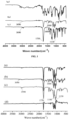
FIG. 1 shows an infrared absorption spectrum of the corresponding materials in Example 1, wherein: (a) L-lactide (LA), (b) maleic anhydride (MAH), (c) maleic anhydride grafted lactide; -
FIG. 2 shows an infrared absorption spectrum of the corresponding materials in Example 1, wherein (a) polylactic acid (PLA), (b) maleic anhydride (MAH), (c) maleic anhydride grafted polylactic acid, and (d) an infrared difference spectrum for the polylactic acid subtracted from the maleic anhydride grafted polylactic acid spectrogram; -
FIG. 3 shows a 13CNMR spectrogram of the corresponding materials in Example 1, wherein (a) L-lactide, (b) maleic anhydride grafted lactide; -
FIG. 4 shows a 13CNMR spectrogram of the corresponding materials in Example 1, wherein (a) polylactic acid (PLA), and (b) maleic anhydride grafted polylactic acid. - The terminals and any value of the ranges disclosed herein are not limited to the precise ranges or values, such ranges or values shall be comprehended as comprising the values adjacent to the ranges or values. As for numerical ranges, the endpoint values of the various ranges, the endpoint values and the individual point value of the various ranges, and the individual point values may be combined with one another to produce one or more new numerical ranges, which should be deemed have been specifically disclosed herein.
- In order to achieve the above object, the first aspect of the present invention provides a polylactic acid graft copolymer, is characterized in that the polylactic acid graft copolymer comprises a repeating structural unit of a structure as shown in formula (A);

- The polylactic acid graft copolymer may also be represented by the following formula:

- Wherein each of R1", R2", ...... and Rn" is independently selected from the group consisting of H, a grafting group represented by formula (I), and a grafting group represented by formula (II).
- According to the present invention, the grafting group is contained in an amount of more than 10 mol%, preferably more than 30 mol%, and further preferably more than 40 mol%, of the total amount of R1.
- According to the present invention, the grafting groups may be various groups capable of grafting onto lactide/polylactic acid, such that the right-angle tearing strength of the polylactic acid graft copolymer is not less than 120 kN/m, preferably within the range of 135-150 kN/m; and the elongation at break is not less than 30%, preferably within the range of 35-45%; preferably, the grafting group has a structure represented by formula (I) and/or formula (II):


- In the present invention, the substituted or unsubstituted C1-C6 alkyl group may be any one selected from the group consisting of methyl, ethyl, n-propyl, isopropyl, n-butyl, sec-butyl, isobutyl, t-butyl, n-pentyl, isopentyl, t-pentyl, neopentyl, n-hexyl, and isohexyl, and the alkyl group may be substituted with one or more of a halogen, a nitro group, a primary amino group, a secondary amino group, and a tertiary amino group. The halogen may be one or more selected from the group consisting of fluorine, chlorine, bromine, and iodine.
- The C6-C20 aryl group may be any one selected from the group consisting of phenyl, methylphenyl, ethylphenyl, dimethylphenyl, diphenyl, biphenyl, and polyphenyl.
- According to the present invention, the maleic anhydride is taken as an example as the graft copolymer of the grafting group, 13CNMR of the polylactic acid graft copolymer has a peak of anhydride-based carbon atoms near the chemical shift of 169ppm and a peak of carbon atom after breaking the carbon-carbon double bond of the maleic anhydride near the chemical shift of 72 ppm, the peaks are unique for the grafting approach of the chain in the present invention. In the present invention, "near" refers to an error within the acceptable range of the art, typically ±5ppm, due to possible factors such as test equipment and personal operation. Accordingly, the method of initially performing ring-opening polymerization and then grafting in the prior art is referred to as the chain end grafting in the present invention.
- According to the present invention, the polylactic acid graft copolymer has a weight average molecular weight within the range of 1×10⁵-4×10⁵. The polylactic acid graft copolymers provided by the present invention have both high molecular weights and strong flexibility. In contrast, the chain end grafted polylactic acid in the prior art has a molecular weight typically below 3×10⁵, the right-angle tearing strength below 100 kN/m, typically within the range of 80-95 kN/m, and the elongation at break no more than 10%, typically within the range of 5-10%.
- According to the present invention, the glass transition temperature of the polylactic acid graft copolymer is within the range of 80-100°C. The glass transition temperature of the polylactic acid graft copolymer provided by the present invention is higher than that of the chain-end grafted polylactic acid in the prior art, which is advantageous to improve the temperature resistance of the material.
- According to the present invention, at least one terminal group of the polylactic acid graft copolymer contains a hydroxyl group. As a result, the polylactic acid graft copolymer can be used for further modification by means of the functional group. The presence of the terminal hydroxyl group may be measured through a chemical titration method.
- In the present invention, both the right-angle tearing strength and the elongation at break are measured by the universal mechanics experimental testing machine; the weight average molecular weight is measured through a gel chromatography method; the glass transition temperature is measured by a differential scanning calorimeter method; and the graft ratio is measured by a chemical titration method. The specific content is described in the text below.
- The second aspect of the present invention provides a preparation method for a polylactic acid graft copolymer, is characterized in that the method comprises the following steps:
- (1) Contacting the lactide with a grafting monomer under the conditions of nucleophilic addition reaction to obtain a nucleophilic addition product;
- (2) Blending the nucleophilic addition product obtained in step (1) with a catalyst and an initiator under the conditions of ring-opening polymerization reaction to perform a low-temperature pre-polymerization to obtain a ring-opened polymerization product;
- (3) Subjecting the ring-opened polymerization product obtained in step (2) to a high-temperature polymerization, in the presence of an antioxidant, under the conditions of a chain propagation reaction, in order to increase the molecular weight of the polylactic acid graft copolymer.
- The present invention can effectively ensure a grafting degree by means of initially performing grafting and then performing the ring-opening polymerization and can ensure the production of a polylactic acid graft copolymer having a high molecular weight through a high-temperature polymerization, thereby providing the polymer with a high flexibility and heat resistance.
- Preferably, the grafting monomer is a monomer represented by formula (i) and/or formula (ii):

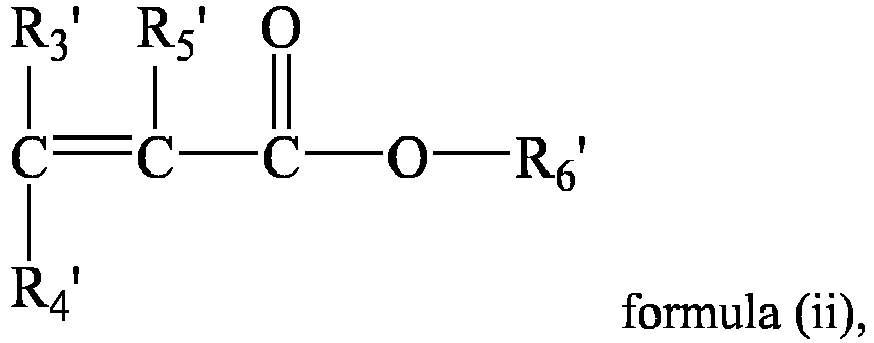
- Wherein R1', R2', R3', R4', R5', and R6' correspond and are identical to the R1, R2, R3, R4, R5, and R6 respectively defined in the above text, the content will not be repeatedly described herein.
- According to the present invention, step (1) serves to carry out a grafting reaction of lactide with a graft monomer such as maleic anhydride, whereby maleic anhydride is grafted onto lactide by cleavage of double bonds through a nucleophilic addition reaction, to obtain a grafted product. The nucleophilic addition reaction in step (1) is performed in the presence of an initiator.
- The lactide described in the present invention is at least one selected from the group consisting of L-lactide, D-lactide, and meso-lactide, preferably L-lactide and/or D-lactide.
- According to the present invention, the initiator is a peroxide initiator, preferably dicumyl peroxide and/or 2,5-dimethyl-2,5-bis-(t-butyl-peroxy) hexane.
- According to the present invention, the initiator is added in an amount of 0.1-5wt%, preferably 0.5-2wt%, of the lactide dosage.
- According to the present invention, step (1) is a constant temperature reaction carried out under an inert gas flow, preferably a nitrogen gas flow, and the vacuum condition; the conditions of the nucleophilic addition reaction comprise a reaction temperature within the range of 50-150°C, preferably within the range of 80-120°C, a reaction pressure within the range of 2-100 kPa, preferably within the range of 20-60kPa, a reaction time within the range of 0.5-10h, preferably within the range of 2-6h; the flow rate of the protective nitrogen gas flow within the range of 0.5-6m/s, preferably within the range of 2-4m/s.
- Unless otherwise specified in the present invention, the pressure refers to an absolute pressure.
- According to the present invention, the optical purity of the lactide in step (1) may be within the range of 99.0-99.6%, preferably within the range of 99.4-99.6%, both the self-prepared and the purchased lactide can be used herein.
- According to the present invention, to obtain better toughness and increase the grafting degree of the grafting group (i.e., the content of the grafting group in the polylactic acid material), the addition amount of the grafting monomer is preferably 100-300wt%, more preferably 150-200wt% , of the lactide dosage.
- Taking maleic anhydride and L-lactide as examples, the main reactions carried out in step (1) are represented in formula (a) and formula (b) as follows:


- Theoretically, the grafting degree of the obtained product represented by formula (a) is 100%, and the grafting degree of the obtained product represented by formula (b) is 50%.
- According to the present invention, the method further comprises: removing the lactide not participating in the nucleophilic addition reaction through the vacuum distillation process after step (1), then subjecting the obtained product to the reaction in step (2).
- According to the present invention, the conditions of vacuum distillation comprise: a temperature within the range of 100-200°C, preferably within the range of 120-150°C; a pressure within the range of 0-100 kPa, preferably within the range of 10-50kPa; and a time within the range of 1-10 h, preferably within the range of 2-6h.
- According to the present invention, the catalyst of step (2) is used for catalyzing a ring-opening reaction of the lactide after grafting the grafting group, preferably at least one selected from the group consisting of stannous octoate, zinc lactate, tri-alkyl aluminum, tri-isobutyl aluminum, and stannous chloride.
- According to the present invention, the catalyst is added in an amount of 0.1-5wt%, preferably 0.5-3wt%, of the total weight of the nucleophilic product.
- According to the present invention, the initiator of step (2) is an alkyl hydroxyl group or an aromatic hydroxyl group-type initiator for initiating the polymerization of lactide after introducing the grafting group following the ring-opening reaction, the initiator is preferably at least one selected from the group consisting of glycerol, xylitol, ethylene glycol and tri-phenyl phosphine, and tri-phenyl phosphine is preferred.
- According to the present invention, the initiator is added in an amount of 0.05-5wt%, preferably 0.3-2wt%, of the total weight of the nucleophilic product.
- According to the present invention, the low-temperature pre-polymerization in step (2) is performed in an inert gas flow, preferably a nitrogen gas flow, under the negative pressure condition; the conditions of the ring-opening polymerization reaction in step (2) comprise: a reaction temperature within the range of 100-150°C, preferably within the range of 120-140°C; a reaction pressure within the range of 100-1,000 kPa, preferably within the range of 200-500 kPa; a reaction time within the range of 2-15h, preferably within the range of 3-8h; and a gas flow rate of the nitrogen gas flow within the range of 0.5-6m/s, preferably within the range of 2-4m/s.
- According to the present invention, the antioxidant in step (3) is used for preventing oxidation of the polylactic acid oligomer of step (2), thereby ensuring further polymerization at higher temperatures and chain propagation reaction. The antioxidant may be various substances capable of preventing oxidation of polylactic acid at high-temperature without adversely affecting the polylactic acid material, for example, the antioxidant may be at least one selected from the group consisting of phosphites antioxidant, alkylpolyphenol antioxidant, and thiobisphenol antioxidants, preferably triphenyl phosphite.
- According to the present invention, the antioxidant is added in an amount of 0.1-5wt%, preferably 0.5-2wt%, of the total weight of the ring-opened polymerization product.
- According to the present invention, the temperature of the chain propagation reaction in step (3) is within the range of 140-250°C, preferably within the range of 160-200°C.
- According to the present invention, the step (3) is preferably performed in a twin screw extruder. The reaction process is performed by using a twin screw extruder, wherein the ring-opened polymerization product and the antioxidant are added into the twin screw extruder for carrying out the high-temperature reactive mixing, extrusion granulation, and the polylactic acid graft copolymer is finally obtained.
- The high-temperature polymerization conditions comprise: an inlet temperature of the twin screw extruder is within the range of 140-160°C, and an outlet temperature of the twin screw extruder is within the range of 170-190°C. The residence time of the material in the twin screw extruder is preferably within the range of 13-23 min.
- The preparation method for polylactic acid graft copolymer provided by the present invention includes a bulk pre-polymerization reaction of lactide in a reaction kettle, coupling with the copolymerization in the twin screw extruder, thus the reaction operation is simple and can be easily applied in the industrial production.
- Taking maleic anhydride and L-lactide as examples, the main reaction processes of steps (2) and (3) are represented in formula (c) and formula (d) as follows:


- In the above formula (c) and formula (d), x and y denote the degree of polymerization of MA-LLA, y is greater than x, and z denotes the number of moles.
- The third aspect of the present invention provides a polylactic acid graft copolymer produced with the aforementioned preparation method.
- The polylactic acid graft copolymer produced with the aforementioned preparation method has right-angle tearing strength within the range of 120-150 KN/m, elongation at break within the range of 30-45%, the glass transition temperature within the range of 80-100°C, the molecular weight within the range of 1×10⁵-4×10⁵, and a grafting degree within the range of 40-50%.
- The fourth aspect of the present invention provides a use of the polylactic acid graft copolymer according to the first aspect or the third aspect in the production of agricultural films, food packaging materials, and medical hygiene products.
- The polylactic acid graft copolymer can be more favorably used in the production of agricultural films, food packaging materials, and medical hygiene products because the copolymer has a higher grafting degree, thus it can have desirable flexibility and temperature resistance while ensuring high molecular weight.
- The present invention will be described in detail below with reference to examples. Unless otherwise specified in the following examples, the reagents in use are commercially available products in the industry.
- The test methods relating to performance parameters in the present invention were described as follows:
- The grafting degree of grafting groups in polylactic acid graft copolymer was measured through the chemical titration method, in particular: a certain mass of polylactic acid graft copolymer was weighed and placed in a cone-shaped bottle, and dissolved by adding a certain amount of tetrahydrofuran, a few droplets of thymol blue/DMF indicator was dropwise added; then titrated with an excess amount ethanol solution of potassium hydroxide having a concentration of 0.05mol/L, and the back titration was performed with the HCl-isopropanol solution having a concentration of 0.01mol/L.
- Grafting degree = n2/n1×100%, n1= (m0-m2)/M1, n2= m2/M2, i.e., grafting degree = [(0.05VKOH-0.01VHCl)×2×M1]/[m0-(0.05VKOH-0.01VHCl) ×2×M2]; wherein m0 denoted the mass of the weighted polylactic acid graft copolymer, in a unit of gram (g); m2 denoted the total mass of the grafting groups on the molecular chain of polylactic acid, it was calculated according to the amount of consumed KOH; n1 denoted the degree of polymerization of polylactic acid, i.e., the amount of substance of lactic acid units, n2 denoted the amount of substance of the grafting groups on the molecular chain of polylactic acid, M1 denoted the molar mass of lactic acid, M2 denoted the molar mass of the grafting group, VKOH denoted the volume of the added ethanol solution of potassium hydroxide, in a unit of mL; VHCl denoted the volume of the HCl-isopropanol solution consumed by titration, in a unit of mL.
- (2) Right-angle tearing strength, and elongation at break: were measured by using a universal mechanical testing machine according to the National Standard GB/T1039-1992 of China.
- (3) Detection of terminal hydroxyl group: was measured with the phthalic anhydride method according to the National Standard GB/T12008.3-2009 of China.
- (4) Glass transition temperature: was measured with the Differential Scanning Calorimeter (DSC) (DSC 204, manufactured by the NETZSCH of Germany). The test conditions were as follows: 5-10 mg of the sample was weighted, the sample was initially heated from room temperature to 200°C at a temperature-rise rate of 10°C /min, and isothermally preserved for 5min to eliminate the thermal history of the sample; the sample was subsequently rapidly cooled down to -20°C, and then further heated from -20°C to 200°C at a temperature-rise rate of 10°C /min; nitrogen gas was introduced as a protective gas throughout the entire testing process, and the flow rate of nitrogen gas was set to 50mL/min.
- (5) Weight average molecular weight of the polymer: was measured with the Gel Permeation Chromatograph (GPC), and the molecular weight of the polylactic acid graft copolymer sample was characterized by using the Gel Permeation Chromatograph (GPC Waters 1515 system). Chromatographically pure THF was the mobile phase, the flow rate was 1.0mL/min, and the column temperature was 35°C. Before testing, the sample was dissolved in THF at a concentration of 5mg/mL, the sample injection was performed after the sample was filtered by using the Polytetrafluoroethylene (PTFE) filter membrane having a pore size of 0.22µm, the sample was calibrated with the Polystyrene (PS) standard having a narrow distribution.
-
- (1) L-lactide and maleic anhydride were added into a reaction kettle, an initiator dicumyl peroxide was further added, and the nucleophilic addition was carried out at constant temperature under nitrogen gas flow and the vacuuming conditions. The nucleophilic addition reaction was performed under conditions such as the reaction temperature of 105°C, the reaction pressure of 45kPa, the reaction time of 3.5h, and the gas flow rate of 2m/s for nitrogen gas flow; the maleic anhydride was added in an amount of 155wt% of the L-lactide dosage, and the dicumyl peroxide was added in an amount of 0.7wt% of the L-lactide dosage.
- (2) The L-lactide not participating in the nucleophilic addition reaction of step (1) was removed through vacuum distillation to obtain a purified nucleophilic addition product; the vacuum distillation was performed at the temperature of 130°C and pressure of 25kPa for a time of 3.5h. The purified product detected with chromatography was maleic anhydride grafted L-lactide (MA-LLA).
- (3) The maleic anhydride grafted L-lactide (MA-LLA) obtained from step (2) was subjected to a ring-opening polymerization reaction under a nitrogen gas flow atmosphere and the effects of a catalyst and an initiator, and the ring-opening polymerization product (i.e., the MA-LLA oligomer) was obtained through the low-temperature pre-polymerization. The ring-opening polymerization reaction was performed under conditions such as a reaction temperature of 140°C, a reaction pressure of 350kPa, a reaction time of 4.5h, and a gas flow rate of nitrogen gas flow being 3.5m/s; the addition amount of the catalyst stannous octoate was 0.75wt% of the MA-LLA dosage; and the addition amount of the initiator tri-phenyl phosphine was 0.35wt% of the MA-LLA dosage. The weight average molecular weight of the MA-LLA oligomer was 5,500.
- (4) The MA-LLA oligomer obtained in step (3) was added together with an antioxidant into a twin screw extruder, and subjected to a high-temperature reactive mixing process, such that the MA-LLA oligomer was subjected to a chain propagation reaction, extrusion granulation, and finally obtained the polylactic acid graft copolymer, i.e., maleic anhydride grafted polylactic acid copolymer material (MA-PLLA). The addition amount of the antioxidant triphenyl phosphite was 0.65wt% of the MA-LLA oligomer dosage, based on the weight of the MA-LLA oligomer, and the reaction extrusion temperature of the twin screw extruder for reactive mixing and extrusion granulation was 185°C, and the residence time of materials in the twin screw extruder was 15 min.
- Wherein the infrared spectrograms of L-lactide, maleic anhydride, and maleic anhydride grafted lactide were shown in curves (a), (b), and (c) of
FIG. 1 , respectively; the infrared spectrograms of PLA, maleic anhydride, maleic anhydride grafted polylactic acid (MAH-g-PLA), and an infrared difference spectrum for the polylactic acid subtracted from the maleic anhydride grafted polylactic acid spectrogram were illustrated in curves (a), (b), (c), and (d) ofFIG. 2 , respectively; the 13CNMR spectrogram of L-lactide, and maleic anhydride grafted lactide were shown in curves (a), (b) ofFIG. 3 , respectively; and the 13CNMR spectrogram of polylactic acid and maleic anhydride grafted polylactic acid was shown in curves (a), (b) ofFIG. 4 , respectively. - As can be seen from
FIG. 1 , the infrared spectrogram of the maleic anhydride grafted lactide showed an out-of-plane bending vibration peak of an alkene-hydrogen =C-H at 3090cm-1 and a stretching vibration peak of -C=C-at 1600cm-1, the peaks indicated that the maleic anhydride was successfully grafted onto the lactide. - As can be seen from
FIG. 2 , the infrared difference spectrum between the MAH-g-PLA and pure PLA indicated an absorption peak of C=O group at 1750 cm-1; and the absorption peaks of C-O-C groups at 1190cm-1, 1130cm-1 and 1093cm-1, respectively; the absorption peaks of the carbonyl and ether linkages are enhanced in the infrared spectrogram of MAH-g-PLA compared to PLA, the peaks indicated that MAH was successfully grafted onto the PLA macromolecular chain. - As illustrated in curves (a) and (b) of
FIG. 3 , the peaks of two kinds of carbon atoms in the anhydride group were increased at the chemical shifts 70ppm and 18ppm, respectively, the peaks indicated that the maleic anhydride was successfully grafted onto L-lactide. - As can be seen from the comparison of curve (a) and curve (b) of
FIG. 4 , there was a peak of anhydride-based carbon atom at the chemical shift of 169ppm, and a peak of carbon atom after the cleavage of carbon-carbon double bond of the maleic anhydride at the chemical shift of 72ppm, the peaks indicated that MAH was successfully grafted onto the PLA macromolecular chain. - The presence of terminal hydroxyl groups was determined through the chemical titration method.
- The polylactic acid graft copolymer was prepared according to similar steps and methods as those in Example 1, except for the reaction conditions, type of materials, and addition amounts of materials, the specific details were shown in Table 1.
- The polylactic acid graft copolymer was prepared according to the same method as that in Example 1, except that the nucleophilic addition reaction conditions comprised: the temperature of 170°C and the reaction pressure of 5kPa.
- The polylactic acid graft copolymer was prepared according to the same method as that in Example 1, except that the addition amount of the maleic anhydride was 310wt% of the L-lactide dosage, and the addition amount of dicumyl peroxide was 6wt% of the L-lactide dosage.
- The polylactic acid graft copolymer was prepared according to the same method as that in Example 1, except that the addition amount of the catalyst stannous octoate in the ring-opening polymerization reaction was 5wt% of the dosage of nucleophilic addition product, and the addition amount of the initiator tri-phenyl phosphine was 5wt% of the dosage of nucleophilic addition product.
- The polylactic acid graft copolymer was prepared according to the same method as that in Example 1, except that the addition amount of an antioxidant in the chain propagation reaction was 5wt% of the dosage of the ring-opened polymerization product, and the ring-opening polymerization reaction temperature was 250°C.
- The polylactic acid graft copolymer was prepared according to the same method as that in Example 1, except that maleic anhydride was replaced with methyl methacrylate.
- The polylactic acid graft copolymer was prepared according to the same method as that in Example 1, except that the L-lactide in the nucleophilic addition reaction was replaced with D-lactide.
- The polylactic acid graft copolymer was prepared with the method of initially polymerizing L-lactide and then carrying out the grafting process in the prior art:
- (1) L-lactide (LLA) was subjected to a low-temperature pre-polymerization under the effects of a catalyst and an initiator and under nitrogen gas flow and negative pressure conditions to obtain a LLA oligomer. The low-temperature pre-polymerization was performed with a reaction temperature of 130°C, a reaction time of 3h, a reaction pressure of 300kPa, and a flow rate of nitrogen gas flow being 3m/s; the addition amount of the catalyst stannous octoate was 0.5wt% of the LLA dosage; and the addition amount of the initiator tri-phenyl phosphine was 0.2wt% of the LLA dosage, of the weight of L-lactide (LLA).
- (2) The LLA oligomer obtained in step (1) was added together with the Maleic Anhydride (MA) and an antioxidant into a twin screw extruder for carrying out a polymerization reaction, and subjected to a high-temperature reactive mixing and extrusion granulation process so that a maleic anhydride grafted polylactic acid material (MA-PLLA) was finally obtained; the addition amount of the maleic anhydride was 2.5wt% of the dosage of LLA oligomer, the addition amount of the antioxidant triphenyl phosphite was 0.5wt% of the dosage of the LLA oligomer, of the weight of the LLA oligomer, and the reaction extrusion temperature of the twin screw extruder for reactive mixing and extrusion granulation was 180°C.
- The presence of terminal hydroxyl groups was not detected through the chemical titration method.
- The polymer was prepared by using the method disclosed in Example 1 of
CN104371082A . - 30g of lactide, 3g of maleic anhydride, 9mg of stannous octoate, 3mg of benzoyl peroxide, and 50ml of toluene were added into an autoclave, nitrogen gas was introduced into the autoclave for 5 min to remove oxygen gas, the reaction was carried out under the air-tight condition at 200°C for 20h, then cooled with water, the autoclave was opened, the solution was poured into a part of anhydrous methanol, the unreacted substances were removed by stirring, then subjected to the suction filtration, the powder obtained from the suction filtration was subjected to the vacuum drying to prepare a polylactic acid maleic anhydride modified substance, which was un-discolored.
- The presence of terminal hydroxyl groups was determined through the chemical titration method.
- The polymer was prepared using the method disclosed in Example 1 of
CN104371082A , except that the addition amount of maleic anhydride was 140wt% of the L-lactide dosage. - The presence of terminal hydroxyl groups was determined through the chemical titration method.
Table 1 Example 1 Exampl e 2 Exampl e 3 Exampl e 4 Exampl e 5 Example 6 Nucleophil ic addition reaction L-lactide Grafting groups Maleic anhydride 2-methyl maleic anhydrid e Initiator Dicumyl peroxide Reaction temperature (°C) 105 120 85 100 110 105 Reaction pressure (kPa) 45 60 25 40 55 45 Reaction time (h) 3.5 2 6 3 4 3.5 Grafting group/lactide (wt%) 155 180 200 150 160 155 Initiator/lacti de (wt%) 0.7 2 1.5 0.65 0.8 0.7 vacuum distillation Temperature (°C) 130 145 125 130 135 130 Pressure (kPa) 25 40 50 20 30 25 Time (h) 3.5 6 5 3 4 3.5 Ring-opene d polymeriza tion reaction Catalyst Stannous octoate Initiator Tri-phenyl phosphine Reaction temperature (°C) 140 120 130 135 140 140 Reaction time (h) 4.5 8 6 6 5 4.5 Reaction pressure (kPa) 350 500 230 350 400 350 Catalyst / nucleophilic addition product (wt%) 0.75 3 1.5 0.65 0.85 0.75 Initiator / nucleophilic addition product (wt%) 0.35 1.4 2 0.3 0.4 0.35 Chain propagatio n reaction Antioxidant Triphenyl phosphite Antioxidant / ring-opened polymerizati on product (wt%) 0.65 1 2 0.7 0.7 0.65 Temperature (°C) 185 160 165 185 190 185 Time (min) 15 16 17 17 18 17 Table 1 (continued) Example 7 Example 8 Example 9 Example 10 Example 11 Nucleophi lie addition reaction L-lactide Grafting groups Maleic anhydride Initiator 2,5-dimeth yl-2,5-bis-(t-butylperox y) hexane Dicumyl peroxide Dicumyl peroxide 2,5-dime thyl-2,5-bis-(t -butylper oxy) hexane Dicumyl peroxide Reaction temperature (°C) 110 95 100 95 100 Reaction pressure (kPa) 55 35 35 35 40 Reaction time (h) 4 2 3 2 3 Grafting group/ lactide (wt%) 160 140 145 140 150 Initiator/ lactide (wt%) 0.8 0.5 0.6 0.5 0.65 vacuum distillatio n Temperatur e(°C) 135 125 130 125 130 Pressure (kPa) 30 15 15 15 20 Time (h) 3.5 2 2.5 2 3 Ring-open ed polymeriz ation reaction Catalyst Stannous octoate Stannous octoate Stannous octoate Zinc lactate Tri-isobut yl aluminu m Initiator Glycerol Tri-phen yl phosphin e Tri-phen yl phosphin e Glycerol Ethylene glycol Reaction temperature (°C) 145 130 135 130 135 Reaction time (h) 5 3 4 3 4.5 Reaction pressure (kPa) 400 300 350 300 350 Catalyst / nucleophilic addition product (wt%) 0.8 0.5 0.6 0.5 0.65 Initiator / nucleophilic addition product (wt%) 0.8 0.2 0.25 0.2 0.3 Chain propagati on reaction Antioxidant Thio bisphenol Tripheny l phosphit e Tripheny l phosphit e Thio bispheno l Triphenyl phosphite Antioxidant / ring-opened polymerizat ion product (wt%) 0.7 0.5 0.6 0.5 0.4 Temperatur e (°C) 190 180 180 180 185 Time (min) 18 20 19 18 17 Table 2 Right-angle tearing strength (KN/m) Elongation at break (%) Glass transition tempera ture (°C) Weight average molecular weight of ring-opened polymerizati on product Weight average molecular weight of the product (×105) Grafting degree (%) Example 1 145 40 96 5500 3.05 49.7 Example 2 143 39 95 5600 2.98 49.1 Example 3 144 39 95 5200 2.85 49.5 Example 4 144 39 94 5400 2.9 49.2 Example 5 145 38 93 5300 2.82 49.3 Example 6 145 39 95 5500 3.02 49.5 Example 7 132 35.7 90.5 5300 2.89 40.2 Example 8 130 35 90 5200 2.5 42.5 Example 9 135 37 92 5100 2.7 44.6 Example 10 125 30 88 5400 2.13 40.2 Example 11 132 34 90.5 5300 2.74 45.6 Example 12 128 33 88 5100 2.34 41.4 Example 13 129 33 89 5200 2.42 41.8 Example 14 133 36 91 5200 2.62 43.5 Example 15 134 36 91 5200 2.65 43.8 Example 16 131 36 90 5300 2.52 43 Example 17 144 40 95 5400 3.01 49.2 Comparat ive Example 1 95 8 68 - 2.01 2 Comparat ive Example 2 103.2 12.5 104.2 - 2.61 13.8 Comparat ive Example 3 110 18 99 - 2.25 30.4 - It is illustrated from Table 2 that use of the method disclosed in the present invention, the grafting reaction of grafting groups is performed before the polymerization of lactide, so that the grafting efficiency is greatly improved, the toughness, the elongation at break, and the glass transition temperature of the polylactic acid material are enhanced, and the prepared grafting-modified polylactic acid copolymerization material can be green and fully biodegradable.
- The above content describes in detail the preferred embodiments of the present invention, but the present invention is not limited thereto. A variety of simple modifications can be made in regard to the technical solutions of the present invention within the scope of the technical concept of the present invention, including a combination of individual technical features in any other suitable manner, such simple modifications and combinations thereof shall also be regarded as the content disclosed by the present invention, each of them falls into the protection scope of the present invention.
Claims (20)
- A polylactic acid graft copolymer, is characterized in that the polylactic acid graft copolymer comprises a repeating structural unit of a structure as shown in formula (A);

- The polylactic acid graft copolymer according to claim 1, wherein the grafting group is contained in an amount of more than 10 mol%, preferably more than 30 mol%, and further preferably more than 40 mol%, of the total amount of R1.
- The polylactic acid graft copolymer according to claim 1 or 2, wherein the grafting group has a structure represented by formula (I) and/or formula (II):


- The polylactic acid graft copolymer according to any of claims 1-3, wherein 13CNMR of the polylactic acid graft copolymer has a peak near the chemical shift of 169ppm and a peak near the chemical shift of 72ppm.
- The polylactic acid graft copolymer according to any of claims 1-4, wherein the polylactic acid graft copolymer has a weight average molecular weight within the range of 1×10⁵-4×10⁵.
- The polylactic acid graft copolymer according to any of claims 1-5, wherein the glass transition temperature of the polylactic acid graft copolymer is within the range of 80-100°C.
- The polylactic acid graft copolymer according to any of claims 1-6, wherein the polylactic acid graft copolymer contains a terminal hydroxyl group measured by using the phthalic anhydride method.
- A preparation method for a polylactic acid graft copolymer, is characterized in that the method comprises the following steps:(1) Contacting the lactide with a monomer represented by formula (i) and/or formula (ii) under the conditions of nucleophilic addition reaction to obtain a nucleophilic addition product;(2) Blending the nucleophilic addition product obtained in step (1) with a catalyst and an initiator under the conditions of ring-opening polymerization reaction to perform a low-temperature pre-polymerization to obtain a ring-opened polymerization product;(3) Subjecting the ring-opened polymerization product obtained in step (2) to a high-temperature polymerization, in the presence of an antioxidant, under the conditions of a chain propagation reaction;


- The preparation method according to claim 8, wherein the nucleophilic addition reaction in step (1) is performed in the presence of an initiator;
preferably, the initiator is dicumyl peroxide and/or 2,5-dimethyl-2,5-bis-(t-butyl-peroxy) hexane. - The preparation method according to claim 9, wherein the initiator is added in an amount of 0.1-5wt%, preferably 0.5-2wt%, of the lactide dosage.
- The preparation method according to any one of claims 8-10, wherein the conditions of the nucleophilic addition reaction comprise: a reaction temperature within the range of 50-150°C, a reaction pressure within the range of 2-100 kPa, and a reaction time within the range of 0.5-10 hours.
- The preparation method according to any one of claims 8-11, wherein the sum of addition amounts of the monomers represented by formula (i) and formula (ii) is 100-300wt%, preferably 150-200wt%, of the lactide dosage.
- The preparation method according to any one of claims 8-12, wherein the method further comprises: removing the lactide not participating in the nucleophilic addition reaction through vacuum distillation process after step (1), then subjecting the obtained product to the reaction in step (2);
preferably, the conditions of vacuum distillation comprise: a temperature within the range of 100-200°C, a pressure within the range of 0-100 kPa, and a time within the range of 1-10 hours. - The preparation method according to any one of claims 8-13, wherein the catalyst in step (2) is at least one selected from the group consisting of stannous octoate, zinc lactate, tri-alkyl aluminum, tri-isobutyl aluminum, and stannous chloride;preferably, the catalyst is added in an amount of 0.1-5wt%, preferably 0.5-2wt%, of the total weight of the nucleophilic product;and/or, the initiator is at least one selected from the group consisting of glycerol, xylitol, ethylene glycol, and tri-phenyl phosphine;preferably, the initiator is added in an amount of 0.05-5wt%, preferably 0.3-2wt%, of the total weight of the nucleophilic product.
- The preparation method according to any one of claims 8-14, wherein the conditions of the ring-opening polymerization reaction in step (2) comprise: a reaction temperature within the range of 100-150°C, a reaction pressure within the range of 100-1,000 kPa, and a reaction time within the range of 2-15h.
- The preparation method according to any one of claims 8-15, wherein the antioxidant in step (3) is at least one selected from the group consisting of phosphites, alkylpolyphenol, and thiobisphenol antioxidants;
preferably, the antioxidant is added in an amount of 0.1-5wt%, preferably 0.5-2wt%, of the total weight of the ring-opened polymerization product. - The preparation method according to any one of claims 8-16, wherein a temperature of the chain propagation reaction in step (3) is within the range of 140-250°C, preferably within the range of 160-200°C.
- The preparation method according to any one of claims 8-17, wherein step (3) is performed in a twin screw extruder.
- The polylactic acid graft copolymer produced with the preparation method according to any one of claims 8-18.
- Use of the polylactic acid graft copolymer according to any one of claims 1-7 and 19 in the production of agricultural films, food packaging materials, and medical hygiene products.
Applications Claiming Priority (2)
| Application Number | Priority Date | Filing Date | Title |
|---|---|---|---|
| CN202210110898.2A CN116554447B (en) | 2022-01-29 | 2022-01-29 | A polylactic acid graft copolymer, its preparation method and application |
| PCT/CN2023/070327 WO2023142919A1 (en) | 2022-01-29 | 2023-01-04 | Polylactic acid graft copolymer, and preparation method therefor and use thereof |
Publications (2)
| Publication Number | Publication Date |
|---|---|
| EP4458879A1 true EP4458879A1 (en) | 2024-11-06 |
| EP4458879A4 EP4458879A4 (en) | 2025-04-23 |
Family
ID=87470535
Family Applications (1)
| Application Number | Title | Priority Date | Filing Date |
|---|---|---|---|
| EP23745804.7A Pending EP4458879A4 (en) | 2022-01-29 | 2023-01-04 | Polylactic acid graft copolymer, and preparation method therefor and use thereof |
Country Status (7)
| Country | Link |
|---|---|
| US (1) | US20260035509A1 (en) |
| EP (1) | EP4458879A4 (en) |
| JP (1) | JP7792527B2 (en) |
| KR (1) | KR20240128114A (en) |
| CN (2) | CN116554447B (en) |
| TW (1) | TWI840071B (en) |
| WO (1) | WO2023142919A1 (en) |
Families Citing this family (3)
| Publication number | Priority date | Publication date | Assignee | Title |
|---|---|---|---|---|
| CN119350822A (en) * | 2024-10-23 | 2025-01-24 | 万华化学集团股份有限公司 | A modified polylactic acid and its preparation method and production device |
| CN120590279B (en) * | 2025-01-06 | 2025-12-12 | 益曜科技有限公司 | Modified polylactic acid oligomer and preparation method and application thereof |
| CN121378603B (en) * | 2025-12-19 | 2026-03-27 | 湖南绿斯达生物科技有限公司 | Grafting modified PBAT, preparation method and PLA/PBAT composite material |
Family Cites Families (18)
| Publication number | Priority date | Publication date | Assignee | Title |
|---|---|---|---|---|
| WO1997047670A1 (en) * | 1996-06-13 | 1997-12-18 | Regents Of The University Of Minnesota | Method of grafting functional groups to synthetic polymers for making biodegradable plastics |
| JP3933315B2 (en) * | 1997-08-19 | 2007-06-20 | 三井化学株式会社 | Composite resin composition |
| JP4791384B2 (en) | 2006-02-23 | 2011-10-12 | 滋賀県 | Modified polyester |
| US8759446B2 (en) * | 2008-06-30 | 2014-06-24 | Fina Technology, Inc. | Compatibilized polypropylene and polylactic acid blends and methods of making and using same |
| WO2011129771A1 (en) * | 2010-04-14 | 2011-10-20 | Agency For Science, Technology And Research | Thermoplastic composition formed from polylactic acid and elastomeric graft copolymer |
| CN102731762A (en) * | 2012-06-18 | 2012-10-17 | 重庆大学 | Poly(DL-lactic acid) material modified based on 24 peptides in E domain of mechano-growth factor (MGF) and diamine, and preparation method and application thereof |
| FR2994435B1 (en) * | 2012-08-09 | 2014-10-24 | Arkema France | POLYMER COMPOSITION BASED ON PLA |
| CN104371082B (en) | 2013-08-14 | 2017-09-29 | 中国石油化工股份有限公司 | A kind of preparation method of polylactic acid composition |
| CN103570884B (en) * | 2013-11-14 | 2015-06-17 | 湖南科技大学 | Preparation method for maleic anhydride-modified polylactic-co-glycolic acid |
| US9228044B2 (en) * | 2014-04-02 | 2016-01-05 | International Business Machines Corporation | Versatile, facile and scalable route to polylactic acid-backbone graft and bottlebrush copolymers |
| US9505858B2 (en) * | 2014-10-21 | 2016-11-29 | International Business Machines Corporation | Polylactic acid (PLA) with low moisture vapor transmission rates by grafting through of hydrophobic polymers directly to PLA backbone |
| US9193818B1 (en) * | 2014-10-29 | 2015-11-24 | International Business Machines Corporation | Toughened polylactic acid (PLA) by grafting through of impact-modifying polymers directly to PLA backbone |
| CN105315412B (en) * | 2015-11-23 | 2018-01-05 | 湖南科技大学 | Maleic anhydride is directly grafted the technology that poly- third glycolide prepares HMW MPLGA |
| US10035877B1 (en) * | 2017-03-08 | 2018-07-31 | International Business Machines Corporation | Matrix-bondable lactide monomors for polylactide synthesis |
| CN108192033A (en) * | 2018-02-23 | 2018-06-22 | 湖南科技大学 | A kind of maleic anhydride is directly grafted the preparation method of L- lactide/glycolides/6-caprolactone terpolymer |
| CN109456487A (en) * | 2018-10-16 | 2019-03-12 | 湖北省冠成生物降解塑料制品有限公司 | A kind of preparation method and application of cellulose derivative grafted polylactic acid |
| CN113402867B (en) * | 2021-07-09 | 2022-10-11 | 大连理工大学 | A kind of graft copolymerization-blending high impact polylactic acid and preparation method thereof |
| CN113881057B (en) * | 2021-11-11 | 2022-06-07 | 中国科学院长春应用化学研究所 | High molecular weight polylactic acid-based copolymer and preparation method thereof |
-
2022
- 2022-01-29 CN CN202210110898.2A patent/CN116554447B/en active Active
-
2023
- 2023-01-04 TW TW112100229A patent/TWI840071B/en active
- 2023-01-04 WO PCT/CN2023/070327 patent/WO2023142919A1/en not_active Ceased
- 2023-01-04 EP EP23745804.7A patent/EP4458879A4/en active Pending
- 2023-01-04 JP JP2024543504A patent/JP7792527B2/en active Active
- 2023-01-04 CN CN202380017638.3A patent/CN119072513A/en active Pending
- 2023-01-04 US US18/730,443 patent/US20260035509A1/en active Pending
- 2023-01-04 KR KR1020247026823A patent/KR20240128114A/en active Pending
Also Published As
| Publication number | Publication date |
|---|---|
| TW202330679A (en) | 2023-08-01 |
| WO2023142919A1 (en) | 2023-08-03 |
| CN116554447A (en) | 2023-08-08 |
| JP2025502485A (en) | 2025-01-24 |
| TWI840071B (en) | 2024-04-21 |
| EP4458879A4 (en) | 2025-04-23 |
| CN119072513A (en) | 2024-12-03 |
| KR20240128114A (en) | 2024-08-23 |
| JP7792527B2 (en) | 2025-12-25 |
| CN116554447B (en) | 2025-11-04 |
| US20260035509A1 (en) | 2026-02-05 |
Similar Documents
| Publication | Publication Date | Title |
|---|---|---|
| US20260035509A1 (en) | Polylactic acid graft copolymer, and preparation method therefor and use thereof | |
| US10435548B2 (en) | Multimodal high density polyethylene | |
| JP2000313721A (en) | Novel hydroxyl group-containing copolymer and production method thereof | |
| CN111087579B (en) | Method for producing polyglycolic acid having a small residual monomer content | |
| CN102643419A (en) | Preparation method of aliphatic-aromatic copolyester | |
| CN115322358A (en) | Synthesis method of cyclodextrin-based polyether polyol | |
| JP5223347B2 (en) | Resin composition, method for producing the same, and copolymer | |
| CN118222096A (en) | Silicone rubber composition, silicone rubber and preparation method of silicone rubber | |
| KR20240169437A (en) | A method for preparing polymer, and polybutyleneadipateterephthalate | |
| EP3763760A1 (en) | Symmetircal polyolefin block copolymer and prepration method therefor | |
| KR101606480B1 (en) | Polylactic acid copolymer having excellently improved elasticity and method for preparing the same | |
| CN116041675A (en) | Method for preparing poly (trimethylene furandicarboxylate) using zinc catalyst | |
| KR20240109193A (en) | Poly(3-hydroxypropionic acid) and method for preparing the same | |
| CN119264389A (en) | A poly-L-D lactic acid graft copolymer and its preparation method and application | |
| CN115636994A (en) | Low-density polyethylene resin composition for film | |
| WO2023102683A1 (en) | Pbat resin composition, and preparation method therefor and use thereof | |
| CN119264390A (en) | Unsaturated aliphatic ester polylactic acid graft copolymer and preparation method and application thereof | |
| JPH04189803A (en) | Production of polypropylene | |
| CN116606423B (en) | Preparation method of polylactic acid and copolymer thereof for in vivo degradation control | |
| CN120025530B (en) | Polylactic acid, biodegradable composition, and preparation method and application thereof | |
| KR101773258B1 (en) | Zinc complex including n,n-bispyrazolyl based ligand, catalyst for polymerization of monomer having a ring-type ester group, and method of forming polymer using the catalyst | |
| CN114940745B (en) | A method for preparing polylactic acid with controllable molecular weight | |
| KR20240095055A (en) | POLY(LACTIC ACID-b-3-HYDROXYPROPIONIC ACID) BLOCK COPOLYMER COMPOSITION AND FILM COMPRISING THEROF | |
| KR101236631B1 (en) | Method of manufacturing polylactic acid resin composition | |
| CN121270883A (en) | Multi-arm star-shaped polyethylene glycol-polycaprolactone-polylactic acid material and preparation method thereof |
Legal Events
| Date | Code | Title | Description |
|---|---|---|---|
| STAA | Information on the status of an ep patent application or granted ep patent |
Free format text: STATUS: THE INTERNATIONAL PUBLICATION HAS BEEN MADE |
|
| PUAI | Public reference made under article 153(3) epc to a published international application that has entered the european phase |
Free format text: ORIGINAL CODE: 0009012 |
|
| STAA | Information on the status of an ep patent application or granted ep patent |
Free format text: STATUS: REQUEST FOR EXAMINATION WAS MADE |
|
| 17P | Request for examination filed |
Effective date: 20240729 |
|
| AK | Designated contracting states |
Kind code of ref document: A1 Designated state(s): AL AT BE BG CH CY CZ DE DK EE ES FI FR GB GR HR HU IE IS IT LI LT LU LV MC ME MK MT NL NO PL PT RO RS SE SI SK SM TR |
|
| A4 | Supplementary search report drawn up and despatched |
Effective date: 20250320 |
|
| RIC1 | Information provided on ipc code assigned before grant |
Ipc: C07D 407/14 20060101ALI20250314BHEP Ipc: C07D 407/04 20060101ALI20250314BHEP Ipc: C08G 63/82 20060101ALI20250314BHEP Ipc: C08G 64/18 20060101ALI20250314BHEP Ipc: C08G 63/78 20060101ALI20250314BHEP Ipc: C08G 63/08 20060101AFI20250314BHEP |
|
| DAV | Request for validation of the european patent (deleted) | ||
| DAX | Request for extension of the european patent (deleted) |