EP4458878A1 - Alcohol dispersion of conductive polyethylene dioxythiophene, preparation method therefor and application thereof - Google Patents
Alcohol dispersion of conductive polyethylene dioxythiophene, preparation method therefor and application thereof Download PDFInfo
- Publication number
- EP4458878A1 EP4458878A1 EP22913631.2A EP22913631A EP4458878A1 EP 4458878 A1 EP4458878 A1 EP 4458878A1 EP 22913631 A EP22913631 A EP 22913631A EP 4458878 A1 EP4458878 A1 EP 4458878A1
- Authority
- EP
- European Patent Office
- Prior art keywords
- alcohol
- polyethylenedioxythiophene
- conductive
- dispersion
- oxidant
- Prior art date
- Legal status (The legal status is an assumption and is not a legal conclusion. Google has not performed a legal analysis and makes no representation as to the accuracy of the status listed.)
- Pending
Links
Images



Classifications
-
- C—CHEMISTRY; METALLURGY
- C08—ORGANIC MACROMOLECULAR COMPOUNDS; THEIR PREPARATION OR CHEMICAL WORKING-UP; COMPOSITIONS BASED THEREON
- C08G—MACROMOLECULAR COMPOUNDS OBTAINED OTHERWISE THAN BY REACTIONS ONLY INVOLVING UNSATURATED CARBON-TO-CARBON BONDS
- C08G61/00—Macromolecular compounds obtained by reactions forming a carbon-to-carbon link in the main chain of the macromolecule
- C08G61/12—Macromolecular compounds containing atoms other than carbon in the main chain of the macromolecule
-
- C—CHEMISTRY; METALLURGY
- C08—ORGANIC MACROMOLECULAR COMPOUNDS; THEIR PREPARATION OR CHEMICAL WORKING-UP; COMPOSITIONS BASED THEREON
- C08G—MACROMOLECULAR COMPOUNDS OBTAINED OTHERWISE THAN BY REACTIONS ONLY INVOLVING UNSATURATED CARBON-TO-CARBON BONDS
- C08G61/00—Macromolecular compounds obtained by reactions forming a carbon-to-carbon link in the main chain of the macromolecule
- C08G61/12—Macromolecular compounds containing atoms other than carbon in the main chain of the macromolecule
- C08G61/122—Macromolecular compounds containing atoms other than carbon in the main chain of the macromolecule derived from five- or six-membered heterocyclic compounds, other than imides
- C08G61/123—Macromolecular compounds containing atoms other than carbon in the main chain of the macromolecule derived from five- or six-membered heterocyclic compounds, other than imides derived from five-membered heterocyclic compounds
- C08G61/126—Macromolecular compounds containing atoms other than carbon in the main chain of the macromolecule derived from five- or six-membered heterocyclic compounds, other than imides derived from five-membered heterocyclic compounds with a five-membered ring containing one sulfur atom in the ring
-
- C—CHEMISTRY; METALLURGY
- C08—ORGANIC MACROMOLECULAR COMPOUNDS; THEIR PREPARATION OR CHEMICAL WORKING-UP; COMPOSITIONS BASED THEREON
- C08J—WORKING-UP; GENERAL PROCESSES OF COMPOUNDING; AFTER-TREATMENT NOT COVERED BY SUBCLASSES C08B, C08C, C08F, C08G or C08H
- C08J3/00—Processes of treating or compounding macromolecular substances
- C08J3/02—Making solutions, dispersions, lattices or gels by other methods than by solution, emulsion or suspension polymerisation techniques
- C08J3/09—Making solutions, dispersions, lattices or gels by other methods than by solution, emulsion or suspension polymerisation techniques in organic liquids
-
- C—CHEMISTRY; METALLURGY
- C08—ORGANIC MACROMOLECULAR COMPOUNDS; THEIR PREPARATION OR CHEMICAL WORKING-UP; COMPOSITIONS BASED THEREON
- C08L—COMPOSITIONS OF MACROMOLECULAR COMPOUNDS
- C08L27/00—Compositions of homopolymers or copolymers of compounds having one or more unsaturated aliphatic radicals, each having only one carbon-to-carbon double bond, and at least one being terminated by a halogen; Compositions of derivatives of such polymers
- C08L27/02—Compositions of homopolymers or copolymers of compounds having one or more unsaturated aliphatic radicals, each having only one carbon-to-carbon double bond, and at least one being terminated by a halogen; Compositions of derivatives of such polymers not modified by chemical after-treatment
- C08L27/12—Compositions of homopolymers or copolymers of compounds having one or more unsaturated aliphatic radicals, each having only one carbon-to-carbon double bond, and at least one being terminated by a halogen; Compositions of derivatives of such polymers not modified by chemical after-treatment containing fluorine atoms
- C08L27/18—Homopolymers or copolymers or tetrafluoroethene
-
- C—CHEMISTRY; METALLURGY
- C08—ORGANIC MACROMOLECULAR COMPOUNDS; THEIR PREPARATION OR CHEMICAL WORKING-UP; COMPOSITIONS BASED THEREON
- C08L—COMPOSITIONS OF MACROMOLECULAR COMPOUNDS
- C08L27/00—Compositions of homopolymers or copolymers of compounds having one or more unsaturated aliphatic radicals, each having only one carbon-to-carbon double bond, and at least one being terminated by a halogen; Compositions of derivatives of such polymers
- C08L27/22—Compositions of homopolymers or copolymers of compounds having one or more unsaturated aliphatic radicals, each having only one carbon-to-carbon double bond, and at least one being terminated by a halogen; Compositions of derivatives of such polymers modified by chemical after-treatment
-
- C—CHEMISTRY; METALLURGY
- C08—ORGANIC MACROMOLECULAR COMPOUNDS; THEIR PREPARATION OR CHEMICAL WORKING-UP; COMPOSITIONS BASED THEREON
- C08L—COMPOSITIONS OF MACROMOLECULAR COMPOUNDS
- C08L65/00—Compositions of macromolecular compounds obtained by reactions forming a carbon-to-carbon link in the main chain; Compositions of derivatives of such polymers
-
- C—CHEMISTRY; METALLURGY
- C09—DYES; PAINTS; POLISHES; NATURAL RESINS; ADHESIVES; COMPOSITIONS NOT OTHERWISE PROVIDED FOR; APPLICATIONS OF MATERIALS NOT OTHERWISE PROVIDED FOR
- C09D—COATING COMPOSITIONS, e.g. PAINTS, VARNISHES OR LACQUERS; FILLING PASTES; CHEMICAL PAINT OR INK REMOVERS; INKS; CORRECTING FLUIDS; WOODSTAINS; PASTES OR SOLIDS FOR COLOURING OR PRINTING; USE OF MATERIALS THEREFOR
- C09D127/00—Coating compositions based on homopolymers or copolymers of compounds having one or more unsaturated aliphatic radicals, each having only one carbon-to-carbon double bond, and at least one being terminated by a halogen; Coating compositions based on derivatives of such polymers
- C09D127/02—Coating compositions based on homopolymers or copolymers of compounds having one or more unsaturated aliphatic radicals, each having only one carbon-to-carbon double bond, and at least one being terminated by a halogen; Coating compositions based on derivatives of such polymers not modified by chemical after-treatment
- C09D127/12—Coating compositions based on homopolymers or copolymers of compounds having one or more unsaturated aliphatic radicals, each having only one carbon-to-carbon double bond, and at least one being terminated by a halogen; Coating compositions based on derivatives of such polymers not modified by chemical after-treatment containing fluorine atoms
- C09D127/18—Homopolymers or copolymers of tetrafluoroethene
-
- C—CHEMISTRY; METALLURGY
- C09—DYES; PAINTS; POLISHES; NATURAL RESINS; ADHESIVES; COMPOSITIONS NOT OTHERWISE PROVIDED FOR; APPLICATIONS OF MATERIALS NOT OTHERWISE PROVIDED FOR
- C09D—COATING COMPOSITIONS, e.g. PAINTS, VARNISHES OR LACQUERS; FILLING PASTES; CHEMICAL PAINT OR INK REMOVERS; INKS; CORRECTING FLUIDS; WOODSTAINS; PASTES OR SOLIDS FOR COLOURING OR PRINTING; USE OF MATERIALS THEREFOR
- C09D127/00—Coating compositions based on homopolymers or copolymers of compounds having one or more unsaturated aliphatic radicals, each having only one carbon-to-carbon double bond, and at least one being terminated by a halogen; Coating compositions based on derivatives of such polymers
- C09D127/22—Coating compositions based on homopolymers or copolymers of compounds having one or more unsaturated aliphatic radicals, each having only one carbon-to-carbon double bond, and at least one being terminated by a halogen; Coating compositions based on derivatives of such polymers modified by chemical after-treatment
-
- C—CHEMISTRY; METALLURGY
- C09—DYES; PAINTS; POLISHES; NATURAL RESINS; ADHESIVES; COMPOSITIONS NOT OTHERWISE PROVIDED FOR; APPLICATIONS OF MATERIALS NOT OTHERWISE PROVIDED FOR
- C09D—COATING COMPOSITIONS, e.g. PAINTS, VARNISHES OR LACQUERS; FILLING PASTES; CHEMICAL PAINT OR INK REMOVERS; INKS; CORRECTING FLUIDS; WOODSTAINS; PASTES OR SOLIDS FOR COLOURING OR PRINTING; USE OF MATERIALS THEREFOR
- C09D165/00—Coating compositions based on macromolecular compounds obtained by reactions forming a carbon-to-carbon link in the main chain; Coating compositions based on derivatives of such polymers
-
- C—CHEMISTRY; METALLURGY
- C09—DYES; PAINTS; POLISHES; NATURAL RESINS; ADHESIVES; COMPOSITIONS NOT OTHERWISE PROVIDED FOR; APPLICATIONS OF MATERIALS NOT OTHERWISE PROVIDED FOR
- C09D—COATING COMPOSITIONS, e.g. PAINTS, VARNISHES OR LACQUERS; FILLING PASTES; CHEMICAL PAINT OR INK REMOVERS; INKS; CORRECTING FLUIDS; WOODSTAINS; PASTES OR SOLIDS FOR COLOURING OR PRINTING; USE OF MATERIALS THEREFOR
- C09D5/00—Coating compositions, e.g. paints, varnishes or lacquers, characterised by their physical nature or the effects produced; Filling pastes
- C09D5/24—Electrically-conducting paints
-
- C—CHEMISTRY; METALLURGY
- C09—DYES; PAINTS; POLISHES; NATURAL RESINS; ADHESIVES; COMPOSITIONS NOT OTHERWISE PROVIDED FOR; APPLICATIONS OF MATERIALS NOT OTHERWISE PROVIDED FOR
- C09D—COATING COMPOSITIONS, e.g. PAINTS, VARNISHES OR LACQUERS; FILLING PASTES; CHEMICAL PAINT OR INK REMOVERS; INKS; CORRECTING FLUIDS; WOODSTAINS; PASTES OR SOLIDS FOR COLOURING OR PRINTING; USE OF MATERIALS THEREFOR
- C09D7/00—Features of coating compositions, not provided for in group C09D5/00; Processes for incorporating ingredients in coating compositions
- C09D7/20—Diluents or solvents
-
- H—ELECTRICITY
- H01—ELECTRIC ELEMENTS
- H01B—CABLES; CONDUCTORS; INSULATORS; SELECTION OF MATERIALS FOR THEIR CONDUCTIVE, INSULATING OR DIELECTRIC PROPERTIES
- H01B1/00—Conductors or conductive bodies characterised by the conductive materials; Selection of materials as conductors
- H01B1/06—Conductors or conductive bodies characterised by the conductive materials; Selection of materials as conductors mainly consisting of other non-metallic substances
- H01B1/12—Conductors or conductive bodies characterised by the conductive materials; Selection of materials as conductors mainly consisting of other non-metallic substances organic substances
- H01B1/124—Intrinsically conductive polymers
- H01B1/127—Intrinsically conductive polymers comprising five-membered aromatic rings in the main chain, e.g. polypyrroles, polythiophenes
-
- H—ELECTRICITY
- H10—SEMICONDUCTOR DEVICES; ELECTRIC SOLID-STATE DEVICES NOT OTHERWISE PROVIDED FOR
- H10K—ORGANIC ELECTRIC SOLID-STATE DEVICES
- H10K85/00—Organic materials used in the body or electrodes of devices covered by this subclass
- H10K85/10—Organic polymers or oligomers
- H10K85/111—Organic polymers or oligomers comprising aromatic, heteroaromatic, or aryl chains, e.g. polyaniline, polyphenylene or polyphenylene vinylene
- H10K85/113—Heteroaromatic compounds comprising sulfur or selene, e.g. polythiophene
-
- C—CHEMISTRY; METALLURGY
- C08—ORGANIC MACROMOLECULAR COMPOUNDS; THEIR PREPARATION OR CHEMICAL WORKING-UP; COMPOSITIONS BASED THEREON
- C08F—MACROMOLECULAR COMPOUNDS OBTAINED BY REACTIONS ONLY INVOLVING CARBON-TO-CARBON UNSATURATED BONDS
- C08F214/00—Copolymers of compounds having one or more unsaturated aliphatic radicals, each having only one carbon-to-carbon double bond, and at least one being terminated by a halogen
- C08F214/18—Monomers containing fluorine
- C08F214/26—Tetrafluoroethene
- C08F214/262—Tetrafluoroethene with fluorinated vinyl ethers
-
- C—CHEMISTRY; METALLURGY
- C08—ORGANIC MACROMOLECULAR COMPOUNDS; THEIR PREPARATION OR CHEMICAL WORKING-UP; COMPOSITIONS BASED THEREON
- C08G—MACROMOLECULAR COMPOUNDS OBTAINED OTHERWISE THAN BY REACTIONS ONLY INVOLVING UNSATURATED CARBON-TO-CARBON BONDS
- C08G2261/00—Macromolecular compounds obtained by reactions forming a carbon-to-carbon link in the main chain of the macromolecule
- C08G2261/10—Definition of the polymer structure
- C08G2261/14—Side-groups
- C08G2261/142—Side-chains containing oxygen
- C08G2261/1424—Side-chains containing oxygen containing ether groups, including alkoxy
-
- C—CHEMISTRY; METALLURGY
- C08—ORGANIC MACROMOLECULAR COMPOUNDS; THEIR PREPARATION OR CHEMICAL WORKING-UP; COMPOSITIONS BASED THEREON
- C08G—MACROMOLECULAR COMPOUNDS OBTAINED OTHERWISE THAN BY REACTIONS ONLY INVOLVING UNSATURATED CARBON-TO-CARBON BONDS
- C08G2261/00—Macromolecular compounds obtained by reactions forming a carbon-to-carbon link in the main chain of the macromolecule
- C08G2261/30—Monomer units or repeat units incorporating structural elements in the main chain
- C08G2261/32—Monomer units or repeat units incorporating structural elements in the main chain incorporating heteroaromatic structural elements in the main chain
- C08G2261/322—Monomer units or repeat units incorporating structural elements in the main chain incorporating heteroaromatic structural elements in the main chain non-condensed
- C08G2261/3223—Monomer units or repeat units incorporating structural elements in the main chain incorporating heteroaromatic structural elements in the main chain non-condensed containing one or more sulfur atoms as the only heteroatom, e.g. thiophene
-
- C—CHEMISTRY; METALLURGY
- C08—ORGANIC MACROMOLECULAR COMPOUNDS; THEIR PREPARATION OR CHEMICAL WORKING-UP; COMPOSITIONS BASED THEREON
- C08G—MACROMOLECULAR COMPOUNDS OBTAINED OTHERWISE THAN BY REACTIONS ONLY INVOLVING UNSATURATED CARBON-TO-CARBON BONDS
- C08G2261/00—Macromolecular compounds obtained by reactions forming a carbon-to-carbon link in the main chain of the macromolecule
- C08G2261/70—Post-treatment
- C08G2261/79—Post-treatment doping
- C08G2261/794—Post-treatment doping with polymeric dopants
-
- C—CHEMISTRY; METALLURGY
- C08—ORGANIC MACROMOLECULAR COMPOUNDS; THEIR PREPARATION OR CHEMICAL WORKING-UP; COMPOSITIONS BASED THEREON
- C08L—COMPOSITIONS OF MACROMOLECULAR COMPOUNDS
- C08L2201/00—Properties
- C08L2201/50—Aqueous dispersion, e.g. containing polymers with a glass transition temperature (Tg) above 20°C
-
- C—CHEMISTRY; METALLURGY
- C08—ORGANIC MACROMOLECULAR COMPOUNDS; THEIR PREPARATION OR CHEMICAL WORKING-UP; COMPOSITIONS BASED THEREON
- C08L—COMPOSITIONS OF MACROMOLECULAR COMPOUNDS
- C08L2203/00—Applications
- C08L2203/16—Applications used for films
-
- C—CHEMISTRY; METALLURGY
- C08—ORGANIC MACROMOLECULAR COMPOUNDS; THEIR PREPARATION OR CHEMICAL WORKING-UP; COMPOSITIONS BASED THEREON
- C08L—COMPOSITIONS OF MACROMOLECULAR COMPOUNDS
- C08L2203/00—Applications
- C08L2203/20—Applications use in electrical or conductive gadgets
- C08L2203/204—Applications use in electrical or conductive gadgets use in solar cells
-
- H—ELECTRICITY
- H10—SEMICONDUCTOR DEVICES; ELECTRIC SOLID-STATE DEVICES NOT OTHERWISE PROVIDED FOR
- H10K—ORGANIC ELECTRIC SOLID-STATE DEVICES
- H10K30/00—Organic devices sensitive to infrared radiation, light, electromagnetic radiation of shorter wavelength or corpuscular radiation
- H10K30/50—Photovoltaic [PV] devices
-
- Y—GENERAL TAGGING OF NEW TECHNOLOGICAL DEVELOPMENTS; GENERAL TAGGING OF CROSS-SECTIONAL TECHNOLOGIES SPANNING OVER SEVERAL SECTIONS OF THE IPC; TECHNICAL SUBJECTS COVERED BY FORMER USPC CROSS-REFERENCE ART COLLECTIONS [XRACs] AND DIGESTS
- Y02—TECHNOLOGIES OR APPLICATIONS FOR MITIGATION OR ADAPTATION AGAINST CLIMATE CHANGE
- Y02E—REDUCTION OF GREENHOUSE GAS [GHG] EMISSIONS, RELATED TO ENERGY GENERATION, TRANSMISSION OR DISTRIBUTION
- Y02E10/00—Energy generation through renewable energy sources
- Y02E10/50—Photovoltaic [PV] energy
- Y02E10/549—Organic PV cells
Definitions
- the present invention relates to the technical field of photoelectric materials, and in particular, to an alcohol dispersion of a conductive polyethylenedioxythiophene, and a method for preparing same and use of same.
- a conductive polymer poly(3,4-ethylenedioxythiophene):poly(styrenesulfonic acid) (PEDOT:PSS), has advantages such as high electrical conductivity and ionic conductivity, high optical permeability, and solution processability. It is widely applied in antistatic coatings, optoelectronic devices, energy storage devices, and bio-electronic devices, etc.
- Intrinsic PEDOT is an insoluble polymer.
- the water-soluble anionic polymer PSS contributes to water-dispersed PEDOT:PSS due to two effects. (1) as a counter anion forming an electrostatic interaction with the positively charged PEDOT; and (2) as a dispersant forming stable aqueous dispersion.
- PEDOT:PSS aqueous dispersions with different conductivities.
- the PEDOT:PSS aqueous dispersion has several disadvantages: (1) Poor wetting ability: Water has a high surface tension of 72 mN m -1 at 25°C-. That causes a de-wetting issue when the PEDOT:PSS aqueous solution is coated on a hydrophobic surface with low surface energy. (2) Acidity: the PEDOT:PSS aqueous dispersion has a pH value of 1.5 to 2.5, and may corrode metals, metal oxides, and other materials. (3) Hygroscopicity: PSS easily absorbs water, and the moisture absorption of the PEDOT:PSS thin film leads to decreased electrical properties and also easily causes acid corrosion of other functional materials, resulting in a decrease in device performance and lifetime.
- PSS dissociation in water PSS has a very high dissociation rate in water, thus resulting in high acidity and hygroscopicity.
- Poor wetting ability The surface tension of water is high, resulting in a poor wetting ability of the PEDOT:PSS aqueous dispersion.
- alcohols have a low surface tension (for example, methanol and ethanol, with a surface tension of 22-23 mN m -1 ).
- the dissociation rate of acids in alcohols is much lower than that in water [ Proc. R. Soc. Lond.
- alcohol-dispersed PEDOT is beneficial to improve wetting ability and decreased acidity, leading to better device performance and stability.
- dispersion concentration of PSS in alcohols is lower than 5 mg/mL. This makes it challenging to achieve a stable PEDOT:PSS alcohol dispersion when PSS is used as the counter anion.
- PEDOT:PSS dispersions reported in the literature are mostly in water or water-alcohol mixtures, there is an urgent need to develop a stable alcohol-dispersed PEDOT solution.
- the present invention provides an alcohol dispersion of a conductive polyethylenedioxythiophene, in which a PEDOT alcohol dispersion is prepared by using an alcohol-dispersible fluorinated sulfonic acid ionomer as a counter anion to replace PSS.
- Alcohol dispersions with different electrical conductivities are obtained by controlling the doping ratio of perfluorosulfonic acid ionomer to thiophene monomer in the synthesis process.
- the alcohol dispersion is characterized by weak acidity and does not corrode metal oxides such as ZnO and metals. Additionally, due to its high wetting ability, the dispersion can be used to create a uniform, conductive thin film through coating processes like spin coating, blade coating, and slot-die coating, without the need for surfactant additives.
- a conductive polyethylenedioxythiophene which comprises a polyethylenedioxythiophene cation and a fluorinated sulfonic acid ionomer counter anion, and has a structure shown by formula (1):
- n is the degree of polymerization of polyethylenedioxythiophene and is any integer from 2 to 100
- p is the degree of polymerization of a fluorinated sulfonic acid polymer and is any integer from 2 to 100
- m is any real number from 1 to 20
- x is 0 or 1
- y is any integer from 1 to 5
- R is a hydrogen atom, hydroxyl, alkyl, alkoxy, fluoroalkyl, ester group, carboxyl, thioalkyl, aryl, or heteroaryl.
- m is an average degree of polymerization.
- the polymer is composed of polymer homologue molecules of different degrees of polymerization, and m is a number-average degree of polymerization averaged by the number of molecules and may be a non-integer.
- R is a hydrogen atom or fluoroalkyl.
- m in the formula (1) ranges from 4.5 to 10
- x is 1
- y ranges from 1 to 3.
- a method for preparing a conductive polyethylenedioxythiophene characterized in that a fluorinated sulfonic acid ionomer and a thiophene monomer are dissolved in a solvent to prepare a dispersion with a mass concentration of 1% to 30%; and then an oxidant is added for reaction to obtain a blue-black liquid, and the unreacted monomer and oxidant are removed by dialysis through a semi-permeable membrane, followed by centrifugal separation, to obtain the conductive polyethylenedioxythiophene.
- the solvent is water or alcohols.
- a method for preparing an alcohol dispersion of a conductive polyethylenedioxythiophene characterized in that the conductive polyethylenedioxythiophene is ultrasonically dispersed into alcohols, to obtain the alcohol dispersion of the conductive polyethylenedioxythiophene.
- the alcohol solution is one or a mixture of two or more of an aliphatic alcohol solution, an alicyclic alcohol solution, and an aromatic alcohol solution.
- a method for preparing an alcohol dispersion of conductive polyethylenedioxythiophene characterized in that a fluorinated sulfonic acid ionomer and a thiophene monomer are added to an alcohol solution to prepare a dispersion with a mass concentration of 1% to 30%; and then an oxidant is added for reaction to obtain a blue-black liquid, and the unreacted monomer and oxidant are removed by dialysis through a semi-permeable membrane, to obtain the alcohol dispersion of the conductive polyethylenedioxythiophene.
- applications for an alcohol dispersion of conductive polyethylenedioxythiophene comprising use in a solar cell, a light-emitting diode, an electrochromic film, a thermoelectric material, an antistatic coating, a flexible electronic device, or a stretchable elastomer sensor.
- an anionic polymer is used as a dispersant, the key to preparing the PEDOT alcohol dispersion is to obtain an alcohol-dispersible counterion polymer.
- the anionic polymers described in the literature have a low dispersion concentration in alcohols ( ⁇ 5 mg/mL), which limits their applicability for the preparation of PEDOT alcohol dispersion.It is found that highly fluorinated sulfonic acid ionomers has two solubility parameters: 16.71-17.37 cal 0.5 cm -1.5 and 9.61-10.08 cal 0.5 cm -1.5 , where the former one is attributed to a hydrophilic acid ion group and the latter one is attributed to a hydrophobic polytetrafluoroethylene group.
- the two solubility parameters are similar to the solubility parameters of water (23.4 cal 0.5 cm -1.5 ) and ethanol (12.7 cal 0.5 cm -1.5 ), respectively. Therefore, the dispersion concentrations of the highly fluorinated sulfonic acid ionomer in water and alcohols are both larger than 20 mg/mL. Therefore, the present invention uses an alcohol-dispersible highly fluorinated sulfonic acid ionomer as a counter anion to replace PSSto prepare the PEDOT alcohol dispersion.
- the alcohol dispersions with different electrical conductivities are obtained by controlling the doping ratio of perfluorosulfonic acid ionomer to thiophene monomer in the synthesis process.
- the dispersion of alcohol has a weak acidic property and does not cause corrosion in metal oxides like ZnO and metals.
- a uniform conductive thin film can be prepared by a coating process such as spin coating, blade coating, and slot-die coating without the need for adding a surfactant.
- this anionic polymer contains many hydrophobic -CF 2 - groups, the prepared PEDOT thin film has high hydrophobicity.
- the alcohol dispersion of the conductive polyethylenedioxythiophene is applicable ashole-transporting layer and/or electrodes of a photoelectric device (such as a solar cell, a light-emitting diode, a photodetector, etc.), an antistatic coating, an electrochromic device, a thermoelectric material, a bio-electronic device, etc.
- a photoelectric device such as a solar cell, a light-emitting diode, a photodetector, etc.
- an antistatic coating an electrochromic device, a thermoelectric material, a bio-electronic device, etc.
- the present invention has the following advantageous effects:
- a conductive polyethylenedioxythiophene includes a polyethylenedioxythiophene cation and a fluorinated sulfonic acid ionomer counter anion, and has a structure shown by formula (1): where n is the degree of polymerization of polyethylenedioxythiophene and is any integer from 2 to 100; p is the degree of polymerization of a fluorinated sulfonic acid polymer and is any integer from 2 to 100; m is any number from 1 to 20; x is 0 or 1; y is any integer from 1 to 5; and R is a hydrogen atom, hydroxyl, alkyl, alkoxy, fluoroalkyl, ester group, carboxyl, thioalkyl, aryl, or heteroaryl.
- R is a hydrogen atom or fluoroalkyl.
- m in the formula (1) ranges from 4.5 to 10
- x is 1
- y ranges from 1 to 3.
- An alcohol dispersion of a conductive polyethylenedioxythiophene was synthesized by the following method: 2 mL of a 10wt% aqueous solution of perfluorosulfonic acid ionomer (PFI, with the molecular weight of the monomer of 1094 g/mol and having a molecular structure shown by formula (2)) and 20 ⁇ L of 3,4-ethylenedioxythiophene monomer were added to 6 mL deionized water and stirred at room temperature for 1h. After stirring into a milky white liquid, an oxidant was slowly added dropwise.
- PFI perfluorosulfonic acid ionomer
- the oxidant was prepared by dissolving 60.75 mg of ferric trichloride (FeCl 3 ) in 3 mL of deionized water. After the oxidant was added, the milky white liquid started to gradually become blue and then a blue-black liquid after 12h reaction. The blue-black liquid was placed in a semi-permeable membrane to remove small molecule impurities and the excess oxidant by dialysis. The liquid was removed after 18h, and was subjected to high-speed centrifugation at 10000 rpm, to obtain a blue-black solid.
- ferric trichloride FeCl 3
- the blue-black solid was added to an alcohol solvent, and was processed by ultrasonic cell pulverization for 10h, to obtain an alcohol dispersion of the conductive polyethylenedioxythiophene (PEDOT:F).
- the alcohol dispersion of the conductive polyethylenedioxythiophene has a mass fraction of 1.3 wt.% to 1.8 wt.%. where p is any integer from 1 to 20.
- a film was fabricated using a spin-coating method. Specifically, dynamic spin-coating was carried out on a clean glass substrate to prepare a PEDOT:F solution, with spin-coating speeds of 1000 rpm, 2000 rpm, 3500 rpm, and 5000 rpm, respectively.
- the spin-coated PEDOT:F thin films with varied thicknesses of 53.0 nm, 46.1 nm, 35.8 nm, and 25.2 nm, respectively. Then coated films are annealed at 100°C for 5 min.
- a PEDOT:F thin film with a thickness of 46.1 nm has an absorbance and transmittance curve depicted in FIG. 2 .
- the work function of the PEDOT:F film was tested to be 5.4 eV.
- the electrical conductivity is calculated using the 46.1nm thin film.
- the left graph in FIG. 3 shows conductivity testing and the right graph in FIG. 3 shows testing of resistance and a fitting curve.
- the electrical conductivity of the thin film is calculated to be 5.4 x 10 -2 S/cm.
- An alcohol dispersion of a conductive polyethylenedioxythiophene was synthesized by the following method: 10 mL of a 20wt% solution of perfluorosulfonic acid ionomer (PFI, with a molecular weight of the monomer of 1094 g/mol) in a water-alcohol mixture, 0.6 g of 3,4-ethylenedioxythiophene monomer oxidant, and 1.05 g of an oxidant dibenzoyl peroxide (BPO) were added to 10 mL of ethanol. The mixture was continuously stirred for 48h to become a blue-black liquid.
- PFI perfluorosulfonic acid ionomer
- BPO oxidant dibenzoyl peroxide
- the blue-black liquid was placed in a semi-permeable membrane for dialysis, where the dialysis solvent was a mixture of ethanol : water of 1:1 by volume; and dialysis was performed for 24h to remove small molecule impurities and the excess oxidant, to obtain an alcohol dispersion.
- the prepared alcohol dispersion of the conductive polyethylenedioxythiophene has a mass fraction of 1.3 wt.% to 1.8 wt.%.
- a film was fabricated using a spin-coating method. Specifically, dynamic spin-coating was carried out on a clean glass substrate to prepare a PEDOT:F solution, with spin-coating speeds of 2000 rpm, 3500 rpm, and 5000 rpm, respectively.
- the spin-coated PEDOT:F thin films with varied thicknesses of 37.0 nm, 28.4 nm, and 18.2 nm, respectively.
- coated films are annealed at 100°C for 5 min. Take the PEDOT:F thin film with a thickness of 37.0 nm as an example, its work function is tested to be 5.3 eV, and its electrical conductivity is tested to be 4.2 x 10 -3 S/cm.
- a thin film prepared with the alcohol dispersion of the conductive polyethylenedioxythiophene in Example 1 was directly used as a hole transport layer of an organic solar cell with an inverted structure.
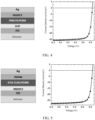
- the device structure of the inverted organic solar cell is glass/ITO/ZnO/PM6:Y6:PCBM/PEDOT:F/Ag (left graph of FIG. 4 ).
- the ITO glass is a cathode layer
- ZnO serves as an electron transport layer
- PM6:Y6:PCBM serves as a photoactive layer
- PEDOT:F serves as a hole transport layer
- Ag serves as an anode layer.
- a specific preparation process was as follows: A transparent indium tin oxide (ITO) electrode glass was ultrasonically cleaned with deionized water, acetone, and isopropyl alcohol successively for 15 min.
- a zinc oxide sol-gel solution was spin-coated on the cleaned ITO glass at a speed of 3000 rpm, and was then heated at 200°C for 15 min.
- a PM6:Y6:PCBM solution (with a total concentration of 15.4 mg/mL and a mass ratio of 1:1:0.2 , and chloroform as solvent) was spin-coated on the above substrate at a speed of 2500 rpm, and was then annealed at 100°C for 10 min.
- the alcohol dispersion of the conductive polyethylenedioxythiophene was spin-coated on the above active layer at a speed of 3000 rpm and then annealed at 100°C for 5 min, where the thin film prepared with the alcohol dispersion of the conductive polyethylenedioxythiophene had an electrical conductivity of 5.4 x 10 -2 S/cm and a work function of 5.4 eV. Finally, the device was moved into an evaporation chamber, and a 100nm silver electrode was deposited by evaporation after the vacuum pressure is less than 5 x 10 -7 Torr.
- a thin film prepared with the alcohol dispersion of the conductive polyethylenedioxythiophene in Example 1 was directly used as a hole transport layer of an organic solar cell with a regular structure.
- the device structure of the regular organic solar cell is glass/ITO/PEDOT:F/D18-Cl:N3:PCBM/PDINN/Ag (the left graph of FIG. 5 ).
- the ITO glass is an anode layer
- PEDOT:F serves as a hole transport layer
- D18-Cl:N3:PCBM serves as a photoactive layer
- PDINN serves as an electron transport layer
- Ag serves as a cathode layer.
- a specific preparation process was as follows: A transparent indium tin oxide (ITO) electrode glass was ultrasonically cleaned with deionized water, acetone, and isopropyl alcohol successively for 15 min.
- the alcohol dispersion of the conductive polyethylenedioxythiophene was spin-coated on the cleaned ITO glass sheet at a speed of 3000 rpm and then heated at 100°C for 5 min.
- the thin film prepared with the alcohol dispersion of the conductive polyethylenedioxythiophene had an electrical conductivity of 5.4 x 10 -2 S/cm and a work function of 5.4 eV.
- the D18-Cl:N3:PCBM solution (with a total concentration of 15 mg/mL and a mass ratio of 1:1.4:0.1, and chloroform as solvent) was spin-coated on the above substrate at a speed of 4000 rpm without annealing.
- a PDINN solution (with a total concentration of 1 mg/mL, and methanol as solvent) was spin-coated on the above active layer at a speed of 3000 rpmwithout annealing. Finally, the device was moved into an evaporation chamber, and a 100nm silver electrode wasdeposited by evaporation after the vacuum pressure is less than 5 x 10 -7 Torr.
- a thin film prepared with the alcohol dispersion of the conductive polyethylenedioxythiophene in Example 1 was directly used as a hole transport layer of an organic solar cell with an all-solution-processed structure.
- the device structure of the all-solution-processed organic solar cell is glass/Ag NWs/PEI-Zn/PM6:Y6:PCBM/PEDOT:F/Ag NWs (the left graph of FIG. 6 ).
- the glass is a substrate
- the silver nanowires (Ag NWs) are a cathode layer
- PEI-Zn serves as an electron transport layer
- PM6:Y6:PCBM serves as a photoactive layer
- PEDOT:F serves as a hole transport layer
- Ag NWs serve as an anode layer.
- a specific preparation process was as follows: A cut glass was ultrasonically cleaned with deionized water, acetone, and isopropyl alcohol successively for 15 min. An ethanol dispersion of Ag NWs with a concentration of 10 mg/mL was blade-coated on the cleaned glass sheet. The substrate temperature in blade coating was 35°C, the blade coating speed was 10 mm/s, and the gap was 100 ⁇ m. Blade coating was repeated many times till the sheet resistance of Ag NWs reached 20 ⁇ /sq, and then Ag NWs were patterned with laser.
- an electron transport layer PEI-Zn was blade-coated, where the substrate temperature of blade coating was 50°C, the blade coating speed was 10 mm/s, and the gap of the blade coating was 150 ⁇ m. Then, substrates are annealled at 150°C for 10 min after blade coating.
- An active layer material PM6:Y6:PCBM (with a total concentration of 15.4 mg/mL and a mass ratio of 1:1:0.2, and chloroform as solvent) was blade-coated on the above electron transport layer, where the blade coating speed was 20 mm/s and the gap of blade coating was 150 ⁇ m. Following the completion of blade coating, the sample was heated in a nitrogen-atmosphere glove box at 100°C for 10 minutes.
- the hole transport layer comprised of PEDOT:F was then blade-coated onto the active layer, using the following conditions: substrate temperature during blade coating at 35°C, blade coating speed of 10 mm/s, and a gap of 150 ⁇ m.
- the thin film prepared with the alcohol dispersion of the conductive polyethylenedioxythiophene had an electrical conductivity of 6.8 x 10 -4 S/cm and a work function of 5.7 eV.
- 2 mg/ml of an ethanol dispersion of Ag NWs was deposited on PEDOT:F as an anode layer by spray coating, where the sheet resistance of the anode layer Ag NWs was 17 ⁇ /sq.
- the thin film prepared with the alcohol dispersion of the conductive polyethylenedioxythiophene in Example 1 was used to prepare an antistatic coating by means of blade coating.
- a specific preparation process of the antistatic coating was as follows: a glass of 2.5 x 7.5 cm 2 was ultrasonically cleaned with deionized water, acetone, and isopropyl alcohol successively for 15 min. The clean glass was placed on a blade-coating table with a substrate temperature of 50°C. 50 ⁇ L of the alcohol dispersion of the conductive polyethylenedioxythiophene was deposited, where a gap of doctor blading was set to 150 ⁇ m and the blade coating speed was set to 10 mm/s. After the blade coating, the film was annealed at 100°C for 5 min. Blade coating was performed by alternating between forward and reverse directions for 1 to 20 times under the specified conditions. The resulting thin film had an adjustable thickness ranging from 40 nm to 10,000 nm, as well as an adjustable sheet resistance ranging from 10 3 ⁇ to 10 6 ⁇ .
- thermoelectric device by spin coating.
- thermoelectric device A specific preparation process of the thermoelectric device was as follows: a glass of 2.5 x 5 cm 2 was ultrasonically cleaned with deionized water, acetone, and isopropyl alcohol successively for 15 min. The alcohol dispersion of the conductive polyethylenedioxythiophene was spin-coated on the cleaned glass sheet at a speed of 800 rpm for 45s. Then the film is annealed at 100°C for 10 min. The metallic silver with an evaporation area of 2.5 x 0.2 cm 2 at both ends of the thin film was drawn out as electrodes.
- FIG. 7 A graph of temperature difference - voltage of the prepared thermoelectric device is shown in FIG. 7 .
- the Seebeck coefficient is 29.9 ⁇ V/K and the power factor is 4.83 x 10 -3 ⁇ W/mK 2 .
- the alcohol dispersion of the conductive polyethylenedioxythiophene provided by the present invention is simple in synthesis process, easy to process, and compatible with various surfaces and processes.
- the thin film prepared with the dispersion shows great application potential in device structures such as an organic solar cell, an antistatic coating, and a thermoelectric device.
Landscapes
- Chemical & Material Sciences (AREA)
- Organic Chemistry (AREA)
- Engineering & Computer Science (AREA)
- Materials Engineering (AREA)
- Chemical Kinetics & Catalysis (AREA)
- Life Sciences & Earth Sciences (AREA)
- Wood Science & Technology (AREA)
- Medicinal Chemistry (AREA)
- Health & Medical Sciences (AREA)
- Polymers & Plastics (AREA)
- General Chemical & Material Sciences (AREA)
- Physics & Mathematics (AREA)
- Spectroscopy & Molecular Physics (AREA)
- Dispersion Chemistry (AREA)
- Polyoxymethylene Polymers And Polymers With Carbon-To-Carbon Bonds (AREA)
- Photovoltaic Devices (AREA)
Abstract
Description
- The present invention relates to the technical field of photoelectric materials, and in particular, to an alcohol dispersion of a conductive polyethylenedioxythiophene, and a method for preparing same and use of same.
- A conductive polymer, poly(3,4-ethylenedioxythiophene):poly(styrenesulfonic acid) (PEDOT:PSS), has advantages such as high electrical conductivity and ionic conductivity, high optical permeability, and solution processability. It is widely applied in antistatic coatings, optoelectronic devices, energy storage devices, and bio-electronic devices, etc. Intrinsic PEDOT is an insoluble polymer. The water-soluble anionic polymer PSS contributes to water-dispersed PEDOT:PSS due to two effects. (1) as a counter anion forming an electrostatic interaction with the positively charged PEDOT; and (2) as a dispersant forming stable aqueous dispersion. At present, Heraeus (Germany) and Agfa (Belgium) etc. have developed PEDOT:PSS aqueous dispersions with different conductivities. However, the PEDOT:PSS aqueous dispersion has several disadvantages: (1) Poor wetting ability: Water has a high surface tension of 72 mN m-1 at 25°C-. That causes a de-wetting issue when the PEDOT:PSS aqueous solution is coated on a hydrophobic surface with low surface energy. (2) Acidity: the PEDOT:PSS aqueous dispersion has a pH value of 1.5 to 2.5, and may corrode metals, metal oxides, and other materials. (3) Hygroscopicity: PSS easily absorbs water, and the moisture absorption of the PEDOT:PSS thin film leads to decreased electrical properties and also easily causes acid corrosion of other functional materials, resulting in a decrease in device performance and lifetime.
- The problems mentioned above are related to the use of water as a dispersion solvent for PEDOT:PSS. Specifically, these issues arise due to the following factors: (1) PSS dissociation in water: PSS has a very high dissociation rate in water, thus resulting in high acidity and hygroscopicity. (2) Poor wetting ability: The surface tension of water is high, resulting in a poor wetting ability of the PEDOT:PSS aqueous dispersion. Compared to water, alcohols have a low surface tension (for example, methanol and ethanol, with a surface tension of 22-23 mN m-1). In addition, the dissociation rate of acids in alcohols is much lower than that in water [Proc. R. Soc. Lond. A 1929, 126, 84-106]. Therefore, alcohol-dispersed PEDOT is beneficial to improve wetting ability and decreased acidity, leading to better device performance and stability. However, the dispersion concentration of PSS in alcohols is lower than 5 mg/mL. This makes it challenging to achieve a stable PEDOT:PSS alcohol dispersion when PSS is used as the counter anion. While PEDOT:PSS dispersions reported in the literature are mostly in water or water-alcohol mixtures, there is an urgent need to develop a stable alcohol-dispersed PEDOT solution.
- To sum up, there is still a lack of stable alcohol dispersions of a conductive polyethylenedioxythiophene in the prior works.
- In view of the defects or improvement requirements in the prior art, the present invention provides an alcohol dispersion of a conductive polyethylenedioxythiophene, in which a PEDOT alcohol dispersion is prepared by using an alcohol-dispersible fluorinated sulfonic acid ionomer as a counter anion to replace PSS. Alcohol dispersions with different electrical conductivities are obtained by controlling the doping ratio of perfluorosulfonic acid ionomer to thiophene monomer in the synthesis process. The alcohol dispersion is characterized by weak acidity and does not corrode metal oxides such as ZnO and metals. Additionally, due to its high wetting ability, the dispersion can be used to create a uniform, conductive thin film through coating processes like spin coating, blade coating, and slot-die coating, without the need for surfactant additives.
- To achieve the foregoing objectives, according to one aspect of the present invention, a conductive polyethylenedioxythiophene is provided, which comprises a polyethylenedioxythiophene cation and a fluorinated sulfonic acid ionomer counter anion, and has a structure shown by formula (1):

- Where n is the degree of polymerization of polyethylenedioxythiophene and is any integer from 2 to 100; p is the degree of polymerization of a fluorinated sulfonic acid polymer and is any integer from 2 to 100; m is any real number from 1 to 20; x is 0 or 1; y is any integer from 1 to 5; and R is a hydrogen atom, hydroxyl, alkyl, alkoxy, fluoroalkyl, ester group, carboxyl, thioalkyl, aryl, or heteroaryl.
- In the formula (1) of the present invention, m is an average degree of polymerization. The polymer is composed of polymer homologue molecules of different degrees of polymerization, and m is a number-average degree of polymerization averaged by the number of molecules and may be a non-integer.
- Preferably, R is a hydrogen atom or fluoroalkyl.
- Preferably, m in the formula (1) ranges from 4.5 to 10, x is 1, and y ranges from 1 to 3.
- According to another aspect of the present invention, a method for preparing a conductive polyethylenedioxythiophene is provided, characterized in that a fluorinated sulfonic acid ionomer and a thiophene monomer are dissolved in a solvent to prepare a dispersion with a mass concentration of 1% to 30%; and then an oxidant is added for reaction to obtain a blue-black liquid, and the unreacted monomer and oxidant are removed by dialysis through a semi-permeable membrane, followed by centrifugal separation, to obtain the conductive polyethylenedioxythiophene.
- Preferably, the solvent is water or alcohols.
- Preferably, when the solvent is water, the oxidant is a water-soluble oxidant or an alcohol-soluble oxidant;
- when the solvent is alcohol, the oxidant is an alcohol-soluble oxidant;
- wherein the water-soluble oxidant comprises at least one of trivalent iron salt, persulfate, peroxide, V2O5, VOCl3, and SbCl5; and the alcohol-soluble oxidant comprises at least one of dibenzoyl peroxide and phosphomolybdic acid.
- According to another aspect of the present invention, a method for preparing an alcohol dispersion of a conductive polyethylenedioxythiophene is provided, characterized in that the conductive polyethylenedioxythiophene is ultrasonically dispersed into alcohols, to obtain the alcohol dispersion of the conductive polyethylenedioxythiophene.
- Preferably, the alcohol solution is one or a mixture of two or more of an aliphatic alcohol solution, an alicyclic alcohol solution, and an aromatic alcohol solution.
- According to another aspect of the present invention, a method for preparing an alcohol dispersion of conductive polyethylenedioxythiophene is provided, characterized in that a fluorinated sulfonic acid ionomer and a thiophene monomer are added to an alcohol solution to prepare a dispersion with a mass concentration of 1% to 30%; and then an oxidant is added for reaction to obtain a blue-black liquid, and the unreacted monomer and oxidant are removed by dialysis through a semi-permeable membrane, to obtain the alcohol dispersion of the conductive polyethylenedioxythiophene.
- According to another aspect of the present invention, applications for an alcohol dispersion of conductive polyethylenedioxythiophene are provided, comprising use in a solar cell, a light-emitting diode, an electrochromic film, a thermoelectric material, an antistatic coating, a flexible electronic device, or a stretchable elastomer sensor.
- Because an anionic polymer is used as a dispersant, the key to preparing the PEDOT alcohol dispersion is to obtain an alcohol-dispersible counterion polymer. However, the anionic polymers described in the literature have a low dispersion concentration in alcohols (< 5 mg/mL), which limits their applicability for the preparation of PEDOT alcohol dispersion.It is found that highly fluorinated sulfonic acid ionomers has two solubility parameters: 16.71-17.37 cal0.5 cm-1.5 and 9.61-10.08 cal0.5 cm-1.5, where the former one is attributed to a hydrophilic acid ion group and the latter one is attributed to a hydrophobic polytetrafluoroethylene group. The two solubility parameters are similar to the solubility parameters of water (23.4 cal0.5 cm-1.5) and ethanol (12.7 cal0.5 cm-1.5), respectively. Therefore, the dispersion concentrations of the highly fluorinated sulfonic acid ionomer in water and alcohols are both larger than 20 mg/mL. Therefore, the present invention uses an alcohol-dispersible highly fluorinated sulfonic acid ionomer as a counter anion to replace PSSto prepare the PEDOT alcohol dispersion. The alcohol dispersions with different electrical conductivities are obtained by controlling the doping ratio of perfluorosulfonic acid ionomer to thiophene monomer in the synthesis process. The dispersion of alcohol has a weak acidic property and does not cause corrosion in metal oxides like ZnO and metals. With a high wetting ability, a uniform conductive thin film can be prepared by a coating process such as spin coating, blade coating, and slot-die coating without the need for adding a surfactant. In addition, this anionic polymer contains many hydrophobic -CF2- groups, the prepared PEDOT thin film has high hydrophobicity. Therefore, the alcohol dispersion of the conductive polyethylenedioxythiophene is applicable ashole-transporting layer and/or electrodes of a photoelectric device (such as a solar cell, a light-emitting diode, a photodetector, etc.), an antistatic coating, an electrochromic device, a thermoelectric material, a bio-electronic device, etc.
- To sum up, the present invention has the following advantageous effects:
- (1) The present invention uses an alcohol-dispersible fluorinated sulfonic acid ionomer as a counterion to replace PSS to prepare the PEDOT alcohol dispersion. The alcohol dispersions with different electrical conductivities are obtained by controlling the doping ratio of perfluorosulfonic acid ionomer to thiophene monomer in the synthesis process. The PEDOT alcohol dispersions are weakly acidic and do not corrode metal oxides such as ZnO and metals. The PEDOT alcohol dispersion has a good wetting ability, and can be used to prepare a uniform conductive thin film by a coating process such as spin coating, blade coating, and slot-diecoating without the need for adding a surfactant. The PEDOT alcohol dispersion not only solves the hygroscopicity problem, but also addresses the de-wetting issues that arise when coating a hydrophobic surface, unlike the conventional PEDOT:PSS aqueous dispersion.
- (2) The present invention offers an alcohol dispersion of conductive polyethylenedioxythiophene that is weakly acidic or neutral, which effectively prevents the corrosion of metal oxides, metal electrodes, and metal nanowires caused by the strong acidity of conventional aqueous dispersions. Additionally, the alcohol dispersion has a relatively low surface tension, enabling its application on any surface to prepare a uniform conductive thin film.
- (3) The present invention offers a simple synthesis process and can be applied to various substrates and optoelectronic, thermoelectric, electrochromic, antistatic, and bio-electronic devices, making it highly versatile and promising for a range of applications
-
-
FIG. 1 is a schematic structural diagram of a conductive polyethylenedioxythiophene; -
FIG. 2 shows absorbance and transmittance spectrum of PEDOT:F thin film with the thickness of 46.1 nm prepared in Example 1. -
FIG. 3 shows electrical conductivity of the 46.1nm PEDOT:F thin film prepared in Example 1, where the left schematic inFIG. 3 shows device structure for conductivity measurement and the right graph inFIG. 3 shows resistance measurement and a fitting curve . -
FIG. 4 shows a structure and test diagram of an organic solar cell with an inverted structure in Application Example 1, where the left graph inFIG. 4 is a schematic diagram of a device structure of the inverted organic solar cell, and the right graph inFIG. 4 is a test diagram of current density - voltage of the organic solar cell. -
FIG. 5 shows a structure and test diagram of an organic solar cell with a regular structure in Application Example 2, where the left graph inFIG. 5 is a schematic diagram of a device structure of the regular organic solar cell, and the right graph inFIG. 5 is a test diagram of current density - voltage of the organic solar cell; -
FIG. 6 shows a structure and test diagram of an organic solar cell with an all-solution-processed structure in Application Example 3, where the left graph inFIG. 6 is a schematic diagram of a device structure of the all-solution-processed organic solar cell, and the right graph inFIG. 6 is a test diagram of current density - voltage of the organic solar cell; and -
FIG. 7 is a graph of temperature difference - voltage of a thermoelectric device in Application Example 4. - To make the purpose, technical solution, and advantages of the present invention clearer, the present invention is further described in detail below in connection with the accompanying drawings and embodiments. It should be appreciated that the specific embodiments described here are used merely to explain the present invention and are not used to define the present invention. In addition, the technical features involved in various embodiments of the present invention described below can be combined with each other as long as they do not constitute a conflict therebetween.
- A conductive polyethylenedioxythiophene includes a polyethylenedioxythiophene cation and a fluorinated sulfonic acid ionomer counter anion, and has a structure shown by formula (1):

- Preferably, R is a hydrogen atom or fluoroalkyl.
- Preferably, m in the formula (1) ranges from 4.5 to 10, x is 1, and y ranges from 1 to 3.
- An alcohol dispersion of a conductive polyethylenedioxythiophene was synthesized by the following method: 2 mL of a 10wt% aqueous solution of perfluorosulfonic acid ionomer (PFI, with the molecular weight of the monomer of 1094 g/mol and having a molecular structure shown by formula (2)) and 20 µL of 3,4-ethylenedioxythiophene monomer were added to 6 mL deionized water and stirred at room temperature for 1h. After stirring into a milky white liquid, an oxidant was slowly added dropwise. The oxidant was prepared by dissolving 60.75 mg of ferric trichloride (FeCl3) in 3 mL of deionized water. After the oxidant was added, the milky white liquid started to gradually become blue and then a blue-black liquid after 12h reaction. The blue-black liquid was placed in a semi-permeable membrane to remove small molecule impurities and the excess oxidant by dialysis. The liquid was removed after 18h, and was subjected to high-speed centrifugation at 10000 rpm, to obtain a blue-black solid. The blue-black solid was added to an alcohol solvent, and was processed by ultrasonic cell pulverization for 10h, to obtain an alcohol dispersion of the conductive polyethylenedioxythiophene (PEDOT:F). The alcohol dispersion of the conductive polyethylenedioxythiophene has a mass fraction of 1.3 wt.% to 1.8 wt.%.

- A film was fabricated using a spin-coating method. Specifically, dynamic spin-coating was carried out on a clean glass substrate to prepare a PEDOT:F solution, with spin-coating speeds of 1000 rpm, 2000 rpm, 3500 rpm, and 5000 rpm, respectively. The spin-coated PEDOT:F thin films with varied thicknesses of 53.0 nm, 46.1 nm, 35.8 nm, and 25.2 nm, respectively. Then coated films are annealed at 100°C for 5 min.
- For instance, a PEDOT:F thin film with a thickness of 46.1 nm has an absorbance and transmittance curve depicted in
FIG. 2 . Moreover, the work function of the PEDOT:F film was tested to be 5.4 eV. - The electrical conductivity is calculated using the 46.1nm thin film. The left graph in
FIG. 3 shows conductivity testing and the right graph inFIG. 3 shows testing of resistance and a fitting curve. The electrical conductivity of the thin film is calculated to be 5.4 x 10⁻² S/cm. - An alcohol dispersion of a conductive polyethylenedioxythiophene was synthesized by the following method: 10 mL of a 20wt% solution of perfluorosulfonic acid ionomer (PFI, with a molecular weight of the monomer of 1094 g/mol) in a water-alcohol mixture, 0.6 g of 3,4-ethylenedioxythiophene monomer oxidant, and 1.05 g of an oxidant dibenzoyl peroxide (BPO) were added to 10 mL of ethanol. The mixture was continuously stirred for 48h to become a blue-black liquid. In the post-processing phase, the blue-black liquid was placed in a semi-permeable membrane for dialysis, where the dialysis solvent was a mixture of ethanol : water of 1:1 by volume; and dialysis was performed for 24h to remove small molecule impurities and the excess oxidant, to obtain an alcohol dispersion. The prepared alcohol dispersion of the conductive polyethylenedioxythiophene has a mass fraction of 1.3 wt.% to 1.8 wt.%.
- A film was fabricated using a spin-coating method. Specifically, dynamic spin-coating was carried out on a clean glass substrate to prepare a PEDOT:F solution, with spin-coating speeds of 2000 rpm, 3500 rpm, and 5000 rpm, respectively. The spin-coated PEDOT:F thin films with varied thicknesses of 37.0 nm, 28.4 nm, and 18.2 nm, respectively. Then coated films are annealed at 100°C for 5 min. Take the PEDOT:F thin film with a thickness of 37.0 nm as an example, its work function is tested to be 5.3 eV, and its electrical conductivity is tested to be 4.2 x 10⁻³ S/cm.
- The preparation method of this example was the same as that in Example 1, with the main difference in that the perfluorosulfonic acid ionomer had a structure shown by formula (3):

- The preparation method of this example was the same as that in Example 4, with the main difference in that the perfluorosulfonic acid ionomer had a structure shown by formula (4):

- A thin film prepared with the alcohol dispersion of the conductive polyethylenedioxythiophene in Example 1 was directly used as a hole transport layer of an organic solar cell with an inverted structure.
- The device structure of the inverted organic solar cell is glass/ITO/ZnO/PM6:Y6:PCBM/PEDOT:F/Ag (left graph of
FIG. 4 ). The ITO glass is a cathode layer, ZnO serves as an electron transport layer, PM6:Y6:PCBM serves as a photoactive layer, PEDOT:F serves as a hole transport layer, and Ag serves as an anode layer. A specific preparation process was as follows:
A transparent indium tin oxide (ITO) electrode glass was ultrasonically cleaned with deionized water, acetone, and isopropyl alcohol successively for 15 min. A zinc oxide sol-gel solution was spin-coated on the cleaned ITO glass at a speed of 3000 rpm, and was then heated at 200°C for 15 min. A PM6:Y6:PCBM solution (with a total concentration of 15.4 mg/mL and a mass ratio of 1:1:0.2 , and chloroform as solvent) was spin-coated on the above substrate at a speed of 2500 rpm, and was then annealed at 100°C for 10 min. The alcohol dispersion of the conductive polyethylenedioxythiophene was spin-coated on the above active layer at a speed of 3000 rpm and then annealed at 100°C for 5 min, where the thin film prepared with the alcohol dispersion of the conductive polyethylenedioxythiophene had an electrical conductivity of 5.4 x 10⁻² S/cm and a work function of 5.4 eV. Finally, the device was moved into an evaporation chamber, and a 100nm silver electrode was deposited by evaporation after the vacuum pressure is less than 5 x 10⁻⁷ Torr. - The current density - voltage curve of the prepared organic solar cell is shown in the right graph of
FIG. 4 , where "Voltage" represents the voltage and "current density" represents the current density, the open-circuit voltage is V OC = 0.85 V, the current density is J SC = 25.40 mA/cm2, the fill factor is FF = 0.76, and the efficiency is PCE = 16.40%. - A thin film prepared with the alcohol dispersion of the conductive polyethylenedioxythiophene in Example 1 was directly used as a hole transport layer of an organic solar cell with a regular structure.
- Preparation of the organic solar cell with a regular structure: the device structure of the regular organic solar cell is glass/ITO/PEDOT:F/D18-Cl:N3:PCBM/PDINN/Ag (the left graph of
FIG. 5 ). The ITO glass is an anode layer, PEDOT:F serves as a hole transport layer, D18-Cl:N3:PCBM serves as a photoactive layer, PDINN serves as an electron transport layer, and Ag serves as a cathode layer. A specific preparation process was as follows:
A transparent indium tin oxide (ITO) electrode glass was ultrasonically cleaned with deionized water, acetone, and isopropyl alcohol successively for 15 min. The alcohol dispersion of the conductive polyethylenedioxythiophene (PEDOT:F) was spin-coated on the cleaned ITO glass sheet at a speed of 3000 rpm and then heated at 100°C for 5 min. The thin film prepared with the alcohol dispersion of the conductive polyethylenedioxythiophene had an electrical conductivity of 5.4 x 10⁻² S/cm and a work function of 5.4 eV. The D18-Cl:N3:PCBM solution (with a total concentration of 15 mg/mL and a mass ratio of 1:1.4:0.1, and chloroform as solvent) was spin-coated on the above substrate at a speed of 4000 rpm without annealing. A PDINN solution (with a total concentration of 1 mg/mL, and methanol as solvent) was spin-coated on the above active layer at a speed of 3000 rpmwithout annealing. Finally, the device was moved into an evaporation chamber, and a 100nm silver electrode wasdeposited by evaporation after the vacuum pressure is less than 5 x 10⁻⁷ Torr. - The current density - voltage curve of the prepared organic solar cell is shown in the right graph of
FIG. 5 , where "Voltage" represents the voltage and "current density" represents the current density, the open-circuit voltage is V OC = 0.85 V, the current density is J SC = 27.54 mA/cm2, the fill factor is FF = 0.75, and the efficiency is PCE = 17.67%. - A thin film prepared with the alcohol dispersion of the conductive polyethylenedioxythiophene in Example 1 was directly used as a hole transport layer of an organic solar cell with an all-solution-processed structure.
- Preparation of the all-solution-processed organic solar cell: the device structure of the all-solution-processed organic solar cell is glass/Ag NWs/PEI-Zn/PM6:Y6:PCBM/PEDOT:F/Ag NWs (the left graph of
FIG. 6 ).. The glass is a substrate, the silver nanowires (Ag NWs) are a cathode layer, PEI-Zn serves as an electron transport layer, PM6:Y6:PCBM serves as a photoactive layer, PEDOT:F serves as a hole transport layer, and Ag NWs serve as an anode layer. A specific preparation process was as follows:
A cut glass was ultrasonically cleaned with deionized water, acetone, and isopropyl alcohol successively for 15 min. An ethanol dispersion of Ag NWs with a concentration of 10 mg/mL was blade-coated on the cleaned glass sheet. The substrate temperature in blade coating was 35°C, the blade coating speed was 10 mm/s, and the gap was 100 µm. Blade coating was repeated many times till the sheet resistance of Ag NWs reached 20 Ω/sq, and then Ag NWs were patterned with laser. On the patterned transparent electrode, an electron transport layer PEI-Zn was blade-coated, where the substrate temperature of blade coating was 50°C, the blade coating speed was 10 mm/s, and the gap of the blade coating was 150 µm. Then, substrates are annealled at 150°C for 10 min after blade coating. An active layer material PM6:Y6:PCBM (with a total concentration of 15.4 mg/mL and a mass ratio of 1:1:0.2, and chloroform as solvent) was blade-coated on the above electron transport layer, where the blade coating speed was 20 mm/s and the gap of blade coating was 150 µm. Following the completion of blade coating, the sample was heated in a nitrogen-atmosphere glove box at 100°C for 10 minutes. The hole transport layer comprised of PEDOT:F was then blade-coated onto the active layer, using the following conditions: substrate temperature during blade coating at 35°C, blade coating speed of 10 mm/s, and a gap of 150 µm. The thin film prepared with the alcohol dispersion of the conductive polyethylenedioxythiophene had an electrical conductivity of 6.8 x 10⁻⁴ S/cm and a work function of 5.7 eV. Finally, 2 mg/ml of an ethanol dispersion of Ag NWs was deposited on PEDOT:F as an anode layer by spray coating, where the sheet resistance of the anode layer Ag NWs was 17 Ω/sq. - The current density - voltage curve of the organic solar cell is shown in the right panel of
FIG. 6 , where "Voltage" represents the voltage and "current density" represents the current density, the open-circuit voltage is V OC = 0.84 V, the current density is J SC = 22.25 mA/cm2, the fill factor is FF = 0.72, and the efficiency is PCE = 13.45%. - The thin film prepared with the alcohol dispersion of the conductive polyethylenedioxythiophene in Example 1 was used to prepare an antistatic coating by means of blade coating.
- A specific preparation process of the antistatic coating was as follows: a glass of 2.5 x 7.5 cm2 was ultrasonically cleaned with deionized water, acetone, and isopropyl alcohol successively for 15 min. The clean glass was placed on a blade-coating table with a substrate temperature of 50°C. 50 µL of the alcohol dispersion of the conductive polyethylenedioxythiophene was deposited, where a gap of doctor blading was set to 150 µm and the blade coating speed was set to 10 mm/s. After the blade coating, the film was annealed at 100°C for 5 min. Blade coating was performed by alternating between forward and reverse directions for 1 to 20 times under the specified conditions. The resulting thin film had an adjustable thickness ranging from 40 nm to 10,000 nm, as well as an adjustable sheet resistance ranging from 103 Ω to 106 Ω.
- The thin film prepared with the alcohol dispersion of the conductive polyethylenedioxythiophene in Example 1 was used to prepare a thermoelectric device by spin coating.
- A specific preparation process of the thermoelectric device was as follows: a glass of 2.5 x 5 cm2 was ultrasonically cleaned with deionized water, acetone, and isopropyl alcohol successively for 15 min. The alcohol dispersion of the conductive polyethylenedioxythiophene was spin-coated on the cleaned glass sheet at a speed of 800 rpm for 45s. Then the film is annealed at 100°C for 10 min. The metallic silver with an evaporation area of 2.5 x 0.2 cm2 at both ends of the thin film was drawn out as electrodes.
- A graph of temperature difference - voltage of the prepared thermoelectric device is shown in
FIG. 7 . According to the fitted curve, the Seebeck coefficient is 29.9 µV/K and the power factor is 4.83 x 10⁻³ µW/mK2. - To sum up, the alcohol dispersion of the conductive polyethylenedioxythiophene provided by the present invention is simple in synthesis process, easy to process, and compatible with various surfaces and processes. The thin film prepared with the dispersion shows great application potential in device structures such as an organic solar cell, an antistatic coating, and a thermoelectric device.
- It can be easily understood by those skilled in the art that the foregoing description is only preferred embodiments of the present invention and is not intended to limit the present invention. All the modifications, identical replacements and improvements within the spirit and principle of the present invention should be in the scope of protection of the present invention.
Claims (10)
- A conductive polyethylenedioxythiophene, comprising a polyethylenedioxythiophene cation and a fluorinated sulfonic acid ionomer counter anion, and having a structure shown by formula (1):

- The conductive polyethylenedioxythiophene according to claim 1, wherein R is a hydrogen atom or fluoroalkyl.
- The conductive polyethylenedioxythiophene according to claim 1, wherein m in formula (1) ranges from 4.5 to 10, x is 1, and y ranges from 1 to 3.
- A method for preparing a conductive polyethylenedioxythiophene, characterized in that a fluorinated sulfonic acid ionomer and a thiophene monomer are dissolved in a solvent to prepare a dispersion with a mass concentration of 1% to 30%; and then an oxidant is added for reaction to obtain a blue-black liquid, and the unreacted monomer and oxidant are removed by dialysis through a semi-permeable membrane, followed by centrifugal separation, to obtain the conductive polyethylenedioxythiophene according to any one of claims 1 to 3.
- The method for preparing a conductive polyethylenedioxythiophene according to claim 4, wherein the solvent is water or an alcohol.
- The method for preparing a conductive polyethylenedioxythiophene according to claim 5, wherein when the solvent is water, the oxidant is a water-soluble oxidant or an alcohol-soluble oxidant; orwhen the solvent is an alcohol, the oxidant is an alcohol-soluble oxidant;wherein the water-soluble oxidant comprises at least one of trivalent iron salt, persulfate, peroxide, V2O5, VOCl3, and SbCl5; and the alcohol-soluble oxidant comprises at least one of dibenzoyl peroxide and phosphomolybdic acid.
- A method for preparing an alcohol dispersion of a conductive polyethylenedioxythiophene, characterized in that the conductive polyethylenedioxythiophene of any one of claims 1 to 3 is ultrasonically dispersed into an alcohol solution, to obtain the alcohol dispersion of the conductive polyethylenedioxythiophene.
- The method for preparing an alcohol dispersion of a conductive polyethylenedioxythiophene according to claim 7, wherein the alcohol solution is one or a mixture of two or more of an aliphatic alcohol solution, an alicyclic alcohol solution, and an aromatic alcohol solution.
- A method for preparing an alcohol dispersion of a conductive polyethylenedioxythiophene, characterized in that a fluorinated sulfonic acid ionomer and a thiophene monomer are added to an alcohol solution to prepare a dispersion with a mass concentration of 1% to 30%; and then an oxidant is added for reaction to obtain a blue-black liquid, and the unreacted monomer and oxidant are removed by dialysis through a semi-permeable membrane, to obtain the alcohol dispersion of the conductive polyethylenedioxythiophene.
- A use of an alcohol dispersion of a conductive polyethylenedioxythiophene, comprising use in a solar cell, a light-emitting diode, an electrochromic film, a thermoelectric material, an antistatic coating, a flexible electronic device, or a stretchable elastomer sensor.
Applications Claiming Priority (2)
| Application Number | Priority Date | Filing Date | Title |
|---|---|---|---|
| CN202111666148.5A CN114316223B (en) | 2021-12-31 | 2021-12-31 | Alcohol dispersion liquid of conductive polyethylene dioxythiophene and preparation method and application thereof |
| PCT/CN2022/124484 WO2023124367A1 (en) | 2021-12-31 | 2022-10-11 | Alcohol dispersion of conductive polyethylene dioxythiophene, preparation method therefor and application thereof |
Publications (2)
| Publication Number | Publication Date |
|---|---|
| EP4458878A1 true EP4458878A1 (en) | 2024-11-06 |
| EP4458878A4 EP4458878A4 (en) | 2025-12-24 |
Family
ID=81021842
Family Applications (1)
| Application Number | Title | Priority Date | Filing Date |
|---|---|---|---|
| EP22913631.2A Pending EP4458878A4 (en) | 2021-12-31 | 2022-10-11 | Alcohol dispersion of conductive polyethylene dioxythiophene, manufacturing process therefor and application thereof |
Country Status (5)
| Country | Link |
|---|---|
| US (1) | US11965088B2 (en) |
| EP (1) | EP4458878A4 (en) |
| JP (1) | JP2025505453A (en) |
| CN (1) | CN114316223B (en) |
| WO (1) | WO2023124367A1 (en) |
Families Citing this family (7)
| Publication number | Priority date | Publication date | Assignee | Title |
|---|---|---|---|---|
| CN114316223B (en) | 2021-12-31 | 2022-09-27 | 华中科技大学 | Alcohol dispersion liquid of conductive polyethylene dioxythiophene and preparation method and application thereof |
| CN114744153B (en) * | 2022-04-20 | 2023-07-25 | 吉林大学 | Conductive polymer with energy storage and biodegradation properties, preparation method, flexible electrode and degradable zinc ion battery |
| CN116239803B (en) * | 2023-02-28 | 2025-04-04 | 华中科技大学 | Preparation of alcohol-phase conductive polymer by solvent exchange, method and application |
| CN116634786B (en) * | 2023-07-25 | 2023-10-03 | 北京理工大学 | Organic solar cell for current-voltage test and preparation method thereof |
| CN116855166A (en) * | 2023-07-28 | 2023-10-10 | 宁波激智科技股份有限公司 | An antistatic coating, an antistatic optical film and preparation method thereof |
| KR102946209B1 (en) | 2024-07-04 | 2026-04-02 | 광주과학기술원 | Polymer composite electrode, manufacturing method thereof, and organic electronic device comprising the same |
| CN118956237B (en) * | 2024-08-02 | 2026-01-16 | 山东大学 | Preparation method of poly 3,4 ethylene dioxythiophene doped vanadium pentoxide electrochromic film |
Family Cites Families (24)
| Publication number | Priority date | Publication date | Assignee | Title |
|---|---|---|---|---|
| DE60322923D1 (en) * | 2002-09-24 | 2008-09-25 | Du Pont | WATER DISPERSIBLE POLYTHIOPHENE MANUFACTURES |
| JP4851323B2 (en) * | 2003-04-22 | 2012-01-11 | イー・アイ・デュポン・ドウ・ヌムール・アンド・カンパニー | Water dispersible polythiophene produced by polymeric acid colloid |
| US7390438B2 (en) * | 2003-04-22 | 2008-06-24 | E.I. Du Pont De Nemours And Company | Water dispersible substituted polydioxythiophenes made with fluorinated polymeric sulfonic acid colloids |
| US20050175861A1 (en) * | 2004-02-10 | 2005-08-11 | H.C. Starck Gmbh | Polythiophene compositions for improving organic light-emitting diodes |
| US7250461B2 (en) * | 2004-03-17 | 2007-07-31 | E. I. Du Pont De Nemours And Company | Organic formulations of conductive polymers made with polymeric acid colloids for electronics applications, and methods for making such formulations |
| US7455793B2 (en) * | 2004-03-31 | 2008-11-25 | E.I. Du Pont De Nemours And Company | Non-aqueous dispersions comprising electrically doped conductive polymers and colloid-forming polymeric acids |
| US7985490B2 (en) * | 2005-02-14 | 2011-07-26 | Samsung Mobile Display Co., Ltd. | Composition of conducting polymer and organic opto-electronic device employing the same |
| KR101213484B1 (en) * | 2005-05-19 | 2012-12-20 | 삼성디스플레이 주식회사 | Compositions of conducting polymers and the organic opto-electronic device employing the same |
| DE102005060159A1 (en) * | 2005-12-14 | 2007-06-21 | H. C. Starck Gmbh & Co. Kg | Transparent polymeric electrode for electro-optical assemblies |
| IE20070269A1 (en) * | 2006-04-13 | 2008-12-10 | Univ Dublin City | Sensor comprising conducting polymer materials |
| EP2049582B1 (en) * | 2006-07-21 | 2019-02-27 | Nissan Chemical Corporation | Sulfonation of conducting polymers and oled, photovoltaic, and esd devices |
| US20100270055A1 (en) * | 2009-04-27 | 2010-10-28 | Air Products And Chemicals, Inc. | Electrically Conductive Films Formed From Dispersions Comprising Conductive Polymers and Polyurethanes |
| CN103460320B (en) * | 2011-04-13 | 2016-10-19 | 松下知识产权经营株式会社 | The manufacture method of electroconductive polymer dispersion soln and electrolysis condenser |
| WO2014007299A1 (en) * | 2012-07-03 | 2014-01-09 | 東ソー株式会社 | Polythiophenes, water-soluble conductive polymer using same, and method for producing same |
| WO2014047859A1 (en) * | 2012-09-28 | 2014-04-03 | 海洋王照明科技股份有限公司 | Polymer solar cell and preparation method thereof |
| JP6112849B2 (en) * | 2012-12-17 | 2017-04-12 | Necトーキン株式会社 | Conductive polymer solution and method for producing the same, conductive polymer material, and solid electrolytic capacitor |
| CN103304783B (en) | 2013-05-17 | 2015-05-13 | 中科院广州化学有限公司 | Novel polythiophene disperse system as well as preparation method and application thereof |
| CN104211969B (en) * | 2014-09-10 | 2017-02-01 | 万星光电子(东莞)有限公司 | Preparation method of PEDOT/PSS dispersion liquid and preparation method of high pressure solid capacitor |
| CN104448257B (en) * | 2014-12-02 | 2016-09-07 | 浙江中科立德新材料有限公司 | The method reducing PEDOT:PSS solution particle diameter |
| CN107603217B (en) * | 2017-05-23 | 2019-12-10 | 华南理工大学 | Polydianiline-4-sulfonic acid dispersed poly 3, 4-ethylenedioxythiophene conductive compound and preparation and application thereof |
| CN107146842B (en) | 2017-06-13 | 2019-07-05 | 同济大学 | Self-supporting flexible PEDOT nanofiber/SWCNTs composite thermoelectric material film and preparation method thereof |
| JP2019051236A (en) * | 2017-09-19 | 2019-04-04 | 国立大学法人大阪大学 | Electrode sheet, manufacturing method for electrode sheet, biological signal acquisition device, and biological signal acquisition method |
| CN108089366B (en) | 2017-12-06 | 2021-04-23 | Tcl华星光电技术有限公司 | A color filter substrate and preparation method thereof |
| CN114316223B (en) | 2021-12-31 | 2022-09-27 | 华中科技大学 | Alcohol dispersion liquid of conductive polyethylene dioxythiophene and preparation method and application thereof |
-
2021
- 2021-12-31 CN CN202111666148.5A patent/CN114316223B/en active Active
-
2022
- 2022-10-11 EP EP22913631.2A patent/EP4458878A4/en active Pending
- 2022-10-11 US US18/264,652 patent/US11965088B2/en active Active
- 2022-10-11 JP JP2024545825A patent/JP2025505453A/en active Pending
- 2022-10-11 WO PCT/CN2022/124484 patent/WO2023124367A1/en not_active Ceased
Also Published As
| Publication number | Publication date |
|---|---|
| JP2025505453A (en) | 2025-02-26 |
| WO2023124367A1 (en) | 2023-07-06 |
| US20240043682A1 (en) | 2024-02-08 |
| US11965088B2 (en) | 2024-04-23 |
| CN114316223B (en) | 2022-09-27 |
| CN114316223A (en) | 2022-04-12 |
| EP4458878A4 (en) | 2025-12-24 |
Similar Documents
| Publication | Publication Date | Title |
|---|---|---|
| US11965088B2 (en) | Alcohol dispersion of conductive polyethylenedioxythiophene, and method for preparing same and use of same | |
| Hou et al. | Improvement of the power conversion efficiency and long term stability of polymer solar cells by incorporation of amphiphilic Nafion doped PEDOT-PSS as a hole extraction layer | |
| CN103210450B (en) | Films containing electrically conductive polymers | |
| TWI585149B (en) | Dispersion liquid of conductive polymer, conductive polymer and its use | |
| US9562293B2 (en) | Polymerization solution, conductive polymer film obtained from the polymerization solution, polymer electrode, and solid electrolytic capacitor | |
| Dong et al. | Two-in-one alcohol-processed PEDOT electrodes produced by solvent exchange for organic solar cells | |
| JP6070542B2 (en) | ELECTRODE BODY FOR SOLAR CELL, ITS MANUFACTURING METHOD, AND SOLAR CELL HAVING THE ELECTRODE BODY | |
| CA2658181A1 (en) | Sulfonation of conducting polymers and oled, photovoltaic, and esd devices | |
| Wan et al. | A dopant-free hole transport material boosting the performance of inverted methylamine-free perovskite solar cells | |
| Rawat et al. | Enhancing the performance of Chitosan/PVP based bio-polymer electrolyte incorporated with SiO2 nano-particles in dye-sensitized solar cell | |
| DE102010012180A1 (en) | Sulfonated polyketones as a counterion of conductive polymers | |
| CN102443179B (en) | Preparation method of poly(3,4-ethylene dithio-thiofuran) aqueous dispersion | |
| JP5924514B2 (en) | Manufacturing method of electrode body for solar cell | |
| JP6287845B2 (en) | Organic thin film solar cell | |
| Kim et al. | Excellent optical and interfacial performance of a PEDOT-b-PEG block copolymer counter electrode for polymer electrolyte-based solid-state dye-sensitized solar cells | |
| US20130092878A1 (en) | Thermoplastic based electronic conductive inks and method of making the same | |
| CN107603217B (en) | Polydianiline-4-sulfonic acid dispersed poly 3, 4-ethylenedioxythiophene conductive compound and preparation and application thereof | |
| Dhawan et al. | Futuristic approach towards replacement of aqueous electrolyte with solid polymer electrolyte for supercapacitor applications | |
| JP7732260B2 (en) | Conductive polymer solution and its uses | |
| CN105131519B (en) | Water soluble phenol resin containing alkyl sulfonic acid disperses PEDOT conducting polymers and preparation method and application | |
| Che et al. | Strengthening perovskite interfaces with in-situ polymerized self-assembled monolayers | |
| TW201229191A (en) | Conductive adhesive composition, electronic device and manufacturing method for electronic device | |
| CN116376067A (en) | A kind of alcohol dispersion liquid of cross-linked polyethylene dioxythiophene, preparation method and application | |
| CN104412346A (en) | Dye-sensitized solar cell | |
| JP2012531497A (en) | New polyelectrolyte complexes and their use |
Legal Events
| Date | Code | Title | Description |
|---|---|---|---|
| STAA | Information on the status of an ep patent application or granted ep patent |
Free format text: STATUS: THE INTERNATIONAL PUBLICATION HAS BEEN MADE |
|
| PUAI | Public reference made under article 153(3) epc to a published international application that has entered the european phase |
Free format text: ORIGINAL CODE: 0009012 |
|
| STAA | Information on the status of an ep patent application or granted ep patent |
Free format text: STATUS: REQUEST FOR EXAMINATION WAS MADE |
|
| 17P | Request for examination filed |
Effective date: 20240729 |
|
| AK | Designated contracting states |
Kind code of ref document: A1 Designated state(s): AL AT BE BG CH CY CZ DE DK EE ES FI FR GB GR HR HU IE IS IT LI LT LU LV MC ME MK MT NL NO PL PT RO RS SE SI SK SM TR |
|
| DAV | Request for validation of the european patent (deleted) | ||
| DAX | Request for extension of the european patent (deleted) | ||
| A4 | Supplementary search report drawn up and despatched |
Effective date: 20251125 |
|
| RIC1 | Information provided on ipc code assigned before grant |
Ipc: C08G 61/12 20060101AFI20251119BHEP Ipc: C08J 3/09 20060101ALI20251119BHEP Ipc: C08L 65/00 20060101ALI20251119BHEP Ipc: C08L 27/22 20060101ALI20251119BHEP Ipc: C09D 5/24 20060101ALI20251119BHEP Ipc: C09D 165/00 20060101ALI20251119BHEP Ipc: C09D 127/22 20060101ALI20251119BHEP Ipc: H10K 30/00 20230101ALI20251119BHEP Ipc: H10K 30/65 20230101ALI20251119BHEP Ipc: H10K 85/00 20230101ALI20251119BHEP Ipc: H10K 85/60 20230101ALI20251119BHEP Ipc: H10N 10/856 20230101ALI20251119BHEP |