EP4458846A2 - Novel compounds and their use as selective inhibitors of caspase-2 - Google Patents
Novel compounds and their use as selective inhibitors of caspase-2 Download PDFInfo
- Publication number
- EP4458846A2 EP4458846A2 EP24199728.7A EP24199728A EP4458846A2 EP 4458846 A2 EP4458846 A2 EP 4458846A2 EP 24199728 A EP24199728 A EP 24199728A EP 4458846 A2 EP4458846 A2 EP 4458846A2
- Authority
- EP
- European Patent Office
- Prior art keywords
- compound
- caspase
- formula
- activity
- compounds
- Prior art date
- Legal status (The legal status is an assumption and is not a legal conclusion. Google has not performed a legal analysis and makes no representation as to the accuracy of the status listed.)
- Pending
Links
Images
Classifications
-
- A—HUMAN NECESSITIES
- A61—MEDICAL OR VETERINARY SCIENCE; HYGIENE
- A61K—PREPARATIONS FOR MEDICAL, DENTAL OR TOILETRY PURPOSES
- A61K31/00—Medicinal preparations containing organic active ingredients
- A61K31/33—Heterocyclic compounds
- A61K31/395—Heterocyclic compounds having nitrogen as a ring hetero atom, e.g. guanethidine or rifamycins
- A61K31/40—Heterocyclic compounds having nitrogen as a ring hetero atom, e.g. guanethidine or rifamycins having five-membered rings with one nitrogen as the only ring hetero atom, e.g. sulpiride, succinimide, tolmetin, buflomedil
- A61K31/4025—Heterocyclic compounds having nitrogen as a ring hetero atom, e.g. guanethidine or rifamycins having five-membered rings with one nitrogen as the only ring hetero atom, e.g. sulpiride, succinimide, tolmetin, buflomedil not condensed and containing further heterocyclic rings, e.g. cromakalim
-
- A—HUMAN NECESSITIES
- A61—MEDICAL OR VETERINARY SCIENCE; HYGIENE
- A61K—PREPARATIONS FOR MEDICAL, DENTAL OR TOILETRY PURPOSES
- A61K31/00—Medicinal preparations containing organic active ingredients
- A61K31/33—Heterocyclic compounds
- A61K31/395—Heterocyclic compounds having nitrogen as a ring hetero atom, e.g. guanethidine or rifamycins
- A61K31/435—Heterocyclic compounds having nitrogen as a ring hetero atom, e.g. guanethidine or rifamycins having six-membered rings with one nitrogen as the only ring hetero atom
- A61K31/47—Quinolines; Isoquinolines
- A61K31/4709—Non-condensed quinolines and containing further heterocyclic rings
-
- A—HUMAN NECESSITIES
- A61—MEDICAL OR VETERINARY SCIENCE; HYGIENE
- A61P—SPECIFIC THERAPEUTIC ACTIVITY OF CHEMICAL COMPOUNDS OR MEDICINAL PREPARATIONS
- A61P25/00—Drugs for disorders of the nervous system
- A61P25/28—Drugs for disorders of the nervous system for treating neurodegenerative disorders of the central nervous system, e.g. nootropic agents, cognition enhancers, drugs for treating Alzheimer's disease or other forms of dementia
-
- A—HUMAN NECESSITIES
- A61—MEDICAL OR VETERINARY SCIENCE; HYGIENE
- A61P—SPECIFIC THERAPEUTIC ACTIVITY OF CHEMICAL COMPOUNDS OR MEDICINAL PREPARATIONS
- A61P9/00—Drugs for disorders of the cardiovascular system
- A61P9/10—Drugs for disorders of the cardiovascular system for treating ischaemic or atherosclerotic diseases, e.g. antianginal drugs, coronary vasodilators, drugs for myocardial infarction, retinopathy, cerebrovascula insufficiency, renal arteriosclerosis
-
- C—CHEMISTRY; METALLURGY
- C07—ORGANIC CHEMISTRY
- C07D—HETEROCYCLIC COMPOUNDS
- C07D207/00—Heterocyclic compounds containing five-membered rings not condensed with other rings, with one nitrogen atom as the only ring hetero atom
- C07D207/02—Heterocyclic compounds containing five-membered rings not condensed with other rings, with one nitrogen atom as the only ring hetero atom with only hydrogen or carbon atoms directly attached to the ring nitrogen atom
- C07D207/04—Heterocyclic compounds containing five-membered rings not condensed with other rings, with one nitrogen atom as the only ring hetero atom with only hydrogen or carbon atoms directly attached to the ring nitrogen atom having no double bonds between ring members or between ring members and non-ring members
- C07D207/10—Heterocyclic compounds containing five-membered rings not condensed with other rings, with one nitrogen atom as the only ring hetero atom with only hydrogen or carbon atoms directly attached to the ring nitrogen atom having no double bonds between ring members or between ring members and non-ring members with hetero atoms or with carbon atoms having three bonds to hetero atoms with at the most one bond to halogen, e.g. ester or nitrile radicals, directly attached to ring carbon atoms
- C07D207/14—Nitrogen atoms not forming part of a nitro radical
-
- C—CHEMISTRY; METALLURGY
- C07—ORGANIC CHEMISTRY
- C07D—HETEROCYCLIC COMPOUNDS
- C07D207/00—Heterocyclic compounds containing five-membered rings not condensed with other rings, with one nitrogen atom as the only ring hetero atom
- C07D207/02—Heterocyclic compounds containing five-membered rings not condensed with other rings, with one nitrogen atom as the only ring hetero atom with only hydrogen or carbon atoms directly attached to the ring nitrogen atom
- C07D207/04—Heterocyclic compounds containing five-membered rings not condensed with other rings, with one nitrogen atom as the only ring hetero atom with only hydrogen or carbon atoms directly attached to the ring nitrogen atom having no double bonds between ring members or between ring members and non-ring members
- C07D207/10—Heterocyclic compounds containing five-membered rings not condensed with other rings, with one nitrogen atom as the only ring hetero atom with only hydrogen or carbon atoms directly attached to the ring nitrogen atom having no double bonds between ring members or between ring members and non-ring members with hetero atoms or with carbon atoms having three bonds to hetero atoms with at the most one bond to halogen, e.g. ester or nitrile radicals, directly attached to ring carbon atoms
- C07D207/16—Carbon atoms having three bonds to hetero atoms with at the most one bond to halogen, e.g. ester or nitrile radicals
-
- C—CHEMISTRY; METALLURGY
- C07—ORGANIC CHEMISTRY
- C07D—HETEROCYCLIC COMPOUNDS
- C07D401/00—Heterocyclic compounds containing two or more hetero rings, having nitrogen atoms as the only ring hetero atoms, at least one ring being a six-membered ring with only one nitrogen atom
- C07D401/02—Heterocyclic compounds containing two or more hetero rings, having nitrogen atoms as the only ring hetero atoms, at least one ring being a six-membered ring with only one nitrogen atom containing two hetero rings
- C07D401/12—Heterocyclic compounds containing two or more hetero rings, having nitrogen atoms as the only ring hetero atoms, at least one ring being a six-membered ring with only one nitrogen atom containing two hetero rings linked by a chain containing hetero atoms as chain links
-
- C—CHEMISTRY; METALLURGY
- C07—ORGANIC CHEMISTRY
- C07D—HETEROCYCLIC COMPOUNDS
- C07D405/00—Heterocyclic compounds containing both one or more hetero rings having oxygen atoms as the only ring hetero atoms, and one or more rings having nitrogen as the only ring hetero atom
- C07D405/02—Heterocyclic compounds containing both one or more hetero rings having oxygen atoms as the only ring hetero atoms, and one or more rings having nitrogen as the only ring hetero atom containing two hetero rings
- C07D405/12—Heterocyclic compounds containing both one or more hetero rings having oxygen atoms as the only ring hetero atoms, and one or more rings having nitrogen as the only ring hetero atom containing two hetero rings linked by a chain containing hetero atoms as chain links
-
- C—CHEMISTRY; METALLURGY
- C07—ORGANIC CHEMISTRY
- C07D—HETEROCYCLIC COMPOUNDS
- C07D417/00—Heterocyclic compounds containing two or more hetero rings, at least one ring having nitrogen and sulfur atoms as the only ring hetero atoms, not provided for by group C07D415/00
- C07D417/14—Heterocyclic compounds containing two or more hetero rings, at least one ring having nitrogen and sulfur atoms as the only ring hetero atoms, not provided for by group C07D415/00 containing three or more hetero rings
-
- C—CHEMISTRY; METALLURGY
- C12—BIOCHEMISTRY; BEER; SPIRITS; WINE; VINEGAR; MICROBIOLOGY; ENZYMOLOGY; MUTATION OR GENETIC ENGINEERING
- C12Q—MEASURING OR TESTING PROCESSES INVOLVING ENZYMES, NUCLEIC ACIDS OR MICROORGANISMS; COMPOSITIONS OR TEST PAPERS THEREFOR; PROCESSES OF PREPARING SUCH COMPOSITIONS; CONDITION-RESPONSIVE CONTROL IN MICROBIOLOGICAL OR ENZYMOLOGICAL PROCESSES
- C12Q1/00—Measuring or testing processes involving enzymes, nucleic acids or microorganisms; Compositions therefor; Processes of preparing such compositions
- C12Q1/34—Measuring or testing processes involving enzymes, nucleic acids or microorganisms; Compositions therefor; Processes of preparing such compositions involving hydrolase
- C12Q1/37—Measuring or testing processes involving enzymes, nucleic acids or microorganisms; Compositions therefor; Processes of preparing such compositions involving hydrolase involving peptidase or proteinase
Definitions
- the present invention relates to novel compounds which are useful as selective inhibitors of Caspase-2.
- This invention also relates to the therapeutic use of these compounds and to their use as activity based probes (ABPs) for Caspase-2.
- ABSPs activity based probes
- Caspases are a family of intracellular endoproteases using a cysteine residue at the initiation of the cleavage of peptide substrates. They are widely known to have important implications in the regulation of inflammation as well as a crucial role in the control of programmed cell death by apoptosis.
- Caspases are classified in two major groups: those involved in the regulation of inflammatory processes (-1, -4, -5, -11, -12) and those that are central to the initiation and execution of apoptosis. There are two groups among apoptotic Caspases, the "initiators” who have a long N-terminal pro-domain (Caspase-2, -8, -9, -10), and those with a short pro-domain (residues 20-30) who are the "executors” of apoptosis (Caspase-3, -6, -7).
- DED Death Effector Domain
- CARD Caspase Recruitment Domain
- Caspases The enzymatic properties of Caspases are governed by the existence of a catalytic dyad (cysteine, histidine) where cysteine acts as a nucleophile for the initiation of cleavage of peptide bonds.
- the active site of Caspases is highly conserved, with the catalytic cysteine included in a peptide sequence QACXG (where X is arginine (R), glutamine (Q) or glycine (G)) and a basic subsite S1, which gives them specificity for substrate cleavage after an aspartate residue, which is unique among mammalian proteases, except for the serine protease granzyme B.
- Caspases recognize a tetra-peptide motif, P1-P4 in N-ter of the cleavable bond, respectively recognized by subsites S1-S4 of the enzyme.
- the downstream positions Aspartate (P'1 and P'2) are also involved in the recognition and specificity vis-à-vis of Caspases.
- Caspases have been classified in three groups based on the substrate peptide sequences they preferentially recognize.
- Group I Caspases (-1, -4 and -5) have a preference for a hydrophobic residue in P4. While the enzymes of group II (-2, -3, -7) have a strong preference for an Aspartate at this position, Group III (-6, -8, -9, -10) favors small aliphatic chains P4.
- Group II Caspase-2 has a unique recognition modality; indeed, it requires the recognition of a residue at position P5 (preferably a leucine, isoleucine, valine, or alanine) to exert its catalytic activity.
- Caspase-3 and -7 also recognize a P5 residue in a non-obligatory way.
- Nedd-2 Nedd-2
- CASP2 chloroapoptotic protein
- 2L proapoptotic one
- 2S antiapoptotic one
- the 2L isoform is the predominant form in most tissues, but 2S isoform is expressed at similar levels in brain, skeletal muscle and heart.
- Caspase-2 acts as an initiator Caspase that poorly cleaves other Caspases but can initiate mitochondrial outer membrane permeabilization, and that regulates diverse stress-induced signaling pathways including heat shock, DNA damage, mitochondria oxidative stress, and cytoskeleton disruption.
- Caspase-2 participates in the regulation of oxidative stress. For instance, elderly Casp-2 -/- mice show reduced Superoxyde Dismutase and Gluthation peroxydase activities. In some specific circumstances, Caspase-2 can act as a tumor suppressor. Indeed, under oncogenic stress (as in the E ⁇ -Myc transgenic mouse model), Caspase-2 deficiency potentiates tumorigenesis. Some data also suggest that Caspase-2 might inhibit autophagy ( Tiwari M et al., J Biol Chem 2011; 286: 8493-8506 ; Tiwari M et al. Autophagy 2014; 10: 1054-1070 ).
- Caspase-2 Genetic inhibition of Caspase-2 was found to be neuroprotective in newborn mice exposed to hypoxic-ischemic or excitotoxic challenges, suggesting that Caspase-2-mediated cell death might contribute to the pathophysiology of perinatal brain injury ( Carlsson et al., Annals of Neurology 2011, 70(5):781-9 ). In addition, genetic inhibition of Caspase-2 confers ocular neuroprotection ( Amhed Z et al., Cell Death Dis. 2011 Jun 16;2: e173 ) and it has recently been shown that Caspase-2 mediates site-specific retinal ganglion Cell death after blunt ocular injury ( Thomas CN et al., Invest Ophthalmol Vis Sci. 2018 Sep 4;59(11):4453-4462 ).
- Caspase-2 is a key effector of neuronal death induced by the amyloid peptide A ⁇ ( Ribe EM et al., Biochem J. 2012 444(3):591-9 ).
- Caspase-2 was also found to directly cleave the protein Tau and thus appears to be implicated in the generation of ⁇ tau314, that might have an influence in synaptic dysfunction noticed in Alzheimer's disease and other tauopathies ( Zhao et al. Nat. Med. 2016 ).
- Caspase-2 also appears to promote obesity, metabolic syndrome and nonalcoholic fatty liver disease. Indeed, it has been shown that Caspase-2 deficient mice were protected from these conditions ( Machado MV et al. Cell Death Dis. 2016 Feb 18;7:e2096 ).
- the first generations of Caspases inhibitors were aldehyde peptides which reversibly inhibit Caspases.
- Several sequences supposedly confer preferential effects vis-à-vis some members of the Caspase family have been developed including Ac-DEVD-CHO (a preferential inhibitor of Caspase-3 and Caspase-7) and Ac-VDVAD-CHO (a preferential inhibitor of Caspase-2, -3, and -7).
- Caspase inhibitors have been synthetized in the art ( Poreba et al., Chem Rev. 2015 Nov 25;115(22):12546-629 ).
- compounds able to inhibit Caspase-2 activity have been reported for example in WO 2005/105829 and EP2670774 .
- these known Caspase-2 inhibitors also have a too high activity with respect to Caspase-3. They thus cannot be qualified as selective Caspase-2 inhibitors.
- the compounds of the invention aim to meet these needs.
- the present invention relates to a compound of formula (I): in which:
- the compounds of the present invention are much more efficient to inhibit Caspase-2 than to inhibit Caspase-3.
- some compounds of the invention exhibit an inhibitory effect on Caspase-2 at least two times, preferably at least 5 times, more preferably at least 10 times, and even more preferably at least 15 times higher than their inhibitory effect on Caspase-3.
- the inhibitory effect of the compounds of the invention with respect to Caspase-2 and Caspase-3 may be evaluated by kinetic approaches using human recombinant Caspases.
- k inact /K I ratio is determined using the method disclosed in example 2.
- IC 50 and k i are determined.
- the invention is directed to a compound of the invention for its use as selective Caspase-2 inhibitor.
- the R 2 radical of the compounds of the invention is selected from: and in which m, p, q, Z 5 , Z 6 , Z 7 , Z 8 , Z 9 , Z 10 and Z 11 are as above defined.
- These compounds may advantageously be introduced in a pharmaceutical composition. These compounds may be used as a medicament. More particularly, they may be used in the prevention and/or treatment of diseases and/or injuries in which Caspase-2 activity is implicated.
- prevention means at least partly reducing the risk of manifestation of a given phenomenon, i.e ., in the present invention, a disease and/or injury in which Caspase-2 activity is implicated.
- a partial reduction implies that the risk remains, but to a lesser extent than before implementing the invention.
- treatment is intended to mean completely or partially curing a given phenomenon, i.e ., in the present invention, a disease and/or injury in which Caspase-2 activity is implicated, including decreasing, minimizing or reducing said given phenomenon.
- the invention is directed to a pharmaceutical composition
- a pharmaceutical composition comprising at least one compound of the invention wherein R 2 is as above defined and at least one pharmaceutically acceptable excipient.
- the invention is directed to a compound of the invention wherein R 2 is as above defined, for its use as a medicament.
- the invention is directed to a compound of the invention wherein R 2 is as above defined, for its use in the prevention and/or treatment of diseases and/or injuries in which Caspase-2 activity is implicated.
- the invention is directed to a compound of the invention wherein R 2 is as above defined, for its use in protecting neuronal cells from A ⁇ -induced dysfunction or toxicity, more particularly against A ⁇ -induced cell death, A ⁇ -induced axonal degeneration, A ⁇ -induced electrophysiological dysfunction, and/or A ⁇ -induced synapse loss.
- R 2 radical of the compounds of the invention is selected from:
- These compounds may advantageously be used as an activity-based probe to selectively detect Caspase-2 activity.
- the invention is directed to the use of a compound of the invention wherein R 2 is as above defined, as an activity-based probe to selectively detect Caspase-2 activity.
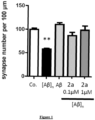
- Figure 1 Synapse protection toward Amyloid beta peptide [1-42] oligomers toxicity with compound 2.
- Co control; [A ⁇ ] n : Neurons intoxicated with Amyloid beta peptide [1-42] oligomers,10 nM; A ⁇ : Neurons incubated with non-oligomeric (non toxic) Amyloid beta, 10 nM; 2a: Neurons intoxicated with Amyloid beta peptide [1-42] oligomers, 10 nM but pretreated with compound 2 enantiomer a at 0.1 ⁇ M or 1 ⁇ M (** p ⁇ 0.01 (Kruskall-Wallis Dunn's post hoc test)).
- the asymmetric carbon atom of pyrrolidine ring linked to is of ( S ) configuration
- the other asymmetric alpha carbons of amino acid like P1, P3, P4 and P5 are of ( S ) configuration.
- the asymmetric carbon atom of pyrrolidine ring linked to is of ( R ) configuration
- the other asymmetric alpha carbons of amino acid like P1, P3, P4 and P5 are of ( S ) configuration.
- the compounds of the invention comprise several asymmetric carbon atoms. They thus may exist in the form of enantiomers or diastereoisomers. These enantiomers and diastereoisomers, and also mixtures thereof, including racemic mixtures, form part of the invention.
- the compounds of the invention may also exist in the form of bases or of acid-addition salts. These salts may be prepared with pharmaceutically acceptable acids, but the salts of other acids that are useful, for example, for purifying or isolating the compounds of formula (I) also form part of the invention.
- pharmaceutically acceptable means what is useful in preparing a pharmaceutical composition generally safe, non-toxic, and neither biologically nor otherwise undesirable and includes what is acceptable for veterinary as well as human pharmaceutical use.
- the compounds of the invention may also exist in the form of hydrates or solvates, i.e. in the form of associations or combinations with one or more molecules of water or with a solvent. Such hydrates and solvates also form part of the invention.
- the asymmetric carbon atom of pyrrolidine ring linked to is of (S) configuration and the other asymmetric alpha carbons of amino acid like P1, P3, P4 and P5 are of ( S ) configuration.
- the asymmetric carbon atom of pyrrolidine ring linked to is of ( R ) configuration and the other asymmetric alpha carbons of amino acid like P1, P3, P4 and P5 are of ( S ) configuration.
- At least one of A and B is a -CH group, more preferably A and B are -CH groups.
- the compounds according to the invention may be of formula (III): wherein R 1 and R 2 are as defined in the formula (I);
- R 1 is:
- R 1 is:
- R 2 is selected from: in which Z' is a fluorine atom and j is 0, 1 or 2.
- R 2 is:
- R 2 is a methoxyphenyl as defined above
- the phenyl ring is substituted with 2, 3, 4 or 5 halogen atoms, preferably said halogen is selected from fluorine or chlorine atoms.
- the compounds according to the invention have at least one, preferably at least three asymmetric carbon atoms of ( S ) configuration.
- the asymmetric carbon atom of pyrrolidine ring linked to is of ( S ) configuration and the other asymmetric alpha carbons of amino acid like P1, P3, P4 and P5 are of ( S ) configuration.
- all the asymmetric carbon atoms of the compounds according to the invention are of ( S ) configuration.
- the asymmetric carbon atom of pyrrolidine ring linked to is of ( R ) configuration and the other asymmetric alpha carbons of amino acid like P1, P3, P4 and P5 are of ( S ) configuration.
- a compound according to the invention is selected from compounds 1 to 6 indicated here-above.
- the compounds of the invention may be prepared by organic and peptide synthesis. Assembly of the structure by peptide synthesis belongs to the general knowledge of the skilled artisan and further details are depicted in Linton et al., J. Med. Chem. 2005, 48, 6779-6782 and in Chauvier et al Cell Death Dis 2011, 2:e203 .
- the precursors of R 1 , R 2 , P 1 , X, P 3 , P 4 and P 5 that lead to the compounds of the invention are introduced in the different steps of the process.
- the precursor may either be commercial product or commercial product that has been functionalized according to well-known protocols for the skilled artisan. Further details and references can be made to " Design of Caspase inhibitors as potential clinical agents; CRC press; CRC Enzyme inhibitors series, Edited by Tom O'Brien & Steven D. Linton chapter 7 by BR Ullman ".
- example 1 of the present invention illustrates the protocol of preparation of the compound 2 according to the invention.
- the compounds according to the present invention are useful as selective Caspase-2 inhibitors.
- the compounds of the present invention and more particularly the compounds for which the R 2 radical is selected from: and in which m, p, q, Z 5 , Z 6 , Z 7 , Z 8 , Z 9 , Z 10 and Z 11 are as above defined, may be used in the therapeutic field.
- the present invention therefore relates to a compound of the invention wherein R 2 is as above defined, for its use as a medicament, in particular a medicament intended to selectively inhibit the activity of Caspase-2.
- the invention concerns the use of a compound according to the invention in which R 2 is as above defined for the preparation of a medicine, in particular of a drug for selectively inhibiting the activity of Caspase-2.
- the present invention relates to a medicament comprising at least one compound according to the invention in which R 2 is as above defined, in particular a medicament for selectively inhibiting the activity of Caspase-2.
- the invention is directed to a compound of the invention wherein R 2 is as above defined, for its use in the prevention and/or treatment of diseases and/or injuries in which Caspase-2 activity is implicated.
- the invention concerns the use of a compound according to the invention in which R 2 is as above defined for the preparation of a medicament intended to prevent and/or treat diseases and/or injuries in which Caspase-2 activity is implicated.
- said diseases and/or injuries may be selected among pathologies with cell death, particularly among:
- said diseases and/or injuries are selected from chronic neurodegenerative diseases.
- they are chosen among Alzheimer's disease, other known tauopathies (as primary age-related tauopathy, chronic traumatic encephalopathy, progressive supranuclear palsy, corticobasal degeneration, frontotemporal dementia, parkinsonism linked to chromosome 17, Lytico-Bodig disease, ganglioglioma and gangliocytoma, meningioangiomatosis, postencephalitic parkinsonism, subacute sclerosing panencephalitis, lead encephalopathy, tuberous sclerosis, antothenate kinase-associated neurodegeneration, lipofuscinosis), Huntington's disease and Parkinson's disease, more specifically Alzheimer's disease.
- tauopathies as primary age-related tauopathy, chronic traumatic encephalopathy, progressive supranuclear palsy, corticobasal degeneration, frontotemporal dementia, parkinsonism linked to chromosome 17, Lytic
- the invention is directed to a compound of the invention wherein R 2 is as above defined, for its use in synaptoprotection, more particularly in the prevention and/or treatment of neurodegenerative diseases, even more particularly of Alzheimer's Disease or of tauopathies.
- the invention is directed to a compound selected from compound 2, compound 3, compound 4, compound 5 and/or compound 6 as defined above for its use in the prevention and/or treatment of Alzheimer's disease or other Tauopathies.
- the invention is directed to compound 2 as defined above for its use in the prevention and/or treatment of Alzheimer's disease or other Tauopathies.
- the invention is directed to compound 3 as defined above for its use in the prevention and/or treatment of Alzheimer's disease or other Tauopathies.
- the invention is directed to compound 4 as defined above for its use in the prevention and/or treatment of Alzheimer's disease or other Tauopathies.
- the invention is directed to compound 5 as defined above for its use in the prevention and/or treatment of Alzheimer's disease or other Tauopathies.
- the invention is directed to compound 6 as defined above for its use in the prevention and/or treatment of Alzheimer's disease or other Tauopathies.
- the present invention relates to a compound as defined above for its use in the prevention and/or treatment of Alzheimer's disease.
- the invention is directed to a compound selected from compound 2, compound 3, compound 4, compound 5 and/or compound 6 as defined above for its use in the prevention and/or treatment of Alzheimer's disease.
- the invention is directed to compound 2 as defined above for its use in the prevention and/or treatment of Alzheimer's disease.
- the invention is directed to compound 3 as defined above for its use in the prevention and/or treatment of Alzheimer's disease.
- the invention is directed to compound 4 as defined above for its use in the prevention and/or treatment of Alzheimer's disease.
- the invention is directed to compound 5 as defined above for its use in the prevention and/or treatment of Alzheimer's disease.
- the invention is directed to compound 6 as defined above for its use in the prevention and/or treatment of Alzheimer's disease.
- compound of the invention in which R 2 is as above defined are effective in protecting neuronal cells from A ⁇ oligomer induced dysfunction or toxicity.
- the invention is directed to a compound of the invention wherein R 2 is as above defined, for its use in protecting neuronal cells from A ⁇ -induced dysfunction or toxicity, more particularly against A ⁇ -induced cell death, A ⁇ -induced axonal degeneration, A ⁇ -induced electrophysiological dysfunction and/or A ⁇ -induced synapse loss.
- the invention is directed to a compound selected from compound 2, compound 3, compound 4, compound 5 and/or compound 6 as defined above for its use in protecting neuronal cells from A ⁇ -induced dysfunction or toxicity, more particularly against A ⁇ -induced cell death, A ⁇ -induced axonal degeneration, A ⁇ -induced electrophysiological dysfunction, and/or A ⁇ -induced synapse loss.
- the invention is directed to compound 2 as defined above for its use in protecting neuronal cells from A ⁇ -induced dysfunction or toxicity, more particularly against A ⁇ -induced cell death, A ⁇ -induced axonal degeneration, A ⁇ -induced electrophysiological dysfunction, and/or A ⁇ -induced synapse loss.
- the invention is directed to compound 3 as defined above for its use in protecting neuronal cells from A ⁇ -induced dysfunction or toxicity, more particularly against A ⁇ -induced cell death, A ⁇ -induced axonal degeneration, A ⁇ -induced electrophysiological dysfunction, and/or A ⁇ -induced synapse loss.
- the invention is directed to compound 4 as defined above for its use in protecting neuronal cells from A ⁇ -induced dysfunction or toxicity, more particularly against A ⁇ -induced cell death, A ⁇ -induced axonal degeneration, A ⁇ -induced electrophysiological dysfunction, and/or A ⁇ -induced synapse loss.
- the invention is directed to compound 5 as defined above for its use in protecting neuronal cells from A ⁇ -induced dysfunction or toxicity, more particularly against A ⁇ -induced cell death, A ⁇ -induced axonal degeneration, A ⁇ -induced electrophysiological dysfunction, and/or A ⁇ -induced synapse loss.
- the invention is directed to compound 6 as defined above for its use in protecting neuronal cells from A ⁇ -induced dysfunction or toxicity, more particularly against A ⁇ -induced cell death, A ⁇ -induced axonal degeneration, A ⁇ -induced electrophysiological dysfunction, and/or A ⁇ -induced synapse loss.
- the invention is directed to a method for preventing and/or treating diseases and/or injuries in which Caspase-2 activity is implicated, comprising at least a step of administering to an individual in need thereof at least an effective amount of at least one compound in accordance with the invention, in which R 2 is as above defined.
- the present invention relates to a pharmaceutical composition
- a pharmaceutical composition comprising at least one compound according to the invention in which R 2 is as above defined, and at least one pharmaceutically acceptable excipient.
- compositions of the invention may contain more particularly an effective dose of at least one compound according to the invention in which R 2 is as above defined.
- an "effective dose” means an amount sufficient to induce a positive modification in the condition or injury to be regulated or treated, but low enough to avoid serious side effects.
- An effective dose may vary with the pharmaceutical effect to obtain or with the particular condition being treated, the age and physical condition of the end user, the severity of the condition or injury being treated/prevented, the duration of the treatment, the nature of other treatments, the specific compound or composition employed, the route of administration, and like factors.
- a compound of formula (I) according to the invention in which R 2 is as above defined may be administered in an effective dose by any of the accepted modes of administration in the art.
- this compound may be used in a composition intended to be administrated by oral, nasal, sublingual, ophthalmic, topical, rectal, vaginal, urethral or parenteral injection route.
- a pharmaceutical composition of the invention may be formulated with any known suitable pharmaceutically acceptable excipients according to the dose, the galenic form, the route of administration and the likes.
- pharmaceutically acceptable excipients include any and all solvents, dispersion media, coatings, antibacterial and antifungal agents, isotonic and absorption delaying agents and the like. Except insofar as any conventional excipient is incompatible with the active compounds, its use in a medicament or pharmaceutical composition of the invention is contemplated.
- a medicament or pharmaceutical composition of the invention may be in the form of tablets, pills, powders, lozenges, sachets, cachets, elixirs, suspensions, emulsions, solutions, syrups, aerosols, sprays, ointments, gels, creams, sticks, lotions, pastes, soft and hard gelatine capsules, suppositories, sterile injectable solutions, sterile packages powders and the like.
- a pharmaceutical composition of the invention may be intended to be administered separately, sequentially or simultaneously with an agent useful for the prevention and/or the treatment of a disease condition, in particular Alzheimer's disease, said agent being different from the compound of formula (I) of the invention.
- the compounds of the present invention and more particularly the compounds for which the R 2 radical is selected from: may be used as activity-based probe to selectively detect Caspase-2 activity.
- the present invention relates to the use of a compound according to the invention in which R 2 is as above defined, as activity-based probe (ABP) to selectively detect Caspase-2 activity.
- ABP activity-based probe
- TRP601 The synthesis of TRP601 is described in D. Chauvier et al., Cell Death and Disease (2011) 2, e203 .
- Compound 2 of the present invention differs from TRP601 in that:
- the compound 2 has thus been obtained by reproducing the steps disclosed in the above-mentioned article to lead to TRP601 except that:
- the precursor of P 1 and P 4 has been prepared starting from the commercially available (S)-aspartic acid in which the amine function has been protected by a Boc group according to a well-known protocol for the skilled artisan.
- the precursor of proline has been obtained according to was obtained as described by Maillard et al., in Bioorganic & Medicinal Chemistry 19 (2011):5833-5851 .
- Compound 2 has thus been obtained with a yield of more than 90 % and characterized by HPLC, with either the configuration (R or S ) of the asymmetric carbon atom of pyrrolidine ring linked to
- the inhibitory efficiency of compounds of the invention which are irreversible inhibitors of Caspase-2 and Caspase-3 can be evaluated by using the below explained protocol.
- Compound 2, as well as compounds 4, 5, 6 are irreversible inhibitor and has been evaluated accordingly.
- the Caspase-2 and Caspase-3 are human recombinant active enzymes that are respectively provided by Enzo Life ® (ALX-201-057-U100) and R&D Systems ® (707-C3-010/CF).
- Caspase-2 is used at a final concentration of 0.1 nM in a "Caspase-2 buffer" containing 20 mM HEPES (pH 7.4), 5mM DTT, 2mM EDTA, 0.1% CHAPS and 800 mM succinate.
- Caspase-3 is used at a final concentration of 0.5 nM in a "Caspase-3 buffer” containing 20 mM HEPES (pH 7.4), 0.1% CHAPS, 5 mM DTT, and 2 mM EDTA.
- the peptide substrates used for the enzymatic activity measurements are Ac-DEVD-AMC and Ac-VDVAD-AMC commercialized by EnzoLife ® (respectively referenced ALX-260-031-M005 and ALX-260-060-M005). They are fluorogenic due to the presence of their AMC (7-amino-4-methylcoumarin) end group. The releasing of AMC enables to follow the enzymatic activity in fluorescence unit RFU over time in a 96-wells microplate.
- the fluorescence values are measured at 37°C with a spectrofluorometer with a microplate reader BMG FLUOstar OPTIMA.
- This apparatus is driven by the software Biolise ® and is equipped with thermoelectric cooling device by Peltier effect.
- the mathematical analyses of the experimental data are done with the software Kaleidagraph ® .
- the inhibitory properties of the tested compounds are evaluated by the determination of the k inact /K I ratio regarding either Caspase-2 or Caspase-3 wherein:
- inactivation can be represented by the minimum kinetic scheme, where E and I are the free forms of enzyme and inhibitor, E*I a kinetic chimera of the Michaelis complex and E-I the covalent complex or inactivated enzyme.
- E and I are the free forms of enzyme and inhibitor
- E*I a kinetic chimera of the Michaelis complex
- E-I the covalent complex or inactivated enzyme.
- Inhibitor binding affinity (dissociation constant, Ki) and first-order rate constant (k 3 ) parameters were determined for Caspase-2 and Caspase-3 using the progress curve method.
- a continuous method of determination of the k inact /K I ratio was used for evaluating the inhibitory activity of the tested compounds against Caspase-2 and Caspase-3.
- the reaction mixture is prepared by letting the enzyme and the buffer incubate at 37°C.
- the tested inhibitory compounds are prepared at different concentrations (1/4 IC 50 ; 1/2 IC 50 ; IC 50 ; 2 IC 50 ; 4 IC 50 ) and put in the microplate.
- reaction mixture comprising the enzyme, the buffer and the substrate is rapidly added in the wells.
- the activities of the enzyme are measured between 45 and 60 minutes.
- the RFU Relative Fluorescence Units
- f(times) curves are traced for each concentration of tested molecule according to the following equation: ⁇ V 0 * exp ⁇ k obs * m 0 + V 0 / k obs * + RFU 0 in which:
- compound 2 is much more efficient to inactivate Caspase-2 than to inactivate Caspase-3 whereas ⁇ 2Me-TRP-601 does not exhibit this selectivity.
- compound 2 is not only efficient to inhibit Caspase-2, but is also selective regarding Caspase-2 with respect to Caspase-3.
- compound 2 is not only efficient to inhibit Caspase-2, but is also selective regarding Caspase-2 with respect to Caspase-3.
- very different level of inhibition of caspase 2 are noticed depending on the configuration (R or S ) of the asymmetric carbon atom of pyrrolidine ring linked to Then compounds of the invention provide either moderate or strong, but highly specific, inhibitors of caspase 2 (Table 2) which is of particular interest.
- Caspase-2 (or caspase-3) is incubated with the inhibitor or buffer alone, adapted to the enzyme and to the Michaelis-Menten complex, for 30 min at 37 ° C.
- the reaction is triggered, in a total volume of 100 ⁇ l, when the buffer-substrate mixture is added; the enzymatic activity is then measured over 20 minutes.
- the enzymatic activity is characterized by the initial velocity values (Vi) which are defined from equation 1 (eq.1), where V max is the rate at which the enzyme is saturated with substrate, [S] is the substrate concentration.
- the initial velocity obtained for the control (V0) is considered to be 100% of the enzymatic activity.
- An inhibition is characterized by an activity, after treatment with the inhibitor, of less than 100%.
- the inhibitory efficiency of compounds of the invention which are reversible inhibitors of Caspase-2 and Caspase-3 can be evaluated by using the below explained protocol.
- Compound 3 is a reversible inhibitor and has been evaluated accordingly.
- a preliminary step in the characterization of an inhibitor is the determination of its IC50.
- the IC50 is the necessary concentration of an inhibitor to decrease the enzyme activity by 50% of its maximum and uninhibited value.
- the compound at different concentrations, is incubated with the enzyme and buffer for 30 minutes at 37 ° C to allow formation of the Enzyme-Inhibitor complex.
- the reaction is initiated by addition of buffer and substrate, and then activity is measured over 15 minutes for the determination of initial velocities.
- the inhibitory effect of the analyzed compound (in %) as a function of its concentration generally follows equation 3 (eq. 3) which translates a hyperbola.
- % Inhibition 100 ⁇ I / IC 50 + I
- the reversibility of the inhibition is analyzed by the dilution method for Ac-VDVAD-CHO, Ac-DEVD-CHO and compound 3.
- the enzyme and the inhibitor (or DMSO as control) are incubated for 30 minutes at 37°C.
- the complex thus formed is diluted to 100 th in the buffer/substrate mixture and then the activity measurement is started over 20 minutes.
- the initial rate obtained for the DMSO represents the 100% activity and will serve as a reference for the quantification of the residual activity of the enzyme in the presence of the inhibitor.
- the dissociation constant Ki is determined. It gives an account of the affinity of the inhibitor for the enzyme.
- the inhibitor is competed with the substrate with respect to the active site of the enzyme. If, after dilution, the activity is restored to more than 50%, the inhibitor is said to be "reversible".
- the inhibitor is incubated with the Caspase-buffer mixture for 30 minutes at 37°C at different concentrations (1/4 IC 50 , 1/2 IC 50 , IC 50 , 2 IC 50 , 4 IC 50 ). The reaction is started over 20 minutes upon addition of the buffer-substrate mixture.
- a secondary graph obtained from the values of the slopes of the Lineweaver-Burk plot as a function of the concentration of inhibitor, makes it possible to obtain the value of the Ki. Its value is given by the abscissa point at the origin.
- the inhibitory powers of the compounds with respect to the Casp-2 and -3 are quantified by the determination of the IC 50 .
- the results are presented in Table 3 (left).
- compound 3 is Casp2-selective.
- the secondary track obtained from the Lineweaver-Burk graph data allowed the Ki values to be determined.
- the Ki values for the various inhibitors as well as the selectivity indexes are presented in Table 4 (right).
- Table 4 IC 50 (nM) Ki (nM) Inhibitors Casp-2 Caspase-3 Casp-2 Caspase-3 Ac-VDVAD-CHO 6,9 ⁇ 0,6 7,23 ⁇ 0,66 6,31 7,68 Ac-DEVD-CHO 3907 ⁇ 189 0,7 ⁇ 0,03 3 222 0,159
- the inhibitory efficiencies are represented by the IC 50 values for the Ac-DEVD-CHO and Ac-VDVAD-CHO reference inhibitors as well as for the P 2 -variant Ac-VDVAD-CHO derivatives (Table 4). Quantification of the inhibition is given by the values of the Ki constants which account for the affinity of the inhibitor for the enzyme. A low value indicates a potent inhibitor on its target. The ratios of the constants allow to quantify the selectivity (Table 5), the higher the ratio, the more the inhibitor is selective of the Casp-2.
- Ki values confirm and supplement the information provided by the IC 50 data.
- compound 3 is an inhibitor that is still powerful on Casp-2 with a selectivity with respect to the latter markedly increased compared to Ac-VDVAD-CHO (Table 5).
- the protective effect of the compound 2 of the invention against cellular death induced by vincristine is tested using a well-known flow cytometry cell death assay based on propidium iodide staining.
- HeLa cells (cervical cancer cell line) were obtained from American Type Cell Collection (ATCC), and were cultured in Dulbecco's Modified Eagle Medium (DMEM, High Glucose, GlutaMAX TM , Pyruvate) (Gibco, Life technologies), supplemented with 10% FCS and antibiotics (Gibco, Life technologies).
- DMEM Dulbecco's Modified Eagle Medium
- Human HeLa cells are treated with a solution of Vincristine (Sigma Aldrich) (diluted in water at 5mM). Vincristine works partly by binding to the Tubulin protein, stopping the cell from separating its chromosomes during the metaphase; the cell then undergoes apoptosis through a caspase-dependent process.
- Vincristine Sigma Aldrich
- PI Propidium iodide
- HeLa cells were plated into24-well plates. Culture medium was then removed, cells were washed with PBS, and fresh medium containing compound 2 or 3 at different concentrations was added 1 hour before addition of vincristine. Cells were exposed or not (control), to 20 nM Vincristine for 48 hours.
- the content of each well is collected is added to PBS and then centrifuged (900rpm; 5 min).
- the pellet obtained is put into 300 ⁇ L of a medium comprising propidium iodide and incubated (37°C, 5% CO 2 ) in the dark for 5 minutes and then subjected to flow cytometry analysis.
- Fluorescence-Activated Cell Sorting was performed using a FACSCalibur cytometer (Becton Dickinson, San Jose, CA). For each sample, data from 5,000 Cells were registered and analyzed with the CellQuest Pro TM software (Becton Dickinson). Analysis included FSC (Forward Scatter / relating to the cells' size) and SSC (Side Scatter / relating to the cells' granularity) parameters together with FL-1 and FL-3 channel. Table 6 Composition Index of cell death Compound 2 and vincristine ++ Compound 3 and vincristine ++ Vincristine alone ++++ The number of "+" is indicative of cell mortality measured in the assay. The higher the number of "+” represented, the higher the cell mortality measured in the assay.
- the percentage of propidium iodide positive cells gives an estimation of cell death.
- Control composition which neither contains vincristine nor inhibitor, enables to estimate the quantity of cells that died naturally.
- Composition containing vincristine but no inhibitor provides the total number of dead cells that corresponds to the sum of naturally dead cells and of apoptotic cells induced by vincristine.
- Hippocampus are micro-dissected from E16 embryos of C57B16/J wt mice (Rene Janvier, France) in cold Gey's Balanced Salt Solution (GBSS, Sigma) supplemented with 0.1% glucose (Life technologies).
- Dissected structures are digested with papain (20U/ML in DMEM, Sigma; St. Louis, MO, USA) and mechanically dissociated in the presence of DNAse. Hippocampal cells are then rinsed and re-suspended in DMEM (Life Technologies, Inc., Gaithersburg, MD, USA) to a final density of 18 million cells/ml in Neurobasal (Life technologies) and Glutamax (0.1% LifeTechnologies) supplemented with B27 (1/50) and penicilline/sptreptomycine 1% (Gibco).
- papain 20U/ML in DMEM, Sigma; St. Louis, MO, USA
- Hippocampal cells are then rinsed and re-suspended in DMEM (Life Technologies, Inc., Gaithersburg, MD, USA) to a final density of 18 million cells/ml in Neurobasal (Life technologies) and Glutamax (0.1% LifeTechnologies) supplemented with B27 (1/50) and penicilline/sptreptomycin
- This cell suspension is then used to fill the reservoirs of microfluidic chambers, as described ( Peyrin et al, 2011 Lab Chips 11(21):3663 ; Deleglise et al, 2014 Acta Neuropathologica Comm. 2: 145 ).
- Microfluidic chips are placed in plastic Petri dishes containing H20-EDTA to prevent evaporation and incubated at 37°C in a humid 5% C0 2 atmosphere. The culture medium is renewed every seven days.
- Oligomeric form of A ⁇ 1-42 (Tocris Bioscience, MN, USA), is produced according to Stine WB et al (2003) in J Biol Chem 278,pp 11612-11622 and can be controlled by electron microscopy as in Deleglise B et al. in Acta Neuropathol Commun. 2014;2: 145 ).
- a ⁇ 1-42 lyophilized peptides are solubilized at 1 mM in 1, 1, 1, 3, 3, 3,-hexafluoro-2-propanol (HFIP, Sigma Aldrich). After 30 min of incubation at RT, HFIP is evaporated for 12h under chemical hood and peptides are dried for l h (with a Speed Vac at 4°C). Then, 5 mM A ⁇ peptide stock solutions are obtained by resolubilization at in dimethylsulfoxide (DMSO, Sigma Aldrich). To obtain oligomers, A ⁇ peptide stock solution is diluted in cold phenol free DMEM-F12 medium (Life Technologies) to a final concentration of 100 ⁇ M.
- DMSO dimethylsulfoxide
- Soluble A ⁇ oligomer fraction is collected from the supernatant after a centrifugation step at 20 000 g (10 min; 4°C), and stored at -80°C until use.
- hippocampal cells are preincubated for 1 h with compounds of the invention prior diluted in phenol free DMEM-F12 medium or in phenol free DMEM-F12 medium alone as a control solution.
- Cells are then intoxicated for 3 h to 6 h or 24 h with 10 or 100 nm of A ⁇ 1-42 oligomers (or with phenol free DMEM-F12 medium alone as a control solution).
- cells are fixed in 4% paraformaldehyde (PFA, Sigma; St. Louis, MO, USA) for 20 min RT, and labelled as explained below to evaluate synapses status, cell death or axonal degeneration.
- PFA paraformaldehyde
- cultures cells are washed twice with PBS + Azide 0.1% for 5 min and permeabilized for 10 min with 0.2% Triton X-100 and 0. 1% BSA
- rabbit polyclonal anti-MAP-2 (AB5622; 1/400, MILLIPORE), mouse monoclonal Anti-Bassoon SAP7F407; 1 :400, Enzo LifeSciences).
- Species-specific secondary antibodies coupled to Alexa 350, 488 or 500 are used (1/500, Life Technologies, Inc., Gaithersburg, MD, USA).
- Phalloidin conjugated to Alexa Fluor 555 (1/500, EnzoLifeTechnologies) is used to stain F-actin.
- Images are acquired with an Axio-observer Zl (Zeiss, Germany) fitted with a cooled CCD camera (CoolsnapHQ2, Ropert Scientific). The microscope is controlled with Metamorph and Micro-manager software. Images were analyzed using ImageJ software.
- Compounds of the invention are found efficient in protecting hippocampal cells from A ⁇ -induced cell death, A ⁇ -induced axonal degeneration, A ⁇ -induced electrophysiological dysfunction, and/or A ⁇ -induced synapse loss (Table 7 and Figure 1 ).
- Table 7 Composition Protective effect against A ⁇ toxicity Compound 2 + Compound 3 + Compound 4 + Compound 5 + Compound 6 + A ⁇ alone - + : significant protection against a A ⁇ -induced cell death, A ⁇ -induced axonal degeneration, A ⁇ -induced electrophysiological dysfunction, and / or A ⁇ -induced synapse loss.
- Compounds of the invention are thus valuable compounds for the treatment of diseases associated with cell death or dysfunction mediated by Caspase 2 activity. More particularly, they are found to be efficient in treating neurodegenerative disorders as Alzheimer's disease (AD), A ⁇ synaptotoxicity being known to play an important in the pathophysiology of this disease. Furthermore, Caspase 2 is known in the art to mediate cleavage of tau which generates ⁇ tau314, found implied in the cognitive decay in AD, thus making compounds of the invention valuable compounds for their use in treating or preventing diseases implying either tau and or A ⁇ toxicity.
- AD Alzheimer's disease
- a ⁇ synaptotoxicity being known to play an important in the pathophysiology of this disease.
- Caspase 2 is known in the art to mediate cleavage of tau which generates ⁇ tau314, found implied in the cognitive decay in AD, thus making compounds of the invention valuable compounds for their use in treating or preventing diseases implying either tau and or A ⁇ toxicity.
- R 2 is selected from: in which Z' is a fluorine atom and j is 0, 1 or 2; and preferably R 2 is:
- Item 7 Compound according to any one of the preceding items, having at least one, preferably at least three asymmetric carbon atoms of (S) configuration, and more preferably all the asymmetric carbon atoms of (S) configuration.
- Item 9 Compound according to any one of the preceding items, for its use as selective Caspase-2 inhibitor.
- composition comprising at least one compound according to any one of the items 1 to 8 and at least one pharmaceutically acceptable excipient, wherein R 2 is selected from: and in which m, p, q, Z 5 , Z 6 , Z 7 , Z 8 , Z 9 , Z 10 and Z 11 are as defined in the formula (I) according to item 1.
- Item 11 Compound according to any one of the items 1 to 8, for its use as a medicament, wherein R 2 is selected from: and in which m, p, q, Z 5 , Z 6 , Z 7 , Z 8 , Z 9 , Z 10 and Z 11 are as defined in the formula (I) according to item 1.
- Item 12 Compound according to any one of the items 1 to 8, for its use in the prevention and/or treatment of diseases and/or injuries in which Caspase-2 activity is implicated, wherein R 2 is selected from: in which m, p, q, Z 5 , Z 6 , Z 7 , Z 8 , Z 9 , Z 10 and Z 11 are as defined in the formula (I) according to item 1.
- Item 14 Compound according to item 13, for its use in the prevention and/or treatment of Alzheimer's disease.
- Item 15 Compound according to item 12, for its use in protecting neuronal cells from A ⁇ -induced dysfunction or toxicity, more particularly against A ⁇ -induced cell death, A ⁇ -induced axonal degeneration, A ⁇ -induced electrophysiological dysfunction, and/or A ⁇ -induced synapse loss.
Landscapes
- Chemical & Material Sciences (AREA)
- Organic Chemistry (AREA)
- Health & Medical Sciences (AREA)
- Life Sciences & Earth Sciences (AREA)
- Engineering & Computer Science (AREA)
- General Health & Medical Sciences (AREA)
- Bioinformatics & Cheminformatics (AREA)
- Animal Behavior & Ethology (AREA)
- Pharmacology & Pharmacy (AREA)
- Medicinal Chemistry (AREA)
- Public Health (AREA)
- Veterinary Medicine (AREA)
- Neurology (AREA)
- Wood Science & Technology (AREA)
- Zoology (AREA)
- Chemical Kinetics & Catalysis (AREA)
- Neurosurgery (AREA)
- Proteomics, Peptides & Aminoacids (AREA)
- Epidemiology (AREA)
- Nuclear Medicine, Radiotherapy & Molecular Imaging (AREA)
- Biomedical Technology (AREA)
- General Chemical & Material Sciences (AREA)
- Immunology (AREA)
- Microbiology (AREA)
- Cardiology (AREA)
- Vascular Medicine (AREA)
- Urology & Nephrology (AREA)
- Genetics & Genomics (AREA)
- General Engineering & Computer Science (AREA)
- Biochemistry (AREA)
- Molecular Biology (AREA)
- Heart & Thoracic Surgery (AREA)
- Biotechnology (AREA)
- Hospice & Palliative Care (AREA)
- Biophysics (AREA)
- Analytical Chemistry (AREA)
- Psychiatry (AREA)
- Physics & Mathematics (AREA)
- Pharmaceuticals Containing Other Organic And Inorganic Compounds (AREA)
- Peptides Or Proteins (AREA)
Abstract
Description
- The present invention relates to novel compounds which are useful as selective inhibitors of Caspase-2. This invention also relates to the therapeutic use of these compounds and to their use as activity based probes (ABPs) for Caspase-2.
- Caspases are a family of intracellular endoproteases using a cysteine residue at the initiation of the cleavage of peptide substrates. They are widely known to have important implications in the regulation of inflammation as well as a crucial role in the control of programmed cell death by apoptosis.
- Caspases are classified in two major groups: those involved in the regulation of inflammatory processes (-1, -4, -5, -11, -12) and those that are central to the initiation and execution of apoptosis. There are two groups among apoptotic Caspases, the "initiators" who have a long N-terminal pro-domain (Caspase-2, -8, -9, -10), and those with a short pro-domain (residues 20-30) who are the "executors" of apoptosis (Caspase-3, -6, -7). Caspases involved in inflammation and the initiation of apoptosis have structural units involved in the transduction of the apoptotic signal, such as "Death Effector Domain" (DED) and "Caspase Recruitment Domain" (CARD). Each of these domains allows homotypic interaction with other protein partners.
- The enzymatic properties of Caspases are governed by the existence of a catalytic dyad (cysteine, histidine) where cysteine acts as a nucleophile for the initiation of cleavage of peptide bonds. The active site of Caspases is highly conserved, with the catalytic cysteine included in a peptide sequence QACXG (where X is arginine (R), glutamine (Q) or glycine (G)) and a basic subsite S1, which gives them specificity for substrate cleavage after an aspartate residue, which is unique among mammalian proteases, except for the serine protease granzyme B. Generally, Caspases recognize a tetra-peptide motif, P1-P4 in N-ter of the cleavable bond, respectively recognized by subsites S1-S4 of the enzyme. The downstream positions Aspartate (P'1 and P'2) are also involved in the recognition and specificity vis-à-vis of Caspases.
- Caspases have been classified in three groups based on the substrate peptide sequences they preferentially recognize. Group I Caspases (-1, -4 and -5) have a preference for a hydrophobic residue in P4. While the enzymes of group II (-2, -3, -7) have a strong preference for an Aspartate at this position, Group III (-6, -8, -9, -10) favors small aliphatic chains P4. In the group II, Caspase-2 has a unique recognition modality; indeed, it requires the recognition of a residue at position P5 (preferably a leucine, isoleucine, valine, or alanine) to exert its catalytic activity. Caspase-3 and -7 also recognize a P5 residue in a non-obligatory way.
- Originally named Nedd-2, "Neural precursor cell Expressed developmentally down-regulated 2" in mice and Ich-1, "ICE and CED3 homolog" in humans, Caspase-2, encoded by the gene CASP2 (chr . 7q34-q35), is the most conserved member of this family of enzymes. Its activity is finely regulated during neuronal development in humans. There are two Caspase-2 isoforms: a proapoptotic one (2L) and an antiapoptotic one (2S). The 2L isoform is the predominant form in most tissues, but 2S isoform is expressed at similar levels in brain, skeletal muscle and heart.
- Caspase-2 acts as an initiator Caspase that poorly cleaves other Caspases but can initiate mitochondrial outer membrane permeabilization, and that regulates diverse stress-induced signaling pathways including heat shock, DNA damage, mitochondria oxidative stress, and cytoskeleton disruption.
- Beside apoptosis, Caspase-2 participates in the regulation of oxidative stress. For instance, elderly Casp-2-/- mice show reduced Superoxyde Dismutase and Gluthation peroxydase activities. In some specific circumstances, Caspase-2 can act as a tumor suppressor. Indeed, under oncogenic stress (as in the Eµ-Myc transgenic mouse model), Caspase-2 deficiency potentiates tumorigenesis. Some data also suggest that Caspase-2 might inhibit autophagy (Tiwari M et al., J Biol Chem 2011; 286: 8493-8506; Tiwari M et al. Autophagy 2014; 10: 1054-1070).
- Genetic inhibition of Caspase-2 was found to be neuroprotective in newborn mice exposed to hypoxic-ischemic or excitotoxic challenges, suggesting that Caspase-2-mediated cell death might contribute to the pathophysiology of perinatal brain injury (Carlsson et al., Annals of Neurology 2011, 70(5):781-9). In addition, genetic inhibition of Caspase-2 confers ocular neuroprotection (Amhed Z et al., Cell Death Dis. 2011 Jun 16;2: e173) and it has recently been shown that Caspase-2 mediates site-specific retinal ganglion Cell death after blunt ocular injury (Thomas CN et al., Invest Ophthalmol Vis Sci. 2018 Sep 4;59(11):4453-4462).
- In cellular models of Alzheimer's disease (Carol M. Troy et al. The Journal of Neuroscience, February 15, 2000, 20(4):1386-1392), Caspase-2 is a key effector of neuronal death induced by the amyloid peptide Aβ (Ribe EM et al., Biochem J. 2012 444(3):591-9).
- Moreover, using amyloid precursor protein transgenic mice, Pozueta et al. (Nat. Commun. 2013;4:1939) have shown that:
- (i) Caspase-2 is required for the cognitive decline in this Alzheimer animal model,
- (ii) cultured hippocampal neurons lacking Caspase-2 are immune to the synaptotoxic effects of Aβ, and
- (iii) Caspase-2 is a critical mediator in the activation of the RhoA/ROCK-II signaling pathway, leading to the collapse of dendritic spines,
- Caspase-2 was also found to directly cleave the protein Tau and thus appears to be implicated in the generation of Δtau314, that might have an influence in synaptic dysfunction noticed in Alzheimer's disease and other tauopathies (Zhao et al. Nat. Med. 2016).
- Caspase-2 seems also implicated in behavioral deficits in Huntington's disease (Caroll et al., Mol. Neurodegener. 2011 Aug 19;6:59).
- Caspase-2 also appears to promote obesity, metabolic syndrome and nonalcoholic fatty liver disease. Indeed, it has been shown that Caspase-2 deficient mice were protected from these conditions (Machado MV et al. Cell Death Dis. 2016 Feb 18;7:e2096).
- The first generations of Caspases inhibitors were aldehyde peptides which reversibly inhibit Caspases. Several sequences supposedly confer preferential effects vis-à-vis some members of the Caspase family have been developed including Ac-DEVD-CHO (a preferential inhibitor of Caspase-3 and Caspase-7) and Ac-VDVAD-CHO (a preferential inhibitor of Caspase-2, -3, and -7).
- In the second generation of Caspases inhibitors, the aldehyde group has been replaced by α-substituted ketones with a fluoromethyl ketone group (fmk). This type of inhibitor inactivates the enzyme by forming an adduct with the active site cysteine. Z (Benzyloxylcarbonyle)-VAD-fmk is a broad-spectrum inhibitor of this generation. These molecules are toxic in vivo, because the release of fluoroacetate group, particularly in the liver, leads to the inhibition of aconitase. Thus, the development of inhibitors with a fmk group, was abandoned in the preclinical phase because of its hepatotoxicity. Then, several Caspase inhibitors have been synthetized in the art (Poreba et al., Chem Rev. 2015 Nov 25;115(22):12546-629). In particular, compounds able to inhibit Caspase-2 activity have been reported for example in
WO 2005/105829 andEP2670774 . However, these known Caspase-2 inhibitors also have a too high activity with respect to Caspase-3. They thus cannot be qualified as selective Caspase-2 inhibitors. - More recently, a series of reversible Caspase-2 inhibitor has been reported. When evaluated in vitro on human recombinant Caspases, these compounds were found to preferentially inhibit Caspase-2, but have moderate effects in cellular assays and structural properties that are incompatible with in vivo use (Maillard et al., Biorganic &Medicinal Chemistry 19 (2011) 5833-5851).
- Accordingly, there is still a need for potent and selective Caspase-2 inhibitors more particularly with a significantly reduced activity against Caspase-3. In particular, it would be highly advantageous to provide more selective and efficient Caspase-2 inhibitors for use in the prevention and/or treatment of diseases and/or injuries in which Caspase-2 activity is implicated such as neonatal brain ischemia, heart ischemia and chronic degenerative diseases like for instance Alzheimer's disease.
- It would also be very advantageous to provide more efficacious and selective Caspase-2 inhibitors for use as an activity-based probe to specifically detect Caspase-2 activity.
- The compounds of the invention aim to meet these needs.
- Thus, according to one of its aspects, the present invention relates to a compound of formula (I):

- Z1 and Z2, identical or different are selected from a hydrogen atom, a (C1-C6)alkyl and a (C1-C6)alkoxy group;
- P5 is selected from the following amino acid residues or amino acid like structures:


- P1 and P4, identical or different, are selected from the following amino acid like structures:
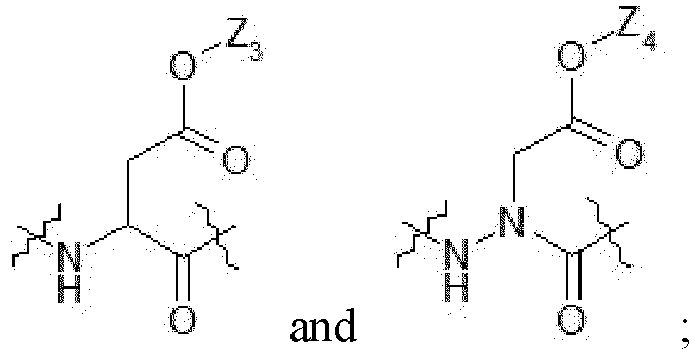
- P3 is selected from the following amino acid residues:

- R1 is selected from
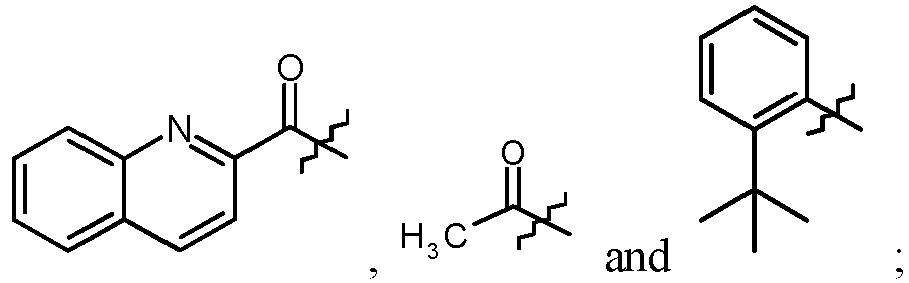
- R2 is selected from:

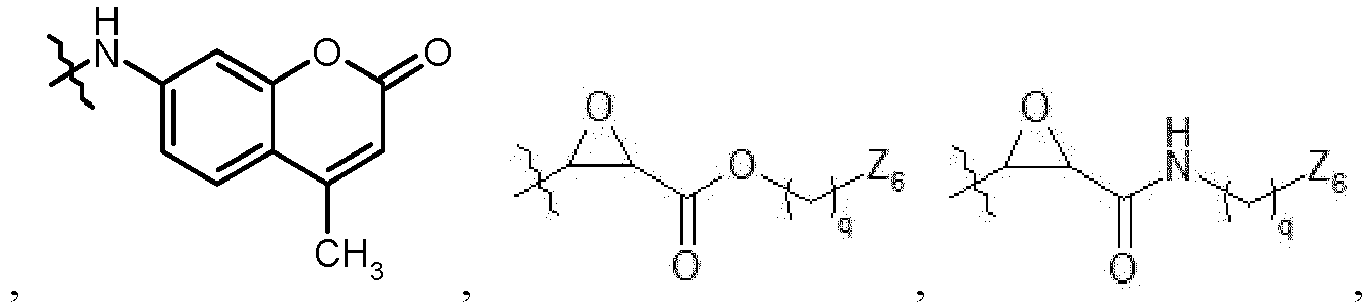

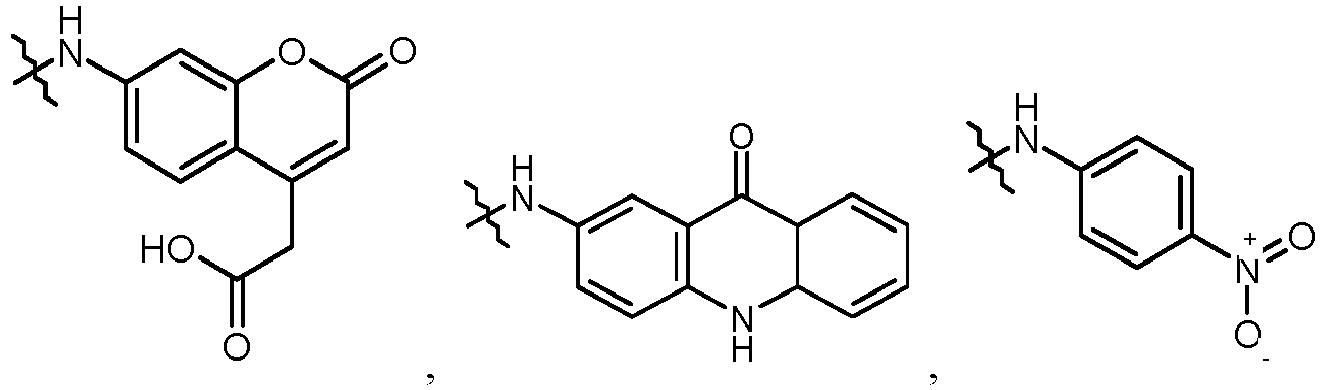

- m is 0, 1 or 2;
- p is 1, 2, 3 or 4;
- Z5 is a halogen atom;
- q is 0 or 1;
- Z6 is selected from a (C1-C6)alkyl and a phenyl group, said phenyl group being optionally substituted by an amino group;
- Z7, Z8 and Z11, identical or different, are selected from a hydrogen atom, a (C1-C4)alkyl, a tetrahydroquinolynyl and a -(CH2)i-aryl group with i being 0, 1 or 2, said aryl group being optionally substituted by one, two, three, or four halogen atom(s) or one (C1-C4) alkyl group; and
- Z9 and Z10, identical or different, are selected from a halogen atom and a (C1-C6)alkyl group; or one of its salts;
- P5 is selected from the following amino acid residues or amino acid like structures:
- After extensive research, the inventor has found that these compounds of formula (I) acts as selective and effective inhibitors of Caspase-2 activity as demonstrated in the following examples.
- Indeed, the compounds of the present invention are much more efficient to inhibit Caspase-2 than to inhibit Caspase-3.
- In particular, as shown in the following examples, some compounds of the invention exhibit an inhibitory effect on Caspase-2 at least two times, preferably at least 5 times, more preferably at least 10 times, and even more preferably at least 15 times higher than their inhibitory effect on Caspase-3.
- The inhibitory effect of the compounds of the invention with respect to Caspase-2 and Caspase-3 may be evaluated by kinetic approaches using human recombinant Caspases. For irreversible inhibitors, kinact/KI ratio is determined using the method disclosed in example 2. For reversible inhibitors IC50 and ki are determined.
- Moreover, the fact that some of these inhibitors are irreversible is very advantageous since this type of inhibitors can be used in prolonged suppression of Caspase-2, limited only by the normal rate of protein resynthesis, also called turnover.
- In the meaning of the present invention:
- A "Caspase inhibitor" is intended to mean a compound that reduces or suppresses the activity of the targeted Caspase, as compared with said activity determined without said inhibitor.
- A "selective Caspase-2 inhibitor" is intended to mean a compound that decreases the activity of Caspase-2 more than the activity of other Caspases, in particular Caspase-3.
- Thus, according to a second aspect, the invention is directed to a compound of the invention for its use as selective Caspase-2 inhibitor.
- According to one embodiment, the R2 radical of the compounds of the invention is selected from:


- These compounds may advantageously be introduced in a pharmaceutical composition. These compounds may be used as a medicament. More particularly, they may be used in the prevention and/or treatment of diseases and/or injuries in which Caspase-2 activity is implicated.
- For the purposes of the present invention the term "prevention" means at least partly reducing the risk of manifestation of a given phenomenon, i.e., in the present invention, a disease and/or injury in which Caspase-2 activity is implicated. A partial reduction implies that the risk remains, but to a lesser extent than before implementing the invention.
- For the purposes of the present invention the term "treatment" is intended to mean completely or partially curing a given phenomenon, i.e., in the present invention, a disease and/or injury in which Caspase-2 activity is implicated, including decreasing, minimizing or reducing said given phenomenon.
- Thus, according to a third aspect, the invention is directed to a pharmaceutical composition comprising at least one compound of the invention wherein R2 is as above defined and at least one pharmaceutically acceptable excipient.
- According to a fourth aspect, the invention is directed to a compound of the invention wherein R2 is as above defined, for its use as a medicament.
- According to a fifth aspect, the invention is directed to a compound of the invention wherein R2 is as above defined, for its use in the prevention and/or treatment of diseases and/or injuries in which Caspase-2 activity is implicated.
- According to a sixth aspect, the invention is directed to a compound of the invention wherein R2 is as above defined, for its use in protecting neuronal cells from Aβ-induced dysfunction or toxicity, more particularly against Aβ-induced cell death, Aβ-induced axonal degeneration, Aβ-induced electrophysiological dysfunction, and/or Aβ-induced synapse loss.
- According to another embodiment, the R2 radical of the compounds of the invention is selected from:


- These compounds may advantageously be used as an activity-based probe to selectively detect Caspase-2 activity.
- Thus, according to a sixth aspect, the invention is directed to the use of a compound of the invention wherein R2 is as above defined, as an activity-based probe to selectively detect Caspase-2 activity.
- In the context of the present invention, the following abbreviations and empirical formulae are used:
- Boc Tert-Butyloxycarbonyl
- °C Degree Celsius
- Me Methyl
- Bn Benzyl
- AMC 7-amino-4-methylcoumarin
- PBS Phosphate Buffered Saline
- Ac Acetyl
- RFU Relative Fluorescence Units
- HEPES 4-(2-hydroxyethyl)-1-piperazineethanesulfonic acid
- DTT Dithiothreitol
- EDTA Ethylenediaminetetraacetic acid
- CHAPS (3-((3-cholamidopropyl) dimethylammonio)-1-propanesulfonate)
- DMSO Dimethyl sulfoxide
- It should further be noted that in all amino-acid like sequences that are represented in the present invention by using the above-mentioned abbreviations, the left and right orientation is in the conventional direction of amino-terminus to carboxy-terminus.
- Accordingly, it appears clearly that in a formula defining a peptide like structure according to the invention, when a sequence as R1-P5P4P3- or -P1-R2 is indicated:
- (i) the

- the one of the P4 amino acid like residue is linked to the P5 amino acid residue or amino acid like residue ;
- the one of the P3 amino acid residue is linked to the P4 amino acid like residue; and
- the one of the P1 amino acid like residue is linked to

- (ii) the

- the one of the P4 amino acid like residue is linked to the P3 amino acid residue;
- the one of the P3 amino acid residue is linked to the

- the one of the P1 amino acid like residue is linked to R2.
- Other features and advantages of the invention will emerge more clearly from the description, and the examples which follow given by way of non-limiting illustration.
-
Figure 1 : Synapse protection toward Amyloid beta peptide [1-42] oligomers toxicity with compound 2. Co: control; [Aβ]n: Neurons intoxicated with Amyloid beta peptide [1-42] oligomers,10 nM; Aβ: Neurons incubated with non-oligomeric (non toxic) Amyloid beta, 10 nM; 2a: Neurons intoxicated with Amyloid beta peptide [1-42] oligomers, 10 nM but pretreated with compound 2 enantiomer a at 0.1µM or 1µM (** p<0.01 (Kruskall-Wallis Dunn's post hoc test)). - As above-mentioned, the compounds according to the invention correspond to general formula (I):

- Z1 and Z2, identical or different are selected from a hydrogen atom, a (C1-C6)alkyl and a (C1-C6)alkoxy group;
- P5 is selected from the following amino acids residues or amino acid like structures:


- P1 and P4, identical or different, are selected from the following amino acid like structures compounds:

- P3 is selected from the following amino acid residues:

- R1 is selected from:

- R2 is selected from:


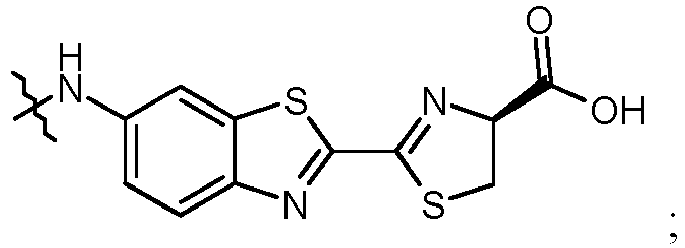
- m is 0, 1 or 2;
- p is 1, 2, 3 or 4;
- Z5 is a halogen atom;
- q is 0 or 1;
- Z6 is selected from a (C1-C6)alkyl and a phenyl group, said phenyl group being optionally substituted by an amino group;
- Z7, Z8 and Z11, identical or different, are selected from a hydrogen atom, a (C1-C4)alkyl, a tetrahydroquinolynyl and a -(CH2)i-aryl group with i being 0, 1 or 2, said aryl group being optionally substituted by one, two, three, or four halogen atom(s) or one (C1-C4) alkyl group; and
- Z9 and Z10, identical or different, are selected from a halogen atom and a (C1-C6)alkyl group;
said compound of formula (I) being in all the possible racemic, enantiomeric and diastereoisomeric isomer forms. - P5 is selected from the following amino acids residues or amino acid like structures:
- In a particular embodiment, the asymmetric carbon atom of pyrrolidine ring linked to

- In yet a particular embodiment, the asymmetric carbon atom of pyrrolidine ring linked to

- Accordingly, the compounds of the invention comprise several asymmetric carbon atoms. They thus may exist in the form of enantiomers or diastereoisomers. These enantiomers and diastereoisomers, and also mixtures thereof, including racemic mixtures, form part of the invention.
- The compounds of the invention may also exist in the form of bases or of acid-addition salts. These salts may be prepared with pharmaceutically acceptable acids, but the salts of other acids that are useful, for example, for purifying or isolating the compounds of formula (I) also form part of the invention.
- The term "pharmaceutically acceptable" means what is useful in preparing a pharmaceutical composition generally safe, non-toxic, and neither biologically nor otherwise undesirable and includes what is acceptable for veterinary as well as human pharmaceutical use.
- The compounds of the invention may also exist in the form of hydrates or solvates, i.e. in the form of associations or combinations with one or more molecules of water or with a solvent. Such hydrates and solvates also form part of the invention.
- In the context of the present invention, the following definitions apply:
- a halogen atom: a fluorine, a chlorine, a bromine or an iodine atom. The halogen atoms may be more particularly fluorine atoms.
- Ct-Cz: a carbon-based chain possibly containing from t to z carbon atoms in which t and z may take values from 1 to 10; for example, C1-C3 is a carbon-based chain possibly containing from 1 to 3 carbon atoms.
- an alkyl: a linear or branched saturated aliphatic group, in particular comprising form 1 to 6 carbon atoms. Examples that may be mentioned include methyl, ethyl, n-propyl, isopropyl, butyl, isobutyl, tert-butyl, pentyl, neopenthyl etc.
- an alkoxy: a radical -O-alkyl in which the alkyl group is as defined previously.
- an aryl: a monocyclic or bicyclic aromatic group containing between 5 and 10 carbon atoms, in particular between 6 and 10 carbon atoms. By way of examples of an aryl group, mention may be made of phenyl or naphthyl group. Preferably, the aryl group is phenyl.
- Among the compounds of general formula (I) according to the invention, a subgroup of compounds is constituted by the compounds of formula (II):

- R1 and R2 are as defined in the formula (I);
- Z1 and Z2 are as defined in the formula (I);
- R3 is selected from a -CH3, a -CH(CH3)2, a -CH2CH(CH3)2, a -CH(CH3)CH2CH3 and a 4-hydroxyphenyl group;
- A and B, identical or different, are selected from a nitrogen atom and a -CH- group;
- R5 and R6, identical or different, are selected from a hydrogen atom and a (C1-C6)alkyl group; and
- R4 is selected from a -CH3, a -CH(CH3)2, a -CH2CH(CH3)2, a -CH(CH3)CH2CH3 and a -(CH2)2CO2H group;
- In a particular embodiment, the asymmetric carbon atom of pyrrolidine ring linked to

- In yet a particular embodiment, the asymmetric carbon atom of pyrrolidine ring linked to

- Preferably in formula (II), at least one of A and B is a -CH group, more preferably A and B are -CH groups.
- According to a preferred mode of the invention, the compounds according to the invention may be of formula (III):
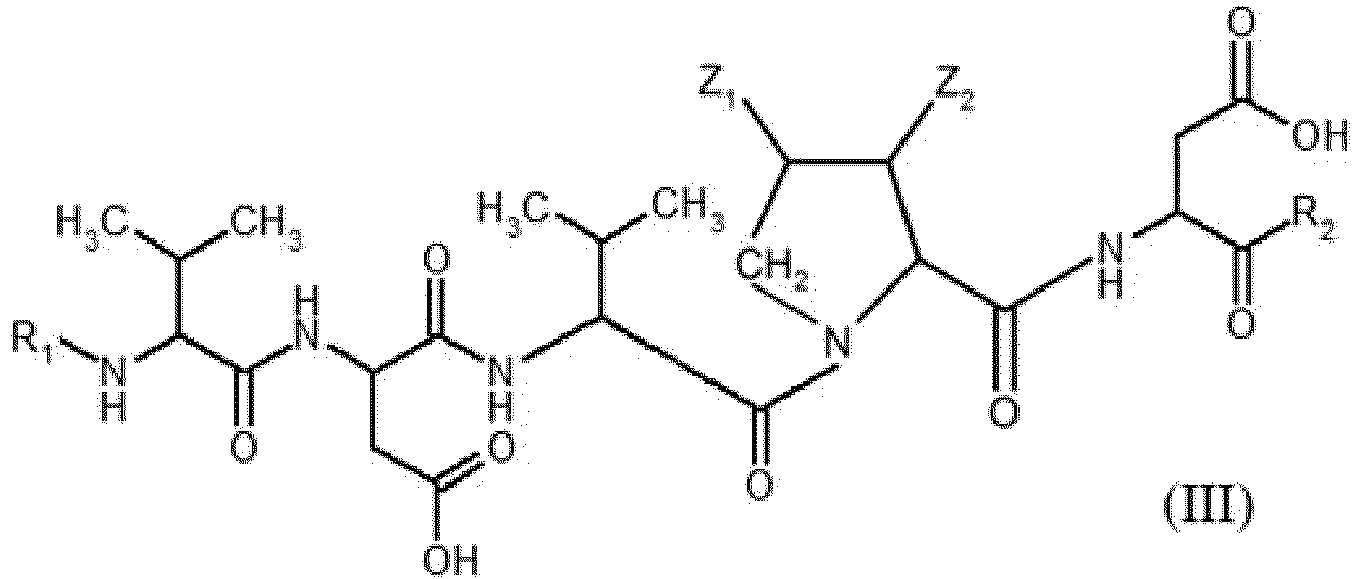
- or one of its salts;
- said compound of formula (III) being in all the possible racemic, enantiomeric and diastereoisomeric isomer forms.
- According to another preferred embodiment, in formula (I), (II) and/or (III), R1 is:

- According to another preferred embodiment, in formula (I), (II) and/or (III), R1 is:

- According to another preferred embodiment, in formula (I), (II) and/or (III), R2 is selected from:


- Preferably, R2 is:

- In a particular embodiment, when R2 is a methoxyphenyl as defined above, the phenyl ring is substituted with 2, 3, 4 or 5 halogen atoms, preferably said halogen is selected from fluorine or chlorine atoms.
- According to yet a preferred embodiment, the compounds according to the invention have at least one, preferably at least three asymmetric carbon atoms of (S) configuration.
- In a particular embodiment, the asymmetric carbon atom of pyrrolidine ring linked to

- More preferably, all the asymmetric carbon atoms of the compounds according to the invention are of (S) configuration.
- In yet a particular embodiment, the asymmetric carbon atom of pyrrolidine ring linked to

- Among the compounds of general formula (I) according to the invention, mention may be made especially of the following compounds:
STRUCTURE / Compound No IUPAC NAME 
(S)-3-((S)-2-acetamido-3-methylbutanamido)-4-(((S)-1-((2S,3S)-2-(((S)-3-carboxy-1-((4-methyl-2-oxo-2H-chromen-7-yl)amino)-1-oxopropan-2-yl)carbamoyl)-3-neopentylpyrrolidin-1-yl)-3-methyl-1-oxobutan-2-yl)amino)-4-oxobutanoic acid 
(S)-4-(((S)-1-((2S,3S)-2-(2-(carboxymethyl)-2-(2-(2,6-difluorophenoxy)acetyl)hydrazince arbonyl)-3-neopentylpyrrolidin-1-yl)-3-methyl-1-oxobutan-2-yl)amino)-3-((S)-3-methyl-2-(quinoline-2-carboxamido)butanamido)-4-oxobutanoic acid 
(S)-4-(((S)-1-((2S,3S)-2-(((S)-3-carboxy-1-oxo-1-(thiazol-5-ylmethoxy)propan-2-yl)carbamoyl)-3-neopenthylpyrrolidin-1-yl)-3-methyl-1-oxobutan-2-yl)amino)-3-((S)-3-methyl-2-(quinoline-2-carboxamido)butanamido)-4-oxobutanoic acid 
(S)-4-(((S)-1-((2S,3S)-2-(2-(carboxymethyl)-2-(2-(2,6-difluorophenoxy)acetyl)hydrazince arbonyl)-3-neopentylpyrrolidin-1-yl)-3-methyl-1-oxobutan-2-yl)amino)-3-((S)-3-methyl-2-(quinoline-2-carboxamido)butanamido)-4-oxobutanoic acid 
(S)-4-(((S)-1-((2S,3S)-2-(2-((E)-4-(benzyl(methyl)amino)-4-oxobut-2-enoyl)-2-(carboxymethyl)hydrazinecarbonyl )-3-neopentylpyrrolidin-1-yl)-3-methyl-1-oxobutan-2-yl)amino)-3-((S)-3-methyl-2-(quinoline-2-carboxamido)butanamido)-4-oxobutanoic acid 
(S)-3 -(2-((2-(tert-butyl)phenyl)amino)-2-oxoacetamido)-4-(((S)-1-((2S,3S)-2-(2-(carboxymethyl)-2-(2-(2,6-difluorophenoxy)acetyl)hydrazince arbonyl)-3-neopentylpyrrolidin-1-yl)-3-methyl-1-oxobutan-2-yl)amino)-4-oxobutanoic acid - Accordingly, in a particular embodiment, a compound according to the invention is selected from compounds 1 to 6 indicated here-above.
- The compounds of the invention may be prepared by organic and peptide synthesis. Assembly of the structure by peptide synthesis belongs to the general knowledge of the skilled artisan and further details are depicted in Linton et al., J. Med. Chem. 2005, 48, 6779-6782 and in Chauvier et al Cell Death Dis 2011, 2:e203. The precursors of R1, R2, P1, X, P3, P4 and P5 that lead to the compounds of the invention are introduced in the different steps of the process.
- The precursor may either be commercial product or commercial product that has been functionalized according to well-known protocols for the skilled artisan. Further details and references can be made to "Design of Caspase inhibitors as potential clinical agents; CRC press; CRC Enzyme inhibitors series, Edited by Tom O'Brien & Steven D. Linton chapter 7 by BR Ullman".
- In particular, example 1 of the present invention illustrates the protocol of preparation of the compound 2 according to the invention.
- As specified previously and clearly illustrated by the following examples, the compounds according to the present invention are useful as selective Caspase-2 inhibitors.
- Indeed, as pointed out by the examples they show a much better inhibitory effect for Caspase-2 than for Caspase-3 despite that these two have closest resembling active site among all the caspases. As a consequence, they are efficient to selectively inhibit Caspase-2.
- In view of the above, the compounds of the present invention, and more particularly the compounds for which the R2 radical is selected from:


- According to one of its aspects, the present invention therefore relates to a compound of the invention wherein R2 is as above defined, for its use as a medicament, in particular a medicament intended to selectively inhibit the activity of Caspase-2.
- In other terms, the invention concerns the use of a compound according to the invention in which R2 is as above defined for the preparation of a medicine, in particular of a drug for selectively inhibiting the activity of Caspase-2.
- In other words, the present invention relates to a medicament comprising at least one compound according to the invention in which R2 is as above defined, in particular a medicament for selectively inhibiting the activity of Caspase-2.
- Thus, according to another of its aspects, the invention is directed to a compound of the invention wherein R2 is as above defined, for its use in the prevention and/or treatment of diseases and/or injuries in which Caspase-2 activity is implicated.
- In other terms, the invention concerns the use of a compound according to the invention in which R2 is as above defined for the preparation of a medicament intended to prevent and/or treat diseases and/or injuries in which Caspase-2 activity is implicated.
- In particular, said diseases and/or injuries may be selected among pathologies with cell death, particularly among:
- chronic degenerative diseases such as Alzheimer's disease or other Tauopathies, Huntington's disease and Parkinson's disease;
- neonatal brain damage in particular neonatal brain ischemia;
- traumatic brain injury;
- kidney ischemia;
- hypoxia-ischemia (H-I) injuries;
- stroke-like situations brain injuries;
- heart ischemia;
- myocardial infarction;
- amyotrophic lateral sclerosis (ALS);
- retinal damages;
- ophthalmic diseases such as blunt ocular injury, ischemic optic neuropathy and glaucoma;
- skin damages;
- sterile inflammatory diseases such as diabetes, atherosclerosis, cardiac ischemia, gout, pseudogout, joint loosening, atherosclerosis, syndromes triggered by aluminium salts, non-arteritic ischemic optic neuropathy (NAION), glaucoma and metabolic diseases;
- non-sterile inflammatory diseases such as bacterial infection in particular with bacteria producing pore-forming toxins, influenza virus infection and single-stranded (ss) RNA Rhabdoviridae infection such as Maraba virus or vesicular stomatitis virus (VSV);
- diseases caused by pathogenic bacteria, such as Brucella, Staphylococcus aureus and Salmonella;
- dyslipidemias;
- obesity;
- metabolic syndrome; and
- nonalcoholic fatty liver disease.
- More particularly, said diseases and/or injuries are selected from chronic neurodegenerative diseases. Preferably they are chosen among Alzheimer's disease, other known tauopathies (as primary age-related tauopathy, chronic traumatic encephalopathy, progressive supranuclear palsy, corticobasal degeneration, frontotemporal dementia, parkinsonism linked to chromosome 17, Lytico-Bodig disease, ganglioglioma and gangliocytoma, meningioangiomatosis, postencephalitic parkinsonism, subacute sclerosing panencephalitis, lead encephalopathy, tuberous sclerosis, antothenate kinase-associated neurodegeneration, lipofuscinosis), Huntington's disease and Parkinson's disease, more specifically Alzheimer's disease.
- According to another aspect, the invention is directed to a compound of the invention wherein R2 is as above defined, for its use in synaptoprotection, more particularly in the prevention and/or treatment of neurodegenerative diseases, even more particularly of Alzheimer's Disease or of tauopathies.
- In an embodiment of the invention, the invention is directed to a compound selected from compound 2, compound 3, compound 4, compound 5 and/or compound 6 as defined above for its use in the prevention and/or treatment of Alzheimer's disease or other Tauopathies.
- In a further embodiment, the invention is directed to compound 2 as defined above for its use in the prevention and/or treatment of Alzheimer's disease or other Tauopathies.
- In a further embodiment, the invention is directed to compound 3 as defined above for its use in the prevention and/or treatment of Alzheimer's disease or other Tauopathies.
- In a further embodiment, the invention is directed to compound 4 as defined above for its use in the prevention and/or treatment of Alzheimer's disease or other Tauopathies.
- In a further embodiment, the invention is directed to compound 5 as defined above for its use in the prevention and/or treatment of Alzheimer's disease or other Tauopathies.
- In a further embodiment, the invention is directed to compound 6 as defined above for its use in the prevention and/or treatment of Alzheimer's disease or other Tauopathies.
- In a particular embodiment, the present invention relates to a compound as defined above for its use in the prevention and/or treatment of Alzheimer's disease.
- In an embodiment of the invention, the invention is directed to a compound selected from compound 2, compound 3, compound 4, compound 5 and/or compound 6 as defined above for its use in the prevention and/or treatment of Alzheimer's disease.
- In a further embodiment, the invention is directed to compound 2 as defined above for its use in the prevention and/or treatment of Alzheimer's disease.
- In a further embodiment, the invention is directed to compound 3 as defined above for its use in the prevention and/or treatment of Alzheimer's disease.
- In a further embodiment, the invention is directed to compound 4 as defined above for its use in the prevention and/or treatment of Alzheimer's disease.
- In a further embodiment, the invention is directed to compound 5 as defined above for its use in the prevention and/or treatment of Alzheimer's disease.
- In a further embodiment, the invention is directed to compound 6 as defined above for its use in the prevention and/or treatment of Alzheimer's disease.
- Even more particularly, as shown in the experimental section, compound of the invention in which R2 is as above defined are effective in protecting neuronal cells from Aβ oligomer induced dysfunction or toxicity.
- Accordingly, according to a further aspect, the invention is directed to a compound of the invention wherein R2 is as above defined, for its use in protecting neuronal cells from Aβ-induced dysfunction or toxicity, more particularly against Aβ-induced cell death, Aβ-induced axonal degeneration, Aβ-induced electrophysiological dysfunction and/or Aβ-induced synapse loss.
- In an embodiment of the invention, the invention is directed to a compound selected from compound 2, compound 3, compound 4, compound 5 and/or compound 6 as defined above for its use in protecting neuronal cells from Aβ-induced dysfunction or toxicity, more particularly against Aβ-induced cell death, Aβ-induced axonal degeneration, Aβ-induced electrophysiological dysfunction, and/or Aβ-induced synapse loss.
- In a further embodiment, the invention is directed to compound 2 as defined above for its use in protecting neuronal cells from Aβ-induced dysfunction or toxicity, more particularly against Aβ-induced cell death, Aβ-induced axonal degeneration, Aβ-induced electrophysiological dysfunction, and/or Aβ-induced synapse loss.
- In a further embodiment, the invention is directed to compound 3 as defined above for its use in protecting neuronal cells from Aβ-induced dysfunction or toxicity, more particularly against Aβ-induced cell death, Aβ-induced axonal degeneration, Aβ-induced electrophysiological dysfunction, and/or Aβ-induced synapse loss.
- In a further embodiment, the invention is directed to compound 4 as defined above for its use in protecting neuronal cells from Aβ-induced dysfunction or toxicity, more particularly against Aβ-induced cell death, Aβ-induced axonal degeneration, Aβ-induced electrophysiological dysfunction, and/or Aβ-induced synapse loss.
- In a further embodiment, the invention is directed to compound 5 as defined above for its use in protecting neuronal cells from Aβ-induced dysfunction or toxicity, more particularly against Aβ-induced cell death, Aβ-induced axonal degeneration, Aβ-induced electrophysiological dysfunction, and/or Aβ-induced synapse loss.
- In a further embodiment, the invention is directed to compound 6 as defined above for its use in protecting neuronal cells from Aβ-induced dysfunction or toxicity, more particularly against Aβ-induced cell death, Aβ-induced axonal degeneration, Aβ-induced electrophysiological dysfunction, and/or Aβ-induced synapse loss.
- According to yet another of its aspects, the invention is directed to a method for preventing and/or treating diseases and/or injuries in which Caspase-2 activity is implicated, comprising at least a step of administering to an individual in need thereof at least an effective amount of at least one compound in accordance with the invention, in which R2 is as above defined.
- According to another of its aspects, the present invention relates to a pharmaceutical composition comprising at least one compound according to the invention in which R2 is as above defined, and at least one pharmaceutically acceptable excipient.
- The pharmaceutical compositions of the invention may contain more particularly an effective dose of at least one compound according to the invention in which R2 is as above defined.
- An "effective dose" means an amount sufficient to induce a positive modification in the condition or injury to be regulated or treated, but low enough to avoid serious side effects. An effective dose may vary with the pharmaceutical effect to obtain or with the particular condition being treated, the age and physical condition of the end user, the severity of the condition or injury being treated/prevented, the duration of the treatment, the nature of other treatments, the specific compound or composition employed, the route of administration, and like factors.
- A compound of formula (I) according to the invention in which R2 is as above defined may be administered in an effective dose by any of the accepted modes of administration in the art.
- In one embodiment, this compound may be used in a composition intended to be administrated by oral, nasal, sublingual, ophthalmic, topical, rectal, vaginal, urethral or parenteral injection route.
- The route of administration and the galenic formulation will be adapted by one skilled in the art pursuant to the desired pharmaceutical effect.
- One of ordinary skill in the art of therapeutic formulations will be able, without undue experimentation and in reliance upon personal knowledge, to ascertain a therapeutically effective dose of a compound of the invention for a given indication.
- A pharmaceutical composition of the invention may be formulated with any known suitable pharmaceutically acceptable excipients according to the dose, the galenic form, the route of administration and the likes.
- As used herein, "pharmaceutically acceptable excipients" include any and all solvents, dispersion media, coatings, antibacterial and antifungal agents, isotonic and absorption delaying agents and the like. Except insofar as any conventional excipient is incompatible with the active compounds, its use in a medicament or pharmaceutical composition of the invention is contemplated.
- A medicament or pharmaceutical composition of the invention may be in the form of tablets, pills, powders, lozenges, sachets, cachets, elixirs, suspensions, emulsions, solutions, syrups, aerosols, sprays, ointments, gels, creams, sticks, lotions, pastes, soft and hard gelatine capsules, suppositories, sterile injectable solutions, sterile packages powders and the like.
- According to one embodiment, a pharmaceutical composition of the invention may be intended to be administered separately, sequentially or simultaneously with an agent useful for the prevention and/or the treatment of a disease condition, in particular Alzheimer's disease, said agent being different from the compound of formula (I) of the invention.
- The compounds of the present invention and more particularly the compounds for which the R2 radical is selected from:


- Thus, according to one of its aspects, the present invention relates to the use of a compound according to the invention in which R2 is as above defined, as activity-based probe (ABP) to selectively detect Caspase-2 activity.
- The present invention will be better understood by referring to the following examples which are provided for illustrative purpose only and should not be interpreted as limiting in any manner the instant invention.
- The synthesis of compounds according to the invention is inspired by the process of preparation of the compound TRP601 represented below:

- The synthesis of TRP601 is described in D. Chauvier et al., Cell Death and Disease (2011) 2, e203.
- For example, Compound 2 of the present invention differs from TRP601 in that:
- P1 and P4 are represented by


- The proline like residue


- The compound 2 has thus been obtained by reproducing the steps disclosed in the above-mentioned article to lead to TRP601 except that:
- the precursor

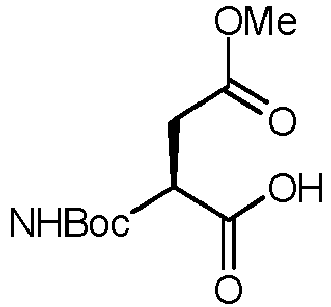
- the precursor


- The precursor of P1 and P4 has been prepared starting from the commercially available (S)-aspartic acid in which the amine function has been protected by a Boc group according to a well-known protocol for the skilled artisan.
- The precursor of proline has been obtained according to was obtained as described by Maillard et al., in Bioorganic & Medicinal Chemistry 19 (2011):5833-5851.
- The other building blocks of the compound 2 have been introduced in the same manner as for TRP601 in the above-mentioned publications, i.e. with the same reagents, in the same conditions and with the same quantities.
- Compound 2 has thus been obtained with a yield of more than 90 % and characterized by HPLC, with either the configuration (R or S) of the asymmetric carbon atom of pyrrolidine ring linked to

- The inhibitory efficiency of compounds of the invention which are irreversible inhibitors of Caspase-2 and Caspase-3 can be evaluated by using the below explained protocol. Compound 2, as well as compounds 4, 5, 6 are irreversible inhibitor and has been evaluated accordingly.
- The efficiency of the comparative compound Δ2Me-TRP601, that is an already known group II Caspase inhibitor (inhibitor of Caspase-2, Caspase-3 and Caspase-7), has been assessed by a similar protocol described in Chauvier et al., 2011 Cell Death Dis 2011, 2:e203.
- These tested compounds are represented below:


- In this example, the Caspase-2 and Caspase-3 are human recombinant active enzymes that are respectively provided by Enzo Life® (ALX-201-057-U100) and R&D Systems® (707-C3-010/CF).
- Caspase-2 is used at a final concentration of 0.1 nM in a "Caspase-2 buffer" containing 20 mM HEPES (pH 7.4), 5mM DTT, 2mM EDTA, 0.1% CHAPS and 800 mM succinate. Caspase-3 is used at a final concentration of 0.5 nM in a "Caspase-3 buffer" containing 20 mM HEPES (pH 7.4), 0.1% CHAPS, 5 mM DTT, and 2 mM EDTA.
- The peptide substrates used for the enzymatic activity measurements are Ac-DEVD-AMC and Ac-VDVAD-AMC commercialized by EnzoLife® (respectively referenced ALX-260-031-M005 and ALX-260-060-M005). They are fluorogenic due to the presence of their AMC (7-amino-4-methylcoumarin) end group. The releasing of AMC enables to follow the enzymatic activity in fluorescence unit RFU over time in a 96-wells microplate.
- The fluorescence values are measured at 37°C with a spectrofluorometer with a microplate reader BMG FLUOstar OPTIMA. This apparatus is driven by the software Biolise® and is equipped with thermoelectric cooling device by Peltier effect. The mathematical analyses of the experimental data are done with the software Kaleidagraph®.
- The inhibitory properties of the tested compounds are evaluated by the determination of the kinact/KI ratio regarding either Caspase-2 or Caspase-3 wherein:
- kinact is the maximal inactivation rate constant, and
- KI is the dissociation constant according to:

- Accordingly, the higher the ratio, the more efficient the inhibitor.
- Said ratio is measured according to the continuous method (Allison RD. Curr Protoc Protein Sci. 2001 May;Chapter 3:Unit 3.5.; Chauvier et al., 2011 Cell Death Dis 2:e203; Tan et al., J Med Chem 2015, 58:598-312).
- Briefly, Caspases activities were determined by monitoring the hydrolysis of fluorogenic substrates (λexc = 355 nm, λem = 460 nm) as a function of time, in the presence of untreated Caspases (control) or Caspases that had been incubated with a test compound, for 30 min minimum at 37°C using a BMG Fluostar microplate reader (black 96-well microplates) and the initial velocity (V0) was determined from the linear portion of the progress curve.
- Substrates and compounds were previously dissolved in DMSO at 10 mM, with the final solvent concentration kept at lower 4% (v/v). V0, relative velocities, KM and IC50 were determined from experimental data using Mars data Analysis 2.0 and Kaleidagraph softwares.
- For irreversible inhibitors as compound 2, inactivation can be represented by the minimum kinetic scheme, where E and I are the free forms of enzyme and inhibitor, E*I a kinetic chimera of the Michaelis complex and E-I the covalent complex or inactivated enzyme.
KI k3
E + I ⇄ E*I → E-I
- Inhibitor binding affinity (dissociation constant, Ki) and first-order rate constant (k3) parameters were determined for Caspase-2 and Caspase-3 using the progress curve method. The ratio k3/KI was obtained by fitting the experimental data to the equations (F.U., fluorescence unit):


- Linear and nonlinear regression fits of the experimental data to the equations were performed with Kaleidagraph Software.
- A continuous method of determination of the kinact/KI ratio was used for evaluating the inhibitory activity of the tested compounds against Caspase-2 and Caspase-3.
- The reaction mixture is prepared by letting the enzyme and the buffer incubate at 37°C.
- The tested inhibitory compounds are prepared at different concentrations (1/4 IC50; 1/2 IC50; IC50; 2 IC50; 4 IC50) and put in the microplate.
- Then the reaction mixture comprising the enzyme, the buffer and the substrate is rapidly added in the wells.
- The RFU (Relative Fluorescence Units) = f(times) curves are traced for each concentration of tested molecule according to the following equation:

- V0 corresponds to the initial rate (RFU.s-1) in the concentration of 0 of the tested inhibitory compound;
- kobs is the inactivation rate constant;
- RFU0 is the fluorescence value at t=0 min; and
- m0 is the variable i.e. the inhibitor concentration.
- Adjusting the curve f([I]) = kobs in an hyperbole using the Kaleigagraph software is then done in order to obtain the kinact/kI ratio on the basis of the following equation:

Table 1 Inhibitor Selectivity for Caspase 2 Compound 2 yes Compound 4 yes Compound 5 yes Compound 6 yes Δ2Me-TRP-601 (comparative compound) no - Tested compounds are found efficient to inhibit Caspase-2.
- However, compound 2 reacts totally differently than Δ2Me-TRP-601 with respect to Caspase-3 (see Table 2 below).
Table 2 k3/KI (M-1.s-1) Casp2 Casp3 Selectivity ratio (C2/C3) Δ2Me-TRP-601 1 586 020 1 613 405 0,98 Compound 2 enantiomer a 1 894 076 2 625 721 Compound 2 enantiomer b 1 720 ND +++ ND: no detectable inhibitory activity. +++: as no inhibitory activity is detectable toward casp3, selectivity is very important (>>1000). - Indeed, compound 2 is much more efficient to inactivate Caspase-2 than to inactivate Caspase-3 whereas Δ2Me-TRP-601 does not exhibit this selectivity.
- As a conclusion, compound 2 is not only efficient to inhibit Caspase-2, but is also selective regarding Caspase-2 with respect to Caspase-3. Interestingly, it is noteworthy that very different level of inhibition of caspase 2 are noticed depending on the configuration (R or S) of the asymmetric carbon atom of pyrrolidine ring linked to

- To determine the efficiency of a substrate with respect to an individual caspase we measure the ratio kcat / KM which accounts for the catalytic efficiency, where kcat (s-1) is the catalytic constant or number of substrate molecules converted to product per time unit by each active site when the enzyme is saturated and KM is the Michaelis-Menten constant which accounts for the enzyme-substrate affinity, it represents the substrate concentration for v = Vmax/2.
- Caspase-2 (or caspase-3) is incubated with the inhibitor or buffer alone, adapted to the enzyme and to the Michaelis-Menten complex, for 30 min at 37 ° C. The reaction is triggered, in a total volume of 100 µl, when the buffer-substrate mixture is added; the enzymatic activity is then measured over 20 minutes. The release of the fluorogenic AMC group is detected using the following wavelengths: λexc = 360 nm and λem = 460 nm.
Table 3 Enzymes AMC Substrates kcat/KM (index) Casp-2 Ac-VDVAD-↓-AMC (25 µM) ++++ (0,1 nM) (62 kDa) Caspase-3 Ac-VDVAD-↓-AMC (10 µM) ++++ (0,5 nM) (60 kDa) Casp-2 Compound 1 (25 µM) ++++ (0,1 nM) (62 kDa) Caspase-3 Compound 1 (10 µM) +/- (0,5 nM) (60 kDa) ↓ : cleavage site of the enzyme - The enzymatic activity is characterized by the initial velocity values (Vi) which are defined from equation 1 (eq.1), where Vmax is the rate at which the enzyme is saturated with substrate, [S] is the substrate concentration. The initial velocity, expressed here in RFU.min-1, is obtained experimentally from the slope value on the linear portion of the representation: f (time) = RFU, a value calculated directly by the Biolise® software.

- The initial velocity obtained for the control (V0) is considered to be 100% of the enzymatic activity. An inhibition is characterized by an activity, after treatment with the inhibitor, of less than 100%. The percentage of inhibition is calculated from equation 2 (eq. 2), where V0 is the initial rate of the negative control, Vi is the initial rate in the presence of the inhibitor.

- The inhibitory efficiency of compounds of the invention which are reversible inhibitors of Caspase-2 and Caspase-3 can be evaluated by using the below explained protocol. Compound 3 is a reversible inhibitor and has been evaluated accordingly.
- A preliminary step in the characterization of an inhibitor is the determination of its IC50. The IC50 is the necessary concentration of an inhibitor to decrease the enzyme activity by 50% of its maximum and uninhibited value.
- The compound, at different concentrations, is incubated with the enzyme and buffer for 30 minutes at 37 ° C to allow formation of the Enzyme-Inhibitor complex. The reaction is initiated by addition of buffer and substrate, and then activity is measured over 15 minutes for the determination of initial velocities. The inhibitory effect of the analyzed compound (in %) as a function of its concentration generally follows equation 3 (eq. 3) which translates a hyperbola. The equation is entered in the Kaleidagraph software, for the adjustment of the curve f ([I]) =% Inhibition, where [I] is the inhibitor concentration, the IC50 is then obtained.

- The reversibility of the inhibition is analyzed by the dilution method for Ac-VDVAD-CHO, Ac-DEVD-CHO and compound 3. The enzyme and the inhibitor (or DMSO as control) are incubated for 30 minutes at 37°C. The complex thus formed is diluted to 100th in the buffer/substrate mixture and then the activity measurement is started over 20 minutes. The initial rate obtained for the DMSO represents the 100% activity and will serve as a reference for the quantification of the residual activity of the enzyme in the presence of the inhibitor.
- In order to characterize the reversible inhibitors, the dissociation constant Ki is determined. It gives an account of the affinity of the inhibitor for the enzyme. For this purpose, the inhibitor is competed with the substrate with respect to the active site of the enzyme. If, after dilution, the activity is restored to more than 50%, the inhibitor is said to be "reversible".
- The inhibitor is incubated with the Caspase-buffer mixture for 30 minutes at 37°C at different concentrations (1/4 IC50, 1/2 IC50, IC50, 2 IC50, 4 IC50). The reaction is started over 20 minutes upon addition of the buffer-substrate mixture.
- Initial velocity values in RFU.min-1 are reduced to Specific Activity (SA)values (pmol/min /µg enzyme) from an AMC standard range (1 RFU→ 0.02 pmol).
- The evolution of the ratio 1/SA as a function of 1/[S] makes it possible to obtain the so-called double-inverse graph of Lineweaver-Burk from equation 4 (eq.4) where Vmaxapp and KMapp are the parameters which vary according to the type inhibition and as a function of inhibitor concentration. The intersection of the lines obtained for increasing inhibitor concentrations makes it possible to distinguish different types of inhibitors.

- A secondary graph, obtained from the values of the slopes of the Lineweaver-Burk plot as a function of the concentration of inhibitor, makes it possible to obtain the value of the Ki. Its value is given by the abscissa point at the origin.
- The inhibitory powers of the compounds with respect to the Casp-2 and -3 are quantified by the determination of the IC50. The results are presented in Table 3 (left). The IC50 values place compound 3 at the head behind the reference compound Ac-VDVAD-CHO (IC50 = 6.9 nM) in terms of efficacy on Casp-2. In addition to acting efficiently on Casp-2, compound 3 appears to be considerably less potent on Caspase-3 than Ac-VDVAD-CHO (IC50 = 7.23 nM). Thus compound 3 is Casp2-selective.
- The in-depth study of the inhibition mechanism was done as follows.
- The initial velocity V0 is expressed from equation 8 (eq. 8), where Vmax is the maximum reaction rate (reached when the enzyme is saturated with substrate), [S] the substrate concentration, KM is the Michaelis-Menten constant (substrate concentration corresponding to Vmax/2), Ki is the dissociation constant which accounts for the affinity of the inhibitor for the enzyme. The Ki allows to quantify the inhibitory power, the lower its value, the stronger the inhibitor.

- The secondary track obtained from the Lineweaver-Burk graph data allowed the Ki values to be determined. The Ki values for the various inhibitors as well as the selectivity indexes are presented in Table 4 (right).
Table 4 IC50 (nM) Ki (nM) Inhibitors Casp-2 Caspase-3 Casp-2 Caspase-3 Ac-VDVAD-CHO 6,9±0,6 7,23±0,66 6,31 7,68 Ac-DEVD-CHO 3907±189 0,7± 0,03 3 222 0,159 Table 5 Selectivity Indexes (KiCasp3/KiCasp2) Inhibitors Ac-VDVAD-CHO 1.3 Ac-DEVD-CHO 62 x 10-6 Compound 3 >> 1000 - The inhibitory efficiencies are represented by the IC50 values for the Ac-DEVD-CHO and Ac-VDVAD-CHO reference inhibitors as well as for the P2-variant Ac-VDVAD-CHO derivatives (Table 4). Quantification of the inhibition is given by the values of the Ki constants which account for the affinity of the inhibitor for the enzyme. A low value indicates a potent inhibitor on its target. The ratios of the constants allow to quantify the selectivity (Table 5), the higher the ratio, the more the inhibitor is selective of the Casp-2.
- The Ki values confirm and supplement the information provided by the IC50 data. Thus, compound 3 is an inhibitor that is still powerful on Casp-2 with a selectivity with respect to the latter markedly increased compared to Ac-VDVAD-CHO (Table 5).
- In this example, the protective effect of the compound 2 of the invention against cellular death induced by vincristine (a vinca alkaloid) is tested using a well-known flow cytometry cell death assay based on propidium iodide staining.
- To evaluate the protecting effect of compounds 2 and 3, a Caspase-dependent cellular model is used.
- Human HeLa cells are used in this model. HeLa cells (cervical cancer cell line) were obtained from American Type Cell Collection (ATCC), and were cultured in Dulbecco's Modified Eagle Medium (DMEM, High Glucose, GlutaMAX™, Pyruvate) (Gibco, Life technologies), supplemented with 10% FCS and antibiotics (Gibco, Life technologies).
- Human HeLa cells are treated with a solution of Vincristine (Sigma Aldrich) (diluted in water at 5mM). Vincristine works partly by binding to the Tubulin protein, stopping the cell from separating its chromosomes during the metaphase; the cell then undergoes apoptosis through a caspase-dependent process.
- Propidium iodide (PI) (Sigma Aldrich) is used to evaluate plasma membrane permeabilisation, a sign of cell death.
- 24 hours before pharmacological treatment, HeLa cells were plated into24-well plates. Culture medium was then removed, cells were washed with PBS, and fresh medium containing compound 2 or 3 at different concentrations was added 1 hour before addition of vincristine. Cells were exposed or not (control), to 20 nM Vincristine for 48 hours.
- The content of each well is collected is added to PBS and then centrifuged (900rpm; 5 min).
- The pellet obtained is put into 300µL of a medium comprising propidium iodide and incubated (37°C, 5% CO2) in the dark for 5 minutes and then subjected to flow cytometry analysis.
- Fluorescence-Activated Cell Sorting was performed using a FACSCalibur cytometer (Becton Dickinson, San Jose, CA). For each sample, data from 5,000 Cells were registered and analyzed with the CellQuest Pro™ software (Becton Dickinson). Analysis included FSC (Forward Scatter / relating to the cells' size) and SSC (Side Scatter / relating to the cells' granularity) parameters together with FL-1 and FL-3 channel.
Table 6 Composition Index of cell death Compound 2 and vincristine ++ Compound 3 and vincristine ++ Vincristine alone ++++ The number of "+" is indicative of cell mortality measured in the assay. The higher the number of "+" represented, the higher the cell mortality measured in the assay. - The percentage of propidium iodide positive cells gives an estimation of cell death.
- Control composition, which neither contains vincristine nor inhibitor, enables to estimate the quantity of cells that died naturally.
- Composition containing vincristine but no inhibitor, provides the total number of dead cells that corresponds to the sum of naturally dead cells and of apoptotic cells induced by vincristine.
- Inventors observe clearly that compound 2 and 3 protect the cells against apoptotic death induced by vincristine in a dose-dependent manner.
- Hippocampus are micro-dissected from E16 embryos of C57B16/J wt mice (Rene Janvier, France) in cold Gey's Balanced Salt Solution (GBSS, Sigma) supplemented with 0.1% glucose (Life technologies).
- Dissected structures are digested with papain (20U/ML in DMEM, Sigma; St. Louis, MO, USA) and mechanically dissociated in the presence of DNAse. Hippocampal cells are then rinsed and re-suspended in DMEM (Life Technologies, Inc., Gaithersburg, MD, USA) to a final density of 18 million cells/ml in Neurobasal (Life technologies) and Glutamax (0.1% LifeTechnologies) supplemented with B27 (1/50) and penicilline/sptreptomycine 1% (Gibco).
- This cell suspension is then used to fill the reservoirs of microfluidic chambers, as described (Peyrin et al, 2011 Lab Chips 11(21):3663; Deleglise et al, 2014 Acta Neuropathologica Comm. 2: 145). Microfluidic chips are placed in plastic Petri dishes containing H20-EDTA to prevent evaporation and incubated at 37°C in a humid 5% C02 atmosphere. The culture medium is renewed every seven days.
- Oligomeric form of Aβ1-42 (Tocris Bioscience, MN, USA), is produced according to Stine WB et al (2003) in J Biol Chem 278,pp 11612-11622 and can be controlled by electron microscopy as in Deleglise B et al. in Acta Neuropathol Commun. 2014;2: 145).
- Briefly, Aβ1-42 lyophilized peptides are solubilized at 1 mM in 1, 1, 1, 3, 3, 3,-hexafluoro-2-propanol (HFIP, Sigma Aldrich). After 30 min of incubation at RT, HFIP is evaporated for 12h under chemical hood and peptides are dried for l h (with a Speed Vac at 4°C). Then, 5 mM Aβ peptide stock solutions are obtained by resolubilization at in dimethylsulfoxide (DMSO, Sigma Aldrich). To obtain oligomers, Aβ peptide stock solution is diluted in cold phenol free DMEM-F12 medium (Life Technologies) to a final concentration of 100 µM. The solution is then incubated 24 h at 4°C. Soluble Aβ oligomer fraction is collected from the supernatant after a centrifugation step at 20 000 g (10 min; 4°C), and stored at -80°C until use.
- After 18 days of culture in micro fluidic chambers, hippocampal cells are preincubated for 1 h with compounds of the invention prior diluted in phenol free DMEM-F12 medium or in phenol free DMEM-F12 medium alone as a control solution. Cells are then intoxicated for 3 h to 6 h or 24 h with 10 or 100 nm of Aβ1-42 oligomers (or with phenol free DMEM-F12 medium alone as a control solution). After the intoxication step, cells are fixed in 4% paraformaldehyde (PFA, Sigma; St. Louis, MO, USA) for 20 min RT, and labelled as explained below to evaluate synapses status, cell death or axonal degeneration.
- Briefly, after the fixation step, cultures cells are washed twice with PBS + Azide 0.1% for 5 min and permeabilized for 10 min with 0.2% Triton X-100 and 0. 1% BSA
- (Bovine Serum Albumin, Sigma) in PBS + Azide 0,1%. Saturation step is then realized by incubating cells during 30 min in PBS + Azide 0.1%+BSA1%. Primary antibodies are then added and the samples incubated at 4°C overnight in PBS. Afterwards, samples are rinsed twice for 5 min with PBS + Azide 0.1% and further incubated with the corresponding secondary antibody together with phalloidin conjugated to Alexa Fluor 555 for 2 h RT. The chips were then rinsed twice with PBS + Azide 0.1%.
- The following antibodies are used: rabbit polyclonal anti-MAP-2 (AB5622; 1/400, MILLIPORE), mouse monoclonal Anti-Bassoon SAP7F407; 1 :400, Enzo LifeSciences). Species-specific secondary antibodies coupled to Alexa 350, 488 or 500 are used (1/500, Life Technologies, Inc., Gaithersburg, MD, USA). Phalloidin conjugated to Alexa Fluor 555 (1/500, EnzoLifeTechnologies) is used to stain F-actin.
- Images are acquired with an Axio-observer Zl (Zeiss, Germany) fitted with a cooled CCD camera (CoolsnapHQ2, Ropert Scientific). The microscope is controlled with Metamorph and Micro-manager software. Images were analyzed using ImageJ software.
- In the Aβ intoxicated cells, but not pretreated with compounds of the invention, a marked decrease in anti-Bassoon labelling is noticed as soon as 6 h of intoxication when compared with non-intoxicated samples. This loss of dendritic spines in hippocampal neurons mice provides evidence of neurodegeneration due to Aβ synaptotoxicity and results in the marked decrease in synapse number (almost 50%,
Figure 1 ). Further, 24 hours post-Aβ treatment, axonal degeneration is noticed for hippocampal neurons which have been not pretreated with compounds of the invention. Compounds of the invention are found efficient in protecting hippocampal cells from Aβ-induced cell death, Aβ-induced axonal degeneration, Aβ-induced electrophysiological dysfunction, and/or Aβ-induced synapse loss (Table 7 andFigure 1 ).Table 7 Composition Protective effect against Aβ toxicity Compound 2 + Compound 3 + Compound 4 + Compound 5 + Compound 6 + Aβ alone - + : significant protection against a Aβ-induced cell death, Aβ-induced axonal degeneration, Aβ-induced electrophysiological dysfunction, and/or Aβ-induced synapse loss. - Those experiments provide evidences that compounds of the invention, which are able to modulate the activity of Caspase-2 (tables 1 and 5), are efficient to treat or prevent the occurrence of disorder associated with Aβ neurotoxicity.
- Compounds of the invention are thus valuable compounds for the treatment of diseases associated with cell death or dysfunction mediated by Caspase 2 activity. More particularly, they are found to be efficient in treating neurodegenerative disorders as Alzheimer's disease (AD), Aβ synaptotoxicity being known to play an important in the pathophysiology of this disease. Furthermore, Caspase 2 is known in the art to mediate cleavage of tau which generates Δtau314, found implied in the cognitive decay in AD, thus making compounds of the invention valuable compounds for their use in treating or preventing diseases implying either tau and or Aβ toxicity.
- Item 1. A compound of formula (I):

- Z1 and Z2, identical or different are selected from a hydrogen atom, a (C1-C6)alkyl and a (C1-C6)alkoxy group;
- P5 is selected from the following amino acids residues or amino acid like structures:

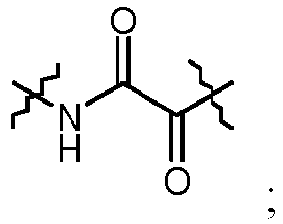
- P1 and P4, identical or different, are selected from the following amino acid like structures:

- P3 is selected from the following amino acid residues:

- R1 is selected from:
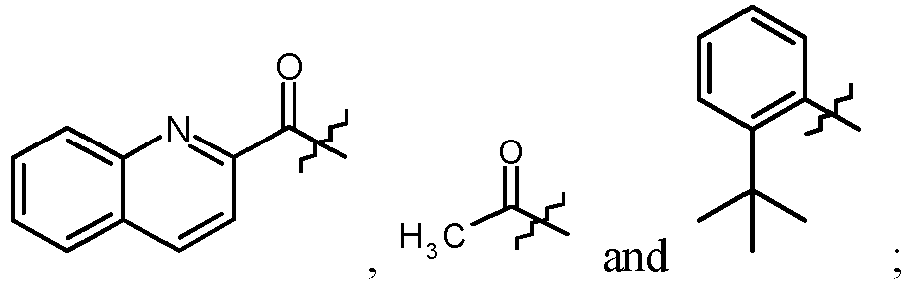
- R2 is selected from:

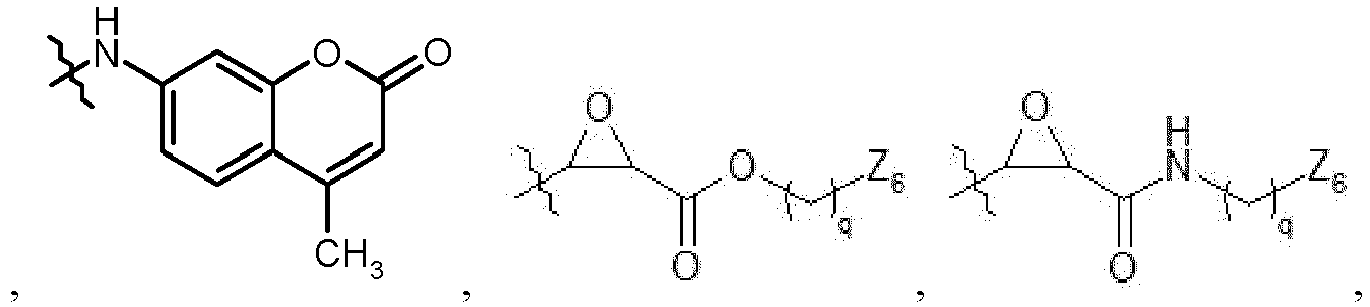


- m is 0, 1 or 2;
- p is 1, 2, 3 or 4;
- Z5 is a halogen atom;
- q is 0 or 1;
- Z6 is selected from a (C1-C6)alkyl and a phenyl group, said phenyl group being optionally substituted by an amino group;
- Z7, Z8 and Z11, identical or different, are selected from a hydrogen atom, a (C1-C4)alkyl, a tetrahydroquinolynyl and a -(CH2)i-aryl group with i being 0, 1 or 2, said aryl group being optionally substituted by one, two, three, or four halogen atom(s) or one (C1-C4) alkyl group; and
- Z9 and Z10, identical or different, are selected from a halogen atom and a (C1-C6)alkyl group;
said compound of formula (I) being in all the possible racemic, enantiomeric and diastereoisomeric isomer forms. - P5 is selected from the following amino acids residues or amino acid like structures:
- Item 2. Compound according to item 1 of formula (II):

- R1 and R2 are as defined in the formula (I) according to item 1;
- Z1 and Z2 are as defined in the formula (I) according to item 1;
- R3 is selected from a -CH3, a -CH(CH3)2, a -CH2CH(CH3)2 a -CH(CH3)CH2CH3 and a 4-hydroxyphenyl group;
- A and B, identical or different, are selected from a nitrogen atom and a -CH- group;
- R5 and R6, identical or different, are selected from a hydrogen atom and a (C1-C6)alkyl group; and
- R4 is selected from a -CH3, a -CH(CH3)2, a -CH2CH(CH3)2, a -CH(CH3)CH2CH3 and a -(CH2)2CO2H group;
- Item 3. Compound of formula (II) according to item 2, wherein at least one of A and B is a -CH group, preferably A and B are -CH groups.
- Item 4. Compound according to any one of the preceding items of formula (III):

said compound of formula (III) being in all the possible racemic, enantiomeric and diastereoisomeric isomer forms. - Item 5. Compound according to any one of the preceding items, wherein R1 is:

- Item 6. Compound according to any one of the preceding items, wherein R2 is selected from:


- Item 7. Compound according to any one of the preceding items, having at least one, preferably at least three asymmetric carbon atoms of (S) configuration, and more preferably all the asymmetric carbon atoms of (S) configuration.
- Item 8. Compound according to any one of the preceding items, selected from:


- Item 9. Compound according to any one of the preceding items, for its use as selective Caspase-2 inhibitor.
- Item 10. Pharmaceutical composition, comprising at least one compound according to any one of the items 1 to 8 and at least one pharmaceutically acceptable excipient, wherein R2 is selected from:


- Item 11. Compound according to any one of the items 1 to 8, for its use as a medicament, wherein R2 is selected from:


- Item 12. Compound according to any one of the items 1 to 8, for its use in the prevention and/or treatment of diseases and/or injuries in which Caspase-2 activity is implicated,
wherein R2 is selected from:


- Item 13. Compound according to item 12 for its use in the prevention and/or treatment of pathologies with cell death, particularly in chronic degenerative diseases such as Alzheimer's disease or other tauopathies, Huntington's disease and Parkinson's disease; neonatal brain damage in particular neonatal brain ischemia; traumatic brain injury; kidney ischemia; hypoxia-ischemia (H-I) injuries; stroke-like situations brain injuries; heart ischemia; myocardial infarction; amyotrophic lateral sclerosis (ALS); retinal damages; ophthalmic diseases such as blunt ocular injury, ischemic optic neuropathy and glaucoma; skin damages; sterile inflammatory diseases such as diabetes, atherosclerosis, cardiac ischemia, gout, pseudogout, joint loosening, atherosclerosis, syndromes triggered by aluminium salts, non-arteritic ischemic optic neuropathy (NAION), glaucoma and metabolic diseases; non-sterile inflammatory diseases such as bacterial infection in particular with bacteria producing pore-forming toxins, influenza virus infection and single-stranded (ss) RNA Rhabdoviridae infection, such as Maraba virus or vesicular stomatitis virus (VSV); diseases caused by pathogenic bacteria, such as Brucella, Staphylococcus aureus and Salmonella; dyslipidemias; obesity; metabolic syndrome; and nonalcoholic fatty liver disease.
- Item 14. Compound according to item 13, for its use in the prevention and/or treatment of Alzheimer's disease.
- Item 15. Compound according to item 12, for its use in protecting neuronal cells from Aβ-induced dysfunction or toxicity, more particularly against Aβ-induced cell death, Aβ-induced axonal degeneration, Aβ-induced electrophysiological dysfunction, and/or Aβ-induced synapse loss.
- Item 16. Use of a compound according to any one of the items 1 to 8 as activity-based probe to selectively detect Caspase-2 activity, wherein R2 is selected from:


said compound of formula (II) being in all the possible racemic, enantiomeric and diastereoisomeric isomer forms.
said compound of formula (II) being in all the possible racemic, enantiomeric and diastereoisomeric isomer forms.
Claims (10)
- A compound of formula (I):
 • Zi and Z2, identical or different are selected from a hydrogen atom, a (C1-C6)alkyl and a (C1-C6)alkoxy group;- Ps is selected from the following amino acids residues or amino acid like structures:
 - P1 and P4, identical or different, are selected from the following amino acid like structures:
 - P3 is selected from the following amino acid residues:
 - R1 is selected from:
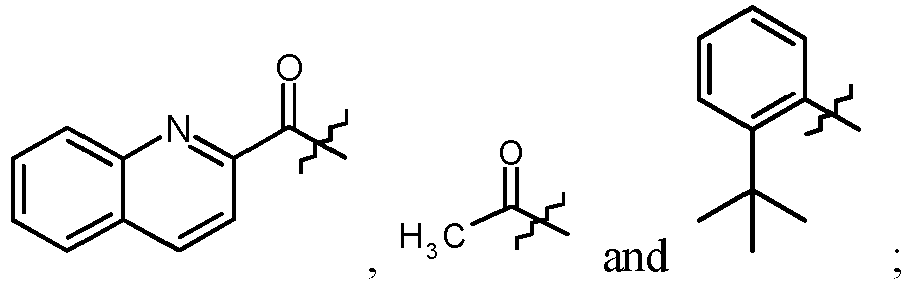 - R2 is selected from:in which:
 or one of its salts;said compound of formula (I) being in all the possible racemic, enantiomeric and diastereoisomeric isomer forms.
 - Compound according to claim 1 of formula (II):
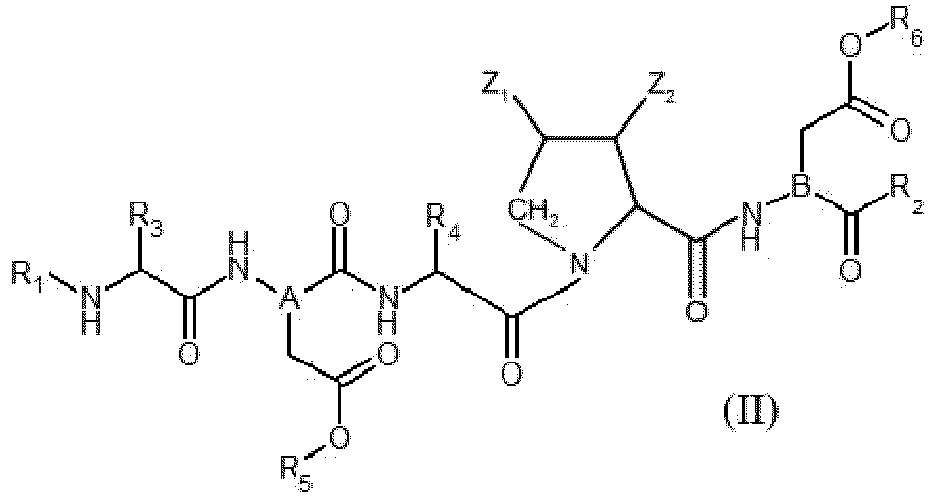 - R1 and R2 are as defined in the formula (I) according to claim 1;- Z1 and Z2 are as defined in the formula (I) according to claim 1;- R3 is selected from a -CH3, a -CH(CH3)2, a -CH2CH(CH3)2 a -CH(CH3)CH2CH3 and a 4-hydroxyphenyl group;- A and B, identical or different, are selected from a nitrogen atom and a -CH- group;- R5 and R6, identical or different, are selected from a hydrogen atom and a (C1-C6)alkyl group; and- R4 is selected from a -CH3, a -CH(CH3)2, a -CH2CH(CH3)2, a -CH(CH3)CH2CH3 and a -(CH2)2CO2H group;or one of its salts;
said compound of formula (II) being in all the possible racemic, enantiomeric and diastereoisomeric isomer forms. - Compound of formula (II) according to claim 2, wherein at least one of A and B is a -CH group, preferably A and B are -CH groups.
- Compound according to any one of the preceding claims of formula (III):
 wherein R1 and R2 are as defined in the formula (I) according to claim 1; or one of its salts;said compound of formula (III) being in all the possible racemic, enantiomeric and diastereoisomeric isomer forms.
 - Compound according to any one of the preceding claims, wherein R1 is:

- Compound according to any one of claims 1 to 4, wherein R1 is:

- Compound according to any one of the preceding claims, having at least one, preferably at least three asymmetric carbon atoms of (S) configuration, and more preferably all the asymmetric carbon atoms of (S) configuration.
- Compound according to any one of the preceding claims having one of the following formula:2


 or one of its salts;said compound being in all the possible racemic, enantiomeric and diastereoisomeric isomer forms.
 - Compound according to any one of the preceding claims, being:

- Use of a compound according to any one of the claims 1 to 8 as activity-based probe to selectively detect Caspase-2 activity.
Applications Claiming Priority (3)
| Application Number | Priority Date | Filing Date | Title |
|---|---|---|---|
| EP17306270 | 2017-09-26 | ||
| PCT/EP2018/076178 WO2019068538A1 (en) | 2017-09-26 | 2018-09-26 | Novel compounds and their use as selective inhibitors of caspase-2 |
| EP18772837.3A EP3688019B1 (en) | 2017-09-26 | 2018-09-26 | Novel compounds and their use as selective inhibitors of caspase-2 |
Related Parent Applications (2)
| Application Number | Title | Priority Date | Filing Date |
|---|---|---|---|
| EP18772837.3A Division EP3688019B1 (en) | 2017-09-26 | 2018-09-26 | Novel compounds and their use as selective inhibitors of caspase-2 |
| EP18772837.3A Division-Into EP3688019B1 (en) | 2017-09-26 | 2018-09-26 | Novel compounds and their use as selective inhibitors of caspase-2 |
Publications (2)
| Publication Number | Publication Date |
|---|---|
| EP4458846A2 true EP4458846A2 (en) | 2024-11-06 |
| EP4458846A3 EP4458846A3 (en) | 2025-01-15 |
Family
ID=60153235
Family Applications (2)
| Application Number | Title | Priority Date | Filing Date |
|---|---|---|---|
| EP24199728.7A Pending EP4458846A3 (en) | 2017-09-26 | 2018-09-26 | Novel compounds and their use as selective inhibitors of caspase-2 |
| EP18772837.3A Active EP3688019B1 (en) | 2017-09-26 | 2018-09-26 | Novel compounds and their use as selective inhibitors of caspase-2 |
Family Applications After (1)
| Application Number | Title | Priority Date | Filing Date |
|---|---|---|---|
| EP18772837.3A Active EP3688019B1 (en) | 2017-09-26 | 2018-09-26 | Novel compounds and their use as selective inhibitors of caspase-2 |
Country Status (10)
| Country | Link |
|---|---|
| US (2) | US11407741B2 (en) |
| EP (2) | EP4458846A3 (en) |
| JP (2) | JP7761893B2 (en) |
| KR (1) | KR102823028B1 (en) |
| CN (1) | CN111741970B (en) |
| BR (1) | BR112020005951A8 (en) |
| CA (1) | CA3078170A1 (en) |
| ES (1) | ES2989648T3 (en) |
| IL (1) | IL273604B2 (en) |
| WO (1) | WO2019068538A1 (en) |
Families Citing this family (3)
| Publication number | Priority date | Publication date | Assignee | Title |
|---|---|---|---|---|
| EP4458846A3 (en) * | 2017-09-26 | 2025-01-15 | Centre National de la Recherche Scientifique (CNRS) | Novel compounds and their use as selective inhibitors of caspase-2 |
| EP4112631A1 (en) | 2021-07-01 | 2023-01-04 | Kintsugi Therapeutics S.L. | Caspase-2 inhibitor compounds |
| EP4397674A1 (en) | 2023-01-03 | 2024-07-10 | Kintsugi Therapeutics S.L. | Caspase-2 inhibitor compounds |
Citations (2)
| Publication number | Priority date | Publication date | Assignee | Title |
|---|---|---|---|---|
| WO2005105829A2 (en) | 2004-04-30 | 2005-11-10 | Theraptosis S.A. | Caspase-2 inhibitors and their biological applications |
| EP2670774A1 (en) | 2011-02-01 | 2013-12-11 | Chiesi Farmaceutici S.p.A. | Caspase-2 inhibitors |
Family Cites Families (5)
| Publication number | Priority date | Publication date | Assignee | Title |
|---|---|---|---|---|
| EP1817328A2 (en) * | 2004-11-24 | 2007-08-15 | Theraptosis S.A. | New peptides useful as dual caspase-2/-6 inhibitors and their biological applications |
| WO2009001322A2 (en) | 2007-06-27 | 2008-12-31 | Theraptosis Sa | Caspase inhibitors for treating pathologies resulting from ischemia |
| WO2013036840A2 (en) * | 2011-09-09 | 2013-03-14 | The Trustees Of Columbia University In The City Of New York | Peptide inhibitors of caspase 2 activation |
| US20190351003A1 (en) | 2017-02-07 | 2019-11-21 | The Regents Of The University Of California | Methods for inhibiting nonalcoholic steatohepatitis, nonalcoholic fatty liver disease, and/or de novo lipogenesis |
| EP4458846A3 (en) * | 2017-09-26 | 2025-01-15 | Centre National de la Recherche Scientifique (CNRS) | Novel compounds and their use as selective inhibitors of caspase-2 |
-
2018
- 2018-09-26 EP EP24199728.7A patent/EP4458846A3/en active Pending
- 2018-09-26 EP EP18772837.3A patent/EP3688019B1/en active Active
- 2018-09-26 ES ES18772837T patent/ES2989648T3/en active Active
- 2018-09-26 KR KR1020207011851A patent/KR102823028B1/en active Active
- 2018-09-26 CN CN201880062315.5A patent/CN111741970B/en active Active
- 2018-09-26 CA CA3078170A patent/CA3078170A1/en active Pending
- 2018-09-26 US US16/650,629 patent/US11407741B2/en active Active
- 2018-09-26 WO PCT/EP2018/076178 patent/WO2019068538A1/en not_active Ceased
- 2018-09-26 BR BR112020005951A patent/BR112020005951A8/en unknown
- 2018-09-26 JP JP2020518617A patent/JP7761893B2/en active Active
- 2018-09-26 IL IL273604A patent/IL273604B2/en unknown
-
2022
- 2022-06-29 US US17/852,595 patent/US20230008495A1/en not_active Abandoned
-
2023
- 2023-05-24 JP JP2023085689A patent/JP2023109944A/en active Pending
Patent Citations (2)
| Publication number | Priority date | Publication date | Assignee | Title |
|---|---|---|---|---|
| WO2005105829A2 (en) | 2004-04-30 | 2005-11-10 | Theraptosis S.A. | Caspase-2 inhibitors and their biological applications |
| EP2670774A1 (en) | 2011-02-01 | 2013-12-11 | Chiesi Farmaceutici S.p.A. | Caspase-2 inhibitors |
Non-Patent Citations (23)
| Title |
|---|
| ALLISON RD, CURR PROTOC PROTEIN SCI., May 2001 (2001-05-01) |
| AMHED Z ET AL., CELL DEATH DIS., vol. 2, 16 June 2011 (2011-06-16), pages e173 |
| CARLSSON ET AL., , ANNALS OF NEUROLOGY, vol. 70, no. 5, 2011, pages 781 - 9 |
| CAROL M. TROY ET AL., THE JOURNAL OF NEUROSCIENCE, vol. 20, no. 4, 15 February 2000 (2000-02-15), pages 1386 - 1392 |
| CAROLL ET AL., MOL. NEURODEGENER., vol. 6, 19 August 2011 (2011-08-19), pages 59 |
| CHAUVIER ET AL., CELL DEATH DIS, vol. 2, 2011, pages e203 |
| D. CHAUVIER ET AL., CELL DEATH AND DISEASE, vol. 2, 2011, pages e203 |
| DELEGLISE B ET AL., ACTA NEUROPATHOL COMMUN, vol. 2, 2014, pages 145 |
| DELEGLISE ET AL., ACTA NEUROPATHOLOGICA COMM., vol. 2, 2014, pages 145 |
| LINTON ET AL., J. MED. CHEM., vol. 48, 2005, pages 6779 - 6782 |
| MACHADO MV ET AL., CELL DEATH DIS., vol. 7, 18 February 2016 (2016-02-18), pages e2096 |
| MAILLARD ET AL., BIOORGANIC & MEDICINAL CHEMISTRY, vol. 19, 2011, pages 5833 - 5851 |
| MAILLARD ET AL., BIORGANIC &MEDICINAL CHEMISTRY, vol. 19, 2011, pages 5833 - 5851 |
| PEYRIN ET AL., LAB CHIPS, vol. 11, no. 21, 2011, pages 3663 |
| POREBA ET AL., CHEM REV., vol. 115, no. 22, 25 November 2015 (2015-11-25), pages 12546 - 629 |
| POZUETA ET AL., NAT. COMMUN., vol. 4, 2013, pages 1939 |
| RIBE EM ET AL., BIOCHEM J., vol. 444, no. 3, 2012, pages 591 - 9 |
| STINE WB ET AL., J BIOL CHEM, vol. 278, 2003, pages 11612 - 11622 |
| TAN ET AL., J MED CHEM, vol. 58, 2015, pages 598 - 312 |
| THOMAS CN ET AL., INVEST OPHTHALMOL VIS SCI., vol. 59, no. 11, 4 September 2018 (2018-09-04), pages 4453 - 4462 |
| TIWARI M ET AL., AUTOPHAGY, vol. 10, 2014, pages 1054 - 1070 |
| TIWARI M ET AL., J BIOL CHEM, vol. 286, 2011, pages 8493 - 8506 |
| ZHAO ET AL., NAT. MED, 2016 |
Also Published As
| Publication number | Publication date |
|---|---|
| IL273604B2 (en) | 2023-11-01 |
| CN111741970A (en) | 2020-10-02 |
| IL273604B1 (en) | 2023-07-01 |
| IL273604A (en) | 2020-05-31 |
| WO2019068538A1 (en) | 2019-04-11 |
| EP3688019A1 (en) | 2020-08-05 |
| US11407741B2 (en) | 2022-08-09 |
| BR112020005951A2 (en) | 2020-10-06 |
| JP2023109944A (en) | 2023-08-08 |
| JP2020535209A (en) | 2020-12-03 |
| EP4458846A3 (en) | 2025-01-15 |
| CA3078170A1 (en) | 2019-04-11 |
| EP3688019C0 (en) | 2024-10-16 |
| BR112020005951A8 (en) | 2022-12-06 |
| JP7761893B2 (en) | 2025-10-29 |
| ES2989648T3 (en) | 2024-11-27 |
| US20200317647A1 (en) | 2020-10-08 |
| EP3688019B1 (en) | 2024-10-16 |
| KR102823028B1 (en) | 2025-06-19 |
| CN111741970B (en) | 2024-09-27 |
| US20230008495A1 (en) | 2023-01-12 |
| KR20200085742A (en) | 2020-07-15 |
Similar Documents
| Publication | Publication Date | Title |
|---|---|---|
| US20230008495A1 (en) | Novel compounds and their use as selective inhibitors of caspase-2 | |
| JP2006526571A (en) | α-ketocarbonylcalpain inhibitor | |
| US20230142714A1 (en) | Ketone inhibitors of lysine gingipain | |
| US10961219B2 (en) | Derivatives and their use as selective inhibitors of caspase-2 | |
| JP2008510756A (en) | α-ketocarbonylcalpain inhibitor | |
| EP2917209B1 (en) | 1-[1-(benzoyl)-pyrrolidine-2-carbonyl]-pyrrolidine-2-carbonitrile derivatives | |
| JP2008510759A (en) | α-ketocarbonylcalpain inhibitor | |
| HK40119594A (en) | Novel compounds and their use as selective inhibitors of caspase-2 | |
| EP4112631A1 (en) | Caspase-2 inhibitor compounds | |
| HK40038480A (en) | Novel compounds and their use as selective inhibitors of caspase-2 | |
| HK40038480B (en) | Novel compounds and their use as selective inhibitors of caspase-2 | |
| JP6326232B2 (en) | Aminostatin derivatives for the treatment of arthropathy | |
| US20090156509A1 (en) | Tri-peptide Inhibitors of Serine Elastases | |
| JP2010533144A (en) | New compounds |
Legal Events
| Date | Code | Title | Description |
|---|---|---|---|
| PUAI | Public reference made under article 153(3) epc to a published international application that has entered the european phase |
Free format text: ORIGINAL CODE: 0009012 |
|
| STAA | Information on the status of an ep patent application or granted ep patent |
Free format text: STATUS: THE APPLICATION HAS BEEN PUBLISHED |
|
| AC | Divisional application: reference to earlier application |
Ref document number: 3688019 Country of ref document: EP Kind code of ref document: P |
|
| AK | Designated contracting states |
Kind code of ref document: A2 Designated state(s): AL AT BE BG CH CY CZ DE DK EE ES FI FR GB GR HR HU IE IS IT LI LT LU LV MC MK MT NL NO PL PT RO RS SE SI SK SM TR |
|
| PUAL | Search report despatched |
Free format text: ORIGINAL CODE: 0009013 |
|
| AK | Designated contracting states |
Kind code of ref document: A3 Designated state(s): AL AT BE BG CH CY CZ DE DK EE ES FI FR GB GR HR HU IE IS IT LI LT LU LV MC MK MT NL NO PL PT RO RS SE SI SK SM TR |
|
| RIC1 | Information provided on ipc code assigned before grant |
Ipc: C07K 14/81 20060101ALI20241210BHEP Ipc: C07K 14/47 20060101AFI20241210BHEP |
|
| STAA | Information on the status of an ep patent application or granted ep patent |
Free format text: STATUS: REQUEST FOR EXAMINATION WAS MADE |
|
| REG | Reference to a national code |
Ref country code: HK Ref legal event code: DE Ref document number: 40119594 Country of ref document: HK |
|
| 17P | Request for examination filed |
Effective date: 20250710 |