EP4458664A1 - Watersport propulsion system for a marine watersport vessel - Google Patents
Watersport propulsion system for a marine watersport vessel Download PDFInfo
- Publication number
- EP4458664A1 EP4458664A1 EP24169835.6A EP24169835A EP4458664A1 EP 4458664 A1 EP4458664 A1 EP 4458664A1 EP 24169835 A EP24169835 A EP 24169835A EP 4458664 A1 EP4458664 A1 EP 4458664A1
- Authority
- EP
- European Patent Office
- Prior art keywords
- watersport
- drive unit
- propulsion system
- facing position
- mode
- Prior art date
- Legal status (The legal status is an assumption and is not a legal conclusion. Google has not performed a legal analysis and makes no representation as to the accuracy of the status listed.)
- Pending
Links
Images

Classifications
-
- B—PERFORMING OPERATIONS; TRANSPORTING
- B63—SHIPS OR OTHER WATERBORNE VESSELS; RELATED EQUIPMENT
- B63H—MARINE PROPULSION OR STEERING
- B63H21/00—Use of propulsion power plant or units on vessels
- B63H21/21—Control means for engine or transmission, specially adapted for use on marine vessels
-
- B—PERFORMING OPERATIONS; TRANSPORTING
- B63—SHIPS OR OTHER WATERBORNE VESSELS; RELATED EQUIPMENT
- B63H—MARINE PROPULSION OR STEERING
- B63H20/00—Outboard propulsion units, e.g. outboard motors or Z-drives; Arrangements thereof on vessels
- B63H20/08—Means enabling movement of the position of the propulsion element, e.g. for trim, tilt or steering; Control of trim or tilt
- B63H20/12—Means enabling steering
-
- B—PERFORMING OPERATIONS; TRANSPORTING
- B63—SHIPS OR OTHER WATERBORNE VESSELS; RELATED EQUIPMENT
- B63H—MARINE PROPULSION OR STEERING
- B63H20/00—Outboard propulsion units, e.g. outboard motors or Z-drives; Arrangements thereof on vessels
-
- B—PERFORMING OPERATIONS; TRANSPORTING
- B63—SHIPS OR OTHER WATERBORNE VESSELS; RELATED EQUIPMENT
- B63H—MARINE PROPULSION OR STEERING
- B63H5/00—Arrangements on vessels of propulsion elements directly acting on water
- B63H5/07—Arrangements on vessels of propulsion elements directly acting on water of propellers
- B63H5/125—Arrangements on vessels of propulsion elements directly acting on water of propellers movably mounted with respect to hull, e.g. adjustable in direction, e.g. podded azimuthing thrusters
-
- B—PERFORMING OPERATIONS; TRANSPORTING
- B63—SHIPS OR OTHER WATERBORNE VESSELS; RELATED EQUIPMENT
- B63B—SHIPS OR OTHER WATERBORNE VESSELS; EQUIPMENT FOR SHIPPING
- B63B34/00—Vessels specially adapted for water sports or leisure; Body-supporting devices specially adapted for water sports or leisure
-
- B—PERFORMING OPERATIONS; TRANSPORTING
- B63—SHIPS OR OTHER WATERBORNE VESSELS; RELATED EQUIPMENT
- B63H—MARINE PROPULSION OR STEERING
- B63H20/00—Outboard propulsion units, e.g. outboard motors or Z-drives; Arrangements thereof on vessels
- B63H20/02—Mounting of propulsion units
- B63H20/06—Mounting of propulsion units on an intermediate support
-
- B—PERFORMING OPERATIONS; TRANSPORTING
- B63—SHIPS OR OTHER WATERBORNE VESSELS; RELATED EQUIPMENT
- B63H—MARINE PROPULSION OR STEERING
- B63H20/00—Outboard propulsion units, e.g. outboard motors or Z-drives; Arrangements thereof on vessels
- B63H20/08—Means enabling movement of the position of the propulsion element, e.g. for trim, tilt or steering; Control of trim or tilt
-
- B—PERFORMING OPERATIONS; TRANSPORTING
- B63—SHIPS OR OTHER WATERBORNE VESSELS; RELATED EQUIPMENT
- B63H—MARINE PROPULSION OR STEERING
- B63H20/00—Outboard propulsion units, e.g. outboard motors or Z-drives; Arrangements thereof on vessels
- B63H20/08—Means enabling movement of the position of the propulsion element, e.g. for trim, tilt or steering; Control of trim or tilt
- B63H20/10—Means enabling trim or tilt, or lifting of the propulsion element when an obstruction is hit; Control of trim or tilt
-
- B—PERFORMING OPERATIONS; TRANSPORTING
- B63—SHIPS OR OTHER WATERBORNE VESSELS; RELATED EQUIPMENT
- B63H—MARINE PROPULSION OR STEERING
- B63H20/00—Outboard propulsion units, e.g. outboard motors or Z-drives; Arrangements thereof on vessels
- B63H20/14—Transmission between propulsion power unit and propulsion element
- B63H20/16—Transmission between propulsion power unit and propulsion element allowing movement of the propulsion element in a horizontal plane only, e.g. for steering
-
- B—PERFORMING OPERATIONS; TRANSPORTING
- B63—SHIPS OR OTHER WATERBORNE VESSELS; RELATED EQUIPMENT
- B63H—MARINE PROPULSION OR STEERING
- B63H20/00—Outboard propulsion units, e.g. outboard motors or Z-drives; Arrangements thereof on vessels
- B63H20/14—Transmission between propulsion power unit and propulsion element
- B63H20/20—Transmission between propulsion power unit and propulsion element with provision for reverse drive
-
- B—PERFORMING OPERATIONS; TRANSPORTING
- B63—SHIPS OR OTHER WATERBORNE VESSELS; RELATED EQUIPMENT
- B63H—MARINE PROPULSION OR STEERING
- B63H21/00—Use of propulsion power plant or units on vessels
- B63H21/12—Use of propulsion power plant or units on vessels the vessels being motor-driven
- B63H21/17—Use of propulsion power plant or units on vessels the vessels being motor-driven by electric motor
-
- B—PERFORMING OPERATIONS; TRANSPORTING
- B63—SHIPS OR OTHER WATERBORNE VESSELS; RELATED EQUIPMENT
- B63H—MARINE PROPULSION OR STEERING
- B63H21/00—Use of propulsion power plant or units on vessels
- B63H21/30—Mounting of propulsion plant or unit, e.g. for anti-vibration purposes
-
- B—PERFORMING OPERATIONS; TRANSPORTING
- B63—SHIPS OR OTHER WATERBORNE VESSELS; RELATED EQUIPMENT
- B63H—MARINE PROPULSION OR STEERING
- B63H20/00—Outboard propulsion units, e.g. outboard motors or Z-drives; Arrangements thereof on vessels
- B63H20/007—Trolling propulsion units
-
- B—PERFORMING OPERATIONS; TRANSPORTING
- B63—SHIPS OR OTHER WATERBORNE VESSELS; RELATED EQUIPMENT
- B63H—MARINE PROPULSION OR STEERING
- B63H20/00—Outboard propulsion units, e.g. outboard motors or Z-drives; Arrangements thereof on vessels
- B63H2020/005—Arrangements of two or more propellers, or the like on single outboard propulsion units
- B63H2020/006—Arrangements of two or more propellers, or the like on single outboard propulsion units of coaxial type, e.g. of counter-rotative type
-
- B—PERFORMING OPERATIONS; TRANSPORTING
- B63—SHIPS OR OTHER WATERBORNE VESSELS; RELATED EQUIPMENT
- B63H—MARINE PROPULSION OR STEERING
- B63H21/00—Use of propulsion power plant or units on vessels
- B63H21/21—Control means for engine or transmission, specially adapted for use on marine vessels
- B63H2021/216—Control means for engine or transmission, specially adapted for use on marine vessels using electric control means
Definitions
- the disclosure relates generally to a propulsion system.
- the disclosure relates to a watersport propulsion system for a marine watersport vessel.
- the disclosure can be applied to marine vessels, such as water crafts, motorboats, waterskiing vessels among other vessel types.
- marine vessels such as water crafts, motorboats, waterskiing vessels among other vessel types.
- the disclosure may be described with respect to a particular watersport marine vessel, the disclosure is not restricted to any particular marine vessel.
- Propulsion systems for marine watersport vessels are known. Normally a drive unit having one or more propellers propelling the watersport vessel in normal manner. However, during watersports persons and/or equipment are often in the water around the watersport vessel which may have the severe consequence that the person and/or equipment may come in contact with the one or more propellers.
- a watersport propulsion system for a marine watersport vessel comprising a drive unit arranged rotatable from a rearward-facing position to a forward-facing position, and vice versa, a control unit being operatively connected with the drive unit, the control unit is configurable in a nominal mode of operation and in a watersport mode of operation, wherein the control unit is configured to operate the drive unit in the forward-facing position when in the watersport mode of operation and in the rearward-facing position otherwise.
- the first aspect of the disclosure may seek to solve the risk that persons and/or equipment may be injured or damaged due to rotating propeller behind the watersport vessel.
- a technical benefit may include that the control unit ensures that the drive unit is moved into the forward-facing position whereby the risk for persons being injured and/or equipment being damaged are minimized under watersports.
- the drive unit comprises one or more propellers.
- the one or more propellers in the forward-facing position is/are in a pulling mode.
- a technical benefit may include that the one or more propellers is/are directed towards and/or under the watersports vessel and thereby the risk for coming in contact with the one or propeller is minimized.
- the one or more propellers in the rearward-facing mode is/are in a pushing mode.
- a technical benefit may include that the one or more propellers are efficient, silent and less exposed when the watersport vessel sail in the nominal mode of operation in shallow waters.
- the one or more propellers of the drive unit in the forward-facing position protrude towards and/or beneath a hull of the marine watersport vessel.
- a technical benefit may include that the one or more propellers is/are directed towards and/or under the watersports vessel and thereby the risk for coming in contact with the one or propeller is minimized.
- the drive unit is connected with a transom of the marine watersport vessel via a transom bracket.
- the risk for coming in contact with the one or more propellers are larger when the drive unit is connected with the transom since the drive unit is more accessible.
- the risk for persons being injured is minimized.
- the drive unit comprises a first part and a second part, the first part being connected with the marine watersport vessel and the second part is rotatable arranged in relation to the first part.
- a technical benefit may include that the drive unit may easily be rotated from a rearward-facing position to a forward-facing position, and vice versa.
- the rotation of the second part may also assist in maneuvering the watersport vessel.
- the first part may be connected with the transom.
- the second part comprises the one of more propellers.
- a technical benefit may include that it is the one or more propellers being rotated from a rearward-facing position to a forward-facing position, and vice versa.
- the drive unit is configured to be trimmed and/or tilted.
- a technical benefit may include that the drive unit is trimmed so as to improve the watersport vessel's performance and energy consumption to power the drive unit.
- the drive unit being rotatable connected with the transom bracket so as to be pivotable from a lowered position into a raised position, or vice versa.
- a technical benefit may include that the drive unit may be trimmed and/or tilted. In addition, it may also be tilted out of the water to a parked position above water, for instance when being in harbor or at the beach.
- the second part is following the first part when it is being pivotable from the lowered position into the raised position, or vice versa.
- a technical benefit may include that the drive unit function as one unit even though the second part may be rotated in relation to the first part.
- the drive unit comprises an electric motor.
- a technical benefit may include to provide an environmental and sustainable power solution to drive unit while minimizing noise from the motor.
- the drive unit comprises one or more sensor(s) configured to detect the rearward-facing position and/or the forward-facing position of the drive unit.
- a technical benefit may include ensuring by detecting whether the drive unit is in the forward-facing position before activating the watersport mode of operation.
- control unit is operatively connected with the sensor(s) so as to control that the drive unit is in the forward-facing position when the watersport propulsion system is set in the watersport mode of operation.
- a technical benefit may include that the drive unit is in the forward-facing position before activating the watersport mode of operation.
- the propellers are driven by the electrical motor, the electrical motor being configured to rotate in either clockwise direction and/or counterclockwise direction.
- the drive unit is configured to be efficient in both the rearward-facing position and/or the forward-facing position.
- control unit is configured to controls an angle of the second part of the drive unit and/or rotation speed, and/or rotation direction of the electric motor on basis of data received from the one or more sensor(s).
- a technical benefit may include that the drive unit is configured to be efficient in both the rearward-facing position and/or the forward-facing position.
- the drive unit has a first propeller and a second propeller.
- a technical benefit may include that the efficiency of the drive unit may be enhanced.
- a marine watersport vessel comprising a watersport propulsion system as described above.
- a method of operating a watersport propulsion system as described above comprising
- FIG. 1 is an exemplary watersport propulsion system in a nominal mode of operation according to an example.
- the watersport propulsion system 1 for a marine watersport vessel 100 comprising a drive unit 3 arranged rotatable from a rearward-facing position R as shown in FIG. 1 to a forward-facing position F, and vice versa.
- a control unit 5 being operatively connected with the drive unit 3, the control unit 5 is configurable in a nominal mode of operation and in a watersport mode of operation.
- the control unit 5 is arranged on the watersport vessel 100, however, in other examples the control unit may be arranged in the drive unit 3 or at/in the transom bracket 2.
- the control unit 5 may be wirely connected with the drive unit 3 or otherwise connected.
- the control unit 5 is configured to operate the drive unit 3 in the forward-facing position F when in the watersport mode of operation and in the rearward-facing position R otherwise.
- the control unit ensures that the drive unit is moved into the forward-facing position whereby the risk for persons being injured and/or equipment being damaged are minimized under watersports.
- the drive unit 3 is connected with a transom 102 of the marine watersport vessel 100 via a transom bracket 2. Hence, the drive unit 3 is connected to the marine watersport vessel near a waterline of the marine watersport vessel.
- the drive unit 3 may comprise one or more propellers 10.
- the drive unit 3 has a first propeller 10a and a second propeller 10b.
- the one or more propellers 10 when in the rearward-facing mode are in a pushing mode, whereby the propellers 10a, 10b are efficient, silent and less exposed when the watersport vessel sail in the nominal mode of operation in shallow waters. In shallow water or near the beach there is a higher risk to hit obstacles and rocks and thereby damaging the one or more propellers.
- the drive unit 3 comprises a first part 6 and a second part 7, the first part being connected with the marine watersport vessel via the transom bracket 2 and the second part is rotatable arranged in relation to the first part.
- the second part 7 comprises the one of more propellers 10.
- the watersport propulsion system 1 is shown in a watersport mode of operation according to an example.
- the one or more propellers 10 are shown in the forward-facing position F where the first propeller 10a and second propeller 10B are in a pulling mode.
- the first propeller 10a and the second propeller 10b of the drive unit 3 are in the forward-facing position F and protrude towards and/or beneath a hull 101 of the marine watersport vessel 100.
- the risk for coming in contact with the one or propeller is minimized.
- the drive unit 3 may be rotatable connected with the transom bracket 2 so as to be pivotable from a lowered position into a raised position, or vice versa.
- the drive unit 3 may be configured to be trimmed and/or tilted. Hence, the drive unit can be moved in and out of the water.
- the drive unit 3 may be trimmed in both the watersport mode of operation and the nominal mode of operation.
- the drive unit 3 may also be tilted in both the watersport mode of operation and the nominal mode of operation.
- the first part 6 may be rotatable connected with the transom bracket 2, the second part 7 is following the first part when it is being pivotable from the lowered position into the raised position, or vice versa.
- the drive unit 3 may comprise one or more sensor(s) configured to detect the rearward-facing position R and/or the forward-facing position F of the drive unit.
- the control unit 5 may be operatively connected with the sensor(s) so as to control that the drive unit 3 is in the forward-facing position F when the watersport propulsion system 1 is set in the watersport mode of operation, and/or before the drive unit is activated.
- the drive unit 3 comprises an electric motor.
- the propellers 10 are driven by the electrical motor, the electrical motor being configured to rotate in either clockwise direction and/or counterclockwise direction.
- the drive unit 3 when running in rearward-facing position R, the electric motor is configured to rotate clockwise.
- the drive unit 3, when running the forward-facing position F, the electric motor when running the forward-facing position F, the electric motor is configured to rotate counterclockwise.
- the control unit 5 is configured to control an angle of the second part 7 of the drive unit and/or rotation speed, and/or rotation direction of the electric motor on basis of data received from the one or more sensor(s).
- the drive unit 3 may have a first propeller 10a and a second propeller 10b.
- the first propeller 10a may have a first torque and a first rotation speed
- the second propeller 10b has a second torque and a second rotation speed.
- the first torque is equal to or different from the second torque.
- the first rotation speed is equal to or different from the second rotation speed.
- control unit 5 may be arranged to optimize torque and/or rotation speed of the first propeller 10a and/or the second propeller 10b, respectively, in dependence of the mode of operation.
- a system sensor is arranged on the marine watersport vessel or the drive unit 3, the system sensor being configured to detect if a person or obstacle is present around the drive unit.
- the system sensor may be operatively connected with the control unit.
- the control unit is configured to move the drive unit into the forward-facing position if a person or obstacle is detected near the drive unit.
- the watersport mode of operation may be activated by an operator of the marine watersport vessel, and/or automatically by the control unit.
- the present disclosure also relates to a marine watersport vessel 100 comprising a watersport propulsion system 1 as described above.
- the present disclosure also relates to a method of operating a watersport propulsion system 1 as described above.
- the method comprising
- the drive unit may be hindered for providing the propulsion if it is detected that the drive unit is not in the forward-facing position after the watersport mode of operation is activated.
- an additional security is added to the system which also is minimizing the risk for persons being injured during watersports.
- Example 1 A watersport propulsion system (1) for a marine watersport vessel (100), comprising
- Example 2 The watersport propulsion system (1) of example 1, wherein the drive unit (3) comprises one or more propellers (10).
- Example 3 The watersport propulsion system (1) of example 2, wherein the one or more propellers (10) in the forward-facing position is/are in a pulling mode.
- Example 4 The watersport propulsion system (1) of example 2, wherein the one or more propellers (10) in the rearward-facing mode is/are in a pushing mode.
- Example 5 The watersport propulsion system (1) of example 2 and/or 3, wherein the one or more propellers (10) of the drive unit (3) in the forward-facing position protrude towards and/or beneath a hull (101) of the marine watersport vessel.
- Example 6 The watersport propulsion system (1) of any of the preceding examples, wherein the drive unit (3) is connected with a transom (102) of the marine watersport vessel via a transom bracket (2).
- Example 7 The watersport propulsion system (1) of any of the preceding examples, wherein the drive unit (3) comprises a first part (6) and a second part (7), the first part being connected with the marine watersport vessel and the second part is rotatable arranged in relation to the first part.
- Example 8 The watersport propulsion system (1) of example 7, wherein the second part (7) comprises the one of more propellers (10).
- Example 9 The watersport propulsion system (1) of any of the preceding examples, wherein the drive unit (3) is configured to be trimmed and/or tilted.
- Example 10 The watersport propulsion system (1) of example 6, wherein the drive unit (3) being rotatable connected with the transom bracket (2) so as to be pivotable from a lowered position into a raised position, or vice versa.
- Example 11 The watersport propulsion system (1) of example 10, wherein the first part (6) being rotatable connected with the transom bracket (2), the second part (7) is following the first part when it is being pivotable from the lowered position into the raised position, or vice versa.
- Example 12 The watersport propulsion system (1) of any of the preceding examples, wherein the drive unit (3) comprises an electric motor.
- Example 13 The watersport propulsion system (1) of any of the preceding examples, wherein the drive unit (3) comprises one or more sensor(s) configured to detect the rearward-facing position and/or the forward-facing position of the drive unit.
- Example 14 The watersport propulsion system (1) of example 13, wherein the control unit (5) is operatively connected with the sensor(s) so as to control that the drive unit (3) is in the forward-facing position when the watersport propulsion system is set in the watersport mode of operation.
- Example 15 The watersport propulsion system (1) of example 12, wherein the propellers (10) are driven by the electrical motor, the electrical motor being configured to rotate in either clockwise direction and/or counterclockwise direction.
- Example 16 The watersport propulsion system (1) of any of the preceding examples, wherein the control unit (5) is configured to controls an angle of the second part (7) of the drive unit and/or rotation speed, and/or rotation direction of the electric motor on basis of data received from the one or more sensor(s).
- Example 17 The watersport propulsion system (1) of example 12, wherein the drive unit (3), when running in rearward-facing position, the electric motor is configured to rotate clockwise.
- Example 18 The watersport propulsion system (1) of example 12, wherein the drive unit (3), when running the forward-facing position, the electric motor is configured to rotate counterclockwise.
- Example 19 The watersport propulsion system (1) of example 1, wherein the drive unit (3) has a first propeller (10a) and a second propeller (10b).
- Example 20 The watersport propulsion system (1) of example 19, wherein the first propeller (10a) has a first torque and a first rotation speed, the second propeller (10b) has a second torque and a second rotation speed.
- Example 21 The watersport propulsion system (1) of example 20, wherein the first torque is equal to or different from the second torque.
- Example 22 The watersport propulsion system (1) of example 20, wherein the first rotation speed is equal to or different from the second rotation speed.
- Example 23 The watersport propulsion system (1) of any of the examples 19-22, wherein the control unit (5) is arranged to optimize torque and/or rotation speed of the first propeller (10a) and/or the second propeller (10b), respectively, in dependence of the mode of operation.
- Example 24 The watersport propulsion system (1) of any of the examples 1-23, further comprising a system sensor, the system sensor being configured to detect if a person or obstacle is present around the drive unit.
- Example 25 The watersport propulsion system (1) of example 24, wherein the system sensor is operatively connected with the control unit.
- Example 26 The watersport propulsion system (1) of example 25, wherein the control unit is configured to move the drive unit into the forward-facing position if a person or obstacle is detected near the drive unit.
- Example 27 The watersport propulsion system (1) of any of the examples 1-26, wherein the watersport mode of operation is activated by an operator of the marine watersport vessel, and/or automatically by the control unit.
- Example 28 A marine watersport vessel (100) comprising a watersport propulsion system (1) of any of the examples 1-27.
- Example 29 A method of operating a watersport propulsion system (1) of any of the examples 1 to 27, comprising
- Example 30 The method of example 31, wherein the drive unit is hindered for providing the propulsion if it is detected that the drive unit is not in the forward-facing position after the watersport mode of operation is activated.
- Relative terms such as “below” or “above” or “upper” or “lower” or “horizontal” or “vertical” may be used herein to describe a relationship of one element to another element as illustrated in the Figures. It will be understood that these terms and those discussed above are intended to encompass different orientations of the device in addition to the orientation depicted in the Figures. It will be understood that when an element is referred to as being “connected” or “coupled” to another element, it can be directly connected or coupled to the other element, or intervening elements may be present. In contrast, when an element is referred to as being “directly connected” or “directly coupled” to another element, there are no intervening elements present.
Landscapes
- Chemical & Material Sciences (AREA)
- Engineering & Computer Science (AREA)
- Combustion & Propulsion (AREA)
- Mechanical Engineering (AREA)
- Ocean & Marine Engineering (AREA)
- Other Liquid Machine Or Engine Such As Wave Power Use (AREA)
- Toys (AREA)
Abstract
The present disclosure relates to a watersport propulsion system for a marine watersport vessel, comprising a drive unit arranged rotatable from a rearward-facing position to a forward-facing position, and vice versa, a control unit being operatively connected with the drive unit, the control unit is configurable in a nominal mode of operation and in a watersport mode of operation, wherein the control unit is configured to operate the drive unit in the forward-facing position when in the watersport mode of operation and in the rearward-facing position otherwise
Description
- The disclosure relates generally to a propulsion system. In particular aspects, the disclosure relates to a watersport propulsion system for a marine watersport vessel. The disclosure can be applied to marine vessels, such as water crafts, motorboats, waterskiing vessels among other vessel types. Although the disclosure may be described with respect to a particular watersport marine vessel, the disclosure is not restricted to any particular marine vessel.
- Propulsion systems for marine watersport vessels are known. Normally a drive unit having one or more propellers propelling the watersport vessel in normal manner. However, during watersports persons and/or equipment are often in the water around the watersport vessel which may have the severe consequence that the person and/or equipment may come in contact with the one or more propellers.
- According to a first aspect of the disclosure, a watersport propulsion system for a marine watersport vessel, comprising a drive unit arranged rotatable from a rearward-facing position to a forward-facing position, and vice versa, a control unit being operatively connected with the drive unit, the control unit is configurable in a nominal mode of operation and in a watersport mode of operation, wherein the control unit is configured to operate the drive unit in the forward-facing position when in the watersport mode of operation and in the rearward-facing position otherwise. The first aspect of the disclosure may seek to solve the risk that persons and/or equipment may be injured or damaged due to rotating propeller behind the watersport vessel. A technical benefit may include that the control unit ensures that the drive unit is moved into the forward-facing position whereby the risk for persons being injured and/or equipment being damaged are minimized under watersports.
- Optionally in some examples, including in at least one preferred example, the drive unit comprises one or more propellers.
- Optionally in some examples, including in at least one preferred example, the one or more propellers in the forward-facing position is/are in a pulling mode. A technical benefit may include that the one or more propellers is/are directed towards and/or under the watersports vessel and thereby the risk for coming in contact with the one or propeller is minimized.
- Optionally in some examples, including in at least one preferred example, the one or more propellers in the rearward-facing mode is/are in a pushing mode. A technical benefit may include that the one or more propellers are efficient, silent and less exposed when the watersport vessel sail in the nominal mode of operation in shallow waters.
- Optionally in some examples, including in at least one preferred example, the one or more propellers of the drive unit in the forward-facing position protrude towards and/or beneath a hull of the marine watersport vessel. A technical benefit may include that the one or more propellers is/are directed towards and/or under the watersports vessel and thereby the risk for coming in contact with the one or propeller is minimized.
- Optionally in some examples, including in at least one preferred example, the drive unit is connected with a transom of the marine watersport vessel via a transom bracket. The risk for coming in contact with the one or more propellers are larger when the drive unit is connected with the transom since the drive unit is more accessible. Hence, by combining having the drive unit on the transom with ensuring that drive unit is operated in the watersport mode of operation when persons are in the water, the risk for persons being injured is minimized.
- Optionally in some examples, including in at least one preferred example, the drive unit comprises a first part and a second part, the first part being connected with the marine watersport vessel and the second part is rotatable arranged in relation to the first part. A technical benefit may include that the drive unit may easily be rotated from a rearward-facing position to a forward-facing position, and vice versa. In addition, the rotation of the second part may also assist in maneuvering the watersport vessel. The first part may be connected with the transom.
- Optionally in some examples, including in at least one preferred example, the second part comprises the one of more propellers. A technical benefit may include that it is the one or more propellers being rotated from a rearward-facing position to a forward-facing position, and vice versa.
- Optionally in some examples, including in at least one preferred example, the drive unit is configured to be trimmed and/or tilted. A technical benefit may include that the drive unit is trimmed so as to improve the watersport vessel's performance and energy consumption to power the drive unit.
- Optionally in some examples, including in at least one preferred example, the drive unit being rotatable connected with the transom bracket so as to be pivotable from a lowered position into a raised position, or vice versa. A technical benefit may include that the drive unit may be trimmed and/or tilted. In addition, it may also be tilted out of the water to a parked position above water, for instance when being in harbor or at the beach.
- Optionally in some examples, including in at least one preferred example, the first part being rotatable connected with the transom bracket, the second part is following the first part when it is being pivotable from the lowered position into the raised position, or vice versa. A technical benefit may include that the drive unit function as one unit even though the second part may be rotated in relation to the first part.
- Optionally in some examples, including in at least one preferred example, the drive unit comprises an electric motor. A technical benefit may include to provide an environmental and sustainable power solution to drive unit while minimizing noise from the motor.
- Optionally in some examples, including in at least one preferred example, the drive unit comprises one or more sensor(s) configured to detect the rearward-facing position and/or the forward-facing position of the drive unit. A technical benefit may include ensuring by detecting whether the drive unit is in the forward-facing position before activating the watersport mode of operation.
- Optionally in some examples, including in at least one preferred example, the control unit is operatively connected with the sensor(s) so as to control that the drive unit is in the forward-facing position when the watersport propulsion system is set in the watersport mode of operation. A technical benefit may include that the drive unit is in the forward-facing position before activating the watersport mode of operation.
- Optionally in some examples, including in at least one preferred example, the propellers are driven by the electrical motor, the electrical motor being configured to rotate in either clockwise direction and/or counterclockwise direction. A technical benefit may include that the drive unit is configured to be efficient in both the rearward-facing position and/or the forward-facing position.
- Optionally in some examples, including in at least one preferred example, the control unit is configured to controls an angle of the second part of the drive unit and/or rotation speed, and/or rotation direction of the electric motor on basis of data received from the one or more sensor(s). A technical benefit may include that the drive unit is configured to be efficient in both the rearward-facing position and/or the forward-facing position.
- Optionally in some examples, including in at least one preferred example, the drive unit has a first propeller and a second propeller. A technical benefit may include that the efficiency of the drive unit may be enhanced.
- According to a second aspect of the disclosure, a marine watersport vessel comprising a watersport propulsion system as described above.
- According to a third aspect of the disclosure, a method of operating a watersport propulsion system as described above, comprising
- providing a watersport propulsion system as described above, on a marine watersport vessel, setting the watersport propulsion system in a watersport mode of operation,
- arranging the drive unit in the forward-facing position when setting the watersport mode of operation,
- detecting that the drive unit is in the forward-facing position before activating the watersport propulsion system in the watersport mode of operation.
- The disclosed aspects, examples (including any preferred examples), and/or accompanying claims may be suitably combined with each other as would be apparent to anyone of ordinary skill in the art. Additional features and advantages are disclosed in the following description, claims, and drawings, and in part will be readily apparent therefrom to those skilled in the art or recognized by practicing the disclosure as described herein.
- Examples are described in more detail below with reference to the appended drawings.
-
FIG. 1 is an exemplary watersport propulsion system in a nominal mode of operation according to an example. -
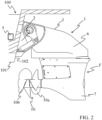
FIG. 2 is an exemplary watersport propulsion system in a watersport mode of operation according to an example. - The detailed description set forth below provides information and examples of the disclosed technology with sufficient detail to enable those skilled in the art to practice the disclosure.
-
FIG. 1 is an exemplary watersport propulsion system in a nominal mode of operation according to an example. Thewatersport propulsion system 1 for amarine watersport vessel 100, comprising adrive unit 3 arranged rotatable from a rearward-facing position R as shown inFIG. 1 to a forward-facing position F, and vice versa. In addition, acontrol unit 5 being operatively connected with thedrive unit 3, thecontrol unit 5 is configurable in a nominal mode of operation and in a watersport mode of operation. InFIG. 1 , thecontrol unit 5 is arranged on thewatersport vessel 100, however, in other examples the control unit may be arranged in thedrive unit 3 or at/in thetransom bracket 2. Thecontrol unit 5 may be wirely connected with thedrive unit 3 or otherwise connected. - The
control unit 5 is configured to operate thedrive unit 3 in the forward-facing position F when in the watersport mode of operation and in the rearward-facing position R otherwise. Hereby the control unit ensures that the drive unit is moved into the forward-facing position whereby the risk for persons being injured and/or equipment being damaged are minimized under watersports. - The
drive unit 3 is connected with atransom 102 of themarine watersport vessel 100 via atransom bracket 2. Hence, thedrive unit 3 is connected to the marine watersport vessel near a waterline of the marine watersport vessel. In an example, thedrive unit 3 may comprise one ormore propellers 10. InFIG. 1 , thedrive unit 3 has afirst propeller 10a and asecond propeller 10b. - In
FIG. 1 , the one ormore propellers 10 when in the rearward-facing mode are in a pushing mode, whereby thepropellers - Furthermore, the
drive unit 3 comprises afirst part 6 and asecond part 7, the first part being connected with the marine watersport vessel via thetransom bracket 2 and the second part is rotatable arranged in relation to the first part. Thesecond part 7 comprises the one ofmore propellers 10. - In
FIG. 2 , thewatersport propulsion system 1 is shown in a watersport mode of operation according to an example. The one ormore propellers 10 are shown in the forward-facing position F where thefirst propeller 10a and second propeller 10B are in a pulling mode. As seen inFIG. 2 , thefirst propeller 10a and thesecond propeller 10b of thedrive unit 3 are in the forward-facing position F and protrude towards and/or beneath ahull 101 of themarine watersport vessel 100. Hereby the risk for coming in contact with the one or propeller is minimized. - Furthermore, the
drive unit 3 may be rotatable connected with thetransom bracket 2 so as to be pivotable from a lowered position into a raised position, or vice versa. In addition, thedrive unit 3 may be configured to be trimmed and/or tilted. Hence, the drive unit can be moved in and out of the water. Thedrive unit 3 may be trimmed in both the watersport mode of operation and the nominal mode of operation. In addition, thedrive unit 3 may also be tilted in both the watersport mode of operation and the nominal mode of operation. - In an example, the
first part 6 may be rotatable connected with thetransom bracket 2, thesecond part 7 is following the first part when it is being pivotable from the lowered position into the raised position, or vice versa. - In an example, the
drive unit 3 may comprise one or more sensor(s) configured to detect the rearward-facing position R and/or the forward-facing position F of the drive unit. Thecontrol unit 5 may be operatively connected with the sensor(s) so as to control that thedrive unit 3 is in the forward-facing position F when thewatersport propulsion system 1 is set in the watersport mode of operation, and/or before the drive unit is activated. - Moreover, the
drive unit 3 comprises an electric motor. Thepropellers 10 are driven by the electrical motor, the electrical motor being configured to rotate in either clockwise direction and/or counterclockwise direction. - In an example, the
drive unit 3, when running in rearward-facing position R, the electric motor is configured to rotate clockwise. In addition, thedrive unit 3, when running the forward-facing position F, the electric motor is configured to rotate counterclockwise. - The
control unit 5 is configured to control an angle of thesecond part 7 of the drive unit and/or rotation speed, and/or rotation direction of the electric motor on basis of data received from the one or more sensor(s). - As mentioned earlier, the
drive unit 3 may have afirst propeller 10a and asecond propeller 10b. In an example, thefirst propeller 10a may have a first torque and a first rotation speed, thesecond propeller 10b has a second torque and a second rotation speed. The first torque is equal to or different from the second torque. The first rotation speed is equal to or different from the second rotation speed. Hereby is obtained that thedrive unit 3 may be set to run in optimum irrespective if it is in the rearward-facing position R as shown inFIG. 1 or the forward-facing position F as shown inFIG. 2 . - Hence, the
control unit 5 may be arranged to optimize torque and/or rotation speed of thefirst propeller 10a and/or thesecond propeller 10b, respectively, in dependence of the mode of operation. - In another example, a system sensor is arranged on the marine watersport vessel or the
drive unit 3, the system sensor being configured to detect if a person or obstacle is present around the drive unit. The system sensor may be operatively connected with the control unit. The control unit is configured to move the drive unit into the forward-facing position if a person or obstacle is detected near the drive unit. - Furthermore, the watersport mode of operation may be activated by an operator of the marine watersport vessel, and/or automatically by the control unit.
- The present disclosure also relates to a
marine watersport vessel 100 comprising awatersport propulsion system 1 as described above. - The present disclosure also relates to a method of operating a
watersport propulsion system 1 as described above. The method comprising - providing a
watersport propulsion system 1 as described above, on amarine watersport vessel 100, - setting the
watersport propulsion system 1 in a watersport mode of operation, - arranging the
drive unit 3 in the forward-facing position F when setting the watersport mode of operation, - detecting that the drive unit is in the forward-facing position before activating the watersport propulsion system in the watersport mode of operation.
- Hereby it is ensured that it is detecting whether the drive unit is in the forward-facing position before activating the watersport mode of operation and thereby the drive unit, so that the risk for persons being injured and/or equipment being damaged are minimized under watersports due to coming into contact with the propellers when the drive unit is in the reward-facing position R.
- Moreover, the drive unit may be hindered for providing the propulsion if it is detected that the drive unit is not in the forward-facing position after the watersport mode of operation is activated. Hereby an additional security is added to the system which also is minimizing the risk for persons being injured during watersports.
- Certain aspects and variants of the disclosure are set forth in the following examples numbered consecutive below.
- Example 1: A watersport propulsion system (1) for a marine watersport vessel (100), comprising
- a drive unit (3) arranged rotatable from a rearward-facing position (R) to a forward-facing position (F), and vice versa,
- a control unit (5) being operatively connected with the drive unit (3), the control unit (5) is configurable in a nominal mode of operation and in a watersport mode of operation,
- wherein the control unit (5) is configured to operate the drive unit (3) in the forward-facing position (F) when in the watersport mode of operation and in the rearward-facing position (R) otherwise.
- Example 2: The watersport propulsion system (1) of example 1, wherein the drive unit (3) comprises one or more propellers (10).
- Example 3: The watersport propulsion system (1) of example 2, wherein the one or more propellers (10) in the forward-facing position is/are in a pulling mode.
- Example 4: The watersport propulsion system (1) of example 2, wherein the one or more propellers (10) in the rearward-facing mode is/are in a pushing mode.
- Example 5: The watersport propulsion system (1) of example 2 and/or 3, wherein the one or more propellers (10) of the drive unit (3) in the forward-facing position protrude towards and/or beneath a hull (101) of the marine watersport vessel.
- Example 6: The watersport propulsion system (1) of any of the preceding examples, wherein the drive unit (3) is connected with a transom (102) of the marine watersport vessel via a transom bracket (2).
- Example 7: The watersport propulsion system (1) of any of the preceding examples, wherein the drive unit (3) comprises a first part (6) and a second part (7), the first part being connected with the marine watersport vessel and the second part is rotatable arranged in relation to the first part.
- Example 8: The watersport propulsion system (1) of example 7, wherein the second part (7) comprises the one of more propellers (10).
- Example 9: The watersport propulsion system (1) of any of the preceding examples, wherein the drive unit (3) is configured to be trimmed and/or tilted.
- Example 10: The watersport propulsion system (1) of example 6, wherein the drive unit (3) being rotatable connected with the transom bracket (2) so as to be pivotable from a lowered position into a raised position, or vice versa.
- Example 11: The watersport propulsion system (1) of example 10, wherein the first part (6) being rotatable connected with the transom bracket (2), the second part (7) is following the first part when it is being pivotable from the lowered position into the raised position, or vice versa.
- Example 12: The watersport propulsion system (1) of any of the preceding examples, wherein the drive unit (3) comprises an electric motor.
- Example 13: The watersport propulsion system (1) of any of the preceding examples, wherein the drive unit (3) comprises one or more sensor(s) configured to detect the rearward-facing position and/or the forward-facing position of the drive unit.
- Example 14: The watersport propulsion system (1) of example 13, wherein the control unit (5) is operatively connected with the sensor(s) so as to control that the drive unit (3) is in the forward-facing position when the watersport propulsion system is set in the watersport mode of operation.
- Example 15: The watersport propulsion system (1) of example 12, wherein the propellers (10) are driven by the electrical motor, the electrical motor being configured to rotate in either clockwise direction and/or counterclockwise direction.
- Example 16: The watersport propulsion system (1) of any of the preceding examples, wherein the control unit (5) is configured to controls an angle of the second part (7) of the drive unit and/or rotation speed, and/or rotation direction of the electric motor on basis of data received from the one or more sensor(s).
- Example 17: The watersport propulsion system (1) of example 12, wherein the drive unit (3), when running in rearward-facing position, the electric motor is configured to rotate clockwise.
- Example 18: The watersport propulsion system (1) of example 12, wherein the drive unit (3), when running the forward-facing position, the electric motor is configured to rotate counterclockwise.
- Example 19: The watersport propulsion system (1) of example 1, wherein the drive unit (3) has a first propeller (10a) and a second propeller (10b).
- Example 20: The watersport propulsion system (1) of example 19, wherein the first propeller (10a) has a first torque and a first rotation speed, the second propeller (10b) has a second torque and a second rotation speed.
- Example 21: The watersport propulsion system (1) of example 20, wherein the first torque is equal to or different from the second torque.
- Example 22: The watersport propulsion system (1) of example 20, wherein the first rotation speed is equal to or different from the second rotation speed.
- Example 23: The watersport propulsion system (1) of any of the examples 19-22, wherein the control unit (5) is arranged to optimize torque and/or rotation speed of the first propeller (10a) and/or the second propeller (10b), respectively, in dependence of the mode of operation.
- Example 24: The watersport propulsion system (1) of any of the examples 1-23, further comprising a system sensor, the system sensor being configured to detect if a person or obstacle is present around the drive unit.
- Example 25: The watersport propulsion system (1) of example 24, wherein the system sensor is operatively connected with the control unit.
- Example 26: The watersport propulsion system (1) of example 25, wherein the control unit is configured to move the drive unit into the forward-facing position if a person or obstacle is detected near the drive unit.
- Example 27: The watersport propulsion system (1) of any of the examples 1-26, wherein the watersport mode of operation is activated by an operator of the marine watersport vessel, and/or automatically by the control unit.
- Example 28: A marine watersport vessel (100) comprising a watersport propulsion system (1) of any of the examples 1-27.
- Example 29: A method of operating a watersport propulsion system (1) of any of the examples 1 to 27, comprising
- providing a watersport propulsion system (1) of any of the examples 1 to 23, on a marine watersport vessel,
- setting the watersport propulsion system (1) in a watersport mode of operation,
- arranging the drive unit (3) in the forward-facing position F when setting the watersport mode of operation,
- detecting that the drive unit is in the forward-facing position before activating the watersport propulsion system in the watersport mode of operation.
- Example 30: The method of example 31, wherein the drive unit is hindered for providing the propulsion if it is detected that the drive unit is not in the forward-facing position after the watersport mode of operation is activated.
- The terminology used herein is for the purpose of describing particular aspects only and is not intended to be limiting of the disclosure. As used herein, the singular forms "a," "an," and "the" are intended to include the plural forms as well, unless the context clearly indicates otherwise. As used herein, the term "and/or" includes any and all combinations of one or more of the associated listed items. It will be further understood that the terms "comprises," "comprising," "includes," and/or "including" when used herein specify the presence of stated features, integers, actions, steps, operations, elements, and/or components, but do not preclude the presence or addition of one or more other features, integers, actions, steps, operations, elements, components, and/or groups thereof.
- It will be understood that, although the terms first, second, etc., may be used herein to describe various elements, these elements should not be limited by these terms. These terms are only used to distinguish one element from another. For example, a first element could be termed a second element, and, similarly, a second element could be termed a first element without departing from the scope of the present disclosure.
- Relative terms such as "below" or "above" or "upper" or "lower" or "horizontal" or "vertical" may be used herein to describe a relationship of one element to another element as illustrated in the Figures. It will be understood that these terms and those discussed above are intended to encompass different orientations of the device in addition to the orientation depicted in the Figures. It will be understood that when an element is referred to as being "connected" or "coupled" to another element, it can be directly connected or coupled to the other element, or intervening elements may be present. In contrast, when an element is referred to as being "directly connected" or "directly coupled" to another element, there are no intervening elements present.
- Unless otherwise defined, all terms (including technical and scientific terms) used herein have the same meaning as commonly understood by one of ordinary skill in the art to which this disclosure belongs. It will be further understood that terms used herein should be interpreted as having a meaning consistent with their meaning in the context of this specification and the relevant art and will not be interpreted in an idealized or overly formal sense unless expressly so defined herein.
- It is to be understood that the present disclosure is not limited to the aspects described above and illustrated in the drawings; rather, the skilled person will recognize that many changes and modifications may be made within the scope of the present disclosure and appended claims. In the drawings and specification, there have been disclosed aspects for purposes of illustration only and not for purposes of limitation, the scope of the disclosure being set forth in the following claims.
Claims (15)
- A watersport propulsion system (1) for a marine watersport vessel (100), comprising- a drive unit (3) arranged rotatable from a rearward-facing position (R) to a forward-facing position (F), and vice versa,- a control unit (5) being operatively connected with the drive unit (3), the control unit (5) is configurable in a nominal mode of operation and in a watersport mode of operation,wherein the control unit (5) is configured to operate the drive unit (3) in the forward-facing position (F) when in the watersport mode of operation and in the rearward-facing position (R) otherwise.
- The watersport propulsion system (1) of claim 1, wherein the drive unit (3) comprises one or more propellers (10).
- The watersport propulsion system (1) of claim 2, wherein the one or more propellers (10) in the forward-facing position is/are in a pulling mode.
- The watersport propulsion system (1) of claim 2, wherein the one or more propellers (10) in the rearward-facing mode is/are in a pushing mode.
- The watersport propulsion system (1) of claim 2 and/or 3, wherein one or more propellers (10) of the drive unit (3) in the forward-facing position protrude towards and/or beneath a hull (101) of the marine watersport vessel.
- The watersport propulsion system (1) of any of the claims 1-5, wherein the drive unit (3) is connected with a transom (102) of the marine watersport vessel via a transom bracket (2).
- The watersport propulsion system (1) of any of the claims 1-6, wherein the drive unit (3) comprises a first part (6) and a second part (7), the first part being connected with the marine watersport vessel and the second part is rotatable arranged in relation to the first part.
- The watersport propulsion system (1) of claim 7, wherein the second part (7) comprises the one of more propellers (10).
- The watersport propulsion system (1) of any of the claims 1-8, wherein the drive unit (3) comprises an electric motor.
- The watersport propulsion system (1) of any of the claims 1-9, wherein the drive unit (3) comprises one or more sensor(s) configured to detect the rearward-facing position and/or the forward-facing position of the drive unit.
- The watersport propulsion system (1) of claim 10, wherein the control unit (5) is operatively connected with the sensor(s) so as to control that the drive unit (3) is in the forward-facing position when the watersport propulsion system is set in the watersport mode of operation.
- The watersport propulsion system (1) of claim 9, wherein the propellers (10) are driven by the electrical motor, the electrical motor being configured to rotate in either clockwise direction and/or counterclockwise direction.
- The watersport propulsion system (1) of any of the claims 1-12, wherein the control unit (5) is configured to control an angle of the second part (7) of the drive unit and/or rotation speed, and/or rotation direction of the electric motor on basis of data received from the one or more sensor(s).
- A marine watersport vessel (100) comprising a watersport propulsion system (1) of any of the claims 1-13.
- A method of operating a watersport propulsion system (1) of any of the claims 1 to 13, comprising- providing a watersport propulsion system (1) of any of the claims 1 to 13, on a marine watersport vessel,- setting the watersport propulsion system (1) in a watersport mode of operation,- arranging the drive unit (3) in the forward-facing position F when setting the watersport mode of operation,- detecting that the drive unit is in the forward-facing position before activating the watersport propulsion system in the watersport mode of operation.
Applications Claiming Priority (1)
| Application Number | Priority Date | Filing Date | Title |
|---|---|---|---|
| SE2350443A SE2350443A1 (en) | 2023-04-14 | 2023-04-14 | Watersport propulsion system for a marine watersport vessel |
Publications (1)
| Publication Number | Publication Date |
|---|---|
| EP4458664A1 true EP4458664A1 (en) | 2024-11-06 |
Family
ID=90730191
Family Applications (1)
| Application Number | Title | Priority Date | Filing Date |
|---|---|---|---|
| EP24169835.6A Pending EP4458664A1 (en) | 2023-04-14 | 2024-04-12 | Watersport propulsion system for a marine watersport vessel |
Country Status (4)
| Country | Link |
|---|---|
| US (1) | US20240343374A1 (en) |
| EP (1) | EP4458664A1 (en) |
| CN (1) | CN118790449A (en) |
| SE (1) | SE2350443A1 (en) |
Cited By (2)
| Publication number | Priority date | Publication date | Assignee | Title |
|---|---|---|---|---|
| US20250026463A1 (en) * | 2023-07-20 | 2025-01-23 | Yamaha Hatsudoki Kabushiki Kaisha | Outboard motor and marine vessel |
| GB2634819A (en) * | 2023-09-01 | 2025-04-23 | Volvo Penta Corp | Marine propulsion system |
Citations (2)
| Publication number | Priority date | Publication date | Assignee | Title |
|---|---|---|---|---|
| US20060258233A1 (en) * | 2005-04-15 | 2006-11-16 | Jim Wilson | Marine drive system |
| EP2993122A1 (en) * | 2014-09-03 | 2016-03-09 | ABB Oy | Ship propulsion arrangement |
Family Cites Families (8)
| Publication number | Priority date | Publication date | Assignee | Title |
|---|---|---|---|---|
| US6213821B1 (en) * | 1998-09-30 | 2001-04-10 | Johnson Outdoors Inc | Trolling motor assembly |
| US7662005B2 (en) * | 2003-03-14 | 2010-02-16 | Brian Provost | Outboard motor with reverse shift |
| US20080096447A1 (en) * | 2006-10-18 | 2008-04-24 | De Masi Douglas D | Stern drive motor or out board motor that can rotate 360 degrees and still go vertical or horizontal or both at the same time at any given time |
| DE102009002263A1 (en) * | 2009-04-07 | 2010-10-14 | Zf Friedrichshafen Ag | Sailboat Drive |
| EP2653374A1 (en) * | 2012-04-20 | 2013-10-23 | Holger Hinz | Drive arrangement |
| US9896175B2 (en) * | 2016-06-21 | 2018-02-20 | Robby Galletta Enterprises LLC | Outboard motor and methods of use thereof |
| JP2018079742A (en) * | 2016-11-14 | 2018-05-24 | ヤマハ発動機株式会社 | Ship propulsion device and ship equipped with the same |
| EP4035991B1 (en) * | 2021-01-27 | 2023-12-06 | Volvo Penta Corporation | Marine drive unit and marine vessel |
-
2023
- 2023-04-14 SE SE2350443A patent/SE2350443A1/en not_active Application Discontinuation
-
2024
- 2024-04-11 CN CN202410436286.1A patent/CN118790449A/en active Pending
- 2024-04-11 US US18/632,817 patent/US20240343374A1/en active Pending
- 2024-04-12 EP EP24169835.6A patent/EP4458664A1/en active Pending
Patent Citations (2)
| Publication number | Priority date | Publication date | Assignee | Title |
|---|---|---|---|---|
| US20060258233A1 (en) * | 2005-04-15 | 2006-11-16 | Jim Wilson | Marine drive system |
| EP2993122A1 (en) * | 2014-09-03 | 2016-03-09 | ABB Oy | Ship propulsion arrangement |
Cited By (2)
| Publication number | Priority date | Publication date | Assignee | Title |
|---|---|---|---|---|
| US20250026463A1 (en) * | 2023-07-20 | 2025-01-23 | Yamaha Hatsudoki Kabushiki Kaisha | Outboard motor and marine vessel |
| GB2634819A (en) * | 2023-09-01 | 2025-04-23 | Volvo Penta Corp | Marine propulsion system |
Also Published As
| Publication number | Publication date |
|---|---|
| CN118790449A (en) | 2024-10-18 |
| US20240343374A1 (en) | 2024-10-17 |
| SE2350443A1 (en) | 2024-10-15 |
Similar Documents
| Publication | Publication Date | Title |
|---|---|---|
| US20240343374A1 (en) | Watersport propulsion system for a marine watersport vessel | |
| US12157540B2 (en) | Boat having an improved ability to get on plane and improved method of getting a boat on plane | |
| US6978729B2 (en) | Control system for boats | |
| EP1208035B1 (en) | Design for tugboat | |
| US8156882B2 (en) | Marine vessel steering apparatus and marine vessel including the same | |
| CN100509554C (en) | Marine vessel propulsion arrangement and method for operating the same | |
| US12365437B2 (en) | Marine vessel propulsion control using map information and marine vessel including the same | |
| EP1013544B1 (en) | Azimuth propeller apparatus and ship equipped with the apparatus | |
| JP3962678B2 (en) | Ship and ship navigation system | |
| JPS62231895A (en) | Trim tab control device for marine propeller | |
| RU2660339C1 (en) | Ship propulsive machinery | |
| US20250042527A1 (en) | Steering-support system for marine vessels | |
| EP4574645B1 (en) | Marine propulsion control system | |
| JP2024060160A (en) | Marine propulsion system and vessel | |
| US20250042526A1 (en) | Watercraft propulsion system, and watercraft | |
| US20250019057A1 (en) | Trim angle control apparatus | |
| US20250074568A1 (en) | Marine propulsion system | |
| JP3975090B2 (en) | Ship | |
| CA3108305A1 (en) | Propeller-powered watercraft and method of remote-controlled waterway navigation | |
| JP3644278B2 (en) | Ship position control device | |
| US20240343368A1 (en) | Propulsion system for a marine vessel | |
| JP2025036309A (en) | Ship Propulsion Control System | |
| KR20140044997A (en) | Vessel speed reduction apparatus with reverse propulsion | |
| US20250206427A1 (en) | Marine propulsion system | |
| JP2025079395A (en) | Propulsion system, ship and control method |
Legal Events
| Date | Code | Title | Description |
|---|---|---|---|
| PUAI | Public reference made under article 153(3) epc to a published international application that has entered the european phase |
Free format text: ORIGINAL CODE: 0009012 |
|
| STAA | Information on the status of an ep patent application or granted ep patent |
Free format text: STATUS: THE APPLICATION HAS BEEN PUBLISHED |
|
| AK | Designated contracting states |
Kind code of ref document: A1 Designated state(s): AL AT BE BG CH CY CZ DE DK EE ES FI FR GB GR HR HU IE IS IT LI LT LU LV MC ME MK MT NL NO PL PT RO RS SE SI SK SM TR |
|
| STAA | Information on the status of an ep patent application or granted ep patent |
Free format text: STATUS: REQUEST FOR EXAMINATION WAS MADE |
|
| 17P | Request for examination filed |
Effective date: 20250422 |