EP4458347A1 - Injectable formulation containing isoxazoline derivative - Google Patents
Injectable formulation containing isoxazoline derivative Download PDFInfo
- Publication number
- EP4458347A1 EP4458347A1 EP23743429.5A EP23743429A EP4458347A1 EP 4458347 A1 EP4458347 A1 EP 4458347A1 EP 23743429 A EP23743429 A EP 23743429A EP 4458347 A1 EP4458347 A1 EP 4458347A1
- Authority
- EP
- European Patent Office
- Prior art keywords
- formulation
- preparation
- injection
- formula
- compound
- Prior art date
- Legal status (The legal status is an assumption and is not a legal conclusion. Google has not performed a legal analysis and makes no representation as to the accuracy of the status listed.)
- Withdrawn
Links
Images
Classifications
-
- A—HUMAN NECESSITIES
- A61—MEDICAL OR VETERINARY SCIENCE; HYGIENE
- A61P—SPECIFIC THERAPEUTIC ACTIVITY OF CHEMICAL COMPOUNDS OR MEDICINAL PREPARATIONS
- A61P19/00—Drugs for skeletal disorders
-
- A—HUMAN NECESSITIES
- A61—MEDICAL OR VETERINARY SCIENCE; HYGIENE
- A61K—PREPARATIONS FOR MEDICAL, DENTAL OR TOILETRY PURPOSES
- A61K9/00—Medicinal preparations characterised by special physical form
- A61K9/0012—Galenical forms characterised by the site of application
- A61K9/0019—Injectable compositions; Intramuscular, intravenous, arterial, subcutaneous administration; Compositions to be administered through the skin in an invasive manner
-
- A—HUMAN NECESSITIES
- A61—MEDICAL OR VETERINARY SCIENCE; HYGIENE
- A61K—PREPARATIONS FOR MEDICAL, DENTAL OR TOILETRY PURPOSES
- A61K31/00—Medicinal preparations containing organic active ingredients
- A61K31/33—Heterocyclic compounds
- A61K31/395—Heterocyclic compounds having nitrogen as a ring hetero atom, e.g. guanethidine or rifamycins
- A61K31/435—Heterocyclic compounds having nitrogen as a ring hetero atom, e.g. guanethidine or rifamycins having six-membered rings with one nitrogen as the only ring hetero atom
- A61K31/47—Quinolines; Isoquinolines
- A61K31/4709—Non-condensed quinolines and containing further heterocyclic rings
-
- A—HUMAN NECESSITIES
- A61—MEDICAL OR VETERINARY SCIENCE; HYGIENE
- A61K—PREPARATIONS FOR MEDICAL, DENTAL OR TOILETRY PURPOSES
- A61K31/00—Medicinal preparations containing organic active ingredients
- A61K31/33—Heterocyclic compounds
- A61K31/395—Heterocyclic compounds having nitrogen as a ring hetero atom, e.g. guanethidine or rifamycins
- A61K31/435—Heterocyclic compounds having nitrogen as a ring hetero atom, e.g. guanethidine or rifamycins having six-membered rings with one nitrogen as the only ring hetero atom
- A61K31/47—Quinolines; Isoquinolines
- A61K31/472—Non-condensed isoquinolines, e.g. papaverine
- A61K31/4725—Non-condensed isoquinolines, e.g. papaverine containing further heterocyclic rings
-
- A—HUMAN NECESSITIES
- A61—MEDICAL OR VETERINARY SCIENCE; HYGIENE
- A61K—PREPARATIONS FOR MEDICAL, DENTAL OR TOILETRY PURPOSES
- A61K47/00—Medicinal preparations characterised by the non-active ingredients used, e.g. carriers or inert additives; Targeting or modifying agents chemically bound to the active ingredient
- A61K47/02—Inorganic compounds
-
- A—HUMAN NECESSITIES
- A61—MEDICAL OR VETERINARY SCIENCE; HYGIENE
- A61K—PREPARATIONS FOR MEDICAL, DENTAL OR TOILETRY PURPOSES
- A61K47/00—Medicinal preparations characterised by the non-active ingredients used, e.g. carriers or inert additives; Targeting or modifying agents chemically bound to the active ingredient
- A61K47/06—Organic compounds, e.g. natural or synthetic hydrocarbons, polyolefins, mineral oil, petrolatum or ozokerite
- A61K47/26—Carbohydrates, e.g. sugar alcohols, amino sugars, nucleic acids, mono-, di- or oligo-saccharides; Derivatives thereof, e.g. polysorbates, sorbitan fatty acid esters or glycyrrhizin
-
- A—HUMAN NECESSITIES
- A61—MEDICAL OR VETERINARY SCIENCE; HYGIENE
- A61K—PREPARATIONS FOR MEDICAL, DENTAL OR TOILETRY PURPOSES
- A61K9/00—Medicinal preparations characterised by special physical form
- A61K9/08—Solutions
-
- A—HUMAN NECESSITIES
- A61—MEDICAL OR VETERINARY SCIENCE; HYGIENE
- A61P—SPECIFIC THERAPEUTIC ACTIVITY OF CHEMICAL COMPOUNDS OR MEDICINAL PREPARATIONS
- A61P1/00—Drugs for disorders of the alimentary tract or the digestive system
- A61P1/04—Drugs for disorders of the alimentary tract or the digestive system for ulcers, gastritis or reflux esophagitis, e.g. antacids, inhibitors of acid secretion, mucosal protectants
-
- A—HUMAN NECESSITIES
- A61—MEDICAL OR VETERINARY SCIENCE; HYGIENE
- A61P—SPECIFIC THERAPEUTIC ACTIVITY OF CHEMICAL COMPOUNDS OR MEDICINAL PREPARATIONS
- A61P1/00—Drugs for disorders of the alimentary tract or the digestive system
- A61P1/16—Drugs for disorders of the alimentary tract or the digestive system for liver or gallbladder disorders, e.g. hepatoprotective agents, cholagogues, litholytics
-
- A—HUMAN NECESSITIES
- A61—MEDICAL OR VETERINARY SCIENCE; HYGIENE
- A61P—SPECIFIC THERAPEUTIC ACTIVITY OF CHEMICAL COMPOUNDS OR MEDICINAL PREPARATIONS
- A61P19/00—Drugs for skeletal disorders
- A61P19/02—Drugs for skeletal disorders for joint disorders, e.g. arthritis, arthrosis
-
- A—HUMAN NECESSITIES
- A61—MEDICAL OR VETERINARY SCIENCE; HYGIENE
- A61P—SPECIFIC THERAPEUTIC ACTIVITY OF CHEMICAL COMPOUNDS OR MEDICINAL PREPARATIONS
- A61P19/00—Drugs for skeletal disorders
- A61P19/08—Drugs for skeletal disorders for bone diseases, e.g. rachitism, Paget's disease
-
- A—HUMAN NECESSITIES
- A61—MEDICAL OR VETERINARY SCIENCE; HYGIENE
- A61P—SPECIFIC THERAPEUTIC ACTIVITY OF CHEMICAL COMPOUNDS OR MEDICINAL PREPARATIONS
- A61P25/00—Drugs for disorders of the nervous system
-
- A—HUMAN NECESSITIES
- A61—MEDICAL OR VETERINARY SCIENCE; HYGIENE
- A61P—SPECIFIC THERAPEUTIC ACTIVITY OF CHEMICAL COMPOUNDS OR MEDICINAL PREPARATIONS
- A61P25/00—Drugs for disorders of the nervous system
- A61P25/28—Drugs for disorders of the nervous system for treating neurodegenerative disorders of the central nervous system, e.g. nootropic agents, cognition enhancers, drugs for treating Alzheimer's disease or other forms of dementia
-
- A—HUMAN NECESSITIES
- A61—MEDICAL OR VETERINARY SCIENCE; HYGIENE
- A61P—SPECIFIC THERAPEUTIC ACTIVITY OF CHEMICAL COMPOUNDS OR MEDICINAL PREPARATIONS
- A61P29/00—Non-central analgesic, antipyretic or antiinflammatory agents, e.g. antirheumatic agents; Non-steroidal antiinflammatory drugs [NSAID]
-
- A—HUMAN NECESSITIES
- A61—MEDICAL OR VETERINARY SCIENCE; HYGIENE
- A61P—SPECIFIC THERAPEUTIC ACTIVITY OF CHEMICAL COMPOUNDS OR MEDICINAL PREPARATIONS
- A61P3/00—Drugs for disorders of the metabolism
- A61P3/08—Drugs for disorders of the metabolism for glucose homeostasis
- A61P3/10—Drugs for disorders of the metabolism for glucose homeostasis for hyperglycaemia, e.g. antidiabetics
-
- A—HUMAN NECESSITIES
- A61—MEDICAL OR VETERINARY SCIENCE; HYGIENE
- A61P—SPECIFIC THERAPEUTIC ACTIVITY OF CHEMICAL COMPOUNDS OR MEDICINAL PREPARATIONS
- A61P37/00—Drugs for immunological or allergic disorders
- A61P37/02—Immunomodulators
-
- A—HUMAN NECESSITIES
- A61—MEDICAL OR VETERINARY SCIENCE; HYGIENE
- A61P—SPECIFIC THERAPEUTIC ACTIVITY OF CHEMICAL COMPOUNDS OR MEDICINAL PREPARATIONS
- A61P9/00—Drugs for disorders of the cardiovascular system
- A61P9/04—Inotropic agents, i.e. stimulants of cardiac contraction; Drugs for heart failure
-
- A—HUMAN NECESSITIES
- A61—MEDICAL OR VETERINARY SCIENCE; HYGIENE
- A61Q—SPECIFIC USE OF COSMETICS OR SIMILAR TOILETRY PREPARATIONS
- A61Q19/00—Preparations for care of the skin
- A61Q19/08—Anti-ageing preparations
Definitions
- the present invention relates to a preparation for injection comprising an isoxazoline derivative useful as a caspase inhibitor or a pharmaceutically acceptable salt thereof as an active pharmaceutical ingredient (API).
- API active pharmaceutical ingredient
- Caspase is a cysteine protease
- a caspase inhibitor is a compound that can control inflammation or apoptosis caused by the action of caspase by inhibiting the action of this caspase.
- Diseases for which this compound can be administered to eliminate or alleviate symptoms include osteoarthritis, rheumatoid arthritis, degenerative arthritis, destructive bone disorder, liver disease caused by hepatitis virus, acute hepatitis, liver cirrhosis, brain damage caused by hepatitis virus, human fulminant hepatic failure, sepsis, organ transplant rejection, ischemic heart disease, dementia, stroke, brain damage caused by AIDS, diabetes, gastric ulcer and the like.
- Compound of Formula 1 As caspase inhibitors, various types of isoxazoline derivatives and prodrugs of the isoxazoline derivatives are known.
- isoxazoline derivatives (R)-N-((2S,3S)-2-(fluoromethyl)-2-hydroxy-5-oxotetrahydrofuran-3-yl)-5-isopropyl-3-(isoquinolin-1-yl)-4,5-dihydroisoxazol-5-carboxamide(Hereinafter, referred to as "Compound of Formula 1" has already proven its efficacy in liver disease caused by hepatitis virus, liver fibrosis, and nonalcoholic steatohepatitis (NASH).
- NASH nonalcoholic steatohepatitis
- a common drug administration method is to inject directly with a syringe into the joint cavity filled with synovial fluid.
- the drug In the case of oral administration, the drug has a systemic effect, but in the case of direct administration into the joint cavity, the effect of the drug is local, so it is possible to administer a high concentration of the drug and minimize systemic side effects.
- the compound of Formula 1 has been confirmed to have a therapeutic effect as the existing oral preparation for liver disease, but since the compound of Formula 1 is poorly soluble in water, it is difficult to formulate it in a preparation for injection.
- Non-Patent Document 1 Ratziu et al., 'A Phase 2, Randomized, Double-Blind, Placebo-Controlled Study of GS-9450 in Subjects with Nonalcoholic Steatohepatitis' HEPATOLOGY, Vol. 55, No. 2, 2012 .
- the inventors of the present invention have conducted various studies to solve the above problems, and as a result, the problem to be solved by the present invention is to derive a preparation for injection comprising a high content of the compound of Formula 1 as an active pharmaceutical ingredient (API).
- API active pharmaceutical ingredient
- the present invention provides a preparation for injection comprising the first formulation containing the compound of Formula 1; and the second formulation, which is an aqueous solution with a pH of 7 to 11 containing a phosphate buffer to dissolve the compound of Formula 1, surfactant, and NaOH as a pH adjusting agent.
- the content of the compound of Formula 1 contained in the first formulation of the preparation for injection of the present invention is 5 to 20 mg/ml based on a mixed solution of the first formulation and the second formulation.
- the contents of the phosphate buffer, surfactant, NaOH contained in the second formulation of the preparation for injection of the present invention are 100 to 130 mM, 0.2 to 5.0(w/v)% and 12 to 42 mM based on the second formulation, respectively.
- the preparation for injection of the present invention is used to treat or prevent a caspase-related disease selected from osteoarthritis, rheumatoid arthritis, degenerative arthritis, destructive bone disorder, liver disease caused by hepatitis virus, acute hepatitis, liver cirrhosis, brain damage caused by hepatitis virus, human fulminant hepatic failure, sepsis, organ transplant rejection, ischemic heart disease, dementia, stroke, brain damage caused by AIDS, diabetes and gastric ulcer.
- a caspase-related disease selected from osteoarthritis, rheumatoid arthritis, degenerative arthritis, destructive bone disorder, liver disease caused by hepatitis virus, acute hepatitis, liver cirrhosis, brain damage caused by hepatitis virus, human fulminant hepatic failure, sepsis, organ transplant rejection, ischemic heart disease, dementia, stroke, brain damage caused by AIDS, diabetes and gastric ulcer.
- the preparation for injection of the present invention is used within 30 minutes after mixing the first formulation and the second formulation, immediately before administration to the patient.
- the preparation for injection comprising the compound of Formula 1 according to the present invention includes the first formulation in powder form containing the compound of Formula 1; and the second formulation as a buffer for dissolving the first formulation. Since the preparation for injection of the present invention is prepared by mixing the first formulation in powder form and the second formulation acting as a agent for injection right before administration to a patient, and administer to the patient within 30 minutes, it has an advantage of high active-API content.
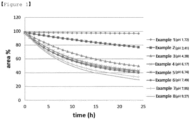
- Fig. 1 shows the content of active-API according to the pH of the solvent.
- the present inventors continued research in various ways to develop a preparation for injection containing (R)-N-((2S,3S)-2-(fluoromethyl)-2-hydroxy-5-oxotetrahydrofuran-3-yl)-5-isopropyl-3-(isoquinolin-1-yl)-4,5-dihydroisoxazol-5-carboxamide of Formula 1, which is insoluble in water, as an API.
- the present inventors have developed a preparation for injection comprising the first formulation containing the API; and the second formulation, which is an aqueous solution containing a phosphate buffer, surfactant, and a pH adjusting agent.
- the pH adjusting agent is NaOH
- pH of the second formulation has a pH of 7 to 11.
- the first formulation in the preparation for injection, is in the powder form.
- the compound of Formula 1 is contained in an amount of 5 to 20 mg/ml based on a total volume of a mixed solution of the first formulation and the second formulation.
- a mixed solution of the first formulation and the second formulation has a pH of 6 to 8.
- a mixed solution of the first formulation and the second formulation has an osmotic pressure of 280 to 330 mOsm/kg.
- the phosphate buffer is a mixture of sodium phosphate dibasic heptahydrate and sodium phosphate monobasic monohydrate.
- the surfactant is selected from polysorbate 20, polysorbate 40, polysorbate 60, polysorbate 65 and polysorbate 80.
- the surfactant is polysorbate 80.
- the surfactant is contained in an amount of 0.2 to 5.0(w/v)% based on a total volume of the second formulation.
- the NaOH is contained in an amount of 12 to 42 mM based on a total volume of the second formulation.
- the preparation for injection is for treating or preventing a disease selected from osteoarthritis, rheumatoid arthritis, degenerative arthritis, destructive bone disorder, liver disease caused by hepatitis virus, acute hepatitis, liver cirrhosis, brain damage caused by hepatitis virus, human fulminant hepatic failure, sepsis, organ transplant rejection, ischemic heart disease, dementia, stroke, brain damage caused by AIDS, diabetes and gastric ulcer.
- a disease selected from osteoarthritis, rheumatoid arthritis, degenerative arthritis, destructive bone disorder, liver disease caused by hepatitis virus, acute hepatitis, liver cirrhosis, brain damage caused by hepatitis virus, human fulminant hepatic failure, sepsis, organ transplant rejection, ischemic heart disease, dementia, stroke, brain damage caused by AIDS, diabetes and gastric ulcer.
- the disease that the preparation for injection can treat or prevent is selected from osteoarthritis, rheumatoid arthritis, degenerative arthritis and destructive bone disorder.
- a mixed solution of the first formulation and the second formulation is for a single-dose injection.
- the preparation for injection is administered into the joint cavity after the first formulation and the second formulation are mixed.
- the preparation for injection is administered into the joint cavity within 30 minutes after the first formulation and the second formulation are mixed.
- the preparation for injection is administered once after the first formulation and the second formulation are mixed.
- the preparation for injection is a preparation for injection in which the content of the following compound of Formula 2 is 95% or more of the total content of the compound of Formula 2 and the following compound of Formula 3 when the contents of the compounds of Formula 2 and Formula 3 were measured within 30 minutes after mixing the first formulation and the second formulation.
- the preparation for injection is a preparation for injection comprising: the first formulation containing the compound of Formula 1 and the second formulation, which is a pH of 7 to 11 buffer to dissolve the compound of Formula 1, wherein, when the contents of the following compounds of Formula 2 and Formula 3 were measured within 30 minutes after mixing the first formulation and the second formulation, of the total contents of the compounds of Formula 2 and Formula 3, the content of the compound Formula 2 is 95% or more.
- the preparation for injection of the present invention is prepared by mixing the first formulation in powder form and the second formulation acting as a agent for injection right before administration to a patient, and administer to the patient within 30 minutes, it has an advantage of high active-API content.
- the solubility was analyzed using buffers of various pH in order to find a solvent capable of dissolving the compound of Formula 1 in high content.
- the compound of Formula 1 was hardly soluble in acidic solvents with a pH of 4 or less, but began to dissolve in weakly acidic solvents with a pH of 6 or more, and was well soluble in basic solvents with a pH of 7.5 or more.
- the compound of Formula 1 has a property of reducing the pH of a solution while being dissolved in a solvent.
- the preparation for injection of the present invention includes a buffer in the second formulation to dissolve the first formulation containing the API.
- a conventional buffer that can be used for an injection solution may be used, and specific examples include, but are not limited to, phosphate buffer, Tris buffer, and MES buffer.
- phosphate buffer it can be selected from the group consisting of sodium phosphate dibasic acid, sodium phosphate monobasic acid, potassium phosphate monobasic acid, potassium phosphate dibasic acid, and mixtures thereof.
- Tris buffer Tris buffer
- TRIZMA ® buffer can be used.
- the buffer has a concentration of 100 to 130 mM based on the second formulation, specifically, 100 to 130 mM, 110 to 130 mM, 120 to 130 mM, 100 to 120 mM, 110 to 120 mM, 100 to 110 mM, 110 to 120 mM, or 120 to 130 mM.
- the second formulation uses NaOH as a pH adjusting agent.
- the NaOH has a concentration of 12 to 42 mM based on the second formulation.
- the pH of the second formulation is adjusted to pH 7 to 11 using a buffer and a pH adjusting agent, specifically, to 7 to 11, 7.5 to 11, 8 to 11, 8.5 to 11, 9 to 11, 9.5 to 11, 10 to 11, 10.5 to 11, 7 to 10.5, 7.5 to 10.5, 8 to 10.5, 8.5 to 10.5, 9 to 10.5, 9.5 to 10.5, 10 to 10.5, 7 to 10, 7.5 to 10, 8 to 10, 8.5 to 10, 9 to 10, 9.5 to 10, 7 to 9.5, 7.5 to 9.5, 8 to 9.5, 8.5 to 9.5, 9 to 9.5, 7 to 9, 7.5 to 9, 8 to 9, 8.5 to 9, 7 to 8.5, 7.5 to 8.5, 8 to 8.5, 7 to 8, or 7.5 to 8.
- a buffer and a pH adjusting agent specifically, to 7 to 11, 7.5 to 11, 8 to 11, 8.5 to 11, 9 to 11, 9.5 to 11, 10 to 11, 10.5 to 11, 7 to 10.5, 7.5 to 10.5, 8 to 10.5, 8.5 to 10.5, 9 to 10.5, 9.5 to 10.5, 10 to 10.5, 7 to 10, 7.5 to 10,
- the second formulation contains surfactant.
- the surfactant can help dissolve the compound of Formula 1.
- a conventional surfactant that can be used for an injection solvent may be used, and a cyclodextrin-based or polysorbate-based surfactant may be used.
- polysorbate-based surfactants include polysorbate 20, polysorbate 40, polysorbate 60, polysorbate 65, or polysorbate 80.
- the concentration of the surfactant may be 0.2 to 5.0(w/v)% based on the second formulation, specifically, 0.2 to 5.0(w/v)%, 0.8 to 5.0(w/v)%, 1.2 to 5.0(w/v)%, 1.6 to 5.0(w/v)%, 2.0 to 5.0(w/v)%, 2.4 to 5.0(w/v)%, 2.8 to 5.0(w/v)%, 3.2 to 5.0(w/v)%, 3.6 to 5.0(w/v)%, 4.0 to 5.0 (w/v)%, 4.4 to 5.0 (w/v)%, 0.2 to 4.4(w/v)%, 0.8 to 4.4(w/v)%, 1.2 to 4.4(w/v)%, 1.6 to 4.4(w/v)%, 2.0 to 4.4(w/v)%, 2.4 to 4.4(w/v)%, 2.8 to 4.4(w/v)%, 3.2 to 4.4(w/v)%
- the pH of the solution is lowered. If the pH of the mixed solution of the first formulation and the second formulation is too low, it may cause pain to the patient, so the pH of the mixed solution of the first formulation and the second formulation should be between 6 and 8.
- the pH of the mixed solution of the first formulation and the second formulation may be 6 to 8, 6 to 7.7, 6 to 7.4, 6 to 7.1, 6 to 6.8, 6 to 6.5, 6 to 6.2, 6.3 to 8, 6.3 to 7.7, 6.3 to 7.4, 6.3 to 7.1, 6.3 to 6.8, 6.3 to 6.5, 6.6 to 8, 6.6 to 7.7, 6.6 to 7.4, 6.6 to 7.1, 6.6 to 6.8, 6.9 to 8, 6.9 to 7.7, 6.9 to 7.4, 6.9 to 7.1, 7.2 to 8, 7.2 to 7.7, 7.2 to 7.4, 7.5 to 8, or 7.5 to 7.7.
- the osmotic pressure of the mixed solution of the first formulation and the second formulation is 280 to 330 mOsm/kg. If the osmotic pressure is lower or higher than the above range, it is undesirable because it may cause pain to the patient.
- the content of the compound of Formula 1 has a concentration of 5 to 20 mg/ml based on the mixture of the first formulation and the second formulation.
- the content of the compound of Formula 1 may be 5 to 20 mg/ml, 10 to 20 mg/ml, 15 to 20 mg/ml, 5 to 15 mg/ml, 10 to 15 mg/ml, 5 to 10 mg/ml, 5 mg/ml, 10 mg/ml, 15 mg/ml, or 20 mg/ml based on the mixture of the first formulation and the second formulation, preferably in single dose.
- the compound of Formula 1 included in the first formulation when the compound of Formula 1 included in the first formulation is mixed with the second formulation, the compound is completely dissolved, and the mixed solution of the first formulation and the second formulation is in a transparent state.
- the preparation for injection of the present invention is used by mixing the first formulation and the second formulation immediately before administration to the patient, so it does not additionally contain excipients for preservation such as antioxidants and preservatives.
- the present invention provides a method for treating or preventing caspase-related diseases using the preparation for injection of the present invention.
- treating means stopping or delaying the progression of the disease when used in a subject showing symptoms of disease
- preventing means stopping or delaying the signs of a disease when used in a high-risk subject who does not show symptoms of disease.
- caspase-related disease refers to a disease that can be treated or prevented by inhibiting caspase, for example, osteoarthritis, rheumatoid arthritis, degenerative arthritis, destructive bone disorder, liver disease caused by hepatitis virus, acute hepatitis, liver cirrhosis, brain damage caused by hepatitis virus, human fulminant hepatic failure, sepsis, organ transplant rejection, ischemic heart disease, dementia, stroke, brain damage caused by AIDS, diabetes and gastric ulcer, but is not limited thereto the above disease.
- the preparation for injection of the present invention can be administered to a subject in need of treatment or prevention of a caspase-associated disease to treat or prevent the disease in the subject.
- administration refers to a method of administering by injection a dose of the preparation for injection of the present invention to a vertebrate including mammals, birds, fish or amphibians or non-vertebrate animal.
- Preferred administration methods may be selected from conventional injection methods such as intravascular injection, subcutaneous injection, transdermal injection, intramuscular injection, spinal injection, and intradermal injection, depending on the type of disease to be treated, the site of the disease, and the severity of the disease.
- injection into the joint cavity can be selected for diseases related to bone joints such as osteoarthritis, rheumatoid arthritis, degenerative arthritis, or destructive bone disorders.
- administration may be guided using an imaging method using ultrasound or the like, or a local anesthetic may be administered in advance or in combination.
- subject refers to a human or non-human mammal, such as a dog, cat, mouse, rat, cow, sheep, pig, goat, non-human ape, or bird. In some embodiments, the subject is a human.
- the preparation for injection of the present invention is administered to the subject within 30 minutes after making a mixed solution by mixing the first formulation and the second formulation. Therefore, the preparation for injection of the present invention is intended for single-dose for singe patient infusion or administration.
- the preparation for injection of the present invention may be additionally administered in combination with drugs such as analgesics, anti-inflammatory drugs, and steroids.
- the present invention provides a kit comprising the preparation for injection of the present invention.
- the kit may include a preparation for injection comprising the first formulation containing the compound of Formula 1 of the present invention, and the second formulation which is an aqueous solution for dissolving the compound of Formula 1; an administration system such as one or more syringes for administering the agent; and instructions for using the kit, including how to mix the first formulation and the second formulation, and directions for treating patients.
- the kit may include a label stating that the formulation and contents as described herein are administered to a patient suffering from a disease associated with bone joints such as osteoarthritis, rheumatoid arthritis, degenerative arthritis and destructive bone disorder.
- a disease associated with bone joints such as osteoarthritis, rheumatoid arthritis, degenerative arthritis and destructive bone disorder.
- selecting a dosage suitable for the patient is within the knowledge of a person skilled in the art in consideration of the patient's symptoms, age, etc.
- API a compound of Formula 1 used as API in the present invention
- Test Example 1 Confirmation of API solubility according to solvent pH (Example 1 to 10)
- the API was dissolved as much as possible for 24 hours using 10 ml each of sodium phosphate buffer (PB) having various pH (Examples 1 to 9) and distilled water (Example 10). Then, the pH and concentrations of an active substance (Compound of Formula 2) and an inactive substance (Compound of Formula 3) were analyzed using HPLC.
- PB sodium phosphate buffer
- Example 10 distilled water
- the API was more soluble in basic solvents (Example 8 and 9), and more soluble in phosphate buffer (Example 4) than in distilled water (Example 10) even at a similar pH.
- acidic solvents did not dissolve the API well compared to neutral or basic solvents, but conversion from the active substance to the inactive substance was lower than that of basic solvents (Example 1).
- Example 1 After dissolving the API in solvents, the change in the content of the active compound of Formula 2 was measured over time. As a result, in the case of Example 1, the content of the active compound is maintained until 25 hours after dissolution, but the content of the active compound decreases rapidly as the pH increases. In particular, Example 3 to Example 8 show that 20 to 30% of the active compound is converted into the inactive compound within 5 hours ( Fig. 1 ).
- Example 1 1.72 1.66 0.15 0.12 0.03
- Example 2 3.41 3.44 0.06 0.03 0.03
- Example 3 4.38 4.30 0.15 0.07 0.08
- Example 4 6.17 5.45 1.47 0.67 0.8
- Example 5 6.74 6.14 4.62 2.03 2.59
- Example 6 7.49 6.63 6.18 2.67 3.51
- Example 7 7.95 7.04 5.71 2.47 3.24
- Example 8 9.27 7.06 5.88 2.56 3.32
- Example 9 10.66 7.17 6.04 2.82 3.22
- Example 10 6.08 3.93 0.07 0.04 0.03
- Test Example 2 Confirmation of whether or not API is dissolved, dissolution time and pH according to solvent composition (Example 11 to 20)
- Solvents with the composition shown in Table 2 were prepared, for preparing 10 mg/ml solutions by dissolving the API. As shown in Table 2, the sodium phosphate buffer (PB) concentration of 0 to 10 mM, the NaOH concentration of 23 to 50 mM, the Tween ® 80 concentration of 0 to 0.4 (w/v)%, and the hydroxypropyl beta cyclodextrin (HP ⁇ CD) concentration of 0 to 20(w/v)% was made as a solvent. Since the API has a characteristic of being soluble in basic solutions, solvents of pH 11 to 12 were prepared using NaOH and/or PB.
- PB sodium phosphate buffer
- HP ⁇ CD hydroxypropyl beta cyclodextrin
- the sodium phosphate buffer was prepared at pH 7.4 by mixing sodium phosphate dibasic heptahydrate and sodium phosphate monobasic monohydrate.
- HP ⁇ CD a parenteral grade reagent with a molar substitution range of 0.81 to 0.99 and a molecular weight of about 1500 g/mol was used.
- Example Solvent Composition Solvent pH Example 11 50 mM NaOH 12.4 Example 12 30 mM NaOH 12.1 Example 13 25 mM NaOH 12.1 Example 14 25 mM NaOH 12.0 0.4(w/v)% Tween ® 80 Example 15 25 mM NaOH 11.0 20(w/v)% HP ⁇ CD Example 16 10 mM PB pH 7.4 12.3 50 mM NaOH 0.4(w/v)% Tween ® 80 Example 17 10 mM PB pH 7.4 11.8 30 mM NaOH 0.4(w/v)% Tween ® 80 Example 18 10 mM PB pH 7.4 11.8 27 mM NaOH 0.4(w/v)% Tween ® 80 Example 19 10 mM PB pH 7.4 11.7 25 mM NaOH 0.4(w/v)% Tween ® 80 Example 20 10 mM PB pH 7.4 11.6 23 mM NaOH 0.4(w/v)% Tween ® 80
- the API was added thereto at a concentration of 10 mg/ml, the container was capped and was shaken by hands for up to 10 minutes to mix. At this time, whether the API was dissolved or not, the time required for the API to be completely dissolved (dissolution time), and the pH of the solvent after dissolving the API were measured and shown in Table 3.
- Example 11 to 13 contained 25 to 50 mM NaOH, and no other excipients were used.
- Example 13 with a NaOH concentration of 25 mM could not be a suitable solvent because it did not completely dissolve the API. Therefore, from the results of Examples 11 to 13, it can be seen that a solvent containing only NaOH is not suitable as a solvent for dissolving the API.
- Examples 14 and 15 are solvents prepared by including polysorbate 80 (hereinafter referred to as "Tween ® 80") or HP ⁇ CD as a solubilizing agent in 25 mM NaOH, respectively, and the API was not partially dissolved in each solvent. Accordingly, it can be seen that a solvent further comprising a solubilizing agent in NaOH is also not suitable as a solvent for dissolving the API.
- Teween ® 80 polysorbate 80
- HP ⁇ CD HP ⁇ CD
- the solvents prepared in Examples 16 to 20 were the same including 0.4 (w/v)% Tween ® 80 in 10 mM PB, and only the content of NaOH was different, but the API dissolved well in all solvents. However, in Examples 16 and 17, the pH was still high at 11.3 and 9.4, respectively, after the API was dissolved, whereas in Examples 18 to 20, the pH was 7.0 to 7.3, so it can be seen that the solvent is suitable for use in a preparation for injection.
- Example 19 only additionally included 10 mM PB in the composition of Example 14, but the undissolved 10 mg/ml API was dissolved, and the pH of the solution after dissolution was properly adjusted to 7.3. Therefore, in selecting a solvent for dissolving the API of the present invention, it can be seen that the presence of PB that acts as a pH buffer is very important.
- HP ⁇ CD surfactant did not show a significant effect compared to 0.4% Tween ® 80 even at 20%, and the osmotic pressure could be too high when the HP ⁇ CD content increased, so Tween ® 80 was selected as a surfactant.
- Example 13 Not completely dissolved - 8.5
- Example 14 Not completely dissolved - 8.0
- Example 15 Not completely dissolved - 7.8
- Example 16 ⁇ 0.5 min 11.3
- Example 17 ⁇ 4 min 9.4
- Example 18 ⁇ 5 min 7.2
- Example 19 ⁇ 5 min 7.3
- Test Example 3 Confirmation of osmotic pressure according to solvent composition (Example 21 to 25)
- Solvents of Examples 21 to 25 were prepared with the compositions shown in Table 4. After measuring the osmotic pressure of each solvent using an osmometer, 10 mg/ml API was dissolved and the osmotic pressure of the solution (mixture) was measured.
- Example Solvent Composition Solvent pH Example 21 50 mM PB 7.3 25 mM NaOH 0.4(w/v)% Tween ® 80 Example 22 100 mM PB 7.3 25 mM NaOH 0.4(w/v)% Tween ® 80 Example 23 130 mM PB 7.3 25 mM NaOH 0.4(w/v)% Tween ® 80 Example 24 10 mM PB 11.7 25 mM NaOH 0.4(w/v)% Tween ® 80 0.6(w/v)% NaCl Example 25 10 mM PB 11.7 25 mM NaOH 0.4(w/v)% Tween ® 80 0.7(w/v)% NaCl
- the osmotic pressure increased after dissolving 10 mg/ml compared to the solvent osmotic pressure.
- the osmotic pressure difference was 22 to 23 mOsm/kg. Since the molarity is 24 mM when 10 mg/ml of the API is dissolved, it can be seen that the API is completely dissolved in Examples 21 to 23. However, in Examples 24 and 25, in which the osmotic pressure of the solvent was adjusted with NaCl, the API was not completely dissolved, and the osmotic pressure difference was 11 to 13 mOsm/kg, reflecting this.
- Examples 24 and 25 are solvents with a higher pH than Examples 21 to 23, but did not completely dissolve the API. From this, it can be seen that a certain level of buffering capacity is essential to dissolve the API of the present invention.
- the preferred osmotic pressure range of the formulation for use as an injection is 280 to 330 mOsm/kg, and patients may feel pain if it falls below or exceeds this range. Therefore, when these criteria are applied, it can be seen that the formulation of Example 23 having a final solution osmotic pressure of 318 mOsm/kg is preferable as an injection formulation.
- API (Active form) of Formula 1 is rapidly hydrolyzed in aqueous solution and turns into an inactive. Therefore, in order to measure the content of the active form in the solution after preparing the injection, 10 mg/ml of API was dissolved using the solvent of Example 23, and the concentration and purity of the active API (Compound of Formula 2), which changed over time, were measured using HPLC until 60 minutes after dissolution.
- the active API it continued to decrease after mixing. After 30 minutes of mixing, the active API content was about 95.5% and the inactive API content was 4.33%, whereas after 60 minutes, the active API content was 94.18% and the inactive API content was 5.59%. Therefore, it was confirmed that the API of the present invention should be used within 30 minutes after solvent mixing because it does not reach the active API content of 95% or more, which is a normal API specification.
- Test Example 5 Preparation of API solutions with various contents
- Example API Content Solvent Composition Example 26 2 mg/ml 130 mM PB 5 mM NaOH 0.4 (w/v)% Tween ® 80
- Example 27 5 mg/ml 120 mM PB 12.5 mM NaOH 0.4 (w/v)% Tween ® 80
- Example 28 15 mg/ml 110 mM PB 37.5 mM NaOH 0.4 (w/v)% Tween ® 80
- Example API Content (mg/ml) Solvent Solution pH Osmotic pressure (mOsm/Kg) pH Osmotic pressure (mOsm/Kg)
- Example 26 2 7.34 293 7.29 297
- Example 27 5 7.57 277 7.3
- Example 28 15 10.65 266 7.31 299
- the API concentration and purity of the injections prepared with the solvents of Examples 26 to 28 were measured immediately after preparation, after 30 minutes, and after 60 minutes, respectively, and the results are shown in Table 9.
- the purity immediately after mixing was measured to be about 97%
- the purity after 30 minutes of mixing was measured to be 95 to 96%
- the purity after 60 minutes of mixing was measured to be 93 to 94%. Therefore, in the finished product of all doses, appropriate purity is maintained until 30 minutes after mixing, and the inactive API is produced beyond the standard (Inactive API is less than 5%) after 60 minutes of mixing, so it is not suitable for administration to patients. Thus, it was confirmed that all finished products should be prepared immediately prior to use and injected within 30 minutes after mixing.
- Example API Content (mg/ml) Immediately after dissolution After 30 min After 60 min Active (%) Inactive (%) Active (%) Inactive (%) Active (%) Inactive (%) Example 26 2 97.09 2.91 95.98 3.93 94.25 5.52 Example 27 5 97.23 2.77 95.83 4.04 94.29 5.48 Example 28 15 96.88 3.06 95.63 4.23 93.85 5.9
Landscapes
- Health & Medical Sciences (AREA)
- Chemical & Material Sciences (AREA)
- Life Sciences & Earth Sciences (AREA)
- Veterinary Medicine (AREA)
- General Health & Medical Sciences (AREA)
- Animal Behavior & Ethology (AREA)
- Public Health (AREA)
- Medicinal Chemistry (AREA)
- Pharmacology & Pharmacy (AREA)
- Engineering & Computer Science (AREA)
- General Chemical & Material Sciences (AREA)
- Chemical Kinetics & Catalysis (AREA)
- Epidemiology (AREA)
- Bioinformatics & Cheminformatics (AREA)
- Organic Chemistry (AREA)
- Nuclear Medicine, Radiotherapy & Molecular Imaging (AREA)
- Physical Education & Sports Medicine (AREA)
- Dermatology (AREA)
- Rheumatology (AREA)
- Immunology (AREA)
- Oil, Petroleum & Natural Gas (AREA)
- Inorganic Chemistry (AREA)
- Molecular Biology (AREA)
- Biochemistry (AREA)
- Orthopedic Medicine & Surgery (AREA)
- Diabetes (AREA)
- Biomedical Technology (AREA)
- Neurology (AREA)
- Neurosurgery (AREA)
- Hospice & Palliative Care (AREA)
- Cardiology (AREA)
- Gerontology & Geriatric Medicine (AREA)
- Pain & Pain Management (AREA)
- Obesity (AREA)
- Hematology (AREA)
- Endocrinology (AREA)
- Emergency Medicine (AREA)
- Gastroenterology & Hepatology (AREA)
- Psychiatry (AREA)
- Heart & Thoracic Surgery (AREA)
Abstract
Description
- This application claims the benefit of priority based on
Korean Patent Application No. 10-2022-0010141 filed on January 24, 2022 - The present invention relates to a preparation for injection comprising an isoxazoline derivative useful as a caspase inhibitor or a pharmaceutically acceptable salt thereof as an active pharmaceutical ingredient (API).
- Caspase is a cysteine protease, and a caspase inhibitor is a compound that can control inflammation or apoptosis caused by the action of caspase by inhibiting the action of this caspase. Diseases for which this compound can be administered to eliminate or alleviate symptoms include osteoarthritis, rheumatoid arthritis, degenerative arthritis, destructive bone disorder, liver disease caused by hepatitis virus, acute hepatitis, liver cirrhosis, brain damage caused by hepatitis virus, human fulminant hepatic failure, sepsis, organ transplant rejection, ischemic heart disease, dementia, stroke, brain damage caused by AIDS, diabetes, gastric ulcer and the like.
- As caspase inhibitors, various types of isoxazoline derivatives and prodrugs of the isoxazoline derivatives are known. Among the isoxazoline derivatives, (R)-N-((2S,3S)-2-(fluoromethyl)-2-hydroxy-5-oxotetrahydrofuran-3-yl)-5-isopropyl-3-(isoquinolin-1-yl)-4,5-dihydroisoxazol-5-carboxamide(Hereinafter, referred to as "Compound of
Formula 1") has already proven its efficacy in liver disease caused by hepatitis virus, liver fibrosis, and nonalcoholic steatohepatitis (NASH).
- Recently, attempts have been made to apply the compound of
Formula 1 to diseases related to bone and joint, such as osteoarthritis (OA), rheumatoid arthritis, degenerative arthritis, and destructive bone disorders. - In the treatment of the diseases related to bone and joint, a common drug administration method is to inject directly with a syringe into the joint cavity filled with synovial fluid. In the case of oral administration, the drug has a systemic effect, but in the case of direct administration into the joint cavity, the effect of the drug is local, so it is possible to administer a high concentration of the drug and minimize systemic side effects.
- The compound of Formula 1 has been confirmed to have a therapeutic effect as the existing oral preparation for liver disease, but since the compound of Formula 1 is poorly soluble in water, it is difficult to formulate it in a preparation for injection.
- Therefore, it is necessary to develop a high-concentration preparation for injection that can use the compound of Formula 1 as an injection.
-
- (Patent Document 1)
Korean Patent No. 0774999(2007.11.02 - (Patent Document 2)
Korean Patent Application No. 2021-0102476(2021.08.04 - (Non-Patent Document 1) Ratziu et al., 'A Phase 2, Randomized, Double-Blind, Placebo-Controlled Study of GS-9450 in Subjects with Nonalcoholic Steatohepatitis' HEPATOLOGY, Vol. 55, No. 2, 2012.
- Accordingly, the inventors of the present invention have conducted various studies to solve the above problems, and as a result, the problem to be solved by the present invention is to derive a preparation for injection comprising a high content of the compound of Formula 1 as an active pharmaceutical ingredient (API).
- The present invention provides a preparation for injection comprising the first formulation containing the compound of Formula 1; and the second formulation, which is an aqueous solution with a pH of 7 to 11 containing a phosphate buffer to dissolve the compound of
Formula 1, surfactant, and NaOH as a pH adjusting agent.
- The content of the compound of Formula 1 contained in the first formulation of the preparation for injection of the present invention is 5 to 20 mg/ml based on a mixed solution of the first formulation and the second formulation.
- The contents of the phosphate buffer, surfactant, NaOH contained in the second formulation of the preparation for injection of the present invention are 100 to 130 mM, 0.2 to 5.0(w/v)% and 12 to 42 mM based on the second formulation, respectively.
- The preparation for injection of the present invention is used to treat or prevent a caspase-related disease selected from osteoarthritis, rheumatoid arthritis, degenerative arthritis, destructive bone disorder, liver disease caused by hepatitis virus, acute hepatitis, liver cirrhosis, brain damage caused by hepatitis virus, human fulminant hepatic failure, sepsis, organ transplant rejection, ischemic heart disease, dementia, stroke, brain damage caused by AIDS, diabetes and gastric ulcer.
- The preparation for injection of the present invention is used within 30 minutes after mixing the first formulation and the second formulation, immediately before administration to the patient.
- The preparation for injection comprising the compound of Formula 1 according to the present invention includes the first formulation in powder form containing the compound of
Formula 1; and the second formulation as a buffer for dissolving the first formulation. Since the preparation for injection of the present invention is prepared by mixing the first formulation in powder form and the second formulation acting as a agent for injection right before administration to a patient, and administer to the patient within 30 minutes, it has an advantage of high active-API content. -
Fig. 1 shows the content of active-API according to the pH of the solvent. - Hereinafter, the present invention will be described in detail.
- All technical terms used in the present invention, unless defined otherwise, are used in the same meaning as commonly understood by those of ordinary skill in the art related to the present invention. In addition, although preferred methods or samples are described in this specification, those similar or equivalent thereto are also included in the scope of the present invention. The contents of all publications incorporated by reference herein are hereby incorporated by reference in their entirety.
- The present inventors continued research in various ways to develop a preparation for injection containing (R)-N-((2S,3S)-2-(fluoromethyl)-2-hydroxy-5-oxotetrahydrofuran-3-yl)-5-isopropyl-3-(isoquinolin-1-yl)-4,5-dihydroisoxazol-5-carboxamide of
Formula 1, which is insoluble in water, as an API. As a result, the present inventors have developed a preparation for injection comprising the first formulation containing the API; and the second formulation, which is an aqueous solution containing a phosphate buffer, surfactant, and a pH adjusting agent.
- In one embodiment of the present invention, the pH adjusting agent is NaOH, and pH of the second formulation has a pH of 7 to 11.
- In one embodiment of the present invention, in the preparation for injection, the first formulation is in the powder form.
- In one embodiment of the present invention, the compound of Formula 1 is contained in an amount of 5 to 20 mg/ml based on a total volume of a mixed solution of the first formulation and the second formulation.
- In one embodiment of the present invention, a mixed solution of the first formulation and the second formulation has a pH of 6 to 8.
- In one embodiment of the present invention, a mixed solution of the first formulation and the second formulation has an osmotic pressure of 280 to 330 mOsm/kg.
- In one embodiment of the present invention, the phosphate buffer is a mixture of sodium phosphate dibasic heptahydrate and sodium phosphate monobasic monohydrate.
- In one embodiment of the present invention, the surfactant is selected from
polysorbate 20,polysorbate 40, polysorbate 60, polysorbate 65 andpolysorbate 80. - In one embodiment of the present invention, the surfactant is
polysorbate 80. - In one embodiment of the present invention, the surfactant is contained in an amount of 0.2 to 5.0(w/v)% based on a total volume of the second formulation.
- In one embodiment of the present invention, the NaOH is contained in an amount of 12 to 42 mM based on a total volume of the second formulation.
- In one embodiment of the present invention, the preparation for injection is for treating or preventing a disease selected from osteoarthritis, rheumatoid arthritis, degenerative arthritis, destructive bone disorder, liver disease caused by hepatitis virus, acute hepatitis, liver cirrhosis, brain damage caused by hepatitis virus, human fulminant hepatic failure, sepsis, organ transplant rejection, ischemic heart disease, dementia, stroke, brain damage caused by AIDS, diabetes and gastric ulcer.
- In one embodiment of the present invention, the disease that the preparation for injection can treat or prevent is selected from osteoarthritis, rheumatoid arthritis, degenerative arthritis and destructive bone disorder.
- In one embodiment of the present invention, a mixed solution of the first formulation and the second formulation is for a single-dose injection.
- In one embodiment of the present invention, the preparation for injection is administered into the joint cavity after the first formulation and the second formulation are mixed.
- In one embodiment of the present invention, the preparation for injection is administered into the joint cavity within 30 minutes after the first formulation and the second formulation are mixed.
- In one embodiment of the present invention, the preparation for injection is administered once after the first formulation and the second formulation are mixed.
- In one embodiment of the present invention, the preparation for injection is a preparation for injection in which the content of the following compound of Formula 2 is 95% or more of the total content of the compound of Formula 2 and the following compound of Formula 3 when the contents of the compounds of Formula 2 and Formula 3 were measured within 30 minutes after mixing the first formulation and the second formulation.


- In one embodiment of the present invention, the preparation for injection is a preparation for injection comprising: the first formulation containing the compound of Formula 1 and the second formulation, which is a pH of 7 to 11 buffer to dissolve the compound of Formula 1, wherein, when the contents of the following compounds of Formula 2 and Formula 3 were measured within 30 minutes after mixing the first formulation and the second formulation, of the total contents of the compounds of Formula 2 and Formula 3, the content of the compound Formula 2 is 95% or more.
- Since the preparation for injection of the present invention is prepared by mixing the first formulation in powder form and the second formulation acting as a agent for injection right before administration to a patient, and administer to the patient within 30 minutes, it has an advantage of high active-API content.
- Since the compound of
Formula 1 of the present invention is hardly soluble in water, the solubility was analyzed using buffers of various pH in order to find a solvent capable of dissolving the compound ofFormula 1 in high content. - As a result, it was confirmed that the compound of Formula 1 was hardly soluble in acidic solvents with a pH of 4 or less, but began to dissolve in weakly acidic solvents with a pH of 6 or more, and was well soluble in basic solvents with a pH of 7.5 or more. In addition, it was confirmed that the compound of Formula 1 has a property of reducing the pH of a solution while being dissolved in a solvent.
- Further, it was found that when the compound of Formula 1 was dissolved in an aqueous solvent, the lactone ring was broken and converted to the compound of Formula 2 below. It was found that at this time, the compound of Formula 2 has an active form, but the compound of Formula 2 is rapidly and irreversibly converted into a structural isomer, the compound of
Formula 3, in an aqueous solution, and the compound ofFormula 3 is an inactive form that does not show caspase inhibitory activity unlike the compound of Formula 2.

- In addition, as a result of measuring the conversion rate from the compound of Formula 2 into the compound of Formula 3 according to the pH of the solvent, it was confirmed that the compound of Formula 3 was hardly produced in an acidic solvent, but the compound of Formula 3 was rapidly produced in a basic solvent with a neutral pH or higher.
- Therefore, it was found that, in order to dissolve the compound of Formula 1, a basic solvent with a high pH must be used, but, as the compound of
Formula 1 is dissolved, the solubility of the undissolved compound is lowered by lowering the pH of the solution, and the active form of the dissolved compound is rapidly changed to the inactive form in a basic solvent. This mechanism lowers the purity of the active ingredient in the preparation for injection using the compound ofFormula 1 as an API, so it may affect the efficacy, and also since this mechanism lowers the pH of the solution as the compound ofFormula 1 is dissolved, it is difficult to adjust the pH when preparing the final drug for administration to a subject. - To solve this pH control problem, the preparation for injection of the present invention includes a buffer in the second formulation to dissolve the first formulation containing the API.
- As the buffer included in the second formulation, a conventional buffer that can be used for an injection solution may be used, and specific examples include, but are not limited to, phosphate buffer, Tris buffer, and MES buffer. When using a phosphate buffer, it can be selected from the group consisting of sodium phosphate dibasic acid, sodium phosphate monobasic acid, potassium phosphate monobasic acid, potassium phosphate dibasic acid, and mixtures thereof. When using Tris buffer, TRIZMA® buffer can be used.
- The buffer has a concentration of 100 to 130 mM based on the second formulation, specifically, 100 to 130 mM, 110 to 130 mM, 120 to 130 mM, 100 to 120 mM, 110 to 120 mM, 100 to 110 mM, 110 to 120 mM, or 120 to 130 mM.
- In the preparation for injection of the present invention, the second formulation uses NaOH as a pH adjusting agent.
- The NaOH has a concentration of 12 to 42 mM based on the second formulation.
- In the preparation for injection of the present invention, the pH of the second formulation is adjusted to pH 7 to 11 using a buffer and a pH adjusting agent, specifically, to 7 to 11, 7.5 to 11, 8 to 11, 8.5 to 11, 9 to 11, 9.5 to 11, 10 to 11, 10.5 to 11, 7 to 10.5, 7.5 to 10.5, 8 to 10.5, 8.5 to 10.5, 9 to 10.5, 9.5 to 10.5, 10 to 10.5, 7 to 10, 7.5 to 10, 8 to 10, 8.5 to 10, 9 to 10, 9.5 to 10, 7 to 9.5, 7.5 to 9.5, 8 to 9.5, 8.5 to 9.5, 9 to 9.5, 7 to 9, 7.5 to 9, 8 to 9, 8.5 to 9, 7 to 8.5, 7.5 to 8.5, 8 to 8.5, 7 to 8, or 7.5 to 8.
- In the preparation for injection of the present invention, the second formulation contains surfactant. The surfactant can help dissolve the compound of
Formula 1. As the surfactant, a conventional surfactant that can be used for an injection solvent may be used, and a cyclodextrin-based or polysorbate-based surfactant may be used. Specific examples of polysorbate-based surfactants includepolysorbate 20,polysorbate 40, polysorbate 60, polysorbate 65, orpolysorbate 80. - The concentration of the surfactant may be 0.2 to 5.0(w/v)% based on the second formulation, specifically, 0.2 to 5.0(w/v)%, 0.8 to 5.0(w/v)%, 1.2 to 5.0(w/v)%, 1.6 to 5.0(w/v)%, 2.0 to 5.0(w/v)%, 2.4 to 5.0(w/v)%, 2.8 to 5.0(w/v)%, 3.2 to 5.0(w/v)%, 3.6 to 5.0(w/v)%, 4.0 to 5.0 (w/v)%, 4.4 to 5.0 (w/v)%, 0.2 to 4.4(w/v)%, 0.8 to 4.4(w/v)%, 1.2 to 4.4(w/v)%, 1.6 to 4.4(w/v)%, 2.0 to 4.4(w/v)%, 2.4 to 4.4(w/v)%, 2.8 to 4.4(w/v)%, 3.2 to 4.4(w/v)%, 3.6 to 4.4 (w/v)%, 4.0 to 4.4 (w/v)%, 0.2 to 4.0(w/v)%, 0.8 to 4.0(w/v)%, 1.2 to 4.0(w/v)%, 1.6 to 4.0(w/v)%, 2.0 to 4.0(w/v)%, 2.4 to 4.0(w/v)%, 2.8 to 4.0(w/v)%, 3.2 to 4.0(w/v)%, 3.6 to 4.0(w/v)%, 0.2 to 3.6(w/v)%, 0.8 to 3.6(w/v)%, 1.2 to 3.6(w/v)%, 1.6 to 3.6(w/v)%, 2.0 to 3.6(w/v)%, 2.4 to 3.6(w/v)%, 2.8 to 3.6(w/v)%, 3.2 to 3.6(w/v)%, 0.2 to 3.2(w/v)%, 0.8 to 3.2(w/v)%, 1.2 to 3.2(w/v)%, 1.6 to 3.2(w/v)%, 2.0 to 3.2(w/v)%, 2.4 to 3.2(w/v)%, 2.8 to 3.2(w/v)%, 0.2 to 2.8(w/v)%, 0.8 to 2.8(w/v)%, 1.2 to 2.8(w/v)%, 1.6 to 2.8(w/v)%, 2.0 to 2.8(w/v)%, 2.4 to 2.8(w/v)%, 0.2 to 2.4(w/v)%, 0.8 to 2.4(w/v)%, 1.2 to 2.4(w/v)%, 1.6 to 2.4(w/v)%, 2.0 to 2.4(w/v)%, 0.2 to 2.0(w/v)%, 0.8 to 2.0(w/v)%, 1.2 to 2.0(w/v)%, 1.6 to 2.0(w/v)%, 0.2 to 1.6(w/v)%, 0.8 to 1.6(w/v)%, 1.2 to 1.6(w/v)%, 0.2 to 1.2(w/v)%, 0.8 to 1.2(w/v)%, or 0.2 to 0.8(w/v)%.
- In the preparation for injection of the present invention, when the first formulation and the second formulation are mixed for administration to a patient, as the compound of
Formula 1 contained in the first formulation dissolves in the second formulation, the pH of the solution is lowered. If the pH of the mixed solution of the first formulation and the second formulation is too low, it may cause pain to the patient, so the pH of the mixed solution of the first formulation and the second formulation should be between 6 and 8. - Specifically, the pH of the mixed solution of the first formulation and the second formulation may be 6 to 8, 6 to 7.7, 6 to 7.4, 6 to 7.1, 6 to 6.8, 6 to 6.5, 6 to 6.2, 6.3 to 8, 6.3 to 7.7, 6.3 to 7.4, 6.3 to 7.1, 6.3 to 6.8, 6.3 to 6.5, 6.6 to 8, 6.6 to 7.7, 6.6 to 7.4, 6.6 to 7.1, 6.6 to 6.8, 6.9 to 8, 6.9 to 7.7, 6.9 to 7.4, 6.9 to 7.1, 7.2 to 8, 7.2 to 7.7, 7.2 to 7.4, 7.5 to 8, or 7.5 to 7.7.
- In the preparation for injection of the present invention, the osmotic pressure of the mixed solution of the first formulation and the second formulation is 280 to 330 mOsm/kg. If the osmotic pressure is lower or higher than the above range, it is undesirable because it may cause pain to the patient.
- In the preparation for injection of the present invention, the content of the compound of
Formula 1 has a concentration of 5 to 20 mg/ml based on the mixture of the first formulation and the second formulation. - Specifically, the content of the compound of
Formula 1 may be 5 to 20 mg/ml, 10 to 20 mg/ml, 15 to 20 mg/ml, 5 to 15 mg/ml, 10 to 15 mg/ml, 5 to 10 mg/ml, 5 mg/ml, 10 mg/ml, 15 mg/ml, or 20 mg/ml based on the mixture of the first formulation and the second formulation, preferably in single dose. - In the preparation for injection of the present invention, when the compound of
Formula 1 included in the first formulation is mixed with the second formulation, the compound is completely dissolved, and the mixed solution of the first formulation and the second formulation is in a transparent state. - The preparation for injection of the present invention is used by mixing the first formulation and the second formulation immediately before administration to the patient, so it does not additionally contain excipients for preservation such as antioxidants and preservatives.
- The present invention provides a method for treating or preventing caspase-related diseases using the preparation for injection of the present invention.
- The term "treating" means stopping or delaying the progression of the disease when used in a subject showing symptoms of disease, and the "preventing" means stopping or delaying the signs of a disease when used in a high-risk subject who does not show symptoms of disease.
- The "caspase-related disease" of the present invention refers to a disease that can be treated or prevented by inhibiting caspase, for example, osteoarthritis, rheumatoid arthritis, degenerative arthritis, destructive bone disorder, liver disease caused by hepatitis virus, acute hepatitis, liver cirrhosis, brain damage caused by hepatitis virus, human fulminant hepatic failure, sepsis, organ transplant rejection, ischemic heart disease, dementia, stroke, brain damage caused by AIDS, diabetes and gastric ulcer, but is not limited thereto the above disease.
- The preparation for injection of the present invention can be administered to a subject in need of treatment or prevention of a caspase-associated disease to treat or prevent the disease in the subject.
- The term "administration" or "administering" as used herein refers to a method of administering by injection a dose of the preparation for injection of the present invention to a vertebrate including mammals, birds, fish or amphibians or non-vertebrate animal. Preferred administration methods may be selected from conventional injection methods such as intravascular injection, subcutaneous injection, transdermal injection, intramuscular injection, spinal injection, and intradermal injection, depending on the type of disease to be treated, the site of the disease, and the severity of the disease. In particular, injection into the joint cavity can be selected for diseases related to bone joints such as osteoarthritis, rheumatoid arthritis, degenerative arthritis, or destructive bone disorders.
- In the case of injection into the joint cavity using the preparation for injection of the present invention, administration may be guided using an imaging method using ultrasound or the like, or a local anesthetic may be administered in advance or in combination.
- The term "subject" as used herein refers to a human or non-human mammal, such as a dog, cat, mouse, rat, cow, sheep, pig, goat, non-human ape, or bird. In some embodiments, the subject is a human.
- The preparation for injection of the present invention is administered to the subject within 30 minutes after making a mixed solution by mixing the first formulation and the second formulation. Therefore, the preparation for injection of the present invention is intended for single-dose for singe patient infusion or administration.
- In addition, the preparation for injection of the present invention may be additionally administered in combination with drugs such as analgesics, anti-inflammatory drugs, and steroids. Specifically, it can be administered in combination with drugs such as non-steroidal anti-inflammatory drugs (NSAIDs) selected from ibuprofen, naproxen, aspirin, acetaminophen, indomethacin, diclofenac taken orally or at the site of the lesion, meloxicam, celecoxib, piroxicam, etodolac, nabumetone, lumiracoxib, valdecoxib, etoricoxib, parecoxib, fenoprofen, oxaprozin, mefenamic acid, diflunisal, fluvirofen and ketoprofen; corticoid drugs such as prednisone, methylprednisolone; narcotic pain relievers such as codeine, fentanyl, morphine and meperidine; or injection of hyaluronic acid derivative.
- The present invention provides a kit comprising the preparation for injection of the present invention. In one embodiment of the present invention, the kit may include a preparation for injection comprising the first formulation containing the compound of
Formula 1 of the present invention, and the second formulation which is an aqueous solution for dissolving the compound ofFormula 1; an administration system such as one or more syringes for administering the agent; and instructions for using the kit, including how to mix the first formulation and the second formulation, and directions for treating patients. - In one embodiment of the present invention, the kit may include a label stating that the formulation and contents as described herein are administered to a patient suffering from a disease associated with bone joints such as osteoarthritis, rheumatoid arthritis, degenerative arthritis and destructive bone disorder. Herein, selecting a dosage suitable for the patient is within the knowledge of a person skilled in the art in consideration of the patient's symptoms, age, etc.
- Unless otherwise indicated, all numbers used in the specification and claims are to be understood as being modified in all instances by the term "about," whether or not so stated. It should also be understood that the precise numerical values used in the specification and claims form additional embodiments of the disclosure. Efforts have been made to ensure the accuracy of the numerical values disclosed in the Examples. Any measured numerical value, however, can inherently contain certain errors resulting from the standard deviation found in its respective measuring technique.
- Various evaluations in Examples and Comparative Examples were conducted as follow.
- (R)-N-((2S,3S)-2-(fluoromethyl)-2-hydroxy-5-oxotetrahydrofuran-3-yl)-5-isopropyl-3-(isoquinolin-1-yl)-4,5-dihydroisoxazol-5-carboxamide, a compound of
Formula 1 used as API in the present invention (Hereinafter referred to as "API") was prepared according toKR 10-0774999 - In order to derive the optimal pH to dissolve the API, the API was dissolved as much as possible for 24 hours using 10 ml each of sodium phosphate buffer (PB) having various pH (Examples 1 to 9) and distilled water (Example 10). Then, the pH and concentrations of an active substance (Compound of Formula 2) and an inactive substance (Compound of Formula 3) were analyzed using HPLC.
- As a result, the API was more soluble in basic solvents (Example 8 and 9), and more soluble in phosphate buffer (Example 4) than in distilled water (Example 10) even at a similar pH. In addition, it was confirmed that acidic solvents did not dissolve the API well compared to neutral or basic solvents, but conversion from the active substance to the inactive substance was lower than that of basic solvents (Example 1).
- In addition, after dissolving the API in solvents, the change in the content of the active compound of Formula 2 was measured over time. As a result, in the case of Example 1, the content of the active compound is maintained until 25 hours after dissolution, but the content of the active compound decreases rapidly as the pH increases. In particular, Example 3 to Example 8 show that 20 to 30% of the active compound is converted into the inactive compound within 5 hours (
Fig. 1 ). - Therefore, it can be seen that although the API is well soluble in basic solvents, the conversion rate from the active compound of Formula 2 into the inactive compound of
Formula 3 after dissolution is higher in basic solvents than in acidic solvents. In addition, it can be seen that the pH of the solution is lower than the pH of the solvent in all of the solvents of Examples 1 to 10, and especially in the case of Example 10, since distilled water has no buffering effect, the pH rapidly decreases.[Table 1] Example Solvent pH Solution pH Active+Inactive Conc. (mg/ml) Active Conc. (mg/ml) Inactive Conc. (mg/ml) Example 1 1.72 1.66 0.15 0.12 0.03 Example 2 3.41 3.44 0.06 0.03 0.03 Example 3 4.38 4.30 0.15 0.07 0.08 Example 4 6.17 5.45 1.47 0.67 0.8 Example 5 6.74 6.14 4.62 2.03 2.59 Example 6 7.49 6.63 6.18 2.67 3.51 Example 7 7.95 7.04 5.71 2.47 3.24 Example 8 9.27 7.06 5.88 2.56 3.32 Example 9 10.66 7.17 6.04 2.82 3.22 Example 10 6.08 3.93 0.07 0.04 0.03 - Solvents with the composition shown in Table 2 were prepared, for preparing 10 mg/ml solutions by dissolving the API. As shown in Table 2, the sodium phosphate buffer (PB) concentration of 0 to 10 mM, the NaOH concentration of 23 to 50 mM, the
Tween ®80 concentration of 0 to 0.4 (w/v)%, and the hydroxypropyl beta cyclodextrin (HPβCD) concentration of 0 to 20(w/v)% was made as a solvent. Since the API has a characteristic of being soluble in basic solutions, solvents of pH 11 to 12 were prepared using NaOH and/or PB. - The sodium phosphate buffer was prepared at pH 7.4 by mixing sodium phosphate dibasic heptahydrate and sodium phosphate monobasic monohydrate. For HPβCD, a parenteral grade reagent with a molar substitution range of 0.81 to 0.99 and a molecular weight of about 1500 g/mol was used.
[Table 2] Example Solvent Composition Solvent pH Example 11 50 mM NaOH 12.4 Example 12 30 mM NaOH 12.1 Example 13 25 mM NaOH 12.1 Example 14 25 mM NaOH 12.0 0.4(w/v) % Tween ® 80Example 15 25 mM NaOH 11.0 20(w/v)% HPβCD Example 16 10 mM PB pH 7.4 12.3 50 mM NaOH 0.4(w/v) % Tween ® 80Example 17 10 mM PB pH 7.4 11.8 30 mM NaOH 0.4(w/v) % Tween ® 80Example 18 10 mM PB pH 7.4 11.8 27 mM NaOH 0.4(w/v) % Tween ® 80Example 19 10 mM PB pH 7.4 11.7 25 mM NaOH 0.4(w/v) % Tween ® 80Example 20 10 mM PB pH 7.4 11.6 23 mM NaOH 0.4(w/v) % Tween ® 80 - After putting the solvent (1 ml) prepared by Examples 11 to 20 according to the composition into a container with a lid, the API was added thereto at a concentration of 10 mg/ml, the container was capped and was shaken by hands for up to 10 minutes to mix. At this time, whether the API was dissolved or not, the time required for the API to be completely dissolved (dissolution time), and the pH of the solvent after dissolving the API were measured and shown in Table 3.
- The solvents prepared in Examples 11 to 13 contained 25 to 50 mM NaOH, and no other excipients were used. Example 1 with NaOH concentration of 50 mM and Example 2 with 30 mM NaOH dissolved 10 mg/ml of API well, but since the pH of the API-dissolved solution is over 10, the formulation may cause pain to the patient when administered into the joint cavity. Therefore, Examples 11 and 12 are not suitable solvents for dissolving the API. In addition, Example 13 with a NaOH concentration of 25 mM could not be a suitable solvent because it did not completely dissolve the API. Therefore, from the results of Examples 11 to 13, it can be seen that a solvent containing only NaOH is not suitable as a solvent for dissolving the API.
- Examples 14 and 15 are solvents prepared by including polysorbate 80 (hereinafter referred to as "
Tween ® 80") or HPβCD as a solubilizing agent in 25 mM NaOH, respectively, and the API was not partially dissolved in each solvent. Accordingly, it can be seen that a solvent further comprising a solubilizing agent in NaOH is also not suitable as a solvent for dissolving the API. - The solvents prepared in Examples 16 to 20 were the same including 0.4 (w/v)
% Tween ® 80 in 10 mM PB, and only the content of NaOH was different, but the API dissolved well in all solvents. However, in Examples 16 and 17, the pH was still high at 11.3 and 9.4, respectively, after the API was dissolved, whereas in Examples 18 to 20, the pH was 7.0 to 7.3, so it can be seen that the solvent is suitable for use in a preparation for injection. - In addition, Example 19 only additionally included 10 mM PB in the composition of Example 14, but the undissolved 10 mg/ml API was dissolved, and the pH of the solution after dissolution was properly adjusted to 7.3. Therefore, in selecting a solvent for dissolving the API of the present invention, it can be seen that the presence of PB that acts as a pH buffer is very important.
- HPβCD surfactant did not show a significant effect compared to 0.4
% Tween ® 80 even at 20%, and the osmotic pressure could be too high when the HPβCD content increased, soTween ® 80 was selected as a surfactant.[Table 3] Example Dissolution of API 10mg/ml Time to dissolve 100% pH measured after mixing with API Example 11 ○ 0.5 min 11.7 Example 12 ○ 2 min 10.4 Example 13 Not completely dissolved - 8.5 Example 14 Not completely dissolved - 8.0 Example 15 Not completely dissolved - 7.8 Example 16 ○ 0.5 min 11.3 Example 17 ○ 4 min 9.4 Example 18 ○ 5 min 7.2 Example 19 ○ 5 min 7.3 Example 20 ○ 7 to 10 min 7.0 (O: API is completely dissolved and the solution is transparent) - Solvents of Examples 21 to 25 were prepared with the compositions shown in Table 4. After measuring the osmotic pressure of each solvent using an osmometer, 10 mg/ml API was dissolved and the osmotic pressure of the solution (mixture) was measured.
[Table 4] Example Solvent Composition Solvent pH Example 21 50 mM PB 7.3 25 mM NaOH 0.4(w/v) % Tween ® 80Example 22 100 mM PB 7.3 25 mM NaOH 0.4(w/v) % Tween ® 80Example 23 130 mM PB 7.3 25 mM NaOH 0.4(w/v) % Tween ® 80Example 24 10 mM PB 11.7 25 mM NaOH 0.4(w/v) % Tween ® 800.6(w/v)% NaCl Example 25 10 mM PB 11.7 25 mM NaOH 0.4(w/v) % Tween ® 800.7(w/v)% NaCl - All of the solvents in Examples 21 to 25 dissolved 10 mg/ml API well, and the osmotic pressure of the solvent, the osmotic pressure of the solution in which the API was dissolved, and the difference between the osmotic pressures are shown in Table 5.
- In all of Examples 21 to 25, the osmotic pressure increased after dissolving 10 mg/ml compared to the solvent osmotic pressure. In particular, in the case of Examples 21 to 23 in which the osmotic pressure was increased with PB, the osmotic pressure difference was 22 to 23 mOsm/kg. Since the molarity is 24 mM when 10 mg/ml of the API is dissolved, it can be seen that the API is completely dissolved in Examples 21 to 23. However, in Examples 24 and 25, in which the osmotic pressure of the solvent was adjusted with NaCl, the API was not completely dissolved, and the osmotic pressure difference was 11 to 13 mOsm/kg, reflecting this.
- In addition, Examples 24 and 25 are solvents with a higher pH than Examples 21 to 23, but did not completely dissolve the API. From this, it can be seen that a certain level of buffering capacity is essential to dissolve the API of the present invention.
- In addition, the preferred osmotic pressure range of the formulation for use as an injection is 280 to 330 mOsm/kg, and patients may feel pain if it falls below or exceeds this range. Therefore, when these criteria are applied, it can be seen that the formulation of Example 23 having a final solution osmotic pressure of 318 mOsm/kg is preferable as an injection formulation.
[Table 5] Example Dissolution of API 10mg/ml Solvent Osmotic pressure (mOsm/Kg) Solution Osmotic pressure (mOsm/Kg) Osmotic pressure difference (mOsm/Kg) Example 21 ○ 129 152 23 Example 22 ○ 236 259 23 Example 23 ○ 296 318 22 Example 24 Δ 249 262 13 Example 25 Δ 277 288 11 (O: API is completely dissolved and the solution is transparent, △: Part of API is not dissolved) - API (Active form) of
Formula 1 is rapidly hydrolyzed in aqueous solution and turns into an inactive. Therefore, in order to measure the content of the active form in the solution after preparing the injection, 10 mg/ml of API was dissolved using the solvent of Example 23, and the concentration and purity of the active API (Compound of Formula 2), which changed over time, were measured using HPLC until 60 minutes after dissolution. - As shown in Table 6 below, after preparing an API solution by mixing 10 mg/ml API with the solvent of Example 23, the combined concentration of the compounds of Formula 2 (referred to as 'Active API') and Formula 3 (hereinafter referred to as 'Inactive API') (the combined amount of Active and Inactive APIs) reached a concentration of 9.69 mg/ml by 10 minutes after mixing and maintained a similar concentration until 30 minutes, but showed a tendency to decrease after 60 minutes after mixing.
- However, in the case of the active API, it continued to decrease after mixing. After 30 minutes of mixing, the active API content was about 95.5% and the inactive API content was 4.33%, whereas after 60 minutes, the active API content was 94.18% and the inactive API content was 5.59%. Therefore, it was confirmed that the API of the present invention should be used within 30 minutes after solvent mixing because it does not reach the active API content of 95% or more, which is a normal API specification.
[Table 6] Measurement time after mixing (min) Concentration (mg/ml) Peak Area(%) Total Active Inactive Active Inactive 3.5 9.02 8.76 0.26 97.12 2.84 5 9.3 9.03 0.27 97.08 2.85 10 9.69 9.4 0.29 96.92 3.00 30 9.73 9.31 0.42 95.52 4.33 60 9.46 8.93 0.53 94.18 5.59 - As shown in Table 7, based on the solvent of Example 23, the solvents of Examples 26 to 28 were prepared by changing the composition of PB and NaOH in consideration of the solubility of the API of the present invention at basic pH and the osmotic pressure of the final solution.
[Table 7] Example API Content Solvent Composition Example 26 2 mg/ml 130 mM PB 5 mM NaOH 0.4 (w/v) % Tween ® 80Example 27 5 mg/ ml 120 mM PB 12.5 mM NaOH 0.4 (w/v) % Tween ® 80Example 28 15 mg/ml 110 mM PB 37.5 mM NaOH 0.4 (w/v) % Tween ® 80 - After measuring the pH and osmotic pressure of the solvents in Examples 26 to 28, 2 mg/ml, 5 mg/ml and 15 mg/ml API were dissolved, respectively, and then the pH and osmotic pressure of the mixed solution were measured. As a result, as shown in Table 8, it can be seen that when the API is dissolved using the solvents of Examples 26 to 28, the pH and osmotic pressure of the mixed solution are both suitable for administration into the patient's joint cavity.
[Table 8] Example API Content (mg/ml) Solvent Solution pH Osmotic pressure (mOsm/Kg) pH Osmotic pressure (mOsm/Kg) Example 26 2 7.34 293 7.29 297 Example 27 5 7.57 277 7.3 290 Example 28 15 10.65 266 7.31 299 - Next, the API concentration and purity of the injections prepared with the solvents of Examples 26 to 28 were measured immediately after preparation, after 30 minutes, and after 60 minutes, respectively, and the results are shown in Table 9. The purity immediately after mixing was measured to be about 97%, the purity after 30 minutes of mixing was measured to be 95 to 96%, and the purity after 60 minutes of mixing was measured to be 93 to 94%. Therefore, in the finished product of all doses, appropriate purity is maintained until 30 minutes after mixing, and the inactive API is produced beyond the standard (Inactive API is less than 5%) after 60 minutes of mixing, so it is not suitable for administration to patients. Thus, it was confirmed that all finished products should be prepared immediately prior to use and injected within 30 minutes after mixing.
[Table 9] Example API Content (mg/ml) Immediately after dissolution After 30 min After 60 min Active (%) Inactive (%) Active (%) Inactive (%) Active (%) Inactive (%) Example 26 2 97.09 2.91 95.98 3.93 94.25 5.52 Example 27 5 97.23 2.77 95.83 4.04 94.29 5.48 Example 28 15 96.88 3.06 95.63 4.23 93.85 5.9
Claims (18)
- A preparation for injection, comprising:a first formulation containing the compound of Formula 1:
 a second formulation, containing a phosphate buffer to dissolve the compound of Formula 1, surfactant, and NaOH as a pH adjusting agent, and the second formulation has a pH of 7 to 11.
 - The preparation for injection according to claim 1, wherein the first formulation is in powder form.
- The preparation for injection according to claim 1, wherein the compound of Formula 1 is contained in an amount of 5 to 20 mg/ml based on a total volume of a mixed solution of the first formulation and the second formulation.
- The preparation for injection according to claim 1, wherein a mixed solution of the first formulation and the second formulation has a pH of 6 to 8.
- The preparation for injection according to claim 1, wherein a mixed solution of the first formulation and the second formulation has an osmotic pressure of 280 to 330 mOsm/kg.
- The preparation for injection according to claim 1, wherein the phosphate buffer is a mixture of sodium phosphate dibasic heptahydrate and sodium phosphate monobasic monohydrate.
- The preparation for injection according to claim 6, wherein the phosphate buffer is contained in an amount of 100 to 130 mM based on a total volume of the second formulation.
- The preparation for injection according to claim 1, wherein the surfactant is selected from polysorbate 20, polysorbate 40, polysorbate 60, polysorbate 65, and polysorbate 80.
- The preparation for injection according to claim 8, wherein the surfactant is polysorbate 80.
- The preparation for injection according to claim 9, wherein the surfactant is contained in an amount of 0.2 to 5.0(w/v)% based on a total volume of the second formulation.
- The preparation for injection according to claim 1, wherein the NaOH is contained in an amount of 12 to 42 mM based on a total volume of the second formulation.
- The preparation for injection according to claim 1, wherein the preparation for injection is for treating or preventing a disease selected from osteoarthritis, rheumatoid arthritis, degenerative arthritis, destructive bone disorder, liver disease caused by hepatitis virus, acute hepatitis, liver cirrhosis, brain damage caused by hepatitis virus, human fulminant hepatic failure, sepsis, organ transplant rejection, ischemic heart disease, dementia, stroke, brain damage caused by AIDS, diabetes, and gastric ulcer.
- The preparation for injection according to claim 12, wherein the disease is selected from osteoarthritis, rheumatoid arthritis, degenerative arthritis and destructive bone disorder.
- The preparation for injection according to claim 1, wherein a mixed solution of the first formulation and the second formulation is for a single-dose injection.
- The preparation for injection according to claim 14, wherein the preparation for injection is administered into the joint cavity after the first formulation and the second formulation are mixed.
- The preparation for injection according to claim 15, wherein the preparation for injection is administered into the joint cavity within 30 minutes after the first formulation and the second formulation are mixed.
- The preparation for injection according to claim 16, wherein the preparation for injection is administered once after the first formulation and the second formulation are mixed.
- An preparation for injection comprising:a first formulation containing the compound of Formula 1:
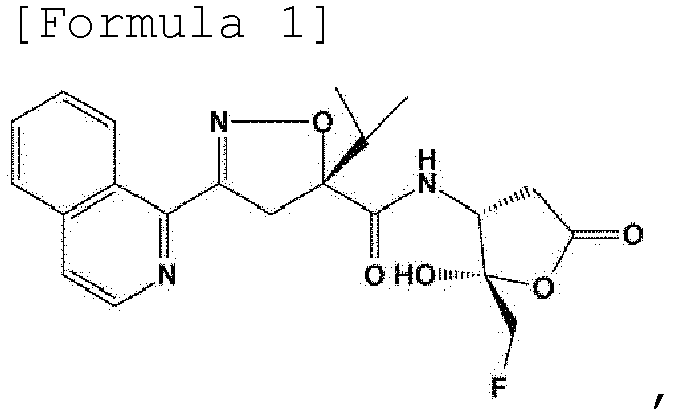 a second formulation having a pH of 7 to 11 buffer for dissolving the compound of Formula 1,wherein, a content of the compound Formula 2 is at least 95% based on a total content of the compounds of Formula 2 and Formula 3, as measured within 30 minutes after the first formulation and the second formulation are mixed.

Applications Claiming Priority (2)
| Application Number | Priority Date | Filing Date | Title |
|---|---|---|---|
| KR20220010141 | 2022-01-24 | ||
| PCT/KR2023/000757 WO2023140582A1 (en) | 2022-01-24 | 2023-01-16 | Injectable formulation containing isoxazoline derivative |
Publications (2)
| Publication Number | Publication Date |
|---|---|
| EP4458347A1 true EP4458347A1 (en) | 2024-11-06 |
| EP4458347A4 EP4458347A4 (en) | 2025-04-30 |
Family
ID=87348946
Family Applications (1)
| Application Number | Title | Priority Date | Filing Date |
|---|---|---|---|
| EP23743429.5A Withdrawn EP4458347A4 (en) | 2022-01-24 | 2023-01-16 | INJECTABLE FORMULATION CONTAINING AN ISOXAZOLINE DERIVATIVE |
Country Status (10)
| Country | Link |
|---|---|
| US (1) | US20250107999A1 (en) |
| EP (1) | EP4458347A4 (en) |
| JP (1) | JP2025502488A (en) |
| KR (1) | KR20230114203A (en) |
| CN (1) | CN118510496A (en) |
| AU (1) | AU2023208459A1 (en) |
| CA (1) | CA3242627A1 (en) |
| MX (1) | MX2024008076A (en) |
| TW (1) | TWI866034B (en) |
| WO (1) | WO2023140582A1 (en) |
Family Cites Families (14)
| Publication number | Priority date | Publication date | Assignee | Title |
|---|---|---|---|---|
| KR100774999B1 (en) * | 2005-02-26 | 2007-11-09 | 주식회사 엘지생명과학 | Isoxazoline derivatives and novel process for its preparation |
| TW201012816A (en) * | 2008-07-11 | 2010-04-01 | Gilead Sciences Inc | Method of treatment and pharmaceutical compositions |
| JP6273636B2 (en) * | 2015-12-24 | 2018-02-07 | 学校法人同志社 | Medicament for treating or preventing a disorder caused by TGF-β, including a caspase inhibitor, and application thereof |
| BR112018070960A2 (en) * | 2016-04-13 | 2019-01-29 | Nortic Holdings Inc. | stable nimodipine parenteral formulation |
| MA46696A (en) * | 2016-11-07 | 2019-09-11 | Samumed Llc | READY-TO-USE SINGLE-DOSE INJECTABLE FORMULATIONS |
| KR20190043865A (en) * | 2017-10-19 | 2019-04-29 | 단국대학교 천안캠퍼스 산학협력단 | Depot formulation for injection comprising entecavir fatty acid esters analogs |
| EP3743799A1 (en) | 2019-04-15 | 2020-12-02 | Apple Inc. | Accelerated scrolling and selection |
| JP7442914B2 (en) * | 2019-04-30 | 2024-03-05 | エルジー・ケム・リミテッド | Caspase inhibitor prodrugs |
| KR102366226B1 (en) * | 2019-05-31 | 2022-02-22 | 주식회사 엘지화학 | Composition for injection containing caspase inhibitor prodrug and mehod for preparing thereof |
| KR20220010141A (en) | 2020-07-17 | 2022-01-25 | 이유승 | laptop phone compatible wireless auxiliary battery |
| US20230310412A1 (en) * | 2020-08-05 | 2023-10-05 | Lg Chem, Ltd. | Use of caspase inhibitor for alleviating or treating osteoarthritis |
| KR20220076371A (en) * | 2020-11-30 | 2022-06-08 | 주식회사 엘지화학 | Composition for injection containing caspase inhibitor and mehod for preparing thereof |
| CN118574603A (en) * | 2022-02-23 | 2024-08-30 | 株式会社Lg化学 | Injection preparation containing isoxazoline derivative and preparation method thereof |
| KR20230141971A (en) * | 2022-03-24 | 2023-10-10 | 주식회사 엘지화학 | Injectable formulation comprising isooxazoline derivatives and preparation method thereof |
-
2023
- 2023-01-16 WO PCT/KR2023/000757 patent/WO2023140582A1/en not_active Ceased
- 2023-01-16 KR KR1020230006216A patent/KR20230114203A/en not_active Ceased
- 2023-01-16 CN CN202380018009.2A patent/CN118510496A/en not_active Withdrawn
- 2023-01-16 US US18/832,464 patent/US20250107999A1/en active Pending
- 2023-01-16 AU AU2023208459A patent/AU2023208459A1/en not_active Abandoned
- 2023-01-16 CA CA3242627A patent/CA3242627A1/en active Pending
- 2023-01-16 EP EP23743429.5A patent/EP4458347A4/en not_active Withdrawn
- 2023-01-16 MX MX2024008076A patent/MX2024008076A/en unknown
- 2023-01-16 JP JP2024543538A patent/JP2025502488A/en active Pending
- 2023-01-18 TW TW112102332A patent/TWI866034B/en active
Also Published As
| Publication number | Publication date |
|---|---|
| TW202337445A (en) | 2023-10-01 |
| MX2024008076A (en) | 2024-07-12 |
| AU2023208459A1 (en) | 2024-07-11 |
| WO2023140582A1 (en) | 2023-07-27 |
| JP2025502488A (en) | 2025-01-24 |
| TWI866034B (en) | 2024-12-11 |
| KR20230114203A (en) | 2023-08-01 |
| CA3242627A1 (en) | 2023-07-27 |
| CN118510496A (en) | 2024-08-16 |
| US20250107999A1 (en) | 2025-04-03 |
| EP4458347A4 (en) | 2025-04-30 |
Similar Documents
| Publication | Publication Date | Title |
|---|---|---|
| US20240041984A1 (en) | Methods for producing stable therapeutic formulations in aprotic polar solvents | |
| KR20080016689A (en) | New types of compositions capable of injecting drugs and preparation methods for such compositions | |
| EP4467126A1 (en) | Injectable formulation comprising isoxazoline derivative and method for preparing same | |
| EP4467127A1 (en) | Injectable preparation comprising isoxazoline derivative, and preparation method therefor | |
| US20250107999A1 (en) | Injectable formulation containing isoxazoline derivative | |
| US11590205B2 (en) | Methods for producing stable therapeutic glucagon formulations in aprotic polar solvents | |
| AU2006221633B2 (en) | Injectable preparations of diclofenac and its pharmaceutically acceptable salts | |
| MX2007006106A (en) | Nonaqueous liquid parenteral aceclofenac formulation. | |
| EP3996679B1 (en) | High concentration insulin formulation | |
| JP2008534610A (en) | How to administer ixabepilone | |
| HK40101667B (en) | Methods for producing stable therapeutic formulations in aprotic polar solvents | |
| HK1192724A (en) | Pharmaceutical cream compositions of oxymetazoline for treating symptoms of rosacea |
Legal Events
| Date | Code | Title | Description |
|---|---|---|---|
| STAA | Information on the status of an ep patent application or granted ep patent |
Free format text: STATUS: THE INTERNATIONAL PUBLICATION HAS BEEN MADE |
|
| PUAI | Public reference made under article 153(3) epc to a published international application that has entered the european phase |
Free format text: ORIGINAL CODE: 0009012 |
|
| STAA | Information on the status of an ep patent application or granted ep patent |
Free format text: STATUS: REQUEST FOR EXAMINATION WAS MADE |
|
| 17P | Request for examination filed |
Effective date: 20240724 |
|
| AK | Designated contracting states |
Kind code of ref document: A1 Designated state(s): AL AT BE BG CH CY CZ DE DK EE ES FI FR GB GR HR HU IE IS IT LI LT LU LV MC ME MK MT NL NO PL PT RO RS SE SI SK SM TR |
|
| REG | Reference to a national code |
Ref country code: DE Ref legal event code: R079 Free format text: PREVIOUS MAIN CLASS: A61K0009000000 Ipc: A61K0009080000 |
|
| A4 | Supplementary search report drawn up and despatched |
Effective date: 20250401 |
|
| DAV | Request for validation of the european patent (deleted) | ||
| DAX | Request for extension of the european patent (deleted) | ||
| RIC1 | Information provided on ipc code assigned before grant |
Ipc: A61P 37/02 20060101ALI20250326BHEP Ipc: A61P 25/28 20060101ALI20250326BHEP Ipc: A61P 25/00 20060101ALI20250326BHEP Ipc: A61P 19/08 20060101ALI20250326BHEP Ipc: A61P 19/02 20060101ALI20250326BHEP Ipc: A61P 19/00 20060101ALI20250326BHEP Ipc: A61P 9/04 20060101ALI20250326BHEP Ipc: A61P 3/10 20060101ALI20250326BHEP Ipc: A61P 1/16 20060101ALI20250326BHEP Ipc: A61P 1/04 20060101ALI20250326BHEP Ipc: A61K 31/4725 20060101ALI20250326BHEP Ipc: A61K 47/26 20060101ALI20250326BHEP Ipc: A61K 47/02 20060101ALI20250326BHEP Ipc: A61K 9/08 20060101AFI20250326BHEP |
|
| STAA | Information on the status of an ep patent application or granted ep patent |
Free format text: STATUS: THE APPLICATION IS DEEMED TO BE WITHDRAWN |
|
| 18D | Application deemed to be withdrawn |
Effective date: 20251023 |