EP4457138B1 - Method for estimating the rotor torques of an aircraft capable of hovering and control unit for an aircraft capable of hovering - Google Patents
Method for estimating the rotor torques of an aircraft capable of hovering and control unit for an aircraft capable of hovering Download PDFInfo
- Publication number
- EP4457138B1 EP4457138B1 EP22797510.9A EP22797510A EP4457138B1 EP 4457138 B1 EP4457138 B1 EP 4457138B1 EP 22797510 A EP22797510 A EP 22797510A EP 4457138 B1 EP4457138 B1 EP 4457138B1
- Authority
- EP
- European Patent Office
- Prior art keywords
- coll
- rotors
- rotor
- aircraft
- engine
- Prior art date
- Legal status (The legal status is an assumption and is not a legal conclusion. Google has not performed a legal analysis and makes no representation as to the accuracy of the status listed.)
- Active
Links
Images



Classifications
-
- G—PHYSICS
- G05—CONTROLLING; REGULATING
- G05D—SYSTEMS FOR CONTROLLING OR REGULATING NON-ELECTRIC VARIABLES
- G05D1/00—Control of position, course, altitude or attitude of land, water, air or space vehicles, e.g. using automatic pilots
- G05D1/08—Control of attitude, i.e. control of roll, pitch, or yaw
- G05D1/0808—Control of attitude, i.e. control of roll, pitch, or yaw specially adapted for aircraft
- G05D1/0858—Control of attitude, i.e. control of roll, pitch, or yaw specially adapted for aircraft specially adapted for vertical take-off of aircraft
-
- B—PERFORMING OPERATIONS; TRANSPORTING
- B64—AIRCRAFT; AVIATION; COSMONAUTICS
- B64D—EQUIPMENT FOR FITTING IN OR TO AIRCRAFT; FLIGHT SUITS; PARACHUTES; ARRANGEMENT OR MOUNTING OF POWER PLANTS OR PROPULSION TRANSMISSIONS IN AIRCRAFT
- B64D31/00—Power plant control systems; Arrangement of power plant control systems in aircraft
- B64D31/02—Initiating means
- B64D31/06—Initiating means actuated automatically
-
- B—PERFORMING OPERATIONS; TRANSPORTING
- B64—AIRCRAFT; AVIATION; COSMONAUTICS
- B64C—AEROPLANES; HELICOPTERS
- B64C29/00—Aircraft capable of landing or taking-off vertically, e.g. vertical take-off and landing [VTOL] aircraft
- B64C29/0008—Aircraft capable of landing or taking-off vertically, e.g. vertical take-off and landing [VTOL] aircraft having its flight directional axis horizontal when grounded
- B64C29/0016—Aircraft capable of landing or taking-off vertically, e.g. vertical take-off and landing [VTOL] aircraft having its flight directional axis horizontal when grounded the lift during taking-off being created by free or ducted propellers or by blowers
- B64C29/0033—Aircraft capable of landing or taking-off vertically, e.g. vertical take-off and landing [VTOL] aircraft having its flight directional axis horizontal when grounded the lift during taking-off being created by free or ducted propellers or by blowers the propellers being tiltable relative to the fuselage
-
- B—PERFORMING OPERATIONS; TRANSPORTING
- B64—AIRCRAFT; AVIATION; COSMONAUTICS
- B64D—EQUIPMENT FOR FITTING IN OR TO AIRCRAFT; FLIGHT SUITS; PARACHUTES; ARRANGEMENT OR MOUNTING OF POWER PLANTS OR PROPULSION TRANSMISSIONS IN AIRCRAFT
- B64D31/00—Power plant control systems; Arrangement of power plant control systems in aircraft
-
- B—PERFORMING OPERATIONS; TRANSPORTING
- B64—AIRCRAFT; AVIATION; COSMONAUTICS
- B64F—GROUND OR AIRCRAFT-CARRIER-DECK INSTALLATIONS SPECIALLY ADAPTED FOR USE IN CONNECTION WITH AIRCRAFT; DESIGNING, MANUFACTURING, ASSEMBLING, CLEANING, MAINTAINING OR REPAIRING AIRCRAFT, NOT OTHERWISE PROVIDED FOR; HANDLING, TRANSPORTING, TESTING OR INSPECTING AIRCRAFT COMPONENTS, NOT OTHERWISE PROVIDED FOR
- B64F5/00—Designing, manufacturing, assembling, cleaning, maintaining or repairing aircraft, not otherwise provided for; Handling, transporting, testing or inspecting aircraft components, not otherwise provided for
- B64F5/60—Testing or inspecting aircraft components or systems
-
- F—MECHANICAL ENGINEERING; LIGHTING; HEATING; WEAPONS; BLASTING
- F02—COMBUSTION ENGINES; HOT-GAS OR COMBUSTION-PRODUCT ENGINE PLANTS
- F02C—GAS-TURBINE PLANTS; AIR INTAKES FOR JET-PROPULSION PLANTS; CONTROLLING FUEL SUPPLY IN AIR-BREATHING JET-PROPULSION PLANTS
- F02C6/00—Plural gas-turbine plants; Combinations of gas-turbine plants with other apparatus; Adaptations of gas-turbine plants for special use
- F02C6/20—Adaptations of gas-turbine plants for driving vehicles
- F02C6/206—Adaptations of gas-turbine plants for driving vehicles the vehicles being airscrew driven
-
- F—MECHANICAL ENGINEERING; LIGHTING; HEATING; WEAPONS; BLASTING
- F02—COMBUSTION ENGINES; HOT-GAS OR COMBUSTION-PRODUCT ENGINE PLANTS
- F02C—GAS-TURBINE PLANTS; AIR INTAKES FOR JET-PROPULSION PLANTS; CONTROLLING FUEL SUPPLY IN AIR-BREATHING JET-PROPULSION PLANTS
- F02C9/00—Controlling gas-turbine plants; Controlling fuel supply in air- breathing jet-propulsion plants
-
- G—PHYSICS
- G05—CONTROLLING; REGULATING
- G05D—SYSTEMS FOR CONTROLLING OR REGULATING NON-ELECTRIC VARIABLES
- G05D1/00—Control of position, course, altitude or attitude of land, water, air or space vehicles, e.g. using automatic pilots
- G05D1/40—Control within particular dimensions
- G05D1/49—Control of attitude, i.e. control of roll, pitch or yaw
-
- F—MECHANICAL ENGINEERING; LIGHTING; HEATING; WEAPONS; BLASTING
- F05—INDEXING SCHEMES RELATING TO ENGINES OR PUMPS IN VARIOUS SUBCLASSES OF CLASSES F01-F04
- F05D—INDEXING SCHEME FOR ASPECTS RELATING TO NON-POSITIVE-DISPLACEMENT MACHINES OR ENGINES, GAS-TURBINES OR JET-PROPULSION PLANTS
- F05D2200/00—Mathematical features
- F05D2200/10—Basic functions
- F05D2200/11—Sum
-
- F—MECHANICAL ENGINEERING; LIGHTING; HEATING; WEAPONS; BLASTING
- F05—INDEXING SCHEMES RELATING TO ENGINES OR PUMPS IN VARIOUS SUBCLASSES OF CLASSES F01-F04
- F05D—INDEXING SCHEME FOR ASPECTS RELATING TO NON-POSITIVE-DISPLACEMENT MACHINES OR ENGINES, GAS-TURBINES OR JET-PROPULSION PLANTS
- F05D2220/00—Application
- F05D2220/90—Application in vehicles adapted for vertical or short take off and landing (v/stol vehicles)
-
- F—MECHANICAL ENGINEERING; LIGHTING; HEATING; WEAPONS; BLASTING
- F05—INDEXING SCHEMES RELATING TO ENGINES OR PUMPS IN VARIOUS SUBCLASSES OF CLASSES F01-F04
- F05D—INDEXING SCHEME FOR ASPECTS RELATING TO NON-POSITIVE-DISPLACEMENT MACHINES OR ENGINES, GAS-TURBINES OR JET-PROPULSION PLANTS
- F05D2270/00—Control
- F05D2270/30—Control parameters, e.g. input parameters
- F05D2270/335—Output power or torque
-
- G—PHYSICS
- G05—CONTROLLING; REGULATING
- G05D—SYSTEMS FOR CONTROLLING OR REGULATING NON-ELECTRIC VARIABLES
- G05D2109/00—Types of controlled vehicles
- G05D2109/20—Aircraft, e.g. drones
- G05D2109/22—Aircraft, e.g. drones with fixed wings
- G05D2109/23—Vertical take-off and landing [VTOL] aircraft; Short take-off and landing [STOL, STOVL] aircraft
Definitions
- the present invention relates to a method for estimating the rotor torques of an aircraft capable of hovering.
- the present invention also relates to a control unit for an aircraft capable of hovering.
- Aircraft capable of hovering such as convertiplanes or helicopters, are known comprising:
- a portion of the engine torque is lost because of mechanical losses in the transmission units.
- a portion of the engine torque may be used to drive one or more accessories of the aircraft.
- the known aircraft further comprise physical sensors arranged at the two rotors and configured to directly measure the rotor torques.
- the rotor torques measured by such sensors e.g., strain-based torque sensors
- the use of these physical sensors in aircraft results in increased installation and maintenance costs, as well as increased weight and complexity of the aircraft.
- the rotor torques of two independently controllable rotors may actually be significantly different from each other. For example, this may occur during particular manoeuvres of the aircraft.
- the object of the present invention is to realise a method for estimating rotor torques, which allows the aforesaid need to be satisfied in a simple and efficient way.
- control unit 5 comprises in a known manner a computational unit, a memory, and one or more interface units for the electrical and operational connection to sensor means 40, 41, 42, 43 of aircraft 1, which will be described in detail in the following ( Figure 4 ).
- blades 8 are articulated on the respective hub 7 in such a way that respective angles of attack ⁇ 1 COLL , ⁇ 2 COLL are collectively adjustable relative to respective axes B.
- Convertiplane 1 further comprises sensor means 40 configured to measure collective pitch angles ⁇ 1 COLL , ⁇ 2 COLL of respective rotors 31, 32. Sensor means 40 are configured to generate a signal associated with collective pitch angles ⁇ 1 COLL , ⁇ 2 COLL and are operatively connected to control unit 5 ( Figure 4 ).
- rotors 31, 32 are tiltable with respect to respective axes C relative to half-wings 3.
- axes C are transverse to axis A and axes B ( Figure 1 ).
- convertiplane 1 can be selectively arranged:
- angles ⁇ 1, ⁇ 2 corresponding respectively to the orientation of rotational axes B with respect to axis A.
- Convertiplane 1 further comprises sensor means 41 configured to measure angles ⁇ 1, ⁇ 2 of respective rotational axes B of rotors 31, 32 with respect to axis A.
- sensor means 41 are configured to generate a signal associated with angles ⁇ 1, ⁇ 2 and are operatively connected to control unit 5 ( Figure 4 ).
- sensor means 41 are also configured to detect nacelle angles of nacelles 11, 12 corresponding to the orientation of nacelles 11, 12 with respect to axis A.
- convertiplane 1 comprises an interconnection shaft 4, which is operatively connected to rotors 31 and 32 ( Figure 1 ).
- interconnection shaft 4 is adapted to:
- Each rotor torque TQ mast1 , TQ mast2 is in general different from engine torques TQ eng1 , TQ eng2 for several reasons, which will be described in the following.
- convertiplane 1 may comprise a plurality of not-shown accessories, which perform various functions on board the convertiplane and require a certain amount of power to be operated.
- the accessories are at least indirectly operatively connected to engines 21 and/or 22 to receive the power necessary for their operation.
- engines 21 and/or 22 are adapted to provide the accessories with a torque TQ acc for powering them.
- Sensor means 42 and 43 are operatively connected to control unit 5 and are adapted to generate respective signals associated with the measured values of engine torques TQ eng1 , TQ eng2 and airspeed v of convertiplane 1.
- Control unit 5 is configured to calculate a first component TQ mastSYM of rotor torques TQ mast1 , TQ mast2 on the basis of engine torques TQ eng1 , TQ eng2 .
- first component TQ mastSYM is equal to rotor torques TQ mast1 , TQ mast2 when collective pitch angles ⁇ 1 COLL , ⁇ 2 COLL are equal to each other.
- control unit 5 is configured to ( Figure 2 ) :
- control unit 5 may be configured to subtract the term corresponding to the transmission losses from the total engine torque TQ engTOT by multiplying total engine torque TQ engTOT by a mechanical loss coefficient ⁇ XMNS ( ⁇ XMNS ⁇ 1).
- the difference between total engine torque TQ engTOT and the transmission losses and/or torque TQ acc is the total available engine torque TQ engavail .
- Control unit 5 is further configured to calculate first component TQ mastSYM by dividing the total available engine torque TQ engavail by two, which is the number of rotors 31, 32 of convertiplane 1 (block 53 in Figure 2 ).
- control unit 5 is configured to:
- second components TQ mastASYM1 , TQ mastASYM2 respectively represent how much the rotor torque TQ mast1 , TQ mast2 of each rotor 31, 32 deviates from the rotor torque that would act on each rotor 31, 32 if total available engine torque TQ engavail were equally apportioned between rotors 31 and 32.
- first component TQ mastSYM and second components TQ mastASYM1 , TQ mastASYM2 may be referred respectively to as a "symmetric component” and an "asymmetric components" of rotor torques TQ mast1 , TQ mast2 .
- control unit 5 is configured to ( Figure 2 ):
- Parameters TQ' 1 , TQ' 2 are variable as a function of several variables associated with the flight conditions of convertiplane 1.
- control unit 5 comprises a database 9, in which data correlating parameters TQ' 1 , TQ' 2 with a plurality of variables associated with the flight conditions of convertiplane 1 are stored.
- data stored in database 9 may be arranged in tables and/or graphs, which are preferably multiple input tables and/or graphs ( Figure 4 ).
- Control unit 5 is configured to:
- the data stored in database 9 are calculated or experimentally measured in a known manner by means of statistical methods or by test on the basis of one or more sets of the following variables of convertiplane 1:
- control unit 5 is configured to calculate parameters TQ' 1 , TQ' 2 on the basis of at least two independent variables associated with the performance of rotor 31 and/or 32.
- each parameter TQ' 1 , TQ' 2 is calculated on the basis of:
- database 9 comprises data correlating parameters TQ' 1 , TQ' 2 with respective angle ⁇ 1, ⁇ 2, airspeed v and first component TQ mastSYM .
- control unit 5 is configured to ( Figure 3 ):
- control unit 5 calculates an estimate of rotor torques TQ mast1 , TQ mast2 with a sum of first component TQ mastSYM and respective second components TQ mastASYM1 , TQ mastASYM2 .
- sensor means 42 periodically measure engine torques TQ eng1 , TQ eng2 and send the associated signal to control unit 5 ( Figure 4 ). Subsequently, control unit 5 calculates total engine torque TQ engTOT as the sum of the engine torques TQ eng1 , TQ eng2 measured by sensor means 42 (block 50 in Figure 2 ).
- Control unit 5 then calculates total available engine torque TQ engavail by subtracting from total engine torque TQ engTOT the transmission losses due to the transmission of engine torques TQ eng1 , TQ eng2 through transmission unit 6 (block 51 in Figure 2 ) and/or the torque TQ acc for powering the accessories of convertiplane 1, where present (block 52 in Figure 2 ).
- Control unit 5 then calculates first component TQ mastSYM by dividing available engine torque TQ engavail by the number of rotors 31, 32 of convertiplane 1 (block 53 in Figure 2 ).
- sensor means 40 measure collective pitch angles ⁇ 1 COLL , ⁇ 2 COLL of rotors 31 and 32, sensor means 41 measure angles ⁇ 1, ⁇ 2 and sensor means 43 measure airspeed v .
- Control unit 5 calculates the pitch angle differences ⁇ COLL1 , ⁇ COLL2 between collective pitch angles ⁇ 1 COLL and ⁇ 2 COLL .
- control unit 5 accesses database 9 using angle ⁇ 1, ⁇ 2, airspeed v and/or first component TQ mastSYM as inputs and determines parameters TQ' 1 , TQ' 2 on the basis of the data stored in database 9.
- control unit 5 calculates parameter TQ' 1 on the basis of angle ⁇ 1 and airspeed v (block 58 in Figure 3 ); if angle ⁇ 1 is equal to or greater than threshold value th, control unit 5 calculates parameter TQ' 1 on the basis of angle ⁇ 1 and first component TQ mastSYM (block 59 in Figure 3 ).
- control unit 5 calculates parameter TQ' 2 on the basis of angle ⁇ 2 and airspeed v; if angle ⁇ 2 is equal to or greater than threshold value th, control unit 5 calculates parameter TQ' 2 on the basis of angle ⁇ 2 and first component TQ mastSYM .
- control unit 5 calculates each second component TQ mastASYM1 , TQ mastASYM2 by multiplying respective parameter TQ' 1 , TQ' 2 by the respective pitch angle difference ⁇ COLL1 , ⁇ COLL2 (block 57 in Figure 2 ). Control unit 5 then calculates each rotor torque TQ mast1 , TQ mast2 as the sum of first component TQ mastSYM and the respective second component TQ mastASYM1 , TQ mastASYM2 (block 55 in Figure 2 ) .
- 1' denotes an aircraft capable of hovering according to a second embodiment of the present invention.
- Aircraft 1' is similar to aircraft 1 and will be described hereinafter only insofar as it differs from the latter; equal or equivalent parts of aircrafts 1, 1' will be marked, where possible, by the same reference numerals.
- Aircraft 1' differs from aircraft 1 in that it comprises:
- Each rotor 31, 32, 33', 34' essentially comprises a hub 7 and a plurality of blades 8.
- rotors 31, 32, 33', 34' are rotatable about respective axes B with respective angular speeds ⁇ 1, ⁇ 2, ⁇ 3 and ⁇ 4, which are preferably constant over time.
- blades 8 are articulated on the respective hub 7 in such a way that respective angles of attack ⁇ 1 COLL , ⁇ 2 COLL , ⁇ 3 COLL , ⁇ 4 COLL are collectively adjustable relative to respective axes B.
- Rotors 31, 32, 33', 34' are controllable independently of one another.
- the collective pitch angles ⁇ 1 COLL , ⁇ 2 COLL , ⁇ 3 COLL , ⁇ 4 COLL may be different from one another.
- Aircraft 1' further comprises ( Figure 7 ):
- control unit 5 is configured to ( Figure 6 ):
- control unit 5 is configured to ( Figure 6 ):
- Control unit 5 is configured to calculate each parameter TQ' 1 , TQ' 2 , TQ' 3 , TQ' 4 on the basis of at least two independent variables associated with the performance of the respective rotor 31, 32, 33', 34'.
- each parameter TQ' 1 , TQ' 2 , TQ' 3 , TQ' 4 is calculated on the basis of:
- database 9 comprises data correlating parameter TQ' with angle ⁇ 1, ⁇ 2, ⁇ 3, ⁇ 4, airspeed v and first component TQ mastSYM .
- control unit 5 calculates an estimate of rotor torques TQ mast1 , TQ mast2 , TQ mast3 , TQ mast4 as an algebraic sum of first component TQ mastSYM and respective second components TQ mastASYM1 , TQ mastASYM2 , TQ mastASYM3 , TQ mastASYM4 .
- TQ mastASYM1 TQ mastASYM2
- TQ mastASYM3 TQ mastASYM4 .
- sensor means 40 measure collective pitch angles ⁇ 1 COLL , ⁇ 2 COLL , ⁇ 3 COLL , ⁇ 4 COLL of rotors 31, 32, 33', 34', sensor means 41 measure angles ⁇ 1, ⁇ 2, ⁇ 3, ⁇ 4 and sensor means 43 measure airspeed v.
- Control unit 5 calculates pitch angle differences ⁇ COLL1 , ⁇ COLL2, ⁇ COLL3, ⁇ COLL4 between collective pitch angles ⁇ 1 COLL , ⁇ 2 COLL , ⁇ 4 COLL .
- control unit 5 accesses database 9 using angle ⁇ 1, ⁇ 2, ⁇ 3, ⁇ 4, airspeed v and/or first component TQ mastSYM as inputs and determines parameters TQ' 1 , TQ' 2 , TQ' 3 , TQ' 4 on the basis of the data stored in database 9.
- control unit 5 calculates second components TQ mastASYM1 , TQ mastASYM2 , TQ mastAYM3 , TQ mastASYM4 as multiplications of respective parameters TQ' 1 , TQ' 2 , TQ' 3 , TQ' 4 by respective pitch angle differences ⁇ COLL1 , ⁇ COLL2, ⁇ COLL3, ⁇ COLL4 .
- Control unit 5 then calculates each rotor torque TQ mast1 , TQ mast2, TQ mast3 , TQ mast4 as the sum of first component TQ mastSYM and the respective second component TQ mastASYM1 , TQ mastASYM2 , TQ mastASYM3 , TQ mastASYM4 .
- Figure 8 illustrates a block diagram related to a method for estimating the rotor torques of an aircraft 1'' capable of hovering (not shown) according to a second embodiment of the present invention comprising N operatively interconnected and identical rotors.
- N is a natural number greater than one.
- N may be an even or an odd number.
- Aircraft 1'' further comprises M engines operatively connected to the N rotors.
- M is a natural number greater than or equal to one; M might be equal to or different from N.
- Aircraft 1'' is a generalization of aircrafts 1 and 1'. Accordingly, equal or equivalent parts of aircrafts 1, 1', 1'' will be marked, where possible, by the same reference numerals. In detail, aircraft 1'' is a multicopter.
- control unit 5 of aircraft 1'' is configured to calculate a first component TQ mastSYM of rotor torques TQ mast1 , TQ mast2 , ..., TQ mastN on the basis of engine torques TQ eng1 , TQ eng2 , ... , TQ engM .
- first component TQ mastSYM is equal to rotor torques TQ mast1 , TQ mast2 , ..., TQ mastN when collective pitch angles ⁇ 1 COLL , ⁇ 2 COLL , ..., ⁇ N COLL are equal to one another.
- control unit 5 is configured to ( Figure 8 ) :
- the difference between total engine torque TQ engTOT and the transmission losses and/or torque TQ acc is the total available engine torque TQ engavail .
- control unit 5 is configured to:
- second components TQ mastASYM1 , TQ mastASYM2 ,..., TQ mastASYMN represent how much the rotor torque TQ mast1 , TQ mast2 ,..., TQ mastN of each rotor deviates from the rotor torque that would act on each of the rotors if total available engine torque TQ engavail were equally apportioned between the rotors.
- Control unit 5 is further configured to calculate rotor torques TQ mast1 , TQ mast2 ,..., TQ mastN as an algebraic sum of first component TQ mastSYM (which is common to all rotors of aircraft 1'') and the respective second component TQ mastASYM1 , TQ mastASYM2 ,..., TQ mastASYMN (block 55 in Figure 8 , formula b)):
- control unit 5 is configured to ( Figure 8 ):
- Control unit 5 is configured to calculate each parameter TQ' 1 , TQ' 2 ,..., TQ' N on the basis of at least two independent variables associated with the performance of the respective rotor.
- each parameter TQ' 1 , TQ' 2 ,...,TQ' N is calculated on the basis of:
- database 9 comprises data correlating parameters TQ' 1 , TQ' 2 ,...,TQ' n with angles ⁇ 1, ⁇ 2,..., ⁇ N, airspeed v and first component TQ mastSYM .
- Pitch angle differences ⁇ COLL1 , ⁇ COLL2 , ..., ⁇ COLLN are respective differences between each collective pitch angle ⁇ 1 COLL , ⁇ 2 COLL , ..., ⁇ 4 COLL and a symmetric collective pitch angle ⁇ 0 (formula d)):
- rotor torques TQ mast1 , TQ mast2 of convertiplane 1 are calculated as the algebraic sum of first component TQ mastSYM , which is equal to rotor torques TQ mast1 , TQ mast2 when collective pitch angles ⁇ 1 COLL , ⁇ 2 COLL are equal to each other, and respective second components TQ mastASYM1 , TQ mastASYM2 , which represents how much the rotor torque TQ mast1 , TQ mast2 of each rotor 31, 32 deviates from the rotor torque that would act on each rotor 31, 32 if total available engine torque TQ engavail were equally apportioned between rotors 31 and 32.
- the rotor torques TQ mast1 , TQ mast2 of rotors 31, 32 which are independently controllable from each other, can be efficiently and reliably estimated even in situations in which collective pitch angles ⁇ 1 COLL , ⁇ 2 COLL are different from each other and without any physical sensor for directly measuring the rotor torques TQ mast1 , TQ mast2 .
- control unit 5 comprises database 9, in which data correlating parameters TQ' 1 , TQ' 2 ,...,TQ' N with variables associated with the flight conditions of convertiplane 1 are stored. Therefore, parameters TQ' 1 , TQ' 2 , ..., TQ' N and second components TQ mastASYM1 , TQ mastASYM2 ,..., TQ mastASYMN are calculable on the basis of a limited number of independent variables.
- TQ' 1 , TQ' 2 ,...,TQ' N can be determined on the basis of a limited number of variables allows to improve the robustness of the estimation method, because fewer errors due to false dependencies on other variables are possible.
- angles ⁇ 1, ⁇ 2,..., ⁇ N corresponding to the orientation of axes B of the respective rotors are taken into account when determining parameters TQ' 1 , TQ' 2 ,...,TQ' N , second components TQ mastASYM1 , TQ mastASYM2 ,...,TQ mastASYMN are calculated regardless of whether the M engines are tilted integrally with the N rotors or are fixed with respect to fuselage 2.
- the method according to the present invention may be implemented for estimating the rotor torques of a helicopter comprising at least two rotors, which are operatively connected to one another and have respective collective pitch angles independently controllable from one another.
- nacelles 11, 12 and respective engines 21, 22 might be rotationally fixed with respect to axis B, being only rotors 31, 32 tiltable around axis B.
Landscapes
- Engineering & Computer Science (AREA)
- Aviation & Aerospace Engineering (AREA)
- Chemical & Material Sciences (AREA)
- Combustion & Propulsion (AREA)
- General Engineering & Computer Science (AREA)
- Mechanical Engineering (AREA)
- Radar, Positioning & Navigation (AREA)
- General Physics & Mathematics (AREA)
- Automation & Control Theory (AREA)
- Physics & Mathematics (AREA)
- Remote Sensing (AREA)
- Transportation (AREA)
- Manufacturing & Machinery (AREA)
- Transmission Devices (AREA)
- Control Of Position, Course, Altitude, Or Attitude Of Moving Bodies (AREA)
- Toys (AREA)
- Retarders (AREA)
Description
- This Patent Application claims priority from
European Patent Application No. 21217859.4 filed on December 27, 2021 - The present invention relates to a method for estimating the rotor torques of an aircraft capable of hovering.
- The present invention also relates to a control unit for an aircraft capable of hovering.
- Aircraft capable of hovering, such as convertiplanes or helicopters, are known comprising:
- at least two rotors, which are operatively connected to each other and controllable independently of each other;
- at least one engine, which is operatively connected to the rotors and is adapted to provide them with an engine torque; and
- transmission units operatively connecting the engine to the rotors.
- In particular, the rotors are driven in rotation by respective rotor torques, which are in general different from the engine torque for several reasons.
- First, a portion of the engine torque is lost because of mechanical losses in the transmission units. In addition, a portion of the engine torque may be used to drive one or more accessories of the aircraft.
- The known aircraft further comprise physical sensors arranged at the two rotors and configured to directly measure the rotor torques. However, the rotor torques measured by such sensors (e.g., strain-based torque sensors) are not consistently reliable. In addition, the use of these physical sensors in aircraft results in increased installation and maintenance costs, as well as increased weight and complexity of the aircraft.
- This is especially relevant for the convertiplanes, the rotors of which are known to be tiltable relative to a reference system fixed with respect to stationary parts of the convertiplanes. Indeed, each time the rotors of the convertiplane are tilted, the physical sensors are tilted integrally with the rotors. This complicates the tilting movement of the rotors and the electrical connection of the sensors to the fixed parts of the convertiplane.
- Methods have therefore been developed to estimate the rotor torques acting on each of the two rotors without the physical sensors. In particular, the methods include the steps of:
- subtracting from the engine torque the mechanical losses due to the transmission of the engine torque from the engine to the rotors; and
- subtracting from the engine torque the mechanical energy supplied by the engine to any accessories of the aircraft connected thereto.
- The result of these subtractions is the total available engine torque.
- The rotor torque is then estimated by dividing the total available engine torque by the number of rotors of the aircraft. In other words, the torque acting on each rotor is estimated by apportioning the total available engine torque produced by the engine equally between the two rotors.
- Such an estimate can be considered sufficiently accurate under the assumption that the rotor torques acting on the two rotors are equal or substantially equal to each other.
- However, the rotor torques of two independently controllable rotors may actually be significantly different from each other. For example, this may occur during particular manoeuvres of the aircraft.
- As a result, the rotor torque calculated by the known estimation methods fails to give an adequate indication of the value of the torque acting on each of the two rotors, when the assumption that the rotor torques acting on the two rotors are equal or substantially equal to each other is not valid.
-
US-A1-2017336809 discloses a method for executing yaw control of an aircraft including two rotors. The method includes inducing helicopter yaw by creating a differential torque between the two rotors, wherein the creating of the differential torque comprises inducing a differential collective pitch to generate a differential thrust, and maintaining helicopter roll equilibrium during the inducing of the helicopter yaw by inducing a differential cyclic pitch to generate a differential lift offset. -
US-A1-2016122039 discloses a method for calculating torque through a rotor mast of a propulsion system of a tiltrotor aircraft including receiving the torque applied through a quill shaft of the rotorcraft. The quill shaft is located between a fixed gearbox and a spindle gearbox, and the spindle gearbox is rotatable about a conversion access. The torque through the rotor mast is determined by using the torque through the quill shaft and the efficiency loss value between the quill shaft and the rotor mast. - In addition, a control method for turboshaft engine is disclosed in the paper "A novel control method for turboshaft engine with variable rotor speed based on the Ngdot estimator through LQG/LTR and rotor predicted torque feedforward" by WANG YONG et al. (ISSN: 1000-9361).
- Therefore, a need is felt within the sector to improve the estimation of the rotor torques of an aircraft comprising at least two independently controllable and operatively connected rotors, without using any physical sensor to directly measure the rotor torques.
- The object of the present invention is to realise a method for estimating rotor torques, which allows the aforesaid need to be satisfied in a simple and efficient way.
- According to the invention, the aforesaid object is achieved by a method for estimating rotor torques according to
claim 1. - The present invention also relates to a control unit according to
claim 8 and to an aircraft capable of hovering according to claim 15. - Three embodiments are described below for a better understanding of the present invention, provided by way of non-limiting example with reference to the accompanying drawings, wherein:
-
Figure 1 shows a top view of a first embodiment of an aircraft capable of hovering, in particular a convertiplane, comprising two rotors; -
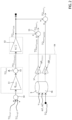
Figure 2 is a block diagram related to a method according to the present invention for estimating the torques of the aircraft ofFigure 1 ; -
Figure 3 is a detail of the block diagram ofFigure 2 ; -
Figure 4 is a schematic representation of some components of the aircraft ofFigure 1 , with parts removed for clarity; -
Figure 5 shows a top view of a second embodiment of an aircraft capable of hovering comprising four rotors; -
Figure 6 is a block diagram related to the method according to the present invention for estimating the torques of the aircraft ofFigure 5 ; -
Figure 7 is a schematic representation of some components of the aircraft ofFigure 5 , with parts removed for clarity; and -
Figure 8 is a block diagram related to the method according to the present invention for estimating the torques of a third embodiment of an aircraft capable of hovering comprising any number of rotors. - With reference to
Figure 1 ,number 1 denotes an aircraft capable of hovering, in the shown case a convertiplane. - It should be noted that the terms "front", "longitudinal", "lateral", "above" and "below" and the like used in this description refer to a normal direction of advancement of
convertiplane 1. - The
convertiplane 1 essentially comprises: - a
fuselage 2 having an axis A of longitudinal extension; - a pair of half-
wings 3 extending cantilevered from respective parts opposite one another offuselage 2 and transversely to axis A; - a pair of
nacelles 11, 12 housing at least partiallyrespective engines wings 3; - a pair of
rotors respective engines - a control unit 5.
- In detail, control unit 5 comprises in a known manner a computational unit, a memory, and one or more interface units for the electrical and operational connection to sensor means 40, 41, 42, 43 of
aircraft 1, which will be described in detail in the following (Figure 4 ). - Each
rotor hub 7 and a plurality ofblades 8. -
Convertiplane 1 further comprises twotransmission units 6, which are each operatively connected to arespective engine relative hub 7, to drive it in rotation. In particular,rotors - Furthermore,
blades 8 are articulated on therespective hub 7 in such a way that respective angles of attack θ1COLL, θ2COLL are collectively adjustable relative to respective axes B. - In the industry, angles of attack θ1COLL, θ2COLL are commonly known as "collective pitch angles" and will therefore be referred to that way in the following.
-
Rotors - More specifically, as the collective pitch angles θ1COLL, θ2COLL of one
rotor rotor rotor - Furthermore,
rotors rotors rotors -
Convertiplane 1 further comprises sensor means 40 configured to measure collective pitch angles θ1COLL, θ2COLL ofrespective rotors Figure 4 ). - Furthermore,
rotors wings 3. In particular, axes C are transverse to axis A and axes B (Figure 1 ). - It is important to note that axes A, B and C are fixed with respect to
convertiplane 1. - Therefore,
convertiplane 1 can be selectively arranged: - in a "helicopter" configuration (not shown), wherein axes B of
rotors - in an "airplane" configuration (shown in
Figure 1 ), wherein axes B ofrotors - In detail, it is possible to define angles α1, α2 corresponding respectively to the orientation of rotational axes B with respect to axis A.
-
Convertiplane 1 further comprises sensor means 41 configured to measure angles α1, α2 of respective rotational axes B ofrotors Figure 4 ). - In the embodiment shown,
rotors respective nacelles 11, 12. Therefore, sensor means 41 are also configured to detect nacelle angles ofnacelles 11, 12 corresponding to the orientation ofnacelles 11, 12 with respect to axis A. - Each
engine rotors transmission units 6. In addition, eachrotor - In particular, in the event of an increase in engine torques TQeng1, TQeng2, collective pitch angles θ1COLL, θ2COLL are increased in such a way that angular speeds ω1, ω2 are kept constant due to the corresponding increase in the drag torques acting on
rotors - Furthermore,
rotors convertiplane 1 comprises aninterconnection shaft 4, which is operatively connected torotors 31 and 32 (Figure 1 ). -
Interconnection shaft 4 is adapted to allow the rotation ofrotors engines - In a known manner,
interconnection shaft 4 is adapted to: - allow at least part of engine torques TQeng1, TQeng2 to be transmitted between
transmission units 6 ofrotors - allow
rotors - Each rotor torque TQmast1, TQmast2 is in general different from engine torques TQeng1, TQeng2 for several reasons, which will be described in the following.
- In particular, at least part of engine torques TQeng1, TQeng2 transmitted by
transmission unit 6 is dissipated because of mechanical losses occurring attransmission unit 6. - In addition,
convertiplane 1 may comprise a plurality of not-shown accessories, which perform various functions on board the convertiplane and require a certain amount of power to be operated. - The accessories are at least indirectly operatively connected to
engines 21 and/or 22 to receive the power necessary for their operation. In particular,engines 21 and/or 22 are adapted to provide the accessories with a torque TQacc for powering them. - Furthermore,
convertiplane 1 comprises (Figure 4 ): - sensor means 42 configured to measure engine torques TQeng1, TQeng2 generated by
respective engines - sensor means 43 configured to measure the airspeed v of
convertiplane 1. - Sensor means 42 and 43 are operatively connected to control unit 5 and are adapted to generate respective signals associated with the measured values of engine torques TQeng1, TQeng2 and airspeed v of
convertiplane 1. - Control unit 5 is configured to calculate a first component TQmastSYM of rotor torques TQmast1, TQmast2 on the basis of engine torques TQeng1, TQeng2. In detail, first component TQmastSYM is equal to rotor torques TQmast1, TQmast2 when collective pitch angles θ1COLL, θ2COLL are equal to each other.
- For the purpose of calculating first component TQmastSYM, control unit 5 is configured to (
Figure 2 ) : - receive from sensor means 42 the signal associated with the measured values of engine torques TQeng1, TQeng2;
- calculating a total engine torque TQengTOT generated by
engines - subtracting from the total engine torque TQengTOT a term corresponding to the transmission losses due to the transmission of engine torques TQeng1, TQeng2 (or part thereof) from
engines rotors 31, 32 (block 51) throughtransmission unit 6; and/or - subtracting from the total engine torque TQengTOT the torque TQacc for powering the accessories of
convertiplane 1, where present (block 52). - In particular, control unit 5 may be configured to subtract the term corresponding to the transmission losses from the total engine torque TQengTOT by multiplying total engine torque TQengTOT by a mechanical loss coefficient ηXMNS (ηXMNS < 1).
- The difference between total engine torque TQengTOT and the transmission losses and/or torque TQacc is the total available engine torque TQengavail.
- Control unit 5 is further configured to calculate first component TQmastSYM by dividing the total available engine torque TQengavail by two, which is the number of
rotors Figure 2 ). - Advantageously, control unit 5 is configured to:
- receive the signal associated with collective pitch angles θ1COLL, θ2COLL of
rotors - calculate a second component TQmastASYM1, TQmastASYM2 of respective rotor torques TQmast1, TQmast2 on the basis of at least a respective pitch angle difference ΔθCOLL1, ΔθCOLL2 between collective pitch angles θ1COLL and θ2COLL (block 54 of
Figure 2 ). - In particular, second components TQmastASYM1, TQmastASYM2 respectively represent how much the rotor torque TQmast1, TQmast2 of each
rotor rotor rotors - The following are exemplary situations in which
convertiplane 1 is in a flight condition in which total available engine torque TQengavail is not equally apportioned betweenrotors 31 and 32: - hovering during vertical take-off and landing or during conversion of
convertiplane 1 between the airplane and the helicopter configurations with steady cross wind; - nacelle angle equal to 75° with steady heading sideslip relative to a direction fixed with respect to the ground;
- nacelle angle equal to 50° with steady heading sideslip relative to the direction fixed with respect to the ground;
-
convertiplane 1 arranged in the airplane configuration with steady heading sideslip relative to the direction fixed with respect to the ground; - bank angle different than zero and nacelle angle equal to 50° to maintain null sideslip.
- Control unit 5 is further configured to calculate each rotor torque TQmast1, TQmast2 as the sum of first component TQmastSYM and the respective second component TQmastASYM1, TQmastASYM2 (TQmast1 = TQmastSYM + TQmastASYM1; TQmast2 = TQmastSYM + TQmastASYM2) (
block 55 inFigure 2 ). - More specifically, for the purpose of calculating second components TQmastASYM1, TQmastASYM2 (block 54), control unit 5 is configured to (
Figure 2 ): - determine parameters TQ'1, TQ'2, which are respectively associated with the variation of rotor torques TQmast1, TQmast2 as a result of a variation of collective pitch angle θ1COLL, θ2COLL of the
same rotor 31, 32 (block 56); and - multiply each parameter TQ'1, TQ'2 by respective pitch angle difference ΔθCOLL1, ΔθCOLL2 (block 57).
- Pitch angle differences ΔθCOLL1, ΔθCOLL2 of
rotors rotors convertiplane 1. - In particular, the memory of control unit 5 comprises a
database 9, in which data correlating parameters TQ'1, TQ'2 with a plurality of variables associated with the flight conditions ofconvertiplane 1 are stored. In detail, the data stored indatabase 9 may be arranged in tables and/or graphs, which are preferably multiple input tables and/or graphs (Figure 4 ). - Control unit 5 is configured to:
- receive a plurality of signals associated with the flight conditions of
convertiplane 1; -
access database 9 using the signals associated with the flight conditions as inputs; and - determine parameters TQ'1, TQ'2 on the basis of the inputs and on the basis of the data correlating parameters TQ'1, TQ'2 and the variables associated with the flight conditions of
convertiplane 1 stored indatabase 9. - More specifically, the data stored in
database 9 are calculated or experimentally measured in a known manner by means of statistical methods or by test on the basis of one or more sets of the following variables of convertiplane 1: - airspeed;
- torque settings;
- nacelle angle;
- rotor speed;
- altitude;
- ambient temperature;
- number of
operative engines - With reference to
Figure 3 , control unit 5 is configured to calculate parameters TQ'1, TQ'2 on the basis of at least two independent variables associated with the performance ofrotor 31 and/or 32. - In the embodiment shown in
Figure 3 , each parameter TQ'1, TQ'2 is calculated on the basis of: - the angle α1, α2 of the
respective rotor - airspeed v measured by sensor means 43; and/or
- first component TQmastSYM.
- In detail,
database 9 comprises data correlating parameters TQ'1, TQ'2 with respective angle α1, α2, airspeed v and first component TQmastSYM. - In further detail, control unit 5 is configured to (
Figure 3 ): - calculate parameter TQ'1, TQ'2 on the basis of airspeed v, if respective angle α1, α2 is lower than or equal to a threshold value th (block 58); and
- calculate parameter TQ'1, TQ'2 on the basis of first component TQmastSYM, if respective angle α1, α2 is greater than threshold value th (block 59).
- In particular, if the collective pitch angle θ1COLL, θ2COLL is the same for the two
rotors - In addition, since
rotors - In use, control unit 5 calculates an estimate of rotor torques TQmast1, TQmast2 with a sum of first component TQmastSYM and respective second components TQmastASYM1, TQmastASYM2.
- The following is a description of the steps required to calculate first component TQmastSYM.
- In detail, sensor means 42 periodically measure engine torques TQeng1, TQeng2 and send the associated signal to control unit 5 (
Figure 4 ). Subsequently, control unit 5 calculates total engine torque TQengTOT as the sum of the engine torques TQeng1, TQeng2 measured by sensor means 42 (block 50 inFigure 2 ). - Control unit 5 then calculates total available engine torque TQengavail by subtracting from total engine torque TQengTOT the transmission losses due to the transmission of engine torques TQeng1, TQeng2 through transmission unit 6 (block 51 in
Figure 2 ) and/or the torque TQacc for powering the accessories ofconvertiplane 1, where present (block 52 inFigure 2 ). - Control unit 5 then calculates first component TQmastSYM by dividing available engine torque TQengavail by the number of
rotors Figure 2 ). - The following is a description of the steps required to calculate second components TQmastASYM1, TQmastASYM2.
- Periodically, sensor means 40 measure collective pitch angles θ1COLL, θ2COLL of
rotors - Control unit 5 calculates the pitch angle differences ΔθCOLL1, ΔθCOLL2 between collective pitch angles θ1COLL and θ2COLL. In addition, control unit 5 accesses
database 9 using angle α1, α2, airspeed v and/or first component TQmastSYM as inputs and determines parameters TQ'1, TQ'2 on the basis of the data stored indatabase 9. - In particular, if angle α1 is lower than or equal to threshold value th, control unit 5 calculates parameter TQ'1 on the basis of angle α1 and airspeed v (block 58 in
Figure 3 ); if angle α1 is equal to or greater than threshold value th, control unit 5 calculates parameter TQ'1 on the basis of angle α1 and first component TQmastSYM (block 59 inFigure 3 ). Similarly to the foregoing, if angle α2 is lower than or equal to threshold value th, control unit 5 calculates parameter TQ'2 on the basis of angle α2 and airspeed v; if angle α2 is equal to or greater than threshold value th, control unit 5 calculates parameter TQ'2 on the basis of angle α2 and first component TQmastSYM. - Once parameters TQ'1, TQ'2 are determined, control unit 5 calculates each second component TQmastASYM1, TQmastASYM2 by multiplying respective parameter TQ'1, TQ'2 by the respective pitch angle difference ΔθCOLL1, ΔθCOLL2 (block 57 in
Figure 2 ). Control unit 5 then calculates each rotor torque TQmast1, TQmast2 as the sum of first component TQmastSYM and the respective second component TQmastASYM1, TQmastASYM2 (block 55 inFigure 2 ) . - With reference to
Figure 5 , 1' denotes an aircraft capable of hovering according to a second embodiment of the present invention. Aircraft 1' is similar toaircraft 1 and will be described hereinafter only insofar as it differs from the latter; equal or equivalent parts ofaircrafts 1, 1' will be marked, where possible, by the same reference numerals. - Aircraft 1' differs from
aircraft 1 in that it comprises: - two pairs of half-
wings 3, 3'; the half-wings of each pair of half-wings 3, 3' extending cantilevered from respective parts opposite one another offuselage 2 and transversely to axis A; the two pairs of half-wings 3, 3' being distanced from each other along axis A; - four
rotors respective engines figure 7 ). - Each
rotor hub 7 and a plurality ofblades 8. In addition,rotors - Furthermore,
blades 8 are articulated on therespective hub 7 in such a way that respective angles of attack θ1COLL, θ2COLL, θ3COLL, θ4COLL are collectively adjustable relative to respective axes B. -
Rotors - Furthermore,
rotors rotors - In addition,
rotors wings 3 androtors 33', 34' are tiltable with respect to respective axes C (not-shown) relative to half-wings 3'. In detail, aircraft 1' is a quadcopter. - Aircraft 1' further comprises (
Figure 7 ): - sensor means 40 configured to measure collective pitch angles θ1COLL, θ2COLL, θ3COLL, θ4COLL
- sensor means 41 configured to measure angles α1, α2, α3, α4 of respective rotational axes B of
rotors - Each
engine rotors respective transmission units 6. In addition, eachrotor - Furthermore,
rotors rotors Figure 5 ). - Interconnection mechanism 4' is adapted to allow the rotation of
rotors engines - In detail, each
engine respective rotor Figure 5 ): - an
interconnection shaft 4a', which operatively connectsengine 21 toengine 22; - an
interconnection shaft 4b', which operatively connects engine 23' to engine 24'; and - an
interconnection shaft 4c', which operatively connectsinterconnection shaft 4a' tointerconnection shaft 4b'. - Aircraft 1' further comprises (
Figure 7 ): - sensor means 42 configured to measure engine torques TQeng1, TQeng2, TQeng3, TQeng4 generated by
respective engines - sensor means 43 configured to measure the airspeed v of aircraft 1'.
- Control unit 5 is configured to calculate a first component TQmastSYM of rotor torques TQmast1, TQmast2, TQmast3, TQmast4 on the basis of engine torques TQeng1, TQeng2, TQeng3, TQeng4. In detail, first component TQmastSYM is equal to rotor torques TQmast1, TQmast2, TQmast3, TQmast4 when collective pitch angles θ1COLL, θ2COLL, θ3COLL, θ4COLL are equal to one another.
- For the purpose of calculating first component TQmastSYM, control unit 5 is configured to (
Figure 6 ): - receive from sensor means 42 the signal associated with the measured values of engine torques TQeng1, TQeng2, TQeng3, TQeng4;
- calculating a total engine torque TQengTOT generated by
engines - subtracting from the total engine torque TQengTOT a term corresponding to the transmission losses due to the transmission of engine torques TQeng1, TQeng2, TQeng3, TQeng4 (or part thereof) from
engines rotors transmission units 6; and/or - subtracting from the total engine torque TQengTOT the torque TQacc for powering the accessories of aircraft 1', where present (block 52).
- The difference between total engine torque TQengTOT and the transmission losses and/or torque TQacc is the total available engine torque TQengavail.
- Control unit 5 is further configured to calculate first component TQmastSYM by dividing the total available engine torque TQengavail by four, which is the number of
rotors Figure 6 ) . - Advantageously, control unit 5 is configured to:
- receive the signal associated with collective pitch angles θ1COLL, θ2COLL, θ3COLL, θ4COLL of
rotors - calculate a second component TQmastASYM1, TQmastASYM2, TQmastASYM3, TQmastASYM4 of each rotor torque TQmast1, TQmast2, TQmast3, TQmast4 on the basis of at least pitch angle differences ΔθCOLL1, ΔθCOLL2, ΔθCOLL3, ΔθCOLL4 between collective pitch angles θ1COLL, θ2COLL, θ3COLL, θ4COLL (block 54 of
Figure 6 ). - In particular, second components TQmastASYM1, TQmastASYM2, TQmastASYM3, TQmastASYM4 represent how much the rotor torque TQmast1, TQmast2, TQmast3, TQmast4 of each
rotor rotor rotors - Control unit 5 is further configured to calculate rotor torques TQmast1, TQmast2, TQmast3, TQmast4 as an algebraic sum of first component TQmastSYM (which is common to all
rotors Figure 6 ). - In particular, if the collective pitch angle θ1COLL, θ2COLL, θ4COLL is the same for the four rotors, the second components TQmastASYM1, TQmastASYM2, TQmastASYM3, TQmastASYM4 are null and the rotor torques TQmast1, TQmast2, TQmast3, TQmast4 are equal to one another and to the first component TQmastSYM (TQmast1 = TQmast2 = TQmast3 = TQmast4 = TQmastSYM).
- More specifically, for the purpose of calculating the second component TQmastASYM1, TQmastASYM2, TGmastaASYM3, TQmastASYM4 of each
rotor Figure 6 ): - determine parameters TQ'1, TQ'2, TQ'3, TQ'4, which are respectively associated with the variation of the respective rotor torque TQmast1, TQmast2, TQmast3, TQmast4 as a result of a variation of collective pitch angle θ1COLL, θ2COLL, θ3COLL, θ4COLL of the
same rotor - multiply each parameter TQ'1, TQ'2, TQ'3, TQ'4 by the pitch angle difference ΔθCOLL1, ΔθCOLL2, ΔθCOLL3, ΔθCOLL4 of the
respective rotor - Control unit 5 is configured to calculate each parameter TQ'1, TQ'2, TQ'3, TQ'4 on the basis of at least two independent variables associated with the performance of the
respective rotor - the respective angle α1, α2, α3, α4 measured by sensor means 41; and
- airspeed v measured by sensor means 43; and/or
- first component TQmastSYM.
- In detail,
database 9 comprises data correlating parameter TQ' with angle α1, α2, α3, α4, airspeed v and first component TQmastSYM. - In further detail, control unit 5 is configured to:
- calculate each parameter TQ'1, TQ'2, TQ'3, TQ'4 on the basis of airspeed v, if the respective angle α1, α2, α3, α4 is lower than or equal to a threshold value th; and
- calculate each parameter TQ'1, TQ'2, TQ'3, TQ'4 on the basis of first component TQmastSYM, if the respective angle α1, α2, α3, α4 is greater than threshold value th.
- Since
rotors - Pitch angle differences ΔθCOLL1, ΔθCOLL2, ΔθCOLL3, ΔθCOLL4 of
rotors rotors - In use, control unit 5 calculates an estimate of rotor torques TQmast1, TQmast2, TQmast3, TQmast4 as an algebraic sum of first component TQmastSYM and respective second components TQmastASYM1, TQmastASYM2, TQmastASYM3, TQmastASYM4.
- The description of the steps required to calculate first component TQmastSYM of rotor torques TQmast1, TQmast2, TQmast3, TQmast4 of aircraft 1' is similar to the description of the steps required to calculate first component TQmastSYM of rotor torques TQmast1, TQmast2 of
aircraft 1 and will be omitted for the sake of brevity. - The following is a description of the steps required to calculate second components TQmastASYM1, TQmastASYM2, TQmastASYM3, TQmastASYM4.
- Periodically, sensor means 40 measure collective pitch angles θ1COLL, θ2COLL, θ3COLL, θ4COLL of
rotors - Control unit 5 calculates pitch angle differences ΔθCOLL1, ΔθCOLL2, ΔθCOLL3, ΔθCOLL4 between collective pitch angles θ1COLL, θ2COLL, θ4COLL. In addition, control unit 5 accesses
database 9 using angle α1, α2, α3, α4, airspeed v and/or first component TQmastSYM as inputs and determines parameters TQ'1, TQ'2, TQ'3, TQ'4 on the basis of the data stored indatabase 9. - In detail, each pitch angle difference ΔθCOLL1, ΔθCOLL2, ΔθCOLL3, ΔθCOLL4 is calculated by subtracting symmetric collective pitch angle θ0 from collective pitch angles θ1COLL, θ2COLL, θ3COLL, θ4COLL of
respective rotors - Subsequently, control unit 5 calculates second components TQmastASYM1, TQmastASYM2, TQmastAYM3, TQmastASYM4 as multiplications of respective parameters TQ'1, TQ'2, TQ'3, TQ'4 by respective pitch angle differences ΔθCOLL1, ΔθCOLL2, ΔθCOLL3, ΔθCOLL4.
- Control unit 5 then calculates each rotor torque TQmast1, TQmast2, TQmast3, TQmast4 as the sum of first component TQmastSYM and the respective second component TQmastASYM1, TQmastASYM2, TQmastASYM3, TQmastASYM4.
-
Figure 8 illustrates a block diagram related to a method for estimating the rotor torques of an aircraft 1'' capable of hovering (not shown) according to a second embodiment of the present invention comprising N operatively interconnected and identical rotors. In detail, N is a natural number greater than one. In addition, N may be an even or an odd number. - Aircraft 1'' further comprises M engines operatively connected to the N rotors. In detail, M is a natural number greater than or equal to one; M might be equal to or different from N.
- Aircraft 1'' is a generalization of
aircrafts 1 and 1'. Accordingly, equal or equivalent parts ofaircrafts 1, 1', 1'' will be marked, where possible, by the same reference numerals. In detail, aircraft 1'' is a multicopter. - According to the estimation method shown in
Figure 8 , control unit 5 of aircraft 1'' is configured to calculate a first component TQmastSYM of rotor torques TQmast1, TQmast2, ..., TQmastN on the basis of engine torques TQeng1, TQeng2, ... , TQengM. In detail, first component TQmastSYM is equal to rotor torques TQmast1, TQmast2, ..., TQmastN when collective pitch angles θ1COLL, θ2COLL, ..., θNCOLL are equal to one another. - For the purpose of calculating first component TQmastSYM, control unit 5 is configured to (
Figure 8 ) : - receive from sensor means 42 the signal associated with the measured values of engine torques TQeng1, TQeng2,..., TQengM;
- calculating a total engine torque TQengTOT generated by the engines operatively connected to the rotors of aircraft 1'' as the sum of the engine torques TQeng1, TQeng2,...,TQengM (block 50) ;
- subtracting from the total engine torque TQengTOT a term corresponding to the transmission losses due to the transmission of engine torques TQeng1, TQeng2,..., TQengM (or part thereof) from the M engines (block 51) through
transmission units 6; and/or - subtracting from the total engine torque TQengTOT the torque TQacc for powering the accessories of
aircraft 1" , where present (block 52). - The difference between total engine torque TQengTOT and the transmission losses and/or torque TQacc is the total available engine torque TQengavail.
- Control unit 5 is further configured to calculate first component TQmastSYM by dividing the total available engine torque TQengavail by the number of rotors N of aircraft 1'' (block 53 in
Figure 8 , formula a)):
- Advantageously, control unit 5 is configured to:
- receive the signal associated with collective pitch angles θ1COLL, θ2COLL,..,θNCOLL of the N rotors from sensor means 40; and
- calculate a second component TQmastASYM1, TQmastASYM2,..., TQmastASYMN of each rotor torque TQmast1, TQmast2,..., TQmastN on the basis of at least pitch angle differences ΔθCOLL1, ΔθCOLL2,..., ΔθCOLLN between collective pitch angles θ1COLL, θ2COLL, ..., θNCOLL (block 54 of
Figure 8 ). - In particular, second components TQmastASYM1, TQmastASYM2,..., TQmastASYMN represent how much the rotor torque TQmast1, TQmast2,..., TQmastN of each rotor deviates from the rotor torque that would act on each of the rotors if total available engine torque TQengavail were equally apportioned between the rotors.
- Control unit 5 is further configured to calculate rotor torques TQmast1, TQmast2,..., TQmastN as an algebraic sum of first component TQmastSYM (which is common to all rotors of aircraft 1'') and the respective second component TQmastASYM1, TQmastASYM2,..., TQmastASYMN (block 55 in
Figure 8 , formula b)):
- In particular, if the collective pitch angle θ1COLL, θ2COLL,...,θNCOLL is the same for the N rotors, the second components TQmastASYM1, TQmastASYM2,..., TQmastASYMN are null and the rotor torques TQmast1, TQmast2,..., TQmastN are equal to one another and to the first component TQmastSYM (TQmast1 = TQmast2 = ... - TQmastN = TQmastSYM).
- More specifically, for the purpose of calculating second components TQmastASYM1, TQmastASYM2,..., TQmastASYM, control unit 5 is configured to (
Figure 8 ): - determine parameters TQ'1, TQ'2,...,TQ'N, which are respectively associated with the variation of the respective rotor torque TQmast1, TQmast2,..., TQmastN as a result of a variation of collective pitch angle θ1COLL, θ2COLL,..., θNCOLL of the same rotor (block 56) ; and
- multiply each parameter TQ'1, TQ' 2,...,TQ'N by the respective pitch angle difference ΔθCOLL1, ΔθCOLL2,..., ΔθCOLLN (block 57, formula c)):

- Control unit 5 is configured to calculate each parameter TQ'1, TQ'2,..., TQ'N on the basis of at least two independent variables associated with the performance of the respective rotor. In detail, each parameter TQ'1, TQ'2,...,TQ'N is calculated on the basis of:
- the angle α1, α2,..., αN of the respective rotor measured by sensor means 41; and
- airspeed v measured by sensor means 43; and/or
- first component TQmastSYM.
- In detail,
database 9 comprises data correlating parameters TQ'1, TQ'2,...,TQ'n with angles α1, α2,...,αN, airspeed v and first component TQmastSYM. - In further detail, control unit 5 is configured to:
- calculate each parameter TQ'1, TQ'2,...,TQ'N on the basis of airspeed v, if the respective angle α1, α2,..., αN is lower than or equal to a threshold value th; and
- calculate each parameter TQ'1, TQ'2,..., TQ'N on the basis of first component TQmastSYM, if the respective angle α1, α2,..., αN is greater than threshold value th.
- Since rotors N are identical to one another, if angles α1, α2,..., αN are equal to one another, parameters TQ'1, TQ'2,..., TQ'N are also equal to one another.
- Pitch angle differences ΔθCOLL1, ΔθCOLL2, ..., ΔθCOLLN are respective differences between each collective pitch angle θ1COLL, θ2COLL, ..., θ4COLL and a symmetric collective pitch angle θ0 (formula d)):

- In detail, symmetric collective pitch angle θ0 is calculated as the sum of collective pitch angles θ1COLL, θ2COLL, ..., θNCOLL divided by the number N of rotors (formula e)):

- From an examination of the characteristics of the method for estimating the rotor torques TQmast1, TQmast2,..., TQmastN, control unit 5 and
aircraft 1, 1', 1'' according to the present invention, the advantages they allow obtaining are evident. - In particular, rotor torques TQmast1, TQmast2 of
convertiplane 1 are calculated as the algebraic sum of first component TQmastSYM, which is equal to rotor torques TQmast1, TQmast2 when collective pitch angles θ1COLL, θ2COLL are equal to each other, and respective second components TQmastASYM1, TQmastASYM2, which represents how much the rotor torque TQmast1, TQmast2 of eachrotor rotor rotors rotors - Indeed, it has been observed that the rotor torques TQmast1, TQmast2 estimated by combining first and second components TQmastSYM, TQmastASYM1, TQmastASYM2 are comparable to and more reliable than the rotor torques directly measured by the physical sensors mentioned in the introductory part of the description.
- The estimation method according to the present invention also allows the rotor torques of an aircraft comprising any number of rotors to be efficiently estimated. Furthermore, control unit 5 comprises
database 9, in which data correlating parameters TQ'1, TQ'2,...,TQ'N with variables associated with the flight conditions ofconvertiplane 1 are stored. Therefore, parameters TQ'1, TQ'2, ..., TQ'N and second components TQmastASYM1, TQmastASYM2,..., TQmastASYMN are calculable on the basis of a limited number of independent variables. - The fact that parameters TQ'1, TQ'2,...,TQ'N can be determined on the basis of a limited number of variables allows to improve the robustness of the estimation method, because fewer errors due to false dependencies on other variables are possible.
- In addition, since angles α1, α2,..., αN corresponding to the orientation of axes B of the respective rotors are taken into account when determining parameters TQ'1, TQ'2,...,TQ'N, second components TQmastASYM1, TQmastASYM2,...,TQmastASYMN are calculated regardless of whether the M engines are tilted integrally with the N rotors or are fixed with respect to
fuselage 2. - Finally, it is clear that modifications and variations can be made to the method, the control unit 5 and the
aircraft 1, 1', 1'' previously described without thereby departing from the scope of protection of the present invention. - In particular, the method according to the present invention may be implemented for estimating the rotor torques of a helicopter comprising at least two rotors, which are operatively connected to one another and have respective collective pitch angles independently controllable from one another.
- Furthermore, the method according to the present invention may be implemented for estimating the rotor torques of an aircraft capable of hovering comprising at least two operatively connected and independently controllable rotors and with hybrid propulsion or full electric propulsion. In detail, the aircraft may comprise one engine or more than one engines and/or one or more electric motors.
- Finally,
nacelles 11, 12 andrespective engines rotors
Claims (16)
- A method for estimating rotor torques (TQmast1, TQmast2, TQmast3, TQmast4,...,TQmastN) of an aircraft (1; 1'; 1") capable of hovering; said aircraft (1; 1'; 1'') comprising:- a plurality of rotors (31, 32; 33', 34'), which are operatively connected to each other and rotatable relative to respective rotational axes (B) under the action of respective rotor torques (TQmast1, TQmast2, TQmast3, TQmast4,...,TQmastN); and- at least one first engine (21, 22; 23', 24'), which is operatively connected to said rotors (31, 32; 33' 34') and is adapted to provide said rotors (31, 32; 33', 34') with an engine torque (TQeng1, TQeng2, TQeng3, TQeng4,...,TQengM);said rotors (31, 32; 33', 34') each comprising a hub (7) and a plurality of blades (8) articulated on said respective hub (7) in such a way that respective collective pitch angles (θ1COLL, θ2COLL, θ3COLL, θ4COLL,..., θNCOLL) of said plurality of blades (8) relative to the respective rotational axis (B) are adjustable;said method comprising the steps of:i) calculating a symmetric component (TQmastSYM) of said rotor torques (TQmast1, TQmast2, TQmast3, TQmast4,...,TQmastN) on the basis of said engine torque (TQeng1, TQeng2, TQeng3, TQeng4,...,TQengM) ; said symmetric component (TQmastSYM) being equal to said rotor torques (TQmast1, TQmast2, TQmast3, TQmast4,...,TQmastN), when said collective pitch angles (θ1COLL, θ2COLL, θ3COLL, θ4COLL,..., θNCOLL) are equal to each other;
characterized in that it comprises the further steps of:ii) receiving a signal associated with said collective pitch angles (θ1COLL, θ2COLL, θ3COLL, θ4COLL,..., θNCOLL);iii) calculating an asymmetric component (TQmastASYM1, TQmastASYM2, TQmastASYM3, TQmastASYM4,..., TQmastASYMN) of each said rotor torques (TQmast1, TQmast2, TQmast3, TQmast4,...,TQmastN) on the basis of at least a pitch angle difference (Δθ1COLL, ΔθCOLL2, ΔθCOLL3, ΔθCOLL4,..., ΔθCOLLN) between said collective pitch angles (θ1COLL, θ2COLL, θ3COLL, θ4COLL,..., θNCOLL); andiv) calculating each said rotor torque (TQmast1, TQmast2, TQmast3, TQmast4,...,TQmastN) as the algebraic sum of said symmetric component (TQmastSYM) and said respective asymmetric component (TQmastASYM1, TQmastASYM2, TQmastASYM3, TQmastASYM4,..., TQmastASYMN). - The method according to claim 1, wherein said rotors (31, 32; 33', 34') are associated with respective pitch angle differences (ΔθCOLL1, ΔθCOLL2, ΔθCOLL3, ΔθCOLL4,..., ΔθCOLLN);
characterized in that said step iii) of calculating said asymmetric component (TQmastASYM1, TQmastASYM2, TQmastASYM3, TQmastASYM4,..., TQmastASYMN) of each said rotor torques (TQmast1, TQmast2, TQmast3, TQmast4,...,TQmastN) comprises the steps of:v) determining a parameter (TQ'1, TQ'2, TQ'3, TQ'4,...,TQ'N) associated with a variation of each said rotor torque (TQmast1, TQmast2, TQmast3, TQmast4,...,TQmastN) with respect to a variation of said collective pitch angle (θ1COLL, θ2COLL, θ3COLL, θ4COLL,..., θNCOLL) of the same rotor (31, 32; 33', 34'); andvi) multiplying each said parameter (TQ'1, TQ'2, TQ'3, TQ'4,...,TQ'N) by said respective pitch angle difference (ΔθCOLL1, ΔθCOLL2, ΔθCOLL3, ΔθCOLL4,..., ΔθCOLLN) of the respective rotor (31, 32; 33', 34'). - The method according to claim 2, characterized in that said step v) comprises the step vii) of determining said parameters (TQ'1, TQ'2, TQ'3, TQ'4, ..., TQ'N) on the basis of at least two independent variables associated with the flight conditions of said aircraft (1; 1'; 1'').
- The method according to claim 3, characterized in that said independent variables include:- an angle (α1, α2, α3, α4,..., αN) corresponding to an orientation of said rotational axes (B) of said rotors (31, 32; 33', 34') with respect to a reference system fixed to said aircraft (1; 1'; 1");- the airspeed (v) of said aircraft (1; 1'; 1"); and/or- said symmetric component (TQmastSYM) calculated at said step i).
- The method according to claim 4, characterized in that said step vii) comprises the further steps of:viii) determining each said parameter (TQ'1, TQ'2, TQ'3, TQ'4,...,TQ'N) on the basis of said airspeed (v), if the angle (α1, α2, α3, α4,..., αN) of the respective rotor (31, 32; 33', 34') is lower than or equal to a threshold value (th); andix) determining each said parameter (TQ'1, TQ'2, TQ'3, TQ'4,...,TQ'N) on the basis of said symmetric component (TQmastSYM), if the angle (α1, α2, α3, α4,..., αN) of the respective rotor (31, 32; 33', 34') is greater than said threshold value (th).
- The method according to any one of the foregoing claims, wherein said aircraft (1; 1'; 1") further comprises a second engine (22, 21, 23', 24'), which is operatively connected to said rotors (31, 32; 33', 34') and is adapted to provide said rotors (31, 32; 33', 34') with a further engine torque (TQeng2, TQeng1, TQeng3, TQeng4, ..., TQengM);characterized in that said step i) comprises the steps of:x) calculating a total torque (TQengTOT) produced by said first engine (21, 22; 23', 24') and second engine (22, 21; 23', 24') as the sum of said engine torque (TQeng1, TQeng2, TQeng3, TQeng4,..., TQengM) and said further engine torque (TQeng2, TQeng1, TQeng3, TQeng4,..., TQengM) ;xi) subtracting from said total torque (TQengTOT) a first subtrahend term corresponding to the transmission losses due to the transmission of said engine torque (TQeng1, TQeng2, TQeng3, TQeng4,..., TQengM) and said further engine torque (TQeng2, TQeng1, TQeng3, TQeng4,..., TQengM) from said first engine (21, 22; 23', 24') and said second engine (22, 21; 23', 24') to said rotors (31, 32; 33', 34'); and/orsubtracting from said total torque (TQengTOT) a second subtrahend term corresponding to loads (TQacc) imparted by said first engine (21, 22; 23', 24') and/or said second engine (22, 21; 23', 24') to accessories of said aircraft (1; 1'; 1"); and
xii) dividing said sum obtained after said step xi) by the number of rotors (31, 32; 33', 34') of said aircraft (1; 1'; 1"). - The method according to any one of the claims 2 to 6, characterized in that the pitch angle difference (Δθ1COLL1, ΔθCOLL2, ΔθCOLL3, ΔθCOLL4,..., ΔθCOLLN) of each said rotor (31, 32; 33', 34') is a difference between said respective collective pitch angle (θ1COLL, θ2COLL, θ3COLL, θ4COLL,..., θNCOLL) of the same rotor (31, 32; 33', 34') and a symmetric collective pitch angle (θ0);
said symmetric collective pitch angle (θ0) being the sum of collective pitch angles (θ1COLL, θ2COLL, θ3COLL, θ4COLL,... θNCOLL) of all rotors (31, 32; 33', 34') divided by the number of said rotors (31, 32; 33', 34'). - Control unit (5) for an aircraft (1; 1'; 1") capable of hovering; said control unit (5) being programmed to:- calculate a symmetric component (TQmastSYM) of rotor torques (TQmast1, TQmast2, TQmast3, TQmast4,...,TQmastN) of rotors (31, 32; 33', 34') of said aircraft (1; 1'; 1") on the basis of an engine torque (TQeng1, TQeng2, TQeng3, TQeng4,...,TQengM) provided to said rotors (31, 32, 33', 34') by at least one first engine (21, 22; 23', 24') of said aircraft (1; 1'; 1"); said symmetric component (TQmastSYM) being equal to said rotor torques (TQmast1, TQmast2, TQmast3, TQmast4, ..., TQmastN), when collective pitch angles (θ1COLL, θ2COLL, θ3COLL, θ4COLL,..., θNCOLL) of respective rotors (31, 32; 33', 34') are, in use, equal to each other;said control unit (5) being characterized in that it is further programmed to:- receive a signal associated with said collective pitch angles (θ1COLL, θ2COLL, θ3COLL, θ4COLL,..., θNCOLL);- calculate an asymmetric component (TQmastASYM1, TQmastASYM2, TQmastASYM3, TQmastASYM4,..., TQmastASYMN) of each said rotor torque (TQmast1, TQmast2, TQmast3, TQmast4,..., TQmastN) on the basis of at least a pitch angle difference (ΔθCOLL1, ΔθCOLL2, ΔθCOLL3, ΔθCOLL4,..., ΔθCOLLN) of the respective rotor (31, 32; 33', 34'); and- calculate each said rotor torque (TQmast1, TQmast2, TQmast3, TQmast4,...,TQmastN) as the algebraic sum of said symmetric component (TQmastSYM) and said respective asymmetric component (TQmastASYM1, TQmastASYM2, TQmastASYM3, TQmastASYM4,..., TQmastASYMN).
- Control unit according to claim 8, characterized in that it is configured to:- determine a parameter (TQ'1, TQ'2, TQ'3, TQ'4,..., TQ'N) associated with a variation of each said rotor torque (TQmast1, TQmast2, TQmast3, TQmast4,...,TQmastN) with respect to a variation of said collective pitch angle (θ1COLL, θ2COLL, θ3COLL, θ4COLL,..., θNCOLL) of the same rotor (31, 32; 33', 34');- multiply each said parameter (TQ'1, TQ'2, TQ'3, TQ'4,...,TQ'N) by said respective pitch angle difference (ΔθCOLL1, ΔθCOLL2, ΔθCOLL3, ΔθCOLL4,..., ΔθCOLLN).
- Control unit according to claim 9, characterized in that it is configured to calculate each said parameter (TQ'1, TQ'2, TQ'3, TQ'4,...,TQ'N) on the basis of at least two independent variables associated with the flight conditions of said aircraft (1).
- Control unit according to claim 10, characterized in that said independent variables include:- an angle (α1, α2, α3, α4,..., αN) corresponding to an orientation of said rotational axes (B) of each said rotors (31, 32; 33', 34') with respect to a reference system of said aircraft (1; 1'; 1");- airspeed (v) of said aircraft (1; 1'; 1"); and/or- said symmetric component (TQmastSYM).
- Control unit according to claim 11, characterized in that it is configured to:- calculate each said parameter (TQ'1, TQ'2, TQ'3, TQ'4,..., TQ'N) on the basis of said airspeed (v), if said respective angle (α1, α2, α3, α4,..., αN) is lower than a threshold value (th); and- calculate each said parameter (TQ'1, TQ'2, TQ'3, TQ'4,..., TQ'N) on the basis of said symmetric component (TQmastSYM), if said respective angle (α1, α2, α3, α4,..., αN) is equal to or greater than said threshold value (th).
- Control unit according to claim 12, characterized in that it is configured to:- calculate a total torque (TQengTOT) produced by said first engine (21, 22; 23', 24') and at least one second engine (22, 21, 23', 24') as the sum of said engine torque (TQeng1, TQeng2, TQeng3, TQeng4,..., TQengM) and a further engine torque (TQeng2, TQeng1, TQeng3, TQeng4,...,TQengM) of said second engine (22, 21, 23', 24');- subtract from said total torque (TQengTOT) a first subtrahend term corresponding to the transmission losses due to the transmission of said engine torques (TQeng1, TQeng2, TQeng3, TQeng4, ..., TQengM) from said first and second engines (22, 21; 23', 24') to said rotors (31, 32; 33', 34'); and/or subtract from said total torque (TQengTOT) a second subtrahend term corresponding to loads (TQacc) imparted by said first and/or second engines (22, 21; 23', 24') to accessories of said aircraft (1; 1'; 1"); and- divide said difference obtained after the subtraction of said first and/or said second subtrahend term from said total torque (TQengTOT) by the number of rotors (31, 32; 33', 34') of said aircraft (1; 1'; 1").
- Control unit according to any one of claims 9 to 13, characterized in that it comprises a computational unit, a memory, and at least one interface unit electrically and operatively connectable to sensor means (40, 41, 42, 43) of said aircraft (1; 1'; 1");
said memory comprising, in turn, a database (9) storing data correlating said parameter (TQ'1, TQ'2, TQ'3, TQ'4,...,TQ'N) with a plurality of variables associated with the flight conditions of said aircraft (1; 1'; 1"). - Aircraft (1; 1'; 1") capable of hovering, comprising:- a plurality of rotors (31, 32; 33', 34'); said rotors (31, 32; 33', 34') being rotatable relative to respective rotational axes (B) under the action of respective rotor torques (TQmast1, TQmast2, TQmast3, TQmast4,...,TQmastN); said rotors (31, 32; 33', 34') being operatively connected to each other; said rotors (31, 32; 33', 34') comprising each a hub (7) and a plurality of blades (8) articulated on said respective hub (7) in such a way that respective collective pitch angles (θ1COLL, θ2COLL, θ3COLL, θ4COLL,..., θNCOLL) of said plurality of blades (8) relative to the respective rotational axis (B) are adjustable;- at least one first engine (21, 22; 23', 24'), which is operatively connected to said rotors (31, 32; 33', 34') and is adapted to provide said rotors (31, 32; 33', 34') with an engine torque (TQeng1, TQeng2, TQeng3, TQeng4, ..., TQengM) ;- first sensor means (40) configured to measure said collective pitch angles (θ1COLL, θ2COLL, θ3COLL, θ4COLL,..., θNCOLL); and- second sensor means (42) configured to measure said engine torque (TQeng1, TQeng2, TQeng3, TQeng4,..., TQengM) generated, in use, by said first engine (21, 22; 23'; 24') ;characterized in that it comprises a control unit (5) according to any one of claims 8 to 14, which is operatively connected to said first and second sensor means (40, 42).
- Aircraft according to claim 15, characterized in that it comprises:- third sensor means (41) configured to measure the angles (α1, α2, α3, α4,..., αN) corresponding to an orientation of said rotational axes (B) of said rotors (31, 32; 33', 34') with respect to a reference system of said aircraft (1; 1'; 1") and operatively connected to said control unit (5); and/or- fourth sensor means (43) configured to measure an airspeed (v) of said aircraft (1; 1'; 1") and operatively connected to said control unit (5); and/or characterized in that it is a convertiplane or a helicopter; and/orcharacterized by comprising a second engine (22, 21; 23', 24') operatively connected to said rotors (31, 32; 33', 34') and adapted to provide said rotors (31, 32; 33', 34') with a further engine torque (TQeng2, TQeng1,TQeng3, TQeng4, ..., TQengM) .
Applications Claiming Priority (2)
| Application Number | Priority Date | Filing Date | Title |
|---|---|---|---|
| EP21217859.4A EP4201811B1 (en) | 2021-12-27 | 2021-12-27 | Method for estimating the rotor torques of an aircraft capable of hovering and control unit for an aircraft capable of hovering |
| PCT/IB2022/060086 WO2023126701A1 (en) | 2021-12-27 | 2022-10-20 | Method for estimating the rotor torques of an aircraft capable of hovering and control unit for an aircraft capable of hovering |
Publications (2)
| Publication Number | Publication Date |
|---|---|
| EP4457138A1 EP4457138A1 (en) | 2024-11-06 |
| EP4457138B1 true EP4457138B1 (en) | 2025-05-21 |
Family
ID=79287784
Family Applications (2)
| Application Number | Title | Priority Date | Filing Date |
|---|---|---|---|
| EP21217859.4A Active EP4201811B1 (en) | 2021-12-27 | 2021-12-27 | Method for estimating the rotor torques of an aircraft capable of hovering and control unit for an aircraft capable of hovering |
| EP22797510.9A Active EP4457138B1 (en) | 2021-12-27 | 2022-10-20 | Method for estimating the rotor torques of an aircraft capable of hovering and control unit for an aircraft capable of hovering |
Family Applications Before (1)
| Application Number | Title | Priority Date | Filing Date |
|---|---|---|---|
| EP21217859.4A Active EP4201811B1 (en) | 2021-12-27 | 2021-12-27 | Method for estimating the rotor torques of an aircraft capable of hovering and control unit for an aircraft capable of hovering |
Country Status (5)
| Country | Link |
|---|---|
| US (1) | US20250051037A1 (en) |
| EP (2) | EP4201811B1 (en) |
| KR (1) | KR20240140078A (en) |
| CN (1) | CN118556023A (en) |
| WO (1) | WO2023126701A1 (en) |
Family Cites Families (24)
| Publication number | Priority date | Publication date | Assignee | Title |
|---|---|---|---|---|
| GB2185951B (en) * | 1986-02-04 | 1989-07-05 | Rolls Royce | Helicopter rotor and engine control |
| US6885917B2 (en) * | 2002-11-07 | 2005-04-26 | The Boeing Company | Enhanced flight control systems and methods for a jet powered tri-mode aircraft |
| ES2581931T3 (en) * | 2007-11-21 | 2016-09-08 | Qinetiq Limited | Aircraft |
| US8464978B2 (en) * | 2009-04-16 | 2013-06-18 | The Trustees Of The University Of Pennsylvania | Counter-rotational inertial control of rotorcraft |
| US8862310B2 (en) * | 2012-06-06 | 2014-10-14 | Simmonds Precision Products, Inc. | Determining rotorcraft collective adjustment during ground test |
| WO2014158240A2 (en) * | 2013-03-14 | 2014-10-02 | Rolls-Royce Corporation | Hybrid turbo electric aero-propulsion system control |
| US9499263B2 (en) * | 2013-03-14 | 2016-11-22 | Curtis Youngblood | Multi-rotor aircraft |
| US20150014475A1 (en) * | 2013-05-03 | 2015-01-15 | Aerovironment, Inc. | Vertical Takeoff and Landing (VTOL) Air Vehicle |
| US9841333B2 (en) * | 2014-10-29 | 2017-12-12 | Bell Helicopter Textron Inc. | Method and system for measuring torque in a tiltrotor aircraft |
| US10564648B2 (en) * | 2014-11-12 | 2020-02-18 | Sikorsky Aircraft Corporation | High-authority yaw control for a tandem vehicle with rigid rotors |
| US10036331B2 (en) * | 2016-09-13 | 2018-07-31 | United Technologies Corporation | Load estimation for a twin-engine helicopter |
| US10974826B2 (en) * | 2017-05-22 | 2021-04-13 | Overair, Inc. | EVTOL having many variable speed tilt rotors |
| EP4660079A3 (en) * | 2017-05-22 | 2026-01-14 | Archer Aviation Inc. | Evtol aircraft using large, variable speed tilt rotors |
| US20210147076A1 (en) * | 2017-08-23 | 2021-05-20 | Vimaan Robert, Inc. | A drive mechanism |
| US10654558B2 (en) * | 2018-03-28 | 2020-05-19 | Textron Innovations Inc. | Rotor hub with enforced collective coning |
| US11691713B2 (en) * | 2019-03-17 | 2023-07-04 | Behrang Mehrgan | VTOL having retractable wings |
| CN113784890B (en) * | 2019-04-26 | 2024-02-27 | 阿尔捷利集团公司 | hybrid rotorcraft |
| WO2021030630A2 (en) * | 2019-08-14 | 2021-02-18 | Unmanned Aerospace Llc | Aerial vehicle |
| US11834196B2 (en) * | 2019-10-15 | 2023-12-05 | General Electric Company | System and method for control for unducted engine |
| US11724802B1 (en) * | 2020-06-15 | 2023-08-15 | Avx Aircraft Company | Lightweight rotor conversion systems for tiltrotor aircraft |
| MX2023003968A (en) * | 2020-10-05 | 2023-04-24 | Alakai Tech Corporation | Health assessment and monitoring system and method for clean fuel electric vehicles. |
| US12234011B2 (en) * | 2021-08-02 | 2025-02-25 | Gerald E. Brown | Convertiplane with stopped rotors, and repositionable rotor blades |
| US11952110B1 (en) * | 2021-08-24 | 2024-04-09 | Sifly Aviation, Inc. | Electric rotorcraft cyclic control system |
| US12393199B2 (en) * | 2021-11-15 | 2025-08-19 | Beta Air Llc | Methods and systems for a distributed control system with supplemental attitude adjustment |
-
2021
- 2021-12-27 EP EP21217859.4A patent/EP4201811B1/en active Active
-
2022
- 2022-10-20 US US18/719,563 patent/US20250051037A1/en active Pending
- 2022-10-20 CN CN202280086337.1A patent/CN118556023A/en active Pending
- 2022-10-20 KR KR1020247025082A patent/KR20240140078A/en active Pending
- 2022-10-20 EP EP22797510.9A patent/EP4457138B1/en active Active
- 2022-10-20 WO PCT/IB2022/060086 patent/WO2023126701A1/en not_active Ceased
Also Published As
| Publication number | Publication date |
|---|---|
| EP4201811A1 (en) | 2023-06-28 |
| CN118556023A (en) | 2024-08-27 |
| WO2023126701A1 (en) | 2023-07-06 |
| KR20240140078A (en) | 2024-09-24 |
| EP4201811B1 (en) | 2024-01-31 |
| EP4457138A1 (en) | 2024-11-06 |
| US20250051037A1 (en) | 2025-02-13 |
Similar Documents
| Publication | Publication Date | Title |
|---|---|---|
| Ramasamy | Hover performance measurements toward understanding aerodynamic interference in coaxial, tandem, and tilt rotors | |
| US12351333B2 (en) | System and method for airspeed determination | |
| US9216820B2 (en) | Device for assisting in piloting a hybrid helicopter, a hybrid helicopter provided with such a device, and a method implemented by said device | |
| Serrano et al. | Effect of disk angle-of-attack on aerodynamic performance of small propellers | |
| EP4113089B1 (en) | System and method for calibrating torque measurements | |
| US9026277B2 (en) | Rotor track and balance with improved linear optimization | |
| EP2905224B1 (en) | Rotor state sensor system | |
| WO2008118547A2 (en) | Aircraft feathering, flapping and rotor loads indicator | |
| EP2940547A1 (en) | Coaxial rotor low-speed mixing | |
| Uehara et al. | Hover performance of corotating and counterrotating coaxial rotors | |
| EP2189962B1 (en) | Method for real-time simulation of a helicopter rotor | |
| EP4457138B1 (en) | Method for estimating the rotor torques of an aircraft capable of hovering and control unit for an aircraft capable of hovering | |
| US8128034B2 (en) | Rotorcraft with opposing roll mast moments, and related methods | |
| KR102444166B1 (en) | A thrust margin monitoring device for rotorcraft, rotorcraft and corresponding method | |
| Wright et al. | Pretest Comprehensive Analysis for the Urban Air Mobility Side-by-Side Test Stand | |
| EP2202710A1 (en) | Simulation of the dynamic behaviour of the motion of an autorotating rotor in an autogyro vehicle | |
| US20260084830A1 (en) | Angle-of-attack (aoa) integrity monitoring | |
| US12545431B2 (en) | Health monitoring system | |
| CN119577938A (en) | A device and method for estimating component dynamic loads taking into account rotor downwash interference | |
| Schneider | Evert Geurts, evert. geurts@ nlr. nl, Netherlands Aerospace Centre NLR, the Netherlands Gianni Bernini, gianni. bernini@ leonardocompany. com, Leonardo Helicopters, United Kingdom Andrea Battiston, a. battiston@ hit09. com, HIT09, Italy Rita Ponza, r. ponza@ hit09. com, HIT09, Italy | |
| Mikhailov et al. | Problems of complex safety of helicopter operation with regard for real expenditure of its service life | |
| Sweet | Static-stability measurements of a stand-on type helicopter with rigid blades, including a comparison with theory | |
| Foster et al. | Analysis of maneuverability effects on rotor/wing design characteristics | |
| Krymsky et al. | Computational studies of different tail rotors characteristics under «spontaneous» rotation of helicopter | |
| Grill et al. | Methods for real-time rotor stall detection |
Legal Events
| Date | Code | Title | Description |
|---|---|---|---|
| STAA | Information on the status of an ep patent application or granted ep patent |
Free format text: STATUS: UNKNOWN |
|
| STAA | Information on the status of an ep patent application or granted ep patent |
Free format text: STATUS: THE INTERNATIONAL PUBLICATION HAS BEEN MADE |
|
| PUAI | Public reference made under article 153(3) epc to a published international application that has entered the european phase |
Free format text: ORIGINAL CODE: 0009012 |
|
| STAA | Information on the status of an ep patent application or granted ep patent |
Free format text: STATUS: REQUEST FOR EXAMINATION WAS MADE |
|
| 17P | Request for examination filed |
Effective date: 20240621 |
|
| AK | Designated contracting states |
Kind code of ref document: A1 Designated state(s): AL AT BE BG CH CY CZ DE DK EE ES FI FR GB GR HR HU IE IS IT LI LT LU LV MC ME MK MT NL NO PL PT RO RS SE SI SK SM TR |
|
| REG | Reference to a national code |
Ref legal event code: R079 Ipc: G05D0001000000 Ref country code: DE Ref legal event code: R079 Ref document number: 602022015038 Country of ref document: DE Free format text: PREVIOUS MAIN CLASS: B64C0029000000 Ipc: G05D0001000000 |
|
| GRAP | Despatch of communication of intention to grant a patent |
Free format text: ORIGINAL CODE: EPIDOSNIGR1 |
|
| STAA | Information on the status of an ep patent application or granted ep patent |
Free format text: STATUS: GRANT OF PATENT IS INTENDED |
|
| RIC1 | Information provided on ipc code assigned before grant |
Ipc: F02C 9/00 20060101ALI20241125BHEP Ipc: F02C 6/20 20060101ALI20241125BHEP Ipc: B64D 31/00 20240101ALI20241125BHEP Ipc: G05B 13/02 20060101ALI20241125BHEP Ipc: B64C 29/00 20060101ALI20241125BHEP Ipc: G05D 1/00 20240101AFI20241125BHEP |
|
| DAV | Request for validation of the european patent (deleted) | ||
| DAX | Request for extension of the european patent (deleted) | ||
| INTG | Intention to grant announced |
Effective date: 20241216 |
|
| GRAS | Grant fee paid |
Free format text: ORIGINAL CODE: EPIDOSNIGR3 |
|
| GRAA | (expected) grant |
Free format text: ORIGINAL CODE: 0009210 |
|
| STAA | Information on the status of an ep patent application or granted ep patent |
Free format text: STATUS: THE PATENT HAS BEEN GRANTED |
|
| P01 | Opt-out of the competence of the unified patent court (upc) registered |
Free format text: CASE NUMBER: APP_14230/2025 Effective date: 20250324 |
|
| AK | Designated contracting states |
Kind code of ref document: B1 Designated state(s): AL AT BE BG CH CY CZ DE DK EE ES FI FR GB GR HR HU IE IS IT LI LT LU LV MC ME MK MT NL NO PL PT RO RS SE SI SK SM TR |
|
| REG | Reference to a national code |
Ref country code: GB Ref legal event code: FG4D |
|
| REG | Reference to a national code |
Ref country code: CH Ref legal event code: EP |
|
| REG | Reference to a national code |
Ref country code: DE Ref legal event code: R096 Ref document number: 602022015038 Country of ref document: DE |
|
| REG | Reference to a national code |
Ref country code: IE Ref legal event code: FG4D |
|
| REG | Reference to a national code |
Ref country code: NL Ref legal event code: MP Effective date: 20250521 |
|
| PG25 | Lapsed in a contracting state [announced via postgrant information from national office to epo] |
Ref country code: FI Free format text: LAPSE BECAUSE OF FAILURE TO SUBMIT A TRANSLATION OF THE DESCRIPTION OR TO PAY THE FEE WITHIN THE PRESCRIBED TIME-LIMIT Effective date: 20250521 Ref country code: PT Free format text: LAPSE BECAUSE OF FAILURE TO SUBMIT A TRANSLATION OF THE DESCRIPTION OR TO PAY THE FEE WITHIN THE PRESCRIBED TIME-LIMIT Effective date: 20250922 Ref country code: ES Free format text: LAPSE BECAUSE OF FAILURE TO SUBMIT A TRANSLATION OF THE DESCRIPTION OR TO PAY THE FEE WITHIN THE PRESCRIBED TIME-LIMIT Effective date: 20250521 |
|
| REG | Reference to a national code |
Ref country code: LT Ref legal event code: MG9D |
|
| PG25 | Lapsed in a contracting state [announced via postgrant information from national office to epo] |
Ref country code: NO Free format text: LAPSE BECAUSE OF FAILURE TO SUBMIT A TRANSLATION OF THE DESCRIPTION OR TO PAY THE FEE WITHIN THE PRESCRIBED TIME-LIMIT Effective date: 20250821 Ref country code: GR Free format text: LAPSE BECAUSE OF FAILURE TO SUBMIT A TRANSLATION OF THE DESCRIPTION OR TO PAY THE FEE WITHIN THE PRESCRIBED TIME-LIMIT Effective date: 20250822 |
|
| PG25 | Lapsed in a contracting state [announced via postgrant information from national office to epo] |
Ref country code: PL Free format text: LAPSE BECAUSE OF FAILURE TO SUBMIT A TRANSLATION OF THE DESCRIPTION OR TO PAY THE FEE WITHIN THE PRESCRIBED TIME-LIMIT Effective date: 20250521 Ref country code: NL Free format text: LAPSE BECAUSE OF FAILURE TO SUBMIT A TRANSLATION OF THE DESCRIPTION OR TO PAY THE FEE WITHIN THE PRESCRIBED TIME-LIMIT Effective date: 20250521 |
|
| PG25 | Lapsed in a contracting state [announced via postgrant information from national office to epo] |
Ref country code: BG Free format text: LAPSE BECAUSE OF FAILURE TO SUBMIT A TRANSLATION OF THE DESCRIPTION OR TO PAY THE FEE WITHIN THE PRESCRIBED TIME-LIMIT Effective date: 20250521 |
|
| PG25 | Lapsed in a contracting state [announced via postgrant information from national office to epo] |
Ref country code: HR Free format text: LAPSE BECAUSE OF FAILURE TO SUBMIT A TRANSLATION OF THE DESCRIPTION OR TO PAY THE FEE WITHIN THE PRESCRIBED TIME-LIMIT Effective date: 20250521 |
|
| PG25 | Lapsed in a contracting state [announced via postgrant information from national office to epo] |
Ref country code: RS Free format text: LAPSE BECAUSE OF FAILURE TO SUBMIT A TRANSLATION OF THE DESCRIPTION OR TO PAY THE FEE WITHIN THE PRESCRIBED TIME-LIMIT Effective date: 20250821 |
|
| PG25 | Lapsed in a contracting state [announced via postgrant information from national office to epo] |
Ref country code: IS Free format text: LAPSE BECAUSE OF FAILURE TO SUBMIT A TRANSLATION OF THE DESCRIPTION OR TO PAY THE FEE WITHIN THE PRESCRIBED TIME-LIMIT Effective date: 20250921 |
|
| PG25 | Lapsed in a contracting state [announced via postgrant information from national office to epo] |
Ref country code: LV Free format text: LAPSE BECAUSE OF FAILURE TO SUBMIT A TRANSLATION OF THE DESCRIPTION OR TO PAY THE FEE WITHIN THE PRESCRIBED TIME-LIMIT Effective date: 20250521 |
|
| REG | Reference to a national code |
Ref country code: CH Ref legal event code: U11 Free format text: ST27 STATUS EVENT CODE: U-0-0-U10-U11 (AS PROVIDED BY THE NATIONAL OFFICE) Effective date: 20251101 |
|
| REG | Reference to a national code |
Ref country code: AT Ref legal event code: MK05 Ref document number: 1797270 Country of ref document: AT Kind code of ref document: T Effective date: 20250521 |
|
| PGFP | Annual fee paid to national office [announced via postgrant information from national office to epo] |
Ref country code: DE Payment date: 20251028 Year of fee payment: 4 |
|
| PG25 | Lapsed in a contracting state [announced via postgrant information from national office to epo] |
Ref country code: DK Free format text: LAPSE BECAUSE OF FAILURE TO SUBMIT A TRANSLATION OF THE DESCRIPTION OR TO PAY THE FEE WITHIN THE PRESCRIBED TIME-LIMIT Effective date: 20250521 Ref country code: AT Free format text: LAPSE BECAUSE OF FAILURE TO SUBMIT A TRANSLATION OF THE DESCRIPTION OR TO PAY THE FEE WITHIN THE PRESCRIBED TIME-LIMIT Effective date: 20250521 Ref country code: SM Free format text: LAPSE BECAUSE OF FAILURE TO SUBMIT A TRANSLATION OF THE DESCRIPTION OR TO PAY THE FEE WITHIN THE PRESCRIBED TIME-LIMIT Effective date: 20250521 |
|
| PGFP | Annual fee paid to national office [announced via postgrant information from national office to epo] |
Ref country code: IT Payment date: 20251031 Year of fee payment: 4 |
|
| PGFP | Annual fee paid to national office [announced via postgrant information from national office to epo] |
Ref country code: FR Payment date: 20251027 Year of fee payment: 4 |
|
| PGFP | Annual fee paid to national office [announced via postgrant information from national office to epo] |
Ref country code: CH Payment date: 20251101 Year of fee payment: 4 |
|
| PG25 | Lapsed in a contracting state [announced via postgrant information from national office to epo] |
Ref country code: CZ Free format text: LAPSE BECAUSE OF FAILURE TO SUBMIT A TRANSLATION OF THE DESCRIPTION OR TO PAY THE FEE WITHIN THE PRESCRIBED TIME-LIMIT Effective date: 20250521 |
|
| PG25 | Lapsed in a contracting state [announced via postgrant information from national office to epo] |
Ref country code: EE Free format text: LAPSE BECAUSE OF FAILURE TO SUBMIT A TRANSLATION OF THE DESCRIPTION OR TO PAY THE FEE WITHIN THE PRESCRIBED TIME-LIMIT Effective date: 20250521 |
|
| PG25 | Lapsed in a contracting state [announced via postgrant information from national office to epo] |
Ref country code: SK Free format text: LAPSE BECAUSE OF FAILURE TO SUBMIT A TRANSLATION OF THE DESCRIPTION OR TO PAY THE FEE WITHIN THE PRESCRIBED TIME-LIMIT Effective date: 20250521 |
|
| REG | Reference to a national code |
Ref country code: DE Ref legal event code: R097 Ref document number: 602022015038 Country of ref document: DE |
|
| PG25 | Lapsed in a contracting state [announced via postgrant information from national office to epo] |
Ref country code: RO Free format text: LAPSE BECAUSE OF FAILURE TO SUBMIT A TRANSLATION OF THE DESCRIPTION OR TO PAY THE FEE WITHIN THE PRESCRIBED TIME-LIMIT Effective date: 20250521 |
|
| PLBE | No opposition filed within time limit |
Free format text: ORIGINAL CODE: 0009261 |
|
| STAA | Information on the status of an ep patent application or granted ep patent |
Free format text: STATUS: NO OPPOSITION FILED WITHIN TIME LIMIT |
|
| REG | Reference to a national code |
Ref country code: CH Ref legal event code: L10 Free format text: ST27 STATUS EVENT CODE: U-0-0-L10-L00 (AS PROVIDED BY THE NATIONAL OFFICE) Effective date: 20260402 |
|
| 26N | No opposition filed |
Effective date: 20260224 |