EP4455950A1 - Method and apparatus for guaranteeing validation of ai model in wireless communications, and terminal and medium - Google Patents
Method and apparatus for guaranteeing validation of ai model in wireless communications, and terminal and medium Download PDFInfo
- Publication number
- EP4455950A1 EP4455950A1 EP21968408.1A EP21968408A EP4455950A1 EP 4455950 A1 EP4455950 A1 EP 4455950A1 EP 21968408 A EP21968408 A EP 21968408A EP 4455950 A1 EP4455950 A1 EP 4455950A1
- Authority
- EP
- European Patent Office
- Prior art keywords
- model
- response
- terminal
- management process
- effectiveness
- Prior art date
- Legal status (The legal status is an assumption and is not a legal conclusion. Google has not performed a legal analysis and makes no representation as to the accuracy of the status listed.)
- Pending
Links
Images




Classifications
-
- H—ELECTRICITY
- H04—ELECTRIC COMMUNICATION TECHNIQUE
- H04W—WIRELESS COMMUNICATION NETWORKS
- H04W24/00—Supervisory, monitoring or testing arrangements
- H04W24/02—Arrangements for optimising operational condition
-
- G—PHYSICS
- G06—COMPUTING OR CALCULATING; COUNTING
- G06N—COMPUTING ARRANGEMENTS BASED ON SPECIFIC COMPUTATIONAL MODELS
- G06N20/00—Machine learning
-
- G—PHYSICS
- G06—COMPUTING OR CALCULATING; COUNTING
- G06N—COMPUTING ARRANGEMENTS BASED ON SPECIFIC COMPUTATIONAL MODELS
- G06N3/00—Computing arrangements based on biological models
- G06N3/02—Neural networks
- G06N3/08—Learning methods
-
- H—ELECTRICITY
- H04—ELECTRIC COMMUNICATION TECHNIQUE
- H04B—TRANSMISSION
- H04B17/00—Monitoring; Testing
- H04B17/30—Monitoring; Testing of propagation channels
- H04B17/391—Modelling the propagation channel
- H04B17/3913—Predictive models, e.g. based on neural network models
-
- H—ELECTRICITY
- H04—ELECTRIC COMMUNICATION TECHNIQUE
- H04W—WIRELESS COMMUNICATION NETWORKS
- H04W24/00—Supervisory, monitoring or testing arrangements
- H04W24/04—Arrangements for maintaining operational condition
Definitions
- the present disclosure relates to the field of communications, and in particular, relates to a method and apparatus for ensuring effectiveness of an artificial intelligence (AI) model in wireless communications, and a terminal and a medium.
- AI artificial intelligence
- AI model-based solutions are increasingly applied in wireless communication systems. For example, machine learning models for wireless channel processing are determined by AI.
- a conventional method for wireless communications is adopted. Specifically, theoretical modeling is performed on an actual communication environment, and a transmission mode between a terminal and a network device is determined based on the established model.
- Embodiments of the present disclosure provide a method and apparatus for ensuring effectiveness of an AI model in wireless communications, and a terminal and a medium, and provide a method for ensuring effectiveness of an AI model all the time.
- a method for ensuring effectiveness of an AI model in wireless communications is provided.
- the method is applicable to a terminal.
- the method includes: performing an effectiveness management process of a first AI model in response to a model failure condition being met.
- an apparatus for ensuring effectiveness of an AI model in wireless communications is provided.
- the apparatus includes: an executing module, configured to perform an effectiveness management process of a first AI model in response to a model failure condition being met.
- a terminal is provided.
- the terminal includes: a processor; a transceiver connected to the processor; and a memory configured to store one or more instructions executable by the processor.
- the processor is configured to load and execute the one or more executable instructions to perform the method for ensuring effectiveness of an AI model in wireless communications according to any of the above aspects.
- a chip is provided.
- the chip is configured to perform the method for ensuring effectiveness of an AI model in wireless communications according to any of the above aspects.
- a computer-readable storage medium storing at least one instruction, at least one program, a code set, or an instruction set therein.
- the at least one instruction, the at least one program, the code set, or the instruction set when loaded and executed by a processor, causes the processor to perform the method for ensuring effectiveness of an AI model in wireless communications according to any of the above aspects.
- the method can execute the effectiveness management process based on actual requirements, and process the AI model accordingly to ensure the effectiveness of the AI model and improve the performance of wireless communications.
- GSM global system of mobile communication
- CDMA code division multiple access
- WCDMA wideband code division multiple access
- GPRS general packet radio service
- LTE long-term evolution
- LTE-A advanced long-term evolution
- NR new radio
- an evolution system of an NR system an LTE-based access to unlicensed spectrum (LTE-U) system, an NR-based access to unlicensed spectrum (NR-U) system, a non-terrestrial network (NTN) system, a universal mobile telecommunication system (UMTS), a wireless local area network (WLAN) system, a wireless fidelity (Wi-Fi) system, a 5 th generation (5G) system, or other communication systems.
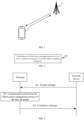
- FIG. 1 shows a schematic diagram of a mobile communication system according to some exemplary embodiments of the present disclosure.
- the mobile communication system includes: a terminal 10 and a network device 20.
- a plurality of terminals 10 are deployed, and one or more terminals 10 may be distributed in a cell managed by each network device 20.
- the terminals 10 may include various handheld devices having mobile communication functions, vehicle-mounted devices, wearable devices, computing devices, or other processing devices connected to a radio modem, and various forms of user equipments (UEs), mobile stations (MSs), or the like.
- UEs user equipments
- MSs mobile stations
- the network device 20 is an apparatus deployed in an access network to provide a mobile communication function for the terminal 10.
- the network device 20 may include various forms of macro base stations, micro base stations, relay stations, access points, location management function (LMF) entities, or the like.
- LMF location management function
- a device with functionality of an access network device may have different names.
- the device is referred to as a gNodeB or a gNB in the 5G NR system.
- the name "network device" may change.
- the apparatus for providing the terminal 10 with the mobile communication function is collectively referred to as a network device.
- the network device 20 and the terminal 10 may establish a connection therebetween over an air interface, and then communicate with each other over the connection, including signaling and data interaction.
- a plurality of network devices 20 are deployed, and two adjacent network devices 20 may communicate with each other in a wired or wireless manner.
- the terminal 10 may switch between different network devices 20, that is, establishing connections with different network devices 20.
- the network device 20 is considered as an access network device.
- the "SG NR system" in the embodiments of the present disclosure may also be referred to as a 5G system or an NR system, and those skilled in the art may understand the meaning thereof.
- the technical solutions described in the embodiments of the present disclosure are applicable to the 5G NR system, and also to an evolved system of the 5G NR system.
- FIG. 2 shows a flowchart of a method for ensuring effectiveness of an AI model in wireless communications according to some exemplary embodiments of the present disclosure of the present disclosure. This embodiment is illustrated by applying the method to the communication system as shown in FIG. 1 .
- the method includes the following process.
- process 201 an effectiveness management process of a first AI model is performed in response to a model failure condition being met.
- the model failure condition includes, but is not limited to, the following ten cases:
- the terminal receives a system message broadcast by the network device, and performs the effectiveness management process of the first AI model in response to a region identifier in the system message being different from a model effective region identifier of the first AI model.
- the region identifier in the system message indicates the region where the terminal is located.
- the effective region of the first AI model is at least one of a tracking area, a radio access network (RAN) region, or a custom region, and the effective region includes at least one cell.
- RAN radio access network
- the effective period of the first AI model is determined based on a first timer, which is configured to ensure the effectiveness of the first AI model.
- a first timer which is configured to ensure the effectiveness of the first AI model.
- the first AI model is considered ineffective, and further, the effectiveness management process of the first AI model is performed.
- the first timer is started in response to the terminal receiving configuration information of the first timer, or the first timer is started in response to the terminal starting to use the first AI model, or the first timer is started in response to the terminal receiving the first AI model.
- the first timer is stopped in response to the terminal stopping using the model.
- the first timer may be configured to the terminal by the network device, or the first timer may be configured by the terminal.
- the first timer is determined based on at least one of an effective duration of the first AI model, the service type, a travel trajectory/region of the terminal, or network load/energy consumption.
- the effectiveness management process of the first AI model is determined to be performed based on a periodic timer of the first AI model.
- the periodic timer may be configured to the terminal by the network device, or the periodic timer may be configured by the terminal.
- the periodic timer is started/restarted in response to the terminal receiving configuration information of the periodic timer, or the periodic timer is started/restarted in response to the terminal starting to use the first AI model, or the periodic timer is started/restarted in response to the terminal receiving the first AI model.
- the periodic timer is stopped in response to timeout of the periodic timer.
- the periodic timer may be configured to the terminal by the network device, or the periodic timer may be configured by the terminal.
- the periodic timer is determined based on at least one of an effective duration of the first AI model, the service type, a travel trajectory/region of the terminal, or network load/energy consumption.
- the effectiveness management process of the first AI model is performed in response to the channel quality of the terminal being higher than a first threshold; or the effectiveness management process of the first AI model is performed in response to the channel quality of the terminal being lower than a second threshold.
- the first threshold and/or the second threshold may be pre-configured by the network device or self-defined by the terminal.
- the effectiveness management process of the first AI model is performed in response to the available computing power of the terminal being higher than a third threshold; or the effectiveness management process of the first AI model is performed in response to the available computing power of the terminal being lower than a fourth threshold.
- the third threshold and/or the fourth threshold may be pre-configured by the network device or self-defined by the terminal.
- the effectiveness management process of the first AI model is performed in response to the storage capacity of the terminal being higher than a fifth threshold; or the effectiveness management process of the first AI model is performed in response to the storage capacity of the terminal being lower than a sixth threshold.
- the fifth threshold and/or the sixth threshold may be pre-configured by the network device or self-defined by the terminal.
- the terminal performs the effectiveness management process of the first AI model in response to the terminal desiring to adjust the matched AI model based on the service demands.
- the effectiveness management process of the first AI model is performed in response to a change of a classification of a wireless environment.
- the effectiveness management process of the first AI model is performed in response to a change of a scenario characteristic of a wireless environment change.
- the scenario characteristic of a wireless environment includes at least one of different indoor/outdoor environments, dense cells/open fields, line of sight (LOS)/non-line of sight (NLOS), or high/low speeds.
- the effectiveness management process of the first AI model is performed in response to a change of a channel environment indicator characteristic of a wireless environment.
- the channel environment indicator characteristic of a wireless environment includes at least one of delay power spectrum information, multipath information, angle information, or velocity information.
- the effectiveness management process of the first AI model is performed in response to a change of time domain characteristic information of a wireless environment.
- the effectiveness management process of the first AI model is performed in response to a change of frequency domain characteristic information of a wireless environment.
- the effectiveness management process of the first AI model is performed in response to a change of spatial characteristic information of a wireless environment.
- the terminal may autonomously perform the effectiveness management process of the first AI model.
- the terminal autonomously performs the effectiveness management process of the first AI model in response to the model failure condition being met.
- Autonomously performing, by the terminal, the effectiveness management process of the first AI model includes at least one of autonomously updating the first AI model, autonomously switching the first AI model to a second AI model, or autonomously stopping using the first AI model.
- the terminal autonomously updates the configuration information of the first AI model in response to the model failure condition being met.
- the terminal updates the first AI model based on the updated configuration information.
- the configuration information of the first AI model includes, but is not limited to, at least one of structure information or parameter information of the first AI model. At least two sets of candidate AI models are associated with at least one of the computing power, services, or the channel quality of the terminal.
- the terminal stores at least two sets of candidate AI models.
- the terminal autonomously determines the second AI model from the at least two sets of AI models and switches the first AI model to the second AI model, in response to the model failure condition being met.
- the at least two sets of candidate AI models are associated with at least one of the computing power, services, or the channel quality of the terminal.
- the at least two sets of candidate AI models may be pre-configured to the terminal by the network device or configured by the terminal.
- the terminal autonomously stops using the first AI model in response to the model failure condition being met. In some embodiments, the terminal stops using a first timer associated with the first AI model and deletes configuration information of the first AI model.
- the terminal may also perform the effectiveness management process of the first AI model by sending request information to the network device, wherein the request information is to request the network device to perform the effectiveness management process of the first AI model.
- the request information is reported to the network device in response to the model failure condition being met; and the effectiveness management process of the first AI model is performed based on indication information provided by the network device.
- the effectiveness management process of the first AI model based on the indication information provided by the network device includes at least one of updating the first AI model, switching the first AI model to a second AI model, or stopping using the first AI model.
- the request information includes configuration information of the first AI model and/or auxiliary information for model update.
- the terminal reports the request information to the network device in response to the model failure condition being met.
- the terminal updates the first AI model based on the configuration information of the first AI model and/or the auxiliary information for model update provided by the network device.
- the configuration information of the first AI model includes structure information and/or parameter information of the first AI model.
- the terminal stores at least two sets of candidate AI models, and the indication information includes an identifier of the second AI model.
- the terminal reports the request information to the network device in response to the model failure condition being met.
- the terminal determines the second AI model from the at least two sets of candidate AI models based on the identifier of the second AI model provided by the network device, and switches the first AI model to the second AI model.
- the request information includes a suggested AI model identifier, such that the network device determines an AI model to be switched based on the suggestion of the terminal.
- the terminal reports the request information to the network device in response to the model failure condition being met.
- the terminal stops using the first AI model based on the indication information provided by the network device.
- the terminal stops using a first timer associated with the first AI model and deletes configuration information of the first AI model.
- the terminal reports a completion message to the network device, wherein the completion message indicates that the terminal completes the effectiveness management process of the first AI model.
- the completion message includes at least one of the updated structure information and/or parameter information of the first AI model, an identifier of the second AI model, or a message to stop using the first AI model.
- updating the first AI model includes at least one of adjusting the number of layers of the first AI model, updating network parameters and/or a network topology of the first AI model, or pruning or compressing the first AI model.
- the first AI model is configured to implement at least one of mobility enhancement, channel state information (CSI) feedback, channel estimation, load balancing, power-saving of the terminal/network, beam management, trajectory prediction of the terminal, service prediction, location enhancement, or radio resource management.
- the mobility enhancement is to enhance the continuity of services ensured by the terminal in a mobile state, such as reducing the switching interruption by selecting a more appropriate target cell.
- the CSI feedback is to achieve an interaction of channel state information between the terminal and the network device.
- the channel estimation is to estimate model parameters of the first AI model in the channel data.
- the load balancing is to balance services and allocate the services to a plurality of operating units for operation.
- the power-saving of the terminal/network is to reduce ineffective energy consumption of the terminal/network.
- the beam management is to manage beams for signal transmission.
- the trajectory prediction of the terminal is to predict the moving trajectory of the terminal.
- the service prediction is to predict services of the terminal.
- the location enhancement is to determine the position of the terminal.
- the radio resource management is to provide QoS assurance for terminals in a network with a limited bandwidth.
- the first AI model operates and is trained or reasoned in any one of a radio resource control (RRC) layer, a service data adaptation protocol (SDAP) layer, a packet data convergence protocol (PDCP) layer, a radio link control (RLC) layer, a medium access control (MAC) layer, or a physical (PHY) layer.
- RRC radio resource control
- SDAP service data adaptation protocol
- PDCP packet data convergence protocol
- RLC radio link control
- MAC medium access control
- PHY physical
- Functions optimized by the first AI model are functions corresponding to any one of the RRC, SDAP, PDCP, RLC, MAC, or PHY layers.
- the effectiveness management process is performed based on actual requirements, and the AI model is processed accordingly to ensure the effectiveness of the AI model and improve the performance of wireless communications.
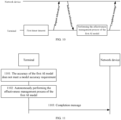
- FIG. 3 shows a flowchart of a method for ensuring effectiveness of an AI model in wireless communications according to some exemplary embodiments of the present disclosure. This embodiment is illustrated by applying the method to the communication system as shown in FIG. 1 .
- the method includes the following processes.
- the network device broadcasts a system message to the terminal.
- the system message includes a region identifier.
- the effective region of the first AI model is at least one of a tracking area, a radio access network (RAN) region, or a custom region, and the effective region includes at least one cell.
- RAN radio access network
- the network device broadcasts a system message to the terminal.
- the terminal autonomously performs the effectiveness management process of the first AI model in response to the model failure condition being met.
- the model failure condition means that the region identifier in the system message is different from a model effective region identifier of the first AI model.
- the terminal autonomously updates the first AI model based on model input information during use of the first AI model in response to the model failure condition being met.
- the first AI model is an AI model for trajectory prediction.
- the terminal may update the first AI model based on historical trajectory information input during use of the first AI model in response to determining that the terminal leaves the effective region of the first AI model.
- updating the first AI model includes at least one of adjusting the number of layers of the first AI model, updating network parameters and/or a network topology of the first AI model, or pruning or compressing the first AI model.
- the terminal stores at least two sets of candidate AI models.
- the terminal determines the second AI model from the at least two sets of candidate AI models in response to the model failure condition being met.
- the terminal autonomously switches the first AI model to the second AI model.
- At least two sets of candidate AI models are associated with at least one of the computing power, services, or the channel quality of the terminal.
- the at least two sets of candidate AI models may be pre-configured to the terminal by the network device or configured by the terminal.
- the at least two sets of candidate AI models are associated with the region.
- the terminal autonomously stops using the first AI model in response to the model failure condition being met.
- the first AI model may no longer be applicable, and the terminal may autonomously stop using the first AI model and perform a corresponding process based on a pre-configured rule or algorithm, or perform a corresponding process based on an existing protocol specification.
- the terminal stops using a first timer associated with the first AI model and deletes configuration information of the first AI model.
- the terminal reports a completion message to the network device.
- the completion message indicates that the terminal completes the effectiveness management process of the first AI model.
- the completion message includes at least one of the updated structure information and/or parameter information of the first AI model, an identifier of the second AI model, or a message to stop using the first AI model.
- the completion message may be transmitted over at least one of an RRC message, a medium access control-control element (MAC-CE), or uplink control information (UCI).
- RRC resource control
- MAC-CE medium access control-control element
- UCI uplink control information
- the terminal reports a completion message to the network device.
- the terminal autonomously updates, switches, or returns the first AI model in response to the terminal leaving the effective region of the first AI model, such that the performance of wireless communications is improved.
- FIG. 5 shows a flowchart of a method for ensuring effectiveness of an AI model in wireless communications according to some exemplary embodiments of the present disclosure. This embodiment is illustrated by applying the method to the communication system as shown in FIG. 1 .
- the method includes the following processes.
- the network device broadcasts a system message to the terminal.
- the system message includes a region identifier.
- the effective region of the first AI model is at least one of a tracking area, a radio access network (RAN) region, or a custom region, and the effective region includes at least one cell.
- RAN radio access network
- the network device broadcasts a system message to the terminal.
- the terminal reports request information to the network device in response to a model failure condition being met.
- the model failure condition means that the region identifier in the system message is different from a model effective region identifier of the first AI model.
- the request information includes an identifier of a suggested AI model, such that the network device determines an AI model to be switched based on the suggestion of the terminal.
- the terminal reports request information to the network device.
- the network device provides indication information for the terminal.
- the indication information includes configuration information of the first AI model and/or auxiliary information for model update, such that the terminal updates the first AI model based on the indication information.
- the configuration information of the first AI model includes structure information and/or parameter information of the first AI model.
- the indication information includes an identifier of the second AI model, such that the terminal determines an AI model to be switched based on the identifier of the second AI model.
- At least two sets of AI models may be pre-configured by the network device.
- the at least two sets of candidate AI models are associated with at least one of the computing power, services, or the channel quality of the terminal.
- the indication information is to instruct the terminal to stop using the first AI model.
- the network device provides indication information for the terminal.
- the terminal performs the effectiveness management process of the first AI model based on indication information provided by the network device.
- the terminal updates the first AI model based on the configuration information of the first AI model and/or the auxiliary information for model update provided by the network device.
- updating the first AI model includes at least one of adjusting the number of layers of the first AI model, updating network parameters and/or a network topology of the first AI model, or pruning or compressing the first AI model.
- the indication information includes an identifier of the second AI model; and the terminal stores at least two sets of candidate AI models.
- the terminal stores at least two sets of candidate AI models.
- the terminal determines the second AI model from the at least two sets of candidate AI models based on the identifier of the second AI model provided by the network device, and switches the first AI model to the second AI model.
- the terminal autonomously switches the first AI model to the second AI model.
- the at least two sets of candidate AI models are associated with the region.
- the terminal stops using the first AI model based on the indication information provided by the network device. As the terminal leaves the effective region of the first AI model, the first AI model may no longer be applicable, and the terminal may stop using the first AI model based on the indication information of the network device and perform a corresponding process based on a pre-configured rule or algorithm, or perform a corresponding process based on an existing protocol specification. In some embodiments, the terminal stops using a first timer associated with the first AI model and deletes configuration information of the first AI model.
- the terminal reports a completion message to the network device.
- the completion message indicates that the terminal completes the effectiveness management process of the first AI model.
- the completion message may be transmitted over at least one of an RRC message or a MAC-CE or UCI.
- the terminal reports a completion message to the network device.
- the terminal reports the request information to the network device to update, switch, or return the first AI model in response to the terminal leaving the effective region of the first AI model, such that the performance of wireless communications is improved.
- FIG. 7 shows a flowchart of a method for ensuring effectiveness of an AI model in wireless communications according to some exemplary embodiments of the present disclosure. This embodiment is illustrated by applying the method to the communication system as shown in FIG. 1 .
- the method includes the following processes.
- the terminal determines the timeout of a first timer.
- the first timer is configured to ensure the effectiveness of the first AI model.
- the first timer is determined based on at least one of an effective duration of the first AI model, the service type, a travel trajectory/region of the terminal, or network load/energy consumption.
- the first timer is started in response to the terminal receiving configuration information of the first timer, or the first timer is started in response to the terminal starting to use the first AI model, or the first timer is started in response to the terminal receiving the first AI model.
- the first timer may be configured to the terminal by the network device, or the first timer may be configured by the terminal.
- the terminal autonomously performs an effectiveness management process of a first AI model.
- the terminal autonomously updates the first AI model based on model input information during use of the first AI model.
- the first AI model is an AI model for trajectory prediction.
- the terminal may update the first AI model based on historical trajectory information input during use of the first AI model in response to determining that the terminal leaves the effective region of the first AI model.
- updating the first AI model includes at least one of adjusting the number of layers of the first AI model, updating network parameters and/or a network topology of the first AI model, or pruning or compressing the first AI model.
- the terminal stores at least two sets of candidate AI models.
- the terminal determines the second AI model from the at least two sets of candidate AI models.
- the terminal autonomously switches the first AI model to the second AI model.
- At least two sets of candidate AI models are associated with at least one of the computing power, services, or the channel quality of the terminal.
- the at least two sets of candidate AI models may be pre-configured to the terminal by the network device.
- the terminal autonomously stops using the first AI model.
- the terminal may autonomously stop using the first AI model and perform a corresponding process based on a pre-configured rule or algorithm, or perform a corresponding process based on an existing protocol specification.
- the terminal stops using the first timer and deletes configuration information of the first AI model.
- the terminal reports a completion message to the network device.
- the completion message indicates that the terminal completes the effectiveness management process of the first AI model.
- the completion message includes at least one of the updated structure information and/or parameter information of the first AI model, an identifier of the second AI model, or a message to stop using the first AI model.
- the completion message may be transmitted over at least one of an RRC message or a MAC-CE or UCI.
- the terminal reports a completion message to the network device.
- the first AI model is autonomously updated, switched, or returned in response to timeout of the first timer, such that the performance of wireless communications is improved.
- FIG. 9 shows a flowchart of a method for ensuring effectiveness of an AI model in wireless communications according to some exemplary embodiments of the present disclosure. This embodiment is illustrated by applying the method to the communication system as shown in FIG. 1 .
- the method includes the following processes.
- the terminal determines the timeout of a first timer.
- the first timer is configured to ensure the effectiveness of the first AI model.
- the first timer is determined based on at least one of an effective duration of the first AI model, the service type, a travel trajectory/region of the terminal, or network load/energy consumption.
- the first timer is started in response to the terminal receiving configuration information of the first timer, or the first timer is started in response to the terminal starting to use the first AI model, or the first timer is started in response to the terminal receiving the first AI model.
- the first timer may be configured to the terminal by the network device, or the first timer may be configured by the terminal.
- the terminal reports request information to the network device.
- the request information includes an identifier of a suggested AI model, such that the network device determines an AI model to be switched based on the suggestion of the terminal.
- the terminal reports request information to the network device.
- the network device provides indication information for the terminal.
- the indication information includes configuration information of the first AI model and/or auxiliary information for model update, such that the terminal updates the first AI model based on the indication information.
- the configuration information of the first AI model includes structure information and/or parameter information of the first AI model.
- the indication information includes an identifier of the second AI model, such that the terminal determines an AI model to be switched based on the identifier of the second AI model.
- At least two sets of AI models may be pre-configured by the network device.
- the at least two sets of candidate AI models are associated with at least one of the computing power, services, or the channel quality of the terminal.
- the network device provides indication information for the terminal.
- the terminal performs the effectiveness management process of the first AI model based on indication information provided by the network device.
- the terminal updates the first AI model based on the configuration information of the first AI model and/or the auxiliary information for model update provided by the network device.
- updating the first AI model includes at least one of adjusting the number of layers of the first AI model, updating network parameters and/or a network topology of the first AI model, or pruning or compressing the first AI model.
- the indication information includes an identifier of the second AI model; and the terminal stores at least two sets of candidate AI models.
- the terminal stores at least two sets of candidate AI models.
- the terminal determines the second AI model from the at least two sets of candidate AI models based on the identifier of the second AI model provided by the network device, and switches the first AI model to the second AI model.
- the terminal autonomously switches the first AI model to the second AI model.
- the terminal stops using the first AI model based on the indication information provided by the network device. As the first timer fails, the first AI model may no longer be applicable, and the terminal may stop using the first AI model based on the indication information of the network device and perform a corresponding process based on a pre-configured rule or algorithm, or perform a corresponding process based on an existing protocol specification. In some embodiments, the terminal stops using a first timer associated with the first AI model and deletes configuration information of the first AI model.
- the terminal reports a completion message to the network device.
- the completion message indicates that the terminal completes the effectiveness management process of the first AI model.
- the completion message may be transmitted over at least one of an RRC message or a MAC-CE or UCI.
- the terminal reports a completion message to the network device.
- the terminal reports the request information to the network device to update, switch, or return the first AI model in response to expiration of the effective period of the first timer, such that the performance of wireless communications is improved.
- FIG. 11 shows a flowchart of a method for ensuring effectiveness of an AI model in wireless communications according to some exemplary embodiments of the present disclosure. This embodiment is illustrated by applying the method to the communication system as shown in FIG. 1 .
- the method includes the following processes.
- the terminal determines that the accuracy of the first AI model does not meet a model accuracy requirement.
- the model accuracy requirement may be pre-configured by the network device or self-defined by the terminal.
- the first AI model is an AI model for trajectory prediction, a switching decision based on the first AI model results in N consecutive switching failures, and then it is considered that the accuracy of the first AI model does not support optimization of a current scenario.
- the terminal autonomously performs an effectiveness management process of a first AI model.
- the terminal autonomously updates the first AI model based on model input information during use of the first AI model in response to the accuracy of the first AI model failing to meet the model accuracy requirement.
- the first AI model is an AI model for trajectory prediction.
- the terminal may update the first AI model based on historical trajectory information input during use of the first AI model in response to a determination that the terminal leaves the effective region of the first AI model.
- updating the first AI model includes at least one of adjusting the number of layers of the first AI model, updating network parameters and/or a network topology of the first AI model, or pruning or compressing the first AI model.
- the terminal stores at least two sets of candidate AI models.
- the terminal determines the second AI model from the at least two sets of candidate AI models in response to the accuracy of the first AI model failing to meet the model accuracy requirement.
- the terminal autonomously switches the first AI model to the second AI model.
- At least two sets of candidate AI models are associated with at least one of the computing power, services, or the channel quality of the terminal.
- the at least two sets of candidate AI models may be pre-configured to the terminal by the network device or configured by the terminal.
- the terminal autonomously stops using the first AI model in response to the accuracy of the first AI failing to meet the model accuracy requirement.
- the terminal may perform a corresponding process based on a pre-configured rule or algorithm, or perform a corresponding process based on an existing protocol specification.
- the terminal stops using a first timer associated with the first AI model and deletes configuration information of the first AI model.
- the terminal reports a completion message to the network device.
- the completion message indicates that the terminal completes the effectiveness management process of the first AI model.
- the completion message includes at least one of the updated structure information and/or parameter information of the first AI model, an identifier of the second AI model, and a message to stop using the first AI model.
- the completion message may be transmitted over at least one of an RRC message or a MAC-CE or UCI.
- the terminal reports a completion message to the network device.
- the terminal autonomously updates, switches, or returns the first AI model in response to the accuracy of the first AI model failing to meet the model accuracy requirement, such that the performance of wireless communications is improved.
- FIG. 13 shows a flowchart of a method for ensuring effectiveness of an AI model in wireless communications according to some exemplary embodiments of the present disclosure. This embodiment is illustrated by applying the method to the communication system as shown in FIG. 1 .
- the method includes the following processes.
- the terminal determines that the accuracy of the first AI model does not meet a model accuracy requirement.
- the model accuracy requirement may be pre-configured by the network device or self-defined by the terminal.
- the first AI model is an AI model for trajectory prediction, a switching decision based on the first AI model results in N consecutive switching failures, and then it is considered that the accuracy of the first AI model does not support optimization of a current scenario.
- the terminal reports request information to the network device.
- the request information includes an identifier of a suggested AI model, such that the network device determines an AI model to be switched based on the suggestion of the terminal.
- the terminal reports request information to the network device.
- the network device provides indication information for the terminal.
- the indication information includes configuration information of the first AI model and/or auxiliary information for model update, such that the terminal updates the first AI model based on the indication information.
- the configuration information of the first AI model includes structure information and/or parameter information of the first AI model.
- the indication information includes an identifier of the second AI model, such that the terminal determines an AI model to be switched based on the identifier of the second AI model.
- At least two sets of AI models may be pre-configured by the network device.
- the at least two sets of candidate AI models are associated with at least one of the computing power, services, or the channel quality of the terminal.
- the network device provides indication information for the terminal.
- the terminal performs the effectiveness management process of the first AI model based on indication information provided by the network device.
- the terminal updates the first AI model based on the configuration information of the first AI model and/or the auxiliary information for model update provided by the network device.
- updating the first AI model includes at least one of adjusting the number of layers of the first AI model, updating network parameters and/or a network topology of the first AI model, or pruning or compressing the first AI model.
- the indication information includes an identifier of the second AI model; and the terminal stores at least two sets of candidate AI models.
- the terminal stores at least two sets of candidate AI models.
- the terminal determines the second AI model from the at least two sets of candidate AI models based on the identifier of the second AI model provided by the network device, and switches the first AI model to the second AI model.
- the terminal stops using the first AI model based on the indication information provided by the network device. As the accuracy of the first AI model does not meet the model accuracy requirement, the first AI model may no longer be applicable, and the terminal may stop using the first AI model based on the indication information of the network device and perform a corresponding process based on a pre-configured rule or algorithm, or perform a corresponding process based on an existing protocol specification. In some embodiments, the terminal stops using a first timer associated with the first AI model and deletes configuration information of the first AI model.
- the terminal reports a completion message to the network device.
- the completion message indicates that the terminal completes the effectiveness management process of the first AI model.
- the completion message may be transmitted over at least one of an RRC message or a MAC-CE or UCI.
- the terminal reports a completion message to the network device.
- the terminal reports the request information to the network device to update, switch, or return the first AI model in response to the accuracy of the first AI model failing to meet the model accuracy requirement, such that the performance of wireless communications is improved.
- FIG. 15 shows a block diagram of an apparatus for ensuring effectiveness of an AI model in wireless communications according to some exemplary embodiments of the present disclosure.
- the apparatus 150 includes: an executing module 151, configured to perform an effectiveness management process of a first AI model in response to a model failure condition being met.
- the executing module 151 is further configured to perform the effectiveness management process of the first AI model in response to a terminal leaving an effective region of the first AI model, or perform the effectiveness management process of the first AI model in response to expiration of an effective period of the first AI model, or perform the effectiveness management process of the first AI model based on a periodic update of the first AI model, or perform the effectiveness management process of the first AI model in response to a channel quality of the terminal meeting a first threshold condition, or perform the effectiveness management process of the first AI model in response to an available computing power of the terminal meeting a second threshold condition, or perform the effectiveness management process of the first AI model in response to a storage capacity of the terminal meeting a third threshold condition, or perform the effectiveness management process of the first AI model in response to a change of a service type of the terminal or a change of quality of service (QoS), or perform the effectiveness management process of the first AI model in response to an accuracy of the first AI model failing to meet a model accuracy requirement, or perform the effectiveness management process of the first AI model in
- the apparatus 150 further includes: a receiving module 152, configured to receive a system message broadcast by the network device; and the executing module 151 is further configured to perform the effectiveness management process of the first AI model in response to a region identifier in the system message being different from a model effective region identifier of the first AI model.
- the effective region is at least one of a tracking area, a radio access network (RAN) region, or a custom region, and the effective region includes at least one cell.
- RAN radio access network
- the executing module 151 is further configured to perform the effectiveness management process of the first AI model in response to expiration of an effective period of a first timer of the first AI model, wherein the first timer is configured to ensure effectiveness of the first AI model.
- the executing module 151 is further configured to start the first timer in response to the terminal receiving configuration information of the first timer, or start the first timer in response to the terminal starting to use the first AI model.
- the first timer is determined based on at least one of an effective duration of the first AI model, the service type, a travel trajectory/region of the terminal, or network load/energy consumption.
- the executing module 151 is further configured to perform the effectiveness management process of the first AI model in response to the channel quality of the terminal being higher than a first threshold, or perform the effectiveness management process of the first AI model in response to the channel quality of the terminal being lower than a second threshold.
- the executing module 151 is further configured to perform the effectiveness management process of the first AI model in response to the available computing power of the terminal being higher than a third threshold, or perform the effectiveness management process of the first AI model in response to the available computing power of the terminal being lower than a fourth threshold.
- the executing module 151 is further configured to perform the effectiveness management process of the first AI model in response to the storage capacity of the terminal being higher than a fifth threshold, or perform the effectiveness management process of the first AI model in response to the storage capacity of the terminal being lower than a sixth threshold.
- the executing module 151 is further configured to perform the effectiveness management process of the first AI model in response to a change of a classification of the wireless environment, or perform the effectiveness management process of the first AI model in response to a change of a scenario characteristic of the wireless environment, or perform the effectiveness management process of the first AI model in response to a change of a channel environment indicator characteristic of the wireless environment, or perform the effectiveness management process of the first AI model in response to a change of time domain characteristic information of the wireless environment, or perform the effectiveness management process of the first AI model in response to a change of frequency domain characteristic information of the wireless environment of the terminal, or perform the effectiveness management process of the first AI model in response to a change of spatial characteristic information of the wireless environment.
- the executing module 151 is further configured to autonomously perform the effectiveness management process of the first AI model in response to the model failure condition being met.
- the executing module 151 is further configured to autonomously update the first AI model in response to the model failure condition being met, or autonomously switch the first AI model to a second AI model in response to the model failure condition being met, or autonomously stop using the first AI model in response to the model failure condition being met.
- the executing module 151 is further configured to autonomously update the first AI model based on model input information during use of the first AI model in response to the model failure condition being met.
- the terminal stores at least two sets of candidate AI models; and the executing module 151 is further configured to determine the second AI model from the at least two sets of candidate AI models in response to the model failure condition being met, and autonomously switch the first AI model to the second AI model.
- the at least two sets of candidate AI models are associated with at least one of the computing power, services, or the channel quality of the terminal.
- the apparatus 150 further includes: a reporting module 153, configured to report request information to the network device in response to the model failure condition being met, the request information being configured to request the network device to perform the effectiveness management process of the first AI model; and the executing module 151 is further configured to perform the effectiveness management process of the first AI model based on indication information provided by the network device.
- a reporting module 153 configured to report request information to the network device in response to the model failure condition being met, the request information being configured to request the network device to perform the effectiveness management process of the first AI model
- the executing module 151 is further configured to perform the effectiveness management process of the first AI model based on indication information provided by the network device.
- the executing module 151 is further configured to update the first AI model based on the indication information provided by the network device, or switch the first AI model to a second AI model based on the indication information provided by the network device, or stop using the first AI model based on the indication information provided by the network device.
- the indication information includes configuration information of the first AI model and/or auxiliary information for model update; and the executing module 151 is further configured to update the first AI model based on the configuration information of the first AI model and/or the auxiliary information for model update provided by the network device.
- the configuration information of the first AI model includes structure information and/or parameter information of the first AI model.
- the indication information includes an identifier of the second AI model; the terminal stores at least two sets of candidate AI models; and the executing module 151 is further configured to determine the second AI model from the at least two sets of candidate AI models based on the identifier of the second AI model provided by the network device, and switch the first AI model to the second AI model.
- the at least two sets of candidate AI models are associated with at least one of the computing power, services, or the channel quality of the terminal.
- the request information includes an identifier of a suggested AI model.
- the request information is transmitted over at least one of an RRC message, a MAC-CE, UCI, or a random access procedure.
- the indication information is transmitted over at least one of an RRC message, a MAC-CE, DCI, or system message broadcast.
- updating the first AI model includes at least one of adjusting the number of layers of the first AI model, updating network parameters and/or a network topology of the first AI model, or pruning or compressing the first AI model.
- the reporting module 153 is configured to report a completion message to the network device, wherein the completion message indicates that the terminal completes the effectiveness management process of the first AI model.
- the first AI model is configured to implement at least one of mobility enhancement, CSI feedback, channel estimation, load balancing, power-saving of the terminal/network, beam management, trajectory prediction of the terminal, service prediction, location enhancement, or radio resource management.
- the first AI model operates and is trained or reasoned in any one of an RRC layer, a SDAP layer, a PDCP layer, an RLC layer, a MAC layer, and a PHY layer.
- the functions optimized by the first AI model are functions corresponding to any one of the RRC layer, the SDAP layer, the PDCP layer, the RLC layer, the MAC layer, or the PHY layer.
- the terminal 1600 includes: a processor 1601, a transceiver 1602, and a memory 1603.
- the processor 1601 includes one or more processing cores, and the processor 1601 performs various functional applications and information processing by running software programs and modules.
- the transceiver 1602 may include a receiver and a transmitter, which may be implemented, for example, as the same wireless communication assembly that may include a wireless communication chip and a radio frequency antenna.
- the memory 1603 may be connected to the processor 1601 and the transceiver 1602.
- the memory 1603 may be configured to store computer programs executed by the processor, and the processor 1601 is configured to execute the computer programs to perform the processes performed by the terminal of the wireless communication system in the above method embodiments.
- the memory 1603 may be implemented by any type or combination of volatile or non-volatile storage devices including, but not limited to: a magnetic or optical disk, an electrically erasable programmable read-only memory, an erasable programmable read-only memory, a static random access memory, a read-only memory, a magnetic memory, a flash memory, and a programmable read-only memory.
- volatile or non-volatile storage devices including, but not limited to: a magnetic or optical disk, an electrically erasable programmable read-only memory, an erasable programmable read-only memory, a static random access memory, a read-only memory, a magnetic memory, a flash memory, and a programmable read-only memory.
- SMF service management function
- the network device 1700 includes: a processor 1701, a transceiver 1702, and a memory 1703.
- the processor 1701 includes one or more processing cores, and the processor 1701 performs various functional applications and information processing by running software programs and modules.
- the transceiver 1702 may include a receiver and a transmitter.
- the transceiver 1702 may include a wired communication assembly that may include a wired communication chip and a wired interface (e.g., a fiber optic interface).
- the transceiver 1702 further includes a wireless communication assembly that includes a wireless communication chip and a radio frequency antenna.
- the memory 1703 is connected to the processor 1701 and the transceiver 1702.
- the memory 1703 may be configured to store one or more computer program runnable by the processor, and the processor 1701 is configured to run the one or more computer programs to perform the processes performed by the network device of the wireless communication system in the above method embodiments.
- the memory 1703 may be implemented by any type or combination of volatile or non-volatile storage devices including, but not limited to: a magnetic or optical disk, an electrically erasable programmable read-only memory, an erasable programmable read-only memory, a static random access memory, a read-only memory, a magnetic memory, a flash memory, and a programmable read-only memory.
- volatile or non-volatile storage devices including, but not limited to: a magnetic or optical disk, an electrically erasable programmable read-only memory, an erasable programmable read-only memory, a static random access memory, a read-only memory, a magnetic memory, a flash memory, and a programmable read-only memory.
- the transceiver 1702 is configured to receive a second service access request sent by a non-relay terminal in a relay sidelink scenario, the second service access request being configured to request the non-relay terminal to access the first broadcast/multicast service.
- the transceiver 1702 and the processor 1701 in the network device 1700 For details of the processes performed by the transceiver 1702 and the processor 1701 in the network device 1700, reference may be made to the processes performed by a user plane function (UPF) unit in the network device in the methods shown in FIG. 2, FIG. 3 , FIG. 5 , FIG. 8, FIG. 9 , FIG. 11 , and FIG. 13 .
- UPF user plane function
- Some embodiments of the present disclosure further provide a computer-readable storage medium having one or more computer programs stored therein.
- the one or more computer programs when loaded and run by a processor of a terminal or a network device, cause the terminal or the network device to perform the processes performed by the terminal or the network device in the methods shown in FIG. 2, FIG. 3 , FIG. 5 , FIG. 8, FIG. 9 , FIG. 11 , and FIG. 13 .
- Some embodiments of the present disclosure further provide a computer program product including computer instructions.
- the computer instructions are stored in a computer-readable storage medium.
- the one or more computer instructions when read and executed by a processor of a computer device, cause the computer device to perform the processes performed by the terminal or the network device in the methods shown in FIG. 2, FIG. 3 , FIG. 5 , FIG. 8, FIG. 9 , FIG. 11 , and FIG. 13 .
- Some embodiments of the present disclosure further provide a chip.
- the chip when running in a computer device, causes the computer device to perform the processes performed by the terminal or the network device in the methods shown in FIG. 2, FIG. 3 , FIG. 5 , FIG. 8, FIG. 9 , FIG. 11 , and FIG. 13 .
- Some embodiments of the present disclosure further provide one or more computer programs.
- the one or more computer programs when loaded and run by a processor of a computer device, causes the computer device to perform the processes performed by the terminal or the network device in the methods shown in FIG. 2, FIG. 3 , FIG. 5 , FIG. 8, FIG. 9 , FIG. 11 , and FIG. 13 .
- the functions described in the embodiments of the present disclosure may be implemented in hardware, software, firmware, or any combination thereof.
- the functions, when implemented in software, may be stored in a computer-readable medium or transmitted as one or more instructions or codes on a computer-readable medium.
- the computer-readable medium includes a computer storage medium and a communication medium, wherein the communication medium includes any medium that facilitates transfer of a computer program from one place to another.
- the storage medium may be any available medium that is accessible by a general-purpose or special-purpose computer.
Landscapes
- Engineering & Computer Science (AREA)
- Theoretical Computer Science (AREA)
- Software Systems (AREA)
- Physics & Mathematics (AREA)
- Artificial Intelligence (AREA)
- Evolutionary Computation (AREA)
- General Engineering & Computer Science (AREA)
- Data Mining & Analysis (AREA)
- Mathematical Physics (AREA)
- General Physics & Mathematics (AREA)
- Computing Systems (AREA)
- Computer Networks & Wireless Communication (AREA)
- Signal Processing (AREA)
- Computer Vision & Pattern Recognition (AREA)
- Medical Informatics (AREA)
- Molecular Biology (AREA)
- General Health & Medical Sciences (AREA)
- Computational Linguistics (AREA)
- Biophysics (AREA)
- Biomedical Technology (AREA)
- Electromagnetism (AREA)
- Life Sciences & Earth Sciences (AREA)
- Health & Medical Sciences (AREA)
- Mobile Radio Communication Systems (AREA)
Abstract
Description
- The present disclosure relates to the field of communications, and in particular, relates to a method and apparatus for ensuring effectiveness of an artificial intelligence (AI) model in wireless communications, and a terminal and a medium.
- AI model-based solutions are increasingly applied in wireless communication systems. For example, machine learning models for wireless channel processing are determined by AI.
- In the related art, a conventional method for wireless communications is adopted. Specifically, theoretical modeling is performed on an actual communication environment, and a transmission mode between a terminal and a network device is determined based on the established model.
- However, with variable scenarios and complex communication environments, the effect of the related art is poor.
- Embodiments of the present disclosure provide a method and apparatus for ensuring effectiveness of an AI model in wireless communications, and a terminal and a medium, and provide a method for ensuring effectiveness of an AI model all the time.
- According to an aspect of the embodiments of the present disclosure, a method for ensuring effectiveness of an AI model in wireless communications is provided. The method is applicable to a terminal.
- The method includes: performing an effectiveness management process of a first AI model in response to a model failure condition being met.
- According to another aspect of the embodiments of the present disclosure, an apparatus for ensuring effectiveness of an AI model in wireless communications is provided.
- The apparatus includes: an executing module, configured to perform an effectiveness management process of a first AI model in response to a model failure condition being met.
- According to another aspect of the embodiments of the present disclosure, a terminal is provided.
- The terminal includes: a processor; a transceiver connected to the processor; and a memory configured to store one or more instructions executable by the processor. The processor is configured to load and execute the one or more executable instructions to perform the method for ensuring effectiveness of an AI model in wireless communications according to any of the above aspects.
- According to another aspect of the embodiments of the present disclosure, a chip is provided. The chip is configured to perform the method for ensuring effectiveness of an AI model in wireless communications according to any of the above aspects.
- According to another aspect of the embodiments of the present disclosure, a computer-readable storage medium storing at least one instruction, at least one program, a code set, or an instruction set therein is provided. The at least one instruction, the at least one program, the code set, or the instruction set, when loaded and executed by a processor, causes the processor to perform the method for ensuring effectiveness of an AI model in wireless communications according to any of the above aspects.
- The technical solutions according to the embodiments of the present disclosure include the following beneficial effects:
- The method can execute the effectiveness management process based on actual requirements, and process the AI model accordingly to ensure the effectiveness of the AI model and improve the performance of wireless communications.
-
-
FIG. 1 is a schematic diagram of a communication system according to some exemplary embodiments of the present disclosure; -
FIG. 2 is a flowchart of a method for ensuring effectiveness of an AI model in wireless communications according to some exemplary embodiments of the present disclosure; -
FIG. 3 is a flowchart of a method for ensuring effectiveness of an AI model in wireless communications according to some exemplary embodiments of the present disclosure; -
FIG. 4 is a flowchart of a method for ensuring effectiveness of an AI model in wireless communications according to some exemplary embodiments of the present disclosure; -
FIG. 5 is a flowchart of a method for ensuring effectiveness of an AI model in wireless communications according to some exemplary embodiments of the present disclosure; -
FIG. 6 is a flowchart of a method for ensuring effectiveness of an AI model in wireless communications according to some exemplary embodiments of the present disclosure; -
FIG. 7 is a flowchart of a method for ensuring effectiveness of an AI model in wireless communications according to some exemplary embodiments of the present disclosure; -
FIG. 8 is a flowchart of a method for ensuring effectiveness of an AI model in wireless communications according to some exemplary embodiments of the present disclosure; -
FIG. 9 is a flowchart of a method for ensuring effectiveness of an AI model in wireless communications according to some exemplary embodiments of the present disclosure; -
FIG. 10 is a flowchart of a method for ensuring effectiveness of an AI model in wireless communications according to some exemplary embodiments of the present disclosure; -
FIG. 11 is a flowchart of a method for ensuring effectiveness of an AI model in wireless communications according to some exemplary embodiments of the present disclosure; -
FIG. 12 is a flowchart of a method for ensuring effectiveness of an AI model in wireless communications according to some exemplary embodiments of the present disclosure; -
FIG. 13 is a flowchart of a method for ensuring effectiveness of an AI model in wireless communications according to some exemplary embodiments of the present disclosure; -
FIG. 14 is a flowchart of a method for ensuring effectiveness of an AI model in wireless communications according to some exemplary embodiments of the present disclosure; -
FIG. 15 is a block diagram of an apparatus for ensuring effectiveness of an AI model in wireless communications according to some exemplary embodiments of the present disclosure; -
FIG. 16 is a schematic structural diagram of a terminal according to some exemplary embodiments of the present disclosure; and -
FIG. 17 is a schematic structural diagram of a network device according to some exemplary embodiments of the present disclosure. - For clearer descriptions of the objects, technical solutions, and advantages of the present disclosure, embodiments of the present disclosure are further described in detail below with reference to the accompanying drawings.
- The network architecture and service scenarios described in the embodiments of the present disclosure are intended to describe the technical solutions in the embodiments of the present disclosure more clearly, but do not constitute any limitation on the technical solutions. Those of ordinary skilled in the art are clear that, with the evolution of the network architecture and the emergence of new service scenarios, the technical solutions according to the embodiments of the present disclosure are also applicable to similar technical problems.
- The technical solutions according to the embodiments of the present disclosure are applicable to various communication systems, such as a global system of mobile communication (GSM) system, a code division multiple access (CDMA) system, a wideband code division multiple access (WCDMA) system, a general packet radio service (GPRS) system, a long-term evolution (LTE) system, an advanced long-term evolution (LTE-A) system, a new radio (NR) system, an evolution system of an NR system, an LTE-based access to unlicensed spectrum (LTE-U) system, an NR-based access to unlicensed spectrum (NR-U) system, a non-terrestrial network (NTN) system, a universal mobile telecommunication system (UMTS), a wireless local area network (WLAN) system, a wireless fidelity (Wi-Fi) system, a 5th generation (5G) system, or other communication systems.
-
FIG. 1 shows a schematic diagram of a mobile communication system according to some exemplary embodiments of the present disclosure. The mobile communication system includes: aterminal 10 and anetwork device 20. - Typically, a plurality of
terminals 10 are deployed, and one ormore terminals 10 may be distributed in a cell managed by eachnetwork device 20. Theterminals 10 may include various handheld devices having mobile communication functions, vehicle-mounted devices, wearable devices, computing devices, or other processing devices connected to a radio modem, and various forms of user equipments (UEs), mobile stations (MSs), or the like. - The
network device 20 is an apparatus deployed in an access network to provide a mobile communication function for theterminal 10. Thenetwork device 20 may include various forms of macro base stations, micro base stations, relay stations, access points, location management function (LMF) entities, or the like. In systems using different radio access technologies, a device with functionality of an access network device may have different names. For example, the device is referred to as a gNodeB or a gNB in the 5G NR system. As communication technologies evolve, the name "network device" may change. For convenience of description, in the embodiments of the present disclosure, the apparatus for providing theterminal 10 with the mobile communication function is collectively referred to as a network device. Thenetwork device 20 and theterminal 10 may establish a connection therebetween over an air interface, and then communicate with each other over the connection, including signaling and data interaction. A plurality ofnetwork devices 20 are deployed, and twoadjacent network devices 20 may communicate with each other in a wired or wireless manner. Theterminal 10 may switch betweendifferent network devices 20, that is, establishing connections withdifferent network devices 20. In this embodiment, thenetwork device 20 is considered as an access network device. - The "SG NR system" in the embodiments of the present disclosure may also be referred to as a 5G system or an NR system, and those skilled in the art may understand the meaning thereof. The technical solutions described in the embodiments of the present disclosure are applicable to the 5G NR system, and also to an evolved system of the 5G NR system.
-
FIG. 2 shows a flowchart of a method for ensuring effectiveness of an AI model in wireless communications according to some exemplary embodiments of the present disclosure of the present disclosure. This embodiment is illustrated by applying the method to the communication system as shown inFIG. 1 . The method includes the following process. - In
process 201, an effectiveness management process of a first AI model is performed in response to a model failure condition being met. - The model failure condition includes, but is not limited to, the following ten cases:
- In some embodiments, the terminal receives a system message broadcast by the network device, and performs the effectiveness management process of the first AI model in response to a region identifier in the system message being different from a model effective region identifier of the first AI model. In some embodiments, the region identifier in the system message indicates the region where the terminal is located.
- The effective region of the first AI model is at least one of a tracking area, a radio access network (RAN) region, or a custom region, and the effective region includes at least one cell.
- In some embodiments, the effective period of the first AI model is determined based on a first timer, which is configured to ensure the effectiveness of the first AI model. Illustratively, in the case of timeout of the first timer of the first AI model, the first AI model is considered ineffective, and further, the effectiveness management process of the first AI model is performed.
- The first timer is started in response to the terminal receiving configuration information of the first timer, or the first timer is started in response to the terminal starting to use the first AI model, or the first timer is started in response to the terminal receiving the first AI model.
- The first timer is stopped in response to the terminal stopping using the model.
- The first timer may be configured to the terminal by the network device, or the first timer may be configured by the terminal.
- The first timer is determined based on at least one of an effective duration of the first AI model, the service type, a travel trajectory/region of the terminal, or network load/energy consumption.
- In some embodiments, the effectiveness management process of the first AI model is determined to be performed based on a periodic timer of the first AI model. The periodic timer may be configured to the terminal by the network device, or the periodic timer may be configured by the terminal.
- In some embodiments, the periodic timer is started/restarted in response to the terminal receiving configuration information of the periodic timer, or the periodic timer is started/restarted in response to the terminal starting to use the first AI model, or the periodic timer is started/restarted in response to the terminal receiving the first AI model.
- In some embodiments, the periodic timer is stopped in response to timeout of the periodic timer.
- In some embodiments, the periodic timer may be configured to the terminal by the network device, or the periodic timer may be configured by the terminal.
- In some embodiments, the periodic timer is determined based on at least one of an effective duration of the first AI model, the service type, a travel trajectory/region of the terminal, or network load/energy consumption.
- The effectiveness management process of the first AI model is performed in response to the channel quality of the terminal being higher than a first threshold; or the effectiveness management process of the first AI model is performed in response to the channel quality of the terminal being lower than a second threshold. The first threshold and/or the second threshold may be pre-configured by the network device or self-defined by the terminal.
- The effectiveness management process of the first AI model is performed in response to the available computing power of the terminal being higher than a third threshold; or the effectiveness management process of the first AI model is performed in response to the available computing power of the terminal being lower than a fourth threshold. The third threshold and/or the fourth threshold may be pre-configured by the network device or self-defined by the terminal.
- The effectiveness management process of the first AI model is performed in response to the storage capacity of the terminal being higher than a fifth threshold; or the effectiveness management process of the first AI model is performed in response to the storage capacity of the terminal being lower than a sixth threshold. The fifth threshold and/or the sixth threshold may be pre-configured by the network device or self-defined by the terminal.
- In some embodiments, the terminal performs the effectiveness management process of the first AI model in response to the terminal desiring to adjust the matched AI model based on the service demands.
- Illustratively, using mobility enhancement as an example, in response to N consecutive switching failures of a switching decision based on the first AI model, it is considered the accuracy of the first AI model is insufficient and is not suitable for optimization of a current scenario, and an effectiveness management process of the first AI model needs to be performed.
- In some embodiments, the effectiveness management process of the first AI model is performed in response to a change of a classification of a wireless environment.
- In some embodiments, the effectiveness management process of the first AI model is performed in response to a change of a scenario characteristic of a wireless environment change. Illustratively, the scenario characteristic of a wireless environment includes at least one of different indoor/outdoor environments, dense cells/open fields, line of sight (LOS)/non-line of sight (NLOS), or high/low speeds.
- In some embodiments, the effectiveness management process of the first AI model is performed in response to a change of a channel environment indicator characteristic of a wireless environment. Illustratively, the channel environment indicator characteristic of a wireless environment includes at least one of delay power spectrum information, multipath information, angle information, or velocity information.
- In some embodiments, the effectiveness management process of the first AI model is performed in response to a change of time domain characteristic information of a wireless environment.
- In some embodiments, the effectiveness management process of the first AI model is performed in response to a change of frequency domain characteristic information of a wireless environment.
- In some embodiments, the effectiveness management process of the first AI model is performed in response to a change of spatial characteristic information of a wireless environment.
- The terminal may autonomously perform the effectiveness management process of the first AI model. Illustratively, the terminal autonomously performs the effectiveness management process of the first AI model in response to the model failure condition being met. Autonomously performing, by the terminal, the effectiveness management process of the first AI model includes at least one of autonomously updating the first AI model, autonomously switching the first AI model to a second AI model, or autonomously stopping using the first AI model.
- In some embodiments, the terminal autonomously updates the configuration information of the first AI model in response to the model failure condition being met. The terminal updates the first AI model based on the updated configuration information. The configuration information of the first AI model includes, but is not limited to, at least one of structure information or parameter information of the first AI model. At least two sets of candidate AI models are associated with at least one of the computing power, services, or the channel quality of the terminal.
- In some embodiments, the terminal stores at least two sets of candidate AI models. The terminal autonomously determines the second AI model from the at least two sets of AI models and switches the first AI model to the second AI model, in response to the model failure condition being met. The at least two sets of candidate AI models are associated with at least one of the computing power, services, or the channel quality of the terminal. The at least two sets of candidate AI models may be pre-configured to the terminal by the network device or configured by the terminal.
- In some embodiments, the terminal autonomously stops using the first AI model in response to the model failure condition being met. In some embodiments, the terminal stops using a first timer associated with the first AI model and deletes configuration information of the first AI model.
- The terminal may also perform the effectiveness management process of the first AI model by sending request information to the network device, wherein the request information is to request the network device to perform the effectiveness management process of the first AI model. Illustratively, the request information is reported to the network device in response to the model failure condition being met; and the effectiveness management process of the first AI model is performed based on indication information provided by the network device. Performing, by the terminal, the effectiveness management process of the first AI model based on the indication information provided by the network device includes at least one of updating the first AI model, switching the first AI model to a second AI model, or stopping using the first AI model.
- In some embodiments, the request information includes configuration information of the first AI model and/or auxiliary information for model update. The terminal reports the request information to the network device in response to the model failure condition being met. The terminal updates the first AI model based on the configuration information of the first AI model and/or the auxiliary information for model update provided by the network device. The configuration information of the first AI model includes structure information and/or parameter information of the first AI model.
- In some embodiments, the terminal stores at least two sets of candidate AI models, and the indication information includes an identifier of the second AI model. The terminal reports the request information to the network device in response to the model failure condition being met. The terminal determines the second AI model from the at least two sets of candidate AI models based on the identifier of the second AI model provided by the network device, and switches the first AI model to the second AI model. In some embodiments, the request information includes a suggested AI model identifier, such that the network device determines an AI model to be switched based on the suggestion of the terminal.
- In some embodiments, the terminal reports the request information to the network device in response to the model failure condition being met. The terminal stops using the first AI model based on the indication information provided by the network device. In some embodiments, the terminal stops using a first timer associated with the first AI model and deletes configuration information of the first AI model.
- In some embodiments, the terminal reports a completion message to the network device, wherein the completion message indicates that the terminal completes the effectiveness management process of the first AI model. In some embodiments, the completion message includes at least one of the updated structure information and/or parameter information of the first AI model, an identifier of the second AI model, or a message to stop using the first AI model.
- In some embodiments, updating the first AI model includes at least one of adjusting the number of layers of the first AI model, updating network parameters and/or a network topology of the first AI model, or pruning or compressing the first AI model.
- The first AI model is configured to implement at least one of mobility enhancement, channel state information (CSI) feedback, channel estimation, load balancing, power-saving of the terminal/network, beam management, trajectory prediction of the terminal, service prediction, location enhancement, or radio resource management. The mobility enhancement is to enhance the continuity of services ensured by the terminal in a mobile state, such as reducing the switching interruption by selecting a more appropriate target cell. The CSI feedback is to achieve an interaction of channel state information between the terminal and the network device. The channel estimation is to estimate model parameters of the first AI model in the channel data. The load balancing is to balance services and allocate the services to a plurality of operating units for operation. The power-saving of the terminal/network is to reduce ineffective energy consumption of the terminal/network. The beam management is to manage beams for signal transmission. The trajectory prediction of the terminal is to predict the moving trajectory of the terminal. The service prediction is to predict services of the terminal. The location enhancement is to determine the position of the terminal. The radio resource management is to provide QoS assurance for terminals in a network with a limited bandwidth.
- The first AI model operates and is trained or reasoned in any one of a radio resource control (RRC) layer, a service data adaptation protocol (SDAP) layer, a packet data convergence protocol (PDCP) layer, a radio link control (RLC) layer, a medium access control (MAC) layer, or a physical (PHY) layer. The first AI model or the reasoning result of the first AI model may be transmitted over inter-layer interactions.
- Functions optimized by the first AI model are functions corresponding to any one of the RRC, SDAP, PDCP, RLC, MAC, or PHY layers.
- In summary, in this embodiment, the effectiveness management process is performed based on actual requirements, and the AI model is processed accordingly to ensure the effectiveness of the AI model and improve the performance of wireless communications.
- The following embodiments will be illustrated by using the terminal leaving the effective region of the first AI model being the model failure condition as an example, the terminal may autonomously perform the effectiveness management process of the first AI model, and
FIG. 3 shows a flowchart of a method for ensuring effectiveness of an AI model in wireless communications according to some exemplary embodiments of the present disclosure. This embodiment is illustrated by applying the method to the communication system as shown inFIG. 1 . The method includes the following processes. - In
process 301, the network device broadcasts a system message to the terminal. - In some embodiments, the system message includes a region identifier.
- The effective region of the first AI model is at least one of a tracking area, a radio access network (RAN) region, or a custom region, and the effective region includes at least one cell.
- Illustratively, as shown in
FIG. 4 , the network device broadcasts a system message to the terminal. - In process 302, the terminal autonomously performs the effectiveness management process of the first AI model in response to the model failure condition being met.
- In the embodiments of the present disclosure, the model failure condition means that the region identifier in the system message is different from a model effective region identifier of the first AI model.
- In some embodiments, the terminal autonomously updates the first AI model based on model input information during use of the first AI model in response to the model failure condition being met. Illustratively, the first AI model is an AI model for trajectory prediction. The terminal may update the first AI model based on historical trajectory information input during use of the first AI model in response to determining that the terminal leaves the effective region of the first AI model. In some embodiments, updating the first AI model includes at least one of adjusting the number of layers of the first AI model, updating network parameters and/or a network topology of the first AI model, or pruning or compressing the first AI model.
- In some embodiments, the terminal stores at least two sets of candidate AI models. The terminal determines the second AI model from the at least two sets of candidate AI models in response to the model failure condition being met. The terminal autonomously switches the first AI model to the second AI model. At least two sets of candidate AI models are associated with at least one of the computing power, services, or the channel quality of the terminal. The at least two sets of candidate AI models may be pre-configured to the terminal by the network device or configured by the terminal.
- In some embodiments, the at least two sets of candidate AI models are associated with the region.
- In some embodiments, the terminal autonomously stops using the first AI model in response to the model failure condition being met. As the model effective region identifier of the first AI model does not match the region identifier provided by the system message, the first AI model may no longer be applicable, and the terminal may autonomously stop using the first AI model and perform a corresponding process based on a pre-configured rule or algorithm, or perform a corresponding process based on an existing protocol specification. In some embodiments, the terminal stops using a first timer associated with the first AI model and deletes configuration information of the first AI model.
- In
process 303, the terminal reports a completion message to the network device. - The completion message indicates that the terminal completes the effectiveness management process of the first AI model. In some embodiments, the completion message includes at least one of the updated structure information and/or parameter information of the first AI model, an identifier of the second AI model, or a message to stop using the first AI model.
- The completion message may be transmitted over at least one of an RRC message, a medium access control-control element (MAC-CE), or uplink control information (UCI).
- Illustratively, as shown in
FIG. 4 , the terminal reports a completion message to the network device. - It should be noted that this process is optional, which may or may not be performed.
- In summary, in this embodiment, the terminal autonomously updates, switches, or returns the first AI model in response to the terminal leaving the effective region of the first AI model, such that the performance of wireless communications is improved.
- The following embodiments will be illustrated by using the terminal leaving the effective region of the first AI model being the model failure condition as an example, the terminal needs to report request information to the network device to perform the effectiveness management process of the first AI model, and
FIG. 5 shows a flowchart of a method for ensuring effectiveness of an AI model in wireless communications according to some exemplary embodiments of the present disclosure. This embodiment is illustrated by applying the method to the communication system as shown inFIG. 1 . The method includes the following processes. - In
process 501, the network device broadcasts a system message to the terminal. - In some embodiments, the system message includes a region identifier.
- The effective region of the first AI model is at least one of a tracking area, a radio access network (RAN) region, or a custom region, and the effective region includes at least one cell.
- Illustratively, as shown in
FIG. 6 , the network device broadcasts a system message to the terminal. - In
process 502, the terminal reports request information to the network device in response to a model failure condition being met. - In the embodiments of the present disclosure, the model failure condition means that the region identifier in the system message is different from a model effective region identifier of the first AI model.
- In some embodiments, in the case that the terminal stores at least two sets of AI models, the request information includes an identifier of a suggested AI model, such that the network device determines an AI model to be switched based on the suggestion of the terminal.
- Illustratively, as shown in
FIG. 6 , the terminal reports request information to the network device. - In
process 503, the network device provides indication information for the terminal. - In some embodiments, the indication information includes configuration information of the first AI model and/or auxiliary information for model update, such that the terminal updates the first AI model based on the indication information. The configuration information of the first AI model includes structure information and/or parameter information of the first AI model.
- In some embodiments, in the case that the terminal stores at least two sets of candidate AI models, the indication information includes an identifier of the second AI model, such that the terminal determines an AI model to be switched based on the identifier of the second AI model. At least two sets of AI models may be pre-configured by the network device. The at least two sets of candidate AI models are associated with at least one of the computing power, services, or the channel quality of the terminal.
- In some embodiments, the indication information is to instruct the terminal to stop using the first AI model.
- Illustratively, as shown in
FIG. 6 , the network device provides indication information for the terminal. - In
process 504, the terminal performs the effectiveness management process of the first AI model based on indication information provided by the network device. - In some embodiments, in the case that the indication information includes configuration information of the first AI model and/or auxiliary information for model update, the terminal updates the first AI model based on the configuration information of the first AI model and/or the auxiliary information for model update provided by the network device. In some embodiments, updating the first AI model includes at least one of adjusting the number of layers of the first AI model, updating network parameters and/or a network topology of the first AI model, or pruning or compressing the first AI model.
- In some embodiments, the indication information includes an identifier of the second AI model; and the terminal stores at least two sets of candidate AI models. The terminal stores at least two sets of candidate AI models. The terminal determines the second AI model from the at least two sets of candidate AI models based on the identifier of the second AI model provided by the network device, and switches the first AI model to the second AI model. The terminal autonomously switches the first AI model to the second AI model.
- In some embodiments, the at least two sets of candidate AI models are associated with the region.
- In some embodiments, the terminal stops using the first AI model based on the indication information provided by the network device. As the terminal leaves the effective region of the first AI model, the first AI model may no longer be applicable, and the terminal may stop using the first AI model based on the indication information of the network device and perform a corresponding process based on a pre-configured rule or algorithm, or perform a corresponding process based on an existing protocol specification. In some embodiments, the terminal stops using a first timer associated with the first AI model and deletes configuration information of the first AI model.
- In
process 505, the terminal reports a completion message to the network device. - The completion message indicates that the terminal completes the effectiveness management process of the first AI model.
- The completion message may be transmitted over at least one of an RRC message or a MAC-CE or UCI.
- Illustratively, as shown in
FIG. 6 , the terminal reports a completion message to the network device. - It should be noted that this process is optional, which may or may not be performed.
- In summary, in this embodiment, the terminal reports the request information to the network device to update, switch, or return the first AI model in response to the terminal leaving the effective region of the first AI model, such that the performance of wireless communications is improved.
- The following embodiments will be illustrated by using the timeout of a first timer of the first AI model as an example, the terminal may autonomously perform the effectiveness management process of the first AI model, and
FIG. 7 shows a flowchart of a method for ensuring effectiveness of an AI model in wireless communications according to some exemplary embodiments of the present disclosure. This embodiment is illustrated by applying the method to the communication system as shown inFIG. 1 . The method includes the following processes. - In
process 701, the terminal determines the timeout of a first timer. - The first timer is configured to ensure the effectiveness of the first AI model.
- The first timer is determined based on at least one of an effective duration of the first AI model, the service type, a travel trajectory/region of the terminal, or network load/energy consumption.
- The first timer is started in response to the terminal receiving configuration information of the first timer, or the first timer is started in response to the terminal starting to use the first AI model, or the first timer is started in response to the terminal receiving the first AI model.
- The first timer may be configured to the terminal by the network device, or the first timer may be configured by the terminal.
- In process 702, the terminal autonomously performs an effectiveness management process of a first AI model.
- In some embodiments, in the case of the first timer timeout, the terminal autonomously updates the first AI model based on model input information during use of the first AI model. Illustratively, the first AI model is an AI model for trajectory prediction. The terminal may update the first AI model based on historical trajectory information input during use of the first AI model in response to determining that the terminal leaves the effective region of the first AI model. In some embodiments, updating the first AI model includes at least one of adjusting the number of layers of the first AI model, updating network parameters and/or a network topology of the first AI model, or pruning or compressing the first AI model.
- In some embodiments, the terminal stores at least two sets of candidate AI models. In the case of the first timer timeout, the terminal determines the second AI model from the at least two sets of candidate AI models. The terminal autonomously switches the first AI model to the second AI model. At least two sets of candidate AI models are associated with at least one of the computing power, services, or the channel quality of the terminal. The at least two sets of candidate AI models may be pre-configured to the terminal by the network device.
- In some embodiments, in the case of the first timer timeout, the terminal autonomously stops using the first AI model. As the first AI model fails, the terminal may autonomously stop using the first AI model and perform a corresponding process based on a pre-configured rule or algorithm, or perform a corresponding process based on an existing protocol specification. In some embodiments, the terminal stops using the first timer and deletes configuration information of the first AI model.
- In
process 703, the terminal reports a completion message to the network device. - The completion message indicates that the terminal completes the effectiveness management process of the first AI model. In some embodiments, the completion message includes at least one of the updated structure information and/or parameter information of the first AI model, an identifier of the second AI model, or a message to stop using the first AI model.
- The completion message may be transmitted over at least one of an RRC message or a MAC-CE or UCI.
- Illustratively, as shown in
FIG. 8 , the terminal reports a completion message to the network device. - It should be noted that this process is optional, which may or may not be performed.
- In summary, in this embodiment, the first AI model is autonomously updated, switched, or returned in response to timeout of the first timer, such that the performance of wireless communications is improved.
- The following embodiments will be illustrated by using the timeout of a first timer of the first AI model as an example, the terminal needs to report request information to the network device to perform the effectiveness management process of the first AI model, and
FIG. 9 shows a flowchart of a method for ensuring effectiveness of an AI model in wireless communications according to some exemplary embodiments of the present disclosure. This embodiment is illustrated by applying the method to the communication system as shown inFIG. 1 . The method includes the following processes. - In
process 901, the terminal determines the timeout of a first timer. - The first timer is configured to ensure the effectiveness of the first AI model.
- The first timer is determined based on at least one of an effective duration of the first AI model, the service type, a travel trajectory/region of the terminal, or network load/energy consumption.
- The first timer is started in response to the terminal receiving configuration information of the first timer, or the first timer is started in response to the terminal starting to use the first AI model, or the first timer is started in response to the terminal receiving the first AI model.
- The first timer may be configured to the terminal by the network device, or the first timer may be configured by the terminal.
- In
process 902, the terminal reports request information to the network device. - In some embodiments, in the case that the terminal stores at least two sets of AI models, the request information includes an identifier of a suggested AI model, such that the network device determines an AI model to be switched based on the suggestion of the terminal.
- Illustratively, as shown in
FIG. 10 , the terminal reports request information to the network device. - In
process 903, the network device provides indication information for the terminal. - In some embodiments, the indication information includes configuration information of the first AI model and/or auxiliary information for model update, such that the terminal updates the first AI model based on the indication information. The configuration information of the first AI model includes structure information and/or parameter information of the first AI model.
- In some embodiments, in the case that the terminal stores at least two sets of candidate AI models, the indication information includes an identifier of the second AI model, such that the terminal determines an AI model to be switched based on the identifier of the second AI model. At least two sets of AI models may be pre-configured by the network device. The at least two sets of candidate AI models are associated with at least one of the computing power, services, or the channel quality of the terminal.
- Illustratively, as shown in
FIG. 10 , the network device provides indication information for the terminal. - In
process 904, the terminal performs the effectiveness management process of the first AI model based on indication information provided by the network device. - In some embodiments, in the case that the indication information includes configuration information of the first AI model and/or auxiliary information for model update, the terminal updates the first AI model based on the configuration information of the first AI model and/or the auxiliary information for model update provided by the network device. In some embodiments, updating the first AI model includes at least one of adjusting the number of layers of the first AI model, updating network parameters and/or a network topology of the first AI model, or pruning or compressing the first AI model.
- In some embodiments, the indication information includes an identifier of the second AI model; and the terminal stores at least two sets of candidate AI models. The terminal stores at least two sets of candidate AI models. The terminal determines the second AI model from the at least two sets of candidate AI models based on the identifier of the second AI model provided by the network device, and switches the first AI model to the second AI model. The terminal autonomously switches the first AI model to the second AI model.
- In some embodiments, the terminal stops using the first AI model based on the indication information provided by the network device. As the first timer fails, the first AI model may no longer be applicable, and the terminal may stop using the first AI model based on the indication information of the network device and perform a corresponding process based on a pre-configured rule or algorithm, or perform a corresponding process based on an existing protocol specification. In some embodiments, the terminal stops using a first timer associated with the first AI model and deletes configuration information of the first AI model.
- In
process 905, the terminal reports a completion message to the network device. - The completion message indicates that the terminal completes the effectiveness management process of the first AI model.
- The completion message may be transmitted over at least one of an RRC message or a MAC-CE or UCI.
- Illustratively, as shown in
FIG. 10 , the terminal reports a completion message to the network device. - It should be noted that this process is optional, which may or may not be performed.
- In summary, in this embodiment, the terminal reports the request information to the network device to update, switch, or return the first AI model in response to expiration of the effective period of the first timer, such that the performance of wireless communications is improved.
- The following embodiments will be illustrated by using the accuracy of the first AI model not meeting a model accuracy requirement as an example, the terminal may autonomously perform the effectiveness management process of the first AI model, and
FIG. 11 shows a flowchart of a method for ensuring effectiveness of an AI model in wireless communications according to some exemplary embodiments of the present disclosure. This embodiment is illustrated by applying the method to the communication system as shown inFIG. 1 . The method includes the following processes. - In
process 1101, the terminal determines that the accuracy of the first AI model does not meet a model accuracy requirement. - The model accuracy requirement may be pre-configured by the network device or self-defined by the terminal.
- Illustratively, the first AI model is an AI model for trajectory prediction, a switching decision based on the first AI model results in N consecutive switching failures, and then it is considered that the accuracy of the first AI model does not support optimization of a current scenario.
- In process 1102, the terminal autonomously performs an effectiveness management process of a first AI model.
- In some embodiments, the terminal autonomously updates the first AI model based on model input information during use of the first AI model in response to the accuracy of the first AI model failing to meet the model accuracy requirement. Illustratively, the first AI model is an AI model for trajectory prediction. The terminal may update the first AI model based on historical trajectory information input during use of the first AI model in response to a determination that the terminal leaves the effective region of the first AI model. In some embodiments, updating the first AI model includes at least one of adjusting the number of layers of the first AI model, updating network parameters and/or a network topology of the first AI model, or pruning or compressing the first AI model.
- In some embodiments, the terminal stores at least two sets of candidate AI models. The terminal determines the second AI model from the at least two sets of candidate AI models in response to the accuracy of the first AI model failing to meet the model accuracy requirement. The terminal autonomously switches the first AI model to the second AI model. At least two sets of candidate AI models are associated with at least one of the computing power, services, or the channel quality of the terminal. The at least two sets of candidate AI models may be pre-configured to the terminal by the network device or configured by the terminal.
- In some embodiments, the terminal autonomously stops using the first AI model in response to the accuracy of the first AI failing to meet the model accuracy requirement. As the first AI model fails, the terminal may perform a corresponding process based on a pre-configured rule or algorithm, or perform a corresponding process based on an existing protocol specification. In some embodiments, the terminal stops using a first timer associated with the first AI model and deletes configuration information of the first AI model.
- In
process 1103, the terminal reports a completion message to the network device. - The completion message indicates that the terminal completes the effectiveness management process of the first AI model. In some embodiments, the completion message includes at least one of the updated structure information and/or parameter information of the first AI model, an identifier of the second AI model, and a message to stop using the first AI model.
- The completion message may be transmitted over at least one of an RRC message or a MAC-CE or UCI.
- Illustratively, as shown in
FIG. 12 , the terminal reports a completion message to the network device. - It should be noted that this process is optional, which may or may not be performed.
- In summary, in this embodiment, the terminal autonomously updates, switches, or returns the first AI model in response to the accuracy of the first AI model failing to meet the model accuracy requirement, such that the performance of wireless communications is improved.
- The following embodiments will be illustrated by using the accuracy of the first AI model not meeting a model accuracy requirement as an example, the terminal needs to report request information to the network device to perform the effectiveness management process of the first AI model, and
FIG. 13 shows a flowchart of a method for ensuring effectiveness of an AI model in wireless communications according to some exemplary embodiments of the present disclosure. This embodiment is illustrated by applying the method to the communication system as shown inFIG. 1 . The method includes the following processes. - In
process 1301, the terminal determines that the accuracy of the first AI model does not meet a model accuracy requirement. - The model accuracy requirement may be pre-configured by the network device or self-defined by the terminal.
- Illustratively, the first AI model is an AI model for trajectory prediction, a switching decision based on the first AI model results in N consecutive switching failures, and then it is considered that the accuracy of the first AI model does not support optimization of a current scenario.
- In
process 1302, the terminal reports request information to the network device. - In some embodiments, in the case that the terminal stores at least two sets of AI models, the request information includes an identifier of a suggested AI model, such that the network device determines an AI model to be switched based on the suggestion of the terminal.
- Illustratively, as shown in
FIG. 14 , the terminal reports request information to the network device. - In
process 1303, the network device provides indication information for the terminal. - In some embodiments, the indication information includes configuration information of the first AI model and/or auxiliary information for model update, such that the terminal updates the first AI model based on the indication information. The configuration information of the first AI model includes structure information and/or parameter information of the first AI model.
- In some embodiments, in the case that the terminal stores at least two sets of candidate AI models, the indication information includes an identifier of the second AI model, such that the terminal determines an AI model to be switched based on the identifier of the second AI model. At least two sets of AI models may be pre-configured by the network device. The at least two sets of candidate AI models are associated with at least one of the computing power, services, or the channel quality of the terminal.
- Illustratively, as shown in
FIG. 14 , the network device provides indication information for the terminal. - In
process 1304, the terminal performs the effectiveness management process of the first AI model based on indication information provided by the network device. - In some embodiments, in the case that the indication information includes configuration information of the first AI model and/or auxiliary information for model update, the terminal updates the first AI model based on the configuration information of the first AI model and/or the auxiliary information for model update provided by the network device. In some embodiments, updating the first AI model includes at least one of adjusting the number of layers of the first AI model, updating network parameters and/or a network topology of the first AI model, or pruning or compressing the first AI model.
- In some embodiments, the indication information includes an identifier of the second AI model; and the terminal stores at least two sets of candidate AI models. The terminal stores at least two sets of candidate AI models. The terminal determines the second AI model from the at least two sets of candidate AI models based on the identifier of the second AI model provided by the network device, and switches the first AI model to the second AI model.
- In some embodiments, the terminal stops using the first AI model based on the indication information provided by the network device. As the accuracy of the first AI model does not meet the model accuracy requirement, the first AI model may no longer be applicable, and the terminal may stop using the first AI model based on the indication information of the network device and perform a corresponding process based on a pre-configured rule or algorithm, or perform a corresponding process based on an existing protocol specification. In some embodiments, the terminal stops using a first timer associated with the first AI model and deletes configuration information of the first AI model.
- In
process 1305, the terminal reports a completion message to the network device. - The completion message indicates that the terminal completes the effectiveness management process of the first AI model.
- The completion message may be transmitted over at least one of an RRC message or a MAC-CE or UCI.
- Illustratively, as shown in
FIG. 14 , the terminal reports a completion message to the network device. - It should be noted that this process is optional, which may or may not be performed.
- In summary, in this embodiment, the terminal reports the request information to the network device to update, switch, or return the first AI model in response to the accuracy of the first AI model failing to meet the model accuracy requirement, such that the performance of wireless communications is improved.
-
FIG. 15 shows a block diagram of an apparatus for ensuring effectiveness of an AI model in wireless communications according to some exemplary embodiments of the present disclosure. - The
apparatus 150 includes: an executingmodule 151, configured to perform an effectiveness management process of a first AI model in response to a model failure condition being met. - In some embodiments, the executing module 151 is further configured to perform the effectiveness management process of the first AI model in response to a terminal leaving an effective region of the first AI model, or perform the effectiveness management process of the first AI model in response to expiration of an effective period of the first AI model, or perform the effectiveness management process of the first AI model based on a periodic update of the first AI model, or perform the effectiveness management process of the first AI model in response to a channel quality of the terminal meeting a first threshold condition, or perform the effectiveness management process of the first AI model in response to an available computing power of the terminal meeting a second threshold condition, or perform the effectiveness management process of the first AI model in response to a storage capacity of the terminal meeting a third threshold condition, or perform the effectiveness management process of the first AI model in response to a change of a service type of the terminal or a change of quality of service (QoS), or perform the effectiveness management process of the first AI model in response to an accuracy of the first AI model failing to meet a model accuracy requirement, or perform the effectiveness management process of the first AI model in response to a change of a wireless environment, or perform the effectiveness management process of the first AI model in response to receiving a model switching indication message indicated by a network device.
- In some embodiments, the
apparatus 150 further includes: a receivingmodule 152, configured to receive a system message broadcast by the network device; and the executingmodule 151 is further configured to perform the effectiveness management process of the first AI model in response to a region identifier in the system message being different from a model effective region identifier of the first AI model. - In some embodiments, the effective region is at least one of a tracking area, a radio access network (RAN) region, or a custom region, and the effective region includes at least one cell.
- In some embodiments, the executing
module 151 is further configured to perform the effectiveness management process of the first AI model in response to expiration of an effective period of a first timer of the first AI model, wherein the first timer is configured to ensure effectiveness of the first AI model. - In some embodiments, the executing
module 151 is further configured to start the first timer in response to the terminal receiving configuration information of the first timer, or start the first timer in response to the terminal starting to use the first AI model. - In some embodiments, the first timer is determined based on at least one of an effective duration of the first AI model, the service type, a travel trajectory/region of the terminal, or network load/energy consumption.
- In some embodiments, the executing
module 151 is further configured to perform the effectiveness management process of the first AI model in response to the channel quality of the terminal being higher than a first threshold, or perform the effectiveness management process of the first AI model in response to the channel quality of the terminal being lower than a second threshold. - In some embodiments, the executing
module 151 is further configured to perform the effectiveness management process of the first AI model in response to the available computing power of the terminal being higher than a third threshold, or perform the effectiveness management process of the first AI model in response to the available computing power of the terminal being lower than a fourth threshold. - In some embodiments, the executing
module 151 is further configured to perform the effectiveness management process of the first AI model in response to the storage capacity of the terminal being higher than a fifth threshold, or perform the effectiveness management process of the first AI model in response to the storage capacity of the terminal being lower than a sixth threshold. - In some embodiments, the executing
module 151 is further configured to perform the effectiveness management process of the first AI model in response to a change of a classification of the wireless environment, or perform the effectiveness management process of the first AI model in response to a change of a scenario characteristic of the wireless environment, or perform the effectiveness management process of the first AI model in response to a change of a channel environment indicator characteristic of the wireless environment, or perform the effectiveness management process of the first AI model in response to a change of time domain characteristic information of the wireless environment, or perform the effectiveness management process of the first AI model in response to a change of frequency domain characteristic information of the wireless environment of the terminal, or perform the effectiveness management process of the first AI model in response to a change of spatial characteristic information of the wireless environment. - In some embodiments, the executing
module 151 is further configured to autonomously perform the effectiveness management process of the first AI model in response to the model failure condition being met. - In some embodiments, the executing
module 151 is further configured to autonomously update the first AI model in response to the model failure condition being met, or autonomously switch the first AI model to a second AI model in response to the model failure condition being met, or autonomously stop using the first AI model in response to the model failure condition being met. - In some embodiments, the executing
module 151 is further configured to autonomously update the first AI model based on model input information during use of the first AI model in response to the model failure condition being met. - In some embodiments, the terminal stores at least two sets of candidate AI models; and the executing
module 151 is further configured to determine the second AI model from the at least two sets of candidate AI models in response to the model failure condition being met, and autonomously switch the first AI model to the second AI model. - In some embodiments, the at least two sets of candidate AI models are associated with at least one of the computing power, services, or the channel quality of the terminal.
- In some embodiments, the
apparatus 150 further includes: a reportingmodule 153, configured to report request information to the network device in response to the model failure condition being met, the request information being configured to request the network device to perform the effectiveness management process of the first AI model; and the executingmodule 151 is further configured to perform the effectiveness management process of the first AI model based on indication information provided by the network device. - In some embodiments, the executing
module 151 is further configured to update the first AI model based on the indication information provided by the network device, or switch the first AI model to a second AI model based on the indication information provided by the network device, or stop using the first AI model based on the indication information provided by the network device. - In some embodiments, the indication information includes configuration information of the first AI model and/or auxiliary information for model update; and the executing
module 151 is further configured to update the first AI model based on the configuration information of the first AI model and/or the auxiliary information for model update provided by the network device. - In some embodiments, the configuration information of the first AI model includes structure information and/or parameter information of the first AI model.
- In some embodiments, the indication information includes an identifier of the second AI model; the terminal stores at least two sets of candidate AI models; and the executing
module 151 is further configured to determine the second AI model from the at least two sets of candidate AI models based on the identifier of the second AI model provided by the network device, and switch the first AI model to the second AI model. - In some embodiments, the at least two sets of candidate AI models are associated with at least one of the computing power, services, or the channel quality of the terminal.
- In some embodiments, the request information includes an identifier of a suggested AI model.
- In some embodiments, the request information is transmitted over at least one of an RRC message, a MAC-CE, UCI, or a random access procedure.
- In some embodiments, the indication information is transmitted over at least one of an RRC message, a MAC-CE, DCI, or system message broadcast.
- In some embodiments, updating the first AI model includes at least one of adjusting the number of layers of the first AI model, updating network parameters and/or a network topology of the first AI model, or pruning or compressing the first AI model.
- In some embodiments, the
reporting module 153 is configured to report a completion message to the network device, wherein the completion message indicates that the terminal completes the effectiveness management process of the first AI model. - In some embodiments, the first AI model is configured to implement at least one of mobility enhancement, CSI feedback, channel estimation, load balancing, power-saving of the terminal/network, beam management, trajectory prediction of the terminal, service prediction, location enhancement, or radio resource management.
- In some embodiments, the first AI model operates and is trained or reasoned in any one of an RRC layer, a SDAP layer, a PDCP layer, an RLC layer, a MAC layer, and a PHY layer.
- In some embodiments, the functions optimized by the first AI model are functions corresponding to any one of the RRC layer, the SDAP layer, the PDCP layer, the RLC layer, the MAC layer, or the PHY layer.
- Referring to
FIG. 16 , a schematic structural diagram of a terminal 1600 according to some exemplary embodiments of the present disclosure is shown. The terminal 1600 includes: aprocessor 1601, atransceiver 1602, and amemory 1603. - The
processor 1601 includes one or more processing cores, and theprocessor 1601 performs various functional applications and information processing by running software programs and modules. - The
transceiver 1602 may include a receiver and a transmitter, which may be implemented, for example, as the same wireless communication assembly that may include a wireless communication chip and a radio frequency antenna. - The
memory 1603 may be connected to theprocessor 1601 and thetransceiver 1602. - The
memory 1603 may be configured to store computer programs executed by the processor, and theprocessor 1601 is configured to execute the computer programs to perform the processes performed by the terminal of the wireless communication system in the above method embodiments. - In addition, the
memory 1603 may be implemented by any type or combination of volatile or non-volatile storage devices including, but not limited to: a magnetic or optical disk, an electrically erasable programmable read-only memory, an erasable programmable read-only memory, a static random access memory, a read-only memory, a magnetic memory, a flash memory, and a programmable read-only memory. - For details about the processes performed by the
transceiver 1602 and theprocessor 1601 in the terminal 1600, reference may be made to the processes performed by a service management function (SMF) unit in the terminal in the methods shown inFIG. 2, FIG. 3 ,FIG. 5 ,FIG. 8, FIG. 9 ,FIG. 11 , andFIG. 13 . - Referring to
FIG. 17 , a schematic structural diagram of anetwork device 1700 according to some exemplary embodiments of the present disclosure is shown. Thenetwork device 1700 includes: aprocessor 1701, atransceiver 1702, and amemory 1703. - The
processor 1701 includes one or more processing cores, and theprocessor 1701 performs various functional applications and information processing by running software programs and modules. - The
transceiver 1702 may include a receiver and a transmitter. For example, thetransceiver 1702 may include a wired communication assembly that may include a wired communication chip and a wired interface (e.g., a fiber optic interface). In some embodiments, thetransceiver 1702 further includes a wireless communication assembly that includes a wireless communication chip and a radio frequency antenna. - The
memory 1703 is connected to theprocessor 1701 and thetransceiver 1702. - The
memory 1703 may be configured to store one or more computer program runnable by the processor, and theprocessor 1701 is configured to run the one or more computer programs to perform the processes performed by the network device of the wireless communication system in the above method embodiments. - In addition, the
memory 1703 may be implemented by any type or combination of volatile or non-volatile storage devices including, but not limited to: a magnetic or optical disk, an electrically erasable programmable read-only memory, an erasable programmable read-only memory, a static random access memory, a read-only memory, a magnetic memory, a flash memory, and a programmable read-only memory. - In some embodiments, the
transceiver 1702 is configured to receive a second service access request sent by a non-relay terminal in a relay sidelink scenario, the second service access request being configured to request the non-relay terminal to access the first broadcast/multicast service. - For details of the processes performed by the
transceiver 1702 and theprocessor 1701 in thenetwork device 1700, reference may be made to the processes performed by a user plane function (UPF) unit in the network device in the methods shown inFIG. 2, FIG. 3 ,FIG. 5 ,FIG. 8, FIG. 9 ,FIG. 11 , andFIG. 13 . - For details about the processes performed by the
transceiver 1702 and theprocessor 1701 in thenetwork device 1700, reference may be made to the processes performed by an SMF unit in the network device in the methods shown inFIG. 2, FIG. 3 ,FIG. 5 ,FIG. 8, FIG. 9 ,FIG. 11 , andFIG. 13 . - Some embodiments of the present disclosure further provide a computer-readable storage medium having one or more computer programs stored therein. The one or more computer programs, when loaded and run by a processor of a terminal or a network device, cause the terminal or the network device to perform the processes performed by the terminal or the network device in the methods shown in
FIG. 2, FIG. 3 ,FIG. 5 ,FIG. 8, FIG. 9 ,FIG. 11 , andFIG. 13 . - Some embodiments of the present disclosure further provide a computer program product including computer instructions. The computer instructions are stored in a computer-readable storage medium. The one or more computer instructions, when read and executed by a processor of a computer device, cause the computer device to perform the processes performed by the terminal or the network device in the methods shown in
FIG. 2, FIG. 3 ,FIG. 5 ,FIG. 8, FIG. 9 ,FIG. 11 , andFIG. 13 . - Some embodiments of the present disclosure further provide a chip. The chip, when running in a computer device, causes the computer device to perform the processes performed by the terminal or the network device in the methods shown in
FIG. 2, FIG. 3 ,FIG. 5 ,FIG. 8, FIG. 9 ,FIG. 11 , andFIG. 13 . - Some embodiments of the present disclosure further provide one or more computer programs. The one or more computer programs, when loaded and run by a processor of a computer device, causes the computer device to perform the processes performed by the terminal or the network device in the methods shown in
FIG. 2, FIG. 3 ,FIG. 5 ,FIG. 8, FIG. 9 ,FIG. 11 , andFIG. 13 . - Those skilled in the art should be appreciated that in one or more of the above embodiments, the functions described in the embodiments of the present disclosure may be implemented in hardware, software, firmware, or any combination thereof. The functions, when implemented in software, may be stored in a computer-readable medium or transmitted as one or more instructions or codes on a computer-readable medium. The computer-readable medium includes a computer storage medium and a communication medium, wherein the communication medium includes any medium that facilitates transfer of a computer program from one place to another. The storage medium may be any available medium that is accessible by a general-purpose or special-purpose computer.
- Described above are merely exemplary embodiments of the present disclosure and are not intended to limit the present disclosure. Any modifications, equivalent substitutions, improvements, and the like, made within the spirit and principle of the present disclosure should fall within the protection scope of the present disclosure.
Claims (62)
- A method for ensuring effectiveness of an artificial intelligence (AI) model in wireless communications, wherein the method is applicable to a terminal, and the method comprises:
performing an effectiveness management process of a first AI model in response to a model failure condition being met. - The method according to claim 1, wherein performing the effectiveness management process of the first AI model in response to the model failure condition being met comprises:performing the effectiveness management process of the first AI model in response to the terminal leaving an effective region of the first AI model; orperforming the effectiveness management process of the first AI model in response to expiration of an effective period of the first AI model; orperforming the effectiveness management process of the first AI model based on a periodic update of the first AI model; orperforming the effectiveness management process of the first AI model in response to a channel quality of the terminal meeting a first threshold condition; orperforming the effectiveness management process of the first AI model in response to an available computing power of the terminal meeting a second threshold condition; orperforming the effectiveness management process of the first AI model in response to a storage capacity of the terminal meeting a third threshold condition; orperforming the effectiveness management process of the first AI model in response to a change of a service type of the terminal or a change of quality of service (QoS); orperforming the effectiveness management process of the first AI model in response to an accuracy of the first AI model failing to meet a model accuracy requirement; orperforming the effectiveness management process of the first AI model in response to a change of a wireless environment; orperforming the effectiveness management process of the first AI model in response to receiving a model switching indication message indicated by a network device.
- The method according to claim 2, wherein performing the effectiveness management process of the first AI model in response to the terminal leaving the effective region of the first AI model comprises:receiving a system message broadcast by the network device; andperforming the effectiveness management process of the first AI model in response to a region identifier in the system message being different from a model effective region identifier of the first AI model.
- The method according to claim 2, wherein the effective region is at least one of a tracking area, a radio access network (RAN) region, or a custom region, and the effective region comprises at least one cell.
- The method according to claim 2, wherein performing the effectiveness management process of the first AI model in response to expiration of the effective period of the first AI model comprises:
performing the effectiveness management process of the first AI model in response to timeout of a first timer of the first AI model, the first timer being configured to ensure effectiveness of the first AI model. - The method according to claim 5, further comprising:
starting the first timer in response to the terminal receiving configuration information of the first timer, or starting the first timer in response to the terminal starting to use the first AI model, or starting the first timer in response to the terminal receiving the first AI model. - The method according to claim 6, wherein the first timer is determined based on at least one of an effective duration of the first AI model, the service type, a travel trajectory/region of the terminal, or network load/energy consumption.
- The method according to claim 2, wherein performing the effectiveness management process of the first AI model in response to the channel quality of the terminal meeting the first threshold condition comprises:
performing the effectiveness management process of the first AI model in response to the channel quality of the terminal being higher than a first threshold, or performing the effectiveness management process of the first AI model in response to the channel quality of the terminal being lower than a second threshold. - The method according to claim 2, wherein performing the effectiveness management process of the first AI model in response to the available computing power of the terminal meeting the second threshold condition comprises:
performing the effectiveness management process of the first AI model in response to the available computing power of the terminal being higher than a third threshold, or performing the effectiveness management process of the first AI model in response to the available computing power of the terminal being lower than a fourth threshold. - The method according to claim 2, wherein performing the effectiveness management process of the first AI model in response to the storage capacity of the terminal meeting the third threshold condition comprises:
performing the effectiveness management process of the first AI model in response to the storage capacity of the terminal being higher than a fifth threshold, or performing the effectiveness management process of the first AI model in response to the storage capacity of the terminal being lower than a sixth threshold. - The method according to claim 2, wherein performing the effectiveness management process of the first AI model in response to a change of the wireless environment comprises:
performing the effectiveness management process of the first AI model in response to a change of a classification of the wireless environment, or performing the effectiveness management process of the first AI model in response to a change of a scenario characteristic of the wireless environment, or performing the effectiveness management process of the first AI model in response to a change of a channel environment indicator characteristic of the wireless environment, or performing the effectiveness management process of the first AI model in response to a change of time domain characteristic information of the wireless environment, or performing the effectiveness management process of the first AI model in response to a change of frequency domain characteristic information of the wireless environment of the terminal, or performing the effectiveness management process of the first AI model in response to a change of spatial characteristic information of the wireless environment. - The method according to any one of claims 1 to 11, wherein performing the effectiveness management process of the first AI model in response to the model failure condition being met comprises:
autonomously performing the effectiveness management process of the first AI model in response to the model failure condition being met. - The method according to claim 12, wherein autonomously performing the effectiveness management process of the first AI model in response to the model failure condition being met comprises:
autonomously updating the first AI model in response to the model failure condition being met, or autonomously switching the first AI model to a second AI model in response to the model failure condition being met, or autonomously stopping using the first AI model in response to the model failure condition being met. - The method according to claim 13, wherein autonomously updating the first AI model in response to the model failure condition being met comprises:
autonomously updating the first AI model based on model input information during use of the first AI model in response to the model failure condition being met. - The method according to claim 13, whereinthe terminal stores at least two sets of candidate AI models; andautonomously switching the first AI model to the second AI model in response to the model failure condition being met comprises:determining the second AI model from the at least two sets of candidate AI models in response to the model failure condition being met; andautonomously switching the first AI model to the second AI model.
- The method according to claim 15, wherein the at least two sets of candidate AI models are associated with at least one of the computing power, services, or the channel quality of the terminal.
- The method according to any one of claims 1 to 11, wherein performing the effectiveness management process of the first AI model in response to the model failure condition being met comprises:reporting request information to the network device in response to the model failure condition being met, the request information being configured to request the network device to perform the effectiveness management process of the first AI model; andperforming the effectiveness management process of the first AI model based on indication information provided by the network device.
- The method according to claim 17, wherein performing the effectiveness management process of the first AI model based on the indication information provided by the network device comprises:updating the first AI model based on the indication information provided by the network device; orswitching the first AI model to a second AI model based on the indication information provided by the network device; orstopping using the first AI model based on the indication information provided by the network device.
- The method according to claim 18, whereinthe indication information comprises configuration information of the first AI model and/or auxiliary information for model update; andupdating the first AI model based on the indication information provided by the network device comprises:
updating the first AI model based on the configuration information of the first AI model and/or the auxiliary information for model update provided by the network device. - The method according to claim 19, wherein the configuration information of the first AI model comprises structure information and/or parameter information of the first AI model.
- The method according to claim 18, whereinthe indication information comprises an identifier of the second AI model, and the terminal stores at least two sets of candidate AI models; andswitching the first AI model to the second AI model based on the indication information provided by the network device comprises:determining the second AI model from the at least two sets of candidate AI models based on the identifier of the second AI model provided by the network device; andswitching the first AI model to the second AI model.
- The method according to claim 21, wherein the at least two sets of candidate AI models are associated with at least one of the computing power, services, or the channel quality of the terminal.
- The method according to claim 21, wherein the request information comprises an identifier of a suggested AI model.
- The method according to claim 17, wherein the request information is transmitted over at least one of a radio resource control (RRC) message, a medium access control-control element (MAC-CE), uplink control information (UCI), or a random access procedure.
- The method according to claim 17, wherein the indication information is transmitted over at least one of an RRC message, a MAC-CE, downlink control information (DCI), or system message broadcast.
- The method according to claim 13 or 18, wherein updating the first AI model comprises at least one of adjusting the number of layers of the first AI model, updating network parameters and/or a network topology of the first AI model, or pruning or compressing the first AI model.
- The method according to any one of claims 1 to 11, further comprising:
reporting a completion message to a network device, wherein the completion message indicates that the terminal completes the effectiveness management process of the first AI model. - The method according to any one of claims 1 to 11, wherein the first AI model is configured to implement at least one of mobility enhancement, channel state information (CSI) feedback, channel estimation, load balancing, power-saving of the terminal/network, beam management, trajectory prediction of the terminal, service prediction, location enhancement, or radio resource management.
- The method according to any one of claims 1 to 11, wherein the first AI model operates and is trained or reasoned in any one of an RRC layer, a service data adaptation protocol (SDAP) layer, a packet data convergence protocol (PDCP) layer, a radio link control (RLC) layer, a medium access control (MAC) layer, or a physical (PHY) layer.
- The method according to any one of claims 1 to 11, wherein functions optimized by the first AI model are functions corresponding to any one of an RRC layer, a service data adaptation protocol (SDAP) layer, a packet data convergence protocol (PDCP) layer, a radio link control (RLC) layer, a medium access control (MAC) layer, or a physical (PHY) layer.
- An apparatus for ensuring effectiveness of an artificial intelligence (AI) model in wireless communications, comprising:
an executing module, configured to perform an effectiveness management process of a first AI model in response to a model failure condition being met. - The apparatus according to claim 31, wherein
the executing module is further configured to perform the effectiveness management process of the first AI model in response to a terminal leaving an effective region of the first AI model, or perform the effectiveness management process of the first AI model in response to expiration of an effective period of the first AI model, or perform the effectiveness management process of the first AI model based on a periodic update of the first AI model, or perform the effectiveness management process of the first AI model in response to a channel quality of the terminal meeting a first threshold condition, or perform the effectiveness management process of the first AI model in response to an available computing power of the terminal meeting a second threshold condition, or perform the effectiveness management process of the first AI model in response to a storage capacity of the terminal meeting a third threshold condition, or perform the effectiveness management process of the first AI model in response to a change of a service type of the terminal or a change of quality of service (QoS), or perform the effectiveness management process of the first AI model in response to an accuracy of the first AI model failing to meet a model accuracy requirement, or perform the effectiveness management process of the first AI model in response to a change of a wireless environment, or perform the effectiveness management process of the first AI model in response to receiving a model switching indication message indicated by a network device. - The apparatus according to claim 32, further comprising: a receiving module, configured to receive a system message broadcast by the network device;
wherein the executing module is further configured to perform the effectiveness management process of the first AI model in response to a region identifier in the system message being different from a model effective region identifier of the first AI model. - The apparatus according to claim 32, wherein the effective region is at least one of a tracking area, a radio access network (RAN) region, or a custom region, and the effective region comprises at least one cell.
- The apparatus according to claim 32, wherein
the executing module is further configured to perform the effectiveness management process of the first AI model in response to expiration of an effective period of a first timer of the first AI model, wherein the first timer is configured to ensure effectiveness of the first AI model. - The apparatus according to claim 35, wherein
the executing module is further configured to start the first timer in response to the terminal receiving configuration information of the first timer, or start the first timer in response to the terminal starting to use the first AI model. - The apparatus according to claim 36, wherein the first timer is determined based on at least one of an effective duration of the first AI model, the service type, a travel trajectory/region of the terminal, or network load/energy consumption.
- The apparatus according to claim 32, wherein
the executing module is further configured to perform the effectiveness management process of the first AI model in response to the channel quality of the terminal being higher than a first threshold, or perform the effectiveness management process of the first AI model in response to the channel quality of the terminal being lower than a second threshold. - The apparatus according to claim 32, wherein
the executing module is further configured to perform the effectiveness management process of the first AI model in response to the available computing power of the terminal being higher than a third threshold, or perform the effectiveness management process of the first AI model in response to the available computing power of the terminal being lower than a fourth threshold. - The apparatus according to claim 32, wherein
the executing module is further configured to perform the effectiveness management process of the first AI model in response to the storage capacity of the terminal being higher than a fifth threshold, or perform the effectiveness management process of the first AI model in response to the storage capacity of the terminal being lower than a sixth threshold. - The apparatus according to claim 32, wherein
the executing module is further configured to perform the effectiveness management process of the first AI model in response to a change of a classification of the wireless environment, or perform the effectiveness management process of the first AI model in response to a change of a scenario characteristic of the wireless environment, or perform the effectiveness management process of the first AI model in response to a change of a channel environment indicator characteristic of the wireless environment, or perform the effectiveness management process of the first AI model in response to a change of time domain characteristic information of the wireless environment, or perform the effectiveness management process of the first AI model in response to a change of frequency domain characteristic information of the wireless environment of the terminal, or perform the effectiveness management process of the first AI model in response to a change of spatial characteristic information of the wireless environment. - The apparatus according to any one of claims 31 to 41, wherein the executing module is further configured to autonomously perform the effectiveness management process of the first AI model in response to the model failure condition being met.
- The apparatus according to claim 32, wherein
the executing module is further configured to autonomously update the first AI model in response to the model failure condition being met, or autonomously switch the first AI model to a second AI model in response to the model failure condition being met, or autonomously stop using the first AI model in response to the model failure condition being met. - The apparatus according to claim 43, wherein
the executing module is further configured to autonomously update the first AI model based on model input information during use of the first AI model in response to the model failure condition being met. - The apparatus according to claim 44, whereinthe terminal stores at least two sets of candidate AI models; andthe executing module is further configured to determine the second AI model from the at least two sets of candidate AI models in response to the model failure condition being met, and autonomously switch the first AI model to the second AI model.
- The apparatus according to claim 45, wherein the at least two sets of candidate AI models are associated with at least one of the computing power, services, or the channel quality of the terminal.
- The apparatus according to any one of claims 31 to 41, further comprising: a reporting module, configured to report request information to the network device in response to the model failure condition being met, wherein the request information is to request the network device to perform the effectiveness management process of the first AI model;
wherein the executing module is further configured to perform the effectiveness management process of the first AI model based on indication information provided by the network device. - The apparatus according to claim 47, wherein
the executing module is further configured to update the first AI model based on the indication information provided by the network device, or switch the first AI model to a second AI model based on the indication information provided by the network device, or stop using the first AI model based on the indication information provided by the network device. - The apparatus according to claim 48, whereinthe indication information comprises configuration information of the first AI model and/or auxiliary information for model update; andthe executing module is further configured to update the first AI model based on the configuration information of the first AI model and/or the auxiliary information for model update provided by the network device.
- The apparatus according to claim 49, wherein the configuration information of the first AI model comprises structure information and/or parameter information of the first AI model.
- The apparatus according to claim 48, whereinthe indication information comprises an identifier of the second AI model, and the terminal stores at least two sets of candidate AI models; andthe executing module is further configured to determine the second AI model from the at least two sets of candidate AI models based on the identifier of the second AI model provided by the network device, and switch the first AI model to the second AI model.
- The apparatus according to claim 51, wherein the at least two sets of candidate AI models are associated with at least one of the computing power, services, or the channel quality of the terminal.
- The apparatus according to claim 51, wherein the request information comprises an identifier of a suggested AI model.
- The apparatus according to claim 47, wherein the request information is transmitted over at least one of a radio resource control (RRC) message, a medium access control-control element (MAC-CE), uplink control information (UCI), or a random access procedure.
- The apparatus according to claim 47, wherein the indication information is transmitted over at least one of an RRC message, a MAC-CE, downlink control information (DCI), or system message broadcast.
- The apparatus according to claim 43 or 48, wherein updating the first AI model comprises at least one of adjusting the number of layers of the first AI model, updating network parameters and/or a network topology of the first AI model, or pruning or compressing the first AI model.
- The apparatus according to any one of claims 31 to 41, further comprising:
a reporting module, configured to report a completion message to a network device, wherein the completion message indicates that the terminal completes the effectiveness management process of the first AI model. - The apparatus according to any one of claims 31 to 41, wherein the first AI model is configured to implement at least one of mobility enhancement, channel state information (CSI) feedback, channel estimation, load balancing, power-saving of the terminal/network, beam management, trajectory prediction of the terminal, service prediction, location enhancement, or radio resource management.
- The apparatus according to any one of claims 31 to 41, wherein the first AI model operates and is trained or reasoned in any one of an RRC layer, a service data adaptation protocol (SDAP) layer, a packet data convergence protocol (PDCP) layer, a radio link control (RLC) layer, a medium access control (MAC) layer, or a physical (PHY) layer.
- The apparatus according to any one of claims 31 to 41, wherein functions optimized by the first AI model are functions corresponding to any one of an RRC layer, a service data adaptation protocol (SDAP) layer, a packet data convergence protocol (PDCP) layer, a radio link control (RLC) layer, a medium access control (MAC) layer, or a physical (PHY) layer.
- A terminal, comprising:a processor;a transceiver connected to the processor; anda memory configured to store instructions executable by the processor;wherein the processor is configured to load and execute the instructions to perform the method for ensuring effectiveness of an artificial intelligence (AI) model in wireless communications as defined in any one of claims 1 to 30.
- A computer-readable storage medium storing at least one instruction, at least one program, a code set, or an instruction set therein, wherein the at least one instruction, the at least one program, the code set, or the instruction set, when loaded and executed by a processor, causes the processor to perform the method for ensuring effectiveness of an artificial intelligence (AI) model in wireless communications as defined in any one of claims 1 to 30.
Applications Claiming Priority (1)
| Application Number | Priority Date | Filing Date | Title |
|---|---|---|---|
| PCT/CN2021/139547 WO2023115251A1 (en) | 2021-12-20 | 2021-12-20 | Method and apparatus for guaranteeing validation of ai model in wireless communications, and terminal and medium |
Publications (2)
| Publication Number | Publication Date |
|---|---|
| EP4455950A1 true EP4455950A1 (en) | 2024-10-30 |
| EP4455950A4 EP4455950A4 (en) | 2025-10-22 |
Family
ID=86900978
Family Applications (1)
| Application Number | Title | Priority Date | Filing Date |
|---|---|---|---|
| EP21968408.1A Pending EP4455950A4 (en) | 2021-12-20 | 2021-12-20 | Method and device for ensuring the validation of an AI model in wireless communication, as well as terminal device and medium |
Country Status (4)
| Country | Link |
|---|---|
| US (1) | US20240338603A1 (en) |
| EP (1) | EP4455950A4 (en) |
| CN (1) | CN118339567A (en) |
| WO (1) | WO2023115251A1 (en) |
Cited By (1)
| Publication number | Priority date | Publication date | Assignee | Title |
|---|---|---|---|---|
| EP4447517A4 (en) * | 2022-01-10 | 2025-04-16 | Huawei Technologies Co., Ltd. | COMMUNICATION METHOD AND APPARATUS, AND COMPUTER-READABLE STORAGE MEDIUM |
Families Citing this family (8)
| Publication number | Priority date | Publication date | Assignee | Title |
|---|---|---|---|---|
| WO2025000483A1 (en) * | 2023-06-30 | 2025-01-02 | 北京小米移动软件有限公司 | Communication method, terminal, and network device |
| CN119605144A (en) * | 2023-06-30 | 2025-03-11 | 北京小米移动软件有限公司 | Model updating method, terminal device, network side device |
| CN119341923A (en) * | 2023-07-20 | 2025-01-21 | 华为技术有限公司 | Artificial intelligence management method and communication device |
| CN119923817A (en) * | 2023-08-03 | 2025-05-02 | 北京小米移动软件有限公司 | Method, device, system and storage medium for determining information processing method |
| CN120615308A (en) * | 2024-01-09 | 2025-09-09 | 北京小米移动软件有限公司 | Method, terminal, device, system and storage medium for sending and receiving configuration information |
| GB2644411A (en) * | 2024-02-19 | 2026-04-15 | Nokia Technologies Oy | Latency requirement and testing for AI/ML based beam management |
| WO2025208349A1 (en) * | 2024-04-02 | 2025-10-09 | Apple Inc. | Reactive and proactive additional condition reporting by a user equipment |
| WO2026006778A1 (en) * | 2024-06-27 | 2026-01-02 | Ofinno, Llc | Wireless device data collection |
Family Cites Families (6)
| Publication number | Priority date | Publication date | Assignee | Title |
|---|---|---|---|---|
| WO2016149347A1 (en) * | 2015-03-16 | 2016-09-22 | Interdigital Technology Corporation | Context aware actionable behavior pattern management for evolving user behaviors |
| CN112534858A (en) * | 2019-01-28 | 2021-03-19 | Oppo广东移动通信有限公司 | Wireless communication method, terminal equipment and network equipment |
| CA3244378A1 (en) * | 2020-03-26 | 2025-04-08 | 10353744 Canada Ltd. | Artificial intelligence-based personalized financial recommendation assistant system and method |
| CN112085595B (en) * | 2020-09-27 | 2024-12-24 | 中国建设银行股份有限公司 | Monitoring method and device for credit scoring model |
| CN112561332B (en) * | 2020-12-16 | 2023-07-25 | 北京百度网讯科技有限公司 | Model management method, device, electronic equipment, storage medium and program product |
| CN113537284B (en) * | 2021-06-04 | 2023-01-24 | 中国人民解放军战略支援部队信息工程大学 | Method and system for implementing deep learning based on mimic mechanism |
-
2021
- 2021-12-20 WO PCT/CN2021/139547 patent/WO2023115251A1/en not_active Ceased
- 2021-12-20 EP EP21968408.1A patent/EP4455950A4/en active Pending
- 2021-12-20 CN CN202180104774.7A patent/CN118339567A/en active Pending
-
2024
- 2024-06-13 US US18/743,065 patent/US20240338603A1/en active Pending
Cited By (1)
| Publication number | Priority date | Publication date | Assignee | Title |
|---|---|---|---|---|
| EP4447517A4 (en) * | 2022-01-10 | 2025-04-16 | Huawei Technologies Co., Ltd. | COMMUNICATION METHOD AND APPARATUS, AND COMPUTER-READABLE STORAGE MEDIUM |
Also Published As
| Publication number | Publication date |
|---|---|
| WO2023115251A1 (en) | 2023-06-29 |
| EP4455950A4 (en) | 2025-10-22 |
| US20240338603A1 (en) | 2024-10-10 |
| CN118339567A (en) | 2024-07-12 |
Similar Documents
| Publication | Publication Date | Title |
|---|---|---|
| US20240338603A1 (en) | Method for ensuring effectiveness of artificial intelligence model in wireless communications, and terminal | |
| US20230209390A1 (en) | Intelligent Radio Access Network | |
| US9215643B2 (en) | Route selecting device and mobile radio communication system | |
| EP4024949B1 (en) | Handover method, handover device, and network system | |
| CN116965097A (en) | Methods and devices for machine learning or artificial intelligence technology supporting handover management in communication systems | |
| US20150050935A1 (en) | Controlling a Radio Resource Control Connection Between a Base Station and a User Equipment | |
| EP3883326B1 (en) | Radio resource control connection management method and terminal | |
| WO2024098398A1 (en) | Methods, devices and medium for communication | |
| US20240385278A1 (en) | Triggering user equipment-side machine learning model update for machine learning-based positioning | |
| CN114982268A (en) | Wireless parameter adjusting method and device | |
| CN114128349B (en) | Device switching method, device, device and readable storage medium | |
| US20240289694A1 (en) | Model updating method for wireless channel processing, apparatus, terminal, and medium | |
| US20240007963A1 (en) | Ml model based power management in a wireless communication network | |
| CN117793766A (en) | A communication method and device | |
| JP2025508916A (en) | Communication method and terminal device | |
| CN119343683A (en) | User device machine learning action decision and evaluation | |
| Prado et al. | Mobility management for computation-intensive tasks in cellular networks with SD-RAN | |
| CN111741452A (en) | Method and device for predicting remaining capacity of NB-IoT base station | |
| Lee et al. | CASTLE over the air: Distributed scheduling for cellular data transmissions | |
| Prado et al. | Reducing mobility-related signaling with network sum throughput maximization in 5G | |
| EP4473672A1 (en) | Beam selection in telecommunication system | |
| US20250141570A1 (en) | Dynamic communication configuration for subnetworks | |
| WO2023179893A1 (en) | Connecting to a non-terrestrial network | |
| EP4568211B1 (en) | Method for providing communication services, especially for modifying network behavior and/or for optimizing network performance | |
| WO2025156494A1 (en) | Functionality and collected data reporting schemes in wireless communications |
Legal Events
| Date | Code | Title | Description |
|---|---|---|---|
| STAA | Information on the status of an ep patent application or granted ep patent |
Free format text: STATUS: THE INTERNATIONAL PUBLICATION HAS BEEN MADE |
|
| PUAI | Public reference made under article 153(3) epc to a published international application that has entered the european phase |
Free format text: ORIGINAL CODE: 0009012 |
|
| STAA | Information on the status of an ep patent application or granted ep patent |
Free format text: STATUS: REQUEST FOR EXAMINATION WAS MADE |
|
| 17P | Request for examination filed |
Effective date: 20240710 |
|
| AK | Designated contracting states |
Kind code of ref document: A1 Designated state(s): AL AT BE BG CH CY CZ DE DK EE ES FI FR GB GR HR HU IE IS IT LI LT LU LV MC MK MT NL NO PL PT RO RS SE SI SK SM TR |
|
| DAV | Request for validation of the european patent (deleted) | ||
| DAX | Request for extension of the european patent (deleted) | ||
| REG | Reference to a national code |
Ref country code: DE Ref legal event code: R079 Free format text: PREVIOUS MAIN CLASS: G06N0020000000 Ipc: H04W0024020000 |
|
| A4 | Supplementary search report drawn up and despatched |
Effective date: 20250923 |
|
| RIC1 | Information provided on ipc code assigned before grant |
Ipc: H04W 24/02 20090101AFI20250917BHEP Ipc: G06N 20/00 20190101ALI20250917BHEP Ipc: G06F 30/27 20200101ALI20250917BHEP Ipc: H04B 17/391 20150101ALI20250917BHEP Ipc: G06Q 10/04 20230101ALI20250917BHEP Ipc: G06Q 10/06 20230101ALI20250917BHEP Ipc: G06N 3/08 20230101ALN20250917BHEP Ipc: H04W 24/04 20090101ALN20250917BHEP |