EP4455267A1 - Cell culture method and masking sheet - Google Patents
Cell culture method and masking sheet Download PDFInfo
- Publication number
- EP4455267A1 EP4455267A1 EP22924589.9A EP22924589A EP4455267A1 EP 4455267 A1 EP4455267 A1 EP 4455267A1 EP 22924589 A EP22924589 A EP 22924589A EP 4455267 A1 EP4455267 A1 EP 4455267A1
- Authority
- EP
- European Patent Office
- Prior art keywords
- cell
- masking sheet
- adhesive layer
- cells
- culture
- Prior art date
- Legal status (The legal status is an assumption and is not a legal conclusion. Google has not performed a legal analysis and makes no representation as to the accuracy of the status listed.)
- Pending
Links
- 230000000873 masking effect Effects 0.000 title claims abstract description 87
- 238000004113 cell culture Methods 0.000 title claims description 25
- 239000012790 adhesive layer Substances 0.000 claims abstract description 51
- 239000010410 layer Substances 0.000 claims abstract description 35
- 238000000059 patterning Methods 0.000 claims abstract description 8
- 230000004956 cell adhesive effect Effects 0.000 claims description 29
- 238000010899 nucleation Methods 0.000 claims description 11
- 210000004027 cell Anatomy 0.000 description 78
- 238000005516 engineering process Methods 0.000 description 33
- 239000000758 substrate Substances 0.000 description 22
- 108010031318 Vitronectin Proteins 0.000 description 12
- 102100035140 Vitronectin Human genes 0.000 description 12
- 239000004820 Pressure-sensitive adhesive Substances 0.000 description 5
- 239000000463 material Substances 0.000 description 5
- -1 PVMQ Polymers 0.000 description 4
- 239000002981 blocking agent Substances 0.000 description 4
- 238000000034 method Methods 0.000 description 4
- 239000008055 phosphate buffer solution Substances 0.000 description 4
- 239000000243 solution Substances 0.000 description 4
- 238000011156 evaluation Methods 0.000 description 3
- 210000003292 kidney cell Anatomy 0.000 description 3
- 108091003079 Bovine Serum Albumin Proteins 0.000 description 2
- PXHVJJICTQNCMI-UHFFFAOYSA-N Nickel Chemical compound [Ni] PXHVJJICTQNCMI-UHFFFAOYSA-N 0.000 description 2
- 239000004698 Polyethylene Substances 0.000 description 2
- 239000004743 Polypropylene Substances 0.000 description 2
- 239000004372 Polyvinyl alcohol Substances 0.000 description 2
- 238000005452 bending Methods 0.000 description 2
- 230000000903 blocking effect Effects 0.000 description 2
- 229940098773 bovine serum albumin Drugs 0.000 description 2
- 230000021164 cell adhesion Effects 0.000 description 2
- 230000008602 contraction Effects 0.000 description 2
- 238000005260 corrosion Methods 0.000 description 2
- 230000007797 corrosion Effects 0.000 description 2
- 229920001971 elastomer Polymers 0.000 description 2
- 230000002401 inhibitory effect Effects 0.000 description 2
- 229920003049 isoprene rubber Polymers 0.000 description 2
- BASFCYQUMIYNBI-UHFFFAOYSA-N platinum Chemical compound [Pt] BASFCYQUMIYNBI-UHFFFAOYSA-N 0.000 description 2
- 229920000573 polyethylene Polymers 0.000 description 2
- 229920000139 polyethylene terephthalate Polymers 0.000 description 2
- 239000005020 polyethylene terephthalate Substances 0.000 description 2
- 229920001721 polyimide Polymers 0.000 description 2
- 229920001155 polypropylene Polymers 0.000 description 2
- 229920002451 polyvinyl alcohol Polymers 0.000 description 2
- 230000003068 static effect Effects 0.000 description 2
- 239000010409 thin film Substances 0.000 description 2
- 231100000331 toxic Toxicity 0.000 description 2
- 230000002588 toxic effect Effects 0.000 description 2
- XLYOFNOQVPJJNP-UHFFFAOYSA-N water Substances O XLYOFNOQVPJJNP-UHFFFAOYSA-N 0.000 description 2
- 241000283690 Bos taurus Species 0.000 description 1
- 206010006187 Breast cancer Diseases 0.000 description 1
- 208000026310 Breast neoplasm Diseases 0.000 description 1
- 241000282693 Cercopithecidae Species 0.000 description 1
- 241000282552 Chlorocebus aethiops Species 0.000 description 1
- VYZAMTAEIAYCRO-UHFFFAOYSA-N Chromium Chemical compound [Cr] VYZAMTAEIAYCRO-UHFFFAOYSA-N 0.000 description 1
- 108010035532 Collagen Proteins 0.000 description 1
- 102000008186 Collagen Human genes 0.000 description 1
- 206010009944 Colon cancer Diseases 0.000 description 1
- RYGMFSIKBFXOCR-UHFFFAOYSA-N Copper Chemical compound [Cu] RYGMFSIKBFXOCR-UHFFFAOYSA-N 0.000 description 1
- 229920001875 Ebonite Polymers 0.000 description 1
- 108010037362 Extracellular Matrix Proteins Proteins 0.000 description 1
- 102000010834 Extracellular Matrix Proteins Human genes 0.000 description 1
- 108010067306 Fibronectins Proteins 0.000 description 1
- 102000016359 Fibronectins Human genes 0.000 description 1
- 201000008808 Fibrosarcoma Diseases 0.000 description 1
- 241000287828 Gallus gallus Species 0.000 description 1
- 108010010803 Gelatin Proteins 0.000 description 1
- 102000007547 Laminin Human genes 0.000 description 1
- 108010085895 Laminin Proteins 0.000 description 1
- 208000018142 Leiomyosarcoma Diseases 0.000 description 1
- 206010058467 Lung neoplasm malignant Diseases 0.000 description 1
- 241001465754 Metazoa Species 0.000 description 1
- 206010028980 Neoplasm Diseases 0.000 description 1
- 241000283973 Oryctolagus cuniculus Species 0.000 description 1
- 241001494479 Pecora Species 0.000 description 1
- 239000004642 Polyimide Substances 0.000 description 1
- 239000004793 Polystyrene Substances 0.000 description 1
- BQCADISMDOOEFD-UHFFFAOYSA-N Silver Chemical compound [Ag] BQCADISMDOOEFD-UHFFFAOYSA-N 0.000 description 1
- 208000005718 Stomach Neoplasms Diseases 0.000 description 1
- RTAQQCXQSZGOHL-UHFFFAOYSA-N Titanium Chemical compound [Ti] RTAQQCXQSZGOHL-UHFFFAOYSA-N 0.000 description 1
- 230000001464 adherent effect Effects 0.000 description 1
- 239000000853 adhesive Substances 0.000 description 1
- 230000001070 adhesive effect Effects 0.000 description 1
- 229910052782 aluminium Inorganic materials 0.000 description 1
- XAGFODPZIPBFFR-UHFFFAOYSA-N aluminium Chemical compound [Al] XAGFODPZIPBFFR-UHFFFAOYSA-N 0.000 description 1
- 230000015572 biosynthetic process Effects 0.000 description 1
- 210000002449 bone cell Anatomy 0.000 description 1
- 201000011510 cancer Diseases 0.000 description 1
- 239000006285 cell suspension Substances 0.000 description 1
- 239000000919 ceramic Substances 0.000 description 1
- 229910052804 chromium Inorganic materials 0.000 description 1
- 239000011651 chromium Substances 0.000 description 1
- 229910017052 cobalt Inorganic materials 0.000 description 1
- 239000010941 cobalt Substances 0.000 description 1
- GUTLYIVDDKVIGB-UHFFFAOYSA-N cobalt atom Chemical compound [Co] GUTLYIVDDKVIGB-UHFFFAOYSA-N 0.000 description 1
- 229920001436 collagen Polymers 0.000 description 1
- 208000029742 colonic neoplasm Diseases 0.000 description 1
- 229910052802 copper Inorganic materials 0.000 description 1
- 239000010949 copper Substances 0.000 description 1
- 239000003814 drug Substances 0.000 description 1
- 238000007876 drug discovery Methods 0.000 description 1
- 239000000806 elastomer Substances 0.000 description 1
- 210000001671 embryonic stem cell Anatomy 0.000 description 1
- 238000007667 floating Methods 0.000 description 1
- 229920001973 fluoroelastomer Polymers 0.000 description 1
- 229920005560 fluorosilicone rubber Polymers 0.000 description 1
- 206010017758 gastric cancer Diseases 0.000 description 1
- 229920000159 gelatin Polymers 0.000 description 1
- 235000019322 gelatine Nutrition 0.000 description 1
- 235000011852 gelatine desserts Nutrition 0.000 description 1
- 239000011521 glass Substances 0.000 description 1
- PCHJSUWPFVWCPO-UHFFFAOYSA-N gold Chemical compound [Au] PCHJSUWPFVWCPO-UHFFFAOYSA-N 0.000 description 1
- 229910052737 gold Inorganic materials 0.000 description 1
- 239000010931 gold Substances 0.000 description 1
- 239000001963 growth medium Substances 0.000 description 1
- 210000003958 hematopoietic stem cell Anatomy 0.000 description 1
- 210000004263 induced pluripotent stem cell Anatomy 0.000 description 1
- 230000000968 intestinal effect Effects 0.000 description 1
- 230000001678 irradiating effect Effects 0.000 description 1
- 210000005229 liver cell Anatomy 0.000 description 1
- 201000005202 lung cancer Diseases 0.000 description 1
- 210000005265 lung cell Anatomy 0.000 description 1
- 208000020816 lung neoplasm Diseases 0.000 description 1
- 239000011159 matrix material Substances 0.000 description 1
- 239000002609 medium Substances 0.000 description 1
- 210000002901 mesenchymal stem cell Anatomy 0.000 description 1
- 238000000465 moulding Methods 0.000 description 1
- 230000002107 myocardial effect Effects 0.000 description 1
- 210000002569 neuron Anatomy 0.000 description 1
- 229910052759 nickel Inorganic materials 0.000 description 1
- 201000008968 osteosarcoma Diseases 0.000 description 1
- 229910052697 platinum Inorganic materials 0.000 description 1
- 229920003223 poly(pyromellitimide-1,4-diphenyl ether) Polymers 0.000 description 1
- 239000004417 polycarbonate Substances 0.000 description 1
- 229920000515 polycarbonate Polymers 0.000 description 1
- 229920001296 polysiloxane Polymers 0.000 description 1
- 239000004800 polyvinyl chloride Substances 0.000 description 1
- 229920000915 polyvinyl chloride Polymers 0.000 description 1
- 238000002360 preparation method Methods 0.000 description 1
- 230000002829 reductive effect Effects 0.000 description 1
- 230000001172 regenerating effect Effects 0.000 description 1
- 229920005989 resin Polymers 0.000 description 1
- 239000011347 resin Substances 0.000 description 1
- 229920002379 silicone rubber Polymers 0.000 description 1
- 239000004945 silicone rubber Substances 0.000 description 1
- 229910052709 silver Inorganic materials 0.000 description 1
- 239000004332 silver Substances 0.000 description 1
- 210000001082 somatic cell Anatomy 0.000 description 1
- 229910001220 stainless steel Inorganic materials 0.000 description 1
- 239000010935 stainless steel Substances 0.000 description 1
- 210000000130 stem cell Anatomy 0.000 description 1
- 210000002784 stomach Anatomy 0.000 description 1
- 201000011549 stomach cancer Diseases 0.000 description 1
- 229910052719 titanium Inorganic materials 0.000 description 1
- 239000010936 titanium Substances 0.000 description 1
- 210000003556 vascular endothelial cell Anatomy 0.000 description 1
- 210000003501 vero cell Anatomy 0.000 description 1
Images




Classifications
-
- C—CHEMISTRY; METALLURGY
- C12—BIOCHEMISTRY; BEER; SPIRITS; WINE; VINEGAR; MICROBIOLOGY; ENZYMOLOGY; MUTATION OR GENETIC ENGINEERING
- C12N—MICROORGANISMS OR ENZYMES; COMPOSITIONS THEREOF; PROPAGATING, PRESERVING, OR MAINTAINING MICROORGANISMS; MUTATION OR GENETIC ENGINEERING; CULTURE MEDIA
- C12N5/00—Undifferentiated human, animal or plant cells, e.g. cell lines; Tissues; Cultivation or maintenance thereof; Culture media therefor
- C12N5/0068—General culture methods using substrates
-
- C—CHEMISTRY; METALLURGY
- C12—BIOCHEMISTRY; BEER; SPIRITS; WINE; VINEGAR; MICROBIOLOGY; ENZYMOLOGY; MUTATION OR GENETIC ENGINEERING
- C12M—APPARATUS FOR ENZYMOLOGY OR MICROBIOLOGY; APPARATUS FOR CULTURING MICROORGANISMS FOR PRODUCING BIOMASS, FOR GROWING CELLS OR FOR OBTAINING FERMENTATION OR METABOLIC PRODUCTS, i.e. BIOREACTORS OR FERMENTERS
- C12M23/00—Constructional details, e.g. recesses, hinges
- C12M23/02—Form or structure of the vessel
- C12M23/12—Well or multiwell plates
-
- C—CHEMISTRY; METALLURGY
- C12—BIOCHEMISTRY; BEER; SPIRITS; WINE; VINEGAR; MICROBIOLOGY; ENZYMOLOGY; MUTATION OR GENETIC ENGINEERING
- C12M—APPARATUS FOR ENZYMOLOGY OR MICROBIOLOGY; APPARATUS FOR CULTURING MICROORGANISMS FOR PRODUCING BIOMASS, FOR GROWING CELLS OR FOR OBTAINING FERMENTATION OR METABOLIC PRODUCTS, i.e. BIOREACTORS OR FERMENTERS
- C12M23/00—Constructional details, e.g. recesses, hinges
- C12M23/20—Material Coatings
-
- C—CHEMISTRY; METALLURGY
- C12—BIOCHEMISTRY; BEER; SPIRITS; WINE; VINEGAR; MICROBIOLOGY; ENZYMOLOGY; MUTATION OR GENETIC ENGINEERING
- C12M—APPARATUS FOR ENZYMOLOGY OR MICROBIOLOGY; APPARATUS FOR CULTURING MICROORGANISMS FOR PRODUCING BIOMASS, FOR GROWING CELLS OR FOR OBTAINING FERMENTATION OR METABOLIC PRODUCTS, i.e. BIOREACTORS OR FERMENTERS
- C12M25/00—Means for supporting, enclosing or fixing the microorganisms, e.g. immunocoatings
- C12M25/02—Membranes; Filters
-
- C—CHEMISTRY; METALLURGY
- C12—BIOCHEMISTRY; BEER; SPIRITS; WINE; VINEGAR; MICROBIOLOGY; ENZYMOLOGY; MUTATION OR GENETIC ENGINEERING
- C12N—MICROORGANISMS OR ENZYMES; COMPOSITIONS THEREOF; PROPAGATING, PRESERVING, OR MAINTAINING MICROORGANISMS; MUTATION OR GENETIC ENGINEERING; CULTURE MEDIA
- C12N2533/00—Supports or coatings for cell culture, characterised by material
- C12N2533/30—Synthetic polymers
-
- C—CHEMISTRY; METALLURGY
- C12—BIOCHEMISTRY; BEER; SPIRITS; WINE; VINEGAR; MICROBIOLOGY; ENZYMOLOGY; MUTATION OR GENETIC ENGINEERING
- C12N—MICROORGANISMS OR ENZYMES; COMPOSITIONS THEREOF; PROPAGATING, PRESERVING, OR MAINTAINING MICROORGANISMS; MUTATION OR GENETIC ENGINEERING; CULTURE MEDIA
- C12N2533/00—Supports or coatings for cell culture, characterised by material
- C12N2533/50—Proteins
-
- C—CHEMISTRY; METALLURGY
- C12—BIOCHEMISTRY; BEER; SPIRITS; WINE; VINEGAR; MICROBIOLOGY; ENZYMOLOGY; MUTATION OR GENETIC ENGINEERING
- C12N—MICROORGANISMS OR ENZYMES; COMPOSITIONS THEREOF; PROPAGATING, PRESERVING, OR MAINTAINING MICROORGANISMS; MUTATION OR GENETIC ENGINEERING; CULTURE MEDIA
- C12N2535/00—Supports or coatings for cell culture characterised by topography
- C12N2535/10—Patterned coating
Definitions
- the disclosed technology relates to a cell culture method and a masking sheet.
- JP2003-527615A describes a method of patterning cells, including shielding a first portion of a surface of a product with a pressure-sensitive adhesive mask that comes into contact with the surface of the product, applying a cell adhesive onto a second portion of the surface of the product through a channel in the mask while preventing the application of the cell adhesive onto the first portion of the surface of the product, and applying cells onto the cell adhesive.
- the patterned culture technology for subjecting cells adherently cultured on a culture surface to desired patterning makes it possible to compartmentalize cells or cell aggregates into a desired shape and size and carry out culture or evaluation for each compartmentalized unit of cells.
- the compartmentalization makes it possible to quantify or standardize a state of the cells in each compartment, which consequently makes it possible to contribute to the stability of the evaluation system. It is expected that the simple patterned culture technology will lead to the accelerated development of life science fields such as drug discovery and regenerative medicine, which handle adherent cells.
- JP2003-527615A describes that a patterned culture is carried out using a pressure-sensitive adhesive mask.
- the pressure-sensitive adhesive mask described in this document is composed of a sufficiently flexible polymeric elastomer in order to improve adhesiveness to a culture surface.
- a mask having high flexibility has a problem in handleability, which makes it difficult to handle in a work process of patterned culture.
- the mask is attached to a substrate having a surface that is to be a culture surface, it is not easy to maintain the mask in a state without bending or wrinkling.
- there is also a concern about the deformation of the pattern due to the expansion and contraction of the mask is a factor that reduces the productivity in the patterned culture.
- the disclosed technology has been made in consideration of the above points, and an object of the disclosed technology is to improve the productivity in the patterned culture by improving the handleability of the mask that is used for the patterned culture.
- a cell culture method includes attaching a masking sheet having an opening portion to a culture surface and forming cells or cell aggregates a portion of the culture surface, which is exposed in the opening portion.
- the masking sheet includes an adhesive layer that is adhered to the culture surface, and a support layer that is laminated on the adhesive layer to support the adhesive layer.
- the cell culture method may include a step of applying a cell adhesive onto the culture surface using the masking sheet as a mask, a step of seeding cells on the culture surface after applying the cell adhesive, and a step of peeling off the masking sheet from the culture surface after applying the cell adhesive and before seeding the cells, or after seeding the cells.
- the masking sheet according to the disclosed technology is a masking sheet for patterning cells or cell aggregates, which are formed on a culture surface, where the masking sheet includes an adhesive layer that is adhered to the culture surface, a support layer that is laminated on the adhesive layer to support the adhesive layer, and an opening portion that penetrates through the adhesive layer and the support layer and corresponds to a pattern of the cells or the cell aggregates.
- a Young's modulus of the support layer is preferably higher than a Young's modulus of the adhesive layer, and it is preferably 0.2 GPa or more and 200 GPa or less.
- the Young's modulus of the adhesive layer is preferably 1 MPa or more and 100 MPa or less.
- a thickness of the support layer is preferably 10 ⁇ m or more and 1,000 ⁇ m or less, and a thickness of the adhesive layer is preferably 1 ⁇ m or more and 100 ⁇ m or less.
- the masking sheet may have a plurality of opening portions that have the same size and are arranged to be spaced by a gap.
- the opening portion may be formed by laser processing.
- the handleability of the mask that is used for the patterned culture is improved, and thus it is possible to improve the productivity in the patterned culture.
- Fig. 1 is a perspective view showing one example of a configuration of a masking sheet 10 according to an embodiment of the disclosed technology.
- Fig. 2 is a cross-sectional view taken along the line 2-2 in Fig. 1 .
- the masking sheet 10 is a sheet-shaped member that is used for patterning cells or cell aggregates, which are cultured on a culture surface.
- the masking sheet 10 includes an adhesive layer 11 and a support layer 12.
- the adhesive layer 11 is a layer that is adhered to a surface (culture surface) of a substrate (not shown in the drawing) that is used for an adhesion culture of cells.
- the adhesive layer 11 preferably has sufficient flexibility in order to ensure the adhesiveness to the culture surface. Therefore, a Young's modulus of the adhesive layer 11 is preferably 1 MPa or more and 100 MPa or less.
- a thickness of the adhesive layer 11 is preferably 1 ⁇ m or more and 100 ⁇ m or less. In a case where the Young's modulus and the thickness of the adhesive layer 11 is set in the above-described ranges, it is possible to ensure the adhesiveness to the culture surface.
- the adhesive layer 11 is formed from a material that has corrosion resistance to water, is not toxic to cells, and is suitable for thin film processing.
- a rubber member such as silicone rubber (VMQ, PVMQ, or FVMQ), isoprene rubber (IR), or fluororubber (FKM) can be suitably used.
- the support layer 12 is laminated on the adhesive layer 11.
- the support layer 12 has a function of supporting the adhesive layer 11 having high flexibility. Therefore, A Young's modulus of the support layer 12 is preferably higher than a Young's modulus of the adhesive layer 11, and it is preferably 0.2 GPa or more and 200 GPa or less.
- the thickness of the support layer 12 is preferably 10 ⁇ m or more and 1,000 ⁇ m or less. In a case where the Young's modulus and the thickness of the support layer 12 is set in the above-described ranges, it is possible to ensure the necessary rigidity for supporting the adhesive layer 11 in the support layer 12.
- the support layer 12 is formed from a material that has corrosion resistance to water, is not toxic to cells, and is suitable for thin film processing.
- resin members such as polyimide, polyethylene terephthalate (PET), polycarbonate (PC), polypropylene (PP), polyvinyl chloride (PCV), polyvinyl alcohol (PVA), polyethylene (PE), polystyrene (PS), and hard rubber can be suitably used.
- the material of the support layer 12 aluminum, stainless steel, copper, silver, gold, platinum, titanium, chromium, cobalt, nickel, glass, and ceramics can also be used.
- the masking sheet 10 has a plurality of opening portions 13 that penetrate through the support layer 12 and the adhesive layer 11.
- the number, shape, and size of the opening portion 13, and the interval between the adjacent opening portions 13 can be freely determined.
- Cells or cell aggregates to be subjected to patterned culture are formed on the culture surface to have a pattern corresponding to the pattern of the opening portion 13 of the masking sheet 10.
- the masking sheet 10 may have a plurality of the opening portions 13 that have the same shape and the same size and are arranged to be spaced by a gap. According to such a pattern of the opening portion 13, it is possible to compartmentalize the cells or the cell aggregates and carry out culture or evaluation for each compartmentalized unit of cells. In addition, it is possible to quantify or standardize the state of the cells in each compartment.
- Fig. 1 and Fig. 2 show an example of a configuration in which a plurality of the rectangular opening portions 13 having the same size are disposed in a matrix shape.
- the opening portion 13 can be formed by, for example, laser processing. That is, the opening portion 13 is formed by irradiating, with laser light, a sheet in which the adhesive layer 11 and the support layer 12 are laminated. According to the laser processing, it is possible to easily and accurately form the fine opening portion 13 that has a size having, for example, an order of magnitude of tens of micrometers. It is noted that the pattern of the opening portion 13 may be formed by cast molding.
- Fig. 3A to Fig. 3G are views showing one example of a cell culture method in which a patterned culture is carried out using the masking sheet 10.
- a substrate 20 and the masking sheet 10 are prepared ( Fig. 3A ).
- a surface of the substrate 20 constitutes a culture surface.
- a commercially available cell culture dish can be used as the substrate 20.
- the masking sheet 10 may be cut into the same shape as the shape of the substrate 20 (the circular shape in the example shown in Fig. 3A ).
- the masking sheet 10 is attached to the surface (culture surface) of the substrate 20 ( Fig. 3B ). Specifically, the adhesive layer 11 of the masking sheet 10 is brought into contact with the surface (culture surface) of the substrate 20, and then a load is applied to the masking sheet 10 to closely attach the masking sheet 10 to the substrate 20.
- the flexibility of the adhesive layer 11 ensures high adhesiveness, and the masking sheet 10 is attached to the substrate 20 without generating air bubbles between the masking sheet 10 and the substrate 20.
- the surface (culture surface) of the substrate 20 is exposed in the opening portion 13 of the masking sheet 10.
- the diameter of the masking sheet 10 is preferably the same as the diameter of the substrate 20. As a result, the region in which a cell adhesive 30 adheres and the region in which a cell 40 adheres, other than the opening portion 13, are reduced.
- the cell adhesive 30 is applied onto the surface (culture surface) of the substrate 20 using the masking sheet 10 as a mask ( Fig. 3C ).
- the cell adhesive 30 adheres to a portion of the surface (culture surface) of the substrate 20, the portion being exposed in the opening portion 13 of the masking sheet 10.
- a pattern of the cell adhesive 30, which corresponds to the pattern of the opening portion 13 of the masking sheet 10 is formed on the culture surface.
- an extracellular matrix protein such as vitronectin, laminin, fibronectin, collagens, or gelatins.
- the cell adhesive 30 is substituted with a phosphate buffer solution, and then the masking sheet 10 is peeled off from the culture surface ( Fig. 3D ).
- the surface (culture surface) of the substrate 20 maintains the patterned cell adhesive 30.
- a blocking agent is applied onto the surface (culture surface) of the substrate 20.
- This treatment is a blocking treatment for inhibiting non-specific cell adhesion in a region other than the region in which the cell adhesive 30 has adhered to the culture surface.
- the blocking agent for example, a bovine serum albumin solution prepared at a predetermined concentration can be used.
- the cell 40 may be any adhesive cell, and it is possible to use, for example, stem cells such as induced pluripotent stem cells (iPS cell), an embryonic stem cell (ES cell), a mesenchymal stem cell, and a hematopoietic stem cell, somatic cells such as a lung cell, a stomach cell, a liver cell, a kidney cell, an intestinal cell, a nerve cell, an eye cell, a vascular endothelial cell, a myocardial cell, and a bone cell, cancer cells such as a lung cancer cell, a stomach cancer cell, a colon cancer cell, a breast cancer cell, a leiomyosarcoma cell, a fibrosarcoma cell, and an osteosarcoma cell, and established cell lines such as an HEK293 cell (human embryonic kidney cell) and a Vero cell (African green
- a cell derived from an animal (specifically, a mouse, a rat, a rabbit, a pig, a dog, a monkey, a cow, a horse, a sheep, a chicken, and the like) other than a human may be used.
- the static culture of the cell 40 is carried out.
- the substrate 20 on which the cells 40 are seeded is accommodated in an incubator that is maintained at an appropriate temperature and an appropriate CO 2 concentration.
- the cell 40 adheres in a region of the surface (culture surface) of the substrate 20, in which the cell adhesive 30 has adhered ( Fig. 3F ).
- the culture is continued while carrying out the medium replacement at a predetermined timing.
- the cell 40 proliferates in a region of the surface (culture surface) of the substrate 20, in which the cell adhesive 30 has adhered.
- the masking sheet 10 may be peeled off from the culture surface after applying the cell adhesive 30 and after seeding the cell 40.
- the masking sheet 10 is used for patterning cells or cell aggregates, which are formed on a culture surface.
- the masking sheet 10 has the adhesive layer 11 that is adhered to a culture surface, the support layer 12 that is laminated on the adhesive layer 11 to support the adhesive layer 11, and the opening portion 13 that penetrates through the adhesive layer 11 and the support layer 12 and corresponds to a pattern of the cells or cell aggregates.
- the cell culture method according to the embodiment of the disclosed technology is a method of attaching a masking sheet 10 to a culture surface and forming cells or cell aggregates in the portion 13 exposed in the opening portion of the masking sheet 10 of the culture surface, where cell culture method includes a step of applying the cell adhesive 30 onto the culture surface using the masking sheet 10 as a mask, a step of seeding cells on the culture surface after applying the cell adhesive 30, and a step of peeling off the masking sheet 10 from the culture surface after applying the cell adhesive 30 and before seeding the cells, or after seeding the cells.
- the masking sheet 10 has not only the adhesive layer 11 but also the support layer 12 that supports the adhesive layer 11. Since the support layer 12 is included in the masking sheet 10, rigidity is imparted to the masking sheet 10. As a result, the handleability is improved as compared with a masking sheet composed of only the adhesive layer 11 having high flexibility, which makes it possible to facilitate handling in the work process of patterned culture. For example, in a case where the masking sheet 10 is attached to the substrate 20, it is easy to maintain the masking sheet 10 in a state without bending or wrinkling. Further, it is possible to suppress the deformation of the pattern due to the expansion and contraction of the masking sheet 10. That is, according to the masking sheet 10 and the cell culture method using the masking sheet 10 according to the embodiment of the disclosed technology, the handleability of the mask that is used for the patterned culture is improved, and thus it is possible to improve the productivity in the patterned culture.
- a masking sheet in which a pressure-sensitive adhesive layer was formed from a silicone-based pressure-sensitive adhesive and a support layer was formed from Kapton (registered trademark), which is one kind of a polyimide film, was prepared.
- the opening portion of the masking sheet was formed by laser processing.
- Twenty kinds of the masking sheets 10 which have combinations of the line width of the opening portion (50 ⁇ m, 100 ⁇ m, 200 ⁇ m, 300 ⁇ m, or 400 ⁇ m) and the space width of the opening portion (100 ⁇ m, 200 ⁇ m, 300 ⁇ m, or 400 ⁇ m), different from each other, were prepared (see Fig. 4 ). All of the shapes of the opening portions are square. It is noted that the line width is a length of one side of the opening portion, and the space width is an interval between the opening portions adjacent to each other.
- the masking sheet was attached to a surface of a commercially available 35 mm dish (manufactured by Falcon). Specifically, the adhesive layer of the masking sheet was brought into contact with the surface of the dish, and then a load was applied to the masking sheet to closely attach the masking sheet to the surface of the dish.
- a vitronectin solution having a concentration of 2.5 ug/ml which was a cell adhesive
- the dish was allowed to stand for 1 hour.
- a pattern of the cell adhesive corresponding to the pattern of the opening portion of the masking sheet was formed on the surface of the dish.
- the vitronectin solution was substituted with a phosphate buffer solution, and then the masking sheet was peeled off from the surface of the dish.
- a 3% bovine serum albumin solution which was a blocking agent, was applied onto the surface of the dish.
- This treatment is a blocking treatment for inhibiting non-specific cell adhesion in a region other than the region in which the cell adhesive has adhered to the culture surface.
- the treatment time was set to 30 minutes.
- the blocking agent was substituted with a phosphate buffer solution, and the phosphate buffer solution was aspirated.
- the fluorescence of vitronectin was observed in order to confirm that the pattern of vitronectin, which is a cell adhesive, is maintained on the surface of the dish.
- Fig. 5 shows photomicrographic images of the fluorescently stained vitronectin. As shown in Fig. 5 , it was confirmed that regarding all of the twenty kinds of patterns described above, the pattern of vitronectin is maintained on the surface of the dish.
- a cell suspension of human-derived iPS cells having a concentration of 0.1 M cells/mL was seeded in a dish, and static culture was carried out for 24 hours.
- the dish was accommodated in an incubator maintained at 37°C and a CO 2 concentration of 5%. Thereafter, the culture medium was repalced to remove floating cells. As a result, a pattern of cells was formed on the surface of the dish.
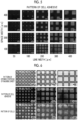
- the lower part of Fig. 6 shows photomicrographic images of the iPS cells patterned by the patterned culture using masking sheets in which the line width of the opening portion is 100 ⁇ m, 200 ⁇ m, and 300 ⁇ m, respectively, and the space width is 100 ⁇ m.
- the upper part of Fig. 6 shows the corresponding photomicrographic images showing a pattern of opening portions of the masking sheet
- the middle part of Fig. 6 shows the corresponding photomicrographic images showing a pattern of vitronectin.
- a cell pattern corresponding to the pattern of the opening portion of the masking sheet is formed.
- Fig. 7A shows an external image of a masking sheet according to another Example of the disclosed technology.
- Fig. 7B is a photomicrographic image of vitronectin, which is a cell adhesive patterned using the masking sheet shown in Fig. 7A .
- Fig. 7C is a photomicrographic image of the iPS cells patterned using the masking sheet shown in Fig. 7A .
- Fig. 7A to Fig. 7C according to the disclosed technology, it is possible to realize the formation of a more complicated cell pattern with high productivity.
- JP2022-015679 is incorporated in the present specification in its entirety by reference.
Landscapes
- Health & Medical Sciences (AREA)
- Life Sciences & Earth Sciences (AREA)
- Engineering & Computer Science (AREA)
- Wood Science & Technology (AREA)
- Organic Chemistry (AREA)
- Bioinformatics & Cheminformatics (AREA)
- Chemical & Material Sciences (AREA)
- Zoology (AREA)
- Biomedical Technology (AREA)
- Biotechnology (AREA)
- Genetics & Genomics (AREA)
- Microbiology (AREA)
- Biochemistry (AREA)
- General Engineering & Computer Science (AREA)
- General Health & Medical Sciences (AREA)
- Sustainable Development (AREA)
- Clinical Laboratory Science (AREA)
- Immunology (AREA)
- Cell Biology (AREA)
- Apparatus Associated With Microorganisms And Enzymes (AREA)
- Micro-Organisms Or Cultivation Processes Thereof (AREA)
Abstract
There is provided a masking sheet that is used for patterning cells or cell aggregates, which are formed on a culture surface. The masking sheet has the adhesive layer that is adhered to a culture surface, the support layer that is laminated on the adhesive layer to support the adhesive layer, and the opening portion that penetrates through the adhesive layer and the support layer and corresponds to a pattern of the cells or cell aggregates.
Description
- The disclosed technology relates to a cell culture method and a masking sheet.
- The following technology is known as a technology for subjecting cells cultured on a culture surface to patterning. For example,
JP2003-527615A - The patterned culture technology for subjecting cells adherently cultured on a culture surface to desired patterning makes it possible to compartmentalize cells or cell aggregates into a desired shape and size and carry out culture or evaluation for each compartmentalized unit of cells. The compartmentalization makes it possible to quantify or standardize a state of the cells in each compartment, which consequently makes it possible to contribute to the stability of the evaluation system. It is expected that the simple patterned culture technology will lead to the accelerated development of life science fields such as drug discovery and regenerative medicine, which handle adherent cells.
-
JP2003-527615A - The disclosed technology has been made in consideration of the above points, and an object of the disclosed technology is to improve the productivity in the patterned culture by improving the handleability of the mask that is used for the patterned culture.
- A cell culture method according to the disclosed technology includes attaching a masking sheet having an opening portion to a culture surface and forming cells or cell aggregates a portion of the culture surface, which is exposed in the opening portion. The masking sheet includes an adhesive layer that is adhered to the culture surface, and a support layer that is laminated on the adhesive layer to support the adhesive layer.
- The cell culture method according to the disclosed technology may include a step of applying a cell adhesive onto the culture surface using the masking sheet as a mask, a step of seeding cells on the culture surface after applying the cell adhesive, and a step of peeling off the masking sheet from the culture surface after applying the cell adhesive and before seeding the cells, or after seeding the cells.
- The masking sheet according to the disclosed technology is a masking sheet for patterning cells or cell aggregates, which are formed on a culture surface, where the masking sheet includes an adhesive layer that is adhered to the culture surface, a support layer that is laminated on the adhesive layer to support the adhesive layer, and an opening portion that penetrates through the adhesive layer and the support layer and corresponds to a pattern of the cells or the cell aggregates.
- A Young's modulus of the support layer is preferably higher than a Young's modulus of the adhesive layer, and it is preferably 0.2 GPa or more and 200 GPa or less. The Young's modulus of the adhesive layer is preferably 1 MPa or more and 100 MPa or less.
- A thickness of the support layer is preferably 10 µm or more and 1,000 µm or less, and a thickness of the adhesive layer is preferably 1 µm or more and 100 µm or less.
- The masking sheet may have a plurality of opening portions that have the same size and are arranged to be spaced by a gap. The opening portion may be formed by laser processing.
- According to the disclosed technology, the handleability of the mask that is used for the patterned culture is improved, and thus it is possible to improve the productivity in the patterned culture.
-
-
Fig. 1 is a perspective view showing one example of a configuration of a masking sheet according to an embodiment of the disclosed technology. -
Fig. 2 is a cross-sectional view taken along a line 2-2 inFig. 1 . -
Fig. 3A is a view showing one example of a cell culture method according to an embodiment of the disclosed technology. -
Fig. 3B is a view showing one example of the cell culture method according to the embodiment of the disclosed technology. -
Fig. 3C is a view showing one example of the cell culture method according to the embodiment of the disclosed technology. -
Fig. 3D is a view showing one example of the cell culture method according to the embodiment of the disclosed technology. -
Fig. 3E is a view showing one example of the cell culture method according to the embodiment of the disclosed technology. -
Fig. 3F is a view showing one example of the cell culture method according to the embodiment of the disclosed technology. -
Fig. 3G is a view showing one example of the cell culture method according to the embodiment of the disclosed technology. -
Fig. 4 shows photomicrographic images showing a pattern of opening portions of the masking sheet according to Example of the disclosed technology. -
Fig. 5 shows photomicrographic images of fluorescently stained vitronectin according to Example of the disclosed technology. - In
Fig. 6 , an upper part shows photomicrographic images showing a pattern of opening portions of the masking sheet, a middle part shows photomicrographic images showing a pattern of vitronectin, and a lower part shows photomicrographic images showing patterned iPS cells. -
Fig. 7A shows an external image of a masking sheet according to another Example of the disclosed technology. -
Fig. 7B is a photomicrographic image of patterned vitronectin according to another Example of the disclosed technology. -
Fig. 7C is a photomicrographic image of patterned iPS cells according to another Example of the disclosed technology. - Hereinafter, one example of the embodiment of the disclosed technology will be described with reference to the drawings. It is noted that the same or equivalent constitutional elements and portions in the drawings are assigned by the same reference numerals, and overlapping descriptions will be omitted.
-
Fig. 1 is a perspective view showing one example of a configuration of amasking sheet 10 according to an embodiment of the disclosed technology.Fig. 2 is a cross-sectional view taken along the line 2-2 inFig. 1 . Themasking sheet 10 is a sheet-shaped member that is used for patterning cells or cell aggregates, which are cultured on a culture surface. - The
masking sheet 10 includes anadhesive layer 11 and asupport layer 12. Theadhesive layer 11 is a layer that is adhered to a surface (culture surface) of a substrate (not shown in the drawing) that is used for an adhesion culture of cells. Theadhesive layer 11 preferably has sufficient flexibility in order to ensure the adhesiveness to the culture surface. Therefore, a Young's modulus of theadhesive layer 11 is preferably 1 MPa or more and 100 MPa or less. In addition, a thickness of theadhesive layer 11 is preferably 1 µm or more and 100 µm or less. In a case where the Young's modulus and the thickness of theadhesive layer 11 is set in the above-described ranges, it is possible to ensure the adhesiveness to the culture surface. - In addition, it is preferable that the
adhesive layer 11 is formed from a material that has corrosion resistance to water, is not toxic to cells, and is suitable for thin film processing. As a material of theadhesive layer 11, for example, a rubber member such as silicone rubber (VMQ, PVMQ, or FVMQ), isoprene rubber (IR), or fluororubber (FKM) can be suitably used. - The
support layer 12 is laminated on theadhesive layer 11. Thesupport layer 12 has a function of supporting theadhesive layer 11 having high flexibility. Therefore, A Young's modulus of thesupport layer 12 is preferably higher than a Young's modulus of theadhesive layer 11, and it is preferably 0.2 GPa or more and 200 GPa or less. In addition, the thickness of thesupport layer 12 is preferably 10 µm or more and 1,000 µm or less. In a case where the Young's modulus and the thickness of thesupport layer 12 is set in the above-described ranges, it is possible to ensure the necessary rigidity for supporting theadhesive layer 11 in thesupport layer 12. - In addition, it is preferable that the
support layer 12 is formed from a material that has corrosion resistance to water, is not toxic to cells, and is suitable for thin film processing. As a material of thesupport layer 12, for example, resin members such as polyimide, polyethylene terephthalate (PET), polycarbonate (PC), polypropylene (PP), polyvinyl chloride (PCV), polyvinyl alcohol (PVA), polyethylene (PE), polystyrene (PS), and hard rubber can be suitably used. In addition, as the material of thesupport layer 12, aluminum, stainless steel, copper, silver, gold, platinum, titanium, chromium, cobalt, nickel, glass, and ceramics can also be used. - The masking
sheet 10 has a plurality of openingportions 13 that penetrate through thesupport layer 12 and theadhesive layer 11. The number, shape, and size of the openingportion 13, and the interval between the adjacent openingportions 13 can be freely determined. Cells or cell aggregates to be subjected to patterned culture are formed on the culture surface to have a pattern corresponding to the pattern of the openingportion 13 of the maskingsheet 10. The maskingsheet 10 may have a plurality of the openingportions 13 that have the same shape and the same size and are arranged to be spaced by a gap. According to such a pattern of the openingportion 13, it is possible to compartmentalize the cells or the cell aggregates and carry out culture or evaluation for each compartmentalized unit of cells. In addition, it is possible to quantify or standardize the state of the cells in each compartment. -
Fig. 1 and Fig. 2 show an example of a configuration in which a plurality of therectangular opening portions 13 having the same size are disposed in a matrix shape. The openingportion 13 can be formed by, for example, laser processing. That is, the openingportion 13 is formed by irradiating, with laser light, a sheet in which theadhesive layer 11 and thesupport layer 12 are laminated. According to the laser processing, it is possible to easily and accurately form thefine opening portion 13 that has a size having, for example, an order of magnitude of tens of micrometers. It is noted that the pattern of the openingportion 13 may be formed by cast molding. -
Fig. 3A to Fig. 3G are views showing one example of a cell culture method in which a patterned culture is carried out using themasking sheet 10. First, asubstrate 20 and the maskingsheet 10 are prepared (Fig. 3A ). - A surface of the
substrate 20 constitutes a culture surface. A commercially available cell culture dish can be used as thesubstrate 20. The maskingsheet 10 may be cut into the same shape as the shape of the substrate 20 (the circular shape in the example shown inFig. 3A ). - Next, the masking
sheet 10 is attached to the surface (culture surface) of the substrate 20 (Fig. 3B ). Specifically, theadhesive layer 11 of the maskingsheet 10 is brought into contact with the surface (culture surface) of thesubstrate 20, and then a load is applied to the maskingsheet 10 to closely attach the maskingsheet 10 to thesubstrate 20. The flexibility of theadhesive layer 11 ensures high adhesiveness, and the maskingsheet 10 is attached to thesubstrate 20 without generating air bubbles between the maskingsheet 10 and thesubstrate 20. The surface (culture surface) of thesubstrate 20 is exposed in the openingportion 13 of the maskingsheet 10. The diameter of the maskingsheet 10 is preferably the same as the diameter of thesubstrate 20. As a result, the region in which acell adhesive 30 adheres and the region in which acell 40 adheres, other than the openingportion 13, are reduced. - Next, the
cell adhesive 30 is applied onto the surface (culture surface) of thesubstrate 20 using themasking sheet 10 as a mask (Fig. 3C ). As a result, thecell adhesive 30 adheres to a portion of the surface (culture surface) of thesubstrate 20, the portion being exposed in the openingportion 13 of the maskingsheet 10. As a result, a pattern of thecell adhesive 30, which corresponds to the pattern of the openingportion 13 of the maskingsheet 10, is formed on the culture surface. As thecell adhesive 30, it is possible to use an extracellular matrix protein such as vitronectin, laminin, fibronectin, collagens, or gelatins. - Next, the
cell adhesive 30 is substituted with a phosphate buffer solution, and then the maskingsheet 10 is peeled off from the culture surface (Fig. 3D ). The surface (culture surface) of thesubstrate 20 maintains thepatterned cell adhesive 30. Next, a blocking agent is applied onto the surface (culture surface) of thesubstrate 20. This treatment is a blocking treatment for inhibiting non-specific cell adhesion in a region other than the region in which thecell adhesive 30 has adhered to the culture surface. As the blocking agent, for example, a bovine serum albumin solution prepared at a predetermined concentration can be used. - Next, the
cell 40 adjusted to a predetermined density is seeded on the surface (culture surface) of the substrate 20 (Fig. 3E ). Thecell 40 may be any adhesive cell, and it is possible to use, for example, stem cells such as induced pluripotent stem cells (iPS cell), an embryonic stem cell (ES cell), a mesenchymal stem cell, and a hematopoietic stem cell, somatic cells such as a lung cell, a stomach cell, a liver cell, a kidney cell, an intestinal cell, a nerve cell, an eye cell, a vascular endothelial cell, a myocardial cell, and a bone cell, cancer cells such as a lung cancer cell, a stomach cancer cell, a colon cancer cell, a breast cancer cell, a leiomyosarcoma cell, a fibrosarcoma cell, and an osteosarcoma cell, and established cell lines such as an HEK293 cell (human embryonic kidney cell) and a Vero cell (African green monkey kidney cell). Typically, an iPS cell derived from a human can be used. - In addition, a cell derived from an animal (specifically, a mouse, a rat, a rabbit, a pig, a dog, a monkey, a cow, a horse, a sheep, a chicken, and the like) other than a human may be used.
- Thereafter, the static culture of the
cell 40 is carried out. During the culture period, thesubstrate 20 on which thecells 40 are seeded is accommodated in an incubator that is maintained at an appropriate temperature and an appropriate CO2 concentration. Thecell 40 adheres in a region of the surface (culture surface) of thesubstrate 20, in which thecell adhesive 30 has adhered (Fig. 3F ). - The culture is continued while carrying out the medium replacement at a predetermined timing. As a result, the
cell 40 proliferates in a region of the surface (culture surface) of thesubstrate 20, in which thecell adhesive 30 has adhered. As a result, it is possible to obtain cells or cell aggregates (colonies), which have a pattern corresponding to the pattern of the openingportion 13 of the masking sheet 10 (Fig. 3G ). It is noted that in the present embodiment, although a case where the maskingsheet 10 is peeled off from the culture surface after applying thecell adhesive 30 and before seeding thecell 40 has been shown as an example, the maskingsheet 10 may be peeled off from the culture surface after applying thecell adhesive 30 and after seeding thecell 40. - As described above, the masking
sheet 10 according to the embodiment of the disclosed technology is used for patterning cells or cell aggregates, which are formed on a culture surface. The maskingsheet 10 has theadhesive layer 11 that is adhered to a culture surface, thesupport layer 12 that is laminated on theadhesive layer 11 to support theadhesive layer 11, and the openingportion 13 that penetrates through theadhesive layer 11 and thesupport layer 12 and corresponds to a pattern of the cells or cell aggregates. In addition, the cell culture method according to the embodiment of the disclosed technology is a method of attaching a maskingsheet 10 to a culture surface and forming cells or cell aggregates in theportion 13 exposed in the opening portion of the maskingsheet 10 of the culture surface, where cell culture method includes a step of applying the cell adhesive 30 onto the culture surface using themasking sheet 10 as a mask, a step of seeding cells on the culture surface after applying thecell adhesive 30, and a step of peeling off the maskingsheet 10 from the culture surface after applying thecell adhesive 30 and before seeding the cells, or after seeding the cells. - The masking
sheet 10 has not only theadhesive layer 11 but also thesupport layer 12 that supports theadhesive layer 11. Since thesupport layer 12 is included in the maskingsheet 10, rigidity is imparted to the maskingsheet 10. As a result, the handleability is improved as compared with a masking sheet composed of only theadhesive layer 11 having high flexibility, which makes it possible to facilitate handling in the work process of patterned culture. For example, in a case where the maskingsheet 10 is attached to thesubstrate 20, it is easy to maintain the maskingsheet 10 in a state without bending or wrinkling. Further, it is possible to suppress the deformation of the pattern due to the expansion and contraction of the maskingsheet 10. That is, according to the maskingsheet 10 and the cell culture method using themasking sheet 10 according to the embodiment of the disclosed technology, the handleability of the mask that is used for the patterned culture is improved, and thus it is possible to improve the productivity in the patterned culture. - Hereinafter, the disclosed technology will be described in more detail with reference to Examples. However, the disclosed technology is not limited to the following Examples.
- A masking sheet, in which a pressure-sensitive adhesive layer was formed from a silicone-based pressure-sensitive adhesive and a support layer was formed from Kapton (registered trademark), which is one kind of a polyimide film, was prepared. The opening portion of the masking sheet was formed by laser processing. Twenty kinds of the
masking sheets 10 which have combinations of the line width of the opening portion (50 µm, 100 µm, 200 µm, 300 µm, or 400 µm) and the space width of the opening portion (100 µm, 200 µm, 300 µm, or 400 µm), different from each other, were prepared (seeFig. 4 ). All of the shapes of the opening portions are square. It is noted that the line width is a length of one side of the opening portion, and the space width is an interval between the opening portions adjacent to each other. - The masking sheet was attached to a surface of a commercially available 35 mm dish (manufactured by Falcon). Specifically, the adhesive layer of the masking sheet was brought into contact with the surface of the dish, and then a load was applied to the masking sheet to closely attach the masking sheet to the surface of the dish.
- Next, a vitronectin solution having a concentration of 2.5 ug/ml, which was a cell adhesive, was applied onto the surface of the dish using the masking sheet as a mask, and then the dish was allowed to stand for 1 hour. As a result, a pattern of the cell adhesive, corresponding to the pattern of the opening portion of the masking sheet was formed on the surface of the dish.
- Next, the vitronectin solution was substituted with a phosphate buffer solution, and then the masking sheet was peeled off from the surface of the dish.
- Next, a 3% bovine serum albumin solution, which was a blocking agent, was applied onto the surface of the dish. This treatment is a blocking treatment for inhibiting non-specific cell adhesion in a region other than the region in which the cell adhesive has adhered to the culture surface. The treatment time was set to 30 minutes. Thereafter, the blocking agent was substituted with a phosphate buffer solution, and the phosphate buffer solution was aspirated. At this stage, the fluorescence of vitronectin was observed in order to confirm that the pattern of vitronectin, which is a cell adhesive, is maintained on the surface of the dish.
Fig. 5 shows photomicrographic images of the fluorescently stained vitronectin. As shown inFig. 5 , it was confirmed that regarding all of the twenty kinds of patterns described above, the pattern of vitronectin is maintained on the surface of the dish. - Next, a cell suspension of human-derived iPS cells having a concentration of 0.1 M cells/mL was seeded in a dish, and static culture was carried out for 24 hours. During the culture period, the dish was accommodated in an incubator maintained at 37°C and a CO2 concentration of 5%. Thereafter, the culture medium was repalced to remove floating cells. As a result, a pattern of cells was formed on the surface of the dish.
- The lower part of
Fig. 6 shows photomicrographic images of the iPS cells patterned by the patterned culture using masking sheets in which the line width of the opening portion is 100 µm, 200 µm, and 300 µm, respectively, and the space width is 100 µm. The upper part ofFig. 6 shows the corresponding photomicrographic images showing a pattern of opening portions of the masking sheet, and the middle part ofFig. 6 shows the corresponding photomicrographic images showing a pattern of vitronectin. As shown inFig. 6 , it was confirmed that a cell pattern corresponding to the pattern of the opening portion of the masking sheet is formed. -
Fig. 7A shows an external image of a masking sheet according to another Example of the disclosed technology.Fig. 7B is a photomicrographic image of vitronectin, which is a cell adhesive patterned using the masking sheet shown inFig. 7A .Fig. 7C is a photomicrographic image of the iPS cells patterned using the masking sheet shown inFig. 7A . As shown inFig. 7A to Fig. 7C , according to the disclosed technology, it is possible to realize the formation of a more complicated cell pattern with high productivity. - The disclosure of
JP2022-015679 - All documents, patent applications, and technical standards described in the present specification are incorporated herein by reference, to the same extent as in the case where each of the documents, patent applications, and technical standards is specifically and individually described.
Claims (17)
- A cell culture method for attaching a masking sheet having an opening portion to a culture surface and forming cells or cell aggregates a portion of the culture surface, which is exposed in the opening portion,
wherein the masking sheet includes an adhesive layer that is adhered to the culture surface, and a support layer that is laminated on the adhesive layer to support the adhesive layer. - The cell culture method according to claim 1,
wherein a Young's modulus of the support layer is higher than a Young's modulus of the adhesive layer. - The cell culture method according to claim 1 or 2,
wherein a Young's modulus of the support layer is 0.2 GPa or more and 200 GPa or less. - The cell culture method according to any one of claims 1 to 3,
wherein a Young's modulus of the adhesive layer is 1 MPa or more and 100 MPa or less. - The cell culture method according to any one of claims 1 to 4,
wherein a thickness of the support layer is 10 µm or more and 1,000 µm or less. - The cell culture method according to any one of claims 1 to 4,
wherein a thickness of the adhesive layer is 1 µm or more and 100 µm or less. - The cell culture method according to any one of claims 1 to 6,
wherein the masking sheet has a plurality of opening portions that have the same size and are arranged to be spaced by a gap. - The cell culture method according to any one of claims 1 to 7,
wherein the opening portion is formed by laser processing. - The cell culture method according to any one of claims 1 to 8, comprising:a step of applying a cell adhesive onto the culture surface using the masking sheet as a mask;a step of seeding cells on the culture surface after applying the cell adhesive; anda step of peeling off the masking sheet from the culture surface after applying the cell adhesive and before seeding the cells, or after seeding the cells.
- A masking sheet for patterning cells or cell aggregates, which are formed on a culture surface, the masking sheet comprising:an adhesive layer that is adhered to the culture surface;a support layer that is laminated on the adhesive layer to support the adhesive layer; andan opening portion that penetrates through the adhesive layer and the support layer and corresponds to a pattern of the cells or the cell aggregates.
- The masking sheet according to claim 10,
wherein a Young's modulus of the support layer is higher than a Young's modulus of the adhesive layer. - The masking sheet according to claim 10 or 11,
wherein a Young's modulus of the support layer is 0.2 GPa or more and 200 GPa or less. - The masking sheet according to any one of claims 10 to 12,
wherein a Young's modulus of the adhesive layer is 1 MPa or more and 100 MPa or less. - The masking sheet according to any one of claims 10 to 13,
wherein a thickness of the support layer is 10 µm or more and 1,000 µm or less. - The masking sheet according to any one of claims 10 to 14,
wherein a thickness of the adhesive layer is 1 µm or more and 100 µm or less. - The masking sheet according to any one of claims 10 to 15,
wherein the masking sheet has a plurality of opening portions that have the same size and are arranged to be spaced by a gap. - The masking sheet according to any one of claims 10 to 16,
wherein the opening portion is formed by laser processing.
Applications Claiming Priority (2)
| Application Number | Priority Date | Filing Date | Title |
|---|---|---|---|
| JP2022015679 | 2022-02-03 | ||
| PCT/JP2022/044596 WO2023149068A1 (en) | 2022-02-03 | 2022-12-02 | Cell culture method and masking sheet |
Publications (1)
| Publication Number | Publication Date |
|---|---|
| EP4455267A1 true EP4455267A1 (en) | 2024-10-30 |
Family
ID=87552168
Family Applications (1)
| Application Number | Title | Priority Date | Filing Date |
|---|---|---|---|
| EP22924589.9A Pending EP4455267A1 (en) | 2022-02-03 | 2022-12-02 | Cell culture method and masking sheet |
Country Status (4)
| Country | Link |
|---|---|
| US (1) | US20240360407A1 (en) |
| EP (1) | EP4455267A1 (en) |
| JP (1) | JPWO2023149068A1 (en) |
| WO (1) | WO2023149068A1 (en) |
Family Cites Families (4)
| Publication number | Priority date | Publication date | Assignee | Title |
|---|---|---|---|---|
| EP1265994A2 (en) | 2000-03-17 | 2002-12-18 | President And Fellows of Harvard College | Cell patterning technique |
| US20080220169A1 (en) * | 2006-10-16 | 2008-09-11 | The Brigham And Women's Hospital, Inc. | Parylene-C Stencils |
| CN108368468A (en) * | 2015-07-08 | 2018-08-03 | 巴黎科学与文学联大-拉丁区 | Cell culture apparatus |
| JP2022015679A (en) | 2020-07-09 | 2022-01-21 | 株式会社イング | Sunshade frame |
-
2022
- 2022-12-02 EP EP22924589.9A patent/EP4455267A1/en active Pending
- 2022-12-02 JP JP2023578394A patent/JPWO2023149068A1/ja active Pending
- 2022-12-02 WO PCT/JP2022/044596 patent/WO2023149068A1/en not_active Ceased
-
2024
- 2024-07-04 US US18/764,172 patent/US20240360407A1/en active Pending
Also Published As
| Publication number | Publication date |
|---|---|
| WO2023149068A1 (en) | 2023-08-10 |
| JPWO2023149068A1 (en) | 2023-08-10 |
| US20240360407A1 (en) | 2024-10-31 |
Similar Documents
| Publication | Publication Date | Title |
|---|---|---|
| Moosazadeh Moghaddam et al. | Engineered substrates with imprinted cell-like topographies induce direct differentiation of adipose-derived mesenchymal stem cells into Schwann cells | |
| Takahashi et al. | Generation of osteoclasts in vitro, and assay of osteoclast activity | |
| Kreutzer et al. | Pneumatic cell stretching system for cardiac differentiation and culture | |
| CN103710263B (en) | cell culture device | |
| JP2020036621A (en) | Cell culture support, cell culture device, cell culture kit, and cell sheet | |
| Javaherian et al. | A fast and accessible methodology for micro-patterning cells on standard culture substrates using Parafilm™ inserts | |
| EP2434007A1 (en) | Method for inducing differentiation of embryonic stem cells or artificial pluripotent stem cells | |
| JP4689609B2 (en) | Method and apparatus for adhesion control of intracellular tissue | |
| JPH04507191A (en) | Method for culturing cells on thin films | |
| Nagayama | A loss of nuclear—cytoskeletal interactions in vascular smooth muscle cell differentiation induced by a micro-grooved collagen substrate enabling the modeling of an in vivo cell arrangement | |
| Shimizu et al. | Micropatterning of single myotubes on a thermoresponsive culture surface using elastic stencil membranes for single-cell analysis | |
| Masuda et al. | Coating extracellular matrix proteins on a (3-aminopropyl) triethoxysilane-treated glass substrate for improved cell culture | |
| EP4455267A1 (en) | Cell culture method and masking sheet | |
| Ergaz et al. | Micropatterning the organization of multicellular structures in 3D biological hydrogels; insights into collective cellular mechanical interactions | |
| JP3613512B2 (en) | Culture vessel | |
| KR20170023562A (en) | Material for cell patterning, preparation method thereof, and use thereof | |
| JP6326915B2 (en) | Cell culture substrate | |
| Lee et al. | Capture and printing of fixed stromal cell membranes for bioactive display on PDMS surfaces | |
| JP6054223B2 (en) | Stem cell culture apparatus and stem cell culture method | |
| JP5979698B2 (en) | Method for producing cell-immobilized substrate having micropattern of cell adhesion region | |
| Li et al. | Development of trophoblast cystic structures from human induced pluripotent stem cells in limited-area cell culture | |
| WO2010036913A2 (en) | Quantifying cell migration in wound healing assays | |
| Karzbrun et al. | Self-organized morphogenesis of a human neural tube in vitro by geometric constraints | |
| Miyamoto et al. | Three-dimensional in vitro hepatic constructs formed using combinatorial tapered stencil for cluster culture (TASCL) device | |
| US20110020933A1 (en) | Method and device for receiving biological cells from a stem cell culture |
Legal Events
| Date | Code | Title | Description |
|---|---|---|---|
| STAA | Information on the status of an ep patent application or granted ep patent |
Free format text: STATUS: THE INTERNATIONAL PUBLICATION HAS BEEN MADE |
|
| PUAI | Public reference made under article 153(3) epc to a published international application that has entered the european phase |
Free format text: ORIGINAL CODE: 0009012 |
|
| STAA | Information on the status of an ep patent application or granted ep patent |
Free format text: STATUS: REQUEST FOR EXAMINATION WAS MADE |
|
| 17P | Request for examination filed |
Effective date: 20240723 |
|
| AK | Designated contracting states |
Kind code of ref document: A1 Designated state(s): AL AT BE BG CH CY CZ DE DK EE ES FI FR GB GR HR HU IE IS IT LI LT LU LV MC ME MK MT NL NO PL PT RO RS SE SI SK SM TR |
|
| DAV | Request for validation of the european patent (deleted) | ||
| DAX | Request for extension of the european patent (deleted) |