EP4455259A1 - Dna library sequence for increasing number of chip probes and application thereof - Google Patents
Dna library sequence for increasing number of chip probes and application thereof Download PDFInfo
- Publication number
- EP4455259A1 EP4455259A1 EP21968684.7A EP21968684A EP4455259A1 EP 4455259 A1 EP4455259 A1 EP 4455259A1 EP 21968684 A EP21968684 A EP 21968684A EP 4455259 A1 EP4455259 A1 EP 4455259A1
- Authority
- EP
- European Patent Office
- Prior art keywords
- sequence
- position information
- dna library
- fixed
- sequencing
- Prior art date
- Legal status (The legal status is an assumption and is not a legal conclusion. Google has not performed a legal analysis and makes no representation as to the accuracy of the status listed.)
- Pending
Links
Images

Classifications
-
- C—CHEMISTRY; METALLURGY
- C12—BIOCHEMISTRY; BEER; SPIRITS; WINE; VINEGAR; MICROBIOLOGY; ENZYMOLOGY; MUTATION OR GENETIC ENGINEERING
- C12Q—MEASURING OR TESTING PROCESSES INVOLVING ENZYMES, NUCLEIC ACIDS OR MICROORGANISMS; COMPOSITIONS OR TEST PAPERS THEREFOR; PROCESSES OF PREPARING SUCH COMPOSITIONS; CONDITION-RESPONSIVE CONTROL IN MICROBIOLOGICAL OR ENZYMOLOGICAL PROCESSES
- C12Q1/00—Measuring or testing processes involving enzymes, nucleic acids or microorganisms; Compositions therefor; Processes of preparing such compositions
- C12Q1/68—Measuring or testing processes involving enzymes, nucleic acids or microorganisms; Compositions therefor; Processes of preparing such compositions involving nucleic acids
- C12Q1/6813—Hybridisation assays
- C12Q1/6841—In situ hybridisation
-
- C—CHEMISTRY; METALLURGY
- C12—BIOCHEMISTRY; BEER; SPIRITS; WINE; VINEGAR; MICROBIOLOGY; ENZYMOLOGY; MUTATION OR GENETIC ENGINEERING
- C12N—MICROORGANISMS OR ENZYMES; COMPOSITIONS THEREOF; PROPAGATING, PRESERVING, OR MAINTAINING MICROORGANISMS; MUTATION OR GENETIC ENGINEERING; CULTURE MEDIA
- C12N15/00—Mutation or genetic engineering; DNA or RNA concerning genetic engineering, vectors, e.g. plasmids, or their isolation, preparation or purification; Use of hosts therefor
- C12N15/09—Recombinant DNA-technology
- C12N15/10—Processes for the isolation, preparation or purification of DNA or RNA
- C12N15/1034—Isolating an individual clone by screening libraries
- C12N15/1065—Preparation or screening of tagged libraries, e.g. tagged microorganisms by STM-mutagenesis, tagged polynucleotides, gene tags
-
- C—CHEMISTRY; METALLURGY
- C40—COMBINATORIAL TECHNOLOGY
- C40B—COMBINATORIAL CHEMISTRY; LIBRARIES, e.g. CHEMICAL LIBRARIES
- C40B40/00—Libraries per se, e.g. arrays, mixtures
- C40B40/04—Libraries containing only organic compounds
- C40B40/06—Libraries containing nucleotides or polynucleotides, or derivatives thereof
-
- C—CHEMISTRY; METALLURGY
- C40—COMBINATORIAL TECHNOLOGY
- C40B—COMBINATORIAL CHEMISTRY; LIBRARIES, e.g. CHEMICAL LIBRARIES
- C40B20/00—Methods specially adapted for identifying library members
- C40B20/02—Identifying library members by their fixed physical location on a support or substrate
Definitions
- the present disclosure belongs to the field of bioassays and specifically relates to a DNA library sequence for increasing the number of chip probes and an application thereof.
- Spatiotemporal omics correlates spatial information with molecular information through the combination of self-developed spatial array chips and genomics, and forms a bridge between genomics and clinical medicine by combining with the accumulated knowledge of clinical anatomy and imaging, thus opening up new breakthrough directions in the field of precision medicine.
- the capture chip used in spatiotemporal omics mainly utilizes the sequencing technology of the self-developed domestic second-generation high-throughput sequencing platform and open features to construct a sequence-specific library. After rolling circle amplification (RCA), DNA nanoballs (DNB) are formed and loaded onto the sequencing chip. The DNBs are sequenced and extended through hybriding oligonucleotide chains, and the DNBs are digested. Finally, the position of each DNB will obtain a complete probe sequence that has a unique position information label and can capture transcripts.
- RCA rolling circle amplification
- DNB DNA nanoballs
- the library used to make the spatiotemporal omics capture chip only sequences a segment of position information label for each copy after generating DNB. Theoretically, one copy can only generate one probe in the end. When the number of copies cannot be larger, it is difficult to increase the number of probes. However, the number of probes will affect the number of transcript genes ultimately captured. The increase in the number of probes will correspondingly promote the increase in the number of genes. Therefore, it is necessary to find a method to increase the number of probes on the capture chip.
- each copy carries two or more segments of position information labels after generating DNB. Theoretically, each copy can eventually generate two or more probes, thereby increasing the number of probes on the capture chip.
- each DNB copy can obtain multiple complete probe sequences that have unique position information labels and can capture transcripts.
- each DNB copy can only generate one probe sequence.
- the present disclosure mainly solves the above technical problems through the following technical solutions.
- the present disclosure provides a DNA library sequence for increasing the number of chip probes, which comprises two or more position information labeling sequences and three or more fixed sequences, wherein the position information labeling sequences and the fixed sequences are arranged at intervals.
- the DNA library sequence comprises, in order from a direction of 5' to 3': a first fixed sequence, a first position information labeling sequence, a second fixed sequence, a second position information labeling sequence, and a third fixed sequence.
- the number of the position information labeling sequences may be 3, 4, or 5, or even more.
- a third position information labeling sequence and a fourth fixed sequence connected downstream to the third fixed sequence; and optionally up to an nth position information labeling sequence and an (n+1)th fixed sequence; n is an integer greater than 3.
- the position information labeling sequence is composed of random bases (NNNNNN%), wherein each N is independently A, T, C, or G. Each random sequence is different.
- the length of the random sequence may range from 1 base to thousands of bases, and may be selected according to the number of position information labeling sequences, and is preferably between 5 bases and 50 bases.
- the fixed sequence preferably contains a sequencing primer required for decoding the position information labeling sequence and a sequence that connects position information with cDNA of a subsequent single-cell transcriptome, and may be freely synthesized according to experimental purposes.
- the library sequence may be a single-stranded DNA or a doublestranded DNA.
- a first fixed sequence and a last fixed sequence of the DNA library sequence are each connected to an amplification site for molecular amplification.
- DNA libraries may be molecularly amplified before being loaded onto a solid surface, or after being loaded onto a solid surface, or both before and after being loaded.
- the amplification method may be bridging PCR amplification, rolling circle amplification (RCA), multiple displacement amplification (MDA), and emulsion PCR amplification.
- the DNA library sequence is connected to a nucleic acid molecule comprising a capture sequence capable of capturing nucleic acid in a sample.
- the present disclosure also provides a kit, which comprises:
- the present disclosure also provides a method for preparing a chip with an increased number of probes, the method containing:
- the sequencing in step (3) is ligation sequencing or sequencing by synthesis.
- the amplification is bridging PCR amplification, rolling circle amplification, multiple displacement amplification, or emulsion PCR amplification.
- the present disclosure also provides a chip with an increased number of probes prepared by the method as described above.
- the present disclosure also provides a use of the DNA library sequence as described above, the kit as described above, or the chip as described above in a method for detecting spatial information of a nucleic acid in a sample.
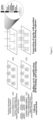
- the method for obtaining the probe sequence can be a conventional method in the art, for example, it can be obtained through the following process ( Figure 1 ):
- the number of probes on the chip used for spatiotemporal omics can be increased, thereby improving the capture number of transcript genes.
- a DNA library sequence having multiple segments of a molecular tag was designed and synthesized, and the base sequence was as shown below. Sequence synthesis was commissioned to BGI (Liuhe). 5'GAACGACATGGCGAGAT (first fixed sequence) NNNNNNNNNNNNNNNNNNNNNNNNNNNNNNNNNNNNNNNN (first position information labeling sequence, N represents any base, such as C, G, A, or T) GCCATGCCTCTCAGTACGTCAGCAGACCTATGCTGATAAGGTCTT (second fixed sequence) NNNNNNNNNNNNNNNNNN (second position information labeling sequence) GCCATGCCTCTCAGTACGTCAGCAGCCTTGGCTCACA (third fixed sequence) 3' 2.
- Sequencing was performed according to the instructions of the BGISEQ500 PE50 sequencing kit, with the SE set to a read length of 25 bp and the PE set to a read length of 25 bp.
- the MDA reagent in the BGISEQ500 PE50 sequencing kit was replaced with formamide.
- the fq file formed by sequencing was stored for later use. 4. MDA amplification.
- the excision reagent from the BGISEQ500 PE50 kit was pumped into the sequencing chip and incubated at 57°C for 5 minutes. Subsequently, a hybridization sequence ATGCCTCTCAGTACGTCAG was added, followed by the addition of the MDA reagent from the PE50 sequencing kit.
- the chip was cleaned with 5 ⁇ SSC. 5.
- the surface of the coupling chip was modified with NHS-N3 (Thermo Fisher), and after incubating for 30 minutes, the DBCO-modified sequence CTGCTGACGTACTGAGAGGCATGGC was pumped in and incubated overnight at room temperature. 6.
- 35 bp bases were polymerized.
- the polymerization reaction was carried out on the BGISEQ 500 platform according to the instructions of the BGISEQ500 PE50 sequencing kit, with the SE set to a read length of 35 bp. The photography option was deselected. 7.
- the DNB was digested, and 200 ⁇ l of the following S1 endonuclease (Thermo Fisher) mix was prepared, which was pumped into the sequencing chip and incubated at room temperature for 1 hour. Subsequently, residual fragments were removed by high-temperature denaturation.
- the MDA reagent from the BGISEQ500 PE50 kit was added and incubated at 30°C for 15 minutes. 9.
- high-temperature denaturation was used to convert the probe into a single-stranded structure.
- the cy5-modified sequence AAAAAAAAAAAAAAAAAAAAAAAAAAA was pumped in and incubated at room temperature for 10 minutes.
- photo detection was carried out on the BGISEQ500 ( Figure 2 ).
- the complementary sequence of the probe was labeled with a dye, and after hybridization with the probe, the relative quantity of the probe was indicated by a fluorescent signal.
- ImageJ software was used to read the brightness of the photo, which was then converted into an average value as the detection value of the probe signal.
- a chip prepared from a prior art DNA library comprising one segment of position information labeling sequence was tested using the same method as described above. The results showed that when one segment of position information label was used in the prior art, the probe signal was 10500. With the improvement of multiple segments of position information labels, under the same detection conditions, the probe signal increased to 21200, indicating that the number of probes increased by nearly 100% ( Figure 3 ). That is, both segments of position information labels generated probes. By increasing the number of position information labels, the yield of probes was improved. Under experimental conditions, the number of the segments of position information labels doubled, and the number of probes also doubled, which met the design expectations.
Landscapes
- Chemical & Material Sciences (AREA)
- Life Sciences & Earth Sciences (AREA)
- Health & Medical Sciences (AREA)
- Organic Chemistry (AREA)
- Genetics & Genomics (AREA)
- Engineering & Computer Science (AREA)
- Zoology (AREA)
- Wood Science & Technology (AREA)
- Bioinformatics & Cheminformatics (AREA)
- General Engineering & Computer Science (AREA)
- Biotechnology (AREA)
- Molecular Biology (AREA)
- Biochemistry (AREA)
- Biomedical Technology (AREA)
- Microbiology (AREA)
- Biophysics (AREA)
- Physics & Mathematics (AREA)
- General Health & Medical Sciences (AREA)
- Proteomics, Peptides & Aminoacids (AREA)
- Bioinformatics & Computational Biology (AREA)
- Plant Pathology (AREA)
- Crystallography & Structural Chemistry (AREA)
- General Chemical & Material Sciences (AREA)
- Chemical Kinetics & Catalysis (AREA)
- Medicinal Chemistry (AREA)
- Analytical Chemistry (AREA)
- Immunology (AREA)
- Measuring Or Testing Involving Enzymes Or Micro-Organisms (AREA)
Abstract
Description
- The present disclosure belongs to the field of bioassays and specifically relates to a DNA library sequence for increasing the number of chip probes and an application thereof.
- Spatiotemporal omics correlates spatial information with molecular information through the combination of self-developed spatial array chips and genomics, and forms a bridge between genomics and clinical medicine by combining with the accumulated knowledge of clinical anatomy and imaging, thus opening up new breakthrough directions in the field of precision medicine. The capture chip used in spatiotemporal omics mainly utilizes the sequencing technology of the self-developed domestic second-generation high-throughput sequencing platform and open features to construct a sequence-specific library. After rolling circle amplification (RCA), DNA nanoballs (DNB) are formed and loaded onto the sequencing chip. The DNBs are sequenced and extended through hybriding oligonucleotide chains, and the DNBs are digested. Finally, the position of each DNB will obtain a complete probe sequence that has a unique position information label and can capture transcripts.
- At present, the library used to make the spatiotemporal omics capture chip only sequences a segment of position information label for each copy after generating DNB. Theoretically, one copy can only generate one probe in the end. When the number of copies cannot be larger, it is difficult to increase the number of probes. However, the number of probes will affect the number of transcript genes ultimately captured. The increase in the number of probes will correspondingly promote the increase in the number of genes. Therefore, it is necessary to find a method to increase the number of probes on the capture chip.
- In response to the difficulty of increasing the number of probes using the existing library for making capture chips, the present disclosure provides a new method for constructing a library. By designing different libraries, each copy carries two or more segments of position information labels after generating DNB. Theoretically, each copy can eventually generate two or more probes, thereby increasing the number of probes on the capture chip.
- The above technical solution allows each copy of the DNB produced using this library to generate multiple probe sequences. Compared to the original library where each copy only generates one probe sequence, this method has the advantages of increasing the number of probes and improving the capture number of transcript genes.
- By increasing the number of position information labels in the library, the present disclosure obtains corresponding information for each segment of position information label during DNB sequencing after loading the chip. After the obtaining, the DNB is digested, and then a probe is generated based on each sequenced segment of position information label. Finally, each DNB copy can obtain multiple complete probe sequences that have unique position information labels and can capture transcripts. However, with the library using current position information label, each DNB copy can only generate one probe sequence.
- The present disclosure mainly solves the above technical problems through the following technical solutions.
- The present disclosure provides a DNA library sequence for increasing the number of chip probes, which comprises two or more position information labeling sequences and three or more fixed sequences, wherein the position information labeling sequences and the fixed sequences are arranged at intervals.
- When the number of the position information labeling sequences is two, the DNA library sequence comprises, in order from a direction of 5' to 3': a first fixed sequence, a first position information labeling sequence, a second fixed sequence, a second position information labeling sequence, and a third fixed sequence.
- The number of the position information labeling sequences may be 3, 4, or 5, or even more.
- Optionally, a third position information labeling sequence and a fourth fixed sequence connected downstream to the third fixed sequence; and optionally up to an nth position information labeling sequence and an (n+1)th fixed sequence; n is an integer greater than 3.
- The position information labeling sequence is composed of random bases (NNNNNN...), wherein each N is independently A, T, C, or G. Each random sequence is different. The length of the random sequence may range from 1 base to thousands of bases, and may be selected according to the number of position information labeling sequences, and is preferably between 5 bases and 50 bases.
- The fixed sequence preferably contains a sequencing primer required for decoding the position information labeling sequence and a sequence that connects position information with cDNA of a subsequent single-cell transcriptome, and may be freely synthesized according to experimental purposes. The library sequence may be a single-stranded DNA or a doublestranded DNA.
- In a preferred embodiment of the present disclosure, a first fixed sequence and a last fixed sequence of the DNA library sequence are each connected to an amplification site for molecular amplification. DNA libraries may be molecularly amplified before being loaded onto a solid surface, or after being loaded onto a solid surface, or both before and after being loaded. The amplification method may be bridging PCR amplification, rolling circle amplification (RCA), multiple displacement amplification (MDA), and emulsion PCR amplification.
- In another preferred embodiment of the present disclosure, the DNA library sequence is connected to a nucleic acid molecule comprising a capture sequence capable of capturing nucleic acid in a sample.
- The present disclosure also provides a kit, which comprises:
- (1) the DNA library sequence as described above;
- (2) a reaction mix for amplification.
- The present disclosure also provides a method for preparing a chip with an increased number of probes, the method containing:
- (1) synthesizing the DNA library sequence as described above;
- (2) amplifying the DNA library sequence;
- (3) decoding the position information labeling sequence by sequencing;
- (4) adding a capture sequence.
- Preferably, the sequencing in step (3) is ligation sequencing or sequencing by synthesis.
- Preferably, the amplification is bridging PCR amplification, rolling circle amplification, multiple displacement amplification, or emulsion PCR amplification.
- The present disclosure also provides a chip with an increased number of probes prepared by the method as described above.
- The present disclosure also provides a use of the DNA library sequence as described above, the kit as described above, or the chip as described above in a method for detecting spatial information of a nucleic acid in a sample.
- In the present disclosure, the method for obtaining the probe sequence can be a conventional method in the art, for example, it can be obtained through the following process (
Figure 1 ): - (1) Synthesizing a DNA library sequence having a tissue localization region.
- (2) Amplification of a position information labeling sequence. The synthesized DNA library with position information is loaded onto a solid surface, thereby each DNA molecule can label the position information of the solid surface.
- (3) Decoding the position information through sequencing. According to the fixed sequence of the library described in (1), sequencing primers are designed, and spatially positioned random base sequences are decoded through sequencing, thereby the position information on the chip is labeled with DNA sequence information. The sequencing method may be ligation sequencing or sequencing by synthesis.
- (4) Adding a capture sequence. In order to capture intracellular RNA information, sequences that capture cellular RNA molecules are ligated or synthesized on each DNA molecule having a position information sequence by ligation or polymerized. The capture sequence comprises a unique molecular identifier (UMI) for quantification of RNA molecules.
- The positive progressive effects of the present disclosure are as follows:
- With the help of the DNA library comprising multiple segments of position information labeling sequence and the method for preparing a chip with increased number of probes using the DNA library provided by the present disclosure, the number of probes on the chip used for spatiotemporal omics can be increased, thereby improving the capture number of transcript genes.
-
-
Figure 1 shows a flow chart for preparing a chip with an increased number of probes using the DNA library of the present disclosure. -
Figure 2 shows probe signal detection results of the chip of the present disclosure. -
Figure 3 shows a comparative diagram of probe signal detection values of chips prepared using the DNA library comprising multiple segments of position information labeling sequences of the present disclosure and a prior art DNA library comprising one segment of position information labeling sequence. -
1. A DNA library sequence having multiple segments of a molecular tag was designed and synthesized, and the base sequence was as shown below. Sequence synthesis was commissioned to BGI (Liuhe).
5'GAACGACATGGCGAGAT (first fixed sequence) NNNNNNNNNNNNNNNNNNNN (first position information labeling sequence, N represents any base, such as C, G, A, or T) GCCATGCCTCTCAGTACGTCAGCAGACCTATGCTGATAAGGTCTT (second fixed sequence) NNNNNNNNNNNNNNNNNNNN (second position information labeling sequence) GCCATGCCTCTCAGTACGTCAGCAGCCTTGGCTCACA (third fixed sequence) 3'
2. In-situ amplification of library, preparation of DNA nanoball (DNB): 40 µl of the following reaction mix was prepared, and 80 fmol of DNA library having position sequence information was added thereto.Ingredient Volume (µl) Final concentration DNA library sequence having a tissue localization region 80 fmol (X) 10× phi29 buffer (self-produced by BGI) 4 1X 10 µM of DNB primer sequence synthesized by BGI (Liuhe) 4 1 µM (GCCATGTCGTTCGGAACCGAGTGT) Molecular grade water 32-x
3. Sequencing and decoding of position information labeling sequence. Sequencing was performed according to the instructions of the BGISEQ500 PE50 sequencing kit, with the SE set to a read length of 25 bp and the PE set to a read length of 25 bp. The MDA reagent in the BGISEQ500 PE50 sequencing kit was replaced with formamide. The fq file formed by sequencing was stored for later use.
4. MDA amplification. After the sequencing was completed, the excision reagent from the BGISEQ500 PE50 kit was pumped into the sequencing chip and incubated at 57°C for 5 minutes. Subsequently, a hybridization sequence ATGCCTCTCAGTACGTCAG was added, followed by the addition of the MDA reagent from the PE50 sequencing kit. After incubating at 37°C for 30 minutes, the chip was cleaned with 5×SSC.
5. The surface of the coupling chip was modified with NHS-N3 (Thermo Fisher), and after incubating for 30 minutes, the DBCO-modified sequence CTGCTGACGTACTGAGAGGCATGGC was pumped in and incubated overnight at room temperature.
6. 35 bp bases were polymerized. The polymerization reaction was carried out on the BGISEQ 500 platform according to the instructions of the BGISEQ500 PE50 sequencing kit, with the SE set to a read length of 35 bp. The photography option was deselected.
7. The DNB was digested, and 200 µl of the following S1 endonuclease (Thermo Fisher) mix was prepared, which was pumped into the sequencing chip and incubated at room temperature for 1 hour. Subsequently, residual fragments were removed by high-temperature denaturation.Ingredient Volume (µl) S1 1 5× reaction buffer 40 NucleaseFree water 159
8. The sequences BAAAAAAAAAAAAAAAAAAAAAAAAANNNNNNNNNNACGACATGGCGAGAT and BAAAAAAAAAAAAAAAAAAAAAAAAANNNNNNNNNNTGCTGATAAGGTCTT synthesized by BGI (Liuhe) were hybridized. Subsequently, the MDA reagent from the BGISEQ500 PE50 kit was added and incubated at 30°C for 15 minutes.
9. For probe detection, high-temperature denaturation was used to convert the probe into a single-stranded structure. The cy5-modified sequence AAAAAAAAAAAAAAAAAAAAAAAAA was pumped in and incubated at room temperature for 10 minutes. Subsequently, photo detection was carried out on the BGISEQ500 (Figure 2 ). In the present disclosure, the complementary sequence of the probe was labeled with a dye, and after hybridization with the probe, the relative quantity of the probe was indicated by a fluorescent signal. In the present disclosure, ImageJ software was used to read the brightness of the photo, which was then converted into an average value as the detection value of the probe signal. A chip prepared from a prior art DNA library comprising one segment of position information labeling sequence was tested using the same method as described above. The results showed that when one segment of position information label was used in the prior art, the probe signal was 10500. With the improvement of multiple segments of position information labels, under the same detection conditions, the probe signal increased to 21200, indicating that the number of probes increased by nearly 100% (Figure 3 ). That is, both segments of position information labels generated probes. By increasing the number of position information labels, the yield of probes was improved. Under experimental conditions, the number of the segments of position information labels doubled, and the number of probes also doubled, which met the design expectations. - Although specific embodiments of the present disclosure have been described above, those skilled in the art should understand that these are only examples, and various changes or modifications can be made to these embodiments without departing from the principles and essence of the present disclosure. Therefore, the scope of protection of the present disclosure is defined by the appended claims.
Claims (10)
- A DNA library sequence for increasing the number of chip probes, which comprises two or more position information labeling sequences and three or more fixed sequences, wherein the position information labeling sequences and the fixed sequences are arranged at intervals.
- The DNA library sequence according to claim 1, wherein the DNA library sequence comprises, in order from a direction of 5' to 3': a first fixed sequence, a first position information labeling sequence, a second fixed sequence, a second position information labeling sequence, and a third fixed sequence;
optionally, a third position information sequence and a fourth fixed sequence connected downstream to the third fixed sequence; and optionally up to an nth position information labeling sequence and an (n+1)th fixed sequence; n is an integer greater than 3. - The DNA library sequence according to claim 2, wherein the position information labeling sequence consists of at least 1 N, and each N is independently A, T, C, or G; the position information labeling sequence preferably has 5 or more Ns, more preferably 5 to 50 Ns.
- The DNA library sequence according to claim 1, wherein a first fixed sequence and a last fixed sequence of the DNA library sequence are each connected to an amplification site.
- The DNA library sequence according to claim 1, wherein the DNA library sequence is connected to a nucleic acid molecule comprising a capture sequence capable of capturing nucleic acid in a sample.
- The DNA library sequence according to any one of claims 1 to 5, wherein the fixed sequence contains a sequencing primer required for decoding the position information labeling sequence and a sequence that connects position information with cDNA of a subsequent single-cell transcriptome.
- A kit, comprising:(1) the DNA library sequence according to any one of claims 1 to 6;(2) a reaction mix for amplification.
- A method for preparing a chip with an increased number of probes, the method containing:(1) synthesizing the DNA library sequence according to any one of claims 1 to 6;(2) amplifying the DNA library sequence; the amplification is preferably bridging PCR amplification, rolling circle amplification, multiple displacement amplification, or emulsion PCR amplification;(3) decoding the position information labeling sequence by sequencing; the sequencing is preferably ligation sequencing or sequencing by synthesis;(4) adding a capture sequence.
- A chip with an increased number of probes prepared by the method according to claim 8.
- A use of the DNA library sequence according to any one of claims 1 to 6, the kit according to claim 7, or the chip according to claim 9 in a method for detecting spatial information of a nucleic acid in a sample.
Applications Claiming Priority (1)
| Application Number | Priority Date | Filing Date | Title |
|---|---|---|---|
| PCT/CN2021/141296 WO2023115555A1 (en) | 2021-12-24 | 2021-12-24 | Dna library sequence for increasing number of chip probes and application thereof |
Publications (2)
| Publication Number | Publication Date |
|---|---|
| EP4455259A1 true EP4455259A1 (en) | 2024-10-30 |
| EP4455259A4 EP4455259A4 (en) | 2025-10-22 |
Family
ID=86901106
Family Applications (1)
| Application Number | Title | Priority Date | Filing Date |
|---|---|---|---|
| EP21968684.7A Pending EP4455259A4 (en) | 2021-12-24 | 2021-12-24 | DNA library sequence for increasing the number of chip probes and its application |
Country Status (4)
| Country | Link |
|---|---|
| US (1) | US20250043273A1 (en) |
| EP (1) | EP4455259A4 (en) |
| CN (1) | CN118434839A (en) |
| WO (1) | WO2023115555A1 (en) |
Family Cites Families (13)
| Publication number | Priority date | Publication date | Assignee | Title |
|---|---|---|---|---|
| WO2013075313A1 (en) * | 2011-11-24 | 2013-05-30 | 深圳华大基因科技有限公司 | Probe for detecting method of integration of virus in test sample and preparation method and use thereof |
| JP6940484B2 (en) * | 2015-09-11 | 2021-09-29 | セルラー リサーチ, インコーポレイテッド | Methods and compositions for library normalization |
| EP3844308A1 (en) * | 2018-08-28 | 2021-07-07 | 10X Genomics, Inc. | Resolving spatial arrays |
| US20210324457A1 (en) * | 2018-08-28 | 2021-10-21 | Eswar Prasad Ramachandran Iyer | Methods for Generating Spatially Barcoded Arrays |
| JP7393429B2 (en) * | 2018-12-05 | 2023-12-06 | 深▲せん▼華大智造極創科技有限公司 | Rolling circle amplification method, sequencing library preparation method and prepared DNA nanospheres |
| CN109797436B (en) * | 2018-12-29 | 2021-10-08 | 阅尔基因技术(苏州)有限公司 | Sequencing library construction method |
| US11649485B2 (en) * | 2019-01-06 | 2023-05-16 | 10X Genomics, Inc. | Generating capture probes for spatial analysis |
| WO2020160044A1 (en) * | 2019-01-28 | 2020-08-06 | The Broad Institute, Inc. | In-situ spatial transcriptomics |
| AU2020274774C1 (en) * | 2019-05-15 | 2024-12-05 | Mgi Tech Co., Ltd. | Array and method for detecting spatial information of nucleic acids |
| US20210155982A1 (en) * | 2019-11-21 | 2021-05-27 | 10X Genomics, Inc. | Pipeline for spatial analysis of analytes |
| EP4095256A4 (en) * | 2020-01-23 | 2023-03-15 | DGI Tech (Qing Dao) Co., Limited | DROPLET MICROFLUIDIC-BASED SINGLE CELL SEQUENCING AND APPLICATIONS |
| EP4484571A3 (en) * | 2020-02-21 | 2025-03-19 | 10X Genomics, Inc. | Methods and compositions for integrated in situ spatial assay |
| US20220073974A1 (en) * | 2020-09-04 | 2022-03-10 | AtlasXomics Inc. | Methods and devices for spatially encoded biological assays |
-
2021
- 2021-12-24 CN CN202180105233.6A patent/CN118434839A/en active Pending
- 2021-12-24 US US18/719,318 patent/US20250043273A1/en active Pending
- 2021-12-24 WO PCT/CN2021/141296 patent/WO2023115555A1/en not_active Ceased
- 2021-12-24 EP EP21968684.7A patent/EP4455259A4/en active Pending
Also Published As
| Publication number | Publication date |
|---|---|
| CN118434839A (en) | 2024-08-02 |
| US20250043273A1 (en) | 2025-02-06 |
| WO2023115555A1 (en) | 2023-06-29 |
| EP4455259A4 (en) | 2025-10-22 |
Similar Documents
| Publication | Publication Date | Title |
|---|---|---|
| US6235483B1 (en) | Methods and kits for indirect labeling of nucleic acids | |
| EP3388519B1 (en) | Vesicular adaptor and uses thereof in nucleic acid library construction and sequencing | |
| CN105745334B (en) | Method for profiling molecular complexes by using proximity barcoding | |
| US11920189B2 (en) | Methods and kits for amplification of double stranded DNA | |
| WO2018136856A1 (en) | Multiplexed signal amplified fish via splinted ligation amplification and sequencing | |
| JP2009112317A (en) | New composition and process for analyte detection, quantification and amplification | |
| JP2001078768A (en) | Assay of gene expression | |
| JP2020536525A (en) | A method for concentrating the probe and the target region to which it is applied for high-throughput sequencing | |
| CN119213142A (en) | Construction and sequencing methods of single-stranded nucleic acid circular libraries | |
| US20170362641A1 (en) | Dual polarity analysis of nucleic acids | |
| CN115768884A (en) | Single cell workflow for whole genome amplification | |
| EP2510114A1 (en) | Rna analytics method | |
| US20250043273A1 (en) | Dna library sequence for increasing number of chip probes and application thereof | |
| WO2025162175A1 (en) | Ultrahigh-density probe capture-based spatial transcriptomics chip, preparation method therefor, and use thereof | |
| CN112430643A (en) | MiRNA multi-site joint detection method based on isothermal amplification | |
| US12247255B2 (en) | Capture probes and uses thereof | |
| CN113186268A (en) | Application of DNA-RNA heteroduplex specific conjugate in promoting nucleic acid replication and in novel coronavirus detection | |
| US20220025430A1 (en) | Sequence based imaging | |
| Rombouts et al. | RNA imaging in bacteria | |
| US6861219B2 (en) | Preferential display | |
| JP2002360247A (en) | Nucleic acid-immobilized product | |
| US20060014183A1 (en) | Extendable probes | |
| CN104152544B (en) | Hybridization high flux DNA sequencing method based on connection enzyme reaction | |
| JP2905192B2 (en) | Gene expression quantification method | |
| WO2025097439A1 (en) | Method for constructing spatial transcriptome library |
Legal Events
| Date | Code | Title | Description |
|---|---|---|---|
| STAA | Information on the status of an ep patent application or granted ep patent |
Free format text: STATUS: THE INTERNATIONAL PUBLICATION HAS BEEN MADE |
|
| PUAI | Public reference made under article 153(3) epc to a published international application that has entered the european phase |
Free format text: ORIGINAL CODE: 0009012 |
|
| STAA | Information on the status of an ep patent application or granted ep patent |
Free format text: STATUS: REQUEST FOR EXAMINATION WAS MADE |
|
| 17P | Request for examination filed |
Effective date: 20240724 |
|
| AK | Designated contracting states |
Kind code of ref document: A1 Designated state(s): AL AT BE BG CH CY CZ DE DK EE ES FI FR GB GR HR HU IE IS IT LI LT LU LV MC MK MT NL NO PL PT RO RS SE SI SK SM TR |
|
| DAV | Request for validation of the european patent (deleted) | ||
| DAX | Request for extension of the european patent (deleted) | ||
| REG | Reference to a national code |
Ref country code: DE Ref legal event code: R079 Free format text: PREVIOUS MAIN CLASS: C12M0001340000 Ipc: C12N0015100000 |
|
| RAP1 | Party data changed (applicant data changed or rights of an application transferred) |
Owner name: BGI SHENZHEN Owner name: BGI SHENZHEN CO., LTD |
|
| A4 | Supplementary search report drawn up and despatched |
Effective date: 20250919 |
|
| RIC1 | Information provided on ipc code assigned before grant |
Ipc: C12N 15/10 20060101AFI20250915BHEP Ipc: C12Q 1/68 20180101ALI20250915BHEP Ipc: C40B 20/02 20060101ALI20250915BHEP Ipc: C40B 40/06 20060101ALI20250915BHEP |
|
| RAP3 | Party data changed (applicant data changed or rights of an application transferred) |
Owner name: BGI SHENZHEN Owner name: BGI SHENZHEN CO., LTD |
|
| RAP1 | Party data changed (applicant data changed or rights of an application transferred) |
Owner name: STOMICS TECH CO., LTD. |