EP4451797A2 - Methods for effective management and maintenance of active user equipment context in the 5g gnodeb - Google Patents
Methods for effective management and maintenance of active user equipment context in the 5g gnodeb Download PDFInfo
- Publication number
- EP4451797A2 EP4451797A2 EP24199140.5A EP24199140A EP4451797A2 EP 4451797 A2 EP4451797 A2 EP 4451797A2 EP 24199140 A EP24199140 A EP 24199140A EP 4451797 A2 EP4451797 A2 EP 4451797A2
- Authority
- EP
- European Patent Office
- Prior art keywords
- gnb
- active
- contexts
- context
- stale
- Prior art date
- Legal status (The legal status is an assumption and is not a legal conclusion. Google has not performed a legal analysis and makes no representation as to the accuracy of the status listed.)
- Granted
Links
Images




Classifications
-
- H—ELECTRICITY
- H04—ELECTRIC COMMUNICATION TECHNIQUE
- H04W—WIRELESS COMMUNICATION NETWORKS
- H04W88/00—Devices specially adapted for wireless communication networks, e.g. terminals, base stations or access point devices
- H04W88/08—Access point devices
- H04W88/085—Access point devices with remote components
-
- H—ELECTRICITY
- H04—ELECTRIC COMMUNICATION TECHNIQUE
- H04W—WIRELESS COMMUNICATION NETWORKS
- H04W36/00—Hand-off or reselection arrangements
- H04W36/0005—Control or signalling for completing the hand-off
- H04W36/0083—Determination of parameters used for hand-off, e.g. generation or modification of neighbour cell lists
- H04W36/0085—Hand-off measurements
- H04W36/0094—Definition of hand-off measurement parameters
-
- H—ELECTRICITY
- H04—ELECTRIC COMMUNICATION TECHNIQUE
- H04W—WIRELESS COMMUNICATION NETWORKS
- H04W88/00—Devices specially adapted for wireless communication networks, e.g. terminals, base stations or access point devices
- H04W88/12—Access point controller devices
-
- H—ELECTRICITY
- H04—ELECTRIC COMMUNICATION TECHNIQUE
- H04W—WIRELESS COMMUNICATION NETWORKS
- H04W92/00—Interfaces specially adapted for wireless communication networks
- H04W92/04—Interfaces between hierarchically different network devices
- H04W92/12—Interfaces between hierarchically different network devices between access points and access point controllers
Definitions
- the present disclosure relates to Radio Access Network (RAN) for 5G-based mobile networks, and relates more particularly to identification and removal of stale users (e.g., user equipments (UEs)) from 5G NR base station systems (which are referred to as gNodeB or gNB).
- RAN Radio Access Network
- UEs user equipments
- gNodeB 5G NR base station systems
- the 5G next generation (NG) cellular technology is designed to provide extremely high-speed mobile broadband and reliable communication services at ultra-low latency levels. This enables the 5G technology to cater to newer market segments such as manufacturing, automotive, transportation & logistics, healthcare, agriculture, Internet of Things (IoT), etc., resulting in the exponential growth of the 5G mobile devices and User Equipments (UE) including Smartphones, laptops, loT devices, connected cars, smart meters, factory automation devices, etc.
- UE User Equipments
- Mobile devices e.g., UEs
- RANs Radio Access Networks
- Effective management and maintenance of the UE contexts are essential and complex functions of the 5G RAN for delivering the higher quality of service (QoS) and quality of experience (QoE) expected of the 5G wireless networks.
- QoS quality of service
- QoE quality of experience
- UEs connect to the 5G wireless network via gNodeB, where the UE contexts are maintained and managed for a time duration when active user data traffic is ongoing. Once the user activity is over, such UEs are released by the gNodeB, and corresponding UE contexts removed from the system.
- UE contexts i) involve a variety of procedures and ii) are functionally distributed across multiple components of the gNodeB.
- UE contexts need to be maintained in both gNB Centralized Unit (gNB-CU) and gNB Distributed Unit (gNB-DU) network functions of the gNodeB.
- gNB-CU gNB Centralized Unit
- gNB-DU gNB Distributed Unit
- Some specific examples include:
- 3GPP specification defines certain procedures to detect user (UE) data inactivity and trigger release for such inactive UE contexts. These procedures are applicable only when the necessary Bearer Contexts are created for the user after the PDU session establishment procedure. However, such 3GPP-defined mechanism are not sufficient for maintenance of the UE contexts at gNB-CU or gNB-DU in cases when stale UEs are created before PDU Session establishment and bearer inactivity cannot be triggered at either gNB-CU or gNB-DU due to absence of any established user bearer.
- the present invention relates to a method according to claim 1. More in particular, a method is presented in which stale user context detection and removal are implemented at Open Radio Access Network (O-RAN) Centralized Unit (gNB-CU) network function of gNodeB.
- OF-RAN Open Radio Access Network
- gNB-CU Centralized Unit
- MR A1 Measurement report
- a method is presented in which stale user context detection and removal are implemented at O-RAN Distributed Unit (gNB-DU) network function of gNodeB.
- stale UE contexts can be identified at the gNB-DU based on periodic Channel State Information (CSI) reports.
- CSI Channel State Information
- the gNB shall configure csi-ReportConfigToAddModList with reportConfigType set to periodic in the Radio Resource Control (RRC) Setup Request or RRC Reconfiguration message towards the UE, thereby causing active UE(s) to periodically report the CSI.
- the gNB-DU shall monitor the periodic CSI reports received from the UE.
- UE context is classified as inactive, and DU-initiated UE release procedure (as specified in 3GPP TS 38.473) between gNB-DU and gNB-CU is employed for deleting the stale UE context.
- a new audit mechanism is provided between gNB-CU and gNB-DU for active user context synchronization and maintenance.
- new audit mechanism involves changes to F1AP protocol specification according to 3GPP TS 38.473.
- new interface management procedure and messages are introduced in "Section 9.2.1 Interface Management messages" for implementing the audit mechanism between gNB-CU and gNB-DU for active user context synchronization and maintenance. This procedure uses non-UE-associated signaling and can be triggered by both gNB-CU and gNB-DU network functions of the gNB to exchange the information about the UE Contexts maintained individually at both gNB-CU and gNB-DU.
- a new audit mechanism is provided between gNB-CU and gNB-DU for active user context synchronization and maintenance, which new audit mechanism involves changes to E1AP protocol specification according to 3GPP TS 38.463.
- new interface management procedure and messages are introduced in "Section 9.2.1 Interface Management messages" for implementing the audit mechanism between gNB-CU Control Plane (gNB-CU-CP) and gNB-CU User Plane (gNB-CU-UP) functions for active user context synchronization and maintenance.
- This procedure uses non-UE-associated signaling and can be triggered by both gNB-CU and gNB-DU network functions of the gNB to exchange the information about the UE Contexts maintained individually at both gNB-CU-CP and gNB-CU-UP.
- a method is presented in which stale user context detection and removal are implemented at Open Radio Access Network (O-RAN) Centralized Unit (gNB-CU) network function of gNodeB.
- O-RAN Open Radio Access Network
- gNB-CU Centralized Unit
- any active UE is bound to respond with an A1 Measurement report (MR) indicating the presence of a real UE.
- MR A1 Measurement report
- stale UE detection mechanism can be based on a periodic Event A1 configured during initial User admission procedure.
- All the UE contexts present at the gNB-CU network function can be maintained based on the periodic measurement reports (MRs) reported by active users. Those UE contexts for which no MR is reported for the configured duration of time will be classified as stale UEs and deleted from the system.
- MRs periodic measurement reports
- a method is presented in which stale user context detection and removal are implemented at O-RAN gNB Distributed Unit (gNB-DU) network function of gNodeB.
- stale UE contexts can be identified at the gNB-DU based on periodic Channel State Information (CSI) reports.
- CSI Channel State Information
- the gNB shall configure csi- ReportConfigToAddModList with reportConfigType set to periodic in the Radio Resource Control (RRC) Setup Request or RRC Reconfiguration message towards the UE, thereby causing active UE(s) to periodically report the CSI.
- RRC Radio Resource Control
- the gNB-DU shall monitor the periodic CSI reports received from the UE. If consecutive "n" number (e.g., "n" ⁇ 2) of periodic CSI reports are not received at the gNB-DU for any UE context, then such UE context is classified as inactive, and DU-initiated UE release procedure (as specified in 3GPP TS 38.473) between gNB-DU and gNB-CU is employed for deleting the stale UE context.
- consecutive "n" number e.g., "n” ⁇ 2
- DU-initiated UE release procedure as specified in 3GPP TS 38.473
- a new audit mechanism is provided between gNB-CU and gNB-DU for active user context synchronization and maintenance.
- new audit mechanism involves changes to F1AP protocol specification according to 3GPP TS 38.473.
- new interface management procedure and messages are introduced in "Section 9.2.1 Interface Management messages" for implementing the audit mechanism between gNB-CU and gNB-DU for active user context synchronization and maintenance.
- This procedure uses non-UE-associated signaling and can be triggered by both gNB-CU and gNB-DU network functions of the gNB to exchange the information about the UE Contexts maintained individually at both gNB-CU and gNB-DU.
- periodic reporting can be configured for exchanging the UE context information periodically between gNB-CU and gNB-DU.
- gNB-CU or gNB-DU can mark the unmatched contexts (UE context present only in either in gNB-CU or gNB-DU).
- UE context release procedure can be initiated for deleting the stale UE contexts.
- active UE status request procedure will be discussed in connection with the first variant of the third example embodiment.
- the purpose of the Active UE Status Request procedure is to audit the active user context information stored at gNB-CU and gNB-DU. Active user context information exchanged between gNB-CU and gNB-DU is used to detect stale UE contexts and take suitable actions to remove such stale UE contexts.
- the active UE status request procedure i) does not affect the application-level configuration, and ii) uses non-UE associated signaling.
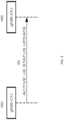
- FIG. 1 which is a diagram illustrating an example embodiment of an active UE Status Request procedure initiated from the gNB-CU (and successfully completed)
- gNB-CU 1001 initiates the UE Context Audit procedure by sending the ACTIVE UE STATUS REQUEST message 101 to gNB-DU 1002 to request reporting of the UE Contexts maintained at gNB-DU 1002.
- Reporting Periodicity IE can be present in the ACTIVE UE STATUS REQUEST message 101 to indicate the periodicity for the reporting of periodic UE Context audit report.
- the gNB-DU 1002 shall report once.
- the gNB-DU 1002 shall include each Active UE association present in the gNB-DU 1002 in the Active UE Status Response message 102 sent to the gNB-CU 1001, which Active UE Status Response message 102 contains, e.g., DU F1 Application Protocol (FLAP) UE Identifier (ID), CU F1AP UE ID, and/or (optionally) Cell Radio Network Temporary Identifier (C-RNTI).
- FLAP DU F1 Application Protocol
- ID UE Identifier
- C-RNTI Cell Radio Network Temporary Identifier
- FIG. 2 which is a diagram illustrating an example embodiment of an active UE Status Request procedure initiated from the gNB-DU (and successfully completed)
- gNB-DU 1002 initiates the UE Context Audit procedure by sending the ACTIVE UE STATUS REQUEST message 201 to gNB-CU 1001 to request reporting of the UE Contexts maintained at GNB-CU 1001.
- Reporting Periodicity IE can be present in the ACTIVE UE STATUS REQUEST message 201 to indicate the periodicity for the reporting of periodic UE Context audit report.
- the gNB-CU 1001 shall report once.
- the gNB-CU 1001 shall include each Active UE association present in the gNB-CU 1001 in the Active UE Status Response message 202 sent to the gNB-DU 1002, which Active UE Status Response message 202 contains, e.g., DU F1AP UE ID, CU F1AP UE ID, and/or (optionally) C-RNTI.
- FIG. 3 is a diagram illustrating an example embodiment of an active UE Status Update procedure initiated from the gNB-CU (and successfully completed).
- gNB-CU 1001 shall periodically send the ACTIVE UE STATUS UPDATE message 301 to gNB-DU 1002 to report the list of UE contexts present at GNB-CU 1001.
- the following information is provided for each UE in the list of UE contexts: DU F1AP UE ID, CU F1AP UE ID, and/or (optionally) C-RNTI.
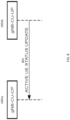
- FIG. 4 is a diagram illustrating an example embodiment of an active UE Status Update procedure initiated from the gNB-DU (and successfully completed).
- gNB-DU 1002 shall periodically send the ACTIVE UE STATUS UPDATE message 401 to gNB-CU 1001 to report the list of UE contexts present at GNB-DU 1002.
- the following information is provided for each UE in the list of UE contexts: DU F1AP UE ID, CU F1AP UE ID, and/or (optionally) C-RNTI.
- UE Context Mismatch i) UE CONTEXT RELEASE REQUEST (gNB-DU-initiated Release procedure); and ii) UE CONTEXT RELEASE COMMAND (gNB-CU-initiated Release procedure).
- a new audit mechanism is provided between gNB-CU and gNB-DU for active user context synchronization and maintenance, which new audit mechanism involves changes to E1AP protocol specification according to 3GPP TS 38.463.
- new interface management procedure and messages are introduced in "Section 9.2.1 Interface Management messages" for implementing the audit mechanism between gNB-CU Control Plane (gNB-CU-CP) and gNB-CU User Plane (gNB-CU-UP) functions for active user context synchronization and maintenance.
- This procedure uses non-UE-associated signaling and can be triggered by both gNB-CU and gNB-DU network functions of the gNB to exchange the information about the UE Contexts maintained individually at both gNB-CU-CP and gNB-CU-UP.
- periodic reporting can be configured for exchanging the UE context information periodically between both gNB-CU-CP and gNB-CU-UP.
- gNB-CU-CP or gNB-CU-UP can mark the unmatched contexts (UE context present only in either in gNB-CU-CP or gNB-CU-UP).
- UE context release procedure can be initiated for deleting the stale UE contexts.
- active UE status request procedure will be discussed in connection with the second variant of the third example embodiment.
- the purpose of the Active UE Status Request procedure is to audit the active user context information stored at gNB-CU-CP and gNB-CU-UP. Active user context information exchanged between gNB-CU-CP and gNB-CU-UP is used to detect stale UE contexts and take suitable actions to remove such stale UE contexts.
- the active UE status request procedure i) does not affect the application-level configuration, and ii) uses non-UE associated signaling.
- FIG. 5 which is a diagram illustrating an example embodiment of an active UE Status Request procedure initiated from the gNB-CU-CP (and successfully completed)
- gNB-CU-CP 1001a initiates the UE Context Audit procedure by sending the ACTIVE UE STATUS REQUEST message 501 to gNB-CU-UP 1001b to request reporting of the UE Contexts maintained at GNB-CU-UP 1001b.
- Reporting Periodicity IE can be present in the ACTIVE UE STATUS REQUEST message 501 to indicate the periodicity for the reporting of periodic UE Context audit report.
- the gNB-CU-UP 1001b shall report once.
- the gNB-CU-UP 1001b shall include each Active UE association present in the gNB-CU-UP 1001b in the Active UE Status Response message 502 sent to the gNB-CU-CP 1001a, which Active UE Status Response message 502 contains, e.g., gNB-CU-CP UE E1 Application Protocol (E1AP) Identifier (ID), and gNB-CU-UP UE E1AP ID.
- E1AP Application Protocol
- FIG. 6 which is a diagram illustrating an example embodiment of an active UE Status Request procedure initiated from the gNB-CU-UP 1001b (and successfully completed)
- gNB-CU-UP 1001b initiates the UE Context Audit procedure by sending the ACTIVE UE STATUS REQUEST message 601 to gNB-CU-CP 1001a to request reporting of the UE Contexts maintained at GNB-CU-CP 1001a.
- Reporting Periodicity IE can be present in the ACTIVE UE STATUS REQUEST message 601 to indicate the periodicity for the reporting of periodic UE Context audit report. In the case the Reporting Periodicity IE is absent, the gNB-CU-CP 1001a shall report once.
- the gNB-CU-CP 1001a shall include each Active UE association present in the gNB-CU-CP 1001a in the Active UE Status Response message 602 sent to the gNB-CU-UP 1001b, which Active UE Status Response message 602 contains, e.g., gNB-CU-CP UE E1AP ID, and gNB-CU-UP UE E1AP ID.
- FIG. 7 is a diagram illustrating an example embodiment of an active UE Status Update procedure initiated from the gNB-CU-CP 1001a (and successfully completed).
- gNB-CU-CP 1001a shall periodically send the ACTIVE UE STATUS UPDATE message 701 to gNB-CU-UP 1001b to report the list of UE contexts present at gNB-CU-CP 1001a.
- the following information is provided for each UE in the list of UE contexts: gNB-CU-CP UE E1AP ID, and gNB-CU-UP UE E1AP ID.
- the present disclosure is also applicable to 4G LTE eNodeB system.
- a similar Stale UE detection mechanism can be implemented for 4G LTE eNodeB system using a Periodic Keep Alive Check mechanism based on Event A1 configuration and reporting between the 4G eNodeB and UE.
- a similar audit mechanism can be implement for 4G LTE eNodeB system for active user context synchronization and maintenance between 4G eNB-CU and 4G eNB-DU.
Landscapes
- Engineering & Computer Science (AREA)
- Computer Networks & Wireless Communication (AREA)
- Signal Processing (AREA)
- Mobile Radio Communication Systems (AREA)
Abstract
Description
- The present disclosure relates to Radio Access Network (RAN) for 5G-based mobile networks, and relates more particularly to identification and removal of stale users (e.g., user equipments (UEs)) from 5G NR base station systems (which are referred to as gNodeB or gNB).
- The 5G next generation (NG) cellular technology is designed to provide extremely high-speed mobile broadband and reliable communication services at ultra-low latency levels. This enables the 5G technology to cater to newer market segments such as manufacturing, automotive, transportation & logistics, healthcare, agriculture, Internet of Things (IoT), etc., resulting in the exponential growth of the 5G mobile devices and User Equipments (UE) including Smartphones, laptops, loT devices, connected cars, smart meters, factory automation devices, etc.
- Mobile devices, e.g., UEs, connect to the 5G cellular networks via the Radio Access Networks (RANs) for availing services such as voice, data, multimedia, etc. Effective management and maintenance of the UE contexts are essential and complex functions of the 5G RAN for delivering the higher quality of service (QoS) and quality of experience (QoE) expected of the 5G wireless networks.
- UEs connect to the 5G wireless network via gNodeB, where the UE contexts are maintained and managed for a time duration when active user data traffic is ongoing. Once the user activity is over, such UEs are released by the gNodeB, and corresponding UE contexts removed from the system.
- However, due to multitude of reasons described in detail below, situations occur when some of these UE contexts do not get removed from the gNodeB, and these UE contexts become stale UE contexts (or stale users), wherein no signaling or data transfer happens between gNodeB and actual UE, yet these remain active in the gNodeB system.
- Creation, maintenance, and release of UE contexts i) involve a variety of procedures and ii) are functionally distributed across multiple components of the gNodeB. UE contexts need to be maintained in both gNB Centralized Unit (gNB-CU) and gNB Distributed Unit (gNB-DU) network functions of the gNodeB. Some of the reasons why stale UE contexts are created in the gNodeB system include:
- 1) Desynchronization between different components within the gNB-CU, desynchronization between the gNB-CU and the gNB-DU, Stream Control Transmission Protocol (SCTP) link breakdown between the gNB-CU and the gNB-DU.
- 2) Non-completion of 3rd Generation Partnership Project (3GPP) Procedures involving UE contexts, e.g., handover (HO), UE Release, F1 interface link down, etc.
- Some specific examples include:
- a) In 5G standalone (SA) deployments, stale users can get created in the following scenarios:
- i) If UE loses the connection with the RAN, after the UE Registration is completed but before PDU Session is established.
- ii) In case of XN handover and/or Next Generation Application Protocol (NGAP) handover, when the target gNodeB sends XN HO REQ ACK and/or NG HO REQ ACK to the source gNodeB, but the source gNodeB is not accessible or available for service.
- b) In 5G non-standalone (NSA) deployments, stale users can get created in the following scenarios:
- i) If UE CONTEXT RELEASE is not received from peer 4G evolved NodeB (eNB).
- ii) When a 5G gNB sends the Secondary gNB (SGNB) Release Required message to a 4G eNB, but the corresponding response is not received from the 4G eNB.
- Stale user contexts result in various problems affecting the normal functions of the gNodeB, including the following issues:
- 1) Admission Control Restriction: gNB-CU and gNB-DU network functions are often configured to cater to a fixed number of users (UEs) based on the system capacity and deployment model. Stale user contexts result in such user capacity thresholds to be reached (even in the absence of actual active users), thereby affecting the new user admission.
- 2) Admission Control Rejection: New user admission gets rejected if the new user(s) are allocated the same Cell Radio Network Temporary Identifier (C-RNTI) as that already assigned to any stale UE(s).
- 3) 5G system resource waste: Cell resources gets wasted, i.e., UL resources (Physical Resource Block (PRB) and Physical Uplink Control Channel (PUCCH)) and DL resources (PRB) are reserved for such stale users but are not actually used, which means these resources not available for other active UE contexts for use.
- 4) Interference and/or block error rate (BLER): Although there is no active signaling from the Stale UE, the gNodeB still monitors on the reserved UL and DL resources for user signaling data, which monitoring causes interference in other active users' signaling traffic.
- 5) User Context Management Synchronization problem at gNB-CU and gNB-DU: Restart of gNB-CU and gNB-DU network functions is required to clear off stale UEs from the gNodeB system, but such a restart affects even the actually active UEs (which are serviced by the gNodeB) getting released abnormally, thereby causing major service impact to the coverage area, which is undesirable.
- 6) Increased memory consumption occurs for gNB-CU/ gNB-DU network functions at the gNodeB.
- 3GPP specification defines certain procedures to detect user (UE) data inactivity and trigger release for such inactive UE contexts. These procedures are applicable only when the necessary Bearer Contexts are created for the user after the PDU session establishment procedure. However, such 3GPP-defined mechanism are not sufficient for maintenance of the UE contexts at gNB-CU or gNB-DU in cases when stale UEs are created before PDU Session establishment and bearer inactivity cannot be triggered at either gNB-CU or gNB-DU due to absence of any established user bearer.
- In the absence of any 3GPP-specification-defined mechanism, it requires a brute-force mechanism, e.g., restart of gNB-CU and gNB-DU network functions, to clear off such stale UEs. However, as mentioned above, such brute-force mechanism also affects the active, in-service users, thereby causing major service impact to the coverage area served by the gNodeB and affecting the user QoS and QoE, all of which are quite undesirable.
- Document by ERICSSON et al., "RRC Re-establishment and inter-vendor CU operation", 3GPP DRAFT; R3-213361, vol. RAN WG3, no. Online, XP052032672, 3 august 2021, discloses that if UE access the same gNB-DU, then other vendor CU will trigger UE Context Setup procedure towards the same gNB-DU.
US2021/014912 relates to a method and apparatus for identifying a user and generating and transmitting an identifier by a base station (BS) in a wireless communication system.
However, the above-mentioned issues are not solved. - Therefore, there is a need for an optimized mechanism to detect and deal with stale UE contexts present at gNB-CU and gNB-DU.
- The present invention relates to a method according to claim 1. More in particular, a method is presented in which stale user context detection and removal are implemented at Open Radio Access Network (O-RAN) Centralized Unit (gNB-CU) network function of gNodeB.
- The following are example embodiments of the present disclosure, that are useful to understand the claimed invention.
- According to an example embodiment of the present disclosure, for the method in which stale user context detection and removal are implemented at the gNB-CU, the gNB runs a configurable periodic timer (e.g., default value = 30 mins) for initiating the stale UE detection procedure.
- According to an example embodiment of the present disclosure, for the method in which stale user context detection and removal are implemented at the gNB-CU, as part of the detection procedure, the gNB configures, for every UE context stored in its database, a special Event A1 with the low a1-Threshold = -120 dBm, reportInterval = 512 ms, and reportAmount = 2. Since the configured a1-Threshold is very low, any active UE is bound to respond with an A1 Measurement report (MR) indicating the presence of a real UE. Those UE contexts for which no MR is reported for the configured duration of time will be classified as Stale UEs and deleted from the system.
- According to an example embodiment of the present disclosure, for the method in which stale user context detection and removal are implemented at the gNB-CU, during initial User admission procedure, the gNB configures a special Event A1 with the low a1-Threshold = -120 dBm, reportInterval = 1 minute, and reportAmount = infinity. Those UE contexts for which no MR is reported for the configured duration of time will be classified as stale UEs and deleted from the system.
- According to a second example embodiment of the present disclosure, a method is presented in which stale user context detection and removal are implemented at O-RAN Distributed Unit (gNB-DU) network function of gNodeB. According to the second example embodiment, stale UE contexts can be identified at the gNB-DU based on periodic Channel State Information (CSI) reports. In this example embodiment, during initial UE context setup, the gNB shall configure csi-ReportConfigToAddModList with reportConfigType set to periodic in the Radio Resource Control (RRC) Setup Request or RRC Reconfiguration message towards the UE, thereby causing active UE(s) to periodically report the CSI. In this example embodiment, the gNB-DU shall monitor the periodic CSI reports received from the UE. If consecutive "n" number (which can be specified) of periodic CSI reports are not received at the gNB-DU for any UE context, then such UE context is classified as inactive, and DU-initiated UE release procedure (as specified in 3GPP TS 38.473) between gNB-DU and gNB-CU is employed for deleting the stale UE context.
- According to a third example embodiment of the present disclosure, a new audit mechanism is provided between gNB-CU and gNB-DU for active user context synchronization and maintenance. According to a first variant of the third example embodiment, new audit mechanism involves changes to F1AP protocol specification according to 3GPP TS 38.473. According to this variant of the third example embodiment, new interface management procedure and messages are introduced in "Section 9.2.1 Interface Management messages" for implementing the audit mechanism between gNB-CU and gNB-DU for active user context synchronization and maintenance. This procedure uses non-UE-associated signaling and can be triggered by both gNB-CU and gNB-DU network functions of the gNB to exchange the information about the UE Contexts maintained individually at both gNB-CU and gNB-DU.
- According to a second variant of the third example embodiment of the present disclosure, a new audit mechanism is provided between gNB-CU and gNB-DU for active user context synchronization and maintenance, which new audit mechanism involves changes to E1AP protocol specification according to 3GPP TS 38.463. According to this variant of the third example embodiment, new interface management procedure and messages are introduced in "Section 9.2.1 Interface Management messages" for implementing the audit mechanism between gNB-CU Control Plane (gNB-CU-CP) and gNB-CU User Plane (gNB-CU-UP) functions for active user context synchronization and maintenance. This procedure uses non-UE-associated signaling and can be triggered by both gNB-CU and gNB-DU network functions of the gNB to exchange the information about the UE Contexts maintained individually at both gNB-CU-CP and gNB-CU-UP.
-
-
FIG. 1 is a diagram illustrating an example embodiment of an active UE Status Request procedure initiated from the gNB-CU. -
FIG. 2 is a diagram illustrating an example embodiment of an active UE Status Request procedure initiated from the gNB-DU. -
FIG. 3 is a diagram illustrating an example embodiment of an active UE Status Update procedure initiated from the gNB-CU. -
FIG. 4 is a diagram illustrating an example embodiment of an active UE Status Update procedure initiated from the gNB-DU. -
FIG. 5 is a diagram illustrating an example embodiment of an active UE Status Request procedure initiated from the gNB-CU-CP. -
FIG. 6 is a diagram illustrating an example embodiment of an active UE Status Request procedure initiated from the gNB-CU-UP. -
FIG. 7 is a diagram illustrating an example embodiment of an active UE Status Update procedure initiated from the gNB-CU-CP. -
FIG. 8 is a diagram illustrating an example embodiment of an active UE Status Update procedure initiated from the gNB-CU-UP. - According to a first example embodiment of the present disclosure, a method is presented in which stale user context detection and removal are implemented at Open Radio Access Network (O-RAN) Centralized Unit (gNB-CU) network function of gNodeB. According to a first variant of the first example embodiment, the gNB runs a configurable periodic timer (e.g., default value = 30 mins) for initiating the stale UE detection procedure. As part of the stale UE detection procedure, the gNB configures, for every UE context stored in its database, a special Event A1 with the low a1-Threshold = -120 dBm, reportInterval = 512 ms, and reportAmount = 2. Since the configured a1-Threshold is very low, any active UE is bound to respond with an A1 Measurement report (MR) indicating the presence of a real UE. Those UE contexts for which no MR is reported for the configured duration of time will be classified as stale UEs and deleted from the system.
- According to a second variant of the first example embodiment, stale UE detection mechanism can be based on a periodic Event A1 configured during initial User admission procedure. During the initial User admission procedure, the gNB configures a special Event A1 with the low a1-Threshold = -120 dBm, reportInterval = 1 minute, and reportAmount = infinity. All the UE contexts present at the gNB-CU network function can be maintained based on the periodic measurement reports (MRs) reported by active users. Those UE contexts for which no MR is reported for the configured duration of time will be classified as stale UEs and deleted from the system.
- According to a second example embodiment of the present disclosure, a method is presented in which stale user context detection and removal are implemented at O-RAN gNB Distributed Unit (gNB-DU) network function of gNodeB. According to the second example embodiment, stale UE contexts can be identified at the gNB-DU based on periodic Channel State Information (CSI) reports. In this example embodiment, during initial UE context setup, the gNB shall configure csi-ReportConfigToAddModList with reportConfigType set to periodic in the Radio Resource Control (RRC) Setup Request or RRC Reconfiguration message towards the UE, thereby causing active UE(s) to periodically report the CSI. In this example embodiment, the gNB-DU shall monitor the periodic CSI reports received from the UE. If consecutive "n" number (e.g., "n" ≥ 2) of periodic CSI reports are not received at the gNB-DU for any UE context, then such UE context is classified as inactive, and DU-initiated UE release procedure (as specified in 3GPP TS 38.473) between gNB-DU and gNB-CU is employed for deleting the stale UE context.
- According to a third example embodiment of the present disclosure, a new audit mechanism is provided between gNB-CU and gNB-DU for active user context synchronization and maintenance. According to a first variant of the third example embodiment, new audit mechanism involves changes to F1AP protocol specification according to 3GPP TS 38.473. According to this variant of the third example embodiment, new interface management procedure and messages are introduced in "Section 9.2.1 Interface Management messages" for implementing the audit mechanism between gNB-CU and gNB-DU for active user context synchronization and maintenance. This procedure uses non-UE-associated signaling and can be triggered by both gNB-CU and gNB-DU network functions of the gNB to exchange the information about the UE Contexts maintained individually at both gNB-CU and gNB-DU. According to this variant of the third example embodiment, periodic reporting can be configured for exchanging the UE context information periodically between gNB-CU and gNB-DU. Once the audit report is received, gNB-CU or gNB-DU can mark the unmatched contexts (UE context present only in either in gNB-CU or gNB-DU). When two or more consecutive reports specify the same inconsistency, UE context release procedure can be initiated for deleting the stale UE contexts.
- In this section, active UE status request procedure will be discussed in connection with the first variant of the third example embodiment. The purpose of the Active UE Status Request procedure is to audit the active user context information stored at gNB-CU and gNB-DU. Active user context information exchanged between gNB-CU and gNB-DU is used to detect stale UE contexts and take suitable actions to remove such stale UE contexts. The active UE status request procedure i) does not affect the application-level configuration, and ii) uses non-UE associated signaling.
- As shown in
FIG. 1 , which is a diagram illustrating an example embodiment of an active UE Status Request procedure initiated from the gNB-CU (and successfully completed), gNB-CU 1001 initiates the UE Context Audit procedure by sending the ACTIVE UESTATUS REQUEST message 101 to gNB-DU 1002 to request reporting of the UE Contexts maintained at gNB-DU 1002. Reporting Periodicity IE can be present in the ACTIVE UESTATUS REQUEST message 101 to indicate the periodicity for the reporting of periodic UE Context audit report. In the case the Reporting Periodicity IE is absent, the gNB-DU 1002 shall report once. The gNB-DU 1002 shall include each Active UE association present in the gNB-DU 1002 in the Active UEStatus Response message 102 sent to the gNB-CU 1001, which Active UEStatus Response message 102 contains, e.g., DU F1 Application Protocol (FLAP) UE Identifier (ID), CU F1AP UE ID, and/or (optionally) Cell Radio Network Temporary Identifier (C-RNTI). - As shown in
FIG. 2 , which is a diagram illustrating an example embodiment of an active UE Status Request procedure initiated from the gNB-DU (and successfully completed), gNB-DU 1002 initiates the UE Context Audit procedure by sending the ACTIVE UESTATUS REQUEST message 201 to gNB-CU 1001 to request reporting of the UE Contexts maintained at GNB-CU 1001. Reporting Periodicity IE can be present in the ACTIVE UESTATUS REQUEST message 201 to indicate the periodicity for the reporting of periodic UE Context audit report. In the case the Reporting Periodicity IE is absent, the gNB-CU 1001 shall report once. The gNB-CU 1001 shall include each Active UE association present in the gNB-CU 1001 in the Active UEStatus Response message 202 sent to the gNB-DU 1002, which Active UEStatus Response message 202 contains, e.g., DU F1AP UE ID, CU F1AP UE ID, and/or (optionally) C-RNTI. - In this section, active UE status update procedure will be discussed in connection with the first variant of the third example embodiment. The purpose of the Active UE Status Update procedure is to periodically update the active user context information stored at gNB-CU and gNB-DU. This procedure i) does not affect the application-level configuration, and ii) uses non-UE associated signaling.
FIG. 3 is a diagram illustrating an example embodiment of an active UE Status Update procedure initiated from the gNB-CU (and successfully completed). In the case the Reporting Periodicity IE in the ACTIVE UE STATUS REQUEST is present, then gNB-CU 1001 shall periodically send the ACTIVE UESTATUS UPDATE message 301 to gNB-DU 1002 to report the list of UE contexts present at GNB-CU 1001. The following information is provided for each UE in the list of UE contexts: DU F1AP UE ID, CU F1AP UE ID, and/or (optionally) C-RNTI. -
FIG. 4 is a diagram illustrating an example embodiment of an active UE Status Update procedure initiated from the gNB-DU (and successfully completed). In the case the Reporting Periodicity IE in the ACTIVE UE STATUS REQUEST is present, then gNB-DU 1002 shall periodically send the ACTIVE UESTATUS UPDATE message 401 to gNB-CU 1001 to report the list of UE contexts present at GNB-DU 1002. The following information is provided for each UE in the list of UE contexts: DU F1AP UE ID, CU F1AP UE ID, and/or (optionally) C-RNTI. - According to an example embodiment of the present disclosure, in connection with the first variant of the third example embodiment, additional modifications are proposed in the following existing messages to indicate a new UE release cause, "UE Context Mismatch": i) UE CONTEXT RELEASE REQUEST (gNB-DU-initiated Release procedure); and ii) UE CONTEXT RELEASE COMMAND (gNB-CU-initiated Release procedure).
- According to a second variant of the third example embodiment of the present disclosure, a new audit mechanism is provided between gNB-CU and gNB-DU for active user context synchronization and maintenance, which new audit mechanism involves changes to E1AP protocol specification according to 3GPP TS 38.463. According to this variant of the third example embodiment, new interface management procedure and messages are introduced in "Section 9.2.1 Interface Management messages" for implementing the audit mechanism between gNB-CU Control Plane (gNB-CU-CP) and gNB-CU User Plane (gNB-CU-UP) functions for active user context synchronization and maintenance. This procedure uses non-UE-associated signaling and can be triggered by both gNB-CU and gNB-DU network functions of the gNB to exchange the information about the UE Contexts maintained individually at both gNB-CU-CP and gNB-CU-UP. In this variant of the third example embodiment, periodic reporting can be configured for exchanging the UE context information periodically between both gNB-CU-CP and gNB-CU-UP. Once the audit report is received, gNB-CU-CP or gNB-CU-UP can mark the unmatched contexts (UE context present only in either in gNB-CU-CP or gNB-CU-UP). When two or more consecutive reports specify the same inconsistency, UE context release procedure can be initiated for deleting the stale UE contexts.
- In this section, active UE status request procedure will be discussed in connection with the second variant of the third example embodiment. The purpose of the Active UE Status Request procedure is to audit the active user context information stored at gNB-CU-CP and gNB-CU-UP. Active user context information exchanged between gNB-CU-CP and gNB-CU-UP is used to detect stale UE contexts and take suitable actions to remove such stale UE contexts. The active UE status request procedure i) does not affect the application-level configuration, and ii) uses non-UE associated signaling.
- As shown in
FIG. 5 , which is a diagram illustrating an example embodiment of an active UE Status Request procedure initiated from the gNB-CU-CP (and successfully completed), gNB-CU-CP 1001a initiates the UE Context Audit procedure by sending the ACTIVE UESTATUS REQUEST message 501 to gNB-CU-UP 1001b to request reporting of the UE Contexts maintained at GNB-CU-UP 1001b. Reporting Periodicity IE can be present in the ACTIVE UESTATUS REQUEST message 501 to indicate the periodicity for the reporting of periodic UE Context audit report. In the case the Reporting Periodicity IE is absent, the gNB-CU-UP 1001b shall report once. The gNB-CU-UP 1001b shall include each Active UE association present in the gNB-CU-UP 1001b in the Active UEStatus Response message 502 sent to the gNB-CU-CP 1001a, which Active UEStatus Response message 502 contains, e.g., gNB-CU-CP UE E1 Application Protocol (E1AP) Identifier (ID), and gNB-CU-UP UE E1AP ID. - As shown in
FIG. 6 , which is a diagram illustrating an example embodiment of an active UE Status Request procedure initiated from the gNB-CU-UP 1001b (and successfully completed), gNB-CU-UP 1001b initiates the UE Context Audit procedure by sending the ACTIVE UESTATUS REQUEST message 601 to gNB-CU-CP 1001a to request reporting of the UE Contexts maintained at GNB-CU-CP 1001a. Reporting Periodicity IE can be present in the ACTIVE UESTATUS REQUEST message 601 to indicate the periodicity for the reporting of periodic UE Context audit report. In the case the Reporting Periodicity IE is absent, the gNB-CU-CP 1001a shall report once. The gNB-CU-CP 1001a shall include each Active UE association present in the gNB-CU-CP 1001a in the Active UEStatus Response message 602 sent to the gNB-CU-UP 1001b, which Active UEStatus Response message 602 contains, e.g., gNB-CU-CP UE E1AP ID, and gNB-CU-UP UE E1AP ID. - In this section, active UE status update procedure will be discussed in connection with the second variant of the third example embodiment. The purpose of the Active UE Status Update procedure is to periodically update the active user context information stored at gNB-CU-CP and gNB-CU-UP. This procedure i) does not affect the application-level configuration, and ii) uses non-UE associated signaling.
FIG. 7 is a diagram illustrating an example embodiment of an active UE Status Update procedure initiated from the gNB-CU-CP 1001a (and successfully completed). In the case the Reporting Periodicity IE in the ACTIVE UE STATUS REQUEST is present, then gNB-CU-CP 1001a shall periodically send the ACTIVE UESTATUS UPDATE message 701 to gNB-CU-UP 1001b to report the list of UE contexts present at gNB-CU-CP 1001a. The following information is provided for each UE in the list of UE contexts: gNB-CU-CP UE E1AP ID, and gNB-CU-UP UE E1AP ID. -
FIG. 8 is a diagram illustrating an example embodiment of an active UE Status Update procedure initiated from the gNB-CU-UP (and successfully completed). In the case the Reporting Periodicity IE in the ACTIVE UE STATUS REQUEST is present, then gNB-CU-UP 1001b shall periodically send the ACTIVE UESTATUS UPDATE message 801 to gNB-CU-CP 1001a to report the list of UE contexts present at GNB-CU-UP 1001b. The following information is provided for each UE in the list of UE contexts: gNB-CU-CP UE E1AP ID, and gNB-CU-UP UE E1AP ID. - Although the example embodiments of the methods for UE context management have been described in the present disclosure in the context of 5G gNodeB system, the present disclosure is also applicable to 4G LTE eNodeB system. As in the first example embodiment of the method for stale UE detection for 5G gNB system, a similar Stale UE detection mechanism can be implemented for 4G LTE eNodeB system using a Periodic Keep Alive Check mechanism based on Event A1 configuration and reporting between the 4G eNodeB and UE. In addition, as in the third example embodiment of the method in which an audit mechanism is provided for 5G gNB system, a similar audit mechanism can be implement for 4G LTE eNodeB system for active user context synchronization and maintenance between 4G eNB-CU and 4G eNB-DU.
- For implementing the example embodiments for 4G LTE eNodeB system, changes are proposed in 3GPP TS 37.473 W1AP Interface specification for the addition of the following new Interface Management procedure and messages for implementing the Audit mechanism between eNB-CU and eNB-DU functions for active user context synchronization and maintenance:
- 1) Active UE Status Request Procedure Initiated from the eNB-CU;
- 2) Active UE Status Request Procedure Initiated from the eNB-DU;
- 3) Active UE Status Update Procedure Initiated from the eNB-CU;
- 4) Active UE Status Update Procedure Initiated from the eNB-DU.
Claims (13)
- A method for at least one of stale user equipment, UE, context detection and removal in Open Radio Access Network, O-RAN, the method comprising:
one of:1)i) configuring periodic reporting requirement for periodically exchanging, between the gNB-CU and the gNB-DU, UE contexts maintained at the gNB-CU and UE contexts maintained at the gNB-DU, andii) deleting UE contexts present only in one of the gNB-CU or the gNB-DU;
or2)i) configuring periodic reporting requirement for periodically exchanging, between gNB-CU Control Plane, gNB-CU-CP, and gNB-CU User Plane, gNB-CU-UP, UE contexts maintained at the gNB-CU-CP and UE contexts maintained at the gNB-CU-UP, andii) deleting UE contexts present only in one of the gNB-CU-CP or the gNB-CU-UP. - The method according to claim 1, wherein:
the gNB-CU initiates UE context audit procedure by sending an ACTIVE UE STATUS REQUEST message to gNB-DU to request reporting of the UE contexts maintained at the gNB-DU. - The method according to claim 2, wherein:
gNB-DU sends to the gNB-CU an Active UE Status Response message including each Active UE context present at the gNB-DU. - The method according to claim 3, wherein:
gNB-DU periodically sends an ACTIVE UE STATUS UPDATE message to gNB-CU to report the list of Active UE contexts present at GNB-DU. - The method according to claim 1, wherein:
the gNB-DU initiates UE context audit procedure by sending an ACTIVE UE STATUS REQUEST message to gNB-CU to request reporting of the UE contexts maintained at the gNB-CU. - The method according to claim 5, wherein
gNB-CU sends to the gNB-CDU an Active UE Status Response message including each Active UE context present at the gNB-CU. - The method according to claim 6, wherein
gNB-CU periodically sends an ACTIVE UE STATUS UPDATE message to gNB-DU to report the list of Active UE contexts present at GNB-CU. - The method according to claim 1, wherein:
the gNB-CU-CP initiates UE context audit procedure by sending an ACTIVE UE STATUS REQUEST message to gNB-CU-UP to request reporting of the UE contexts maintained at the gNB-CU-UP. - The method according to claim 8, wherein:
gNB-CU-UP sends to the gNB-CU-CP an Active UE Status Response message including each Active UE context present at the gNB-CU-UP. - The method according to claim 9, wherein:
gNB-CU-UP periodically sends an ACTIVE UE STATUS UPDATE message to gNB-CU-CP to report the list of Active UE contexts present at GNB-CU-UP. - The method according to claim 1, wherein:
the gNB-CU-UP initiates UE context audit procedure by sending an ACTIVE UE STATUS REQUEST message to gNB-CU-CP to request reporting of the UE contexts maintained at the gNB-CU-CP. - The method according to claim 11, wherein
gNB-CU-CP sends to the gNB-CU-UP an Active UE Status Response message including each Active UE context present at the gNB-CU-CP. - The method according to claim 12, wherein
gNB-CU-CP periodically sends an ACTIVE UE STATUS UPDATE message to gNB-CU-UP to report the list of Active UE contexts present at GNB-CU-CP.
Applications Claiming Priority (3)
| Application Number | Priority Date | Filing Date | Title |
|---|---|---|---|
| IN202221031514 | 2022-06-01 | ||
| US18/323,468 US20230396991A1 (en) | 2022-06-01 | 2023-05-25 | METHODS FOR EFFECTIVE MANAGEMENT AND MAINTENANCE OF ACTIVE USER EQUIPMENT CONTEXT IN THE 5G gNodeB |
| EP23176304.6A EP4287764B1 (en) | 2022-06-01 | 2023-05-31 | Methods for effective management and maintenance of active user equipment context in the 5g-nodeb |
Related Parent Applications (2)
| Application Number | Title | Priority Date | Filing Date |
|---|---|---|---|
| EP23176304.6A Division EP4287764B1 (en) | 2022-06-01 | 2023-05-31 | Methods for effective management and maintenance of active user equipment context in the 5g-nodeb |
| EP23176304.6A Division-Into EP4287764B1 (en) | 2022-06-01 | 2023-05-31 | Methods for effective management and maintenance of active user equipment context in the 5g-nodeb |
Publications (3)
| Publication Number | Publication Date |
|---|---|
| EP4451797A2 true EP4451797A2 (en) | 2024-10-23 |
| EP4451797A3 EP4451797A3 (en) | 2024-11-13 |
| EP4451797B1 EP4451797B1 (en) | 2026-01-21 |
Family
ID=86646497
Family Applications (2)
| Application Number | Title | Priority Date | Filing Date |
|---|---|---|---|
| EP23176304.6A Active EP4287764B1 (en) | 2022-06-01 | 2023-05-31 | Methods for effective management and maintenance of active user equipment context in the 5g-nodeb |
| EP24199140.5A Active EP4451797B1 (en) | 2022-06-01 | 2023-05-31 | Methods for effective management and maintenance of active user equipment context in the 5g gnodeb |
Family Applications Before (1)
| Application Number | Title | Priority Date | Filing Date |
|---|---|---|---|
| EP23176304.6A Active EP4287764B1 (en) | 2022-06-01 | 2023-05-31 | Methods for effective management and maintenance of active user equipment context in the 5g-nodeb |
Country Status (1)
| Country | Link |
|---|---|
| EP (2) | EP4287764B1 (en) |
Citations (1)
| Publication number | Priority date | Publication date | Assignee | Title |
|---|---|---|---|---|
| US20210014912A1 (en) | 2019-07-12 | 2021-01-14 | Samsung Electronics Co., Ltd. | Method and apparatus for identifying user in ran communication system |
Family Cites Families (2)
| Publication number | Priority date | Publication date | Assignee | Title |
|---|---|---|---|---|
| WO2020242987A1 (en) * | 2019-05-24 | 2020-12-03 | Apple Inc. | 5g new radio load balancing and mobility robustness |
| WO2022046756A1 (en) * | 2020-08-31 | 2022-03-03 | Intel Corporation | Computing workload transport over control plane in next generation cellular networks |
-
2023
- 2023-05-31 EP EP23176304.6A patent/EP4287764B1/en active Active
- 2023-05-31 EP EP24199140.5A patent/EP4451797B1/en active Active
Patent Citations (1)
| Publication number | Priority date | Publication date | Assignee | Title |
|---|---|---|---|---|
| US20210014912A1 (en) | 2019-07-12 | 2021-01-14 | Samsung Electronics Co., Ltd. | Method and apparatus for identifying user in ran communication system |
Non-Patent Citations (1)
| Title |
|---|
| ERICSSON ET AL.: "RRC Re-establishment and inter-vendor CU operation", 3GPP DRAFT; R3-213361, 3 August 2021 (2021-08-03) |
Also Published As
| Publication number | Publication date |
|---|---|
| EP4451797B1 (en) | 2026-01-21 |
| EP4451797A3 (en) | 2024-11-13 |
| EP4287764A2 (en) | 2023-12-06 |
| EP4287764B1 (en) | 2025-07-02 |
| EP4287764A3 (en) | 2024-03-20 |
Similar Documents
| Publication | Publication Date | Title |
|---|---|---|
| US11553365B2 (en) | Method for reporting measurement result by user equipment transceiving data by first radio access technology and second radio access technology, and device therefor | |
| US12150003B2 (en) | Release of conditional primary secondary cell addition/modification configurations | |
| US11575754B2 (en) | Communication method and communications apparatus | |
| US20230396991A1 (en) | METHODS FOR EFFECTIVE MANAGEMENT AND MAINTENANCE OF ACTIVE USER EQUIPMENT CONTEXT IN THE 5G gNodeB | |
| US12082061B2 (en) | Conditional handover execution probability information to potential target node | |
| JP7396684B2 (en) | Master base station method | |
| US11917521B2 (en) | Method and apparatus for unique identification of individual users in the radio access network (RAN) intelligent controller | |
| US10979942B2 (en) | Data transmission method, network device, and terminal device | |
| CN110461029B (en) | Data transmission method and system under heterogeneous network | |
| CN105191402B (en) | Adapting a mobile network | |
| US11706671B2 (en) | Method and apparatus for conditional handover operation in communication system | |
| US20210251032A1 (en) | Communication method, apparatus, and system | |
| US11963148B2 (en) | User equipment operating mode control | |
| US20130021996A1 (en) | Method for reducing interference under multi-carrier configuration | |
| CN103974238B (en) | Method, device and system for realizing security detection in heterogeneous network | |
| JP7599476B2 (en) | User Equipment Involved in Executing the Random Access Procedure | |
| JP2025525972A (en) | COMMUNICATION DEVICE, BASE STATION, METHOD, AND INTEGRATED CIRCUIT INVOLVED IN CELL MOBILITY PROCEDURE | |
| CN102438225B (en) | A kind of processing method and DeNB MME direct information being transmitted to signaling | |
| CN117479339A (en) | Entities in wireless communication systems and methods for their execution | |
| EP4451797B1 (en) | Methods for effective management and maintenance of active user equipment context in the 5g gnodeb | |
| CN108616907A (en) | Method, equipment and the system of a kind of mobile management for LTE user | |
| JP2025525954A (en) | COMMUNICATION DEVICE AND BASE STATION INVOLVED IN CELL MOBILITY PROCEDURE - Patent application | |
| JP2025532078A (en) | Failure detection and recovery method and apparatus | |
| EP3172940B1 (en) | Method, mobile communication network and computer program product for an optimzed removal of the interface between base stations | |
| EP4714174A1 (en) | Methods and apparatuses for configuring parameters for lower layer triggered mobility using transmission configuration indicators |
Legal Events
| Date | Code | Title | Description |
|---|---|---|---|
| PUAI | Public reference made under article 153(3) epc to a published international application that has entered the european phase |
Free format text: ORIGINAL CODE: 0009012 |
|
| STAA | Information on the status of an ep patent application or granted ep patent |
Free format text: STATUS: REQUEST FOR EXAMINATION WAS MADE |
|
| REG | Reference to a national code |
Ref country code: DE Ref legal event code: R079 Free format text: PREVIOUS MAIN CLASS: H04W0088120000 Ipc: H04W0088080000 Ref document number: 602023011122 Country of ref document: DE |
|
| PUAL | Search report despatched |
Free format text: ORIGINAL CODE: 0009013 |
|
| 17P | Request for examination filed |
Effective date: 20240909 |
|
| AC | Divisional application: reference to earlier application |
Ref document number: 4287764 Country of ref document: EP Kind code of ref document: P |
|
| AK | Designated contracting states |
Kind code of ref document: A2 Designated state(s): AL AT BE BG CH CY CZ DE DK EE ES FI FR GB GR HR HU IE IS IT LI LT LU LV MC ME MK MT NL NO PL PT RO RS SE SI SK SM TR |
|
| AK | Designated contracting states |
Kind code of ref document: A3 Designated state(s): AL AT BE BG CH CY CZ DE DK EE ES FI FR GB GR HR HU IE IS IT LI LT LU LV MC ME MK MT NL NO PL PT RO RS SE SI SK SM TR |
|
| RIC1 | Information provided on ipc code assigned before grant |
Ipc: H04W 92/12 20090101ALN20241008BHEP Ipc: H04W 88/12 20090101ALN20241008BHEP Ipc: H04W 36/00 20090101ALI20241008BHEP Ipc: H04W 88/08 20090101AFI20241008BHEP |
|
| GRAP | Despatch of communication of intention to grant a patent |
Free format text: ORIGINAL CODE: EPIDOSNIGR1 |
|
| STAA | Information on the status of an ep patent application or granted ep patent |
Free format text: STATUS: GRANT OF PATENT IS INTENDED |
|
| RIC1 | Information provided on ipc code assigned before grant |
Ipc: H04W 88/08 20090101AFI20250728BHEP Ipc: H04W 36/00 20090101ALI20250728BHEP Ipc: H04W 88/12 20090101ALN20250728BHEP Ipc: H04W 92/12 20090101ALN20250728BHEP |
|
| INTG | Intention to grant announced |
Effective date: 20250811 |
|
| GRAS | Grant fee paid |
Free format text: ORIGINAL CODE: EPIDOSNIGR3 |
|
| GRAA | (expected) grant |
Free format text: ORIGINAL CODE: 0009210 |
|
| STAA | Information on the status of an ep patent application or granted ep patent |
Free format text: STATUS: THE PATENT HAS BEEN GRANTED |
|
| RAP1 | Party data changed (applicant data changed or rights of an application transferred) |
Owner name: MAVENIR US INC. |
|
| P01 | Opt-out of the competence of the unified patent court (upc) registered |
Free format text: CASE NUMBER: UPC_APP_0015820_4451797/2025 Effective date: 20251204 |
|
| AC | Divisional application: reference to earlier application |
Ref document number: 4287764 Country of ref document: EP Kind code of ref document: P |
|
| AK | Designated contracting states |
Kind code of ref document: B1 Designated state(s): AL AT BE BG CH CY CZ DE DK EE ES FI FR GB GR HR HU IE IS IT LI LT LU LV MC ME MK MT NL NO PL PT RO RS SE SI SK SM TR |
|
| REG | Reference to a national code |
Ref country code: CH Ref legal event code: F10 Free format text: ST27 STATUS EVENT CODE: U-0-0-F10-F00 (AS PROVIDED BY THE NATIONAL OFFICE) Effective date: 20260121 |
|
| REG | Reference to a national code |
Ref country code: DE Ref legal event code: R096 Ref document number: 602023011122 Country of ref document: DE |
|
| REG | Reference to a national code |
Ref country code: IE Ref legal event code: FG4D |
|
| REG | Reference to a national code |
Ref country code: NL Ref legal event code: MP Effective date: 20260121 |
|
| REG | Reference to a national code |
Ref country code: CH Ref legal event code: W10 Free format text: ST27 STATUS EVENT CODE: U-0-0-W10-W00 (AS PROVIDED BY THE NATIONAL OFFICE) Effective date: 20260604 |
|
| PG25 | Lapsed in a contracting state [announced via postgrant information from national office to epo] |
Ref country code: NL Free format text: LAPSE BECAUSE OF FAILURE TO SUBMIT A TRANSLATION OF THE DESCRIPTION OR TO PAY THE FEE WITHIN THE PRESCRIBED TIME-LIMIT Effective date: 20260121 |
|
| REG | Reference to a national code |
Ref country code: AT Ref legal event code: MK05 Ref document number: 1879758 Country of ref document: AT Kind code of ref document: T Effective date: 20260121 |
|
| RAP2 | Party data changed (patent owner data changed or rights of a patent transferred) |
Owner name: MAVENIR SYSTEMS, INC. |
|
| PG25 | Lapsed in a contracting state [announced via postgrant information from national office to epo] |
Ref country code: RS Free format text: LAPSE BECAUSE OF FAILURE TO SUBMIT A TRANSLATION OF THE DESCRIPTION OR TO PAY THE FEE WITHIN THE PRESCRIBED TIME-LIMIT Effective date: 20260421 |
|
| PG25 | Lapsed in a contracting state [announced via postgrant information from national office to epo] |
Ref country code: ES Free format text: LAPSE BECAUSE OF FAILURE TO SUBMIT A TRANSLATION OF THE DESCRIPTION OR TO PAY THE FEE WITHIN THE PRESCRIBED TIME-LIMIT Effective date: 20260121 |
|
| PG25 | Lapsed in a contracting state [announced via postgrant information from national office to epo] |
Ref country code: PL Free format text: LAPSE BECAUSE OF FAILURE TO SUBMIT A TRANSLATION OF THE DESCRIPTION OR TO PAY THE FEE WITHIN THE PRESCRIBED TIME-LIMIT Effective date: 20260121 |
|
| PG25 | Lapsed in a contracting state [announced via postgrant information from national office to epo] |
Ref country code: GR Free format text: LAPSE BECAUSE OF FAILURE TO SUBMIT A TRANSLATION OF THE DESCRIPTION OR TO PAY THE FEE WITHIN THE PRESCRIBED TIME-LIMIT Effective date: 20260422 |
|
| REG | Reference to a national code |
Ref country code: LT Ref legal event code: MG9D |
|
| PG25 | Lapsed in a contracting state [announced via postgrant information from national office to epo] |
Ref country code: LT Free format text: LAPSE BECAUSE OF FAILURE TO SUBMIT A TRANSLATION OF THE DESCRIPTION OR TO PAY THE FEE WITHIN THE PRESCRIBED TIME-LIMIT Effective date: 20260121 |
|
| PGFP | Annual fee paid to national office [announced via postgrant information from national office to epo] |
Ref country code: DE Payment date: 20260629 Year of fee payment: 4 |
|
| PG25 | Lapsed in a contracting state [announced via postgrant information from national office to epo] |
Ref country code: NO Free format text: LAPSE BECAUSE OF FAILURE TO SUBMIT A TRANSLATION OF THE DESCRIPTION OR TO PAY THE FEE WITHIN THE PRESCRIBED TIME-LIMIT Effective date: 20260421 |
|
| PG25 | Lapsed in a contracting state [announced via postgrant information from national office to epo] |
Ref country code: SE Free format text: LAPSE BECAUSE OF FAILURE TO SUBMIT A TRANSLATION OF THE DESCRIPTION OR TO PAY THE FEE WITHIN THE PRESCRIBED TIME-LIMIT Effective date: 20260121 Ref country code: FI Free format text: LAPSE BECAUSE OF FAILURE TO SUBMIT A TRANSLATION OF THE DESCRIPTION OR TO PAY THE FEE WITHIN THE PRESCRIBED TIME-LIMIT Effective date: 20260121 Ref country code: AT Free format text: LAPSE BECAUSE OF FAILURE TO SUBMIT A TRANSLATION OF THE DESCRIPTION OR TO PAY THE FEE WITHIN THE PRESCRIBED TIME-LIMIT Effective date: 20260121 |
|
| PG25 | Lapsed in a contracting state [announced via postgrant information from national office to epo] |
Ref country code: HR Free format text: LAPSE BECAUSE OF FAILURE TO SUBMIT A TRANSLATION OF THE DESCRIPTION OR TO PAY THE FEE WITHIN THE PRESCRIBED TIME-LIMIT Effective date: 20260121 |
|
| PG25 | Lapsed in a contracting state [announced via postgrant information from national office to epo] |
Ref country code: PT Free format text: LAPSE BECAUSE OF FAILURE TO SUBMIT A TRANSLATION OF THE DESCRIPTION OR TO PAY THE FEE WITHIN THE PRESCRIBED TIME-LIMIT Effective date: 20260521 Ref country code: IS Free format text: LAPSE BECAUSE OF FAILURE TO SUBMIT A TRANSLATION OF THE DESCRIPTION OR TO PAY THE FEE WITHIN THE PRESCRIBED TIME-LIMIT Effective date: 20260521 |
|
| PG25 | Lapsed in a contracting state [announced via postgrant information from national office to epo] |
Ref country code: LV Free format text: LAPSE BECAUSE OF FAILURE TO SUBMIT A TRANSLATION OF THE DESCRIPTION OR TO PAY THE FEE WITHIN THE PRESCRIBED TIME-LIMIT Effective date: 20260121 |
|
| PG25 | Lapsed in a contracting state [announced via postgrant information from national office to epo] |
Ref country code: BG Free format text: LAPSE BECAUSE OF FAILURE TO SUBMIT A TRANSLATION OF THE DESCRIPTION OR TO PAY THE FEE WITHIN THE PRESCRIBED TIME-LIMIT Effective date: 20260121 |