EP4451639A1 - Apparatus and method for allocating bandwidth - Google Patents
Apparatus and method for allocating bandwidth Download PDFInfo
- Publication number
- EP4451639A1 EP4451639A1 EP23168598.3A EP23168598A EP4451639A1 EP 4451639 A1 EP4451639 A1 EP 4451639A1 EP 23168598 A EP23168598 A EP 23168598A EP 4451639 A1 EP4451639 A1 EP 4451639A1
- Authority
- EP
- European Patent Office
- Prior art keywords
- parameter
- participant
- scheduler
- bandwidth
- network
- Prior art date
- Legal status (The legal status is an assumption and is not a legal conclusion. Google has not performed a legal analysis and makes no representation as to the accuracy of the status listed.)
- Granted
Links
Images


Classifications
-
- H—ELECTRICITY
- H04—ELECTRIC COMMUNICATION TECHNIQUE
- H04L—TRANSMISSION OF DIGITAL INFORMATION, e.g. TELEGRAPHIC COMMUNICATION
- H04L47/00—Traffic control in data switching networks
- H04L47/10—Flow control; Congestion control
- H04L47/22—Traffic shaping
-
- H—ELECTRICITY
- H04—ELECTRIC COMMUNICATION TECHNIQUE
- H04Q—SELECTING
- H04Q11/00—Selecting arrangements for multiplex systems
- H04Q11/0001—Selecting arrangements for multiplex systems using optical switching
- H04Q11/0062—Network aspects
- H04Q11/0067—Provisions for optical access or distribution networks, e.g. Gigabit Ethernet Passive Optical Network (GE-PON), ATM-based Passive Optical Network (A-PON), PON-Ring
-
- H—ELECTRICITY
- H04—ELECTRIC COMMUNICATION TECHNIQUE
- H04L—TRANSMISSION OF DIGITAL INFORMATION, e.g. TELEGRAPHIC COMMUNICATION
- H04L47/00—Traffic control in data switching networks
- H04L47/10—Flow control; Congestion control
- H04L47/11—Identifying congestion
-
- H—ELECTRICITY
- H04—ELECTRIC COMMUNICATION TECHNIQUE
- H04L—TRANSMISSION OF DIGITAL INFORMATION, e.g. TELEGRAPHIC COMMUNICATION
- H04L47/00—Traffic control in data switching networks
- H04L47/10—Flow control; Congestion control
- H04L47/12—Avoiding congestion; Recovering from congestion
-
- H—ELECTRICITY
- H04—ELECTRIC COMMUNICATION TECHNIQUE
- H04L—TRANSMISSION OF DIGITAL INFORMATION, e.g. TELEGRAPHIC COMMUNICATION
- H04L47/00—Traffic control in data switching networks
- H04L47/10—Flow control; Congestion control
- H04L47/12—Avoiding congestion; Recovering from congestion
- H04L47/127—Avoiding congestion; Recovering from congestion by using congestion prediction
-
- H—ELECTRICITY
- H04—ELECTRIC COMMUNICATION TECHNIQUE
- H04L—TRANSMISSION OF DIGITAL INFORMATION, e.g. TELEGRAPHIC COMMUNICATION
- H04L47/00—Traffic control in data switching networks
- H04L47/50—Queue scheduling
- H04L47/62—Queue scheduling characterised by scheduling criteria
- H04L47/622—Queue service order
- H04L47/623—Weighted service order
-
- H—ELECTRICITY
- H04—ELECTRIC COMMUNICATION TECHNIQUE
- H04L—TRANSMISSION OF DIGITAL INFORMATION, e.g. TELEGRAPHIC COMMUNICATION
- H04L47/00—Traffic control in data switching networks
- H04L47/50—Queue scheduling
- H04L47/62—Queue scheduling characterised by scheduling criteria
- H04L47/629—Ensuring fair share of resources, e.g. weighted fair queuing [WFQ]
-
- H—ELECTRICITY
- H04—ELECTRIC COMMUNICATION TECHNIQUE
- H04L—TRANSMISSION OF DIGITAL INFORMATION, e.g. TELEGRAPHIC COMMUNICATION
- H04L47/00—Traffic control in data switching networks
- H04L47/70—Admission control; Resource allocation
- H04L47/76—Admission control; Resource allocation using dynamic resource allocation, e.g. in-call renegotiation requested by the user or requested by the network in response to changing network conditions
-
- H—ELECTRICITY
- H04—ELECTRIC COMMUNICATION TECHNIQUE
- H04Q—SELECTING
- H04Q11/00—Selecting arrangements for multiplex systems
- H04Q11/0001—Selecting arrangements for multiplex systems using optical switching
- H04Q11/0062—Network aspects
- H04Q2011/0086—Network resource allocation, dimensioning or optimisation
Definitions
- the disclosure relates to bandwidth allocation in a communications network, specifically to determining of scheduler parameters and/or maximum bandwidth parameters.
- WFQ Weighted Fair Queue
- a weight is given to each client. Each of them will receive a fraction of the total bandwidth which is proportional to their weight.
- this "free" or spare bandwidth is automatically distributed among the active clients, proportionally to the weights of those active clients.
- the minimum bandwidth that each client will receive is equal to the total bandwidth multiplied by the ratio of its weight over the sum of the weights of all the clients. In best case, if there would be only one active client at a certain time, this client would get the full bandwidth.
- EP4030708A1 discloses a method and apparatus for allocating bandwidth in a communications network.
- a scheduler weight and a shaper rate serve to allocate bandwidth to network participants based on their historical bandwidth utilization and an indication of network contention.
- the system allocates bandwidth to participants by reducing their respective scheduler weight and/ or shaper rate, in case of a long-lasting high consumption effectively reducing the rate or weight attributed to a heavy user, thus slowing down his data consumption.
- aspects of the disclosure aim at coping improvingly with the problem of assuring a fair distribution of data volume while avoiding penalizing, or even speeding up the download the heavy user might perform.
- an apparatus comprising means for:
- Such an embodiment advantageously guarantees a maximum level of bandwidth to a heavy user, without increasing his download time, but guaranteeing the bandwidth expected by every other user, especially in case of speedtest.
- such an apparatus may include one or more of the following features.
- the means are further configured to: in response to determining, based on the historical bandwidth utilization indication, that the participant has ceased to meet the intensive capacity consumption condition, restoring the scheduler parameter to the preconfigured value of the scheduler parameter and/or restoring the maximum bandwidth parameter to the preconfigured value of the maximum bandwidth parameter.
- the means are further configured to: in response to determining that contention of the communications network has ceased, restoring the scheduler parameter to the preconfigured value of the scheduler parameter and/or restoring the maximum bandwidth parameter to the preconfigured value of the maximum bandwidth parameter.
- Such features advantageously ensure that the configuration changes applied to the heavy user are not permanent and do not influence the heavy user's service experience when a normal data consumption is recovered.
- the means are further configured for predicting a risk of contention based on history of an average data rate in the communications network; and providing the indication of contention in response to determining that the predicted risk of contention exceeds a defined threshold.
- the means are further configured for implementing a machine-learning algorithm for predicting the risk of contention based on measurements of the average data rate in the communications network.
- the means are further configured for:
- the means are configured for testing whether the participant meets the intensive capacity consumption condition in response to the indication of contention.
- the communications network is a passive optical network.
- the scheduler parameter and the maximum bandwidth parameter are related to allocating downstream bandwidth to the participant.
- the scheduler parameter indicates a weight allocated to the participant of the communications network for use in a Weighted Fair Queue scheduler.
- the Weighted Fair Queue scheduler is arranged in a network line termination of the passive optical network.
- the maximum bandwidth parameter is a shaper parameter for use in a traffic shaper.
- the traffic shaper is arranged in one of: a network line termination of the passive optical network and a broadband network gateway connected to the network line termination.
- the scheduler parameter and the maximum bandwidth parameter are related to allocating upstream bandwidth to the participant.
- the scheduler parameter and maximum bandwidth parameter are for use in a Dynamic bandwidth allocation module.
- the Dynamic bandwidth allocation module is arranged in a network line termination of the passive optical network.
- the participant of the communications network is a subscriber of a network operator.
- the participant of the communications network is a virtual network operator or a subscriber of the virtual network operator.
- the means comprises at least one processor; and at least one memory including computer program code, the at least one memory and computer program code configured to, with the at least one processor, cause the performance of the apparatus.
- a computer program comprising instructions for causing an apparatus to perform at least the following:
- a non-transitory computer readable medium comprising program instructions for causing an apparatus to perform at least the following:
- the apparatus comprises the at least one processor and at least one memory including computer program code, the at least one memory and computer program code configured to, with the at least one processor, cause the performance of the apparatus.
- an apparatus comprising:
- the providing circuitry is configured for, in response to determining, based on the historical bandwidth utilization indication, that the participant has ceased to meet the intensive capacity consumption condition, restoring the scheduler parameter to the preconfigured value of the scheduler parameter and/or restoring the maximum bandwidth parameter to the preconfigured value of the maximum bandwidth parameter.
- the providing circuitry is further configured for, in response to determining that contention of the communications network has ceased, restoring the scheduler parameter to the preconfigured value of the scheduler parameter and/or restoring the maximum bandwidth parameter to the preconfigured value of the maximum bandwidth parameter.
- the first obtaining circuitry is further configured for predicting a risk of contention based on history of an average data rate in the communications network and providing the indication of contention in response to determining that the predicted risk of contention exceeds a defined threshold.
- the first obtaining circuitry is configured for implementing a machine-learning algorithm for predicting the risk of contention based on measurements of the average data rate in the communications network.
- the second obtaining circuitry is configured for obtaining the historical bandwidth utilization indication over a plurality of rolling time windows; and determining that a participant meets the intensive capacity consumption condition in case a data volume consumed by the participant during at least one of the rolling time window exceeds a reference data volume.
- the second obtaining circuitry is further configured for testing whether the participant meets the intensive capacity consumption condition in response to the indication of contention.
- the bandwidth allocated to the participant of the network meeting an intensive capacity consumption condition can be dynamically adjusted according to the available resource as well as the historical behavior of the participants, optimizing his user experience by guarantying a full capacity data volume while providing all the other users with adequate data volumes, allowing a second participant to simultaneously run a successful speed test.
- a closed-loop automation is provided, and a long-term fairness can be guaranteed.
- the state of the art displays a technology that aims to improve the efficiency of bandwidth allocation in communications networks, particularly in scenarios where there are multiple users or devices competing for limited bandwidth resources.
- the method involves receiving requests for bandwidth from multiple users or devices and determining an overall bandwidth allocation for each user or device. Based on this information, the system allocates bandwidth resources in a way that maximizes the overall efficiency of the network.
- the prior art does so by measuring the PON every 5 minutes. Based on this measurement the PON, congestion risk is predicted. If there is a congestion risk, then the solution detects a heavy user based on the measurement of the individual subscriber data usage per 5 minutes. If a heavy user is detected, his scheduler weight is preventively reduced, for example, from 1 to 0.1. The heavy user experiences a small (e.g. 0.2%) increase of the download time if congestion occurs during his download.
- the state of the art does not allow for maintenance of a sufficient data volume to all users while guarantying the heavy user a decreased download time.
- Figure 1 shows a part of an exemplifying communications network in which examples of disclosed embodiments may be applied. It is apparent to a person skilled in the art that the communications network typically comprises also other functions and structures than those shown in Figure 1 .
- the communications network 100 may be a fibre network. Alternatively, it may also be a cable network, e.g. a mobile network or any combination of both fixed and wireless network. Generally, the communications network 100 may be any shared medium communications network.
- the communications network 100 includes a network controller 110 that is connected via communications to a network node 120. Additionally, the communications network 100 consists of several network participants 131, 132, 133 that are linked to the network node 120. While Fig.1 only displays one network node 120, it should be noted that there could be more than one network node 120 in the communications network 100.
- the network controller 110 is designed to monitor the bandwidth usage of network participants 131, 132, 133 and grants the network operator who manages the communications network 100 visibility and control over the network participants.
- a Weighted Fair Queue scheduler and a traffic shaper may be implemented in the network node 120 in connection with the plurality of network participants 131, 132, 133, to adjust the bandwidth allocated to respective ones of the plurality of network participants 131, 132, 133. Those Weighted Fair Queue scheduler and traffic shaper will be further discussed.
- An instance of the communications network 100 may represent a conventional access network, where a sole network operator possesses the access network nodes 120 and whereby the network controller 110 offers oversight and management of all network participants 131, 132, 133 connected to the access network nodes 120.
- the network subscribers 131, 132, 133 of the access network 100 belong to the sole network operator.
- the communications network 100 may refer to a virtual access network (or network slice) operated by a VNO who is buying/renting a part of the resources of the access network nodes 120 to an Infrastructure Provider (InP).
- the participants 131, 132, 133 of the virtual access network 100 are subscribers of the VNO.
- the access network node 120 may be shared by multiple VNOs, but the network controller 110 provides visibility and control only to the VNOs for their own subscribers. From the perspective of a VNO, the network controller 110 provides only a partial view of the access node 120, limited to the interfaces where their subscribers are connected, which is sometimes called a virtual access node.
- Another example embodiment of the communications network 100 involves a network of virtual access networks, which are operated by an InP that lends or resells access node resources to one or more VNOs.
- the participants 131, 132, 133 of the network of virtual access networks 100 are VNOs.
- the network controller 110 provides visibility and control to the InP on the network participants 131, 132, 133, namely the VNOs, but not on the subscribers of those VNOs.
- the network controller 110 is configured to communicate with the apparatus 200 implementing example embodiments of the present application, by providing input data 210, 220 to the apparatus 200 and receiving output data 230 from the apparatus 200.
- apparatus 200 is shown in Figure 1 as separated from the network controller 110, in another example implementation it may be implemented as part of the network controller 110.
- the apparatus 200 is configured to obtain an indication of contention of the communications network 100.
- the indication of contention may be a parameter indicating whether or not the communications network 100 is in a state of contention or at risk of entering such a state of contention, e.g. based on quantitative measurements and/or predictions of risk of contention.
- the apparatus 200 may comprise means, which are further configured to determine or predict a risk of contention as a ratio of time, during which the bandwidth utilized by the participants of the network causes a contention.
- the risk of contention is determined as a ratio of aggregated time interval(s) to the predetermined time period, during the time interval(s) the bandwidth utilized by the plurality of network participants is above a predetermined threshold, for example 95% of the total available bandwidth.
- the risk of contention is used to monitor how close is the actual bandwidth utilization to the total link capacity (or how close is the link to contention). In other words, the risk of contention is used to monitor the remaining available bandwidth that the WFQ scheduler can still distribute to any participant of the network creating an extra demand (for example doing a speed test). Due to the gaming or other variable bandwidth type of application, it is advantageous to monitor this remaining capacity over short periods of time, typically in the order of magnitude of user perception (in seconds). Depending on the desired loop reaction time, the risk of contention may be expressed as a ratio of a larger time period (e.g. contention of 1% during the last 5 minutes).
- the risk of contention is determined in the network controller 110.
- the throughput is monitored at fast pace (order of magnitude of a few seconds) and an aggregate is calculated over a longer time interval (percentage of contention in the last 5 minutes), if it would not be possible to stream the throughput measurement from the access network node 120 to the network controller 110 fast enough, the risk of contention may also be determined in the access network nodes 120 itself. In this case, only the aggregated contention level is streamed to the network controller 110.
- the apparatus 200 is further configured to obtain a historical bandwidth utilization indication parameter of respective participants 131, 132, 133 of the communications network 100.
- the apparatus 200 may comprise means which are further configured to obtain the historical bandwidth utilization indication as indicating historical bandwidth consumption of respective ones of the participants 131, 132, 133 of the communications network 100 over at least one time window, advantageously over a plurality of time windows.
- the network controller 110 or the access network nodes 120 may determine, for every participant of the network, the actual bandwidth utilization over the last 5 minutes, last 15 minutes, last 1h, last 4h, last day, last week, last month, etc.
- the apparatus 200 is further configured to determine whether a or each participant meets an intensive capacity consumption condition based on the historical bandwidth utilization indication, at least when contention exists in the communications network 100.
- the apparatus 200 is further configured to provide a reduced value of a scheduler parameter and an increased value of a maximum bandwidth parameter to an output of the apparatus 200, wherein the scheduler parameter and the maximum bandwidth parameter are related to allocating bandwidth to the participant meeting the intensive capacity consumption condition.
- the advantage brought by the example embodiments is that the bandwidth allocated to the participant meeting an intensive capacity consumption condition can be adjusted to guarantee the appropriate bandwidth to other network participants without penalizing the participant meeting an intensive capacity consumption, i.e. by optimizing its download time.
- the apparatus 200 is further configured to repeat the obtaining of the indication of contention; the obtaining of the historical bandwidth utilization indication parameter and the determining, whether a or each participant meets the intensive capacity consumption condition.
- the predetermined time interval for repetition may relate to how often the indication of contention or the historical bandwidth utilization is updated.
- the scheduler parameter indicates a weight corresponding to the participant of the communications network 100 for use in a Weighted Fair Queue scheduler
- the shaper parameter indicates a limit of the bandwidth allocated to the participants of the communications network 100.
- the weights may be represented either as floating numbers between 0 and 1, or by integers ranging from 0 to a maximum value that depends on the quantification (e.g. 255 for 8 bits quantification).
- the maximum bandwidth parameter may be expressed directly as data throughputs (bps, kbps, Mbps, Gbps, etc). In an embodiment, the maximum bandwidth parameter is a shaper parameters.
- scheduler parameters and/or maximum bandwidth parameters may be updated periodically for each participant 131, 132, 133 of the communications network 100, under the condition that they meet an intensive capacity consumption condition when the communications network 100 is in a state of contention or at risk of entering such a state of contention.
- Figure 2 shows a functional block diagram according to one example embodiment of passive optical network 101 employing an apparatus 201 for bandwidth allocation.
- the passive optical network 101 includes an access node 320, known as optical line termination (OLT), a plurality of terminals 104, known as Optical Network Units (ONU) which are near end-users, and an optical fiber 102 which carriers the multiplexed upstream and downstream traffic of the terminals 104.
- An optical splitter 103 splits the downstream traffic from and merges the upstream traffic to the optical fiber 102.
- the access node 320 comprises a WFQ scheduler 6 for allocating downstream bandwidth to the terminals 104 as a function of their individually allocated weights.
- the access node 320 also comprises traffic shaper 5 for each one of the terminals 104.
- the traffic shaper 5 imposes a maximum downstream data-rate that a given terminal 104 may consume at a given instant.
- Preconfigured values of the scheduler parameter i.e. weight, and shaper parameter i.e. maximum data rate allocated to each terminal 104 may be stored in a configuration file 251 stored in a network management apparatus 250.
- the apparatus 201 includes a contention module 21 for determining whether the optical network 101 is in a state of contention or at risk of entering such a state of contention, a heavy-use determination module 22 for identifying the or each participant meeting an intensive capacity consumption condition as well as the rule(s) that were violated by those users, and a regulation engine 23 that takes in the indication of contention 105 from the contention module 21 and the identity 106 of the or each heavy user, if any, from the heavy-use determination module 22.
- a contention module 21 for determining whether the optical network 101 is in a state of contention or at risk of entering such a state of contention
- a heavy-use determination module 22 for identifying the or each participant meeting an intensive capacity consumption condition as well as the rule(s) that were violated by those users
- a regulation engine 23 that takes in the indication of contention 105 from the contention module 21 and the identity 106 of the or each heavy user, if any, from the heavy-use determination module 22.
- the contention module 21 obtains network-level consumption data 301 from the access node 320, e.g. the available bandwidth that the WFQ scheduler 6 can still allocate to any participant in the network 101.
- the access node 320 includes a measurement module 325.
- the network-level consumption may be measured every 5 minutes.
- the contention module 21 emits the indication of contention 105 in response to determining that the network is in a state of contention or at risk. In an embodiment, the indication of contention 105 is emitted when risk of contention is determined to exceed a given threshold, e.g. 80%.
- the heavy-use determination module 22 obtains historical bandwidth utilization data 302 of each individual network participants from the access node 320.
- the historical bandwidth utilization data 302 includes measurements of the individual network participant data usage per 5 minutes.
- the access node 320 includes a measurement module 326 for every user.
- the historical bandwidth utilization data 302 can be measured using sliding windows. Each measurement signal is based on a different sliding window. Such a measurement signal consists of the data volume consumed by a participant during the given sliding window. This data volume is determined by a sliding-window integrator. By taking the history of the subscriber data rate into account, the heavy-use determination module 22 can ensure fairness between participants over the longerterm.
- the heavy-use determination module 22 tests an intensive consumption condition for each terminal 104.
- the intensive capacity consumption condition can be defined as follows: each measurement signal is compared with a constant reference data volume. If the data volume consumed during the sliding window exceeds the reference data volume, then the participant is deemed to meet the intensive capacity consumption condition.
- the regulation engine 23 of the depicted embodiment in Figure 2 processes the indication of contention 105 and the results provided by the heavy-use determination module 22.
- the regulation engine 23 then feeds a reduced scheduler parameter 304 to the WFQ scheduler 6 and an increased shaper parameter 303 to the shaper filter 5 for each respective participant meeting the intensive capacity consumption condition while the network is subject to contention.
- the reduced scheduler parameter 304 and the increased shaper parameter 303 of the participant may be defined by configuration data also present in the configuration file 251.
- the reduced scheduler parameter 304 and the increased shaper parameter 303 of the participant may be defined as absolute parameter values or as increments.
- the regulation engine 23 reduces the WFQ scheduler weight and increases the shaper limit of a participant meeting an intensive capacity consumption when the network is at risk of being congested. This ensures that the other participants are still provided with adequate bandwidth, while avoiding penalizing the user meeting the intensive capacity consumption by over-limiting the bandwidth allocated to him.
- the network-level consumption data 301 and historical bandwidth utilization data 302 can be obtained by the apparatus 201 and stored in its memory, also known as a data lake.
- the regulation engine 23 can be implemented as a virtual network function (VNF), which is software implemented in a network controller, reading data from the data lake and pushing back new configuration parameters (scheduler parameter and shaper parameter) directly to the corresponding WFQ scheduler 6 and shaper filter 5.
- VNF virtual network function
- the contention module 21 and heavy-use determination module 22 repeat the same operations after a time period, for example 5 minutes.
- the regulation engine 23 determines that a state of contention has ceased and/or the identified participant has ceased to meet the condition, it reverts the scheduler parameter and shaper parameter to their preconfigured values for the participant.
- Figure 3 shows a flow diagram according to one example method implementation which apparatus 200 or 201 may perform.
- Step 8 of reading historical network-level consumption data 7 is performed on regular time intervals, for example every 5 minutes.
- Step 9 consist of testing whether the risk of contention is above a first predetermined threshold, e.g. 80%. In the affirmative, it suggests that there is a risk that a state of contention will be reached.
- the historical bandwidth utilization data 10 of all the subscribers connected to the WFQ scheduler 6 is then retrieved at step 11. If at least one of the subscribers meets the intensive capacity consumption condition tested at step 14, its updated scheduler weight and shaper rate are determined at step 16 according to predefined rules 15 that ensure that the scheduler weight is decreased while the shaper rate is increased.
- Step 8 may also consist of predicting contention in the next time interval based on past measurements.
- a time-series prediction module may be employed for that purpose, in order to react faster (reducing the loop reaction time), reducing further the contention time.
- any time-series prediction algorithm can be used, included but not limited to classical machine learning algorithms like moving averages (simple, weighted, exponential, ...) and regression (linear, auto-regression, ARIMA and variants), as well as deep learning techniques such as artificial neural networks, convolutional neural networks (CNN), recurrent neural networks (RNN), Long-Short Term Memory (LSTM), Temporal Convolutional network (TCN), regression trees, random forest, etc.
- CNN convolutional neural networks
- RNN recurrent neural networks
- LSTM Long-Short Term Memory
- TCN Temporal Convolutional network
- regression trees random forest, etc.
- recent network-level consumption data 70 for previous time interval may be stored to form historical network-level consumption data 7.
- the prediction engine needs to be fed by the history (n last measured values) of the network-level consumption data 301 instead of just the latest measurement.
- step 12 is performed to restore the scheduler parameter and the shaper parameter to a default value. Namely, in case contention has ceased at step 12, the parameters can be restored for one or all participants. In case intensive capacity consumption has ceased for a given participant, the parameters can be restored for that participant. After waiting for a time interval at step 17, the method iterates to step 8 as shown by arrow 38.
- Figure 4 shows a possible bandwidth utilization result according to an example embodiment.
- An example bandwidth utilization of several users has been numerically simulated over certain period of time.
- the horizontal axis represents time in seconds.
- the vertical axis represents data-rate.
- the total PON capacity 31 is 2300 Mb/s.
- 128 users are connected at the same time.
- the PON is overbooked. When all subscribers have a normal usage pattern, this does not constitute a problem. Downloads at peak information rate (PIR) are typically short and rare and therefore these downloads typically do not overlap.
- PIR peak information rate
- 126 normal users having an average PON utilization of 40% generate the data usage over time depicted by a first area 25.
- overbooking 126 times 1Gb/s >> 2.3 Gb/s
- a heavy user is added to the PON from instant 35, there is an atypical usage pattern of download at PIR during a second, long-lasting, time interval 34.
- the data usage of this heavy user over time is indicated as a second area 24.
- Another normal user performing a speedtest is added during a time interval 20 overlapping the time interval 34. The speed test is done by a short download at a data-rate 18.
- the heavy user has been detected by the apparatus at instant 36, which has caused its shaper rate to be suddenly increased while its scheduler weight was reduced.
- the shaper rate is increased from 1Gb/s to 2 Gb/s.
- the data-rate 32 available to the heavy user was limited to 1 Gb/s and the full capacity of the PON was not used as a result.
- the increased shaper rate allows the heavy user to use all available capacity 19.
- the duration of the long-lasting download 24 is optimized.
- the duration of the long-lasting download 24 increases by 27% for the heavy user if the scheduler weight is reduced without increasing the shaper rate, in accordance with the prior art solution. This also means that the congestion risk period is optimized in the same way.
- the benefit of the bandwidth allocation by the scheduler remains completely intact: the data rate 18 available to the normal user performing the speed test during the heavy use event is successful.
- the data-rate 32 available to the heavy user is temporarily reduced to 516 Mb/s.
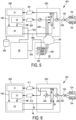
- Figure 5 shows a functional block diagram of a passive optical network 401 according to another example embodiment employing an apparatus 202. Elements and functions that are identical or similar to those described in the embodiment of Fig. 2 are designated by the same numeral as in Fig. 2 and their description will not be repeated in this embodiment.
- the shaper filters 405 are not implemented in the access node 420, but in a Border Network Gateway (BNG) 28 of the network instead.
- BNG Border Network Gateway
- the Broadband Network Gateway 28 is connected to the access node 420 by an aggregation network 29 to provide the individual downstream traffic streams 402 to the access node 420.
- the regulation engine 23 of the apparatus 202 provides the updated shaper parameter 403 to the shaper filter 405 via an edge network controller 26.
- Figure 6 shows a functional block diagram of a passive optical network 501 according to yet another example embodiment employing an apparatus 203. Elements and functions that are identical or similar to those described in the embodiment of Fig. 2 are designated by the same numeral as in Fig. 2 and their description will not be repeated in this embodiment.
- the apparatus 203 instead of controlling bandwidth allocation for downstream traffic of the passive optical network, the apparatus 203 interacts with a dynamic bandwidth allocation module 50 of the access node 300 to perform bandwidth allocation for upstream traffic.
- Contention module 21 determines whether the upstream direction of the optical network 501 is in a state of contention or at risk of entering such a state of contention from upstream network-level consumption data 311 provided by a measurement module 425.
- the heavy-use determination module 22 detects the or each participant meeting an intensive capacity consumption condition in the upstream direction using historical upstream bandwidth utilization data 312 provided by a measurement module 426.
- the regulation engine 23 provides an increased upstream maximum bandwidth 30 and a reduced upstream weight 40 to the dynamic bandwidth allocation 50 for a participant meeting the intensive capacity consumption in the upstream direction when the network is at risk of being congested in the upstream direction. .
- the rate shaping and weight scheduling are thus performed by the access node 300 in the upstream direction.
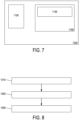
- Figure 7 is a block diagram depicting the apparatus 1200 operating in accordance with an example embodiment.
- the block diagram may apply to any of the above-described apparatus 200, 201, 202 and 203.
- the apparatus 1200 may be, for example, an electronic device such as a chip, chip-set, an electronic device or an access network controller.
- the apparatus 1200 includes a processor 1110 and a memory 1160. In other examples, the apparatus 1200 may comprise multiple processors.
- the processor 1110 is a control unit operatively connected to read from and write to the memory 1160.
- the processor 1110 may also be configured to receive control signals received via an input interface and/or the processor 1110 may be configured to output control signals via an output interface.
- the processor 1110 may be configured to convert the received control signals into appropriate commands for controlling functionalities of the apparatus.
- the memory 1160 stores computer program instructions 1120 which when loaded into the processor 1110 control the operation of the apparatus 1200 as explained above.
- the apparatus 1200 may comprise more than one memory 1160 or different kinds of storage devices.
- Computer program instructions 1120 for enabling implementations of example embodiments of the invention or a part of such computer program instructions may be loaded onto the apparatus 1200 by the manufacturer of the apparatus 1200, by a user of the apparatus 1200, or by the apparatus 1200 itself based on a download program, or the instructions can be pushed to the apparatus 1200 by an external device.
- the computer program instructions may arrive at the apparatus 200 via an electromagnetic carrier signal or be copied from a physical entity such as a computer program product, a memory device or a record medium such as a Compact Disc (CD), a Compact Disc Read- Only Memory (CDROM), a Digital Versatile Disk (DVD) or a Blu-ray disk.
- the apparatus 1200 comprises means, wherein the means comprises at least one processor 1110, at least one memory 1160 including computer program code 1120, the at least one memory 1160 and the computer program code 1120 configured to, with the at least one processor 1110, cause the performance of the apparatus 1200.
- Figure 8 illustrates an example method 1000 incorporating aspects of the previously disclosed embodiments.
- the method starts with obtaining 1010 an indication of contention of a communications network.
- the method continues with obtaining 1020 a historical bandwidth utilization indication parameter of respective participants of the communications network.
- the method further continues with, in response to determining, based on the indication of contention and the historical bandwidth utilization indication, that a participant meets an intensive capacity consumption condition, 1030 providing a reduced scheduler parameter and an increased maximum bandwidth parameter to an output of the apparatus, wherein the scheduler parameter and the shaper parameter relate to allocating bandwidth to the participant meeting the intensive capacity consumption condition
- the sequence of the method is not limited to the illustrated example.
- the method may be implemented in other sequence.
- the indication of contention and the historical bandwidth utilization indication may be obtained together in one step or the historical bandwidth utilization indication may be obtained prior to the indication of contention.
- a technical effect of one or more of the example embodiments disclosed herein is that the bandwidth allocated to the participant meeting an intensive capacity consumption condition when the network is in a state of contention or at risk of contention can be adjusted so that the reduction applied to his scheduler weight is compensated by the increase of his shaper rate, thus limiting the impact of the reduction applied to his bandwidth.
- the bandwidth allocation can therefore adapt to a sudden speed test or quick download by a second network participant, while assuring normal attribution of bandwidth to all other users.
- a closed-loop automation is provided, and a user fairness can be provided.
- Example embodiments may be applied to both upstream and downstream bandwidth allocation.
- Embodiments of the present invention may be implemented in software, hardware, application logic or a combination of software, hardware and application logic.
- the software, application logic and/or hardware may reside on the apparatus, a separate device or a plurality of devices. If desired, part of the software, application logic and/or hardware may reside on the apparatus, part of the software, application logic and/or hardware may reside on a separate device, and part of the software, application logic and/or hardware may reside on a plurality of devices.
- the application logic, software or an instruction set is maintained on any one of various conventional computer-readable media.
- a 'computer- readable medium' may be any media or means that can contain, store, communicate, propagate or transport the instructions for use by or in connection with an instruction execution system, apparatus, or device, such as a computer, with one example of a computer described and depicted in Figure 7 .
- a computer-readable medium may comprise a computer-readable storage medium that may be any media or means that can contain or store the instructions for use by or in connection with an instruction execution system, apparatus, or device, such as a computer.
- the different functions discussed herein may be performed in a different order and/or concurrently with each other. Furthermore, if desired, one or more of the above-described functions may be optional or may be combined.
Landscapes
- Engineering & Computer Science (AREA)
- Computer Networks & Wireless Communication (AREA)
- Signal Processing (AREA)
- Data Exchanges In Wide-Area Networks (AREA)
Abstract
obtaining an indication of contention (105) of a communications network (101);
obtaining a historical bandwidth utilization indication parameter (302) of respective participants of the communications network (101) ;
in response to determining, based on the indication of contention and the historical bandwidth utilization indication, that a participant meets an intensive capacity consumption condition, providing a reduced value of a scheduler parameter (304) and an increased value of a maximum bandwidth parameter (303) to an output of the apparatus (201), wherein the scheduler parameter and the maximum bandwidth parameter are related to allocating bandwidth to the participant meeting the intensive capacity consumption condition, wherein the scheduler parameter represents a proportion of a capacity of the communications network allocated to the participant when the communications network is congested, wherein the maximum bandwidth parameter represents a maximum bandwidth allocated to the participant.
Description
- The disclosure relates to bandwidth allocation in a communications network, specifically to determining of scheduler parameters and/or maximum bandwidth parameters.
- The sharing of bandwidth in a communications network between multiple clients is typically handled by Weighted Fair Queue (WFQ) scheduler components. In this sharing scheme, a weight is given to each client. Each of them will receive a fraction of the total bandwidth which is proportional to their weight. By design, if any client would not be active or not request his entitled bandwidth fraction, this "free" or spare bandwidth is automatically distributed among the active clients, proportionally to the weights of those active clients. In worst case, the minimum bandwidth that each client will receive is equal to the total bandwidth multiplied by the ratio of its weight over the sum of the weights of all the clients. In best case, if there would be only one active client at a certain time, this client would get the full bandwidth.
- However, in case of one or more abnormally high demanding or even potentially abusing users, these mechanisms tend to discriminate the other users. Such situations may happen when residential subscribers would host unusual services creating very high bandwidth request for example in case of P2P storage networks, when a user downloads a high data volume, such as a game, or when a company would clearly abuse a residential subscription to offer commercial services.
-
EP4030708A1 discloses a method and apparatus for allocating bandwidth in a communications network. A scheduler weight and a shaper rate serve to allocate bandwidth to network participants based on their historical bandwidth utilization and an indication of network contention. The system allocates bandwidth to participants by reducing their respective scheduler weight and/ or shaper rate, in case of a long-lasting high consumption effectively reducing the rate or weight attributed to a heavy user, thus slowing down his data consumption. - Aspects of the disclosure aim at coping improvingly with the problem of assuring a fair distribution of data volume while avoiding penalizing, or even speeding up the download the heavy user might perform.
- According to a first aspect, there is provided an apparatus, comprising means for:
- obtaining an indication of contention of a communications network;
- obtaining a historical bandwidth utilization indication parameter of respective participants of the communications network;
- in response to determining, based on the indication of contention and the historical bandwidth utilization indication, that a participant meets an intensive capacity consumption condition, providing a reduced value of a scheduler parameter and an increased value of a maximum bandwidth parameter to an output of the apparatus, wherein the scheduler parameter and the maximum bandwidth parameter are related to allocating bandwidth to the participant meeting the intensive capacity consumption condition, wherein the scheduler parameter represents a proportion of a capacity of the communications network allocated to the participant when the communications network is congested, wherein the reduced value is lower than a preconfigured value of the scheduler parameter, wherein the maximum bandwidth parameter represents a maximum bandwidth allocated to the participant, wherein the increased value is higher than a preconfigured value of the maximum bandwidth parameter.
- Such an embodiment advantageously guarantees a maximum level of bandwidth to a heavy user, without increasing his download time, but guaranteeing the bandwidth expected by every other user, especially in case of speedtest.
- According to embodiments, such an apparatus may include one or more of the following features.
- In an embodiment, the means are further configured to:
in response to determining, based on the historical bandwidth utilization indication, that the participant has ceased to meet the intensive capacity consumption condition, restoring the scheduler parameter to the preconfigured value of the scheduler parameter and/or restoring the maximum bandwidth parameter to the preconfigured value of the maximum bandwidth parameter. - In an embodiment, the means are further configured to:
in response to determining that contention of the communications network has ceased, restoring the scheduler parameter to the preconfigured value of the scheduler parameter and/or restoring the maximum bandwidth parameter to the preconfigured value of the maximum bandwidth parameter. - Such features advantageously ensure that the configuration changes applied to the heavy user are not permanent and do not influence the heavy user's service experience when a normal data consumption is recovered.
- In an embodiment, the means are further configured for predicting a risk of contention based on history of an average data rate in the communications network; and providing the indication of contention in response to determining that the predicted risk of contention exceeds a defined threshold.
- Such features enable the anticipation of contention levels, ensuring a quicker response and adaptation.
- In an embodiment, the means are further configured for implementing a machine-learning algorithm for predicting the risk of contention based on measurements of the average data rate in the communications network.
- In a further embodiment, the means are further configured for:
- obtaining the historical bandwidth utilization indication over a plurality of rolling time windows;
- determining that a participant meets the intensive capacity consumption condition in case a data volume consumed by the participant during at least one of the rolling time windows exceeds a reference data volume.
- In an embodiment, the means are configured for testing whether the participant meets the intensive capacity consumption condition in response to the indication of contention.
- In an embodiment, the communications network is a passive optical network.
- In an embodiment, the scheduler parameter and the maximum bandwidth parameter are related to allocating downstream bandwidth to the participant.
- In an embodiment of the apparatus, the scheduler parameter indicates a weight allocated to the participant of the communications network for use in a Weighted Fair Queue scheduler.
- In an embodiment, the Weighted Fair Queue scheduler is arranged in a network line termination of the passive optical network.
- In an embodiment, the maximum bandwidth parameter is a shaper parameter for use in a traffic shaper.
- In an embodiment, the traffic shaper is arranged in one of: a network line termination of the passive optical network and a broadband network gateway connected to the network line termination.
- In an embodiment, the scheduler parameter and the maximum bandwidth parameter are related to allocating upstream bandwidth to the participant.
- In an embodiment, the scheduler parameter and maximum bandwidth parameter are for use in a Dynamic bandwidth allocation module. In an embodiment, the Dynamic bandwidth allocation module is arranged in a network line termination of the passive optical network.
- In some embodiments, the participant of the communications network is a subscriber of a network operator.
- In some embodiments, the participant of the communications network is a virtual network operator or a subscriber of the virtual network operator.
- In an embodiment the means comprises at least one processor; and at least one memory including computer program code, the at least one memory and computer program code configured to, with the at least one processor, cause the performance of the apparatus.
- According to a second aspect, there is provided a method comprising:
- obtaining an indication of contention of a communications network;
- obtaining a historical bandwidth utilization indication parameter of respective participants of the communications network;
- in response to determining, based on the indication of contention and the historical bandwidth utilization indication, that a participant meets an intensive capacity consumption condition, providing a reduced value of a scheduler parameter and an increased value of a maximum bandwidth parameter, wherein the scheduler parameter and the maximum bandwidth parameter are related to allocating bandwidth to the participant meeting the intensive capacity consumption condition, wherein the scheduler parameter represents a proportion of a capacity of the communications network allocated to the participant when the communications network is congested, wherein the reduced value is lowerthan a preconfigured value of the scheduler parameter, wherein the maximum bandwidth parameter represents a maximum bandwidth allocated to the participant, wherein the increased value is higher than a preconfigured value of the maximum bandwidth parameter.
- In an embodiment, the steps of a computer-implemented method are iterated as follow:
- obtaining an indication of contention of a communications network;
- obtaining a historical bandwidth utilization indication parameter of respective participants of the communications network;
- in response to determining, based on the indication of contention and the historical bandwidth utilization indication, that a participant meets an intensive capacity consumption condition, providing a reduced value of a scheduler parameter and an increased value of a maximum bandwidth parameter, wherein the scheduler parameter and the maximum bandwidth parameter are related to allocating bandwidth to the participant meeting the intensive capacity consumption condition, wherein the scheduler parameter represents a proportion of a capacity of the communications network allocated to the participant when the communications network is congested, wherein the reduced value is lowerthan a preconfigured value of the scheduler parameter, wherein the maximum bandwidth parameter represents a maximum bandwidth allocated to the participant, wherein the increased value is higher than a preconfigured value of the maximum bandwidth parameter.
- According to a third aspect, there is provided a computer program comprising instructions for causing an apparatus to perform at least the following:
- obtaining an indication of contention of a communications network;
- obtaining a historical bandwidth utilization indication parameter of respective participants of the communications network;
- in response to determining, based on the indication of contention and the historical bandwidth utilization indication, that a participant meets an intensive capacity consumption condition, providing a reduced value of a scheduler parameter and an increased value of a maximum bandwidth parameter, wherein the scheduler parameter and the maximum bandwidth parameter are related to allocating bandwidth to the participant meeting the intensive capacity consumption condition, wherein the scheduler parameter represents a proportion of a capacity of the communications network allocated to the participant when the communications network is congested, wherein the reduced value is lowerthan a preconfigured value of the scheduler parameter, wherein the maximum bandwidth parameter represents a maximum bandwidth allocated to the participant, wherein the increased value is higher than a preconfigured value of the maximum bandwidth parameter.
- In an example embodiment, a non-transitory computer readable medium comprising program instructions for causing an apparatus to perform at least the following:
- obtaining an indication of contention of a communications network;
- obtaining a historical bandwidth utilization indication parameter of respective participants of the communications network;
- in response to determining, based on the indication of contention and the historical bandwidth utilization indication, that a participant meets an intensive capacity consumption condition, providing a reduced value of a scheduler parameter and an increased value of a maximum bandwidth parameter, wherein the scheduler parameter and the maximum bandwidth parameter are related to allocating bandwidth to the participant meeting the intensive capacity consumption condition, wherein the scheduler parameter represents a proportion of a capacity of the communications network allocated to the participant when the communications network is congested, wherein the reduced value is lowerthan a preconfigured value of the scheduler parameter, wherein the maximum bandwidth parameter represents a maximum bandwidth allocated to the participant, wherein the increased value is higher than a preconfigured value of the maximum bandwidth parameter.
- According to a fourth aspect, the apparatus comprises the at least one processor and at least one memory including computer program code, the at least one memory and computer program code configured to, with the at least one processor, cause the performance of the apparatus.
- According to an embodiment, there is provided an apparatus, comprising:
- first obtaining circuitry configured for obtaining an indication of contention of a communications network;
- second obtaining circuitry configured for obtaining a historical bandwidth utilization indication parameter of respective participants of the communications network;
- providing circuitry configured for, in response to determining, based on the indication of contention and the historical bandwidth utilization indication, that a participant meets an intensive capacity consumption condition, providing a reduced value of a scheduler parameter and an increased value of a maximum bandwidth parameter to an output of the apparatus, wherein the scheduler parameter and the maximum bandwidth parameter are related to allocating bandwidth to the participant meeting the intensive capacity consumption condition, wherein the scheduler parameter represents a proportion of a capacity of the communications network allocated to the participant when the communications network is congested, wherein the reduced value is lowerthan a preconfigured value of the scheduler parameter, wherein the maximum bandwidth parameter represents a maximum bandwidth allocated to the participant, wherein the increased value is higher than a preconfigured value of the maximum bandwidth parameter.
- In one embodiment, the providing circuitry is configured for, in response to determining, based on the historical bandwidth utilization indication, that the participant has ceased to meet the intensive capacity consumption condition, restoring the scheduler parameter to the preconfigured value of the scheduler parameter and/or restoring the maximum bandwidth parameter to the preconfigured value of the maximum bandwidth parameter.
- In an embodiment, the providing circuitry is further configured for, in response to determining that contention of the communications network has ceased, restoring the scheduler parameter to the preconfigured value of the scheduler parameter and/or restoring the maximum bandwidth parameter to the preconfigured value of the maximum bandwidth parameter.
- In yet a further embodiment, the first obtaining circuitry is further configured for predicting a risk of contention based on history of an average data rate in the communications network and providing the indication of contention in response to determining that the predicted risk of contention exceeds a defined threshold.
- In an embodiment, the first obtaining circuitry is configured for implementing a machine-learning algorithm for predicting the risk of contention based on measurements of the average data rate in the communications network.
- In an embodiment of the invention, the second obtaining circuitry is configured for obtaining the historical bandwidth utilization indication over a plurality of rolling time windows; and determining that a participant meets the intensive capacity consumption condition in case a data volume consumed by the participant during at least one of the rolling time window exceeds a reference data volume.
- In an embodiment of the apparatus, the second obtaining circuitry is further configured for testing whether the participant meets the intensive capacity consumption condition in response to the indication of contention.
- According to the example embodiments, the bandwidth allocated to the participant of the network meeting an intensive capacity consumption condition can be dynamically adjusted according to the available resource as well as the historical behavior of the participants, optimizing his user experience by guarantying a full capacity data volume while providing all the other users with adequate data volumes, allowing a second participant to simultaneously run a successful speed test. Thus, a closed-loop automation is provided, and a long-term fairness can be guaranteed.
- For a more complete understanding of example embodiments of the present invention, reference is now made to the following descriptions taken in connection with the accompanying drawings in which:
-
Figure 1 shows a part of an exemplifying communications network in which examples of disclosed apparatuses and methods for allocating bandwidth may be applied; -
Figure 2 shows a functional block diagram according to one example embodiment of a passive optical network in which examples of disclosed apparatuses and methods for allocating bandwidth may be applied; -
Figure 3 shows a flow diagram according to an example implementation of apparatuses and methods for allocating bandwidth; -
Figure 4 is a graph showing a bandwidth utilization result according to an example embodiment; -
Figure 5 shows a functional block diagram according to another example embodiment of a passive optical network in which examples of disclosed apparatuses and methods for allocating bandwidth may be applied; -
Figure 6 shows a functional block diagram according to another example embodiment of a passive optical network in which examples of disclosed apparatuses and methods for allocating bandwidth may be applied; -
Figure 7 shows a block diagram depicting the apparatus operating in accordance with an example embodiment; -
Figure 8 shows an example method incorporating aspects of the example embodiments. - Example embodiments of the present application are described herein in detail and shown by way of example in the drawings. It should be understood that, although specific embodiments are discussed herein there is no intent to limit the scope of the invention to such embodiments. To the contrary, it should be understood that the embodiments discussed herein are for illustrative purposes, and that modified and alternative embodiments may be implemented without departing from the scope of the invention as defined in the claims. The sequence of method steps is not limited to the specific embodiments, the method steps may be performed in other possible sequences. Similarly, specific structural and functional details disclosed herein are merely representative for purposes of describing the embodiments. The invention described herein, however, may be embodied in many alternate forms and should not be construed as limited to only the embodiments set forth herein.
- The state of the art displays a technology that aims to improve the efficiency of bandwidth allocation in communications networks, particularly in scenarios where there are multiple users or devices competing for limited bandwidth resources. The method involves receiving requests for bandwidth from multiple users or devices and determining an overall bandwidth allocation for each user or device. Based on this information, the system allocates bandwidth resources in a way that maximizes the overall efficiency of the network. The prior art does so by measuring the PON every 5 minutes. Based on this measurement the PON, congestion risk is predicted. If there is a congestion risk, then the solution detects a heavy user based on the measurement of the individual subscriber data usage per 5 minutes. If a heavy user is detected, his scheduler weight is preventively reduced, for example, from 1 to 0.1. The heavy user experiences a small (e.g. 0.2%) increase of the download time if congestion occurs during his download. Thus, the state of the art does not allow for maintenance of a sufficient data volume to all users while guarantying the heavy user a decreased download time.
-
Figure 1 shows a part of an exemplifying communications network in which examples of disclosed embodiments may be applied. It is apparent to a person skilled in the art that the communications network typically comprises also other functions and structures than those shown inFigure 1 . - The
communications network 100 may be a fibre network. Alternatively, it may also be a cable network, e.g. a mobile network or any combination of both fixed and wireless network. Generally, thecommunications network 100 may be any shared medium communications network. - In general, the
communications network 100 includes anetwork controller 110 that is connected via communications to anetwork node 120. Additionally, thecommunications network 100 consists ofseveral network participants network node 120. WhileFig.1 only displays onenetwork node 120, it should be noted that there could be more than onenetwork node 120 in thecommunications network 100. Thenetwork controller 110 is designed to monitor the bandwidth usage ofnetwork participants communications network 100 visibility and control over the network participants. - Not shown on
Figure 1 , a Weighted Fair Queue scheduler and a traffic shaper may be implemented in thenetwork node 120 in connection with the plurality ofnetwork participants network participants - An instance of the
communications network 100 may represent a conventional access network, where a sole network operator possesses theaccess network nodes 120 and whereby thenetwork controller 110 offers oversight and management of allnetwork participants access network nodes 120. Within this embodiment, thenetwork subscribers access network 100 belong to the sole network operator. - In another example embodiment, the
communications network 100 may refer to a virtual access network (or network slice) operated by a VNO who is buying/renting a part of the resources of theaccess network nodes 120 to an Infrastructure Provider (InP). In this example embodiment, theparticipants virtual access network 100 are subscribers of the VNO. - In this operating mode, the
access network node 120 may be shared by multiple VNOs, but thenetwork controller 110 provides visibility and control only to the VNOs for their own subscribers. From the perspective of a VNO, thenetwork controller 110 provides only a partial view of theaccess node 120, limited to the interfaces where their subscribers are connected, which is sometimes called a virtual access node. Another example embodiment of thecommunications network 100 involves a network of virtual access networks, which are operated by an InP that lends or resells access node resources to one or more VNOs. In this embodiment, theparticipants virtual access networks 100 are VNOs. - In this mode, it must be understood that the
network controller 110 provides visibility and control to the InP on thenetwork participants - The
network controller 110 is configured to communicate with theapparatus 200 implementing example embodiments of the present application, by providinginput data apparatus 200 and receivingoutput data 230 from theapparatus 200. - A skilled person shall understand that although the
apparatus 200 is shown inFigure 1 as separated from thenetwork controller 110, in another example implementation it may be implemented as part of thenetwork controller 110. - The
apparatus 200 is configured to obtain an indication of contention of thecommunications network 100. The indication of contention may be a parameter indicating whether or not thecommunications network 100 is in a state of contention or at risk of entering such a state of contention, e.g. based on quantitative measurements and/or predictions of risk of contention. - Specifically, in one example implementation, the
apparatus 200 may comprise means, which are further configured to determine or predict a risk of contention as a ratio of time, during which the bandwidth utilized by the participants of the network causes a contention. - More specifically, in one example, based on the actual total bandwidth utilization of all the active network participants in the communications network during a predetermined time period, for example 5 minutes, the risk of contention is determined as a ratio of aggregated time interval(s) to the predetermined time period, during the time interval(s) the bandwidth utilized by the plurality of network participants is above a predetermined threshold, for example 95% of the total available bandwidth.
- The risk of contention is used to monitor how close is the actual bandwidth utilization to the total link capacity (or how close is the link to contention). In other words, the risk of contention is used to monitor the remaining available bandwidth that the WFQ scheduler can still distribute to any participant of the network creating an extra demand (for example doing a speed test). Due to the gaming or other variable bandwidth type of application, it is advantageous to monitor this remaining capacity over short periods of time, typically in the order of magnitude of user perception (in seconds). Depending on the desired loop reaction time, the risk of contention may be expressed as a ratio of a larger time period (e.g. contention of 1% during the last 5 minutes).
- It is advantageous that the risk of contention is determined in the
network controller 110. However, as for determining the risk of contention, the throughput is monitored at fast pace (order of magnitude of a few seconds) and an aggregate is calculated over a longer time interval (percentage of contention in the last 5 minutes), if it would not be possible to stream the throughput measurement from theaccess network node 120 to thenetwork controller 110 fast enough, the risk of contention may also be determined in theaccess network nodes 120 itself. In this case, only the aggregated contention level is streamed to thenetwork controller 110. - The
apparatus 200 is further configured to obtain a historical bandwidth utilization indication parameter ofrespective participants communications network 100. - Specifically, in one example implementation, the
apparatus 200 may comprise means which are further configured to obtain the historical bandwidth utilization indication as indicating historical bandwidth consumption of respective ones of theparticipants communications network 100 over at least one time window, advantageously over a plurality of time windows. For example, thenetwork controller 110 or theaccess network nodes 120 may determine, for every participant of the network, the actual bandwidth utilization over the last 5 minutes, last 15 minutes, last 1h, last 4h, last day, last week, last month, etc. - The
apparatus 200 is further configured to determine whether a or each participant meets an intensive capacity consumption condition based on the historical bandwidth utilization indication, at least when contention exists in thecommunications network 100. - The
apparatus 200 is further configured to provide a reduced value of a scheduler parameter and an increased value of a maximum bandwidth parameter to an output of theapparatus 200, wherein the scheduler parameter and the maximum bandwidth parameter are related to allocating bandwidth to the participant meeting the intensive capacity consumption condition. - The advantage brought by the example embodiments is that the bandwidth allocated to the participant meeting an intensive capacity consumption condition can be adjusted to guarantee the appropriate bandwidth to other network participants without penalizing the participant meeting an intensive capacity consumption, i.e. by optimizing its download time.
- In an advantageous embodiment, the
apparatus 200 is further configured to repeat the obtaining of the indication of contention; the obtaining of the historical bandwidth utilization indication parameter and the determining, whether a or each participant meets the intensive capacity consumption condition. The predetermined time interval for repetition may relate to how often the indication of contention or the historical bandwidth utilization is updated. - In one example embodiment, the scheduler parameter indicates a weight corresponding to the participant of the
communications network 100 for use in a Weighted Fair Queue scheduler, and the shaper parameter indicates a limit of the bandwidth allocated to the participants of thecommunications network 100. - More specifically, for example, the weights may be represented either as floating numbers between 0 and 1, or by integers ranging from 0 to a maximum value that depends on the quantification (e.g. 255 for 8 bits quantification). The maximum bandwidth parameter may be expressed directly as data throughputs (bps, kbps, Mbps, Gbps, etc). In an embodiment, the maximum bandwidth parameter is a shaper parameters.
- A skilled person shall understand that the scheduler parameters and/or maximum bandwidth parameters may be updated periodically for each
participant communications network 100, under the condition that they meet an intensive capacity consumption condition when thecommunications network 100 is in a state of contention or at risk of entering such a state of contention. -
Figure 2 shows a functional block diagram according to one example embodiment of passiveoptical network 101 employing anapparatus 201 for bandwidth allocation. - In a known manner, the passive
optical network 101 includes anaccess node 320, known as optical line termination (OLT), a plurality ofterminals 104, known as Optical Network Units (ONU) which are near end-users, and anoptical fiber 102 which carriers the multiplexed upstream and downstream traffic of theterminals 104. Anoptical splitter 103 splits the downstream traffic from and merges the upstream traffic to theoptical fiber 102. - The
access node 320 comprises aWFQ scheduler 6 for allocating downstream bandwidth to theterminals 104 as a function of their individually allocated weights. Theaccess node 320 also comprisestraffic shaper 5 for each one of theterminals 104. Thetraffic shaper 5 imposes a maximum downstream data-rate that a giventerminal 104 may consume at a given instant. - Preconfigured values of the scheduler parameter i.e. weight, and shaper parameter i.e. maximum data rate allocated to each terminal 104 may be stored in a
configuration file 251 stored in anetwork management apparatus 250. - In the embodiment depicted in
Figure 2 , theapparatus 201 includes acontention module 21 for determining whether theoptical network 101 is in a state of contention or at risk of entering such a state of contention, a heavy-use determination module 22 for identifying the or each participant meeting an intensive capacity consumption condition as well as the rule(s) that were violated by those users, and aregulation engine 23 that takes in the indication ofcontention 105 from thecontention module 21 and theidentity 106 of the or each heavy user, if any, from the heavy-use determination module 22. - The
contention module 21 obtains network-level consumption data 301 from theaccess node 320, e.g. the available bandwidth that theWFQ scheduler 6 can still allocate to any participant in thenetwork 101. For that purpose, theaccess node 320 includes ameasurement module 325. The network-level consumption may be measured every 5 minutes. Thecontention module 21 emits the indication ofcontention 105 in response to determining that the network is in a state of contention or at risk. In an embodiment, the indication ofcontention 105 is emitted when risk of contention is determined to exceed a given threshold, e.g. 80%. - The heavy-
use determination module 22 obtains historicalbandwidth utilization data 302 of each individual network participants from theaccess node 320. For example, the historicalbandwidth utilization data 302 includes measurements of the individual network participant data usage per 5 minutes. For that purpose, theaccess node 320 includes ameasurement module 326 for every user. - The historical
bandwidth utilization data 302 can be measured using sliding windows. Each measurement signal is based on a different sliding window. Such a measurement signal consists of the data volume consumed by a participant during the given sliding window. This data volume is determined by a sliding-window integrator. By taking the history of the subscriber data rate into account, the heavy-use determination module 22 can ensure fairness between participants over the longerterm. - The heavy-
use determination module 22 tests an intensive consumption condition for each terminal 104. For example the intensive capacity consumption condition can be defined as follows: each measurement signal is compared with a constant reference data volume. If the data volume consumed during the sliding window exceeds the reference data volume, then the participant is deemed to meet the intensive capacity consumption condition. - The
regulation engine 23 of the depicted embodiment inFigure 2 processes the indication ofcontention 105 and the results provided by the heavy-use determination module 22. Theregulation engine 23 then feeds a reducedscheduler parameter 304 to theWFQ scheduler 6 and an increasedshaper parameter 303 to theshaper filter 5 for each respective participant meeting the intensive capacity consumption condition while the network is subject to contention.. The reducedscheduler parameter 304 and the increasedshaper parameter 303 of the participant may be defined by configuration data also present in theconfiguration file 251. The reducedscheduler parameter 304 and the increasedshaper parameter 303 of the participant may be defined as absolute parameter values or as increments. - In other words, the
regulation engine 23 reduces the WFQ scheduler weight and increases the shaper limit of a participant meeting an intensive capacity consumption when the network is at risk of being congested. This ensures that the other participants are still provided with adequate bandwidth, while avoiding penalizing the user meeting the intensive capacity consumption by over-limiting the bandwidth allocated to him. - In one example implementation, the network-
level consumption data 301 and historicalbandwidth utilization data 302 can be obtained by theapparatus 201 and stored in its memory, also known as a data lake. Theregulation engine 23 can be implemented as a virtual network function (VNF), which is software implemented in a network controller, reading data from the data lake and pushing back new configuration parameters (scheduler parameter and shaper parameter) directly to thecorresponding WFQ scheduler 6 andshaper filter 5. - The
contention module 21 and heavy-use determination module 22 repeat the same operations after a time period, for example 5 minutes. When theregulation engine 23 determines that a state of contention has ceased and/or the identified participant has ceased to meet the condition, it reverts the scheduler parameter and shaper parameter to their preconfigured values for the participant. -
Figure 3 shows a flow diagram according to one example method implementation whichapparatus - In the example implementation shown in
Figure 3 , on regular time intervals, for example every 5 minutes, thestep 8 of reading historical network-level consumption data 7 is performed.Step 9 consist of testing whether the risk of contention is above a first predetermined threshold, e.g. 80%. In the affirmative, it suggests that there is a risk that a state of contention will be reached. The historicalbandwidth utilization data 10 of all the subscribers connected to theWFQ scheduler 6 is then retrieved atstep 11. If at least one of the subscribers meets the intensive capacity consumption condition tested atstep 14, its updated scheduler weight and shaper rate are determined atstep 16 according topredefined rules 15 that ensure that the scheduler weight is decreased while the shaper rate is increased. -
Step 8 may also consist of predicting contention in the next time interval based on past measurements. A time-series prediction module may be employed for that purpose, in order to react faster (reducing the loop reaction time), reducing further the contention time. - Specifically, any time-series prediction algorithm can be used, included but not limited to classical machine learning algorithms like moving averages (simple, weighted, exponential, ...) and regression (linear, auto-regression, ARIMA and variants), as well as deep learning techniques such as artificial neural networks, convolutional neural networks (CNN), recurrent neural networks (RNN), Long-Short Term Memory (LSTM), Temporal Convolutional network (TCN), regression trees, random forest, etc.
- In this example, recent network-
level consumption data 70 for previous time interval may be stored to form historical network-level consumption data 7. The prediction engine needs to be fed by the history (n last measured values) of the network-level consumption data 301 instead of just the latest measurement. - In case the test is negative at
step step 12 is performed to restore the scheduler parameter and the shaper parameter to a default value. Namely, in case contention has ceased atstep 12, the parameters can be restored for one or all participants. In case intensive capacity consumption has ceased for a given participant, the parameters can be restored for that participant. After waiting for a time interval atstep 17, the method iterates to step 8 as shown byarrow 38. -
Figure 4 shows a possible bandwidth utilization result according to an example embodiment. An example bandwidth utilization of several users has been numerically simulated over certain period of time. The horizontal axis represents time in seconds. The vertical axis represents data-rate. In the example, thetotal PON capacity 31 is 2300 Mb/s. - In this example, 128 users are connected at the same time. There is a service specification defined by the operator that typically limits the subscriber data rate, for example, to 1 Gb/s, by way of the preconfigured shaper parameter. As 128 times 1Gb/s is much higher that 2.3 Gb/s, the PON is overbooked. When all subscribers have a normal usage pattern, this does not constitute a problem. Downloads at peak information rate (PIR) are typically short and rare and therefore these downloads typically do not overlap.
- During a
first time interval 33 126 normal users having an average PON utilization of 40% generate the data usage over time depicted by afirst area 25. Despite the overbooking (126 times 1Gb/s >> 2.3 Gb/s), there is no network congestion. However, when a heavy user is added to the PON from instant 35, there is an atypical usage pattern of download at PIR during a second, long-lasting,time interval 34. The data usage of this heavy user over time is indicated as asecond area 24. Another normal user performing a speedtest is added during a time interval 20 overlapping thetime interval 34. The speed test is done by a short download at a data-rate 18. - In this example, the heavy user has been detected by the apparatus at
instant 36, which has caused its shaper rate to be suddenly increased while its scheduler weight was reduced. For example, the shaper rate is increased from 1Gb/s to 2 Gb/s. Beforeinstant 36, the data-rate 32 available to the heavy user was limited to 1 Gb/s and the full capacity of the PON was not used as a result. Frominstant 36, the increased shaper rate allows the heavy user to use allavailable capacity 19. In this way the duration of the long-lastingdownload 24 is optimized. By comparison, the duration of the long-lastingdownload 24 increases by 27% for the heavy user if the scheduler weight is reduced without increasing the shaper rate, in accordance with the prior art solution. This also means that the congestion risk period is optimized in the same way. And the benefit of the bandwidth allocation by the scheduler remains completely intact: thedata rate 18 available to the normal user performing the speed test during the heavy use event is successful. During the time interval 20, the data-rate 32 available to the heavy user is temporarily reduced to 516 Mb/s. -
Figure 5 shows a functional block diagram of a passiveoptical network 401 according to another example embodiment employing anapparatus 202. Elements and functions that are identical or similar to those described in the embodiment ofFig. 2 are designated by the same numeral as inFig. 2 and their description will not be repeated in this embodiment. - As shown in
Figure 5 , the shaper filters 405 are not implemented in theaccess node 420, but in a Border Network Gateway (BNG) 28 of the network instead. TheBroadband Network Gateway 28 is connected to theaccess node 420 by anaggregation network 29 to provide the individual downstream traffic streams 402 to theaccess node 420. As a consequence, theregulation engine 23 of theapparatus 202 provides the updatedshaper parameter 403 to theshaper filter 405 via anedge network controller 26. -
Figure 6 shows a functional block diagram of a passiveoptical network 501 according to yet another example embodiment employing anapparatus 203. Elements and functions that are identical or similar to those described in the embodiment ofFig. 2 are designated by the same numeral as inFig. 2 and their description will not be repeated in this embodiment. - In the embodiment of
Figure 6 , instead of controlling bandwidth allocation for downstream traffic of the passive optical network, theapparatus 203 interacts with a dynamicbandwidth allocation module 50 of theaccess node 300 to perform bandwidth allocation for upstream traffic.Contention module 21 determines whether the upstream direction of theoptical network 501 is in a state of contention or at risk of entering such a state of contention from upstream network-level consumption data 311 provided by ameasurement module 425. The heavy-use determination module 22 detects the or each participant meeting an intensive capacity consumption condition in the upstream direction using historical upstreambandwidth utilization data 312 provided by ameasurement module 426. Theregulation engine 23 provides an increased upstreammaximum bandwidth 30 and a reducedupstream weight 40 to thedynamic bandwidth allocation 50 for a participant meeting the intensive capacity consumption in the upstream direction when the network is at risk of being congested in the upstream direction. . The rate shaping and weight scheduling are thus performed by theaccess node 300 in the upstream direction. - Similar as it is described for
Figure 2 , the entire workflow must be scheduled on regular time intervals, for example every 5 minutes. -
Figure 7 is a block diagram depicting theapparatus 1200 operating in accordance with an example embodiment. The block diagram may apply to any of the above-describedapparatus apparatus 1200 may be, for example, an electronic device such as a chip, chip-set, an electronic device or an access network controller. Theapparatus 1200 includes a processor 1110 and amemory 1160. In other examples, theapparatus 1200 may comprise multiple processors. - In the example of
Figure 7 , the processor 1110 is a control unit operatively connected to read from and write to thememory 1160. The processor 1110 may also be configured to receive control signals received via an input interface and/or the processor 1110 may be configured to output control signals via an output interface. In an example embodiment the processor 1110 may be configured to convert the received control signals into appropriate commands for controlling functionalities of the apparatus. - The
memory 1160 storescomputer program instructions 1120 which when loaded into the processor 1110 control the operation of theapparatus 1200 as explained above. In other examples, theapparatus 1200 may comprise more than onememory 1160 or different kinds of storage devices. -
Computer program instructions 1120 for enabling implementations of example embodiments of the invention or a part of such computer program instructions may be loaded onto theapparatus 1200 by the manufacturer of theapparatus 1200, by a user of theapparatus 1200, or by theapparatus 1200 itself based on a download program, or the instructions can be pushed to theapparatus 1200 by an external device. The computer program instructions may arrive at theapparatus 200 via an electromagnetic carrier signal or be copied from a physical entity such as a computer program product, a memory device or a record medium such as a Compact Disc (CD), a Compact Disc Read- Only Memory (CDROM), a Digital Versatile Disk (DVD) or a Blu-ray disk. - According to an example embodiment, the
apparatus 1200 comprises means, wherein the means comprises at least one processor 1110, at least onememory 1160 includingcomputer program code 1120, the at least onememory 1160 and thecomputer program code 1120 configured to, with the at least one processor 1110, cause the performance of theapparatus 1200. -
Figure 8 illustrates anexample method 1000 incorporating aspects of the previously disclosed embodiments. - The method starts with obtaining 1010 an indication of contention of a communications network. The method continues with obtaining 1020 a historical bandwidth utilization indication parameter of respective participants of the communications network. The method further continues with, in response to determining, based on the indication of contention and the historical bandwidth utilization indication, that a participant meets an intensive capacity consumption condition, 1030 providing a reduced scheduler parameter and an increased maximum bandwidth parameter to an output of the apparatus, wherein the scheduler parameter and the shaper parameter relate to allocating bandwidth to the participant meeting the intensive capacity consumption condition
- A skilled person shall understand that the sequence of the method is not limited to the illustrated example. The method may be implemented in other sequence. For example, the indication of contention and the historical bandwidth utilization indication may be obtained together in one step or the historical bandwidth utilization indication may be obtained prior to the indication of contention.
- Without in anyway limiting the scope, interpretation, or application of the claims appearing below, a technical effect of one or more of the example embodiments disclosed herein is that the bandwidth allocated to the participant meeting an intensive capacity consumption condition when the network is in a state of contention or at risk of contention can be adjusted so that the reduction applied to his scheduler weight is compensated by the increase of his shaper rate, thus limiting the impact of the reduction applied to his bandwidth. The bandwidth allocation can therefore adapt to a sudden speed test or quick download by a second network participant, while assuring normal attribution of bandwidth to all other users. Thus, a closed-loop automation is provided, and a user fairness can be provided.
- Example embodiments may be applied to both upstream and downstream bandwidth allocation.
- Embodiments of the present invention may be implemented in software, hardware, application logic or a combination of software, hardware and application logic. The software, application logic and/or hardware may reside on the apparatus, a separate device or a plurality of devices. If desired, part of the software, application logic and/or hardware may reside on the apparatus, part of the software, application logic and/or hardware may reside on a separate device, and part of the software, application logic and/or hardware may reside on a plurality of devices. In an example embodiment, the application logic, software or an instruction set is maintained on any one of various conventional computer-readable media. In the context of this document, a 'computer- readable medium' may be any media or means that can contain, store, communicate, propagate or transport the instructions for use by or in connection with an instruction execution system, apparatus, or device, such as a computer, with one example of a computer described and depicted in
Figure 7 . A computer-readable medium may comprise a computer-readable storage medium that may be any media or means that can contain or store the instructions for use by or in connection with an instruction execution system, apparatus, or device, such as a computer. - If desired, the different functions discussed herein may be performed in a different order and/or concurrently with each other. Furthermore, if desired, one or more of the above-described functions may be optional or may be combined.
- Although various aspects of the invention are set out in the independent claims, other aspects of the invention comprise other combinations of features from the described embodiments and/or the dependent claims with the features of the independent claims, and not solely the combinations explicitly set out in the claims.
- It will be obvious to a person skilled in the art that, as the technology advances, the inventive concept can be implemented in various ways. The invention and its embodiments are not limited to the examples described above but may vary within the scope of the claims.
Claims (15)
- An apparatus (200, 201, 202, 203), comprising means for:obtaining an indication of contention (105) of a communications network (100, 101, 401, 501);obtaining a historical bandwidth utilization indication parameter (302, 312) of respective participants (131, 132, 133; 104) of the communications network;in response to determining, based on the indication of contention (105) and the historical bandwidth utilization indication (302, 312), that a participant meets an intensive capacity consumption condition, providing a reduced value of a scheduler parameter (304, 30) and an increased value of a maximum bandwidth parameter (303, 403, 40) to an output of the apparatus, wherein the scheduler parameter and the maximum bandwidth parameter are related to allocating bandwidth to the participant meeting the intensive capacity consumption condition, wherein the scheduler parameter represents a proportion of a capacity of the communications network (100, 101, 401, 501) allocated to the participant when the communications network is congested, wherein the reduced value is lower than a preconfigured value of the scheduler parameter, wherein the maximum bandwidth parameter represents a maximum bandwidth allocated to the participant, wherein the increased value is higher than a preconfigured value of the maximum bandwidth parameter.
- The apparatus (200, 201, 202, 203) according to claim 1, wherein the means are further configured to:
in response to determining, based on the historical bandwidth utilization indication (302, 312), that the participant has ceased to meet the intensive capacity consumption condition, restoring the scheduler parameter to the preconfigured value of the scheduler parameter and/or restoring the maximum bandwidth parameter to the preconfigured value of the maximum bandwidth parameter. - The apparatus (200, 201, 202, 203) according to claim 1 or 2, wherein the means are further configured to:
in response to determining that contention of the communications network has ceased, restoring the scheduler parameter to the preconfigured value of the scheduler parameter and/or restoring the maximum bandwidth parameter to the preconfigured value of the maximum bandwidth parameter. - The apparatus according to any one of the claims 1 to 3, wherein the means are further configured for:predicting a risk of contention based on history of an average data rate (7) in the communications network;providing the indication of contention in response to determining that the predicted risk of contention exceeds a defined threshold.
- The apparatus according to claim 4, wherein the means are further configured for implementing a machine-learning algorithm for predicting the risk of contention based on measurements of the average data rate in the communications network.
- The apparatus according to any one of claims 1 to 5, wherein the means are further configured for:obtaining the historical bandwidth utilization indication over a plurality of rolling time windows;determining that a participant meets the intensive capacity consumption condition in case a data volume consumed by the participant during at least one of the rolling time windows exceeds a reference data volume.
- The apparatus according to any one of claims 1 to 6, wherein the means are configured for testing whether the participant meets the intensive capacity consumption condition in response to the indication of contention.
- The apparatus according to any one of claims 1 to 7, wherein the communications network is a passive optical network (201, 401), wherein the scheduler parameter and the maximum bandwidth parameter are related to allocating downstream bandwidth to the participant.
- The apparatus according to claim 8, wherein the scheduler parameter indicates a weight allocated to the participant of the communications network for use in a Weighted Fair Queue scheduler (6), wherein the Weighted Fair Queue scheduler is arranged in a network line termination (320, 420) of the passive optical network.
- The apparatus according to claim 8 or 9, wherein the maximum bandwidth parameter is a shaper parameter for use in a traffic shaper, wherein the traffic shaper is arranged in one of: a network line termination (320) of the passive optical network and a broadband network gateway (28) connected to the network line termination (420).
- The apparatus according to any one of claims 1 to 7, wherein the communications network is a passive optical network (501), wherein the scheduler parameter and the maximum bandwidth parameter are related to allocating upstream bandwidth to the participant, wherein the scheduler parameter and maximum bandwidth parameter are for use in a Dynamic bandwidth allocation module (50), wherein the Dynamic bandwidth allocation module is arranged in a network line termination of the passive optical network.
- The apparatus according to any one of claims 1 to 11, wherein the participant of the communications network is one of: a subscriber of a network operator, a virtual network operator and a subscriber of the virtual network operator.
- The apparatus of any one of claims 1 to 12, wherein the means comprises at least one processor (1110); and at least one memory (1160) including computer program code (1120), the at least one memory and computer program code configured to, with the at least one processor, cause the performance of the apparatus.
- A method, comprising:obtaining (9) an indication of contention of a communications network;obtaining (11) a historical bandwidth utilization indication parameter of respective participants of the communications network;in response to determining (14), based on the indication of contention and the historical bandwidth utilization indication (15), that a participant meets an intensive capacity consumption condition, providing (16) a reduced value of a scheduler parameter and an increased value of a maximum bandwidth parameter, wherein the scheduler parameter and the maximum bandwidth parameter are related to allocating bandwidth to the participant meeting the intensive capacity consumption condition, wherein the scheduler parameter represents a proportion of a capacity of the communications network allocated to the participant when the communications network is congested, wherein the reduced value is lower than a preconfigured value of the scheduler parameter, wherein the maximum bandwidth parameter represents a maximum bandwidth allocated to the participant, wherein the increased value is higher than a preconfigured value of the maximum bandwidth parameter.
- A computer program comprising instructions for causing an apparatus to perform at least the following:obtaining an indication of contention of a communications network (100, 101, 401, 501);obtaining a historical bandwidth utilization indication parameter (10, 302, 312) of respective participants of the communications network;in response to determining, based on the indication of contention (105) and the historical bandwidth utilization indication, that a participant meets an intensive capacity consumption condition, providing a reduced value of a scheduler parameter (304, 30) and an increased value of a maximum bandwidth parameter (303, 403, 40) to an output of the apparatus, wherein the scheduler parameter and the maximum bandwidth parameter are related to allocating bandwidth to the participant meeting the intensive capacity consumption condition, wherein the scheduler parameter represents a proportion of a capacity of the communications network allocated to the participant when the communications network is congested, wherein the reduced value is lower than a preconfigured value of the scheduler parameter, wherein the maximum bandwidth parameter represents a maximum bandwidth allocated to the participant, wherein the increased value is higher than a preconfigured value of the maximum bandwidth parameter.
Priority Applications (3)
| Application Number | Priority Date | Filing Date | Title |
|---|---|---|---|
| EP23168598.3A EP4451639B1 (en) | 2023-04-18 | 2023-04-18 | Apparatus and method for allocating bandwidth |
| US18/631,449 US20240357267A1 (en) | 2023-04-18 | 2024-04-10 | Apparatus and method for allocating bandwidth |
| JP2024066586A JP7753430B2 (en) | 2023-04-18 | 2024-04-17 | Apparatus and method for allocating bandwidth - Patents.com |
Applications Claiming Priority (1)
| Application Number | Priority Date | Filing Date | Title |
|---|---|---|---|
| EP23168598.3A EP4451639B1 (en) | 2023-04-18 | 2023-04-18 | Apparatus and method for allocating bandwidth |
Publications (2)
| Publication Number | Publication Date |
|---|---|
| EP4451639A1 true EP4451639A1 (en) | 2024-10-23 |
| EP4451639B1 EP4451639B1 (en) | 2025-12-03 |
Family
ID=86095955
Family Applications (1)
| Application Number | Title | Priority Date | Filing Date |
|---|---|---|---|
| EP23168598.3A Active EP4451639B1 (en) | 2023-04-18 | 2023-04-18 | Apparatus and method for allocating bandwidth |
Country Status (3)
| Country | Link |
|---|---|
| US (1) | US20240357267A1 (en) |
| EP (1) | EP4451639B1 (en) |
| JP (1) | JP7753430B2 (en) |
Cited By (1)
| Publication number | Priority date | Publication date | Assignee | Title |
|---|---|---|---|---|
| CN119892758A (en) * | 2025-01-23 | 2025-04-25 | 浪潮通信信息系统有限公司 | Closed-loop bandwidth adjustment method and system based on model-free adaptive control |
Families Citing this family (1)
| Publication number | Priority date | Publication date | Assignee | Title |
|---|---|---|---|---|
| CN119496713B (en) * | 2024-11-20 | 2026-01-20 | 天翼云科技有限公司 | Network bandwidth prediction method, apparatus, computer device, readable storage medium, and program product |
Citations (1)
| Publication number | Priority date | Publication date | Assignee | Title |
|---|---|---|---|---|
| EP4030708A1 (en) | 2021-01-19 | 2022-07-20 | Nokia Solutions and Networks Oy | Method and apparatus for bandwidth allocation |
Family Cites Families (6)
| Publication number | Priority date | Publication date | Assignee | Title |
|---|---|---|---|---|
| JP3755420B2 (en) * | 2001-05-16 | 2006-03-15 | 日本電気株式会社 | Node equipment |
| US10608940B2 (en) * | 2014-05-07 | 2020-03-31 | Adtran, Inc. | Systems and methods for allocating network bandwidth across access modules |
| US9929958B2 (en) * | 2014-11-21 | 2018-03-27 | Arris Enterprises Llc | Quality of service for mixed service tiers |
| CN111181753B (en) * | 2018-11-12 | 2021-06-29 | 华为技术有限公司 | A kind of dynamic bandwidth allocation method and related equipment |
| EP4120657A1 (en) * | 2021-07-15 | 2023-01-18 | Sandvine Corporation | System and method for prioritizing network traffic in a distributed environment |
| CN117640394A (en) * | 2022-08-15 | 2024-03-01 | 华为技术有限公司 | A method and device for bandwidth control |
-
2023
- 2023-04-18 EP EP23168598.3A patent/EP4451639B1/en active Active
-
2024
- 2024-04-10 US US18/631,449 patent/US20240357267A1/en active Pending
- 2024-04-17 JP JP2024066586A patent/JP7753430B2/en active Active
Patent Citations (1)
| Publication number | Priority date | Publication date | Assignee | Title |
|---|---|---|---|---|
| EP4030708A1 (en) | 2021-01-19 | 2022-07-20 | Nokia Solutions and Networks Oy | Method and apparatus for bandwidth allocation |
Cited By (1)
| Publication number | Priority date | Publication date | Assignee | Title |
|---|---|---|---|---|
| CN119892758A (en) * | 2025-01-23 | 2025-04-25 | 浪潮通信信息系统有限公司 | Closed-loop bandwidth adjustment method and system based on model-free adaptive control |
Also Published As
| Publication number | Publication date |
|---|---|
| JP7753430B2 (en) | 2025-10-14 |
| EP4451639B1 (en) | 2025-12-03 |
| US20240357267A1 (en) | 2024-10-24 |
| JP2024154398A (en) | 2024-10-30 |
Similar Documents
| Publication | Publication Date | Title |
|---|---|---|
| US20240357267A1 (en) | Apparatus and method for allocating bandwidth | |
| Wang et al. | Pricing network resources for adaptive applications in a differentiated services network | |
| US7535839B2 (en) | Method and apparatus for quality-of-service based admission control using prediction of scheduling gain | |
| CA2409904A1 (en) | Allocating access across shared communications medium | |
| CN110995614A (en) | Computing power resource allocation method and device | |
| Wang et al. | Pricing network resources for adaptive applications | |
| CN118102318A (en) | A data transmission system based on 5G technology | |
| CN114826924B (en) | Method and device for bandwidth allocation | |
| US12418497B2 (en) | Method and apparatus for bandwidth allocation in a sliced network | |
| US11533262B2 (en) | Methods and systems for multi-level network capacity allocation | |
| US20060212594A1 (en) | Method of dynamically adjusting quality of service (QoS) targets | |
| CN120474987A (en) | A network scheduling method and system for hybrid service transmission based on RDMA | |
| KR20210056163A (en) | Resource management apparatus and method for slice | |
| KR102903460B1 (en) | AI content creation system that supports custom character creation and interaction | |
| CN115102958A (en) | A server node scheduling method, device, device and storage medium | |
| CN117056064A (en) | Resource allocation methods, devices, servers, storage media and program products | |
| CN119521301A (en) | Intelligent emergency response method and system | |
| Gunantara et al. | Improving Internet Network Performance through Bandwidth Management | |
| JP2009163440A (en) | Load distribution method, load distribution system, load distribution server and load distribution program | |
| KR20230156630A (en) | Method and electronic apparatus for determining scheduling priority of a terminal | |
| CN121814604A (en) | Control method and electronic equipment | |
| CN113949624A (en) | Method, device, equipment and medium for distributing link sampling number | |
| CN121217733B (en) | A Server Load Balancing Method Based on Distributed Computing | |
| US12489715B1 (en) | Variable buffer size in communication networks | |
| Shi et al. | DiFi: A go-as-you-pay Wi-Fi access system |
Legal Events
| Date | Code | Title | Description |
|---|---|---|---|
| PUAI | Public reference made under article 153(3) epc to a published international application that has entered the european phase |
Free format text: ORIGINAL CODE: 0009012 |
|
| STAA | Information on the status of an ep patent application or granted ep patent |
Free format text: STATUS: THE APPLICATION HAS BEEN PUBLISHED |
|
| AK | Designated contracting states |
Kind code of ref document: A1 Designated state(s): AL AT BE BG CH CY CZ DE DK EE ES FI FR GB GR HR HU IE IS IT LI LT LU LV MC ME MK MT NL NO PL PT RO RS SE SI SK SM TR |
|
| STAA | Information on the status of an ep patent application or granted ep patent |
Free format text: STATUS: REQUEST FOR EXAMINATION WAS MADE |
|
| 17P | Request for examination filed |
Effective date: 20250115 |
|
| GRAP | Despatch of communication of intention to grant a patent |
Free format text: ORIGINAL CODE: EPIDOSNIGR1 |
|
| STAA | Information on the status of an ep patent application or granted ep patent |
Free format text: STATUS: GRANT OF PATENT IS INTENDED |
|
| INTG | Intention to grant announced |
Effective date: 20250805 |
|
| GRAS | Grant fee paid |
Free format text: ORIGINAL CODE: EPIDOSNIGR3 |
|
| GRAA | (expected) grant |
Free format text: ORIGINAL CODE: 0009210 |
|
| STAA | Information on the status of an ep patent application or granted ep patent |
Free format text: STATUS: THE PATENT HAS BEEN GRANTED |
|
| AK | Designated contracting states |
Kind code of ref document: B1 Designated state(s): AL AT BE BG CH CY CZ DE DK EE ES FI FR GB GR HR HU IE IS IT LI LT LU LV MC ME MK MT NL NO PL PT RO RS SE SI SK SM TR |
|
| REG | Reference to a national code |
Ref country code: CH Ref legal event code: F10 Free format text: ST27 STATUS EVENT CODE: U-0-0-F10-F00 (AS PROVIDED BY THE NATIONAL OFFICE) Effective date: 20251203 Ref country code: GB Ref legal event code: FG4D |
|
| REG | Reference to a national code |
Ref country code: DE Ref legal event code: R096 Ref document number: 602023009154 Country of ref document: DE |
|
| REG | Reference to a national code |
Ref country code: IE Ref legal event code: FG4D |
|
| REG | Reference to a national code |
Ref country code: NL Ref legal event code: MP Effective date: 20251203 |
|
| PG25 | Lapsed in a contracting state [announced via postgrant information from national office to epo] |
Ref country code: ES Free format text: LAPSE BECAUSE OF FAILURE TO SUBMIT A TRANSLATION OF THE DESCRIPTION OR TO PAY THE FEE WITHIN THE PRESCRIBED TIME-LIMIT Effective date: 20251203 |
|
| REG | Reference to a national code |
Ref country code: LT Ref legal event code: MG9D |
|
| PG25 | Lapsed in a contracting state [announced via postgrant information from national office to epo] |
Ref country code: NO Free format text: LAPSE BECAUSE OF FAILURE TO SUBMIT A TRANSLATION OF THE DESCRIPTION OR TO PAY THE FEE WITHIN THE PRESCRIBED TIME-LIMIT Effective date: 20260303 |
|
| PG25 | Lapsed in a contracting state [announced via postgrant information from national office to epo] |
Ref country code: FI Free format text: LAPSE BECAUSE OF FAILURE TO SUBMIT A TRANSLATION OF THE DESCRIPTION OR TO PAY THE FEE WITHIN THE PRESCRIBED TIME-LIMIT Effective date: 20251203 Ref country code: HR Free format text: LAPSE BECAUSE OF FAILURE TO SUBMIT A TRANSLATION OF THE DESCRIPTION OR TO PAY THE FEE WITHIN THE PRESCRIBED TIME-LIMIT Effective date: 20251203 |
|
| PG25 | Lapsed in a contracting state [announced via postgrant information from national office to epo] |
Ref country code: RS Free format text: LAPSE BECAUSE OF FAILURE TO SUBMIT A TRANSLATION OF THE DESCRIPTION OR TO PAY THE FEE WITHIN THE PRESCRIBED TIME-LIMIT Effective date: 20260303 |
|
| PG25 | Lapsed in a contracting state [announced via postgrant information from national office to epo] |
Ref country code: PL Free format text: LAPSE BECAUSE OF FAILURE TO SUBMIT A TRANSLATION OF THE DESCRIPTION OR TO PAY THE FEE WITHIN THE PRESCRIBED TIME-LIMIT Effective date: 20251203 |
|
| PG25 | Lapsed in a contracting state [announced via postgrant information from national office to epo] |
Ref country code: LV Free format text: LAPSE BECAUSE OF FAILURE TO SUBMIT A TRANSLATION OF THE DESCRIPTION OR TO PAY THE FEE WITHIN THE PRESCRIBED TIME-LIMIT Effective date: 20251203 |
|
| PG25 | Lapsed in a contracting state [announced via postgrant information from national office to epo] |
Ref country code: BG Free format text: LAPSE BECAUSE OF FAILURE TO SUBMIT A TRANSLATION OF THE DESCRIPTION OR TO PAY THE FEE WITHIN THE PRESCRIBED TIME-LIMIT Effective date: 20251203 |