EP4451507A2 - Multi-winding power supply for multi-voltage charger - Google Patents
Multi-winding power supply for multi-voltage charger Download PDFInfo
- Publication number
- EP4451507A2 EP4451507A2 EP24164494.7A EP24164494A EP4451507A2 EP 4451507 A2 EP4451507 A2 EP 4451507A2 EP 24164494 A EP24164494 A EP 24164494A EP 4451507 A2 EP4451507 A2 EP 4451507A2
- Authority
- EP
- European Patent Office
- Prior art keywords
- battery pack
- secondary winding
- charger
- battery
- charging voltage
- Prior art date
- Legal status (The legal status is an assumption and is not a legal conclusion. Google has not performed a legal analysis and makes no representation as to the accuracy of the status listed.)
- Pending
Links
Images





Classifications
-
- H—ELECTRICITY
- H02—GENERATION; CONVERSION OR DISTRIBUTION OF ELECTRIC POWER
- H02J—ELECTRIC POWER NETWORKS; CIRCUIT ARRANGEMENTS OR SYSTEMS FOR SUPPLYING OR DISTRIBUTING ELECTRIC POWER; SYSTEMS FOR STORING ELECTRIC ENERGY
- H02J7/00—Circuit arrangements for charging or discharging batteries or for supplying loads from batteries
- H02J7/02—Circuit arrangements for charging or discharging batteries or for supplying loads from batteries for charging batteries from AC mains by converters
- H02J7/04—Regulation of charging current or voltage
- H02J7/06—Regulation of charging current or voltage using discharge tubes or semiconductor devices
-
- H—ELECTRICITY
- H01—ELECTRIC ELEMENTS
- H01M—PROCESSES OR MEANS, e.g. BATTERIES, FOR THE DIRECT CONVERSION OF CHEMICAL ENERGY INTO ELECTRICAL ENERGY
- H01M10/00—Secondary cells; Manufacture thereof
- H01M10/42—Methods or arrangements for servicing or maintenance of secondary cells or secondary half-cells
- H01M10/44—Methods for charging or discharging
- H01M10/441—Methods for charging or discharging for several batteries or cells simultaneously or sequentially
-
- H—ELECTRICITY
- H01—ELECTRIC ELEMENTS
- H01M—PROCESSES OR MEANS, e.g. BATTERIES, FOR THE DIRECT CONVERSION OF CHEMICAL ENERGY INTO ELECTRICAL ENERGY
- H01M10/00—Secondary cells; Manufacture thereof
- H01M10/42—Methods or arrangements for servicing or maintenance of secondary cells or secondary half-cells
- H01M10/44—Methods for charging or discharging
- H01M10/446—Initial charging measures
-
- H—ELECTRICITY
- H02—GENERATION; CONVERSION OR DISTRIBUTION OF ELECTRIC POWER
- H02J—ELECTRIC POWER NETWORKS; CIRCUIT ARRANGEMENTS OR SYSTEMS FOR SUPPLYING OR DISTRIBUTING ELECTRIC POWER; SYSTEMS FOR STORING ELECTRIC ENERGY
- H02J7/00—Circuit arrangements for charging or discharging batteries or for supplying loads from batteries
- H02J7/02—Circuit arrangements for charging or discharging batteries or for supplying loads from batteries for charging batteries from AC mains by converters
-
- H—ELECTRICITY
- H02—GENERATION; CONVERSION OR DISTRIBUTION OF ELECTRIC POWER
- H02J—ELECTRIC POWER NETWORKS; CIRCUIT ARRANGEMENTS OR SYSTEMS FOR SUPPLYING OR DISTRIBUTING ELECTRIC POWER; SYSTEMS FOR STORING ELECTRIC ENERGY
- H02J7/00—Circuit arrangements for charging or discharging batteries or for supplying loads from batteries
- H02J7/485—Circuit arrangements for charging or discharging batteries or for supplying loads from batteries with provisions for charging different types of batteries
-
- H—ELECTRICITY
- H02—GENERATION; CONVERSION OR DISTRIBUTION OF ELECTRIC POWER
- H02J—ELECTRIC POWER NETWORKS; CIRCUIT ARRANGEMENTS OR SYSTEMS FOR SUPPLYING OR DISTRIBUTING ELECTRIC POWER; SYSTEMS FOR STORING ELECTRIC ENERGY
- H02J7/00—Circuit arrangements for charging or discharging batteries or for supplying loads from batteries
- H02J7/50—Circuit arrangements for charging or discharging batteries or for supplying loads from batteries acting upon multiple batteries simultaneously or sequentially
-
- H—ELECTRICITY
- H02—GENERATION; CONVERSION OR DISTRIBUTION OF ELECTRIC POWER
- H02J—ELECTRIC POWER NETWORKS; CIRCUIT ARRANGEMENTS OR SYSTEMS FOR SUPPLYING OR DISTRIBUTING ELECTRIC POWER; SYSTEMS FOR STORING ELECTRIC ENERGY
- H02J7/00—Circuit arrangements for charging or discharging batteries or for supplying loads from batteries
- H02J7/70—Circuit arrangements for charging or discharging batteries or for supplying loads from batteries characterised by the mechanical construction
-
- H—ELECTRICITY
- H02—GENERATION; CONVERSION OR DISTRIBUTION OF ELECTRIC POWER
- H02J—ELECTRIC POWER NETWORKS; CIRCUIT ARRANGEMENTS OR SYSTEMS FOR SUPPLYING OR DISTRIBUTING ELECTRIC POWER; SYSTEMS FOR STORING ELECTRIC ENERGY
- H02J7/00—Circuit arrangements for charging or discharging batteries or for supplying loads from batteries
- H02J7/70—Circuit arrangements for charging or discharging batteries or for supplying loads from batteries characterised by the mechanical construction
- H02J7/751—Circuit arrangements for charging or discharging batteries or for supplying loads from batteries characterised by the mechanical construction concerning the insertion or the connection of the batteries
-
- H—ELECTRICITY
- H02—GENERATION; CONVERSION OR DISTRIBUTION OF ELECTRIC POWER
- H02J—ELECTRIC POWER NETWORKS; CIRCUIT ARRANGEMENTS OR SYSTEMS FOR SUPPLYING OR DISTRIBUTING ELECTRIC POWER; SYSTEMS FOR STORING ELECTRIC ENERGY
- H02J7/00—Circuit arrangements for charging or discharging batteries or for supplying loads from batteries
- H02J7/90—Regulation of charging or discharging current or voltage
- H02J7/933—Regulation of charging or discharging current or voltage the cycle being controlled or terminated in response to electric parameters
-
- H—ELECTRICITY
- H02—GENERATION; CONVERSION OR DISTRIBUTION OF ELECTRIC POWER
- H02J—ELECTRIC POWER NETWORKS; CIRCUIT ARRANGEMENTS OR SYSTEMS FOR SUPPLYING OR DISTRIBUTING ELECTRIC POWER; SYSTEMS FOR STORING ELECTRIC ENERGY
- H02J7/00—Circuit arrangements for charging or discharging batteries or for supplying loads from batteries
- H02J7/90—Regulation of charging or discharging current or voltage
- H02J7/94—Regulation of charging or discharging current or voltage in response to battery current
-
- H—ELECTRICITY
- H02—GENERATION; CONVERSION OR DISTRIBUTION OF ELECTRIC POWER
- H02M—APPARATUS FOR CONVERSION BETWEEN AC AND AC, BETWEEN AC AND DC, OR BETWEEN DC AND DC, AND FOR USE WITH MAINS OR SIMILAR POWER SUPPLY SYSTEMS; CONVERSION OF DC OR AC INPUT POWER INTO SURGE OUTPUT POWER; CONTROL OR REGULATION THEREOF
- H02M1/00—Details of apparatus for conversion
- H02M1/10—Arrangements incorporating converting means for enabling loads to be operated at will from different kinds of power supplies, e.g. from AC or DC
-
- H—ELECTRICITY
- H02—GENERATION; CONVERSION OR DISTRIBUTION OF ELECTRIC POWER
- H02M—APPARATUS FOR CONVERSION BETWEEN AC AND AC, BETWEEN AC AND DC, OR BETWEEN DC AND DC, AND FOR USE WITH MAINS OR SIMILAR POWER SUPPLY SYSTEMS; CONVERSION OF DC OR AC INPUT POWER INTO SURGE OUTPUT POWER; CONTROL OR REGULATION THEREOF
- H02M3/00—Conversion of DC power input into DC power output
- H02M3/01—Resonant DC/DC converters
-
- H—ELECTRICITY
- H02—GENERATION; CONVERSION OR DISTRIBUTION OF ELECTRIC POWER
- H02M—APPARATUS FOR CONVERSION BETWEEN AC AND AC, BETWEEN AC AND DC, OR BETWEEN DC AND DC, AND FOR USE WITH MAINS OR SIMILAR POWER SUPPLY SYSTEMS; CONVERSION OF DC OR AC INPUT POWER INTO SURGE OUTPUT POWER; CONTROL OR REGULATION THEREOF
- H02M3/00—Conversion of DC power input into DC power output
- H02M3/22—Conversion of DC power input into DC power output with intermediate conversion into AC
- H02M3/24—Conversion of DC power input into DC power output with intermediate conversion into AC by static converters
- H02M3/28—Conversion of DC power input into DC power output with intermediate conversion into AC by static converters using discharge tubes with control electrode or semiconductor devices with control electrode to produce the intermediate AC
- H02M3/325—Conversion of DC power input into DC power output with intermediate conversion into AC by static converters using discharge tubes with control electrode or semiconductor devices with control electrode to produce the intermediate AC using devices of a triode or a transistor type requiring continuous application of a control signal
- H02M3/335—Conversion of DC power input into DC power output with intermediate conversion into AC by static converters using discharge tubes with control electrode or semiconductor devices with control electrode to produce the intermediate AC using devices of a triode or a transistor type requiring continuous application of a control signal using semiconductor devices only
- H02M3/33507—Conversion of DC power input into DC power output with intermediate conversion into AC by static converters using discharge tubes with control electrode or semiconductor devices with control electrode to produce the intermediate AC using devices of a triode or a transistor type requiring continuous application of a control signal using semiconductor devices only with automatic control of the output voltage or current, e.g. flyback converters
-
- H—ELECTRICITY
- H02—GENERATION; CONVERSION OR DISTRIBUTION OF ELECTRIC POWER
- H02M—APPARATUS FOR CONVERSION BETWEEN AC AND AC, BETWEEN AC AND DC, OR BETWEEN DC AND DC, AND FOR USE WITH MAINS OR SIMILAR POWER SUPPLY SYSTEMS; CONVERSION OF DC OR AC INPUT POWER INTO SURGE OUTPUT POWER; CONTROL OR REGULATION THEREOF
- H02M3/00—Conversion of DC power input into DC power output
- H02M3/22—Conversion of DC power input into DC power output with intermediate conversion into AC
- H02M3/24—Conversion of DC power input into DC power output with intermediate conversion into AC by static converters
- H02M3/28—Conversion of DC power input into DC power output with intermediate conversion into AC by static converters using discharge tubes with control electrode or semiconductor devices with control electrode to produce the intermediate AC
- H02M3/325—Conversion of DC power input into DC power output with intermediate conversion into AC by static converters using discharge tubes with control electrode or semiconductor devices with control electrode to produce the intermediate AC using devices of a triode or a transistor type requiring continuous application of a control signal
- H02M3/335—Conversion of DC power input into DC power output with intermediate conversion into AC by static converters using discharge tubes with control electrode or semiconductor devices with control electrode to produce the intermediate AC using devices of a triode or a transistor type requiring continuous application of a control signal using semiconductor devices only
- H02M3/33507—Conversion of DC power input into DC power output with intermediate conversion into AC by static converters using discharge tubes with control electrode or semiconductor devices with control electrode to produce the intermediate AC using devices of a triode or a transistor type requiring continuous application of a control signal using semiconductor devices only with automatic control of the output voltage or current, e.g. flyback converters
- H02M3/33515—Conversion of DC power input into DC power output with intermediate conversion into AC by static converters using discharge tubes with control electrode or semiconductor devices with control electrode to produce the intermediate AC using devices of a triode or a transistor type requiring continuous application of a control signal using semiconductor devices only with automatic control of the output voltage or current, e.g. flyback converters with digital control
-
- H—ELECTRICITY
- H02—GENERATION; CONVERSION OR DISTRIBUTION OF ELECTRIC POWER
- H02M—APPARATUS FOR CONVERSION BETWEEN AC AND AC, BETWEEN AC AND DC, OR BETWEEN DC AND DC, AND FOR USE WITH MAINS OR SIMILAR POWER SUPPLY SYSTEMS; CONVERSION OF DC OR AC INPUT POWER INTO SURGE OUTPUT POWER; CONTROL OR REGULATION THEREOF
- H02M3/00—Conversion of DC power input into DC power output
- H02M3/22—Conversion of DC power input into DC power output with intermediate conversion into AC
- H02M3/24—Conversion of DC power input into DC power output with intermediate conversion into AC by static converters
- H02M3/28—Conversion of DC power input into DC power output with intermediate conversion into AC by static converters using discharge tubes with control electrode or semiconductor devices with control electrode to produce the intermediate AC
- H02M3/325—Conversion of DC power input into DC power output with intermediate conversion into AC by static converters using discharge tubes with control electrode or semiconductor devices with control electrode to produce the intermediate AC using devices of a triode or a transistor type requiring continuous application of a control signal
- H02M3/335—Conversion of DC power input into DC power output with intermediate conversion into AC by static converters using discharge tubes with control electrode or semiconductor devices with control electrode to produce the intermediate AC using devices of a triode or a transistor type requiring continuous application of a control signal using semiconductor devices only
- H02M3/33507—Conversion of DC power input into DC power output with intermediate conversion into AC by static converters using discharge tubes with control electrode or semiconductor devices with control electrode to produce the intermediate AC using devices of a triode or a transistor type requiring continuous application of a control signal using semiconductor devices only with automatic control of the output voltage or current, e.g. flyback converters
- H02M3/33523—Conversion of DC power input into DC power output with intermediate conversion into AC by static converters using discharge tubes with control electrode or semiconductor devices with control electrode to produce the intermediate AC using devices of a triode or a transistor type requiring continuous application of a control signal using semiconductor devices only with automatic control of the output voltage or current, e.g. flyback converters with galvanic isolation between input and output of both the power stage and the feedback loop
-
- H—ELECTRICITY
- H02—GENERATION; CONVERSION OR DISTRIBUTION OF ELECTRIC POWER
- H02J—ELECTRIC POWER NETWORKS; CIRCUIT ARRANGEMENTS OR SYSTEMS FOR SUPPLYING OR DISTRIBUTING ELECTRIC POWER; SYSTEMS FOR STORING ELECTRIC ENERGY
- H02J2207/00—Details of circuit arrangements for charging or discharging batteries or supplying loads from batteries
- H02J2207/20—Charging or discharging characterised by the power electronics converter
Definitions
- the present disclosure relates to battery chargers.
- Battery chargers may receive one or more battery packs and charge the one or more battery packs by providing a charging current to each battery pack of the one or more battery packs.
- Battery chargers may also include an internal power supply (e.g., a converter, a transformer, or the like) to receive power from an external power supply and provide the charging current to charge each battery pack of the one or more battery packs at a nominal charging voltage.
- Internal power supplies may include a primary winding to receive the charging current from the external power supply and transform the charging current across a secondary winding to achieve the nominal charging voltage, however, known designs may be met with efficiency, safety, and size constraints.
- the disclosure provides, in one aspect, a charger including a first battery pack interface, a second battery pack interface, a primary driver circuit, a first secondary winding, and a second secondary winding.
- the first battery pack interface receives a first battery pack having.
- the second battery pack interface receives a second battery pack.
- the second battery pack interface being different than the first battery pack interface.
- the primary driver circuit receives power from an external power supply.
- the primary driver circuit includes a primary winding.
- the first secondary winding is connected to the first battery pack interface for receiving power from the primary winding and generating a first nominal charging voltage for supply to the first battery pack when the first battery pack is received by the first battery pack interface.
- the second secondary winding is connected to the second battery pack interface for receiving power from the primary winding and generating a second nominal charging voltage for supply to the second battery pack when the second battery pack is received by the second battery pack interface.
- the charger further includes a controller and a sensor.
- the controller receives a signal from the sensor indicative of a characteristic of at least one selected from a group consisting of the first secondary winding and the second secondary winding.
- the controller controls the primary driver circuit based on the signal.
- the charger further includes a first charger control circuit.
- the first charger control circuit determines a first output voltage of the first secondary winding.
- the first charger control circuit regulates, in response to the first output voltage, the first nominal charging voltage.
- the charger further includes a second charger control circuit.
- the second charger control circuit determines a second output voltage of the second secondary winding.
- the second charger control circuit regulates, in response to the second output voltage, the second nominal charging voltage.
- the charger further includes a current sensor connected to the first secondary winding or the second secondary winding.
- the current sensor senses a first charging current supplied to the first battery pack and senses a second charging current supplied to the second battery pack.
- the first secondary winding generates the first nominal charging voltage based on the first charging current and the second secondary winding generates the second nominal charging voltage based on the second charging current.
- the primary driver circuit, the first secondary winding, and the second secondary winding form an LLC converter.
- the disclosure provides, in another aspect, a method of operating a charger.
- the method includes receiving, via a first battery pack interface, a first battery pack.
- the method further includes receiving, via a second battery pack interface, a second battery pack, the second battery pack interface being different than the first battery pack interface.
- the method further includes receiving, via a primary driver circuit, power from an external power supply, the primary driver circuit including a primary winding.
- the method further includes connecting, via the first battery pack interface, a first secondary winding to the first battery pack interface.
- the method further includes receiving, via the first secondary winding, power from the primary winding.
- the method further includes generating, via the first secondary winding, a first nominal charging voltage for supply to the first battery pack when the first battery pack is received by the first battery pack interface.
- the method further includes connecting, via the second battery pack interface, a second secondary winding to the second battery pack interface.
- the method further includes receiving, via the second secondary winding, power from the primary winding.
- the method further includes generating, via the second secondary winding, a second nominal charging voltage for supply to the second battery pack when the second battery pack is received by the second battery pack interface.
- the method further includes receiving, via a controller, a signal from a sensor indicative of a characteristic of at least one selected from a group consisting of the first secondary winding and the second secondary winding.
- the method further includes controlling, via the controller, the primary driver circuit based on the signal.
- the charger further includes a first charger control circuit.
- the method further includes determining, via the first charger control circuit, a first output voltage of the first secondary winding and regulating, via the first charger control circuit and in response to the first output voltage, the first nominal charging voltage.
- the charger further includes a second charger control circuit.
- the method further includes determining, via the second charger control circuit, a second output voltage of the second secondary winding and regulating, via the second charger control circuit and in response to the second output voltage, the second nominal charging voltage.
- the charger further includes a current sensor connected to the first secondary winding or the second secondary winding.
- the method further includes sensing, via the current sensor, a first charging current supplied to the first battery pack and sensing, via the current sensor, a second charging current supplied to the second battery pack.
- the first secondary winding generates the first nominal charging voltage based on the first charging current and the second secondary winding generates the second nominal charging voltage based on the second charging current.
- the disclosure provides, in another aspect, a charger including a battery pack interface, a primary driver circuit, a first secondary winding, and a second secondary winding.
- the battery pack interface receives a first battery pack having a first battery pack interface and receives a second battery pack having a second battery pack interface, the second battery pack interface being different than the first battery pack interface.
- the primary driver circuit receives power from an external power supply.
- the primary driver circuit includes a primary winding.
- the first secondary winding is connected to the first battery pack interface for receiving power from the primary winding and generates the first nominal charging voltage for supply to the first battery pack.
- the second secondary winding is connected to the second battery pack interface for receiving power from the primary winding and generates the second nominal charging voltage for supply to the second battery pack.
- the charger further includes a controller and a sensor.
- the controller receives a signal from the sensor indicative of a characteristic of at least one selected from a group consisting of the first secondary winding and the second secondary winding.
- the controller controls the primary driver circuit based on the signal.
- the charger further includes a first charger control circuit.
- the first charger control circuit determines a first output voltage of the first secondary winding and regulates, in response to the first output voltage, the first nominal charging voltage.
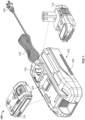
- FIG. 1 illustrates a system 100 including a battery charger 105, a first battery pack 110, and a second battery pack 115 according to some embodiments.
- the battery charger 105 may receive the first battery pack 110 and/or the second battery pack 115.
- the first battery pack 110 may have a first nominal charging voltage and the second battery pack 115 may have a second nominal charging voltage.
- the first nominal charging voltage may be different than the second nominal charging voltage.
- the battery charger 105 may charge the first battery pack 110 at the first nominal charging voltage and charge the second battery pack 115 at the second nominal charging voltage.
- the battery charger 105 may receive only the first battery pack 110 or the second battery pack 115.
- the first battery pack 110 and the second battery pack 115 may each include one or more battery cells, for example, lithium-ion battery cells or any other suitable battery cells.
- the first battery pack 110 and the second battery pack 115 may each be attachable to a power tool (or other electrical device) in order to supply operational power to the power tool when electrically and mechanically connected to the power tool (or other electrical device).
- the battery charger 105 may include a housing 120.
- the housing 120 may include a first battery pack interface 125 and a second battery pack interface 130.
- the first battery pack interface 125 may be different than the second battery pack interface 130.
- the first battery pack interface 125 may receive the first battery pack 110.
- the second battery pack interface 130 may receive the second battery pack 115.
- the first battery pack interface 125 may further include a plurality of battery receiving terminals and one or more rails to electrically and mechanically connect the first battery pack 110 to the first battery pack interface 125.
- the second battery pack interface 130 may further include a plurality of battery receiving terminals and one or more rails to electrically and mechanically connect the second battery pack 115 to the second battery pack interface 130.
- the battery charger 105 when the first battery pack 110 connects to the first battery pack interface 125, the battery charger 105 supplies a first charging current to charge the first battery pack 110 at the first nominal charging voltage. In some examples, when the second battery pack 115 connects to the second battery pack interface 130, the battery charger 105 supplies a second charging current to charge the second battery pack 115 at the second nominal charging voltage.
- the battery charger 105 may only include the first battery pack interface 125. In such examples, the first battery pack interface 125 may receive both the first battery pack 110 and the second battery pack 115. In such examples, when the first battery pack 110 connects to the first battery pack interface 125, the battery charger 105 supplies the first charging current to charge the first battery pack 110 at the first nominal charging voltage. In such an example, when the second battery pack 115 connects to the first battery pack interface 125, the battery charger 105 supplies the second charging current to charge the second battery pack 115 at the second nominal charging voltage.
- the battery charger 105 may further include a power input 135 (for example, a power input cord) and a plug 140.
- the power input 135 may be electrically and mechanically connected to the plug 140.
- the plug 140 may be received by an external power supply (e.g., a generator, a wall outlet, or the like) and the power input 135 may be received by the housing 120 to provide operational power to the components of the battery charger 105 via the external power supply.
- an external power supply e.g., a generator, a wall outlet, or the like
- FIG. 2 illustrates a top view of the battery charger 105 according to some embodiments.
- the battery charger 105 may further include an input receptacle 205.
- the input receptacle 205 may be disposed on the housing 120 and sized to receive the power input 135.
- the first battery pack interface 125 may further include a plurality of first battery receiving terminals 210 and one or more rails to electrically and mechanically connect the first battery pack 110 to the first battery pack interface 125.
- the battery charger 105 supplies the first charging current to charge the first battery pack 110 at the first nominal charging voltage.
- the plurality of first battery receiving terminals 210 provide an electrical and/or communicative connection between the battery charger 105 and the first battery pack 110 when the first battery pack 110 is attached to the battery charger 105.
- the one or more rails provide a mechanical connection between the battery charger 105 and the first battery pack 110 when the first battery pack 110 is attached to the battery charger 105.
- the second battery pack interface 130 may further include a plurality of second battery receiving terminals 215 and one or more rails to electrically and mechanically connect the second battery pack 115 to the second battery pack interface 130.
- the battery charger 105 supplies the second charging current to charge the second battery pack 115 at the second nominal charging voltage.
- the plurality of second battery receiving terminals 215 provide an electrical and/or communicative connection between the battery charger 105 and the second battery pack 115 when the second battery pack 115 is attached to the battery charger 105.
- the one or more rails provide a mechanical connection between the battery charger 105 and the second battery pack 115 when the second battery pack 115 is attached to the battery charger 105.
- the battery charger 105 may only include the first battery pack interface 125. In such examples, the first battery pack interface 125 includes the plurality of first battery receiving terminals 210 and the plurality of second battery receiving terminals 215.
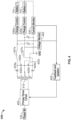
- FIG. 3 is a schematic of a power supply 300 of the battery charger 105 according to some embodiments.
- the power supply 300 may receive power from the power input 135.
- the power input 135 supplies power to a primary driver circuit 305 from the external power supply.
- the primary driver circuit 305 may further include (or be electrically connected to) a primary winding 310.
- the primary driver circuit 305 controls an amount of power (e.g., an alternating current at a voltage value from the external power supply) supplied to the primary winding 310.
- the primary winding 310 may generate a magnetic field that induces a transformed amount of power at a plurality of secondary windings 320a-320d.
- the plurality of secondary windings 320a-320d may provide improved power supply efficiency.
- the plurality of secondary windings 320a-320d may allow the power supply 300 to operate at an optimum point for the best efficiency at different nominal charging voltages.
- Each secondary winding of the plurality of secondary windings 320a-320d may include a different number of secondary turns.
- a first secondary winding 320a may include a first number of secondary turns
- a second secondary winding 320b may include a second number of secondary turns
- a third secondary winding 320c may include a third number of secondary turns
- a fourth secondary winding 320d may include a fourth number of secondary turns, and so on.
- a different amount of power may be induced at each secondary winding of the plurality of secondary windings 320a-320d. For example, a first amount of power may be induced at the first secondary winding 320a, a second amount of power may be induced at the second secondary winding 320b, and so on. Based on the amount of power induced at each secondary winding of the plurality of secondary windings 320a-320d, each secondary winding may generate a different nominal charging voltage.
- the primary driver circuit 305, the primary winding 310, the first secondary winding 320a, and the second secondary winding 320b form a resonant LLC converter (i.e., the converter includes two inductors and one capacitor).
- the first secondary winding 320a when the first battery pack 110 connects to the first battery pack interface 125, the first secondary winding 320a may connect to the first battery pack 110. Based on the first amount of power induced at the first secondary winding 320a, the first secondary winding 320a may generate the first nominal charging voltage for supply to the first battery pack 110. In some examples, when the second battery pack 115 connects to the second battery pack interface 130, the second secondary winding 320b may connect to the second battery pack 115. Based on the second amount of power induced at the second secondary winding 320b, the second secondary winding 320b may generate the second nominal charging voltage for supply to the second battery pack 115.
- any number of the plurality of secondary windings 320a-320d may be connected in combination to the first battery pack 110 to generate the first nominal charging voltage for supply to the first battery pack 110. In some examples, any number of the plurality of secondary windings 320a-320d may be connected in combination to the second battery pack 115 to generate the second nominal charging voltage for supply to the second battery pack 115.
- Each secondary winding of the plurality of secondary windings 320a-320d may connect to at least one of a plurality of secondary rectifier diodes 325a-325d.
- Each secondary rectifier diode of the plurality of secondary rectifier diodes 325a-325d may regulate each nominal charging voltage.
- each secondary rectifier diode of the plurality of secondary rectifier diodes 325a-325d may only allow a positive voltage cycle of each nominal charging voltage to be received by the first battery pack 110 or the second battery pack 115.
- each secondary rectifier diode of the plurality of secondary rectifier diodes 325a-325d may be a diode or a synchronous rectifier or other type of converter/rectifier.
- the first battery pack 110 may be connected to a first charger control circuit 330a.
- the first charger control circuit 330a may determine a first output voltage of the first secondary winding 320a based on the positive voltage cycle supplied from each secondary rectifier diode 325a-325d. Based on the first output voltage, the first charger control circuit 330a may regulate the first nominal charging voltage supplied to the first battery pack 110.
- the second battery pack 115 may be connected to a second charger control circuit 330b.
- the second charger control circuit 330b may determine a second output voltage of the second secondary winding 320b based on the positive voltage cycle supplied from each secondary rectifier diode 325a-325d.
- the second charger control circuit 330b may regulate the second nominal charging voltage supplied to the second battery pack 115.
- the first secondary winding 320a and the second secondary winding 320b may allow the first output voltage and the second output voltage to be closer to the first nominal charging voltage and the second nominal charging voltage, respectively, thus reducing the need for additional overcharge protection devices and increasing the safety of the power supply 300.
- the power supply 300 further includes a current monitoring circuit 335 and a voltage monitoring circuit 340.
- the current monitoring circuit 335 and the voltage monitoring circuit 340 may be connected to a controller 345, illustrated in FIG. 3 as a feedback and isolation circuit.
- the current monitoring circuit 335 may further include a current sensor.
- the current sensor may sense a first charging current supplied to the first battery pack 110 and/or a second charging current supplied to the second battery pack 115.
- the use of the current monitoring circuit 335 to monitor the charging current supplied to each battery pack 110, 115 may allow for reduced size and complexity of the power supply 300.
- the voltage monitoring circuit 340 may further include (or be electrically/communicatively coupled to) a voltage sensor.
- the voltage sensor may sense the first nominal charging voltage supplied to the first battery pack 110 and/or the second nominal charging voltage supplied to the second battery pack 115.
- the controller 345 may receive a signal from the current sensor and/or the voltage sensor indicative of a characteristic (e.g., a charging current or a nominal charging voltage) of the first secondary winding 320a or the second secondary winding 320b. Based on the signal, the controller 345 may control the primary driver circuit 305. For example, the controller 345 may control the primary driver circuit 305 to increase/decrease the amount of power supplied to the primary winding 310.
- the signal is indicative of the first charging current and the second charging current.
- the primary driver circuit 305 may be controlled by the controller 345 to supply an amount of power to the plurality of secondary windings 320a-320d based on the first charging current and the second charging current.
- the first secondary winding 320a may generate the first nominal charging voltage based on the first charging current
- the second secondary winding 320b may generate the second nominal charging voltage based on the second charging current.
- FIG. 4 is a schematic of a power supply 400 of the battery charger 105 according to some embodiments.
- the power supply 400 may receive power from the power input 135.
- the power input 135 supplies power to a primary driver circuit 405 from the external power supply.
- the primary driver circuit 405 may further include a primary winding 410.
- the primary driver circuit 405 may be electrically connected to the primary winding 410.
- the primary driver circuit 405 controls an amount of power (e.g., an alternating current at a voltage value from the external power supply) supplied to the primary winding 410.
- the primary winding 410 When the primary winding 410 is supplied power, the primary winding 410 may generate a magnetic field that induces a transformed amount of power at a plurality of secondary windings 420a-420b.
- the plurality of secondary windings 420a-420b may provide improved power supply efficiency.
- the plurality of secondary windings 420a-420b may allow the power supply 400 to operate at an optimum point for the best efficiency at different nominal charging voltages.
- Each secondary winding of the plurality of secondary windings 420a-420b may include a different number of secondary turns.
- a first secondary winding 420a may include a first number of secondary turns
- a second secondary winding 420b may include a second number of secondary turns, and so on.
- a different amount of power may be induced at each secondary winding of the plurality of secondary windings 420a-420b. For example, a first amount of power may be induced at the first secondary winding 420a, a second amount of power may be induced at the second secondary winding 420b, and so on. Based on the amount of power induced at each secondary winding of the plurality of secondary windings 420a-420b, each secondary winding may generate a different nominal charging voltage.
- the primary driver circuit 405, the primary winding 410, the first secondary winding 420a, and the second secondary winding 420b form a forward converter.
- the first secondary winding 420a when the first battery pack 110 connects to the first battery pack interface 125, the first secondary winding 420a may connect to the first battery pack 110. Based on the first amount of power induced at the first secondary winding 420a, the first secondary winding 420a may generate the first nominal charging voltage for supply to the first battery pack 110. In some examples, when the second battery pack 115 connects to the second battery pack interface 130, the second secondary winding 420b may connect to the second battery pack 115. Based on the second amount of power induced at the second secondary winding 420b, the second secondary winding 420b may generate the second nominal charging voltage for supply to the second battery pack 115.
- any number of the plurality of secondary windings 420a-420b may be connected in combination to the first battery pack 110 to generate the first nominal charging voltage for supply to the first battery pack 110. In some examples, any number of the plurality of secondary windings 420a-420b may be connected in combination to the second battery pack 115 to generate the second nominal charging voltage for supply to the second battery pack 115.
- Each secondary winding of the plurality of secondary windings 420a-420b may connect to at least one of a plurality of secondary rectifier diodes 425a-425d.
- Each secondary rectifier diode of the plurality of secondary rectifier diodes 425a-425d may regulate each nominal charging voltage.
- each secondary rectifier diode of the plurality of secondary rectifier diodes 425a-425d may only allow a positive voltage cycle of each nominal charging voltage to be received by the first battery pack 110 or the second battery pack 115.
- each secondary rectifier diode of the plurality of secondary rectifier diodes 425a-425d may be a diode or a synchronous rectifier.
- a first inductor 427a may be connected between the plurality of secondary rectifier diodes 425a-425d and the first battery pack 110 to limit the charging current supplied to the first battery pack 110.
- a second inductor 427b may be connected between the plurality of secondary rectifier diodes 425a-425d and the second battery pack 115 to limit the charging current supplied to the second battery pack 115.
- the first battery pack 110 may be connected to a first charger control circuit 430a.
- the first charger control circuit 430a may determine a first output voltage of the first secondary winding 420a based on the positive voltage cycle supplied from each secondary rectifier diode 425a-425d. Based on the first output voltage, the first charger control circuit 430a may regulate the first nominal charging voltage supplied to the first battery pack 110.
- the second battery pack 115 may be connected to a second charger control circuit 430b.
- the second charger control circuit 430b may determine a second output voltage of the second secondary winding 420b based on the positive voltage cycle supplied from each secondary rectifier diode 425a-425d.
- the second charger control circuit 430b may regulate the second nominal charging voltage supplied to the second battery pack 115.
- the first secondary winding 420a and the second secondary winding 420b may allow the first output voltage and the second output voltage to be closer to the first nominal charging voltage and the second nominal charging voltage, respectively, thus reducing the need for additional overcharge protection devices and increasing the safety of the power supply 400.
- a first secondary rectifier diode 425a may be placed in parallel with a second secondary reference diode 425b.
- the power supply 400 may be reset during an off time (e.g., a time when no magnetic field is generated by the primary winding 410) of the power supply 400.
- resetting the power supply 400 may provide a greater output power efficiency and lower output ripple current from the first secondary winding 420a and/or the second secondary winding 420b.
- the power supply 400 further includes a current monitoring circuit 435 and a voltage monitoring circuit 440.
- the current monitoring circuit 435 and the voltage monitoring circuit 440 may be connected to a controller 445, illustrated in FIG. 4 as a feedback and isolation circuit.
- the current monitoring circuit 435 may further include a current sensor.
- the current sensor may sense a first charging current supplied to the first battery pack 110 and/or a second charging current supplied to the second battery pack 115.
- the use of the current monitoring circuit 435 to monitor the charging current supplied to each battery pack 110, 115 may allow for reduced size and complexity of the power supply 400.
- the voltage monitoring circuit 440 may further include a voltage sensor.
- the voltage sensor may sense the first nominal charging voltage supplied to the first battery pack 110 and/or the second nominal charging voltage supplied to the second battery pack 115.
- the controller 445 may receive a signal from the current sensor or the voltage sensor indicative of a characteristic (e.g., a charging current or a nominal charging voltage) of the first secondary winding 420a or the second secondary winding 420b. Based on the signal, the controller 445 may control the primary driver circuit 405. For example, the controller 445 may control the primary driver circuit 405 to limit the amount of power supplied to the primary winding 410.
- the signal is indicative of the first charging current and the second charging current.
- the primary driver circuit 405 may be controlled by the controller 445 to supply an amount of power to the plurality of secondary windings 420a-420b based on the first charging current and the second charging current.
- the first secondary winding 420a may generate the first nominal charging voltage based on the first charging current
- the second secondary winding 420b may generate the second nominal charging voltage based on the second charging current.
- FIG. 5 is a schematic of a power supply 500 of the battery charger 105 according to some embodiments.
- the power supply 500 may receive power from the power input 135.
- the power input 135 supplies power to a primary driver circuit 505 from the external power supply.
- the primary driver circuit 505 may further include a primary winding 510.
- the primary driver circuit 505 may be electrically connected to the primary winding 510.
- the primary driver circuit 505 controls an amount of power (e.g., an alternating current at a voltage value from the external power supply) supplied to the primary winding 510.
- the primary winding 510 When the primary winding 510 is supplied power, the primary winding 510 may generate a magnetic field that induces a transformed amount of power at a plurality of secondary windings 520a-520b.
- the plurality of secondary windings 520a-520b may provide improved power supply efficiency.
- the plurality of secondary windings 520a-520b may allow the power supply 500 to operate at an optimum point for the best efficiency at different nominal charging voltages.
- Each secondary winding of the plurality of secondary windings 520a-520b may include a different number of secondary turns.
- a first secondary winding 520a may include a first number of secondary turns
- a second secondary winding 520b may include a second number of secondary turns, and so on.
- a different amount of power may be induced at each secondary winding of the plurality of secondary windings 520a-520b. For example, a first amount of power may be induced at the first secondary winding 520a, a second amount of power may be induced at the second secondary winding 520b, and so on. Based on the amount of power induced at each secondary winding of the plurality of secondary windings 520a-520b, each secondary winding may generate a different nominal charging voltage.
- the primary driver circuit 505, the primary winding 510, the first secondary winding 520a, and the second secondary winding 520b form a flyback converter.
- the first secondary winding 520a when the first battery pack 110 connects to the first battery pack interface 125, the first secondary winding 520a may connect to the first battery pack 110. Based on the first amount of power induced at the first secondary winding 520a, the first secondary winding 520a may generate the first nominal charging voltage for supply to the first battery pack 110. In some examples, when the second battery pack 115 connects to the second battery pack interface 130, the second secondary winding 520b may connect to the second battery pack 115. Based on the second amount of power induced at the second secondary winding 520b, the second secondary winding 520b may generate the second nominal charging voltage for supply to the second battery pack 115.
- any number of the plurality of secondary windings 520a-520b may be connected in combination to the first battery pack 110 to generate the first nominal charging voltage for supply to the first battery pack 110. In some examples, any number of the plurality of secondary windings 520a-520b may be connected in combination to the second battery pack 115 to generate the second nominal charging voltage for supply to the second battery pack 115.
- Each secondary winding of the plurality of secondary windings 520a-520b may connect to at least one of a plurality of secondary rectifier diodes 525a-525b.
- Each secondary rectifier diode of the plurality of secondary rectifier diodes 525a-525b may regulate each nominal charging voltage.
- each secondary rectifier diode of the plurality of secondary rectifier diodes 525a-525b may only allow a positive voltage cycle of each nominal charging voltage to be received by the first battery pack 110 or the second battery pack 115.
- each secondary rectifier diode of the plurality of secondary rectifier diodes 525a-525b may be a diode or a synchronous rectifier.
- the first battery pack 110 may be connected to a first charger control circuit 530a.
- the first charger control circuit 530a may determine a first output voltage of the first secondary winding 520a based on the positive voltage cycle supplied from each secondary rectifier diode 525a-525d. Based on the first output voltage, the first charger control circuit 530a may regulate the first nominal charging voltage supplied to the first battery pack 110.
- the second battery pack 115 may be connected to a second charger control circuit 530b.
- the second charger control circuit 530b may determine a second output voltage of the second secondary winding 520b based on the positive voltage cycle supplied from each secondary rectifier diode 525a-525b.
- the second charger control circuit 530b may regulate the second nominal charging voltage supplied to the second battery pack 115.
- the first secondary winding 520a and the second secondary winding 520b may allow the first output voltage and the second output voltage to be closer to the first nominal charging voltage and the second nominal charging voltage, respectively, thus reducing the need for additional overcharge protection devices and increasing the safety of the power supply 500.
- the power supply 500 further includes a current monitoring circuit 535 and a voltage monitoring circuit 540.
- the current monitoring circuit 535 and the voltage monitoring circuit 540 may be connected to a controller 545, illustrated in FIG. 5 as a feedback and isolation circuit.
- the current monitoring circuit 535 may further include a current sensor.
- the current sensor may sense a first charging current supplied to the first battery pack 110 and/or a second charging current supplied to the second battery pack 115.
- the use of the current monitoring circuit 535 to monitor the charging current supplied to each battery pack 110, 115 may allow for reduced size and complexity of the power supply 500.
- the voltage monitoring circuit 540 may further include a voltage sensor.
- the voltage sensor may sense the first nominal charging voltage supplied to the first battery pack 110 and/or the second nominal charging voltage supplied to the second battery pack 115.
- the controller 545 may receive a signal from the current sensor or the voltage sensor indicative of a characteristic (e.g., a charging current or a nominal charging voltage) of the first secondary winding 520a or the second secondary winding 520b. Based on the signal, the controller 545 may control the primary driver circuit 505. For example, the controller 545 may control the primary driver circuit 505 to limit the amount of power supplied to the primary winding 510.
- the signal is indicative of the first charging current and the second charging current.
- the primary driver circuit 505 may be controlled by the controller 545 to supply an amount of power to the plurality of secondary windings 520a-520b based on the first charging current and the second charging current.
- the first secondary winding 520a may generate the first nominal charging voltage based on the first charging current
- the second secondary winding 520b may generate the second nominal charging voltage based on the second charging current.
- the battery charger 105 may include a control system 600 for suppling an amount of power to the first battery pack 110 and/or the second battery pack 115.
- the control system 600 may be any one of the controllers 345, 445, 545.
- FIG. 6 is a block diagram of the control system 600 of the battery charger 105, according to some examples.
- the control system 600 may include a controller 605, as well as other components not pictured in FIG. 6 , for example a motor, a solenoid, and/or other mechanical and/or electrical components described above.
- the primary driver circuit 305, 405, 505 may include the controller 605.
- the controller 605 may include a processing unit 610 comprising a control unit 615, an arithmetic logic unit 620, and one or more registers 625.
- the controller 605 may further include a memory 630 consisting of program storage 635 and/or data storage 640.
- the memory 630 may be flash memory, random access memory, solid state memory, another type of memory, or a combination of these types.
- the controller 605 may further include one or more input units 645 and/or output units 650.
- the one or more input units 645 may be configured to receive a plurality of inputs such as a signal indicative of the characteristic (e.g., the charging current or the nominal charging voltage) of the first secondary winding 320a, 420a, 520a or the second secondary winding 320b, 420b, 520b.
- the one or more output units 650 may be configured to transmit a plurality of outputs such as a signal to control the amount of power provided to the primary winding 310, 410, 510, a signal to control a plurality of light-emitting diodes (LEDs), or a signal to control a plurality of FETs of the motor.
- a plurality of inputs such as a signal indicative of the characteristic (e.g., the charging current or the nominal charging voltage) of the first secondary winding 320a, 420a, 520a or the second secondary winding 320b, 420b, 520b.
- the one or more output units 650 may be configured to transmit a plurality
- the memory 630 is a non-transitory computer readable medium that includes, for example, a program storage area and a data storage area.
- the program storage area and the data storage area can include combinations of different types of memory, such as read-only memory (“ROM”), random access memory (“RAM”) (e.g., dynamic RAM ["DRAM”], synchronous DRAM ["SDRAM”], etc.), electrically erasable programmable read-only memory (“EEPROM”), flash memory, a hard disk, an SD card, or other suitable magnetic, optical, physical, or electronic memory devices.
- ROM read-only memory
- RAM random access memory
- EEPROM electrically erasable programmable read-only memory
- flash memory a hard disk, an SD card, or other suitable magnetic, optical, physical, or electronic memory devices.
- the processing unit 610 is connected to the memory 630 and executes software instructions that are capable of being stored in a RAM of the memory 630 (e.g., during execution), a ROM of the memory 630 (e.g., on a generally permanent basis), or another non-transitory computer readable medium such as another memory or a disc.
- Software included in the implementation of the primary driver circuit 305, 405, 505, the first battery pack 110, or the second battery pack 115 can be stored in the memory 630 of the controller 605.
- the software includes, for example, firmware, one or more applications, program data, filters, rules, one or more program modules, and other executable instructions.
- the controller 605 may retrieve from memory and execute, among other things, instructions related to the control of the charging of the first battery pack 110 or the second battery pack 115 described herein. In other constructions, the controller 605 includes additional, fewer, or different components.
- a first battery pack 655a may include a stack 660a consisting of one or more battery cells 665a-665d.
- the one or more battery cells 665a-665d e.g., lithium ion cells or cells having similar chemistry
- the one or more battery cells 665a-665d are electrically connected to each other in a series-type manner.
- the one or more battery cells 665a-665d are electrically connected to each other in a parallel-type manner.
- the one or more battery cells 665a-665d are electrically connected to each other in a combination of a series-type and a parallel-type manner.
- the first battery pack 655a may further include a battery controller 670a consisting of a battery processor 675a and a battery memory 680a.
- the first battery pack 655a may further include a positive battery terminal 685a and a negative battery terminal 690a.
- the positive battery terminal 685a and the negative battery terminal 690a may be configured to electrically and/or mechanically couple to the first battery receiving terminals 210 and/or the second battery receiving terminals 215 of the battery charger 105.
- the first battery pack 655a includes a communication terminal 695a, which may be configured to electrically, mechanically, and/or communicatively couple to one or more communication terminals of the battery charger 105.
- the first battery pack 655a may further include a first temperature sensor.
- the first temperature sensor may sense first battery temperature information (e.g., a temperature of the one or more battery cells 665a-665d) and transmit the first battery temperature information to the controller 605 via the communication terminal 695a.
- the controller 605 may control the charging current supplied to the one or more battery cells 665a-665d based on the first battery temperature information.
- the one or more battery cells 665a-665d are connected to the battery controller 670a.
- the battery controller 670a controls the power delivered to the positive battery terminal 685a and the negative battery terminal 690a (for example, via control of a discharge field-effect transistor (FET), a charge FET, and/or other FETs located within the battery pack).
- the battery controller 670a controls the power by allowing or prohibiting power.
- the battery controller 670a controls the power by allowing a percentage of power generated by the one or more battery cells 665a-665d to be output.
- the amount of power delivered between the battery terminals 685a, 690a is approximately 100% of power possibly generated by the one or more battery cells 665a-665d.
- a second battery pack 655b such as the second battery pack 115, may include a stack 660b consisting of one or more battery cells 665e-665h.
- the one or more battery cells 665e-665h e.g., lithium ion cells or cells having similar chemistry
- the one or more battery cells 665e-665h are electrically connected to each other in a series-type manner.
- the one or more battery cells 665e-665h are electrically connected to each other in a parallel-type manner.
- the one or more battery cells 665e-665h are electrically connected to each other in a combination of a series-type and a parallel-type manner.
- the second battery pack 655b may further include a battery controller 670b consisting of a battery processor 675b and a battery memory 680b.
- the second battery pack 655b may further include a positive battery terminal 685b and a negative battery terminal 690b.
- the positive battery terminal 685b and the negative battery terminal 690b may be configured to electrically and/or mechanically couple to the first battery receiving terminals 210 and/or the second battery receiving terminals 215 of the battery charger 105.
- the second battery pack 655b includes a communication terminal 695b, which may be configured to electrically, mechanically, and/or communicatively couple to one or more communication terminals of the battery charger 105.
- the second battery pack 655b may further include a second temperature sensor.
- the second temperature sensor may sense second battery temperature information (e.g., a temperature of the one or more battery cells 665e-665h) and transmit the second battery temperature information to the controller 605 via the communication terminal 695b.
- the controller 605 may control the charging current supplied to the one or more battery cells 665e-665h based on the second battery temperature information.
- the one or more battery cells 665e-665h are connected to the battery controller 670b.
- the battery controller 670b controls the power delivered to the positive battery terminal 685b and the negative battery terminal 690b (for example, via control of a discharge field-effect transistor (FET), a charge FET, and/or other FETs located within the battery pack).
- FET discharge field-effect transistor
- the battery controller 670b controls the power by allowing or prohibiting power.
- the battery controller 670b controls the power by allowing a percentage of power generated by the one or more battery cells 665e-665h to be output.
- the amount of power delivered between the battery terminals 685b, 690b is approximately 100% of power possibly generated by the one or more battery cells 665e-665h.
- the controller 605 receives a first battery voltage signal, indicative of a first voltage (or the first nominal charging voltage of the first secondary winding 320a, 420a, 520a), from the battery terminals 685a, 690a.
- the controller 605 may receive the first battery voltage signal via a sensor located within the first battery pack 655a or the battery charger 105.
- the controller 605 receives the first battery voltage signal from the communication terminal 695a.
- the controller 605 may also receive a second battery voltage signal, indicative of a second voltage (or the second nominal charging voltage of the second secondary winding 320b, 420b, 520b), from the battery terminals 685b, 690b.
- the controller 605 may receive the second battery voltage signal via a sensor located within the second battery pack 655b or the battery charger 105. In other embodiments, the controller 605 receives the second battery voltage signal from the communication terminal 695a. In some embodiments, the controller 605 may control the primary driver circuit 305, 405, 505 based on the first battery voltage signal and the second battery voltage signal. For example, the controller 605 may control the primary driver circuit 305, 405, 505 to limit the power supplied to the primary winding 310, 410, 510.
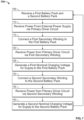
- FIG. 7 is a flowchart illustrating a method 700 for operating a battery charger 105 of a system 100, according to some embodiments. It should be understood that the order of the steps disclosed in the method 700 could vary. For example, additional steps may be added to the process and not all of the steps may be required, or steps shown in one order may occur in a second order.
- the method 700 begins at step 705 when battery charger 105 receives the first battery pack 110 (e.g., the first battery pack interface 125 receives the first battery pack 110 having the first nominal charging voltage) and the battery charger 105 receives the second battery pack 115 (e.g., the second battery pack interface 130 receives the second battery pack 115 having the second nominal charging voltage). In some examples, the second battery pack interface 130 may be different than the first battery pack interface 125.
- the method 700 then proceeds to step 710.
- the primary driver circuit 305, 405, 505 receives an amount of power from the external power supply via the power input 135.
- the primary driver circuit 305, 405, 505 may include the primary winding 310, 410, 510.
- the method 700 then proceeds to step 715.
- step 715 when the first battery pack 110 is received by the first battery pack interface 125, the first secondary winding 320a, 420a, 520a connects to the first battery pack 110 via the first battery pack interface 125.
- the method 700 then proceeds to step 720.
- the first secondary winding 320a, 420a, 520a receives an amount of power from the primary driver circuit 305, 405, 505 via the primary winding 310, 410, 510.
- the method 700 then proceeds to step 725.
- the first secondary winding 320a, 420a, 520a generates the first nominal charging voltage for supply to the first battery pack 110 based on the amount of power received from the primary driver circuit 305, 405, 505 and the first number of secondary turns of the first secondary winding 320a, 420a, 520a.
- the method 700 then proceeds to step 730.
- the second secondary winding 320b, 420b, 520b connects to the second battery pack 115 via the second battery pack interface 130.
- the method 700 then proceeds to step 735.
- the second secondary winding 320b, 420b, 520b receives the amount of power from the primary driver circuit 305, 405, 505 via the primary winding 310, 410, 510.
- the method 700 then proceeds to step 740.
- the second secondary winding 320b, 420b, 520b generates the second nominal charging voltage for supply to the second battery pack 115 based on the amount of power received from the primary driver circuit 305, 405, 505 and the second number of secondary turns of the second secondary winding 320b, 420b, 520b.
- the method 700 may return to step 710 to continue receiving the amount of power from the external power supply at the primary driver circuit 305, 405, 505 until the first battery pack 110 reaches a first charge threshold and the second battery pack 115 reaches a second charge threshold.
- the first charge threshold may be indicative of the first battery pack 110 being sufficiently charged.
- the second charge threshold may be indicative of the second battery pack 115 being sufficiently charged.
- the battery charger 105 may only include the first battery pack interface 125.
- the first battery pack interface 125 may receive both the first battery pack 110 and the second battery pack 115.
- the battery charger 105 may perform steps 710-725 as described above. Once the first nominal charging voltage is generated by the first secondary winding 320a, 420a, 520a at step 725, the method 700 may return to step 710 to continue receiving the amount of power from the external power supply at the primary driver circuit 305, 405, 505 until the first battery pack 110 reaches the first charge threshold.
- the battery charger 105 may perform steps 710 and 730-740 as described above. Once the second nominal charging voltage is generated by the second secondary winding 320b, 420b, 520b at step 740, the method 700 may return to step 710 to continue receiving the amount of power from the external power supply at the primary driver circuit 305, 405, 505 until the second battery pack 115 reaches the second charge threshold.
- FIG. 8 is a schematic of a power supply 800 of the battery charger 105 according to some embodiments.
- the power supply 800 may receive power from the power input 135.
- the power input 135 supplies power to a primary driver circuit 805 from the external power supply.
- the primary driver circuit 805 may further include (or be electrically connected to) a primary winding 810.
- the primary driver circuit 805 controls an amount of power (e.g., an alternating current at a voltage value from the external power supply) supplied to the primary winding 810.
- the primary winding 810 may generate a magnetic field that induces a transformed amount of power induced at a plurality of secondary windings 820a-820d.
- the plurality of secondary windings 820a-820d may provide improved power supply efficiency.
- the plurality of secondary windings 820a-820d may allow the power supply 800 to operate at an optimum point for the best efficiency at different nominal charging voltages.
- Each secondary winding of the plurality of secondary windings 820a-820d may include a different number of secondary turns.
- a first secondary winding 820a may include a first number of secondary turns
- a second secondary winding 820b may include a second number of secondary turns
- a third secondary winding 820c may include a third number of secondary turns
- a fourth secondary winding 820d may include a fourth number of secondary turns, and so on.
- a different amount of power may be induced at each secondary winding of the plurality of secondary windings 820a-820d. For example, a first amount of power may be induced at the first secondary winding 820a, a second amount of power may be induced at the second secondary winding 820b, and so on. Based on the amount of power induced at each secondary winding of the plurality of secondary windings 820a-820d, each secondary winding may generate a different nominal charging voltage.
- the primary driver circuit 805, the primary winding 810, the first secondary winding 820a, and the second secondary winding 820b form a resonant LLC converter (i.e., the converter includes two inductors and one capacitor).
- the first secondary winding 820a when the first battery pack 110 connects to the first battery pack interface 125, the first secondary winding 820a may connect to the first battery pack 110. Based on the first amount of power induced at the first secondary winding 820a, the first secondary winding 820a may generate the first nominal charging voltage for supply to the first battery pack 110. In some examples, when the second battery pack 115 connects to the second battery pack interface 130, the second secondary winding 820b may connect to the second battery pack 115. Based on the second amount of power induced at the second secondary winding 820b, the second secondary winding 820b may generate the second nominal charging voltage for supply to the second battery pack 115.
- any number of the plurality of secondary windings 820a-820d may be connected in combination to the first battery pack 110 to generate the first nominal charging voltage for supply to the first battery pack 110. In some examples, any number of the plurality of secondary windings 820a-820d may be connected in combination to the second battery pack 115 to generate the second nominal charging voltage for supply to the second battery pack 115.
- the battery charger 105 includes a third battery pack interface. The third battery pack interface may connect to a third battery pack. In some examples, the third battery pack may be one of the first battery pack 110 or the second battery pack 115.
- the third battery pack may be a different battery pack (e.g., the third battery pack including a third nominal charging voltage) than the first battery pack 110 or the second battery pack 115.
- the third secondary winding 820c may connect to the third battery pack. Based on a third amount of power induced at the third secondary winding 820c, the third secondary winding 820c may generate the third nominal charging voltage for supply to the third battery pack.
- any number of the plurality of secondary windings 820a-820d may be connected in combination to the third battery pack to generate the third nominal charging voltage for supply to the third battery pack.
- Each secondary winding of the plurality of secondary windings 820a-820d may connect to at least one of a plurality of secondary rectifier diodes 825a-825d.
- Each secondary rectifier diode of the plurality of secondary rectifier diodes 825a-825d may regulate each nominal charging voltage.
- each secondary rectifier diode of the plurality of secondary rectifier diodes 825a-825d may only allow a positive voltage cycle of each nominal charging voltage to be received by the first battery pack 110 or the second battery pack 115.
- each secondary rectifier diode of the plurality of secondary rectifier diodes 825a-825d may be a diode or a synchronous rectifier or other type of converter/rectifier.
- the first battery pack 110 may be connected to a first charger control circuit 830a.
- the first charger control circuit 830a may determine a first output voltage of the first secondary winding 820a based on the positive voltage cycle supplied from each secondary rectifier diode 825a-825d. Based on the first output voltage, the first charger control circuit 830a may regulate the first nominal charging voltage supplied to the first battery pack 110.
- the second battery pack 115 may be connected to a second charger control circuit 830b.
- the second charger control circuit 830b may determine a second output voltage of the second secondary winding 820b based on the positive voltage cycle supplied from each secondary rectifier diode 825a-825d.
- the second charger control circuit 830b may regulate the second nominal charging voltage supplied to the second battery pack 115.
- the first secondary winding 820a and the second secondary winding 820b may allow the first output voltage and the second output voltage to be closer to the first nominal charging voltage and the second nominal charging voltage, respectively, thus reducing the need for additional overcharge protection devices and increasing the safety of the power supply 800.
- the power supply 800 further includes a current monitoring circuit 835 and a voltage monitoring circuit 840.
- the current monitoring circuit 835 and the voltage monitoring circuit 840 may be connected to a controller 845, illustrated in FIG. 8 as a feedback and isolation circuit.
- the current monitoring circuit 835 may further include a current sensor.
- the current sensor may sense a first charging current supplied to the first battery pack 110 and/or a second charging current supplied to the second battery pack 115.
- the use of the current monitoring circuit 835 to monitor the charging current supplied to each battery pack 110, 115 may allow for reduced size and complexity of the power supply 800.
- the voltage monitoring circuit 840 may further include (or be electrically/communicatively coupled to) a voltage sensor.
- the voltage sensor may sense the first nominal charging voltage supplied to the first battery pack 110 and/or the second nominal charging voltage supplied to the second battery pack 115.
- the controller 845 may receive a signal from the current sensor and/or the voltage sensor indicative of a characteristic (e.g., a charging current or a nominal charging voltage) of the first secondary winding 820a or the second secondary winding 820b. Based on the signal, the controller 845 may control the primary driver circuit 805. For example, the controller 845 may control the primary driver circuit 805 to increase/decrease the amount of power supplied to the primary winding 810.
- the signal is indicative of the first charging current and the second charging current.
- the primary driver circuit 805 may be controlled by the controller 845 to supply an amount of power to the plurality of secondary windings 820a-820d based on the first charging current and the second charging current.
- the first secondary winding 820a may generate the first nominal charging voltage based on the first charging current
- the second secondary winding 820b may generate the second nominal charging voltage based on the second charging current.
- the battery charger 105 including the power supply 800 performs the method 700.
- steps 705-725 are performed in the same manner as described above with reference to FIG. 7 .
- the first secondary winding 820a generates the first nominal charging voltage for supply to the first battery pack 110 based on the amount of power received from the primary driver circuit 805 and the first number of secondary turns of the first secondary winding 820a.
- the method 700 may proceed to step 730 after the first battery pack 110 is fully charged. For example, when the first battery pack 110 is charged to 100% battery capacity based on the first nominal charging voltage received from the first secondary winding 820a, the method 700 proceeds to step 730, which is commonly referred to as sequential charging.
- steps 730-740 are performed in the same manner as described above with reference to FIG. 7 for the second battery pack 115.
- the method 700 may return to step 710 after the second battery pack 115 is fully charged. For example, when the second battery pack 115 is charged to 100% battery capacity based on the second nominal charging voltage received from the second secondary winding 820b, the method 700 returns to step 710.
Landscapes
- Engineering & Computer Science (AREA)
- Power Engineering (AREA)
- Manufacturing & Machinery (AREA)
- Chemical & Material Sciences (AREA)
- Chemical Kinetics & Catalysis (AREA)
- Electrochemistry (AREA)
- General Chemical & Material Sciences (AREA)
- Charge And Discharge Circuits For Batteries Or The Like (AREA)
- Secondary Cells (AREA)
Abstract
Description
- The present disclosure relates to battery chargers.
- Battery chargers may receive one or more battery packs and charge the one or more battery packs by providing a charging current to each battery pack of the one or more battery packs. Battery chargers may also include an internal power supply (e.g., a converter, a transformer, or the like) to receive power from an external power supply and provide the charging current to charge each battery pack of the one or more battery packs at a nominal charging voltage. Internal power supplies may include a primary winding to receive the charging current from the external power supply and transform the charging current across a secondary winding to achieve the nominal charging voltage, however, known designs may be met with efficiency, safety, and size constraints.
- The disclosure provides, in one aspect, a charger including a first battery pack interface, a second battery pack interface, a primary driver circuit, a first secondary winding, and a second secondary winding. The first battery pack interface receives a first battery pack having. The second battery pack interface receives a second battery pack. The second battery pack interface being different than the first battery pack interface. The primary driver circuit receives power from an external power supply. The primary driver circuit includes a primary winding. The first secondary winding is connected to the first battery pack interface for receiving power from the primary winding and generating a first nominal charging voltage for supply to the first battery pack when the first battery pack is received by the first battery pack interface. The second secondary winding is connected to the second battery pack interface for receiving power from the primary winding and generating a second nominal charging voltage for supply to the second battery pack when the second battery pack is received by the second battery pack interface.
- In some aspects, the charger further includes a controller and a sensor.
- In some aspects, the controller receives a signal from the sensor indicative of a characteristic of at least one selected from a group consisting of the first secondary winding and the second secondary winding. The controller controls the primary driver circuit based on the signal.
- In some aspects, the charger further includes a first charger control circuit. The first charger control circuit determines a first output voltage of the first secondary winding. The first charger control circuit regulates, in response to the first output voltage, the first nominal charging voltage.
- In some aspects, the charger further includes a second charger control circuit. The second charger control circuit determines a second output voltage of the second secondary winding. The second charger control circuit regulates, in response to the second output voltage, the second nominal charging voltage.
- In some aspects, the charger further includes a current sensor connected to the first secondary winding or the second secondary winding.
- In some aspects, the current sensor senses a first charging current supplied to the first battery pack and senses a second charging current supplied to the second battery pack.
- In some aspects, the first secondary winding generates the first nominal charging voltage based on the first charging current and the second secondary winding generates the second nominal charging voltage based on the second charging current.
- In some aspects, the primary driver circuit, the first secondary winding, and the second secondary winding form an LLC converter.
- The disclosure provides, in another aspect, a method of operating a charger. The method includes receiving, via a first battery pack interface, a first battery pack. The method further includes receiving, via a second battery pack interface, a second battery pack, the second battery pack interface being different than the first battery pack interface. The method further includes receiving, via a primary driver circuit, power from an external power supply, the primary driver circuit including a primary winding. The method further includes connecting, via the first battery pack interface, a first secondary winding to the first battery pack interface. The method further includes receiving, via the first secondary winding, power from the primary winding. The method further includes generating, via the first secondary winding, a first nominal charging voltage for supply to the first battery pack when the first battery pack is received by the first battery pack interface. The method further includes connecting, via the second battery pack interface, a second secondary winding to the second battery pack interface. The method further includes receiving, via the second secondary winding, power from the primary winding. The method further includes generating, via the second secondary winding, a second nominal charging voltage for supply to the second battery pack when the second battery pack is received by the second battery pack interface.
- In some aspects, the method further includes receiving, via a controller, a signal from a sensor indicative of a characteristic of at least one selected from a group consisting of the first secondary winding and the second secondary winding. The method further includes controlling, via the controller, the primary driver circuit based on the signal.
- In some aspects, the charger further includes a first charger control circuit. The method further includes determining, via the first charger control circuit, a first output voltage of the first secondary winding and regulating, via the first charger control circuit and in response to the first output voltage, the first nominal charging voltage.
- In some aspects, the charger further includes a second charger control circuit. The method further includes determining, via the second charger control circuit, a second output voltage of the second secondary winding and regulating, via the second charger control circuit and in response to the second output voltage, the second nominal charging voltage.
- In some aspects, the charger further includes a current sensor connected to the first secondary winding or the second secondary winding.
- In some aspects, the method further includes sensing, via the current sensor, a first charging current supplied to the first battery pack and sensing, via the current sensor, a second charging current supplied to the second battery pack.
- In some aspects, the first secondary winding generates the first nominal charging voltage based on the first charging current and the second secondary winding generates the second nominal charging voltage based on the second charging current.
- The disclosure provides, in another aspect, a charger including a battery pack interface, a primary driver circuit, a first secondary winding, and a second secondary winding. The battery pack interface receives a first battery pack having a first battery pack interface and receives a second battery pack having a second battery pack interface, the second battery pack interface being different than the first battery pack interface. The primary driver circuit receives power from an external power supply. The primary driver circuit includes a primary winding. In response to the battery pack interface receiving the first battery pack, the first secondary winding is connected to the first battery pack interface for receiving power from the primary winding and generates the first nominal charging voltage for supply to the first battery pack. In response to the battery pack interface receiving the second battery pack, the second secondary winding is connected to the second battery pack interface for receiving power from the primary winding and generates the second nominal charging voltage for supply to the second battery pack.
- In some aspects, the charger further includes a controller and a sensor.
- In some aspects, the controller receives a signal from the sensor indicative of a characteristic of at least one selected from a group consisting of the first secondary winding and the second secondary winding. The controller controls the primary driver circuit based on the signal.
- In some aspects, the charger further includes a first charger control circuit. The first charger control circuit determines a first output voltage of the first secondary winding and regulates, in response to the first output voltage, the first nominal charging voltage.
- Other aspects of the disclosure will become apparent by consideration of the detailed description and accompanying drawings.
-
-
FIG. 1 illustrates a system including a battery charger, a first battery pack, and a second battery pack, in accordance with an embodiment of the disclosure. -
FIG. 2 illustrates a top view of the battery charger of the system ofFIG. 1 , in accordance with an embodiment of the disclosure. -
FIG. 3 is a schematic of a power supply of a battery charger, in accordance with an embodiment of the disclosure. -
FIG. 4 is a schematic of a power supply of a battery charger, in accordance with an embodiment of the disclosure. -
FIG. 5 is a schematic of a power supply of a battery charger, in accordance with an embodiment of the disclosure. -
FIG. 6 is a block diagram of a system including a battery charger, a first battery pack, and a second battery pack, in accordance with an embodiment of the disclosure. -
FIG. 7 is a flow chart of a method for operating a battery charger, in accordance with an embodiment of the disclosure. -
FIG. 8 is a schematic of a power supply of a battery charger, in accordance with an embodiment of the disclosure. - Before any embodiments of the disclosure are explained in detail, it is to be understood that the present subject matter is not limited in its application to the details of construction and the arrangement of components set forth in the following description or illustrated in the following drawings. The present subject matter is capable of other embodiments and of being practiced or of being carried out in various ways.
-
FIG. 1 illustrates asystem 100 including abattery charger 105, afirst battery pack 110, and asecond battery pack 115 according to some embodiments. Thebattery charger 105 may receive thefirst battery pack 110 and/or thesecond battery pack 115. Thefirst battery pack 110 may have a first nominal charging voltage and thesecond battery pack 115 may have a second nominal charging voltage. In some examples, the first nominal charging voltage may be different than the second nominal charging voltage. When received, thebattery charger 105 may charge thefirst battery pack 110 at the first nominal charging voltage and charge thesecond battery pack 115 at the second nominal charging voltage. In some examples, thebattery charger 105 may receive only thefirst battery pack 110 or thesecond battery pack 115. Thefirst battery pack 110 and thesecond battery pack 115 may each include one or more battery cells, for example, lithium-ion battery cells or any other suitable battery cells. In some examples, thefirst battery pack 110 and thesecond battery pack 115 may each be attachable to a power tool (or other electrical device) in order to supply operational power to the power tool when electrically and mechanically connected to the power tool (or other electrical device). - As illustrated, the
battery charger 105 may include ahousing 120. Thehousing 120 may include a firstbattery pack interface 125 and a secondbattery pack interface 130. In some examples, the firstbattery pack interface 125 may be different than the secondbattery pack interface 130. The firstbattery pack interface 125 may receive thefirst battery pack 110. The secondbattery pack interface 130 may receive thesecond battery pack 115. In some examples, the firstbattery pack interface 125 may further include a plurality of battery receiving terminals and one or more rails to electrically and mechanically connect thefirst battery pack 110 to the firstbattery pack interface 125. In some examples, the secondbattery pack interface 130 may further include a plurality of battery receiving terminals and one or more rails to electrically and mechanically connect thesecond battery pack 115 to the secondbattery pack interface 130. In some examples, when thefirst battery pack 110 connects to the firstbattery pack interface 125, thebattery charger 105 supplies a first charging current to charge thefirst battery pack 110 at the first nominal charging voltage. In some examples, when thesecond battery pack 115 connects to the secondbattery pack interface 130, thebattery charger 105 supplies a second charging current to charge thesecond battery pack 115 at the second nominal charging voltage. - In some examples, the
battery charger 105 may only include the firstbattery pack interface 125. In such examples, the firstbattery pack interface 125 may receive both thefirst battery pack 110 and thesecond battery pack 115. In such examples, when thefirst battery pack 110 connects to the firstbattery pack interface 125, thebattery charger 105 supplies the first charging current to charge thefirst battery pack 110 at the first nominal charging voltage. In such an example, when thesecond battery pack 115 connects to the firstbattery pack interface 125, thebattery charger 105 supplies the second charging current to charge thesecond battery pack 115 at the second nominal charging voltage. - The
battery charger 105 may further include a power input 135 (for example, a power input cord) and aplug 140. Thepower input 135 may be electrically and mechanically connected to theplug 140. Theplug 140 may be received by an external power supply (e.g., a generator, a wall outlet, or the like) and thepower input 135 may be received by thehousing 120 to provide operational power to the components of thebattery charger 105 via the external power supply. -
FIG. 2 illustrates a top view of thebattery charger 105 according to some embodiments. Thebattery charger 105 may further include aninput receptacle 205. Theinput receptacle 205 may be disposed on thehousing 120 and sized to receive thepower input 135. As illustrated inFIG. 2 , the firstbattery pack interface 125 may further include a plurality of firstbattery receiving terminals 210 and one or more rails to electrically and mechanically connect thefirst battery pack 110 to the firstbattery pack interface 125. In some examples, when thefirst battery pack 110 connects to the firstbattery pack interface 125, thebattery charger 105 supplies the first charging current to charge thefirst battery pack 110 at the first nominal charging voltage. In some examples, the plurality of firstbattery receiving terminals 210 provide an electrical and/or communicative connection between thebattery charger 105 and thefirst battery pack 110 when thefirst battery pack 110 is attached to thebattery charger 105. In some examples, the one or more rails provide a mechanical connection between thebattery charger 105 and thefirst battery pack 110 when thefirst battery pack 110 is attached to thebattery charger 105. The secondbattery pack interface 130 may further include a plurality of secondbattery receiving terminals 215 and one or more rails to electrically and mechanically connect thesecond battery pack 115 to the secondbattery pack interface 130. In some examples, when thesecond battery pack 115 connects to the secondbattery pack interface 130, thebattery charger 105 supplies the second charging current to charge thesecond battery pack 115 at the second nominal charging voltage. In some examples, the plurality of secondbattery receiving terminals 215 provide an electrical and/or communicative connection between thebattery charger 105 and thesecond battery pack 115 when thesecond battery pack 115 is attached to thebattery charger 105. In some examples, the one or more rails provide a mechanical connection between thebattery charger 105 and thesecond battery pack 115 when thesecond battery pack 115 is attached to thebattery charger 105. In some examples, thebattery charger 105 may only include the firstbattery pack interface 125. In such examples, the firstbattery pack interface 125 includes the plurality of firstbattery receiving terminals 210 and the plurality of secondbattery receiving terminals 215. -
FIG. 3 is a schematic of apower supply 300 of thebattery charger 105 according to some embodiments. Thepower supply 300 may receive power from thepower input 135. In some examples, thepower input 135 supplies power to aprimary driver circuit 305 from the external power supply. Theprimary driver circuit 305 may further include (or be electrically connected to) a primary winding 310. Theprimary driver circuit 305 controls an amount of power (e.g., an alternating current at a voltage value from the external power supply) supplied to the primary winding 310. When the primary winding 310 is supplied power, the primary winding 310 may generate a magnetic field that induces a transformed amount of power at a plurality ofsecondary windings 320a-320d. In some examples, the plurality ofsecondary windings 320a-320d may provide improved power supply efficiency. For example, the plurality ofsecondary windings 320a-320d may allow thepower supply 300 to operate at an optimum point for the best efficiency at different nominal charging voltages. Each secondary winding of the plurality ofsecondary windings 320a-320d may include a different number of secondary turns. For example, a first secondary winding 320a may include a first number of secondary turns, a second secondary winding 320b may include a second number of secondary turns, a third secondary winding 320c may include a third number of secondary turns, a fourth secondary winding 320d may include a fourth number of secondary turns, and so on. Based on the number of turns of each secondary winding, a different amount of power may be induced at each secondary winding of the plurality ofsecondary windings 320a-320d. For example, a first amount of power may be induced at the first secondary winding 320a, a second amount of power may be induced at the second secondary winding 320b, and so on. Based on the amount of power induced at each secondary winding of the plurality ofsecondary windings 320a-320d, each secondary winding may generate a different nominal charging voltage. In some examples, theprimary driver circuit 305, the primary winding 310, the first secondary winding 320a, and the second secondary winding 320b form a resonant LLC converter (i.e., the converter includes two inductors and one capacitor). - In some examples, when the
first battery pack 110 connects to the firstbattery pack interface 125, the first secondary winding 320a may connect to thefirst battery pack 110. Based on the first amount of power induced at the first secondary winding 320a, the first secondary winding 320a may generate the first nominal charging voltage for supply to thefirst battery pack 110. In some examples, when thesecond battery pack 115 connects to the secondbattery pack interface 130, the second secondary winding 320b may connect to thesecond battery pack 115. Based on the second amount of power induced at the second secondary winding 320b, the second secondary winding 320b may generate the second nominal charging voltage for supply to thesecond battery pack 115. In some examples, any number of the plurality ofsecondary windings 320a-320d may be connected in combination to thefirst battery pack 110 to generate the first nominal charging voltage for supply to thefirst battery pack 110. In some examples, any number of the plurality ofsecondary windings 320a-320d may be connected in combination to thesecond battery pack 115 to generate the second nominal charging voltage for supply to thesecond battery pack 115. - Each secondary winding of the plurality of
secondary windings 320a-320d may connect to at least one of a plurality ofsecondary rectifier diodes 325a-325d. Each secondary rectifier diode of the plurality ofsecondary rectifier diodes 325a-325d may regulate each nominal charging voltage. For example, each secondary rectifier diode of the plurality ofsecondary rectifier diodes 325a-325d may only allow a positive voltage cycle of each nominal charging voltage to be received by thefirst battery pack 110 or thesecond battery pack 115. In some examples, each secondary rectifier diode of the plurality ofsecondary rectifier diodes 325a-325d may be a diode or a synchronous rectifier or other type of converter/rectifier. - In some examples, the
first battery pack 110 may be connected to a firstcharger control circuit 330a. The firstcharger control circuit 330a may determine a first output voltage of the first secondary winding 320a based on the positive voltage cycle supplied from eachsecondary rectifier diode 325a-325d. Based on the first output voltage, the firstcharger control circuit 330a may regulate the first nominal charging voltage supplied to thefirst battery pack 110. In some examples, thesecond battery pack 115 may be connected to a secondcharger control circuit 330b. The secondcharger control circuit 330b may determine a second output voltage of the second secondary winding 320b based on the positive voltage cycle supplied from eachsecondary rectifier diode 325a-325d. Based on the second output voltage, the secondcharger control circuit 330b may regulate the second nominal charging voltage supplied to thesecond battery pack 115. In some examples, the first secondary winding 320a and the second secondary winding 320b may allow the first output voltage and the second output voltage to be closer to the first nominal charging voltage and the second nominal charging voltage, respectively, thus reducing the need for additional overcharge protection devices and increasing the safety of thepower supply 300. - In some examples, the
power supply 300 further includes acurrent monitoring circuit 335 and avoltage monitoring circuit 340. Thecurrent monitoring circuit 335 and thevoltage monitoring circuit 340 may be connected to acontroller 345, illustrated inFIG. 3 as a feedback and isolation circuit. In some examples, thecurrent monitoring circuit 335 may further include a current sensor. The current sensor may sense a first charging current supplied to thefirst battery pack 110 and/or a second charging current supplied to thesecond battery pack 115. In some examples, the use of thecurrent monitoring circuit 335 to monitor the charging current supplied to eachbattery pack power supply 300. In some examples, thevoltage monitoring circuit 340 may further include (or be electrically/communicatively coupled to) a voltage sensor. The voltage sensor may sense the first nominal charging voltage supplied to thefirst battery pack 110 and/or the second nominal charging voltage supplied to thesecond battery pack 115. Thecontroller 345 may receive a signal from the current sensor and/or the voltage sensor indicative of a characteristic (e.g., a charging current or a nominal charging voltage) of the first secondary winding 320a or the second secondary winding 320b. Based on the signal, thecontroller 345 may control theprimary driver circuit 305. For example, thecontroller 345 may control theprimary driver circuit 305 to increase/decrease the amount of power supplied to the primary winding 310. In some examples, the signal is indicative of the first charging current and the second charging current. In such examples, theprimary driver circuit 305 may be controlled by thecontroller 345 to supply an amount of power to the plurality ofsecondary windings 320a-320d based on the first charging current and the second charging current. Thus, the first secondary winding 320a may generate the first nominal charging voltage based on the first charging current and the second secondary winding 320b may generate the second nominal charging voltage based on the second charging current. -
FIG. 4 is a schematic of apower supply 400 of thebattery charger 105 according to some embodiments. Thepower supply 400 may receive power from thepower input 135. In some examples, thepower input 135 supplies power to aprimary driver circuit 405 from the external power supply. Theprimary driver circuit 405 may further include a primary winding 410. In some examples, theprimary driver circuit 405 may be electrically connected to the primary winding 410. Theprimary driver circuit 405 controls an amount of power (e.g., an alternating current at a voltage value from the external power supply) supplied to the primary winding 410. When the primary winding 410 is supplied power, the primary winding 410 may generate a magnetic field that induces a transformed amount of power at a plurality ofsecondary windings 420a-420b. In some examples, the plurality ofsecondary windings 420a-420b may provide improved power supply efficiency. For example, the plurality ofsecondary windings 420a-420b may allow thepower supply 400 to operate at an optimum point for the best efficiency at different nominal charging voltages. Each secondary winding of the plurality ofsecondary windings 420a-420b may include a different number of secondary turns. For example, a first secondary winding 420a may include a first number of secondary turns, a second secondary winding 420b may include a second number of secondary turns, and so on. Based on the number of turns of each secondary winding, a different amount of power may be induced at each secondary winding of the plurality ofsecondary windings 420a-420b. For example, a first amount of power may be induced at the first secondary winding 420a, a second amount of power may be induced at the second secondary winding 420b, and so on. Based on the amount of power induced at each secondary winding of the plurality ofsecondary windings 420a-420b, each secondary winding may generate a different nominal charging voltage. In some examples, theprimary driver circuit 405, the primary winding 410, the first secondary winding 420a, and the second secondary winding 420b form a forward converter. - In some examples, when the
first battery pack 110 connects to the firstbattery pack interface 125, the first secondary winding 420a may connect to thefirst battery pack 110. Based on the first amount of power induced at the first secondary winding 420a, the first secondary winding 420a may generate the first nominal charging voltage for supply to thefirst battery pack 110. In some examples, when thesecond battery pack 115 connects to the secondbattery pack interface 130, the second secondary winding 420b may connect to thesecond battery pack 115. Based on the second amount of power induced at the second secondary winding 420b, the second secondary winding 420b may generate the second nominal charging voltage for supply to thesecond battery pack 115. In some examples, any number of the plurality ofsecondary windings 420a-420b may be connected in combination to thefirst battery pack 110 to generate the first nominal charging voltage for supply to thefirst battery pack 110. In some examples, any number of the plurality ofsecondary windings 420a-420b may be connected in combination to thesecond battery pack 115 to generate the second nominal charging voltage for supply to thesecond battery pack 115. - Each secondary winding of the plurality of
secondary windings 420a-420b may connect to at least one of a plurality ofsecondary rectifier diodes 425a-425d. Each secondary rectifier diode of the plurality ofsecondary rectifier diodes 425a-425d may regulate each nominal charging voltage. For example, each secondary rectifier diode of the plurality ofsecondary rectifier diodes 425a-425d may only allow a positive voltage cycle of each nominal charging voltage to be received by thefirst battery pack 110 or thesecond battery pack 115. In some examples, each secondary rectifier diode of the plurality ofsecondary rectifier diodes 425a-425d may be a diode or a synchronous rectifier. In some examples, afirst inductor 427a may be connected between the plurality ofsecondary rectifier diodes 425a-425d and thefirst battery pack 110 to limit the charging current supplied to thefirst battery pack 110. In some examples, asecond inductor 427b may be connected between the plurality ofsecondary rectifier diodes 425a-425d and thesecond battery pack 115 to limit the charging current supplied to thesecond battery pack 115. - In some examples, the
first battery pack 110 may be connected to a firstcharger control circuit 430a. The firstcharger control circuit 430a may determine a first output voltage of the first secondary winding 420a based on the positive voltage cycle supplied from eachsecondary rectifier diode 425a-425d. Based on the first output voltage, the firstcharger control circuit 430a may regulate the first nominal charging voltage supplied to thefirst battery pack 110. In some examples, thesecond battery pack 115 may be connected to a secondcharger control circuit 430b. The secondcharger control circuit 430b may determine a second output voltage of the second secondary winding 420b based on the positive voltage cycle supplied from eachsecondary rectifier diode 425a-425d. Based on the second output voltage, the secondcharger control circuit 430b may regulate the second nominal charging voltage supplied to thesecond battery pack 115. In some examples, the first secondary winding 420a and the second secondary winding 420b may allow the first output voltage and the second output voltage to be closer to the first nominal charging voltage and the second nominal charging voltage, respectively, thus reducing the need for additional overcharge protection devices and increasing the safety of thepower supply 400. In some examples, a firstsecondary rectifier diode 425a may be placed in parallel with a secondsecondary reference diode 425b. By placing the firstsecondary rectifier diode 425a in parallel the secondsecondary reference diode 425b, thepower supply 400 may be reset during an off time (e.g., a time when no magnetic field is generated by the primary winding 410) of thepower supply 400. In some examples, resetting thepower supply 400 may provide a greater output power efficiency and lower output ripple current from the first secondary winding 420a and/or the second secondary winding 420b. - In some examples, the
power supply 400 further includes acurrent monitoring circuit 435 and avoltage monitoring circuit 440. Thecurrent monitoring circuit 435 and thevoltage monitoring circuit 440 may be connected to acontroller 445, illustrated inFIG. 4 as a feedback and isolation circuit. In some examples, thecurrent monitoring circuit 435 may further include a current sensor. The current sensor may sense a first charging current supplied to thefirst battery pack 110 and/or a second charging current supplied to thesecond battery pack 115. In some examples, the use of thecurrent monitoring circuit 435 to monitor the charging current supplied to eachbattery pack power supply 400. In some examples, thevoltage monitoring circuit 440 may further include a voltage sensor. The voltage sensor may sense the first nominal charging voltage supplied to thefirst battery pack 110 and/or the second nominal charging voltage supplied to thesecond battery pack 115. Thecontroller 445 may receive a signal from the current sensor or the voltage sensor indicative of a characteristic (e.g., a charging current or a nominal charging voltage) of the first secondary winding 420a or the second secondary winding 420b. Based on the signal, thecontroller 445 may control theprimary driver circuit 405. For example, thecontroller 445 may control theprimary driver circuit 405 to limit the amount of power supplied to the primary winding 410. In some examples, the signal is indicative of the first charging current and the second charging current. In such examples, theprimary driver circuit 405 may be controlled by thecontroller 445 to supply an amount of power to the plurality ofsecondary windings 420a-420b based on the first charging current and the second charging current. Thus, the first secondary winding 420a may generate the first nominal charging voltage based on the first charging current and the second secondary winding 420b may generate the second nominal charging voltage based on the second charging current. -
FIG. 5 is a schematic of apower supply 500 of thebattery charger 105 according to some embodiments. Thepower supply 500 may receive power from thepower input 135. In some examples, thepower input 135 supplies power to aprimary driver circuit 505 from the external power supply. Theprimary driver circuit 505 may further include a primary winding 510. In some examples, theprimary driver circuit 505 may be electrically connected to the primary winding 510. Theprimary driver circuit 505 controls an amount of power (e.g., an alternating current at a voltage value from the external power supply) supplied to the primary winding 510. When the primary winding 510 is supplied power, the primary winding 510 may generate a magnetic field that induces a transformed amount of power at a plurality ofsecondary windings 520a-520b. In some examples, the plurality ofsecondary windings 520a-520b may provide improved power supply efficiency. For example, the plurality ofsecondary windings 520a-520b may allow thepower supply 500 to operate at an optimum point for the best efficiency at different nominal charging voltages. Each secondary winding of the plurality ofsecondary windings 520a-520b may include a different number of secondary turns. For example, a first secondary winding 520a may include a first number of secondary turns, a second secondary winding 520b may include a second number of secondary turns, and so on. Based on the number of turns of each secondary winding, a different amount of power may be induced at each secondary winding of the plurality ofsecondary windings 520a-520b. For example, a first amount of power may be induced at the first secondary winding 520a, a second amount of power may be induced at the second secondary winding 520b, and so on. Based on the amount of power induced at each secondary winding of the plurality ofsecondary windings 520a-520b, each secondary winding may generate a different nominal charging voltage. In some examples, theprimary driver circuit 505, the primary winding 510, the first secondary winding 520a, and the second secondary winding 520b form a flyback converter. - In some examples, when the
first battery pack 110 connects to the firstbattery pack interface 125, the first secondary winding 520a may connect to thefirst battery pack 110. Based on the first amount of power induced at the first secondary winding 520a, the first secondary winding 520a may generate the first nominal charging voltage for supply to thefirst battery pack 110. In some examples, when thesecond battery pack 115 connects to the secondbattery pack interface 130, the second secondary winding 520b may connect to thesecond battery pack 115. Based on the second amount of power induced at the second secondary winding 520b, the second secondary winding 520b may generate the second nominal charging voltage for supply to thesecond battery pack 115. In some examples, any number of the plurality ofsecondary windings 520a-520b may be connected in combination to thefirst battery pack 110 to generate the first nominal charging voltage for supply to thefirst battery pack 110. In some examples, any number of the plurality ofsecondary windings 520a-520b may be connected in combination to thesecond battery pack 115 to generate the second nominal charging voltage for supply to thesecond battery pack 115. - Each secondary winding of the plurality of
secondary windings 520a-520b may connect to at least one of a plurality ofsecondary rectifier diodes 525a-525b. Each secondary rectifier diode of the plurality ofsecondary rectifier diodes 525a-525b may regulate each nominal charging voltage. For example, each secondary rectifier diode of the plurality ofsecondary rectifier diodes 525a-525b may only allow a positive voltage cycle of each nominal charging voltage to be received by thefirst battery pack 110 or thesecond battery pack 115. In some examples, each secondary rectifier diode of the plurality ofsecondary rectifier diodes 525a-525b may be a diode or a synchronous rectifier. - In some examples, the
first battery pack 110 may be connected to a firstcharger control circuit 530a. The firstcharger control circuit 530a may determine a first output voltage of the first secondary winding 520a based on the positive voltage cycle supplied from eachsecondary rectifier diode 525a-525d. Based on the first output voltage, the firstcharger control circuit 530a may regulate the first nominal charging voltage supplied to thefirst battery pack 110. In some examples, thesecond battery pack 115 may be connected to a secondcharger control circuit 530b. The secondcharger control circuit 530b may determine a second output voltage of the second secondary winding 520b based on the positive voltage cycle supplied from eachsecondary rectifier diode 525a-525b. Based on the second output voltage, the secondcharger control circuit 530b may regulate the second nominal charging voltage supplied to thesecond battery pack 115. In some examples, the first secondary winding 520a and the second secondary winding 520b may allow the first output voltage and the second output voltage to be closer to the first nominal charging voltage and the second nominal charging voltage, respectively, thus reducing the need for additional overcharge protection devices and increasing the safety of thepower supply 500. - In some examples, the
power supply 500 further includes acurrent monitoring circuit 535 and avoltage monitoring circuit 540. Thecurrent monitoring circuit 535 and thevoltage monitoring circuit 540 may be connected to acontroller 545, illustrated inFIG. 5 as a feedback and isolation circuit. In some examples, thecurrent monitoring circuit 535 may further include a current sensor. The current sensor may sense a first charging current supplied to thefirst battery pack 110 and/or a second charging current supplied to thesecond battery pack 115. In some examples, the use of thecurrent monitoring circuit 535 to monitor the charging current supplied to eachbattery pack power supply 500. In some examples, thevoltage monitoring circuit 540 may further include a voltage sensor. The voltage sensor may sense the first nominal charging voltage supplied to thefirst battery pack 110 and/or the second nominal charging voltage supplied to thesecond battery pack 115. Thecontroller 545 may receive a signal from the current sensor or the voltage sensor indicative of a characteristic (e.g., a charging current or a nominal charging voltage) of the first secondary winding 520a or the second secondary winding 520b. Based on the signal, thecontroller 545 may control theprimary driver circuit 505. For example, thecontroller 545 may control theprimary driver circuit 505 to limit the amount of power supplied to the primary winding 510. In some examples, the signal is indicative of the first charging current and the second charging current. In such examples, theprimary driver circuit 505 may be controlled by thecontroller 545 to supply an amount of power to the plurality ofsecondary windings 520a-520b based on the first charging current and the second charging current. Thus, the first secondary winding 520a may generate the first nominal charging voltage based on the first charging current and the second secondary winding 520b may generate the second nominal charging voltage based on the second charging current. - In some examples, the
battery charger 105 may include acontrol system 600 for suppling an amount of power to thefirst battery pack 110 and/or thesecond battery pack 115. In some examples, thecontrol system 600 may be any one of thecontrollers FIG. 6 is a block diagram of thecontrol system 600 of thebattery charger 105, according to some examples. Thecontrol system 600 may include acontroller 605, as well as other components not pictured inFIG. 6 , for example a motor, a solenoid, and/or other mechanical and/or electrical components described above. In some examples, theprimary driver circuit controller 605. Thecontroller 605 may include aprocessing unit 610 comprising acontrol unit 615, anarithmetic logic unit 620, and one ormore registers 625. Thecontroller 605 may further include amemory 630 consisting ofprogram storage 635 and/ordata storage 640. Thememory 630 may be flash memory, random access memory, solid state memory, another type of memory, or a combination of these types. Thecontroller 605 may further include one ormore input units 645 and/oroutput units 650. In some examples, the one ormore input units 645 may be configured to receive a plurality of inputs such as a signal indicative of the characteristic (e.g., the charging current or the nominal charging voltage) of the first secondary winding 320a, 420a, 520a or the second secondary winding 320b, 420b, 520b. In some embodiments, the one ormore output units 650 may be configured to transmit a plurality of outputs such as a signal to control the amount of power provided to the primary winding 310, 410, 510, a signal to control a plurality of light-emitting diodes (LEDs), or a signal to control a plurality of FETs of the motor. - In some examples, the
memory 630 is a non-transitory computer readable medium that includes, for example, a program storage area and a data storage area. The program storage area and the data storage area can include combinations of different types of memory, such as read-only memory ("ROM"), random access memory ("RAM") (e.g., dynamic RAM ["DRAM"], synchronous DRAM ["SDRAM"], etc.), electrically erasable programmable read-only memory ("EEPROM"), flash memory, a hard disk, an SD card, or other suitable magnetic, optical, physical, or electronic memory devices. Theprocessing unit 610 is connected to thememory 630 and executes software instructions that are capable of being stored in a RAM of the memory 630 (e.g., during execution), a ROM of the memory 630 (e.g., on a generally permanent basis), or another non-transitory computer readable medium such as another memory or a disc. Software included in the implementation of theprimary driver circuit first battery pack 110, or thesecond battery pack 115 can be stored in thememory 630 of thecontroller 605. The software includes, for example, firmware, one or more applications, program data, filters, rules, one or more program modules, and other executable instructions. Thecontroller 605 may retrieve from memory and execute, among other things, instructions related to the control of the charging of thefirst battery pack 110 or thesecond battery pack 115 described herein. In other constructions, thecontroller 605 includes additional, fewer, or different components. - A
first battery pack 655a, such as thefirst battery pack 110, may include astack 660a consisting of one ormore battery cells 665a-665d. In some examples, the one ormore battery cells 665a-665d (e.g., lithium ion cells or cells having similar chemistry) are electrically connected to each other in a series-type manner. In other examples, the one ormore battery cells 665a-665d are electrically connected to each other in a parallel-type manner. In still other examples, the one ormore battery cells 665a-665d are electrically connected to each other in a combination of a series-type and a parallel-type manner. Thefirst battery pack 655a may further include abattery controller 670a consisting of abattery processor 675a and abattery memory 680a. Thefirst battery pack 655a may further include apositive battery terminal 685a and anegative battery terminal 690a. Thepositive battery terminal 685a and thenegative battery terminal 690a may be configured to electrically and/or mechanically couple to the firstbattery receiving terminals 210 and/or the secondbattery receiving terminals 215 of thebattery charger 105. In some examples, thefirst battery pack 655a includes acommunication terminal 695a, which may be configured to electrically, mechanically, and/or communicatively couple to one or more communication terminals of thebattery charger 105. In some examples, thefirst battery pack 655a may further include a first temperature sensor. The first temperature sensor may sense first battery temperature information (e.g., a temperature of the one ormore battery cells 665a-665d) and transmit the first battery temperature information to thecontroller 605 via thecommunication terminal 695a. Thecontroller 605 may control the charging current supplied to the one ormore battery cells 665a-665d based on the first battery temperature information. - In some examples, such as the block diagram of
FIG. 6 , the one ormore battery cells 665a-665d are connected to thebattery controller 670a. Thebattery controller 670a controls the power delivered to thepositive battery terminal 685a and thenegative battery terminal 690a (for example, via control of a discharge field-effect transistor (FET), a charge FET, and/or other FETs located within the battery pack). In some embodiments, thebattery controller 670a controls the power by allowing or prohibiting power. Additionally, in some embodiments, thebattery controller 670a controls the power by allowing a percentage of power generated by the one ormore battery cells 665a-665d to be output. In some embodiments, the amount of power delivered between thebattery terminals more battery cells 665a-665d. - A
second battery pack 655b, such as thesecond battery pack 115, may include astack 660b consisting of one ormore battery cells 665e-665h. In some examples, the one ormore battery cells 665e-665h (e.g., lithium ion cells or cells having similar chemistry) are electrically connected to each other in a series-type manner. In other examples, the one ormore battery cells 665e-665h are electrically connected to each other in a parallel-type manner. In still other examples, the one ormore battery cells 665e-665h are electrically connected to each other in a combination of a series-type and a parallel-type manner. Thesecond battery pack 655b may further include abattery controller 670b consisting of abattery processor 675b and abattery memory 680b. Thesecond battery pack 655b may further include apositive battery terminal 685b and anegative battery terminal 690b. Thepositive battery terminal 685b and thenegative battery terminal 690b may be configured to electrically and/or mechanically couple to the firstbattery receiving terminals 210 and/or the secondbattery receiving terminals 215 of thebattery charger 105. In some examples, thesecond battery pack 655b includes acommunication terminal 695b, which may be configured to electrically, mechanically, and/or communicatively couple to one or more communication terminals of thebattery charger 105. In some examples, thesecond battery pack 655b may further include a second temperature sensor. The second temperature sensor may sense second battery temperature information (e.g., a temperature of the one ormore battery cells 665e-665h) and transmit the second battery temperature information to thecontroller 605 via thecommunication terminal 695b. Thecontroller 605 may control the charging current supplied to the one ormore battery cells 665e-665h based on the second battery temperature information. - In some examples, such as the block diagram of
FIG. 6 , the one ormore battery cells 665e-665h are connected to thebattery controller 670b. Thebattery controller 670b controls the power delivered to thepositive battery terminal 685b and thenegative battery terminal 690b (for example, via control of a discharge field-effect transistor (FET), a charge FET, and/or other FETs located within the battery pack). In some embodiments, thebattery controller 670b controls the power by allowing or prohibiting power. Additionally, in some embodiments, thebattery controller 670b controls the power by allowing a percentage of power generated by the one ormore battery cells 665e-665h to be output. In some embodiments, the amount of power delivered between thebattery terminals more battery cells 665e-665h. - In some embodiments, the
controller 605 receives a first battery voltage signal, indicative of a first voltage (or the first nominal charging voltage of the first secondary winding 320a, 420a, 520a), from thebattery terminals controller 605 may receive the first battery voltage signal via a sensor located within thefirst battery pack 655a or thebattery charger 105. In other embodiments, thecontroller 605 receives the first battery voltage signal from thecommunication terminal 695a. Thecontroller 605 may also receive a second battery voltage signal, indicative of a second voltage (or the second nominal charging voltage of the second secondary winding 320b, 420b, 520b), from thebattery terminals controller 605 may receive the second battery voltage signal via a sensor located within thesecond battery pack 655b or thebattery charger 105. In other embodiments, thecontroller 605 receives the second battery voltage signal from thecommunication terminal 695a. In some embodiments, thecontroller 605 may control theprimary driver circuit controller 605 may control theprimary driver circuit -
FIG. 7 is a flowchart illustrating amethod 700 for operating abattery charger 105 of asystem 100, according to some embodiments. It should be understood that the order of the steps disclosed in themethod 700 could vary. For example, additional steps may be added to the process and not all of the steps may be required, or steps shown in one order may occur in a second order. Themethod 700 begins atstep 705 whenbattery charger 105 receives the first battery pack 110 (e.g., the firstbattery pack interface 125 receives thefirst battery pack 110 having the first nominal charging voltage) and thebattery charger 105 receives the second battery pack 115 (e.g., the secondbattery pack interface 130 receives thesecond battery pack 115 having the second nominal charging voltage). In some examples, the secondbattery pack interface 130 may be different than the firstbattery pack interface 125. Themethod 700 then proceeds to step 710. - At
step 710, theprimary driver circuit power input 135. In some examples, theprimary driver circuit method 700 then proceeds to step 715. Atstep 715, when thefirst battery pack 110 is received by the firstbattery pack interface 125, the first secondary winding 320a, 420a, 520a connects to thefirst battery pack 110 via the firstbattery pack interface 125. Themethod 700 then proceeds to step 720. Atstep 720, the first secondary winding 320a, 420a, 520a receives an amount of power from theprimary driver circuit method 700 then proceeds to step 725. - At
step 725, the first secondary winding 320a, 420a, 520a generates the first nominal charging voltage for supply to thefirst battery pack 110 based on the amount of power received from theprimary driver circuit method 700 then proceeds to step 730. Atstep 730, when thesecond battery pack 115 is received by the secondbattery pack interface 130, the second secondary winding 320b, 420b, 520b connects to thesecond battery pack 115 via the secondbattery pack interface 130. Themethod 700 then proceeds to step 735. Atstep 735, the second secondary winding 320b, 420b, 520b receives the amount of power from theprimary driver circuit method 700 then proceeds to step 740. - At
step 740, the second secondary winding 320b, 420b, 520b generates the second nominal charging voltage for supply to thesecond battery pack 115 based on the amount of power received from theprimary driver circuit step 740, themethod 700 may return to step 710 to continue receiving the amount of power from the external power supply at theprimary driver circuit first battery pack 110 reaches a first charge threshold and thesecond battery pack 115 reaches a second charge threshold. The first charge threshold may be indicative of thefirst battery pack 110 being sufficiently charged. Likewise, the second charge threshold may be indicative of thesecond battery pack 115 being sufficiently charged. - In some examples, as described above, the
battery charger 105 may only include the firstbattery pack interface 125. In such examples, the firstbattery pack interface 125 may receive both thefirst battery pack 110 and thesecond battery pack 115. In such examples, when thefirst battery pack 110 connects to the firstbattery pack interface 125, thebattery charger 105 may perform steps 710-725 as described above. Once the first nominal charging voltage is generated by the first secondary winding 320a, 420a, 520a atstep 725, themethod 700 may return to step 710 to continue receiving the amount of power from the external power supply at theprimary driver circuit first battery pack 110 reaches the first charge threshold. In such examples, then thesecond battery pack 115 connects to the secondbattery pack interface 130, thebattery charger 105 may performsteps 710 and 730-740 as described above. Once the second nominal charging voltage is generated by the second secondary winding 320b, 420b, 520b atstep 740, themethod 700 may return to step 710 to continue receiving the amount of power from the external power supply at theprimary driver circuit second battery pack 115 reaches the second charge threshold. -
FIG. 8 is a schematic of apower supply 800 of thebattery charger 105 according to some embodiments. Thepower supply 800 may receive power from thepower input 135. In some examples, thepower input 135 supplies power to aprimary driver circuit 805 from the external power supply. Theprimary driver circuit 805 may further include (or be electrically connected to) a primary winding 810. Theprimary driver circuit 805 controls an amount of power (e.g., an alternating current at a voltage value from the external power supply) supplied to the primary winding 810. When the primary winding 810 is supplied power, the primary winding 810 may generate a magnetic field that induces a transformed amount of power induced at a plurality ofsecondary windings 820a-820d. In some examples, the plurality ofsecondary windings 820a-820d may provide improved power supply efficiency. For example, the plurality ofsecondary windings 820a-820d may allow thepower supply 800 to operate at an optimum point for the best efficiency at different nominal charging voltages. Each secondary winding of the plurality ofsecondary windings 820a-820d may include a different number of secondary turns. For example, a first secondary winding 820a may include a first number of secondary turns, a second secondary winding 820b may include a second number of secondary turns, a third secondary winding 820c may include a third number of secondary turns, a fourth secondary winding 820d may include a fourth number of secondary turns, and so on. Based on the number of turns of each secondary winding, a different amount of power may be induced at each secondary winding of the plurality ofsecondary windings 820a-820d. For example, a first amount of power may be induced at the first secondary winding 820a, a second amount of power may be induced at the second secondary winding 820b, and so on. Based on the amount of power induced at each secondary winding of the plurality ofsecondary windings 820a-820d, each secondary winding may generate a different nominal charging voltage. In some examples, theprimary driver circuit 805, the primary winding 810, the first secondary winding 820a, and the second secondary winding 820b form a resonant LLC converter (i.e., the converter includes two inductors and one capacitor). - In some examples, when the
first battery pack 110 connects to the firstbattery pack interface 125, the first secondary winding 820a may connect to thefirst battery pack 110. Based on the first amount of power induced at the first secondary winding 820a, the first secondary winding 820a may generate the first nominal charging voltage for supply to thefirst battery pack 110. In some examples, when thesecond battery pack 115 connects to the secondbattery pack interface 130, the second secondary winding 820b may connect to thesecond battery pack 115. Based on the second amount of power induced at the second secondary winding 820b, the second secondary winding 820b may generate the second nominal charging voltage for supply to thesecond battery pack 115. In some examples, any number of the plurality ofsecondary windings 820a-820d may be connected in combination to thefirst battery pack 110 to generate the first nominal charging voltage for supply to thefirst battery pack 110. In some examples, any number of the plurality ofsecondary windings 820a-820d may be connected in combination to thesecond battery pack 115 to generate the second nominal charging voltage for supply to thesecond battery pack 115. In some examples, thebattery charger 105 includes a third battery pack interface. The third battery pack interface may connect to a third battery pack. In some examples, the third battery pack may be one of thefirst battery pack 110 or thesecond battery pack 115. In other examples, the third battery pack may be a different battery pack (e.g., the third battery pack including a third nominal charging voltage) than thefirst battery pack 110 or thesecond battery pack 115. When the third battery pack connects to the third battery pack interface, the third secondary winding 820c may connect to the third battery pack. Based on a third amount of power induced at the third secondary winding 820c, the third secondary winding 820c may generate the third nominal charging voltage for supply to the third battery pack. In some examples, any number of the plurality ofsecondary windings 820a-820d may be connected in combination to the third battery pack to generate the third nominal charging voltage for supply to the third battery pack. - Each secondary winding of the plurality of
secondary windings 820a-820d may connect to at least one of a plurality ofsecondary rectifier diodes 825a-825d. Each secondary rectifier diode of the plurality ofsecondary rectifier diodes 825a-825d may regulate each nominal charging voltage. For example, each secondary rectifier diode of the plurality ofsecondary rectifier diodes 825a-825d may only allow a positive voltage cycle of each nominal charging voltage to be received by thefirst battery pack 110 or thesecond battery pack 115. In some examples, each secondary rectifier diode of the plurality ofsecondary rectifier diodes 825a-825d may be a diode or a synchronous rectifier or other type of converter/rectifier. - In some examples, the
first battery pack 110 may be connected to a firstcharger control circuit 830a. The firstcharger control circuit 830a may determine a first output voltage of the first secondary winding 820a based on the positive voltage cycle supplied from eachsecondary rectifier diode 825a-825d. Based on the first output voltage, the firstcharger control circuit 830a may regulate the first nominal charging voltage supplied to thefirst battery pack 110. In some examples, thesecond battery pack 115 may be connected to a secondcharger control circuit 830b. The secondcharger control circuit 830b may determine a second output voltage of the second secondary winding 820b based on the positive voltage cycle supplied from eachsecondary rectifier diode 825a-825d. Based on the second output voltage, the secondcharger control circuit 830b may regulate the second nominal charging voltage supplied to thesecond battery pack 115. In some examples, the first secondary winding 820a and the second secondary winding 820b may allow the first output voltage and the second output voltage to be closer to the first nominal charging voltage and the second nominal charging voltage, respectively, thus reducing the need for additional overcharge protection devices and increasing the safety of thepower supply 800. - In some examples, the
power supply 800 further includes acurrent monitoring circuit 835 and avoltage monitoring circuit 840. Thecurrent monitoring circuit 835 and thevoltage monitoring circuit 840 may be connected to acontroller 845, illustrated inFIG. 8 as a feedback and isolation circuit. In some examples, thecurrent monitoring circuit 835 may further include a current sensor. The current sensor may sense a first charging current supplied to thefirst battery pack 110 and/or a second charging current supplied to thesecond battery pack 115. In some examples, the use of thecurrent monitoring circuit 835 to monitor the charging current supplied to eachbattery pack power supply 800. In some examples, thevoltage monitoring circuit 840 may further include (or be electrically/communicatively coupled to) a voltage sensor. The voltage sensor may sense the first nominal charging voltage supplied to thefirst battery pack 110 and/or the second nominal charging voltage supplied to thesecond battery pack 115. Thecontroller 845 may receive a signal from the current sensor and/or the voltage sensor indicative of a characteristic (e.g., a charging current or a nominal charging voltage) of the first secondary winding 820a or the second secondary winding 820b. Based on the signal, thecontroller 845 may control theprimary driver circuit 805. For example, thecontroller 845 may control theprimary driver circuit 805 to increase/decrease the amount of power supplied to the primary winding 810. In some examples, the signal is indicative of the first charging current and the second charging current. In such examples, theprimary driver circuit 805 may be controlled by thecontroller 845 to supply an amount of power to the plurality ofsecondary windings 820a-820d based on the first charging current and the second charging current. Thus, the first secondary winding 820a may generate the first nominal charging voltage based on the first charging current and the second secondary winding 820b may generate the second nominal charging voltage based on the second charging current. - In some examples, the
battery charger 105 including thepower supply 800 performs themethod 700. In such examples, steps 705-725 are performed in the same manner as described above with reference toFIG. 7 . Atstep 725, the first secondary winding 820a generates the first nominal charging voltage for supply to thefirst battery pack 110 based on the amount of power received from theprimary driver circuit 805 and the first number of secondary turns of the first secondary winding 820a. When thebattery charger 105 includes thepower supply 800, themethod 700 may proceed to step 730 after thefirst battery pack 110 is fully charged. For example, when thefirst battery pack 110 is charged to 100% battery capacity based on the first nominal charging voltage received from the first secondary winding 820a, themethod 700 proceeds to step 730, which is commonly referred to as sequential charging. After thefirst battery pack 110 is fully charged, steps 730-740 are performed in the same manner as described above with reference toFIG. 7 for thesecond battery pack 115. Atstep 740, when the second secondary winding 820b generates the second nominal charging voltage for supply to thesecond battery pack 115, themethod 700 may return to step 710 after thesecond battery pack 115 is fully charged. For example, when thesecond battery pack 115 is charged to 100% battery capacity based on the second nominal charging voltage received from the second secondary winding 820b, themethod 700 returns to step 710. - Although the present subject matter has been described in detail with reference to certain preferred embodiments, variations and modifications exist within the scope of one or more independent aspects of the present subject matter as described.
Claims (15)
- A charger comprising:a first battery pack interface configured to receive a first battery pack;a second battery pack interface configured to receive a second battery pack, the second battery pack interface being different than the first battery pack interface;a primary driver circuit for receiving power from an external power supply, the primary driver circuit including a primary winding;a first secondary winding connected to the first battery pack interface, the first secondary winding configured to receive power from the primary winding and generate a first nominal charging voltage for supply to the first battery pack when the first battery pack is received by the first battery pack interface; anda second secondary winding connected to the second battery pack interface, the first secondary winding configured to receive power from the primary winding and generate a second nominal charging voltage for supply to the second battery pack when the second battery pack is received by the second battery pack interface.
- The charger of claim 1, further comprising a controller and a sensor;
optionally, the controller is configured to:receive a signal from the sensor indicative of a characteristic of at least one selected from a group consisting of the first secondary winding and the second secondary winding, andcontrol the primary driver circuit based on the signal. - The charger of claim 1, further comprising a first charger control circuit configured to:determine a first output voltage of the first secondary winding; andregulate, in response to the first output voltage, the first nominal charging voltage;optionally, further comprising a second charger control circuit configured to: determine a second output voltage of the second secondary winding; andregulate, in response to the second output voltage, the second nominal charging voltage.
- The charger of claim 1, further comprising a current sensor connected to the first secondary winding or the second secondary winding;preferably the current sensor is configured to: sense a first chargingcurrent supplied to the first battery pack; and sense a secondcharging current supplied to the second battery pack.
- The charger of claim 4, wherein the first secondary winding generates the first nominal charging voltage based on the first charging current, and
wherein the second secondary winding generates the second nominal charging voltage based on the second charging current. - The charger of claim 1, wherein the primary driver circuit, the first secondary winding, and the second secondary winding form an LLC converter.
- A method of operating a charger, comprising:receiving, via a first battery pack interface, a first battery pack;receiving, via a second battery pack interface, a second battery pack, the second battery pack interface being different than the first battery pack interface;receiving, via a primary driver circuit, power from an external power supply, the primary driver circuit including a primary winding;connecting, via the first battery pack interface, a first secondary winding to the first battery pack interface;receiving, via the first secondary winding, power from the primary winding;generating, via the first secondary winding, a first nominal charging voltage for supply to the first battery pack when the first battery pack is received by the first battery pack interface;connecting, via the second battery pack interface, a second secondary winding to the second battery pack interface;receiving, via the second secondary winding, power from the primary winding; andgenerating, via the second secondary winding, a second nominal charging voltage for supply to the second battery pack when the second battery pack is received by the second battery pack interface.
- The method of claim 7, further comprising:receiving, via a controller, a signal from a sensor indicative of a characteristic of at least one selected from a group consisting of the first secondary winding and the second secondary winding, andcontrolling, via the controller, the primary driver circuit based on the signal.
- The method of claim 7, wherein the charger further includes a first charger control circuit, the method further comprising:determining, via the first charger control circuit, a first output voltage of the first secondary winding; andregulating, via the first charger control circuit and in response to the first output voltage, the first nominal charging voltage.
- The method of claim 9, wherein the charger further includes a second charger control circuit, the method further comprising:determining, via the second charger control circuit, a second output voltage of the second secondary winding; andregulating, via the second charger control circuit and in response to the second output voltage, the second nominal charging voltage.
- The method of claim 7, wherein the charger further includes a current sensor connected to the first secondary winding or the second secondary winding;
preferably further comprising:
sensing, via the current sensor, a first charging current supplied to the first battery pack; and
pack. sensing, via the current sensor, a second charging current supplied to the second battery - The method of claim 11, wherein the first secondary winding generates the first nominal charging voltage based on the first charging current, and
wherein the second secondary winding generates the second nominal charging voltage based on the second charging current. - A charger comprising:a battery pack interface configured to receive a first battery pack having a first battery pack interface and receive a second battery pack having a second battery pack interface, the second battery pack interface being different than the first battery pack interface;a primary driver circuit for receiving power from an external power supply, the primary driver circuit including a primary winding;in response to the battery pack interface receiving the first battery pack, a first secondary winding is connected to the first battery pack interface for receiving power from the primary winding and generating a first nominal charging voltage for supply to the first battery pack; andin response to the battery pack interface receiving the second battery pack, a second secondary winding is connected to the second battery pack interface for receiving power from the primary winding and generating a second nominal charging voltage for supply to the second battery pack.
- The charger of claim 13, further comprising a controller and a sensor;
optionally the controller is configured to:receive a signal from the sensor indicative of a characteristic of at least one selected from a group consisting of the first secondary winding and the second secondary winding, andcontrol the primary driver circuit based on the signal. - The charger of claim 13, further comprising a first charger control circuit configured to: determine a first output voltage of the first secondary winding; and
regulate, in response to the first output voltage, the first nominal charging voltage.
Applications Claiming Priority (1)
| Application Number | Priority Date | Filing Date | Title |
|---|---|---|---|
| US18/299,412 US20240348082A1 (en) | 2023-04-12 | 2023-04-12 | Multi-winding power supply for multi-voltage charger |
Publications (2)
| Publication Number | Publication Date |
|---|---|
| EP4451507A2 true EP4451507A2 (en) | 2024-10-23 |
| EP4451507A3 EP4451507A3 (en) | 2024-12-11 |
Family
ID=90368740
Family Applications (1)
| Application Number | Title | Priority Date | Filing Date |
|---|---|---|---|
| EP24164494.7A Pending EP4451507A3 (en) | 2023-04-12 | 2024-03-19 | Multi-winding power supply for multi-voltage charger |
Country Status (5)
| Country | Link |
|---|---|
| US (1) | US20240348082A1 (en) |
| EP (1) | EP4451507A3 (en) |
| CN (1) | CN118801517A (en) |
| AU (1) | AU2024201635A1 (en) |
| CA (1) | CA3234104A1 (en) |
Family Cites Families (6)
| Publication number | Priority date | Publication date | Assignee | Title |
|---|---|---|---|---|
| US9712045B2 (en) * | 2014-11-17 | 2017-07-18 | Infineon Technologies Austria Ag | System and method for a startup cell circuit |
| CN109038736B (en) * | 2018-08-10 | 2019-10-18 | 深圳威迈斯新能源股份有限公司 | A charging circuit phase-shift control method |
| EP3674677B1 (en) * | 2018-12-27 | 2021-09-08 | Nxp B.V. | A controller for a switched mode power supply |
| WO2021050912A1 (en) * | 2019-09-13 | 2021-03-18 | Milwaukee Electric Tool Corporation | Power converters with wide bandgap semiconductors |
| US11594973B2 (en) * | 2020-08-04 | 2023-02-28 | Delta Electronics Inc. | Multiple-port bidirectional converter and control method thereof |
| CN112202342B (en) * | 2020-11-03 | 2021-06-25 | 深圳威迈斯新能源股份有限公司 | Magnetic balance circuit of bidirectional resonant converter and control method thereof |
-
2023
- 2023-04-12 US US18/299,412 patent/US20240348082A1/en active Pending
-
2024
- 2024-03-13 AU AU2024201635A patent/AU2024201635A1/en active Pending
- 2024-03-19 EP EP24164494.7A patent/EP4451507A3/en active Pending
- 2024-03-29 CN CN202410378058.3A patent/CN118801517A/en active Pending
- 2024-04-03 CA CA3234104A patent/CA3234104A1/en active Pending
Also Published As
| Publication number | Publication date |
|---|---|
| CN118801517A (en) | 2024-10-18 |
| US20240348082A1 (en) | 2024-10-17 |
| AU2024201635A1 (en) | 2024-10-31 |
| EP4451507A3 (en) | 2024-12-11 |
| CA3234104A1 (en) | 2025-06-18 |
Similar Documents
| Publication | Publication Date | Title |
|---|---|---|
| US9085243B2 (en) | Charge equalization system for batteries | |
| US9680303B2 (en) | Power storage system and power source system | |
| JP5242668B2 (en) | Battery with integrated voltage converter having a bypass circuit | |
| US9595843B2 (en) | Battery charging apparatus and battery charging method thereof | |
| US20130076310A1 (en) | Balancing system for power battery and corresponding load balancing method | |
| Cadar et al. | An energy converter method for battery cell balancing | |
| EP2727209A2 (en) | Charging of li-ion batteries | |
| EP1653584A2 (en) | Battery charging apparatus | |
| JP2010521947A (en) | Portable energy storage and charging device | |
| CN103872724A (en) | Charge control device, cell system and charge control method | |
| WO2007106715A2 (en) | Deep under voltage recovery in a battery pack | |
| CN108602444B (en) | Control device and method for discharging rechargeable battery | |
| JP2012151921A (en) | Inverter device and power tool having the same | |
| JP2014036528A (en) | Insulated charging device | |
| KR101755911B1 (en) | Apparatus for estimating soc of lithium ion battery and method thereof | |
| CN108602446A (en) | Control device and method for charging to rechargeable battery | |
| KR20180063571A (en) | Apparatus for controlling charging of low voltage battery in elcetric vehicle and method thereof | |
| EP4451507A2 (en) | Multi-winding power supply for multi-voltage charger | |
| JP2010521950A (en) | Lithium iron phosphate ultra-rapid battery charger | |
| JP2010016976A (en) | Charging system | |
| JPH10257682A (en) | Operation method of assembled battery and charge / discharge circuit of assembled battery | |
| CN101647175B (en) | Portable energy storage and charging device | |
| EP4047778A1 (en) | Cc-cp-cv charging of lithium-based batteries | |
| US20250132595A1 (en) | Vehicle battery jump starter powered by a removable and rechargeable battery pack | |
| US20240166086A1 (en) | Method and system for controlling battery of vehicle, and vehicle thereof |
Legal Events
| Date | Code | Title | Description |
|---|---|---|---|
| PUAI | Public reference made under article 153(3) epc to a published international application that has entered the european phase |
Free format text: ORIGINAL CODE: 0009012 |
|
| STAA | Information on the status of an ep patent application or granted ep patent |
Free format text: STATUS: THE APPLICATION HAS BEEN PUBLISHED |
|
| AK | Designated contracting states |
Kind code of ref document: A2 Designated state(s): AL AT BE BG CH CY CZ DE DK EE ES FI FR GB GR HR HU IE IS IT LI LT LU LV MC ME MK MT NL NO PL PT RO RS SE SI SK SM TR |
|
| PUAL | Search report despatched |
Free format text: ORIGINAL CODE: 0009013 |
|
| AK | Designated contracting states |
Kind code of ref document: A3 Designated state(s): AL AT BE BG CH CY CZ DE DK EE ES FI FR GB GR HR HU IE IS IT LI LT LU LV MC ME MK MT NL NO PL PT RO RS SE SI SK SM TR |
|
| RIC1 | Information provided on ipc code assigned before grant |
Ipc: H02M 1/10 20060101ALI20241105BHEP Ipc: H02J 7/02 20160101ALI20241105BHEP Ipc: B25F 5/00 20060101ALI20241105BHEP Ipc: H02J 7/00 20060101AFI20241105BHEP |
|
| STAA | Information on the status of an ep patent application or granted ep patent |
Free format text: STATUS: REQUEST FOR EXAMINATION WAS MADE |
|
| 17P | Request for examination filed |
Effective date: 20250611 |