EP4451183A1 - Charging load probability prediction system and method based on non-intrusive detection - Google Patents
Charging load probability prediction system and method based on non-intrusive detection Download PDFInfo
- Publication number
- EP4451183A1 EP4451183A1 EP22905864.9A EP22905864A EP4451183A1 EP 4451183 A1 EP4451183 A1 EP 4451183A1 EP 22905864 A EP22905864 A EP 22905864A EP 4451183 A1 EP4451183 A1 EP 4451183A1
- Authority
- EP
- European Patent Office
- Prior art keywords
- image
- charging
- vehicle
- data
- driver
- Prior art date
- Legal status (The legal status is an assumption and is not a legal conclusion. Google has not performed a legal analysis and makes no representation as to the accuracy of the status listed.)
- Pending
Links
Images


Classifications
-
- G—PHYSICS
- G06—COMPUTING OR CALCULATING; COUNTING
- G06N—COMPUTING ARRANGEMENTS BASED ON SPECIFIC COMPUTATIONAL MODELS
- G06N3/00—Computing arrangements based on biological models
- G06N3/02—Neural networks
- G06N3/08—Learning methods
-
- B—PERFORMING OPERATIONS; TRANSPORTING
- B60—VEHICLES IN GENERAL
- B60L—PROPULSION OF ELECTRICALLY-PROPELLED VEHICLES; SUPPLYING ELECTRIC POWER FOR AUXILIARY EQUIPMENT OF ELECTRICALLY-PROPELLED VEHICLES; ELECTRODYNAMIC BRAKE SYSTEMS FOR VEHICLES IN GENERAL; MAGNETIC SUSPENSION OR LEVITATION FOR VEHICLES; MONITORING OPERATING VARIABLES OF ELECTRICALLY-PROPELLED VEHICLES; ELECTRIC SAFETY DEVICES FOR ELECTRICALLY-PROPELLED VEHICLES
- B60L53/00—Methods of charging batteries, specially adapted for electric vehicles; Charging stations or on-board charging equipment therefor; Exchange of energy storage elements in electric vehicles
- B60L53/60—Monitoring or controlling charging stations
-
- B—PERFORMING OPERATIONS; TRANSPORTING
- B60—VEHICLES IN GENERAL
- B60L—PROPULSION OF ELECTRICALLY-PROPELLED VEHICLES; SUPPLYING ELECTRIC POWER FOR AUXILIARY EQUIPMENT OF ELECTRICALLY-PROPELLED VEHICLES; ELECTRODYNAMIC BRAKE SYSTEMS FOR VEHICLES IN GENERAL; MAGNETIC SUSPENSION OR LEVITATION FOR VEHICLES; MONITORING OPERATING VARIABLES OF ELECTRICALLY-PROPELLED VEHICLES; ELECTRIC SAFETY DEVICES FOR ELECTRICALLY-PROPELLED VEHICLES
- B60L53/00—Methods of charging batteries, specially adapted for electric vehicles; Charging stations or on-board charging equipment therefor; Exchange of energy storage elements in electric vehicles
- B60L53/60—Monitoring or controlling charging stations
- B60L53/63—Monitoring or controlling charging stations in response to network capacity
-
- B—PERFORMING OPERATIONS; TRANSPORTING
- B60—VEHICLES IN GENERAL
- B60L—PROPULSION OF ELECTRICALLY-PROPELLED VEHICLES; SUPPLYING ELECTRIC POWER FOR AUXILIARY EQUIPMENT OF ELECTRICALLY-PROPELLED VEHICLES; ELECTRODYNAMIC BRAKE SYSTEMS FOR VEHICLES IN GENERAL; MAGNETIC SUSPENSION OR LEVITATION FOR VEHICLES; MONITORING OPERATING VARIABLES OF ELECTRICALLY-PROPELLED VEHICLES; ELECTRIC SAFETY DEVICES FOR ELECTRICALLY-PROPELLED VEHICLES
- B60L53/00—Methods of charging batteries, specially adapted for electric vehicles; Charging stations or on-board charging equipment therefor; Exchange of energy storage elements in electric vehicles
- B60L53/60—Monitoring or controlling charging stations
- B60L53/65—Monitoring or controlling charging stations involving identification of vehicles or their battery types
-
- B—PERFORMING OPERATIONS; TRANSPORTING
- B60—VEHICLES IN GENERAL
- B60L—PROPULSION OF ELECTRICALLY-PROPELLED VEHICLES; SUPPLYING ELECTRIC POWER FOR AUXILIARY EQUIPMENT OF ELECTRICALLY-PROPELLED VEHICLES; ELECTRODYNAMIC BRAKE SYSTEMS FOR VEHICLES IN GENERAL; MAGNETIC SUSPENSION OR LEVITATION FOR VEHICLES; MONITORING OPERATING VARIABLES OF ELECTRICALLY-PROPELLED VEHICLES; ELECTRIC SAFETY DEVICES FOR ELECTRICALLY-PROPELLED VEHICLES
- B60L53/00—Methods of charging batteries, specially adapted for electric vehicles; Charging stations or on-board charging equipment therefor; Exchange of energy storage elements in electric vehicles
- B60L53/60—Monitoring or controlling charging stations
- B60L53/67—Controlling two or more charging stations
-
- B—PERFORMING OPERATIONS; TRANSPORTING
- B60—VEHICLES IN GENERAL
- B60L—PROPULSION OF ELECTRICALLY-PROPELLED VEHICLES; SUPPLYING ELECTRIC POWER FOR AUXILIARY EQUIPMENT OF ELECTRICALLY-PROPELLED VEHICLES; ELECTRODYNAMIC BRAKE SYSTEMS FOR VEHICLES IN GENERAL; MAGNETIC SUSPENSION OR LEVITATION FOR VEHICLES; MONITORING OPERATING VARIABLES OF ELECTRICALLY-PROPELLED VEHICLES; ELECTRIC SAFETY DEVICES FOR ELECTRICALLY-PROPELLED VEHICLES
- B60L53/00—Methods of charging batteries, specially adapted for electric vehicles; Charging stations or on-board charging equipment therefor; Exchange of energy storage elements in electric vehicles
- B60L53/60—Monitoring or controlling charging stations
- B60L53/68—Off-site monitoring or control, e.g. remote control
-
- G—PHYSICS
- G01—MEASURING; TESTING
- G01K—MEASURING TEMPERATURE; MEASURING QUANTITY OF HEAT; THERMALLY-SENSITIVE ELEMENTS NOT OTHERWISE PROVIDED FOR
- G01K13/00—Thermometers specially adapted for specific purposes
-
- G—PHYSICS
- G06—COMPUTING OR CALCULATING; COUNTING
- G06F—ELECTRIC DIGITAL DATA PROCESSING
- G06F18/00—Pattern recognition
- G06F18/20—Analysing
- G06F18/21—Design or setup of recognition systems or techniques; Extraction of features in feature space; Blind source separation
- G06F18/214—Generating training patterns; Bootstrap methods, e.g. bagging or boosting
-
- G—PHYSICS
- G06—COMPUTING OR CALCULATING; COUNTING
- G06F—ELECTRIC DIGITAL DATA PROCESSING
- G06F18/00—Pattern recognition
- G06F18/20—Analysing
- G06F18/24—Classification techniques
- G06F18/241—Classification techniques relating to the classification model, e.g. parametric or non-parametric approaches
-
- G—PHYSICS
- G06—COMPUTING OR CALCULATING; COUNTING
- G06N—COMPUTING ARRANGEMENTS BASED ON SPECIFIC COMPUTATIONAL MODELS
- G06N3/00—Computing arrangements based on biological models
- G06N3/02—Neural networks
- G06N3/04—Architecture, e.g. interconnection topology
- G06N3/044—Recurrent networks, e.g. Hopfield networks
-
- G—PHYSICS
- G06—COMPUTING OR CALCULATING; COUNTING
- G06Q—INFORMATION AND COMMUNICATION TECHNOLOGY [ICT] SPECIALLY ADAPTED FOR ADMINISTRATIVE, COMMERCIAL, FINANCIAL, MANAGERIAL OR SUPERVISORY PURPOSES; SYSTEMS OR METHODS SPECIALLY ADAPTED FOR ADMINISTRATIVE, COMMERCIAL, FINANCIAL, MANAGERIAL OR SUPERVISORY PURPOSES, NOT OTHERWISE PROVIDED FOR
- G06Q10/00—Administration; Management
- G06Q10/04—Forecasting or optimisation specially adapted for administrative or management purposes, e.g. linear programming or "cutting stock problem"
-
- G—PHYSICS
- G06—COMPUTING OR CALCULATING; COUNTING
- G06Q—INFORMATION AND COMMUNICATION TECHNOLOGY [ICT] SPECIALLY ADAPTED FOR ADMINISTRATIVE, COMMERCIAL, FINANCIAL, MANAGERIAL OR SUPERVISORY PURPOSES; SYSTEMS OR METHODS SPECIALLY ADAPTED FOR ADMINISTRATIVE, COMMERCIAL, FINANCIAL, MANAGERIAL OR SUPERVISORY PURPOSES, NOT OTHERWISE PROVIDED FOR
- G06Q10/00—Administration; Management
- G06Q10/06—Resources, workflows, human or project management; Enterprise or organisation planning; Enterprise or organisation modelling
- G06Q10/067—Enterprise or organisation modelling
-
- G—PHYSICS
- G06—COMPUTING OR CALCULATING; COUNTING
- G06Q—INFORMATION AND COMMUNICATION TECHNOLOGY [ICT] SPECIALLY ADAPTED FOR ADMINISTRATIVE, COMMERCIAL, FINANCIAL, MANAGERIAL OR SUPERVISORY PURPOSES; SYSTEMS OR METHODS SPECIALLY ADAPTED FOR ADMINISTRATIVE, COMMERCIAL, FINANCIAL, MANAGERIAL OR SUPERVISORY PURPOSES, NOT OTHERWISE PROVIDED FOR
- G06Q50/00—Information and communication technology [ICT] specially adapted for implementation of business processes of specific business sectors, e.g. utilities or tourism
- G06Q50/06—Energy or water supply
-
- G—PHYSICS
- G06—COMPUTING OR CALCULATING; COUNTING
- G06V—IMAGE OR VIDEO RECOGNITION OR UNDERSTANDING
- G06V20/00—Scenes; Scene-specific elements
- G06V20/50—Context or environment of the image
- G06V20/52—Surveillance or monitoring of activities, e.g. for recognising suspicious objects
-
- G—PHYSICS
- G08—SIGNALLING
- G08G—TRAFFIC CONTROL SYSTEMS
- G08G1/00—Traffic control systems for road vehicles
- G08G1/01—Detecting movement of traffic to be counted or controlled
- G08G1/017—Detecting movement of traffic to be counted or controlled identifying vehicles
- G08G1/0175—Detecting movement of traffic to be counted or controlled identifying vehicles by photographing vehicles, e.g. when violating traffic rules
-
- G—PHYSICS
- G08—SIGNALLING
- G08G—TRAFFIC CONTROL SYSTEMS
- G08G1/00—Traffic control systems for road vehicles
- G08G1/01—Detecting movement of traffic to be counted or controlled
- G08G1/04—Detecting movement of traffic to be counted or controlled using optical or ultrasonic detectors
-
- H—ELECTRICITY
- H04—ELECTRIC COMMUNICATION TECHNIQUE
- H04L—TRANSMISSION OF DIGITAL INFORMATION, e.g. TELEGRAPHIC COMMUNICATION
- H04L67/00—Network arrangements or protocols for supporting network services or applications
- H04L67/01—Protocols
- H04L67/10—Protocols in which an application is distributed across nodes in the network
-
- H—ELECTRICITY
- H04—ELECTRIC COMMUNICATION TECHNIQUE
- H04L—TRANSMISSION OF DIGITAL INFORMATION, e.g. TELEGRAPHIC COMMUNICATION
- H04L67/00—Network arrangements or protocols for supporting network services or applications
- H04L67/01—Protocols
- H04L67/10—Protocols in which an application is distributed across nodes in the network
- H04L67/1097—Protocols in which an application is distributed across nodes in the network for distributed storage of data in networks, e.g. transport arrangements for network file system [NFS], storage area networks [SAN] or network attached storage [NAS]
-
- H—ELECTRICITY
- H04—ELECTRIC COMMUNICATION TECHNIQUE
- H04L—TRANSMISSION OF DIGITAL INFORMATION, e.g. TELEGRAPHIC COMMUNICATION
- H04L67/00—Network arrangements or protocols for supporting network services or applications
- H04L67/01—Protocols
- H04L67/12—Protocols specially adapted for proprietary or special-purpose networking environments, e.g. medical networks, sensor networks, networks in vehicles or remote metering networks
-
- H—ELECTRICITY
- H04—ELECTRIC COMMUNICATION TECHNIQUE
- H04W—WIRELESS COMMUNICATION NETWORKS
- H04W4/00—Services specially adapted for wireless communication networks; Facilities therefor
- H04W4/02—Services making use of location information
- H04W4/029—Location-based management or tracking services
-
- H—ELECTRICITY
- H04—ELECTRIC COMMUNICATION TECHNIQUE
- H04W—WIRELESS COMMUNICATION NETWORKS
- H04W4/00—Services specially adapted for wireless communication networks; Facilities therefor
- H04W4/30—Services specially adapted for particular environments, situations or purposes
- H04W4/38—Services specially adapted for particular environments, situations or purposes for collecting sensor information
-
- H—ELECTRICITY
- H04—ELECTRIC COMMUNICATION TECHNIQUE
- H04W—WIRELESS COMMUNICATION NETWORKS
- H04W4/00—Services specially adapted for wireless communication networks; Facilities therefor
- H04W4/30—Services specially adapted for particular environments, situations or purposes
- H04W4/40—Services specially adapted for particular environments, situations or purposes for vehicles, e.g. vehicle-to-pedestrians [V2P]
- H04W4/44—Services specially adapted for particular environments, situations or purposes for vehicles, e.g. vehicle-to-pedestrians [V2P] for communication between vehicles and infrastructures, e.g. vehicle-to-cloud [V2C] or vehicle-to-home [V2H]
Definitions
- the present disclosure relates to the technical field of the charging load prediction, and particularly to a non-intrusive detection-based charging load probability prediction system and method.
- a charging load of an electric vehicle is highly random in time and space. With the popularization of electric vehicles in the future, the charging load may bring increasingly great impact to operation of an urban distribution network, particularly power distribution networks of small and medium-sized cities.
- large-scale connection of charging loads of electric vehicles to a power distribution network affects power quality of the power distribution network, and may cause voltage offset, three-phase unbalance, and harmonic pollution of the power distribution network, further increasing a peak-valley difference and directly affecting the reliability of the power distribution network.
- large-scale connection changes a network loss of the power distribution network and the service life of a transformer, affecting the economic operation of the power distribution network.
- Charging load prediction of electric vehicles is the basis of analysis of the impact of connection of the electric vehicles on a power distribution network, planning and controlled operation of the power distribution network, two-way interaction of the electric vehicles and the power distribution network, and coordinated research of the electric vehicles and other energy and transportation systems. Since charging of the electric vehicle is random in time and space, charging load prediction involves very complicated factors, and considering from different angles can obtain different load prediction models and results. In order to ensure normal and reliable operation of an urban distribution network, it is necessary to accurately predict a charging load of electric vehicles in the future.
- an objective of the present disclosure is to provide a non-intrusive detection-based charging load probability prediction system and method.
- Ambient temperature is added as an affecting factor to predict a charging demand of an electric vehicle, so as to select a reasonable charging facility layout plan.
- An aspect of the present disclosure provides a non-intrusive detection-based charging load probability prediction system, including:
- the image acquisition unit includes:
- the cloud storage computing platform includes:
- Another aspect of the present disclosure provides a non-intrusive detection-based charging load probability prediction method, including the following steps:
- the image database includes m cameras, t moments, and historical image data of n targets, including totally mnt basic images.
- recognition of the license plate information includes the following steps:
- the head turning action of the driver is obtained by the following steps:
- the facial expression feature of the driver is obtained by the following steps:
- the charging load demand prediction model is established by the following steps: if model training is performed with N sets of data, performing random forest algorithm analysis:
- the step of determining whether an air conditioner in the vehicle is on there is made such a setting that the air conditioner in the vehicle is off if the ambient temperature detected by the temperature sensor is 14°C to 28°C, otherwise the air conditioner in the vehicle is on.
- the charging probability and the charging load are detected non-intrusively, and everything that happens after the charging load demand prediction model is obtained is not required to be related to the driver, so that a relatively great error of a prediction result caused by the fact that the mood of the driver is affected is avoided.
- the image data acquired and processed by the traffic camera and the real-time temperature data of the temperature sensor are received in real time, and the image data is classified according to a temperature result, and is input to the corresponding charging load demand prediction model, thereby predicting a probability that the target electric vehicle is to be charged at specific time and a specific place as well as a charging load.
- a charging demand of an electric vehicle in a prediction area can be predicted to select a reasonable charging facility layout plan.
- An embodiment of the present disclosure provides a non-intrusive detection-based charging load probability prediction system, which, as shown in Fig. 1 , includes an image acquisition unit, a temperature detection unit, a positioning unit, an Internet of vehicles service system, and a cloud storage computing platform.
- the image acquisition unit is configured to obtain an image of a passing vehicle through a traffic camera deployed on each road, and perform image data processing.
- the temperature detection unit is configured to obtain an ambient temperature through a temperature sensor mounted beside the traffic camera.
- the positioning unit is mounted to the traffic camera, and is configured to obtain a position of the traffic camera to further obtain a position of the electric vehicle at a shooting moment.
- the Internet of vehicles service system is configured to obtain current charging station information around based on the geographical position of the traffic camera.
- the cloud storage computing platform is in communication connection with the image acquisition unit, the temperature detection unit, the Internet of vehicles service system, and the positioning unit, is configured to perform data processing and storage on a historical vehicle image acquired by the image acquisition unit and train a charging load prediction model by combining license plate information, a head turning action of a driver, and a facial expression feature of the driver recognized from historical vehicle image data with historical air conditioner on-state data and historical charging record of the electric vehicle, and is configured to receive in real time the vehicle image acquired and processed by the traffic camera and real-time temperature data of a temperature sensor, classify data recognized from the vehicle image according to a temperature data range, and input the data to the corresponding charging load prediction model to obtain a probability that the target is to be charged at specific time and a specific place as well as a charging load of the target.
- the probability of charging at the specific time and the specific place and the charging load are available for charging facility planning and construction in some areas over time.
- the image acquisition unit includes the traffic camera, an image preprocessing module, and a first communication module.
- the traffic camera is deployed on each road, and is configured to shoot the image of the passing vehicle.
- the image preprocessing module is in communication connection with the traffic camera, and is configured to perform data enhancement, normalization, and graying processing on the image of the passing vehicle.
- the first communication module is connected with the cloud storage computing platform by a 5G network, and is configured to upload the preprocessed vehicle image to the cloud storage computing platform.
- the temperature detection unit includes a temperature sensor and a third communication module.
- the temperature sensor is mounted beside the traffic camera, and is configured to monitor the ambient temperature.
- the third communication module is connected with the cloud storage computing platform by the 5G network, and is configured to upload the ambient temperature to the cloud storage computing platform.
- the positioning unit includes a positioning module and a fourth communication module.
- the positioning module is configured to obtain the position of the traffic camera to further obtain the position of the electric vehicle at the shooting moment.
- the fourth communication module is connected with the cloud storage computing platform by the 5G network, and is configured to upload position information data to the cloud storage computing platform.
- the Internet of vehicles service system includes a database module, a charging recording module, an air conditioner on-state recording module, and a fifth communication module.
- the database module is configured to store charging station information of each area.
- the charging recording module is configured to store historical charging data of various electric vehicles.
- the air conditioner on-state recording module is configured to store historical air conditioner on-state data of various electric vehicles.
- the fifth communication module is connected with the cloud storage computing platform by the 5G network, and is configured to upload the charging station information of each area and the historical charging data and historical air conditioner on-state data of the electric vehicles to the cloud storage computing platform.
- the cloud storage computing platform includes a historical image database module, an image recognition module, a model training module, a model prediction module, and a second communication module.
- the historical image database module is in communication connection with the image preprocessing module, and is configured to store the preprocessed historical vehicle image to form a historical database.
- the image recognition module is in communication connection with the image preprocessing module, and is configured to recognize the license plate information, the head turning action of the driver, and the facial expression feature of the driver for the electric vehicle in the processed vehicle image.
- the model training module is configured to train the charging load prediction model by combining the license plate information, the head turning action of the driver, and the facial expression feature of the driver recognized from the historical vehicle image data and the historical air conditioner on-state data and historical charging record of the electric vehicle.
- the model prediction module is configured to receive in real time the vehicle image acquired and processed by the traffic camera and real-time temperature data of the temperature sensor, classify the data recognized from the vehicle image according to the temperature data range, and input the data to the corresponding charging load prediction model to obtain the probability that the target is to be charged at the specific time and the specific place as well as the charging load of the target, to implement charging facility planning and construction in some areas over time.
- the second communication module is connected with the image acquisition unit, the temperature detection unit, the Internet of vehicles service system, and the positioning unit by the 5G network.
- Another embodiment of the present disclosure provides a non-intrusive detection-based charging load probability prediction method, which, as shown in Fig. 2 , includes the following steps.
- a historical vehicle image of a passing vehicle is acquired by a traffic camera deployed on a road to create an image database.
- S20 data processing is performed on the historical vehicle image to obtain license plate information, a head deflection action of a driver, and a facial expression feature of the driver.
- a charging record of the electric vehicle is obtained based on the license plate information by an Internet of vehicles service system, including a charging place and charging time.
- a charging load demand prediction model for each driver is established by taking the head turning action of the driver and the facial expression feature of the driver as independent variables and the charging time and the charging place as dependent variables.
- a historical air condition on-state of the electric vehicle is obtained by the Internet of vehicles service system, and the charging load demand prediction model is trained and optimized based on air conditioner on-state information to obtain a first load demand prediction model in case that an air conditioner is on and a second load demand prediction model in case that the air conditioner is off.
- an ambient temperature is detected by a temperature sensor beside the traffic camera to determine a temperature corresponding to an image shot at a specific moment to determine whether the air conditioner in the vehicle is on, where there is made such a setting that the air conditioner in the vehicle is off if the ambient temperature detected by the temperature sensor is 14°C to 28°C, otherwise the air conditioner in the vehicle is on.
- Data is input to the first load demand prediction model for charging load prediction if the air conditioner in the vehicle is on, or data is input to the second load demand prediction model for charging load prediction if the air conditioner is off.
- the image database includes m cameras, t moments, and historical image data of n targets, including totally mnt basic images.
- recognition of the license plate information includes the following steps.
- license plate image preprocessing is performed: the vehicle image is converted from an RGB channel to an HSV channel, an HSV-channel image is converted into a grayscale image, and binarization and morphological processing are performed on the grayscale image.
- license plate positioning is performed: rectangle detection is performed on the grayscale image subjected to morphological processing by use of function cv2.findContours() to position a license plate region, and the license plate region is segmented.
- license plate character segmentation is performed: license plate horizontal straightening, license plate frame and rivet removal, and character segmentation operations are sequentially performed on the segmented license plate region, license plate horizontal straightening including inclination angle detection and inclination correction.
- license plate character recognition is performed: HOG feature extraction is performed to convert characters on the image into feature vectors, and classification and discrimination are performed by an SVM classification algorithm.
- the head turning action of the driver is obtained by the following steps.
- Data processing is performed on the image of the passing vehicle to obtain vehicle type information and driver position information, and a head turning direction of the driver and a corresponding direction of an instrument panel are determined based on the vehicle type information and the driver position information.
- a head turning model of a driver may be reduced to a model shown in Fig. 3 .
- a line segment connecting two eyes in case that a head of the driver faces forward is represented as a line segment AB .
- a spatial connecting line segment between the two eyes after the head turns by an angle ⁇ is represented as a line segment CD . Since a distance between two eyes of a person is fixed, the line segments AB and CD are numerically equal.
- a projection of a distance between the two eyes on a frontal plane after the head turns is represented as a line segment CG , i.e., a distance between the two eyes shown in the two-dimensional image after the head turns.
- the head turns to the left if ⁇ is calculated to be negative. It is determined that the head turns to the right if ⁇ is positive. It is determined that the driver turns to look at the instrument panel if the head turns to the right by more than 30 degrees.
- the facial expression feature of the driver is obtained by the following steps.
- a face image is fast positioned and segmented by a Fast-CNN method. Fast face image tracking and segmentation are performed at a subsequent moment. Then, the face image is input to a convolutional neural network for learning, and cross convolution and pooling are performed to generate abstract image features.
- the abstract image features are input to a K-average sampling layer, average sampling is performed on totally K continuous image features x T-K+ 1 , x T-K +2 , ⁇ , x T in the K-average sampling layer, and averagely sampled image features are input to an RNN for learning as input features.
- Main loop of the RNN and information memorization of an LSTM are implemented: a convolution sampled feature vector is obtained from the feature sampling layer as an input, then the feature vector is input to the RNN according to a time sequence, information is extracted by the recurrent unit LSTM to generate state information, and finally, an output feature vector is classified.
- the charging load demand prediction model is established by the following steps.
Landscapes
- Engineering & Computer Science (AREA)
- Theoretical Computer Science (AREA)
- Physics & Mathematics (AREA)
- Business, Economics & Management (AREA)
- General Physics & Mathematics (AREA)
- Economics (AREA)
- Data Mining & Analysis (AREA)
- Human Resources & Organizations (AREA)
- Strategic Management (AREA)
- Health & Medical Sciences (AREA)
- Life Sciences & Earth Sciences (AREA)
- Artificial Intelligence (AREA)
- Evolutionary Computation (AREA)
- General Engineering & Computer Science (AREA)
- General Health & Medical Sciences (AREA)
- Entrepreneurship & Innovation (AREA)
- Marketing (AREA)
- Tourism & Hospitality (AREA)
- General Business, Economics & Management (AREA)
- Signal Processing (AREA)
- Computer Networks & Wireless Communication (AREA)
- Power Engineering (AREA)
- Computing Systems (AREA)
- Transportation (AREA)
- Mechanical Engineering (AREA)
- Biomedical Technology (AREA)
- Computational Linguistics (AREA)
- Evolutionary Biology (AREA)
- Biophysics (AREA)
- Bioinformatics & Cheminformatics (AREA)
- Development Economics (AREA)
- Software Systems (AREA)
- Game Theory and Decision Science (AREA)
- Mathematical Physics (AREA)
- Computer Vision & Pattern Recognition (AREA)
- Molecular Biology (AREA)
- Bioinformatics & Computational Biology (AREA)
- Operations Research (AREA)
- Quality & Reliability (AREA)
- Educational Administration (AREA)
Abstract
Description
- The present disclosure relates to the technical field of the charging load prediction, and particularly to a non-intrusive detection-based charging load probability prediction system and method.
- A charging load of an electric vehicle is highly random in time and space. With the popularization of electric vehicles in the future, the charging load may bring increasingly great impact to operation of an urban distribution network, particularly power distribution networks of small and medium-sized cities. On the one hand, large-scale connection of charging loads of electric vehicles to a power distribution network affects power quality of the power distribution network, and may cause voltage offset, three-phase unbalance, and harmonic pollution of the power distribution network, further increasing a peak-valley difference and directly affecting the reliability of the power distribution network. On the other hand, large-scale connection changes a network loss of the power distribution network and the service life of a transformer, affecting the economic operation of the power distribution network.
- Charging load prediction of electric vehicles is the basis of analysis of the impact of connection of the electric vehicles on a power distribution network, planning and controlled operation of the power distribution network, two-way interaction of the electric vehicles and the power distribution network, and coordinated research of the electric vehicles and other energy and transportation systems. Since charging of the electric vehicle is random in time and space, charging load prediction involves very complicated factors, and considering from different angles can obtain different load prediction models and results. In order to ensure normal and reliable operation of an urban distribution network, it is necessary to accurately predict a charging load of electric vehicles in the future. It is urgent to investigate and analyze the impact of large-scale connection of electric vehicles on the structure of the power distribution network, power quality, a load curve, scheduling control, and other aspects, so as to form an adaptive solution for coordinated development of the power distribution network and electric vehicles, more effectively promoting the promotion and application of new-energy electric vehicles. Existing load prediction methods for electric vehicles are mainly based on factors affecting the load of electric vehicles, and can be divided into a short-term load prediction method for an electric power system, a Monte Carlo simulation method, and other new load prediction methods for electric vehicles. However, the impact of a thermostatically controlled load is not considered in the existing research methods. That is, in cold or hot seasons, turning on an air conditioner in an electric vehicle will increase power consumption of the electric vehicle, exacerbating the "range anxiety" of the driver and making the electric vehicle required to be charged more frequently.
- Frequent charging of an electric vehicle caused by the ambient temperature intensifies the load of the power distribution network in typical seasons, and temperature becomes one of non-negligible factors affecting load prediction of electric vehicles. At present, there are few researches that take ambient temperature as one of factors affecting charging demand prediction.
- In view of this, an objective of the present disclosure is to provide a non-intrusive detection-based charging load probability prediction system and method. Ambient temperature is added as an affecting factor to predict a charging demand of an electric vehicle, so as to select a reasonable charging facility layout plan.
- The foregoing technical problems are solved in the present disclosure by the following technical means. An aspect of the present disclosure provides a non-intrusive detection-based charging load probability prediction system, including:
- an image acquisition unit, configured to obtain an image of a passing vehicle through a traffic camera deployed on each road, and perform image data processing;
- a temperature detection unit, configured to obtain an ambient temperature through a temperature sensor mounted beside the traffic camera;
- a positioning unit, mounted to the traffic camera and configured to obtain a position of the traffic camera to further obtain a position of the electric vehicle at a shooting moment;
- an Internet of vehicles service system, configured to obtain current charging station information around based on the geographical position of the traffic camera; and
- a cloud storage computing platform in communication connection with the image acquisition unit, the temperature detection unit, the Internet of vehicles service system, and the positioning unit, configured to perform data processing and storage on a historical vehicle image acquired by the image acquisition unit and train a charging load prediction model by combining license plate information, a head turning action of a driver, and a facial expression feature of the driver recognized from historical vehicle image data with historical air conditioner on-state data and historical charging record of the electric vehicle, and configured to receive in real time the vehicle image acquired and processed by the traffic camera and real-time temperature data of a temperature sensor, classify data recognized from the vehicle image according to a temperature data range, and input the data to the corresponding charging load prediction model to obtain a probability that the target is to be charged at specific time and a specific place as well as a charging load of the target, for charging facility planning and construction in some areas over time.
- Further, the image acquisition unit includes:
- the traffic camera, deployed on each road and configured to shoot the image of the passing vehicle,
- an image preprocessing module in communication connection with the traffic camera, configured to perform data enhancement, normalization, and graying processing on the image of the passing vehicle, and
- a first communication module, connected with the cloud storage computing platform by a 5th-Generation (5G) network and configured to upload the preprocessed vehicle image to the cloud storage computing platform;
- the temperature detection unit includes:
- the temperature sensor, mounted beside the traffic camera and configured to monitor the ambient temperature, and
- a third communication module, connected with the cloud storage computing platform by the 5G network and configured to upload the ambient temperature to the cloud storage computing platform;
- the positioning unit includes:
- a positioning module, configured to obtain the position of the traffic camera to further obtain the position of the electric vehicle at the shooting moment, and
- a fourth communication module, connected with the cloud storage computing platform by the 5G network and configured to upload position information data to the cloud storage computing platform; and
- the Internet of vehicles service system includes:
- a database module, configured to store charging station information of each area,
- a charging recording module, configured to store historical charging data of various electric vehicles,
- an air conditioner on-state recording module, configured to store historical air conditioner on-state data of various electric vehicles, and
- a fifth communication module, connected with the cloud storage computing platform by the 5G network and configured to upload the charging station information of each area and the historical charging data and historical air conditioner on-state data of the electric vehicles to the cloud storage computing platform.
- Further, the cloud storage computing platform includes:
- a historical image database module, configured to store the preprocessed historical vehicle image to form a historical database;
- an image recognition module, configured to recognize the license plate information, the head turning action of the driver, and the facial expression feature of the driver for the electric vehicle in the processed vehicle image;
- a model training module, configured to train the charging load prediction model by combining the license plate information, the head turning action of the driver, and the facial expression feature of the driver recognized from the historical vehicle image data and the historical air conditioner on-state data and historical charging record of the electric vehicle;
- a model prediction module, configured to receive in real time the vehicle image acquired and processed by the traffic camera and real-time temperature data of the temperature sensor, classify the data recognized from the vehicle image according to the temperature data range, and input the data to the corresponding charging load prediction model to obtain the probability that the target is to be charged at the specific time and the specific place as well as the charging load of the target, to implement charging facility planning and construction in some areas over time; and
- a second communication module, connected with the image acquisition unit, the temperature detection unit, the Internet of vehicles service system, and the positioning unit by the 5G network.
- Another aspect of the present disclosure provides a non-intrusive detection-based charging load probability prediction method, including the following steps:
- acquiring, by a traffic camera deployed on a road, a historical vehicle image of a passing vehicle to create an image database;
- performing data processing on the historical vehicle image to obtain license plate information, a head deflection action of a driver, and a facial expression feature of the driver;
- obtaining, based on the license plate information by an Internet of vehicles service system, a charging record of the electric vehicle, including a charging place and charging time;
- establishing a charging load demand prediction model for each driver by taking the head turning action of the driver and the facial expression feature of the driver as independent variables and the charging time and the charging place as dependent variables;
- obtaining, by the Internet of vehicles service system, a historical air condition on-state of the electric vehicle, and training and optimizing the charging load demand prediction model based on air conditioner on-state information to obtain a first load demand prediction model in case that an air conditioner is on and a second load demand prediction model in case that the air conditioner is off;
- detecting, by a temperature sensor beside the traffic camera, an ambient temperature to determine a temperature corresponding to an image shot at a specific moment to determine whether the air conditioner in the vehicle is on, and inputting data to the first load demand prediction model for charging load prediction if the air conditioner in the vehicle is on, or inputting data to the second load demand prediction model for charging load prediction if the air conditioner is off; and
- obtaining, in combination with a positioning unit on the traffic camera, a predicted probability that the electric vehicle at a specific position at a specific moment is to be charged at specific time and a specific place as well as a predicted charging load.
- Further, the image database includes m cameras, t moments, and historical image data of n targets, including totally mnt basic images.
- Further, recognition of the license plate information includes the following steps:
- performing license plate image preprocessing: converting the vehicle image from a Red Green Blue (RGB) channel to a Hue Saturation Value (HSV) channel, converting an HSV-channel image into a grayscale image, and performing binarization and morphological processing on the grayscale image;
- performing license plate positioning: performing rectangle detection on the grayscale image subjected to morphological processing by use of function cv2.findContours() to position a license plate region, and segmenting the license plate region;
- performing license plate character segmentation: sequentially performing license plate horizontal straightening, license plate frame and rivet removal, and character segmentation operations on the segmented license plate region, license plate horizontal straightening including inclination angle detection and inclination correction;
- performing license plate character recognition: performing Histogram of Oriented Gradient (HOG) feature extraction to convert characters on the image into feature vectors, and performing classification and discrimination by a Support Vector Machine (SVM) classification algorithm; and
- obtaining a result: recognizing whether the electric vehicle is a new-energy vehicle as well as a license plate number by classification and discrimination.
- Further, the head turning action of the driver is obtained by the following steps:
- performing data processing on the image of the passing vehicle to obtain vehicle type information and driver position information, and determining a head turning direction of the driver and a corresponding direction of an instrument panel based on the vehicle type information and the driver position information;
- according to a law of human head movement, if a human head turns about a central axis of the head without swinging leftwards and rightwards in a vertical direction, representing a line segment connecting two eyes in case that a head of the driver faces forward as a line segment
AB , representing a spatial connecting line segment between the two eyes after the head turns by an angle θ as a line segmentCD , the line segmentsAB andCD being numerically equal, representing a projection of a distance between the two eyes on a frontal plane after the head turns as a line segmentCG , and performing geometric analysis to obtain that an acute angle between the line segmentCG and the line segmentCD is equal to the angle that the head turns by, such that a calculation formula for the angle that the head turns by is represented as:
- determining that the head turns to the left if θ is calculated to be negative, and determining that the head turns to the right if θ is positive.
- Further, the facial expression feature of the driver is obtained by the following steps:
- in a feature sampling layer, performing image data preprocessing, face detection, face positioning, convolution feature learning, and feature sampling on the vehicle image, inputting an original vehicle image sequence x = {x 1,x 2,···,x T}, and preprocessing the image to eliminate an impact of light; at moment t = 1, fast positioning and segmenting a face image by a Fast-Convolutional Neural Network (Fast-CNN) method; performing fast face image tracking and segmentation at a subsequent moment; then, inputting the face image to a convolutional neural network for learning, and performing cross convolution and pooling to generate abstract image features; finally, inputting the abstract image features to a K-average sampling layer, performing average sampling on totally K continuous image features x T-K+1,x T-K+2,xT in the K-average sampling layer, and inputting averagely sampled image features to a Recurrent Neural Network (RNN) for learning as input features;
- implementing main loop of the RNN and information memorization of a Long Short-Term Memory (LSTM): obtaining a convolution sampled feature vector from the feature sampling layer as an input, then inputting the feature vector to the RNN according to a time sequence, extracting, by the recurrent unit LSTM, information to generate state information, and finally, classifying an output feature vector;
- classifying a feature vector output sequence learned by the RNN, where T is set as a sequence length, L is set as a length of a label, and when there is the sequence T, there are L to the T-th possibilities for the label path, each of which is referred to as a "path", and a formula for a conditional probability of the path is:

- where π (t) represents an output path π at moment t, and yt represents a network output of the RNN at moment t;
- a predicted conditional probability of the label is represented as a sum of conditional probabilities of the corresponding paths:

- where V represents an operator of converting the output path π into a target L;
- when images are input to the sequence for training, an expression in an image input at a current moment is a label corresponding to the maximum conditional probability:

- recognizing various expressions of anger, disgust, fear, happiness, sadness, surprise, and neutrality of the driver.
- Further, the charging load demand prediction model is established by the following steps:
if model training is performed with N sets of data, performing random forest algorithm analysis: - a: determining a charging behavior of the electric vehicle as a predictive variable Xo and eight factors of anger, disgust, fear, happiness, sadness, surprise, and neutrality shown on a face of the driver as well as head turning within one hour before charging as affecting variables Xi ;
- b: setting a sampling frequency b =1,2,···,Bs , and repeating steps c and d;
- c: randomly selecting a sample subset from Xo and Xi as a training set by an autonomous repeated sampling technology;
- d: obtaining a regression tree model rfb based on the training set; and
- after training, for a new sample x, averaging predicted values of all regression trees by a random forest model to obtain a predicted value p̂ of the sample:

- Further, in the step of determining whether an air conditioner in the vehicle is on, there is made such a setting that the air conditioner in the vehicle is off if the ambient temperature detected by the temperature sensor is 14°C to 28°C, otherwise the air conditioner in the vehicle is on.
- According to the non-intrusive detection-based charging load probability prediction method of the present disclosure, the charging probability and the charging load are detected non-intrusively, and everything that happens after the charging load demand prediction model is obtained is not required to be related to the driver, so that a relatively great error of a prediction result caused by the fact that the mood of the driver is affected is avoided. According to the non-intrusive detection-based charging load probability prediction method of the present disclosure, the image data acquired and processed by the traffic camera and the real-time temperature data of the temperature sensor are received in real time, and the image data is classified according to a temperature result, and is input to the corresponding charging load demand prediction model, thereby predicting a probability that the target electric vehicle is to be charged at specific time and a specific place as well as a charging load. According to the present disclosure, a charging demand of an electric vehicle in a prediction area can be predicted to select a reasonable charging facility layout plan.
-
-
Fig. 1 is a schematic system architectural diagram of a non-intrusive detection-based charging load probability prediction system according to the present disclosure; -
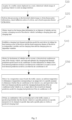
Fig. 2 is a schematic flowchart of a non-intrusive detection-based charging load probability prediction method according to the present disclosure; and -
Fig. 3 is a reduced diagram of a head turning model of a driver. - The technical solutions in embodiments of the present disclosure will be described clearly and completely below in combination with the drawings in the embodiments of the present disclosure. Clearly, the described embodiments are not all but only part of embodiments of the present disclosure. All other embodiments obtained by those of ordinary skill in the art based on the embodiments in the present disclosure without creative work shall fall within the scope of protection of the present disclosure.
- Terms "first", "second", etc., in the description, claims, and drawings of the present disclosure are for distinguishing different objects rather than describing a specific sequence.
- An embodiment of the present disclosure provides a non-intrusive detection-based charging load probability prediction system, which, as shown in
Fig. 1 , includes an image acquisition unit, a temperature detection unit, a positioning unit, an Internet of vehicles service system, and a cloud storage computing platform. - The image acquisition unit is configured to obtain an image of a passing vehicle through a traffic camera deployed on each road, and perform image data processing. The temperature detection unit is configured to obtain an ambient temperature through a temperature sensor mounted beside the traffic camera. The positioning unit is mounted to the traffic camera, and is configured to obtain a position of the traffic camera to further obtain a position of the electric vehicle at a shooting moment. The Internet of vehicles service system is configured to obtain current charging station information around based on the geographical position of the traffic camera.
- The cloud storage computing platform is in communication connection with the image acquisition unit, the temperature detection unit, the Internet of vehicles service system, and the positioning unit, is configured to perform data processing and storage on a historical vehicle image acquired by the image acquisition unit and train a charging load prediction model by combining license plate information, a head turning action of a driver, and a facial expression feature of the driver recognized from historical vehicle image data with historical air conditioner on-state data and historical charging record of the electric vehicle, and is configured to receive in real time the vehicle image acquired and processed by the traffic camera and real-time temperature data of a temperature sensor, classify data recognized from the vehicle image according to a temperature data range, and input the data to the corresponding charging load prediction model to obtain a probability that the target is to be charged at specific time and a specific place as well as a charging load of the target. The probability of charging at the specific time and the specific place and the charging load are available for charging facility planning and construction in some areas over time.
- In an embodiment of the present disclosure, the image acquisition unit includes the traffic camera, an image preprocessing module, and a first communication module. The traffic camera is deployed on each road, and is configured to shoot the image of the passing vehicle. The image preprocessing module is in communication connection with the traffic camera, and is configured to perform data enhancement, normalization, and graying processing on the image of the passing vehicle. The first communication module is connected with the cloud storage computing platform by a 5G network, and is configured to upload the preprocessed vehicle image to the cloud storage computing platform.
- The temperature detection unit includes a temperature sensor and a third communication module. The temperature sensor is mounted beside the traffic camera, and is configured to monitor the ambient temperature. The third communication module is connected with the cloud storage computing platform by the 5G network, and is configured to upload the ambient temperature to the cloud storage computing platform.
- The positioning unit includes a positioning module and a fourth communication module. The positioning module is configured to obtain the position of the traffic camera to further obtain the position of the electric vehicle at the shooting moment. The fourth communication module is connected with the cloud storage computing platform by the 5G network, and is configured to upload position information data to the cloud storage computing platform.
- The Internet of vehicles service system includes a database module, a charging recording module, an air conditioner on-state recording module, and a fifth communication module. The database module is configured to store charging station information of each area. The charging recording module is configured to store historical charging data of various electric vehicles. The air conditioner on-state recording module is configured to store historical air conditioner on-state data of various electric vehicles. The fifth communication module is connected with the cloud storage computing platform by the 5G network, and is configured to upload the charging station information of each area and the historical charging data and historical air conditioner on-state data of the electric vehicles to the cloud storage computing platform.
- In an embodiment of the present disclosure, the cloud storage computing platform includes a historical image database module, an image recognition module, a model training module, a model prediction module, and a second communication module. The historical image database module is in communication connection with the image preprocessing module, and is configured to store the preprocessed historical vehicle image to form a historical database. The image recognition module is in communication connection with the image preprocessing module, and is configured to recognize the license plate information, the head turning action of the driver, and the facial expression feature of the driver for the electric vehicle in the processed vehicle image. The model training module is configured to train the charging load prediction model by combining the license plate information, the head turning action of the driver, and the facial expression feature of the driver recognized from the historical vehicle image data and the historical air conditioner on-state data and historical charging record of the electric vehicle. The model prediction module is configured to receive in real time the vehicle image acquired and processed by the traffic camera and real-time temperature data of the temperature sensor, classify the data recognized from the vehicle image according to the temperature data range, and input the data to the corresponding charging load prediction model to obtain the probability that the target is to be charged at the specific time and the specific place as well as the charging load of the target, to implement charging facility planning and construction in some areas over time. The second communication module is connected with the image acquisition unit, the temperature detection unit, the Internet of vehicles service system, and the positioning unit by the 5G network.
- Another embodiment of the present disclosure provides a non-intrusive detection-based charging load probability prediction method, which, as shown in
Fig. 2 , includes the following steps. - In S10, a historical vehicle image of a passing vehicle is acquired by a traffic camera deployed on a road to create an image database.
- In S20, data processing is performed on the historical vehicle image to obtain license plate information, a head deflection action of a driver, and a facial expression feature of the driver.
- In S30, a charging record of the electric vehicle is obtained based on the license plate information by an Internet of vehicles service system, including a charging place and charging time.
- In S40, a charging load demand prediction model for each driver is established by taking the head turning action of the driver and the facial expression feature of the driver as independent variables and the charging time and the charging place as dependent variables.
- In S50, a historical air condition on-state of the electric vehicle is obtained by the Internet of vehicles service system, and the charging load demand prediction model is trained and optimized based on air conditioner on-state information to obtain a first load demand prediction model in case that an air conditioner is on and a second load demand prediction model in case that the air conditioner is off.
- In S60, an ambient temperature is detected by a temperature sensor beside the traffic camera to determine a temperature corresponding to an image shot at a specific moment to determine whether the air conditioner in the vehicle is on, where there is made such a setting that the air conditioner in the vehicle is off if the ambient temperature detected by the temperature sensor is 14°C to 28°C, otherwise the air conditioner in the vehicle is on. Data is input to the first load demand prediction model for charging load prediction if the air conditioner in the vehicle is on, or data is input to the second load demand prediction model for charging load prediction if the air conditioner is off.
- In S70, a predicted probability that the electric vehicle at a specific position at a specific moment is to be charged at specific time and a specific place as well as a predicted charging load are obtained in combination with a positioning unit on the traffic camera.
- In an embodiment of the present disclosure, the image database includes m cameras, t moments, and historical image data of n targets, including totally mnt basic images.
- In an embodiment of the present disclosure, recognition of the license plate information includes the following steps.
- In B10, license plate image preprocessing is performed: the vehicle image is converted from an RGB channel to an HSV channel, an HSV-channel image is converted into a grayscale image, and binarization and morphological processing are performed on the grayscale image.
- In B20, license plate positioning is performed: rectangle detection is performed on the grayscale image subjected to morphological processing by use of function cv2.findContours() to position a license plate region, and the license plate region is segmented.
- In B30, license plate character segmentation is performed: license plate horizontal straightening, license plate frame and rivet removal, and character segmentation operations are sequentially performed on the segmented license plate region, license plate horizontal straightening including inclination angle detection and inclination correction.
- In B40, license plate character recognition is performed: HOG feature extraction is performed to convert characters on the image into feature vectors, and classification and discrimination are performed by an SVM classification algorithm.
- In B50, a result is obtained: whether the electric vehicle is a new-energy vehicle as well as a license plate number are recognized by classification and discrimination.
- In an embodiment of the present disclosure, the head turning action of the driver is obtained by the following steps.
- Data processing is performed on the image of the passing vehicle to obtain vehicle type information and driver position information, and a head turning direction of the driver and a corresponding direction of an instrument panel are determined based on the vehicle type information and the driver position information.
- According to a law of human head movement, if a human head turns about a central axis of the head without swinging leftwards and rightwards in a vertical direction, a head turning model of a driver may be reduced to a model shown in
Fig. 3 . A line segment connecting two eyes in case that a head of the driver faces forward is represented as a line segmentAB . A spatial connecting line segment between the two eyes after the head turns by an angle θ is represented as a line segmentCD . Since a distance between two eyes of a person is fixed, the line segmentsAB andCD are numerically equal. A projection of a distance between the two eyes on a frontal plane after the head turns is represented as a line segmentCG , i.e., a distance between the two eyes shown in the two-dimensional image after the head turns. Geometric analysis is performed to obtain that an acute angle between the line segmentCG and the line segmentCD is equal to the angle that the head turns by, such that a calculation formula for the angle that the head turns by is represented as:
- It is determined that the head turns to the left if θ is calculated to be negative. It is determined that the head turns to the right if θ is positive. It is determined that the driver turns to look at the instrument panel if the head turns to the right by more than 30 degrees.
- In an embodiment of the present disclosure, the facial expression feature of the driver is obtained by the following steps.
- In a feature sampling layer, image data preprocessing, face detection, face positioning, convolution feature learning, and feature sampling are performed on the vehicle image, an original vehicle image sequence x = {x 1,x 2,···,xT } is input, and the image is preprocessed to eliminate an impact of light. At moment t = 1, a face image is fast positioned and segmented by a Fast-CNN method. Fast face image tracking and segmentation are performed at a subsequent moment. Then, the face image is input to a convolutional neural network for learning, and cross convolution and pooling are performed to generate abstract image features. Finally, the abstract image features are input to a K-average sampling layer, average sampling is performed on totally K continuous image features x T-K+1,x T-K+2,···,xT in the K-average sampling layer, and averagely sampled image features are input to an RNN for learning as input features.
- Main loop of the RNN and information memorization of an LSTM are implemented: a convolution sampled feature vector is obtained from the feature sampling layer as an input, then the feature vector is input to the RNN according to a time sequence, information is extracted by the recurrent unit LSTM to generate state information, and finally, an output feature vector is classified.
- A feature vector output sequence learned by the RNN is classified, where T is set as a sequence length, L is set as a length of a label, and when there is the sequence T, there are L to the T-th possibilities for the label path, each of which is referred to as a "path", and a formula for a conditional probability of the path is:

- where π (t) represents an output path π at moment t, and yt represents a network output of the RNN at moment t;
- a predicted conditional probability of the label is represented as a sum of conditional probabilities of the corresponding paths:

- where V represents an operator of converting the output path π into a target L; and
- when images are input to the sequence for training, an expression in an image input at a current moment is a label corresponding to the maximum conditional probability:

- Various expressions of anger, disgust, fear, happiness, sadness, surprise, and neutrality of the driver are recognized.
- In an embodiment of the present disclosure, the charging load demand prediction model is established by the following steps.
- If model training is performed with N sets of data, random forest algorithm analysis is performed:
- in a: a charging behavior of the electric vehicle is determined as a predictive variable Xo , and eight factors of anger, disgust, fear, happiness, sadness, surprise, and neutrality shown on a face of the driver as well as head turning within one hour before charging are determined as affecting variables Xi ;
- in b: a sampling frequency b =1,2,···,Bs is set, and steps c and d are repeated;
- in c: a sample subset is randomly selected from Xo and Xi as a training set by an autonomous repeated sampling technology; and
- in d: a regression tree model rfb is obtained based on the training set.
- After training, for a new sample x, predicted values of all regression trees are averaged by a random forest model to obtain a predicted value p̂ of the sample:

- The above embodiments are only for describing rather than limiting the technical solutions of the present disclosure. Although the present disclosure is described with reference to the preferred embodiments in detail, it can be understood by those of ordinary skill in the art that modifications and equivalent replacements can be made to the technical solutions of the present disclosure without departing from the principle and scope of the technical solutions of the present disclosure, and these modifications or equivalent replacements shall all fall within the scope of the claims of the present disclosure. All techniques, shapes, and structures that are not described in detail in the present disclosure are known technologies.
Claims (10)
- A non-intrusive detection-based charging load probability prediction system, comprising:an image acquisition unit, configured to obtain an image of a passing vehicle through a traffic camera deployed on each road, and perform image data processing;a temperature detection unit, configured to obtain an ambient temperature through a temperature sensor mounted beside the traffic camera;a positioning unit, mounted to the traffic camera and configured to obtain a position of the traffic camera to further obtain a position of the electric vehicle at a shooting moment;an Internet of vehicles service system, configured to obtain current charging station information around based on the geographical position of the traffic camera; anda cloud storage computing platform in communication connection with the image acquisition unit, the temperature detection unit, the Internet of vehicles service system, and the positioning unit, configured to perform data processing and storage on a historical vehicle image acquired by the image acquisition unit and train a charging load prediction model by combining license plate information, a head turning action of a driver, and a facial expression feature of the driver recognized from historical vehicle image data with historical air conditioner on-state data and historical charging record of the electric vehicle, and configured to receive in real time the vehicle image acquired and processed by the traffic camera and real-time temperature data of a temperature sensor, classify data recognized from the vehicle image according to a temperature data range, and input the data to the corresponding charging load prediction model to obtain a probability that the target is to be charged at specific time and a specific place as well as a charging load of the target, for charging facility planning and construction in some areas over time.
- The non-intrusive detection-based charging load probability prediction system according to claim 1, wherein the image acquisition unit comprises:the traffic camera, deployed on each road and configured to shoot the image of the passing vehicle,an image preprocessing module in communication connection with the traffic camera, configured to perform data enhancement, normalization, and graying processing on the image of the passing vehicle, anda first communication module, connected with the cloud storage computing platform by a 5th-Generation (5G) network and configured to upload the preprocessed vehicle image to the cloud storage computing platform;the temperature detection unit comprises:the temperature sensor, mounted beside the traffic camera and configured to monitor the ambient temperature, anda third communication module, connected with the cloud storage computing platform by the 5G network and configured to upload the ambient temperature to the cloud storage computing platform;the positioning unit comprises:a positioning module, configured to obtain the position of the traffic camera to further obtain the position of the electric vehicle at the shooting moment, anda fourth communication module, connected with the cloud storage computing platform by the 5G network and configured to upload position information data to the cloud storage computing platform; andthe Internet of vehicles service system comprises:a database module, configured to store charging station information of each area,a charging recording module, configured to store historical charging data of various electric vehicles,an air conditioner on-state recording module, configured to store historical air conditioner on-state data of various electric vehicles, anda fifth communication module, connected with the cloud storage computing platform by the 5G network and configured to upload the charging station information of each area and the historical charging data and historical air conditioner on-state data of the electric vehicles to the cloud storage computing platform.
- The non-intrusive detection-based charging load probability prediction system according to claim 2, wherein the cloud storage computing comprises:a historical image database module, configured to store the preprocessed historical vehicle image to form a historical database;an image recognition module, configured to recognize the license plate information, the head turning action of the driver, and the facial expression feature of the driver for the electric vehicle in the processed vehicle image;a model training module, configured to train the charging load prediction model by combining the license plate information, the head turning action of the driver, and the facial expression feature of the driver recognized from the historical vehicle image data and the historical air conditioner on-state data and historical charging record of the electric vehicle;a model prediction module, configured to receive in real time the vehicle image acquired and processed by the traffic camera and real-time temperature data of the temperature sensor, classify the data recognized from the vehicle image according to the temperature data range, and input the data to the corresponding charging load prediction model to obtain the probability that the target is to be charged at the specific time and the specific place as well as the charging load of the target, to implement charging facility planning and construction in some areas over time; anda second communication module, connected with the image acquisition unit, the temperature detection unit, the Internet of vehicles service system, and the positioning unit by the 5G network.
- A non-intrusive detection-based charging load probability prediction method, comprising the following steps:acquiring, by a traffic camera deployed on a road, a historical vehicle image of a passing vehicle to create an image database;performing data processing on the historical vehicle image to obtain license plate information, a head deflection action of a driver, anda facial expression feature of the driver;obtaining, based on the license plate information by an Internet of vehicles service system, a charging record of the electric vehicle, comprising a charging place and charging time;establishing a charging load demand prediction model for each driver by taking the head turning action of the driver and the facial expression feature of the driver as independent variables and the charging time and the charging place as dependent variables;obtaining, by the Internet of vehicles service system, a historical air condition on-state of the electric vehicle, and training and optimizing the charging load demand prediction model based on air conditioner on-state information to obtain a first load demand prediction model in case that an air conditioner is on and a second load demand prediction model in case that the air conditioner is off;detecting, by a temperature sensor beside the traffic camera, an ambient temperature to determine a temperature corresponding to an image shot at a specific moment to determine whether the air conditioner in the vehicle is on, and inputting data to the first load demand prediction model for charging load prediction if the air conditioner in the vehicle is on, or inputting data to the second load demand prediction model for charging load prediction if the air conditioner is off; andobtaining, in combination with a positioning unit on the traffic camera, a predicted probability that the electric vehicle at a specific position at a specific moment is to be charged at specific time and a specific place as well as a predicted charging load.
- The non-intrusive detection-based charging load probability prediction method according to claim 4, wherein the image database comprises m cameras, t moments, and historical image data of n targets, comprising totally mnt basic images.
- The non-intrusive detection-based charging load probability prediction method according to claim 5, wherein recognition of the license plate information comprises the following steps:performing license plate image preprocessing: converting the vehicle image from a Red Green Blue (RGB) channel to a Hue Saturation Value (HSV) channel, converting an HSV-channel image into a grayscale image, and performing binarization and morphological processing on the grayscale image;performing license plate positioning: performing rectangle detection on the grayscale image subjected to morphological processing by use of function cv2.findContours() to position a license plate region, and segmenting the license plate region;performing license plate character segmentation: sequentially performing license plate horizontal straightening, license plate frame and rivet removal, and character segmentation operations on the segmented license plate region, license plate horizontal straightening comprising inclination angle detection and inclination correction;performing license plate character recognition: performing Histogram of Oriented Gradient (HOG) feature extraction to convert characters on the image into feature vectors, and performing classification and discrimination by a Support Vector Machine (SVM) classification algorithm; andobtaining a result: recognizing whether the electric vehicle is a new-energy vehicle as well as a license plate number by classification and discrimination.
- The non-intrusive detection-based charging load probability prediction method according to claim 6, wherein the head turning action of the driver is obtained by the following steps:performing data processing on the image of the passing vehicle to obtain vehicle type information and driver position information, and determining a head turning direction of the driver and a corresponding direction of an instrument panel based on the vehicle type information and the driver position information;according to a law of human head movement, if a human head turns about a central axis of the head without swinging leftwards and rightwards in a vertical direction, representing a line segment connecting two eyes in case that a head of the driver faces forward as a line segment
AB , representing a spatial connecting line segment between the two eyes after the head turns by an angle θ as a line segmentCD , the line segmentsAB andCD being numerically equal, representing a projection of a distance between the two eyes on a frontal plane after the head turns as a line segmentCG , and performing geometric analysis to obtain that an acute angle between the line segmentCG and the line segmentCD is equal to the angle that the head turns by, such that a calculation formula for the angle that the head turns by is represented as: determining that the head turns to the left if θ is calculated to be negative, and determining that the head turns to the right if θ is positive.
 - The non-intrusive detection-based charging load probability prediction method according to claim 7, wherein the facial expression feature of the driver is obtained by the following steps:in a feature sampling layer, performing image data preprocessing, face detection, face positioning, convolution feature learning, and feature sampling on the vehicle image, inputting an original vehicle image sequence x = {x 1,x 2,···xT }, and preprocessing the image to eliminate an impact of light; at moment t = 1, fast positioning and segmenting a face image by a Fast-Convolutional Neural Network (Fast-CNN) method; performing fast face image tracking and segmentation at a subsequent moment; then, inputting the face image to a convolutional neural network for learning, and performing cross convolution and pooling to generate abstract image features; finally, inputting the abstract image features to a K-average sampling layer, performing average sampling on totally K continuous image features x T-K+1,x T-K+2,···,xT in the K-average sampling layer, and inputting averagely sampled image features to a Recurrent Neural Network (RNN) for learning as input features;implementing main loop of the RNN and information memorization of a Long Short Term Memory (LSTM): obtaining a convolution sampled feature vector from the feature sampling layer as an input, then inputting the feature vector to the RNN according to a time sequence, extracting, by the recurrent unit LSTM, information to generate state information, and finally, classifying an output feature vector;classifying a feature vector output sequence learned by the RNN, wherein T is set as a sequence length, L is set as a length of a label, and when there is the sequence T, there are L to the T-th possibilities for label path, each of which is referred to as a "path", and a formula for a conditional probability of the path is:
 where π (t) represents an output path π at moment t, and yt represents a network output of the RNN at moment t;a predicted conditional probability of the label is represented as a sum of conditional probabilities of the corresponding paths:
 where V represents an operator of converting the output path π into a target L;when images are input to the sequence for training, an expression in an image input at a current moment is a label corresponding to the maximum conditional probability:
 recognizing various expressions of anger, disgust, fear, happiness, sadness, surprise, and neutrality of the driver.
 - The non-intrusive detection-based charging load probability prediction method according to claim 8, wherein the charging load demand prediction model is established by the following steps:
if model training is performed with N sets of data, performing random forest algorithm analysis:a: determining a charging behavior of the electric vehicle as a predictive variable Xo and eight factors of anger, disgust, fear, happiness, sadness, surprise, and neutrality shown on a face of the driver as well as head turning within one hour before charging as affecting variables Xi ;b: setting a sampling frequency b =1,2,···,Bs , and repeating steps c and d;c: randomly selecting a sample subset from Xo and Xi as a training set by an autonomous repeated sampling technology;d: obtaining a regression tree model rfb based on the training set; andafter training, for a new sample x, averaging predicted values of all regression trees by a random forest model to obtain a predicted value p̂ of the sample:
- The non-intrusive detection-based charging load probability prediction method according to claim 9, wherein in the step of determining whether an air conditioner in the vehicle is on, there is made such a setting that the air conditioner in the vehicle is off if the ambient temperature detected by the temperature sensor is 14°C to 28°C, otherwise the air conditioner in the vehicle is on.
Applications Claiming Priority (2)
| Application Number | Priority Date | Filing Date | Title |
|---|---|---|---|
| CN202111535061.4A CN114418298B (en) | 2021-12-15 | 2021-12-15 | Charging load probability prediction system and method based on non-intrusive detection |
| PCT/CN2022/103801 WO2023109099A1 (en) | 2021-12-15 | 2022-07-05 | Charging load probability prediction system and method based on non-intrusive detection |
Publications (2)
| Publication Number | Publication Date |
|---|---|
| EP4451183A1 true EP4451183A1 (en) | 2024-10-23 |
| EP4451183A4 EP4451183A4 (en) | 2025-12-31 |
Family
ID=81268255
Family Applications (1)
| Application Number | Title | Priority Date | Filing Date |
|---|---|---|---|
| EP22905864.9A Pending EP4451183A4 (en) | 2021-12-15 | 2022-07-05 | LOAD LOAD PROBABILITY PREDICTION SYSTEM AND METHOD BASED ON NON-INTRUSIVE DETECTION |
Country Status (3)
| Country | Link |
|---|---|
| EP (1) | EP4451183A4 (en) |
| CN (1) | CN114418298B (en) |
| WO (1) | WO2023109099A1 (en) |
Families Citing this family (21)
| Publication number | Priority date | Publication date | Assignee | Title |
|---|---|---|---|---|
| CN114418298B (en) * | 2021-12-15 | 2025-05-27 | 重庆邮电大学 | Charging load probability prediction system and method based on non-intrusive detection |
| CN115460563A (en) * | 2022-07-22 | 2022-12-09 | 浙江高信技术股份有限公司 | An urban intelligent traffic management system based on 5G Internet of Vehicles |
| US12280727B2 (en) * | 2022-11-14 | 2025-04-22 | GM Global Technology Operations LLC | Vehicle system and method for adjusting interior control settings based on driver emotion and environmental context |
| CN116341706A (en) * | 2023-01-13 | 2023-06-27 | 清华大学 | System and method for probabilistic forecasting of urban mobile load based on comprehensive energy perception |
| CN116359602B (en) * | 2023-03-07 | 2024-05-03 | 北京智芯微电子科技有限公司 | Non-invasive electric vehicle charging identification method, device, medium and intelligent ammeter |
| CN116717875B (en) * | 2023-07-04 | 2025-10-14 | 壹品慧数字科技(上海)有限公司 | Energy-saving control method and device for non-intrusive sensor central air-conditioning system |
| CN116552299B (en) * | 2023-07-11 | 2023-09-15 | 深圳市南霸科技有限公司 | Movable electric automobile emergency charging system and method |
| CN116975665A (en) * | 2023-07-26 | 2023-10-31 | 南方电网科学研究院有限责任公司 | Building load prediction model training method, building load prediction method and device |
| CN116872780B (en) * | 2023-09-08 | 2023-12-15 | 国网浙江省电力有限公司杭州供电公司 | Electric automobile charging supply control method, device, terminal and medium |
| CN117058468B (en) * | 2023-10-11 | 2023-12-19 | 青岛金诺德科技有限公司 | Image recognition and classification system for recycling lithium batteries of new energy automobiles |
| CN117375240B (en) * | 2023-10-25 | 2024-09-20 | 盛隆电气集团有限公司 | A distribution cabinet monitoring method and system based on genetic algorithm and BP neural network |
| CN117520979B (en) * | 2023-11-03 | 2024-05-31 | 长沙云软信息技术有限公司 | Wagon balance measuring equipment based on OCR (optical character recognition) and application method thereof |
| CN117863949B (en) * | 2024-02-23 | 2024-09-06 | 河北大学 | A method and system for dynamic grading of real-time charging safety protection thresholds of electric vehicles |
| CN117885593B (en) * | 2024-03-14 | 2024-05-24 | 江苏智融能源科技有限公司 | Charging station data management and control method and system based on big data |
| CN117969946B (en) * | 2024-04-01 | 2024-06-14 | 山东普源电力工程有限公司 | Lighting system energy consumption detection method and system |
| CN118199181A (en) * | 2024-05-10 | 2024-06-14 | 深圳市超业电力科技有限公司 | A distribution resource optimization configuration system based on smart grid |
| CN118889397B (en) * | 2024-07-18 | 2025-04-08 | 国网湖北省电力有限公司营销服务中心(计量中心) | Short-term forecasting method for electric vehicle charging load based on vehicle-grid interaction strategy optimization |
| CN118569510A (en) * | 2024-07-31 | 2024-08-30 | 浙江大成工程项目管理有限公司 | A power load supervision system based on cloud platform |
| CN118630924B (en) * | 2024-08-09 | 2024-12-20 | 国网浙江省电力有限公司岱山县供电公司 | Power equipment power supply monitoring system based on peak-valley power distribution |
| CN118693818B (en) * | 2024-08-23 | 2024-12-06 | 北京理工大学 | Data-driven demand-side load forecasting and uncertainty estimation method and system |
| CN119398279B (en) * | 2024-12-31 | 2025-03-28 | 国网浙江省电力有限公司台州供电公司 | Industrial park net load prediction method and system based on multi-layer perceptron |
Family Cites Families (11)
| Publication number | Priority date | Publication date | Assignee | Title |
|---|---|---|---|---|
| US10438071B2 (en) * | 2017-01-25 | 2019-10-08 | Echelon Corporation | Distributed system for mining, correlating, and analyzing locally obtained traffic data including video |
| CN106908075B (en) * | 2017-03-21 | 2020-05-08 | 福州大学 | Big data acquisition and processing system and electric vehicle endurance estimation method based on big data acquisition and processing system |
| CN107392400B (en) * | 2017-09-04 | 2020-10-16 | 重庆大学 | EV charging load space-time distribution prediction method considering real-time traffic and temperature |
| GB2577853B (en) * | 2018-06-22 | 2021-03-24 | Moixa Energy Holdings Ltd | Systems for machine learning, optimising and managing local multi-asset flexibility of distributed energy storage resources |
| CN110363331A (en) * | 2019-06-21 | 2019-10-22 | 国网天津市电力公司电力科学研究院 | A cloud platform service system and method applied to electric vehicle safety |
| CN111391692B (en) * | 2019-12-09 | 2022-10-04 | 重庆邮电大学 | Orderly charging and discharging scheduling system and method for electric vehicle cluster based on whole-process differential control of cabin temperature |
| CN112394220B (en) * | 2020-11-13 | 2021-08-24 | 四川大学 | Non-invasive electric vehicle charging load mode extraction method |
| CN112488369A (en) * | 2020-11-19 | 2021-03-12 | 南方电网科学研究院有限责任公司 | Site selection and volume fixing method and device for charging station and storage medium |
| CN112508288A (en) * | 2020-12-11 | 2021-03-16 | 国网重庆市电力公司营销服务中心 | Ordered charging scheduling system and method based on temperature control load prediction |
| CN114419728B (en) * | 2021-12-14 | 2025-08-26 | 重庆邮电大学 | A charging anxiety behavior prediction system and prediction method |
| CN114418298B (en) * | 2021-12-15 | 2025-05-27 | 重庆邮电大学 | Charging load probability prediction system and method based on non-intrusive detection |
-
2021
- 2021-12-15 CN CN202111535061.4A patent/CN114418298B/en active Active
-
2022
- 2022-07-05 EP EP22905864.9A patent/EP4451183A4/en active Pending
- 2022-07-05 WO PCT/CN2022/103801 patent/WO2023109099A1/en not_active Ceased
Also Published As
| Publication number | Publication date |
|---|---|
| EP4451183A4 (en) | 2025-12-31 |
| CN114418298A (en) | 2022-04-29 |
| WO2023109099A1 (en) | 2023-06-22 |
| CN114418298B (en) | 2025-05-27 |
Similar Documents
| Publication | Publication Date | Title |
|---|---|---|
| EP4451183A1 (en) | Charging load probability prediction system and method based on non-intrusive detection | |
| Zhao et al. | Enhancing autonomous driving safety: A robust traffic sign detection and recognition model TSD-YOLO | |
| CN109993734A (en) | Method and apparatus for output information | |
| Cepni et al. | Vehicle detection using different deep learning algorithms from image sequence | |
| Hoang et al. | Optimizing YOLO performance for traffic light detection and end-to-end steering control for autonomous vehicles in Gazebo-ROS2 | |
| CN108875754B (en) | A vehicle re-identification method based on multi-depth feature fusion network | |
| CN111209958A (en) | Substation equipment detection method and device based on deep learning | |
| CN120526199B (en) | Methods and devices for slope disease identification based on UAV and machine vision technologies | |
| CN111209832A (en) | Auxiliary obstacle avoidance training method, equipment and medium for transformer substation inspection robot | |
| CN119310859A (en) | A dynamic target tracking method and system based on image feedback | |
| Meng et al. | A robust and efficient method for license plate recognition | |
| Kuchkorov et al. | Traffic and road sign recognition using deep convolutional neural network | |
| Li et al. | AGSAM-Net: UAV route planning and visual guidance model for bridge surface defect detection | |
| Yang et al. | A Deep Learning-based Framework for Vehicle License Plate Detection. | |
| Khan et al. | Real-time vehicle fitness detection using yolov5 | |
| CN118247629A (en) | Target detection method, target detection device, electronic equipment and storage medium | |
| CN117607151A (en) | Energy storage module wire harness fault detection method, equipment and storage medium | |
| Tian et al. | Overview of uav-based overhead power line defect detection based on deep learning | |
| Li et al. | Vehicle Target Detection in Day-Night Mode Based on YOLOv5 | |
| Shi | Anomaly detection in logistics warehouses based on YOLOv8 | |
| Ding et al. | Computer vision-based framework for automatic collection of key milestone nodes during aircraft turnaround | |
| Zhan | Electric equipment inspection on high voltage transmission line via Mobile Net-SSD | |
| Reddy et al. | Deep CNN Model for Condition Monitoring of Road Traffic: An Application Of Computer Vision | |
| Chung et al. | YOLO-Based Third Rail Defect Detection with BGAN-Augmented Training | |
| Sun et al. | Research on the Method and Application of Truck Type Recognition Based on Deep Learning from the Perspective of Unmanned Aerial Vehicles |
Legal Events
| Date | Code | Title | Description |
|---|---|---|---|
| STAA | Information on the status of an ep patent application or granted ep patent |
Free format text: STATUS: THE INTERNATIONAL PUBLICATION HAS BEEN MADE |
|
| PUAI | Public reference made under article 153(3) epc to a published international application that has entered the european phase |
Free format text: ORIGINAL CODE: 0009012 |
|
| STAA | Information on the status of an ep patent application or granted ep patent |
Free format text: STATUS: REQUEST FOR EXAMINATION WAS MADE |
|
| 17P | Request for examination filed |
Effective date: 20240715 |
|
| AK | Designated contracting states |
Kind code of ref document: A1 Designated state(s): AL AT BE BG CH CY CZ DE DK EE ES FI FR GB GR HR HU IE IS IT LI LT LU LV MC MK MT NL NO PL PT RO RS SE SI SK SM TR |
|
| DAV | Request for validation of the european patent (deleted) | ||
| DAX | Request for extension of the european patent (deleted) | ||
| A4 | Supplementary search report drawn up and despatched |
Effective date: 20251202 |
|
| RIC1 | Information provided on ipc code assigned before grant |
Ipc: G06Q 10/06 20230101AFI20251126BHEP Ipc: G08G 1/017 20060101ALI20251126BHEP Ipc: G08G 1/04 20060101ALI20251126BHEP Ipc: G06F 18/214 20230101ALI20251126BHEP Ipc: G06F 18/241 20230101ALI20251126BHEP Ipc: G06N 3/044 20230101ALI20251126BHEP Ipc: G06N 3/08 20230101ALI20251126BHEP Ipc: G06Q 10/04 20230101ALI20251126BHEP Ipc: G06Q 10/067 20230101ALI20251126BHEP Ipc: G06Q 50/06 20240101ALI20251126BHEP Ipc: G06V 20/52 20220101ALI20251126BHEP Ipc: H04L 67/10 20220101ALI20251126BHEP Ipc: H04L 67/12 20220101ALI20251126BHEP Ipc: B60L 53/60 20190101ALI20251126BHEP Ipc: B60L 53/63 20190101ALI20251126BHEP Ipc: B60L 53/65 20190101ALI20251126BHEP Ipc: B60L 53/67 20190101ALI20251126BHEP Ipc: B60L 53/68 20190101ALI20251126BHEP |