EP4450896A1 - Use of rare earth fluoride single crystal in magnetic refrigeration - Google Patents
Use of rare earth fluoride single crystal in magnetic refrigeration Download PDFInfo
- Publication number
- EP4450896A1 EP4450896A1 EP23794836.9A EP23794836A EP4450896A1 EP 4450896 A1 EP4450896 A1 EP 4450896A1 EP 23794836 A EP23794836 A EP 23794836A EP 4450896 A1 EP4450896 A1 EP 4450896A1
- Authority
- EP
- European Patent Office
- Prior art keywords
- rare earth
- magnetic
- single crystal
- earth fluoride
- lithium
- Prior art date
- Legal status (The legal status is an assumption and is not a legal conclusion. Google has not performed a legal analysis and makes no representation as to the accuracy of the status listed.)
- Withdrawn
Links
Images

Classifications
-
- F—MECHANICAL ENGINEERING; LIGHTING; HEATING; WEAPONS; BLASTING
- F25—REFRIGERATION OR COOLING; COMBINED HEATING AND REFRIGERATION SYSTEMS; HEAT PUMP SYSTEMS; MANUFACTURE OR STORAGE OF ICE; LIQUEFACTION SOLIDIFICATION OF GASES
- F25B—REFRIGERATION MACHINES, PLANTS OR SYSTEMS; COMBINED HEATING AND REFRIGERATION SYSTEMS; HEAT PUMP SYSTEMS
- F25B21/00—Machines, plants or systems, using electric or magnetic effects
-
- C—CHEMISTRY; METALLURGY
- C09—DYES; PAINTS; POLISHES; NATURAL RESINS; ADHESIVES; COMPOSITIONS NOT OTHERWISE PROVIDED FOR; APPLICATIONS OF MATERIALS NOT OTHERWISE PROVIDED FOR
- C09K—MATERIALS FOR MISCELLANEOUS APPLICATIONS, NOT PROVIDED FOR ELSEWHERE
- C09K5/00—Heat-transfer, heat-exchange or heat-storage materials, e.g. refrigerants; Materials for the production of heat or cold by chemical reactions other than by combustion
- C09K5/08—Materials not undergoing a change of physical state when used
- C09K5/14—Solid materials, e.g. powdery or granular
-
- C—CHEMISTRY; METALLURGY
- C30—CRYSTAL GROWTH
- C30B—SINGLE-CRYSTAL GROWTH; UNIDIRECTIONAL SOLIDIFICATION OF EUTECTIC MATERIAL OR UNIDIRECTIONAL DEMIXING OF EUTECTOID MATERIAL; REFINING BY ZONE-MELTING OF MATERIAL; PRODUCTION OF A HOMOGENEOUS POLYCRYSTALLINE MATERIAL WITH DEFINED STRUCTURE; SINGLE CRYSTALS OR HOMOGENEOUS POLYCRYSTALLINE MATERIAL WITH DEFINED STRUCTURE; AFTER-TREATMENT OF SINGLE CRYSTALS OR A HOMOGENEOUS POLYCRYSTALLINE MATERIAL WITH DEFINED STRUCTURE; APPARATUS THEREFOR
- C30B29/00—Single crystals or homogeneous polycrystalline material with defined structure characterised by the material or by their shape
- C30B29/10—Inorganic compounds or compositions
- C30B29/12—Halides
-
- H—ELECTRICITY
- H01—ELECTRIC ELEMENTS
- H01F—MAGNETS; INDUCTANCES; TRANSFORMERS; SELECTION OF MATERIALS FOR THEIR MAGNETIC PROPERTIES
- H01F1/00—Magnets or magnetic bodies characterised by the magnetic materials therefor; Selection of materials for their magnetic properties
- H01F1/01—Magnets or magnetic bodies characterised by the magnetic materials therefor; Selection of materials for their magnetic properties of inorganic materials
- H01F1/012—Magnets or magnetic bodies characterised by the magnetic materials therefor; Selection of materials for their magnetic properties of inorganic materials adapted for magnetic entropy change by magnetocaloric effect, e.g. used as magnetic refrigerating material
- H01F1/017—Compounds
-
- F—MECHANICAL ENGINEERING; LIGHTING; HEATING; WEAPONS; BLASTING
- F25—REFRIGERATION OR COOLING; COMBINED HEATING AND REFRIGERATION SYSTEMS; HEAT PUMP SYSTEMS; MANUFACTURE OR STORAGE OF ICE; LIQUEFACTION SOLIDIFICATION OF GASES
- F25B—REFRIGERATION MACHINES, PLANTS OR SYSTEMS; COMBINED HEATING AND REFRIGERATION SYSTEMS; HEAT PUMP SYSTEMS
- F25B2321/00—Details of machines, plants or systems, using electric or magnetic effects
- F25B2321/002—Details of machines, plants or systems, using electric or magnetic effects by using magneto-caloric effects
-
- Y—GENERAL TAGGING OF NEW TECHNOLOGICAL DEVELOPMENTS; GENERAL TAGGING OF CROSS-SECTIONAL TECHNOLOGIES SPANNING OVER SEVERAL SECTIONS OF THE IPC; TECHNICAL SUBJECTS COVERED BY FORMER USPC CROSS-REFERENCE ART COLLECTIONS [XRACs] AND DIGESTS
- Y02—TECHNOLOGIES OR APPLICATIONS FOR MITIGATION OR ADAPTATION AGAINST CLIMATE CHANGE
- Y02B—CLIMATE CHANGE MITIGATION TECHNOLOGIES RELATED TO BUILDINGS, e.g. HOUSING, HOUSE APPLIANCES OR RELATED END-USER APPLICATIONS
- Y02B30/00—Energy efficient heating, ventilation or air conditioning [HVAC]
Definitions
- the present invention belongs to the field of magnetic functional materials, and particularly relates to a giant magnetocaloric effect material that can be driven by a small magnetic field in a low-temperature range.
- refrigeration technology is well known and widely used in daily life, such as air-conditioners, refrigerators, agriculture and medical, etc.
- the temperature range below the temperature of liquid hydrogen is called a low-temperature range, which can be applied to cosmic telecommunications, gas liquefaction in quantum computers or chemical industry and ultra-sensitive detectors in space, etc.
- the refrigeration technology is inseparable with helium, for example, in adiabatic demagnetization refrigeration devices, the superconducting magnet providing the magnetic field needs to be cooled with liquid helium.
- 3He/4He dilution refrigerators and He adsorption refrigerators are heavily rely on helium gas.
- the new magnetic refrigeration technology that based on the magnetocaloric effect has the advantages of environmental friendliness, high refrigeration efficiency, low energy consumption, low noise, pollution-free, high stability and high reliability. Therefore, receiving high attention from researchers.
- the magnetic working mediums that are relatively mature in low-temperature magnetic refrigeration are garnet series, such as Gd 3 Ga 5 O 12 (GGG) and Dy 3 Al 5 O 12 (DAG).
- GGG Gd 3 Ga 5 O 12
- DAG Dy 3 Al 5 O 12
- the present invention provides a magnetocaloric material that can be driven by a small magnetic field and achieve a large magnetic entropy change, and the magnetocaloric material is a lithium rare earth fluoride single crystal.
- the present invention discloses a use of rare earth fluoride single crystal in magnetic refrigeration, the rare earth fluoride single crystal is a lithium rare earth fluoride single crystal.
- the rare earth fluoride single crystal is a lithium rare earth fluoride single crystal.
- applying a varying magnetic field of 0-20kOe along the easy magnetization direction of this material can obtain a large magnetic entropy change, and this series of materials has good thermal conductivity.
- the discovery of this material provides the potential for the simplification and widespread application of low-temperature magnetic refrigeration devices.
- the technical solution of the present invention is: A use of a lithium rare earth fluoride single crystal in magnetic refrigeration.
- the magnetic moments of the lithium rare earth fluoride single crystal sample transition from disordered to ordered.
- the interaction energy between the atomic magnetic moments and the external magnetic field reduces, decreasing the magnetic entropy and releasing heat to the surroundings.
- the magnetic moments of the lithium rare earth fluoride single crystal sample transition from ordered to disordered, increasing the magnetic entropy and absorbing energy from the surroundings.
- this condition appears as a temperature change in the lithium rare earth fluoride single crystal sample itself.
- the preferred technical solution of the present invention is:
- the chemical formula of the lithium rare earth fluoride is LiREF 4 , where RE is a rare earth element.
- the rare earth element RE is one or more of gadolinium (Gd), terbium (Tb), dysprosium (Dy), holmium (Ho), erbium (Er), thulium (Tm) and ytterbium (Yb).
- Gd gadolinium
- Tb terbium
- Dy dysprosium
- Ho holmium
- Er erbium
- Tm thulium
- Yb ytterbium
- the lithium rare earth fluoride has a tetragonal scheelite structure.
- the lithium rare earth fluoride is a single crystal with extremely strong magnetic anisotropy.
- the easy magnetization directions of LiGdF 4 , LiTbF 4 and LiHoF 4 are parallel to the C-axis, while the easy magnetization directions of LiDyF 4 , LiErF 4 , LiYbF 4 and LiTmF 4 are perpendicular to the C-axis.
- LiGdF 4 demonstrates paramagnetism
- LiTmF 4 demonstrates Van Vleck paramagnetism
- LiTbF 4 and LiHoF 4 demonstrate ferromagnetism ordering at temperatures below Curie temperature of 2.87K and 1.53K respectively
- LiDyF 4 , LiErF 4 and LiYbF 4 demonstrate antiferromagnetism ordering at temperatures below Nel temperature of 0.62K, 0.38K and 0.128K respectively.
- the application temperature range of the lithium rare earth fluoride single crystal is a low-temperature range below 20K.
- the isothermal magnetic entropy change ⁇ S is an important parameter to measure the performance of a magnetocaloric material. Therefore, the present invention used a superconducting quantum interference device to measure the magnetization curves at different temperatures along the easy magnetization directions of the lithium rare earth fluoride single crystal samples. Then, the obtained magnetization curve data at different temperatures are processed using Maxwell equation, and the relationship between the magnetic entropy change and the temperature change is determined.
- the thermal conductivity of the magnetocaloric material is closely related to the overall refrigeration efficiency of the device.
- the thermal conductivity tests of the lithium rare earth fluoride single crystals are conducted using the heat transport option of a comprehensive physical property measurement system. Since the thermal conductivity of lithium rare earth fluoride single crystal at low-temperature is high, therefore, the four-probe method is used for testing to minimize errors, and the samples use a needle-like rectangular shape, with utilization of a cooling measurement method.
- the thermal conductivity of LiTbF 4 and LiErF 4 reach 50W ⁇ K -1 ⁇ m -1 at 25K.
- a magnetic refrigeration method based on lithium rare earth fluoride single crystal which is characterized in that: using lithium rare earth fluoride single crystal as a magnetic working medium, by applying and removing a magnetic field to the magnetic working medium, the temperature of the magnetic working medium changes, facilitating the transfer of heat with the heat exchanger, thereby achieving the purpose of refrigeration.
- the magnetic working medium lithium rare earth fluoride single crystal can be one or more of LiGdF 4 , LiTbF 4 , LiHoF 4 , LiDyF 4 , LiErF 4 , LiYbF 4 and LiTmF 4 ; when multiple types are used, the expansion of the low-temperature refrigeration range is achieved by mixing and arranging different lithium rare earth fluoride single crystals.
- two or more rare earth elements can also be incorporated, thereby achieving the expansion of the low-temperature refrigeration range.
- a magnetic refrigerant device driven by a small magnetic field characterized in that the device comprises lithium rare earth fluoride single crystal as a magnetic working medium.
- the magnetic working medium lithium rare earth fluoride single crystal is one or more of LiGdF 4 , LiTbF 4 , LiHoF 4 , LiDyF 4 , LiErF 4 , LiYbF 4 and LiTmF 4 ; when multiple types are used, the expansion of the low-temperature refrigeration range is achieved by mixing and arranging different lithium rare earth fluoride single crystals.
- two or more rare earth elements can also be incorporated, thereby achieving the expansion of the low-temperature refrigeration range.
- the refrigeration device also comprises a magnetic field applying component, a thermal switch, a heat-sink and a load, wherein, the magnetic field applying component can be selected from a permanent magnet, electromagnet, or superconducting magnet, preferably a permanent magnet, which can effectively simplify the volume of the device and optimize the design of the device; the thermal switch can be selected from mechanical contact type, superconducting type, gas type or magnetic resistance type thermal switches; preferably a superconducting type thermal switch.
- the present invention can effectively expand the refrigeration range and fulfil the needs of different refrigeration range by mixing and arranging multiple lithium rare earth fluoride single crystals, further expanding the application scope.
- expanding of the refrigeration range can also be achieved by incorporating a certain amount of other rare earth elements (Gd, Tb, Dy, Ho, Er, Tm, and Yb) during the process of preparing lithium rare earth fluoride single crystals.
- LiGdF 4 , LiTbF 4 , LiHoF 4 , LiDyF 4 , LiErF 4 , LiYbF 4 and LiTmF 4 obtained magnetic entropy changes of 50.35J ⁇ kg -1 ⁇ K -1 , 21.12J ⁇ kg -1 ⁇ K -1 , 24.98J ⁇ kg -1 ⁇ K -1 , 24.45J ⁇ kg -1 ⁇ K -1 , 21.95J.
- the mainstream materials can be fully replaced by the lithium rare earth fluoride single crystals, and the lithium rare earth fluoride single crystals can be widely used in low-temperature magnetic refrigeration fields such as gas liquefaction, ultra-low temperature scientific devices, and aerospace, achieving low-temperature magnetic refrigeration with low-cost, efficient and pollution-free.
- Lithium rare earth fluoride single crystals have high thermal conductivity in the low-temperature refrigeration range, in which, LiTbF 4 and LiErF 4 have thermal conductivity reaching 50W ⁇ K -1 ⁇ m -1 at 25K, which can accelerate the heat transfer rate of the magnetocaloric material, enhancing the overall efficiency of the magnetic refrigeration device.
- the preparation process of lithium rare earth fluoride single crystals is mature and capable of large-scale industrial production, which greatly reduces the cost of materials usage and the manufacturing costs of refrigeration systems, thereby facilitating the rapid and widespread of application.
- An application device of lithium rare earth fluoride single crystal specifically a magnetic refrigerant device driven by a magnetic field
- a magnetic working medium is lithium rare earth fluoride single crystal, specifically one or more of LiGdF 4 , LiTbF 4 , LiHoF 4 , LiDyF 4 , LiErF 4 , LiYbF 4 and LiTmF 4 .
- the device also comprises a magnetic field applying component, a thermal switch, a heat-sink and a load.
- the magnetic field applying component can be selected from permanent magnet, electromagnet or superconducting magnet
- the thermal switch can be selected from mechanical contact type, superconducting type, gas type or magnetic resistance type thermal switches
- the function of the load is to achieve cooling
- the head-sink serves the function of dissipating heat.
- the lithium rare earth fluoride single crystal has the same temperature as the heat-sink under a zero magnetic field condition, then, with the thermal switch remaining closed, the magnetic field increases.
- the refrigeration range can be effectively expanded.
- LiErF 4 and LiTbF 4 are mixed and arranged so that the refrigeration interval is expanded from the temperature range below 6K when using only LiErF 4 to the temperature range below 15K; in another embodiment, LiDyF 4 and LiTbF 4 are mixed and arranged so that the refrigeration range is expanded from the temperature range below 4K when using only LiDyF 4 to the temperature range below 15K, or by incorporating a certain amount of other rare earth elements (Gd, Tb, Dy, Ho, Er, Tm, and Yb) during the process of preparing lithium rare earth fluoride single crystals. Preparing a lithium rare earth fluoride single crystals containing two or more rare earth elements can also achieve the expansion of the low-temperature refrigeration range.
- the following embodiments conduct magnetocaloric performance tests on LiGdF 4 , LiTbF 4 , LiHoF 4 , LiDyF 4 , LiErF 4 , LiYbF 4 and LiTmF 4 , respectively.
- the test results show that in the low-temperature range of less than 20K, LiGdF 4 , LiTbF 4 , LiHoF 4 , LiDyF 4 and LiErF 4 demonstrate an isothermal magnetic entropy change superior to the isothermal magnetic entropy change of traditional GGG material at 17.5 J ⁇ kg -1 ⁇ K -1 .
- both LiTbF 4 and LiErF 4 demonstrate thermal conductivity of up to 50W ⁇ K -1 m -1 in the low-temperature range.
- a small piece of sample is first cut out from a large LiGdF 4 single crystal sample using a scalpel and is weighed using an electronic balance, the sample has a mass of 7.35mg.
- the sample is then fixed in a plastic sample tube using double-sided tape.
- M-H tests are conducted along the easy magnetization direction of the sample. At a temperature of 1.8K, an M-H curve is measured; within the temperature range of 2K to 10K, an M-H curve is measured at intervals of 1K; within the temperature range of 10K to 24K, an M-H curve is measured at intervals of 2K.
- one data point is measured at intervals of 500Oe in the magnetic field range of 0 to 10kOe, and one data point is measured at intervals of 1000Oe in the magnetic field range of 10kOe to 20kOe.
- the relationship between the magnetic entropy change and the temperature change of the LiGdF 4 sample after applying a varying magnetic field of 0-10kOe and 0-20kOe along the easy magnetization direction is determined using the Maxwell equation.
- a magnetic entropy change of 50.35J ⁇ kg -1 ⁇ K -1 under a varying magnetic field of 0-20kOe for the LiGdF 4 sample is obtained.
- M-H tests i.e., magnetization curve test
- an M-H curve is measured at intervals of 0.2K
- an M-H curve is measured at intervals of 2K.
- one data point is measured at intervals of 500Oe in the magnetic field range of 0 to 10kOe
- one data point is measured at intervals of 1000Oe in the magnetic field range of 10kOe to 20kOe.
- the relationship between the magnetic entropy change and the temperature change of the LiTbF 4 sample after applying a varying magentic filed of 0-10kOe and 0-20kOe along the easy magnetization direction is determined using the Maxwell equation.
- a magnetic entropy change of 21.12J ⁇ kg -1 ⁇ K -1 under a varying magnetic field of 0-20kOe for the LiTbF 4 sample is obtained.
- the thermal conductivity along the C-axis direction of the LiTbF 4 sample is tested using the heat transport option of the comprehensive physical property measurement system, the shape of the sample is rectangular.
- the four-probe method is used for testing.
- the cross-sectional area is 9.63mm 2
- the surface area is 109.8mm 3
- the electrode spacing is 1.5mm
- the thermal radiation coefficient is 1.
- the temperature range of the test is 25K-50K
- a cooling test at a rate at 0.1K/min is carried out, the relationship between the thermal conductivity of the LiTbF 4 sample and the temperature change is then obtained, and the thermal conductivity at 25K reaches 50W ⁇ K -1 ⁇ m -1 .
- a small piece of sample is first cut out from the large LiDyF 4 single crystal sample using a scalpel and is weighed using an electronic balance, the sample has a mass of 1.48mg.
- the sample is then fixed in a plastic sample tube using double-sided tape.
- M-H tests are conducted along the easy magnetization direction of the sample. At a temperature of 1.8K, an M-H curve is measured; within the temperature range of 2K to 10K, an M-H curve is measured at intervals of 1K; within the temperature range of 10K to 24K, an M-H curve is measured at intervals of 2K.
- one data point is measured at intervals of 500Oe in the magnetic field range of 0 to 10kOe, and one data point is measured at intervals of 1000Oe in the magnetic field range of 10kOe to 20kOe.
- the relationship between the magnetic entropy change and the temperature change of the LiDyF 4 sample after applying a varying magnetic field of 0-10kOe and 0-20kOe along the easy magnetization direction is determined using the Maxwell equation.
- a magnetic entropy change of 24.45J ⁇ kg -1 ⁇ K -1 under a varying magnetic field of 0-20kOe for the LiDyF 4 sample is obtained.
- a small piece of sample is first cut out from the large LiHoF 4 single crystal sample using a scalpel and is weighed using an electronic balance, the sample has a mass of 6.35mg.
- the sample is then fixed in a plastic sample tube using double-sided tape.
- M-H tests are conducted along the easy magnetization direction of the sample. At a temperature of 1.8K, an M-H curve is measured; within the temperature range of 2K to 10K, an M-H curve is measured at intervals of 1K; within the temperature range of 10K to 24K, an M-H curve is measured at intervals of 2K.
- one data point is measured at intervals of 500Oe in the magnetic field range of 0 to 10kOe, and one data point is measured at intervals of 1000Oe in the magnetic field range of 10kOe to 20kOe.
- the relationship between the magnetic entropy change and the temperature change of the LiHoF 4 sample after applying a varying magnetic field of 0-10kOe and 0-20kOe along the easy magnetization direction is determined using the Maxwell equation.
- a magnetic entropy change of 24.98J ⁇ kg -1 ⁇ K -1 under a varying magnetic field of 0-20kOe for the LiHoF 4 sample is obtained.
- a small piece of sample is first cut out from the large LiErF 4 single crystal sample using a scalpel and is weighed using an electronic balance, the sample has a mass of 2.55mg.
- the sample is then fixed in a plastic sample tube using double-sided tape.
- M-H tests are conducted along the easy magnetization direction of the sample. At a temperature of 1.8K, an M-H curve is measured; within the temperature range of 2K to 10K, an M-H curve is measured at intervals of 1K; within the temperature range of 10K to 24K, an M-H curve is measured at intervals of 2K.
- one data point is measured at intervals of 500Oe in the magnetic field range of 0 to 10kOe, and one data point is measured at intervals of 1000Oe in the magnetic field range of 10kOe to 20kOe.
- the relationship between the magnetic entropy change and the temperature change of the LiErF 4 sample after applying a varying magnetic field of 0-10kOe and 0-20kOe along the easy magnetization direction is determined using the Maxwell equation.
- a magnetic entropy change of 21.95J ⁇ kg -1 ⁇ K -1 under a temperature of 1.8K and a varying magnetic field of 20kOe for the LiErF 4 sample is obtained.
- the thermal conductivity test of the LiErF 4 single crystal samples is carried out, wherein, the thermal conductivity along the C-axis direction of the LiErF 4 sample is tested using the heat transport option of the comprehensive physical property measurement system, the shape of the sample is rectangular.
- the four-probe method is used for testing.
- the cross-sectional area is 9.3mm 2
- the surface area is 104.37mm 3
- the electrode spacing is 1.87mm
- the thermal radiation coefficient is 1.
- the temperature range of the test is 25K-300K, and a cooling test at a rate at 0.1K/min is carried out, the relationship between the thermal conductivity of the LiTbF 4 sample and the temperature change is then obtained, and the thermal conductivity at 25K reaches 50W ⁇ K -1 ⁇ m -1.
- a small piece of sample is first cut out from the large LiTmF 4 single crystal sample using a scalpel and is weighed using an electronic balance, the sample has a mass of 82.63mg.
- the sample is then fixed in a plastic sample tube using double-sided tape.
- M-H tests are conducted along the easy magnetization direction of the sample. At a temperature of 1.8K, an M-H curve is measured; within the temperature range of 2K to 10K, an M-H curve is measured at intervals of 1K; within the temperature range of 10K to 24K, an M-H curve is measured at intervals of 2K.
- one data point is measured at intervals of 500Oe in the magnetic field range of 0 to 10kOe, and one data point is measured at intervals of 1000Oe in the magnetic field range of 10kOe to 20kOe.
- the relationship between the magnetic entropy change and the temperature change of the LiTmF 4 sample after applying a varying magnetic field of 0-10kOe and 0-20kOe along the easy magnetization direction is determined using the Maxwell equation.
- a magnetic entropy change of 0.692J ⁇ kg -1 ⁇ K -1 under a varying magnetic field of 0-20kOe for the LiTmF 4 sample is obtained.
- a small piece of sample is first cut out from the large LiYbF 4 single crystal sample using a scalpel and is weighed using an electronic balance, the sample has a mass of 4.81mg.
- the sample is then fixed in a plastic sample tube using double-sided tape.
- M-H tests are conducted along the easy magnetization direction of the sample. At a temperature of 1.8K, an M-H curve is measured; within the temperature range of 2K to 10K, an M-H curve is measured at intervals of 1K; within the temperature range of 10K to 24K, an M-H curve is measured at intervals of 2K.
- one data point is measured at intervals of 500Oe in the magnetic field range of 0 to 10kOe, and one data point is measured at intervals of 1000Oe in the magnetic field range of 10kOe to 20kOe.
- the relationship between the magnetic entropy change and the temperature change of the LiYbF 4 sample after applying a varying magnetic field of 0-10kOe and 0-20kOe along the easy magnetization direction is determined using the Maxwell equation.
- a magnetic entropy change of 14.7J ⁇ kg -1 ⁇ K -1 under a varying magnetic field of 0-20kOe for the LiYbF 4 sample is obtained.
Landscapes
- Chemical & Material Sciences (AREA)
- Engineering & Computer Science (AREA)
- Organic Chemistry (AREA)
- Thermal Sciences (AREA)
- Materials Engineering (AREA)
- Physics & Mathematics (AREA)
- General Engineering & Computer Science (AREA)
- Metallurgy (AREA)
- Crystallography & Structural Chemistry (AREA)
- Mechanical Engineering (AREA)
- Inorganic Chemistry (AREA)
- Chemical Kinetics & Catalysis (AREA)
- Combustion & Propulsion (AREA)
- Power Engineering (AREA)
- Hard Magnetic Materials (AREA)
- Compounds Of Alkaline-Earth Elements, Aluminum Or Rare-Earth Metals (AREA)
- Crystals, And After-Treatments Of Crystals (AREA)
Abstract
Description
- The present invention belongs to the field of magnetic functional materials, and particularly relates to a giant magnetocaloric effect material that can be driven by a small magnetic field in a low-temperature range.
- Nowadays, refrigeration technology is well known and widely used in daily life, such as air-conditioners, refrigerators, agriculture and medical, etc. In refrigeration technology, the temperature range below the temperature of liquid hydrogen is called a low-temperature range, which can be applied to cosmic telecommunications, gas liquefaction in quantum computers or chemical industry and ultra-sensitive detectors in space, etc. The refrigeration technology is inseparable with helium, for example, in adiabatic demagnetization refrigeration devices, the superconducting magnet providing the magnetic field needs to be cooled with liquid helium. Both 3He/4He dilution refrigerators and He adsorption refrigerators are heavily rely on helium gas. Compared with the traditional refrigeration methods, the new magnetic refrigeration technology that based on the magnetocaloric effect has the advantages of environmental friendliness, high refrigeration efficiency, low energy consumption, low noise, pollution-free, high stability and high reliability. Therefore, receiving high attention from researchers.
- At present, the magnetic working mediums that are relatively mature in low-temperature magnetic refrigeration are garnet series, such as Gd3Ga5O12 (GGG) and Dy3Al5O12 (DAG). However, in order to gain a greater magnetic entropy change, a large varying magnetic field (0-50kOe) usually needs to be applied to the magnetic working medium, and such magnetic fields require large electromagnets and superconducting magnets. The high cost of the device, complex device design and large volume have severely hindered the widespread application of the magnetic refrigeration technology. Therefore, finding a magnetic working medium that can achieve a large magnetic entropy change driven by a small magnetic field in the low-temperature range is essential for low-temperature magnetic refrigeration.
- Thus, in response to the above issues, the present invention provides a magnetocaloric material that can be driven by a small magnetic field and achieve a large magnetic entropy change, and the magnetocaloric material is a lithium rare earth fluoride single crystal.
- The present invention discloses a use of rare earth fluoride single crystal in magnetic refrigeration, the rare earth fluoride single crystal is a lithium rare earth fluoride single crystal. In a low-temperature range, applying a varying magnetic field of 0-20kOe along the easy magnetization direction of this material can obtain a large magnetic entropy change, and this series of materials has good thermal conductivity. The discovery of this material provides the potential for the simplification and widespread application of low-temperature magnetic refrigeration devices.
- The technical solution of the present invention is:
A use of a lithium rare earth fluoride single crystal in magnetic refrigeration. - Under the influence of an external magnetic field, the magnetic moments of the lithium rare earth fluoride single crystal sample transition from disordered to ordered. The interaction energy between the atomic magnetic moments and the external magnetic field reduces, decreasing the magnetic entropy and releasing heat to the surroundings. Conversely, during the process of removing the magnetic field, the magnetic moments of the lithium rare earth fluoride single crystal sample transition from ordered to disordered, increasing the magnetic entropy and absorbing energy from the surroundings. When the sample is adiabatic, this condition appears as a temperature change in the lithium rare earth fluoride single crystal sample itself.
- The preferred technical solution of the present invention is:
The chemical formula of the lithium rare earth fluoride is LiREF4, where RE is a rare earth element. - The rare earth element RE is one or more of gadolinium (Gd), terbium (Tb), dysprosium (Dy), holmium (Ho), erbium (Er), thulium (Tm) and ytterbium (Yb).
- The lithium rare earth fluoride has a tetragonal scheelite structure.
- The lithium rare earth fluoride is a single crystal with extremely strong magnetic anisotropy.
- Wherein, the easy magnetization directions of LiGdF4, LiTbF4 and LiHoF4 are parallel to the C-axis, while the easy magnetization directions of LiDyF4, LiErF4, LiYbF4 and LiTmF4 are perpendicular to the C-axis.
- LiGdF4 demonstrates paramagnetism, LiTmF4 demonstrates Van Vleck paramagnetism, LiTbF4 and LiHoF4 demonstrate ferromagnetism ordering at temperatures below Curie temperature of 2.87K and 1.53K respectively, LiDyF4, LiErF4 and LiYbF4 demonstrate antiferromagnetism ordering at temperatures below Nel temperature of 0.62K, 0.38K and 0.128K respectively.
- The application temperature range of the lithium rare earth fluoride single crystal is a low-temperature range below 20K.
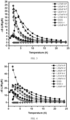
- The isothermal magnetic entropy change ΔS is an important parameter to measure the performance of a magnetocaloric material. Therefore, the present invention used a superconducting quantum interference device to measure the magnetization curves at different temperatures along the easy magnetization directions of the lithium rare earth fluoride single crystal samples. Then, the obtained magnetization curve data at different temperatures are processed using Maxwell equation, and the relationship between the magnetic entropy change and the temperature change is determined. By applying a small varying magnetic field of 0-20kOe along the easy magnetization direction of the lithium rare earth fluoride single crystal sample, a large isothermal magnetic entropy change is demonstrated by the lithium rare earth fluoride single crystal, in which, LiGdF4, LiTbF4, LiHoF4, LiDyF4, LiErF4, LiYbF4 and LiTmF4 obtained isothermal magnetic entropy changes of 50.35J·kg-1·K-1, 21.12J·kg-1·K-1, 24.98J·kg-1·K-1, 24.45J·kg-1·K-1, 21.95J·kg-1·K-1, 14.7J·kg-1·K-1 and 0.692J·kg-1·K-1, at temperatures of 1.8K, 4K, 4K, 1.8K, 1.8K, 1.8K, and 18K, respectively.
- In the field of solid-state magnetic refrigeration, the thermal conductivity of the magnetocaloric material is closely related to the overall refrigeration efficiency of the device. The thermal conductivity tests of the lithium rare earth fluoride single crystals are conducted using the heat transport option of a comprehensive physical property measurement system. Since the thermal conductivity of lithium rare earth fluoride single crystal at low-temperature is high, therefore, the four-probe method is used for testing to minimize errors, and the samples use a needle-like rectangular shape, with utilization of a cooling measurement method. The thermal conductivity of LiTbF4 and LiErF4 reach 50W·K-1·m-1 at 25K.
- A magnetic refrigeration method based on lithium rare earth fluoride single crystal, which is characterized in that: using lithium rare earth fluoride single crystal as a magnetic working medium, by applying and removing a magnetic field to the magnetic working medium, the temperature of the magnetic working medium changes, facilitating the transfer of heat with the heat exchanger, thereby achieving the purpose of refrigeration.
- The preferred technical solution is:
The magnetic working medium lithium rare earth fluoride single crystal can be one or more of LiGdF4, LiTbF4, LiHoF4, LiDyF4, LiErF4, LiYbF4 and LiTmF4; when multiple types are used, the expansion of the low-temperature refrigeration range is achieved by mixing and arranging different lithium rare earth fluoride single crystals. - Alternatively, in the process of preparing lithium rare earth fluoride single crystals, two or more rare earth elements (Gd, Tb, Dy, Ho, Er, Tm, and Yb) can also be incorporated, thereby achieving the expansion of the low-temperature refrigeration range.
- A magnetic refrigerant device driven by a small magnetic field, characterized in that the device comprises lithium rare earth fluoride single crystal as a magnetic working medium.
- The preferred technical solution is:
The magnetic working medium lithium rare earth fluoride single crystal is one or more of LiGdF4, LiTbF4, LiHoF4, LiDyF4, LiErF4, LiYbF4 and LiTmF4; when multiple types are used, the expansion of the low-temperature refrigeration range is achieved by mixing and arranging different lithium rare earth fluoride single crystals. - Alternatively, in the process of preparing lithium rare earth fluoride single crystals, two or more rare earth elements (Gd, Tb, Dy, Ho, Er, Tm, and Yb) can also be incorporated, thereby achieving the expansion of the low-temperature refrigeration range.
- The refrigeration device also comprises a magnetic field applying component, a thermal switch, a heat-sink and a load, wherein, the magnetic field applying component can be selected from a permanent magnet, electromagnet, or superconducting magnet, preferably a permanent magnet, which can effectively simplify the volume of the device and optimize the design of the device; the thermal switch can be selected from mechanical contact type, superconducting type, gas type or magnetic resistance type thermal switches; preferably a superconducting type thermal switch.
- The technical effects of the present invention is:
- 1. Due to phase transitions occurring at low temperatures, when lithium rare earth fluoride single crystals are used as the magnetic working medium in magnetic refrigeration devices, the refrigeration temperature range of the device can be in the low-temperature range below 20K.
- 2. Lithium rare earth fluoride single crystal has extremely strong magnetic anisotropy, can be saturated with a small magnetic force is applied along the easy magnetization axis direction. Components that provide small magnetic field, such as commonly used permanent magnets, are cheap and small in volume, not only significantly reduce the cost of refrigeration devices, but also optimize the design of the refrigeration device, and expand the application scope of the magnetic refrigeration device to large scientific experimental devices and equipment or operations that require low and ultra-low temperature environment.
- The present invention can effectively expand the refrigeration range and fulfil the needs of different refrigeration range by mixing and arranging multiple lithium rare earth fluoride single crystals, further expanding the application scope. Alternatively, expanding of the refrigeration range can also be achieved by incorporating a certain amount of other rare earth elements (Gd, Tb, Dy, Ho, Er, Tm, and Yb) during the process of preparing lithium rare earth fluoride single crystals.
- Compared to the isothermal magnetic entropy change of 17.5J·kg-1·K-1 for Gd3Ga5O12 currently used in the mainstream, LiGdF4, LiTbF4, LiHoF4, LiDyF4, LiErF4, LiYbF4 and LiTmF4 obtained magnetic entropy changes of 50.35J·kg-1·K-1, 21.12J·kg-1·K-1, 24.98J·kg-1·K-1, 24.45J·kg-1·K-1, 21.95J. kg-1·K-1, 14.7J·kg-1·K-1 and 0.692J·kg-1·K-1, at temperatures of 1.8K, 4K, 4K, 1.8K, 1.8K, 1.8K, and 18K, respectively. With these excellent features of lithium rare earth fluoride single crystals, the mainstream materials can be fully replaced by the lithium rare earth fluoride single crystals, and the lithium rare earth fluoride single crystals can be widely used in low-temperature magnetic refrigeration fields such as gas liquefaction, ultra-low temperature scientific devices, and aerospace, achieving low-temperature magnetic refrigeration with low-cost, efficient and pollution-free. Lithium rare earth fluoride single crystals have high thermal conductivity in the low-temperature refrigeration range, in which, LiTbF4 and LiErF4 have thermal conductivity reaching 50W·K-1·m-1 at 25K, which can accelerate the heat transfer rate of the magnetocaloric material, enhancing the overall efficiency of the magnetic refrigeration device.
- The preparation process of lithium rare earth fluoride single crystals is mature and capable of large-scale industrial production, which greatly reduces the cost of materials usage and the manufacturing costs of refrigeration systems, thereby facilitating the rapid and widespread of application.
-
-
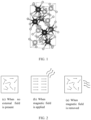
FIG. 1 is a structural view of lithium rare earth fluoride crystal. -
FIG. 2 is a schematic view of magnetic refrigeration. -
FIG. 3 is a graphical view of the magnetic entropy change curves of gadolinium gallium garnet (GGG) and lithium rare earth fluoride single crystal under the application of a 0-10kOe magnetic field variation along the direction of the easy magnetization axis. -
FIG. 4 is a graphical view of the magnetic entropy change curves of gadolinium gallium garnet (GGG) and lithium rare earth fluoride single crystal under the application of a 0-20kOe magnetic field variation along the direction of the easy magnetization axis. -
FIG. 5 is a graphical view of the relationship between the thermal conductivity of the LiTbF4 single crystal and the temperature change. -
FIG. 6 is a graphical view of the relationship between the thermal conductivity of the LiErF4 single crystal and the temperature change.. -
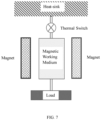
FIG. 7 is a schematic structural view of the magnetic refrigeration device. - An application device of lithium rare earth fluoride single crystal, specifically a magnetic refrigerant device driven by a magnetic field, a magnetic working medium is lithium rare earth fluoride single crystal, specifically one or more of LiGdF4, LiTbF4, LiHoF4, LiDyF4, LiErF4, LiYbF4 and LiTmF4.
- The device also comprises a magnetic field applying component, a thermal switch, a heat-sink and a load. Wherein, the magnetic field applying component can be selected from permanent magnet, electromagnet or superconducting magnet; the thermal switch can be selected from mechanical contact type, superconducting type, gas type or magnetic resistance type thermal switches; the function of the load is to achieve cooling; the head-sink serves the function of dissipating heat. In the initial state, the lithium rare earth fluoride single crystal has the same temperature as the heat-sink under a zero magnetic field condition, then, with the thermal switch remaining closed, the magnetic field increases. During the isothermal magnetization process, heat flows from the magnetic working medium to the heat-sink and the entropy decreases. When the magnetic field reaches maximum, turn on the thermal switch and then reduce the magnetic field, when the temperature of the magnetic working medium drops to the temperature required by the load, some magnetic field is still retained, as the magnetic field continues to decrease, the magnetic working medium will absorb heat from the load to cool the load, thereby achieving the purpose of cooling and fulfilling the refrigeration function of the entire device.
- When multiple different lithium rare earth fluoride single crystals are mixed and arranged, the refrigeration range can be effectively expanded. For example, in one embodiment, LiErF4 and LiTbF4 are mixed and arranged so that the refrigeration interval is expanded from the temperature range below 6K when using only LiErF4 to the temperature range below 15K; in another embodiment, LiDyF4 and LiTbF4 are mixed and arranged so that the refrigeration range is expanded from the temperature range below 4K when using only LiDyF4 to the temperature range below 15K, or by incorporating a certain amount of other rare earth elements (Gd, Tb, Dy, Ho, Er, Tm, and Yb) during the process of preparing lithium rare earth fluoride single crystals. Preparing a lithium rare earth fluoride single crystals containing two or more rare earth elements can also achieve the expansion of the low-temperature refrigeration range.
- The following embodiments conduct magnetocaloric performance tests on LiGdF4, LiTbF4, LiHoF4, LiDyF4, LiErF4, LiYbF4 and LiTmF4, respectively. The test results show that in the low-temperature range of less than 20K, LiGdF4, LiTbF4, LiHoF4, LiDyF4 and LiErF4 demonstrate an isothermal magnetic entropy change superior to the isothermal magnetic entropy change of traditional GGG material at 17.5 J·kg-1·K-1. Wherein, both LiTbF4 and LiErF4 demonstrate thermal conductivity of up to 50W·K-1m-1 in the low-temperature range.
- In the magnetic test, a small piece of sample is first cut out from a large LiGdF4 single crystal sample using a scalpel and is weighed using an electronic balance, the sample has a mass of 7.35mg. The sample is then fixed in a plastic sample tube using double-sided tape. Next, M-H tests are conducted along the easy magnetization direction of the sample. At a temperature of 1.8K, an M-H curve is measured; within the temperature range of 2K to 10K, an M-H curve is measured at intervals of 1K; within the temperature range of 10K to 24K, an M-H curve is measured at intervals of 2K. In each tested M-H curve, one data point is measured at intervals of 500Oe in the magnetic field range of 0 to 10kOe, and one data point is measured at intervals of 1000Oe in the magnetic field range of 10kOe to 20kOe.
- According to the M-H curves obtained from the magnetic tests above at different temperatures, the relationship between the magnetic entropy change and the temperature change of the LiGdF4 sample after applying a varying magnetic field of 0-10kOe and 0-20kOe along the easy magnetization direction is determined using the Maxwell equation. A magnetic entropy change of 50.35J·kg-1 ·K-1 under a varying magnetic field of 0-20kOe for the LiGdF4 sample is obtained.
- In the magnetic test, limited by the measurement range of the instrument, a small piece of sample is first cut out from the large LiTbF4 single crystal sample using a scalpel and is weighed using an electronic balance, the sample has a mass of 5.4mg. The sample is then fixed in a plastic sample tube using double-sided tape. Next, M-H tests (i.e., magnetization curve test) are conducted along the easy magnetization direction of the sample. Within the temperature range of 1.85K to 2.85K, an M-H curve is measured at intervals of 0.2K; within the temperature range of 4K to 22K, an M-H curve is measured at intervals of 2K. In each tested M-H curve, one data point is measured at intervals of 500Oe in the magnetic field range of 0 to 10kOe, and one data point is measured at intervals of 1000Oe in the magnetic field range of 10kOe to 20kOe.
- According to the M-H curves obtained from the magnetic tests above at different temperatures, the relationship between the magnetic entropy change and the temperature change of the LiTbF4 sample after applying a varying magentic filed of 0-10kOe and 0-20kOe along the easy magnetization direction is determined using the Maxwell equation. A magnetic entropy change of 21.12J·kg-1 ·K-1 under a varying magnetic field of 0-20kOe for the LiTbF4 sample is obtained.
- In the thermal conductivity test of the LiTbF4 single crystal sample, the thermal conductivity along the C-axis direction of the LiTbF4 sample is tested using the heat transport option of the comprehensive physical property measurement system, the shape of the sample is rectangular. The four-probe method is used for testing. The cross-sectional area is 9.63mm2, the surface area is 109.8mm3, the electrode spacing is 1.5mm and the thermal radiation coefficient is 1. The temperature range of the test is 25K-50K, and a cooling test at a rate at 0.1K/min is carried out, the relationship between the thermal conductivity of the LiTbF4 sample and the temperature change is then obtained, and the thermal conductivity at 25K reaches 50W·K-1·m-1.
- In the magnetic test, a small piece of sample is first cut out from the large LiDyF4 single crystal sample using a scalpel and is weighed using an electronic balance, the sample has a mass of 1.48mg. The sample is then fixed in a plastic sample tube using double-sided tape. Next, M-H tests are conducted along the easy magnetization direction of the sample. At a temperature of 1.8K, an M-H curve is measured; within the temperature range of 2K to 10K, an M-H curve is measured at intervals of 1K; within the temperature range of 10K to 24K, an M-H curve is measured at intervals of 2K. In each tested M-H curve, one data point is measured at intervals of 500Oe in the magnetic field range of 0 to 10kOe, and one data point is measured at intervals of 1000Oe in the magnetic field range of 10kOe to 20kOe.
- According to the M-H curves obtained from the magnetic tests above at different temperatures, the relationship between the magnetic entropy change and the temperature change of the LiDyF4 sample after applying a varying magnetic field of 0-10kOe and 0-20kOe along the easy magnetization direction is determined using the Maxwell equation. A magnetic entropy change of 24.45J·kg-1 ·K-1 under a varying magnetic field of 0-20kOe for the LiDyF4 sample is obtained.
- In the magnetic test, a small piece of sample is first cut out from the large LiHoF4 single crystal sample using a scalpel and is weighed using an electronic balance, the sample has a mass of 6.35mg. The sample is then fixed in a plastic sample tube using double-sided tape. Next, M-H tests are conducted along the easy magnetization direction of the sample. At a temperature of 1.8K, an M-H curve is measured; within the temperature range of 2K to 10K, an M-H curve is measured at intervals of 1K; within the temperature range of 10K to 24K, an M-H curve is measured at intervals of 2K. In each tested M-H curve, one data point is measured at intervals of 500Oe in the magnetic field range of 0 to 10kOe, and one data point is measured at intervals of 1000Oe in the magnetic field range of 10kOe to 20kOe.
- According to the M-H curves obtained from the magnetic tests above at different temperatures, the relationship between the magnetic entropy change and the temperature change of the LiHoF4 sample after applying a varying magnetic field of 0-10kOe and 0-20kOe along the easy magnetization direction is determined using the Maxwell equation. A magnetic entropy change of 24.98J·kg-1 ·K-1 under a varying magnetic field of 0-20kOe for the LiHoF4 sample is obtained.
- In the magnetic test, a small piece of sample is first cut out from the large LiErF4 single crystal sample using a scalpel and is weighed using an electronic balance, the sample has a mass of 2.55mg. The sample is then fixed in a plastic sample tube using double-sided tape. Next, M-H tests are conducted along the easy magnetization direction of the sample. At a temperature of 1.8K, an M-H curve is measured; within the temperature range of 2K to 10K, an M-H curve is measured at intervals of 1K; within the temperature range of 10K to 24K, an M-H curve is measured at intervals of 2K. In each tested M-H curve, one data point is measured at intervals of 500Oe in the magnetic field range of 0 to 10kOe, and one data point is measured at intervals of 1000Oe in the magnetic field range of 10kOe to 20kOe.
- According to the M-H curves obtained from the magnetic tests above at different temperatures, the relationship between the magnetic entropy change and the temperature change of the LiErF4 sample after applying a varying magnetic field of 0-10kOe and 0-20kOe along the easy magnetization direction is determined using the Maxwell equation. A magnetic entropy change of 21.95J·kg-1 ·K-1 under a temperature of 1.8K and a varying magnetic field of 20kOe for the LiErF4 sample is obtained.
- The thermal conductivity test of the LiErF4 single crystal samples is carried out, wherein, the thermal conductivity along the C-axis direction of the LiErF4 sample is tested using the heat transport option of the comprehensive physical property measurement system, the shape of the sample is rectangular. The four-probe method is used for testing. The cross-sectional area is 9.3mm2, the surface area is 104.37mm3, the electrode spacing is 1.87mm and the thermal radiation coefficient is 1. The temperature range of the test is 25K-300K, and a cooling test at a rate at 0.1K/min is carried out, the relationship between the thermal conductivity of the LiTbF4 sample and the temperature change is then obtained, and the thermal conductivity at 25K reaches 50W·K-1·m-1.
- In the magnetic test, a small piece of sample is first cut out from the large LiTmF4 single crystal sample using a scalpel and is weighed using an electronic balance, the sample has a mass of 82.63mg. The sample is then fixed in a plastic sample tube using double-sided tape. Next, M-H tests are conducted along the easy magnetization direction of the sample. At a temperature of 1.8K, an M-H curve is measured; within the temperature range of 2K to 10K, an M-H curve is measured at intervals of 1K; within the temperature range of 10K to 24K, an M-H curve is measured at intervals of 2K. In each tested M-H curve, one data point is measured at intervals of 500Oe in the magnetic field range of 0 to 10kOe, and one data point is measured at intervals of 1000Oe in the magnetic field range of 10kOe to 20kOe.
- According to the M-H curves obtained from the magnetic tests above at different temperatures, the relationship between the magnetic entropy change and the temperature change of the LiTmF4 sample after applying a varying magnetic field of 0-10kOe and 0-20kOe along the easy magnetization direction is determined using the Maxwell equation. A magnetic entropy change of 0.692J·kg-1 ·K-1 under a varying magnetic field of 0-20kOe for the LiTmF4 sample is obtained.
- In the magnetic test, a small piece of sample is first cut out from the large LiYbF4 single crystal sample using a scalpel and is weighed using an electronic balance, the sample has a mass of 4.81mg. The sample is then fixed in a plastic sample tube using double-sided tape. Next, M-H tests are conducted along the easy magnetization direction of the sample. At a temperature of 1.8K, an M-H curve is measured; within the temperature range of 2K to 10K, an M-H curve is measured at intervals of 1K; within the temperature range of 10K to 24K, an M-H curve is measured at intervals of 2K. In each tested M-H curve, one data point is measured at intervals of 500Oe in the magnetic field range of 0 to 10kOe, and one data point is measured at intervals of 1000Oe in the magnetic field range of 10kOe to 20kOe.
- According to the M-H curves obtained from the magnetic tests above at different temperatures, the relationship between the magnetic entropy change and the temperature change of the LiYbF4 sample after applying a varying magnetic field of 0-10kOe and 0-20kOe along the easy magnetization direction is determined using the Maxwell equation. A magnetic entropy change of 14.7J·kg-1 ·K-1 under a varying magnetic field of 0-20kOe for the LiYbF4 sample is obtained.
- The above embodiments are only for illustrating the technical ideas and the features of the present invention. The purpose is to enable those skilled in the art to understand the content of the present invention and implement the content, and should not limit the scope of protection of the present invention. Any equivalent changes or modifications made in accordance with the essence of the present invention should be included within the protection scope of the present invention.
- In addition, descriptions of known structures and techniques are omitted in this document to avoid unnecessary confusion with the concepts of the present invention.
Claims (17)
- A use of a lithium rare earth fluoride single crystal in magnetic refrigeration.
- The use, as recited in claim 1, characterized in that: the chemical formula of said lithium rare earth fluoride is LiREF4, wherein, RE is a rare earth element.
- The use, as recited in claim 2, characterized in that: said rare earth element is one or more of gadolinium, terbium, dysprosium, holmium, erbium, thulium and ytterbium.
- The use, as recited in claim 3, characterized in that: said lithium rare earth fluoride has a tetragonal scheelite structure and is a single crystal with magnetic anisotropy.
- The use, as recited in claim 4, characterized in that: the easy magnetization direction of LiGdF4, LiTbF4 and LiHoF4 are parallel to the C-axis, while the easy magnetization direction of LiDyF4, LiErF4, LiYbF4 and LiTmF4 are perpendicular to the C-axis.
- The use, as recited in claim 3, characterized in that: LiGdF4 demonstrates paramagnetism, LiTmF4 demonstrates Van Vleck paramagnetism, LiTbF4 and LiHoF4 demonstrate ferromagnetism ordering at temperatures below Curie temperature of 2.87K and 1.53K respectively, LiDyF4, LiErF4 and LiYbF4 demonstrate antiferromagnetism ordering at temperatures below Nel temperature of 0.62K, 0.38K and 0.128K respectively.
- The use, as recited in claim 1 to 4, characterized in that: the application temperature range of said lithium rare earth fluoride single crystal is a low-temperature range below 20K.
- The use, as recited in claim 1 to 4, characterized in that: when a varying magnetic field of 0-20kOe is applied along the easy magnetization direction of said lithium rare earth fluoride single crystal sample, said lithium rare earth fluoride single crystal demonstrates a large isothermal magnetic entropy change, in which, LiGdF4, LiTbF4, LiHoF4, LiDyF4, LiErF4, LiYbF4 and LiTmF4 obtained isothermal magnetic entropy changes of 50.35J·kg-1·K-1, 21.12J·kg-1·K-1, 24.98J·kg-1·K-1, 24.45J·kg-1·K-1, 21.95J·kg-1·K-1, 14.7J·kg-1·K-1 and 0.692J·kg-1·K-1, at temperature of 1.8K, 4K, 4K, 1.8K, 1.8K, 1.8K and 18K, respectively.
- The use, as recited in claim 5, characterized in that: the thermal conductivity of LiTbF4 and LiErF4 reaches 50W·K-1·m-1 at 25K.
- A magnetic refrigeration method based on lithium rare earth fluoride single crystal, characterized in that: using said lithium rare earth fluoride single crystal as a magnetic working medium, by applying and removing a magnetic field to said magnetic working medium, the temperature of said magnetic working medium changes, facilitating the transfer of heat with the heat exchanger, thereby achieving the purpose of refrigeration.
- The magnetic refrigeration method, as recited in claim 10, characterized in that: said lithium rare earth fluoride single crystal can be one or more of LiGdF4, LiTbF4, LiHoF4, LiDyF4, LiErF4, LiYbF4 and LiTmF4,
when multiple types are used, the expansion of the low-temperature refrigeration range is achieved by mixing and arranging different lithium rare earth fluoride single crystals. - The magnetic refrigeration method, as recited in claim 10, characterized in that: the chemical formula of said lithium rare earth fluoride is LiREF4, wherein, RE is a rare earth element, and RE is selected from at least two or more rare earth elements of Gd, Tb, Dy, Ho, Er, Tm and Yb to achieve expansion of the low-temperature refrigeration range.
- A magnetic refrigerant device driven by a small magnetic field, characterized in that: said device comprises lithium rare earth fluoride single crystal as a magnetic working medium.
- The magnetic refrigerant device, as recited in claim 13, characterized in that: said magnetic working medium lithium rare earth fluoride single crystal is one or more of LiGdF4, LiTbF4, LiHoF4, LiDyF4, LiErF4, LiYbF4 and LiTmF4,
when multiple types are used, the expansion of the low-temperature refrigeration range is achieved by mixing and arranging different lithium rare earth fluoride single crystals. - The magnetic refrigerant device, as recited in claim 13, characterized in that: the chemical formula of said lithium rare earth fluoride is LiREF4, wherein, RE is a rare earth element, and RE is selected from at least two or more rare earth elements of Gd, Tb, Dy, Ho, Er, Tm and Yb.
- The magnetic refrigerant device, as recited in claim 13, characterized in that: said magnetic refrigerant device also comprises a magnetic field applying component, a thermal switch, a heat-sink and a load.
- The magnetic refrigerant device, as recited in claim 13, characterized in that: said magnetic field applying component is a permanent magnet, and said thermal switch is a superconducting thermal switch.
Applications Claiming Priority (2)
| Application Number | Priority Date | Filing Date | Title |
|---|---|---|---|
| CN202210435306.4A CN116972547A (en) | 2022-04-24 | 2022-04-24 | Application of a rare earth fluoride single crystal in magnetic refrigeration |
| PCT/CN2023/081822 WO2023207400A1 (en) | 2022-04-24 | 2023-03-16 | Use of rare earth fluoride single crystal in magnetic refrigeration |
Publications (2)
| Publication Number | Publication Date |
|---|---|
| EP4450896A1 true EP4450896A1 (en) | 2024-10-23 |
| EP4450896A4 EP4450896A4 (en) | 2025-05-14 |
Family
ID=88473612
Family Applications (1)
| Application Number | Title | Priority Date | Filing Date |
|---|---|---|---|
| EP23794836.9A Withdrawn EP4450896A4 (en) | 2022-04-24 | 2023-03-16 | USE OF A RARE EARTH FLUORIDE MONOCRYSTAL IN MAGNETIC REFRIGERATION |
Country Status (5)
| Country | Link |
|---|---|
| US (1) | US20250172321A1 (en) |
| EP (1) | EP4450896A4 (en) |
| JP (1) | JP2025503857A (en) |
| CN (1) | CN116972547A (en) |
| WO (1) | WO2023207400A1 (en) |
Families Citing this family (1)
| Publication number | Priority date | Publication date | Assignee | Title |
|---|---|---|---|---|
| CN118640598A (en) * | 2024-05-27 | 2024-09-13 | 中国科学院金属研究所 | Application of amino rare earth fluoride in magnetic refrigeration |
Family Cites Families (9)
| Publication number | Priority date | Publication date | Assignee | Title |
|---|---|---|---|---|
| JPS5939799A (en) * | 1982-08-27 | 1984-03-05 | Toshiba Corp | Production of operating material for magnetic refrigeration |
| JP2007255746A (en) * | 2006-03-22 | 2007-10-04 | Kyushu Univ | Magnetic refrigerator and magnetic refrigeration method |
| JP4987514B2 (en) * | 2007-03-08 | 2012-07-25 | 株式会社東芝 | Magnetic refrigeration material and magnetic refrigeration apparatus |
| JP2013153165A (en) * | 2013-01-22 | 2013-08-08 | Vacuumschmelze Gmbh & Co Kg | Complex structure having magnetocalorically active material and production method thereof |
| EP3163222B1 (en) * | 2015-10-28 | 2018-07-18 | Technische Universität München | Cryogen-free cooling apparatus |
| CN106190052B (en) * | 2016-07-11 | 2019-02-12 | 商丘师范学院 | A kind of crystalline gadolinium-based magnetic refrigeration material and preparation method thereof |
| CN111292909B (en) * | 2019-12-26 | 2021-07-23 | 西安交通大学深圳研究院 | A kind of fluorine bridged rare earth molecular cluster magnetic refrigeration material and preparation method |
| CN113035480B (en) * | 2021-02-26 | 2022-02-11 | 中国科学院江西稀土研究院 | A kind of magnetic refrigeration material and its preparation method and application |
| CN114804184B (en) * | 2022-04-02 | 2023-04-07 | 中国科学院赣江创新研究院 | Extremely-low-temperature magnetic refrigeration material and preparation method and application thereof |
-
2022
- 2022-04-24 CN CN202210435306.4A patent/CN116972547A/en active Pending
-
2023
- 2023-03-16 WO PCT/CN2023/081822 patent/WO2023207400A1/en not_active Ceased
- 2023-03-16 US US18/839,903 patent/US20250172321A1/en active Pending
- 2023-03-16 EP EP23794836.9A patent/EP4450896A4/en not_active Withdrawn
- 2023-03-16 JP JP2024538358A patent/JP2025503857A/en active Pending
Also Published As
| Publication number | Publication date |
|---|---|
| WO2023207400A1 (en) | 2023-11-02 |
| JP2025503857A (en) | 2025-02-06 |
| CN116972547A (en) | 2023-10-31 |
| EP4450896A4 (en) | 2025-05-14 |
| US20250172321A1 (en) | 2025-05-29 |
Similar Documents
| Publication | Publication Date | Title |
|---|---|---|
| Zhang et al. | Large reversible magnetocaloric effects in ErFeSi compound under low magnetic field change around liquid hydrogen temperature | |
| Yu et al. | Absence of superconductivity in single-phase CaFe 2 As 2 under hydrostatic pressure | |
| Li et al. | Low field giant magnetocaloric effect in RNiBC (R= Er and Gd) and enhanced refrigerant capacity in its composite materials | |
| Barua et al. | Anisotropic magnetocaloric response in AlFe2B2 | |
| Brück et al. | Magnetic refrigeration—towards room-temperature applications | |
| Mo et al. | Low-field induced giant magnetocaloric effect in TmCuAl compound | |
| Gschneidner Jr et al. | Rare earths and magnetic refrigeration | |
| Li et al. | Giant magnetocaloric effect in antiferromagnetic borocarbide superconductor RNi2B2C (R= Dy, Ho, and Er) compounds | |
| Liu et al. | Significant inverse magnetocaloric effect induced by quantum criticality | |
| Gong et al. | Large reversible cryogenic magnetocaloric effect in rare earth iron carbides of composition RE2FeC4 (RE= Ho, Er, and Tm) | |
| Li et al. | Enhanced refrigeration capacity in Ho1-xDyxB2 compounds around liquid hydrogen temperature | |
| US20250172321A1 (en) | Use of rare earth fluoride single crystal in magnetic refrigeration | |
| Elouafi et al. | Excellent magnetocaloric effect at cryogenic temperature in amorphous (Fe35RE65)(RE= Er, Dy and Gd) alloys | |
| Zheng et al. | Large magnetocaloric effect of NdGa compound due to successive magnetic transitions | |
| Tian et al. | Large table-like magnetocaloric effect in boron-doped Er5Si3B0. 5 compound | |
| CN114383338A (en) | Design method of cascade type liquid-free helium refrigerator based on novel frustrating magnetic material | |
| Wang | Magnetic and calorimetric study of the magnetocaloric effect in intermetallics exhibiting first-order magnetostructural transitions | |
| Tian et al. | Structure, magnetic and magnetocaloric properties of polycrystalline Er3AlC compound | |
| Xu et al. | Giant low-field magnetocaloric effect in unstable antiferromagnetic Tm1–xErxNi2Si2 (x= 0.2, 0.4) compounds | |
| CN111292909A (en) | A kind of fluorine bridged rare earth molecular cluster magnetic refrigeration material and preparation method | |
| WO2025246266A1 (en) | Use of amino rare-earth fluorides in magnetic refrigeration | |
| Liu et al. | Magnetic transitions and magnetocaloric effect of Pr (Ga, Ge) compounds | |
| Matsumoto et al. | Large magnetocaloric effect in sintered ferromagnetic EuS | |
| CN120600436A (en) | A rare earth europium-based zirconate magnetic refrigeration material and its preparation method and application | |
| Orshulevich et al. | Magnetocaloric effect in intermetallic compounds with rare-earth and transition metals: From fundamental aspects to functional applications |
Legal Events
| Date | Code | Title | Description |
|---|---|---|---|
| STAA | Information on the status of an ep patent application or granted ep patent |
Free format text: STATUS: THE INTERNATIONAL PUBLICATION HAS BEEN MADE |
|
| PUAI | Public reference made under article 153(3) epc to a published international application that has entered the european phase |
Free format text: ORIGINAL CODE: 0009012 |
|
| STAA | Information on the status of an ep patent application or granted ep patent |
Free format text: STATUS: REQUEST FOR EXAMINATION WAS MADE |
|
| 17P | Request for examination filed |
Effective date: 20240709 |
|
| AK | Designated contracting states |
Kind code of ref document: A1 Designated state(s): AL AT BE BG CH CY CZ DE DK EE ES FI FR GB GR HR HU IE IS IT LI LT LU LV MC ME MK MT NL NO PL PT RO RS SE SI SK SM TR |
|
| REG | Reference to a national code |
Ref country code: DE Ref legal event code: R079 Free format text: PREVIOUS MAIN CLASS: F25B0021000000 Ipc: H01F0001010000 |
|
| A4 | Supplementary search report drawn up and despatched |
Effective date: 20250414 |
|
| RIC1 | Information provided on ipc code assigned before grant |
Ipc: C01F 17/36 20200101ALI20250408BHEP Ipc: F25B 21/00 20060101ALI20250408BHEP Ipc: H01F 1/01 20060101AFI20250408BHEP |
|
| DAV | Request for validation of the european patent (deleted) | ||
| DAX | Request for extension of the european patent (deleted) | ||
| STAA | Information on the status of an ep patent application or granted ep patent |
Free format text: STATUS: THE APPLICATION IS DEEMED TO BE WITHDRAWN |
|
| 18D | Application deemed to be withdrawn |
Effective date: 20251104 |