EP4450886A1 - System and method to control indoor air quality in a multi-zone environment - Google Patents
System and method to control indoor air quality in a multi-zone environment Download PDFInfo
- Publication number
- EP4450886A1 EP4450886A1 EP24170881.7A EP24170881A EP4450886A1 EP 4450886 A1 EP4450886 A1 EP 4450886A1 EP 24170881 A EP24170881 A EP 24170881A EP 4450886 A1 EP4450886 A1 EP 4450886A1
- Authority
- EP
- European Patent Office
- Prior art keywords
- assigned
- zones
- sensing device
- zone
- iaq
- Prior art date
- Legal status (The legal status is an assumption and is not a legal conclusion. Google has not performed a legal analysis and makes no representation as to the accuracy of the status listed.)
- Pending
Links
- 238000000034 method Methods 0.000 title claims description 48
- 230000033001 locomotion Effects 0.000 claims abstract description 13
- 238000004891 communication Methods 0.000 claims description 53
- 238000012790 confirmation Methods 0.000 claims description 8
- CURLTUGMZLYLDI-UHFFFAOYSA-N Carbon dioxide Chemical compound O=C=O CURLTUGMZLYLDI-UHFFFAOYSA-N 0.000 description 7
- 230000001276 controlling effect Effects 0.000 description 5
- 238000010438 heat treatment Methods 0.000 description 5
- UGFAIRIUMAVXCW-UHFFFAOYSA-N Carbon monoxide Chemical compound [O+]#[C-] UGFAIRIUMAVXCW-UHFFFAOYSA-N 0.000 description 4
- 229910002092 carbon dioxide Inorganic materials 0.000 description 4
- 239000001569 carbon dioxide Substances 0.000 description 4
- 229910002091 carbon monoxide Inorganic materials 0.000 description 4
- 230000003750 conditioning effect Effects 0.000 description 4
- WSFSSNUMVMOOMR-UHFFFAOYSA-N Formaldehyde Chemical compound O=C WSFSSNUMVMOOMR-UHFFFAOYSA-N 0.000 description 3
- 238000004378 air conditioning Methods 0.000 description 3
- 238000001816 cooling Methods 0.000 description 3
- 238000012545 processing Methods 0.000 description 3
- 238000009423 ventilation Methods 0.000 description 3
- 241000894006 Bacteria Species 0.000 description 2
- 230000000711 cancerogenic effect Effects 0.000 description 2
- 231100000315 carcinogenic Toxicity 0.000 description 2
- 230000002708 enhancing effect Effects 0.000 description 2
- 239000000203 mixture Substances 0.000 description 2
- 238000012986 modification Methods 0.000 description 2
- 230000004048 modification Effects 0.000 description 2
- 239000000779 smoke Substances 0.000 description 2
- 238000012546 transfer Methods 0.000 description 2
- 239000012855 volatile organic compound Substances 0.000 description 2
- 241000700605 Viruses Species 0.000 description 1
- 239000000809 air pollutant Substances 0.000 description 1
- 231100001243 air pollutant Toxicity 0.000 description 1
- 230000003466 anti-cipated effect Effects 0.000 description 1
- 230000004888 barrier function Effects 0.000 description 1
- 230000005540 biological transmission Effects 0.000 description 1
- 230000001413 cellular effect Effects 0.000 description 1
- 150000001875 compounds Chemical class 0.000 description 1
- 230000001143 conditioned effect Effects 0.000 description 1
- 238000010276 construction Methods 0.000 description 1
- 239000000356 contaminant Substances 0.000 description 1
- 238000011217 control strategy Methods 0.000 description 1
- 239000002826 coolant Substances 0.000 description 1
- 238000007791 dehumidification Methods 0.000 description 1
- 239000000428 dust Substances 0.000 description 1
- 238000005516 engineering process Methods 0.000 description 1
- 238000001914 filtration Methods 0.000 description 1
- 239000012530 fluid Substances 0.000 description 1
- 230000006870 function Effects 0.000 description 1
- 230000007774 longterm Effects 0.000 description 1
- 230000014759 maintenance of location Effects 0.000 description 1
- 239000000463 material Substances 0.000 description 1
- WSFSSNUMVMOOMR-NJFSPNSNSA-N methanone Chemical compound O=[14CH2] WSFSSNUMVMOOMR-NJFSPNSNSA-N 0.000 description 1
- 238000010295 mobile communication Methods 0.000 description 1
- 238000012544 monitoring process Methods 0.000 description 1
- 230000003287 optical effect Effects 0.000 description 1
- 239000002245 particle Substances 0.000 description 1
- 239000013618 particulate matter Substances 0.000 description 1
- -1 pollen Substances 0.000 description 1
- 238000003908 quality control method Methods 0.000 description 1
- 230000001105 regulatory effect Effects 0.000 description 1
- 239000007787 solid Substances 0.000 description 1
- 238000010200 validation analysis Methods 0.000 description 1
Images


Classifications
-
- F—MECHANICAL ENGINEERING; LIGHTING; HEATING; WEAPONS; BLASTING
- F24—HEATING; RANGES; VENTILATING
- F24F—AIR-CONDITIONING; AIR-HUMIDIFICATION; VENTILATION; USE OF AIR CURRENTS FOR SCREENING
- F24F11/00—Control or safety arrangements
- F24F11/30—Control or safety arrangements for purposes related to the operation of the system, e.g. for safety or monitoring
- F24F11/49—Control or safety arrangements for purposes related to the operation of the system, e.g. for safety or monitoring ensuring correct operation, e.g. by trial operation or configuration checks
-
- F—MECHANICAL ENGINEERING; LIGHTING; HEATING; WEAPONS; BLASTING
- F24—HEATING; RANGES; VENTILATING
- F24F—AIR-CONDITIONING; AIR-HUMIDIFICATION; VENTILATION; USE OF AIR CURRENTS FOR SCREENING
- F24F11/00—Control or safety arrangements
- F24F11/62—Control or safety arrangements characterised by the type of control or by internal processing, e.g. using fuzzy logic, adaptive control or estimation of values
- F24F11/63—Electronic processing
-
- E—FIXED CONSTRUCTIONS
- E05—LOCKS; KEYS; WINDOW OR DOOR FITTINGS; SAFES
- E05B—LOCKS; ACCESSORIES THEREFOR; HANDCUFFS
- E05B47/00—Operating or controlling locks or other fastening devices by electric or magnetic means
-
- F—MECHANICAL ENGINEERING; LIGHTING; HEATING; WEAPONS; BLASTING
- F24—HEATING; RANGES; VENTILATING
- F24F—AIR-CONDITIONING; AIR-HUMIDIFICATION; VENTILATION; USE OF AIR CURRENTS FOR SCREENING
- F24F11/00—Control or safety arrangements
- F24F11/30—Control or safety arrangements for purposes related to the operation of the system, e.g. for safety or monitoring
- F24F11/32—Responding to malfunctions or emergencies
-
- F—MECHANICAL ENGINEERING; LIGHTING; HEATING; WEAPONS; BLASTING
- F24—HEATING; RANGES; VENTILATING
- F24F—AIR-CONDITIONING; AIR-HUMIDIFICATION; VENTILATION; USE OF AIR CURRENTS FOR SCREENING
- F24F11/00—Control or safety arrangements
- F24F11/50—Control or safety arrangements characterised by user interfaces or communication
- F24F11/52—Indication arrangements, e.g. displays
-
- F—MECHANICAL ENGINEERING; LIGHTING; HEATING; WEAPONS; BLASTING
- F24—HEATING; RANGES; VENTILATING
- F24F—AIR-CONDITIONING; AIR-HUMIDIFICATION; VENTILATION; USE OF AIR CURRENTS FOR SCREENING
- F24F11/00—Control or safety arrangements
- F24F11/50—Control or safety arrangements characterised by user interfaces or communication
- F24F11/56—Remote control
-
- F—MECHANICAL ENGINEERING; LIGHTING; HEATING; WEAPONS; BLASTING
- F24—HEATING; RANGES; VENTILATING
- F24F—AIR-CONDITIONING; AIR-HUMIDIFICATION; VENTILATION; USE OF AIR CURRENTS FOR SCREENING
- F24F11/00—Control or safety arrangements
- F24F11/50—Control or safety arrangements characterised by user interfaces or communication
- F24F11/56—Remote control
- F24F11/57—Remote control using telephone networks
-
- F—MECHANICAL ENGINEERING; LIGHTING; HEATING; WEAPONS; BLASTING
- F24—HEATING; RANGES; VENTILATING
- F24F—AIR-CONDITIONING; AIR-HUMIDIFICATION; VENTILATION; USE OF AIR CURRENTS FOR SCREENING
- F24F11/00—Control or safety arrangements
- F24F11/50—Control or safety arrangements characterised by user interfaces or communication
- F24F11/56—Remote control
- F24F11/58—Remote control using Internet communication
-
- F—MECHANICAL ENGINEERING; LIGHTING; HEATING; WEAPONS; BLASTING
- F24—HEATING; RANGES; VENTILATING
- F24F—AIR-CONDITIONING; AIR-HUMIDIFICATION; VENTILATION; USE OF AIR CURRENTS FOR SCREENING
- F24F11/00—Control or safety arrangements
- F24F11/62—Control or safety arrangements characterised by the type of control or by internal processing, e.g. using fuzzy logic, adaptive control or estimation of values
- F24F11/63—Electronic processing
- F24F11/65—Electronic processing for selecting an operating mode
-
- F—MECHANICAL ENGINEERING; LIGHTING; HEATING; WEAPONS; BLASTING
- F24—HEATING; RANGES; VENTILATING
- F24F—AIR-CONDITIONING; AIR-HUMIDIFICATION; VENTILATION; USE OF AIR CURRENTS FOR SCREENING
- F24F11/00—Control or safety arrangements
- F24F11/88—Electrical aspects, e.g. circuits
-
- F—MECHANICAL ENGINEERING; LIGHTING; HEATING; WEAPONS; BLASTING
- F24—HEATING; RANGES; VENTILATING
- F24F—AIR-CONDITIONING; AIR-HUMIDIFICATION; VENTILATION; USE OF AIR CURRENTS FOR SCREENING
- F24F11/00—Control or safety arrangements
- F24F11/89—Arrangement or mounting of control or safety devices
-
- G—PHYSICS
- G07—CHECKING-DEVICES
- G07C—TIME OR ATTENDANCE REGISTERS; REGISTERING OR INDICATING THE WORKING OF MACHINES; GENERATING RANDOM NUMBERS; VOTING OR LOTTERY APPARATUS; ARRANGEMENTS, SYSTEMS OR APPARATUS FOR CHECKING NOT PROVIDED FOR ELSEWHERE
- G07C9/00—Individual registration on entry or exit
- G07C9/00174—Electronically operated locks; Circuits therefor; Nonmechanical keys therefor, e.g. passive or active electrical keys or other data carriers without mechanical keys
- G07C9/00571—Electronically operated locks; Circuits therefor; Nonmechanical keys therefor, e.g. passive or active electrical keys or other data carriers without mechanical keys operated by interacting with a central unit
-
- G—PHYSICS
- G07—CHECKING-DEVICES
- G07C—TIME OR ATTENDANCE REGISTERS; REGISTERING OR INDICATING THE WORKING OF MACHINES; GENERATING RANDOM NUMBERS; VOTING OR LOTTERY APPARATUS; ARRANGEMENTS, SYSTEMS OR APPARATUS FOR CHECKING NOT PROVIDED FOR ELSEWHERE
- G07C9/00—Individual registration on entry or exit
- G07C9/00174—Electronically operated locks; Circuits therefor; Nonmechanical keys therefor, e.g. passive or active electrical keys or other data carriers without mechanical keys
- G07C9/00896—Electronically operated locks; Circuits therefor; Nonmechanical keys therefor, e.g. passive or active electrical keys or other data carriers without mechanical keys specially adapted for particular uses
-
- E—FIXED CONSTRUCTIONS
- E05—LOCKS; KEYS; WINDOW OR DOOR FITTINGS; SAFES
- E05B—LOCKS; ACCESSORIES THEREFOR; HANDCUFFS
- E05B47/00—Operating or controlling locks or other fastening devices by electric or magnetic means
- E05B2047/0048—Circuits, feeding, monitoring
- E05B2047/0067—Monitoring
-
- F—MECHANICAL ENGINEERING; LIGHTING; HEATING; WEAPONS; BLASTING
- F24—HEATING; RANGES; VENTILATING
- F24F—AIR-CONDITIONING; AIR-HUMIDIFICATION; VENTILATION; USE OF AIR CURRENTS FOR SCREENING
- F24F11/00—Control or safety arrangements
- F24F11/70—Control systems characterised by their outputs; Constructional details thereof
- F24F11/80—Control systems characterised by their outputs; Constructional details thereof for controlling the temperature of the supplied air
-
- F—MECHANICAL ENGINEERING; LIGHTING; HEATING; WEAPONS; BLASTING
- F24—HEATING; RANGES; VENTILATING
- F24F—AIR-CONDITIONING; AIR-HUMIDIFICATION; VENTILATION; USE OF AIR CURRENTS FOR SCREENING
- F24F2110/00—Control inputs relating to air properties
- F24F2110/50—Air quality properties
-
- F—MECHANICAL ENGINEERING; LIGHTING; HEATING; WEAPONS; BLASTING
- F24—HEATING; RANGES; VENTILATING
- F24F—AIR-CONDITIONING; AIR-HUMIDIFICATION; VENTILATION; USE OF AIR CURRENTS FOR SCREENING
- F24F2120/00—Control inputs relating to users or occupants
- F24F2120/10—Occupancy
-
- F—MECHANICAL ENGINEERING; LIGHTING; HEATING; WEAPONS; BLASTING
- F24—HEATING; RANGES; VENTILATING
- F24F—AIR-CONDITIONING; AIR-HUMIDIFICATION; VENTILATION; USE OF AIR CURRENTS FOR SCREENING
- F24F2120/00—Control inputs relating to users or occupants
- F24F2120/10—Occupancy
- F24F2120/12—Position of occupants
-
- F—MECHANICAL ENGINEERING; LIGHTING; HEATING; WEAPONS; BLASTING
- F24—HEATING; RANGES; VENTILATING
- F24F—AIR-CONDITIONING; AIR-HUMIDIFICATION; VENTILATION; USE OF AIR CURRENTS FOR SCREENING
- F24F2120/00—Control inputs relating to users or occupants
- F24F2120/20—Feedback from users
-
- F—MECHANICAL ENGINEERING; LIGHTING; HEATING; WEAPONS; BLASTING
- F24—HEATING; RANGES; VENTILATING
- F24F—AIR-CONDITIONING; AIR-HUMIDIFICATION; VENTILATION; USE OF AIR CURRENTS FOR SCREENING
- F24F2221/00—Details or features not otherwise provided for
- F24F2221/54—Heating and cooling, simultaneously or alternatively
Definitions
- This invention relates to the field of heating, ventilation, and air conditioning (HVAC) systems/building management system (BMS) and indoor air quality control, and more particularly, a system and method to control indoor air quality (IAQ) in a multizone environment or zones of an area of interest.
- HVAC heating, ventilation, and air conditioning
- BMS building management system
- IAQ indoor air quality
- HVAC devices may be employed and installed at different zones for independently conditioning the indoor air quality (IAQ) of each zone.
- IAQ sensing device may be assigned to and provided at each zone, which may allow users to monitor and adjust the IAQ of the respective zones.
- the sensing device may communicate with the HVAC device that is in proximity to the sensing device and correspondingly control the operation of the connected HVAC device based on user-defined IAQ levels set by users in the sensing device.
- the sensing device assigned for any specific zone may be mistakenly moved out to any other (unassigned) zone. This may cause the HVAC device of the other zone which is now in communication with the misplaced sensing device, to operate based on the IAQ parameters previously set in the misplaced sensing device, thereby affecting the IAQ levels of the zones.
- the system comprises one or more HVAC devices configured with the one or more zones such that at least one HVAC device is assigned to and fluidically connected to a space associated with each of the zones, one or more electronic locks configured with a door of the one or more zones such that one of the electronic locks is assigned to and installed in the door associated with each of the zones, and one or more IAQ sensing devices provided at the one or more zones such that at least one of the sensing devices is assigned to the space associated with each of the zones, wherein the one or more sensing devices are configured to communicatively couple with the one or more electronic locks, and the one or more HVAC devices, and wherein each of the electronic locks is configured to: track position and motion of the sensing device that is assigned to the zone where the corresponding electronic lock is installed; and generate an alert signal when the sensing device assigned to any of the one or more zones is detected to be out of the corresponding zone.
- each of the one or more sensing devices comprises one or more IAQ sensors operable to monitor IAQ of the space associated with the one or more zones where the sensing device is present, an input unit configured to allow a user to set IAQ values to be maintained at the one or more zones, a display unit configured to display the monitored IAQ of the space associated with the one or more zones, and the IAQ values set by the user; a first communication module configured to communicatively couple the corresponding sensing device to the one or more HVAC devices and the one or more electronic locks, and a first one or more processors operatively coupled to the input unit, the display unit, the one or more IAQ sensors, and the first communication module, wherein the first processor enable the sensing device to control the HVAC device that is in communication with the corresponding sensing device, to adjust the IAQ of the corresponding zone at the IAQ values set by the user.
- each of the one or more electronic locks comprises a scanning unit operable to scan and extract credentials of the user when the user enters and leaves the corresponding zone where the electronic lock is installed, an actuation unit configured to open and close the door associated with the one or more zones where the electronic lock is installed, a second communication module configured to communicatively couple the corresponding electronic lock to the one or more HVAC devices and the one or more sensing devices, wherein the second communication module is configured to communicate with the first communication module of the one or more sensing devices to facilitate tracking the position and motion of the corresponding sensing device, and a second one or more processors operatively coupled to the scanning unit, the actuation unit, and the second communication module, wherein the second one or more processors are configured to match the scanned credential of the users with a database storing credentials of registered users and correspondingly open the door upon a positive matching.
- the first communication module and the second communication module are selected from one or more of a Bluetooth Module, an ultra-wideband (UWB) module, and a WIFI Module.
- a Bluetooth Module an ultra-wideband (UWB) module
- UWB ultra-wideband
- WIFI Module a WIFI Module
- the system is configured to operate the HVAC device of the assigned zone, from where the assigned sensing device is moved out, in a user-defined mode to maintain the IAQ of the corresponding zone at the IAQ values previously set by the user.
- the system is configured to operate the HVAC device of the assigned zone in a default mode to maintain the IAQ of the corresponding zone at predefined IAQ values.
- the system when the sensing device is detected to be returned within the assigned zone, the system is configured to operate the HVAC device in the user-defined mode.
- the system comprises a server in communication with the one or more HVAC devices, and the one or more electronic locks, wherein when the sensing device assigned to any of the one or more zones is detected to be moved out of the assigned zone by the user, the server is configured to identify the user that has moved the sensing device out of the assigned zone, based on the credentials of the user being scanned by the electronic lock while entering or leaving the assigned zone of the sensing device, and generate and transmit the alert signal to one or more mobile devices associated with the identified user, registered security personnel, and/or an admin, wherein the alert signal is indicative of a reminder pertaining to the removal of the sensing device from the assigned zone, and a request to return the sensing device to the assigned zone.
- the server upon confirmation from the registered security personnel and/or the admin, is configured to actuate the one or more electronic locks to allow the identified user to enter only the assigned zone of the moved sensing device and further lock the remaining electronic locks among the one or more locks to block the identified user from entering the remaining unassigned zones among the one or more zones.
- each of the HVAC devices comprises a variable air volume (VAV) in fluidic connection with an air handling unit associated with the AOI, wherein a controller associated with the VAV is in communication with the server, and the electronic lock that is assigned to the zone associated with the VAV, wherein the one or more HVAC devices are configured to maintain the IAQ of the one or more zones at the IAQ values set by the user in the user-defined mode and maintain the IAQ of the one or more zones at the predefined IAQ values in the default mode.
- VAV variable air volume
- the system is configured to detect a location of the moved sensing devices in the AOI based on a communication between the moved sensing device and the one or more electronic locks in proximity with the moved sensing device, wherein the system is configured to notify the detected location of the moved sensing device over the one or more mobile devices associated with the registered security personnel and/or the admin.
- the AOI is a building, and the one or more zones are one or more rooms of the building.
- the AOI is a shipment
- the one or more zones are one or more containers associated with the shipment.
- the method comprises the steps of assigning one or more electronic locks to a door of the one or more zones such that one of the electronic locks is assigned to and installed in the door associated with each of the zones, and assigning one or more IAQ sensing devices to the one or more zones such that at least one of the sensing devices is assigned to and provided at the space associated with each of the zones, wherein the one or more sensing devices are configured to communicatively couple with the one or more electronic locks, and the one or more HVAC devices; tracking, by each of the electronic locks, position, and motion of the sensing device that is assigned to the zone where the corresponding electronic lock is installed; and generating an alert signal when the sensing device assigned to any of the one or more zones is detected to be out of the corresponding zone
- the method comprises the steps of operating the HVAC device of the assigned zone, from where the assigned sensing device is moved out, in a user-defined mode to maintain the IAQ of the corresponding zone at the IAQ values previously set by the user.
- the method comprises the steps of operating the HVAC device of the assigned zone in a default mode to maintain the IAQ of the corresponding zone at predefined IAQ values.
- the method comprises the steps of operating the HVAC device in the user-defined mode.
- the method comprises the steps of scanning and extracting, by the one or more electronic locks, credentials of the user when the user enters and leaves the corresponding zone where the electronic lock is installed; and wherein when the sensing device assigned to any of the one or more zones is detected to be moved out of the assigned zone by the user, the method further comprises the steps of: identifying the user that has moved the sensing device out of the assigned zone, based on the credentials of the user being scanned by the electronic lock while entering or leaving the assigned zone of the sensing device; and generating and transmitting the alert signal to one or more mobile devices associated with the identified user, registered security personnel, and/or an admin, wherein the alert signal is indicative of a reminder pertaining to the removal of the sensing device from the assigned zone, and a request to return the sensing device to the assigned zone.
- the method comprises the steps of actuating the one or more electronic locks, upon confirmation from the registered security personnel and/or the admin, to allow the identified user to enter only the assigned zone of the moved sensing device and further locking the remaining electronic locks among the one or more locks to block the identified user from entering the remaining unassigned zones among the one or more zones.
- the method comprises the steps of detecting a location of the moved sensing devices in the AOI based on a communication between the moved sensing device and the one or more electronic locks in proximity to the moved sensing device, and notifying the detected location of the moved sensing device over the one or more mobile devices associated with the registered security personnel and/or the admin.
- HVAC devices may be employed and installed at different zones for independently conditioning indoor air quality (IAQ) of each zone, where each HVAC device may be further fluidically connected to an air handling unit.
- IAQ sensing device capable of monitoring different IAQ parameters may be assigned to and provided at each zone.
- the sensing devices may allow users to monitor as well as set the IAQ level to be maintained at the respective zones.
- the sensing device may communicate with the HVAC device that is in proximity to the sensing device and correspondingly control the operation of the connected HVAC device based on the user-defined IAQ level set by users in the sensing device.
- the sensing device assigned for any specific zone may be mistakenly moved out to any other (unassigned) zone. This may cause the HVAC device of the other zone which is now in communication with the misplaced sensing device, to operate based on the IAQ parameters previously set in the misplaced sensing device, thereby affecting the IAQ levels of the zones.
- sensing device A assigned to zone A may be mistakenly placed in another zone B. This may cause the HVAC device of zone B which is now in communication with the misplaced sensing device A, to operate based on the IAQ parameters previously set in the misplaced sensing device A.
- This invention provides a simple, efficient, and cost-effective system and method that may be easily configured with the existing HVAC and IAQ control system of any multi-zone environment (area of interest), to control the operation and enhance the efficiency of the HVAC devices while controlling the IAQ at each zone of the environment and further preserving IAQ levels of the zones when the sensing devices assigned to the zones are out of place.
- a system 100 configured with an HVAC system/building management system (BMS) of a multi-zone environment is disclosed, which is capable of controlling the indoor air quality (IAQ) of the zones while enhancing the efficiency of the HVAC system/BMS and preserving the IAQ of zones when the sensing devices assigned to the zones are out of place.
- the multi-zone environment 102 (also referred to as an area of interest (AOI), herein) may include a plurality of zones 104-1 to 104-N (collectively referred to as zones 104, herein).
- the AOI or environment 102 may be a building and the zones 104 may be the rooms of the building 102.
- the AOI or environment 102 may be a shipment and the zones 104 may be containers or storage space associated with the shipment 102.
- the system 100 may include one or more HVAC devices 106-1 to 106-N (collectively referred to as HVAC devices 106, herein) configured with the zones 104-1 to 104-N such that at least one HVAC device 104 is assigned to and fluidically connected to a space associated with each of the zones 104.
- HVAC devices 106 may be further fluidically connected to an air handling unit 108 installed in the AOI 102.
- the system 100 may include one or more electronic locks 112-1 to 112-N (collectively referred to as electronic locks 112, herein) configured with a door of the zones 104-1 to 104-N such that one of the electronic locks 110 is assigned to and installed in the door associated with each of the zones 104.
- each zone 104-1 to 104-N may include an indoor air quality (IAQ) sensing device 110-1 to 110-N (collectively referred to as sensing devices 110, herein), to monitor the IAQ of the zones 104-1 to 104-N.
- the sensing devices 110 may be configured to communicatively couple or communicate with the electronic locks 112 and the HVAC devices 106 through a network. The detailed operation and construction of the AHU 108, the HVAC devices 106, the electronic locks 112, and the sensing device 110 have been described in detail in subsequent paragraphs.
- HVAC device 106-1 may be assigned to and installed in zone 104-1
- electronic lock 112-2 may be installed in the door of zone 104-1
- sensing device 112-1 may be assigned to and provided in zone 104-1
- HVAC device 106-2 may be assigned to and installed in zone 104-2
- electronic lock 112-2 may be installed in the door of zone 104-2
- sensing device 110-2 may be assigned to and provided in zone 104-2
- the N-number of HVAC devices 106-N, electronic device 112-N, and sensing device 110-N may be assigned and installed at the N-number of zones 104-N of the AOI 102.
- the sensing device 110 may include one or more IAQ sensors 406 operable to monitor the levels of temperature, humidity, carbon monoxide (CO), carbon dioxide (CO 2 ), particulate matter, total volatile compounds (TVOCs), carcinogenic formaldehyde, bacteria, but not limited to the like, present in the zones 104 where the sensing device 110 is present.
- the sensing device 110 may include an input unit 408 such as a keyboard or buttons that may allow users to monitor as well as set the IAQ level to be maintained at the respective zones.
- the sensing device 110 may include a display unit 410 configured to display the monitored IAQ of the space associated with the zones 104, and the IAQ values set by the user.
- the electronic lock 112 may include a scanning unit 504 operable to scan or extract credentials of the user when the user enters and leaves the corresponding zone 104 where the electronic lock 112 is installed.
- the credentials may be details and biometric signatures of the users, a unique password, and the like.
- the scanning unit may include a camera, an RFID reader, an optical scanner, or a biometric device, but is not limited to the like.
- the electronic lock 112 may further include an actuation 506 unit comprising actuators that are known in the art.
- the actuation unit 506 may be configured to open and close the door associated with the zones 104 where the electronic lock 112 is installed.
- a plurality of zone dampers may be installed in the plurality of interconnected supply channels such that one of the zone dampers is configured in each of the supply channels for individually regulating the flow of supply air into each zone 104 via the HVAC device 106.
- the AHU 108 or each HVAC device 106 may include a cooling unit, a heating unit, a set of filters, a dehumidification unit, a fan assembly, and the like, which may facilitate in conditioning the quality of the air being supplied to the respective zones 104.
- the HVAC device 106 may comprise a variable air volume (VAV) (also designated as 106, herein) that is in fluidic connection with the AOI 102 through the supply channels and the return channels.
- VAV variable air volume
- a controller associated with the VAV/HVAC device 106 can be in communication with the electronic lock 112 that is assigned to the zone 104 associated with the VAV. Furthermore, the controller associated with the VAV/HVAC device 106 can also be in communication with the sensing device 110 which is in proximity to the VAV.
- each of the VAVs/HVAC devices 106 and each of the electronic locks 112 may be in communication with a central server 114.
- each of the VAVs/HVAC devices 106 may be in communication with a first server associated with the HVAC system/BMS of the AOI 102 and each of the electronic locks 112 may be in communication with a second server associated with a security system 100 of the AOI 102.
- the first server may be in communication with the second server or a common central server.
- the first server, the second server, or the central server may be collectively designated as server, herein).
- the server 114 can be configured to be operatively connected to the AHU 108, the dampers, the HVAC devices 106, as well as the electronic locks 112, and other components of the system 100 to control the operation of the HVAC system/BMS and the security system of the AOI 102.
- the server 114 may include a processing device coupled to a memory device storing instructions executable by the processing device to enable the server 114 to perform one or more designated operations.
- the network can be a wireless network, a wired network or a combination thereof.
- Network can be implemented as one of the different types of networks, such as intranet, local area network (LAN), wide area network (WAN), the internet, and the like.
- the network may either be a dedicated network or a shared network.
- the shared network represents an association of the different types of networks that use a variety of protocols, for example, Hypertext Transfer Protocol (HTTP), Transmission Control Protocol/Internet Protocol (TCP/IP), Wireless Application Protocol (WAP), and the like, to communicate with one another.
- network can include a variety of network devices, including transceivers, routers, bridges, server s, computing devices, storage devices, and the like.
- the electronic lock 112 when the electronic lock 112 detects the sensing device 110 to be misplaced or out of its assigned zone 104, the electronic lock 112 may notify the server 114 that may further operate the HVAC device 106 of the zone 104 (from where the assigned sensing device 110 is moved out) in a user-defined mode. In the user-defined mode, the HVAC device 106 and AHU 108 may facilitate maintaining the IAQ of the corresponding zone 104 at the IAQ values previously set by the user before the misplacement of the sensing device 110.
- the electronic lock 112 may notify the server 114 that may further operate the HVAC device 106 of the assigned zone 104 in a default mode where the HVAC device 106 maintains the IAQ of the corresponding zone 104 at predefined IAQ values.
- the predefined IAQ values may include 75° Fahrenheit (24 °C) temperature or room temperature but is not limited to the like.
- the server 114 may be configured to re-operate the HVAC device 106 in the user-defined mode.
- the electronic lock 112 may identify the user who has moved the sensing device 110 out of the assigned zone 104, based on the credentials of the user being scanned by the electronic lock 112 while entering or leaving the assigned zone 104 of the sensing device 110.
- the electronic locks 112 may further generate and transmit the alert signal to the server 114, and the mobile devices associated with the identified user, registered security personnel, and/or an admin.
- the alert signal may be indicative of a reminder on the removal of the sensing device 110 from the assigned zone 104, and a request or reminder to return the sensing device 110 to the assigned zone 104.
- the server 114 upon confirmation from the admin or registered security personnel may actuate the electronic lock 112-1 to allow the identified user to enter only the zone 104-1 and further lock the remaining electronic lock 112-1 to 112-N to block the identified user from entering the unassigned zones 104-2 to 104-N.
- the server 114 may be configured to detect the location of the moved sensing devices 110 in the AOI 102 based on communication between the moved sensing device 110 and the electronic locks 112 that are in proximity to the moved sensing device 110.
- the system 100 may be configured to notify the detected location of the moved sensing device 110 over the mobile devices associated with the registered security personnel and/or the admin, which may help in restoring the misplaced sensing device 110 to its assigned zone 104.
- Method 200 for controlling the operation and enhancing the efficiency of the HVAC system/BMS in a multi-zone environment or AOI is disclosed, which controls indoor air quality (IAQ) at the zones and further preserves the IAQ of zones when the sensing device assigned to any of the zones is found to be out of place.
- Method 300 may involve the AHU 108, HVAC devices 106, electronic locks 112, sensing devices 110, server 114, and other components associated with the system 100 of FIG. 1 .
- Method 200 may include step 202 of assigning one or more electronic locks 112-1 to 112-N to a door of the one or more zones 104-1 to 104-N such that one of the electronic locks 112 is assigned to and installed in the door associated with each of the zones 104.
- Method 200 may further include step 204 of assigning one or more IAQ sensing devices 110-1 to 110-N to the one or more zones 104-1 to 104-N such that at least one of the sensing devices 110 is assigned to and provided at the space associated with each of the zones 104.
- the sensing devices 110 may be configured to communicatively couple with the electronic locks 112, and the HVAC devices 106.
- Method 200 may further include step 206 of tracking, by each of the electronic locks 112, position and motion of the sensing device 110 that is assigned to the zone 104 where the corresponding electronic lock 112 is installed. Further, when the sensing device 110 assigned to any of the one or more zones 104 is detected to be out of the corresponding zone 104, method 200 may include step 208 of generating and transmitting an alert signal to the server 114 and one or more mobile devices associated with users, registered security personnel, and/or an admin. The alert signal is may be indicative of a reminder on the removal of the sensing device 110 from the assigned zone 104, and a request or reminder to return the sensing device 110 to the assigned zone 104.
- method 200 may include the steps of operating the HVAC device 106 of the assigned zone 104 (from where the assigned sensing device 110 is moved out) in a user-defined mode where the HVAC device 106 maintain the IAQ of the corresponding zone 104 at the IAQ values previously set by the user.
- method 200 may include the steps of operating the HVAC device 106 of the assigned zone 104 in a default mode where the HVAC device 106 maintains the IAQ of the corresponding zone 104 at predefined IAQ values. Furthermore, when the sensing device 110 is detected to be returned within the assigned zone 104, method 200 may include the steps of switching the HVAC device 106 from the default mode to the user-defined mode.
- method 200 may include steps of scanning and extracting, by the electronic locks 112, credentials of the user when the user enters and leaves the corresponding zone 104 where the electronic lock 112 is installed. Further, when the sensing device 110 assigned to any of the zones 104 is detected to be moved out of the assigned zone 104 by the user, method 200 may further include the steps of identifying the user that has moved the sensing device 110 out of the assigned zone 104, based on the credentials of the user being scanned by the electronic lock 112 while entering or leaving the assigned zone 104 of the sensing device 110, and further generating and transmitting the alert signal to the server 114 and the mobile devices associated with the identified user, registered security personnel, and/or the admin.
- method 200 may include steps of actuating the electronic locks 112, upon confirmation from the registered security personnel and/or the admin, to allow the identified user to enter only the assigned zone 104 of the moved sensing device 110 and further locking the remaining electronic locks 112 to block the identified user from entering the remaining unassigned zones 104.
- method 200 may include the steps of detecting the location of the moved sensing devices 110 in the AOI 102 based on a communication between the moved sensing device 110 and the electronic locks 112 in proximity with the moved sensing device 110, further notifying the detected location of the moved sensing device 110 over the server 114 and mobile devices associated with the registered security personnel and/or the admin.
- a control strategy 300 for implementing the system 100 of FIG. 1 and the method of FIG. 2 is disclosed.
- the communication modules associated with the electronic locks 112, the sensing devices 110, and the HVAC devices 106 may be activated to establish communication therebetween.
- the electronic locks 112 may communicate with the sensing devices 110 that are assigned to the respective zone 104 or in proximity to the electronic locks 112, to detect the position and movement of the assigned sensing devices 110 as well as the sensing devices 110 that are in the network range of the electronic locks 112.
- the electronic locks 112 may detect and extract the credentials of users while entering the respective zone 104 and may further validate the credentials and provide access to the zones 104 upon validation. Further, at block 308, the electronic locks 112 may notify the server 114 about the presence of the sensing devices 110 assigned to the respective zones 104. In one or more embodiments, if the sensing devices 110 are detected to be within their assigned zone 104, the server 114 may operate the HVAC device 106 of the respective room in the user-defined mode, based on the IAQ levels set by the user in the sensing device 110.
- the electronic lock 112 may notify the registered security personnel and admin associated with the system 100. Further, at block 312, the electronic locks 112 or the server 114 may block the credentials of the user that has moved the sensing device 110 (upon confirmation from the admin) and may further restrict the identified user from entering the remaining zones 104. At block 314, the server 114 may store the IAQ values previously set in the misplaced sensing device 110 and correspondingly operate the HVAC device 106 at the previously set IAQ values for a predefined time. Furthermore, at block 316, the server 114 may notify or alert the user that has moved the sensing device 110, to restore the misplaced sensing device 110 at its assigned zone 104 or request a reason for moving the sensing device 110 out of its assigned zone 104.
- the server 114 may find the real-time location of the misplaced sensing device 110 in the AOI 102 based on communication between the electronic locks 112 that are in proximity to the misplaced sensing device 110, and may further notify the location of the misplaced sensing device 110 to the admin and/or registered security personnel.
- the server 114 may generate and transmit a priority notification to the mobile devices of the admin, and/or security personnel to restore the misplaced sensing device 110 to its assigned zone 104 within the predefined time. If the misplaced sensing device 110 is not restored to its assigned zone 104 within the predefined time, at block 322, the server 114 may actuate the HVAC device 106 of the assigned zone 104 to operate in the default mode.
- the air handling unit (AHU) 108 employed in system 100 and method 200 may be used to regulate and circulate air within the zones 104 of the AOI 102.
- AHU 108 may be a part of a larger heating, ventilation, and air conditioning system of the AOI 102, which may be connected to the HVAC devices /VAVs 106 assigned to each zone 104.
- the AHU 108 is the composition of elements mounted in large, accessible box-shaped units installed at the AOI 102, which may be responsible for conditioning the supply air to ensure that the supply air is at the desired temperature, humidity, and air quality.
- the AHU 108 may include blowers, filters, heating or cooling coils, humidifiers or dehumidifiers, heat exchangers, a mixing chamber, and the like.
- the blower or fan may be responsible for moving air through the AHU 108 and HVAC devices 106, while the filter may remove dust, pollen, and other contaminants from the outside air or return air. Filters depending on the air purity requirements may be selected to provide a higher or lower particle, viruses, bacteria, odor, and other air pollutants retention.
- the heating or cooling coils may be used to adjust the temperature of the supply air, while the humidifiers and dehumidifiers control the moisture content of the air to be supplied to the zones 104.
- the mixing chamber may facilitate the air to be homogenized by facilitating the mixing of fresh outside air with the return air to achieve the desired air quality and temperature.
- the heat exchanger device may transfer temperature between two fluids, in this case, coolant and the air, separated by solid barriers.
- the AHU 108 may perform other functions such as but not limited to filtration and control of the quality of the air that may reach the zones 104, and control of the air temperature that regulates the air conditioning system in cold or hot, so that the IAQ values in the zones 104 is in a desirable or user-defined range.
- the AHU 108 may further monitor and control the relative humidity for greater indoor comfort in the zones 104.
- the sensors 406 of the sensing device 110 employed in the system 100 and method 200 may be a carbon monoxide (CO) sensor, a carbon dioxide sensor (CO2), a volatile organic compound (VOC) sensor, a carcinogenic formaldehyde sensor, or particulate sensor, but not limited to the like.
- the captured IAQ data of the zones 104 may then be transmitted to the server 114 or controller of the AHU or HVAC device via a transceiver for further processing as already explained in detail in FIG. 1 .
- all the sensors 406 can be positioned over a single frame that can be installed as a stand-alone device in different zones 104 of the AOI 102.
- the sensors 406 can be distributed at different positions within the zones 104 of the AOI 102.
- the distributed sensors 406 can be operatively connected in a mesh network where a master sensor among the sensors 406 may be in communication with the server 114 or HVAC device/VAV via wired media or wireless media.
- the sensors 406 can also be integrated with smoke sensors installed within the zones of the AOI, wherein the smoke detector/IAQ sensors may be in communication with the server 114 or HVAC device via wired media or wireless media.
- the invention provides a simple, efficient, and cost-effective system and method that may be easily configured with the existing HVAC and IAQ control system of any multi-zone environment (area of interest), and may control the operation and enhance the efficiency of the HVAC devices while controlling the IAQ at each zone of the environment and further preserving IAQ levels of the zones when the sensing devices assigned to the zones are out of place.
- the position or movement of the sensing device 110 may also be detected based on a communication between the sensing devices 110 and any smart device such as a smart air purifier, and the like present at the zones 104, and all such embodiments are well within the scope of invention as set out in the appended claims.
Landscapes
- Engineering & Computer Science (AREA)
- Chemical & Material Sciences (AREA)
- Combustion & Propulsion (AREA)
- Mechanical Engineering (AREA)
- General Engineering & Computer Science (AREA)
- Human Computer Interaction (AREA)
- Signal Processing (AREA)
- Physics & Mathematics (AREA)
- Fuzzy Systems (AREA)
- Mathematical Physics (AREA)
- General Physics & Mathematics (AREA)
- Air Conditioning Control Device (AREA)
Abstract
A system (100) to control indoor air quality (IAQ) at zones (104) of an area of interest (AOI) (102) is disclosed. The system (100) comprises one or more HVAC devices (106) configured with one or more zones (104) of the AOI (102), one or more electronic locks (112) configured with a door of the one or more zones (104), and one or more IAQ sensing devices (110) provided at the one or more zones (104), wherein the one or more sensing devices (110) are configured to communicatively couple with the one or more electronic locks (112), and the one or more HVAC devices (106), and wherein each of the electronic locks (112) is configured to track position and motion of the sensing device (110) that is assigned to the zone (104) where the corresponding electronic lock (112) is installed; and generate an alert signal when the sensing device (110) assigned to any of the one or more zones (104) is detected to be out of the corresponding zone.
Description
- This invention relates to the field of heating, ventilation, and air conditioning (HVAC) systems/building management system (BMS) and indoor air quality control, and more particularly, a system and method to control indoor air quality (IAQ) in a multizone environment or zones of an area of interest.
- In a multi-zone environment, different HVAC devices may be employed and installed at different zones for independently conditioning the indoor air quality (IAQ) of each zone. Further, an IAQ sensing device may be assigned to and provided at each zone, which may allow users to monitor and adjust the IAQ of the respective zones. The sensing device may communicate with the HVAC device that is in proximity to the sensing device and correspondingly control the operation of the connected HVAC device based on user-defined IAQ levels set by users in the sensing device. However, the sensing device assigned for any specific zone may be mistakenly moved out to any other (unassigned) zone. This may cause the HVAC device of the other zone which is now in communication with the misplaced sensing device, to operate based on the IAQ parameters previously set in the misplaced sensing device, thereby affecting the IAQ levels of the zones.
- According to a first aspect of the invention there is provided a system to control indoor air quality (IAQ) at one or more zones of an area of interest (AOI). The system comprises one or more HVAC devices configured with the one or more zones such that at least one HVAC device is assigned to and fluidically connected to a space associated with each of the zones, one or more electronic locks configured with a door of the one or more zones such that one of the electronic locks is assigned to and installed in the door associated with each of the zones, and one or more IAQ sensing devices provided at the one or more zones such that at least one of the sensing devices is assigned to the space associated with each of the zones, wherein the one or more sensing devices are configured to communicatively couple with the one or more electronic locks, and the one or more HVAC devices, and wherein each of the electronic locks is configured to: track position and motion of the sensing device that is assigned to the zone where the corresponding electronic lock is installed; and generate an alert signal when the sensing device assigned to any of the one or more zones is detected to be out of the corresponding zone.
- Optionally, each of the one or more sensing devices comprises one or more IAQ sensors operable to monitor IAQ of the space associated with the one or more zones where the sensing device is present, an input unit configured to allow a user to set IAQ values to be maintained at the one or more zones, a display unit configured to display the monitored IAQ of the space associated with the one or more zones, and the IAQ values set by the user; a first communication module configured to communicatively couple the corresponding sensing device to the one or more HVAC devices and the one or more electronic locks, and a first one or more processors operatively coupled to the input unit, the display unit, the one or more IAQ sensors, and the first communication module, wherein the first processor enable the sensing device to control the HVAC device that is in communication with the corresponding sensing device, to adjust the IAQ of the corresponding zone at the IAQ values set by the user.
- Optionally, each of the one or more electronic locks comprises a scanning unit operable to scan and extract credentials of the user when the user enters and leaves the corresponding zone where the electronic lock is installed, an actuation unit configured to open and close the door associated with the one or more zones where the electronic lock is installed, a second communication module configured to communicatively couple the corresponding electronic lock to the one or more HVAC devices and the one or more sensing devices, wherein the second communication module is configured to communicate with the first communication module of the one or more sensing devices to facilitate tracking the position and motion of the corresponding sensing device, and a second one or more processors operatively coupled to the scanning unit, the actuation unit, and the second communication module, wherein the second one or more processors are configured to match the scanned credential of the users with a database storing credentials of registered users and correspondingly open the door upon a positive matching.
- Optionally, the first communication module and the second communication module are selected from one or more of a Bluetooth Module, an ultra-wideband (UWB) module, and a WIFI Module.
- Optionally, when the sensing device assigned to any of the one or more zones is detected to be out of the assigned zone, the system is configured to operate the HVAC device of the assigned zone, from where the assigned sensing device is moved out, in a user-defined mode to maintain the IAQ of the corresponding zone at the IAQ values previously set by the user.
- Optionally, when the sensing device assigned to any of the one or more zones is detected to be out of the assigned zone for a predefined time, the system is configured to operate the HVAC device of the assigned zone in a default mode to maintain the IAQ of the corresponding zone at predefined IAQ values.
- Optionally, when the sensing device is detected to be returned within the assigned zone, the system is configured to operate the HVAC device in the user-defined mode.
- Optionally, the system comprises a server in communication with the one or more HVAC devices, and the one or more electronic locks, wherein when the sensing device assigned to any of the one or more zones is detected to be moved out of the assigned zone by the user, the server is configured to identify the user that has moved the sensing device out of the assigned zone, based on the credentials of the user being scanned by the electronic lock while entering or leaving the assigned zone of the sensing device, and generate and transmit the alert signal to one or more mobile devices associated with the identified user, registered security personnel, and/or an admin, wherein the alert signal is indicative of a reminder pertaining to the removal of the sensing device from the assigned zone, and a request to return the sensing device to the assigned zone.
- Optionally, when the sensing device assigned to any of the one or more zones is detected to be moved out of the assigned zone by the user, the server, upon confirmation from the registered security personnel and/or the admin, is configured to actuate the one or more electronic locks to allow the identified user to enter only the assigned zone of the moved sensing device and further lock the remaining electronic locks among the one or more locks to block the identified user from entering the remaining unassigned zones among the one or more zones.
- Optionally, each of the HVAC devices comprises a variable air volume (VAV) in fluidic connection with an air handling unit associated with the AOI, wherein a controller associated with the VAV is in communication with the server, and the electronic lock that is assigned to the zone associated with the VAV, wherein the one or more HVAC devices are configured to maintain the IAQ of the one or more zones at the IAQ values set by the user in the user-defined mode and maintain the IAQ of the one or more zones at the predefined IAQ values in the default mode.
- Optionally, the system is configured to detect a location of the moved sensing devices in the AOI based on a communication between the moved sensing device and the one or more electronic locks in proximity with the moved sensing device, wherein the system is configured to notify the detected location of the moved sensing device over the one or more mobile devices associated with the registered security personnel and/or the admin.
- Optionally, the AOI is a building, and the one or more zones are one or more rooms of the building.
- Optionally, the AOI is a shipment, and the one or more zones are one or more containers associated with the shipment.
- According to a second aspect of the invention there is provided a method for controlling indoor air quality (IAQ) at one or more zones of an area of interest (AOI). The method comprises the steps of assigning one or more electronic locks to a door of the one or more zones such that one of the electronic locks is assigned to and installed in the door associated with each of the zones, and assigning one or more IAQ sensing devices to the one or more zones such that at least one of the sensing devices is assigned to and provided at the space associated with each of the zones, wherein the one or more sensing devices are configured to communicatively couple with the one or more electronic locks, and the one or more HVAC devices; tracking, by each of the electronic locks, position, and motion of the sensing device that is assigned to the zone where the corresponding electronic lock is installed; and generating an alert signal when the sensing device assigned to any of the one or more zones is detected to be out of the corresponding zone
- Optionally, when the sensing device assigned to any of the one or more zones is detected to be out of the assigned zone, the method comprises the steps of operating the HVAC device of the assigned zone, from where the assigned sensing device is moved out, in a user-defined mode to maintain the IAQ of the corresponding zone at the IAQ values previously set by the user.
- Optionally, when the sensing device assigned to any of the one or more zones is detected to be out of the assigned zone for a predefined time, the method comprises the steps of operating the HVAC device of the assigned zone in a default mode to maintain the IAQ of the corresponding zone at predefined IAQ values.
- Optionally, when the sensing device is detected to be returned within the assigned zone, the method comprises the steps of operating the HVAC device in the user-defined mode.
- Optionally, the method comprises the steps of scanning and extracting, by the one or more electronic locks, credentials of the user when the user enters and leaves the corresponding zone where the electronic lock is installed; and wherein when the sensing device assigned to any of the one or more zones is detected to be moved out of the assigned zone by the user, the method further comprises the steps of: identifying the user that has moved the sensing device out of the assigned zone, based on the credentials of the user being scanned by the electronic lock while entering or leaving the assigned zone of the sensing device; and generating and transmitting the alert signal to one or more mobile devices associated with the identified user, registered security personnel, and/or an admin, wherein the alert signal is indicative of a reminder pertaining to the removal of the sensing device from the assigned zone, and a request to return the sensing device to the assigned zone.
- Optionally, when the sensing device assigned to any of the one or more zones is detected to be moved out of the assigned zone by the user, the method comprises the steps of actuating the one or more electronic locks, upon confirmation from the registered security personnel and/or the admin, to allow the identified user to enter only the assigned zone of the moved sensing device and further locking the remaining electronic locks among the one or more locks to block the identified user from entering the remaining unassigned zones among the one or more zones.
- Optionally, the method comprises the steps of detecting a location of the moved sensing devices in the AOI based on a communication between the moved sensing device and the one or more electronic locks in proximity to the moved sensing device, and notifying the detected location of the moved sensing device over the one or more mobile devices associated with the registered security personnel and/or the admin.
- The foregoing summary is illustrative only and is not intended to be limiting. In addition to the illustrative aspects, embodiments, and features described above, further aspects, embodiments, features, and techniques of the system and method will become more apparent from the following description taken in conjunction with the drawings.
- The accompanying drawings are included to provide a further understanding, by way of example only, of the system and method and are incorporated in and constitute a part of this specification. The drawings illustrate exemplary embodiments of the invention and, together with the description, serve to explain the principles of the invention.
- In the drawings, similar components and/or features may have the same reference label. Further, various components of the same type may be distinguished by following the reference label with a second label that distinguishes among the similar components. If only the first reference label is used in the specification, the description is applicable to any one of the similar components having the same first reference label irrespective of the second reference label.
-
FIG. 1 shows a system implemented in a multi-zone environment to control the indoor air quality (IAQ) of the zones and further maintain user-defined IAQ at the zones when the sensing devices assigned to the zones are out of place. -
FIG. 2 shows a method for maintaining user-defined IAQ in a multi-zone environment when the sensing devices assigned to the zones are out of place. -
FIG. 3 shows a control algorithm implemented in the system and method ofFIG. 1 andFIG. 2 , respectively. -
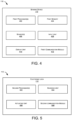
FIG. 4 shows functional modules of the sensing device. -
FIG. 5 shows functional modules of the electronic lock. - The following is a detailed description of embodiments of the invention depicted in the accompanying drawings. The embodiments are in such detail as to clearly communicate the invention. However, the amount of detail offered is not intended to limit the anticipated variations of embodiments; on the contrary, the intention is to cover all modifications and alternatives falling within the scope of the invention as set out in the appended claims.
- Various terms are used herein. To the extent a term used in a claim is not defined below, it should be given the broadest definition persons in the pertinent art have given that term as reflected in printed publications and issued patents at the time of filing.
- In the specification, reference may be made to the spatial relationships between various components and to the spatial orientation of various aspects of components as the devices are depicted in the attached drawings. However, as will be recognized by those skilled in the art after a complete reading of the specification, the components of this invention. described herein may be positioned in any desired orientation. Thus, the use of terms such as "above," "below," "upper," "lower," "first", "second" or other like terms to describe a spatial relationship between various components or to describe the spatial orientation of aspects of such components should be understood to describe a relative relationship between the components or a spatial orientation of aspects of such components, respectively, described herein may be oriented in any desired direction.
- In a multi-zone environment such as but not limited to a building having multiple floors and multiple rooms, different HVAC devices may be employed and installed at different zones for independently conditioning indoor air quality (IAQ) of each zone, where each HVAC device may be further fluidically connected to an air handling unit. In addition, an IAQ sensing device capable of monitoring different IAQ parameters may be assigned to and provided at each zone. The sensing devices may allow users to monitor as well as set the IAQ level to be maintained at the respective zones. The sensing device may communicate with the HVAC device that is in proximity to the sensing device and correspondingly control the operation of the connected HVAC device based on the user-defined IAQ level set by users in the sensing device.
- However, the sensing device assigned for any specific zone may be mistakenly moved out to any other (unassigned) zone. This may cause the HVAC device of the other zone which is now in communication with the misplaced sensing device, to operate based on the IAQ parameters previously set in the misplaced sensing device, thereby affecting the IAQ levels of the zones. For instance, in an example, sensing device A assigned to zone A may be mistakenly placed in another zone B. This may cause the HVAC device of zone B which is now in communication with the misplaced sensing device A, to operate based on the IAQ parameters previously set in the misplaced sensing device A. Thus, there is a need to preserve IAQ levels of zones in a multi-zone environment when the sensing devices assigned to different zones are misplaced or out of place.
- This invention provides a simple, efficient, and cost-effective system and method that may be easily configured with the existing HVAC and IAQ control system of any multi-zone environment (area of interest), to control the operation and enhance the efficiency of the HVAC devices while controlling the IAQ at each zone of the environment and further preserving IAQ levels of the zones when the sensing devices assigned to the zones are out of place.
- Referring to
FIG. 1 , asystem 100 configured with an HVAC system/building management system (BMS) of a multi-zone environment is disclosed, which is capable of controlling the indoor air quality (IAQ) of the zones while enhancing the efficiency of the HVAC system/BMS and preserving the IAQ of zones when the sensing devices assigned to the zones are out of place. The multi-zone environment 102 (also referred to as an area of interest (AOI), herein) may include a plurality of zones 104-1 to 104-N (collectively referred to aszones 104, herein). In one or more embodiments, the AOI orenvironment 102 may be a building and thezones 104 may be the rooms of thebuilding 102. In other embodiments, the AOI orenvironment 102 may be a shipment and thezones 104 may be containers or storage space associated with theshipment 102. - The
system 100 may include one or more HVAC devices 106-1 to 106-N (collectively referred to as HVAC devices 106, herein) configured with the zones 104-1 to 104-N such that at least oneHVAC device 104 is assigned to and fluidically connected to a space associated with each of thezones 104. Each of the HVAC devices 106 may be further fluidically connected to anair handling unit 108 installed in theAOI 102. Further, thesystem 100 may include one or more electronic locks 112-1 to 112-N (collectively referred to aselectronic locks 112, herein) configured with a door of the zones 104-1 to 104-N such that one of theelectronic locks 110 is assigned to and installed in the door associated with each of thezones 104. Furthermore, each zone 104-1 to 104-N may include an indoor air quality (IAQ) sensing device 110-1 to 110-N (collectively referred to as sensingdevices 110, herein), to monitor the IAQ of the zones 104-1 to 104-N.The sensing devices 110 may be configured to communicatively couple or communicate with theelectronic locks 112 and the HVAC devices 106 through a network. The detailed operation and construction of theAHU 108, the HVAC devices 106, theelectronic locks 112, and thesensing device 110 have been described in detail in subsequent paragraphs. - As illustrated, in one or more embodiments, HVAC device 106-1 may be assigned to and installed in zone 104-1, electronic lock 112-2 may be installed in the door of zone 104-1, and sensing device 112-1 may be assigned to and provided in zone 104-1. Further, HVAC device 106-2 may be assigned to and installed in zone 104-2, electronic lock 112-2 may be installed in the door of zone 104-2, and sensing device 110-2 may be assigned to and provided in zone 104-2. Similarly, the N-number of HVAC devices 106-N, electronic device 112-N, and sensing device 110-N may be assigned and installed at the N-number of zones 104-N of the
AOI 102. It would be obvious for a person skilled in the art that while various embodiments of the invention have been elaborated for an AOI having three zones 104-1, 104-2, 104-N, however, teachings of the invention is applicable to AOI having any number of zones, and all such embodiments are well within the scope of invention as set out in the appended claims. - Referring to
FIG. 4 , thesensing device 110 may include one ormore IAQ sensors 406 operable to monitor the levels of temperature, humidity, carbon monoxide (CO), carbon dioxide (CO2), particulate matter, total volatile compounds (TVOCs), carcinogenic formaldehyde, bacteria, but not limited to the like, present in thezones 104 where thesensing device 110 is present. Thesensing device 110 may include aninput unit 408 such as a keyboard or buttons that may allow users to monitor as well as set the IAQ level to be maintained at the respective zones. Further, thesensing device 110 may include adisplay unit 410 configured to display the monitored IAQ of the space associated with thezones 104, and the IAQ values set by the user. In one or more embodiments, thedisplay unit 410 may be a touch screen that may act as the input unit as well as a display. Furthermore, thesensing device 110 may include afirst communication module 412 that may enable thesensing device 110 to communicate with the HVAC device 106 that is in proximity to thesensing device 110 and may further include a first one ormore processors 402 and afirst memory 402 operatively coupled to theinput unit 408, thedisplay unit 410, theIAQ sensors 406, and thefirst communication module 412, which may control the operation of the connected HVAC device 106 based on the user-defined IAQ level set by users in thesensing device 110. - Referring to
FIG. 4 , theelectronic lock 112 may include ascanning unit 504 operable to scan or extract credentials of the user when the user enters and leaves the correspondingzone 104 where theelectronic lock 112 is installed. The credentials may be details and biometric signatures of the users, a unique password, and the like. The scanning unit may include a camera, an RFID reader, an optical scanner, or a biometric device, but is not limited to the like. Theelectronic lock 112 may further include anactuation 506 unit comprising actuators that are known in the art. Theactuation unit 506 may be configured to open and close the door associated with thezones 104 where theelectronic lock 112 is installed. Further, theelectronic lock 112 may include asecond communication module 508 configured to communicatively couple the correspondingelectronic lock 112 to the HVAC devices 106 and thesensing devices 110. Thesecond communication module 508 may enable theelectronic lock 112 to communicate with thefirst communication module 412 of thesensing devices 110 to facilitate tracking the position and motion of thecorresponding sensing device 110. Furthermore, theelectronic lock 112 may include a second one ormore processors 502 operatively coupled to thescanning unit 504, theactuation unit 506, and thesecond communication module 508. The second one ormore processors 502 may enable theelectronic lock 112 to match the scanned credential of the users with a database storing credentials of registered users and correspondingly open the door upon a positive matching or keep the door locked upon a negative matching. In one or more embodiments, thefirst communication module 412 and thesecond communication module 508 may be selected from one or more of a Bluetooth Module, an ultra-wideband (UWB) module, a WIFI Module, and the like. - The HVAC system/BMS or
AHU 108 may include aduct system 116 comprising a supply air stream duct comprising a plurality of interconnected supply channels fluidically connected to eachzone 104 via the HVAC devices 106 to facilitate the inflow of supply air into thezones 104 of theAOI 102 after getting conditioned by the corresponding HVAC device 106, and a return air duct comprising a plurality of interconnected return channels to facilitate outflow of return air from each of thezones 104. The HVAC system/BMS orAHU 108 may further include a central damper configured to regulate the flow of supply air comprising any or a mixture of outside air and the return air into the supply airstream duct. A plurality of zone dampers may be installed in the plurality of interconnected supply channels such that one of the zone dampers is configured in each of the supply channels for individually regulating the flow of supply air into eachzone 104 via the HVAC device 106. TheAHU 108 or each HVAC device 106 may include a cooling unit, a heating unit, a set of filters, a dehumidification unit, a fan assembly, and the like, which may facilitate in conditioning the quality of the air being supplied to therespective zones 104. In one or more embodiments, the HVAC device 106 may comprise a variable air volume (VAV) (also designated as 106, herein) that is in fluidic connection with theAOI 102 through the supply channels and the return channels. Further, a controller associated with the VAV/HVAC device 106 can be in communication with theelectronic lock 112 that is assigned to thezone 104 associated with the VAV. Furthermore, the controller associated with the VAV/HVAC device 106 can also be in communication with thesensing device 110 which is in proximity to the VAV. - In one or more embodiments, each of the VAVs/HVAC devices 106 and each of the
electronic locks 112 may be in communication with acentral server 114. However, in other embodiments, each of the VAVs/HVAC devices 106 may be in communication with a first server associated with the HVAC system/BMS of theAOI 102 and each of theelectronic locks 112 may be in communication with a second server associated with asecurity system 100 of theAOI 102. Further, the first server may be in communication with the second server or a common central server. The first server, the second server, or the central server may be collectively designated as server, herein). - The
server 114 can be configured to be operatively connected to theAHU 108, the dampers, the HVAC devices 106, as well as theelectronic locks 112, and other components of thesystem 100 to control the operation of the HVAC system/BMS and the security system of theAOI 102. Theserver 114 may include a processing device coupled to a memory device storing instructions executable by the processing device to enable theserver 114 to perform one or more designated operations. - In one or more embodiments, the
system 100 orserver 114 can be operatively coupled to a website and so be operable from any Internet-enabled user device or mobile device. Examples of user devices or mobile may include but are not limited to, a portable computer, a personal digital assistant, a handheld device, and a workstation. Thesensing devices 110, theelectronic locks 112, and the HVAC device 106 may be in communication with each other and with theserver 114 through a network via wired and/or wireless media. - In one implementation, the network can be a wireless network, a wired network or a combination thereof. Network can be implemented as one of the different types of networks, such as intranet, local area network (LAN), wide area network (WAN), the internet, and the like. Further, the network may either be a dedicated network or a shared network. The shared network represents an association of the different types of networks that use a variety of protocols, for example, Hypertext Transfer Protocol (HTTP), Transmission Control Protocol/Internet Protocol (TCP/IP), Wireless Application Protocol (WAP), and the like, to communicate with one another. Further, network can include a variety of network devices, including transceivers, routers, bridges, server s, computing devices, storage devices, and the like. In another implementation the network can be a cellular network or mobile communication network based on various technologies, including but not limited to,
Global System 100 for Mobile (GSM), General Packet Radio Service (GPRS), Code Division Multiple Access (CDMA), Long Term Evolution (LTE), WiMAX, 5G or 6G network protocols, and the like. - In one or more embodiments, each of the
electronic locks 112 may track the position and motion of thesensing device 110 that is assigned to thezone 104 where the correspondingelectronic lock 112 is installed. Theelectronic locks 112 may further generate an alert signal when thesensing device 110 assigned to any of thezones 104 is detected to be out (or moved out) of the correspondingzone 104. The alert signal may be transmitted to theserver 114 and one or more mobile devices associated with the user who has misplaced thesensing device 110, registered security personnel, and/or an admin. The alert signal may be indicative of a reminder on the removal of thesensing device 110 from the assignedzone 104, and a request or reminder to return thesensing device 110 to the assignedzone 104 - In one or more embodiments, when the
electronic lock 112 detects thesensing device 110 to be misplaced or out of its assignedzone 104, theelectronic lock 112 may notify theserver 114 that may further operate the HVAC device 106 of the zone 104 (from where the assignedsensing device 110 is moved out) in a user-defined mode. In the user-defined mode, the HVAC device 106 andAHU 108 may facilitate maintaining the IAQ of the correspondingzone 104 at the IAQ values previously set by the user before the misplacement of thesensing device 110. - Further, when the
electronic lock 112 detects thesensing device 110 to be out of its assignedzone 104 for a predefined time, theelectronic lock 112 may notify theserver 114 that may further operate the HVAC device 106 of the assignedzone 104 in a default mode where the HVAC device 106 maintains the IAQ of the correspondingzone 104 at predefined IAQ values. In an example, the predefined IAQ values may include 75° Fahrenheit (24 °C) temperature or room temperature but is not limited to the like. However, when thesensing device 110 is detected to be returned within its assignedzone 104, theserver 114 may be configured to re-operate the HVAC device 106 in the user-defined mode. - In one or more embodiments, when the
electronic locks 112 detect thesensing devices 110 to be moved out of their assignedzone 104 by the user, theelectronic lock 112 may identify the user who has moved thesensing device 110 out of the assignedzone 104, based on the credentials of the user being scanned by theelectronic lock 112 while entering or leaving the assignedzone 104 of thesensing device 110. Theelectronic locks 112 may further generate and transmit the alert signal to theserver 114, and the mobile devices associated with the identified user, registered security personnel, and/or an admin. The alert signal may be indicative of a reminder on the removal of thesensing device 110 from the assignedzone 104, and a request or reminder to return thesensing device 110 to the assignedzone 104. - Further, when the
sensing device 110 is detected to be moved out of the assignedzone 104 by the user, theserver 114, upon confirmation from the registered security personnel and/or the admin, may be configured to actuate all theelectronic locks 112 associated with theAOI 102 to allow the identified user to enter only the assignedzone 104 of the movedsensing device 110 and further lock the remainingelectronic locks 112 to block the identified user from entering the remainingunassigned zones 104. This may prevent the user from placing themisplaced sensing device 110 in any otherunassigned zone 104, which may further restrict the HVAC devices 106 of remainingunassigned zones 104 to operate as per themisplaced sensing device 110. - In an example, if the electronic lock 112-1 of zone 104-1 detects the sensing device 110-1 (that is assigned to zone 104-1) to be taken out of zone 104-1 by a user, the electronic lock 112-1 may identify the user based on his/her credential scanned at the time of entering or leaving the zone 104-1. The electronic lock 112-1 may further generate and transmit an alert signal to the
server 114 and mobile devices of the identified user, the registered security personnel, and/or an admin. The alert signal may be a reminder for the identified user which may pertain to the removal of the sensing device 110-1 from the assigned zone 104-1, and a request to return the sensing device 110-1 to the assigned zone 104-1. However, if the identified user fails to return the misplaced sensing device 110-1 back to zone 104-1 or if the identified user is found to be an unauthorized user, theserver 114 upon confirmation from the admin or registered security personnel may actuate the electronic lock 112-1 to allow the identified user to enter only the zone 104-1 and further lock the remaining electronic lock 112-1 to 112-N to block the identified user from entering the unassigned zones 104-2 to 104-N. - In one or more embodiments, the
server 114 may be configured to detect the location of the movedsensing devices 110 in theAOI 102 based on communication between themoved sensing device 110 and theelectronic locks 112 that are in proximity to the movedsensing device 110. Thesystem 100 may be configured to notify the detected location of the movedsensing device 110 over the mobile devices associated with the registered security personnel and/or the admin, which may help in restoring themisplaced sensing device 110 to its assignedzone 104. - Referring to
FIG. 2 ,method 200 for controlling the operation and enhancing the efficiency of the HVAC system/BMS in a multi-zone environment or AOI is disclosed, which controls indoor air quality (IAQ) at the zones and further preserves the IAQ of zones when the sensing device assigned to any of the zones is found to be out of place.Method 300 may involve theAHU 108, HVAC devices 106,electronic locks 112,sensing devices 110,server 114, and other components associated with thesystem 100 ofFIG. 1 .Method 200 may include step 202 of assigning one or more electronic locks 112-1 to 112-N to a door of the one or more zones 104-1 to 104-N such that one of theelectronic locks 112 is assigned to and installed in the door associated with each of thezones 104.Method 200 may further includestep 204 of assigning one or more IAQ sensing devices 110-1 to 110-N to the one or more zones 104-1 to 104-N such that at least one of thesensing devices 110 is assigned to and provided at the space associated with each of thezones 104. Thesensing devices 110 may be configured to communicatively couple with theelectronic locks 112, and the HVAC devices 106. -
Method 200 may further includestep 206 of tracking, by each of theelectronic locks 112, position and motion of thesensing device 110 that is assigned to thezone 104 where the correspondingelectronic lock 112 is installed. Further, when thesensing device 110 assigned to any of the one ormore zones 104 is detected to be out of the correspondingzone 104,method 200 may include step 208 of generating and transmitting an alert signal to theserver 114 and one or more mobile devices associated with users, registered security personnel, and/or an admin. The alert signal is may be indicative of a reminder on the removal of thesensing device 110 from the assignedzone 104, and a request or reminder to return thesensing device 110 to the assignedzone 104. - In one or more embodiments, when the
sensing device 110 assigned to any of the onezone 104 is detected to be out of their assignedzone 104,method 200 may include the steps of operating the HVAC device 106 of the assigned zone 104 (from where the assignedsensing device 110 is moved out) in a user-defined mode where the HVAC device 106 maintain the IAQ of the correspondingzone 104 at the IAQ values previously set by the user. - Further, when the
sensing device 110 is detected to be out of the assignedzone 104 for a predefined time,method 200 may include the steps of operating the HVAC device 106 of the assignedzone 104 in a default mode where the HVAC device 106 maintains the IAQ of the correspondingzone 104 at predefined IAQ values. Furthermore, when thesensing device 110 is detected to be returned within the assignedzone 104,method 200 may include the steps of switching the HVAC device 106 from the default mode to the user-defined mode. - In one or more embodiments,
method 200 may include steps of scanning and extracting, by theelectronic locks 112, credentials of the user when the user enters and leaves the correspondingzone 104 where theelectronic lock 112 is installed. Further, when thesensing device 110 assigned to any of thezones 104 is detected to be moved out of the assignedzone 104 by the user,method 200 may further include the steps of identifying the user that has moved thesensing device 110 out of the assignedzone 104, based on the credentials of the user being scanned by theelectronic lock 112 while entering or leaving the assignedzone 104 of thesensing device 110, and further generating and transmitting the alert signal to theserver 114 and the mobile devices associated with the identified user, registered security personnel, and/or the admin. - In one or more embodiments, when the
sensing device 110 assigned to any of the one ormore zones 104 is detected to be moved out of the assignedzone 104 by the user,method 200 may include steps of actuating theelectronic locks 112, upon confirmation from the registered security personnel and/or the admin, to allow the identified user to enter only the assignedzone 104 of the movedsensing device 110 and further locking the remainingelectronic locks 112 to block the identified user from entering the remainingunassigned zones 104. - In one or more embodiments,
method 200 may include the steps of detecting the location of the movedsensing devices 110 in theAOI 102 based on a communication between themoved sensing device 110 and theelectronic locks 112 in proximity with the movedsensing device 110, further notifying the detected location of the movedsensing device 110 over theserver 114 and mobile devices associated with the registered security personnel and/or the admin. - Referring to
FIG. 3 , in one or more embodiments, acontrol strategy 300 for implementing thesystem 100 ofFIG. 1 and the method ofFIG. 2 is disclosed. As illustrated, once the HVAC devices 106,electronic locks 112, andelectronic locks 112 are assigned todifferent zones 104 of theAOI 102, atblock 302, the communication modules associated with theelectronic locks 112, thesensing devices 110, and the HVAC devices 106 may be activated to establish communication therebetween. Further, atblock 304, theelectronic locks 112 may communicate with thesensing devices 110 that are assigned to therespective zone 104 or in proximity to theelectronic locks 112, to detect the position and movement of the assignedsensing devices 110 as well as thesensing devices 110 that are in the network range of theelectronic locks 112. - At
block 306, theelectronic locks 112 may detect and extract the credentials of users while entering therespective zone 104 and may further validate the credentials and provide access to thezones 104 upon validation. Further, atblock 308, theelectronic locks 112 may notify theserver 114 about the presence of thesensing devices 110 assigned to therespective zones 104. In one or more embodiments, if thesensing devices 110 are detected to be within their assignedzone 104, theserver 114 may operate the HVAC device 106 of the respective room in the user-defined mode, based on the IAQ levels set by the user in thesensing device 110. - In one or more embodiments, if the
sensing devices 110 are detected to be out of their assignedzone 104, atblock 310, theelectronic lock 112 may notify the registered security personnel and admin associated with thesystem 100. Further, atblock 312, theelectronic locks 112 or theserver 114 may block the credentials of the user that has moved the sensing device 110 (upon confirmation from the admin) and may further restrict the identified user from entering the remainingzones 104. Atblock 314, theserver 114 may store the IAQ values previously set in themisplaced sensing device 110 and correspondingly operate the HVAC device 106 at the previously set IAQ values for a predefined time. Furthermore, atblock 316, theserver 114 may notify or alert the user that has moved thesensing device 110, to restore themisplaced sensing device 110 at its assignedzone 104 or request a reason for moving thesensing device 110 out of its assignedzone 104. - In one or more embodiments, at
block 318, theserver 114 may find the real-time location of themisplaced sensing device 110 in theAOI 102 based on communication between theelectronic locks 112 that are in proximity to themisplaced sensing device 110, and may further notify the location of themisplaced sensing device 110 to the admin and/or registered security personnel. - In one or more embodiments, at
block 320, theserver 114 may generate and transmit a priority notification to the mobile devices of the admin, and/or security personnel to restore themisplaced sensing device 110 to its assignedzone 104 within the predefined time. If themisplaced sensing device 110 is not restored to its assignedzone 104 within the predefined time, atblock 322, theserver 114 may actuate the HVAC device 106 of the assignedzone 104 to operate in the default mode. - In one or more embodiments, the air handling unit (AHU) 108 employed in
system 100 andmethod 200 may be used to regulate and circulate air within thezones 104 of theAOI 102.AHU 108 may be a part of a larger heating, ventilation, and air conditioning system of theAOI 102, which may be connected to the HVAC devices /VAVs 106 assigned to eachzone 104. TheAHU 108 is the composition of elements mounted in large, accessible box-shaped units installed at theAOI 102, which may be responsible for conditioning the supply air to ensure that the supply air is at the desired temperature, humidity, and air quality. TheAHU 108 may include blowers, filters, heating or cooling coils, humidifiers or dehumidifiers, heat exchangers, a mixing chamber, and the like. The blower or fan may be responsible for moving air through theAHU 108 and HVAC devices 106, while the filter may remove dust, pollen, and other contaminants from the outside air or return air. Filters depending on the air purity requirements may be selected to provide a higher or lower particle, viruses, bacteria, odor, and other air pollutants retention. The heating or cooling coils may be used to adjust the temperature of the supply air, while the humidifiers and dehumidifiers control the moisture content of the air to be supplied to thezones 104. The mixing chamber may facilitate the air to be homogenized by facilitating the mixing of fresh outside air with the return air to achieve the desired air quality and temperature. The heat exchanger device may transfer temperature between two fluids, in this case, coolant and the air, separated by solid barriers. - Thus, in addition to managing the proper ventilation at the zones with the air, the
AHU 108 may perform other functions such as but not limited to filtration and control of the quality of the air that may reach thezones 104, and control of the air temperature that regulates the air conditioning system in cold or hot, so that the IAQ values in thezones 104 is in a desirable or user-defined range. TheAHU 108 may further monitor and control the relative humidity for greater indoor comfort in thezones 104. - In one or more embodiments, the
sensors 406 of thesensing device 110 employed in thesystem 100 andmethod 200 may be a carbon monoxide (CO) sensor, a carbon dioxide sensor (CO2), a volatile organic compound (VOC) sensor, a carcinogenic formaldehyde sensor, or particulate sensor, but not limited to the like. The captured IAQ data of thezones 104 may then be transmitted to theserver 114 or controller of the AHU or HVAC device via a transceiver for further processing as already explained in detail inFIG. 1 . In one or more embodiments, all thesensors 406 can be positioned over a single frame that can be installed as a stand-alone device indifferent zones 104 of theAOI 102. In some embodiments, thesensors 406 can be distributed at different positions within thezones 104 of theAOI 102. The distributedsensors 406 can be operatively connected in a mesh network where a master sensor among thesensors 406 may be in communication with theserver 114 or HVAC device/VAV via wired media or wireless media. In other embodiments, thesensors 406 can also be integrated with smoke sensors installed within the zones of the AOI, wherein the smoke detector/IAQ sensors may be in communication with theserver 114 or HVAC device via wired media or wireless media. - Thus, the invention provides a simple, efficient, and cost-effective system and method that may be easily configured with the existing HVAC and IAQ control system of any multi-zone environment (area of interest), and may control the operation and enhance the efficiency of the HVAC devices while controlling the IAQ at each zone of the environment and further preserving IAQ levels of the zones when the sensing devices assigned to the zones are out of place.
- It is to be appreciated by a person skilled in the art that while various embodiments of the invention elaborate upon detecting the position or movement of the sensing device based on a communication established between the
sensing devices 110 and theelectronic locks 112 installed at the zones or AOI, however, the position or movement of thesensing device 110 may also be detected based on a communication between thesensing devices 110 and any smart device such as a smart air purifier, and the like present at thezones 104, and all such embodiments are well within the scope of invention as set out in the appended claims. - While the invention has been described with reference to exemplary embodiments, it will be understood by those skilled in the art that various changes may be made without departing from the scope of the invention as set out in the appended claims. Modifications may be made to adopt a particular situation or material to the teachings of the invention without departing from the scope thereof. Therefore, it is intended that the invention not be limited to the particular embodiment disclosed, but that the invention includes all embodiments falling within the scope of the invention as set out in the appended claims. In interpreting the specification, all terms should be interpreted in the broadest possible manner consistent with the context. In particular, the terms "comprises" and "comprising" should be interpreted as referring to elements, components, or steps in a non-exclusive manner, indicating that the referenced elements, components, or steps may be present, or utilized, or combined with other elements, components, or steps that are not expressly referenced. Where the specification claims refer to at least one of something selected from the group consisting of A, B, C ....and N, the text should be interpreted as requiring only one element from the group, not A plus N, or B plus N, etc.
Claims (15)
- A system (100) to control indoor air quality (IAQ) at one or more zones (104) of an area of interest (AOI) (102), the system comprising:one or more HVAC devices (106) configured with the one or more zones such that at least one HVAC device is assigned to and fluidically connected to a space associated with each of the zones;one or more electronic locks (112) configured with a door of the one or more zones such that one of the electronic locks is assigned to and installed in the door associated with each of the zones; andone or more IAQ sensing devices (110) provided at the one or more zones such that at least one of the sensing devices is assigned to the space associated with each of the zones; wherein the one or more sensing devices are configured to communicatively couple with the one or more electronic locks, and the one or more HVAC devices, andwherein each of the electronic locks is configured to:track position and motion of the sensing device that is assigned to the zone where the corresponding electronic lock is installed; andgenerate an alert signal when the sensing device assigned to any of the one or more zones is detected to be out of the corresponding zone.
- The system of claim 1, wherein each of the one or more sensing devices (110) comprises:one or more IAQ sensors (406) operable to monitor IAQ of the space associated with the one or more zones where the sensing device is present;an input unit (408) configured to allow a user to set IAQ values to be maintained at the one or more zones;a display unit (410) configured to display the monitored IAQ of the space associated with the one or more zones, and the IAQ values set by the user;a first communication module (412) configured to communicatively couple the corresponding sensing device to the one or more HVAC devices and the one or more electronic locks; anda first one or more processors (402) operatively coupled to the input unit, the display unit, the one or more IAQ sensors, and the first communication module, wherein the first one or more processor enable the sensing device to control the HVAC device that is in communication with the corresponding sensing device, to adjust the IAQ of the corresponding zone at the IAQ values set by the user.
- The system of claim 1 or 2, wherein each of the one or more electronic locks comprises:a scanning unit (504) operable to scan and extract credentials of the user when the user enters and leaves the corresponding zone where the electronic lock is installed;an actuation unit (506) configured to open and close the door associated with the one or more zones where the electronic lock is installed;a second communication module (508) configured to communicatively couple the corresponding electronic lock to the one or more HVAC devices and the one or more sensing devices,wherein the second communication module is configured to communicate with the first communication module of the one or more sensing devices to facilitate tracking the position and motion of the corresponding sensing device; anda second one or more processors (502) operatively coupled to the scanning unit, the actuation unit, and the second communication module, wherein the second one or more processors are configured to match the scanned credential of the users with a database storing credentials of registered users and correspondingly open the door upon a positive matching,optionally wherein the first communication module and the second communication module are selected from one or more of a Bluetooth Module, an ultra-wideband (UWB) module, and a WIFI Module.
- The system of any of claims 1 to 3, wherein when the sensing device assigned to any of the one or more zones is detected to be out of the assigned zone, the system is configured to operate the HVAC device of the assigned zone, from where the assigned sensing device is moved out, in a user-defined mode to maintain the IAQ of the corresponding zone at the IAQ values previously set by the user.
- The system of any preceding claim, wherein when the sensing device assigned to any of the one or more zones is detected to be out of the assigned zone for a predefined time, the system is configured to operate the HVAC device of the assigned zone in a default mode to maintain the IAQ of the corresponding zone at predefined IAQ values,
optionally wherein when the sensing device is detected to be returned within the assigned zone, the system is configured to operate the HVAC device in the user-defined mode. - The system of any preceding claim, wherein the system comprises:a server (114) in communication with the one or more HVAC devices, and the one or more electronic locks, optionallywherein when the sensing device assigned to any of the one or more zones is detected to be moved out of the assigned zone by the user, the server is configured to:identify the user that has moved the sensing device out of the assigned zone, based on the credentials of the user being scanned by the electronic lock while entering or leaving the assigned zone of the sensing device; andgenerate and transmit the alert signal to one or more mobile devices associated with the identified user, registered security personnel, and/or an admin, wherein the alert signal is indicative of a reminder pertaining to the removal of the sensing device from the assigned zone, and a request to return the sensing device to the assigned zone, and/orwherein when the sensing device assigned to any of the one or more zones is detected to be moved out of the assigned zone by the user, the server, upon confirmation from the registered security personnel and/or the admin, is configured to:
actuate the one or more electronic locks to allow the identified user to enter only the assigned zone of the moved sensing device and further lock the remaining electronic locks among the one or more locks to block the identified user from entering the remaining unassigned zones among the one or more zones. - The system of claim 6, wherein each of the HVAC devices comprises a variable air volume (VAV) (106) in fluidic connection with an air handling unit (108) associated with the AOI, wherein a controller associated with the VAV is in communication with the server, and the electronic lock that is assigned to the zone associated with the VAV,
wherein the one or more HVAC devices are configured to:maintain the IAQ of the one or more zones at the IAQ values set by the user in the user-defined mode; andmaintain the IAQ of the one or more zones at the predefined IAQ values in the default mode. - The system of any preceding claim, wherein the system is configured to detect a location of the moved sensing devices in the AOI based on a communication between the moved sensing device and the one or more electronic locks in proximity with the moved sensing device, wherein the system is configured to notify the detected location of the moved sensing device over the one or more mobile devices associated with the registered security personnel and/or the admin.
- The system of any preceding claim, wherein the AOI is a building, and the one or more zones are one or more rooms of the building (102); and/or
wherein the AOI is a shipment, and the one or more zones are one or more containers associated with the shipment (102). - A method for controlling indoor air quality (IAQ) at one or more zones (104) of an area of interest (AOI) (102), the method comprising the steps of:assigning one or more electronic locks (112) to a door of the one or more zones such that one of the electronic locks is assigned to and installed in the door associated with each of the zones; andassigning one or more IAQ sensing devices (110) to the one or more zones such that at least one of the sensing devices is assigned to and provided at the space associated with each of the zones; wherein the one or more sensing devices are configured to communicatively couple with the one or more electronic locks, and one or more HVAC devices (106);tracking, by each of the electronic locks, position and motion of the sensing device that is assigned to the zone where the corresponding electronic lock is installed; andgenerating an alert signal when the sensing device assigned to any of the one or more zones is detected to be out of the corresponding zone.
- The method of claim 10, wherein when the sensing device assigned to any of the one or more zones is detected to be out of the assigned zone, the method comprises the steps of operating the HVAC device of the assigned zone, from where the assigned sensing device is moved out, in a user-defined mode to maintain the IAQ of the corresponding zone at the IAQ values previously set by the user.
- The method of claim 10 or 11, wherein when the sensing device assigned to any of the one or more zones is detected to be out of the assigned zone for a predefined time, the method comprises the steps of operating the HVAC device of the assigned zone in a default mode to maintain the IAQ of the corresponding zone at predefined IAQ values,
optionally wherein when the sensing device is detected to be returned within the assigned zone, the method comprises the steps of operating the HVAC device in the user-defined mode. - The method of any of claims 10 to 12, wherein the method comprises the steps of scanning and extracting, by the one or more electronic locks, credentials of the user when the user enters and leaves the corresponding zone where the electronic lock is installed; and
wherein when the sensing device assigned to any of the one or more zones is detected to be moved out of the assigned zone by the user, the method further comprises the steps of:identifying the user that has moved the sensing device out of the assigned zone, based on the credentials of the user being scanned by the electronic lock while entering or leaving the assigned zone of the sensing device; andgenerating and transmitting the alert signal to one or more mobile devices associated with the identified user, registered security personnel, and/or an admin, wherein the alert signal is indicative of a reminder pertaining to the removal of the sensing device from the assigned zone, and a request to return the sensing device to the assigned zone. - The method of any of claims 10 to 13, wherein when the sensing device assigned to any of the one or more zones is detected to be moved out of the assigned zone by the user, the method comprises the steps of:
actuating the one or more electronic locks, upon confirmation from the registered security personnel and/or the admin, to allow the identified user to enter only the assigned zone of the moved sensing device and further locking the remaining electronic locks among the one or more locks to block the identified user from entering the remaining unassigned zones among the one or more zones. - The method of any of claims 10 to 14, wherein the method comprises the steps of:detecting a location of the moved sensing devices in the AOI based on a communication between the moved sensing device and the one or more electronic locks in proximity to the moved sensing device; andnotifying the detected location of the moved sensing device over the one or more mobile devices associated with the registered security personnel and/or the admin.
Applications Claiming Priority (1)
| Application Number | Priority Date | Filing Date | Title |
|---|---|---|---|
| US202363496904P | 2023-04-18 | 2023-04-18 |
Publications (1)
| Publication Number | Publication Date |
|---|---|
| EP4450886A1 true EP4450886A1 (en) | 2024-10-23 |
Family
ID=90789568
Family Applications (1)
| Application Number | Title | Priority Date | Filing Date |
|---|---|---|---|
| EP24170881.7A Pending EP4450886A1 (en) | 2023-04-18 | 2024-04-17 | System and method to control indoor air quality in a multi-zone environment |
Country Status (3)
| Country | Link |
|---|---|
| US (1) | US20240353134A1 (en) |
| EP (1) | EP4450886A1 (en) |
| CN (1) | CN118816345A (en) |
Citations (4)
| Publication number | Priority date | Publication date | Assignee | Title |
|---|---|---|---|---|
| US20090065596A1 (en) * | 2007-05-09 | 2009-03-12 | Johnson Controls Technology Company | Systems and methods for increasing building space comfort using wireless devices |
| CN112032990A (en) * | 2020-08-31 | 2020-12-04 | 重庆大学 | Air conditioner control system and method based on temperature correction model |
| WO2022125687A1 (en) * | 2020-12-09 | 2022-06-16 | Johnson Controls Tyco IP Holdings LLP | Air quality control system with mobile sensors |
| US11609017B2 (en) * | 2018-12-03 | 2023-03-21 | Ademco Inc. | HVAC controller with a zone commissioning mode |
-
2024
- 2024-04-04 US US18/627,437 patent/US20240353134A1/en active Pending
- 2024-04-17 EP EP24170881.7A patent/EP4450886A1/en active Pending
- 2024-04-17 CN CN202410460354.8A patent/CN118816345A/en active Pending
Patent Citations (4)
| Publication number | Priority date | Publication date | Assignee | Title |
|---|---|---|---|---|
| US20090065596A1 (en) * | 2007-05-09 | 2009-03-12 | Johnson Controls Technology Company | Systems and methods for increasing building space comfort using wireless devices |
| US11609017B2 (en) * | 2018-12-03 | 2023-03-21 | Ademco Inc. | HVAC controller with a zone commissioning mode |
| CN112032990A (en) * | 2020-08-31 | 2020-12-04 | 重庆大学 | Air conditioner control system and method based on temperature correction model |
| WO2022125687A1 (en) * | 2020-12-09 | 2022-06-16 | Johnson Controls Tyco IP Holdings LLP | Air quality control system with mobile sensors |
Also Published As
| Publication number | Publication date |
|---|---|
| US20240353134A1 (en) | 2024-10-24 |
| CN118816345A (en) | 2024-10-22 |
Similar Documents
| Publication | Publication Date | Title |
|---|---|---|
| US20220341609A1 (en) | Heat mapping system | |
| US20210011443A1 (en) | Heat mapping system | |
| US20090065596A1 (en) | Systems and methods for increasing building space comfort using wireless devices | |
| US10667096B2 (en) | Targeted alert system with location-based and role-based alert distribution | |
| JP5478108B2 (en) | Air conditioning system | |
| CN105556560B (en) | System and method for deterministic computation of recovery time for environmental systems | |
| US20160377305A1 (en) | Systems and methods for controlling an environment based on occupancy | |
| CN103858385A (en) | Synergistic interface system for a building network | |
| US20100250009A1 (en) | Control of conditioned environment by remote sensor | |
| EP1747408B1 (en) | Air conditioner and method for controlling the same | |
| KR101565249B1 (en) | Heating-cooling and ventilating concurrent controller | |
| JP5421319B2 (en) | Interlocking control device | |
| US12437627B2 (en) | Systems and methods for on-site pathogen detection | |
| JP2018044751A (en) | Electric device control system | |
| JP2005214495A (en) | Indoor equipment management system | |
| Zhao et al. | Getting into the zone: how the internet of things can improve energy efficiency and demand response in a commercial building | |
| EP4478048A1 (en) | System and method for calibrating indoor air quality sensors of a multi-zone environment | |
| US20240353134A1 (en) | System and method to control indoor air quality in a multi-zone environment | |
| Thea et al. | Automated iot based air quality management system employing sensors and machine learning | |
| US20240361031A1 (en) | System and method to control operation of an hvac system for conditioning indoor air ouality | |
| JP7630074B2 (en) | Air Conditioning Control System | |
| EP4502480B1 (en) | System and method for enabling scheduled ventilation of an environment | |
| JP7598228B2 (en) | Computer program, air conditioning device, and air conditioning method | |
| US10648690B2 (en) | Multi-function thermostat with event schedule controls | |
| KR20210122966A (en) | Integrated interior environment managing system and method |
Legal Events
| Date | Code | Title | Description |
|---|---|---|---|
| PUAI | Public reference made under article 153(3) epc to a published international application that has entered the european phase |
Free format text: ORIGINAL CODE: 0009012 |
|
| STAA | Information on the status of an ep patent application or granted ep patent |
Free format text: STATUS: THE APPLICATION HAS BEEN PUBLISHED |
|
| AK | Designated contracting states |
Kind code of ref document: A1 Designated state(s): AL AT BE BG CH CY CZ DE DK EE ES FI FR GB GR HR HU IE IS IT LI LT LU LV MC ME MK MT NL NO PL PT RO RS SE SI SK SM TR |
|
| STAA | Information on the status of an ep patent application or granted ep patent |
Free format text: STATUS: REQUEST FOR EXAMINATION WAS MADE |
|
| 17P | Request for examination filed |
Effective date: 20250218 |