EP4450798A2 - Catalytic thruster - Google Patents
Catalytic thruster Download PDFInfo
- Publication number
- EP4450798A2 EP4450798A2 EP24195487.4A EP24195487A EP4450798A2 EP 4450798 A2 EP4450798 A2 EP 4450798A2 EP 24195487 A EP24195487 A EP 24195487A EP 4450798 A2 EP4450798 A2 EP 4450798A2
- Authority
- EP
- European Patent Office
- Prior art keywords
- thruster
- recited
- catalyst bed
- nozzle
- feed tube
- Prior art date
- Legal status (The legal status is an assumption and is not a legal conclusion. Google has not performed a legal analysis and makes no representation as to the accuracy of the status listed.)
- Pending
Links
Images



Classifications
-
- F—MECHANICAL ENGINEERING; LIGHTING; HEATING; WEAPONS; BLASTING
- F02—COMBUSTION ENGINES; HOT-GAS OR COMBUSTION-PRODUCT ENGINE PLANTS
- F02K—JET-PROPULSION PLANTS
- F02K9/00—Rocket-engine plants, i.e. plants carrying both fuel and oxidant therefor; Control thereof
- F02K9/42—Rocket-engine plants, i.e. plants carrying both fuel and oxidant therefor; Control thereof using liquid or gaseous propellants
- F02K9/60—Constructional parts; Details not otherwise provided for
- F02K9/68—Decomposition chambers
-
- B—PERFORMING OPERATIONS; TRANSPORTING
- B33—ADDITIVE MANUFACTURING TECHNOLOGY
- B33Y—ADDITIVE MANUFACTURING, i.e. MANUFACTURING OF THREE-DIMENSIONAL [3D] OBJECTS BY ADDITIVE DEPOSITION, ADDITIVE AGGLOMERATION OR ADDITIVE LAYERING, e.g. BY 3D PRINTING, STEREOLITHOGRAPHY OR SELECTIVE LASER SINTERING
- B33Y10/00—Processes of additive manufacturing
-
- F—MECHANICAL ENGINEERING; LIGHTING; HEATING; WEAPONS; BLASTING
- F02—COMBUSTION ENGINES; HOT-GAS OR COMBUSTION-PRODUCT ENGINE PLANTS
- F02K—JET-PROPULSION PLANTS
- F02K9/00—Rocket-engine plants, i.e. plants carrying both fuel and oxidant therefor; Control thereof
- F02K9/42—Rocket-engine plants, i.e. plants carrying both fuel and oxidant therefor; Control thereof using liquid or gaseous propellants
- F02K9/44—Feeding propellants
- F02K9/52—Injectors
-
- F—MECHANICAL ENGINEERING; LIGHTING; HEATING; WEAPONS; BLASTING
- F02—COMBUSTION ENGINES; HOT-GAS OR COMBUSTION-PRODUCT ENGINE PLANTS
- F02K—JET-PROPULSION PLANTS
- F02K9/00—Rocket-engine plants, i.e. plants carrying both fuel and oxidant therefor; Control thereof
- F02K9/42—Rocket-engine plants, i.e. plants carrying both fuel and oxidant therefor; Control thereof using liquid or gaseous propellants
- F02K9/60—Constructional parts; Details not otherwise provided for
- F02K9/62—Combustion or thrust chambers
-
- F—MECHANICAL ENGINEERING; LIGHTING; HEATING; WEAPONS; BLASTING
- F05—INDEXING SCHEMES RELATING TO ENGINES OR PUMPS IN VARIOUS SUBCLASSES OF CLASSES F01-F04
- F05D—INDEXING SCHEME FOR ASPECTS RELATING TO NON-POSITIVE-DISPLACEMENT MACHINES OR ENGINES, GAS-TURBINES OR JET-PROPULSION PLANTS
- F05D2230/00—Manufacture
- F05D2230/20—Manufacture essentially without removing material
- F05D2230/23—Manufacture essentially without removing material by permanently joining parts together
- F05D2230/232—Manufacture essentially without removing material by permanently joining parts together by welding
-
- F—MECHANICAL ENGINEERING; LIGHTING; HEATING; WEAPONS; BLASTING
- F05—INDEXING SCHEMES RELATING TO ENGINES OR PUMPS IN VARIOUS SUBCLASSES OF CLASSES F01-F04
- F05D—INDEXING SCHEME FOR ASPECTS RELATING TO NON-POSITIVE-DISPLACEMENT MACHINES OR ENGINES, GAS-TURBINES OR JET-PROPULSION PLANTS
- F05D2230/00—Manufacture
- F05D2230/30—Manufacture with deposition of material
Definitions
- Catalytic thrusters are used on satellites and other aerospace vehicles for adjusting vehicle position, for example.
- Such thrusters can include a thrust chamber that holds a catalyst, and a feed tube for delivering propellant into the thrust chamber.
- the propellant reacts in the presence of the catalyst to generate a gas that is expelled through a nozzle to generate thrust.
- a monopropellant thruster includes, among other things, a first part having a catalyst bed, a thrust chamber, and a nozzle.
- the first part is integrally formed via a single additive manufacturing process.
- the thruster further includes a second part, which is a closeout.
- one of the first part and the second part has an injector.
- one of the first part and the second part has a thruster mount.
- the first part includes an outer body of the thruster and a feed tube.
- the feed tube includes a main passageway section extending from a feed tube inlet to a plurality of branches extending from the main passageway.
- the plurality of branches are spaced-apart from one another about a central axis of the thruster and are inclined relative to the central axis of the thruster.
- each of the plurality of branches is split into two sections leading to a feed tube outlet.
- the first part includes a hollow cylindrical section feed tube outlet and the catalyst bed.
- the catalyst bed is substantially frustoconically shaped.
- the catalyst bed includes a plurality of orifices permitting fluid flow from the catalyst bed to the nozzle.
- the first part includes a bed flow spike having a surface exhibiting an increasing slope as the surface extends toward the central axis of the thruster.
- the outer body includes an attachment section, a structural support, and a nozzle.
- the first part includes a heat shield within the chamber.
- the first part is attached to the second part by welding.
- a catalyst is in the catalyst bed.
- a method includes forming a first part of a thruster by additively manufacturing a catalyst bed together with a thrust chamber and a nozzle, and attaching a second part of the thruster to the first part, wherein the second part is a closeout.
- the attaching step includes welding the second part to the first part.
- the method includes adding catalyst into the catalyst bed between the forming and attaching steps.
- the centerline of the nozzle centerline is inclined relative to a central axis of the thruster.
- the method includes forming a catalyst substrate integrally with one of the first part and the second part.
- Figure 1 illustrates an example monopropellant catalytic thruster 20 ("thruster 20") arranged along a central axis A.
- the thruster 20 may be attached to a satellite, rocket, or another type of aerospace vehicle, and may be used as a part of a reaction control system, for example.
- the thruster 20 is not limited to use with aerospace vehicles, and may be used relative to land vehicles or marine vehicles.
- the thruster 20 includes an outer housing 22 that spans between first and second opposed ends 24, 26. Moving axially from the first end 24, the thruster includes an attachment section 28, a structural support 30, a thrust chamber 32, and a nozzle 34 terminating at the second end 26.
- the thrust chamber 32 contains a catalyst bed 36 ( Figure 2 ) of catalyst granules (not shown), such as iridium based catalyst granules, that fill the volume within the catalyst bed 36. Additional details of the thrust chamber 32 and catalyst bed 36 will be discussed below.
- thruster 20 is mountable to an object, such as a rocket or other vehicle, via the attachment section 28.
- the thruster mount, or attachment section, 28 may include a plurality of openings 38 configured to receive a fastener and thereby facilitate attachment of the thruster 20 to the rocket or other vehicle.
- the thruster 20 generally reduces in diameter throughout the structural support 30. Specifically, the thruster 20 generally reduces in diameter moving from the attachment section 28 to the thrust chamber 32.
- the structural support 30 is substantially frustoconically shaped.
- the structural support 30 could have a different geometry, such as being cylindrical, conical, spherical, etc.
- the structural support 30 may be located anywhere between the first end 24 and the second end 26.
- the thrust chamber 32 exhibits a substantially constant diameter in this example.
- the nozzle 34 is a convergent-divergent nozzle, in this example, and includes a convergent section 40 ( Figure 2 ), a throat section 42, and a divergent section 44.
- the convergent section 40 reduces in diameter extending axially from the thrust chamber 32 to the throat section 42, and the divergent section 44 increases in diameter from the throat section 42 to the second end 26.
- the catalyst bed 36 is arranged in the thrust chamber 32, and includes a first part 46 and a second part 48 formed separately from one another.
- Figure 3 illustrates the second part 48 before it is attached to the first part 46.
- the first and second parts 46, 48 may be formed by separate additive manufacturing processes, such as direct metal laser sintering or other known additive manufacturing techniques.
- the first part 46 is additively manufactured, and the second part 48 may be made using another manufacturing technique.
- the first and second parts 46, 48 define the axial and radial boundaries of the catalyst bed 36 in this example.
- the term "radial” is used herein to refer to a radial direction normal to the central axis A.
- the first and second parts 46, 48 may be referred to as retention plates, retention cones, retention cylinders, bed plates, bed cones, bed cylinders, etc.
- the first part 46 is substantially frustoconically shaped and gradually reduces in diameter extending from the structural support 30 to the nozzle 34.
- the first part 46 includes a plurality of slots and/or orifices 50 configured to retain catalyst, such as catalyst granules, but permit gas to flow therethrough.
- a substrate for catalyst may be formed integrally with the first part 46 or second part 48, in other examples.
- the first part 46 Adjacent the structural support 30, the first part 46 also includes a channel 52 extending circumferentially about the first part 46.
- the channel 52 is sized and shaped to receive the second part 48.
- the second part 48 is substantially disc-shaped with a central cylindrical cutout, and is sized and shaped so as to fit within the channel 52.
- the second part 48 is a closeout, in one example, meaning the second part 48 closes the catalyst bed 36.
- catalyst is added to the catalyst bed 36 before the second part 48 is attached to the first part 46.
- the second part 48 is then attached to the first part 46, such as by welding or another known attachment technique, to close the catalyst bed 36 and retain catalyst in the catalyst bed 36.
- the second part 48 may include the thruster mount and/or the injector.
- the first part 46 may include the thruster mount and/or the injector.
- the thruster mount and/or the injector may be provided partially by the first part 46 and partially by the second part 48.
- the first part 46 of the catalyst bed 36 mechanically supports an injector, or feed tube, 54.
- the feed tube 54 includes an inlet 56 adjacent the attachment section 28.
- the outer diameter of the feed tube 54 may include attachment features, such as projections 60, configured to mechanically couple to a conduit connected to a source of propellant 62, such as hydrazine, for example.
- the feed tube 54 is substantially cylindrical and extends from the inlet 56 to an outlet section 64, which fluidly couples the source of propellant 62 to the catalyst bed 36.
- the outlet section 64 is axially and radially spaced-apart from the first part 46, which permits loading catalyst into the catalyst bed 36 by packing it against the first part 46 as opposed to packing it against the outlet section 64 of the feed tube 54.
- the feed tube 54 in this example, includes a main passageway section 66 extending from the inlet 56 toward the outlet section 64 along the central axis A.
- the main passageway section 66 splits into a plurality of branches 68.
- the branches 68 extend along axes B which are inclined relative to the central axis A.
- each of the branches 68 includes a split section 70 leading directly into the catalyst bed 36.
- the split sections 70 lie in a common plane with the axis B of a respective branch 68, but extend along axes which are inclined relative to the axis B of the respective branch 68.
- the branches 68 have a diameter greater than that of the split sections 70 but less than that of the main passageway section 66.
- Figure 5 somewhat schematically illustrates the arrangement of the outlet section 64, including the main passageway section 66, branches 68, and split sections 70. The arrangement of the outlet section 64 evenly distributes propellant relative to the catalyst in the catalyst bed 36.
- a hollow, substantially cylindrical structure 72 projects from the outlet section 64 toward the nozzle 34 along the central axis A.
- the structure 72 defines a radial inner boundary of the catalyst bed 36.
- the structure 72 improves heat transfer properties of the thrust chamber 32.
- the structure 72 is connected to a bed flow spike 74, which projects axially beyond the catalyst bed 36 and into the convergent section 40 of the nozzle 34.
- a bed flow spike 74 which projects axially beyond the catalyst bed 36 and into the convergent section 40 of the nozzle 34.
- a portion of the bed flow spike 74 provides a portion of the nozzle 34.
- the end section of the bed flow spike 74 forming the portion of the nozzle 34 may be truncated in an example.
- the bed flow spike 74 has an outer surface defined by a gradually increasing slope.
- a surface 76 which is partially defined by the first part 46 and the bed flow spike 74 and faces the nozzle 34, has a substantially constant slope along a first section 78, and has a gradually increasing slope along a second section 80 between the first section 78 and a tip 82, which may be sharp or rounded, on the central axis A.
- the bed flow spike 74 prevents flow separation of fluid exiting the catalyst bed 36 as it enters the nozzle 34.
- the nozzle 34 may be inclined relative to the central axis A.
- propellant flows from the source 62 through the feed tube 54, along the main passageway section 66, through the branches 68 and split sections 70, and into the catalyst bed 36 where the propellant decomposes in the presence of the catalyst to generate a hot gas that is expelled through the orifices 50 of the first part 46 and then through the nozzle 34 to generate thrust in a known manner by reducing static pressure and accelerating the gas.
- the thruster 20 consists of two parts in this example. Namely, the thruster is made of a first part which includes the outer housing 22 and the first part 46, and a second part which is the second part 48.
- the first part includes the attachment section 28, the structural support 30, the thrust chamber 32, the nozzle 34, and the first part 46.
- At least the first part of the thruster 20 may be formed by additive manufacturing. Using such techniques permits the formation of unique geometries, such as the frustoconically-shaped first part 46, the complex geometries of the outlet section 64, and the bed flow spike 74, among others.
- the first part of the thruster 20 may be additively built beginning with forming the attachment section 28 first and adding additional layers, working toward the nozzle 34, until the entire first part is formed.
- the first part is an integrally-formed, seamless structure in one example.
- the only seam in the thruster 20, in one example, is a joint, such as a weld joint, between the first and second parts 46, 48.
- the first and second parts may be made of a nickel-based alloy, such as alloy A625 for example.
- the thruster 20 is scalable for use in different applications.
- thruster 120 is illustrated in Figure 6 . To the extent not otherwise described or shown, the thruster 120 corresponds to the embodiment of Figures 1-5 , with like parts having reference numerals preappended with a "1," unless specified otherwise below.
- the thruster 120 includes a heat shield 184 integrally formed with the first part 146.
- the heat shield 184 is spaced radially inward of the outer housing 122 by a space S.
- the space S is substantially constant along the length of the heat shield 184, and the heat shield 184 substantially follows a contour of the thrust chamber 132 and the convergent section 140 of the nozzle 134.
- the heat shield 184 projects from the first part 146 and has a free end near the throat 142.
- the heat shield 184 creates space between the hot gases within the thrust chamber 132 and the outer housing 122, which reduces the thermal stresses on the outer housing 122 while at the same time improving the performance of the thruster 120 by preventing heat loss.
Landscapes
- Engineering & Computer Science (AREA)
- Chemical & Material Sciences (AREA)
- Combustion & Propulsion (AREA)
- Mechanical Engineering (AREA)
- General Engineering & Computer Science (AREA)
- Manufacturing & Machinery (AREA)
- Materials Engineering (AREA)
- Devices And Processes Conducted In The Presence Of Fluids And Solid Particles (AREA)
- Exhaust Gas After Treatment (AREA)
- Powder Metallurgy (AREA)
Abstract
Description
- Catalytic thrusters are used on satellites and other aerospace vehicles for adjusting vehicle position, for example. Such thrusters can include a thrust chamber that holds a catalyst, and a feed tube for delivering propellant into the thrust chamber. The propellant reacts in the presence of the catalyst to generate a gas that is expelled through a nozzle to generate thrust.
- A monopropellant thruster according to an exemplary aspect of the present disclosure includes, among other things, a first part having a catalyst bed, a thrust chamber, and a nozzle. The first part is integrally formed via a single additive manufacturing process. The thruster further includes a second part, which is a closeout.
- In a further non-limiting embodiment of the foregoing thruster, one of the first part and the second part has an injector.
- In a further non-limiting embodiment of any of the foregoing thrusters, one of the first part and the second part has a thruster mount.
- In a further non-limiting embodiment of any of the foregoing thrusters, the first part includes an outer body of the thruster and a feed tube.
- In a further non-limiting embodiment of any of the foregoing thrusters, the feed tube includes a main passageway section extending from a feed tube inlet to a plurality of branches extending from the main passageway.
- In a further non-limiting embodiment of any of the foregoing thrusters, the plurality of branches are spaced-apart from one another about a central axis of the thruster and are inclined relative to the central axis of the thruster.
- In a further non-limiting embodiment of any of the foregoing thrusters, each of the plurality of branches is split into two sections leading to a feed tube outlet.
- In a further non-limiting embodiment of any of the foregoing thrusters, the first part includes a hollow cylindrical section feed tube outlet and the catalyst bed.
- In a further non-limiting embodiment of any of the foregoing thrusters, the catalyst bed is substantially frustoconically shaped.
- In a further non-limiting embodiment of any of the foregoing thrusters, the catalyst bed includes a plurality of orifices permitting fluid flow from the catalyst bed to the nozzle.
- In a further non-limiting embodiment of any of the foregoing thrusters, the first part includes a bed flow spike having a surface exhibiting an increasing slope as the surface extends toward the central axis of the thruster.
- In a further non-limiting embodiment of any of the foregoing thrusters, the outer body includes an attachment section, a structural support, and a nozzle.
- In a further non-limiting embodiment of any of the foregoing thrusters, the first part includes a heat shield within the chamber.
- In a further non-limiting embodiment of any of the foregoing thrusters, the first part is attached to the second part by welding.
- In a further non-limiting embodiment of any of the foregoing thrusters, a catalyst is in the catalyst bed.
- A method according to an exemplary aspect of the present disclosure includes forming a first part of a thruster by additively manufacturing a catalyst bed together with a thrust chamber and a nozzle, and attaching a second part of the thruster to the first part, wherein the second part is a closeout.
- In a further non-limiting embodiment of the foregoing method, the attaching step includes welding the second part to the first part.
- In a further non-limiting embodiment of any of the foregoing methods, the method includes adding catalyst into the catalyst bed between the forming and attaching steps.
- In a further non-limiting embodiment of any of the foregoing methods, the centerline of the nozzle centerline is inclined relative to a central axis of the thruster.
- In a further non-limiting embodiment of any of the foregoing methods, the method includes forming a catalyst substrate integrally with one of the first part and the second part.
-
-
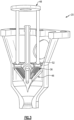
Figure 1 illustrates an example thruster. -
Figure 2 is a cross-sectional view of a portion of the example thruster. -
Figure 3 is an exploded, cross-sectional view of a portion of the example thruster. -
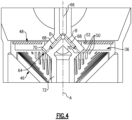
Figure 4 is a close-up, cross-sectional view of a portion of the example thruster, and in particular illustrates an exemplary arrangement of the catalyst bed relative to the feed tube. -
Figure 5 somewhat schematically illustrates an example arrangement of an outlet section of the feed tube. -
Figure 6 illustrates another example thruster including a heat shield. -
Figure 1 illustrates an example monopropellant catalytic thruster 20 ("thruster 20") arranged along a central axis A. Thethruster 20 may be attached to a satellite, rocket, or another type of aerospace vehicle, and may be used as a part of a reaction control system, for example. Thethruster 20 is not limited to use with aerospace vehicles, and may be used relative to land vehicles or marine vehicles. - The
thruster 20 includes anouter housing 22 that spans between first and second opposedends first end 24, the thruster includes anattachment section 28, astructural support 30, athrust chamber 32, and anozzle 34 terminating at thesecond end 26. Thethrust chamber 32 contains a catalyst bed 36 (Figure 2 ) of catalyst granules (not shown), such as iridium based catalyst granules, that fill the volume within thecatalyst bed 36. Additional details of thethrust chamber 32 andcatalyst bed 36 will be discussed below. - With reference back to
Figure 1 ,thruster 20 is mountable to an object, such as a rocket or other vehicle, via theattachment section 28. The thruster mount, or attachment section, 28 may include a plurality ofopenings 38 configured to receive a fastener and thereby facilitate attachment of thethruster 20 to the rocket or other vehicle. - The
thruster 20 generally reduces in diameter throughout thestructural support 30. Specifically, thethruster 20 generally reduces in diameter moving from theattachment section 28 to thethrust chamber 32. In particular, in this example, thestructural support 30 is substantially frustoconically shaped. Thestructural support 30 could have a different geometry, such as being cylindrical, conical, spherical, etc. Thestructural support 30 may be located anywhere between thefirst end 24 and thesecond end 26. - The
thrust chamber 32 exhibits a substantially constant diameter in this example. Thenozzle 34 is a convergent-divergent nozzle, in this example, and includes a convergent section 40 (Figure 2 ), athroat section 42, and a divergent section 44. Theconvergent section 40 reduces in diameter extending axially from thethrust chamber 32 to thethroat section 42, and the divergent section 44 increases in diameter from thethroat section 42 to thesecond end 26. - With reference to
Figures 2-4 , thecatalyst bed 36 is arranged in thethrust chamber 32, and includes afirst part 46 and asecond part 48 formed separately from one another.Figure 3 illustrates thesecond part 48 before it is attached to thefirst part 46. The first andsecond parts first part 46 is additively manufactured, and thesecond part 48 may be made using another manufacturing technique. - The first and
second parts catalyst bed 36 in this example. The term "radial" is used herein to refer to a radial direction normal to the central axis A. The first andsecond parts first part 46 is substantially frustoconically shaped and gradually reduces in diameter extending from thestructural support 30 to thenozzle 34. Thefirst part 46 includes a plurality of slots and/ororifices 50 configured to retain catalyst, such as catalyst granules, but permit gas to flow therethrough. A substrate for catalyst may be formed integrally with thefirst part 46 orsecond part 48, in other examples. - Adjacent the
structural support 30, thefirst part 46 also includes achannel 52 extending circumferentially about thefirst part 46. Thechannel 52 is sized and shaped to receive thesecond part 48. Thesecond part 48 is substantially disc-shaped with a central cylindrical cutout, and is sized and shaped so as to fit within thechannel 52. Thesecond part 48 is a closeout, in one example, meaning thesecond part 48 closes thecatalyst bed 36. In this example, catalyst is added to thecatalyst bed 36 before thesecond part 48 is attached to thefirst part 46. Thesecond part 48 is then attached to thefirst part 46, such as by welding or another known attachment technique, to close thecatalyst bed 36 and retain catalyst in thecatalyst bed 36. - In further examples, the
second part 48 may include the thruster mount and/or the injector. In still further examples, thefirst part 46 may include the thruster mount and/or the injector. In yet another example, the thruster mount and/or the injector may be provided partially by thefirst part 46 and partially by thesecond part 48. - The
first part 46 of thecatalyst bed 36 mechanically supports an injector, or feed tube, 54. Thefeed tube 54 includes aninlet 56 adjacent theattachment section 28. The outer diameter of thefeed tube 54 may include attachment features, such asprojections 60, configured to mechanically couple to a conduit connected to a source ofpropellant 62, such as hydrazine, for example. Thefeed tube 54 is substantially cylindrical and extends from theinlet 56 to anoutlet section 64, which fluidly couples the source ofpropellant 62 to thecatalyst bed 36. Theoutlet section 64 is axially and radially spaced-apart from thefirst part 46, which permits loading catalyst into thecatalyst bed 36 by packing it against thefirst part 46 as opposed to packing it against theoutlet section 64 of thefeed tube 54. - The
feed tube 54, in this example, includes amain passageway section 66 extending from theinlet 56 toward theoutlet section 64 along the central axis A. In theoutlet section 64, themain passageway section 66 splits into a plurality ofbranches 68. Thebranches 68 extend along axes B which are inclined relative to the central axis A. Further, in this example, each of thebranches 68 includes asplit section 70 leading directly into thecatalyst bed 36. There are fourbranches 68 circumferentially spaced-apart from one another about the central axis A. - The
split sections 70 lie in a common plane with the axis B of arespective branch 68, but extend along axes which are inclined relative to the axis B of therespective branch 68. In this example, thebranches 68 have a diameter greater than that of thesplit sections 70 but less than that of themain passageway section 66.Figure 5 somewhat schematically illustrates the arrangement of theoutlet section 64, including themain passageway section 66,branches 68, and splitsections 70. The arrangement of theoutlet section 64 evenly distributes propellant relative to the catalyst in thecatalyst bed 36. - With reference to
Figure 2 , a hollow, substantiallycylindrical structure 72 projects from theoutlet section 64 toward thenozzle 34 along the central axis A. Thestructure 72 defines a radial inner boundary of thecatalyst bed 36. Thestructure 72 improves heat transfer properties of thethrust chamber 32. - The
structure 72 is connected to abed flow spike 74, which projects axially beyond thecatalyst bed 36 and into theconvergent section 40 of thenozzle 34. In this respect, when the bed flow spike 74 protrudes through the throat of the nozzle and into the divergent section of thenozzle 34, a portion of the bed flow spike 74 provides a portion of thenozzle 34. The end section of the bed flow spike 74 forming the portion of thenozzle 34 may be truncated in an example. The bed flow spike 74 has an outer surface defined by a gradually increasing slope. In particular, asurface 76, which is partially defined by thefirst part 46 and thebed flow spike 74 and faces thenozzle 34, has a substantially constant slope along afirst section 78, and has a gradually increasing slope along asecond section 80 between thefirst section 78 and atip 82, which may be sharp or rounded, on the central axis A. The bed flow spike 74 prevents flow separation of fluid exiting thecatalyst bed 36 as it enters thenozzle 34. Thenozzle 34 may be inclined relative to the central axis A. - During operation, propellant flows from the
source 62 through thefeed tube 54, along themain passageway section 66, through thebranches 68 and splitsections 70, and into thecatalyst bed 36 where the propellant decomposes in the presence of the catalyst to generate a hot gas that is expelled through theorifices 50 of thefirst part 46 and then through thenozzle 34 to generate thrust in a known manner by reducing static pressure and accelerating the gas. - Other than the catalyst, the
thruster 20 consists of two parts in this example. Namely, the thruster is made of a first part which includes theouter housing 22 and thefirst part 46, and a second part which is thesecond part 48. In particular, the first part includes theattachment section 28, thestructural support 30, thethrust chamber 32, thenozzle 34, and thefirst part 46. At least the first part of thethruster 20 may be formed by additive manufacturing. Using such techniques permits the formation of unique geometries, such as the frustoconically-shapedfirst part 46, the complex geometries of theoutlet section 64, and thebed flow spike 74, among others. The first part of thethruster 20 may be additively built beginning with forming theattachment section 28 first and adding additional layers, working toward thenozzle 34, until the entire first part is formed. The first part is an integrally-formed, seamless structure in one example. The only seam in thethruster 20, in one example, is a joint, such as a weld joint, between the first andsecond parts thruster 20 is scalable for use in different applications. - Another
example thruster 120 is illustrated inFigure 6 . To the extent not otherwise described or shown, thethruster 120 corresponds to the embodiment ofFigures 1-5 , with like parts having reference numerals preappended with a "1," unless specified otherwise below. - In the example of
Figure 6 , thethruster 120 includes aheat shield 184 integrally formed with thefirst part 146. Theheat shield 184 is spaced radially inward of theouter housing 122 by a space S. The space S is substantially constant along the length of theheat shield 184, and theheat shield 184 substantially follows a contour of thethrust chamber 132 and theconvergent section 140 of thenozzle 134. Theheat shield 184 projects from thefirst part 146 and has a free end near thethroat 142. Theheat shield 184 creates space between the hot gases within thethrust chamber 132 and theouter housing 122, which reduces the thermal stresses on theouter housing 122 while at the same time improving the performance of thethruster 120 by preventing heat loss. - It should be understood that except where otherwise noted, terms such as "axial," "radial," and "circumferential" are used above with reference to the normal operational attitude of the
thruster 20. Further, these terms have been used herein for purposes of explanation, and should not be considered otherwise limiting. Terms such as "generally," "substantially," and "about" are not intended to be boundaryless terms, and should be interpreted consistent with the way one skilled in the art would interpret those terms. - Although the different examples have the specific components shown in the illustrations, embodiments of this disclosure are not limited to those particular combinations. It is possible to use some of the components or features from one of the examples in combination with features or components from another one of the examples. In addition, the various figures accompanying this disclosure are not necessarily to scale, and some features may be exaggerated or minimized to show certain details of a particular component or arrangement.
- One of ordinary skill in this art would understand that the above-described embodiments are exemplary and non-limiting. That is, modifications of this disclosure would come within the scope of the claims. Accordingly, the following claims should be studied to determine their true scope and content.
Claims (15)
- A monopropellant thruster (20), comprising:a first part (46) having a catalyst bed (36), a thrust chamber (32), and a nozzle (34), wherein the first part (46) is integrally formed via a single additive manufacturing process; anda second part (48), wherein the second part (48) is a closeout.
- The thruster (20) as recited in claim 1, wherein the second part (48) has an injector (54).
- The thruster (20) as recited in claim 1 or 2, wherein one of the first part (46) and the second part has a thruster mount.
- The thruster (20) as recited in any preceding claim, wherein the first part (46) includes an outer body of the thruster (20).
- The thruster (20) as recited in any preceding claim, wherein the second part (48) includes a feed tube (54).
- The thruster (20) as recited in claim 5, wherein the feed tube (54) includes a main passageway section (66) extending from a feed tube inlet (56) to a plurality of branches (68) extending from the main passageway section (66).
- The thruster (20) as recited in claim 6, wherein the plurality of branches (68) are spaced-apart from one another about a central axis of the thruster (20) and are inclined relative to the central axis of the thruster (20).
- The thruster (20) as recited in claim 6 or 7, wherein each of the plurality of branches (68) is split into two sections leading to a feed tube outlet.
- The thruster (20) as recited in any preceding claim, wherein the first part (46) includes a hollow cylindrical section feed tube outlet (72) and the catalyst bed (36).
- The thruster (20) as recited in any preceding claim, wherein the catalyst bed (36) is substantially frustoconically shaped.
- The thruster (20) as recited in any preceding claim, wherein the catalyst bed (36) includes a plurality of orifices (50) permitting fluid flow from the catalyst bed (36) to the nozzle (34).
- The thruster (20) as recited in any preceding claim, wherein the first part (46) includes a bed flow spike (74) having a surface (76) exhibiting an increasing slope as the surface (76) extends toward the central axis of the thruster (20).
- The thruster (20) as recited in any preceding claim, wherein the outer body includes an attachment section (28), a structural support (30), and a nozzle (34).
- The thruster (20) as recited in any preceding claim, wherein the first part (46) includes a heat shield (184) within the thrust chamber (32).
- The thruster (20) as recited in any preceding claim, wherein:the first part (46) is attached to the second part (48) by welding; and/orthe thruster (20) further comprises a catalyst in the catalyst bed (36).
Priority Applications (1)
| Application Number | Priority Date | Filing Date | Title |
|---|---|---|---|
| EP24195487.4A EP4450798A3 (en) | 2019-11-22 | 2019-11-22 | Catalytic thruster |
Applications Claiming Priority (3)
| Application Number | Priority Date | Filing Date | Title |
|---|---|---|---|
| PCT/US2019/062788 WO2021101568A1 (en) | 2019-11-22 | 2019-11-22 | Catalytic thruster |
| EP24195487.4A EP4450798A3 (en) | 2019-11-22 | 2019-11-22 | Catalytic thruster |
| EP19827881.4A EP4062045B1 (en) | 2019-11-22 | 2019-11-22 | Catalytic thruster |
Related Parent Applications (1)
| Application Number | Title | Priority Date | Filing Date |
|---|---|---|---|
| EP19827881.4A Division EP4062045B1 (en) | 2019-11-22 | 2019-11-22 | Catalytic thruster |
Publications (2)
| Publication Number | Publication Date |
|---|---|
| EP4450798A2 true EP4450798A2 (en) | 2024-10-23 |
| EP4450798A3 EP4450798A3 (en) | 2025-01-01 |
Family
ID=69005822
Family Applications (2)
| Application Number | Title | Priority Date | Filing Date |
|---|---|---|---|
| EP24195487.4A Pending EP4450798A3 (en) | 2019-11-22 | 2019-11-22 | Catalytic thruster |
| EP19827881.4A Active EP4062045B1 (en) | 2019-11-22 | 2019-11-22 | Catalytic thruster |
Family Applications After (1)
| Application Number | Title | Priority Date | Filing Date |
|---|---|---|---|
| EP19827881.4A Active EP4062045B1 (en) | 2019-11-22 | 2019-11-22 | Catalytic thruster |
Country Status (5)
| Country | Link |
|---|---|
| US (1) | US12286944B2 (en) |
| EP (2) | EP4450798A3 (en) |
| JP (1) | JP7406631B2 (en) |
| CN (1) | CN114729611B (en) |
| WO (1) | WO2021101568A1 (en) |
Families Citing this family (1)
| Publication number | Priority date | Publication date | Assignee | Title |
|---|---|---|---|---|
| WO2023034291A2 (en) * | 2021-08-30 | 2023-03-09 | Agile Space Industries, Inc. | Systems and methods for design, manufacture, and test of space thruster propulsion systems |
Family Cites Families (16)
| Publication number | Priority date | Publication date | Assignee | Title |
|---|---|---|---|---|
| US4324096A (en) * | 1979-04-23 | 1982-04-13 | Hughes Aircraft Company | Hydrazine thruster |
| US4352782A (en) * | 1981-02-20 | 1982-10-05 | Rocket Research Company | Catalytic gas generator |
| US4930310A (en) * | 1985-12-18 | 1990-06-05 | Rockcor, Inc. | Monopropellant plenum propulsion system with integrated valve/nozzle for fast response thrust |
| DE4240962C1 (en) * | 1992-12-05 | 1994-04-07 | Erno Raumfahrttechnik Gmbh | Engine |
| US5941062A (en) * | 1995-05-11 | 1999-08-24 | Societe Europeenne De Propulsion | Pulse rocket engine |
| DE19521543C2 (en) * | 1995-06-13 | 1998-02-05 | Daimler Benz Aerospace Ag | Engine |
| RU2158666C2 (en) | 1999-02-04 | 2000-11-10 | Открытое акционерное общество НПО Энергомаш им. акад. В.П. Глушко | Method of manufacturing welded-soldered structure |
| US7757476B2 (en) * | 2003-07-22 | 2010-07-20 | The Aerospace Corporation | Catalytically activated transient decomposition propulsion system |
| JP4941662B2 (en) * | 2007-09-03 | 2012-05-30 | 株式会社Ihi | One component thruster |
| CN104265507B (en) * | 2014-09-23 | 2016-06-29 | 贵州航天红光机械制造有限公司 | A kind of thrust chamber ejector filler of hydrazine low thrust monopropellant engine |
| US20180112628A1 (en) * | 2015-05-08 | 2018-04-26 | Ecaps Aktiebolag | Rocket Engine Ignition System |
| EP3128165B1 (en) * | 2015-08-06 | 2021-06-16 | ArianeGroup GmbH | Catalyst chamber with a catalyst bed embedded therein for a monopropellant thruster of a rocket engine |
| US20170284339A1 (en) * | 2016-04-05 | 2017-10-05 | Raytheon Company | Thruster with segmented propellant |
| KR101969901B1 (en) * | 2017-12-22 | 2019-04-17 | 경일대학교산학협력단 | Micro thruster with insulation cell and flight vehicle having the same |
| CN109296474B (en) * | 2018-09-27 | 2024-05-28 | 宁波天擎航天科技有限公司 | Rocket engine |
| RU2771220C1 (en) | 2021-06-07 | 2022-04-28 | Акционерное общество "Корпорация "Московский институт теплотехники" (АО "Корпорация "МИТ") | Solid fuel rocket engine |
-
2019
- 2019-11-22 EP EP24195487.4A patent/EP4450798A3/en active Pending
- 2019-11-22 US US17/641,961 patent/US12286944B2/en active Active
- 2019-11-22 CN CN201980102366.0A patent/CN114729611B/en active Active
- 2019-11-22 JP JP2022528215A patent/JP7406631B2/en active Active
- 2019-11-22 WO PCT/US2019/062788 patent/WO2021101568A1/en not_active Ceased
- 2019-11-22 EP EP19827881.4A patent/EP4062045B1/en active Active
Also Published As
| Publication number | Publication date |
|---|---|
| US20220307450A1 (en) | 2022-09-29 |
| EP4062045A1 (en) | 2022-09-28 |
| US12286944B2 (en) | 2025-04-29 |
| CN114729611B (en) | 2024-11-26 |
| WO2021101568A1 (en) | 2021-05-27 |
| EP4062045B1 (en) | 2024-08-21 |
| CN114729611A (en) | 2022-07-08 |
| EP4450798A3 (en) | 2025-01-01 |
| JP2023503409A (en) | 2023-01-30 |
| JP7406631B2 (en) | 2023-12-27 |
Similar Documents
| Publication | Publication Date | Title |
|---|---|---|
| EP1402166B1 (en) | Rocket vehicle thrust augmentation within divergent section of nozzle | |
| US6591603B2 (en) | Pintle injector rocket with expansion-deflection nozzle | |
| US11084605B2 (en) | Device and system for controlling missiles and kill vehicles operated with gel-like fuels | |
| US11578682B2 (en) | SmallSat hybrid propulsion system | |
| CN108138697A (en) | Improved liquid oxygen-propylene liguid rocket engine | |
| US20220381201A1 (en) | Hybrid propulsion unit for space vehicle | |
| US12286944B2 (en) | Catalytic thruster | |
| US3695041A (en) | Two-stage hydrazine rocket motor | |
| US3446023A (en) | Catalytic attitude-control rocket motor | |
| US20260036103A1 (en) | Augmented Aerospike Nozzle, Engine Including the Augmented Aerospike Nozzle, and Vehicle Including the Engine | |
| US9404441B2 (en) | Low velocity injector manifold for hypergolic rocket engine | |
| KR20150122700A (en) | Nozzle having a variable neck section for a spacecraft thruster provided with a mobile needle | |
| RU2800409C1 (en) | Catalytic thruster | |
| US4821962A (en) | Propeller nozzles thereby reducing lateral forces | |
| US7823376B2 (en) | Thrust augmentation in plug nozzles and expansion-deflection nozzles | |
| EP4073373B1 (en) | Thruster nozzle assembly with flow regulator in throat area and rotary joint | |
| US3325998A (en) | Variable thrust rocket motor | |
| JP2025533351A (en) | Orbital control thrusters, orbital control propulsion systems, and orbital transfer vehicles | |
| RU2803533C1 (en) | Nozzle assembly, rocket containing such assembly, and method of thrust vector deflection by means of specified assembly | |
| US20070012370A1 (en) | Facetted high temperature thruster design | |
| WO2025085010A1 (en) | Hybrid rocket injector to increase fuel regression rate and combustion stability | |
| CN114962075A (en) | Single-component liquid rocket engine and room pressure roughness and temperature control method thereof | |
| JP2002317700A (en) | Thruster device |
Legal Events
| Date | Code | Title | Description |
|---|---|---|---|
| PUAI | Public reference made under article 153(3) epc to a published international application that has entered the european phase |
Free format text: ORIGINAL CODE: 0009012 |
|
| STAA | Information on the status of an ep patent application or granted ep patent |
Free format text: STATUS: THE APPLICATION HAS BEEN PUBLISHED |
|
| AC | Divisional application: reference to earlier application |
Ref document number: 4062045 Country of ref document: EP Kind code of ref document: P |
|
| AK | Designated contracting states |
Kind code of ref document: A2 Designated state(s): AL AT BE BG CH CY CZ DE DK EE ES FI FR GB GR HR HU IE IS IT LI LT LU LV MC MK MT NL NO PL PT RO RS SE SI SK SM TR |
|
| REG | Reference to a national code |
Ref country code: DE Ref legal event code: R079 Free format text: PREVIOUS MAIN CLASS: F02K0009680000 Ipc: F02K0009520000 |
|
| PUAL | Search report despatched |
Free format text: ORIGINAL CODE: 0009013 |
|
| AK | Designated contracting states |
Kind code of ref document: A3 Designated state(s): AL AT BE BG CH CY CZ DE DK EE ES FI FR GB GR HR HU IE IS IT LI LT LU LV MC MK MT NL NO PL PT RO RS SE SI SK SM TR |
|
| RIC1 | Information provided on ipc code assigned before grant |
Ipc: F02K 9/68 20060101ALI20241122BHEP Ipc: F02K 9/62 20060101ALI20241122BHEP Ipc: F02K 9/52 20060101AFI20241122BHEP |
|
| STAA | Information on the status of an ep patent application or granted ep patent |
Free format text: STATUS: REQUEST FOR EXAMINATION WAS MADE |
|
| 17P | Request for examination filed |
Effective date: 20250701 |