-
The present invention relates to a new series of histone deacetylase derivatives, as well as to pharmaceutical compositions comprising them and to their use in therapy, particularly to their use for the treatment of cancer.
BACKGROUND ART
-
Histone deacetylases (HDACs) are enzymes that remove acetyl groups from lysine residues in histone and other non-histone substrates and trigger the transcription of transcriptionally silent chromatin. Eighteen HDACs have been identified and are divided into four groups according to phylogenetic sequence and function: class I ( HDACs 1, 2, 3, and 8), class Ila (HDACs 4, 5, 7, and 9), class IIb (HDACs 6 and 10), and class IV (HDAC11). Since the epigenetic modification is considered a new promising frontier for the study and treatment of AD (Hwang, J. Y. et al. Nat. Rev. Neurosci. 2017, 18, 347), the interest in regulating histone acetylation through HDAC is rising up. The emerging role of HDAC as AD target is also supported by the evidence of the role of histone acetylation in rescuing learning and memory impairment. Among all the HDAC, particularly, it is worth noting that elevated HDAC6 activity increases tau phosphorylation interfering with its propensity to aggregate, and that the HDAC6 selective inhibitor tubacin attenuates tau phosphorylation. Fan et al. demonstrated that HDAC6 inhibition ameliorates tau phosphorylation and cognitive deficits in an AD model (Zhang, L. et al. Enzyme Inhib. Med. Chem. 2018, 33, 714 ). The biological functions of HDACs have an extraordinary impact in diseases like cancer (Ellis, L.; Pili, R. Parmaceuticals 2010, 3, 2441; Stimson, L. et al. Ann. ), central nervous system disorders (cf. Kazantsev, A. G.; Thomson, L. N. Nat. Rev. Drug Discov. 2008, 7, 854), inflammation and immunity (cf. Shakespear, M. R. et al. Trends Immunol. 2011, 32, 335) and HIV-1 latency (cf. Archin, N. M. et al. Nature 2012, 487, 482). Within this context, HDAC inhibitors (HDACi) have emerged as very relevant and promising drugs for the treatment of cancer (cf. Johnstone, R. W. Nat. Rev. Drug. Discov. 2002, 1, 287; Dokmanovic, M. et al. Mol. Cancer Res. 2007, 5, 981; Ropero, S.; Esteller, M. Mol. ). Although many of the actual mechanisms of anticancer activity of HDACi are not completely understood, there is evidence that these compounds alter the biological machinery affecting the hallmarks of cancer like apoptosis (HDAC 1 and 2) differentiation (HDAC 3, 4, 5 and 8), angiogenesis (HDAC 4, 6, 7 and 10), migration (HDAC 6), resistance to chemotherapy (HDAC 1) and proliferation ( HDAC 1, 2, 3 and 8) (cf. Witt, O. et al. Cancer Lett. 2009, 277, 8).
-
Vorinostat (suberoylanilide hydroxamic acid, SAHA) was the first HDACi approved in 2006 by the US FDA for the treatment of cutaneous T-cell lymphoma (CTCL) (cf. Marks, P. A. Oncogene 2007, 26, 1351; Marks, P. A.; Breslow, R. Nat. Biotechnol. 2007, 25, 2084). In 2009, disulfide FK228 gained approval by the same American agency (cf. Grant, C. et al. Expert Rev. Anticancer Ther. 2010, 10, 997 ; Bertino, E. M. et al. Expert Opin. Investig. ). Nowadays, many HDACi have been prepared, some of them being in clinical development (cf. Miller, T. A. et al. J. Med. Chem. 2003, 46, 5097; Paris, M. et al. J. Med. Chem. 2008, 51, 1505).
-
Belinostat is the first of four FDA-approved HDAC inhibitors for the treatment of relapsed/refractory peripheral T-cell lymphoma (Poole, R.M. Drugs 2014, 74, 1543). Moreover, HDAC inhibitors (including belinostat) have been found to augment the response to PD-1 immunotherapy in lung adenocarcinoma (Zheng, H. et al. Clin. Cancer Res. 2016, 22, 4119) and melanoma (Woods, D.M. et al. Cancer Immunol. Res. 2015, 3, 1375), as stand-alone agents or in combination with immunotherapeutic approaches (Banik, D. et al. Int. J. Mol. Sci. 2019, 20, 2241). However, belinostat and other HDAC inhibitors have very limited therapeutic outcome for the treatment of nonhematological cancers in completed clinical trials (Mottamal, M. et al. Molecules 2015, 20, 3898).
-
Tubastatin A is a highly selective HDAC6 inhibitor able to suppress the degeneration of cultivated neurons of cerebral cortex under conditions of the oxidative stress (Butler, K.V. et al. J. Am. Chem. Soc. 2010, 132, 10842).
-
Considering the above, it would be desirable to have new compounds for the treatment of cancer that have improved efficacy and do not have side effects.
SUMMARY OF THE INVENTION
-
A first aspect of the invention relates to a compound of formula
I:
or a pharmaceutical salt thereof, wherein:
- R1 represents H, -C1-4 alkyl, phenyl, benzyl, or Cy1(C2-4 alkyl);
- Cy1 represents a 5- to 8-membered saturated ring, which contains from 1 to 3 heteroatoms selected from N, O, Se and S; wherein Cy1 is attached to rest of the molecule through any C or N atom available, and wherein Cy1 is optionally substituted by one R5 group;
- R2 represents H, Me, CH2C≡CH, CH2CH=C=CH2 or CH2CH=CH2;
- R3 represents OH, -O C1-4 alkyl, NHOH, NHNR6R7 or orto-NH2(C6H4)NH;
- R4 represents H, C1-C5 alkyl, -O-C1-C5 alkyl, -OH, -NO2 halogen, CN, CO2Et or SO2Ph, wherein R4 is located in any available position C2', C3', C4', C5', C6';
- R5 represents H or -C1-6 alkyl;
- R6 represents H, -OH or -C1-6 alkyl, preferably H or -C1-4 alkynyl;
- R7 represents H, -OH or -C1-6 alkyl;
- x represents 1, 2, 3 and/or 4;
- n represents 2, 3, 4, 5 or 6; and
- m represents 0, 1 or 2.
-
In another embodiment the invention relates to the compound of formula I as defined above, wherein R1 is CH3, -CH2C6H5-CH2, N-piperidinepropoxy or N-(propargyl)piperazinepropoxy.
-
In another embodiment the invention relates to the compound of formula I as defined above, wherein R3 is NHOH or orto-NH2(C6H4)NH.
-
In another embodiment the invention relates to the compound of formula I as defined above, wherein each R6 and/or R7 are independently H.
-
In another embodiment the invention relates to the compound of formula I as defined above, wherein:
- R1 is CH3 or -CH2C6H5-CH2; and
- R3 is NHOH or orto-NH2(C6H4)NH.
-
In another embodiment the invention relates to the compound of formula I as defined above, wherein:
- R1 is a N-piperidinepropoxy or N-(propargyl)piperazinepropoxy; and
- R3 is NHOH or orto-NH2(C6H4)NH.
-
Another aspect of the invention relates to a compound of formula
II:
or a pharmaceutical salt thereof, wherein:
- R1 represents -C1-4 alkyl, phenyl, benzyl, or Cy1(C2-4 alkyl);
- Cy1 represents a 5- to 8-membered saturated ring, which contains from 1 to 3 heteroatoms selected from N, O, Se and S; wherein Cy1 is attached to rest of the molecule through any C or N atom available, and wherein Cy1 is optionally substituted by one R3 group;
- R2 represents -OH, -OC1-4 alkyl, -NHOH, -NHNR4R5 or orto-NH2(C6H4)NH group installed in the α,β-unsaturated group located in any available position C2', C3' or C4' of the molecule;
- R3 represents H or -C1-4 alkynyl;
- R4 represents H, -OH or -C1-6 alkyl, preferably R4 represents H or -C1-6 alkyl; and
- R5 independently represents H or -C1-6 alkyl.
-
In another embodiment the invention relates to the compound of formula II as defined above, wherein R1 is CH3, -CH2C6H5-CH2, N-piperidinepropoxy or N-(propargyl)piperazinepropoxy.
-
In another embodiment the invention relates to the compound of formula II as defined above, wherein R2 is NHOH or orto-NH2(C6H4)NH, wherein R2 is installed in the α,β-unsaturated group located in position C3' of the molecule.
-
In another embodiment the invention relates to the compound of formula II as defined above, wherein:
- R1 is CH3 or -CH2C6H5-CH2; and
- R2 is NHOH or orto-NH2(C6H4)NH, wherein R2 is installed in the α,β-unsaturated group located in position C3' of the molecule.
-
In another embodiment the invention relates to the compound of formula II as defined above, wherein:
- R1 is N-piperidinepropoxy or N-(propargyl)piperazinepropoxy; and
- R2 is NHOH or orto-NH2(C6H4)NH, wherein R2 is installed in the α,β-unsaturated group located in position C3' of the molecule.
-
Another aspect of the invention relates to a compound of formula
III:
or a pharmaceutical salt thereof, wherein:
- R1 represents -C1-4 alkyl, phenyl, benzyl, or Cy1(C2-4 alkyl);
- Cy1 represents a 5 to 8-membered saturated ring, which contains from 1 to 3 heteroatoms selected from N, O, Se and S; wherein Cy1 is attached to rest of the molecule through any C or N atom available, and wherein Cy1 is optionally substituted by one R3 group;
- R2 represents -OH, -O C1-4 alkyl, NHOH, NHNR4R5 or orto-NH2(C6H4)NH group installed in the carboxylate group located in any available position C2', C3' or C4' of the molecule;
- R3 represents H or -C1-4 alkynyl;
- R4 represents H, -OH or -C1-6 alkyl, preferably R4 represents H or -C1-6 alkyl; and
- R5 represents H or -C1-6 alkyl.
-
In another embodiment the invention relates to the compound of formula III as defined above, wherein R1 is CH3, -CH2C6H5-CH2, N-piperidinepropoxy or N-(propargyl)piperazinepropoxy.
-
In another embodiment the invention relates to the compound of formula III as defined above, wherein R2 is NHOH or NHNH2, wherein R2 is installed in the carboxylate group located in position C4' of the molecule.
-
In another embodiment the invention relates to the compound of formula III as defined above, wherein:
- R1 is CH3 or -CH2C6H5-CH2; and
- R2 is NHOH or NHNH2, wherein R2 is installed in the carboxylate group located in position C4' of the molecule.
-
In another embodiment the invention relates to the compound of formula III as defined above, wherein:
- R1 is a N-piperidinepropoxy or N-(propargyl)piperazinepropoxy; and
- R2 is NHOH or NHNH2, wherein R2 is installed in the carboxylate group located in position C4' of the molecule.
-
Another aspect of the invention relates to a compound of formula
IV:
or a pharmaceutical salt thereof, wherein:
- R1 represents -C1-4 alkyl, phenyl, benzyl, or Cy1(C2-4 alkyl);
- Cy1 represents a 5 to 8-membered saturated ring, which contains from 1 to 3 heteroatoms selected from N, O, Se and S; Cy1 wherein Cy1 is attached to rest of the molecule through any C or N atom available, and wherein Cy1 is optionally substituted by one R4 group;
- R2 represents OH, -OC1-4 alkyl, NHOH, NHNR5R6 or orto-NH2(C6H4)NH group installed in the carboxylic group located in position C2' of the molecule;
- each R3 independently represents H; halogen, Me, -C3H7, -OMe or -CF3; or
- two R3 groups form a fused benzene ring resulting in a 1-naphthyl or 2-naphthyl group; x represents 1, 2, 3 and/or 4;
- R4 represents H or -C1-4 alkynyl;
- R5 represents H or -C1-4 alkynyl; and
- R6 represents H, -OH or -C1-6 alkyl, preferably R6 independently represents H or -C1-6 alkyl.
-
In another embodiment the invention relates to the compound of formula IV as defined above, wherein R1 is CH2C6H5, N-piperidinepropoxy or N-(propargyl)piperazinepropoxy
-
In another embodiment the invention relates to the compound of formula IV as defined above, wherein R2 is NHOH, NHNH2, and orto-NH2(C6H4)NH.
-
In another embodiment the invention relates to the compound of formula IV as defined above, wherein each R5 and/or R6 are independently H.
-
In another embodiment the invention relates to the compound of formula IV as defined above, wherein:
- R1 is CH2C6H5;
- R2 is NHOH, NHNH2, and orto-NH2(C6H4)NH; and
- each R5 and/or R6 are independently H.
-
In another embodiment the invention relates to the compound of formula IV as defined above, wherein:
- R1 is a N-piperidinepropoxy or N-(propargyl)piperazinepropoxy; and
- R2 is NHOH; and
- each R5 and/or R6 are independently H.
-
Another aspect of the invention relates to a compound of formula
V:
or a pharmaceutical salt thereof, wherein:
R
1 represents 5-hydroxy-1
H-indol-2-yl, 5-methoxy-1
H-indol-2-yl, 5-benzyloxy-1
H-indol-2-yl, 5-(3-(piperidin-1-yl)propoxy)-1
H-indol-2-yl, 5-(3-(4-(prop-2-yn-1-yl)piperazin-1-yl)propoxy)-1
H-indol2-yl; C
6H
5, 2'-BrC
6H
4, 3'-BrC
6H
4, 4'-BrC
6H
4; 2'-ClC
6H
4, 3'-ClC
6H
4, 4'-ClC
6H
4; 2'-FC
6H
4, 3'- FC
6H
4, 4'-FC
6H
4; 2'-IC
6H
4, 3'-IC
6H
4, 4'-IC
6H
4; 2'-MeC
6H
4, 3'-MeC
6H
4, 4'-MeC
6H
4; 2'-C
2H
5C
6H
4, 3'-C
2H
5C
6H
4, 4'-C
2H
5C
6H
4; 2'-C
3H
7C
6H
4, 3'-C
3H
7C
6H
4, 4'-C
3H
7C
6H
4; 2'-OMeC
6H
4, 3'-OMeC
6H
4, 4'-OMeC
6H
4; 2'-OHC
6H
4, 3'-OHC
6H
4, 4'-OHC
6H
4; 2',5'-di-FC
6H
3, 3',5'-di-FC
6H
3; 2'-CF
3C
6H
4, 3'-CF
3C
6H
4, 4'-CF
3 C
6H
4; 1-naphthyl, 2-naphthyl; furan, pyrrole, tiophene; pyridine, pyrimidine, pyrazine, C
6H
5NHCO(CH
2)
n, 2'-BrC
6H
4NHCO(CH
2)
n, 3'-BrC
6H
4NHCO(CH
2)n, 4'-BrC
6H
4 NHCO(CH
2)
n; 2'-ClC
6H
4NHCO(CH
2)
n, 3'-ClC
6H
4NHCO(CH
2)
n, 4'-ClC
6H
4NHCO(CH
2)
n; 2'-FC
6H
4NHCO(CH
2)
n, 3'-FC
6H
4NHCO(CH
2)
n, 4'-FC
6H
4NHCO(CH
2)
n; 2'-IC
6H
4NHCO(CH
2)
n, 3'-IC
6H
4NHCO(CH
2)
n, 4'-IC
6H
4NHCO(CH
2)
n; 2'-MeC
6H
4NHCO(CH
2)
n, 3'-MeC
6H
4NHCO(CH
2)
n, 4'-MeC
6H
4NHCO(CH
2)
n; 2'-C
2H
5C
6H
4NHCO(CH
2)
n, 3'-C
2H
5C
6H
4NHCO(CH
2)
n, 4'-C
2H
5C
6H
4NHCO(CH
2)
n; 2'-C
3H
7C
6H
4NHCO(CH
2)
n, 3'-C
3H
7C
6H
4NHCO(CH
2)
n, 4'-C
3H
7C
6H
4NHCO(CH
2)
n; 2'-OMeC
6H
4NHCO(CH
2)
n, 3'-OMeC
6H
4NHCO(CH
2)
n, 4'-OMeC
6H
4NHCO(CH
2)
n; 2'-OHC
6H
4NHCO(CH
2)
n, 3'-OHC
6H
4NHCO(CH
2)
n, 4'-OHC
6H
4NHCO(CH
2)
n; 2',5'-di-FC
6H
3NHCO(CH
2)
1, 3',5'-di-FC
6H
3NHCO(CH
2)
n; 2'-CF
3C
6H
4NHCO(CH
2)
n, 3'-CF
3C
6H
4NHCO(CH
2)
n, 4'-CF
3C
6H
4 NHCO(CH
2)
n; 1-naphthylNHCO(CH
2)
n, 2-naphthyl NHCO(CH
2)
n; furanNHCO(CH
2)
n, pyrroleNHCO(CH
2)
n, tiophenNHCO(CH
2)
n; pyridineNHCO(CH
2)
n, pyrimidine NHCO(CH
2)
n or pyrazineNHCO(CH
2)
n; and n represents 2, 3, 4, 5, 6.
-
Another aspect of the invention relates to a compound of formula I, II, III, IV or V selected from:
- N1-Hydroxy-N8-((1-(phenylsulfonyl)-5-(3-(piperidin-1-yl)propoxy)-1H-indol-2-yl)methyl)-N8-(prop-2-yn-1-yl)octanediamide (DDI199);
- 1-((3-Bromophenyl)sulfonyl)-5-methoxy-1H-indole (MTP21);
- 5-(Benzyloxy)-1-((3-bromophenyl)sulfonyl)-1H-indole (MTP12);
- 1-((3-Bromophenyl)sulfonyl)-5-(3-(piperidin-1-yl)propoxy)-1H-indole (MTP30);
- 1-((3-Bromophenyl)sulfonyl)-5-(3-(4-(prop-2-yn-1-yl)piperazin-1-yl)propoxy)-1H-indole (MTP43);
- Ethyl (E)-3-(3-((5-methoxy-1H-indol-1-yl)sulfonyl)phenyl)acrylate (MTP25);
- Ethyl (E)-3-(3-((5-(benzyloxy)-1H-indol-1-yl)sulfonyl)phenyl)acrylate (MTP13);
- Ethyl (E)-3-(3-((5-(3-(Piperidin-1-yl)propoxy)-1H-indol-1-yl)sulfonyl)phenyl)acrylate (MTP41);
- Ethyl (E)-3-(4-((5-Methoxy-1H-indol-1-yl)sulfonyl)phenyl)acrylate (SMD2);
- Ethyl (E)-3-(4-((5-(3-(Piperidin-1-yl)propoxy)-1H-indol-1-yl)sulfonyl)phenyl)acrylate (APP13);
- (E)-3-(3-((5-Methoxy-1H-indol-1-yl)sulfonyl)phenyl)acrylic acid (MTP37);
- (E)-3-(3-((5-(Benzyloxy)-1H-indol-1-yl)sulfonyl)phenyl)acrylic acid (MTP153);
- (E)-3-(3-((5-(3-(Piperidin-1-yl)propoxy)-1H-indol-1-yl)sulfonyl)phenyl)acrylic acid (MTP146);
- (E)-3-(4-((5-Methoxy-1H-indol-1-yl)sulfonyl)phenyl)acrylic acid (SMD3);
- (E)-3-(4-((5-(3-(Piperidin-1-yl)propoxy)-1H-indol-1-yl)sulfonyl)phenyl)acrylic acid (APP15);
- (E)-N-Hydroxy-3-(3-((5-methoxy-1H-indol-1-yl)sulfonyl)phenyl)acrylamide (MTP142);
- (E)-3-(3-((5-(Benzyloxy)-1H-indol-1-yl)sulfonyl)phenyl)-N-hydroxyacrylamide (MTP156);
- (E)-N-Hydroxy-3-(3-((5-(3-(piperidin-1-yl)propoxy)-1H-indol-1-yl)sulfonyl)phenyl)acrylamide (MTP150);
- (E)-N-Hydroxy-3-(4-((5-methoxy-1H-indol-1-yl)sulfonyl)phenyl)acrylamide (SMD17);
- (E)-N-Hydroxy-3-(4-((5-(3-(piperidin-1-yl)propoxy)-1H-indol-1-yl)sulfonyl)phenyl)acrylamide (APP19);
- (E)-N-(2-Aminophenyl)-3-(3-((5-methoxy-1H-indol-1-yl)sulfonyl)phenyl)acrylamide (MTP143);
- (E)-N-(2-Aminophenyl)-3-(3-((5-(benzyloxy)-1H-indol-1-yl)sulfonyl)phenyl)acrylamide (MTP157);
- (E)-N-(2-Aminophenyl)-3-(3-((5-(3-(piperidin-1-yl)propoxy)-1H-indol-1-yl)sulfonyl)phenyl)acrylamide (MTP167);
- (E)-N-(2-Aminophenyl)-3-(4-((5-methoxy-1-H-indol-1-yl)sulfonyl)phenyl)acrylamide (SMD10);
- (E)-N-(2-Aminophenyl)-3-(4-((5-(3-(piperidin-1-yl)propoxy)-1H-indol-1-yl)sulfonyl)phenyl)acrylamide (APP17);
- Methyl 4-((5-methoxy-1H-indol-1-yl)sulfonyl)benzoate (MTP21);
- Methyl 4-((5-(benzyloxy)-1H-indol-1-yl)sulfonyl)benzoate (MTP12);
- Methyl 4-((5-(3-(piperidin-1-yl)propoxy)-1H-indol-1-yl)sulfonyl)benzoate (MTP30);
- Methyl 4-((5-(3-(4-(prop-2-yn-1-yl)piperazin-1-yl)propoxy)-1H-indol-1-yl)sulfonyl) benzoate (MTP43);
- 4-((5-Methoxy-1H-indol-1-yl)sulfonyl)benzohydrazide (MTP86);
- 4-((5-(Benzyloxy)-1H-indol-1-yl)sulfonyl)benzohydrazide (MTP90);
- 4-((5-(3-(Piperidin-1-yl)propoxy)-1H-indol-1-yl)sulfonyl)benzohydrazide (MTP96);
- 4-((5-(3-(4-(Prop-2-yn-1-yl)piperazin-1-yl)propoxy)-1H-indol-1-yl)sulfonyl)benzohydrazide (MTP99);
- 4-((5-Methoxy-1H-indol-1-yl)sulfonyl)-N-propylbenzohydrazide (FRB24);
- 4-((5-(3-(Piperidin-1-yl)propoxy)-1H-indol-1-yl)sulfonyl)-N-propylbenzohydrazide (FRB44);
- 4-((5-(3-(4-(Prop-2-yn-1-yl)piperazin-1-yl)propoxy)-1H-indol-1-yl)sulfonyl)-N-propylbenzohydrazide (FRB56);
- 4-((5-Methoxy-1H-indol-1-yl)sulfonyl)-N',N'-dipropylbenzohydrazide (FRB21);
- N-Hydroxy-4-((5-methoxy-1H-indol-1-yl)sulfonyl)benzamide (MTP89);
- 4-((5-(Benzyloxy)-1H-indol-1-yl)sulfonyl)-N-hydroxybenzamide (MTP98);
- N-Hydroxy-4-((5-(3-(piperidin-1-yl)propoxy)-1H-indol-1-yl)sulfonyl)benzamide (MTP100);
- N-Hydroxy-4-((5-(3-(4-(prop-2-yn-1-yl)piperazin-1-yl)propoxy)-1H-indol-1-yl) sulfonyl)benzamide (MTP109);
- 4-((5-Methoxy-1H-indol-1-yl)sulfonyl)benzoic acid (MTP105);
- 4-((5-(Benzyloxy)-1H-indol-1-yl)sulfonyl)benzoic (MTP148);
- 4-((5-(3-(Piperidin-1-yl)propoxy)-1H-indol-1-yl)sulfonyl)benzoic acid (MTP162);
- 4-((5-(3-(4-(Prop-2-yn-1-yl)piperazin-1-yl)propoxy)-1H-indol-1-yl)sulfonyl)benzoic acid (MTP194);
- 3-((5-(3-(Piperidin-1-yl)propoxy)-1H-indol-1-yl)sulfonyl)benzoic acid (APP35);
- 3-((5-(3-(4-(Prop-2-yn-1-yl)piperazin-1-yl)propoxy)-1H-indol-1-yl)sulfonyl)benzoic acid (APP37);
- N-(2-Aminophenyl)-4-((5-(benzyloxy)-1H-indol-1-yl)sulfonyl)benzamide (MTP155);
- N-(2-Aminophenyl)-4-((5-(3-(piperidin-1-yl)propoxy)-1H-indol-1-yl)sulfonyl)benzamide (MTP165);
- N-(2-Aminophenyl)-4-((5-(3-(4-(prop-2-yn-1-yl)piperazin-1-yl)propoxy)-1H-indol-1-yl)sulfonyl)benzamide (MTP185);
- Ethyl 5-(benzyloxy)-1-(phenylsulfonyl)-1H-indole-2-carboxylate (MTP127);
- Ethyl 1-(phenylsulfonyl)-5-(3-(piperidin-1-yl)propoxy)-1H-indole-2-carboxylate (MTP132);
- 5-(Benzyloxy)-1-(phenylsulfonyl)-1H-indole-2-carbohydrazide (MTP128);
- 1-(Phenylsulfonyl)-5-(3-(piperidin-1-yl)propoxy)-1H-indole-2-carbohydrazide (MTP133);
- 1-(Phenylsulfonyl)-5-(3-(4-(prop-2-yn-1-yl)piperazin-1-yl)propoxy)-1H-indole-2-carbohydrazide (MTP137);
- 5-(Benzyloxy)-1-(phenylsulfonyl)-1H-indole-2-carboxylic acid (MTP136);
- 1-(Phenylsulfonyl)-5-(3-(piperidin-1-yl)propoxy)-1H-indole-2-carboxylic acid (MTP186);
- 1-(Phenylsulfonyl)-5-(3-(4-(prop-2-yn-1-yl)piperazin-1-yl)propoxy)-1H-indole-2-carboxylic acid (MTP191);
- 5-(Benzyloxy)-N-hydroxy-1-(phenylsulfonyl)-1H indole-2-carboxamide (MTP172);
- N-(2-Aminophenyl)-5-(benzyloxy)-1-(phenylsulfonyl)-1H indole-2-carboxamide (MTP140);
- N-(2-Aminophenyl)-1-(phenylsulfonyl)-5-(3-(piperidin-1-yl)propoxy)-1H-indole-2-carboxamide (MTP209);
- N-(2-Aminophenil)-1-(phenylsulfonyl)-5-(3-(4-(prop-2-yn-1-yl)piperazin-1-yl)propoxy)-1H-indole-2-carboxamide (MTP192);
- N'-(Prop-2-yn-1-yl)benzohydrazide (MTP230);
- 5-(Benzyloxy)-N'-(prop-2-yn-1-yl)-1H-indole-2-carbohydrazide (MTP229); and
- 8-Oxo-N-phenyl-8-(2-(prop-2-yn-1-yl)hydrazineyl)octanamide (MTP234).
-
Some compounds of the invention may be in the form of salts. There is no limitation on the type of salt that can be used, provided that these are pharmaceutically acceptable when used for therapeutic purposes. The term pharmaceutically acceptable salt refers to those salts which are, according to medical judgment, suitable for use in contact with the tissues of humans and other mammals without undue toxicity, irritation, allergic response, and the like. Pharmaceutically acceptable salts are well known in the art.
-
Another aspect of the invention relates to a pharmaceutical composition which comprises a compound of formula I, II, III, IV, V or a pharmaceutically acceptable salt thereof and one or more pharmaceutically acceptable excipients.
-
The salts of a compound of formula I, II, III, IV or V can be obtained during the final isolation and purification of the compounds of the invention or can be prepared by treating a compound of formula I, II, III, IV or V with a sufficient amount of the desired acid or base to give the salt in a conventional manner. The salts of the compounds of formula I, II, III, IV or V can be converted into other salts of the compounds of formula I, II, III, IV or V by ion exchange using ionic exchange resins.
-
The compounds of formula I, II, III, IV or V and their salts may differ in some physical properties, but they are equivalent for the purposes of the present invention. All salts of the compounds of formula I, II, III, IV or V are included within the scope of the invention.
-
The compounds of the present invention may form complexes with solvents in which they are reacted or from which they are precipitated or crystallized. These complexes are known as solvates. As used herein, the term solvate refers to a complex of variable stoichiometry formed by a solute (a compound of formula I, II, III, IV or V or a salt thereof) and a solvent. Examples of solvents include pharmaceutically acceptable solvents such as water, ethanol and the like. A complex with water is known as a hydrate. Solvates of compounds of the invention (or salts thereof), including hydrates, are included within the scope of the invention.
-
The compounds of formula I, II, III, IV or V may exist in different physical forms, i.e. amorphous and crystalline forms. Moreover, the compounds of the invention may have the ability to crystallize in more than one form, a characteristic which is known as polymorphism. Polymorphs can be distinguished by various physical properties well known in the art such as X-ray diffraction pattern, melting point or solubility. All physical forms of the compounds of formula I, II, III, IV or V, including all polymorphic forms ("polymorphs") thereof, are included within the scope of the invention.
-
Another aspect of the invention relates to a compound of formula I, II, III, IV, V or a pharmaceutically acceptable salt thereof in the form of a pharmaceutically acceptable pro-drug, polymorph, salt or hydrate of any of the above compounds of formula I are included within the present invention.
-
Another aspect of the invention relates to a compound of formula I, II, III, IV or V as defined above or to a pharmaceutical salt thereof, for use in therapy.
-
Another aspect of the invention relates to the compound of formula I, II, III, IV or V as defined above or to a pharmaceutical salt thereof, for use in the treatment of cancer, preferably for use in the treatment of a cancer selected from glioblastoma, pancreatic, colorectal, lung, skin, gastric , breast, liver, prostate, head, and neck, and more preferably for the treatment of glioblastoma.
-
Another aspect of the present invention relates to the use of a compound of formula I, II, III, IV or V as defined above or a pharmaceutically acceptable salt thereof for the manufacture of a medicament for use as a medicament.
-
Another aspect of the present invention relates to the use of a compound of formula I, II, III, IV or V as defined above or a pharmaceutically acceptable salt thereof for the manufacture of a medicament for use in the treatment of cancer, preferably for use in the treatment of a cancer selected from glioblastoma, pancreatic, colorectal, lung, skin, gastric , breast, liver, prostate, head, and neck, and more preferably for the treatment of glioblastoma.
-
Another aspect of the present invention relates to a method of treating a disease in a subject in need thereof, especially a human being, which comprises administering to said subject an effective amount of a compound of formula I, II, III, IV or V as defined above or a pharmaceutically acceptable salt thereof.
-
Another aspect of the present invention relates to a method of treating cancer, preferably for treating glioblastoma, in a subject in need thereof, especially a human being, which comprises administering to said subject an effective amount of a compound of formula I, II, III, IV or V as defined above or a pharmaceutically acceptable salt thereof.
-
On the other hand, it is noted that any of the compounds mentioned as examples throughout the present invention can be used separately or in combination, particularly as adjuvant therapy administered simultaneously, alternatively, or successively with respect to a first-line therapy suitable for the treatment of cancer, preferably for the treatment of a cancer selected from glioblastoma, pancreatic, colorectal, lung, skin, gastric , breast, liver, prostate, head, and neck, and more preferably for the treatment of glioblastoma.
-
Another aspect of the invention relates to the use of a compound of formula I, II, III, IV or V or a pharmaceutical composition thereof as defined above, for identifying and evaluating in a robotic manner other compounds which may be useful as a medicament, preferably for the treatment of cancer, more preferably for the treatment of a cancer selected from glioblastoma, pancreatic, colorectal, lung, skin, gastric , breast, liver, prostate, head, and neck, and even more preferably for the treatment of glioblastoma.
-
The composition of the present invention can be administered in the form of any pharmaceutical formulation, the nature of which, as it is well known, will depend upon the nature of the active compound and its route of administration. Any route of administration may be used, for example oral, parenteral, nasal, ocular, rectal and topical administration.
-
The dosage and frequency of doses will depend upon the nature and severity of the disease to be treated, the age, the general condition and body weight of the patient, as well as the composition administered and the route of administration, among other factors.
-
The compounds of formula I as defined above, can be administered separately or in combination, particularly as adjuvant therapy administered simultaneously, alternatively or successively with respect to a first-line therapy suitable for the treatment of cancer, and preferably for the treatment of glioblastoma.
-
Therefore, another aspect of the present invention relates to a composition comprising a compound of formula I, II, III, IV or V as defined above, for use as adjuvant therapy administered simultaneously, alternatively, or successively with respect to a first-line therapy suitable for the treatment of cancer, preferably for the treatment of glioblastoma.
-
In the above definitions, the term -C1-4alkyl, C2-4 alkyl, or -C1-6 alkyl, as a group or part of a group, means a straight or branched alkyl chain which contains from 1 to 4, from 2 to 4, or from 1 to 6 carbon atoms respectively, and includes, among others, the groups methyl, ethyl, propyl, isopropyl, butyl, isobutyl, sec-butyl, tert-butyl, pentyl and hexyl.
-
A C2-4alkynyl group means straight or branched alkyl chain which contains from 2 to 4 C atoms, and also contains one or two triple bonds. Examples include the groups ethynyl, 1-propynyl, 2-propynyl, 1-butynyl, 2-butynyl, 3-butynyl and 1,3-butadiynyl.
-
A halogen group or its abbreviation halo means fluoro, chloro, bromo or iodo.
-
The compounds of the present invention may form complexes with solvents in which they are reacted or from which they are precipitated or crystallized. These complexes are known as solvates. As used herein, the term solvate refers to a complex of variable stoichiometry formed by a solute (a compound of formula I, II, III, IV, V or a pharmaceutically acceptable salt) and a solvent. Examples of solvents include pharmaceutically acceptable solvents such as water, ethanol and the like. A complex with water is known as a hydrate. Solvates of compounds of the invention (or salts thereof), including hydrates, are included within the scope of the invention.
-
Unless otherwise defined, all technical and scientific terms used herein have the same meaning as commonly understood by one of ordinary skilled in the art to which this invention belongs. Methods and materials similar or equivalent to those described herein can be used in the practice of the present invention. Throughout the description and claims the word "comprise" and its variations are not intended to exclude other technical features, additives, components, or steps. Additional objects, advantages and features of the invention will become apparent to those skilled in the art upon examination of the description or may be learned by practice of the invention. The following examples and drawings are provided by way of illustration and are not intended to be limiting of the present invention.
BRIEF DESCRIPTION OF THE DRAWINGS
-
- Fig. 1 . Shows IC50 values (µM) of representative compounds of formula I, II, III and IV for U87 glioblastoma cell line.
- Fig. 2 . Shows western blot analysis of the expression of HDAC6 and HDAC1, and their main targets acetylated α-tubulin and acetylated histone H3 in U87 cell line, after 48 h of treatment.
- Fig. 3 . Shows that inhibitor compounds reduce proliferating capacity and induce apoptosis in U87 cell line in a dose-dependent manner. Proliferating capacity of U87 cells represented as PH3 positive cells after 48 h of treatment with increasing concentrations of the compounds of study.
- Fig. 4 . Shows that inhibitor compounds reduce proliferating capacity and induce apoptosis in U87 cell line in a dose-dependent manner. Capacity of apoptotic induction of the compounds represented as caspase-3 positive cells after 48 h of treatment of U87 cells with increasing concentrations of the compounds of study.
- Fig. 5 . Shows DDI199 reduces proliferation and induces apoptosis in a dose-dependent manner both in conventional and patient-derived glioblastoma cell lines. Proliferation capacity of conventional (U87 and U251) and patient-derived (GNS166 and GNS179) glioblastoma cell lines, represented as percentage of PH3 positive cells (n≥3).
- Fig. 6 . Shows DDI199 reduces proliferation and induces apoptosis in a dose-dependent manner both in conventional and patient-derived glioblastoma cell lines. Capacity of DDI199 to induce apoptosis, represented as the percentage of caspase-3 positive cells (n=3).
Examples
-
Synthesis. General Methods. Reactions were monitored by TLC using precoated silica gel aluminium plates containing a fluorescent indicator (Merck, 5539). Detection was done by UV (254 nm) followed by charring with sulfuric-acetic acid spray, 1% aqueous potassium permanganate solution or 0.5% phosphomolybdic acid in 95% EtOH. Anhydrous Na2SO4 was used to dry organic solutions during work-ups and the removal of solvents was carried out under vacuum with a rotary evaporator. Flash column chromatography was performed using silica gel 60 (230-400 mesh, Merck). Melting points were determined on a Kofler block and are uncorrected. IR spectra were obtained on a Perkin-Elmer Spectrum One spectrophotometer. 1H NMR spectra were recorded with a Varian VXR-200S spectrometer, using tetramethylsilane as internal standard and 13C NMR spectra were recorded with a Bruker WP-200-SY. All the assignments for protons and carbons were in agreement with 2D COSY, HSQC, HMBC, and 1D NOESY spectra. Values with (*) can be interchanged. The purity of compounds was checked by elemental analyses, conducted on a Carlo Erba EA 1108 apparatus, and confirmed to be ≥ 95%.
-
General Method for the Synthesis of the N-Sulfonamides (A). To a solution of the corresponding indole (1.0 mmol) in anhydrous DMF (6 mL), cooled at 0 °C, sodium hydride (2.0 mmol) was added and the mixture was stirred for 30 min. Then, benzenesulfonyl chloride (1.1 mmol) was added and he mixture was stirred at room temperature (rt) for 24 h. After completion (tic analysis), distilled water (20 mL) was added and the mixture was extracted with AcOEt (3 x 20 mL). The combined organic extracts were washed with water (3 x 20 mL), dried over anhydrous magnesium sulfate and evaporated. The crude product was purified using column chromatography.
-
General Method for the Heck Reaction (B). A mixtute of the appropriate indole (1.0 mmol), tert-butyl actylate (1.2 mmol), triethylamine (1.7 mmol), triphenylphosphine (0.5 mmol), palladium acetate (0.5 mmol), and sodium bicarbonate (1.0 mmol) was heated at 80 °C in DMF (2 mL) for 24 h. Then, the reaction was quenched with H2O and extracted with CH2Cl2 (DCM) (3 x 30 mL). The organic layer was collected and dried over anhydrous MgSO4. After the removal of MgSO4 by filtration, the filtrate was concentrated in vacuo. The residue was purified by flash chromatography over silica gel.
-
General Method for Acid Synthesis (C). A mixture of the ester (1.0 equiv), 2N KOH (4.0 equiv), THF (10 mL), and ethanol (10 mL) was stirred at rt for 4 h, then it was quenched on crushed ice and made acidic with 37% HCl. Ethyl acetate (20 mL) was added, and the organic layer was separated, washed with brine (3 x 20 mL) and dried over anhydrous MgSO4. After the removal of MgSO4 by filtration, the filtrate was concentrated in vacuo. The residue was purified by flash chromatography over silica gel.
-
General Method for Amide Synthesis (D). N,N-Diisopropylethylamine (DIPEA) (2.5-3.5 mmol) and 1-[Bis(dimethylamino)methylene]-1H-1,2,3-triazolo[4,5-b]pyridinium 3-oxid hexafluorophosphate (HATU) (1.0 mmol) were sequentially added at room temperature to a solution of the corresponding acid (1.0 mmol) in dry DMF (4 mL). The reaction was stirred for 15 min and then hydroxylamine hydrochloride or 1,2-phenylenediamine was added (1.0 mmol). After completion (tic analysis), the crude product was precipitated on a solution of water/brine (4:1) and the solid was purified using column chromatography.
-
General Procedure for Alkylation Reaction (E). A mixture of substituted indole (1.0 equiv), appropriate amine hydrochloride (1.5 equiv) and potassium carbonate (3 equiv) was disolved in CHCl3 (2.5 mL) and water (1.0 mL). Then, the reaction mixture was stirred at 80 °C for 3 d. After complete reaction (TLC analysis), the mixture was extracted with DCM (3 x 20 mL). Combined organic extracts were washed with sodium bicarbonate (15 mL), dried over anhydrous magnesium sulfate and evaporated. Product was purified using column chromatography.
-
General Procedure for Hydroxamic Acid Synthesis (F). NH2OH·HCl (25.0 equiv) suspended in MeOH (3 mL) was mixed with KOH (25.0 equiv) in MeOH (10 mL), and the mixture was cooled to 0 °C in an ice bath. The mixture was then filtered into a solution of the substituted indole (1.0 equiv) in MeOH (34 mL) at 0 °C. Next, KOH (4.0 equiv) dissolved in MeOH (3 mL) was added dropwise for 5 min with stirring, and the reaction mixture was then stirred for an additional 24 h at room temperature (rt). After complete reaction (TLC analysis), the residue was concentrated in vacuo and purified by flash chromatography over silica gel.
-
General Procedure for N-Propyl-hydrazide Synthesis (G). The substituted hydrazide (1.0 equiv.) was dissolved in 50 mL of methanol. Then propionaldehyde (1.05-1.6 equiv.) was added followed by MgSO4 (6.9 equiv.). Four hours later, MgSO4 was filtered off and the residue was concentrated in vacuum. After, to the solution of crude in methanol was added NaBH3CN (2 equiv) and HCl/Methanol (1:1) for adjusting the mixture to pH 3-4. The reaction was stirred at room temperature for 12 h, the volatile was removed under vacuum and the crude was purified using column chromatography.
-
General Procedure for Hydrazide Synthesis (H). To a solution of hydrazine monohydrate (5.0 equiv) in dioxane (5 mL), substituted indole (1.0 equiv) was added. The resulting mixture was stirred at 110 °C for overnight. After complete reaction (TLC analysis), the residue was added brine solution and extracted with DCM (3 x 20 mL). Combined organic layer was dried over anhydrous magnesium sulfate and concentrated in vacuum. Product was purified using column chromatography.
-
General Method for N-Propargylhydrazide Synthesis (I). N,N-Diisopropylethylamine (DIPEA) (3.5 mmol) and 1-[Bis(dimethylamino)methylene]-1
H-1,2,3-triazolo[4,5-b]pyridinium 3-oxid hexafluorophosphate (HATU) (1.0 mmol) were sequentially added at room temperature to a solution of the corresponding acid (1.0 mmol) in dry DMF (4 mL). The reaction was stirred for 15 min and then N-propargylhydrazine hydrochloride (1.0 mmol) was added. After completion (tic analysis), the crude product was purified using column chromatography.
-
Ethyl 5-(benzyloxy)-1H-indole-2-carboxylate (DDI55). To a solution of commercial ethyl 5-(benzyloxy)-1H-indole-2-carboxylate (1 g, 3.4 mmol) in a mixture of THF, AcOEt and EtOH (8/8/6) (22 mL) Pd/C 10% (150 mg) was added and the mixture was hydrogenated at rt for 4 h at 45 psi. Then the crude was filtered over celite, and washed with MeOH. Then, the solvent was removed, and the crude was washed with DCM to give product DDI155 (Buchi, G. et al. J. Am. Chem. Soc. 1985, 107, 5555) (593 mg, 85%): 1H NMR (300 MHz, DMSO-d6) δ 11.54 (s, 1H), 8.88 (s, 1H), 7.24 (d, J = 8.8 Hz, 1H), 6.91 (dd, J = 12.4, 1.8 Hz, 2H), 6.78 (dd, J = 8.8, 2.3 Hz, 1H), 4.29 (q, J = 7.1 Hz, 2H), 1.31 (t, J = 7.1 Hz, 3H); MS (ESI) m/z: 206 [M+1]+, 228 [M+Na]+.
-
Ethyl 5-(3-(piperidin-1-yl)propoxy)-1H-indole-2-carboxylate (DDI150). A mixture of Ethyl 5-(benzyloxy)-1H-indole-2-carboxylate (DDI55) (102.61 mg, 0.5 mmol), commercial 1-(3-chloropropyl)piperidine chlorhydrate (148,6 mg, 0.75 mmol) and potassium carbonate (414.6 mg, 3 mmol) were dissolved in CHCl3 (2.5 mL) and water (0.5 ml). Then, the reaction mixture was stirred at 80 ºC for 3 d. After complete reaction, distilled water (20 mL) was added, and the mixture was extracted with chloroform (3 x 20 mL). The combined organic extracts were washed with brine (15 ml), dried over anhydrous magnesium sulfate and evaporated to get product DDI150 (150,4 mg, 95%): 1H NMR (300 MHz, CDCl3) δ 8.89 (s, 1H), 7.30 (dt, J = 8.9, 0.8 Hz, 1H), 7.13 (dd, J = 2.1, 1.0 Hz, 1H), 7.08 (dt, J = 2.4, 0.7 Hz, 1H), 6.91 (dd, J = 8.9, 2.4 Hz, 1H), 4.33 (q, J = 7.1 Hz, 2H), 3.96 (t, J = 6.3 Hz, 2H), 2.55 (t, J = 7.8 Hz, 2H), 2.51-2.38 (m, 4H), 2.12 - 1.95 (m, 2H), 1.64 (p, J= 5.5 Hz, 4H), 1.51-1.44 (m, 2H), 1.34 (t, J = 7.1 Hz, 3H); 13C NMR (75 MHz, CDCl3) δ 160.9, 153.0, 131.2, 126.8, 116.3, 111.6, 107.1, 102.6, 66.0, 59.9, 55.1, 53.6, 25.7, 24.8, 23.3, 13.4; MS (ESI) m/z: 331 [M+1]+, 353 [M+Na]+.
-
5-(3-(Piperidin-1-yl)propoxy)-1H-indole-2-carbaldehyde (DDI195). To a suspension of LAH (614.1 mg, 16.18 mmol) in dry THF (22 mL), under argon at 0 °C, ethyl 5-(3-(piperidin-1-yl)propoxy)-1H-indole-2-carboxylate (DDI150) (1.52 g, 4.6 mmol) was slowly added. Then, the mixture reacted at rt. The solid was removed, washing the cake with AcOEt, and extracted with AcOEt (3 x 20 mL); then, the solvent was evaporated, and the crude ((5-(3-(piperidin-1-yl)propoxy)-1H-indol-2-yl)methanol) was dissolved in MeCN (20 mL), MnO2 (4.0 g, 46 mmol) was added, and the mixture was reacted at rt for 1 d. Then, the mixture was filtered and the solvent was removed giving product DDI195 (1.2 g, 91%): 1H NMR (300 MHz, CDCl3) δ, 9.79 (s, 1H), 9.40 (s, 1H) 7.34 (d, J = 8.9 Hz, 1H), 7.16 (d, J= 1.2 Hz, 1H), 7.09 (d, J = 2.4 Hz, 1H), 7.05 (dd, J = 8.9, 2.4 Hz, 1H), 4.04 (t, J = 6.3 Hz, 2H), 2.54 (t, J = 8.2 Hz, 2H), 2.51-2.38 (m, 4H), 2.06-1.99 (m, 2H), 1.67 - 1.59 (m, 4H), 1.46 (d, J = 5.7 Hz, 2H).
-
1-(Phenylsulfonyl)-5-(3-(piperidin-1-yl)propoxy)-1H-indole-2-carbaldehyde (DDI196). 5-(3-(Piperidin-1-yl)propoxy)-1H-indole-2-carbaldehyde (DDI195) (1.2 g, 4.19 mmol) was dissolved in anhydrous DMF (22 mL) under an argon atmosphere, and the solution cooled at 0 ºC. The, sodium hydride (335.2 mg, 8.38 mmol, 2 equiv, 60% in oil) was added, and reaction mixture was stirred for 30 min. Then, benzenesulfonyl chloride (888.05 mg, 5.03 mmol, 1.1 equiv), dissolved in DMF (2 mL), was added and the reaction mixture was stirred at rt for 2 h. After complete reaction, the solvent was evaporated and the residue was dissolved in ethyl acetate, washed with water (30 mL) and extracted with ethyl acetate (3x 30 ml). The combined organic extracts were washed with brine (20 mL), dried over anhydrous magnesium sulfate and evaporated. Crude product was purified using column chromatography using DCM, methanol 5% to give the product DI196 (989.5 mg, 55%): 1H NMR (300 MHz, CDCl3) δ 10.48 (s, 1H), 8.11 (d, J = 9.2 Hz, 1H), 7.99 - 7.81 (m, 1H), 7.72 (d, J = 7.8 Hz, 1H), 7.60 - 7.48 (m, 1H), 7.38 (m, 3H), 7.09 (dd, J = 9.2, 2.6 Hz, 1H), 7.02 - 6.78 (m, 1H), 4.02 (d, J = 5.9 Hz, 2H), 3.23-2.74 (m, 6H), 2.38 - 2.19 (m, 2H), 1.98-1.81 (m, 4H), 1.73-1.48 (m, 2H).
-
N-((1-(Phenylsulfonyl)-5-(3-(piperidin-1-yl)propoxy)-1H-indol-2-yl)methyl)prop-2-yn-1-amine (DDI197). 1-(Phenylsulfonyl)-5-(3-(piperidin-1-yl)propoxy)-1H-indole-2-carbaldehyde (DDI196) (165.1 mg, 0.39 mmol) was dissolved in dichloroethane (2 mL) and propargylamine (0.029 mL, 0.46 mmol) was added. The mixture was stirred for 1 d at rt. The solvent was evaporated and then, was redissolved in MeOH (1.5 mL) and NaBH4 (14.8 mg, 0.39 mmol) was added. The reaction was stirred for 1d, the solvent evaporated, and the residue dissolved in ethyl acetate, washed with brine (10 mL), dried over anhydrous magnesium sulfate and evaporated. Crude product was purified by column chromatography using DCM: methanol 6% to give the product DDI197 (174 mg, 38%): 1H NMR (300 MHz, CDCl3) δ 8.02 (d, J= 9.6 Hz, 1H), 7.77 (d, J = 7.9 Hz, 2H), 7.58-7.46 (m, H), 7.46-7.29 (m, 2H), 6.95-6.82 (m, 2H), 6.53 (s, 1H), 4.18 (s, 2H), 4.00 (t, J= 6.4 Hz, 2H), 3.41 (d, J= 2.4 Hz, 2H), 2.64-2.38 (m, 6H), 2.23 (t, J= 2.4 Hz, 1H), 2.13-1.95 (m, 2H), 1.75-1.56 (m, 4H), 1.55-1.38 (m, 2H).
-
N1-Hydroxy-N8-((1-(phenylsulfonyl)-5-(3-(piperidin-1-yl)propoxy)-1H-indol-2-yl)methyl)-N8-(prop-2-yn-1-yl)octanediamide (DDI199). Indole
DDI197 (174 mg, 0.37 mmol) was dissolved in anhydrous THF (5 mL) and oxonane-2,9-dione (99.22 mg, 0.64 mmol) was added. The reaction mixture was stirred at rt for 1 d. Then, the solvent was removed and the product was purified using column chromatography using as eluent DCM:
methanol 10% to give 8-oxo-8-(((1-(phenylsulfonyl)-5-(3-(piperidin-1-yl)propoxy)-1
H-indol-2-yl)methyl)(prop-2-yn-1-yl)amino)octanoic acid
(DDI198) (117.8 mg, 0.19 mmol), that was dissolved in anhidrous DMF (3 mL), and treated with HATU (74.25 mg, 0.19 mmol) and DIPEA (0.083 mL, 0.46 mmol). The mixture was stirred for 15 min, and hydroxilamine hydrochloride (13.2 mg, 0.19 mmol) and DIPEA (24.5 mg 0.19 mmol, 1 equiv) were added. The mixture was stirred at rt for 1 d, and was poured into of a mixture of cooled brine (100 mL), keeping into the fridge for a 1 d. The mixture was filtered, and the crude product was purified by column chromatography using DCM: methanol 9% to give the product that was purified by HPLC to give pure
DDI199 (51 mg, 21%): mp 83-5 ºC; IR (KBr) v 285 (O-H), 3227 (N-H), 1651 (C=O), 1462 (O=S=O), 1161 (C-O-C) cm
-1;
1H NMR (400 MHz, DMSO-d
6+D
2O, 100 ºC) δ (the CONHOH signals were eliminated by D
2O, and the NCH
2C≡C
H signal is overlapped on the DMSO signal or on the signals in the range 2.39-2.30 ppm) 7.86 (d,
J= 9.1 Hz, 1H, H7), 7.74 (dm,
J= 7.3 Hz, 2H, H2', H6'), 7.65 (tm,
J= 8.5 Hz, 1H, H4'), 7.54 (ddm,
J= 8.5, 7.3 Hz, 1H, H3', H5'), 7.00 (d,
J= 2.6 Hz, 1H, H4), 6.89 (dd,
J= 9.1, 2,6 Hz, 1 H, H6), 6.45 (s, 1H, H3), 4.91 [d,
J= 1.5 Hz, 2H, C
H2 N(CH
2C≡CH)CO], 4.20 [d,
J= 2.1 Hz, 2H, CH
2N(
CH2 C≡CH)CO], 3.98 (t,
J= 6.7 Hz, 2 Hz, OC
H2 CH
2CH
2N), 2.37 (t,
J= 6.7 Hz, 2H, OC
H2 CH
2CH
2N), 2.32 {t,
J= 5.4 Hz, 4H, [CH
2(CH
2)
2(C
H 2)
2]N]}, 2.02-1.94 (m, 2H, NCOC
H2 CH
2CH
2CH
2CH
2CH
2CONHOH), 1.82 (p,
J= 6.7 Hz, 2H, OCH
2C
H 2CH
2N), 1.56-1.43 {m, 10 H: 4H for [CH
2(C
H 2)
2(CH
2)
2]N], 4 H for NCOCH
2CH
2CH
2CH
2CH
2CH
2CONHOH, 2 H for NCOCH
2CH
2CH
2CH
2CH
2C
H 2CONHOH}, 1.36 {pm,
J= 5.7 Hz, 2H, [C
H2 (CH
2)
2(CH
2)
2]N}, 1.30-1.17 (m, 4 H, NCOCH
2CH
2CH
2CH
2CH
2CH
2CONHOH, 4H);
13C NMR (101 MHz, DMSO-d
6+D
2O, 100 ºC) [the signals for the NCH
2 C≡
CH group do not show at the NMR spectrum, but have been located at 75.0 (C), 78.2 (CH), thanks to the HBMC spectrum, due to the cross peak with the signal at 4.19 ppm assigned to the NCH
2; the signals for
CH
2N(CH
2C≡CH)CO, and CH
2N(
CH
2C≡CH)CO do not show and have not been located in the NMR spectrum] δ 172.6 (2 C, NCOCH
2, CH
2 CONHOH), 155.8 (C5), 137.6 (2 C, C2, C1"), 134.3 (C4"), 131.3 (C7a), 130.4 (C3a), 129.6 (2C, C3', C5'), 125.8 (2C, C2', C6'), 114.8 (C7), 113.7 (C6), 109.8 (C3), 104.9 (C4), 66.6 (O
CH
2CH
2CH
2N), 54.9 [CH
2(CH
2)
2(CH
2)
2]N
CH
2], 53.9 [2 C, CH
2(CH
2)
2(
CH
2)
2]NCH
2], 31.9 [NCO
CH
2 CH
2CH
2CH
2CH
2CH
2CONHOH], 28.1 [2 C: NCOCH
2CH
2 CH
2 CH
2CH
2CH
2CONHOH], 26.3 (OCH
2 CH
2CH
2N), 25.3 [3C: 2 C, CH
2(
CH
2)
2(CH
2)
2]NCH
2, 1C: NCOCH
2 CH
2CH
2CH
2CH
2CH
2CONHOH], 24.5 NCOCH
2CH
2CH
2CH
2CH
2CH
2CONHOH, 24.2 [
CH
2(CH
2)
2(CH
2)
2]NCH
2], 23.9 [NCOCH
2CH
2CH
2CH
2CH
2CH
2CONHOH]. HRMS. Calcd for ([C
34H
44N
4O
6S] + H)
+: 637.3054. Found: 637.3045.
-
1-((2-Bromophenyl)sulfonyl)-5-methoxy-1H-indole (APP1). Following the
General Method A, starting from commercial 5-methoxy-1H indole (300 mg, 2.04 mmol), after flash chromatography of the residue using hexane/AcOEt (10:1) as eluent gave compound
APP1 (538 mg, 72%) was obtained as a white solid: mp 75-7 °C; IR (cm
-1): v 1377 (O=S=O), 1145 (C-O-C), 1030 (C-Br);
1H NMR (400 MHz, CDCl
3)
δ 8.02 (dd,
J = 7.8, 1.8 Hz, 1H), 7.74 (d,
J = 3.7 Hz, 1H, H2), 7.68 (dd,
J = 7.8, 1.4 Hz, 1H), 7.58 (dd,
J = 9.0, 0.7 Hz, 1H, H7), 7.46 (td,
J = 7.8, 1.4 Hz, 1H), 7.39 (td,
J = 7.8, 1.7 Hz, 1H), 7.04 (d,
J = 2.5 Hz, 1H, H4), 6.86 (dd,
J = 9.0, 2.5 Hz, 1H, H6), 6.61 (dd,
J = 3.7, 0.7 Hz, 1H, H3), 3.82 (s, 3H);
13C NMR (101 MHz, CDCl
3)
δ 156.4, 138.2, 136.0 (CH
Ar), 134.6 (CH
Ar), 131.5, 131.2 (CH
Ar), 129.2, 128.8 (C2), 127.8 (CH
Ar), 120.6, 113.8 (C7), 113.5 (C6), 107.5 (C3), 103.8 (C4), 55.6 (OCH
3). HRMS (ESI): Calcd for C
15H
13BrNO
3S
+ [
M + H]
+: 365.9794. Found: 365.9804.
-
1-((3-Bromophenyl)sulfonyl)-5-methoxy-1H-indole (MTP21). Following the General Method A, starting from commercial 5-methoxy-1H indole (500 mg, 3.40 mmol), after flash chromatography of the residue using hexane/AcOEt (10%) as eluent gave compound MTP21 (1.1 g, 74%) was obtained as a white solid: mp 75-7 °C; IR (cm-1) v 1373 (O=S=O), 1226 (C-O-C), 1143 (C-Br); 1H NMR (400 MHz, CDCl3) δ 7.99 (t, J = 1.9 Hz, 1H), 7.87 (dt, J = 9.0, 0.7 Hz, 1H, H7), 7.77 (ddd, J = 7.9, 1.8, 1.0 Hz, 1H), 7.65 (ddd, J = 8.0, 1.9, 1.0 Hz, 1H), 7.50 (d, J = 3.6 Hz, 1H, H2), 7.30 (t, J = 8.0 Hz, 1H), 6.99 (d, J = 2.5 Hz, 1H, H4), 6.96 (dd, J = 8.9, 2.5 Hz, 1H, H6), 6.63 (dd, J = 3.6, 0.8 Hz, 1H, H3), 3.83 (s, 3H); 13C NMR (101 MHz, CDCl3) δ 156.7, 139.8, 136.8 (CHAr), 131.8, 130.7 (CHAr), 129.5 (CHAr), 129.4, 126.9 (C2), 125.2 (CHAr), 123.1, 114.3 (C7), 114.0 (C6), 110.0 (C3), 103.8 (C4), 55.6 (CH2). HRMS (ESI): Calcd for C15H13BrNO3S+ [M + H]+: 365.9794. Found: 365.9798.
-
5-(Benzyloxy)-1-((3-bromophenyl)sulfonyl)-1H-indole (MTP12). Following the General Method A, starting from commercial 5-(benzyloxy)-1H-indole (200 mg, 0.90 mmol), after flash chromatography of the residue using hexane/AcOEt (10%) as eluent compound MTP12 (360 mg, 93%) was obtained as a white solid: mp 105-7 °C; IR (cm-1) v 1354 (O=S=O), 1200 (C-O-C), 1180 (C-Br); 1H NMR (400 MHz, CDCl3) δ 7.91 (t, J = 1.9 Hz, 1H), 7.80 (dd, J = 8.8, 0.8 Hz, 1H, H7), 7.68 (ddd, J = 7.9, 1.8, 1.0 Hz, 1H), 7.60 - 7.53 (m, 1H), 7.41 (d, J = 3.7 Hz, 1H, H2), 7.38 - 7.17 (m, 6H), 7.01 - 6.92 (m, 2H, H4 and H6), 6.53 (dd, J = 3.7, 0.8 Hz, 1H, H3), 4.99 (s, 2H); 13C NMR (101 MHz, CDCl3) δ 155.8, 139.8, 136.9, 136.8 (CHAr), 131.8, 130.7 (CHAr), 129.6, 129.5 (CHAr), 128.6 (2CHAr), 128.0 (CHAr), 127.5 (2CHAr), 126.9 (C2), 125.2 (CHAr), 123.1, 114.7 (C6), 114.4 (C7), 110.0 (C3), 105.2 (C4), 70.5 (CH2). HRMS (ESI): Calcd for C21H16BrNNaO3S+ [M + Na]+: 463.9926. Found: 463.9923.
-
1-((3-Bromophenyl)sulfonyl)-5-(3-(piperidin-1-yl)propoxy)-1H-indole (MTP30). Following the General Method A, starting from 5-(3-(piperidin-1-yl)propoxy)-1H-indole (Nyantakyi, S. A. et al. J. Med. Chem. 2018, 61, 5733) (400 mg, 1.55 mmol), after flash chromatography of the residue using DCM/ Methanol (5%) as eluent, compound MTP30 (300 mg, 40%) was obtained as a brown oil: IR (cm-1) v 1376 (O=S=O), 1265 (C-O-C), 1181 (C-Br); 1H NMR (400 MHz, CDCl3) δ 7.89 (t, J = 1.9 Hz, 1H), 7.76 (d, J = 9.0 Hz, 1H), 7.66 (dt, J = 8.1, 1.3 Hz, 1H), 7.54 (dt, J = 7.9, 1.3 Hz, 1H), 7.39 (d, J= 3.7 Hz, 1H), 7.19 (t, J= 8.0 Hz, 1H), 6.96 - 6.80 (m, 2H), 6.52 (d, J= 3.7 Hz, 1H), 3.93 (t, J= 6.2 Hz, 2H), 2.59 - 2.38 (m, 6H), 2.06 - 1.89 (m, 2H), 1.57 (q, J = 5.7 Hz, 4H), 1.39 (d, J= 6.1 Hz, 2H); 13C NMR (101 MHz, CDCl3) δ 155.9, 139.7, 136.7 (CHAr), 131.8, 130.6 (CHAr), 129.4 (CHAr), 129.3, 126.8 (C2), 125.1 (CHAr), 123.0, 114.4 (C7), 114.2 (C6), 110.0 (C3), 104.7 (C4), 66.6 (CH2), 55.8 (CH2), 54.4 (2CH2), 26.3 (CH2), 25.3 (2CH2), 23.9 (CH2). HRMS (ESI): Calcd for C22H26BrN2O3S+ [M + H]+: 477.0842. Found: 477.0835.
-
1-((3-Bromophenyl)sulfonyl)-5-(3-(4-(prop-2-yn-1-yl)piperazin-1-yl)propoxy)-1H-indole (MTP43). Following the
General Method A, starting from 5-(3-(4-(prop-2-yn-1-yl)piperazin-1-yl)propoxy)-1
H indole
(MTP39) (400 mg, 1.34 mmol), after flash chromatography of the residue using DCM/Methanol (5%) as eluent, gave compound
MTP43 (270 mg, 43%) as a white oil: IR (cm
-1) v 1372 (O=S=O), 1224 (C-O-C), 1180 (C-Br);
1H NMR (400 MHz, CDCl
3) δ 7.98 (t,
J= 1.9 Hz, 1H), 7.85 (d,
J= 9.0 Hz, 1H, H7), 7.75 (ddd,
J = 8.0, 1.9, 1.0 Hz, 1H), 7.64 (ddd,
J = 8.0, 1.9, 1.0 Hz, 1H), 7.49 (d,
J = 3.6 Hz, 1H, H2), 7.29 (t,
J = 8.0 Hz, 1H), 6.99 (d,
J = 2.5 Hz, 1H, H4), 6.94 (dd,
J = 9.0, 2.5 Hz, 1H, H6), 6.61 (dd,
J = 3.6, 0.8 Hz, 1H, H3), 4.03 (t,
J= 6.2 Hz, 2H), 3.33 (d,
J= 2.5 Hz, 2H), 2.64 - 2.57 (m, 10H), 2.27 (t,
J = 2.5 Hz, 1H), 2.02 - 1.99 (m, 2H);
13C NMR (101 MHz, CDCl
3) δ 155.9, 139.8, 136.8 (CH
Ar), 131.8, 130.7 (CH
Ar), 129.5 (CH
Ar), 129.4, 126.9 (C2), 125.2 (CH
Ar), 123.1, 114.4 (C7), 114.3 (C6), 110.0 (C3), 104.7 (C4), 78.6, 73.4 (CH), 66.5 (CH
2), 55.1 (2CH
2), 52.9 (2CH
2), 51.4 (CH
2), 46.7 (CH
2), 26.4 (CH
2); HRMS (ESI): Calcd for C
24H
27BrN
3O
3S
+ [
M+ H]
+: 516.0951. Found: 516.0954. Anal. Calcd for C
24H
26BrN
3O
3S·H
2O: C, 53.93; H, 5.28; N, 7.86; S, 6.00. Found: C, 53.83; H, 5.13; N, 7.82; S, 5.96.
-
1-((4-Bromophenyl)sulfonyl)-5-methoxy-1H-indole (SMD1). Following the General Method A, starting from commercial 5-methoxy-1H-indole (300 mg, 2.04 mmol), after flash chromatography of the residue using hexane/AcOEt (10:1) as eluent gave compound SMD1 (585 mg, 78%) was obtained as a white solid: mp 135-7 °C; IR (cm-1): v 1371 (O=S=O), 1150 (C-O-C), 1090 (C-Br); 1H NMR (400 MHz, CDCl3) δ 7.85 (dt, J = 8.8, 0.7 Hz, 1H, H7), 7.75 - 7.67 (m, 2H), 7.62 - 7.52 (m, 2H), 7.49 (d, J = 3.7 Hz, 1H, H2), 6.98 (d, J = 2.5 Hz, 1H, H4), 6.94 (dd, J = 8.8, 2.5 Hz, 1H, H6), 6.62 (dd, J = 3.7, 0.8 Hz, 1H, H3), 3.82 (s, 3H); 13C NMR (101 MHz, CDCl3) δ 156.6, 137.0, 132.5 (2CHAr), 131.9, 129.4, 129.0, 128.1 (2CHAr), 126.9 (C2), 114.3 (C7), 113.9 (C6), 110.0 (C3), 103.8 (C4), 55.6 (OMe). HRMS (ESI): Calcd for C15H12BrNNaO3S+ [M + Na]+: 387.9613. Found: 387.9619.
-
1-((4-Bromophenyl)sulfonyl)-5-(3-(piperidin-1-yl)propoxy)-1H-indole (APP11). Following the
General Method A, starting from 5-(3-(piperidin-1-yl)propoxy)-1H-indole (
Nyantakyi, S. A. et al. J. Med. Chem. 2018, 61, 5733) (830 mg, 3.22 mmol), after flash chromatography of the residue using DCM/ Methanol (2%) as eluent, compound
APP11 (706 mg, 46%) was obtained as a white solid: mp 194-6 °C: IR (cm-1): v 1396 (O=S=O), 1185 (C-O-C), 1133 (C-Br);
1H NMR (300 MHz, CDCl
3) δ 7.85 (dd,
J = 8.9, 0.7 Hz, 1H, H7), 7.69 (d,
J = 8.9 Hz, 2H), 7.55 (d,
J = 8.9 Hz, 2H), 7.47 (d,
J= 3.7 Hz, 1H, H2), 6.98 (d,
J= 2.5 Hz, 1H, H4), 6.93 (dd,
J = 8.9, 2.5 Hz, 1H, H6), 6.60 (dt,
J = 3.7, 0.7 Hz, 1H, H3), 4.01 (t,
J = 6.4 Hz, 2H), 2.51 - 2.35 (m, 6H), 2.12 - 1.79 (m, 2H), 1.63 - 1.55 (m, 4H), 1.47 - 1.44 (m, 2H);
13C NMR (101 MHz, CDCl
3) δ 156.1, 137.0, 132.5 (2CH
Ar), 131.9, 129.4, 129.0, 128.1 (2CH
Ar), 126.9 (C2), 114.4 (C6), 114.3 (C7), 110.0 (C3), 104.7 (C4), 67.0 (CH
2), 56.0 (CH
2), 54.7 (2CH
2), 26.9 (CH
2), 26.0 (2CH
2), 24.4 (CH
2). HRMS (ESI): Calcd for C
22H
26BrN
2O
3S+ [
M + H]+: 477.0842. Found: 477.0847.
-
Ethyl (E)-3-(3-((5-methoxy-1H-indol-1-yl)sulfonyl)phenyl)acrylate (MTP25). Following the General Method B, starting from MTP21 (550 mg, 1.50 mmol) after flash chromatography of the residue using hexane/AcOEt (10%) as eluent, compound MTP25 (578 mg, 67%) was obtained as a white solid: mp 95-7 °C; IR (cm-1) v 1712 (C=O), 1371 (O=S=O), 1169 (C-O-C); 1H NMR (400 MHz, CDCl3) δ 7.96 (t, J = 1.9 Hz, 1H), 7.89 (d, J = 8.9 Hz, 1H, H7), 7.82 (ddd, J =7.9, 1.9, 1.1 Hz, 1H), 7.67 - 7.63 (m, 1H), 7.60 (d, J = 16.0 Hz, 1H, CH=CH), 7.52 (d, J = 3.6 Hz, 1H, H2), 7.45 (t, J = 7.9 Hz, 1H), 7.01 - 6.93 (m, 2H, H4 and H6), 6.62 (dd, J = 3.6, 0.8 Hz, 1H, H3), 6.44 (d, J = 16.0 Hz, 1H, CH=CH), 4.28 (q, J = 7.1 Hz, 2H), 3.82 (s, 3H), 1.35 (t, J = 7.1 Hz, 3H); 13C NMR (101 MHz, CDCl3) δ 166.1, 156.6, 141.9 (CH=CH), 139.1, 135.8, 132.6 (CHAr), 131.8, 129.8 (CHAr), 129.5, 127.7 (CHAr), 127.0 (C2), 125.8 (CHAr), 121.1 (CH=CH), 114.3 (C7), 113.9 (C6), 109.8 (C3), 103.8 (C4), 60.9 (CH2), 55.6 (OCH3), 14.2 (CH3). HRMS (ESI): Calcd for C20H19NNaOsS+ [M + Na]+: 408.0876. Found: 408.0851.
-
Ethyl (E)-3-(3-((5-(benzyloxy)-1H-indol-1-yl)sulfonyl)phenyl)acrylate (MTP13). Following the General Method B, starting from MTP12 (180 mg, 0.41 mmol), after flash chromatography of the residue using hexane/AcOEt (3%) as eluent, compound MTP13 (103 mg, 55%) was obtained as a white solid: mp 102-4 °C; IR (cm-1) v 1643 (C=O), 1451 (O=S=O), 1114 (C-O-C); 1H NMR (500 MHz, CDCl3) δ 7.97 (t, J= 1.7 Hz, 1H), 7.90 (d, J = 8.9 Hz, 1H, H7), 7.83 (ddd, J =7.9, 1.7, 1.1 Hz, 1H), 7.65 (d, J = 7.8 Hz, 1H), 7.61 (d, J = 16.0 Hz, 1H, CH=CH), 7.52 (d, J= 3.7 Hz, 1H, H2), 7.48 - 7.30 (m, 6H), 7.80 - 7.00 (m, 2H, H4 and H6), 6.61 (dd, J = 3.7, 0.6 Hz, 1H), 6.44 (d, J = 16.0 Hz, 1H, CH=CH), 5.07 (s, 2H), 4.28 (q, J = 7.1 Hz, 2H), 1.35 (t, J = 7.1 Hz, 3H); 13C NMR (126 MHz, CDCl3) δ 166.1, 155.8, 141.9 (CH=CH), 139.1, 136.9, 135.8, 132.6 (CHAr), 131.8, 129.9 (CHAr), 129.6, 128.6 (2CHAr), 128.0 (CHAr), 127.7 (CHAr), 127.4 (2CHAr), 127.0 (C2), 125.8 (CHAr), 121.1 (CH=CH), 114.6 (C7), 114.3 (C6), 109.8 (C3), 105.1 (C4), 70.5 (CH2), 60.9 (CH2), 14.3 (CH3). HRMS (ESI): Calcd for C26H23NNaO5S+ [M + Na]+: 484.1189. Found: 484.1188.
-
Ethyl (E)-3-(3-((5-(3-(Piperidin-1-yl)propoxy)-1H-indol-1-yl)sulfonyl)phenyl)acrylate (MTP41). Following the
General Method B, starting from 1-((3-bromophenyl)sulfonyl)-5-(3-(piperidin-1-yl)propoxy)-1H-indole (
MTP30) (667 mg, 1.40 mmol), after flash chromatography of the residue using DCM/Methanol (2%) as eluent, gave compound
MTP41 (694 mg, 85%) as a brown solid: mp 95-7 °C; IR (cm
-1) v 1714 (C=O), 1372 (
O=S=O), 1155 (
C-O-C);
1H NMR (300 MHz, CDCl
3) δ 7.95 (t,
J = 1.8 Hz, 1H), 7.88 (dt,
J = 9.0, 0.9 Hz, 1H, H7), 7.81 (ddd,
J = 7.9, 1.9, 1.1 Hz, 1H), 7.65 (ddt,
J = 7.4, 1.5, 0.9 Hz, 1H), 7.59 (d,
J = 16.0 Hz, 1H, C
H=CH), 7.52 (d,
J= 3.7 Hz, 1H, H2), 7.45 (t,
J= 7.9 Hz, 1H), 6.96 (d,
J= 2.1 Hz, 1H, H4), 6.90 (dd,
J = 9.0, 2.1 Hz, 1H, H6), 6.61 (dd,
J = 3.7, 0.9 Hz, 1H, H3), 6.43 (d,
J = 16.0 Hz, 1H, CH=C
H), 4.28 (q,
J= 7.1 Hz, 2H), 4.06 (t,
J = 5.7 Hz, 2H), 3.09 - 3.00 (m, 6H), 2.44 - 2.35 (m, 2H), 2.10 - 1.95 (m, 4H), 1.78 - 1.60 (m, 2H), 1.34 (t,
J = 7.1 Hz, 3H);
13C NMR (101 MHz, CDCl
3) δ 166.1, 155.6, 141.8 (CH=CH), 139.0, 135.8, 132.6 (CH
Ar), 131.8, 129.9 (CH
Ar), 129.6, 127.6 (CH
Ar), 127.0 (C2), 125.8 (CH
Ar), 121.1 (CH=CH), 114.3 (C7), 114.3 (C6), 109.8 (C3), 104.6 (C4), 66.2 (CH
2), 60.9 (CH
2), 55.7 (2CH
2), 54.1 (2CH
2), 25.5 (CH
2), 24.4 (CH
2), 23.3 (CH
2), 14.2 (CH
3); HRMS (ESI): Calcd for C
27H
33N
2O
5S
+ [
M + H]
+: 497.2105. Found: 497.2087. Anal. Calcd for C
27H
32N
2O
5S·3H
2O: C, 58.89; H, 6.96; N, 5.09; S, 5.82. Found: C, 58.98; H, 7.17; N, 5.13; S, 5.87.
-
Ethyl (E)-3-(4-((5-Methoxy-1H-indol-1-yl)sulfonyl)phenyl)acrylate (SMD2). Following the General Method B, starting from MTP21 (580 mg, 1.58 mmol) after flash chromatography of the residue using hexane/AcOEt (10:1) as eluent, compound SMD2 (330 mg, 54%) was obtained as a yellow solid: mp 115-7 °C; IR (cm-1): v 1717 (C=O), 1312 (O=S=O), 1107 (C-O-C); 1H NMR (300 MHz, CDCl3) δ 7.89 (dt, J = 8.9, 0.8 Hz, 1H, H7), 7.89 - 7.80 (m, 2H), 7.64 - 7.40 (m, 4H), 6.99 - 6.98 (m, 1H, H4), 6.94 (dd, J = 8.9, 2.5 Hz, 1H, H6), 6.61 (dd, J = 3.6, 0.8 Hz, 1H, H3), 6.44 (d, J= 16.0 Hz, 1H, CH=CH), 4.26 (q, J= 7.1 Hz, 2H), 3.82 (s, 3H), 1.33 (t, J= 7.1 Hz, 3H); 13C NMR (101 MHz, CDCl3) δ 166.0, 156.6, 141.8 (CH=CH), 139.6, 138.8, 131.8, 129.5, 128.5 (2CHAr), 127.2 (2CHAr), 127.0 (C2), 122.1 (CH=CH), 114.4 (C6), 113.9 (C4), 109.8 (C3), 103.7 (C7), 60.9 (CH2), 55.6 (OCH3), 14.2 (CH3). HRMS (ESI): Calcd for C20H19NNaO5S+ [M + Na]+: 408.0876. Found: 408.0884.
-
Ethyl (E-3-(4-((5-(3-(Piperidin-1-yl)propoxy)-1H-indol-1-yl)sulfonyl)phenyl)acrylate (APP13). Following the
General Method B, starting from
MTP21 (1 g, 2.25 mmol) after flash chromatography of the residue using DCM/MeOH (2%) as eluent, compound
APP13 (439 mg, 39%) was obtained as a brown oil: IR (cm
-1): v 1713 (C=O), 1371 (O=S=O), 1154 (C-O-C);
1H NMR (400 MHz, CDCl
3)
δ 7.87 (d,
J = 9.0 Hz, 1H, H7), 7.84 (d,
J = 8.6 Hz, 2H), 7.58 (d,
J = 16.0 Hz, 1H, C
H=CH), 7.53 (d,
J= 8.6 Hz, 2H), 7.50 (d,
J= 3.7 Hz, 1H, H2), 6.97 (d,
J= 2.5 Hz, 1H, H4), 6.92 (dd,
J = 9.0, 2.5 Hz, 1H, H6), 6.60 (dd,
J = 3.7, 0.8 Hz, 1H, H3), 6.44 (d,
J = 16.0 Hz, 1H, CH=C
H), 4.26 (q,
J = 7.1 Hz, 2H), 4.01 (t,
J = 6.2 Hz, 2H), 2.67 - 2.46 (m, 6H), 2.12 - 2.00 (m, 2H), 1.69 (q,
J = 5.8 Hz, 4H), 1.54 - 1.45 (m, 2H), 1.32 (t,
J= 7.1 Hz, 3H);
13C NMR (101 MHz, CDCl
3)
δ 166.0, 155.8, 141.8 (CH=CH), 139.6, 138.8, 131.8, 129.5, 128.4 (2CH
Ar), 127.2 (2CH
Ar), 127.0 (C2), 122.1 (CH=CH), 114.3 (C6), 114.3 (C4), 109.8 (C3), 104.6 (C7), 66.6 (CH
2), 60.9 (CH
2), 55.9 (CH
2), 54.3 (2CH
2), 26.2 (CH
2), 25.5 (2CH
2), 23.9 (CH
2), 14.2 (CH
3). HRMS (ESI): Calcd for C
27H
33N
2O
5S
+ [
M + H]
+: 497.2105. Found: 497.2111.
-
(E)-3-(3-((5-Methoxy-1H-indol-1-yl)sulfonyl)phenyl)acrylic acid (MTP37). Following the General Method C, starting from MTP25 (100 mg, 0.26 mmol) after flash chromatography of the residue using DCM/Methanol (5%) as eluent, compound MTP37 (75 mg, 85%) was obtained as a brown solid: mp 167-9 °C; IR (cm-1) v 3054 (COO-H), 1692 (C=O), 1422 (O=S=O), 1265 (C-O-C); 1H NMR (400 MHz, DMSO-d6) δ 8.25 (s, 1H), 8.00 (d, J = 7.8 Hz, 1H), 7.92 (d, J = 8.0 Hz, 1H), 7.87 (d, J = 9.0 Hz, 1H, H7), 7.81 (d, J = 3.7 Hz, 1H, H2), 7.64 - 7.57 (m, 2H), 7.10 (d, J = 2.5 Hz, 1H), 6.94 (dd, J = 9.0, 2.5 Hz, 1H, H6), 6.77 (d, J = 3.7 Hz, 1H, H3), 6.66 (d, J = 16.1 Hz, 1H, CH=CH), 3.74 (s, 3H) (the COOH signal could not be assigned); 13C NMR (101 MHz, DMSO-d6) δ 167.2, 156.2, 141.5 (CH=CH), 137.8, 136.0, 133.5 (CHAr), 131.7, 130.4 (CHAr), 128.7, 127.9 (C2), 127.7 (CHAr), 126.2 (CHAr), 122.3 (CH=CH), 114.1 (C7), 113.7 (C6), 110.1 (C3), 104.1 (C4), 55.4 (OCH3). HRMS (ESI): Calcd for C18H15NNaO5S+ [M + Na]+: 380.0563. Found: 380.0561.
-
(E)-3-(3-((5-(Benzyloxy)-1H-indol-1-yl)sulfonyl)phenyl)acrylic acid (MTP153). Following the General Method C, starting from MTP13 (1.1 g, 2.38 mmol) after flash chromatography of the residue using DCM/Methanol (5%) as eluent, compound MTP153 (503 mg, 49%) was obtained as a brown solid: mp 166-8 °C; IR (cm-1) v 2976 (COO-H), 1694 (C=O), 1369 (O=S=O), 1155 (C-O-C); 1H NMR (400 MHz, CDCl3) δ 7.99 (t, J = 1.8 Hz, 1H), 7.91 (dt, J = 8.8, 1.0 Hz, 1H, H7), 7.87 (ddd, J = 8.0, 1.8, 1.0 Hz, 1H), 7.73 - 7.68 (m, 2H), 7.53 (d, J = 3.7 Hz, 1H), 7.48 (t, J = 8.0 Hz, 1H), 7.46 - 7.30 (m, 5H), 7.07 - 7.02 (m, 2H, H4 and H6), 6.62 (dd, J = 3.7, 1.0 Hz, 1H), 6.46 (d, J= 16.0 Hz, 1H, CH=CH), 5.07 (s, 2H) (the COOH signal could not be assigned); 13C NMR (101 MHz, CDCl3) δ 170.6, 155.8, 144.3 (CH=CH), 139.2, 136.9, 135.4 (CHAr), 132.8 (CHAr), 131.8 (CHAr), 130.0 (CHAr), 129.6, 128.6 (2CHAr), 128.2, 128.0 (CHAr), 127.5 (2CHAr), 127.0, 126.1 (C2), 120.0 (CH=CH), 114.7 (C6), 114.4 (C7), 109.9 (C3), 105.2 (C4), 70.5 (CH2). HRMS (ESI): Calcd for C24H19NNaO5S+ [M + Na]+: 456.0876. Found: 456.0881.
-
(E)-3-(3-((5-(3-(Piperidin-1-yl)propoxy)-1H-indol-1-yl)sulfonyl)phenyl)acrylic acid (MTP146). Following the
General Method C, starting from
MTP41 (450 mg, 0.91 mmol) after flash chromatography of the residue using DCM/Methanol/NH
4OH (80:18:2) as eluent, compound
MTP146 (150 mg, 35%) was obtained as a white solid: mp 168-70 °C; IR (cm
-1) v 2929 (COO-H), 1641 (C=O), 1366 (O=S=O), 1141 (C-O-C);
1H NMR (400 MHz, CDCl
3) δ 8.24 (s, 1H), 7.99 (d,
J = 7.6 Hz, 1H), 7.91 (d,
J = 7.6 Hz, 1H), 7.87 (d,
J = 9.0 Hz, 1H, H7), 7.80 (d,
J = 3.7 Hz, 1H, H2), 7.65 - 7.50 (m, 2H), 7.10 (t,
J= 2.1 Hz, 1H, H4), 6.93 (dd,
J = 9.0, 2.1 Hz, 1H, H6), 6.76 (dd,
J = 3.7, 1.5 Hz, 1H, H3), 6.65 (d,
J= 16.1 Hz, 1H, CH=C
H), 3.98 (td,
J = 6.2, 1.7 Hz, 2H), 2.62 - 2.57 (m, 6H), 1.97 - 1.87 (m, 2H), 1.62 - 1.45 (m, 4H), 1.48 - 1.32 (m, 2H) (the COOH signal could not be assigned);
13C NMR (101 MHz, CDCl
3) δ 171.7, 155.3, 138.6, 137.8 (
CH=CH), 137.3, 132.3 (CH
Ar), 131.8, 129.8, 129.6 (CH
Ar), 127.2 (C2), 126.5 (CH=CH), 125.3 (CH
Ar), 114.4 (C7), 113.8 (C6), 109.6 (C3), 105.2 (C4), 65.8 (CH
2), 54.8 (CH
2), 53.0 (2CH
2), 24.1 (CH
2), 23.0 (2CH
2), 22.5 (CH
2). HRMS (ESI): Calcd for C
25H
29N
2O
5S
+ [
M + H]
+: 469.1792. Found: 469.1792.
-
(E)-3-(4-((5-Methoxy-1H-indol-1-yl)sulfonyl)phenyl)acrylic acid (SMD3). Following the General Method C, starting from SMD2 (255 mg, 0.66 mmol) after flash chromatography of the residue using DCM/Methanol (5%) as eluent, compound SMD3 (230 mg, 97%) was obtained as a brown solid: mp 226-8 °C; IR (cm-1): v 2971 (COO-H), 1694 (C=O), 1372 (O=S=O), 1150 (C-O-C); 1H NMR (300 MHz, DMSO-d6) δ 12.62 (s, 1H, COOH), 7.97 - 7.79 (m, 5H), 7.77 (d, J= 3.7 Hz, 1H, H2), 7.63 - 7.50 (m, 1H), 7.11 - 7.09 (m, 1H, H4), 6.94 (dd, J = 8.9, 2.6 Hz, 1H, H6), 6.78 (d, J = 3.7 Hz, 1H, H3), 6.63 (d, J= 16.1 Hz, 1H, CH=CH), 3.74 (s, 3H); 13C NMR (101 MHz, DMSO-d6) δ 167.0 (COOH), 156.2, 141.4 (CH=CH), 140.0, 137.4, 131.7, 129.2 (2CHAr), 128.7, 127.8 (C2), 127.1 (2CHAr), 123.3 (CH=CH), 114.0 (C7), 113.7 (C6), 110.1 (C3), 104.0 (C4), 55.4 (OCH3). HRMS (ESI): Calcd for C18H15NNaO5S+ [M + Na]+: 380.0563. Found: 380.0574.
-
(E)-3-(4-((5-(3-(Piperidin-1-yl)propoxy)-1H-indol-1-yl)sulfonyl)phenyl)acrylic acid (APP15). Following the
General Method C, starting from
APP13 (1 g, 2.01 mmol) after flash chromatography of the residue using DCM/Methanol/NH
4OH (98:1.8:0.2) as eluent, compound
APP15 (533 mg, 57%) was obtained as a brown solid: mp 73-5 °C; IR (cm
-1): v 3381 (COO-H), 1638 (C=O), 1364 (O=S=O), 1141 (CO-C);
1H NMR (400 MHz, DMSO-d
6) δ 7.92 (d,
J = 8.9 Hz, 2H), 7.85 (d,
J = 8.9 Hz, 2H), 7.82 (d,
J= 9.0 Hz, 1H, H7), 7.76 (d,
J= 3.7 Hz, 1H, H2), 7.54 (d,
J = 16.1 Hz, 1H, C
H=CH), 7.11 (d,
J= 2.5 Hz, 1H, H4), 6.94 (dd,
J = 9.0, 2.5 Hz, 1H, H6), 6.76 (d,
J = 3.7 Hz, 1H, H3), 6.63 (d,
J= 16.1 Hz, 1H, CH=C
H), 3.99 (t,
J= 6.3 Hz, 2H), 2.66 - 2.53 (m, 6H), 1.95 - 1.92 (m, 2H), 1.57 - 1.53 (m, 4H), 1.43 - 1.40 (m, 2H) (the COOH signal could not be assigned);
13C NMR (101 MHz, DMSO-d
6)
δ 167.6 (COOH), 155.9, 141.5 (CH=CH), 140.6, 137.8, 132.2, 129.6 (2CH
Ar), 129.2, 128.2 (C2), 127.5 (2CH
Ar), 124.3 (CH=CH), 114.6 (C6), 114.5 (C7), 110.6 (C3), 105.3 (C4), 66.5 (CH
2), 55.0 (CH
2), 53.9 (2CH
2), 25.8 (CH
2), 25.0 (2CH
2), 23.7 (CH
2). HRMS (ESI): Calcd for C
25H
29N
2O
5S
+ [
M + H]
+: 469.1792. Found: 469.1797.
-
(E)-N-MHydroxy-3-(3-((5-methoxy-1H-indol-1-yl)sulfonyl)phenyl)acrylamide (MTP142). Following the General Method D, starting from MTP37 (170 mg, 0.48 mmol) after flash chromatography of the residue using DCM/Methanol/NH4OH (95:4.5:0.5) as eluent, compound MTP142 (100 mg, 56%) was obtained as a white solid: mp 95-7 °C; IR (cm-1) v 3403 (O-H), 2953 (N-H), 1611 (C=O), 1245 (O=S=O), 1171 (C-O-C); 1H NMR (500 MHz, DMSO-d6) δ 10.82 (s, 1H, NH or OH), 9.14 (s, 1H, NH or OH), 8.14 (d, J= 1.9 Hz, 1H), 7.92 - 7.81 (m, 3H), 7.77 (d, J = 3.7 Hz, 1H, H2), 7.59 (t, J = 7.9 Hz, 1H), 7.49 (d, J = 15.9 Hz, 1H, CH=CH), 7.11 (d, J = 2.6 Hz, 1H, H4), 6.95 (dd, J = 9.0, 2.6 Hz, 1H, H6), 6.78 (d, J = 3.7 Hz, 1H, H3), 6.55 (d, J= 15.9 Hz, 1H, CH=CH), 3.74 (s, 3H); 13C NMR (126 MHz, DMSO-d6) δ 162.0, 156.2, 137.7, 136.5, 136.1 (CH=CH), 132.8 (CHAr), 131.7, 130.5 (CHAr), 128.7, 127.7 (C2), 126.9 (CHAr), 125.3 (CHAr), 122.0 (CH=CH), 114.0 (C7), 113.7 (C6), 110.0 (C3), 104.0 (C4), 55.4 (OCH3). HRMS (ESI): Calcd for C18H16N2NaO5S+ [M + Na]+: 395.0672. Found: 395.0676.
-
(E)-3-(3-((5-(Benzyloxy)-1H-indol-1-yl)sulfonyl)phenyl)-N-hydroxyacrylamide (MTP156). Following the General Method D, starting from MTP153 (180 mg, 0.42 mmol) after flash chromatography of the residue using DCM/Methanol/NH4OH (96:3.6:0.4) as eluent, compound MTP156 (54 mg, 30%) was obtained as a white solid: mp 75-7 °C; IR (cm-1) v 3142 (O-H), 2919 (N-H), 1614 (C=O), 1369 (O=S=O), 1139 (C-O-C); 1H NMR (500 MHz, DMSO-d6) δ 8.14 (t, J = 1.8 Hz, 1H), 7.89 (ddd, J = 7.8, 1.9, 0.9 Hz, 1H), 7.87 - 7.83 (m, 2H), 7.78 (d, J = 3.7 Hz, 1H, H2), 7.59 (t, J = 7.8 Hz, 1H), 7.48 (d, J = 15.9 Hz, 1H, CH=CH), 7.46 - 7.40 (m, 2H), 7.41 - 7.34 (m, 2H), 7.35 - 7.28 (m, 1H), 7.20 (d, J = 2.5 Hz, 1H, H4), 7.03 (dd, J = 9.0, 2.5 Hz, 1H, H6), 6.77 (dd, J = 3.7, 0.9 Hz, 1H, H3), 6.56 (d, J = 15.9 Hz, 1H, CH=CH), 5.08 (s, 2H) (the CONHOH signal could not be assigned); 13C NMR (126 MHz, DMSO-d6) δ 161.9, 155.2, 137.7, 137.1, 136.5, 136.0 (CH=CH), 132.8 (CHAr), 131.6, 130.5 (CHAr), 128.8, 128.4 (2CHAr), 127.8 (C2), 127.8, 127.7 (2CHAr), 126.9 (CHAr), 125.3 (CHAr), 122.1 (CH=CH), 114.3 (C6), 114.0 (C7), 110.0 (C3), 105.2 (C4), 69.6 (CH2). HRMS (ESI): Calcd for C24H21N2O5S+ [M + H]+: 449.1166. Found: 449.1167.
-
(E)-N-Hydroxy-3-(3-((5-(3-(piperidin-1-yl)propoxy)-1H-indol-1-yl)sulfonyl)phenyl)acrylamide (MTP150). Following the
General Method D, starting from
MTP146 (287 mg, 0.61 mmol) after flash chromatography of the residue using DCM/Methanol/NH
4OH (90:9:1) as eluent, compound
MTP150 (70 mg, 24%) was obtained as white solid: mp 108-10 °C; IR (cm
-1): v 3145 (O-H), 2931 (N-H), 1611 (C=O), 1369 (O=S=O), 1141 (C-O-C);
1H NMR (500 MHz, DMSO-d
6)
δ 8.13 (t,
J = 1.9 Hz, 2H), 7.89 - 7.81 (m, 3H), 7.76 (d,
J = 3.7 Hz, 1H, H2), 7.59 (t,
J = 7.9 Hz, 1H), 7.48 (d,
J = 15.9 Hz, 1H, CH=CH), 7.10 (d,
J = 2.5 Hz, 1H, H4), 6.94 (dd,
J = 9.0, 2.5 Hz, 1H, H6), 6.76 (d,
J = 3.7 Hz, 1H, H3), 6.55 (d,
J = 15.9 Hz, 1H, CH=C
H), 3.97 (t,
J = 6.3 Hz, 2H), 2.47 - 2.29 (m, 6H), 1.89 - 1.83 (m, 2H), 1.51 - 1.47 (m, 4H), 1.38 - 1.36 (m, 2H) (the CONHOH signal could not be assigned);
13C NMR (126 MHz, DMSO-d
6)
δ 161.9, 155.5, 137.7, 136.5, 136.0 (CH=CH), 132.8 (CH
Ar), 131.7, 130.5 (CH
Ar), 128.6, 127.7 (C2), 126.9 (CH
Ar), 125.3 (CH
Ar), 122.1 (CH=CH), 114.2 (C6), 114.0 (C7), 110.1 (C3), 104.8 (C4), 66.2 (CH
2), 55.0 (CH
2), 53.9 (2CH
2), 26.1 (CH
2), 25.4 (2CH
2), 23.9 (CH
2). HRMS (ESI): Calcd for C
25H
30N
3O
5S
+ [
M + H]
+: 484.1901. Found: 484.1902.
-
(E)-N-Hydroxy-3-(4-((5-methoxy-1H-indol-1-yl)sulfonyl)phenyl)acrylamide (SMD17). Following the General Method D, starting from SMD3 (250 mg, 0.70 mmol) after flash chromatography of the residue using DCM/Methanol/NH4OH (98:1.8:0.2) as eluent, compound SMD17 (100 mg, 38%) was obtained as yellow solid: mp 135-7 °C; IR (cm-1): v 3123 (O-H), 2989 (N-H), 1614 (C=O), 1376 (O=S=O), 1141 (C-O-C); 1H NMR (400 MHz, DMSO-d6) δ 7.93 (d, J = 8.6 Hz, 2H), 7.82 (d, J = 9.0 Hz, 1H, H7), 7.75 (d, J = 3.6 Hz, 1H, H2), 7.72 (d, J = 8.6 Hz, 2H), 7.43 (d, J = 15.9 Hz, 1H, CH=CH), 7.11 (d, J = 2.5 Hz, 1H, H4), 6.94 (dd, J = 9.0, 2.6 Hz, 1H, H6), 6.78 (dd, J = 3.6, 0.8 Hz, 1H, H3), 6.53 (d, J= 15.9 Hz, 1H, CH=CH), 3.74 (s, 3H) (the CONHOH signal could not be assigned); 13C NMR (101 MHz, DMSO-d6) δ 161.8, 156.2, 140.7 (CH=CH), 136.8, 136.0, 131.7, 128.7, 128.5 (2CHAr), 127.7(C2), 127.3 (2CHAr), 123.2 (CH=CH), 114.0 (C7), 113.7 (C6), 110.1 (C3), 104.0 (C4), 55.0 (OCH3). HRMS (ESI): Calcd for C18H16N2NaO5S+ [M + Na]+: 395.0672. Found: 395.0678.
-
(E)-N-Hydroxy-3-(4-((5-(3-(piperidin-1-yl)propoxy)-1H-indol-1-yl)sulfonyl)phenyl)acrylamide (APP19). Following the
General Method D, starting from
APP13 (200 mg, 0.43 mmol) after flash chromatography of the residue using DCM/Methanol/NH
4OH (98:1.8:0.2) as eluent, compound
APP19 (89 mg, 43%) was obtained as yellow solid: mp 95-7 °C; IR (cm
-1): v 3175 (O-H), 2925 (N-H), 1613 (C=O), 1369 (O=S=O), 1143 (C-O-C);
1H NMR (300 MHz, DMSO-d
6)
δ 7.93 (d,
J = 8.4 Hz, 2H), 7.81 (d,
J = 9.0 Hz, 1H, H7), 7.75 - 7.71 (m, 3H), 7.43 (d,
J = 15.8 Hz, 1H, CH=CH), 7.10 (d,
J = 2.3 Hz, 1H, H4), 6.93 (dd,
J = 9.0, 2.5 Hz, 1H, H6), 6.76 (d,
J = 3.7 Hz, 1H, H3), 6.53 (d,
J = 15.8 Hz, 1H, CH=C
H), 3.97 (t,
J = 6.3 Hz, 2H), 2.37 - 2.34 (m, 6H), 1.85 - 1.82 (m, 2H), 1.50 - 1.44 (m, 4H), 1.38 - 1.36 (m, 2H) (the CONHOH signal could not be assigned);
13C NMR (101 MHz, DMSO-d
6)
δ 162.2, 156.1, 141.2, 137.3 (CH=CH), 136.5, 132.2, 129.2, 129.0 (2CH
Ar), 128.2 (C2), 127.8 (2CH
Ar), 123.7 (CH=CH), 114.7 (C6), 114.5 (C7), 110.6 (C3), 105.3 (C4), 66.8 (CH
2), 55.6 (CH
2), 54.5 (2CH
2), 26.7 (CH
2), 26.0 (2CH
2), 24.5 (CH
2). HRMS (ESI): Calcd for C
25H
30N
3O
5S
+ [
M + H]
+: 484.1901. Found: 484.1900.
-
(E)-N-(2-Aminophenyl)-3-(3-((5-methoxy-1H-indol-1-yl)sulfonyl)phenyl)acrylamide (MTP143). Following the General Method D, starting from MTP37 (150 mg, 0.42 mmol) after flash chromatography of the residue using DCM/Methanol/NH4OH (97:2.7:0.3) as eluent, compound MTP143 (100 mg, 53%) was obtained as yellow solid: mp 164-6 °C; IR (cm-1): v 3227 (N-H), 1660 (C=O), 1361 (O=S=O), 1140 (C-O-C); 1H NMR (400 MHz, DMSO-d6) δ 9.44 (s, 1H, CONH), 8.21 (t, J = 1.8 Hz, 1H), 7.92 - 7.89 (m, 2H), 7.86 (d, J = 9.0 Hz, 1H, H7), 7.78 (d, J = 3.7 Hz, 1H, H2), 7.63 (t, J = 7.8 Hz, 1H), 7.58 (d, J = 15.8 Hz, 1H, CH=CH), 7.34 (dd, J = 7.8, 1.5 Hz, 1H), 7.12 (d, J = 2.5 Hz, 1H, H4), 7.00 (d, J = 15.8 Hz, 1H, CH=CH), 6.98 - 6.89 (m, 2H), 6.80 (dd, J = 3.7, 0.7 Hz, 1H, H3), 6.75 (dd, J = 8.0, 1.5 Hz, 1H), 6.58 (td, J = 7.5, 1.5 Hz, 1H), 4.96 (s, 2H, CONHC6H4NH2), 3.74 (s, 3H,OCH3); 13C NMR (101 MHz, DMSO-d6) δ 162.9, 156.2, 141.6, 137.8, 137.2 (CH=CH), 136.6, 133.1 (CHAr), 131.7, 130.6 (CHAr), 128.7, 127.7 (C2), 127.0 (CHAr), 126.0 (CHAr), 125.2 (CH=CH), 124.7 (CHAr), 123.2, 116.3 (CHAr), 116.0 (CHAr), 114.0 (C7), 113.8 (C6), 110.1 (C3), 104.1 (C4), 55.4 (OCH3). HRMS (ESI): Calcd for C24H22N3O4S+ [M + H]+: 448.1326. Found: 448.1323.
-
(E)-N-(2-Aminophenyl)-3-(3-((5-(benzyloxy)-1H-indol-1-yl)sulfonyl)phenyl)acrylamide (MTP157). Following the General Method D, starting from MTP153 (100 mg, 0.28 mmol) after flash chromatography of the residue using DCM/Methanol/NH4OH (98:1.8:0.2) as eluent, compound MTP157 (74 mg, 51%) was obtained as yellow solid: mp 148-50 °C; IR (cm-1): v 3216 (N-H), 1613 (C=O), 1356 (O=S=O), 1153 (C-O-C); 1H NMR (400 MHz, DMSO-d6) δ 9.43 (s, 1H, CONH), 8.21 (d, J = 1.8 Hz, 1H), 7.95 - 7.87 (m, 2H), 7.87 (d, J = 9.0 Hz, 1H, H7), 7.78 (d, J = 3.7 Hz, 1H, H2), 7.64 (t, J = 7.9 Hz, 1H), 7.59 (d, J = 15.9 Hz, 1H, CH=CH), 7.47 - 7.28 (m, 6H), 7.21 (d, J = 2.5 Hz, 1H, H4), 7.05 (dd, J = 9.0, 2.5 Hz, 1H, H6), 7.00 (d, J = 15.9 Hz, 1H, CH=CH), 6.93 (td, J = 7.7, 7.3, 1.5 Hz, 1H), 6.79 (dd, J = 3.7, 0.7 Hz, 1H, H3), 6.75 (dd, J = 8.0, 1.5 Hz, 1H), 6.58 (td, J = 7.5, 1.5 Hz, 1H), 5.09 (s, 2H), 4.96 (s, 2H, CONHC6H4NH2); 13C NMR (101 MHz, DMSO-d6) δ 162.9, 155.3, 141.6, 137.8, 137.2 (CH=CH), 137.1, 136.6, 133.1 (CHAr), 131.6, 130.6 (CHAr), 128.8, 128.4 (2CHAr), 127.8 (C2), 127.7 (CHAr), 127.7 (2CHAr), 127.0 (CHAr), 126.0 (CHAr), 125.3 (CH=CH), 125.2 (CHAr), 124.7 (CHAr), 123.2, 116.3 (CHAr), 116.0 (CHAr), 114.4 (C6), 114.0 (C7), 110.0 (C3), 105.3 (C4), 69.6 (CH2). HRMS (ESI): Calcd for C30H26N3O4S+ [M + H]+: 524.1639. Found: 524.1638.
-
(E)-N-(2-Aminophenyl)-3-(3-((5-(3-(piperidin-1-yl)propoxy)-1H-indol-1-yl)sulfonyl)phenyl)acrylamide (MTP167). Following the
General Method D, starting from
MTP146 (166 mg, 0.35 mmol) after flash chromatography of the residue using DCM/Methanol/NH
4OH (97:2.7:0.3) as eluent, compound
MTP167 (107 mg, 54%) was obtained as yellow solid: mp 89-91 °C; IR (cm
-1): v 2936 (N-H), 1620 (C=O), 1371 (O=S=O), 1153 (C-O-C);
1H NMR (400 MHz, DMSO-d
6)
δ 9.44 (s, 1H, CON
H), 8.20 (s, 1H), 7.93 - 7.89 (m, 2H), 7.85 (d,
J = 8.8 Hz, 1H, H7), 7.77 (d,
J = 3.6 Hz, 1H, H2), 7.68 - 7.52 (m, 3H), 7.34 (d,
J = 8.1 Hz 1H), 7.11 - 7.10 (m, 1H, H4), 7.00 (d,
J = 15.8 Hz, 1H, CH=C
H), 6.96 - 6.89 (m, 2H), 6.80 - 6.74 (m, 2H), 6.58 (t,
J = 7.2 Hz, 1H), 4.96 (s, 2H, CONHC
6H
4NH
2), 3.98 (t,
J = 6.3 Hz, 2H), 3.30 - 3.20 (m, 6H), 1.94 - 1.83 (m, 2H), 1.54 - 1.48 (m, 4H), 1.43 - 1.34 (m, 2H);
13C NMR (101 MHz, DMSO-d
6) δ 162.9, 155.5, 141.6, 137.8, 137.2 (CH=CH), 136.6, 133.1 (CH
Ar), 131.7, 130.6 (CH
Ar), 128.7, 127.7 (C2), 127.0 (CH
Ar), 126.0 (CH
Ar), 125.3 (CH
Ar), 125.2 (CH=CH), 124.7 (CH
Ar), 123.2, 116.3 (CH
Ar), 116.0 (CH
Ar), 114.2 (C6), 114.0 (C7), 110.1 (C3), 104.8 (C4), 66.1 (CH
2), 54.8 (CH
2), 53.7 (2CH
2), 25.7 (CH
2), 25.0 (2CH
2), 23.6 (CH
2). HRMS (ESI): Calcd for C
31H
35N
4O
4S
+ [
M + H]
+: 559.2374. Found: 559.2372.
-
(E)-N-(2-Aminophenyl)-3-(4-((5-methoxy-1H-indol-1-yl)sulfonyl)phenyl)acrylamide (SMD10). Following the General Method D, starting from SMD3 (190 mg, 0.53 mmol) after flash chromatography of the residue using DCM/Methanol (2%) as eluent, compound SMD10 (167 mg, 70%) was obtained as yellow solid: mp 94-6 °C; IR (cm-1): v 3257 (N-H), 1619 (C=O), 1371 (O=S=O), 1173 (C-O-C); 1H NMR (400 MHz, DMSO-d6) δ 9.48 (s, 1H, CONH), 7.99 (d, J = 8.3 Hz, 2H), 7.84 (d, J = 9.0 Hz, 1H, H7), 7.82 - 7.72 (m, 3H), 7.53 (d, J = 15.8 Hz, 1H, CH=CH), 7.32 (d, J = 7.1 Hz, 1H), 7.12 (d, J = 2.5 Hz, 1H, H4), 7.01 - 6.88 (m, 3H), 6.79 (d, J = 3.7 Hz, 1H, H3), 6.74 (dd, J = 7.9, 1.4 Hz, 1H), 6.56 (t, J = 7.5 Hz, 1H), 4.94 (s, 2H, CONHC6H4NH2), 3.75 (s, 3H); 13C NMR (101 MHz, DMSO-d6) δ 162.8, 156.2, 141.6, 140.7, 137.2 (CH=CH), 136.9, 131.7, 128.7, 128.6 (2CHAr), 127.7 (C2), 127.4 (2CHAr), 126.4 (CHAr), 126.0 (CH=CH), 124.8 (CHAr), 123.2, 116.3 (CHAr), 116.0 (CHAr), 114.0 (C7), 113.7 (C6), 110.0 (C3), 104.0 (C4), 55.4 (OCH3). HRMS (ESI): Calcd for C24H22N3O4S+ [M + H]+: 448.1326. Found: 448.1334.
-
(E)-N-(2-Aminophenyl)-3-(4-((5-(3-(piperidin-1-yl)propoxy)-1H-indol-1-yl)sulfonyl)phenyl)acrylamide (APP17). Following the
General Method D, starting from
APP15 (200 mg, 0.43 mmol) after flash chromatography of the residue using DCM/Methanol (2%) as eluent, compound
APP17 (181 mg, 76%) was obtained as yellow solid: mp 100-2 °C; IR (cm
-1): v 2931 (N-H), 1619 (C=O), 1455 (O=S=O), 1152 (C-O-C);
1H NMR (500 MHz, DMSO-d
6)
δ 9.50 (s, 1H, CON
H), 7.98 (d,
J = 8.6 Hz, 2H), 7.83 (d,
J = 9.0 Hz, 1H, H7), 7.78 - 7.76 (m, 3H), 7.53 (d,
J = 15.8 Hz, 1H, CH=CH), 7.32 (dd,
J = 8.0, 1.5 Hz 1H), 7.12 (d,
J = 2.5 Hz, 1H, H4), 6.99 (d,
J = 15.8 Hz, 1H, CH=C
H), 6.95 - 6.87 (m, 2H), 6.78 (dd,
J = 3.7, 0.8 Hz, 1H, H3), 6.74 (dd,
J = 8.0, 1.5 Hz, 1H), 6.56 (td,
J = 7.6, 1.5 Hz, 1H), 4.95 (s, 2H, CONHC
6H
4NH
2), 3.99 (t,
J = 6.1 Hz, 2H), 2.36 - 2.35 (m, 6H), 1.90 - 1.89 (m, 2H), 1.54 - 1.50 (m, 4H), 1.38 - 1.34 (m, 2H);
13C NMR (126 MHz, DMSO-d
6)
δ 163.2, 155.9, 142.1, 141.2, 137.6 (CH=CH), 137.4, 132.1, 129.2 (C2), 129.0 (2CH
Ar), 128.2, 127.8 (2CH
Ar), 126.8 (CH=CH), 126.5 (CH
Ar), 125.2 (CH
Ar), 123.6, 116.7 (CH
Ar), 116.5 (CH
Ar), 114.6 (C7), 114.5 (C6), 110.5 (C3), 105.3 (C4), 66.5 (CH
2), 55.2 (CH
2), 54.1 (2CH
2), 26.1 (CH
2), 25.3 (2CH
2), 23.9 (CH
2). HRMS (ESI): Calcd for C
31H
35N
4O
4S
+ [
M + H]
+: 559.2374. Found: 559.2381.
-
1-(3-Chloropropyl)-4-(prop-2-yn-1-yl)piperazine hydrochloride (MTP36). To a solution of piperazine (3 g, 34.88 mmol, 2.0 equiv) in anhydrous DCM (26 mL), cooled at 0 °C, di-tert-butyl dicarbonate (4 g, 17.44 mmol, 1.0 equiv) was added and the mixture was stirred at room temperature (rt) overnight. After complete reaction (TLC analysis), the solvent was evaporated in vacuo and water (10 mL) was added to the residue. The solution was filtrated and washed with distilled water (20 mL) was added, and the mixture was extracted with diethyl ether (3 × 20 mL). Combined organic extracts were washed with water (3 × 20 mL), dried over anhydrous magnesium sulfate and evaporated (Roy, D.; Panda, G. Base-).
-
To a solution of tert-butyl piperazine-1-carboxylate (2 g, 10.75 mmol, 1.0 equiv) in anhydrous DCM (38 mL), cooled at 0 °C, triethylamine (3mL, 20.97 mmol, 2.6 equiv) and 1-bromo-3-chloropropane (2 mL, 20.97 mmol, 10 mmol) were added. The resulting mixture was stirred at 50 °C for overnight. After complete reaction (TLC analysis), the residue was added brine solution and extracted with DCM (3 × 20 mL). Combined organic layer was dried over anhydrous magnesium sulfate and concentrated in vacuo (Shi-Jun, Z.; Hua-Zhou, Y.; Yan, W.; Ni, Q.; Tao, L.; Bo, Y.; Xiao-Wu, D.; Yong-Zhou, Hu. Design, synthesis and biological evaluation of novel podophyllotoxin derivatives bearing 4β-disulfide/trisulfide bond as cytotoxic agents, RSC Adv., 2015, 5, 103172-103183).
-
A mixture of tert-butyl 4-(3-chloropropyl)piperazine-1 -carboxylate (2 g, 7.63 mmol, 1.0 equiv) and hydrochloric acid in ethanol (36 mL, 28.70 mmol, 4 equiv) was disolved in ethanol (4 mL) Then, the reaction mixture was stirred at room temperature (rt) for 16 h. After complete reaction (TLC analysis), the mixture was extracted with diethyl ether (3 × 20 mL). Combined organic extracts were dried over anhydrous magnesium sulfate and evaporated.
-
A mixture of 1-(3-chloropropyl)piperazine hydrochloride (2 g, 8.49 mmol, 1.0 equiv), triethylamine (3 mL, 20.40 mmol, 3.0 equiv) and propargyl bromide (1 mL, 7.47 mmol, 1.1equiv) was disolved in DCM (1 mL). Then, the reaction mixture was stirred at room temperature for 24 h. After complete reaction (TLC analysis), distilled water (20 mL) was added to and it was extracted with chloroform (3 × 20 mL). Combined organic extracts were washed with brine (15 mL), dried over anhydrous magnesium sulfate and evaporated. Product was purified by flash chromatography over silica gel, using DCM/methanol (98:2) as eluent to give compound
MTP36 (1 g, 74%) as a white solid:
1H NMR (300 MHz, CDCl
3) δ 3.60 (t,
J = 6.6 Hz, 2H), 3.30 (d,
J = 2.4 Hz, 2H), 2.69 - 4.43 (m, 10H), 2.25 (t,
J = 2.4 Hz, 1H), 2.00 - 1.91 (m, 2H).
-
5-(3-(Piperidin-1-yl)propoxy)-1H-indole (MTP26). (Nyantakyi, S. A.; Li, M.; Gopal, P.; Zimmerman, M.; Dartois, V.; Gengenbacher, M.; Dick, T.; Go, M.-L. Indolyl azaspiroketal mannich bases are potent antimycobacterial agents with selective membrane permeabilizing effects and in vivo activity. J. Med. Chem. 2018, 61, 5733-5750). Following the General procedure E, starting from commercial 1H-indol-5-ol (1 g, 7.51 mmol), after flash chromatography of the residue using DCM/Methanol (5%) as eluent, gave compound MTP26 (1550 mg, 80%) as a white solid: 1H NMR (300 MHz, CDCl3) δ 8.31 (s, 1H, NH), 7.27 (d, J = 8.8 Hz, 1H, H7), 7.18 (t, J = 2.8 Hz, 1H, H2), 7.11 (d, J = 2.4 Hz, 1H, H4), 6.86 (dd, J = 8.8, 2.5 Hz, 1H, H6), 6.47 (s, 1H, H3), 4.05 (t, J = 6.4 Hz, 2H), 2.58 - 2.44 (m, 6H), 2.09 - 1.97 (m, 2H), 1.67 - 1.60 (m, 4H), 2.50 - 1.42 (m, 2H). 13C NMR (101 MHz, CDCl3) δ 153.5, 131.0, 128.3, 124.8 (C2), 112.9 (C6), 111.6 (C7), 103.6 (C3), 102.3 (C4), 67.4 (CH2), 56.2 (CH2), 54.6 (2CH2), 27.0 (CH2), 26.0 (2CH2), 24.4 (CH2).
-
5-(3-(4-(Prop-2-yn-1-yl)piperazin-1-yl)propoxy)-1H-indole (MTP39). Following the
General procedure E, starting from commercial 5-hydroxi-1
H-indol (310 mg, 2.33 mmol), after flash chromatography of the residue using DCM/Methanol (5%) as eluent, gave compound
MTP39 (590 mg, 85%) as a white solid: mp 144-6 °C; IR (cm
-1) v 1265 (C-O-C);
1H NMR (300 MHz, CDCl
3) δ 8.07 (s, 1H, N
H), 7.27 (s, 1H), 7.17 (t,
J = 2.8 Hz, 1H), 7.09 (d,
J = 2.4 Hz, 1H), 6.82 (dd,
J = 8.8, 2.4 Hz, 1H), 6.48 - 6.42 (m, 1H), 4.04 (t,
J = 6.3 Hz, 2H), 3.29 (d,
J = 2.5 Hz, 2H), 2.64 - 2.57 (m, 10H), 2.23 (t,
J = 2.4 Hz, 1H), 2.16 - 1.81 (m, 2H);
13C NMR (101 MHz, CDCl
3) δ 153.5, 131.0, 128.3, 124.8 (C2), 112.9 (C7), 111.6 (C6), 103.6 (C3), 102.4 (C4), 78.8, 73.2 (CH), 67.0 (CH
2), 55.3 (2CH
2), 53.0 (2CH
2), 51.7 (CH
2), 46.8 (CH
2), 26.8 (CH
2); HRMS (ESI): Calcd for C
19H
23N
3O
+ [M +
H]
+: 298.1914. Found: 298.1924. Anal. Calcd for C
18H
23N
3O·1/5H
2O: C, 70.56; H, 7.90; N, 13.71. Found: C, 70.72; H, 7.65; N, 13.58.
-
Methyl 4-((5-methoxy-1H-indol-1-yl)sulfonyl)benzoate (MTP21). Following the General procedure A, starting from commercial 5-methoxy-1H-indole (400 mg, 2.72 mmol), after flash chromatography of the residue using hexane/AcOEt (12:1) as eluent, gave compound MTP21 (740 mg, 79%) as a white solid: mp 106-8 °C; IR (cm-1) v 1613 (C=O), 1375 (O=S=O), 1180 (C-O-C),; 1H NMR (400 MHz, CDCl3) δ 8.07 (d, J = 8.6 Hz, 2H), 7.91 - 7.87 (m, 3H), 7.51 (d, J = 3.7 Hz, 1H, H2), 6.97 (d, J = 2.5 Hz, 1H, H4), 6.94 (dd, J = 9.0, 2.5 Hz, 1H, H6), 6.62 (dd, J = 3.7, 0.8 Hz, 1H, H3), 3.91 (s, 3H), 3.81 (s, 3H); 13C NMR (101 MHz, CDCl3) δ 165.2, 156.7, 141.7, 134.7, 131.9, 130.3 (2CHAr), 129.5, 127.0 (C2), 126.7 (2CHAr), 114.4(C7), 114.0 (C6), 110.1 (C3), 103.9 (C4), 55.6 (CH3), 52.7 (CH3); Anal. Calcd for C17H15NO5S: C, 59.12; H, 4.38; N, 4.06; S, 9.28. Found: C, 59.44; H, 4.58; N, 4.13; S, 9.00.
-
Methyl 4-((5-(benzyloxy)-1H-indol-1-yl)sulfonyl)benzoate (MTP12). Following the General procedure A, starting from commercial 5-(benzyloxy)-1H-indole (400 mg, 1.79 mmol), after flash chromatography of the residue using hexane/AcOEt (12:1) as eluent, gave compound MTP12 (535 mg, 71%) as a white solid: mp 113-5 °C; IR (cm-1) v 1731 (C=O), 1359 (O=S=O), 1162 (C-O-C); 1H NMR (400 MHz, CDCl3) δ 8.08 (d, J = 8.6 Hz, 2H), 7.92 - 7.88 (m, 3H), 7.51 (d, J = 3.7 Hz, 1H, H2), 7.45 - 7.33 (m, 5H), 7.05 - 7.01 (m, 2H, H4 and H6), 6.61 (dd, J = 3.7, 0.8 Hz, 1H, H3), 5.07 (s, 2H), 3.91 (s, 3H); 13C NMR (101 MHz, CDCl3) δ 165.2, 155.9, 141.7, 136.9, 134.7, 131.8, 130.4 (2CHAr), 129.6, 128.6 (2CHAr), 128.0 (CHAr), 127.4 (2CHAr), 127.0 (C2), 126.7 (2CHAr), 114.7 (C7), 114.4 (C6), 110.1 (C3), 105.2 (C4), 70.5 (CH2), 52.7 (CH3); Anal. Calcd for C23H19NO5S: C, 65.55; H, 4.54; N, 3.32; S, 7.61. Found: C, 65.67; H, 4.83; N, 3.33; S, 7.49.
-
Methyl 4-((5-(3-(piperidin-1-yl)propoxy)-1H-indol-1-yl)sulfonyl)benzoate (MTP30). Following the General procedure A, starting from 5-(3-(piperidin-1-yl)propoxy)-1H-indole (Nyantakyi, S. A. et al. J. Med. Chem. 2018, 61, 5733) (450 mg, 1.74 mmol), after flash chromatography of the residue using DCM/Methanol (2%) as eluent, gave compound MTP30 (700 mg, 88%) as a white solid: mp 100-2 °C; IR (cm-1) v 1613 (C=O), 1376 (O=S=O), 1156 (C-O-C); 1H NMR (400 MHz, CDCl3) δ 8.06 (d, J = 8.6 Hz, 2H), 7.89 (d, J = 8.6 Hz, 2H), 7.86 (d, J = 9.0 Hz, 1H, H7), 7.49 (d, J = 3.6 Hz, 1H, H2), 6.96 (d, J = 2.5 Hz, 1H, H4), 6.91 (dd, J = 9.0, 2.5 Hz, 1H, H6), 6.60 (dd, J = 3.6, 0.7 Hz, 1H, H3), 4.01 (t, J = 6.2 Hz, 2H), 3.90 (s, 3H), 2.66 - 2.50 (m, 6H), 2.10 - 2.02 (m, 2H), 1.71 - 1.65 (m, 4H), 1.51 - 1.47 (m, 2H); 13C NMR (101 MHz, CDCl3) δ 165.2, 155.9, 141.6, 134.7, 131.8, 130.3 (2CHAr), 129.4, 126.9 (C2), 126.7 (2CHAr), 114.4 (C7), 114.3 (C6), 110.1 (C3), 104.7 (C4), 66.6 (CH2), 55.9 (CH2), 54.4 (2CH2), 52.7 (CH3), 26.2 (CH2), 25.3 (2CH2), 23.9 (CH2); Anal. Calcd for C24H28N2O5S·7/2H2O: C, 55.48; H, 5.99; N, 5.39; S, 6.17. Found: C, 55.81; H, 5.63; N, 5.45; S, 6.54.
-
Methyl 4-((5-(3-(4-(prop-2-yn-1-yl)piperazin-1-yl)propoxy)-1H-indol-1-yl)sulfonyl) benzoate (MTP43). Following the
General procedure A, starting from 5-(3-(4-(prop-2-yn-1-yl)piperazin-1-yl)propoxy)-1
H-indole (400 mg, 1.34 mmol), after flash chromatography of the residue using DCM/Methanol (4%) as eluent, gave compound
MTP43 (390 mg, 59%) as a white solid: mp 93-5 °C; IR (cm
-1) v 1612 (C=O), 1375 (O=S=O), 1155 (C-O-C);
1H NMR (400 MHz, CDCl
3) δ 8.07 (d,
J = 8.6 Hz, 2H), 7.90 (d,
J = 8.6 Hz, 2H), 7.86 (d,
J = 9.0 Hz, 1H, H7), 7.50 (d,
J = 3.7 Hz, 1H, H2), 6.97 (d,
J = 2.5 Hz, 1H, H4), 6.93 (dd,
J = 9.0, 2.5 Hz, 1H, H6), 6.60 (dd,
J = 3.7, 0.8 Hz, 1H, H3), 4.01 (t,
J = 6.3 Hz, 2H), 3.90 (s, 3H), 3.31 (d,
J = 2.5 Hz, 2H), 2.69 - 2.46 (m, 10H), 2.26 (t,
J = 2.5 Hz, 1H), 2.01 - 1.97 (m, 2H);
13C NMR (101 MHz, CDCl
3) δ 165.2, 156.0, 141.6, 134.7, 131.8, 130.3 (2CH
Ar), 129.4, 126.9 (C2), 126.7 (2CH
Ar), 114.4 (C7), 114.3 (C6), 110.1 (C3), 104.7 (C4), 78.7, 73.2 (CH), 66.6 (CH
2), 55.1 (2CH
2), 53.0 (CH
3), 52.7 (2CH
2), 51.7 (CH
2), 46.8 (CH
2), 26.7 (CH
2); Anal. Calcd for C
26H
29N
3O
5S: C, 63.01; H, 5.90; N, 8.48; S, 6.47. Found: C, 63.05; H, 5.99; N, 8.57; S, 6.00.
-
4-((5-Methoxy-1H-indol-1-yl)sulfonyl)benzonitrile (MTP116). Following the
General procedure A, starting from commercial 5-methoxyindole (200 mg, 1.36 mmol), after flash chromatography of the residue using hexane/AcOEt (6:1) as eluent, gave compound
MTP116 (280 mg, 66%) as a white solid: mp 139-41 °C; IR (cm
-1) v 1615 (C=O), 1376 (O=S=O), 1151 (C-O-C);
1H NMR (400 MHz, CDCl
3) δ 7.94 (d,
J = 8.8 Hz, 2H), 7.86 (d,
J = 9.0 Hz, 1H, H7), 7.72 (d,
J = 8.8 Hz, 2H), 7.47 (d,
J = 3.7 Hz, 1H, H2 ), 7.02 - 6.96 (m , 1H, H4), 6.95 (dd,
J = 9.0, 2.6 Hz, 1H, H6), 6.65 (dd,
J = 3.7, 0.8 Hz, 1H, H3), 3.82 (s, 3H);
13C NMR (101 MHz, CDCl
3) δ 156.9, 141.8, 133.0 (2CH
Ar), 132.0, 129.3, 127.2 (2CH
Ar), 126.8 (C2), 117.4, 116.9, 114.3 (C7), 114.2 (C6), 110.7 (C3), 104.0 (C4), 55.6 (CH
3); HRMS (ESI): Calcd for C
16H
13N
2O
3S
+ [M +
H]
+: 313.0641. Found: 313.0629.
-
4-((5-Methoxy-1H-indol-1-yl)sulfonyl)benzohydrazide (MTP86). Following the General procedure F, starting from methyl 4-((5-methoxy-1H-indol-1-yl)sulfonyl)benzoate (100 mg, 0.29 mmol), after flash chromatography of the residue using DCM/Methanol (3%) as eluent, gave compound MTP86 (83 mg, 83%) as a brown solid: mp 74-6 °C; IR (cm-1) v 3435 (N-H), 1643 (C=O), 1376 (O=S=O), 1152 (C-O-C); 1H NMR (400 MHz, CD3OD) δ 7.87 (d, J = 8.2 Hz, 2H), 7.80 (d, J = 9.0 Hz, 1H, H7), 7.74 (d, J = 8.2 Hz, 2H), 7.52 (d, J = 3.7 Hz, 1H, H2), 6.95 (d, J = 2.5 Hz, 1H, H4), 6.85 (dd, J = 9.0, 2.5 Hz, 1H, H6), 6.60 (d, J = 3.7 Hz, 1H, H3), 3.69 (s, 3H) (signal for "NH" and "NH2 " were not detected); 13C NMR (101 MHz, CD3OD) δ 167.6, 158.2, 141.4, 139.4, 133.5, 130.7, 129.1 (2CHAr), 128.4 (C2), 128.0 (2CHAr), 115.4 (C7), 114.8 (C6), 111.2 (C3), 104.9 (C4), 56.0 (CH3); HRMS (ESI): Calcd for C16H16N3O4S+ [M + H]+: 346.0856. Found: 346.0843. Anal. Calcd for C16H15N3O4S·1/2H2O: C, 54.23; H, 5.00; N, 11.86; S, 8.99. Found: C, 54.85; H, 5.62; N, 11.52; S, 8.95.
-
4-((5-(Benzyloxy)-1H-indol-1-yl)sulfonyl)benzohydrazide (MTP90). Following the General procedure F, starting from methyl 4-((5-(benzyloxy)-1H-indol-1-yl)sulfonyl)benzoate (100 mg, 0.24 mmol), after flash chromatography of the residue using DCM/Methanol (3%) as eluent, gave compound MTP90 (60 mg, 60%) as a white solid: mp 220-2 °C; IR (cm-1) v 3419 (N-H), 1645 (C=O), 1365 (O=S=O), 1156 (C-O-C); 1H NMR (400 MHz, DMSO-d6) δ 9.95 (s, 1H, NH), 8.02 (d, J = 8.6 Hz, 2H), 7.91 (d, J = 8.6 Hz, 2H), 7.84 (d, J = 9.0 Hz, 1H, H7), 7.78 (d, J = 3.7 Hz, 1H, H2), 7.45 - 7.41 (m, 2H), 7.40 - 7.36 (m, 2H), 7.33 - 7.29 (m, 1H), 7.20 (d, J = 2.5 Hz, 1H, H4), 7.03 (dd, J = 9.0, 2.5 Hz, 1H, H6), 6.78 (dd, J = 3.7, 0.8 Hz, 1H, H3), 5.08 (s, 2H), 4.56 (s, 2H, NH 2); 13C NMR (101 MHz, DMSO-d6) δ 164.1, 155.3, 138.8, 138.7, 137.1, 131.7, 128.8 (CHAr), 128.5 (3CHAr), 128.3 (CHAr), 127.8 (CHAr), 127.8, 127.7 (3CHAr), 126.9 (CHAr), 114.4 (C6), 114.0 (C7), 110.2 (C3), 105.3 (C4), 69.6 (CH2); HRMS (ESI): Calcd for C22H19N3NaO4S+ [M + Na]+: 444.0988. Found: 444.0996. Anal. Calcd for C22H19N3O4S·H2O: C, 60.13; H, 4.82; N, 9.56; S, 7.29. Found: C, 60.15; H, 4.54; N, 9.33; S, 7.12.
-
4-((5-(3-(Piperidin-1-yl)propoxy)-1H-indol-1-yl)sulfonyl)benzohydrazide (MTP96). Following the General procedure F, starting from methyl 4-((5-(3-(piperidin-1-yl)propoxy)-1H-indol-1-yl)sulfonyl)benzoate (90 mg, 0.20 mmol), after flash chromatography of the residue using DCM/Methanol (6%) as eluent, gave compound MTP96 (80 mg, 89%) as a brown solid: mp 133-5 °C; IR (cm-1) v 3429 (N-H), 1641 (C=O), 1418 (O=S=O), 1265 (C-O-C); 1H NMR (400 MHz, CDCl3) δ 7.89 (d, J = 8.5 Hz, 2H), 7.85 (d, J = 9.0 Hz, 1H, H7), 7.74 (d, J = 8.5 Hz, 2H), 7.48 (d, J = 3.6 Hz, 1H, H2), 6.96 (d, J = 2.5 Hz, 1H, H4), 6.92 (dd, J = 9.0, 2.4 Hz, 1H, H6), 6.59 (dd, J = 3.6, 0.8 Hz, 1H, H3), 4.00 (t, J = 6.3 Hz, 2H), 2.54 - 2.33 (m, 6H), 2.04 - 1.91 (m, 2H), 1.62 - 1.57 (m, 4H), 1.50 - 1.41 (m, 2H) (signal for "NH" and "NH2 " were not detected); 13C NMR (101 MHz, CDCl3) δ 166.7, 156.1, 140.8, 137.5, 131.9, 129.4, 127.8 (2CHAr), 127.1 (2CHAr), 126.9 (C2), 114.5 (C7), 114.3 (C6), 110.2 (C3), 104.7 (C4), 66.9 (CH2), 55.9 (CH2), 54.5 (2CH2), 26.7 (CH2), 25.8 (2CH2), 24.3 (CH2); HRMS (ESI): Calcd for C23H28N4O4S [M + H]+: 457.1904. Found: 457.1904. Anal. Calcd for C23H28N4O4S·H2O: C, 58.21; H, 6.37; N, 10.99; S, 6.76. Found: C, 58.17; H, 6.33; N, 10.62; S, 6.42.
-
4-((5-(3-(4-(Prop-2-yn-1-yl)piperazin-1-yl)propoxy)-1H-indol-1-yl)sulfonyl)benzohydrazide (MTP99). Following the
General procedure F, starting from methyl 4-((5-(3-(4-(prop-2-yn-1-yl)piperazin-1-yl)propoxy)-1
H-indol-1-yl)sulfonyl)benzoate (100 mg, 0.20 mmol), after flash chromatography of the residue using DCM/Methanol (5%) as eluent, gave compound
MTP99 (69 mg, 70%) as a orange solid: mp 150-2 °C; IR (cm
-1) v 3303 (N-H), 1672 (C=O), 1376 (O=S=O), 1155 (C-O-C);
1H NMR (400 MHz, CDCl
3) δ 8.05 (s, 1H, N
H), 7.85 - 7.82 (m, 3H), 7.72 (d,
J = 8.7 Hz, 2H), 7.46 (d,
J = 3.7 Hz, 1H, H2), 6.95 (d,
J = 2.5 Hz, 1H, H4), 6.90 (dd,
J = 9.0, 2.5 Hz, 1H, H6), 6.58 (d,
J = 3.7 Hz, 1H, H3), 3.98 (t,
J = 6.3 Hz, 2H), 3.27 (d,
J = 2.5 Hz, 2H), 2.66 - 2.44 (m, 10H), 2.25 (t,
J = 2.5 Hz, 1H), 2.08 - 1.79 (m, 2H); (signal for "N
H2 " were not detected)
13C NMR (101 MHz, CDCl
3) δ 166.6, 155.9, 140.5, 137.4, 131.8, 129.3, 127.8 (2CH
Ar), 126.9 (2CH
Ar), 126.9 (CH
Ar), 114.4 (C7), 114.3 (C6), 110.1 (C3), 104.7 (C4), 78.6, 73.3 (CH), 66.6 (CH
2), 55.0 (2CH
2), 52.9 (2CH
2), 51.6 (CH
2), 46.7 (CH
2), 26.5 (CH
2); HRMS (ESI): Calcd for C
25H
29N
5O
4S [M +
H]
+: 496.2013. Found: 496.2012. Anal. Calcd for C
25H
29N
5O
4S·2H
2O: C, 56.48; H, 5.99; N, 12.99; S, 5.90. Found: C, 56.41; H, 5.95; N, 12.72; S, 5.80.
-
4-((5-Methoxy-1H-indol-1-yl)sulfonyl)-N'-propylbenzohydrazide (FRB24). Following the General procedure G, starting from 4-((5-methoxy-1H-indol-1-yl)sulfonyl)benzohydrazide (100 mg, 0.29 mmol), after flash chromatography of the residue using DCM/MeOH (0.5%) as eluent, gave compound FRB24 (76 mg, 68%) as a 46hite solid: mp 103-5 ºC; IR (cm-1) v 3318 (N-H), 1651 (C=O), 1373 (O=S=O), 1139 C-O-C); 1H NMR (400 MHz, CDCl3) δ 7.88 (t, J = 8.6 Hz, 3H), 7.75 (d, J = 8.6 Hz, 1H), 7.49 (d, J = 3.6 Hz, 1H), 6.97 (d, J = 2.5 Hz, 1H), 6.93 (dd, J = 9.0, 2.5 Hz, 1H), 6.62 (d, J = 3.7, 1H), 3.81 (s, 3H), 2.86 (t, J = 7.3 Hz, 2H), 1.57 - 1.48 (m, 2H), 0.94 (t, J = 7.4 Hz, 3H); 13C NMR (101 MHz, CDCl3) δ 166.3, 156.7, 140.5, 137.5, 131.9, 129.4, 127.8 (2CHAr), 127.0 (2CHAr), 126.9 (CHAr), 114.3 (C7), 114.0 (C6), 110.2 (C3), 103.8 (C4), 55.6 (CH3), 53.9 (CH2), 21.0 (CH2), 11.4 (CH3). HRMS (ESI): Calcd for C19H22N3O4S+ [M + H]+: 388.1326. Found: 388.1322.
-
4-((5-(3-(Piperidin-1-yl)propoxy)-1H-indol-1-yl)sulfonyl)-N'-propylbenzohydrazide (FRB44). Following the General procedure G, starting from 4-((5-(3-(piperidin-1-yl)propoxy)-1H-indol-1-yl)sulfonyl)benzohydrazide (132 mg, 0.29 mmol), after flash chromatography of the residue using DCM/MeOH/NH4OH (97:1.7:0.3) as eluent, gave compound FRB44 (61 mg, 42%)) as a 47hite solid: mp 105-7 °C; IR (cm-1) v 3277 (N-H), 1655 (C=O), 1376 (O=S=O), 1181 (C-O-C); 1H NMR (400 MHz, CDCl3) δ 7.91 - 7.80 (m, 3H), 7.73 (d, J = 8.0 Hz, 1H), 7.47 (d, J = 3.0 Hz, 1H, H2), 6.95 (d, J = 2.5 Hz, 1H, H4), 6.92 (dd, J = 9.0, 2.4 Hz, 1H, H6), 6.58 (d, J = 4.0 Hz, 1H, H3), 3.98 (t, J = 6.3 Hz, 2H), 2.83 (t, J = 7.3 Hz, 2H) 2.49 - 2.36 (m, 6H), 2.01 - 1.90 (m, 2H), 1.59 - 1.54 (m, 4H), 1.53 - 1.45 (m, 2H), 1.45 - 1.40 (m, 2H), 0.93 (t, J = 7.4 Hz, 3H); 13C NMR (101 MHz, CDCl3) δ 165.5, 156.2, 140.8, 137.9, 132.0, 129.5, 127.9 (2CHAr), 127.2 (2CHAr), 127.1 (C2), 114.6 (C7), 114.5 (C6), 110.3 (C3), 104.9 (C4), 67.1 (CH2), 56.1 (CH2), 54.8 (2CH2), 54.1 (CH2), 26.9 (CH2), 26.1 (2CH2), 24.5 (CH2), 21.3 (CH2), 11.6 (CH3). HRMS (ESI): Calcd for C26H35N4O4S+ [M + H]+: 499.2374. Found: 499.2369.
-
4-((5-(3-(4-(Prop-2-yn-1-yl)piperazin-1-yl)propoxy)-1H-indol-1-yl)sulfonyl)-N'-propylbenzohydrazide (FRB56). Following the
General procedure G, starting from 4-((5-(3-(4-(prop-2-yn-1-yl)piperazin-1-yl)propoxy)-1
H-indol-1-yl)sulfonyl)47hite hydrazide (126 mg, 0.25 mmol), after flash chromatography of the residue using DCM/Methanol (4%) as eluent, gave compound
FRB56 (70 mg, 52%) as a 47hite solid: mp 107-9 °C: IR (cm
-1) v 3288 (N-H), 1651 (C=O), 1373 (O=S=O), 1153 (C-O-C);
1H NMR (400 MHz, CDCl
3) δ 7.88 (t,
J = 8.5 Hz, 2H), 7.85 (s, 1H, H7), 7.75 (d,
J = 8.5 Hz, 2H), 7.49 (d,
J = 3.7 Hz, 1H, H2), 6.97 (d,
J = 2.5 Hz, 1H, H4), 6.93 (dd,
J = 9.0, 2.5 Hz, 1H, H6), 6.60 (d,
J = 3.7 Hz, 1H, H3), 4.01 (t,
J = 6.3 Hz, 2H), 3.30 (d,
J = 2.5 Hz, 2H), 2.86 (t,
J = 7.3 Hz, 2H), 2.66 - 2.50 (m, 10H), 2.25 (t,
J = 2.5 Hz, 1H), 2.01 - 1.93 (m, 2H), 1.58 - 1.47 (m, 2H), 0.95 (t,
J = 7.3 Hz, 3H);
13C NMR (101 MHz, CDCl
3) δ 166.3, 156.0, 140.7, 137.7, 131.9, 129.4, 127.7 (2CH
Ar), 127.0 (2CH
Ar), 126.9 (CH
Ar), 114.4 (C7), 114.3 (C6), 110.2 (C3), 104.7 (C4), 78.8, 73.2 (CH), 66.7 (CH
2), 55.0 (2CH
2), 53.98 (CH
2), 53.0 (2CH
2), 51.2 (CH
2), 46.8 (CH
2), 26.7 (CH
2), 21.2 (CH
2), 11.5 (CH
3). HRMS (ESI): Calcd for C
28H
36N
5O
4S
+ [M +
H]
+: 538.2483. Found: 538.2479.
-
4-((5-Methoxy-1H-indol-1-yl)sulfonyl)-N',N'-dipropylbenzohydrazide (FRB21). Following the
General procedure G, starting from 4-((5-methoxy-1H-indol-1-yl)sulfonyl)benzohydrazide (150 mg, 0.43 mmol), after flash chromatography of the residue using DCM/Methanol (3%) as eluent, gave compound
FRB21 (126 mg, 67%) as a white solid: mp 142-4 ºC; IR (cm
-1) v 3228 (N-H), 1650 (C=O), 1367 (O=S=O), 1137 (C-O-C);
1H NMR (400 MHz, CDCl
3) δ 7.85 (t,
J = 8.6 Hz, 3H), 7.72 (d,
J = 8.6 Hz, 1H), 7.48 (d,
J = 3.6 Hz, 1H), 6.96 (d,
J = 2.5 Hz, 1H), 6.92 (dd, J = 9.0, 2.5 Hz, 1H), 6.61 (d,
J = 3.7, 1H), 3.80 (s, 3H), 2.73 (t,
J = 7.3 Hz, 4H), 1.54 - 1.49 (m, 4H), 0.90 (t,
J = 7.4 Hz, 6H);
13C NMR (101 MHz, CDCl
3) δ 165.0, 156.8, 140.5, 139.1, 132.1, 129.9, 129.7, 128.0 (2CH
Ar), 127.2 (2CH
Ar), 114.6(C7), 114.2 (C6), 110.4(C3), 104.0 (C4), 60.3 (CH
3), 56.8 (2CH
2), 20.4 (2CH
2), 11.8 (2CH
3). HRMS (ESI): Calcd for C
22H
28N
3O
4S
+ [M +
H]
+: 430.1795. Found: 430.1791.
-
N-Hydroxy-4-((5-methoxy-1H-indol-1-yl)sulfonyl)benzamide (MTP89). Following the General procedure F, starting from methyl 4-((5-methoxy-1H-indol-1-yl)sulfonyl)benzoate (80 mg, 0.23 mmol), after flash chromatography of the residue using DCM/Methanol/NH4OH (88:10.8:1.2) as eluent, gave compound MTP89 (34 mg, 42%) as a white solid: mp 195-7 °C; IR (cm-1) v 3585 (N-H), 3055 (O-H), 1651 (C=O), 1423 (O=S=O), 1155 (C-O-C); 1H NMR (500 MHz, DMSO-d6) δ 8.01 (d, J = 8.6 Hz, 2H), 7.85 (d, J = 8.6 Hz, 2H), 7.83 (dd, J = 9.0, 0.7 Hz, 1H), 7.76 (d, J = 3.6 Hz, 1H), 7.11 (d, J = 2.6 Hz, 1H), 6.95 (dd, J = 9.0, 2.6 Hz, 1H), 6.79 (dd, J = 3.7, 0.7 Hz, 1H), 3.74 (s, 3H) (signal for "NH" and "OH" were not detected); 13C NMR (126 MHz, DMSO-d6) δ 162.4, 156.2, 138.8, 138.2, 131.7, 128.7, 128.2 (C2), 127.7 (2CHAr), 126.9 (2CHAr), 114.0 (C7), 113.8 (C6), 110.2 (C3), 104.1 (C4), 55.4 (CH3); HRMS (ESI): Calcd for C16H15N2O5S+ [M + H]+: 347.0696. Found: 347.0688.
-
4-((5-(Benzyloxy)-1H-indol-1-yl)sulfonyl)-N-hydroxybenzamide (MTP98). Following the General procedure F, starting from methyl 4-((5-(benzyloxy)-1H-indol-1-yl)sulfonyl)benzoate (150 mg, 0.36 mmol), after flash chromatography of the residue using DCM/Methanol/NH4OH (88:10.8:1.2) as eluent, gave compound MTP98 (66 mg, 44%) as a white solid: mp 174-6 °C; IR (cm-1) v 3419 (N-H), 3055 (O-H), 1635 (C=O), 1372 (O=S=O), 1155 (C-O-C); 1H NMR (400 MHz, DMSO-d6) δ 11.36 (s, 1H, NH or OH), 9.24 (s, 1H, NH or OH), 8.02 (d, J = 8.2 Hz, 2H), 7.87 - 7.83 (m, 3H), 7.77 (d, J= 3.7 Hz, 1H, H2), 7.46 - 7.41 (m, 2H), 7.41 - 7.35 (m, 2H), 7.35 - 7.29 (m, 1H), 7.20 (d, J = 2.5 Hz, 1H, H4), 7.03 (dd, J = 9.1, 2.5 Hz, 1H, H6), 6.78 (d, J = 3.7 Hz, 1H, H3), 5.08 (s, 2H); 13C NMR (101 MHz, DMSO-d6) δ 162.5, 155.3, 138.8, 138.2, 137.1, 131.6, 128.8, 128.4 (3CHAr), 128.3 (CHAr), 127.8 (CHAr), 127.7 (3CHAr), 126.9 (2CHAr), 114.4 (C6), 114.0 (C7), 110.2 (C3), 105.3 (C4), 69.6 (CH2); HRMS (ESI): Calcd for C22H19N2O5S+ [M + H]+: 423.1009. Found: 423.1011.
-
N-Hydroxy-4-((5-(3-(piperidin-1-yl)propoxy)-1H-indol-1-yl)sulfonyl)benzamide (MTP100). Following the General procedure F, starting from methyl 4-((5-(3-(piperidin-1-yl)propoxy)-1H-indol-1-yl)sulfonyl)benzoate (150 mg, 0.33 mmol), after flash chromatography of the residue using DCM/Methanol/NH4OH (90:10:1) as eluent, gave compound MTP100 (103 mg, 68%) as a white solid: mp 135-7 °C; IR (cm-1) v 3505 (N-H), 3059 (O-H), 1713 (C=O), 1363 (O=S=O), 1223 (C-O-C); 1H NMR (400 MHz, DMSO-d6) δ 7.99 (d, J = 8.5 Hz, 2H), 7.89 (d, J = 8.5 Hz, 2H), 7.81 (d, J = 9.0 Hz, 1H, H7), 7.75 (d, J = 3.6 Hz, 1H, H2), 7.10 (d, J = 2.6 Hz, 1H, H4), 6.93 (dd, J = 9.0, 2.6 Hz, 1H, H6), 6.77 (d, J = 3.6 Hz, 1H, H3), 3.97 (t, J = 6.3 Hz, 2H), 2.61 - 2.47 (m, 6H), 1.94 - 1.91 (m, 2H), 1.56 - 1.52 (m, 4H), 1.41 - 1.39 (m, 2H) (signal for "NH" and "OH' were not detected); 13C NMR (101 MHz, DMSO-d6) δ 162.2, 155.5, 138.7, 138.3, 131.7, 129.9, 128.7 (CHAr), 128.3 (CHAr), 127.7 (C2), 126.8 (2CHAr), 114.2 (C6), 114.0 (C7), 110.3 (C3), 104.9 (C4), 66.1 (CH2), 54.7 (CH2), 53.5 (2CH2), 25.5 (CH2), 24.7 (2CH2), 23.4 (CH2); HRMS (ESI): Calcd for C23H28N3O5S+ [M + H]+: 458.1750. Found: 458.1744.
-
N-Hydroxy-4-((5-(3-(4-(prop-2-yn-1-yl)piperazin-1-yl)propoxy)-1H-indol-1-yl) sulfonyl)benzamide (MTP109). Following the
General procedure F, starting from methyl 4-((5-(3-(4-(prop-2-yn-1-yl)piperazin-1-yl)propoxy)-1
H-indol-1-yl)sulfonyl)benzoate (100 mg, 0.20 mmol), after flash chromatography of the residue using DCM/Methanol/NH
4OH (90:10:1) as eluent, gave compound
MTP109 (43 mg, 43%) as a white solid: mp 138-40 °C; IR (cm
-1) v 3303 (N-H), 3055 (O-H), 1615 (C=O), 1373 (O=S=O), 1155 (C-O-C);
1H NMR (300 MHz, DMSO-d
6) δ 8.00 (d,
J = 8.2 Hz, 2H), 7.85 (d,
J = 8.2 Hz, 2H), 7.83 (d,
J = 9.0 Hz, 1H, H7), 7.75 (d,
J = 3.6 Hz, 1H, H2), 7.11 (d,
J = 2.5 Hz, 1H, H4), 6.94 (dd,
J = 9.0, 2.5 Hz, 1H, H6), 6.77 (d,
J = 3.6 Hz, 1H, H3), 3.97 (t,
J = 6.3 Hz, 2H), 3.23 (d,
J = 2.5 Hz, 2H ), 3.12 (d,
J = 3.0 Hz, 1H), 2.47 - 2.36 (m, 10H), 1.86 - 1.81 (m, 2H) (signal for "N
H" and "OH' were not detected);
13C NMR (101 MHz, DMSO-d
6) δ 132.3, 155.6, 138.8, 138.2, 131.7, 128.6, 128.2 (2CH
Ar), 127.6 (C2), 126.8 (2CH
Ar), 114.2 (C6), 114.0 (C7), 110.2 (C3), 104.8 (C4), 79.5, 75.6 (CH), 66.2 (CH
2), 54.4 (2CH
2), 52.6 (2CH
2), 51.2 (CH
2), 46.0 (CH
2), 26.3 (CH
2); HRMS (ESI): Calcd for C
25H
29N
4O
5S
+ [M +
H]
+: 497.1853. Found: 497.1850.
-
4-((5-Methoxy-1H-indol-1-yl)sulfonyl)benzoic acid (MTP105). Following the General procedure C, starting from methyl 4-((5-methoxy-1H-indol-1-yl)sulfonyl)benzoate (500 mg, 1.45 mmol), after flash chromatography of the residue using DCM/Methanol (5%) as eluent, gave compound MTP105 (460 mg, 96%) as a brown solid: mp >200 °C; IR (cm-1) v 3393 (COO-H), 1698 (C=O), 1374 (O=S=O), 1140 (C-O-C); 1H NMR (400 MHz, DMSO-d6) δ 8.05 - 8.04 (m, 4H), 7.81 (d, J = 9.0 Hz, 1H, H7), 7.76 (d, J = 3.7 Hz, 1H, H2), 7.12 (d, J = 2.6, 1H, H4), 6.95 (dd, J = 9.0, 2.6 Hz, 1H, H6), 6.80 (d, J = 3.7 Hz, 1H, H3), 3.74 (s, 3H) (signal for "CO2 H" was not detected); 13C NMR (101 MHz, DMSO-d6) δ 165.7, 156.3, 140.3, 136.0, 131.7, 130.5 (2CHAr), 128.7, 127.7 (C2), 127.0 (2CHAr), 114.0 (C7), 113.8 (C6), 110.4 (C3), 104.1 (C4), 55.4 (CH3); HRMS (ESI): Calcd for C16H14NO5S [M + H]+: 332.0587. Found: 332.0588.
-
4-((5-(Benzyloxy)-1H-indol-1-yl)sulfonyl)benzoic (MTP148). Following the General procedure C, starting from methyl 4-((5-(benzyloxy)-1H-indol-1-yl)sulfonyl)benzoate (770 mg, 1.83 mmol), after flash chromatography of the residue using DCM/Methanol/NH4OH (95:4.5:0.5) as eluent, gave compound MTP148 (670 mg, 90%) as a brown solid: mp >200 °C; IR (cm-1) v 3393 (COO-H), 1688 (C=O), 1373 (O=S=O), 1143 (C-O-C); 1H NMR (400 MHz, DMSO-d6) δ 8.07 - 7.97 (m, 4H), 7.82 (d, J = 9.0 Hz, 1H, H7), 7.76 (d, J = 3.7 Hz, 1H, H2), 7.46 - 7.28 (m, 5H), 7.20 (d, J = 2.5, 1H, H4), 7.03 (dd, J = 9.0, 2.5 Hz, 1H, H6), 6.79 (dd, J = 3.7, 0.8 Hz, 1H, H3), 5.08 (s, 2H) (signal for "CO2 H" was not detected); 13C NMR (101 MHz, DMSO-d6) δ 166.0, 155.3, 139.7, 137.1, 131.6, 130.4 (2CHAr), 128.8, 128.4 (2CHAr), 127.8 (C2), 127.7 (CHAr), 127.7 (2CHAr), 126.8 (2CHAr), 114.4(C6), 114.0 (C7), 110.2 (C3), 105.3 (C4), 69.6 (CH2); HRMS (ESI): Calcd for C22H17NNaO5S+ [M + H]+: 430.0720. Found: 430.0719.
-
4-((5-(3-(Piperidin-1-yl)propoxy)-1H-indol-1-yl)sulfonyl)benzoic acid (MTP162). Following the General procedure C, starting from methyl 4-((5-(3-(piperidin-1-yl)propoxy)-1H-indol-1-yl)sulfonyl)benzoate (250 mg, 0.50 mmol), after flash chromatography of the residue using DCM/Methanol/NH4OH (80:18:2) as eluent, gave compound MTP162 (220 mg, 99%) as a white solid: mp 185-90 ºC; IR (cm-1) v 3080 (COO-H), 1608 (C=O), 1365 (O=S=O), 1179 (C-O-C); 1H NMR (400 MHz, DMSO-d6) δ 7.99 (d, J = 8.6 Hz, 2H), 7.93 (d, J = 8.6 Hz, 2H), 7.79 (d, J = 9.0 Hz, 1H, H7), 7.74 (d, J = 3.7 Hz, 1H, H2), 7.08 (d, J = 2.5, 1H, H4), 6.92 (dd, J = 9.0, 2.5 Hz, 1H, H6), 6.74 (d, J = 3.7 Hz, 1H, H3), 3.97 (t, J = 6.3 Hz, 2H), 2.77 - 2.62 (m, 6H), 2.00 - 1.93 (m, 2H), 1.62 - 1.43 (m, 4H), 1.43 (s, 2H) (signal for "CO2 H" was not detected); 13C NMR (101 MHz, DMSO-d6) δ 166.4, 155.4, 131.6, 130.0(2CHAr), 129.0, 128.7, 127.7 (C2), 126.4 (2CHAr), 125.7, 114.1 (C6), 114.0 (C7), 110.0 (C3), 104.8 (C4), 66.0 (CH2), 54.5 (CH2), 53.4 (2CH2), 25.3 (CH2), 24.5 (2CH2), 23.2 (CH2); HRMS (ESI): Calcd for C23H27N2O5S+ [M + H]+: 443.1635. Found: 443.1634.
-
4-((5-(3-(4-(Prop-2-yn-1-yl)piperazin-1-yl)propoxy)-1H-indol-1-yl)sulfonyl)benzoic acid (MTP194). Following the
General procedure C, starting from methyl 4-((5-(3-(4-(prop-2-yn-1-yl)piperazin-1-yl)propoxy)-1
H-indol-1-yl)sulfonyl)benzoate (480 mg, 0.97 mmol), after flash chromatography of the residue using DCM/Methanol/NH
4OH (80:18:2) as eluent, gave compound
MTP194 (328 mg, 70%) as a white solid: mp 181-3 °C; IR (cm
-1) v 3294 (COO-H), 1611 (C=O), 1367 (O=S=O), 1155 (C-O-C);
1H NMR (400 MHz, DMSO-d
6) δ 8.03 (d,
J = 8.6 Hz, 2H), 7.99 (d,
J = 8.6 Hz, 2H), 7.80 (d,
J = 9.0 Hz, 1H, H7), 7.75 (d,
J = 3.6 Hz, 1H, H2), 7.10 (d,
J = 2.5, 1H, H4), 6.93 (dd,
J = 9.0, 2.5 Hz, 1H, H6), 6.77 (d,
J = 3.6 Hz, 1H, H3), 3.97 (t,
J = 6.3 Hz, 2H), 3.24 (d,
J = 2.5 Hz, 2H), 3.14 (t,
J = 2.5 Hz,
1H ), 2.52 - 2.41 (m, 10H), 1.90 - 1.84 (m, 2H) (signal for "CO
2 H" was not detected);
13C NMR (101 MHz, DMSO-d
6) δ 166.0, 155.6, 139.6, 137.8, 131.7, 130.3 (2CH
Ar), 128.7, 127.7 (C2), 126.8 (2CH
Ar), 114.2 (C6), 114.0 (C7), 110.3 (C3), 104.8 (C4), 79.3, 75.8 (CH), 66.1 (CH
2), 54.2 (CH
2), 52.4 (2CH
2), 50.7 (2CH
2), 45.9 (CH
2), 25.9 (CH
2); HRMS (ESI): Calcd for C
25H
28N
3O
5S
+ [M +
H]
+: 482.1744. Found: 482.1742.
-
3-((5-(3-(Piperidin-1-yl)propoxy)-1H-indol-1-yl)sulfonyl)benzoic acid (APP35). Following the General procedure C, starting from methyl methyl 3-((5-(3-(piperidin-1-yl)propoxy)-1H-indol-1-yl)sulfonyl)benzoate (717 mg, 1.57 mmol), after flash chromatography of the residue using DCM/Methanol/NH4OH (80:18:2) as eluent, gave compound APP35 (441 mg, 64%) as a brown solid: mp 105-7 °C; IR (cm-1) v 2952 (COO-H), 1610 (C=O), 1371 (O=S=O), 1139 (C-O-C); 1H NMR (400 MHz, DMSO-d6) δ 8.23 (d, J = 1.9 Hz, 1H), 8.07 (d, J = 7.6 Hz, 1H), 7.95 (dd, J = 7.8, 1.6 Hz, 1H), 7.79 (d, J = 9.1 Hz, 1H, H7), 7.70 (d, J = 3.7 Hz, 1H, H2), 7.53 (t, J = 7.8 Hz, 1H ), 7.06 (d, J= 2.5, 1H, H4), 6.94 (dd, J = 9.0, 2.5 Hz, 1H, H6), 6.68 (d, J = 3.7 Hz, 1H, H3), 3.98 (t, J= 6.2 Hz, 2H), 2.81 - 2.69 (m, 6H), 2.00 - 1.92 (m, 2H), 1.65 - 1.59 (m, 4H), 1.46 - 1.42 (m, 2H) (signal for "CO2 H" was not detected); 13C NMR (101 MHz, DMSO-d6) δ 166.5, 155.2, 139.1, 136.7, 134.7 (CHAr), 131.7, 129.4 (CHAr), 129.0, 127.9 (C2), 127.8 (CHAr), 126.6 (CHAr), 114.4 (C6), 114.0 (C7), 110.2 (C3), 105.2 (C4), 65.9 (CH2), 54.1 (CH2), 52.9 (2CH2), 24.6 (CH2), 23.9 (2CH2), 22.7 (CH2); HRMS (ESI): Calcd for C23H27N2O5S+ [M + H]+: 443.1635. Found: 443.1612.
-
3-((5-(3-(4-(Prop-2-yn-1-yl)piperazin-1-yl)propoxy)-1H-indol-1-yl)sulfonyl)benzoic acid (APP37). Following the
General procedure C, starting from methyl 3-((5-(3-(4-(prop-2-yn-1-yl)piperazin-1-yl)propoxy)-1
H-indol-1-yl)sulfonyl)benzoate (667 mg, 1.35 mmol), after flash chromatography of the residue using DCM/Methanol/NH
4OH (80:18:2) as eluent, gave compound
APP37 (268 mg, 41%) as a brown solid: mp 95-7 °C; IR (cm
-1) v 3286 (COO-H), 1608 (C=O), 1366 (O=S=O), 1135 (C-O-C);
1H NMR (500 MHz, DMSO-d
6) δ 8.29 (d,
J = 1.8 Hz, 1H), 8.15 (d,
J = 7.7 Hz, 1H), 8.10 (d,
J = 8.0 Hz, 1H), 7.80 (d,
J = 9.0 Hz, 1H), 7.76 (d,
J = 3.7 Hz, 1H, H7), 7.66 (t,
J = 8.1 Hz, 1H, H2), 7.11 (d,
J = 2.5 Hz, 1H, H4), 6.95 (dd,
J = 9.0, 2.5 Hz, 1H, H6), 6.77 (d,
J = 3.6 Hz, 1H, H3), 3.97 (t,
J = 6.3 Hz, 2H), 3.24 (d,
J = 2.5 Hz, 2H), 3.13 (t,
J = 2.4 Hz, 1H), 2.51 - 2.41 (m, 10H), 1.89 - 1.84 (m, 2H). (signal for "CO
2 H" was not detected);
13C NMR (126 MHz, DMSO-d
6) δ 165.7, 155.6, 137.3, 134.9 (CH
Ar), 131.8 (CH
Ar), 130.3, 129.7, 129.7, 128.8 (CH
Ar), 127.8 (C2), 126.7 (CH
Ar), 114.4 (C6), 114.0 (C7), 110.4 (C3), 105.0 (C4), 79.4, 75.8 (CH), 66.1 (CH
2), 54.2 (CH
2), 52.4 (2CH
2), 50.8 (2CH
2), 45.9 (CH
2), 25.9 (CH
2); HRMS (ESI): Calcd for C
25H
28N
3O
5S
+ [M +
H]
+: 482.1744. Found: 482.1742.
-
N-(2-Aminophenyl)-4-((5-(benzyloxy)-1H-indol-1-yl)sulfonyl)benzamide (MTP155). Following the General procedure D, starting from 4-((5-(benzyloxy)-1H-indol-1-yl)sulfonyl)benzoic (100 mg, 0.25 mmol), after flash chromatography of the residue using DCM/Methanol (0.5%) as eluent, gave compound MTP155 (84 mg, 69%) as a yellow solid: mp 85-7 °C; IR (cm-1) v 3364 (N-H), 1607 (C=O), 1371 (O=S=O), 1142 (C-O-C); 1H NMR (400 MHz, DMSO-d6) δ 9.76 (s, 1H, NH), 8.08 - 8.06 (m, 3H), 7.96 (d, J = 8.3 Hz, 1H), 7.90 - 7.86 (m, 1H, H7), 7.77 (d, J = 3.7 Hz, 1H, H2), 7.44 - 7.42 (m, 2H), 7.39 - 7.36 (m, 2H), 7.35 - 7.28 (m, 1H), 7.20 (dd, J = 6.1, 2.5 Hz, 1H, H4), 7.09 (dd, J = 7.9, 1.5 Hz, 1H), 7.04 (dd, J = 9.0, 2.5 Hz, 1H, H6), 6.95 (td, J = 7.6, 1.6 Hz, 1H), 6.79 (d, J = 3.7 Hz, 1H, H3), 6.73 (dd, J = 8.0, 1.5 Hz, 1H), 6.55 (td, J = 7.5, 1.5 Hz, 1H), 5.09 (s, 2H), 5.08 (s, 2H, NH 2).; 13C NMR (101 MHz, DMSO-d6) δ 163.9, 155.3, 143.3, 140.1, 138.8, 137.1, 131.7, 129.9 (CHAr), 129.1 (CHAr), 128.8, 128.4 (3CHAr), 127.8 (C2), 127.7 (3CHAr), 126.8 (CHAr), 126.6 (CHAr), 126.2 (CHAr), 122.4, 115.9 (CHAr), 115.8 (CHAr), 114.4 (C6), 114.1 (C7), 110.2 (C3), 105.3 (C4), 69.6 (CH2); HRMS (ESI): Calcd for C28H24N3O4S+ [M + H]+: 498.1482. Found: 498.1485.
-
N-(2-Aminophenyl)-4-((5-(3-(piperidin-1-yl)propoxy)-1H-indol-1-yl)sulfonyl)benzamide (MTP165). Following the
General procedure D, starting from 4-((5-(3-(piperidin-1-yl)propoxy)-1
H-indol-1-yl)sulfonyl)benzoic acid (200 mg, 0.45 mmol), after flash chromatography of the residue using DCM/Methanol (4%) as eluent, gave compound
MTP165 (98 mg, 41%) as a yellow solid: mp 80-2 °C; IR (cm
-1) v 3233 (N-H), 1622 (C=O), 1370 (O=S=O), 1141 (C-O-C);
1H NMR (400 MHz, CDCl
3) 8.11 (s, 1H, N
H), 7.94 - 7.75 (m, 5H), 7.50 (d,
J = 3.6 Hz, 1H, H2), 7.29 - 7.28 (m, 1H), 7.07 (td,
J = 7.6, 1.5 Hz, 1H), 6.97 (d,
J = 2.4 Hz, 1H, H4), 6.93 (dd,
J = 9.0, 2.4 Hz, 1H, H6), 6.80 - 6.79 (m, 2H), 6.61 (dd,
J = 3.7, 0.8 Hz, 1H, H3), 4.01 (t,
J = 6.2 Hz, 2H), 3.76 (s, 2H, N
H 2), 2.66 - 2.45 (m, 6H), 2.10 - 1.97 (m, 2H), 1.69 - 1.65 (m, 4H), 1.51 - 1.44 (m, 2H).;
13C NMR (126MHz, CDCl
3) δ 163.9, 155.9, 140.6, 140.4, 139.0, 131.9, 129.5, 128.2 (2CH
Ar), 127.5 (CH
Ar), 127.0 (2CH
Ar), 127.0 (C2), 125.1, 124.1, 119.9 (CH
Ar), 118.5 (CH
Ar), 114.4 (C6), 114.4 (C7), 110.2 (C3), 104.8 (C4), 66.6 (CH
2), 55.8 (CH
2), 54.4 (2CH
2), 26.1 (CH
2), 25.2 (2CH
2), 23.9 (CH
2); HRMS (ESI): Calcd for C
29H
33N
4O
4S
+ [M +
H]
+: 533.2217. Found: 533.2210.
N-(2-Aminophenyl)-4-((5-(3-(4-(prop-2-yn-1-yl)piperazin-1-yl)propoxy)-1H-indol-1-yl)sulfonyl)benzamide (MTP185). Following the
General procedure D, starting from 4-((5-(3-(4-(prop-2-yn-1-yl)piperazin-1-yl)propoxy)-1
H-indol-1-yl)sulfonyl) benzoic acid (280 mg, 0.58 mmol), after flash chromatography of the residue using DCM/Methanol (2%) as eluent, gave compound
MTP185 (65 mg, 25%) as a yellow solid: mp 77-9 °C; IR (cm
-1) v 3287 (N-H), 1621 (C=O), 1371 (O=S=O), 1140 (C-O-C);
1H NMR (500 MHz, CDCl
3) δ 7.97 - 7.84 (m, 5H), 7.51 (d,
J = 3.7 Hz, 1H, H2), 7.31 (d,
J = 7.8 Hz, 1H), 7.09 (td,
J = 7.6, 1.5 Hz, 1H), 6.98 (d,
J = 2.4 Hz, 1H, H4), 6.94 (dd,
J = 9.0, 2.5 Hz, 1H, H6), 6.87 - 6.76 (m, 2H), 6.62 (dd,
J = 3.7, 0.8 Hz, 1H, H3), 4.02 (t,
J= 6.3 Hz, 2H), 3.30 (d,
J = 2.4 Hz, 2H), 2.70 - 2.40 (m, 10H), 2.25 (t,
J = 2.4 Hz, 1H), 2.03 - 1.92 (m, 2H);.
13C NMR (126 MHz, CDCl
3) δ 163.8, 156.1, 140.7, 140.2, 139.0, 131.9, 129.4 (CH
Ar), 128.1 (2CH
Ar), 127.5, 127.1 (2CH
Ar), 127.0 (C2), 124.9 (CH
Ar), 124.2, 120.1 (CH
Ar), 118.7 (CH
Ar), 114.5 (C6), 114.4 (C7), 110.2 (C3), 104.8 (C4), 78.8, 73.2 (CH), 66.7 (CH
2), 55.1 (CH
2), 53.0 (2CH
2), 51.8 (2CH
2), 46.8 (CH
2), 26.7 (CH
2); HRMS (ESI): Calcd for C
31H
34N
sO
4S
+ [M +
H]
+: 572.2326. Found: 572.2320.
-
Ethyl 5-(benzyloxy)-1-(phenylsulfonyl)-1H-indole-2-carboxylate (MTP127). Following the General Method A, starting from ethyl 5-(benzyloxy)-1H-indole-2-carboxylate (700 mg, 2.37 mmol), after flash chromatography of the residue using hexane/AcOEt (10%) as eluent gave compound MTP127 (680 mg, 66%) was obtained as a yellow solid: mp 101-3 °C; IR (cm-1) v 1726 (C=O), 1368 (O=S=O), 1205 (C-O-C); 1H NMR (400 MHz, CDCl3) δ 8.02 (d, J = 9.2 Hz, 1H, H7), 8.00 - 7.96 (m, 1H), 7.61 - 7.29 (m, 9H), 7.13 (dd, J = 9.2, 2.5 Hz, 1H, H6), 7.09 (d, J = 0.8 Hz, 1H, H3), 7.04 (d, J = 2.5 Hz, 1H, H4), 5.08 (s, 2H), 4.40 (q, J = 7.2 Hz, 2H), 1.39 (t, J = 7.2 Hz, 3H); 13C NMR (101 MHz, CDCl3) δ 161.2, 155.9, 138.5, 136.7, 133.7 (CHAr), 133.1, 132.5, 129.2, 128.9 (2CHAr), 128.6 (2CHAr), 128.1 (CHAr), 127.5 (2CHAr), 127.2 (2CHAr), 117.2 (C6), 117.0 (C3), 116.4 (C7), 105.4 (C4), 70.5 (CH2), 61.9 (CH2), 14.1 (CH3). HRMS (ESI): Calcd for C24H22NO5S+ [M + H]+: 436.1213. Found: 436.1208.
-
Ethyl 1-(phenylsulfonyl)-5-(3-(piperidin-1-yl)propoxy)-1H-indole-2-carboxylate (MTP132). Following the General Method A, starting from ethyl 5-(3-(piperidin-1-yl)propoxy)-1H-indole-2-carboxylate (380 mg, 1.15 mmol), after flash chromatography of the residue using DCM/Methanol (2%) as eluent gave compound MTP132 (450 mg, 82%) was obtained as a yellow oil: IR (cm-1) v 1726 (C=O), 1368 (O=S=O), 1209 (CO-C); 1H NMR (400 MHz, CDCl3) δ 8.00 (d, J = 9.2 Hz, 1H, H7), 7.98 - 7.94 (m, 2H), 7.60 - 7.52 (m, 1H), 7.49 - 7.44 (m, 2H), 7.09 (d, J = 0.8 Hz, 1H, H3), 7.02 (dd, J = 9.2, 2.5 Hz, 1H, H6), 6.95 (d, J = 2.5 Hz, 1H, H4), 4.40 (q, J = 7.2 Hz, 2H), 4.03 (t, J = 6.1 Hz, 2H), 2.79 - 2.70 (m, 6H), 2.19 - 2.15 (m, 2H), 1.82 - 1.76 (m, 4H), 1.56 - 1.54 (m, 2H), 1.39 (t, J = 7.2 Hz, 3H); 13C NMR (101 MHz, CDCl3) δ 161.2, 155.9, 138.3, 133.7 (CHAr), 133.0, 132.5, 129.2, 128.9 (2CHAr), 127.2 (2CHAr), 117.0 (C3), 116.9 (C6), 116.4 (C7), 104.8 (C4), 66.3 (CH2), 61.9 (CH2), 55.7 (CH2), 54.2 (2CH2), 25.6 (CH2), 24.6 (2CH2), 23.5 (CH2), 14.1 (CH3). HRMS (ESI): Calcd for C25H31N2O5S+ [M + H]+: 471.1948. Found: 471.1949.
-
Ethyl 1-(phenylsulfonyl)-5-(3-(4-(prop-2-yn-1-yl)piperazin-1-yl)propoxy)-1H-indole-2-carboxylate (MTP135). Following the
General Method A, starting from ethyl 5-(3-(4-(prop-2-yn-1-yl)piperazin-1-yl)propoxy)-1
H-indole-2-carboxylate (580 mg, 1.57 mmol), after flash chromatography of the residue using DCM/Methanol (2%) as eluent gave compound
MTP135 (590 mg, 74%) was obtained as a yellow solid: mp 71-3 ºC; IR (cm
-1) v 1726 (C=O), 1368 (O=S=O), 1209 (C-O-C);
1H NMR (400 MHz, CDCl
3) δ 8.00 (d,
J = 9.2 Hz, 1H, H7), 7.98 - 7.93 (m, 2H), 7.59 - 7.52 (m, 1H), 7.50 - 7.40 (m, 2H), 7.08 (s, 1H, H3), 7.04 (dd,
J = 9.2, 2.5 Hz, 1H, H6), 6.97 (d,
J = 2.5 Hz, 1H, H4), 4.40 (q,
J = 7.2 Hz, 2H), 4.02 (t,
J = 6.3 Hz, 2H), 3.31 (d,
J = 2.5 Hz, 2H), 2.65 - 2.56 (m, 10H), 2.26 (t,
J = 2.5 Hz, 1H), 2.01 (p,
J = 6.7 Hz, 2H), 1.39 (t,
J = 7.2 Hz, 3H);
13C NMR (101 MHz, CDCl
3) δ 161.2, 156.2, 138.4, 133.7 (CH
Ar), 132.9, 132.5, 129.2, 128.9 (2CH
Ar), 127.2 (2CH
Ar), 117.0 (C6), 117.0 (C3), 116.4 (C7), 104.9 (C4), 78.7, 73.3 (CH), 66.6 (CH
2), 61.9 (CH
2), 55.0 (2CH
2), 53.0 (2CH
2), 51.7 (CH
2), 46.8 (CH
2), 26.6 (CH
2), 14.1 (CH
3). HRMS (ESI): Calcd for C
27H
32N
3O
5S
+ [
M +
H]
+: 510.2057. Found: 510.2057.
-
5-(Benzyloxy)-1-(phenylsulfonyl)-1H-indole-2-carbohydrazide (MTP128). Following the General Method H, starting from ethyl 5-(benzyloxy)-1-(phenylsulfonyl)-1H-indole-2-carboxylate (100 mg, 0.23 mmol), after flash chromatography of the residue using DCM/Methanol (1%) as eluent gave compound MTP128 (80 mg, 83%) was obtained as a brown solid: mp 101-3 °C; IR (cm-1) v 3352 (N-H), 1679 (C=O), 1379 (O=S=O), 1169 (C-O-C); 1H NMR (400 MHz, CDCl3) δ 7.99 - 7.95 (m, 2H), 7.60 - 7.30 (m, 9H), 7.10 (dd, J = 9.1, 2.5 Hz, 1H, H6), 6.99 (d, J = 2.5 Hz, 1H, H4), 6.89 (s, 1H, H3), 5.04 (s, 2H) (signal for "NH' and "NH2 " were not detected); 13C NMR (101 MHz, CDCl3) δ 162.9, 156.2, 137.0, 136.6, 134.1 (CHAr), 133.9, 132.1, 129.7, 129.0 (2CHAr), 128.6 (2CHAr), 128.1 (CHAr), 127.5 (2CHAr), 127.4 (2CHAr), 116.8 (C6), 116.4 (C7), 115.3 (C3), 105.3 (C4), 70.5 (CH2). HRMS (ESI): Calcd for C22H20N3O4S+ [M + H]+: 422.1169. Found: 422.1165.
-
1-(Phenylsulfonyl)-5-(3-(piperidin-1-yl)propoxy)-1H-indole-2-carbohydrazide (MTP133). Following the General Method H, starting from ethyl 1-(phenylsulfonyl)-5-(3-(piperidin-1-yl)propoxy)-1H-indole-2-carboxylate (100 mg, 0.21 mmol), after flash chromatography of the residue using DCM/Methanol (2%) as eluent gave compound MTP133 (65 mg, 67%) was obtained as a white solid: mp 114-6 ºC; IR (cm-1) v 3211 (N-H), 1667 (C=O), 1376 (O=S=O), 1169 (C-O-C); 1H NMR (400 MHz, CDCl3) δ 7.98 - 7.96 (m, 2H), 7.61 (s, 1H, NH), 7.57 - 7.51 (m, 1H), 7.48 - 7.40 (m, 2H), 7.37 - 7.36 (m, 1H), 6.98 (dd, J = 9.1, 2.5 Hz, 1H, H6), 6.90 (d, J = 2.5 Hz, 1H, H4), 6.89 (d, J = 0.8 Hz, 1H, H3), 4.25 - 3.55 (m, 2H, NH 2), 4.00 (t, J = 6.0 Hz, 2H), 2.93 - 2.65 (m, 6H), 2.19 - 2.08 (m, 2H), 1.81 (s, 4H), 1.60 - 1.50 (m, 2H); 13C NMR (101 MHz, CDCl3) δ 162.8, 156.0, 137.1, 134.1 (CHAr), 132.0, 129.7, 129.0 (2CHAr), 127.4 (2CHAr), 125.9, 116.3 (C7), 116.3 (C6), 115.1 (C3), 104.8 (C4), 66.2 (CH2), 55.6 (CH2), 54.1 (2CH2), 25.4 (CH2), 24.3 (2CH2), 23.3 (CH2). HRMS (ESI): Calcd for C23H29N4O4S+ [M + H]+: 457.1904. Found: 457.1899.
-
1-
(Phenylsulfonyl)-5-(3-(4-(prop-2-yn-1-yl)piperazin-1-yl)propoxy)-1H-indole-2-carbohydrazide (MTP137). Following the
General Method H, starting from ethyl 1-(phenylsulfonyl)-5-(3-(4-(prop-2-yn-1-yl)piperazin-1-yl)propoxy)-1
H-indole-2-carboxylate (150 mg, 0.29 mmol), after flash chromatography of the residue using DCM/Methanol (3%) as eluent gave compound
MTP137 (39 mg, 31%) was obtained as a white solid: mp 122-4 ºC; IR (cm
-1) v 3286 (N-H), 1664 (C=O), 1368 (O=S=O), 1169 (C-O-C);
1H NMR (400 MHz, CDCl
3) δ 7.98 - 7.95 (m, 2H), 7.66 (s, 1H, N
H), 7.58 - 7.50 (m, 1H), 7.48 - 7.39 (m, 2H), 6.99 (dd,
J = 9.2, 2.5 Hz, 1H, H6), 6.91 (d,
J = 2.5 Hz, 1H, H4), 6.89 (d,
J = 0.8 Hz, 1H, H3), 4.46 - 3.55 (m, 2H, N
H 2), 4.00 (t,
J = 6.1 Hz, 2H), 3.32 (d,
J = 2.5 Hz, 2H), 2.83 - 2.50 (m, 10H), 2.28 (t,
J = 2.5 Hz, 1H), 2.13 - 1.99 (m, 2H);
13C NMR (101 MHz, CDCl
3) δ 162.8, 156.2, 137.1, 134.1 (CH
Ar), 131.9, 129.7, 129.0, 129.0 (2CH
Ar), 127.4 (2CH
Ar), 116.4 (C7), 116.3 (C6), 115.1 (C3), 104.8 (C4), 78.4, 73.6 (CH), 66.3 (CH
2), 55.0 (2CH
2), 52.8 (2CH
2), 50.9 (CH
2), 46.6 (CH
2), 29.7 (CH
2). HRMS (ESI): Calcd for C
25H
30N
5O
4S
+ [
M +
H]
+: 496.2013. Found: 496.2016.
-
5-(Benzyloxy)-1-(phenylsulfonyl)-1H-indole-2-carboxylic acid (MTP136). Following the General Method C, starting from ethyl 5-(benzyloxy)-1-(phenylsulfonyl)-1H-indole-2-carboxylate (200 mg, 0.46 mmol), after flash chromatography of the residue using DCM/Methanol/NH4OH (90:9:1) as eluent gave compound MTP136 (157 mg, 84%) was obtained as a white solid: mp 132-4 °C; IR (cm-1) v 2925 (COO-H), 1688 (C=O), 1371 (O=S=O), 1212 (C-O-C); 1H NMR (300 MHz, DMSO-d6) δ 8.25 - 8.22 (m, 2H), 7.78 (d, J = 9.1 Hz, 1H, H7), 7.62 (d, J = 7.3 Hz, 1H), 7.56 - 7.50 (m, 2H), 7.46 - 7.28 (m, 5H), 7.07 (d, J = 2.6 Hz, 1H, H4), 6.91 (dd, J = 9.1, 2.6 Hz, 1H, H6), 6.45 (s, 1H, H3), 5.06 (s, 2H) (the signal for "COOH' were not detected); 13C NMR (101 MHz, DMSO-d6) δ 163.7, 154.9, 138.7, 137.2, 133.6 (CHAr), 130.6, 129.7, 128.9 (2CHAr), 128.4 (2CHAr), 128.4, 127.8 (CHAr), 127.7 (2CHAr), 127.5 (2CHAr), 115.1 (C7), 113.1 (C6), 106.9 (C3), 104.7 (C4), 69.5 (CH2). HRMS (ESI): Calcd for C22H18NO5S+ [M + H]+: 408.0900. Found: 408.0904.
-
1-(Phenylsulfonyl)-5-(3-(piperidin-1-yl)propoxy)-1H-indole-2-carboxylic acid (MTP186). Following the General Method C, starting from ethyl 1-(phenylsulfonyl)-5-(3-(piperidin-1-yl)propoxy)-1H indole-2-carboxylate (510 mg, 1.08 mmol), after flash chromatography of the residue using DCM/Methanol/NH4OH (90:9:1) as eluent gave compound MTP186 (380 mg, 79%) was obtained as a white solid: mp 125-7 °C; IR (cm-1) v 2947 (COO-H), 1600 (C=O), 1361 (O=S=O), 1213 (C-O-C); 1H NMR (400 MHz, DMSO-d6) δ 8.04 - 7.86 (m, 3H), 7.76 - 7.65 (m, 1H), 7.65 - 7.51 (m, 2H), 7.31 (s, 1H, COOH), 7.25 (s, 1H, H3), 7.17 (d, J = 2.6 Hz, 1H, H4), 7.07 (dd, J = 9.2, 2.6 Hz, 1H, H6), 4.06 (t, J = 5.9 Hz, 2H), 3.50 - 3.47 (m, 2H), 3.30 - 3.18 (m, 2H), 2.99 - 2.81 (m, 2H), 2.13 (dq, J = 11.4, 5.9 Hz, 2H), 1.84 - 1.81 (m, 2H), 1.74 - 1.33 (m, 4H); 13C NMR (101 MHz, DMSO-d6) δ 161.9, 155.5, 137.3, 134.6 (CHAr), 133.7, 131.9, 129.5 (2CHAr), 129.4, 127.0 (2CHAr), 116.6 (C6), 116.2 (C3), 116.1 (C7), 105.4 (C4), 65.3 (CH2), 53.4 (CH2), 52.5 (2CH2), 23.5 (CH2), 22.7 (2CH2), 21.3 (CH2) (signal for 158.4 (q, J = 38.2 Hz) and 115.2 (q, J = 288.7 Hz) correspond to "CF3 COOH" added doing to preparation of the sample). HRMS (ESI): Calcd for C23H26N2O5S+ [M + H]+: 443.1635. Found: 443.1635.
-
1-(Phenylsulfonyl)-5-(3-(4-(prop-2-yn-1-yl)piperazin-1-yl)propoxy)-1H-indole-2-carboxylic acid (MTP191). Following the
General Method C, starting from ethyl 1-(phenylsulfonyl)-5-(3-(4-(prop-2-yn-1-yl)piperazin-1-yl)propoxy)-1
H-indole-2-carboxylate (610 mg, 1.30 mmol), after flash chromatography of the residue using DCM/Methanol/NH
4OH (85:13.5:1.5) as eluent gave compound
MTP191 (447 mg, 72%) was obtained as a white solid: mp >230 ºC; IR (cm
-1) v 3285 (COO-H), 1609 (C=O), 1354 (O=S=O), 1223 (C-O-C);
1H NMR (400 MHz, DMSO-d
6) δ 8.00 - 7.88 (m, 3H), 7.73 - 7.65 (m, 1H), 7.62 - 7.58 (m, 2H), 7.25 (s, 1H, H3), 7.17 (d,
J = 2.5 Hz, 1H, H4), 7.07 (dd,
J = 9.2, 2.5 Hz, 1H, H6), 4.06 (t,
J = 5.9 Hz, 2H), 3.72 (d,
J = 2.5 Hz, 2H), 3.64 - 2.97 (m, 10H), 3.16 (s, 1H), 2.16 - 2.09 (m, 2H) (signal for "COOH' was not detected);
13C NMR (101 MHz, DMSO-d
6) δ 161.9, 155.4, 137.3, 134.5 (CH
Ar), 133.7, 131.8, 129.5 (2CH
Ar), 129.3, 127.0 (2CH
Ar), 116.5 (C6), 116.2 (C3), 116.1 (C7), 105.4 (C4), 78.6 (CH), 76.2, 65.1 (CH
2), 53.1 (CH
2), 50.0 (2CH
2), 47.7 (2CH
2), 44.9 (CH
2), 23.5 (CH
2) (signal for 158.4 (q,
J = 37.6 Hz) and 115.4 (q,
J = 289.8 Hz) correspond to "
CF
3 COOH" added doing to preparation of the sample). HRMS (ESI): Calcd for C
25H
28N
3O
5S
+ [
M +
H]
+: 482.1744. Found: 482.1736
-
5-(Benzyloxy)-N--hydroxy-1-(phenylsulfonyl)-1H-indole-2-carboxamide (MTP172). Following the
General Method D, starting from 5-(benzyloxy)-1-(phenylsulfonyl)-1
H-indole-2-carboxylic acid (150 mg, 0.37 mmol), after flash chromatography of the residue using DCM/Methanol/NH
4OH (90:9:1) as eluent gave compound
MTP172 (10 mg, 6%) was obtained as a white solid: mp 108-10 °C; IR (cm
-1) v 3302 (N-H), 3031 (O-H), 1651 (C=O), 1377 (O=S=O), 1161 (C-O-C);
1H NMR (500 MHz, DMSO-d
6) δ 8.13 - 8.09 (m, 2H), 7.87 (d,
J = 9.1 Hz, 1H, H7), 7.73 - 7.66 (m, 1H), 7.63 - 7.55 (m, 2H), 7.47 - 7.35 (m, 4H), 7.34 - 7.27 (m, 1H), 7.22 (d,
J = 2.5 Hz, 1H, H4), 7.08 (dd,
J = 9.1, 2.5 Hz, 1H, H6), 6.90 (d,
J = 0.8 Hz, 1H, H3), 5.09 (s, 2H) (signal for "N
H' and "O
H' were not detected);
13C NMR (126 MHz, DMSO-d
6) δ 158.2, 155.3, 137.3, 137.0, 134.5 (CH
Ar), 134.1, 130.3, 129.4 (2CH
Ar), 129.3, 128.4 (2CH
Ar), 127.9 (CH
Ar), 127.7 (2CH
Ar), 127.3 (2CH
Ar), 115.7 (C6), 115.2 (C7), 112.5 (C3), 105.4 (C4), 69.6 (CH
2). HRMS (ESI): Calcd for C
22H
19N
2O
5S
+ [M +
H]
+: 423.1009. Found: 423.1016
-
N-(2-Aminophenyl)-5-(benzyloxy)-1-(phenylsulfonyl)-1H-indole-2-carboxamide (MTP140). Following the General Method D, starting from 5-(benzyloxy)-1-(phenylsulfonyl)-1H-indole-2-carboxylic acid (170 mg, 0.42 mmol), after flash chromatography of the residue using DCM/Methanol (1%) as eluent gave compound MTP140 (101 mg, 49%) was obtained as a brown solid: mp 129-31 °C; IR (cm-1) v 3356 (N-H), 1663 (C=O), 1366 (O=S=O), 1151 (C-O-C); 1H NMR (400 MHz, DMSO-d6) δ 10.10 (s, 1H, NH), 8.10 - 8.08 (m, 2H), 7.90 (d, J = 9.1 Hz, 1H, H7), 7.72 - 7.68 (m, 1H), 7.61 - 7.57 (m, 2H), 7.45 - 7.32 (m, 5H), 7.29 - 7.21 (m, 2H), 7.17 (s, 1H, H3), 7.12 - 7.10 (m, 1H, H6), 6.99 (d, J = 7.6 Hz, 1H), 6.78 (d, J = 8.1 Hz, 1H), 6.61 (t, J = 7.6 Hz, 1H), 5.12 (s, 2H), 5.03 (s, 2H, NH2); 13C NMR (101 MHz, DMSO-d6) δ 159.7, 155.5, 143.1, 137.1, 137.0, 136.5, 134.6 (CHAr), 130.3, 129.7 (CHAr), 129.5 (2CHAr), 128.4 (2CHAr), 127.9 (CHAr), 127.7 (2CHAr), 127.2 (2CHAr), 126.9, 126.4 (CHAr), 122.1, 116.0 (CHAr), 115.8 (CHAr), 115.7 (C6), 115.5 (C7), 112.6 (C3), 105.6 (C4), 69.6 (CH2). HRMS (ESI): Calcd for C28H24N3O4S+ [M + H]+: 498.1482. Found: 498.1482.
-
N-(2-Aminophenyl)-1-(phenylsulfonyl)-5-(3-(piperidin-1-yl)propoxy)-1H-indole-2-carboxamide (MTP209). Following the General Method D, starting from 1-(phenylsulfonyl)-5-(3-(piperidin-1-yl)propoxy)-1H-indole-2-carboxylic acid (200 mg, 0.45 mmol), after flash chromatography of the residue using DCM/Methanol (2%) as eluent gave compound MTP209 (189 mg, 78%) was obtained as a brown solid: mp 123-5; IR (cm-1) v 3335 (N-H), 1662 (C=O), 1377 (O=S=O), 1158 (C-O-C); 1H NMR (500 MHz, CDCl3) δ 8.03 (d, J = 9.1 Hz, 1H, H7), 7.92 - 7.86 (m, 2H), 7.80 (s, 1H, NH), 7.55 - 7.48 (m, 1H), 7.46 (dd, J = 8.3, 1.5 Hz, 1H), 7.42 - 7.34 (m, 2H), 7.16 - 7.09 (m, 2H), 7.03 (dd, J = 9.1, 2.5 Hz, 1H, H6), 6.93 (d, J = 2.5 Hz, 1H, H4), 6.89 - 6.82 (m, 2H), 4.17 (s, 2H, NH 2), 4.02 (t, J = 6.2 Hz, 2H), 2.73 - 2.46 (m, 6H), 2.18 - 2.02 (m, 3H), 1.77 - 1.68 (m, 4H), 1.54 - 1.49 (m, 2H); 13C NMR (126 MHz, CDCl3) δ 160.0, 156.6, 141.5, 136.3, 136.0, 134.2 (CHAr), 132.3, 130.4, 128.9 (2CHAr), 127.7 (CHAr), 127.5 (2CHAr), 126.1 (CHAr), 122.9, 119.1 (CHAr), 117.5 (CHAr), 117.4 (C3), 117.0 (C7), 116.5 (C6), 105.0 (C4), 66.6 (CH2), 55.8 (CH2), 54.4 (2CH2), 26.0 (CH2), 25.1 (2CH2), 23.8 (CH2). HRMS (ESI): Calcd for C23H33N4O4S+ [M + H]+: 533.2217. Found: 533.2212.
-
N-(2-Aminophenil)-1-(phenylsulfonyl)-5-(3-(4-(prop-2-yn-1-yl)piperazin-1-yl)propoxy)-1H-indole-2-carboxamide (MTP192). Following the
General Method D, starting from 1-(phenylsulfonyl)-5-(3-(4-(prop-2-yn-1-yl)piperazin-1-yl)propoxy)-1
H-indole-2-carboxylic acid (180 mg, 0.37 mmol), after flash chromatography of the residue using DCM/Methanol (4%) as eluent gave compound
MTP192 (70 mg, 33%) was obtained as a yellow solid: mp 70-2 ºC; IR (cm
-1) v 3287 (N-H), 1664 (C=O), 1367 (O=S=O), 1153 (C-O-C);
1H NMR (500 MHz, CDCl
3) δ 8.03 (d,
J = 9.1 Hz, 1H, H7), 7.93 - 7.83 (m, 2H), 7.76 (s, 1H, N
H), 7.53 - 7.48 (m, 1H), 7.46 (dd,
J = 8.5, 1.5 Hz, 1H), 7.38 (dd,
J = 8.5, 7.6 Hz, 2H), 7.16 - 7.08 (m, 2H), 7.04 (dd,
J = 9.1, 2.5 Hz, 1H, H6), 6.94 (d,
J = 2.5 Hz, 1H, H4), 6.88 - 6.78 (m, 2H), 4.02 (t,
J = 6.3 Hz, 2H), 3.31 (d,
J = 2.5 Hz, 2H), 2.79 - 2.46 (m, 9H), 2.26 (t,
J = 2.5 Hz, 1H), 2.06 - 1.93 (m, 2H) (signal for "N
H 2" was not detected);
13C NMR (126 MHz, CDCl
3) δ 160.1, 156.8, 141.5, 136.3, 135.9, 134.2 (CH
Ar), 132.3, 130.4, 128.9 (2CH
Ar), 127.7 (CH
Ar), 127.4 (2CH
Ar), 126.1 (CH
Ar), 122.9, 119.1 (CH
Ar), 117.7 (C3), 117.4 (CH
Ar), 117.1 (C7), 116.6 (C6), 105.0 (C4), 78.7, 73.3 (CH), 66.7 (CH
2), 55.1 (CH
2), 53.1 (2CH
2), 51.8 (2CH
2), 46.8 (CH
2), 26.7 (CH
2). HRMS (ESI): Calcd for C
31H
34N
5O
4S
+ [
M +
H]
+: 572.2326. Found: 572.2324.
-
N'-(Prop-2-yn-1-yl)benzohydrazide (MTP230). Following the
General Method for Hydrazides Synthesis, starting from commercial benzoic acid (300 mg, 2.46 mmol), after flash chromatography of the residue using hexane/AcOEt (6:1) as eluent gave compound
MTP230 (290 mg, 68%) was obtained as a white solid: mp 76-8 °C; IR (cm
-1): v 3286 (N-H), 3226 (N-H), 1626 (C=O);
1H NMR (400 MHz, CDCl
3) δ 8.23 (s, 1H, N
H), 7.83 - 7.75 (m, 2H), 7.57 - 7.48 (m, 1H), 7.44 (dd,
J = 8.2, 6.8 Hz, 2H), 5.14 (s, 1H, N
H), 3.74 (d,
J = 2.4 Hz, 2H), 2.27 (t,
J = 2.5 Hz, 1H);
13C NMR (101 MHz, CDCl
3)
δ 167.4, 132.4, 132.0 (CH
Ar), 128.6 (2CH
Ar), 127.0 (2CH
Ar), 79.8, 72.6 (CH), 41.2 (CH
2); HRMS (ESI): Calcd for C
10H
11N
2O
+ [
M+ H]
+: 175.0866. Found: 175.0860.
-
5-(Benzyloxy)-N'-(prop-2-yn-1-yl)-1H-indole-2-carbohydrazide (MTP229). Following the
General Method for Hydrazides Synthesis, starting from 5-(benzyloxy)-1
H-indole-2-carboxylic acid (140 mg, 0.52 mmol), after flash chromatography of the residue using hexane/AcOEt (3:1) as eluent gave compound
MTP229 (109 mg, 65%) was obtained as a yellow solid: mp 150-2 °C; IR (cm
-1): v 3329 (N-H), 3264 (N-H), 1620 (C=O), 1171 (C-O-C);
1H NMR (500 MHz, DMSO-d
6) δ 11.48 (d,
J = 2.2 Hz, 1H, N
H), 10.05 (d,
J = 6.0 Hz, 1H, N
H), 7.50 - 7.44 (m, 2H), 7.42 - 7.35 (m, 2H), 7.35 - 7.28 (m, 2H), 7.16 (d,
J = 2.4 Hz, 1H, H4), 7.03 (dd,
J = 2.2, 0.9 Hz, 1H, H3), 6.91 (dd,
J = 8.9, 2.4 Hz, 1H, H6), 5.44 (q,
J = 5.4 Hz, 1H, N
H), 5.09 (s, 2H), 3.64 (dd,
J = 5.2, 2.5 Hz, 2H), 3.12 (t,
J = 2.5 Hz, 1H);
13C NMR (126 MHz, DMSO-d
6) δ 160.8, 152.8, 137.6, 131.9, 130.4, 128.4 (2CH
Ar), 127.7 (3CH
Ar), 127.3, 115.1 (C6), 113.1 (C7), 103.5 (C4), 102.3 (C3), 81.3, 74.5 (CH), 69.6 (CH
2), 39.5 (CH
2); HRMS (ESI): Calcd for C
19H
18N
3O
2 + [
M + H]
+: 320.1394. Found: 320.1390.
-
8-Oxo-N-phenyl-8-(2-(prop-2-yn-1-yl)hydrazineyl)octanamide (MTP234). Following the General Method for Hydrazides Synthesis, starting from 8-oxo-8-(phenylamino)octanoic acid (300 mg, 1.20 mmol), after flash chromatography of the residue using hexane/AcOEt (1:1) as eluent gave compound MTP234 (219 mg, 60%) was obtained as a white solid: mp 130-2 °C; IR (cm-1): v 3326 (N-H), 3295 (N-H), 3282 (N-H), 1642 (C=O); 1H NMR (500 MHz, DMSO-d6) δ 9.83 (s, 1H, NH), 9.33 (d, J = 6.3 Hz, 1H, NH), 7.60 - 7.53 (m, 2H), 7.32 - 7.24 (m, 2H), 7.01 (tt, J = 7.4, 1.2 Hz, 1H), 5.14 - 5.04 (m, 1H, NH), 3.50 - 3.41 (m, 2H), 3.07 (t, J = 2.5 Hz, 1H), 2.28 (t, J = 7.5 Hz, 2H), 2.02 (t, J = 7.4 Hz, 2H), 1.63 - 1.43 (m, 4H), 1.34 - 1.22 (m, 4H); 13C NMR (126 MHz, DMSO-d6) δ 171.4, 171.2, 139.3, 128.6 (2CHAr), 122.9 (CHAr), 119.0 (2CHAr), 81.4, 74.2 (CH), 39.5 (CH2), 36.4 (CH2), 33.4 (CH2), 28.4 (CH2), 28.4 (CH2), 25.1 (CH2), 25.0 (CH2); HRMS (ESI): Calcd for C17H24N3O2 + [M + H]+: 302.1863. Found: 302.1850.
Biological Results
-
The biological relevance of the compounds was tested by in vitro experiments in glioblastoma. For this purpose, a total of 16 compounds derived from the different formulas were selected.
-
As a first screening, dose-response assays were done in U87 glioblastoma cell line in order to obtain the IC50 values of the different compounds. Cells were seeded at a density of 1.500 cells/well in 96-well plates, incubated overnight and treated with increasing concentrations of the corresponding compounds. After 72 h of treatment, cell viability was determined by MTT assay. For this, MTT was added to the wells and cells were incubated for 3,5 h at 37ºC and 5% CO2. Then, media was removed and DMSO was added to resuspend the formed crystals. Absorbance at 570 nm was measured using a spectrophotometer, and GraphPad Prism software was used to analyze the results and calculate the IC50 values.
-
Basing on the IC50 values, DDI199, MTP142, MTP156, MTP150, FRB44 and FRB56 were selected for further studies, as they seem to be the most promising compounds (see figure 1). Thus, the capacity of these compounds as HDAC inhibitors was tested. To do so, U87 cells were treated with different doses of the compounds depending on the IC50 values for 48 h and the levels of HDAC6 and HDAC1, as well as the acetylation of their main targets (α-tubulin and histone H3, respectively), were checked by western blot. For this, specific antibodies against HDAC6 and HDAC1, and acetylated α-tubulin and acetylated histone H3 were used, and β-actin was included as control. Secondary antibodies were horseradish peroxidase (HRP)-linked anti-rabbit and anti-mouse and detection was performed by chemiluminiscence with NOVEX ECL Chemi Substrate.
-
From this analysis, we found that DDI199 shows high HDAC6 inhibitory capacity, being the effect higher with increasing concentrations of the compound. MTP142 also inhibits HDAC6, although this effect is much slighter than that for DDI199. In addition, all the compounds inhibit HDAC1, being the effect more prominent at higher concentrations of the compounds (see Figure 2A and Figure 2B).
-
Once the inhibitory capacity of the compounds was proved, immunofluorescence assays were performed in order to study their effect in cell proliferation and apoptosis. For this, U87 cells were incubated for 48 h with increasing concentrations of the compounds. After that, cells were incubated with phosphohistone H3 or caspase-3 antibodies for the study of proliferation or apoptosis, respectively. Alexa Fluor 555 IgG anti-mouse and anti-rabbit secondary antibodies were used, and nuclear DNA was stained with DAPI. Pictures were taken with an Eclipse 80i microscope.
-
Our results demonstrated that all the tested compounds reduced the proliferating capacity of U87 cells, which is reflected by a reduction of PH3 positive cells. In addition, this effect is dose dependent, as increasing concentrations of the compounds are linked to a smaller proliferation capacity (Figure 3). Moreover, the number of caspase-3 positive cells is increased when the cells are treated with the compounds, indicating the capacity of the compounds to induce apoptosis. This effect is also observed to be dose-dependent (Figure 4).
-
After the screening of this subset of compounds, and basing on the promising results obtained both by western blot and immunofluorescence assays, we decided to go deeper in the analysis of DDI199.
-
First, we tested if the effect of the compound in cell viability was exclusive to U87 cell line or if it was repeated in other glioblastoma cell lines. With this aim, additional MTT assays were carried out following the same protocol in other glioblastoma conventional (U251) and patient-derived (GNS179) cell lines. Moreover, in order to compare the potential of our compound with other pan-inhibitors, MTT assays were also carried out for SAHA. Results showed that DDI199 has a higher cytotoxic effect than SAHA (Table 1).
Table 1. Comparison of IC50 values of DDI199 and pan-inhibitor SAHA in conventional (U87 and U251) and patient-derived (GNS179) cell lines. | IC50 (µM) | DDI199 | SAHA |
| U87 | 3,232 | 6,761 |
| U251 | 5,454 | 16,03 |
| GNS179 | 4,328 | 5,019 |
-
Furthermore, immunofluorescence assays for DDI199 were completed in additional conventional (U251) and patient-derived (GNS166 and GNS179) cell lines. Results demonstrated that DDI199 significantly reduces cell proliferation (Figure 5) and induces apoptosis (Figure 6) in all the tested cell lines, and that in all cases the effect is dose-dependent.
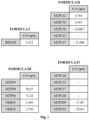


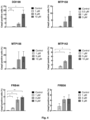
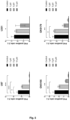
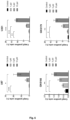


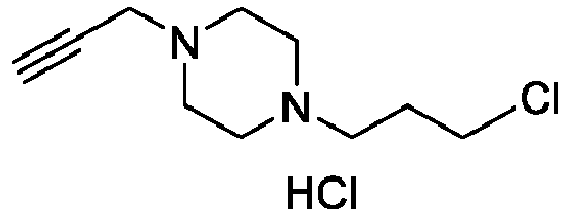


 R1 represents H, -C1-4 alkyl, phenyl, benzyl, or Cy1(C2-4 alkyl);Cy1 represents a 5- to 8-membered saturated ring, which contains from 1 to 3 heteroatoms selected from N, O, Se and S; wherein Cy1 is attached to rest of the molecule through any C or N atom available, and wherein Cy1 is optionally substituted by one R5 group;R2 represents H, Me, CH2C≡CH, CH2CH=C=CH2 or CH2CH=CH2;R3 represents OH, -O C1-4 alkyl, NHOH, NHNR6R7 or orto-NH2(C6H4)NH;R4 represents H, C1-C5 alkyl, -O-C1-C5 alkyl, -OH, -NO2 halogen, CN, CO2Et orSO2Ph, wherein R4 is located in any available position C2', C3', C4', C5', C6';R5 represents H or -C1-6 alkyl;R6 represents H, -OH or -C1-6 alkyl, preferably H or -C1-4 alkynyl;R7 represents H, -OH or -C1-6 alkyl;x represents 1, 2, 3 and/or 4;n represents 2, 3, 4, 5 or 6; andm represents 0, 1 or 2.
 R1 represents -C1-4 alkyl, phenyl, benzyl, or Cy1(C2-4 alkyl);Cy1 represents a 5- to 8-membered saturated ring, which contains from 1 to 3 heteroatoms selected from N, O, Se and S; wherein Cy1 is attached to rest of the molecule through any C or N atom available, and wherein Cy1 is optionally substituted by one R3 group;R2 represents -OH, -OC1-4 alkyl, -NHOH, -NHNR4R5 or orto-NH2(C6H4)NH group installed in the α,β-unsaturated group located in any available position C2', C3' or C4' of the molecule;R3 represents H or -C1-4 alkynyl;R4 represents H, -OH or -C1-6 alkyl; andR5 independently represents H or -C1-6 alkyl.
 R1 represents -C1-4 alkyl, phenyl, benzyl, or Cy1(C2-4 alkyl);Cy1 represents a 5 to 8-membered saturated ring, which contains from 1 to 3 heteroatoms selected from N, O, Se and S; wherein Cy1 is attached to rest of the molecule through any C or N atom available, and wherein Cy1 is optionally substituted by one R3 group;R2 represents -OH, -O C1-4 alkyl, NHOH, NHNR4R5 or orto-NH2(C6H4)NH group installed in the carboxylate group located in any available position C2', C3' or C4' of the molecule;R3 represents H or -C1-4 alkynyl;R4 represents H, -OH or -C1-6 alkyl; andR5 represents H or -C1-6 alkyl.
 R1 represents -C1-4 alkyl, phenyl, benzyl, or Cy1(C2-4 alkyl);Cy1 represents a 5 to 8-membered saturated ring, which contains from 1 to 3 heteroatoms selected from N, O, Se and S; Cy1 wherein Cy1 is attached to rest of the molecule through any C or N atom available, and wherein Cy1 is optionally substituted by one R4 group;R2 represents OH, -OC1-4 alkyl, NHOH, NHNR5R6 or orto-NH2(C6H4)NH group installed in the carboxylic group located in position C2' of the molecule;each R3 independently represents H; halogen, Me, -C3H7, -OMe or -CF3; ortwo R3groups form a fused benzene ring resulting in a 1-naphthyl or 2-naphthyl group;x represents 1, 2, 3 and/or 4;R4 represents H or -C1-4 alkynyl;R5 represents H or -C1-4 alkynyl; andR6 represents H, -OH or -C1-6 alkyl, preferably R6 independently represents H or -C1-6 alkyl.
 R1 represents 5-hydroxy-1H-indol-2-yl, 5-methoxy-1H-indol-2-yl, 5-benzyloxy-1H-indol-2-yl, 5-(3-(piperidin-1-yl)propoxy)-1H-indol-2-yl, 5-(3-(4-(prop-2-yn-1-yl)piperazin-1-yl)propoxy)-1H-indol2-yl; C6H5, 2'-BrC6H4, 3'-BrC6H4, 4'-BrC6H4; 2'-ClC6H4, 3'-ClC6H4, 4'-ClC6H4; 2'-FC6H4, 3'- FC6H4, 4'-FC6H4; 2'-IC6H4, 3'-IC6H4, 4'-IC6H4; 2'-MeC6H4, 3'-MeC6H4, 4'-MeC6H4; 2'-C2H5C6H4, 3'-C2H5C6H4, 4'-C2H5C6H4; 2'-C3H7C6H4, 3'-C3H7C6H4, 4'-C3H7C6H4; 2'-OMeC6H4, 3'-OMeC6H4, 4'-OMeC6H4; 2'-OHC6H4, 3'-OHC6H4, 4'-OHC6H4; 2',5'-di-FC6H3, 3',5'-di-FC6H3; 2'-CF3C6H4, 3'-CF3C6H4, 4'-CF3 C6H4; 1-naphthyl, 2-naphthyl; furan, pyrrole, tiophene; pyridine, pyrimidine, pyrazine, C6H5NHCO(CH2)n, 2'-BrC6H4NHCO(CH2)n, 3'-BrC6H4NHCO(CH2)n, 4'-BrC6H4 NHCO(CH2)n; 2'-ClC6H4NHCO(CH2)n, 3'-ClC6H4NHCO(CH2)n, 4'-ClC6H4NHCO(CH2)n; 2'-FC6H4NHCO(CH2)n, 3'-FC6H4NHCO(CH2)n, 4'-FC6H4NHCO(CH2)n; 2'-IC6H4NHCO(CH2)n, 3'-IC6H4NHCO(CH2)n, 4'-IC6H4NHCO(CH2)n; 2'-MeC6H4NHCO(CH2)n, 3'-MeC6H4NHCO(CH2)n, 4'-MeC6H4NHCO(CH2)n; 2'-C2H5C6H4NHCO(CH2)n, 3'-C2H5C6H4NHCO(CH2)n, 4'-C2H5C6H4NHCO(CH2)n; 2'-C3H7C6H4NHCO(CH2)n, 3'-C3H7C6H4NHCO(CH2)n, 4'-C3H7C6H4NHCO(CH2)n; 2'-OMeC6H4NHCO(CH2)n, 3'-OMeC6H4NHCO(CH2)n, 4'-OMeC6H4NHCO(CH2)n; 2'-OHC6H4NHCO(CH2)n, 3'-OHC6H4NHCO(CH2)n, 4'-OHC6H4NHCO(CH2)n; 2',5'-di-FC6H3NHCO(CH2)n, 3',5'-di-FC6H3NHCO(CH2)n; 2'-CF3C6H4NHCO(CH2)n, 3'-CF3C6H4NHCO(CH2)n, 4'-CF3C6H4 NHCO(CH2)n; 1-naphthylNHCO(CH2)n, 2-naphthyl NHCO(CH2)n; furanNHCO(CH2)n, pyrroleNHCO(CH2)n, tiophenNHCO(CH2)n; pyridineNHCO(CH2)n, pyrimidine NHCO(CH2)n or pyrazineNHCO(CH2)n; andn represents 2, 3, 4, 5, 6.