EP4447219A1 - Battery end cover assembly, battery cell, battery and electrical device - Google Patents
Battery end cover assembly, battery cell, battery and electrical device Download PDFInfo
- Publication number
- EP4447219A1 EP4447219A1 EP22941180.6A EP22941180A EP4447219A1 EP 4447219 A1 EP4447219 A1 EP 4447219A1 EP 22941180 A EP22941180 A EP 22941180A EP 4447219 A1 EP4447219 A1 EP 4447219A1
- Authority
- EP
- European Patent Office
- Prior art keywords
- battery
- hole section
- step hole
- end cover
- cover assembly
- Prior art date
- Legal status (The legal status is an assumption and is not a legal conclusion. Google has not performed a legal analysis and makes no representation as to the accuracy of the status listed.)
- Pending
Links
Images

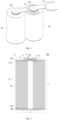


Classifications
-
- H—ELECTRICITY
- H01—ELECTRIC ELEMENTS
- H01M—PROCESSES OR MEANS, e.g. BATTERIES, FOR THE DIRECT CONVERSION OF CHEMICAL ENERGY INTO ELECTRICAL ENERGY
- H01M50/00—Constructional details or processes of manufacture of the non-active parts of electrochemical cells other than fuel cells, e.g. hybrid cells
- H01M50/10—Primary casings; Jackets or wrappings
- H01M50/183—Sealing members
- H01M50/184—Sealing members characterised by their shape or structure
-
- H—ELECTRICITY
- H01—ELECTRIC ELEMENTS
- H01M—PROCESSES OR MEANS, e.g. BATTERIES, FOR THE DIRECT CONVERSION OF CHEMICAL ENERGY INTO ELECTRICAL ENERGY
- H01M50/00—Constructional details or processes of manufacture of the non-active parts of electrochemical cells other than fuel cells, e.g. hybrid cells
- H01M50/10—Primary casings; Jackets or wrappings
- H01M50/102—Primary casings; Jackets or wrappings characterised by their shape or physical structure
- H01M50/107—Primary casings; Jackets or wrappings characterised by their shape or physical structure having curved cross-section, e.g. round or elliptic
-
- H—ELECTRICITY
- H01—ELECTRIC ELEMENTS
- H01M—PROCESSES OR MEANS, e.g. BATTERIES, FOR THE DIRECT CONVERSION OF CHEMICAL ENERGY INTO ELECTRICAL ENERGY
- H01M50/00—Constructional details or processes of manufacture of the non-active parts of electrochemical cells other than fuel cells, e.g. hybrid cells
- H01M50/10—Primary casings; Jackets or wrappings
- H01M50/147—Lids or covers
- H01M50/148—Lids or covers characterised by their shape
- H01M50/152—Lids or covers characterised by their shape for cells having curved cross-section, e.g. round or elliptic
-
- H—ELECTRICITY
- H01—ELECTRIC ELEMENTS
- H01M—PROCESSES OR MEANS, e.g. BATTERIES, FOR THE DIRECT CONVERSION OF CHEMICAL ENERGY INTO ELECTRICAL ENERGY
- H01M50/00—Constructional details or processes of manufacture of the non-active parts of electrochemical cells other than fuel cells, e.g. hybrid cells
- H01M50/10—Primary casings; Jackets or wrappings
- H01M50/183—Sealing members
- H01M50/186—Sealing members characterised by the disposition of the sealing members
- H01M50/188—Sealing members characterised by the disposition of the sealing members the sealing members being arranged between the lid and terminal
-
- H—ELECTRICITY
- H01—ELECTRIC ELEMENTS
- H01M—PROCESSES OR MEANS, e.g. BATTERIES, FOR THE DIRECT CONVERSION OF CHEMICAL ENERGY INTO ELECTRICAL ENERGY
- H01M50/00—Constructional details or processes of manufacture of the non-active parts of electrochemical cells other than fuel cells, e.g. hybrid cells
- H01M50/10—Primary casings; Jackets or wrappings
- H01M50/183—Sealing members
- H01M50/19—Sealing members characterised by the material
- H01M50/193—Organic material
-
- H—ELECTRICITY
- H01—ELECTRIC ELEMENTS
- H01M—PROCESSES OR MEANS, e.g. BATTERIES, FOR THE DIRECT CONVERSION OF CHEMICAL ENERGY INTO ELECTRICAL ENERGY
- H01M50/00—Constructional details or processes of manufacture of the non-active parts of electrochemical cells other than fuel cells, e.g. hybrid cells
- H01M50/30—Arrangements for facilitating escape of gases
- H01M50/394—Gas-pervious parts or elements
-
- H—ELECTRICITY
- H01—ELECTRIC ELEMENTS
- H01M—PROCESSES OR MEANS, e.g. BATTERIES, FOR THE DIRECT CONVERSION OF CHEMICAL ENERGY INTO ELECTRICAL ENERGY
- H01M50/00—Constructional details or processes of manufacture of the non-active parts of electrochemical cells other than fuel cells, e.g. hybrid cells
- H01M50/50—Current conducting connections for cells or batteries
- H01M50/543—Terminals
- H01M50/552—Terminals characterised by their shape
- H01M50/559—Terminals adapted for cells having curved cross-section, e.g. round, elliptic or button cells
-
- H—ELECTRICITY
- H01—ELECTRIC ELEMENTS
- H01M—PROCESSES OR MEANS, e.g. BATTERIES, FOR THE DIRECT CONVERSION OF CHEMICAL ENERGY INTO ELECTRICAL ENERGY
- H01M50/00—Constructional details or processes of manufacture of the non-active parts of electrochemical cells other than fuel cells, e.g. hybrid cells
- H01M50/50—Current conducting connections for cells or batteries
- H01M50/543—Terminals
- H01M50/564—Terminals characterised by their manufacturing process
- H01M50/567—Terminals characterised by their manufacturing process by fixing means, e.g. screws, rivets or bolts
-
- B—PERFORMING OPERATIONS; TRANSPORTING
- B60—VEHICLES IN GENERAL
- B60L—PROPULSION OF ELECTRICALLY-PROPELLED VEHICLES; SUPPLYING ELECTRIC POWER FOR AUXILIARY EQUIPMENT OF ELECTRICALLY-PROPELLED VEHICLES; ELECTRODYNAMIC BRAKE SYSTEMS FOR VEHICLES IN GENERAL; MAGNETIC SUSPENSION OR LEVITATION FOR VEHICLES; MONITORING OPERATING VARIABLES OF ELECTRICALLY-PROPELLED VEHICLES; ELECTRIC SAFETY DEVICES FOR ELECTRICALLY-PROPELLED VEHICLES
- B60L50/00—Electric propulsion with power supplied within the vehicle
- B60L50/50—Electric propulsion with power supplied within the vehicle using propulsion power supplied by batteries or fuel cells
- B60L50/60—Electric propulsion with power supplied within the vehicle using propulsion power supplied by batteries or fuel cells using power supplied by batteries
- B60L50/64—Constructional details of batteries specially adapted for electric vehicles
-
- H—ELECTRICITY
- H01—ELECTRIC ELEMENTS
- H01M—PROCESSES OR MEANS, e.g. BATTERIES, FOR THE DIRECT CONVERSION OF CHEMICAL ENERGY INTO ELECTRICAL ENERGY
- H01M2220/00—Batteries for particular applications
- H01M2220/20—Batteries in motive systems, e.g. vehicle, ship, plane
-
- Y—GENERAL TAGGING OF NEW TECHNOLOGICAL DEVELOPMENTS; GENERAL TAGGING OF CROSS-SECTIONAL TECHNOLOGIES SPANNING OVER SEVERAL SECTIONS OF THE IPC; TECHNICAL SUBJECTS COVERED BY FORMER USPC CROSS-REFERENCE ART COLLECTIONS [XRACs] AND DIGESTS
- Y02—TECHNOLOGIES OR APPLICATIONS FOR MITIGATION OR ADAPTATION AGAINST CLIMATE CHANGE
- Y02E—REDUCTION OF GREENHOUSE GAS [GHG] EMISSIONS, RELATED TO ENERGY GENERATION, TRANSMISSION OR DISTRIBUTION
- Y02E60/00—Enabling technologies; Technologies with a potential or indirect contribution to GHG emissions mitigation
- Y02E60/10—Energy storage using batteries
Definitions
- the present disclosure relates to the technical field of batteries, and in particularly, to a battery end cover assembly, a battery cell, a battery, and an electric device.
- a rechargeable battery cell which may be called a secondary battery cell, refers to a battery cell that may activate an active material by charging for continuing to be used after the battery cell is discharged.
- the rechargeable battery cell is widely used in electronic devices, such as a mobile phone, a laptop computer, an electric scooter, an electric vehicle, an electric airplane, an electric ship, an electric toy car, an electric toy ship, an electric toy airplane, and an electric tool.
- the battery cell may pose certain safety risks during use of the battery cell.
- a battery end cover assembly in an aspect of the present disclosure, includes: an end cover, a pole disposed at the end cover, and a sealing nail fixedly connected to the pole.
- the pole has a first through hole.
- the sealing nail includes a hollow structure in communication with the first through hole and an air-permeable film covering the hollow structure.
- the first through hole at the pole may be used for injecting an electrolyte into a battery.
- an excessive air pressure inside the battery is released through the first through hole of the pole and the air-permeable film in the sealing nail, which may reduce a risk of deformation and liquid leakage of the battery.
- this compact connection structure may balance multi-aspect functions, such as electrical connection of the pole, battery liquid injection, and internal air pressure release of the battery, thereby satisfying space requirements of a limited size at an end portion of the battery.
- the sealing nail includes: a fixing member fixedly connected to the pole, a sealing member disposed in the hollow inner cavity, and the air-permeable film fixedly connected to the second through hole at a periphery of the air-permeable film and closing the second through hole, to enable the hollow structure to be covered with the air-permeable film.
- the fixing member has a hollow inner cavity.
- the sealing member has a second through hole. The hollow structure is defined by the second through hole and the hollow inner cavity.
- a sealing effect between an inner side and an outer side of the air-permeable film may be realized by the sealing member and the air-permeable film, to reduce a possibility of leakage of the electrolyte in the battery through the sealing nail. Moreover, an excessive air pressure generated during use of the battery is released through the air-permeable film, thereby improving reliability and safety of the battery.
- the sealing member is made of a heat insulation material
- the second through hole has a connection slot at a hole wall of the second through hole, and the periphery of the air-permeable film is fixedly inserted into the connection slot.
- the sealing member may be used to isolate the influence of heat of the fixing member on the air-permeable film, to prevent the air-permeable film from being scalded and failed or destroyed.
- the hollow inner cavity has an annular groove formed at a cavity wall of the hollow inner cavity
- the sealing member includes an elastic sealing ring embedded in the annular groove and in an interference fit with the annular groove
- the annular groove has an annular protrusion formed at a groove wall of the annular groove on at least one side of the annular groove.
- the annular protrusion is in close contact with an outer wall of the elastic sealing ring.
- the elastic sealing ring is further compressed by the annular protrusion in the annular groove, so that the possibility of the leakage of the electrolyte is reduced, and the elastic sealing ring is caused to be not easily disengaged from the annular groove.
- the first through hole includes a first step hole section and a second step hole section.
- a cross-sectional area of the first step hole section is smaller than a cross-sectional area of the second step hole section, the sealing nail is supported at a first step end surface where the first step hole section intersects with the second step hole section, and the sealing nail is fixedly connected to the second step hole section.
- a step hole at the pole may realize reliable support and a fixed connection of the sealing nail. Moreover, mounting of the sealing nail is facilitated after liquid injection is achieved through the first step hole section at the pole.
- the first through hole includes a first step hole section, a second step hole section, and a third step hole section.
- the third step hole section is located at a side of the second step hole section away from the first step hole section, and a cross-sectional area of the first step hole section is smaller than a cross-sectional area of the second step hole section, and the cross-sectional area of the second step hole section is smaller than a cross-sectional area of the third step hole section.
- the sealing nail is supported at least one of a first step end surface where the first step hole section intersects with the second step hole section and a second step end surface where the second step hole section intersects with the third step hole section, and the sealing nail is fixedly connected to the third step hole section.
- a multi-step hole at the pole may realize the reliable support and fixed connection of the sealing nail, and also facilitate selection of a weld seam position during welding.
- the sealing nail may be conveniently limited when the sealing nail is mounted after the liquid injection is realized through the first step hole section at the pole.
- a circumferential outer contour of the sealing nail is closely attached to an inner contour of the first through hole, and in an axial direction of the first through hole, an end portion of the sealing nail away from the first step hole section is flush with a surface of the pole away from the first step hole section.
- the end portion of the sealing nail is flush with the surface of the pole, which is beneficial to a reliable connection with other components connected to the pole. For example, a reliable connection of each of the pole and the sealing nail with the busbar is realized.
- the fixing member includes: a sleeve having an end with a first annular flange extending inwardly relative to an inner wall of the sleeve, and a ring body fixedly connected to an inner wall of the sleeve at a side of the sleeve away from the first annular flange.
- An extending direction of the first annular flange is perpendicular to a center line of the first through hole.
- An annular groove accommodating the sealing member is defined by the ring body and the first annular flange.
- a positioning function for the ring body may be realized by using the sleeve, and an assembly of the fixing member is facilitated.
- the fixing member includes: a sleeve, a first end the annular groove has a first annular flange extending inwardly relative to a sleeve wall of the sleeve, and a ring body fixedly connected to an end surface of a second end of the sleeve at a side of the sleeve away from the first annular flange.
- An extending direction of the first annular flange is perpendicular to a center line of the first through hole.
- the end surface of the second end is perpendicular to the center line of the first through hole.
- An annular groove accommodating the sealing member is defined by the ring body and the first annular flange.
- This structure may be fixedly connected to the end surface of the sleeve with a wider ring body, for example by welding or riveting.
- this structure is conducive to making the weld position far away from the sealing member and the air-permeable film, to avoid damage to the sealing member and the air-permeable film caused by excessive heat during welding.
- the first end of the sleeve further has a second annular flange extending outwardly relative to the sleeve wall of the sleeve.
- An extending direction of the second annular flange is perpendicular to the center line of the first through hole.
- the first through hole includes a first step hole section, a second step hole section, and a third step hole section.
- the third step hole section is located at a side of the second step hole section away from the first step hole section.
- a cross-sectional area of the first step hole section is smaller than a cross-sectional area of the second step hole section, and the cross-sectional area of the second step hole section is smaller than a cross-sectional area of the third step hole section, and at least one of the second end of the sleeve and the ring body is supported at a first step end surface where the first step hole section intersects with the second step hole section.
- the second annular flange is supported at a second step end surface where the second step hole section intersects with the third step hole section, and the second annular flange is fixedly connected to the third step hole section.
- a stable support function to the end surface of the second end and the second annular flange of the sleeve may be realized by the first through hole through the first step end surface and the second step end surface, and a part of the third step hole section fixedly connected to the second annular flange is farther away from the second step hole section.
- a thickness of the second annular flange is d1
- a thickness of the ring body is d2
- a radial distance from an outer edge of the second annular flange to an outer edge of the sealing member is d3
- a capacity of a battery cell using the battery end cover assembly is C
- a diameter of a through hole defined by the first annular flange is ⁇ 1
- a diameter of a through hole defined by the ring body is ⁇ 2
- a diameter of the second through hole is ⁇ 3.
- a diameter of the first step hole section (31) is ⁇ 4.
- d1, d2, d3, C, ⁇ 1, ⁇ 2, ⁇ 3, and ⁇ 4 satisfy at least one of:
- d1 and C satisfy d1/C ⁇ 0.022mm/Ah, a risk of deformation or melting of the sealing member and the air-permeable film caused by the heat during welding may be lowered.
- d1, d2, and C satisfy (d1+d2)/C ⁇ 0.06mm/Ah, a possibility of disengagement of the sealing nail from the pole during thermal runaway of the battery cell may be lowered, and safety performance of the battery cell may be improved.
- a weld position between the sealing nail and the pole may be made far away from the sealing member, and welding of the sealing nail and the busbar at a position farther away from the sealing member is allowable, thereby lowering the risk of the deformation or melting of the sealing member and the air-permeable film due to the influence of weld heat.
- Injection efficiency of the electrolyte may be improved by providing a larger diameter ⁇ 4 of the first step hole section.
- Slow leakage of a gas in the battery cell may be realized by using smaller diameters ⁇ 1, ⁇ 2, and ⁇ 3 of the through hole accordingly. In this way, under extreme conditions such as excessive internal pressure or thermal runaway of the battery cell, the sealing nail will not be opened or melted first than an explosion-proof valve of the battery cell.
- the excessive air pressure inside the battery cell may be effectively released, and safety of the battery cell in extreme cases such as thermal runaway may be improved.
- the second annular flange is welded to the third step hole section.
- a fusion depth of a weld seam obtained by welding is d4, where d4 ⁇ 0.3mm, optionally, d4 ⁇ 0.5mm.
- a fusion width of the weld seam obtained by welding is W, where W ⁇ 0.5mm, optionally, W ⁇ 1mm.
- an appropriate fusion depth and fusion width may improve a connection strength between the sealing nail and the pole, causing the weld seam to be less likely to fail during the thermal runaway of the battery cell.
- the hollow inner cavity has an annular groove formed at a cavity wall of the hollow inner cavity.
- the sealing member includes an elastic sealing ring embedded in the annular groove.
- the annular groove has an annular protrusion formed at a groove wall of the annular groove on at least one side of the annular groove.
- the annular protrusion is in close contact with an outer wall of the elastic sealing ring.
- An inner ring diameter of the annular protrusion is ⁇ 6, where ⁇ 6 ⁇ 1, ⁇ 6 ⁇ 2, ⁇ 6 ⁇ 3.
- the air-permeable film has an air permeability ranging from 5 mm/s to 50 mm/s and a melting point greater than or equal to 150°C.
- the air-permeable film with the air permeability ranging from 5 mm/s to 50 mm/s and the melting point greater than or equal to 150°C may satisfy requirements for pressure relief inside the battery cell, and is not easy to be melted during welding of the sealing nail, welding of the busbar, and the thermal runaway of the battery cell.
- the air-permeable film includes a nanofiber membrane having a thickness T1 ranging from 0.01 mm to 1 mm and micropores, and the micropores each has a pore diameter ranging from 0.5 ⁇ m to 10 ⁇ m.
- the nanofiber membrane may include polyvinylidene fluoride, perfluoroethylene propylene copolymer, polyolefin, vinylidene fluoride-hexafluoropropylene copolymer, and the like.
- An air permeability requirement may be satisfied by setting a suitable thickness T1 and micropore aperture.
- a thickness T2 of the sealing member ranges from 0.1 mm to 1 mm.
- the sealing member By setting the appropriate thickness T2 of the sealing member, it is possible to prevent sealing performance from being affected by too small thickness T2, and to prevent a battery capacity from being affected because a large space of the battery cell is occupied by an overlarge thickness.
- a battery cell in an aspect of the present disclosure, includes: a housing having a chamber; an electrode assembly located in the chamber; and the aforementioned battery end cover assembly.
- the battery end cover assembly is disposed at an end of the housing, and a pole in the battery end cover assembly is electrically connected to the electrode assembly.
- the battery end cover assembly may be fixedly connected to an opening at one end of the housing through assembly, such as by welding and the like.
- a part of the battery end cover assembly may also be integrally formed with the housing, for example, such that the end cover is integrally formed with the housing.
- the electrode assembly is a cylindrical electrode assembly.
- a cross-sectional diameter D of the electrode cylindrical assembly ranges from 20 mm to 60 mm, and an axial length H of the electrode cylindrical assembly ranges from 60 mm to 150 mm.
- the cylindrical electrode assembly has a cross-sectional diameter D ranging from 36 mm to 56 mm and an axial length H ranging from 80 mm to 130 mm.
- the cross-sectional area D ranging from 36 mm to 56 mm and the axial length H ranging from 80 mm to 130 mm are adopted, which may further satisfy a capacity requirement of a motor assembly and effectively avoid the overcurrent of the housing.
- a battery in an aspect of the present disclosure, includes: a plurality of battery cells, and a busbar. At least one of the plurality of battery cells is the aforementioned battery cell. The plurality of battery cells are electrically connected to each other through the busbar. The electrical connection between the plurality of battery cells may be realized through the busbar.
- the battery using the embodiments of the foregoing battery cell may obtain better safety performance.
- the busbar is located at a side of an end cover adjacent to a sealing nail and has an end portion fixedly connected to at least one of the sealing nail and the pole.
- the end portion has a third through hole in communication with a hollow structure.
- the third through hole is disposed at the busbar and is in communication with the hollow structure of the sealing nail, so that the excessive air pressure inside the battery cell may be discharged outwards through the air-permeable film located in the hollow structure and the third through hole, thereby lowering a risk of excessive deformation or liquid leakage of the battery cell caused by the excessive pressure inside the battery cell.
- a diameter of an annular weld seam formed by welding the busbar and the fixing member is ⁇ 7
- a diameter of a circumferential outer edge of the sealing member is ⁇ 8, where ⁇ 7 ⁇ 1.1* ⁇ 8, optionally, ⁇ 7 ⁇ 1.5* ⁇ 8.
- a welding part may be made farther away from the sealing member, thereby reducing the influence of the weld heat on the sealing member and the air-permeable film.
- an electric device including the foregoing battery.
- the electric device using the embodiments of the foregoing battery may obtain better safety performance.
- the term “plurality” refers to more than two.
- the orientation or the position indicated by technical terms such as “over”, “below”, “left”, “right”, “inner”, and “outer” is only for the convenience of describing the present disclosure and simplifying the description, rather than indicating or implying that the pointed apparatus or element must have a specific orientation, or be constructed and operated in a specific orientation, and therefore cannot be understood as a limitation of the present disclosure.
- the terms “first”, “second”, “third”, and the like are used for descriptive purposes only and are not to be understood as indicating or implying relative importance.
- “Vertical” is not vertical in the strict sense, but within permeable error limits.
- Parallel is not parallel in the strict sense, but within the permeable error limits.
- a cylindrical battery has less internal free space.
- a gas will be produced inside the battery. Since the gas cannot be effectively discharged from the battery, an air pressure inside the battery is caused to continue to increase, which may lead to the occurrence of large deformation of the battery due to an excessive internal air pressure of the battery, and even the occurrence of a risk of leakage of an internal electrolyte.
- the battery cell according to the embodiments of the present disclosure may be applied to various types of batteries.
- the battery may be used for supplying power to an electric device such as a vehicle, for example, providing the vehicle with a power supply for operating and controlling or a power supply for driving and steering.
- the battery may include a housing and a battery module.
- the housing is configured to provide the battery module with an accommodation space, and the battery module is mounted in the housing.
- the housing may be made of a metal material.
- the battery module may include a plurality of battery cells connected in series or in parallel or in series and parallel.
- the battery cell is the smallest unit that makes up the battery.
- the battery cell includes an electrode assembly capable of generating an electrochemical reaction.
- the battery in the embodiments of the present disclosure may be applied to various types of electric devices using batteries.
- the electric device may be a mobile phone, a portable device, a laptop computer, an electric scooter, an electric vehicle, a ship, a spacecraft, an electric toy, an electric tool, and the like.
- the spacecraft includes an airplane, a rocket, a space shuttle, a spaceship, or the like.
- the electric toy includes a fixed electric toy or a mobile electric toy, e.g., a game console, an electric car toy, an electric ship toy, and an electric airplane toy.
- the electric tool includes a metal cutting electric tool, a grinding electric tool, an assembling electric tool, and a railway power tool, e.g., an electric drill, an electric grinding machine, an electric wrench, an electric screwdriver, an electric hammer, an impact electric drill, a concrete vibrator, and an electric planer.
- a metal cutting electric tool e.g., a metal cutting electric tool, a grinding electric tool, an assembling electric tool, and a railway power tool, e.g., an electric drill, an electric grinding machine, an electric wrench, an electric screwdriver, an electric hammer, an impact electric drill, a concrete vibrator, and an electric planer.
- a railway power tool e.g., an electric drill, an electric grinding machine, an electric wrench, an electric screwdriver, an electric hammer, an impact electric drill, a concrete vibrator, and an electric planer.
- the above-mentioned electric devices are not particularly limited.
- FIG. 1 is a schematic structural view according to some embodiments of an electric device of the present disclosure.
- an electric device is used as a vehicle for description.
- a battery 50 is provided inside a vehicle 60, and is disposed at a bottom, a head, or a tail of the vehicle 60.
- the battery 50 supplies power to the vehicle 60.
- the battery 50 serves as an operational power source for the vehicle 60.
- the battery 50 may be used as a power supply for apparatuses such as new energy vehicles, ships, and intelligent electrical cabinets.
- the battery 50 may also serve as a power supply component to provide various types of electronic elements of the apparatus with a required electrical energy.
- each battery cell 10 of the battery 50 may be arranged in at least one of a length direction and a width direction of the case body. At least one row or one column of battery cells 10 may be provided as actual needs. One or more layers of battery cells 10 may also be provided in a height direction of the battery 50 as needed.
- the plurality of battery cells 10 may be connected in series or in parallel or in series and parallel to form a battery module. Then, a plurality of battery modules is connected in series or in parallel or in series and parallel again to form a whole, and is accommodated in the case body 51. In some other embodiments, all the battery cells 10 are directly connected in series or in parallel or in series and parallel, and then are integrally accommodated in the case body. In FIG. 3 , an electrode terminal of the battery cell 10 may be electrically connected to an adjacent battery cell 10 through a busbar 53.
- FIG. 4 is a schematic structural view of a longitudinal cross-section according to some embodiments of a battery cell of the present disclosure.
- FIG. 5 is a partially schematic enlarged view of a battery end cover assembly enclosed by an ellipse in FIG. 4 .
- FIG. 6 is an exploded schematic view of an assembled structure of the pole and the sealing nail in FIG. 5 .
- the battery cell 10 provided by the embodiments of the present disclosure includes a housing 12, an electrode assembly 13, and a battery end cover assembly 11.
- the housing 12 has a chamber where the electrode assembly 13 is located.
- the battery end cover assembly 11 is disposed at one end of the housing 12, and a pole 3 in the battery end cover assembly 11 is electrically connected to the electrode assembly 13.
- the battery cell 10 further includes an electrolyte.
- the battery end cover assembly 11 may be fixedly connected to an opening at one end of the housing 12 by assembling, for example, by welding or the like. A part of the battery end cover assembly 11 may also be integrally formed with the housing 12. For example, in FIG. 4 , an end cover 2 in the battery end cover assembly 11 is formed integrally with the housing 12.
- a cross-sectional area D or an axial length H of the cylindrical electrode assembly 13 is positively correlated with a capacity of the electrode assembly 13.
- the capacity of the electrode assembly is also large. At this time, it is possible to cause that the housing may not be able to satisfy overcurrent requirements.
- the cross-section area D is too large or the axial length H is too small, it is possible to cause that the capacity of the electrode assembly is small.
- the electrode assembly 13 is a cylindrical electrode assembly having a cross-sectional diameter D ranging from 20 mm to 60 mm and an axial length H ranging from 60 mm to 150 mm.
- the cylindrical electrode assembly has a cross-sectional diameter D ranging from 36 mm to 56 mm and an axial length H ranging from 80 mm to 130 mm.
- the cross-sectional area D ranging from 36 mm to 56 mm and the axial length H ranging from 80 mm to 130 mm are adopted, which may further satisfy a capacity requirement of a motor assembly and effectively avoid the overcurrent of the housing.
- the embodiments of the present disclosure provide a battery end cover assembly usable for the aforementioned battery cell.
- the battery end cover assembly 11 includes an end cover 2, a pole 3, and a sealing nail 4.
- the pole 3 is disposed at the end cover 2 and has a first through hole 30.
- the sealing nail 4 is fixedly connected to the pole 3 and includes a hollow structure in communication with the first through hole 30 and an air-permeable film 40 covering the hollow structure.
- the first through hole 30 at the pole 3 may be used for injection of an electrolyte into the battery.
- the sealing nail 4 at the pole 3 effective sealing of the electrolyte inside the battery may be realized through the sealing nail 4 and the air-permeable film 40.
- the air pressure inside the battery is significantly higher than an air pressure outside the battery, for example, when the gas is generated inside the battery during the use of the battery, the gas inside the battery may be slowly released outwards by passing through the first through hole 30 of the pole 3 and the air-permeable film 40 in the sealing nail 4, thereby lowering the air pressure inside the battery, further reducing a risk of deformation and leakage of the battery.
- this compact connection structure may balance multi-aspect functions, such as electrical connection of the pole 3, battery liquid injection, and internal air pressure release of the battery, thereby satisfying space requirements of a limited size at an end portion of the battery.
- An air permeability of the air-permeable film may refer to GB/T 5453-1997 Determination Standards for Air Permeability of Textiles and Fabrics.
- An air permeability of a sample is tested by a digital fabric air-permeability meter, with test conditions: Nozzle No. 05, an experimental area of 20cm2, and a pressure difference of 100Pa.
- the air-permeable film 40 has an air permeability ranging from 5 mm/s to 50 mm/s and a melting point greater than or equal to 150°C.
- the air-permeable film may satisfy requirements for pressure relief inside the battery cell, and is not easy to be melted during welding of the sealing nail, welding of the busbar, and thermal runaway of the battery cell.
- the air-permeable film 40 includes a nanofiber membrane, which may include polyvinylidene fluoride, perfluoroethylene propylene copolymer, polyolefin, vinylidene fluoride-hexafluoropropylene copolymer, and the like.
- the nanofiber membrane has a thickness T1 ranging from 0.01 mm to 1 mm and micropores, and the micropores each has a pore diameter ranging from 0.5 ⁇ m to 10 ⁇ m, to satisfy requirements of the aforementioned air permeability.
- the sealing nail 4 includes a fixing member 41 and a sealing member 42.
- the fixing member 41 is fixedly connected to the pole 3 and has a hollow inner cavity.
- a middle space of the fixing member 41 is the hollow inner cavity.
- the sealing member 42 is disposed in the hollow inner cavity and has a second through hole 421.
- the hollow structure is defined by the second through hole 421 and the hollow inner cavity.
- the hollow structure in FIG. 5 is defined by the second through hole 421 of the sealing member 42 and a hollow inner cavity enclosed by fixing members 41 located at both upper and lower sides of the second through hole.
- the sealing member 42 may be made of a heat insulation material.
- the second through hole 421 has a connection slot at a hole wall of the second through hole 421.
- the periphery of the air-permeable film 40 may be fixedly inserted into the connection slot.
- the sealing member 42 may be used to isolate the influence of heat of the fixing member 41 on the air-permeable film 40, to prevent the air-permeable film 40 from being scalded and failed or destroyed.
- the periphery of the air-permeable film 40 By inserting the periphery of the air-permeable film 40 into the connection slot, it is possible to increase a contact area between the air-permeable film 40 and the sealing member 42, improve a bonding strength between the air-permeable film 40 and the sealing member 42, and lower a possibility that the air-permeable film 40 is disengaged from the sealing member 42 under the action of the air pressure inside the battery.
- the elastic sealing ring may be made of materials including tetrafluoroethylene-perfluoroalkoxy vinyl ether copolymer Polyfluoroalkoxy (PFA), fluorine rubber, or the like, with a melting point greater than 250 °C or long-term normal use below 250 °C.
- a thickness T2 of the sealing member 42 ranges from 0.1 mm to 1 mm.
- the annular groove 411 has an annular protrusion 411a formed at a groove wall of the annular groove 411 on at least one side (e.g., a groove wall of a single side or groove walls of two sides) of the annular groove 411.
- the annular protrusion 411a is in close contact with an outer wall of the elastic sealing ring. In this way, the elastic sealing ring is further compressed by the annular protrusion 411a in the annular groove 411, so that the sealing performance is improved, the possibility of the leakage of the electrolyte is reduced, and the elastic sealing ring is also caused not to be easily disengaged from the annular groove 411.
- the first through hole 30 includes a first step hole section 31, a second step hole section 32, and a third step hole section 33.
- the third step hole section 33 is located at a side of the second step hole section 32 away from the first step hole section 31.
- a cross-sectional area of the first step hole section 31 is smaller than a cross-sectional area of the second step hole section 32, and the cross-sectional area of the second step hole section 32 is smaller than a cross-sectional area of the third step hole section 33.
- the sealing nail 4 is supported at least one of a first step end surface 34 where the first step hole section 31 intersects with the second step hole section 32 and a second step end surface 35 where the second step hole section 32 intersects with the third step hole section 33, and is fixedly connected to the third step hole section 33.
- a multi-step hole at the pole 3 may realize reliable support and a fixed connection of the sealing nail 4, and also facilitate selection of a weld seam position during welding.
- the sealing nail 4 may be conveniently limited when the sealing nail 4 is mounted after liquid injection is realized through the first step hole section 31 at the pole 3.
- the first through hole 30 includes a first step hole section 31 and a second step hole section 32.
- the cross-sectional area of the first step hole section 31 is smaller than the cross-sectional area of the second step hole section 32.
- the sealing nail 4 is supported at the first step end surface 34 where the first step hole section 31 intersects with the second step hole section 32, and is fixedly connected to the second step hole section 32.
- a step hole at the pole 3 may realize the reliable support and fixed connection of the sealing nail 4. Moreover, the mounting of the sealing nail 4 is facilitated after the liquid injection is achieved through the first step hole section 31 at the pole 3.
- a circumferential outer contour of the sealing nail 4 is closely attached to an inner contour of the first through hole 30, to ensure a reliable connection and sealing performance between the sealing nail 4 and the pole 3.
- an end portion of the sealing nail 4 away from the first step hole section 31 is flush with a surface of the pole 3 away from the first step hole section 31.
- the end portion of the sealing nail 4 is flush with the surface of the pole 3, which is beneficial to a reliable connection with other components connected to the pole 3. For example, a reliable connection of each of the pole 3 and the sealing nail 4 with the busbar is realized.
- FIG. 7 (a), FIG. 7 (b), and FIG. 7 (c) are schematic structural views of a sealing nail according to some embodiments of a battery end cover assembly of the present disclosure, respectively.
- the fixing member 41 may be of an integrally formed structure, or may be formed by assembling a plurality of components.
- the sealing member 42 may be made more conveniently disposed in the annular groove 411 formed by the fixing member 41.
- the fixing member 41 includes a sleeve 412 and a ring body 413.
- the sleeve 412 has an end with a first annular flange 412a extending inwardly relative to an inner wall of the sleeve 412.
- An extending direction of the first annular flange 412a is perpendicular to a center line of the first through hole 30 (for the first through hole having a circular cross-section, the center line is a central axis).
- the ring body 413 is fixedly connected to an inner wall of the sleeve 412 at a side of the sleeve 412 away from the first annular flange 412a.
- An annular groove 411 accommodating the sealing member 42 is defined by the ring body 413 and the first annular flange 412a.
- the fixing member 41 includes a sleeve 412 and a ring body 413.
- a first end of the sleeve 412 has a first annular flange 412a extending inwardly relative to a sleeve wall of the sleeve 412.
- An extending direction of the first annular flange 412a is perpendicular to a center line of the first through hole 30.
- the extending direction of the first annular flange 412a is perpendicular to the center line of the first through hole 30 (for the first through hole having the circular cross-section, the center line is the central axis).
- the ring body 413 is fixedly connected to an end surface of a second end of the sleeve 412 at a side of the sleeve 412 away from the first annular flange 412a.
- the end surface of the second end is perpendicular to the center line of the first through hole 30.
- the annular groove 411 accommodating the sealing member 42 is defined by the ring body 413 and the first annular flange 412a.
- Such a structure may employ a wider ring body 413 to be fixedly connected to the end surface of the sleeve 412, for example, by welding in FIG. 7 (b) (e.g., butt welding or penetration welding) or riveting in FIG. 7 (c) (e.g., a press-riveted connection).
- this structure is advantageous in making the weld position (for example, a position where an outer ring of the ring body 413 abuts against the end surface of the sleeve 412) away from the sealing member 42 and the air-permeable film 40, so as not to cause damage to the sealing member 42 and the air-permeable film 40 due to excessive heat during welding.
- the sleeve 412 also has a first end with a second annular flange 412b extending outwardly relative to a sleeve wall of the sleeve 412.
- An extending direction of the second annular flange 412b is perpendicular to the center line of the first through hole 30.
- a structure which is formed by the first annular flange 412a and the second annular flange 412b on the sleeve 412 and the sleeve 412, has a longitudinal cross-section similar to a T shape, which allows the sealing nail to have a wider surface at an outer side of the sealing nail, and is conducive to a further fixed connection with other components.
- the first through hole 30 includes the first step hole section 31, the second step hole section 32, and the third step hole section 33
- at least one of the second end of the sleeve 412 and the ring body 413 may be supported at the first step end surface 34, and the second annular flange 412b is supported at the second step end surface 35 and fixedly connected to the third step hole section 33.
- a stable support function to the end surface of the second end and the second annular flange of the sleeve may be realized by the first through hole through the first step end surface and the second step end surface, and a part of the third step hole section fixedly connected to the second annular flange is farther away from the second step hole section.
- a thickness of the second annular flange 412b is d1; a thickness of the ring body 413 is d2; a radial distance from an outer edge of the second annular flange 412b to an outer edge of the sealing member 42 is d3; a capacity of a battery cell 10 using the battery end cover assembly 11 is C; a diameter of a through hole defined by the first annular flange 412a is ⁇ 1; a diameter of a through hole defined by the ring body 413 is ⁇ 2; a diameter of the second through hole 421 is ⁇ 3; and a diameter of the first step hole section 31 is ⁇ 4.
- d1, d2, d3, C, ⁇ 1, ⁇ 2, ⁇ 3, and ⁇ 4 may satisfy at least one of:
- An area of the sealing nail at the pole is expanded by providing the second annular flange.
- a larger radial distance d3 may make a weld position between the sealing nail and the pole far away from the sealing member, and welding of the sealing nail and the busbar at a position farther away from the sealing member is allowable, thereby lowering the risk of the deformation or melting of the sealing member and the air-permeable film due to the influence of the weld heat.
- the injection efficiency of the electrolyte may be improved by providing a larger diameter ⁇ 4 of the first step hole section.
- the slow leakage of the gas in the battery cell may be realized by using smaller diameters ⁇ 1, ⁇ 2, and ⁇ 3 of the through hole accordingly. In this way, under extreme conditions such as excessive internal pressure or thermal runaway of the battery cell, the sealing nail will not be opened or melted first than an explosion-proof valve of the battery cell.
- the melting of the sealing member and the air-permeable film occurs during the thermal runaway of the battery cell, causing the active material in the battery cell to eject or eject flames through the sealing nail.
- the ejected active material will cause short circuit of positive and negative electrodes, while the ejected flames will cause deformation of the busbar and other components, and may also cause the short circuit of positive and negative electrodes.
- the diameter ⁇ 4 is too large, it is easy to cause excessive heat to be transferred to the sealing nail during the thermal runaway of the battery, and also to cause the occurrence of the melting of the sealing member and the air-permeable film during the thermal runaway of the battery cell.
- the excessive air pressure inside the battery cell may be effectively released, and safety of the battery cell in extreme cases such as the thermal runaway of the battery cell may be improved.
- the injection efficiency of the electrolyte may be effectively improved, and the safety of the battery cell in extreme cases such as the thermal runaway of the battery cell may be improved.
- the sealing member 42 includes an elastic sealing ring embedded in the annular groove 411.
- the annular groove 411 has an annular protrusion 411a formed at a groove wall of the annular groove 411 on at least one side of the annular groove 411.
- the annular protrusion 411a is in close contact with an outer wall of the elastic sealing ring.
- An inner ring diameter of the annular protrusion 411a is ⁇ 6.
- the parameters ⁇ 1, ⁇ 2, ⁇ 3, and ⁇ 6 satisfy: ⁇ 6 ⁇ ⁇ 1, ⁇ 6 ⁇ ⁇ 2, and ⁇ 6 ⁇ ⁇ 3.
- FIG. 8 is a schematic cross-sectional view of a battery cell and a busbar according to some embodiments of a battery of the present disclosure.
- FIG. 9 is a schematic structural view where a busbar is welded onto a sealing nail according to some embodiments of a battery of the present disclosure. Referring to FIG. 9 , in some embodiments, the second annular flange 412b is welded to the third step hole section 33.
- a fusion depth of a weld seam w1 obtained through welding is d4, where d4 ⁇ 0.3mm, optionally, d4 ⁇ 0.5mm.
- a fusion width of the weld seam w1 obtained through the welding is W, where W ⁇ 0.5mm, optionally, W ⁇ 1mm.
- an appropriate fusion depth and fusion width may improve a connection strength between the sealing nail and the pole, causing the weld seam to be less likely to fail during the thermal runaway of the battery cell.
- the battery 50 includes a plurality of battery cells 10 and a busbar 53. At least one of the plurality of battery cells 10 is the aforementioned battery cell 10. The plurality of battery cells 10 are electrically connected to each other through the busbar 53. The electrical connection between the plurality of battery cells 10 may be realized through the busbar 53. The battery using the foregoing battery cell may obtain better safety performance.
- the busbar 53 may be located at a side of the end cover 2 adjacent to the sealing nail 4 and has an end portion fixedly connected to at least one of the sealing nail 4 and the pole 3.
- the end portion has a third through hole 531 in communication with the hollow structure.
- the third through hole is disposed at the busbar and is in communication with the hollow structure of the sealing nail, so that the excessive air pressure inside the battery cell may be discharged outwards through the air-permeable film located in the hollow structure and the third through hole, thereby lowering the risk of excessive deformation or liquid leakage of the battery cell caused by the excessive pressure inside the battery cell.
- the busbar 53 has a tapered structure protruding towards the sealing nail 4 at a hole perimeter of the third through hole 531 at a side of the third through hole 531 adjacent to the sealing nail 4, and the sealing nail 4 has a tapered hole matching the tapered structure, which is conducive to positioning of the busbar 53 during welding of the busbar 53 with the sealing nail 4. In this way, it is ensured that the weld seam is not easily offset, and an inappropriate position of the weld seam is avoided due to an arrangement position offset of the busbar, thereby causing the air-permeable film or the sealing member to fail.
- a diameter of an annular weld seam w2 formed by welding the busbar 53 and the fixing member 41 is ⁇ 7
- a diameter of a circumferential outer edge of the sealing member 42 is ⁇ 8, where ⁇ 7 ⁇ 1.1* ⁇ 8, optionally, ⁇ 7 ⁇ 1.5* ⁇ 8.
- the embodiments of the present disclosure further provide a battery cell, which includes the foregoing battery end cover assembly.
- the battery cell adopting the foregoing electrode assembly may obtain better safety performance.
- a battery in an aspect of the present disclosure, includes the foregoing battery cell.
- the battery adopting the foregoing battery cell may obtain better safety performance.
- an electric device including the foregoing battery.
- the electric device using the foregoing battery may obtain better safety performance.
Landscapes
- Chemical & Material Sciences (AREA)
- Chemical Kinetics & Catalysis (AREA)
- Electrochemistry (AREA)
- General Chemical & Material Sciences (AREA)
- Engineering & Computer Science (AREA)
- Manufacturing & Machinery (AREA)
- Sealing Battery Cases Or Jackets (AREA)
Abstract
Description
- The present disclosure relates to the technical field of batteries, and in particularly, to a battery end cover assembly, a battery cell, a battery, and an electric device.
- A rechargeable battery cell, which may be called a secondary battery cell, refers to a battery cell that may activate an active material by charging for continuing to be used after the battery cell is discharged. The rechargeable battery cell is widely used in electronic devices, such as a mobile phone, a laptop computer, an electric scooter, an electric vehicle, an electric airplane, an electric ship, an electric toy car, an electric toy ship, an electric toy airplane, and an electric tool. The battery cell may pose certain safety risks during use of the battery cell.
- In an aspect of the present disclosure, a battery end cover assembly is provided. The battery end cover assembly includes: an end cover, a pole disposed at the end cover, and a sealing nail fixedly connected to the pole. The pole has a first through hole. The sealing nail includes a hollow structure in communication with the first through hole and an air-permeable film covering the hollow structure.
- The first through hole at the pole may be used for injecting an electrolyte into a battery. Moreover, by providing the sealing nail at the pole, an excessive air pressure inside the battery is released through the first through hole of the pole and the air-permeable film in the sealing nail, which may reduce a risk of deformation and liquid leakage of the battery. Moreover, this compact connection structure may balance multi-aspect functions, such as electrical connection of the pole, battery liquid injection, and internal air pressure release of the battery, thereby satisfying space requirements of a limited size at an end portion of the battery.
- In some embodiments, the sealing nail includes: a fixing member fixedly connected to the pole, a sealing member disposed in the hollow inner cavity, and the air-permeable film fixedly connected to the second through hole at a periphery of the air-permeable film and closing the second through hole, to enable the hollow structure to be covered with the air-permeable film. The fixing member has a hollow inner cavity. The sealing member has a second through hole. The hollow structure is defined by the second through hole and the hollow inner cavity.
- A sealing effect between an inner side and an outer side of the air-permeable film may be realized by the sealing member and the air-permeable film, to reduce a possibility of leakage of the electrolyte in the battery through the sealing nail. Moreover, an excessive air pressure generated during use of the battery is released through the air-permeable film, thereby improving reliability and safety of the battery.
- In some embodiments, the sealing member is made of a heat insulation material, the second through hole has a connection slot at a hole wall of the second through hole, and the periphery of the air-permeable film is fixedly inserted into the connection slot.
- For an assembly process of welding the fixing member of the sealing nail to the pole, by fixing the air-permeable film in the connection slot of the sealing member, the sealing member may be used to isolate the influence of heat of the fixing member on the air-permeable film, to prevent the air-permeable film from being scalded and failed or destroyed.
- In some embodiments, the hollow inner cavity has an annular groove formed at a cavity wall of the hollow inner cavity, and the sealing member includes an elastic sealing ring embedded in the annular groove and in an interference fit with the annular groove.
- Through the interference fit between the elastic sealing ring in a closed shape and the annular groove of the cavity wall of the hollow inner cavity, a gap between the elastic sealing ring and the annular groove is eliminated, and the electrolyte is prevented from passing between the sealing member and the fixing member as much as possible, thereby effectively preventing the electrolyte from leaking through the sealing nail. Therefore, the reliability of the battery is further improved.
- In some embodiments, the annular groove has an annular protrusion formed at a groove wall of the annular groove on at least one side of the annular groove. The annular protrusion is in close contact with an outer wall of the elastic sealing ring.
- The elastic sealing ring is further compressed by the annular protrusion in the annular groove, so that the possibility of the leakage of the electrolyte is reduced, and the elastic sealing ring is caused to be not easily disengaged from the annular groove.
- In some embodiments, the first through hole includes a first step hole section and a second step hole section. A cross-sectional area of the first step hole section is smaller than a cross-sectional area of the second step hole section, the sealing nail is supported at a first step end surface where the first step hole section intersects with the second step hole section, and the sealing nail is fixedly connected to the second step hole section.
- A step hole at the pole may realize reliable support and a fixed connection of the sealing nail. Moreover, mounting of the sealing nail is facilitated after liquid injection is achieved through the first step hole section at the pole.
- In some embodiments, the first through hole includes a first step hole section, a second step hole section, and a third step hole section. The third step hole section is located at a side of the second step hole section away from the first step hole section, and a cross-sectional area of the first step hole section is smaller than a cross-sectional area of the second step hole section, and the cross-sectional area of the second step hole section is smaller than a cross-sectional area of the third step hole section. The sealing nail is supported at least one of a first step end surface where the first step hole section intersects with the second step hole section and a second step end surface where the second step hole section intersects with the third step hole section, and the sealing nail is fixedly connected to the third step hole section.
- A multi-step hole at the pole may realize the reliable support and fixed connection of the sealing nail, and also facilitate selection of a weld seam position during welding. In addition, the sealing nail may be conveniently limited when the sealing nail is mounted after the liquid injection is realized through the first step hole section at the pole.
- In some embodiments, a circumferential outer contour of the sealing nail is closely attached to an inner contour of the first through hole, and in an axial direction of the first through hole, an end portion of the sealing nail away from the first step hole section is flush with a surface of the pole away from the first step hole section.
- The end portion of the sealing nail is flush with the surface of the pole, which is beneficial to a reliable connection with other components connected to the pole. For example, a reliable connection of each of the pole and the sealing nail with the busbar is realized.
- In some embodiments, the fixing member includes: a sleeve having an end with a first annular flange extending inwardly relative to an inner wall of the sleeve, and a ring body fixedly connected to an inner wall of the sleeve at a side of the sleeve away from the first annular flange. An extending direction of the first annular flange is perpendicular to a center line of the first through hole. An annular groove accommodating the sealing member is defined by the ring body and the first annular flange.
- By disposing the ring body at the inner wall of the sleeve, a positioning function for the ring body may be realized by using the sleeve, and an assembly of the fixing member is facilitated.
- In some embodiments, the fixing member includes: a sleeve, a first end the annular groove has a first annular flange extending inwardly relative to a sleeve wall of the sleeve, and a ring body fixedly connected to an end surface of a second end of the sleeve at a side of the sleeve away from the first annular flange. An extending direction of the first annular flange is perpendicular to a center line of the first through hole. The end surface of the second end is perpendicular to the center line of the first through hole. An annular groove accommodating the sealing member is defined by the ring body and the first annular flange.
- This structure may be fixedly connected to the end surface of the sleeve with a wider ring body, for example by welding or riveting. When the welding manner is adopted, this structure is conducive to making the weld position far away from the sealing member and the air-permeable film, to avoid damage to the sealing member and the air-permeable film caused by excessive heat during welding.
- In some embodiments, the first end of the sleeve further has a second annular flange extending outwardly relative to the sleeve wall of the sleeve. An extending direction of the second annular flange is perpendicular to the center line of the first through hole. The first through hole includes a first step hole section, a second step hole section, and a third step hole section. The third step hole section is located at a side of the second step hole section away from the first step hole section. A cross-sectional area of the first step hole section is smaller than a cross-sectional area of the second step hole section, and the cross-sectional area of the second step hole section is smaller than a cross-sectional area of the third step hole section, and at least one of the second end of the sleeve and the ring body is supported at a first step end surface where the first step hole section intersects with the second step hole section. The second annular flange is supported at a second step end surface where the second step hole section intersects with the third step hole section, and the second annular flange is fixedly connected to the third step hole section.
- For a three-stage step hole, a stable support function to the end surface of the second end and the second annular flange of the sleeve may be realized by the first through hole through the first step end surface and the second step end surface, and a part of the third step hole section fixedly connected to the second annular flange is farther away from the second step hole section. In this way, when a fixed connection manner such as welding is adopted, the influence of weld heat on the sealing member and the air-permeable film that are located in the second step hole section is reduced.
- In some embodiments, a thickness of the second annular flange is d1, a thickness of the ring body is d2, a radial distance from an outer edge of the second annular flange to an outer edge of the sealing member is d3, a capacity of a battery cell using the battery end cover assembly is C, a diameter of a through hole defined by the first annular flange is Φ1, a diameter of a through hole defined by the ring body is Φ2, and a diameter of the second through hole is Φ3. A diameter of the first step hole section (31) is Φ4. d1, d2, d3, C, Φ1, Φ2, Φ3, and Φ4 satisfy at least one of:
- (a)

- (b)

- (c)

- (d) Φ4≥Φ1, Φ4≥Φ2, Φ4≥Φ3;
- (e) Φ1=1~5mm, optionally, Φ1=1~3mm;
- (f) Φ2=1~5mm, optionally, Φ1=1~3mm;
- (g) Φ3=1~5mm, optionally, Φ1=1~3mm; and
- (h) Φ4=2∼5mm.
- By making d1 and C satisfy d1/C≥0.022mm/Ah, a risk of deformation or melting of the sealing member and the air-permeable film caused by the heat during welding may be lowered. By making d1, d2, and C satisfy (d1+d2)/C≥0.06mm/Ah, a possibility of disengagement of the sealing nail from the pole during thermal runaway of the battery cell may be lowered, and safety performance of the battery cell may be improved. By making d3 and C satisfy d3/C≥0.09mm/Ah, a weld position between the sealing nail and the pole may be made far away from the sealing member, and welding of the sealing nail and the busbar at a position farther away from the sealing member is allowable, thereby lowering the risk of the deformation or melting of the sealing member and the air-permeable film due to the influence of weld heat.
- Injection efficiency of the electrolyte may be improved by providing a larger diameter Φ4 of the first step hole section. Slow leakage of a gas in the battery cell may be realized by using smaller diameters Φ1, Φ2, and Φ3 of the through hole accordingly. In this way, under extreme conditions such as excessive internal pressure or thermal runaway of the battery cell, the sealing nail will not be opened or melted first than an explosion-proof valve of the battery cell.
- By setting appropriate diameters Φ1, Φ2, and Φ3 of the through hole, the excessive air pressure inside the battery cell may be effectively released, and safety of the battery cell in extreme cases such as thermal runaway may be improved.
- In some embodiments, the second annular flange is welded to the third step hole section. A fusion depth of a weld seam obtained by welding is d4, where d4≥0.3mm, optionally, d4≥0.5mm. A fusion width of the weld seam obtained by welding is W, where W≥0.5mm, optionally, W≥1mm.
- When the second annular flange and the third step hole section of the sleeve are connected to each other by welding, an appropriate fusion depth and fusion width may improve a connection strength between the sealing nail and the pole, causing the weld seam to be less likely to fail during the thermal runaway of the battery cell.
- In some embodiments, the hollow inner cavity has an annular groove formed at a cavity wall of the hollow inner cavity. The sealing member includes an elastic sealing ring embedded in the annular groove. The annular groove has an annular protrusion formed at a groove wall of the annular groove on at least one side of the annular groove. The annular protrusion is in close contact with an outer wall of the elastic sealing ring. An inner ring diameter of the annular protrusion is Φ6, where Φ6≥Φ1, Φ6≥Φ2, Φ6≥Φ3.
- By making the inner ring diameter Φ6 of the annular protrusion greater than or equal to the diameters Φ1, Φ2 and Φ3 of the through hole, a larger close contact area may be allowed to be obtained between the elastic sealing ring and the annular protrusion, thereby forming a more reliable sealing effect.
- In some embodiments, the air-permeable film has an air permeability ranging from 5 mm/s to 50 mm/s and a melting point greater than or equal to 150°C.
- The air-permeable film with the air permeability ranging from 5 mm/s to 50 mm/s and the melting point greater than or equal to 150°C may satisfy requirements for pressure relief inside the battery cell, and is not easy to be melted during welding of the sealing nail, welding of the busbar, and the thermal runaway of the battery cell.
- In some embodiments, the air-permeable film includes a nanofiber membrane having a thickness T1 ranging from 0.01 mm to 1 mm and micropores, and the micropores each has a pore diameter ranging from 0.5 µm to 10 µm.
- The nanofiber membrane may include polyvinylidene fluoride, perfluoroethylene propylene copolymer, polyolefin, vinylidene fluoride-hexafluoropropylene copolymer, and the like. An air permeability requirement may be satisfied by setting a suitable thickness T1 and micropore aperture.
- In some embodiments, a thickness T2 of the sealing member ranges from 0.1 mm to 1 mm.
- By setting the appropriate thickness T2 of the sealing member, it is possible to prevent sealing performance from being affected by too small thickness T2, and to prevent a battery capacity from being affected because a large space of the battery cell is occupied by an overlarge thickness.
- In an aspect of the present disclosure, a battery cell is provided. The battery cell includes: a housing having a chamber; an electrode assembly located in the chamber; and the aforementioned battery end cover assembly. The battery end cover assembly is disposed at an end of the housing, and a pole in the battery end cover assembly is electrically connected to the electrode assembly.
- The battery end cover assembly may be fixedly connected to an opening at one end of the housing through assembly, such as by welding and the like. A part of the battery end cover assembly may also be integrally formed with the housing, for example, such that the end cover is integrally formed with the housing. The battery cell using the embodiments of the foregoing battery end cover assembly may obtain better safety performance.
- In some embodiments, the electrode assembly is a cylindrical electrode assembly. A cross-sectional diameter D of the electrode cylindrical assembly ranges from 20 mm to 60 mm, and an axial length H of the electrode cylindrical assembly ranges from 60 mm to 150 mm.
- For the cylindrical battery cell, by using a suitable cross-sectional area D and axial length H, not only can capacity requirements of the electrode assembly be satisfied as much as possible, but an overcurrent of the housing is also avoided as much as possible.
- In some embodiments, the cylindrical electrode assembly has a cross-sectional diameter D ranging from 36 mm to 56 mm and an axial length H ranging from 80 mm to 130 mm.
- The cross-sectional area D ranging from 36 mm to 56 mm and the axial length H ranging from 80 mm to 130 mm are adopted, which may further satisfy a capacity requirement of a motor assembly and effectively avoid the overcurrent of the housing.
- In an aspect of the present disclosure, a battery is provided. The battery includes: a plurality of battery cells, and a busbar. At least one of the plurality of battery cells is the aforementioned battery cell. The plurality of battery cells are electrically connected to each other through the busbar. The electrical connection between the plurality of battery cells may be realized through the busbar.
- The battery using the embodiments of the foregoing battery cell may obtain better safety performance.
- In some embodiments, the busbar is located at a side of an end cover adjacent to a sealing nail and has an end portion fixedly connected to at least one of the sealing nail and the pole. The end portion has a third through hole in communication with a hollow structure.
- The third through hole is disposed at the busbar and is in communication with the hollow structure of the sealing nail, so that the excessive air pressure inside the battery cell may be discharged outwards through the air-permeable film located in the hollow structure and the third through hole, thereby lowering a risk of excessive deformation or liquid leakage of the battery cell caused by the excessive pressure inside the battery cell.
- In some embodiments, a diameter of the third through hole is Φ5, where Φ5=0.5~5mm, optionally, Φ5=0.5∼2.5mm.
- By adopting a suitable diameter Φ5 of the third through hole, while an effect of releasing the internal air pressure of the battery cell is satisfied, slow leakage of the gas in the battery cell is realized. In this way, under extreme conditions such as the excessive internal pressure or thermal runaway of the battery cell, the sealing nail is caused not to be opened or melted first than the explosion-proof valve of the battery cell.
- In some embodiments, a diameter of an annular weld seam formed by welding the busbar and the fixing member is Φ7, and a diameter of a circumferential outer edge of the sealing member is Φ8, where Φ7≥1.1*Φ8, optionally, Φ7≥1.5*Φ8.
- When the diameter of the annular weld seam is large, a welding part may be made farther away from the sealing member, thereby reducing the influence of the weld heat on the sealing member and the air-permeable film.
- In an aspect of the present disclosure, an electric device is provided, including the foregoing battery. The electric device using the embodiments of the foregoing battery may obtain better safety performance.
- In order to clearly explain technical solutions of embodiments of the present disclosure, drawings needing to be used in the embodiments of the present disclosure are briefly described below. Obviously, the drawings as described below are merely some embodiments of the present disclosure. Based on these drawings, other drawings can be obtained by those skilled in the art without creative effort.
- The present disclosure can be more clearly understood from the following detailed description with reference to the accompanying drawings, in which:
-
FIG. 1 is a schematic structural view according to some embodiments of an electric device of the present disclosure. -
FIG. 2 is a schematic structural view according to some embodiments of a battery of the present disclosure. -
FIG. 3 is a schematic structural view of an electrical connection between a plurality of battery cells according to some embodiments of a battery of the present disclosure. -
FIG. 4 is a schematic structural view of a longitudinal cross-section according to some embodiments of a battery cell of the present disclosure. -
FIG. 5 is a partially schematic enlarged view of a battery end cover assembly enclosed by an ellipse inFIG. 4 . -
FIG. 6 is an exploded schematic view of an assembled structure of the pole and the sealing nail inFIG. 5 . -
FIG. 7 (a), FIG. 7 (b), and FIG. 7 (c) are schematic structural views of a sealing nail according to some embodiments of a battery end cover assembly of the present disclosure, respectively. -
FIG. 8 is a schematic cross-sectional view of a battery cell and a busbar according to some embodiments of a battery of the present disclosure. -
FIG. 9 is a schematic structural view where a busbar is welded onto a sealing nail according to some embodiments of a battery of the present disclosure. - It should be understood that dimensions of various parts shown in the drawings are not drawn to scale as an actual proportional relationship. In addition, the same or similar reference numerals denote the same or similar components.
- The reference signs are explained as follows:
- 10: battery cell; 11: battery end cover assembly, 12: housing; 13: electrode assembly; 131: tab; 132: current collection tray;
- 2: end cover;
- 3: pole; 31: first step hole section; 32: second step hole section; 33: third step hole section; 34: first step end surface; 35: second step end surface;
- 4: sealing nail; 40: air-permeable film; 41: fixing member; 42: sealing member; 411: annular groove; 412: sleeve; 413: ring body; 421: second through hole; 411a: annular protrusion; 412a: first annular flange; 412b: second annular flange;
- 50: battery; 51: case body; 52: seal-capping; 53: busbar; 531: third through hole;
- 60: vehicle.
- Implementations of the present disclosure are described in further detail below in combination with the accompanying drawings and embodiments. The following detailed description of the embodiments and the accompanying drawings are provided to illustrate the principles of the present disclosure and are not intended to limit the scope of the present disclosure, i.e., the present disclosure is not limited to the embodiments described.
- In the description of the present disclosure, it should be noted that, unless otherwise clearly described, the term "plurality" refers to more than two. The orientation or the position indicated by technical terms such as "over", "below", "left", "right", "inner", and "outer" is only for the convenience of describing the present disclosure and simplifying the description, rather than indicating or implying that the pointed apparatus or element must have a specific orientation, or be constructed and operated in a specific orientation, and therefore cannot be understood as a limitation of the present disclosure. In addition, the terms "first", "second", "third", and the like are used for descriptive purposes only and are not to be understood as indicating or implying relative importance. "Vertical" is not vertical in the strict sense, but within permeable error limits. "Parallel" is not parallel in the strict sense, but within the permeable error limits.
- The orientation words appearing in the following description are directions shown in the drawings and do not limit the specific structure of the present disclosure. In the present disclosure, it should be noted that, unless otherwise clearly specified and limited, terms such as "install", "connect", "couple", and the like should be understood in a broad sense. For example, it may be a fixed connection or a detachable connection or connection as one piece; or a direct connection or an indirect connection through an intermediate. For those of ordinary skill in the art, the specific meaning of the above terms in the present disclosure should be understood according to specific circumstances.
- Some implementations of the present disclosure will be described in detail below with reference to the accompanying drawings. Features disclosed in the embodiments described below can be combined with each other without conflicting.
- In some related technologies, a cylindrical battery has less internal free space. During use of the battery, a gas will be produced inside the battery. Since the gas cannot be effectively discharged from the battery, an air pressure inside the battery is caused to continue to increase, which may lead to the occurrence of large deformation of the battery due to an excessive internal air pressure of the battery, and even the occurrence of a risk of leakage of an internal electrolyte.
- In view of this, the embodiments of the present disclosure provide a battery end cover assembly, a battery cell, a battery, and an electric device, which can improve safety performance of the battery.
- The battery end cover assembly according to the embodiments of the present disclosure may be applied to various types of battery cells. The battery cell may include a lithium-ion secondary battery, a lithium-ion primary battery, a lithium-sulfur battery, a sodium-lithium-ion battery, a sodium-ion battery, or a magnesium-ion battery, etc., and the embodiments of the present disclosure are not limited thereto. The battery cell may have cylindrical, flat, rectangular, or other shapes, and is especially suitable for the cylindrical battery cell.
- The battery cell according to the embodiments of the present disclosure may be applied to various types of batteries. The battery may be used for supplying power to an electric device such as a vehicle, for example, providing the vehicle with a power supply for operating and controlling or a power supply for driving and steering. The battery may include a housing and a battery module. The housing is configured to provide the battery module with an accommodation space, and the battery module is mounted in the housing. The housing may be made of a metal material. The battery module may include a plurality of battery cells connected in series or in parallel or in series and parallel. The battery cell is the smallest unit that makes up the battery. The battery cell includes an electrode assembly capable of generating an electrochemical reaction.
- The battery in the embodiments of the present disclosure may be applied to various types of electric devices using batteries. The electric device may be a mobile phone, a portable device, a laptop computer, an electric scooter, an electric vehicle, a ship, a spacecraft, an electric toy, an electric tool, and the like. The spacecraft includes an airplane, a rocket, a space shuttle, a spaceship, or the like. The electric toy includes a fixed electric toy or a mobile electric toy, e.g., a game console, an electric car toy, an electric ship toy, and an electric airplane toy. The electric tool includes a metal cutting electric tool, a grinding electric tool, an assembling electric tool, and a railway power tool, e.g., an electric drill, an electric grinding machine, an electric wrench, an electric screwdriver, an electric hammer, an impact electric drill, a concrete vibrator, and an electric planer. In the embodiments of the present disclosure, the above-mentioned electric devices are not particularly limited.
-
FIG. 1 is a schematic structural view according to some embodiments of an electric device of the present disclosure. For convenience, as an example, an electric device is used as a vehicle for description. Referring toFIG. 1 , abattery 50 is provided inside avehicle 60, and is disposed at a bottom, a head, or a tail of thevehicle 60. Thebattery 50 supplies power to thevehicle 60. For example, thebattery 50 serves as an operational power source for thevehicle 60. Thebattery 50 may be used as a power supply for apparatuses such as new energy vehicles, ships, and intelligent electrical cabinets. Thebattery 50 may also serve as a power supply component to provide various types of electronic elements of the apparatus with a required electrical energy. -
FIG. 2 is a schematic structural view according to some embodiments of a battery of the present disclosure.FIG. 3 is a schematic structural view of an electrical connection between a plurality of battery cells according to some embodiments of a battery of the present disclosure. Referring toFIG. 2 , in some embodiments, thebattery 50 includes acase body 51, a seal-capping 52, and one ormore battery cells 10 disposed in thecase body 51. In order to facilitate viewing of a plurality ofbattery cells 10 within thecase body 51,FIG. 2 shows only a part of the seal-capping 52. Referring toFIG. 2 andFIG. 3 , the plurality ofbattery cells 10 are electrically connected to each other, such as connected to each other in series or in parallel or in series and parallel, to achieve required electrical performance parameters of thebattery 50. The plurality ofbattery cells 10 are arranged in rows. One or more rows ofbattery cells 10 may be provided in the case body as required. - In some embodiments, each
battery cell 10 of thebattery 50 may be arranged in at least one of a length direction and a width direction of the case body. At least one row or one column ofbattery cells 10 may be provided as actual needs. One or more layers ofbattery cells 10 may also be provided in a height direction of thebattery 50 as needed. - In some embodiments, the plurality of
battery cells 10 may be connected in series or in parallel or in series and parallel to form a battery module. Then, a plurality of battery modules is connected in series or in parallel or in series and parallel again to form a whole, and is accommodated in thecase body 51. In some other embodiments, all thebattery cells 10 are directly connected in series or in parallel or in series and parallel, and then are integrally accommodated in the case body. InFIG. 3 , an electrode terminal of thebattery cell 10 may be electrically connected to anadjacent battery cell 10 through abusbar 53. -
FIG. 4 is a schematic structural view of a longitudinal cross-section according to some embodiments of a battery cell of the present disclosure.FIG. 5 is a partially schematic enlarged view of a battery end cover assembly enclosed by an ellipse inFIG. 4 .FIG. 6 is an exploded schematic view of an assembled structure of the pole and the sealing nail inFIG. 5 . Referring toFIG. 4 , thebattery cell 10 provided by the embodiments of the present disclosure includes ahousing 12, anelectrode assembly 13, and a batteryend cover assembly 11. Thehousing 12 has a chamber where theelectrode assembly 13 is located. The batteryend cover assembly 11 is disposed at one end of thehousing 12, and apole 3 in the batteryend cover assembly 11 is electrically connected to theelectrode assembly 13. Other than theelectrode assembly 13, the batteryend cover assembly 11, and thehousing 12, thebattery cell 10 further includes an electrolyte. - The battery
end cover assembly 11 may be fixedly connected to an opening at one end of thehousing 12 by assembling, for example, by welding or the like. A part of the batteryend cover assembly 11 may also be integrally formed with thehousing 12. For example, inFIG. 4 , anend cover 2 in the batteryend cover assembly 11 is formed integrally with thehousing 12. - For a cylindrical battery cell, when a structure (such as a structure shown in
FIG. 4 ), in which two electrodes with opposite polarities are located at a same side of the battery cell, is adopted. Thepole 3, as a first electrode of thebattery cell 10, is located at a central position of the batteryend cover assembly 11, and is electrically connected to afirst electrode tab 131 of theelectrode assembly 13 through a firstcurrent collection tray 132. At the same time, asecond electrode tab 133 of theelectrode assembly 13 is electrically connected to thehousing 12 through a secondcurrent collection tray 134, and transfers electric charge to a second electrode of thebattery cell 10 located at an outer ring of thepole 3 through thehousing 12. - Generally, a cross-sectional area D or an axial length H of the
cylindrical electrode assembly 13 is positively correlated with a capacity of theelectrode assembly 13. When the cross-sectional area D or the axial length H is too large, the capacity of the electrode assembly is also large. At this time, it is possible to cause that the housing may not be able to satisfy overcurrent requirements. However, when the cross-section area D is too large or the axial length H is too small, it is possible to cause that the capacity of the electrode assembly is small. In some embodiments, theelectrode assembly 13 is a cylindrical electrode assembly having a cross-sectional diameter D ranging from 20 mm to 60 mm and an axial length H ranging from 60 mm to 150 mm. By using a suitable cross-sectional area D and axial length H, not only can capacity requirements of the electrode assembly be satisfied as much as possible, but an overcurrent of the housing is also avoided as much as possible. - Optionally, the cylindrical electrode assembly has a cross-sectional diameter D ranging from 36 mm to 56 mm and an axial length H ranging from 80 mm to 130 mm. The cross-sectional area D ranging from 36 mm to 56 mm and the axial length H ranging from 80 mm to 130 mm are adopted, which may further satisfy a capacity requirement of a motor assembly and effectively avoid the overcurrent of the housing.
- In some other embodiments, the embodiments of the battery cell of the present disclosure may also employ a bipolar design, or a structure where the first and second electrodes of the battery cell are located at different sides.
- Referring to
FIG. 4 to FIG. 6 , the embodiments of the present disclosure provide a battery end cover assembly usable for the aforementioned battery cell. The batteryend cover assembly 11 includes anend cover 2, apole 3, and a sealingnail 4. Thepole 3 is disposed at theend cover 2 and has a first throughhole 30. The sealingnail 4 is fixedly connected to thepole 3 and includes a hollow structure in communication with the first throughhole 30 and an air-permeable film 40 covering the hollow structure. - In this embodiment, the first through
hole 30 at thepole 3 may be used for injection of an electrolyte into the battery. Moreover, by providing the sealingnail 4 at thepole 3, effective sealing of the electrolyte inside the battery may be realized through the sealingnail 4 and the air-permeable film 40. When the air pressure inside the battery is significantly higher than an air pressure outside the battery, for example, when the gas is generated inside the battery during the use of the battery, the gas inside the battery may be slowly released outwards by passing through the first throughhole 30 of thepole 3 and the air-permeable film 40 in the sealingnail 4, thereby lowering the air pressure inside the battery, further reducing a risk of deformation and leakage of the battery. Moreover, this compact connection structure may balance multi-aspect functions, such as electrical connection of thepole 3, battery liquid injection, and internal air pressure release of the battery, thereby satisfying space requirements of a limited size at an end portion of the battery. - An air permeability of the air-permeable film may refer to
GB/T 5453-1997 permeable film 40 has an air permeability ranging from 5 mm/s to 50 mm/s and a melting point greater than or equal to 150°C. The air-permeable film may satisfy requirements for pressure relief inside the battery cell, and is not easy to be melted during welding of the sealing nail, welding of the busbar, and thermal runaway of the battery cell. - In some embodiments, the air-
permeable film 40 includes a nanofiber membrane, which may include polyvinylidene fluoride, perfluoroethylene propylene copolymer, polyolefin, vinylidene fluoride-hexafluoropropylene copolymer, and the like. The nanofiber membrane has a thickness T1 ranging from 0.01 mm to 1 mm and micropores, and the micropores each has a pore diameter ranging from 0.5 µm to 10 µm, to satisfy requirements of the aforementioned air permeability. - Referring to
FIG. 5 and FIG. 6 , in some embodiments, the sealingnail 4 includes a fixingmember 41 and a sealingmember 42. The fixingmember 41 is fixedly connected to thepole 3 and has a hollow inner cavity. InFIG. 6 , a middle space of the fixingmember 41 is the hollow inner cavity. The sealingmember 42 is disposed in the hollow inner cavity and has a second throughhole 421. The hollow structure is defined by the second throughhole 421 and the hollow inner cavity. For example, the hollow structure inFIG. 5 is defined by the second throughhole 421 of the sealingmember 42 and a hollow inner cavity enclosed by fixingmembers 41 located at both upper and lower sides of the second through hole. - The air-
permeable film 40 is fixedly connected to the second throughhole 421 at a periphery of the air-permeable film 40 and closes the second throughhole 421, to enable the hollow structure to be covered with the air-permeable film 40. A sealing effect between an inner side and an outer side of the air-permeable film 40 may be realized by the sealingmember 42 and the air-permeable film 40, to reduce a possibility of leakage of the electrolyte in the battery through the sealingnail 4. Moreover, an excessive air pressure generated during the use of the battery is released through the air-permeable film 40, thereby improving reliability and safety of the battery. - The sealing
member 42 may be made of a heat insulation material. The second throughhole 421 has a connection slot at a hole wall of the second throughhole 421. The periphery of the air-permeable film 40 may be fixedly inserted into the connection slot. For an assembly process of welding the fixingmember 41 of the sealingnail 4 to thepole 3, by fixing the air-permeable film 40 in the connection slot of the sealingmember 42, the sealingmember 42 may be used to isolate the influence of heat of the fixingmember 41 on the air-permeable film 40, to prevent the air-permeable film 40 from being scalded and failed or destroyed. By inserting the periphery of the air-permeable film 40 into the connection slot, it is possible to increase a contact area between the air-permeable film 40 and the sealingmember 42, improve a bonding strength between the air-permeable film 40 and the sealingmember 42, and lower a possibility that the air-permeable film 40 is disengaged from the sealingmember 42 under the action of the air pressure inside the battery. - In
FIG. 5 and FIG. 6 , the hollow inner cavity has anannular groove 411 formed at a cavity wall of the hollow inner cavity. The sealingmember 42 includes an elastic sealing ring embedded in theannular groove 411 and in an interference fit with theannular groove 411. Through the interference fit between the elastic sealing ring in a closed shape and theannular groove 411 of the cavity wall of the hollow inner cavity, a gap between the elastic sealing ring and theannular groove 411 is eliminated, and the electrolyte is prevented from passing between the sealingmember 42 and the fixingmember 41 as much as possible, thereby effectively preventing the electrolyte from leaking through the sealingnail 4. Therefore, the reliability of the battery is further improved. - For the elastic sealing ring, the elastic sealing ring may be made of materials including tetrafluoroethylene-perfluoroalkoxy vinyl ether copolymer Polyfluoroalkoxy (PFA), fluorine rubber, or the like, with a melting point greater than 250 °C or long-term normal use below 250 °C. Referring to
FIG. 6 , in some embodiments, a thickness T2 of the sealingmember 42 ranges from 0.1 mm to 1 mm. By setting an appropriate thickness T2 of the sealing member, it is possible to prevent sealing performance from being affected by too small thickness T2, and to prevent a battery capacity from being affected because a large space of the battery cell is occupied by an overlarge thickness. - In order to further improve the sealing effect, referring to
FIG. 5 and FIG. 6 , in some embodiments, theannular groove 411 has anannular protrusion 411a formed at a groove wall of theannular groove 411 on at least one side (e.g., a groove wall of a single side or groove walls of two sides) of theannular groove 411. Theannular protrusion 411a is in close contact with an outer wall of the elastic sealing ring. In this way, the elastic sealing ring is further compressed by theannular protrusion 411a in theannular groove 411, so that the sealing performance is improved, the possibility of the leakage of the electrolyte is reduced, and the elastic sealing ring is also caused not to be easily disengaged from theannular groove 411. - Referring to
FIG. 6 , in some embodiments, the first throughhole 30 includes a firststep hole section 31, a secondstep hole section 32, and a thirdstep hole section 33. The thirdstep hole section 33 is located at a side of the secondstep hole section 32 away from the firststep hole section 31. A cross-sectional area of the firststep hole section 31 is smaller than a cross-sectional area of the secondstep hole section 32, and the cross-sectional area of the secondstep hole section 32 is smaller than a cross-sectional area of the thirdstep hole section 33. - The sealing
nail 4 is supported at least one of a firststep end surface 34 where the firststep hole section 31 intersects with the secondstep hole section 32 and a secondstep end surface 35 where the secondstep hole section 32 intersects with the thirdstep hole section 33, and is fixedly connected to the thirdstep hole section 33. - A multi-step hole at the
pole 3 may realize reliable support and a fixed connection of the sealingnail 4, and also facilitate selection of a weld seam position during welding. In addition, the sealingnail 4 may be conveniently limited when the sealingnail 4 is mounted after liquid injection is realized through the firststep hole section 31 at thepole 3. - In some other embodiments, the first through
hole 30 includes a firststep hole section 31 and a secondstep hole section 32. The cross-sectional area of the firststep hole section 31 is smaller than the cross-sectional area of the secondstep hole section 32. The sealingnail 4 is supported at the firststep end surface 34 where the firststep hole section 31 intersects with the secondstep hole section 32, and is fixedly connected to the secondstep hole section 32. A step hole at thepole 3 may realize the reliable support and fixed connection of the sealingnail 4. Moreover, the mounting of the sealingnail 4 is facilitated after the liquid injection is achieved through the firststep hole section 31 at thepole 3. - In the above-described embodiment, a circumferential outer contour of the sealing
nail 4 is closely attached to an inner contour of the first throughhole 30, to ensure a reliable connection and sealing performance between the sealingnail 4 and thepole 3. In an axial direction of the first throughhole 30, an end portion of the sealingnail 4 away from the firststep hole section 31 is flush with a surface of thepole 3 away from the firststep hole section 31. The end portion of the sealingnail 4 is flush with the surface of thepole 3, which is beneficial to a reliable connection with other components connected to thepole 3. For example, a reliable connection of each of thepole 3 and the sealingnail 4 with the busbar is realized. -
FIG. 7 (a), FIG. 7 (b), and FIG. 7 (c) are schematic structural views of a sealing nail according to some embodiments of a battery end cover assembly of the present disclosure, respectively. The fixingmember 41 may be of an integrally formed structure, or may be formed by assembling a plurality of components. For an assembly manner, the sealingmember 42 may be made more conveniently disposed in theannular groove 411 formed by the fixingmember 41. - Referring to
FIG. 5 to FIG. 7 (a) , in some embodiments, the fixingmember 41 includes asleeve 412 and aring body 413. Thesleeve 412 has an end with a firstannular flange 412a extending inwardly relative to an inner wall of thesleeve 412. An extending direction of the firstannular flange 412a is perpendicular to a center line of the first through hole 30 (for the first through hole having a circular cross-section, the center line is a central axis). - The
ring body 413 is fixedly connected to an inner wall of thesleeve 412 at a side of thesleeve 412 away from the firstannular flange 412a. Anannular groove 411 accommodating the sealingmember 42 is defined by thering body 413 and the firstannular flange 412a. By disposing thering body 413 at the inner wall of thesleeve 412, a positioning function for thering body 413 may be realized by using thesleeve 412, and an assembly of the fixingmember 41 is facilitated. - Referring to
FIG. 7 (b) and FIG. 7 (c) , in some embodiments, the fixingmember 41 includes asleeve 412 and aring body 413. A first end of thesleeve 412 has a firstannular flange 412a extending inwardly relative to a sleeve wall of thesleeve 412. An extending direction of the firstannular flange 412a is perpendicular to a center line of the first throughhole 30. The extending direction of the firstannular flange 412a is perpendicular to the center line of the first through hole 30 (for the first through hole having the circular cross-section, the center line is the central axis). - The
ring body 413 is fixedly connected to an end surface of a second end of thesleeve 412 at a side of thesleeve 412 away from the firstannular flange 412a. The end surface of the second end is perpendicular to the center line of the first throughhole 30. Theannular groove 411 accommodating the sealingmember 42 is defined by thering body 413 and the firstannular flange 412a. - Such a structure may employ a
wider ring body 413 to be fixedly connected to the end surface of thesleeve 412, for example, by welding inFIG. 7 (b) (e.g., butt welding or penetration welding) or riveting inFIG. 7 (c) (e.g., a press-riveted connection). For a welding manner, this structure is advantageous in making the weld position (for example, a position where an outer ring of thering body 413 abuts against the end surface of the sleeve 412) away from the sealingmember 42 and the air-permeable film 40, so as not to cause damage to the sealingmember 42 and the air-permeable film 40 due to excessive heat during welding. - Referring to
FIG. 5 and FIG. 6 , in some embodiments, thesleeve 412 also has a first end with a secondannular flange 412b extending outwardly relative to a sleeve wall of thesleeve 412. An extending direction of the secondannular flange 412b is perpendicular to the center line of the first throughhole 30. As can be seen inFIG. 6 , a structure, which is formed by the firstannular flange 412a and the secondannular flange 412b on thesleeve 412 and thesleeve 412, has a longitudinal cross-section similar to a T shape, which allows the sealing nail to have a wider surface at an outer side of the sealing nail, and is conducive to a further fixed connection with other components. - For the aforementioned structure where the first through
hole 30 includes the firststep hole section 31, the secondstep hole section 32, and the thirdstep hole section 33, at least one of the second end of thesleeve 412 and thering body 413 may be supported at the firststep end surface 34, and the secondannular flange 412b is supported at the secondstep end surface 35 and fixedly connected to the thirdstep hole section 33. - For a three-stage step hole, a stable support function to the end surface of the second end and the second annular flange of the sleeve may be realized by the first through hole through the first step end surface and the second step end surface, and a part of the third step hole section fixedly connected to the second annular flange is farther away from the second step hole section. In this way, when a fixed connection manner such as welding is adopted, the influence of the weld heat on the sealing member and the air-permeable film that are located in the second step hole section is reduced.
- Referring to labels in
FIG. 6 , in some embodiments, the following parameters may be defined as that: a thickness of the secondannular flange 412b is d1; a thickness of thering body 413 is d2; a radial distance from an outer edge of the secondannular flange 412b to an outer edge of the sealingmember 42 is d3; a capacity of abattery cell 10 using the batteryend cover assembly 11 is C; a diameter of a through hole defined by the firstannular flange 412a is Φ1; a diameter of a through hole defined by thering body 413 is Φ2; a diameter of the second throughhole 421 is Φ3; and a diameter of the firststep hole section 31 is Φ4. - These parameters d1, d2, d3, C, Φ1, Φ2, Φ3, and Φ4 may satisfy at least one of:
- (a)

- (b)

- (c)

- (d) Φ4≥Φ1, Φ4≥Φ2, Φ4≥Φ3;
- (e) Φ1=1~5mm, optionally, Φ1=1~3mm;
- (f) Φ2=1~5mm, optionally, Φ1=1~3mm;
- (g) Φ3=1~5mm, optionally, Φ1=1~3mm; and
- (h) Φ4=2∼5mm.
- For a battery cell performing an electrical connection through the busbar, the higher the capacity C of the battery cell, the thicker the busbar is generally. In this way, higher welding energy is often required during welding of the busbar and the sealing nail by laser. Accordingly, when a ratio of the thickness d1 of the second
annular flange 412b to the capacity C is too low, like smaller than 0.022 mm/Ah, heat of melting the busbar and the second annular flange during welding tends to cause the deformation or melting of the sealing member and the air-permeable film. Therefore, it is made d1/C≥0.022mm/Ah, to facilitate a reduction in the risk of the deformation or melting of the sealing member and the air-permeable film caused by heat during welding. - In order to ensure that obvious deformation or melting may not occur in the ring body and the sleeve during the thermal runaway of the battery cell, causing active materials or flames inside the battery cell to eject from the pole, resulting in serious safety risks, (d1+d2)/C≥0.06mm/Ah is made. Therefore, a possibility of disengagement of the sealing nail from the pole during the thermal runaway of the battery cell is lowered, and safety performance of the battery cell is improved.
- An area of the sealing nail at the pole is expanded by providing the second annular flange. When a fixed connection between the sealing nail and the pole or the busbar is realized by laser welding, a larger radial distance d3 may make a weld position between the sealing nail and the pole far away from the sealing member, and welding of the sealing nail and the busbar at a position farther away from the sealing member is allowable, thereby lowering the risk of the deformation or melting of the sealing member and the air-permeable film due to the influence of the weld heat.
- Considering that the first step hole section of the pole is used for electrolyte injection, and then the sealing nail is assembled at the pole, the injection efficiency of the electrolyte may be improved by providing a larger diameter Φ4 of the first step hole section. The slow leakage of the gas in the battery cell may be realized by using smaller diameters Φ1, Φ2, and Φ3 of the through hole accordingly. In this way, under extreme conditions such as excessive internal pressure or thermal runaway of the battery cell, the sealing nail will not be opened or melted first than an explosion-proof valve of the battery cell.
- When the diameters Φ1, Φ2, and Φ3 of the through hole are too large, the melting of the sealing member and the air-permeable film occurs during the thermal runaway of the battery cell, causing the active material in the battery cell to eject or eject flames through the sealing nail. The ejected active material will cause short circuit of positive and negative electrodes, while the ejected flames will cause deformation of the busbar and other components, and may also cause the short circuit of positive and negative electrodes. When the diameter Φ4 is too large, it is easy to cause excessive heat to be transferred to the sealing nail during the thermal runaway of the battery, and also to cause the occurrence of the melting of the sealing member and the air-permeable film during the thermal runaway of the battery cell.
- When the diameters Φ1, Φ2, and Φ3 of the through hole are too small, an effect of releasing the internal pressure of the battery cell is not obvious. Moreover, too small diameter Φ4 will affect the injection efficiency.
- Therefore, by setting appropriate diameters Φ1, Φ2, and Φ3 of the through hole, the excessive air pressure inside the battery cell may be effectively released, and safety of the battery cell in extreme cases such as the thermal runaway of the battery cell may be improved. By setting the aforementioned suitable diameter Φ4, the injection efficiency of the electrolyte may be effectively improved, and the safety of the battery cell in extreme cases such as the thermal runaway of the battery cell may be improved.
- In
FIG. 6 , the sealingmember 42 includes an elastic sealing ring embedded in theannular groove 411. Theannular groove 411 has anannular protrusion 411a formed at a groove wall of theannular groove 411 on at least one side of theannular groove 411. Theannular protrusion 411a is in close contact with an outer wall of the elastic sealing ring. An inner ring diameter of theannular protrusion 411a is Φ6. The parameters Φ1, Φ2, Φ3, and Φ6 satisfy: Φ6 ≥ Φ1, Φ6 ≥ Φ2, and Φ6 ≥ Φ3. By making the inner ring diameter Φ6 of the annular protrusion greater than or equal to the diameters Φ1, Φ2, and Φ3 of the through hole, a larger close contact area may be allowed to be obtained between the elastic sealing ring and the annular protrusion, thereby forming a more reliable sealing effect. -
FIG. 8 is a schematic cross-sectional view of a battery cell and a busbar according to some embodiments of a battery of the present disclosure.FIG. 9 is a schematic structural view where a busbar is welded onto a sealing nail according to some embodiments of a battery of the present disclosure. Referring toFIG. 9 , in some embodiments, the secondannular flange 412b is welded to the thirdstep hole section 33. A fusion depth of a weld seam w1 obtained through welding is d4, where d4≥0.3mm, optionally, d4≥0.5mm. A fusion width of the weld seam w1 obtained through the welding is W, where W≥0.5mm, optionally, W≥1mm. When the second annular flange and the third step hole section of the sleeve are connected to each other by welding, an appropriate fusion depth and fusion width may improve a connection strength between the sealing nail and the pole, causing the weld seam to be less likely to fail during the thermal runaway of the battery cell. - Referring to
FIG. 3 ,FIG. 8, and FIG. 9 , in some embodiments, thebattery 50 includes a plurality ofbattery cells 10 and abusbar 53. At least one of the plurality ofbattery cells 10 is theaforementioned battery cell 10. The plurality ofbattery cells 10 are electrically connected to each other through thebusbar 53. The electrical connection between the plurality ofbattery cells 10 may be realized through thebusbar 53. The battery using the foregoing battery cell may obtain better safety performance. - In
FIG. 3 ,FIG. 8, and FIG. 9 , thebusbar 53 may be located at a side of theend cover 2 adjacent to the sealingnail 4 and has an end portion fixedly connected to at least one of the sealingnail 4 and thepole 3. The end portion has a third throughhole 531 in communication with the hollow structure. - The third through hole is disposed at the busbar and is in communication with the hollow structure of the sealing nail, so that the excessive air pressure inside the battery cell may be discharged outwards through the air-permeable film located in the hollow structure and the third through hole, thereby lowering the risk of excessive deformation or liquid leakage of the battery cell caused by the excessive pressure inside the battery cell.
- In
FIG. 9 , thebusbar 53 has a tapered structure protruding towards the sealingnail 4 at a hole perimeter of the third throughhole 531 at a side of the third throughhole 531 adjacent to the sealingnail 4, and the sealingnail 4 has a tapered hole matching the tapered structure, which is conducive to positioning of thebusbar 53 during welding of thebusbar 53 with the sealingnail 4. In this way, it is ensured that the weld seam is not easily offset, and an inappropriate position of the weld seam is avoided due to an arrangement position offset of the busbar, thereby causing the air-permeable film or the sealing member to fail. - Referring to
FIG. 9 , in some embodiments, a diameter of the third throughhole 531 is Φ5, where Φ5=0.5~5mm, optionally, Φ5=0.5~2.5mm. By adopting a suitable diameter Φ5 of the third through hole, while an effect of releasing the internal air pressure of the battery cell is satisfied, the slow leakage of the gas in the battery cell may be realized. In this way, under extreme conditions such as the excessive internal pressure or thermal runaway of the battery cell, the sealing nail is caused not to be opened or melted first than the explosion-proof valve of the battery cell. - In
FIG. 9 , a diameter of an annular weld seam w2 formed by welding thebusbar 53 and the fixingmember 41 is Φ7, and a diameter of a circumferential outer edge of the sealingmember 42 is Φ8, where Φ7≥1.1*Φ8, optionally, Φ7≥1.5*Φ8. When the diameter of the annular weld w2 is large, a welding part may be made farther away from the sealing member, thereby reducing the influence of the weld heat on the sealing member and the air-permeable film. - Based on various embodiments of the above battery end cover assembly of the present disclosure, the embodiments of the present disclosure further provide a battery cell, which includes the foregoing battery end cover assembly. The battery cell adopting the foregoing electrode assembly may obtain better safety performance.
- In an aspect of the present disclosure, a battery is provided. The battery includes the foregoing battery cell. The battery adopting the foregoing battery cell may obtain better safety performance.
- In an aspect of the present disclosure, an electric device is provided, including the foregoing battery. The electric device using the foregoing battery may obtain better safety performance.
- While the present disclosure has been described with reference to preferred embodiments, various modifications may be made and equivalents may be substituted for components thereof without departing from the scope of the present disclosure. In particular, the technical features mentioned in the various embodiments can be combined in any manner as long as there is no structural conflict. The present disclosure is not limited to the particular embodiments disclosed herein, and includes all technical solutions falling within the scope of the claims.
Claims (25)
- A battery end cover assembly (11), comprising:an end cover (2);a pole (3) disposed at the end cover (2), the pole (3) having a first through hole (30); anda sealing nail (4) fixedly connected to the pole (3), the sealing nail (4) comprising a hollow structure in communication with the first through hole (30) and an air-permeable film (40) covering the hollow structure.
- The battery end cover assembly (11) according to claim 1, wherein the sealing nail (4) comprises:a fixing member (41) fixedly connected to the pole (3), the fixing member (41) having a hollow inner cavity;a sealing member (42) disposed in the hollow inner cavity, the sealing member (42) having a second through hole (421), the hollow structure being defined by the second through hole (421) and the hollow inner cavity; andthe air-permeable film (40) fixedly connected to the second through hole (421) at a periphery of the air-permeable film (40) and closing the second through hole (421), to enable the hollow structure to be covered with the air-permeable film (40).
- The battery end cover assembly (11) according to any one of the preceding claims, wherein:the sealing member (42) is made of a heat insulation material;the second through hole (421) has a connection slot at a hole wall of the second through hole (421); andthe periphery of the air-permeable film (40) is fixedly inserted into the connection slot.
- The battery end cover assembly (11) according to any one of the preceding claims, wherein:the hollow inner cavity has an annular groove (411) formed at a cavity wall of the hollow inner cavity; andthe sealing member (42) comprises an elastic sealing ring embedded in the annular groove (411), the elastic sealing ring being in an interference fit with the annular groove (411).
- The battery end cover assembly (11) according to any one of the preceding claims, wherein the annular groove (411) has an annular protrusion (411a) formed at a groove wall of the annular groove (411) on at least one side of the annular groove (411), the annular protrusion (411a) being in close contact with an outer wall of the elastic sealing ring.
- The battery end cover assembly (11) according to any one of the preceding claims, wherein the first through hole (30) comprises a first step hole section (31) and a second step hole section (32), wherein:a cross-sectional area of the first step hole section (31) is smaller than a cross-sectional area of the second step hole section (32); andthe sealing nail (4) is supported at a first step end surface (34) where the first step hole section (31) intersects with the second step hole section (32), and is fixedly connected to the second step hole section (32).
- The battery end cover assembly (11) according to any one of the preceding claims, wherein the first through hole (30) comprises a first step hole section (31), a second step hole section (32), and a third step hole section (33), wherein:the third step hole section (33) is located at a side of the second step hole section (32) away from the first step hole section (31);a cross-sectional area of the first step hole section (31) is smaller than a cross-sectional area of the second step hole section (32);the cross-sectional area of the second step hole section (32) is smaller than a cross-sectional area of the third step hole section (33); andthe sealing nail (4) is supported at least one of a first step end surface (34) where the first step hole section (31) intersects with the second step hole section (32) and a second step end surface (35) where the second step hole section (32) intersects with the third step hole section (33), and is fixedly connected to the third step hole section (33).
- The battery end cover assembly (11) according to any one of the preceding claims, wherein:a circumferential outer contour of the sealing nail (4) is closely attached to an inner contour of the first through hole (30); andin an axial direction of the first through hole (30), an end portion of the sealing nail (4) away from the first step hole section (31) is flush with a surface of the pole (3) away from the first step hole section (31).
- The battery end cover assembly (11) according to any one of the preceding claims, wherein the fixing member (41) comprises:a sleeve (412) having an end with a first annular flange (412a) extending inwardly relative to an inner wall of the sleeve (412), an extending direction of the first annular flange (412a) being perpendicular to a center line of the first through hole (30); anda ring body (413) fixedly connected to an inner wall of the sleeve (412) at a side of the sleeve (412) away from the first annular flange (412a),wherein an annular groove (411) accommodating the sealing member (42) is defined by the ring body (413) and the first annular flange (412a).
- The battery end cover assembly (11) according to any one of the preceding claims, wherein the fixing member (41) comprises:a sleeve (412), a first end of the sleeve (412) having a first annular flange (412a) extending inwardly relative to a sleeve wall of the sleeve (412), an extending direction of the first annular flange (412a) being perpendicular to a center line of the first through hole (30); anda ring body (413) fixedly connected to an end surface of a second end of the sleeve (412) at a side of the sleeve (412) away from the first annular flange (412a), the end surface of the second end being perpendicular to the center line of the first through hole (30),wherein an annular groove (411) accommodating the sealing member (42) is defined by the ring body (413) and the first annular flange (412a).
- The battery end cover assembly (11) according to any one of the preceding claims, wherein:the first end of the sleeve (412) further has a second annular flange (412b) extending outwardly relative to the sleeve wall of the sleeve (412), an extending direction of the second annular flange (412b) being perpendicular to the center line of the first through hole (30); andthe first through hole (30) comprises a first step hole section (31), a second step hole section (32), and a third step hole section (33), wherein:the third step hole section (33) is located at a side of the second step hole section (32) away from the first step hole section (31);a cross-sectional area of the first step hole section (31) is smaller than a cross-sectional area of the second step hole section (32);the cross-sectional area of the second step hole section (32) is smaller than a cross-sectional area of the third step hole section (33);at least one of the second end of the sleeve (412) and the ring body (413) is supported at a first step end surface (34) where the first step hole section (31) intersects with the second step hole section (32); andthe second annular flange (412b) is supported at a second step end surface (35) where the second step hole section (32) intersects with the third step hole section (33), and is fixedly connected to the third step hole section (33).
- The battery end cover assembly (11) according to any one of the preceding claims, wherein:a thickness of the second annular flange (412b) is d1;a thickness of the ring body (413) is d2;a radial distance from an outer edge of the second annular flange (412b) to an outer edge of the sealing member (42) is d3;a capacity of a battery cell (10) using the battery end cover assembly (11) is C;a diameter of a through hole defined by the first annular flange (412a) is Φ1;a diameter of a through hole defined by the ring body (413) is Φ2;a diameter of the second through hole (421) is Φ3; anda diameter of the first step hole section (31) is Φ4,wherein d1, d2, d3, C, Φ1, Φ2, Φ3, and Φ4 satisfy at least one of:(a)
 (b)
(b) (c)
(c) (d) Φ4≥Φ1, Φ4≥Φ2, Φ4≥Φ3;(e) Φ1=1~5mm, optionally, Φ1=1~3mm;(f) Φ2=1~5mm, optionally, Φ1=1~3mm;(g) Φ3=1~5mm, optionally, Φ1=1~3mm; and(h) Φ4=2~5mm.
 - The battery end cover assembly (11) according to any one of the preceding claims, wherein the second annular flange (412b) is welded to the third step hole section (33), wherein:a fusion depth of a weld seam (w1) obtained through welding is d4, where d4≥0.3mm, optionally, d4>0.5mm; anda fusion width of the weld seam (w1) obtained through the welding is W, where W≥0.5mm, optionally, W≥1mm.
- The battery end cover assembly (11) according to any one of the preceding claims, wherein:the hollow inner cavity has an annular groove (411) formed at a cavity wall of the hollow inner cavity;the sealing member (42) comprises an elastic sealing ring embedded in the annular groove (411);the annular groove (411) has an annular protrusion (411a) formed at a groove wall of the annular groove (411) on at least one side of the annular groove (411);the annular protrusion (411a) is in close contact with an outer wall of the elastic sealing ring; andan inner ring diameter of the annular protrusion (411a) is Φ6, where Φ6≥Φ1, Φ6≥Φ2, Φ6≥Φ3.
- The battery end cover assembly (11) according to any one of the preceding claims, wherein the air-permeable film (40) has an air permeability ranging from 5 mm/s to 50 mm/s and a melting point greater than or equal to 150°C.
- The battery end cover assembly (11) according to any one of the preceding claims, wherein the air-permeable film (40) comprises a nanofiber membrane having a thickness T1 ranging from 0.01 mm to 1 mm and micropores, the micropores each having a pore diameter ranging from 0.5 µm to 10 µm.
- The battery end cover assembly (11) according to any one of the preceding claims, wherein a thickness T2 of the sealing member (42) ranges from 0.1 mm to 1 mm.
- A battery cell (10), comprisinga housing (12) having a chamber;an electrode assembly (13) located in the chamber; andthe battery end cover assembly (11) according to any one of the preceding claims, the battery end cover assembly (11) being disposed at an end of the housing (12), and the pole (3) of the battery end cover assembly (11) being electrically connected to the electrode assembly (13).
- The battery cell (10) according to any one of the preceding claims, wherein:
the electrode assembly (13) is a cylindrical electrode assembly, the cylindrical electrode assembly having a cross-sectional diameter D ranging from 20 mm to 60 mm and an axial length H ranging from 60 mm to 150 mm. - The battery cell (10) according to any one of the preceding claims, wherein:the cross-sectional diameter D of the cylindrical electrode assembly ranges from 36 mm to 56 mm; andthe axial length H of the cylindrical electrode assembly ranging from 80 mm to 130 mm.
- A battery (50), comprising:a plurality of battery cells (10), at least one of the plurality of battery cells (10) being the battery cell (10) according to any one of the preceding claims; anda busbar (53),wherein the plurality of battery cells (10) are electrically connected to each other through the busbar (53).
- The battery (50) according to any one of the preceding claims, wherein the busbar (53) is located at a side of an end cover (2) adjacent to a sealing nail (4) and has an end portion fixedly connected to at least one of the sealing nail (4) and the pole (3), the end portion having a third through hole (531) in communication with a hollow structure.
- The battery (50) according to any one of the preceding claims, wherein a diameter of the third through hole (531) is Φ5, where Φ5=0.5~5mm, optionally, Φ5=0.5~2.5mm.
- The battery (50) according to any one of the preceding claims, wherein a diameter of an annular weld seam (w2) formed by welding the busbar (53) and the fixing member (41) is Φ7, and a diameter of a circumferential outer edge of the sealing member (42) is Φ8, where Φ7≥1.1*Φ8, optionally, Φ7≥1.5*Φ8.
- An electric device, comprising the battery according to any of the preceding claims.
Applications Claiming Priority (1)
| Application Number | Priority Date | Filing Date | Title |
|---|---|---|---|
| PCT/CN2022/092657 WO2023216226A1 (en) | 2022-05-13 | 2022-05-13 | Battery end cover assembly, battery cell, battery and electrical device |
Publications (2)
| Publication Number | Publication Date |
|---|---|
| EP4447219A1 true EP4447219A1 (en) | 2024-10-16 |
| EP4447219A4 EP4447219A4 (en) | 2025-06-25 |
Family
ID=88729540
Family Applications (1)
| Application Number | Title | Priority Date | Filing Date |
|---|---|---|---|
| EP22941180.6A Pending EP4447219A4 (en) | 2022-05-13 | 2022-05-13 | Battery end cover assembly, battery cell, battery and electrical device |
Country Status (4)
| Country | Link |
|---|---|
| US (1) | US20250038323A1 (en) |
| EP (1) | EP4447219A4 (en) |
| CN (1) | CN117916945A (en) |
| WO (1) | WO2023216226A1 (en) |
Families Citing this family (2)
| Publication number | Priority date | Publication date | Assignee | Title |
|---|---|---|---|---|
| CN117673680B (en) * | 2024-01-31 | 2024-10-22 | 蜂巢能源科技股份有限公司 | Battery sealing structure and battery |
| JP2025129803A (en) * | 2024-02-26 | 2025-09-05 | プライムプラネットエナジー&ソリューションズ株式会社 | Electricity storage device and method for manufacturing the same |
Family Cites Families (5)
| Publication number | Priority date | Publication date | Assignee | Title |
|---|---|---|---|---|
| JP4502095B2 (en) * | 2000-09-19 | 2010-07-14 | Nok株式会社 | Forming method of sealing plate |
| CN201069794Y (en) * | 2007-08-21 | 2008-06-04 | 董兴国 | A secondary lithium ion battery component with secure valve |
| JP2010135247A (en) * | 2008-12-08 | 2010-06-17 | Panasonic Corp | Sealed battery, battery with connection member and battery pack |
| CN208507798U (en) * | 2018-07-18 | 2019-02-15 | 宁德时代新能源科技股份有限公司 | Secondary cell and its cover plate assembly |
| CN208674254U (en) * | 2018-08-08 | 2019-03-29 | 桑德集团有限公司 | A kind of pole with blast resistance construction and the battery cap using it |
-
2022
- 2022-05-13 CN CN202280048620.5A patent/CN117916945A/en active Pending
- 2022-05-13 WO PCT/CN2022/092657 patent/WO2023216226A1/en not_active Ceased
- 2022-05-13 EP EP22941180.6A patent/EP4447219A4/en active Pending
-
2024
- 2024-10-14 US US18/915,118 patent/US20250038323A1/en active Pending
Also Published As
| Publication number | Publication date |
|---|---|
| US20250038323A1 (en) | 2025-01-30 |
| EP4447219A4 (en) | 2025-06-25 |
| WO2023216226A1 (en) | 2023-11-16 |
| CN117916945A (en) | 2024-04-19 |
Similar Documents
| Publication | Publication Date | Title |
|---|---|---|
| EP4254644A1 (en) | Battery cell, battery, and electrical apparatus | |
| CN215988974U (en) | Battery cell, battery and power consumption device | |
| US20250038323A1 (en) | Battery end cover assembly, battery cell, battery, and electric device | |
| EP4471955A1 (en) | Battery cell, battery, and electric device | |
| EP4293769A1 (en) | Battery cell, battery, and electric device | |
| EP4418411A1 (en) | Thermal protection component, battery, and electric apparatus | |
| EP4071896B1 (en) | Cover assembly, battery cell, battery and electric device | |
| EP4148845B1 (en) | Battery cell and manufacturing method and manufacturing system therefor, battery, and powered device | |
| CN117121288B (en) | Battery cell, battery, electric equipment and manufacturing method and equipment of battery cell | |
| EP4672449A2 (en) | BATTERY CELL, METHOD AND SYSTEM FOR MANUFACTURING THEM, BATTERY AND ELECTRICAL DEVICE | |
| EP4462588A1 (en) | Battery cell top cover, battery cell, battery, electric device, and liquid injection nozzle | |
| CN116897460B (en) | Battery cell, battery, electric equipment and manufacturing method and equipment of battery cell | |
| CN220290875U (en) | Battery cells, batteries and electrical devices | |
| JP2023547006A (en) | Single battery, its manufacturing method and manufacturing system, battery and power usage equipment | |
| CN117321848B (en) | Battery cell, manufacturing method and manufacturing equipment thereof, battery and electricity utilization device | |
| EP4280355A1 (en) | Battery cell, battery, electrical device, and manufacturing apparatus and method for battery cell | |
| EP4391183A1 (en) | End cover, battery cell, battery, and electric apparatus | |
| EP4109666A1 (en) | Battery cell and manufacturing method and manufacturing system therefor, and battery and electric appliance | |
| CN121307242A (en) | Battery cells, batteries, electrical devices, and manufacturing methods and equipment for battery cells. | |
| CN121172339A (en) | Battery cell, battery, electric equipment and manufacturing method and equipment of battery cell | |
| KR102954715B1 (en) | Battery cells, batteries, and electrical devices | |
| EP4478480A1 (en) | End cover assembly of battery cell, and battery cell, battery and electric apparatus | |
| KR102955181B1 (en) | Battery cell and its manufacturing method, manufacturing system, battery and electric device | |
| EP4510322A1 (en) | End cover assembly, battery cell, battery, and electric device | |
| WO2025065499A1 (en) | Battery cell, battery, and electrical apparatus |
Legal Events
| Date | Code | Title | Description |
|---|---|---|---|
| STAA | Information on the status of an ep patent application or granted ep patent |
Free format text: STATUS: THE INTERNATIONAL PUBLICATION HAS BEEN MADE |
|
| PUAI | Public reference made under article 153(3) epc to a published international application that has entered the european phase |
Free format text: ORIGINAL CODE: 0009012 |
|
| STAA | Information on the status of an ep patent application or granted ep patent |
Free format text: STATUS: REQUEST FOR EXAMINATION WAS MADE |
|
| 17P | Request for examination filed |
Effective date: 20240711 |
|
| AK | Designated contracting states |
Kind code of ref document: A1 Designated state(s): AL AT BE BG CH CY CZ DE DK EE ES FI FR GB GR HR HU IE IS IT LI LT LU LV MC MK MT NL NO PL PT RO RS SE SI SK SM TR |
|
| A4 | Supplementary search report drawn up and despatched |
Effective date: 20250522 |
|
| RIC1 | Information provided on ipc code assigned before grant |
Ipc: H01M 50/627 20210101ALI20250516BHEP Ipc: H01M 50/30 20210101ALI20250516BHEP Ipc: H01M 50/559 20210101AFI20250516BHEP |
|
| DAV | Request for validation of the european patent (deleted) | ||
| DAX | Request for extension of the european patent (deleted) |