EP4447180A1 - Complex sulfide-based solid electrolyte and method for producing same - Google Patents
Complex sulfide-based solid electrolyte and method for producing same Download PDFInfo
- Publication number
- EP4447180A1 EP4447180A1 EP23903807.8A EP23903807A EP4447180A1 EP 4447180 A1 EP4447180 A1 EP 4447180A1 EP 23903807 A EP23903807 A EP 23903807A EP 4447180 A1 EP4447180 A1 EP 4447180A1
- Authority
- EP
- European Patent Office
- Prior art keywords
- solid electrolyte
- based solid
- sulfide
- weight
- lithium halide
- Prior art date
- Legal status (The legal status is an assumption and is not a legal conclusion. Google has not performed a legal analysis and makes no representation as to the accuracy of the status listed.)
- Pending
Links
Images





Classifications
-
- H—ELECTRICITY
- H01—ELECTRIC ELEMENTS
- H01M—PROCESSES OR MEANS, e.g. BATTERIES, FOR THE DIRECT CONVERSION OF CHEMICAL ENERGY INTO ELECTRICAL ENERGY
- H01M10/00—Secondary cells; Manufacture thereof
- H01M10/42—Methods or arrangements for servicing or maintenance of secondary cells or secondary half-cells
- H01M10/4235—Safety or regulating additives or arrangements in electrodes, separators or electrolyte
-
- C—CHEMISTRY; METALLURGY
- C01—INORGANIC CHEMISTRY
- C01D—COMPOUNDS OF ALKALI METALS, i.e. LITHIUM, SODIUM, POTASSIUM, RUBIDIUM, CAESIUM, OR FRANCIUM
- C01D15/00—Lithium compounds
- C01D15/04—Halides
-
- H—ELECTRICITY
- H01—ELECTRIC ELEMENTS
- H01M—PROCESSES OR MEANS, e.g. BATTERIES, FOR THE DIRECT CONVERSION OF CHEMICAL ENERGY INTO ELECTRICAL ENERGY
- H01M10/00—Secondary cells; Manufacture thereof
- H01M10/05—Accumulators with non-aqueous electrolyte
- H01M10/052—Li-accumulators
-
- H—ELECTRICITY
- H01—ELECTRIC ELEMENTS
- H01M—PROCESSES OR MEANS, e.g. BATTERIES, FOR THE DIRECT CONVERSION OF CHEMICAL ENERGY INTO ELECTRICAL ENERGY
- H01M10/00—Secondary cells; Manufacture thereof
- H01M10/05—Accumulators with non-aqueous electrolyte
- H01M10/056—Accumulators with non-aqueous electrolyte characterised by the materials used as electrolytes, e.g. mixed inorganic/organic electrolytes
- H01M10/0561—Accumulators with non-aqueous electrolyte characterised by the materials used as electrolytes, e.g. mixed inorganic/organic electrolytes the electrolyte being constituted of inorganic materials only
- H01M10/0562—Solid materials
-
- H—ELECTRICITY
- H01—ELECTRIC ELEMENTS
- H01M—PROCESSES OR MEANS, e.g. BATTERIES, FOR THE DIRECT CONVERSION OF CHEMICAL ENERGY INTO ELECTRICAL ENERGY
- H01M4/00—Electrodes
- H01M4/02—Electrodes composed of, or comprising, active material
- H01M4/62—Selection of inactive substances as ingredients for active masses, e.g. binders, fillers
-
- C—CHEMISTRY; METALLURGY
- C01—INORGANIC CHEMISTRY
- C01P—INDEXING SCHEME RELATING TO STRUCTURAL AND PHYSICAL ASPECTS OF SOLID INORGANIC COMPOUNDS
- C01P2002/00—Crystal-structural characteristics
- C01P2002/80—Crystal-structural characteristics defined by measured data other than those specified in group C01P2002/70
- C01P2002/85—Crystal-structural characteristics defined by measured data other than those specified in group C01P2002/70 by XPS, EDX or EDAX data
-
- C—CHEMISTRY; METALLURGY
- C01—INORGANIC CHEMISTRY
- C01P—INDEXING SCHEME RELATING TO STRUCTURAL AND PHYSICAL ASPECTS OF SOLID INORGANIC COMPOUNDS
- C01P2004/00—Particle morphology
- C01P2004/01—Particle morphology depicted by an image
- C01P2004/03—Particle morphology depicted by an image obtained by SEM
-
- C—CHEMISTRY; METALLURGY
- C01—INORGANIC CHEMISTRY
- C01P—INDEXING SCHEME RELATING TO STRUCTURAL AND PHYSICAL ASPECTS OF SOLID INORGANIC COMPOUNDS
- C01P2004/00—Particle morphology
- C01P2004/60—Particles characterised by their size
- C01P2004/61—Micrometer sized, i.e. from 1-100 micrometer
-
- C—CHEMISTRY; METALLURGY
- C01—INORGANIC CHEMISTRY
- C01P—INDEXING SCHEME RELATING TO STRUCTURAL AND PHYSICAL ASPECTS OF SOLID INORGANIC COMPOUNDS
- C01P2004/00—Particle morphology
- C01P2004/60—Particles characterised by their size
- C01P2004/62—Submicrometer sized, i.e. from 0.1-1 micrometer
-
- C—CHEMISTRY; METALLURGY
- C01—INORGANIC CHEMISTRY
- C01P—INDEXING SCHEME RELATING TO STRUCTURAL AND PHYSICAL ASPECTS OF SOLID INORGANIC COMPOUNDS
- C01P2004/00—Particle morphology
- C01P2004/60—Particles characterised by their size
- C01P2004/64—Nanometer sized, i.e. from 1-100 nanometer
-
- C—CHEMISTRY; METALLURGY
- C01—INORGANIC CHEMISTRY
- C01P—INDEXING SCHEME RELATING TO STRUCTURAL AND PHYSICAL ASPECTS OF SOLID INORGANIC COMPOUNDS
- C01P2006/00—Physical properties of inorganic compounds
- C01P2006/40—Electric properties
-
- H—ELECTRICITY
- H01—ELECTRIC ELEMENTS
- H01M—PROCESSES OR MEANS, e.g. BATTERIES, FOR THE DIRECT CONVERSION OF CHEMICAL ENERGY INTO ELECTRICAL ENERGY
- H01M2300/00—Electrolytes
- H01M2300/0017—Non-aqueous electrolytes
- H01M2300/0065—Solid electrolytes
- H01M2300/0068—Solid electrolytes inorganic
-
- H—ELECTRICITY
- H01—ELECTRIC ELEMENTS
- H01M—PROCESSES OR MEANS, e.g. BATTERIES, FOR THE DIRECT CONVERSION OF CHEMICAL ENERGY INTO ELECTRICAL ENERGY
- H01M2300/00—Electrolytes
- H01M2300/0017—Non-aqueous electrolytes
- H01M2300/0065—Solid electrolytes
- H01M2300/0068—Solid electrolytes inorganic
- H01M2300/008—Halides
-
- H—ELECTRICITY
- H01—ELECTRIC ELEMENTS
- H01M—PROCESSES OR MEANS, e.g. BATTERIES, FOR THE DIRECT CONVERSION OF CHEMICAL ENERGY INTO ELECTRICAL ENERGY
- H01M2300/00—Electrolytes
- H01M2300/0088—Composites
- H01M2300/0091—Composites in the form of mixtures
-
- Y—GENERAL TAGGING OF NEW TECHNOLOGICAL DEVELOPMENTS; GENERAL TAGGING OF CROSS-SECTIONAL TECHNOLOGIES SPANNING OVER SEVERAL SECTIONS OF THE IPC; TECHNICAL SUBJECTS COVERED BY FORMER USPC CROSS-REFERENCE ART COLLECTIONS [XRACs] AND DIGESTS
- Y02—TECHNOLOGIES OR APPLICATIONS FOR MITIGATION OR ADAPTATION AGAINST CLIMATE CHANGE
- Y02E—REDUCTION OF GREENHOUSE GAS [GHG] EMISSIONS, RELATED TO ENERGY GENERATION, TRANSMISSION OR DISTRIBUTION
- Y02E60/00—Enabling technologies; Technologies with a potential or indirect contribution to GHG emissions mitigation
- Y02E60/10—Energy storage using batteries
Definitions
- the present invention relates to a composite sulfide-based solid electrolyte and a method for preparing the same.
- Lithium secondary batteries have been widely commercialized because they have the best energy density and output characteristics among various secondary batteries.
- Lithium secondary batteries containing a liquid electrolyte containing an organic solvent (hereinafter referred to as "liquid secondary batteries”) are mainly used as lithium secondary batteries.
- Solid electrolytes can be broadly categorized into polymeric, oxide-based and sulfide-based solid electrolytes.
- Sulfide-based solid electrolytes are characterized by their soft characteristic compared to oxide-based solid electrolytes, which means that they can be pressurized at room temperature without any sintering process to impart excellent interparticle contact properties.
- sulfide-based solid electrolytes are gaining attention because they can exhibit high ionic conductivity with low contact resistance compared to oxide-based solid electrolytes.
- sulfide-based solid electrolytes have a disadvantage of being less stable when applied to all-solid-state batteries because their chemical stability is relatively lower than that of oxide-based solid electrolytes. That is, sulfide-based solid electrolytes are prone to react with atmospheric moisture or process moisture due to various factors such as residual L 2 S or P 2 S 7 cross-linking sulfur in the electrolytes. Because of this, sulfide-based solid electrolytes may react with moisture to produce hydrogen sulfide (H 2 S) gas, so they are handled in environments such as gloveboxes with an argon gas atmosphere and dry rooms where moisture is removed. In addition, sulfide-based solid electrolytes have problems in the manufacturing process, such as a decrease in ionic conductivity due to the effect of hydrogen sulfide gas generated by reacting with moisture.
- H 2 S hydrogen sulfide
- Another object of the present invention is to provide a method of preparing the composite sulfide-based solid electrolyte.
- One Example of the present invention provides a composite sulfide-based solid electrolyte which is secondary particles comprising a plurality of primary particles and a lithium halide represented by Formula 1 below, wherein the primary particles comprise a sulfide-based solid electrolyte and the lithium halide is located between the primary particles: [Formula 1] LiX, wherein X is any one selected from F, Cl, Br and I.
- the average particle size (D50) of the lithium halide may be 0.01 to 3 ⁇ m
- the average particle size (D50) of the secondary particles of the composite sulfide-based solid electrolyte may be 0.11 to 100 ⁇ m.
- the content ratio of sulfide-based solid electrolyte in the primary particles and lithium halide may be 99.9 parts by weight: 0.1 parts by weight to 80 parts by weight: 20 parts by weight.
- the sulfide-based solid electrolyte may comprise an argyrodite-type crystal structure.
- the average particle size (D50) of the primary particles may be 0.1 to 15 ⁇ m.
- the lithium halide may not be formed as a coating layer on the primary particles.
- the sulfide-based solid electrolyte of the primary particles may be represented by Formula 2 below: [Formula 2] Li k M 1 l S m X 1 n , wherein M 1 is Sn, Mg, Ba, B, Al, Ga, In, Si, Ge, Pb, N, P, As, Sb, Bi, Ti, V, Cr, Mn, Fe, Co, Ni, Cu, Y, Zr, Nb, Mo, Tc, Ru, Rh, Pd, Ag, Hf, Ta, Wor La, X 1 is F, Cl, Br, I, Se, Te or O, and 0 ⁇ k ⁇ 6, 0 ⁇ l ⁇ 6, 0 ⁇ m ⁇ 6, and 0 ⁇ n ⁇ 6.
- Another Example of the present invention provides an all-solid-state battery comprising thecomposite sulfide-based solid electrolyte.
- Another Example of the present invention provides a method of preparing a composite sulfide-based solid electrolyte, comprising the steps of preparing a sulfide-based solid electrolyte and lithium halide represented by Formula 1 below; grinding the lithium halide; and mixing the grinded lithium halide with the sulfide-based solid electrolyte: [Formula 1] LiX, wherein X is any one selected from F, Cl. Br and I.
- the method may further comprise the step of vacuum drying the lithium halide to remove moisture.
- the lithium halide may be formed by grinding through 5 to 20 repeated cycles of ball-milling, with each cycle of ball-milling performed at 100 to 2,000 rpm for 5 to 30 minutes.
- the average particle size (D50) of the ground lithium halide may be 0.01 to 3 ⁇ m.
- the ground lithium halide and the sulfide-based solid electrolyte may be mixed in a content ratio of 99.9 parts by weight: 0.1 parts by weight to 80 parts by weight: 20 parts by weight, based on a total of 100 parts by weight of the composite sulfide-based solid electrolyte.
- a composite sulfide-based solid electrolyte in the form of a secondary particle so that lithium halide particles having a relatively small size are located in voids between primary particles of the sulfide-based solid electrolyte, it has the effect of improving the water resistance of the solid electrolyte, thereby preventing the decrease of the ionic conductivity of the all-solid-state battery.
- the average particle size of a particle may be, for example, a median diameter (D50) measured using a laser particle size distribution meter.
- a composite sulfide-based solid electrolyte according to one Example of the present invention is described below.
- the present invention relates to a composite sulfide-based solid electrolyte and a method for preparing the same, which can improve the water resistance of a solid electrolyte to prevent a decrease in the ionic conductivity of an all-solid-state battery due to the influence of external moisture in the manufacture of an all-solid-state battery, thereby improving its electrochemical and lifetime characteristics.
- sulfide-based solid electrolytes have the advantage of excellent interparticle contact and low contact resistance by pressurization at room temperature without a separate sintering process, enabling the expression of high ionic conductivity.
- hydrogen sulfide (H 2 S) gas is easily generated by reacting with moisture in the atmosphere or moisture introduced during the manufacturing process, resulting in a decrease in ionic conductivity, which is a key property of solid electrolytes.
- the present invention mixes the primary particles, the sulfide-based solid electrolyte, with lithium halide to form a solid electrolyte in the form of secondary particles, instead of forming a separate coating layer on the sulfide-based solid electrolyte particles.
- the lithium halide has the function of adsorbing external moisture, thereby improving the water resistance of the sulfide-based solid electrolyte, and that the generation of hydrogen sulfide is reduced so that high ionic conductivity can be exhibited.
- FIG. 1 is a schematic illustration of a composite sulfide-based solid electrolyte according to one Example of the present invention.
- a composite sulfide-based solid electrolyte according to one Example of the present invention may be secondary particles comprising a plurality of primary particles and a lithium halide represented by Formula 1 below, wherein the primary particles comprise a sulfide-based solid electrolyte, and the lithium halide may be located between the primary particles: [Formula 1] LiX, wherein X is any one selected from F, Cl. Br and I.
- the lithium halide is not formed as a coating layer on the sulfide-based solid electrolyte primary particles, but is located between the sulfide-based solid electrolyte primary particles, so that it can adsorb external moisture to improve the water resistance of the sulfide-based solid electrolyte, for example, the lithium halide represented by the Formula 1 above may be LiF, LiCI, LiBr or Lil, preferably LiBr.
- FIGs. 8 and 9 are graphs showing electrochemical impedance spectroscopy (EIS) analysis of sulfide-based solid electrolytes with lithium halide (LiBr) and argyrodite crystal structures, respectively.
- EIS electrochemical impedance spectroscopy
- LiBr a type of lithium halide
- lithium halide is formed as a surface coating layer on the surface of a sulfide-based solid electrolyte as shown in FIG. 2 , apart from the water adsorption performance of lithium halide, the resistance at the grain boundary of lithium halide is too large, and ion conduction between sulfide-based solid electrolyte particles is difficult.
- the composite sulfide-based solid electrolyte according to one Example of the present invention has the advantage of not separately forming a coating layer of lithium halide on the sulfide-based solid electrolyte particles, thereby preventing an increase in internal resistance, while sufficiently imparting water resistance by disposing lithium halide between the sulfide-based solid electrolyte primary particles. Furthermore, by including lithium halide in the form of particles with an average particle size of 0.01 to 3 ⁇ m, the conduction of lithium ions (Li + ) inside the sulfide-based solid electrolyte secondary particles is not significantly hindered.
- the lithium halide according to one Example of the present invention may undergo a process of atomization through ball-milling or the like before being mixed with the sulfide-based solid electrolyte, and in one Example of the present invention, the average particle size (D50) of the lithium halide may be 0.01 to 3 ⁇ m, such as 0.01 to 1 ⁇ m, 0.01 to 0.5 ⁇ m, and preferably 0.01 to 0.1 ⁇ m.
- the average particle size of lithium halide is less than 0.01 ⁇ m, it may be difficult to maintain the small particle size, which may complicate the manufacturing process of the composite sulfide-based solid electrolyte in the form of secondary particles, and if it exceeds 3 ⁇ m, the specific surface area of the lithium halide particles may be relatively reduced, which may reduce the effect of improving the water resistance of the composite sulfide-based solid electrolyte.
- the lithium halide is not limited in shape, and may take any shape, for example, but not limited to, a sphere, a plate, a square cone, or a cylinder.
- the average particle size of the lithium halide may have a different meaning depending on its shape, for example, in the case of a spherical shape, it may mean the diameter of the sphere, in the case of an elliptical shape, it may mean the diameter of the major axis or the diameter of the minor axis.
- the average particle size (D50) of the secondary particles of the composite sulfide-based solid electrolyte may be 0.11 to 100 ⁇ m, such as 0.2 to 80 ⁇ m, 0.3 to 70 ⁇ m, 0.4 to 60 ⁇ m, 0.5 to 50 ⁇ m, 0.6 to 40 ⁇ m, 0.7 to 40 ⁇ m, 0.8 to 30 ⁇ m, 0.9 to 25 ⁇ m, or 1 to 20 ⁇ m.
- the average particle size of the secondary particles of the composite sulfide-based solid electrolyte is less than 0.11 ⁇ m, the lithium ion conductivity and water resistance of the solid electrolyte may be significantly reduced, and if it exceeds 100 ⁇ m, there may be a process problem of forming a solid electrolyte film in the production of all-solid-state batteries using solid electrolytes.
- the content ratio of sulfide-based solid electrolyte in the primary particle to lithium halide may be 99.9 parts by weight to 0.1 parts by weight to 80 parts by weight to 20 parts by weight, such as 99.5 parts by weight to 0.5 parts by weight to 85 parts by weight to 15 parts by weight, 99 parts by weight to 1 part by weight to 90 parts by weight to 10 parts by weight, and preferably 99 parts by weight to 1 part by weight to 92.5 parts by weight to 7.5 parts by weight.
- the content of lithium halide is less than 0.1% by weight, based on a total of 100% by weight of the composite sulfide-based solid electrolyte, the adsorption capacity for external moisture, i.e., the water resistance of the composite sulfide-based solid electrolyte, may decrease, resulting in a decrease in the ionic conductivity of the solid electrolyte due tohydrogen sulfide gas generation, and if the content is greater than 20% by weight, the content of sulfide-based solid electrolyte primary particles in the composite sulfide-based solid electrolyte may decrease, resulting in a decrease in the lithium ionic conductivity of the electrolyte.
- the average particle size (D50) of the primary particles of the composite sulfide-based solid electrolyte may be 0.1 to 15 ⁇ m, for example, 0.2 to 15 ⁇ m, 0.3 to 10 ⁇ m, and preferably 0.5 to 5 ⁇ m.
- the average particle size of the primary particles of the composite sulfide-based solid electrolyte is less than 0.1 ⁇ m, the lithium ion conductivity and water resistance of the solid electrolyte may be significantly reduced, and if it exceeds 15 ⁇ m, the size of the secondary particles of the composite sulfide-based solid electrolyte containing it increases relatively, and there may be a process problem of forming a solid electrolyte film when manufacturing an all-solid-state battery using a solid electrolyte.
- the sulfide-based solid electrolyte in the primary particle may be represented by Formula 2 below: [Formula 2] Li k M 1 l S m X 1 n , wherein M 1 is Sn, Mg, Ba, B, Al, Ga, In, Si, Ge, Pb, N, P, As, Sb, Bi, Ti, V, Cr, Mn, Fe, Co, Ni, Cu, Y, Zr, Nb, Mo, Tc, Ru, Rh, Pd, Ag, Hf, Ta, Wor La, X 1 is F, Cl, Br, I, Se, Te or O, and 0 ⁇ k ⁇ 6, 0 ⁇ l ⁇ 6, 0 ⁇ m ⁇ 6, and 0 ⁇ n ⁇ 6.
- M 1 may be B, Si, Ge, P or N.
- X 1 may be F, Cl, Br, I or O.
- the sulfide-based solid electrolyte represented by Formula 2 may be at least one selected from the group consisting of Li 2 S-P 2 S 5 , Li 2 S-P 2 S 5 -LiX, where X is a halogen atom, Li 2 S-P 2 S 5 -Li 2 O, LizS-PzSs-LizO-Lil, Li 2 S-SiS 2 , Li 2 S-SiS 2 -Lil, Li 2 S-SiS 2 -LiBr, Li 2 S-SiS 2 -LiCl, Li 2 S-SiS 2 -B 2 S 3 -Lil, Li 2 S-SiS 2 -P 2 S 5 -Lil, Li 2 S-B 2 S 3 , Li 2 S-P 2 S 5 -Z m S n , where m and n are positive numbers, and Z is any one of Ge, Zn and Ga, Li 2 S-GeS 2 , Li 2 S-Ge
- the sulfide-based solid electrolyte may preferably be a solid electrolyte having an argyrodite crystal structure comprising one or more selected from the group consisting of Li 6 PS 5 Cl, Li 6 PS 5 Br and Li 6 PS 5 I.
- the composite sulfide-based solid electrolyte according to the present invention can be prepared by the following preparation method. Hereinafter, each step of the preparation method of the sulfide-based solid electrolyte of the present invention is described in detail.
- a sulfide-based solid electrolyte and lithium halide represented by the following formula 1 are prepared: [Formula 1] LiX (wherein X is any one selected from F, Cl. Br and I).
- the lithium halide is crushed to form a particulate form.
- the step of grinding the lithium halide may not be limited to a particular method, and for example, the grinding may be carried out by ball-milling through 5 to 20 repeated cycles of ball-milling, with each cycle of ball-milling performed at 100 to 2,000 rpm for 5 to 30 minutes. If the grinding speed and grinding time of ball-milling are less than the above numerical range, it may not be possible to fill the empty space between the primary particles of the sulfide-based solid electrolyte well, and the effect of improving the water resistance of the sulfide-based solid electrolyte may be insignificant, and if they exceed the above numerical range, the time and cost for manufacturing a solid electrolyte increase, and there is a problem of excessive heat generation.
- the method may further comprise the step of vacuum drying to remove moisture from the lithium halide, and, although not limited to a particular method, the method may pre-conduct the step of placing the lithium halide before grinding in a vacuum oven and drying it for 24 to 48 hours at a temperature of 25 to 80 °C.
- Lithium halide that has been ground through ball-milling as described above may have an average particle size (D50) of 0.01 to 3 ⁇ m.
- the sulfide-based solid electrolyte and the ground lithium halide are mixed to form a composite sulfide-based solid electrolyte in the form of secondary particles, wherein the lithium halide in the particulate state is located between the sulfide-based solid electrolyte primary particles.
- the sulfide-based solid electrolyte of the primary particles and the lithium halide may be mixed in a ratio of 99.9 parts by weight:0.1 parts by weight to 80 parts by weight:20 parts by weight, for example, 99.5 parts by weight:0.5 parts by weight to 85 parts by weight: 15 parts by weight, 99 parts by weight: 1 part by weight to 90 parts by weight: 10 parts by weight, and preferably 99 parts by weight: 1 part by weight to 92.5 parts by weight:7.5 parts by weight, based on a total of 100 parts by weight of the composite sulfide-based solid electrolyte.
- the present invention also provides an all-solid-state battery comprising a composite sulfide-based solid electrolyte as described above.
- the all-solid-state battery includes a positive electrode, a negative electrode, and a solid electrolyte film, wherein at least one of the positive electrode, negative electrode, and solid electrolyte film may include a composite sulfide-based solid electrolyte having the aforementioned properties.
- the solid electrolyte film is an ionically conductive sheet interposed between a positive electrode and a negative electrode in an all-solid-state battery to act as an insulating and ionically conductive channel, preferably having an ionic conductivity of 1.0 ⁇ 10 -5 S/cm or greater.
- the solid electrolyte film may comprise a composite sulfide-based solid electrolyte according to the present invention, and may further comprise other electrolyte materials as described hereinafter.
- the positive electrode and negative electrode comprise a current collector and an electrode active material layer formed on at least one surface of the current collector, wherein the active material layer includes a plurality of electrode active material particles and an electrolyte material.
- the positive electrode and negative electrode may include a composite sulfide-based solid electrolyte according to the present invention as the electrolyte material, and may further include other electrolyte materials as described below.
- each of the electrodes may further comprise one or more of a conductive material and a binder resin, as desired. Further, the electrodes may further comprise various additives for the purpose of complementing or improving the physicochemical properties of the electrodes.
- the negative electrode active material may include lithium metal as the negative electrode active material of the lithium ion secondary battery, and any material that can be used as the negative electrode active material may be used.
- the negative electrode active material may include one or two or more selected from the group consisting of carbon such as non-graphitized carbon or graphitized carbon; Li x Fe 2 O 3 (wherein 0 ⁇ x ⁇ 1), Li x WO 2 (wherein 0 ⁇ x ⁇ 1), or Sn x Me 1-x Me' y O z (wherein Me is Mn, Fe, Pb or Ge; Me' is Al, B, P or Si, Group 1, 2 or 3 elements of the periodic table, or halogens; 0 ⁇ x ⁇ 1; 1 ⁇ y ⁇ 3; and 1 ⁇ z ⁇ 8); lithium alloys; silicon-based alloys; tin-based alloys; metal oxides such as SnO, SnO 2 , PbO, PbO 2 , Pb 2 O 3 , Pb 3 O 4 , Sb 2 O
- the electrode active material can be any material that can be used as a positive electrode active material in a lithium ion secondary battery.
- the positive electrode active material may include, but is not limited to, a layered compound such as lithium cobalt oxide (LiCoOz) or lithium nickel oxide (LiNiOz), or a compound substituted with one or more transition metals; lithium manganese oxide represented by formula Li 1+x Mn 2-x O 4 (wherein x is 0 to 0.33), such as LiMnO 3 , LiMn 2 O 3 , or LiMnO 2 ; lithium copper oxide (Li 2 CuO 2 ); vanadium oxide, such as LiV 3 O 3 , LiV 3 O 4 , V 2 O 5 , or Cu 2 V 2 O 7 ; Ni site-type lithium nickel oxide represented by LiNi 1-x M x O 2 (wherein M is Co, Mn, Al, Cu, Fe, Mg, B or Ga, and x is 0.01 to
- the current collector is an electrically conductive material such as a metal plate, and any suitable one can be used according to the polarity of the electrode of the current collector known in the field of secondary batteries.
- such a conductive material is typically added in an amount of 1 % by weight to 30% by weight, based on the total weight of the mixture containing the electrode active material.
- These materials are not particularly limited, as long as they are conductive without causing any chemical changes in the battery, for example, they may include one or two or more mixtures selected from the group consisting of graphite such as natural or artificial graphite; carbon black such as carbon black, acetylene black, ketjen black, channel black, furnace black, lamp black or thermal black; conductive fibers such as carbon fibers or metal fibers; metal powders such as carbon fluoride, aluminum or nickel powder; conductive whiskers such as zinc oxide or potassium titanate; conductive metal oxides such as titanium oxide; or conductive materials such as polyphenylene derivatives.
- the binder resin is not particularly limited as long as it is a component that assists in the bonding of the active material and the conductive material or the bonding to the current collector, for example, polyvinylidene fluoride, polyvinyl alcohol, carboxymethyl cellulose (CMC), starch, hydroxypropyl cellulose, regenerated cellulose, polyvinylpyrrolidone, polytetrafluoroethylene, polyethylene, polypropylene, ethylene-propylene-diene monomer (EPDM), sulfonated EPDM, styrene butadiene rubber, fluorinated rubber, and various copolymers.
- the binder resin may typically be included in an amount of 1% by weight to 30% by weight, or 1% by weight to 10% by weight, based on 100% by weight of the electrode layer.
- each of the electrode active material layers may include one or more additives such as oxidation-stable additives, reduction-stable additives, flame retardants, heat stabilizers, or antifogging agents, as needed.
- additives such as oxidation-stable additives, reduction-stable additives, flame retardants, heat stabilizers, or antifogging agents, as needed.
- the all-solid-state battery may include a composite sulfide-based solid electrolyte according to the present invention as a solid electrolyte material.
- it may further include one or more of a polymer-based solid electrolyte, an oxide-based solid electrolyte, and a sulfide-based solid electrolyte.
- the polymeric solid electrolyte is a composite of a lithium salt and a polymeric resin, that is, a polymeric electrolyte material in the form formed by the addition of a polymeric resin to a solvated lithium salt, and may exhibit an ionic conductivity of about 1 ⁇ 10 -7 S/cm or more, preferably about 1 ⁇ 10 -5 S/cm or more.
- Non-limiting examples of the polymeric resins may include at least one of polyether-based polymers, polycarbonate-based polymers, acrylate-based polymers, polysiloxane-based polymers, phosphagen-based polymers, polyethylene derivatives, alkylene oxide derivatives such as polyethylene oxide, phosphate ester polymers, polyagitation lysine, polyester sulfide, polyvinyl alcohol, polyvinylidene fluoride, and polymers comprising ionic dissociation groups.
- polyether-based polymers polycarbonate-based polymers, acrylate-based polymers, polysiloxane-based polymers, phosphagen-based polymers, polyethylene derivatives, alkylene oxide derivatives such as polyethylene oxide, phosphate ester polymers, polyagitation lysine, polyester sulfide, polyvinyl alcohol, polyvinylidene fluoride, and polymers comprising ionic dissociation groups.
- the polymeric electrolyte may be a polymeric resin, for example, a branched copolymer, a comb-like polymer, or a crosslinked polymeric resin copolymerizing an amorphous polymer such as PMMA, polycarbonate, polysiloxane (PDMS), and/or phosphazene with a comonomer on a polyethylene oxide (PEO) main chain, and may include one or more of the foregoing.
- a polymeric resin for example, a branched copolymer, a comb-like polymer, or a crosslinked polymeric resin copolymerizing an amorphous polymer such as PMMA, polycarbonate, polysiloxane (PDMS), and/or phosphazene with a comonomer on a polyethylene oxide (PEO) main chain, and may include one or more of the foregoing.
- the aforementioned lithium salts are ionizable lithium salts, which can be represented by Li + X - .
- the anions of such lithium salts are not particularly limited, but may include F - , Cl - , Br - , I - , NO 3 - , N(CN) 2 - , BF 4 - , ClO 4 - , PF 6 - , (CF 3 ) 2 PF 4 - , (CF 3 ) 3 PF 3 - , (CF 3 ) 4 PF 2 - , (CF 3 ) 5 PF - , (CF 3 ) 6 P - , CF 3 SO 3 - , CF 3 CF 2 SO 3 - , (CF 3 SO 2 ) 2 N - , (FSO 2 ) 2 N - ,CF 3 CF 2 (CF 3 ) 2 CO - , (CF 3 SO 2 ) 2 CH - , (SF 5 )
- the oxide-based solid electrolyte material comprises oxygen (O) and has the ionic conductivity of a metal in Group 1 or 2 of the periodic table.
- Non-limiting examples may include at least one selected from the group consisting of, but is not limited to, LLTO-based compounds, Li 6 La 2 CaTa 2 O 12 , Li 6 La 2 ANb 2 O 12 (wherein A is Ca or Sr), Li 2 Nd 3 TeSbO 12 , Li 3 BO 2.5 N 0.5 , Li 9 SiAlO 8 , LAGP-based compounds, LATP-based compounds, Li 1+x Ti 2-x Al x Si y (PO 4 ) 3-y (wherein 0 ⁇ x ⁇ 1, and 0 ⁇ y ⁇ 1), LiAl x Zr 2-x (PO 4 ) 3 (wherein 0 ⁇ x ⁇ 1, and 0 ⁇ y ⁇ 1), LiTi x Zr 2-x (PO 4 ) 3 (wherein 0 ⁇ x ⁇ 1, and 0 ⁇ y ⁇ 1), LISICON-based compounds, LIPON
- the sulfide-based solid electrolyte material may be, but is not limited to, the sulfide-based solid electrolyte represented by Formula 2 above.
- the present invention also provides a secondary battery having the aforementioned structure.
- the present invention also provides a battery module comprising the secondary battery as a unit cell, a battery pack comprising the battery module, and a device comprising the battery pack as a power source.
- Specific examples of such devices may include, but are not limited to, a power tool powered by an electric motor; an electric vehicle, such as an electric vehicle (EV), a hybrid electric vehicle (HEV), or a plug-in hybrid electric vehicle (PHEV); an electric two-wheeled vehicle, such as an electric bicycle (E-bike), an electric scooter (E-scooter), or an electric golf cart; and a power storage system.
- Example 1 Preparation of a composite sulfide-based solid electrolyte
- a composite sulfide-based solid electrolyte was prepared as in Example 1, except that crushed LiBr and Li 6 PS 5 Cl,a sulfide-based solid electrolyte with an argyrodite crystal structure, were mixed in a content ratio of 10 parts by weight: 90 parts by weight.
- a composite sulfide-based solid electrolyte was prepared as in Example1, except that crushed LiBr and Li 6 PS 5 Cl, a sulfide-based solid electrolyte with an argyrodite crystal structure, were mixed in a content ratio of 15 parts by weight:85 parts by weight.
- the solid electrolyte was prepared using only the sulfide-based solid electrolyte Li 6 PS 5 Cl with an argyrodite crystal structure, which does not contain lithium halide.
- EDX Energy dispersive X-ray spectroscopy
- LiBr was not formed as a coating layer of the sulfide-based solid electrolyte, and LiBr having fine particles is located between the primary particles of the sulfide-based solid electrolyte.
- the all-solid-state battery was attached to a jig to apply a pressure of 250 MPa, and the ionic conductivity was measured using impedance spectroscopy, and the results are shown in Table 1 below.
- LiBr did not interfere with the migration path of lithium ions (Li + ) in the composite sulfide-based solid electrolyte and thus did not significantly affect the conduction of lithium ions.
- FIG. 7 is a normalized ionic conductivity graph of only the pure sulfide-based solid electrolytes, excluding the ionic conductivity change rate due to LiBr, from the ionic conductivity measurement results according to FIG. 6 .
- Example 1 Example2 Example3 Comparative Example 1 Oh ionic conductivity (mS/cm) 2.79 2.67 2.53 3.12 5h ionic conductivity (mS/cm) 1.84 1.79 1.71 1.79 Ionic conductivity retention (%) 66 67 68 57 Ionic conductivity decrease rate (mS/cm/h) 0.191 0.176 0.164 0.266
Landscapes
- Chemical & Material Sciences (AREA)
- Engineering & Computer Science (AREA)
- General Chemical & Material Sciences (AREA)
- Chemical Kinetics & Catalysis (AREA)
- Electrochemistry (AREA)
- Manufacturing & Machinery (AREA)
- Inorganic Chemistry (AREA)
- General Physics & Mathematics (AREA)
- Condensed Matter Physics & Semiconductors (AREA)
- Physics & Mathematics (AREA)
- Materials Engineering (AREA)
- Organic Chemistry (AREA)
- Conductive Materials (AREA)
- Secondary Cells (AREA)
- Battery Electrode And Active Subsutance (AREA)
Abstract
[Formula 1] LiX
wherein X is any one selected from F, Cl. Br and I.
Description
- The present application claims the benefit and priority to
Korean Patent Application No. 10-2022-0176307, filed December 15, 2022 - The present invention relates to a composite sulfide-based solid electrolyte and a method for preparing the same.
- The increasing demand for electric vehicles and large-capacity power storage has led to the development of various secondary batteries to meet this demand.
- Lithium secondary batteries have been widely commercialized because they have the best energy density and output characteristics among various secondary batteries. Lithium secondary batteries containing a liquid electrolyte containing an organic solvent (hereinafter referred to as "liquid secondary batteries") are mainly used as lithium secondary batteries.
- However, in liquid secondary batteries, the liquid electrolyte is decomposed by the electrode reaction, causing the battery to expand, and the risk of ignition due to leakage of the liquid electrolyte has been pointed out. In order to solve these problems of liquid secondary batteries, lithium secondary batteries (hereinafter referred to as "all-solid-state batteries") with solid electrolytes with excellent stability are attracting attention.
- Solid electrolytes can be broadly categorized into polymeric, oxide-based and sulfide-based solid electrolytes. Sulfide-based solid electrolytes are characterized by their soft characteristic compared to oxide-based solid electrolytes, which means that they can be pressurized at room temperature without any sintering process to impart excellent interparticle contact properties. As a result, sulfide-based solid electrolytes are gaining attention because they can exhibit high ionic conductivity with low contact resistance compared to oxide-based solid electrolytes.
- However, sulfide-based solid electrolytes have a disadvantage of being less stable when applied to all-solid-state batteries because their chemical stability is relatively lower than that of oxide-based solid electrolytes. That is, sulfide-based solid electrolytes are prone to react with atmospheric moisture or process moisture due to various factors such as residual L2S or P2S7 cross-linking sulfur in the electrolytes. Because of this, sulfide-based solid electrolytes may react with moisture to produce hydrogen sulfide (H2S) gas, so they are handled in environments such as gloveboxes with an argon gas atmosphere and dry rooms where moisture is removed. In addition, sulfide-based solid electrolytes have problems in the manufacturing process, such as a decrease in ionic conductivity due to the effect of hydrogen sulfide gas generated by reacting with moisture.
- As such, since conventional sulfide-based solid electrolytes require demanding handling conditions, in manufacturing all-solid-state batteries using sulfide-based solid electrolytes, large-scale areaization and mass production are difficult.
-
Korean Patent Laid-open Publication No. 10-2019-0079135 (July 5, 2019 - It is an object of the present invention to provide a composite sulfide-based solid electrolyte capable of preventing a decrease in ionic conductivity by improving the water resistance of the solid electrolyte due to prolonged exposure to moisture in the manufacture of an all-solid-state battery, by forming a composite sulfide-based solid electrolyte in the form of a secondary particle in which lithium halide is mixed with sulfide-based solid electrolyte.
- Another object of the present invention is to provide a method of preparing the composite sulfide-based solid electrolyte.
- One Example of the present invention provides a composite sulfide-based solid electrolyte which is secondary particles comprising a plurality of primary particles and a lithium halide represented by
Formula 1 below, wherein the primary particles comprise a sulfide-based solid electrolyte and the lithium halide is located between the primary particles:
[Formula 1] LiX,
wherein X is any one selected from F, Cl, Br and I. - The average particle size (D50) of the lithium halide may be 0.01 to 3 µm,
- The average particle size (D50) of the secondary particles of the composite sulfide-based solid electrolyte may be 0.11 to 100 µm.
- Based on a total of 100 parts by weight of the composite sulfide-based solid electrolyte, the content ratio of sulfide-based solid electrolyte in the primary particles and lithium halide may be 99.9 parts by weight: 0.1 parts by weight to 80 parts by weight: 20 parts by weight.
- The sulfide-based solid electrolyte may comprise an argyrodite-type crystal structure.
- The average particle size (D50) of the primary particles may be 0.1 to 15 µm.
- In a composite sulfide-based solid electrolyte of the secondary particles, the lithium halide may not be formed as a coating layer on the primary particles.
- The sulfide-based solid electrolyte of the primary particles may be represented by Formula 2 below:
[Formula 2] LikM1 lSmX1 n,
wherein M1 is Sn, Mg, Ba, B, Al, Ga, In, Si, Ge, Pb, N, P, As, Sb, Bi, Ti, V, Cr, Mn, Fe, Co, Ni, Cu, Y, Zr, Nb, Mo, Tc, Ru, Rh, Pd, Ag, Hf, Ta, Wor La, X1 is F, Cl, Br, I, Se, Te or O, and 0<k≤6, 0<l≤6, 0<m≤6, and 0≤n≤6. - Another Example of the present invention provides an all-solid-state battery comprising thecomposite sulfide-based solid electrolyte.
- Another Example of the present invention provides a method of preparing a composite sulfide-based solid electrolyte, comprising the steps of preparing a sulfide-based solid electrolyte and lithium halide represented by Formula 1 below; grinding the lithium halide; and mixing the grinded lithium halide with the sulfide-based solid electrolyte:
[Formula 1] LiX,
wherein X is any one selected from F, Cl. Br and I. - Prior to grinding the lithium halide, the method may further comprise the step of vacuum drying the lithium halide to remove moisture.
- The lithium halide may be formed by grinding through 5 to 20 repeated cycles of ball-milling, with each cycle of ball-milling performed at 100 to 2,000 rpm for 5 to 30 minutes.
- The average particle size (D50) of the ground lithium halide may be 0.01 to 3 µm.
- The ground lithium halide and the sulfide-based solid electrolyte may be mixed in a content ratio of 99.9 parts by weight: 0.1 parts by weight to 80 parts by weight: 20 parts by weight, based on a total of 100 parts by weight of the composite sulfide-based solid electrolyte.
- According to the present invention, by forming a composite sulfide-based solid electrolyte in the form of a secondary particle so that lithium halide particles having a relatively small size are located in voids between primary particles of the sulfide-based solid electrolyte, it has the effect of improving the water resistance of the solid electrolyte, thereby preventing the decrease of the ionic conductivity of the all-solid-state battery.
-
-
FIG. 1 is a schematic representation of a composite sulfide-based solid electrolyte according to one Example of the present invention. -
FIG. 2 is a schematic illustration of a sulfide-based solid electrolyte that does not contain lithium halide, according to a comparative example of the present invention. -
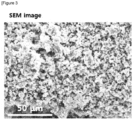
FIG. 3 is a Scanning Electron Microscope (SEM) image of a composite sulfide-based solid electrolyte according to one Example of the present invention. -
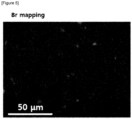
FIGs. 4 and5 show the results of an Energy Dispersive X-ray Spectroscopy (EDX) analysis of a composite sulfide-based solid electrolyte according to one Example of the present invention. -
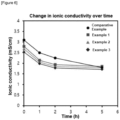
FIG. 6 is a graph depicting the change in ionic conductivity over time of a composite sulfide-based solid electrolyte according to one Example of the present invention. -
FIG. 7 is a graph depicting the change in normalized ionic conductivity over time of a composite sulfide-based solid electrolyte according to one Example of the present invention. -
FIG. 8 is a graph showing an electrochemical impedance spectroscopy (EIS) analysis of lithium halide (LiBr). -
FIG. 9 is a graph showing the electrochemical impedance spectroscopy (EIS) analysis of Li6PS5Cl, a sulfide-based solid electrolyte with an argyrodite crystalline structure. - Examples of the present invention are described in detail. It should be noted that the terms and words used in this specification and claims are not to be construed in their ordinary or dictionary sense, but are to be interpreted in a sense and concept consistent with the technical idea of the present invention, based on the principle that the inventor(s) may properly define the concept of a term to best describe his/her invention. Accordingly, it is to be understood that the compositions described in the Examples set forth herein are only the most preferred Examples of the present invention and are not exhaustive of the technical ideas of the present invention, and that there may be various equivalents and variations that may be substituted for them at the time of filing.
- Throughout the specification, when a part "includes" a component, it may indicate further including other components, not excluding other components, unless stated to the contrary.
- In addition, the description limiting or adding components may apply to any invention and is not limited to any particular invention, unless otherwise specified.
- Also, throughout the description and claims of the present invention, the singular expressions include the plural expressions, unless otherwise noted.
- Furthermore, throughout the description and claims of the present invention, "or" includes "and," unless otherwise noted. Thus, "comprising A or B" indicates all these three cases: comprising A, comprising B, and comprising A and B.
- Moreover, all numerical ranges include the values at both ends and all intermediate values therebetween, unless explicitly stated to exclude them.
- Throughout the specification, the average particle size of a particle may be, for example, a median diameter (D50) measured using a laser particle size distribution meter.
- A composite sulfide-based solid electrolyte according to one Example of the present invention is described below.
- The present invention relates to a composite sulfide-based solid electrolyte and a method for preparing the same, which can improve the water resistance of a solid electrolyte to prevent a decrease in the ionic conductivity of an all-solid-state battery due to the influence of external moisture in the manufacture of an all-solid-state battery, thereby improving its electrochemical and lifetime characteristics.
- In general, sulfide-based solid electrolytes have the advantage of excellent interparticle contact and low contact resistance by pressurization at room temperature without a separate sintering process, enabling the expression of high ionic conductivity. However, hydrogen sulfide (H2S) gas is easily generated by reacting with moisture in the atmosphere or moisture introduced during the manufacturing process, resulting in a decrease in ionic conductivity, which is a key property of solid electrolytes.
- To improve this problem, attempts have been made to form a coating layer on the surface of sulfide-based solid electrolyte particles to block the reaction with moisture, but the material contained in the coating layer acts as a resistive layer, further reducing the ionic conductivity of the solid electrolyte.
- In order to solve the above problem, the present invention mixes the primary particles, the sulfide-based solid electrolyte, with lithium halide to form a solid electrolyte in the form of secondary particles, instead of forming a separate coating layer on the sulfide-based solid electrolyte particles. In particular, by positioning the lithium halide in the empty spaces between the primary particles of the sulfide-based solid electrolyte, it was found that the lithium halide has the function of adsorbing external moisture, thereby improving the water resistance of the sulfide-based solid electrolyte, and that the generation of hydrogen sulfide is reduced so that high ionic conductivity can be exhibited.
-
FIG. 1 is a schematic illustration of a composite sulfide-based solid electrolyte according to one Example of the present invention. - Referring to
FIG. 1 , a composite sulfide-based solid electrolyte according to one Example of the present invention may be secondary particles comprising a plurality of primary particles and a lithium halide represented byFormula 1 below, wherein the primary particles comprise a sulfide-based solid electrolyte, and the lithium halide may be located between the primary particles:
[Formula 1] LiX,
wherein X is any one selected from F, Cl. Br and I. - That is, the lithium halide is not formed as a coating layer on the sulfide-based solid electrolyte primary particles, but is located between the sulfide-based solid electrolyte primary particles, so that it can adsorb external moisture to improve the water resistance of the sulfide-based solid electrolyte, for example, the lithium halide represented by the
Formula 1 above may be LiF, LiCI, LiBr or Lil, preferably LiBr. -
FIGs. 8 and9 are graphs showing electrochemical impedance spectroscopy (EIS) analysis of sulfide-based solid electrolytes with lithium halide (LiBr) and argyrodite crystal structures, respectively. - Referring to
FIGs. 8 and9 , it can be seen that LiBr, a type of lithium halide, can act as a resistive layer having a very high resistivity when applied to a sulfide-based solid electrolyte because of its very low ionic conductivity (9.62×10⁻⁶ mS/cm), compared to the high ionic conductivity of more than 0.1 mS/cm of a sulfide-based solid electrolyte with an argyrodite crystal structure, as shown in the EIS measurement results at 25°CinFIG. 8 . - Therefore, if lithium halide is formed as a surface coating layer on the surface of a sulfide-based solid electrolyte as shown in
FIG. 2 , apart from the water adsorption performance of lithium halide, the resistance at the grain boundary of lithium halide is too large, and ion conduction between sulfide-based solid electrolyte particles is difficult. - In contrast, the composite sulfide-based solid electrolyte according to one Example of the present invention has the advantage of not separately forming a coating layer of lithium halide on the sulfide-based solid electrolyte particles, thereby preventing an increase in internal resistance, while sufficiently imparting water resistance by disposing lithium halide between the sulfide-based solid electrolyte primary particles. Furthermore, by including lithium halide in the form of particles with an average particle size of 0.01 to 3 µm, the conduction of lithium ions (Li+) inside the sulfide-based solid electrolyte secondary particles is not significantly hindered.
- Referring to the preparation method of the composite sulfide-based solid electrolyte of the present invention described below, the lithium halide according to one Example of the present invention may undergo a process of atomization through ball-milling or the like before being mixed with the sulfide-based solid electrolyte, and in one Example of the present invention, the average particle size (D50) of the lithium halide may be 0.01 to 3 µm, such as 0.01 to 1 µm, 0.01 to 0.5 µm, and preferably 0.01 to 0.1 µm.
- If the average particle size of lithium halide is less than 0.01 µm, it may be difficult to maintain the small particle size, which may complicate the manufacturing process of the composite sulfide-based solid electrolyte in the form of secondary particles, and if it exceeds 3 µm, the specific surface area of the lithium halide particles may be relatively reduced, which may reduce the effect of improving the water resistance of the composite sulfide-based solid electrolyte.
- The lithium halide is not limited in shape, and may take any shape, for example, but not limited to, a sphere, a plate, a square cone, or a cylinder. The average particle size of the lithium halide may have a different meaning depending on its shape, for example, in the case of a spherical shape, it may mean the diameter of the sphere, in the case of an elliptical shape, it may mean the diameter of the major axis or the diameter of the minor axis.
- In one Example of the present invention, the average particle size (D50) of the secondary particles of the composite sulfide-based solid electrolyte may be 0.11 to 100 µm, such as 0.2 to 80 µm, 0.3 to 70 µm, 0.4 to 60 µm, 0.5 to 50 µm, 0.6 to 40 µm, 0.7 to 40 µm, 0.8 to 30 µm, 0.9 to 25 µm, or 1 to 20 µm.
- If the average particle size of the secondary particles of the composite sulfide-based solid electrolyte is less than 0.11 µm, the lithium ion conductivity and water resistance of the solid electrolyte may be significantly reduced, and if it exceeds 100 µm, there may be a process problem of forming a solid electrolyte film in the production of all-solid-state batteries using solid electrolytes.
- In one Example of the present invention, based on a total of 100 parts by weight of the composite sulfide-based solid electrolyte, the content ratio of sulfide-based solid electrolyte in the primary particle to lithium halide may be 99.9 parts by weight to 0.1 parts by weight to 80 parts by weight to 20 parts by weight, such as 99.5 parts by weight to 0.5 parts by weight to 85 parts by weight to 15 parts by weight, 99 parts by weight to 1 part by weight to 90 parts by weight to 10 parts by weight, and preferably 99 parts by weight to 1 part by weight to 92.5 parts by weight to 7.5 parts by weight.
- If the content of lithium halide is less than 0.1% by weight, based on a total of 100% by weight of the composite sulfide-based solid electrolyte, the adsorption capacity for external moisture, i.e., the water resistance of the composite sulfide-based solid electrolyte, may decrease, resulting in a decrease in the ionic conductivity of the solid electrolyte due tohydrogen sulfide gas generation, and if the content is greater than 20% by weight, the content of sulfide-based solid electrolyte primary particles in the composite sulfide-based solid electrolyte may decrease, resulting in a decrease in the lithium ionic conductivity of the electrolyte.
- In one Example of the present invention, the average particle size (D50) of the primary particles of the composite sulfide-based solid electrolyte may be 0.1 to 15 µm, for example, 0.2 to 15 µm, 0.3 to 10 µm, and preferably 0.5 to 5 µm.
- If the average particle size of the primary particles of the composite sulfide-based solid electrolyte is less than 0.1 µm, the lithium ion conductivity and water resistance of the solid electrolyte may be significantly reduced, and if it exceeds 15 µm, the size of the secondary particles of the composite sulfide-based solid electrolyte containing it increases relatively, and there may be a process problem of forming a solid electrolyte film when manufacturing an all-solid-state battery using a solid electrolyte.
- In one Example of the present invention, the sulfide-based solid electrolyte in the primary particle may be represented by
Formula 2 below:
[Formula 2] LikM1 lSmX1 n,
wherein M1 is Sn, Mg, Ba, B, Al, Ga, In, Si, Ge, Pb, N, P, As, Sb, Bi, Ti, V, Cr, Mn, Fe, Co, Ni, Cu, Y, Zr, Nb, Mo, Tc, Ru, Rh, Pd, Ag, Hf, Ta, Wor La, X1 is F, Cl, Br, I, Se, Te or O, and 0<k≤6, 0<l≤6, 0<m≤6, and 0≤n≤6. - For example, in
Formula 2, M1 may be B, Si, Ge, P or N. - For example, in
Equation 2, X1 may be F, Cl, Br, I or O. - For example, the sulfide-based solid electrolyte represented by
Formula 2 may be at least one selected from the group consisting of Li2S-P2S5, Li2S-P2S5-LiX, where X is a halogen atom, Li2S-P2S5-Li2O, LizS-PzSs-LizO-Lil, Li2S-SiS2, Li2S-SiS2-Lil, Li2S-SiS2-LiBr, Li2S-SiS2-LiCl, Li2S-SiS2-B2S3-Lil, Li2S-SiS2-P2S5-Lil, Li2S-B2S3, Li2S-P2S5-ZmSn, where m and n are positive numbers, and Z is any one of Ge, Zn and Ga, Li2S-GeS2, Li2S-SiS2-Li3PO4, Li2S-SiS2-LipMOq, where p and q are positive numbers, and M is any one of P, Si, Ge, B, Al, Ga and In, Li7-xPS6-xClx, where 0≤x≤2, Li7-xPS6-xBrx, where 0≤x≤2, and Li7-xPS6-xIx, where 0≤x≤2. - Furthermore, the sulfide-based solid electrolyte may preferably be a solid electrolyte having an argyrodite crystal structure comprising one or more selected from the group consisting of Li6PS5Cl, Li6PS5Br and Li6PS5I.
- The composite sulfide-based solid electrolyte according to the present invention can be prepared by the following preparation method. Hereinafter, each step of the preparation method of the sulfide-based solid electrolyte of the present invention is described in detail.
- First, to prepare a composite sulfide-based solid electrolyte according to the present invention, a sulfide-based solid electrolyte and lithium halide represented by the following
formula 1 are prepared:
[Formula 1] LiX
(wherein X is any one selected from F, Cl. Br and I). - Since the sulfide-based solid electrolyte and lithium halide represented by
Formula 1 are identical to those described above, the detailed description thereon is omitted hereinafter. - Next, the lithium halide is crushed to form a particulate form.
- The step of grinding the lithium halide may not be limited to a particular method, and for example, the grinding may be carried out by ball-milling through 5 to 20 repeated cycles of ball-milling, with each cycle of ball-milling performed at 100 to 2,000 rpm for 5 to 30 minutes. If the grinding speed and grinding time of ball-milling are less than the above numerical range, it may not be possible to fill the empty space between the primary particles of the sulfide-based solid electrolyte well, and the effect of improving the water resistance of the sulfide-based solid electrolyte may be insignificant, and if they exceed the above numerical range, the time and cost for manufacturing a solid electrolyte increase, and there is a problem of excessive heat generation.
- In order to further increase the water adsorption capacity of the lithium halide, preferably before grinding the lithium halide, the method may further comprise the step of vacuum drying to remove moisture from the lithium halide, and, although not limited to a particular method, the method may pre-conduct the step of placing the lithium halide before grinding in a vacuum oven and drying it for 24 to 48 hours at a temperature of 25 to 80 °C.
- Lithium halide that has been ground through ball-milling as described above may have an average particle size (D50) of 0.01 to 3 µm.
- Finally, the sulfide-based solid electrolyte and the ground lithium halide are mixed to form a composite sulfide-based solid electrolyte in the form of secondary particles, wherein the lithium halide in the particulate state is located between the sulfide-based solid electrolyte primary particles.
- In one Example of the present invention, the sulfide-based solid electrolyte of the primary particles and the lithium halide may be mixed in a ratio of 99.9 parts by weight:0.1 parts by weight to 80 parts by weight:20 parts by weight, for example, 99.5 parts by weight:0.5 parts by weight to 85 parts by weight: 15 parts by weight, 99 parts by weight: 1 part by weight to 90 parts by weight: 10 parts by weight, and preferably 99 parts by weight: 1 part by weight to 92.5 parts by weight:7.5 parts by weight, based on a total of 100 parts by weight of the composite sulfide-based solid electrolyte.
- The present invention also provides an all-solid-state battery comprising a composite sulfide-based solid electrolyte as described above. The all-solid-state battery includes a positive electrode, a negative electrode, and a solid electrolyte film, wherein at least one of the positive electrode, negative electrode, and solid electrolyte film may include a composite sulfide-based solid electrolyte having the aforementioned properties.
- In one Example of the present invention, the solid electrolyte film is an ionically conductive sheet interposed between a positive electrode and a negative electrode in an all-solid-state battery to act as an insulating and ionically conductive channel, preferably having an ionic conductivity of 1.0 × 10⁻⁵ S/cm or greater. The solid electrolyte film may comprise a composite sulfide-based solid electrolyte according to the present invention, and may further comprise other electrolyte materials as described hereinafter.
- In the present invention, the positive electrode and negative electrode comprise a current collector and an electrode active material layer formed on at least one surface of the current collector, wherein the active material layer includes a plurality of electrode active material particles and an electrolyte material. The positive electrode and negative electrode may include a composite sulfide-based solid electrolyte according to the present invention as the electrolyte material, and may further include other electrolyte materials as described below.
- Further, each of the electrodes may further comprise one or more of a conductive material and a binder resin, as desired. Further, the electrodes may further comprise various additives for the purpose of complementing or improving the physicochemical properties of the electrodes.
- In the present invention, the negative electrode active material may include lithium metal as the negative electrode active material of the lithium ion secondary battery, and any material that can be used as the negative electrode active material may be used. For example, the negative electrode active material may include one or two or more selected from the group consisting of carbon such as non-graphitized carbon or graphitized carbon; LixFe2O3 (wherein 0≤x≤1), LixWO2 (wherein 0≤x≤1), or SnxMe1-xMe'yOz (wherein Me is Mn, Fe, Pb or Ge; Me' is Al, B, P or Si,
Group - In the case where the electrode is a positive electrode, the electrode active material can be any material that can be used as a positive electrode active material in a lithium ion secondary battery. For example, the positive electrode active material may include, but is not limited to,a layered compound such as lithium cobalt oxide (LiCoOz) or lithium nickel oxide (LiNiOz), or a compound substituted with one or more transition metals; lithium manganese oxide represented by formula Li1+xMn2-xO4 (wherein x is 0 to 0.33), such as LiMnO3, LiMn2O3, or LiMnO2; lithium copper oxide (Li2CuO2); vanadium oxide, such as LiV3O3, LiV3O4, V2O5, or Cu2V2O7; Ni site-type lithium nickel oxide represented by LiNi1-xMxO2 (wherein M is Co, Mn, Al, Cu, Fe, Mg, B or Ga, and x is 0.01 to 0.3); lithium manganese complex oxide represented by formula LiMn1-xMxO2(wherein M is Co, Ni, Fe, Cr, Zn or Ta, and x is 0.01 to 0.1) or Li2Mn3MO8 (wherein M is Fe, Co, Ni, Cu or Zn); lithium manganese complex oxide with a spinel structure represented by LiNixMn2-xO4; LiMn2O4, wherein a portion of the Li is substituted by an alkaline earth metal ion; disulfide compound; and Fe2(MoO4)3.
- In the present invention, the current collector is an electrically conductive material such as a metal plate, and any suitable one can be used according to the polarity of the electrode of the current collector known in the field of secondary batteries.
- In the present invention, such a conductive material is typically added in an amount of 1 % by weight to 30% by weight, based on the total weight of the mixture containing the electrode active material. These materials are not particularly limited, as long as they are conductive without causing any chemical changes in the battery, for example, they may include one or two or more mixtures selected from the group consisting of graphite such as natural or artificial graphite; carbon black such as carbon black, acetylene black, ketjen black, channel black, furnace black, lamp black or thermal black; conductive fibers such as carbon fibers or metal fibers; metal powders such as carbon fluoride, aluminum or nickel powder; conductive whiskers such as zinc oxide or potassium titanate; conductive metal oxides such as titanium oxide; or conductive materials such as polyphenylene derivatives.
- In the present invention, the binder resin is not particularly limited as long as it is a component that assists in the bonding of the active material and the conductive material or the bonding to the current collector, for example, polyvinylidene fluoride, polyvinyl alcohol, carboxymethyl cellulose (CMC), starch, hydroxypropyl cellulose, regenerated cellulose, polyvinylpyrrolidone, polytetrafluoroethylene, polyethylene, polypropylene, ethylene-propylene-diene monomer (EPDM), sulfonated EPDM, styrene butadiene rubber, fluorinated rubber, and various copolymers. The binder resin may typically be included in an amount of 1% by weight to 30% by weight, or 1% by weight to 10% by weight, based on 100% by weight of the electrode layer.
- In the present invention, each of the electrode active material layers may include one or more additives such as oxidation-stable additives, reduction-stable additives, flame retardants, heat stabilizers, or antifogging agents, as needed.
- In the present invention, the all-solid-state battery may include a composite sulfide-based solid electrolyte according to the present invention as a solid electrolyte material. In addition, it may further include one or more of a polymer-based solid electrolyte, an oxide-based solid electrolyte, and a sulfide-based solid electrolyte.
- The polymeric solid electrolyte is a composite of a lithium salt and a polymeric resin, that is, a polymeric electrolyte material in the form formed by the addition of a polymeric resin to a solvated lithium salt, and may exhibit an ionic conductivity of about 1×10⁻⁷ S/cm or more, preferably about 1×10⁻⁵ S/cm or more.
- Non-limiting examples of the polymeric resins may include at least one of polyether-based polymers, polycarbonate-based polymers, acrylate-based polymers, polysiloxane-based polymers, phosphagen-based polymers, polyethylene derivatives, alkylene oxide derivatives such as polyethylene oxide, phosphate ester polymers, polyagitation lysine, polyester sulfide, polyvinyl alcohol, polyvinylidene fluoride, and polymers comprising ionic dissociation groups. Further, the polymeric electrolyte may be a polymeric resin, for example, a branched copolymer, a comb-like polymer, or a crosslinked polymeric resin copolymerizing an amorphous polymer such as PMMA, polycarbonate, polysiloxane (PDMS), and/or phosphazene with a comonomer on a polyethylene oxide (PEO) main chain, and may include one or more of the foregoing.
- In the electrolyte of the present invention, the aforementioned lithium salts are ionizable lithium salts, which can be represented by Li+X-. The anions of such lithium salts are not particularly limited, but may include F-, Cl-, Br-, I-, NO3 -, N(CN)2 -, BF4 -, ClO4 -, PF6 -, (CF3)2PF4 -, (CF3)3PF3 -, (CF3)4PF2 -, (CF3)5PF-, (CF3)6P-, CF3SO3 -, CF3CF2SO3 -, (CF3SO2)2N-, (FSO2)2N- ,CF3CF2(CF3)2CO-, (CF3SO2)2CH-, (SF5)3C-, (CF3SO2)3C-, CF3(CF2)7SO3 -, CF3CO2 -, CH3CO2 -, SCN-, and (CF3CF2SO2)2N-.
- The oxide-based solid electrolyte material comprises oxygen (O) and has the ionic conductivity of a metal in
Group - The sulfide-based solid electrolyte material may be, but is not limited to, the sulfide-based solid electrolyte represented by
Formula 2 above. - The present invention also provides a secondary battery having the aforementioned structure. The present invention also provides a battery module comprising the secondary battery as a unit cell, a battery pack comprising the battery module, and a device comprising the battery pack as a power source. Specific examples of such devices may include, but are not limited to, a power tool powered by an electric motor; an electric vehicle, such as an electric vehicle (EV), a hybrid electric vehicle (HEV), or a plug-in hybrid electric vehicle (PHEV); an electric two-wheeled vehicle, such as an electric bicycle (E-bike), an electric scooter (E-scooter), or an electric golf cart; and a power storage system.
- Specific Examples of the present invention are set forth below. However, the Examples described below are intended only to specifically illustrate or describe the present invention, and are not intended to limit the present invention. In addition, matters not described herein are sufficiently inferred by those skilled in the art and are omitted herein.
-
- (1) LiBr was prepared as lithium halide, and it was placed in a vacuum oven to remove internal moisture and vacuum dried at 80 °C for 24 hours.
- (2) 5 g of dehydrated LiBr was placed in a ball mill containing 20 zirconia balls (diameter: 10 mm), and high-energy ball-milling at a rotational speed of 750 rpm for 15 minutes was performed as one cycle, and a total of 16 cycles of ball-milling were performed to obtain crushed LiBr.
- (3) In the glove box, the crushed LiBr and a sulfide-based solid electrolyte with an argyrodite crystal structure, Li6PS5Cl, were mixed in a content ratio of 5 parts by weight:95 parts by weight, and a composite sulfide-based solid electrolyte was prepared by mixing them.
- A composite sulfide-based solid electrolyte was prepared as in Example 1, except that crushed LiBr and Li6PS5Cl,a sulfide-based solid electrolyte with an argyrodite crystal structure, were mixed in a content ratio of 10 parts by weight: 90 parts by weight.
- A composite sulfide-based solid electrolyte was prepared as in Example1, except that crushed LiBr and Li6PS5Cl, a sulfide-based solid electrolyte with an argyrodite crystal structure, were mixed in a content ratio of 15 parts by weight:85 parts by weight.
- Unlike Examples 1 to 3, the solid electrolyte was prepared using only the sulfide-based solid electrolyte Li6PS5Cl with an argyrodite crystal structure, which does not contain lithium halide.
- Energy dispersive X-ray spectroscopy (EDX) experiments were performed to determine the S and Br elemental components in the composite sulfide-based solid electrolyte prepared according to Example 1, and the results are shown in
FIGs. 4 and5 .The EDX measurement device was a JSM7900F manufactured from JEOL. - Referring to
FIGs. 4 and5 , it can be seen that, in the case of the composite sulfide-based solid electrolyte according to Example1 of the present invention, LiBr was not formed as a coating layer of the sulfide-based solid electrolyte, and LiBr having fine particles is located between the primary particles of the sulfide-based solid electrolyte. - For each of the composite sulfide-based solid electrolytes according to Examples 1 to 3 and the sulfide-based solid electrolyte according to Comparative Example 1, the ionic conductivity and the rate of decrease in ionic conductivity according to exposure to moisture were measured and analyzed.
- The composite sulfide-based solid electrolyte according to Examples 1 to 3 and the sulfide-based solid electrolyte according to Comparative Example 1, each made into a specimen of 6 mm in diameter and 1 mm in thickness, were interposed between the Al-C current collectors and vacuum sealed in an aluminum pouch to prepare an all-solid-state battery.
- The all-solid-state battery was attached to a jig to apply a pressure of 250 MPa, and the ionic conductivity was measured using impedance spectroscopy, and the results are shown in Table 1 below.
- Referring to Table 1, for the composite sulfide-based solid electrolyte of Examples 1 to 3, it was found that the inclusion of additional LiBr between the sulfide-based solid electrolyte primary particles did not significantly reduce the overall ionic conductivity of the composite sulfide-based solid electrolyte.
- This can be predicted to be due to the fact that by micronizing lithium halides such as LiBr and mixing them with the sulfide-based solid electrolyte, LiBr did not interfere with the migration path of lithium ions (Li+) in the composite sulfide-based solid electrolyte and thus did not significantly affect the conduction of lithium ions.
- Two grams each of the composite sulfide-based solid electrolyte according to Examples 1 to 3 and the sulfide-based solid electrolyte according to Comparative Example 1 were evenly spread on a plate and exposed to a dry room environment with a dew point of -45 °C (humidity of 0.46% at 21°C) for a total of 5 hours to measure the rate of decrease of the ionic conductivity of the solid electrolyte over time, and the results are shown in Table 1, and
FIGs. 6 and7 below.FIG. 7 is a normalized ionic conductivity graph of only the pure sulfide-based solid electrolytes, excluding the ionic conductivity change rate due to LiBr, from the ionic conductivity measurement results according toFIG. 6 . - The measurement of ionic conductivity over time was performed as described in '(1) Measurement of the ionic conductivity' above.
- Referring to Table 1, and
FIGs. 6 and7 , it can be seen that for the composite sulfide-based solid electrolytes according to Examples 1 to 3, the ionic conductivity decrease rate of the solid electrolyte over time is small compared to the solid electrolyte according to Comparative Example 1 due to the inclusion of lithium halide in a particulate state capable of adsorbing moisture in the solid electrolyte, resulting in improved water resistance.[Table 1] Example 1 Example2 Example3 Comparative Example 1 Oh ionic conductivity (mS/cm) 2.79 2.67 2.53 3.12 5h ionic conductivity (mS/cm) 1.84 1.79 1.71 1.79 Ionic conductivity retention (%) 66 67 68 57 Ionic conductivity decrease rate (mS/cm/h) 0.191 0.176 0.164 0.266 - Although the preferred Examples of the present invention have been described in detail above, the scope of the present invention is not limited thereto, and various modifications and improvements by those skilled in the art utilizing the basic concepts of the present invention as defined in the following claims are also within the scope of the present invention.
-
- 10: Sulfide-based solid electrolyte primary particle
- 20: Lithium halide
- 30: Composite sulfide-based solid electrolyte secondary particle
- 40: Sulfide-based solid electrolyte
- 100: Composite sulfide-based solid electrolyte
- 200: Sulfide-based solid electrolyte
Claims (14)
- A composite sulfide-based solid electrolyte which is secondary particles comprising a plurality of primary particles and lithium halide represented by the following formula 1,wherein the primary particles comprise a sulfide-based solid electrolyte,wherein the lithium halide is located between the primary particles:
[Formula 1] LiX
wherein X is any one selected from F, Cl. Br and I. - The composite sulfide-based solid electrolyte according to claim 1, wherein the lithium halide has an average particle size D50 of 0.01 to 3 µm
- The composite sulfide-based solid electrolyte according to claim 1, wherein the average particle size D50 of the secondary particles is 0.11 to 100 µm.
- The composite sulfide-based solid electrolyte according to claim 1, wherein, based on a total of 100 parts by weight of the composite sulfide-based solid electrolyte, the content ratio of the sulfide-based solid electrolyte in the primary particle and lithium halide is 99.9 parts by weight: 0.1 parts by weight to 80 parts by weight: 20 parts by weight.
- The composite sulfide-based solid electrolyte according to claim 1, wherein the sulfide-based solid electrolyte comprises an argyrodite-type crystal structure.
- The composite sulfide-based solid electrolyte according to claim 1, wherein the primary particles have an average particle size D50 of 0.1 to 15 µm.
- The composite sulfide-based solid electrolyte according to claim 1, wherein, in the composite sulfide-based solid electrolyte of the secondary particle, the lithium halide is not formed as a coating layer on the primary particles.
- The composite sulfide-based solid electrolyte according to claim 1, wherein the sulfide-based solid electrolyte of the primary particles is represented by the formula 2 below:
[Formula 2] LikM1 lSmX1 n
wherein M1 is Sn, Mg, Ba, B, Al, Ga, In, Si, Ge, Pb, N, P, As, Sb, Bi, Ti, V, Cr, Mn, Fe, Co, Ni, Cu, Y, Zr, Nb, Mo, Tc, Ru, Rh, Pd, Ag, Hf, Ta, Wor La, X1 is F, Cl, Br, I, Se, Te or O, and 0<k≤6, 0<l≤6, 0<m≤6, and 0≤n≤6. - An all-solid-state battery comprising the composite sulfide-based solid electrolyte according to any one of claims 1 to 8.
- A method of preparing a composite sulfide-based solid electrolyte, comprising the steps of preparing a sulfide-based solid electrolyte and lithium halide represented by Formula 1 below;grinding the lithium halide; andmixing the ground lithium halide with the sulfide-based solid electrolyte:
[Formula 1] LiX
wherein X is any one selected from F, Cl. Br, and I. - The method of preparing a composite sulfide-based solid electrolyte according to claim 10, wherein the method further comprises the step of vacuum drying the lithium halide to remove moisture, prior to grinding the lithium halide.
- The method of preparing a composite sulfide-based solid electrolyte according to claim 10, wherein the lithium halide is formed by grinding through 5 to 20 repeated cycles of ball-milling, with each cycle of ball-milling performed at 100 to 2,000 rpm for 5 to 30 minutes.
- The method of preparing a composite sulfide-based solid electrolyte according to claim 10, wherein the ground lithium halide has an average particle size D50 of 0.01 to 3 µm.
- The method of preparing a composite sulfide-based solid electrolyte according to claim 10, wherein the ground lithium halide and the sulfide-based solid electrolyte are mixed in a content ratio of 99.9 parts by weight: 0.1 parts by weight to 80 parts by weight: 20 parts by weight, based on a total of 100 parts by weight of the composite sulfide-based solid electrolyte.
Applications Claiming Priority (2)
| Application Number | Priority Date | Filing Date | Title |
|---|---|---|---|
| KR1020220176307A KR20240093239A (en) | 2022-12-15 | 2022-12-15 | Complex sulfide-based solid electrolyte and manufacturing method thereof |
| PCT/KR2023/018872 WO2024128604A1 (en) | 2022-12-15 | 2023-11-22 | Complex sulfide-based solid electrolyte and method for producing same |
Publications (2)
| Publication Number | Publication Date |
|---|---|
| EP4447180A1 true EP4447180A1 (en) | 2024-10-16 |
| EP4447180A4 EP4447180A4 (en) | 2025-03-26 |
Family
ID=91485148
Family Applications (1)
| Application Number | Title | Priority Date | Filing Date |
|---|---|---|---|
| EP23903807.8A Pending EP4447180A4 (en) | 2022-12-15 | 2023-11-22 | SOLID ELECTROLYTE BASED ON COMPLEX SULFIDE AND PROCESS FOR PRODUCING THE SAME |
Country Status (6)
| Country | Link |
|---|---|
| US (1) | US20250149652A1 (en) |
| EP (1) | EP4447180A4 (en) |
| JP (1) | JP2025511504A (en) |
| KR (1) | KR20240093239A (en) |
| CN (1) | CN118661303A (en) |
| WO (1) | WO2024128604A1 (en) |
Families Citing this family (2)
| Publication number | Priority date | Publication date | Assignee | Title |
|---|---|---|---|---|
| CN119852509B (en) * | 2025-03-20 | 2025-06-24 | 湖南高瑞电源材料有限公司 | Solid electrolyte, preparation method thereof and solid lithium battery |
| CN121172237A (en) * | 2025-09-23 | 2025-12-19 | 合肥综合性国家科学中心能源研究院(安徽省能源实验室) | Wet air stable sulfide solid electrolyte, preparation method thereof and battery |
Family Cites Families (12)
| Publication number | Priority date | Publication date | Assignee | Title |
|---|---|---|---|---|
| US4465746A (en) * | 1983-06-29 | 1984-08-14 | Union Carbide Corporation | Vitreous solid lithium cation conductive electrolyte |
| JP5898965B2 (en) * | 2012-01-12 | 2016-04-06 | 出光興産株式会社 | Sulfide-based solid electrolyte composition |
| JP2014041723A (en) * | 2012-08-21 | 2014-03-06 | Murata Mfg Co Ltd | Solid electrolyte and all solid state battery using the same |
| JP2016081905A (en) * | 2014-10-10 | 2016-05-16 | トヨタ自動車株式会社 | Solid electrolyte layer |
| EP3240089B1 (en) * | 2014-12-26 | 2019-04-24 | Mitsui Mining and Smelting Co., Ltd. | Sulfide-based solid electrolyte for lithium ion cell, and solid electrolyte compound |
| KR101778566B1 (en) * | 2016-02-05 | 2017-09-14 | 전남대학교 산학협력단 | Method for preparing electrode material of hybrid capacitor |
| JP6840946B2 (en) * | 2016-07-13 | 2021-03-10 | 昭和電工マテリアルズ株式会社 | Solid electrolytes, all-solid-state batteries, and how to make them |
| KR102452005B1 (en) | 2017-12-27 | 2022-10-06 | 현대자동차주식회사 | A nitrogen doped sulfide-based solid electrolyte for all solid state battery |
| JP6738983B1 (en) * | 2018-11-08 | 2020-08-12 | 三井金属鉱業株式会社 | Sulfide solid electrolyte and battery |
| JP7601783B2 (en) * | 2019-10-29 | 2024-12-17 | 三井金属鉱業株式会社 | Solid electrolyte, and electrode mixture, solid electrolyte layer, and solid battery using the same |
| EP4053948A4 (en) * | 2019-10-29 | 2022-11-30 | Mitsui Mining & Smelting Co., Ltd. | SOLID ELECTROLYTE, AND MIXTURE OF ELECTRODES, SOLID ELECTROLYTE LAYER AND SOLID ELECTROLYTE BATTERY, EACH USING SUCH SOLID ELECTROLYTE |
| JP7685365B2 (en) * | 2021-04-30 | 2025-05-29 | エルジー エナジー ソリューション リミテッド | Solid electrolyte for all-solid-state battery and method for producing same |
-
2022
- 2022-12-15 KR KR1020220176307A patent/KR20240093239A/en active Pending
-
2023
- 2023-11-22 EP EP23903807.8A patent/EP4447180A4/en active Pending
- 2023-11-22 JP JP2024553485A patent/JP2025511504A/en active Pending
- 2023-11-22 WO PCT/KR2023/018872 patent/WO2024128604A1/en not_active Ceased
- 2023-11-22 CN CN202380020492.8A patent/CN118661303A/en active Pending
- 2023-11-22 US US18/832,267 patent/US20250149652A1/en active Pending
Also Published As
| Publication number | Publication date |
|---|---|
| JP2025511504A (en) | 2025-04-16 |
| CN118661303A (en) | 2024-09-17 |
| US20250149652A1 (en) | 2025-05-08 |
| KR20240093239A (en) | 2024-06-24 |
| WO2024128604A1 (en) | 2024-06-20 |
| EP4447180A4 (en) | 2025-03-26 |
Similar Documents
| Publication | Publication Date | Title |
|---|---|---|
| KR102895756B1 (en) | All Solid secondary battery, and Method for preparing the same | |
| KR102861416B1 (en) | A solid electrolyte composite and an electrode for an all-solid-state battery comprising the same | |
| EP3787074A1 (en) | Composite particles for anode active material and anode for all-solid-state battery comprising same | |
| EP4447180A1 (en) | Complex sulfide-based solid electrolyte and method for producing same | |
| KR20190088330A (en) | Manufacturing methods for carbon nano tube-electrode composite powder and electrode for solid electrolyte battery including the same | |
| EP4376127A1 (en) | Cathode for all-solid-state battery, and all-solid-state battery comprising same | |
| CN119627194B (en) | Solid electrolyte and application thereof | |
| KR20220072737A (en) | Solid ion conductor, preparing method thereof, component for electrochemical cell including the same, electrode including the same, separator for lithium battery including the same, electrochemical cell including the same, and preparing method of the electrochemical cell | |
| KR20250096578A (en) | Solid electrolyte membrane, method for manufacturing the same, and all-solid-state battery comprising the same | |
| CN115995615B (en) | Secondary battery and preparation method thereof | |
| KR20250130680A (en) | Cathode active material, slurry of cathode active material, cathode, lithium ion secondary battery and method for manufacturing cathode active material | |
| KR20220162629A (en) | All-solid lithium secondary battery and method for preparing the same | |
| KR102800995B1 (en) | An electrode for all solid-state battery and an all solid-state battery comprising the same | |
| KR20220162077A (en) | All-solid lithium secondary battery and method for preparing the same | |
| KR20220089368A (en) | A cathode material, cathode including the same, and lithium air battery including the same | |
| KR102928126B1 (en) | Cathode active material for lithium secondary battery, preparing method thereof, and lithium secondary battery comprising positive electrode including the composite cathode active material | |
| JP7835864B2 (en) | Solid electrolyte membrane and all-solid-state battery containing the same | |
| EP4231377A1 (en) | All-solid-state lithium secondary battery and method for manufacturing same | |
| KR20240144804A (en) | Composite Cathode Active Material, Electrode containing Composite Cathode Active Material and Lithium battery containing electrode | |
| KR20250068500A (en) | Positive electrode active material for an all-solid-state battery, method for preparing thereof, positive electrode and all-solid-state battery comprising the same | |
| JP2026509181A (en) | Sulfide-based solid electrolyte and all-solid-state battery containing the same | |
| KR20260024271A (en) | Negative electrode for lithium secondary battery and method for manufacturing the same | |
| KR20240145339A (en) | Dry electrode film, Dry electrode and Lithium battery containing dry electrode film | |
| KR20260052779A (en) | Sulfide solid electrolyte, fabrication method thereof, and all-solid-state battery comprising same | |
| CN118043993A (en) | Positive electrode active material for all-solid-state battery, positive electrode of all-solid-state battery containing the same, and all-solid-state battery |
Legal Events
| Date | Code | Title | Description |
|---|---|---|---|
| STAA | Information on the status of an ep patent application or granted ep patent |
Free format text: STATUS: THE INTERNATIONAL PUBLICATION HAS BEEN MADE |
|
| PUAI | Public reference made under article 153(3) epc to a published international application that has entered the european phase |
Free format text: ORIGINAL CODE: 0009012 |
|
| STAA | Information on the status of an ep patent application or granted ep patent |
Free format text: STATUS: REQUEST FOR EXAMINATION WAS MADE |
|
| 17P | Request for examination filed |
Effective date: 20240708 |
|
| AK | Designated contracting states |
Kind code of ref document: A1 Designated state(s): AL AT BE BG CH CY CZ DE DK EE ES FI FR GB GR HR HU IE IS IT LI LT LU LV MC ME MK MT NL NO PL PT RO RS SE SI SK SM TR |
|
| REG | Reference to a national code |
Ref country code: DE Ref legal event code: R079 Free format text: PREVIOUS MAIN CLASS: H01M0010056200 Ipc: H01M0010052000 |
|
| A4 | Supplementary search report drawn up and despatched |
Effective date: 20250225 |
|
| RIC1 | Information provided on ipc code assigned before grant |
Ipc: H01M 4/62 20060101ALI20250220BHEP Ipc: H01M 10/0562 20100101ALI20250220BHEP Ipc: H01M 10/052 20100101AFI20250220BHEP |
|
| DAV | Request for validation of the european patent (deleted) | ||
| DAX | Request for extension of the european patent (deleted) |