EP4446188A1 - Control apparatus and control method for adaptive cruise control of vehicle - Google Patents
Control apparatus and control method for adaptive cruise control of vehicle Download PDFInfo
- Publication number
- EP4446188A1 EP4446188A1 EP23866675.4A EP23866675A EP4446188A1 EP 4446188 A1 EP4446188 A1 EP 4446188A1 EP 23866675 A EP23866675 A EP 23866675A EP 4446188 A1 EP4446188 A1 EP 4446188A1
- Authority
- EP
- European Patent Office
- Prior art keywords
- vehicle
- acc
- current vehicle
- velocity
- current
- Prior art date
- Legal status (The legal status is an assumption and is not a legal conclusion. Google has not performed a legal analysis and makes no representation as to the accuracy of the status listed.)
- Granted
Links
Images



Classifications
-
- B—PERFORMING OPERATIONS; TRANSPORTING
- B60—VEHICLES IN GENERAL
- B60W—CONJOINT CONTROL OF VEHICLE SUB-UNITS OF DIFFERENT TYPE OR DIFFERENT FUNCTION; CONTROL SYSTEMS SPECIALLY ADAPTED FOR HYBRID VEHICLES; ROAD VEHICLE DRIVE CONTROL SYSTEMS FOR PURPOSES NOT RELATED TO THE CONTROL OF A PARTICULAR SUB-UNIT
- B60W40/00—Estimation or calculation of non-directly measurable driving parameters for road vehicle drive control systems not related to the control of a particular sub unit, e.g. by using mathematical models
- B60W40/10—Estimation or calculation of non-directly measurable driving parameters for road vehicle drive control systems not related to the control of a particular sub unit, e.g. by using mathematical models related to vehicle motion
- B60W40/105—Speed
-
- B—PERFORMING OPERATIONS; TRANSPORTING
- B60—VEHICLES IN GENERAL
- B60W—CONJOINT CONTROL OF VEHICLE SUB-UNITS OF DIFFERENT TYPE OR DIFFERENT FUNCTION; CONTROL SYSTEMS SPECIALLY ADAPTED FOR HYBRID VEHICLES; ROAD VEHICLE DRIVE CONTROL SYSTEMS FOR PURPOSES NOT RELATED TO THE CONTROL OF A PARTICULAR SUB-UNIT
- B60W30/00—Purposes of road vehicle drive control systems not related to the control of a particular sub-unit, e.g. of systems using conjoint control of vehicle sub-units
- B60W30/14—Adaptive cruise control
-
- B—PERFORMING OPERATIONS; TRANSPORTING
- B60—VEHICLES IN GENERAL
- B60W—CONJOINT CONTROL OF VEHICLE SUB-UNITS OF DIFFERENT TYPE OR DIFFERENT FUNCTION; CONTROL SYSTEMS SPECIALLY ADAPTED FOR HYBRID VEHICLES; ROAD VEHICLE DRIVE CONTROL SYSTEMS FOR PURPOSES NOT RELATED TO THE CONTROL OF A PARTICULAR SUB-UNIT
- B60W30/00—Purposes of road vehicle drive control systems not related to the control of a particular sub-unit, e.g. of systems using conjoint control of vehicle sub-units
- B60W30/14—Adaptive cruise control
- B60W30/16—Control of distance between vehicles, e.g. keeping a distance to preceding vehicle
-
- B—PERFORMING OPERATIONS; TRANSPORTING
- B60—VEHICLES IN GENERAL
- B60W—CONJOINT CONTROL OF VEHICLE SUB-UNITS OF DIFFERENT TYPE OR DIFFERENT FUNCTION; CONTROL SYSTEMS SPECIALLY ADAPTED FOR HYBRID VEHICLES; ROAD VEHICLE DRIVE CONTROL SYSTEMS FOR PURPOSES NOT RELATED TO THE CONTROL OF A PARTICULAR SUB-UNIT
- B60W30/00—Purposes of road vehicle drive control systems not related to the control of a particular sub-unit, e.g. of systems using conjoint control of vehicle sub-units
- B60W30/18—Propelling the vehicle
- B60W30/18009—Propelling the vehicle related to particular drive situations
- B60W30/18145—Cornering
-
- B—PERFORMING OPERATIONS; TRANSPORTING
- B60—VEHICLES IN GENERAL
- B60W—CONJOINT CONTROL OF VEHICLE SUB-UNITS OF DIFFERENT TYPE OR DIFFERENT FUNCTION; CONTROL SYSTEMS SPECIALLY ADAPTED FOR HYBRID VEHICLES; ROAD VEHICLE DRIVE CONTROL SYSTEMS FOR PURPOSES NOT RELATED TO THE CONTROL OF A PARTICULAR SUB-UNIT
- B60W40/00—Estimation or calculation of non-directly measurable driving parameters for road vehicle drive control systems not related to the control of a particular sub unit, e.g. by using mathematical models
-
- B—PERFORMING OPERATIONS; TRANSPORTING
- B60—VEHICLES IN GENERAL
- B60W—CONJOINT CONTROL OF VEHICLE SUB-UNITS OF DIFFERENT TYPE OR DIFFERENT FUNCTION; CONTROL SYSTEMS SPECIALLY ADAPTED FOR HYBRID VEHICLES; ROAD VEHICLE DRIVE CONTROL SYSTEMS FOR PURPOSES NOT RELATED TO THE CONTROL OF A PARTICULAR SUB-UNIT
- B60W2552/00—Input parameters relating to infrastructure
- B60W2552/30—Road curve radius
-
- B—PERFORMING OPERATIONS; TRANSPORTING
- B60—VEHICLES IN GENERAL
- B60W—CONJOINT CONTROL OF VEHICLE SUB-UNITS OF DIFFERENT TYPE OR DIFFERENT FUNCTION; CONTROL SYSTEMS SPECIALLY ADAPTED FOR HYBRID VEHICLES; ROAD VEHICLE DRIVE CONTROL SYSTEMS FOR PURPOSES NOT RELATED TO THE CONTROL OF A PARTICULAR SUB-UNIT
- B60W2554/00—Input parameters relating to objects
- B60W2554/80—Spatial relation or speed relative to objects
- B60W2554/802—Longitudinal distance
-
- B—PERFORMING OPERATIONS; TRANSPORTING
- B60—VEHICLES IN GENERAL
- B60W—CONJOINT CONTROL OF VEHICLE SUB-UNITS OF DIFFERENT TYPE OR DIFFERENT FUNCTION; CONTROL SYSTEMS SPECIALLY ADAPTED FOR HYBRID VEHICLES; ROAD VEHICLE DRIVE CONTROL SYSTEMS FOR PURPOSES NOT RELATED TO THE CONTROL OF A PARTICULAR SUB-UNIT
- B60W2720/00—Output or target parameters relating to overall vehicle dynamics
- B60W2720/10—Longitudinal speed
-
- B—PERFORMING OPERATIONS; TRANSPORTING
- B60—VEHICLES IN GENERAL
- B60W—CONJOINT CONTROL OF VEHICLE SUB-UNITS OF DIFFERENT TYPE OR DIFFERENT FUNCTION; CONTROL SYSTEMS SPECIALLY ADAPTED FOR HYBRID VEHICLES; ROAD VEHICLE DRIVE CONTROL SYSTEMS FOR PURPOSES NOT RELATED TO THE CONTROL OF A PARTICULAR SUB-UNIT
- B60W2720/00—Output or target parameters relating to overall vehicle dynamics
- B60W2720/10—Longitudinal speed
- B60W2720/106—Longitudinal acceleration
-
- B—PERFORMING OPERATIONS; TRANSPORTING
- B60—VEHICLES IN GENERAL
- B60W—CONJOINT CONTROL OF VEHICLE SUB-UNITS OF DIFFERENT TYPE OR DIFFERENT FUNCTION; CONTROL SYSTEMS SPECIALLY ADAPTED FOR HYBRID VEHICLES; ROAD VEHICLE DRIVE CONTROL SYSTEMS FOR PURPOSES NOT RELATED TO THE CONTROL OF A PARTICULAR SUB-UNIT
- B60W2754/00—Output or target parameters relating to objects
- B60W2754/10—Spatial relation or speed relative to objects
- B60W2754/30—Longitudinal distance
Definitions
- the present disclosure relates to the technical field of adaptive cruise control (ACC), and in particular, to an ACC device and method for a vehicle.
- ACC adaptive cruise control
- ACC As a driving assistance function, ACC is currently equipped on most vehicles.
- Existing ACC can generally adjust a time headway for different gears by rotating a button at an end of a cruise handle.
- the time headway may be set to five gears: 1.26 s, 1.62 s, 1.98 s, 2.34 s, and 2.7 s (which may vary among different vehicle models).
- the time headway represents a difference between time points at which front ends of front and rear adjacent vehicles pass through a same location, and is generally calculated by dividing a space headway between the front and rear vehicles by a velocity of the rear vehicle.
- the time headway represents maximum response time that a driver of the rear vehicle has when the front vehicle brakes. Therefore, the time headway does not fluctuate with a change of a vehicle velocity.
- the existing ACC has at least the following drawbacks.
- the present disclosure is intended to solve a technical problem that a fixed time headway setting in existing ACC results in a delayed response of a driver in an emergency in a practical application, thereby easily causing queue jumping, a collision, and other situations.
- the present disclosure provides an ACC device and method for a vehicle, which can not only improve a response velocity of a vehicle for acceleration and deceleration of a front vehicle, thereby improving traveling safety of the vehicle, but also meet diverse needs of users.
- An ACC method for a vehicle including the following steps:
- variable time gap calculation model can be utilized to calculate the time headway in real time, know a change of the time headway in time, and further allow a prompt response to acceleration and deceleration of the front vehicle, thereby greatly shortening response time of the driver. This improves road utilization and reduce an occurrence rate of a traffic accident.
- the cornering strategy is introduced to assist a vehicle more reasonably and safely in passing through a bend, such that an ACC system has richer functions, becomes applicable to a plurality of application scenarios, and can meet diverse needs of users.
- the adjusting, by the ACC module, the cruising velocity of the current vehicle based on the time headway t h calculated in real time specifically includes:
- the ACC control module dynamically adjusts a value of the coefficient C j of the change rate of the accelerated velocity of the current vehicle.
- cornering strategy includes:
- the ACC method also includes: when the current vehicle is overtaking in the ACC mode, assisting, by the ACC module, the current vehicle in completing the overtaking based on an overtaking assistance strategy, where the overtaking assistance strategy includes:
- the present disclosure further provides an ACC device for a vehicle, where the ACC device adopts the ACC method for the vehicle described above, and includes:
- the present disclosure has the following advantages.
- the ACC device and method for a vehicle in the present disclosure utilizes a variable time gap calculation model to calculate a time headway in real time, knows a change of the time headway in time, and further allows a prompt response to acceleration and deceleration of a front vehicle, thereby greatly shortening response time of a driver. This improves road utilization and reduces an occurrence rate of a traffic accident.
- a cornering strategy and an overtaking assistance strategy are introduced to assist a vehicle more reasonably and safely in passing through a bend, lane changing, or overtaking, such that an ACC system has richer functions, becomes applicable to a plurality of application scenarios, and can meet diverse needs of users.
- the method introduces the variable time gap calculation model.
- this model can improve accuracy of a current vehicle following the front vehicle, allow a response in advance to a velocity change of the front vehicle, shorten the response time of the driver, improve road traffic efficiency, and reduce accidents.
- driving stability of the current vehicle can be improved accordingly, thereby making a passenger feel more comfortable.
- 1 state machine
- 2 vehicle dynamics calculation unit
- 3 perception module
- 4 ACC module
- 41 longitudinal accelerated velocity control unit
- 42 vehicle control unit.
- connection may be a fixed connection, a removable connection, or an integral connection; may be a mechanical connection or an electrical connection; may be a direct connection or an indirect connection by using an intermediate medium; or may be intercommunication between two elements.
- connection may be a fixed connection, a removable connection, or an integral connection; may be a mechanical connection or an electrical connection; may be a direct connection or an indirect connection by using an intermediate medium; or may be intercommunication between two elements.
- an ACC method for a vehicle includes the following steps.
- An ACC function is enabled based on an operating signal of a driver, and after the ACC function is enabled, the driver sets a cruising velocity in an ACC mode.
- An ACC module determines whether there is another vehicle in front of a current vehicle. If there is no vehicle in front of the current vehicle, the current vehicle travels at the set cruising velocity set by the driver. If there is another vehicle in front of the current vehicle, the ACC module enables a variable time gap calculation model to calculate a time headway t h between the current vehicle and the front vehicle in real time, and adjusts the cruising velocity of the current vehicle based on the real-time time headway t h .
- the ACC module adjusts the cruising velocity of the current vehicle based on a cornering strategy.
- the ACC module of the current vehicle enables the variable time gap calculation model to calculate the time headway t h between the current vehicle and the front vehicle in real time.
- the time headway t h herein is a real-time time headway that varies based on the initial time headway t 0 .
- This method introduces the variable time gap calculation model, which can know a change of the time headway in real time, and thus can monitor a velocity change trend of the front vehicle in real time.
- variable time gap calculation model in the present disclosure associates the time headway t h with a velocity change rate (namely, the ⁇ p ) of the front vehicle, the change rate of the accelerated velocity of the current vehicle (namely, the Jerk p ), and the relative velocity between the two vehicles (namely, the V rel ), which can more accurately reflect a change trend of the time headway t h .
- the change rate Jerk p of the accelerated velocity of the current vehicle can reflect a velocity change during acceleration/deceleration of the current vehicle.
- the coefficient C j can limit the change rate Jerk p of the accelerated velocity to prevent a passenger from feeling uncomfortable due to sharp acceleration/deceleration of the current vehicle.
- the current vehicle can use a sensor (such as a camera, a radar, or an ultrasonic sensor) to collect sensing data (such as a video image and distance data). Based on the collected data, the current vehicle can calculate a relative distance and the relative velocity between the front vehicle and the current vehicle. In a vehicle following process, the relative velocity between the front vehicle and the current vehicle can be monitored in real time, and is processed to calculate a real-time accelerated velocity of the front vehicle.
- a sensor such as a camera, a radar, or an ultrasonic sensor
- the ACC module can calculate the accelerated velocity ⁇ p (namely, the velocity change rate) of the front vehicle.
- the ACC module receives the accelerated velocity a of the current vehicle, and takes a derivative of the accelerated velocity a to obtain the change rate Jerk p of the accelerated velocity.
- a movement trend of the front vehicle can be known in time by monitoring the velocity change rate of the front vehicle, such that the current vehicle can respond in advance to a velocity change of the front vehicle.
- Whether the accelerated velocity of the current vehicle changes too fast can be monitored in real time by monitoring the change rate of the accelerated velocity of the current vehicle. If the accelerated velocity changes too fast, too sharp acceleration/deceleration is caused to the current vehicle, causing the passenger to feel uncomfortable.
- the method introduces the variable time gap calculation model.
- this can improve accuracy of the current vehicle following the front vehicle, respond in advance to the velocity change of the front vehicle, shorten response time of the driver, improve road traffic efficiency, and reduce accidents.
- driving stability of the current vehicle can be improved, thereby making the passenger feel more comfortable.
- the adjusting, by the ACC module, the cruising velocity of the current vehicle based on the real-time time headway t h specifically includes: setting, by the ACC module, a maximum time headway threshold t h -max and a minimum time headway threshold t h -min for the current vehicle; calculating, by the variable time gap calculation model, a time headway t h-i at a current time point, and comparing the time headway t h-i with the maximum time headway threshold t h -max and the minimum time headway threshold t h -min , where if t h-i > t h -max , the ACC module adjusts a current time headway of the current vehicle to the t h -max ; if t h-i ⁇ t h -min , the ACC module adjusts a current time headway of the current vehicle to the t h -min ; or if t h-i
- the present disclosure imposes a segment limitation on the real-time time headway t h output by the variable time gap calculation model.
- the ACC module selects the maximum time headway threshold t h -max as the current time headway.
- the ACC module selects the minimum headway time threshold t h -min as the current time headway.
- a time headway t h that is at the time point t i and calculated based on the variable time gap calculation model is less than a time headway t h calculated distance at a previous time point t i -1 .
- the ACC module should increase the velocity V of the current vehicle in time to maintain the set spacing between the current vehicle and the front vehicle.
- variable time gap calculation model to calculate a change of the time headway in real time, and controls the current vehicle to accelerate while finding that the front vehicle has the acceleration trend. This greatly reduces the response time of the driver, improves vehicle following accuracy, and prevents other vehicles from jumping a queue due to an increased vehicle spacing.
- the ACC module should decrease the velocity V of the current vehicle in time to maintain the set spacing between the current vehicle and the front vehicle. If the fixed time headway strategy is adopted, the driver responds to decelerate only when finding that the spacing between the current vehicle and the front vehicle has decreased.
- the present disclosure adopts the variable time gap calculation model to calculate the change of the time headway in real time, and controls the current vehicle to decelerate while finding that the front vehicle has the deceleration trend. This greatly reduces the response time of the driver and prevents a collision with the front vehicle due to an overdue response of the current vehicle.
- the ACC module dynamically adjusts a value of the coefficient C j of the change rate of the accelerated velocity of the current vehicle.
- a value range of the coefficient C j is from 0 to 0.1 (excluding 0).
- the change rate Jerk p of the accelerated velocity of the current vehicle is 3 m/s 3
- the passenger may feel that the acceleration is too fast.
- the coefficient C j is set to 0.05
- the change rate Jerk p of the accelerated velocity can be limited to 1.5 m/s 3 to prevent the current vehicle from accelerating too fast.
- variable time gap calculation model of the present disclosure does not simply associate the time headway with the relative velocity, but introduces two parameters: the velocity change rate of the front vehicle and the change rate of the accelerated velocity of the current vehicle. In this way, the variable time gap calculation model can calculate a more accurate and reasonable time gap, thereby maintaining a more reasonable spacing between the current vehicle and the front vehicle.
- the cornering strategy of the present disclosure includes: setting, by the ACC module, a maximum curvature radius R max for cornering of the current vehicle; outputting, by the ACC module, a cornering-specific accelerated velocity a w of the current vehicle through linear interpolation based on the relative distance and the relative velocity between the current vehicle and the front vehicle, and a curvature radius of the current vehicle; after the current vehicle enters the bend, calculating, by the ACC module, a traveling distance L and an average accelerated velocity a avg of the current vehicle within M sampling cycles; if the curvature radius of the current vehicle is less than the maximum curvature radius R max , determining whether there is another vehicle in front of the current vehicle; and if there is no vehicle ahead, controlling, by the ACC module, the current vehicle to travel the traveling distance L based on the accelerated velocity a avg ; and after the travel, if the ACC module recognizes presence of another vehicle
- the cornering strategy of the present disclosure does not simply complete the cornering based on the accelerated velocity a w calculated by the ACC module based on the relative distance, the relative velocity, and the curvature radius of the current vehicle, but is a determining process.
- the ACC module calculates the traveling distance L of the current vehicle in real time within the M sampling cycles (for example, 8 to 12 sampling cycles, with each sampling cycle set to 20 ms to 60 ms, which may be set for different vehicle models based on an actual situation).
- the ACC module controls the current vehicle to first travel the traveling distance L at the accelerated velocity a avg , to ensure that the disappearance of the front vehicle is not caused by obstruction of the sensor by objects such as leaves and mud. If the current vehicle is directly enabled to travel according to a strategy of no target ahead, a traffic accident may occur. If the sensor recognizes the front vehicle again after traveling the traveling distance L, the ACC module controls the current vehicle to follow the front vehicle to complete the cornering at the accelerated velocity a w .
- the ACC module controls the current vehicle to complete the cornering at the set maximum cruising velocity.
- the cornering strategy of the present disclosure considers an unexpected situation that may occur during the cornering. For example, the current vehicle follows the front vehicle to go straight, and at an intersection, the current vehicle needs to turn, but the front vehicle continues to go straight. In this case, the sensor of the current vehicle recognizes that the front vehicle has disappeared, and there is no target vehicle in front of the current vehicle. However, if there is a tree on a road or construction is underway, leaves, plastic strips, or other objects may be blown by wind to block the sensor of the current vehicle. As a result, the sensor also recognizes the disappearance of the front vehicle (this recognition result is inaccurate).
- the ACC method further includes: when the current vehicle is overtaking in the ACC mode, assisting, by the ACC module, the current vehicle in completing the overtaking based on an overtaking assistance strategy.
- the overtaking assistance strategy includes: when the ACC module detects that there is the front vehicle in front of the current vehicle and a velocity of the front vehicle is lower than the cruising velocity of the current vehicle, recognizing, by the ACC module, whether there is a sensor signal; if there is the sensor signal, determining whether information from another vehicle in an adjacent lane is detected based on the sensor signal; and if the another vehicle is not detected or if the another vehicle is detected but located outside a safe lane changing distance, displaying, by the ACC module, a lane changing instruction through an instrument panel to remind the driver; or if the another vehicle is detected and located within a safe lane changing distance, reminding, by the ACC module, the driver that a lane changing requirement is not met; and switching, by the driver, a turn signal lever after seeing the lane changing instruction,
- an existing ACC system does not have an overtaking assistance function.
- the ACC module controls a vehicle to accelerate and overtake directly.
- the overtaking depends entirely on the driver's own judgment, which decreases overtaking and lane changing safety.
- the present disclosure provides an overtaking and lane changing assistance strategy.
- the ACC module first recognizes whether there is a sensor signal (such as a sensor signal sent by an angular radar that can recognize whether there are other vehicles on lanes on both sides of the current vehicle). If the sensor detects that there are no vehicles on the lanes adjacent to the current vehicle, the ACC module can issue the lane changing instruction to remind the driver to perform the lane changing safely. If the sensor detects that there are other vehicles on the lanes adjacent to the current vehicle, but the other vehicles are far away from the current vehicle and will not affect the lane changing and the overtaking, the ACC module can also issue the lane changing instruction to remind the driver to perform the lane changing safely.
- a sensor signal such as a sensor signal sent by an angular radar that can recognize whether there are other vehicles on lanes on both sides of the current vehicle.
- the driver can turn on a turn signal for the lane changing and the overtaking. If the driver has turned on the turn signal for a period of time but the current vehicle does not perform the lane changing and the overtaking, the ACC module disables the overtaking assistance and controls the current vehicle to maintain the safe distance from the front vehicle. If the sensor detects that there are other vehicles on the lanes adjacent to the current vehicle, and the other vehicles are close to the current vehicle, the ACC module reminds the driver that the lane changing requirement is not met. If the current vehicle is not equipped with the sensor, after the driver switches the turn signal lever, the ACC module first enables the current vehicle to accelerate forward and then assists the driver in the lane changing and the overtaking. The overtaking and lane changing safety is determined by the driver.
- the present disclosure further limits an accelerated velocity, a decelerated velocity, and a change rate of the decelerated velocity deceleration change rate of a vehicle.
- a vehicle velocity exceeds 20 m/s (namely 72 km/h) and lasts for at least 2 s
- an automatic decelerated velocity is set to not exceed 3.5 m/s 2 .
- an average automatic decelerated velocity is set to not exceed 5 m/s 2 .
- an automatic accelerated velocity is set to not exceed 2 m/s 2 .
- an average automatic accelerated velocity is set to not exceed 4 m/s 2 .
- a change rate of the automatic decelerated velocity is set to not exceed 2.5 m/s 2 .
- a change rate of the average automatic decelerated velocity is set to not exceed 5 m/s 3 .
- Different accelerated and decelerated velocities can be set for different driving modes of the vehicle. For example, in an economic mode, when the vehicle is accelerating or decelerating, in the case of a low accelerated velocity, the vehicle decelerates through coasting below a safe distance to save energy. Appropriate accelerated and decelerated velocities can be set through calibration. In a standard mode, standard accelerated and decelerated velocities can be used in the ACC mode. In a movement mode, accelerated and decelerated velocities higher than the standard accelerated and decelerated velocities can be used in the ACC mode, for example, are set to 1.05 to 1.35 times the standard accelerated and decelerated velocities.
- the state machine 1 can control state switching of the ACC function, including enabled, disabled, idle, faulty, and other states of the ACC function.
- the driver sets operating signals of the driver such an ACC enabling/disabling signal and a vehicle start signal, which are sent to the state machine 1.
- the vehicle dynamics calculation module 2 can calculate a yaw angle of the vehicle, a velocity of the current vehicle, and other parameters.
- the perception module 3 can receive a sensing signal from a sensor (such as a signal from a millimeter wave radar, a signal from a LiDAR, or a video image from a camera), and create a traveling trajectory of the vehicle based on the sensing signal, for example, including information of current and adjacent lanes, and other vehicle information.
- the longitudinal accelerated velocity control unit 41 can calculate an accelerated velocity (such as a cruising velocity, an accelerated velocity for vehicle following, and an accelerated velocity for lane changing) based on the other vehicle information, the lane information, and the like.
- the vehicle control unit 42 can convert acceleration and deceleration signals output by the longitudinal accelerated velocity control unit 41 into a torque required by the vehicle.
- the control device of the present disclosure includes functions such as driver overriding (namely, master control by the driver), cruise control, following control, cornering assistance, cut-in/cut-out detection, overtaking assistance, and system warning.
- driver overriding means that the driver can take over the vehicle at any time for overtaking.
- an ACC system enters an overridden state and starts timing, and the driver overtakes or accelerates. After the driver completes the operation and releases the accelerator pedal, the ACC system takes over the vehicle again within a few minutes (usually 3 to 5 minutes).
- the cruise control means that when there is no target vehicle ahead, the vehicle travels at a target velocity set by the ACC system.
- the ACC device and method for a vehicle in the present disclosure can utilize a variable time gap calculation model to calculate a time headway in real time, know a change of the time headway in time, and further allow a prompt response to acceleration and deceleration of a front vehicle, thereby greatly shortening response time of a driver.
- This improves road utilization and reduce an occurrence rate of a traffic accident.
- a cornering strategy and an overtaking assistance strategy are introduced to assist a vehicle more reasonably and safely in passing through a bend, lane changing, or overtaking, such that an ACC system has richer functions, is applicable to a plurality of application scenarios, and can meet diverse needs of users.
Landscapes
- Engineering & Computer Science (AREA)
- Automation & Control Theory (AREA)
- Transportation (AREA)
- Mechanical Engineering (AREA)
- Physics & Mathematics (AREA)
- Mathematical Physics (AREA)
- Control Of Driving Devices And Active Controlling Of Vehicle (AREA)
- Controls For Constant Speed Travelling (AREA)
- Control Of Vehicle Engines Or Engines For Specific Uses (AREA)
Abstract
Description
- The present disclosure relates to the technical field of adaptive cruise control (ACC), and in particular, to an ACC device and method for a vehicle.
- As a driving assistance function, ACC is currently equipped on most vehicles. Existing ACC can generally adjust a time headway for different gears by rotating a button at an end of a cruise handle. For example, the time headway may be set to five gears: 1.26 s, 1.62 s, 1.98 s, 2.34 s, and 2.7 s (which may vary among different vehicle models). The time headway represents a difference between time points at which front ends of front and rear adjacent vehicles pass through a same location, and is generally calculated by dividing a space headway between the front and rear vehicles by a velocity of the rear vehicle. The time headway represents maximum response time that a driver of the rear vehicle has when the front vehicle brakes. Therefore, the time headway does not fluctuate with a change of a vehicle velocity.
- The existing ACC has at least the following drawbacks.
- (1) After a driver selects a gear of the time headway, a value of the time headway does not change during cruising of a current vehicle. Therefore, when a front vehicle suddenly accelerates/decelerates sharply, a spacing between the current vehicle and the front vehicle increases or decreases because the time headway remains unchanged. If the spacing between the current vehicle and the front vehicle increases, another vehicle may join in between the current vehicle and the front vehicle, affecting the cruising of the current vehicle, and even causing a collision accident. If the spacing between the current vehicle and the front vehicle decreases, there may be a collision accident between the current vehicle and the front vehicle.
- (2) An existing ACC system has a relatively single function, and does not provide reasonable response strategies for situations such as cornering, overtaking, and lane changing, resulting in poor user experience.
- The present disclosure is intended to solve a technical problem that a fixed time headway setting in existing ACC results in a delayed response of a driver in an emergency in a practical application, thereby easily causing queue jumping, a collision, and other situations. The present disclosure provides an ACC device and method for a vehicle, which can not only improve a response velocity of a vehicle for acceleration and deceleration of a front vehicle, thereby improving traveling safety of the vehicle, but also meet diverse needs of users.
- Technical solutions used in the present disclosure to solve the technical problem are as follows. An ACC method for a vehicle is provided, including the following steps:
- S1. enabling an ACC function based on an operating signal of a driver, and after the ACC function is enabled, setting, by the driver, a cruising velocity in an ACC mode;
- S2. determining, by an ACC module, whether there is another vehicle in front of a current vehicle; and if there is no vehicle in front of the current vehicle, enabling the current vehicle to travel at the cruising velocity set by the driver; or if there is another vehicle, namely a front vehicle in front of the current vehicle, enabling, by the ACC module, a variable time gap calculation model to calculate a time headway th between the current vehicle and the front vehicle in real time, and adjusting, by the ACC module, the cruising velocity of the current vehicle based on the time headway th calculated in real time; and
- S3. when the current vehicle is cornering in the ACC mode, adjusting, by the ACC module, the cruising velocity of the current vehicle based on a cornering strategy.
- Therefore, the variable time gap calculation model can be utilized to calculate the time headway in real time, know a change of the time headway in time, and further allow a prompt response to acceleration and deceleration of the front vehicle, thereby greatly shortening response time of the driver. This improves road utilization and reduce an occurrence rate of a traffic accident. The cornering strategy is introduced to assist a vehicle more reasonably and safely in passing through a bend, such that an ACC system has richer functions, becomes applicable to a plurality of application scenarios, and can meet diverse needs of users.
- Further, the variable time gap calculation model is as follows: th = t 0 - Cv × Vrel - C∂ × αp - Cj × Jerkp , where th represents the time headway calculated in real time, t 0 represents an initial time headway, Cv, C∂, and Cj each represent a coefficient greater than 0, Vrel represents a relative velocity between the current vehicle and the front vehicle, αp represents an accelerated velocity of the front vehicle, and Jerkp represents a change rate of an accelerated velocity of the current vehicle.
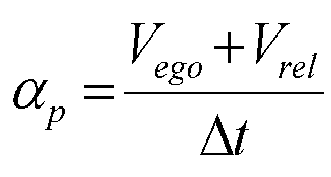
- Further, the accelerated velocity of the front vehicle is calculated according to a following formula:

- Further, in the step S2, the adjusting, by the ACC module, the cruising velocity of the current vehicle based on the time headway th calculated in real time specifically includes:
- setting, by the ACC module, a maximum time headway threshold t h-max and a minimum time headway threshold t h-min for the current vehicle;
- calculating, by the variable time gap calculation model, a time headway th-i at a current time point, and comparing the time headway th-i with the maximum time headway threshold t h-max and the minimum time headway threshold t h-min , where
- if th-i > t h-max , the ACC module adjusts a current time headway of the current vehicle to the t h-max ;
- if th-i < t h-min , the ACC module adjusts the current time headway of the current vehicle to the t h-min ; or
- if th-i ∈ [t h-min , t h-max ], the ACC module adjusts the current time headway of the current vehicle to the th-i ; and
- adjusting, by the ACC module, a velocity of the current vehicle based on the current t h-max , t h-min , or th-i of the current vehicle.
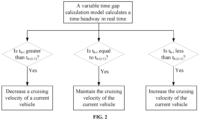
- Further, when the ACC module finds that a value of the accelerated velocity αp of the front vehicle increases and is positive, it indicates that the front vehicle has an acceleration trend, the time headway th-i calculated in real time by the variable time gap calculation model th = t 0 - Cv × Vrel - C∂ × αp - Cj × Jerkp is less than a time headway t h-(i-1) at a previous time point, and the ACC module increases the cruising velocity of the current vehicle to maintain a set spacing between the current vehicle and the front vehicle; and when the ACC module finds that the value of the accelerated velocity αp of the front vehicle increases and is negative, it indicates that the front vehicle has a deceleration trend, the time headway th-i calculated in real time by the variable time gap calculation model th = t 0 - Cv × Vrel - C∂ × αp - Cj × Jerkp is greater than the time headway t h-(i-1) at the previous time point, and the ACC module decreases the cruising velocity of the current vehicle to maintain the set spacing between the current vehicle and the front vehicle.
- Further, when the current vehicle is accelerating or decelerating, the ACC control module dynamically adjusts a value of the coefficient Cj of the change rate of the accelerated velocity of the current vehicle.
- Further, the cornering strategy includes:
- setting, by the ACC control module, a maximum curvature radius R max for cornering of the current vehicle;
- outputting, by the ACC control module, a cornering-specific accelerated velocity aw of the current vehicle through linear interpolation based on a relative distance and a relative velocity between the current vehicle and the front vehicle, and a curvature radius of the current vehicle;
- after the current vehicle enters a bend, calculating, by the ACC control module, a traveling distance L and an average accelerated velocity aavg of the current vehicle within M sampling cycles;
- if the curvature radius of the current vehicle is less than the maximum curvature radius R max, determining whether there is another vehicle in front of the current vehicle; and if there is no vehicle ahead, controlling, by the ACC control module, the current vehicle to travel the traveling distance L based on the accelerated velocity aavg ; and
- after the travel, if the ACC control module recognizes presence of another vehicle ahead, controlling, by the ACC control module, the current vehicle to follow the front vehicle to complete the cornering based on the accelerated velocity aw ; if no vehicle appears in front of the current vehicle, controlling, by the ACC control module, the current vehicle to complete the cornering at a maximum cruising velocity set in a case of no front vehicle during the cornering.
- Further, a calculation formula for the traveling distance L is as follows:


- Further, the ACC method also includes: when the current vehicle is overtaking in the ACC mode, assisting, by the ACC module, the current vehicle in completing the overtaking based on an overtaking assistance strategy, where the overtaking assistance strategy includes:
- when the ACC module detects that there is the front vehicle in front of the current vehicle and a velocity of the front vehicle is lower than the cruising velocity of the current vehicle, recognizing, by the ACC module, whether there is a sensor signal;
- if there is the sensor signal, determining whether information from another vehicle on an adjacent lane is detected based on the sensor signal; and if the another vehicle is not detected or if the another vehicle is detected but located outside a safe lane changing distance, displaying, by the ACC module, a lane changing instruction through an instrument panel to remind the driver; or if the another vehicle is detected and located within the safe lane changing distance, reminding, by the ACC module, the driver that a lane changing requirement is not met; and
- switching, by the driver, a turn signal lever after seeing the lane changing instruction, such that the ACC module first controls the current vehicle to accelerate forward, and then the driver performs a lane changing operation; and if the driver does not perform the lane changing operation within a time Y after the switching of the turn signal lever, disabling, by the ACC module, overtaking assistance, and controlling the current vehicle to maintain a safe distance from the front vehicle.
- The present disclosure further provides an ACC device for a vehicle, where the ACC device adopts the ACC method for the vehicle described above, and includes:
- a state machine configured to control enabling/disabling of an ACC function and receive an operating signal of a driver;
- a vehicle dynamics calculation module configured to calculate a dynamics parameter of the vehicle;
- a perception module configured to perceive the dynamics parameter of the vehicle and road environment information; and
- an ACC module including a longitudinal accelerated velocity control unit and a vehicle control unit, where the longitudinal accelerated velocity control unit is configured to calculate a time headway th between a current vehicle and a front vehicle, and information of an accelerated velocity of the vehicle in real time based on a variable time gap calculation model; and the vehicle control unit is configured to control the current vehicle to perform cruising, following, and cornering operations based on the information of the accelerated velocity.
- The present disclosure has the following advantages. The ACC device and method for a vehicle in the present disclosure utilizes a variable time gap calculation model to calculate a time headway in real time, knows a change of the time headway in time, and further allows a prompt response to acceleration and deceleration of a front vehicle, thereby greatly shortening response time of a driver. This improves road utilization and reduces an occurrence rate of a traffic accident. A cornering strategy and an overtaking assistance strategy are introduced to assist a vehicle more reasonably and safely in passing through a bend, lane changing, or overtaking, such that an ACC system has richer functions, becomes applicable to a plurality of application scenarios, and can meet diverse needs of users. The method introduces the variable time gap calculation model. In a following mode, this model can improve accuracy of a current vehicle following the front vehicle, allow a response in advance to a velocity change of the front vehicle, shorten the response time of the driver, improve road traffic efficiency, and reduce accidents. In addition, driving stability of the current vehicle can be improved accordingly, thereby making a passenger feel more comfortable.
- The present disclosure will be further described below in conjunction with the accompanying drawings and embodiments.
-
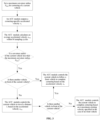
FIG. 1 is a flowchart of an ACC method for a vehicle according to the present disclosure. -
FIG. 2 is a flowchart of adjusting a vehicle velocity based on a time headway of a variable time gap calculation model according to the present disclosure. -
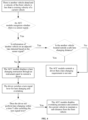
FIG. 3 is a flowchart of a cornering strategy according to the present disclosure. -
FIG. 4 is a flowchart of an overtaking assistance strategy according to the present disclosure. -
FIG. 5 is a curve chart showing a decelerated velocity as a function of a velocity according to the present disclosure. -
FIG. 6 is a curve chart showing an accelerated velocity as a function of a velocity according to the present disclosure. -
FIG. 7 is a curve chart showing a change rate of a decelerated velocity as a function of a velocity according to the present disclosure. -
FIG. 8 is a schematic structural diagram of an ACC device for a vehicle according to the present disclosure. - In the drawings, 1: state machine; 2: vehicle dynamics calculation unit; 3: perception module; 4: ACC module; 41: longitudinal accelerated velocity control unit; 42: vehicle control unit.
- The present disclosure will be described in further detail below in combination with accompanying drawings. These accompanying drawings are all simplified schematic diagrams, which merely illustrate the basic structure of the present disclosure in a schematic manner, and thus only show the parts associated with the present disclosure.
- In the description of the present disclosure, the terms "central", "longitudinal", "transverse", "long", "wide", "thick", "upper", "lower", "front", "rear", "left", "right", "vertical", "horizontal", "top", "bottom", "inner", "outer", "clockwise", "anticlockwise", "axial", "radial" and "circumferential" etc. are used to indicate orientations or position relations shown in the accompanying drawings. It should be noted that these terms are used herein for ease and simplification of description of the present disclosure rather than indicating or implying that the stated device or element must have a specific orientation or must be constructed and operated in a specific orientation, and thus cannot be construed as limitations to the present disclosure. In addition, features defined with "first" and "second" may explicitly or implicitly include one or more of the features. In the description of the present disclosure, unless otherwise specified, "a plurality of" means two or more.
- In the description of the present disclosure, it should be noted that, unless otherwise clearly specified, meanings of terms "mount", "connected with", and "connected to" should be understood in a board sense. For example, the connection may be a fixed connection, a removable connection, or an integral connection; may be a mechanical connection or an electrical connection; may be a direct connection or an indirect connection by using an intermediate medium; or may be intercommunication between two elements. Those of ordinary skill in the art may understand specific meanings of the foregoing terms in the present disclosure based on a specific situation.
- As shown in
FIG. 1 to FIG. 4 , an ACC method for a vehicle according to the present disclosure includes the following steps. - S1. An ACC function is enabled based on an operating signal of a driver, and after the ACC function is enabled, the driver sets a cruising velocity in an ACC mode.
- S2. An ACC module determines whether there is another vehicle in front of a current vehicle. If there is no vehicle in front of the current vehicle, the current vehicle travels at the set cruising velocity set by the driver. If there is another vehicle in front of the current vehicle, the ACC module enables a variable time gap calculation model to calculate a time headway th between the current vehicle and the front vehicle in real time, and adjusts the cruising velocity of the current vehicle based on the real-time time headway th.
- S3. When the current vehicle is cornering in the ACC mode, the ACC module adjusts the cruising velocity of the current vehicle based on a cornering strategy.
- It should be noted that when an ACC function of a vehicle is activated, a driver can set a cruising velocity V, for example, 50 km/h, and can select an initial time headway t 0. The initial time headway t 0 is a value corresponding to a time headway gear of the vehicle. Then, the vehicle can travel based on the set cruising velocity and initial time headway. When there is no vehicle in front of the current vehicle, the current vehicle can travel at a uniform velocity based on the set cruising velocity. When there is another vehicle in front of the vehicle, the driver can set a vehicle following a distance Dset (namely, a distance between the two vehicles), where Dset = t 0 × V . According to this formula, the current vehicle can increase or decrease the cruising velocity to maintain a set vehicle spacing.
- When the current vehicle starts a following mode, the ACC module of the current vehicle enables the variable time gap calculation model to calculate the time headway th between the current vehicle and the front vehicle in real time. The time headway th herein is a real-time time headway that varies based on the initial time headway t 0. When the front vehicle suddenly accelerates/decelerates sharply, if the cruising velocity of the current vehicle remains unchanged, a spacing between the current vehicle and the front vehicle suddenly increases/decreases. This method introduces the variable time gap calculation model, which can know a change of the time headway in real time, and thus can monitor a velocity change trend of the front vehicle in real time. The variable time gap calculation model is as follows: th = t 0 - Cv × Vrel - C∂ × αp - Cj × Jerkp , where th represents the real-time time headway, t 0 represents the initial time headway, Cv , C∂ , and Cj each represent a coefficient greater than 0, Vrel represents a relative velocity between the current vehicle and the front vehicle, αp represents an accelerated velocity of the front vehicle, and Jerkp represents a change rate of an accelerated velocity of the current vehicle. The variable time gap calculation model in the present disclosure associates the time headway th with a velocity change rate (namely, the αp ) of the front vehicle, the change rate of the accelerated velocity of the current vehicle (namely, the Jerkp ), and the relative velocity between the two vehicles (namely, the Vrel ), which can more accurately reflect a change trend of the time headway th . Moreover, the change rate Jerkp of the accelerated velocity of the current vehicle can reflect a velocity change during acceleration/deceleration of the current vehicle. The coefficient Cj can limit the change rate Jerkp of the accelerated velocity to prevent a passenger from feeling uncomfortable due to sharp acceleration/deceleration of the current vehicle. For example, value ranges of the coefficients Cv , C∂ , and Cj are as follows: 0.05≤Cv ≤0.8, 0<C ∂≤1, and 0<Cj ≤0.1. The coefficient Cv is used to adjust the vehicle spacing. The coefficient C ∂ is used to assist in analyzing a trend of the accelerated velocity of the front vehicle, and a larger value of the C ∂ means that the current vehicle is more sensitive to an acceleration trend of the front vehicle. The coefficient Cj is used to adjust a comfort level for a change of the accelerated velocity of the current vehicle.
- It should be noted that the current vehicle can use a sensor (such as a camera, a radar, or an ultrasonic sensor) to collect sensing data (such as a video image and distance data). Based on the collected data, the current vehicle can calculate a relative distance and the relative velocity between the front vehicle and the current vehicle. In a vehicle following process, the relative velocity between the front vehicle and the current vehicle can be monitored in real time, and is processed to calculate a real-time accelerated velocity of the front vehicle. In this embodiment, the accelerated velocity of the front vehicle is calculated according to a following formula:


- In the step S2, the adjusting, by the ACC module, the cruising velocity of the current vehicle based on the real-time time headway th specifically includes: setting, by the ACC module, a maximum time headway threshold t h-max and a minimum time headway threshold t h-min for the current vehicle; calculating, by the variable time gap calculation model, a time headway th-i at a current time point, and comparing the time headway th-i with the maximum time headway threshold t h-max and the minimum time headway threshold t h-min , where if th-i > t h-max , the ACC module adjusts a current time headway of the current vehicle to the t h-max ; if th-i < t h-min , the ACC module adjusts a current time headway of the current vehicle to the t h-min ; or if th-i ∈ [t h-min , t h-max ], the ACC module adjusts the current time headway of the current vehicle to the t h-i ; and adjusting, by the ACC module, the velocity of the current vehicle based on the currently set t h-max , th-min , or th-i of the current vehicle. In other words, the present disclosure imposes a segment limitation on the real-time time headway th output by the variable time gap calculation model. When the calculated time headway th exceeds the maximum time headway threshold t h-max , the ACC module selects the maximum time headway threshold t h-max as the current time headway. When the calculated time headway th is less than the minimum time headway threshold t h-min , the ACC module selects the minimum headway time threshold t h-min as the current time headway. In this way, the real-time calculated time headway th can be kept within a dynamic range to prevent a decrease in road traveling efficiency due to an excessive time headway th , and to prevent a traffic accident caused by a too small time headway th.
- When the ACC module finds that a value of the accelerated velocity αp of the front vehicle increases and is positive, it indicates that the front vehicle has the acceleration trend. The real-time time headway th-i calculated by the variable time gap calculation model th = t 0 - Cν × Krel - C∂ × αp - Cj × Jerkp is less than a time headway t h-(i-1) at a previous time point, and the ACC module increases the cruising velocity of the current vehicle to maintain a set spacing between the current vehicle and the front vehicle. That is, if the current vehicle suddenly accelerates at a time point ti , a time headway th that is at the time point ti and calculated based on the variable time gap calculation model is less than a time headway th calculated distance at a previous time point t i-1. In other words, there is a trend of decreasing the time headway th at the time point ti. In this case, according to a formula Dset = th ↓ ×V, the ACC module should increase the velocity V of the current vehicle in time to maintain the set spacing between the current vehicle and the front vehicle. If a fixed time headway strategy is adopted, the driver responds to accelerate only when finding that the spacing between the current vehicle and the front vehicle has increased. However, the present disclosure adopts the variable time gap calculation model to calculate a change of the time headway in real time, and controls the current vehicle to accelerate while finding that the front vehicle has the acceleration trend. This greatly reduces the response time of the driver, improves vehicle following accuracy, and prevents other vehicles from jumping a queue due to an increased vehicle spacing.
- When the ACC module finds that the value of the accelerated velocity αp of the front vehicle increases and is negative, it indicates that the front vehicle has a deceleration trend. If the real-time time headway th-i calculated by the variable time gap calculation model th = t 0 - Cν × Vrel - C∂ × αp - Cj × Jerkp is greater than the time headway t h-(i-1) at the previous time point, the ACC module decreases the cruising velocity of the current vehicle to maintain the set spacing between the current vehicle and the front vehicle. That is, if the current vehicle suddenly decelerates, the time headway th that is at the time point ti and calculated by the variable time gap calculation model is greater than the time headway th calculated at the previous time point t j-1. In other words, there is a trend of increasing the time headway th at the time point ti . In this case, according to a formula Dset = th ↑ ×V , the ACC module should decrease the velocity V of the current vehicle in time to maintain the set spacing between the current vehicle and the front vehicle. If the fixed time headway strategy is adopted, the driver responds to decelerate only when finding that the spacing between the current vehicle and the front vehicle has decreased. However, the present disclosure adopts the variable time gap calculation model to calculate the change of the time headway in real time, and controls the current vehicle to decelerate while finding that the front vehicle has the deceleration trend. This greatly reduces the response time of the driver and prevents a collision with the front vehicle due to an overdue response of the current vehicle.
- It should be noted that when the current vehicle is accelerating or decelerating, the ACC module dynamically adjusts a value of the coefficient Cj of the change rate of the accelerated velocity of the current vehicle. A value range of the coefficient Cj is from 0 to 0.1 (excluding 0). Assuming that the change rate Jerkp of the accelerated velocity of the current vehicle is 3 m/s3, the passenger may feel that the acceleration is too fast. In this case, assuming the coefficient Cj is set to 0.05, the change rate Jerkp of the accelerated velocity can be limited to 1.5 m/s3 to prevent the current vehicle from accelerating too fast. Compared with the prior art, the variable time gap calculation model of the present disclosure does not simply associate the time headway with the relative velocity, but introduces two parameters: the velocity change rate of the front vehicle and the change rate of the accelerated velocity of the current vehicle. In this way, the variable time gap calculation model can calculate a more accurate and reasonable time gap, thereby maintaining a more reasonable spacing between the current vehicle and the front vehicle.
- In the ACC mode, the current vehicle may need to pass through a bend. The cornering strategy of the present disclosure includes: setting, by the ACC module, a maximum curvature radius R max for cornering of the current vehicle; outputting, by the ACC module, a cornering-specific accelerated velocity aw of the current vehicle through linear interpolation based on the relative distance and the relative velocity between the current vehicle and the front vehicle, and a curvature radius of the current vehicle; after the current vehicle enters the bend, calculating, by the ACC module, a traveling distance L and an average accelerated velocity aavg of the current vehicle within M sampling cycles; if the curvature radius of the current vehicle is less than the maximum curvature radius R max , determining whether there is another vehicle in front of the current vehicle; and if there is no vehicle ahead, controlling, by the ACC module, the current vehicle to travel the traveling distance L based on the accelerated velocity aavg ; and after the travel, if the ACC module recognizes presence of another vehicle ahead, controlling, by the ACC module, the current vehicle to follow the another vehicle ahead to complete the cornering based on the accelerated velocity aw ; and if no vehicle appears in front of the current vehicle, controlling, by the ACC module, the current vehicle to complete the cornering at a maximum cruising velocity set in a case of no front vehicle during the cornering.
- It should be noted that a calculation formula for the traveling distance L is as follows:


- In other words, the cornering strategy of the present disclosure does not simply complete the cornering based on the accelerated velocity aw calculated by the ACC module based on the relative distance, the relative velocity, and the curvature radius of the current vehicle, but is a determining process. After the current vehicle enters the bend, the ACC module calculates the traveling distance L of the current vehicle in real time within the M sampling cycles (for example, 8 to 12 sampling cycles, with each sampling cycle set to 20 ms to 60 ms, which may be set for different vehicle models based on an actual situation). If the current vehicle immediately finds, after entering the bend, that the front vehicle disappears and a sensor of the current vehicle is not faulty, the ACC module controls the current vehicle to first travel the traveling distance L at the accelerated velocity aavg , to ensure that the disappearance of the front vehicle is not caused by obstruction of the sensor by objects such as leaves and mud. If the current vehicle is directly enabled to travel according to a strategy of no target ahead, a traffic accident may occur. If the sensor recognizes the front vehicle again after traveling the traveling distance L, the ACC module controls the current vehicle to follow the front vehicle to complete the cornering at the accelerated velocity aw . If the sensor still does not recognize the front vehicle again after traveling the traveling distance L, the ACC module controls the current vehicle to complete the cornering at the set maximum cruising velocity. The cornering strategy of the present disclosure considers an unexpected situation that may occur during the cornering. For example, the current vehicle follows the front vehicle to go straight, and at an intersection, the current vehicle needs to turn, but the front vehicle continues to go straight. In this case, the sensor of the current vehicle recognizes that the front vehicle has disappeared, and there is no target vehicle in front of the current vehicle. However, if there is a tree on a road or construction is underway, leaves, plastic strips, or other objects may be blown by wind to block the sensor of the current vehicle. As a result, the sensor also recognizes the disappearance of the front vehicle (this recognition result is inaccurate). If the current vehicle travels based on a situation in which there is no target vehicle ahead, a collision occurs. Therefore, the cornering strategy of the present disclosure fully considers an actual scenario and adopts a staged cornering method. Firstly, the current vehicle travels a certain distance at a safe velocity. If the current vehicle still finds that there is no target vehicle ahead after traveling the certain distance, the current vehicle increases its velocity for traveling. If there is no vehicle ahead but the current vehicle continues to travel at the safe velocity, a road congestion is also caused due to a too low velocity. Therefore, the cornering strategy adopted in the present disclosure not only can improve traveling efficiency of a vehicle on the road, but also can ensure traveling safety and reduce an occurrence rate of a traffic accident.
- The ACC method further includes: when the current vehicle is overtaking in the ACC mode, assisting, by the ACC module, the current vehicle in completing the overtaking based on an overtaking assistance strategy. The overtaking assistance strategy includes: when the ACC module detects that there is the front vehicle in front of the current vehicle and a velocity of the front vehicle is lower than the cruising velocity of the current vehicle, recognizing, by the ACC module, whether there is a sensor signal; if there is the sensor signal, determining whether information from another vehicle in an adjacent lane is detected based on the sensor signal; and if the another vehicle is not detected or if the another vehicle is detected but located outside a safe lane changing distance, displaying, by the ACC module, a lane changing instruction through an instrument panel to remind the driver; or if the another vehicle is detected and located within a safe lane changing distance, reminding, by the ACC module, the driver that a lane changing requirement is not met; and switching, by the driver, a turn signal lever after seeing the lane changing instruction, such that the ACC module first controls the current vehicle to accelerate forward, and then the driver performs a lane changing operation; and if the driver does not perform lane changing within a time Y (which may be, for example, 20 ms to 80 ms) after switching the turn signal lever, disabling, by the ACC module, overtaking assistance, and controlling the current vehicle to maintain a safe distance from the front vehicle; or if the current vehicle is not equipped with the sensor, after the driver switches a turn signal lever, first controlling, by the ACC module, the current vehicle to accelerate forward, and then assisting the driver in the lane changing and the overtaking.
- It should be noted that an existing ACC system does not have an overtaking assistance function. When a driver wants to overtake, the ACC module controls a vehicle to accelerate and overtake directly. As a result, the overtaking depends entirely on the driver's own judgment, which decreases overtaking and lane changing safety.
- The present disclosure provides an overtaking and lane changing assistance strategy. When the velocity of the front vehicle is too low and the current vehicle wants to overtake, the ACC module first recognizes whether there is a sensor signal (such as a sensor signal sent by an angular radar that can recognize whether there are other vehicles on lanes on both sides of the current vehicle). If the sensor detects that there are no vehicles on the lanes adjacent to the current vehicle, the ACC module can issue the lane changing instruction to remind the driver to perform the lane changing safely. If the sensor detects that there are other vehicles on the lanes adjacent to the current vehicle, but the other vehicles are far away from the current vehicle and will not affect the lane changing and the overtaking, the ACC module can also issue the lane changing instruction to remind the driver to perform the lane changing safely. After seeing the lane changing instruction, the driver can turn on a turn signal for the lane changing and the overtaking. If the driver has turned on the turn signal for a period of time but the current vehicle does not perform the lane changing and the overtaking, the ACC module disables the overtaking assistance and controls the current vehicle to maintain the safe distance from the front vehicle. If the sensor detects that there are other vehicles on the lanes adjacent to the current vehicle, and the other vehicles are close to the current vehicle, the ACC module reminds the driver that the lane changing requirement is not met. If the current vehicle is not equipped with the sensor, after the driver switches the turn signal lever, the ACC module first enables the current vehicle to accelerate forward and then assists the driver in the lane changing and the overtaking. The overtaking and lane changing safety is determined by the driver.
- It should be noted that the present disclosure further limits an accelerated velocity, a decelerated velocity, and a change rate of the decelerated velocity deceleration change rate of a vehicle. As shown in
FIG. 5 , when a vehicle velocity exceeds 20 m/s (namely 72 km/h) and lasts for at least 2 s, an automatic decelerated velocity is set to not exceed 3.5 m/s2. When the vehicle velocity is lower than 5 m/s (namely, 18 km/h) and lasts for at least 2 s, an average automatic decelerated velocity is set to not exceed 5 m/s2. As shown inFIG. 6 , when the vehicle velocity exceeds 20 m/s (namely 72 km/h) and lasts for at least 2 s, an automatic accelerated velocity is set to not exceed 2 m/s2. When the vehicle velocity is lower than 5 m/s (namely, 18 km/h) and lasts for at least 2 s, an average automatic accelerated velocity is set to not exceed 4 m/s2. As shown inFIG. 7 , when the vehicle velocity exceeds 20 m/s and lasts for at least 1 s, a change rate of the automatic decelerated velocity is set to not exceed 2.5 m/s2. When the vehicle velocity is lower than 5 m/s and lasts for at least 1 s, a change rate of the average automatic decelerated velocity is set to not exceed 5 m/s3. - Different accelerated and decelerated velocities can be set for different driving modes of the vehicle. For example, in an economic mode, when the vehicle is accelerating or decelerating, in the case of a low accelerated velocity, the vehicle decelerates through coasting below a safe distance to save energy. Appropriate accelerated and decelerated velocities can be set through calibration. In a standard mode, standard accelerated and decelerated velocities can be used in the ACC mode. In a movement mode, accelerated and decelerated velocities higher than the standard accelerated and decelerated velocities can be used in the ACC mode, for example, are set to 1.05 to 1.35 times the standard accelerated and decelerated velocities.
- As shown in
FIG. 8 , the present disclosure further provides an ACC device for a vehicle, where the ACC device adopts the ACC method for a vehicle. The ACC device includes: astate machine 1 configured to control enabling/disabling of an ACC function and receive an operating signal of a driver; a vehicledynamics calculation module 2 configured to calculate a dynamics parameter of a vehicle; aperception module 3 configured to perceive the dynamics parameter of the vehicle and road environment information; and anACC module 4 including a longitudinal acceleratedvelocity control unit 41 and avehicle control unit 42, where the longitudinal acceleratedvelocity control unit 41 is configured to calculate a time headway th between a current vehicle and a front vehicle, and information of an accelerated velocity of the vehicle in real time based on a variable time gap calculation model; and thevehicle control unit 42 is configured to control the current vehicle to perform cruising, following, and cornering operations based on the calculated information of the accelerated velocity. It can be understood that thestate machine 1 can control state switching of the ACC function, including enabled, disabled, idle, faulty, and other states of the ACC function. The driver sets operating signals of the driver such an ACC enabling/disabling signal and a vehicle start signal, which are sent to thestate machine 1. The vehicledynamics calculation module 2 can calculate a yaw angle of the vehicle, a velocity of the current vehicle, and other parameters. Theperception module 3 can receive a sensing signal from a sensor (such as a signal from a millimeter wave radar, a signal from a LiDAR, or a video image from a camera), and create a traveling trajectory of the vehicle based on the sensing signal, for example, including information of current and adjacent lanes, and other vehicle information. The longitudinal acceleratedvelocity control unit 41 can calculate an accelerated velocity (such as a cruising velocity, an accelerated velocity for vehicle following, and an accelerated velocity for lane changing) based on the other vehicle information, the lane information, and the like. Thevehicle control unit 42 can convert acceleration and deceleration signals output by the longitudinal acceleratedvelocity control unit 41 into a torque required by the vehicle. - The control device of the present disclosure includes functions such as driver overriding (namely, master control by the driver), cruise control, following control, cornering assistance, cut-in/cut-out detection, overtaking assistance, and system warning. The driver overriding means that the driver can take over the vehicle at any time for overtaking. When the driver presses an accelerator pedal, an ACC system enters an overridden state and starts timing, and the driver overtakes or accelerates. After the driver completes the operation and releases the accelerator pedal, the ACC system takes over the vehicle again within a few minutes (usually 3 to 5 minutes). The cruise control means that when there is no target vehicle ahead, the vehicle travels at a target velocity set by the ACC system. The following control means that there is a target vehicle ahead, and the current vehicle follows the target vehicle to travel within a safe distance or stops based on a time headway. The cornering assistance means that when the vehicle experiences lateral acceleration and the target vehicle cannot be detected due to a sensor position and cornering of the target vehicle, a longitudinal accelerated velocity is limited. The cut-in/cut-out detection means that when it is detected that a front vehicle on a current lane performs lane changing and cuts into an adjacent lane from the current lane, or that a vehicle on an adjacent lane cuts into a current lane, the ACC system dynamically controls an accelerated velocity of the vehicle based on different scenarios. The overtaking assistance means that when the driver has an intention to overtake in different scenarios, the ACC system makes corresponding strategies to assist the vehicle in safely overtaking. The system warning means that the driver is alerted when it is predicted that the vehicle encounters a relevant danger.
- In conclusion, the ACC device and method for a vehicle in the present disclosure can utilize a variable time gap calculation model to calculate a time headway in real time, know a change of the time headway in time, and further allow a prompt response to acceleration and deceleration of a front vehicle, thereby greatly shortening response time of a driver. This improves road utilization and reduce an occurrence rate of a traffic accident. A cornering strategy and an overtaking assistance strategy are introduced to assist a vehicle more reasonably and safely in passing through a bend, lane changing, or overtaking, such that an ACC system has richer functions, is applicable to a plurality of application scenarios, and can meet diverse needs of users.
- Under the inspiration of the above ideal embodiments of the present disclosure, a skilled person can absolutely make various changes and modifications based on the above description content without departing from the scope of the technical idea of the present disclosure. The technical scope of the present disclosure is not limited to the content of this specification, which must be determined according to the scope of the claims.
Claims (10)
- An adaptive cruise control (ACC) method for a vehicle, characterized by comprising following steps:S1. enabling an ACC function based on an operating signal of a driver, and after the ACC function is enabled, setting, by the driver, a cruising velocity in an ACC mode;S2. determining, by an ACC module, whether there is another vehicle in front of a current vehicle; and if there is no vehicle in front of the current vehicle, enabling the current vehicle to travel at the cruising velocity set by the driver; or if there is another vehicle, namely a front vehicle in front of the current vehicle, enabling, by the ACC module, a variable time gap calculation model to calculate a time headway th between the current vehicle and the front vehicle in real time, and adjusting, by the ACC module, the cruising velocity of the current vehicle based on the time headway th calculated in real time; andS3. when the current vehicle is cornering in the ACC mode, adjusting, by the ACC module, the cruising velocity of the current vehicle based on a cornering strategy.
- The adaptive cruise control method for the vehicle according to claim 1, characterized in that the variable time gap calculation model is as follows:
th = t 0 - Cv × Vrel - C∂ × αp - Cj × Jerkp , wherein th represents the time headway calculated in real time, t 0 represents an initial time headway, Cv , C∂ , and Cj each represent a coefficient greater than 0, Vrel represents a current relative velocity between the current vehicle and the front vehicle, αp represents an accelerated velocity of the front vehicle, and Jerkp represents a change rate of an accelerated velocity of the current vehicle. - The adaptive cruise control method for the vehicle according to claim 2, characterized in that the accelerated velocity of the front vehicle is calculated according to a following formula:


- The adaptive cruise control method for the vehicle according to claim 2, characterized in that in the step S2, the adjusting, by the ACC module, the cruising velocity of the current vehicle based on the time headway th calculated in real time specifically comprises:setting, by the ACC module, a maximum time headway threshold t h-max and a minimum time headway threshold t h-min for the current vehicle;calculating, by the variable time gap calculation model, a time headway th-i at a current time point, and comparing the time headway th-i with the maximum time headway threshold t h-max and the minimum time headway threshold t h-min , whereinif th-i > t h-max , the ACC module adjusts a current time headway of the current vehicle to the t h-max ;if th-i < t h-min , the ACC module adjusts the current time headway of the current vehicle to the t h-min ; orif th-i ∈ [t h-min , t h-max ], the ACC module adjusts the current time headway of the current vehicle to the th-i ; andadjusting, by the ACC module, a velocity of the current vehicle based on the current t h-max , t h-min , or th-i of the current vehicle.
- The adaptive cruise control method for the vehicle according to claim 4, characterized in thatwhen the ACC module finds that a value of the accelerated velocity αp of the front vehicle increases and is positive, it indicates that the front vehicle has an acceleration trend, the time headway th-i calculated in real time by the variable time gap calculation model th = t 0 - Cv × Vrel - C∂ × αp - Cj × Jerkp is less than a time headway t h-(i-1) at a previous time point, and the ACC module increases the cruising velocity of the current vehicle to maintain a set spacing between the current vehicle and the front vehicle; andwhen the ACC module finds that the value of the accelerated velocity αp of the front vehicle increases and is negative, it indicates that the front vehicle has a deceleration trend, the time headway th-i calculated in real time by the variable time gap calculation model th = t 0 - Cv × Vrel - C∂ × αp - Cj × Jerkp is greater than the time headway t h-(i-1) at the previous time point, and the ACC module decreases the cruising velocity of the current vehicle to maintain the set spacing between the current vehicle and the front vehicle.
- The adaptive cruise control method for the vehicle according to claim 5, characterized in that when the current vehicle is accelerating or decelerating, the ACC control module dynamically adjusts a value of the coefficient Cj of the change rate of the accelerated velocity of the current vehicle.
- The adaptive cruise control method for the vehicle according to claim 1, characterized in that the cornering strategy comprises:setting, by the ACC control module, a maximum curvature radius R max for cornering of the current vehicle;outputting, by the ACC control module, a cornering-specific accelerated velocity aw of the current vehicle through linear interpolation based on a relative distance and a relative velocity between the current vehicle and the front vehicle, and a curvature radius of the current vehicle;after the current vehicle enters a bend, calculating, by the ACC control module, a traveling distance L and an average accelerated velocity aavg of the current vehicle within M sampling cycles;if the curvature radius of the current vehicle is less than the maximum curvature radius R max , determining whether there is another vehicle in front of the current vehicle; and if there is no vehicle ahead, controlling, by the ACC control module, the current vehicle to travel the distance L based on the accelerated velocity aavg ; andafter the travel, if the ACC control module recognizes presence of another vehicle ahead, controlling, by the ACC control module, the current vehicle to follow the another vehicle ahead to complete the cornering based on the accelerated velocity aw ; if no vehicle appears in front of the current vehicle, controlling, by the ACC control module, the current vehicle to complete the cornering at a maximum cruising velocity set in a case of no front vehicle during the cornering.
- The adaptive cruise control method for the vehicle according to claim 7, characterized in that a calculation formula for the distance L is as follows:
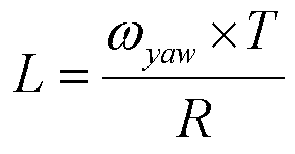

- The adaptive cruise control method for the vehicle according to claim 1, characterized by further comprising: when the current vehicle is overtaking in the ACC mode, assisting, by the ACC module, the current vehicle in completing the overtaking based on an overtaking assistance strategy, wherein the overtaking assistance strategy comprises:when the ACC module detects that there is the front vehicle in front of the current vehicle and a velocity of the front vehicle is lower than the cruising velocity of the current vehicle, recognizing, by the ACC module, whether there is a sensor signal;if there is the sensor signal, determining whether information from another vehicle on an adjacent lane is detected based on the sensor signal; and if the another vehicle is not detected or if the another vehicle is detected but located outside a safe lane changing distance, displaying, by the ACC module, a lane changing instruction through an instrument panel to remind the driver; or if the another vehicle is detected and located within the safe lane changing distance, reminding, by the ACC module, the driver that a lane changing requirement is not met; andswitching, by the driver, a turn signal lever after seeing the lane changing instruction, such that the ACC module first controls the current vehicle to accelerate forward, and then the driver performs a lane changing operation; and if the driver does not perform the lane changing operation within a time Y after the switching of the turn signal lever, disabling, by the ACC module, overtaking assistance, and controlling the current vehicle to maintain a safe distance from the front vehicle.
- An adaptive cruise control (ACC) device for a vehicle, characterized by adopting the adaptive cruise control method for the vehicle according to any one of claims 1 to 9, and comprising:a state machine (1) configured to control enabling/disabling of an ACC function and receive an operating signal of a driver;a vehicle dynamics calculation module (2) configured to calculate a dynamics parameter of the vehicle;a perception module (3) configured to perceive the dynamics parameter of the vehicle and road environment information; andan ACC module (4) comprising a longitudinal accelerated velocity control unit (41) and a vehicle control unit (42), wherein the longitudinal accelerated velocity control unit (41) is configured to calculate a time headway th between a current vehicle and a front vehicle, and information of an accelerated velocity of the vehicle in real time based on a variable time gap calculation model; and the vehicle control unit (42) is configured to control the current vehicle to perform cruising, following, and cornering operations based on the information of the accelerated velocity.
Applications Claiming Priority (2)
| Application Number | Priority Date | Filing Date | Title |
|---|---|---|---|
| CN202310190923.7A CN115848372B (en) | 2023-03-02 | 2023-03-02 | Vehicle Adaptive Cruise Control Device and Control Method |
| PCT/CN2023/108301 WO2024178900A1 (en) | 2023-03-02 | 2023-07-20 | Control apparatus and control method for adaptive cruise control of vehicle |
Publications (3)
| Publication Number | Publication Date |
|---|---|
| EP4446188A1 true EP4446188A1 (en) | 2024-10-16 |
| EP4446188A4 EP4446188A4 (en) | 2025-02-26 |
| EP4446188B1 EP4446188B1 (en) | 2026-04-15 |
Family
ID=85659691
Family Applications (1)
| Application Number | Title | Priority Date | Filing Date |
|---|---|---|---|
| EP23866675.4A Active EP4446188B1 (en) | 2023-03-02 | 2023-07-20 | Control apparatus and control method for adaptive cruise control of vehicle |
Country Status (4)
| Country | Link |
|---|---|
| EP (1) | EP4446188B1 (en) |
| JP (1) | JP7688778B2 (en) |
| CN (1) | CN115848372B (en) |
| WO (1) | WO2024178900A1 (en) |
Families Citing this family (7)
| Publication number | Priority date | Publication date | Assignee | Title |
|---|---|---|---|---|
| CN115848372B (en) * | 2023-03-02 | 2023-06-23 | 常州星宇车灯股份有限公司 | Vehicle Adaptive Cruise Control Device and Control Method |
| TWI843521B (en) * | 2023-04-11 | 2024-05-21 | 國立臺北科技大學 | Control method and device of time headway for adaptive cruise control system |
| CN116279469B (en) * | 2023-05-22 | 2023-09-22 | 安徽中科星驰自动驾驶技术有限公司 | Automatic driving vehicle following method and system |
| CN116834729B (en) * | 2023-08-28 | 2023-11-17 | 常州星宇车灯股份有限公司 | Transverse and longitudinal combined control system and control method for vehicle auxiliary driving |
| CN119018147B (en) * | 2024-07-11 | 2025-04-04 | 宿州学院 | Adaptive time interval calculation method and module for ACC overtaking auxiliary function |
| CN118618372B (en) * | 2024-08-12 | 2024-11-05 | 常州星宇车灯股份有限公司 | Vehicle self-adaptive cruising longitudinal acceleration control method |
| CN119099613A (en) * | 2024-11-08 | 2024-12-10 | 常州星宇车灯股份有限公司 | Adaptive cruise control method based on neural network approximation |
Family Cites Families (19)
| Publication number | Priority date | Publication date | Assignee | Title |
|---|---|---|---|---|
| JP3518424B2 (en) * | 1999-06-23 | 2004-04-12 | 日産自動車株式会社 | Inter-vehicle distance control device |
| JP2005145221A (en) * | 2003-11-14 | 2005-06-09 | Nissan Motor Co Ltd | Preceding vehicle tracking control device |
| JP4581988B2 (en) * | 2005-12-20 | 2010-11-17 | 日産自動車株式会社 | Control device for hybrid vehicle |
| JP5109495B2 (en) * | 2007-06-20 | 2012-12-26 | トヨタ自動車株式会社 | Vehicle travel control device |
| DE102011102435A1 (en) * | 2011-05-25 | 2012-11-29 | Audi Ag | Method for operating a longitudinal driver assistance system and motor vehicle |
| JP2016078730A (en) * | 2014-10-20 | 2016-05-16 | トヨタ自動車株式会社 | Vehicle travel control apparatus |
| JP6361886B2 (en) * | 2015-09-15 | 2018-07-25 | トヨタ自動車株式会社 | Vehicle travel control device |
| CN105172791A (en) * | 2015-10-30 | 2015-12-23 | 东风汽车公司 | Smart self-adaptive cruise control method |
| CN105667509A (en) * | 2015-12-30 | 2016-06-15 | 苏州安智汽车零部件有限公司 | Curve control system and method applied to automobile adaptive cruise control (ACC) system |
| EP3707046B1 (en) * | 2017-11-10 | 2023-01-11 | C.R.F. Società Consortile per Azioni | Adjusting the longitudinal motion control of a host motor vehicle based on the estimation of the travel trajectory of a leading motor vehicle |
| CN107891860A (en) * | 2017-11-14 | 2018-04-10 | 重庆长安汽车股份有限公司 | System and method based on road curvature automatic adjusument speed |
| CN109229098B (en) * | 2018-09-05 | 2020-09-11 | 广州小鹏汽车科技有限公司 | A method for controlling vehicle adaptive cruise distance and a vehicle following driving control device |
| CN109484407A (en) * | 2018-11-14 | 2019-03-19 | 北京科技大学 | A kind of adaptive follow the bus method that electric car auxiliary drives |
| CN109552327B (en) * | 2018-12-18 | 2020-10-16 | 重庆长安汽车股份有限公司 | System and method for improving curve performance of adaptive cruise system |
| CN111873998B (en) * | 2020-07-31 | 2021-07-06 | 重庆长安汽车股份有限公司 | Method for planning longitudinal acceleration of automatic driving vehicle |
| CN114407894A (en) * | 2020-09-25 | 2022-04-29 | 阿波罗智能技术(北京)有限公司 | Vehicle control method, device, electronic device and storage medium |
| EP4063215B1 (en) * | 2021-03-26 | 2023-12-20 | Aptiv Technologies Limited | Longitudinal acceleration control for autonomous driving |
| CN114394095B (en) * | 2022-01-24 | 2023-10-13 | 东风汽车集团股份有限公司 | ACC control method and device based on lane change intention recognition of side front vehicle |
| CN115848372B (en) * | 2023-03-02 | 2023-06-23 | 常州星宇车灯股份有限公司 | Vehicle Adaptive Cruise Control Device and Control Method |
-
2023
- 2023-03-02 CN CN202310190923.7A patent/CN115848372B/en active Active
- 2023-07-20 JP JP2024527611A patent/JP7688778B2/en active Active
- 2023-07-20 WO PCT/CN2023/108301 patent/WO2024178900A1/en not_active Ceased
- 2023-07-20 EP EP23866675.4A patent/EP4446188B1/en active Active
Also Published As
| Publication number | Publication date |
|---|---|
| CN115848372B (en) | 2023-06-23 |
| CN115848372A (en) | 2023-03-28 |
| EP4446188A4 (en) | 2025-02-26 |
| EP4446188B1 (en) | 2026-04-15 |
| JP7688778B2 (en) | 2025-06-04 |
| WO2024178900A1 (en) | 2024-09-06 |
| JP2025512188A (en) | 2025-04-17 |
Similar Documents
| Publication | Publication Date | Title |
|---|---|---|
| EP4446188B1 (en) | Control apparatus and control method for adaptive cruise control of vehicle | |
| US10597030B2 (en) | Vehicle running control apparatus | |
| US8762021B2 (en) | Driving support system | |
| US7212906B2 (en) | Follow running control system | |
| EP2763122A1 (en) | Vehicle driving assistance system | |
| US8103424B2 (en) | Inter-vehicle distance control apparatus and method for controlling inter-vehicle distance | |
| CN111267851B (en) | A vehicle following time interval update method, vehicle cruise control method and device | |
| US20190172355A1 (en) | Control system and control method for driving a motor vehicle and for avoiding a collision with another motor vehicle | |
| JP3785959B2 (en) | Vehicle travel control device | |
| JP2011197915A (en) | Apparatus and method for alarming of rear-end collision | |
| US12351200B2 (en) | Method and control system for limiting a driver acceleration request | |
| US20230182735A1 (en) | Method and control system for limiting a driver acceleration request | |
| JP2006036159A (en) | Vehicle travel control device | |
| CN119502902B (en) | An adaptive cruise anti-slope compensation and overtaking auxiliary control system and method | |
| JP2000118369A (en) | Travel control device for vehicles | |
| JP2003306053A (en) | Vehicle travel control device | |
| CN114670816B (en) | Reversing control method and device and electric automobile | |
| US12103567B2 (en) | Driving control method of vehicle and driving control device | |
| JP2020069954A (en) | Drive support device for vehicle | |
| JP5194822B2 (en) | Vehicle travel control device | |
| JP4715754B2 (en) | Travel control device | |
| US20260124930A1 (en) | Vehicle control device, vehicle control method, and storage medium | |
| US20250263071A1 (en) | Vehicle travel control device, method, and storage medium | |
| EP4620763A1 (en) | Vehicle control system | |
| EP4620762A1 (en) | Vehicle control system |
Legal Events
| Date | Code | Title | Description |
|---|---|---|---|
| STAA | Information on the status of an ep patent application or granted ep patent |
Free format text: STATUS: UNKNOWN |
|
| STAA | Information on the status of an ep patent application or granted ep patent |
Free format text: STATUS: THE INTERNATIONAL PUBLICATION HAS BEEN MADE |
|
| PUAI | Public reference made under article 153(3) epc to a published international application that has entered the european phase |
Free format text: ORIGINAL CODE: 0009012 |
|
| STAA | Information on the status of an ep patent application or granted ep patent |
Free format text: STATUS: REQUEST FOR EXAMINATION WAS MADE |
|
| 17P | Request for examination filed |
Effective date: 20240328 |
|
| AK | Designated contracting states |
Kind code of ref document: A1 Designated state(s): AL AT BE BG CH CY CZ DE DK EE ES FI FR GB GR HR HU IE IS IT LI LT LU LV MC ME MK MT NL NO PL PT RO RS SE SI SK SM TR |
|
| A4 | Supplementary search report drawn up and despatched |
Effective date: 20250128 |
|
| RIC1 | Information provided on ipc code assigned before grant |
Ipc: B60W 40/105 20120101ALI20250122BHEP Ipc: B60W 40/00 20060101ALI20250122BHEP Ipc: B60W 30/18 20120101ALI20250122BHEP Ipc: B60W 30/14 20060101ALI20250122BHEP Ipc: B60W 30/16 20200101AFI20250122BHEP |
|
| GRAP | Despatch of communication of intention to grant a patent |
Free format text: ORIGINAL CODE: EPIDOSNIGR1 |
|
| STAA | Information on the status of an ep patent application or granted ep patent |
Free format text: STATUS: GRANT OF PATENT IS INTENDED |
|
| RIC1 | Information provided on ipc code assigned before grant |
Ipc: B60W 30/16 20200101AFI20251024BHEP Ipc: B60W 30/14 20060101ALI20251024BHEP Ipc: B60W 30/18 20120101ALI20251024BHEP Ipc: B60W 40/00 20060101ALI20251024BHEP Ipc: B60W 40/105 20120101ALI20251024BHEP |
|
| DAV | Request for validation of the european patent (deleted) | ||
| DAX | Request for extension of the european patent (deleted) | ||
| INTG | Intention to grant announced |
Effective date: 20251114 |
|
| GRAS | Grant fee paid |
Free format text: ORIGINAL CODE: EPIDOSNIGR3 |
|
| GRAA | (expected) grant |
Free format text: ORIGINAL CODE: 0009210 |
|
| STAA | Information on the status of an ep patent application or granted ep patent |
Free format text: STATUS: THE PATENT HAS BEEN GRANTED |
|
| AK | Designated contracting states |
Kind code of ref document: B1 Designated state(s): AL AT BE BG CH CY CZ DE DK EE ES FI FR GB GR HR HU IE IS IT LI LT LU LV MC ME MK MT NL NO PL PT RO RS SE SI SK SM TR |
|
| REG | Reference to a national code |
Ref country code: CH Ref legal event code: F10 Free format text: ST27 STATUS EVENT CODE: U-0-0-F10-F00 (AS PROVIDED BY THE NATIONAL OFFICE) Effective date: 20260415 |
|
| REG | Reference to a national code |
Ref country code: DE Ref legal event code: R096 Ref document number: 602023015489 Country of ref document: DE |