EP4443294A1 - Task optimization method and apparatus, and computer readable storage medium - Google Patents
Task optimization method and apparatus, and computer readable storage medium Download PDFInfo
- Publication number
- EP4443294A1 EP4443294A1 EP22903048.1A EP22903048A EP4443294A1 EP 4443294 A1 EP4443294 A1 EP 4443294A1 EP 22903048 A EP22903048 A EP 22903048A EP 4443294 A1 EP4443294 A1 EP 4443294A1
- Authority
- EP
- European Patent Office
- Prior art keywords
- task
- target task
- tasks
- target
- optimization
- Prior art date
- Legal status (The legal status is an assumption and is not a legal conclusion. Google has not performed a legal analysis and makes no representation as to the accuracy of the status listed.)
- Pending
Links
Images

Classifications
-
- G—PHYSICS
- G06—COMPUTING OR CALCULATING; COUNTING
- G06F—ELECTRIC DIGITAL DATA PROCESSING
- G06F9/00—Arrangements for program control, e.g. control units
- G06F9/06—Arrangements for program control, e.g. control units using stored programs, i.e. using an internal store of processing equipment to receive or retain programs
- G06F9/46—Multiprogramming arrangements
- G06F9/48—Program initiating; Program switching, e.g. by interrupt
-
- G—PHYSICS
- G06—COMPUTING OR CALCULATING; COUNTING
- G06F—ELECTRIC DIGITAL DATA PROCESSING
- G06F9/00—Arrangements for program control, e.g. control units
- G06F9/06—Arrangements for program control, e.g. control units using stored programs, i.e. using an internal store of processing equipment to receive or retain programs
- G06F9/46—Multiprogramming arrangements
- G06F9/48—Program initiating; Program switching, e.g. by interrupt
- G06F9/4806—Task transfer initiation or dispatching
- G06F9/4843—Task transfer initiation or dispatching by program, e.g. task dispatcher, supervisor, operating system
- G06F9/4881—Scheduling strategies for dispatcher, e.g. round robin, multi-level priority queues
-
- G—PHYSICS
- G06—COMPUTING OR CALCULATING; COUNTING
- G06Q—INFORMATION AND COMMUNICATION TECHNOLOGY [ICT] SPECIALLY ADAPTED FOR ADMINISTRATIVE, COMMERCIAL, FINANCIAL, MANAGERIAL OR SUPERVISORY PURPOSES; SYSTEMS OR METHODS SPECIALLY ADAPTED FOR ADMINISTRATIVE, COMMERCIAL, FINANCIAL, MANAGERIAL OR SUPERVISORY PURPOSES, NOT OTHERWISE PROVIDED FOR
- G06Q10/00—Administration; Management
- G06Q10/06—Resources, workflows, human or project management; Enterprise or organisation planning; Enterprise or organisation modelling
- G06Q10/063—Operations research, analysis or management
- G06Q10/0631—Resource planning, allocation, distributing or scheduling for enterprises or organisations
- G06Q10/06311—Scheduling, planning or task assignment for a person or group
- G06Q10/063116—Schedule adjustment for a person or group
-
- G—PHYSICS
- G06—COMPUTING OR CALCULATING; COUNTING
- G06Q—INFORMATION AND COMMUNICATION TECHNOLOGY [ICT] SPECIALLY ADAPTED FOR ADMINISTRATIVE, COMMERCIAL, FINANCIAL, MANAGERIAL OR SUPERVISORY PURPOSES; SYSTEMS OR METHODS SPECIALLY ADAPTED FOR ADMINISTRATIVE, COMMERCIAL, FINANCIAL, MANAGERIAL OR SUPERVISORY PURPOSES, NOT OTHERWISE PROVIDED FOR
- G06Q10/00—Administration; Management
- G06Q10/06—Resources, workflows, human or project management; Enterprise or organisation planning; Enterprise or organisation modelling
- G06Q10/063—Operations research, analysis or management
- G06Q10/0631—Resource planning, allocation, distributing or scheduling for enterprises or organisations
- G06Q10/06312—Adjustment or analysis of established resource schedule, e.g. resource or task levelling, or dynamic rescheduling
-
- G—PHYSICS
- G06—COMPUTING OR CALCULATING; COUNTING
- G06Q—INFORMATION AND COMMUNICATION TECHNOLOGY [ICT] SPECIALLY ADAPTED FOR ADMINISTRATIVE, COMMERCIAL, FINANCIAL, MANAGERIAL OR SUPERVISORY PURPOSES; SYSTEMS OR METHODS SPECIALLY ADAPTED FOR ADMINISTRATIVE, COMMERCIAL, FINANCIAL, MANAGERIAL OR SUPERVISORY PURPOSES, NOT OTHERWISE PROVIDED FOR
- G06Q10/00—Administration; Management
- G06Q10/06—Resources, workflows, human or project management; Enterprise or organisation planning; Enterprise or organisation modelling
- G06Q10/063—Operations research, analysis or management
- G06Q10/0631—Resource planning, allocation, distributing or scheduling for enterprises or organisations
- G06Q10/06316—Sequencing of tasks or work
-
- G—PHYSICS
- G06—COMPUTING OR CALCULATING; COUNTING
- G06F—ELECTRIC DIGITAL DATA PROCESSING
- G06F2209/00—Indexing scheme relating to G06F9/00
- G06F2209/48—Indexing scheme relating to G06F9/48
- G06F2209/484—Precedence
-
- Y—GENERAL TAGGING OF NEW TECHNOLOGICAL DEVELOPMENTS; GENERAL TAGGING OF CROSS-SECTIONAL TECHNOLOGIES SPANNING OVER SEVERAL SECTIONS OF THE IPC; TECHNICAL SUBJECTS COVERED BY FORMER USPC CROSS-REFERENCE ART COLLECTIONS [XRACs] AND DIGESTS
- Y02—TECHNOLOGIES OR APPLICATIONS FOR MITIGATION OR ADAPTATION AGAINST CLIMATE CHANGE
- Y02D—CLIMATE CHANGE MITIGATION TECHNOLOGIES IN INFORMATION AND COMMUNICATION TECHNOLOGIES [ICT], I.E. INFORMATION AND COMMUNICATION TECHNOLOGIES AIMING AT THE REDUCTION OF THEIR OWN ENERGY USE
- Y02D10/00—Energy efficient computing, e.g. low power processors, power management or thermal management
Definitions
- Embodiments of the present disclosure relate to, but not limited to, the technical field of information, and in particular, to a task optimization method and apparatus, and a computer-readable storage medium.
- DAG Directed Acyclic Graph
- Embodiments of the present disclosure provide a task optimization method and apparatus, and a computer-readable storage medium.
- an embodiment provides a task optimization method, including: evaluating tasks to identify a target task to be optimized; adjusting a target task parameter corresponding to the target task; executing the target task parameter by virtual scheduling to perform global scheduling speculation; and determining the target task parameter in response to a speculation effect of the global scheduling speculation meeting an expectation, and executing the target task based on the target task parameter.
- an embodiment provides a task optimization apparatus, including a memory, a processor, and a computer program stored in the memory and executable by the processor, where the computer program, when executed by the processor, causes the processor to implement the task optimization method in accordance with the first aspect.
- an embodiment provides an electronic device, including a memory, a processor, and a computer program stored in the memory and executable by the processor, where the computer program, when executed by the processor, causes the processor to implement the task optimization method in accordance with the first aspect.
- an embodiment provides a computer-readable storage medium, storing a computer-executable program which, when executed by a computer, causes the computer to implement the task optimization method in accordance with the first aspect.
- the term “plurality of” means at least two, the term such as “greater than”, “less than”, “exceed” or variants thereof prior to a number or series of numbers is understood to not including the number adjacent to the term.
- the term “at least” prior to a number or series of numbers is understood to include the number adjacent to the term “at least”, and all subsequent numbers or integers that could logically be included, as clear from context.
- a data middle platform sets up unified standards at the enterprise level, interconnects enterprise data channels, breaks through the information island effect, and reduces the costs of redundant construction. It can not only quickly provide data service support for different business departments, but also reduce the load of the back-end and improve the overall operating efficiency and quality.
- task optimization generally focuses on tasks requiring a long running time or a large number of resources, but the running time or the number of resources alone does not necessarily mean that there is a problem with the task.
- whether optimization of a single task has an impact on the overall efficiency usually needs to be tested in practice. The testing process requires a long cycle and high costs of trial and error, affecting the efficiency and success rate of task optimization.
- embodiments of the present disclosure provide a task optimization method and apparatus, and a computer-readable storage medium.
- tasks are evaluated and a target task to be optimized is identified; a target task parameter corresponding to the target task is adjusted; the target task parameter is executed by virtual scheduling to perform global scheduling speculation; and the target task parameter is determined when a speculation effect of the global scheduling speculation meets an expectation, and the target task is executed based on the target task parameter. Based on this, the tasks are evaluated to identify the task to be optimized.
- An optimal task optimization mode can be quickly found through iteration by adjusting the task parameter and performing global scheduling speculation by virtual scheduling, such that the efficiency and success rate of task optimization can be improved, thereby avoiding indiscriminate optimizations which cannot achieve a satisfactory optimization effect. Therefore, the present disclosure can find out an optimal task parameter globally, to ensure that the data output capability of the entire data middle platform system can reach an ideal target state.
- FIG. 1 is a flowchart of a task optimization method according to an embodiment of the present disclosure.
- the task optimization method includes, but not limited to, the following steps.
- a step of 101 tasks are evaluated and a target task to be optimized is identified.
- a target task parameter corresponding to the target task is adjusted.
- the target task parameter is executed by virtual scheduling to perform global scheduling speculation.
- the target task parameter is determined when a speculation effect of the global scheduling speculation meets an expectation, and the target task is executed based on the target task parameter.
- the method may be used to optimize tasks that are run on a data middle platform.
- tasks are evaluated and a target task to be optimized is identified; a target task parameter corresponding to the target task is adjusted; the target task parameter is executed by virtual scheduling to perform global scheduling speculation; and the target task parameter is determined when a speculation effect of the global scheduling speculation meets an expectation, and the target task is executed based on the target task parameter.
- the tasks are evaluated to identify the task to be optimized.
- An optimal task optimization mode can be quickly found through iteration by adjusting the task parameter and performing global scheduling speculation by virtual scheduling, such that the efficiency and success rate of task optimization can be improved, thereby avoiding indiscriminate optimizations which cannot achieve a satisfactory optimization effect. Therefore, the present disclosure can find out an optimal task parameter globally, to ensure that the data output capability of the entire data center system can reach an ideal target state. It should be noted that the task identification and adjustment may be performed manually or automatically through machine learning.
- evaluating the tasks and thereby identifying the target task to be optimized may be implemented by acquiring static information and dynamic information of each of the tasks, establishing an evaluation model for the task based on the static information and the dynamic information, and identifying the target task to be optimized according to an evaluation result of the evaluation model.
- the static information is configuration information of the task.
- the static information may include, but not limited to, an input table, an output table, a resource ratio, a task priority, a scheduling period, etc.
- the dynamic information is historical execution information of the task.
- the dynamic information may include, but not limited to, a historical average execution time, an average start-up delay, an average data processing volume, a degree to which the task is relied upon, etc.
- S(task evaluation dimensions) Exec(task influencing factors)
- Exec a fitted task execution model, which can infer a value of each evaluation dimension according to several influencing factors.
- the target task to be optimized is identified according to the evaluation result. The identification may be performed manually or automatically according to a rule.
- the target task parameter of the task execution model is adjusted according to an optimization direction.
- the optimization direction is an evaluation dimension to be improved.
- Global scheduling speculation is performed by virtual scheduling using the adjusted task execution model.
- the adjusted task configuration is applied to a production system; otherwise, the parameter of the task execution model is further adjusted for optimization.
- tasks to be optimized can be identified globally, and task parameters can be optimized by performing global scheduling speculation by virtual scheduling, thereby improving the operating efficiency of the system.
- step 101 may include, but not limited to, the following steps.
- step of 1011 static information and dynamic information of each of the tasks are acquired, where the static information is configuration information of the task, and the dynamic information is historical execution information of the task.
- an evaluation model for the task is established based on the static information and the dynamic information.
- the target task to be optimized is identified according to an evaluation result of the evaluation model.
- the static information of the task may be acquired from the configuration information of the task.
- the static information may include, but not limited to, an input table, an output table, a resource ratio, a task priority, a scheduling period, etc.
- the historical execution information of the task may be acquired from execution logs of the task.
- the dynamic information may include, but not limited to, a historical average execution time, an average start-up delay, an average data processing volume, a degree to which the task is relied upon, etc.
- evaluation dimensions and influencing factors of the task may be determined according to the static information and the dynamic information, and then the evaluation model for the task may be established according to the evaluation dimensions and the influencing factors.
- the optimization effect can be quickly simulated by establishing a task evaluation model and performing virtual scheduling, thereby improving the overall efficiency of task optimization.
- the multi-dimensional task evaluation provides effective guidance for the direction of task optimization.
- task evaluation information concerned by users is associated with a simplified execution model by establishing a task evaluation model.
- Tasks to be optimized can be quickly identified according to the evaluation information and a service objective.
- An optimal task optimization mode can be quickly found through iteration by adjusting the task parameter and performing task speculation in a virtual scheduling engine, such that the efficiency and success rate of task optimization can be improved, thereby avoiding indiscriminate optimizations which cannot achieve a satisfactory optimization effect.
- step 102 may include, but not limited to, the following steps.
- an optimization direction of the target task is determined, where the optimization direction is the evaluation dimension for which the target task is to be improved.
- the target task parameter corresponding to the target task is adjusted according to the optimization direction of the target task.
- the target task parameter of the task execution model is adjusted according to an optimization direction.
- the optimization direction is an evaluation dimension to be improved.
- the evaluation dimension may include, but not limited to, importance, algorithm efficiency, delay, duration, etc. For example, when the algorithm efficiency falls within a normal range but the duration is too long, more resources need to be used. If the delay is too large, the scheduling logic needs to be optimized.
- the corresponding target task parameter of the target task is adjusted according to the evaluation dimension for which the target task is to be improved.
- step 103 may include, but not limited to, the following steps.
- an execution model for the target task is established, where the execution model is obtained by fitting the influencing factor of the target task.
- the target task parameter is executed by virtual scheduling using the execution model to perform the global scheduling speculation.
- the influencing factor of the task may include, but not limited to, dependency relationship, algorithm efficiency, priority, resource ratio, etc.
- Exec represents a fitted task execution model, which can infer a value of each evaluation dimension according to several influencing factors.
- the target task parameter is executed by virtual scheduling using the execution model to perform the global scheduling speculation. Based on this, according to the present disclosure, the optimization effect can be quickly simulated by performing global scheduling speculation by virtual scheduling using the adjusted task execution model, thereby improving the overall efficiency of task optimization.
- task evaluation information concerned by users is associated with a simplified execution model by establishing a task evaluation model.
- Tasks to be optimized can be quickly identified according to the evaluation information and a service objective.
- An optimal task optimization mode can be quickly found through iteration by adjusting the task parameter and performing task speculation in a virtual scheduling engine, such that the efficiency and success rate of task optimization can be improved, thereby avoiding indiscriminate optimizations which cannot achieve a satisfactory optimization effect.
- steps c, d, and e may be performed manually or automatically by a program.
- an embodiment of the present disclosure provides a task optimization apparatus.
- the task optimization apparatus includes one or more processors and one or more memories.
- FIG. 8 uses one processor and one memory as an example.
- the processor and the memory may be connected by a bus or in other ways. Connection by a bus is used as an example in FIG. 8 .
- the memory as a non-transitory computer-readable storage medium, may be configured for storing a non-transitory software program and a non-transitory computer-executable program, for example, the task optimization method in the embodiments of the present disclosure.
- the processor executes the non-transitory software program and the non-transitory computer-executable program stored in the memory, to implement the task optimization method in the embodiments of the present disclosure.
- the memory may include a program storage area and a data storage area.
- the program storage area may store an operating system, and an application required by at least one function.
- the data storage area may store data and the like required for executing the task optimization method in the embodiments of the present disclosure.
- the memory may include a highspeed random access memory, and may also include a non-transitory memory, e.g., at least one magnetic disk storage device, flash memory device, or other non-transitory solid-state storage device.
- the memory may include memories located remotely from the processor, and the remote memories may be connected to the task optimization apparatus via a network. Examples of the network include, but not limited to, the Internet, an intranet, a local area network, a mobile communication network, and combinations thereof.
- the non-transitory software program and the non-transitory computer-executable program required for implementing the task optimization method in the embodiments of the present disclosure are stored in the memory which, when executed by one or more processors, cause the one or more processors to implement the task optimization method in the embodiments of the present disclosure, for example, implement the method steps 101 to 104 in FIG. 1 , the method steps 1011 to 1013 in FIG. 2 , the method steps 1021 to 1022 in FIG. 3 , or the method steps 1031 to 1032 in FIG. 4 .
- tasks are evaluated and a target task to be optimized is identified; a target task parameter corresponding to the target task is adjusted; the target task parameter is executed by virtual scheduling to perform global scheduling speculation; and the target task parameter is determined when a speculation effect of the global scheduling speculation meets an expectation, and the target task is executed based on the target task parameter.
- the tasks are evaluated to identify the task to be optimized.
- An optimal task optimization mode can be quickly found through iteration by adjusting the task parameter and performing global scheduling speculation by virtual scheduling, such that the efficiency and success rate of task optimization can be improved, thereby avoiding indiscriminate optimizations which cannot achieve a satisfactory optimization effect. Therefore, the present disclosure can find out an optimal task parameter globally, to ensure that the data output capability of the entire data middle platform system can reach an ideal target state.
- an embodiment of the present disclosure provides an electronic device.
- the electronic device includes one or more processors and one or more memories.
- FIG. 9 uses one processor and one memory as an example.
- the processor and the memory may be connected by a bus or in other ways. Connection by a bus is used as an example in FIG. 9 .
- the memory as a non-transitory computer-readable storage medium, may be configured for storing a non-transitory software program and a non-transitory computer-executable program, for example, the task optimization method in the embodiments of the present disclosure.
- the processor executes the non-transitory software program and the non-transitory computer-executable program stored in the memory, to implement the task optimization method in the embodiments of the present disclosure.
- the memory may include a program storage area and a data storage area.
- the program storage area may store an operating system, and an application required by at least one function.
- the data storage area may store data and the like required for executing the task optimization method in the embodiments of the present disclosure.
- the memory may include a highspeed random access memory, and may also include a non-transitory memory, e.g., at least one magnetic disk storage device, flash memory device, or other non-transitory solid-state storage device.
- the memory may include memories located remotely from the processor, and the remote memories may be connected to the task optimization apparatus via a network. Examples of the network include, but not limited to, the Internet, an intranet, a local area network, a mobile communication network, and combinations thereof.
- the non-transitory software program and the non-transitory computer-executable program required for implementing the task optimization method in the embodiments of the present disclosure are stored in the memory which, when executed by one or more processors, cause the one or more processors to implement the task optimization method in the embodiments of the present disclosure, for example, implement the method steps 101 to 104, the method steps 1011 to 1013 in FIG. 2 , the method steps 1021 to 1022 in FIG. 3 , or the method steps 1031 to 1032 in FIG. 4 .
- tasks are evaluated and a target task to be optimized is identified; a target task parameter corresponding to the target task is adjusted; the target task parameter is executed by virtual scheduling to perform global scheduling speculation; and the target task parameter is determined when a speculation effect of the global scheduling speculation meets an expectation, and the target task is executed based on the target task parameter.
- the tasks are evaluated to identify the task to be optimized.
- An optimal task optimization mode can be quickly found through iteration by adjusting the task parameter and performing global scheduling speculation by virtual scheduling, such that the efficiency and success rate of task optimization can be improved, thereby avoiding indiscriminate optimizations which cannot achieve a satisfactory optimization effect. Therefore, the present disclosure can find out an optimal task parameter globally, to ensure that the data output capability of the entire data middle platform system can reach an ideal target state.
- an embodiment of the present disclosure provides a computer-readable storage medium, storing a computer-executable program.
- the computer-executable program when executed by one or more control processors, for example, by a processor in FIG. 8 , may cause the one or more processors to implement the task optimization method in the embodiments of the present disclosure, for example, implement the method steps 101 to 104, the method steps 1011 to 1013 in FIG. 2 , the method steps 1021 to 1022 in FIG. 3 , or the method steps 1031 to 1032 in FIG. 4 .
- tasks are evaluated and a target task to be optimized is identified; a target task parameter corresponding to the target task is adjusted; the target task parameter is executed by virtual scheduling to perform global scheduling speculation; and the target task parameter is determined when a speculation effect of the global scheduling speculation meets an expectation, and the target task is executed based on the target task parameter.
- the tasks are evaluated to identify the task to be optimized.
- An optimal task optimization mode can be quickly found through iteration by adjusting the task parameter and performing global scheduling speculation by virtual scheduling, such that the efficiency and success rate of task optimization can be improved, thereby avoiding indiscriminate optimizations which cannot achieve a satisfactory optimization effect. Therefore, the present disclosure can find out an optimal task parameter globally, to ensure that the data output capability of the entire data middle platform system can reach an ideal target state.
- An embodiment of the present disclosure includes: evaluating tasks to identify a target task to be optimized; adjusting a target task parameter corresponding to the target task; executing the target task parameter by virtual scheduling to perform global scheduling speculation; and determining the target task parameter when a speculation effect of the global scheduling speculation meets an expectation, and executing the target task based on the target task parameter. Based on this, the tasks are evaluated to identify the task to be optimized.
- An optimal task optimization mode can be quickly found through iteration by adjusting the task parameter and performing global scheduling speculation by virtual scheduling, such that the efficiency and success rate of task optimization can be improved, thereby avoiding indiscriminate optimizations which cannot achieve a satisfactory optimization effect. Therefore, the present disclosure can find out an optimal task parameter globally, to ensure that the data output capability of the entire data middle platform system can reach an ideal target state.
- computer storage medium includes volatile and nonvolatile, removable and non-removable media implemented in any method or technology for storage of information (such as a computer-readable program, data structures, program modules, or other data).
- the computer storage medium includes, but not limited to, a Random Access Memory (RAM), a Read-Only Memory (ROM), an Electrically Erasable Programmable Read-Only Memory (EEPROM), a flash memory or other memory technology, a Compact Disc Read-Only Memory (CD-ROM), a Digital Versatile Disc (DVD) or other optical storage, a cassette, a magnetic tape, a magnetic disk storage or other magnetic storage device, or any other medium which can be used to store the desired information and which can be accessed by a computer.
- the communication medium typically includes a computer-readable program, data structures, program modules, or other data in a modulated data signal such as a carrier or other transport mechanism, and may include any information delivery medium.
Landscapes
- Engineering & Computer Science (AREA)
- Business, Economics & Management (AREA)
- Human Resources & Organizations (AREA)
- Theoretical Computer Science (AREA)
- Software Systems (AREA)
- Physics & Mathematics (AREA)
- General Physics & Mathematics (AREA)
- Entrepreneurship & Innovation (AREA)
- Strategic Management (AREA)
- Economics (AREA)
- General Engineering & Computer Science (AREA)
- Educational Administration (AREA)
- Game Theory and Decision Science (AREA)
- Development Economics (AREA)
- Marketing (AREA)
- Operations Research (AREA)
- Quality & Reliability (AREA)
- Tourism & Hospitality (AREA)
- General Business, Economics & Management (AREA)
- Management, Administration, Business Operations System, And Electronic Commerce (AREA)
- Stored Programmes (AREA)
Abstract
Description
- This application is filed on the basis of
Chinese patent application No. 202111482034.5 filed December 06, 2021 - Embodiments of the present disclosure relate to, but not limited to, the technical field of information, and in particular, to a task optimization method and apparatus, and a computer-readable storage medium.
- A data middle platform sets up unified standards at the enterprise level, interconnects enterprise data channels, breaks through the information island effect, and reduces the costs of redundant construction. It can not only quickly provide data service support for different business departments, but also reduce the load of the back-end and improve the overall operating efficiency and quality.
- There are a large number of data processing tasks running on the data middle platform. These tasks constitute a huge Directed Acyclic Graph (DAG). Some tasks process basic data that many follow-up tasks rely upon, some tasks are required to output a result within a specified time, and so on. In addition, these tasks are usually developed by different teams and therefore are of different quality. To ensure the running of their own tasks, each team usually applies for higher task resources and priorities, which lacks a holistic view and is not conducive to the overall efficiency.
- At present, task optimization generally focuses on tasks requiring a long running time or a large number of resources, but the running time or the number of resources alone does not necessarily mean that there is a problem with the task. In addition, whether optimization of a single task has an impact on the overall efficiency usually needs to be tested in practice. The testing process requires a long cycle and high costs of trial and error, affecting the efficiency and success rate of task optimization.
- The following is a summary of the subject matter set forth in the description. This summary is not intended to limit the scope of protection of the claims.
- Embodiments of the present disclosure provide a task optimization method and apparatus, and a computer-readable storage medium.
- In accordance with a first aspect of the present disclosure, an embodiment provides a task optimization method, including: evaluating tasks to identify a target task to be optimized; adjusting a target task parameter corresponding to the target task; executing the target task parameter by virtual scheduling to perform global scheduling speculation; and determining the target task parameter in response to a speculation effect of the global scheduling speculation meeting an expectation, and executing the target task based on the target task parameter.
- In accordance with a second aspect of the present disclosure, an embodiment provides a task optimization apparatus, including a memory, a processor, and a computer program stored in the memory and executable by the processor, where the computer program, when executed by the processor, causes the processor to implement the task optimization method in accordance with the first aspect.
- In accordance with a third aspect of the present disclosure, an embodiment provides an electronic device, including a memory, a processor, and a computer program stored in the memory and executable by the processor, where the computer program, when executed by the processor, causes the processor to implement the task optimization method in accordance with the first aspect.
- In accordance with a fourth aspect of the present disclosure, an embodiment provides a computer-readable storage medium, storing a computer-executable program which, when executed by a computer, causes the computer to implement the task optimization method in accordance with the first aspect.
- Additional features and advantages of the present disclosure will be set forth in the description which follows, and in part will be obvious from the description, or may be learned by the practice of the present disclosure. The objects and other advantages of the present disclosure can be realized and obtained by the structures particularly pointed out in the description, claims, and drawings.
- The drawings are provided for a further understanding of the technical schemes of the present disclosure, and constitute a part of the description. The drawings and the embodiments of the present disclosure are used to illustrate the technical schemes of the present disclosure, but are not intended to limit the technical schemes of the present disclosure.
-
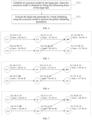
FIG. 1 is a main flowchart of a task optimization method according to an embodiment of the present disclosure; -
FIG. 2 is a detailed flowchart of a task optimization method according to an embodiment of the present disclosure; -
FIG. 3 is a detailed flowchart of a task optimization method according to an embodiment of the present disclosure; -
FIG. 4 is a detailed flowchart of a task optimization method according to an embodiment of the present disclosure; -
FIG. 5 is a diagram showing a DAG of tasks obtained by initial task evaluation according to an embodiment of the present disclosure; -
FIG. 6 is a diagram showing a DAG of tasks subjected to a first pre-optimization according to an embodiment of the present disclosure; -
FIG. 7 is a diagram showing a DAG of tasks subjected to a second pre-optimization according to an embodiment of the present disclosure; -
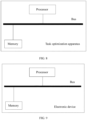
FIG. 8 is a schematic structural diagram of a task optimization apparatus according to an embodiment of the present disclosure; and -
FIG. 9 is a schematic structural diagram of an electronic device according to an embodiment of the present disclosure. - To make the objects, technical schemes, and advantages of the present disclosure clear, the present disclosure is described in further detail in conjunction with accompanying drawings and examples. It should be understood that the specific embodiments described herein are merely used for illustrating the present disclosure, and are not intended to limit the present disclosure.
- It should be understood that in the description of the embodiments of the present disclosure, the term "plurality of" (or multiple) means at least two, the term such as "greater than", "less than", "exceed" or variants thereof prior to a number or series of numbers is understood to not including the number adjacent to the term. The term "at least" prior to a number or series of numbers is understood to include the number adjacent to the term "at least", and all subsequent numbers or integers that could logically be included, as clear from context. If used herein, the terms such as "first", "second" and the like used herein are merely used for distinguishing technical features, and are not intended to indicate or imply relative importance, or implicitly point out the number of the indicated technical features, or implicitly point out a precedence order of the indicated technical features.
- A data middle platform sets up unified standards at the enterprise level, interconnects enterprise data channels, breaks through the information island effect, and reduces the costs of redundant construction. It can not only quickly provide data service support for different business departments, but also reduce the load of the back-end and improve the overall operating efficiency and quality.
- There are a large number of data processing tasks running on the data middle platform. These tasks constitute a huge DAG. Some tasks process basic data that many follow-up tasks rely upon, some tasks are required to output a result within a specified time, and so on. In addition, these tasks are usually developed by different teams and therefore are of different quality. To ensure the running of their own tasks, each team usually applies for higher task resources and priorities, which lacks a holistic view and is not conducive to the overall efficiency.
- At present, task optimization generally focuses on tasks requiring a long running time or a large number of resources, but the running time or the number of resources alone does not necessarily mean that there is a problem with the task. In addition, whether optimization of a single task has an impact on the overall efficiency usually needs to be tested in practice. The testing process requires a long cycle and high costs of trial and error, affecting the efficiency and success rate of task optimization.
- To solve the problem of indiscriminate optimization in existing technologies, embodiments of the present disclosure provide a task optimization method and apparatus, and a computer-readable storage medium. According to the method, tasks are evaluated and a target task to be optimized is identified; a target task parameter corresponding to the target task is adjusted; the target task parameter is executed by virtual scheduling to perform global scheduling speculation; and the target task parameter is determined when a speculation effect of the global scheduling speculation meets an expectation, and the target task is executed based on the target task parameter. Based on this, the tasks are evaluated to identify the task to be optimized. An optimal task optimization mode can be quickly found through iteration by adjusting the task parameter and performing global scheduling speculation by virtual scheduling, such that the efficiency and success rate of task optimization can be improved, thereby avoiding indiscriminate optimizations which cannot achieve a satisfactory optimization effect. Therefore, the present disclosure can find out an optimal task parameter globally, to ensure that the data output capability of the entire data middle platform system can reach an ideal target state.
-
FIG. 1 is a flowchart of a task optimization method according to an embodiment of the present disclosure. The task optimization method includes, but not limited to, the following steps. - In a step of 101, tasks are evaluated and a target task to be optimized is identified.
- In a step of 102, a target task parameter corresponding to the target task is adjusted.
- In a step of 103, the target task parameter is executed by virtual scheduling to perform global scheduling speculation.
- In a step of 104, the target task parameter is determined when a speculation effect of the global scheduling speculation meets an expectation, and the target task is executed based on the target task parameter.
- It can be understood that, the method may be used to optimize tasks that are run on a data middle platform. According to the method, tasks are evaluated and a target task to be optimized is identified; a target task parameter corresponding to the target task is adjusted; the target task parameter is executed by virtual scheduling to perform global scheduling speculation; and the target task parameter is determined when a speculation effect of the global scheduling speculation meets an expectation, and the target task is executed based on the target task parameter. Based on this, the tasks are evaluated to identify the task to be optimized. An optimal task optimization mode can be quickly found through iteration by adjusting the task parameter and performing global scheduling speculation by virtual scheduling, such that the efficiency and success rate of task optimization can be improved, thereby avoiding indiscriminate optimizations which cannot achieve a satisfactory optimization effect. Therefore, the present disclosure can find out an optimal task parameter globally, to ensure that the data output capability of the entire data center system can reach an ideal target state. It should be noted that the task identification and adjustment may be performed manually or automatically through machine learning.
- It can be understood that evaluating the tasks and thereby identifying the target task to be optimized may be implemented by acquiring static information and dynamic information of each of the tasks, establishing an evaluation model for the task based on the static information and the dynamic information, and identifying the target task to be optimized according to an evaluation result of the evaluation model. It should be noted that the static information is configuration information of the task. For example, the static information may include, but not limited to, an input table, an output table, a resource ratio, a task priority, a scheduling period, etc. The dynamic information is historical execution information of the task. For example, the dynamic information may include, but not limited to, a historical average execution time, an average start-up delay, an average data processing volume, a degree to which the task is relied upon, etc.
- It can be understood that the evaluation model for the task may be expressed as: S(task evaluation dimensions) = Exec(task influencing factors), where S represents an evaluation of several dimensions of the task, and Exec represents a fitted task execution model, which can infer a value of each evaluation dimension according to several influencing factors. For example, the evaluation model for the task established according to the static information and the dynamic information of the task is: S(importance, algorithm efficiency, delay, duration) = Exec(dependency relationship, algorithm efficiency, priority, resource ratio), where the dependency relationship represents a lineage relationship of the task, the importance is defined as a total number of follow-up tasks that directly or indirectly rely on the task, and the algorithm efficiency represents the volume of data that can be processed per unit resource and per unit time.
- It can be understood that in the present disclosure, the static information and the dynamic information of each task may be acquired, and an evaluation model for the task can be established according to the information of the task: S(task evaluation dimensions) = Exec(task influencing factors), where S represents an evaluation of several dimensions of the task, and Exec represents a fitted task execution model, which can infer a value of each evaluation dimension according to several influencing factors. The target task to be optimized is identified according to the evaluation result. The identification may be performed manually or automatically according to a rule. For the identified task to be optimized, the target task parameter of the task execution model is adjusted according to an optimization direction. The optimization direction is an evaluation dimension to be improved. Global scheduling speculation is performed by virtual scheduling using the adjusted task execution model. If a speculation effect of the global scheduling speculation meets an expectation, the adjusted task configuration is applied to a production system; otherwise, the parameter of the task execution model is further adjusted for optimization. Based on this, according to the present disclosure, tasks to be optimized can be identified globally, and task parameters can be optimized by performing global scheduling speculation by virtual scheduling, thereby improving the operating efficiency of the system.
- As shown in
FIG. 2 , step 101 may include, but not limited to, the following steps. - In a step of 1011, static information and dynamic information of each of the tasks are acquired, where the static information is configuration information of the task, and the dynamic information is historical execution information of the task.
- In a step of 1012, an evaluation model for the task is established based on the static information and the dynamic information.
- In a step of 1013, the target task to be optimized is identified according to an evaluation result of the evaluation model.
- It can be understood that the static information of the task may be acquired from the configuration information of the task. The static information may include, but not limited to, an input table, an output table, a resource ratio, a task priority, a scheduling period, etc. The historical execution information of the task may be acquired from execution logs of the task. The dynamic information may include, but not limited to, a historical average execution time, an average start-up delay, an average data processing volume, a degree to which the task is relied upon, etc.
- It can be understood that evaluation dimensions and influencing factors of the task may be determined according to the static information and the dynamic information, and then the evaluation model for the task may be established according to the evaluation dimensions and the influencing factors. The evaluation model for the task may be expressed as: S(task evaluation dimensions) = Exec(task influencing factors), where S represents an evaluation of several dimensions of the task, and Exec represents a fitted task execution model, which can infer a value of each evaluation dimension according to several influencing factors. For example, the evaluation model for the task established according to the static information and the dynamic information of the task is S(importance, algorithm efficiency, delay, duration) = Exec(dependency relationship, algorithm efficiency, priority, resource ratio), where the dependency relationship represents a lineage relationship of the task, the importance is defined as a total number of follow-up tasks that directly or indirectly rely on the task, and the algorithm efficiency represents the volume of data that can be processed per unit resource and per unit time. Based on this, according to the present disclosure, the optimization effect can be quickly simulated by establishing a task evaluation model and performing virtual scheduling, thereby improving the overall efficiency of task optimization. The multi-dimensional task evaluation provides effective guidance for the direction of task optimization.
- It can be understood that in the present disclosure, task evaluation information concerned by users is associated with a simplified execution model by establishing a task evaluation model. Tasks to be optimized can be quickly identified according to the evaluation information and a service objective. An optimal task optimization mode can be quickly found through iteration by adjusting the task parameter and performing task speculation in a virtual scheduling engine, such that the efficiency and success rate of task optimization can be improved, thereby avoiding indiscriminate optimizations which cannot achieve a satisfactory optimization effect.
- As shown in
FIG. 3 , step 102 may include, but not limited to, the following steps. - In a step of 1021, an optimization direction of the target task is determined, where the optimization direction is the evaluation dimension for which the target task is to be improved.
- In a step of 1022, the target task parameter corresponding to the target task is adjusted according to the optimization direction of the target task.
- It can be understood that for the identified task to be optimized, the target task parameter of the task execution model is adjusted according to an optimization direction. The optimization direction is an evaluation dimension to be improved. The evaluation dimension may include, but not limited to, importance, algorithm efficiency, delay, duration, etc. For example, when the algorithm efficiency falls within a normal range but the duration is too long, more resources need to be used. If the delay is too large, the scheduling logic needs to be optimized. The corresponding target task parameter of the target task is adjusted according to the evaluation dimension for which the target task is to be improved.
- As shown in
FIG. 4 , step 103 may include, but not limited to, the following steps. - In a step of 1031, an execution model for the target task is established, where the execution model is obtained by fitting the influencing factor of the target task.
- In a step of 1032, the target task parameter is executed by virtual scheduling using the execution model to perform the global scheduling speculation.
- It can be understood that the influencing factor of the task may include, but not limited to, dependency relationship, algorithm efficiency, priority, resource ratio, etc. Exec represents a fitted task execution model, which can infer a value of each evaluation dimension according to several influencing factors. The evaluation model for the task is: S(importance, algorithm efficiency, delay, duration) = Exec(dependency relationship, algorithm efficiency, priority, resource ratio), where the dependency relationship represents a lineage relationship of the task, the importance is defined as a total number of follow-up tasks that directly or indirectly rely on the task, and the algorithm efficiency represents the volume of data that can be processed per unit resource and per unit time. The target task parameter is executed by virtual scheduling using the execution model to perform the global scheduling speculation. Based on this, according to the present disclosure, the optimization effect can be quickly simulated by performing global scheduling speculation by virtual scheduling using the adjusted task execution model, thereby improving the overall efficiency of task optimization.
- In the present disclosure, task evaluation information concerned by users is associated with a simplified execution model by establishing a task evaluation model. Tasks to be optimized can be quickly identified according to the evaluation information and a service objective. An optimal task optimization mode can be quickly found through iteration by adjusting the task parameter and performing task speculation in a virtual scheduling engine, such that the efficiency and success rate of task optimization can be improved, thereby avoiding indiscriminate optimizations which cannot achieve a satisfactory optimization effect.
- The task optimization method provided in the present disclosure is further described below in conjunction with the accompanying drawings and specific embodiments.
- Using simplified tasks in a data middle platform as an example, it is assumed that the total number of resources in the data middle platform is 10. Corresponding seps to realize task optimization are as follows.
- a - the static information of each task is acquired mainly from configuration information, and dynamic information, i.e., historical execution information of each task is acquired from execution logs of the task. The static information includes an input table, an output table, a resource ratio, a task priority, a scheduling period, etc. The dynamic information may include a historical average execution time, an average start-up delay, an average data processing volume, a degree to which the task is relied upon, etc.
- b - the evaluation model for each task is established based on the static information and the dynamic information of the task.
FIG. 5 shows an overall DAG of the tasks. - c - the target task to be optimized is identified according to the evaluation result. An optimization goal is defined to be optimizing a start-up delay of t31. Accordingly, t12 and t22 are identified as tasks to be optimized.
- d - t12 is optimized first. Execution of t12 with a low priority needs to wait for completion of t11 due to insufficient resources and therefore is delayed.
- ① speculation is performed after the priority of t12 is adjusted to 100, while the delays of t12 and t22 become 0, but as a delay of t31 does not change due to the increase of delays of t11 and t21, this adjustment is not adopted.
- ② speculation is performed after resources for 112 are reduced to 5, as shown in
FIG. 6 , as the delay of t31 is reduced to 3, this optimization mode is adopted.
- e - because it is difficult to optimize the next parameter, i.e., efficiency, of t12 on the basis of the previous step, t22 is optimized.
- ① when the number of resources for t22 is adjusted to 6, the delay of t31 is reduced to 1, so this optimization mode is adopted and a next parameter of t22 is further optimized.
- ② because algorithm efficiency of t22 is low, speculation is performed by improving the algorithm efficiency of t22 to 0.7, as shown in
FIG. 7 , the delay of t31 is reduced to 0, so this optimization mode is adopted.
- f - the adjusted task configuration in which the number of resources for t11 is reduced and the number of resources for t22 is increased is applied to the production system.
- It should be noted that the steps c, d, and e may be performed manually or automatically by a program.
- As shown in
FIG. 8 , an embodiment of the present disclosure provides a task optimization apparatus. - In some embodiments, the task optimization apparatus includes one or more processors and one or more memories.
FIG. 8 uses one processor and one memory as an example. The processor and the memory may be connected by a bus or in other ways. Connection by a bus is used as an example inFIG. 8 . - The memory, as a non-transitory computer-readable storage medium, may be configured for storing a non-transitory software program and a non-transitory computer-executable program, for example, the task optimization method in the embodiments of the present disclosure. The processor executes the non-transitory software program and the non-transitory computer-executable program stored in the memory, to implement the task optimization method in the embodiments of the present disclosure.
- The memory may include a program storage area and a data storage area. The program storage area may store an operating system, and an application required by at least one function. The data storage area may store data and the like required for executing the task optimization method in the embodiments of the present disclosure. In addition, the memory may include a highspeed random access memory, and may also include a non-transitory memory, e.g., at least one magnetic disk storage device, flash memory device, or other non-transitory solid-state storage device. In some implementations, the memory may include memories located remotely from the processor, and the remote memories may be connected to the task optimization apparatus via a network. Examples of the network include, but not limited to, the Internet, an intranet, a local area network, a mobile communication network, and combinations thereof.
- The non-transitory software program and the non-transitory computer-executable program required for implementing the task optimization method in the embodiments of the present disclosure are stored in the memory which, when executed by one or more processors, cause the one or more processors to implement the task optimization method in the embodiments of the present disclosure, for example, implement the method steps 101 to 104 in
FIG. 1 , the method steps 1011 to 1013 inFIG. 2 , the method steps 1021 to 1022 inFIG. 3 , or the method steps 1031 to 1032 inFIG. 4 . According to the method, tasks are evaluated and a target task to be optimized is identified; a target task parameter corresponding to the target task is adjusted; the target task parameter is executed by virtual scheduling to perform global scheduling speculation; and the target task parameter is determined when a speculation effect of the global scheduling speculation meets an expectation, and the target task is executed based on the target task parameter. Based on this, the tasks are evaluated to identify the task to be optimized. An optimal task optimization mode can be quickly found through iteration by adjusting the task parameter and performing global scheduling speculation by virtual scheduling, such that the efficiency and success rate of task optimization can be improved, thereby avoiding indiscriminate optimizations which cannot achieve a satisfactory optimization effect. Therefore, the present disclosure can find out an optimal task parameter globally, to ensure that the data output capability of the entire data middle platform system can reach an ideal target state. - As shown in
FIG. 9 , an embodiment of the present disclosure provides an electronic device. - In some embodiments, the electronic device includes one or more processors and one or more memories.
FIG. 9 uses one processor and one memory as an example. The processor and the memory may be connected by a bus or in other ways. Connection by a bus is used as an example inFIG. 9 . - The memory, as a non-transitory computer-readable storage medium, may be configured for storing a non-transitory software program and a non-transitory computer-executable program, for example, the task optimization method in the embodiments of the present disclosure. The processor executes the non-transitory software program and the non-transitory computer-executable program stored in the memory, to implement the task optimization method in the embodiments of the present disclosure.
- The memory may include a program storage area and a data storage area. The program storage area may store an operating system, and an application required by at least one function. The data storage area may store data and the like required for executing the task optimization method in the embodiments of the present disclosure. In addition, the memory may include a highspeed random access memory, and may also include a non-transitory memory, e.g., at least one magnetic disk storage device, flash memory device, or other non-transitory solid-state storage device. In some implementations, the memory may include memories located remotely from the processor, and the remote memories may be connected to the task optimization apparatus via a network. Examples of the network include, but not limited to, the Internet, an intranet, a local area network, a mobile communication network, and combinations thereof.
- The non-transitory software program and the non-transitory computer-executable program required for implementing the task optimization method in the embodiments of the present disclosure are stored in the memory which, when executed by one or more processors, cause the one or more processors to implement the task optimization method in the embodiments of the present disclosure, for example, implement the method steps 101 to 104, the method steps 1011 to 1013 in
FIG. 2 , the method steps 1021 to 1022 inFIG. 3 , or the method steps 1031 to 1032 inFIG. 4 . According to the method, tasks are evaluated and a target task to be optimized is identified; a target task parameter corresponding to the target task is adjusted; the target task parameter is executed by virtual scheduling to perform global scheduling speculation; and the target task parameter is determined when a speculation effect of the global scheduling speculation meets an expectation, and the target task is executed based on the target task parameter. Based on this, the tasks are evaluated to identify the task to be optimized. An optimal task optimization mode can be quickly found through iteration by adjusting the task parameter and performing global scheduling speculation by virtual scheduling, such that the efficiency and success rate of task optimization can be improved, thereby avoiding indiscriminate optimizations which cannot achieve a satisfactory optimization effect. Therefore, the present disclosure can find out an optimal task parameter globally, to ensure that the data output capability of the entire data middle platform system can reach an ideal target state. - In addition, an embodiment of the present disclosure provides a computer-readable storage medium, storing a computer-executable program. The computer-executable program, when executed by one or more control processors, for example, by a processor in
FIG. 8 , may cause the one or more processors to implement the task optimization method in the embodiments of the present disclosure, for example, implement the method steps 101 to 104, the method steps 1011 to 1013 inFIG. 2 , the method steps 1021 to 1022 inFIG. 3 , or the method steps 1031 to 1032 inFIG. 4 . According to the method, tasks are evaluated and a target task to be optimized is identified; a target task parameter corresponding to the target task is adjusted; the target task parameter is executed by virtual scheduling to perform global scheduling speculation; and the target task parameter is determined when a speculation effect of the global scheduling speculation meets an expectation, and the target task is executed based on the target task parameter. Based on this, the tasks are evaluated to identify the task to be optimized. An optimal task optimization mode can be quickly found through iteration by adjusting the task parameter and performing global scheduling speculation by virtual scheduling, such that the efficiency and success rate of task optimization can be improved, thereby avoiding indiscriminate optimizations which cannot achieve a satisfactory optimization effect. Therefore, the present disclosure can find out an optimal task parameter globally, to ensure that the data output capability of the entire data middle platform system can reach an ideal target state. - An embodiment of the present disclosure includes: evaluating tasks to identify a target task to be optimized; adjusting a target task parameter corresponding to the target task; executing the target task parameter by virtual scheduling to perform global scheduling speculation; and determining the target task parameter when a speculation effect of the global scheduling speculation meets an expectation, and executing the target task based on the target task parameter. Based on this, the tasks are evaluated to identify the task to be optimized. An optimal task optimization mode can be quickly found through iteration by adjusting the task parameter and performing global scheduling speculation by virtual scheduling, such that the efficiency and success rate of task optimization can be improved, thereby avoiding indiscriminate optimizations which cannot achieve a satisfactory optimization effect. Therefore, the present disclosure can find out an optimal task parameter globally, to ensure that the data output capability of the entire data middle platform system can reach an ideal target state.
- Those having ordinary skills in the art can understand that all or some of the steps in the methods disclosed above and the functional modules/units in the system and the apparatus can be implemented as software, firmware, hardware, and appropriate combinations thereof. Some or all physical components may be implemented as software executed by a processor, such as a central processing unit, a digital signal processor, or a microprocessor, or as hardware, or as an integrated circuit, such as an application-specific integrated circuit. Such software may be distributed on a computer-readable medium, which may include a computer storage medium (or non-transitory medium) and a communication medium (or transitory medium). As is known to those having ordinary skills in the art, the term "computer storage medium" includes volatile and nonvolatile, removable and non-removable media implemented in any method or technology for storage of information (such as a computer-readable program, data structures, program modules, or other data). The computer storage medium includes, but not limited to, a Random Access Memory (RAM), a Read-Only Memory (ROM), an Electrically Erasable Programmable Read-Only Memory (EEPROM), a flash memory or other memory technology, a Compact Disc Read-Only Memory (CD-ROM), a Digital Versatile Disc (DVD) or other optical storage, a cassette, a magnetic tape, a magnetic disk storage or other magnetic storage device, or any other medium which can be used to store the desired information and which can be accessed by a computer. In addition, as is known to those having ordinary skills in the art, the communication medium typically includes a computer-readable program, data structures, program modules, or other data in a modulated data signal such as a carrier or other transport mechanism, and may include any information delivery medium.
- Although some embodiments of the present disclosure have been described above, the present disclosure is not limited to the implementations described above. Those having ordinary skills in the art can make various equivalent modifications or replacements without departing from the essence of the present disclosure. Such equivalent modifications or replacements fall within the scope defined by the claims of the present disclosure.
Claims (10)
- A task optimization method, comprising:evaluating tasks to identify a target task to be optimized;adjusting a target task parameter corresponding to the target task;executing the target task parameter by virtual scheduling to perform global scheduling speculation; anddetermining the target task parameter in response to a speculation effect of the global scheduling speculation meeting an expectation, and executing the target task based on the target task parameter.
- The method of claim 1, wherein evaluating tasks to identify a target task to be optimized comprises:acquiring static information and dynamic information of the tasks, wherein the static information is configuration information of the tasks, and the dynamic information is historical execution information of the tasks;establishing an evaluation model for the tasks based on the static information and the dynamic information; andidentifying the target task to be optimized according to an evaluation result of the evaluation model.
- The method of claim 2, wherein the static information comprises at least one of:a task input table; ora task output table; ora task resource ratio; ora task priority; ora task scheduling period.
- The method of claim 2, wherein the dynamic information comprises at least one of:a historical average execution time of the task; oran average start-up delay of the task; oran average data processing volume of the task; ora degree to which the task is relied upon.
- The method of claim 2, wherein establishing an evaluation model for the tasks based on the static information and the dynamic information comprises:determining an evaluation dimension of the tasks and an influencing factor of the tasks based on the static information and the dynamic information; andestablishing the evaluation model according to the evaluation dimension and the influencing factor.
- The method of claim 5, wherein adjusting a target task parameter corresponding to the target task comprises:determining an optimization direction of the target task, wherein the optimization direction is the evaluation dimension for which the target task is to be improved; andadjusting the target task parameter corresponding to the target task according to the optimization direction of the target task.
- The method of claim 6, wherein executing the target task parameter by virtual scheduling to perform global scheduling speculation comprises:establishing an execution model for the target task, wherein the execution model is obtained by fitting the influencing factor of the target task; andexecuting the target task parameter by virtual scheduling using the execution model to perform the global scheduling speculation.
- A task optimization apparatus, comprising a memory, a processor, and a computer program stored in the memory and executable by the processor, wherein the computer program, when executed by the processor, causes the processor to perform the task optimization method of any one of claims 1 to 7.
- An electronic device, comprising a memory, a processor, and a computer program stored in the memory and executable by the processor, wherein the computer program, when executed by the processor, causes the processor to perform the task optimization method of any one of claims 1 to 7.
- A computer-readable storage medium, storing a computer-executable program which, when executed by a computer, causes the computer to perform the task optimization method of any one of claims 1 to 7.
Applications Claiming Priority (2)
| Application Number | Priority Date | Filing Date | Title |
|---|---|---|---|
| CN202111482034.5A CN116225635A (en) | 2021-12-06 | 2021-12-06 | Task optimization method, device and computer-readable storage medium |
| PCT/CN2022/127443 WO2023103624A1 (en) | 2021-12-06 | 2022-10-25 | Task optimization method and apparatus, and computer readable storage medium |
Publications (2)
| Publication Number | Publication Date |
|---|---|
| EP4443294A1 true EP4443294A1 (en) | 2024-10-09 |
| EP4443294A4 EP4443294A4 (en) | 2025-03-12 |
Family
ID=86570231
Family Applications (1)
| Application Number | Title | Priority Date | Filing Date |
|---|---|---|---|
| EP22903048.1A Pending EP4443294A4 (en) | 2021-12-06 | 2022-10-25 | Task optimization method and apparatus, and computer readable storage medium |
Country Status (5)
| Country | Link |
|---|---|
| US (1) | US20250053442A1 (en) |
| EP (1) | EP4443294A4 (en) |
| JP (1) | JP7684521B2 (en) |
| CN (1) | CN116225635A (en) |
| WO (1) | WO2023103624A1 (en) |
Families Citing this family (5)
| Publication number | Priority date | Publication date | Assignee | Title |
|---|---|---|---|---|
| CN117076092B (en) * | 2023-10-13 | 2024-01-19 | 成都登临科技有限公司 | Multi-dimensional data task processing method and device, electronic equipment and storage medium |
| CN118917257B (en) * | 2024-10-11 | 2024-12-17 | 北京超摩科技有限公司 | Link data imaging method, device and medium applied to chip design verification |
| CN119781947B (en) * | 2025-03-13 | 2025-08-01 | 苏州元脑智能科技有限公司 | Task scheduling method, electronic device, storage medium and program product |
| CN120492137A (en) * | 2025-04-03 | 2025-08-15 | 北京德塔精要信息技术有限公司 | Data braiding system and method based on dynamic metadata identification and DAG optimization |
| CN121543999A (en) * | 2026-01-19 | 2026-02-17 | 杭州硕泰科技有限公司 | A robot production scheduling method and system based on task priority |
Family Cites Families (8)
| Publication number | Priority date | Publication date | Assignee | Title |
|---|---|---|---|---|
| US9720732B1 (en) | 2013-02-11 | 2017-08-01 | Amazon Technologies, Inc. | Parameter selection for optimization of task execution based on execution history for prior tasks |
| CN103605662B (en) * | 2013-10-21 | 2017-02-22 | 华为技术有限公司 | Distributed computation frame parameter optimizing method, device and system |
| CN109710395B (en) | 2017-10-26 | 2021-05-14 | 中国电信股份有限公司 | Parameter optimization control method and device and distributed computing system |
| CN108255689B (en) * | 2018-01-11 | 2021-02-12 | 哈尔滨工业大学 | Automatic Apache Spark application tuning method based on historical task analysis |
| CN110825522A (en) * | 2019-10-31 | 2020-02-21 | 武汉联图时空信息科技有限公司 | Spark parameter self-adaptive optimization method and system |
| CN113110931B (en) * | 2020-01-10 | 2024-06-04 | 北京小米松果电子有限公司 | Kernel operation optimization method, device and system |
| CN111625331B (en) | 2020-05-20 | 2023-06-16 | 拉扎斯网络科技(上海)有限公司 | Task scheduling method, device, platform, server and storage medium |
| CN112052082B (en) | 2020-09-01 | 2024-04-19 | 深圳市卡数科技有限公司 | Task attribute optimization method, device, server and storage medium |
-
2021
- 2021-12-06 CN CN202111482034.5A patent/CN116225635A/en active Pending
-
2022
- 2022-10-25 JP JP2024532339A patent/JP7684521B2/en active Active
- 2022-10-25 US US18/716,638 patent/US20250053442A1/en active Pending
- 2022-10-25 EP EP22903048.1A patent/EP4443294A4/en active Pending
- 2022-10-25 WO PCT/CN2022/127443 patent/WO2023103624A1/en not_active Ceased
Also Published As
| Publication number | Publication date |
|---|---|
| WO2023103624A1 (en) | 2023-06-15 |
| EP4443294A4 (en) | 2025-03-12 |
| JP2024541601A (en) | 2024-11-08 |
| US20250053442A1 (en) | 2025-02-13 |
| CN116225635A (en) | 2023-06-06 |
| JP7684521B2 (en) | 2025-05-27 |
Similar Documents
| Publication | Publication Date | Title |
|---|---|---|
| EP4443294A1 (en) | Task optimization method and apparatus, and computer readable storage medium | |
| CN110837410B (en) | Task scheduling method and device, electronic equipment and computer readable storage medium | |
| CN110737717A (en) | database migration method and device | |
| CN111026553A (en) | Resource scheduling method for offline mixed part operation and server system | |
| WO2016069038A1 (en) | Policy based workload scaler | |
| CN114138597B (en) | Operating system performance tuning device, method, equipment and storage medium | |
| KR101709314B1 (en) | Apparatus and method for adjusting priority of task | |
| CN111680085A (en) | Data processing task analysis method and device, electronic equipment and readable storage medium | |
| CN115712549A (en) | Performance evaluation method, device and storage medium | |
| US11194619B2 (en) | Information processing system and non-transitory computer readable medium storing program for multitenant service | |
| US7853932B2 (en) | System, method and computer program product for checking a software entity | |
| US20110185366A1 (en) | Load-balancing of processes based on inertia | |
| CN109600245B (en) | Automatic configuration method and device for server | |
| WO2021190088A1 (en) | Task distribution method and apparatus, and task execution system and server | |
| CN119537028A (en) | Adaptive evaluation and selection method for multi-container runtime | |
| CN118427106A (en) | A test task deployment method, system, device and computer storage medium | |
| CN116501468A (en) | Batch job processing method and device and electronic equipment | |
| CN116302525A (en) | Resource recommendation method, electronic equipment and computer storage medium | |
| CN112379978A (en) | Back-end service calling method, device, equipment and storage medium | |
| CN114338816B (en) | Concurrency control method, device, equipment and storage medium under server-free architecture | |
| CN113076070A (en) | Data processing method and device | |
| EP3556084B1 (en) | Application-sensitive strategy for server decommissioning | |
| CN111428886A (en) | Fault diagnosis deep learning model self-adaptive updating method and device | |
| US20240378227A1 (en) | Text categorization method and apparatus | |
| CN120256173A (en) | Fault cause location method, device, equipment, storage medium and program product |
Legal Events
| Date | Code | Title | Description |
|---|---|---|---|
| STAA | Information on the status of an ep patent application or granted ep patent |
Free format text: STATUS: THE INTERNATIONAL PUBLICATION HAS BEEN MADE |
|
| PUAI | Public reference made under article 153(3) epc to a published international application that has entered the european phase |
Free format text: ORIGINAL CODE: 0009012 |
|
| STAA | Information on the status of an ep patent application or granted ep patent |
Free format text: STATUS: REQUEST FOR EXAMINATION WAS MADE |
|
| 17P | Request for examination filed |
Effective date: 20240702 |
|
| AK | Designated contracting states |
Kind code of ref document: A1 Designated state(s): AL AT BE BG CH CY CZ DE DK EE ES FI FR GB GR HR HU IE IS IT LI LT LU LV MC ME MK MT NL NO PL PT RO RS SE SI SK SM TR |
|
| REG | Reference to a national code |
Ref country code: DE Ref legal event code: R079 Free format text: PREVIOUS MAIN CLASS: G06F0009480000 Ipc: G06Q0010063100 |
|
| A4 | Supplementary search report drawn up and despatched |
Effective date: 20250212 |
|
| DAV | Request for validation of the european patent (deleted) | ||
| DAX | Request for extension of the european patent (deleted) | ||
| RIC1 | Information provided on ipc code assigned before grant |
Ipc: G06F 9/48 20060101ALI20250206BHEP Ipc: G06Q 10/0631 20230101AFI20250206BHEP |