EP4442201A1 - Millimeter-wave radar-based noncontact electrocardiogram monitoring method - Google Patents
Millimeter-wave radar-based noncontact electrocardiogram monitoring method Download PDFInfo
- Publication number
- EP4442201A1 EP4442201A1 EP22897853.2A EP22897853A EP4442201A1 EP 4442201 A1 EP4442201 A1 EP 4442201A1 EP 22897853 A EP22897853 A EP 22897853A EP 4442201 A1 EP4442201 A1 EP 4442201A1
- Authority
- EP
- European Patent Office
- Prior art keywords
- cardiac
- millimeter
- micro
- wave radar
- sub
- Prior art date
- Legal status (The legal status is an assumption and is not a legal conclusion. Google has not performed a legal analysis and makes no representation as to the accuracy of the status listed.)
- Pending
Links
Images


Classifications
-
- A—HUMAN NECESSITIES
- A61—MEDICAL OR VETERINARY SCIENCE; HYGIENE
- A61B—DIAGNOSIS; SURGERY; IDENTIFICATION
- A61B5/00—Measuring for diagnostic purposes; Identification of persons
- A61B5/72—Signal processing specially adapted for physiological signals or for diagnostic purposes
- A61B5/7235—Details of waveform analysis
- A61B5/7264—Classification of physiological signals or data, e.g. using neural networks, statistical classifiers, expert systems or fuzzy systems
-
- A—HUMAN NECESSITIES
- A61—MEDICAL OR VETERINARY SCIENCE; HYGIENE
- A61B—DIAGNOSIS; SURGERY; IDENTIFICATION
- A61B5/00—Measuring for diagnostic purposes; Identification of persons
- A61B5/05—Detecting, measuring or recording for diagnosis by means of electric currents or magnetic fields; Measuring using microwaves or radio waves
- A61B5/0507—Detecting, measuring or recording for diagnosis by means of electric currents or magnetic fields; Measuring using microwaves or radio waves using microwaves or terahertz waves
-
- A—HUMAN NECESSITIES
- A61—MEDICAL OR VETERINARY SCIENCE; HYGIENE
- A61B—DIAGNOSIS; SURGERY; IDENTIFICATION
- A61B5/00—Measuring for diagnostic purposes; Identification of persons
- A61B5/24—Detecting, measuring or recording bioelectric or biomagnetic signals of the body or parts thereof
- A61B5/316—Modalities, i.e. specific diagnostic methods
- A61B5/318—Heart-related electrical modalities, e.g. electrocardiography [ECG]
-
- A—HUMAN NECESSITIES
- A61—MEDICAL OR VETERINARY SCIENCE; HYGIENE
- A61B—DIAGNOSIS; SURGERY; IDENTIFICATION
- A61B5/00—Measuring for diagnostic purposes; Identification of persons
- A61B5/24—Detecting, measuring or recording bioelectric or biomagnetic signals of the body or parts thereof
- A61B5/316—Modalities, i.e. specific diagnostic methods
- A61B5/318—Heart-related electrical modalities, e.g. electrocardiography [ECG]
- A61B5/346—Analysis of electrocardiograms
-
- A—HUMAN NECESSITIES
- A61—MEDICAL OR VETERINARY SCIENCE; HYGIENE
- A61B—DIAGNOSIS; SURGERY; IDENTIFICATION
- A61B5/00—Measuring for diagnostic purposes; Identification of persons
- A61B5/72—Signal processing specially adapted for physiological signals or for diagnostic purposes
- A61B5/7203—Signal processing specially adapted for physiological signals or for diagnostic purposes for noise prevention, reduction or removal
-
- A—HUMAN NECESSITIES
- A61—MEDICAL OR VETERINARY SCIENCE; HYGIENE
- A61B—DIAGNOSIS; SURGERY; IDENTIFICATION
- A61B5/00—Measuring for diagnostic purposes; Identification of persons
- A61B5/72—Signal processing specially adapted for physiological signals or for diagnostic purposes
- A61B5/7225—Details of analogue processing, e.g. isolation amplifier, gain or sensitivity adjustment, filtering, baseline or drift compensation
-
- A—HUMAN NECESSITIES
- A61—MEDICAL OR VETERINARY SCIENCE; HYGIENE
- A61B—DIAGNOSIS; SURGERY; IDENTIFICATION
- A61B5/00—Measuring for diagnostic purposes; Identification of persons
- A61B5/72—Signal processing specially adapted for physiological signals or for diagnostic purposes
- A61B5/7235—Details of waveform analysis
- A61B5/7264—Classification of physiological signals or data, e.g. using neural networks, statistical classifiers, expert systems or fuzzy systems
- A61B5/7267—Classification of physiological signals or data, e.g. using neural networks, statistical classifiers, expert systems or fuzzy systems involving training the classification device
Definitions
- the present disclosure relates to the field of intelligent sensing technology, and in particular to a contactless electrocardiogram monitoring method based on a millimeter-wave radar.
- Electrocardiogram is currently one of the most important biomedical signals used to depict cardiac activity to provide basic information for the diagnosis of heart disease.
- Experimental evidence shows that diagnosis, control and prevention based on continuous monitoring and analysis may significantly reduce the incidence and harm of heart disease.
- tiny potential changes in different parts of the body caused by the electrical activity generated by the contraction of cardiac muscle are detected based on electrodes attached to human skin.
- the electrode-based ECG monitoring has been widely used in clinical diagnosis and daily prevention, the requirements of contact with human body during the measurement process still impose many limitations on practical use.
- the foreign body sensation caused by the long-term attachment of electrodes to the skin makes patients much subj ectively resistant to long-term continuous monitoring, and for some patients with burns and infectious diseases, and infants, it is difficult to achieve the attachment of the electrodes to the skin.
- a process of cardiac activity is completed based on the functional cardiac mechanical movement, and cardiac mechanical activity itself will also cause changes in the cardiac electrical activity.
- the cardiac mechanical activity and the cardiac electrical activity are mappings of homologous information in different domains.
- the mechanical movement caused by the cardiac activity itself has a very small amplitude (usually considered to be in a range of 0.2 mm to 0.5 mm), which is often submerged in other body movements with larger amplitudes (such as breathing).
- Existing methods mainly focus on performing coarse-grained monitoring on cardiac activity, such as estimation of human heart rate, thus the current methods have very limited performance and fail to achieve accurate measurement of the cardiac mechanical activity.
- the present disclosure provides a contactless electrocardiogram monitoring method based on a millimeter wave radar, including step S1 to step S3: step S1: transmitting a millimeter-wave signal to a target to be tested and receiving an echo signal using the millimeter-wave radar; step S2: performing a signal processing on the received echo signal to extract cardiac mechanical activity data hidden in the echo signal; and step S3: constructing an end-to-end network architecture for the extracted cardiac mechanical activity data, so as to complete a cross-domain mapping from a cardiac mechanical activity to a cardiac electrical activity
- step S2 includes sub-steps S21 to S25.
- a virtual antenna array is constructed based on a physical arrangement of antennas of the millimeter-wave radar, a phase shift vector is constructed based on an antenna spacing and a signal bandwidth in the virtual antenna array, and a calculation is made for a spatial beamforming, so as to complete a spatial filtering of the echo signal of the radar.
- phases are extracted from signals at all the spatial positions after the spatial filtering, and micro-motion signals are extracted from the phases.
- the micro-motion signals are evaluated for a correlation to a cardiac micro-motion every periodic time T based on a periodic template matching, so as to determine a spatial position related to the cardiac micro-motion.
- sub-step S24 a threshold filtering is performed on the evaluated micro-motion signals, to retain micro-motion signals exceeding a threshold, and eliminate other micro-motion signals.
- sub-step S25 the cardiac mechanical activity data is extracted from the retained micro-motion signals, so as to complete measurement of the cardiac mechanical activity by the millimeter-wave radar.
- a Lanczos differential filter based on minimum variance smoothing is used to extract the micro-motion signals from the phases.
- a spatial coherence filtering based on K-means clustering is performed on the retained micro-motion signals to extract the cardiac mechanical activity data.
- step S3 includes sub-steps S31 to S33.
- a convolutional neural network is used to extract a time-domain feature of the cardiac micro-motion data.
- a position encoding is performed on a spatially sparse time-domain feature and a Transformer module with a multi-head attention mechanism is used to extract a spatial-domain feature of the cardiac micro-motion data.
- an element-wise multiplication is performed on the time-domain feature and the spatial-domain feature of the cardiac micro-motion to complete fusion and extraction of a deep feature of the cardiac activity.
- step S3 further includes sub-step S34, in which the cardiac activity is modeled as a time autoregressive model: p X
- a temporal convolutional network is used to construct a sequence-to-sequence decoder model, and dilated convolution characteristics in the temporal convolutional network are used to achieve a long-term memory of the decoder model on high-sampling-rate radar data.
- step S3 further includes sub-step S3 5: for an ECG prediction result and a real ECG measurement result at each moment, using a loss function based on L2 distance to learn a mapping relationship between different domains, so as to enable a deep learning network architecture to calculate a cross-domain mapping relationship between the cardiac mechanical activity and the cardiac electrical activity after training the deep learning network architecture with a large amount of data.
- the contactless electrocardiogram monitoring method based on the millimeter-wave radar according to claim 1 further includes step S4: based on a deep learning network architecture which has learned cross-domain mapping of the cardiac mechanical activity and the cardiac electrical activity, inputting cardiac mechanical activity data extracted at a current moment, and outputting an ECG measurement result for the current moment, so as to finally complete contactless electrocardiogram monitoring.
- the present disclosure provides a contactless electrocardiogram monitoring method based on a millimeter-wave radar, which may achieve stable, effective and accurate measurement of the mechanical activity of human heart, and may achieve cross-domain information mapping from cardiac mechanical activity to cardiac electrical activity.
- the measurement is a contactless measurement, which is safer and more convenient.
- the present disclosure provides a contactless electrocardiogram monitoring method based on a millimeter-wave radar, which combines the millimeter-wave radar with deep learning so as to build a bridge for contactless electrocardiogram monitoring.
- the core of the technology is how to use the millimeter-wave radar to achieve stable, effective and accurate measurement of the mechanical activity of the human heart and how to design a deep learning network structure based on the sensing data of the radar and the characteristics of the cardiac activity to mine a deep feature and achieve cross-domain information mapping, so as to finally convert a radar observation representation of the cardiac mechanical activity to an electrocardiogram representation of the cardiac electrical activity.
- Existing methods have not yet designed and implemented an end-to-end cross-domain learning architecture for the cardiac activity based on the characteristics of millimeter-wave radar data and complex physiological states of the heart.
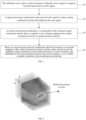
- a contactless electrocardiogram monitoring method based on a millimeter-wave radar is provided. As shown in FIGS. 1 and 7 , the contactless electrocardiogram monitoring method based on the millimeter-wave radar includes the following steps.
- step S1 the millimeter-wave radar is used to transmit a millimeter-wave signal to a target to be tested and receive an echo signal.
- step S2 a signal processing is performed on the received echo signal to extract cardiac mechanical activity data hidden in the echo signal.
- step S3 an end-to-end network architecture is constructed for the extracted cardiac mechanical activity data to complete a cross-domain mapping from cardiac mechanical activity to cardiac electrical activity.
- the target to be tested is a human or other animals.
- step S2 includes sub-step S21 to sub-step S25.
- a virtual antenna array is constructed based on a physical arrangement of antennas of the millimeter-wave radar, a phase shift vector is constructed based on an antenna spacing and a signal bandwidth in the virtual antenna array, and a calculation is made for a spatial beamforming, so as to complete a spatial-domain filtering of the echo signal of the radar.
- the result is as shown in FIG. 2 . It will be seen from the figure that after the spatial filtering is performed on the signal received by the radar, signal reflections at different spatial positions are successfully separated.
- phase information near the chest shows that a main motion trend at this time comes from human respiratory activity, which has a larger amplitude.
- sub-step S23 the micro-motion signals are evaluated for a correlation to a cardiac micro-motion every periodic time T based on a periodic template matching, so as to determine a spatial position related to the cardiac micro-motion.
- a threshold filtering is performed on the evaluated micro-motion signals, to retain micro-motion signals exceeding the threshold and eliminate other micro-motion signals.
- the micro-motion signals exceeding the threshold may eliminate interference by the motion with a large amplitude.
- R wave peak and T wave peak of the electrocardiogram of a corresponding time are compared. It will be seen that the micro-motion signal has the same periodicity as the cardiac activity.
- the cardiac mechanical activity data is extracted from the retained micro-motion signals, so as to complete measurement of the cardiac mechanical activity by the millimeter-wave radar.
- the virtual antenna array is constructed based on the physical arrangement of the antennas of the millimeter-wave radar, the phase shift vector is constructed based on the antenna spacing and the signal bandwidth in the virtual antenna array, and the calculation is made for the spatial beamforming, so as to complete the spatial filtering of the echo signal of the radar.
- N is the number of receiving antennas
- M is the number of transmitting antennas
- t is a signal received by a channel defined by an n th receiving antenna and an m th transmitting antenna at time t
- k represents a variation rate of an emission frequency
- ⁇ represents a wavelength of the emitted signal
- r ( x, y, z, n, m ) represents a round-trip distance from the m th transmitting antenna to a target location ( x, y, z ) and back to the n th receiving antenna
- c is the speed of light.
- the phases are extracted from the signals at all spatial positions after the spatial filtering, and a Lanczos differential filter based on minimum variance smoothing is used to extract the micro-motion signals from the phases.
- the micro-motion signals are evaluated for the correlation to the cardiac micro-motion every periodic time T based on the periodic template matching, so as to determine the spatial position related to the cardiac micro-motion. Then, the threshold filtering is performed on the evaluated micro-motion signals, to retain the micro-motion signals exceeding the threshold and eliminate the other micro-motion signals. A spatial coherence filtering based on K-means clustering is performed on the retained micro-motion signals to extract the cardiac mechanical activity data, so as to finally complete the measurement of the cardiac mechanical activity by the millimeter-wave radar.
- step S3 includes sub-step S31 to sub-step S33.
- a convolutional neural network is used to extract a time-domain feature of the cardiac micro-motion data.
- a position encoding is performed on a spatially sparse time-domain feature and a Transformer module with a multi-head attention mechanism is used to extract a spatial-domain feature of the cardiac micro-motion data.
- sub-step S33 an element-wise multiplication is used for the time-domain feature and the spatial-domain feature of the cardiac micro-motion to complete fusion and extraction of a deep feature of the cardiac activity.
- the convolutional neural network is used to extract the time-domain feature of the cardiac micro-motion data, then the position encoding is performed on the spatially sparse time-domain feature, and the Transformer module with the multi-head attention mechanism is used to extract the spatial-domain feature of the cardiac micro-motion data. Then, element-wise multiplication is used on the time-domain feature and the spatial-domain feature of the cardiac micro-motion, so as to complete the fusion and extraction of the deep feature of the cardiac activity.
- step S3 further includes sub-step S34, in which the cardiac activity is modeled as a time autoregressive model: p X
- the ECG measurement result x t at each moment is a conditional probability distribution of the ECG measurement results ( x 1 , ..., x t -1 ) at historical time and the deep feature h t of the cardiac activity at the current moment.
- the temporal convolutional network is used to construct a sequence-to-sequence decoder model, and dilated convolution characteristics in the temporal convolutional network are used to achieve a long-term memory of the decoder model on high-sampling-rate radar data.
- step S3 further includes sub-step S35, in which a loss function based on L2 distance is used for an ECG prediction result and a real ECG measurement result (contact measurement) at each moment to learn the mapping relationship between different domains, and after trained with a large amount of data, the deep learning network architecture may calculate the cross-domain mapping relationship between the cardiac mechanical activity and cardiac electrical activity.
- a loss function based on L2 distance is used for an ECG prediction result and a real ECG measurement result (contact measurement) at each moment to learn the mapping relationship between different domains, and after trained with a large amount of data
- the deep learning network architecture may calculate the cross-domain mapping relationship between the cardiac mechanical activity and cardiac electrical activity.
- the contactless electrocardiogram monitoring method based on the millimeter-wave radar further includes step S4, in which based on the deep learning network architecture that is trained and completes the cross-domain mapping of the cardiac mechanical activity and the cardiac electrical activity, the cardiac mechanical activity data extracted at the current moment is input, and the ECG measurement result for the current moment is output, so as to finally complete the contactless electrocardiogram monitoring.
- the target to be tested keeps lying on the bed and the radar is 0.5 m apart therefrom (as shown in FIG. 7 ).
- the radar is in a working mode of 3 transmitters and 4 receivers, a starting frequency of the signal is set to 78 Ghz, a bandwidth is 4 Ghz, a Chirp interval is 45 us, a frame rate is 200 Hz, and the number of sampling points is 256.
- a total of 36 people are tested, and the radar data and its paired contact electrocardiogram monitoring data within 3 minutes are collected each time, for a total of about 810 minutes. Analysis of the performance of the contactless ECG monitoring is as shown in FIGS. 5 and 6 .
- the present disclosure provides a contactless electrocardiogram monitoring method based on a millimeter-wave radar, which is a contactless electrocardiogram monitoring method of cardiac mechanical activity measurement and cardiac electrical activity cross-domain deep learning based on the millimeter-wave radar.
- the combination of the millimeter-wave radar and deep learning builds a bridge for the contactless ECG monitoring, the millimeter-wave radar is used to achieve stable, effective and accurate measurement on mechanical activity of human heart and a deep learning network structure is designed for the radar sensing data and the characteristics of cardiac activity to mine deep features and achieve cross-domain information mapping, and finally convert the radar observation representation of the cardiac mechanical activity to the electrocardiogram representation of cardiac electrical activity.
Landscapes
- Health & Medical Sciences (AREA)
- Life Sciences & Earth Sciences (AREA)
- Engineering & Computer Science (AREA)
- Physics & Mathematics (AREA)
- Public Health (AREA)
- Surgery (AREA)
- Biophysics (AREA)
- Biomedical Technology (AREA)
- Heart & Thoracic Surgery (AREA)
- Medical Informatics (AREA)
- Molecular Biology (AREA)
- Pathology (AREA)
- Animal Behavior & Ethology (AREA)
- General Health & Medical Sciences (AREA)
- Veterinary Medicine (AREA)
- Signal Processing (AREA)
- Artificial Intelligence (AREA)
- Cardiology (AREA)
- Physiology (AREA)
- Computer Vision & Pattern Recognition (AREA)
- Psychiatry (AREA)
- Evolutionary Computation (AREA)
- Fuzzy Systems (AREA)
- Mathematical Physics (AREA)
- Radiology & Medical Imaging (AREA)
- Nuclear Medicine, Radiotherapy & Molecular Imaging (AREA)
- Power Engineering (AREA)
- Measurement And Recording Of Electrical Phenomena And Electrical Characteristics Of The Living Body (AREA)
- Measurement Of The Respiration, Hearing Ability, Form, And Blood Characteristics Of Living Organisms (AREA)
- Radar Systems Or Details Thereof (AREA)
Abstract
Description
- The present disclosure relates to the field of intelligent sensing technology, and in particular to a contactless electrocardiogram monitoring method based on a millimeter-wave radar.
- Electrocardiogram (ECG) is currently one of the most important biomedical signals used to depict cardiac activity to provide basic information for the diagnosis of heart disease. Experimental evidence shows that diagnosis, control and prevention based on continuous monitoring and analysis may significantly reduce the incidence and harm of heart disease. In current ECG monitoring methods, tiny potential changes in different parts of the body caused by the electrical activity generated by the contraction of cardiac muscle are detected based on electrodes attached to human skin. Although the electrode-based ECG monitoring has been widely used in clinical diagnosis and daily prevention, the requirements of contact with human body during the measurement process still impose many limitations on practical use. For example, the foreign body sensation caused by the long-term attachment of electrodes to the skin makes patients much subj ectively resistant to long-term continuous monitoring, and for some patients with burns and infectious diseases, and infants, it is difficult to achieve the attachment of the electrodes to the skin.
- A process of cardiac activity is completed based on the functional cardiac mechanical movement, and cardiac mechanical activity itself will also cause changes in the cardiac electrical activity. Theoretically, the cardiac mechanical activity and the cardiac electrical activity are mappings of homologous information in different domains. With the development of millimeter-wave radars, the increasingly accurate spatial perception capability enables the millimeter-wave radars to provide possibility for accurate contactless monitoring of the cardiac mechanical activity. However, the reflection of the electromagnetic waves on the human body is very complex and susceptible to interference. Also, the mechanical movement caused by the cardiac activity itself has a very small amplitude (usually considered to be in a range of 0.2 mm to 0.5 mm), which is often submerged in other body movements with larger amplitudes (such as breathing). Existing methods mainly focus on performing coarse-grained monitoring on cardiac activity, such as estimation of human heart rate, thus the current methods have very limited performance and fail to achieve accurate measurement of the cardiac mechanical activity.
- The present disclosure provides a contactless electrocardiogram monitoring method based on a millimeter wave radar, including step S1 to step S3:
step S1: transmitting a millimeter-wave signal to a target to be tested and receiving an echo signal using the millimeter-wave radar; step S2: performing a signal processing on the received echo signal to extract cardiac mechanical activity data hidden in the echo signal; and step S3: constructing an end-to-end network architecture for the extracted cardiac mechanical activity data, so as to complete a cross-domain mapping from a cardiac mechanical activity to a cardiac electrical activity - According to the embodiments of the present disclosure, step S2 includes sub-steps S21 to S25.
- In sub-step S21, a virtual antenna array is constructed based on a physical arrangement of antennas of the millimeter-wave radar, a phase shift vector is constructed based on an antenna spacing and a signal bandwidth in the virtual antenna array, and a calculation is made for a spatial beamforming, so as to complete a spatial filtering of the echo signal of the radar. In sub-step S22, phases are extracted from signals at all the spatial positions after the spatial filtering, and micro-motion signals are extracted from the phases. In sub-step S23, the micro-motion signals are evaluated for a correlation to a cardiac micro-motion every periodic time T based on a periodic template matching, so as to determine a spatial position related to the cardiac micro-motion. In sub-step S24, a threshold filtering is performed on the evaluated micro-motion signals, to retain micro-motion signals exceeding a threshold, and eliminate other micro-motion signals. In sub-step S25, the cardiac mechanical activity data is extracted from the retained micro-motion signals, so as to complete measurement of the cardiac mechanical activity by the millimeter-wave radar.
- According to the embodiments of the present disclosure, a Lanczos differential filter based on minimum variance smoothing is used to extract the micro-motion signals from the phases.
- According to the embodiments of the present disclosure, a spatial coherence filtering based on K-means clustering is performed on the retained micro-motion signals to extract the cardiac mechanical activity data.
- According to the embodiments of the present disclosure, step S3 includes sub-steps S31 to S33.
- In sub-step S31, a convolutional neural network is used to extract a time-domain feature of the cardiac micro-motion data. In sub-step S32, a position encoding is performed on a spatially sparse time-domain feature and a Transformer module with a multi-head attention mechanism is used to extract a spatial-domain feature of the cardiac micro-motion data. In sub-step S33, an element-wise multiplication is performed on the time-domain feature and the spatial-domain feature of the cardiac micro-motion to complete fusion and extraction of a deep feature of the cardiac activity.
- According to the embodiments of the present disclosure, step S3 further includes sub-step S34, in which the cardiac activity is modeled as a time autoregressive model:

- According to the embodiments of the present disclosure, a temporal convolutional network is used to construct a sequence-to-sequence decoder model, and dilated convolution characteristics in the temporal convolutional network are used to achieve a long-term memory of the decoder model on high-sampling-rate radar data.
- According to the embodiments of the present disclosure, step S3 further includes sub-step S3 5: for an ECG prediction result and a real ECG measurement result at each moment, using a loss function based on L2 distance to learn a mapping relationship between different domains, so as to enable a deep learning network architecture to calculate a cross-domain mapping relationship between the cardiac mechanical activity and the cardiac electrical activity after training the deep learning network architecture with a large amount of data.
- According to the embodiments of the present disclosure, the contactless electrocardiogram monitoring method based on the millimeter-wave radar according to
claim 1, further includes step S4: based on a deep learning network architecture which has learned cross-domain mapping of the cardiac mechanical activity and the cardiac electrical activity, inputting cardiac mechanical activity data extracted at a current moment, and outputting an ECG measurement result for the current moment, so as to finally complete contactless electrocardiogram monitoring. - The present disclosure provides a contactless electrocardiogram monitoring method based on a millimeter-wave radar, which may achieve stable, effective and accurate measurement of the mechanical activity of human heart, and may achieve cross-domain information mapping from cardiac mechanical activity to cardiac electrical activity. The measurement is a contactless measurement, which is safer and more convenient. The inconvenience and shortcomings caused by the fact that the ECG monitoring in the prior art is based on the contact measurement methods may be mitigated, and technical problems such as that the existing contactless heart measurement technology may only perform coarse-grained monitoring on the cardiac activity of human body (such as heart rate, heartbeat interval, etc.) may be solved.
-
-
FIG. 1 shows a schematic flowchart of a contactless electrocardiogram monitoring method based on a millimeter-wave radar according to an embodiment of the present disclosure. -
FIG. 2 shows a schematic diagram of a result of spatial beamforming during a contactless electrocardiogram monitoring process according to an embodiment of the present disclosure. -
FIG. 3 shows schematic diagrams of a phase of a signal near human chest and a filtered micro-motion signal according to an embodiment of the present disclosure. -
FIG. 4 shows a schematic diagram of comparison between a result of a contactless electrocardiogram monitoring and a result of a contact electrocardiogram monitoring simultaneously performed, according to an embodiment of the present disclosure. -
FIG. 5 shows schematic diagrams of determination performance of reference time points in contactless electrocardiogram monitoring results of 36 testers according to an embodiment of the present disclosure (R wave and T wave peak time). -
FIG. 6 shows schematic diagrams of cumulative statistical results of a time error and an amplitude root-mean-square error of contactless electrocardiogram monitoring of 36 testers according to an embodiment of the present disclosure (Q Peak: Q wave peak; R Peak: R wave peak; S Peak: S wave peak; and Tpeak: T wave peak). -
FIG. 7 shows a schematic diagrams of a working principle and an architecture of contactless electrocardiogram monitoring based on a millimeter-wave radar according to an embodiment of the present disclosure. - The present disclosure provides a contactless electrocardiogram monitoring method based on a millimeter-wave radar, which combines the millimeter-wave radar with deep learning so as to build a bridge for contactless electrocardiogram monitoring. The core of the technology is how to use the millimeter-wave radar to achieve stable, effective and accurate measurement of the mechanical activity of the human heart and how to design a deep learning network structure based on the sensing data of the radar and the characteristics of the cardiac activity to mine a deep feature and achieve cross-domain information mapping, so as to finally convert a radar observation representation of the cardiac mechanical activity to an electrocardiogram representation of the cardiac electrical activity. Existing methods have not yet designed and implemented an end-to-end cross-domain learning architecture for the cardiac activity based on the characteristics of millimeter-wave radar data and complex physiological states of the heart.
- In order to make the objectives, technical solutions and advantages of the present disclosure more clear, the present disclosure will be further described in detail below in conjunction with specific embodiments and with reference to the accompanying drawings.
- In the embodiments of the present disclosure, a contactless electrocardiogram monitoring method based on a millimeter-wave radar is provided. As shown in
FIGS. 1 and7 , the contactless electrocardiogram monitoring method based on the millimeter-wave radar includes the following steps. - In step S1, the millimeter-wave radar is used to transmit a millimeter-wave signal to a target to be tested and receive an echo signal.
- In step S2, a signal processing is performed on the received echo signal to extract cardiac mechanical activity data hidden in the echo signal.
- In step S3, an end-to-end network architecture is constructed for the extracted cardiac mechanical activity data to complete a cross-domain mapping from cardiac mechanical activity to cardiac electrical activity.
- According to the embodiments of the present disclosure, the target to be tested is a human or other animals.
- In the embodiments of the present disclosure, step S2 includes sub-step S21 to sub-step S25.
- In sub-step S21, a virtual antenna array is constructed based on a physical arrangement of antennas of the millimeter-wave radar, a phase shift vector is constructed based on an antenna spacing and a signal bandwidth in the virtual antenna array, and a calculation is made for a spatial beamforming, so as to complete a spatial-domain filtering of the echo signal of the radar. The result is as shown in
FIG. 2 . It will be seen from the figure that after the spatial filtering is performed on the signal received by the radar, signal reflections at different spatial positions are successfully separated. - In sub-step S22, phases are extracted from signals at all the spatial positions after the spatial filtering, and micro-motion signals are extracted from the phases. The result is as shown in
FIG. 3 . The phase information near the chest shows that a main motion trend at this time comes from human respiratory activity, which has a larger amplitude. - In sub-step S23, the micro-motion signals are evaluated for a correlation to a cardiac micro-motion every periodic time T based on a periodic template matching, so as to determine a spatial position related to the cardiac micro-motion.
- In sub-step S24, a threshold filtering is performed on the evaluated micro-motion signals, to retain micro-motion signals exceeding the threshold and eliminate other micro-motion signals. As shown in
FIG. 4 , the micro-motion signals exceeding the threshold may eliminate interference by the motion with a large amplitude. R wave peak and T wave peak of the electrocardiogram of a corresponding time are compared. It will be seen that the micro-motion signal has the same periodicity as the cardiac activity. - In sub-step S25, the cardiac mechanical activity data is extracted from the retained micro-motion signals, so as to complete measurement of the cardiac mechanical activity by the millimeter-wave radar.
- More specifically, the virtual antenna array is constructed based on the physical arrangement of the antennas of the millimeter-wave radar, the phase shift vector is constructed based on the antenna spacing and the signal bandwidth in the virtual antenna array, and the calculation is made for the spatial beamforming, so as to complete the spatial filtering of the echo signal of the radar. A signal S(x, y, z, t) at a spatial position (x, y, z) at time t may be represented as:

- Here, N is the number of receiving antennas, M is the number of transmitting antennas, y n,m,t is a signal received by a channel defined by an nth receiving antenna and an mth transmitting antenna at time t, k represents a variation rate of an emission frequency, λ represents a wavelength of the emitted signal, r(x, y, z, n, m) represents a round-trip distance from the mth transmitting antenna to a target location (x, y, z) and back to the nth receiving antenna, and c is the speed of light.
- The phases are extracted from the signals at all spatial positions after the spatial filtering, and a Lanczos differential filter based on minimum variance smoothing is used to extract the micro-motion signals from the phases.
- The micro-motion signals are evaluated for the correlation to the cardiac micro-motion every periodic time T based on the periodic template matching, so as to determine the spatial position related to the cardiac micro-motion. Then, the threshold filtering is performed on the evaluated micro-motion signals, to retain the micro-motion signals exceeding the threshold and eliminate the other micro-motion signals. A spatial coherence filtering based on K-means clustering is performed on the retained micro-motion signals to extract the cardiac mechanical activity data, so as to finally complete the measurement of the cardiac mechanical activity by the millimeter-wave radar.
- In the embodiments of the present disclosure, step S3 includes sub-step S31 to sub-step S33.
- In sub-step S31, a convolutional neural network is used to extract a time-domain feature of the cardiac micro-motion data.
- In sub-step S32, a position encoding is performed on a spatially sparse time-domain feature and a Transformer module with a multi-head attention mechanism is used to extract a spatial-domain feature of the cardiac micro-motion data.
- In sub-step S33, an element-wise multiplication is used for the time-domain feature and the spatial-domain feature of the cardiac micro-motion to complete fusion and extraction of a deep feature of the cardiac activity.
- More specifically, for the temporal and spatial characteristics in the cardiac mechanical activity data, first, the convolutional neural network is used to extract the time-domain feature of the cardiac micro-motion data, then the position encoding is performed on the spatially sparse time-domain feature, and the Transformer module with the multi-head attention mechanism is used to extract the spatial-domain feature of the cardiac micro-motion data. Then, element-wise multiplication is used on the time-domain feature and the spatial-domain feature of the cardiac micro-motion, so as to complete the fusion and extraction of the deep feature of the cardiac activity.
- According to the embodiments of the present disclosure, step S3 further includes sub-step S34, in which the cardiac activity is modeled as a time autoregressive model:

- The ECG measurement result xt at each moment is a conditional probability distribution of the ECG measurement results (x 1, ..., x t-1) at historical time and the deep feature ht of the cardiac activity at the current moment. The temporal convolutional network is used to construct a sequence-to-sequence decoder model, and dilated convolution characteristics in the temporal convolutional network are used to achieve a long-term memory of the decoder model on high-sampling-rate radar data.
- According to the embodiments of the present disclosure, step S3 further includes sub-step S35, in which a loss function based on L2 distance is used for an ECG prediction result and a real ECG measurement result (contact measurement) at each moment to learn the mapping relationship between different domains, and after trained with a large amount of data, the deep learning network architecture may calculate the cross-domain mapping relationship between the cardiac mechanical activity and cardiac electrical activity.
- In the embodiments of the present disclosure, as shown in
FIG. 1 , the contactless electrocardiogram monitoring method based on the millimeter-wave radar further includes step S4, in which based on the deep learning network architecture that is trained and completes the cross-domain mapping of the cardiac mechanical activity and the cardiac electrical activity, the cardiac mechanical activity data extracted at the current moment is input, and the ECG measurement result for the current moment is output, so as to finally complete the contactless electrocardiogram monitoring. - In the embodiments of the present disclosure, when the performance of the contactless electrocardiogram monitoring is verified using the algorithm proposed in the present disclosure, the target to be tested keeps lying on the bed and the radar is 0.5 m apart therefrom (as shown in
FIG. 7 ). During the test, the radar is in a working mode of 3 transmitters and 4 receivers, a starting frequency of the signal is set to 78 Ghz, a bandwidth is 4 Ghz, a Chirp interval is 45 us, a frame rate is 200 Hz, and the number of sampling points is 256. A total of 36 people are tested, and the radar data and its paired contact electrocardiogram monitoring data within 3 minutes are collected each time, for a total of about 810 minutes. Analysis of the performance of the contactless ECG monitoring is as shown inFIGS. 5 and6 . - The embodiments of the present disclosure have been described in detail with reference to the accompanying drawings. It should be noted that implementations not shown or described in the drawings or the specification are all in forms known to those of ordinary skill in the art and thus are not described in detail. In addition, the above definitions of each element and method are not limited to the various specific structures, shapes or methods mentioned in the embodiments, which may be simply modified or replaced by those of ordinary skill in the art.
- Based on the above descriptions, those skilled in the art will have a clear understanding of the contactless electrocardiogram monitoring method based on the millimeter-wave radar according to the present disclosure.
- In summary, the present disclosure provides a contactless electrocardiogram monitoring method based on a millimeter-wave radar, which is a contactless electrocardiogram monitoring method of cardiac mechanical activity measurement and cardiac electrical activity cross-domain deep learning based on the millimeter-wave radar. The combination of the millimeter-wave radar and deep learning builds a bridge for the contactless ECG monitoring, the millimeter-wave radar is used to achieve stable, effective and accurate measurement on mechanical activity of human heart and a deep learning network structure is designed for the radar sensing data and the characteristics of cardiac activity to mine deep features and achieve cross-domain information mapping, and finally convert the radar observation representation of the cardiac mechanical activity to the electrocardiogram representation of cardiac electrical activity.
- The above-mentioned specific embodiments of the present disclosure do not constitute a limitation on the scope of the present disclosure. Any other corresponding changes and deformations made based on the technical concept of the present disclosure shall be included in the protection scope of the claims of the present disclosure.
Claims (9)
- A contactless electrocardiogram monitoring method based on a millimeter-wave radar, comprising:step S1: transmitting a millimeter-wave signal to a target to be tested and receiving an echo signal using the millimeter-wave radar;step S2: performing a signal processing on the received echo signal to extract cardiac mechanical activity data hidden in the echo signal; andstep S3: constructing an end-to-end network architecture for the extracted cardiac mechanical activity data, so as to complete a cross-domain mapping from a cardiac mechanical activity to a cardiac electrical activity.
- The contactless electrocardiogram monitoring method based on the millimeter-wave radar according to claim 1, wherein the step S2 comprises:sub-step S21: constructing a virtual antenna array based on a physical arrangement of antennas of the millimeter-wave radar, constructing a phase shift vector based on an antenna spacing and a signal bandwidth in the virtual antenna array, and making a calculation for a spatial beamforming, so as to complete a spatial-domain filtering of the echo signal of the radar;sub-step S22: extracting phases from signals at all spatial positions after the spatial-domain filtering, and extracting micro-motion signals from the phases;sub-step S23: evaluating the micro-motion signals for a correlation to a cardiac micro-motion every periodic time T based on a periodic template matching, so as to determine a spatial position related to the cardiac micro-motion;sub-step S24: performing a threshold filtering on the evaluated micro-motion signals, to retain micro-motion signals exceeding a threshold and eliminate other micro-motion signals; andsub-step S25: extracting the cardiac mechanical activity data from the retained micro-motion signals, so as to complete a measurement of the cardiac mechanical activity by the millimeter-wave radar.
- The contactless electrocardiogram monitoring method based on the millimeter-wave radar according to claim 2, wherein a Lanczos differential filter based on minimum variance smoothing is used to extract the micro-motion signals from the phases.
- The contactless electrocardiogram monitoring method based on the millimeter-wave radar according to claim 2, a spatial coherence filtering based on K-means clustering is performed on the retained micro-motion signals to extract the cardiac mechanical activity data.
- The contactless electrocardiogram monitoring method based on the millimeter-wave radar according to claim 1, wherein the step S3 comprises:sub-step S31: extracting a time-domain feature of cardiac micro-motion data using a convolutional neural network;sub-step S32: performing a position encoding on a spatially sparse time-domain feature, and extracting a spatial-domain feature of the cardiac micro-motion data using a Transformer module with a multi-head attention mechanism; andsub-step S33: performing an element-wise multiplication on the time-domain feature and the spatial-domain feature of the cardiac micro-motion, so as to complete fusion and extraction of a deep feature of a cardiac activity.
- The contactless electrocardiogram monitoring method based on the millimeter-wave radar according to claim 5, wherein the step S3 further comprises:sub-step S34: modeling the cardiac activity as a time autoregressive model:
 wherein an ECG measurement result xt at each moment is a conditional probability distribution of ECG measurement results (x 1, ..., x t-1) at historical time and the deep feature ht of the cardiac activity at a current moment.
 - The contactless electrocardiogram monitoring method based on the millimeter-wave radar according to claim 5,
wherein a temporal convolutional network is used to construct a sequence-to-sequence decoder model, and dilated convolution characteristics in the temporal convolutional network are used to achieve a long-term memory of the decoder model on high-sampling-rate radar data. - The contactless electrocardiogram monitoring method based on the millimeter-wave radar according to claim 5, wherein the step S3 further comprises:
sub-step S35: for an ECG prediction result and a real ECG measurement result at each moment, using a loss function based on L2 distance to learn a mapping relationship between different domains, so as to enable a deep learning network architecture to calculate a cross-domain mapping relationship between the cardiac mechanical activity and the cardiac electrical activity after training the deep learning network architecture with a large amount of data. - The contactless electrocardiogram monitoring method based on the millimeter-wave radar according to claim 1, further comprising:
step S4: based on a deep learning network architecture which has learned a cross-domain mapping of the cardiac mechanical activity and the cardiac electrical activity, inputting cardiac mechanical activity data extracted at a current moment, and outputting an ECG measurement result for the current moment, so as to finally complete a contactless electrocardiogram monitoring.
Applications Claiming Priority (2)
| Application Number | Priority Date | Filing Date | Title |
|---|---|---|---|
| CN202111454726.9A CN114052740B (en) | 2021-11-29 | 2021-11-29 | Non-contact electrocardiogram monitoring method based on millimeter wave radar |
| PCT/CN2022/133773 WO2023093770A1 (en) | 2021-11-29 | 2022-11-23 | Millimeter-wave radar-based noncontact electrocardiogram monitoring method |
Publications (2)
| Publication Number | Publication Date |
|---|---|
| EP4442201A1 true EP4442201A1 (en) | 2024-10-09 |
| EP4442201A4 EP4442201A4 (en) | 2025-11-12 |
Family
ID=80228529
Family Applications (1)
| Application Number | Title | Priority Date | Filing Date |
|---|---|---|---|
| EP22897853.2A Pending EP4442201A4 (en) | 2021-11-29 | 2022-11-23 | MILLIMETERWAVE RADAR-BASED CONTACTLESS ELECTROCARDIOGRAM MONITORING METHOD |
Country Status (5)
| Country | Link |
|---|---|
| US (1) | US20250017482A1 (en) |
| EP (1) | EP4442201A4 (en) |
| JP (1) | JP7715437B2 (en) |
| CN (1) | CN114052740B (en) |
| WO (1) | WO2023093770A1 (en) |
Families Citing this family (14)
| Publication number | Priority date | Publication date | Assignee | Title |
|---|---|---|---|---|
| CN114052740B (en) * | 2021-11-29 | 2022-12-30 | 中国科学技术大学 | Non-contact electrocardiogram monitoring method based on millimeter wave radar |
| CN114795234B (en) * | 2022-03-04 | 2026-02-06 | 珠海脉动时代健康科技有限公司 | Cardiovascular disease analysis method, device, electronic equipment and storage medium |
| CN116211263A (en) * | 2023-01-17 | 2023-06-06 | 兴科迪科技(泰州)有限公司 | A Radar-Based Life Detecting System for Automobile Front Installation |
| CN116035558B (en) * | 2023-03-02 | 2023-07-18 | 中国科学技术大学 | Anti-interference breathing detection method based on beamforming |
| CN116369934B (en) * | 2023-03-30 | 2025-05-27 | 北京邮电大学 | Non-contact electrocardio monitoring method and system based on millimeter wave perception |
| CN116616730A (en) * | 2023-05-25 | 2023-08-22 | 山东产业技术研究院(青岛) | Cardiac blood pressure monitoring system and method |
| CN116942147A (en) * | 2023-08-07 | 2023-10-27 | 天津大学 | Heart sound envelope reconstruction method based on T-HSER algorithm and millimeter wave radar |
| CN117731298B (en) * | 2024-01-05 | 2024-06-21 | 长春理工大学 | Non-contact electrocardiosignal inversion method based on FMCW radar |
| CN118592917B (en) * | 2024-06-20 | 2024-12-03 | 合肥中科知奇信息科技有限公司 | Heart rate variability prediction method and device based on millimeter wave radar signal |
| CN119423774A (en) * | 2024-07-30 | 2025-02-14 | 西安交通大学 | Non-contact ECG signal monitoring reconstruction method and system based on time-frequency domain combination |
| CN118557184B (en) * | 2024-08-01 | 2024-12-06 | 中国科学院自动化研究所 | Method and device for acquiring contactless electrocardiogram signal |
| CN119548150B (en) * | 2025-01-10 | 2025-09-23 | 广东工业大学 | Heart rate determining method and system based on millimeter wave radar and neural network |
| CN119837523A (en) * | 2025-03-19 | 2025-04-18 | 西北大学 | Non-contact electrocardiosignal measuring device and measuring method thereof |
| CN120938461B (en) * | 2025-10-20 | 2026-02-06 | 浙江工业大学 | A non-contact ECG signal monitoring method based on millimeter-wave radar |
Family Cites Families (23)
| Publication number | Priority date | Publication date | Assignee | Title |
|---|---|---|---|---|
| JP2006304963A (en) * | 2005-04-27 | 2006-11-09 | Tau Giken:Kk | Noncontact diagnostic device |
| RU2531119C2 (en) * | 2008-05-09 | 2014-10-20 | Конинклейке Филипс Электроникс Н.В. | Non-contact respiratory monitoring |
| JP2010061450A (en) * | 2008-09-04 | 2010-03-18 | Univ Of Tokyo | Information processing device, information processing method and program |
| JP5467395B2 (en) * | 2009-09-02 | 2014-04-09 | 株式会社産学連携機構九州 | Biological information measurement system |
| EP2368492A1 (en) * | 2010-03-25 | 2011-09-28 | Nederlandse Organisatie voor toegepast -natuurwetenschappelijk onderzoek TNO | A method for estimating parameters indicative of a heart performance, a radar system and a computer program product |
| US9877659B2 (en) * | 2012-11-30 | 2018-01-30 | Industrial Technology Research Institute | Sensing system and method for physiology measurements |
| DE102013212819A1 (en) * | 2013-07-01 | 2015-01-08 | Siemens Aktiengesellschaft | Radar system for medical use |
| CN105476602B (en) * | 2015-11-25 | 2018-11-06 | 方姝阳 | Contactless humanbody life sign measurement method and device |
| DE102015223946A1 (en) * | 2015-12-01 | 2017-06-01 | Siemens Healthcare Gmbh | Determining physiological activity signals |
| US11412937B2 (en) * | 2017-03-29 | 2022-08-16 | Texas Instruments Incorporated | Multi-person vital signs monitoring using millimeter wave (mm-wave) signals |
| CN109965858B (en) * | 2019-03-28 | 2020-10-30 | 北京邮电大学 | Ultra-wideband radar-based human body vital sign detection method and device |
| JP7348746B2 (en) * | 2019-04-26 | 2023-09-21 | 一般財団法人日本特許情報機構 | Research support method, research support computer program, and research support system |
| JP2020192187A (en) * | 2019-05-29 | 2020-12-03 | 株式会社日野エンジニアリング | Non-contact blood pressure measuring device |
| CN110192850A (en) * | 2019-05-31 | 2019-09-03 | 湖南省顺鸿智能科技有限公司 | Extracting method and system based on heartbeat signal under radar return strong noise background |
| US20210093203A1 (en) * | 2019-09-30 | 2021-04-01 | DawnLight Technologies | Systems and methods of determining heart-rate and respiratory rate from a radar signal using machine learning methods |
| DE102020207845A1 (en) * | 2020-04-09 | 2021-10-14 | Fraunhofer-Gesellschaft zur Förderung der angewandten Forschung eingetragener Verein | Method and system for determining an EKG signal |
| CN112315452B (en) * | 2020-10-29 | 2021-10-01 | 中国科学技术大学 | Human respiration tracking method, device and system based on multi-path phase cancellation |
| CN112401863A (en) * | 2020-11-19 | 2021-02-26 | 华中师范大学 | A non-contact real-time vital sign monitoring system and method based on millimeter wave radar |
| CN112986941B (en) * | 2021-02-08 | 2022-03-04 | 天津大学 | A Radar Target Micro-Motion Feature Extraction Method |
| CN112971771B (en) * | 2021-02-23 | 2022-12-06 | 浙江大学计算机创新技术研究院 | Method for reconstructing electrocardiogram based on millimeter waves |
| CN113384250B (en) * | 2021-05-26 | 2022-03-15 | 上海交通大学 | Low-power implementation method of millimeter-wave radar system for vital sign detection |
| CN113420624B (en) * | 2021-06-11 | 2022-04-26 | 华中师范大学 | Non-contact fatigue detection method and system |
| CN114052740B (en) * | 2021-11-29 | 2022-12-30 | 中国科学技术大学 | Non-contact electrocardiogram monitoring method based on millimeter wave radar |
-
2021
- 2021-11-29 CN CN202111454726.9A patent/CN114052740B/en active Active
-
2022
- 2022-11-23 WO PCT/CN2022/133773 patent/WO2023093770A1/en not_active Ceased
- 2022-11-23 JP JP2024531547A patent/JP7715437B2/en active Active
- 2022-11-23 EP EP22897853.2A patent/EP4442201A4/en active Pending
- 2022-11-23 US US18/713,327 patent/US20250017482A1/en active Pending
Also Published As
| Publication number | Publication date |
|---|---|
| JP2024540672A (en) | 2024-10-31 |
| WO2023093770A1 (en) | 2023-06-01 |
| CN114052740B (en) | 2022-12-30 |
| EP4442201A4 (en) | 2025-11-12 |
| JP7715437B2 (en) | 2025-07-30 |
| CN114052740A (en) | 2022-02-18 |
| US20250017482A1 (en) | 2025-01-16 |
Similar Documents
| Publication | Publication Date | Title |
|---|---|---|
| US20250017482A1 (en) | Contactless electrocardiogram monitoring method based on millimeter-wave radar | |
| Chen et al. | Contactless electrocardiogram monitoring with millimeter wave radar | |
| Yamamoto et al. | ECG signal reconstruction via Doppler sensor by hybrid deep learning model with CNN and LSTM | |
| Zhang et al. | An overview of algorithms for contactless cardiac feature extraction from radar signals: Advances and challenges | |
| CN114305355B (en) | Respiratory heartbeat detection method, system and device based on millimeter wave radar | |
| Schroth et al. | Emergency response person localization and vital sign estimation using a semi-autonomous robot mounted SFCW radar | |
| Wang et al. | Contactless radar heart rate variability monitoring via deep spatio-temporal modeling | |
| Rong et al. | Noncontact cardiac parameters estimation using radar acoustics for healthcare IoT | |
| CN116172539A (en) | Vital signs detection method, system, device and medium based on machine learning | |
| Hao et al. | FMCW-based contactless heart rate monitoring | |
| CN118592917B (en) | Heart rate variability prediction method and device based on millimeter wave radar signal | |
| Li et al. | RadarNet: Noncontact ECG signal measurement based on FMCW radar | |
| CN118452870A (en) | Atrial fibrillation classification prediction method based on millimeter wave radar signals | |
| Sriranga et al. | A Deep Learning-Based Contactless Driver State Monitoring Radar System for In-Vehicle Physiological Applications | |
| Jin et al. | Reconstructing ECG-like Signals from Millimeter-Wave Radar Echoes: A Generative Adversarial Network Approach | |
| CN120458530B (en) | Heartbeat interval estimation method, device, equipment, medium and program product | |
| Bouazizi et al. | A novel approach for heartbeat rate estimation using 3-D Lidar and multibeam MIMO Doppler radar | |
| US12419690B2 (en) | Signal analysis of movements of a reference electrode of a catheter in a coronary sinus vein | |
| CN118557184B (en) | Method and device for acquiring contactless electrocardiogram signal | |
| Gao et al. | A new direction for biosensing: RF sensors for monitoring cardio-pulmonary function | |
| Liu et al. | Gaussian mixture model based convolutional sparse coding for radar heartbeat detection | |
| Cui et al. | Non-contact reconstruction of ECG signals using FMCW radar and SS-S2SA network | |
| CN120392008B (en) | A non-contact method, system, and storage medium for detecting cardiac arrhythmias | |
| Eder et al. | Robust Phantom-Assisted Framework for Multi-Person Localization and Vital Signs Monitoring Using MIMO FMCW Radar | |
| Ayaz | Non-invasive AI-driven human activity recognition |
Legal Events
| Date | Code | Title | Description |
|---|---|---|---|
| STAA | Information on the status of an ep patent application or granted ep patent |
Free format text: STATUS: THE INTERNATIONAL PUBLICATION HAS BEEN MADE |
|
| PUAI | Public reference made under article 153(3) epc to a published international application that has entered the european phase |
Free format text: ORIGINAL CODE: 0009012 |
|
| STAA | Information on the status of an ep patent application or granted ep patent |
Free format text: STATUS: REQUEST FOR EXAMINATION WAS MADE |
|
| 17P | Request for examination filed |
Effective date: 20240626 |
|
| AK | Designated contracting states |
Kind code of ref document: A1 Designated state(s): AL AT BE BG CH CY CZ DE DK EE ES FI FR GB GR HR HU IE IS IT LI LT LU LV MC ME MK MT NL NO PL PT RO RS SE SI SK SM TR |
|
| DAV | Request for validation of the european patent (deleted) | ||
| DAX | Request for extension of the european patent (deleted) | ||
| A4 | Supplementary search report drawn up and despatched |
Effective date: 20251013 |
|
| RIC1 | Information provided on ipc code assigned before grant |
Ipc: A61B 5/318 20210101AFI20251007BHEP |