EP4440179A1 - Method and apparatus for reducing inter-cell interference - Google Patents
Method and apparatus for reducing inter-cell interference Download PDFInfo
- Publication number
- EP4440179A1 EP4440179A1 EP22897459.8A EP22897459A EP4440179A1 EP 4440179 A1 EP4440179 A1 EP 4440179A1 EP 22897459 A EP22897459 A EP 22897459A EP 4440179 A1 EP4440179 A1 EP 4440179A1
- Authority
- EP
- European Patent Office
- Prior art keywords
- radio frequency
- cell
- frequency units
- reference signal
- sounding reference
- Prior art date
- Legal status (The legal status is an assumption and is not a legal conclusion. Google has not performed a legal analysis and makes no representation as to the accuracy of the status listed.)
- Pending
Links
- 238000000034 method Methods 0.000 title claims abstract description 30
- 238000004590 computer program Methods 0.000 claims description 13
- 230000002776 aggregation Effects 0.000 claims description 10
- 238000004220 aggregation Methods 0.000 claims description 10
- 230000006855 networking Effects 0.000 claims description 10
- 238000010586 diagram Methods 0.000 description 13
- 230000006870 function Effects 0.000 description 4
- 230000003287 optical effect Effects 0.000 description 3
- 230000005540 biological transmission Effects 0.000 description 2
- 239000000203 mixture Substances 0.000 description 2
- 238000012986 modification Methods 0.000 description 2
- 230000004048 modification Effects 0.000 description 2
- 239000002131 composite material Substances 0.000 description 1
- 239000013307 optical fiber Substances 0.000 description 1
Images


Classifications
-
- H—ELECTRICITY
- H04—ELECTRIC COMMUNICATION TECHNIQUE
- H04L—TRANSMISSION OF DIGITAL INFORMATION, e.g. TELEGRAPHIC COMMUNICATION
- H04L5/00—Arrangements affording multiple use of the transmission path
- H04L5/003—Arrangements for allocating sub-channels of the transmission path
- H04L5/0044—Allocation of payload; Allocation of data channels, e.g. PDSCH or PUSCH
-
- H—ELECTRICITY
- H04—ELECTRIC COMMUNICATION TECHNIQUE
- H04W—WIRELESS COMMUNICATION NETWORKS
- H04W72/00—Local resource management
- H04W72/50—Allocation or scheduling criteria for wireless resources
- H04W72/54—Allocation or scheduling criteria for wireless resources based on quality criteria
- H04W72/541—Allocation or scheduling criteria for wireless resources based on quality criteria using the level of interference
-
- H—ELECTRICITY
- H04—ELECTRIC COMMUNICATION TECHNIQUE
- H04L—TRANSMISSION OF DIGITAL INFORMATION, e.g. TELEGRAPHIC COMMUNICATION
- H04L5/00—Arrangements affording multiple use of the transmission path
- H04L5/003—Arrangements for allocating sub-channels of the transmission path
- H04L5/0058—Allocation criteria
- H04L5/006—Quality of the received signal, e.g. BER, SNR, water filling
-
- H—ELECTRICITY
- H04—ELECTRIC COMMUNICATION TECHNIQUE
- H04L—TRANSMISSION OF DIGITAL INFORMATION, e.g. TELEGRAPHIC COMMUNICATION
- H04L5/00—Arrangements affording multiple use of the transmission path
- H04L5/0091—Signalling for the administration of the divided path, e.g. signalling of configuration information
- H04L5/0094—Indication of how sub-channels of the path are allocated
-
- H—ELECTRICITY
- H04—ELECTRIC COMMUNICATION TECHNIQUE
- H04W—WIRELESS COMMUNICATION NETWORKS
- H04W16/00—Network planning, e.g. coverage or traffic planning tools; Network deployment, e.g. resource partitioning or cells structures
- H04W16/02—Resource partitioning among network components, e.g. reuse partitioning
- H04W16/10—Dynamic resource partitioning
-
- H—ELECTRICITY
- H04—ELECTRIC COMMUNICATION TECHNIQUE
- H04W—WIRELESS COMMUNICATION NETWORKS
- H04W24/00—Supervisory, monitoring or testing arrangements
- H04W24/02—Arrangements for optimising operational condition
-
- H—ELECTRICITY
- H04—ELECTRIC COMMUNICATION TECHNIQUE
- H04W—WIRELESS COMMUNICATION NETWORKS
- H04W72/00—Local resource management
- H04W72/04—Wireless resource allocation
- H04W72/044—Wireless resource allocation based on the type of the allocated resource
- H04W72/0453—Resources in frequency domain, e.g. a carrier in FDMA
-
- H—ELECTRICITY
- H04—ELECTRIC COMMUNICATION TECHNIQUE
- H04W—WIRELESS COMMUNICATION NETWORKS
- H04W72/00—Local resource management
- H04W72/50—Allocation or scheduling criteria for wireless resources
- H04W72/535—Allocation or scheduling criteria for wireless resources based on resource usage policies
-
- H—ELECTRICITY
- H04—ELECTRIC COMMUNICATION TECHNIQUE
- H04W—WIRELESS COMMUNICATION NETWORKS
- H04W24/00—Supervisory, monitoring or testing arrangements
- H04W24/10—Scheduling measurement reports ; Arrangements for measurement reports
-
- H—ELECTRICITY
- H04—ELECTRIC COMMUNICATION TECHNIQUE
- H04W—WIRELESS COMMUNICATION NETWORKS
- H04W88/00—Devices specially adapted for wireless communication networks, e.g. terminals, base stations or access point devices
- H04W88/08—Access point devices
Definitions
- Embodiments of the present disclosure relate to the field of communications, and in particular, to a method and apparatus for reducing inter-cell interference.
- the overall architecture of an active indoor distribution system is divided into three levels: a base band unit, an aggregation unit, and a radio frequency unit.
- a cell For the coverage of the active indoor distribution system, a cell is composed of multiple Radio Frequency (RF) units.
- RF Radio Frequency
- 16 remote radio units e.g., Pico Remote Radio Units (pRRUs)
- pRRUs Pico Remote Radio Units
- Fig. 1 shows a networking diagram.
- Cell 1 and Cell 2 are adjacent cells.
- UE1 User Equipment 1
- UE2 User Equipment 2
- a service channel for example, a Physical Downlink Shared Channel (PDSCH) is transmitted by all pRRUs in the active indoor distribution system.
- PDSCH Physical Downlink Shared Channel
- Embodiments of the present disclosure provide a method and apparatus for reducing inter-cell interference, which may at least solve the problem of a decrease in user experience caused by interference on a service channel between adjacent cells.
- a method for reducing inter-cell interference including: selecting, in a cell, multiple radio frequency units within a predetermined range of a location of a User Equipment (UE); and sending service channel data only on the multiple radio frequency units when scheduling the UE.
- UE User Equipment
- an apparatus for reducing inter-cell interference including: a selecting module, configured to select, in a cell, multiple radio frequency units within a predetermined range of a location of a User Equipment (UE); and a sending module, configured to send service channel data only on the multiple radio frequency units when scheduling the UE.
- a selecting module configured to select, in a cell, multiple radio frequency units within a predetermined range of a location of a User Equipment (UE); and a sending module, configured to send service channel data only on the multiple radio frequency units when scheduling the UE.
- UE User Equipment
- a computer-readable storage medium stores a computer program, and the computer program, when being executed by a processor, causes the processor to implement the operations of any one of the method embodiments.
- an electronic apparatus including a memory, a processor, and a computer program stored on the memory and executable on the processor, wherein the processor, when executing the computer program, implements the operations of any one of the method embodiments.
- the hardware architecture includes: a Baseband Unit Box (BBU), a remote aggregation unit (e.g., a pico-Bridge (pBridge)) and a remote radio unit (e.g., a pico-Remote Radio Unit (pRRU)).
- BBU Baseband Unit Box
- pBridge a pico-Bridge
- pRRU pico-Remote Radio Unit
- An optical network switching board (FS) of the BBU is connected to the pBridge through an optical fiber, and the pBridge is connected to the pRRU through a network cable or a photoelectric composite cable.
- FS optical network switching board
- FIG. 3 is a flowchart of a method for reducing inter-cell interference according to some embodiments of the present disclosure. As shown in Fig. 3 , the flow includes the following operations S302 to S304.
- service channel data is sent only on the multiple radio frequency units when scheduling the UE.
- the operation S302 of this embodiment may further include: the multiple radio frequency units within the predetermined range of the location of the UE may be selected in the cell according to a strength of a channel sounding reference signal sent by the UE.
- the operation that the multiple radio frequency units within the predetermined range of the location of the UE are selected in the cell according to a strength of a channel sounding reference signal sent by the UE may further include: the strengths of the channel sounding reference signal sent by the UE at respective radio frequency units in the cell where the UE is located are acquired; and the multiple radio frequency units are selected from the respective the radio frequency units based on the strengths of the channel sounding reference signal at the respective radio frequency units, wherein a difference between the strength of the channel sounding reference signal at each of the multiple radio frequency units and a strongest strength of the channel sounding reference signal as acquired satisfies a preset threshold.
- the method may further include: the respective radio frequency units in the cell are uniformly numbered according to a networking condition of the cell where the UE is located, wherein a number of each of the respective radio frequency units is composed of a cell number segment, a cell part number segment, an aggregation unit number segment, and a radio frequency unit number segment.
- the cell may be an ordinary cell or a super cell, and when the cell is the ordinary cell, a value of the cell part number segments is equal to 0.
- the operation of selecting, from the respective the radio frequency units, the multiple radio frequency units includes: the strengths of the channel sounding reference signal at the respective radio frequency units are ranked in a descending order; the number of a radio frequency unit with the strongest strength of the channel sounding reference signal is recorded and put into a radio frequency unit list for sending the service channel data when scheduling the UE; and the strongest strength of the channel sounding reference signal is compared with the strength of the channel sounding reference signal at each radio frequency unit other than the radio frequency unit with the strongest strength of the channel sounding reference signal; and when the difference between the strongest strength of the channel sounding reference signal and the strength of the channel sounding reference signal at the radio frequency unit satisfies the preset threshold, the number of the radio frequency unit satisfying the preset threshold is recorded and put into the radio frequency unit list for sending the service channel data when scheduling the UE.
- the operation of sending service channel data only on the multiple radio frequency units when scheduling the UE includes: when scheduling the UE, i.e., when allocating communication resources for the UE according to a scheduling policy, the service channel data is copied, and the service channel data is sent only on the radio frequency units whose numbers are in the radio frequency unit list for sending the service channel data.
- the computer software product may stored in a storage medium (such as a Read-Only Memory (ROM)/Random Access Memory (RAM)), a magnetic disk, and an optical disk) storing several instructions for instructing a terminal device (which may be a mobile phone or a computer, a server, a network device, or the like) to perform the method described in the embodiments of the present disclosure.
- a storage medium such as a Read-Only Memory (ROM)/Random Access Memory (RAM)
- RAM Random Access Memory
- magnetic disk such as a magnetic disk, and an optical disk
- an optical disk storing several instructions for instructing a terminal device (which may be a mobile phone or a computer, a server, a network device, or the like) to perform the method described in the embodiments of the present disclosure.
- module is a combination of software and/or hardware capable of realizing a predetermined function.
- the apparatus described in the following embodiments is preferably implemented by software, implementation of hardware or a combination of software and hardware is also possible and conceived.
- Fig. 4 is a structural block diagram of an apparatus for reducing inter-cell interference according to some embodiments of the present disclosure. As shown in Fig. 4 , the apparatus includes:
- Fig. 5 is a structure diagram of an apparatus for reducing inter-cell interference according to some other embodiments of the present disclosure.
- the apparatus includes all the modules shown in Fig. 4
- the selecting module 10 includes: a selecting unit 11, configured to select, in the cell according to a strength of a channel sounding reference signal sent by the UE, the multiple radio frequency units within the predetermined range of the location of the UE.
- Fig. 6 is a structure diagram of an apparatus for reducing inter-cell interference according to some other embodiments of the present disclosure.
- the apparatus further includes: a numbering module 30, configured to uniformly number respective radio frequency units in the cell according to a networking condition of the cell where the UE is located, wherein a number of each of the respective radio frequency units is composed of a cell number segment, a cell part number segment, an aggregation unit number segment, and a radio frequency unit number segment.
- each module may be implemented by software or hardware. The latter may be implemented in the following manner, but is not limited thereto. All the modules are located in a same processor; alternatively, the modules are located in different processors in an arbitrary combination.
- Fig. 7 is a system architecture diagram of an active indoor distribution system for reducing multi-cell interference according to some embodiments of the present disclosure. As shown in Fig. 7 , the system includes an indoor positioning module 40, a scheduling module 50 and an aggregation module 60.
- the indoor positioning module 40 is mainly configured to determine, according to a Sounding Reference Signal (SRS) reported by a User Equipment (UE), a position number of a cell RRU where the UE is located.
- SRS Sounding Reference Signal
- UE User Equipment
- the function of the indoor positioning module 40 in this embodiment may also be implemented by the selecting module 10 in the above embodiment.
- the scheduling module 50 is configured to determine, according to an output result of the indoor positioning module 40, which pRRUs in the cell send a service channel when scheduling the user UE.
- the function of the scheduling module 50 in this embodiment may also be implemented by the sending module 20 in the foregoing embodiment.
- the aggregation module 60 is configured to copy service data and send the service data out at the corresponding remote aggregation unit (e.g., Pico-Bridge (PB))--> pRRU according to an output result of the scheduling module 50.
- the function of the aggregation module 60 in this embodiment may also be implemented by the sending module 20 in the foregoing embodiment.
- Fig. 8 is a flowchart of a method for reducing inter-cell interference according to some other embodiments of the present disclosure. As shown in Fig. 8 , the method includes the following operations S801 to S803.
- CP Cell Part
- Fig. 9 is a schematic structural diagram of composition of a number of a pRRU according to some embodiments of the present disclosure.
- the unified numbering of pRRUs under a cell is shown in Fig. 9 , and the unified numbering of the pRRUs is composed of four segments: a Physical Cell Identifier (PCI)+a Cell Part (CP)+a Pico-Bridge (PB)+a pico Remote Radio Unit (pRRU), that is, N0N1N2N3.
- PCI Physical Cell Identifier
- CP Cell Part
- PB Pico-Bridge
- pRRU pico Remote Radio Unit
- the value ranges of the four segments may be the following ranges, for example, the value range of the PCI is 0-65535, the value range of the CP is 0-9, the value range of the PB is 1-4, and the value range of the pRRU is 1-8.
- locations of pRRUs of the cell where the UE to be scheduled is located are determined.
- the locations of the pRRUs of the cell where the UE to be scheduled is located are determined.
- the UE sends the SRS reference signal; the base station receives the strengths of the SRS reference signal at respective pRRUs in the cell, ranks the strength of the SRS reference signal from high to low, and records and puts the pRRU number corresponding to the strongest strength of the SRS reference signal in the cell into a pRRU list for data sending of the UE to be scheduled.
- the maximum number of the data sending pRRUs of the UE to be scheduled may be configured at the background, and if maximum number is equal to M, the first M pRRUs are selected from the pRRU list for data sending of the UE.
- the base station when scheduling the UE, the base station sends, on a downlink service channel, data only on the selected pRRUs and does not send the data on other pRRUs according to the selected and determined data sending pRRU numbers.
- only pRRU(s) near a user are selected to send data according to a location of the user in a cell, thereby reducing the number of pRRUs that send data when scheduling the user, effectively reducing interference of a service channel between cells, and improving user experience.
- the embodiments of the present disclosure further provide a computer-readable storage medium.
- the computer-readable storage medium stores a computer program, wherein the computer program, when running on a processor, causes the processor to execute the operations in any one of the method embodiments.
- the computer-readable storage medium may include, but is not limited to, any medium that may store a computer program, such as a Universal Serial Bus (USB) flash drive, a Read-Only Memory (ROM), a Random Access Memory (RAM), a removable hard disk, a magnetic disk, or an optical disc.
- USB Universal Serial Bus
- ROM Read-Only Memory
- RAM Random Access Memory
- the embodiments of the present disclosure also provide an electronic apparatus, including a memory and a processor, wherein the memory stores a computer program, and the processor is configured to run the computer program so as to execute the operations in any of the described method embodiments.
- the electronic apparatus may further include a transmission device and an input/output device, wherein the transmission device is connected to the processor, and the input/output device is connected to the processor.
- modules or operations of the described embodiments of the present disclosure may be implemented by a universal computing device, they may be centralized on a single computing device or distributed on a network composed of multiple computing devices, they may be implemented by program codes executable by a computing apparatus, and thus may be stored in a storage apparatus and executed by the computing apparatus. Furthermore, in some cases, the shown or described operations may be executed in an order different from that described here, or they are made into integrated circuit modules respectively, or multiple modules or operations therein are made into a single integrated circuit module for implementation. In this way, the embodiments of the present disclosure are not limited to any specific combination of hardware and software.
Landscapes
- Engineering & Computer Science (AREA)
- Signal Processing (AREA)
- Computer Networks & Wireless Communication (AREA)
- Quality & Reliability (AREA)
- Mobile Radio Communication Systems (AREA)
Abstract
Description
- Embodiments of the present disclosure relate to the field of communications, and in particular, to a method and apparatus for reducing inter-cell interference.
- The overall architecture of an active indoor distribution system is divided into three levels: a base band unit, an aggregation unit, and a radio frequency unit.
- For the coverage of the active indoor distribution system, a cell is composed of multiple Radio Frequency (RF) units. For example, in a scenario that a cell covers a large shopping mall, 16 remote radio units (e.g., Pico Remote Radio Units (pRRUs)) are provided in the cell, with each pRRU covering approximately 500 square meters, so that the 16 pRRUs may provide coverage for around 9,000 square meters.
- The interference in multi-cell networking of active indoor distribution system is tested.
Fig. 1 shows a networking diagram. As shown inFig. 1 ,Cell 1 andCell 2 are adjacent cells. When User Equipment 1 (UE1) is downloading data inCell 1, if User Equipment 2 (UE2) in the adjacent cell is also downloading data, the download speed of UE1 will be reduced. In the related art, a service channel, for example, a Physical Downlink Shared Channel (PDSCH) is transmitted by all pRRUs in the active indoor distribution system. For example, when a user in the cell is downloading data, all pRRUs in the cell will send data on the time-frequency resources allocated to that user. This will increase interference to adjacent cells, resulting in a decrease in user experience in a multi-cell networking scenario. - Embodiments of the present disclosure provide a method and apparatus for reducing inter-cell interference, which may at least solve the problem of a decrease in user experience caused by interference on a service channel between adjacent cells.
- According to some embodiments of the present disclosure, provided is a method for reducing inter-cell interference, including: selecting, in a cell, multiple radio frequency units within a predetermined range of a location of a User Equipment (UE); and sending service channel data only on the multiple radio frequency units when scheduling the UE.
- According to some other embodiments of the present disclosure, also provided is an apparatus for reducing inter-cell interference, including: a selecting module, configured to select, in a cell, multiple radio frequency units within a predetermined range of a location of a User Equipment (UE); and a sending module, configured to send service channel data only on the multiple radio frequency units when scheduling the UE.
- According to yet another embodiment of the present disclosure, also provided is a computer-readable storage medium. The computer-readable storage medium stores a computer program, and the computer program, when being executed by a processor, causes the processor to implement the operations of any one of the method embodiments.
- According to yet another embodiment of the present disclosure, also provided is an electronic apparatus, including a memory, a processor, and a computer program stored on the memory and executable on the processor, wherein the processor, when executing the computer program, implements the operations of any one of the method embodiments.
-
-
Fig. 1 is a schematic diagram of networking in the related art; -
Fig. 2 is a hardware architecture diagram of a method and apparatus for reducing inter-cell interference according to some embodiments of the present disclosure; -
Fig. 3 is a flowchart of a method for reducing inter-cell interference according to some embodiments of the present disclosure; -
Fig. 4 is a structural block diagram of an apparatus for reducing inter-cell interference according to some embodiments of the present disclosure; -
Fig. 5 is a structure diagram of an apparatus for reducing inter-cell interference according to some other embodiments of the present disclosure; -
Fig. 6 is a structure diagram of an apparatus for reducing inter-cell interference according to some other embodiments of the present disclosure; -
Fig. 7 is a system architecture diagram of an active indoor distribution system for reducing multi-cell interference according to some embodiments of the present disclosure; -
Fig. 8 is a flowchart of a method for reducing inter-cell interference according to some other embodiments of the present disclosure; and -
Fig. 9 is a schematic structural diagram of composition of a number of a pRRU according to some embodiments of the present disclosure. - Hereinafter, the embodiments of the present disclosure will be described in detail with reference to the accompanying drawings and in conjunction with the embodiments.
- It should be noted that, terms such as "first" and "second" in the description, claims, and the accompanying drawings of the present disclosure are used to distinguish similar objects, but are not necessarily used to describe a specific sequence or order.
- The embodiments of the present disclosure may run on the hardware architecture shown in
Fig. 2 . As shown inFig. 2 , the hardware architecture includes: a Baseband Unit Box (BBU), a remote aggregation unit (e.g., a pico-Bridge (pBridge)) and a remote radio unit (e.g., a pico-Remote Radio Unit (pRRU)). An optical network switching board (FS) of the BBU is connected to the pBridge through an optical fiber, and the pBridge is connected to the pRRU through a network cable or a photoelectric composite cable. - Provided in the present embodiment is a method for reducing inter-cell interference operating in the described hardware architecture.
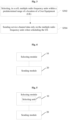
Fig. 3 is a flowchart of a method for reducing inter-cell interference according to some embodiments of the present disclosure. As shown inFig. 3 , the flow includes the following operations S302 to S304. - In operation S302, multiple radio frequency units within a predetermined range of a location of a User Equipment (UE) are selected in a cell.
- In operation S304, service channel data is sent only on the multiple radio frequency units when scheduling the UE.
- The operation S302 of this embodiment may further include: the multiple radio frequency units within the predetermined range of the location of the UE may be selected in the cell according to a strength of a channel sounding reference signal sent by the UE.
- In this embodiment, the operation that the multiple radio frequency units within the predetermined range of the location of the UE are selected in the cell according to a strength of a channel sounding reference signal sent by the UE may further include: the strengths of the channel sounding reference signal sent by the UE at respective radio frequency units in the cell where the UE is located are acquired; and the multiple radio frequency units are selected from the respective the radio frequency units based on the strengths of the channel sounding reference signal at the respective radio frequency units, wherein a difference between the strength of the channel sounding reference signal at each of the multiple radio frequency units and a strongest strength of the channel sounding reference signal as acquired satisfies a preset threshold.
- Before the operation S302 of this embodiment, the method may further include: the respective radio frequency units in the cell are uniformly numbered according to a networking condition of the cell where the UE is located, wherein a number of each of the respective radio frequency units is composed of a cell number segment, a cell part number segment, an aggregation unit number segment, and a radio frequency unit number segment.
- In this embodiment, the cell may be an ordinary cell or a super cell, and when the cell is the ordinary cell, a value of the cell part number segments is equal to 0.
- In this embodiment, the operation of selecting, from the respective the radio frequency units, the multiple radio frequency units includes: the strengths of the channel sounding reference signal at the respective radio frequency units are ranked in a descending order; the number of a radio frequency unit with the strongest strength of the channel sounding reference signal is recorded and put into a radio frequency unit list for sending the service channel data when scheduling the UE; and the strongest strength of the channel sounding reference signal is compared with the strength of the channel sounding reference signal at each radio frequency unit other than the radio frequency unit with the strongest strength of the channel sounding reference signal; and when the difference between the strongest strength of the channel sounding reference signal and the strength of the channel sounding reference signal at the radio frequency unit satisfies the preset threshold, the number of the radio frequency unit satisfying the preset threshold is recorded and put into the radio frequency unit list for sending the service channel data when scheduling the UE.
- In this embodiment, the operation of sending service channel data only on the multiple radio frequency units when scheduling the UE includes: when scheduling the UE, i.e., when allocating communication resources for the UE according to a scheduling policy, the service channel data is copied, and the service channel data is sent only on the radio frequency units whose numbers are in the radio frequency unit list for sending the service channel data.
- By means of the described operations, according to a location of a user in a cell, data is sent only on pRRU(s) near the user, and other pRRUs in the cell do not send data, so that inter-cell interference may be reduced, and the communication rate of the user may be greatly improved. The technical solution in the embodiments of the present disclosure solves the problem of a decrease in user experience caused by interference on a service channel between adjacent cells, and improves the user experience during user communication.
- Through the description of the foregoing embodiments, a person having ordinary skill in the art may clearly understand that the method according to the foregoing embodiments may be implemented by software in addition to a necessary universal hardware platform, and definitely may also be implemented by hardware. However, in many cases, the former is a preferred implementation. Based on such understanding, the essence of the technical solutions of the embodiments of the present disclosure or the part contributing to the related art may be embodied in the form of a software product. The computer software product may stored in a storage medium (such as a Read-Only Memory (ROM)/Random Access Memory (RAM)), a magnetic disk, and an optical disk) storing several instructions for instructing a terminal device (which may be a mobile phone or a computer, a server, a network device, or the like) to perform the method described in the embodiments of the present disclosure.
- An apparatus for reducing inter-cell interference is also provided in the embodiments. The apparatus is used for implementing the described embodiments and exemplary implementations, and what has been described will not be elaborated. The term "module", as used hereinafter, is a combination of software and/or hardware capable of realizing a predetermined function. Although the apparatus described in the following embodiments is preferably implemented by software, implementation of hardware or a combination of software and hardware is also possible and conceived.
-
Fig. 4 is a structural block diagram of an apparatus for reducing inter-cell interference according to some embodiments of the present disclosure. As shown inFig. 4 , the apparatus includes: - a selecting
module 10, configured to select, in a cell, multiple radio frequency units within a predetermined range of a location of a User Equipment (UE); and - a
sending module 20, configured to send service channel data only on the multiple radio frequency units when scheduling the UE. -
Fig. 5 is a structure diagram of an apparatus for reducing inter-cell interference according to some other embodiments of the present disclosure. As shown inFig. 5 , the apparatus includes all the modules shown inFig. 4 , and the selectingmodule 10 includes:
a selectingunit 11, configured to select, in the cell according to a strength of a channel sounding reference signal sent by the UE, the multiple radio frequency units within the predetermined range of the location of the UE. -
Fig. 6 is a structure diagram of an apparatus for reducing inter-cell interference according to some other embodiments of the present disclosure. As shown inFig. 6 , in addition to all the modules shown inFig. 5 , the apparatus further includes:
anumbering module 30, configured to uniformly number respective radio frequency units in the cell according to a networking condition of the cell where the UE is located, wherein a number of each of the respective radio frequency units is composed of a cell number segment, a cell part number segment, an aggregation unit number segment, and a radio frequency unit number segment. - It should be noted that each module may be implemented by software or hardware. The latter may be implemented in the following manner, but is not limited thereto. All the modules are located in a same processor; alternatively, the modules are located in different processors in an arbitrary combination.
- To facilitate understanding of the technical solutions provided in the embodiments of the present disclosure, the following describes the technical solutions in detail with reference to the embodiments of specific scenarios.
-
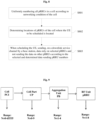
Fig. 7 is a system architecture diagram of an active indoor distribution system for reducing multi-cell interference according to some embodiments of the present disclosure. As shown inFig. 7 , the system includes anindoor positioning module 40, ascheduling module 50 and anaggregation module 60. - The
indoor positioning module 40 is mainly configured to determine, according to a Sounding Reference Signal (SRS) reported by a User Equipment (UE), a position number of a cell RRU where the UE is located. The function of theindoor positioning module 40 in this embodiment may also be implemented by the selectingmodule 10 in the above embodiment. - The
scheduling module 50 is configured to determine, according to an output result of theindoor positioning module 40, which pRRUs in the cell send a service channel when scheduling the user UE. The function of thescheduling module 50 in this embodiment may also be implemented by the sendingmodule 20 in the foregoing embodiment. - The
aggregation module 60 is configured to copy service data and send the service data out at the corresponding remote aggregation unit (e.g., Pico-Bridge (PB))--> pRRU according to an output result of thescheduling module 50. The function of theaggregation module 60 in this embodiment may also be implemented by the sendingmodule 20 in the foregoing embodiment. -
Fig. 8 is a flowchart of a method for reducing inter-cell interference according to some other embodiments of the present disclosure. As shown inFig. 8 , the method includes the following operations S801 to S803. - In operation S801, all pRRUs in a cell are uniformly numbered according to networking condition of the cell.
- For example, there are two types of cells in the active indoor distribution system: one is an ordinary cell and the other is a super cell. In order to unify the two types of cells, a Cell Part (CP) concept is introduced. The value of the CP is set to 0 for the ordinary cell, and the value of the CP takes a number from 1 to N for the super cell according to the number N of the composing CPs of the super cell.
-
Fig. 9 is a schematic structural diagram of composition of a number of a pRRU according to some embodiments of the present disclosure. According to the three-level networking architecture (BBU-->PB-->pRRU) of an active indoor distribution system, the unified numbering of pRRUs under a cell is shown inFig. 9 , and the unified numbering of the pRRUs is composed of four segments: a Physical Cell Identifier (PCI)+a Cell Part (CP)+a Pico-Bridge (PB)+a pico Remote Radio Unit (pRRU), that is, N0N1N2N3. - In this embodiment, the value ranges of the four segments may be the following ranges, for example, the value range of the PCI is 0-65535, the value range of the CP is 0-9, the value range of the PB is 1-4, and the value range of the pRRU is 1-8.
- In operation S802, locations of pRRUs of the cell where the UE to be scheduled is located are determined.
- For example, according to the SRS signal sent by the terminal, the locations of the pRRUs of the cell where the UE to be scheduled is located are determined.
- The UE sends the SRS reference signal; the base station receives the strengths of the SRS reference signal at respective pRRUs in the cell, ranks the strength of the SRS reference signal from high to low, and records and puts the pRRU number corresponding to the strongest strength of the SRS reference signal in the cell into a pRRU list for data sending of the UE to be scheduled.
- Other strengths of the SRS reference signal in the cell are compared with the strongest strength of the SRS reference signal, and when a signal strength difference threshold (configurable at the background) is satisfied, the number of the pRRU satisfying the signal strength difference threshold is recorded and put into the pRRU list for data sending of the UE to be scheduled.
- The maximum number of the data sending pRRUs of the UE to be scheduled may be configured at the background, and if maximum number is equal to M, the first M pRRUs are selected from the pRRU list for data sending of the UE.
- In operation S803, when scheduling the UE, the base station sends, on a downlink service channel, data only on the selected pRRUs and does not send the data on other pRRUs according to the selected and determined data sending pRRU numbers.
- In this embodiment, only pRRU(s) near a user are selected to send data according to a location of the user in a cell, thereby reducing the number of pRRUs that send data when scheduling the user, effectively reducing interference of a service channel between cells, and improving user experience.
- The embodiments of the present disclosure further provide a computer-readable storage medium. The computer-readable storage medium stores a computer program, wherein the computer program, when running on a processor, causes the processor to execute the operations in any one of the method embodiments.
- In an exemplary embodiment, the computer-readable storage medium may include, but is not limited to, any medium that may store a computer program, such as a Universal Serial Bus (USB) flash drive, a Read-Only Memory (ROM), a Random Access Memory (RAM), a removable hard disk, a magnetic disk, or an optical disc.
- The embodiments of the present disclosure also provide an electronic apparatus, including a memory and a processor, wherein the memory stores a computer program, and the processor is configured to run the computer program so as to execute the operations in any of the described method embodiments.
- In an exemplary embodiment, the electronic apparatus may further include a transmission device and an input/output device, wherein the transmission device is connected to the processor, and the input/output device is connected to the processor.
- For specific examples in this embodiment, reference may be made to the examples described in the foregoing embodiments and exemplary embodiments, and details are not repeatedly described in this embodiment.
- Obviously, those having ordinary skill in the art should understand that respective modules or operations of the described embodiments of the present disclosure may be implemented by a universal computing device, they may be centralized on a single computing device or distributed on a network composed of multiple computing devices, they may be implemented by program codes executable by a computing apparatus, and thus may be stored in a storage apparatus and executed by the computing apparatus. Furthermore, in some cases, the shown or described operations may be executed in an order different from that described here, or they are made into integrated circuit modules respectively, or multiple modules or operations therein are made into a single integrated circuit module for implementation. In this way, the embodiments of the present disclosure are not limited to any specific combination of hardware and software.
- The above description is only the exemplary embodiments of the present disclosure, and is not intended to limit the present disclosure. For those having ordinary skill in the art, the embodiments of the present disclosure may have various modifications and variations. Any modifications, equivalent replacements, improvements and the like made within the principle of the present disclosure shall belong to the protection scope of the present disclosure.
Claims (12)
- A method for reducing inter-cell interference, comprising:selecting, in a cell, multiple radio frequency units within a predetermined range of a location of a User Equipment, UE; andsending service channel data only on the multiple radio frequency units when scheduling the UE.
- The method according to claim 1, wherein selecting, in a cell, multiple radio frequency units within a predetermined range of a location of a User Equipment, UE, comprises:
selecting, in the cell according to a strength of a channel sounding reference signal sent by the UE, the multiple radio frequency units within the predetermined range of the location of the UE. - The method according to claim 2, wherein selecting, in the cell according to a strength of a channel sounding reference signal sent by the UE, the multiple radio frequency units within the predetermined range of the location of the UE comprises:acquiring the strengths of the channel sounding reference signal sent by the UE at respective radio frequency units in the cell where the UE is located;selecting, from the respective the radio frequency units, the multiple radio frequency units based on the strengths of the channel sounding reference signal at the respective radio frequency units, wherein a difference between the strength of the channel sounding reference signal at each of the multiple radio frequency units and a strongest strength of the channel sounding reference signal as acquired satisfies a preset threshold.
- The method according to claim 3, wherein before selecting, in a cell, multiple radio frequency units within a predetermined range of a location of a User Equipment, UE, the method further comprises:
uniformly numbering the respective radio frequency units in the cell according to a networking condition of the cell where the UE is located, wherein a number of each of the respective radio frequency units is composed of a cell number segment, a cell part number segment, an aggregation unit number segment, and a radio frequency unit number segment. - The method according to claim 4, wherein the cell is an ordinary cell or a super cell, and when the cell is the ordinary cell, a value of the cell part number segments is equal to 0.
- The method according to claim 4, wherein selecting, from the respective the radio frequency units, the multiple radio frequency units comprises:ranking the strengths of the channel sounding reference signal at the respective radio frequency units in a descending order;recording and putting the number of a radio frequency unit with the strongest strength of the channel sounding reference signal into a radio frequency unit list for sending the service channel data when scheduling the UE; andcomparing the strongest strength of the channel sounding reference signal with the strength of the channel sounding reference signal at each radio frequency unit other than the radio frequency unit with the strongest strength of the channel sounding reference signal; and when the difference between the strongest strength of the channel sounding reference signal and the strength of the channel sounding reference signal at the radio frequency unit satisfies the preset threshold, recording and putting the number of the radio frequency unit satisfying the preset threshold into the radio frequency unit list for sending the service channel data when scheduling the UE.
- The method according to claim 6, wherein sending service channel data only on the multiple radio frequency units when scheduling the UE comprises:
when scheduling the UE, copying the service channel data and sending the service channel data only on the radio frequency units whose numbers are in the radio frequency unit list for sending the service channel data. - An apparatus for reducing inter-cell interference, comprising:a selecting module, configured to select, in a cell, multiple radio frequency units within a predetermined range of a location of a User Equipment, UE; anda sending module, configured to send service channel data only on the multiple radio frequency units when scheduling the UE.
- The apparatus according to claim 8, wherein the selecting module comprises:
a selecting unit, configured to select, in the cell according to a strength of a channel sounding reference signal sent by the UE, the multiple radio frequency units within the predetermined range of the location of the UE. - The apparatus according to claim 8, further comprising:
a numbering module, configured to uniformly number respective radio frequency units in the cell according to a networking condition of the cell where the UE is located, wherein a number of each of the respective radio frequency units is composed of a cell number segment, a cell part number segment, an aggregation unit number segment, and a radio frequency unit number segment. - A computer-readable storage medium, wherein the computer-readable storage medium stores a computer program, and the computer program, when being executed by a processor, causes the processor to implement the operations of the method according to any one of claims 1 to 7.
- An electronic apparatus, comprising a memory, a processor, and a computer program stored on the memory and executable on the processor, wherein the processor, when executing the computer program, implements the operations of the method according to any one of claims 1 to 7.
Applications Claiming Priority (2)
| Application Number | Priority Date | Filing Date | Title |
|---|---|---|---|
| CN202111425004.0A CN116193610A (en) | 2021-11-26 | 2021-11-26 | Method and device for reducing inter-cell interference |
| PCT/CN2022/125912 WO2023093376A1 (en) | 2021-11-26 | 2022-10-18 | Method and apparatus for reducing inter-cell interference |
Publications (2)
| Publication Number | Publication Date |
|---|---|
| EP4440179A1 true EP4440179A1 (en) | 2024-10-02 |
| EP4440179A4 EP4440179A4 (en) | 2025-04-02 |
Family
ID=86444750
Family Applications (1)
| Application Number | Title | Priority Date | Filing Date |
|---|---|---|---|
| EP22897459.8A Pending EP4440179A4 (en) | 2021-11-26 | 2022-10-18 | Method and device for reducing interference between cells |
Country Status (5)
| Country | Link |
|---|---|
| US (1) | US20250024483A1 (en) |
| EP (1) | EP4440179A4 (en) |
| KR (1) | KR20240112894A (en) |
| CN (1) | CN116193610A (en) |
| WO (1) | WO2023093376A1 (en) |
Families Citing this family (1)
| Publication number | Priority date | Publication date | Assignee | Title |
|---|---|---|---|---|
| CN116634463B (en) * | 2023-06-06 | 2025-08-29 | 中国联合网络通信集团有限公司 | Frequency determination method, device and storage medium |
Family Cites Families (15)
| Publication number | Priority date | Publication date | Assignee | Title |
|---|---|---|---|---|
| US8542763B2 (en) * | 2004-04-02 | 2013-09-24 | Rearden, Llc | Systems and methods to coordinate transmissions in distributed wireless systems via user clustering |
| US10749582B2 (en) * | 2004-04-02 | 2020-08-18 | Rearden, Llc | Systems and methods to coordinate transmissions in distributed wireless systems via user clustering |
| US8170081B2 (en) * | 2004-04-02 | 2012-05-01 | Rearden, LLC. | System and method for adjusting DIDO interference cancellation based on signal strength measurements |
| US8570914B2 (en) * | 2010-08-09 | 2013-10-29 | Corning Cable Systems Llc | Apparatuses, systems, and methods for determining location of a mobile device(s) in a distributed antenna system(s) |
| US9258718B2 (en) * | 2011-02-22 | 2016-02-09 | Qualcomm Incorporated | Positioning location for remote radio heads (RRH) with same physical cell identity (PCI) |
| CN103621133B (en) * | 2011-05-03 | 2017-09-22 | 瑞典爱立信有限公司 | Mitigate physical cell identifier (PCI) adjustment disturbed in foreign peoples's cellular network |
| US20150163036A1 (en) * | 2013-12-11 | 2015-06-11 | Nokia Solutions And Networks Oy | High Resolution Channel Sounding for FDD Communications |
| CN104066196B (en) * | 2014-06-30 | 2018-07-13 | 华为技术有限公司 | Determine the method and apparatus for drawing and selecting radio frequency unit RRU |
| WO2018094746A1 (en) * | 2016-11-28 | 2018-05-31 | 华为技术有限公司 | Method for base station to send data, bbu and rhub |
| CN109152048B (en) * | 2017-06-27 | 2023-05-09 | 中国移动通信有限公司研究院 | Space division multiplexing method, base station and computer readable storage medium |
| US11096191B2 (en) * | 2018-05-21 | 2021-08-17 | Qualcomm Incorporated | UE-centric clustering and efficient scheduling for CoMP |
| CN112188482B (en) * | 2019-07-04 | 2024-05-10 | 中兴通讯股份有限公司 | Identification ID configuration method and device, and identification ID acquisition method and device |
| CN111542065B (en) * | 2020-05-11 | 2021-02-05 | 四川创智联恒科技有限公司 | Method for sharing cell resources by multiple RRUs in 5G network |
| CN113709762B (en) * | 2020-05-20 | 2023-12-26 | 大唐移动通信设备有限公司 | Signal processing method, device, network and storage medium for cell merging scene |
| CN113709787A (en) * | 2020-05-20 | 2021-11-26 | 华为技术有限公司 | Method, device and system for managing uplink measurement |
-
2021
- 2021-11-26 CN CN202111425004.0A patent/CN116193610A/en active Pending
-
2022
- 2022-10-18 EP EP22897459.8A patent/EP4440179A4/en active Pending
- 2022-10-18 US US18/709,878 patent/US20250024483A1/en active Pending
- 2022-10-18 KR KR1020247020546A patent/KR20240112894A/en active Pending
- 2022-10-18 WO PCT/CN2022/125912 patent/WO2023093376A1/en not_active Ceased
Also Published As
| Publication number | Publication date |
|---|---|
| WO2023093376A1 (en) | 2023-06-01 |
| KR20240112894A (en) | 2024-07-19 |
| CN116193610A (en) | 2023-05-30 |
| US20250024483A1 (en) | 2025-01-16 |
| EP4440179A4 (en) | 2025-04-02 |
Similar Documents
| Publication | Publication Date | Title |
|---|---|---|
| US20200136703A1 (en) | Carrier aggregation capability reporting apparatus and method, and carrier measurement apparatus and method | |
| US11026249B2 (en) | Methods for configuring and receiving scheduling signaling and related devices | |
| EP3691138A1 (en) | Method and apparatus for adjusting broadcast beam domains | |
| US12021666B2 (en) | Blind detection method and apparatus | |
| CN101964980B (en) | Method and device for coordinating inter-cell interference | |
| US10973031B2 (en) | Resource configuration method and device, and computer storage medium | |
| EP3435720B1 (en) | Method for configuring and receiving scheduling signalling and related devices | |
| KR102770062B1 (en) | Resource allocation instructions, receiving method and device | |
| JP7092897B2 (en) | Time-frequency resource allocation method and equipment | |
| US20180077587A1 (en) | Apparatus and method for assigning cells to coordination sets for optimizing coordination performance | |
| US12101749B2 (en) | Control channel monitoring capability determining methods, user equipment and network device | |
| CN110971349A (en) | Repeated transmission method, terminal and network side equipment | |
| EP4440179A1 (en) | Method and apparatus for reducing inter-cell interference | |
| EP4164315A1 (en) | Power acquisition method and apparatus, and node device | |
| US12557032B2 (en) | Method and apparatus for sending DMRS, and terminal and medium | |
| CN107426109B (en) | Traffic scheduling method, VNF module and traffic scheduling server | |
| US20250351009A1 (en) | Method and apparatus for determining computing power resource, and network side device | |
| US11595183B2 (en) | Joint resource assigning method and device for allocating resources to terminal | |
| CN114978451A (en) | Sidelink transmission method, device and terminal | |
| US20100248697A1 (en) | Apparatus, Method and Computer Program Product Providing Signaling of Blocking, Pilot Measurements and Neighbor Cell List For Facilitating Adaptive Interference Coordination | |
| WO2019213870A1 (en) | Single-stage downlink control information design for scheduling multiple-active bandwidth parts | |
| CN111162884A (en) | Channel optimization method and device | |
| CN112996114B (en) | Resource scheduling method, device, equipment and storage medium | |
| EP4557858A1 (en) | Direct communication interface resource determination method, terminal and network device | |
| JP5528179B2 (en) | Base station apparatus, control program for base station apparatus, and integrated circuit |
Legal Events
| Date | Code | Title | Description |
|---|---|---|---|
| STAA | Information on the status of an ep patent application or granted ep patent |
Free format text: STATUS: THE INTERNATIONAL PUBLICATION HAS BEEN MADE |
|
| PUAI | Public reference made under article 153(3) epc to a published international application that has entered the european phase |
Free format text: ORIGINAL CODE: 0009012 |
|
| STAA | Information on the status of an ep patent application or granted ep patent |
Free format text: STATUS: REQUEST FOR EXAMINATION WAS MADE |
|
| 17P | Request for examination filed |
Effective date: 20240527 |
|
| AK | Designated contracting states |
Kind code of ref document: A1 Designated state(s): AL AT BE BG CH CY CZ DE DK EE ES FI FR GB GR HR HU IE IS IT LI LT LU LV MC ME MK MT NL NO PL PT RO RS SE SI SK SM TR |
|
| REG | Reference to a national code |
Ref country code: DE Ref legal event code: R079 Free format text: PREVIOUS MAIN CLASS: H04W0024020000 Ipc: H04L0005000000 |
|
| DAV | Request for validation of the european patent (deleted) | ||
| DAX | Request for extension of the european patent (deleted) | ||
| A4 | Supplementary search report drawn up and despatched |
Effective date: 20250227 |
|
| RIC1 | Information provided on ipc code assigned before grant |
Ipc: H04W 88/08 20090101ALN20250221BHEP Ipc: H04W 24/10 20090101ALN20250221BHEP Ipc: H04W 24/02 20090101ALI20250221BHEP Ipc: H04L 5/00 20060101AFI20250221BHEP |