EP4439419A1 - Information processing system, program, and information processing method - Google Patents
Information processing system, program, and information processing method Download PDFInfo
- Publication number
- EP4439419A1 EP4439419A1 EP23193192.4A EP23193192A EP4439419A1 EP 4439419 A1 EP4439419 A1 EP 4439419A1 EP 23193192 A EP23193192 A EP 23193192A EP 4439419 A1 EP4439419 A1 EP 4439419A1
- Authority
- EP
- European Patent Office
- Prior art keywords
- user
- work
- terminal
- information
- candidates
- Prior art date
- Legal status (The legal status is an assumption and is not a legal conclusion. Google has not performed a legal analysis and makes no representation as to the accuracy of the status listed.)
- Granted
Links
Images


Classifications
-
- G—PHYSICS
- G06—COMPUTING OR CALCULATING; COUNTING
- G06Q—INFORMATION AND COMMUNICATION TECHNOLOGY [ICT] SPECIALLY ADAPTED FOR ADMINISTRATIVE, COMMERCIAL, FINANCIAL, MANAGERIAL OR SUPERVISORY PURPOSES; SYSTEMS OR METHODS SPECIALLY ADAPTED FOR ADMINISTRATIVE, COMMERCIAL, FINANCIAL, MANAGERIAL OR SUPERVISORY PURPOSES, NOT OTHERWISE PROVIDED FOR
- G06Q10/00—Administration; Management
- G06Q10/10—Office automation; Time management
- G06Q10/101—Collaborative creation, e.g. joint development of products or services
-
- H—ELECTRICITY
- H04—ELECTRIC COMMUNICATION TECHNIQUE
- H04N—PICTORIAL COMMUNICATION, e.g. TELEVISION
- H04N7/00—Television systems
- H04N7/18—Closed-circuit television [CCTV] systems, i.e. systems in which the video signal is not broadcast
- H04N7/181—Closed-circuit television [CCTV] systems, i.e. systems in which the video signal is not broadcast for receiving images from a plurality of remote sources
-
- G—PHYSICS
- G06—COMPUTING OR CALCULATING; COUNTING
- G06Q—INFORMATION AND COMMUNICATION TECHNOLOGY [ICT] SPECIALLY ADAPTED FOR ADMINISTRATIVE, COMMERCIAL, FINANCIAL, MANAGERIAL OR SUPERVISORY PURPOSES; SYSTEMS OR METHODS SPECIALLY ADAPTED FOR ADMINISTRATIVE, COMMERCIAL, FINANCIAL, MANAGERIAL OR SUPERVISORY PURPOSES, NOT OTHERWISE PROVIDED FOR
- G06Q10/00—Administration; Management
- G06Q10/06—Resources, workflows, human or project management; Enterprise or organisation planning; Enterprise or organisation modelling
- G06Q10/063—Operations research, analysis or management
- G06Q10/0631—Resource planning, allocation, distributing or scheduling for enterprises or organisations
- G06Q10/06311—Scheduling, planning or task assignment for a person or group
- G06Q10/063112—Skill-based matching of a person or a group to a task
-
- G—PHYSICS
- G06—COMPUTING OR CALCULATING; COUNTING
- G06Q—INFORMATION AND COMMUNICATION TECHNOLOGY [ICT] SPECIALLY ADAPTED FOR ADMINISTRATIVE, COMMERCIAL, FINANCIAL, MANAGERIAL OR SUPERVISORY PURPOSES; SYSTEMS OR METHODS SPECIALLY ADAPTED FOR ADMINISTRATIVE, COMMERCIAL, FINANCIAL, MANAGERIAL OR SUPERVISORY PURPOSES, NOT OTHERWISE PROVIDED FOR
- G06Q10/00—Administration; Management
- G06Q10/06—Resources, workflows, human or project management; Enterprise or organisation planning; Enterprise or organisation modelling
- G06Q10/063—Operations research, analysis or management
- G06Q10/0631—Resource planning, allocation, distributing or scheduling for enterprises or organisations
- G06Q10/06311—Scheduling, planning or task assignment for a person or group
- G06Q10/063114—Status monitoring or status determination for a person or group
-
- G—PHYSICS
- G06—COMPUTING OR CALCULATING; COUNTING
- G06Q—INFORMATION AND COMMUNICATION TECHNOLOGY [ICT] SPECIALLY ADAPTED FOR ADMINISTRATIVE, COMMERCIAL, FINANCIAL, MANAGERIAL OR SUPERVISORY PURPOSES; SYSTEMS OR METHODS SPECIALLY ADAPTED FOR ADMINISTRATIVE, COMMERCIAL, FINANCIAL, MANAGERIAL OR SUPERVISORY PURPOSES, NOT OTHERWISE PROVIDED FOR
- G06Q10/00—Administration; Management
- G06Q10/06—Resources, workflows, human or project management; Enterprise or organisation planning; Enterprise or organisation modelling
- G06Q10/063—Operations research, analysis or management
- G06Q10/0631—Resource planning, allocation, distributing or scheduling for enterprises or organisations
- G06Q10/06311—Scheduling, planning or task assignment for a person or group
- G06Q10/063118—Staff planning in a project environment
-
- G—PHYSICS
- G06—COMPUTING OR CALCULATING; COUNTING
- G06Q—INFORMATION AND COMMUNICATION TECHNOLOGY [ICT] SPECIALLY ADAPTED FOR ADMINISTRATIVE, COMMERCIAL, FINANCIAL, MANAGERIAL OR SUPERVISORY PURPOSES; SYSTEMS OR METHODS SPECIALLY ADAPTED FOR ADMINISTRATIVE, COMMERCIAL, FINANCIAL, MANAGERIAL OR SUPERVISORY PURPOSES, NOT OTHERWISE PROVIDED FOR
- G06Q10/00—Administration; Management
- G06Q10/06—Resources, workflows, human or project management; Enterprise or organisation planning; Enterprise or organisation modelling
- G06Q10/063—Operations research, analysis or management
- G06Q10/0631—Resource planning, allocation, distributing or scheduling for enterprises or organisations
- G06Q10/06316—Sequencing of tasks or work
-
- G—PHYSICS
- G06—COMPUTING OR CALCULATING; COUNTING
- G06T—IMAGE DATA PROCESSING OR GENERATION, IN GENERAL
- G06T11/00—Two-dimensional [2D] image generation
- G06T11/60—Creating or editing images; Combining images with text
-
- H—ELECTRICITY
- H04—ELECTRIC COMMUNICATION TECHNIQUE
- H04N—PICTORIAL COMMUNICATION, e.g. TELEVISION
- H04N23/00—Cameras or camera modules comprising electronic image sensors; Control thereof
- H04N23/60—Control of cameras or camera modules
- H04N23/61—Control of cameras or camera modules based on recognised objects
-
- G—PHYSICS
- G06—COMPUTING OR CALCULATING; COUNTING
- G06F—ELECTRIC DIGITAL DATA PROCESSING
- G06F3/00—Input arrangements for transferring data to be processed into a form capable of being handled by the computer; Output arrangements for transferring data from processing unit to output unit, e.g. interface arrangements
- G06F3/01—Input arrangements or combined input and output arrangements for interaction between user and computer
- G06F3/048—Interaction techniques based on graphical user interfaces [GUI]
- G06F3/0481—Interaction techniques based on graphical user interfaces [GUI] based on specific properties of the displayed interaction object or a metaphor-based environment, e.g. interaction with desktop elements like windows or icons, or assisted by a cursor's changing behaviour or appearance
- G06F3/0482—Interaction with lists of selectable items, e.g. menus
-
- G—PHYSICS
- G06—COMPUTING OR CALCULATING; COUNTING
- G06T—IMAGE DATA PROCESSING OR GENERATION, IN GENERAL
- G06T2200/00—Indexing scheme for image data processing or generation, in general
- G06T2200/24—Indexing scheme for image data processing or generation, in general involving graphical user interfaces [GUIs]
Definitions
- the present invention relates to an information processing system, a program, and an information processing method.
- AR augmented reality
- the AR content may not be shared between workers.
- a person to which the work is handed over may not be able to start the work at an intended timing.
- An object of the present invention is to enable a person to which work with respect to an object in a real space is handed over from another person to start the work at an intended timing in a case where the work is assisted using AR content.
- an information processing system including one or plural processors configured to, in a case where an object set as a target to be imaged in a first terminal is set as a target to be imaged in a second terminal, display AR content displayed on the first terminal for assisting work with respect to the object on the second terminal.
- the information processing system in which the first terminal may be a terminal operated by a first user as a source from which the work is handed over, and the second terminal may be a terminal operated by, among one or more users extracted as candidates of a second user as a destination to which the work is handed over, a user determined as the second user.
- the information processing system in which the one or the plurality of processors may be configured to extract the one or more users as the candidates of the second user based on a positional relationship with respect to the first terminal, and display information indicating each of the extracted one or more users on the first terminal in a selectable aspect as the candidates of the second user.
- the information processing system in which the one or the plurality of processors may be configured to display information indicating at least one of a status of the work or a skill level of the work of each of the one or more users extracted as the candidates of the second user on the first terminal.
- the information processing system may be configured to, in displaying the candidates of the second user on the first terminal, determine an aspect of display of the users set as the candidates in accordance with a priority level determined in advance with respect to a status of the work and to a skill level of the work.
- the information processing system may be configured to, in a case where a user designated by the first user among the candidates of the second user consents to handover of the work and where the object is set as a target to be imaged in a terminal of the user, determine the user as the second user.
- the information processing system may be configured to determine, as the second user, a user who is a user operating a terminal in which the object is set as a target to be imaged and who has consented to handover of the work among the one or more users extracted as the candidates of the second user based on a positional relationship with respect to the first terminal.
- the one or the plurality of processors may be configured to, in a case where there are a plurality of users who are users operating a terminal in which the object is set as a target to be imaged and who have consented to handover of the work among the one or more users, determine the second user based on at least one of a status of the work or a skill level of the work of each of the users.
- the information processing system according to any one of the second to eighth aspects, in which the one or the plurality of processors may be configured to display information indicating a procedure of the work for each step of the work.
- the information processing system according to any one of the second to ninth aspects, in which the one or the plurality of processors may be configured to display information indicating a step of the work performed by the first user among steps of the work in a distinguishable aspect from information indicating other steps.
- the information processing system may be configured to display information indicating details of the work up to a step of the work to be performed by the second user among steps of the work near information indicating the step of the work.
- the information processing system in which the one or the plurality of processors may be configured to display a summary of information indicating a procedure of the work in displaying the information indicating the details of the work.
- a program causing a computer to implement a function of, in a case where an object set as a target to be imaged in a first terminal is set as a target to be imaged in a second terminal, displaying AR content displayed on the first terminal for assisting work with respect to the object on the second terminal.
- an information processing method including displaying, in a case where an object set as a target to be imaged in a first terminal is set as a target to be imaged in a second terminal, AR content displayed on the first terminal for assisting work with respect to the object on the second terminal.
- the AR content displayed on the first terminal for assisting the work with respect to the object is displayed on the second terminal. Accordingly, the handover of the work between terminals of the AR content for assisting the work with respect to the object can be seamlessly performed. Consequently, a person to which the work respect to the object is handed over can start the work at an intended timing.
- the AR content displayed on the first terminal operated by the first user as the source from which the work is handed over is displayed on the second terminal operated by the second user as the destination to which the work is handed over. Accordingly, since the handover of the work from the first user to the second user is seamlessly performed, the second user can start the work that is handed over at an intended timing.
- the information indicating each of the one or more users extracted based on the positional relationship with respect to the first terminal is displayed on the first terminal in a selectable aspect as the candidates of the second user.
- the first user can select the destination to which the work is handed over from among the candidates of the second user.
- the information indicating at least one of the status of the work or the skill level of the work of each of the one or more users set as the candidates of the second user is displayed on the first terminal.
- the first user can select the destination to which the work is handed over based on the status or the skill level of the work.
- the aspect of display of the users set as the candidates of the second user is determined in accordance with the priority level determined in advance with respect to the status of the work and to the skill level of the work.
- the second user appropriate as the destination to which the work is handed over is likely to be selected.
- the user in a case where the user designated by the first user among the candidates of the second consents to the handover of the work and where the object as a target of the work is set as the target to be imaged in the terminal of the user, the user is determined as the second user.
- operation that respects decision of the user as the destination to which the work is handed over can be performed.
- the second user is automatically determined without causing the first user to perform designation.
- seamless handover of the work from the first user to the second user is promoted.
- the second user is automatically determined without causing the first user to perform designation.
- seamless handover of the work from the first user to the second user is promoted.
- the information indicating the procedure of the work is displayed for each step.
- the information indicating the step performed by the first user among the steps of the work is displayed in a distinguishable aspect from the information indicating the other steps.
- the second user can perceive progress of the work at a glance.
- the information indicating the details of the work up to the step of the work to be performed by the second user is displayed near the information indicating the step of the work.
- the second user can perceive what kind of work has been performed up to the work to be performed by the second user.
- the summary of the information indicating the procedure of the work is displayed in displaying the information indicating the details of the work.
- the second user can efficiently perceive what kind of work has been performed up to the work to be performed by the second user.
- a screen region is efficiently used.
- the AR content displayed on the first terminal for assisting the work with respect to the object is displayed on the second terminal. Accordingly, the handover of the work between terminals of the AR content for assisting the work with respect to the object can be seamlessly performed. Consequently, a person to which the work respect to the object is handed over can start the work at an intended timing.
- the AR content displayed on the first terminal for assisting the work with respect to the object is displayed on the second terminal. Accordingly, the handover of the work between terminals of the AR content for assisting the work with respect to the object can be seamlessly performed. Consequently, a person to which the work respect to the object is handed over can start the work at an intended timing.
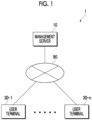
- Fig. 1 is a diagram illustrating an example of an overall configuration of an information processing system 1 to which the present exemplary embodiment is applied.
- the information processing system 1 is configured by connecting a management server 10 to user terminals 30-1 to 30-n (n is an integer value greater than or equal to 1) via a network 90.
- the network 90 is, for example, a local area network (LAN) or the Internet.
- the user terminals 30-1 to 30-n may be collectively referred to as a "user terminal 30" unless necessary to be individually described.
- the management server 10 constituting the information processing system 1 is an information processing apparatus as a server that manages the entire information processing system 1.
- the management server 10 performs processing of acquiring various types of information transmitted from the user terminal 30, various types of processing with respect to the acquired various types of information, and processing of transmitting various types of information toward the user terminal 30.
- the management server 10 performs a control for displaying, on the user terminal 30 as the second terminal, AR content that is displayed on the user terminal 30 as the first terminal for assisting work of the user with respect to the object.
- “set as the target to be imaged” refers to a state where the object is displayed on a finder of a display unit of the user terminal 30 on which the AR content is displayed.
- AR content refers to content to which augmented reality (AR) technology is applied and is content for assisting the work of the user with respect to the object.
- the “work of the user with respect to the object” refers to work with respect to the object performed by any user among a plurality of users.
- the “work” refers to work consisting of a plurality of steps.
- the "object” as a target of the work is not particularly limited and may be, for example, various apparatuses.
- the "work of the user with respect to the object” may be simply referred to as the "work”.
- first terminal refers to the user terminal 30 operated by a user (hereinafter, referred to as a "first user”) as a source from which the work with respect to the object is handed over.
- second terminal refers to the user terminal 30 operated by, among one or more users extracted as candidates of a user (hereinafter, referred to as a "second user") as a destination to which the work with respect to the object is handed over, a user determined as the second user.
- the second user is determined by the management server 10. A method of determining the second user via the management server 10 will be described later.
- the user terminal 30 as the first terminal may be referred to as the "user terminal 30 as the first terminal” or may be simply referred to as the "first terminal”.
- the user terminal 30 as the second terminal may be referred to as the "user terminal 30 as the second terminal” or may be simply referred to as the "second terminal”. Details of the configuration and processing of the management server 10 will be described in detail later.
- the user terminal 30 is an information processing apparatus such as a smartphone, a tablet terminal, or a head-mounted display (HMD) operated by the user who uses the information processing system 1.
- the user terminal 30 acquires various types of information transmitted from the management server 10 and performs various types of processing. In addition, the user terminal 30 transmits various types of information toward the management server 10.
- HMD head-mounted display
- the user terminal 30 displays the AR content based on control information transmitted from the management server 10.
- the user terminal 30 displays annotation information in a superimposed manner on the displayed AR content.
- the user terminal 30 receives various input operations performed by the user and transmits input information toward the management server 10.
- the above configuration of the information processing system 1 is merely an example, and the information processing system 1 as a whole may have functions that realize the above processing.
- all or a part of the functions implementing the above processing may be shared or used in cooperation with each other in the information processing system 1. That is, all or a part of the functions of the management server 10 may be provided as functions of the user terminal 30, or all or a part of the functions of the user terminal 30 may be provided as functions of the management server 10.
- all or a part of the functions of each of the management server 10 and the user terminal 30 constituting the information processing system 1 may be transferred over to another server or the like, not illustrated, to perform all or a part of the above processing. Accordingly, the processing of the information processing system 1 as a whole may be accelerated, and the processing can also be complemented.
- Fig. 2 is a diagram illustrating an example of a hardware configuration of the management server 10.
- the management server 10 includes a control unit 11, a memory 12, a storage unit 13, a communication unit 14, an operation unit 15, and a display unit 16. These units are connected to each other via a data bus, an address bus, a peripheral component interconnect (PCI) bus, or the like.
- PCI peripheral component interconnect
- the control unit 11 is a processor that controls the functions of the management server 10 by executing various types of software such as an OS (basic software) and application software (software applications).
- the control unit 11 is configured with, for example, a central processing unit (CPU).
- the memory 12 is a storage region in which various types of software and data and the like used for executing the software are stored, and is used as a work area in operations.
- the memory 12 is configured with, for example, a random access memory (RAM).
- the storage unit 13 is a storage region in which input data for various types of software, output data from various types of software, and the like are stored.
- the storage unit 13 is configured with, for example, a hard disk drive (HDD), a solid state drive (SSD), or a semiconductor memory used for storing programs, various types of setting data, and the like. Databases that store various types of information are stored in the storage unit 13.
- the databases stored in the storage unit 13 include, for example, a user DB 131 in which information (hereinafter, referred to as "user information”) related to the user who operates the user terminal 30 is stored, a content DB 132 in which the AR content is stored, and a work status DB 133 in which information (hereinafter, referred to as "work status information”) indicating a status of the work executed using the AR content is stored.
- user information information
- content DB 132 in which the AR content is stored
- work status DB 133 in which information (hereinafter, referred to as "work status information”) indicating a status of the work executed using the AR content is stored.
- the communication unit 14 transmits and receives data to and from the user terminal 30 and an outside via the network 90.
- the operation unit 15 is configured with, for example, a keyboard, a mouse, a mechanical button, or a switch and receives an input operation.
- the operation unit 15 may include a touch sensor that is integrated with the display unit 16 to constitute a touch panel.
- the display unit 16 is configured with, for example, a liquid crystal display or an organic electro luminescence (EL) display used for displaying information and displays image (video and still image) data, text data, and the like.
- EL organic electro luminescence
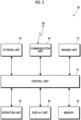
- Fig. 3 is a diagram illustrating a hardware configuration of the user terminal 30.
- the user terminal 30 includes a control unit 31, a memory 32, a storage unit 33, a communication unit 34, an operation unit 35, and a display unit 36 corresponding to the control unit 11, the memory 12, the storage unit 13, the communication unit 14, the operation unit 15, and the display unit 16, respectively, of the management server 10 in Fig. 2 and, in addition to these configurations, includes an imaging unit 37.
- the imaging unit 37 is configured with a camera or the like and acquires data of a video by imaging a plurality of original documents as a subject displayed on the display unit 36 that also functions as a finder of the camera. These units are connected to each other via a data bus, an address bus, a PCI bus, or the like.
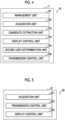
- Fig. 4 is a diagram illustrating an example of a functional configuration of the control unit 11 of the management server 10.
- a management unit 101, an acquisition unit 102, a candidate extraction unit 103, a display control unit 104, a second user determination unit 105, and a transmission control unit 106 function in the control unit 11 of the management server 10.
- the management unit 101 stores and manages various types of information in the databases of the storage unit 13 (refer to Fig. 2 ).
- the management unit 101 stores and manages the user information in the user DB 131.
- the user information includes at least a skill level of the work.
- the management unit 101 stores and manages the AR content in the content DB 132.
- the management unit 101 stores and manages the work status information in the work status DB 133.
- the management unit 101 manages the user information stored in the user DB 131, the AR content stored in the content DB 132, and the work status information stored in the work status DB 133 in association with each other.
- the acquisition unit 102 acquires various types of information.
- the acquisition unit 102 acquires various types of information transmitted from each of the user terminal 30 and the outside.
- Examples of the information transmitted from the user terminal 30 in the information acquired by the acquisition unit 102 include the input information input by an operation of the user.
- the input information input by the operation of the user is, for example, information (hereinafter, referred to as "handover request information") input by the user for requesting handover of the work or information (hereinafter, referred to as "handover consent information”) input by the user for consenting to the request to hand over the work.
- handover request information information
- handover consent information information
- the candidate extraction unit 103 extracts one or more users as the candidates of the second user as the destination to which the work with respect to the object is handed over, from among a plurality of users who operate the user terminal 30. For example, the candidate extraction unit 103 extracts one or more users as the candidates of the second user based on a positional relationship with respect to the first terminal.
- the display control unit 104 performs a control for displaying various types of information on the display unit 36 of the user terminal 30 as the first terminal or as the second terminal. Specifically, the display control unit 104 transmits control information for displaying various types of information toward the user terminal 30. For example, the display control unit 104 transmits control information for displaying the AR content and the annotation information to be superimposed on the AR content on the display unit 36 of the user terminal 30 toward the user terminal 30.
- the display control unit 104 transmits control information for displaying information indicating each of the one or more users as the candidates of the second user extracted by the candidate extraction unit 103 in a selectable aspect on the user terminal 30 as the first terminal.
- the display control unit 104 transmits control information for displaying information indicating at least one of the status of the work or the skill level of the work of each of the one or more users extracted as the candidates of the second user on the user terminal 30 as the first terminal.
- the control information transmitted toward the user terminal 30 as the first terminal includes an aspect of display determined in accordance with a priority level related to the status of the work and the skill level of the work of each of the one or more users extracted as the candidates of the second user.
- the "aspect of display” is, for example, an order of display of the candidates of the second user on the user terminal 30 as the first terminal.
- the display control unit 104 transmits control information for displaying information indicating a procedure of the work for each step of the work as the annotation information to be superimposed on the AR content.
- the "information indicating the procedure of the work” is, for example, information in which the procedure of the work is described.
- the display control unit 104 transmits control information for displaying information indicating a step of the work performed by the first user among the steps of the work in a distinguishable aspect from information indicating the other steps.
- the display control unit 104 transmits control information for displaying information indicating details of the work up to a step of target work near information indicating the step of the work to be performed by the second user among the steps of the work as the annotation information to be superimposed on the AR content.
- the display control unit 104 transmits control information for further displaying a summary of information indicating a procedure of the target work in displaying the information indicating the details of the work up to the step of the target work on the user terminal 30.
- the second user determination unit 105 determines the second user based on information (hereinafter, referred to as "request destination designation information") related to a user designated by the first user as the destination to which the work is handed over among the one or more users extracted as the candidates of the second user by the candidate extraction unit 103. For example, in a case where the object set as the target to be imaged in the user terminal 30 as the first terminal of the first user is also set as the target to be imaged in the user terminal 30 of another user specified from the request destination designation information and where the user consents to the handover of the work, the second user determination unit 105 determines the user as the second user.
- the request destination designation information information related to a user designated by the first user as the destination to which the work is handed over among the one or more users extracted as the candidates of the second user by the candidate extraction unit 103.
- the second user determination unit 105 determines the second user based on at least one of the status of the work or the skill level of the work of each of the plurality of users.
- the transmission control unit 106 performs a control of transmitting various types of information. Specifically, the transmission control unit 106 performs a control of transmitting various types of information toward each of the user terminal 30 and the outside. In the information of which transmission is controlled by the transmission control unit 106, the information transmitted toward the user terminal 30 is, for example, the control information for displaying the AR content and the control information for displaying the annotation information to be superimposed on the AR content.
- Fig. 5 is a diagram illustrating an example of a functional configuration of the control unit 31 of the user terminal 30.
- An acquisition unit 301, a transmission control unit 302, and a display control unit 303 function in the control unit 31 of the user terminal 30.
- the acquisition unit 301 acquires various types of information. Specifically, the acquisition unit 301 acquires various types of information transmitted from the management server 10 and from the outside. In addition, the acquisition unit 301 acquires the input information input by the operation unit. In the information acquired by the acquisition unit 301, the information transmitted from the management server 10 is, for example, the control information for displaying the AR content and the control information for displaying the annotation information to be superimposed on the AR content. In addition, in the information acquired by the acquisition unit 301, the input information is, for example, the handover request information in a case where the user terminal 30 is functioning as a terminal of another user other than the first terminal, and the handover consent information in a case where the user terminal 30 is functioning as the first terminal.
- the transmission control unit 302 performs a control of transmitting various types of information. Specifically, the transmission control unit 302 performs a control of transmitting various types of information toward the management server 10 and toward the outside.
- the information transmitted toward the management server 10 is, for example, the input information input by the user.
- the input information transmitted toward the management server 10 is, for example, the handover request information and the request destination designation information input into the user terminal 30 as the first terminal and the handover consent information input into the user terminal 30 as the terminal of the other user other than the first terminal.
- the display control unit 303 performs a control for displaying various types of information on the display unit 36 (refer to Fig. 3 ). Specifically, the display control unit 303 performs a control for displaying the AR content and the annotation information to be superimposed on the AR content on the display unit 36. Specific examples of information displayed on the display unit 36 of the user terminal 30 will be described later with reference to the specific examples in and after Fig. 8 .
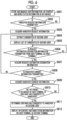
- Fig. 6 is a flowchart illustrating an example of a flow of processing of the management server 10.
- the management server 10 stores and manages the user information, the AR content, and the work status information in the databases (step S601). Specifically, the management server 10 stores and manages the user information, the AR content, and the work status information in the user DB 131, the content DB 132, and the work status DB 133, respectively, of the storage unit 13.
- the user information stored in the user DB 131 includes at least the skill level of the work.
- the management server 10 acquires the transmitted handover request information (step S603). On the other hand, in a case where the handover request information is not transmitted (NO in step S602), the management server 10 repeats the determination processing of step S602 until the handover request information is transmitted.
- the management server 10 extracts the candidates of the second user (step S604). Specifically, one or more users as the candidates of the second user as the destination to which the work with respect to the object is handed over are extracted from among the plurality of users who operate the user terminal 30. For example, the one or more users as the candidates of the second user are extracted based on the positional relationship with respect to the user terminal 30 as the first terminal that has transmitted the handover request information.
- the management server 10 displays a list of the candidates of the second user (step S605). Specifically, the management server 10 transmits control information for displaying the list of the candidates of the second user extracted in the processing of step S604 toward the user terminal 30 as the first terminal of the first user. Accordingly, the list of the candidates of the second user is displayed on the user terminal 30 as the first terminal.
- the management server 10 acquires the transmitted request destination designation information (step S607). On the other hand, in a case where the request destination designation information is not transmitted (NO in step S606), the management server 10 repeats the determination processing of step S606 until the request destination designation information is transmitted.
- the management server 10 acquires the transmitted handover consent information (step S609).
- the processing of the management server 10 returns to step S604. In this case, a user who has not consented to the handover in step S608 is excluded from a target of extraction in the processing of step S604 performed again.
- the management server 10 determines the user who has consented to the handover as the second user (step S611).
- the management server 10 repeats the determination processing of step S610 until the object is also set as the target to be imaged in the user terminal 30 of the other user who has consented to the handover.
- the management server 10 displays the AR content and the annotation information on the user terminal 30 as the second terminal (step S612). Specifically, the management server 10 transmits the control information for displaying the AR content displayed on the user terminal 30 as the first terminal and the annotation information to be superimposed on the AR content toward the user terminal 30 as the second terminal.
- Fig. 7 is a flowchart illustrating an example of a flow of processing of the user terminal 30 as the first terminal of the first user.
- the user terminal 30 as the first terminal displays the AR content for assisting the work with respect to the object as the target to be imaged (step S701). Then, in a case where an operation of inputting the handover request information is performed by the first user (YES in step S702), the input operation is received (step S703), and the handover request information is transmitted toward the management server 10 (step S704). On the other hand, in a case where the operation of inputting the handover request information is not performed (NO in step S702), the user terminal 30 as the first terminal repeats the determination processing of step S702 until the operation of inputting the handover request information is performed.
- step S705 the control information for displaying the list of the candidates of the second user is transmitted from the management server 10 (YES in step S705)
- the user terminal 30 as the first terminal displays the list of the candidates of the second user based on the transmitted control information (step S706).
- the user terminal 30 as the first terminal repeats the determination processing of step S705 until the control information for displaying the list of the candidates of the second user is transmitted.
- step S707 the user terminal 30 as the first terminal receives the input operation (step S708) and transmits the request destination designation information toward the management server 10 (step S709).
- step S708 the user terminal 30 as the first terminal repeats the determination processing of step S707 until the operation of inputting the request destination designation information is performed.
- step S710 In a case where information indicating that the handover of the work is completed is transmitted from the management server 10 (YES in step S710), the user terminal 30 as the first terminal acquires the transmitted information (step S711) and displays a message indicating that the handover of the work is completed (step S712). On the other hand, in a case where the information indicating that the handover of the work is completed is not transmitted (NO in step S710), the user terminal 30 as the first terminal repeats the determination processing of step S710 until the information indicating that the handover of the work is completed is transmitted.
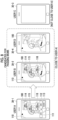
- Fig. 8 is a diagram illustrating a specific example of a user interface displayed on the user terminal 30 as the first terminal of the first user in a case where there are a plurality of candidates of the second user.
- a user A who is the first user is performing work with respect to an object 100 using the user terminal 30-1 as the first terminal operated by the user A.
- the user A is performing the work with respect to the object 100 by displaying AR content 110 for assisting the work with respect to the object 100 on the user terminal 30-1.
- the work with respect to the object 100 is work consisting of steps in three stages (steps 1 to 3).
- the user A who has been performing the work with respect to the object 100 considers handing over the work to another user in a stage where the work of step 1 is completed.
- the user A requests the handover of the work by operating the user terminal 30-1.
- the list of the candidates of the second user is displayed on a screen of the user terminal 30-1 as the annotation information.
- users B and D are listed as the candidates of the second user.
- the candidates of the second user are extracted based on a positional relationship with respect to the user terminal 30-1 as the first terminal, the skill level of each user with respect to the work, and the like.
- the users B and D who are close to the user A are extracted as the candidates of the second user.
- the annotation information 111 described as "user B" and annotation information 112 described as "user D" are displayed.
- a positional relationship between the user A and the users B to D is determined based on a relationship between information indicating a position of the user terminal 30-1 operated by the user A and information indicating a position of each of the user terminals 30-2 to 30-4 operated by the users B to D, respectively.
- the "information indicating the position” is, for example, "GPS positional information.
- the user A designates the user B as the destination to which the work is handed over from the list of the candidates of the second user.
- the annotation information 111 described as "user B" displayed on the screen of the user terminal 30-1 is pressed by an input operation of the user A.
- the user B is determined as the second user in a case where the user B designated by the user A consents to the handover of the work from the user A and where the object set as the target to be imaged in the user terminal 30-1 of the user A is also set as the target to be imaged in the user terminal 30-2 of the user B.
- the AR content 110 displayed on the user terminal 30-1 and the annotation information to be superimposed on the AR content 110 are displayed on the user terminal 30-2 as the second terminal.
- the AR content 110 and the annotation information to be superimposed on the AR content 110 are not displayed on the user terminal 30-4 of the user D not determined as the second user.
- annotation information indicating that step 1 is completed and steps 2 and 3 are not completed and annotation information indicating the user as the candidate of the destination to which the work is handed over, which are displayed on the user terminal 30-1, are displayed on the user terminal 30-2. More specifically, annotation information 114 described as "step 1 (completed)", annotation information 115 described as “step 2 (not completed)”, and annotation information 116 described as “step 3 (not completed)” are displayed on the user terminal 30-2 as illustrated in Fig. 8 .
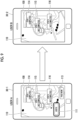
- Fig. 9 is a diagram illustrating a specific example of the user interface displayed on the user terminal 30-1 as the first terminal of the first user in a case where the second user is specified in advance.
- the user A who is the first user is performing the work consisting of the steps in three stages (steps 1 to 3) with respect to the object 100 using the user terminal 30-1 as the first terminal, in the same manner as the example in Fig. 8 .
- the AR content 110 for assisting the work is displayed on the user terminal 30-1.
- the user A who has been performing the work with respect to the object 100 decides to hand over the work to the user B in a stage where the work of step 1 is completed.
- the user A calls the user B and requests the handover of the work by operating the user terminal 30-1.
- the user A causes the user B to image the object 100 using the user terminal 30-2.
- annotation information 111 described as "user B" is displayed on the user terminal 30-1. This indicates that the user B is the only candidate of the second user.
- the specific user (user B) being the only candidate of the second user may not be indicated. That is, annotation information 111 may be configured to be not displayed.
- the user B is determined as the second user in a case where the object set as the target to be imaged in the user terminal 30-1 of the user A is also set as the target to be imaged in the user terminal 30-2 of the user B.
- the annotation information 113 described as "pass work" displayed on the user terminal 30-1 is pressed, the AR content 110 displayed on the user terminal 30-1 and the annotation information to be superimposed on the AR content 110 are displayed on the user terminal 30-2 as the second terminal.
- the annotation information indicating that step 1 is completed and steps 2 and 3 are not completed and the annotation information indicating the user as the candidate of the destination to which the work is handed over, which are displayed on the user terminal 30-1, are displayed on the user terminal 30-2. More specifically, the annotation information 114 described as "step 1 (completed)", the annotation information 115 described as “step 2 (not completed)", and the annotation information 116 described as “step 3 (not completed)” are displayed on the user terminal 30-2.
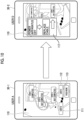
- Fig. 10 is a diagram illustrating a specific example of an annotation displayed on the user terminal 30 as the second terminal.
- the AR content 110 displayed on the user terminal 30-1 and the annotation information superimposed on the AR content 110 are displayed on the user terminal 30-2.
- the second user may not easily perceive the details of the work performed so far by simply looking at the AR content 110 and the annotation information displayed on the user terminal 30-2.
- information indicating what kind of work has been performed up to the work handed over to the second user is displayed on the user terminal 30-2.
- annotation information indicating what kind of work has been specifically performed in already completed step 1 is displayed.
- annotation information 117 indicating that work "power OFF apparatus” and work “replace cable” have been performed in step 1 is displayed is illustrated in Fig. 10 .
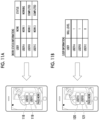
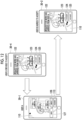
- Figs. 11A and 11B are diagrams illustrating a relationship between the candidates of the second user displayed on the user terminal 30 as the first terminal and information stored in the databases.
- Fig. 11A is a diagram illustrating a relationship between the candidates of the second user and the work status information stored in the work status DB 133.
- Fig. 11B is a diagram illustrating a relationship between the candidates of the second user and the user information stored in the user DB 131.
- the work status information illustrated in Fig. 11A includes the work for which the user is responsible, and the status of the work.
- the "user A” is responsible for "work 1", and the status of "work 1" is "working”.
- the "user B” is responsible for "work 2", and the status of the "work 2” is “completed”.
- the "user C” is responsible for "work 3", and the status of the "work 3” is “completed”. That is, the user A working and the users B and C not working are perceived.
- Whether the status is "working” or “completed” may be determined based on, for example, whether the AR content 110 for assisting the work of the user is displayed or not displayed on the user terminal 30.
- the user information illustrated in Fig. 11B includes the skill level of the user with respect to the work.
- the skill level of the user with respect to the work may be the number of executions of the target work in the past or may be a normalized value of the number of executions in the past.
- the skill level may be based on a reference other than the number of executions in the past.
- the skill level of the user A is "1”
- the skill level of the user B is also "1”
- the skill level of the user C is "0".
- the users A and B are determined as having a higher skill level than the user C.
- Fig. 12 is a diagram illustrating a specific example of the user interface displayed on the user terminal 30 of the user extracted as the candidate of the second user in a case where there has been a request to hand over work from the first user.
- a message indicating that a request to hand over the work has arrived is displayed on the screen of the user terminal 30 of the user specified from the request destination designation information as the annotation information.
- annotation information 122 indicating a message "request for work has arrived from user A” is displayed on the user terminal 30-4 of the user D.
- annotation information 123 described as "step 3 (not completed)" is displayed in a highlighted manner as information indicating that step 3 of the work is handed over in the work consisting of steps 1 to 3.
- annotation information 124 indicating a button described as "OK to accept” and annotation information 125 indicating a button described as "NG to accept” are displayed in a selectable aspect.
- the user D refuses the request to hand over the work from the user A by pressing the annotation information 125.
- information indicating the refusal is displayed on the user terminal 30-1, and annotation information 126 described as "user D" displayed on the user terminal 30-1 is changed to be not displayed or to be displayed in a non-noticeable aspect as illustrated in Fig. 12 .
- the user A can change the request destination to which the work is handed over to the "user B" from the "user D" by pressing annotation information described as "user B". Then, the annotation information 122 indicating the message "request for work has arrived from user A" is displayed on the user terminal 30-2 of the user B, and the annotation information 123 described as "step 3 (not completed)" is displayed in a highlighted manner.
- the annotation information for responding to the request for the work the annotation information 124 indicating the button described as "OK to accept” and the annotation information 125 indicating the button described as "NG to accept” are displayed in a selectable aspect.
- the user B consents to the request to hand over the work from the user A by pressing the annotation information 124.
- the object set as the target to be imaged in the user terminal 30-1 of the user A is also set as the target to be imaged in the user terminal 30-2 of the user B
- the AR content 110 displayed on the user terminal 30-1 as the first terminal and the annotation information superimposed on the AR content 110 are displayed on the user terminal 30-2.
- the order of the steps of the processing of the management server 10 illustrated in Fig. 6 and of the steps of the processing of the user terminal 30 as the first terminal illustrated in Fig. 7 is merely an example and is not particularly limited. Not only the processing is performed in time series along the illustrated order of the steps, but also the processing may not be performed in time series and may be parallelly or individually performed.
- the specific examples illustrated in Fig. 8 to Fig. 12 are merely an example and are not particularly limited.
- the AR content displayed on the first terminal for assisting the work with respect to the object is displayed on the second terminal. Accordingly, the handover of the work between terminals of the AR content for assisting the work with respect to the object can be seamlessly performed. Consequently, a person to which the work respect to the object is handed over can start the work at an intended timing.
- the AR content displayed on the first terminal operated by the first user as the source from which the work is handed over is displayed on the second terminal operated by the second user as the destination to which the work is handed over. Accordingly, since the handover of the work from the first user to the second user is seamlessly performed, the second user can start the work that is handed over at an intended timing.
- the information indicating each of the one or more users extracted based on the positional relationship with respect to the first terminal is displayed on the first terminal in a selectable aspect as the candidates of the second user.
- the first user can select the destination to which the work is handed over from among the candidates of the second user.
- the information indicating at least one of the status of the work or the skill level of the work of each of the one or more users set as the candidates of the second user is displayed on the first terminal.
- the first user can select the destination to which the work is handed over based on the status or the skill level of the work.
- the aspect of display of the users set as the candidates of the second user is determined in accordance with the priority level determined in advance with respect to the status of the work and to the skill level of the work.
- the second user appropriate as the destination to which the work is handed over is likely to be selected.
- the user in a case where the user designated by the first user among the candidates of the second consents to the handover of the work and where the object as a target of the work is set as the target to be imaged in the terminal of the user, the user is determined as the second user.
- operation that respects decision of the user as the destination to which the work is handed over can be performed.
- the second user is automatically determined without causing the first user to perform designation.
- seamless handover of the work from the first user to the second user is promoted.
- the second user is automatically determined without causing the first user to perform designation.
- seamless handover of the work from the first user to the second user is promoted.
- the information indicating the procedure of the work is displayed for each step.
- the information indicating the step performed by the first user among the steps of the work is displayed in a distinguishable aspect from the information indicating the other steps.
- the second user can perceive progress of the work at a glance.
- the information indicating the details of the work up to the step of the work to be performed by the second user is displayed near the information indicating the step of the work.
- the second user can perceive what kind of work has been performed up to the work to be performed by the second user.
- the summary of the information indicating the procedure of the work is displayed in displaying the information indicating the details of the work.
- the second user can efficiently perceive what kind of work has been performed up to the work to be performed by the second user.
- a screen region is efficiently used.
- the AR content displayed on the first terminal for assisting the work with respect to the object is displayed on the second terminal. Accordingly, the handover of the work between terminals of the AR content for assisting the work with respect to the object can be seamlessly performed. Consequently, a person to which the work respect to the object is handed over can start the work at an intended timing.
- processor refers to hardware in a broad sense.
- the processor include general processors (e.g., CPU: Central Processing Unit) and dedicated processors (e.g., GPU: Graphics Processing Unit, ASIC: Application Specific Integrated Circuit, FPGA: Field Programmable Gate Array, and programmable logic device).
- general processors e.g., CPU: Central Processing Unit
- dedicated processors e.g., GPU: Graphics Processing Unit
- ASIC Application Specific Integrated Circuit
- FPGA Field Programmable Gate Array
- programmable logic device e.g., programmable logic device
Landscapes
- Business, Economics & Management (AREA)
- Human Resources & Organizations (AREA)
- Engineering & Computer Science (AREA)
- Entrepreneurship & Innovation (AREA)
- Strategic Management (AREA)
- Economics (AREA)
- Theoretical Computer Science (AREA)
- Physics & Mathematics (AREA)
- General Physics & Mathematics (AREA)
- Marketing (AREA)
- General Business, Economics & Management (AREA)
- Tourism & Hospitality (AREA)
- Operations Research (AREA)
- Quality & Reliability (AREA)
- Educational Administration (AREA)
- Game Theory and Decision Science (AREA)
- Development Economics (AREA)
- Signal Processing (AREA)
- Multimedia (AREA)
- Data Mining & Analysis (AREA)
- User Interface Of Digital Computer (AREA)
- Processing Or Creating Images (AREA)
- Digital Computer Display Output (AREA)
- Management, Administration, Business Operations System, And Electronic Commerce (AREA)
- Debugging And Monitoring (AREA)
Abstract
Description
- The present invention relates to an information processing system, a program, and an information processing method.
- A technology for assisting work with respect to an object in a real space using augmented reality (AR) content displayed in an AR space has been known.
- In such a technology, the AR content may not be shared between workers. Thus, in a case where work is handed over between the workers, a person to which the work is handed over may not be able to start the work at an intended timing.
- An object of the present invention is to enable a person to which work with respect to an object in a real space is handed over from another person to start the work at an intended timing in a case where the work is assisted using AR content.
- According to a first aspect of the present disclosure, there is provided an information processing system including one or plural processors configured to, in a case where an object set as a target to be imaged in a first terminal is set as a target to be imaged in a second terminal, display AR content displayed on the first terminal for assisting work with respect to the object on the second terminal.
- According to a second aspect of the present disclosure, there is provided the information processing system according to the first aspect, in which the first terminal may be a terminal operated by a first user as a source from which the work is handed over, and the second terminal may be a terminal operated by, among one or more users extracted as candidates of a second user as a destination to which the work is handed over, a user determined as the second user.
- According to a third aspect of the present disclosure, there is provided the information processing system according to the second aspect, in which the one or the plurality of processors may be configured to extract the one or more users as the candidates of the second user based on a positional relationship with respect to the first terminal, and display information indicating each of the extracted one or more users on the first terminal in a selectable aspect as the candidates of the second user.
- According to a fourth aspect of the present disclosure, there is provided the information processing system according to the second or third aspect, in which the one or the plurality of processors may be configured to display information indicating at least one of a status of the work or a skill level of the work of each of the one or more users extracted as the candidates of the second user on the first terminal.
- According to a fifth aspect of the present disclosure, there is provided the information processing system according to any one of the second to fourth aspects, in which the one or the plurality of processors may be configured to, in displaying the candidates of the second user on the first terminal, determine an aspect of display of the users set as the candidates in accordance with a priority level determined in advance with respect to a status of the work and to a skill level of the work.
- According to a sixth aspect of the present disclosure, there is provided the information processing system according to any one of the third to fifth aspects, in which the one or the plurality of processors may be configured to, in a case where a user designated by the first user among the candidates of the second user consents to handover of the work and where the object is set as a target to be imaged in a terminal of the user, determine the user as the second user.
- According to a seventh aspect of the present disclosure, there is provided the information processing system according to any one of the second to sixth aspects, in which the one or the plurality of processors may be configured to determine, as the second user, a user who is a user operating a terminal in which the object is set as a target to be imaged and who has consented to handover of the work among the one or more users extracted as the candidates of the second user based on a positional relationship with respect to the first terminal.
- According to an eighth aspect of the present disclosure, there is provided the information processing system according to any one of the second to seventh aspects, in which the one or the plurality of processors may be configured to, in a case where there are a plurality of users who are users operating a terminal in which the object is set as a target to be imaged and who have consented to handover of the work among the one or more users, determine the second user based on at least one of a status of the work or a skill level of the work of each of the users.
- According to a ninth aspect of the present disclosure, there is provided the information processing system according to any one of the second to eighth aspects, in which the one or the plurality of processors may be configured to display information indicating a procedure of the work for each step of the work.
- According to a tenth aspect of the present disclosure, there is provided the information processing system according to any one of the second to ninth aspects, in which the one or the plurality of processors may be configured to display information indicating a step of the work performed by the first user among steps of the work in a distinguishable aspect from information indicating other steps.
- According to an eleventh aspect of the present disclosure, there is provided the information processing system according to any one of the second to ninth aspects, in which the one or the plurality of processors may be configured to display information indicating details of the work up to a step of the work to be performed by the second user among steps of the work near information indicating the step of the work.
- According to a twelfth aspect of the present disclosure, there is provided the information processing system according to the eleventh aspect, in which the one or the plurality of processors may be configured to display a summary of information indicating a procedure of the work in displaying the information indicating the details of the work.
- According to a thirteenth aspect of the present disclosure, there is provided a program causing a computer to implement a function of, in a case where an object set as a target to be imaged in a first terminal is set as a target to be imaged in a second terminal, displaying AR content displayed on the first terminal for assisting work with respect to the object on the second terminal.
- According to a fourteenth aspect of the present disclosure, there is provided an information processing method including displaying, in a case where an object set as a target to be imaged in a first terminal is set as a target to be imaged in a second terminal, AR content displayed on the first terminal for assisting work with respect to the object on the second terminal.
- According to the first aspect of the present invention, in a case where the object set as the target to be imaged in the first terminal is set as the target to be imaged in the second terminal, the AR content displayed on the first terminal for assisting the work with respect to the object is displayed on the second terminal. Accordingly, the handover of the work between terminals of the AR content for assisting the work with respect to the object can be seamlessly performed. Consequently, a person to which the work respect to the object is handed over can start the work at an intended timing.
- According to the second aspect of the present invention, the AR content displayed on the first terminal operated by the first user as the source from which the work is handed over is displayed on the second terminal operated by the second user as the destination to which the work is handed over. Accordingly, since the handover of the work from the first user to the second user is seamlessly performed, the second user can start the work that is handed over at an intended timing.
- According to the third aspect of the present invention, the information indicating each of the one or more users extracted based on the positional relationship with respect to the first terminal is displayed on the first terminal in a selectable aspect as the candidates of the second user. Thus, the first user can select the destination to which the work is handed over from among the candidates of the second user.
- According to the fourth aspect of the present invention, the information indicating at least one of the status of the work or the skill level of the work of each of the one or more users set as the candidates of the second user is displayed on the first terminal. Thus, the first user can select the destination to which the work is handed over based on the status or the skill level of the work.
- According to the fifth aspect of the present invention, in displaying the candidates of the second user on the first terminal, the aspect of display of the users set as the candidates of the second user is determined in accordance with the priority level determined in advance with respect to the status of the work and to the skill level of the work. Thus, the second user appropriate as the destination to which the work is handed over is likely to be selected.
- According to the sixth aspect of the present invention, in a case where the user designated by the first user among the candidates of the second consents to the handover of the work and where the object as a target of the work is set as the target to be imaged in the terminal of the user, the user is determined as the second user. Thus, operation that respects decision of the user as the destination to which the work is handed over can be performed.
- According to the seventh aspect of the present invention, the second user is automatically determined without causing the first user to perform designation. Thus, seamless handover of the work from the first user to the second user is promoted.
- According to the eighth aspect of the present invention, even in a case where there are a plurality of users as the candidates of the second user, the second user is automatically determined without causing the first user to perform designation. Thus, seamless handover of the work from the first user to the second user is promoted.
- According to the ninth aspect of the present invention, the information indicating the procedure of the work is displayed for each step. Thus, convenience of the second user who is the destination to which the work is handed over is improved.
- According to the tenth aspect of the present invention, the information indicating the step performed by the first user among the steps of the work is displayed in a distinguishable aspect from the information indicating the other steps. Thus, the second user can perceive progress of the work at a glance.
- According to the eleventh aspect of the present invention, the information indicating the details of the work up to the step of the work to be performed by the second user is displayed near the information indicating the step of the work. Thus, the second user can perceive what kind of work has been performed up to the work to be performed by the second user.
- According to the twelfth aspect of the present invention, the summary of the information indicating the procedure of the work is displayed in displaying the information indicating the details of the work. Thus, the second user can efficiently perceive what kind of work has been performed up to the work to be performed by the second user. In addition, since the procedure of the work is compactly summarized, a screen region is efficiently used.
- According to the thirteenth aspect of the present invention, in a case where the object set as the target to be imaged in the first terminal is set as the target to be imaged in the second terminal, the AR content displayed on the first terminal for assisting the work with respect to the object is displayed on the second terminal. Accordingly, the handover of the work between terminals of the AR content for assisting the work with respect to the object can be seamlessly performed. Consequently, a person to which the work respect to the object is handed over can start the work at an intended timing.
- According to the fourteenth aspect of the present invention, in a case where the object set as the target to be imaged in the first terminal is set as the target to be imaged in the second terminal, the AR content displayed on the first terminal for assisting the work with respect to the object is displayed on the second terminal. Accordingly, the handover of the work between terminals of the AR content for assisting the work with respect to the object can be seamlessly performed. Consequently, a person to which the work respect to the object is handed over can start the work at an intended timing.
- Exemplary embodiment(s) of the present invention will be described in detail based on the following figures, wherein:
-
Fig. 1 is a diagram illustrating an example of an overall configuration of an information processing system to which the present exemplary embodiment is applied; -
Fig. 2 is a diagram illustrating an example of a hardware configuration of a management server; -
Fig. 3 is a diagram illustrating an example of a hardware configuration of a user terminal; -
Fig. 4 is a diagram illustrating an example of a functional configuration of a control unit of the management server; -
Fig. 5 is a diagram illustrating an example of a functional configuration of a control unit of the user terminal; -
Fig. 6 is a flowchart illustrating an example of a flow of processing of the management server; -
Fig. 7 is a flowchart illustrating an example of a flow of processing of the user terminal as a first terminal of a first user; -
Fig. 8 is a diagram illustrating a specific example of a user interface displayed on the user terminal as the first terminal of the first user in a case where there are a plurality of candidates of a second user; -
Fig. 9 is a diagram illustrating a specific example of the user interface displayed on the user terminal as the first terminal of the first user in a case where the second user is specified in advance; -
Fig. 10 is a diagram illustrating a specific example of an annotation displayed on the user terminal as a second terminal; -
Figs. 11A and 11B are diagrams illustrating a relationship between the candidates of the second user displayed on the user terminal as the first terminal and information stored in databases:Fig. 11A is a diagram illustrating a relationship between the candidates of the second user and work status information stored in a work status DB, andFig. 11B is a diagram illustrating a relationship between the candidates of the second user and user information stored in a user DB; and -
Fig. 12 is a diagram illustrating a specific example of the user interface displayed on the user terminal of a user extracted as the candidate of the second user in a case where there has been a request to hand over work from the first user. - Hereinafter, an exemplary embodiment of the present invention will be described in detail with reference to the accompanying drawings.
-
Fig. 1 is a diagram illustrating an example of an overall configuration of aninformation processing system 1 to which the present exemplary embodiment is applied. - The
information processing system 1 is configured by connecting amanagement server 10 to user terminals 30-1 to 30-n (n is an integer value greater than or equal to 1) via anetwork 90. Thenetwork 90 is, for example, a local area network (LAN) or the Internet. The user terminals 30-1 to 30-n may be collectively referred to as a "user terminal 30" unless necessary to be individually described. - The
management server 10 constituting theinformation processing system 1 is an information processing apparatus as a server that manages the entireinformation processing system 1. Themanagement server 10 performs processing of acquiring various types of information transmitted from theuser terminal 30, various types of processing with respect to the acquired various types of information, and processing of transmitting various types of information toward theuser terminal 30. - For example, in a case where an object set as a target to be imaged by the
user terminal 30 as a first terminal is set as a target to be imaged by theuser terminal 30 as a second terminal, themanagement server 10 performs a control for displaying, on theuser terminal 30 as the second terminal, AR content that is displayed on theuser terminal 30 as the first terminal for assisting work of the user with respect to the object. Here, "set as the target to be imaged" refers to a state where the object is displayed on a finder of a display unit of theuser terminal 30 on which the AR content is displayed. - In addition, the "AR content" refers to content to which augmented reality (AR) technology is applied and is content for assisting the work of the user with respect to the object. In addition, the "work of the user with respect to the object" refers to work with respect to the object performed by any user among a plurality of users. In addition, the "work" refers to work consisting of a plurality of steps. The "object" as a target of the work is not particularly limited and may be, for example, various apparatuses. Hereinafter, the "work of the user with respect to the object" may be simply referred to as the "work".
- In addition, the "first terminal" refers to the
user terminal 30 operated by a user (hereinafter, referred to as a "first user") as a source from which the work with respect to the object is handed over. In addition, the "second terminal" refers to theuser terminal 30 operated by, among one or more users extracted as candidates of a user (hereinafter, referred to as a "second user") as a destination to which the work with respect to the object is handed over, a user determined as the second user. - The second user is determined by the
management server 10. A method of determining the second user via themanagement server 10 will be described later. Hereinafter, theuser terminal 30 as the first terminal may be referred to as the "user terminal 30 as the first terminal" or may be simply referred to as the "first terminal". In addition, similarly, theuser terminal 30 as the second terminal may be referred to as the "user terminal 30 as the second terminal" or may be simply referred to as the "second terminal". Details of the configuration and processing of themanagement server 10 will be described in detail later. - The
user terminal 30 is an information processing apparatus such as a smartphone, a tablet terminal, or a head-mounted display (HMD) operated by the user who uses theinformation processing system 1. Theuser terminal 30 acquires various types of information transmitted from themanagement server 10 and performs various types of processing. In addition, theuser terminal 30 transmits various types of information toward themanagement server 10. - For example, the
user terminal 30 displays the AR content based on control information transmitted from themanagement server 10. In addition, theuser terminal 30 displays annotation information in a superimposed manner on the displayed AR content. In addition, theuser terminal 30 receives various input operations performed by the user and transmits input information toward themanagement server 10. - The above configuration of the
information processing system 1 is merely an example, and theinformation processing system 1 as a whole may have functions that realize the above processing. Thus, all or a part of the functions implementing the above processing may be shared or used in cooperation with each other in theinformation processing system 1. That is, all or a part of the functions of themanagement server 10 may be provided as functions of theuser terminal 30, or all or a part of the functions of theuser terminal 30 may be provided as functions of themanagement server 10. In addition, all or a part of the functions of each of themanagement server 10 and theuser terminal 30 constituting theinformation processing system 1 may be transferred over to another server or the like, not illustrated, to perform all or a part of the above processing. Accordingly, the processing of theinformation processing system 1 as a whole may be accelerated, and the processing can also be complemented. -
Fig. 2 is a diagram illustrating an example of a hardware configuration of themanagement server 10. - The
management server 10 includes acontrol unit 11, amemory 12, astorage unit 13, acommunication unit 14, anoperation unit 15, and adisplay unit 16. These units are connected to each other via a data bus, an address bus, a peripheral component interconnect (PCI) bus, or the like. - The
control unit 11 is a processor that controls the functions of themanagement server 10 by executing various types of software such as an OS (basic software) and application software (software applications). Thecontrol unit 11 is configured with, for example, a central processing unit (CPU). Thememory 12 is a storage region in which various types of software and data and the like used for executing the software are stored, and is used as a work area in operations. Thememory 12 is configured with, for example, a random access memory (RAM). - The
storage unit 13 is a storage region in which input data for various types of software, output data from various types of software, and the like are stored. Thestorage unit 13 is configured with, for example, a hard disk drive (HDD), a solid state drive (SSD), or a semiconductor memory used for storing programs, various types of setting data, and the like. Databases that store various types of information are stored in thestorage unit 13. The databases stored in thestorage unit 13 include, for example, auser DB 131 in which information (hereinafter, referred to as "user information") related to the user who operates theuser terminal 30 is stored, acontent DB 132 in which the AR content is stored, and awork status DB 133 in which information (hereinafter, referred to as "work status information") indicating a status of the work executed using the AR content is stored. - The
communication unit 14 transmits and receives data to and from theuser terminal 30 and an outside via thenetwork 90. Theoperation unit 15 is configured with, for example, a keyboard, a mouse, a mechanical button, or a switch and receives an input operation. Theoperation unit 15 may include a touch sensor that is integrated with thedisplay unit 16 to constitute a touch panel. Thedisplay unit 16 is configured with, for example, a liquid crystal display or an organic electro luminescence (EL) display used for displaying information and displays image (video and still image) data, text data, and the like. -
Fig. 3 is a diagram illustrating a hardware configuration of theuser terminal 30. - The
user terminal 30 includes acontrol unit 31, amemory 32, astorage unit 33, acommunication unit 34, anoperation unit 35, and adisplay unit 36 corresponding to thecontrol unit 11, thememory 12, thestorage unit 13, thecommunication unit 14, theoperation unit 15, and thedisplay unit 16, respectively, of themanagement server 10 inFig. 2 and, in addition to these configurations, includes animaging unit 37. Theimaging unit 37 is configured with a camera or the like and acquires data of a video by imaging a plurality of original documents as a subject displayed on thedisplay unit 36 that also functions as a finder of the camera. These units are connected to each other via a data bus, an address bus, a PCI bus, or the like. -
Fig. 4 is a diagram illustrating an example of a functional configuration of thecontrol unit 11 of themanagement server 10. - A
management unit 101, anacquisition unit 102, acandidate extraction unit 103, adisplay control unit 104, a seconduser determination unit 105, and atransmission control unit 106 function in thecontrol unit 11 of themanagement server 10. - The
management unit 101 stores and manages various types of information in the databases of the storage unit 13 (refer toFig. 2 ). For example, themanagement unit 101 stores and manages the user information in theuser DB 131. The user information includes at least a skill level of the work. In addition, themanagement unit 101 stores and manages the AR content in thecontent DB 132. - In addition, the
management unit 101 stores and manages the work status information in thework status DB 133. Themanagement unit 101 manages the user information stored in theuser DB 131, the AR content stored in thecontent DB 132, and the work status information stored in thework status DB 133 in association with each other. - The
acquisition unit 102 acquires various types of information. For example, theacquisition unit 102 acquires various types of information transmitted from each of theuser terminal 30 and the outside. Examples of the information transmitted from theuser terminal 30 in the information acquired by theacquisition unit 102 include the input information input by an operation of the user. The input information input by the operation of the user is, for example, information (hereinafter, referred to as "handover request information") input by the user for requesting handover of the work or information (hereinafter, referred to as "handover consent information") input by the user for consenting to the request to hand over the work. - The
candidate extraction unit 103 extracts one or more users as the candidates of the second user as the destination to which the work with respect to the object is handed over, from among a plurality of users who operate theuser terminal 30. For example, thecandidate extraction unit 103 extracts one or more users as the candidates of the second user based on a positional relationship with respect to the first terminal. - The
display control unit 104 performs a control for displaying various types of information on thedisplay unit 36 of theuser terminal 30 as the first terminal or as the second terminal. Specifically, thedisplay control unit 104 transmits control information for displaying various types of information toward theuser terminal 30. For example, thedisplay control unit 104 transmits control information for displaying the AR content and the annotation information to be superimposed on the AR content on thedisplay unit 36 of theuser terminal 30 toward theuser terminal 30. - In addition, the
display control unit 104 transmits control information for displaying information indicating each of the one or more users as the candidates of the second user extracted by thecandidate extraction unit 103 in a selectable aspect on theuser terminal 30 as the first terminal. For example, thedisplay control unit 104 transmits control information for displaying information indicating at least one of the status of the work or the skill level of the work of each of the one or more users extracted as the candidates of the second user on theuser terminal 30 as the first terminal. - The control information transmitted toward the
user terminal 30 as the first terminal includes an aspect of display determined in accordance with a priority level related to the status of the work and the skill level of the work of each of the one or more users extracted as the candidates of the second user. The "aspect of display" is, for example, an order of display of the candidates of the second user on theuser terminal 30 as the first terminal. - In addition, the
display control unit 104 transmits control information for displaying information indicating a procedure of the work for each step of the work as the annotation information to be superimposed on the AR content. Here, the "information indicating the procedure of the work" is, for example, information in which the procedure of the work is described. In this case, thedisplay control unit 104 transmits control information for displaying information indicating a step of the work performed by the first user among the steps of the work in a distinguishable aspect from information indicating the other steps. - In addition, the
display control unit 104 transmits control information for displaying information indicating details of the work up to a step of target work near information indicating the step of the work to be performed by the second user among the steps of the work as the annotation information to be superimposed on the AR content. In this case, thedisplay control unit 104 transmits control information for further displaying a summary of information indicating a procedure of the target work in displaying the information indicating the details of the work up to the step of the target work on theuser terminal 30. - The second
user determination unit 105 determines the second user based on information (hereinafter, referred to as "request destination designation information") related to a user designated by the first user as the destination to which the work is handed over among the one or more users extracted as the candidates of the second user by thecandidate extraction unit 103. For example, in a case where the object set as the target to be imaged in theuser terminal 30 as the first terminal of the first user is also set as the target to be imaged in theuser terminal 30 of another user specified from the request destination designation information and where the user consents to the handover of the work, the seconduser determination unit 105 determines the user as the second user. - In addition, in a case where there are a plurality of users who are users operating the
user terminal 30 in which the object as a target of the work is set as the target to be imaged and who have consented to the handover of the work, the seconduser determination unit 105 determines the second user based on at least one of the status of the work or the skill level of the work of each of the plurality of users. - The
transmission control unit 106 performs a control of transmitting various types of information. Specifically, thetransmission control unit 106 performs a control of transmitting various types of information toward each of theuser terminal 30 and the outside. In the information of which transmission is controlled by thetransmission control unit 106, the information transmitted toward theuser terminal 30 is, for example, the control information for displaying the AR content and the control information for displaying the annotation information to be superimposed on the AR content. -
Fig. 5 is a diagram illustrating an example of a functional configuration of thecontrol unit 31 of theuser terminal 30. - An
acquisition unit 301, atransmission control unit 302, and adisplay control unit 303 function in thecontrol unit 31 of theuser terminal 30. - The
acquisition unit 301 acquires various types of information. Specifically, theacquisition unit 301 acquires various types of information transmitted from themanagement server 10 and from the outside. In addition, theacquisition unit 301 acquires the input information input by the operation unit. In the information acquired by theacquisition unit 301, the information transmitted from themanagement server 10 is, for example, the control information for displaying the AR content and the control information for displaying the annotation information to be superimposed on the AR content. In addition, in the information acquired by theacquisition unit 301, the input information is, for example, the handover request information in a case where theuser terminal 30 is functioning as a terminal of another user other than the first terminal, and the handover consent information in a case where theuser terminal 30 is functioning as the first terminal. - The
transmission control unit 302 performs a control of transmitting various types of information. Specifically, thetransmission control unit 302 performs a control of transmitting various types of information toward themanagement server 10 and toward the outside. In the information of which transmission is controlled by thetransmission control unit 302, the information transmitted toward themanagement server 10 is, for example, the input information input by the user. The input information transmitted toward themanagement server 10 is, for example, the handover request information and the request destination designation information input into theuser terminal 30 as the first terminal and the handover consent information input into theuser terminal 30 as the terminal of the other user other than the first terminal. - The
display control unit 303 performs a control for displaying various types of information on the display unit 36 (refer toFig. 3 ). Specifically, thedisplay control unit 303 performs a control for displaying the AR content and the annotation information to be superimposed on the AR content on thedisplay unit 36. Specific examples of information displayed on thedisplay unit 36 of theuser terminal 30 will be described later with reference to the specific examples in and afterFig. 8 . -
Fig. 6 is a flowchart illustrating an example of a flow of processing of themanagement server 10. - The
management server 10 stores and manages the user information, the AR content, and the work status information in the databases (step S601). Specifically, themanagement server 10 stores and manages the user information, the AR content, and the work status information in theuser DB 131, thecontent DB 132, and thework status DB 133, respectively, of thestorage unit 13. The user information stored in theuser DB 131 includes at least the skill level of the work. - In a case where the handover request information is transmitted from the
user terminal 30 as the first terminal of the first user (YES in step S602), themanagement server 10 acquires the transmitted handover request information (step S603). On the other hand, in a case where the handover request information is not transmitted (NO in step S602), themanagement server 10 repeats the determination processing of step S602 until the handover request information is transmitted. - Next, the
management server 10 extracts the candidates of the second user (step S604). Specifically, one or more users as the candidates of the second user as the destination to which the work with respect to the object is handed over are extracted from among the plurality of users who operate theuser terminal 30. For example, the one or more users as the candidates of the second user are extracted based on the positional relationship with respect to theuser terminal 30 as the first terminal that has transmitted the handover request information. - Next, the
management server 10 displays a list of the candidates of the second user (step S605). Specifically, themanagement server 10 transmits control information for displaying the list of the candidates of the second user extracted in the processing of step S604 toward theuser terminal 30 as the first terminal of the first user. Accordingly, the list of the candidates of the second user is displayed on theuser terminal 30 as the first terminal. - Then, in a case where the request destination designation information is transmitted from the
user terminal 30 as the first terminal of the first user (YES in step S606), themanagement server 10 acquires the transmitted request destination designation information (step S607). On the other hand, in a case where the request destination designation information is not transmitted (NO in step S606), themanagement server 10 repeats the determination processing of step S606 until the request destination designation information is transmitted. - Next, in a case where the handover consent information is transmitted from the
user terminal 30 of the user specified from the request destination designation information (YES in step S608), themanagement server 10 acquires the transmitted handover consent information (step S609). On the other hand, in a case where the handover consent information is not transmitted (NO in step S608), the processing of themanagement server 10 returns to step S604. In this case, a user who has not consented to the handover in step S608 is excluded from a target of extraction in the processing of step S604 performed again. - In a case where the object set as the target to be imaged in the
user terminal 30 as the first terminal of the first user is also set as the target to be imaged in theuser terminal 30 of the other user who has consented to the handover (YES in step S610), themanagement server 10 determines the user who has consented to the handover as the second user (step S611). On the other hand, in a case where the object set as the target to be imaged in theuser terminal 30 as the first terminal of the first user is not set as the target to be imaged in theuser terminal 30 of the other user who has consented to the handover (NO in step S610), themanagement server 10 repeats the determination processing of step S610 until the object is also set as the target to be imaged in theuser terminal 30 of the other user who has consented to the handover. - Next, the
management server 10 displays the AR content and the annotation information on theuser terminal 30 as the second terminal (step S612). Specifically, themanagement server 10 transmits the control information for displaying the AR content displayed on theuser terminal 30 as the first terminal and the annotation information to be superimposed on the AR content toward theuser terminal 30 as the second terminal. -
Fig. 7 is a flowchart illustrating an example of a flow of processing of theuser terminal 30 as the first terminal of the first user. - The
user terminal 30 as the first terminal displays the AR content for assisting the work with respect to the object as the target to be imaged (step S701). Then, in a case where an operation of inputting the handover request information is performed by the first user (YES in step S702), the input operation is received (step S703), and the handover request information is transmitted toward the management server 10 (step S704). On the other hand, in a case where the operation of inputting the handover request information is not performed (NO in step S702), theuser terminal 30 as the first terminal repeats the determination processing of step S702 until the operation of inputting the handover request information is performed. - Then, in a case where the control information for displaying the list of the candidates of the second user is transmitted from the management server 10 (YES in step S705), the
user terminal 30 as the first terminal displays the list of the candidates of the second user based on the transmitted control information (step S706). On the other hand, in a case where the control information for displaying the list of the candidates of the second user is not transmitted (NO in step S705), theuser terminal 30 as the first terminal repeats the determination processing of step S705 until the control information for displaying the list of the candidates of the second user is transmitted. - Then, in a case where an operation of inputting the request destination designation information is performed by the first user (YES in step S707), the
user terminal 30 as the first terminal receives the input operation (step S708) and transmits the request destination designation information toward the management server 10 (step S709). On the other hand, in a case where the operation of inputting the request destination designation information is not performed (NO in step S707), theuser terminal 30 as the first terminal repeats the determination processing of step S707 until the operation of inputting the request destination designation information is performed. - Then, in a case where information indicating that the handover of the work is completed is transmitted from the management server 10 (YES in step S710), the
user terminal 30 as the first terminal acquires the transmitted information (step S711) and displays a message indicating that the handover of the work is completed (step S712). On the other hand, in a case where the information indicating that the handover of the work is completed is not transmitted (NO in step S710), theuser terminal 30 as the first terminal repeats the determination processing of step S710 until the information indicating that the handover of the work is completed is transmitted. -
Fig. 8 is a diagram illustrating a specific example of a user interface displayed on theuser terminal 30 as the first terminal of the first user in a case where there are a plurality of candidates of the second user. - In the example illustrated in
Fig. 8 , a user A who is the first user is performing work with respect to anobject 100 using the user terminal 30-1 as the first terminal operated by the user A. Specifically, the user A is performing the work with respect to theobject 100 by displayingAR content 110 for assisting the work with respect to theobject 100 on the user terminal 30-1. The work with respect to theobject 100 is work consisting of steps in three stages (steps 1 to 3). - Here, the user A who has been performing the work with respect to the
object 100 considers handing over the work to another user in a stage where the work ofstep 1 is completed. In this case, the user A requests the handover of the work by operating the user terminal 30-1. Then, the list of the candidates of the second user is displayed on a screen of the user terminal 30-1 as the annotation information. In the example inFig. 8 , users B and D are listed as the candidates of the second user. - The candidates of the second user are extracted based on a positional relationship with respect to the user terminal 30-1 as the first terminal, the skill level of each user with respect to the work, and the like. In the example in
Fig. 8 , the users B and D who are close to the user A are extracted as the candidates of the second user. Specifically, theannotation information 111 described as "user B" andannotation information 112 described as "user D" are displayed. - On the other hand, a user C who is not close to the user A is not extracted as the candidate of the second user. A positional relationship between the user A and the users B to D is determined based on a relationship between information indicating a position of the user terminal 30-1 operated by the user A and information indicating a position of each of the user terminals 30-2 to 30-4 operated by the users B to D, respectively. Here, the "information indicating the position" is, for example, "GPS positional information.
- Here, the user A designates the user B as the destination to which the work is handed over from the list of the candidates of the second user. Specifically, the
annotation information 111 described as "user B" displayed on the screen of the user terminal 30-1 is pressed by an input operation of the user A. In this case, the user B is determined as the second user in a case where the user B designated by the user A consents to the handover of the work from the user A and where the object set as the target to be imaged in the user terminal 30-1 of the user A is also set as the target to be imaged in the user terminal 30-2 of the user B. - In a case where the second user as the destination to which the work of the first user is handed over is determined and where
annotation information 113 described as "pass work" displayed on the user terminal 30-1 of the user A is pressed, theAR content 110 displayed on the user terminal 30-1 and the annotation information to be superimposed on theAR content 110 are displayed on the user terminal 30-2 as the second terminal. On the other hand, theAR content 110 and the annotation information to be superimposed on theAR content 110 are not displayed on the user terminal 30-4 of the user D not determined as the second user. - Specifically, annotation information indicating that
step 1 is completed andsteps annotation information 114 described as "step 1 (completed)",annotation information 115 described as "step 2 (not completed)", andannotation information 116 described as "step 3 (not completed)" are displayed on the user terminal 30-2 as illustrated inFig. 8 . -
Fig. 9 is a diagram illustrating a specific example of the user interface displayed on the user terminal 30-1 as the first terminal of the first user in a case where the second user is specified in advance. - In the example illustrated in
Fig. 9 , the user A who is the first user is performing the work consisting of the steps in three stages (steps 1 to 3) with respect to theobject 100 using the user terminal 30-1 as the first terminal, in the same manner as the example inFig. 8 . TheAR content 110 for assisting the work is displayed on the user terminal 30-1. - Here, the user A who has been performing the work with respect to the
object 100 decides to hand over the work to the user B in a stage where the work ofstep 1 is completed. In this case, the user A calls the user B and requests the handover of the work by operating the user terminal 30-1. Specifically, in a state where theAR content 110 for assisting the work with respect to theobject 100 is displayed on the user terminal 30-1, the user A causes the user B to image theobject 100 using the user terminal 30-2. - Then, the
annotation information 111 described as "user B" is displayed on the user terminal 30-1. This indicates that the user B is the only candidate of the second user. In a case where the first user (user A) has designated a specific user (user B) in advance as in the example illustrated inFig. 9 , the specific user (user B) being the only candidate of the second user may not be indicated. That is,annotation information 111 may be configured to be not displayed. - Here, assuming that the user B designated in advance as the second user has consented to the handover of the work from the user A, the user B is determined as the second user in a case where the object set as the target to be imaged in the user terminal 30-1 of the user A is also set as the target to be imaged in the user terminal 30-2 of the user B. In a case where the
annotation information 113 described as "pass work" displayed on the user terminal 30-1 is pressed, theAR content 110 displayed on the user terminal 30-1 and the annotation information to be superimposed on theAR content 110 are displayed on the user terminal 30-2 as the second terminal. - Specifically, the annotation information indicating that
step 1 is completed andsteps annotation information 114 described as "step 1 (completed)", theannotation information 115 described as "step 2 (not completed)", and theannotation information 116 described as "step 3 (not completed)" are displayed on the user terminal 30-2. -
Fig. 10 is a diagram illustrating a specific example of an annotation displayed on theuser terminal 30 as the second terminal. - As illustrated in
Fig. 8 andFig. 9 , in a case where the work is handed over to the second user from the first user, theAR content 110 displayed on the user terminal 30-1 and the annotation information superimposed on theAR content 110 are displayed on the user terminal 30-2. The second user may not easily perceive the details of the work performed so far by simply looking at theAR content 110 and the annotation information displayed on the user terminal 30-2. In order to prevent such a situation, information indicating what kind of work has been performed up to the work handed over to the second user is displayed on the user terminal 30-2. - Specifically, for example, in a case where
step 1 is completed andsteps steps 1 to 3 when the work is handed over, annotation information indicating what kind of work has been specifically performed in already completedstep 1 is displayed. As a specific example, an example in whichannotation information 117 indicating that work "power OFF apparatus" and work "replace cable" have been performed instep 1 is displayed is illustrated inFig. 10 . -
Figs. 11A and 11B are diagrams illustrating a relationship between the candidates of the second user displayed on theuser terminal 30 as the first terminal and information stored in the databases.Fig. 11A is a diagram illustrating a relationship between the candidates of the second user and the work status information stored in thework status DB 133.Fig. 11B is a diagram illustrating a relationship between the candidates of the second user and the user information stored in theuser DB 131. - The work status information illustrated in
Fig. 11A includes the work for which the user is responsible, and the status of the work. For example, the "user A" is responsible for "work 1", and the status of "work 1" is "working". In addition, the "user B" is responsible for "work 2", and the status of the "work 2" is "completed". In addition, the "user C" is responsible for "work 3", and the status of the "work 3" is "completed". That is, the user A working and the users B and C not working are perceived. Whether the status is "working" or "completed" may be determined based on, for example, whether theAR content 110 for assisting the work of the user is displayed or not displayed on theuser terminal 30. - In the above content of the work status information of each of the users A to C, even in a case where all of the users A to C are close to the first user, a determination that the user A is working and cannot afford the handover of the work from the first user is made. Thus, the user A is excluded from the target extracted as the candidate of the second user. On the other hand, the users B and C are determined as being free and are extracted as the candidates of the second user. Consequently, as illustrated in
Fig. 11A ,annotation information 118 indicating the "user B" andannotation information 119 indicating the "user C" are displayed on theuser terminal 30 as the first terminal of the first user as the candidates of the second user. - The user information illustrated in
Fig. 11B includes the skill level of the user with respect to the work. For example, the skill level of the user with respect to the work may be the number of executions of the target work in the past or may be a normalized value of the number of executions in the past. In addition, the skill level may be based on a reference other than the number of executions in the past. In the example illustrated inFig. 11B , the skill level of the user A is "1", the skill level of the user B is also "1", and the skill level of the user C is "0". In this case, the users A and B are determined as having a higher skill level than the user C. - In the above content of the skill level of each of the users A to C, even in a case where all of the users A to C are close to the first user, a determination that the user C has a lower skill level than the users A and B is made. Thus, the user C is excluded from the target extracted as the candidate of the second user. On the other hand, the users A and B are determined as having a higher skill level than the user C. Thus, the users A and B are extracted as the candidates of the second user. Consequently, as illustrated in
Fig. 11B ,annotation information 120 indicating the "user A" andannotation information 121 indicating the "user B" are displayed on theuser terminal 30 as the first terminal of the first user as the candidates of the second user. -
Fig. 12 is a diagram illustrating a specific example of the user interface displayed on theuser terminal 30 of the user extracted as the candidate of the second user in a case where there has been a request to hand over work from the first user. - In a case where the request destination designation information is transmitted toward the
management server 10 from the user terminal 30-1 as the first terminal of the first user, a message indicating that a request to hand over the work has arrived is displayed on the screen of theuser terminal 30 of the user specified from the request destination designation information as the annotation information. For example, in a case where the first user is the "user A" and a request destination is the "user D",annotation information 122 indicating a message "request for work has arrived from user A" is displayed on the user terminal 30-4 of the user D. - In addition, together with the message indicating that the request for the work has arrived, information indicating which step of the work is related to the handover and a button for responding to the request for the work are displayed on the user terminal 30-4 as the annotation information. In the example in
Fig. 12 ,annotation information 123 described as "step 3 (not completed)" is displayed in a highlighted manner as information indicating thatstep 3 of the work is handed over in the work consisting ofsteps 1 to 3. In addition, as the annotation information for responding to the request for the work,annotation information 124 indicating a button described as "OK to accept" andannotation information 125 indicating a button described as "NG to accept" are displayed in a selectable aspect. - Here, for example, the user D refuses the request to hand over the work from the user A by pressing the
annotation information 125. In this case, information indicating the refusal is displayed on the user terminal 30-1, andannotation information 126 described as "user D" displayed on the user terminal 30-1 is changed to be not displayed or to be displayed in a non-noticeable aspect as illustrated inFig. 12 . - In this case, the user A can change the request destination to which the work is handed over to the "user B" from the "user D" by pressing annotation information described as "user B". Then, the
annotation information 122 indicating the message "request for work has arrived from user A" is displayed on the user terminal 30-2 of the user B, and theannotation information 123 described as "step 3 (not completed)" is displayed in a highlighted manner. In addition, as the annotation information for responding to the request for the work, theannotation information 124 indicating the button described as "OK to accept" and theannotation information 125 indicating the button described as "NG to accept" are displayed in a selectable aspect. - Here, for example, the user B consents to the request to hand over the work from the user A by pressing the
annotation information 124. At this point, in a case where the object set as the target to be imaged in the user terminal 30-1 of the user A is also set as the target to be imaged in the user terminal 30-2 of the user B, theAR content 110 displayed on the user terminal 30-1 as the first terminal and the annotation information superimposed on theAR content 110 are displayed on the user terminal 30-2. - While the present exemplary embodiment has been described above, the present invention is not limited to the exemplary embodiment. In addition, effects of the present invention are not limited to the effects disclosed in the exemplary embodiment. For example, all of the configuration of the
information processing system 1 illustrated inFig. 1 , the hardware configuration of themanagement server 10 illustrated inFig. 2 , and the hardware configuration of theuser terminal 30 illustrated inFig. 3 are merely examples for achieving the object of the present invention and are not particularly limited. In addition, the functional configuration of themanagement server 10 illustrated inFig. 4 and the functional configuration of theuser terminal 30 illustrated inFig. 5 are merely examples and are not particularly limited. As long as theinformation processing system 1 inFig. 1 is provided with a function with which the above processing can be executed as a whole, a functional configuration to be used to implement the function is not limited to the examples inFig. 4 and Fig. 5 . - In addition, the order of the steps of the processing of the
management server 10 illustrated inFig. 6 and of the steps of the processing of theuser terminal 30 as the first terminal illustrated inFig. 7 is merely an example and is not particularly limited. Not only the processing is performed in time series along the illustrated order of the steps, but also the processing may not be performed in time series and may be parallelly or individually performed. In addition, the specific examples illustrated inFig. 8 to Fig. 12 are merely an example and are not particularly limited. -
- (((1))) An information processing system comprising:
one or a plurality of processors configured to:
in a case where an object set as a target to be imaged in a first terminal is set as a target to be imaged in a second terminal, display AR content displayed on the first terminal for assisting work with respect to the object on the second terminal. - (((2))) The information processing system according to (((1))),
wherein the first terminal is a terminal operated by a first user as a source from which the work is handed over, and the second terminal is a terminal operated by, among one or more users extracted as candidates of a second user as a destination to which the work is handed over, a user determined as the second user. - (((3))) The information processing system according to (((2))), wherein the one or the plurality of processors are configured to:
- extract the one or more users as the candidates of the second user based on a positional relationship with respect to the first terminal; and
- display information indicating each of the extracted one or more users on the first terminal in a selectable aspect as the candidates of the second user.
- (((4))) The information processing system according to (((2))) or (((3))), wherein the one or the plurality of processors are configured to:
display information indicating at least one of a status of the work or a skill level of the work of each of the one or more users extracted as the candidates of the second user on the first terminal. - (((5))) The information processing system according to any one of (((2))) to (((4))), wherein the one or the plurality of processors are configured to:
in displaying the candidates of the second user on the first terminal, determine an aspect of display of the users set as the candidates in accordance with a priority level determined in advance with respect to a status of the work and to a skill level of the work. - (((6))) The information processing system according to any one of (((3))) to (((5))), wherein the one or the plurality of processors are configured to:
in a case where a user designated by the first user among the candidates of the second user consents to handover of the work and where the object is set as a target to be imaged in a terminal of the user, determine the user as the second user. - (((7))) The information processing system according to any one of (((2))) to (((6))), wherein the one or the plurality of processors are configured to:
determine, as the second user, a user who is a user operating a terminal in which the object is set as a target to be imaged and who has consented to handover of the work among the one or more users extracted as the candidates of the second user based on a positional relationship with respect to the first terminal. - (((8))) The information processing system according to any one of (((2))) to (((7))), wherein the one or the plurality of processors are configured to:
in a case where there are a plurality of users who are users operating a terminal in which the object is set as a target to be imaged and who have consented to handover of the work among the one or more users, determine the second user based on at least one of a status of the work or a skill level of the work of each of the users. - (((9))) The information processing system according to any one of (((2))) to (((8))), wherein the one or the plurality of processors are configured to:
display information indicating a procedure of the work for each step of the work. - (((10))) The information processing system according to any one of (((2))) to (((9))), wherein the one or the plurality of processors are configured to:
display information indicating a step of the work performed by the first user among steps of the work in a distinguishable aspect from information indicating other steps. - (((11))) The information processing system according to any one of (((2))) to (((9))), wherein the one or the plurality of processors are configured to:
display information indicating details of the work up to a step of the work to be performed by the second user among steps of the work near information indicating the step of the work. - (((12))) The information processing system according to (((11))), wherein the one or the plurality of processors are configured to:
display a summary of information indicating a procedure of the work in displaying the information indicating the details of the work. - (((13))) A program causing a computer to implement:
a function of, in a case where an object set as a target to be imaged in a first terminal is set as a target to be imaged in a second terminal, displaying AR content displayed on the first terminal for assisting work with respect to the object on the second terminal. - According to the aspect of (((1))), in a case where the object set as the target to be imaged in the first terminal is set as the target to be imaged in the second terminal, the AR content displayed on the first terminal for assisting the work with respect to the object is displayed on the second terminal. Accordingly, the handover of the work between terminals of the AR content for assisting the work with respect to the object can be seamlessly performed. Consequently, a person to which the work respect to the object is handed over can start the work at an intended timing.
- According to the aspect of (((2))), the AR content displayed on the first terminal operated by the first user as the source from which the work is handed over is displayed on the second terminal operated by the second user as the destination to which the work is handed over. Accordingly, since the handover of the work from the first user to the second user is seamlessly performed, the second user can start the work that is handed over at an intended timing.
- According to the aspect of (((3))), the information indicating each of the one or more users extracted based on the positional relationship with respect to the first terminal is displayed on the first terminal in a selectable aspect as the candidates of the second user. Thus, the first user can select the destination to which the work is handed over from among the candidates of the second user.
- According to the aspect of (((4))), the information indicating at least one of the status of the work or the skill level of the work of each of the one or more users set as the candidates of the second user is displayed on the first terminal. Thus, the first user can select the destination to which the work is handed over based on the status or the skill level of the work.
- According to the aspect of (((5))), in displaying the candidates of the second user on the first terminal, the aspect of display of the users set as the candidates of the second user is determined in accordance with the priority level determined in advance with respect to the status of the work and to the skill level of the work. Thus, the second user appropriate as the destination to which the work is handed over is likely to be selected.
- According to the aspect of (((6))), in a case where the user designated by the first user among the candidates of the second consents to the handover of the work and where the object as a target of the work is set as the target to be imaged in the terminal of the user, the user is determined as the second user. Thus, operation that respects decision of the user as the destination to which the work is handed over can be performed.
- According to the aspect of (((7))), the second user is automatically determined without causing the first user to perform designation. Thus, seamless handover of the work from the first user to the second user is promoted.
- According to the aspect of (((8))), even in a case where there are a plurality of users as the candidates of the second user, the second user is automatically determined without causing the first user to perform designation. Thus, seamless handover of the work from the first user to the second user is promoted.
- According to the aspect of (((9))), the information indicating the procedure of the work is displayed for each step. Thus, convenience of the second user who is the destination to which the work is handed over is improved.
- According to the aspect of (((10))), the information indicating the step performed by the first user among the steps of the work is displayed in a distinguishable aspect from the information indicating the other steps. Thus, the second user can perceive progress of the work at a glance.
- According to the aspect of (((11))), the information indicating the details of the work up to the step of the work to be performed by the second user is displayed near the information indicating the step of the work. Thus, the second user can perceive what kind of work has been performed up to the work to be performed by the second user.
- According to the aspect of (((12))), the summary of the information indicating the procedure of the work is displayed in displaying the information indicating the details of the work. Thus, the second user can efficiently perceive what kind of work has been performed up to the work to be performed by the second user. In addition, since the procedure of the work is compactly summarized, a screen region is efficiently used.
- According to the aspect of (((13))), in a case where the object set as the target to be imaged in the first terminal is set as the target to be imaged in the second terminal, the AR content displayed on the first terminal for assisting the work with respect to the object is displayed on the second terminal. Accordingly, the handover of the work between terminals of the AR content for assisting the work with respect to the object can be seamlessly performed. Consequently, a person to which the work respect to the object is handed over can start the work at an intended timing.
- In the embodiments above, the term "processor" refers to hardware in a broad sense. Examples of the processor include general processors (e.g., CPU: Central Processing Unit) and dedicated processors (e.g., GPU: Graphics Processing Unit, ASIC: Application Specific Integrated Circuit, FPGA: Field Programmable Gate Array, and programmable logic device). In the embodiments above, the term "processor" is broad enough to encompass one processor or plural processors in collaboration which are located physically apart from each other but may work cooperatively. The order of operations of the processor is not limited to one described in the embodiments above, and may be changed.
- The foregoing description of the exemplary embodiments of the present invention has been provided for the purposes of illustration and description. It is not intended to be exhaustive or to limit the invention to the precise forms disclosed. Obviously, many modifications and variations will be apparent to practitioners skilled in the art. The embodiments were chosen and described in order to best explain the principles of the invention and its practical applications, thereby enabling others skilled in the art to understand the invention for various embodiments and with the various modifications as are suited to the particular use contemplated. It is intended that the scope of the invention be defined by the following claims and their equivalents.
-
- 1: information processing system
- 10: management server
- 11: control unit
- 30: user terminal
- 31: control unit
- 90: network
- 101: management unit
- 102: acquisition unit
- 103: candidate extraction unit
- 104: display control unit
- 105: second user determination unit
- 106: transmission control unit
- 301: acquisition unit
- 302: transmission control unit
- 303: display control unit
Claims (14)
- An information processing system comprising:
one or a plurality of processors configured to:
in a case where an object set as a target to be imaged in a first terminal is set as a target to be imaged in a second terminal, display AR content displayed on the first terminal for assisting work with respect to the object on the second terminal. - The information processing system according to claim 1,
wherein the first terminal is a terminal operated by a first user as a source from which the work is handed over, and the second terminal is a terminal operated by, among one or more users extracted as candidates of a second user as a destination to which the work is handed over, a user determined as the second user. - The information processing system according to claim 2, wherein the one or the plurality of processors are configured to:extract the one or more users as the candidates of the second user based on a positional relationship with respect to the first terminal; anddisplay information indicating each of the extracted one or more users on the first terminal in a selectable aspect as the candidates of the second user.
- The information processing system according to claim 2 or 3, wherein the one or the plurality of processors are configured to:
display information indicating at least one of a status of the work or a skill level of the work of each of the one or more users extracted as the candidates of the second user on the first terminal. - The information processing system according to any one of claims 2 to 4, wherein the one or the plurality of processors are configured to:
in displaying the candidates of the second user on the first terminal, determine an aspect of display of the users set as the candidates in accordance with a priority level determined in advance with respect to a status of the work and to a skill level of the work. - The information processing system according to any one of claims 3 to 5, wherein the one or the plurality of processors are configured to:
in a case where a user designated by the first user among the candidates of the second user consents to handover of the work and where the object is set as a target to be imaged in a terminal of the user, determine the user as the second user. - The information processing system according to any one of claims 2 to 6, wherein the one or the plurality of processors are configured to:
determine, as the second user, a user who is a user operating a terminal in which the object is set as a target to be imaged and who has consented to handover of the work among the one or more users extracted as the candidates of the second user based on a positional relationship with respect to the first terminal. - The information processing system according to any one of claims 2 to 7, wherein the one or the plurality of processors are configured to:
in a case where there are a plurality of users who are users operating a terminal in which the object is set as a target to be imaged and who have consented to handover of the work among the one or more users, determine the second user based on at least one of a status of the work or a skill level of the work of each of the users. - The information processing system according to any one of claims 2 to 8, wherein the one or the plurality of processors are configured to:
display information indicating a procedure of the work for each step of the work. - The information processing system according to any one of claims 2 to 9, wherein the one or the plurality of processors are configured to:
display information indicating a step of the work performed by the first user among steps of the work in a distinguishable aspect from information indicating other steps. - The information processing system according to any one of claims 2 to 9, wherein the one or the plurality of processors are configured to:
display information indicating details of the work up to a step of the work to be performed by the second user among steps of the work near information indicating the step of the work. - The information processing system according to claim 11, wherein the one or the plurality of processors are configured to:
display a summary of information indicating a procedure of the work in displaying the information indicating the details of the work. - A program causing a computer to implement:
a function of, in a case where an object set as a target to be imaged in a first terminal is set as a target to be imaged in a second terminal, displaying AR content displayed on the first terminal for assisting work with respect to the object on the second terminal. - An information processing method comprising:
displaying, in a case where an object set as a target to be imaged in a first terminal is set as a target to be imaged in a second terminal, AR content displayed on the first terminal for assisting work with respect to the object on the second terminal.
Applications Claiming Priority (1)
| Application Number | Priority Date | Filing Date | Title |
|---|---|---|---|
| JP2023050903A JP2024139947A (en) | 2023-03-28 | 2023-03-28 | Information processing system and program |
Publications (2)
| Publication Number | Publication Date |
|---|---|
| EP4439419A1 true EP4439419A1 (en) | 2024-10-02 |
| EP4439419B1 EP4439419B1 (en) | 2026-09-09 |
Family
ID=87801644
Family Applications (1)
| Application Number | Title | Priority Date | Filing Date |
|---|---|---|---|
| EP23193192.4A Active EP4439419B1 (en) | 2023-03-28 | 2023-08-24 | Information processing system, program, and information processing method |
Country Status (4)
| Country | Link |
|---|---|
| US (1) | US20240330812A1 (en) |
| EP (1) | EP4439419B1 (en) |
| JP (1) | JP2024139947A (en) |
| CN (1) | CN118741042A (en) |
Citations (4)
| Publication number | Priority date | Publication date | Assignee | Title |
|---|---|---|---|---|
| WO2013018174A1 (en) * | 2011-07-29 | 2013-02-07 | 富士通株式会社 | Job handover support device, job handover support method, and job handover support program |
| CN107168537A (en) * | 2017-05-19 | 2017-09-15 | 山东万腾电子科技有限公司 | A kind of wearable task instruction method and system of collaborative augmented reality |
| KR20210085929A (en) * | 2019-12-31 | 2021-07-08 | 주식회사 버넥트 | Method for augmented reality communication between multiple users |
| US20210373664A1 (en) * | 2018-10-19 | 2021-12-02 | Kit-Ar Limited | Manufacturing Assistance System |
-
2023
- 2023-03-28 JP JP2023050903A patent/JP2024139947A/en active Pending
- 2023-08-24 EP EP23193192.4A patent/EP4439419B1/en active Active
- 2023-08-25 CN CN202311077354.1A patent/CN118741042A/en active Pending
- 2023-08-28 US US18/456,524 patent/US20240330812A1/en active Pending
Patent Citations (4)
| Publication number | Priority date | Publication date | Assignee | Title |
|---|---|---|---|---|
| WO2013018174A1 (en) * | 2011-07-29 | 2013-02-07 | 富士通株式会社 | Job handover support device, job handover support method, and job handover support program |
| CN107168537A (en) * | 2017-05-19 | 2017-09-15 | 山东万腾电子科技有限公司 | A kind of wearable task instruction method and system of collaborative augmented reality |
| US20210373664A1 (en) * | 2018-10-19 | 2021-12-02 | Kit-Ar Limited | Manufacturing Assistance System |
| KR20210085929A (en) * | 2019-12-31 | 2021-07-08 | 주식회사 버넥트 | Method for augmented reality communication between multiple users |
Also Published As
| Publication number | Publication date |
|---|---|
| US20240330812A1 (en) | 2024-10-03 |
| CN118741042A (en) | 2024-10-01 |
| JP2024139947A (en) | 2024-10-10 |
| EP4439419B1 (en) | 2026-09-09 |
Similar Documents
| Publication | Publication Date | Title |
|---|---|---|
| JP5734037B2 (en) | Information processing apparatus, control method thereof, and program | |
| US20190335143A1 (en) | Integration of Videoconferencing with Interactive Electronic Whiteboard Appliances | |
| EP2989575B1 (en) | Image visualization | |
| CN108463800B (en) | Content Sharing Agreement | |
| US20170038914A1 (en) | Medical image display apparatus, medical image display system, medical image display method, and program | |
| US20190302997A1 (en) | Medical image display apparatus and recording medium | |
| US20140176394A1 (en) | Screen output system | |
| US10489049B2 (en) | Image processing apparatus, image processing system, and image processing method | |
| JP6448500B2 (en) | Image processing apparatus and image processing method | |
| EP4439419B1 (en) | Information processing system, program, and information processing method | |
| US20180357785A1 (en) | Apparatus and method for estimating position of image capturing unit | |
| EP4064013A1 (en) | Information processing system, program, and information processing method | |
| US20230306190A1 (en) | Information processing system, non-transitory computer readable medium storing program, and information processing method | |
| US10713837B1 (en) | System and method for causing graphical information to be rendered | |
| JP6607243B2 (en) | Information processing apparatus, information processing method, and program | |
| US10466954B2 (en) | Display control method and display control device | |
| US11301620B2 (en) | Annotation display method and terminal | |
| US20200012855A1 (en) | Operation assistance apparatus, operation assistance method, and computer readable recording medium | |
| JP2020013277A (en) | Information processing apparatus, icon generation method, and program | |
| EP4254156A1 (en) | Information processing system and program | |
| EP4254152A1 (en) | Information processing system and information processing program | |
| EP4254224A1 (en) | Information processing system and program | |
| EP4250079B1 (en) | Information processing system and program | |
| JP2014209290A (en) | Information processing apparatus, and control method and program of the same | |
| EP3635527B1 (en) | Magnified input panels |
Legal Events
| Date | Code | Title | Description |
|---|---|---|---|
| PUAI | Public reference made under article 153(3) epc to a published international application that has entered the european phase |
Free format text: ORIGINAL CODE: 0009012 |
|
| STAA | Information on the status of an ep patent application or granted ep patent |
Free format text: STATUS: THE APPLICATION HAS BEEN PUBLISHED |
|
| AK | Designated contracting states |
Kind code of ref document: A1 Designated state(s): AL AT BE BG CH CY CZ DE DK EE ES FI FR GB GR HR HU IE IS IT LI LT LU LV MC ME MK MT NL NO PL PT RO RS SE SI SK SM TR |
|
| STAA | Information on the status of an ep patent application or granted ep patent |
Free format text: STATUS: REQUEST FOR EXAMINATION WAS MADE |
|
| 17P | Request for examination filed |
Effective date: 20250304 |
|
| GRAP | Despatch of communication of intention to grant a patent |
Free format text: ORIGINAL CODE: EPIDOSNIGR1 |
|
| STAA | Information on the status of an ep patent application or granted ep patent |
Free format text: STATUS: GRANT OF PATENT IS INTENDED |
|
| INTG | Intention to grant announced |
Effective date: 20260511 |
|
| GRAS | Grant fee paid |
Free format text: ORIGINAL CODE: EPIDOSNIGR3 |
|
| GRAA | (expected) grant |
Free format text: ORIGINAL CODE: 0009210 |
|
| STAA | Information on the status of an ep patent application or granted ep patent |
Free format text: STATUS: THE PATENT HAS BEEN GRANTED |
|
| AK | Designated contracting states |
Kind code of ref document: B1 Designated state(s): AL AT BE BG CH CY CZ DE DK EE ES FI FR GB GR HR HU IE IS IT LI LT LU LV MC ME MK MT NL NO PL PT RO RS SE SI SK SM TR |
|
| REG | Reference to a national code |
Ref country code: CH Ref legal event code: F10 Free format text: ST27 STATUS EVENT CODE: U-0-0-F10-F00 (AS PROVIDED BY THE NATIONAL OFFICE) Effective date: 20260909 Ref country code: GB Ref legal event code: FG4D |
|
| REG | Reference to a national code |
Ref country code: DE Ref legal event code: R096 Ref document number: 602023022302 Country of ref document: DE |