EP4439309A1 - System and method for intelligent synthetic test data generation - Google Patents
System and method for intelligent synthetic test data generation Download PDFInfo
- Publication number
- EP4439309A1 EP4439309A1 EP24165135.5A EP24165135A EP4439309A1 EP 4439309 A1 EP4439309 A1 EP 4439309A1 EP 24165135 A EP24165135 A EP 24165135A EP 4439309 A1 EP4439309 A1 EP 4439309A1
- Authority
- EP
- European Patent Office
- Prior art keywords
- design
- attribute
- dataset
- relationship
- transformation
- Prior art date
- Legal status (The legal status is an assumption and is not a legal conclusion. Google has not performed a legal analysis and makes no representation as to the accuracy of the status listed.)
- Pending
Links
Images




Classifications
-
- G—PHYSICS
- G06—COMPUTING OR CALCULATING; COUNTING
- G06F—ELECTRIC DIGITAL DATA PROCESSING
- G06F11/00—Error detection; Error correction; Monitoring
- G06F11/36—Prevention of errors by analysis, debugging or testing of software
- G06F11/3668—Testing of software
- G06F11/3672—Test management
- G06F11/3692—Test management for test results analysis
-
- G—PHYSICS
- G06—COMPUTING OR CALCULATING; COUNTING
- G06F—ELECTRIC DIGITAL DATA PROCESSING
- G06F16/00—Information retrieval; Database structures therefor; File system structures therefor
- G06F16/20—Information retrieval; Database structures therefor; File system structures therefor of structured data, e.g. relational data
- G06F16/28—Databases characterised by their database models, e.g. relational or object models
- G06F16/284—Relational databases
- G06F16/285—Clustering or classification
-
- G—PHYSICS
- G06—COMPUTING OR CALCULATING; COUNTING
- G06F—ELECTRIC DIGITAL DATA PROCESSING
- G06F11/00—Error detection; Error correction; Monitoring
- G06F11/36—Prevention of errors by analysis, debugging or testing of software
- G06F11/3668—Testing of software
- G06F11/3672—Test management
- G06F11/3684—Test management for test design, e.g. generating new test cases
-
- G—PHYSICS
- G06—COMPUTING OR CALCULATING; COUNTING
- G06F—ELECTRIC DIGITAL DATA PROCESSING
- G06F11/00—Error detection; Error correction; Monitoring
- G06F11/36—Prevention of errors by analysis, debugging or testing of software
- G06F11/3668—Testing of software
- G06F11/3672—Test management
- G06F11/3688—Test management for test execution, e.g. scheduling of test suites
-
- G—PHYSICS
- G06—COMPUTING OR CALCULATING; COUNTING
- G06F—ELECTRIC DIGITAL DATA PROCESSING
- G06F11/00—Error detection; Error correction; Monitoring
- G06F11/36—Prevention of errors by analysis, debugging or testing of software
- G06F11/3698—Environments for analysis, debugging or testing of software
-
- G—PHYSICS
- G06—COMPUTING OR CALCULATING; COUNTING
- G06F—ELECTRIC DIGITAL DATA PROCESSING
- G06F18/00—Pattern recognition
- G06F18/20—Analysing
- G06F18/24—Classification techniques
- G06F18/241—Classification techniques relating to the classification model, e.g. parametric or non-parametric approaches
- G06F18/2413—Classification techniques relating to the classification model, e.g. parametric or non-parametric approaches based on distances to training or reference patterns
- G06F18/24147—Distances to closest patterns, e.g. nearest neighbour classification
-
- G—PHYSICS
- G06—COMPUTING OR CALCULATING; COUNTING
- G06N—COMPUTING ARRANGEMENTS BASED ON SPECIFIC COMPUTATIONAL MODELS
- G06N20/00—Machine learning
Definitions
- the present disclosure generally relates to intelligent enrichment of test data, and more particularly to producing intelligent synthetic test data paradigms for design validation of cloud transformations and migrations, as well as testing computer systems.
- Cloud computing has seen increasing use for a variety of reasons, including cost savings, ease of maintenance, scalability, and versatility.
- Cloud computing provides many different types of cloud applications, such as information as a service (laaS) applications (e.g., information technology applications, networking applications, data storage applications, etc.), platform as a service (PaaS) applications (e.g., hardware applications, operating system applications, etc.), and software as a service (SaaS) applications (e.g., email applications, word processing applications, image applications, etc.).
- laaS information as a service
- PaaS platform as a service
- SaaS software as a service
- email applications e.g., email applications, word processing applications, image applications, etc.
- Cloud applications have several attributes that make them different than typical software applications. For example, cloud applications execute on virtualized hardware and a software stack that can be moved and replicated between physical machines as needed, share common physical resources with other cloud applications, are built to be highly scalable in real-time, and are predominately accessed using standard network protocols. Furthermore, cloud applications use hypertext markup language (HTML) and other web technologies for providing front-end and management user interfaces, provide application programming interfaces (APIs) for integration and management, consume third-party APIs for providing common services and functionality, and tend to use no structured query language (SQL) data stores.
- HTML hypertext markup language
- APIs application programming interfaces
- SQL structured query language
- testing cloud applications very difficult and much different than testing typical software applications. For example, since cloud applications execute on hardware that is controlled by the cloud provider and is shared with other applications, testing of cloud applications requires testing performance and scalability in environments similar to the environments of the cloud applications. Since cloud applications usually share resources and infrastructure with other cloud applications, testing of cloud applications requires providing extra consideration to data privacy and access control issues. Furthermore, since cloud applications consume external APIs and services for providing functionality for the external APIs, testing of cloud applications requires testing of the external APIs and the services providing the functionality for the external APIs. Thus, testing of cloud applications consumes vast amounts of time, resources, and capital.
- the proposed systems and methods describe a dynamic and automated process for producing test data and implementing the test data in software testing for cloud migrations.
- the proposed systems and methods are directed to enriching and improving test data completeness from a design perspective for cloud transformations by analyzing the transformation rules in the migration design.
- the system and method solve the problems discussed above by providing a mechanism by which to incorporate metadata for transformation designs with attribute classification and relationship data to generate an enriched design-driven data set.
- the proposed systems and methods can include implementing the test data in software testing to validate infrastructure provisioned in multi-cloud environments and accommodate most cloud providers.
- the proposed systems and method may include executing a test using the test data set in a computer system, identifying test failures, and optionally fixing those errors.
- the system avoids tedious testing cycles that use non-relevant test data (i.e., unrelated to the specific design requirements), reduces manual intervention, accelerates the timeline for successful completion of a system's cloud migration, and reduces the possibility for human error, therefore increasing infrastructure instantiation efficiency and reduces wait times for correct resource setup and execution.
- non-relevant test data i.e., unrelated to the specific design requirements
- the disclosure provides a computer implemented a method for testing a computer system.
- the method includes a first step of receiving, at a feature extraction module, a first design dataset for a cloud transformation, and a second step of extracting, at the feature extraction module, at least a first set of attributes from the first design dataset in a first data file.
- the method includes a third step of receiving, at an attribute classification module, the first data file, and a fourth step classifying, at the attribute classification module, each attribute in the first data file as falling under at least one attribute type to produce a first classification dataset.
- the classification dataset is a dataset having an attribute classified by the attribute classification module.
- a fifth step includes receiving, at an attribute relationship module, the first data file, and a sixth step includes identifying, at the attribute relationship module, a transformation relationship for each attribute in the first data file to produce a first relationship dataset. Furthermore, the method includes a seventh step of receiving, at a data engine, input including the first data file, the first classification dataset, the first relationship dataset, and a metadata set associated with the cloud transformation design, and an eighth step of automatically creating, at the data engine and based on the input, a design-specific test dataset for performing tests on software undergoing a cloud transformation.
- the attribute type can include one of an associative label, transformative label, simple label, and a static label.
- the transformation relationship is based on one of concatenation, lookup, literal, sequence, arithmetic, subtraction, and addition.
- the method may include additional steps or aspects.
- the classification of each attribute can further include calculating a Euclidean Distance (ED) for each design in the first design dataset and obtaining a first ED set, selecting a first design in the first design dataset based on the ED for the first design corresponding to the smallest distance in the first ED set, and classifying each attribute as an attribute type based on the selected first design.
- ED Euclidean Distance
- identification of the transformation relationship for each attribute further can also include steps of calculating a Euclidean Distance (ED) for each design in the first design dataset and obtaining a first ED set, selecting a first design in the first design dataset based on the ED for the first design corresponding to the smallest distance in the first ED set, and identifying each transformation relationship based on the selected first design.
- ED Euclidean Distance
- the disclosure provides a non-transitory computer-readable medium storing software comprising instructions executable by one or more computers which, upon such execution, cause the one or more computers to produce enriched test data by performing the following: (1) receive, at a feature extraction module, a first design dataset for a cloud transformation; (2) extract, at the feature extraction module, at least a first set of attributes from the first design dataset in a first data file; (3) receive, at an attribute classification module, the first data file; (4) classify, at the attribute classification module, each attribute in the first data file as falling under at least one attribute type to produce a first classification dataset; (5) receive, at an attribute relationship module, the first data file; (6) identify, at the attribute relationship module, a transformation relationship for each attribute in the first data file to produce a first relationship dataset; (7) receive, at a data engine, input including the first data file, the first classification dataset, the first relationship dataset, and a metadata set associated with the cloud transformation design; and (8) automatically create, at the data engine and based on the input, a
- the disclosure provides a testing system for testing a computer system, the testing system comprising one or more computers and one or more storage devices storing instructions that may be operable, when executed by the one or more computers, to cause the one or more computers to: (1) receive, at a feature extraction module, a first design dataset for a cloud transformation; (2) extract, at the feature extraction module, at least a first set of attributes from the first design dataset in a first data file; (3) receive, at an attribute classification module, the first data file; (4) classify, at the attribute classification module, each attribute in the first data file as falling under at least one attribute type to produce a first classification dataset; (5) receive, at an attribute relationship module, the first data file; (6) identify, at the attribute relationship module, a transformation relationship for each attribute in the first data file to produce a first relationship dataset; (7) receive, at a data engine, input including the first data file, the first classification dataset, the first relationship dataset, and a metadata set associated with the cloud transformation design; and (8) automatically create, at the data engine and
- test data Design and production of compliant, high-quality test data has presented a significant challenge in cloud migration project management and execution.
- current processes rely on a design stage where function mapping documents (FMD), which hold design for the transformation logic, are fed to human developers, who manually mock unit test data. In some cases, these human testers manually generate test data for phases of software development including product testing, user acceptance testing, and performance testing, among others.
- FMD function mapping documents
- the proposed systems and methods are directed to enriching and improving test data completeness from a design perspective for cloud transformations by analyzing the transformation rules in the migration design.
- the proposed embodiments can leverage machine learning (ML) techniques to ensure the production of non-random test data, dynamically driven by a given design and data model, that is required for various testing phases is compliant and aligned to the design transformations while also ensuring appropriate coverage of the design by use of metadata.
- ML machine learning
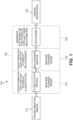
- a synthetic test data generation process 100 can include the input of a desired transformation design 110 into an enriched data production system ("system") 120.
- the system 120 can be understood to include three modules: an attribute classification module 122 that employs a first ML model (e.g., an ML model that implements transformation analysis for classification, or "first ML model”), an attribute (inter)relationship determination module 124 that employs a second ML model (e.g., an ML model that implements transformation analysis for attribute relationships, or "second ML model”), and a transformation-driven intelligent data engine (“data engine”) 126.
- the attribute classification module 122 can perform transformation analysis on the inputted transformation design 110. Using ML techniques, the attribute classification module 122 can classify the input design attributes, as will be discussed in further detail in FIG. 3 .
- the relationship determination module 124 can map out the interrelationships between the various attributes, for example as defined by the attribute classification module 122.
- the data engine 126 can generate design-compliant test data ("design-driven data") 130 that is structured to fulfill the specific needs of the current project design, based on the identified attribute types and their relationships. It can be appreciated that this process is dynamic, with different test data being produced for each design that is inputted.
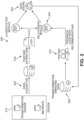
- FIG. 2 a high-level view of an embodiment of a flow through a technical architecture 200 ("architecture") 200 for transformation enriched data testing is shown.
- architecture technical architecture 200
- the proposed systems can provide data-generation for migrations across a variety of cloud platforms. Some examples include but are not limited to AWS ® , Azure ® , GCP ® , Oracle ® , and others.
- embodiments of the proposed system can be built using a wide range of programming languages, including but not limited to Python, Go, Ruby, Java or C.Net.
- the system can work with available test management tools, such as MF Octane, qTest, Zephyr, SpiraTeam, Rally, JIRA, Polarion, CodeBeamer, and other application life cycle management (ALM) tools for storing test cases and test execution results.
- test management tools such as MF Octane, qTest, Zephyr, SpiraTeam, Rally, JIRA, Polarion, CodeBeamer, and other application life cycle management (ALM) tools for storing test cases and test execution results.
- ALM application life cycle management
- the system can also produce and reuse test data and execute different combinations across many different test data formats (e.g., JSON, CSV, YAML, Excel ® , etc.).
- the system initially receives input 210 including descriptions of the transformation design(s) and associated metadata as part of a data acquisition process during a first stage 220.
- metadata can refer to data that describe the properties or characteristics of end-user data and the context of those data.
- features from the inputted data can be extracted in a second stage 230, and outputted in a JSON, CSV, YAML, Excel ® , or other data file format.
- the extracted features can then be passed to both the classification module and relationships module in a third stage 240, which will classify attributes and relationships that are then submitted to and received by the data engine in a fourth stage 250.
- the data engine generates transformation enriched test data in a fifth stage 260, which can be used throughout the varied and multiple phases of testing (sixth stage 270). Furthermore, in different embodiments, the results of the testing and associated cyclical feedback from reviewers or other testers (e.g., during unit testing or product testing) can be sent back to the classification module and relationships module to iteratively (e.g., with each round of feedback) improve the accuracy of their ML model outputs (e.g., providing a continuous feedback loop) by self-learning.
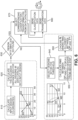
- FIG. 3 an embodiment of an attribute classification process 300 is shown, and in FIG. 4 , an embodiment of an inter-relationship determination process 400 is shown.
- FIG. 5 then depicts examples of outputs of each of these processes.
- input in the form of a set of extracted features 310 from the transformation design can be received at the classification module.
- the features are shown in FIG. 3 in a table in which two headers (shown as "attribute", along with the attribute's transformation design) and their associated extracted data values are provided.
- the attributes are listed as “Cust ID”, “First Name”, “Last Name”, “Gender”, and “Type”.
- the extracted features all fall under and/or represent a single entity (e.g., customer), but in other examples, the entity can vary.
- the classification module can use feature engineering techniques such as feature creation, transformations, feature extraction, and feature selection, to prepare the data for consumption in the classification module's ML model.
- techniques such as imputation, discretization, categorical encoding, feature splitting, handling outliers, variable transformations, scaling, and other can also be used.
- the classification module can perform filtering out of the extracted features in a first stage 320, such as filtering of verbose words, static literals, etc., which are not relevant to the ML model, or not required for the prediction.
- This filtered version of the extracted features can be cross-referenced with attribute metadata in a second stage 330 to filter out attribute names and improve the model's accuracy.
- the cross-referenced information can then be used to generate a data catalog based on the design in a third stage 340.
- An example of a first data catalog 350 is depicted in FIG.
- a cross-referenced value of either zero or one is indicated across the five categories.
- This information is submitted to a first artificial intelligence (Al) model 360, which can generate a dataset represented in FIG. 3 by a first output 370, that can be used by the classification module to determine the label that should be assigned to each attribute.
- an attribute refers to a property or characteristic of an entity or relationship type that is of interest to an organization, such that an attribute describes an entity type and the attribute is a property of an entity type.
- an entity can refer to a general term for a category or instance of a person, a place, an object, an event, or a concept in the user environment about which the organization wishes to maintain data.
- the ML model that performs transformation analysis for classification can classify the input design attributes into one or more of at least four attribute types, including (1) Simple (e.g., or an attribute that cannot be broken down into smaller components that are meaningful to the organization), (2) Static (i.e., having a predefined set of values, has an unchanging state value, e.g., a retail bank will always have the attribute of retail), (3) Transformative (e.g., attributes composed of other attributes, derived, or multivalued, etc.), and (4) Associative (e.g., referential integrity key attributes, or an entity type that associates the instances of one or more entity types and contains attributes that are peculiar to the relationship between those entity instances).
- the ML model that performs transformation analysis for classification can apply any suitable classification technique.
- the same ML model can be trained by supervised learning with labeled data.
- the attribute type that is selected by the classification module can become an input for the next stage.
- the classification module can predict an attributes classification class (label) that can be required for further processing.
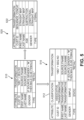
- FIG. 5 a first example 510 of the labels selected and produced by the classification module can be seen. These labels reflect the data listed in the first output 370 of the first AI model 360 shown in FIG. 3 .
- the table for first output 370 determined customer ID should have a value of "1" for both the associative attribute type and the transformative attribute type, but a value of "0" for both the simple attribute type and the static attribute type.
- classification column 512 includes "Associative" and "Transformative".
- the classifications for the other example attributes can be determined based on the "1" or "0" values generated by the first AI model 360 and represented by first output 370 in FIG. 3 (e.g., the table for first output 370 determined the customer's first name should have a value of "0" for all of the associative attribute type, the simple attribute type, and the static attribute type, but a value of "1" for the associative attribute type, which is then reflected in the classification column 512).
- the relationships module can use feature engineering techniques such as feature creation, transformations, feature extraction, and feature selection, to prepare the data for consumption in the relationships module's ML model.
- feature engineering techniques such as feature creation, transformations, feature extraction, and feature selection
- techniques such as imputation, discretization, categorical encoding, feature splitting, handling outliers, variable transformations, scaling, and other can also be used.
- the relationships module can perform filtering out of the extracted features in a first stage 420, such as filtering of verbose words, static literals, etc.
- This filtered version of the extracted features can be cross-referenced with attribute metadata in a second stage 430 to filter out attribute names and improve the model's accuracy.
- the cross-referenced information can then be used to generate a data catalog in a third stage 440.
- An example of a second data catalog 450 is depicted in FIG. 4 , which comprises a table with four headers ("attribute” with four possible categories: “if else", “concat”, “literal”, “straight map”, and “join"), though other categories may also be used.
- a cross-referenced value of either zero or one is indicated across the four categories.
- This information is submitted to a second artificial intelligence (Al) model 460, which can generate a dataset, represented in FIG. 4 by a second output 470, that can be used by the relationships module to discern and identify the interrelationships between the various attributes based on the design provided.
- Al artificial intelligence
- the ML model that performs transformation analysis for attribute relationships is configured to map out functional interrelationships between each possible combination of attributes, including one or more of at least four (1) arithmetic, (2) sequence, (3) literal, and (4) concat function labels.
- a look-up or join label, as well as "minus” and "plus” can also be included.
- the relationship can be based on one of concatenation, lookup, literal, sequence, arithmetic, subtraction, and addition.
- the model can determine which transformation is being performed on a particular attribute and/or how the attribute is being populated.
- the second AI model 460 can predict the various transformation functions based on the design using logarithmic regression techniques.
- interrelationships between various attributes can defined by a transformation function by using the design metadata (attributes) and their associated transformation functions (e.g., see FIG. 5 example of attributes and transformation functions) to train the logistic regression model, which can then be used to predict the transformation function for new/further design attributes, which define the interrelationships.
- the relationships module can extract features from the transformation design, perform feature engineering to prepare the extracted features for consumption in the second AI model 460, and recommend transformation functions for each attribute that can be required for further processing.
- a second example 520 of the labels identified and produced by the relationships module can be seen. These labels reflect the data listed in the second output 470 of the second AI model 460 shown in FIG. 4 .
- the table for second output 470 determined customer ID should have a value of "1" for the sequence label and the concat label, but a value of "0" for the arithmetic and literal function labels.
- a transformation function column 522 includes only "Sequence" and "Concat”.
- the transformation functions for the other example attributes can be determined based on the "1" or "0" values generated by the second AI model 460 and represented by second output 470 in FIG.
- input design coordinates can be calculated by the system.
- the input design coordinates are calculated using the input design metadata, for which test data is to be generated and then shared with the attribute classification module and the attribute relationship determination module.
- the metadata of the input transformation design, for which test data is to be generated can be acquired.
- a library e.g., Python Faker
- Python Faker can be used to assign dummy test data to the attributes.
- the attributes with dummy values assigned then can become the input coordinates.
- the system can perform a loop through the data catalog matrix (see FIGS. 3 and 4 ) and calculate the Euclidean Distance (ED) for all designs, where the ED can be understood to refer to the ED between each of the subcomponents within a design or transformation.
- the ED is calculated for all new designs within predesignated thresholds based on the current design parameters.
- the ED for the new design is compared to the ED for the current data catalog designs and the design with closest or smallest ED is selected. In some embodiments, there can be more than one set within the selected thresholds, and the comparison is performed in order to determine the classification class and transformation function that are nearest to the current design based on the smallest ED. In one example, a classification class and a transformation function corresponding to the design is chosen in a seventh stage 670. At an eighth stage 680, the classification class and transformation function data that have been identified are passed to or fed to the data engine. Thus, the ED allows the system to determine, from a plurality of options, the nearest or most similar classification class and transformation function relative to the current design metadata.
- the module can additionally select designs falling under a given threshold in a fourth stage 640, and then calculate the root mean square (RMS) of the ED between D N and T N for all identified designs from the above steps in a fifth stage 650.
- the variable T is calculated for all designs within the threshold. If there are multiple designs detected within threshold, then one dimension D, is not enough to derive the closest one and at least two variables will be required.
- the "N" that has the lowest RMS is chosen in a sixth stage 660.
- the modules choose a classification class and a transformation function corresponding to the design with lowest RMS (based on output from sixth stage 660) in a seventh stage 670, allowing for a kind of intelligent tie-breaker operation.
- this classification class and transformation function data are passed to the data engine. It can be appreciated that each of these calculations are based on techniques that cannot be performed manually, as they are programmatic and computationally intensive.
- the data engine is configured to generate a specific set of records to meet the design, transformation, and testing requirements for each particular attribute.
- a faker library 710 associated with a programming language can be used to supply a first group of data 720 directed to the various entities for this system.
- three entities are included (customer, account, transaction).
- a dataset is provided in which attributes for the entity, and corresponding value, are identified.
- the first group of data is inputted to a data engine 740, which employs an algorithm to process this group of data.
- the data engine 740 can receive a set of metadata tables 730, which can describe functions for different schemas or classifications (e.g., associative attributes, data types, literals, string, integer, etc.) as described earlier.
- the data engine 740 can also include a data enhancement wrapper program. This program can reside atop of a Python (or other programming language) data generator or 'Faker' program.
- the data engine 740 can then enrich the faker data with the derived transformation metadata obtained from both the classification module and the relationships module, as well as the attribute metadata (e.g., metadata tables 730) received as part of the design.
- metadata and the outputs of the modules can be used by the data engine 740 to help derive the test data.
- the data engine 740 is configured to automatically create design-specific data sets, bypassing the conventional need to mock-up data.
- the data engine 740 can process the two sources of data and implement a set of sample rules to the data to generate its output. For example, the data engine 740 can apply the same value for all associative attributes in all input datasets.
- the data engine 740 can populate and/or update values as per data types in the metadata tables.
- the data engine 740 can ensure 50% of records (or some other preselected threshold) have the values as specified in the literals metadata table. In one example, the data engine 740 can ensure a negative test record is generated for every scenario in the input datasets.
- the data engine 740 can ensure that all records that are linked to a specific key value should be consistent across multiple data sets or have the same value (e.g., customer ID can be a key value, and records for that customer should always have the same/consistent customer ID in order to join these records).
- An example of an output 750 of the data engine 740 is shown in FIG. 7 , showing the capacity of the system to ensure data integrity across multiple entities (e.g., key attributes, such as customer ID "in.cust_id", and account ID "in.acc id”, remain consistent over the three records).
- an example of an execute data engine enrich script can be represented by: PS C: ⁇ Users ⁇ username ⁇ enrichdatasystem ⁇ scripts> ./de_enrich.ksh
- enriched test data generation script can be represented by:
- the proposed systems and methods offer a mechanism by which to generate robust, design-compliant test data for cloud migrations. It may be appreciated that any defects in a new code can result in serious consequences. Typically, once a developer writes the cloud infrastructure code in their selected programming language, several operational and compliance tests must be run, which often reveal a multitude of issues. However, because of the current dependence on randomly generated test data many of these issues are only generated and noted after deployment of the software to the live, operational environment. Therefore, testing is a key stage in the deployment process.
- the proposed embodiments remove the presence of manual errors, and allow for an accelerated testing paradigm that can be efficiently implemented prior to actual 'live' deployment. Thus, any errors will not lead to any real-world harm.
- the quality of data used for testing is also greatly enhanced, thereby greatly enhancing the quality of testing and the removal of faults in software applications.
- an increased compliance to design leads to reduction in defect leakage across various testing phases.
- the test data enables significant acceleration in the execution of testing operations due to the resulting reduction in defect management overhead.
- FIG. 8 is a flow chart illustrating an embodiment of a method 800 of testing a computer system.
- the method 800 includes a first step 810 of receiving, at a feature extraction module, a first design dataset for a cloud transformation, and a second step 820 of extracting, at the feature extraction module, at least a first set of attributes from the first design dataset in a first data file.
- the method 800 includes a third step 830 of receiving, at an attribute classification module, the first data file, and a fourth step 840 classifying, at the attribute classification module, each attribute in the first data file as falling under at least one attribute type to produce a first classification dataset.
- a fifth step 850 includes receiving, at an attribute relationship module, the first data file, and a sixth step 860 includes identifying, at the attribute relationship module, a transformation relationship for each attribute in the first data file to produce a first relationship dataset.
- the method 800 includes a seventh step 870 of receiving, at a data engine, input including the first data file, the first classification dataset, the first relationship dataset, and a metadata set associated with the cloud transformation design, and an eighth step 880 of automatically creating, at the data engine and based on the input, a design-specific test dataset for performing tests on software undergoing a cloud transformation.
- the method may include additional steps or aspects.
- the classification of each attribute can further include calculating a Euclidean Distance (ED) for each design in the first design dataset and obtaining a first ED set, selecting a first design in the first design dataset based on the ED for the first design corresponding to the smallest distance in the first ED set, and classifying each attribute as an attribute type based on the selected first design.
- ED Euclidean Distance
- identification of the transformation relationship for each attribute further can also include steps of calculating a Euclidean Distance (ED) for each design in the first design dataset and obtaining a first ED set, selecting a first design in the first design dataset based on the ED for the first design corresponding to the smallest distance in the first ED set, and identifying each transformation relationship based on the selected first design.
- ED Euclidean Distance
- the attribute type can include one of an associative label, transformative label, simple label, and a static label.
- the transformation relationship is based on one of concatenation, lookup, literal, sequence, arithmetic, subtraction, and addition.
- the method also includes steps of receiving, at a machine learning model for the attribute classification module, a first recommendation from a reviewer of the design-specific test dataset, and re-training the machine learning model based on the first recommendation to improve classification accuracy.
- the method can also include receiving, at a machine learning model for the attribute relationship module, a first recommendation from a reviewer of the design-specific test dataset, and re-training the machine learning model based on the first recommendation to improve relationship identification accuracy.
- FIG. 9 is a schematic diagram of an environment 900 for a test data enrichment system 914 ("system" 914), according to an embodiment.
- the environment 900 may include a plurality of components capable of performing the disclosed methods.
- environment 900 includes a user device 904, a computing/server system 908, and a database 990.
- the components of environment 900 can communicate with each other through a network 902.
- user device 904 may retrieve information from database 990 via network 902.
- network 902 may be a wide area network (“WAN"), e.g., the Internet.
- network 906 may be a local area network (“LAN").
- WAN wide area network
- LAN local area network
- components of the system 914 may be hosted in computing system 908, which may have a memory 912 and a processor 910.
- Processor 910 may include a single device processor located on a single device, or it may include multiple device processors located on one or more physical devices.
- Memory 912 may include any type of storage, which may be physically located on one physical device, or on multiple physical devices.
- computing system 908 may comprise one or more servers that are used to host the system.
- FIG. 9 shows one user device, it is understood that one or more user devices may be used.
- the system may include two or three user devices.
- the user device may be a computing device used by a user.
- user device 904 may include a smartphone or a tablet computer.
- user device 904 may include a laptop computer, a desktop computer, and/or another type of computing device.
- the user devices may be used for inputting, processing, and displaying information. Referring to FIG.
- environment 900 may further include database 990, which stores test data, training data, metadata, design data, classification data, attribute data, feedback data for iterative training of the ML models (training cycle), relationship data, and/or other related data for the components of the system as well as other external components.
- This data may be retrieved by other components for system 914.
- system 914 may include a feature extraction module 918, an attribute classification module 920 (e.g., classification module), an attribute inter-relationship module 922 (e.g., relationships module), and an intelligent data enrichment generation engine 924 (e.g., data engine).
- attribute classification module 920 e.g., classification module
- attribute inter-relationship module 922 e.g., relationships module
- an intelligent data enrichment generation engine 924 e.g., data engine
- an "interface” may be understood to refer to a mechanism for communicating content through a client application to an application user.
- interfaces may include pop-up windows that may be presented to a user via native application user interfaces (Uls), controls, actuatable interfaces, interactive buttons/options or other objects that may be shown to a user through native application Uls, as well as mechanisms that are native to a particular application for presenting associated content with those native controls.
- actuation or “actuation event” refers to an event (or specific sequence of events) associated with a particular input or use of an application via an interface, which can trigger a change in the display of the application.
- a "native control” refers to a mechanism for communicating content through a client application to an application user.
- native controls may include actuatable or selectable options or “buttons” that may be presented to a user via native application Uls, touch-screen access points, menus items, or other objects that may be shown to a user through native application Uls, segments of a larger interface, as well as mechanisms that are native to a particular application for presenting associated content with those native controls.
- the term “asset” refers to content that may be presented in association with a native control in a native application.
- an asset may include text in an actuatable pop-up window, audio associated with the interactive click of a button or other native application object, video associated with the user interface, or other such information presentation.
- Embodiments may include a non-transitory computer-readable medium (CRM) storing software comprising instructions executable by one or more computers which, upon such execution, cause the one or more computers to perform the disclosed methods.
- CRM computer-readable medium
- Non-transitory CRM may refer to a CRM that stores data for short periods or in the presence of power such as a memory device or Random Access Memory (RAM).
- a non-transitory computer-readable medium may include storage components, such as, a hard disk (e.g., a magnetic disk, an optical disk, a magnetooptic disk, and/or a solid state disk), a compact disc (CD), a digital versatile disc (DVD), a floppy disk, a cartridge, and/or a magnetic tape.
- some of the processes described herein can be understood to operate in a system architecture that can include a plurality of virtual local area network (VLAN) workstations at different locations that communicate with a main data center with dedicated virtual servers such as a web server for user interfaces, an app server for data processing, a database for data storage, etc.
- VLAN virtual local area network
- a virtual server is a type of virtual machine (VM) that is executed on a hardware component (e.g., server).
- VMs can be deployed on one or more servers.
- the system may be hosted at least in part in a cloud computing environment offering ready scalability and security.
- the cloud computing environment can include, for example, an environment that hosts the document processing management service.
- the cloud computing environment may provide computation, software, data access, storage, etc. services that do not require end-user knowledge of a physical location and configuration of system(s) and/or device(s) that hosts the policy management service.
- a cloud computing environment may include a group of computing resources (referred to collectively as "computing resources” and individually as “computing resource”). It is contemplated that implementations of the present disclosure can be realized with appropriate cloud providers (e.g., AWS provided by Amazon TM , GCP provided by Google TM , Azure provided by Microsoft TM , etc.).
- all or parts of the implementations may be circuitry that includes an instruction processor, such as a Central Processing Unit (CPU), microcontroller, or a microprocessor; or as an Application Specific Integrated Circuit (ASIC), Programmable Logic Device (PLD), or Field Programmable Gate Array (FPGA); or as circuitry that includes discrete logic or other circuit components, including analog circuit components, digital circuit components or both; or any combination thereof.
- an instruction processor such as a Central Processing Unit (CPU), microcontroller, or a microprocessor
- ASIC Application Specific Integrated Circuit
- PLD Programmable Logic Device
- FPGA Field Programmable Gate Array
Landscapes
- Engineering & Computer Science (AREA)
- Theoretical Computer Science (AREA)
- Physics & Mathematics (AREA)
- General Physics & Mathematics (AREA)
- General Engineering & Computer Science (AREA)
- Data Mining & Analysis (AREA)
- Databases & Information Systems (AREA)
- Computer Hardware Design (AREA)
- Quality & Reliability (AREA)
- Evolutionary Computation (AREA)
- Computer Vision & Pattern Recognition (AREA)
- Artificial Intelligence (AREA)
- Software Systems (AREA)
- Life Sciences & Earth Sciences (AREA)
- Bioinformatics & Cheminformatics (AREA)
- Bioinformatics & Computational Biology (AREA)
- Evolutionary Biology (AREA)
- Mathematical Physics (AREA)
- Computing Systems (AREA)
- Medical Informatics (AREA)
- Debugging And Monitoring (AREA)
Abstract
Description
- The present disclosure generally relates to intelligent enrichment of test data, and more particularly to producing intelligent synthetic test data paradigms for design validation of cloud transformations and migrations, as well as testing computer systems.
- Cloud computing has seen increasing use for a variety of reasons, including cost savings, ease of maintenance, scalability, and versatility. Cloud computing provides many different types of cloud applications, such as information as a service (laaS) applications (e.g., information technology applications, networking applications, data storage applications, etc.), platform as a service (PaaS) applications (e.g., hardware applications, operating system applications, etc.), and software as a service (SaaS) applications (e.g., email applications, word processing applications, image applications, etc.).
- Cloud applications have several attributes that make them different than typical software applications. For example, cloud applications execute on virtualized hardware and a software stack that can be moved and replicated between physical machines as needed, share common physical resources with other cloud applications, are built to be highly scalable in real-time, and are predominately accessed using standard network protocols. Furthermore, cloud applications use hypertext markup language (HTML) and other web technologies for providing front-end and management user interfaces, provide application programming interfaces (APIs) for integration and management, consume third-party APIs for providing common services and functionality, and tend to use no structured query language (SQL) data stores.
- These attributes make testing cloud applications very difficult and much different than testing typical software applications. For example, since cloud applications execute on hardware that is controlled by the cloud provider and is shared with other applications, testing of cloud applications requires testing performance and scalability in environments similar to the environments of the cloud applications. Since cloud applications usually share resources and infrastructure with other cloud applications, testing of cloud applications requires providing extra consideration to data privacy and access control issues. Furthermore, since cloud applications consume external APIs and services for providing functionality for the external APIs, testing of cloud applications requires testing of the external APIs and the services providing the functionality for the external APIs. Thus, testing of cloud applications consumes vast amounts of time, resources, and capital.
- There is a need in the art for a system and method that addresses the shortcomings discussed above.
- The proposed systems and methods describe a dynamic and automated process for producing test data and implementing the test data in software testing for cloud migrations. The proposed systems and methods are directed to enriching and improving test data completeness from a design perspective for cloud transformations by analyzing the transformation rules in the migration design. The system and method solve the problems discussed above by providing a mechanism by which to incorporate metadata for transformation designs with attribute classification and relationship data to generate an enriched design-driven data set. The proposed systems and methods can include implementing the test data in software testing to validate infrastructure provisioned in multi-cloud environments and accommodate most cloud providers. The proposed systems and method may include executing a test using the test data set in a computer system, identifying test failures, and optionally fixing those errors. These features (among others described) are specific improvements in way that the underlying computer system operates. In addition, the proposed systems and methods solve technical challenges with cloud infrastructure testing and validation, as well as software development targeted for transformation, by generating and implementing test data to identify and fix faulty functions/processes in software applications. The improvements facilitate a more efficient, accurate, consistent, and precise building of resources that operate properly immediately upon entering the production environment. The improved functioning of the underlying computer hardware itself achieves further technical benefits. For example, the system avoids tedious testing cycles that use non-relevant test data (i.e., unrelated to the specific design requirements), reduces manual intervention, accelerates the timeline for successful completion of a system's cloud migration, and reduces the possibility for human error, therefore increasing infrastructure instantiation efficiency and reduces wait times for correct resource setup and execution.
- In one aspect, the disclosure provides a computer implemented a method for testing a computer system. The method includes a first step of receiving, at a feature extraction module, a first design dataset for a cloud transformation, and a second step of extracting, at the feature extraction module, at least a first set of attributes from the first design dataset in a first data file. In addition, the method includes a third step of receiving, at an attribute classification module, the first data file, and a fourth step classifying, at the attribute classification module, each attribute in the first data file as falling under at least one attribute type to produce a first classification dataset. In other words, the classification dataset is a dataset having an attribute classified by the attribute classification module. A fifth step includes receiving, at an attribute relationship module, the first data file, and a sixth step includes identifying, at the attribute relationship module, a transformation relationship for each attribute in the first data file to produce a first relationship dataset. Furthermore, the method includes a seventh step of receiving, at a data engine, input including the first data file, the first classification dataset, the first relationship dataset, and a metadata set associated with the cloud transformation design, and an eighth step of automatically creating, at the data engine and based on the input, a design-specific test dataset for performing tests on software undergoing a cloud transformation.
- In some embodiments, the attribute type can include one of an associative label, transformative label, simple label, and a static label. In another embodiment, the transformation relationship is based on one of concatenation, lookup, literal, sequence, arithmetic, subtraction, and addition.
- In some embodiments, the method may include additional steps or aspects. In some embodiments, the classification of each attribute can further include calculating a Euclidean Distance (ED) for each design in the first design dataset and obtaining a first ED set, selecting a first design in the first design dataset based on the ED for the first design corresponding to the smallest distance in the first ED set, and classifying each attribute as an attribute type based on the selected first design. In another example, identification of the transformation relationship for each attribute further can also include steps of calculating a Euclidean Distance (ED) for each design in the first design dataset and obtaining a first ED set, selecting a first design in the first design dataset based on the ED for the first design corresponding to the smallest distance in the first ED set, and identifying each transformation relationship based on the selected first design.
- In another aspect, the disclosure provides a non-transitory computer-readable medium storing software comprising instructions executable by one or more computers which, upon such execution, cause the one or more computers to produce enriched test data by performing the following: (1) receive, at a feature extraction module, a first design dataset for a cloud transformation; (2) extract, at the feature extraction module, at least a first set of attributes from the first design dataset in a first data file; (3) receive, at an attribute classification module, the first data file; (4) classify, at the attribute classification module, each attribute in the first data file as falling under at least one attribute type to produce a first classification dataset; (5) receive, at an attribute relationship module, the first data file; (6) identify, at the attribute relationship module, a transformation relationship for each attribute in the first data file to produce a first relationship dataset; (7) receive, at a data engine, input including the first data file, the first classification dataset, the first relationship dataset, and a metadata set associated with the cloud transformation design; and (8) automatically create, at the data engine and based on the input, a design-specific test dataset for performing tests on software undergoing a cloud transformation.
- In yet another aspect, the disclosure provides a testing system for testing a computer system, the testing system comprising one or more computers and one or more storage devices storing instructions that may be operable, when executed by the one or more computers, to cause the one or more computers to: (1) receive, at a feature extraction module, a first design dataset for a cloud transformation; (2) extract, at the feature extraction module, at least a first set of attributes from the first design dataset in a first data file; (3) receive, at an attribute classification module, the first data file; (4) classify, at the attribute classification module, each attribute in the first data file as falling under at least one attribute type to produce a first classification dataset; (5) receive, at an attribute relationship module, the first data file; (6) identify, at the attribute relationship module, a transformation relationship for each attribute in the first data file to produce a first relationship dataset; (7) receive, at a data engine, input including the first data file, the first classification dataset, the first relationship dataset, and a metadata set associated with the cloud transformation design; and (8) automatically create, at the data engine and based on the input, a design-specific test dataset for performing tests on software undergoing a cloud transformation.
- Other systems, methods, features, and advantages of the disclosure will be, or will become, apparent to one of ordinary skill in the art upon examination of the following figures and detailed description. It is intended that all such additional systems, methods, features, and advantages be included within this description and this summary, be within the scope of the disclosure, and be protected by the following claims.
- While various embodiments are described, the description is intended to be exemplary, rather than limiting, and it will be apparent to those of ordinary skill in the art that many more embodiments and implementations are possible that are within the scope of the embodiments. Although many possible combinations of features are shown in the accompanying figures and discussed in this detailed description, many other combinations of the disclosed features are possible. Any feature or element of any embodiment may be used in combination with or substituted for any other feature or element in any other embodiment unless specifically restricted.
- This disclosure includes and contemplates combinations with features and elements known to the average artisan in the art. The embodiments, features, and elements that have been disclosed may also be combined with any conventional features or elements to form a distinct invention as defined by the claims. Any feature or element of any embodiment may also be combined with features or elements from other inventions to form another distinct invention as defined by the claims. Therefore, it will be understood that any of the features shown and/or discussed in the present disclosure may be implemented singularly or in any suitable combination. Accordingly, the embodiments are not to be restricted except in light of the attached claims and their equivalents. Also, various modifications and changes may be made within the scope of the attached claims.
- The invention can be better understood with reference to the following drawings and description. The components in the figures are not necessarily to scale, emphasis instead being placed upon illustrating the principles of the invention. Moreover, in the figures, like reference numerals designate corresponding parts throughout the different views.
-
FIG. 1 is an overview of an embodiment of a process for an automated production of design-driven data; -
FIG. 2 is a high-level view of a technical architecture for a test data enrichment generation system, according to an embodiment; -
FIG. 3 is a schematic diagram of a process for classification of attributes with one or more attribute types by an attribute classification module, according to an embodiment; -
FIG. 4 is a schematic flow diagram of a process for identification of transformation function relationships representing an attribute by a relationship determination module, according to an embodiment; -
FIG. 5 is a schematic flow diagram of an embodiment of outputs by the attribute classification module and the relationship determination module, according to an embodiment; -
FIG. 6 is a schematic flow diagram showing a process of selection of attribute types and transformation functions using artificial intelligence models, according to an embodiment; -
FIG. 7 is a schematic flow diagram of a process of generating test data using a data engine, according to an embodiment; -
FIG. 8 is a flow chart depicting a method for generating enriched test data for cloud transformation designs, according to an embodiment; and -
FIG. 9 is a diagram depicting example environments and components by which systems and/or methods, described herein, may be implemented. - Design and production of compliant, high-quality test data has presented a significant challenge in cloud migration project management and execution. The lack of ready-to-use quality test data and the absence of a reliable and effective process for acquiring or creating test data means a reliance on a paradigm that is associated with defect leakage, which can lead to negative impacts on delivery quality and project timelines. For example, current processes rely on a design stage where function mapping documents (FMD), which hold design for the transformation logic, are fed to human developers, who manually mock unit test data. In some cases, these human testers manually generate test data for phases of software development including product testing, user acceptance testing, and performance testing, among others. This approach is further limited by clients who are uncomfortable with sharing production data for unit testing and/or product testing, for example due to data privacy concerns and regulatory compliance standards like the General Data Protection Regulation (GDPR). In some cases, clients must also comply with globally stricter policies on data location, and refrain from providing a complete design coverage. Furthermore, conventionally available test data generators are highly limited and static, typically generating random test data driven by a data model rather than the project's transformation design. There remains a strong need for a data enrichment solution that is functional and valuable across all testing phases (e.g., Unit Testing, Product Testing, User Acceptance Testing, etc.).
- The proposed systems and methods are directed to enriching and improving test data completeness from a design perspective for cloud transformations by analyzing the transformation rules in the migration design. The proposed embodiments can leverage machine learning (ML) techniques to ensure the production of non-random test data, dynamically driven by a given design and data model, that is required for various testing phases is compliant and aligned to the design transformations while also ensuring appropriate coverage of the design by use of metadata. This incorporation of metadata into the system and process provides a greatly reduced defect leakage across testing phases, improves confidence in the quality of the test data, helps unify the testing process, and accelerates the generation of test data and the overall migration.
- In different embodiments, the proposed systems and systems can be configured to intelligently analyze the transformation rules in a design, as well as recognize and define the range of interrelationships between attributes and transformation rules that are associated with the attributes, in order to generate test data. Referring first to
FIG. 1 , an overview of the proposed embodiments is depicted. As shown inFIG. 1 , a synthetic testdata generation process 100 can include the input of a desiredtransformation design 110 into an enriched data production system ("system") 120. In different embodiments, thesystem 120 can be understood to include three modules: anattribute classification module 122 that employs a first ML model (e.g., an ML model that implements transformation analysis for classification, or "first ML model"), an attribute (inter)relationship determination module 124 that employs a second ML model (e.g., an ML model that implements transformation analysis for attribute relationships, or "second ML model"), and a transformation-driven intelligent data engine ("data engine") 126. In some embodiments, theattribute classification module 122 can perform transformation analysis on the inputtedtransformation design 110. Using ML techniques, theattribute classification module 122 can classify the input design attributes, as will be discussed in further detail inFIG. 3 . Furthermore, in some embodiments, therelationship determination module 124 can map out the interrelationships between the various attributes, for example as defined by theattribute classification module 122. Finally, in some embodiments, thedata engine 126 can generate design-compliant test data ("design-driven data") 130 that is structured to fulfill the specific needs of the current project design, based on the identified attribute types and their relationships. It can be appreciated that this process is dynamic, with different test data being produced for each design that is inputted. - Referring now to
FIG. 2 , a high-level view of an embodiment of a flow through a technical architecture 200 ("architecture") 200 for transformation enriched data testing is shown. As a general matter, the proposed systems can provide data-generation for migrations across a variety of cloud platforms. Some examples include but are not limited to AWS®, Azure®, GCP®, Oracle®, and others. In addition, embodiments of the proposed system can be built using a wide range of programming languages, including but not limited to Python, Go, Ruby, Java or C.Net. Furthermore, the system can work with available test management tools, such as MF Octane, qTest, Zephyr, SpiraTeam, Rally, JIRA, Polarion, CodeBeamer, and other application life cycle management (ALM) tools for storing test cases and test execution results. The system can also produce and reuse test data and execute different combinations across many different test data formats (e.g., JSON, CSV, YAML, Excel®, etc.). - In
FIG. 2 , the system initially receivesinput 210 including descriptions of the transformation design(s) and associated metadata as part of a data acquisition process during afirst stage 220. As a general matter, metadata can refer to data that describe the properties or characteristics of end-user data and the context of those data. Next, features from the inputted data can be extracted in asecond stage 230, and outputted in a JSON, CSV, YAML, Excel®, or other data file format. The extracted features can then be passed to both the classification module and relationships module in athird stage 240, which will classify attributes and relationships that are then submitted to and received by the data engine in afourth stage 250. The data engine generates transformation enriched test data in afifth stage 260, which can be used throughout the varied and multiple phases of testing (sixth stage 270). Furthermore, in different embodiments, the results of the testing and associated cyclical feedback from reviewers or other testers (e.g., during unit testing or product testing) can be sent back to the classification module and relationships module to iteratively (e.g., with each round of feedback) improve the accuracy of their ML model outputs (e.g., providing a continuous feedback loop) by self-learning. - Additional details regarding the classification module and the relationships module and their operations are now given with reference to
FIGS. 3 ,4 , and5 . InFIG. 3 , an embodiment of anattribute classification process 300 is shown, and inFIG. 4 , an embodiment of aninter-relationship determination process 400 is shown.FIG. 5 then depicts examples of outputs of each of these processes. As shown inFIG. 3 , input in the form of a set of extractedfeatures 310 from the transformation design can be received at the classification module. The features are shown inFIG. 3 in a table in which two headers (shown as "attribute", along with the attribute's transformation design) and their associated extracted data values are provided. Simply for purposes of illustration, in this example, the attributes are listed as "Cust ID", "First Name", "Last Name", "Gender", and "Type". In this example, the extracted features all fall under and/or represent a single entity (e.g., customer), but in other examples, the entity can vary. In some embodiments, the classification module can use feature engineering techniques such as feature creation, transformations, feature extraction, and feature selection, to prepare the data for consumption in the classification module's ML model. As other non-limiting examples, techniques such as imputation, discretization, categorical encoding, feature splitting, handling outliers, variable transformations, scaling, and other can also be used. - For example, the classification module can perform filtering out of the extracted features in a
first stage 320, such as filtering of verbose words, static literals, etc., which are not relevant to the ML model, or not required for the prediction. This filtered version of the extracted features can be cross-referenced with attribute metadata in asecond stage 330 to filter out attribute names and improve the model's accuracy. The cross-referenced information can then be used to generate a data catalog based on the design in athird stage 340. An example of afirst data catalog 350 is depicted inFIG. 3 , which comprises a table with five headers ("attribute" with five possible categories: "if else", "concat", "literal", "straight map", and "join") though other categories may also be used. In this case, it can be seen that for each attribute from the inputted data, a cross-referenced value of either zero or one (weights that help in the prediction of which class the attribute falls into) is indicated across the five categories. This information is submitted to a first artificial intelligence (Al)model 360, which can generate a dataset represented inFIG. 3 by afirst output 370, that can be used by the classification module to determine the label that should be assigned to each attribute. In general, an attribute refers to a property or characteristic of an entity or relationship type that is of interest to an organization, such that an attribute describes an entity type and the attribute is a property of an entity type. In such cases, an entity can refer to a general term for a category or instance of a person, a place, an object, an event, or a concept in the user environment about which the organization wishes to maintain data. - In different embodiments, the ML model that performs transformation analysis for classification can classify the input design attributes into one or more of at least four attribute types, including (1) Simple (e.g., or an attribute that cannot be broken down into smaller components that are meaningful to the organization), (2) Static (i.e., having a predefined set of values, has an unchanging state value, e.g., a retail bank will always have the attribute of retail), (3) Transformative (e.g., attributes composed of other attributes, derived, or multivalued, etc.), and (4) Associative (e.g., referential integrity key attributes, or an entity type that associates the instances of one or more entity types and contains attributes that are peculiar to the relationship between those entity instances). The ML model that performs transformation analysis for classification can apply any suitable classification technique. The same ML model can be trained by supervised learning with labeled data.
- The attribute type that is selected by the classification module can become an input for the next stage. In other words, the classification module can predict an attributes classification class (label) that can be required for further processing. Referring briefly to
FIG. 5 , a first example 510 of the labels selected and produced by the classification module can be seen. These labels reflect the data listed in thefirst output 370 of thefirst AI model 360 shown inFIG. 3 . In other words, the table forfirst output 370 determined customer ID should have a value of "1" for both the associative attribute type and the transformative attribute type, but a value of "0" for both the simple attribute type and the static attribute type. Thus, inFIG. 5 , for Customer ID,classification column 512 includes "Associative" and "Transformative". Similarly, the classifications for the other example attributes can be determined based on the "1" or "0" values generated by thefirst AI model 360 and represented byfirst output 370 inFIG. 3 (e.g., the table forfirst output 370 determined the customer's first name should have a value of "0" for all of the associative attribute type, the simple attribute type, and the static attribute type, but a value of "1" for the associative attribute type, which is then reflected in the classification column 512). - Moving now to
FIG. 4 , input in the form of the set of extractedfeatures 310 from the transformation design can be received at the relationships module in what may be a concurrent process withFIG. 3 , or a previous or subsequent process. In some embodiments, the relationships module can use feature engineering techniques such as feature creation, transformations, feature extraction, and feature selection, to prepare the data for consumption in the relationships module's ML model. As other non-limiting examples, techniques such as imputation, discretization, categorical encoding, feature splitting, handling outliers, variable transformations, scaling, and other can also be used. - For example, the relationships module can perform filtering out of the extracted features in a
first stage 420, such as filtering of verbose words, static literals, etc. This filtered version of the extracted features can be cross-referenced with attribute metadata in asecond stage 430 to filter out attribute names and improve the model's accuracy. The cross-referenced information can then be used to generate a data catalog in athird stage 440. An example of asecond data catalog 450 is depicted inFIG. 4 , which comprises a table with four headers ("attribute" with four possible categories: "if else", "concat", "literal", "straight map", and "join"), though other categories may also be used. In this case, it can be seen that for each attribute from the inputted data, a cross-referenced value of either zero or one is indicated across the four categories. This information is submitted to a second artificial intelligence (Al) model 460, which can generate a dataset, represented inFIG. 4 by asecond output 470, that can be used by the relationships module to discern and identify the interrelationships between the various attributes based on the design provided. - In different embodiments, the ML model that performs transformation analysis for attribute relationships is configured to map out functional interrelationships between each possible combination of attributes, including one or more of at least four (1) arithmetic, (2) sequence, (3) literal, and (4) concat function labels. In some embodiments, a look-up or join label, as well as "minus" and "plus" can also be included. More generally, in some embodiments, the relationship can be based on one of concatenation, lookup, literal, sequence, arithmetic, subtraction, and addition. Thus, the model can determine which transformation is being performed on a particular attribute and/or how the attribute is being populated. In addition, the second AI model 460 can predict the various transformation functions based on the design using logarithmic regression techniques. In different embodiments, interrelationships between various attributes can defined by a transformation function by using the design metadata (attributes) and their associated transformation functions (e.g., see
FIG. 5 example of attributes and transformation functions) to train the logistic regression model, which can then be used to predict the transformation function for new/further design attributes, which define the interrelationships. Thus, the relationships module can extract features from the transformation design, perform feature engineering to prepare the extracted features for consumption in the second AI model 460, and recommend transformation functions for each attribute that can be required for further processing. - Referring briefly to
FIG. 5 , a second example 520 of the labels identified and produced by the relationships module can be seen. These labels reflect the data listed in thesecond output 470 of the second AI model 460 shown inFIG. 4 . In other words, the table forsecond output 470 determined customer ID should have a value of "1" for the sequence label and the concat label, but a value of "0" for the arithmetic and literal function labels. Thus, inFIG. 5 , for Customer ID, atransformation function column 522 includes only "Sequence" and "Concat". Similarly, the transformation functions for the other example attributes can be determined based on the "1" or "0" values generated by the second AI model 460 and represented bysecond output 470 inFIG. 4 (e.g., the table forsecond output 470 determined the customer's type should have a value of "0" for the arithmetic, sequence, and concat function labels, but a value of "1" for the literal function label, which is then reflected in the transformation function column 522). - A schematic flow diagram showing an embodiment of a process 600 for machine learning in the classification module and the relationships module is presented in
FIG. 6 . At afirst stage 610, input design coordinates can be calculated by the system. For example, in some embodiments, the input design coordinates are calculated using the input design metadata, for which test data is to be generated and then shared with the attribute classification module and the attribute relationship determination module. In some embodiments, the metadata of the input transformation design, for which test data is to be generated, can be acquired. Then, a library (e.g., Python Faker) can be used to assign dummy test data to the attributes. The attributes with dummy values assigned then can become the input coordinates. These can then be extracted as features and act as input coordinates (to feed into the relationships module and/or the classification module). - At a
second stage 620, the system can perform a loop through the data catalog matrix (seeFIGS. 3 and4 ) and calculate the Euclidean Distance (ED) for all designs, where the ED can be understood to refer to the ED between each of the subcomponents within a design or transformation. Thus, the ED is calculated for all new designs within predesignated thresholds based on the current design parameters. - At a
third stage 630, the ED for the new design is compared to the ED for the current data catalog designs and the design with closest or smallest ED is selected. In some embodiments, there can be more than one set within the selected thresholds, and the comparison is performed in order to determine the classification class and transformation function that are nearest to the current design based on the smallest ED. In one example, a classification class and a transformation function corresponding to the design is chosen in aseventh stage 670. At aneighth stage 680, the classification class and transformation function data that have been identified are passed to or fed to the data engine. Thus, the ED allows the system to determine, from a plurality of options, the nearest or most similar classification class and transformation function relative to the current design metadata. - In cases where there are multiple designs within the defined threshold the module can additionally select designs falling under a given threshold in a
fourth stage 640, and then calculate the root mean square (RMS) of the ED between DN and TN for all identified designs from the above steps in afifth stage 650. The variable T is calculated for all designs within the threshold. If there are multiple designs detected within threshold, then one dimension D, is not enough to derive the closest one and at least two variables will be required. The "N" that has the lowest RMS is chosen in asixth stage 660. Finally, the modules choose a classification class and a transformation function corresponding to the design with lowest RMS (based on output from sixth stage 660) in aseventh stage 670, allowing for a kind of intelligent tie-breaker operation. At aneighth stage 680, this classification class and transformation function data are passed to the data engine. It can be appreciated that each of these calculations are based on techniques that cannot be performed manually, as they are programmatic and computationally intensive. - For purposes of illustration, one example of a pseudocode for performing some of the operations described herein is provided below:
      import numpy as np
      import pandas as pd
      from sklearn.model_selection import train_test_split
      from sklearn.linear_model import LogisticRegression
      #Read in the data
      df = pd.read_csv("data.csv")
      #Split the data into X (features) and y (labels)
      X = df.drop("target", axis=1)
      y = df["target"]
      #Split the data into train and test sets
      X_train, X_test, y_train, y_test = train_test_split(X, y, test_size=0.2,
      random_state=42)
      #Create the model
      model = LogisticRegression(multi_class='multinomial', solver='lbfgs')
      #Train the model on the training data
      model.fit(X_train, y_train)
      #Make predictions on the test data
      y_pred = model.predict(X_test)
            PS c:\Users\username\enrichdatasystem\inputs> cat design.csv
            Attribute, Transformation
            Cust ID, "ABC" + seq. no
            First Name,source.fname
            Last Name,source. I name
            Gender,if source.gender= "M" then male el se female
            Type,"Retail "
            PS C:\Users\username\enrichdatasystem\inputs>
            PS C:\Users\username\enrichdatasystem\inputs> cat att metadata.csv
            Attribute, Datatype
            fname,string
            Iname,string
            gender,character
            type,string
            dob,date
            PS c:\Users\username\enrichdatasystem\scripts> ./tac.ksh
            PS C:\Users\username\enrichdatasystem\scripts> ./tar.ksh
            PS c:\Users\username\enrichdatasystem\scripts>
            PS C:\Users\username\enrichdatasystem\intermediate> cat tac_tar.csv
            Attribute,Type,Transformation Parameters
            Full_Name,Transformative,Concat, I ookup, in.fname,in.Iname
            Age,Transformative, Minus, Date(),in.dob
            Type,Static, Literal,"Retail"
            Cust_ID,Associative,Sequence,NA
            PS C:\Users\username\enrichdatasystem\intermediate>
PS C:\Users\username\enrichdatasystem\scripts> ,/de_prep.ksh
            PS C:\Users\username\enrichdatasystem\intermediate> cat assoc
            metadata.csv
            Attribute, Input Dataset
            Cust ID,customer
            Cust_ID, account
            Cust_ID,transaction
            PS C:\Users\username\enrichdatasystem\intermediate> cat literal
            metadata.csv
            Attribute,lnput Dataset,Literal Value
            type,customer, "retail"
            gender,customer, "M/F/NA"
            PS C:\Users\username\enrichdatasystem\intermediate>
PS C:\Users\username\enrichdatasystem\scripts> ./de_enrich.ksh
            PS C:\Users\username\enrichdatasystem\output> cat account.csv
            Attribute, Value
            in.cust_id,103044
            in.acc_id,A12935
            in.type, "Retail"
            PS c:\Users\username\enrichdatasystem\output> cat transaction.csv
            Attribute, Value
            in.cust_id,103044
            in.txn_id,A12935
            in.txn_amt,100
            PS c:\Users\username\enrichdatasystem\output> cat customer.csv
            Attribute, Value
            in.fname,"Chris"
            in.lname,"Root"
            in.DOB, 13/07/1980
            in.cust_id,103044
            PS C:\Users\username\enrichdatasystem\output>
- 1. A computer-implemented method for testing a computer system, the method comprising:
- receiving, at a feature extraction module, a first design dataset for a cloud transformation;
- extracting, at the feature extraction module, at least a first set of attributes from the first design dataset in a first data file;
- receiving, at an attribute classification module, the first data file;
- classifying, at the attribute classification module, each attribute in the first data file as falling under at least one attribute type to produce a first classification dataset;
- receiving, at an attribute relationship module, the first data file;
- identifying, at the attribute relationship module, a transformation relationship for each attribute in the first data file to produce a first relationship dataset;
- receiving, at a data engine, input including the first data file, the first classification dataset, the first relationship dataset, and a metadata set associated with the cloud transformation design;
- automatically creating, at the data engine and based on the input, a design-specific test dataset for performing tests on software undergoing a cloud transformation; and
- executing a test using the design-specific test dataset.
- 2. The method of
clause 1, wherein the classification of each attribute further comprises:- calculating a Euclidean Distance (ED) for each design in the first design dataset and obtaining a first ED set;
- selecting a first design in the first design dataset based on the ED for the first design corresponding to the smallest distance in the first ED set; and
- classifying each attribute as an attribute type based on the selected first design.
- 3. The method of
clause 1 or clause 2, wherein identification of the transformation relationship for each attribute further comprises:- calculating a Euclidean Distance (ED) for each design in the first design dataset and obtaining a first ED set;
- selecting a first design in the first design dataset based on the ED for the first design corresponding to the smallest distance in the first ED set; and
- identifying each transformation relationship based on the selected first design.
- 4. The method according to any previous clause further comprising:
- identifying test failures; and
- fixing the identified test failures.
- 5. The method according to any previous clause, wherein the transformation relationship is based on one of concatenation, lookup, literal, sequence, arithmetic, subtraction, and addition.
- 6. The method according to any previous clause further comprising:
- receiving, at a machine learning model for the attribute classification module, a first recommendation from a reviewer of the design-specific test dataset; and
- re-training the machine learning model based on the first recommendation to improve classification accuracy.
- 7. The method according to any previous clause further comprising:
- receiving, at a machine learning model for the attribute relationship module, a first recommendation from a reviewer of the design-specific test dataset; and
- re-training the machine learning model based on the first recommendation to improve relationship identification accuracy.
- 8. A non-transitory computer-readable medium storing software comprising instructions executable by one or more computers which, upon such execution, cause the one or more computers to produce enriched test data by performing the following:
- receive, at a feature extraction module, a first design dataset for a cloud transformation;
- extract, at the feature extraction module, at least a first set of attributes from the first design dataset in a first data file;
- receive, at an attribute classification module, the first data file;
- classify, at the attribute classification module, each attribute in the first data file as falling under at least one attribute type to produce a first classification dataset;
- receive, at an attribute relationship module, the first data file;
- identify, at the attribute relationship module, a transformation relationship for each attribute in the first data file to produce a first relationship dataset;
- receive, at a data engine, input including the first data file, the first classification dataset, the first relationship dataset, and a metadata set associated with the cloud transformation design; and
- automatically create, at the data engine and based on the input, a design-specific test dataset for performing tests on software undergoing a cloud transformation.
- 9. The non-transitory computer-readable medium storing software of clause 8, wherein the instructions further cause the one or more computers to:
- calculate a Euclidean Distance (ED) for each design in the first design dataset and obtaining a first ED set;
- select a first design in the first design dataset based on the ED for the first design corresponding to the smallest distance in the first ED set; and
- classify each attribute as an attribute type based on the selected first design.
- 10. The non-transitory computer-readable medium storing software of clause 8 or clause 9,
wherein the instructions further cause the one or more computers to:- calculate a Euclidean Distance (ED) for each design in the first design dataset and obtaining a first ED set;
- select a first design in the first design dataset based on the ED for the first design corresponding to the smallest distance in the first ED set; and
- identify each transformation relationship based on the selected first design.
- 11. The non-transitory computer-readable medium storing software according to any of clauses 8 to 10, wherein the attribute type includes one of an associative label, transformative label, simple label, and a static label.
- 12. The non-transitory computer-readable medium storing software according to any of clauses 8 to 11, wherein the transformation relationship is based on one of concatenation, lookup, literal, sequence, arithmetic, subtraction, and addition.
- 13. The non-transitory computer-readable medium storing software according to any of clauses 8 to 12,
wherein the instructions further cause the one or more computers to:- receive, at a machine learning model for the attribute classification module, a first recommendation from a reviewer of the design-specific test dataset; and
- re-train the machine learning model based on the first recommendation to improve classification accuracy.
- 14. The non-transitory computer-readable medium storing software according to any of clauses 8 to 13, wherein the instructions further cause the one or more computers to:
- receive, at a machine learning model for the attribute relationship module, a first recommendation from a reviewer of the design-specific test dataset; and
- re-train the machine learning model based on the first recommendation to improve relationship identification accuracy.
- 15. A test system for testing a computer system comprising one or more computers and one or more storage devices storing instructions that are operable, when executed by the one or more computers, to cause the one or more computers to:
- receive, at a feature extraction module, a first design dataset for a cloud transformation;
- extract, at the feature extraction module, at least a first set of attributes from the first design dataset in a first data file;
- receive, at an attribute classification module, the first data file;
- classify, at the attribute classification module, each attribute in the first data file as falling under at least one attribute type to produce a first classification dataset;
- receive, at an attribute relationship module, the first data file;
- identify, at the attribute relationship module, a transformation relationship for each attribute in the first data file to produce a first relationship dataset;
- receive, at a data engine, input including the first data file, the first classification dataset, the first relationship dataset, and a metadata set associated with the cloud transformation design; and
- automatically create, at the data engine and based on the input, a design-specific test dataset for performing tests on software undergoing a cloud transformation.
- 16. The system of
clause 15, wherein the instructions further cause the one or more computers to:- calculate a Euclidean Distance (ED) for each design in the first design dataset and obtaining a first ED set;
- select a first design in the first design dataset based on the ED for the first design corresponding to the smallest distance in the first ED set; and
- classify each attribute as an attribute type based on the selected first design.
- 17. The system of
clause 15 or clause 16, wherein the instructions further cause the one or more computers to:- calculate a Euclidean Distance (ED) for each design in the first design dataset and obtaining a first ED set;
- select a first design in the first design dataset based on the ED for the first design corresponding to the smallest distance in the first ED set; and
- identify each transformation relationship based on the selected first design.
- 18. The system according to any of
clauses 15 to 17, wherein the attribute type includes one of an associative label, transformative label, simple label, and a static label. - 19. The system according to any of
clauses 15 to 18, wherein the transformation relationship is based on one of concatenation, lookup, literal, sequence, arithmetic, subtraction, and addition. - 20. The system according to any of
clauses 15 to 19, wherein the instructions further cause the one or more computers to:
receive, at a machine learning model for the attribute classification module, a first recommendation from a reviewer of the design-specific test dataset; and
re-train the machine learning model based on the first recommendation to improve classification accuracy.
Claims (15)
- A computer-implemented method for testing a computer system, the method comprising:receiving, at a feature extraction module, a first design dataset for a cloud transformation;extracting, at the feature extraction module, at least a first set of attributes from the first design dataset in a first data file;receiving, at an attribute classification module, the first data file;classifying, at the attribute classification module, each attribute in the first data file as falling under at least one attribute type to produce a first classification dataset;receiving, at an attribute relationship module, the first data file;identifying, at the attribute relationship module, a transformation relationship for each attribute in the first data file to produce a first relationship dataset;receiving, at a data engine, input including the first data file, the first classification dataset, the first relationship dataset, and a metadata set associated with the cloud transformation design;automatically creating, at the data engine and based on the input, a design-specific test dataset for performing tests on software undergoing a cloud transformation; andexecuting a test using the design-specific test dataset.
- The method of claim 1, wherein the classification of each attribute further comprises:calculating a Euclidean Distance (ED) for each design in the first design dataset and obtaining a first ED set;selecting a first design in the first design dataset based on the ED for the first design corresponding to the smallest distance in the first ED set; andclassifying each attribute as an attribute type based on the selected first design.
- The method of claim 1 or claim 2, wherein identification of the transformation relationship for each attribute further comprises:calculating a Euclidean Distance (ED) for each design in the first design dataset and obtaining a first ED set;selecting a first design in the first design dataset based on the ED for the first design corresponding to the smallest distance in the first ED set; andidentifying each transformation relationship based on the selected first design.
- The method according to any previous claim further comprising:identifying test failures; andfixing the identified test failures, and/or,wherein the transformation relationship is based on one of concatenation, lookup, literal, sequence, arithmetic, subtraction, and addition.
- The method according to any previous claim further comprising:receiving, at a machine learning model for the attribute classification module, a first recommendation from a reviewer of the design-specific test dataset; andre-training the machine learning model based on the first recommendation to improve classification accuracy, and/orthe method further comprising:receiving, at a machine learning model for the attribute relationship module, a first recommendation from a reviewer of the design-specific test dataset; andre-training the machine learning model based on the first recommendation to improve relationship identification accuracy.
- A non-transitory computer-readable medium storing software comprising instructions executable by one or more computers which, upon such execution, cause the one or more computers to produce enriched test data by performing the following:receive, at a feature extraction module, a first design dataset for a cloud transformation;extract, at the feature extraction module, at least a first set of attributes from the first design dataset in a first data file;receive, at an attribute classification module, the first data file;classify, at the attribute classification module, each attribute in the first data file as falling under at least one attribute type to produce a first classification dataset;receive, at an attribute relationship module, the first data file;identify, at the attribute relationship module, a transformation relationship for each attribute in the first data file to produce a first relationship dataset;receive, at a data engine, input including the first data file, the first classification dataset, the first relationship dataset, and a metadata set associated with the cloud transformation design; andautomatically create, at the data engine and based on the input, a design-specific test dataset for performing tests on software undergoing a cloud transformation.
- The non-transitory computer-readable medium storing software of claim 6, wherein the instructions further cause the one or more computers to:calculate a Euclidean Distance (ED) for each design in the first design dataset and obtaining a first ED set;select a first design in the first design dataset based on the ED for the first design corresponding to the smallest distance in the first ED set; andclassify each attribute as an attribute type based on the selected first design.
- The non-transitory computer-readable medium storing software of claim 6 or claim 7, wherein the instructions further cause the one or more computers to:calculate a Euclidean Distance (ED) for each design in the first design dataset and obtaining a first ED set;select a first design in the first design dataset based on the ED for the first design corresponding to the smallest distance in the first ED set; andidentify each transformation relationship based on the selected first design.
- The non-transitory computer-readable medium storing software according to any of claims 6 to 8, wherein the attribute type includes one of an associative label, transformative label, simple label, and a static label, and/or
wherein the transformation relationship is based on one of concatenation, lookup, literal, sequence, arithmetic, subtraction, and addition. - The non-transitory computer-readable medium storing software according to any of claims 6 to 9,
wherein the instructions further cause the one or more computers to:receive, at a machine learning model for the attribute classification module, a first recommendation from a reviewer of the design-specific test dataset; andre-train the machine learning model based on the first recommendation to improve classification accuracy. - The non-transitory computer-readable medium storing software according to any of claims 6 to 10, wherein the instructions further cause the one or more computers to:receive, at a machine learning model for the attribute relationship module, a first recommendation from a reviewer of the design-specific test dataset; andre-train the machine learning model based on the first recommendation to improve relationship identification accuracy.
- A test system for testing a computer system comprising one or more computers and one or more storage devices storing instructions that are operable, when executed by the one or more computers, to cause the one or more computers to:receive, at a feature extraction module, a first design dataset for a cloud transformation;extract, at the feature extraction module, at least a first set of attributes from the first design dataset in a first data file;receive, at an attribute classification module, the first data file;classify, at the attribute classification module, each attribute in the first data file as falling under at least one attribute type to produce a first classification dataset;receive, at an attribute relationship module, the first data file;identify, at the attribute relationship module, a transformation relationship for each attribute in the first data file to produce a first relationship dataset;receive, at a data engine, input including the first data file, the first classification dataset, the first relationship dataset, and a metadata set associated with the cloud transformation design; andautomatically create, at the data engine and based on the input, a design-specific test dataset for performing tests on software undergoing a cloud transformation.
- The system of claim 12, wherein the instructions further cause the one or more computers to:calculate a Euclidean Distance (ED) for each design in the first design dataset and obtaining a first ED set;select a first design in the first design dataset based on the ED for the first design corresponding to the smallest distance in the first ED set;classify each attribute as an attribute type based on the selected first designcalculate a Euclidean Distance (ED) for each design in the first design dataset and obtaining a first ED set;select a first design in the first design dataset based on the ED for the first design corresponding to the smallest distance in the first ED set; andidentify each transformation relationship based on the selected first design.
- The system of claim 12 or claim 13, wherein the attribute type includes one of an associative label, transformative label, simple label, and a static label, and/or
wherein the transformation relationship is based on one of concatenation, lookup, literal, sequence, arithmetic, subtraction, and addition. - The system according to any of claims 12 to 14, wherein the instructions further cause the one or more computers to:receive, at a machine learning model for the attribute classification module, a first recommendation from a reviewer of the design-specific test dataset; andre-train the machine learning model based on the first recommendation to improve classification accuracy.
Applications Claiming Priority (1)
| Application Number | Priority Date | Filing Date | Title |
|---|---|---|---|
| US18/191,104 US12182176B2 (en) | 2023-03-28 | 2023-03-28 | System and method for intelligent synthetic test data generation |
Publications (1)
| Publication Number | Publication Date |
|---|---|
| EP4439309A1 true EP4439309A1 (en) | 2024-10-02 |
Family
ID=90417663
Family Applications (1)
| Application Number | Title | Priority Date | Filing Date |
|---|---|---|---|
| EP24165135.5A Pending EP4439309A1 (en) | 2023-03-28 | 2024-03-21 | System and method for intelligent synthetic test data generation |
Country Status (2)
| Country | Link |
|---|---|
| US (1) | US12182176B2 (en) |
| EP (1) | EP4439309A1 (en) |
Families Citing this family (1)
| Publication number | Priority date | Publication date | Assignee | Title |
|---|---|---|---|---|
| US20250086498A1 (en) * | 2023-09-08 | 2025-03-13 | Capital One Services, Llc | Systems and methods for generating synthetic training data |
Citations (3)
| Publication number | Priority date | Publication date | Assignee | Title |
|---|---|---|---|---|
| US20150058459A1 (en) * | 2013-08-21 | 2015-02-26 | International Business Machines Corporation | Generating a service-catalog entry from discovered attributes of provisioned virtual machines |
| EP3893107A1 (en) * | 2020-04-07 | 2021-10-13 | Citrix Systems Inc. | Intelligent feature delivery in a computing environment |
| US20220300400A1 (en) * | 2021-03-17 | 2022-09-22 | Cigna Intellectual Property, Inc. | System and method for using machine learning for test data preparation and expected results prediction |
Family Cites Families (2)
| Publication number | Priority date | Publication date | Assignee | Title |
|---|---|---|---|---|
| US11443837B2 (en) * | 2017-11-17 | 2022-09-13 | International Business Machines Corporation | Generation of test data for a data platform |
| US11886399B2 (en) * | 2020-02-26 | 2024-01-30 | Ab Initio Technology Llc | Generating rules for data processing values of data fields from semantic labels of the data fields |
-
2023
- 2023-03-28 US US18/191,104 patent/US12182176B2/en active Active
-
2024
- 2024-03-21 EP EP24165135.5A patent/EP4439309A1/en active Pending
Patent Citations (3)
| Publication number | Priority date | Publication date | Assignee | Title |
|---|---|---|---|---|
| US20150058459A1 (en) * | 2013-08-21 | 2015-02-26 | International Business Machines Corporation | Generating a service-catalog entry from discovered attributes of provisioned virtual machines |
| EP3893107A1 (en) * | 2020-04-07 | 2021-10-13 | Citrix Systems Inc. | Intelligent feature delivery in a computing environment |
| US20220300400A1 (en) * | 2021-03-17 | 2022-09-22 | Cigna Intellectual Property, Inc. | System and method for using machine learning for test data preparation and expected results prediction |
Also Published As
| Publication number | Publication date |
|---|---|
| US20240330321A1 (en) | 2024-10-03 |
| US12182176B2 (en) | 2024-12-31 |
Similar Documents
| Publication | Publication Date | Title |
|---|---|---|
| US12248768B2 (en) | System and method for dynamic lineage tracking, reconstruction, and lifecycle management | |
| US11030166B2 (en) | Smart data transition to cloud | |
| US10929173B2 (en) | Design-time information based on run-time artifacts in a distributed computing cluster | |
| US10540383B2 (en) | Automatic ontology generation | |
| US20180341839A1 (en) | Techniques for sentiment analysis of data using a convolutional neural network and a co-occurrence network | |
| US10969929B2 (en) | Dependency graph-controlled object and compute pipeline migration | |
| IL281921B2 (en) | Software testing | |
| US11314489B1 (en) | Automated authoring of software solutions by first analyzing and resolving anomalies in a data model | |
| US20150379166A1 (en) | Model compilation for feature selection in statistical models | |
| US20250165381A1 (en) | Difference checker of software application instance scopes | |
| US20240419678A1 (en) | System and method for cloud-based intelligence analysis and visualization generation | |
| US20150379064A1 (en) | Dependency management during model compilation of statistical models | |
| US20240345897A1 (en) | System and method for cloud architecture design and diagram generation using artificial intelligence | |
| US12182176B2 (en) | System and method for intelligent synthetic test data generation | |
| US12282419B2 (en) | Re-usable web-objects for use with automation tools | |
| WO2024076385A1 (en) | Machine learning defect detection using metadata-based data processing | |
| US20230116489A1 (en) | Migration of software extensions | |
| Swinbank | Tools and Other Services | |
| Vartiainen | Analyzing event logs to discover process models and to detect anomalies in real-time | |
| US20180060407A1 (en) | Data-dependency-driven flow execution |
Legal Events
| Date | Code | Title | Description |
|---|---|---|---|
| PUAI | Public reference made under article 153(3) epc to a published international application that has entered the european phase |
Free format text: ORIGINAL CODE: 0009012 |
|
| STAA | Information on the status of an ep patent application or granted ep patent |
Free format text: STATUS: REQUEST FOR EXAMINATION WAS MADE |
|
| 17P | Request for examination filed |
Effective date: 20240321 |
|
| AK | Designated contracting states |
Kind code of ref document: A1 Designated state(s): AL AT BE BG CH CY CZ DE DK EE ES FI FR GB GR HR HU IE IS IT LI LT LU LV MC ME MK MT NL NO PL PT RO RS SE SI SK SM TR |
|
| REG | Reference to a national code |
Ref country code: DE Ref legal event code: R079 Free format text: PREVIOUS MAIN CLASS: G06F0011360000 Ipc: G06F0011366800 |
|
| RIC1 | Information provided on ipc code assigned before grant |
Ipc: G06F 11/3668 20250101AFI20260227BHEP Ipc: G06F 11/3698 20250101ALI20260227BHEP Ipc: G06N 20/00 20190101ALI20260227BHEP |
|
| GRAP | Despatch of communication of intention to grant a patent |
Free format text: ORIGINAL CODE: EPIDOSNIGR1 |
|
| STAA | Information on the status of an ep patent application or granted ep patent |
Free format text: STATUS: GRANT OF PATENT IS INTENDED |