EP4438868B1 - Gas turbine engine - Google Patents
Gas turbine engine Download PDFInfo
- Publication number
- EP4438868B1 EP4438868B1 EP24160178.0A EP24160178A EP4438868B1 EP 4438868 B1 EP4438868 B1 EP 4438868B1 EP 24160178 A EP24160178 A EP 24160178A EP 4438868 B1 EP4438868 B1 EP 4438868B1
- Authority
- EP
- European Patent Office
- Prior art keywords
- recuperator
- gas turbine
- turbine engine
- flow
- core
- Prior art date
- Legal status (The legal status is an assumption and is not a legal conclusion. Google has not performed a legal analysis and makes no representation as to the accuracy of the status listed.)
- Active
Links
Images



Classifications
-
- F—MECHANICAL ENGINEERING; LIGHTING; HEATING; WEAPONS; BLASTING
- F02—COMBUSTION ENGINES; HOT-GAS OR COMBUSTION-PRODUCT ENGINE PLANTS
- F02C—GAS-TURBINE PLANTS; AIR INTAKES FOR JET-PROPULSION PLANTS; CONTROLLING FUEL SUPPLY IN AIR-BREATHING JET-PROPULSION PLANTS
- F02C7/00—Features, components parts, details or accessories, not provided for in, or of interest apart form groups F02C1/00 - F02C6/00; Air intakes for jet-propulsion plants
- F02C7/22—Fuel supply systems
- F02C7/224—Heating fuel before feeding to the burner
-
- B—PERFORMING OPERATIONS; TRANSPORTING
- B64—AIRCRAFT; AVIATION; COSMONAUTICS
- B64D—EQUIPMENT FOR FITTING IN OR TO AIRCRAFT; FLIGHT SUITS; PARACHUTES; ARRANGEMENT OR MOUNTING OF POWER PLANTS OR PROPULSION TRANSMISSIONS IN AIRCRAFT
- B64D37/00—Arrangements in connection with fuel supply for power plant
- B64D37/30—Fuel systems for specific fuels
-
- B—PERFORMING OPERATIONS; TRANSPORTING
- B64—AIRCRAFT; AVIATION; COSMONAUTICS
- B64D—EQUIPMENT FOR FITTING IN OR TO AIRCRAFT; FLIGHT SUITS; PARACHUTES; ARRANGEMENT OR MOUNTING OF POWER PLANTS OR PROPULSION TRANSMISSIONS IN AIRCRAFT
- B64D37/00—Arrangements in connection with fuel supply for power plant
- B64D37/34—Conditioning fuel, e.g. heating
-
- F—MECHANICAL ENGINEERING; LIGHTING; HEATING; WEAPONS; BLASTING
- F02—COMBUSTION ENGINES; HOT-GAS OR COMBUSTION-PRODUCT ENGINE PLANTS
- F02C—GAS-TURBINE PLANTS; AIR INTAKES FOR JET-PROPULSION PLANTS; CONTROLLING FUEL SUPPLY IN AIR-BREATHING JET-PROPULSION PLANTS
- F02C3/00—Gas-turbine plants characterised by the use of combustion products as the working fluid
- F02C3/20—Gas-turbine plants characterised by the use of combustion products as the working fluid using a special fuel, oxidant, or dilution fluid to generate the combustion products
- F02C3/22—Gas-turbine plants characterised by the use of combustion products as the working fluid using a special fuel, oxidant, or dilution fluid to generate the combustion products the fuel or oxidant being gaseous at standard temperature and pressure
-
- F—MECHANICAL ENGINEERING; LIGHTING; HEATING; WEAPONS; BLASTING
- F02—COMBUSTION ENGINES; HOT-GAS OR COMBUSTION-PRODUCT ENGINE PLANTS
- F02K—JET-PROPULSION PLANTS
- F02K1/00—Plants characterised by the form or arrangement of the jet pipe or nozzle; Jet pipes or nozzles peculiar thereto
- F02K1/04—Mounting of an exhaust cone in the jet pipe
-
- F—MECHANICAL ENGINEERING; LIGHTING; HEATING; WEAPONS; BLASTING
- F05—INDEXING SCHEMES RELATING TO ENGINES OR PUMPS IN VARIOUS SUBCLASSES OF CLASSES F01-F04
- F05D—INDEXING SCHEME FOR ASPECTS RELATING TO NON-POSITIVE-DISPLACEMENT MACHINES OR ENGINES, GAS-TURBINES OR JET-PROPULSION PLANTS
- F05D2220/00—Application
- F05D2220/30—Application in turbines
- F05D2220/32—Application in turbines in gas turbines
- F05D2220/323—Application in turbines in gas turbines for aircraft propulsion, e.g. jet engines
-
- F—MECHANICAL ENGINEERING; LIGHTING; HEATING; WEAPONS; BLASTING
- F05—INDEXING SCHEMES RELATING TO ENGINES OR PUMPS IN VARIOUS SUBCLASSES OF CLASSES F01-F04
- F05D—INDEXING SCHEME FOR ASPECTS RELATING TO NON-POSITIVE-DISPLACEMENT MACHINES OR ENGINES, GAS-TURBINES OR JET-PROPULSION PLANTS
- F05D2260/00—Function
- F05D2260/20—Heat transfer, e.g. cooling
- F05D2260/213—Heat transfer, e.g. cooling by the provision of a heat exchanger within the cooling circuit
Definitions
- This disclosure relates to complex cycle gas turbine engines for aircraft.
- United States patent application US 2023076757 discloses a gas turbine engine having a waste heat recovery system.
- the gas turbine engine includes a compressor section, a combustion section, a turbine section, and an exhaust section in serial flow order and together defining a core air flowpath, the exhaust section including a primary exhaust flowpath and a waste heat recovery flowpath parallel to the primary exhaust flowpath; and the waste heat recovery system includes a heat source exchanger positioned in thermal communication with a first portion of the waste heat recovery flowpath.
- United States patent application US 11047307 discloses a gas turbine engine system which includes a gas turbine engine and a fuel turbine system.
- the gas turbine engine includes a heat exchange system configured to transfer thermal energy from a first compressed air flow and an exhaust gas flow to a fuel to produce a gaseous fuel.
- the fuel turbine system includes a fuel turbine fluidly coupled to the heat exchange system and a combustor of the gas turbine engine, and a fuel pump fluidly coupled to the heat exchange system and configured to be driven by the fuel turbine.
- the fuel turbine is configured to extract energy from expansion of the gaseous fuel to produce the gaseous fuel at a lower pressure for delivery to the combustor.
- United Kingdom patent application GB 2240813 discloses an engine comprising a turbojet having an air compressor, a combustor, a first turbine which drives the compressor and a jet pipe which terminates in a variable area nozzle.
- a source of liquid hydrogen is provided and the engine has a first heat exchanger cooled by the fuel for cooling the air entering the intake.
- a bypass valve is provided so as to bypass the heat exchanger to prevent icing in high humidity air.
- the hydrogen is vaporised in a second heat exchanger in the jet pipe and the gaseous fuel is used to drive the liquid fuel turbo pump and a second turbine which also drives the air compressor.
- the exhaust from the second turbine is fed to the main combustor to a reheat burner in the jet pipe. Liquid oxygen can be used to cool further the intake air or to cool the turbine components.
- the invention is directed towards a propulsive aircraft gas turbine engine comprising:
- a portion of gas turbine engine core flow is unimpeded by the recuperator, allowing for improved core flow thrust recovery, while providing for recovery of exhaust heat from the gas turbine engine core to heat the fuel, thereby improving thermal efficiency of the gas turbine engine core, while minimising loss of propulsive efficiency.
- the gas turbine engine may be configured to burn hydrogen fuel.
- the recuperator is installed adjacent a radially inner wall of a gas turbine core exhaust nozzle, and may be generally annular.
- the gas turbine engine exhaust nozzle comprises a generally radially inner recuperator flow and a generally radially outer core bypass flow.
- the relatively slower moving core air adjacent the inner wall of the exhaust nozzle is transferred through the heat exchanger, rather than the higher velocity air at the outer wall. Consequently, heat exchange effectiveness is improved due to the longer dwell time within the heat exchanger matrix, and core exhaust thrust recovery is improved relative to where the higher velocity exhaust flow is used.
- the recuperator is provided within a core centre body of the gas turbine engine, aft of the turbine.
- space that is normally empty within the gas turbine engine is utilised for the recuperator.
- the gas turbine engine may comprise a recuperator channel arranged to guide core flow from the turbine exit, through the recuperator heat exchanger, and out a recuperator exhaust.
- the recuperator channel may be configured to redirect flow from a generally axial direction from the turbine exhaust to a generally radially inward flow through a heat exchange matrix of the recuperator heat exchanger.
- flow the heat exchange matrix can be oriented in a generally radial direction, allowing for a planar heat exchanger extending generally axially in its largest dimension. Consequently, a large surface area of heat exchange matrix can be provided, without occupying excessive space within the gas turbine engine, and without restricting main core gas flow.
- the recuperator channel may be configured to redirect flow from a generally radially inward direction from the heat exchange matrix to a generally axial direction out the recuperator exhaust.
- heat exchanger exhaust flow can be used to generate core thrust.
- the gas turbine engine comprises an axially translating turbine centre body configured to vary an outlet area of the recuperator.
- exhaust flow can be modulated to control exhaust velocities depending on engine operational conditions.
- the recuperator may be configured to accommodate between 10 and 25% of core engine flow, with the remainder being bypassed around the recuperator heat exchanger.
- FIG. 1 A hydrogen-fuelled airliner is illustrated in Figure 1 .
- the airliner 101 is of substantially conventional tube-and-wing twinjet configuration with a central fuselage 102 and substantially identical underwing-mounted turbofan engines 103.
- the turbofan engines 103 are geared turbofan engines.
- the hydrogen storage tank 104 is a cryogenic hydrogen storage tank and thus stores the hydrogen fuel in a liquid state, in a specific example at 25 kelvin.
- the hydrogen fuel is pressurised to a pressure from around 1 bar to around 3 bar, in a specific example 4 bar.
- the hydrogen could be stored as a cryogenically cooled, compressed gas or supercritical fluid.
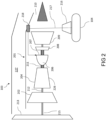
- FIG. 2 A block diagram of one of the turbofan engines 103 is shown in Figure 2 .
- the turbofan engine 103 comprises a core gas turbine 201.
- the core gas turbine 201 comprises, in fluid flow series, a low-pressure compressor 202, a high-pressure compressor 204, a fuel injection system 206, a combustor 207, a high-pressure turbine 208, a low-pressure turbine 209, and a core nozzle 210.
- the high-pressure compressor 204 is driven by the high-pressure turbine 208 via a first shaft 211
- the low-pressure compressor 203 is driven by the low-pressure turbine 209 via a second shaft 212.
- the core gas turbine could be of three-shaft configuration.
- the turbofan 103 also defines a fan 213, which is driven by the low-pressure turbine 209.
- the fan provides airflow to the core gas turbine 201, and to a bypass duct 227.
- distinct bypass and core flows are provided through the bypass passage 227 and gas turbine engine core 201 respectively.
- hydrogen fuel is pumped from the hydrogen storage tank 104 by a pump 216 and into a main fuel conduit 217 which ultimately delivers fuel to the fuel injection system 206.
- the injection temperature is from 250 to 300 kelvin, for example 250 kelvin.
- a preheater 218 is therefore provided for heating of the hydrogen fuel. This takes place between the pump 216 and the fuel injection system 206.
- the preheater 218 is configured to raise the temperature of the hydrogen fuel to the required injection temperature.
- the heating may provide a phase change (for example from liquid to supercritical or to gas), or the fluid may remain in a supercritical state after heating by the preheater.
- the preheater 218 is configured to raise the temperature of the hydrogen fuel to an intermediate temperature less than the injection temperature. This could for example be from 60 to 200 kelvin, for example 150 kelvin.
- the pre-heater 218 comprises a recuperator heat exchanger configured to exchange heat from the gas turbine engine core exhaust to the hydrogen fuel in the main fuel conduit 217, prior to delivery to the fuel injector 206.
- a recuperator heat exchanger configured to exchange heat from the gas turbine engine core exhaust to the hydrogen fuel in the main fuel conduit 217, prior to delivery to the fuel injector 206.
- Such occasions may include, for example, ground start, in-flight relight, end of cruise idle, etc.
- an additional auxiliary preheater (not shown) may be provided.
- recuperator heat exchanger increases the thermal efficiency of the engine, since waste heat that would normally be expelled from the exhaust is reintroduced into the engine cycle via the fuel.
- advantages of a recuperated cycle are greatly (and in some cases, entirely) offset by reduced propulsive efficiency in view of the flow restriction provided by the recuperator.
- the blockage of the recuperator may increase turbine back pressure, thereby reducing available pressure drop across the turbine, and so reducing turbine work and engine power density.
- a further disadvantage of recuperated designs is the presence of a relatively delicate heat exchanger in the core engine gas path. Foreign or domestic objects present in the exhaust flow may impinge on the heat exchanger, thereby damaging it. The present invention may solve some or all of these problems.
- a first embodiment of the preheater 218 is shown in further detail in figure 3 which shows an aft part of the engine 103.
- the heat exchanger 218 comprises a heat exchange matrix 301 configured to flow hydrogen fuel through a first set of channels, and hot exhaust air through a second set of channels, to allow for heat exchange therebetween.
- the heat exchange matrix 301 is provided within a recuperator channel 302 arranged to guide a portion (i.e. less than the whole) of core gas turbine engine exhaust gas flow A.
- the recuperator channel is configured to accommodate between 10% and 25% of core mass flow, with the remainder of core mass flow being bypassed.
- a preferred range of recuperator mass flow is between 15% and 20%. In engine modelling experiments, the inventors have found that 17% recuperator mass flow provides optimum heat exchange to the fuel without providing excessive blockage of the core exhaust.
- the recuperator channel 302 is provided adjacent a radially inner side of the gas turbine engine core, and is mounted to a radially inner side wall 303 aft of the low-pressure turbine 209.
- the radially inner side wall 303 extends annularly around the engine core to form a core centre body 306, which projects from a rear of the engine 201.
- the radially inner side wall 303 defines an inner extent of the recuperator channel 302, while a radially outer recuperator duct wall 304 defines a radially outer wall of the recuperator channel.
- a generally annular duct 302 is defined, which guides core flow generally axially through the duct 302 from an inlet, through the heat exchange matrix, and to an exhaust.
- a core bypass passage 305 Radially outward of the duct 302 is a core bypass passage 305 through which the remainder of the core flow passes, without extending through the recuperator matrix.
- This core bypass passage 305 is distinct from the turbofan bypass duct 227, and flows only core flow.
- the core bypass passage 305 is defined by an annulus between the recuperator channel outer wall 304 and a core outer wall 307. The two flows mix aft of the core bypass passage, and are expelled through the exhaust nozzle 210. As such, a portion of core bypass flow extends out of the exhaust without being restricted by the recuperator heat exchanger 218. This may increase core outlet velocity relative to an engine in which all core flow extends through a recuperator, and may reduce backpressure, thereby increasing turbine effectiveness.
- Figure 4 shows a first alternative arrangement of a recuperator heat exchanger 418 in a gas turbine engine core.
- the arrangement is similar to that shown in figure 3 , but the recuperator heat exchanger 418 is provided radially relative to the arrangement shown in figure 3 .
- the recuperator heat exchanger 418 is provided within the core centre body 406.
- a scoop 408 is provided, which extends into the core flow, to ingest a portion of the core flow aft of the turbine 209, which is then redirected to the recuperator heat exchanger 418 through a recuperator channel 402. The remainder of the core flow continues unabated out of the exhaust nozzle 407.
- the recuperator channel is divergent from an inlet to the front face of the heat exchanger 418. Consequently, flow velocity is reduced, and pressure is increased. Consequently, heat exchanger effectiveness is increased. In addition, the probability of recuperator damage is reduced in view of the lower velocity, and the presence of the inlet at a low radial position, since particles in the exhaust are likely to be concentrated at the radially outer wall of the turbine.
- a diverter (not shown) may be provided in the recuperator channel to further reduce the probability of debris damage.
- the recuperator is provided within a space that is normally empty, thereby improving engine packaging. Furthermore, engine core flows relatively uninterrupted through the gas turbine engine exhaust, thereby improving propulsive efficiency. Additionally, the recuperator is protected from damage.
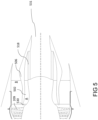
- FIG. 5 shows a second alternative arrangement of a recuperator heat exchanger 518.
- the recuperator heat exchanger 518 is again provided within a duct 502 within the centre body 506.
- the heat exchanger 518 and duct 502 are configured such that core flow flows generally axially from an inlet 530 toward the recuperator 518 before being turned generally radially inwardly and flowing through the recuperator 218 heat exchange matrix in a generally radially inward direction.
- Flow downstream of the recuperator 518 is again turned to a generally axial direction, where it flows out of the engine through a recuperator exhaust 531 the centre of the centre body 506.
- the recuperator 518 has a generally annular profile, and is arranged to flow core flow radially inward. Alternatively, the recuperator 518 may be part annular. As such, a relatively large area can be provided, since inlet flow area can be increased by increasing the axial extent of the recuperator 518. The combination of large area and low velocity results in high heat exchange effectiveness for a given mass flow. Consequently, a relatively small quantity of air A can be drawn from the core flow, and decelerated to relatively slow velocities, before flowing through the recuperator heat exchanger 518. As such, the impact on turbine backpressure and recuperator bypass flow B is still further reduced, while a high rate of heat transfer is maintained.
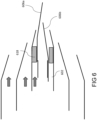
- Figure 6 shows a third alternative arrangement of the recuperator heat exchanger 618.
- the arrangement is similar to that shown in figure 4 , but with the addition of a translating centre-body configured to control the outlet area of the recuperator channel 602.
- the upper half of figure 6 shows the centre body translated aft, such that the outlet area of the recuperator channel 602 is reduced, whereas the lower half of figure 5 shows the centre body translated forward such that the outlet area of the recuperator channel 602 is increased.
- the mass flow and / or velocity through the channel 602 can be controlled, thereby controlling heat input to the fuel within the recuperator 618.
- fuel temperature can be controlled independently of engine core flow and temperature. For example, during operation at low power, fuel flow will typically be low, while core flow velocity will also be low, while core temperature may remain high. As such, the temperature rise of the fuel may be excessive under these conditions. Consequently, mass flow can be decreased by closing the nozzle, thereby reducing heat input. In some cases, the nozzle may be controlled completely, thereby halting heat input to the fuel.
- other flow control means could be employed, such as valves of various types.
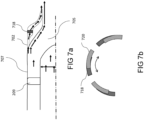
- FIGS. 7a and 7b show a fourth alternative arrangement of the recuperator heat exchanger 718.
- the recuperator channel 702 is provided at a radially outer portion of the engine core, adjacent a core outer wall 707 of the engine, with the recuperator heat exchanger 718 being provided within the recuperator channel 702, and a core bypass being provided radially inwards.
- This arrangement provides the cooler, lower velocity air from the recuperator heat exchanger at the outer radius of the core exhaust, providing intermediate temperature and velocity airflow between the core and bypass flows, which may result in lower noise output from the engine.
- the recuperator channel comprises a valve arrangement comprising a plurality of rotatable covers, which can rotate in the directions shown by the arrows to cover or uncover the heat exchange matrix 718.
- the mass flow and / or velocity of air through the heat exchangers can be managed.
Landscapes
- Engineering & Computer Science (AREA)
- Chemical & Material Sciences (AREA)
- Combustion & Propulsion (AREA)
- Mechanical Engineering (AREA)
- General Engineering & Computer Science (AREA)
- Aviation & Aerospace Engineering (AREA)
- Heat-Exchange Devices With Radiators And Conduit Assemblies (AREA)
Description
- This disclosure relates to complex cycle gas turbine engines for aircraft.
- In order to limit emissions of carbon dioxide, use of hydrogen as an alternative to hydrocarbon fuel in gas turbine engines has historically only been practical in land-based installations. However, cryogenic hydrogen fuelled airliners have recently been proposed. The fuel for such aircraft however must be heated prior to combustion. Doing so in a manner which is efficient from an overall propulsion system perspective is a significant challenge.
- United States patent application
US 2023076757 discloses a gas turbine engine having a waste heat recovery system. The gas turbine engine includes a compressor section, a combustion section, a turbine section, and an exhaust section in serial flow order and together defining a core air flowpath, the exhaust section including a primary exhaust flowpath and a waste heat recovery flowpath parallel to the primary exhaust flowpath; and the waste heat recovery system includes a heat source exchanger positioned in thermal communication with a first portion of the waste heat recovery flowpath. - United States patent application
US 11047307 - United Kingdom patent application
GB 2240813 - The invention is directed towards a propulsive aircraft gas turbine engine comprising:
- a turbine disposed in a gas turbine engine core flow;
- a recuperator heat exchanger disposed downstream of the turbine in gas turbine engine core flow and installed adjacent a radially inner wall of a gas turbine core exhaust nozzle, the recuperator heat exchanger being configured to transfer heat from the gas turbine engine core flow to gas turbine engine fuel; wherein
- the recuperator heat exchanger is configured to accommodate a portion of the gas turbine engine core flow therethrough, the remainder being bypassed around the recuperator heat exchanger;
- and wherein the engine exhaust nozzle comprises a generally radially inner recuperator flow and a generally radially outer core bypass flow, the recuperator being provided within a core centre body of the gas turbine engine, aft of the turbine; characterised in that:
- the gas turbine engine comprises an axially translating turbine centre body configured to vary an outlet area of the recuperator.
- Advantageously, a portion of gas turbine engine core flow is unimpeded by the recuperator, allowing for improved core flow thrust recovery, while providing for recovery of exhaust heat from the gas turbine engine core to heat the fuel, thereby improving thermal efficiency of the gas turbine engine core, while minimising loss of propulsive efficiency.
- The gas turbine engine may be configured to burn hydrogen fuel.
- The recuperator is installed adjacent a radially inner wall of a gas turbine core exhaust nozzle, and may be generally annular. The gas turbine engine exhaust nozzle comprises a generally radially inner recuperator flow and a generally radially outer core bypass flow. Advantageously, the relatively slower moving core air adjacent the inner wall of the exhaust nozzle is transferred through the heat exchanger, rather than the higher velocity air at the outer wall. Consequently, heat exchange effectiveness is improved due to the longer dwell time within the heat exchanger matrix, and core exhaust thrust recovery is improved relative to where the higher velocity exhaust flow is used.
- The recuperator is provided within a core centre body of the gas turbine engine, aft of the turbine. Advantageously, space that is normally empty within the gas turbine engine is utilised for the recuperator.
- The gas turbine engine may comprise a recuperator channel arranged to guide core flow from the turbine exit, through the recuperator heat exchanger, and out a recuperator exhaust.
- The recuperator channel may be configured to redirect flow from a generally axial direction from the turbine exhaust to a generally radially inward flow through a heat exchange matrix of the recuperator heat exchanger. Advantageously, flow the heat exchange matrix can be oriented in a generally radial direction, allowing for a planar heat exchanger extending generally axially in its largest dimension. Consequently, a large surface area of heat exchange matrix can be provided, without occupying excessive space within the gas turbine engine, and without restricting main core gas flow.
- The recuperator channel may be configured to redirect flow from a generally radially inward direction from the heat exchange matrix to a generally axial direction out the recuperator exhaust. Advantageously, heat exchanger exhaust flow can be used to generate core thrust.
- The gas turbine engine comprises an axially translating turbine centre body configured to vary an outlet area of the recuperator. Advantageously, exhaust flow can be modulated to control exhaust velocities depending on engine operational conditions.
- The recuperator may be configured to accommodate between 10 and 25% of core engine flow, with the remainder being bypassed around the recuperator heat exchanger.
- Embodiments will now be described by way of example only with reference to the accompanying drawings, which are purely schematic and not to scale, and in which:
-
Figure 1 shows a hydrogen-fuelled airliner comprising hydrogen-fuelled turbofan engines; -
Figure 2 is a block diagram of one of the engines ofFigure 1 ; -
Figure 3 is a block diagram of an aft part of the engine offigure 1 ; -
Figure 4 is a first alternative arrangement of an aft part of the engine offigure 1 ; -
Figure 5 is a second alternative arrangement of an aft part of the engine offigure 1 ; -
Figure 6 is a third alternative arrangement of an aft part of the engine offigure 1 ; and -
Figures 7a and 7b are a fourth alternative arrangement of an aft part of the engine offigure 1 , showing a cross sectional side view and a cross-sectional end view respectively. - A hydrogen-fuelled airliner is illustrated in
Figure 1 . In this example, theairliner 101 is of substantially conventional tube-and-wing twinjet configuration with acentral fuselage 102 and substantially identical underwing-mountedturbofan engines 103. In the present embodiment, theturbofan engines 103 are geared turbofan engines. - A
hydrogen storage tank 104 located in thefuselage 102. In the present embodiment, thehydrogen storage tank 104 is a cryogenic hydrogen storage tank and thus stores the hydrogen fuel in a liquid state, in a specific example at 25 kelvin. In this example, the hydrogen fuel is pressurised to a pressure from around 1 bar to around 3 bar, in a specific example 4 bar. In other cases, the hydrogen could be stored as a cryogenically cooled, compressed gas or supercritical fluid. - A block diagram of one of the
turbofan engines 103 is shown inFigure 2 . - The
turbofan engine 103 comprises acore gas turbine 201. - The
core gas turbine 201 comprises, in fluid flow series, a low-pressure compressor 202, a high-pressure compressor 204, afuel injection system 206, acombustor 207, a high-pressure turbine 208, a low-pressure turbine 209, and acore nozzle 210. The high-pressure compressor 204 is driven by the high-pressure turbine 208 via afirst shaft 211, and the low-pressure compressor 203 is driven by the low-pressure turbine 209 via asecond shaft 212. It will be appreciated that in alternative embodiments, the core gas turbine could be of three-shaft configuration. - The
turbofan 103 also defines afan 213, which is driven by the low-pressure turbine 209. The fan provides airflow to thecore gas turbine 201, and to abypass duct 227. As such, distinct bypass and core flows are provided through thebypass passage 227 and gasturbine engine core 201 respectively. - In operation, hydrogen fuel is pumped from the
hydrogen storage tank 104 by apump 216 and into amain fuel conduit 217 which ultimately delivers fuel to thefuel injection system 206. - As will be appreciated, it is desirable to increase the temperature of the fuel from cryogenic storage condition to a temperature much closer to the firing temperature of the
core gas turbine 201; of course this is subject to the constraint of not exceeding the autoignition temperature of the hydrogen fuel prior to admission into thecombustor 207. In an example, the injection temperature is from 250 to 300 kelvin, for example 250 kelvin. In some cases, it may be desirable to increase the fuel temperature to above an icing temperature, such as 273 kelvin. - A
preheater 218 is therefore provided for heating of the hydrogen fuel. This takes place between thepump 216 and thefuel injection system 206. In an embodiment, thepreheater 218 is configured to raise the temperature of the hydrogen fuel to the required injection temperature. The heating may provide a phase change (for example from liquid to supercritical or to gas), or the fluid may remain in a supercritical state after heating by the preheater. - In another embodiment, the
preheater 218 is configured to raise the temperature of the hydrogen fuel to an intermediate temperature less than the injection temperature. This could for example be from 60 to 200 kelvin, for example 150 kelvin. - The pre-heater 218 comprises a recuperator heat exchanger configured to exchange heat from the gas turbine engine core exhaust to the hydrogen fuel in the
main fuel conduit 217, prior to delivery to thefuel injector 206. In some cases, at certain points in the operational envelope there will be insufficient heat output from the engine to raise the fuel temperature to the injection temperature using the recuperator alone. Such occasions may include, for example, ground start, in-flight relight, end of cruise idle, etc. An such cases, an additional auxiliary preheater (not shown) may be provided. - As will be appreciated, the provision of a recuperator heat exchanger increases the thermal efficiency of the engine, since waste heat that would normally be expelled from the exhaust is reintroduced into the engine cycle via the fuel. However, in studies conducted by the inventors, the advantages of a recuperated cycle are greatly (and in some cases, entirely) offset by reduced propulsive efficiency in view of the flow restriction provided by the recuperator. Additionally, the blockage of the recuperator may increase turbine back pressure, thereby reducing available pressure drop across the turbine, and so reducing turbine work and engine power density. A further disadvantage of recuperated designs is the presence of a relatively delicate heat exchanger in the core engine gas path. Foreign or domestic objects present in the exhaust flow may impinge on the heat exchanger, thereby damaging it. The present invention may solve some or all of these problems.
- A first embodiment of the
preheater 218 is shown in further detail infigure 3 which shows an aft part of theengine 103. - The
heat exchanger 218 comprises aheat exchange matrix 301 configured to flow hydrogen fuel through a first set of channels, and hot exhaust air through a second set of channels, to allow for heat exchange therebetween. Theheat exchange matrix 301 is provided within arecuperator channel 302 arranged to guide a portion (i.e. less than the whole) of core gas turbine engine exhaust gas flow A. Typically, the recuperator channel is configured to accommodate between 10% and 25% of core mass flow, with the remainder of core mass flow being bypassed. In a particular example, the inventors have found that a preferred range of recuperator mass flow is between 15% and 20%. In engine modelling experiments, the inventors have found that 17% recuperator mass flow provides optimum heat exchange to the fuel without providing excessive blockage of the core exhaust. - The
recuperator channel 302 is provided adjacent a radially inner side of the gas turbine engine core, and is mounted to a radiallyinner side wall 303 aft of the low-pressure turbine 209. The radiallyinner side wall 303 extends annularly around the engine core to form acore centre body 306, which projects from a rear of theengine 201. The radiallyinner side wall 303 defines an inner extent of therecuperator channel 302, while a radially outerrecuperator duct wall 304 defines a radially outer wall of the recuperator channel. As such, a generallyannular duct 302 is defined, which guides core flow generally axially through theduct 302 from an inlet, through the heat exchange matrix, and to an exhaust. - Radially outward of the
duct 302 is acore bypass passage 305 through which the remainder of the core flow passes, without extending through the recuperator matrix. Thiscore bypass passage 305 is distinct from theturbofan bypass duct 227, and flows only core flow. Thecore bypass passage 305 is defined by an annulus between the recuperator channelouter wall 304 and a coreouter wall 307. The two flows mix aft of the core bypass passage, and are expelled through theexhaust nozzle 210. As such, a portion of core bypass flow extends out of the exhaust without being restricted by therecuperator heat exchanger 218. This may increase core outlet velocity relative to an engine in which all core flow extends through a recuperator, and may reduce backpressure, thereby increasing turbine effectiveness. These disadvantages may be reduced by employing heat exchanger designs with low pressure drop. However, such designs are typically large and bulky, and may require large diffusion ducts upstream of the heat exchanger. These design compromises may lead to increased overall weight, volume and cost of the propulsion system. -
Figure 4 shows a first alternative arrangement of arecuperator heat exchanger 418 in a gas turbine engine core. The arrangement is similar to that shown infigure 3 , but therecuperator heat exchanger 418 is provided radially relative to the arrangement shown infigure 3 . Therecuperator heat exchanger 418 is provided within thecore centre body 406. Ascoop 408 is provided, which extends into the core flow, to ingest a portion of the core flow aft of theturbine 209, which is then redirected to therecuperator heat exchanger 418 through arecuperator channel 402. The remainder of the core flow continues unabated out of theexhaust nozzle 407. - The recuperator channel is divergent from an inlet to the front face of the
heat exchanger 418. Consequently, flow velocity is reduced, and pressure is increased. Consequently, heat exchanger effectiveness is increased. In addition, the probability of recuperator damage is reduced in view of the lower velocity, and the presence of the inlet at a low radial position, since particles in the exhaust are likely to be concentrated at the radially outer wall of the turbine. In some cases, a diverter (not shown) may be provided in the recuperator channel to further reduce the probability of debris damage. - Consequently, the recuperator is provided within a space that is normally empty, thereby improving engine packaging. Furthermore, engine core flows relatively uninterrupted through the gas turbine engine exhaust, thereby improving propulsive efficiency. Additionally, the recuperator is protected from damage.
-
Figure 5 shows a second alternative arrangement of arecuperator heat exchanger 518. In this arrangement, therecuperator heat exchanger 518 is again provided within aduct 502 within thecentre body 506. However, in this arrangement, theheat exchanger 518 andduct 502 are configured such that core flow flows generally axially from aninlet 530 toward therecuperator 518 before being turned generally radially inwardly and flowing through therecuperator 218 heat exchange matrix in a generally radially inward direction. Flow downstream of therecuperator 518 is again turned to a generally axial direction, where it flows out of the engine through arecuperator exhaust 531 the centre of thecentre body 506. - The
recuperator 518 has a generally annular profile, and is arranged to flow core flow radially inward. Alternatively, therecuperator 518 may be part annular. As such, a relatively large area can be provided, since inlet flow area can be increased by increasing the axial extent of therecuperator 518. The combination of large area and low velocity results in high heat exchange effectiveness for a given mass flow. Consequently, a relatively small quantity of air A can be drawn from the core flow, and decelerated to relatively slow velocities, before flowing through therecuperator heat exchanger 518. As such, the impact on turbine backpressure and recuperator bypass flow B is still further reduced, while a high rate of heat transfer is maintained. -
Figure 6 shows a third alternative arrangement of therecuperator heat exchanger 618. The arrangement is similar to that shown infigure 4 , but with the addition of a translating centre-body configured to control the outlet area of therecuperator channel 602. - The upper half of
figure 6 shows the centre body translated aft, such that the outlet area of therecuperator channel 602 is reduced, whereas the lower half offigure 5 shows the centre body translated forward such that the outlet area of therecuperator channel 602 is increased. By changing the outlet area, the mass flow and / or velocity through thechannel 602 can be controlled, thereby controlling heat input to the fuel within therecuperator 618. Consequently, fuel temperature can be controlled independently of engine core flow and temperature. For example, during operation at low power, fuel flow will typically be low, while core flow velocity will also be low, while core temperature may remain high. As such, the temperature rise of the fuel may be excessive under these conditions. Consequently, mass flow can be decreased by closing the nozzle, thereby reducing heat input. In some cases, the nozzle may be controlled completely, thereby halting heat input to the fuel. As will be appreciated, other flow control means could be employed, such as valves of various types. -
Figures 7a and 7b show a fourth alternative arrangement of therecuperator heat exchanger 718. - In this arrangement, the
recuperator channel 702 is provided at a radially outer portion of the engine core, adjacent a coreouter wall 707 of the engine, with therecuperator heat exchanger 718 being provided within therecuperator channel 702, and a core bypass being provided radially inwards. This arrangement provides the cooler, lower velocity air from the recuperator heat exchanger at the outer radius of the core exhaust, providing intermediate temperature and velocity airflow between the core and bypass flows, which may result in lower noise output from the engine. - As shown in
figure 7b , the recuperator channel comprises a valve arrangement comprising a plurality of rotatable covers, which can rotate in the directions shown by the arrows to cover or uncover theheat exchange matrix 718. As such, the mass flow and / or velocity of air through the heat exchangers can be managed. - Various examples have been described, each of which comprise various combinations of features. It will be appreciated by those skilled in the art that, except where clearly mutually exclusive, any of the features may be employed separately or in combination with any other features.
Claims (6)
- A propulsive aircraft gas turbine engine (103) comprising:a turbine (208, 209) disposed in a gas turbine engine core (201) flow;a recuperator heat exchanger (218) disposed downstream of the turbine (208, 209) in gas turbine engine core flow and installed adjacent a radially inner wall (303) of a gas turbine core exhaust nozzle (210), the recuperator heat exchanger (218) being configured to transfer heat from the gas turbine engine core flow to gas turbine engine fuel; whereinthe recuperator heat exchanger (218) is configured to accommodate a portion of the gas turbine engine core flow therethrough, the remainder being bypassed around the recuperator heat exchanger;and wherein the engine exhaust nozzle comprises a generally radially inner recuperator flow and a generally radially outer core bypass flow, the recuperator being provided within a core centre body (406) of the gas turbine engine, aft of the turbine (208, 209);characterised in that:
the gas turbine engine comprises an axially translating turbine centre body (606a, 606b) configured to vary an outlet area of the recuperator (518). - A gas turbine engine according to claim 1, wherein the recuperator is configured to accommodate between 10 and 25% of core engine flow, with the remainder being bypassed around the recuperator heat exchanger (218).
- A gas turbine engine according to claim 1 or claim 2, wherein the gas turbine engine is configured to burn hydrogen fuel.
- A gas turbine engine according to any preceding claim, wherein the gas turbine engine comprises a recuperator channel (302, 402, 502) arranged to guide core flow from the turbine exit, through the recuperator heat exchanger (218), and out a recuperator exhaust.
- A gas turbine engine according to claim 4, wherein the recuperator channel (502) is configured to redirect flow from a generally axial direction from the turbine exhaust to a generally radially inward flow through a heat exchange matrix of the recuperator heat exchanger (518).
- A gas turbine engine according to claim 5, wherein the recuperator channel (502) is configured to redirect flow from a generally radially inward direction from the heat exchange matrix (518) to a generally axial direction out the recuperator exhaust.
Applications Claiming Priority (1)
| Application Number | Priority Date | Filing Date | Title |
|---|---|---|---|
| GBGB2304479.5A GB202304479D0 (en) | 2023-03-28 | 2023-03-28 | Gas turbine engine |
Publications (2)
| Publication Number | Publication Date |
|---|---|
| EP4438868A1 EP4438868A1 (en) | 2024-10-02 |
| EP4438868B1 true EP4438868B1 (en) | 2025-04-23 |
Family
ID=86228116
Family Applications (1)
| Application Number | Title | Priority Date | Filing Date |
|---|---|---|---|
| EP24160178.0A Active EP4438868B1 (en) | 2023-03-28 | 2024-02-28 | Gas turbine engine |
Country Status (3)
| Country | Link |
|---|---|
| US (1) | US12209536B2 (en) |
| EP (1) | EP4438868B1 (en) |
| GB (1) | GB202304479D0 (en) |
Families Citing this family (1)
| Publication number | Priority date | Publication date | Assignee | Title |
|---|---|---|---|---|
| DE102024102810B3 (en) * | 2024-01-31 | 2025-07-10 | Deutsches Zentrum für Luft- und Raumfahrt e.V. | aircraft gas turbine |
Family Cites Families (10)
| Publication number | Priority date | Publication date | Assignee | Title |
|---|---|---|---|---|
| US3018626A (en) | 1960-02-02 | 1962-01-30 | Gen Electric | Vapor combustion system |
| GB2240813B (en) * | 1986-08-28 | 1991-11-27 | Rolls Royce Plc | Improvements in hypersonic and trans atmospheric propulsion |
| US5292595A (en) | 1992-02-18 | 1994-03-08 | Sumitomo Light Metal Industries, Ltd. | Clad aluminum alloy material having high strength and high corrosion resistance for heat exchanger |
| US5392595A (en) | 1993-08-06 | 1995-02-28 | United Technologies Corporation | Endothermic fuel energy management system |
| US10989117B2 (en) * | 2018-09-14 | 2021-04-27 | Raytheon Technologies Corporation | Hybrid expander cycle with pre-compression cooling and turbo-generator |
| US11047307B2 (en) * | 2018-09-14 | 2021-06-29 | Raytheon Technologies Corporation | Hybrid expander cycle with intercooling and turbo-generator |
| US11187186B2 (en) * | 2019-12-18 | 2021-11-30 | Rolls-Royce Deutschland Ltd & Co Kg | Exhaust nozzle of a gas turbine engine |
| EP4350138B1 (en) | 2020-09-30 | 2026-04-22 | Rolls-Royce plc | Complex cycle gas turbine engine |
| US11946415B2 (en) * | 2021-09-09 | 2024-04-02 | General Electric Company | Waste heat recovery system |
| GB2620121B (en) * | 2022-06-27 | 2025-11-05 | Gkn Aerospace Sweden Ab | Exhaust cone heat exchanger (HEX) |
-
2023
- 2023-03-28 GB GBGB2304479.5A patent/GB202304479D0/en not_active Ceased
-
2024
- 2024-02-28 EP EP24160178.0A patent/EP4438868B1/en active Active
- 2024-03-19 US US18/609,514 patent/US12209536B2/en active Active
Also Published As
| Publication number | Publication date |
|---|---|
| GB202304479D0 (en) | 2023-05-10 |
| US12209536B2 (en) | 2025-01-28 |
| US20240328359A1 (en) | 2024-10-03 |
| EP4438868A1 (en) | 2024-10-02 |
Similar Documents
| Publication | Publication Date | Title |
|---|---|---|
| EP3623604B1 (en) | Hybrid expander cycle with pre-compression cooling and turbo-generator | |
| EP2519723B1 (en) | Gas turbine engine | |
| CA2519823C (en) | Methods and apparatus for assembling a gas turbine engine | |
| US10495001B2 (en) | Combustion section heat transfer system for a propulsion system | |
| US8961114B2 (en) | Integrated variable geometry flow restrictor and heat exchanger | |
| US11255544B2 (en) | Rotating detonation combustion and heat exchanger system | |
| US20200200086A1 (en) | High speed propulsion system with inlet cooling | |
| EP4137686B1 (en) | Propulsion systems for aircraft | |
| US11384649B1 (en) | Heat exchanger and flow modulation system | |
| CN102865141A (en) | Gas turbine engine | |
| US10815893B2 (en) | Combustor assembly with primary and auxiliary injector fuel control | |
| US12215634B1 (en) | Turbine engine including a steam system | |
| EP4438868B1 (en) | Gas turbine engine | |
| US12072100B1 (en) | Combustor for a gas turbine engine | |
| US20160208714A1 (en) | Gas turbine engine and blocker door assembly | |
| EP4556700A2 (en) | Fluidic compressor inlet guide vane | |
| US12392295B2 (en) | Aircraft propulsion system | |
| US12416260B2 (en) | Turbine engine including a steam system | |
| EP4711600A1 (en) | Gas turbine engine | |
| US20240426245A1 (en) | Water actuated tip clearance control system for turbine engine | |
| US20250163850A1 (en) | Turbine engine including a steam system | |
| EP4553301A1 (en) | Gas turbine engine hydrogen fuel system |
Legal Events
| Date | Code | Title | Description |
|---|---|---|---|
| PUAI | Public reference made under article 153(3) epc to a published international application that has entered the european phase |
Free format text: ORIGINAL CODE: 0009012 |
|
| STAA | Information on the status of an ep patent application or granted ep patent |
Free format text: STATUS: THE APPLICATION HAS BEEN PUBLISHED |
|
| AK | Designated contracting states |
Kind code of ref document: A1 Designated state(s): AL AT BE BG CH CY CZ DE DK EE ES FI FR GB GR HR HU IE IS IT LI LT LU LV MC ME MK MT NL NO PL PT RO RS SE SI SK SM TR |
|
| STAA | Information on the status of an ep patent application or granted ep patent |
Free format text: STATUS: REQUEST FOR EXAMINATION WAS MADE |
|
| 17P | Request for examination filed |
Effective date: 20241010 |
|
| RBV | Designated contracting states (corrected) |
Designated state(s): AL AT BE BG CH CY CZ DE DK EE ES FI FR GB GR HR HU IE IS IT LI LT LU LV MC ME MK MT NL NO PL PT RO RS SE SI SK SM TR |
|
| GRAP | Despatch of communication of intention to grant a patent |
Free format text: ORIGINAL CODE: EPIDOSNIGR1 |
|
| STAA | Information on the status of an ep patent application or granted ep patent |
Free format text: STATUS: GRANT OF PATENT IS INTENDED |
|
| GRAS | Grant fee paid |
Free format text: ORIGINAL CODE: EPIDOSNIGR3 |
|
| RIC1 | Information provided on ipc code assigned before grant |
Ipc: F02K 1/04 20060101ALI20250206BHEP Ipc: F02C 7/224 20060101ALI20250206BHEP Ipc: F02C 3/22 20060101AFI20250206BHEP |
|
| GRAA | (expected) grant |
Free format text: ORIGINAL CODE: 0009210 |
|
| STAA | Information on the status of an ep patent application or granted ep patent |
Free format text: STATUS: THE PATENT HAS BEEN GRANTED |
|
| INTG | Intention to grant announced |
Effective date: 20250225 |
|
| P01 | Opt-out of the competence of the unified patent court (upc) registered |
Free format text: CASE NUMBER: APP_10718/2025 Effective date: 20250304 |
|
| AK | Designated contracting states |
Kind code of ref document: B1 Designated state(s): AL AT BE BG CH CY CZ DE DK EE ES FI FR GB GR HR HU IE IS IT LI LT LU LV MC ME MK MT NL NO PL PT RO RS SE SI SK SM TR |
|
| REG | Reference to a national code |
Ref country code: GB Ref legal event code: FG4D |
|
| REG | Reference to a national code |
Ref country code: CH Ref legal event code: EP |
|
| REG | Reference to a national code |
Ref country code: DE Ref legal event code: R096 Ref document number: 602024000070 Country of ref document: DE |
|
| REG | Reference to a national code |
Ref country code: IE Ref legal event code: FG4D |
|
| REG | Reference to a national code |
Ref country code: NL Ref legal event code: MP Effective date: 20250423 |
|
| PG25 | Lapsed in a contracting state [announced via postgrant information from national office to epo] |
Ref country code: NL Free format text: LAPSE BECAUSE OF FAILURE TO SUBMIT A TRANSLATION OF THE DESCRIPTION OR TO PAY THE FEE WITHIN THE PRESCRIBED TIME-LIMIT Effective date: 20250423 |
|
| REG | Reference to a national code |
Ref country code: AT Ref legal event code: MK05 Ref document number: 1787948 Country of ref document: AT Kind code of ref document: T Effective date: 20250423 |
|
| PG25 | Lapsed in a contracting state [announced via postgrant information from national office to epo] |
Ref country code: FI Free format text: LAPSE BECAUSE OF FAILURE TO SUBMIT A TRANSLATION OF THE DESCRIPTION OR TO PAY THE FEE WITHIN THE PRESCRIBED TIME-LIMIT Effective date: 20250423 Ref country code: PT Free format text: LAPSE BECAUSE OF FAILURE TO SUBMIT A TRANSLATION OF THE DESCRIPTION OR TO PAY THE FEE WITHIN THE PRESCRIBED TIME-LIMIT Effective date: 20250825 Ref country code: ES Free format text: LAPSE BECAUSE OF FAILURE TO SUBMIT A TRANSLATION OF THE DESCRIPTION OR TO PAY THE FEE WITHIN THE PRESCRIBED TIME-LIMIT Effective date: 20250423 |
|
| REG | Reference to a national code |
Ref country code: LT Ref legal event code: MG9D |
|
| PG25 | Lapsed in a contracting state [announced via postgrant information from national office to epo] |
Ref country code: GR Free format text: LAPSE BECAUSE OF FAILURE TO SUBMIT A TRANSLATION OF THE DESCRIPTION OR TO PAY THE FEE WITHIN THE PRESCRIBED TIME-LIMIT Effective date: 20250724 Ref country code: NO Free format text: LAPSE BECAUSE OF FAILURE TO SUBMIT A TRANSLATION OF THE DESCRIPTION OR TO PAY THE FEE WITHIN THE PRESCRIBED TIME-LIMIT Effective date: 20250723 |
|
| PG25 | Lapsed in a contracting state [announced via postgrant information from national office to epo] |
Ref country code: PL Free format text: LAPSE BECAUSE OF FAILURE TO SUBMIT A TRANSLATION OF THE DESCRIPTION OR TO PAY THE FEE WITHIN THE PRESCRIBED TIME-LIMIT Effective date: 20250423 |
|
| PG25 | Lapsed in a contracting state [announced via postgrant information from national office to epo] |
Ref country code: BG Free format text: LAPSE BECAUSE OF FAILURE TO SUBMIT A TRANSLATION OF THE DESCRIPTION OR TO PAY THE FEE WITHIN THE PRESCRIBED TIME-LIMIT Effective date: 20250423 |
|
| PG25 | Lapsed in a contracting state [announced via postgrant information from national office to epo] |
Ref country code: HR Free format text: LAPSE BECAUSE OF FAILURE TO SUBMIT A TRANSLATION OF THE DESCRIPTION OR TO PAY THE FEE WITHIN THE PRESCRIBED TIME-LIMIT Effective date: 20250423 |
|
| PG25 | Lapsed in a contracting state [announced via postgrant information from national office to epo] |
Ref country code: AT Free format text: LAPSE BECAUSE OF FAILURE TO SUBMIT A TRANSLATION OF THE DESCRIPTION OR TO PAY THE FEE WITHIN THE PRESCRIBED TIME-LIMIT Effective date: 20250423 |
|
| PG25 | Lapsed in a contracting state [announced via postgrant information from national office to epo] |
Ref country code: RS Free format text: LAPSE BECAUSE OF FAILURE TO SUBMIT A TRANSLATION OF THE DESCRIPTION OR TO PAY THE FEE WITHIN THE PRESCRIBED TIME-LIMIT Effective date: 20250723 |
|
| PG25 | Lapsed in a contracting state [announced via postgrant information from national office to epo] |
Ref country code: IS Free format text: LAPSE BECAUSE OF FAILURE TO SUBMIT A TRANSLATION OF THE DESCRIPTION OR TO PAY THE FEE WITHIN THE PRESCRIBED TIME-LIMIT Effective date: 20250823 |
|
| PG25 | Lapsed in a contracting state [announced via postgrant information from national office to epo] |
Ref country code: LV Free format text: LAPSE BECAUSE OF FAILURE TO SUBMIT A TRANSLATION OF THE DESCRIPTION OR TO PAY THE FEE WITHIN THE PRESCRIBED TIME-LIMIT Effective date: 20250423 |
|
| PG25 | Lapsed in a contracting state [announced via postgrant information from national office to epo] |
Ref country code: SM Free format text: LAPSE BECAUSE OF FAILURE TO SUBMIT A TRANSLATION OF THE DESCRIPTION OR TO PAY THE FEE WITHIN THE PRESCRIBED TIME-LIMIT Effective date: 20250423 Ref country code: DK Free format text: LAPSE BECAUSE OF FAILURE TO SUBMIT A TRANSLATION OF THE DESCRIPTION OR TO PAY THE FEE WITHIN THE PRESCRIBED TIME-LIMIT Effective date: 20250423 |
|
| PG25 | Lapsed in a contracting state [announced via postgrant information from national office to epo] |
Ref country code: CZ Free format text: LAPSE BECAUSE OF FAILURE TO SUBMIT A TRANSLATION OF THE DESCRIPTION OR TO PAY THE FEE WITHIN THE PRESCRIBED TIME-LIMIT Effective date: 20250423 |
|
| PG25 | Lapsed in a contracting state [announced via postgrant information from national office to epo] |
Ref country code: EE Free format text: LAPSE BECAUSE OF FAILURE TO SUBMIT A TRANSLATION OF THE DESCRIPTION OR TO PAY THE FEE WITHIN THE PRESCRIBED TIME-LIMIT Effective date: 20250423 |
|
| REG | Reference to a national code |
Ref country code: DE Ref legal event code: R097 Ref document number: 602024000070 Country of ref document: DE |
|
| PG25 | Lapsed in a contracting state [announced via postgrant information from national office to epo] |
Ref country code: SK Free format text: LAPSE BECAUSE OF FAILURE TO SUBMIT A TRANSLATION OF THE DESCRIPTION OR TO PAY THE FEE WITHIN THE PRESCRIBED TIME-LIMIT Effective date: 20250423 |
|
| PG25 | Lapsed in a contracting state [announced via postgrant information from national office to epo] |
Ref country code: IT Free format text: LAPSE BECAUSE OF FAILURE TO SUBMIT A TRANSLATION OF THE DESCRIPTION OR TO PAY THE FEE WITHIN THE PRESCRIBED TIME-LIMIT Effective date: 20250423 |
|
| PLBE | No opposition filed within time limit |
Free format text: ORIGINAL CODE: 0009261 |
|
| STAA | Information on the status of an ep patent application or granted ep patent |
Free format text: STATUS: NO OPPOSITION FILED WITHIN TIME LIMIT |
|
| REG | Reference to a national code |
Ref country code: CH Ref legal event code: L10 Free format text: ST27 STATUS EVENT CODE: U-0-0-L10-L00 (AS PROVIDED BY THE NATIONAL OFFICE) Effective date: 20260304 |
|
| 26N | No opposition filed |
Effective date: 20260126 |
|
| PGFP | Annual fee paid to national office [announced via postgrant information from national office to epo] |
Ref country code: DE Payment date: 20260220 Year of fee payment: 3 |
|
| PGFP | Annual fee paid to national office [announced via postgrant information from national office to epo] |
Ref country code: FR Payment date: 20260227 Year of fee payment: 3 |