EP4438380A1 - Traveling propriety determination device - Google Patents
Traveling propriety determination device Download PDFInfo
- Publication number
- EP4438380A1 EP4438380A1 EP24163632.3A EP24163632A EP4438380A1 EP 4438380 A1 EP4438380 A1 EP 4438380A1 EP 24163632 A EP24163632 A EP 24163632A EP 4438380 A1 EP4438380 A1 EP 4438380A1
- Authority
- EP
- European Patent Office
- Prior art keywords
- state
- fuel cell
- performance
- limited
- cell vehicle
- Prior art date
- Legal status (The legal status is an assumption and is not a legal conclusion. Google has not performed a legal analysis and makes no representation as to the accuracy of the status listed.)
- Pending
Links
Images

Classifications
-
- B—PERFORMING OPERATIONS; TRANSPORTING
- B60—VEHICLES IN GENERAL
- B60L—PROPULSION OF ELECTRICALLY-PROPELLED VEHICLES; SUPPLYING ELECTRIC POWER FOR AUXILIARY EQUIPMENT OF ELECTRICALLY-PROPELLED VEHICLES; ELECTRODYNAMIC BRAKE SYSTEMS FOR VEHICLES IN GENERAL; MAGNETIC SUSPENSION OR LEVITATION FOR VEHICLES; MONITORING OPERATING VARIABLES OF ELECTRICALLY-PROPELLED VEHICLES; ELECTRIC SAFETY DEVICES FOR ELECTRICALLY-PROPELLED VEHICLES
- B60L50/00—Electric propulsion with power supplied within the vehicle
- B60L50/50—Electric propulsion with power supplied within the vehicle using propulsion power supplied by batteries or fuel cells
- B60L50/75—Electric propulsion with power supplied within the vehicle using propulsion power supplied by batteries or fuel cells using propulsion power supplied by both fuel cells and batteries
-
- B—PERFORMING OPERATIONS; TRANSPORTING
- B60—VEHICLES IN GENERAL
- B60L—PROPULSION OF ELECTRICALLY-PROPELLED VEHICLES; SUPPLYING ELECTRIC POWER FOR AUXILIARY EQUIPMENT OF ELECTRICALLY-PROPELLED VEHICLES; ELECTRODYNAMIC BRAKE SYSTEMS FOR VEHICLES IN GENERAL; MAGNETIC SUSPENSION OR LEVITATION FOR VEHICLES; MONITORING OPERATING VARIABLES OF ELECTRICALLY-PROPELLED VEHICLES; ELECTRIC SAFETY DEVICES FOR ELECTRICALLY-PROPELLED VEHICLES
- B60L3/00—Electric devices on electrically-propelled vehicles for safety purposes; Monitoring operating variables, e.g. speed, deceleration or energy consumption
- B60L3/0023—Detecting, eliminating, remedying or compensating for drive train abnormalities, e.g. failures within the drive train
- B60L3/0053—Detecting, eliminating, remedying or compensating for drive train abnormalities, e.g. failures within the drive train relating to fuel cells
-
- B—PERFORMING OPERATIONS; TRANSPORTING
- B60—VEHICLES IN GENERAL
- B60L—PROPULSION OF ELECTRICALLY-PROPELLED VEHICLES; SUPPLYING ELECTRIC POWER FOR AUXILIARY EQUIPMENT OF ELECTRICALLY-PROPELLED VEHICLES; ELECTRODYNAMIC BRAKE SYSTEMS FOR VEHICLES IN GENERAL; MAGNETIC SUSPENSION OR LEVITATION FOR VEHICLES; MONITORING OPERATING VARIABLES OF ELECTRICALLY-PROPELLED VEHICLES; ELECTRIC SAFETY DEVICES FOR ELECTRICALLY-PROPELLED VEHICLES
- B60L3/00—Electric devices on electrically-propelled vehicles for safety purposes; Monitoring operating variables, e.g. speed, deceleration or energy consumption
- B60L3/0023—Detecting, eliminating, remedying or compensating for drive train abnormalities, e.g. failures within the drive train
- B60L3/0061—Detecting, eliminating, remedying or compensating for drive train abnormalities, e.g. failures within the drive train relating to electrical machines
-
- B—PERFORMING OPERATIONS; TRANSPORTING
- B60—VEHICLES IN GENERAL
- B60L—PROPULSION OF ELECTRICALLY-PROPELLED VEHICLES; SUPPLYING ELECTRIC POWER FOR AUXILIARY EQUIPMENT OF ELECTRICALLY-PROPELLED VEHICLES; ELECTRODYNAMIC BRAKE SYSTEMS FOR VEHICLES IN GENERAL; MAGNETIC SUSPENSION OR LEVITATION FOR VEHICLES; MONITORING OPERATING VARIABLES OF ELECTRICALLY-PROPELLED VEHICLES; ELECTRIC SAFETY DEVICES FOR ELECTRICALLY-PROPELLED VEHICLES
- B60L58/00—Methods or circuit arrangements for monitoring or controlling batteries or fuel cells, specially adapted for electric vehicles
- B60L58/30—Methods or circuit arrangements for monitoring or controlling batteries or fuel cells, specially adapted for electric vehicles for monitoring or controlling fuel cells
- B60L58/31—Methods or circuit arrangements for monitoring or controlling batteries or fuel cells, specially adapted for electric vehicles for monitoring or controlling fuel cells for starting of fuel cells
-
- B—PERFORMING OPERATIONS; TRANSPORTING
- B60—VEHICLES IN GENERAL
- B60L—PROPULSION OF ELECTRICALLY-PROPELLED VEHICLES; SUPPLYING ELECTRIC POWER FOR AUXILIARY EQUIPMENT OF ELECTRICALLY-PROPELLED VEHICLES; ELECTRODYNAMIC BRAKE SYSTEMS FOR VEHICLES IN GENERAL; MAGNETIC SUSPENSION OR LEVITATION FOR VEHICLES; MONITORING OPERATING VARIABLES OF ELECTRICALLY-PROPELLED VEHICLES; ELECTRIC SAFETY DEVICES FOR ELECTRICALLY-PROPELLED VEHICLES
- B60L58/00—Methods or circuit arrangements for monitoring or controlling batteries or fuel cells, specially adapted for electric vehicles
- B60L58/40—Methods or circuit arrangements for monitoring or controlling batteries or fuel cells, specially adapted for electric vehicles for controlling a combination of batteries and fuel cells
-
- B—PERFORMING OPERATIONS; TRANSPORTING
- B60—VEHICLES IN GENERAL
- B60L—PROPULSION OF ELECTRICALLY-PROPELLED VEHICLES; SUPPLYING ELECTRIC POWER FOR AUXILIARY EQUIPMENT OF ELECTRICALLY-PROPELLED VEHICLES; ELECTRODYNAMIC BRAKE SYSTEMS FOR VEHICLES IN GENERAL; MAGNETIC SUSPENSION OR LEVITATION FOR VEHICLES; MONITORING OPERATING VARIABLES OF ELECTRICALLY-PROPELLED VEHICLES; ELECTRIC SAFETY DEVICES FOR ELECTRICALLY-PROPELLED VEHICLES
- B60L7/00—Electrodynamic brake systems for vehicles in general
- B60L7/02—Dynamic electric resistor braking
- B60L7/06—Dynamic electric resistor braking for vehicles propelled by AC motors
-
- B—PERFORMING OPERATIONS; TRANSPORTING
- B60—VEHICLES IN GENERAL
- B60L—PROPULSION OF ELECTRICALLY-PROPELLED VEHICLES; SUPPLYING ELECTRIC POWER FOR AUXILIARY EQUIPMENT OF ELECTRICALLY-PROPELLED VEHICLES; ELECTRODYNAMIC BRAKE SYSTEMS FOR VEHICLES IN GENERAL; MAGNETIC SUSPENSION OR LEVITATION FOR VEHICLES; MONITORING OPERATING VARIABLES OF ELECTRICALLY-PROPELLED VEHICLES; ELECTRIC SAFETY DEVICES FOR ELECTRICALLY-PROPELLED VEHICLES
- B60L7/00—Electrodynamic brake systems for vehicles in general
- B60L7/10—Dynamic electric regenerative braking
- B60L7/14—Dynamic electric regenerative braking for vehicles propelled by AC motors
-
- B—PERFORMING OPERATIONS; TRANSPORTING
- B60—VEHICLES IN GENERAL
- B60L—PROPULSION OF ELECTRICALLY-PROPELLED VEHICLES; SUPPLYING ELECTRIC POWER FOR AUXILIARY EQUIPMENT OF ELECTRICALLY-PROPELLED VEHICLES; ELECTRODYNAMIC BRAKE SYSTEMS FOR VEHICLES IN GENERAL; MAGNETIC SUSPENSION OR LEVITATION FOR VEHICLES; MONITORING OPERATING VARIABLES OF ELECTRICALLY-PROPELLED VEHICLES; ELECTRIC SAFETY DEVICES FOR ELECTRICALLY-PROPELLED VEHICLES
- B60L7/00—Electrodynamic brake systems for vehicles in general
- B60L7/10—Dynamic electric regenerative braking
- B60L7/16—Dynamic electric regenerative braking for vehicles comprising converters between the power source and the motor
-
- B—PERFORMING OPERATIONS; TRANSPORTING
- B60—VEHICLES IN GENERAL
- B60L—PROPULSION OF ELECTRICALLY-PROPELLED VEHICLES; SUPPLYING ELECTRIC POWER FOR AUXILIARY EQUIPMENT OF ELECTRICALLY-PROPELLED VEHICLES; ELECTRODYNAMIC BRAKE SYSTEMS FOR VEHICLES IN GENERAL; MAGNETIC SUSPENSION OR LEVITATION FOR VEHICLES; MONITORING OPERATING VARIABLES OF ELECTRICALLY-PROPELLED VEHICLES; ELECTRIC SAFETY DEVICES FOR ELECTRICALLY-PROPELLED VEHICLES
- B60L7/00—Electrodynamic brake systems for vehicles in general
- B60L7/22—Dynamic electric resistor braking, combined with dynamic electric regenerative braking
-
- H—ELECTRICITY
- H01—ELECTRIC ELEMENTS
- H01M—PROCESSES OR MEANS, e.g. BATTERIES, FOR THE DIRECT CONVERSION OF CHEMICAL ENERGY INTO ELECTRICAL ENERGY
- H01M8/00—Fuel cells; Manufacture thereof
- H01M8/04—Auxiliary arrangements, e.g. for control of pressure or for circulation of fluids
- H01M8/04298—Processes for controlling fuel cells or fuel cell systems
- H01M8/04694—Processes for controlling fuel cells or fuel cell systems characterised by variables to be controlled
- H01M8/04858—Electric variables
- H01M8/04925—Power, energy, capacity or load
- H01M8/0494—Power, energy, capacity or load of fuel cell stacks
-
- H—ELECTRICITY
- H01—ELECTRIC ELEMENTS
- H01M—PROCESSES OR MEANS, e.g. BATTERIES, FOR THE DIRECT CONVERSION OF CHEMICAL ENERGY INTO ELECTRICAL ENERGY
- H01M8/00—Fuel cells; Manufacture thereof
- H01M8/04—Auxiliary arrangements, e.g. for control of pressure or for circulation of fluids
- H01M8/04298—Processes for controlling fuel cells or fuel cell systems
- H01M8/04694—Processes for controlling fuel cells or fuel cell systems characterised by variables to be controlled
- H01M8/04858—Electric variables
- H01M8/04925—Power, energy, capacity or load
- H01M8/04947—Power, energy, capacity or load of auxiliary devices, e.g. batteries, capacitors
-
- B—PERFORMING OPERATIONS; TRANSPORTING
- B60—VEHICLES IN GENERAL
- B60L—PROPULSION OF ELECTRICALLY-PROPELLED VEHICLES; SUPPLYING ELECTRIC POWER FOR AUXILIARY EQUIPMENT OF ELECTRICALLY-PROPELLED VEHICLES; ELECTRODYNAMIC BRAKE SYSTEMS FOR VEHICLES IN GENERAL; MAGNETIC SUSPENSION OR LEVITATION FOR VEHICLES; MONITORING OPERATING VARIABLES OF ELECTRICALLY-PROPELLED VEHICLES; ELECTRIC SAFETY DEVICES FOR ELECTRICALLY-PROPELLED VEHICLES
- B60L2240/00—Control parameters of input or output; Target parameters
- B60L2240/10—Vehicle control parameters
- B60L2240/36—Temperature of vehicle components or parts
-
- B—PERFORMING OPERATIONS; TRANSPORTING
- B60—VEHICLES IN GENERAL
- B60L—PROPULSION OF ELECTRICALLY-PROPELLED VEHICLES; SUPPLYING ELECTRIC POWER FOR AUXILIARY EQUIPMENT OF ELECTRICALLY-PROPELLED VEHICLES; ELECTRODYNAMIC BRAKE SYSTEMS FOR VEHICLES IN GENERAL; MAGNETIC SUSPENSION OR LEVITATION FOR VEHICLES; MONITORING OPERATING VARIABLES OF ELECTRICALLY-PROPELLED VEHICLES; ELECTRIC SAFETY DEVICES FOR ELECTRICALLY-PROPELLED VEHICLES
- B60L2240/00—Control parameters of input or output; Target parameters
- B60L2240/60—Navigation input
- B60L2240/66—Ambient conditions
- B60L2240/662—Temperature
-
- B—PERFORMING OPERATIONS; TRANSPORTING
- B60—VEHICLES IN GENERAL
- B60L—PROPULSION OF ELECTRICALLY-PROPELLED VEHICLES; SUPPLYING ELECTRIC POWER FOR AUXILIARY EQUIPMENT OF ELECTRICALLY-PROPELLED VEHICLES; ELECTRODYNAMIC BRAKE SYSTEMS FOR VEHICLES IN GENERAL; MAGNETIC SUSPENSION OR LEVITATION FOR VEHICLES; MONITORING OPERATING VARIABLES OF ELECTRICALLY-PROPELLED VEHICLES; ELECTRIC SAFETY DEVICES FOR ELECTRICALLY-PROPELLED VEHICLES
- B60L2240/00—Control parameters of input or output; Target parameters
- B60L2240/80—Time limits
-
- B—PERFORMING OPERATIONS; TRANSPORTING
- B60—VEHICLES IN GENERAL
- B60L—PROPULSION OF ELECTRICALLY-PROPELLED VEHICLES; SUPPLYING ELECTRIC POWER FOR AUXILIARY EQUIPMENT OF ELECTRICALLY-PROPELLED VEHICLES; ELECTRODYNAMIC BRAKE SYSTEMS FOR VEHICLES IN GENERAL; MAGNETIC SUSPENSION OR LEVITATION FOR VEHICLES; MONITORING OPERATING VARIABLES OF ELECTRICALLY-PROPELLED VEHICLES; ELECTRIC SAFETY DEVICES FOR ELECTRICALLY-PROPELLED VEHICLES
- B60L2250/00—Driver interactions
- B60L2250/10—Driver interactions by alarm
-
- B—PERFORMING OPERATIONS; TRANSPORTING
- B60—VEHICLES IN GENERAL
- B60L—PROPULSION OF ELECTRICALLY-PROPELLED VEHICLES; SUPPLYING ELECTRIC POWER FOR AUXILIARY EQUIPMENT OF ELECTRICALLY-PROPELLED VEHICLES; ELECTRODYNAMIC BRAKE SYSTEMS FOR VEHICLES IN GENERAL; MAGNETIC SUSPENSION OR LEVITATION FOR VEHICLES; MONITORING OPERATING VARIABLES OF ELECTRICALLY-PROPELLED VEHICLES; ELECTRIC SAFETY DEVICES FOR ELECTRICALLY-PROPELLED VEHICLES
- B60L2250/00—Driver interactions
- B60L2250/16—Driver interactions by display
-
- B—PERFORMING OPERATIONS; TRANSPORTING
- B60—VEHICLES IN GENERAL
- B60L—PROPULSION OF ELECTRICALLY-PROPELLED VEHICLES; SUPPLYING ELECTRIC POWER FOR AUXILIARY EQUIPMENT OF ELECTRICALLY-PROPELLED VEHICLES; ELECTRODYNAMIC BRAKE SYSTEMS FOR VEHICLES IN GENERAL; MAGNETIC SUSPENSION OR LEVITATION FOR VEHICLES; MONITORING OPERATING VARIABLES OF ELECTRICALLY-PROPELLED VEHICLES; ELECTRIC SAFETY DEVICES FOR ELECTRICALLY-PROPELLED VEHICLES
- B60L2250/00—Driver interactions
- B60L2250/30—Driver interactions by voice
-
- H—ELECTRICITY
- H01—ELECTRIC ELEMENTS
- H01M—PROCESSES OR MEANS, e.g. BATTERIES, FOR THE DIRECT CONVERSION OF CHEMICAL ENERGY INTO ELECTRICAL ENERGY
- H01M8/00—Fuel cells; Manufacture thereof
- H01M8/04—Auxiliary arrangements, e.g. for control of pressure or for circulation of fluids
- H01M8/04298—Processes for controlling fuel cells or fuel cell systems
- H01M8/04694—Processes for controlling fuel cells or fuel cell systems characterised by variables to be controlled
- H01M8/04701—Temperature
-
- H—ELECTRICITY
- H01—ELECTRIC ELEMENTS
- H01M—PROCESSES OR MEANS, e.g. BATTERIES, FOR THE DIRECT CONVERSION OF CHEMICAL ENERGY INTO ELECTRICAL ENERGY
- H01M8/00—Fuel cells; Manufacture thereof
- H01M8/04—Auxiliary arrangements, e.g. for control of pressure or for circulation of fluids
- H01M8/04298—Processes for controlling fuel cells or fuel cell systems
- H01M8/04694—Processes for controlling fuel cells or fuel cell systems characterised by variables to be controlled
- H01M8/04955—Shut-off or shut-down of fuel cells
-
- Y—GENERAL TAGGING OF NEW TECHNOLOGICAL DEVELOPMENTS; GENERAL TAGGING OF CROSS-SECTIONAL TECHNOLOGIES SPANNING OVER SEVERAL SECTIONS OF THE IPC; TECHNICAL SUBJECTS COVERED BY FORMER USPC CROSS-REFERENCE ART COLLECTIONS [XRACs] AND DIGESTS
- Y02—TECHNOLOGIES OR APPLICATIONS FOR MITIGATION OR ADAPTATION AGAINST CLIMATE CHANGE
- Y02E—REDUCTION OF GREENHOUSE GAS [GHG] EMISSIONS, RELATED TO ENERGY GENERATION, TRANSMISSION OR DISTRIBUTION
- Y02E60/00—Enabling technologies; Technologies with a potential or indirect contribution to GHG emissions mitigation
- Y02E60/30—Hydrogen technology
- Y02E60/50—Fuel cells
-
- Y—GENERAL TAGGING OF NEW TECHNOLOGICAL DEVELOPMENTS; GENERAL TAGGING OF CROSS-SECTIONAL TECHNOLOGIES SPANNING OVER SEVERAL SECTIONS OF THE IPC; TECHNICAL SUBJECTS COVERED BY FORMER USPC CROSS-REFERENCE ART COLLECTIONS [XRACs] AND DIGESTS
- Y02—TECHNOLOGIES OR APPLICATIONS FOR MITIGATION OR ADAPTATION AGAINST CLIMATE CHANGE
- Y02T—CLIMATE CHANGE MITIGATION TECHNOLOGIES RELATED TO TRANSPORTATION
- Y02T90/00—Enabling technologies or technologies with a potential or indirect contribution to GHG emissions mitigation
- Y02T90/40—Application of hydrogen technology to transportation, e.g. using fuel cells
Definitions
- the present disclosure relates to a traveling propriety determination device that determines traveling propriety of a fuel cell vehicle.
- Japanese Unexamined Patent Publication No. 2008-218165 describes a notification means for notifying that the fuel cell mounted on the fuel cell vehicle is in a state of being able to generate power at a predetermined output or more.
- Japanese Unexamined Patent Publication No. 2005-297962 describes displaying a state of the fuel cell.
- the fuel cell vehicle can travel only on battery power even if the fuel cell is not generating power. In this case, depending on the fuel cell vehicle, it may not be possible to obtain sufficient output of the motor only by the battery power. When the fuel cell vehicle is caused to travel in such a state, there is a risk that traveling of surrounding vehicles may be hindered due to insufficient acceleration force of the fuel cell vehicle or the like.
- the present disclosure describes a traveling propriety determination device capable of more appropriately determining the traveling propriety of the fuel cell vehicle and notifying traveling performance of the fuel cell vehicle.
- a traveling propriety determination device that determines whether a fuel cell vehicle can travel in the fuel cell vehicle that travels by power of a power unit including a battery, a fuel cell, and a motor operated by electric power of at least one of the battery and the fuel cell, the traveling propriety determination device including: a state determination unit configured to determine, based on a state of the power unit, whether a state of traveling performance of the fuel cell vehicle that can be exhibited by the power unit is a predetermined normal performance state in which the fuel cell vehicle can normally travel, a limited performance state in which the traveling performance is lower than that in the normal performance state, or a low performance state in which the traveling performance is lower than that in the limited performance state; a traveling propriety determination unit configured to determine that the fuel cell vehicle can travel when the state determination unit determines that the fuel cell vehicle is in the normal performance state or the limited performance state; and a notification control unit configured to perform a limited state notification indicating that the traveling performance of
- the traveling propriety determination device determines that the fuel cell vehicle can travel even in the limited performance state in which the traveling performance is lower than that in the normal performance state. Thus, for example, even in a state where activation of the fuel cell is not completed, the fuel cell vehicle can travel in anticipation of completion of the activation of the fuel cell. However, when the traveling propriety determination device determines that the fuel cell vehicle can travel in the limited performance state, the traveling propriety determination device performs the limited state notification indicating that the traveling performance is in the limited state through the notifier. Thus, a driver of the fuel cell vehicle can recognize that the fuel cell vehicle can travel but the traveling performance is in the limited state. Then, the driver can perform a driving operation according to limited traveling performance. In this manner, the traveling propriety determination device can more appropriately determine the traveling propriety of the fuel cell vehicle and notify the traveling performance of the fuel cell vehicle.
- the traveling propriety determination device may be [2] "the traveling propriety determination device according to the above [1], in which the limited performance state includes a first limited performance state and a second limited performance state in which the traveling performance is lower than that in the first limited performance state, the state determination unit determines whether the state of the traveling performance that can be exhibited by the power unit is the normal performance state, the first limited performance state, the second limited performance state, or the low performance state, the notification control unit performs a first limited state notification as the limited state notification through the notifier when the state determination unit determines that the fuel cell vehicle is in the first limited performance state and the traveling propriety determination unit determines that the fuel cell vehicle can travel, and the notification control unit performs, as the limited state notification, a second limited state notification indicating that the traveling performance of the fuel cell vehicle is lower than that of the first limited performance state through the notifier when the state determination unit determines that the fuel cell vehicle is in the second limited performance state and the traveling propriety determination unit determines that the fuel cell vehicle can
- the traveling propriety determination device may be [3] "the traveling propriety determination device according to the above [2], in which the second limited state notification is a notification indicating that the traveling performance of the fuel cell vehicle is in a more limited state than the first limited state notification in a more emphasized manner". In this case, the driver can easily distinguish and recognize the first limited state notification and the second limited state notification.
- the traveling propriety determination device may be [4] "the traveling propriety determination device according to any one of the above [1] to [3], in which the traveling performance is driving performance or braking performance of the fuel cell vehicle, or includes both the driving performance and the braking performance of the fuel cell vehicle, and the braking performance indicates power absorption performance when power generated by the motor when the motor is used as a regenerative brake is absorbed by at least one of the battery and a braking electric power absorption device mounted on the fuel cell vehicle".
- the traveling propriety determination device can determine the traveling propriety of the fuel cell vehicle based on the driving performance and/or the braking performance that can be exhibited by the power unit.
- the traveling propriety determination device may be [5] "the traveling propriety determination device according to any one of the above [1] to [4], in which when the traveling propriety determination unit determines that the fuel cell vehicle can travel, the notification control unit performs a travel enabled notification indicating that the fuel cell vehicle is in a travelable state through the notifier". In this case, the driver can easily recognize that the fuel cell vehicle is in the travelable state.
- the traveling propriety determination device may be [6] "the traveling propriety determination device according to any one of the above [1] to [5], in which the traveling propriety determination unit determines whether a state of the fuel cell is an activation delay state requiring a preset time or more for activating the fuel cell, and when the state of the fuel cell is the activation delay state, even if the state determination unit determines that the fuel cell vehicle is in the limited performance state, the traveling propriety determination unit does not determine that the fuel cell vehicle can travel".
- the traveling propriety determination device does not determine that the fuel cell vehicle can travel until the power unit is in the normal performance state.
- the traveling propriety determination device does not determine that the fuel cell vehicle can travel, for example, in anticipation of the completion of the activation when the activation of the fuel cell is not completed. In this manner, the traveling propriety determination device can more appropriately determine the traveling propriety of the fuel cell vehicle based on the state of the fuel cell.
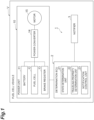
- a traveling propriety determination device 1 illustrated in FIG. 1 determines whether a fuel cell vehicle V can travel. This determination is made at the time of starting the fuel cell vehicle V (at the time of starting traveling).
- the fuel cell vehicle V is equipped with a battery 11 and a fuel cell 12 as power sources.
- the fuel cell vehicle V travels by power of a power unit 10 including the battery 11 and the fuel cell 12.
- the fuel cell vehicle V may be a large vehicle such as a commercial vehicle.
- the power unit 10 includes the battery 11, the fuel cell 12, a brake register (a braking electric power absorption device) 13, a power converter 14, and a motor 15.
- the power converter 14 converts electric power stored in the battery 11 and electric power generated by the fuel cell 12 into electric power suitable for driving the motor 15, and supplies the electric power to the motor 15.
- the motor 15 generates a rotational force by the supplied electric power to drive tires of the fuel cell vehicle V.
- the motor 15 is operated by the electric power of at least one of the battery 11 and the fuel cell 12.
- the motor 15 can be used as a regenerative brake for decelerating the fuel cell vehicle V
- the power converter 14 converts the power generated by the motor 15 into the power suitable for charging the battery 11 and the power suitable for being supplied to the brake register 13, and supplies the powers respectively to the battery 11 and the brake register 13.
- the battery 11 is charged by the power supplied from the power converter 14.
- the brake register 13 consumes the power generated by the motor 15 when the motor 15 is used as the regenerative brake.
- the brake register 13 consumes the power by converting the power supplied from the power converter 14 into heat. In this manner, the battery 11 and the brake register 13 absorb the power generated when the motor 15 is used as the regenerative brake.
- the traveling propriety determination device 1 includes a determination electronic control unit (ECU) 2 and a notifier 3.
- the notifier 3 notifies a driver of the fuel cell vehicle V of various types of information.
- the notifier 3 can display characters, pictures, and the like and/or output sound.
- the notifier 3 may be a monitor provided on an instrument panel installed in a driver's seat of the fuel cell vehicle V.
- notifier 3 may be a speaker installed around the driver's seat.
- the determination ECU 2 is an electronic control unit including a central processing unit (CPU), a read only memory (ROM), a random access memory (RAM), and the like.
- the determination ECU 2 implements various functions by, for example, loading a program stored in the ROM into the RAM and executing the program loaded in the RAM by the CPU.
- the determination ECU 2 functionally includes a state determination unit 21, a traveling propriety determination unit 22, and a notification control unit 23.
- the state determination unit 21 determines a state of traveling performance of the fuel cell vehicle V that can be exhibited by the power unit 10 based on a state of the power unit 10.
- the state determination unit 21 determines whether the state of the traveling performance that can be exhibited by the power unit 10 is a predetermined normal performance state in which the fuel cell vehicle V can normally travel, a limited performance state in which the traveling performance is lower than that in the normal performance state, or a low performance state in which the traveling performance is lower than that in the limited performance state.
- the limited performance state includes a first limited performance state and a second limited performance state in which the traveling performance is lower than that in the first limited performance state.
- the state determination unit 21 further determines whether the state is the first limited performance state or the second limited performance state. That is, the state determination unit 21 determines whether the state of the traveling performance that can be exhibited by the power unit 10 is the normal performance state, the first limited performance state, the second limited performance state, or the low performance state.
- the power that can be supplied by the fuel cell 12 is larger than the power that can be supplied by the battery 11.
- the fuel cell vehicle V can travel only by the power of the battery 11, but the state of the traveling performance that can be exhibited by the power unit 10 is below the normal performance state. That is, it is assumed that since the maximum output power of the battery 11 is small, the power unit 10 does not reach the normal performance state in which the fuel cell vehicle V can normally travel without using output power of the fuel cell 12.
- the power unit 10 is in the limited performance state in which the traveling performance is lower than that in the normal performance state only with output power of the battery 11.
- the power unit 10 is in the low performance state until activation of the battery 11 is completed.
- the activation of the battery 11 is completed, and then the activation of the fuel cell 12 is completed.
- the state of the power unit 10 changes in the order of the low performance state, the limited performance state, and the normal performance state.
- the traveling performance that can be exhibited by the power unit 10 includes both driving performance and braking performance of the fuel cell vehicle.
- the driving performance indicates performance when the motor 15 drives the fuel cell vehicle V.
- the braking performance indicates power absorption performance when the power generated by the motor 15 is absorbed by at least one of the battery 11 and the brake register 13 when the motor 15 is used as the regenerative brake.
- the normal performance state can be, for example, a state in which normal traveling can be performed on a general road and an expressway without hindering traveling of surrounding vehicles when the fuel cell vehicle V travels.
- the driving performance when the power unit 10 is in the normal performance state may be driving performance that can be exhibited by an engine vehicle equivalent to the fuel cell vehicle V.
- the braking performance when the power unit 10 is in the normal performance state may be predetermined braking performance capable of exerting a braking force stronger than the braking force by the engine brake that can be exerted by the engine vehicle equivalent to the fuel cell vehicle V
- the driving performance in the normal performance state can be defined as a case where a power value that can be supplied to the motor 15 is equal to or more than a predetermined high output power value.
- the braking performance in the normal performance state can be defined as a case where the power value that can be absorbed in the battery 11 and the brake register 13 is equal to or more than a predetermined high absorption power value. Note that the state determination unit 21 determines that the normal performance state is established when both the driving performance and the braking performance satisfy the above conditions.
- the limited performance state can be, for example, a state in which the fuel cell vehicle V can travel although it does not reach the traveling performance in the normal performance state.
- the second limited performance state is a state in which the traveling performance that can be exhibited by the power unit 10 is lower than that in the first limited performance state.
- the driving performance in the first limited performance state can be defined as a case where the power value that can be supplied to the motor 15 is equal to or more than a predetermined middle output power value.
- the middle output power value is set to a value lower than the high output power value.
- the braking performance in the first limited performance state can be defined as a case where the power value that can be absorbed in the battery 11 and the brake register 13 is equal to or more than a predetermined middle absorption power value.
- the middle absorption power value is set to a value lower than the high absorption power value.
- the state determination unit 21 determines that the first limited performance state is established when both the driving performance and the braking performance satisfy the above conditions.
- the driving performance in the second limited performance state can be defined as a case where the power value that can be supplied to the motor 15 is equal to or more than a predetermined low output power value.
- the low output power value is set to a value lower than the middle output power value.
- the braking performance in the second limited performance state can be defined as a case where the power value that can be absorbed in the battery 11 and the brake register 13 is equal to or more than a predetermined low absorption power value.
- the low absorption power value is set to a value lower than the middle absorption power value.
- the state determination unit 21 determines that the second limited performance state is established when both the driving performance and the braking performance satisfy the above conditions.
- the same absorption power value may be set for the braking performance in the first limited performance state and the braking performance in the second limited performance state. That is, the same value may be set as the low absorption power value and the middle absorption power value. Even in this case, since the driving performance in the second limited performance state is lower than the driving performance in the first limited state, the traveling performance in the second limited performance state is lower than that in the first limited performance state.
- the low performance state can be, for example, a state in which the power unit 10 cannot exhibit sufficient performance for traveling the fuel cell vehicle V.
- the low performance state may be a state in which the fuel cell vehicle V cannot travel or a state in which it cannot be regarded that the fuel cell vehicle V can travel.
- the low performance state is a state below the limited performance state.
- the driving performance in the low performance state can be defined as a case where the power value that can be supplied to the motor 15 is less than the predetermined low output power value.
- the braking performance in the low performance state can be defined as a case where the power value that can be absorbed in the battery 11 and the brake register 13 is less than the predetermined low absorption power value.
- the state determination unit 21 can determine each state such as the normal performance state based on the power value that can be supplied to the motor 15 and the power value that can be absorbed by the battery 11 and the brake register 13. Note that FIG. 2 illustrates a relationship between each performance state described above, and the driving performance and the braking performance.
- the traveling propriety determination unit 22 determines that the fuel cell vehicle V can travel. On the other hand, when the state determination unit 21 determines that the fuel cell vehicle V is in the low performance state, the traveling propriety determination unit 22 determines that the fuel cell vehicle V cannot travel.
- the traveling propriety determination unit 22 further determines whether a state of the fuel cell 12 is an activation delay state that requires a preset time or more for activating the fuel cell 12.
- the fuel cell 12 takes longer to complete the activation when a temperature of the fuel cell 12 is low than when the temperature is appropriate.
- the traveling propriety determination unit 22 can determine whether the fuel cell 12 is in the activation delay state based on an outside temperature, the temperature of the fuel cell 12, or the like. Then, when the state of the fuel cell 12 is the activation delay state, the traveling propriety determination unit 22 does not determine that the fuel cell vehicle V can travel even if the state determination unit 21 determines that the fuel cell vehicle V is in the limited performance state. That is, when the state of the fuel cell 12 is the activation delay state, the traveling propriety determination unit 22 does not determine that the fuel cell vehicle V can travel until the state determination unit 21 determines that the fuel cell vehicle V is in the normal performance state.
- the notification control unit 23 controls notification contents notified by the notifier 3.
- the notification control unit 23 performs a travel enabled notification indicating that the fuel cell vehicle V is in a travelable state through the notifier 3.
- the travel enabled notification can be performed by displaying the characters, the pictures, and the like and/or outputting the sound.
- the travel enabled notification may be performed by displaying the characters such as "READY".
- the notification control unit 23 performs a limited state notification through the notifier 3 in addition to the travel enabled notification.
- the limited state notification is for notifying the driver that the traveling performance of the fuel cell vehicle V is in a limited state.
- the limited performance state includes the first limited performance state and the second limited performance state in which the traveling performance is lower than that in the first limited performance state. Therefore, when the state determination unit 21 determines that the fuel cell vehicle V is in the first limited performance state and the traveling propriety determination unit 22 determines that the fuel cell vehicle V can travel, the notification control unit 23 performs the first limited state notification as the limited state notification through the notifier 3 in addition to the travel enabled notification.
- the first limited state notification is a notification indicating that the state of the power unit 10 is the first limited performance state.
- the first limited state notification can be performed by displaying the characters, the pictures, and the like and/or outputting the sound (voice).
- the first limited state notification may be a mode in which a notification on the driving performance side indicating that the driving performance is in the first limited performance state and a notification on the braking performance side indicating that the braking performance is in the first limited performance state are separately notified. Further, as the first limited state notification, only one of the notification on the driving performance side indicating that the driving performance is in the first limited performance state and the notification on the braking performance side indicating that the braking performance is in the first limited performance state may be performed.
- the notification control unit 23 performs the second limited state notification as the limited state notification through the notifier 3 in addition to the travel enabled notification.
- the second limited state notification is a notification indicating that the traveling performance of the fuel cell vehicle V is lower than that of the first limited performance notification.
- the second limited state notification is a notification indicating that the traveling performance of the fuel cell vehicle V is in a more limited state than the first limited state notification in a more emphasized manner.
- the second limited state notification is a notification indicating that the state of the power unit 10 is the second limited performance state.
- the second limited state notification can be performed by displaying the characters, the pictures, and the like and/or outputting the sound.
- the second limited state notification may be a notification for displaying the characters such as "motor output is being limited” or outputting the sound in addition to notification of the first limited state notification described above.
- the second limited state notification is the notification indicating that the traveling performance of the fuel cell vehicle V is in the more limited state than the first limited state notification in a more emphasized manner.
- the notification in a more emphasized manner may be, for example, displaying more characters and illustrations for display.
- displaying in a more emphasized manner may be, for example, displaying in a color in which color of the characters and illustrations of the display is more easily recognized or a color that easily draws attention.
- displaying in a more emphasized manner may be, for example, increasing sizes of characters and illustrations of the display or increasing luminance.
- Displaying in a more emphasized manner may be, for example, displaying the characters and illustrations of the display in characters (contents of sentences) and illustrations (patterns) that more easily draws attention.
- the notification by sound in a more emphasized manner may be, for example, notification with a tone or volume that easily draws attention.
- the notification by sound in a more emphasized manner may be, for example, notification with voice contents that more easily draws attention.
- various forms can be adopted as the notification in a more emphasized manner.
- the notification control unit 23 performs a traveling disabled notification indicating that the fuel cell vehicle V cannot travel through the notifier 3.
- the traveling disabled notification indicates that the fuel cell vehicle V cannot travel because activation of the battery 11 and the like is not completed.
- the traveling disabled notification can be performed by displaying the characters, the pictures, and the like and/or outputting the sound.
- the traveling disabled notification may be a display in which the characters such as "READY" are blinked.
- the notification control unit 23 performs each notification corresponding to determination results of the state determination unit 21 and the traveling propriety determination unit 22 through the notifier 3.
- the traveling propriety determination unit 22 may determine that the state of the fuel cell 12 is the activation delay state. In this case, even when the state determination unit 21 determines that the fuel cell vehicle V is in the limited performance state, the traveling propriety determination unit 22 does not determine that the fuel cell vehicle V can travel. That is, in this case, the limited state notification is not performed. Note that FIG. 2 illustrates a relationship between the presence or absence of the limited state notification and each state of power unit 10 in each case of a normal state and the activation delay state of the fuel cell 12.
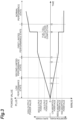
- FIG. 3 illustrates a case where the fuel cell 12 is in the normal state (a case where the fuel cell 12 is not in the activation delay state).
- a "plus” region indicates a power value that can be supplied to the motor 15 as the driving performance.
- a "minus" region indicates a power value that can be absorbed by the battery 11 and the brake register 13 as the braking performance. Note that in the "minus" region of the vertical axis in FIG. 3 , the smaller the power value (the greater the minus degree), the larger the absorption power of the battery 11 and the like.
- the brake register 13 can exhibit predetermined power absorption performance by, for example, being supplied with cooling water.
- the cooling water cools the brake register 13 that generates heat by absorbing the electric power. Further, the cooling water is supplied to brake register 13 when the activation of fuel cell 12 is completed. That is, in the example illustrated in FIG. 3 , the brake register 13 can exhibit the predetermined power absorption performance when the activation of fuel cell 12 is completed.
- the power value that can be absorbed by the battery 11 is equal to or more than the low absorption power value.
- the power value that can be output from the battery 11 is equal to or more than the low output power value. That is, the state determination unit 21 determines that the power unit 10 is in the low performance state until time 11. Then, at time t1, the state determination unit 21 determines that the power unit 10 is in the second limited performance state.
- the state determination unit 21 determines that the power unit 10 is in the first limited performance state.
- the power value that can be supplied to the motor 15 by the battery 11 and the fuel cell 12 greatly increases.
- the power value that can be absorbed by the battery 11 and the brake register 13 greatly increases.
- the power value that can be absorbed by the battery 11 and the brake register 13 is equal to or more than the high absorption power value.
- the power value that can be supplied to the motor 15 is equal to or more than the high output power value.
- the state determination unit 21 determines that the power unit 10 is in the normal performance state.
- the brake register 13 can exhibit the predetermined power absorption performance when the activation of fuel cell 12 is completed.
- the configuration of the brake register 13 is not limited to this, and may be a configuration that exhibits the predetermined power absorption performance at a timing other than time t4.
- the traveling propriety determination device 1 determines that the fuel cell vehicle V can travel even in the limited performance state in which the traveling performance is lower than that in the normal performance state. Thus, for example, even in a state where the activation of the fuel cell 12 is not completed, the fuel cell vehicle V can travel in anticipation of completion of the activation of the fuel cell 12. However, when the traveling propriety determination device 1 determines that the fuel cell vehicle V can travel in the limited performance state, the traveling propriety determination device 1 performs the limited state notification (the first limited state notification or the second limited state notification) indicating that the traveling performance is in the limited state. Thus, the driver of the fuel cell vehicle V can recognize that the fuel cell vehicle V can travel but the traveling performance is in the limited state. Then, the driver can perform a driving operation according to limited traveling performance. In this manner, the traveling propriety determination device 1 can more appropriately determine the traveling propriety of the fuel cell vehicle V and notify the traveling performance of the fuel cell vehicle V
- the limited state notification the first limited state notification or the second limited state notification
- the limited performance state determined by the state determination unit 21 includes the first limited performance state and the second limited performance state in which the traveling performance is lower than that in the first limited performance state.
- the notification control unit 23 performs the first limited state notification as the limited state notification through the notifier 3.
- the notification control unit 23 performs the second limited state notification as the limited state notification through the notifier 3.
- the traveling propriety determination device 1 can perform the first limited state notification or the second limited state notification according to the traveling performance in the limited performance state even in the limited performance state.
- the driver can recognize how much the traveling performance is limited although the fuel cell vehicle V can travel.
- the second limited state notification performed by the notification control unit 23 is the notification indicating that the traveling performance of the fuel cell vehicle V is in the more limited state than the first limited state notification in a more emphasized manner. In this case, the driver can easily distinguish and recognize the first limited state notification and the second limited state notification.
- the traveling performance of the fuel cell vehicle V determined by state determination unit 21 includes both the driving performance and the braking performance of fuel cell vehicle V.
- the traveling propriety determination device 1 can determine the traveling propriety of the fuel cell vehicle V based on the driving performance and/or the braking performance that can be exhibited by the power unit 10.
- the notification control unit 23 performs the travel enabled notification indicating that the fuel cell vehicle V is in the travelable state through the notifier 3. In this case, the driver can easily recognize that the fuel cell vehicle V is in the travelable state.
- the traveling propriety determination unit 22 can determine whether the state of the fuel cell 12 is the activation delay state that requires the preset time or more for activating the fuel cell 12. Then, even when the state determination unit 21 determines that the fuel cell vehicle V is in the limited performance state, the traveling propriety determination unit 22 does not determine that the fuel cell vehicle V can travel. Thus, when the fuel cell 12 is in the activation delay state, the traveling propriety determination device 1 does not determine that the fuel cell vehicle V can travel until the power unit 10 is in the normal performance state. That is, the traveling propriety determination device 1 does not determine that the fuel cell vehicle V can travel, for example, in anticipation of the completion of the activation when the activation of the fuel cell 12 is not completed. In this manner, the traveling propriety determination device 1 can more appropriately determine the traveling propriety of the fuel cell vehicle V based on the state of the fuel cell 12.
- the present disclosure is not limited to the above embodiments.
- the state determination unit 21 when determining the traveling performance that can be exhibited by the power unit 10, the state determination unit 21 performs the determination in consideration of both the driving performance and the braking performance.
- the present disclosure is not limited thereto, and the state determination unit 21 may perform the determination using only one of the driving performance and the braking performance when determining the traveling performance that can be exhibited by the power unit 10.
- the limited performance state determined by the state determination unit 21 may not include two states of the first limited performance state and the second limited performance state.
- the brake register 13 functions as the braking electric power absorption device that absorbs the power generated by the motor 15.
- the braking electric power absorption device is not limited to the brake register 13. In the above embodiments, another braking electric power absorption device may be used instead of the brake register 13.
Landscapes
- Engineering & Computer Science (AREA)
- Sustainable Energy (AREA)
- Life Sciences & Earth Sciences (AREA)
- Mechanical Engineering (AREA)
- Power Engineering (AREA)
- Transportation (AREA)
- Sustainable Development (AREA)
- Manufacturing & Machinery (AREA)
- Chemical & Material Sciences (AREA)
- Chemical Kinetics & Catalysis (AREA)
- Electrochemistry (AREA)
- General Chemical & Material Sciences (AREA)
- Electric Propulsion And Braking For Vehicles (AREA)
- Fuel Cell (AREA)
Abstract
A state determination unit (21) determines whether a state of traveling performance of a fuel cell vehicle (V) is a normal performance state, a limited performance state, or a low performance state. When the state determination unit (21) determines that the fuel cell vehicle (V) is in the normal performance state or the limited performance state, a traveling propriety determination unit (22) determines that the fuel cell vehicle (V) can travel. A notification control unit (23) performs a limited state notification when the state determination unit (21) determines that the fuel cell vehicle (V) is in the limited performance state and the traveling propriety determination unit (22) determines that the fuel cell vehicle (V) can travel.
Description
- This application is based upon and claims the benefit of priority from
Japanese Patent Application No. 2023-040645, filed on March 15, 2023 - The present disclosure relates to a traveling propriety determination device that determines traveling propriety of a fuel cell vehicle.
- There is a fuel cell vehicle including a motor operated by electric power of a battery or a fuel cell. Generally, the fuel cell takes time to be activated. Therefore, for example,
Japanese Unexamined Patent Publication No. 2008-218165 Japanese Unexamined Patent Publication No. 2005-297962 - Here, the fuel cell vehicle can travel only on battery power even if the fuel cell is not generating power. In this case, depending on the fuel cell vehicle, it may not be possible to obtain sufficient output of the motor only by the battery power. When the fuel cell vehicle is caused to travel in such a state, there is a risk that traveling of surrounding vehicles may be hindered due to insufficient acceleration force of the fuel cell vehicle or the like.
- Therefore, the present disclosure describes a traveling propriety determination device capable of more appropriately determining the traveling propriety of the fuel cell vehicle and notifying traveling performance of the fuel cell vehicle.
- A traveling propriety determination device according to an aspect of the present disclosure is [1] "a traveling propriety determination device that determines whether a fuel cell vehicle can travel in the fuel cell vehicle that travels by power of a power unit including a battery, a fuel cell, and a motor operated by electric power of at least one of the battery and the fuel cell, the traveling propriety determination device including: a state determination unit configured to determine, based on a state of the power unit, whether a state of traveling performance of the fuel cell vehicle that can be exhibited by the power unit is a predetermined normal performance state in which the fuel cell vehicle can normally travel, a limited performance state in which the traveling performance is lower than that in the normal performance state, or a low performance state in which the traveling performance is lower than that in the limited performance state; a traveling propriety determination unit configured to determine that the fuel cell vehicle can travel when the state determination unit determines that the fuel cell vehicle is in the normal performance state or the limited performance state; and a notification control unit configured to perform a limited state notification indicating that the traveling performance of the fuel cell vehicle is in a limited state through a notifier when the state determination unit determines that the fuel cell vehicle is in the limited performance state and the traveling propriety determination unit determines that the fuel cell vehicle can travel".
- The traveling propriety determination device determines that the fuel cell vehicle can travel even in the limited performance state in which the traveling performance is lower than that in the normal performance state. Thus, for example, even in a state where activation of the fuel cell is not completed, the fuel cell vehicle can travel in anticipation of completion of the activation of the fuel cell. However, when the traveling propriety determination device determines that the fuel cell vehicle can travel in the limited performance state, the traveling propriety determination device performs the limited state notification indicating that the traveling performance is in the limited state through the notifier. Thus, a driver of the fuel cell vehicle can recognize that the fuel cell vehicle can travel but the traveling performance is in the limited state. Then, the driver can perform a driving operation according to limited traveling performance. In this manner, the traveling propriety determination device can more appropriately determine the traveling propriety of the fuel cell vehicle and notify the traveling performance of the fuel cell vehicle.
- The traveling propriety determination device according to one aspect of the present disclosure may be [2] "the traveling propriety determination device according to the above [1], in which the limited performance state includes a first limited performance state and a second limited performance state in which the traveling performance is lower than that in the first limited performance state, the state determination unit determines whether the state of the traveling performance that can be exhibited by the power unit is the normal performance state, the first limited performance state, the second limited performance state, or the low performance state, the notification control unit performs a first limited state notification as the limited state notification through the notifier when the state determination unit determines that the fuel cell vehicle is in the first limited performance state and the traveling propriety determination unit determines that the fuel cell vehicle can travel, and the notification control unit performs, as the limited state notification, a second limited state notification indicating that the traveling performance of the fuel cell vehicle is lower than that of the first limited performance state through the notifier when the state determination unit determines that the fuel cell vehicle is in the second limited performance state and the traveling propriety determination unit determines that the fuel cell vehicle can travel". In this case, the traveling propriety determination device can perform the first limited state notification or the second limited state notification according to the traveling performance in the limited performance state even in the limited performance state. Thus, the driver can recognize how much the traveling performance is limited although the fuel cell vehicle can travel.
- The traveling propriety determination device according to one aspect of the present disclosure may be [3] "the traveling propriety determination device according to the above [2], in which the second limited state notification is a notification indicating that the traveling performance of the fuel cell vehicle is in a more limited state than the first limited state notification in a more emphasized manner". In this case, the driver can easily distinguish and recognize the first limited state notification and the second limited state notification.
- The traveling propriety determination device according to one aspect of the present disclosure may be [4] "the traveling propriety determination device according to any one of the above [1] to [3], in which the traveling performance is driving performance or braking performance of the fuel cell vehicle, or includes both the driving performance and the braking performance of the fuel cell vehicle, and the braking performance indicates power absorption performance when power generated by the motor when the motor is used as a regenerative brake is absorbed by at least one of the battery and a braking electric power absorption device mounted on the fuel cell vehicle". In this case, the traveling propriety determination device can determine the traveling propriety of the fuel cell vehicle based on the driving performance and/or the braking performance that can be exhibited by the power unit.
- The traveling propriety determination device according to one aspect of the present disclosure may be [5] "the traveling propriety determination device according to any one of the above [1] to [4], in which when the traveling propriety determination unit determines that the fuel cell vehicle can travel, the notification control unit performs a travel enabled notification indicating that the fuel cell vehicle is in a travelable state through the notifier". In this case, the driver can easily recognize that the fuel cell vehicle is in the travelable state.
- The traveling propriety determination device according to one aspect of the present disclosure may be [6] "the traveling propriety determination device according to any one of the above [1] to [5], in which the traveling propriety determination unit determines whether a state of the fuel cell is an activation delay state requiring a preset time or more for activating the fuel cell, and when the state of the fuel cell is the activation delay state, even if the state determination unit determines that the fuel cell vehicle is in the limited performance state, the traveling propriety determination unit does not determine that the fuel cell vehicle can travel". Thus, when the fuel cell is in the activation delay state, the traveling propriety determination device does not determine that the fuel cell vehicle can travel until the power unit is in the normal performance state. That is, the traveling propriety determination device does not determine that the fuel cell vehicle can travel, for example, in anticipation of the completion of the activation when the activation of the fuel cell is not completed. In this manner, the traveling propriety determination device can more appropriately determine the traveling propriety of the fuel cell vehicle based on the state of the fuel cell.
- According to one aspect of the present disclosure, it is possible to more appropriately determine the traveling propriety of the fuel cell vehicle and to notify the traveling performance of the fuel cell vehicle.
-
-
FIG. 1 is a block diagram illustrating an example of a fuel cell vehicle on which a traveling propriety determination device according to an embodiment is mounted; -
FIG. 2 is a table illustrating a relationship between each performance state of a power unit and driving performance and braking performance, and each performance state of the power unit and a notification example; and -
FIG. 3 is a diagram illustrating a relationship between temporal changes in driving performance and braking performance after start of activation of the power unit and each state of the power unit. - Hereinafter, exemplary embodiments will be described with reference to the drawings. Note that in the drawings, the same or corresponding elements are denoted by the same reference numerals, and redundant description will be omitted.
- A traveling propriety determination device 1 illustrated in
FIG. 1 determines whether a fuel cell vehicle V can travel. This determination is made at the time of starting the fuel cell vehicle V (at the time of starting traveling). Here, the fuel cell vehicle V is equipped with abattery 11 and afuel cell 12 as power sources. The fuel cell vehicle V travels by power of apower unit 10 including thebattery 11 and thefuel cell 12. For example, the fuel cell vehicle V may be a large vehicle such as a commercial vehicle. - Specifically, the
power unit 10 includes thebattery 11, thefuel cell 12, a brake register (a braking electric power absorption device) 13, apower converter 14, and amotor 15. Thepower converter 14 converts electric power stored in thebattery 11 and electric power generated by thefuel cell 12 into electric power suitable for driving themotor 15, and supplies the electric power to themotor 15. Themotor 15 generates a rotational force by the supplied electric power to drive tires of the fuel cell vehicle V. Themotor 15 is operated by the electric power of at least one of thebattery 11 and thefuel cell 12. - Here, the
motor 15 can be used as a regenerative brake for decelerating the fuel cell vehicle V In this case, thepower converter 14 converts the power generated by themotor 15 into the power suitable for charging thebattery 11 and the power suitable for being supplied to thebrake register 13, and supplies the powers respectively to thebattery 11 and thebrake register 13. Thebattery 11 is charged by the power supplied from thepower converter 14. Thebrake register 13 consumes the power generated by themotor 15 when themotor 15 is used as the regenerative brake. Here, thebrake register 13 consumes the power by converting the power supplied from thepower converter 14 into heat. In this manner, thebattery 11 and thebrake register 13 absorb the power generated when themotor 15 is used as the regenerative brake. - The traveling propriety determination device 1 includes a determination electronic control unit (ECU) 2 and a notifier 3. The notifier 3 notifies a driver of the fuel cell vehicle V of various types of information. For example, the notifier 3 can display characters, pictures, and the like and/or output sound. For example, the notifier 3 may be a monitor provided on an instrument panel installed in a driver's seat of the fuel cell vehicle V. For example, notifier 3 may be a speaker installed around the driver's seat.
- The
determination ECU 2 is an electronic control unit including a central processing unit (CPU), a read only memory (ROM), a random access memory (RAM), and the like. For example, thedetermination ECU 2 implements various functions by, for example, loading a program stored in the ROM into the RAM and executing the program loaded in the RAM by the CPU. The determination ECU 2 functionally includes astate determination unit 21, a travelingpropriety determination unit 22, and anotification control unit 23. - The
state determination unit 21 determines a state of traveling performance of the fuel cell vehicle V that can be exhibited by thepower unit 10 based on a state of thepower unit 10. Here, thestate determination unit 21 determines whether the state of the traveling performance that can be exhibited by thepower unit 10 is a predetermined normal performance state in which the fuel cell vehicle V can normally travel, a limited performance state in which the traveling performance is lower than that in the normal performance state, or a low performance state in which the traveling performance is lower than that in the limited performance state. - Note that in the present embodiment, the limited performance state includes a first limited performance state and a second limited performance state in which the traveling performance is lower than that in the first limited performance state. When the state of the traveling performance that can be exhibited by the
power unit 10 is the limited performance state, thestate determination unit 21 further determines whether the state is the first limited performance state or the second limited performance state. That is, thestate determination unit 21 determines whether the state of the traveling performance that can be exhibited by thepower unit 10 is the normal performance state, the first limited performance state, the second limited performance state, or the low performance state. - Further, in the present embodiment, as an example, it is assumed that the power that can be supplied by the
fuel cell 12 is larger than the power that can be supplied by thebattery 11. Further, as an example, it is assumed that the fuel cell vehicle V can travel only by the power of thebattery 11, but the state of the traveling performance that can be exhibited by thepower unit 10 is below the normal performance state. That is, it is assumed that since the maximum output power of thebattery 11 is small, thepower unit 10 does not reach the normal performance state in which the fuel cell vehicle V can normally travel without using output power of thefuel cell 12. Thepower unit 10 is in the limited performance state in which the traveling performance is lower than that in the normal performance state only with output power of thebattery 11. Further, for example, thepower unit 10 is in the low performance state until activation of thebattery 11 is completed. As described above, in thepower unit 10, the activation of thebattery 11 is completed, and then the activation of thefuel cell 12 is completed. Thus, as an example, the state of thepower unit 10 changes in the order of the low performance state, the limited performance state, and the normal performance state. - Note that in the present embodiment, the traveling performance that can be exhibited by the
power unit 10 includes both driving performance and braking performance of the fuel cell vehicle. The driving performance indicates performance when themotor 15 drives the fuel cell vehicle V. The braking performance indicates power absorption performance when the power generated by themotor 15 is absorbed by at least one of thebattery 11 and thebrake register 13 when themotor 15 is used as the regenerative brake. - Here, the normal performance state can be, for example, a state in which normal traveling can be performed on a general road and an expressway without hindering traveling of surrounding vehicles when the fuel cell vehicle V travels. For example, the driving performance when the
power unit 10 is in the normal performance state may be driving performance that can be exhibited by an engine vehicle equivalent to the fuel cell vehicle V. For example, the braking performance when thepower unit 10 is in the normal performance state may be predetermined braking performance capable of exerting a braking force stronger than the braking force by the engine brake that can be exerted by the engine vehicle equivalent to the fuel cell vehicle V - That is, for example, the driving performance in the normal performance state can be defined as a case where a power value that can be supplied to the
motor 15 is equal to or more than a predetermined high output power value. Further, for example, the braking performance in the normal performance state can be defined as a case where the power value that can be absorbed in thebattery 11 and thebrake register 13 is equal to or more than a predetermined high absorption power value. Note that thestate determination unit 21 determines that the normal performance state is established when both the driving performance and the braking performance satisfy the above conditions. - The limited performance state can be, for example, a state in which the fuel cell vehicle V can travel although it does not reach the traveling performance in the normal performance state. In the limited performance state, the second limited performance state is a state in which the traveling performance that can be exhibited by the
power unit 10 is lower than that in the first limited performance state. - For example, the driving performance in the first limited performance state can be defined as a case where the power value that can be supplied to the
motor 15 is equal to or more than a predetermined middle output power value. Note that the middle output power value is set to a value lower than the high output power value. Further, for example, the braking performance in the first limited performance state can be defined as a case where the power value that can be absorbed in thebattery 11 and thebrake register 13 is equal to or more than a predetermined middle absorption power value. Note that the middle absorption power value is set to a value lower than the high absorption power value. Note that thestate determination unit 21 determines that the first limited performance state is established when both the driving performance and the braking performance satisfy the above conditions. - For example, the driving performance in the second limited performance state can be defined as a case where the power value that can be supplied to the
motor 15 is equal to or more than a predetermined low output power value. Note that the low output power value is set to a value lower than the middle output power value. Further, for example, the braking performance in the second limited performance state can be defined as a case where the power value that can be absorbed in thebattery 11 and thebrake register 13 is equal to or more than a predetermined low absorption power value. Note that the low absorption power value is set to a value lower than the middle absorption power value. Note that thestate determination unit 21 determines that the second limited performance state is established when both the driving performance and the braking performance satisfy the above conditions. - However, the same absorption power value may be set for the braking performance in the first limited performance state and the braking performance in the second limited performance state. That is, the same value may be set as the low absorption power value and the middle absorption power value. Even in this case, since the driving performance in the second limited performance state is lower than the driving performance in the first limited state, the traveling performance in the second limited performance state is lower than that in the first limited performance state.
- The low performance state can be, for example, a state in which the
power unit 10 cannot exhibit sufficient performance for traveling the fuel cell vehicle V. For example, the low performance state may be a state in which the fuel cell vehicle V cannot travel or a state in which it cannot be regarded that the fuel cell vehicle V can travel. The low performance state is a state below the limited performance state. For example, the driving performance in the low performance state can be defined as a case where the power value that can be supplied to themotor 15 is less than the predetermined low output power value. Further, for example, the braking performance in the low performance state can be defined as a case where the power value that can be absorbed in thebattery 11 and thebrake register 13 is less than the predetermined low absorption power value. - As described above, the
state determination unit 21 can determine each state such as the normal performance state based on the power value that can be supplied to themotor 15 and the power value that can be absorbed by thebattery 11 and thebrake register 13. Note thatFIG. 2 illustrates a relationship between each performance state described above, and the driving performance and the braking performance. - When the
state determination unit 21 determines that it is in the normal performance state or the limited performance state, the travelingpropriety determination unit 22 determines that the fuel cell vehicle V can travel. On the other hand, when thestate determination unit 21 determines that the fuel cell vehicle V is in the low performance state, the travelingpropriety determination unit 22 determines that the fuel cell vehicle V cannot travel. - Note that in the present embodiment, the traveling
propriety determination unit 22 further determines whether a state of thefuel cell 12 is an activation delay state that requires a preset time or more for activating thefuel cell 12. In general, thefuel cell 12 takes longer to complete the activation when a temperature of thefuel cell 12 is low than when the temperature is appropriate. For example, the travelingpropriety determination unit 22 can determine whether thefuel cell 12 is in the activation delay state based on an outside temperature, the temperature of thefuel cell 12, or the like. Then, when the state of thefuel cell 12 is the activation delay state, the travelingpropriety determination unit 22 does not determine that the fuel cell vehicle V can travel even if thestate determination unit 21 determines that the fuel cell vehicle V is in the limited performance state. That is, when the state of thefuel cell 12 is the activation delay state, the travelingpropriety determination unit 22 does not determine that the fuel cell vehicle V can travel until thestate determination unit 21 determines that the fuel cell vehicle V is in the normal performance state. - The
notification control unit 23 controls notification contents notified by the notifier 3. Here, when the travelingpropriety determination unit 22 determines that the fuel cell vehicle V can travel, thenotification control unit 23 performs a travel enabled notification indicating that the fuel cell vehicle V is in a travelable state through the notifier 3. The travel enabled notification can be performed by displaying the characters, the pictures, and the like and/or outputting the sound. As an example, the travel enabled notification may be performed by displaying the characters such as "READY". - Further, when the
state determination unit 21 determines that the fuel cell vehicle V is in the limited performance state and the travelingpropriety determination unit 22 determines that the fuel cell vehicle V can travel, thenotification control unit 23 performs a limited state notification through the notifier 3 in addition to the travel enabled notification. The limited state notification is for notifying the driver that the traveling performance of the fuel cell vehicle V is in a limited state. - Here, as described above, the limited performance state includes the first limited performance state and the second limited performance state in which the traveling performance is lower than that in the first limited performance state. Therefore, when the
state determination unit 21 determines that the fuel cell vehicle V is in the first limited performance state and the travelingpropriety determination unit 22 determines that the fuel cell vehicle V can travel, thenotification control unit 23 performs the first limited state notification as the limited state notification through the notifier 3 in addition to the travel enabled notification. The first limited state notification is a notification indicating that the state of thepower unit 10 is the first limited performance state. The first limited state notification can be performed by displaying the characters, the pictures, and the like and/or outputting the sound (voice). - Note that the first limited state notification may be a mode in which a notification on the driving performance side indicating that the driving performance is in the first limited performance state and a notification on the braking performance side indicating that the braking performance is in the first limited performance state are separately notified. Further, as the first limited state notification, only one of the notification on the driving performance side indicating that the driving performance is in the first limited performance state and the notification on the braking performance side indicating that the braking performance is in the first limited performance state may be performed.
- Further, when the
state determination unit 21 determines that the fuel cell vehicle V is in the second limited performance state and the travelingpropriety determination unit 22 determines that the fuel cell vehicle V can travel, thenotification control unit 23 performs the second limited state notification as the limited state notification through the notifier 3 in addition to the travel enabled notification. The second limited state notification is a notification indicating that the traveling performance of the fuel cell vehicle V is lower than that of the first limited performance notification. Further, the second limited state notification is a notification indicating that the traveling performance of the fuel cell vehicle V is in a more limited state than the first limited state notification in a more emphasized manner. The second limited state notification is a notification indicating that the state of thepower unit 10 is the second limited performance state. The second limited state notification can be performed by displaying the characters, the pictures, and the like and/or outputting the sound. As an example, the second limited state notification may be a notification for displaying the characters such as "motor output is being limited" or outputting the sound in addition to notification of the first limited state notification described above. - Here, the second limited state notification is the notification indicating that the traveling performance of the fuel cell vehicle V is in the more limited state than the first limited state notification in a more emphasized manner. That is, here, the notification in a more emphasized manner may be, for example, displaying more characters and illustrations for display. In addition to this, displaying in a more emphasized manner may be, for example, displaying in a color in which color of the characters and illustrations of the display is more easily recognized or a color that easily draws attention. In addition, displaying in a more emphasized manner may be, for example, increasing sizes of characters and illustrations of the display or increasing luminance. Displaying in a more emphasized manner may be, for example, displaying the characters and illustrations of the display in characters (contents of sentences) and illustrations (patterns) that more easily draws attention. The notification by sound in a more emphasized manner may be, for example, notification with a tone or volume that easily draws attention. The notification by sound in a more emphasized manner may be, for example, notification with voice contents that more easily draws attention. In addition, various forms can be adopted as the notification in a more emphasized manner.
- In addition, when the traveling
propriety determination unit 22 determines that the fuel cell vehicle V cannot travel, thenotification control unit 23 performs a traveling disabled notification indicating that the fuel cell vehicle V cannot travel through the notifier 3. For example, the traveling disabled notification indicates that the fuel cell vehicle V cannot travel because activation of thebattery 11 and the like is not completed. The traveling disabled notification can be performed by displaying the characters, the pictures, and the like and/or outputting the sound. As an example, the traveling disabled notification may be a display in which the characters such as "READY" are blinked. - In this manner, the
notification control unit 23 performs each notification corresponding to determination results of thestate determination unit 21 and the travelingpropriety determination unit 22 through the notifier 3. - Here, the traveling
propriety determination unit 22 may determine that the state of thefuel cell 12 is the activation delay state. In this case, even when thestate determination unit 21 determines that the fuel cell vehicle V is in the limited performance state, the travelingpropriety determination unit 22 does not determine that the fuel cell vehicle V can travel. That is, in this case, the limited state notification is not performed. Note thatFIG. 2 illustrates a relationship between the presence or absence of the limited state notification and each state ofpower unit 10 in each case of a normal state and the activation delay state of thefuel cell 12. - Next, a relationship between temporal changes in the driving performance and the braking performance after the start of activation of the
power unit 10 and the state of thepower unit 10 will be described. Note that the temporal changes in the driving performance and the braking performance illustrated inFIG. 3 are an example. Further,FIG. 3 illustrates a case where thefuel cell 12 is in the normal state (a case where thefuel cell 12 is not in the activation delay state). In the vertical axis ofFIG. 3 , a "plus" region indicates a power value that can be supplied to themotor 15 as the driving performance. In the vertical axis ofFIG. 3 , a "minus" region indicates a power value that can be absorbed by thebattery 11 and thebrake register 13 as the braking performance. Note that in the "minus" region of the vertical axis inFIG. 3 , the smaller the power value (the greater the minus degree), the larger the absorption power of thebattery 11 and the like. - Further, in the example illustrated in
FIG. 3 , thebrake register 13 can exhibit predetermined power absorption performance by, for example, being supplied with cooling water. The cooling water cools thebrake register 13 that generates heat by absorbing the electric power. Further, the cooling water is supplied to brake register 13 when the activation offuel cell 12 is completed. That is, in the example illustrated inFIG. 3 , thebrake register 13 can exhibit the predetermined power absorption performance when the activation offuel cell 12 is completed. - As illustrated in
FIG. 3 , when the activation of thepower unit 10 starts, the activation of thebattery 11 and thefuel cell 12 starts. By activating thebattery 11, the power value that can be supplied to themotor 15 gradually increases as the driving performance. Further, by activating thebattery 11, the power value that can be absorbed by thebattery 11 gradually increases. - Thus, at time t0, the power value that can be absorbed by the
battery 11 is equal to or more than the low absorption power value. Thereafter, at time t1, the power value that can be output from thebattery 11 is equal to or more than the low output power value. That is, thestate determination unit 21 determines that thepower unit 10 is in the low performance state untiltime 11. Then, at time t1, thestate determination unit 21 determines that thepower unit 10 is in the second limited performance state. - Thereafter, at time t2, the power value that can be absorbed by the
battery 11 is equal to or more than the middle absorption power value. Thereafter, at time t3, the power value that can be output from thebattery 11 is equal to or more than the middle output power value. Thus, at time t3, thestate determination unit 21 determines that thepower unit 10 is in the first limited performance state. - Thereafter, when the activation of the
fuel cell 12 is completed at time t4, the power value that can be supplied to themotor 15 by thebattery 11 and thefuel cell 12 greatly increases. Then, at time t4, since the cooling water is supplied to thebrake register 13, the power value that can be absorbed by thebattery 11 and thebrake register 13 greatly increases. Thus, at time t4, the power value that can be absorbed by thebattery 11 and thebrake register 13 is equal to or more than the high absorption power value. Thereafter, at time t5, the power value that can be supplied to themotor 15 is equal to or more than the high output power value. Thus, at time t5, thestate determination unit 21 determines that thepower unit 10 is in the normal performance state. - Note that in the example illustrated in
FIG. 3 , thebrake register 13 can exhibit the predetermined power absorption performance when the activation offuel cell 12 is completed. The configuration of thebrake register 13 is not limited to this, and may be a configuration that exhibits the predetermined power absorption performance at a timing other than time t4. - As described above, the traveling propriety determination device 1 determines that the fuel cell vehicle V can travel even in the limited performance state in which the traveling performance is lower than that in the normal performance state. Thus, for example, even in a state where the activation of the
fuel cell 12 is not completed, the fuel cell vehicle V can travel in anticipation of completion of the activation of thefuel cell 12. However, when the traveling propriety determination device 1 determines that the fuel cell vehicle V can travel in the limited performance state, the traveling propriety determination device 1 performs the limited state notification (the first limited state notification or the second limited state notification) indicating that the traveling performance is in the limited state. Thus, the driver of the fuel cell vehicle V can recognize that the fuel cell vehicle V can travel but the traveling performance is in the limited state. Then, the driver can perform a driving operation according to limited traveling performance. In this manner, the traveling propriety determination device 1 can more appropriately determine the traveling propriety of the fuel cell vehicle V and notify the traveling performance of the fuel cell vehicle V - Further, the limited performance state determined by the
state determination unit 21 includes the first limited performance state and the second limited performance state in which the traveling performance is lower than that in the first limited performance state. When thestate determination unit 21 determines that the fuel cell vehicle V is in the first limited performance state and the travelingpropriety determination unit 22 determines that the fuel cell vehicle V can travel, thenotification control unit 23 performs the first limited state notification as the limited state notification through the notifier 3. When thestate determination unit 21 determines that the fuel cell vehicle V is in the second limited performance state and the travelingpropriety determination unit 22 determines that the fuel cell vehicle V can travel, thenotification control unit 23 performs the second limited state notification as the limited state notification through the notifier 3. In this case, the traveling propriety determination device 1 can perform the first limited state notification or the second limited state notification according to the traveling performance in the limited performance state even in the limited performance state. Thus, the driver can recognize how much the traveling performance is limited although the fuel cell vehicle V can travel. - Note that the second limited state notification performed by the
notification control unit 23 is the notification indicating that the traveling performance of the fuel cell vehicle V is in the more limited state than the first limited state notification in a more emphasized manner. In this case, the driver can easily distinguish and recognize the first limited state notification and the second limited state notification. - The traveling performance of the fuel cell vehicle V determined by
state determination unit 21 includes both the driving performance and the braking performance of fuel cell vehicle V. In this case, the traveling propriety determination device 1 can determine the traveling propriety of the fuel cell vehicle V based on the driving performance and/or the braking performance that can be exhibited by thepower unit 10. - When the traveling
propriety determination unit 22 determines that the fuel cell vehicle V can travel, thenotification control unit 23 performs the travel enabled notification indicating that the fuel cell vehicle V is in the travelable state through the notifier 3. In this case, the driver can easily recognize that the fuel cell vehicle V is in the travelable state. - The traveling
propriety determination unit 22 can determine whether the state of thefuel cell 12 is the activation delay state that requires the preset time or more for activating thefuel cell 12. Then, even when thestate determination unit 21 determines that the fuel cell vehicle V is in the limited performance state, the travelingpropriety determination unit 22 does not determine that the fuel cell vehicle V can travel. Thus, when thefuel cell 12 is in the activation delay state, the traveling propriety determination device 1 does not determine that the fuel cell vehicle V can travel until thepower unit 10 is in the normal performance state. That is, the traveling propriety determination device 1 does not determine that the fuel cell vehicle V can travel, for example, in anticipation of the completion of the activation when the activation of thefuel cell 12 is not completed. In this manner, the traveling propriety determination device 1 can more appropriately determine the traveling propriety of the fuel cell vehicle V based on the state of thefuel cell 12. - Although the embodiments of the present disclosure have been described above, the present disclosure is not limited to the above embodiments. For example, in the above embodiments, when determining the traveling performance that can be exhibited by the
power unit 10, thestate determination unit 21 performs the determination in consideration of both the driving performance and the braking performance. The present disclosure is not limited thereto, and thestate determination unit 21 may perform the determination using only one of the driving performance and the braking performance when determining the traveling performance that can be exhibited by thepower unit 10. - Further, the limited performance state determined by the
state determination unit 21 may not include two states of the first limited performance state and the second limited performance state. - In the above embodiments, a case where the power generated by the
motor 15 when themotor 15 is used as the regenerative brake can also be absorbed by thebrake register 13 has been described. That is, the brake register 13 functions as the braking electric power absorption device that absorbs the power generated by themotor 15. However, the braking electric power absorption device is not limited to thebrake register 13. In the above embodiments, another braking electric power absorption device may be used instead of thebrake register 13.
Claims (6)
- A traveling propriety determination device that determines whether a fuel cell vehicle can travel in the fuel cell vehicle that travels by power of a power unit including a battery, a fuel cell, and a motor operated by electric power of at least one of the battery and the fuel cell, the traveling propriety determination device comprising:a state determination unit configured to determine, based on a state of the power unit, whether a state of traveling performance of the fuel cell vehicle that can be exhibited by the power unit is a predetermined normal performance state in which the fuel cell vehicle can normally travel, a limited performance state in which the traveling performance is lower than that in the normal performance state, or a low performance state in which the traveling performance is lower than that in the limited performance state;a traveling propriety determination unit configured to determine that the fuel cell vehicle can travel when the state determination unit determines that the fuel cell vehicle is in the normal performance state or the limited performance state; anda notification control unit configured to perform a limited state notification indicating that the traveling performance of the fuel cell vehicle is in a limited state through a notifier when the state determination unit determines that the fuel cell vehicle is in the limited performance state and the traveling propriety determination unit determines that the fuel cell vehicle can travel.
- The traveling propriety determination device according to claim 1, whereinthe limited performance state includes a first limited performance state and a second limited performance state in which the traveling performance is lower than that in the first limited performance state,the state determination unit determines whether the state of the traveling performance that can be exhibited by the power unit is the normal performance state, the first limited performance state, the second limited performance state, or the low performance state,the notification control unit performs a first limited state notification as the limited state notification through the notifier when the state determination unit determines that the fuel cell vehicle is in the first limited performance state and the traveling propriety determination unit determines that the fuel cell vehicle can travel, andthe notification control unit performs, as the limited state notification, a second limited state notification indicating that the traveling performance of the fuel cell vehicle is lower than that of the first limited performance state through the notifier when the state determination unit determines that the fuel cell vehicle is in the second limited performance state and the traveling propriety determination unit determines that the fuel cell vehicle can travel.
- The traveling propriety determination device according to claim 2, wherein the second limited state notification is a notification indicating that the traveling performance of the fuel cell vehicle is in a more limited state than the first limited state notification in a more emphasized manner.
- The traveling propriety determination device according to any one of claims 1 to 3, whereinthe traveling performance is driving performance or braking performance of the fuel cell vehicle, or includes both the driving performance and the braking performance of the fuel cell vehicle, andthe braking performance indicates power absorption performance when power generated by the motor when the motor is used as a regenerative brake is absorbed by at least one of the battery and a braking electric power absorption device mounted on the fuel cell vehicle.
- The traveling propriety determination device according to any one of claims 1 to 4, wherein when the traveling propriety determination unit determines that the fuel cell vehicle can travel, the notification control unit performs a travel enabled notification indicating that the fuel cell vehicle is in a travelable state through the notifier.
- The traveling propriety determination device according to any one of claims 1 to 5, whereinthe traveling propriety determination unit determines whether a state of the fuel cell is an activation delay state requiring a preset time or more for activating the fuel cell, andwhen the state of the fuel cell is the activation delay state, even if the state determination unit determines that the fuel cell vehicle is in the limited performance state, the traveling propriety determination unit does not determine that the fuel cell vehicle can travel.
Applications Claiming Priority (1)
| Application Number | Priority Date | Filing Date | Title |
|---|---|---|---|
| JP2023040645A JP2024130752A (en) | 2023-03-15 | 2023-03-15 | Device for determining whether or not the vehicle can be driven |
Publications (1)
| Publication Number | Publication Date |
|---|---|
| EP4438380A1 true EP4438380A1 (en) | 2024-10-02 |
Family
ID=90365595
Family Applications (1)
| Application Number | Title | Priority Date | Filing Date |
|---|---|---|---|
| EP24163632.3A Pending EP4438380A1 (en) | 2023-03-15 | 2024-03-14 | Traveling propriety determination device |
Country Status (4)
| Country | Link |
|---|---|
| US (1) | US12491796B2 (en) |
| EP (1) | EP4438380A1 (en) |
| JP (1) | JP2024130752A (en) |
| CN (1) | CN118665216A (en) |
Citations (6)
| Publication number | Priority date | Publication date | Assignee | Title |
|---|---|---|---|---|
| JP2000046587A (en) * | 1998-07-31 | 2000-02-18 | Equos Research Co Ltd | Display device for fuel cell vehicle |
| JP2001229944A (en) * | 2000-02-17 | 2001-08-24 | Toyota Motor Corp | Output device and power output device |
| US20020192519A1 (en) * | 2001-06-15 | 2002-12-19 | Toyota Jidosha Kabushiki Kaisha | Power output device with fuel cell and method therefor |
| JP2005297962A (en) | 2004-04-14 | 2005-10-27 | Ford Global Technologies Llc | Vehicle instrument panel, brake system indicator control method, and vehicle |
| JP2008218165A (en) | 2007-03-02 | 2008-09-18 | Toyota Motor Corp | Fuel cell system |
| US20210237616A1 (en) * | 2020-02-03 | 2021-08-05 | Toyota Jidosha Kabushiki Kaisha | Vehicle |
Family Cites Families (4)
| Publication number | Priority date | Publication date | Assignee | Title |
|---|---|---|---|---|
| US20040090195A1 (en) * | 2001-06-11 | 2004-05-13 | Motsenbocker Marvin A. | Efficient control, monitoring and energy devices for vehicles such as watercraft |
| US7797089B2 (en) * | 2006-03-30 | 2010-09-14 | Ford Global Technologies, Llc | System and method for managing a power source in a vehicle |
| JP6352323B2 (en) * | 2016-02-26 | 2018-07-04 | 本田技研工業株式会社 | Fuel cell vehicle |
| JP7160013B2 (en) * | 2019-10-08 | 2022-10-25 | トヨタ自動車株式会社 | Fuel cell system installed in a vehicle |
-
2023
- 2023-03-15 JP JP2023040645A patent/JP2024130752A/en active Pending
-
2024
- 2024-03-14 US US18/604,570 patent/US12491796B2/en active Active
- 2024-03-14 EP EP24163632.3A patent/EP4438380A1/en active Pending
- 2024-03-14 CN CN202410291850.5A patent/CN118665216A/en active Pending
Patent Citations (6)
| Publication number | Priority date | Publication date | Assignee | Title |
|---|---|---|---|---|
| JP2000046587A (en) * | 1998-07-31 | 2000-02-18 | Equos Research Co Ltd | Display device for fuel cell vehicle |
| JP2001229944A (en) * | 2000-02-17 | 2001-08-24 | Toyota Motor Corp | Output device and power output device |
| US20020192519A1 (en) * | 2001-06-15 | 2002-12-19 | Toyota Jidosha Kabushiki Kaisha | Power output device with fuel cell and method therefor |
| JP2005297962A (en) | 2004-04-14 | 2005-10-27 | Ford Global Technologies Llc | Vehicle instrument panel, brake system indicator control method, and vehicle |
| JP2008218165A (en) | 2007-03-02 | 2008-09-18 | Toyota Motor Corp | Fuel cell system |
| US20210237616A1 (en) * | 2020-02-03 | 2021-08-05 | Toyota Jidosha Kabushiki Kaisha | Vehicle |
Also Published As
| Publication number | Publication date |
|---|---|
| US12491796B2 (en) | 2025-12-09 |
| JP2024130752A (en) | 2024-09-30 |
| US20240308391A1 (en) | 2024-09-19 |
| CN118665216A (en) | 2024-09-20 |
Similar Documents
| Publication | Publication Date | Title |
|---|---|---|
| EP2011226B1 (en) | Motor control device, motored vehicle equipped therewith, and method of controlling a motor | |
| JP4479782B2 (en) | Vehicle control device | |
| US20080042489A1 (en) | Driver Feedback to Improve Vehicle Performance | |
| KR101807364B1 (en) | Vehicle driven by electric motor and control method for vehicle | |
| EP2112015A1 (en) | Electric vehicle control device | |
| US20240429414A1 (en) | Fuel cell vehicle and method for controlling power generation for the same | |
| JP2008137543A (en) | Vehicle and control method thereof | |
| JP2017184459A (en) | Travel driving apparatus of vehicle | |
| US20190118812A1 (en) | Vehicle | |
| JP5013687B2 (en) | Voice notification system and method for vehicle | |
| JP6414112B2 (en) | Display device | |
| US12491796B2 (en) | Traveling propriety determination device | |
| EP2979945A1 (en) | Internal combustion engine control device and internal combustion engine control method | |
| JP4784409B2 (en) | Vehicle battery cooling control system | |
| US20260021705A1 (en) | Control device for vehicle | |
| JP2005204481A (en) | Device for controlling cooling fan of electricity-accumulating mechanism | |
| US12024061B2 (en) | Vehicle equipped with electric motor and method of controlling traveling of same | |
| KR100440117B1 (en) | Battery charge controlling method of hybrid vehicle | |
| CN111491822B (en) | Driving force control method and driving force control device | |
| JP2018082542A (en) | Electric vehicle | |
| JP2019081430A (en) | Hybrid system of vehicle | |
| JP4517981B2 (en) | Idle stop vehicle control device | |
| EP2823984A1 (en) | Electric vehicle and method for controlling electric vehicle | |
| JP2014121209A (en) | Vehicle approach information device | |
| CN116653950B (en) | Torque control method, device, vehicle controller and medium under unexpected acceleration |
Legal Events
| Date | Code | Title | Description |
|---|---|---|---|
| PUAI | Public reference made under article 153(3) epc to a published international application that has entered the european phase |
Free format text: ORIGINAL CODE: 0009012 |
|
| STAA | Information on the status of an ep patent application or granted ep patent |
Free format text: STATUS: THE APPLICATION HAS BEEN PUBLISHED |
|
| AK | Designated contracting states |
Kind code of ref document: A1 Designated state(s): AL AT BE BG CH CY CZ DE DK EE ES FI FR GB GR HR HU IE IS IT LI LT LU LV MC ME MK MT NL NO PL PT RO RS SE SI SK SM TR |
|
| STAA | Information on the status of an ep patent application or granted ep patent |
Free format text: STATUS: REQUEST FOR EXAMINATION WAS MADE |
|
| 17P | Request for examination filed |
Effective date: 20250401 |