EP4437612B1 - High voltage battery architecture - Google Patents
High voltage battery architecture Download PDFInfo
- Publication number
- EP4437612B1 EP4437612B1 EP23828847.6A EP23828847A EP4437612B1 EP 4437612 B1 EP4437612 B1 EP 4437612B1 EP 23828847 A EP23828847 A EP 23828847A EP 4437612 B1 EP4437612 B1 EP 4437612B1
- Authority
- EP
- European Patent Office
- Prior art keywords
- battery pack
- battery
- aircraft
- power
- management system
- Prior art date
- Legal status (The legal status is an assumption and is not a legal conclusion. Google has not performed a legal analysis and makes no representation as to the accuracy of the status listed.)
- Active
Links
Images



Classifications
-
- H—ELECTRICITY
- H01—ELECTRIC ELEMENTS
- H01M—PROCESSES OR MEANS, e.g. BATTERIES, FOR THE DIRECT CONVERSION OF CHEMICAL ENERGY INTO ELECTRICAL ENERGY
- H01M10/00—Secondary cells; Manufacture thereof
- H01M10/42—Methods or arrangements for servicing or maintenance of secondary cells or secondary half-cells
- H01M10/425—Structural combination with electronic components, e.g. electronic circuits integrated to the outside of the casing
-
- B—PERFORMING OPERATIONS; TRANSPORTING
- B60—VEHICLES IN GENERAL
- B60L—PROPULSION OF ELECTRICALLY-PROPELLED VEHICLES; SUPPLYING ELECTRIC POWER FOR AUXILIARY EQUIPMENT OF ELECTRICALLY-PROPELLED VEHICLES; ELECTRODYNAMIC BRAKE SYSTEMS FOR VEHICLES IN GENERAL; MAGNETIC SUSPENSION OR LEVITATION FOR VEHICLES; MONITORING OPERATING VARIABLES OF ELECTRICALLY-PROPELLED VEHICLES; ELECTRIC SAFETY DEVICES FOR ELECTRICALLY-PROPELLED VEHICLES
- B60L3/00—Electric devices on electrically-propelled vehicles for safety purposes; Monitoring operating variables, e.g. speed, deceleration or energy consumption
- B60L3/04—Cutting off the power supply under fault conditions
-
- B—PERFORMING OPERATIONS; TRANSPORTING
- B60—VEHICLES IN GENERAL
- B60L—PROPULSION OF ELECTRICALLY-PROPELLED VEHICLES; SUPPLYING ELECTRIC POWER FOR AUXILIARY EQUIPMENT OF ELECTRICALLY-PROPELLED VEHICLES; ELECTRODYNAMIC BRAKE SYSTEMS FOR VEHICLES IN GENERAL; MAGNETIC SUSPENSION OR LEVITATION FOR VEHICLES; MONITORING OPERATING VARIABLES OF ELECTRICALLY-PROPELLED VEHICLES; ELECTRIC SAFETY DEVICES FOR ELECTRICALLY-PROPELLED VEHICLES
- B60L50/00—Electric propulsion with power supplied within the vehicle
- B60L50/50—Electric propulsion with power supplied within the vehicle using propulsion power supplied by batteries or fuel cells
- B60L50/60—Electric propulsion with power supplied within the vehicle using propulsion power supplied by batteries or fuel cells using power supplied by batteries
-
- B—PERFORMING OPERATIONS; TRANSPORTING
- B60—VEHICLES IN GENERAL
- B60L—PROPULSION OF ELECTRICALLY-PROPELLED VEHICLES; SUPPLYING ELECTRIC POWER FOR AUXILIARY EQUIPMENT OF ELECTRICALLY-PROPELLED VEHICLES; ELECTRODYNAMIC BRAKE SYSTEMS FOR VEHICLES IN GENERAL; MAGNETIC SUSPENSION OR LEVITATION FOR VEHICLES; MONITORING OPERATING VARIABLES OF ELECTRICALLY-PROPELLED VEHICLES; ELECTRIC SAFETY DEVICES FOR ELECTRICALLY-PROPELLED VEHICLES
- B60L58/00—Methods or circuit arrangements for monitoring or controlling batteries or fuel cells, specially adapted for electric vehicles
- B60L58/10—Methods or circuit arrangements for monitoring or controlling batteries or fuel cells, specially adapted for electric vehicles for monitoring or controlling batteries
- B60L58/24—Methods or circuit arrangements for monitoring or controlling batteries or fuel cells, specially adapted for electric vehicles for monitoring or controlling batteries for controlling the temperature of batteries
- B60L58/26—Methods or circuit arrangements for monitoring or controlling batteries or fuel cells, specially adapted for electric vehicles for monitoring or controlling batteries for controlling the temperature of batteries by cooling
-
- B—PERFORMING OPERATIONS; TRANSPORTING
- B64—AIRCRAFT; AVIATION; COSMONAUTICS
- B64C—AEROPLANES; HELICOPTERS
- B64C29/00—Aircraft capable of landing or taking-off vertically, e.g. vertical take-off and landing [VTOL] aircraft
- B64C29/0008—Aircraft capable of landing or taking-off vertically, e.g. vertical take-off and landing [VTOL] aircraft having its flight directional axis horizontal when grounded
- B64C29/0016—Aircraft capable of landing or taking-off vertically, e.g. vertical take-off and landing [VTOL] aircraft having its flight directional axis horizontal when grounded the lift during taking-off being created by free or ducted propellers or by blowers
- B64C29/0033—Aircraft capable of landing or taking-off vertically, e.g. vertical take-off and landing [VTOL] aircraft having its flight directional axis horizontal when grounded the lift during taking-off being created by free or ducted propellers or by blowers the propellers being tiltable relative to the fuselage
-
- B—PERFORMING OPERATIONS; TRANSPORTING
- B64—AIRCRAFT; AVIATION; COSMONAUTICS
- B64C—AEROPLANES; HELICOPTERS
- B64C3/00—Wings
- B64C3/32—Wings specially adapted for mounting power plant
-
- B—PERFORMING OPERATIONS; TRANSPORTING
- B64—AIRCRAFT; AVIATION; COSMONAUTICS
- B64D—EQUIPMENT FOR FITTING IN OR TO AIRCRAFT; FLIGHT SUITS; PARACHUTES; ARRANGEMENT OR MOUNTING OF POWER PLANTS OR PROPULSION TRANSMISSIONS IN AIRCRAFT
- B64D27/00—Arrangement or mounting of power plants in aircraft; Aircraft characterised by the type or position of power plants
- B64D27/02—Aircraft characterised by the type or position of power plants
- B64D27/30—Aircraft characterised by electric power plants
- B64D27/31—Aircraft characterised by electric power plants within, or attached to, wings
-
- B—PERFORMING OPERATIONS; TRANSPORTING
- B64—AIRCRAFT; AVIATION; COSMONAUTICS
- B64D—EQUIPMENT FOR FITTING IN OR TO AIRCRAFT; FLIGHT SUITS; PARACHUTES; ARRANGEMENT OR MOUNTING OF POWER PLANTS OR PROPULSION TRANSMISSIONS IN AIRCRAFT
- B64D27/00—Arrangement or mounting of power plants in aircraft; Aircraft characterised by the type or position of power plants
- B64D27/02—Aircraft characterised by the type or position of power plants
- B64D27/30—Aircraft characterised by electric power plants
- B64D27/34—All-electric aircraft
-
- B—PERFORMING OPERATIONS; TRANSPORTING
- B64—AIRCRAFT; AVIATION; COSMONAUTICS
- B64D—EQUIPMENT FOR FITTING IN OR TO AIRCRAFT; FLIGHT SUITS; PARACHUTES; ARRANGEMENT OR MOUNTING OF POWER PLANTS OR PROPULSION TRANSMISSIONS IN AIRCRAFT
- B64D27/00—Arrangement or mounting of power plants in aircraft; Aircraft characterised by the type or position of power plants
- B64D27/02—Aircraft characterised by the type or position of power plants
- B64D27/30—Aircraft characterised by electric power plants
- B64D27/35—Arrangements for on-board electric energy production, distribution, recovery or storage
- B64D27/357—Arrangements for on-board electric energy production, distribution, recovery or storage using batteries
-
- B—PERFORMING OPERATIONS; TRANSPORTING
- B64—AIRCRAFT; AVIATION; COSMONAUTICS
- B64D—EQUIPMENT FOR FITTING IN OR TO AIRCRAFT; FLIGHT SUITS; PARACHUTES; ARRANGEMENT OR MOUNTING OF POWER PLANTS OR PROPULSION TRANSMISSIONS IN AIRCRAFT
- B64D33/00—Arrangement in aircraft of power plant parts or auxiliaries not otherwise provided for
- B64D33/08—Arrangement in aircraft of power plant parts or auxiliaries not otherwise provided for of power plant cooling systems
-
- B—PERFORMING OPERATIONS; TRANSPORTING
- B64—AIRCRAFT; AVIATION; COSMONAUTICS
- B64D—EQUIPMENT FOR FITTING IN OR TO AIRCRAFT; FLIGHT SUITS; PARACHUTES; ARRANGEMENT OR MOUNTING OF POWER PLANTS OR PROPULSION TRANSMISSIONS IN AIRCRAFT
- B64D35/00—Transmitting power from power plants to propellers or rotors; Arrangements of transmissions
- B64D35/02—Transmitting power from power plants to propellers or rotors; Arrangements of transmissions specially adapted for specific power plants
- B64D35/021—Transmitting power from power plants to propellers or rotors; Arrangements of transmissions specially adapted for specific power plants for electric power plants
-
- F—MECHANICAL ENGINEERING; LIGHTING; HEATING; WEAPONS; BLASTING
- F28—HEAT EXCHANGE IN GENERAL
- F28F—DETAILS OF HEAT-EXCHANGE AND HEAT-TRANSFER APPARATUS, OF GENERAL APPLICATION
- F28F3/00—Plate-like or laminated elements; Assemblies of plate-like or laminated elements
- F28F3/02—Elements or assemblies thereof with means for increasing heat-transfer area, e.g. with fins, with recesses, with corrugations
- F28F3/04—Elements or assemblies thereof with means for increasing heat-transfer area, e.g. with fins, with recesses, with corrugations the means being integral with the element
-
- F—MECHANICAL ENGINEERING; LIGHTING; HEATING; WEAPONS; BLASTING
- F28—HEAT EXCHANGE IN GENERAL
- F28F—DETAILS OF HEAT-EXCHANGE AND HEAT-TRANSFER APPARATUS, OF GENERAL APPLICATION
- F28F3/00—Plate-like or laminated elements; Assemblies of plate-like or laminated elements
- F28F3/02—Elements or assemblies thereof with means for increasing heat-transfer area, e.g. with fins, with recesses, with corrugations
- F28F3/04—Elements or assemblies thereof with means for increasing heat-transfer area, e.g. with fins, with recesses, with corrugations the means being integral with the element
- F28F3/042—Elements or assemblies thereof with means for increasing heat-transfer area, e.g. with fins, with recesses, with corrugations the means being integral with the element in the form of local deformations of the element
- F28F3/044—Elements or assemblies thereof with means for increasing heat-transfer area, e.g. with fins, with recesses, with corrugations the means being integral with the element in the form of local deformations of the element the deformations being pontual, e.g. dimples
-
- F—MECHANICAL ENGINEERING; LIGHTING; HEATING; WEAPONS; BLASTING
- F28—HEAT EXCHANGE IN GENERAL
- F28F—DETAILS OF HEAT-EXCHANGE AND HEAT-TRANSFER APPARATUS, OF GENERAL APPLICATION
- F28F3/00—Plate-like or laminated elements; Assemblies of plate-like or laminated elements
- F28F3/12—Elements constructed in the shape of a hollow panel, e.g. with channels
-
- H—ELECTRICITY
- H01—ELECTRIC ELEMENTS
- H01M—PROCESSES OR MEANS, e.g. BATTERIES, FOR THE DIRECT CONVERSION OF CHEMICAL ENERGY INTO ELECTRICAL ENERGY
- H01M10/00—Secondary cells; Manufacture thereof
- H01M10/42—Methods or arrangements for servicing or maintenance of secondary cells or secondary half-cells
- H01M10/48—Accumulators combined with arrangements for measuring, testing or indicating the condition of cells, e.g. the level or density of the electrolyte
- H01M10/482—Accumulators combined with arrangements for measuring, testing or indicating the condition of cells, e.g. the level or density of the electrolyte for several batteries or cells simultaneously or sequentially
-
- H—ELECTRICITY
- H01—ELECTRIC ELEMENTS
- H01M—PROCESSES OR MEANS, e.g. BATTERIES, FOR THE DIRECT CONVERSION OF CHEMICAL ENERGY INTO ELECTRICAL ENERGY
- H01M10/00—Secondary cells; Manufacture thereof
- H01M10/42—Methods or arrangements for servicing or maintenance of secondary cells or secondary half-cells
- H01M10/48—Accumulators combined with arrangements for measuring, testing or indicating the condition of cells, e.g. the level or density of the electrolyte
- H01M10/486—Accumulators combined with arrangements for measuring, testing or indicating the condition of cells, e.g. the level or density of the electrolyte for measuring temperature
-
- H—ELECTRICITY
- H01—ELECTRIC ELEMENTS
- H01M—PROCESSES OR MEANS, e.g. BATTERIES, FOR THE DIRECT CONVERSION OF CHEMICAL ENERGY INTO ELECTRICAL ENERGY
- H01M10/00—Secondary cells; Manufacture thereof
- H01M10/60—Heating or cooling; Temperature control
- H01M10/61—Types of temperature control
- H01M10/613—Cooling or keeping cold
-
- H—ELECTRICITY
- H01—ELECTRIC ELEMENTS
- H01M—PROCESSES OR MEANS, e.g. BATTERIES, FOR THE DIRECT CONVERSION OF CHEMICAL ENERGY INTO ELECTRICAL ENERGY
- H01M10/00—Secondary cells; Manufacture thereof
- H01M10/60—Heating or cooling; Temperature control
- H01M10/62—Heating or cooling; Temperature control specially adapted for specific applications
- H01M10/625—Vehicles
-
- H—ELECTRICITY
- H01—ELECTRIC ELEMENTS
- H01M—PROCESSES OR MEANS, e.g. BATTERIES, FOR THE DIRECT CONVERSION OF CHEMICAL ENERGY INTO ELECTRICAL ENERGY
- H01M10/00—Secondary cells; Manufacture thereof
- H01M10/60—Heating or cooling; Temperature control
- H01M10/65—Means for temperature control structurally associated with the cells
- H01M10/655—Solid structures for heat exchange or heat conduction
- H01M10/6554—Rods or plates
-
- H—ELECTRICITY
- H01—ELECTRIC ELEMENTS
- H01M—PROCESSES OR MEANS, e.g. BATTERIES, FOR THE DIRECT CONVERSION OF CHEMICAL ENERGY INTO ELECTRICAL ENERGY
- H01M10/00—Secondary cells; Manufacture thereof
- H01M10/60—Heating or cooling; Temperature control
- H01M10/65—Means for temperature control structurally associated with the cells
- H01M10/655—Solid structures for heat exchange or heat conduction
- H01M10/6556—Solid parts with flow channel passages or pipes for heat exchange
-
- H—ELECTRICITY
- H01—ELECTRIC ELEMENTS
- H01M—PROCESSES OR MEANS, e.g. BATTERIES, FOR THE DIRECT CONVERSION OF CHEMICAL ENERGY INTO ELECTRICAL ENERGY
- H01M10/00—Secondary cells; Manufacture thereof
- H01M10/60—Heating or cooling; Temperature control
- H01M10/65—Means for temperature control structurally associated with the cells
- H01M10/656—Means for temperature control structurally associated with the cells characterised by the type of heat-exchange fluid
- H01M10/6567—Liquids
- H01M10/6568—Liquids characterised by flow circuits, e.g. loops, located externally to the cells or cell casings
-
- H—ELECTRICITY
- H01—ELECTRIC ELEMENTS
- H01M—PROCESSES OR MEANS, e.g. BATTERIES, FOR THE DIRECT CONVERSION OF CHEMICAL ENERGY INTO ELECTRICAL ENERGY
- H01M50/00—Constructional details or processes of manufacture of the non-active parts of electrochemical cells other than fuel cells, e.g. hybrid cells
- H01M50/20—Mountings; Secondary casings or frames; Racks, modules or packs; Suspension devices; Shock absorbers; Transport or carrying devices; Holders
- H01M50/204—Racks, modules or packs for multiple batteries or multiple cells
-
- H—ELECTRICITY
- H01—ELECTRIC ELEMENTS
- H01M—PROCESSES OR MEANS, e.g. BATTERIES, FOR THE DIRECT CONVERSION OF CHEMICAL ENERGY INTO ELECTRICAL ENERGY
- H01M50/00—Constructional details or processes of manufacture of the non-active parts of electrochemical cells other than fuel cells, e.g. hybrid cells
- H01M50/20—Mountings; Secondary casings or frames; Racks, modules or packs; Suspension devices; Shock absorbers; Transport or carrying devices; Holders
- H01M50/249—Mountings; Secondary casings or frames; Racks, modules or packs; Suspension devices; Shock absorbers; Transport or carrying devices; Holders specially adapted for aircraft or vehicles, e.g. cars or trains
-
- H—ELECTRICITY
- H01—ELECTRIC ELEMENTS
- H01M—PROCESSES OR MEANS, e.g. BATTERIES, FOR THE DIRECT CONVERSION OF CHEMICAL ENERGY INTO ELECTRICAL ENERGY
- H01M50/00—Constructional details or processes of manufacture of the non-active parts of electrochemical cells other than fuel cells, e.g. hybrid cells
- H01M50/50—Current conducting connections for cells or batteries
- H01M50/502—Interconnectors for connecting terminals of adjacent batteries; Interconnectors for connecting cells outside a battery casing
-
- H—ELECTRICITY
- H01—ELECTRIC ELEMENTS
- H01M—PROCESSES OR MEANS, e.g. BATTERIES, FOR THE DIRECT CONVERSION OF CHEMICAL ENERGY INTO ELECTRICAL ENERGY
- H01M50/00—Constructional details or processes of manufacture of the non-active parts of electrochemical cells other than fuel cells, e.g. hybrid cells
- H01M50/50—Current conducting connections for cells or batteries
- H01M50/572—Means for preventing undesired use or discharge
- H01M50/574—Devices or arrangements for the interruption of current
- H01M50/583—Devices or arrangements for the interruption of current in response to current, e.g. fuses
-
- H—ELECTRICITY
- H02—GENERATION; CONVERSION OR DISTRIBUTION OF ELECTRIC POWER
- H02H—EMERGENCY PROTECTIVE CIRCUIT ARRANGEMENTS
- H02H7/00—Emergency protective circuit arrangements specially adapted for specific types of electric machines or apparatus or for sectionalised protection of cable or line systems, and effecting automatic switching in the event of an undesired change from normal working conditions
- H02H7/20—Emergency protective circuit arrangements specially adapted for specific types of electric machines or apparatus or for sectionalised protection of cable or line systems, and effecting automatic switching in the event of an undesired change from normal working conditions for electronic equipment
-
- H—ELECTRICITY
- H02—GENERATION; CONVERSION OR DISTRIBUTION OF ELECTRIC POWER
- H02J—ELECTRIC POWER NETWORKS; CIRCUIT ARRANGEMENTS OR SYSTEMS FOR SUPPLYING OR DISTRIBUTING ELECTRIC POWER; SYSTEMS FOR STORING ELECTRIC ENERGY
- H02J7/00—Circuit arrangements for charging or discharging batteries or for supplying loads from batteries
- H02J7/80—Circuit arrangements for charging or discharging batteries or for supplying loads from batteries including monitoring or indicating arrangements
- H02J7/82—Control of state of charge [SOC]
-
- B—PERFORMING OPERATIONS; TRANSPORTING
- B60—VEHICLES IN GENERAL
- B60L—PROPULSION OF ELECTRICALLY-PROPELLED VEHICLES; SUPPLYING ELECTRIC POWER FOR AUXILIARY EQUIPMENT OF ELECTRICALLY-PROPELLED VEHICLES; ELECTRODYNAMIC BRAKE SYSTEMS FOR VEHICLES IN GENERAL; MAGNETIC SUSPENSION OR LEVITATION FOR VEHICLES; MONITORING OPERATING VARIABLES OF ELECTRICALLY-PROPELLED VEHICLES; ELECTRIC SAFETY DEVICES FOR ELECTRICALLY-PROPELLED VEHICLES
- B60L2200/00—Type of vehicles
- B60L2200/10—Air crafts
-
- B—PERFORMING OPERATIONS; TRANSPORTING
- B64—AIRCRAFT; AVIATION; COSMONAUTICS
- B64C—AEROPLANES; HELICOPTERS
- B64C29/00—Aircraft capable of landing or taking-off vertically, e.g. vertical take-off and landing [VTOL] aircraft
- B64C29/0008—Aircraft capable of landing or taking-off vertically, e.g. vertical take-off and landing [VTOL] aircraft having its flight directional axis horizontal when grounded
-
- F—MECHANICAL ENGINEERING; LIGHTING; HEATING; WEAPONS; BLASTING
- F28—HEAT EXCHANGE IN GENERAL
- F28D—HEAT-EXCHANGE APPARATUS, NOT PROVIDED FOR IN ANOTHER SUBCLASS, IN WHICH THE HEAT-EXCHANGE MEDIA DO NOT COME INTO DIRECT CONTACT
- F28D1/00—Heat-exchange apparatus having stationary conduit assemblies for one heat-exchange medium only, the media being in contact with different sides of the conduit wall, in which the other heat-exchange medium is a large body of fluid, e.g. domestic or motor car radiators
- F28D1/02—Heat-exchange apparatus having stationary conduit assemblies for one heat-exchange medium only, the media being in contact with different sides of the conduit wall, in which the other heat-exchange medium is a large body of fluid, e.g. domestic or motor car radiators with heat-exchange conduits immersed in the body of fluid
- F28D1/03—Heat-exchange apparatus having stationary conduit assemblies for one heat-exchange medium only, the media being in contact with different sides of the conduit wall, in which the other heat-exchange medium is a large body of fluid, e.g. domestic or motor car radiators with heat-exchange conduits immersed in the body of fluid with plate-like or laminated conduits
-
- F—MECHANICAL ENGINEERING; LIGHTING; HEATING; WEAPONS; BLASTING
- F28—HEAT EXCHANGE IN GENERAL
- F28D—HEAT-EXCHANGE APPARATUS, NOT PROVIDED FOR IN ANOTHER SUBCLASS, IN WHICH THE HEAT-EXCHANGE MEDIA DO NOT COME INTO DIRECT CONTACT
- F28D21/00—Heat-exchange apparatus not covered by any of the groups F28D1/00 - F28D20/00
- F28D2021/0019—Other heat exchangers for particular applications; Heat exchange systems not otherwise provided for
- F28D2021/0021—Other heat exchangers for particular applications; Heat exchange systems not otherwise provided for for aircrafts or cosmonautics
-
- F—MECHANICAL ENGINEERING; LIGHTING; HEATING; WEAPONS; BLASTING
- F28—HEAT EXCHANGE IN GENERAL
- F28D—HEAT-EXCHANGE APPARATUS, NOT PROVIDED FOR IN ANOTHER SUBCLASS, IN WHICH THE HEAT-EXCHANGE MEDIA DO NOT COME INTO DIRECT CONTACT
- F28D21/00—Heat-exchange apparatus not covered by any of the groups F28D1/00 - F28D20/00
- F28D2021/0019—Other heat exchangers for particular applications; Heat exchange systems not otherwise provided for
- F28D2021/0028—Other heat exchangers for particular applications; Heat exchange systems not otherwise provided for for cooling heat generating elements, e.g. for cooling electronic components or electric devices
- F28D2021/0029—Heat sinks
-
- H—ELECTRICITY
- H01—ELECTRIC ELEMENTS
- H01M—PROCESSES OR MEANS, e.g. BATTERIES, FOR THE DIRECT CONVERSION OF CHEMICAL ENERGY INTO ELECTRICAL ENERGY
- H01M10/00—Secondary cells; Manufacture thereof
- H01M10/42—Methods or arrangements for servicing or maintenance of secondary cells or secondary half-cells
- H01M10/425—Structural combination with electronic components, e.g. electronic circuits integrated to the outside of the casing
- H01M2010/4271—Battery management systems including electronic circuits, e.g. control of current or voltage to keep battery in healthy state, cell balancing
-
- H—ELECTRICITY
- H01—ELECTRIC ELEMENTS
- H01M—PROCESSES OR MEANS, e.g. BATTERIES, FOR THE DIRECT CONVERSION OF CHEMICAL ENERGY INTO ELECTRICAL ENERGY
- H01M2200/00—Safety devices for primary or secondary batteries
- H01M2200/10—Temperature sensitive devices
- H01M2200/103—Fuse
-
- H—ELECTRICITY
- H01—ELECTRIC ELEMENTS
- H01M—PROCESSES OR MEANS, e.g. BATTERIES, FOR THE DIRECT CONVERSION OF CHEMICAL ENERGY INTO ELECTRICAL ENERGY
- H01M2220/00—Batteries for particular applications
- H01M2220/20—Batteries in motive systems, e.g. vehicle, ship, plane
-
- H—ELECTRICITY
- H02—GENERATION; CONVERSION OR DISTRIBUTION OF ELECTRIC POWER
- H02G—INSTALLATION OF ELECTRIC CABLES OR LINES, OR OF COMBINED OPTICAL AND ELECTRIC CABLES OR LINES
- H02G3/00—Installations of electric cables or lines or protective tubing therefor in or on buildings, equivalent structures or vehicles
- H02G3/02—Details
- H02G3/08—Distribution boxes; Connection or junction boxes
-
- H—ELECTRICITY
- H02—GENERATION; CONVERSION OR DISTRIBUTION OF ELECTRIC POWER
- H02J—ELECTRIC POWER NETWORKS; CIRCUIT ARRANGEMENTS OR SYSTEMS FOR SUPPLYING OR DISTRIBUTING ELECTRIC POWER; SYSTEMS FOR STORING ELECTRIC ENERGY
- H02J2105/00—Networks for supplying or distributing electric power characterised by their spatial reach or by the load
- H02J2105/30—Networks for supplying or distributing electric power characterised by their spatial reach or by the load the load networks being external to vehicles, i.e. exchanging power with vehicles
- H02J2105/32—Networks for supplying or distributing electric power characterised by their spatial reach or by the load the load networks being external to vehicles, i.e. exchanging power with vehicles for aircrafts
-
- Y—GENERAL TAGGING OF NEW TECHNOLOGICAL DEVELOPMENTS; GENERAL TAGGING OF CROSS-SECTIONAL TECHNOLOGIES SPANNING OVER SEVERAL SECTIONS OF THE IPC; TECHNICAL SUBJECTS COVERED BY FORMER USPC CROSS-REFERENCE ART COLLECTIONS [XRACs] AND DIGESTS
- Y02—TECHNOLOGIES OR APPLICATIONS FOR MITIGATION OR ADAPTATION AGAINST CLIMATE CHANGE
- Y02E—REDUCTION OF GREENHOUSE GAS [GHG] EMISSIONS, RELATED TO ENERGY GENERATION, TRANSMISSION OR DISTRIBUTION
- Y02E60/00—Enabling technologies; Technologies with a potential or indirect contribution to GHG emissions mitigation
- Y02E60/10—Energy storage using batteries
-
- Y—GENERAL TAGGING OF NEW TECHNOLOGICAL DEVELOPMENTS; GENERAL TAGGING OF CROSS-SECTIONAL TECHNOLOGIES SPANNING OVER SEVERAL SECTIONS OF THE IPC; TECHNICAL SUBJECTS COVERED BY FORMER USPC CROSS-REFERENCE ART COLLECTIONS [XRACs] AND DIGESTS
- Y02—TECHNOLOGIES OR APPLICATIONS FOR MITIGATION OR ADAPTATION AGAINST CLIMATE CHANGE
- Y02T—CLIMATE CHANGE MITIGATION TECHNOLOGIES RELATED TO TRANSPORTATION
- Y02T50/00—Aeronautics or air transport
- Y02T50/60—Efficient propulsion technologies, e.g. for aircraft
Definitions
- This disclosure relates generally to the field of powered aerial vehicles. More particularly, and without limitation, the present disclosure relates to innovations in tilt-rotor aircraft that use electrical propulsion systems. Certain aspects of the present disclosure generally relate to configuration and control of high voltage power systems for aircrafts.
- Electric aircrafts include battery packs to power various flight components, including electric propulsion units (EPUs) which enable flight. These battery packs are critical to ensure the EPUs can provide the aircraft's lift and thrust support. Therefore, there is a need to provide for redundancy in the aircraft's power system to avoid a single point of failure. There is also a need to ensure a fault or failure condition does not propagate and damage other critical aircraft components.
- the disclosed high voltage power system solves these problems and other problems by connecting battery packs together in a battery pack unit, where each battery pack in a unit acts as a backup for the others. Further, each battery back unit is electrically separate from other battery pack units.
- the disclosed high voltage power system solves these problems and others by controlling battery pack charge amount based on upcoming flight information, historical battery pack information, and a monitored state of the battery pack.
- the disclosed high voltage power system also solves this problem and others by providing a single point of charging for multiple battery packs.
- the present disclosure generally relates to a power system for an aircraft.
- One aspect of the present disclosure provides a method for aircraft battery management. The method comprises receiving, by a battery management system, aircraft movement information of an aircraft; detecting, by the battery management system, that the movement information indicates a potential crash; detecting, by the battery management system, a loss of current in at least one low voltage wire; and blowing, by the battery management system, a battery pack fuse of at least one battery pack configured to supply high voltage power to disconnect supply of the high voltage power by the at least one battery pack.
- Another aspect of the present disclosure provides a system for an aircraft battery management.
- the system comprises a battery management system (270) including one or more processors; wherein the one or more processors are configured to execute instructions to cause the battery management system to perform the above method.
- the aircraft may be desired that their components are configured and designed to generate low levels of noise interior and exterior to the aircraft, and to have a variety of safety and backup mechanisms. For example, it may be desired for safety reasons that the aircraft are propelled by a distributed propulsion system, avoiding the risk of a single point of failure, and that they are capable of conventional takeoff and landing on a runway. Moreover, it may be desired that the aircraft can safely vertically takeoff and land from and into relatively restricted spaces (e.g., vertiports, parking lots, or driveways) compared to traditional airport runways while transporting around 4-6 passengers or commuters with accompanying baggage. These use requirements may place design constraints on aircraft size, weight, operating efficiency (e.g., drag, energy use), which may impact the design and configuration of the aircraft components.
- relatively restricted spaces e.g., vertiports, parking lots, or driveways
- the eVTOL aircraft of the present disclosure may be designed to be capable of both vertical and conventional takeoff and landing, with a distributed electrical propulsion system enabling vertical flight, forward flight, and transition. Thrust may be generated by supplying high voltage electrical power to the electric engines of the distributed electrical propulsion system, which each may convert the high voltage electrical power into mechanical shaft power to rotate a propeller.
- Embodiments disclosed herein may involve optimizing the energy density of the electrical propulsion system.
- Embodiments may include an electric engine connected to an onboard electrical power source, which may include a device capable of storing energy such as a battery or capacitor, or may include one or more systems for harnessing or generating electricity such as a fuel powered generator or solar panel array.
- Some disclosed embodiments provide for weight reduction and space reduction of components in the aircraft, thereby increasing aircraft efficiency and performance. Given focus on safety in passenger transportation, disclosed embodiments implement new and improved safety protocols and system redundancy in the case of a failure, to minimize any single points of failure in the aircraft propulsion system. Some disclosed embodiments also provide new and improved approaches to satisfying aviation and transportation laws and regulations.
- Figure 1A illustrates an example eVTOL aircraft, consistent with embodiments of the present disclosure.
- the distributed electrical propulsion system of the eVTOL aircraft 100 may include twelve electric engines 110, which may be mounted on booms forward and aft of the main wings of the aircraft 100.
- the forward electric engines 110 may be tiltable mid-flight between a horizontally oriented position (e.g., to generate forward thrust) and a vertically oriented position (e.g., to generate vertical lift).
- the forward electric engines 110 may be of a clockwise type or counterclockwise type in terms of direction of propeller rotation.
- the aft electric engines 110 may be fixed in a vertically oriented position (e.g., to generate vertical lift), and may also be of a clockwise type or counterclockwise type in terms of direction of propeller rotation.
- the aircraft 100 may possess various combinations of forward and aft electric engines 110.
- the aircraft 100 may possess six forward electric engines 110 and six aft electric engines 110.
- the aircraft 100 may include four forward electric engines 110 and four aft electric engines 110, or any other combination of forward and aft engines 110.
- the number of forward electric engines and aft electric engines are not equivalent.
- Transition from vertical flight to forward flight and vice-versa may be accomplished via the tilt propeller subsystem.
- the tilt propeller subsystem may redirect thrust between a primarily vertical direction during vertical flight mode to a mostly horizontal direction during forward-flight mode.
- a variable pitch mechanism may change the forward electric engine's propeller-hub assembly blade collective angles for operation during the hover-phase, transition phase, and cruise-phase.
- the tilt propeller system may include a linear or rotary actuator to change the orientation of a propulsion system during operation.
- the pitch of the propulsion system may be changed as a function of the orientation of the propulsion system.
- a rotary actuator may include a motor, inverter, and gearbox.
- a gearbox may include various types of gears interfacing to provide a gear reduction capable of orienting the propulsion system.
- a tilt propeller system may include a redundant configuration such that multiple motors, inverters, and gearboxes are present and interface using a gear.
- an electric engine 110 may be housed or connected to a boom of the aircraft 100 and include a motor, inverter, and gearbox.
- the motor, inverter, and gearbox may be interfaced such that they share a central axis.
- the torque originating in the motor may be sent away from the propellers of the propulsion system and to a gearbox.
- a gearbox may provide a gear reduction and then send the torque, via a main shaft, back through a bearing located inside the motor and to the propeller.
- an inverter may be mounted on the rear of a gearbox such that a main shaft does not travel through the inverter when outputting torque to the propeller.
- the aircraft 100 may be configured with a distributed electric propulsion system enabling vertical flight, forward flight, and transition.
- the forward 6 electric engines 110 (which are numbered 1-6 from left to right) are with variable pitch propellers tilt to achieve vertical takeoff and landing, transition flight and fully wing-borne flight.
- the aft 6 electric engines 110 (which are numbered 7-12 from left to right) are equipped with fixed pitch propellers that operate during vertical takeoff and landing and transition and are stowed in a minimum drag position for conventional flight.
- the flight controls are an integrated fly-by-wire system that features envelope protection and structural load limiting functions.
- the aircraft 100 will be equipped with advanced cockpit avionics, a flight management system, and the sensors necessary to support the intended operations and system functions.
- an electrical propulsion system as described herein may generate thrust by supplying High Voltage (HV) electric power to the electric engine 110, which in turn converts HV power into mechanical shaft power which is used to rotate a propeller.
- HV High Voltage
- an aircraft 100 as described herein may possess multiple electric engines 110 which are boom-mounted forward and aft of the wing.
- the amount of thrust each electric engine 110 generates may be governed by a torque command from the Flight Control System (FCS) over a digital communication interface to each electric engine 110.
- Embodiments may include forward electric engines 110, and may be able to alter their orientation, or tilt. Additional embodiments include forward engines that may be a clockwise (CW) type or counterclockwise (CCW) type.
- the forward electric engine propulsion subsystem may consist of a multi-blade adjustable pitch propeller, as well as a variable pitch subsystem.
- battery packs 120 may power different arrangements of electric engines 110 to reduce roll, pitch, or yaw moments that may be caused by a loss of the battery pack 120.
- battery packs 120 may be connected to electric engines 110 in any manner that balances lift and/or thrust across the longitudinal and horizontal axis of the aircraft.
- the load disconnection device may include a contactor and the battery management system may command the contactor to disconnect the circuit.
- both a contactor and a fuse may be used to provide for additional redundancy and the pyro-technical fuse may act as a backup for the contactor.
Landscapes
- Engineering & Computer Science (AREA)
- Chemical & Material Sciences (AREA)
- Chemical Kinetics & Catalysis (AREA)
- Electrochemistry (AREA)
- General Chemical & Material Sciences (AREA)
- Aviation & Aerospace Engineering (AREA)
- Manufacturing & Machinery (AREA)
- Mechanical Engineering (AREA)
- Power Engineering (AREA)
- Life Sciences & Earth Sciences (AREA)
- Sustainable Development (AREA)
- Sustainable Energy (AREA)
- Transportation (AREA)
- Microelectronics & Electronic Packaging (AREA)
- Physics & Mathematics (AREA)
- Thermal Sciences (AREA)
- General Engineering & Computer Science (AREA)
- Combustion & Propulsion (AREA)
- Charge And Discharge Circuits For Batteries Or The Like (AREA)
- Secondary Cells (AREA)
- Electric Propulsion And Braking For Vehicles (AREA)
- Battery Mounting, Suspending (AREA)
Description
- This disclosure relates generally to the field of powered aerial vehicles. More particularly, and without limitation, the present disclosure relates to innovations in tilt-rotor aircraft that use electrical propulsion systems. Certain aspects of the present disclosure generally relate to configuration and control of high voltage power systems for aircrafts.
- Electric aircrafts include battery packs to power various flight components, including electric propulsion units (EPUs) which enable flight. These battery packs are critical to ensure the EPUs can provide the aircraft's lift and thrust support. Therefore, there is a need to provide for redundancy in the aircraft's power system to avoid a single point of failure. There is also a need to ensure a fault or failure condition does not propagate and damage other critical aircraft components. The disclosed high voltage power system solves these problems and other problems by connecting battery packs together in a battery pack unit, where each battery pack in a unit acts as a backup for the others. Further, each battery back unit is electrically separate from other battery pack units.
- Additionally, to ensure battery packs can power the EPUs for the duration of a flight, battery packs need to be sufficiently charged prior to take-off. Therefore, there is a need to charge battery packs efficiently and effectively. The disclosed high voltage power system solves these problems and others by controlling battery pack charge amount based on upcoming flight information, historical battery pack information, and a monitored state of the battery pack. The disclosed high voltage power system also solves this problem and others by providing a single point of charging for multiple battery packs.
- Finally, in the event of a crash, there is a need for a first responder to be able to shut off the high voltage power system quickly and safely. The disclosed high voltage power system solves this problem by providing low voltage cut loops connected to the battery packs. Upon detecting that a first responder has cut a low voltage cut loop, fuses to the battery packs are blown and the high voltage power system is no longer powered. The cut loop may be routed to the tail of the aircraft to provide separation from high voltage lines and increase safety for the first responder.
-
US 2020/0290742 A1 relates to electrically-driven propulsors for regional aircraft. These combine fans optimized for quiet regional operations with rotating variable pitch mechanisms contained within the hubs and highly efficient ring electric motors. The ring motors are used to drive annular fans at the inner or outer radius, or a conventional fan at the inner radius. The assembly combines a single fan, fixed or variable pitch, with a row of stators, or multiple counter-rotating fans without stators. - The present disclosure generally relates to a power system for an aircraft. One aspect of the present disclosure provides a method for aircraft battery management. The method comprises receiving, by a battery management system, aircraft movement information of an aircraft; detecting, by the battery management system, that the movement information indicates a potential crash; detecting, by the battery management system, a loss of current in at least one low voltage wire; and blowing, by the battery management system, a battery pack fuse of at least one battery pack configured to supply high voltage power to disconnect supply of the high voltage power by the at least one battery pack. Another aspect of the present disclosure provides a system for an aircraft battery management. The system comprises a battery management system (270) including one or more processors; wherein the one or more processors are configured to execute instructions to cause the battery management system to perform the above method.
-
-
Figure 1a illustrates an example eVTOL aircraft, consistent with embodiments of the present disclosure. -
Figure 1b illustrates another example eVTOL aircraft, consistent with embodiments of the present disclosure. -
Figure 1c illustrates anelectric engine 110 with two partial motors, consistent with embodiments of the present disclosure. -
Figure 1d illustrates a diagram of a high voltage power distribution system for an eVTOL aircraft, consistent with embodiments of the present disclosure. -
Figure 2a illustrates a circuit diagram for a High Voltage Junction Box (HVJB), consistent with embodiments of the present disclosure. -
Figure 2b illustrates a diagram of a High Voltage Junction Box (HVJB), consistent with embodiments of the present disclosure. -
Figure 3 illustrates a diagram of a Charge Port Assembly (CPA), consistent with embodiments of the present disclosure. -
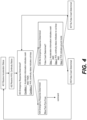
Figure 4 illustrates a flow chart for detecting an emergency responder, consistent with embodiments of the present disclosure. -
Figure 5a illustrates a plan view diagram for routing cut loop wiring through the tail of an eVTOL aircraft, consistent with embodiments of the present disclosure. -
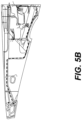
Figure 5b illustrates a profile view diagram for routing cut loop wiring through the tail of an eVTOL aircraft, consistent with embodiments of the present disclosure. - The present disclosure addresses components of electric vertical takeoff and landing (eVTOL) aircraft primarily for use in a non-conventional aircraft. For example, the eVTOL aircraft of the present disclosure may be intended for frequent (e.g., over 50 flights per workday), short-duration flights (e.g., less than 100 miles per flight) over, into, and out of densely populated regions. The aircraft may be intended to carry 4-6 passengers or commuters who have an expectation of a low-noise and low-vibration experience. Accordingly, it may be desired that their components are configured and designed to withstand frequent use without wearing, that they generate less heat and vibration, and that the aircraft include mechanisms to effectively control and manage heat or vibration generated by the components. Further, it may be intended that several of these aircraft operate near each other over a crowded metropolitan area. Accordingly, it may be desired that their components are configured and designed to generate low levels of noise interior and exterior to the aircraft, and to have a variety of safety and backup mechanisms. For example, it may be desired for safety reasons that the aircraft are propelled by a distributed propulsion system, avoiding the risk of a single point of failure, and that they are capable of conventional takeoff and landing on a runway. Moreover, it may be desired that the aircraft can safely vertically takeoff and land from and into relatively restricted spaces (e.g., vertiports, parking lots, or driveways) compared to traditional airport runways while transporting around 4-6 passengers or commuters with accompanying baggage. These use requirements may place design constraints on aircraft size, weight, operating efficiency (e.g., drag, energy use), which may impact the design and configuration of the aircraft components.
- Disclosed embodiments provide new and improved configurations of aircraft components that are not observed in conventional aircraft, and/or identified design criteria for components that differ from those of conventional aircraft. Such alternate configurations and design criteria, in combination addressing drawbacks and challenges with conventional components, yielded the embodiments disclosed herein for various configurations and designs of eVTOL aircraft components.
- In some embodiments, the eVTOL aircraft of the present disclosure may be designed to be capable of both vertical and conventional takeoff and landing, with a distributed electrical propulsion system enabling vertical flight, forward flight, and transition. Thrust may be generated by supplying high voltage electrical power to the electric engines of the distributed electrical propulsion system, which each may convert the high voltage electrical power into mechanical shaft power to rotate a propeller. Embodiments disclosed herein may involve optimizing the energy density of the electrical propulsion system. Embodiments may include an electric engine connected to an onboard electrical power source, which may include a device capable of storing energy such as a battery or capacitor, or may include one or more systems for harnessing or generating electricity such as a fuel powered generator or solar panel array. Some disclosed embodiments provide for weight reduction and space reduction of components in the aircraft, thereby increasing aircraft efficiency and performance. Given focus on safety in passenger transportation, disclosed embodiments implement new and improved safety protocols and system redundancy in the case of a failure, to minimize any single points of failure in the aircraft propulsion system. Some disclosed embodiments also provide new and improved approaches to satisfying aviation and transportation laws and regulations.
-
Figure 1A illustrates an example eVTOL aircraft, consistent with embodiments of the present disclosure. As shown inFig. 1a , in some embodiments, the distributed electrical propulsion system of the eVTOLaircraft 100 may include twelveelectric engines 110, which may be mounted on booms forward and aft of the main wings of theaircraft 100. The forwardelectric engines 110 may be tiltable mid-flight between a horizontally oriented position (e.g., to generate forward thrust) and a vertically oriented position (e.g., to generate vertical lift). The forwardelectric engines 110 may be of a clockwise type or counterclockwise type in terms of direction of propeller rotation. The aftelectric engines 110 may be fixed in a vertically oriented position (e.g., to generate vertical lift), and may also be of a clockwise type or counterclockwise type in terms of direction of propeller rotation. - The
aircraft 100 may possess various combinations of forward and aftelectric engines 110. For example, in some embodiments, theaircraft 100 may possess six forwardelectric engines 110 and six aftelectric engines 110. In some other embodiments, theaircraft 100 may include four forwardelectric engines 110 and four aftelectric engines 110, or any other combination of forward and aftengines 110. In some other embodiments, the number of forward electric engines and aft electric engines are not equivalent. - In some embodiments, for a vertical takeoff and landing (VTOL) mission, the forward
electric engines 110 as well as aftelectric engines 110 may provide vertical thrust during takeoff and landing. During flight phases where theaircraft 100 is in forward flight-mode, the forwardelectric engines 110 may provide horizontal thrust, while the propellers of the aftelectric engines 110 may be stowed at a fixed position in order to minimize drag. The aftelectric engines 110 may be actively stowed with position monitoring. - In some embodiments, in a conventional takeoff and landing (CTOL) mission, the forward
electric engines 110 may provide horizontal thrust for wing-borne take-off, cruise, and landing. In some embodiments, the aftelectric engines 110 may not be used for generating thrust during a CTOL mission and the aft propellers may be stowed in place. - Transition from vertical flight to forward flight and vice-versa may be accomplished via the tilt propeller subsystem. The tilt propeller subsystem may redirect thrust between a primarily vertical direction during vertical flight mode to a mostly horizontal direction during forward-flight mode. A variable pitch mechanism may change the forward electric engine's propeller-hub assembly blade collective angles for operation during the hover-phase, transition phase, and cruise-phase.
- The tilt propeller system may include a linear or rotary actuator to change the orientation of a propulsion system during operation. In some embodiments, the pitch of the propulsion system may be changed as a function of the orientation of the propulsion system. In some embodiments, a rotary actuator may include a motor, inverter, and gearbox. In some embodiments, a gearbox may include various types of gears interfacing to provide a gear reduction capable of orienting the propulsion system. In some embodiments, a tilt propeller system may include a redundant configuration such that multiple motors, inverters, and gearboxes are present and interface using a gear. In some embodiments, a configuration utilizing multiple motors, gearboxes, and inverters may allow a failed portion of the redundant configuration to be driven by the motor, inverter, and gearbox of another portion of the configuration. In some embodiments, a gearbox configuration may also allow the tilt propeller system to maintain a propulsion system orientation with the help of, or without, additional power being provided by the system.
- In some embodiments, an
electric engine 110 may be housed or connected to a boom of theaircraft 100 and include a motor, inverter, and gearbox. In some embodiments, the motor, inverter, and gearbox may be interfaced such that they share a central axis. In some embodiments, the torque originating in the motor may be sent away from the propellers of the propulsion system and to a gearbox. In some embodiments, a gearbox may provide a gear reduction and then send the torque, via a main shaft, back through a bearing located inside the motor and to the propeller. In some embodiments, an inverter may be mounted on the rear of a gearbox such that a main shaft does not travel through the inverter when outputting torque to the propeller. - As shown in
Fig. 1A , theaircraft 100 may be configured with a distributed electric propulsion system enabling vertical flight, forward flight, and transition. Theforward 6 electric engines 110 (which are numbered 1-6 from left to right) are with variable pitch propellers tilt to achieve vertical takeoff and landing, transition flight and fully wing-borne flight. The aft 6 electric engines 110 (which are numbered 7-12 from left to right) are equipped with fixed pitch propellers that operate during vertical takeoff and landing and transition and are stowed in a minimum drag position for conventional flight. The flight controls are an integrated fly-by-wire system that features envelope protection and structural load limiting functions. Theaircraft 100 will be equipped with advanced cockpit avionics, a flight management system, and the sensors necessary to support the intended operations and system functions. - In some embodiments, an electrical propulsion system (EPS) as described herein may generate thrust by supplying High Voltage (HV) electric power to the
electric engine 110, which in turn converts HV power into mechanical shaft power which is used to rotate a propeller. As mentioned above, anaircraft 100 as described herein may possess multipleelectric engines 110 which are boom-mounted forward and aft of the wing. The amount of thrust eachelectric engine 110 generates may be governed by a torque command from the Flight Control System (FCS) over a digital communication interface to eachelectric engine 110. Embodiments may include forwardelectric engines 110, and may be able to alter their orientation, or tilt. Additional embodiments include forward engines that may be a clockwise (CW) type or counterclockwise (CCW) type. The forward electric engine propulsion subsystem may consist of a multi-blade adjustable pitch propeller, as well as a variable pitch subsystem. - In some embodiments, the
aircraft 100 includes a high voltage power supply (HVPS) system to supply the High Voltage (HV) electric power. The HVPS system is the source of power on theaircraft 100 and configured to distribute the stored electrical energy to other systems on theaircraft 100, including the electrical propulsion system (EPS) for converting electrical power into mechanical rotational shaft power to generate thrust. As shown inFig. 1a , the HVPS system of theaircraft 100 may include six battery packs 120 (which are numbered 1-6 from left to right) installed within the battery bays in the wing of theaircraft 100. In some embodiments, sixbattery packs 120 may have the identical design, to simplify the design, manufacturing, and logistics. The battery packs 120 may power one or moreelectric engines 110. While sixbattery packs 120 are shown, theaircraft 100 may have any number of battery packs 120. - In some embodiments, a
single battery pack 120 may be electrically connected to, and power, multipleelectric engines 110. For example, in some embodiments, abattery pack 120 may power anelectric engine 110 on either side of a longitudinal axis. In some embodiments abattery pack 120 may power anelectric engine 110 on either side of a horizontal axis. In some embodiments, as shown inFig. 1a , abattery pack 120 may power two diagonally opposingelectric engines 110. For example,battery pack 1 may powerelectric engines Battery pack 2 may powerelectric engines Battery pack 3 may powerelectric engines Battery pack 4 may powerelectric engines 4 and 9.Battery pack 5 may powerelectric engines Battery pack 6 may powerelectric engines 6 and 7. Therefore, upon a loss of abattery pack 120, the impact to roll or pitch moments can be reduced because the loss of lift is balanced. In some embodiments, battery packs 120 may power different arrangements ofelectric engines 110 to reduce roll, pitch, or yaw moments that may be caused by a loss of thebattery pack 120. For example, in some embodiments, battery packs 120 may be connected toelectric engines 110 in any manner that balances lift and/or thrust across the longitudinal and horizontal axis of the aircraft. - Further, the HVPS system includes a cross-link 130 possessing at least one fuse allowing for pairing of two or more battery packs 120. Through the cross-link, power for the
electric engines 110 can be shared among the paired battery packs 120. Therefore, multiple battery packs 120 can simultaneously power multipleelectric engines 110. This arrangement provides for redundancy and avoids a single point of failure because each pairedbattery 120 may act as a backup for the other(s). Upon failure of abattery pack 120, one or more connected battery packs 120 may continue powering the failed battery pack's connectedelectric engines 110. - In some embodiments, as shown in
Fig. 1a , a pair of battery packs 120 may include two battery packs 120. In some embodiments, a pair of twobattery backs 120 may power a total of fourelectric engines 110. For example,battery pack 1, providing power toelectric engines battery pack 4, providing power toelectric engines 4 and 9.Battery pack 2, providing power toelectric engines battery pack 5, providing power toelectric engines Battery pack 3, providing power toelectric engines battery pack 6, providing power toelectric engines 6 and 7. -
Figure 1b illustrates another example eVTOL aircraft, consistent with embodiments of the present disclosure. In some embodiments,electric engines 110 may include multiple motor stages that are each independently powered by different battery packs 120 so that should onebattery pack 120 fail only a portion of the EPU is unpowered and the EPU can continue operating at a reduced power level. In some embodiments anelectric engine 110 may include two partial motors. For example,battery pack 1 may power first partial motors onelectric engines Battery pack 6 may power second partial motors onelectric engines electric engines -
Figure 1c illustrates anelectric engine 110 with two partial motors 191a and 191b, consistent with embodiments of the present disclosure. The partial motors 191a and 191b may be powered by different battery packs 120. The two partial motors 191a and 191b can operate independently to drive blades of an EPU and can operate simultaneously to drive the blades at a higher power. The partial motors 191a and 191b are driven by their own motor controllers 192a and 192b, respectively. In some embodiments, the power to the partial motors may be electrically separate so that eachelectric engine 110 has an electrically separate backup. - The above configurations are provided as an example, but a different number and configuration of battery packs 120,
electric engines 110, battery pack to electric engine connections, and battery pack cross link combinations may be used. In some embodiments, eachbattery battery pack 120 may power an individualelectric engine 110. For example, an aircraft may have four, six, eight, ten, twelve, or any number ofelectric engines 110 and the number of battery packs 120 may match the number of electric engines. In some embodiments, eachbattery pack 120 may power only oneelectric engine 110 and may be electrically separate from all other battery packs 120. In some embodiments, eachbattery pack 120 may power one or more partial motors and each electric engine may include two or more partial motors. Therefore, eachelectric engine 110 may have a backup power source but the battery packs 120 are still electrically separate. - In some embodiments, each
battery pack 120 may power multipleelectric engines 110. As described above, battery packs 120 may power sets ofelectric engines 110 that are symmetrical across one or more axes of symmetry. In some embodiments, abattery pack 120 may powerelectric engines 110 that are symmetrical across an aircraft's longitudinal axis, lateral axis, or both. For example, as described above, in some embodiments, different battery packs 120 may power diagonally symmetricelectric engines - In some embodiments, a
battery pack 120 may power more than twoelectric engines 110. In some embodiments, abattery pack 120 may power two or more sets of diagonally symmetric electric engines. For example, in some embodiments, abattery pack 120 may powerelectric engines electric engines electric engines 6 and 7 are diagonally symmetric. In some embodiments, the set ofelectric engines 110 powered by abattery pack 120 may include an inboard diagonally symmetric pair ofelectric engines 110 and an outboard diagonally symmetric pair ofelectric engines 110. - In some embodiments, a
battery pack 120 may power four or moreelectric engines 110 in a configuration that is symmetric across the longitudinal axis of symmetry. For example,battery pack 120 may powerelectric engines battery pack 120 may provide power to one or more partial motors and eachelectric engine 110 may include two or more partial motors. Therefore, eachelectric engine 110 may have a backup power source but the battery packs 120 are still electrically separate. - In some embodiments, some or all of the battery packs 120 are interconnected. As described above, a
cross-link 130 may allow eachbattery pack 120 to act as backup power for another. For example, in some embodiments,battery pack 1 may directly power a first number of electric engines and asecond battery pack 120 may directly power a second number of electric engines. The first and second battery packs 120 may be cross-linked together to form a battery pack unit. Therefore, each battery pack in the unit may act as a backup for the other. Upon failure of a battery pack in the unit, the failing battery pack may be disconnected andelectric engines 110 will be powered by one or more non-failing battery packs in the unit. The battery packs in a battery pack unit may be electrically separate from other battery pack units. - As described above, in some embodiments, a battery pack unit may comprise two
battery packs 120, wherein eachbattery pack 120 powers a number ofelectric engines 110. As described above, in some embodiments, eachbattery pack 120 may power two diagonally symmetricelectric engines 110. Therefore, each battery pack unit may power a total of fourelectric engines 110 and each electric engine has a battery pack backup. In some embodiments, eachbattery pack 120 in a battery pack unit may power fourelectric engines 110, comprising two sets of diagonally symmetricelectric engines 110. Therefore, each battery pack unit may power a total of eightelectric engines 110 and each electric engine has a battery pack backup. - In some embodiments, a battery pack unit may comprise three
battery packs 120, wherein each battery pack powers a number ofelectric engines 110. For example, in some embodiments, eachbattery pack 120 may power two diagonally symmetricelectric engines 110. Therefore, each battery pack unit may power a total of sixelectric engines 110 and eachelectric engine 110 has two battery pack backups. In some embodiments, eachbattery pack 120 in the battery pack unit may power fourelectric engines 110, comprising two sets of diagonally symmetricelectric engines 110. Therefore, each battery pack unit may power a total of twelveelectric engines 110 and each electric engine has two battery pack backups. - In some embodiments, a battery pack unit may comprise four
battery packs 120, wherein each battery pack powers a number of electric engines. For example, in some embodiments, each battery pack may power two diagonally symmetricelectric engines 110. Therefore, each battery pack unit may power a total of eightelectric engines 110 and each electric engine has three battery pack backups. In other embodiments, eachbattery pack 120 in the battery pack unit may power fourelectric engines 110, comprising two sets of diagonally symmetricelectric engines 110. Therefore, each battery pack unit may power sixteenelectric engines 110 and each electric engine has three battery pack backups. - In some embodiments,
electric engines 110 comprise a single motor that is powered by the one or more battery packs 120. In some embodiments, eachelectric engine 110 may include two or more partial motors and the battery packs 120 may power partial motors. In some embodiments, theelectric engine 110 powering configurations described above may include powering a partial motor of a battery pack. For example, in some embodiments, eachelectric engine 110 may include two partial motors and a battery pack unit may power partial motors ofelectric engines electric engines electric engines electric engines electric engine 110 will receive backup power through the other partial motor. As described above, each battery pack unit may comprise one or more battery packs. For example, a battery pack unit may comprise one, two, three, or four battery packs. - In some embodiments, each electric engine may include two partial motors and a battery pack unit may power partial motors of
electric engines electric engines electric engines electric engine 110 will receive backup power through the other partial motor. As described above, each battery pack unit may comprise one or more battery packs. For example, a battery pack unit may comprise one, two, three, or four battery packs. - In some embodiments, each electric engine may include two partial motors and a battery pack unit may power partial motors of
electric engines electric engines electric engines electric engines electric engines electric engines electric engine 110 will receive backup power through the other partial motor. As described above, each battery pack unit may comprise one or more battery packs. For example, a battery pack unit may comprise one, two, three, or four battery packs. Different configurations of battery packs 120,electric engines 110, battery pack to electric engine connections, and battery pack cross link combinations may be chosen to best balance aircraft power needs, system redundancy, and fault tolerance. -
Figure 1d illustrates a diagram of a high voltage power system for an eVTOL aircraft, consistent with embodiments of the present disclosure. As shown inFig. 1b , eVTOL aircraft may include a battery assembly comprising electrically separate battery pack units (e.g. 160, 162, and 164). Each battery pack unit may include battery packs 120 that are cross-linked together, as described above. In some embodiments, the battery pack units may include battery packs 120 that ensure aircraft controllability is maintained upon the loss of a battery pack unit. Therefore, upon a loss of a battery pack unit, the aircraft may still be controllable. As described above, in some embodiments, the battery pack units may include battery packs 120 that powerelectric engines 110 on opposite sides of one or more axis of symmetry. Therefore, upon a loss of a battery pack unit, the impact to roll, pitch, or yaw moments can be reduced because the loss of lift and/or thrust is balanced. In some embodiments, loss of power, or reduction of power, caused by failure of a battery pack unit will have a substantially symmetric effect (e.g., <±5%, <±10%, <±15%, <±20%, or <±25% asymmetry) with respect to roll, pitch, and/or yaw of the aircraft. In some embodiments, the battery pack units may include battery packs 120 to reduce an overall amount of high voltage wiring between the battery packs. In some embodiments, the battery pack units may include battery packs 120 to minimize power requirements. - In some embodiments, as shown in
Fig. 1d , the HVPS system may comprise three electrically separate battery pack units. For example, in some embodiments,battery pack unit 160 may includebattery packs electric engines Battery pack unit 162 may includebattery packs electric engines Battery pack unit 164 may includebattery packs electric engines electric engines 110. Upon the failure of onebattery pack 120 in a battery pack unit, the other pairedbattery pack 120 will continue powering the four electric engines. - In some embodiments, each
battery pack units cross-link 130 connects two high voltage channels, each feeding one or moreelectric engines 110. For example, in some embodiments, thecross link 130 may be connected to each battery pack's high voltage channel before the channel splits to power multiple electric engines 110 (e.g. to power two electric engines). A cross link may further include a bus connecting the negative voltage channels after the negative voltage channels are combined (e.g. after powering two electric engines). - In some embodiments, each
cross link 130 may include at least one fuse to disconnect the cross-link upon a failure of the cross-link. For example, fuses 131, 132, and 134 may be located on the cross-link connection of the positive high voltage channels inbattery pack units battery pack 120 may determine a failure in a cross-link, such as a short circuit or overcurrent condition, and blow the associated pyro-technical fuse. Therefore, the cross-link can be disconnected and further damage to HVPS system components (e.g. electric engines, batteries, EPUS) can be avoided. Further, theelectric engines 110 will still receive power from the pairedbattery pack 120 in the battery pack unit. For example, upon a cross-link failure, pyro-technical fuse 131 may be blown, butelectric engines battery pack 1, andelectric engines 4 and 9 will still receive power frombattery pack 4. - In some embodiments, there may be additional pyrotechnical fuses on the cross-link connection of the negative high voltage channels. For example, pyrotechnical fuses 170, 172, and 174 may be located on the cross-links in
battery pack units - In some embodiments, the HVPS system may include load disconnection devices to disconnect a portion of the HVPS circuit upon a failure (e.g. short circuit or overcurrent condition) of a downstream electric engine, a downstream EPU, or other downstream distribution circuitry. In some embodiments, a load disconnection device may be located directly upstream of the electric engine. For example, in some embodiments,
load disconnection devices channel powering engines channels powering engines Load disconnection devices channels powering engines - In some embodiments, the load disconnection devices are pyro-technical fuses. Upon failure of a downstream component, the pyro-technical fuse may receive a signal (e.g. from a battery management system of a connected battery) and blow the fuse. Therefore, the downstream components can be disconnected and further damage to other equipment (e.g. electric engines, batteries, EPUS) can be avoided. Further, the remaining
electric engines 110 in the battery pack unit will still receive power from the connected battery packs 120. For example, upon a failure in a device or wiring downstream ofpyrotechnical fuse 109, thepyrotechnical fuse 109 may be blown, butelectric engines battery packs - In some embodiments, the HVPS system may include a high voltage charging channel allowing all the battery packs 120 to be charged from the same charging port. The high voltage charging channel may include charging disconnection devices. In some embodiments, the charging disconnection devices may be positioned downstream of a common charging bus on the positive charging side. For example,
disconnection devices disconnection devices - In some embodiments, the charging disconnection devices are contactors, such as K4 Pos and K4 Neg in
Fig. 2A . The charging contactors may act as a redundant measure to disconnect the battery packs 120 from charging. As further detailed below, abattery pack 120 may report a charging issue to a charge control unit (CCU). For example, abattery pack 120 may report a short circuit or overcurrent condition in thebattery pack 120 or in the high voltage charging channel. In some embodiments, if the CCU fails to stop the charging, the battery packs 120 may command the charging contactors to disconnect the charging channel. In some embodiments, the battery packs 120 may automatically command the charging contactors to disconnect the charging channel without waiting for the CCU to fail. In some embodiments, after commanding the CCU to stop charging and/or disconnecting abattery pack 120 that detected the charging issues, thebattery pack 120 and/or CCU may command the other battery packs 120 to disconnection from the charging channel. By disconnecting the battery packs 120 upon detecting a charging issue, damage to HVPS components can be avoided. -
Figure 2a illustrates a circuit diagram for a High Voltage Junction Box (HVJB), consistent with embodiments of the present disclosure.HVJB 222 may be electrically connected to the HV loads 210 to provide high voltage power. Specifically, the DC/DC converter in the battery management system (BMS) and the power storage element BT1 (e.g., the battery cells connected in parallel and in series) can be used to provide the high voltage power. The DC/DC converter and the power storage element BT1 are connected to each of the HV loads through pre-charge resistor(s) (e.g., resistor R1) or current sensing resistor(s) (e.g., resistors R2-R6), switching devices K1-K5 (e.g., HV contactors, relays, and/or controllers), and a combination of active and passive fuses (e.g., F1-F7) to protect against various failure conditions (e.g., overcurrent, short-circuit etc.). In some embodiments, the fuses F1-F7 may be one or more of the fuses detailed above with respect toFig. 1b . For example, in some embodiments, fuses F2 EE1, F3 EE2, and F4 Xlink may correspond tofuses Fig. 1d . - Fuse F1 may be a pack fuse to disconnect the failing
battery pack 120 from the rest of the HVPS system. In some embodiments, F1 may be a pyro-technical fuse. Upon failure of abattery pack 120, the pyro-technical fuse F1 may receive a signal (e.g. from the associated battery management system) and blow the fuse F1. Therefore, further damage to other equipment (e.g. electric engines, EPUs, connected battery packs) can be avoided. Further, theelectric engines 110 will still receive power from the paired battery packs 120 within the battery pack unit. For example, upon a battery pack failure,battery pack 1 pyro-technical fuse F1 may be blown, butelectric engines battery pack 4. - The arrangement of circuitry in the high voltage junction box (HVJB) 222 provides flexibility in charging by allowing for auxiliary loads and/or electric engines and actuators to be energized or de-energized in the charging process. For example, the
battery pack 120 may be charged while the remaining HVPS circuitry remains disconnected. Charging contactors K4 positive and K4 negative may be closed to allow thebattery pack 120 to charge. Meanwhile, main contactors K1 and K2 and pre-charge contactors (and/or relays) K3 and K5 may be open to prevent energizing the remaining HVPS circuitry. Further, thebattery pack 120 may be charged while the auxiliary loads are connected but electric engines and actuators remain disconnected. Charging contactors K4 positive and K4 negative may be closed to allow thebattery pack 120 to charge. Meanwhile, main contactors K1 and K2 may be closed after pre-charge contactor (and/or relays) K3 finishes pre-charging the auxiliary loads, and K4 EE may remain open. Further, thebattery pack 120 may be charged while all loads are connected. Charging contactors K4 positive and K4 negative may be closed to allow thebattery pack 120 to charge. Meanwhile, main contactors K1 and K2 may be closed after pre-charge contactors (and/or relays) K3 and K5 finish pre-charging the connected loads, and K4 EE may be closed. - In some embodiments, an input device may allow a person to select the charging mode of the aircraft. For example, a person request charging in one of the three different modes outlined above through the input device. In some embodiments, the input device may be a physical switch, button, and/or lever. In some embodiments, the input device may be a user interface element provided on a display screen or control panel. In some embodiments, the input device may be a processor that may receive a manual selection and/or voice command requesting a mode switch. The input device may include any means that allows a person to select a desired charging mode. In some embodiments, the input information is transmitted to a
BMS 270 and theBMS 270 may control the contactors according to the requested charging mode. -
Figure 2b illustrates a diagram of a High Voltage Junction Box 222 (HVJB), consistent with embodiments of the present disclosure. In some embodiments, eachbattery pack 120 contains anHV distribution unit 211, a Battery Management System (BMS 270), and a Pyro-fuse Redundant Trigger board (PRT 280) housed within the HVJB 122. Each unit may be a hardware device, such as a computer, processor, or microprocessor. TheBMS 270 may be configured to monitor voltages, temperatures, currents, and isolation resistances. TheBMS 270 may control battery pack contactors and pyrotechnical fuses to protect against fault conditions. As further detailed below, theBMS 270 may communicate with various systems within and outside theHVJB 222. TheBMS 270 may include a Battery Management Unit (BMU 271) which may receive voltage, current, resistance, and temperature sensing signals from thecell stack assembly 224 and/or theHV distribution unit 211. TheBMS 270 may further include Cell Management Units (CMUs) 272 to monitor the voltages of each set of 7 parallel cells (i.e., a 1S-7P cell group) connected in series in a 14S-7P cell block. The CMUs may also be used to monitor a 14S-7P cell block's temperature. TheCMUs 272 obtain measurements for all the cell groups in thebattery pack 120 and communicate the measurements to theBMU 271. - The
BMU 271 may monitor output current for each of the connected loads. TheBMU 271 may be internally powered by the batterycell stack assembly 224 and continuously monitor the state of the battery even when it is not installed in theaircraft 100. By monitoring thebattery pack 120, cell block, and cell group parameters, the BMU may protect against conditions that adversely affect safety or performance, such as overvoltage, undervoltage, overtemperature, under-temperature, loss of electrical isolation, short circuit, overcurrent, etc. The diagnostic function of theBMU 271 allows for fault detection and isolation through built-in-tests (BIT). In addition, theBMU 271 performs computation of the state of charge (SOC), state of health (SOH), failure condition (e.g. short circuit or overcurrent), state of power (SOP), state of energy (SOE) and state of temperature (SOT) of thebattery pack 120. TheBMU 271 also controls and monitors bus pre-charging, provides fuse and contactor commands, and communicates with various systems within and outside theHVJB 222. -
HV distribution unit 211 in theHVJB 222 may containHV contactors 212 and a combination of active and passive fuses (e.g., pyrotechnical fuses 213 and fuses 214) to protect against overcurrent and short-circuit conditions. In some embodiments, thecontactors 212 may correspond to one or more of switching devices K1-K7 (e.g. HV contactors) detailed inFig. 2a . Similarly, the pyrotechnical fuses 213 and fuses 214, may correspond to one or more fuses F1-F8 detailed inFig. 2a .HV Distribution Unit 211 may further include (or receive information from) current sensors (e.g. resistor R3-R6, a hall effect sensor, shunt current sensor, or other sensor(s)). - In some embodiments, a pyro-fuse redundant trigger board (PRT 280) may be located within
HVJB 222. While in other embodiments,BMS 270 may communicate with aPRT 280, located outside theHVJB 222. TheBMS 270 may detect a failure event and send command signals to thePRT 280 for a corresponding pyro fuse driver to blow a fuse. For example, in some embodiments,HV Distribution Unit 211 may receive a sensor signal from a current sensor (e.g. resistor R3-R6) and provide information to theBMU 271 regarding the condition of the connected loads (e.g. a voltage, current, or temperature) at a point in the HVPS system. Based on the received information, theBMU 271 may determine a failure condition (e.g. because the value is outside a predetermined range) and send a command toPRT 280 to blow an associated pyrotechnical fuse. Therefore, the fault condition can be disconnected from the rest of the HVPS circuitry, protecting the remaining devices and wiring. In some embodiments theBMU 271 may directly monitor the sensors instead of receiving information throughHV Distribution Unit 211. - In some embodiments, battery packs 120 may be in communication with each other, e.g. through
BMS 270. The battery packs 120 may use information regarding the state of one or more paired battery packs 120 in a battery pack unit to help determine whether an overcurrent condition has occurred. For example, abattery pack 120 may determine an expected operation range (e.g. voltage, current etc.) based on the state of the battery pack and the communicated state of battery packs 120 within the battery pack unit. In some embodiments, HVJB 122 may further provide a redundant active trigger board configured to enable the pyro fuse driver to activate one or more pyrotechnical fuses when theBMS 270 fails to enable the pyro fuse driver. SeeUS 11,710,957 - The Control MCU (CCU 263) in the
charge port assembly 262 may interface with the external battery charger and communicate with theBMUs 271 on the six installed battery packs 120. This unit may be a hardware device, such as a computer, processor, or microprocessor. In some embodiments, theCCU 263 may be a single PCBA with one microcontroller that manages overall power delivery to eachbattery pack 120 when charging. As shown inFIG. 2 , theCCU 263 may perform the handshake between the Ground Charging Subsystem 274 and theBMUs 271 and may command theBMUs 271 to open orclose contactors 212, such as contactors K6-K7 detailed inFig. 2a . TheCCU 263 may perform active detection and protection features for overvoltage protection. TheBMUs 271 in eachbattery pack 120 may retain full control and continuously monitor their battery packs 120 during charging operations. -
Figure 3 illustrates a diagram of a Charge Port Assembly (CPA 262), consistent with embodiments of the present disclosure.Charge Port Assembly 262 includes aCharge Port 330, providing for communication connection throughpower line communication 335 and HV power transfer throughHV power channel 336. In some embodiments,Charge Port 330 may be a JI 772Type 1 charge port including various pins and connection points to allow for connection to a Ground Service System (GSS 300) (e.g. through a plug). TheCharge Port 330 may include one or more proximity pins to detect a high voltage connection between the GSS 300 and theCharge Port 330. Upon detecting a connection with the GSS 300, theCharge Port 330 may engage a latch that prevents thehigh voltage power 336 from being disconnected under a charged load. Following completion of the charging, theCharge Port 330 may automatically unlatch the connection or enable manual unlatching. - The
Charge Port Assembly 262 may include a Charge Control Unit (CCU 263) in communication with theCharge Port 330, e.g. throughcommunication line 333. TheCCU 263 may further providelatch control 331, illumination changes 334, and to monitor and respond to atemperature 332 of various components. TheCCU 263 may monitor a temperature on an inlet side of thecharge port 330. If the temperature gets too high, then theCCU 263 may command the Ground Service System 300 to abort the charge. TheCCU 263 receives status updates from battery packs 120 and provides commands to battery packs 120 to control their charge level by opening and closing battery pack charge contactors (e.g. K6-K7 inFig. 2a ). As detailed with reference toFig. 2b above, in some embodiments, theCCU 263 may communicate with each battery pack's Battery Management System (BMS 270), e.g. through a Battery Management Unit (BMU 271). TheBMS 270 may send battery pack information to theCCU 263, including information on a state of battery pack connection (e.g. whether the battery pack is connected to the HVPS system), state of charge (SOC), state of health (SOH), failure condition (e.g. short circuit or overcurrent), state of power (SOP), state of energy (SOE), and state of temperature (SOT). - The
CCU 263 may provide commands to theBMS 270 to open or close battery pack charge contactors. In some embodiments, eachbattery pack 120 may have a separate low voltage CAN communication line connecting thebattery pack 120 to theCCU 263. In some embodiments, a CAN communication line may be shared between one or more battery packs 120 in a battery pack unit. For example, HV battery packs 1 and 4 may communicate withCCU 263 throughCAN 351. HV battery packs 2 and 5 may communicate withCCU 263 throughCAN 352. HV battery packs 3 and 6 may communicate withCCU 263 throughCAN 353. As further detailed below,CCU 263 may make various power supply and cooling requests of the GSS 300 (e.g. through charge port 330) based on the information received from the battery packs 120. -
Charge Control Unit 263 may determine battery pack charge contactor commands based on a variety of criteria. In some embodiments,CCU 263 may determine the required battery pack charge levels based on flight information. For example, in someembodiments CCU 263 may receive flight information from GSS 300, e.g. throughcommunication lines Charge Port Assembly 262 may provide for a direct wired or wireless connection to a computer, laptop, ipad, mobile device to directly receive flight information. In some embodiments,CCU 263 may receive flight information from the aircraft'sflight control system 230. - Flight information may include flight mission information, such as a location of the destination, a distance to the next destination, or an expected flight time required to get to the next destination. Flight mission information may include a type of flight expected. For example, flight mission information may include a duration or distance to be covered in each flight mode. In some embodiments, flight modes may include winged-flight, thrust and lift assisted flight, thrust assisted flight, and lift assisted flight. In some embodiments, flight mission information may include an expected EPU output throughout the flight, e.g. as a unit of power or percentage of max EPU power. In some embodiments, flight mission information may be provided for each EPU on an aircraft.
- Flight mission information may include information on predicted weather conditions throughout the flight. Weather conditions may include temperatures, pressures, wind conditions, and precipitation expected throughout the flight. Flight mission information may include an expected weight of an aircraft, e.g. based on the number of passengers or an amount of cargo. The weight of an aircraft may be predicted or measured (e.g. if the aircraft is charging with passengers or cargo on board).
- Flight information may include historical battery information. For example, in some embodiments, battery information may include historical battery consumption of each battery pack on a particular flight path. The battery information may further include details on flight modes, weight, and weather, for the
Charge Control Unit 263 to determine its relevance to the flight mission ahead. - Further, flight information may be received and analyzed for multiple subsequent flights. In some embodiments, if an aircraft will take multiple trips without the ability to re-charge, flight information may be gathered and analyzed for all subsequent flights to ensure the aircraft has sufficient charge for each trip. In some embodiments, an aircraft may have time to partially re-charge before a subsequent trip. Therefore, flight information may include information on the subsequent trip and information on the amount of re-charging that is available between trips. By receiving this information, the
CCU 263 may ensure that the battery packs 120 have enough charge to support a sufficient portion of the subsequent trip. TheCCU 263 may use the flight information to determine a required charge level required of eachbattery pack 120. - Charge Control Unit (CCU 263) may determine battery pack charge contactor commands based on the current state of each
battery pack 120 received from theBMS 270, including a state of energy and/or state of charge of eachbattery pack 120. TheCCU 263 may determine how much additional charge is necessary to meet the required charge level based on each battery pack's current charge level. Further, in some embodiments, theCCU 263 may consider the battery pack configuration when charging the battery packs 120. TheCCU 263 may determine to charge eachbattery pack 120 within a battery pack unit to the same charge level. Therefore, theCCU 263 may charge all battery packs 120 in a battery pack unit to the highest charge level required of any battery packs 120 within the unit. As thebattery pack 120 charges, theCCU 263 may continue to receive updates on each battery pack's charge level and keep the battery pack charge contactors closed to enable charging until the required charge level is reached. - Further, Charge Control Unit (CCU 263) may determine battery pack charge contactor commands based on a failure condition, state of health, or state of temperature received from the
BMS 270. In some embodiments,CCU 263 may open a contactor to a battery pack 120 (disabling charging) based on receiving information that abattery pack 120 has failed (e.g. experienced a short circuit or overcurrent condition). Further, theCCU 263 may open a contactor to a battery pack 120 (disabling charging) based on the battery pack state of health dropping below a set level or based on the battery pack temperature exceeding a set level. TheCCU 263 may continue to monitor failure condition, state of health, or state of temperature from thebattery pack 120, and close the contactor (enabling charging) when the conditions are remedied. -
Charge Control Unit 263 may send cooling commands to the GSS 300, e.g. throughcommunication lines CCU 263 may send a required battery pack temperature or a required coolant flow rate. TheGround Charging Subsystem 310 may communicate this information with aThermal Conditioning Subsystem 320. TheThermal Conditioning Subsystem 320 may control one or more condensers and associated coolant control valves to achieve the cooling requirements. - The Charge Control Unit (CCU 263) may signal the state of the battery packs 120 throughout the charging process to a charging attendant. In some embodiments, the
CCU 263 may signal a problem (e.g. a battery pack failure, poor health, or excess temperature) through theillumination line 334. For example, in some embodiments, a light may be turned on or change colors to indicate the problem. Alternatively, or additionally, theCCU 263 may communicate the details of the problem (e.g. type of problem, relevant battery pack(s) etc.) to the Ground Service System 300 throughcommunication lines - Charge Control Unit (CCU 263) may determine that each
battery pack 120 has reached the required charge level and signal charge completion to the Ground Service System 300. Upon determining that no charge is being received from the GSS 300, theCCU 263 may provide a signal to the charge port, e.g. throughlatch control 331, to automatically unlatch the connection to the GSS 300 or to allow for manual unlatching of the connection. -
Figure 4 illustrates a flow chart for detecting an emergency responder, consistent with embodiments of the present disclosure. In some embodiments, this process is performed by eachbattery management system 270 of the battery packs 120. At step 401, a processor, receives acceleration information. In some embodiments, acceleration information may be received directly from sensors (e.g. an accelerometer), while in other embodiments acceleration information may be received from a different processor, such as one associated with a flight control system of the aircraft. At step 402, the processor, receives a High Voltage Interlock Loop (HVIL) continuity status (e.g. from a Battery Management System (BMS 270)) indicating whether or not a low voltage emergency cut loop has been cut. For example, aBMS 270 determines that a cut loop has been cut based on detecting a loss of current. The information gathered in steps 401 and 402 may be received sequentially or simultaneously. Further, in some embodiments the information gathered may include a time stamp indicating when it was collected. While in other embodiments, the processor may assign a time based on when it received the information. - At
step 403, the processor may determine whether an emergency responder performed a cut of the low voltage emergency cut loop. The processor may make this determination based on the acceleration information and the HVIL continuity status. If the acceleration information indicates a crash (e.g. exceeds a threshold) at an earlier time than the HVIL continuity status indicates a cut loop, then it is determined that an emergency responder cut the low voltage emergency cut loop cut loop. However, if an HVIL continuity status indicates a cut loop at an earlier time than the acceleration information indicates a crash, then an emergency response is not detected. Further if either the acceleration information doesn't indicate a crash or the HVIL continuity status does not indicate a cut, then an emergency response is not detected. Atstep 404, if it is determined that an emergency responder performed the cut then the processor sends a command to blow one or more battery pack fuses to de-energize at least a portion of the high voltage power system. In some embodiments, the processor may determine whichbattery pack 120 to blow based on whichbattery pack 120 is associated with the cut loop. For example, in some embodiments acut loop 1 may be connected to abattery pack 1. The processor may determine an emergency responder cutloop 1 and the processor may instructbattery pack 1 to blow thebattery pack 1 pyrotechnical fuse, such as fuse F1 inFig. 2a . In some embodiments, based on determining an emergency responder cut any of the loops, the processor may blow the pyrotechnical fuse associated with thebattery pack 120 and anyconnected battery pack 120. For example, referencingFig. 1a , based on determining that an emergency responder cutloop 1 associated withbattery pack 1, the processor may blow the pyrotechnical fuses associated withbattery packs - At
step 405, the processor may determine whether the crash detection was false. The processor may determine that acceleration information indicates a crash, but the HVIL continuity status indicates that there is no cut loop. Further, the processor may gather, or have available, information on whether the flight control system is in ground mode. If the processor determines that the aircraft flight control system is in ground mode, the processor may determine that the crash detection was false. However, if the processor determines that the flight control system is not in ground mode (e.g. in fly mode), then a false crash will not be determined. In some embodiments, "ground mode" may be a mode selected by the pilot through an interface when the pilot is operating the aircraft on the ground. - At
step 406, if it is determined that the crash detection was false,Condition 1 will be reset to indicate no crash detected and the processor will re-gather acceleration information. Atstep 407, if it is not determined that the crash detection was false,condition 1 will not be reset and the processor will continue to monitor whether the HVIL continuity status indicates a cut loop atStep 403condition 2. -
Figure 5a illustrates a plan view diagram for routing cut loop wiring through the tail of an eVTOL aircraft, consistent with embodiments of the present disclosure. As detailed above, each cut loop may be connected to asingle battery pack 120. Therefore, 6 cut loops may be be routed from the battery packs 120 located in the wings, or elsewhere, to the tail of the plane. This routing ensures that the cut loops are accessible to be cut in the tail of the aircraft away from the high voltage power system running between the batteries, electric engines, and other aircraft devices towards the front of the aircraft. A first responder can cut one or more loops to de-energize the battery packs 120 without risking cutting into an energize high voltage line, thereby increasing safety. In some embodiments, each cut loop may be routed separately. In some embodiments, the cut loops may be routed with one or more battery packs 120 (e.g. in a bundle). For example, cut loops associated with connected battery packs may be bundled together or cut loops associated with a wing of the plane may be bundled together. In some embodiments, the cut loops for the battery packs 120 may all be routed together in a single bundle. -
Figure 5b illustrates a profile view diagram for routing cut loop wiring through the tail of an eVTOL aircraft, consistent with embodiments of the present disclosure. As detailed above, the cut loops are routed to the tail of the aircraft to increase safety of the emergency responders. Additionally, the cut loops may be routed in a manner that allows them to be easily accessible by a first responder. For example, in some embodiments, the cut loops may be routed towards the perimeter of the airplane so they are easier to find and cut. Cut loops may be color coded and contain descriptive tags at set intervals to ensure first responders are easily able to identify them.
Claims (15)
- A method for aircraft battery management, the method comprising:receiving, by a battery management system (270), aircraft movement information of an aircraft;the method being characterized by further comprising:detecting, by the battery management system (270), that the movement information indicates a potential crash;detecting, by the battery management system (270), a loss of current in at least one low voltage wire; andblowing, by the battery management system (270), a battery pack fuse (131, 132, 134, 170, 172, 174) of at least one battery pack (120) configured to supply high voltage power to disconnect supply of the high voltage power by the at least one battery pack.
- The method of claim 1, comprising: blowing, by the battery management system (270), the battery pack fuse (131, 132, 134, 170, 172, 174) to disconnect supply of the high voltage power upon determining the potential crash occurred prior to the loss of current in the at least one low voltage wire.
- The method of claim 1 or 2, comprising:receiving, by the battery management system (270), a mode of the aircraft from a flight control system of the aircraft;determining, by the battery management system (270), a false crash detection based on detecting the aircraft movement information indicates a potential crash, detecting no loss of current in the at least one low voltage wire, and detecting the aircraft was in a ground mode at the time of the potential crash; andreceiving, by the battery management system (270), new aircraft movement information after determining the false crash detection.
- The method of any of claims 1-3, wherein the movement information is aircraft is acceleration information is received from an accelerometer on the aircraft.
- The method of any of claims 1-4, wherein the potential crash is detected based on the aircraft acceleration exceeding a threshold.
- The method of any of claims 1-5, comprising the battery management system (270) communicating with a second battery management system.
- The method of claim 6, wherein the at least one battery pack comprises a first battery pack and a second battery pack configured to supply the high voltage power, the method comprising the battery management system blowing all battery pack fuses for the first and second battery packs upon determining the potential crash occurred prior to the loss of current in the at least one low voltage wire.
- The method of any of claims 1-7, wherein the battery pack fuse is a pyro-technical fuse.
- A system for an aircraft battery management, comprising:a battery management system (270) including one or more processors,wherein the one or more processors are configured to execute instructions to cause the battery management system to perform the method of any of claims 1-8.
- The system of claim 9, comprising at least two battery packs (120), wherein each battery pack comprises: the battery management system (270), a connection to the at least one low voltage wire, and the battery pack fuse (213).
- The system of claim 10, wherein one of the battery management systems is configured to blow all the battery pack fuses (213) for the at least two battery packs (120) upon determining the potential crash occurred prior to the loss of current in the at least one low voltage wire.
- The system of any of claims 9-11, wherein the at least one low voltage wire is routed through a tail of the aircraft.
- The system of any of claims 9-12, comprising:at least two battery packs (120),wherein each battery pack comprises the battery management system (270) and a connection to the at least one low voltage wire; andwherein the at least one low voltage wire for the at least two battery packs are bundled together and routed through a tail of the aircraft.
- The system of any of claims 9-13, wherein the battery pack fuse (213) is a pyro-technical fuse.
- The system of any of claims 9 to 14, comprising:at least one electric propulsion unit,wherein the supply of high voltage power by the at least one battery pack provides power to the electric propulsion unit,optionally wherein the at least one battery pack includes the battery management system.
Priority Applications (1)
| Application Number | Priority Date | Filing Date | Title |
|---|---|---|---|
| EP25186632.3A EP4654433A2 (en) | 2022-11-14 | 2023-11-14 | High voltage battery architecture |
Applications Claiming Priority (2)
| Application Number | Priority Date | Filing Date | Title |
|---|---|---|---|
| US202263383660P | 2022-11-14 | 2022-11-14 | |
| PCT/US2023/079690 WO2024107760A1 (en) | 2022-11-14 | 2023-11-14 | High voltage battery architecture |
Related Child Applications (1)
| Application Number | Title | Priority Date | Filing Date |
|---|---|---|---|
| EP25186632.3A Division EP4654433A2 (en) | 2022-11-14 | 2023-11-14 | High voltage battery architecture |
Publications (3)
| Publication Number | Publication Date |
|---|---|
| EP4437612A1 EP4437612A1 (en) | 2024-10-02 |
| EP4437612C0 EP4437612C0 (en) | 2025-07-02 |
| EP4437612B1 true EP4437612B1 (en) | 2025-07-02 |
Family
ID=89119257
Family Applications (3)
| Application Number | Title | Priority Date | Filing Date |
|---|---|---|---|
| EP23828847.6A Active EP4437612B1 (en) | 2022-11-14 | 2023-11-14 | High voltage battery architecture |
| EP23818211.7A Active EP4529689B1 (en) | 2022-11-14 | 2023-11-14 | High voltage junction box for a battery pack |
| EP23832865.2A Pending EP4619308A1 (en) | 2022-11-14 | 2023-11-14 | Heat exchanger assemblies and cooling systems for evtol aircraft |
Family Applications After (2)
| Application Number | Title | Priority Date | Filing Date |
|---|---|---|---|
| EP23818211.7A Active EP4529689B1 (en) | 2022-11-14 | 2023-11-14 | High voltage junction box for a battery pack |
| EP23832865.2A Pending EP4619308A1 (en) | 2022-11-14 | 2023-11-14 | Heat exchanger assemblies and cooling systems for evtol aircraft |
Country Status (8)
| Country | Link |
|---|---|
| US (3) | US12119465B2 (en) |
| EP (3) | EP4437612B1 (en) |
| JP (2) | JP7812014B2 (en) |
| KR (2) | KR102856127B1 (en) |
| CN (2) | CN120019526B (en) |
| AU (1) | AU2023382736B2 (en) |
| NZ (1) | NZ817858A (en) |
| WO (2) | WO2024107726A1 (en) |
Citations (2)
| Publication number | Priority date | Publication date | Assignee | Title |
|---|---|---|---|---|
| US20140242421A1 (en) * | 2013-02-26 | 2014-08-28 | GM Global Technology Operations LLC | Systems and Methods for Control of a Current Interruption Component in a Battery System |
| US20200290742A1 (en) * | 2017-03-19 | 2020-09-17 | Zunum Aero, Inc. | Hybrid-electric aircraft, and methods, apparatus and systems for facilitating same |
Family Cites Families (69)
| Publication number | Priority date | Publication date | Assignee | Title |
|---|---|---|---|---|
| US5531402A (en) * | 1995-03-23 | 1996-07-02 | Dahl; Robert M. | Wireless flight control system |
| US5928300A (en) * | 1997-10-30 | 1999-07-27 | Simula Inc. | Three-axis aircraft crash sensing system |
| US20040048142A1 (en) | 2002-06-04 | 2004-03-11 | Marusak Brian T. | Power management and distribution assembly mountable to a battery |
| JP4419765B2 (en) | 2004-09-13 | 2010-02-24 | 三菱自動車工業株式会社 | Battery pack device |
| KR100669424B1 (en) | 2005-03-11 | 2007-01-15 | 삼성에스디아이 주식회사 | Battery Modules and Battery Modules |
| JP4774783B2 (en) * | 2005-03-30 | 2011-09-14 | トヨタ自動車株式会社 | Drive battery pack mounting structure |
| KR100612239B1 (en) | 2005-04-26 | 2006-08-11 | 삼성에스디아이 주식회사 | Secondary battery partition wall forming the secondary battery module and the secondary battery module |
| WO2012055044A1 (en) * | 2010-10-29 | 2012-05-03 | Dana Canada Corporation | Heat exchanger and battery unit structure for cooling thermally conductive batteries |
| CN103443953B (en) * | 2011-03-18 | 2016-04-06 | 达纳加拿大公司 | Battery unit cooler |
| JP5718731B2 (en) | 2011-05-31 | 2015-05-13 | ルネサスエレクトロニクス株式会社 | Voltage monitoring system and voltage monitoring module |
| US9786961B2 (en) | 2011-07-25 | 2017-10-10 | Lightening Energy | Rapid charging electric vehicle and method and apparatus for rapid charging |
| JP5677261B2 (en) | 2011-09-30 | 2015-02-25 | 株式会社日立製作所 | Power storage system |
| JP5987569B2 (en) * | 2011-09-30 | 2016-09-07 | 株式会社Gsユアサ | Battery pack |
| JP5862200B2 (en) * | 2011-10-25 | 2016-02-16 | 住友電装株式会社 | Battery module for vehicles |
| WO2013151526A1 (en) * | 2012-04-02 | 2013-10-10 | Parker-Hannifin Corporation | Cooling system and method |
| JP5555739B2 (en) * | 2012-04-11 | 2014-07-23 | 富士重工業株式会社 | Vehicle battery device |
| DE102012209302A1 (en) | 2012-06-01 | 2013-12-05 | Robert Bosch Gmbh | Kühlmittelverteilsystem |
| KR102088151B1 (en) * | 2012-06-13 | 2020-03-12 | 알리손 트랜스미션, 인크. | Energy storage system for vehicle |
| JP6247608B2 (en) | 2014-07-23 | 2017-12-13 | 日立オートモティブシステムズ株式会社 | Battery pack |
| CA2973021A1 (en) * | 2015-01-09 | 2016-07-14 | Dana Canada Corporation | Counter-flow heat exchanger for battery thermal management applications |
| JP6531268B2 (en) * | 2015-05-21 | 2019-06-19 | 株式会社エンビジョンAescジャパン | Vehicle battery pack |
| WO2017221379A1 (en) | 2016-06-23 | 2017-12-28 | エリーパワー株式会社 | Power storage device |
| EP3291359B1 (en) | 2016-09-01 | 2020-05-13 | Samsung SDI Co., Ltd. | Battery pack and encapsulated interconnection for a battery pack |
| JP2018090179A (en) | 2016-12-06 | 2018-06-14 | 住友電装株式会社 | Attachment structure for attaching battery and electric connection box directly coupled to battery to vehicle |
| US11603210B2 (en) | 2017-04-27 | 2023-03-14 | Flyon Aerosystems Ltd. | High traffic-rate aerial transportation system with low-footprint Vertiport |
| US10246183B1 (en) * | 2017-12-07 | 2019-04-02 | Kitty Hawk Corporation | Propeller impact detection and force reduction |
| GB201803841D0 (en) * | 2018-03-09 | 2018-04-25 | Sunamp Ltd | Heat pumps |
| CN112203891B (en) * | 2018-05-04 | 2023-12-01 | H55 股份有限公司 | Battery monitoring system and method for electric or hybrid aircraft |
| DE102018112519A1 (en) * | 2018-05-24 | 2019-11-28 | Volkswagen Aktiengesellschaft | A method of manufacturing a curved cooling tube unit, cooling tube unit and vehicle |
| US11407330B2 (en) * | 2018-05-30 | 2022-08-09 | Dana Canada Corporation | Thermal management systems and heat exchangers for battery thermal modulation |
| US11031643B2 (en) * | 2018-07-02 | 2021-06-08 | Faraday&Future Inc. | Systems, methods, and apparatus for optimizing battery module coolant fluid flow |
| DE202018004979U1 (en) * | 2018-10-25 | 2020-01-28 | Reinz-Dichtungs-Gmbh | Plate-like liquid container and battery temperature control arrangement |
| CN111186585A (en) | 2018-11-14 | 2020-05-22 | 高洪江 | Multi-battery-module electric airplane power system and electric airplane |
| DE102019103592B4 (en) | 2019-02-13 | 2024-06-06 | Volocopter Gmbh | Emergency shutdown mechanism and rescue device for an aircraft, aircraft equipped therewith and associated operating procedure |
| US11462918B2 (en) * | 2019-02-22 | 2022-10-04 | Aurora Flight Sciences Corporation | Battery switch with current control |
| US11458856B2 (en) * | 2019-03-08 | 2022-10-04 | Auto Motive Power, Inc. | Combined BMS, charger, and DC-DC in electric vehicles |
| US11749851B2 (en) * | 2019-03-20 | 2023-09-05 | Hamilton Sundstrand Corporation | Thermal regulation of batteries |
| CN114041229B (en) * | 2019-04-23 | 2023-06-16 | 杰欧比飞行有限公司 | Battery thermal management system and method |
| JP2022537431A (en) * | 2019-06-21 | 2022-08-25 | アラカイ テクノロジーズ コーポレーション | Method and Apparatus for Lightweight, High Power Density Fault Tolerant Fuel Cell Systems for Clean Fuel Electric Aircraft |
| US11433775B1 (en) | 2019-07-03 | 2022-09-06 | Hivespot, Inc. | Aircraft charging unit |
| GB2587670A (en) * | 2019-10-02 | 2021-04-07 | Advanced Mobility Res And Development Ltd | Systems and methods for aircraft |
| JP7244405B2 (en) * | 2019-12-06 | 2023-03-22 | トヨタ自動車株式会社 | Battery pack and its disassembly method |
| GB2590503B (en) * | 2019-12-20 | 2022-02-16 | Ford Global Tech Llc | Battery systems and methods |
| DE102020104892A1 (en) | 2020-02-25 | 2021-08-26 | Bayerische Motoren Werke Aktiengesellschaft | Method for cooling an electrical energy store of a motor vehicle, in particular a motor vehicle, and a motor vehicle |
| JP7189904B2 (en) * | 2020-03-18 | 2022-12-14 | 矢崎総業株式会社 | Connection structure of electric junction box |
| US20210362849A1 (en) | 2020-05-19 | 2021-11-25 | Archer Aviation, Inc. | Vertical take-off and landing aircraft |
| JP2021193871A (en) | 2020-06-09 | 2021-12-23 | 株式会社スリーダム | Power supply system, mobile body and control method for power supply system |
| WO2021257751A1 (en) * | 2020-06-16 | 2021-12-23 | Joby Aero, Inc. | Aircraft energy storage venting system |
| US11862816B2 (en) * | 2020-06-29 | 2024-01-02 | GM Global Technology Operations LLC | Battery pack with overmolded busbars providing parallel cooling paths |
| US11794913B2 (en) * | 2020-10-20 | 2023-10-24 | The Boeing Company | Integrated electric propulsion unit |
| US11465764B2 (en) * | 2020-12-08 | 2022-10-11 | Archer Aviation, Inc. | Systems and methods for power distribution in electric aircraft |
| WO2022145303A1 (en) * | 2020-12-29 | 2022-07-07 | 株式会社Space Walker | Battery pack and battery |
| US11465532B2 (en) * | 2021-01-22 | 2022-10-11 | Archer Aviation, Inc. | Systems and methods for power distribution in electric aircraft |
| US12136720B2 (en) * | 2021-02-10 | 2024-11-05 | Textron Innovations Inc. | Battery structural assembly |
| EP4046858A1 (en) | 2021-02-18 | 2022-08-24 | Mine Mobility Research Co., Ltd. | External cooling system and method for segmented battery modules mounted within an electric vehicle |
| US20220285753A1 (en) * | 2021-03-05 | 2022-09-08 | Bell Textron Inc. | Aircraft battery pack and associated cooling system |
| GB2607928B (en) | 2021-06-16 | 2023-11-22 | Rolls Royce Plc | Aircraft battery systems |
| GB2607926B (en) | 2021-06-16 | 2024-04-03 | Rolls Royce Plc | Aircraft battery systems |
| GB2607927A (en) | 2021-06-16 | 2022-12-21 | Rolls Royce Plc | Aircraft battery systems |
| GB2607925B (en) | 2021-06-16 | 2024-06-19 | Rolls Royce Plc | Aircraft battery systems |
| CN113659262A (en) | 2021-08-13 | 2021-11-16 | 骆驼集团新能源电池有限公司 | High-power start-stop lithium battery system |
| JP7410093B2 (en) * | 2021-08-30 | 2024-01-09 | 矢崎総業株式会社 | electrical junction box |
| DE102021126428A1 (en) * | 2021-10-12 | 2023-04-13 | Witzenmann Gmbh | Modular cooling line system, especially for batteries in e-vehicles |
| US20230207901A1 (en) * | 2021-12-29 | 2023-06-29 | Beta Air, Llc | System for transmitting battery pack data of an electric aircraft and method for its use |
| US11784500B1 (en) * | 2022-04-28 | 2023-10-10 | Beta Air, Llc | Systems and methods for overvoltage protection on loads for use in an electric aircraft |
| US12337776B2 (en) | 2022-05-04 | 2025-06-24 | Beta Air Llc | Emergency high voltage disconnection device for an electric aircraft |
| US11691517B1 (en) * | 2022-05-04 | 2023-07-04 | Beta Air, Llc | Emergency high voltage disconnection device for an electric aircraft |
| US11710957B1 (en) | 2022-10-07 | 2023-07-25 | Archer Aviation, Inc. | Systems and methods for redundant control of active fuses for battery pack safety |
| EP4357245A1 (en) | 2022-10-18 | 2024-04-24 | Lilium eAircraft GmbH | Crash handling system for an aircraft |
-
2023
- 2023-09-01 US US18/460,463 patent/US12119465B2/en active Active
- 2023-11-14 CN CN202380071698.3A patent/CN120019526B/en active Active
- 2023-11-14 KR KR1020257017651A patent/KR102856127B1/en active Active
- 2023-11-14 EP EP23828847.6A patent/EP4437612B1/en active Active
- 2023-11-14 KR KR1020257019893A patent/KR20250110311A/en active Pending
- 2023-11-14 WO PCT/US2023/079638 patent/WO2024107726A1/en not_active Ceased
- 2023-11-14 EP EP23818211.7A patent/EP4529689B1/en active Active
- 2023-11-14 JP JP2024576983A patent/JP7812014B2/en active Active
- 2023-11-14 EP EP23832865.2A patent/EP4619308A1/en active Pending
- 2023-11-14 WO PCT/US2023/079690 patent/WO2024107760A1/en not_active Ceased
- 2023-11-14 CN CN202380089799.3A patent/CN120435419A/en active Pending
- 2023-11-14 JP JP2025527802A patent/JP2025539753A/en active Pending
- 2023-11-14 AU AU2023382736A patent/AU2023382736B2/en active Active
- 2023-11-14 NZ NZ817858A patent/NZ817858A/en unknown
-
2024
- 2024-06-07 US US18/737,373 patent/US12381271B2/en active Active
-
2025
- 2025-01-09 US US19/014,981 patent/US12519151B2/en active Active
Patent Citations (2)
| Publication number | Priority date | Publication date | Assignee | Title |
|---|---|---|---|---|
| US20140242421A1 (en) * | 2013-02-26 | 2014-08-28 | GM Global Technology Operations LLC | Systems and Methods for Control of a Current Interruption Component in a Battery System |
| US20200290742A1 (en) * | 2017-03-19 | 2020-09-17 | Zunum Aero, Inc. | Hybrid-electric aircraft, and methods, apparatus and systems for facilitating same |
Also Published As
| Publication number | Publication date |
|---|---|
| JP2025539753A (en) | 2025-12-09 |
| JP7812014B2 (en) | 2026-02-06 |
| NZ817858A (en) | 2026-01-30 |
| US20240326599A1 (en) | 2024-10-03 |
| CN120019526A (en) | 2025-05-16 |
| KR102856127B1 (en) | 2025-09-09 |
| US20240162520A1 (en) | 2024-05-16 |
| CN120435419A (en) | 2025-08-05 |
| US12381271B2 (en) | 2025-08-05 |
| US20250145274A1 (en) | 2025-05-08 |
| EP4529689B1 (en) | 2025-12-24 |
| KR20250110311A (en) | 2025-07-18 |
| WO2024107726A1 (en) | 2024-05-23 |
| AU2023382736B2 (en) | 2025-05-15 |
| EP4619308A1 (en) | 2025-09-24 |
| JP2025529012A (en) | 2025-09-04 |
| US12119465B2 (en) | 2024-10-15 |
| EP4437612C0 (en) | 2025-07-02 |
| CN120019526B (en) | 2026-02-17 |
| KR20250096826A (en) | 2025-06-27 |
| EP4529689A1 (en) | 2025-04-02 |
| AU2023382736A1 (en) | 2025-01-30 |
| US12519151B2 (en) | 2026-01-06 |
| WO2024107760A1 (en) | 2024-05-23 |
| EP4437612A1 (en) | 2024-10-02 |
Similar Documents
| Publication | Publication Date | Title |
|---|---|---|
| US12351324B2 (en) | Fault-tolerant VTOL aircraft with redundant control surfaces and actuators | |
| US11198515B2 (en) | Method and system for distributed electrical loads connected to shared power sources | |
| AU2021395024B2 (en) | Systems and methods for power distribution in electric aircraft | |
| CN111186585A (en) | Multi-battery-module electric airplane power system and electric airplane | |
| WO2022115132A1 (en) | Electric power system architecture and fault tolerant vtol aircraft using same | |
| US12611941B2 (en) | Systems, methods, and control units for electrical charging | |
| US12381271B2 (en) | High voltage battery architecture | |
| HK40110513A (en) | High voltage battery architecture | |
| HK40110513B (en) | High voltage battery architecture | |
| WO2025106109A1 (en) | High voltage battery architecture | |
| WO2025106110A1 (en) | Systems and methods for controlling aircraft subsystems in different modes and states | |
| CN223721160U (en) | Enclosed high-voltage charging and distribution system for electric aircraft |
Legal Events
| Date | Code | Title | Description |
|---|---|---|---|
| STAA | Information on the status of an ep patent application or granted ep patent |
Free format text: STATUS: UNKNOWN |
|
| STAA | Information on the status of an ep patent application or granted ep patent |
Free format text: STATUS: THE INTERNATIONAL PUBLICATION HAS BEEN MADE |
|
| PUAI | Public reference made under article 153(3) epc to a published international application that has entered the european phase |
Free format text: ORIGINAL CODE: 0009012 |
|
| STAA | Information on the status of an ep patent application or granted ep patent |
Free format text: STATUS: REQUEST FOR EXAMINATION WAS MADE |
|
| STAA | Information on the status of an ep patent application or granted ep patent |
Free format text: STATUS: EXAMINATION IS IN PROGRESS |
|
| 17P | Request for examination filed |
Effective date: 20240627 |
|
| AK | Designated contracting states |
Kind code of ref document: A1 Designated state(s): AL AT BE BG CH CY CZ DE DK EE ES FI FR GB GR HR HU IE IS IT LI LT LU LV MC ME MK MT NL NO PL PT RO RS SE SI SK SM TR |
|
| 17Q | First examination report despatched |
Effective date: 20240918 |
|
| REG | Reference to a national code |
Ref country code: HK Ref legal event code: DE Ref document number: 40110513 Country of ref document: HK |
|
| GRAP | Despatch of communication of intention to grant a patent |
Free format text: ORIGINAL CODE: EPIDOSNIGR1 |
|
| STAA | Information on the status of an ep patent application or granted ep patent |
Free format text: STATUS: GRANT OF PATENT IS INTENDED |
|
| INTG | Intention to grant announced |
Effective date: 20250121 |
|
| GRAS | Grant fee paid |
Free format text: ORIGINAL CODE: EPIDOSNIGR3 |
|
| GRAA | (expected) grant |
Free format text: ORIGINAL CODE: 0009210 |
|
| STAA | Information on the status of an ep patent application or granted ep patent |
Free format text: STATUS: THE PATENT HAS BEEN GRANTED |
|
| AK | Designated contracting states |
Kind code of ref document: B1 Designated state(s): AL AT BE BG CH CY CZ DE DK EE ES FI FR GB GR HR HU IE IS IT LI LT LU LV MC ME MK MT NL NO PL PT RO RS SE SI SK SM TR |
|
| DAV | Request for validation of the european patent (deleted) | ||
| DAX | Request for extension of the european patent (deleted) | ||
| REG | Reference to a national code |
Ref country code: GB Ref legal event code: FG4D |
|
| REG | Reference to a national code |
Ref country code: CH Ref legal event code: EP |
|
| REG | Reference to a national code |
Ref country code: DE Ref legal event code: R096 Ref document number: 602023004567 Country of ref document: DE |
|
| REG | Reference to a national code |
Ref country code: IE Ref legal event code: FG4D |
|
| U01 | Request for unitary effect filed |
Effective date: 20250721 |
|
| U07 | Unitary effect registered |
Designated state(s): AT BE BG DE DK EE FI FR IT LT LU LV MT NL PT RO SE SI Effective date: 20250725 |
|
| REG | Reference to a national code |
Ref country code: ES Ref legal event code: FG2A Ref document number: 3036765 Country of ref document: ES Kind code of ref document: T3 Effective date: 20250924 |
|
| U20 | Renewal fee for the european patent with unitary effect paid |
Year of fee payment: 3 Effective date: 20251022 |
|
| REG | Reference to a national code |
Ref country code: CH Ref legal event code: W10 Free format text: ST27 STATUS EVENT CODE: U-0-0-W10-W00 (AS PROVIDED BY THE NATIONAL OFFICE) Effective date: 20251203 |
|
| RAP4 | Party data changed (patent owner data changed or rights of a patent transferred) |
Owner name: ARCHER AVIATION INC. |
|
| U1H | Name or address of the proprietor changed after the registration of the unitary effect |
Owner name: ARCHER AVIATION INC.; US |
|
| PG25 | Lapsed in a contracting state [announced via postgrant information from national office to epo] |
Ref country code: IS Free format text: LAPSE BECAUSE OF FAILURE TO SUBMIT A TRANSLATION OF THE DESCRIPTION OR TO PAY THE FEE WITHIN THE PRESCRIBED TIME-LIMIT Effective date: 20251102 |
|
| PG25 | Lapsed in a contracting state [announced via postgrant information from national office to epo] |
Ref country code: NO Free format text: LAPSE BECAUSE OF FAILURE TO SUBMIT A TRANSLATION OF THE DESCRIPTION OR TO PAY THE FEE WITHIN THE PRESCRIBED TIME-LIMIT Effective date: 20251002 |
|
| PG25 | Lapsed in a contracting state [announced via postgrant information from national office to epo] |
Ref country code: HR Free format text: LAPSE BECAUSE OF FAILURE TO SUBMIT A TRANSLATION OF THE DESCRIPTION OR TO PAY THE FEE WITHIN THE PRESCRIBED TIME-LIMIT Effective date: 20250702 |
|
| PG25 | Lapsed in a contracting state [announced via postgrant information from national office to epo] |
Ref country code: GR Free format text: LAPSE BECAUSE OF FAILURE TO SUBMIT A TRANSLATION OF THE DESCRIPTION OR TO PAY THE FEE WITHIN THE PRESCRIBED TIME-LIMIT Effective date: 20251003 |
|
| PG25 | Lapsed in a contracting state [announced via postgrant information from national office to epo] |
Ref country code: CZ Free format text: LAPSE BECAUSE OF FAILURE TO SUBMIT A TRANSLATION OF THE DESCRIPTION OR TO PAY THE FEE WITHIN THE PRESCRIBED TIME-LIMIT Effective date: 20250702 |
|
| PG25 | Lapsed in a contracting state [announced via postgrant information from national office to epo] |
Ref country code: PL Free format text: LAPSE BECAUSE OF FAILURE TO SUBMIT A TRANSLATION OF THE DESCRIPTION OR TO PAY THE FEE WITHIN THE PRESCRIBED TIME-LIMIT Effective date: 20250702 |
|
| PG25 | Lapsed in a contracting state [announced via postgrant information from national office to epo] |
Ref country code: RS Free format text: LAPSE BECAUSE OF FAILURE TO SUBMIT A TRANSLATION OF THE DESCRIPTION OR TO PAY THE FEE WITHIN THE PRESCRIBED TIME-LIMIT Effective date: 20251002 |
|
| PGFP | Annual fee paid to national office [announced via postgrant information from national office to epo] |
Ref country code: ES Payment date: 20251204 Year of fee payment: 3 |
|
| PG25 | Lapsed in a contracting state [announced via postgrant information from national office to epo] |
Ref country code: SM Free format text: LAPSE BECAUSE OF FAILURE TO SUBMIT A TRANSLATION OF THE DESCRIPTION OR TO PAY THE FEE WITHIN THE PRESCRIBED TIME-LIMIT Effective date: 20250702 |
|
| PG25 | Lapsed in a contracting state [announced via postgrant information from national office to epo] |
Ref country code: SK Free format text: LAPSE BECAUSE OF FAILURE TO SUBMIT A TRANSLATION OF THE DESCRIPTION OR TO PAY THE FEE WITHIN THE PRESCRIBED TIME-LIMIT Effective date: 20250702 |
|
| PLBE | No opposition filed within time limit |
Free format text: ORIGINAL CODE: 0009261 |
|
| STAA | Information on the status of an ep patent application or granted ep patent |
Free format text: STATUS: NO OPPOSITION FILED WITHIN TIME LIMIT |