EP4436153A1 - Presence reporting area sending method and apparatus, electronic device, and storage medium - Google Patents
Presence reporting area sending method and apparatus, electronic device, and storage medium Download PDFInfo
- Publication number
- EP4436153A1 EP4436153A1 EP22900145.8A EP22900145A EP4436153A1 EP 4436153 A1 EP4436153 A1 EP 4436153A1 EP 22900145 A EP22900145 A EP 22900145A EP 4436153 A1 EP4436153 A1 EP 4436153A1
- Authority
- EP
- European Patent Office
- Prior art keywords
- pra
- network element
- sending
- exiting
- mme
- Prior art date
- Legal status (The legal status is an assumption and is not a legal conclusion. Google has not performed a legal analysis and makes no representation as to the accuracy of the status listed.)
- Pending
Links
Images



Classifications
-
- H—ELECTRICITY
- H04—ELECTRIC COMMUNICATION TECHNIQUE
- H04W—WIRELESS COMMUNICATION NETWORKS
- H04W4/00—Services specially adapted for wireless communication networks; Facilities therefor
- H04W4/24—Accounting or billing
-
- H—ELECTRICITY
- H04—ELECTRIC COMMUNICATION TECHNIQUE
- H04W—WIRELESS COMMUNICATION NETWORKS
- H04W64/00—Locating users or terminals or network equipment for network management purposes, e.g. mobility management
-
- H—ELECTRICITY
- H04—ELECTRIC COMMUNICATION TECHNIQUE
- H04L—TRANSMISSION OF DIGITAL INFORMATION, e.g. TELEGRAPHIC COMMUNICATION
- H04L12/00—Data switching networks
- H04L12/02—Details
- H04L12/14—Charging, metering or billing arrangements specially adapted for data communications, e.g. authentication, authorisation and accounting [AAA] framework
- H04L12/1403—Architecture for metering, charging or billing
- H04L12/1407—Policy-and-charging control [PCC] architecture
-
- H—ELECTRICITY
- H04—ELECTRIC COMMUNICATION TECHNIQUE
- H04M—TELEPHONIC COMMUNICATION
- H04M15/00—Arrangements for metering, time-control or time indication ; Metering, charging or billing arrangements for voice wireline or wireless communications, e.g. VoIP
-
- H—ELECTRICITY
- H04—ELECTRIC COMMUNICATION TECHNIQUE
- H04M—TELEPHONIC COMMUNICATION
- H04M15/00—Arrangements for metering, time-control or time indication ; Metering, charging or billing arrangements for voice wireline or wireless communications, e.g. VoIP
- H04M15/49—Connection to several service providers
-
- H—ELECTRICITY
- H04—ELECTRIC COMMUNICATION TECHNIQUE
- H04M—TELEPHONIC COMMUNICATION
- H04M15/00—Arrangements for metering, time-control or time indication ; Metering, charging or billing arrangements for voice wireline or wireless communications, e.g. VoIP
- H04M15/62—Arrangements for metering, time-control or time indication ; Metering, charging or billing arrangements for voice wireline or wireless communications, e.g. VoIP based on trigger specification
-
- H—ELECTRICITY
- H04—ELECTRIC COMMUNICATION TECHNIQUE
- H04M—TELEPHONIC COMMUNICATION
- H04M15/00—Arrangements for metering, time-control or time indication ; Metering, charging or billing arrangements for voice wireline or wireless communications, e.g. VoIP
- H04M15/66—Policy and charging system
-
- H—ELECTRICITY
- H04—ELECTRIC COMMUNICATION TECHNIQUE
- H04M—TELEPHONIC COMMUNICATION
- H04M15/00—Arrangements for metering, time-control or time indication ; Metering, charging or billing arrangements for voice wireline or wireless communications, e.g. VoIP
- H04M15/80—Rating or billing plans; Tariff determination aspects
- H04M15/8033—Rating or billing plans; Tariff determination aspects location-dependent, e.g. business or home
-
- H—ELECTRICITY
- H04—ELECTRIC COMMUNICATION TECHNIQUE
- H04M—TELEPHONIC COMMUNICATION
- H04M15/00—Arrangements for metering, time-control or time indication ; Metering, charging or billing arrangements for voice wireline or wireless communications, e.g. VoIP
- H04M15/80—Rating or billing plans; Tariff determination aspects
- H04M15/8038—Roaming or handoff
-
- H—ELECTRICITY
- H04—ELECTRIC COMMUNICATION TECHNIQUE
- H04W—WIRELESS COMMUNICATION NETWORKS
- H04W4/00—Services specially adapted for wireless communication networks; Facilities therefor
- H04W4/02—Services making use of location information
- H04W4/021—Services related to particular areas, e.g. point of interest [POI] services, venue services or geofences
-
- H—ELECTRICITY
- H04—ELECTRIC COMMUNICATION TECHNIQUE
- H04W—WIRELESS COMMUNICATION NETWORKS
- H04W60/00—Affiliation to network, e.g. registration; Terminating affiliation with the network, e.g. de-registration
-
- H—ELECTRICITY
- H04—ELECTRIC COMMUNICATION TECHNIQUE
- H04W—WIRELESS COMMUNICATION NETWORKS
- H04W60/00—Affiliation to network, e.g. registration; Terminating affiliation with the network, e.g. de-registration
- H04W60/04—Affiliation to network, e.g. registration; Terminating affiliation with the network, e.g. de-registration using triggered events
-
- H—ELECTRICITY
- H04—ELECTRIC COMMUNICATION TECHNIQUE
- H04W—WIRELESS COMMUNICATION NETWORKS
- H04W8/00—Network data management
- H04W8/02—Processing of mobility data, e.g. registration information at HLR [Home Location Register] or VLR [Visitor Location Register]; Transfer of mobility data, e.g. between HLR, VLR or external networks
- H04W8/08—Mobility data transfer
Definitions
- Embodiments of the present application relate to the technical field of mobile communication, and in particular to a method and a device for sending a presence reporting area, an electronic equipment, and a storage medium.
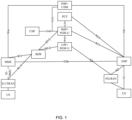
- the 5G architecture in the interoperable system includes: the access management function (AMF), the session management function (SMF), the user plane function (UPF), the unified data management (UDM), the policy control function (PCF), the NF repository function (NRF), the charging function (CHF), the mobility management entity (MME), the PDN gateway (PGW), and the signaling gateway (SGW).
- AMF access management function
- SMF session management function
- UPF user plane function
- UDM unified data management
- PCF policy control function
- NRF NF repository function
- CHF charging function
- MME mobility management entity
- PGW PDN gateway
- SGW signaling gateway
- the function of the presence reporting area is a list of cell locations predefined or configured in the PCF or the CHF. If a user signs up this function, the PRA is sent to the MME and instructs the reporting action. When the user moves the location of the terminal and enters or exits the list of the PRA cell location, the reporting for the PRA information of the MME will be triggered, and the PGW-C will transmit the PRA information to the PCF or the CHF to perform control functions, such as the related policy function and the charging function.
- PRA presence reporting area
- the CHF and the PCF are selected after accessing.
- the 32.291 protocol allows the CHF to send the PRA
- the 29.571 protocol allows the PCF to issue the PRA. Therefore, there will be a case that both the CHF and the PCF send the PRA.
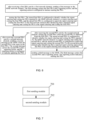
- the PGW-C needs to carry the latest PRA to the MME. As shown in FIG. 2 , the PGW-C processes the reporting action STOP and the reporting action START, which prolongs the entire message transmission process, does not guarantee the successful interaction of sending and receiving messages, and increases the signaling overhead between network elements.
- the main purpose of the embodiments of the present application is to provide a method and a device for sending a presence reporting area (PRA), an electronic equipment and a storage medium, aiming to make the PRA deployed by operators sent to the MME in a timely, accurate and reliable manner, reducing the signaling overheads between network elements and the consumption of the network performance, thereby speeding up the processing speed of the PGW-C and making it more lightweight.
- PRA presence reporting area
- embodiments of the present application provide a method for sending the PRA, including: after receiving a first PRA sent by a first network element, sending a first message to a mobility management entity (MME) network element, where the first message carries the first PRA and a reporting action, and the reporting action is configured to instruct starting the PRA; and after receiving a second PRA sent by a second network element, sending a second message to the MME when the second PRA is the same as the first PRA, where the second message carries the second PRA and a reporting action, and the reporting action is configured to indicate updating the PRA.
- MME mobility management entity
- embodiments of the present application further provide a device for sending the PRA, including: a first sending module configured to send a first message to a mobility management entity (MME) network element after receiving a first PRA sent by a first network element, where the first message carries the first PRA and a reporting action, and the reporting action is configured to instruct starting PRA; and a second sending module configured to send a second message to the MME when the second PRA is the same as the first PRA after receiving a second PRA sent by a second network element, where the second message carries the second PRA and a reporting action, and the reporting action is configured to indicate updating the PRA.
- MME mobility management entity
- embodiments of the present application further provide an electronic equipment, including: at least one processor; and a memory communicating with the at least one processor, where the memory stores an instruction executable by the at least one processor, and the instruction is executed by the at least one processor to make the at least one processor implement the method for sending the PRA as mentioned above.
- embodiments of the present application further provide a computer-readable storage medium storing a computer program.
- the computer program is executed by a processor, the method for sending the PRA as mentioned above is implemented.
- the first message is sent to the MME network element.
- the first message carries the first PRA and a reporting action.
- the reporting action indicates starting the PRA.
- a second PRA sent by the second network element is received and the second PRA is the same as the first PRA
- a second message is sent to the MME.
- the second message carries the second PRA and a reporting action.
- the reporting action indicates updating the PRA.
- the PRA deployed by the operator is sent to the MME in a timely, accurate, and reliable manner, which also reduces the signaling overheads between network elements, reduces the consumption of network performance, thereby speeding up the processing speed of the PGW-C and making it more lightweight.
- the PGW-C processing the two messages of the reporting action STOP and the reporting action START lengthens the entire message transmission process, which does not guarantee the successful interaction of sending and receiving messages, and increases the signaling overheads between network elements.
- One embodiment of the present application relates to a method for sending a presence reporting area (PRA), applied to the PGW-C in the 4G and 5G interoperable systems.
- the method includes: step 101, after receiving a first PRA sent by a first network element, sending a first message to a mobility management entity (MME) network element.
- MME mobility management entity
- the first message carries the first PRA and a reporting action, and the reporting action is configured to instruct starting the PRA.
- the first network element may be a policy control function (PCF) network element or a charging function (CHF) network element.
- PCF policy control function
- CHF charging function
- the first network element in the interoperable system will be selected as the PCF network element or the CHF network element.
- the first network element After the first network element is set, when the first network element detects that it contains a predefined or configured cell location list (that is, when there is the PRA), the first network element will send the first PRA to the PGW-C. After the PGW-C receives the first PRA reported by the first network element, a first message will be sent to the MME network element.
- the sent first message carries a first PRA and a reporting action.
- the field in the reporting action of the first message is configured to indicate starting PRA.
- the first message sent by the PGW-C to the MME network element is actually a first update bearer request carrying the first PRA and indicating starting the reporting action of the PRA.
- Step 102 after receiving a second PRA sent by a second network element, sending a second message to the MME when the second PRA is the same as the first PRA.
- the second message carries the second PRA and a reporting action, and the reporting action is configured to indicate updating the PRA.
- the second network element may be a PCF network element or a CHF network element.
- the type of the second network element is determined by the type of the first network element.
- the first network element is the PCF network element
- the second network element is the CHF network element
- the first network element is the CHF network element
- the second network element is the PCF network element.
- the second network element detects that it contains a predefined or configured cell location list (that is, there is a PRA), the second PRA will be sent to the PGW-C. After receiving the second PRA reported by the second network element, the PGW-C will compare the second PRA of the second network element with the first PRA of the first network element, and determine whether the second PRA of the second network element is the same as the first PRA of the first network element.
- a second message is sent to the MME network element.
- the sent second message carries the second PRA and the reporting action, and the field in the reporting action of the second message is configured to indicate updating the PRA.
- the second PRA carried in the second message can also be the first PRA or the identifier of the first PRA.
- the second message sent by the PGW-C to the MME network element is actually a second update bearer request carrying the second PRA and indicating starting the reporting action of the PRA.
- the 29.571 protocol allows the PCF network element to send the first PRA (the second PRA) to the PGW-C.
- the 32.291 protocol allows the CHF to send the first PRA (the second PRA) to the PGW-C.
- the PGW-C receives the first PRA sent by the first network element and the second PRA sent by the second network element through the serviced SBI interface.
- the first message is sent to the MME network element.
- the first message carries the first PRA and a reporting action.
- the reporting action indicates starting the PRA.
- a second PRA sent by the second network element is received and the second PRA is the same as the first PRA
- a second message is sent to the MME.
- the second message carries the second PRA and a reporting action.
- the reporting action indicates updating the PRA.
- the PRA deployed by the operator is sent to the MME in a timely, accurate, and reliable manner, which also reduces the signaling overheads between network elements, reduces the consumption of network performance, thereby speeding up the processing speed of the PGW-C and making it more lightweight.
- the PGW-C processing the two messages of the reporting action STOP and the reporting action START lengthens the entire message transmission process, which does not guarantee the successful interaction of sending and receiving messages, and increases the signaling overheads between network elements.
- One embodiment of the present application relates to a method for sending the PRA, applied to the PGW-C in the 4G and 5G interoperable systems.
- the method includes: step 201, after receiving a first PRA sent by a first network element, sending a first message to the MME network element.
- the first message carries the first PRA and a reporting action, and the reporting action is configured to instruct starting the PRA.
- the step is substantially the same as the step 101 in the embodiment of the present application, which will not be repeated here.
- Step 202 storing the first PRA.
- the PGW-C after receiving the first PRA sent by the first network element, the PGW-C will store the first PRA, to determine the difference between the first PRA of the first network element and the second PRA of the second network element.
- Step 203 after receiving a second PRA sent by a second network element, sending a second message to the MME when the second PRA is the same as the first PRA.
- the second message carries the second PRA and a reporting action, and the reporting action is configured to indicate updating the PRA.
- this step is substantially the same as the step 102 in the embodiment of the present application, which will not be repeated here.
- Step 204 after receiving a report entering and exiting the PRA reported by the MME network element, reporting the report entering and exiting the first PRA to the first network element and the second network element when the report entering and exiting the PRA is identified to be as a report entering and exiting the first PRA according to a stored first PRA.
- the MME network element when the user moves the terminal and enters or exits the list of the cell location in the PRA, the MME network element will be triggered to report the report entering and exiting the PRA to the PGW-C.
- the PGW-C After receiving the report entering and exiting the PRA reported by the MME network element, the PGW-C will first determine whether the report entering and exiting the PRA is a report entering and exiting the first PRA.
- the report entering and exiting the PRA reported by the MME network element is the report entering and exiting the first PRA of the first network element, the report entering and exiting the first PRA will be reported to the first network element, so that the first network element can perform the related policy control function and the charging function according to its own type.
- the PGW-C Since the second PRA of the second network element received by the PGW-C is the same as the first PRA of the first network element, the PGW-C also reports the report entering and exiting the first PRA to the second network element, so that the second network element can perform related policy control functions and charging functions according to its own type.
- the first network element when the first network element (the second network element) is a PCF network element, after receiving a report entering and exiting the first PRA, the first network element (the second network element) will perform the policy control function.
- the first network element when the first network element (the second network element) is the CHF, after receiving the report entering and exiting the first PRA, the first network element (the second network element) will perform the charging function.
- the report entering and exiting the PRA can be reported to the first network element and the second network element at the same time when the PRA of the first network element is the same as the PRA of the second network element and when it is detected that the report entering and exiting the PRA reported by the MME network element is the report of the first network element entering and exiting the PRA.
- the first network element and the second network element can perform the control functions, such as the related policy function and the charging function, and this application can simultaneously report whether the PRA of the first network element and the PRA of the second network element change, simplifying the processing flow of the PGW-C and speeding up the processing speed of the PGW-C.
- An embodiment of the present application relates to a method for sending the PRA, applied to the PGW-C in the 4G and 5G interoperable systems.
- the method includes: step 301, after receiving a first PRA sent by a first network element, sending a first message to a MME network element.
- the first message carries the first PRA and a reporting action, and the reporting action is configured to instruct starting the PRA.
- this step is substantially the same as the step 101 in the embodiment of the present application, which will not be repeated here.
- Step 302 after receiving a second PRA sent by a second network element, sending a second message to the MME when the second PRA is the same as the first PRA.
- the second message carries the second PRA and a reporting action, and the reporting action is configured to indicate updating the PRA.
- this step is substantially the same as the step 102 in the embodiment of the present application, which will not be repeated here.
- Step 303 sending a third message to the MME after receiving the second PRA sent by the second network element when the second PRA is different from the first PRA.
- the third message carries the second PRA and a reporting action, and the reporting action is configured to instruct starting PRA.
- a third message when the second PRA of the second network element is different from the first PRA of the first network element, a third message will be sent to the MME network element.
- the third message carries the second PRA and the reporting action, and the field in the reporting action of the second message is configured to indicate starting PRA.
- the instruction action of the second network element instructing starting the PRA can be re-send to the MME when the PRA of the first network element is different from the PRA of the second network element, to ensure that the PRA deployed by the operator is sent to the MME in a timely, accurate and reliable manner.
- One embodiment of the present application relates to a method for sending the PRA, applied to PGW-C in the 4G and 5G interoperable systems.
- the method includes: step 401, after receiving a first PRA sent by a first network element, sending a first message to the MME network element.
- the first message carries the first PRA and a reporting action, and the reporting action is configured to instruct starting the PRA.
- this step is substantially the same as step 101 in the embodiment of the present application, which will not be repeated here.
- Step 402 storing the first PRA.
- the stored first PRA is configured to identify whether the report entering and exiting the PRA reported by the MME network element is a report entering and exiting the first PRA, and the stored first PRA is configured to report the report entering and exiting the first PRA after identifying that a reported report entering and exiting the PRA is the report entering and exiting the first PRA.
- the PGW-C after receiving the first PRA sent by the first network element, the PGW-C will store the first PRA. Not only the PGW-C is configured to determine the difference between the first PRA of the first PRA and the second PRA of the second network element, but also the PGW-C is configured to identify whether the report entering and exiting the PRA reported by the MME network element is the report entering and exiting the first PRA.
- the report entering and exiting the PRA reported by the MME network element is a report entering and exiting the first PRA of the first network element
- the report entering and exiting the first PRA will be reported to the first network element, so that the first network element can perform the relevant policy control function and the charging function according to its own type.
- the MME network element when the report entering and exiting the PRA reported by the MME network element is the report entering and exiting the first PRA of the first network element, in addition to reporting the report entering and exiting the first PRA to the first network element, the MME network element will also report the report entering and exiting the first PRA to the second network element, so that the first network element and the second network element can perform related policy control functions and charging functions according to their own types.
- Step 403 after receiving a second PRA sent by a second network element, sending a second message to the MME when the second PRA is the same as the first PRA.
- the second message carries the second PRA and a reporting action, and the reporting action is configured to indicate updating the PRA.
- this step is substantially the same as the step 102 in the embodiment of the present application, which will not be repeated here.
- Step 404 after receiving the second PRA sent by the second network element, storing the second PRA when the second PRA is different from the first PRA.
- the stored second PRA is configured to identify whether the report entering and exiting the PRA reported by the MME network element is a report entering and exiting the second PRA, and the stored second PRA is configured to report the report entering and exiting the second PRA after identifying that a reported report entering and exiting the PRA is the report entering and exiting the second PRA.
- the PGW-C after receiving the second PRA sent by the second network element, the PGW-C first determines whether the PRA of the second network element is the same as the first PRA of the first network element. When the PRA of the second network element is different from the first PRA of the first network element, the second PRA will be stored. Not only the second PRA is used to determine the difference between the PRA of other network elements and the second PRA of the second network element, but also the second PRA is used to identify whether the report entering and exiting the PRA reported by the MME network element is the report entering and exiting the second PRA.
- the report entering and exiting the PRA reported by the MME network element is the report entering and exiting the second PRA of the second network element
- the report entering and exiting the second PRA will be reported to the second network element, so that the second network element can perform related policy control functions and charging functions according to its own type.
- Step 405 sending a third message to the MME.
- the third message carries the second PRA and a reporting action.
- the reporting action indicates starting the PRA.
- this step is substantially the same as the step 303 in the embodiment of the present application, which will not be repeated here.
- different PRAs of different network elements can also be stored on the PGW-C.
- the report entering and exiting the PRA is reported to the network element corresponding to the report entering and exiting the PRA, so that PGW-C can ensure the accuracy of reporting the report entering and exiting the PRA to the network element.
- FIG. 7 is a schematic diagram of the device for sending the PRA according to this embodiment, which includes a first sending module 701 and a second sending module 702.
- the first sending module 701 is configured to send a first message to the MME network element after receiving the first PRA sent by the first network element.
- the first message carries the first PRA and the reporting action.
- the reporting action indicates starting the PRA.
- the second sending module 702 is configured to send a second message to the MME when the second PRA sent by the second network element is received and the second PRA is the same as the first PRA.
- the second message carries the second PRA and a reporting action.
- the reporting action indicates updating the PRA.
- this embodiment is a system embodiment corresponding to the above method embodiments, and this embodiment can be implemented in cooperation with the above method embodiments.
- the relevant technical details and technical effects mentioned in the above embodiments can still be adopted in this embodiment, which will not be repeated in order to reduce duplication.
- the relevant technical details mentioned in this embodiment can also be applied to the above embodiments.
- each module involved in this embodiment is the logical module.
- a logical unit can be a physical unit, or a part of a physical unit, or it can be the combination of multiple physical units.
- units that are not closely related to solving the technical problems in this application are not introduced in this embodiment, but this does not mean that other units do not exist in this embodiment.
- the electronic equipment includes at least one processor 801 and a memory 802 communicating with the at least one processor 801.
- the memory 802 stores an instruction that can be executed by the at least one processor 801, and the instruction can be executed by the at least one processor 801, so that the at least one processor 801 can execute the method for sending the PRA in the above embodiments.
- the memory and the processor are connected by using a bus.
- the bus can include any number of interconnected buses and bridges.
- the bus connects one or more processors and various circuits of the memory together.
- the bus may also connect various other circuits, such as peripherals, voltage regulators, and power management circuits, which are all well known in the art and therefore will not be repeated herein.
- the bus interface provides the interface between the bus and the transceiver.
- a transceiver may be one element or may be multiple elements, such as multiple receivers and transmitters, providing units used for communicating with various other devices over a transmission medium.
- the data processed by the processor is transmitted over the wireless medium through the antenna. Further, the antenna also receives the data and transmits the data to the processor.
- the processor is used for managing the bus and general processing, and can also provide a variety of functions, including timing, providing peripheral interfaces, voltage regulation, power management, and other control functions.
- the memory can be configured to store data used by the processor when the processor performs operations.
- Another embodiment of the present application relates to a computer-readable storage medium storing a computer program.
- the above method embodiments are implemented when the computer program is executed by the processor.
- the program is stored in a storage medium and includes several instructions to cause a device (which may be a microcontroller, a chip, and the like) or a processor to execute all or part of the steps of the methods described in various embodiments of the present application.
- the aforementioned storage media include mediums which can store program code, such as a U disk, a mobile hard disk, a read-only memory (ROM), a random access memory (RAM), a magnetic disk or an optical disk, and the like.
Landscapes
- Engineering & Computer Science (AREA)
- Computer Networks & Wireless Communication (AREA)
- Signal Processing (AREA)
- Business, Economics & Management (AREA)
- General Business, Economics & Management (AREA)
- Accounting & Taxation (AREA)
- Databases & Information Systems (AREA)
- Mobile Radio Communication Systems (AREA)
Abstract
Description
- The present application claims priority to
Chinese patent application No. 202111449977.8, and filed on November 30, 2021 - Embodiments of the present application relate to the technical field of mobile communication, and in particular to a method and a device for sending a presence reporting area, an electronic equipment, and a storage medium.
- In the 4G and 5G interoperable systems, as shown in
FIG. 1 , the 5G architecture in the interoperable system includes: the access management function (AMF), the session management function (SMF), the user plane function (UPF), the unified data management (UDM), the policy control function (PCF), the NF repository function (NRF), the charging function (CHF), the mobility management entity (MME), the PDN gateway (PGW), and the signaling gateway (SGW). - The function of the presence reporting area (PRA) is a list of cell locations predefined or configured in the PCF or the CHF. If a user signs up this function, the PRA is sent to the MME and instructs the reporting action. When the user moves the location of the terminal and enters or exits the list of the PRA cell location, the reporting for the PRA information of the MME will be triggered, and the PGW-C will transmit the PRA information to the PCF or the CHF to perform control functions, such as the related policy function and the charging function.
- When the user accesses the interoperable system from 4G, the CHF and the PCF are selected after accessing. The 32.291 protocol allows the CHF to send the PRA, and the 29.571 protocol allows the PCF to issue the PRA. Therefore, there will be a case that both the CHF and the PCF send the PRA. If the CHF and the PCF send the PRA in different time periods and there are duplicate transmissions, the PGW-C needs to carry the latest PRA to the MME. As shown in
FIG. 2 , the PGW-C processes the reporting action STOP and the reporting action START, which prolongs the entire message transmission process, does not guarantee the successful interaction of sending and receiving messages, and increases the signaling overhead between network elements. - The main purpose of the embodiments of the present application is to provide a method and a device for sending a presence reporting area (PRA), an electronic equipment and a storage medium, aiming to make the PRA deployed by operators sent to the MME in a timely, accurate and reliable manner, reducing the signaling overheads between network elements and the consumption of the network performance, thereby speeding up the processing speed of the PGW-C and making it more lightweight.
- To achieve the above objectives, embodiments of the present application provide a method for sending the PRA, including: after receiving a first PRA sent by a first network element, sending a first message to a mobility management entity (MME) network element, where the first message carries the first PRA and a reporting action, and the reporting action is configured to instruct starting the PRA; and after receiving a second PRA sent by a second network element, sending a second message to the MME when the second PRA is the same as the first PRA, where the second message carries the second PRA and a reporting action, and the reporting action is configured to indicate updating the PRA.
- To achieve the above objectives, embodiments of the present application further provide a device for sending the PRA, including: a first sending module configured to send a first message to a mobility management entity (MME) network element after receiving a first PRA sent by a first network element, where the first message carries the first PRA and a reporting action, and the reporting action is configured to instruct starting PRA; and a second sending module configured to send a second message to the MME when the second PRA is the same as the first PRA after receiving a second PRA sent by a second network element, where the second message carries the second PRA and a reporting action, and the reporting action is configured to indicate updating the PRA.
- To achieve the above objectives, embodiments of the present application further provide an electronic equipment, including: at least one processor; and a memory communicating with the at least one processor, where the memory stores an instruction executable by the at least one processor, and the instruction is executed by the at least one processor to make the at least one processor implement the method for sending the PRA as mentioned above.
- To achieve the above objectives, embodiments of the present application further provide a computer-readable storage medium storing a computer program. When the computer program is executed by a processor, the method for sending the PRA as mentioned above is implemented.
- In the embodiment of the present application, during the process of sending the PRA, after receiving the first PRA sent by the first network element, the first message is sent to the MME network element. The first message carries the first PRA and a reporting action. The reporting action indicates starting the PRA. When a second PRA sent by the second network element is received and the second PRA is the same as the first PRA, a second message is sent to the MME. The second message carries the second PRA and a reporting action. The reporting action indicates updating the PRA. By directly sending the reporting action of the second network element for updating the PRA to the MME when the PRA of the first network element is the same as the PRA of the second network element, it is ensured that the PRA deployed by the operator is sent to the MME in a timely, accurate, and reliable manner, which also reduces the signaling overheads between network elements, reduces the consumption of network performance, thereby speeding up the processing speed of the PGW-C and making it more lightweight. In this way, the following problem in the existing technology can be solved: the PGW-C processing the two messages of the reporting action STOP and the reporting action START lengthens the entire message transmission process, which does not guarantee the successful interaction of sending and receiving messages, and increases the signaling overheads between network elements.
-
-
FIG. 1 is a schematic diagram of the 5G architecture in the 4G and 5G interoperable systems. -
FIG. 2 is a schematic flowchart of the PGW-C processing the reporting action STOP and the reporting action START in the 4G and 5G interoperable systems. -
FIG. 3 is a flowchart of a method for sending the PRA according to an embodiment of the present application. -
FIG. 4 is a flowchart of the method for sending the PRA according to another embodiment of the present application. -
FIG. 5 is a flowchart of the method for sending the PRA according to another embodiment of the present application. -
FIG. 6 is a flowchart of the method for sending the PRA according to another embodiment of the present application. -
FIG. 7 is a schematic structural diagram of a device for sending the PRA according to an embodiment of the present application. -
FIG. 8 is a schematic structural diagram of an electronic equipment according to an embodiment of the present application. - In order to make the purpose, the technical solution and the advantage of embodiments in the present application clearer, various embodiments of the present application will be described in detail below with reference to the accompanying drawings. However, those skilled in the art can understand that in each embodiment of the present application, many technical details are provided to enable readers to better understand the present application. However, even without these technical details and various changes and modifications based on the following embodiments, the technical solution in the present application can also be implemented. The division of the following embodiments is for the convenience of description and should not constitute any limitation on the specific implementation of the present application. The various embodiments can be combined with each other and referenced with each other on the premise that there is no contradiction.
- One embodiment of the present application relates to a method for sending a presence reporting area (PRA), applied to the PGW-C in the 4G and 5G interoperable systems. As shown in
FIG. 3 , the method includes:
step 101, after receiving a first PRA sent by a first network element, sending a first message to a mobility management entity (MME) network element. The first message carries the first PRA and a reporting action, and the reporting action is configured to instruct starting the PRA. - In an embodiment, the first network element may be a policy control function (PCF) network element or a charging function (CHF) network element. When the user accesses the 4G and 5G interoperable systems from 4G, the first network element in the interoperable system will be selected as the PCF network element or the CHF network element. After the first network element is set, when the first network element detects that it contains a predefined or configured cell location list (that is, when there is the PRA), the first network element will send the first PRA to the PGW-C. After the PGW-C receives the first PRA reported by the first network element, a first message will be sent to the MME network element. The sent first message carries a first PRA and a reporting action. The field in the reporting action of the first message is configured to indicate starting PRA.
- In an embodiment, the first message sent by the PGW-C to the MME network element is actually a first update bearer request carrying the first PRA and indicating starting the reporting action of the PRA.
-
Step 102, after receiving a second PRA sent by a second network element, sending a second message to the MME when the second PRA is the same as the first PRA. The second message carries the second PRA and a reporting action, and the reporting action is configured to indicate updating the PRA. - In an embodiment, the second network element may be a PCF network element or a CHF network element. The type of the second network element is determined by the type of the first network element. When the first network element is the PCF network element, the second network element is the CHF network element, and when the first network element is the CHF network element, the second network element is the PCF network element.
- In an embodiment, after the PGW-C sends the first message to the MME network element, the second network element detects that it contains a predefined or configured cell location list (that is, there is a PRA), the second PRA will be sent to the PGW-C. After receiving the second PRA reported by the second network element, the PGW-C will compare the second PRA of the second network element with the first PRA of the first network element, and determine whether the second PRA of the second network element is the same as the first PRA of the first network element.
- In an embodiment, when the second PRA of the second network element is the same as the first PRA of the first network element, a second message is sent to the MME network element. The sent second message carries the second PRA and the reporting action, and the field in the reporting action of the second message is configured to indicate updating the PRA. The second PRA carried in the second message can also be the first PRA or the identifier of the first PRA.
- In an embodiment, the second message sent by the PGW-C to the MME network element is actually a second update bearer request carrying the second PRA and indicating starting the reporting action of the PRA.
- In an embodiment, when the first network element (the second network element) is the PCF network element, the 29.571 protocol allows the PCF network element to send the first PRA (the second PRA) to the PGW-C. When the first network element (the second network element) is the CHF, the 32.291 protocol allows the CHF to send the first PRA (the second PRA) to the PGW-C.
- In an embodiment, the PGW-C receives the first PRA sent by the first network element and the second PRA sent by the second network element through the serviced SBI interface.
- In the embodiment of the present application, during the process of sending the PRA, after receiving the first PRA sent by the first network element, the first message is sent to the MME network element. The first message carries the first PRA and a reporting action. The reporting action indicates starting the PRA. When a second PRA sent by the second network element is received and the second PRA is the same as the first PRA, a second message is sent to the MME. The second message carries the second PRA and a reporting action. The reporting action indicates updating the PRA. By directly sending the reporting action of the second network element for updating the PRA to the MME when the PRA of the first network element is the same as the PRA of the second network element, it is ensured that the PRA deployed by the operator is sent to the MME in a timely, accurate, and reliable manner, which also reduces the signaling overheads between network elements, reduces the consumption of network performance, thereby speeding up the processing speed of the PGW-C and making it more lightweight. In this way, the following problem in the existing technology can be solved: the PGW-C processing the two messages of the reporting action STOP and the reporting action START lengthens the entire message transmission process, which does not guarantee the successful interaction of sending and receiving messages, and increases the signaling overheads between network elements.
- One embodiment of the present application relates to a method for sending the PRA, applied to the PGW-C in the 4G and 5G interoperable systems. As shown in
FIG. 4 , the method includes:
step 201, after receiving a first PRA sent by a first network element, sending a first message to the MME network element. The first message carries the first PRA and a reporting action, and the reporting action is configured to instruct starting the PRA. - In an embodiment, the step is substantially the same as the
step 101 in the embodiment of the present application, which will not be repeated here. -
Step 202, storing the first PRA. - In an embodiment, after receiving the first PRA sent by the first network element, the PGW-C will store the first PRA, to determine the difference between the first PRA of the first network element and the second PRA of the second network element.
-
Step 203, after receiving a second PRA sent by a second network element, sending a second message to the MME when the second PRA is the same as the first PRA. The second message carries the second PRA and a reporting action, and the reporting action is configured to indicate updating the PRA. - In an embodiment, this step is substantially the same as the
step 102 in the embodiment of the present application, which will not be repeated here. -
Step 204, after receiving a report entering and exiting the PRA reported by the MME network element, reporting the report entering and exiting the first PRA to the first network element and the second network element when the report entering and exiting the PRA is identified to be as a report entering and exiting the first PRA according to a stored first PRA. - In an embodiment, when the user moves the terminal and enters or exits the list of the cell location in the PRA, the MME network element will be triggered to report the report entering and exiting the PRA to the PGW-C. After receiving the report entering and exiting the PRA reported by the MME network element, the PGW-C will first determine whether the report entering and exiting the PRA is a report entering and exiting the first PRA. When the report entering and exiting the PRA reported by the MME network element is the report entering and exiting the first PRA of the first network element, the report entering and exiting the first PRA will be reported to the first network element, so that the first network element can perform the related policy control function and the charging function according to its own type. Since the second PRA of the second network element received by the PGW-C is the same as the first PRA of the first network element, the PGW-C also reports the report entering and exiting the first PRA to the second network element, so that the second network element can perform related policy control functions and charging functions according to its own type.
- In an embodiment, when the first network element (the second network element) is a PCF network element, after receiving a report entering and exiting the first PRA, the first network element (the second network element) will perform the policy control function. When the first network element (the second network element) is the CHF, after receiving the report entering and exiting the first PRA, the first network element (the second network element) will perform the charging function.
- In an embodiment of the present application, based on other embodiments, the report entering and exiting the PRA can be reported to the first network element and the second network element at the same time when the PRA of the first network element is the same as the PRA of the second network element and when it is detected that the report entering and exiting the PRA reported by the MME network element is the report of the first network element entering and exiting the PRA. In this way, the first network element and the second network element can perform the control functions, such as the related policy function and the charging function, and this application can simultaneously report whether the PRA of the first network element and the PRA of the second network element change, simplifying the processing flow of the PGW-C and speeding up the processing speed of the PGW-C.
- An embodiment of the present application relates to a method for sending the PRA, applied to the PGW-C in the 4G and 5G interoperable systems. As shown in
FIG. 5 , the method includes:
step 301, after receiving a first PRA sent by a first network element, sending a first message to a MME network element. The first message carries the first PRA and a reporting action, and the reporting action is configured to instruct starting the PRA. - In an embodiment, this step is substantially the same as the
step 101 in the embodiment of the present application, which will not be repeated here. -
Step 302, after receiving a second PRA sent by a second network element, sending a second message to the MME when the second PRA is the same as the first PRA. The second message carries the second PRA and a reporting action, and the reporting action is configured to indicate updating the PRA. - In an embodiment, this step is substantially the same as the
step 102 in the embodiment of the present application, which will not be repeated here. -
Step 303, sending a third message to the MME after receiving the second PRA sent by the second network element when the second PRA is different from the first PRA. The third message carries the second PRA and a reporting action, and the reporting action is configured to instruct starting PRA. - In an embodiment, when the second PRA of the second network element is different from the first PRA of the first network element, a third message will be sent to the MME network element. The third message carries the second PRA and the reporting action, and the field in the reporting action of the second message is configured to indicate starting PRA.
- In the implementation of the present application, based on other embodiments, the instruction action of the second network element instructing starting the PRA can be re-send to the MME when the PRA of the first network element is different from the PRA of the second network element, to ensure that the PRA deployed by the operator is sent to the MME in a timely, accurate and reliable manner.
- One embodiment of the present application relates to a method for sending the PRA, applied to PGW-C in the 4G and 5G interoperable systems. As shown in
FIG. 6 , the method includes:
step 401, after receiving a first PRA sent by a first network element, sending a first message to the MME network element. The first message carries the first PRA and a reporting action, and the reporting action is configured to instruct starting the PRA. - In an embodiment, this step is substantially the same as
step 101 in the embodiment of the present application, which will not be repeated here. -
Step 402, storing the first PRA. The stored first PRA is configured to identify whether the report entering and exiting the PRA reported by the MME network element is a report entering and exiting the first PRA, and the stored first PRA is configured to report the report entering and exiting the first PRA after identifying that a reported report entering and exiting the PRA is the report entering and exiting the first PRA. - In an embodiment, after receiving the first PRA sent by the first network element, the PGW-C will store the first PRA. Not only the PGW-C is configured to determine the difference between the first PRA of the first PRA and the second PRA of the second network element, but also the PGW-C is configured to identify whether the report entering and exiting the PRA reported by the MME network element is the report entering and exiting the first PRA.
- In an embodiment, when the report entering and exiting the PRA reported by the MME network element is a report entering and exiting the first PRA of the first network element, the report entering and exiting the first PRA will be reported to the first network element, so that the first network element can perform the relevant policy control function and the charging function according to its own type.
- In an embodiment, if the PRA of the second network element is the same as the first PRA of the first network element, when the report entering and exiting the PRA reported by the MME network element is the report entering and exiting the first PRA of the first network element, in addition to reporting the report entering and exiting the first PRA to the first network element, the MME network element will also report the report entering and exiting the first PRA to the second network element, so that the first network element and the second network element can perform related policy control functions and charging functions according to their own types.
-
Step 403, after receiving a second PRA sent by a second network element, sending a second message to the MME when the second PRA is the same as the first PRA. The second message carries the second PRA and a reporting action, and the reporting action is configured to indicate updating the PRA. - In an embodiment, this step is substantially the same as the
step 102 in the embodiment of the present application, which will not be repeated here. -
Step 404, after receiving the second PRA sent by the second network element, storing the second PRA when the second PRA is different from the first PRA. The stored second PRA is configured to identify whether the report entering and exiting the PRA reported by the MME network element is a report entering and exiting the second PRA, and the stored second PRA is configured to report the report entering and exiting the second PRA after identifying that a reported report entering and exiting the PRA is the report entering and exiting the second PRA. - In an embodiment, after receiving the second PRA sent by the second network element, the PGW-C first determines whether the PRA of the second network element is the same as the first PRA of the first network element. When the PRA of the second network element is different from the first PRA of the first network element, the second PRA will be stored. Not only the second PRA is used to determine the difference between the PRA of other network elements and the second PRA of the second network element, but also the second PRA is used to identify whether the report entering and exiting the PRA reported by the MME network element is the report entering and exiting the second PRA.
- In an embodiment, when the report entering and exiting the PRA reported by the MME network element is the report entering and exiting the second PRA of the second network element, the report entering and exiting the second PRA will be reported to the second network element, so that the second network element can perform related policy control functions and charging functions according to its own type.
-
Step 405, sending a third message to the MME. The third message carries the second PRA and a reporting action. The reporting action indicates starting the PRA. - In an embodiment, this step is substantially the same as the
step 303 in the embodiment of the present application, which will not be repeated here. - In the embodiment of the present application, bases on other embodiments, different PRAs of different network elements can also be stored on the PGW-C. After the PGW-C accurately determines the report entering and exiting the PRA reported by the MME, the report entering and exiting the PRA is reported to the network element corresponding to the report entering and exiting the PRA, so that PGW-C can ensure the accuracy of reporting the report entering and exiting the PRA to the network element.
- The steps of the various methods above are divided just for the purpose of clear description. During implementation, they can be combined into one step or some steps can be divided into multiple steps as long as they include the same logical relationship, they all fall within the scope of the present application. Adding insignificant modifications or introducing insignificant designs to the algorithm or process without changing the core design of the algorithm and the process shall fall within the scope of the present application.
- Another embodiment of the present application relates to a device for sending the PRA. The details of the device for sending the PRA in this embodiment are described detailedly below. The following content is only the implementation detail provided for ease of understanding and is not necessary to implement this embodiment.
FIG. 7 is a schematic diagram of the device for sending the PRA according to this embodiment, which includes afirst sending module 701 and asecond sending module 702. - The
first sending module 701 is configured to send a first message to the MME network element after receiving the first PRA sent by the first network element. The first message carries the first PRA and the reporting action. The reporting action indicates starting the PRA. - The
second sending module 702 is configured to send a second message to the MME when the second PRA sent by the second network element is received and the second PRA is the same as the first PRA. The second message carries the second PRA and a reporting action. The reporting action indicates updating the PRA. - It is not difficult to find that this embodiment is a system embodiment corresponding to the above method embodiments, and this embodiment can be implemented in cooperation with the above method embodiments. The relevant technical details and technical effects mentioned in the above embodiments can still be adopted in this embodiment, which will not be repeated in order to reduce duplication. Correspondingly, the relevant technical details mentioned in this embodiment can also be applied to the above embodiments.
- It is should be noted that each module involved in this embodiment is the logical module. In practical applications, a logical unit can be a physical unit, or a part of a physical unit, or it can be the combination of multiple physical units. In addition, in order to highlight the innovative part of the present application, units that are not closely related to solving the technical problems in this application are not introduced in this embodiment, but this does not mean that other units do not exist in this embodiment.
- Another embodiment of the present application relates to an electronic equipment. As shown in
FIG. 8 , the electronic equipment includes at least oneprocessor 801 and amemory 802 communicating with the at least oneprocessor 801. Thememory 802 stores an instruction that can be executed by the at least oneprocessor 801, and the instruction can be executed by the at least oneprocessor 801, so that the at least oneprocessor 801 can execute the method for sending the PRA in the above embodiments. - The memory and the processor are connected by using a bus. The bus can include any number of interconnected buses and bridges. The bus connects one or more processors and various circuits of the memory together. The bus may also connect various other circuits, such as peripherals, voltage regulators, and power management circuits, which are all well known in the art and therefore will not be repeated herein. The bus interface provides the interface between the bus and the transceiver. A transceiver may be one element or may be multiple elements, such as multiple receivers and transmitters, providing units used for communicating with various other devices over a transmission medium. The data processed by the processor is transmitted over the wireless medium through the antenna. Further, the antenna also receives the data and transmits the data to the processor.
- The processor is used for managing the bus and general processing, and can also provide a variety of functions, including timing, providing peripheral interfaces, voltage regulation, power management, and other control functions. The memory can be configured to store data used by the processor when the processor performs operations.
- Another embodiment of the present application relates to a computer-readable storage medium storing a computer program. The above method embodiments are implemented when the computer program is executed by the processor.
- That is, those skilled in the art can understand that all or part of the steps in the methods of the above embodiments can be completed by instructing relevant hardware through a program. The program is stored in a storage medium and includes several instructions to cause a device (which may be a microcontroller, a chip, and the like) or a processor to execute all or part of the steps of the methods described in various embodiments of the present application. The aforementioned storage media include mediums which can store program code, such as a U disk, a mobile hard disk, a read-only memory (ROM), a random access memory (RAM), a magnetic disk or an optical disk, and the like.
- Those skilled in the art can understand that the above-mentioned embodiments are some embodiments for implementing the present application, and during actual applications, various modifications can be made in form and details without departing from the spirit and the scope of the present application.
Claims (10)
- A method for sending a presence reporting area called PRA, characterized by comprising:after receiving a first PRA sent by a first network element, sending a first message to a mobility management entity called MME network element, wherein the first message carries the first PRA and a reporting action, and the reporting action is configured to instruct starting the PRA; andafter receiving a second PRA sent by a second network element, sending a second message to the MME when the second PRA is the same as the first PRA, wherein the second message carries the second PRA and a reporting action, and the reporting action is configured to indicate updating the PRA.
- The method for sending the PRA according to claim 1, further comprising:after receiving the first PRA sent by the first network element, storing the first PRA; andafter sending the second message to the MME, reporting the report entering and exiting the first PRA to the first network element and the second network element in response to receiving a report entering and exiting the PRA reported by the MME network element and identifying the report entering and exiting the PRA to be as a report entering and exiting the first PRA according to a stored first PRA.
- The method for sending the PRA according to claim 1, further comprising:
sending a third message to the MME after receiving the second PRA sent by the second network element when the second PRA is different from the first PRA, wherein the third message carries the second PRA and a reporting action, and the reporting action is configured to instruct starting PRA. - The method for sending the PRA according to claim 3, further comprising:after receiving the first PRA sent by the first network element, storing the first PRA; andstoring the second PRA after receiving the second PRA sent by the second network element when the second PRA is different from the first PRA,wherein a stored first PRA is configured to identify whether the report entering and exiting the PRA reported by the MME network element is a report entering and exiting the first PRA, and the stored first PRA is configured to report the report entering and exiting the first PRA when identifying that a reported report entering and exiting the PRA is the report entering and exiting the first PRA, anda stored second PRA is configured to identify whether the report entering and exiting the PRA reported by the MME network element is a report entering and exiting the second PRA, and the stored second PRA is configured to report the report entering and exiting the second PRA when identifying that a reported report entering and exiting the PRA is the report entering and exiting the second PRA.
- The method for sending the PRA according to any one of claims 1 to 3, wherein:the first network element comprises a policy control function called PCF network element, and the second network element comprises a charging function called CHF network element; orthe first network element comprises a CHF network element, and the second network element comprises a PCF network element.
- The method for sending the PRA according to any one of claims 1 to 3, wherein:the sending the first message to the MME network element comprises sending a first update bearer request to the MME network element, wherein the first update bearer request carries the first PRA and a reporting action indicating starting the PRA; andthe sending the second message to the MME comprises sending a second update bearer request to the MME network element, wherein the second update bearer request carries the second PRA and a reporting action indicating updating the PRA.
- The method for sending the PRA according to any one of claims 1 to 3, wherein both the first PRA sent by the first network element and the second PRA sent by the second network element are received through a service SBI interface.
- A device for sending a presence reporting area called PRA, characterized by comprising:a first sending module configured to send a first message to a mobility management entity called MME network element after receiving a first PRA sent by a first network element, wherein the first message carries the first PRA and a reporting action, and the reporting action is configured to instruct starting PRA; anda second sending module configured to send a second message to the MME when the second PRA is the same as the first PRA after receiving a second PRA sent by a second network element, wherein the second message carries the second PRA and a reporting action, and the reporting action is configured to indicate updating the PRA.
- An electronic equipment, characterized by comprising:at least one processor; anda memory communicating with the at least one processor,wherein the memory stores an instruction executable by the at least one processor, and the instruction is executed by the at least one processor to make the at least one processor implement the method for sending the PRA according to any one of claims 1 to 7.
- A computer-readable storage medium storing a computer program, characterized in that when the computer program is executed by a processor, the method for sending the PRA according to any one of claims 1 to 7 is implemented.
Applications Claiming Priority (2)
| Application Number | Priority Date | Filing Date | Title |
|---|---|---|---|
| CN202111449977.8A CN116208713A (en) | 2021-11-30 | 2021-11-30 | Method, device, electronic equipment and storage medium for transmitting existence report area |
| PCT/CN2022/127140 WO2023098340A1 (en) | 2021-11-30 | 2022-10-24 | Presence reporting area sending method and apparatus, electronic device, and storage medium |
Publications (2)
| Publication Number | Publication Date |
|---|---|
| EP4436153A1 true EP4436153A1 (en) | 2024-09-25 |
| EP4436153A4 EP4436153A4 (en) | 2024-12-18 |
Family
ID=86510022
Family Applications (1)
| Application Number | Title | Priority Date | Filing Date |
|---|---|---|---|
| EP22900145.8A Pending EP4436153A4 (en) | 2021-11-30 | 2022-10-24 | Presence reporting area sending method and apparatus, electronic device, and storage medium |
Country Status (4)
| Country | Link |
|---|---|
| US (1) | US20250016723A1 (en) |
| EP (1) | EP4436153A4 (en) |
| CN (1) | CN116208713A (en) |
| WO (1) | WO2023098340A1 (en) |
Family Cites Families (6)
| Publication number | Priority date | Publication date | Assignee | Title |
|---|---|---|---|---|
| WO2017078789A1 (en) * | 2015-11-06 | 2017-05-11 | Intel IP Corporation | Solution to support multiple presence reporting areas for public data network connection |
| CN108353251B (en) * | 2015-11-11 | 2020-07-24 | 瑞典爱立信有限公司 | Apparatus and method for multiple presence reporting areas |
| WO2017185236A1 (en) * | 2016-04-26 | 2017-11-02 | 华为技术有限公司 | Information transmission method and device |
| CN110611575B (en) * | 2016-10-31 | 2021-08-03 | 华为技术有限公司 | Location change reporting method, device and system |
| EP3643125B1 (en) * | 2017-06-22 | 2024-10-16 | Telefonaktiebolaget LM Ericsson (Publ) | Presence reporting areas for the ue |
| WO2020043295A1 (en) * | 2018-08-30 | 2020-03-05 | Nokia Technologies Oy | Notifying off-line charging systems of user equipment events in presence reporting areas |
-
2021
- 2021-11-30 CN CN202111449977.8A patent/CN116208713A/en active Pending
-
2022
- 2022-10-24 WO PCT/CN2022/127140 patent/WO2023098340A1/en not_active Ceased
- 2022-10-24 EP EP22900145.8A patent/EP4436153A4/en active Pending
- 2022-10-24 US US18/712,456 patent/US20250016723A1/en active Pending
Also Published As
| Publication number | Publication date |
|---|---|
| EP4436153A4 (en) | 2024-12-18 |
| WO2023098340A1 (en) | 2023-06-08 |
| US20250016723A1 (en) | 2025-01-09 |
| CN116208713A (en) | 2023-06-02 |
Similar Documents
| Publication | Publication Date | Title |
|---|---|---|
| US10659979B2 (en) | Method and device for handling cell outage | |
| US11345467B2 (en) | Data transmission method, and sending end device | |
| US20200214072A1 (en) | Method and device for processing non-matching between ue and network state | |
| JP6730511B2 (en) | Network policy update trigger method, management entity and core network device | |
| US20220413937A1 (en) | Node management method, device and apparatus, storage medium, and system | |
| US11076333B2 (en) | Location management method and device | |
| US11057813B2 (en) | Method and apparatus for transmitting downlink data | |
| EP4167609A1 (en) | Traffic charging method, network device and storage medium | |
| CN111694848B (en) | Method and device for updating data buffer using reference counting | |
| CN111314899B (en) | Message processing method, related device and system | |
| US10349344B2 (en) | Network element selection method and network element selector | |
| CN107113605A (en) | Ability information report method, device and equipment | |
| EP4436153A1 (en) | Presence reporting area sending method and apparatus, electronic device, and storage medium | |
| US20220377605A1 (en) | Data transmission method and related devices | |
| CN108924959A (en) | Method, AMF and the RAN of wireless communication | |
| CN103298026B (en) | Dynamically configure the method and device of Separate Dedicated Control Channel | |
| EP4404520A1 (en) | Positive resource response for a suspended resource | |
| CN110677845B (en) | A method, network element and system for determining application function request status | |
| US20170251355A1 (en) | Method and apparatus for obtaining user equipment ue information | |
| WO2023143271A1 (en) | Information processing method, and user equipment and storage medium | |
| WO2023011023A1 (en) | Link maintenance method, apparatus, and system, terminal, and readable storage medium | |
| CN116193424A (en) | Communication method and device in vehicle controller upgrade, and self-driving vehicle | |
| EP4138481A1 (en) | Resource management method and apparatus, server, and storage medium | |
| US20240080751A1 (en) | Exchange method and apparatus for multi-subscriber identification module characteristic information, and communication device | |
| CN110139320B (en) | Method, device, medium and terminal for processing service conflict of multi-card communication terminal |
Legal Events
| Date | Code | Title | Description |
|---|---|---|---|
| STAA | Information on the status of an ep patent application or granted ep patent |
Free format text: STATUS: THE INTERNATIONAL PUBLICATION HAS BEEN MADE |
|
| PUAI | Public reference made under article 153(3) epc to a published international application that has entered the european phase |
Free format text: ORIGINAL CODE: 0009012 |
|
| STAA | Information on the status of an ep patent application or granted ep patent |
Free format text: STATUS: REQUEST FOR EXAMINATION WAS MADE |
|
| 17P | Request for examination filed |
Effective date: 20240618 |
|
| AK | Designated contracting states |
Kind code of ref document: A1 Designated state(s): AL AT BE BG CH CY CZ DE DK EE ES FI FR GB GR HR HU IE IS IT LI LT LU LV MC ME MK MT NL NO PL PT RO RS SE SI SK SM TR |
|
| A4 | Supplementary search report drawn up and despatched |
Effective date: 20241120 |
|
| RIC1 | Information provided on ipc code assigned before grant |
Ipc: H04W 60/00 20090101ALI20241114BHEP Ipc: H04L 12/14 20240101ALI20241114BHEP Ipc: H04W 4/24 20240101ALI20241114BHEP Ipc: H04W 60/04 20090101ALI20241114BHEP Ipc: H04W 8/08 20090101ALI20241114BHEP Ipc: H04W 4/021 20180101ALI20241114BHEP Ipc: H04M 15/00 20240101AFI20241114BHEP |
|
| DAV | Request for validation of the european patent (deleted) | ||
| DAX | Request for extension of the european patent (deleted) |