EP4435681A1 - Information processing apparatus, terminal apparatus, information processing method, carrier medium, and information processing system - Google Patents
Information processing apparatus, terminal apparatus, information processing method, carrier medium, and information processing system Download PDFInfo
- Publication number
- EP4435681A1 EP4435681A1 EP24162851.0A EP24162851A EP4435681A1 EP 4435681 A1 EP4435681 A1 EP 4435681A1 EP 24162851 A EP24162851 A EP 24162851A EP 4435681 A1 EP4435681 A1 EP 4435681A1
- Authority
- EP
- European Patent Office
- Prior art keywords
- model
- terminal device
- information
- information processing
- unit
- Prior art date
- Legal status (The legal status is an assumption and is not a legal conclusion. Google has not performed a legal analysis and makes no representation as to the accuracy of the status listed.)
- Pending
Links
Images




Classifications
-
- G—PHYSICS
- G06—COMPUTING OR CALCULATING; COUNTING
- G06N—COMPUTING ARRANGEMENTS BASED ON SPECIFIC COMPUTATIONAL MODELS
- G06N20/00—Machine learning
Definitions
- Embodiments of the present disclosure relate to an information processing apparatus, a terminal apparatus, an information processing method, a carrier medium, and an information processing system.
- a known multimodal training method trains a tree model in cooperation with each partner of multiple partners, based on user sample data that is common to the partners, performs importance evaluation of features on trained tree models, and assigns corresponding weights to the feature columns generated by each tree model (see, for example, Japanese Unexamined Patent Application Publication No. 2021-121922 ).
- Embodiments of the present disclosure described herein provide a novel information processing apparatus including a reception unit, a determination unit, and a transmission unit.
- the reception unit receives, from a terminal device, condition information indicating conditions related to a model.
- the determination unit determines whether at least one of multiple models satisfies the conditions.
- the multiple models are each generated by executing learning processing using learning data.
- the transmission unit transmits to the terminal device model specifying information that specifies one of the models satisfying the conditions based on a result of the determination.
- Embodiments of the present disclosure described herein provide a novel terminal device including a reception unit and a display control unit.
- the reception unit receives a setting operation for setting conditions related to a model, the model being generated by executing learning processing using learning data.
- the display control unit causes a display to display model specifying information that specifies one of multiple models satisfying the conditions set by the setting operation.
- Embodiments of the present disclosure described herein provide a novel information processing method executed by an information processing apparatus.
- the method includes: receiving, from a terminal device, condition information indicating conditions related to a model; determining whether at least one of multiple models satisfies the conditions, the multiple models being each generated by executing learning processing using learning data; and transmitting to the terminal device model specifying information that specifies one of the models satisfying the conditions based on a result of the determination.
- Embodiments of the present disclosure described herein provide a novel information processing method executed by a terminal device.
- the method includes: receiving a setting operation for setting conditions related to a model, the model being generated by executing learning processing using learning data; and causing a display to display model specifying information that specifies one of multiple models satisfying the conditions set by the setting operation.
- Embodiments of the present disclosure described herein provide a novel information processing system including a terminal device and the information processing apparatus.
- the information processing apparatus communicates with the terminal device.
- the terminal device includes a reception unit, a transmission unit, and a display control unit.
- the reception unit receives a setting operation for setting the conditions related to the model.
- the transmission unit transmits the condition information indicating the conditions set by the setting operation to the information processing apparatus.
- the display control unit causes a display to display the model specifying information received from the information processing apparatus by the reception unit.
- selection of a model satisfying conditions can be facilitated.
- Federated learning is a machine learning technique that performs learning in which data is not aggregated but remains distributed.
- the federated learning is a technique that enables the implementation of a model that takes advantage of data between multiple clients as if the data were linked while ensuring privacy and security.
- FIG. 1 is a diagram illustrating an overall configuration of an information processing system 1 according to an embodiment of the present disclosure.
- the information processing system 1 according to the present embodiment includes multiple terminal devices 3A, 3B to 3N, and 3a, multiple servers 5A, 5B to 5N, and a proposal device 7.
- Each of the multiple servers 5A, 5B to 5N serves as an information processing apparatus that manages a global model used for the federated learning. Since the global model is a learning model managed on the server 5 side, in other words, on the central side, the global model may be referred to as a central model.
- the multiple servers 5A, 5B to 5N are referred to simply as the server 5 when it is not necessary to distinguish them from each other.
- the multiple terminal devices 3A, 3B to 3N are examples of nodes used by clients participating in the federated learning managed by the server 5A.
- the terminal device 3a serves as a node used by clients that do not participate in the federated learning but receive a learned global model distributed from the server 5A.
- the multiple terminal devices 3A, 3B to 3N are referred to simply as the terminal device 3 when they do not need to be distinguished from each other.
- the proposal device 7 serves as an information processing apparatus that proposes a learning model such as a global model managed by each of the multiple servers 5A, 5B to 5N to the multiple terminal devices 3A, 3B to 3N.
- the functions of the proposal device 7 may be implemented by one of the servers such as a particular server 5A.
- the particular server 5A functioning as the proposal device 7 proposes a learning model such as a global model managed by each of the multiple servers 5A, 5B to 5N, and provides a learning model such as the global model managed by the server 5A.
- the multiple terminal devices 3A, 3B to 3N, 3A, the multiple servers 5A, 5B to 5N, and the proposal device 7 communicate with each other via a communication network 100.
- the communication network 100 is implemented by, for example, the Internet, a mobile communication network, and a local area network (LAN).
- the communication network 100 may include, in addition to a wired network, a wireless network in compliance with, for example, 5th generation (5G), worldwide interoperability for microwave access (WiMAX), and long term evolution (LTE).
- 5G 5th generation
- WiMAX worldwide interoperability for microwave access
- LTE long term evolution
- all or some of the multiple terminal devices 3A, 3B to 3N, and 3a, the specific server 5A, and the proposal device 7 may be configured with cloud computing.
- the multiple terminal devices 3A, 3B to 3N, and 3a, the specific server 5A, and the proposal device 7 can communicate with each other at high speed without using the communication network 100.
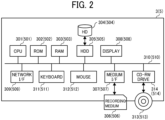
- FIG. 2 is a diagram illustrating a hardware configuration of a terminal device and a server according to an embodiment of the present disclosure
- Each hardware component of the terminal device 3 is denoted by a reference numeral in 300 series.
- Each hardware component of the server 5 is denoted by a reference numeral in 500 series in parentheses.
- the proposal device 7 also includes the same or substantially the same hardware configuration as that of the server 5. Therefore, the reference numerals and the description of the hardware configuration are omitted.
- the terminal device 3 includes a central processing unit (CPU) 301, a read-only memory (ROM) 302, a random-access memory (RAM) 303, a hard disk (HD) 304, a hard disk drive (HDD) 305, a medium interface (I/F) 307, a display 308, a network I/F 309, a keyboard 311, a mouse 312, a compact disc-rewritable (CD-RW) drive 314, and a bus line 310.
- CPU central processing unit
- ROM read-only memory
- RAM random-access memory
- HD hard disk
- HDD hard disk drive
- I/F medium interface
- display 308 a network I/F 309
- keyboard 311, a mouse 312, a compact disc-rewritable (CD-RW) drive 314 and a bus line 310.
- the CPU 301 controls overall operation of the terminal device 3.
- the ROM 302 stores programs to boot the CPU 301.
- the RAM 303 is used as a work area for the CPU 301.
- the HD 304 stores various data such as programs.
- the HDD 305 controls reading and writing of data from and to the HD 304 under control of the CPU 301.
- the medium I/F 307 controls reading or writing (storing) of data from or to a recording medium 306 such as a flash memory.
- the display 308 displays various types of information such as a cursor, a menu, a window, a character, or an image.
- the network I/F 309 is an interface that controls communication of data through the communication network 100.
- the keyboard 311 is an input device provided with multiple keys for a user to input, for example, characters, numerals, or various instructions.
- the mouse 312 is an input device that allows the user to select or execute a specific instruction, select a target for processing, or move a cursor being displayed.
- the CD-RW drive 314 controls reading and writing of various kinds of data from and to a CD-RW 313, which is one example of a removable recording medium.
- the terminal device 3 may further include a configuration for controlling reading or writing (storing) of data from or to an external PC or an external device connected by wire or wirelessly such as wireless fidelity (Wi-Fi).
- the server 5 includes a CPU 501, a ROM 502, a RAM 503, an HD 504, an HDD 505, a medium I/F 507, a display 508, a network I/F 509, a keyboard 511, a mouse 512, a CD-RW drive 514, and a bus line 510.
- the hardware configuration of the server 5 is the same or substantially the same as the hardware configuration of the terminal device 3 (the CPU 301, the ROM 302, the RAM 303, the HD 304, the HDD 305, the recording medium 306, the medium I/F 307, the display 308, the network I/F 309, the keyboard 311, the mouse 312, the CD-RW drive 314, and the bus line 310), the description of the hardware configuration of the server 5 is omitted.
- CD-R compact disc-recordable
- Each of the terminal device 3 and the server 5 may be configured by a single computer or multiple computers to which divided portions (functions, method, or storages) are arbitrarily allocated.
- FIG. 3 is a block diagram illustrating a functional configuration of the information processing system 1 according to an embodiment of the present disclosure.
- the terminal device 3 includes a transmission and reception unit 31, a reception unit 32, a display control unit 33, a selection unit 34, a determination unit 35, an evaluation unit 36, a processing unit 37, a learning processing unit 38, and a storing and reading unit 39.
- Each of the units described above is a function or a unit for functioning that is implemented by any of the components illustrated in FIG. 2 operating in response to an instruction from the CPU 301 in accordance with a program deployed from the HD 304 on the RAM 303.
- the terminal device 3 further includes a storage unit 3000 implemented by the RAM 303 and the HD 304 illustrated in FIG. 2 .
- the storage unit 3000 serves as storage means.
- the transmission and reception unit 31 serves as reception means.
- the transmission and reception unit 31 is implemented by instructions of the CPU 301 and the network I/F 309 illustrated in FIG. 2 , and transmits and receives various data (or information) to and from other terminals, apparatuses, and systems through the communication network 100.
- the reception unit 32 serves as reception means.
- the reception unit 32 is implemented by the instructions of the CPU 301, the keyboard 311, and the mouse 312 illustrated in FIG. 2 , and accepts various inputs from the user.
- the display control unit 33 serves as display control means.
- the display control unit 33 is implemented by instructions of the CPU 301 illustrated in FIG. 2 , and causes the display 308, which serves as a display unit, to display various images and screens.
- the selection unit 34 is implemented by the instructions of the CPU 301 illustrated in FIG. 2 , and executes a process of selecting information.
- the selection unit 34 serves as a selection means.
- the determination unit 35 is implemented by the instructions of the CPU 301 illustrated in FIG. 2 , and executes various determination processing.
- the determination unit 35 serves as determination means.
- the evaluation unit 36 is implemented by the instructions of the CPU 301 illustrated in FIG. 2 , and executes a process for evaluating a global model to be described later.
- the evaluation unit 36 serves as evaluation means.
- the processing unit 37 is implemented by the instructions of the CPU 301 illustrated in FIG. 2 , and executes a process such as calculating the number of data and classifying the data.
- the processing unit 37 serves as a processing unit.
- the learning processing unit 38 is implemented by the instructions of the CPU 301 illustrated in FIG. 2 , and executes learning processing.
- the learning processing unit 38 serves as a learning processing unit.
- the storing and reading unit 39 serves as a storage control unit.
- the storing and reading unit 39 is implemented by the instructions of the CPU 301, the HDD 305, the medium I/F 307, the CD-RW drive 314, and external PCs or external devices illustrated in FIG. 2 .
- the storing and reading unit 39 writes and reads various types of data to and from the storage unit 3000, the recording medium 306, the CD-RW 313, and the external PCs or external devices.
- the storage unit 3000 stores a local data management database (DB) 3001 and a local model management DB 3002.
- DB data management database
- the local data management DB 3001 stores local data input when the learning processing unit 38 executes the learning processing for each task executed by a model.
- the local model management DB 3002 stores a local model for each task to be executed.
- the local model is obtained by the learning processing unit 38 executing the learning processing.
- the tasks executed by the model include an image recognition task, a business analysis task, and a natural language processing task.
- the server 5 includes a transmission and reception unit 51, an updating unit 52, a decision unit 53, a selection unit 54, a determination unit 55, an evaluation unit 56, a processing unit 57, and a storing and reading unit 59. These units are functions or units functioning that are implemented by or caused to function by operating one or more hardware components illustrated in FIG. 2 in cooperation with instructions of the CPU 501 according to the program loaded from the HD 504 to the RAM 503.
- the server 5 further includes a storage unit 5000 implemented by the HD 504 illustrated in FIG. 2 .
- the storage unit 5000 serves as storage means.
- the server 5 may be implemented by the functions distributed to multiple computers. In the following, a description is given below of an example in which the server 5 is a server computer that resides in a cloud environment. In another example, the server 5 may be a server that resides in an on-premises environment.
- the transmission and reception unit 51 serves as a transmission unit.
- the transmission and reception unit 51 is implemented by the instructions of the CPU 501 and the network I/F 509 illustrated in FIG. 2 , and transmits and receives various data (or information) to and from other terminals, apparatuses, and systems through the communication network 100.
- the updating unit 52 is implemented by the instructions of the CPU 501 illustrated in FIG. 2 , and executes the process for evaluating the global model to be described later.
- the updating unit 52 serves as an updating unit.
- the decision unit 53 is implemented by the instructions of the CPU 501 illustrated in FIG. 2 , and executes a process for deciding an incentive to be described later.
- the decision unit 53 serves as a decision unit.
- the selection unit 54 is implemented by the instructions of the CPU 501 illustrated in FIG. 2 , and executes a process for selecting the terminal device 3 that participates in a model, data, and federated learning.
- the selection unit 54 serves as a selection unit.
- the determination unit 55 is implemented by the instructions of the CPU 501 illustrated in FIG. 2 , and performs various determinations.
- the evaluation unit 56 is implemented by the instructions of the CPU 501 illustrated in FIG. 2 , and executes the process for evaluating the global model.
- the evaluation unit 56 serves as an evaluation unit.
- the processing unit 57 is implemented by the instructions of the CPU 501 illustrated in FIG. 2 and executes a process for aggregating data.
- the processing unit 57 serves as a processing unit.
- the generation unit 58 is implemented by the instructions of the CPU 501 illustrated in FIG. 2 , and executes a process for generating various types of image data for displaying on a display.
- the storing and reading unit 59 serves as a storage control unit.
- the storing and reading unit 59 is implemented by the instructions of the CPU 501, the HDD 505, the medium I/F 507, the CD-RW drive 514, and external PCs or external devices illustrated in FIG. 2 .
- the storing and reading unit 59 writes and reads various types of data to and from the storage unit 5000, the recording medium 506, the CD-RW 513, and the external PCs or the external devices.
- the storage unit 5000, the recording medium 506, the CD-RW 513, and the external PCs or the external devices are examples of a storage unit.
- the storage unit 5000 includes a global model management DB 5001, a central data management DB 5002, a local model management DB 5003, and a service information management DB 5004.
- the global model management DB 5001 stores the global model distributed to the terminal device 3 for each task to be executed.
- the central data management DB 5002 stores central data for each task to be executed by the model.
- the central data includes evaluation data for evaluating the global model.
- the local model management DB 5003 stores multiple local models for each task to be executed. Each of the local models is generated by a corresponding one of the terminal devices 3A, 3B to 3N.
- the service information management DB 5004 stores model attribute information and service attribute information.
- the model attribute information indicates the attribute of the model managed by the server 5.
- the service attribute information indicates the attribute of the server 5 related to a service of the model.
- All or some of the functional configuration of the terminal device 3 and the functional configuration of the server 5 described above may be configured by cloud computing.
- the transmission and reception unit 31 of the terminal device 3 and the transmission and reception unit 51 of the server 5 can communicate with each other at high speed without using the communication network 100.
- the proposal device 7 includes a transmission and reception unit 71, a processing unit 73, a determination unit 75, a generation unit 77, and a storing and reading unit 79.
- Each of the units described above is a function or a unit for functioning that is implemented by any of the components illustrated in FIG. 2 operating in response to an instruction from the CPU 501 in accordance with a program developed from the HD 504 on the RAM 503.
- the proposal device 7 further includes a storage unit 7000 implemented by the RAM 503 and the HD 504 illustrated in FIG. 2 .
- the storage unit 7000 serves as a storage unit.
- the transmission and reception unit 71 serves as a reception unit.
- the transmission and reception unit 71 is implemented by instructions of a CPU and a network I/F, which are similar to the CPU 501 and the network I/F 509 illustrated in FIG. 2 , and transmits and receives various data (or information) to and from another apparatus and system through the communication network 100.
- the processing unit 73 is implemented by the instructions of the CPU of the proposal device 7, and executes various processes.
- the processing unit 73 serves as a processing unit.
- the determination unit 75 is implemented by the instructions of the CPU of the proposal device 7, and executes various determination processing.
- the determination unit 75 serves as a determination unit.
- the generation unit 77 is implemented by the instructions of the CPU of the proposal device 7, and executes a process for generating various types of image data for displaying on a display.
- the storing and reading unit 79 serves as a storage control unit.
- the storing and reading unit 79 is implemented by the instructions of the CPU, an HDD, a medium I/F, a CD-RW drive, which are similar to the CPU 501, the HDD 505, the medium I/F 507, and the CD-RW drive 514 illustrated in FIG. 2 , and external PCs or external devices.
- the storing and reading unit 59 writes and reads various types of data to and from the storage unit 7000, a recording medium, a CD-RW, and the external PCs or the external devices.
- the storage unit 7000 includes a service information management DB 7001.
- the service information management DB 7001 stores model attribute information and service attribute information, as service information.
- the model attribute information indicates attributes of models managed by the servers 5A, 5B to 5N, respectively.
- the service attribute information indicates attributes of the servers 5A, 5B to 5N regarding services of the models.
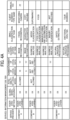
- FIGS. 4A and 4B are conceptual diagrams illustrating service information management tables according to an embodiment of the present disclosure.
- Each of the service information management tables is a table for managing the model attribute information and the service attribute information, as service information.
- the model attribute information indicates attributes of models managed by the servers 5A, 5B to 5N, respectively.
- the service attribute information indicates attributes of the servers 5A, 5B to 5N regarding services of the models.
- FIG. 4A illustrates a service information management table in the service information management DB 7001 stored in the storage unit 7000 of the proposal device 7.
- the federated method of global model In the service information management table illustrated in FIG. 4A , the federated method of global model, the global model accuracy, the availability of local model, the number of local models, the number of local data, the large classification of task, the small classification of task, the client business type name, and the annual fee are stored in association with a service provider.
- the federated method of global model, the global model accuracy, the number of local data, the large classification of task, the small classification of task, and the client business type name are included in the model attribute information.
- the annual fee, the availability of local model, and the number of local models are included in the service attribute information.
- Service providers A, B, and C indicate companies that provide services using the global model and the local model by using servers 5A, 5B to 5N.
- the federated method of the global model indicates, for example, federated learning for updating the global model based on the local model, and federated distillation for updating the global model based on output data obtained by inputting shared data to the local model.
- the global model accuracy indicates an evaluation value of the accuracy of the global model calculated based on the evaluation data.
- the availability of the local model indicates whether the local model of the terminal device of a specific client used for updating the global model can be used in the terminal device of another client.
- the number of local models indicates the number of local models used to update the global model.
- the number of local data indicates the number of local learning data used to generate the local model.
- the large classification of the task indicates large classifications such as image recognition, business analysis, and natural language processing for tasks executed by the global model and the local model.
- the small classification of the task indicates a small classification obtained by subdividing each large classification of the task.
- the client business type name indicates the business type of the client of the terminal device that generates the local model.
- the annual fee indicates an annual fee for using the service using the global model or the local model, which is provided by the service provider.
- FIG. 4B illustrates a service information management table in the service information management DB 5004 stored in the storage unit 5000 of the server 5.
- the federated method of global model similarly to the service information management table illustrated in FIG. 4A , the federated method of global model, the global model accuracy, the availability of local model, the number of local models, the number of local data, the large classification of task, the small classification of task, the client business type name, and the annual fee are managed in association with each other.
- FIG. 5 is a sequence diagram illustrating service proposal processing according to an embodiment of the present disclosure.
- the display control unit 33 causes the display 308 to display a setting screen in step S1, and receives, from a user, a setting operation for setting conditions related to a model on the setting screen.
- the transmission and reception unit 31 of the terminal device 3 transmits condition information indicating the conditions set by the setting operation to the proposal device 7, and the transmission and reception unit 71 of the proposal device 7 receives the condition information from the terminal device 3 in step S2.
- the transmission and reception unit 71 When the transmission and reception unit 71 receives the condition information from the terminal device 3, the transmission and reception unit 71 transmits an inquiry about service information to the servers 5A, 5B to 5N in step S3.
- the storing and reading unit 59 reads out the service information illustrated in FIG. 4B from the service information management DB 5004 in step S4.
- the transmission and reception unit 51 of each of the servers 5A, 5B to 5N transmits the service information read by the storing and reading unit 59 to the proposal device 7, and the transmission and reception unit 71 of the proposal device 7 receives the service information transmitted from each of the servers 5A, 5B to 5N in step S5.
- the storing and reading unit 79 stores the service information received by the transmission and reception unit 71 from each of the servers 5A, 5B to 5N into the service information management DB 7001 in association with the service provider in step S6.
- the storing and reading unit 79 reads the service information of all of the service providers from the service information management DB 7001, and the determination unit 75 determines whether the multiple models to which the service is provided from the service provider satisfy the conditions indicated by the condition information received in step S2 based on the service information read by the storing and reading unit 79, and narrows down the models satisfying the condition in step S7.
- step S8 the generation unit 77 generates a recommendation screen including model specifying information to specify the model that is determined to satisfy the conditions in step S7.
- the model specifying information includes service information about the specified model.
- the transmission and reception unit 71 of the proposal device 7 transmits the recommendation screen information indicating the recommendation screen generated in step S8 to the terminal device 3, and the transmission and reception unit 31 of the terminal device 3 receives the recommendation screen information transmitted from the proposal device 7 in step S9. Accordingly, the proposal device 7 can suggest a model satisfying the conditions to the terminal device 3.
- the display control unit 33 causes the display 308 to display the recommendation screen indicated by the recommendation screen information received by the transmission and reception unit 31 in step S10, and the user performs a selection operation of selecting a desired model from among the models satisfying the conditions on the recommendation screen.
- the transmission and reception unit 31 transmits model selection information indicating the model selected by the selection operation to the proposal device 7, and the transmission and reception unit 71 of the proposal device 7 receives the model selection information from the terminal device 3 in step S11.
- the transmission and reception unit 71 When the transmission and reception unit 71 receives the model selection information from the terminal device 3, the transmission and reception unit 71 transmits a service start screen request including destination information indicating the destination of the terminal device 3 to the server 5 that provides the selected model, and the transmission and reception unit 51 of the server 5 receives the service start screen request transmitted from the proposal device 7 in step S12.
- the generation unit 58 generates a service start screen based on the service start screen request in step S13, the transmission and reception unit 51 transmits service start screen information indicating the service start screen to the terminal device 3 indicated by the destination information received in step S12, and the transmission and reception unit 31 of the terminal device 3 receives the service start screen information transmitted from the server 5 in step S14.
- the display control unit 33 displays the service start screen indicated by the service start screen information received by the transmission and reception unit 31 on the display 308 in step S 15, and the user performs an instruction operation to instruct the start of the service on the service start screen.
- the transmission and reception unit 31 transmits a service start request to the server 5
- the transmission and reception unit 51 of the server 5 receives the service start request from the terminal device 3, and the server 5 starts the service for the terminal device 3 in step S 16.
- the functions of the proposal device 7 in FIG. 3 may be performed by the terminal device 3.
- the terminal device 3 may execute the process of the proposal device 7 in FIG. 5 .
- the determination unit 35 determines whether the multiple models satisfy the conditions, and the display control unit 33 causes the display 308 to display the model specifying information based on the determination result of the determination unit 35.
- FIG. 6 is a diagram illustrating the setting screen according to an embodiment of the present disclosure.
- FIG. 6 is a diagram illustrating a display screen in the terminal device 3 according to the present embodiment, and illustrates a state where the display control unit 33 displays the setting screen on the display 308 in step S1 of FIG. 5 .
- the display control unit 33 displays a setting screen 1100 on a display screen 1000.
- the setting screen 1100 includes a priority condition setting screen 1110 for setting the priority of the attribute of the model, a task setting screen 1120 for setting the task to be executed by the model, and a confirmation button 1130.
- the display control unit 33 displays a fee priority setting button 1112 and an accuracy priority setting button 1114 which are selectively configurable on the priority condition setting screen 1110.
- the display control unit 33 displays a business analysis task setting box 1122, an image recognition task setting box 1124, and a natural language processing task setting box 1126 which can be configurable independently on the task setting screen 1120.
- the fee priority setting button 1112 is a button for setting a high priority to the fee for using the model.
- the accuracy priority setting button 1114 is a button for setting a high priority to the evaluation of the model.
- the business analysis task setting box 1122, the image recognition task setting box 1124, and the natural language processing task setting box 1126 are boxes for setting business analysis, image recognition, and natural language processing, respectively, as tasks to be executed by the model.
- the user operates and selects either the fee priority setting button 1112 or the accuracy priority setting button 1114 based on the intention of which of the evaluation of the model or the fee is prioritized.
- the user selects the business analysis task setting box 1122, the image recognition task setting box 1124, and the natural language processing task setting box 1126 based on the task to be executed.
- the reception unit 32 receives the operation as a setting operation for setting the conditions related to the model, and as described in step S2 of FIG. 5 , the transmission and reception unit 31 transmits the condition information indicating the conditions set by the setting operation to the proposal device 7.
- the determination unit 75 of the proposal device 7 narrows down the multiple models for which the service provider provides a service to models that satisfy conditions in step S7 of FIG. 5 .
- the conditions indicate whether the large classification of task is image recognition and whether the annual fee is equal to or less than a predetermined value.
- step S7 of FIG. 5 the generation unit 77 generates the recommendation screen in which the model specifying information of the models of which the large classification of task is the image recognition and the annual fee is equal to or less than the predetermined value.
- the model specifying information of the models are arranged in ascending order of the annual fee.
- the user can easily set the priority of the attribute of the model and the task to be executed by the model to set the conditions of the model even when the user does not have any technical knowledge about the model.
- FIG. 7 is a diagram illustrating the recommendation screen according to an embodiment of the present disclosure.
- FIG. 7 is a diagram illustrating a display screen in the terminal device 3 according to the present embodiment and illustrating a state where the display control unit 33 displays the recommendation screen on the display 308 in step S10 of FIG. 5 .
- the display control unit 33 displays a recommendation screen 1200 for displaying the model specifying information, a confirmation button 1230, and a display switching button 1240 on the display screen 1000.
- the display control unit 33 displays a priority information 1210 and service provider information 1221 on the recommendation screen 1200.
- the display control unit 33 further displays model selection boxes 1220, task type information 1222, task detail information 1223, global model accuracy information 1224, annual fee information 1225, client business type name information 1226, local model availability information 1227, number-of-local-models information 1228, and number-of-local-data information 1229 in association with the service provider information 1221 on the recommendation screen 1200.
- Various types of information 1221 to 1229 displayed on the recommendation screen 1200 correspond to the service information managed in the service information management DB 7001 of the proposal device 7 illustrated in FIG. 4A .
- the generation unit 77 generates the recommendation screen 1200 in FIG. 7 when the accuracy priority setting button 1114 and the image recognition task setting box 1124 are operated in FIG. 6 .
- model specifying information is displayed in order of the accuracy of global model.
- the model specifying information is the model specifying information of the models whose large classification of the task is image recognition and whose accuracy of the global model is equal to or higher than the predetermined value in step S7 of FIG. 5 .
- the reception unit 32 receives a display switching operation, and the display control unit 33 displays the remaining model specifying information on the recommendation screen 1200.
- the user confirms the attribute of the model and the service attribute information in the various types of information 1221 to 1229, and then operates any of the model selection boxes 1220 to select the desired model.
- the reception unit 32 receives the operation as a selection operation for selecting the desired model, and as described in step S 11 of FIG. 5 , the transmission and reception unit 31 transmits the model selection information indicating the model selected by the selection operation to the proposal device 7.
- the transmission and reception unit 71 of the proposal device 7 transmits the service start screen request including destination information indicating the destination of the terminal device 3 to the server 5A of the company A.
- FIG. 8 is a diagram illustrating another recommendation screen according to an embodiment of the present disclosure.
- FIG. 8 is a diagram illustrating a state where the display control unit 33 displays the recommendation screen on the display 308 in step S10 of FIG. 5 .
- the generation unit 77 generates the recommendation screen 1200 in FIG. 8 when the fee priority setting button 1112 and the business analysis task setting box 1122 are operated in FIG. 6 .
- model specifying information is displayed in ascending order of the annual fee.
- the model specifying information is the model specifying information of the models whose large classification of the task is business analysis and whose the annual fee is equal to or lower than the predetermined value in step S7 of FIG. 5 .
- the user can efficiently select a desired model from multiple models for executing desired tasks arranged in the order of desired priorities based on the displayed attribute of the model and the service attribute information.
- FIG. 9 is a sequence diagram illustrating model processing according to an embodiment of the present disclosure.
- step S31 the selection unit 54 of the server 5 selects the terminal device 3 of the client participating in the federated learning based on the task executed by the model.
- step S32 the selection unit 54 of the server 5 selects a global model to be distributed to each terminal device 3 based on the task to be executed from the global models read from the global model management DB 5001 by the storing and reading unit 59.
- the selection unit 54 selects the same global model for all the terminal devices 3 participating in the federated learning.
- the selection unit 54 may select a global model that is used previously. Alternatively, the selection unit 54 may select a global model based on a local model learned by a specific terminal device 3. Alternatively, the selection unit 54 may select a global model learned in advance by a general-purpose data set.
- step S33 the selection unit 54 selects evaluation data from the central data read from the central data management DB 5002 by the storing and reading unit 59, based on the task executed by the model.
- the evaluation data is used for evaluating the accuracy of the global model and the local model.
- the selection unit 54 may select all of the central data acquired in step S33 as the evaluation data or randomly select the evaluation data. However, it is preferable to select the evaluation data by a stratified sampling.
- the stratified sampling is a method of selecting evaluation data so as to include the same data distribution as that of the data to be included.
- step S34 the transmission and reception unit 51 transmits the global model and the classification items selected in step S32 to each terminal device 3, and the transmission and reception unit 31 of each terminal device 3 receives the global model and the classification items transmitted from the server 5.
- the classification items are items for classifying learning data.
- the classification item may be items set by the user in advance or items labeled by the user after clustering the learning data.
- step S35 the selection unit 34 selects learning data to be used for the learning processing based on the task executed by the model from the local data read from the local data management DB 3001 by the storing and reading unit 39.
- step S36 the processing unit 37 calculates the number of learning data selected in step S35, classifies the learning data based on the classification items, and calculates the number of data for each classification item.
- step S37 the learning processing unit 38 executes the learning processing on the global model received in step S34 using the learning data selected in step S35.
- the storing and reading unit 59 generates the global model on which the learning processing is executed using the learning data as the local model and stores the global model in the local model management DB 3002 for each task to be executed.
- the learning processing unit 38 executes the learning processing on the global model received in step S34 for each learning data classified in step S36.
- the storing and reading unit 59 generates the global model obtained by executing the learning processing for each classified learning data as the local model for each classification and stores the local model in the local model management DB 3002.
- the learning processing unit 38 may use the number of epochs or an early stopping as a learning end condition.
- the number of epochs is the number of times one learning data is repeatedly learned.
- the early stopping is a method of stopping learning when learning progresses and no further improvement in accuracy can be expected, and is a method of dividing data into "data for learning” and "data for validation for determining whether to stop learning” at the time of learning and determining whether to stop learning using the data.
- step S38 the transmission and reception unit 31 transmits the number of learning data and the number of learning data for each classification calculated in step S36 and the local model and the local model for each classification obtained in step S37 to the server 5.
- the transmission and reception unit 51 of the server 5 receives the number of learning data and the number of learning data for each classification, and the local model and the local model for each classification transmitted from each terminal device 3.
- step S39 the processing unit 57 aggregates the distribution of the data received in step S38 for each classification in each terminal device 3.
- step S40 the updating unit 52 updates the global model selected in step S32 based on the number of learning data and the local model in each terminal device 3 received in step S38.
- the updating unit 52 can use the known technique such as federated averaging (FedAvg [1]), federated proximal (FedProx [2]), or federated averaging with momentum (FedAvgM [3]) to update the global model.
- the technique is not limited to the above as long as the global model can be updated based on the local model.
- the updating unit 52 calculates a weighted average of the weights of the local models for each terminal device 3 by the number of data in each terminal device 3 to update the global model.
- the determination unit 55 may determine whether an update termination condition is satisfied. When the update termination condition is not satisfied, the process may return to step S34.
- the determination unit 55 may determine whether the number of updates of the global model has reached a predetermined number of times as the update termination condition. Alternatively, the determination unit 55 may determine that the update progresses and no further improvement in accuracy can be expected.
- validation data for determining whether to stop the update may be prepared at the time of the update, and the determination unit 55 may determine whether to stop the update based on the data.
- the terminal device 3 transmits the local model and the number of data to the server 5.
- the server 5 can update the global model based on the local model and the number of data while the local data remains distributed.
- step S41 the evaluation unit 56 calculates an evaluation value of the accuracy of the global model updated in step S40 based on the evaluation data selected in step S33.
- the storing and reading unit 59 stores the evaluation value in the global model management DB 5001 in association with the updated global model for each task executed by the model.
- step S42 the evaluation unit 56 calculates evaluation values of the accuracy of the local model received in step S38 and the local model for each classification for each terminal device 3 based on the evaluation data selected in step S33.
- the storing and reading unit 59 stores each of the evaluation values into the local model management DB 5003 in association with the local model and the local model for each classification for each task executed by the model for each terminal device 3.
- Examples of the evaluation values of the accuracy of the global model and the local model include an accuracy, a precision, a recall, a F1-score, and a loss.
- the evaluation values are not limited to these values, and any value may be used as long as a value can evaluate the performances of the machine learning models.
- step S43 the transmission and reception unit 51 transmits the evaluation value of the accuracy of the global model calculated in step S41, the evaluation values of the accuracy of the local models for each of the terminal devices 3 and the local models for each of the classifications calculated in step S42, and the distribution of the data for each of the classifications for each of the terminal devices 3 aggregated in step S39 to each of the terminals 3 for each task executed by the model.
- the transmission and reception unit 31 of each of the terminal devices 3 receives the various evaluation values and distribution of the data transmitted from the server 5.
- step S44 the display control unit 33 displays the various evaluation values and the distribution of the data received in step S43 on the display 308, and the reception unit 32 receives selection of the local model or the global model.
- step S45 the transmission and reception unit 31 transmits the model selection information indicating the selected local model or global model to the server 5, and the transmission and reception unit 51 of the server 5 receives the model selection information transmitted from the terminal device 3.
- step S46 the storing and reading unit 59 reads the global model or the local model indicated by the model selection information received in step S45 from the global model management DB 5001 or the local model management DB 5003, and the transmission and reception unit 51 transmits the global model or the local model read by the storing and reading unit 59 to the terminal device 3. Then, the transmission and reception unit 31 of the terminal device 3 receives the global model or the local model transmitted by the server 5.
- the terminal device 3 transmits the model selection information to the server 5 in step S45, and the server 5 transmits the selected model to the terminal device 3 in step S46.
- the terminal device 3 may transmit the model selection information to the other terminal device 3, and the other terminal device 3 may transmit the selected model to the terminal device 3.
- the terminal device 3 may transmit the model selection information to the server 5, the server 5 may transfer the model selection information to the other terminal device 3, and the other terminal device 3 may transmit the selected model to the terminal device 3.
- the server 5 or another terminal device 3 may transmit the selected model to a device designated by the terminal device 3.
- the terminal device 3 executes the same process as in steps S35 to S37 based on the global model or the local model received in step S46.
- the accuracy of the global model and the local model is evaluated based on the central data.
- the accuracy of the global model and the local model may be evaluated based on the local data of each client.
- the terminal device 3 executes the following process.
- the selection unit 34 selects evaluation data to be used for evaluating the accuracy of the global model and the local model from the local data read from the local data management DB 3001 by the storing and reading unit 59.
- the evaluation unit 36 calculates the evaluation values of the accuracy of the global model and the local model based on the selected evaluation data.
- the transmission and reception unit 31 transmits the calculated evaluation values to the server 5.
- the transmission and reception unit 51 receives the evaluation values transmitted from each terminal device 3.
- the evaluation unit 56 calculates the evaluation values of all of the terminal devices 3 participating in the federated learning by using the average value of the evaluation values of the terminal devices 3 and the value obtained by performing weighted averaging according to the number of data.
- the evaluation unit 56 may calculate the average of the evaluation value of each client acquired in the past and the evaluation value of each client acquired this time.
- the evaluation value is not limited to the above, and any value may be used as long as the value can evaluate the performances of the machine learning models based on the evaluation values of each terminal device 3.
- FIG. 10 is a diagram illustrating a selection screen according to an embodiment of the present disclosure.
- FIG. 10 is a diagram illustrating a display screen of the terminal device 3 according to the present embodiment, and a state where the display control unit 33 displays a selection screen on the display 308 in step S44 of FIG. 9 .
- the display control unit 33 displays a selection screen 1300 including a user information display screen 1310, a task selection screen 1320, a model selection screen 1330, a confirmation button 1340, and a data classification screen 1350 on the display screen 1000.
- the display control unit 33 displays a business analysis task setting box 1322, an image recognition task setting box 1324, and a natural language processing task setting box 1326 on the task selection screen 1320.
- the display control unit 33 displays an in-house local model setting box 1332, a global model setting box 1334, a partner local model setting box 1336, and a partner local model specifying box 1338 on the model selection screen 1330.
- the data classification screen 1350 is a screen for displaying classification items obtained by classifying the own learning data and another data that are used for generating the own local model and another local models, and details thereof are described later.
- the partner local model specifying box 1338 is a screen for inputting local model specifying information for specifying a desired model among multiple local models when the partner local model setting box 1336 is selected.
- the user operates and selects any one of the business analysis task setting box 1322, the image recognition task setting box 1324, and the natural language processing task setting box 1326 based on the task to be executed.
- the user determines a model suitable for the task to be executed while confirming the data classification screen 1350, and operates one of the in-house local model setting box 1332, the global model setting box 1334, and the partner local model setting box 1336 to select the box.
- the reception unit 32 receives the operation as a selection operation of selecting a desired model from the global model and the multiple local models, and then as described in step S45 of FIG. 9 , the transmission and reception unit 31 transmits the model selection information indicating the selected local model or global model including the task selection information indicating the selected task to the server 5.
- the transmission and reception unit 31 transmits the model selection information indicating one of the local model specifying information including the task selection information indicating the business analysis task to the server 5.
- the transmission and reception unit 31 does not transmit the model selection information to the server 5.
- FIGS. 11A and 11B are diagrams of a data classification screen 1350 according to an embodiment of the present disclosure.
- the display control unit 33 displays a distribution 1368 of the learning data associated with a classification item 1362 and the local model identification information 1364 on the data classification screen 1350 illustrated in FIG. 10 .
- the display control unit 33 displays the classification items 1362, into which the learning data is classified, on the vertical axis and the local model identification information 1364 on the horizontal axis.
- the classification items 1362 are displayed from zero to nine in FIG. 11A . However, the classification items 1362 may be displayed by characters, or may be grouped for each of multiple classification items as follows to display.
- classification items having learning data for each client ID of the local model identification information 1364 may be displayed as follows instead of displaying all classification items 0 to 9. For example, when the client ID of the local model identification information 1364 is 0, classification items 3 and 4 of the classification items 1362 are displayed. Alternatively, when the client ID of the local model identification information 1364 is 19, classification items 2 and 8 of the classification item 1362 are displayed.
- the local model identification information 1364 is also displayed by the numbers of 0 to 19 in FIG. 11A . However, similarly to the classification item 1362 described above, the local model identification information 1364 may be displayed by characters or may be displayed for each group of multiple local models.
- the display control unit 33 displays black circles as the distribution 1368 of the learning data.
- the black circle indicates the number of learning data of the specific classification item used for generating the specific local model associated with the local model identification information 1364 and the classification item 1362.
- the black circle is displayed in a size corresponding to the number of learning data.
- the display control unit 33 displays global model evaluation information 1352, local model evaluation information 1356, and in-house local model identification information 1366 on the data classification screen 1350.
- the global model evaluation information 1352 indicates the evaluation value of the global model.
- the local model evaluation information 1356 indicates the evaluation value of the local model.
- the in-house local model identification information 1366 identifies the in-house local model.
- the display control unit 33 further displays the local model evaluation information 1356 indicating the evaluation value of the local model indicated by the local model identification information 1364 pointed by a pointer 1354 on the data classification screen 1350.
- the display control unit 33 displays the local model evaluation information 1358 for each classification for the specific black circle pointed by the pointer 1354 on the data classification screen 1350.
- the local model evaluation information 1358 for each classification indicates the evaluation value of the local model for each specific classification generated using learning data indicated by a specific black circle.
- the user whose in-house local model identification information is indicated by 10 can confirm the global model evaluation information 1352 and the local model evaluation information 1356 to determine which model has a high evaluation.
- the accuracy is likely to be as accurate as the evaluated value when the in-house data whose classification item is 0 is used.
- the user can appropriately select another local model after comparing and confirming the classification item 1362 and the distribution 1368 of another learning data with the classification item 1362 and the distribution 1368 of the user's in-house learning data.
- the user whose the in-house local model identification information is indicated by 10 has a high proportion of the training data with the classification item 0.
- the model whose local model identification information is 9 having the training data with the classification item 7 can be determined as a candidate.
- the user can appropriately select another local model after comparing and confirming the classification item 1362 and the distribution 1368 of another learning data with the classification item 1362 of learning data to be newly used in the future.
- the user can confirm the local model evaluation information 1358 for each training data with the classification item 7 to determine which of the models whose local model identification information is 9 or 16 has a higher accuracy.
- the user can confirm not only the local model evaluation information 1356 but also the local model evaluation information 1358 for each classification to determine a model with high accuracy when data of a desired classification item is used.
- a proposal device 7 which serves as an information processing apparatus according to an embodiment of the present disclosure, includes a transmission and reception unit 71 and a determination unit 75.
- the transmission and reception unit 71 receives, from a terminal device 3, condition information indicating conditions related to a model generated by executing learning processing using learning data.
- the determination unit 75 determines whether multiple models satisfy the conditions.
- the transmission and reception unit 71 transmits model specifying information that specifies a model satisfying the conditions based on a determination result of the determination unit 75 to the terminal device 3.
- the proposal device 7 can propose the model satisfying the conditions to the terminal device 3.
- the multiple models include multiple global models to be updated based on multiple local models.
- the proposal device 7 can propose a global model satisfying the conditions to the terminal device 3.
- the multiple models include the multiple local models each of which is generated by corresponding one of multiple nodes.
- the proposal device 7 can propose a local model satisfying the conditions to the terminal device 3.
- the conditions includes a priority of an attribute of the model.
- the priority of the attribute of the model indicates an attribute of the model set to a high priority.
- the proposal device 7 can propose a model with priority given to satisfying a condition in a predetermined attribute to the terminal device 3.
- the attribute includes at least one of a fee for using the model and an evaluation of the model.
- the proposal device 7 can propose a model with priority given to satisfying conditions in the fee for using the model and the evaluation of the model to the terminal device 3.
- the conditions include task information indicating a task executed by the model.
- the proposal device 7 can propose a model satisfying the conditions of the task to be executed to the terminal device 3.
- the transmission and reception unit 71 transmits model attribute information indicating the attribute of the model to the terminal device 3, including the model attribute information in the model specifying information.
- the proposal device 7 can propose a model satisfying the conditions to the terminal device 3 and also share the attribute of the proposed model with the terminal device 3.
- the attribute of the model includes at least one of the number of learning data and a business type of a client of a node that generates a local model.
- the proposal device 7 can propose a model satisfying the conditions to the terminal device 3 and also share the number of learning data of the proposed model and the business type of the client of the node that generates the local model with the terminal device 3.
- the transmission and reception unit 71 transmits service attribute information indicating an attribute of a service provider providing the model to the terminal device 3, including the service attribute information in the model specifying information.
- the proposal device 7 can propose a model satisfying the conditions to the terminal device 3 and also share the attribute of the service provider providing the proposed model with the terminal device 3.
- the attribute of the service provider includes at least one of the number of local models and an availability of the local model used for updating the global model.
- the proposal device 7 can propose a model satisfying the conditions to the terminal device 3 and also share the number of local models in the service provider providing the proposed model and the availability of the local model used for updating the global model.
- the transmission and reception unit 71 further receives model selection information indicating a model selected from among the models satisfying the conditions from the terminal device 3.
- the proposal device 7 can share a selection result of the model proposed to the terminal device 3.
- the transmission and reception unit 71 transmits the model selection information to a device of the service provider that provides the model.
- the proposal device 7 can share the selection result of the model proposed to the terminal device 3 with the device of the service provider that provides the model.
- the proposal device 7 integrated with the server 5 can provide the model to the terminal device 3.
- the terminal device 3 includes a reception unit 32 and a display control unit 33.
- the reception unit 32 receives a setting operation for setting the conditions related to the model generated by executing learning processing using learning data.
- the display control unit 33 causes a display 308 to display the model specifying information for specifying a model determined to satisfy the conditions set by the setting operation among multiple models.
- the user can set the conditions related to the model to confirm the model determined to satisfy the conditions.
- the terminal device 3 includes a transmission and reception unit 31.
- the transmission and reception unit 31 transmits the condition information indicating the conditions set by the setting operation to the proposal device 7 that serves as an information processing apparatus.
- the transmission and reception unit 31 also receives model specifying information from the proposal device 7.
- the display control unit 33 causes the display 308 to display the model specifying information received by the transmission and reception unit 31.
- the user can set the conditions related to the model to confirm the model determined by the proposal device 7 to satisfy the conditions.
- the terminal device 3 when the terminal device 3 is integrated with the proposal device 7, the terminal device 3 includes a determination unit 35 that determines whether the multiple models satisfy the conditions.
- the display control unit 33 causes the display 308 to display the model specifying information based on the determination result of the determination unit 35.
- the user can set the conditions related to the model to confirm the model determined by the terminal device 3 to satisfy the conditions.
- An information processing method executed by the proposal device 7 includes: receiving, from the terminal device 3, condition information indicating conditions related to a model generated by executing learning processing using learning data; determining whether multiple models satisfy the conditions; and transmitting model specifying information that specifies a model satisfying the conditions based on the determination result of the determining.
- An information processing method executed by the terminal device 3 includes: receiving a setting operation for setting conditions related to a model generated by executing learning processing using learning data; and causing the display 308 to display model specifying information that specifies a model determined to satisfy the conditions set by the setting operation among multiple models.
- a program according to an embodiment of the present disclosure causes a computer to execute the information processing method according to Aspect 16 or Aspect 17.
- An information processing system includes a terminal device 3 and a proposal device 7 that can communicate with the terminal device 3.
- the terminal device 3 includes a reception unit 32 and a transmission and reception unit 31.
- the reception unit 32 receives a setting operation for setting conditions related to a model generated by executing learning processing using learning data.
- the transmission and reception unit 31 transmits condition information indicating the conditions set by the setting operation to the proposal device 7.
- the proposal device 7 includes a transmission and reception unit 71 that receives, from the terminal device 3 and the determination unit 75, condition information that determines whether multiple models satisfy the conditions.
- the transmission and reception unit 71 transmits model specifying information that specifies a model satisfying the conditions based on a determination result of the determination unit 75 to the terminal device 3.
- the transmission and reception unit 31 of the terminal device 3 receives the model specifying information from the proposal device 7.
- the terminal device 3 further includes a display control unit 33 that causes a display 308 to display the model specifying information.
- the present invention can be implemented in any convenient form, for example using dedicated hardware, or a mixture of dedicated hardware and software.
- the present invention may be implemented as computer software implemented by one or more networked processing apparatuses.
- the processing apparatuses include any suitably programmed apparatuses such as a general purpose computer, a personal digital assistant, a Wireless Application Protocol (WAP) or third-generation (3G)-compliant mobile telephone, and so on. Since the present invention can be implemented as software, each and every aspect of the present invention thus encompasses computer software implementable on a programmable device.
- the computer software can be provided to the programmable device using any conventional carrier medium (carrier means).
- the carrier medium includes a transient carrier medium such as an electrical, optical, microwave, acoustic or radio frequency signal carrying the computer code.
- transient medium is a Transmission Control Protocol/Internet Protocol (TCP/IP) signal carrying computer code over an IP network, such as the Internet.
- the carrier medium may also include a storage medium for storing processor readable code such as a floppy disk, a hard disk, a compact disc read-only memory (CD-ROM), a magnetic tape device, or a solid state memory device.
Landscapes
- Engineering & Computer Science (AREA)
- Theoretical Computer Science (AREA)
- Software Systems (AREA)
- Data Mining & Analysis (AREA)
- Evolutionary Computation (AREA)
- Medical Informatics (AREA)
- Computer Vision & Pattern Recognition (AREA)
- Physics & Mathematics (AREA)
- Computing Systems (AREA)
- General Engineering & Computer Science (AREA)
- General Physics & Mathematics (AREA)
- Mathematical Physics (AREA)
- Artificial Intelligence (AREA)
- Management, Administration, Business Operations System, And Electronic Commerce (AREA)
Abstract
An information processing apparatus (7) includes a reception unit (71), a determination unit (75), and a transmission unit (71). The reception unit (71) receives, from a terminal device (3), condition information indicating conditions related to a model. The determination unit (75) determines whether at least one of multiple models satisfies the conditions. The multiple models are each generated by executing learning processing using learning data. The transmission unit (71) transmits to the terminal device model specifying information that specifies one of the models satisfying the conditions based on a result of the determination.
Description
- Embodiments of the present disclosure relate to an information processing apparatus, a terminal apparatus, an information processing method, a carrier medium, and an information processing system.
- A known multimodal training method trains a tree model in cooperation with each partner of multiple partners, based on user sample data that is common to the partners, performs importance evaluation of features on trained tree models, and assigns corresponding weights to the feature columns generated by each tree model (see, for example,
Japanese Unexamined Patent Application Publication No. 2021-121922 - Embodiments of the present disclosure described herein provide a novel information processing apparatus including a reception unit, a determination unit, and a transmission unit. The reception unit receives, from a terminal device, condition information indicating conditions related to a model. The determination unit determines whether at least one of multiple models satisfies the conditions. The multiple models are each generated by executing learning processing using learning data. The transmission unit transmits to the terminal device model specifying information that specifies one of the models satisfying the conditions based on a result of the determination.
- Embodiments of the present disclosure described herein provide a novel terminal device including a reception unit and a display control unit. The reception unit receives a setting operation for setting conditions related to a model, the model being generated by executing learning processing using learning data. The display control unit causes a display to display model specifying information that specifies one of multiple models satisfying the conditions set by the setting operation.
- Embodiments of the present disclosure described herein provide a novel information processing method executed by an information processing apparatus. The method includes: receiving, from a terminal device, condition information indicating conditions related to a model; determining whether at least one of multiple models satisfies the conditions, the multiple models being each generated by executing learning processing using learning data; and transmitting to the terminal device model specifying information that specifies one of the models satisfying the conditions based on a result of the determination.
- Embodiments of the present disclosure described herein provide a novel information processing method executed by a terminal device. The method includes: receiving a setting operation for setting conditions related to a model, the model being generated by executing learning processing using learning data; and causing a display to display model specifying information that specifies one of multiple models satisfying the conditions set by the setting operation.
- Embodiments of the present disclosure described herein provide a novel information processing system including a terminal device and the information processing apparatus. The information processing apparatus communicates with the terminal device. The terminal device includes a reception unit, a transmission unit, and a display control unit. The reception unit receives a setting operation for setting the conditions related to the model. The transmission unit transmits the condition information indicating the conditions set by the setting operation to the information processing apparatus. The display control unit causes a display to display the model specifying information received from the information processing apparatus by the reception unit.
- According to at least one of the above-described embodiments, selection of a model satisfying conditions can be facilitated.
- A more complete appreciation of embodiments of the present disclosure and many of the attendant advantages and features thereof can be readily obtained and understood from the following detailed description with reference to the accompanying drawings, wherein:
-
FIG. 1 is a diagram illustrating an overall configuration of an information processing system according to an embodiment of the present disclosure; -
FIG. 2 is a diagram illustrating a hardware configuration of a terminal device and a server according to an embodiment of the present disclosure; -
FIG. 3 is a block diagram illustrating a functional configuration of an information processing system according to an embodiment of the present disclosure; -
FIGS. 4A and4B are conceptual diagrams illustrating a service information management table according to an embodiment of the present disclosure; -
FIG. 5 is a sequence diagram illustrating service proposal processing according to an embodiment of the present disclosure; -
FIG. 6 is a diagram illustrating a setting screen according to an embodiment of the present disclosure; -
FIG. 7 is a diagram illustrating a recommendation screen according to an embodiment of the present disclosure; -
FIG. 8 is a diagram illustrating another recommendation screen according to an embodiment of the present disclosure; -
FIG. 9 is a sequence diagram illustrating model processing according to an embodiment of the present disclosure; -
FIG. 10 is a diagram illustrating a selection screen according to an embodiment of the present disclosure; and -
FIGS. 11A and 11B are diagrams of a data classification screen according to an embodiment of the present disclosure. - The accompanying drawings are intended to depict embodiments of the present disclosure and should not be interpreted to limit the scope thereof. The accompanying drawings are not to be considered as drawn to scale unless explicitly noted. Also, identical or similar reference numerals designate identical or similar components throughout the several views.
- In describing embodiments illustrated in the drawings, specific terminology is employed for the sake of clarity. However, the disclosure of this specification is not intended to be limited to the specific terminology so selected and it is to be understood that each specific element includes all technical equivalents that have a similar function, operate in a similar manner, and achieve a similar result.
- Referring now to the drawings, embodiments of the present disclosure are described below. As used herein, the singular forms "a," "an," and "the" are intended to include the plural forms as well, unless the context clearly indicates otherwise.
- Federated learning is a machine learning technique that performs learning in which data is not aggregated but remains distributed. The federated learning is a technique that enables the implementation of a model that takes advantage of data between multiple clients as if the data were linked while ensuring privacy and security.
-
FIG. 1 is a diagram illustrating an overall configuration of aninformation processing system 1 according to an embodiment of the present disclosure. Theinformation processing system 1 according to the present embodiment includes multipleterminal devices multiple servers proposal device 7. - Each of the
multiple servers server 5 side, in other words, on the central side, the global model may be referred to as a central model. Themultiple servers server 5 when it is not necessary to distinguish them from each other. - The multiple
terminal devices server 5A. Theterminal device 3a serves as a node used by clients that do not participate in the federated learning but receive a learned global model distributed from theserver 5A. The multipleterminal devices terminal device 3 when they do not need to be distinguished from each other. - The
proposal device 7 serves as an information processing apparatus that proposes a learning model such as a global model managed by each of themultiple servers multiple terminal devices proposal device 7 may be implemented by one of the servers such as aparticular server 5A. In this case, theparticular server 5A functioning as theproposal device 7 proposes a learning model such as a global model managed by each of themultiple servers server 5A. - The multiple
terminal devices multiple servers proposal device 7 communicate with each other via acommunication network 100. Thecommunication network 100 is implemented by, for example, the Internet, a mobile communication network, and a local area network (LAN). Thecommunication network 100 may include, in addition to a wired network, a wireless network in compliance with, for example, 5th generation (5G), worldwide interoperability for microwave access (WiMAX), and long term evolution (LTE). - In the
information processing system 1, all or some of the multipleterminal devices specific server 5A, and theproposal device 7 may be configured with cloud computing. In this case, the multipleterminal devices specific server 5A, and theproposal device 7 can communicate with each other at high speed without using thecommunication network 100. -
FIG. 2 is a diagram illustrating a hardware configuration of a terminal device and a server according to an embodiment of the present disclosure; Each hardware component of theterminal device 3 is denoted by a reference numeral in 300 series. Each hardware component of theserver 5 is denoted by a reference numeral in 500 series in parentheses. Theproposal device 7 also includes the same or substantially the same hardware configuration as that of theserver 5. Therefore, the reference numerals and the description of the hardware configuration are omitted. - The
terminal device 3 includes a central processing unit (CPU) 301, a read-only memory (ROM) 302, a random-access memory (RAM) 303, a hard disk (HD) 304, a hard disk drive (HDD) 305, a medium interface (I/F) 307, adisplay 308, a network I/F 309, akeyboard 311, amouse 312, a compact disc-rewritable (CD-RW) drive 314, and abus line 310. - The
CPU 301 controls overall operation of theterminal device 3. TheROM 302 stores programs to boot theCPU 301. TheRAM 303 is used as a work area for theCPU 301. TheHD 304 stores various data such as programs. TheHDD 305 controls reading and writing of data from and to theHD 304 under control of theCPU 301. The medium I/F 307 controls reading or writing (storing) of data from or to arecording medium 306 such as a flash memory. Thedisplay 308 displays various types of information such as a cursor, a menu, a window, a character, or an image. The network I/F 309 is an interface that controls communication of data through thecommunication network 100. Thekeyboard 311 is an input device provided with multiple keys for a user to input, for example, characters, numerals, or various instructions. Themouse 312 is an input device that allows the user to select or execute a specific instruction, select a target for processing, or move a cursor being displayed. The CD-RW drive 314 controls reading and writing of various kinds of data from and to a CD-RW 313, which is one example of a removable recording medium. Theterminal device 3 may further include a configuration for controlling reading or writing (storing) of data from or to an external PC or an external device connected by wire or wirelessly such as wireless fidelity (Wi-Fi). - The
server 5 includes aCPU 501, aROM 502, aRAM 503, anHD 504, anHDD 505, a medium I/F 507, adisplay 508, a network I/F 509, akeyboard 511, amouse 512, a CD-RW drive 514, and abus line 510. Since the hardware configuration of theserver 5 is the same or substantially the same as the hardware configuration of the terminal device 3 (theCPU 301, theROM 302, theRAM 303, theHD 304, theHDD 305, therecording medium 306, the medium I/F 307, thedisplay 308, the network I/F 309, thekeyboard 311, themouse 312, the CD-RW drive 314, and the bus line 310), the description of the hardware configuration of theserver 5 is omitted. - A compact disc-recordable (CD-R) drive may be used instead of the CD-RW drive 314 (514). Each of the
terminal device 3 and theserver 5 may be configured by a single computer or multiple computers to which divided portions (functions, method, or storages) are arbitrarily allocated. -
FIG. 3 is a block diagram illustrating a functional configuration of theinformation processing system 1 according to an embodiment of the present disclosure. - The
terminal device 3 includes a transmission andreception unit 31, areception unit 32, adisplay control unit 33, aselection unit 34, adetermination unit 35, anevaluation unit 36, aprocessing unit 37, alearning processing unit 38, and a storing andreading unit 39. Each of the units described above is a function or a unit for functioning that is implemented by any of the components illustrated inFIG. 2 operating in response to an instruction from theCPU 301 in accordance with a program deployed from theHD 304 on theRAM 303. Theterminal device 3 further includes astorage unit 3000 implemented by theRAM 303 and theHD 304 illustrated inFIG. 2 . Thestorage unit 3000 serves as storage means. - A description is given below of each functional unit of the
terminal device 3. - The transmission and
reception unit 31 serves as reception means. The transmission andreception unit 31 is implemented by instructions of theCPU 301 and the network I/F 309 illustrated inFIG. 2 , and transmits and receives various data (or information) to and from other terminals, apparatuses, and systems through thecommunication network 100. - The
reception unit 32 serves as reception means. Thereception unit 32 is implemented by the instructions of theCPU 301, thekeyboard 311, and themouse 312 illustrated inFIG. 2 , and accepts various inputs from the user. - The
display control unit 33 serves as display control means. Thedisplay control unit 33 is implemented by instructions of theCPU 301 illustrated inFIG. 2 , and causes thedisplay 308, which serves as a display unit, to display various images and screens. - The
selection unit 34 is implemented by the instructions of theCPU 301 illustrated inFIG. 2 , and executes a process of selecting information. Theselection unit 34 serves as a selection means. - The
determination unit 35 is implemented by the instructions of theCPU 301 illustrated inFIG. 2 , and executes various determination processing. Thedetermination unit 35 serves as determination means. - The
evaluation unit 36 is implemented by the instructions of theCPU 301 illustrated inFIG. 2 , and executes a process for evaluating a global model to be described later. Theevaluation unit 36 serves as evaluation means. - The
processing unit 37 is implemented by the instructions of theCPU 301 illustrated inFIG. 2 , and executes a process such as calculating the number of data and classifying the data. Theprocessing unit 37 serves as a processing unit. - The
learning processing unit 38 is implemented by the instructions of theCPU 301 illustrated inFIG. 2 , and executes learning processing. Thelearning processing unit 38 serves as a learning processing unit. - The storing and
reading unit 39 serves as a storage control unit. The storing andreading unit 39 is implemented by the instructions of theCPU 301, theHDD 305, the medium I/F 307, the CD-RW drive 314, and external PCs or external devices illustrated inFIG. 2 . The storing andreading unit 39 writes and reads various types of data to and from thestorage unit 3000, therecording medium 306, the CD-RW 313, and the external PCs or external devices. - The
storage unit 3000 stores a local data management database (DB) 3001 and a localmodel management DB 3002. - The local
data management DB 3001 stores local data input when thelearning processing unit 38 executes the learning processing for each task executed by a model. The localmodel management DB 3002 stores a local model for each task to be executed. The local model is obtained by thelearning processing unit 38 executing the learning processing. In this embodiment, the tasks executed by the model include an image recognition task, a business analysis task, and a natural language processing task. - The
server 5 includes a transmission andreception unit 51, an updatingunit 52, adecision unit 53, aselection unit 54, adetermination unit 55, anevaluation unit 56, aprocessing unit 57, and a storing andreading unit 59. These units are functions or units functioning that are implemented by or caused to function by operating one or more hardware components illustrated inFIG. 2 in cooperation with instructions of theCPU 501 according to the program loaded from theHD 504 to theRAM 503. Theserver 5 further includes astorage unit 5000 implemented by theHD 504 illustrated inFIG. 2 . Thestorage unit 5000 serves as storage means. - A description is given below of each functional unit of the
server 5. Theserver 5 may be implemented by the functions distributed to multiple computers. In the following, a description is given below of an example in which theserver 5 is a server computer that resides in a cloud environment. In another example, theserver 5 may be a server that resides in an on-premises environment. - The transmission and
reception unit 51 serves as a transmission unit. The transmission andreception unit 51 is implemented by the instructions of theCPU 501 and the network I/F 509 illustrated inFIG. 2 , and transmits and receives various data (or information) to and from other terminals, apparatuses, and systems through thecommunication network 100. - The updating
unit 52 is implemented by the instructions of theCPU 501 illustrated inFIG. 2 , and executes the process for evaluating the global model to be described later. The updatingunit 52 serves as an updating unit. - The
decision unit 53 is implemented by the instructions of theCPU 501 illustrated inFIG. 2 , and executes a process for deciding an incentive to be described later. Thedecision unit 53 serves as a decision unit. - The
selection unit 54 is implemented by the instructions of theCPU 501 illustrated inFIG. 2 , and executes a process for selecting theterminal device 3 that participates in a model, data, and federated learning. Theselection unit 54 serves as a selection unit. - The
determination unit 55 is implemented by the instructions of theCPU 501 illustrated inFIG. 2 , and performs various determinations. - The
evaluation unit 56 is implemented by the instructions of theCPU 501 illustrated inFIG. 2 , and executes the process for evaluating the global model. Theevaluation unit 56 serves as an evaluation unit. - The
processing unit 57 is implemented by the instructions of theCPU 501 illustrated inFIG. 2 and executes a process for aggregating data. Theprocessing unit 57 serves as a processing unit. - The
generation unit 58 is implemented by the instructions of theCPU 501 illustrated inFIG. 2 , and executes a process for generating various types of image data for displaying on a display. - The storing and
reading unit 59 serves as a storage control unit. The storing andreading unit 59 is implemented by the instructions of theCPU 501, theHDD 505, the medium I/F 507, the CD-RW drive 514, and external PCs or external devices illustrated inFIG. 2 . The storing andreading unit 59 writes and reads various types of data to and from thestorage unit 5000, therecording medium 506, the CD-RW 513, and the external PCs or the external devices. Thestorage unit 5000, therecording medium 506, the CD-RW 513, and the external PCs or the external devices are examples of a storage unit. - The
storage unit 5000 includes a globalmodel management DB 5001, a centraldata management DB 5002, a localmodel management DB 5003, and a serviceinformation management DB 5004. - The global
model management DB 5001 stores the global model distributed to theterminal device 3 for each task to be executed. The centraldata management DB 5002 stores central data for each task to be executed by the model. The central data includes evaluation data for evaluating the global model. - The local
model management DB 5003 stores multiple local models for each task to be executed. Each of the local models is generated by a corresponding one of theterminal devices information management DB 5004 stores model attribute information and service attribute information. The model attribute information indicates the attribute of the model managed by theserver 5. The service attribute information indicates the attribute of theserver 5 related to a service of the model. - All or some of the functional configuration of the
terminal device 3 and the functional configuration of theserver 5 described above may be configured by cloud computing. In this case, the transmission andreception unit 31 of theterminal device 3 and the transmission andreception unit 51 of theserver 5 can communicate with each other at high speed without using thecommunication network 100. - The
proposal device 7 includes a transmission and reception unit 71, aprocessing unit 73, adetermination unit 75, ageneration unit 77, and a storing andreading unit 79. Each of the units described above is a function or a unit for functioning that is implemented by any of the components illustrated inFIG. 2 operating in response to an instruction from theCPU 501 in accordance with a program developed from theHD 504 on theRAM 503. Theproposal device 7 further includes astorage unit 7000 implemented by theRAM 503 and theHD 504 illustrated inFIG. 2 . Thestorage unit 7000 serves as a storage unit. - A description is given below of each functional unit of the
proposal device 7. - The transmission and reception unit 71 serves as a reception unit. The transmission and reception unit 71 is implemented by instructions of a CPU and a network I/F, which are similar to the
CPU 501 and the network I/F 509 illustrated inFIG. 2 , and transmits and receives various data (or information) to and from another apparatus and system through thecommunication network 100. - The
processing unit 73 is implemented by the instructions of the CPU of theproposal device 7, and executes various processes. Theprocessing unit 73 serves as a processing unit. - The
determination unit 75 is implemented by the instructions of the CPU of theproposal device 7, and executes various determination processing. Thedetermination unit 75 serves as a determination unit. - The
generation unit 77 is implemented by the instructions of the CPU of theproposal device 7, and executes a process for generating various types of image data for displaying on a display. - The storing and
reading unit 79 serves as a storage control unit. The storing andreading unit 79 is implemented by the instructions of the CPU, an HDD, a medium I/F, a CD-RW drive, which are similar to theCPU 501, theHDD 505, the medium I/F 507, and the CD-RW drive 514 illustrated inFIG. 2 , and external PCs or external devices. The storing andreading unit 59 writes and reads various types of data to and from thestorage unit 7000, a recording medium, a CD-RW, and the external PCs or the external devices. - The
storage unit 7000 includes a serviceinformation management DB 7001. The serviceinformation management DB 7001 stores model attribute information and service attribute information, as service information. The model attribute information indicates attributes of models managed by theservers servers -
FIGS. 4A and4B are conceptual diagrams illustrating service information management tables according to an embodiment of the present disclosure. Each of the service information management tables is a table for managing the model attribute information and the service attribute information, as service information. The model attribute information indicates attributes of models managed by theservers servers -
FIG. 4A illustrates a service information management table in the serviceinformation management DB 7001 stored in thestorage unit 7000 of theproposal device 7. - In the service information management table illustrated in
FIG. 4A , the federated method of global model, the global model accuracy, the availability of local model, the number of local models, the number of local data, the large classification of task, the small classification of task, the client business type name, and the annual fee are stored in association with a service provider. - The federated method of global model, the global model accuracy, the number of local data, the large classification of task, the small classification of task, and the client business type name are included in the model attribute information. The annual fee, the availability of local model, and the number of local models are included in the service attribute information.
- Service providers A, B, and C indicate companies that provide services using the global model and the local model by using
servers - The federated method of the global model indicates, for example, federated learning for updating the global model based on the local model, and federated distillation for updating the global model based on output data obtained by inputting shared data to the local model.
- The global model accuracy indicates an evaluation value of the accuracy of the global model calculated based on the evaluation data.
- The availability of the local model indicates whether the local model of the terminal device of a specific client used for updating the global model can be used in the terminal device of another client.
- The number of local models indicates the number of local models used to update the global model.
- The number of local data indicates the number of local learning data used to generate the local model.
- The large classification of the task indicates large classifications such as image recognition, business analysis, and natural language processing for tasks executed by the global model and the local model.
- The small classification of the task indicates a small classification obtained by subdividing each large classification of the task.
- The client business type name indicates the business type of the client of the terminal device that generates the local model.
- The annual fee indicates an annual fee for using the service using the global model or the local model, which is provided by the service provider.
-
FIG. 4B illustrates a service information management table in the serviceinformation management DB 5004 stored in thestorage unit 5000 of theserver 5. - In the service information management table illustrated in
FIG. 4B , similarly to the service information management table illustrated inFIG. 4A , the federated method of global model, the global model accuracy, the availability of local model, the number of local models, the number of local data, the large classification of task, the small classification of task, the client business type name, and the annual fee are managed in association with each other. - As described later, various types of information managed by the service information management table illustrated in
FIG. 4B are shared and managed by the service information management table illustrated inFIG. 4A . -
FIG. 5 is a sequence diagram illustrating service proposal processing according to an embodiment of the present disclosure. - When the
reception unit 32 of theterminal device 3 receives a predetermined operation, thedisplay control unit 33 causes thedisplay 308 to display a setting screen in step S1, and receives, from a user, a setting operation for setting conditions related to a model on the setting screen. - When the
reception unit 32 of theterminal device 3 receives the setting operation, the transmission andreception unit 31 of theterminal device 3 transmits condition information indicating the conditions set by the setting operation to theproposal device 7, and the transmission and reception unit 71 of theproposal device 7 receives the condition information from theterminal device 3 in step S2. - When the transmission and reception unit 71 receives the condition information from the
terminal device 3, the transmission and reception unit 71 transmits an inquiry about service information to theservers - When the transmission and
reception unit 51 of each of theservers proposal device 7, the storing andreading unit 59 reads out the service information illustrated inFIG. 4B from the serviceinformation management DB 5004 in step S4. - The transmission and
reception unit 51 of each of theservers reading unit 59 to theproposal device 7, and the transmission and reception unit 71 of theproposal device 7 receives the service information transmitted from each of theservers - The storing and
reading unit 79 stores the service information received by the transmission and reception unit 71 from each of theservers information management DB 7001 in association with the service provider in step S6. - The storing and
reading unit 79 reads the service information of all of the service providers from the serviceinformation management DB 7001, and thedetermination unit 75 determines whether the multiple models to which the service is provided from the service provider satisfy the conditions indicated by the condition information received in step S2 based on the service information read by the storing andreading unit 79, and narrows down the models satisfying the condition in step S7. - In step S8, the
generation unit 77 generates a recommendation screen including model specifying information to specify the model that is determined to satisfy the conditions in step S7. The model specifying information includes service information about the specified model. - The transmission and reception unit 71 of the
proposal device 7 transmits the recommendation screen information indicating the recommendation screen generated in step S8 to theterminal device 3, and the transmission andreception unit 31 of theterminal device 3 receives the recommendation screen information transmitted from theproposal device 7 in step S9. Accordingly, theproposal device 7 can suggest a model satisfying the conditions to theterminal device 3. - The
display control unit 33 causes thedisplay 308 to display the recommendation screen indicated by the recommendation screen information received by the transmission andreception unit 31 in step S10, and the user performs a selection operation of selecting a desired model from among the models satisfying the conditions on the recommendation screen. - When the
reception unit 32 receives the selection operation, the transmission andreception unit 31 transmits model selection information indicating the model selected by the selection operation to theproposal device 7, and the transmission and reception unit 71 of theproposal device 7 receives the model selection information from theterminal device 3 in step S11. - When the transmission and reception unit 71 receives the model selection information from the
terminal device 3, the transmission and reception unit 71 transmits a service start screen request including destination information indicating the destination of theterminal device 3 to theserver 5 that provides the selected model, and the transmission andreception unit 51 of theserver 5 receives the service start screen request transmitted from theproposal device 7 in step S12. - The
generation unit 58 generates a service start screen based on the service start screen request in step S13, the transmission andreception unit 51 transmits service start screen information indicating the service start screen to theterminal device 3 indicated by the destination information received in step S12, and the transmission andreception unit 31 of theterminal device 3 receives the service start screen information transmitted from theserver 5 in step S14. - The
display control unit 33 displays the service start screen indicated by the service start screen information received by the transmission andreception unit 31 on thedisplay 308 instep S 15, and the user performs an instruction operation to instruct the start of the service on the service start screen. - When the
reception unit 32 receives the instruction operation, the transmission andreception unit 31 transmits a service start request to theserver 5, the transmission andreception unit 51 of theserver 5 receives the service start request from theterminal device 3, and theserver 5 starts the service for theterminal device 3 instep S 16. - In the above description, the functions of the
proposal device 7 inFIG. 3 may be performed by theterminal device 3. Alternatively, theterminal device 3 may execute the process of theproposal device 7 inFIG. 5 . - In this case, in the
terminal device 3 performing the functions of theproposal device 7, thedetermination unit 35 determines whether the multiple models satisfy the conditions, and thedisplay control unit 33 causes thedisplay 308 to display the model specifying information based on the determination result of thedetermination unit 35. -
FIG. 6 is a diagram illustrating the setting screen according to an embodiment of the present disclosure. -
FIG. 6 is a diagram illustrating a display screen in theterminal device 3 according to the present embodiment, and illustrates a state where thedisplay control unit 33 displays the setting screen on thedisplay 308 in step S1 ofFIG. 5 . - The
display control unit 33 displays asetting screen 1100 on adisplay screen 1000. Thesetting screen 1100 includes a prioritycondition setting screen 1110 for setting the priority of the attribute of the model, atask setting screen 1120 for setting the task to be executed by the model, and aconfirmation button 1130. - The
display control unit 33 displays a feepriority setting button 1112 and an accuracypriority setting button 1114 which are selectively configurable on the prioritycondition setting screen 1110. Thedisplay control unit 33 displays a business analysistask setting box 1122, an image recognitiontask setting box 1124, and a natural language processingtask setting box 1126 which can be configurable independently on thetask setting screen 1120. - The fee
priority setting button 1112 is a button for setting a high priority to the fee for using the model. The accuracypriority setting button 1114 is a button for setting a high priority to the evaluation of the model. - The business analysis
task setting box 1122, the image recognitiontask setting box 1124, and the natural language processingtask setting box 1126 are boxes for setting business analysis, image recognition, and natural language processing, respectively, as tasks to be executed by the model. - In the state of
FIG. 6 , the user operates and selects either the feepriority setting button 1112 or the accuracypriority setting button 1114 based on the intention of which of the evaluation of the model or the fee is prioritized. - The user selects the business analysis
task setting box 1122, the image recognitiontask setting box 1124, and the natural language processingtask setting box 1126 based on the task to be executed. - When the user operates the various setting buttons and setting boxes and operates the
confirmation button 1130, thereception unit 32 receives the operation as a setting operation for setting the conditions related to the model, and as described in step S2 ofFIG. 5 , the transmission andreception unit 31 transmits the condition information indicating the conditions set by the setting operation to theproposal device 7. - As an example, when the user selects the fee
priority setting button 1112 and the image recognitiontask setting box 1124 in the state ofFIG. 6 , thedetermination unit 75 of theproposal device 7 narrows down the multiple models for which the service provider provides a service to models that satisfy conditions in step S7 ofFIG. 5 . In this example, the conditions indicate whether the large classification of task is image recognition and whether the annual fee is equal to or less than a predetermined value. - Then, in step S7 of
FIG. 5 , thegeneration unit 77 generates the recommendation screen in which the model specifying information of the models of which the large classification of task is the image recognition and the annual fee is equal to or less than the predetermined value. The model specifying information of the models are arranged in ascending order of the annual fee. - As described above, the user can easily set the priority of the attribute of the model and the task to be executed by the model to set the conditions of the model even when the user does not have any technical knowledge about the model.
-
FIG. 7 is a diagram illustrating the recommendation screen according to an embodiment of the present disclosure. -
FIG. 7 is a diagram illustrating a display screen in theterminal device 3 according to the present embodiment and illustrating a state where thedisplay control unit 33 displays the recommendation screen on thedisplay 308 in step S10 ofFIG. 5 . - The
display control unit 33 displays arecommendation screen 1200 for displaying the model specifying information, aconfirmation button 1230, and adisplay switching button 1240 on thedisplay screen 1000. - The
display control unit 33 displays apriority information 1210 andservice provider information 1221 on therecommendation screen 1200. Thedisplay control unit 33 further displaysmodel selection boxes 1220,task type information 1222,task detail information 1223, globalmodel accuracy information 1224,annual fee information 1225, client businesstype name information 1226, localmodel availability information 1227, number-of-local-models information 1228, and number-of-local-data information 1229 in association with theservice provider information 1221 on therecommendation screen 1200. - Various types of
information 1221 to 1229 displayed on therecommendation screen 1200 correspond to the service information managed in the serviceinformation management DB 7001 of theproposal device 7 illustrated inFIG. 4A . - The
generation unit 77 generates therecommendation screen 1200 inFIG. 7 when the accuracypriority setting button 1114 and the image recognitiontask setting box 1124 are operated inFIG. 6 . In therecommendation screen 1200, model specifying information is displayed in order of the accuracy of global model. The model specifying information is the model specifying information of the models whose large classification of the task is image recognition and whose accuracy of the global model is equal to or higher than the predetermined value in step S7 ofFIG. 5 . - In this case, "accuracy is prioritized" is displayed in the
priority information 1210, and the model specifying information corresponding to thetask type information 1222 of "image recognition" is displayed. - When the user operates the
display switching button 1240, thereception unit 32 receives a display switching operation, and thedisplay control unit 33 displays the remaining model specifying information on therecommendation screen 1200. - In the state of
FIG. 7 , the user confirms the attribute of the model and the service attribute information in the various types ofinformation 1221 to 1229, and then operates any of themodel selection boxes 1220 to select the desired model. - When the user operates the
confirmation button 1230 after operating any of themodel selection boxes 1220, thereception unit 32 receives the operation as a selection operation for selecting the desired model, and as described in step S 11 ofFIG. 5 , the transmission andreception unit 31 transmits the model selection information indicating the model selected by the selection operation to theproposal device 7. - As an example, in the state of
FIG. 7 , when the user operates themodel selection box 1220 in which theservice provider information 1221 indicates a company A, in step S12 ofFIG. 5 , the transmission and reception unit 71 of theproposal device 7 transmits the service start screen request including destination information indicating the destination of theterminal device 3 to theserver 5A of the company A. -
FIG. 8 is a diagram illustrating another recommendation screen according to an embodiment of the present disclosure. - Similarly to
FIG. 7 ,FIG. 8 is a diagram illustrating a state where thedisplay control unit 33 displays the recommendation screen on thedisplay 308 in step S10 ofFIG. 5 . - The
generation unit 77 generates therecommendation screen 1200 inFIG. 8 when the feepriority setting button 1112 and the business analysistask setting box 1122 are operated inFIG. 6 . In therecommendation screen 1200, model specifying information is displayed in ascending order of the annual fee. The model specifying information is the model specifying information of the models whose large classification of the task is business analysis and whose the annual fee is equal to or lower than the predetermined value in step S7 ofFIG. 5 . - In this case, "fee is prioritized" is displayed in the
priority information 1210, and the model specifying information corresponding to thetask type information 1222 of "business analysis" is displayed. The rest ofFIG. 8 is the same asFIG. 7 . - As described above, the user can efficiently select a desired model from multiple models for executing desired tasks arranged in the order of desired priorities based on the displayed attribute of the model and the service attribute information.
-
FIG. 9 is a sequence diagram illustrating model processing according to an embodiment of the present disclosure. - In step S31, the
selection unit 54 of theserver 5 selects theterminal device 3 of the client participating in the federated learning based on the task executed by the model. In step S32, theselection unit 54 of theserver 5 selects a global model to be distributed to eachterminal device 3 based on the task to be executed from the global models read from the globalmodel management DB 5001 by the storing andreading unit 59. Theselection unit 54 selects the same global model for all theterminal devices 3 participating in the federated learning. - The
selection unit 54 may select a global model that is used previously. Alternatively, theselection unit 54 may select a global model based on a local model learned by a specificterminal device 3. Alternatively, theselection unit 54 may select a global model learned in advance by a general-purpose data set. - In step S33, the
selection unit 54 selects evaluation data from the central data read from the centraldata management DB 5002 by the storing andreading unit 59, based on the task executed by the model. The evaluation data is used for evaluating the accuracy of the global model and the local model. - The
selection unit 54 may select all of the central data acquired in step S33 as the evaluation data or randomly select the evaluation data. However, it is preferable to select the evaluation data by a stratified sampling. The stratified sampling is a method of selecting evaluation data so as to include the same data distribution as that of the data to be included. - In step S34, the transmission and
reception unit 51 transmits the global model and the classification items selected in step S32 to eachterminal device 3, and the transmission andreception unit 31 of eachterminal device 3 receives the global model and the classification items transmitted from theserver 5. The classification items are items for classifying learning data. The classification item may be items set by the user in advance or items labeled by the user after clustering the learning data. - In step S35, the
selection unit 34 selects learning data to be used for the learning processing based on the task executed by the model from the local data read from the localdata management DB 3001 by the storing andreading unit 39. In step S36, theprocessing unit 37 calculates the number of learning data selected in step S35, classifies the learning data based on the classification items, and calculates the number of data for each classification item. - In step S37, the
learning processing unit 38 executes the learning processing on the global model received in step S34 using the learning data selected in step S35. When the learning processing is finished, the storing andreading unit 59 generates the global model on which the learning processing is executed using the learning data as the local model and stores the global model in the localmodel management DB 3002 for each task to be executed. - The
learning processing unit 38 executes the learning processing on the global model received in step S34 for each learning data classified in step S36. When the learning processing is finished, the storing andreading unit 59 generates the global model obtained by executing the learning processing for each classified learning data as the local model for each classification and stores the local model in the localmodel management DB 3002. - The
learning processing unit 38 may use the number of epochs or an early stopping as a learning end condition. - The number of epochs is the number of times one learning data is repeatedly learned. The early stopping is a method of stopping learning when learning progresses and no further improvement in accuracy can be expected, and is a method of dividing data into "data for learning" and "data for validation for determining whether to stop learning" at the time of learning and determining whether to stop learning using the data.
- In step S38, the transmission and
reception unit 31 transmits the number of learning data and the number of learning data for each classification calculated in step S36 and the local model and the local model for each classification obtained in step S37 to theserver 5. The transmission andreception unit 51 of theserver 5 receives the number of learning data and the number of learning data for each classification, and the local model and the local model for each classification transmitted from eachterminal device 3. - In step S39, the
processing unit 57 aggregates the distribution of the data received in step S38 for each classification in eachterminal device 3. - In step S40, the updating
unit 52 updates the global model selected in step S32 based on the number of learning data and the local model in eachterminal device 3 received in step S38. - The updating
unit 52 can use the known technique such as federated averaging (FedAvg [1]), federated proximal (FedProx [2]), or federated averaging with momentum (FedAvgM [3]) to update the global model. However, the technique is not limited to the above as long as the global model can be updated based on the local model. - [1] H. Brendan McMahan, Eider Moore, Daniel Ramage, Seth Hampson, and Blaise Aguera y Areas. Communication-efficient learning of deep networks from decentralized data. Proceedings of the 20th International Conference on Artificial Intelligence and Statistics (AISTATS), Vol. 54, 2017.
- [2] Tian Li, Anit Kumar Sahu, Manzil Zaheer, Maziar Sanjabi, Ameet Talwalkar, and Virginia Smith. Federated optimization in heterogeneous networks. In proceedings of Machine Learning and Systems, Vol. 2, pp. 429-450, 2020.
- [3] Hsu, T. M. H., Qi, H., Brown, M.: Measuring the effects of non-identical data distribution for federated visual classification. arXiv preprint arXiv: 1909.06335 (2019).
- For example, in FedAvg [1], the updating
unit 52 calculates a weighted average of the weights of the local models for eachterminal device 3 by the number of data in eachterminal device 3 to update the global model. - The
determination unit 55 may determine whether an update termination condition is satisfied. When the update termination condition is not satisfied, the process may return to step S34. - The
determination unit 55 may determine whether the number of updates of the global model has reached a predetermined number of times as the update termination condition. Alternatively, thedetermination unit 55 may determine that the update progresses and no further improvement in accuracy can be expected. - Alternatively, validation data for determining whether to stop the update may be prepared at the time of the update, and the
determination unit 55 may determine whether to stop the update based on the data. - As described above, the
terminal device 3 transmits the local model and the number of data to theserver 5. However, since theterminal device 3 does not transmit the local data, theserver 5 can update the global model based on the local model and the number of data while the local data remains distributed. - In step S41, the
evaluation unit 56 calculates an evaluation value of the accuracy of the global model updated in step S40 based on the evaluation data selected in step S33. The storing andreading unit 59 stores the evaluation value in the globalmodel management DB 5001 in association with the updated global model for each task executed by the model. - In step S42, the
evaluation unit 56 calculates evaluation values of the accuracy of the local model received in step S38 and the local model for each classification for eachterminal device 3 based on the evaluation data selected in step S33. The storing andreading unit 59 stores each of the evaluation values into the localmodel management DB 5003 in association with the local model and the local model for each classification for each task executed by the model for eachterminal device 3. - Examples of the evaluation values of the accuracy of the global model and the local model include an accuracy, a precision, a recall, a F1-score, and a loss. However, the evaluation values are not limited to these values, and any value may be used as long as a value can evaluate the performances of the machine learning models.
- In step S43, the transmission and
reception unit 51 transmits the evaluation value of the accuracy of the global model calculated in step S41, the evaluation values of the accuracy of the local models for each of theterminal devices 3 and the local models for each of the classifications calculated in step S42, and the distribution of the data for each of the classifications for each of theterminal devices 3 aggregated in step S39 to each of theterminals 3 for each task executed by the model. The transmission andreception unit 31 of each of theterminal devices 3 receives the various evaluation values and distribution of the data transmitted from theserver 5. - In step S44, the
display control unit 33 displays the various evaluation values and the distribution of the data received in step S43 on thedisplay 308, and thereception unit 32 receives selection of the local model or the global model. - In step S45, the transmission and
reception unit 31 transmits the model selection information indicating the selected local model or global model to theserver 5, and the transmission andreception unit 51 of theserver 5 receives the model selection information transmitted from theterminal device 3. - In step S46, the storing and
reading unit 59 reads the global model or the local model indicated by the model selection information received in step S45 from the globalmodel management DB 5001 or the localmodel management DB 5003, and the transmission andreception unit 51 transmits the global model or the local model read by the storing andreading unit 59 to theterminal device 3. Then, the transmission andreception unit 31 of theterminal device 3 receives the global model or the local model transmitted by theserver 5. - The
terminal device 3 transmits the model selection information to theserver 5 in step S45, and theserver 5 transmits the selected model to theterminal device 3 in step S46. However, when the selected model is a local model of anotherterminal device 3, theterminal device 3 may transmit the model selection information to the otherterminal device 3, and the otherterminal device 3 may transmit the selected model to theterminal device 3. - Alternatively, when the selected model is a local model of another
terminal device 3, theterminal device 3 may transmit the model selection information to theserver 5, theserver 5 may transfer the model selection information to the otherterminal device 3, and the otherterminal device 3 may transmit the selected model to theterminal device 3. - In a case where the
terminal device 3 does not execute the learning processing, theserver 5 or anotherterminal device 3 may transmit the selected model to a device designated by theterminal device 3. - The
terminal device 3 executes the same process as in steps S35 to S37 based on the global model or the local model received in step S46. - In the sequence diagram of
FIG. 9 described above, the accuracy of the global model and the local model is evaluated based on the central data. However, as another configuration, the accuracy of the global model and the local model may be evaluated based on the local data of each client. - In this case, the
terminal device 3 executes the following process. Theselection unit 34 selects evaluation data to be used for evaluating the accuracy of the global model and the local model from the local data read from the localdata management DB 3001 by the storing andreading unit 59. - The
evaluation unit 36 calculates the evaluation values of the accuracy of the global model and the local model based on the selected evaluation data. The transmission andreception unit 31 transmits the calculated evaluation values to theserver 5. - Then, the
server 5 executes the following process. The transmission andreception unit 51 receives the evaluation values transmitted from eachterminal device 3. Theevaluation unit 56 calculates the evaluation values of all of theterminal devices 3 participating in the federated learning by using the average value of the evaluation values of theterminal devices 3 and the value obtained by performing weighted averaging according to the number of data. - The
evaluation unit 56 may calculate the average of the evaluation value of each client acquired in the past and the evaluation value of each client acquired this time. The evaluation value is not limited to the above, and any value may be used as long as the value can evaluate the performances of the machine learning models based on the evaluation values of eachterminal device 3. -
FIG. 10 is a diagram illustrating a selection screen according to an embodiment of the present disclosure. -
FIG. 10 is a diagram illustrating a display screen of theterminal device 3 according to the present embodiment, and a state where thedisplay control unit 33 displays a selection screen on thedisplay 308 in step S44 ofFIG. 9 . - The
display control unit 33 displays aselection screen 1300 including a userinformation display screen 1310, atask selection screen 1320, amodel selection screen 1330, a confirmation button 1340, and adata classification screen 1350 on thedisplay screen 1000. - The
display control unit 33 displays a business analysistask setting box 1322, an image recognitiontask setting box 1324, and a natural language processingtask setting box 1326 on thetask selection screen 1320. Thedisplay control unit 33 displays an in-house localmodel setting box 1332, a globalmodel setting box 1334, a partner localmodel setting box 1336, and a partner localmodel specifying box 1338 on themodel selection screen 1330. - The
data classification screen 1350 is a screen for displaying classification items obtained by classifying the own learning data and another data that are used for generating the own local model and another local models, and details thereof are described later. - The partner local
model specifying box 1338 is a screen for inputting local model specifying information for specifying a desired model among multiple local models when the partner localmodel setting box 1336 is selected. - In the state of
FIG. 10 , the user operates and selects any one of the business analysistask setting box 1322, the image recognitiontask setting box 1324, and the natural language processingtask setting box 1326 based on the task to be executed. - Then, the user determines a model suitable for the task to be executed while confirming the
data classification screen 1350, and operates one of the in-house localmodel setting box 1332, the globalmodel setting box 1334, and the partner localmodel setting box 1336 to select the box. - When the user operates the confirmation button 1340 after operating the various selection boxes described above, the
reception unit 32 receives the operation as a selection operation of selecting a desired model from the global model and the multiple local models, and then as described in step S45 ofFIG. 9 , the transmission andreception unit 31 transmits the model selection information indicating the selected local model or global model including the task selection information indicating the selected task to theserver 5. - As an example, when the user operates the business analysis
task setting box 1322 and the partner localmodel setting box 1336, inputs one as the local model specifying information to the partner localmodel specifying box 1338, and operates the confirmation button 1340, then the transmission andreception unit 31 transmits the model selection information indicating one of the local model specifying information including the task selection information indicating the business analysis task to theserver 5. - On the other hand, when the user operates the in-house local
model setting box 1332 alone and operates the confirmation button 1340, since the in-house local model is stored in the localdata management DB 3001, the transmission andreception unit 31 does not transmit the model selection information to theserver 5. -
FIGS. 11A and 11B are diagrams of adata classification screen 1350 according to an embodiment of the present disclosure. - As illustrated in
FIG. 11A , thedisplay control unit 33 displays adistribution 1368 of the learning data associated with aclassification item 1362 and the localmodel identification information 1364 on thedata classification screen 1350 illustrated inFIG. 10 . Thedisplay control unit 33 displays theclassification items 1362, into which the learning data is classified, on the vertical axis and the localmodel identification information 1364 on the horizontal axis. - The
classification items 1362 are displayed from zero to nine inFIG. 11A . However, theclassification items 1362 may be displayed by characters, or may be grouped for each of multiple classification items as follows to display. - As the
classification items 1362, classification items having learning data for each client ID of the localmodel identification information 1364 may be displayed as follows instead of displaying allclassification items 0 to 9. For example, when the client ID of the localmodel identification information 1364 is 0,classification items classification items 1362 are displayed. Alternatively, when the client ID of the localmodel identification information 1364 is 19,classification items classification item 1362 are displayed. - The local
model identification information 1364 is also displayed by the numbers of 0 to 19 inFIG. 11A . However, similarly to theclassification item 1362 described above, the localmodel identification information 1364 may be displayed by characters or may be displayed for each group of multiple local models. - The
display control unit 33 displays black circles as thedistribution 1368 of the learning data. The black circle indicates the number of learning data of the specific classification item used for generating the specific local model associated with the localmodel identification information 1364 and theclassification item 1362. The black circle is displayed in a size corresponding to the number of learning data. - The
display control unit 33 displays globalmodel evaluation information 1352, localmodel evaluation information 1356, and in-house localmodel identification information 1366 on thedata classification screen 1350. The globalmodel evaluation information 1352 indicates the evaluation value of the global model. The localmodel evaluation information 1356 indicates the evaluation value of the local model. The in-house localmodel identification information 1366 identifies the in-house local model. - The
display control unit 33 further displays the localmodel evaluation information 1356 indicating the evaluation value of the local model indicated by the localmodel identification information 1364 pointed by apointer 1354 on thedata classification screen 1350. - In
FIG. 11B , thedisplay control unit 33 displays the localmodel evaluation information 1358 for each classification for the specific black circle pointed by thepointer 1354 on thedata classification screen 1350. - The local
model evaluation information 1358 for each classification indicates the evaluation value of the local model for each specific classification generated using learning data indicated by a specific black circle. - In the state of
FIGS. 11A and 11B , the user whose in-house local model identification information is indicated by 10 can confirm the globalmodel evaluation information 1352 and the localmodel evaluation information 1356 to determine which model has a high evaluation. - However, even the model with the high evaluation may not satisfy a desired accuracy when in-house data is used.
- For example, since most of the learning data for the model whose local model identification information is 9 are classified into the
classification item 7, the accuracy is unlikely to be as accurate as the evaluated value when the in-house data whose classification item is 0 is used. - On the other hand, since the model whose local model identification information is 2 has a high proportion of training data with
classification item 0, the accuracy is likely to be as accurate as the evaluated value when the in-house data whose classification item is 0 is used. - As described above, the user can appropriately select another local model after comparing and confirming the
classification item 1362 and thedistribution 1368 of another learning data with theclassification item 1362 and thedistribution 1368 of the user's in-house learning data. - In another case, the user whose the in-house local model identification information is indicated by 10 has a high proportion of the training data with the
classification item 0. However, in a case where the user has a plan to use the training data with theclassification item 7, the model whose local model identification information is 9 having the training data with theclassification item 7 can be determined as a candidate. - In this case, the user can appropriately select another local model after comparing and confirming the
classification item 1362 and thedistribution 1368 of another learning data with theclassification item 1362 of learning data to be newly used in the future. - When the user uses the training data with the
classification item 7, the user can confirm the localmodel evaluation information 1358 for each training data with theclassification item 7 to determine which of the models whose local model identification information is 9 or 16 has a higher accuracy. - In other words, the user can confirm not only the local
model evaluation information 1356 but also the localmodel evaluation information 1358 for each classification to determine a model with high accuracy when data of a desired classification item is used. - A description is given below of some aspects of the present disclosure.
- As described above, a
proposal device 7, which serves as an information processing apparatus according to an embodiment of the present disclosure, includes a transmission and reception unit 71 and adetermination unit 75. The transmission and reception unit 71 receives, from aterminal device 3, condition information indicating conditions related to a model generated by executing learning processing using learning data. Thedetermination unit 75 determines whether multiple models satisfy the conditions. The transmission and reception unit 71 transmits model specifying information that specifies a model satisfying the conditions based on a determination result of thedetermination unit 75 to theterminal device 3. - Accordingly, the
proposal device 7 can propose the model satisfying the conditions to theterminal device 3. - In the
proposal device 7 according toAspect 1, the multiple models include multiple global models to be updated based on multiple local models. - Accordingly, the
proposal device 7 can propose a global model satisfying the conditions to theterminal device 3. - In the
proposal device 7 according toAspect 1 orAspect 2, the multiple models include the multiple local models each of which is generated by corresponding one of multiple nodes. - Accordingly, the
proposal device 7 can propose a local model satisfying the conditions to theterminal device 3. - In the
proposal device 7 according to any one ofAspects 1 to 3, the conditions includes a priority of an attribute of the model. As described above, in one example, the priority of the attribute of the model indicates an attribute of the model set to a high priority. - Accordingly, the
proposal device 7 can propose a model with priority given to satisfying a condition in a predetermined attribute to theterminal device 3. - In the
proposal device 7 according toAspect 4, the attribute includes at least one of a fee for using the model and an evaluation of the model. - Accordingly, the
proposal device 7 can propose a model with priority given to satisfying conditions in the fee for using the model and the evaluation of the model to theterminal device 3. - In the
proposal device 7 according to any one ofAspects 1 to 5, the conditions include task information indicating a task executed by the model. - Accordingly, the
proposal device 7 can propose a model satisfying the conditions of the task to be executed to theterminal device 3. - In the
proposal device 7 according to any one ofAspects 1 to 5, the transmission and reception unit 71 transmits model attribute information indicating the attribute of the model to theterminal device 3, including the model attribute information in the model specifying information. - Accordingly, the
proposal device 7 can propose a model satisfying the conditions to theterminal device 3 and also share the attribute of the proposed model with theterminal device 3. - In the
proposal device 7 according toAspect 7, the attribute of the model includes at least one of the number of learning data and a business type of a client of a node that generates a local model. - Accordingly, the
proposal device 7 can propose a model satisfying the conditions to theterminal device 3 and also share the number of learning data of the proposed model and the business type of the client of the node that generates the local model with theterminal device 3. - In the
proposal device 7 according to any one ofAspects 1 to 8, the transmission and reception unit 71 transmits service attribute information indicating an attribute of a service provider providing the model to theterminal device 3, including the service attribute information in the model specifying information. - Accordingly, the
proposal device 7 can propose a model satisfying the conditions to theterminal device 3 and also share the attribute of the service provider providing the proposed model with theterminal device 3. - In the
proposal device 7 according toAspect 9, the attribute of the service provider includes at least one of the number of local models and an availability of the local model used for updating the global model. - Accordingly, the
proposal device 7 can propose a model satisfying the conditions to theterminal device 3 and also share the number of local models in the service provider providing the proposed model and the availability of the local model used for updating the global model. - In the
proposal device 7 according to any one ofAspects 1 to 10, the transmission and reception unit 71 further receives model selection information indicating a model selected from among the models satisfying the conditions from theterminal device 3. - Accordingly, the
proposal device 7 can share a selection result of the model proposed to theterminal device 3. - In the
proposal device 7 according toAspect 11, the transmission and reception unit 71 transmits the model selection information to a device of the service provider that provides the model. - Accordingly, the
proposal device 7 can share the selection result of the model proposed to theterminal device 3 with the device of the service provider that provides the model. - When the
proposal device 7 is integrated with theserver 5 that provides the model, theproposal device 7 integrated with theserver 5 can provide the model to theterminal device 3. - The
terminal device 3 according to an embodiment of the present disclosure includes areception unit 32 and adisplay control unit 33. Thereception unit 32 receives a setting operation for setting the conditions related to the model generated by executing learning processing using learning data. Thedisplay control unit 33 causes adisplay 308 to display the model specifying information for specifying a model determined to satisfy the conditions set by the setting operation among multiple models. - Accordingly, the user can set the conditions related to the model to confirm the model determined to satisfy the conditions.
- The
terminal device 3 according toAspect 13 includes a transmission andreception unit 31. The transmission andreception unit 31 transmits the condition information indicating the conditions set by the setting operation to theproposal device 7 that serves as an information processing apparatus. The transmission andreception unit 31 also receives model specifying information from theproposal device 7. Thedisplay control unit 33 causes thedisplay 308 to display the model specifying information received by the transmission andreception unit 31. - Accordingly, the user can set the conditions related to the model to confirm the model determined by the
proposal device 7 to satisfy the conditions. - In the
terminal device 3 according toAspect 13, when theterminal device 3 is integrated with theproposal device 7, theterminal device 3 includes adetermination unit 35 that determines whether the multiple models satisfy the conditions. Thedisplay control unit 33 causes thedisplay 308 to display the model specifying information based on the determination result of thedetermination unit 35. - Accordingly, the user can set the conditions related to the model to confirm the model determined by the
terminal device 3 to satisfy the conditions. - An information processing method executed by the
proposal device 7 according to an embodiment of the present disclosure includes: receiving, from theterminal device 3, condition information indicating conditions related to a model generated by executing learning processing using learning data; determining whether multiple models satisfy the conditions; and transmitting model specifying information that specifies a model satisfying the conditions based on the determination result of the determining. - An information processing method executed by the
terminal device 3 according to an embodiment of the present disclosure includes: receiving a setting operation for setting conditions related to a model generated by executing learning processing using learning data; and causing thedisplay 308 to display model specifying information that specifies a model determined to satisfy the conditions set by the setting operation among multiple models. - A program according to an embodiment of the present disclosure causes a computer to execute the information processing method according to
Aspect 16 orAspect 17. - An information processing system according to an embodiment of the present disclosure includes a
terminal device 3 and aproposal device 7 that can communicate with theterminal device 3. Theterminal device 3 includes areception unit 32 and a transmission andreception unit 31. Thereception unit 32 receives a setting operation for setting conditions related to a model generated by executing learning processing using learning data. The transmission andreception unit 31 transmits condition information indicating the conditions set by the setting operation to theproposal device 7. Theproposal device 7 includes a transmission and reception unit 71 that receives, from theterminal device 3 and thedetermination unit 75, condition information that determines whether multiple models satisfy the conditions. The transmission and reception unit 71 transmits model specifying information that specifies a model satisfying the conditions based on a determination result of thedetermination unit 75 to theterminal device 3. The transmission andreception unit 31 of theterminal device 3 receives the model specifying information from theproposal device 7. Theterminal device 3 further includes adisplay control unit 33 that causes adisplay 308 to display the model specifying information. - Any one of the above-described operations may be performed in various other ways, for example, in an order different from the one described above.
- The present invention can be implemented in any convenient form, for example using dedicated hardware, or a mixture of dedicated hardware and software. The present invention may be implemented as computer software implemented by one or more networked processing apparatuses. The processing apparatuses include any suitably programmed apparatuses such as a general purpose computer, a personal digital assistant, a Wireless Application Protocol (WAP) or third-generation (3G)-compliant mobile telephone, and so on. Since the present invention can be implemented as software, each and every aspect of the present invention thus encompasses computer software implementable on a programmable device. The computer software can be provided to the programmable device using any conventional carrier medium (carrier means). The carrier medium includes a transient carrier medium such as an electrical, optical, microwave, acoustic or radio frequency signal carrying the computer code. An example of such a transient medium is a Transmission Control Protocol/Internet Protocol (TCP/IP) signal carrying computer code over an IP network, such as the Internet. The carrier medium may also include a storage medium for storing processor readable code such as a floppy disk, a hard disk, a compact disc read-only memory (CD-ROM), a magnetic tape device, or a solid state memory device.
Claims (15)
- An information processing apparatus (7) comprising:a reception unit (71) configured to receive, from a terminal device (3), condition information indicating conditions related to a model;a determination unit (75) configured to determine whether at least one of a plurality of models satisfies the conditions, the plurality of models being each generated by executing learning processing using learning data; anda transmission unit (71) configured to transmit to the terminal device model specifying information that specifies one of the models satisfying the conditions based on a result of the determination .
- The information processing apparatus (7) according to claim 1,
wherein the plurality of models include a plurality of global models to be updated based on a plurality of local models. - The information processing apparatus (7) according to claim 1,
wherein the plurality of models include a plurality of local models each generated by corresponding one of a plurality of nodes. - The information processing apparatus (7) according to claim 1,
wherein the conditions include a priority of an attribute of the model. - The information processing apparatus (7) according to claim 4,
wherein the attribute is one of a fee for using the model and an evaluation of the model. - The information processing apparatus (7) according to claim 1,
wherein the conditions include a task executed by the model. - The information processing apparatus (7) according to claim 1,
wherein the model specifying information includes model attribute information indicating the attribute of the model. - The information processing apparatus (7) according to claim 7,
wherein the attribute of the model includes at least one of a number of the learning data used for generating the model and a business type of a client of a node that generates the model, the model being a local model. - The information processing apparatus according to claim 1,
wherein the model specifying information includes service attribute information indicating an attribute of a service provider providing the model. - The information processing apparatus (7) according to claim 9,
wherein the attribute of the service provider includes at least one of a number of local models and an availability of the local model used for updating a global model. - A terminal device (3) comprising:a reception unit (32) configured to receive a setting operation for setting conditions related to a model, the model being generated by executing learning processing using learning data; anda display control unit (33) configured to cause a display (308) to display model specifying information that specifies one of a plurality of models satisfying the conditions set by the setting operation.
- An information processing method executed by an information processing apparatus (7), the method comprising:receiving, from a terminal device (3), condition information indicating conditions related to a model;determining whether at least one of a plurality of models satisfies the conditions, the plurality of models being each generated by executing learning processing using learning data; andtransmitting to the terminal device model specifying information that specifies one of the models satisfying the conditions based on a result of the determination.
- An information processing method executed by a terminal device (3), the method comprising:receiving a setting operation for setting conditions related to a model, the model being generated by executing learning processing using learning data; andcausing a display (308) to display model specifying information that specifies one of a plurality of models satisfying the conditions set by the setting operation.
- A carrier medium carrying computer-readable program code that causes a computer system to perform the information processing method of claim 12 or 13.
- An information processing system (1) comprising:a terminal device (3); andthe information processing apparatus (7) of any one of claims 1 to 10, the information processing apparatus (7) being configured to communicate with the terminal device (3),the terminal device (3) including:a reception unit (31, 32) configured to receive a setting operation for setting the conditions related to the model;a transmission unit (31) configured to transmit the condition information indicating the conditions set by the setting operation to the information processing apparatus (7); anda display control unit (33) configured to cause a display (308) to display the model specifying information received from the information processing apparatus (7) by the reception unit (31, 32).
Applications Claiming Priority (1)
| Application Number | Priority Date | Filing Date | Title |
|---|---|---|---|
| JP2023046017A JP2024135378A (en) | 2023-03-22 | 2023-03-22 | Information processing device, terminal device, information processing method, program, and information processing system |
Publications (1)
| Publication Number | Publication Date |
|---|---|
| EP4435681A1 true EP4435681A1 (en) | 2024-09-25 |
Family
ID=90364709
Family Applications (1)
| Application Number | Title | Priority Date | Filing Date |
|---|---|---|---|
| EP24162851.0A Pending EP4435681A1 (en) | 2023-03-22 | 2024-03-12 | Information processing apparatus, terminal apparatus, information processing method, carrier medium, and information processing system |
Country Status (3)
| Country | Link |
|---|---|
| US (1) | US20240320557A1 (en) |
| EP (1) | EP4435681A1 (en) |
| JP (1) | JP2024135378A (en) |
Families Citing this family (1)
| Publication number | Priority date | Publication date | Assignee | Title |
|---|---|---|---|---|
| WO2025163412A1 (en) | 2024-01-31 | 2025-08-07 | Ricoh Company, Ltd. | Insulating layer forming liquid composition, storage container, electrode and manufacturing apparatus thereof, and electricity storage device |
Citations (3)
| Publication number | Priority date | Publication date | Assignee | Title |
|---|---|---|---|---|
| EP3836037A1 (en) * | 2018-07-10 | 2021-06-16 | The Fourth Paradigm (Beijing) Tech Co Ltd | Method and system for executing machine learning process |
| JP2021121922A (en) | 2020-09-25 | 2021-08-26 | ベイジン バイドゥ ネットコム サイエンス アンド テクノロジー カンパニー リミテッド | Multi-model training method and apparatus based on feature extraction, electronic device, and medium |
| US20220309391A1 (en) * | 2021-03-29 | 2022-09-29 | International Business Machines Corporation | Interactive machine learning optimization |
-
2023
- 2023-03-22 JP JP2023046017A patent/JP2024135378A/en active Pending
-
2024
- 2024-03-12 EP EP24162851.0A patent/EP4435681A1/en active Pending
- 2024-03-13 US US18/603,714 patent/US20240320557A1/en active Pending
Patent Citations (3)
| Publication number | Priority date | Publication date | Assignee | Title |
|---|---|---|---|---|
| EP3836037A1 (en) * | 2018-07-10 | 2021-06-16 | The Fourth Paradigm (Beijing) Tech Co Ltd | Method and system for executing machine learning process |
| JP2021121922A (en) | 2020-09-25 | 2021-08-26 | ベイジン バイドゥ ネットコム サイエンス アンド テクノロジー カンパニー リミテッド | Multi-model training method and apparatus based on feature extraction, electronic device, and medium |
| US20220309391A1 (en) * | 2021-03-29 | 2022-09-29 | International Business Machines Corporation | Interactive machine learning optimization |
Non-Patent Citations (5)
| Title |
|---|
| H. BRENDAN MCMAHANEIDER MOOREDANIEL RAMAGESETH HAMPSONBLAISE AGUERA Y AREAS: "Communication-efficient learning of deep networks from decentralized data", PROCEEDINGS OF THE 20TH INTERNATIONAL CONFERENCE ON ARTIFICIAL INTELLIGENCE AND STATISTICS (AISTATS, vol. 54, 2017 |
| HSU, T. M. H.QI, H.BROWN, M: "Measuring the effects of non-identical data distribution for federated visual classification", ARXIV PREPRINT ARXIV: 1909.06335, 2019 |
| KOURTELLIS NICOLAS ET AL: "FLaaS: Federated Learning as a Service", ARXIV.ORG, 18 November 2020 (2020-11-18), pages 1 - 7, XP093183811, Retrieved from the Internet <URL:https://arxiv.org/pdf/2011.09359> [retrieved on 20240709], DOI: 10.48550/arxiv.2011.09359 * |
| LONG GUODONG ET AL: "Multi-center federated learning: clients clustering for better personalization", vol. 26, no. 1, 9 June 2022 (2022-06-09), NL, pages 481 - 500, XP093034696, ISSN: 1386-145X, Retrieved from the Internet <URL:https://link.springer.com/article/10.1007/s11280-022-01046-x/fulltext.html> [retrieved on 20240709], DOI: 10.1007/s11280-022-01046-x * |
| TIAN LIANIT KUMAR SAHUMANZIL ZAHEERMAZIAR SANJABIAMEET TALWALKARVIRGINIA SMITH: "Federated optimization in heterogeneous networks", IN PROCEEDINGS OF MACHINE LEARNING AND SYSTEMS, vol. 2, 2020, pages 429 - 450 |
Also Published As
| Publication number | Publication date |
|---|---|
| JP2024135378A (en) | 2024-10-04 |
| US20240320557A1 (en) | 2024-09-26 |
Similar Documents
| Publication | Publication Date | Title |
|---|---|---|
| WO2022001918A1 (en) | Method and apparatus for building predictive model, computing device, and storage medium | |
| US9122995B2 (en) | Classification of stream-based data using machine learning | |
| CN108304201A (en) | Object updating method, device and equipment | |
| CN110365503A (en) | An index determination method and related equipment | |
| US12198176B2 (en) | Replacement candidate recommendation system and method | |
| EP3091487A1 (en) | Network deployment for cellular, backhaul, fiber optic and other network infrastructure | |
| JPWO2020004049A1 (en) | Information processing equipment, information processing methods, and programs | |
| EP4379610A1 (en) | Information processing apparatus, node, information processing method, carrier means, and information processing system | |
| CN118484651B (en) | Aircraft mission assessment method, system, electronic equipment and storage medium | |
| US20240320557A1 (en) | Information processing apparatus, information processing method, and information processing system | |
| CN119048182A (en) | Intelligent project cost scheme recommendation method, system, electronic equipment and storage medium | |
| EP4451179A1 (en) | Node, information processing system, information processing method, and carrier medium | |
| CN119211079B (en) | Method, system, equipment and medium for processing network packet loss of available area on cloud | |
| JP2019185582A5 (en) | ||
| CN113204654A (en) | Data recommendation method and device, server and storage medium | |
| CN116523218A (en) | Service personnel matching method and system | |
| CN117370163A (en) | Client gray level publishing method, device, equipment and storage medium | |
| CN114691837A (en) | Insurance business data processing method and processing system based on big data | |
| CN118013399B (en) | AI model-based user portrait processing method and device | |
| CN115062701B (en) | Data processing method, device and electronic equipment | |
| CN113849101B (en) | Information processing method, apparatus, electronic device, and computer-readable storage medium | |
| CN111949473B (en) | Cluster resource capacity prediction method and device | |
| CN119211051B (en) | Methods, apparatus and non-volatile storage media for determining operator network satisfaction | |
| CN121442496B (en) | A 5G-A Network Slicing Dynamic Adjustment and Resource Allocation System for Low-Altitude Economy | |
| CN112817839B (en) | Artificial intelligence engine testing methods, platforms and terminals, computing equipment and storage media |
Legal Events
| Date | Code | Title | Description |
|---|---|---|---|
| PUAI | Public reference made under article 153(3) epc to a published international application that has entered the european phase |
Free format text: ORIGINAL CODE: 0009012 |
|
| STAA | Information on the status of an ep patent application or granted ep patent |
Free format text: STATUS: REQUEST FOR EXAMINATION WAS MADE |
|
| 17P | Request for examination filed |
Effective date: 20240312 |
|
| AK | Designated contracting states |
Kind code of ref document: A1 Designated state(s): AL AT BE BG CH CY CZ DE DK EE ES FI FR GB GR HR HU IE IS IT LI LT LU LV MC ME MK MT NL NO PL PT RO RS SE SI SK SM TR |
|
| STAA | Information on the status of an ep patent application or granted ep patent |
Free format text: STATUS: EXAMINATION IS IN PROGRESS |
|
| 17Q | First examination report despatched |
Effective date: 20260324 |