EP4435678A1 - Machine learning method, machine learning program, machine learning device, and information processing device - Google Patents
Machine learning method, machine learning program, machine learning device, and information processing device Download PDFInfo
- Publication number
- EP4435678A1 EP4435678A1 EP22895176.0A EP22895176A EP4435678A1 EP 4435678 A1 EP4435678 A1 EP 4435678A1 EP 22895176 A EP22895176 A EP 22895176A EP 4435678 A1 EP4435678 A1 EP 4435678A1
- Authority
- EP
- European Patent Office
- Prior art keywords
- sequential data
- machine learning
- size adjustment
- sequential
- condition
- Prior art date
- Legal status (The legal status is an assumption and is not a legal conclusion. Google has not performed a legal analysis and makes no representation as to the accuracy of the status listed.)
- Pending
Links
Images



Classifications
-
- G—PHYSICS
- G06—COMPUTING OR CALCULATING; COUNTING
- G06V—IMAGE OR VIDEO RECOGNITION OR UNDERSTANDING
- G06V10/00—Arrangements for image or video recognition or understanding
- G06V10/70—Arrangements for image or video recognition or understanding using pattern recognition or machine learning
- G06V10/77—Processing image or video features in feature spaces; using data integration or data reduction, e.g. principal component analysis [PCA] or independent component analysis [ICA] or self-organising maps [SOM]; Blind source separation
- G06V10/774—Generating sets of training patterns; Bootstrap methods, e.g. bagging or boosting
-
- G—PHYSICS
- G06—COMPUTING OR CALCULATING; COUNTING
- G06V—IMAGE OR VIDEO RECOGNITION OR UNDERSTANDING
- G06V10/00—Arrangements for image or video recognition or understanding
- G06V10/70—Arrangements for image or video recognition or understanding using pattern recognition or machine learning
- G06V10/77—Processing image or video features in feature spaces; using data integration or data reduction, e.g. principal component analysis [PCA] or independent component analysis [ICA] or self-organising maps [SOM]; Blind source separation
- G06V10/7715—Feature extraction, e.g. by transforming the feature space, e.g. multi-dimensional scaling [MDS]; Mappings, e.g. subspace methods
-
- G—PHYSICS
- G06—COMPUTING OR CALCULATING; COUNTING
- G06F—ELECTRIC DIGITAL DATA PROCESSING
- G06F18/00—Pattern recognition
- G06F18/20—Analysing
- G06F18/28—Determining representative reference patterns, e.g. by averaging or distorting; Generating dictionaries
-
- G—PHYSICS
- G06—COMPUTING OR CALCULATING; COUNTING
- G06N—COMPUTING ARRANGEMENTS BASED ON SPECIFIC COMPUTATIONAL MODELS
- G06N20/00—Machine learning
-
- G—PHYSICS
- G06—COMPUTING OR CALCULATING; COUNTING
- G06N—COMPUTING ARRANGEMENTS BASED ON SPECIFIC COMPUTATIONAL MODELS
- G06N3/00—Computing arrangements based on biological models
- G06N3/02—Neural networks
- G06N3/04—Architecture, e.g. interconnection topology
- G06N3/045—Combinations of networks
-
- G—PHYSICS
- G06—COMPUTING OR CALCULATING; COUNTING
- G06N—COMPUTING ARRANGEMENTS BASED ON SPECIFIC COMPUTATIONAL MODELS
- G06N3/00—Computing arrangements based on biological models
- G06N3/02—Neural networks
- G06N3/08—Learning methods
-
- G—PHYSICS
- G06—COMPUTING OR CALCULATING; COUNTING
- G06T—IMAGE DATA PROCESSING OR GENERATION, IN GENERAL
- G06T3/00—Geometric image transformations in the plane of the image
Definitions
- the present invention relates to a machine learning method, a machine learning program, a machine learning apparatus, and an information processing apparatus.
- Non Patent Literature 1 there is a method of increasing data while maintaining quality by setting a sampling rate in accordance with an analysis result.
- Non Patent Literature 1 in order to suppress a decrease in recognition accuracy due to a difference in pronunciation (conversation, reading, and speech), entropy is analyzed at a cycle of 15 msec, a sampling rate is set according to a result of the analysis, and training data for learning is generated.
- Non Patent Literature 1 Amber Afshan, Jinxi Guo, Soo Jin Park, Vijay Ravi, Alan McCree, Abeer Alwan," Variable frame rate-based data augmentation to handle speaking-style variability for automatic speaker verification, Cornell University, Sat, 8 Aug 2020, the Internet (URL: https://arxiv.org/abs/2008.03616 )).
- Non Patent Literature 1 relates to audio data, and requires advanced interpolation processing as preprocessing.
- the present invention has been devised in order to solve such a problem.
- the machine learning method and the machine learning apparatus of the present invention by acquiring sequential data and performing preprocessing for size adjustment in a sequential direction on the sequential data based on a predetermined condition, a plurality of pieces of adjusted sequential data having different intervals in the sequential direction are generated from one piece of the sequential data, and supervised learning is performed using the plurality of generated pieces of adjusted sequential data to generate a learning model.
- a plurality of pieces of learning data with different intervals of sequential data are easily generated without requiring advanced preprocessing, and learning is performed using the learning data, so that a learning model with improved robustness against a change in a condition in the sequential direction can be generated.
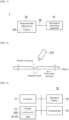
- Fig. 1 is a diagram illustrating a schematic configuration of an inspection system 1 including an information processing apparatus according to the present embodiment.
- the inspection system 1 includes a sequential data input device 30 and an information processing apparatus 10, which are communicably connected to each other via a network 90 such as a LAN.
- the sequential data input device 30 generates and inputs sequential data.
- the sequential data input device 30 includes a camera 310.
- the sequential data input device 30 includes, in addition to the camera 310, detection devices that are a three-dimensional distance measurement sensor such as a light detection and ranging (LiDar), a temperature sensor disposed in a factory or the like, a pressure sensor, and the like, and continuously perform observation and output detection data, and an HDD (hard disk drive) or the like that records sequential data obtained from these devices.
- the information processing apparatus 10 functions as a machine learning apparatus, performs machine learning using the sequential data from the sequential data input device 30, and generates a machine learning model.
- the sequential data is a data group in which a plurality of pieces of data are arranged in accordance with predetermined order information.
- imaging data time-series image data
- three-dimensional data in which two-dimensional image data is arranged based on information of a position in a direction perpendicular to the two dimensions
- voice data in which voices uttered by a person are arranged in time series
- distance measurement point group data obtained from the three-dimensional distance measurement sensor, and the like
- Fig. 2 illustrates an example of a predetermined object to be inspected by the inspection system 1.
- the object is a long sheet metal member, and is conveyed by a belt conveyor (not illustrated) from the right hand side to the left hand side along the conveyance direction in Fig. 2 .
- the information processing apparatus 10 of the inspection system 1 extracts a defect (illustrated as a portion of interest in Fig. 2 ) in surface coating of the sheet metal member as a feature of the target (object), and outputs the result of the extraction.
- the object is not limited thereto, and may be a product itself such as a plurality of vehicles, or some of components for the product that are continuously conveyed by the belt conveyor.
- a shape feature (product failure, stockout, or the like) of the target may be extracted, and the result of the extraction may be output.
- Fig. 3 is a block diagram illustrating a configuration of the information processing apparatus 10.
- the information processing apparatus 10 includes a controller 11, a storage 12, an operation display 13, and a communicator 14. These components are connected to each other via a signal line such as a bus for exchanging signals.
- the controller 11 functions as the machine learning apparatus, includes a plurality of CPUs, a plurality of graphics processing units (GPUs), a RAM, a ROM, and the like, and controls each device and performs machine learning according to a program.
- the information processing apparatus 10 may be an on-premise server or a cloud server using a commercial cloud service. Some of functions of the information processing apparatus 10 (e.g., only the function of the machine learning apparatus) may be implemented by the cloud server.
- the storage 12 includes a semiconductor memory that stores various programs and various data in advance, and a magnetic memory such as a hard disk.
- a machine learning model 200 (also referred to as a trained model) that is trained, generated, and updated by machine learning is stored in the storage 12.
- the storage 12 also stores the following three types of information d1 to d3, which are many pieces of sequential data (d1) generated by the sequential data input device 30, external information (d2), and a condition (d3) for extracting the portion of interest. Each piece of the sequential data (d1) is stored in association with a label (correct label).
- the external information (d2) is information regarding an imaging environment, and is, for example, the sampling rate of the camera 310 or the number of frames (FPS), or the movement speed of the object, that is, the conveyance speed of the belt conveyor. Alternatively, it is the sampling rate in a case where the sequential data is audio data.
- the extraction condition (d3) is a rule set in advance. As a rule-based algorithm using this, for example, an image processing algorithm for detecting the portion of interest, such as pattern matching or edge detection processing, can be applied. The extraction condition (d3) or the algorithm using the extraction condition is used for a detection process of a detector 112 to be described later.
- the operation display 13 is, for example, a touch screen display, displays various kinds of information, and receives various kinds of input from a user.
- the user can set the above-described imaging environment (external information) via the operation display 13.
- the assignment of a label to each piece of sequential data may be performed via the operation display 13, or may be performed by a pre-process of labeling using the rule-based algorithm or the machine learning model.
- the set or assigned information is stored in the storage 12.
- the communicator 14 is an interface that transmits and receives data via the network. For example, communication based on a standard such as Ethernet, Bluetooth (registered trademark), or IEEE802.11 (WiFi) is performed.
- a standard such as Ethernet, Bluetooth (registered trademark), or IEEE802.11 (WiFi) is performed.
- Fig. 4 is a functional block diagram illustrating the flow of data in the machine learning apparatus implemented by the controller 11 functioning.
- the controller 11 cooperates with the communicator 14 to function as an acquirer 111. Furthermore, the controller 11 functions as a detector 112, a preprocessor 113, and a learning section 114.
- the acquirer 111 acquires the external information and a plurality of pieces of training data from the sequential data input device 30 or the storage 12.
- the training data is composed of a plurality of pieces of sequential data and labels.
- the detector 112 receives the sequential data from the acquirer 111.
- Fig. 5 illustrates an example of the sequential data.
- the sequential data in this case is imaging data captured in a predetermined period (times t - ⁇ to t + ⁇ ).
- a predetermined period times t - ⁇ to t + ⁇ .
- the data is 1-second moving image data captured by the camera 310 at 30, 60, or 120 FPS
- one piece of sequential data includes 30, 60, or 120 frames (still images).
- the FPS can be set during the predetermined period as appropriate. The following description will be given assuming that one piece of sequential data includes 60 frames.
- the sequential data used as the training data is generated in advance by capturing an image of the object in which the portion of interest to be inspected (e.g., a defect of coating unevenness in a part) is present while the object is moved by the belt conveyor.
- the portion of interest coating unevenness
- the portion of interest is illustrated in white for simplicity.
- the detector 112 detects a frame (hereinafter, also referred to as a key frame) in which the portion of interest is included from among a plurality of frames constituting the sequential data based on the extraction condition (d3) set in advance.
- the detection result is transmitted to the preprocessor 113.
- the frame number of the key frame is transmitted.
- the preprocessor 113 adjusts the size of the sequential data in the sequence direction based on a predetermined condition to generate a plurality of pieces of adjusted sequential data having different intervals in the sequence direction.
- the predetermined condition includes the following predetermined conditions A1 to A3 (hereinafter, also collectively referred to as a predetermined condition A).
- the predetermined condition A is (A1) a sampling rate or the number of frames, (A2) external information (e.g., the movement speed or a specification of the camera), and (A3) key frame information.
- the external information (A2) is acquired from the sequential data input device 30.
- the key frame information (A3) is information of the number of key frames and/or the position of a reference frame (see below), and is determined based on the key frame information acquired from the detector 112.
- the preprocessor 113 sets the reference frame from the sequential data.
- This reference frame is set from among the key frames detected by the detector 112. For example, in the example illustrated in Fig. 5 , the key frame at the time t is set as the reference frame.
- the reference frame is set under a predetermined condition (hereinafter, also referred to as a predetermined condition B) set in advance.
- the predetermined condition B there is a method in which, in a case where a plurality of key frames are detected, a central position of an arrangement of the key frames is set as the reference frame, or a method in which a time point (position) at which an edge (a boundary between black and white in the drawing) of the portion of interest reaches the vicinity of the center of the image is set as the reference frame.
- the preprocessor 113 sets a size adjustment condition from the predetermined conditions A1 and A2. For example, in a case where the speed range of the movement of the target object is determined in advance in an inspection apparatus, the number of variations of images that can be generated within the speed range is increased (the number of types of adjusted sequential data is increased). Similarly, in accordance with the specifications of the camera, variations of images that can be generated within the speed range are increased so as to cover the frame rate.
- the number of frames in which the portion of interest is present in the imaging region is determined based on the size of the portion of interest (the size of the portion of interest with respect to the imaging region in the movement direction) and the movement speed from the predetermined conditions A1 and A2, the size adjustment is performed according to the number of frames to generate a plurality of pieces of adjusted sequential data.
- the number of present frames matches the number of key frames.
- the preprocessor 113 performs size adjustment by extracting several frames before and after the reference frame, or performs size adjustment by one-frame thinning, two-frame thinning, or the like within the range of several frames before and after the reference frame.
- the present frames may be subjected to the size adjustment, or methods for the size adjustment before and after the reference frame in the arrangement direction of the sequential data may be different.
- interpolation processing or extrapolation processing may be performed in addition to the thinning processing. For example, when the number of present frames is equal to or less than a predetermined number, an intermediate frame is generated by interpolation using previous and subsequent frames. A specific example of the size adjustment will be described later.
- the learning section 114 performs machine learning by supervised learning using, as training data, a plurality of pieces of adjusted sequential data having different intervals in the sequential direction after the size adjustment and the labels assigned to the plurality of pieces of adjusted sequential data, and generates or updates the machine learning model 200.
- one label assigned to one piece of sequential data is commonly applied to a plurality of pieces of adjusted sequential data generated based on the sequential data.
- a machine learning method according to the present embodiment will be described with reference to Figs. 6 to 11 .
- a case will be described as an example where, in imaging data including 60 pieces of time-series image data as sequential data, the amount of each piece of data is reduced by thinning processing in the time direction as the size adjustment in the sequential direction.
- Fig. 6 is a flowchart illustrating a machine learning process executed by the controller 11 functioning as the machine learning apparatus.
- a plurality of pieces of adjusted sequential data with different intervals are generated from each of a plurality of pieces of sequential data.
- the number of samples (the number of pieces of training data) is increased, and the respective data amounts are reduced.
- a learning model is generated and updated by performing machine learning using the adjusted sequential data.
- the acquirer 111 of the controller 11 acquires external information.
- the external information is directly acquired from the sequential data input device as described above, or is set by the user via the operation display 13 and stored in the storage 12.
- the acquirer 111 acquires training data directly from the sequential data input device 30 or training data stored in the storage 12.
- the training data is composed of a plurality of pieces of sequential data, and a label is assigned to each of the pieces of sequential data.
- Fig. 7A is a subroutine flowchart illustrating a process of setting a size adjustment condition in step S53 in one example
- Fig. 7B is a subroutine flowchart illustrating a process of setting a size adjustment condition in step S53 in another example.
- the preprocessor 113 sets a plurality of size adjustment conditions based on the predetermined condition A.
- the predetermined condition A is the number of frames constituting sequential data (predetermined condition A3).
- the greater the number of frames the greater the thinning rate. For example, in a case where the number of frames is 30, for example, one- and two-frame thinning is set, and in a case where the number of frames is 60, one- to three-frame thinning is set.
- the odd-numbered frames are deleted, and the even-numbered frames (0, 2, 4, 6,...) are used to halve the amount of data to generate the adjusted sequential data.
- adjusted sequential data having an amount reduced to 1/3 is generated using every third frame (0, 3, 6, 9,). Then, the process illustrated in Fig. 7A ends, and returns to the process illustrated in Fig. 6 (return).
- the detector 112 extracts key frames from the sequential data based on the extraction condition (d3).
- the preprocessor 113 sets a reference frame.
- This reference frame is set from among the key frames detected by the detector 112 in step S621.
- the frame at the time t is set as the reference frame based on the above-described predetermined condition B.
- the preprocessor 113 sets a plurality of size adjustment conditions based on a combination of the number of present frames determined based on the predetermined condition A1 or A2 and the predetermined condition A3 (key frame information), or only the predetermined condition A3 (see Fig. 8 described later). Then, the process illustrated in Fig. 7B ends, and returns to the process illustrated in Fig. 6 (return).
- the preprocessor 113 performs the size adjustment based on the size adjustment condition set in step S53, and generates a plurality of pieces of adjusted sequential data having different intervals from one piece of the sequential data.
- Fig. 8 illustrates an example of the plurality of pieces of adjusted sequential data generated by the preprocessing.
- Frames illustrated in Fig. 8 correspond to Fig. 5
- adjusted frames are surrounded by solid-line rectangular frames, and the other frames (i.e., the frames to be deleted) are expressed in light density (gray).
- frames in a predetermined continuous period within the range of the number of present frames centering on the reference frame (time t) surrounded by a broken-line rectangular frame are extracted from the adjusted sequential data x1 illustrated in Fig. 8(a) (frames at times t - 1, t, and t + 1).
- the adjusted sequential data x2 in Fig. 8(b) is another adjustment condition set in step S623, three frames are extracted by one-frame thinning with the reference frame as the center (times t - 2, t, and t + 2).
- the adjusted sequential data may be composed of more than three frames.
- the adjusted sequential data may include only a present frame (or a key frame) in which the portion of interest is present in the imaging region, but may include a frame other than the present frame.
- Fig. 9 illustrates an example of adjusted sequential data generated under another size adjustment condition.
- Fig. 9(a) illustrates adjusted sequential data generated by one-frame thinning centering on the reference frame (t)
- Fig. 9(b) illustrates adjusted sequential data generated by two-frame thinning centering on the reference frame (t)
- Fig. 9(c) illustrates adjusted sequential data generated by a method (random thinning) in which methods for the adjustment are different before and after the reference frame (t).
- the thinning rates are different before and after the reference frame.
- the adjustment conditions as illustrated in Fig. 9 may be combined with the adjustment conditions as illustrated in Fig. 8 , or may be applied instead of Fig. 8 .
- step S52 When the size adjustment has not been completed for all the training data, the controller 11 returns the process to step S52 and repeats the subsequent processing.
- step S56 When the size adjustment for all data sets of the training data is completed, the process proceeds to step S56.
- the controller11 which is a machine learning apparatus, reads the adjusted sequential data after sample adjustment and the labels as training data, and performs machine learning.
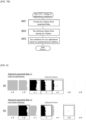
- Fig. 10 is a schematic diagram for explaining the machine learning method using the adjusted sequential data.
- the plurality of pieces of adjusted sequential data x1 and x2 are generated from one piece of sequential data x associated with a label X.
- the label X associated with the original sequential data x is commonly applied to the adjusted sequential data x1 and x2.
- Fig. 10 illustrates an example in which the two pieces of adjusted sequential data x1 and x2 are generated, three or more pieces of adjusted sequential data with different intervals may be generated and used for machine learning. For example, as illustrated in Figs. 8 and 9 , four pieces of adjusted sequential data x1 to x4 whose intervals in the sequential direction are k may be generated.
- the size adjustment of the sequential data and the increase in the number of samples are performed.
- the adjusted sequential data is input to a neural network as training data of the machine learning apparatus.
- the machine learning apparatus (the controller 11) compares an estimation result of the neural network of the adjusted sequential data with the label, and adjusts a parameter from the comparison result. For example, by performing a process called back-propagation, the parameter is adjusted and updated so as to reduce an error in the comparison result. This is repeatedly performed on the target training data (adjusted sequential data), and the machine learning is advanced.
- the learning model 200 is stored in the storage 12, and the process ends (END).
- the machine learning method using the neural network formed by combining perceptrons has been described, but the present invention is not limited to this, and various methods can be adopted as long as they are supervised learning. For example, random forest, a support vector machine (SVM), boosting, a Bayesian (Bsysian) network linear discriminant method, a non-linear discriminant method, or the like can be applied.
- SVM support vector machine
- boosting boosting
- Bayesian (Bsysian) network linear discriminant method a non-linear discriminant method, or the like
- the machine learning method or the machine learning apparatus acquires sequential data and a label, performs preprocessing for size adjustment in the sequence direction on the sequential data based on a predetermined condition, thereby generating a plurality of pieces of adjusted sequential data having different intervals in the sequence direction from one piece of the sequential data, performs supervised learning using the label and the plurality of pieces of adjusted sequential data generated by the preprocessor, and generates a learning model.
- a plurality of pieces of learning data with different intervals of sequential data are easily generated without requiring advanced preprocessing, and learning is performed using the learning data, so that a learning model with improved robustness against a change in a condition in the sequential direction can be generated.
- the machine learning apparatus or the machine learning method according to the present embodiment can be preferably applied to generation of a learning model for extracting a feature of an object for which a movement speed or a motion itself is not a main parameter.
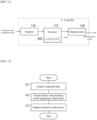
- Fig. 11 is a functional block diagram illustrating the flow of data in the inspection process of the information processing apparatus 10
- Fig. 12 is a flowchart illustrating the inspection process of the information processing apparatus 10.
- the controller 11 of the information processing apparatus 10 functions as an acquirer 116, an extractor 117, and an output section 118.
- the acquirer 116 has a function equivalent to that of the acquirer 111 and acquires, from the camera 310 of the sequential data input device 30, sequential data obtained by capturing an image of an object as illustrated in Fig. 2 .
- the extractor 117 extracts a feature of the target (object) from the sequential data using the learning model 200. Further, the output section 118 outputs the extraction result.
- the acquirer 116 acquires sequential data.
- the captured image is transmitted from the camera 310 in real time, and is divided into sequential data for each predetermined period.
- the extractor 117 develops the machine learning model 200 stored in the storage 12 and performs appearance inspection using it.
- the inspection result is output as a score.
- the output section 118 outputs a determination result corresponding to the score. For example, a determination result of a defective or non-defective product is output to the operation display 13 or the like in accordance with the score of the object.
- the information processing apparatus 10 extracts a feature from the sequential data including the object by using the learning model, and outputs the extraction result.
- a feature of the object that is, whether the object is non-defective or defective can be determined with high accuracy.
- the configurations of the machine learning apparatus and the information processing apparatus described above are merely main configurations for describing the features of the above-described embodiment, and can be modified in various manners without being limited to the above-described configurations and within the scope of the claims.
- a configuration included in a general machine learning apparatus or information processing apparatus is not excluded.
- means and methods for performing the various kinds of processing in the information processing apparatus 10 described above can be implemented by any of a dedicated hardware circuit and a programmed computer.
- the above-described program may be provided by a computer-readable recording medium such as a USB memory or a digital versatile disc (DVD)-ROM, or may be provided online via a network such as the Internet.
- the program recorded on the computer-readable recording medium is usually transferred to and stored in a storage such as a hard disk.
- the program may be provided as independent application software or may be incorporated into software of an apparatus as one function of the apparatus.
Landscapes
- Engineering & Computer Science (AREA)
- Theoretical Computer Science (AREA)
- Physics & Mathematics (AREA)
- General Physics & Mathematics (AREA)
- Software Systems (AREA)
- Artificial Intelligence (AREA)
- Evolutionary Computation (AREA)
- Computer Vision & Pattern Recognition (AREA)
- Computing Systems (AREA)
- Data Mining & Analysis (AREA)
- General Health & Medical Sciences (AREA)
- Health & Medical Sciences (AREA)
- General Engineering & Computer Science (AREA)
- Medical Informatics (AREA)
- Mathematical Physics (AREA)
- Life Sciences & Earth Sciences (AREA)
- Databases & Information Systems (AREA)
- Multimedia (AREA)
- Biomedical Technology (AREA)
- Molecular Biology (AREA)
- Biophysics (AREA)
- Computational Linguistics (AREA)
- Bioinformatics & Cheminformatics (AREA)
- Bioinformatics & Computational Biology (AREA)
- Evolutionary Biology (AREA)
- Image Analysis (AREA)
- Image Processing (AREA)
Abstract
Description
- The present invention relates to a machine learning method, a machine learning program, a machine learning apparatus, and an information processing apparatus.
- In order to achieve object recognition accuracy equal to or higher than a certain level by machine learning such as deep learning, learning using a large amount of high-quality teacher data is generally required. For that purpose, as in
Non Patent Literature 1, there is a method of increasing data while maintaining quality by setting a sampling rate in accordance with an analysis result. - In the method described in
Non Patent Literature 1, in order to suppress a decrease in recognition accuracy due to a difference in pronunciation (conversation, reading, and speech), entropy is analyzed at a cycle of 15 msec, a sampling rate is set according to a result of the analysis, and training data for learning is generated. - Non Patent Literature 1: Amber Afshan, Jinxi Guo, Soo Jin Park, Vijay Ravi, Alan McCree, Abeer Alwan," Variable frame rate-based data augmentation to handle speaking-style variability for automatic speaker verification, Cornell University, Sat, 8 Aug 2020, the Internet (URL: https://arxiv.org/abs/2008.03616)).
- The technology described in
Non Patent Literature 1 relates to audio data, and requires advanced interpolation processing as preprocessing. - The present invention has been devised in order to solve such a problem. In other words, it is an object of the present invention to provide a machine learning apparatus and a machine learning method that generate a learning model with improved robustness against a change in a condition in a sequence direction by simply generating learning data without requiring advanced preprocessing and performing learning using the learning data.
- The above problem to be addressed by the present invention is solved by the following means.
-
- (1) A machine learning method for generating a learning model for extracting a feature of a target, the machine learning method including:
- (a) acquiring sequential data;
- (b) performing preprocessing for size adjustment in a sequence direction on the sequential data based on a predetermined condition to generate a plurality of pieces of adjusted sequential data having different intervals in the sequence direction from one piece of the sequential data; and
- (c) performing supervised learning using the plurality of pieces of adjusted sequential data generated in (b) to generate the learning model.
- (2) The machine learning method according to (1) described above, in which
- in (a), labels of the sequential data are acquired together with the sequential data, and
- in (c), the supervised learning is performed by applying one of the labels of the sequential data to the plurality of pieces of adjusted sequential data.
- (3) The machine learning method according to (1) or (2) described above, in which in (b), a condition for the size adjustment is automatically set based on the predetermined condition.
- (4) The machine learning method according to any one of (1) to (3) described above, in which
- the sequential data acquired in (a) is time-series image data obtained by imaging a target object in an imaging region, and
- the learning model is a learning model for extracting a feature of the target object.
- (5) The machine learning method according to (4) described above, in which in (b), a condition for the size adjustment is set as the predetermined condition in accordance with a sampling rate of the sequential data or the number of frames.
- (6) The machine learning method according to (4) or (5) described above, further including (d) acquiring external information regarding an imaging environment, in which in (b), a condition for the size adjustment is set as the predetermined condition based on the external information.
- (7) The machine learning method according to (6) described above, in which the external information is information regarding a movement speed of the object or a specification of a camera that captures an image of the imaging region.
- (8) The machine learning method according to any one of (4) to (7) described above, further including (e) analyzing the sequential data based on a predetermined condition and detecting, from among a plurality of frames constituting the sequential data, one or more key frames in which a portion of interest of the target object is present, in which in (b), one reference frame is set from among the key frames detected in (e) and the size adjustment is performed with reference to the reference frame.
- (9) The machine learning method according to (8) described above, in which in (b), a condition for the size adjustment is set in accordance with the number of the key frames detected in (e).
- (10) The machine learning method according to (8) or (9) described above, in which in (b), only the key frames are subjected to the size adjustment.
- (11) The machine learning method according to any one of (8) to (10) described above, in which in (b), methods for the size adjustment are different before and after the reference frame in an arrangement direction of the sequential data.
- (12) A machine learning apparatus that generates a learning model for extracting a feature of a target, the machine learning apparatus including:
- an acquirer that acquires sequential data;
- a preprocessor that performs preprocessing for size adjustment in a sequential direction on the sequential data based on a predetermined condition to generate a plurality of pieces of adjusted sequential data having different intervals in the sequential direction from one piece of the sequential data; and
- a learning section that performs supervised learning using the plurality of pieces of adjusted sequential data generated by the preprocessor to generate the learning model.
- (13) The machine learning apparatus according to (12) described above, in which
- the acquirer acquires labels of the sequential data together with the sequential data, and
- the learning section performs the supervised learning by applying one of the labels of the sequential data to the plurality of pieces of adjusted sequential data.
- (14) The machine learning apparatus according to (12) or (13) described above, in which the preprocessor automatically sets a condition for the size adjustment based on the predetermined condition.
- (15) The machine learning apparatus according to any one of (12) to (14) described above, in which
- the sequential data acquired by the acquirer is time-series image data obtained by imaging a target object in an imaging region, and
- the learning model is a learning model for extracting a feature of the target object.
- (16) The machine learning apparatus according to (15) described above, in which the preprocessor sets, as the predetermined condition, a condition for the size adjustment in accordance with a sampling rate of the sequential data or the number of frames.
- (17) The machine learning apparatus according to (15) or (16) described above, in which
- the acquirer further acquires external information regarding an imaging environment, and
- the preprocessor sets, as the predetermined condition, a condition for the size adjustment based on the external information.
- (18) The machine learning apparatus according to (17) described above, in which the external information is information regarding a movement speed of the object or a specification of a camera that captures an image of the imaging region.
- (19) The machine learning apparatus according to any one of (15) and (18) described above, further including a detector that analyzes the sequential data based on a predetermined condition and detects one or more key frames in which a portion of interest of the target object is present from among a plurality of frames constituting the sequential data, in which
the preprocessor sets one reference frame from among the key frames detected by the detector and performs the size adjustment with reference to the reference frame. - (20) The machine learning apparatus according to (19) described above, in which the preprocessor sets a condition for the size adjustment in accordance with the number of the key frames detected by the detector.
- (21) The machine learning apparatus according to (19) or (20) described above, in which the preprocessor subjects only the key frames to the size adjustment.
- (22) The machine learning apparatus according to any one of (19) to (21) described above, in which the preprocessor makes different methods for the size adjustment before and after the reference frame in an arrangement direction of the sequential data.
- (23) A machine learning program for causing a computer to execute the machine learning method according to any one of (1) to (11) described above.
- (24) An information processing apparatus including:
- an acquirer that acquires sequential data;
- an extractor that extracts a feature of a target by using a learning model trained by the machine learning method according to any one of (1) to (11) described above; and
- an output section that outputs a result of the extraction.
- According to the machine learning method and the machine learning apparatus of the present invention, by acquiring sequential data and performing preprocessing for size adjustment in a sequential direction on the sequential data based on a predetermined condition, a plurality of pieces of adjusted sequential data having different intervals in the sequential direction are generated from one piece of the sequential data, and supervised learning is performed using the plurality of generated pieces of adjusted sequential data to generate a learning model. Thus, a plurality of pieces of learning data with different intervals of sequential data are easily generated without requiring advanced preprocessing, and learning is performed using the learning data, so that a learning model with improved robustness against a change in a condition in the sequential direction can be generated.
-
-
Fig. 1 is a diagram illustrating a schematic configuration of an information processing apparatus according to an embodiment of the present invention. -
Fig. 2 is a side view illustrating an example of a target object to be inspected by the information processing apparatus illustrated inFig. 1 . -
Fig. 3 is a block diagram illustrating a configuration of the information processing apparatus. -
Fig. 4 is a functional block diagram illustrating the flow of data in a machine learning apparatus implemented by a controller functioning. -
Fig. 5 illustrates an example of sequential data. -
Fig. 6 is a flowchart illustrating a machine learning process of the machine learning apparatus. -
Fig. 7A is a subroutine flowchart illustrating a process of setting a size adjustment condition in step S53. -
Fig. 7B is a subroutine flowchart illustrating a process of setting a size adjustment condition in step S53 in another example. -
Fig. 8 illustrates an example of a plurality of pieces of adjusted sequential data generated by preprocessing. -
Fig. 9 illustrates an example of adjusted sequential data generated under another size adjustment condition. -
Fig. 10 is a schematic diagram illustrating a machine learning method using the adjusted sequential data. -
Fig. 11 is a functional block diagram illustrating the flow of data in an inspection process of the information processing apparatus using a learning model generated by machine learning. -
Fig. 12 is a flowchart illustrating the inspection process of the information processing apparatus. - Embodiments of the present invention will be described below with reference to the accompanying drawings. However, the scope of the present invention is not limited to the disclosed embodiments. Note that in the description of the drawings, the same elements are denoted by the same reference signs, and redundant description thereof will be omitted. In addition, dimensional ratios in the drawings are exaggerated for convenience of description and may be different from actual ratios.
-
Fig. 1 is a diagram illustrating a schematic configuration of aninspection system 1 including an information processing apparatus according to the present embodiment. - The
inspection system 1 includes a sequentialdata input device 30 and aninformation processing apparatus 10, which are communicably connected to each other via anetwork 90 such as a LAN. The sequentialdata input device 30 generates and inputs sequential data. The sequentialdata input device 30 includes acamera 310. The sequentialdata input device 30 includes, in addition to thecamera 310, detection devices that are a three-dimensional distance measurement sensor such as a light detection and ranging (LiDar), a temperature sensor disposed in a factory or the like, a pressure sensor, and the like, and continuously perform observation and output detection data, and an HDD (hard disk drive) or the like that records sequential data obtained from these devices. Theinformation processing apparatus 10 functions as a machine learning apparatus, performs machine learning using the sequential data from the sequentialdata input device 30, and generates a machine learning model. - The sequential data is a data group in which a plurality of pieces of data are arranged in accordance with predetermined order information. For example, imaging data (time-series image data) obtained by imaging by the
camera 310, three-dimensional data in which two-dimensional image data is arranged based on information of a position in a direction perpendicular to the two dimensions, voice data in which voices uttered by a person are arranged in time series, distance measurement point group data obtained from the three-dimensional distance measurement sensor, and the like are present. The following description will be given taking, as an example, imaging data (a moving image) obtained by imaging by thecamera 310 as sequential data. -
Fig. 2 illustrates an example of a predetermined object to be inspected by theinspection system 1. In the example illustrated inFig. 2 , the object is a long sheet metal member, and is conveyed by a belt conveyor (not illustrated) from the right hand side to the left hand side along the conveyance direction inFig. 2 . In the present embodiment, theinformation processing apparatus 10 of theinspection system 1 extracts a defect (illustrated as a portion of interest inFig. 2 ) in surface coating of the sheet metal member as a feature of the target (object), and outputs the result of the extraction. The object is not limited thereto, and may be a product itself such as a plurality of vehicles, or some of components for the product that are continuously conveyed by the belt conveyor. Furthermore, a shape feature (product failure, stockout, or the like) of the target may be extracted, and the result of the extraction may be output. -
Fig. 3 is a block diagram illustrating a configuration of theinformation processing apparatus 10. Theinformation processing apparatus 10 includes acontroller 11, astorage 12, anoperation display 13, and acommunicator 14. These components are connected to each other via a signal line such as a bus for exchanging signals. - The
controller 11 functions as the machine learning apparatus, includes a plurality of CPUs, a plurality of graphics processing units (GPUs), a RAM, a ROM, and the like, and controls each device and performs machine learning according to a program. Theinformation processing apparatus 10 may be an on-premise server or a cloud server using a commercial cloud service. Some of functions of the information processing apparatus 10 (e.g., only the function of the machine learning apparatus) may be implemented by the cloud server. - The
storage 12 includes a semiconductor memory that stores various programs and various data in advance, and a magnetic memory such as a hard disk. A machine learning model 200 (also referred to as a trained model) that is trained, generated, and updated by machine learning is stored in thestorage 12. Thestorage 12 also stores the following three types of information d1 to d3, which are many pieces of sequential data (d1) generated by the sequentialdata input device 30, external information (d2), and a condition (d3) for extracting the portion of interest. Each piece of the sequential data (d1) is stored in association with a label (correct label). Here, the external information (d2) is information regarding an imaging environment, and is, for example, the sampling rate of thecamera 310 or the number of frames (FPS), or the movement speed of the object, that is, the conveyance speed of the belt conveyor. Alternatively, it is the sampling rate in a case where the sequential data is audio data. The extraction condition (d3) is a rule set in advance. As a rule-based algorithm using this, for example, an image processing algorithm for detecting the portion of interest, such as pattern matching or edge detection processing, can be applied. The extraction condition (d3) or the algorithm using the extraction condition is used for a detection process of adetector 112 to be described later. - The
operation display 13 is, for example, a touch screen display, displays various kinds of information, and receives various kinds of input from a user. The user can set the above-described imaging environment (external information) via theoperation display 13. The assignment of a label to each piece of sequential data may be performed via theoperation display 13, or may be performed by a pre-process of labeling using the rule-based algorithm or the machine learning model. The set or assigned information is stored in thestorage 12. - The
communicator 14 is an interface that transmits and receives data via the network. For example, communication based on a standard such as Ethernet, Bluetooth (registered trademark), or IEEE802.11 (WiFi) is performed. -
Fig. 4 is a functional block diagram illustrating the flow of data in the machine learning apparatus implemented by thecontroller 11 functioning. Thecontroller 11 cooperates with thecommunicator 14 to function as anacquirer 111. Furthermore, thecontroller 11 functions as adetector 112, apreprocessor 113, and alearning section 114. - The
acquirer 111 acquires the external information and a plurality of pieces of training data from the sequentialdata input device 30 or thestorage 12. The training data is composed of a plurality of pieces of sequential data and labels. - The
detector 112 receives the sequential data from theacquirer 111.Fig. 5 illustrates an example of the sequential data. The sequential data in this case is imaging data captured in a predetermined period (times t - α to t + β). For example, in a case where the data is 1-second moving image data captured by thecamera 310 at 30, 60, or 120 FPS, one piece of sequential data includes 30, 60, or 120 frames (still images). The FPS can be set during the predetermined period as appropriate. The following description will be given assuming that one piece of sequential data includes 60 frames. The sequential data used as the training data is generated in advance by capturing an image of the object in which the portion of interest to be inspected (e.g., a defect of coating unevenness in a part) is present while the object is moved by the belt conveyor. In the example illustrated inFig. 5 , the portion of interest (coating unevenness) is illustrated in white for simplicity. - In addition, the
detector 112 detects a frame (hereinafter, also referred to as a key frame) in which the portion of interest is included from among a plurality of frames constituting the sequential data based on the extraction condition (d3) set in advance. The detection result is transmitted to thepreprocessor 113. For example, in the case of the sequential data is composed of 60 frames (1st to 60th), the frame number of the key frame is transmitted. - The
preprocessor 113 adjusts the size of the sequential data in the sequence direction based on a predetermined condition to generate a plurality of pieces of adjusted sequential data having different intervals in the sequence direction. The predetermined condition includes the following predetermined conditions A1 to A3 (hereinafter, also collectively referred to as a predetermined condition A). - The predetermined condition A is (A1) a sampling rate or the number of frames, (A2) external information (e.g., the movement speed or a specification of the camera), and (A3) key frame information.
- (A1) is information indicating the characteristics of the series data stored in advance in the
storage 12, and is set by the user, for example. The external information (A2) is acquired from the sequentialdata input device 30. The key frame information (A3) is information of the number of key frames and/or the position of a reference frame (see below), and is determined based on the key frame information acquired from thedetector 112. - Furthermore, the
preprocessor 113 sets the reference frame from the sequential data. This reference frame is set from among the key frames detected by thedetector 112. For example, in the example illustrated inFig. 5 , the key frame at the time t is set as the reference frame. The reference frame is set under a predetermined condition (hereinafter, also referred to as a predetermined condition B) set in advance. For example, as the predetermined condition B, there is a method in which, in a case where a plurality of key frames are detected, a central position of an arrangement of the key frames is set as the reference frame, or a method in which a time point (position) at which an edge (a boundary between black and white in the drawing) of the portion of interest reaches the vicinity of the center of the image is set as the reference frame. - The
preprocessor 113 sets a size adjustment condition from the predetermined conditions A1 and A2. For example, in a case where the speed range of the movement of the target object is determined in advance in an inspection apparatus, the number of variations of images that can be generated within the speed range is increased (the number of types of adjusted sequential data is increased). Similarly, in accordance with the specifications of the camera, variations of images that can be generated within the speed range are increased so as to cover the frame rate. As another example, the number of frames in which the portion of interest is present in the imaging region (hereinafter, referred to as present frames and the number of present frames) is determined based on the size of the portion of interest (the size of the portion of interest with respect to the imaging region in the movement direction) and the movement speed from the predetermined conditions A1 and A2, the size adjustment is performed according to the number of frames to generate a plurality of pieces of adjusted sequential data. Note that in many cases, the number of present frames matches the number of key frames. For example, thepreprocessor 113 performs size adjustment by extracting several frames before and after the reference frame, or performs size adjustment by one-frame thinning, two-frame thinning, or the like within the range of several frames before and after the reference frame. - Furthermore, only the present frames may be subjected to the size adjustment, or methods for the size adjustment before and after the reference frame in the arrangement direction of the sequential data may be different. In addition, as the size adjustment, interpolation processing or extrapolation processing may be performed in addition to the thinning processing. For example, when the number of present frames is equal to or less than a predetermined number, an intermediate frame is generated by interpolation using previous and subsequent frames. A specific example of the size adjustment will be described later.
- The
learning section 114 performs machine learning by supervised learning using, as training data, a plurality of pieces of adjusted sequential data having different intervals in the sequential direction after the size adjustment and the labels assigned to the plurality of pieces of adjusted sequential data, and generates or updates themachine learning model 200. Here, one label assigned to one piece of sequential data is commonly applied to a plurality of pieces of adjusted sequential data generated based on the sequential data. - Hereinafter, a machine learning method according to the present embodiment will be described with reference to
Figs. 6 to 11 . In the present embodiment, a case will be described as an example where, in imaging data including 60 pieces of time-series image data as sequential data, the amount of each piece of data is reduced by thinning processing in the time direction as the size adjustment in the sequential direction. -
Fig. 6 is a flowchart illustrating a machine learning process executed by thecontroller 11 functioning as the machine learning apparatus. In the process inFig. 6 , through processing from steps S51 to S55, a plurality of pieces of adjusted sequential data with different intervals are generated from each of a plurality of pieces of sequential data. Thus, the number of samples (the number of pieces of training data) is increased, and the respective data amounts are reduced. In step S56, a learning model is generated and updated by performing machine learning using the adjusted sequential data. - Here, the
acquirer 111 of thecontroller 11 acquires external information. The external information is directly acquired from the sequential data input device as described above, or is set by the user via theoperation display 13 and stored in thestorage 12. - Here, the
acquirer 111 acquires training data directly from the sequentialdata input device 30 or training data stored in thestorage 12. The training data is composed of a plurality of pieces of sequential data, and a label is assigned to each of the pieces of sequential data. - Here, the
preprocessor 113 automatically sets a condition for the size adjustment alone or in cooperation with thedetector 112.Fig. 7A is a subroutine flowchart illustrating a process of setting a size adjustment condition in step S53 in one example, andFig. 7B is a subroutine flowchart illustrating a process of setting a size adjustment condition in step S53 in another example. - As illustrated in
Fig. 7A , thepreprocessor 113 sets a plurality of size adjustment conditions based on the predetermined condition A. For example, the predetermined condition A is the number of frames constituting sequential data (predetermined condition A3). The greater the number of frames, the greater the thinning rate. For example, in a case where the number of frames is 30, for example, one- and two-frame thinning is set, and in a case where the number of frames is 60, one- to three-frame thinning is set. For example, in a case where the number of frames is 60 (0 to 59) and one-frame thinning is performed, the odd-numbered frames are deleted, and the even-numbered frames (0, 2, 4, 6,...) are used to halve the amount of data to generate the adjusted sequential data. In the case of the two-frame thinning, adjusted sequential data having an amount reduced to 1/3 is generated using every third frame (0, 3, 6, 9,...). Then, the process illustrated inFig. 7A ends, and returns to the process illustrated inFig. 6 (return). - In the other example illustrated in
Fig. 7B , thedetector 112 extracts key frames from the sequential data based on the extraction condition (d3). - Here, the
preprocessor 113 sets a reference frame. This reference frame is set from among the key frames detected by thedetector 112 in step S621. For example, inFig. 5 , the frame at the time t is set as the reference frame based on the above-described predetermined condition B. - The
preprocessor 113 sets a plurality of size adjustment conditions based on a combination of the number of present frames determined based on the predetermined condition A1 or A2 and the predetermined condition A3 (key frame information), or only the predetermined condition A3 (seeFig. 8 described later). Then, the process illustrated inFig. 7B ends, and returns to the process illustrated inFig. 6 (return). - Refer to
Fig. 6 again. Here, thepreprocessor 113 performs the size adjustment based on the size adjustment condition set in step S53, and generates a plurality of pieces of adjusted sequential data having different intervals from one piece of the sequential data. -
Fig. 8 illustrates an example of the plurality of pieces of adjusted sequential data generated by the preprocessing. Frames illustrated inFig. 8 correspond toFig. 5 , and inFig. 8 , adjusted frames are surrounded by solid-line rectangular frames, and the other frames (i.e., the frames to be deleted) are expressed in light density (gray). As an adjustment condition set in step S623, frames in a predetermined continuous period (three frames in the drawing) within the range of the number of present frames centering on the reference frame (time t) surrounded by a broken-line rectangular frame are extracted from the adjusted sequential data x1 illustrated inFig. 8(a) (frames at times t - 1, t, and t + 1). - Furthermore, from the adjusted sequential data x2 in
Fig. 8(b) , as another adjustment condition set in step S623, three frames are extracted by one-frame thinning with the reference frame as the center (times t - 2, t, and t + 2). Note that, in the example illustrated inFig. 8 , an example is illustrated in which the adjusted sequential data is composed of three frames as an example, but the present invention is not limited to this, and the adjusted sequential data may be composed of more than three frames. In addition, the adjusted sequential data may include only a present frame (or a key frame) in which the portion of interest is present in the imaging region, but may include a frame other than the present frame. -
Fig. 9 illustrates an example of adjusted sequential data generated under another size adjustment condition.Fig. 9(a) illustrates adjusted sequential data generated by one-frame thinning centering on the reference frame (t),Fig. 9(b) illustrates adjusted sequential data generated by two-frame thinning centering on the reference frame (t), andFig. 9(c) illustrates adjusted sequential data generated by a method (random thinning) in which methods for the adjustment are different before and after the reference frame (t). Specifically, in the example illustratedFig. 9(c) , the thinning rates are different before and after the reference frame. The adjustment conditions as illustrated inFig. 9 may be combined with the adjustment conditions as illustrated inFig. 8 , or may be applied instead ofFig. 8 . - When the size adjustment has not been completed for all the training data, the
controller 11 returns the process to step S52 and repeats the subsequent processing. When the size adjustment for all data sets of the training data is completed, the process proceeds to step S56. - The controller11, which is a machine learning apparatus, reads the adjusted sequential data after sample adjustment and the labels as training data, and performs machine learning.
Fig. 10 is a schematic diagram for explaining the machine learning method using the adjusted sequential data. By the processing up to step S55, the plurality of pieces of adjusted sequential data x1 and x2 are generated from one piece of sequential data x associated with a label X. Furthermore, the label X associated with the original sequential data x is commonly applied to the adjusted sequential data x1 and x2. AlthoughFig. 10 illustrates an example in which the two pieces of adjusted sequential data x1 and x2 are generated, three or more pieces of adjusted sequential data with different intervals may be generated and used for machine learning. For example, as illustrated inFigs. 8 and9 , four pieces of adjusted sequential data x1 to x4 whose intervals in the sequential direction are k may be generated. - By performing the same size adjustment on a large number of other sequential data, the size adjustment of the sequential data and the increase in the number of samples are performed. Then, the adjusted sequential data is input to a neural network as training data of the machine learning apparatus. Then, the machine learning apparatus (the controller 11) compares an estimation result of the neural network of the adjusted sequential data with the label, and adjusts a parameter from the comparison result. For example, by performing a process called back-propagation, the parameter is adjusted and updated so as to reduce an error in the comparison result. This is repeatedly performed on the target training data (adjusted sequential data), and the machine learning is advanced. When the machine learning using the target training data ends, the
learning model 200 is stored in thestorage 12, and the process ends (END). - Note that the machine learning method using the neural network formed by combining perceptrons has been described, but the present invention is not limited to this, and various methods can be adopted as long as they are supervised learning. For example, random forest, a support vector machine (SVM), boosting, a Bayesian (Bsysian) network linear discriminant method, a non-linear discriminant method, or the like can be applied.
- As described above, the machine learning method or the machine learning apparatus according to the present embodiment acquires sequential data and a label, performs preprocessing for size adjustment in the sequence direction on the sequential data based on a predetermined condition, thereby generating a plurality of pieces of adjusted sequential data having different intervals in the sequence direction from one piece of the sequential data, performs supervised learning using the label and the plurality of pieces of adjusted sequential data generated by the preprocessor, and generates a learning model. Thus, a plurality of pieces of learning data with different intervals of sequential data are easily generated without requiring advanced preprocessing, and learning is performed using the learning data, so that a learning model with improved robustness against a change in a condition in the sequential direction can be generated.
- For example, in a case where a learning model trained under a situation in which a manufactured product is moving on a belt conveyor in a production line of a certain factory is applied to a production line of another factory, it has been assumed that accuracy decreases unless machine learning is performed for each of belt conveyors having different speeds. Even in such a situation, by performing machine learning as in the present embodiment, learning is performed using a plurality of pieces of adjusted sequential data having different intervals by using sequential data obtained by an object moving by a belt conveyor at one speed, and thus it is possible to cope with various situations in which speeds are different by one learning model. In particular, the machine learning apparatus or the machine learning method according to the present embodiment can be preferably applied to generation of a learning model for extracting a feature of an object for which a movement speed or a motion itself is not a main parameter.
- Hereinafter, an inspection process using the
machine learning model 200 generated in the machine learning process illustrated inFig. 6 will be described with reference toFigs. 11 and 12. Fig. 11 is a functional block diagram illustrating the flow of data in the inspection process of theinformation processing apparatus 10, andFig. 12 is a flowchart illustrating the inspection process of theinformation processing apparatus 10. - As illustrated in
Fig. 11 , thecontroller 11 of theinformation processing apparatus 10 functions as anacquirer 116, anextractor 117, and anoutput section 118. Theacquirer 116 has a function equivalent to that of theacquirer 111 and acquires, from thecamera 310 of the sequentialdata input device 30, sequential data obtained by capturing an image of an object as illustrated inFig. 2 . Theextractor 117 extracts a feature of the target (object) from the sequential data using thelearning model 200. Further, theoutput section 118 outputs the extraction result. - The
acquirer 116 acquires sequential data. In the example illustrated inFig. 2 , the captured image is transmitted from thecamera 310 in real time, and is divided into sequential data for each predetermined period. - The
extractor 117 develops themachine learning model 200 stored in thestorage 12 and performs appearance inspection using it. The inspection result is output as a score. - The
output section 118 outputs a determination result corresponding to the score. For example, a determination result of a defective or non-defective product is output to theoperation display 13 or the like in accordance with the score of the object. - In this way, the
information processing apparatus 10 according to the present embodiment extracts a feature from the sequential data including the object by using the learning model, and outputs the extraction result. Thus, a feature of the object, that is, whether the object is non-defective or defective can be determined with high accuracy. - The configurations of the machine learning apparatus and the information processing apparatus described above are merely main configurations for describing the features of the above-described embodiment, and can be modified in various manners without being limited to the above-described configurations and within the scope of the claims. In addition, a configuration included in a general machine learning apparatus or information processing apparatus is not excluded.
- Furthermore, some of the steps in the above-described flowcharts may be omitted, and other steps may be added. In addition, the order of some of the steps may be changed or some of the steps may be executed at the same time, and one step may be divided into a plurality of steps and executed.
- Furthermore, means and methods for performing the various kinds of processing in the
information processing apparatus 10 described above can be implemented by any of a dedicated hardware circuit and a programmed computer. For example, the above-described program may be provided by a computer-readable recording medium such as a USB memory or a digital versatile disc (DVD)-ROM, or may be provided online via a network such as the Internet. In this case, the program recorded on the computer-readable recording medium is usually transferred to and stored in a storage such as a hard disk. In addition, the program may be provided as independent application software or may be incorporated into software of an apparatus as one function of the apparatus. - This application is based on Japanese Patent Application (
Japanese Patent Application No. 2021-187584) filed on November 18, 2021 -
- 1
- inspection system
- 10
- information processing apparatus
- 11
- controller (machine learning apparatus)
- 111
- acquirer
- 112
- detector
- 113
- preprocessor
- 114
- learning section
- 116
- acquirer
- 117
- extractor
- 118
- output section
- 12
- storage
- 13
- operation display
- 14
- communicator
- 200
- learning model
- 30
- sequential data input device
- 310
- camera
Claims (24)
- A machine learning method for generating a learning model for extracting a feature of a target, the machine learning method comprising:(a) acquiring sequential data;(b) performing preprocessing for size adjustment in a sequence direction on the sequential data based on a predetermined condition to generate a plurality of pieces of adjusted sequential data having different intervals in the sequence direction from one piece of the sequential data; and(c) performing supervised learning using the plurality of pieces of adjusted sequential data generated in (b) to generate the learning model.
- The machine learning method according to claim 1, whereinin (a), labels of the sequential data are acquired together with the sequential data, andin (c), the supervised learning is performed by applying one of the labels of the sequential data to the plurality of pieces of adjusted sequential data.
- The machine learning method according to claim 1 or 2, wherein in (b), a condition for the size adjustment is automatically set based on the predetermined condition.
- The machine learning method according to any one of claims 1 to 3, whereinthe sequential data acquired in (a) is time-series image data obtained by imaging a target object in an imaging region, andthe learning model is a learning model for extracting a feature of the target object.
- The machine learning method according to claim 4, wherein in (b), a condition for the size adjustment is set as the predetermined condition in accordance with a sampling rate of the sequential data or the number of frames.
- The machine learning method according to claim 4 or 5, further comprising (d) acquiring external information regarding an imaging environment, wherein in (b), a condition for the size adjustment is set as the predetermined condition based on the external information.
- The machine learning method according to claim 6, wherein the external information is information regarding a movement speed of the object or a specification of a camera that captures an image of the imaging region.
- The machine learning method according to any one of claims 4 to 7, further comprising (e) analyzing the sequential data based on a predetermined condition and detecting, from among a plurality of frames constituting the sequential data, one or more key frames in which a portion of interest of the target object is present, wherein in (b), one reference frame is set from among the key frames detected in (e) and the size adjustment is performed with reference to the reference frame.
- The machine learning method according to claim 8, wherein in (b), a condition for the size adjustment is set in accordance with the number of the key frames detected in (e).
- The machine learning method according to claim 8 or 9, wherein in (b), only the key frames are subjected to the size adjustment.
- The machine learning method according to any one of claims 8 to 10, wherein in (b), methods for the size adjustment are different before and after the reference frame in an arrangement direction of the sequential data.
- A machine learning apparatus that generates a learning model for extracting a feature of a target, the machine learning apparatus comprising:an acquirer that acquires sequential data;a preprocessor that performs preprocessing for size adjustment in a sequential direction on the sequential data based on a predetermined condition to generate a plurality of pieces of adjusted sequential data having different intervals in the sequential direction from one piece of the sequential data; anda learning section that performs supervised learning using the plurality of pieces of adjusted sequential data generated by the preprocessor to generate the learning model.
- The machine learning apparatus according to claim 12, whereinthe acquirer acquires labels of the sequential data together with the sequential data, andthe learning section performs the supervised learning by applying one of the labels of the sequential data to the plurality of pieces of adjusted sequential data.
- The machine learning apparatus according to claim 12 or 13, wherein the preprocessor automatically sets a condition for the size adjustment based on the predetermined condition.
- The machine learning apparatus according to any one of claims 12 to 14, whereinthe sequential data acquired by the acquirer is time-series image data obtained by imaging a target object in an imaging region, andthe learning model is a learning model for extracting a feature of the target object.
- The machine learning apparatus according to claim 15, wherein the preprocessor sets, as the predetermined condition, a condition for the size adjustment in accordance with a sampling rate of the sequential data or the number of frames.
- The machine learning apparatus according to claim 15 or 16, whereinthe acquirer further acquires external information regarding an imaging environment, andthe preprocessor sets, as the predetermined condition, a condition for the size adjustment based on the external information.
- The machine learning apparatus according to claim 17, wherein the external information is information regarding a movement speed of the object or a specification of a camera that captures an image of the imaging region.
- The machine learning apparatus according to any one of claims 15 to 18, further comprising a detector that analyzes the sequential data based on a predetermined condition and detects one or more key frames in which a portion of interest of the target object is present from among a plurality of frames constituting the sequential data, wherein the preprocessor sets one reference frame from among the key frames detected by the detector and performs the size adjustment with reference to the reference frame.
- The machine learning apparatus according to claim 19, wherein the preprocessor sets a condition for the size adjustment in accordance with the number of the key frames detected by the detector.
- The machine learning apparatus according to claim 19 or 20, wherein the preprocessor subjects only the key frames to the size adjustment.
- The machine learning apparatus according to any one of claims 19 to 21, wherein the preprocessor makes different methods for the size adjustment before and after the reference frame in an arrangement direction of the sequential data.
- A machine learning program for causing a computer to execute the machine learning method according to any one of claims 1 to 11.
- An information processing apparatus comprising:an acquirer that acquires sequential data;an extractor that extracts a feature of a target by using a learning model trained by the machine learning method according to any one of claims 1 to 11; andan output section that outputs a result of the extraction.
Applications Claiming Priority (2)
| Application Number | Priority Date | Filing Date | Title |
|---|---|---|---|
| JP2021187584 | 2021-11-18 | ||
| PCT/JP2022/031342 WO2023089888A1 (en) | 2021-11-18 | 2022-08-19 | Machine learning method, machine learning program, machine learning device, and information processing device |
Publications (2)
| Publication Number | Publication Date |
|---|---|
| EP4435678A1 true EP4435678A1 (en) | 2024-09-25 |
| EP4435678A4 EP4435678A4 (en) | 2025-03-26 |
Family
ID=86396628
Family Applications (1)
| Application Number | Title | Priority Date | Filing Date |
|---|---|---|---|
| EP22895176.0A Pending EP4435678A4 (en) | 2021-11-18 | 2022-08-19 | MACHINE LEARNING METHOD, MACHINE LEARNING PROGRAM, MACHINE LEARNING DEVICE, AND INFORMATION PROCESSING DEVICE |
Country Status (5)
| Country | Link |
|---|---|
| US (1) | US20250322646A1 (en) |
| EP (1) | EP4435678A4 (en) |
| JP (1) | JP7806808B2 (en) |
| CN (1) | CN118251684A (en) |
| WO (1) | WO2023089888A1 (en) |
Families Citing this family (1)
| Publication number | Priority date | Publication date | Assignee | Title |
|---|---|---|---|---|
| GB2626957B (en) * | 2023-02-08 | 2025-05-07 | Sony Interactive Entertainment Inc | An apparatus for generating datasets for training machine learning models and a method thereof |
Family Cites Families (8)
| Publication number | Priority date | Publication date | Assignee | Title |
|---|---|---|---|---|
| JP6821048B2 (en) * | 2017-10-06 | 2021-01-27 | 富士フイルム株式会社 | Image processing device, trained model generation method, and evaluation device |
| CN109178831B (en) * | 2018-09-21 | 2020-07-24 | 太原理工大学 | A kind of belt conveyor longitudinal tear detection method |
| WO2020070876A1 (en) * | 2018-10-05 | 2020-04-09 | 日本電気株式会社 | Teacher data extending device, teacher data extending method, and program |
| EP3937088A4 (en) * | 2019-03-04 | 2022-03-23 | Transtron Inc. | METHOD FOR GENERATING A NEURONAL NETWORK MODEL, AND CONTROL DEVICE USING A NEURONAL NETWORK MODEL |
| CN110508510A (en) * | 2019-08-27 | 2019-11-29 | 广东工业大学 | A kind of plastic pump defect detection method, device and system |
| JP7471072B2 (en) * | 2019-11-20 | 2024-04-19 | 株式会社日立製作所 | Information processing device and information processing method |
| CN112001878A (en) * | 2020-05-21 | 2020-11-27 | 合肥合工安驰智能科技有限公司 | Deep learning ore scale measuring method based on binarization neural network and application system |
| JP7518664B2 (en) | 2020-05-27 | 2024-07-18 | 株式会社アイチコーポレーション | Work vehicle |
-
2022
- 2022-08-19 CN CN202280075636.5A patent/CN118251684A/en active Pending
- 2022-08-19 US US18/709,874 patent/US20250322646A1/en active Pending
- 2022-08-19 EP EP22895176.0A patent/EP4435678A4/en active Pending
- 2022-08-19 WO PCT/JP2022/031342 patent/WO2023089888A1/en not_active Ceased
- 2022-08-19 JP JP2023562139A patent/JP7806808B2/en active Active
Also Published As
| Publication number | Publication date |
|---|---|
| CN118251684A (en) | 2024-06-25 |
| US20250322646A1 (en) | 2025-10-16 |
| JP7806808B2 (en) | 2026-01-27 |
| WO2023089888A1 (en) | 2023-05-25 |
| EP4435678A4 (en) | 2025-03-26 |
| JPWO2023089888A1 (en) | 2023-05-25 |
Similar Documents
| Publication | Publication Date | Title |
|---|---|---|
| CN113343831A (en) | Method and device for classifying speakers in video, electronic equipment and storage medium | |
| US9898849B2 (en) | Facial expression based avatar rendering in video animation and method | |
| CN111370020A (en) | Method, system, device and storage medium for converting voice into lip shape | |
| US11521312B2 (en) | Image processing apparatus, image processing method, and storage medium | |
| US20170039750A1 (en) | Avatar facial expression and/or speech driven animations | |
| WO2018019126A1 (en) | Video category identification method and device, data processing device and electronic apparatus | |
| CN111901627B (en) | Video processing method and device, storage medium and electronic equipment | |
| KR102141302B1 (en) | Object detection method based 0n deep learning regression model and image processing apparatus | |
| CN101937268A (en) | Device Control Based on Visual Lip Recognition | |
| JP7146122B2 (en) | Methods and systems for predicting dynamic flows from control inputs and limited observations | |
| CN105959723A (en) | Lip-synch detection method based on combination of machine vision and voice signal processing | |
| CN108491764A (en) | A kind of video human face Emotion identification method, medium and equipment | |
| JP2016181098A (en) | Area detection device and area detection method | |
| CN110969173B (en) | Target classification method and device | |
| US20250322646A1 (en) | Machine learning method, machine learning program, machine learning apparatus, and information processing apparatus | |
| JP6944201B2 (en) | Electronic circuits, hardware components, edge processing systems, edge computing systems, identification methods, identification programs | |
| Kanjanawattana et al. | Deep learning-based emotion recognition through facial expressions | |
| US20260038129A1 (en) | Object tracking device and method for robot manipulating moving object | |
| JP2009122829A (en) | Information processing apparatus, information processing method, and program | |
| Kalbande et al. | Lip reading using neural networks | |
| Karem et al. | AI Body Language Decoder using MediaPipe and Python | |
| KR102679399B1 (en) | Electronic apparatus for detection of object using high definition image and method thereof | |
| JP2026511859A (en) | Automated method for defect characterization for hybrid bonding applications | |
| US20250191351A1 (en) | Information processing system, information processing method, and program | |
| KR102168742B1 (en) | Method for automated manufacturing process of automobile fuel tank and apparatus therefor |
Legal Events
| Date | Code | Title | Description |
|---|---|---|---|
| STAA | Information on the status of an ep patent application or granted ep patent |
Free format text: STATUS: THE INTERNATIONAL PUBLICATION HAS BEEN MADE |
|
| PUAI | Public reference made under article 153(3) epc to a published international application that has entered the european phase |
Free format text: ORIGINAL CODE: 0009012 |
|
| STAA | Information on the status of an ep patent application or granted ep patent |
Free format text: STATUS: REQUEST FOR EXAMINATION WAS MADE |
|
| 17P | Request for examination filed |
Effective date: 20240508 |
|
| AK | Designated contracting states |
Kind code of ref document: A1 Designated state(s): AL AT BE BG CH CY CZ DE DK EE ES FI FR GB GR HR HU IE IS IT LI LT LU LV MC MK MT NL NO PL PT RO RS SE SI SK SM TR |
|
| P01 | Opt-out of the competence of the unified patent court (upc) registered |
Free format text: CASE NUMBER: APP_56042/2024 Effective date: 20241014 |
|
| DAV | Request for validation of the european patent (deleted) | ||
| DAX | Request for extension of the european patent (deleted) | ||
| A4 | Supplementary search report drawn up and despatched |
Effective date: 20250221 |
|
| RIC1 | Information provided on ipc code assigned before grant |
Ipc: G06T 7/00 20170101ALI20250217BHEP Ipc: G06N 20/00 20190101AFI20250217BHEP |
|
| STAA | Information on the status of an ep patent application or granted ep patent |
Free format text: STATUS: EXAMINATION IS IN PROGRESS |
|
| 17Q | First examination report despatched |
Effective date: 20251212 |
|
| REG | Reference to a national code |
Ref country code: DE Ref legal event code: R079 Free format text: PREVIOUS MAIN CLASS: G06N0020000000 Ipc: G06F0018280000 |
|
| GRAP | Despatch of communication of intention to grant a patent |
Free format text: ORIGINAL CODE: EPIDOSNIGR1 |
|
| STAA | Information on the status of an ep patent application or granted ep patent |
Free format text: STATUS: GRANT OF PATENT IS INTENDED |