EP4435451A1 - Apparatus and method for diagnosing abnormality of battery cell - Google Patents
Apparatus and method for diagnosing abnormality of battery cell Download PDFInfo
- Publication number
- EP4435451A1 EP4435451A1 EP23816236.6A EP23816236A EP4435451A1 EP 4435451 A1 EP4435451 A1 EP 4435451A1 EP 23816236 A EP23816236 A EP 23816236A EP 4435451 A1 EP4435451 A1 EP 4435451A1
- Authority
- EP
- European Patent Office
- Prior art keywords
- battery cell
- diagnostic data
- instruction
- data
- abnormality
- Prior art date
- Legal status (The legal status is an assumption and is not a legal conclusion. Google has not performed a legal analysis and makes no representation as to the accuracy of the status listed.)
- Granted
Links
Images




Classifications
-
- G—PHYSICS
- G01—MEASURING; TESTING
- G01R—MEASURING ELECTRIC VARIABLES; MEASURING MAGNETIC VARIABLES
- G01R31/00—Arrangements for testing electric properties; Arrangements for locating electric faults; Arrangements for electrical testing characterised by what is being tested not provided for elsewhere
- G01R31/36—Arrangements for testing, measuring or monitoring the electrical condition of accumulators or electric batteries, e.g. capacity or state of charge [SoC]
- G01R31/367—Software therefor, e.g. for battery testing using modelling or look-up tables
-
- G—PHYSICS
- G01—MEASURING; TESTING
- G01R—MEASURING ELECTRIC VARIABLES; MEASURING MAGNETIC VARIABLES
- G01R31/00—Arrangements for testing electric properties; Arrangements for locating electric faults; Arrangements for electrical testing characterised by what is being tested not provided for elsewhere
- G01R31/36—Arrangements for testing, measuring or monitoring the electrical condition of accumulators or electric batteries, e.g. capacity or state of charge [SoC]
- G01R31/374—Arrangements for testing, measuring or monitoring the electrical condition of accumulators or electric batteries, e.g. capacity or state of charge [SoC] with means for correcting the measurement for temperature or ageing
-
- G—PHYSICS
- G01—MEASURING; TESTING
- G01R—MEASURING ELECTRIC VARIABLES; MEASURING MAGNETIC VARIABLES
- G01R31/00—Arrangements for testing electric properties; Arrangements for locating electric faults; Arrangements for electrical testing characterised by what is being tested not provided for elsewhere
- G01R31/36—Arrangements for testing, measuring or monitoring the electrical condition of accumulators or electric batteries, e.g. capacity or state of charge [SoC]
- G01R31/382—Arrangements for monitoring battery or accumulator variables, e.g. SoC
-
- G—PHYSICS
- G01—MEASURING; TESTING
- G01R—MEASURING ELECTRIC VARIABLES; MEASURING MAGNETIC VARIABLES
- G01R31/00—Arrangements for testing electric properties; Arrangements for locating electric faults; Arrangements for electrical testing characterised by what is being tested not provided for elsewhere
- G01R31/36—Arrangements for testing, measuring or monitoring the electrical condition of accumulators or electric batteries, e.g. capacity or state of charge [SoC]
- G01R31/392—Determining battery ageing or deterioration, e.g. state of health
-
- G—PHYSICS
- G01—MEASURING; TESTING
- G01R—MEASURING ELECTRIC VARIABLES; MEASURING MAGNETIC VARIABLES
- G01R31/00—Arrangements for testing electric properties; Arrangements for locating electric faults; Arrangements for electrical testing characterised by what is being tested not provided for elsewhere
- G01R31/36—Arrangements for testing, measuring or monitoring the electrical condition of accumulators or electric batteries, e.g. capacity or state of charge [SoC]
- G01R31/396—Acquisition or processing of data for testing or for monitoring individual cells or groups of cells within a battery
-
- Y—GENERAL TAGGING OF NEW TECHNOLOGICAL DEVELOPMENTS; GENERAL TAGGING OF CROSS-SECTIONAL TECHNOLOGIES SPANNING OVER SEVERAL SECTIONS OF THE IPC; TECHNICAL SUBJECTS COVERED BY FORMER USPC CROSS-REFERENCE ART COLLECTIONS [XRACs] AND DIGESTS
- Y02—TECHNOLOGIES OR APPLICATIONS FOR MITIGATION OR ADAPTATION AGAINST CLIMATE CHANGE
- Y02E—REDUCTION OF GREENHOUSE GAS [GHG] EMISSIONS, RELATED TO ENERGY GENERATION, TRANSMISSION OR DISTRIBUTION
- Y02E60/00—Enabling technologies; Technologies with a potential or indirect contribution to GHG emissions mitigation
- Y02E60/10—Energy storage using batteries
Definitions
- the present invention relates to an apparatus and method for diagnosing an abnormality of a battery cell, and more particularly to an apparatus and method for diagnosing an abnormality of a battery cell, by obtaining measurement data from a battery cell and applying diagnostic data generated based thereon to a diagnosis algorithm.
- an electric vehicle operates a drive motor that requires high output for driving. Accordingly, an electric vehicle uses a battery pack in which a plurality of battery cells are connected in series and uses electricity output from the battery pack as an energy source.
- the battery pack for an electric vehicle has a disadvantage in that it is difficult to precisely measure the cell voltage because a number of noise signals are generated when measuring the voltage of the battery cell due to movement of the electric vehicle or surrounding environment.
- embodiments of the present disclosure provide an apparatus for diagnosing an abnormality of a battery cell with high precision and high reliability.
- embodiments of the present disclosure also provide a method for diagnosing an abnormality of a battery cell with high precision and high reliability.
- a method of diagnosing an abnormality of a battery cell may include obtaining measurement data for at least one parameter of the battery cell; generating diagnostic data by extracting a signal of a specific frequency band from the measurement data; and determining whether the battery cell has an abnormality by applying the generated diagnostic data to a predefined diagnosis algorithm.
- the generating diagnostic data may include extracting a signal of the specific frequency band from the measurement data based on an appearance frequency count for each frequency band.
- the extracting the signal of the specific frequency band may include converting the measurement data into frequency domain data; calculating an appearance frequency count for each frequency band of the converted frequency domain data; and extracting a signal of top N frequency bands with regard to the appearance frequency count, wherein N is a predetermined natural number.
- the generating the diagnostic data may include inversely transforming the extracted signal into time domain data to generate diagnostic data.
- the method of diagnosing an abnormality of a battery cell may further include correcting the generated diagnostic data using a low pass filter (LPF).
- LPF low pass filter
- the determining whether the battery cell has an abnormality may include determining whether the battery cell is abnormal based on a comparison result between the diagnostic data and a predefined condition threshold.
- condition threshold may include a fixed condition threshold value provided as a fixed value of a predetermined size based on diagnostic data of at least one battery cell which is input to a predefined diagnosis algorithm.
- condition threshold may include a variable condition threshold that is dynamically adjusted over time based on diagnostic data of at least one normal battery cell.
- variable condition threshold may be calculated according to any one of average, variance, and standard deviation based on diagnostic data of at least one normal battery cell.
- the at least one instruction may include an instruction to extract a signal of the specific frequency band from the measurement data based on an appearance frequency count for each frequency band.
- the at least one instruction may include: an instruction to convert the measurement data into frequency domain data; an instruction to calculate an appearance frequency count for each frequency band of the converted frequency domain data; and an instruction to extract a signal of top N frequency bands with regard to the appearance frequency count, wherein N is a predetermined natural number.
- the at least one instruction may include an instruction to inversely transform the extracted signal into time domain data to generate diagnostic data.
- the at least one instruction may further include an instruction to correct the generated diagnostic data using a low pass filter (LPF).
- LPF low pass filter
- the at least one instruction may further include an instruction to determine whether the battery cell is abnormal based on a comparison result between the diagnostic data and a predefined condition threshold.
- condition threshold may include a fixed condition threshold value provided as a fixed value of a predetermined size based on diagnostic data of at least one battery cell which is input to a predefined diagnosis algorithm.
- condition threshold may include a variable condition threshold that is dynamically adjusted over time based on diagnostic data of at least one normal battery cell.
- variable condition threshold may be calculated according to any one of average, variance, and standard deviation based on diagnostic data of at least one normal battery cell.
- An apparatus and method for diagnosing an abnormality of a battery cell may obtain measurement data for at least one parameter of a battery cell, extract a signal of specific frequency bands from the measurement data to generate diagnostic data, and applying the generated diagnostic data to a predefined diagnosis algorithm to determine whether the battery cell has an abnormality, and thus, a noise signal can be improved, thereby accurately and reliably diagnosing whether the battery cell has an abnormality.
- first, second, A, B, and the like may be used herein to describe various elements, these elements should not be limited by these terms. These terms are only used to distinguish one element from another. For example, a first element could be termed a second element, and, similarly, a second element could be termed a first element, without departing from the scope of the present invention.
- the term "and/or" includes combinations of a plurality of associated listed items or any of the plurality of associated listed items.
- FIG. 1 is a reference diagram for explaining a general method for diagnosing an abnormality of a battery cell.
- a general apparatus for diagnosing a battery cell abnormality diagnoses whether a battery cell is abnormal using measurement data for a specific parameter of a battery cell from which noise is removed by filtering.
- a general apparatus for diagnosing an abnormality of a battery cell removes a specific noise signal from measurement data for a specific parameter obtained from a battery cell using a predefined filter.
- the predefined filter may be a low pass filter.
- a general apparatus for diagnosing an abnormality of a battery cell inputs the parameter data from which specific noise has been removed to a predefined diagnosis algorithm to determine whether the battery cell is abnormal.
- an electric vehicle may be exposed to various environments while being driven. Accordingly, when measuring a parameter of a battery cell in an electric vehicle, measurement data may include various noise signals.
- a diagnosis result may show low reliability due to noise that is not removed.
- an apparatus for diagnosing an abnormality in a battery cell may select diagnostic data of specific frequency bands that frequently appears in measurement data obtained from the battery cell and apply it to a diagnosis algorithm, thereby more accurately determining an abnormality of a battery cell applied in an elecric vehicle.
- an apparatus and method for diagnosing an abnormality of a battery cell according to embodiments of the present invention will be described in more detail with reference to the drawings.
- FIG. 2 is a hardware block diagram of an apparatus for diagnosing an abnormality of a battery cell according to embodiments of the present invention.
- the apparatus 1000 for diagnosing an abnormality of a battery cell may diagnose whether a battery cell is abnormal.
- the apparatus 1000 for diagnosing an abnormality of a battery cell may diagnose whether a battery cell applied to an electric vehicle has an abnormality.
- the apparatus 1000 for diagnosing an abnormality of a battery cell may acquire measurement data for at least one parameter of the battery cell, generate diagnostic data based on the obtained measurement data, and apply the diagnostic data to a diagnosis algorithm, so as to diagnose whether or not an abnormality has occurred in the battery cell.
- the apparatus 1000 for diagnosing an abnormality of a battery cell may include a memory 100, a processor 200, a transceiver 300, an input interface 400, an output interface 500, and a storage device 600.
- each of the components 100, 200, 300, 400, 500, and 600 included in the apparatus 1000 for diagnosing an abnormality of a battery cell may be connected by a bus 700 to communicate with each other.
- the memory 100 and the storage device 600 may be composed of at least one of a volatile storage medium and a non-volatile storage medium.
- the memory 100 and the storage device 600 may include at least one of a read only memory (ROM) and a random access memory (RAM).
- the memory 100 may include at least one instruction executed by the processor 200.
- the at least one instruction may include an instruction to obtain measurement data for at least one parameter of the battery cell; an instruction to generate diagnostic data by extracting a signal of a specific frequency band from the measurement data; and an instruction to determine whether the battery cell has an abnormality by applying the generated diagnostic data to a predefined diagnosis algorithm.
- the processor 200 may mean a central processing unit (CPU), a graphics processing unit (GPU), or a dedicated processor on which methods according to embodiments of the present invention are performed.
- CPU central processing unit
- GPU graphics processing unit
- dedicated processor on which methods according to embodiments of the present invention are performed.
- the processor 200 may execute at least one program instruction stored in the memory 100.
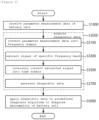
- FIG. 3 is a flowchart illustrating a method for diagnosing an abnormality of a battery cell according to embodiments of the present invention.
- the apparatus 1000 for diagnosing an abnormality of a battery cell may acquire measurement data for at least one parameter of the battery cell (S1000).
- the measurement data may be data measured per unit time for at least one parameter of the battery cell.
- the at least one parameter may be voltage or current.
- the types of parameters are not limited to those disclosed.
- the apparatus 1000 for diagnosing an abnormality of a battery cell may receive measurement data from a parameter measuring device (not shown).
- the apparatus 1000 for diagnosing an abnormality of a battery cell may receive voltage measurement data including a voltage value per unit time from a voltage measuring device.
- the apparatus 1000 for diagnosing an abnormality of a battery cell may process the received parameter measurement data according to a predefined pre-processing algorithm (S3100 to S3700) to acquire diagnostic data for diagnosing battery cell abnormalities (S3000).
- the apparatus 1000 for diagnosing an abnormality of a battery cell may diagnose whether a battery cell is abnormal by applying the generated diagnostic data to a predefined diagnosis algorithm (S5000).
- FIG. 4 a method of acquiring diagnostic data from parameter measurement data of a battery cell according to embodiments of the present invention will be described in more detail.
- FIG. 4 is a diagram for explaining a process of generating diagnostic data according to embodiments of the present invention. Meanwhile, in the following description, a parameter for diagnosis corresponding to voltage will be described as an example, but the scope of the present invention is not intended to be limited thereto.
- FIG. 4 is a graph (in time domain) showing voltage measurement data for a certain period of time and diagnostic data obtained from the voltage measurement data
- (B) of FIG. 4 is a graph (in frequency domain) showing fast Fourier transformed voltage measurement data
- FIG. 4(C) is a graph (in frequency domain) showing diagnostic data.
- the apparatus 1000 for diagnosing abnormality of a battery cell may generate diagnostic data by pre-processing measurement data (S3000).
- the diagnostic data may be data to be input to a predefined diagnosis algorithm, so as to diagnose whether a battery cell has an abnormality.
- a diagnosis algorithm may calculate a difference, variance, deviation, etc. between voltage measurement values of battery cells based on diagnostic data for each of a plurality of battery cells, and use the calculated values to determine whether an abnormality occurs in a specific battery cell or when the abnormality occurs.
- the diagnosis algorithm according to the present invention may compare the diagnostic data of a battery cell with a predefined condition threshold and may determine whether or not the corresponding battery cell is abnormal or not and when the abnormality occurs based on the comparison result (e.g., whether or not it exceeds the threshold).
- the apparatus 1000 for diagnosing an abnormality of a battery cell may convert measurement data into frequency domain data (S3100).
- the measurement data is voltage measurement data of a battery cell
- the apparatus 1000 for diagnosing an abnormality of a battery cell may convert voltage measurement data including voltage values per predetermined unit of time ((A) in FIG. 4 ) into a frequency domain data ((B) in FIG. 4 ) by Fast Fourier Transform(FFT)ing the voltage measurement data.
- FFT Fast Fourier Transform
- the apparatus 1000 for diagnosing an abnormality of a battery cell may extract a signal of at least one specific frequency band that meets a predefined standard from the parameter measurement data which has been converted into a frequency domain data (S3300).
- the apparatus 1000 for diagnosing an abnormality of a battery cell may extract a signal of at least one specific frequency band from measurement data (frequency domain) based on an appearance frequency count for each frequency band.
- the apparatus 1000 for diagnosing an abnormality of a battery cell may generate diagnostic data ( FIG. 4(A) ) (S3700) by inversely converting the signal of the extracted at least one frequency band into time domain data (S3500).
- the apparatus 1000 for diagnosing an abnormality of a battery cell may correct the diagnostic data by applying a predefined filter to the generated diagnostic data.
- the apparatus 1000 for diagnosing an abnormality of a battery cell may apply a low pass filter (LPF) to diagnostic data, wherein the low pass filter (LPF) may be a Discrete Wavelet Transform (DWT) filter or a Butterworth Filter.
- LPF low pass filter
- DWT Discrete Wavelet Transform
- FIG. 5 is a diagram for explaining measurement data and diagnostic data according to embodiments of the present invention.
- (A) is a graph showing measurement data (voltage, (a)) of a normal battery cell and diagnostic data (b) generated based on the measurement data (a)
- (B) is a graph showing measurement data (voltage, (c)) of an abnormal battery cell and diagnostic data (d) generated based on the measurement data (c).
- (C) is a graph showing measurement data ((a), (c)) and diagnostic data ((b), (d)) in (A) and (B) together.
- the measurement data and diagnostic data of a normal battery in which no abnormality is found in the battery cell appear that the amplitude of cell voltage shows a horizontal form of graph ((a), (b)).
- the measurement data and diagnostic data of an abnormal battery in which abnormality is found in the battery cell shows a form of a graph ((c), (d)) in which the amplitude of cell voltage rapidly decreases, as shown in FIG. 5 (B) .
- diagnostic data (b) and diagnostic data (d) do not overlap each other in the section of sample 0 to 500 since noise caused by movement of a transportation is improved.
- the apparatus 1000 for diagnosing an abnormality of the battery cell may diagnose whether the battery cell is abnormal by applying the diagnostic data generated based on the measured data to a predefined diagnosis algorithm (S5000).
- the diagnosis algorithm may compare the diagnostic data of the battery cell with a predefined condition threshold (Threshold, T) and may determine whether or not the corresponding battery cell is abnormal or when the abnormality occurs based on the comparison result (e.g., whether the diagnostic data exceeds the threshold).
- a predefined condition threshold e.g., T
- condition threshold value T is a value that may be defined in the diagnosis algorithm and may function as a criterion for determining whether an abnormality of the battery cell has occurred.
- the apparatus 1000 for diagnosing an abnormality in a battery cell may determine that the battery cell is normal if the magnitude of the voltage value included in the diagnostic data does not exceed the condition threshold value and may determine that an error has occurred in the cell from the corresponding time point if the magnitude of the voltage value exceeds the condition threshold value.
- the apparatus 1000 for diagnosing an abnormality of a battery cell may determine that the battery cell is normal when the magnitude of the voltage value included in the diagnostic data does not deviate from a predetermined range based on the condition threshold value and may determine that an error has occurred in the battery cell from the corresponding time point if the magnitude of the voltage value is out of the predetermined range based on the condition threshold value (T).
- the condition threshold may include a fixed condition threshold provided as a fixed value of a predetermined size.
- the fixed condition threshold may be set to a fixed value of a predetermined size by a user based on diagnostic data of a specific battery cell input to a predefined diagnosis algorithm.
- condition threshold value may be provided as a variable condition threshold value that is dynamically set over time based on pre-obtained diagnostic data.
- variable condition threshold value may include a variable condition threshold value that is dynamically calculated based on previously obtained diagnostic data of at least one normal battery cell over time.
- the variable condition threshold value may be dynamically adjusted over time based on at least one diagnostic data obtained over time for at least one battery cell that is determined to be normal through a predefined diagnosis algorithm.
- variable condition threshold may be a value that is proportion to an calculated average value of diagnostic data which is collected over time of at least one battery cell that is determined to be normal by the diagnosis algorithm.
- the variable condition threshold may be calculated and applied as any one of increase/decrease, average, variance, or standard deviation, or a combination of two or more, based on diagnostic data of normal battery cells over time.
- variable condition threshold may be applied based on noise-removed diagnostic data. Accordingly, when detecting an abnormality of a specific battery cell using the diagnosis algorithm, overlapping of the diagnostic data of the battery cell and the variable condition threshold value due to noise is prevented, and thus, highly reliable diagnosis can be made.
- FIG. 6 is a diagram for explaining a method for diagnosing an abnormality of a battery cell using a variable condition threshold according to embodiments of the present invention. More specifically, FIG. 6(A) is a graph showing battery cell measurement data and variable condition threshold values together, and FIG. 6(B) is a graph showing diagnostic data and variable condition threshold values together.
- An apparatus and method for diagnosing an abnormality of a battery cell may obtain measurement data for at least one parameter of a battery cell, extract a signal of specific frequency bands from the measurement data to generate diagnostic data, and applying the generated diagnostic data to a predefined diagnosis algorithm to determine whether the battery cell has an abnormality, and thus, a noise signal can be improved, thereby accurately and reliably diagnosing whether the battery cell has an abnormality.
- the operations of the method according to the embodiments and experimental embodiments of the present invention may be implemented as a computer-readable program or code on a computer-readable recording medium.
- the computer-readable recording medium includes all types of recording devices in which data readable by a computer system is stored.
- the computer-readable recording medium may be distributed in a network-connected computer system to store and execute computer-readable programs or codes in a distributed manner.
- the computer-readable recording medium may include hardware devices specially configured to store and execute program instructions, such as ROM, RAM, and flash memory.
- the program instruction may include high-level language codes that can be executed by a computer using an interpreter or the like as well as machine codes generated by a compiler.
- a block or apparatus corresponds to a method step or feature of a method step.
- aspects described in the context of a method may also represent a feature of a corresponding block or item or a corresponding apparatus.
- Some or all of the method steps may be performed by (or using) a hardware device, such as, for example, a microprocessor, a programmable computer, or an electronic circuit. In some embodiments, one or more of the most important method steps may be performed by such an apparatus.
Landscapes
- Physics & Mathematics (AREA)
- General Physics & Mathematics (AREA)
- Secondary Cells (AREA)
- Tests Of Electric Status Of Batteries (AREA)
Abstract
Description
- This application claims priority to and the benefit of
Korean Patent Application No.10-2022-0066469 filed in the Korean Intellectual Property Office on May 31, 2022 Korean Patent Application No.10-2023-0055940 filed in the Korean Intellectual Property Office on April 28, 2023 - The present invention relates to an apparatus and method for diagnosing an abnormality of a battery cell, and more particularly to an apparatus and method for diagnosing an abnormality of a battery cell, by obtaining measurement data from a battery cell and applying diagnostic data generated based thereon to a diagnosis algorithm.
- Recently, due to depletion of fossil energy and environmental pollution, interest in electric vehicles using electric energy without using fossil energy is increasing.
- In general, an electric vehicle operates a drive motor that requires high output for driving. Accordingly, an electric vehicle uses a battery pack in which a plurality of battery cells are connected in series and uses electricity output from the battery pack as an energy source.
- Here, since hundreds of cells are connected in series in a battery pack, an accumulated voltage thereof may vary depending on a voltage measurement method. Thus, in order to accurately measure the voltage of the battery pack for an electric vehicle, the voltage of each cell unit must be accurately measured.
- However, the battery pack for an electric vehicle has a disadvantage in that it is difficult to precisely measure the cell voltage because a number of noise signals are generated when measuring the voltage of the battery cell due to movement of the electric vehicle or surrounding environment.
- To obviate one or more problems of the related art, embodiments of the present disclosure provide an apparatus for diagnosing an abnormality of a battery cell with high precision and high reliability.
- To obviate one or more problems of the related art, embodiments of the present disclosure also provide a method for diagnosing an abnormality of a battery cell with high precision and high reliability.
- In order to achieve the objective of the present disclosure, a method of diagnosing an abnormality of a battery cell may include obtaining measurement data for at least one parameter of the battery cell; generating diagnostic data by extracting a signal of a specific frequency band from the measurement data; and determining whether the battery cell has an abnormality by applying the generated diagnostic data to a predefined diagnosis algorithm.
- Here, the generating diagnostic data may include extracting a signal of the specific frequency band from the measurement data based on an appearance frequency count for each frequency band.
- The extracting the signal of the specific frequency band may include converting the measurement data into frequency domain data; calculating an appearance frequency count for each frequency band of the converted frequency domain data; and extracting a signal of top N frequency bands with regard to the appearance frequency count, wherein N is a predetermined natural number.
- Furthermore, the generating the diagnostic data may include inversely transforming the extracted signal into time domain data to generate diagnostic data.
- Somehow, the method of diagnosing an abnormality of a battery cell may further include correcting the generated diagnostic data using a low pass filter (LPF).
- The determining whether the battery cell has an abnormality may include determining whether the battery cell is abnormal based on a comparison result between the diagnostic data and a predefined condition threshold.
- According to an embodiment, the condition threshold may include a fixed condition threshold value provided as a fixed value of a predetermined size based on diagnostic data of at least one battery cell which is input to a predefined diagnosis algorithm.
- According to another embodiment, the condition threshold may include a variable condition threshold that is dynamically adjusted over time based on diagnostic data of at least one normal battery cell.
- Here, the variable condition threshold may be calculated according to any one of average, variance, and standard deviation based on diagnostic data of at least one normal battery cell.
- According to another embodiment of the present disclosure, an apparatus for diagnosing an abnormality of a battery cell may include: at least one processor; and a memory configured to store at least one instruction executed by the at least one processor, wherein the at least one instruction may include: an instruction to obtain measurement data for at least one parameter of the battery cell; an instruction to generate diagnostic data by extracting a signal of a specific frequency band from the measurement data; and an instruction to determine whether the battery cell has an abnormality by applying the generated diagnostic data to a predefined diagnosis algorithm.
- Here, the at least one instruction may include an instruction to extract a signal of the specific frequency band from the measurement data based on an appearance frequency count for each frequency band.
- The at least one instruction may include: an instruction to convert the measurement data into frequency domain data; an instruction to calculate an appearance frequency count for each frequency band of the converted frequency domain data; and an instruction to extract a signal of top N frequency bands with regard to the appearance frequency count, wherein N is a predetermined natural number.
- The at least one instruction may include an instruction to inversely transform the extracted signal into time domain data to generate diagnostic data.
- The at least one instruction may further include an instruction to correct the generated diagnostic data using a low pass filter (LPF).
- The at least one instruction may further include an instruction to determine whether the battery cell is abnormal based on a comparison result between the diagnostic data and a predefined condition threshold.
- According to an embodiment, the condition threshold may include a fixed condition threshold value provided as a fixed value of a predetermined size based on diagnostic data of at least one battery cell which is input to a predefined diagnosis algorithm.
- According to another embodiment, the condition threshold may include a variable condition threshold that is dynamically adjusted over time based on diagnostic data of at least one normal battery cell.
- Here, the variable condition threshold may be calculated according to any one of average, variance, and standard deviation based on diagnostic data of at least one normal battery cell.
- An apparatus and method for diagnosing an abnormality of a battery cell according to embodiments of the present invention may obtain measurement data for at least one parameter of a battery cell, extract a signal of specific frequency bands from the measurement data to generate diagnostic data, and applying the generated diagnostic data to a predefined diagnosis algorithm to determine whether the battery cell has an abnormality, and thus, a noise signal can be improved, thereby accurately and reliably diagnosing whether the battery cell has an abnormality.
-
-
FIG. 1 is a reference diagram for explaining a conventional method for diagnosing an abnormality of a battery cell. -
FIG. 2 is a hardware block diagram of an apparatus for diagnosing an abnormality of a battery cell according to embodiments of the present invention. -
FIG. 3 is a flowchart illustrating a method for diagnosing an abnormality of a battery cell according to embodiments of the present invention. -
FIG. 4 is a diagram for explaining a process of generating diagnostic data according to embodiments of the present invention. -
FIG. 5 is a diagram for explaining measurement data and diagnostic data according to embodiments of the present invention. -
FIG. 6 is a diagram for explaining a method for diagnosing an abnormality of a battery cell using a variable condition threshold according to embodiments of the present invention. - 1000: apparatus for diagnosing abnormality of battery cell
- 100: memory
- 200: processor
- 300: transceiver
- 400: input interface
- 500: output interface
- 600: storage device
- 700: Bus
- T: variable condition threshold
- The present invention may be modified in various forms and have various embodiments, and specific embodiments thereof are shown by way of example in the drawings and will be described in detail below. It should be understood, however, that there is no intent to limit the present invention to the specific embodiments, but on the contrary, the present invention is to cover all modifications, equivalents, and alternatives falling within the spirit and technical scope of the present invention. Like reference numerals refer to like elements throughout the description of the figures.
- It will be understood that, although the terms such as first, second, A, B, and the like may be used herein to describe various elements, these elements should not be limited by these terms. These terms are only used to distinguish one element from another. For example, a first element could be termed a second element, and, similarly, a second element could be termed a first element, without departing from the scope of the present invention. As used herein, the term "and/or" includes combinations of a plurality of associated listed items or any of the plurality of associated listed items.
- It will be understood that when an element is referred to as being "coupled" or "connected" to another element, it can be directly coupled or connected to the other element or an intervening element may be present. In contrast, when an element is referred to as being "directly coupled" or "directly connected" to another element, there is no intervening element present.
- Terms used in the present application are used only to describe specific embodiments, and are not intended to limit the present invention. A singular form includes a plural form if there is no clearly opposite meaning in the context. In the present application, it should be understood that the term "include" or "have" indicates that a feature, a number, a step, an operation, a component, a part or the combination thereof described in the specification is present, but does not exclude a possibility of presence or addition of one or more other features, numbers, steps, operations, components, parts or combinations thereof, in advance.
- Unless otherwise defined, all terms used herein, including technical and scientific terms, have the same meanings as commonly understood by one skilled in the art to which the present invention belongs. It will be further understood that terms, such as those defined in commonly used dictionaries, should be interpreted as having meanings that are consistent with their meanings in the context of the relevant art and will not be interpreted in an idealized or overly formal sense unless expressly so defined herein.
- Hereinafter, exemplary embodiments of the present invention will be described in detail with reference to the accompanying drawings.
-
FIG. 1 is a reference diagram for explaining a general method for diagnosing an abnormality of a battery cell. - Referring to
FIG. 1 , a general apparatus for diagnosing a battery cell abnormality diagnoses whether a battery cell is abnormal using measurement data for a specific parameter of a battery cell from which noise is removed by filtering. - More specifically, a general apparatus for diagnosing an abnormality of a battery cell removes a specific noise signal from measurement data for a specific parameter obtained from a battery cell using a predefined filter. For example, the predefined filter may be a low pass filter. Thereafter, a general apparatus for diagnosing an abnormality of a battery cell inputs the parameter data from which specific noise has been removed to a predefined diagnosis algorithm to determine whether the battery cell is abnormal.
- However, in a general apparatus for diagnosing an abnormality of a battery cell that removes a specific noise signal using a predefined filter, when diagnosing an abnormality in a battery cell applied to an electric vehicle, the reliability of diagnosis result may be deteriorated.
- More specifically, in general, an electric vehicle may be exposed to various environments while being driven. Accordingly, when measuring a parameter of a battery cell in an electric vehicle, measurement data may include various noise signals.
- However, since a general apparatus for diagnosing an abnormality of a battery cell selects and removes only a specific noise signal using a predefined filter, a diagnosis result may show low reliability due to noise that is not removed.
- Meanwhile, an apparatus for diagnosing an abnormality in a battery cell according to embodiments of the present invention may select diagnostic data of specific frequency bands that frequently appears in measurement data obtained from the battery cell and apply it to a diagnosis algorithm, thereby more accurately determining an abnormality of a battery cell applied in an elecric vehicle. Hereinafter, an apparatus and method for diagnosing an abnormality of a battery cell according to embodiments of the present invention will be described in more detail with reference to the drawings.
-
FIG. 2 is a hardware block diagram of an apparatus for diagnosing an abnormality of a battery cell according to embodiments of the present invention. - The
apparatus 1000 for diagnosing an abnormality of a battery cell may diagnose whether a battery cell is abnormal. For example, theapparatus 1000 for diagnosing an abnormality of a battery cell may diagnose whether a battery cell applied to an electric vehicle has an abnormality. According to an embodiment, theapparatus 1000 for diagnosing an abnormality of a battery cell may acquire measurement data for at least one parameter of the battery cell, generate diagnostic data based on the obtained measurement data, and apply the diagnostic data to a diagnosis algorithm, so as to diagnose whether or not an abnormality has occurred in the battery cell. - Describing a hardware configuration of the
apparatus 1000 for diagnosing an abnormality of a battery cell in more detail with referenc toFig. 2 , theapparatus 1000 for diagnosing an abnormality of a battery cell may include amemory 100, aprocessor 200, atransceiver 300, aninput interface 400, anoutput interface 500, and astorage device 600. - According to an embodiment, each of the
components apparatus 1000 for diagnosing an abnormality of a battery cell may be connected by abus 700 to communicate with each other. - Among the
components apparatus 1000 for diagnosing an abnormality of a battery cell, thememory 100 and thestorage device 600 may be composed of at least one of a volatile storage medium and a non-volatile storage medium. For example, thememory 100 and thestorage device 600 may include at least one of a read only memory (ROM) and a random access memory (RAM). - The
memory 100 may include at least one instruction executed by theprocessor 200. - According to an embodiment, the at least one instruction may include an instruction to obtain measurement data for at least one parameter of the battery cell; an instruction to generate diagnostic data by extracting a signal of a specific frequency band from the measurement data; and an instruction to determine whether the battery cell has an abnormality by applying the generated diagnostic data to a predefined diagnosis algorithm.
- The
processor 200 may mean a central processing unit (CPU), a graphics processing unit (GPU), or a dedicated processor on which methods according to embodiments of the present invention are performed. - As described above, the
processor 200 may execute at least one program instruction stored in thememory 100. - In the above, an apparatus for diagnosing an abnormality of a battery cell according to embodiments of the present invention has been described. Hereinafter, a method of diagnosing whether a battery cell abnormality has occurred according to operations of a processor in an apparatus for diagnosing an abnormality of a battery cell will be described in more detail.
-
FIG. 3 is a flowchart illustrating a method for diagnosing an abnormality of a battery cell according to embodiments of the present invention. - Referring to
FIG. 3 , theapparatus 1000 for diagnosing an abnormality of a battery cell may acquire measurement data for at least one parameter of the battery cell (S1000). - According to an embodiment, the measurement data may be data measured per unit time for at least one parameter of the battery cell. For example, the at least one parameter may be voltage or current. However, the types of parameters are not limited to those disclosed.
- The
apparatus 1000 for diagnosing an abnormality of a battery cell may receive measurement data from a parameter measuring device (not shown). For example, theapparatus 1000 for diagnosing an abnormality of a battery cell may receive voltage measurement data including a voltage value per unit time from a voltage measuring device. - Thereafter, the
apparatus 1000 for diagnosing an abnormality of a battery cell may process the received parameter measurement data according to a predefined pre-processing algorithm (S3100 to S3700) to acquire diagnostic data for diagnosing battery cell abnormalities (S3000). - The
apparatus 1000 for diagnosing an abnormality of a battery cell may diagnose whether a battery cell is abnormal by applying the generated diagnostic data to a predefined diagnosis algorithm (S5000). - In
FIG. 4 , a method of acquiring diagnostic data from parameter measurement data of a battery cell according to embodiments of the present invention will be described in more detail. -
FIG. 4 is a diagram for explaining a process of generating diagnostic data according to embodiments of the present invention. Meanwhile, in the following description, a parameter for diagnosis corresponding to voltage will be described as an example, but the scope of the present invention is not intended to be limited thereto. - More specifically, (A) of
FIG. 4 is a graph (in time domain) showing voltage measurement data for a certain period of time and diagnostic data obtained from the voltage measurement data, (B) ofFIG. 4 is a graph (in frequency domain) showing fast Fourier transformed voltage measurement data,FIG. 4(C) is a graph (in frequency domain) showing diagnostic data. - Referring to
FIG. 4 , theapparatus 1000 for diagnosing abnormality of a battery cell may generate diagnostic data by pre-processing measurement data (S3000). Here, the diagnostic data may be data to be input to a predefined diagnosis algorithm, so as to diagnose whether a battery cell has an abnormality. - A diagnosis algorithm according to an embodiment of the present invention may calculate a difference, variance, deviation, etc. between voltage measurement values of battery cells based on diagnostic data for each of a plurality of battery cells, and use the calculated values to determine whether an abnormality occurs in a specific battery cell or when the abnormality occurs. For another example, the diagnosis algorithm according to the present invention may compare the diagnostic data of a battery cell with a predefined condition threshold and may determine whether or not the corresponding battery cell is abnormal or not and when the abnormality occurs based on the comparison result (e.g., whether or not it exceeds the threshold).
- To explain the process of generating diagnostic data in more detail, the
apparatus 1000 for diagnosing an abnormality of a battery cell may convert measurement data into frequency domain data (S3100). For example, when the measurement data is voltage measurement data of a battery cell, theapparatus 1000 for diagnosing an abnormality of a battery cell may convert voltage measurement data including voltage values per predetermined unit of time ((A) inFIG. 4 ) into a frequency domain data ((B) inFIG. 4 ) by Fast Fourier Transform(FFT)ing the voltage measurement data. - Thereafter, the
apparatus 1000 for diagnosing an abnormality of a battery cell may extract a signal of at least one specific frequency band that meets a predefined standard from the parameter measurement data which has been converted into a frequency domain data (S3300). - According to an embodiment, the
apparatus 1000 for diagnosing an abnormality of a battery cell may extract a signal of at least one specific frequency band from measurement data (frequency domain) based on an appearance frequency count for each frequency band. For example, theapparatus 1000 for diagnosing an abnormality of a battery cell may calculate an appearance frequency count for each frequency band of measurement data (frequency domain), and extract a signal of top n (e.g., n = 20) frequency bands in terms of the appearance frequency count ((C) inFIG. 4 ), wherein n is preset natural number. - Thereafter, the
apparatus 1000 for diagnosing an abnormality of a battery cell may generate diagnostic data (FIG. 4(A) ) (S3700) by inversely converting the signal of the extracted at least one frequency band into time domain data (S3500). - According to an embodiment, the
apparatus 1000 for diagnosing an abnormality of a battery cell may correct the diagnostic data by applying a predefined filter to the generated diagnostic data. For example, theapparatus 1000 for diagnosing an abnormality of a battery cell may apply a low pass filter (LPF) to diagnostic data, wherein the low pass filter (LPF) may be a Discrete Wavelet Transform (DWT) filter or a Butterworth Filter. -
FIG. 5 is a diagram for explaining measurement data and diagnostic data according to embodiments of the present invention. - Referring to
FIG. 5, (A) is a graph showing measurement data (voltage, (a)) of a normal battery cell and diagnostic data (b) generated based on the measurement data (a) and (B) is a graph showing measurement data (voltage, (c)) of an abnormal battery cell and diagnostic data (d) generated based on the measurement data (c). Further, (C) is a graph showing measurement data ((a), (c)) and diagnostic data ((b), (d)) in (A) and (B) together. - Referring to
FIG. 5 , the measurement data and diagnostic data of a normal battery in which no abnormality is found in the battery cell appear that the amplitude of cell voltage shows a horizontal form of graph ((a), (b)). On the other hand, the measurement data and diagnostic data of an abnormal battery in which abnormality is found in the battery cell shows a form of a graph ((c), (d)) in which the amplitude of cell voltage rapidly decreases, as shown inFIG. 5 (B) . - Here, referring to (C) of
FIG. 5 , it shows that measurement data (a) and measurement data (c) overlap each other in a section ofsample 0 to 500. - On the other hand, diagnostic data (b) and diagnostic data (d) according to embodiments of the present invention do not overlap each other in the section of
sample 0 to 500 since noise caused by movement of a transportation is improved. - Thereafter, the
apparatus 1000 for diagnosing an abnormality of the battery cell may diagnose whether the battery cell is abnormal by applying the diagnostic data generated based on the measured data to a predefined diagnosis algorithm (S5000). - The diagnosis algorithm according to embodiments of the present invention may compare the diagnostic data of the battery cell with a predefined condition threshold (Threshold, T) and may determine whether or not the corresponding battery cell is abnormal or when the abnormality occurs based on the comparison result (e.g., whether the diagnostic data exceeds the threshold).
- Here, condition threshold value T is a value that may be defined in the diagnosis algorithm and may function as a criterion for determining whether an abnormality of the battery cell has occurred. For example, the
apparatus 1000 for diagnosing an abnormality in a battery cell may determine that the battery cell is normal if the magnitude of the voltage value included in the diagnostic data does not exceed the condition threshold value and may determine that an error has occurred in the cell from the corresponding time point if the magnitude of the voltage value exceeds the condition threshold value. For another example, theapparatus 1000 for diagnosing an abnormality of a battery cell may determine that the battery cell is normal when the magnitude of the voltage value included in the diagnostic data does not deviate from a predetermined range based on the condition threshold value and may determine that an error has occurred in the battery cell from the corresponding time point if the magnitude of the voltage value is out of the predetermined range based on the condition threshold value (T). - According to an embodiment, the condition threshold may include a fixed condition threshold provided as a fixed value of a predetermined size. In other words, the fixed condition threshold may be set to a fixed value of a predetermined size by a user based on diagnostic data of a specific battery cell input to a predefined diagnosis algorithm.
- According to another embodiment, the condition threshold value may be provided as a variable condition threshold value that is dynamically set over time based on pre-obtained diagnostic data.
- More specifically, the variable condition threshold value may include a variable condition threshold value that is dynamically calculated based on previously obtained diagnostic data of at least one normal battery cell over time. In other words, the variable condition threshold value may be dynamically adjusted over time based on at least one diagnostic data obtained over time for at least one battery cell that is determined to be normal through a predefined diagnosis algorithm.
- For example, the variable condition threshold may be a value that is proportion to an calculated average value of diagnostic data which is collected over time of at least one battery cell that is determined to be normal by the diagnosis algorithm. However, without being limited to the disclosed embodiments, the variable condition threshold may be calculated and applied as any one of increase/decrease, average, variance, or standard deviation, or a combination of two or more, based on diagnostic data of normal battery cells over time.
- As described above, the variable condition threshold may be applied based on noise-removed diagnostic data. Accordingly, when detecting an abnormality of a specific battery cell using the diagnosis algorithm, overlapping of the diagnostic data of the battery cell and the variable condition threshold value due to noise is prevented, and thus, highly reliable diagnosis can be made.
-
FIG. 6 is a diagram for explaining a method for diagnosing an abnormality of a battery cell using a variable condition threshold according to embodiments of the present invention. More specifically,FIG. 6(A) is a graph showing battery cell measurement data and variable condition threshold values together, andFIG. 6(B) is a graph showing diagnostic data and variable condition threshold values together. - As shown in (A) of
FIG. 6 , when using a method of determining an abnormality of a battery cell in which measurement data from which noise is not removed is input to a diagnosis algorithm and compares the measured data with a variable condition threshold value, multiple overlapping sections appear, thereby making accurate diagnosis difficult. - On the other hand, as shown in (B) of
FIG. 6 , according to an embodiment of the present invention, when the diagnostic data from which noise has been removed is input to the diagnosis algorithm to determine whether the battery cell is abnormal, the difference between the diagnostic data and the variable condition threshold value is clearly shown, so that it is possible to more accurately determine whether or not the battery cell is abnormal. - The apparatus and method for diagnosing an abnormality of a battery cell according to embodiments of the present invention have been described above.
- An apparatus and method for diagnosing an abnormality of a battery cell according to embodiments of the present invention may obtain measurement data for at least one parameter of a battery cell, extract a signal of specific frequency bands from the measurement data to generate diagnostic data, and applying the generated diagnostic data to a predefined diagnosis algorithm to determine whether the battery cell has an abnormality, and thus, a noise signal can be improved, thereby accurately and reliably diagnosing whether the battery cell has an abnormality.
- The operations of the method according to the embodiments and experimental embodiments of the present invention may be implemented as a computer-readable program or code on a computer-readable recording medium. The computer-readable recording medium includes all types of recording devices in which data readable by a computer system is stored. In addition, the computer-readable recording medium may be distributed in a network-connected computer system to store and execute computer-readable programs or codes in a distributed manner.
- In addition, the computer-readable recording medium may include hardware devices specially configured to store and execute program instructions, such as ROM, RAM, and flash memory. The program instruction may include high-level language codes that can be executed by a computer using an interpreter or the like as well as machine codes generated by a compiler.
- Although some aspects of the invention have been described in the context of the apparatus, it may also represent a description according to a corresponding method, wherein a block or apparatus corresponds to a method step or feature of a method step. Similarly, aspects described in the context of a method may also represent a feature of a corresponding block or item or a corresponding apparatus. Some or all of the method steps may be performed by (or using) a hardware device, such as, for example, a microprocessor, a programmable computer, or an electronic circuit. In some embodiments, one or more of the most important method steps may be performed by such an apparatus.
- In the forgoing, the present invention has been described with reference to the exemplary embodiments of the present invention, but those skilled in the art may appreciate that the present invention may be variously corrected and changed within the range without departing from the spirit and the area of the present invention described in the appending claims.
Claims (18)
- A method of diagnosing an abnormality of a battery cell, the method comprising:obtaining measurement data for at least one parameter of the battery cell;generating diagnostic data by extracting a signal of a specific frequency band from the measurement data; anddetermining whether the battery cell has an abnormality by applying the generated diagnostic data to a predefined diagnosis algorithm.
- The method of claim 1, wherein the generating diagnostic data includes extracting a signal of the specific frequency band from the measurement data based on an appearance frequency count for each frequency band.
- The method of claim 2, wherein the extracting the signal of the specific frequency band includes:converting the measurement data into frequency domain data;calculating an appearance frequency count for each frequency band of the converted frequency domain data; andextracting a signal of top N frequency bands with regard to the appearance frequency count, wherein N is a predetermined natural number.
- The method of claim 2, wherein the generating the diagnostic data includes inversely transforming the extracted signal into time domain data to generate diagnostic data.
- The method of claim 1, further comprising correcting the generated diagnostic data using a low pass filter (LPF).
- The method of claim 1, wherein the determining whether the battery cell has an abnormality includes determining whether the battery cell is abnormal based on a comparison result between the diagnostic data and a predefined condition threshold.
- The method of claim 6, wherein the condition threshold includes a fixed condition threshold value provided as a fixed value of a predetermined size based on diagnostic data of at least one battery cell which is input to a predefined diagnosis algorithm.
- The method of claim 6, wherein the condition threshold includes a variable condition threshold that is dynamically adjusted over time based on diagnostic data of at least one normal battery cell.
- The method of claim 8, wherein the variable condition threshold is calculated according to any one of average, variance, and standard deviation based on diagnostic data of at least one normal battery cell.
- An apparatus for diagnosing an abnormality of a battery cell, the apparatus comprising:at least one processor; anda memory configured to store at least one instruction executed by the at least one processor,wherein the at least one instruction includes:an instruction to obtain measurement data for at least one parameter of the battery cell;an instruction to generate diagnostic data by extracting a signal of a specific frequency band from the measurement data; andan instruction to determine whether the battery cell has an abnormality by applying the generated diagnostic data to a predefined diagnosis algorithm.
- The apparatus of claim 10, wherein the at least one instruction includes an instruction to extract a signal of the specific frequency band from the measurement data based on an appearance frequency count for each frequency band.
- The apparatus of claim 11, wherein the at least one instruction includes:an instruction to convert the measurement data into frequency domain data;an instruction to calculate an appearance frequency count for each frequency band of the converted frequency domain data; andan instruction to extract a signal of top N frequency bands with regard to the appearance frequency count, wherein N is a predetermined natural number.
- The apparatus of claim 11, wherein the at least one instruction includes an instruction to inversely transform the extracted signal into time domain data to generate diagnostic data.
- The apparatus of claim 10, the at least one instruction further includes an instruction to correct the generated diagnostic data using a low pass filter (LPF).
- The apparatus of claim 10, wherein the at least one instruction further includes an instruction to determine whether the battery cell is abnormal based on a comparison result between the diagnostic data and a predefined condition threshold.
- The apparatus of claim 15, wherein the condition threshold includes a fixed condition threshold value provided as a fixed value of a predetermined size based on diagnostic data of at least one battery cell which is input to a predefined diagnosis algorithm.
- The apparatus of claim 15, wherein the condition threshold includes a variable condition threshold that is dynamically adjusted over time based on diagnostic data of at least one normal battery cell.
- The apparatus of claim 17, wherein the variable condition threshold is calculated according to any one of
average, variance, and standard deviation based on diagnostic data of at least one normal battery cell.
Applications Claiming Priority (3)
| Application Number | Priority Date | Filing Date | Title |
|---|---|---|---|
| KR20220066469 | 2022-05-31 | ||
| KR1020230055940A KR102965429B1 (en) | 2022-05-31 | 2023-04-28 | Apparatus and method for diagnosing fault of battery cell |
| PCT/KR2023/006110 WO2023234572A1 (en) | 2022-05-31 | 2023-05-04 | Apparatus and method for diagnosing abnormality of battery cell |
Publications (3)
| Publication Number | Publication Date |
|---|---|
| EP4435451A1 true EP4435451A1 (en) | 2024-09-25 |
| EP4435451A4 EP4435451A4 (en) | 2025-04-30 |
| EP4435451B1 EP4435451B1 (en) | 2026-02-25 |
Family
ID=89025200
Family Applications (1)
| Application Number | Title | Priority Date | Filing Date |
|---|---|---|---|
| EP23816236.6A Active EP4435451B1 (en) | 2022-05-31 | 2023-05-04 | Apparatus and method for diagnosing abnormality of battery cell |
Country Status (5)
| Country | Link |
|---|---|
| US (1) | US20250355048A1 (en) |
| EP (1) | EP4435451B1 (en) |
| JP (1) | JP2024542589A (en) |
| ES (1) | ES3065482T3 (en) |
| WO (1) | WO2023234572A1 (en) |
Family Cites Families (13)
| Publication number | Priority date | Publication date | Assignee | Title |
|---|---|---|---|---|
| JP3913517B2 (en) * | 2001-10-15 | 2007-05-09 | 株式会社リコー | Defect detection method |
| US7019542B2 (en) * | 2004-04-06 | 2006-03-28 | Cadex Electronics Inc. | Method and apparatus for battery testing |
| JP2006050732A (en) * | 2004-08-03 | 2006-02-16 | Chubu Electric Power Co Inc | Monitoring device and monitoring method |
| JP4795669B2 (en) * | 2004-11-10 | 2011-10-19 | 晃 幸田 | Noise removal method for leak detection |
| JP5011340B2 (en) * | 2009-03-31 | 2012-08-29 | アンリツ株式会社 | APD measuring device |
| KR101599998B1 (en) * | 2013-01-08 | 2016-03-04 | 주식회사 엘지화학 | Apparatus and method for managing voltage data of a plurality battery cells in battery pack |
| KR102357351B1 (en) * | 2015-01-07 | 2022-01-28 | 삼성전자주식회사 | Device and apparatus to estimate state of batter pakc including the plurality of battery cells |
| CN112136054B (en) * | 2018-05-25 | 2023-06-13 | 株式会社东阳特克尼卡 | Spectrum analysis method, its device and recording medium |
| EP3764507B1 (en) * | 2018-12-07 | 2025-10-01 | LG Energy Solution, Ltd. | Cell management controller, battery management controller, and battery management system |
| KR102955986B1 (en) | 2020-11-16 | 2026-04-21 | 주식회사 엘지에너지솔루션 | Pouch case manufacturing device and manufacturing method of pouch case |
| KR102757479B1 (en) * | 2020-11-19 | 2025-01-20 | 주식회사 엘지에너지솔루션 | Apparatus and method for diagnosing battery |
| CN113962259B (en) * | 2021-10-11 | 2022-06-03 | 燕山大学 | Multi-mode double-layer fault diagnosis method for fuel cell system |
| CN115995453A (en) | 2021-10-19 | 2023-04-21 | 群创光电股份有限公司 | Electronic device and method for manufacturing electronic device |
-
2023
- 2023-05-04 US US18/722,123 patent/US20250355048A1/en active Pending
- 2023-05-04 EP EP23816236.6A patent/EP4435451B1/en active Active
- 2023-05-04 WO PCT/KR2023/006110 patent/WO2023234572A1/en not_active Ceased
- 2023-05-04 JP JP2024531410A patent/JP2024542589A/en active Pending
- 2023-05-04 ES ES23816236T patent/ES3065482T3/en active Active
Also Published As
| Publication number | Publication date |
|---|---|
| JP2024542589A (en) | 2024-11-15 |
| EP4435451B1 (en) | 2026-02-25 |
| EP4435451A4 (en) | 2025-04-30 |
| US20250355048A1 (en) | 2025-11-20 |
| WO2023234572A1 (en) | 2023-12-07 |
| ES3065482T3 (en) | 2026-05-06 |
Similar Documents
| Publication | Publication Date | Title |
|---|---|---|
| US9465387B2 (en) | Anomaly diagnosis system and anomaly diagnosis method | |
| CN102809493B (en) | Abnormal sound diagnosis device | |
| EP2857917A1 (en) | State diagnosing method and state diagnosing apparatus | |
| CN115136487B (en) | Motor diagnostic device | |
| US8326556B2 (en) | Stray flux processing method and system | |
| JP7041896B2 (en) | Rotating machine winding insulation deterioration diagnostic device | |
| CN113655370B (en) | Method, device, system and related equipment for determining abnormal test working condition of chip | |
| CN111611832A (en) | Method and system for obtaining vehicle response displacement based on acceleration signal | |
| Liang et al. | Toothwise health monitoring of planetary gearbox under time-varying speed condition based on rotating encoder signal | |
| CN113092114A (en) | Bearing fault diagnosis method and device and storage medium | |
| US10359401B2 (en) | Malfunction diagnosing apparatus, malfunction diagnosing method, and recording medium | |
| JP5643372B2 (en) | Rotating machine pass / fail diagnosis system | |
| EP4435451B1 (en) | Apparatus and method for diagnosing abnormality of battery cell | |
| US20230266391A1 (en) | Diagnosis apparatus, diagnosis method, and diagnosis program for rotary machine | |
| Lall et al. | Prognostication of Damage in Automotive Underhood Electronics Subjected to Temperature and Vibration | |
| CN119128775B (en) | A fault anomaly monitoring method and system for a drive device | |
| KR102965429B1 (en) | Apparatus and method for diagnosing fault of battery cell | |
| CN118475844A (en) | Apparatus and method for diagnosing abnormality of battery cell | |
| Lall et al. | Assessment of damage progression in automotive electronics assemblies subjected to temperature and vibration | |
| KR20230166897A (en) | Apparatus and method for diagnosing fault of battery cell | |
| CN115389198B (en) | Signal interference elimination method, device, equipment and computer-readable storage medium | |
| CN111929044B (en) | Method, apparatus, computing device and storage medium for monitoring device status | |
| US9829540B2 (en) | Method and controller for determining an undesired condition in an electrical drive system | |
| CN118962514B (en) | Power chip, power chip testing system and testing method | |
| EP4703811A1 (en) | Frequency characteristic measurement method and frequency characteristic measurement device |
Legal Events
| Date | Code | Title | Description |
|---|---|---|---|
| STAA | Information on the status of an ep patent application or granted ep patent |
Free format text: STATUS: THE INTERNATIONAL PUBLICATION HAS BEEN MADE |
|
| PUAI | Public reference made under article 153(3) epc to a published international application that has entered the european phase |
Free format text: ORIGINAL CODE: 0009012 |
|
| STAA | Information on the status of an ep patent application or granted ep patent |
Free format text: STATUS: REQUEST FOR EXAMINATION WAS MADE |
|
| 17P | Request for examination filed |
Effective date: 20240617 |
|
| AK | Designated contracting states |
Kind code of ref document: A1 Designated state(s): AL AT BE BG CH CY CZ DE DK EE ES FI FR GB GR HR HU IE IS IT LI LT LU LV MC ME MK MT NL NO PL PT RO RS SE SI SK SM TR |
|
| A4 | Supplementary search report drawn up and despatched |
Effective date: 20250328 |
|
| RIC1 | Information provided on ipc code assigned before grant |
Ipc: G01R 19/165 20060101ALI20250325BHEP Ipc: G01R 19/00 20060101ALI20250325BHEP Ipc: G01R 31/374 20190101ALI20250325BHEP Ipc: G01R 31/392 20190101ALI20250325BHEP Ipc: G01R 31/36 20200101ALI20250325BHEP Ipc: G01R 31/396 20190101ALI20250325BHEP Ipc: G01R 31/367 20190101AFI20250325BHEP |
|
| DAV | Request for validation of the european patent (deleted) | ||
| DAX | Request for extension of the european patent (deleted) | ||
| GRAP | Despatch of communication of intention to grant a patent |
Free format text: ORIGINAL CODE: EPIDOSNIGR1 |
|
| STAA | Information on the status of an ep patent application or granted ep patent |
Free format text: STATUS: GRANT OF PATENT IS INTENDED |
|
| INTG | Intention to grant announced |
Effective date: 20250923 |
|
| P01 | Opt-out of the competence of the unified patent court (upc) registered |
Free format text: CASE NUMBER: UPC_APP_8760_4435451/2025 Effective date: 20251002 |
|
| GRAS | Grant fee paid |
Free format text: ORIGINAL CODE: EPIDOSNIGR3 |
|
| GRAA | (expected) grant |
Free format text: ORIGINAL CODE: 0009210 |
|
| STAA | Information on the status of an ep patent application or granted ep patent |
Free format text: STATUS: THE PATENT HAS BEEN GRANTED |
|
| AK | Designated contracting states |
Kind code of ref document: B1 Designated state(s): AL AT BE BG CH CY CZ DE DK EE ES FI FR GB GR HR HU IE IS IT LI LT LU LV MC ME MK MT NL NO PL PT RO RS SE SI SK SM TR |
|
| REG | Reference to a national code |
Ref country code: CH Ref legal event code: F10 Free format text: ST27 STATUS EVENT CODE: U-0-0-F10-F00 (AS PROVIDED BY THE NATIONAL OFFICE) Effective date: 20260225 Ref country code: GB Ref legal event code: FG4D |
|
| REG | Reference to a national code |
Ref country code: DE Ref legal event code: R096 Ref document number: 602023012748 Country of ref document: DE |
|
| REG | Reference to a national code |
Ref country code: IE Ref legal event code: FG4D |
|
| REG | Reference to a national code |
Ref country code: ES Ref legal event code: FG2A Ref document number: 3065482 Country of ref document: ES Kind code of ref document: T3 Effective date: 20260506 |