EP4435380A1 - Server, method and computer program for deriving optimal route of ship - Google Patents
Server, method and computer program for deriving optimal route of ship Download PDFInfo
- Publication number
- EP4435380A1 EP4435380A1 EP21970097.8A EP21970097A EP4435380A1 EP 4435380 A1 EP4435380 A1 EP 4435380A1 EP 21970097 A EP21970097 A EP 21970097A EP 4435380 A1 EP4435380 A1 EP 4435380A1
- Authority
- EP
- European Patent Office
- Prior art keywords
- speed
- ship
- corrected
- down curve
- sailing
- Prior art date
- Legal status (The legal status is an assumption and is not a legal conclusion. Google has not performed a legal analysis and makes no representation as to the accuracy of the status listed.)
- Pending
Links
Images


Classifications
-
- G—PHYSICS
- G06—COMPUTING OR CALCULATING; COUNTING
- G06Q—INFORMATION AND COMMUNICATION TECHNOLOGY [ICT] SPECIALLY ADAPTED FOR ADMINISTRATIVE, COMMERCIAL, FINANCIAL, MANAGERIAL OR SUPERVISORY PURPOSES; SYSTEMS OR METHODS SPECIALLY ADAPTED FOR ADMINISTRATIVE, COMMERCIAL, FINANCIAL, MANAGERIAL OR SUPERVISORY PURPOSES, NOT OTHERWISE PROVIDED FOR
- G06Q10/00—Administration; Management
- G06Q10/04—Forecasting or optimisation specially adapted for administrative or management purposes, e.g. linear programming or "cutting stock problem"
-
- B—PERFORMING OPERATIONS; TRANSPORTING
- B63—SHIPS OR OTHER WATERBORNE VESSELS; RELATED EQUIPMENT
- B63B—SHIPS OR OTHER WATERBORNE VESSELS; EQUIPMENT FOR SHIPPING
- B63B51/00—Marking of navigation route
-
- B—PERFORMING OPERATIONS; TRANSPORTING
- B63—SHIPS OR OTHER WATERBORNE VESSELS; RELATED EQUIPMENT
- B63B—SHIPS OR OTHER WATERBORNE VESSELS; EQUIPMENT FOR SHIPPING
- B63B79/00—Monitoring properties or operating parameters of vessels in operation
- B63B79/10—Monitoring properties or operating parameters of vessels in operation using sensors, e.g. pressure sensors, strain gauges or accelerometers
- B63B79/15—Monitoring properties or operating parameters of vessels in operation using sensors, e.g. pressure sensors, strain gauges or accelerometers for monitoring environmental variables, e.g. wave height or weather data
-
- B—PERFORMING OPERATIONS; TRANSPORTING
- B63—SHIPS OR OTHER WATERBORNE VESSELS; RELATED EQUIPMENT
- B63B—SHIPS OR OTHER WATERBORNE VESSELS; EQUIPMENT FOR SHIPPING
- B63B79/00—Monitoring properties or operating parameters of vessels in operation
- B63B79/40—Monitoring properties or operating parameters of vessels in operation for controlling the operation of vessels, e.g. monitoring their speed, routing or maintenance schedules
-
- G—PHYSICS
- G01—MEASURING; TESTING
- G01C—MEASURING DISTANCES, LEVELS OR BEARINGS; SURVEYING; NAVIGATION; GYROSCOPIC INSTRUMENTS; PHOTOGRAMMETRY OR VIDEOGRAMMETRY
- G01C21/00—Navigation; Navigational instruments not provided for in groups G01C1/00 - G01C19/00
- G01C21/10—Navigation; Navigational instruments not provided for in groups G01C1/00 - G01C19/00 by using measurements of speed or acceleration
-
- G—PHYSICS
- G01—MEASURING; TESTING
- G01C—MEASURING DISTANCES, LEVELS OR BEARINGS; SURVEYING; NAVIGATION; GYROSCOPIC INSTRUMENTS; PHOTOGRAMMETRY OR VIDEOGRAMMETRY
- G01C21/00—Navigation; Navigational instruments not provided for in groups G01C1/00 - G01C19/00
- G01C21/20—Instruments for performing navigational calculations
- G01C21/203—Instruments for performing navigational calculations specially adapted for water-borne vessels
-
- G—PHYSICS
- G01—MEASURING; TESTING
- G01P—MEASURING LINEAR OR ANGULAR SPEED, ACCELERATION, DECELERATION, OR SHOCK; INDICATING PRESENCE, ABSENCE, OR DIRECTION, OF MOVEMENT
- G01P21/00—Testing or calibrating of apparatus or devices covered by the preceding groups
- G01P21/02—Testing or calibrating of apparatus or devices covered by the preceding groups of speedometers
- G01P21/025—Testing or calibrating of apparatus or devices covered by the preceding groups of speedometers for measuring speed of fluids; for measuring speed of bodies relative to fluids
-
- G—PHYSICS
- G06—COMPUTING OR CALCULATING; COUNTING
- G06F—ELECTRIC DIGITAL DATA PROCESSING
- G06F17/00—Digital computing or data processing equipment or methods, specially adapted for specific functions
- G06F17/10—Complex mathematical operations
- G06F17/18—Complex mathematical operations for evaluating statistical data, e.g. average values, frequency distributions, probability functions, regression analysis
-
- G—PHYSICS
- G06—COMPUTING OR CALCULATING; COUNTING
- G06Q—INFORMATION AND COMMUNICATION TECHNOLOGY [ICT] SPECIALLY ADAPTED FOR ADMINISTRATIVE, COMMERCIAL, FINANCIAL, MANAGERIAL OR SUPERVISORY PURPOSES; SYSTEMS OR METHODS SPECIALLY ADAPTED FOR ADMINISTRATIVE, COMMERCIAL, FINANCIAL, MANAGERIAL OR SUPERVISORY PURPOSES, NOT OTHERWISE PROVIDED FOR
- G06Q50/00—Information and communication technology [ICT] specially adapted for implementation of business processes of specific business sectors, e.g. utilities or tourism
- G06Q50/40—Business processes related to the transportation industry
-
- G—PHYSICS
- G08—SIGNALLING
- G08G—TRAFFIC CONTROL SYSTEMS
- G08G3/00—Traffic control systems for marine craft
-
- G—PHYSICS
- G08—SIGNALLING
- G08G—TRAFFIC CONTROL SYSTEMS
- G08G3/00—Traffic control systems for marine craft
- G08G3/02—Anti-collision systems
Definitions
- the present disclosure relates to a server, a method and a computer program for deriving an optimal route of a ship.
- the Speed Reduction Algorithm is used to calculate the location of a ship by analyzing the ship's speed reduction caused by the influence of weather factors and current factors.
- the SRA is also used to evaluate the ship performance speed.
- a method of analyzing speed down curve during the entire sailing is used to calculate the ship performance speed. This is a method for calculating how much the speed of the ship is influenced by weather factors and current factors.
- the SRA is used to calculate the ship performance speed and the ship location, which serve as the main data for determining the route of the ship.
- the accuracy of the ship speed down curve is important in order to accurately calculate the ship performance speed and the ship location.
- prior art Korean Patent No. 10-2006925 discloses an apparatus and method for determining a route and speed of a vessel, and a recording medium.
- the ship location and sailing information can be obtained only when a sailing report of each ship is received from a shipping company. Therefore, algorithms that are not greatly modified from the conventional speed reduction algorithm have been used.
- the present disclosure is conceived to provide a server, method and computer program for storing marine data including winds, wave heights, and currents by matching the marine data with sailing data at each time point and each location included in the sailing data of each sailing obtained from an Automatic Identification System installed on a ship.
- the present disclosure is conceived to provide a server, method and computer program for deriving a first corrected ship speed by excluding an influence of currents from a speed of a ship for each sailing, the first corrected ship speed by excluding an influence of currents on the first corrected ship speed, a second corrected ship speed by considering an influence of winds on the first corrected ship speed at each location, and a third corrected ship speed by considering an influence of waves on the first corrected ship speed at each location.
- the present disclosure is conceived to provide a server, method and computer program for deriving a first speed down curve related to winds and a second speed down curve related to waves based on a basic speed, a second corrected ship speed and a third corrected ship speed of a ship, and an optimal route of the ship by using the Speed Reduction Algorithm (SRA) to which the first speed down curve or the second speed down curve is applied.
- SRA Speed Reduction Algorithm
- an aspect of the present disclosure provides an optimal route derivation server, including a storage unit configured to store marine data including winds, wave heights, and currents by matching the marine data with sailing data at each time point and each location included in the sailing data of each sailing obtained from an Automatic Identification System installed on a ship, a corrected ship speed derivation unit configured to derive a first corrected ship speed by excluding an influence of currents from a speed of the ship for each sailing, a second corrected ship speed by considering an influence of winds on the first corrected ship speed at each location, and a third corrected ship speed by considering an influence of waves on the first corrected ship speed at each location, a speed down curve derivation unit configured to derive a first speed down curve related to winds and a second speed down curve related to waves based on a basic speed, the second corrected ship speed and the third corrected ship speed of the ship, and a route determination unit configured to derive an optimal route of the ship by using a Speed Reduction Algorithm to which the first speed
- Another aspect of the present disclosure provides a method of deriving an optimal route, including storing marine data including winds, wave heights, and currents by matching the marine data with sailing data at each time point and each location included in the sailing data of each sailing obtained from an Automatic Identification System installed on a ship, deriving a first corrected ship speed by excluding an influence of currents from a speed of the ship for each sailing, a second corrected ship speed by considering an influence of winds on the first corrected ship speed at each location, and a third corrected ship speed by considering an influence of waves on the first corrected ship speed at each location, deriving a first speed down curve related to winds and a second speed down curve related to waves based on a basic speed, the second corrected ship speed and the third corrected ship speed of the ship, and deriving an optimal route of the ship by using a Speed Reduction Algorithm to which the first speed down curve or the second speed down curve is applied.
- Yet another aspect of the present disclosure provides a computer program stored in a computer-readable medium including a sequence of instructions, which when executed by a computing device, causes a computing device to store marine data including winds, wave heights, and currents by matching the marine data with sailing data at each time point and each location included in the sailing data of each sailing obtained from an Automatic Identification System installed on a ship, derive a first corrected ship speed by excluding an influence of currents from a speed of the ship for each sailing, a second corrected ship speed by considering an influence of winds on the first corrected ship speed at each location, and a third corrected ship speed by considering an influence of waves on the first corrected ship speed at each location, derive a first speed down curve related to winds and a second speed down curve related to waves based on a basic speed, the second corrected ship speed and the third corrected ship speed of the ship, and derive an optimal route of the ship by using a Speed Reduction Algorithm to which the first speed down curve or the second speed down curve is applied.
- a server, method and computer program for providing an optimal route in consideration of sailing characteristics of each ship by storing marine data including winds, wave heights, and currents by matching the marine data with sailing data at each time point and each location included in the sailing data of each sailing obtained from an Automatic Identification System installed on the ship, and by matching a vast amount of sailing data which are easy to collect and use with location-based marine data.
- a server, method and computer program for deriving a first corrected ship speed by excluding an influence of currents from the speed of a ship for each sailing, and deriving a second corrected ship speed by considering an influence of winds on the first corrected ship speed at each location and a third corrected ship speed by considering an influence of waves on the first corrected ship speed at each location.
- a server, method and computer program for deriving a first speed down curve related to winds and a second speed down curve related to waves based on a basic speed, a second corrected ship speed and a third ship speed of a ship, and an optimal route of the ship by using the Speed Reduction Algorithm to which the first speed down curve or the second speed down curve is applied, and deriving the optimal route by using a unique speed down curve in consideration of sailing characteristics of the ship.
- connection or coupling that is used to designate a connection or coupling of one element to another element includes both a case that an element is “directly connected or coupled to” another element and a case that an element is “electronically connected or coupled to” another element via still another element.
- the term “comprises or includes” and/or “comprising or including” used in the document means that one or more other components, steps, operation and/or existence or addition of elements are not excluded in addition to the described components, steps, operation and/or elements unless context dictates otherwise and is not intended to preclude the possibility that one or more other features, numbers, steps, operations, components, parts, or combinations thereof may exist or may be added.
- unit includes units realized by hardware, units realized by software, and units realized by using both hardware and software. Moreover, one unit may be realized by using two or more hardware, and two or more units may be realized by one hardware.
- Some of the operations or functions described as being performed by a terminal or device in the document may alternatively be performed by a server connected to the terminal or device. Similarly, some of the operations or functions described as being performed by a server may alternatively be performed by a terminal or device connected to the server.
- FIG. 1 is a configuration view of an optimal route derivation server according to an embodiment of the present disclosure.
- an optimal route derivation server 100 may include a storage unit 110, a corrected ship speed derivation unit 120, a speed down curve derivation unit 130, and a route determination unit 140.
- the optimal route derivation server 100 may derive a second corrected ship speed by considering the influence of winds on the speed of a ship and a third corrected ship speed by considering the influence of waves on the speed of the ship for each sailing, derive a first speed down curve related to winds and a second speed down curve related to waves based on the second corrected ship speed and the third corrected ship speed, and thus derive an optimal route of the ship by using the Speed Reduction Algorithm (SRA) to which the first speed down curve or the second speed down curve is applied.
- SRA Speed Reduction Algorithm
- the storage unit 110 may store marine data including winds, wave heights, and currents by matching the marine data with sailing data at each time point and each location included in the sailing data of each sailing obtained from an Automatic Identification System (AIS) installed on the ship.
- AIS is an automatic tracking system using a transceiver installed on a ship, and is mainly used for a ship traffic service.
- the AIS can suppress a collision between ships on the sea by allowing a satellite to detect a signature of the AIS of the ship.
- the AIS may display, for example, the name, location, speed, type, expected departure time and expected arrival time at a port of entry of the ship.
- the sailing data may include the location, course and speed of the ship for each sailing.
- the corrected ship speed derivation unit 120 may derive a first corrected ship speed by excluding an influence of currents from the speed of the ship for each sailing. For example, the corrected ship speed deriving unit 120 may calculate the first corrected ship speed according to Equation 1 below.
- FIRST CORRECTED SHIP SPEED SOG Speed of Ground ⁇ Current Current Factor
- the speed of ground may refer to the speed made good through the water, which is the speed of a ship on the sea as measured by satellites.
- the current factor refers to the number of currents encountered by a ship in a sailing route, and the influence of currents at each location can be identified by analyzing the current factor at each location along the route of the ship.
- the current factor may be calculated through, for example, V current cos( ⁇ ).
- the first corrected ship speed excluding the influence of currents from the SOG is derived to analyze only the influences of winds and waves on the SOG.
- the corrected ship speed derivation unit 120 may derive the second corrected ship speed by considering the influence of winds on the first corrected ship speed at each location and the third corrected ship speed by considering the influence of waves on the first corrected ship speed at each location.
- the speed down curve derivation unit 130 may derive the first speed down curve related to winds and the second speed down curve related to waves based on a basic speed, the second corrected ship speed and the third corrected ship speed of the ship.
- the process of deriving the first speed down curve and the second speed down curve will be described in detail with reference to FIG. 2 and FIG. 3 .
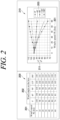
- FIG. 2 is an exemplary diagram illustrating a process of deriving a first speed down curve according to an embodiment of the present disclosure.
- the corrected ship speed derivation unit 120 may derive a second corrected ship speed 200 based on wind's angle on the bow and wind's speed at each location.
- the corrected ship speed derivation unit 120 may derive the second corrected ship speed 200 depending on wind's speed 201 (W p ) and wind's angle on the bow 202.
- the corrected ship speed derivation unit 120 may derive the second corrected ship speed 200 as 80 kn when the wind's angle on the bow 202 is 0° and the wind's speed 201 is 50 kn.
- the corrected ship speed derivation unit 120 may derive the second corrected ship speed 200 as 103 kn when the wind's angle on the bow 202 is 180° and the wind's speed 201 is 20 kn.
- the speed down curve derivation unit 130 may derive a first speed down curve 210 related to winds based on the basic speed and the second corrected ship speed 200 of the ship.
- the speed down curve derivation unit 130 may derive the first speed down curve 210 including a ratio 211 of the first corrected ship speed to the basic speed ( e.g., 100 kn) of the ship at each wind's angle on the bow 203.
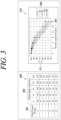
- FIG. 3 is an exemplary diagram illustrating a process of deriving a second speed down curve according to an embodiment of the present disclosure.
- the corrected ship speed derivation unit 120 may derive a third corrected ship speed 300 based on wave's angle on the bow and wave's height at each location.
- the corrected ship speed derivation unit 120 may derive the third corrected ship speed 300 depending on wave's height 301 and wave's angle on the bow 302 and.
- the corrected ship speed derivation unit 120 may derive the third corrected ship speed 300 as 40 kn when the wave's angle on the bow 302 is 0° and the wave's height 301 is 10 h.
- the corrected ship speed derivation unit 120 may derive the third corrected ship speed 300 as 96 kn when the wave's angle on the bow 302 is 180° and the wave's height 301 is 4 h.
- the speed down curve derivation unit 130 may derive a second speed down curve 310 related to waves based on the basic speed and the third corrected ship speed 300 of the ship.
- the speed down curve derivation unit 130 may derive 310 the second speed down curve including a ratio 311 of the first corrected ship speed to the basic speed ( e.g ., 100 kn) of the ship at each wave's angle on the bow 303.
- the route determination unit 140 may derive an optimal route of the ship by using the Speed Reduction Algorithm to which the first speed down curve or the second speed down curve is applied.
- the route determination unit 140 may derive priorities of influences on the first speed down curve and the second speed down curve by comparison between the second corrected ship speed and the third corrected ship speed at each location. For example, the route determination unit 140 may derive the priorities of influences on the first speed down curve and the second speed down curve based on whether the SOG is more influenced by winds or waves by comparison between the second corrected ship speed and the third corrected ship speed at each location.
- the route determination unit 140 may derive the priorities of influences on the first speed down curve and the second speed down curve for each of a plurality of sailing sections, or may derive the priorities of influences on the first speed down curve and the second speed down curve for the entire sailing section.
- the route determination unit 140 may derive an optimal route of the ship by using the Speed Reduction Algorithm to which either one the first speed down curve and the second speed down curve is applied based on the derived priorities of influences. For example, when the influence on the first speed down curve is greater than that on the second speed down curve according to the derived priorities of influences, the influence of winds on the SOG is greater than the influence of waves on the SOG, and, thus, the route determination unit 140 may derive an optimal route of the ship by using the Speed Reduction Algorithm to which the first speed down curve is applied.
- the route determination unit 140 may derive an optimal route of the ship by using the Speed Reduction Algorithm to which the second speed down curve is applied.
- the route determination unit 140 may derive an optimal route for each sailing section by using the Speed Reduction Algorithm to which either one the first speed down curve and the second speed down curve is applied for each sailing section.
- the route determination unit 140 may derive an optimal route for the first sailing section by using the Speed Reduction Algorithm to which the first speed down curve is applied, and when the second speed down curve has a higher priority of influence than the first speed down curve for a second sailing section, the route determination unit 140 may derive an optimal route for the second sailing section by using the Speed Reduction Algorithm to which the second speed down curve is applied.
- the storage unit 110 may update the first speed down curve and the second speed down curve for each sailing. For example, if the first speed down curve and the second reduction curve are derived by the speed down curve derivation unit 130 whenever sailing data obtained during sailing of the ship are stored, the storage unit 110 may update the first speed down curve and the second speed down curve and thus may provide an optimal route of the ship and improve the accuracy of the optimal route.
- sailing data generated when a ship actually sails without receiving a sailing report of the ship from a shipping company are used, and, thus, the amount of the sailing data is vast and it is easy to collect and use the sailing data. Accordingly, it is possible to apply the sailing data to various ships. Also, it is free to fuse and match the sailing data with location-based global marine data, which provides high utility.
- the optimal route derivation server 100 may be executed by a computer program stored in a medium including a sequence of instructions for deriving an optimal route of a ship.
- the computer program When executed by a computing device, the computer program causes a computing device to store marine data including winds, wave heights, and currents by matching the marine data with sailing data at each time point and each location included in the sailing data of each sailing obtained from an Automatic Identification System installed on the ship, derive a first corrected ship speed by excluding an influence of currents from a speed of the ship for each sailing, a second corrected ship speed by considering an influence of winds on the first corrected ship speed at each location, and a third corrected ship speed by considering an influence of waves on the first corrected ship speed at each location, derive a first speed down curve related to winds and a second speed down curve related to waves based on a basic speed, the second corrected ship speed and the third corrected ship speed of the ship, and derive an optimal route of the ship by using the Speed Reduction Algorithm to which the first speed down curve or the second speed
- FIG. 4 is a flowchart showing a method of deriving an optimal route of a ship performed by the optimal route derivation server according to an embodiment of the present disclosure.
- the method of deriving an optimal route of a ship performed by the optimal route derivation server 100 includes the processes time-sequentially performed according to the embodiment illustrated in FIG. 1 to FIG. 3 . Therefore, descriptions of the embodiment illustrated in FIG. 1 to FIG. 3 may be applied to the method of deriving an optimal route of a ship performed by the optimal route derivation server 100, even though they are omitted hereinafter.
- the optimal route derivation server 100 may store marine data including winds, wave heights, and currents by matching the marine data with sailing data at each time point and each location included in the sailing data of each sailing obtained from the AIS installed on a ship.
- the optimal route derivation server 100 may derive a first corrected ship speed by excluding an influence of currents from the SOG for each sailing and derive a second corrected ship speed by considering an influence of winds on the first corrected ship speed at each location and a third corrected ship speed by considering an influence of waves on the first corrected ship speed at each location.
- the optimal route derivation server 100 may derive a first speed down curve related to winds and a second speed down curve related to waves based on a basic speed, the second corrected ship speed and the third corrected ship speed of the ship.
- the optimal route derivation server 100 may derive an optimal route of the ship by using the Speed Reduction Algorithm to which the first speed down curve or the second speed down curve is applied.
- S410 to S440 may be divided into additional processes or combined into fewer processes depending on an embodiment.
- some of the processes may be omitted and the sequence of the processes may be changed if necessary.
- the method of deriving an optimal route of a ship performed by the optimal route derivation server illustrated in FIG. 1 to FIG. 4 can be implemented as a computer program stored in a medium to be executed by a computer or a recording medium including instructions executable by a computer. Also, the method of deriving an optimal route of a ship performed by the optimal route derivation server illustrated in FIG. 1 to FIG. 4 can be implemented as a computer program stored in a medium to be executed by a computer.
- a computer-readable medium can be any available medium accessible by a computer, including volatile and non-volatile media, removable and non-removable media. Additionally, a computer-readable medium may include computer storage media. Computer storage media includes both volatile and non-volatile, removable and non-removable media implemented in any method or technology for storage of information such as computer-readable instructions, data structures, program modules, or other data.
Landscapes
- Engineering & Computer Science (AREA)
- Radar, Positioning & Navigation (AREA)
- Physics & Mathematics (AREA)
- Remote Sensing (AREA)
- General Physics & Mathematics (AREA)
- Business, Economics & Management (AREA)
- Theoretical Computer Science (AREA)
- Automation & Control Theory (AREA)
- Strategic Management (AREA)
- Human Resources & Organizations (AREA)
- Economics (AREA)
- Ocean & Marine Engineering (AREA)
- Data Mining & Analysis (AREA)
- Chemical & Material Sciences (AREA)
- Mechanical Engineering (AREA)
- Operations Research (AREA)
- Combustion & Propulsion (AREA)
- General Business, Economics & Management (AREA)
- Tourism & Hospitality (AREA)
- Marketing (AREA)
- Computational Mathematics (AREA)
- Pure & Applied Mathematics (AREA)
- Mathematical Analysis (AREA)
- Mathematical Optimization (AREA)
- Mathematical Physics (AREA)
- Life Sciences & Earth Sciences (AREA)
- Development Economics (AREA)
- Entrepreneurship & Innovation (AREA)
- Quality & Reliability (AREA)
- Game Theory and Decision Science (AREA)
- Bioinformatics & Computational Biology (AREA)
- Databases & Information Systems (AREA)
- General Engineering & Computer Science (AREA)
- Evolutionary Biology (AREA)
- Probability & Statistics with Applications (AREA)
- Algebra (AREA)
- Bioinformatics & Cheminformatics (AREA)
- Software Systems (AREA)
- Environmental & Geological Engineering (AREA)
- Atmospheric Sciences (AREA)
Abstract
Description
- The present disclosure relates to a server, a method and a computer program for deriving an optimal route of a ship.
- The Speed Reduction Algorithm (SRA) is used to calculate the location of a ship by analyzing the ship's speed reduction caused by the influence of weather factors and current factors.
- The SRA is also used to evaluate the ship performance speed. A method of analyzing speed down curve during the entire sailing is used to calculate the ship performance speed. This is a method for calculating how much the speed of the ship is influenced by weather factors and current factors.
- That is, the SRA is used to calculate the ship performance speed and the ship location, which serve as the main data for determining the route of the ship. In this case, the accuracy of the ship speed down curve is important in order to accurately calculate the ship performance speed and the ship location.
- Regarding the technology of providing the route of a ship by analyzing the speed of the ship, prior art
Korean Patent No. 10-2006925 - Conventionally, even though individual ships have different degrees of influence by winds, waves, and currents, a fixed speed down curve is uniformly reflected to each ship and a recommended route is provided. That is, instead of a speed down curve for each ship, a speed down curve corresponding to the ship type or sister ship (same type or fleet) is adjusted at a predetermined rate and used, and, thus, an optimal recommended route reflecting sailing characteristics of each ship cannot be provided.
- Also, conventionally, the ship location and sailing information can be obtained only when a sailing report of each ship is received from a shipping company. Therefore, algorithms that are not greatly modified from the conventional speed reduction algorithm have been used.
- As described above, conventionally, actual sailing characteristics of individual ships cannot be reflected. Thus, the accuracy of the optimal recommended route of each ship is low.
- The present disclosure is conceived to provide a server, method and computer program for storing marine data including winds, wave heights, and currents by matching the marine data with sailing data at each time point and each location included in the sailing data of each sailing obtained from an Automatic Identification System installed on a ship.
- The present disclosure is conceived to provide a server, method and computer program for deriving a first corrected ship speed by excluding an influence of currents from a speed of a ship for each sailing, the first corrected ship speed by excluding an influence of currents on the first corrected ship speed, a second corrected ship speed by considering an influence of winds on the first corrected ship speed at each location, and a third corrected ship speed by considering an influence of waves on the first corrected ship speed at each location.
- The present disclosure is conceived to provide a server, method and computer program for deriving a first speed down curve related to winds and a second speed down curve related to waves based on a basic speed, a second corrected ship speed and a third corrected ship speed of a ship, and an optimal route of the ship by using the Speed Reduction Algorithm (SRA) to which the first speed down curve or the second speed down curve is applied.
- However, the problems to be solved by the present disclosure are not limited to the above-described problems. There may be other problems to be solved by the present disclosure.
- As a means for achieving the above-described technical problems, an aspect of the present disclosure provides an optimal route derivation server, including a storage unit configured to store marine data including winds, wave heights, and currents by matching the marine data with sailing data at each time point and each location included in the sailing data of each sailing obtained from an Automatic Identification System installed on a ship, a corrected ship speed derivation unit configured to derive a first corrected ship speed by excluding an influence of currents from a speed of the ship for each sailing, a second corrected ship speed by considering an influence of winds on the first corrected ship speed at each location, and a third corrected ship speed by considering an influence of waves on the first corrected ship speed at each location, a speed down curve derivation unit configured to derive a first speed down curve related to winds and a second speed down curve related to waves based on a basic speed, the second corrected ship speed and the third corrected ship speed of the ship, and a route determination unit configured to derive an optimal route of the ship by using a Speed Reduction Algorithm to which the first speed down curve or the second speed down curve is applied.
- Another aspect of the present disclosure provides a method of deriving an optimal route, including storing marine data including winds, wave heights, and currents by matching the marine data with sailing data at each time point and each location included in the sailing data of each sailing obtained from an Automatic Identification System installed on a ship, deriving a first corrected ship speed by excluding an influence of currents from a speed of the ship for each sailing, a second corrected ship speed by considering an influence of winds on the first corrected ship speed at each location, and a third corrected ship speed by considering an influence of waves on the first corrected ship speed at each location, deriving a first speed down curve related to winds and a second speed down curve related to waves based on a basic speed, the second corrected ship speed and the third corrected ship speed of the ship, and deriving an optimal route of the ship by using a Speed Reduction Algorithm to which the first speed down curve or the second speed down curve is applied.
- Yet another aspect of the present disclosure provides a computer program stored in a computer-readable medium including a sequence of instructions, which when executed by a computing device, causes a computing device to store marine data including winds, wave heights, and currents by matching the marine data with sailing data at each time point and each location included in the sailing data of each sailing obtained from an Automatic Identification System installed on a ship, derive a first corrected ship speed by excluding an influence of currents from a speed of the ship for each sailing, a second corrected ship speed by considering an influence of winds on the first corrected ship speed at each location, and a third corrected ship speed by considering an influence of waves on the first corrected ship speed at each location, derive a first speed down curve related to winds and a second speed down curve related to waves based on a basic speed, the second corrected ship speed and the third corrected ship speed of the ship, and derive an optimal route of the ship by using a Speed Reduction Algorithm to which the first speed down curve or the second speed down curve is applied.
- The above-described aspects are provided by way of illustration only and should not be construed as liming the present disclosure. Besides the above-described embodiments, there may be additional embodiments described in the accompanying drawings and the detailed description.
- According to any one of the above-described means for solving the problems of the present disclosure, it is possible to provide a server, method and computer program for providing an optimal route in consideration of sailing characteristics of each ship by storing marine data including winds, wave heights, and currents by matching the marine data with sailing data at each time point and each location included in the sailing data of each sailing obtained from an Automatic Identification System installed on the ship, and by matching a vast amount of sailing data which are easy to collect and use with location-based marine data.
- Also, it is possible to provide a server, method and computer program for deriving a first corrected ship speed by excluding an influence of currents from the speed of a ship for each sailing, and deriving a second corrected ship speed by considering an influence of winds on the first corrected ship speed at each location and a third corrected ship speed by considering an influence of waves on the first corrected ship speed at each location.
- Further, it is possible to provide a server, method and computer program for deriving a first speed down curve related to winds and a second speed down curve related to waves based on a basic speed, a second corrected ship speed and a third ship speed of a ship, and an optimal route of the ship by using the Speed Reduction Algorithm to which the first speed down curve or the second speed down curve is applied, and deriving the optimal route by using a unique speed down curve in consideration of sailing characteristics of the ship.
-
-
FIG. 1 is a configuration view of an optimal route derivation server according to an embodiment of the present disclosure. -
FIG. 2 is an exemplary diagram illustrating a process of deriving a first speed down curve according to an embodiment of the present disclosure. -
FIG. 3 is an exemplary diagram illustrating a process of deriving a second speed down curve according to an embodiment of the present disclosure. -
FIG. 4 is a flowchart showing a method of deriving an optimal route of a ship performed by the optimal route derivation server according to an embodiment of the present disclosure. - Hereinafter, embodiments of the present disclosure will be described in detail with reference to the accompanying drawings to be readily implemented by a person with ordinary skill in the art to which the present invention belongs. However, it is to be noted that the present disclosure is not limited to the example embodiments but can be embodied in various other ways. In the drawings, parts irrelevant to the description are omitted in order to clearly explain the present disclosure, and like reference numerals denote like parts through the whole document.
- Through the whole document, the term "connected to" or "coupled to" that is used to designate a connection or coupling of one element to another element includes both a case that an element is "directly connected or coupled to" another element and a case that an element is "electronically connected or coupled to" another element via still another element. Further, it is to be understood that the term "comprises or includes" and/or "comprising or including" used in the document means that one or more other components, steps, operation and/or existence or addition of elements are not excluded in addition to the described components, steps, operation and/or elements unless context dictates otherwise and is not intended to preclude the possibility that one or more other features, numbers, steps, operations, components, parts, or combinations thereof may exist or may be added.
- In the document, the term "unit" includes units realized by hardware, units realized by software, and units realized by using both hardware and software. Moreover, one unit may be realized by using two or more hardware, and two or more units may be realized by one hardware.
- Some of the operations or functions described as being performed by a terminal or device in the document may alternatively be performed by a server connected to the terminal or device. Similarly, some of the operations or functions described as being performed by a server may alternatively be performed by a terminal or device connected to the server.
- Hereinafter, an embodiment of the present disclosure will be described in detail with reference to the accompanying drawings.
-
FIG. 1 is a configuration view of an optimal route derivation server according to an embodiment of the present disclosure. Referring toFIG. 1 , an optimalroute derivation server 100 may include astorage unit 110, a corrected shipspeed derivation unit 120, a speed downcurve derivation unit 130, and aroute determination unit 140. Herein, the optimalroute derivation server 100 may derive a second corrected ship speed by considering the influence of winds on the speed of a ship and a third corrected ship speed by considering the influence of waves on the speed of the ship for each sailing, derive a first speed down curve related to winds and a second speed down curve related to waves based on the second corrected ship speed and the third corrected ship speed, and thus derive an optimal route of the ship by using the Speed Reduction Algorithm (SRA) to which the first speed down curve or the second speed down curve is applied. Hereinafter, the process of deriving an optimal route of a ship by each unit of the optimalroute derivation server 100 will be described. - The
storage unit 110 may store marine data including winds, wave heights, and currents by matching the marine data with sailing data at each time point and each location included in the sailing data of each sailing obtained from an Automatic Identification System (AIS) installed on the ship. Herein, the AIS is an automatic tracking system using a transceiver installed on a ship, and is mainly used for a ship traffic service. For example, the AIS can suppress a collision between ships on the sea by allowing a satellite to detect a signature of the AIS of the ship. The AIS may display, for example, the name, location, speed, type, expected departure time and expected arrival time at a port of entry of the ship. The sailing data may include the location, course and speed of the ship for each sailing. - The corrected ship
speed derivation unit 120 may derive a first corrected ship speed by excluding an influence of currents from the speed of the ship for each sailing. For example, the corrected shipspeed deriving unit 120 may calculate the first corrected ship speed according toEquation 1 below.
- Referring to
Equation 1, the speed of ground (SOG) may refer to the speed made good through the water, which is the speed of a ship on the sea as measured by satellites. The current factor refers to the number of currents encountered by a ship in a sailing route, and the influence of currents at each location can be identified by analyzing the current factor at each location along the route of the ship. The current factor may be calculated through, for example, Vcurentcos(φ). Herein, the first corrected ship speed excluding the influence of currents from the SOG is derived to analyze only the influences of winds and waves on the SOG. - The corrected ship
speed derivation unit 120 may derive the second corrected ship speed by considering the influence of winds on the first corrected ship speed at each location and the third corrected ship speed by considering the influence of waves on the first corrected ship speed at each location. - The speed down
curve derivation unit 130 may derive the first speed down curve related to winds and the second speed down curve related to waves based on a basic speed, the second corrected ship speed and the third corrected ship speed of the ship. Herein, the process of deriving the first speed down curve and the second speed down curve will be described in detail with reference toFIG. 2 andFIG. 3 . -
FIG. 2 is an exemplary diagram illustrating a process of deriving a first speed down curve according to an embodiment of the present disclosure. Referring toFIG. 2 , the corrected shipspeed derivation unit 120 may derive a second correctedship speed 200 based on wind's angle on the bow and wind's speed at each location. - For example, the corrected ship
speed derivation unit 120 may derive the second correctedship speed 200 depending on wind's speed 201 (Wp) and wind's angle on thebow 202. For example, the corrected shipspeed derivation unit 120 may derive the second correctedship speed 200 as 80 kn when the wind's angle on thebow 202 is 0° and the wind'sspeed 201 is 50 kn. For another example, the corrected shipspeed derivation unit 120 may derive the second correctedship speed 200 as 103 kn when the wind's angle on thebow 202 is 180° and the wind'sspeed 201 is 20 kn. - The speed down
curve derivation unit 130 may derive a first speed downcurve 210 related to winds based on the basic speed and the second correctedship speed 200 of the ship. For example, the speed downcurve derivation unit 130 may derive the first speed downcurve 210 including aratio 211 of the first corrected ship speed to the basic speed (e.g., 100 kn) of the ship at each wind's angle on thebow 203. -
FIG. 3 is an exemplary diagram illustrating a process of deriving a second speed down curve according to an embodiment of the present disclosure. Referring toFIG. 3 , the corrected shipspeed derivation unit 120 may derive a third correctedship speed 300 based on wave's angle on the bow and wave's height at each location. - For example, the corrected ship
speed derivation unit 120 may derive the third correctedship speed 300 depending on wave'sheight 301 and wave's angle on thebow 302 and. For example, the corrected shipspeed derivation unit 120 may derive the third correctedship speed 300 as 40 kn when the wave's angle on thebow 302 is 0° and the wave'sheight 301 is 10 h. For another example, the corrected shipspeed derivation unit 120 may derive the third correctedship speed 300 as 96 kn when the wave's angle on thebow 302 is 180° and the wave'sheight 301 is 4 h. - The speed down
curve derivation unit 130 may derive a second speed downcurve 310 related to waves based on the basic speed and the third correctedship speed 300 of the ship. For example, the speed downcurve derivation unit 130 may derive 310 the second speed down curve including aratio 311 of the first corrected ship speed to the basic speed (e.g., 100 kn) of the ship at each wave's angle on thebow 303. - Referring to
FIG. 1 again, theroute determination unit 140 may derive an optimal route of the ship by using the Speed Reduction Algorithm to which the first speed down curve or the second speed down curve is applied. - The
route determination unit 140 may derive priorities of influences on the first speed down curve and the second speed down curve by comparison between the second corrected ship speed and the third corrected ship speed at each location. For example, theroute determination unit 140 may derive the priorities of influences on the first speed down curve and the second speed down curve based on whether the SOG is more influenced by winds or waves by comparison between the second corrected ship speed and the third corrected ship speed at each location. - For example, the
route determination unit 140 may derive the priorities of influences on the first speed down curve and the second speed down curve for each of a plurality of sailing sections, or may derive the priorities of influences on the first speed down curve and the second speed down curve for the entire sailing section. - The
route determination unit 140 may derive an optimal route of the ship by using the Speed Reduction Algorithm to which either one the first speed down curve and the second speed down curve is applied based on the derived priorities of influences. For example, when the influence on the first speed down curve is greater than that on the second speed down curve according to the derived priorities of influences, the influence of winds on the SOG is greater than the influence of waves on the SOG, and, thus, theroute determination unit 140 may derive an optimal route of the ship by using the Speed Reduction Algorithm to which the first speed down curve is applied. For another example, when the influence on the second speed down curve is greater than that on the first speed down curve according to the derived priorities of influences, the influence of waves on the SOG is greater than the influence of winds on the SOG, and, thus, theroute determination unit 140 may derive an optimal route of the ship by using the Speed Reduction Algorithm to which the second speed down curve is applied. - For yet another example, the
route determination unit 140 may derive an optimal route for each sailing section by using the Speed Reduction Algorithm to which either one the first speed down curve and the second speed down curve is applied for each sailing section. - For example, when the first speed down curve has a higher priority of influence than the second speed down curve for a first sailing section, the
route determination unit 140 may derive an optimal route for the first sailing section by using the Speed Reduction Algorithm to which the first speed down curve is applied, and when the second speed down curve has a higher priority of influence than the first speed down curve for a second sailing section, theroute determination unit 140 may derive an optimal route for the second sailing section by using the Speed Reduction Algorithm to which the second speed down curve is applied. - The
storage unit 110 may update the first speed down curve and the second speed down curve for each sailing. For example, if the first speed down curve and the second reduction curve are derived by the speed downcurve derivation unit 130 whenever sailing data obtained during sailing of the ship are stored, thestorage unit 110 may update the first speed down curve and the second speed down curve and thus may provide an optimal route of the ship and improve the accuracy of the optimal route. - Therefore, according to the present disclosure, sailing data generated when a ship actually sails without receiving a sailing report of the ship from a shipping company are used, and, thus, the amount of the sailing data is vast and it is easy to collect and use the sailing data. Accordingly, it is possible to apply the sailing data to various ships. Also, it is free to fuse and match the sailing data with location-based global marine data, which provides high utility.
- The optimal
route derivation server 100 may be executed by a computer program stored in a medium including a sequence of instructions for deriving an optimal route of a ship. When executed by a computing device, the computer program causes a computing device to store marine data including winds, wave heights, and currents by matching the marine data with sailing data at each time point and each location included in the sailing data of each sailing obtained from an Automatic Identification System installed on the ship, derive a first corrected ship speed by excluding an influence of currents from a speed of the ship for each sailing, a second corrected ship speed by considering an influence of winds on the first corrected ship speed at each location, and a third corrected ship speed by considering an influence of waves on the first corrected ship speed at each location, derive a first speed down curve related to winds and a second speed down curve related to waves based on a basic speed, the second corrected ship speed and the third corrected ship speed of the ship, and derive an optimal route of the ship by using the Speed Reduction Algorithm to which the first speed down curve or the second speed down curve is applied. -
FIG. 4 is a flowchart showing a method of deriving an optimal route of a ship performed by the optimal route derivation server according to an embodiment of the present disclosure. Referring toFIG. 4 , the method of deriving an optimal route of a ship performed by the optimalroute derivation server 100 includes the processes time-sequentially performed according to the embodiment illustrated inFIG. 1 to FIG. 3 . Therefore, descriptions of the embodiment illustrated inFIG. 1 to FIG. 3 may be applied to the method of deriving an optimal route of a ship performed by the optimalroute derivation server 100, even though they are omitted hereinafter. - In S410, the optimal
route derivation server 100 may store marine data including winds, wave heights, and currents by matching the marine data with sailing data at each time point and each location included in the sailing data of each sailing obtained from the AIS installed on a ship. - In S420, the optimal
route derivation server 100 may derive a first corrected ship speed by excluding an influence of currents from the SOG for each sailing and derive a second corrected ship speed by considering an influence of winds on the first corrected ship speed at each location and a third corrected ship speed by considering an influence of waves on the first corrected ship speed at each location. - In S430, the optimal
route derivation server 100 may derive a first speed down curve related to winds and a second speed down curve related to waves based on a basic speed, the second corrected ship speed and the third corrected ship speed of the ship. - In S440, the optimal
route derivation server 100 may derive an optimal route of the ship by using the Speed Reduction Algorithm to which the first speed down curve or the second speed down curve is applied. - In the descriptions above, S410 to S440 may be divided into additional processes or combined into fewer processes depending on an embodiment. In addition, some of the processes may be omitted and the sequence of the processes may be changed if necessary.
- The method of deriving an optimal route of a ship performed by the optimal route derivation server illustrated in
FIG. 1 to FIG. 4 can be implemented as a computer program stored in a medium to be executed by a computer or a recording medium including instructions executable by a computer. Also, the method of deriving an optimal route of a ship performed by the optimal route derivation server illustrated inFIG. 1 to FIG. 4 can be implemented as a computer program stored in a medium to be executed by a computer. - A computer-readable medium can be any available medium accessible by a computer, including volatile and non-volatile media, removable and non-removable media. Additionally, a computer-readable medium may include computer storage media. Computer storage media includes both volatile and non-volatile, removable and non-removable media implemented in any method or technology for storage of information such as computer-readable instructions, data structures, program modules, or other data.
- The above description of the present disclosure is provided for the purpose of illustration, and it would be understood by a person with ordinary skill in the art to which the present disclosure belongs that various changes and modifications may be made without changing technical conception and essential features of the present disclosure. Thus, it is clear that the above-described examples are illustrative in all aspects and do not limit the present disclosure. For example, each component described to be of a single type can be implemented in a distributed manner, likewise, components described to be distributed can be implemented in a combined manner.
- The scope of the present disclosure is defined by the following claims rather than by the detailed description of the embodiment, and it should be understood that all modifications and embodiments conceived from the meaning and scope of the claims and their equivalents are included in the scope of the present disclosure.
Claims (13)
- An optimal route derivation server configured to drive an optimal route of a ship, comprising:a storage unit configured to store marine data including winds, wave heights, and currents by matching the marine data with sailing data at each time point and each location included in the sailing data of each sailing obtained from an Automatic Identification System installed on a ship;a corrected ship speed derivation unit configured to derive a first corrected ship speed by excluding an influence of currents from a speed of the ship for each sailing, a second corrected ship speed by considering an influence of winds on the first corrected ship speed at each location, and a third corrected ship speed by considering an influence of waves on the first corrected ship speed at each location;a speed down curve derivation unit configured to derive a first speed down curve related to winds and a second speed down curve related to waves based on a basic speed, the second corrected ship speed and the third corrected ship speed of the ship; anda route determination unit configured to derive an optimal route of the ship by using a Speed Reduction Algorithm to which the first speed down curve or the second speed down curve is applied.
- The optimal route derivation server of Claim 1,
wherein the corrected ship speed derivation unit derives the second corrected ship speed based on wind's angle on a bow and wind's speed at each location and the third corrected ship speed based on wave's angle on the bow and wave's height at each location. - The optimal route derivation server of Claim 1,
wherein the speed down curve derivation unit derives the first speed down curve including a ratio of the first corrected ship speed to the basic speed of the ship for each wind's speed at each wind's angle on the bow, and the second speed down curve including a ratio of the first corrected ship speed to the basic speed of the ship for each wave's height at each wave's angle on the bow. - The optimal route derivation server of Claim 1,wherein the route determination unit derives priorities of influences on the first speed down curve and the second speed down curve by comparison between the second corrected ship speed and the third corrected ship speed at each location, andderives the optimal route of the ship by using the Speed Reduction Algorithm to which either one the first speed down curve and the second speed down curve is applied based on the derived priorities of influences.
- The optimal route derivation server of Claim 1,
wherein the storage unit updates the first speed down curve and the second speed down curve for each sailing. - The optimal route derivation server of Claim 1,
wherein the sailing data include at least one of a location, a course and a speed of the ship for each sailing. - A method of deriving an optimal route, comprising:storing marine data including winds, wave heights, and currents by matching the marine data with sailing data at each time point and each location included in the sailing data of each sailing obtained from an Automatic Identification System installed on a ship;deriving a first corrected ship speed by excluding an influence of currents from a speed of the ship for each sailing, a second corrected ship speed by considering an influence of winds on the first corrected ship speed at each location, and a third corrected ship speed by considering an influence of waves on the first corrected ship speed at each location;deriving a first speed down curve related to winds and a second speed down curve related to waves based on a basic speed, the second corrected ship speed and the third corrected ship speed of the ship; andderiving an optimal route of the ship by using a Speed Reduction Algorithm to which the first speed down curve or the second speed down curve is applied.
- The method of deriving an optimal route of Claim 7,
wherein the deriving the corrected ship speed includes:deriving the second corrected ship speed based on wind's angle on a bow and wind's speed at each location; andderiving the third corrected ship speed based on wave's angle on the bow and wave's height at each location. - The method of deriving an optimal route of Claim 7,
wherein the deriving the speed down curve includes:deriving the first speed down curve including a ratio of the first corrected ship speed to the basic speed of the ship for each wind's speed at each wind's angle on the bow; andderiving the second speed down curve including a ratio of the first corrected ship speed to the basic speed of the ship for each wave's height at each wave's angle on the bow. - The method of deriving an optimal route of Claim 7,
wherein the deriving the optimal route includes:deriving priorities of influences on the first speed down curve and the second speed down curve by comparison between the second corrected ship speed and the third corrected ship speed at each location; andderiving the optimal route of the ship by using the Speed Reduction Algorithm to which either one the first speed down curve and the second speed down curve is applied based on the derived priorities of influences. - The method of deriving an optimal route of Claim 7, further comprising:
updating the first speed down curve and the second speed down curve for each sailing. - The method of deriving an optimal route of Claim 7,
wherein the sailing data include at least one of a location, a course and a speed of the ship for each sailing. - A computer program stored in a computer-readable medium including a sequence of instructions for deriving an optimal route of a ship, which when executed by a computing device, causes a computing device to:store marine data including winds, wave heights, and currents by matching the marine data with sailing data at each time point and each location included in the sailing data of each sailing obtained from an Automatic Identification System installed on the ship;derive a first corrected ship speed by excluding an influence of currents from a speed of the ship for each sailing, a second corrected ship speed by considering an influence of winds on the first corrected ship speed at each location, and a third corrected ship speed by considering an influence of waves on the first corrected ship speed at each location;derive a first speed down curve related to winds and a second speed down curve related to waves based on a basic speed, the second corrected ship speed and the third corrected ship speed of the ship; andderive the optimal route of the ship by using a Speed Reduction Algorithm to which the first speed down curve or the second speed down curve is applied.
Applications Claiming Priority (2)
| Application Number | Priority Date | Filing Date | Title |
|---|---|---|---|
| KR1020210189761A KR102794932B1 (en) | 2021-12-28 | 2021-12-28 | Server, method and computer program for deriving optimized route information of vessel |
| PCT/KR2021/020347 WO2023128028A1 (en) | 2021-12-28 | 2021-12-31 | Server, method and computer program for deriving optimal route of ship |
Publications (2)
| Publication Number | Publication Date |
|---|---|
| EP4435380A1 true EP4435380A1 (en) | 2024-09-25 |
| EP4435380A4 EP4435380A4 (en) | 2025-10-08 |
Family
ID=86999338
Family Applications (1)
| Application Number | Title | Priority Date | Filing Date |
|---|---|---|---|
| EP21970097.8A Pending EP4435380A4 (en) | 2021-12-28 | 2021-12-31 | SERVER, METHOD AND COMPUTER PROGRAM FOR DERIVING AN OPTIMAL SHIPPING ROUTE |
Country Status (5)
| Country | Link |
|---|---|
| US (1) | US20240353226A1 (en) |
| EP (1) | EP4435380A4 (en) |
| JP (1) | JP7772341B2 (en) |
| KR (1) | KR102794932B1 (en) |
| WO (1) | WO2023128028A1 (en) |
Families Citing this family (1)
| Publication number | Priority date | Publication date | Assignee | Title |
|---|---|---|---|---|
| CN118534911B (en) * | 2024-07-24 | 2024-09-24 | 三峡金沙江川云水电开发有限公司 | Auxiliary navigation method and system for large ship typical channel based on unmanned aerial vehicle companion navigation |
Family Cites Families (18)
| Publication number | Priority date | Publication date | Assignee | Title |
|---|---|---|---|---|
| JP4970346B2 (en) * | 2008-05-28 | 2012-07-04 | 三井造船株式会社 | Ship operation support system and ship operation support method |
| KR101322415B1 (en) * | 2010-03-12 | 2013-10-25 | 울산대학교 산학협력단 | Method for providing vessel seaway and providing system of vessel seaway |
| JP5420723B2 (en) * | 2012-06-27 | 2014-02-19 | 三井造船株式会社 | Ship optimum route calculation system, vessel operation support system, vessel optimum route calculation method, and vessel operation support method |
| WO2014192531A1 (en) * | 2013-05-31 | 2014-12-04 | 古野電気株式会社 | Navigation assistance device, navigation assistance method, and program |
| JP6412642B2 (en) * | 2015-05-21 | 2018-10-24 | 日本郵船株式会社 | Apparatus, system, method, and program for specifying ship speed against water |
| EP3401700B1 (en) * | 2015-09-16 | 2024-09-11 | Furuno Electric Co., Ltd. | Ship speed gauge and method for obtaining ship speed |
| KR102006925B1 (en) | 2017-03-31 | 2019-08-02 | 삼성중공업 주식회사 | Apparatus and method for determining route and speed of vessel, and recording medium |
| KR102109571B1 (en) * | 2018-08-22 | 2020-05-12 | 대우조선해양 주식회사 | System and method for providing optimized vessel seaway and computer-readable recording medium thereof |
| KR102042490B1 (en) * | 2018-09-21 | 2019-11-27 | 충북대학교 산학협력단 | System and method for estimating external forces acting on ship by MapReduce |
| KR102182036B1 (en) * | 2018-11-26 | 2020-11-23 | 한국해양과학기술원 | System and method for supporting optimum route prediction |
| JP7226453B2 (en) * | 2018-12-20 | 2023-02-21 | 富士通株式会社 | Navigation support method, navigation support device, and navigation support program |
| WO2020129226A1 (en) * | 2018-12-20 | 2020-06-25 | 富士通株式会社 | Navigation assistance method, navigation assistance device, and navigation assistance program |
| JP7189764B2 (en) * | 2018-12-27 | 2022-12-14 | 川崎重工業株式会社 | Ship performance estimation device and ship performance estimation program |
| CN110020459A (en) * | 2019-02-28 | 2019-07-16 | 南通大学 | Based on Dynamic mesh ship with wave the motion simulation method on course-and-bearing |
| US11761768B2 (en) * | 2019-11-27 | 2023-09-19 | Earth Weather, Inc. | Route navigation system for ships, and a program thereof |
| CN112749847B (en) * | 2021-01-15 | 2024-03-08 | 上海船舶研究设计院(中国船舶工业集团公司第六0四研究院) | Ship route determining method and device and electronic equipment |
| KR102733651B1 (en) * | 2022-08-10 | 2024-11-25 | 이우성 | Underground Water Flood Control Equipment |
| CN119647331B (en) * | 2024-11-29 | 2025-09-26 | 中国船舶科学研究中心 | Method for evaluating EEDI contribution degree of airfoil sail based on sea test of real ship |
-
2021
- 2021-12-28 KR KR1020210189761A patent/KR102794932B1/en active Active
- 2021-12-31 JP JP2024536533A patent/JP7772341B2/en active Active
- 2021-12-31 WO PCT/KR2021/020347 patent/WO2023128028A1/en not_active Ceased
- 2021-12-31 EP EP21970097.8A patent/EP4435380A4/en active Pending
-
2024
- 2024-06-28 US US18/758,462 patent/US20240353226A1/en active Pending
Also Published As
| Publication number | Publication date |
|---|---|
| JP2024547052A (en) | 2024-12-26 |
| KR102794932B1 (en) | 2025-04-15 |
| JP7772341B2 (en) | 2025-11-18 |
| EP4435380A4 (en) | 2025-10-08 |
| KR20230100133A (en) | 2023-07-05 |
| US20240353226A1 (en) | 2024-10-24 |
| WO2023128028A1 (en) | 2023-07-06 |
Similar Documents
| Publication | Publication Date | Title |
|---|---|---|
| CN115273557B (en) | AIS-based method and system for detecting and warning collision risks of ships underway | |
| EP3940671B1 (en) | Ship routing prediction system, and program used for said routing prediction system | |
| KR101951142B1 (en) | System for estimating loss data of a ship using machine learning | |
| KR101103455B1 (en) | Vessel route guidance system using vessel's AIS | |
| CN115308762B (en) | Ship identification method and device based on laser radar and AIS | |
| US20160121979A1 (en) | Ship managing device, ship managing system, and program | |
| CN113822630B (en) | AIS-based LNG ship transport tracking method and system | |
| Shu et al. | Vessel speed, course, and path analysis in the Botlek area of the Port of Rotterdam, Netherlands | |
| CN113780127A (en) | Ship positioning and monitoring system and method | |
| US20240353226A1 (en) | Server, method and computer program for deriving optimal route of ship | |
| CN115577868B (en) | Method and device for predicting destination port of in-transit ship, readable storage medium and ship | |
| CN105698800A (en) | Improved navigation method and system for sailing | |
| Silveira et al. | Assessment of ship collision estimation methods using AIS data | |
| KR102526160B1 (en) | Unmanned marine automatic route change apparatus utilizing weather information and method therefor | |
| KR102464207B1 (en) | Ship safety management system using augmented reality | |
| KR20230140944A (en) | Server and method for providing vessel navigation service | |
| CN117953729A (en) | Ship risk analysis method and system based on ship-shore collaborative multi-source data | |
| US9188448B2 (en) | Methods and systems for determining an anchoring location of a marine vessel | |
| WO2018149901A1 (en) | Route planning of a vessel | |
| Szłapczyńska et al. | Weather routing system architecture using onboard data collection and route optimisation | |
| CN120559688A (en) | Automatic positioning and early warning method and system for fishing vessels based on Beidou navigation | |
| CN120126348A (en) | A ship navigation management method based on Beidou positioning | |
| KR101974784B1 (en) | Ship sailing management method and ship sailing management system | |
| CN115587308B (en) | Methods, devices, electronic equipment, and storage media for determining waterways | |
| CN119091687A (en) | Ship berthing auxiliary system, method and storage medium |
Legal Events
| Date | Code | Title | Description |
|---|---|---|---|
| STAA | Information on the status of an ep patent application or granted ep patent |
Free format text: STATUS: THE INTERNATIONAL PUBLICATION HAS BEEN MADE |
|
| PUAI | Public reference made under article 153(3) epc to a published international application that has entered the european phase |
Free format text: ORIGINAL CODE: 0009012 |
|
| STAA | Information on the status of an ep patent application or granted ep patent |
Free format text: STATUS: REQUEST FOR EXAMINATION WAS MADE |
|
| 17P | Request for examination filed |
Effective date: 20240617 |
|
| AK | Designated contracting states |
Kind code of ref document: A1 Designated state(s): AL AT BE BG CH CY CZ DE DK EE ES FI FR GB GR HR HU IE IS IT LI LT LU LV MC MK MT NL NO PL PT RO RS SE SI SK SM TR |
|
| DAV | Request for validation of the european patent (deleted) | ||
| DAX | Request for extension of the european patent (deleted) | ||
| A4 | Supplementary search report drawn up and despatched |
Effective date: 20250909 |
|
| RIC1 | Information provided on ipc code assigned before grant |
Ipc: G01C 21/20 20060101AFI20250903BHEP Ipc: G01P 21/02 20060101ALI20250903BHEP Ipc: G08G 3/00 20060101ALI20250903BHEP Ipc: G01C 21/10 20060101ALI20250903BHEP Ipc: G06Q 10/04 20230101ALI20250903BHEP Ipc: G08G 3/02 20060101ALI20250903BHEP Ipc: G06Q 50/40 20240101ALI20250903BHEP |