EP4435022A1 - Antibacterial resin, composition for preparing same, and molded body comprising same - Google Patents
Antibacterial resin, composition for preparing same, and molded body comprising same Download PDFInfo
- Publication number
- EP4435022A1 EP4435022A1 EP23877746.0A EP23877746A EP4435022A1 EP 4435022 A1 EP4435022 A1 EP 4435022A1 EP 23877746 A EP23877746 A EP 23877746A EP 4435022 A1 EP4435022 A1 EP 4435022A1
- Authority
- EP
- European Patent Office
- Prior art keywords
- antibacterial
- antibacterial resin
- repeating unit
- chemical formula
- present specification
- Prior art date
- Legal status (The legal status is an assumption and is not a legal conclusion. Google has not performed a legal analysis and makes no representation as to the accuracy of the status listed.)
- Pending
Links
Images
Classifications
-
- C—CHEMISTRY; METALLURGY
- C08—ORGANIC MACROMOLECULAR COMPOUNDS; THEIR PREPARATION OR CHEMICAL WORKING-UP; COMPOSITIONS BASED THEREON
- C08F—MACROMOLECULAR COMPOUNDS OBTAINED BY REACTIONS ONLY INVOLVING CARBON-TO-CARBON UNSATURATED BONDS
- C08F255/00—Macromolecular compounds obtained by polymerising monomers on to polymers of hydrocarbons as defined in group C08F10/00
- C08F255/02—Macromolecular compounds obtained by polymerising monomers on to polymers of hydrocarbons as defined in group C08F10/00 on to polymers of olefins having two or three carbon atoms
-
- A—HUMAN NECESSITIES
- A01—AGRICULTURE; FORESTRY; ANIMAL HUSBANDRY; HUNTING; TRAPPING; FISHING
- A01N—PRESERVATION OF BODIES OF HUMANS OR ANIMALS OR PLANTS OR PARTS THEREOF; BIOCIDES, e.g. AS DISINFECTANTS, AS PESTICIDES OR AS HERBICIDES; PEST REPELLANTS OR ATTRACTANTS; PLANT GROWTH REGULATORS
- A01N33/00—Biocides, pest repellants or attractants, or plant growth regulators containing organic nitrogen compounds
- A01N33/02—Amines; Quaternary ammonium compounds
- A01N33/12—Quaternary ammonium compounds
-
- A—HUMAN NECESSITIES
- A01—AGRICULTURE; FORESTRY; ANIMAL HUSBANDRY; HUNTING; TRAPPING; FISHING
- A01P—BIOCIDAL, PEST REPELLANT, PEST ATTRACTANT OR PLANT GROWTH REGULATORY ACTIVITY OF CHEMICAL COMPOUNDS OR PREPARATIONS
- A01P1/00—Disinfectants; Antimicrobial compounds or mixtures thereof
-
- C—CHEMISTRY; METALLURGY
- C08—ORGANIC MACROMOLECULAR COMPOUNDS; THEIR PREPARATION OR CHEMICAL WORKING-UP; COMPOSITIONS BASED THEREON
- C08K—Use of inorganic or non-macromolecular organic substances as compounding ingredients
- C08K5/00—Use of organic ingredients
- C08K5/04—Oxygen-containing compounds
- C08K5/14—Peroxides
-
- C—CHEMISTRY; METALLURGY
- C08—ORGANIC MACROMOLECULAR COMPOUNDS; THEIR PREPARATION OR CHEMICAL WORKING-UP; COMPOSITIONS BASED THEREON
- C08L—COMPOSITIONS OF MACROMOLECULAR COMPOUNDS
- C08L51/00—Compositions of graft polymers in which the grafted component is obtained by reactions only involving carbon-to-carbon unsaturated bonds; Compositions of derivatives of such polymers
- C08L51/06—Compositions of graft polymers in which the grafted component is obtained by reactions only involving carbon-to-carbon unsaturated bonds; Compositions of derivatives of such polymers grafted on to homopolymers or copolymers of aliphatic hydrocarbons containing only one carbon-to-carbon double bond
Definitions
- the present specification relates to an antibacterial resin, a composition for forming an antibacterial resin, and a molded article including the antibacterial resin.
- the degree of antibacterial properties required and the material requirements for imparting antibacterial properties differ depending on the material of the product requiring antibacterial properties and the state of final use.
- the properties of the material for imparting antibacterial properties and the degree of antibacterial properties vary depending on the amount of antibacterial material applied to a product used and the materials used together.
- Patent Document 1 Korean Patent Application Laid-Open No. 10-2009-0131847
- the present invention provides an antibacterial resin, a composition for forming an antibacterial resin, and a molded article including the same.
- An exemplary embodiment of the present specification provides an antibacterial resin including: a first repeating unit derived from propylene; and
- Another exemplary embodiment of the present specification provides a composition for forming the above-described antibacterial resin.
- Still another exemplary embodiment of the present specification provides a molded article including the above-described antibacterial resin or prepared therefrom.
- An antibacterial resin according to some exemplary embodiments of the present specification has hydrophilic and hydrophobic properties, and thus has excellent antibacterial properties.
- the antibacterial resin according to some exemplary embodiments of the present specification can solve safety problems due to the release of antibacterial materials.
- the antibacterial resin according to some exemplary embodiments of the present specification can exhibit antibacterial properties within a short period of time.
- antibacterial resin Since the antibacterial resin according to some exemplary embodiments of the present specification has little change in antibacterial activity depending on the amount of antibacterial material used, antibacterial properties can be exhibited within an expected range even when the unevenness of concentration occurs unintentionally during application to a product. Therefore, antibacterial properties are controlled within a specific range, so that excellent antibacterial properties can be safely imparted.
- the antibacterial resin according to some exemplary embodiments of the present specification has low toxicity, and thus can solve safety problems.
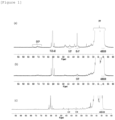
- FIG. 1 is a set of views illustrating the NMR measurement results of antibacterial resins according to some exemplary embodiments of the present specification.
- An exemplary embodiment of the present specification provides an antibacterial resin including: a first repeating unit derived from propylene; and a second repeating unit derived from a monomer represented by the following Chemical Formula 1, in which a weight ratio of the first repeating unit to the second repeating unit is 1:0.005 or more.
- antibacterial agents were simply mixed with polymers, and in this case, inorganic antibacterial agents or organic antibacterial agents were used.
- the inorganic antibacterial agents are expensive, easily induce discoloration of materials, and may degrade the physical properties of polymers during processing processes such as extrusion or injection. Further, the inorganic antibacterial agents also have the disadvantage of low immediate antibacterial effects.
- the organic antibacterial agents themselves have a disadvantage in that antibacterial persistence deteriorates due to poor stability against the human body, poor thermal stability, and the like.
- the antibacterial resin and antibacterial resin composition according to the present invention do not include an inorganic antibacterial agent, disadvantages such as discoloration and reduction in transparency can be overcome.
- an antibacterial material is not included as a separate material but is polymerized as a monomer, it has an advantage in that stability against the human body is excellent and antibacterial persistence is maintained.
- an organic antibacterial agent is applied to the polymerization of a polymer, the polymerization efficiency or conversion rate decreases or the inherent advantages of the polymer are impaired in many cases, but the present invention may also overcome these disadvantages. Due to the above advantages, the antibacterial resin of the present specification may exhibit excellent antibacterial persistence. That is, the antibacterial resin of the present specification may simultaneously improve stability due to the release of the antibacterial agent while having excellent antibacterial properties and antibacterial persistence.
- the antibacterial resin according to the present invention is characterized in that the weight ratio of the first repeating unit to the second repeating unit is 1:0.005 or more, and when this range is satisfied, the antibacterial resin according to the present invention has an effect of exhibiting excellent antibacterial properties and antibacterial persistence.
- the weight ratio of the first repeating unit to the second repeating unit may be 1:0.005 to 1:0.5, 1:0.005 to 1:0.3, or 1:0.005 to 1:0.1.
- derived means that a new bond is generated while a bond between at least two adjacent elements in a compound is broken, or hydrogen or a substituent is detached
- a unit derived from the compound may mean a unit which forms one or more of a main chain and a side chain in a polymer.
- the unit may be included in a main chain in a polymer to constitute the polymer.
- the "monomer” means a unit compound that may be converted into a polymer compound by a polymerization reaction, and structures derived therefrom may become a repeating unit in a polymer or copolymer. Specifically, this means that in a state in which the corresponding compound is polymerized and bonded in the polymer, in the structure of the compound, all or a portion of two or more substituents are omitted, and a radical for being bonded to other units of the polymer is located at the position. In this case, the corresponding compound may be included in a state of being polymerized in any order and bonded in the polymer.
- the "weight average molecular weight” is one of the average molecular weights in which the molecular weight is not uniform and the molecular weight of any polymer material is used as a reference, and is a value obtained by averaging the molecular weight of a component molecular species of a polymer compound having a molecular weight distribution by a weight fraction.
- room temperature means the natural temperature that has not been heated or cooled, for example, any one temperature within a range of about 10°C to 30°C, for example, a temperature of about 15°C, about 18°C, meaning a temperature of about 20°C, about 23°C, or about 25°C. Further, in the present invention, the unit of temperature is °C, unless otherwise specified.
- the corresponding physical property is a physical property measured at normal pressure, unless otherwise specified.
- normal pressure is the natural pressure that has not been pressurized or depressurized, and refers to a pressure which is typically about 1 atmosphere (about 700 to 800 mmHg).
- the corresponding physical property is a physical property measured at a humidity that is not particularly controlled in the room temperature and normal pressure state, unless otherwise specified.
- an "alkyl group” may be straight-chained or branched, and the number of carbon atoms thereof is not particularly limited, but is preferably 1 to 60. According to an exemplary embodiment, the number of carbon atoms of the alkyl group is 1 to 30.
- alkyl group examples include a methyl group, an ethyl group, a propyl group, an isopropyl group, a butyl group, an isobutyl group, a tert-butyl group, a pentyl group, a hexyl group, a heptyl group, an octyl group, a nonyl group, a decyl group, an undecyl group, a dodecyl group, a tridecyl group, and the like, but are not limited thereto.
- an "alkylene group” means a group having two bonding positions in an alkyl group, that is, a divalent group.
- the above-described description on the alkyl group may be applied to the alkylene group, except for a divalent alkylene group.
- the "antibacterial resin” may mean a copolymer itself including a first unit derived from the propylene and a second unit derived from the monomer represented by Chemical Formula 1, and may also mean one in which additional components in addition to the polymer are further included.
- * means an attachment point in the antibacterial resin.
- the attachment point may be a point where the same units are attached to each other, and may also be a point where a unit is attached to another unit.
- * means both a part to which the second repeating units are attached and a part to which the first repeating unit and the second repeating unit are attached.
- the monomer represented by Chemical Formula 1 is an antibacterial material.
- the second repeating unit is represented by the following Chemical Formula 1-1.
- n2 is an integer from 2 to 40,000, an integer from 5 to 30,000, or an integer from 10 to 10,000.
- R4 is hydrogen or an alkyl group having 1 to 10 carbon atoms.
- R4 is hydrogen or a methyl group.
- L1 is an alkylene group having 1 to 10 carbon atoms.
- L1 is an alkylene group having 1 to 5 carbon atoms.
- L1 is a methylene group; an ethylene group; a propylene group; or a butylene group.
- R1 to R3 are the same as or different from each other, and are each independently an alkyl group having 1 to 30 carbon atoms.
- any one of R1 to R3 is an alkyl group having 5 to 30 carbon atoms, and the others are the same as or different from each other, and are each independently an alkyl group having 1 to 30 carbon atoms.
- any one of R1 to R3 is an alkyl group having 5 to 30 carbon atoms, and the others are the same as or different from each other, and are each independently an alkyl group having 1 to 20 carbon atoms.
- any one of R1 to R3 is an alkyl group having 5 to 30 carbon atoms, and the others are the same as or different from each other, and are each independently an alkyl group having 1 to 10 carbon atoms.
- any one of R1 to R3 is an alkyl group having 5 to 20 carbon atoms, and the others are the same as or different from each other, and are each independently an alkyl group having 1 to 30 carbon atoms.
- any one of R1 to R3 is an alkyl group having 5 to 20 carbon atoms, and the others are the same as or different from each other, and are each independently an alkyl group having 1 to 20 carbon atoms.
- any one of R1 to R3 is an alkyl group having 5 to 20 carbon atoms, and the others are the same as or different from each other, and are each independently an alkyl group having 1 to 10 carbon atoms.
- two or more of R1 to R3 are an alkyl group having 6 to 30 carbon atoms, or the difference in carbon number between an alkyl group having the largest number of carbon atoms and an alkyl group having the smallest number of carbon atoms among R1 to R3 is 5 or more.
- R1 to R3 are an alkyl group having 6 to 30 carbon atoms; two of R1 to R3 are an alkyl group having 6 to 30 carbon atoms, the other one is an alkyl group having 1 to 30 carbon atoms; or the difference in carbon number between an alkyl group having the largest number of carbon atoms and an alkyl group having the smallest number of carbon atoms among R1 to R3 is 5 or more, and in this case, an effect of excellent antibacterial activity is exhibited.
- a difference in the number of carbon atoms between the alkyl group having the largest number of carbon atoms and the alkyl group having the smallest number of carbon atoms of 5 or more means that the asymmetry is large, and the difference in the number of carbon atoms may be 5 to 30, or 5 to 10.
- the monomer represented by Chemical Formula 1 is any one of the following structures.
- the second repeating unit derived from the monomer represented by Chemical Formula 1 is any one of the following structures.
- * is an attachment point in the antibacterial resin.
- the copolymer includes 1 to 50,000 of the second repeating units. Specifically, the copolymer includes 2 to 40,000, 5 to 30,000, 10 to 10,000, or 20 to 5,000 of the second repeating units.
- the monomer represented by Chemical Formula 1 since the monomer represented by Chemical Formula 1 exhibits cationic properties, the monomer may be present in a form where a salt is formed along with a group exhibiting anionic properties. Furthermore, since the second repeating unit derived from the monomer represented by Chemical Formula 1 exhibits cationic properties, the second repeating unit may be present in a form where a salt is formed along with a group exhibiting anionic properties.
- the group exhibiting anionic properties is not particularly limited, and materials known in the art may be used as long as the materials do not impair the purpose of the antibacterial properties.
- the group exhibiting anionic properties may be a halogen-based anion, a sulfonate-based anion, a salicylate-based anion, a benzoate-based anion, a citrate-based anion, a tetrafluoroborate-based anion, a sorbate-based anion, or a lactate-based anion.
- the group exhibiting anionic properties may be Br - , Cl - , I - , F - , BF 4 - , OH - , CF 3 COO - , CF 3 SO 3 - NO 3 - , SH - , but is not limited thereto.
- the second repeating unit is a unit exhibiting antibacterial properties. That is, the antibacterial resin may exhibit antibacterial properties due to the second repeating unit.
- the antibacterial properties of the antibacterial resin are derived from the above-described anionic functional group and cationic functional group included in the antibacterial resin.
- anionic functional group and cationic functional group included in the antibacterial resin.
- cell walls of bacteria and the like are often negatively charged, and the cationic functional group may perform a destructive action on the cell walls.
- the first repeating unit derived from the propylene is represented by the following Chemical Formula 2.
- n1 is an integer from 2 to 40,000, an integer from 5 to 30,000, or an integer from 10 to 10,000.
- hydrogen included in the first repeating unit is desorbed and the first repeating unit is bonded to the second repeating unit, or the * moiety is bonded to the second repeating unit.
- the first repeating unit derived from the propylene monomer may be polypropylene.
- the first repeating unit and the second repeating unit are graft-polymerized. That is, an exemplary embodiment of the present specification provides an antibacterial resin including a polymer in which the first repeating unit and the second repeating unit are grafted. Specifically, an exemplary embodiment of the present specification provides an antibacterial resin including: a first repeating unit derived from propylene; and a second repeating unit derived from the monomer represented by Chemical Formula 1 and grafted to the first repeating unit.
- the antibacterial material is not included as a separate material but is polymerized as a monomer, so there is an advantage in that stability against the human body is excellent and antibacterial persistence is maintained.
- the antibacterial resin includes a third repeating unit represented by the following Chemical Formula 3.
- m1 and m2 are each an integer from 2 to 40,000, an integer from 5 to 30,000, or an integer from 10 to 10,000.
- the third repeating unit represented by Chemical Formula 3 is a unit in which the first repeating unit and the second repeating unit are grafted.
- the antibacterial resin is composed of the third repeating unit represented by Chemical Formula 3.
- the first repeating unit is the main chain
- the second repeating unit may be grafted to the main chain in the form of side chains.
- having antibacterial properties means that the antibacterial activity measured based on the following Method 1, in other words, the bacteriostatic reduction rate is 99% or more.
- the antibacterial activity may be 99% or more or 99.8% or more in other examples.
- the upper limit of the antibacterial activity is not particularly limited, and for example, the bacteriostatic reduction rate may be 100% or less or less than 100%.
- a specific method for measuring the antibacterial activity that is, the bacteriostatic reduction rate is as in Method 1 to be described below.
- the antibacterial resin has an antibacterial activity of 99% or more against any one bacterial strain selected from the group consisting of Gram-positive bacteria, Gram-negative bacteria, and molds, as measured by the following Method 1.
- a strain is diluted in a 1X PBS solution at a concentration of 1.6 x 10 5 CFU/mL.
- This solution is diluted and spread onto an agar medium plate.
- Serial dilution is performed to enable colony counting, and 1X PBS is used in this process.
- Bacteriostatic performance is calculated using the following equations after calculating the initial concentration of microorganisms (C Reference , CFU/mL) in consideration of the dilution concentration.
- Antibacterial activity % 1 ⁇ C sample / C Reference ⁇ 100
- the antibacterial activity of the antibacterial resin according to the present invention was evaluated using Method 1, only the case where the antibacterial activity was 99% or more was observed. As a result, it could be confirmed that the antibacterial resin according to the present invention has excellent antibacterial activity.
- Gram-positive bacteria is a general term for bacteria that are stained purple when stained using the Gram staining method, and Gram-positive bacteria exhibit a purple color without discoloration even though the Gram-positive bacteria are stained with a basic dye such as crystal violet and then treated with ethanol because the cell walls of Gram-positive bacteria are composed of several layers of peptidoglycan.
- the Gram-positive bacteria are selected from Enterococcus faecalis, Staphylococcus aureus, Streptococcus pneumoniae, Enterococcus faecium and Lactobacillus lactis.
- the Gram-positive bacteria are any one selected from the above-described examples, but are not limited thereto.
- Gram-negative bacteria are a general term for bacteria that are stained red when stained with the Gram staining method, and Gram-negative bacteria have an outer membrane composed of lipid polysaccharides, lipid proteins, and/or other complex polymeric materials instead of having a cell wall with a relatively small amount of peptidoglycan compared to Gram-positive bacteria.
- the Gram-negative bacteria are selected from Proteus mirabilis, Escherichia coli, Salmonella typhi, Pseudomonas aeruginosa and Vibrio cholerae.
- the Gram-negative bacteria are any one selected from the above-described examples, but are not limited thereto.
- the mold that is, the mold fungus may be Candida albicans, and the like, but is not limited thereto.
- the antibacterial resin having antibacterial activity since the strains of the Gram-positive bacteria, Gram-negative bacteria and molds may not only induce various diseases upon contact, but also cause secondary infections, it is preferred to exhibit antibacterial properties against all of the Gram-positive bacteria, Gram-negative bacteria, and molds using one antibacterial agent.
- the antibacterial resin has an antibacterial activity of 99% or more against Gram-positive bacteria as measured by Method 1.
- the antibacterial resin has an antibacterial activity of 99% or more against Gram-negative bacteria as measured by Method 1.
- the antibacterial resin has an antibacterial activity of 99% or more against molds as measured by Method 1.
- containing a bacteriostatic material may mean including a second repeating unit.
- the antibacterial resin has a weight average molecular weight (Mw) of 10,000 g/mol to 1,000,000 g/mol.
- Mw weight average molecular weight
- the antibacterial resin has a weight average molecular weight of less than 10,000 g/mol, the antibacterial resin is present in the form of a monomer rather than a polymer, and thus may be easily eluted, and a problem in that the antibacterial resin is absorbed into the human body due to its low molecular weight may occur.
- the antibacterial resin has a weight average molecular weight of more than 1,000,000 g/mol, the molecular weight becomes so large that due to the high viscosity thereof, it may be impossible to apply the antibacterial resin or the antibacterial resin may not be dissolved in water.
- the antibacterial resin has a weight average molecular weight (Mw: g/mol) of 15,000 g/mol or more, 20,000 g/mol or more, 30,000 g/mol or more, or 40,000 g/mol or more and 500,000 g/mol or less, 400,000 g/mol or less, 300,000 g/mol or less, 200,000 g/mol or less, or 150,000 g/mol or less.
- Mw weight average molecular weight
- the antibacterial resin has a number average molecular weight (Mn) of 20,000 g/mol to 200,000 g/mol. More preferably, the antibacterial resin has a number average molecular weight of 25,000 g/mol or more, 30,000 g/mol or more, 35,000 g/mol or more, or 40,000 g/mol or more, or 150,000 g/mol or less, 100,000 g/mol or less, 90,000 g/mol or less, and 80,000 g/mol or less.
- Mn number average molecular weight
- the weight average molecular weight and the number average molecular weight may be measured through high temperature gel permeation chromatography (GPC).
- GPC high temperature gel permeation chromatography
- the high temperature GPC can be used without any limitation as long as it is a method used in the art.
- the antibacterial resin may have a molecular weight distribution (Mw/Mn) within a range of 1 to 3.
- the molecular weight distribution is 1.1 or more, 1.2 or more, 1.3 or more, or 1.4 or more, or 2.8 or less, 2.6 or less, 2.4 or less, 2.2 or less, 2.0 or less, 1.8 or less, or 1.6 or less in other examples.
- the terminal group of the antibacterial resin is L1 and R1 to R4 are the same as those defined in Chemical Formula 1, and means a moiety linked to the main chain or side chain of the antibacterial resin.
- An exemplary embodiment of the present specification provides a composition for forming the above-described antibacterial resin.
- the composition for forming an antibacterial resin includes polypropylene; a monomer represented by Chemical Formula 1; and an initiator.
- the polypropylene is included in an amount of 70 parts by weight to 99.5 parts by weight based on 100 parts by weight of the composition for forming an antibacterial resin. Specifically, the polypropylene is included in an amount of 80 parts by weight to 99.5 parts by weight, 90 parts by weight to 99.5 parts by weight, or 95 parts by weight to 99.5 parts by weight.
- the monomer represented by Chemical Formula 1 is included in an amount of 0.4 parts by weight to 20 parts by weight based on 100 parts by weight of the composition for forming an antibacterial resin. Specifically, the monomer represented by Chemical Formula 1 is included in an amount of 0.5 parts by weight to 15 parts by weight, 0.5 parts by weight to 10 parts by weight, or 0.5 parts by weight to 5 parts by weight. When the content of the monomer represented by Chemical Formula 1 satisfies the above range, there is an effect of exhibiting excellent antibacterial properties and antibacterial persistence.
- examples of the initiator include a peroxide-based compound such as dicumyl peroxide, dipentyl peroxide, di-3,5,5-trimethylhexanoyl peroxide or dilauryl peroxide; a peroxydicarbonate-based compound such as diisopropyl peroxydicarbonate, di-sec-butyl peroxydicarbonate or di-2-ethylhexyl peroxydicarbonate; a peroxyester-based compound such as t-butylperoxy pivalate, 1,1,3,3-tetramethylbutyl peroxyneodecanoate or t-butyl peroxyneodecanoate; an azo-based compound such as azobis-2,4-dimethylvaleronitrile; a hydroperoxide-based compound such as t-butyl hydroperoxide; or a sulfate-based compound such as potassium persulfate or
- the initiator is dicumyl peroxide (DCP) .
- the initiator is included in an amount of 0.01 parts by weight to 10 parts by weight based on 100 parts by weight of the composition for forming an antibacterial resin. Specifically, the initiator is included in an amount of 0.01 parts by weight to 4 parts by weight, 0.01 parts by weight to 3 parts by weight, 0.01 parts by weight to 2 parts by weight, 0.01 parts by weight to 1 part by weight, or 0.01 parts by weight to 0.5 parts by weight.
- the content of the initiator is less than 0.01 parts by weight, the polymerization reaction time is prolonged and the polymerization conversion efficiency is reduced, so that there is a concern in that productivity deteriorates.
- the polymerization conversion efficiency is decreased, so that there is a disadvantage in that a large amount of residual monomer and decomposition products are generated.
- the content exceeds 10 parts by weight, the initiator is not completely consumed during the polymerization process and remains in a polymer to be finally prepared, so that there is a concern in that the physical properties of the polymer, particularly, thermal stability, and the like deteriorate.
- An exemplary embodiment of the present specification provides a molded article including the above-described antibacterial resin or prepared therefrom.
- the molded article may be specifically an automobile part, a blow molding molded article, an inflation molded article, a cast molded article, an extrusion laminate molded article, an extrusion molded article, a foam molded article, an injection molded article, a sheet, a film, a fiber, a monofilament, or a non-woven fabric, but is not limited to the examples.
- the automobile part may be an interior or exterior material for automobiles.
- Compound 12 was prepared in the same manner as in the preparation method of Preparation Example 1-9, except that bromododecane was used instead of bromodecane in Preparation Example 1-9.
- Samples 2 to 12 were secured in the same manner as in Preparation Example 2-1, except that compounds shown in the following Table 1 were used instead of Compound 1 in Preparation Example 2-1.
- Table 1 Sample No. Compound used during preparation of sample Sample 1 Compound 1 Sample 2 Compound 2 Sample 3 Compound 3 Sample 4 Compound 4 Sample 5 Compound 5 Sample 6 Compound 6 Sample 7 Compound 7 Sample 8 Compound 8 Sample 9 Compound 9 Sample 10 Compound 10 Sample 11 Compound 11 Sample 12 Compound 12
- Sample 13 was prepared in the same manner as in Preparation Example 2-1, except that Compound 11 (5 wt% of PP) and DCP (0.5 wt% of total) were used instead of Compound 1 (1 wt% of PP) and DCP(0.1 wt% of total), respectively, in Preparation Example 2-1.
- Sample 14 was prepared in the same manner as in Preparation Example 2-1, except that Compound 11 (0.3 wt% of PP) and DCP (0.01 wt% of total) were used instead of Compound 1 (1 wt% of PP) and DCP (0.1 wt% of total), respectively, in Preparation Example 2-1.
- Samples 1 to 14 above were prepared by measuring 1 H NMR. Specifically, the NMR measurement method is as follows.
- FIG. 1 and Table 2 show the 1 H NMR measurement results of Samples 11, 13, and 14.
- FIG. 1 shows the 1 H NMR measurement results of Sample 13
- (b) shows the 1 H NMR measurement results of Sample 11
- (c) shows the 1 H NMR measurement results of Sample 14.
- Sample No. Weight ratio First repeating unit (PP) Second repeating unit (Derived from Chemical Formula 1) Residual monomer Sample 11 99.12 0.88 - Sample 13 95.54 4.46 - Sample 14 99.68 0.32 -
- An E. coli ATCC 25922 standard strain is diluted in a 1X PBS solution at a concentration of 1.6 x 10 5 CFU/mL.
- This solution is diluted and spread onto an agar medium plate.
- Serial dilution is performed to enable colony counting, and 1X PBS is used in this process.
- Antibacterial activity is calculated using the following equations after calculating the initial concentration of microorganisms (C Reference , CFU/mL) in consideration of the dilution concentration.
- Antibacterial activity % 1 ⁇ C sample / C Reference ⁇ 100
- Antibacterial activity was measured in the same manner as in the preparation method of Example 1, except that samples in the following Table 3 were used instead of Sample 1 in Example 1.
- Antibacterial activity was measured in the same manner as in the preparation method of Example 1, except that samples in the following Table 3 were used instead of Sample 1 in Example 1.
- control is a bacteria inoculation culture solution to which no sample has been added, and is a measure of whether the bacteria have grown properly.
- Examples 1 to 12 and Comparative Examples 1 to 4 experiments were performed after confirming the reliability of the experiment through the controls in the following Table 3. [Table 3] Sample No.
- the antibacterial resin according to an exemplary embodiment of the present specification is not separated by physical methods, and exhibits 990 or more antibacterial activity without any risk of release because a polymer in which a repeating unit derived from a propylene monomer (a first repeating unit) and a repeating unit derived from an antibacterial monomer (a second repeating unit) are grafted is used.
- the antibacterial activity is 99.99 % or more, which is excellent.
- the antibacterial resin according to the present specification has an antibacterial activity of 99% or more because the weight ratio of the first repeating unit to the second repeating unit is within a range of 1:0.005 or more.
Landscapes
- Chemical & Material Sciences (AREA)
- Health & Medical Sciences (AREA)
- Chemical Kinetics & Catalysis (AREA)
- Life Sciences & Earth Sciences (AREA)
- Organic Chemistry (AREA)
- Polymers & Plastics (AREA)
- Medicinal Chemistry (AREA)
- Engineering & Computer Science (AREA)
- Plant Pathology (AREA)
- Zoology (AREA)
- Environmental Sciences (AREA)
- Wood Science & Technology (AREA)
- Pest Control & Pesticides (AREA)
- General Health & Medical Sciences (AREA)
- General Chemical & Material Sciences (AREA)
- Dentistry (AREA)
- Agronomy & Crop Science (AREA)
- Agricultural Chemicals And Associated Chemicals (AREA)
- Graft Or Block Polymers (AREA)
- Addition Polymer Or Copolymer, Post-Treatments, Or Chemical Modifications (AREA)
- Compositions Of Macromolecular Compounds (AREA)
Abstract
Description
- The present specification relates to an antibacterial resin, a composition for forming an antibacterial resin, and a molded article including the antibacterial resin.
- This application claims priority to and the benefit of
Korean Patent Application Nos. 10-2022-0131742 10-2023-0135730 filed in the Korean Intellectual Property Office on October 13, 2022 - Recently, various products such as daily supplies or hygiene products are required to have high antibacterial properties.
- The degree of antibacterial properties required and the material requirements for imparting antibacterial properties differ depending on the material of the product requiring antibacterial properties and the state of final use. For example, the properties of the material for imparting antibacterial properties and the degree of antibacterial properties vary depending on the amount of antibacterial material applied to a product used and the materials used together.
- However, in introducing antibacterial agents and the like, which inhibit bacterial proliferation into resins, it has not been easy to select and introduce an antibacterial component that is harmless to the human body, satisfies economic feasibility, and does not degrade the basic physical properties of a polymer resin, while exhibiting excellent bacterial proliferation inhibiting properties.
- Accordingly, there is a need for developing a highly antibacterial material that is suitable for application to each of various products, and does not release antibacterial materials, and thus is harmless to the human body.
- [Citation List](Patent Document 1)
Korean Patent Application Laid-Open No. 10-2009-0131847 - The present invention provides an antibacterial resin, a composition for forming an antibacterial resin, and a molded article including the same.
- An exemplary embodiment of the present specification provides an antibacterial resin including: a first repeating unit derived from propylene; and
- a second repeating unit derived from a monomer represented by the following Chemical Formula 1,
- in which a weight ratio of the first repeating unit to the second repeating unit is 1:0.005 or more.

- In Chemical Formula 1,
- L1 is an alkylene group,
- R1 to R3 are the same as or different from each other, and are each independently an alkyl group, and
- R4 is hydrogen or an alkyl group.
- Another exemplary embodiment of the present specification provides a composition for forming the above-described antibacterial resin.
- Still another exemplary embodiment of the present specification provides a molded article including the above-described antibacterial resin or prepared therefrom.
- An antibacterial resin according to some exemplary embodiments of the present specification has hydrophilic and hydrophobic properties, and thus has excellent antibacterial properties.
- The antibacterial resin according to some exemplary embodiments of the present specification can solve safety problems due to the release of antibacterial materials.
- The antibacterial resin according to some exemplary embodiments of the present specification can exhibit antibacterial properties within a short period of time.
- Since the antibacterial resin according to some exemplary embodiments of the present specification has little change in antibacterial activity depending on the amount of antibacterial material used, antibacterial properties can be exhibited within an expected range even when the unevenness of concentration occurs unintentionally during application to a product. Therefore, antibacterial properties are controlled within a specific range, so that excellent antibacterial properties can be safely imparted.
- The antibacterial resin according to some exemplary embodiments of the present specification has low toxicity, and thus can solve safety problems.
-
FIG. 1 is a set of views illustrating the NMR measurement results of antibacterial resins according to some exemplary embodiments of the present specification. - Hereinafter, the present invention will be described in detail.
- An exemplary embodiment of the present specification provides an antibacterial resin including: a first repeating unit derived from propylene; and
a second repeating unit derived from a monomer represented by the following Chemical Formula 1, in which a weight ratio of the first repeating unit to the second repeating unit is 1:0.005 or more.
- In Chemical Formula 1,
- L1 is an alkylene group,
- R1 to R3 are the same as or different from each other, and are each independently an alkyl group, and
- R4 is hydrogen or an alkyl group.
- In the related art, in order to impart antibacterial activity to materials, antibacterial agents were simply mixed with polymers, and in this case, inorganic antibacterial agents or organic antibacterial agents were used. The inorganic antibacterial agents are expensive, easily induce discoloration of materials, and may degrade the physical properties of polymers during processing processes such as extrusion or injection. Further, the inorganic antibacterial agents also have the disadvantage of low immediate antibacterial effects. The organic antibacterial agents themselves have a disadvantage in that antibacterial persistence deteriorates due to poor stability against the human body, poor thermal stability, and the like.
- In contrast, since the antibacterial resin and antibacterial resin composition according to the present invention do not include an inorganic antibacterial agent, disadvantages such as discoloration and reduction in transparency can be overcome. In addition, since an antibacterial material is not included as a separate material but is polymerized as a monomer, it has an advantage in that stability against the human body is excellent and antibacterial persistence is maintained. When an organic antibacterial agent is applied to the polymerization of a polymer, the polymerization efficiency or conversion rate decreases or the inherent advantages of the polymer are impaired in many cases, but the present invention may also overcome these disadvantages. Due to the above advantages, the antibacterial resin of the present specification may exhibit excellent antibacterial persistence. That is, the antibacterial resin of the present specification may simultaneously improve stability due to the release of the antibacterial agent while having excellent antibacterial properties and antibacterial persistence.
- Furthermore, the antibacterial resin according to the present invention is characterized in that the weight ratio of the first repeating unit to the second repeating unit is 1:0.005 or more, and when this range is satisfied, the antibacterial resin according to the present invention has an effect of exhibiting excellent antibacterial properties and antibacterial persistence.
- According to an exemplary embodiment of the present specification, the weight ratio of the first repeating unit to the second repeating unit (first repeating unit: second repeating unit) may be 1:0.005 to 1:0.5, 1:0.005 to 1:0.3, or 1:0.005 to 1:0.1.
- When one part "includes" one constituent element in the present specification, unless otherwise specifically described, this does not mean that another constituent element is excluded, but means that another constituent element may be further included.
- In the present specification, the "derived" means that a new bond is generated while a bond between at least two adjacent elements in a compound is broken, or hydrogen or a substituent is detached, and a unit derived from the compound may mean a unit which forms one or more of a main chain and a side chain in a polymer. The unit may be included in a main chain in a polymer to constitute the polymer.
- In the present specification, the "monomer" means a unit compound that may be converted into a polymer compound by a polymerization reaction, and structures derived therefrom may become a repeating unit in a polymer or copolymer. Specifically, this means that in a state in which the corresponding compound is polymerized and bonded in the polymer, in the structure of the compound, all or a portion of two or more substituents are omitted, and a radical for being bonded to other units of the polymer is located at the position. In this case, the corresponding compound may be included in a state of being polymerized in any order and bonded in the polymer.
- In the present specification, the "weight average molecular weight" is one of the average molecular weights in which the molecular weight is not uniform and the molecular weight of any polymer material is used as a reference, and is a value obtained by averaging the molecular weight of a component molecular species of a polymer compound having a molecular weight distribution by a weight fraction.
- In the present specification, among physical properties, physical properties which are affected by temperature are physical properties measured at room temperature, unless otherwise specified.
- In the present specification, "room temperature" means the natural temperature that has not been heated or cooled, for example, any one temperature within a range of about 10°C to 30°C, for example, a temperature of about 15°C, about 18°C, meaning a temperature of about 20°C, about 23°C, or about 25°C. Further, in the present invention, the unit of temperature is °C, unless otherwise specified.
- In the present specification, when pressure among physical properties affects the results, the corresponding physical property is a physical property measured at normal pressure, unless otherwise specified.
- In the present specification, "normal pressure" is the natural pressure that has not been pressurized or depressurized, and refers to a pressure which is typically about 1 atmosphere (about 700 to 800 mmHg).
- In the present specification, when humidity among physical properties affects the results, the corresponding physical property is a physical property measured at a humidity that is not particularly controlled in the room temperature and normal pressure state, unless otherwise specified.
- In the present specification, an "alkyl group" may be straight-chained or branched, and the number of carbon atoms thereof is not particularly limited, but is preferably 1 to 60. According to an exemplary embodiment, the number of carbon atoms of the alkyl group is 1 to 30. Specific examples of the alkyl group include a methyl group, an ethyl group, a propyl group, an isopropyl group, a butyl group, an isobutyl group, a tert-butyl group, a pentyl group, a hexyl group, a heptyl group, an octyl group, a nonyl group, a decyl group, an undecyl group, a dodecyl group, a tridecyl group, and the like, but are not limited thereto.
- In the present specification, an "alkylene group" means a group having two bonding positions in an alkyl group, that is, a divalent group. The above-described description on the alkyl group may be applied to the alkylene group, except for a divalent alkylene group.
- In the present specification, the "antibacterial resin" may mean a copolymer itself including a first unit derived from the propylene and a second unit derived from the monomer represented by Chemical Formula 1, and may also mean one in which additional components in addition to the polymer are further included.
- In the present specification, * means an attachment point in the antibacterial resin. In this case, the attachment point may be a point where the same units are attached to each other, and may also be a point where a unit is attached to another unit. As an example, in the following Chemical Formula 1-1, * means both a part to which the second repeating units are attached and a part to which the first repeating unit and the second repeating unit are attached.
- According to an exemplary embodiment of the present specification, the monomer represented by Chemical Formula 1 is an antibacterial material.
- According to an exemplary embodiment of the present specification, the second repeating unit is represented by the following Chemical Formula 1-1.

- In Chemical Formula 1-1,
- L1 is an alkylene group,
- R1 to R3 are the same as or different from each other, and are each independently an alkyl group,
- R4 is hydrogen or an alkyl group,
- n2 is an integer from 1 to 50,000,
- * is an attachment point in the antibacterial resin.
- According to an exemplary embodiment of the present specification, n2 is an integer from 2 to 40,000, an integer from 5 to 30,000, or an integer from 10 to 10,000.
- According to an exemplary embodiment of the present specification, R4 is hydrogen or an alkyl group having 1 to 10 carbon atoms.
- According to an exemplary embodiment of the present specification, R4 is hydrogen or a methyl group.
- According to an exemplary embodiment of the present specification, L1 is an alkylene group having 1 to 10 carbon atoms.
- According to an exemplary embodiment of the present specification, L1 is an alkylene group having 1 to 5 carbon atoms.
- According to an exemplary embodiment of the present specification, L1 is a methylene group; an ethylene group; a propylene group; or a butylene group.
- According to an exemplary embodiment of the present specification, R1 to R3 are the same as or different from each other, and are each independently an alkyl group having 1 to 30 carbon atoms.
- According to an exemplary embodiment of the present specification, any one of R1 to R3 is an alkyl group having 5 to 30 carbon atoms, and the others are the same as or different from each other, and are each independently an alkyl group having 1 to 30 carbon atoms.
- According to an exemplary embodiment of the present specification, any one of R1 to R3 is an alkyl group having 5 to 30 carbon atoms, and the others are the same as or different from each other, and are each independently an alkyl group having 1 to 20 carbon atoms.
- According to an exemplary embodiment of the present specification, any one of R1 to R3 is an alkyl group having 5 to 30 carbon atoms, and the others are the same as or different from each other, and are each independently an alkyl group having 1 to 10 carbon atoms.
- According to an exemplary embodiment of the present specification, any one of R1 to R3 is an alkyl group having 5 to 20 carbon atoms, and the others are the same as or different from each other, and are each independently an alkyl group having 1 to 30 carbon atoms.
- According to an exemplary embodiment of the present specification, any one of R1 to R3 is an alkyl group having 5 to 20 carbon atoms, and the others are the same as or different from each other, and are each independently an alkyl group having 1 to 20 carbon atoms.
- According to an exemplary embodiment of the present specification, any one of R1 to R3 is an alkyl group having 5 to 20 carbon atoms, and the others are the same as or different from each other, and are each independently an alkyl group having 1 to 10 carbon atoms.
- According to an exemplary embodiment of the present specification, two or more of R1 to R3 are an alkyl group having 6 to 30 carbon atoms, or the difference in carbon number between an alkyl group having the largest number of carbon atoms and an alkyl group having the smallest number of carbon atoms among R1 to R3 is 5 or more.
- Specifically, three of R1 to R3 are an alkyl group having 6 to 30 carbon atoms; two of R1 to R3 are an alkyl group having 6 to 30 carbon atoms, the other one is an alkyl group having 1 to 30 carbon atoms; or the difference in carbon number between an alkyl group having the largest number of carbon atoms and an alkyl group having the smallest number of carbon atoms among R1 to R3 is 5 or more, and in this case, an effect of excellent antibacterial activity is exhibited.
- According to an exemplary embodiment of the present specification, a difference in the number of carbon atoms between the alkyl group having the largest number of carbon atoms and the alkyl group having the smallest number of carbon atoms of 5 or more means that the asymmetry is large, and the difference in the number of carbon atoms may be 5 to 30, or 5 to 10.
- According to an exemplary embodiment of the present specification, the monomer represented by Chemical Formula 1 is any one of the following structures.


- According to an exemplary embodiment of the present specification, the second repeating unit derived from the monomer represented by Chemical Formula 1 is any one of the following structures.


- In the structure, * is an attachment point in the antibacterial resin.
- In an exemplary embodiment of the present specification, the copolymer includes 1 to 50,000 of the second repeating units. Specifically, the copolymer includes 2 to 40,000, 5 to 30,000, 10 to 10,000, or 20 to 5,000 of the second repeating units.
- According to an exemplary embodiment of the present specification, since the monomer represented by Chemical Formula 1 exhibits cationic properties, the monomer may be present in a form where a salt is formed along with a group exhibiting anionic properties. Furthermore, since the second repeating unit derived from the monomer represented by Chemical Formula 1 exhibits cationic properties, the second repeating unit may be present in a form where a salt is formed along with a group exhibiting anionic properties. In this case, the group exhibiting anionic properties is not particularly limited, and materials known in the art may be used as long as the materials do not impair the purpose of the antibacterial properties. For example, the group exhibiting anionic properties may be a halogen-based anion, a sulfonate-based anion, a salicylate-based anion, a benzoate-based anion, a citrate-based anion, a tetrafluoroborate-based anion, a sorbate-based anion, or a lactate-based anion.
- Specifically, the group exhibiting anionic properties may be Br-, Cl-, I-, F-, BF4 -, OH-, CF3COO-, CF3SO3 - NO3 -, SH-,


- According to an exemplary embodiment of the present specification, the second repeating unit is a unit exhibiting antibacterial properties. That is, the antibacterial resin may exhibit antibacterial properties due to the second repeating unit. Specifically, the antibacterial properties of the antibacterial resin are derived from the above-described anionic functional group and cationic functional group included in the antibacterial resin. In general, cell walls of bacteria and the like are often negatively charged, and the cationic functional group may perform a destructive action on the cell walls.
- According to an exemplary embodiment of the present specification, the first repeating unit derived from the propylene is represented by the following Chemical Formula 2.


- In Chemical Formula 2,
- n1 is an integer from 1 to 50,000, and
- * is an attachment point in the antibacterial resin.
- According to an exemplary embodiment of the present specification, n1 is an integer from 2 to 40,000, an integer from 5 to 30,000, or an integer from 10 to 10,000.
- According to an exemplary embodiment of the present specification, hydrogen included in the first repeating unit is desorbed and the first repeating unit is bonded to the second repeating unit, or the * moiety is bonded to the second repeating unit.
- According to an exemplary embodiment of the present specification, the first repeating unit derived from the propylene monomer may be polypropylene.
- According to an exemplary embodiment of the present specification, the first repeating unit and the second repeating unit are graft-polymerized. That is, an exemplary embodiment of the present specification provides an antibacterial resin including a polymer in which the first repeating unit and the second repeating unit are grafted. Specifically, an exemplary embodiment of the present specification provides an antibacterial resin including: a first repeating unit derived from propylene; and a second repeating unit derived from the monomer represented by Chemical Formula 1 and grafted to the first repeating unit. When the first repeating unit and the second repeating unit are graft-polymerized as described above, the antibacterial material is not included as a separate material but is polymerized as a monomer, so there is an advantage in that stability against the human body is excellent and antibacterial persistence is maintained.
- According to an exemplary embodiment of the present specification, the antibacterial resin includes a third repeating unit represented by the following Chemical Formula 3.


- In Chemical Formula 3,
- m1 and m2 are each an integer from 1 to 50,000,
- L1 is an alkylene group,
- R1 to R3 are the same as or different from each other, and are each independently an alkyl group,
- R4 is hydrogen or an alkyl group, and
- * is an attachment point in the antibacterial resin.
- According to an exemplary embodiment of the present specification, m1 and m2 are each an integer from 2 to 40,000, an integer from 5 to 30,000, or an integer from 10 to 10,000.
- According to an exemplary embodiment of the present specification, the third repeating unit represented by Chemical Formula 3 is a unit in which the first repeating unit and the second repeating unit are grafted.
- According to an exemplary embodiment of the present specification, the antibacterial resin is composed of the third repeating unit represented by Chemical Formula 3.
- According to an exemplary embodiment of the present specification, in the grafted polymer, the first repeating unit is the main chain, and the second repeating unit may be grafted to the main chain in the form of side chains.
- In the present specification, having antibacterial properties means that the antibacterial activity measured based on the following Method 1, in other words, the bacteriostatic reduction rate is 99% or more. The antibacterial activity may be 99% or more or 99.8% or more in other examples. The upper limit of the antibacterial activity is not particularly limited, and for example, the bacteriostatic reduction rate may be 100% or less or less than 100%.
- According to an exemplary embodiment of the present specification, a specific method for measuring the antibacterial activity, that is, the bacteriostatic reduction rate is as in Method 1 to be described below.
- According to an exemplary embodiment of the present specification, the antibacterial resin has an antibacterial activity of 99% or more against any one bacterial strain selected from the group consisting of Gram-positive bacteria, Gram-negative bacteria, and molds, as measured by the following Method 1.
- A strain is diluted in a 1X PBS solution at a concentration of 1.6 x 10⁵ CFU/mL. An antibacterial resin and a bacterial solution are put into a 50 mL conical tube (ratio = 0.1 g/5 mL) and the resulting mixture is stirred at 37°C in a shaking incubator for 1 hour to bring the antibacterial resin and the bacterial solution into contact. This solution is diluted and spread onto an agar medium plate. Serial dilution is performed to enable colony counting, and 1X PBS is used in this process. Bacteriostatic performance is calculated using the following equations after calculating the initial concentration of microorganisms (CReference, CFU/mL) in consideration of the dilution concentration.

- Csample = Initial concentration of microorganisms of antibacterial resin containing bacteriostatic material
- CReference = Initial concentration of microorganisms of polypropylene containing no bacteriostatic material
- When the antibacterial activity of the antibacterial resin according to the present invention was evaluated using Method 1, only the case where the antibacterial activity was 99% or more was observed. As a result, it could be confirmed that the antibacterial resin according to the present invention has excellent antibacterial activity.
- As used herein, the term Gram-positive bacteria is a general term for bacteria that are stained purple when stained using the Gram staining method, and Gram-positive bacteria exhibit a purple color without discoloration even though the Gram-positive bacteria are stained with a basic dye such as crystal violet and then treated with ethanol because the cell walls of Gram-positive bacteria are composed of several layers of peptidoglycan.
- According to an exemplary embodiment of the present specification, the Gram-positive bacteria are selected from Enterococcus faecalis, Staphylococcus aureus, Streptococcus pneumoniae, Enterococcus faecium and Lactobacillus lactis. Specifically, the Gram-positive bacteria are any one selected from the above-described examples, but are not limited thereto.
- As used herein, the term Gram-negative bacteria are a general term for bacteria that are stained red when stained with the Gram staining method, and Gram-negative bacteria have an outer membrane composed of lipid polysaccharides, lipid proteins, and/or other complex polymeric materials instead of having a cell wall with a relatively small amount of peptidoglycan compared to Gram-positive bacteria.
- According to an exemplary embodiment of the present specification, the Gram-negative bacteria are selected from Proteus mirabilis, Escherichia coli, Salmonella typhi, Pseudomonas aeruginosa and Vibrio cholerae. Specifically, the Gram-negative bacteria are any one selected from the above-described examples, but are not limited thereto. According to an exemplary embodiment of the present specification, the mold, that is, the mold fungus may be Candida albicans, and the like, but is not limited thereto.
- In the antibacterial resin having antibacterial activity, since the strains of the Gram-positive bacteria, Gram-negative bacteria and molds may not only induce various diseases upon contact, but also cause secondary infections, it is preferred to exhibit antibacterial properties against all of the Gram-positive bacteria, Gram-negative bacteria, and molds using one antibacterial agent.
- According to an exemplary embodiment of the present specification, the antibacterial resin has an antibacterial activity of 99% or more against Gram-positive bacteria as measured by Method 1.
- According to an exemplary embodiment of the present specification, the antibacterial resin has an antibacterial activity of 99% or more against Gram-negative bacteria as measured by Method 1.
- According to an exemplary embodiment of the present specification, the antibacterial resin has an antibacterial activity of 99% or more against molds as measured by Method 1.
- In Method 1, containing a bacteriostatic material may mean including a second repeating unit.
- According to an exemplary embodiment of the present specification, the antibacterial resin has a weight average molecular weight (Mw) of 10,000 g/mol to 1,000,000 g/mol. When the antibacterial resin has a weight average molecular weight of less than 10,000 g/mol, the antibacterial resin is present in the form of a monomer rather than a polymer, and thus may be easily eluted, and a problem in that the antibacterial resin is absorbed into the human body due to its low molecular weight may occur. Furthermore, when the antibacterial resin has a weight average molecular weight of more than 1,000,000 g/mol, the molecular weight becomes so large that due to the high viscosity thereof, it may be impossible to apply the antibacterial resin or the antibacterial resin may not be dissolved in water. More preferably, the antibacterial resin has a weight average molecular weight (Mw: g/mol) of 15,000 g/mol or more, 20,000 g/mol or more, 30,000 g/mol or more, or 40,000 g/mol or more and 500,000 g/mol or less, 400,000 g/mol or less, 300,000 g/mol or less, 200,000 g/mol or less, or 150,000 g/mol or less.
- According to an exemplary embodiment of the present specification, the antibacterial resin has a number average molecular weight (Mn) of 20,000 g/mol to 200,000 g/mol. More preferably, the antibacterial resin has a number average molecular weight of 25,000 g/mol or more, 30,000 g/mol or more, 35,000 g/mol or more, or 40,000 g/mol or more, or 150,000 g/mol or less, 100,000 g/mol or less, 90,000 g/mol or less, and 80,000 g/mol or less.
- According to an exemplary embodiment of the present specification, the weight average molecular weight and the number average molecular weight may be measured through high temperature gel permeation chromatography (GPC). The high temperature GPC can be used without any limitation as long as it is a method used in the art.
- According to an exemplary embodiment of the present specification, the antibacterial resin may have a molecular weight distribution (Mw/Mn) within a range of 1 to 3. The molecular weight distribution is 1.1 or more, 1.2 or more, 1.3 or more, or 1.4 or more, or 2.8 or less, 2.6 or less, 2.4 or less, 2.2 or less, 2.0 or less, 1.8 or less, or 1.6 or less in other examples.
- In an exemplary embodiment of the present specification, the terminal group of the antibacterial resin is
 means a moiety linked to the main chain or side chain of the antibacterial resin.
- An exemplary embodiment of the present specification provides a composition for forming the above-described antibacterial resin.
- According to an exemplary embodiment of the present specification, the composition for forming an antibacterial resin includes polypropylene; a monomer represented by Chemical Formula 1; and an initiator.
- According to an exemplary embodiment of the present specification, the polypropylene is included in an amount of 70 parts by weight to 99.5 parts by weight based on 100 parts by weight of the composition for forming an antibacterial resin. Specifically, the polypropylene is included in an amount of 80 parts by weight to 99.5 parts by weight, 90 parts by weight to 99.5 parts by weight, or 95 parts by weight to 99.5 parts by weight.
- According to an exemplary embodiment of the present specification, the monomer represented by Chemical Formula 1 is included in an amount of 0.4 parts by weight to 20 parts by weight based on 100 parts by weight of the composition for forming an antibacterial resin. Specifically, the monomer represented by Chemical Formula 1 is included in an amount of 0.5 parts by weight to 15 parts by weight, 0.5 parts by weight to 10 parts by weight, or 0.5 parts by weight to 5 parts by weight. When the content of the monomer represented by Chemical Formula 1 satisfies the above range, there is an effect of exhibiting excellent antibacterial properties and antibacterial persistence.
- According to an exemplary embodiment of the present specification, examples of the initiator include a peroxide-based compound such as dicumyl peroxide, dipentyl peroxide, di-3,5,5-trimethylhexanoyl peroxide or dilauryl peroxide; a peroxydicarbonate-based compound such as diisopropyl peroxydicarbonate, di-sec-butyl peroxydicarbonate or di-2-ethylhexyl peroxydicarbonate; a peroxyester-based compound such as t-butylperoxy pivalate, 1,1,3,3-tetramethylbutyl peroxyneodecanoate or t-butyl peroxyneodecanoate; an azo-based compound such as azobis-2,4-dimethylvaleronitrile; a hydroperoxide-based compound such as t-butyl hydroperoxide; or a sulfate-based compound such as potassium persulfate or ammonium persulfate; or the like, and any one thereof or a mixture of two or more thereof may be used, but the initiator is not limited to the examples.
- According to a preferred exemplary embodiment of the present specification, the initiator is dicumyl peroxide (DCP) .
- According to an exemplary embodiment of the present specification, the initiator is included in an amount of 0.01 parts by weight to 10 parts by weight based on 100 parts by weight of the composition for forming an antibacterial resin. Specifically, the initiator is included in an amount of 0.01 parts by weight to 4 parts by weight, 0.01 parts by weight to 3 parts by weight, 0.01 parts by weight to 2 parts by weight, 0.01 parts by weight to 1 part by weight, or 0.01 parts by weight to 0.5 parts by weight. In this case, when the content of the initiator is less than 0.01 parts by weight, the polymerization reaction time is prolonged and the polymerization conversion efficiency is reduced, so that there is a concern in that productivity deteriorates. Specifically, the polymerization conversion efficiency is decreased, so that there is a disadvantage in that a large amount of residual monomer and decomposition products are generated. In contrast, when the content exceeds 10 parts by weight, the initiator is not completely consumed during the polymerization process and remains in a polymer to be finally prepared, so that there is a concern in that the physical properties of the polymer, particularly, thermal stability, and the like deteriorate.
- An exemplary embodiment of the present specification provides a molded article including the above-described antibacterial resin or prepared therefrom. The molded article may be specifically an automobile part, a blow molding molded article, an inflation molded article, a cast molded article, an extrusion laminate molded article, an extrusion molded article, a foam molded article, an injection molded article, a sheet, a film, a fiber, a monofilament, or a non-woven fabric, but is not limited to the examples. The automobile part may be an interior or exterior material for automobiles.
- Hereinafter, the present invention will be described in detail with reference to Examples for specifically describing the present invention. However, the Examples according to the present invention may be modified into various different forms, and it should not be interpreted that the scope of the present specification is limited to the Examples to be described below. The Examples of the present specification are provided for more completely describing the present invention to those with ordinary skill in the art.
-
- (1) 0.1 mol of 2- (dibutylamino) ethanol (DBAE), 0.1 mol of trimethylamine and 0.001 mol of hydroquinone were added to 100 mL of THF (solvent).
- (2) 0.1 mol of acryloyl chloride was added dropwise onto a reaction solution while stirring the materials (room temperature).
- (3) The resulting mixture was stirred for 2 hours.
- (4) After a triethylamine salt was removed by filtering the mixture, the solvent was removed by a rotary evaporator.
- (5) The residue was dried under vacuum at 83°C to 87°C.
-
- (1) The product of Step 1 and 1-bromooctane (preparation of Compound 1), 1-bromodecane (preparation of Compound 2) or 1-bromododecane (preparation of Compound 3) were dissolved at 50 wt% in acrylonitrile (solvent) at a molar ratio of 1:1.
- (2) Subsequently, p-methoxyphenol, which is a polymerization inhibitor, was added (ratio with reactants 1:0.001 (eq)).
- (3) The resulting mixture was reacted at 50°C for 20 hours.
- (4) After static precipitation (MTBE:reaction solution = 15:1 (volume ratio)) in methyl t-butyl ether (MTBE), the mixture was filtered.
- (5) The resulting product was dried under vacuum at 45°C.
-
- (1) 0.1 mol of 2-(dioctylamino)ethanol (DOAE), 0.1 mol of trimethylamine and 0.001 mol of hydroquinone were put into 100 mL of THF (solvent).
- (2) 0.1 mol of acryloyl chloride was added dropwise onto a reaction solution while stirring the materials (room temperature).
- (3) The resulting mixture was stirred for 2 hours.
- (4) After a triethylamine salt was removed by filtering the mixture, the solvent was removed by a rotary evaporator.
- (5) The residue was dried under vacuum at 83°C to 87°C.
-
- (1) The product of Step 1 and 1-bromooctane were dissolved at 50 wt% in acrylonitrile (solvent) at a molar ratio of 1:1.
- (2) Subsequently, p-methoxyphenol, which is a polymerization inhibitor, was added (ratio with reactants 1:0.001 (eq)).
- (3) The resulting mixture was reacted at 50°C for 20 hours.
- (4) After static precipitation (MTBE:reaction solution = 15:1 (volume ratio)) in methyl t-butyl ether (MTBE), the mixture was filtered.
- (5) The resulting product was dried under vacuum at 45°C.
-
- (1) 0.1 mol of 2-(dihexylamino)ethanol (DHAE), 0.1 mol of trimethylamine and 0.001 mol of hydroquinone were put into 100 mL of THF (solvent).
- (2) 0.1 mol of methacryloyl chloride was added dropwise onto a reaction solution while stirring the materials (room temperature).
- (3) The resulting mixture was stirred for 2 hours.
- (4) After a triethylamine salt was removed by filtering the mixture, the solvent was removed by a rotary evaporator.
- (5) The residue was dried under vacuum at 83°C to 87°C.
-
- (1) The product of Step 1 and 1-bromodecane were dissolved at 50 wt% in acrylonitrile (solvent) at a molar ratio of 1:1.
- (2) Subsequently, p-methoxyphenol, which is a polymerization inhibitor, was added (ratio with reactants 1:0.001 (eq)).
- (3) The resulting mixture was reacted at 50°C for 20 hours.
- (4) After static precipitation (MTBE:reaction solution = 15:1 (volume ratio)) in methyl t-butyl ether (MTBE), the mixture was filtered.
- (5) The resulting product was dried under vacuum at 45°C.
-
- (1) 0.1 mol of 2-(butylhexylamino)ethanol (BHAE), 0.1 mol of trimethylamine and 0.001 mol of hydroquinone were put into 100 mL of THF (solvent).
- (2) 0.1 mol of methacryloyl chloride was added dropwise onto a reaction solution while stirring the materials (room temperature).
- (3) The resulting mixture was stirred for 2 hours.
- (4) After a triethylamine salt was removed by filtering the mixture, the solvent was removed by a rotary evaporator.
- (5) The residue was dried under vacuum at 83°C to 87°C.
-
- (1) The product of Step 1 and 1-bromodecane were dissolved at 50 wt% in acrylonitrile (solvent) at a molar ratio of 1:1.
- (2) Subsequently, p-methoxyphenol, which is a polymerization inhibitor, was added (ratio with reactants 1:0.001 (eq)).
- (3) The resulting mixture was reacted at 50°C for 20 hours.
- (4) After static precipitation (MTBE:reaction solution = 15:1 (volume ratio)) in methyl t-butyl ether (MTBE), the mixture was filtered.
- (5) The resulting product was dried under vacuum at 45°C.
-
- (1) 0.1 mol of 2-(butyloctylamino)ethanol (BOAE), 0.1 mol of trimethylamine and 0.001 mol of hydroquinone were put into 100 mL of THF (solvent).
- (2) 0.1 mol of methacryloyl chloride was added dropwise onto a reaction solution while stirring the materials (room temperature).
- (3) The resulting mixture was stirred for 2 hours.
- (4) After a triethylamine salt was removed by filtering the mixture, the solvent was removed by a rotary evaporator.
- (5) The residue was dried under vacuum at 83°C to 87°C.
-
- (1) The product of Step 1 and 1-bromodecane were dissolved at 50 wt% in acrylonitrile (solvent) at a molar ratio of 1:1.
- (2) Subsequently, p-methoxyphenol, which is a polymerization inhibitor, was added (ratio with reactants 1:0.001 (eq)).
- (3) The resulting mixture was reacted at 50°C for 20 hours.
- (4) After static precipitation (MTBE:reaction solution = 15:1 (volume ratio)) in methyl t-butyl ether (MTBE), the mixture was filtered.
- (5) The resulting product was dried under vacuum at 45°C.
-
- (1) 0.1 mol of 2-(butyldecylamino)ethanol (BOAE), 0.1 mol of trimethylamine and 0.001 mol of hydroquinone were put into 100 mL of THF (solvent).
- (2) 0.1 mol of methacryloyl chloride was added dropwise onto a reaction solution while stirring the materials (room temperature).
- (3) The resulting mixture was stirred for 2 hours.
- (4) After a triethylamine salt was removed by filtering the mixture, the solvent was removed by a rotary evaporator.
- (5) The residue was dried under vacuum at 83°C to 87°C.
-
- (1) The product of Step 1 and 1-bromodecane were dissolved at 50 wt% in acrylonitrile (solvent) at a molar ratio of 1:1.
- (2) Subsequently, p-methoxyphenol, which is a polymerization inhibitor, was added (ratio with reactants 1:0.001 (eq)).
- (3) The resulting mixture was reacted at 50°C for 20 hours.
- (4) After static precipitation (MTBE:reaction solution = 15:1 (volume ratio)) in methyl t-butyl ether (MTBE), the mixture was filtered.
- (5) The resulting product was dried under vacuum at 45°C.
-
- (1) 0.1 mol of 2-(dibutylamino)butanol (DBAB), 0.1 mol of trimethylamine and 0.001 mol of hydroquinone were put into 100 mL of THF (solvent).
- (2) 0.1 mol of acryloyl chloride was added dropwise onto a reaction solution while stirring the materials (room temperature).
- (3) The resulting mixture was stirred for 2 hours.
- (4) After a triethylamine salt was removed by filtering the mixture, the solvent was removed by a rotary evaporator.
- (5) The residue was dried under vacuum at 83°C to 87°C.
-
- (1) The product of Step 1 and 1-bromooctane were dissolved at 50 wt% in acrylonitrile (solvent) at a molar ratio of 1:1.
- (2) Subsequently, p-methoxyphenol, which is a polymerization inhibitor, was added (ratio with reactants 1:0.001 (eq)).
- (3) The resulting mixture was reacted at 50°C for 20 hours.
- (4) After static precipitation (MTBE:reaction solution = 15:1 (volume ratio)) in methyl t-butyl ether (MTBE), the mixture was filtered.
- (5) The resulting product was dried under vacuum at 45°C.
-
- (1) 0.1 mol of 2-(dioctylamino)butanol (DOAB), 0.1 mol of trimethylamine and 0.001 mol of hydroquinone were put into 100 mL of THF (solvent).
- (2) 0.1 mol of acryloyl chloride was added dropwise onto a reaction solution while stirring the materials (room temperature).
- (3) The resulting mixture was stirred for 2 hours.
- (4) After a triethylamine salt was removed by filtering the mixture, the solvent was removed by a rotary evaporator.
- (5) The residue was dried under vacuum at 83°C to 87°C.
-
- (1) The product of Step 1 and 1-bromooctane were dissolved at 50 wt% in acrylonitrile (solvent) at a molar ratio of 1:1.
- (2) Subsequently, p-methoxyphenol, which is a polymerization inhibitor, was added (ratio with reactants 1:0.001 (eq)).
- (3) The resulting mixture was reacted at 50°C for 20 hours.
- (4) After static precipitation (MTBE:reaction solution = 15:1 (volume ratio)) in methyl t-butyl ether (MTBE), the mixture was filtered.
- (5) The resulting product was dried under vacuum at 45°C.
-
- (1) Acetonitrile (30 mL) was put into a two-neck round bottom flask (RBF), and 7.86 g of 2-(dimethylamino)ethyl methacrylate (0.05 mol), 11.1 g of bromodecane (0.05 mol), and 4-methoxyphenol (4 mg) were added thereto.
- (2) The resulting mixture was reacted under stirring at 45°C for 16 hours.
- (3) After static precipitation (MTBE:reaction solution = 15:1) in methyl t-butyl ether (MTBE), the mixture was filtered.
- Compound 12 was prepared in the same manner as in the preparation method of Preparation Example 1-9, except that bromododecane was used instead of bromodecane in Preparation Example 1-9.
- Although a static precipitation method of adding a reactant to a nonsolvent was used in Preparation Examples 1-1 to 1-10, a reverse precipitation method of adding a nonsolvent to a reactant may also be used. Furthermore, in addition to 15:1, other ratios of MTBE and reaction solution may be used, and for example, 12:1 and 26:1 may be used.
- The structures of Compounds 1 to 12 prepared in Preparation Examples 1-1 to 1-10 above are as follows.


- When the internal temperature of an internal mixer reached 160°C, polypropylene (PP, LG Chem, MH1700) was added and melted. After 5 minutes, Compound 1 (1 wt% of PP) prepared in Preparation Example 1 and DCP (0.1 wt% of total) as an initiator were added thereto and a graft reaction was performed under stirring for 30 minutes. After the reaction was completed, the internal mixer was disassembled to obtain a bulk sample. The bulk sample was crushed and pulverized into a powder, and then washed (H2O, 50°C, 24 hours) to remove unreacted monomers, and dried to obtain Sample 1.
- Samples 2 to 12 were secured in the same manner as in Preparation Example 2-1, except that compounds shown in the following Table 1 were used instead of Compound 1 in Preparation Example 2-1.
[Table 1] Sample No. Compound used during preparation of sample Sample 1 Compound 1 Sample 2 Compound 2 Sample 3 Compound 3 Sample 4 Compound 4 Sample 5 Compound 5 Sample 6 Compound 6 Sample 7 Compound 7 Sample 8 Compound 8 Sample 9 Compound 9 Sample 10 Compound 10 Sample 11Compound 11Sample 12 Compound 12 - Sample 13 was prepared in the same manner as in Preparation Example 2-1, except that Compound 11 (5 wt% of PP) and DCP (0.5 wt% of total) were used instead of Compound 1 (1 wt% of PP) and DCP(0.1 wt% of total), respectively, in Preparation Example 2-1.
- Sample 14 was prepared in the same manner as in Preparation Example 2-1, except that Compound 11 (0.3 wt% of PP) and DCP (0.01 wt% of total) were used instead of Compound 1 (1 wt% of PP) and DCP (0.1 wt% of total), respectively, in Preparation Example 2-1.
- It was confirmed that Samples 1 to 14 above were prepared by measuring 1H NMR. Specifically, the NMR measurement method is as follows.
- Experimental device: Bruker 600MHz NMR
- Solvent: 1,1,2,2-tetrachloroethane-d2 (TCE-d2)
- Experimental temperature: 120°C
- Sample pretreatment: 10 mg of a sample is put into a vial at room temperature, 0.7 mL of TCE-d2 is added thereto, and the sample is completely dissolved using a heat gun. Then, the sample is transferred to an NMR tube and sampled.
-
FIG. 1 and Table 2 show the 1H NMR measurement results ofSamples 11, 13, and 14. - In
FIG. 1, (a) shows the 1H NMR measurement results of Sample 13, (b) shows the 1H NMR measurement results ofSample 11, and (c) shows the 1H NMR measurement results of Sample 14.[Table 2] Sample No. Weight ratio First repeating unit (PP) Second repeating unit (Derived from Chemical Formula 1) Residual monomer Sample 11 99.12 0.88 - Sample 13 95.54 4.46 - Sample 14 99.68 0.32 - - From Table 2 and
FIG. 1 , it can be confirmed that an antibacterial resin including a first repeating unit derived from propylene and a second repeating unit derived from a monomer represented by Chemical Formula 1 was produced. - 1 wt % of
Compound 11 prepared in Preparation Example 1-9 was put into PP (LG Chem, MH1700) and simply mixed. The mixture was washed (H2O, 50°C, and 24 hours) and then dried to secure Sample 15. - 1 wt % of Compound 12 prepared in Preparation Example 1-10 was put into PP (LG Chem, MH1700) and simply mixed. The mixture was washed (H2O, 50°C, and 24 hours) and then dried to secure Sample 16.
- An E. coli ATCC 25922 standard strain is diluted in a 1X PBS solution at a concentration of 1.6 x 10⁵ CFU/mL. Sample 1 and a bacterial solution are put into a 50 mL conical tube (ratio = 0.1 g/5 mL) and the resulting mixture is stirred at 37°C in a shaking incubator for 1 hour to bring Sample 1 and the bacterial solution into contact. This solution is diluted and spread onto an agar medium plate. Serial dilution is performed to enable colony counting, and 1X PBS is used in this process. Antibacterial activity is calculated using the following equations after calculating the initial concentration of microorganisms (CReference, CFU/mL) in consideration of the dilution concentration.

- Csample = Initial concentration of microorganisms of antibacterial resin containing bacteriostatic material
- CReference = Initial concentration of microorganisms of polypropylene containing no bacteriostatic material
- Antibacterial activity was measured in the same manner as in the preparation method of Example 1, except that samples in the following Table 3 were used instead of Sample 1 in Example 1.
- Antibacterial activity was measured in the same manner as in the preparation method of Example 1, except that samples in the following Table 3 were used instead of Sample 1 in Example 1.
- Antibacterial activity was measured using PP (LG Chem, MH1700) instead of Sample 1 in Example 1.
- The antibacterial activity calculated in Examples 1 to 12 and Comparative Examples 1 to 4 is shown in the following Table 3.
- In the following Table 3, the control is a bacteria inoculation culture solution to which no sample has been added, and is a measure of whether the bacteria have grown properly. In Examples 1 to 12 and Comparative Examples 1 to 4, experiments were performed after confirming the reliability of the experiment through the controls in the following Table 3.
[Table 3] Sample No. Sample used CFU/ml logCFU/ml Antibacterial activity (%) Control - 1.70E+04 4.23 - Example 2 Sample 2 0 0.00 >99.99 Example 3 Sample 3 0 0.00 >99.99 Example 4 Sample 4 0 0.00 >99.99 Example 5 Sample 5 0 0.00 >99.99 Example 6 Sample 6 0 0.00 >99.99 Example 7 Sample 7 0 0.00 >99.99 Example 8 Sample 8 0 0.00 >99.99 Example 10 Sample 10 0 0.00 >99.99 Example 11 Sample 110 0.00 >99.99 Example 12 Sample 12 0 0.00 >99.99 Comparative Example 1 Sample 15 3.25E+04 4.51 0 Comparative Example 2 Sample 16 3.18E+04 4.50 2.8 Comparative Example 3 Sample 14 4.60E+0.2 2.66 98.0 Comparative Example 4 PP 3.27E+04 4.51 0 - Through Table 3, it can be confirmed that when only polypropylene is included (Comparative Example 4) and when polypropylene is simply blended with the monomer (antibacterial monomer) represented by Chemical Formula 1 (Comparative Examples 1 and 2), the antibacterial monomer is washed with water during the process of preparing a sample, resulting in a low antibacterial activity of 5% or less. From this, it can be confirmed that when polypropylene is simply blended with an antibacterial monomer, the antibacterial monomer may be separated by a physical method such as washing even though the antibacterial monomer is added, and may be released and removed, so that no sustained antibacterial activity is exhibited as in the case where only the polypropylene is included (Comparative Example 4).
- In addition, it was confirmed that when the content of an antibacterial monomer in a PP resin was 0.3 wt% (Comparative Example 3) and when the weight ratio of a repeating unit derived from a propylene monomer (a first repeating unit) to a repeating unit derived from the antibacterial monomer (a second repeating unit, the antibacterial monomer is represented by Chemical Formula 1) was out of a range of 1:0.005 or more, the antibacterial activity was 980, leading to a significant reduction.
- In contrast, it can be confirmed that the antibacterial resin according to an exemplary embodiment of the present specification (Example group) is not separated by physical methods, and exhibits 990 or more antibacterial activity without any risk of release because a polymer in which a repeating unit derived from a propylene monomer (a first repeating unit) and a repeating unit derived from an antibacterial monomer (a second repeating unit) are grafted is used.
- It can be confirmed that in particular, in the chemical formula of the antibacterial monomer, when two or more of R1 to R3 are an alkyl group having 6 or more carbon atoms (Examples 4, 5, 7, 8, and 10) or the difference in the number of carbon atoms between an alkyl group having the largest number of carbon atoms and an alkyl group having the smallest number of carbon atoms among R1 to R3 is 5 or more (that is, when the structure of the antibacterial monomer is highly asymmetric) (Examples 2, 3, 6, 11, and 12), the antibacterial activity is 99.99 % or more, which is excellent. Furthermore, it was confirmed that the antibacterial resin according to the present specification has an antibacterial activity of 99% or more because the weight ratio of the first repeating unit to the second repeating unit is within a range of 1:0.005 or more.
Claims (13)
- An antibacterial resin comprising:a first repeating unit derived from propylene; anda second repeating unit derived from a monomer represented by the following Chemical Formula 1,wherein a weight ratio of the first repeating unit to the second repeating unit is 1:(0.005 or more):
 in Chemical Formula 1,L1 is an alkylene group,R1 to R3 are the same as or different from each other, and are each independently an alkyl group, andR4 is hydrogen or an alkyl group.
 - The antibacterial resin of claim 1, wherein the first repeating unit and the second repeating unit are graft-polymerized.
- The antibacterial resin of claim 1, wherein a weight ratio of the first repeating unit to the second repeating unit is 1:0.005 to 1:0.5.
- The antibacterial resin of claim 1, wherein the monomer represented by Chemical Formula 1 is any one of the following structures:


- The antibacterial resin of claim 1, wherein the first repeating unit is represented by the following Chemical Formula 2:
 n1 is an integer from 1 to 50,000, and* is an attachment point in the antibacterial resin.
 - The antibacterial resin of claim 1, wherein the antibacterial resin comprises a third repeating unit represented by the following Chemical Formula 3:
 m1 and m2 are each an integer from 1 to 50,000,L1 is an alkylene group,R1 to R3 are the same as or different from each other, and are each independently an alkyl group,R4 is hydrogen or an alkyl group, and* is an attachment point in the antibacterial resin.
 - The antibacterial resin of claim 1, wherein the antibacterial resin has a weight average molecular weight of 10,000 g/mol to 1,000,000 g/mol.
- The antibacterial resin of claim 1, wherein an antibacterial activity against any one strain selected from the group consisting of Gram-positive bacteria, Gram-negative bacteria, and molds, as measured by the following Method 1, is 990 or more:
[Method 1]
A strain is diluted in a 1X PBS solution at a concentration of 1.6 x 10⁵ CFU/mL, an antibacterial resin and a bacterial solution are put into a 50 mL conical tube at a ratio of 0.1 g/5 mL and the resulting mixture is stirred at 37°C in a shaking incubator for 1 hour to bring the antibacterial resin and the bacterial solution into contact, this solution is diluted and spread onto an agar medium plate, serial dilution is performed to enable colony counting, and 1X PBS is used in this process, antibacterial activity is calculated using the following equations after calculating the initial concentration of microorganisms CReference in CFU/mL in consideration of the dilution concentration. CSample = Initial concentration of microorganisms of antibacterial resin containing bacteriostatic materialCReference = Initial concentration of microorganisms of polypropylene containing no bacteriostatic material
 - The antibacterial resin of claim 8, where the Gram-positive bacteria are selected from Enterococcus faecalis, Staphylococcus aureus, Streptococcus pneumoniae, Enterococcus faecium and Lactobacillus lactis.
- The antibacterial resin of claim 8, wherein the Gram-negative bacteria are selected from Proteus mirabilis, Escherichia coli, Salmonella typhi, Pseudomonas aeruginosa and Vibrio cholerae.
- A composition for forming the antibacterial resin according to any one of claims 1 to 10.
- The composition of claim 11, wherein the composition for forming the antibacterial resin comprises: polypropylene; the monomer represented by Chemical Formula 1; and an initiator.
- A molded article comprising the antibacterial resin according to any one of claims 1 to 10 or prepared therefrom.
Applications Claiming Priority (3)
| Application Number | Priority Date | Filing Date | Title |
|---|---|---|---|
| KR20220131742 | 2022-10-13 | ||
| KR1020230135730A KR102943858B1 (en) | 2022-10-13 | 2023-10-12 | Antibacterial resin, composition for forming antibacterial resin, and molding product comprising antibacterial resin |
| PCT/KR2023/015818 WO2024080823A1 (en) | 2022-10-13 | 2023-10-13 | Antibacterial resin, composition for preparing same, and molded body comprising same |
Publications (2)
| Publication Number | Publication Date |
|---|---|
| EP4435022A1 true EP4435022A1 (en) | 2024-09-25 |
| EP4435022A4 EP4435022A4 (en) | 2025-06-18 |
Family
ID=90669992
Family Applications (1)
| Application Number | Title | Priority Date | Filing Date |
|---|---|---|---|
| EP23877746.0A Pending EP4435022A4 (en) | 2022-10-13 | 2023-10-13 | Antibacterial resin, composition for preparing same, and molded body comprising same |
Country Status (4)
| Country | Link |
|---|---|
| US (1) | US20250109231A1 (en) |
| EP (1) | EP4435022A4 (en) |
| JP (1) | JP2025500389A (en) |
| WO (1) | WO2024080823A1 (en) |
Family Cites Families (10)
| Publication number | Priority date | Publication date | Assignee | Title |
|---|---|---|---|---|
| KR20090131847A (en) | 2008-06-19 | 2009-12-30 | 대구대학교 산학협력단 | Antibiotic polymer and method for preparing the same |
| US9918466B2 (en) * | 2013-01-14 | 2018-03-20 | Empire Technology Development Llc | Antimicrobial polymers and methods for their production |
| JP2019518119A (en) * | 2016-06-01 | 2019-06-27 | ビーエーエスエフ ソシエタス・ヨーロピアBasf Se | Method of improving surface modification by using alkyl borane |
| KR101856572B1 (en) * | 2016-07-28 | 2018-05-10 | 목포대학교산학협력단 | Method for preparing antibacterial filter and antibacterial filter prepared thereby |
| CN111205561A (en) * | 2020-03-06 | 2020-05-29 | 上海倍裕实业有限公司 | Antivirus and germ-killing material for mask, preparation method and application thereof |
| CN112175212A (en) * | 2020-10-13 | 2021-01-05 | 马鞍山卓凡新材料科技有限公司 | Processing technology for improving bending strength of waste PP plastic reclaimed material |
| KR20220131742A (en) | 2021-03-22 | 2022-09-29 | 주식회사 포스코 | Antibacterial austenitic stainless steel with improved corrosion resistance and manufacturing method therefor |
| KR20230135730A (en) | 2022-03-16 | 2023-09-26 | 삼성디스플레이 주식회사 | Display device |
| CN114854117B (en) * | 2022-06-02 | 2023-10-13 | 水木聚力接枝新技术(深圳)有限责任公司 | Non-release type durable broad-spectrum antibacterial and antiviral packaging film material and preparation method thereof |
| CN115057968B (en) * | 2022-06-28 | 2024-02-13 | 黄河三角洲京博化工研究院有限公司 | Antibacterial polypropylene resin and preparation method thereof |
-
2023
- 2023-10-13 EP EP23877746.0A patent/EP4435022A4/en active Pending
- 2023-10-13 JP JP2024537558A patent/JP2025500389A/en active Pending
- 2023-10-13 US US18/728,168 patent/US20250109231A1/en active Pending
- 2023-10-13 WO PCT/KR2023/015818 patent/WO2024080823A1/en not_active Ceased
Also Published As
| Publication number | Publication date |
|---|---|
| WO2024080823A1 (en) | 2024-04-18 |
| EP4435022A4 (en) | 2025-06-18 |
| JP2025500389A (en) | 2025-01-09 |
| US20250109231A1 (en) | 2025-04-03 |
Similar Documents
| Publication | Publication Date | Title |
|---|---|---|
| EP4435022A1 (en) | Antibacterial resin, composition for preparing same, and molded body comprising same | |
| US11891494B2 (en) | Antimicrobial resin and coating material | |
| KR102943858B1 (en) | Antibacterial resin, composition for forming antibacterial resin, and molding product comprising antibacterial resin | |
| EP4435018A1 (en) | Antibacterial resin and molded body comprising same | |
| EP4371410A1 (en) | Antibacterial composition | |
| EP4467583A1 (en) | Copolymer, antimicrobial deodorant composition comprising same, and method for producing same | |
| CN118451115A (en) | Antibacterial resin, composition for preparing the same, and molded body comprising the same | |
| CN118749003A (en) | Copolymer, antibacterial deodorant composition containing the same and method for producing the same | |
| KR102723120B1 (en) | Copolymer, antibacterial deordorant composition comprising thereof, and manufacturing method thereof | |
| CN118475623A (en) | Antibacterial resin and molded body containing same | |
| EP4442678A1 (en) | Compound and molded body comprising same | |
| KR20240047211A (en) | Anti-bacterial polymer | |
| KR20230144311A (en) | Antibacterial polymer | |
| EP4464689A1 (en) | Antibacterial composition | |
| KR20240051870A (en) | Antibacterial resin, and molding product comprising antibacterial resin | |
| KR20240047213A (en) | Anti-bacterial compound | |
| KR20240112228A (en) | Antibacterial resin and molding product comprising same | |
| EP4628514A1 (en) | Antibacterial resin and molded body comprising same | |
| EP4446308A1 (en) | Compound and method for identifying impurities included therein | |
| KR20240092561A (en) | Anti-bacterial composition | |
| KR20240092426A (en) | Anti-bacterial polymer | |
| EP4420516A1 (en) | Antibacterial composition | |
| KR20240041130A (en) | Antibacterial polymer, method for preparing same and antibacterial product | |
| KR20240053265A (en) | Anti-bacterial polymer | |
| KR20250057499A (en) | Composition, antibacterial resin and method for producing the same |
Legal Events
| Date | Code | Title | Description |
|---|---|---|---|
| STAA | Information on the status of an ep patent application or granted ep patent |
Free format text: STATUS: THE INTERNATIONAL PUBLICATION HAS BEEN MADE |
|
| PUAI | Public reference made under article 153(3) epc to a published international application that has entered the european phase |
Free format text: ORIGINAL CODE: 0009012 |
|
| STAA | Information on the status of an ep patent application or granted ep patent |
Free format text: STATUS: REQUEST FOR EXAMINATION WAS MADE |
|
| 17P | Request for examination filed |
Effective date: 20240619 |
|
| AK | Designated contracting states |
Kind code of ref document: A1 Designated state(s): AL AT BE BG CH CY CZ DE DK EE ES FI FR GB GR HR HU IE IS IT LI LT LU LV MC ME MK MT NL NO PL PT RO RS SE SI SK SM TR |
|
| A4 | Supplementary search report drawn up and despatched |
Effective date: 20250519 |
|
| RIC1 | Information provided on ipc code assigned before grant |
Ipc: A61L 31/00 20060101ALI20250513BHEP Ipc: A01P 1/00 20060101ALI20250513BHEP Ipc: A01N 25/00 20060101ALI20250513BHEP Ipc: C08L 51/06 20060101ALI20250513BHEP Ipc: C08F 210/06 20060101ALI20250513BHEP Ipc: C08F 220/34 20060101ALI20250513BHEP Ipc: C08F 255/02 20060101AFI20250513BHEP |
|
| DAV | Request for validation of the european patent (deleted) | ||
| DAX | Request for extension of the european patent (deleted) |