EP4434995A1 - Catalytic decarboxylation reactions using ionic liquids - Google Patents
Catalytic decarboxylation reactions using ionic liquids Download PDFInfo
- Publication number
- EP4434995A1 EP4434995A1 EP23163747.1A EP23163747A EP4434995A1 EP 4434995 A1 EP4434995 A1 EP 4434995A1 EP 23163747 A EP23163747 A EP 23163747A EP 4434995 A1 EP4434995 A1 EP 4434995A1
- Authority
- EP
- European Patent Office
- Prior art keywords
- group
- carbon atoms
- alkyl group
- ome
- cho
- Prior art date
- Legal status (The legal status is an assumption and is not a legal conclusion. Google has not performed a legal analysis and makes no representation as to the accuracy of the status listed.)
- Withdrawn
Links
Images







Classifications
-
- C—CHEMISTRY; METALLURGY
- C07—ORGANIC CHEMISTRY
- C07B—GENERAL METHODS OF ORGANIC CHEMISTRY; APPARATUS THEREFOR
- C07B59/00—Introduction of isotopes of elements into organic compounds ; Labelled organic compounds per se
- C07B59/001—Acyclic or carbocyclic compounds
-
- B—PERFORMING OPERATIONS; TRANSPORTING
- B01—PHYSICAL OR CHEMICAL PROCESSES OR APPARATUS IN GENERAL
- B01J—CHEMICAL OR PHYSICAL PROCESSES, e.g. CATALYSIS OR COLLOID CHEMISTRY; THEIR RELEVANT APPARATUS
- B01J23/00—Catalysts comprising metals or metal oxides or hydroxides, not provided for in group B01J21/00
- B01J23/38—Catalysts comprising metals or metal oxides or hydroxides, not provided for in group B01J21/00 of noble metals
- B01J23/40—Catalysts comprising metals or metal oxides or hydroxides, not provided for in group B01J21/00 of noble metals of the platinum group metals
- B01J23/46—Ruthenium, rhodium, osmium or iridium
- B01J23/462—Ruthenium
-
- B—PERFORMING OPERATIONS; TRANSPORTING
- B01—PHYSICAL OR CHEMICAL PROCESSES OR APPARATUS IN GENERAL
- B01J—CHEMICAL OR PHYSICAL PROCESSES, e.g. CATALYSIS OR COLLOID CHEMISTRY; THEIR RELEVANT APPARATUS
- B01J23/00—Catalysts comprising metals or metal oxides or hydroxides, not provided for in group B01J21/00
- B01J23/70—Catalysts comprising metals or metal oxides or hydroxides, not provided for in group B01J21/00 of the iron group metals or copper
- B01J23/89—Catalysts comprising metals or metal oxides or hydroxides, not provided for in group B01J21/00 of the iron group metals or copper combined with noble metals
- B01J23/8906—Iron and noble metals
-
- B—PERFORMING OPERATIONS; TRANSPORTING
- B01—PHYSICAL OR CHEMICAL PROCESSES OR APPARATUS IN GENERAL
- B01J—CHEMICAL OR PHYSICAL PROCESSES, e.g. CATALYSIS OR COLLOID CHEMISTRY; THEIR RELEVANT APPARATUS
- B01J31/00—Catalysts comprising hydrides, coordination complexes or organic compounds
- B01J31/02—Catalysts comprising hydrides, coordination complexes or organic compounds containing organic compounds or metal hydrides
- B01J31/0234—Nitrogen-, phosphorus-, arsenic- or antimony-containing compounds
- B01J31/0235—Nitrogen containing compounds
- B01J31/0237—Amines
-
- B—PERFORMING OPERATIONS; TRANSPORTING
- B01—PHYSICAL OR CHEMICAL PROCESSES OR APPARATUS IN GENERAL
- B01J—CHEMICAL OR PHYSICAL PROCESSES, e.g. CATALYSIS OR COLLOID CHEMISTRY; THEIR RELEVANT APPARATUS
- B01J31/00—Catalysts comprising hydrides, coordination complexes or organic compounds
- B01J31/02—Catalysts comprising hydrides, coordination complexes or organic compounds containing organic compounds or metal hydrides
- B01J31/0277—Catalysts comprising hydrides, coordination complexes or organic compounds containing organic compounds or metal hydrides comprising ionic liquids, as components in catalyst systems or catalysts per se, the ionic liquid compounds being used in the molten state at the respective reaction temperature
- B01J31/0278—Catalysts comprising hydrides, coordination complexes or organic compounds containing organic compounds or metal hydrides comprising ionic liquids, as components in catalyst systems or catalysts per se, the ionic liquid compounds being used in the molten state at the respective reaction temperature containing nitrogen as cationic centre
- B01J31/0281—Catalysts comprising hydrides, coordination complexes or organic compounds containing organic compounds or metal hydrides comprising ionic liquids, as components in catalyst systems or catalysts per se, the ionic liquid compounds being used in the molten state at the respective reaction temperature containing nitrogen as cationic centre the nitrogen being a ring member
- B01J31/0284—Catalysts comprising hydrides, coordination complexes or organic compounds containing organic compounds or metal hydrides comprising ionic liquids, as components in catalyst systems or catalysts per se, the ionic liquid compounds being used in the molten state at the respective reaction temperature containing nitrogen as cationic centre the nitrogen being a ring member of an aromatic ring, e.g. pyridinium
-
- B—PERFORMING OPERATIONS; TRANSPORTING
- B01—PHYSICAL OR CHEMICAL PROCESSES OR APPARATUS IN GENERAL
- B01J—CHEMICAL OR PHYSICAL PROCESSES, e.g. CATALYSIS OR COLLOID CHEMISTRY; THEIR RELEVANT APPARATUS
- B01J31/00—Catalysts comprising hydrides, coordination complexes or organic compounds
- B01J31/02—Catalysts comprising hydrides, coordination complexes or organic compounds containing organic compounds or metal hydrides
- B01J31/0277—Catalysts comprising hydrides, coordination complexes or organic compounds containing organic compounds or metal hydrides comprising ionic liquids, as components in catalyst systems or catalysts per se, the ionic liquid compounds being used in the molten state at the respective reaction temperature
- B01J31/0278—Catalysts comprising hydrides, coordination complexes or organic compounds containing organic compounds or metal hydrides comprising ionic liquids, as components in catalyst systems or catalysts per se, the ionic liquid compounds being used in the molten state at the respective reaction temperature containing nitrogen as cationic centre
- B01J31/0285—Catalysts comprising hydrides, coordination complexes or organic compounds containing organic compounds or metal hydrides comprising ionic liquids, as components in catalyst systems or catalysts per se, the ionic liquid compounds being used in the molten state at the respective reaction temperature containing nitrogen as cationic centre also containing elements or functional groups covered by B01J31/0201 - B01J31/0274
-
- B—PERFORMING OPERATIONS; TRANSPORTING
- B01—PHYSICAL OR CHEMICAL PROCESSES OR APPARATUS IN GENERAL
- B01J—CHEMICAL OR PHYSICAL PROCESSES, e.g. CATALYSIS OR COLLOID CHEMISTRY; THEIR RELEVANT APPARATUS
- B01J31/00—Catalysts comprising hydrides, coordination complexes or organic compounds
- B01J31/02—Catalysts comprising hydrides, coordination complexes or organic compounds containing organic compounds or metal hydrides
- B01J31/0277—Catalysts comprising hydrides, coordination complexes or organic compounds containing organic compounds or metal hydrides comprising ionic liquids, as components in catalyst systems or catalysts per se, the ionic liquid compounds being used in the molten state at the respective reaction temperature
- B01J31/0292—Catalysts comprising hydrides, coordination complexes or organic compounds containing organic compounds or metal hydrides comprising ionic liquids, as components in catalyst systems or catalysts per se, the ionic liquid compounds being used in the molten state at the respective reaction temperature immobilised on a substrate
- B01J31/0294—Catalysts comprising hydrides, coordination complexes or organic compounds containing organic compounds or metal hydrides comprising ionic liquids, as components in catalyst systems or catalysts per se, the ionic liquid compounds being used in the molten state at the respective reaction temperature immobilised on a substrate by polar or ionic interaction with the substrate, e.g. glass
-
- B—PERFORMING OPERATIONS; TRANSPORTING
- B01—PHYSICAL OR CHEMICAL PROCESSES OR APPARATUS IN GENERAL
- B01J—CHEMICAL OR PHYSICAL PROCESSES, e.g. CATALYSIS OR COLLOID CHEMISTRY; THEIR RELEVANT APPARATUS
- B01J31/00—Catalysts comprising hydrides, coordination complexes or organic compounds
- B01J31/02—Catalysts comprising hydrides, coordination complexes or organic compounds containing organic compounds or metal hydrides
- B01J31/0277—Catalysts comprising hydrides, coordination complexes or organic compounds containing organic compounds or metal hydrides comprising ionic liquids, as components in catalyst systems or catalysts per se, the ionic liquid compounds being used in the molten state at the respective reaction temperature
- B01J31/0292—Catalysts comprising hydrides, coordination complexes or organic compounds containing organic compounds or metal hydrides comprising ionic liquids, as components in catalyst systems or catalysts per se, the ionic liquid compounds being used in the molten state at the respective reaction temperature immobilised on a substrate
- B01J31/0295—Catalysts comprising hydrides, coordination complexes or organic compounds containing organic compounds or metal hydrides comprising ionic liquids, as components in catalyst systems or catalysts per se, the ionic liquid compounds being used in the molten state at the respective reaction temperature immobilised on a substrate by covalent attachment to the substrate, e.g. silica
-
- B—PERFORMING OPERATIONS; TRANSPORTING
- B01—PHYSICAL OR CHEMICAL PROCESSES OR APPARATUS IN GENERAL
- B01J—CHEMICAL OR PHYSICAL PROCESSES, e.g. CATALYSIS OR COLLOID CHEMISTRY; THEIR RELEVANT APPARATUS
- B01J35/00—Catalysts, in general, characterised by their form or physical properties
- B01J35/40—Catalysts, in general, characterised by their form or physical properties characterised by dimensions, e.g. grain size
- B01J35/45—Nanoparticles
-
- C—CHEMISTRY; METALLURGY
- C07—ORGANIC CHEMISTRY
- C07B—GENERAL METHODS OF ORGANIC CHEMISTRY; APPARATUS THEREFOR
- C07B31/00—Reduction in general
-
- C—CHEMISTRY; METALLURGY
- C07—ORGANIC CHEMISTRY
- C07B—GENERAL METHODS OF ORGANIC CHEMISTRY; APPARATUS THEREFOR
- C07B37/00—Reactions without formation or introduction of functional groups containing hetero atoms, involving either the formation of a carbon-to-carbon bond between two carbon atoms not directly linked already or the disconnection of two directly linked carbon atoms
- C07B37/06—Decomposition, e.g. elimination of carbon dioxide
-
- C—CHEMISTRY; METALLURGY
- C07—ORGANIC CHEMISTRY
- C07C—ACYCLIC OR CARBOCYCLIC COMPOUNDS
- C07C209/00—Preparation of compounds containing amino groups bound to a carbon skeleton
- C07C209/68—Preparation of compounds containing amino groups bound to a carbon skeleton from amines, by reactions not involving amino groups, e.g. reduction of unsaturated amines, aromatisation, or substitution of the carbon skeleton
-
- C—CHEMISTRY; METALLURGY
- C07—ORGANIC CHEMISTRY
- C07C—ACYCLIC OR CARBOCYCLIC COMPOUNDS
- C07C213/00—Preparation of compounds containing amino and hydroxy, amino and etherified hydroxy or amino and esterified hydroxy groups bound to the same carbon skeleton
- C07C213/02—Preparation of compounds containing amino and hydroxy, amino and etherified hydroxy or amino and esterified hydroxy groups bound to the same carbon skeleton by reactions involving the formation of amino groups from compounds containing hydroxy groups or etherified or esterified hydroxy groups
-
- C—CHEMISTRY; METALLURGY
- C07—ORGANIC CHEMISTRY
- C07C—ACYCLIC OR CARBOCYCLIC COMPOUNDS
- C07C213/00—Preparation of compounds containing amino and hydroxy, amino and etherified hydroxy or amino and esterified hydroxy groups bound to the same carbon skeleton
- C07C213/08—Preparation of compounds containing amino and hydroxy, amino and etherified hydroxy or amino and esterified hydroxy groups bound to the same carbon skeleton by reactions not involving the formation of amino groups, hydroxy groups or etherified or esterified hydroxy groups
-
- C—CHEMISTRY; METALLURGY
- C07—ORGANIC CHEMISTRY
- C07C—ACYCLIC OR CARBOCYCLIC COMPOUNDS
- C07C37/00—Preparation of compounds having hydroxy or O-metal groups bound to a carbon atom of a six-membered aromatic ring
- C07C37/50—Preparation of compounds having hydroxy or O-metal groups bound to a carbon atom of a six-membered aromatic ring by reactions decreasing the number of carbon atoms
-
- C—CHEMISTRY; METALLURGY
- C07—ORGANIC CHEMISTRY
- C07C—ACYCLIC OR CARBOCYCLIC COMPOUNDS
- C07C41/00—Preparation of ethers; Preparation of compounds having groups, groups or groups
- C07C41/01—Preparation of ethers
- C07C41/18—Preparation of ethers by reactions not forming ether-oxygen bonds
-
- B—PERFORMING OPERATIONS; TRANSPORTING
- B01—PHYSICAL OR CHEMICAL PROCESSES OR APPARATUS IN GENERAL
- B01J—CHEMICAL OR PHYSICAL PROCESSES, e.g. CATALYSIS OR COLLOID CHEMISTRY; THEIR RELEVANT APPARATUS
- B01J2235/00—Indexing scheme associated with group B01J35/00, related to the analysis techniques used to determine the catalysts form or properties
- B01J2235/30—Scanning electron microscopy; Transmission electron microscopy
-
- C—CHEMISTRY; METALLURGY
- C07—ORGANIC CHEMISTRY
- C07B—GENERAL METHODS OF ORGANIC CHEMISTRY; APPARATUS THEREFOR
- C07B2200/00—Indexing scheme relating to specific properties of organic compounds
- C07B2200/05—Isotopically modified compounds, e.g. labelled
Definitions
- the present invention is directed towards a catalyst, its use in decarboxylation reactions and its use in tandem reduction/decarboxylation reactions.
- Phenol and its derivatives are important compounds that find widespread application in all areas of the chemical industry. More than 99% of the world's phenol production arises from the cumene process where the petrochemical feedstocks benzene and propene are converted into phenol and acetone. Alkylphenols are typically produced through the direct alkylation of phenol derivates with olefins. A disadvantage of this process is that it suffers from a limited substrate scope. Alternatively, a direct alkylation of phenol through a Friedel-Craft alkylation can be utilised. Disadvantages of this process include harsh conditions and poor chemo- and regioselectivity. Similarly, the selective amination of phenol to produce aminophenols remains a challenge.
- aniline and its alkylated derivatives are widely used in the chemical industry (3.8 million tons in 2008) as a precursor of polyurethanes, rubber additives, dyes and pigments, agricultural chemicals and pharmaceuticals.
- Aniline, as well as phenol, is commercially produced mostly from the oil-based benzene.
- the main production route includes nitration of benzene under highly concentrated sulphuric and nitric acid conditions and further catalytic hydrogenation.
- Derivatization of aniline to alkylanilines is also of commercial relevance and presents different drawbacks.
- a possible alternative method of accessing phenols and anilines involves the selective decarboxylation of benzoic acid derivatives.
- aromatic decarboxylation reactions are generally difficult to achieve. This is partly due to unstable intermediates that are formed, resulting in methods requiring harsh, forcing conditions.
- Conventional methods described in the literature include heating in the presence of a strong acid, heating with a copper catalyst and quinoline, and mercury-mediated decarboxylation reactions (limited by the toxicity of the organomercury(II) compounds). Developments to these procedures will be briefly outlined below.
- Decarboxylation of aromatic carboxylic acids is typically performed using molecular transition-metal catalysts based on metals such as Cu, Ag, Au, Pd or Rh in the presence of additives.
- the present inventors have accessed phenols and anilines through the selective decarboxylation of benzoic acid derivatives, including substrates that can be obtained from lignocellulosic biomass (e.g. through oxidative depolymerisation of lignin, biosynthesis, etc.), such as 4-hydroxybenzoic acid, vanillic acid and syringic acid. Furthermore, the present inventors have obtained alkylphenols and aminophenols via a tandem combination of selective decarboxylation reactions with reduction reactions (including, e.g., hydrogenation/ hydrodeoxygenation) of various substrates, including but not limited to easily accessible acyl, formyl, and nitro-functionalised hydroxybenzoic acid derivatives.
- the present invention allows for the production of phenol and aniline derivatives with good yields, good selectivity and good substrate scope, whilst the catalyst according to the present invention is stable and recyclable. Furthermore, only low amounts of catalyst (typically 1-2 mol%) are necessary.
- a catalyst comprising supported ionic liquids and ionic liquids with a basic group, processes incorporating such a catalyst to access phenol and aniline derivatives and a catalyst for use in decarboxylation and/or tandem decarboxylation/reduction reactions as defined in claims 1, 6, 7, 8, and 11.
- Preferred embodiments are the subject of the dependent claims.
- an "ionic liquid” is a salt in the liquid state at or below 100 °C at atmospheric pressure, i.e., the pure IL is a liquid and contains a mixture of cations and anions in these conditions.
- the ionic liquids according to the present invention are defined by reference to the structures below. Preferably, the ionic liquids according to the invention are as described in claim 1.
- support refers to a solid material on which the components of the catalyst are immobilised.
- linker group refers to a molecular functionality that is responsible for the attachment of the molecular modifier to the support.
- spacer group refers to a molecular group that provides separation and connection between the linker and the cation.
- C refers to a positively charged molecular group that is part of the IL. That is, (C) (and likewise C 1 and C 2 ) as used in the present invention refers to a cationic group covalently bonded within the IL.
- anion refers to a negatively charged molecular group that is part of the IL.
- the anion (A) (and likewise A 1 and A 2 ), which may be one or more anions, is the counterion of the cation (C). That is, the one or more anions can compensate for the positive charge(s) of cation (C), i.e., the cationic group within the structure of the IL.
- bimetallic nanoparticles refers to nanoparticles comprised of two different metals.
- 3d transition metal refers to metals from the first transition series or 3d series, including Sc, Ti, V, Cr, Mn, Fe, Co, Ni, Cu and Zn.
- ble metal refers to metals that have outstanding resistance to oxidation, including Rh, Ru, Pd, Pt, Ag, Re, Os, Ir and Au.
- tandem refers to both a decarboxylation and a reduction reaction taking place on the same substrate.
- supported ionic liquid phase refers to an ionic liquid structure attached to a support.
- a molecular modifier ionic liquid-like structure
- the molecular modifier is covalently attached to the support.
- the supported ionic liquid phase for use in the present invention can have the general structure: Su - L - Sp - C 1 - alkylene group - CH 3 or D wherein Su is a support, L is a linker group, Sp is a spacer group, C 1 is a cation, D is a basic group, and further comprising a counterion A 1 which is an anion.
- the catalyst can optionally contain bimetallic nanoparticles that are immobilised on the support.
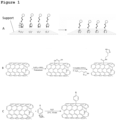
- the covalent attachment of the linker group to the support can proceed through different methods. Examples of such methods include silanization ( Fig. 1A ), amidation ( Fig. 1B ) and C-C coupling ( Fig. 1B and Fig. 1C ) .
- Silanization is the preferred method for metal oxide supports.
- amidation or C-C coupling are preferred methods.
- the carbon-based support can be activated by generation of -COOH functionalities on the surface and then reacted with amines to form amide bonds.
- direct C-C coupling can be achieved using diazonium chemistry. In this latter case, the linker can be an arene group.
- the linker group When the molecular modifier is attached on the support via silanization, the linker group is an -Si-O- group. When the molecular modifier is attached on the support via C-C coupling, the linker group is a C-C linkage, wherein the C-C linkage is preferably an alkylene or arylene group. When the molecular modifier is attached on the support via amidation, the linker group is an amide group.
- the catalyst for use in the present invention can involve i) a supported ionic liquid phase and ii) a further ionic liquid with basic groups.
- the catalyst can optionally contain bimetallic nanoparticles that are immobilised on the support.
- the further ionic liquid with basic groups is physisorbed to the support. That is, the further ionic liquid with basic groups is not covalently attached to the support.
- Examples of how ionic liquids can be physisorbed to a support include the stabilisation of an ionic liquid through the formation of non-covalent bonds such as dispersion, electrostatic, or van der Waals interactions.
- An example in the literature for the physisorption of ionic liquids to the support can be found in Offner-Marko, L.; Bordet, A.; Moos, G.; Tricard, S.; Rengshausen, S.; Chaudret, B.; Luska, K. L.; Leitner, W.
- An ionic liquid which is physisorbed to the support for use in the present invention can have the general structure: CH 3 - alkylene group - C 2 - alkylene group - D wherein C 2 is a cation, D is a basic group; and further comprising a counterion A 2 which is an anion.
- a catalyst comprises the following structure: Su - L - Sp - C 1 - R - D wherein:
- a catalyst comprises:
- the basic groups in structure I and in structure II can be the same, or they can be different.
- the alkylene group in R can be further substituted with an aryl group.
- R, R a and R b are each independently an alkylene group with 1-10 carbon atoms, more preferably 1-6 carbon atoms, most preferably 2-4 carbon atoms.
- the subscript x as used herein in the definition of the bimetallic nanoparticles denotes the relative, preferably average, atomic proportions of M 1 and M 2 in the bimetallic nanoparticles.
- the spacer (Sp) can be an alkylene group with 1-30 carbon atoms, optionally containing one or more groups selected from ether, ester, amido or arylene groups.
- the spacer Sp is an alkylene group with 2-10 carbon atoms, most preferably with 2-4 carbon atoms.
- the support (Su) can be selected from SiO 2 , Al 2 O 3 , TiO 2 , ZrO 2 , CaO 2 , ZnO 2 , MgO 2 , CeO 2 , graphene, graphitic material, activated charcoal or carbon nanotubes.
- the support is SiO 2 .
- the linker (L) can be an -Si-O- group, a C-C linkage or an amido group connected to the support.
- the linker is a -Si-O- group connected to the support.
- the spacer is preferably an alkylene group with 1-30 carbon atoms.
- a C-C linkage can be an alkylene or an arylene group.
- C 1 and C 2 can each independently be imidazolium, phosphonium, pyridinium, ammonium, or triazolium.
- C 1 and C 2 are the same, more preferably C 1 and C 2 are imidazolium.
- C 1 and C 2 being the same has the advantage that leaching of the ionic liquid is reduced.
- a 1 and A 2 can each independently be NTf 2 - , OTf - , CTf 3 - , halides, OAc - , HCO 2 - , HCO 3 - , CO 3 2- , NO 3 - , BF 4 - , PF 6 - , CH 3 SO 3 - , CF 3 SO - , perfluorobutanesulfonate, perfluorooctanoate, bis[(trifluoromethyl)sulfonyl]imide, bis[(pentafluoroethyl)sulfonyl]imide, tris(pentafluoroethyl)trifluorophosphate, imidazolate, dimethylphosphate, or diethylphosphate.
- a 1 and A 2 are the same, more preferably A 1 and A 2 are NTf 2 - .
- the basic group (D) can be a basic group containing one or more nitrogen atoms.
- Examples of such basic groups include an amine, an imine and an amidine.
- the basic group is an amine. More preferably, the amine is -NR 14 R 15 , wherein R 14 and R 15 are each independently H, methyl, ethyl, propyl, or butyl. Even more preferably R 14 and R 15 are ethyl.
- x is a number between 20 and 60. More preferably, x is a number between 25 and 50.
- catalysts described include their recyclability and re-usability.
- the catalysts described above can be used in a decarboxylation reaction.
- the catalysts described above can be used in a tandem reduction and decarboxylation reaction.
- the reduction is a hydrodeoxygenation.
- a method of decarboxylating a substrate according to formula IIIa, IIIb, IIIc, IIId, or IIIe comprises bringing the substrate into contact with a catalyst comprising an ionic liquid with a basic group, and heating under pressure in the presence of hydrogen wherein:
- the basic group in the catalyst for use in the above decarboxylation may be a group D as defined for the catalyst according to the present invention, e.g., in claim 4.
- the catalyst in the above method comprises bimetallic nanoparticles.
- the substrate is a substrate according to formula IIIa or IIIb , wherein:
- the inventors unexpectedly found that the presence of molecular hydrogen benefited the decarboxylation reaction using a catalyst comprising an ionic liquid.
- the presence of hydrogen is beneficial to achieve good mass balances.
- the decarboxylation mechanism is unusual, since H 2 from the gas phase is activated by the NPs and involved in the protodecarboxylation process. This results in a more effective decarboxylation reaction.
- a method of decarboxylation of a substrate according to formula IIIa, IIIb, IIIc, IIId, or IIIe comprises bringing the substrate into contact with a catalyst according to any of the previous embodiments, and heating under pressure in the presence of hydrogen wherein:
- the substrate is a substrate according to formula IIIa or IIIb, wherein:
- a method comprising decarboxylation of a substrate according to formula IIIa, IIIb, IIIc, IIId, or IIIe is described, wherein the method comprises bringing the substrate into contact with a catalyst comprising bimetallic nanoparticles and the following structure, and heating under pressure in the presence of hydrogen and an additive, wherein the additive is a base: Su - L - Sp - C 1 - R - CH 3
- the additive is triethylamine or dimethylaniline.
- the bimetallic nanoparticles that are immobilised on the support are represented by: M 1 x M 2 100-x wherein: M 1 is a 3d transition metal; M 2 is a noble metal; and x is a number between 1 and 99, preferably between 10 and 80.
- a method comprising a tandem decarboxylation and reduction of a substrate according to formula IIIa, IIIb, IIIc, IIId, or IIIe is described, wherein the method comprises bringing the substrate into contact with a catalyst comprising metal nanoparticles and an ionic liquid with a basic group, and is heated under pressure in the presence of hydrogen wherein:
- the basic group in the catalyst for use in the above tandem decarboxylation and reduction may be a group D as defined for the catalyst according to the present invention, e.g., in claim 4.
- the metal nanoparticles are bimetallic nanoparticles.
- the substrate is a substrate according to formula IIIa or IIIb, and wherein:
- the inventors unexpectedly found that the presence of hydrogen (H 2 ) benefited the tandem reduction and decarboxylation reaction using a catalyst with an ionic liquid. In this case, the effect of the presence of hydrogen is double.
- gaseous H 2 is activated by the metal NPs and involved in the protodecarboxylation process, accelerating the decarboxylation reaction.
- the activated hydrogen can be used in the reduction of the reducible moieties present in the substrate, leading to the tandem reduction/decarboxylation reactions.
- a method of a tandem decarboxylation and reduction of a substrate according to formula IIIa, IIIb, IIIc, IIId, or IIIe comprises bringing a substrate into contact with a catalyst according to any of the previous embodiments comprising metal nanoparticles, and heating under pressure in the presence of hydrogen wherein:
- the substrate is a substrate according to formula IIIa or IIIb , and wherein:
- the substrate can be heated at 80-250 °C.
- the substrate is heated at 125-200 °C, more preferably 150-200 °C.
- the pressure can be 10-100 bar.
- the pressure is 20-60 bar, most preferably 40-60 bar.
- a non-polar solvent a polar aprotic solvent, or a polar protic solvent
- a polar protic solvent for metal-oxide based catalysts prepared by silanization, it is preferable not to use water.
- the solvent is heptane, decalin, dioxane or mesitylene.
- the reduction is preferably a hydrodeoxygenation.
- tandem reduction and decarboxylation reactions provide a selective reduction of e.g., carbonyl and nitro functionalities, without aromatic ring hydrogenation.
- the invention includes:
- ILs ionic liquids
- SPs supported ionic liquid phases
- NPs-SILPs nanoparticles immobilised on SILPs
- the autoclave reaction procedure for the decarboxylation of 4-hydroxybenzoic acid is described.
- the amounts of substrate, catalyst or solvent and the reaction conditions can be varied.
- the overall procedure stays the same.
- the substrate (65 eq. with respect to metal, 0.221 mmol), catalyst (10 mg, containing 0.0034 mmol metal) and solvent (heptane, 0.5 mL) were weighed inside of a glovebox into the autoclave.
- the autoclave was closed, transferred out of the glovebox and pressurized with 50 bar hydrogen. After heating the autoclave at 175 °C under stirring (500 rpm) for 18 h, it was cooled down in a water bath and depressurized.
- the GC samples were prepared by adding acetone (250 mg) to the reaction mixture and taking a sample through a syringe with a filter. To the sample, tetradecane (internal standard, 20 mg) and acetone (200 mg) were added. For all amines, methanol/dioxane (1/1) was used as solvent for the GC samples.
- TEM and STEM Transmission and scanning transmission electron microscopy (TEM and STEM) were performed on a Hitachi HF2000 cold FEG operating at 200 kV at the Max-Planck-Institut für Kohlenforschung. Samples were prepared by depositing the powder onto a copper TEM grid with an amorphous carbon support film. Scanning electron microscopy with energy dispersive X-ray spectroscopy (SEM/EDS) was performed on a Hitachi S-3500N operating at 30kV at the Max-Planck-Institut für Kohlenforschung. Samples were prepared by depositing the powder onto a tape and flattening it out to obtain an even surface for analysis.
- SEM/EDS energy dispersive X-ray spectroscopy
- Yields were determined by gas chromatography (Shimadzu Nexis 2030) equipped with a FID detector using the methods described in the table below. Method 1 was used for substrate 1 and 17. Method 2 was used for substrate 9. Method 3 was used for substrates 6 and 12. Method 4 was used for substrate 16 and method 5 was used for substrates 1-5, 7, 8, 10, 11, 13-15.
- Example 1 Method of preparing example catalyst comprising i) SILP A , ii) ionic liquid with basic group and iii) bimetallic nanoparticles Fe 25 Ru 75
- SILP A is composed of [1-butyl-3-(3-triethoxysilylpropyl)imidazolium] chemisorbed on SiO 2 .
- the new multifunctional catalyst Fe 25 Ru 75 -SILP A + IL-NEt 2
- the new multifunctional catalyst was assembled in a versatile manner through physisorption of the basic ionic liquid 1-[2-(diethylamino)ethyl]-3-butylimidazolium bis(trifluoromethane)sulfonamide (IL-NEt 2 ) on Fe 25 Ru 75 -SILP A material.
- the physisorption of the amine functionalized ionic liquid [1-butyl-3-(2-(diethylamino)ethyl)-imidazolium]NTf 2 (IL-NEt 2 ) to prepare the bifunctional catalyst (Fe 25 Ru 75 -SILP A + IL-NEt 2 ) was achieved by stirring a suspension of Fe 25 Ru 75 -SILP A and IL-NEt 2 in acetone at room temperature.
- Step A Synthesis of 1-[2-(diethylamino)ethyl]-3-butylimidazolium bromide hydrobromide
- 2-Bromo-N,N-diethylethylamine hydrobromide (7.26 g, 27.8 mmol) was suspended in 100 mL dry acetonitrile and heated at 80 °C until complete dissolution, giving a light yellow solution. Under Ar, 1-butylimidazole (3.6 mL, 29 mmol) was added slowly to the mixture under stirring and the reaction medium was refluxed at 150 °C for 48 h. After this period, the reaction was left to cool down to room temperature, the solvent was evaporated and the resulting yellow paste was washed with dry acetone (4 x 10 mL) and dry diethylether (4 x 10 mL).
- Step B Synthesis of 1-[2-(diethylamino)ethyl]-3-butylimidazolium bis(trifluoromethane) sulfonamide
- LiNTf 2 (8.64 g, 30.09 mmol) was added to the solution, along with additional 10 mL of ethanol to rinse, and the resulting solution was stirred under Ar at room temperature for 15 h. Afterwards, the solvent was evaporated and the resulting pale orange residue was dissolved in DCM (40 mL). The solution was filtered through celite (previously washed with 2 x 10 mL DCM). Additional 20 mL of DCM were added to rinse the flask. Due to the remaining of a small amount of a whitish thin solid in suspension, the solution was filtered through celite a second time, giving a clear light-yellow solution. Finally, the solvent was removed from the recovered solution.
- the physisorption of IL-NEt 2 onto Fe 25 Ru 75 -SILP A was achieved through the following: A suspension of Fe 25 Ru 75 -SILP A (187.9 mg, 0.0742 mmol) was prepared in an acetone solution (3 mL) of IL-NEt 2 (109.6 mg, 0.217 mmol, 2.9 equiv.). The mixture, prepared in a glove box, was stirred for 1 h at room temperature, after which it was taken out of the glove box and the solvent was evaporated in a Schlenk line. Finally, the catalyst was dried under vacuum for 2 h at room temperature.
- Example 2 Catalytic performance of the bifunctional catalyst Fe 25 Ru 75 -SILP A + IL-NEt 2 and further reference materials in the decarboxylation of 4-hydroxybenzoic acid (1) as model reaction
- Substrates 4-6 with electron donating or withdrawing groups in position 3 were also quantitatively converted to the corresponding phenols (Table 5, Entry 4-6). Similar results were obtained with salicylic acid (7), in which the hydroxyl functionality is in ortho position. In sharp contrast, no conversion was observed when using 3-hydroxybenzoic acid (8) as substrate, suggesting that mesomeric effects are important to observe decarboxylation activity with Fe 25 Ru 75 -SILP A +IL-NEt 2 . Notably, also anthranilic acid (9) was decarboxylated effectively to give aniline in quantitative yield (Table 3, Entry 9), showing that the decarboxylation activity of Fe 25 Ru 75 -SILP A +IL-NEt 2 is not limited to hydroxybenzoic acid derivatives.
- 10a, 6a and 17a are building blocks used in the pharmaceutical industry for the synthesis of anti-tuberculose drugs, anticancer agents and fungicides, respectively.
- 14a is widely used in the production of non-ionic surfactants.
- the substrate (33 eq. with respect to metal, 0.11 mmol), catalyst (20 mg, containing 0.0068 mmol metal) and solvent (mesitylene, 0.5 mL) were weighed inside of a glovebox into the autoclave.
- the autoclave was closed, transferred out of the glovebox and pressurized with 50 bar hydrogen. After heating the autoclave under stirring (500 rpm) to 200 °C for 6 h, it was cooled down in a water bath and depressurised. The glass insert was taken out and transferred to a Schlenk tube.
- the tube was evaporated carefully until the first bubbles from the evaporating solvent show up. Then it was backfilled with argon. This procedure was performed five times and the Schlenk tube with the reaction mixture was transferred into the glovebox. Mesitylene (1 mL) was added to the reaction mixture to solute the product. The supernatant was taken out with a syringe to prepare a GC sample and the catalyst was washed three times with fresh mesitylene. Since the substrate is not soluble in mesitylene, it remained in the autoclave vial. To the washed catalyst were added new substrate (the amount, which was converted in the cycle before) and solvent. The autoclave was closed, pressurised and heated like before to start the new cycle.
- Tetradecane (internal standard, 20 mg) and acetone (200 mg) were added to the recovered supernatant to prepare the GC sample.
Landscapes
- Chemical & Material Sciences (AREA)
- Organic Chemistry (AREA)
- Chemical Kinetics & Catalysis (AREA)
- Engineering & Computer Science (AREA)
- Materials Engineering (AREA)
- Organic Low-Molecular-Weight Compounds And Preparation Thereof (AREA)
- Low-Molecular Organic Synthesis Reactions Using Catalysts (AREA)
Abstract
The present invention is directed towards catalysts comprising ionic liquids, their use in decarboxylation reactions and their use in tandem reduction and decarboxylation reactions. A method employing such catalysts to access phenol and aniline derivatives is also claimed. The catalysts and methods of the present invention improve upon the disadvantages associated with literature decarboxylation reactions.
Description
- The present invention is directed towards a catalyst, its use in decarboxylation reactions and its use in tandem reduction/decarboxylation reactions.
- Phenol and its derivatives (e.g., alkylphenols and aminophenols) are important compounds that find widespread application in all areas of the chemical industry. More than 99% of the world's phenol production arises from the cumene process where the petrochemical feedstocks benzene and propene are converted into phenol and acetone. Alkylphenols are typically produced through the direct alkylation of phenol derivates with olefins. A disadvantage of this process is that it suffers from a limited substrate scope. Alternatively, a direct alkylation of phenol through a Friedel-Craft alkylation can be utilised. Disadvantages of this process include harsh conditions and poor chemo- and regioselectivity. Similarly, the selective amination of phenol to produce aminophenols remains a challenge.
- Therefore, alternative methods to synthesise phenols are sought-after. For example, the catalytic cleavage of lignin-derived diaryl ethers and lignin model compounds can lead to alkylphenols, but current catalytic systems still suffer from low selectivity, narrow substrate scope, low catalyst stability or poor recyclability.
- In addition to phenols and aminophenols, aniline and its alkylated derivatives are widely used in the chemical industry (3.8 million tons in 2008) as a precursor of polyurethanes, rubber additives, dyes and pigments, agricultural chemicals and pharmaceuticals. Aniline, as well as phenol, is commercially produced mostly from the oil-based benzene. The main production route includes nitration of benzene under highly concentrated sulphuric and nitric acid conditions and further catalytic hydrogenation. Derivatization of aniline to alkylanilines is also of commercial relevance and presents different drawbacks. Friedel-Crafts alkylation of aniline under high temperatures and pressures affords ortho alkylanilines and the direct amination of arenes requires multiple reaction steps and harsh reaction conditions. Derivatization of aniline to produce alkylanilines has been the focus of research since long date and continues to be a field of development. Aniline production from anthranilic acid, which can be biosynthesized, is attractive but remains a poorly explored pathway, restricted to strongly acidic conditions.
- A possible alternative method of accessing phenols and anilines involves the selective decarboxylation of benzoic acid derivatives. However, aromatic decarboxylation reactions are generally difficult to achieve. This is partly due to unstable intermediates that are formed, resulting in methods requiring harsh, forcing conditions. Conventional methods described in the literature include heating in the presence of a strong acid, heating with a copper catalyst and quinoline, and mercury-mediated decarboxylation reactions (limited by the toxicity of the organomercury(II) compounds). Developments to these procedures will be briefly outlined below.
- Decarboxylation of aromatic carboxylic acids is typically performed using molecular transition-metal catalysts based on metals such as Cu, Ag, Au, Pd or Rh in the presence of additives.
- J.S. Dickstein, C.A. Mulrooney, E.M. O'Brien, B.J. Morgan and M.C. Kozlowski ("Development of a Catalytic Aromatic Decarboxylation Reaction", Org. Lett., Vol. 9, No. 13, 2007) describe a palladium-catalysed decarboxylation reaction. Drawbacks of these reaction conditions include that they are only reported for ortho-substituted aromatic carboxylic acids, and that as much as 20 mol% of expensive molecular Pd(O2CCF3)2 catalyst are required, which cannot be reused nor recovered through recycling experiments.
- L.J. Gooßen, C. Linder, N. Rodriguez, P.P. Lange and Andreas Fromm ("Silver-catalysed protodecarboxylation of carboxylic acids", Chem. Commun., 2009, 7173-7175) describe silver-based catalyst systems to promote the protodecarboxylation of carboxylic acids. Drawbacks include that this method requires the presence of an ortho substituent, high amounts of catalyst (10 mol%), high quantities of additive (15 mol%), results in side-products or impurities from protodemetallation and given the need of molecular catalyst and additives, the reaction is not suited for recyclability of the catalyst.
- S. Seo, J.B. Taylor and M.F. Greaney ("Protodecarboxylation of benzoic acids under radical conditions", Chem. Commun., 2012, 48, 8270-8272) describe oxidative radical conditions (using an oxidant and silver) to decarboxylate acids in acetonitrile. Drawbacks include the use of high amounts of catalyst and high amounts of additive, which are both non-recyclable.
- In summary, traditional methods of aromatic decarboxylation reactions are coupled with significant drawbacks, including the need for high amounts of additives, narrow range of functional group tolerance, high amounts of catalyst, catalysts are not recyclable, as well as unwanted side-reactions.
- Another paper dealing with decarboxylation reactions is ACS Catal. 2021, 11, 14625-14634 (Liu and Lercher et al.; "On the Mechanism of Catalytic Decarboxylation of Carboxylic Acids on Carbon-Supported Palladium Hydride"). This discusses the use of a catalyst pre-treated with hydrogen for the decarboxylation of arylaliphatic acids. Drawbacks include the narrow substrate scope and lack of recyclability of the catalyst.
- To avoid the disadvantages associated with past methods, the present inventors have accessed phenols and anilines through the selective decarboxylation of benzoic acid derivatives, including substrates that can be obtained from lignocellulosic biomass (e.g. through oxidative depolymerisation of lignin, biosynthesis, etc.), such as 4-hydroxybenzoic acid, vanillic acid and syringic acid. Furthermore, the present inventors have obtained alkylphenols and aminophenols via a tandem combination of selective decarboxylation reactions with reduction reactions (including, e.g., hydrogenation/ hydrodeoxygenation) of various substrates, including but not limited to easily accessible acyl, formyl, and nitro-functionalised hydroxybenzoic acid derivatives.
- It is an object of the present invention to access phenol and aniline derivatives and to improve upon the disadvantages associated with conventional methods. In particular, the present invention allows for the production of phenol and aniline derivatives with good yields, good selectivity and good substrate scope, whilst the catalyst according to the present invention is stable and recyclable. Furthermore, only low amounts of catalyst (typically 1-2 mol%) are necessary.
- The above object is solved by a catalyst comprising supported ionic liquids and ionic liquids with a basic group, processes incorporating such a catalyst to access phenol and aniline derivatives and a catalyst for use in decarboxylation and/or tandem decarboxylation/reduction reactions as defined in
claims - It is noted that in the context of decarboxylation reactions, to the best of the inventors' knowledge, ionic liquids have only been described on two occasions:
- A. Sharma, R. Kumar, N. Sharma, V. Kumar, A.K. Sinha; Adv. Synth. Catal. 2008, 350, 2910-2920: "Unique Versatility of Ionic Liquids as Clean Decarboxylation Catalyst Cum Solvent: A Metal- and Quinoline-Free Paradigm towards Synthesis of Indoles, Styrenes, Stilbenes and Arene Derivatives under Microwave Irradiation in Aqueous Conditions".
- D. Liu, J. Sun, B.A. Simmons, S. Singh; ACS Sustainable Chem. Eng. 2018, 6, 7232-7238: "N-Heterocyclic Carbene Promoted Decarboxylation of Lignin-Derived Aromatic Acids".
- In both cases only moderate to poor yields were obtained, the reactions were limited to narrow substrate scopes of aromatic carboxylic acids and the decarboxylation reactions are metal-free and hydrogen-free.
- By employing a catalyst according to the present invention, the inventors have improved upon the drawbacks associated with traditional methods of aromatic decarboxylation reactions.
-
-
Figure 1 : Overview of methods for covalent attachment of a linker group to a support. Silanization (Fig. 1A ), amidation (Fig. 1B ) and C-C coupling (Fig. 1B and Fig. 1C ). -
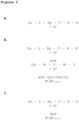
Figure 2 : Overview of catalysts according to the present invention. -
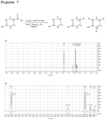
Figure 3 : Overview of method of decarboxylation reaction according to the invention -
Figure 4 : Overview of method of tandem reduction and decarboxylation reaction according to the invention. -
Figure 5 : Measurements taken for the Fe25Ru75-SILPA + IL-NEt2 catalyst.Figure 5a is a representation/illustration of the bimetallic catalyst.Figure 5b is a STEM-HAADF image.Figure 5c is a STEM-HAADF-EDS elemental mapping. -
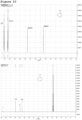
Figure 6 :1 H NMR (400 MHz, acetone-d4) spectra of a) phenol, b) product, isolated from applying phenol to decarboxylation conditions under D2, and c) product, isolated from decarboxylation of 4-hydroxybenzoic acid under D2. -
Figure 7 : NMR (400 MHz, acetone-d6) spectra of a 1 h reaction of 4-hydroxybenzoic acid under 20 bar D2 at 200 °C. a) 1H NMR spectrum, b) zoom to the aromatic area of a), c) 2H NMR spectrum, d) 13C NMR spectrum. -
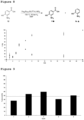
Figure 8 : Time profile of reduction and decarboxylation of 3-nitro-4-hydroxybenzoic acid (12) using Fe25Ru75-SILPA+IL-NEt2. Conditions: Catalyst (10 mg), substrate: 24.2 mg (30 eq. related to amine, 65 eq. related to total metal loading), 0.5 mL DMF, 50 bar H2, 150 °C, 500 rpm. Y = Yield, determined by GD-FID using tetradecane as internal standard. Error bars represent the standard deviation for two experiments. -
Figure 9 : Catalyst recycling, decarboxylation of 4-hydroxybenzoic acid (1). Conditions: Fe25Ru75-SILPA+IL-NEt2 (20 mg), substrate: 30.6 mg (15 eq. related to amine), 1 mL mesitylene, 50 bar H2, 200 °C, 6 h, 500 rpm. Product yields determined by GD-FID using tetradecane as internal standard. Selectivity toward 1a >99%. -
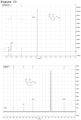
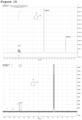
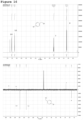
Figures 10-17 : NMR characterisation associated to isolated products.-
Figure 10 : Phenol (1a)- 1H NMR (400 MHz, Methanol-d 4) δ (ppm) = 7.11 - 7.02 (m, 2H), 6.74 - 6.64 (m, 3H).
- 13C{1H} NMR (100 MHz, Methanol-d 4) δ (ppm) = 157.23 (1C), 129.19 (2C), 119.26 (1C), 114.98 (2C).
-
Figure 11 : Product, isolated from application of phenol to decarboxylation conditions under D2- 1H NMR (400 MHz, Methanol-d 4) δ (ppm) = 7.14 (s, 2H), 6.85 - 6.65 (m, 1H).
- 13C{1H} NMR (100 MHz, Methanol-d 4) δ (ppm) = 158.34 (1C), 130.27 (2C), 120.44 (1C), 115.91 (2C).
-
Figure 12 : Product, isolated from decarboxylation of 4-hydroxybenzoic acid under D2- 1H NMR (400 MHz, Methanol-d 4) δ (ppm) = 7.14 (s, 2H) .
- 13C NMR (100 MHz, Methanol-d 4) δ (ppm) = 158.34 (1C), 130.16 (2C), 120.18 (1C), 115.90 (2C).
-
Figure 13 :2 ,6-Dimethoxyphenol (3a)- 1H NMR (400 MHz, Chloroform-d) δ (ppm) = 6.86 - 6.72 (m, 1H), 6.57 (d, J = 8.3 Hz, 2H), 5.49 (s, 1H), 3.87 (s, 6H).
- 13C{1H} NMR (100 MHz, Chloroform-d) δ (ppm) = 147.25 (2C), 134.85 (1C), 119.06 (1C), 104.89 (2C), 56.26 (2C).
-
Figure 14 : 2-Ethylphenol (10a)- 1H NMR (400 MHz, Chloroform-d) δ (ppm) = 7.15 - 7.01 (m, 2H), 6.89 - 6.82 (m, 1H), 6.73 (d, J = 8.0 Hz, 1H), 4.61 (s, 1H), 2.62 (q, J = 7.6 Hz, 2H), 1.22 (t, J = 7.6 Hz, 3H).
- 13C (APT) NMR (100 MHz, Chloroform-d) δ (ppm) = 153.46 (1C), 130.01 (1C), 129.48 (1C), 127.19 (1C), 21.09 (1C), 115.27 (1C), 23.09 (1C), 14.16 (1C).
-
Figure 15 : 2-Aminophenol (6a)- 1H NMR (400 MHz, Methanol-d4) δ (ppm) = 6.66 - 6.47 (m, 4H).
- 13C{1H} NMR (100 MHz, Methanol-d4) δ (ppm) = 145.38 (1C), 134.84 (1C), 119.84 (1C), 119.05 (1C), 116.34 (1C), 114.37 (1C).
-
Figure 16 : 4-Ethylphenol (13a)- 1H NMR (400 MHz, Chloroform-d) δ (ppm) = 7.05 (d, J = 8.5 Hz, 2H), 6.74 (d, J = 8.5 Hz, 2H), 2.56 (q, J = 7.6 Hz, 2H), 1.18 (t, J = 7.6 Hz, 3H).
- 13C (APT) NMR (100 MHz, Chloroform-d) δ (ppm) = 153.38 (1C), 136.59 (1C), 128.92 (2C), 115.10 (2C), 27.99 (1C), 15.90 (1C).
-
Figure 17 : 4-Octylphenol (14a)- 1H NMR (400 MHz, Chloroform-d) δ (ppm) = 7.01 (d, J = 8.3 Hz, 2H), 6.72 (d, J = 8.4 Hz, 2H), 2.55 - 2.40 (m, 2H), 1.59 - 1.43 (m, 2H), 1.37 - 1.13 (m, 10H), 0.85 (t, J = 6.8 Hz, 3H).
- 13C{1H} NMR (100 MHz, Chloroform-d) δ (ppm) = 153.35 (1C), 135.22 (1C), 129.41 (2C), 115.00 (2C), 26.27 (1C), 35.04 (1C), 31.88 (1C), 31.73 (1C), 29.47 (1C), 29.36 (1C), 22.66 (1C), 14.09 (1C).
-
- Embodiments according to the present invention will now be described in more detail.
- As used herein, an "ionic liquid" (IL) is a salt in the liquid state at or below 100 °C at atmospheric pressure, i.e., the pure IL is a liquid and contains a mixture of cations and anions in these conditions. The ionic liquids according to the present invention are defined by reference to the structures below. Preferably, the ionic liquids according to the invention are as described in
claim 1. - As used herein, the term "support" (Su) refers to a solid material on which the components of the catalyst are immobilised.
- As used herein, the term "linker group" (L) refers to a molecular functionality that is responsible for the attachment of the molecular modifier to the support.
- As used herein, the term "spacer group" (Sp) refers to a molecular group that provides separation and connection between the linker and the cation.
- As used herein, the term "cation" (C) refers to a positively charged molecular group that is part of the IL. That is, (C) (and likewise C1 and C2) as used in the present invention refers to a cationic group covalently bonded within the IL.
- As used herein, the term "anion" (A) refers to a negatively charged molecular group that is part of the IL. The anion (A) (and likewise A1 and A2), which may be one or more anions, is the counterion of the cation (C). That is, the one or more anions can compensate for the positive charge(s) of cation (C), i.e., the cationic group within the structure of the IL.
- As used herein, the term "bimetallic nanoparticles" refers to nanoparticles comprised of two different metals.
- As used herein, the term "3d transition metal" refers to metals from the first transition series or 3d series, including Sc, Ti, V, Cr, Mn, Fe, Co, Ni, Cu and Zn.
- As used herein, the term "noble metal" refers to metals that have outstanding resistance to oxidation, including Rh, Ru, Pd, Pt, Ag, Re, Os, Ir and Au.
- As used herein, the term "tandem" refers to both a decarboxylation and a reduction reaction taking place on the same substrate.
- As used herein, the term "supported ionic liquid phase" (SILP) refers to an ionic liquid structure attached to a support.
- In the SILP, a molecular modifier (ionic liquid-like structure) is chemisorbed on a support. In other words, the molecular modifier is covalently attached to the support.
- The supported ionic liquid phase for use in the present invention can have the general structure:
Su - L - Sp - C1 - alkylene group - CH3 or D
wherein Su is a support, L is a linker group, Sp is a spacer group, C1 is a cation, D is a basic group, and further comprising a counterion A1 which is an anion. The catalyst can optionally contain bimetallic nanoparticles that are immobilised on the support. The covalent attachment of the linker group to the support can proceed through different methods. Examples of such methods include silanization (Fig. 1A ), amidation (Fig. 1B ) and C-C coupling (Fig. 1B and Fig. 1C ) . - Silanization is the preferred method for metal oxide supports. For chemisorption of molecular modifiers on carbon-based support materials, amidation or C-C coupling are preferred methods. The carbon-based support can be activated by generation of -COOH functionalities on the surface and then reacted with amines to form amide bonds. Alternatively, direct C-C coupling can be achieved using diazonium chemistry. In this latter case, the linker can be an arene group.
- When the molecular modifier is attached on the support via silanization, the linker group is an -Si-O- group. When the molecular modifier is attached on the support via C-C coupling, the linker group is a C-C linkage, wherein the C-C linkage is preferably an alkylene or arylene group. When the molecular modifier is attached on the support via amidation, the linker group is an amide group.
- The catalyst for use in the present invention can involve i) a supported ionic liquid phase and ii) a further ionic liquid with basic groups. The catalyst can optionally contain bimetallic nanoparticles that are immobilised on the support.
- The further ionic liquid with basic groups is physisorbed to the support. That is, the further ionic liquid with basic groups is not covalently attached to the support. Examples of how ionic liquids can be physisorbed to a support include the stabilisation of an ionic liquid through the formation of non-covalent bonds such as dispersion, electrostatic, or van der Waals interactions. An example in the literature for the physisorption of ionic liquids to the support can be found in Offner-Marko, L.; Bordet, A.; Moos, G.; Tricard, S.; Rengshausen, S.; Chaudret, B.; Luska, K. L.; Leitner, W. "Bimetallic Nanoparticles in Supported Ionic Liquid Phases as Multifunctional Catalysts for the Selective Hydrodeoxygenation of Aromatic Substrates" Angew. Chemie - Int. Ed. 2018, 57 (39), 12721-12726.
- An ionic liquid which is physisorbed to the support for use in the present invention can have the general structure:
CH3 - alkylene group - C2 - alkylene group - D
wherein C2 is a cation, D is a basic group; and further comprising a counterion A2 which is an anion. - Catalysts including ionic liquids have recently attracted attention in the use of hydrogenation reactions and are generally described in the following papers:
- Luska, K. L.; Julis, J.; Stavitski, E.; Zakharov, D. N.; Adams, A.; Leitner, W. "Bifunctional Nanoparticle-SILP Catalysts (NPs@SILP) for the Selective Deoxygenation of Biomass Substrates" Chem. Sci. 2014, 5, 4895-4905. This paper describes the synthesis of a catalyst comprised of Ru nanoparticles (NPs) immobilized on an acid-functionalized SILP and its use for deoxygenation reactions.
- Luska, K. L.; Bordet, A.; Tricard, S.; Sinev, I.; Grünert, W.; Chaudret, B.; Leitner, W. "Enhancing the Catalytic Properties of Ruthenium Nanoparticle-SILP Catalysts by Dilution with Iron" ACS Catal. 2016, 6, 3719-3726. This article describes the preparation of bimetallic FeRu NPs supported on a SILP without acid or basic function and its use for hydrogenation reactions.
- Offner-Marko, L.; Bordet, A.; Moos, G.; Tricard, S.; Rengshausen, S.; Chaudret, B.; Luska, K. L.; Leitner, W. "Bimetallic Nanoparticles in Supported Ionic Liquid Phases as Multifunctional Catalysts for the Selective Hydrodeoxygenation of Aromatic Substrates" Angew. Chemie - Int. Ed. 2018, 57, 12721-12726. This paper describes the synthesis of FeRu NPs supported on an acid-functionalized SILP and its use for hydrodeoxygenation reactions.
- Rengshausen, S.; Etscheidt, F.; Großkurth, J.; Luska, K.; Bordet, A.; Leitner, W. "Catalytic Hydrogenolysis of Substituted Diaryl Ethers by Using Ruthenium Nanoparticles on an Acidic Supported Ionic Liquid Phase (Ru@SILP-SO3H)" . This article describes the synthesis of Ru NPs immobilized on an acid-functionalized SILP and its use for hydrogenolysis reactions.
- Bordet, A.; Moos, G.; Welsh, C.; Licence, P.; Luska, K. L.; Leitner, W. "Molecular Control of the Catalytic Properties of Rhodium Nanoparticles in Supported Ionic Liquid Phase (SILP) Systems" ACS Catal. 2020, 10, 13904-13912. Moos, G.; Emondts, M.; Bordet, A.; Leitner, W. "Selective Hydrogenation and Hydrodeoxygenation of Aromatic Ketones to Cyclohexane Derivatives Using a Rh@SILP Catalyst" Angew. Chemie Int. Ed. 2020, 59, 11977-11983. These papers report the preparation of Rh NPs immobilized on different SILPs and its use for hydrogenation and hydrodeoxygenation reactions.
- Goclik, L.; Offner-Marko, L.; Bordet, A.; Leitner, W. "Selective Hydrodeoxygenation of Hydroxyacetophenones to Ethyl-Substituted Phenol Derivatives Using a FeRu@SILP Catalyst" Chem. Commun. 2020, 56, 9509-9512. Goclik, L.; Walschus, H.; Bordet, A.; Leitner, W. "Selective Hydrodeoxygenation of Acetophenone Derivatives Using a Fe25Ru75@SILP Catalyst: A Practical Approach to the Synthesis of Alkyl Phenols and Anilines" Green Chem. 2022, 24, 2937-2945. These papers report the use of FeRu NPs on a SILP without basic or acid functions for hydrodeoxygenation reactions.
- Kacem, S.; Qiao, Y.; Wirtz, C.; Theyssen, N.; Bordet, A.; Leitner, W. "Supercritical Carbon Dioxide as Reaction Medium for Selective Hydrogenation of Fluorinated Arenes" Green Chem. 2022, 24, 8671-8676. This paper describes the preparation of Rh NPs immobilized on silica modified with decyl chains and its use for hydrogenation reactions.
- Rengshausen, S.; Van Stappen, C.; Levin, N.; Tricard, S.; Luska, K. L.; DeBeer, S.; Chaudret, B.; Bordet, A.; Leitner, W. "Organometallic Synthesis of Bimetallic Cobalt-Rhodium Nanoparticles in Supported Ionic Liquid Phases (Co x Rh 100-x @SILP) as Catalysts for the Selective Hydrogenation of Multifunctional Aromatic Substrates" Small 2021, 17, 2006683. This paper reports the use of CoRh NPs on a SILP without basic or acid functions and its use for hydrogenation reactions.
- Sisodiya-Amrute, S.; Van Stappen, C.; Rengshausen, S.; Han, C.; Sodreau, A.; Weidenthaler, C.; Tricard, S.; DeBeer, S.; Chaudret, B.; Bordet, A.; Leitner, W. "Bimetallic MxRu100-x Nanoparticles (M = Fe, Co) on Supported Ionic Liquid Phases (MxRu100-x@SILP) as Hydrogenation Catalysts: Influence of M and M:Ru Ratio on Activity and Selectivity" J. Catal. 2022, 407, 141-148. This paper reports the use of FeRu and CoRu NPs on a SILP without basic or acid functions for hydrogenation reactions.
- Louis Anandaraj, S. J.; Kang, L.; DeBeer, S.; Bordet, A.; Leitner, W. "Catalytic Hydrogenation of . This paper reports the use of Ru NPs on a SILP without basic or acid functions for hydrogenation reactions.
- However, to the best of the inventors' knowledge, such catalysts have not been employed in decarboxylation reactions.
- According to an embodiment of the present invention (
Figure 2A ), a catalyst comprises the following structure:
Su - L - Sp - C1 - R - D
wherein: - Su is a support;
- L is a linker group;
- Sp is a spacer group;
- C1 is a cation;
- R is an alkylene group with 1-20 carbon atoms, optionally containing one or more groups selected from ether, ester, amido or arylene groups, and/or wherein the alkylene group is optionally substituted with an aryl group; and D is a basic group;
- wherein the structure further comprises a counterion A1, which is an anion.
- The definitions of the following embodiment equally apply to the above.
- According to a further embodiment of the present invention (
Figure 2B ), a catalyst comprises: - (i) the following structure I:
Su - L - Sp - C1 - R - R'
wherein:- Su is a support;
- L is a linker group;
- Sp is a spacer group;
- C1 is a cation;
- R is an alkylene group with 1-20 carbon atoms, optionally containing one or more groups selected from ether, ester, amido or arylene groups; and R' is -CH3 or D, wherein D is a basic group;
- wherein structure I further comprises a counterion A1 which is an anion;
and
- (ii) the following structure II:
CH3 - Ra - C2 - Rb - D
- wherein Ra and Rb are each independently an alkylene group with 1-20 carbon atoms, optionally containing one or more groups selected from ether, ester, amido or arylene groups; C2 is a cation; and D is a basic group;
- wherein structure II further comprises a counterion A2 which is an anion.
- The basic groups in structure I and in structure II can be the same, or they can be different.
- The alkylene group in R can be further substituted with an aryl group.
- In a preferred embodiment, R, Ra and Rb are each independently an alkylene group with 1-10 carbon atoms, more preferably 1-6 carbon atoms, most preferably 2-4 carbon atoms.
- In a preferred embodiment, the catalyst further comprises bimetallic nanoparticles that are immobilised on the support Su, wherein the bimetallic nanoparticles are represented by:
M1 xM2 100-x
wherein: - M1 is a 3d transition metal;
- M2 is a noble metal; and
- x is a number between 1 and 99, preferably between 10 and 80.
- As will be appreciated, the subscript x as used herein in the definition of the bimetallic nanoparticles denotes the relative, preferably average, atomic proportions of M1 and M2 in the bimetallic nanoparticles.
- The spacer (Sp) can be an alkylene group with 1-30 carbon atoms, optionally containing one or more groups selected from ether, ester, amido or arylene groups. Preferably, the spacer Sp is an alkylene group with 2-10 carbon atoms, most preferably with 2-4 carbon atoms.
- The support (Su) can be selected from SiO2, Al2O3, TiO2, ZrO2, CaO2, ZnO2, MgO2, CeO2, graphene, graphitic material, activated charcoal or carbon nanotubes. Preferably, the support is SiO2.
- The linker (L) can be an -Si-O- group, a C-C linkage or an amido group connected to the support. Preferably, the linker is a -Si-O- group connected to the support. When the linker is an -Si-O- group, the spacer is preferably an alkylene group with 1-30 carbon atoms. A C-C linkage can be an alkylene or an arylene group.
- C1 and C2 can each independently be imidazolium, phosphonium, pyridinium, ammonium, or triazolium. Preferably C1 and C2 are the same, more preferably C1 and C2 are imidazolium. C1 and C2 being the same has the advantage that leaching of the ionic liquid is reduced.
- A1 and A2 can each independently be NTf2 -, OTf-, CTf3 -, halides, OAc-, HCO2 -, HCO3 -, CO3 2-, NO3 -, BF4 -, PF6 -, CH3SO3 -, CF3SO-, perfluorobutanesulfonate, perfluorooctanoate, bis[(trifluoromethyl)sulfonyl]imide, bis[(pentafluoroethyl)sulfonyl]imide, tris(pentafluoroethyl)trifluorophosphate, imidazolate, dimethylphosphate, or diethylphosphate. Preferably A1 and A2 are the same, more preferably A1 and A2 are NTf2 -.
- The basic group (D) can be a basic group containing one or more nitrogen atoms. Examples of such basic groups include an amine, an imine and an amidine. Preferably, the basic group is an amine. More preferably, the amine is -NR14R15, wherein R14 and R15 are each independently H, methyl, ethyl, propyl, or butyl. Even more preferably R14 and R15 are ethyl.
- M1 can be Mn, Fe, Co, Ni or Cu. M2 can be Rh, Ru, Pd or Pt. Preferably, M1 is Fe and M2 is Ru.
- In a preferred embodiment, x is a number between 20 and 60. More preferably, x is a number between 25 and 50.
- In a preferred embodiment according to the present invention:
- when M1 is Fe and M2 is Ru, x is a number between 1 and 40, preferably a number between 10 and 25, most preferably wherein x is 25;
- when M1 is Co and M2 is Ru, x is a number between 50 and 70;
- when M1 is Co and M2 is Rh, x is a number between 30 and 80.
- The above definitions and preferred embodiments, equally apply to a catalyst according to another embodiment (
Figure 2C ), wherein the catalyst comprises: - (i) the following structure:
Su - L - Sp - C1 - R - D
wherein:- Su is a support;
- L is a linker group;
- Sp is a spacer group;
- C1 is a cation; and
- R is an alkylene group with 1-20 carbon atoms,
- optionally containing one or more groups selected from ether, ester, amido or arylene groups; and
- D is a basic group;
- wherein the structure further comprises a counterion A1 which is an anion;
and
- (ii) bimetallic nanoparticles immobilised on the support.
- The catalysts according to the present invention are illustrated in
Figures 2A-2C , wherein Su, L, Sp, C1, C2, A1, A2, R, D, R', Ra, Rb, M1, M2, and x have the same meanings as described above. - Advantages of the catalysts described include their recyclability and re-usability.
- In another embodiment according to the present invention, the catalysts described above can be used in a decarboxylation reaction.
- In yet another embodiment according to the present invention, the catalysts described above can be used in a tandem reduction and decarboxylation reaction. Preferably, the reduction is a hydrodeoxygenation.
- In the following embodiments, methods of decarboxylating substrates are described (
Figure 3 ). These methods result in the production of phenols and/or anilines. - According to an embodiment, a method of decarboxylating a substrate according to formula IIIa, IIIb, IIIc, IIId, or IIIe, comprises bringing the substrate into contact with a catalyst comprising an ionic liquid with a basic group, and heating under pressure in the presence of hydrogen


- E is -OH, -NH2 or -NR13 2, wherein R13 is an alkyl group with 1-6 carbon atoms, preferably R13 is 1;
preferably wherein E is -OH, or -NH2; - R1 to R12 are each independently -H, -OMe, -Me, -F, -NH2, -Cl, -Br, -I, -CF3, -CHO, -NO2, -NR16 2, -CN, - OH, or a linear or branched alkyl group, wherein:
- R16 is an alkyl group with 1-30 carbon atoms, preferably 1-10 carbon atoms;
- the linear or branched alkyl group is optionally substituted with at least one substituent selected from the group consisting of - OMe, -Me, -F, -NH2, -Cl, -Br, -I, -CF3, -CHO, -NO2, -NR16 2, -CN, -OH; and/or
- the linear or branched alkyl group contains at least one group selected from C-C double bond, C-C triple bond, keto group, ester group, ether group or amido group;
- preferably R1 to R12 are each independently -H, -OMe, -Me, -F, -NH2, -OH, -NO2, -COCH3, -CHO, or - CO-(CH2)6-CH3.
- The basic group in the catalyst for use in the above decarboxylation may be a group D as defined for the catalyst according to the present invention, e.g., in
claim 4. In a preferred embodiment, the catalyst in the above method comprises bimetallic nanoparticles. - In a preferred embodiment, the substrate is a substrate according to formula IIIa or IIIb, wherein:
- E is -OH or -NH2; and
- R1 to R4 are each independently -H, -OMe, -Me, -F, -NH2, -OH, -NO2, -COCH3, -CHO, or -CO-(CH2)6-CH3.
- The inventors unexpectedly found that the presence of molecular hydrogen benefited the decarboxylation reaction using a catalyst comprising an ionic liquid. In the absence of metallic nanoparticles, the presence of hydrogen is beneficial to achieve good mass balances. In the presence of metallic nanoparticles, the decarboxylation mechanism is unusual, since H2 from the gas phase is activated by the NPs and involved in the protodecarboxylation process. This results in a more effective decarboxylation reaction.
- In another embodiment according to the invention, a method of decarboxylation of a substrate according to formula IIIa, IIIb, IIIc, IIId, or IIIe is described, wherein the method comprises bringing the substrate into contact with a catalyst according to any of the previous embodiments, and heating under pressure in the presence of hydrogen


- E is -OH, -NH2 or -NR13 2, wherein R13 is an alkyl group with 1-6 carbon atoms, preferably R13 is 1;
preferably wherein E is -OH, or -NH2; - R1 to R12 are each independently -H, -OMe, -Me, -F, -NH2, -Cl, -Br, -I, -CF3, -CHO, -NO2, -NR16 2, -CN, - OH, or a linear or branched alkyl group, wherein:
- R16 is an alkyl group with 1-30 carbon atoms, preferably 1-10 carbon atoms;
- the linear or branched alkyl group is optionally substituted with at least one substituent selected from the group consisting of - OMe, -Me, -F, -NH2, -Cl, -Br, -I, -CF3, -CHO, -NO2, -NR16 2, -CN, -OH; and/or
- the linear or branched alkyl group contains at least one group selected from C-C double bond, C-C triple bond, keto group, ester group, ether group or amido group;
- preferably R1 to R12 are each independently -H, -OMe, -Me, -F, -NH2, -OH, -NO2, -COCH3, -CHO, or - CO- (CH2)6-CH3.
- In a preferred embodiment, the substrate is a substrate according to formula IIIa or IIIb, wherein:
- E is -OH or -NH2; and
- R1 to R4 are each independently -H, -OMe, -Me, -F, -NH2, -OH, -NO2, -COCH3, -CHO, or -CO-(CH2)6-CH3.
- According to another embodiment of the invention, a method comprising decarboxylation of a substrate according to formula IIIa, IIIb, IIIc, IIId, or IIIe is described, wherein the method comprises bringing the substrate into contact with a catalyst comprising bimetallic nanoparticles and the following structure, and heating under pressure in the presence of hydrogen and an additive, wherein the additive is a base:
Su - L - Sp - C1 - R - CH3
- wherein Su is a support; L is a linker group; Sp is a spacer group; C1 is a cation; and R is an alkylene group with 1-20 carbon atoms, optionally containing one or more groups selected from ether, ester, amido or arylene groups;
- wherein the structure further comprises a counterion A1 which is an anion.
- Preferably, the additive is triethylamine or dimethylaniline.
- Preferably, the bimetallic nanoparticles that are immobilised on the support are represented by:
M1 xM2 100-x
wherein: M1 is a 3d transition metal; M2 is a noble metal; and x is a number between 1 and 99, preferably between 10 and 80. - In the following embodiments, methods of tandem decarboxylation and reduction of substrates are described (
Figure 4 ). These methods result in the production of phenols and/or anilines. - According to an embodiment of the invention, a method comprising a tandem decarboxylation and reduction of a substrate according to formula IIIa, IIIb, IIIc, IIId, or IIIe is described, wherein the method comprises bringing the substrate into contact with a catalyst comprising metal nanoparticles and an ionic liquid with a basic group, and is heated under pressure in the presence of hydrogen


- E is -OH, -NO2, -NH2 or -NR13 2, wherein R13 is an alkyl group with 1-4 carbon atoms, preferably R13 is 1;
preferably wherein E is -OH, -NO2, or -NH2; - R1 to R12 are each independently -H, -OMe, -Me, -F, -NH2, -Cl, -Br, -I, -CF3, -CHO, -NO2, -NR16 2, -CN, - OH, or a linear or branched alkyl group, wherein:
- R16 is an alkyl group with 1-30 carbon atoms, preferably 1-10 carbon atoms;
- the linear or branched alkyl group is optionally substituted with at least one substituent selected from the group consisting of - OMe, -Me, -F, -NH2, -Cl, -Br, -I, -CF3, -CHO, -NO2, -NR16 2, -CN, -OH; and/or
- the linear or branched alkyl group contains at least one group selected from C-C double bond, C-C triple bond, keto group, ester group, ether group or amido group;
- preferably R1 to R12 are each independently -H, -OMe, -Me, -F, -NH2, -OH, -NO2, -COCH3, -CHO, or - CO- (CH2)6-CH3.
- The basic group in the catalyst for use in the above tandem decarboxylation and reduction may be a group D as defined for the catalyst according to the present invention, e.g., in
claim 4. In a preferred embodiment, the metal nanoparticles are bimetallic nanoparticles. - In a preferred embodiment, the substrate is a substrate according to formula IIIa or IIIb, and wherein:
- E is -OH, -NO2 or -NH2; and
- R1 and R4 are each independently -H, -OMe, -Me, -F, -NH2, -OH, -NO2, -COCH3, -CHO, or -CO-(CH2)6-CH3.
- The inventors unexpectedly found that the presence of hydrogen (H2) benefited the tandem reduction and decarboxylation reaction using a catalyst with an ionic liquid. In this case, the effect of the presence of hydrogen is double. On one hand, gaseous H2 is activated by the metal NPs and involved in the protodecarboxylation process, accelerating the decarboxylation reaction. On the other hand, the activated hydrogen can be used in the reduction of the reducible moieties present in the substrate, leading to the tandem reduction/decarboxylation reactions.
- In another embodiment according to the invention, a method of a tandem decarboxylation and reduction of a substrate according to formula IIIa, IIIb, IIIc, IIId, or IIIe is described, wherein the method comprises bringing a substrate into contact with a catalyst according to any of the previous embodiments comprising metal nanoparticles, and heating under pressure in the presence of hydrogen


- E is -OH, -NO2, -NH2 or -NR13 2, wherein R13 is an alkyl group with 1-4 carbon atoms, preferably R13 is 1;
preferably wherein E is -OH, -NO2, or -NH2; - R1 to R12 are each independently -H, -OMe, -Me, -F, -NH2, -Cl, -Br, -I, -CF3, -CHO, -NO2, -NR16 2, -CN, - OH, or a linear or branched alkyl group, wherein:
- R16 is an alkyl group with 1-30 carbon atoms, preferably 1-10 carbon atoms;
- the linear or branched alkyl group is optionally substituted with at least one substituent selected from the group consisting of - OMe, -Me, -F, -NH2, -Cl, -Br, -I, -CF3, -CHO, -NO2, -NR16 2, -CN, -OH; and/or
- the linear or branched alkyl group contains at least one group selected from C-C double bond, C-C triple bond, keto group, ester group, ether group or amido group;
- preferably R1 to R12 are each independently -H, -OMe, -Me, -F, -NH2, -OH, -NO2, -COCH3, -CHO, or - CO- (CH2)6-CH3.
- In a preferred embodiment, the substrate is a substrate according to formula IIIa or IIIb, and wherein:
- E is -OH, -NO2 or -NH2; and
- R1 and R4 are each independently -H, -OMe, -Me, -F, -NH2, -OH, -NO2, -COCH3, -CHO, or -CO-(CH2)6-CH3.
- In any of the above-described methods, the substrate can be heated at 80-250 °C. Preferably the substrate is heated at 125-200 °C, more preferably 150-200 °C.
- In any of the above-described methods, the pressure can be 10-100 bar. Preferably the pressure is 20-60 bar, most preferably 40-60 bar.
- In any of the above-described methods, a non-polar solvent, a polar aprotic solvent, or a polar protic solvent can be used. For metal-oxide based catalysts prepared by silanization, it is preferable not to use water. Preferably, the solvent is heptane, decalin, dioxane or mesitylene.
- In any of the above-described methods involving a tandem reduction and decarboxylation reaction, the reduction is preferably a hydrodeoxygenation.
- The above-described tandem reduction and decarboxylation reactions, provide a selective reduction of e.g., carbonyl and nitro functionalities, without aromatic ring hydrogenation.
-
- 1. A catalyst comprising:
Su - L - Sp - C1 - R - D
wherein:- Su is a support;
- L is a linker group;
- Sp is a spacer group;
- C1 is a cation;
- R is an alkylene group with 1-20 carbon atoms,
- optionally containing one or more groups selected from ether, ester, amido or arylene groups; and
- D is a basic group,
- wherein the catalyst further comprises a counterion A1, which is an anion.
- 2. A catalyst comprising:
- (i) the following structure I:
Su - L - Sp - C1 - R - R'
wherein:- Su is a support;
- L is a linker group;
- Sp is a spacer group;
- C1 is a cation;
- R is an alkylene group with 1-20 carbon atoms,
- optionally containing one or more groups selected from ether, ester, amido or arylene groups; and
- R' is -CH3 or D, wherein D is a basic group;
- wherein structure I further comprises a counterion A1, which is an anion;
- (ii) the following structure II:
CH3 - Ra - C2 - Rb - D
- wherein Ra and Rb are each independently an alkylene group with 1-20 carbon atoms, optionally containing one or more groups selected from ether, ester, amido or arylene groups; C2 is a cation; and D is a basic group;
- wherein structure II further comprises a counterion A2, which is an anion.
- (i) the following structure I:
- 3. Catalyst according to
clause
M1 xM2 100-x
wherein:- M1 is a 3d transition metal;
- M2 is a noble metal; and
- x is a number between 1 and 99, preferably between 10 and 80.
- 4. Catalyst according to any preceding clause, wherein R is an alkylene group with 1-10 carbon atoms, more preferably 1-6 carbon atoms, most preferably R is an alkylene group with 2-4 carbon atoms.
- 5. Catalyst according to any preceding clause, wherein Ra and Rb are each independently an alkylene group with 1-10 carbon atoms, more preferably 1-6 carbon atoms, most preferably R is an alkylene group with 2-4 carbon atoms.
- 6. Catalyst according to any preceding clause, wherein the spacer Sp is an alkylene group with 1-30 carbon atoms, optionally containing one or more groups selected from ether, ester, amido or arylene groups;
preferably the spacer Sp is an alkylene group with 2-10 carbon atoms, most preferably with 2-4 carbon atoms. - 7. Catalyst according to any preceding clause, wherein the support Su is selected from SiO2, Al2O3, TiO2, ZrO2, CaO2, ZnO2, MgO2, CeO2, graphene, graphitic material, activated charcoal or carbon nanotubes; preferably wherein the support is SiO2.
- 8. Catalyst according to any preceding clause, wherein the linker L is an -Si-O- group, a C-C linkage or an amido group connected to the support; preferably, the linker is a -Si-O-group connected to the support.
- 9. Catalyst according to any preceding clause, wherein the linker is an -Si-O- group and the spacer is an alkylene group with 1-30 carbon atoms.
- 10. Catalyst according to any preceding clause, wherein C1 and C2 are each independently selected from imidazolium, phosphonium, pyridinium, ammonium, or triazolium;
preferably C1 and C2 are the same, more preferably C1 and C2 are imidazolium. - 11. Catalyst according to any preceding clause, wherein A1 and A2 are each independently selected from NTf2 -, OTf-, CTf3 -, halides, OAc-, HCO2 -, HCO3 -, CO3 2-, NO3 - BF4 PF6 - CH3SO3 -, CF3SO3 -, perfluorobutanesulfonate,
- perfluorooctanoate, bis[(trifluoromethyl)sulfonyl]imide, bis[(pentafluoroethyl)sulfonyl]imide, tris(pentafluoroethyl)trifluorophosphate,
- imidazolate, dimethylphosphate, or diethylphosphate;
preferably A1 and A2 are the same, more preferably A1 and A2 are NTf2 -.
- 12. Catalyst according to any preceding clause, wherein the basic group D is an amine;
preferably the amine is -NR14R15, wherein R14 and R15 are each independently H, methyl, ethyl, propyl, or butyl; more preferably R14 and R15 are ethyl. - 13. Catalyst according to any one of clauses 3-12, wherein M1 is Mn, Fe, Co, Ni or Cu and M2 is Rh, Ru, Pd or Pt;
preferably M1 is Fe and M2 is Ru - 14. Catalyst according to any one of clauses 3-13, wherein x is a number between 20 and 60. More preferably, x is a number between 25 and 50.
- 15. Catalyst according to any one of clauses 3-14, wherein:
- when M1 is Fe and M2 is Ru, x is a number between 1 and 40, preferably a number between 10 and 25, most preferably wherein x is 25;
- when M1 is Co and M2 is Ru, x is a number between 50 and 70;
- when M1 is Co and M2 is Rh, x is a number between 30 and 80.
- 16. Use of a catalyst according to any one of clauses 1-15 in a decarboxylation reaction.
- 17. Use of a catalyst according to any one of clauses 3-15 in a tandem reduction and decarboxylation reaction.
- 18. Use of a catalyst according to clause 17, wherein the reduction reaction is a hydrodeoxygenation reaction.
- 19. Method of decarboxylating a substrate according to formula IIIa, IIIb, IIIc, IIId, or IIIe, wherein the method comprises bringing the substrate into contact with a catalyst comprising an ionic liquid with a basic group, and heating under pressure in the presence of hydrogen


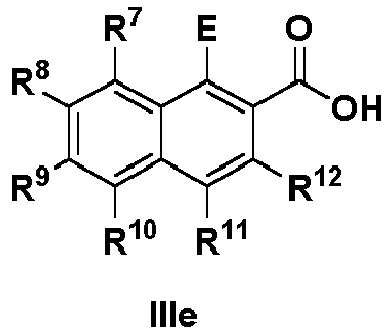
- E is -OH, -NH2 or -NR13 2, wherein R13 is an alkyl group with 1-6 carbon atoms, preferably R13 is 1;
preferably wherein E is -OH, or -NH2; - R1 to R12 are each independently -H, -OMe, -Me, -F, -NH2, -Cl, -Br, -I, -CF3, -CHO, -NO2, -NR16 2, -CN, - OH, or a linear or branched alkyl group, wherein:
- R16 is an alkyl group with 1-30 carbon atoms, preferably 1-10 carbon atoms;
- the linear or branched alkyl group is optionally substituted with at least one substituent selected from the group consisting of - OMe, -Me, -F, -NH2, -Cl, -Br, -I, -CF3, -CHO, -NO2, -NR16 2, -CN, -OH; and/or
- the linear or branched alkyl group contains at least one group selected from C-C double bond, C-C triple bond, keto group, ester group, ether group or amido group;
- preferably R1 to R12 are each independently -H, -OMe, -Me, -F, -NH2, -OH, -NO2, -COCH3, -CHO, or - CO-(CH2)6-CH3.
- E is -OH, -NH2 or -NR13 2, wherein R13 is an alkyl group with 1-6 carbon atoms, preferably R13 is 1;
- 20. Method of decarboxylating a substrate according to formula IIIa, IIIb, IIIc, IIId, or IIIe, wherein the method comprises bringing the substrate into contact with a catalyst comprising bimetallic nanoparticles and an ionic liquid with a basic group, which is optionally a group D as defined in other clauses, and heating under pressure in the presence of hydrogen


- E is -OH, -NH2 or -NR13 2, wherein R13 is an alkyl group with 1-6 carbon atoms, preferably R13 is 1;
preferably wherein E is -OH, or -NH2; - R1 to R12 are each independently -H, -OMe, -Me, -F, -NH2, -Cl, -Br, -I, -CF3, -CHO, -NO2, -NR16 2, -CN, - OH, or a linear or branched alkyl group, wherein:
- R16 is an alkyl group with 1-30 carbon atoms, preferably 1-10 carbon atoms;
- the linear or branched alkyl group is optionally substituted with at least one substituent selected from the group consisting of - OMe, -Me, -F, -NH2, -Cl, -Br, -I, -CF3, -CHO, -NO2, -NR16 2, -CN, -OH; and/or
- the linear or branched alkyl group contains at least one group selected from C-C double bond, C-C triple bond, keto group, ester group, ether group or amido group;
- preferably R1 to R12 are each independently -H, -OMe, -Me, -F, -NH2, -OH, -NO2, -COCH3, -CHO, or - CO- (CH2)6-CH3.
- E is -OH, -NH2 or -NR13 2, wherein R13 is an alkyl group with 1-6 carbon atoms, preferably R13 is 1;
- 21. Method of decarboxylating a substrate according to formula IIIa, IIIb, IIIc, IIId, or IIIe, wherein the method comprises bringing the substrate into contact with a catalyst according to any one of claims 1-15, and heating under pressure in the presence of hydrogen


- E is -OH, -NH2 or -NR13 2, wherein R13 is an alkyl group with 1-6 carbon atoms, preferably R13 is 1;
preferably wherein E is -OH, or -NH2; - R1 to R12 are each independently -H, -OMe, -Me, -F, -NH2, -Cl, -Br, -I, -CF3, -CHO, -NO2, -NR16 2, -CN, - OH, or a linear or branched alkyl group, wherein:
- R16 is an alkyl group with 1-30 carbon atoms, preferably 1-10 carbon atoms;
- the linear or branched alkyl group is optionally substituted with at least one substituent selected from the group consisting of - OMe, -Me, -F, -NH2, -Cl, -Br, -I, -CF3, -CHO, -NO2, -NR16 2, -CN, -OH; and/or
- the linear or branched alkyl group contains at least one group selected from C-C double bond, C-C triple bond, keto group, ester group, ether group or amido group;
- preferably R1 to R12 are each independently -H, -OMe, -Me, -F, -NH2, -OH, -NO2, -COCH3, -CHO, or - CO-(CH2)6-CH3.
- E is -OH, -NH2 or -NR13 2, wherein R13 is an alkyl group with 1-6 carbon atoms, preferably R13 is 1;
- 22. Method of according to any one of clauses 19-21, wherein the substrate is a substrate according to formula IIIa or IIIb, wherein:
- E is -OH or -NH2; and
- R1 to R4 are each independently -H, -OMe, -Me, -F, -NH2, -OH, -NO2, -COCH3, -CHO, or -CO-(CH2)6-CH3.
- 23. Method of tandem decarboxylation and reduction of a substrate according to formula IIIa, IIIb, IIIc, IIId, or IIIe, wherein the method comprises bringing the substrate into contact with a catalyst comprising metal nanoparticles and an ionic liquid with a basic group, which is optionally a group D as defined in other clauses, and heating under pressure in the presence of hydrogen


- E is -OH, -NO2, -NH2 or -NR13 2, wherein R13 is an alkyl group with 1-4 carbon atoms, preferably R13 is 1;
preferably wherein E is -OH, -NO2, or -NH2; - R1 to R12 are each independently -H, -OMe, -Me, -F, -NH2, -Cl, -Br, -I, -CF3, -CHO, -NO2, -NR16 2, -CN, - OH, or a linear or branched alkyl group, wherein:
- R16 is an alkyl group with 1-30 carbon atoms, preferably 1-10 carbon atoms;
- the linear or branched alkyl group is optionally substituted with at least one substituent selected from the group consisting of - OMe, -Me, -F, -NH2, -Cl, -Br, -I, -CF3, -CHO, -NO2, -NR16 2, -CN, -OH; and/or
- the linear or branched alkyl group contains at least one group selected from C-C double bond, C-C triple bond, keto group, ester group, ether group or amido group;
- preferably R1 to R12 are each independently -H, -OMe, -Me, -F, -NH2, -OH, -NO2, -COCH3, -CHO, or - CO-(CH2)6-CH3.
- E is -OH, -NO2, -NH2 or -NR13 2, wherein R13 is an alkyl group with 1-4 carbon atoms, preferably R13 is 1;
- 24. Method according to clause 23, wherein the metal nanoparticles are bimetallic nanoparticles.
- 25. Method of tandem decarboxylation and reduction of a substrate according to formula IIIa, IIIb, IIIc, IIId, or IIIe, wherein the method comprises bringing the substrate into contact with a catalyst according to any one of clauses 3-15, and heating under pressure in the presence of hydrogen


- E is -OH, -NO2, -NH2 or -NR13 2, wherein R13 is an alkyl group with 1-4 carbon atoms, preferably R13 is 1;
preferably wherein E is -OH, -NO2, or -NH2; - R1 to R12 are each independently -H, -OMe, -Me, -F, -NH2, -Cl, -Br, -I, -CF3, -CHO, -NO2, -NR16 2, -CN, - OH, or a linear or branched alkyl group, wherein:
- R16 is an alkyl group with 1-30 carbon atoms, preferably 1-10 carbon atoms;
- the linear or branched alkyl group is optionally substituted with at least one substituent selected from the group consisting of - OMe, -Me, -F, -NH2, -Cl, -Br, -I, -CF3, -CHO, -NO2, -NR16 2, -CN, -OH; and/or
- the linear or branched alkyl group contains at least one group selected from C-C double bond, C-C triple bond, keto group, ester group, ether group or amido group;
- preferably R1 to R12 are each independently -H, -OMe, -Me, -F, -NH2, -OH, -NO2, -COCH3, -CHO, or - CO-(CH2)6-CH3.
- E is -OH, -NO2, -NH2 or -NR13 2, wherein R13 is an alkyl group with 1-4 carbon atoms, preferably R13 is 1;
- 26. Method according to
clause 23, 24 or 25, wherein the substrate is a substrate according to formula IIIa or IIIb, and wherein:- E is -OH, -NO2 or -NH2; and
- R1 and R4 are each independently -H, -OMe, -Me, -F, -NH2, -OH, -NO2, -COCH3, -CHO, or -CO-(CH2)6-CH3.
- 27. Method according to any one of clauses 19-26, wherein the substrate is heated at 80-250 °C, preferably 125-200 °C, more preferably 150-200 °C.
- 28. Method according to any one of clauses 19-27, wherein the pressure is 10-100 bar, preferably 20-60 bar, most preferably 40-60 bar.
- 29. Method according to any one of clauses 19-28, wherein a solvent is present.
- 30. Method according to
clause 29, wherein the solvent is a non-polar solvent, a polar aprotic solvent or a polar protic solvent. - 31. Method according to
clause 29, wherein the solvent is heptane, decalin, dioxane or mesitylene. - 32. Method according to
clause 30, wherein when the catalyst is metal-oxide based, water is not used as a solvent. - 33. Method according to any one of clauses 23-32, wherein the reduction reaction is a hydrodeoxygenation reaction.
- 34. Method of tandem decarboxylation and reduction of a substrate according to formula IIIa or IIIb,

wherein the method comprises bringing the substrate into contact with a catalyst comprising:- (i) the following structure I:
Su - L - Sp - C1 - R - CH3
wherein:- Su is a support, which is SiO2;
- L is a linker group, which is a -Si-O- group connected to the support;
- Sp is a spacer group, which is an alkylene group with 2-4 carbon atoms;
- C1 is imidazolium; and
- R is an alkylene group with 3 carbon atoms;
- wherein structure I further comprises a counterion A1, which is NTf2 -;
- (ii) the following structure II:
CH3 - Ra - C2 - Rb - NEt2
- wherein Ra is an alkylene group with 3 carbon atoms and Rb is an alkylene group with 4 carbon atoms; and C2 is imidazolium;
- wherein structure II further comprises a counterion A2, which is NTf2 -; and
- (iii) bimetallic nanoparticles that are immobilised on the support Su, wherein the bimetallic nanoparticles are represented by:
M1 xM2 100-x
wherein M1 is a Fe or Co, preferably Fe; M2 is Ru or Rh, preferably Ru; and x is a number between 10 and 80, preferably between 10 and 30.
- (i) the following structure I:
- Examples according to the present invention will be presented.
- Unless stated otherwise, the synthesis of ionic liquids (ILs), supported ionic liquid phases (SILPs) and nanoparticles immobilised on SILPs (NPs-SILPs) were carried out under an inert atmosphere (Ar) using standard Schlenk techniques or inside a glovebox. All synthesised materials were stored under inert atmosphere.
- As an example, the autoclave reaction procedure for the decarboxylation of 4-hydroxybenzoic acid is described. For other substrates, the amounts of substrate, catalyst or solvent and the reaction conditions can be varied. However, the overall procedure stays the same.
- The substrate (65 eq. with respect to metal, 0.221 mmol), catalyst (10 mg, containing 0.0034 mmol metal) and solvent (heptane, 0.5 mL) were weighed inside of a glovebox into the autoclave. The autoclave was closed, transferred out of the glovebox and pressurized with 50 bar hydrogen. After heating the autoclave at 175 °C under stirring (500 rpm) for 18 h, it was cooled down in a water bath and depressurized. The GC samples were prepared by adding acetone (250 mg) to the reaction mixture and taking a sample through a syringe with a filter. To the sample, tetradecane (internal standard, 20 mg) and acetone (200 mg) were added. For all amines, methanol/dioxane (1/1) was used as solvent for the GC samples.
- The isolation of the products was carried out by filtration of the reaction mixture through a syringe filter and purification via silica column (EtOAc:Cyclohexane = 1:10). After careful evaporation of the solvent, the pure compounds were yielded and characterized by 1H and 13C NMR.
- All solution state NMR were recorded on a Bruker Ascend 400 spectrometer at room temperature. The coupling constants (J) are given in Hertz (Hz), and the chemical shifts (δ) are expressed in ppm, relative to TMS at 25 °C. Gas chromatography (GC) was performed on a Shimadzu GC-2030 equipped with a FID-detector and a CP-WAX-52CB column from Agilent. Gas chromatography coupled with a mass spectrometer (GC-MS) were performed on a Shimadzu QP2020. N2 adsorption experiments were performed on a Quadrasorb SI from Quantachrom Instruments. Transmission and scanning transmission electron microscopy (TEM and STEM) were performed on a Hitachi HF2000 cold FEG operating at 200 kV at the Max-Planck-Institut für Kohlenforschung. Samples were prepared by depositing the powder onto a copper TEM grid with an amorphous carbon support film. Scanning electron microscopy with energy dispersive X-ray spectroscopy (SEM/EDS) was performed on a Hitachi S-3500N operating at 30kV at the Max-Planck-Institut für Kohlenforschung. Samples were prepared by depositing the powder onto a tape and flattening it out to obtain an even surface for analysis.
- Yields were determined by gas chromatography (Shimadzu Nexis 2030) equipped with a FID detector using the methods described in the table below.
Method 1 was used forsubstrate 1 and 17.Method 2 was used forsubstrate 9.Method 3 was used forsubstrates Method 4 was used forsubstrate 16 andmethod 5 was used for substrates 1-5, 7, 8, 10, 11, 13-15. - The identification of the compounds was done by injecting the pure compounds in GC-FID, or by combination with GC-MS.
Table 1: Methods for GC analysis Method Nr. 1 2 3 4 5 Stationary phase (Column) Rtx-1701 (0.25 µm, 0.25 mm, 30 m) Rtx-1 (0.5 µm, 0.25 mm, 30 m) Rtx-5 (1.0 µm, 0.25 mm, 30 m) Rtx-1 (0.5 µm 0.25 mm, 30 m) Rtx-1 (0.5 µm, 0.25 mm, 30 m) Mobile Phase [mL/min] (Carrier Gas) 1.9 (He) 1.22 (He) 1.71 (He) 1.25 (He) 1.21 (He) Flow Control Mode Linear Velocity [cm/sec] 40 30 40 30 30 Injection Volume [µl] 0.5 0.2 0.6 0.6 0.2 Injection Temperature [°C] 270 250 320 250 250 Split Ratio 25 30 30 35 30 Temperature Program [°C] 50 for 5 min, to 270 with 20 °C/min, 270 for 9 min 60 for 12 min, to 200 with 12 °C/min, 200 for 8 min 100 for 1 min, to 320 with 10 °C/min, 320 for 2 min 50 for 8 min, to 200 with 15 °C/min, to 300 with 25 °C/min, 300 for 22 min 65 for 10 min, to 200 with 15 °C/min, 200 for 8 min Detector Temperature [°C] 275 260 330 310 260 - SILPA is composed of [1-butyl-3-(3-triethoxysilylpropyl)imidazolium] chemisorbed on SiO2.
- The new multifunctional catalyst (Fe25Ru75-SILP A + IL-NEt2) was assembled in a versatile manner through physisorption of the basic ionic liquid 1-[2-(diethylamino)ethyl]-3-butylimidazolium bis(trifluoromethane)sulfonamide (IL-NEt2) on Fe25Ru75-SILPA material. In brief, the preparation of Fe25Ru75-SILPA involved the condensation of [1-butyl-3-(3-triethoxy-silylpropyl)-imidazolium]NTf2 with dehydroxylated SiO2, followed by in situ reduction of a mesitylene solution of {Fe[N(Si(CH3)3)2]2}2 and [Ru(cod) (cot)] (cod = cyclooctadiene; cot = cyclooctatriene) under an atmosphere of H2 (3 bar) at 150 °C (for detailed procedure see below). The physisorption of the amine functionalized ionic liquid [1-butyl-3-(2-(diethylamino)ethyl)-imidazolium]NTf2 (IL-NEt2) to prepare the bifunctional catalyst (Fe25Ru75-SILP A + IL-NEt2) was achieved by stirring a suspension of Fe25Ru75-SILP A and IL-NEt2 in acetone at room temperature.
- The BET surface area (36 m2·g-1) and the pore volume (0.13 m3-g-1) measured by N2 adsorption experiments were significantly reduced upon physisorption of IL-NEt2 on Fe2sRu75-SILP A , indicating that the physisorption occurred:
Table 2 Fe25Ru75-SILPA Fe25Ru75-SILPA+IL-NEt2 IL-NEt2 loading [mmol·g-1] 0.73[a] Accessible amines[b] [mmol·g-1] - 0.48 BET surface area [m2·g-1] 240 ± 1 36 ± 1 Pore volume [m3·g-1] 0.56 ± 0.002 0.13 ± 0.002 Metal loading[b] [mmol·g-1] 0.40 ± 0.04 0.34 ± 0.03 Metal ratio Fe : Ru[b] [%] 23 ± 5 : 77 ± 5 27 ± 3 : 73 ± 4 Particle size [nm] 3.3 ± 0.6 3.1 ± 0.7 NP sizes were determined by TEM. Metal ratio and loading were determined using SEM-EDX (Fe-K / Ru-L). [a] Determined based on the amount of IL-NEt2 recovered after the physisorption procedure. [b] The average values and standard deviations were determined through the characterization of three batches of each material. - Titration of the amount of accessible amine functionalities on Fe25Ru75-SILP A + IL-NEt2 gave 0.48 mmol·g-1, which corresponds to 64% of the theoretical total amount for quantitative adsorption. Characterization of Fe25Ru75-SILP + IL-NEt2 by scanning transmission electron microscopy in high angle annular dark field (STEM-HAADF) associated to energy dispersive X-ray spectroscopy (EDS) showed the presence of small (3.1 nm) bimetallic NPs containing Fe and Ru (
Fig. 5 ). Scanning electron microscopy (SEM) with EDS confirmed the expected metal ratio and metal loading (0.34 mmol·g-1, Table 2). Thus, physisorption did not significantly affect the metal loading or ratio, nor the size of the metal NPs, even though they were slightly more aggregated than on the pristine Fe25Ru75-SILPA material. - An example synthesis of an ionic liquid is provided as follows:
- 2-Bromo-N,N-diethylethylamine hydrobromide (7.26 g, 27.8 mmol) was suspended in 100 mL dry acetonitrile and heated at 80 °C until complete dissolution, giving a light yellow solution. Under Ar, 1-butylimidazole (3.6 mL, 29 mmol) was added slowly to the mixture under stirring and the reaction medium was refluxed at 150 °C for 48 h. After this period, the reaction was left to cool down to room temperature, the solvent was evaporated and the resulting yellow paste was washed with dry acetone (4 x 10 mL) and dry diethylether (4 x 10 mL). The remaining solid was dried under vacuum for 3 h at room temperature and 1-[2-(diethylamino)ethyl]-3-butylimidazolium bromide hydrobromide was yielded as white solid (6.27 g, 20.60 mmol, 74%).

- 1H-NMR (400 MHz, DMSO-d 6) : δ (ppm) = 9.80 (s, 1H, HBr), 9.41 (s, 1H, H8), 7.95 (s, 1H, H9), 7.86 (s, 1H, H7), 4.66 (t, J = 6.8 Hz, 2H, H6), 4.19 (t, J = 7.2 Hz, 2H, H10), 3.66 (t, J = 7.0 Hz, 2H, H5), 3.23 (q, J = 7.3 Hz, 4H, H2, H3), 1.84-1.77 (m, 2H, H11), 1.35-1.23 (m, 8H, H1, H4, H12), 0.92 (t, J = 7.3 Hz, 3H, H13).
- 13C-NMR (400 MHz, DMSO-d6) : δ (ppm) = 137.42 (1C, C8), 123.13 (1C, C9), 123.06 (1C, C7), 49.88 (1C, C5), 49.21 (1C, C6), 47.43 (2C, C2, C3), 43.61 (1C, C10), 31.34 (1C, C11), 19.29 (1C, C12), 13.80 (1C, C13), 8.86 (2C, C1, C4).
- 1-[2-(diethylamino)ethyl]-3-butylimidazolium bromide hydrobromide (10.94 g, 28.41 mmol) was dissolved in ethanol (60 mL) under an inert atmosphere. Under Ar, pyridine (2.4 mL, 2.41 g, 30.51 mmol, 1.07 equiv.) was added to the mixture, along with additional 10 mL of ethanol to rinse the Schlenk flask, after which the reaction medium was stirred for 10 min at room temperature. Finally, LiNTf2 (8.64 g, 30.09 mmol) was added to the solution, along with additional 10 mL of ethanol to rinse, and the resulting solution was stirred under Ar at room temperature for 15 h. Afterwards, the solvent was evaporated and the resulting pale orange residue was dissolved in DCM (40 mL). The solution was filtered through celite (previously washed with 2 x 10 mL DCM). Additional 20 mL of DCM were added to rinse the flask. Due to the remaining of a small amount of a whitish thin solid in suspension, the solution was filtered through celite a second time, giving a clear light-yellow solution. Finally, the solvent was removed from the recovered solution. The product was dissolved and stirred for 90 min in a mixture of H2O (30 mL) and DCM (60 mL) to remove any remaining trace of pyridine. The organic layer was washed with 3 x 20 mL H2O, dried with anhydrous Na2SO4 and finally the solvent was removed under vacuum to afford a thick light-yellow oil that was dried under vacuum overnight at room temperature. 1-[2-(diethylamino)ethyl]-3-butylimidazolium bis(trifluoromethane) sulphonamide was obtained as a viscous liquid (7.95 g, 15.76 mmol, 77%).

- 1H-NMR (400 MHz, DMSO-d6) : δ (ppm) = 9.17 (s, 1H, H8), 7.80 (d, J = 8.9 Hz, 1H, H7, H9), 4.43 (t, J = 6.4 Hz, 2H, H6), 4.20 (t, J = 7.2 Hz, 2H, H10), 3.26 (t, J = 6.1 Hz, 2H, H5), 2.92 (q, 4H, H2, H3), 1.83-1.75 (m, 2H, H11), 1.34-1.24 (m, 2H, H12), 1.08 (t, J = 7.2 Hz, 6H, H1, H4), 0.92 (t, J = 7.4 Hz, 3H, H13).
- 13C-NMR (400 MHz, DMSO-d6) : δ (ppm) = 136.68 (1C, C8), 122.79 (1C, C9), 122.41 (1C, C7), 50.41 (1C, C5), 48.72 (1C, C6), 46.82 (2C, C2, C3), 44.99 (1C, C10), 31.40 (1C, C11), 18.78 (1C, C12), 13.17 (1C, C13), 9.70 (2C, C1, C4).
- APCI-MS (+) : m/z = 224.2, calculated for [C13H26N3]+ = 224.21. APCI-MS (-): m/z = 279.8, calculated for [C2F6NO4S2]- = 279.92; m/z = 566.9, calculated for [LiNTf2+NTf2]-, [C4F12LiN2O8S4]- = 566.85.
- [1-Butyl-3-(3-triethoxysilylpropyl)imidazolium]NTf2 (5.49 g, 8.80 mmol) was dissolved in DCM (20 mL) and added to a suspension of dehydroxylated SiO2 (10.0 g in 50.0 mL toluene). After stirring for 15 min at room temperature (rt), DCM was removed in vacuo and the resulting mixture was refluxed for 18 h. Upon removal of the organic phase, the SILP A was washed with DCM (3x25 mL) and dried in vacuo.
- A solution of {Fe[N(Si(CH3)3)2]2}2 (18.0 mg, 0.05 mmol Fe) in mesitylene (2 mL) was combined with a solution of [Ru(cod) (cot)] (47.0 mg, 0.15 mmol Ru) in mesitylene (2 mL) in a Fischer-Porter bottle (70 mL). The SILP (500 mg) was added to the solution of the metal precursors along with mesitylene (1 mL) and the reaction mixture was stirred under argon at room temperature for 30 min. The Fischer-Porter bottle was evacuated and backfilled with H2 and the suspension was stirred under H2 (3 bar) at 150 °C for 18 h. Under this reducing environment a black powder was obtained, indicating the immobilization of the NPs onto the SILP. Mesitylene was decanted and Fe25u75-SILP were washed with fresh toluene (3 x 3 mL) and dried in vacuo at room temperature for 1 h.
- The physisorption of IL-NEt2 onto Fe25Ru75-SILP A was achieved through the following: A suspension of Fe25Ru75-SILP A (187.9 mg, 0.0742 mmol) was prepared in an acetone solution (3 mL) of IL-NEt2 (109.6 mg, 0.217 mmol, 2.9 equiv.). The mixture, prepared in a glove box, was stirred for 1 h at room temperature, after which it was taken out of the glove box and the solvent was evaporated in a Schlenk line. Finally, the catalyst was dried under vacuum for 2 h at room temperature.
- The above-described synthetic methodology can be applied in the synthesis of other catalysts of the general formula M1M2-SILP + IL-D, by exchanging the relevant components.
- The standard conditions were set to 175°C, 18 h, heptane as solvent, and 65 and 30 equivalents of substrate with respect to the total metal loading and the amine groups of IL-NEt2, respectively.
Table 3: Decarboxylation of 4-hydroxybenzoic acid using Fe25Ru75 -SILPA + IL-NEt2 and various reference materials 
# Catalyst Applied gas X [%] Y1a [%] 1 Fe25Ru75-SILPA+IL-NEt2 - - - 2 Fe25Ru75-SILPA+IL-NEt2 N2 18 ± 5 18 ± 5 3 Fe25Ru75-SILA +IL-NEt2 Ar 10 10 4 Fe25Ru75-SILA +IL-NEt2 H2 >99 >99 5 - H2 0 0 6 Fe25Ru75-SILPA H2 4 ± 1 4 ± 1 7 SILP+IL-NEt2 H2 58 ± 2 58 ± 2 8 Fe40Ru60-SILPA +IL-NEt2 H2 33 ± 2 33 ± 2 9 Fe60Ru40-SILPA +IL-NEt2 H2 37 ± 1 37 ± 1 10 Fe100-SiLPA H2 0 0 11 RU100-SILPA H2 >99 0[b] 12 Fe25Ru75-SiO2 H2 >99 39[c] 13 Fe25Ru75-SILPA +IL-NEt2 D2 [a] >99 >99 14 Fe25Ru75-SILPA + additive: Et3N[d] H2 >99 >99 15 Fe25Ru75-SILPA + additive: DMA[e] H2 >99 >99 16 Fe25Ru75-SILPA + additive: TPA[f] H2 18 18 17 Fe25Ru75-SILPA+IL-SO3H H2 0 0 Standard reaction conditions: Catalyst (10 mg, metal content: 0.0034 mmol), substrate (0.221 mmol, 65 eq. compared to metal), solvent: heptane (0.5 mL), 175°C, H2 (50 bar), 18 h, 500 rpm; X: Conversion, Y: Yield, determined by GD-FID using tetradecane as internal standard. Variations are shown for two independent experiments. [a] 20 bar D2, 200 °C. [b] product = cyclohexanol (99%). [c] byproducts = cyclohexanol (38%) and cyclohexane (23%). [d] Et3N=triethylamine, Substrate/Amine = 19-0.1 equivalents. [e] DMA = dimethylaniline, Substrate/Amine = 2.5-0.7 equivalents. [f] TPA = triphenylamino, Substrate/Amine = 1 equivalent. - Performing this reaction without applying any pressure resulted in extremely low mass balance (Table 3, Entry 1). Using 50 bar of inert gas pressure (N2 or Ar) allowed observing significant conversion of 1 to phenol (1a), however still with low yields (18% and 10%, respectively) and unclosed mass balances (Table 3, Entries 2-3). In contrast, 1 was fully and selectively decarboxylated using Fe25Ru75-SILPA + IL-NEt2 under an H2 atmosphere (50 bar), affording 1a in quantitative yield without reduction of the aromatic moiety (Table 3, Entry 4).
- Without catalyst, no conversion was observed under these conditions (Table 3 Entry 5). Similarly, using the bimetallic Fe25Ru75-SILPA catalyst without physisorbed IL resulted in very low decarboxylation activity (4% yield, Table 3, Entry 6). With SILP+IL-NEt2 in the absence of Fe25Ru75 NPs, the conversion and yield of 1a reached 58% (Table 3, Entry 7).
- Lowering the amount of Ru in the bimetallic particles in Fe40Ru60-SILPA+IL-NEt2 and Fe60Ru40-SILPA+IL-NEt2 resulted in lower conversions and yields (Table 3, Entries 8-9). Fe100-SILPA gave no activity (Table 3, Entry 10), while Ru100-SILPA led to complete hydrogenation of the aromatic ring (Table 3, Entry 11). Bimetallic FeRu NPs prepared directly on silica (Fe25Ru75-SiO2) gave very low selectivity toward the formation of 1a (Table 3, Entry 12) accompanied by significant aromatic ring hydrogenation indicating the presence of monometallic Ru-particles. IL-modifiers have the beneficial role of helping to avoid segregated particles upon synthesis of bimetallic NPs.
- In order to get additional insight into the beneficial role of the hydrogen atmosphere in the decarboxylation reaction, the reaction was performed under standard conditions in presence of D2 (20 bar). Full conversion to phenol was observed in this case as well (Table 3, Entry 13), and 1H and 13C NMR of the isolated product revealed deuterium incorporation in ortho and para of the hydroxyl functionality (Table 4 and
Figure 6 ), with a 78% of the product being deuterated in para. - Exposing the product 1a to D2 under standard reaction conditions led to H/D exchange in ortho to the hydroxyl functionality only (Table 4 and
Figure 6 ). This demonstrates that the deuterium incorporation in the para position occurs as a result of the decarboxylation process at this position. While no significant H/D exchange of the proton at the carboxylic acid functionality was observed within the first 1 h when 22% conversion was achieved, incorporation of D in the product in the para position was clearly detected (40% of the product,Figure 7 ). These results suggest that the incorporation of D in the para position occurs during the decarboxylation reaction, probably as a consequence of heterolytic activation of D2 by the NPs generating D+ assisted by the base. - 4-Hydroxybenzoic acid (61.1 mg, 65 eq. with respect to metal, 0.442 mmol), Fe25Ru75-SILPA+IL-NEt2 (20 mg, containing 0.007 mmol metal) and solvent (heptane, 1.0 mL) were weighed inside of a glovebox into the autoclave. The autoclave was closed, transferred out of the glovebox and pressurised with 20 bar deuterium. After heating the autoclave under stirring (500 rpm) to 200 °C for 18 h, it was cooled down in a water bath and depressurized. The isolation of the product was carried out by purification via silica column (EtOAc:Cyclohexane = 1:10) . After careful evaporation of the solvent, the pure compound was yielded. The product was analyzed by GC-MS and NMR.
- As a reference experiment, phenol was used as substrate under the same reaction conditions and the product was isolated and analysed accordingly.
- Comparing the 1H (
Figure 6 ) and13 C NMR of the isolated products to the NMR of phenol showed a different excess of deuteration of the products (Table 4). Comparing the 1H and 13C NMR of this isolated product to that of non-deuterated phenol evidenced the nearly complete deuteration of thepositions position positions position 4 in 13C{1H} NMR is a singlet. These results show that a proton from the gas phase replaces the carboxylic acid functionality during decarboxylation and evidences the significance of having an H2 atmosphere on decarboxylation activity. This also highlights the role of the amine functionalities and FeRu NPs, the first being responsible for the activation of the carboxylic acid functionality while the second presumably accelerates the cleavage reaction by activating H2, thus providing protons and facilitating the protonolysis step.Table 4: Deuterated positions of the products isolated from the decarboxylation of 4-hydroxybenzoic acid (1) using Fe25Ru75-SILPA + IL-NEt2 with application of D2 Entry Substrate Main product Deuteration Position x[a] (Signal shape in 13C NMR) 2 3 4 5 6 1 

yes (t) no yes (t) no yes (t) 2 

yes (t) no no (s) no yes (t) [a] Determined by 1H and 13C{1H} NMR of the isolated products; s = singlet, t = triplet. Reaction conditions: Catalyst (20 mg, metal content: 0.0068 mmol), substrate (0.442 mmol, 65 eq. with respect to metal), solvent: heptane (1 mL), 200 °C, D2 (20 bar), 18 h, 500 rpm. - Based on these promising results, the Fe25Ru75-SILPA+IL-NEt2 catalyst was applied to a scope of benzoic acids possessing hydroxyl, methoxy and amine substituents (Table 5). Lignin-derived 4-hydroxybenzoic acid derivatives 1-3 were readily decarboxylated, giving the corresponding phenols (1a-3a) in excellent selectivity and yields (Table 5, Entry 1-3).
- Substrates 4-6 with electron donating or withdrawing groups in
position 3 were also quantitatively converted to the corresponding phenols (Table 5, Entry 4-6). Similar results were obtained with salicylic acid (7), in which the hydroxyl functionality is in ortho position. In sharp contrast, no conversion was observed when using 3-hydroxybenzoic acid (8) as substrate, suggesting that mesomeric effects are important to observe decarboxylation activity with Fe25Ru75-SILPA+IL-NEt2. Notably, also anthranilic acid (9) was decarboxylated effectively to give aniline in quantitative yield (Table 3, Entry 9), showing that the decarboxylation activity of Fe25Ru75-SILPA+IL-NEt2 is not limited to hydroxybenzoic acid derivatives. In this case, the temperature was reduced to 150 °C to avoid side reactions (e.g. deamination). Possibility of product isolation was demonstrated for products 1a and 3a (91 and 95% isolated yield, respectively). Notably, 2,6-dimethoxyphenol (3a) is used for the synthesis of cellular anti-proliferate active agents and becomes thus accessible from lignin-derived syringic acid.Table 5: Decarboxylation of aromatic carboxylic acids 
# Substrate Product T [°C] X [%] Y [%] 1 

175 >99 >99 (91) 2 

200 >99 >99 3 

200 >99 >99 (95) 4 

175 >99 >99 5 

175 >99 >99 6 

175 >99 >99 7 

200 >99 >99 8 

200 0 0 9 

150 >99 >99 Reaction conditions: Catalyst (10 mg, metal content: 0.0034 mmol), substrate (0.221 mmol, 65 eq. related to total metal loading), solvent: heptane (0.5 mL), H2 (50 bar), 18 h, 500 rpm; Y: Yield, X: Conversion, determined by GD-FID using tetradecane as internal standard. Isolated yields in parenthesis. - To exploit the capacity of hydrogen activation and transfer at the FeRu NPs of the Fe25Ru75-SILPA+IL-NEt2 catalyst for tandem reduction/decarboxylation, hydroxy- and aminobenzoic acid derivatives possessing additional reducible functional groups were investigated. Under standard conditions, 3-acetyl-4-hydroxybenzoic (10) was selectively decarboxylated and hydrodeoxygenated directly to produce 2-ethylphenol (10a) in >99% yield (Table 6, Entry 1). Following the reduction/decarboxylation for the nitro-substituted 12 as function of time clearly showed the sequential tandem reaction via 3-amino-4-hydroxybenzoic acid (6) as intermediate (
Figure 8 ). The reaction occurs smoothly to produce selectively 2-aminophenol (6a) in nearly quantitative yield (>99%) yield after 24 h. - Adaptation of the standard reaction conditions (temperature, substrate equivalent, solvent) to ensure good solubility and to limit side-reactions allowed efficient conversion of a range of 2- and 4-hydroxybenzoic acid derivatives possessing acetyl, octanoyl, formyl or nitro substituents (Substrates 11-16, Table 6 Entries 2-7). The corresponding phenol derivatives (11a-16a) were produced in excellent selectivity and yields (95-99%) and isolated for selected examples. Also in this case, replacing the hydroxyl by an amine functionality in 2-amino-5-acetylbenzoic acid (17) did not influence negatively the catalyst performance, and 4-ethylaniline (17a) was obtained in 89% yield (Table 6 Entry 8). Interestingly, many of the products formed are valuable chemicals with widespread applications. In particular, 10a, 6a and 17a are building blocks used in the pharmaceutical industry for the synthesis of anti-tuberculose drugs, anticancer agents and fungicides, respectively. 14a is widely used in the production of non-ionic surfactants.
Table 6: Decarboxylation and selective reduction of aromatic carboxylic acids 
# Substrate Product Solvent Sub:Am Sub:Met T °C X % Y % 1 

heptane 30 65 175 >99 >99 (39) 2 

heptane 15 33 200 >99 >99 3 

heptane 30 65 150 >99 >99 (77) 4 

heptane 15 33 175 >99 >99 (33) 5 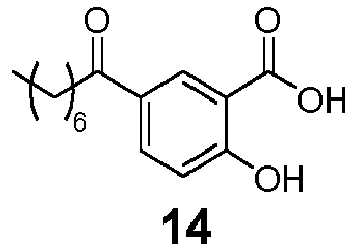

decalin 15 33 200 >99 >99 (85) 6 

dioxane 15 33 200 >99 >99 7 

dioxane 15 33 200 >99 95[a] 8 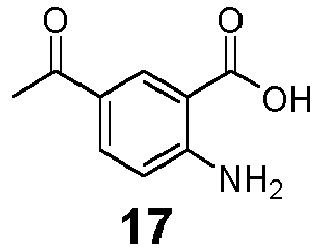

mesityle ne 15 33 200 >99 89[b] Reaction conditions: Catalyst (10 mg, metal content: 0.0034 mmol), solvent: heptane (0.5 mL), H2 (50 bar), 18 h, 500 rpm. [a] 11% aniline. [b] by-products: dimers. Y: Yield, X: Conversion, determined by GD-FID using tetradecane as internal standard. Isolated yields in parenthesis. - Since leaching of physisorbed ionic liquids is a well-known issue in solution phase catalysis, the stability of Fe25Ru75-SILPA+IL-NEt2 was carefully studied through recycling experiments using 4-hydroxybenzoic acid (1) as a model substrate (
Figure 9 ). Between each cycle, a sample of the reaction mixture was taken and the catalyst was washed with mesitylene. The reaction time was set to 6 h to ensure an incomplete conversion of the substrate and allow observing any change in activity or selectivity upon recycling. The yield associated to the formation of phenol was fairly constant (48% in average) for at least five cycles without any make-up or regeneration. The fluctuations observed are presumably due to the recycling procedure adopted, during which traces of products may have stayed on the catalyst between each cycle (see below for detailed recycling procedure). Characterization of the catalyst with quantitative SEM-EDS after five cycles did not evidence significant leaching of the metals nor of the physisorbed ionic liquid (Table 7). TEM analysis showed no significant changes in nanoparticle size. N2 adsorption experiments indicated that the textural properties (BET surface area, pore size, pore volume) of Fe25Ru75-SILPA+IL-NEt2 were conserved. Titration of the available amine functionalities evidenced a similar loading as on the fresh catalyst, confirming the absence of leaching of the IL-NEt2 under reaction conditions (Table 7).Table 7: Characterisation of the Fe25Ru75-SILPA + IL-NEt2 catalyst before and after catalysis Before catalysis After catalysis (5 cycles) Accessible amines[a] [%] 0.48 0.49 Surface area [m2.g-1] 36 ± 1 35 ± 1 Pore volume [m3.g-1] 0.13 ± 0.002 0.14 ± 0.001 Metal loading[a] [mmol.g-1] 0.34 ± 0.02 0.32 ± 0.05 Metal ratio Fe : Ru[a] [%] 27 ± 3 : 73 ± 4 22 ± 7 : 78 ± 4 Particle size [nm] 3.1 ± 0.7 2.5 ± 0.5 NP sizes were determined by TEM. Metal ratio and loading were determined using SEM-EDX (Fe-K / Ru-L). [a] The average values and standard deviations were determined through the characterization of three batches of each material. - The substrate (33 eq. with respect to metal, 0.11 mmol), catalyst (20 mg, containing 0.0068 mmol metal) and solvent (mesitylene, 0.5 mL) were weighed inside of a glovebox into the autoclave.
- The autoclave was closed, transferred out of the glovebox and pressurized with 50 bar hydrogen. After heating the autoclave under stirring (500 rpm) to 200 °C for 6 h, it was cooled down in a water bath and depressurised. The glass insert was taken out and transferred to a Schlenk tube.
- The tube was evaporated carefully until the first bubbles from the evaporating solvent show up. Then it was backfilled with argon. This procedure was performed five times and the Schlenk tube with the reaction mixture was transferred into the glovebox. Mesitylene (1 mL) was added to the reaction mixture to solute the product. The supernatant was taken out with a syringe to prepare a GC sample and the catalyst was washed three times with fresh mesitylene. Since the substrate is not soluble in mesitylene, it remained in the autoclave vial. To the washed catalyst were added new substrate (the amount, which was converted in the cycle before) and solvent. The autoclave was closed, pressurised and heated like before to start the new cycle.
- Tetradecane (internal standard, 20 mg) and acetone (200 mg) were added to the recovered supernatant to prepare the GC sample.
Claims (15)
- A catalyst comprising:(i) the following structure I:
Su - L - Sp - C1 - R - R'
wherein:Su is a support;L is a linker group;Sp is a spacer group;C1 is a cation;R is an alkylene group with 1-20 carbon atoms,optionally containing one or more groups selected from ether, ester, amido or arylene groups; and R' is -CH3 or D, wherein D is a basic group;wherein structure I further comprises a counterion A1 which is an anion;and(ii) the following structure II:
CH3 - Ra - C2 - Rb - D
wherein Ra and Rb are each independently an alkylene group with 1-20 carbon atoms, optionally containing one or more groups selected from ether, ester, amido or arylene groups; C2 is a cation; and D is a basic group;wherein structure II further comprises a counterion A2 which is an anion. - A catalyst according to claim 1, further comprising bimetallic nanoparticles that are immobilised on the support Su, wherein the bimetallic nanoparticles are represented by:
M1 xM2 100-x
wherein:M1 is a 3d transition metal;M2 is a noble metal; andx is a number between 1 and 99, preferably between 10 and 80. - Catalyst according to claim 1 or 2, wherein the spacer Sp is an alkylene group with 1-30 carbon atoms, optionally containing one or more groups selected from ether, ester, amido or arylene groups;
preferably the spacer Sp is an alkylene group with 2-10 carbon atoms. - Catalyst according to any one of claims 1-3, wherein the basic group is an amine, preferably the amine is -NR14R15, wherein R14 and R15 are each independently H, methyl, ethyl, propyl, or butyl, more preferably R14 and R15 are ethyl.
- Catalyst according to any one of claims 2-4, wherein M1 is Mn, Fe, Co, Ni or Cu and M2 is Rh, Ru, Pd or Pt; preferably M1 is Fe and M2 is Ru.
- Use of a catalyst according to any one of claims 1-5 in a decarboxylation reaction.
- Use of a catalyst according to any one of claims 1-5 in a tandem reduction and decarboxylation reaction.
- Method of decarboxylating a substrate according to formula IIIa, IIIb, IIIc, IIId, or IIIe, wherein the method comprises bringing the substrate into contact with a catalyst comprising bimetallic nanoparticles and an ionic liquid with a basic group, and heating under pressure in the presence of hydrogen


 E is -OH, -NH2 or -NR13 2, wherein R13 is an alkyl group with 1-6 carbon atoms, preferably R13 is 1;
preferably wherein E is -OH, or -NH2;R1 to R12 are each independently -H, -OMe, -Me, -F, -NH2, -Cl, -Br, -I, -CF3, -CHO, -NO2, -NR16 2, -CN, - OH, or a linear or branched alkyl group, wherein:R16 is an alkyl group with 1-30 carbon atoms, preferably 1-10 carbon atoms;the linear or branched alkyl group is optionally substituted with at least one substituent selected from the group consisting of - OMe, -Me, -F, -NH2, -Cl, -Br, -I, -CF3, -CHO, -NO2, -NR16 2, -CN, -OH; and/orthe linear or branched alkyl group contains at least one group selected from C-C double bond, C-C triple bond, keto group, ester group, ether group or amido group;preferably R1 to R12 are each independently -H, -OMe, -Me, -F, -NH2, -OH, -NO2, -COCH3, -CHO, or - CO- (CH2)6-CH3. - Method of decarboxylating a substrate according to formula IIIa, IIIb, IIIc, IIId, or IIIe, wherein the method comprises bringing the substrate into contact with a catalyst according to any one of claims 1-5, and heating under pressure in the presence of hydrogen


 E is -OH, -NH2 or -NR13 2, wherein R13 is an alkyl group with 1-6 carbon atoms, preferably R13 is 1;
preferably wherein E is -OH, or -NH2;R1 to R12 are each independently -H, -OMe, -Me, -F, -NH2, -Cl, -Br, -I, -CF3, -CHO, -NO2, -NR16 2, -CN, - OH, or a linear or branched alkyl group, wherein:R16 is an alkyl group with 1-30 carbon atoms, preferably 1-10 carbon atoms;the linear or branched alkyl group is optionally substituted with at least one substituent selected from the group consisting of - OMe, -Me, -F, -NH2, -Cl, -Br, -I, -CF3, -CHO, -NO2, -NR16 2, -CN, -OH; and/orthe linear or branched alkyl group contains at least one group selected from C-C double bond, C-C triple bond, keto group, ester group, ether group or amido group;preferably R1 to R12 are each independently -H, -OMe, -Me, -F, -NH2, -OH, -NO2, -COCH3, -CHO, or - CO- (CH2)6-CH3. - Method according to claim 8 or 9, wherein the substrate is a substrate according to formula IIIa or IIIb, wherein:E is -OH or -NH2; andR1 to R4 are each independently -H, -OMe, -Me, -F, -NH2, -OH, -NO2, -COCH3, -CHO, or -CO-(CH2)6-CH3.
- Method of tandem decarboxylation and reduction of a substrate according to formula IIIa, IIIb, IIIc, IIId, or IIIe, wherein the method comprises bringing the substrate into contact with a catalyst comprising metal nanoparticles and an ionic liquid with a basic group, and heating under pressure in the presence of hydrogen


 E is -OH, -NO2, -NH2 or -NR13 2, wherein R13 is an alkyl group with 1-4 carbon atoms, preferably R13 is 1;
preferably wherein E is -OH, -NO2, or -NH2;R1 to R12 are each independently -H, -OMe, -Me, -F, -NH2, -Cl, -Br, -I, -CF3, -CHO, -NO2, -NR16 2, -CN, - OH, or a linear or branched alkyl group, wherein:R16 is an alkyl group with 1-30 carbon atoms, preferably 1-10 carbon atoms;the linear or branched alkyl group is optionally substituted with at least one substituent selected from the group consisting of - OMe, -Me, -F, -NH2, -Cl, -Br, -I, -CF3, -CHO, -NO2, -NR16 2, -CN, -OH; and/orthe linear or branched alkyl group contains at least one group selected from C-C double bond, C-C triple bond, keto group, ester group, ether group or amido group;preferably R1 to R12 are each independently -H, -OMe, -Me, -F, -NH2, -OH, -NO2, -COCH3, -CHO, or - CO- (CH2)6-CH3. - Method of tandem decarboxylation and reduction of a substrate according to formula IIIa, IIIb, IIIc, IIId, or IIIe, wherein the method comprises bringing the substrate into contact with a catalyst according to any one of claims 2-5, and heating under pressure in the presence of hydrogen


 E is -OH, -NO2, -NH2 or -NR13 2, wherein R13 is an alkyl group with 1-4 carbon atoms, preferably R13 is 1;
preferably wherein E is -OH, -NO2, or -NH2;R1 to R12 are each independently -H, -OMe, -Me, -F, -NH2, -Cl, -Br, -I, -CF3, -CHO, -NO2, -NR16 2, -CN, - OH, or a linear or branched alkyl group, wherein:R16 is an alkyl group with 1-30 carbon atoms, preferably 1-10 carbon atoms;the linear or branched alkyl group is optionally substituted with at least one substituent selected from the group consisting of - OMe, -Me, -F, -NH2, -Cl, -Br, -I, -CF3, -CHO, -NO2, -NR16 2, -CN, -OH; and/orthe linear or branched alkyl group contains at least one group selected from C-C double bond, C-C triple bond, keto group, ester group, ether group or amido group;preferably R1 to R12 are each independently -H, -OMe, -Me, -F, -NH2, -OH, -NO2, -COCH3, -CHO, or - CO- (CH2)6-CH3. - Method according to claim 11 or 12, wherein the substrate is a substrate according to formula IIIa or IIIb, and wherein:E is -OH, -NO2 or -NH2; andR1 and R4 are each independently -H, -OMe, -Me, -F, -NH2, -OH, -NO2, -COCH3, -CHO, or -CO-(CH2)6-CH3.
- Method according to any one of claims 8-13, wherein the substrate is heated at 80-250 °C, preferably 125-200 °C, more preferably 150-200 °C.
- Method according to any one of claims 8-14, wherein the pressure is 10-100 bar, preferably 20-60 bar.
Priority Applications (2)
| Application Number | Priority Date | Filing Date | Title |
|---|---|---|---|
| EP23163747.1A EP4434995A1 (en) | 2023-03-23 | 2023-03-23 | Catalytic decarboxylation reactions using ionic liquids |
| PCT/EP2024/057789 WO2024194467A2 (en) | 2023-03-23 | 2024-03-22 | Catalytic decarboxylation reactions using ionic liquids |
Applications Claiming Priority (1)
| Application Number | Priority Date | Filing Date | Title |
|---|---|---|---|
| EP23163747.1A EP4434995A1 (en) | 2023-03-23 | 2023-03-23 | Catalytic decarboxylation reactions using ionic liquids |
Publications (1)
| Publication Number | Publication Date |
|---|---|
| EP4434995A1 true EP4434995A1 (en) | 2024-09-25 |
Family
ID=85726633
Family Applications (1)
| Application Number | Title | Priority Date | Filing Date |
|---|---|---|---|
| EP23163747.1A Withdrawn EP4434995A1 (en) | 2023-03-23 | 2023-03-23 | Catalytic decarboxylation reactions using ionic liquids |
Country Status (2)
| Country | Link |
|---|---|
| EP (1) | EP4434995A1 (en) |
| WO (1) | WO2024194467A2 (en) |
-
2023
- 2023-03-23 EP EP23163747.1A patent/EP4434995A1/en not_active Withdrawn
-
2024
- 2024-03-22 WO PCT/EP2024/057789 patent/WO2024194467A2/en not_active Ceased
Non-Patent Citations (19)
Also Published As
| Publication number | Publication date |
|---|---|
| WO2024194467A2 (en) | 2024-09-26 |
| WO2024194467A3 (en) | 2025-03-27 |
Similar Documents
| Publication | Publication Date | Title |
|---|---|---|
| Murugesan et al. | Reductive amination using cobalt-based nanoparticles for synthesis of amines | |
| Nguyen et al. | Synthesis of polyhydroquinolines and propargylamines through one-pot multicomponent reactions using an acidic ionic liquid immobilized onto magnetic Fe 3 O 4 as an efficient heterogeneous catalyst under solvent-free sonication | |
| EP2641910B1 (en) | Chiral spiro-pyridylamidophosphine ligand compound, synthesis method therefor and application thereof | |
| Dong et al. | Mannich reaction in water using acidic ionic liquid as recoverable and reusable catalyst | |
| Rangraz et al. | Diphenyl diselenide immobilized on magnetic nanoparticles: A novel and retrievable heterogeneous catalyst in the oxidation of aldehydes under mild and green conditions | |
| Ke et al. | Cobalt-catalyzed synthesis of N-containing heterocycles via cyclization of ortho-substituted anilines with CO 2/H 2 | |
| CN102348675A (en) | Process for preparing substituted 2-nitrobiphenyls | |
| US20100197920A1 (en) | N-heterocyclic carbene metallacycle catalysts and methods | |
| Harrad et al. | Colloidal nickel (0)-carboxymethyl cellulose particles: A biopolymer-inorganic catalyst for hydrogenation of nitro-aromatics and carbonyl compounds | |
| Nguyen et al. | Unprecedented salt-promoted direct arylation of acidic sp2 CH bonds under heterogeneous Ni-MOF-74 catalysis: synthesis of bioactive azole derivatives | |
| Chinnappan et al. | Transition metal based ionic liquid (bulk and nanofiber composites) used as catalyst for reduction of aromatic nitro compounds under mild conditions | |
| US20200309339A1 (en) | Method of hydrogenating a compound having an n-heterocyclic aromatic ring | |
| Kobayashi et al. | Iridium complex-catalyzed C2-extension of primary alcohols with ethanol via a hydrogen autotransfer reaction | |
| Aghapoor et al. | Catalytic application of recyclable silica-supported bismuth (III) chloride in the benzo [N, N]-heterocyclic condensation | |
| Kim et al. | Quantitative NaH catalytic hydroboration of aldimines | |
| Asgharnejad et al. | One-, two-and three-dimensional coordination polymers based on copper paddle-wheel SBUs as selective catalysts for benzyl alcohol oxidation | |
| Wang et al. | MOF-253 immobilized Pd and Cu as recyclable and efficient green catalysts for Sonogashira reaction | |
| Ahmed et al. | Dy/chitosan: a highly efficient and recyclable heterogeneous nano catalyst for the synthesis of hexahydropyrimidines in aqueous media | |
| CN106866403B (en) | A kind of preparation method of benzoic acid | |
| CN101914036B (en) | Method for preparing azobenzene derivatives | |
| Sepahvand et al. | The magnetic graphene oxide/NHC catalyzed aerobic direct amidation and cross-dehydrogenative coupling of aldehydes | |
| Sarkar et al. | Palladium nanoparticles supported on reduced graphene oxide (Pd@ rGO): an efficient heterogeneous catalyst for Suzuki–Miyaura, Heck–Matsuda and Double Suzuki–Miyaura cross-coupling reactions | |
| Deng et al. | An environmentally benign hydration of alkynes catalyzed by gallic acid/tannic acid in water | |
| Kokane et al. | Palladium supported on magnesium hydroxyl fluoride: an effective acid catalyst for the hydrogenation of imines and N-heterocycles | |
| WO2024194467A2 (en) | Catalytic decarboxylation reactions using ionic liquids |
Legal Events
| Date | Code | Title | Description |
|---|---|---|---|
| PUAI | Public reference made under article 153(3) epc to a published international application that has entered the european phase |
Free format text: ORIGINAL CODE: 0009012 |
|
| STAA | Information on the status of an ep patent application or granted ep patent |
Free format text: STATUS: REQUEST FOR EXAMINATION WAS MADE |
|
| 17P | Request for examination filed |
Effective date: 20230323 |
|
| AK | Designated contracting states |
Kind code of ref document: A1 Designated state(s): AL AT BE BG CH CY CZ DE DK EE ES FI FR GB GR HR HU IE IS IT LI LT LU LV MC ME MK MT NL NO PL PT RO RS SE SI SK SM TR |
|
| STAA | Information on the status of an ep patent application or granted ep patent |
Free format text: STATUS: THE APPLICATION IS DEEMED TO BE WITHDRAWN |
|
| 18D | Application deemed to be withdrawn |
Effective date: 20250326 |