EP4434992A1 - Fused imide derivative - Google Patents
Fused imide derivative Download PDFInfo
- Publication number
- EP4434992A1 EP4434992A1 EP22894936.8A EP22894936A EP4434992A1 EP 4434992 A1 EP4434992 A1 EP 4434992A1 EP 22894936 A EP22894936 A EP 22894936A EP 4434992 A1 EP4434992 A1 EP 4434992A1
- Authority
- EP
- European Patent Office
- Prior art keywords
- group
- compound
- ring
- stereoisomer
- pharmaceutically acceptable
- Prior art date
- Legal status (The legal status is an assumption and is not a legal conclusion. Google has not performed a legal analysis and makes no representation as to the accuracy of the status listed.)
- Pending
Links
Classifications
-
- A—HUMAN NECESSITIES
- A61—MEDICAL OR VETERINARY SCIENCE; HYGIENE
- A61P—SPECIFIC THERAPEUTIC ACTIVITY OF CHEMICAL COMPOUNDS OR MEDICINAL PREPARATIONS
- A61P35/00—Antineoplastic agents
-
- A—HUMAN NECESSITIES
- A61—MEDICAL OR VETERINARY SCIENCE; HYGIENE
- A61K—PREPARATIONS FOR MEDICAL, DENTAL OR TOILETRY PURPOSES
- A61K47/00—Medicinal preparations characterised by the non-active ingredients used, e.g. carriers or inert additives; Targeting or modifying agents chemically bound to the active ingredient
- A61K47/50—Medicinal preparations characterised by the non-active ingredients used, e.g. carriers or inert additives; Targeting or modifying agents chemically bound to the active ingredient the non-active ingredient being chemically bound to the active ingredient, e.g. polymer-drug conjugates
- A61K47/51—Medicinal preparations characterised by the non-active ingredients used, e.g. carriers or inert additives; Targeting or modifying agents chemically bound to the active ingredient the non-active ingredient being chemically bound to the active ingredient, e.g. polymer-drug conjugates the non-active ingredient being a modifying agent
- A61K47/54—Medicinal preparations characterised by the non-active ingredients used, e.g. carriers or inert additives; Targeting or modifying agents chemically bound to the active ingredient the non-active ingredient being chemically bound to the active ingredient, e.g. polymer-drug conjugates the non-active ingredient being a modifying agent the modifying agent being an organic compound
- A61K47/545—Heterocyclic compounds
-
- A—HUMAN NECESSITIES
- A61—MEDICAL OR VETERINARY SCIENCE; HYGIENE
- A61K—PREPARATIONS FOR MEDICAL, DENTAL OR TOILETRY PURPOSES
- A61K31/00—Medicinal preparations containing organic active ingredients
- A61K31/33—Heterocyclic compounds
- A61K31/335—Heterocyclic compounds having oxygen as the only ring hetero atom, e.g. fungichromin
- A61K31/34—Heterocyclic compounds having oxygen as the only ring hetero atom, e.g. fungichromin having five-membered rings with one oxygen as the only ring hetero atom, e.g. isosorbide
- A61K31/343—Heterocyclic compounds having oxygen as the only ring hetero atom, e.g. fungichromin having five-membered rings with one oxygen as the only ring hetero atom, e.g. isosorbide condensed with a carbocyclic ring, e.g. coumaran, bufuralol, befunolol, clobenfurol, amiodarone
-
- A—HUMAN NECESSITIES
- A61—MEDICAL OR VETERINARY SCIENCE; HYGIENE
- A61K—PREPARATIONS FOR MEDICAL, DENTAL OR TOILETRY PURPOSES
- A61K31/00—Medicinal preparations containing organic active ingredients
- A61K31/33—Heterocyclic compounds
- A61K31/395—Heterocyclic compounds having nitrogen as a ring hetero atom, e.g. guanethidine or rifamycins
- A61K31/41—Heterocyclic compounds having nitrogen as a ring hetero atom, e.g. guanethidine or rifamycins having five-membered rings with two or more ring hetero atoms, at least one of which being nitrogen, e.g. tetrazole
- A61K31/42—Oxazoles
- A61K31/423—Oxazoles condensed with carbocyclic rings
-
- A—HUMAN NECESSITIES
- A61—MEDICAL OR VETERINARY SCIENCE; HYGIENE
- A61K—PREPARATIONS FOR MEDICAL, DENTAL OR TOILETRY PURPOSES
- A61K31/00—Medicinal preparations containing organic active ingredients
- A61K31/33—Heterocyclic compounds
- A61K31/395—Heterocyclic compounds having nitrogen as a ring hetero atom, e.g. guanethidine or rifamycins
- A61K31/435—Heterocyclic compounds having nitrogen as a ring hetero atom, e.g. guanethidine or rifamycins having six-membered rings with one nitrogen as the only ring hetero atom
- A61K31/44—Non condensed pyridines; Hydrogenated derivatives thereof
- A61K31/445—Non condensed piperidines, e.g. piperocaine
- A61K31/4523—Non condensed piperidines, e.g. piperocaine containing further heterocyclic ring systems
-
- A—HUMAN NECESSITIES
- A61—MEDICAL OR VETERINARY SCIENCE; HYGIENE
- A61K—PREPARATIONS FOR MEDICAL, DENTAL OR TOILETRY PURPOSES
- A61K31/00—Medicinal preparations containing organic active ingredients
- A61K31/33—Heterocyclic compounds
- A61K31/395—Heterocyclic compounds having nitrogen as a ring hetero atom, e.g. guanethidine or rifamycins
- A61K31/435—Heterocyclic compounds having nitrogen as a ring hetero atom, e.g. guanethidine or rifamycins having six-membered rings with one nitrogen as the only ring hetero atom
- A61K31/44—Non condensed pyridines; Hydrogenated derivatives thereof
- A61K31/445—Non condensed piperidines, e.g. piperocaine
- A61K31/4523—Non condensed piperidines, e.g. piperocaine containing further heterocyclic ring systems
- A61K31/4525—Non condensed piperidines, e.g. piperocaine containing further heterocyclic ring systems containing a five-membered ring with oxygen as a ring hetero atom
-
- A—HUMAN NECESSITIES
- A61—MEDICAL OR VETERINARY SCIENCE; HYGIENE
- A61K—PREPARATIONS FOR MEDICAL, DENTAL OR TOILETRY PURPOSES
- A61K31/00—Medicinal preparations containing organic active ingredients
- A61K31/33—Heterocyclic compounds
- A61K31/395—Heterocyclic compounds having nitrogen as a ring hetero atom, e.g. guanethidine or rifamycins
- A61K31/435—Heterocyclic compounds having nitrogen as a ring hetero atom, e.g. guanethidine or rifamycins having six-membered rings with one nitrogen as the only ring hetero atom
- A61K31/44—Non condensed pyridines; Hydrogenated derivatives thereof
- A61K31/445—Non condensed piperidines, e.g. piperocaine
- A61K31/4523—Non condensed piperidines, e.g. piperocaine containing further heterocyclic ring systems
- A61K31/454—Non condensed piperidines, e.g. piperocaine containing further heterocyclic ring systems containing a five-membered ring with nitrogen as a ring hetero atom, e.g. pimozide, domperidone
-
- A—HUMAN NECESSITIES
- A61—MEDICAL OR VETERINARY SCIENCE; HYGIENE
- A61K—PREPARATIONS FOR MEDICAL, DENTAL OR TOILETRY PURPOSES
- A61K31/00—Medicinal preparations containing organic active ingredients
- A61K31/33—Heterocyclic compounds
- A61K31/395—Heterocyclic compounds having nitrogen as a ring hetero atom, e.g. guanethidine or rifamycins
- A61K31/495—Heterocyclic compounds having nitrogen as a ring hetero atom, e.g. guanethidine or rifamycins having six-membered rings with two or more nitrogen atoms as the only ring heteroatoms, e.g. piperazine or tetrazines
- A61K31/4965—Non-condensed pyrazines
- A61K31/497—Non-condensed pyrazines containing further heterocyclic rings
-
- A—HUMAN NECESSITIES
- A61—MEDICAL OR VETERINARY SCIENCE; HYGIENE
- A61K—PREPARATIONS FOR MEDICAL, DENTAL OR TOILETRY PURPOSES
- A61K47/00—Medicinal preparations characterised by the non-active ingredients used, e.g. carriers or inert additives; Targeting or modifying agents chemically bound to the active ingredient
- A61K47/50—Medicinal preparations characterised by the non-active ingredients used, e.g. carriers or inert additives; Targeting or modifying agents chemically bound to the active ingredient the non-active ingredient being chemically bound to the active ingredient, e.g. polymer-drug conjugates
- A61K47/51—Medicinal preparations characterised by the non-active ingredients used, e.g. carriers or inert additives; Targeting or modifying agents chemically bound to the active ingredient the non-active ingredient being chemically bound to the active ingredient, e.g. polymer-drug conjugates the non-active ingredient being a modifying agent
- A61K47/54—Medicinal preparations characterised by the non-active ingredients used, e.g. carriers or inert additives; Targeting or modifying agents chemically bound to the active ingredient the non-active ingredient being chemically bound to the active ingredient, e.g. polymer-drug conjugates the non-active ingredient being a modifying agent the modifying agent being an organic compound
- A61K47/55—Medicinal preparations characterised by the non-active ingredients used, e.g. carriers or inert additives; Targeting or modifying agents chemically bound to the active ingredient the non-active ingredient being chemically bound to the active ingredient, e.g. polymer-drug conjugates the non-active ingredient being a modifying agent the modifying agent being an organic compound the modifying agent being also a pharmacologically or therapeutically active agent, i.e. the entire conjugate being a codrug
-
- A—HUMAN NECESSITIES
- A61—MEDICAL OR VETERINARY SCIENCE; HYGIENE
- A61P—SPECIFIC THERAPEUTIC ACTIVITY OF CHEMICAL COMPOUNDS OR MEDICINAL PREPARATIONS
- A61P29/00—Non-central analgesic, antipyretic or antiinflammatory agents, e.g. antirheumatic agents; Non-steroidal antiinflammatory drugs [NSAID]
-
- A—HUMAN NECESSITIES
- A61—MEDICAL OR VETERINARY SCIENCE; HYGIENE
- A61P—SPECIFIC THERAPEUTIC ACTIVITY OF CHEMICAL COMPOUNDS OR MEDICINAL PREPARATIONS
- A61P37/00—Drugs for immunological or allergic disorders
-
- C—CHEMISTRY; METALLURGY
- C07—ORGANIC CHEMISTRY
- C07D—HETEROCYCLIC COMPOUNDS
- C07D405/00—Heterocyclic compounds containing both one or more hetero rings having oxygen atoms as the only ring hetero atoms, and one or more rings having nitrogen as the only ring hetero atom
- C07D405/02—Heterocyclic compounds containing both one or more hetero rings having oxygen atoms as the only ring hetero atoms, and one or more rings having nitrogen as the only ring hetero atom containing two hetero rings
- C07D405/04—Heterocyclic compounds containing both one or more hetero rings having oxygen atoms as the only ring hetero atoms, and one or more rings having nitrogen as the only ring hetero atom containing two hetero rings directly linked by a ring-member-to-ring-member bond
-
- C—CHEMISTRY; METALLURGY
- C07—ORGANIC CHEMISTRY
- C07D—HETEROCYCLIC COMPOUNDS
- C07D413/00—Heterocyclic compounds containing two or more hetero rings, at least one ring having nitrogen and oxygen atoms as the only ring hetero atoms
- C07D413/02—Heterocyclic compounds containing two or more hetero rings, at least one ring having nitrogen and oxygen atoms as the only ring hetero atoms containing two hetero rings
- C07D413/04—Heterocyclic compounds containing two or more hetero rings, at least one ring having nitrogen and oxygen atoms as the only ring hetero atoms containing two hetero rings directly linked by a ring-member-to-ring-member bond
-
- C—CHEMISTRY; METALLURGY
- C07—ORGANIC CHEMISTRY
- C07D—HETEROCYCLIC COMPOUNDS
- C07D413/00—Heterocyclic compounds containing two or more hetero rings, at least one ring having nitrogen and oxygen atoms as the only ring hetero atoms
- C07D413/14—Heterocyclic compounds containing two or more hetero rings, at least one ring having nitrogen and oxygen atoms as the only ring hetero atoms containing three or more hetero rings
-
- C—CHEMISTRY; METALLURGY
- C07—ORGANIC CHEMISTRY
- C07D—HETEROCYCLIC COMPOUNDS
- C07D451/00—Heterocyclic compounds containing 8-azabicyclo [3.2.1] octane, 9-azabicyclo [3.3.1] nonane, or 3-oxa-9-azatricyclo [3.3.1.0<2,4>] nonane ring systems, e.g. tropane or granatane alkaloids, scopolamine; Cyclic acetals thereof
- C07D451/14—Heterocyclic compounds containing 8-azabicyclo [3.2.1] octane, 9-azabicyclo [3.3.1] nonane, or 3-oxa-9-azatricyclo [3.3.1.0<2,4>] nonane ring systems, e.g. tropane or granatane alkaloids, scopolamine; Cyclic acetals thereof containing 9-azabicyclo [3.3.1] nonane ring systems, e.g. granatane, 2-aza-adamantane; Cyclic acetals thereof
-
- C—CHEMISTRY; METALLURGY
- C07—ORGANIC CHEMISTRY
- C07D—HETEROCYCLIC COMPOUNDS
- C07D471/00—Heterocyclic compounds containing nitrogen atoms as the only ring hetero atoms in the condensed system, at least one ring being a six-membered ring with one nitrogen atom, not provided for by groups C07D451/00 - C07D463/00
- C07D471/02—Heterocyclic compounds containing nitrogen atoms as the only ring hetero atoms in the condensed system, at least one ring being a six-membered ring with one nitrogen atom, not provided for by groups C07D451/00 - C07D463/00 in which the condensed system contains two hetero rings
- C07D471/10—Spiro-condensed systems
-
- C—CHEMISTRY; METALLURGY
- C07—ORGANIC CHEMISTRY
- C07D—HETEROCYCLIC COMPOUNDS
- C07D491/00—Heterocyclic compounds containing in the condensed ring system both one or more rings having oxygen atoms as the only ring hetero atoms and one or more rings having nitrogen atoms as the only ring hetero atoms, not provided for by groups C07D451/00 - C07D459/00, C07D463/00, C07D477/00 or C07D489/00
- C07D491/02—Heterocyclic compounds containing in the condensed ring system both one or more rings having oxygen atoms as the only ring hetero atoms and one or more rings having nitrogen atoms as the only ring hetero atoms, not provided for by groups C07D451/00 - C07D459/00, C07D463/00, C07D477/00 or C07D489/00 in which the condensed system contains two hetero rings
- C07D491/04—Ortho-condensed systems
-
- C—CHEMISTRY; METALLURGY
- C07—ORGANIC CHEMISTRY
- C07D—HETEROCYCLIC COMPOUNDS
- C07D491/00—Heterocyclic compounds containing in the condensed ring system both one or more rings having oxygen atoms as the only ring hetero atoms and one or more rings having nitrogen atoms as the only ring hetero atoms, not provided for by groups C07D451/00 - C07D459/00, C07D463/00, C07D477/00 or C07D489/00
- C07D491/02—Heterocyclic compounds containing in the condensed ring system both one or more rings having oxygen atoms as the only ring hetero atoms and one or more rings having nitrogen atoms as the only ring hetero atoms, not provided for by groups C07D451/00 - C07D459/00, C07D463/00, C07D477/00 or C07D489/00 in which the condensed system contains two hetero rings
- C07D491/04—Ortho-condensed systems
- C07D491/044—Ortho-condensed systems with only one oxygen atom as ring hetero atom in the oxygen-containing ring
- C07D491/048—Ortho-condensed systems with only one oxygen atom as ring hetero atom in the oxygen-containing ring the oxygen-containing ring being five-membered
-
- C—CHEMISTRY; METALLURGY
- C07—ORGANIC CHEMISTRY
- C07D—HETEROCYCLIC COMPOUNDS
- C07D491/00—Heterocyclic compounds containing in the condensed ring system both one or more rings having oxygen atoms as the only ring hetero atoms and one or more rings having nitrogen atoms as the only ring hetero atoms, not provided for by groups C07D451/00 - C07D459/00, C07D463/00, C07D477/00 or C07D489/00
- C07D491/02—Heterocyclic compounds containing in the condensed ring system both one or more rings having oxygen atoms as the only ring hetero atoms and one or more rings having nitrogen atoms as the only ring hetero atoms, not provided for by groups C07D451/00 - C07D459/00, C07D463/00, C07D477/00 or C07D489/00 in which the condensed system contains two hetero rings
- C07D491/10—Spiro-condensed systems
- C07D491/107—Spiro-condensed systems with only one oxygen atom as ring hetero atom in the oxygen-containing ring
-
- C—CHEMISTRY; METALLURGY
- C07—ORGANIC CHEMISTRY
- C07D—HETEROCYCLIC COMPOUNDS
- C07D498/00—Heterocyclic compounds containing in the condensed system at least one hetero ring having nitrogen and oxygen atoms as the only ring hetero atoms
-
- C—CHEMISTRY; METALLURGY
- C07—ORGANIC CHEMISTRY
- C07D—HETEROCYCLIC COMPOUNDS
- C07D498/00—Heterocyclic compounds containing in the condensed system at least one hetero ring having nitrogen and oxygen atoms as the only ring hetero atoms
- C07D498/02—Heterocyclic compounds containing in the condensed system at least one hetero ring having nitrogen and oxygen atoms as the only ring hetero atoms in which the condensed system contains two hetero rings
- C07D498/04—Ortho-condensed systems
-
- C—CHEMISTRY; METALLURGY
- C07—ORGANIC CHEMISTRY
- C07D—HETEROCYCLIC COMPOUNDS
- C07D498/00—Heterocyclic compounds containing in the condensed system at least one hetero ring having nitrogen and oxygen atoms as the only ring hetero atoms
- C07D498/02—Heterocyclic compounds containing in the condensed system at least one hetero ring having nitrogen and oxygen atoms as the only ring hetero atoms in which the condensed system contains two hetero rings
- C07D498/10—Spiro-condensed systems
Definitions
- the present application is an international application of Chinese Patent Application Nos. 202111371514.4 , 202111667477.1 , 202210824373.5 , 202211261799.0 , 202211378992.2, and 202211413934.9 filed on November 18, 2021 , December 31, 2021, July 13, 2022, October 14, 2022, November 4, 2022, and November 11, 2022, respectively, and claims the priority and benefits of the Chinese Patent Applications.
- the disclosures of the Chinese Patent Applications are incorporated herein by reference in their entirety.
- the present application relates to a fused imide derivative and protein degrader, a preparation method therefor, a pharmaceutical composition comprising the same, and use thereof in treating a related disease (such as cancer).
- a related disease such as cancer
- BTK Bruton's tyrosine kinase
- Proteolysis targeting chimera (Protac) molecule is a bifunctional compound capable of binding to a target protein and E3 ubiquitin ligase simultaneously. Such compounds can induce the target protein to be recognized by proteasomes of cells, cause the degradation of the target protein and effectively reduce the content of the target protein in the cells.
- the introduction of ligands capable of binding different target proteins into Protac molecules has made it possible to apply Protac technology to the treatment of various diseases, and this technology has also received much attention in recent years.
- the present application relates to a compound of formula I, a stereoisomer thereof or a pharmaceutically acceptable salt thereof: wherein,
- the present application relates to a compound of formula I, a stereoisomer thereof, or a pharmaceutically acceptable salt thereof, wherein,
- the structural moiety is selected from the group consisting of and PTM is not selected from the group consisting of the following structural moieties:
- Cy 1 is selected from the group consisting of 4- to 12-membered heterocycloalkyl optionally substituted with one or more R a .
- Cy 2 or LNK when Cy 2 is absent may be directly covalently linked to ring B; likewise, may also be directly covalently linked to ring B.
- PTM described herein is selected from the group consisting of drugs and derivatives thereof that act on AR, ER, kinase, phosphatase, MDM2, human BET bromodomain protein, Hsp90, HDAC, human lysine methyltransferase, RAF receptor, FKBP, angiogenic factor, immunosuppression-related receptor or protein, arene receptor, thyroid hormone receptor, HIV protease, HIV integrase, HCV protease, HBV protease, or acyl protein thioesterase 1 and/or acyl protein thioesterase 2.
- PTM described herein is selected from the group consisting of drugs and derivatives thereof that act on ALK, BET, CDK, PARP, EGFR, ⁇ -secretase, CBF ⁇ -SMMHC, WEE1, MEK, BCR-ABL, MET, RAS, BTK, VEGFR, JAK, HER2, HDAC, Akt, PI3K, mTOR, AR, ER, PDE ⁇ , SRC, MDM2, RAF, IRAK4, STAT3, and c-Myc.
- PTM described herein is selected from the group consisting of drugs and derivatives thereof that act on ALK, BRD4, CDK4/6, PARP, EGFR, ⁇ -secretase, CBF ⁇ -SMMHC, WEEl, MEK, BCR-ABL, MET, KRAS, EGFR, BTK, AR, ER, PDE ⁇ , JAK, MDM2, or RAF
- PTM described herein is selected from the group consisting of drugs and derivatives thereof that act on BTK or WEE1.
- PTM described herein is selected from the group consisting of drugs and derivatives thereof that act on BTK.
- the present application relates to a compound of formula II-1, a stereoisomer thereof, or a pharmaceutically acceptable salt thereof, wherein,
- the present application relates to a compound of formula II, a stereoisomer thereof, or a pharmaceutically acceptable salt thereof, wherein,
- L is selected from the group consisting of -Cy 1 -LNK-Cy 2 -LNK-, -Cy 1 -LNK-Cy 2 -, and -Cy 1 -Cy 2 -LNK-, wherein Cy 1 , LNK, and Cy 2 are as described herein. In some embodiments, L is selected from -Cy 1 -LNK-Cy 2 -, wherein Cy 1 , LNK, and Cy 2 are as described herein.
- the present application relates to a compound of formula I'a, a stereoisomer thereof, or a pharmaceutically acceptable salt thereof, wherein,
- X 2 is selected from CH; in some embodiments, X 2 is selected from N.
- ring E is selected from the group consisting of phenyl, benzo C 5-12 cycloalkenyl, and benzo 5- to 12-membered heterocycloalkenyl.
- ring E is selected from the group consisting of phenyl, benzo C 5-6 cycloalkenyl, and benzo 5- to 11-membered heterocycloalkenyl.
- ring E is selected from the group consisting of phenyl, benzo 5-membered heterocycloalkenyl, benzo 6-membered heterocycloalkenyl, benzo 10-membered heterocycloalkenyl, and benzo 11-membered heterocycloalkenyl.
- ring E is selected from the group consisting of phenyl, In some specific embodiments, ring E is selected from phenyl. In some specific embodiments, ring E is selected from the group consisting of
- the compound of formula I, the stereoisomer thereof, or the pharmaceutically acceptable salt thereof described herein is selected from the group consisting of a compound of formula I', a stereoisomer thereof, and a pharmaceutically acceptable salt thereof, wherein,
- ring A is absent or selected from the group consisting of C 5-10 cycloalkenyl, 5- to 10-membered heterocycloalkenyl, phenyl, and 5- to 6-membered heteroaryl.
- ring A is absent or selected from the group consisting of C 5-8 cycloalkenyl, 5- to 10-membered heterocycloalkenyl, phenyl, and 5- to 6-membered heteroaryl.
- ring A is absent or selected from the group consisting of C 5-7 cycloalkenyl, 5- to 10-membered heterocycloalkenyl, phenyl, and 5- to 6-membered heteroaryl.
- ring A is absent or selected from the group consisting of C 5-6 cycloalkenyl, 5- to 10-membered heterocycloalkenyl, phenyl, and 5- to 6-membered heteroaryl.
- ring A is absent or selected from the group consisting of C 5-6 cycloalkenyl, 5- to 9-membered heterocycloalkenyl, phenyl, and 5-membered heteroaryl.
- ring A is absent or selected from the group consisting of C 5-6 cycloalkenyl, 5- to 9-membered heterocycloalkenyl, phenyl, pyrrolyl, pyrazolyl, furanyl, and oxazolyl.
- ring A is absent or selected from the group consisting of C 5 cycloalkenyl, C 6 cycloalkenyl, 5-, 6-, 7-, 8-, or 9-membered heterocycloalkenyl, phenyl, pyrrolyl, pyrazolyl, furanyl, and oxazolyl.
- ring A is absent or selected from the group consisting of cyclopentenyl, bicyclohexenyl, dihydropyrrolyl, tetrahydropyridinyl, tetrahydroazepinyl, dihydrooxazinyl, azaspirooctenyl, azaspirononenyl, phenyl, pyrrolyl, pyrazolyl, furanyl, and oxazolyl.
- ring A is selected from the group consisting of C 5-10 cycloalkenyl and 5- to 10-membered heterocycloalkenyl. In some specific embodiments, ring A is selected from the group consisting of C 5-8 cycloalkenyl and 5- to 9-membered heterocycloalkenyl. In some specific embodiments, ring A is selected from the group consisting of C 5-7 cycloalkenyl and 5- to 9-membered heterocycloalkenyl. In some specific embodiments, ring A is selected from the group consisting of C 5-6 cycloalkenyl and 5- to 9-membered heterocycloalkenyl.
- ring A is selected from 5- to 9-membered heterocycloalkenyl. In some specific embodiments, ring A is selected from 5- to 8-membered heterocycloalkenyl. In some specific embodiments, ring A is selected from 5-membered heterocycloalkenyl. In some specific embodiments, ring A is selected from 6-membered heterocycloalkenyl. In some specific embodiments, ring A is selected from 7-membered heterocycloalkenyl. In some specific embodiments, ring A is selected from 8-membered heterocycloalkenyl. In some specific embodiments, ring A is selected from 9-membered heterocycloalkenyl.
- ring A is absent or selected from the group consisting of C 5-6 cycloalkenyl, 5- to 9-membered heterocycloalkenyl (preferably 5- to 8-membered heterocycloalkenyl or 5- to 7-membered heterocycloalkenyl), and phenyl.
- ring A is absent or selected from the group consisting of C 5-6 cycloalkenyl, 5- to 7-membered heterocycloalkenyl containing 1-2 heteroatoms selected from the group consisting of N, O, and S (preferably containing 1-2 N atoms, e.g., 1 N atom), and phenyl.
- ring A is absent or selected from the group consisting of cyclopentenyl, dihydropyrrolyl, tetrahydropyridinyl, tetrahydroazepinyl, and phenyl.
- ring A is selected from the group consisting of cyclopentenyl, bicyclohexenyl, dihydropyrrolyl, tetrahydropyridinyl, tetrahydroazepinyl, dihydrooxazinyl, azaspirooctenyl, and azaspirononenyl.
- ring A is selected from the group consisting of cyclopentenyl and bicyclohexenyl.
- ring A is selected from the group consisting of dihydropyrrolyl, dihydrooxazinyl, tetrahydropyridinyl, tetrahydroazepinyl, azaspirooctenyl, and azaspirononenyl.
- ring A is selected from the group consisting of phenyl, pyrrolyl, pyrazolyl, furanyl, and oxazolyl.
- ring A is absent or selected from the group consisting of C 5-7 cycloalkenyl, 5- to 8-membered heterocycloalkenyl, phenyl, and pyrrolyl.
- ring A is absent or selected from the group consisting of C 5-6 cycloalkenyl, 5- to 8-membered heterocycloalkenyl, phenyl, and pyrrolyl.
- ring A is absent or selected from the group consisting of C 5 cycloalkenyl, 5-, 6-, 7-, or 8-membered heterocycloalkenyl, phenyl, and pyrrolyl.
- ring A is absent or selected from the group consisting of cyclopentenyl, dihydropyrrolyl, tetrahydropyridinyl, tetrahydroazepinyl, azaspirooctene, phenyl, and pyrrolyl.
- ring A is absent.
- ring A is selected from the group consisting of C 5-6 cycloalkenyl and 5- to 8-membered heterocycloalkenyl.
- ring A is selected from the group consisting of cyclopentenyl, dihydropyrrolyl, tetrahydropyridinyl, tetrahydroazepinyl, and azaspirooctene. In some other embodiments, ring A is selected from cyclopentenyl. In some other embodiments, ring A is selected from the group consisting of dihydropyrrolyl, tetrahydropyridinyl, tetrahydroazepinyl, and azaspirooctene.
- ring A is selected from the group consisting of phenyl and pyrrolyl.
- the structural moiety is selected from the group consisting of Alternatively, in some embodiments, the structural moiety is selected from the group consisting of wherein * in the bond linked to ring A indicates that the bond is linked to an atom on ring A; * in the bond linked to ring C indicates that the bond is linked to an atom on ring C (hereinafter, a similarly positioned * indicates the same or similar meaning).
- the structural moiety is selected from the group consisting of In some embodiments, the structural moiety is selected from the group consisting of wherein * is defined in the same or similar way as for * described above.
- the structural moiety is selected from the group consisting of In some specific embodiments, the structural moiety is selected from the group consisting of and In some specific embodiments, the structural moiety is selected from the group consisting of and
- the structural moiety is selected from the group consisting of In some specific embodiments, the structural moiety is selected from the group consisting of In some specific embodiments, the structural moiety is selected from the group consisting of In some specific embodiments, the structural moiety is selected from the group consisting of and
- the structural moiety is selected from the group consisting of
- the structural moiety is selected from the group consisting of and
- the structural moiety is selected from the group consisting of
- the structural moiety is selected from the group consisting of
- the structural moiety is selected from the group consisting of and
- the structural moiety is selected from the group consisting of and
- the structural moiety is selected from the group consisting of
- the structural moiety is selected from the group consisting of
- the structural moiety is selected from the group consisting of
- the structural moiety is selected from the group consisting of
- the structural moiety is selected from the group consisting of and
- the structural moiety is selected from the group consisting of In some embodiments, the structural moiety is selected from the group consisting of
- each R' is independently selected from the group consisting of halogen, -OH, -NH 2 , -CN, C 1-3 alkyl, C 1-3 alkoxy, and C 1-3 haloalkyl.
- each R' is independently selected from the group consisting of fluorine, chlorine, bromine, -OH, -NH 2 , and -CN. In some embodiments, each R' is independently selected from the group consisting of fluorine, chlorine, and bromine.
- each R' is independently selected from fluorine.
- n is selected from the group consisting of 0, 1, and 2. In some embodiments, n is selected from the group consisting of 0 and 1.
- the structural moiety is selected from the group consisting of
- the structural moiety is selected from the group consisting of
- the structural moiety is selected from the group consisting of
- the structural moiety is selected from the group consisting of
- the structural moiety is selected from the group consisting of
- the structural moiety is selected from the group consisting of and
- the structural moiety is selected from the group consisting of and In some embodiments, the structural moiety is selected from the group consisting of
- PTM is wherein
- T is selected from CH.
- R is selected from the group consisting of hydrogen, imidazolidinonyl, and imidazolidinonyl substituted with C 1-4 alkyl; preferably, R is selected from the group consisting of hydrogen, imidazolidinonyl, 1-methyl-imidazolidinonyl, 1-ethyl-imidazolidinonyl, and 1-propyl-imidazolidinonyl.
- ring E is selected from the group consisting of phenyl, benzopiperidinyl, benzodihydropyrrolyl, spiro[benzopyran-piperidine], and benzodihydrooxazinopiperazine. In some specific embodiments, ring E is selected from phenyl.
- ring E is selected from phenyl
- L is selected from -Cy 1 -LNK-Cy 2 -
- X 2 is selected from CH, wherein Cy 1 , LNK, and Cy 2 are as described herein.
- PTM is or and ring E is as defined above.
- PTM is More preferably, PTM is
- the structural moiety -Cy 1 -LNK-Cy 2 - is selected from the group consisting of -Cy 1 -, -Cy'-LNK-, -Cy 1 -Cy 2 -, -Cy 1 -LNK-Cy 2 -, -Cy 2 -, and -LNK-Cy 2 -.
- the structural moiety -Cy 1 -LNK-Cy 2 - is selected from the group consisting of -Cy 1 -, -Cy 1 -Cy 2 -, and -Cy 2 -.
- the structural moiety -Cy 1 -LNK-Cy 2 - is selected from the group consisting of -Cy'-LNK-, -Cy 1 -LNK-Cy 2 -, and -LNK-Cy 2 -. In some specific embodiments, the structural moiety -Cy 1 -LNK-Cy 2 - is selected from -Cy'-LNK-. In some specific embodiments, the structural moiety -Cy 1 -LNK-Cy 2 - is selected from -Cy 1 -LNK-Cy 2 -. In some specific embodiments, the structural moiety -Cy 1 -LNK-Cy 2 - is selected from -LNK-Cy 2 -.
- the structural moiety -Cy 1 -LNK-Cy 2 - is selected from the group consisting of -Cy 1 -, -Cy 1 -LNK, -Cy 1 -Cy 2 -, and -Cy 1 -LNK-Cy 2 -.
- Cy 1 is selected from the group consisting of a bond and the following groups optionally substituted with one or more R a : C 4-11 cycloalkyl or 4- to 11-membered heterocycloalkyl.
- Cy 1 is selected from the group consisting of a bond and the following groups optionally substituted with one or more R a : C 6-9 cycloalkyl or 4- to 11-membered heterocycloalkyl. In some embodiments, Cy 1 is selected from the group consisting of a bond and the following groups optionally substituted with one or more R a : C 6-9 cycloalkyl (e.g., C 6 cycloalkyl and C 9 cycloalkyl) and 5- to 11-membered heterocycloalkyl containing 1-3 heteroatoms selected from the group consisting of N, O, and S (e.g., 1-3 or 1-2 heteroatoms selected from the group consisting of N and O).
- Cy 1 is selected from the group consisting of a bond and the following groups optionally substituted with one or more R a : C 6 cycloalkyl, C 9 cycloalkyl, and 4-, 5-, 6-, 7-, 8-, 9-, 10-, or 11-membered heterocycloalkyl.
- Cy 1 is selected from the group consisting of a bond and the following groups optionally substituted with one or more R a : C 6 cycloalkyl, C 9 cycloalkyl, and 4-, 6-, or 8- to 11-membered heterocycloalkyl. In some specific embodiments, Cy 1 is selected from a bond. In some specific embodiments, Cy 1 is selected from the group consisting of C 6 cycloalkyl and C 9 cycloalkyl, wherein the cycloalkyl is optionally substituted with one or more R a .
- Cy 1 is selected from the group consisting of 4-, 6-, and 8- to 11-membered heterocycloalkyl, wherein the heterocycloalkyl is optionally substituted with one or more R a .
- Cy 1 is selected from the group consisting of 4- and 6-membered heterocycloalkyl, wherein the heterocycloalkyl is optionally substituted with one or more R a .
- Cy 1 is selected from the group consisting of 8- to 11-membered heterocycloalkyl, wherein the heterocycloalkyl is optionally substituted with one or more R a .
- Cy 1 is selected from the group consisting of 8-, 9-, 10-, and 11-membered heterocycloalkyl, wherein the heterocycloalkyl is optionally substituted with one or more R a .
- Cy 1 is selected from the group consisting of a bond and the following groups optionally substituted with one or more R a : cyclohexyl, spirononanyl, azetidinyl, octahydrocyclopentapyrrolyl, piperidinyl, monoazaspirononanyl, diazaspirononanyl, azabicyclononanyl (e.g., monoazabicyclononanyl), monoazaspiroundecanyl, or diazaspiroundecanyl.
- R a cyclohexyl, spirononanyl, azetidinyl, octahydrocyclopentapyrrolyl, piperidinyl, monoazaspirononanyl, diazaspirononanyl, azabicyclononanyl (e.g., monoazabicyclononanyl), monoazaspiroundecanyl, or diazaspiroundecanyl.
- Cy 1 is selected from the group consisting of cyclohexyl and spirononanyl. In some specific embodiments, Cy 1 is selected from the group consisting of azetidinyl and piperidinyl. In some specific embodiments, Cy 1 is selected from the group consisting of octahydrocyclopentapyrrolyl, monoazaspirononanyl, diazaspirononanyl, azabicyclononanyl, monoazaspiroundecanyl, and diazaspiroundecanyl.
- Cy 1 is selected from the group consisting of a bond, piperidinyl, cyclohexyl, spirononanyl, monoazaspirononanyl, octahydrocyclopentapyrrolyl, monoazaspiroundecanyl, monooxamonoazaspiroundecanyl, and azabicyclononanyl.
- Cy 1 is selected from the group consisting of a bond and the following groups optionally substituted with one or more R a : or
- Cy 1 is selected from the group consisting of a bond and the following groups optionally substituted with one or more R a : or
- Cy 1 is selected from the group consisting of
- Cy 1 is selected from the group consisting of In some specific embodiments, Cy 1 is selected from the group consisting of In some specific embodiments, Cy 1 is selected from the group consisting of a bond, and
- Cy 1 is selected from the group consisting of 4- to 11-membered heterocycloalkyl optionally substituted with one or more R a .
- Cy 1 is selected from the group consisting of 5-, 6-, 7-, 8-, 9-, 10-, and 11-membered heterocycloalkyl optionally substituted with one or more R a .
- Cy 1 is selected from the group consisting of 6-, and 9- to 11-membered heterocycloalkyl optionally substituted with one or more R a .
- Cy 1 is selected from the group consisting of 6-, 9-, and 11-membered heterocycloalkyl optionally substituted with one or more R a .
- Cy 1 is selected from the group consisting of piperidinyl, monoazaspirononane, diazaspirononane, and diazaspiroundecane optionally substituted with one or more R a .
- Cy 1 is selected from the group consisting of optionally substituted with one or more R a .
- LNK is selected from the group consisting of a bond, C 1-6 alkylene, and C 1-6 heteroalkylene.
- LNK is selected from the group consisting of a bond and C 1-4 alkylene.
- LNK is selected from the group consisting of a bond and C 1-3 alkylene.
- LNK is selected from the group consisting of a bond and -CH 2 -. In some specific embodiments, LNK is selected from a bond. In some specific embodiments, LNK is selected from -CH 2 -.
- Cy 2 is absent or selected from the group consisting of C 4-11 cycloalkyl and 4- to 11-membered heterocycloalkyl, wherein the cycloalkyl or heterocycloalkyl is optionally substituted with one or more R b . In some specific embodiments, Cy 2 is absent. In some specific embodiments, Cy 2 is selected from the group consisting of C 4-11 cycloalkyl and 4- to 11-membered heterocycloalkyl, wherein the cycloalkyl or heterocycloalkyl is optionally substituted with one or more R b .
- Cy 2 is absent or selected from the group consisting of C 4-6 cycloalkyl and 4- to 6-membered heterocycloalkyl, wherein the cycloalkyl or heterocycloalkyl is optionally substituted with one or more R b .
- Cy 2 is selected from the group consisting of C 4-6 cycloalkyl and 4- to 6-membered heterocycloalkyl, wherein the cycloalkyl or heterocycloalkyl is optionally substituted with one or more R b .
- Cy 2 is absent or selected from the group consisting of C 4-6 cycloalkyl and 4- to 6-membered heterocycloalkyl, wherein the cycloalkyl or heterocycloalkyl is optionally substituted with one or more R b , wherein the heterocycloalkyl comprises 1-3 (e.g., 1-2) heteroatoms selected from the group consisting of N, O, and S (e.g., Nor O).
- Cy 2 is absent or selected from the group consisting of cyclobutyl, cyclopentyl, cyclohexyl, azetidinyl, pyrrolidinyl, and piperidinyl, wherein the cyclobutyl, cyclopentyl, azetidinyl, pyrrolidinyl, or piperidinyl is optionally substituted with one or more R b .
- Cy 2 is absent or selected from the group consisting of
- Cy 2 is absent or selected from the group consisting of
- Cy 2 is absent or selected from the group consisting of cyclobutyl, cyclopentyl, azetidinyl, pyrrolidinyl, and piperidinyl, wherein the cyclobutyl, cyclopentyl, azetidinyl, pyrrolidinyl, or piperidinyl is optionally substituted with one or more R b .
- Cy 2 is selected from the group consisting of
- R a and R b are each independently selected from the group consisting of halogen, -OH, -NH 2 , -CN, C 1-3 alkyl, C 1-3 alkoxy, C 1-3 haloalkyl, C 1-3 alkylamino, and di-C 1-3 alkylamino.
- R a and R b are each independently selected from the group consisting of halogen, -OH, -NH 2 , -CN, and C 1-3 alkyl.
- R a and R b are each independently selected from the group consisting of halogen, -OH, -NH 2 , and -CN.
- the structural moiety -Cy'-LNK- is selected from the group consisting of a bond, -CH 2 -,
- the structural moiety -Cy'-LNK- is selected from the group consisting of and In some specific embodiments, the structural moiety -Cy'-LNK- is selected from the group consisting of In some specific embodiments, the structural moiety -Cy'-LNK- is selected from the group consisting of In some specific embodiments, the structural moiety -Cy'-LNK- is selected from the group consisting of In some specific embodiments, the structural moiety -Cy'-LNK- is selected from the group consisting of
- the structural moiety -Cy'-LNK- is selected from the group consisting of
- the structural moiety -LNK-Cy 2 - is selected from the group consisting of a bond, -CH 2 -,
- the structural moiety -LNK-Cy 2 - is selected from the group consisting of a bond
- the structural moiety -Cy 1 -Cy 2 - is selected from the group consisting of
- the structural moiety -Cy 1 -Cy 2 - is selected from the group consisting of
- the structural moiety -Cy 1 -LNK-Cy 2 - is selected from the group consisting of a bond
- the structural moiety -Cy 1 -LNK-Cy 2 - is selected from the group consisting of In some specific embodiments, the structural moiety -Cy 1 -LNK-Cy 2 - is selected from the group consisting of and
- the structural moiety -Cy 1 -LNK-Cy 2 - is selected from the group consisting of
- the structural moiety is selected from the group consisting of
- the structural moiety is selected from the group consisting of
- T is selected from CH. In some embodiments, T is selected from N.
- R is selected from the group consisting of hydrogen and
- the present application relates to a compound of formula I, a stereoisomer thereof, or a pharmaceutically acceptable salt thereof, wherein, ring A is absent or selected from the group consisting of C 5-8 cycloalkenyl, 5- to 9-membered heterocycloalkenyl (preferably 5- to 8-membered heterocycloalkenyl or 5- to 7-membered heterocycloalkenyl), and phenyl; or, ring A is absent or selected from the group consisting of C 5-6 cycloalkenyl, 5- to 9-membered heterocycloalkenyl (preferably 5- to 8-membered heterocycloalkenyl or 5- to 7-membered heterocycloalkenyl), and phenyl; preferably, ring A is absent or selected from the group consisting of C 5-6 cycloalkenyl, 5- to 7-membered heterocycloalkenyl containing 1-2 heteroatoms selected from the group consisting of N, O, and S (preferably,
- the present application relates to a compound of formula I, a stereoisomer thereof, or a pharmaceutically acceptable salt thereof, wherein
- Cy 2 is absent or selected from the group consisting of cyclobutyl, cyclopentyl, cyclohexyl, azetidinyl, pyrrolidinyl, and piperidinyl, wherein the cyclobutyl, cyclopentyl, azetidinyl, pyrrolidinyl, or piperidinyl is optionally substituted with one or more R b ; preferably, Cy 2 is absent or selected from the group consisting of
- the heteroatom of the heterocycloalkenyl or heterocycloalkyl is selected from the group consisting of N, NH, O, and S. In some embodiments, the heteroatom of the heterocycloalkenyl or heterocycloalkyl is selected from the group consisting of N, O, and S. In some embodiments, the heteroatom of the heteroaryl is selected from the group consisting of N, O, and S. In some embodiments, the heteroatom of the heteroalkylene is selected from the group consisting of N, NH, O, S, S(O), and S(O) 2 .
- the number of the heteroatom of the heterocycloalkenyl, heterocycloalkyl, heteroalkylene, or heteroaryl is selected from the group consisting of 1, 2, 3, 4, 5, and 6. In some embodiments, the number of the heteroatom of the heterocycloalkenyl, heterocycloalkyl, heteroalkylene, or heteroaryl is selected from the group consisting of 1, 2, 3, and 4. In some embodiments, the number of the heteroatom of the heterocycloalkenyl, heterocycloalkyl, heteroalkylene, or heteroaryl is selected from the group consisting of 1, 2, and 3.
- the present application also relates to compounds of formula I'-1A, formula I'-2A, formula I'-1A-1, formula I'-2A-1, formula I'-3A-1, formula I'-3A-2, formula I'-4A-1, and formula I'-4A-2, stereoisomers thereof, or pharmaceutically acceptable salts thereof, wherein ring A, ring C, Cy 1 , Cy 2 , LNK, R 1 , n, T, and X 2 are as defined herein; X is selected from the group consisting of CH and N.
- the structural moiety is selected from the group consisting of In some embodiments, the structural moiety is selected from the group consisting of
- the structural moiety is selected from the group consisting of and
- the structural moiety is selected from the group consisting of and In some specific embodiments, the structural moiety is selected from the group consisting of
- the structural moiety is selected from the group consisting of
- the structural moiety is selected from the group consisting of and In some specific embodiments, the structural moiety is selected from the group consisting of
- the structural moiety is selected from the group consisting of
- the structural moiety is selected from the group consisting of In some specific embodiments, the structural moiety or is selected from the group consisting of In some specific embodiments, the structural moiety is selected from the group consisting of
- the structural moiety is selected from the group consisting of
- the structural moiety is selected from the group consisting of and
- the structural moiety is selected from the group consisting of and
- the structural moiety -Cy'-LNK-, -LNK-Cy 2 -, -Cy 1 -Cy 2 -, or -Cy 1 -LNK-Cy 2 - are as described herein.
- the present application also relates to a compound of a formula selected from the group consisting of the following formulas, a stereoisomer thereof, and a pharmaceutically acceptable salt thereof:
- the present application relates to a compound of formula I", a stereoisomer thereof, or a pharmaceutically acceptable salt thereof, wherein, is selected from the group consisting of and
- the present application relates to a compound of formula I"-1, a moiety, a stereoisomer thereof, a derivative (such as a Protac molecule), or a pharmaceutically acceptable salt thereof, wherein, is selected from the group consisting of and
- the compound of formula I"-1, the moiety, the stereoisomer thereof, the derivative (such as a Protac molecule), or the pharmaceutically acceptable salt thereof is selected from the group consisting of a compound of formula I", a stereoisomer thereof, and a pharmaceutically acceptable salt thereof.
- ring A is selected from the group consisting of C 5-8 cycloalkenyl (or C 5-7 cycloalkenyl), 5-to 9-membered heterocycloalkenyl, phenyl, pyrrolyl, pyrazolyl, furanyl, and oxazolyl.
- ring A is selected from the group consisting of C 5-6 cycloalkenyl, 5- to 9-membered heterocycloalkenyl, phenyl, pyrrolyl, pyrazolyl, furanyl, and oxazolyl.
- ring A is selected from the group consisting of C 5 cycloalkenyl, C 6 cycloalkenyl, 5-, 6-, 7-, 8-, or 9-membered heterocycloalkenyl, phenyl, pyrrolyl, pyrazolyl, furanyl, and oxazolyl.
- ring A is selected from the group consisting of cyclopentenyl, bicyclohexenyl, dihydropyrrolyl, tetrahydropyridinyl, tetrahydroazepinyl, azaspirooctenyl, dihydrooxazinyl, azaspirononenyl, phenyl, pyrrolyl, pyrazolyl, furanyl, and oxazolyl.
- ring A is selected from the group consisting of C 5-8 cycloalkenyl and 5- to 9-membered heterocycloalkenyl. In some specific embodiments, ring A is selected from the group consisting of C 5-7 cycloalkenyl and 5- to 9-membered heterocycloalkenyl. In some specific embodiments, ring A is selected from the group consisting of C 5-6 cycloalkenyl and 5- to 9-membered heterocycloalkenyl. In some specific embodiments, ring A is selected from 5- to 8-membered heterocycloalkenyl. In some specific embodiments, ring A is selected from the group consisting of 6- to 8-membered heterocycloalkenyl.
- ring A is selected from 5-membered heterocycloalkenyl. In some specific embodiments, ring A is selected from 6-membered heterocycloalkenyl. In some specific embodiments, ring A is selected from 7-membered heterocycloalkenyl. In some specific embodiments, ring A is selected from 8-membered heterocycloalkenyl. In some specific embodiments, ring A is selected from 9-membered heterocycloalkenyl.
- ring A is selected from the group consisting of cyclopentenyl, bicyclohexenyl, dihydropyrrolyl, tetrahydropyridinyl, dihydrooxazinyl, tetrahydroazepinyl, azaspirooctenyl, and azaspirononenyl. In some specific embodiments, ring A is selected from the group consisting of cyclopentenyl and bicyclohexenyl.
- ring A is selected from the group consisting of dihydropyrrolyl, dihydrooxazinyl, tetrahydropyridinyl, tetrahydroazepinyl, azaspirooctenyl, and azaspirononenyl.
- ring A is selected from the group consisting of phenyl, pyrrolyl, pyrazolyl, furanyl, and oxazolyl.
- ring A is selected from the group consisting of C 5-7 cycloalkenyl, 5- to 8-membered heterocycloalkenyl, phenyl, and pyrrolyl.
- ring A is selected from the group consisting of C 5-6 cycloalkenyl, 5- to 8-membered heterocycloalkenyl, phenyl, and pyrrolyl.
- ring A is selected from the group consisting of C 5 cycloalkenyl, 5-, 6-, 7-, or 8-membered heterocycloalkenyl, phenyl, and pyrrolyl.
- ring A is selected from the group consisting of cyclopentenyl, dihydropyrrolyl, tetrahydropyridinyl, tetrahydroazepinyl, azaspirooctene, phenyl, and pyrrolyl.
- ring A is selected from the group consisting of C 5-6 cycloalkenyl and 5- to 8-membered heterocycloalkenyl.
- ring A is selected from the group consisting of cyclopentenyl, dihydropyrrolyl, tetrahydropyridinyl, tetrahydroazepinyl, and azaspirooctene.
- ring A is selected from cyclopentenyl. In some embodiments, ring A is selected from the group consisting of dihydropyrrolyl, tetrahydropyridinyl, tetrahydroazepinyl, and azaspirooctene.
- ring A is selected from the group consisting of phenyl and pyrrolyl.
- the structural moiety is selected from the group consisting of In some embodiments, the structural moiety is selected from the group consisting of in some embodiments, the structural moiety is selected from the group consisting of
- the structural moiety is selected from the group consisting of
- the structural moiety is selected from the group consisting of In some embodiments, the structural moiety is selected from the group consisting of and
- the structural moiety is selected from the group consisting of In some embodiments, the structural moiety is selected from the group consisting of In some embodiments, the structural moiety is selected from the group consisting of In some other embodiments, the structural moiety is selected from the group consisting of
- the structural moiety is selected from the group consisting of in some embodiments, the structural moiety is selected from the group consisting of In some embodiments, the structural moiety is selected from the group consisting of In some embodiments, the structural moiety is selected from the group consisting of In some embodiments, the structural moiety is selected from the group consisting of In some embodiments, the structural moiety is selected from the group consisting of in some embodiments, the structural moiety is selected from the group consisting of
- the structural moiety is selected from the group consisting of
- L is selected from the group consisting of -Cy 1 -LNK-Cy 2 -LNK-, -Cy 1 -LNK-Cy 2 -, and -Cy 1 -Cy 2 -LNK-; in some embodiments, L is selected from -Cy 1 -LNK-Cy 2 -; in some embodiments, Cy 1 , LNK, Cy 2 , -Cy'-LNK-, -LNK-Cy 2 -, -Cy 1 -Cy 2 -, or -Cy 1 -LNK-Cy 2 - is as described herein; further, in some embodiments, the moiety is selected from the group consisting of and Alternatively, the moiety is selected from the group consisting of
- the moiety is selected from the group consisting of and or, the moiety is selected from the group consisting
- the PTM is as described herein.
- PTM is selected from , wherein R, T, or ring E is as described herein.
- PTM is selected from , wherein R or T is as described herein.
- the present application relates to a compound of formula III below, a moiety, an isomer (e.g., a stereoisomer) thereof, a derivative (such as a Protac molecule) thereof, or a pharmaceutically acceptable salt thereof:
- the heterocycloalkenyl comprises at least one N atom.
- ring A is selected from the group consisting of C 5-8 cycloalkenyl and 5- to 10-membered heterocycloalkenyl; or
- the structural moiety is selected from the group consisting of and
- the structural moiety is selected from the group consisting of
- the structural moiety is selected from the group consisting of and In some embodiments, the structural moiety is selected from the group consisting of In some embodiments, the structural moiety is selected from the group consisting of
- the structural moiety is selected from the group consisting of
- the structural moiety is selected from the group consisting of . In some specific embodiments, the structural moiety is selected from the group consisting of In some specific embodiments, the structural moiety is selected from the group consisting of
- the structural moiety is selected from the group consisting of
- the present application relates to a compound of formula III-1 below, a moiety, an isomer (e.g., a stereoisomer) thereof, a derivative (such as a Protac molecule) thereof, or a pharmaceutically acceptable salt thereof: wherein R 3 is selected from the group consisting of oxo, hydroxy, -(CH 2 ) m -CHO, and hydroxy C 1-5 alkylene, and m is 0, 1, 2, 3, 4, or 5, preferably 0; Cy 2 , ring A, ring B, ring C, R 1 , and n are as defined herein.
- the present application relates to a compound of formula I′′′-1a or I′′′-2a below, a moiety, an isomer (e.g., a stereoisomer) thereof, a derivative (such as a Protac molecule) thereof, or a pharmaceutically acceptable salt thereof: wherein,
- the moiety is selected from the group consisting of preferably, the moiety is selected from the group consisting of
- the present application relates to a compound of formula I′′′-1 or I′′′-2 below, a moiety, an isomer (e.g., a stereoisomer) thereof, a derivative (such as a Protac molecule) thereof, or a pharmaceutically acceptable salt thereof: wherein,
- ring A is selected from the group consisting of C 5-6 cycloalkenyl and 5- to 9-membered heterocycloalkenyl. In some embodiments, ring A is selected from the group consisting of C 5 cycloalkenyl, C 6 cycloalkenyl, 5-, 6-, 7-, 8-, and 9-membered heterocycloalkenyl.
- ring A is selected from the group consisting of cyclopentenyl, bicyclohexenyl, dihydropyrrolyl, tetrahydropyridinyl, tetrahydroazepinyl, dihydrooxazinyl, azaspirooctenyl, and azaspirononenyl. In some embodiments, ring A is selected from the group consisting of cyclopentenyl and bicyclohexenyl.
- ring A is selected from the group consisting of dihydropyrrolyl, tetrahydropyridinyl, tetrahydroazepinyl, dihydrooxazinyl, azaspirooctenyl, and azaspirononenyl.
- ring A is selected from the group consisting of
- ring A is selected from the group consisting of
- ring A is selected from the group consisting of C 5-8 cycloalkenyl and 5- to 8-membered heterocycloalkenyl. In some other embodiments, ring A is selected from the group consisting of C 5-6 cycloalkenyl and 5- to 8-membered heterocycloalkenyl. In some embodiments, ring A is selected from the group consisting of C 5 cycloalkenyl, 5-, 6-, 7-, and 8-membered heterocycloalkenyl.
- ring A is selected from the group consisting of cyclopentenyl, dihydropyrrolyl, tetrahydropyridinyl, tetrahydroazepinyl, and azaspirooctene.
- ring A is selected from cyclopentenyl. In some embodiments, ring A is selected from the group consisting of dihydropyrrolyl, tetrahydropyridinyl, tetrahydroazepinyl, and azaspirooctene.
- ring A is selected from the group consisting of
- the present application relates to the following compound, a moiety, a stereoisomer thereof, a derivative (such as a Protac molecule) thereof, or a pharmaceutically acceptable salt thereof:
- the present application relates to a compound of formula I′′′-1c or I′′′-2d below, a moiety, a stereoisomer thereof, a derivative (such as a Protac molecule) thereof, or a pharmaceutically acceptable salt thereof: wherein,
- ring A is selected from the group consisting of C 5-9 cycloalkenyl, 5- to 9-membered heterocycloalkenyl, phenyl, and 5- to 6-membered heteroaryl.
- ring A is selected from the group consisting of C 5-7 cycloalkenyl, 5- to 9-membered heterocycloalkenyl, phenyl, and 5- to 6-membered heteroaryl.
- ring A is selected from the group consisting of C 5-6 cycloalkenyl, 5- to 9-membered heterocycloalkenyl, phenyl, and 5- to 6-membered heteroaryl.
- ring A is selected from the group consisting of 5- to 6-membered heterocycloalkenyl, phenyl, and 5-membered heteroaryl.
- ring A is selected from the group consisting of dihydropyrrolyl, tetrahydropyridinyl, dihydrooxazinyl, phenyl, pyrrolyl, pyrazolyl, and furanyl.
- the moiety is selected from the group consisting of
- L' is selected from the group consisting of a bond and -CH 2 -.
- Cy 3 is selected from the group consisting of C 3-6 cycloalkyl and 4- to 6-membered heterocycloalkyl.
- Cy 3 is selected from the group consisting of C 4-6 cycloalkyl, 4-membered heterocycloalkyl, and 6-membered heterocycloalkyl.
- Cy 3 is selected from the group consisting of cyclobutyl, cyclopentyl, cyclohexyl, azetidinyl, and piperidinyl.
- R 2 is selected from the group consisting of -CHO, OH, and C 1-3 alkyl substituted with one or more OH or NH 2 .
- R 2 is selected from the group consisting of -CHO, OH, and methyl substituted with one or more OH.
- R 2 is selected from the group consisting of -CHO, OH, and -CH 2 OH.
- X 2 is selected from CH.
- p is selected from the group consisting of 0, 1, and 2.
- p is selected from the group consisting of 0 and 1. In some embodiments, p is selected from 0. In some embodiments, p is selected from 1.
- the structural moiety is selected from the group consisting of
- the present application relates to the following compound, a moiety, a stereoisomer thereof, a derivative (such as a Protac molecule) thereof, or a pharmaceutically acceptable salt thereof,
- the present application relates to the following compound, a moiety, a stereoisomer thereof, a derivative (such as a Protac molecule) thereof, or a pharmaceutically acceptable salt thereof,
- the present application relates to use of the compound (e.g., formula III, III-1, I′′′-1a, I′′′-2a, I′′′-1, I′′′-2, I′′′-1c, I′′′-2d, or a specific compound), the moiety, the isomer (e.g., a stereoisomer) thereof, and the derivative thereof in a Protac molecule.
- the compound e.g., formula III, III-1, I′′′-1a, I′′′-2a, I′′′-1, I′′′-2, I′′′-1c, I′′′-2d, or a specific compound
- the isomer e.g., a stereoisomer
- the present application relates to use of the compound (e.g., formula III, III-1, I′′′-1a, I′′′-2a, I′′′-1, I′′′-2, I′′′-1c, I′′′-2d, or a specific compound), the moiety, the isomer (e.g., a stereoisomer) thereof, and the derivative thereof for constituting part of a Protac molecule.
- the compound e.g., formula III, III-1, I′′′-1a, I′′′-2a, I′′′-1, I′′′-2, I′′′-1c, I′′′-2d, or a specific compound
- the isomer e.g., a stereoisomer
- the present application relates to the compound (e.g., formula III, III-1, I′′′-1a, I′′′-2a, I′′′-1, I′′′-2, I′′′-1c, I′′′-2d, or a specific compound), the moiety, the isomer (e.g., a stereoisomer) thereof, and the derivative thereof present in the form of a Protac molecule.
- the compound e.g., formula III, III-1, I′′′-1a, I′′′-2a, I′′′-1, I′′′-2, I′′′-1c, I′′′-2d, or a specific compound
- the isomer e.g., a stereoisomer
- the present application relates to use of the compound (e.g., formula III, III-1, I′′′-1a, I′′′-2a, I′′′-1, I′′′-2, I′′′-1c, I′′′-2d, or a specific compound), the moiety, the isomer (e.g., a stereoisomer) thereof, and the derivative thereof for degrading a protein.
- the compound e.g., formula III, III-1, I′′′-1a, I′′′-2a, I′′′-1, I′′′-2, I′′′-1c, I′′′-2d, or a specific compound
- the isomer e.g., a stereoisomer
- the compound e.g., formula III, III-1, I′′′-1a, I′′′-2a, I′′′-1, I′′′-2, I′′′-1c, I′′′-2d, or a specific compound
- the moiety, the isomer (e.g., a stereoisomer) thereof, and the derivative thereof degrade the protein in the form of a Protac molecule.
- the present application relates to use of the compound (e.g., formula III, III-1, I′′′-1a, I′′′-2a, I′′′-1, I′′′-2, I′′′-1c, I′′′-2d, or a specific compound), the moiety, the isomer (e.g., a stereoisomer) thereof, and the derivative thereof for degrading a protein in the form of a Protac molecule.
- the compound e.g., formula III, III-1, I′′′-1a, I′′′-2a, I′′′-1, I′′′-2, I′′′-1c, I′′′-2d, or a specific compound
- the isomer e.g., a stereoisomer
- the present application relates to use of the compound (e.g., formula III, III-1, I′′′-1a, I′′′-2a, I′′′-1, I′′′-2, I′′′-1c, I′′′-2d, or a specific compound), the moiety, the isomer (e.g., a stereoisomer) thereof, and the derivative thereof (e.g., as a preparation intermediate) for preparing a Protac molecule.
- the compound e.g., formula III, III-1, I′′′-1a, I′′′-2a, I′′′-1, I′′′-2, I′′′-1c, I′′′-2d, or a specific compound
- the isomer e.g., a stereoisomer
- the derivative thereof e.g., as a preparation intermediate
- the present application relates to use of the compound (e.g., formula III, III-1, I′′′-1a, I′′′-2a, I′′′-1, I′′′-2, I′′′-1c, I′′′-2d, or a specific compound), the moiety, the isomer (e.g., a stereoisomer) thereof, and the derivative thereof (e.g., as a preparation intermediate) for preparing a protein degrader.
- the Protac molecule may not include a Protac molecule that relates to AR.
- the present application relates to use of the following compound, a moiety thereof, a stereoisomer thereof, or a pharmaceutically acceptable salt thereof for preparing a Protac molecule: wherein,
- the present application relates to a method for preparing a Protac molecule, comprising: reacting the following compound, a moiety thereof, a stereoisomer thereof, or a pharmaceutically acceptable salt thereof to prepare the Protac molecule: wherein,
- the present application relates to use of the compound (e.g., formula III, III-1, I′′′-1a, I′′′-2a, I′′′-1, I′′′-2, I′′′-1c, I′′′-2d, or a specific compound), the moiety, the isomer (e.g., a stereoisomer) thereof, and the derivative thereof for degrading BTK protein.
- the compound, the moiety, the isomer (e.g., a stereoisomer) thereof, and the derivative thereof degrade the BTK protein in the form of a Protac molecule.
- the present application relates to use of the compound (e.g., formula III, III-1, I′′′-1a, I′′′-2a, I′′′-1, I′′′-2, I′′′-1c, I′′′-2d, or a specific compound), the moiety, the isomer (e.g., a stereoisomer) thereof, and the derivative thereof for degrading BTK protein in the form of a Protac molecule.
- the compound e.g., formula III, III-1, I′′′-1a, I′′′-2a, I′′′-1, I′′′-2, I′′′-1c, I′′′-2d, or a specific compound
- the isomer e.g., a stereoisomer
- the Protac molecule or protein degrader is selected from a BTK protein degrader/molecule.
- the present application relates to a pharmaceutical composition comprising the compound, the moiety, the stereoisomer thereof, the derivative thereof, or the pharmaceutically acceptable salt thereof of the present application described above.
- the pharmaceutical composition of the present application also comprises a pharmaceutically acceptable excipient.
- the present application relates to use of the compound, the moiety, the stereoisomer thereof, the derivative thereof or the pharmaceutically acceptable salt thereof, or the pharmaceutical composition thereof described above for preparing a medicament for preventing or treating a disorder treated by degrading a target protein that binds to a targeting ligand.
- the present application relates to use of the compound, the moiety, the stereoisomer thereof, the derivative thereof or the pharmaceutically acceptable salt thereof, or the pharmaceutical composition thereof described above for preparing a medicament for preventing or treating a disorder treated by binding to cereblon protein in vivo.
- the present application relates to use of the compound, the moiety, the stereoisomer thereof, the derivative thereof or the pharmaceutically acceptable salt thereof, or the pharmaceutical composition thereof described above for preparing a medicament for preventing or treating a BTK-related disease.
- the present application relates to a method for treating or preventing a disorder treated by degrading a target protein that binds to a targeting ligand in a mammal, comprising administering to a mammal, preferably a human, in need of such treatment a therapeutically effective amount of the compound, the stereoisomer thereof, the derivative thereof or the pharmaceutically acceptable salt thereof, or the pharmaceutical composition thereof of the present application described above.
- the present application relates to a method for treating or preventing a disorder treated by binding to cereblon protein in vivo, comprising administering to a mammal, preferably a human, in need of such treatment a therapeutically effective amount of the compound, the stereoisomer thereof, the derivative thereof or the pharmaceutically acceptable salt thereof, or the pharmaceutical composition thereof of the present application described above.
- the present application relates to a method for treating a BTK-related disease in a mammal, comprising administering to a mammal, preferably a human, in need of such treatment a therapeutically effective amount of the compound, the stereoisomer thereof, the derivative thereof or the pharmaceutically acceptable salt thereof, or the pharmaceutical composition thereof of the present application described above.
- the present application relates to the compound, the moiety, the stereoisomer thereof, the derivative thereof or the pharmaceutically acceptable salt thereof, or the pharmaceutical composition thereof described above for use in preventing or treating a disorder treated by degrading a target protein that binds to a targeting ligand.
- the present application relates to the compound, the moiety, the stereoisomer thereof, the derivative thereof or the pharmaceutically acceptable salt thereof, or the pharmaceutical composition thereof described above for use in preventing or treating a disorder treated by binding to cereblon protein in vivo.
- the present application relates to the compound, the moiety, the stereoisomer thereof, the derivative thereof or the pharmaceutically acceptable salt thereof, or the pharmaceutical composition thereof described above for use in preventing or treating a BTK-related disease.
- the present application relates to use of the compound, the moiety, the stereoisomer thereof, the derivative thereof or the pharmaceutically acceptable salt thereof, or the pharmaceutical composition thereof described above for preventing or treating a disorder treated by degrading a target protein that binds to a targeting ligand.
- the present application relates to use of the compound, the moiety, the stereoisomer thereof, the derivative thereof or the pharmaceutically acceptable salt thereof, or the pharmaceutical composition thereof described above for preventing or treating a disorder treated by binding to cereblon protein in vivo.
- the present application relates to use of the compound, the moiety, the stereoisomer thereof, the derivative thereof or the pharmaceutically acceptable salt thereof, or the pharmaceutical composition thereof described above for preventing or treating a BTK-related disease.
- the BTK-related disease described above is selected from a disorder treated by degrading a protein that binds to a ligand of a BTK target protein; in some specific embodiments, the BTK-related disease described above is selected from a disorder treated by binding to cereblon protein in vivo; in some embodiments, the disease or disorder described above is selected from the group consisting of autoimmune diseases, inflammatory diseases, and cancer.
- the disorder treated by binding to cereblon protein in vivo and/or the disorder treated by binding to cereblon protein in vivo described above is selected from a BTK-related disease; in some specific embodiments, the BTK-related disease described above is selected from the group consisting of autoimmune diseases, inflammatory diseases, and cancer.
- the "one or more” is selected from the group consisting of one, two, three, four, five, and six. In some embodiments, the “one or more” is selected from the group consisting of one, two, and three. In some embodiments, the “one or more” is selected from the group consisting of one and two.
- the present application encompasses the variables defined above and embodiments thereof, as well as any combination thereof.
- the compound of the present application has a degradation effect on BTK of OCI-LY10 cells, can inhibit cell (OCI-LY10 cells, TMD8-BTK C481S cells, or OCI-LY10-BTK C481S cells) proliferation in vitro, has selectivity for BTK and/or BTK C481S kinase as compared to EGFR and TEC kinases, has stable in vitro metabolism and good in vivo pharmacokinetic properties, has an inhibition effect on mouse TMD-8 xenograft tumor in vivo, has binding activity to CRBN protein, and can exhibit the desired IKZF1, IKZF3, and GSPT1 protein degradation activity.
- the compound provided by the present application can bind to a cereblon receptor of a CRL4 CRBN E3 ubiquitin ligase, so that a new binding site is generated on a protein new substrate serving as a human disease medium, thereby causing the protein degradation of the new substrate.
- the new morphology surface generated by these compounds can interact directly with a target protein or target protein complex, thereby directly or indirectly reducing protein levels.
- the compound of the present application can produce a reduction in the level of a new substrate target protein through direct ubiquitination of the target protein, or ubiquitinate a new substrate target protein cofactor or target protein complex or other proteins responsible for controlling target protein homeostasis.
- These compounds may lead to degradation of a new substrate target protein of cerebrum that binds to a direct binding ligand, degradation of a new substrate that acts as a cofactor for the binding ligand to bind to cerebrum, degradation of cerebrum that binds to a complex cofactor and target protein surface binding ligand, degradation of a new substrate target protein complex of CRBN that binds to a binding ligand, or reduce the target protein levels by degrading the cofactor of a protein or new substrate protein not in the complex.
- substituted means that any one or more hydrogen atoms on a specific atom are substituted with substituents, as long as the valence of the specific atom is normal and the resulting compound is stable.
- C m-n as used herein means that the portion has an integer number of carbon atoms in the given range (m-n).
- C 1-6 means that the group may have 1 carbon atom, 2 carbon atoms, 3 carbon atoms, 4 carbon atoms, 5 carbon atoms, or 6 carbon atoms.
- variable e.g., R
- the definition of the variable in each case is independent. For example, if a group comprises 2 R, the definition of each R is independent.
- the bond When a bond is crosslinked to two atoms of a ring (including monocyclic, fused or spiro ring), the bond may be bonded to any atom on the ring (including monocyclic, fused or spiro ring).
- the structural unit indicates that the bonds on two sides may be linked to any two different atoms on ring A, ring B, or ring C; for another example, indicates that the bonds on two sides may be linked to any two different atoms on ring A, the middle benzene ring, or ring C; for further example, indicates that the bonds on two sides may be linked to any two different atoms of the four rings in the system.
- halo- or halogen refers to fluorine, chlorine, bromine, and iodine.
- hydroxy refers to -OH group.
- amino refers to -NH 2 group.
- alkyl refers to hydrocarbyl with a general formula of C n H 2n+1 .
- the alkyl may be linear or branched.
- C 1-6 alkyl refers to alkyl containing 1 to 6 carbon atoms (for example, methyl, ethyl, n-propyl, isopropyl, n-butyl, isobutyl, sec-butyl, tert- butyl , n -pentyl, 1-methylbutyl, 2-methylbutyl, 3-methylbutyl, neopentyl, hexyl, 2-methylpentyl, and the like).
- the alkyl moieties (i.e., alkyl) of alkoxy, alkylamino, dialkylamino, alkylsulfonyl, and alkylthio are similarly defined as above.
- alkylene is alkyl which has lost one hydrogen.
- heteroalkylene refers to alkylene in which one or more C atoms are substituted with a heteroatom and which comprises at least one C atom.
- Specific heteroatoms may be selected from the group consisting of N, NH, O, S, S(O), and S(O) 2 .
- the number of the heteroatom is selected from the group consisting of 1, 2, 3, 4, 5, and 6.
- C 1-12 heteroalkylene means that the heteroalkylene comprises 1 to 12 C atoms and one or more heteroatoms (e.g., 1-6, 1-3, 1, 2, or 3 heteroatoms).
- C 1-6 heteroalkylene means that the heteroalkylene comprises 1 to 6 C atoms and one or more heteroatoms.
- alkoxyl refers to -O-alkyl
- alkenyl refers to linear or branched unsaturated aliphatic hydrocarbyl consisting of carbon atoms and hydrogen atoms with at least one double bond.
- alkenyl include, but are not limited to, ethenyl, 1-propenyl, 2-propenyl, 1-butenyl, isobutenyl, 1,3-butadienyl, and the like.
- cycloalkenyl refers to a non-aromatic carbon ring that is not fully saturated and may exist as a monocyclic, (e.g., bicyclic) bridged cyclic or spiro cyclic structure. Unless otherwise specified, the carbon ring is usually a 4- to 12-membered ring, a 4- to 10-membered ring, or a 4- to 8-membered ring.
- Non-limiting examples of cycloalkenyl include, but are not limited to, cyclopentenyl, cyclopentadienyl, cyclohexenyl, cyclohexadienyl, cycloheptenyl, cycloheptadienyl, and the like.
- Non-limiting examples of "benzocycloalkenyl” include benzo 4- to 12-membered cycloalkenyl, benzo 4- to 10-membered cycloalkenyl, or benzo 4- to 8-membered (e.g., 4-, 5-, 6-, 7-, or 8-membered) cycloalkenyl.
- cycloalkyl refers to a carbon ring that is fully saturated and may exist as a single ring, a bridged ring, or a spiro ring. Unless otherwise specified, the carbon ring is usually a 3- to 10-membered ring (e.g., a 5- to 8-membered ring).
- Non-limiting examples of cycloalkyl include, but are not limited to, cyclopropyl, cyclobutyl, cyclopentyl, cyclohexyl, norbornyl(bicyclo[2.2.1]heptyl), bicyclo[2.2.2]octyl, adamantyl, and the like.
- heterocycloalkyl refers to a fully saturated cyclic group that may exist in the form of a monocyclic, bridged cyclic, or spiro cyclic structure. Unless otherwise specified, the heterocyclyl is usually a 3- to 12-membered, 3- to 10-membered, 3- to 8-membered, 3- to 7-membered, 3- to 6-membered, or 3- to 5-membered ring containing 1 to 3 heteroatoms (preferably 1 or 2 heteroatoms) independently selected from the group consisting of sulfur, oxygen, and nitrogen.
- 3-membered heterocycloalkyl examples include, but are not limited to, oxiranyl, thiiranyl, and aziranyl; non-limiting examples of 4-membered heterocycloalkyl include, but are not limited to, azetidinyl, oxetanyl, and thietanyl; examples of 5-membered heterocycloalkyl include, but are not limited to, tetrahydrofuranyl, tetrahydrothienyl, pyrrolidinyl, isoxazolidinyl, oxazolidinyl, isothiazolidinyl, thiazolidinyl, imidazolidinyl, and tetrahydropyrazolyl; examples of 6-membered heterocycloalkyl include, but are not limited to, piperidinyl, tetrahydropyranyl, tetrahydrothiopyranyl, morpholinyl, piperazinyl, 1,4-o
- heterocycloalkenyl includes cycloalkenyl in which one or more carbon atoms are substituted with a heteroatom, such as, specifically, cycloalkenyl in which up to 3 carbon atoms, in one embodiment up to 2 carbon atoms, and in another embodiment 1 carbon atom, are each independently replaced by O, S(O), NH, or N, provided that at least one cycloalkenyl carbon-carbon double bond is preserved.
- a cyclic group that may exist in the form of a monocyclic, bridged cyclic, or spiro cyclic structure may be a 3- to 12-membered ring (e.g., a 5- to 8-membered ring).
- heterocycloalkenyl include, but are not limited to, dihydropyrrolyl, tetrahydropyridinyl, tetrahydroazepinyl, or azaspirooctene.
- Non-limiting examples of “benzoheterocycloalkenyl” include benzo 4- to 12-membered heterocycloalkenyl (e.g., 5-, 6-, 10-, or 11-membered), benzo 5- to 11-membered heterocycloalkenyl, or benzo 5- to 8-membered (e.g., 4-, 5-, 6-, 7-, or 8-membered) heterocycloalkenyl. Specific examples are or
- the carbon ring is usually a 4- to 8-membered ring.
- cycloalkenyl include, but are not limited to, cyclopentenyl, cyclopentadienyl, cyclohexenyl, cyclohexadienyl, cycloheptenyl, cycloheptadienyl, and the like.
- heteroaryl refers to a monocyclic or fused polycyclic system which comprises at least one ring atom selected from the group consisting of N, O and S, with the remaining ring atoms being C, and which has at least one aromatic ring.
- the heteroaryl has a single 4- to 8-membered ring, in particular a 5- to 8-membered ring, or has a plurality of fused rings comprising 6-14 ring atoms, in particular 6-10 ring atoms.
- heteroaryl include, but are not limited to, pyrrolyl, furanyl, thienyl, imidazolyl, oxazolyl, pyrazolyl, pyridinyl, pyrimidinyl, pyrazinyl, quinolyl, isoquinolyl, tetrazolyl, triazolyl, triazinyl, benzofuranyl, benzothienyl, indolyl, isoindolyl, and the like.
- one of the absolute configurations e.g., one of or specifically represents or
- one of the relative configurations e.g., represents
- a stereogenic center is represented by a wavy line
- the compounds disclosed herein include both E and Z geometric isomers when they contain olefinic double bonds or other centers of geometric asymmetry. Likewise, all tautomeric forms are included within the scope of the present application.
- the group or moiety in the present application such as LNK, Cy 1 , Cy 2 , -Cy 1 -LNK-Cy 2 -, -Cy'-LNK-, or -LNK-Cy 2 -, and specific options thereof, optionally can be linked to the left group and the right group of the group or moiety respectively in the general formula in a left-to-right reading order.
- Cy 1 when Cy 1 is selected from according to a left-to-right reading order, the left side of Cy 1 is linked to the structural moiety in the general formula corresponding to the left side, and the right side is linked to the right moiety , forming the structural moiety
- the group or moiety in the present application such as LNK, Cy 1 , Cy 2 , -Cy 1 -LNK-Cy 2 -, -Cy'-LNK-, or -LNK-Cy 2 -, and specific options thereof, can be linked to the left group and the right group of the group or moiety respectively in the general formula in a right-to-left reading order.
- Cy 1 when Cy 1 is selected from according to a right-to-left reading order, the right side of Cy 1 is linked to the structural moiety in the general formula corresponding to the left side, and the left side of Cy 1 is linked to the structural moiety in the general formula corresponding to the right side to form the structural moiety
- the other groups are as described above.
- proteolysis targeting chimera (Protac) molecule is a bifunctional compound capable of combining a target protein and E3 ubiquitin ligase simultaneously. Such compounds can induce the target protein to be recognized by proteasomes of cells, cause the degradation of the target protein and effectively reduce the content of the target protein in the cells.
- derivative refers to one or a group of new compounds produced by substituting or replacing one or more hydrogen atoms in the basic structure of the parent compound with other groups or structural moieties.
- the derivative of the present application refers to a derivative compound that retains the parent structure.
- the parent compound is derived into a Protac molecule, in particular a PTM-linker-ULM molecule, wherein PTM is a protein target moiety binding to the target protein and target polypeptide; the linker is a connecting group, and ULM refers to a moiety binding to a ubiquitin ligase.
- protein-targeting drug or derivative thereof' or PTM is used to describe small molecules that bind to a target protein or other proteins or polypeptides of interest and bring the localization/presence of the protein or polypeptide close to the ubiquitin ligase so that degradation of the protein or polypeptide by the ubiquitin ligase can occur.
- Non-limiting examples of small molecule target protein binding moieties include drugs or derivatives thereof, among numerous others, that target AR, ER, kinase, phosphatase, MDM2, human BET bromodomain protein, Hsp90, HDAC, human lysine methyltransferase, RAF receptor, FKBP, angiogenic factor, immunosuppression-related receptor or protein, arene receptor, thyroid hormone receptor, HIV protease, HIV integrase, HCV protease, HBV protease, or acyl protein thioesterase 1 and/or 2, or include drugs or derivatives thereof, among numerous others, that target ALK, BET, CDK, PARP, EGFR, ⁇ -secretase, CBF ⁇ -SMMHC, WEE1, MEK, BCR-ABL, MET, RAS, BTK, VEGFR, JAK, HER2, HDAC, Akt, PI3K, mTOR, AR, ER, PDE ⁇ , S
- PTM group is a drug or a derivative thereof that binds to a target protein.
- targets of PTM groups are selected from the group consisting of proteins that are expressed in a cell such that at least a portion of the sequence is found in the cell, and the protein can bind to the PTM group.
- protein includes oligopeptide and polypeptide sequences with sufficient length that can bind to the PTM group according to the present application. Any protein in eukaryotic systems or microbial systems (including viruses, bacteria, or fungi) as further described herein is a target for ubiquitination mediated by the compounds according to the present application.
- the target protein is preferably a eukaryotic protein.
- Target proteins are used to describe below as proteins or polypeptides that bind to the compounds according to the present application and are targets for degradation by ubiquitin ligases.
- Such small molecule target protein binding moieties also include pharmaceutically acceptable salts, enantiomers, solvates, and polymorphs of the compositions, and other small molecules that can target the protein of interest.
- the binding moieties are linked to the group via a linker group L.
- treat or “treatment” means administering a compound or formulation described herein to ameliorate or eliminate a disease or one or more symptoms associated with the disease, including:
- prevent means administering the compound or formulation of the present application to prevent a disease or one or more symptoms associated with the disease, and includes: preventing the occurrence of the disease or disease state in a mammal, particularly when such a mammal is predisposed to the disease state but has not yet been diagnosed with it.
- terapéuticaally effective amount refers to an amount of the compound disclosed herein for (i) treating or preventing a specific disease, condition, or disorder; (ii) alleviating, ameliorating, or eliminating one or more symptoms of a specific disease, condition or disorder, or (iii) preventing or delaying onset of one or more symptoms of a specific disease, condition, or disorder described herein.
- the amount of the compound disclosed herein composing the “therapeutically effective amount” varies depending on the compound, the disease state and its severity, the administration regimen, and the age of the mammal to be treated, but can be determined routinely by those skilled in the art in accordance with their knowledge and the present disclosure.
- pharmaceutically acceptable is used herein for those compounds, materials, compositions, and/or dosage forms that are, within the scope of sound medical judgment, suitable for use in contact with the tissues of human beings and animals without excessive toxicity, irritation, allergic response, or other problems or complications, and commensurate with a reasonable benefit/risk ratio.
- a pharmaceutically acceptable salt may be a metal salt, an ammonium salt, a salt formed with an organic base, a salt formed with an inorganic acid, a salt formed with an organic acid, a salt formed with a basic or acidic amino acid, and the like.
- pharmaceutical composition refers to a mixture consisting of one or more of the compounds or the salts thereof of the present application and a pharmaceutically acceptable excipient.
- the pharmaceutical composition is intended to facilitate the administration of the compound of the present application to an organism.
- pharmaceutically acceptable excipient refers to those that do not have a significant irritating effect on an organism and do not impair the biological activity and properties of the active compound. Suitable excipients are well known to those skilled in the art, for example, carbohydrate, wax, water-soluble and/or water-swellable polymers, hydrophilic or hydrophobic material, gelatin, oil, solvent, or water.
- tautomer or "tautomeric form” refers to structural isomers of different energies that can interconvert via a low energy barrier.
- a proton tautomer also referred to as prototropic tautomer
- proton transfer such as keto-enol isomerism and imine-enamine isomerization.
- a specific example of a proton tautomer is an imidazole moiety where a proton can transfer between two ring nitrogens.
- a valence tautomer includes the interconversion via recombination of some bonding electrons.
- isotopes that can be incorporated into the compounds of the present application include isotopes of hydrogen, carbon, nitrogen, oxygen, phosphorus, sulfur, fluorine, iodine and chlorine, such as 2 H, 3 H, 11 C, 13 C, 14 C, 13 N, 15 N, 15 O, 17 O, 18 O, 31 P, 32 P, 35 S, 18 F, 123 I, 125 I, and 36 Cl.
- isotopically labeled compounds disclosed herein can be used to analyze compounds and/or substrate tissue distribution. Tritiated (i.e., 3 H) and carbon-14 (i.e., 14 C) isotopes are particularly preferred for their ease of preparation and detectability.
- Positron emitting isotopes such as 15 O, 13 N, 11 C, and 18 F, can be used in positron emission tomography (PET) studies to determine substrate occupancy.
- Isotopically labeled compounds of the present application can generally be prepared by following procedures analogous to those disclosed in the schemes and/or examples below while substituting a non-isotopically labeled reagent with an isotopically labeled reagent.
- substitution with heavier isotopes such as deuterium may provide certain therapeutic advantages (e.g., increased in vivo half-life or reduced dosage requirement) resulting from greater metabolic stability and hence may be preferred in some circumstances in which deuterium substitution may be partial or complete, wherein partial deuterium substitution refers to substitution of at least one hydrogen with at least one deuterium.
- the compound disclosed herein can be asymmetrical, for example, having one or more stereoisomers. Unless otherwise stated, all stereoisomers include, for example, enantiomers and diastereoisomers.
- the compound with asymmetrical carbon atoms disclosed herein can be separated in an optically pure form or in a racemic form.
- the optically pure form can be separated from a racemic mixture or can be synthesized using a chiral raw material or a chiral reagent.
- the pharmaceutical composition of the present application can be prepared by combining the compound of the present application with a suitable pharmaceutically acceptable excipient, and can be formulated, for example, into a solid, semisolid, liquid or gaseous formulation such as tablet, pill, capsule, powder, granule, ointment, emulsion, suspension, suppository, injection, inhalant, gel, microsphere, and aerosol.
- a suitable pharmaceutically acceptable excipient such as tablet, pill, capsule, powder, granule, ointment, emulsion, suspension, suppository, injection, inhalant, gel, microsphere, and aerosol.
- Typical routes of administration of the compound or the pharmaceutically acceptable salt thereof or the pharmaceutical composition thereof of the present application include, but are not limited to, oral, rectal, local, inhalation, parenteral, sublingual, intravaginal, intranasal, intraocular, intraperitoneal, intramuscular, subcutaneous and intravenous administration.
- composition of the present application can be manufactured using methods well known in the art, such as conventional mixing, dissolving, granulating, dragee-making, levigating, emulsifying and lyophilizing.
- the pharmaceutical composition is in an oral form.
- the pharmaceutical composition can be formulated by mixing the active compounds with pharmaceutically acceptable excipients well known in the art. These excipients enable the compounds of the present application to be formulated into tablets, pills, pastilles, dragees, capsules, liquids, gels, slurries, suspensions, and the like for oral administration to a patient.
- a solid oral composition can be prepared by conventional mixing, filling or tableting. For example, it can be obtained by the following method: mixing the active compounds with solid excipients, optionally grinding the resulting mixture, adding additional suitable excipients if desired, and processing the mixture into granules to get the core parts of tablets or dragees.
- suitable excipients include, but are not limited to: binders, diluents, disintegrants, lubricants, glidants, sweeteners or flavoring agents, and the like.
- the pharmaceutical composition may also be suitable for parenteral administration, such as a sterile solution, a suspension, or a lyophilized product in a suitable unit dosage form.
- the daily dose administered is from 0.01 to 200 mg/kg body weight, given in individual or separated doses.
- the compounds disclosed herein can be prepared using a variety of synthetic methods well known to those skilled in the art, including the specific embodiments listed below, embodiments formed by combinations thereof with other chemical synthetic methods, and equivalents thereof known to those skilled in the art.
- the preferred embodiments include, but are not limited to, the examples of the present application.
- the compound of formula I disclosed herein can be prepared by one skilled in the art of organic synthesis through the following routes: wherein X 1 is selected from the group consisting of halogens.
- a compound of general formula (I-1) is subjected to a coupling reaction to give a compound of general formula (I-2), the compound of general formula (I-2) is subjected to a hydrolysis reaction to give a compound of general formula (I-3), and then a protecting group is removed to give a compound of general formula (I-4).
- a compound of general formula (I-5) is subjected to a coupling reaction with hydroxy-substituted Cy 2 to give a compound of general formula (I-6), and the compound of general formula (I-6) is subjected to an addition reaction with acrylamide and then an amine-ester exchange reaction to give a compound of general formula (I-7).
- the compound of general formula (I-7) is subjected to an oxidation reaction to give a compound of general formula (I-8).
- the compound of general formula (I-4) and the compound of general formula (I-8) are subjected to a reductive amination reaction to give a compound of general formula I.
- the compound of general formula (I-5) is subjected to a coupling reaction with hydroxymethyl-substituted Cy 2 to give a compound of general formula (I-9), and the compound of general formula (I-9) is subjected to an addition reaction with acrylamide and then an amine-ester exchange reaction to give a compound of general formula (I-10).
- the compound of general formula (I-10) is subjected to an oxidation reaction to give a compound of general formula (I-11).
- the compound of general formula (I-4) and the compound of general formula (I-11) are subjected to a reductive amination reaction to give a compound of general formula I.
- Boc represents tert -butyloxycarbonyl
- Et represents ethyl
- EA represents ethyl acetate
- DMSO dimethyl sulfoxide
- DMF represents N , N -dimethylformamide
- BINAP represents 2,2'-bis(diphenylphosphino)-1,1'-binaphthyl
- DCM represents dichloromethane
- Pd 2 (dba) 3 represents tris(dibenzylideneacetone)dipalladium
- THF represents tetrahydrofuran
- MeOH represents methanol
- PE represents petroleum ether
- IBX represents 2-iodoxybenzoic acid
- DIPEA represents N , N '-diisopropylethylamine
- DIBAL-H represents diisobutylaluminum hydride
- NIS represents N-iodosuccinimide
- NBS represents N-bromosuccinimide
- the aqueous phase was extracted 3 times with 200 mL of dichloromethane, dried over anhydrous sodium sulfate, and concentrated by rotary evaporation.
- the concentrate was extracted with 300 mL of acetonitrile and 300 mL of petroleum ether, and liquid separation was performed.
- the acetonitrile phase was subjected to rotary evaporation to give intermediate 1d (22.5 g).
- intermediate 3a (20 g) was dissolved in dichloromethane (200 mL). Triethylamine (15.89 g, 21.89 mL) was added at 0 °C, and acetyl chloride (12.33 g) was slowly added dropwise. After the addition was completed, the mixture was reacted at room temperature for 1 h. After the reaction was completed, 300 mL of dichloromethane was added to the system for dilution, and a 3 M aqueous hydrochloric acid solution was then added to adjust the pH of the system to weak acidity. Extraction and liquid separation were performed, and the organic phase was collected.
- the organic phase was dried over anhydrous sodium sulfate, filtered and concentrated by evaporation at reduced pressure to remove the solvent, thus giving intermediate 3d (9.8 g).
- Intermediate 6e (0.9 g) was resolved by preparative SFC to give intermediate 6f-1 (0.17 g) with S configuration and intermediate 6f-2 (0.1 g) with R configuration.
- Example 7 was synthesized, except that intermediate 6a was replaced by intermediate 7a as a starting material.
- the intermediate 8i reaction solution (the solution of intermediate 8i obtained in the previous step) and MeOH (10.00 mL) were added to a single-necked flask.
- Intermediate 1i (68.7 mg) and acetic acid (3.85 mg) were added in sequence with stirring at room temperature. After the mixture was stirred at room temperature for 30 min, sodium cyanoborohydride (16.11 mg) was added, and the mixture was reacted at room temperature for 21 h.
- the reaction solution was poured into a mixed solution of dichloromethane and water, and the pH was adjusted to 8 with saturated sodium bicarbonate. The organic phase was separated, and the aqueous phase was extracted several times with dichloromethane.
- Step 1 Preparation of intermediate 10b:
- Step 8 Preparation of intermediate 10i:
- Lithium bis(trimethylsilyl)amide (9.44 g) was slowly added dropwise to a stirred solution of intermediate 11a (9 g) in THF (150 mL) at -78 °C under N 2 atmosphere. After the dropwise addition was carried out for 5 min and completed, the mixture was stirred and reacted at -78 °C for 0.5 h.
- 4-Nitrophenylboronic acid pinacol ester (10.06 g), intermediate 11b (10 g), potassium carbonate (11.16 g), [1,1'-bis(diphenylphosphino)ferrocene]palladium dichloride dichloromethane complex (4.40 g), 1,4-dioxane (300 mL), and water (50 mL) were added to a single-necked flask in sequence. After the mixture was purged several times with N 2 , the mixture was heated to 90 °C and reacted for 5 h.
- DIBAL-H (0.311 g) was slowly added dropwise to a stirred solution of intermediate 7c (0.5 g) in DCM (10 mL) at -78 °C under N 2 atmosphere. After the dropwise addition was carried out for 3 min and completed, the mixture was stirred and reacted at -78 °C for 1 h. 2 mL of methanol was slowly added to the reaction solution at -78 °C to quench the reaction. The reaction solution was placed at room temperature, diluted with 20 mL of petroleum ether, stirred for 5 min, and filtered. The filtrate was concentrated to give mixture intermediate 13b (0.4 g).
- the organic phase was dried over anhydrous sodium sulfate, filtered and concentrated by evaporation at reduced pressure to remove the solvent, thus giving intermediate 14b (52 g).
- the organic phase was separated and then extracted 3 times with 50 mL of ethyl acetate, and the organic phases were combined, dried over anhydrous sodium sulfate, filtered and concentrated by evaporation at reduced pressure to remove the solvent.
- the aqueous phase was extracted 3 times with ethyl acetate (50 mL), the organic phases were combined, dried over anhydrous sodium sulfate, filtered and concentrated by evaporation at reduced pressure to remove the solvent.
- 16a (81 g), 2,4-dimethoxybenzylamine (83 g), and acetic acid (500 mL) were added to a reaction flask in sequence, and the mixture was warmed to 80 °C and reacted. After the reaction was completed, as confirmed by TLC, water was added to the reaction solution, and a solid was precipitated. Filter under vacuum was performed, and the filter cake was washed with water and dried to give (95.78 g) intermediate 16b.
- reaction solution was poured into a 3 M aqueous hydrochloric acid solution, vigorously stirred, extracted with ethyl acetate, washed with saturated brine, dried over anhydrous sodium sulfate, and filtered. The filtrate was concentrated and dried to give 32.48 g of intermediate 16e.
- 17c (9.6 g), methanol (200 mL), 10% palladium on carbon (5 g), and toluene (50 mL) were added to a reaction flask in sequence, and the mixture was purged 3 times with hydrogen and reacted at room temperature under hydrogen atmosphere. The mixture was reacted at room temperature. After the reaction was completed, as confirmed by TLC, the palladium on carbon was filtered, and the filter cake was washed 2 times with methanol. The filtrate was collected and concentrated by evaporation at reduced pressure to remove the solvent, thus giving 17d (4.5 g).
- 17g (6 g) and aluminum trichloride (4.39 g) were added to a reaction flask in sequence, and the mixture was gradually heated from room temperature to 150 °C and reacted. After the reaction was completed, as confirmed by TLC, the reaction solution was cooled to room temperature, and water and a 3 M aqueous hydrochloric acid solution were added to the residue. The organic phase was separated, washed with saturated brine, dried over anhydrous sodium sulfate, and filtered. The filtrate was concentrated under reduced pressure to remove the solvent and purified by silica gel column chromatography to give 17h (3.78 g).
- the organic phase was separated, and the aqueous phase was extracted twice with ethyl acetate.
- the organic phases were combined, washed with saturated brine, dried over anhydrous sodium sulfate, and filtered, and the filtrate was concentrated by evaporation at reduced pressure to remove the solvent, thus giving the target intermediate 19f (19.83 g).
- the organic phase was separated, and the aqueous phase was extracted twice with ethyl acetate.
- the organic phases were combined, washed with saturated brine, dried over anhydrous sodium sulfate, and filtered, and the filtrate was concentrated by evaporation at reduced pressure to remove the solvent.
- the residue was slurried with petroleum ether and filtered, and the filter cake was collected to give the target intermediate 19g (12 g).
- Acetic anhydride (5.65 g) was slowly added dropwise to a stirred solution of 20e (17.0 g) and triethylamine (7.63 g) in dichloroethane (200 mL) at 0 °C under nitrogen atmosphere. After the dropwise addition was completed, the mixture was allowed to react at room temperature. After the reaction was completed, as confirmed by TLC, the reaction solution was slowly poured into water. The organic phase was separated, washed with a saturated sodium chloride solution, dried over anhydrous sodium sulfate, filtered, and concentrated to give 20f (19.8 g).
Landscapes
- Chemical & Material Sciences (AREA)
- Organic Chemistry (AREA)
- Health & Medical Sciences (AREA)
- Medicinal Chemistry (AREA)
- Pharmacology & Pharmacy (AREA)
- Life Sciences & Earth Sciences (AREA)
- Animal Behavior & Ethology (AREA)
- General Health & Medical Sciences (AREA)
- Public Health (AREA)
- Veterinary Medicine (AREA)
- Epidemiology (AREA)
- Engineering & Computer Science (AREA)
- Bioinformatics & Cheminformatics (AREA)
- Chemical Kinetics & Catalysis (AREA)
- General Chemical & Material Sciences (AREA)
- Nuclear Medicine, Radiotherapy & Molecular Imaging (AREA)
- Immunology (AREA)
- Pain & Pain Management (AREA)
- Rheumatology (AREA)
- Pharmaceuticals Containing Other Organic And Inorganic Compounds (AREA)
Abstract
Description
- The present application is an international application of
Chinese Patent Application Nos. 202111371514.4 202111667477.1 202210824373.5 202211261799.0 202211378992.2, 202211413934.9 filed on November 18, 2021 - The present application relates to a fused imide derivative and protein degrader, a preparation method therefor, a pharmaceutical composition comprising the same, and use thereof in treating a related disease (such as cancer).
- Bruton's tyrosine kinase (BTK) is mainly expressed in B cells, distributed in the lymphatic, hematopoietic and blood systems, and is a member of the non-receptor type tyrosine kinase Tec family, which also includes TEC, ITK/TSK/EMT, TXK and BMX, which have high structural homology. In recent years, researches on B cells, particularly on B cell non-Hodgkin lymphoma and rheumatoid arthritis find that BTK is often abnormally expressed. Since BTK is mainly expressed in B cells and marrow cells, BTK is a target with relatively good targeting property and safety.
- Proteolysis targeting chimera (Protac) molecule is a bifunctional compound capable of binding to a target protein and E3 ubiquitin ligase simultaneously. Such compounds can induce the target protein to be recognized by proteasomes of cells, cause the degradation of the target protein and effectively reduce the content of the target protein in the cells. The introduction of ligands capable of binding different target proteins into Protac molecules has made it possible to apply Protac technology to the treatment of various diseases, and this technology has also received much attention in recent years.
- In one aspect, the present application relates to a compound of formula I, a stereoisomer thereof or a pharmaceutically acceptable salt thereof:

- ring A is absent or selected from the group consisting of C5-10 cycloalkenyl, 5- to 10-membered heterocycloalkenyl, phenyl, and 5- to 6-membered heteroaryl, or
- ring A is absent or selected from the group consisting of C5-6 cycloalkenyl, 5- to 10-membered heterocycloalkenyl, phenyl, and 5- to 6-membered heteroaryl;
- ring B is selected from phenyl;
- ring C is selected from the group consisting of isoxazolyl and furanyl;
- each R' is independently selected from the group consisting of halogen, -OH, -NH2, -CN, C1-4 alkyl, C1-4 alkoxy, and C1-4 haloalkyl;
- n is selected from the group consisting of 0, 1, 2, and 3;
- Cy1 is selected from the group consisting of a bond, C3-12 cycloalkyl, and 4- to 12-membered heterocycloalkyl, wherein the C3-12 cycloalkyl or 4- to 12-membered heterocycloalkyl is optionally substituted with one or more Ra; LNK is selected from the group consisting of a bond, C1-12 alkylene, and C1-12 heteroalkylene;
- Cy2 is absent or selected from the group consisting of C3-12 cycloalkyl and 4- to 12-membered heterocycloalkyl, wherein the cycloalkyl or heterocycloalkyl is optionally substituted with one or more Rb;
- each Ra and each Rb are independently selected from the group consisting of halogen, -OH, -NH2, -CN, C1-4 alkyl, C1-4 alkoxy, C1-4 haloalkyl, C1-4 alkylamino, and di-C1-4 alkylamino;
- PTM is selected from the group consisting of drugs and derivatives thereof that bind to a target protein.
- In some embodiments, the present application relates to a compound of formula I, a stereoisomer thereof, or a pharmaceutically acceptable salt thereof,

- ring A is absent or selected from the group consisting of C5-6 cycloalkenyl, 5- to 10-membered heterocycloalkenyl, phenyl, and 5- to 6-membered heteroaryl;
- ring B is selected from phenyl;
- ring C is selected from the group consisting of isoxazolyl and furanyl;
- each R' is independently selected from the group consisting of halogen, -OH, -NH2, -CN, C1-4 alkyl, C1-4 alkoxy, and C1-4 haloalkyl;
- n is selected from the group consisting of 0, 1, 2, and 3;
- Cy1 is selected from the group consisting of a bond, C3-12 cycloalkyl, and 4- to 12-membered heterocycloalkyl, wherein the C3-12 cycloalkyl or 4- to 12-membered heterocycloalkyl is optionally substituted with one or more Ra; LNK is selected from the group consisting of a bond, C1-12 alkylene, and C1-12 heteroalkylene;
- Cy2 is absent or selected from the group consisting of C3-12 cycloalkyl and 4- to 12-membered heterocycloalkyl, wherein the cycloalkyl or heterocycloalkyl is optionally substituted with one or more Rb;
- each Ra and each Rb are independently selected from the group consisting of halogen, -OH, -NH2, -CN, C1-4 alkyl, C1-4 alkoxy, C1-4 haloalkyl, C1-4 alkylamino, and di-C1-4 alkylamino;
- PTM is selected from the group consisting of drugs and derivatives thereof that bind to a target protein.
- In some embodiments, in the compound of formula I, the stereoisomer thereof, or the pharmaceutically acceptable salt thereof, the structural moiety


- In some other embodiments, Cy1 is selected from the group consisting of 4- to 12-membered heterocycloalkyl optionally substituted with one or more Ra.
- In some embodiments of the present application, when ring A is present, Cy2 or LNK when Cy2 is absent may be directly covalently linked to ring B; likewise,

- In some embodiments, PTM described herein is selected from the group consisting of drugs and derivatives thereof that act on AR, ER, kinase, phosphatase, MDM2, human BET bromodomain protein, Hsp90, HDAC, human lysine methyltransferase, RAF receptor, FKBP, angiogenic factor, immunosuppression-related receptor or protein, arene receptor, thyroid hormone receptor, HIV protease, HIV integrase, HCV protease, HBV protease, or acyl protein thioesterase 1 and/or acyl protein thioesterase 2.
- In some embodiments, PTM described herein is selected from the group consisting of drugs and derivatives thereof that act on ALK, BET, CDK, PARP, EGFR, γ-secretase, CBFβ-SMMHC, WEE1, MEK, BCR-ABL, MET, RAS, BTK, VEGFR, JAK, HER2, HDAC, Akt, PI3K, mTOR, AR, ER, PDEδ, SRC, MDM2, RAF, IRAK4, STAT3, and c-Myc.
- In some embodiments, PTM described herein is selected from the group consisting of drugs and derivatives thereof that act on ALK, BRD4, CDK4/6, PARP, EGFR, γ-secretase, CBFβ-SMMHC, WEEl, MEK, BCR-ABL, MET, KRAS, EGFR, BTK, AR, ER, PDEδ, JAK, MDM2, or RAF
- In some embodiments, PTM described herein is selected from the group consisting of drugs and derivatives thereof that act on BTK or WEE1.
- In some embodiments, PTM described herein is selected from the group consisting of drugs and derivatives thereof that act on BTK.
- In another aspect, the present application relates to a compound of formula II-1, a stereoisomer thereof, or a pharmaceutically acceptable salt thereof,

- T is selected from the group consisting of CH and N;
- R is selected from the group consisting of hydrogen and 5- to 6-membered heterocycloalkyl, wherein the heterocycloalkyl is optionally substituted with =O or C1-6 alkyl;
- ring E is selected from the group consisting of phenyl, benzocycloalkenyl (e.g., benzo 4- to 12-membered cycloalkenyl, or benzo 4- to 10-membered cycloalkenyl, or benzo 4- to 8-membered cycloalkenyl), and benzoheterocycloalkenyl (e.g., benzo 4- to 12-membered heterocycloalkenyl or benzo 5- to 11-membered heterocycloalkenyl);
- X2 is selected from the group consisting of CH and N;
- L is selected from a connecting group;
- ring A, ring B, ring C, R1, and n are as defined herein.
- In another aspect, the present application relates to a compound of formula II, a stereoisomer thereof, or a pharmaceutically acceptable salt thereof,

- T is selected from the group consisting of CH and N;
- R is selected from the group consisting of hydrogen and 5- to 6-membered heterocycloalkyl, wherein the heterocycloalkyl is optionally substituted with =O or C1-6 alkyl;
- ring E is selected from the group consisting of phenyl, benzocycloalkenyl, and benzoheterocycloalkenyl;
- X2 is selected from the group consisting of CH and N;
- L is selected from a connecting group;
- ring A, ring B, ring C, R1, and n are as defined herein.
- In some embodiments, L is selected from the group consisting of -Cy1-LNK-Cy2-LNK-, -Cy1-LNK-Cy2-, and -Cy1-Cy2-LNK-, wherein Cy1, LNK, and Cy2 are as described herein. In some embodiments, L is selected from -Cy1-LNK-Cy2-, wherein Cy1, LNK, and Cy2 are as described herein.
- In another aspect, the present application relates to a compound of formula I'a, a stereoisomer thereof, or a pharmaceutically acceptable salt thereof,

- T is selected from the group consisting of CH and N;
- R is selected from the group consisting of hydrogen and 5- to 6-membered heterocycloalkyl, wherein the heterocycloalkyl is optionally substituted with =O or C1-6 alkyl;
- ring E is selected from the group consisting of phenyl, benzocycloalkenyl, and benzoheterocycloalkenyl;
- X2 is selected from the group consisting of CH and N;
- ring A, ring B, ring C, R1, n, Cy1, LNK, and Cy2 are as defined herein.
- In some embodiments, X2 is selected from CH; in some embodiments, X2 is selected from N.
- In some embodiments, ring E is selected from the group consisting of phenyl, benzo C5-12 cycloalkenyl, and benzo 5- to 12-membered heterocycloalkenyl.
- In some embodiments, ring E is selected from the group consisting of phenyl, benzo C5-6 cycloalkenyl, and benzo 5- to 11-membered heterocycloalkenyl.
- In some embodiments, ring E is selected from the group consisting of phenyl, benzo 5-membered heterocycloalkenyl, benzo 6-membered heterocycloalkenyl, benzo 10-membered heterocycloalkenyl, and benzo 11-membered heterocycloalkenyl.
- In some embodiments, ring E is selected from the group consisting of phenyl,


- In another aspect, the compound of formula I, the stereoisomer thereof, or the pharmaceutically acceptable salt thereof described herein is selected from the group consisting of a compound of formula I', a stereoisomer thereof, and a pharmaceutically acceptable salt thereof,

- T is selected from the group consisting of CH and N;
- R is selected from the group consisting of hydrogen and 5- to 6-membered heterocycloalkyl, wherein the heterocycloalkyl is optionally substituted with =O or C1-6 alkyl.
- In some embodiments, ring A is absent or selected from the group consisting of C5-10 cycloalkenyl, 5- to 10-membered heterocycloalkenyl, phenyl, and 5- to 6-membered heteroaryl.
- In some embodiments, ring A is absent or selected from the group consisting of C5-8 cycloalkenyl, 5- to 10-membered heterocycloalkenyl, phenyl, and 5- to 6-membered heteroaryl.
- In some embodiments, ring A is absent or selected from the group consisting of C5-7 cycloalkenyl, 5- to 10-membered heterocycloalkenyl, phenyl, and 5- to 6-membered heteroaryl.
- In some embodiments, ring A is absent or selected from the group consisting of C5-6 cycloalkenyl, 5- to 10-membered heterocycloalkenyl, phenyl, and 5- to 6-membered heteroaryl.
- In some embodiments, ring A is absent or selected from the group consisting of C5-6 cycloalkenyl, 5- to 9-membered heterocycloalkenyl, phenyl, and 5-membered heteroaryl.
- In some embodiments, ring A is absent or selected from the group consisting of C5-6 cycloalkenyl, 5- to 9-membered heterocycloalkenyl, phenyl, pyrrolyl, pyrazolyl, furanyl, and oxazolyl.
- In some embodiments, ring A is absent or selected from the group consisting of C5 cycloalkenyl, C6 cycloalkenyl, 5-, 6-, 7-, 8-, or 9-membered heterocycloalkenyl, phenyl, pyrrolyl, pyrazolyl, furanyl, and oxazolyl.
- In some embodiments, ring A is absent or selected from the group consisting of cyclopentenyl, bicyclohexenyl, dihydropyrrolyl, tetrahydropyridinyl, tetrahydroazepinyl, dihydrooxazinyl, azaspirooctenyl, azaspirononenyl, phenyl, pyrrolyl, pyrazolyl, furanyl, and oxazolyl.
- In some specific embodiments, ring A is selected from the group consisting of C5-10 cycloalkenyl and 5- to 10-membered heterocycloalkenyl. In some specific embodiments, ring A is selected from the group consisting of C5-8 cycloalkenyl and 5- to 9-membered heterocycloalkenyl. In some specific embodiments, ring A is selected from the group consisting of C5-7 cycloalkenyl and 5- to 9-membered heterocycloalkenyl. In some specific embodiments, ring A is selected from the group consisting of C5-6 cycloalkenyl and 5- to 9-membered heterocycloalkenyl. In some specific embodiments, ring A is selected from 5- to 9-membered heterocycloalkenyl. In some specific embodiments, ring A is selected from 5- to 8-membered heterocycloalkenyl. In some specific embodiments, ring A is selected from 5-membered heterocycloalkenyl. In some specific embodiments, ring A is selected from 6-membered heterocycloalkenyl. In some specific embodiments, ring A is selected from 7-membered heterocycloalkenyl. In some specific embodiments, ring A is selected from 8-membered heterocycloalkenyl. In some specific embodiments, ring A is selected from 9-membered heterocycloalkenyl. In some specific embodiments, ring A is absent or selected from the group consisting of C5-6 cycloalkenyl, 5- to 9-membered heterocycloalkenyl (preferably 5- to 8-membered heterocycloalkenyl or 5- to 7-membered heterocycloalkenyl), and phenyl. In some preferred embodiments, ring A is absent or selected from the group consisting of C5-6 cycloalkenyl, 5- to 7-membered heterocycloalkenyl containing 1-2 heteroatoms selected from the group consisting of N, O, and S (preferably containing 1-2 N atoms, e.g., 1 N atom), and phenyl. In some specific embodiments, ring A is absent or selected from the group consisting of cyclopentenyl, dihydropyrrolyl, tetrahydropyridinyl, tetrahydroazepinyl, and phenyl.
- In some specific embodiments, ring A is selected from the group consisting of cyclopentenyl, bicyclohexenyl, dihydropyrrolyl, tetrahydropyridinyl, tetrahydroazepinyl, dihydrooxazinyl, azaspirooctenyl, and azaspirononenyl.
- In some specific embodiments, ring A is selected from the group consisting of cyclopentenyl and bicyclohexenyl.
- In some specific embodiments, ring A is selected from the group consisting of dihydropyrrolyl, dihydrooxazinyl, tetrahydropyridinyl, tetrahydroazepinyl, azaspirooctenyl, and azaspirononenyl.
- In some specific embodiments, ring A is selected from the group consisting of phenyl, pyrrolyl, pyrazolyl, furanyl, and oxazolyl.
- In some embodiments, ring A is absent or selected from the group consisting of C5-7 cycloalkenyl, 5- to 8-membered heterocycloalkenyl, phenyl, and pyrrolyl.
- In some other embodiments, ring A is absent or selected from the group consisting of C5-6 cycloalkenyl, 5- to 8-membered heterocycloalkenyl, phenyl, and pyrrolyl.
- In some other embodiments, ring A is absent or selected from the group consisting of C5 cycloalkenyl, 5-, 6-, 7-, or 8-membered heterocycloalkenyl, phenyl, and pyrrolyl.
- In some other embodiments, ring A is absent or selected from the group consisting of cyclopentenyl, dihydropyrrolyl, tetrahydropyridinyl, tetrahydroazepinyl, azaspirooctene, phenyl, and pyrrolyl.
- In some other embodiments, ring A is absent.
- In some other embodiments, ring A is selected from the group consisting of C5-6 cycloalkenyl and 5- to 8-membered heterocycloalkenyl.
- In some other embodiments, ring A is selected from the group consisting of cyclopentenyl, dihydropyrrolyl, tetrahydropyridinyl, tetrahydroazepinyl, and azaspirooctene. In some other embodiments, ring A is selected from cyclopentenyl. In some other embodiments, ring A is selected from the group consisting of dihydropyrrolyl, tetrahydropyridinyl, tetrahydroazepinyl, and azaspirooctene.
- In some other embodiments, ring A is selected from the group consisting of phenyl and pyrrolyl.
- In some embodiments, the structural moiety
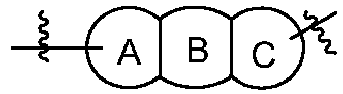


- In some embodiments, the structural moiety




- In some specific embodiments, the structural moiety


- In some embodiments, the structural moiety


- In some embodiments, the structural moiety


- In some specific embodiments, the structural moiety
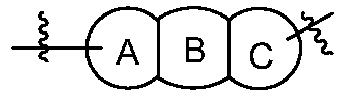


- In some specific embodiments, the structural moiety


- In some embodiments, the structural moiety




- In some specific embodiments, the structural moiety


- In some specific embodiments, the structural moiety


- In some embodiments, the structural moiety





- In some specific embodiments, the structural moiety




- In some specific embodiments, the structural moiety


- In some other embodiments, the structural moiety


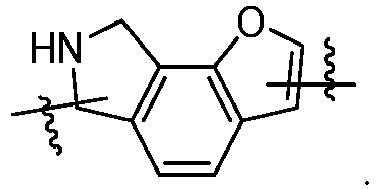
- In some other embodiments, the structural moiety




- In some other embodiments, the structural moiety


- In some embodiments, each R' is independently selected from the group consisting of halogen, -OH, -NH2, -CN, C1-3 alkyl, C1-3 alkoxy, and C1-3 haloalkyl.
- In some embodiments, each R' is independently selected from the group consisting of fluorine, chlorine, bromine, -OH, -NH2, and -CN. In some embodiments, each R' is independently selected from the group consisting of fluorine, chlorine, and bromine.
- In some embodiments, each R' is independently selected from fluorine.
- In some embodiments, n is selected from the group consisting of 0, 1, and 2. In some embodiments, n is selected from the group consisting of 0 and 1.
- In some embodiments, the structural moiety
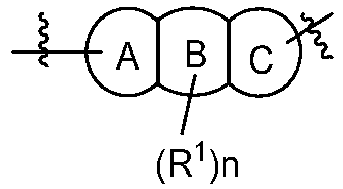


- In some specific embodiments, the structural moiety




- In some specific embodiments, the structural moiety


- In some specific embodiments, the structural moiety


- In some specific embodiments, the structural moiety
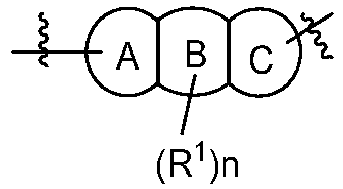

- In some specific embodiments, the structural moiety


- In some other embodiments, the structural moiety


- In some embodiments, PTM is

- T is selected from the group consisting of CH and N;
- R is selected from the group consisting of hydrogen and 5- to 6-membered heterocycloalkyl, wherein the heterocycloalkyl is optionally substituted with =O or C1-6 alkyl;
- ring E is selected from the group consisting of phenyl, benzocycloalkenyl, and benzoheterocycloalkenyl.
- In some specific embodiments, T is selected from CH.
- In some specific embodiments, R is selected from the group consisting of hydrogen, imidazolidinonyl, and imidazolidinonyl substituted with C1-4 alkyl; preferably, R is selected from the group consisting of hydrogen, imidazolidinonyl, 1-methyl-imidazolidinonyl, 1-ethyl-imidazolidinonyl, and 1-propyl-imidazolidinonyl.
- In some specific embodiments, ring E is selected from the group consisting of phenyl, benzopiperidinyl, benzodihydropyrrolyl, spiro[benzopyran-piperidine], and benzodihydrooxazinopiperazine. In some specific embodiments, ring E is selected from phenyl.
- In some specific embodiments, ring E is selected from phenyl, L is selected from -Cy1-LNK-Cy2-, and X2 is selected from CH, wherein Cy1, LNK, and Cy2 are as described herein.
- In some embodiments, PTM is





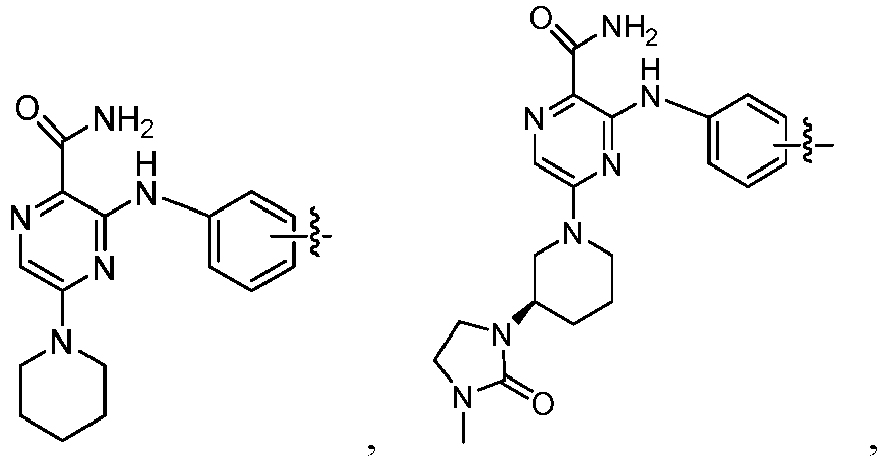
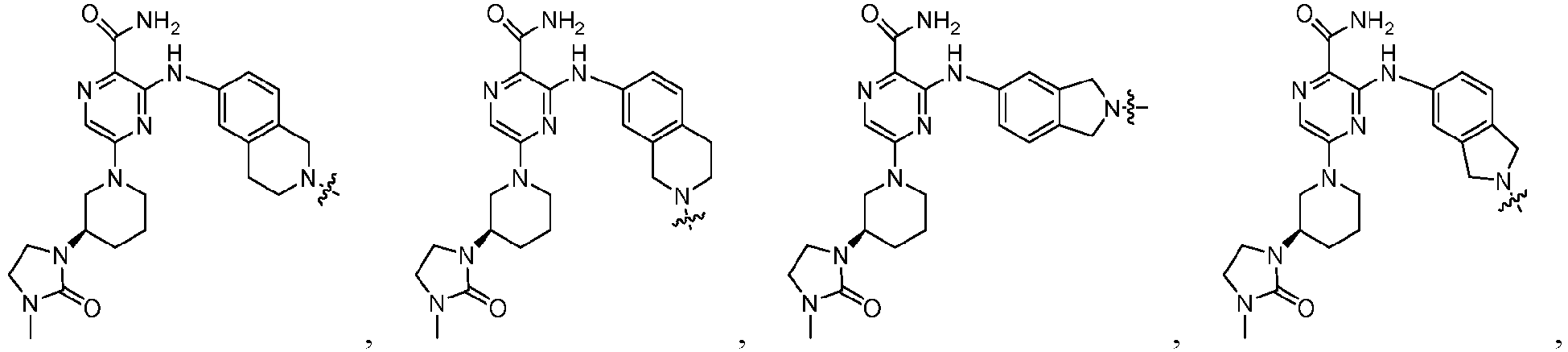

- In some embodiments, the structural moiety -Cy1-LNK-Cy2- is selected from the group consisting of -Cy1-, -Cy'-LNK-, -Cy1-Cy2-, -Cy1-LNK-Cy2-, -Cy2-, and -LNK-Cy2-. In some embodiments, the structural moiety -Cy1-LNK-Cy2- is selected from the group consisting of -Cy1-, -Cy1-Cy2-, and -Cy2-. In some specific embodiments, the structural moiety -Cy1-LNK-Cy2- is selected from the group consisting of -Cy'-LNK-, -Cy1-LNK-Cy2-, and -LNK-Cy2-. In some specific embodiments, the structural moiety -Cy1-LNK-Cy2- is selected from -Cy'-LNK-. In some specific embodiments, the structural moiety -Cy1-LNK-Cy2- is selected from -Cy1-LNK-Cy2-. In some specific embodiments, the structural moiety -Cy1-LNK-Cy2- is selected from -LNK-Cy2-.
- In some other embodiments, the structural moiety -Cy1-LNK-Cy2- is selected from the group consisting of -Cy1-, -Cy1-LNK, -Cy1-Cy2-, and -Cy1-LNK-Cy2-.
- In some embodiments, Cy1 is selected from the group consisting of a bond and the following groups optionally substituted with one or more Ra: C4-11 cycloalkyl or 4- to 11-membered heterocycloalkyl.
- In some embodiments, Cy1 is selected from the group consisting of a bond and the following groups optionally substituted with one or more Ra: C6-9 cycloalkyl or 4- to 11-membered heterocycloalkyl. In some embodiments, Cy1 is selected from the group consisting of a bond and the following groups optionally substituted with one or more Ra: C6-9 cycloalkyl (e.g., C6 cycloalkyl and C9 cycloalkyl) and 5- to 11-membered heterocycloalkyl containing 1-3 heteroatoms selected from the group consisting of N, O, and S (e.g., 1-3 or 1-2 heteroatoms selected from the group consisting of N and O).
- In some embodiments, Cy1 is selected from the group consisting of a bond and the following groups optionally substituted with one or more Ra: C6 cycloalkyl, C9 cycloalkyl, and 4-, 5-, 6-, 7-, 8-, 9-, 10-, or 11-membered heterocycloalkyl.
- In some embodiments, Cy1 is selected from the group consisting of a bond and the following groups optionally substituted with one or more Ra: C6 cycloalkyl, C9 cycloalkyl, and 4-, 6-, or 8- to 11-membered heterocycloalkyl. In some specific embodiments, Cy1 is selected from a bond. In some specific embodiments, Cy1 is selected from the group consisting of C6 cycloalkyl and C9 cycloalkyl, wherein the cycloalkyl is optionally substituted with one or more Ra. In some specific embodiments, Cy1 is selected from the group consisting of 4-, 6-, and 8- to 11-membered heterocycloalkyl, wherein the heterocycloalkyl is optionally substituted with one or more Ra. In some specific embodiments, Cy1 is selected from the group consisting of 4- and 6-membered heterocycloalkyl, wherein the heterocycloalkyl is optionally substituted with one or more Ra. In some specific embodiments, Cy1 is selected from the group consisting of 8- to 11-membered heterocycloalkyl, wherein the heterocycloalkyl is optionally substituted with one or more Ra. In some specific embodiments, Cy1 is selected from the group consisting of 8-, 9-, 10-, and 11-membered heterocycloalkyl, wherein the heterocycloalkyl is optionally substituted with one or more Ra.
- In some embodiments, Cy1 is selected from the group consisting of a bond and the following groups optionally substituted with one or more Ra: cyclohexyl, spirononanyl, azetidinyl, octahydrocyclopentapyrrolyl, piperidinyl, monoazaspirononanyl, diazaspirononanyl, azabicyclononanyl (e.g., monoazabicyclononanyl), monoazaspiroundecanyl, or diazaspiroundecanyl.
- In some specific embodiments, Cy1 is selected from the group consisting of cyclohexyl and spirononanyl. In some specific embodiments, Cy1 is selected from the group consisting of azetidinyl and piperidinyl. In some specific embodiments, Cy1 is selected from the group consisting of octahydrocyclopentapyrrolyl, monoazaspirononanyl, diazaspirononanyl, azabicyclononanyl, monoazaspiroundecanyl, and diazaspiroundecanyl. In some specific embodiments, Cy1 is selected from the group consisting of a bond, piperidinyl, cyclohexyl, spirononanyl, monoazaspirononanyl, octahydrocyclopentapyrrolyl, monoazaspiroundecanyl, monooxamonoazaspiroundecanyl, and azabicyclononanyl.
- In some embodiments, Cy1 is selected from the group consisting of a bond and the following groups optionally substituted with one or more Ra:



- In some embodiments, Cy1 is selected from the group consisting of a bond and the following groups optionally substituted with one or more Ra:


- In some specific embodiments, Cy1 is selected from the group consisting of

- In some specific embodiments, Cy1 is selected from the group consisting of


- In some other embodiments, Cy1 is selected from the group consisting of 4- to 11-membered heterocycloalkyl optionally substituted with one or more Ra.
- In some other embodiments, Cy1 is selected from the group consisting of 5-, 6-, 7-, 8-, 9-, 10-, and 11-membered heterocycloalkyl optionally substituted with one or more Ra.
- In some other embodiments, Cy1 is selected from the group consisting of 6-, and 9- to 11-membered heterocycloalkyl optionally substituted with one or more Ra.
- In some other embodiments, Cy1 is selected from the group consisting of 6-, 9-, and 11-membered heterocycloalkyl optionally substituted with one or more Ra.
- In some other embodiments, Cy1 is selected from the group consisting of piperidinyl, monoazaspirononane, diazaspirononane, and diazaspiroundecane optionally substituted with one or more Ra.
- In some other embodiments, Cy1 is selected from the group consisting of


- In some embodiments, LNK is selected from the group consisting of a bond, C1-6 alkylene, and C1-6 heteroalkylene.
- In some embodiments, LNK is selected from the group consisting of a bond and C1-4 alkylene.
- In some embodiments, LNK is selected from the group consisting of a bond and C1-3 alkylene.
- In some embodiments, LNK is selected from the group consisting of a bond and -CH2-. In some specific embodiments, LNK is selected from a bond. In some specific embodiments, LNK is selected from -CH2-.
- In some embodiments, Cy2 is absent or selected from the group consisting of C4-11 cycloalkyl and 4- to 11-membered heterocycloalkyl, wherein the cycloalkyl or heterocycloalkyl is optionally substituted with one or more Rb. In some specific embodiments, Cy2 is absent. In some specific embodiments, Cy2 is selected from the group consisting of C4-11 cycloalkyl and 4- to 11-membered heterocycloalkyl, wherein the cycloalkyl or heterocycloalkyl is optionally substituted with one or more Rb.
- In some embodiments, Cy2 is absent or selected from the group consisting of C4-6 cycloalkyl and 4- to 6-membered heterocycloalkyl, wherein the cycloalkyl or heterocycloalkyl is optionally substituted with one or more Rb. In some specific embodiments, Cy2 is selected from the group consisting of C4-6 cycloalkyl and 4- to 6-membered heterocycloalkyl, wherein the cycloalkyl or heterocycloalkyl is optionally substituted with one or more Rb. In some embodiments, Cy2 is absent or selected from the group consisting of C4-6 cycloalkyl and 4- to 6-membered heterocycloalkyl, wherein the cycloalkyl or heterocycloalkyl is optionally substituted with one or more Rb, wherein the heterocycloalkyl comprises 1-3 (e.g., 1-2) heteroatoms selected from the group consisting of N, O, and S (e.g., Nor O).
- In some embodiments, Cy2 is absent or selected from the group consisting of cyclobutyl, cyclopentyl, cyclohexyl, azetidinyl, pyrrolidinyl, and piperidinyl, wherein the cyclobutyl, cyclopentyl, azetidinyl, pyrrolidinyl, or piperidinyl is optionally substituted with one or more Rb.
- In some embodiments, Cy2 is absent or selected from the group consisting of


- In some embodiments, Cy2 is absent or selected from the group consisting of


- In some other embodiments, Cy2 is absent or selected from the group consisting of cyclobutyl, cyclopentyl, azetidinyl, pyrrolidinyl, and piperidinyl, wherein the cyclobutyl, cyclopentyl, azetidinyl, pyrrolidinyl, or piperidinyl is optionally substituted with one or more Rb.
- In some other embodiments, Cy2 is selected from the group consisting of


- In some embodiments, Ra and Rb are each independently selected from the group consisting of halogen, -OH, -NH2, -CN, C1-3 alkyl, C1-3 alkoxy, C1-3 haloalkyl, C1-3 alkylamino, and di-C1-3 alkylamino.
- In some embodiments, Ra and Rb are each independently selected from the group consisting of halogen, -OH, -NH2, -CN, and C1-3 alkyl.
- In some embodiments, Ra and Rb are each independently selected from the group consisting of halogen, -OH, -NH2, and -CN.
- In some embodiments, the structural moiety -Cy'-LNK- is selected from the group consisting of a bond, -CH2-,



- In some specific embodiments, the structural moiety -Cy'-LNK- is selected from the group consisting of


- In some other embodiments, the structural moiety -Cy'-LNK- is selected from the group consisting of

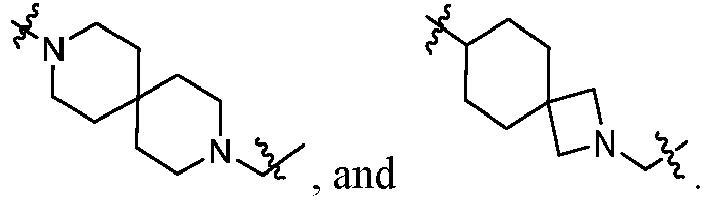
- In some embodiments, the structural moiety -LNK-Cy2- is selected from the group consisting of a bond, -CH2-,


- In some other embodiments, the structural moiety -LNK-Cy2- is selected from the group consisting of a bond,


- In some embodiments, the structural moiety -Cy1-Cy2- is selected from the group consisting of


- In some other embodiments, the structural moiety -Cy1-Cy2- is selected from the group consisting of

- In some embodiments, the structural moiety -Cy1-LNK-Cy2- is selected from the group consisting of a bond,


- In some specific embodiments, the structural moiety -Cy1-LNK-Cy2- is selected from the group consisting of



- In some other embodiments, the structural moiety -Cy1-LNK-Cy2- is selected from the group consisting of


- In some embodiments, the structural moiety





- In some other embodiments, the structural moiety






- In some embodiments, T is selected from CH. In some embodiments, T is selected from N.
- In some embodiments, R is selected from the group consisting of hydrogen and 5- to 6-membered heterocycloalkyl, wherein the heterocycloalkyl is optionally substituted with =O or C1-3 alkyl.
- In some embodiments, R is selected from the group consisting of hydrogen and 5-membered heterocycloalkyl, wherein the heterocycloalkyl is optionally substituted with =O or C1-3 alkyl.
- In some embodiments, R is selected from the group consisting of hydrogen and imidazolinyl, wherein the imidazolinyl is optionally substituted with =O or methyl.
- In some embodiments, R is selected from the group consisting of hydrogen and

- In some embodiments, the present application relates to a compound of formula I, a stereoisomer thereof, or a pharmaceutically acceptable salt thereof, wherein, ring A is absent or selected from the group consisting of C5-8 cycloalkenyl, 5- to 9-membered heterocycloalkenyl (preferably 5- to 8-membered heterocycloalkenyl or 5- to 7-membered heterocycloalkenyl), and phenyl; or, ring A is absent or selected from the group consisting of C5-6 cycloalkenyl, 5- to 9-membered heterocycloalkenyl (preferably 5- to 8-membered heterocycloalkenyl or 5- to 7-membered heterocycloalkenyl), and phenyl; preferably, ring A is absent or selected from the group consisting of C5-6 cycloalkenyl, 5- to 7-membered heterocycloalkenyl containing 1-2 heteroatoms selected from the group consisting of N, O, and S (preferably containing 1-2 N atoms, e.g., 1 N atom), and phenyl; or, preferably, ring A is selected from the group consisting of C5-6 cycloalkenyl and 5- to 7-membered heterocycloalkenyl containing 1-2 heteroatoms selected from the group consisting of N, O, and S (preferably containing 1-2 N atoms, e.g., 1 N atom);
- ring B is selected from phenyl;
- ring C is selected from the group consisting of isoxazolyl and furanyl;
- each R' is independently selected from the group consisting of fluorine, chlorine, and bromine; n is selected from the group consisting of 0, 1, and 2, preferably 0 and 1;
- preferably,

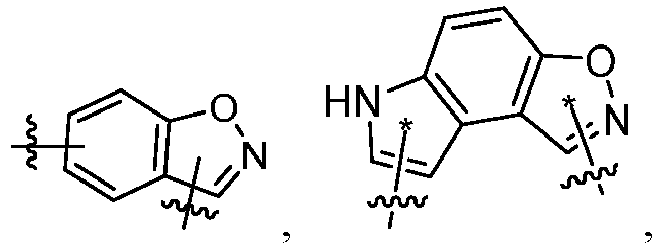


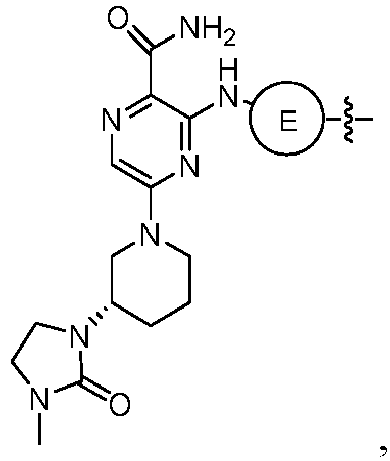
- T is selected from the group consisting of CH and N, preferably selected from CH;
- R is selected from the group consisting of hydrogen and 5- to 6-membered heterocycloalkyl, wherein the heterocycloalkyl is optionally substituted with =O or C1-6 alkyl; preferably, R is selected from the group consisting of hydrogen, imidazolidinonyl, and imidazolidinonyl substituted with C1-4 alkyl; more preferably, R is selected from the group consisting of hydrogen, imidazolidinonyl, 1-methyl-imidazolidinonyl, 1-ethyl-imidazolidinonyl, and 1-propyl-imidazolidinonyl;
- ring E is selected from the group consisting of phenyl, benzocycloalkenyl, and benzoheterocycloalkenyl; preferably, ring E is selected from the group consisting of phenyl, benzopiperidinyl, benzodihydropyrrolyl, spiro[benzopyran-piperidine], and benzodihydrooxazinopiperazine;
- Cy1 is selected from the group consisting of a bond and the following groups optionally substituted with one or more Ra: C6-9 cycloalkyl or 5- to 11-membered heterocycloalkyl containing 1-3 heteroatoms selected from the group consisting of N, O, and S (e.g., 1-3 or 1-2 heteroatoms selected from the group consisting of N and O);
- LNK is selected from the group consisting of a bond and C1-4 alkylene; preferably, LNK is selected from the group consisting of a bond and C1-3 alkylene;
- Cy2 is absent or selected from the group consisting of C4-6 cycloalkyl and 4- to 6-membered heterocycloalkyl, wherein the cycloalkyl or heterocycloalkyl is optionally substituted with one or more Rb; preferably, Cy2 is absent or selected from the group consisting of C4-6 cycloalkyl and 4- to 6-membered heterocycloalkyl, wherein the heterocycloalkyl comprises 1-2 heteroatoms selected from the group consisting of N and O.
- In some specific embodiments, the present application relates to a compound of formula I, a stereoisomer thereof, or a pharmaceutically acceptable salt thereof, wherein
- ring A is absent or selected from the group consisting of cyclopentenyl, dihydropyrrolyl, tetrahydropyridinyl, tetrahydroazepinyl, and phenyl; preferably, ring A is selected from the group consisting of cyclopentenyl, dihydropyrrolyl, tetrahydropyridinyl, and tetrahydroazepinyl, and more preferably, ring A is selected from the group consisting of dihydropyrrolyl, tetrahydropyridinyl, and tetrahydroazepinyl;
- preferably, the structural moiety


- PTM is


- Cy1 is selected from the group consisting of a bond, piperidinyl, cyclohexyl, spirononanyl, monoazaspirononanyl, octahydrocyclopentapyrrolyl, monoazaspiroundecanyl, monooxamonoazaspiroundecanyl, and azabicyclononanyl;
- preferably, Cy1 is selected from the group consisting of a bond,


- LNK is selected from the group consisting of a bond and C1-3 alkylene; preferably, LNK is selected from the group consisting of a bond and -CH2-;
- In some embodiments, Cy2 is absent or selected from the group consisting of cyclobutyl, cyclopentyl, cyclohexyl, azetidinyl, pyrrolidinyl, and piperidinyl, wherein the cyclobutyl, cyclopentyl, azetidinyl, pyrrolidinyl, or piperidinyl is optionally substituted with one or more Rb; preferably, Cy2 is absent or selected from the group consisting of

- In some embodiments, the heteroatom of the heterocycloalkenyl or heterocycloalkyl is selected from the group consisting of N, NH, O, and S. In some embodiments, the heteroatom of the heterocycloalkenyl or heterocycloalkyl is selected from the group consisting of N, O, and S. In some embodiments, the heteroatom of the heteroaryl is selected from the group consisting of N, O, and S. In some embodiments, the heteroatom of the heteroalkylene is selected from the group consisting of N, NH, O, S, S(O), and S(O)2.
- In some embodiments, the number of the heteroatom of the heterocycloalkenyl, heterocycloalkyl, heteroalkylene, or heteroaryl is selected from the group consisting of 1, 2, 3, 4, 5, and 6. In some embodiments, the number of the heteroatom of the heterocycloalkenyl, heterocycloalkyl, heteroalkylene, or heteroaryl is selected from the group consisting of 1, 2, 3, and 4. In some embodiments, the number of the heteroatom of the heterocycloalkenyl, heterocycloalkyl, heteroalkylene, or heteroaryl is selected from the group consisting of 1, 2, and 3.
- The present application also relates to compounds of formula I'-1A, formula I'-2A, formula I'-1A-1, formula I'-2A-1, formula I'-3A-1, formula I'-3A-2, formula I'-4A-1, and formula I'-4A-2, stereoisomers thereof, or pharmaceutically acceptable salts thereof,


X is selected from the group consisting of CH and N. - In some embodiments, the structural moiety
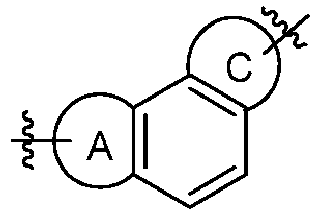

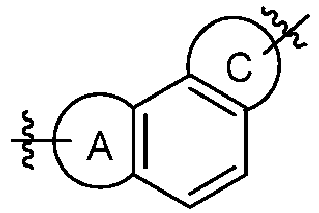


- In some embodiments, the structural moiety


- In some specific embodiments, the structural moiety


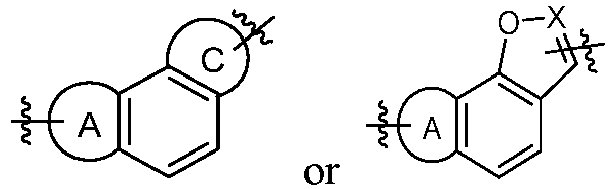




- In some embodiments, the structural moiety


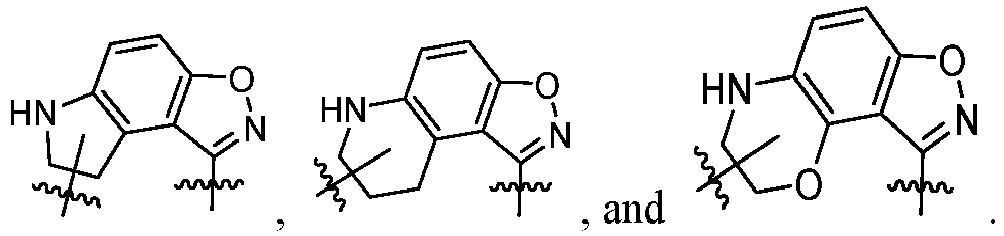
- In some specific embodiments, the structural moiety


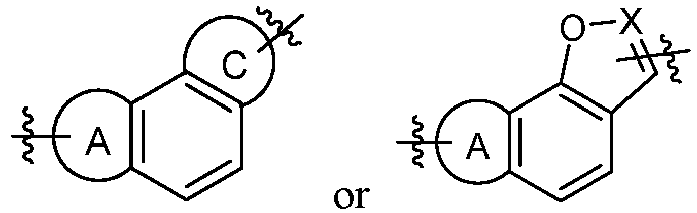



- In some embodiments, the structural moiety


- In some specific embodiments, the structural moiety


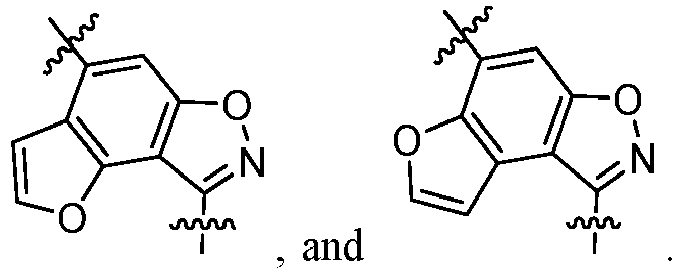

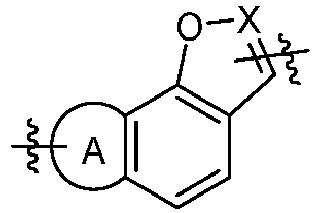





- In some other embodiments, the structural moiety
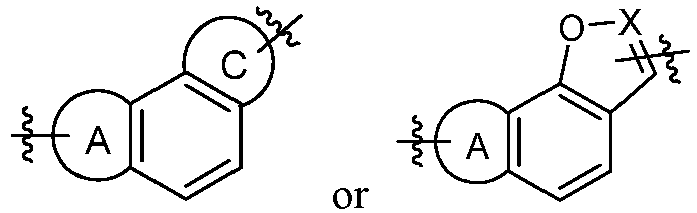


- In some other embodiments, the structural moiety


- In some other embodiments, the structural moiety




- In some embodiments, the structural moiety -Cy'-LNK-, -LNK-Cy2-, -Cy1-Cy2-, or -Cy1-LNK-Cy2- are as described herein.
- The present application also relates to a compound of a formula selected from the group consisting of the following formulas, a stereoisomer thereof, and a pharmaceutically acceptable salt thereof:


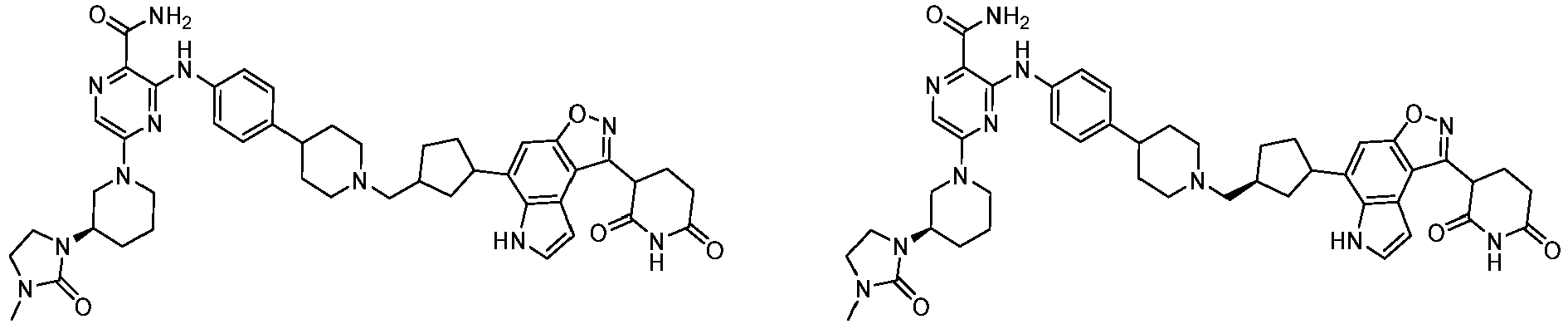


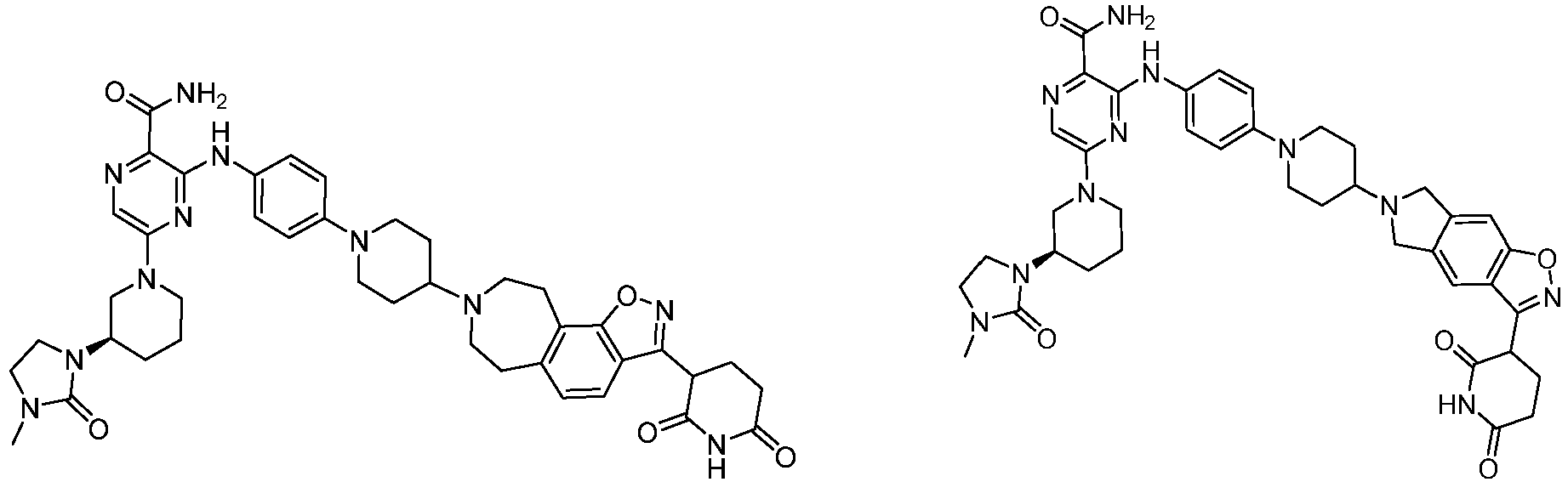





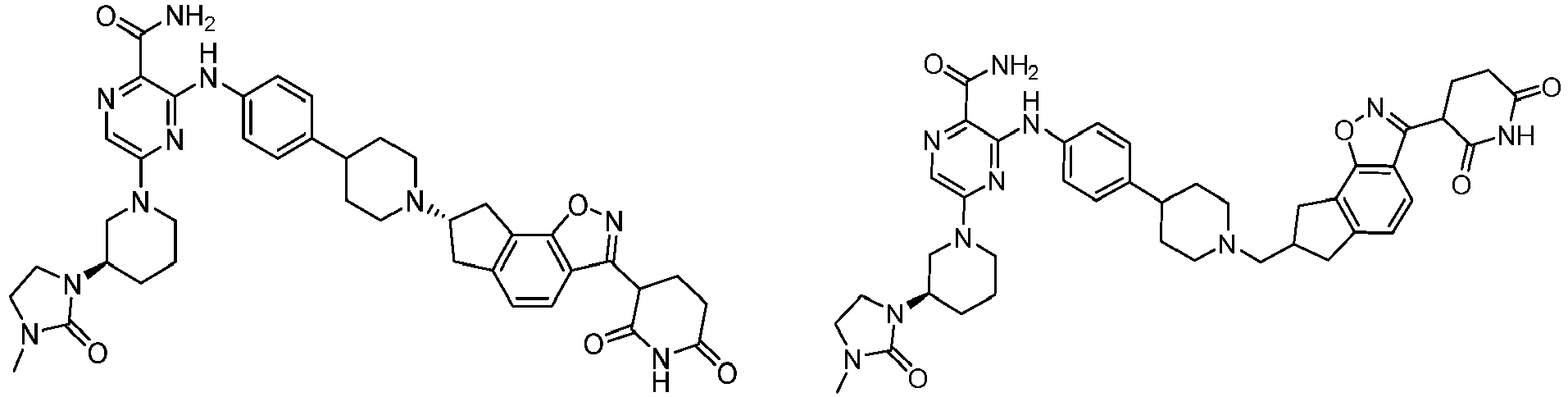


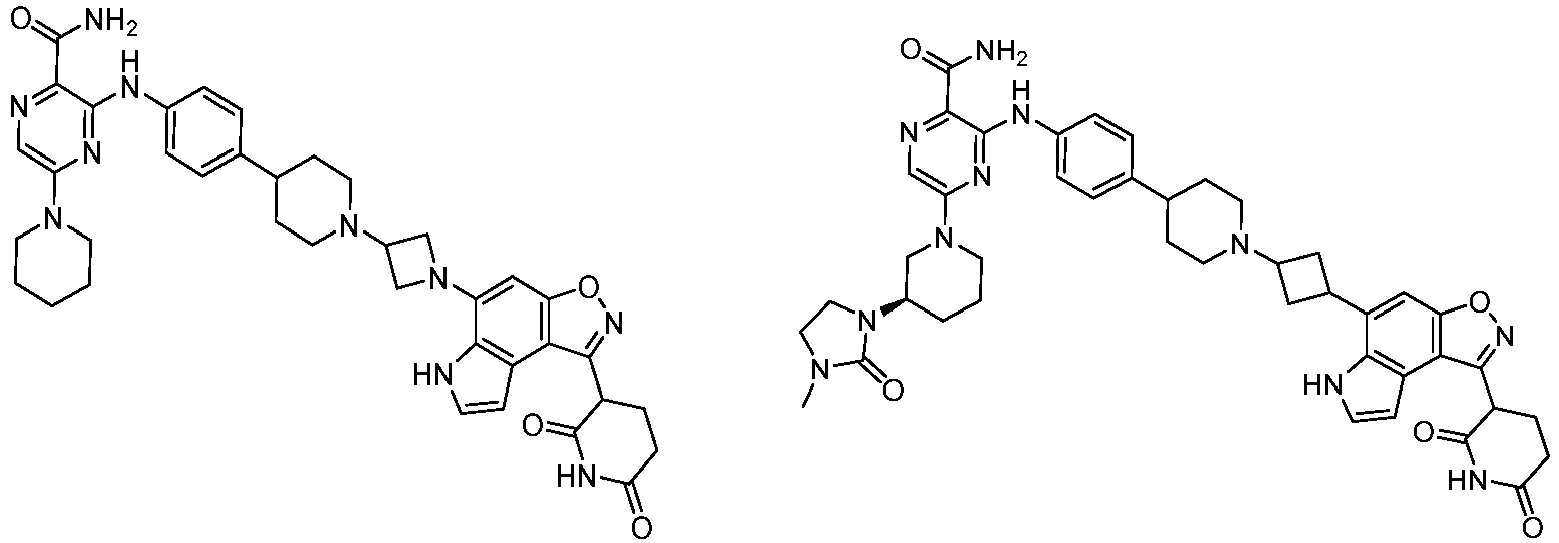


- In another aspect, the present application relates to a compound of formula I", a stereoisomer thereof, or a pharmaceutically acceptable salt thereof,


- ring A is selected from the group consisting of C5-10 cycloalkenyl, 5- to 10-membered heterocycloalkenyl, phenyl, and 5- to 6-membered heteroaryl; or, ring A is selected from the group consisting of C5-8 cycloalkenyl, 5- to 10-membered heterocycloalkenyl, phenyl, and 5- to 6-membered heteroaryl; or, ring A is selected from the group consisting of C5-7 cycloalkenyl, 5- to 10-membered heterocycloalkenyl, phenyl, and 5- to 6-membered heteroaryl; or, ring A is selected from the group consisting of C5-6 cycloalkenyl, 5- to 10-membered heterocycloalkenyl, phenyl, and 5- to 6-membered heteroaryl; or, ring A is selected from the group consisting of C5-10 cycloalkenyl and 5- to 10-membered heterocycloalkenyl; or, ring A is selected from the group consisting of C5-8 cycloalkenyl and 5-to 10-membered heterocycloalkenyl; or, ring A is selected from the group consisting of C5-6 cycloalkenyl and 5- to 9-membered heterocycloalkenyl;
- PTM is selected from the group consisting of drugs and derivatives thereof that bind to the target protein;
- L is selected from a connecting group;
- R' and n are as defined herein.
- In another aspect, the present application relates to a compound of formula I"-1, a moiety, a stereoisomer thereof, a derivative (such as a Protac molecule), or a pharmaceutically acceptable salt thereof,


- ring A is selected from the group consisting of C5-10 cycloalkenyl, 5- to 10-membered heterocycloalkenyl, phenyl, and 5- to 6-membered heteroaryl; or, ring A is selected from the group consisting of C5-8 cycloalkenyl, 5- to 10-membered heterocycloalkenyl, phenyl, and 5- to 6-membered heteroaryl; or, ring A is selected from the group consisting of C5-7 cycloalkenyl, 5- to 10-membered heterocycloalkenyl, phenyl, and 5- to 6-membered heteroaryl; or, ring A is selected from the group consisting of C5-6 cycloalkenyl, 5- to 10-membered heterocycloalkenyl, phenyl, and 5- to 6-membered heteroaryl; or, ring A is selected from the group consisting of C5-10 cycloalkenyl and 5- to 10-membered heterocycloalkenyl; or, ring A is selected from the group consisting of C5-8 cycloalkenyl and 5-to 10-membered heterocycloalkenyl; or, ring A is selected from the group consisting of C5-6 cycloalkenyl and 5- to 9-membered heterocycloalkenyl;
- L is selected from a connecting group;
- R' and n are as defined herein.
- In some embodiments of the present application, the compound of formula I"-1, the moiety, the stereoisomer thereof, the derivative (such as a Protac molecule), or the pharmaceutically acceptable salt thereof is selected from the group consisting of a compound of formula I", a stereoisomer thereof, and a pharmaceutically acceptable salt thereof.
- In some embodiments, ring A is selected from the group consisting of C5-8 cycloalkenyl (or C5-7 cycloalkenyl), 5-to 9-membered heterocycloalkenyl, phenyl, pyrrolyl, pyrazolyl, furanyl, and oxazolyl.
- In some embodiments, ring A is selected from the group consisting of C5-6 cycloalkenyl, 5- to 9-membered heterocycloalkenyl, phenyl, pyrrolyl, pyrazolyl, furanyl, and oxazolyl.
- In some embodiments, ring A is selected from the group consisting of C5 cycloalkenyl, C6 cycloalkenyl, 5-, 6-, 7-, 8-, or 9-membered heterocycloalkenyl, phenyl, pyrrolyl, pyrazolyl, furanyl, and oxazolyl.
- In some embodiments, ring A is selected from the group consisting of cyclopentenyl, bicyclohexenyl, dihydropyrrolyl, tetrahydropyridinyl, tetrahydroazepinyl, azaspirooctenyl, dihydrooxazinyl, azaspirononenyl, phenyl, pyrrolyl, pyrazolyl, furanyl, and oxazolyl.
- In some specific embodiments, ring A is selected from the group consisting of C5-8 cycloalkenyl and 5- to 9-membered heterocycloalkenyl. In some specific embodiments, ring A is selected from the group consisting of C5-7 cycloalkenyl and 5- to 9-membered heterocycloalkenyl. In some specific embodiments, ring A is selected from the group consisting of C5-6 cycloalkenyl and 5- to 9-membered heterocycloalkenyl. In some specific embodiments, ring A is selected from 5- to 8-membered heterocycloalkenyl. In some specific embodiments, ring A is selected from the group consisting of 6- to 8-membered heterocycloalkenyl. In some specific embodiments, ring A is selected from 5-membered heterocycloalkenyl. In some specific embodiments, ring A is selected from 6-membered heterocycloalkenyl. In some specific embodiments, ring A is selected from 7-membered heterocycloalkenyl. In some specific embodiments, ring A is selected from 8-membered heterocycloalkenyl. In some specific embodiments, ring A is selected from 9-membered heterocycloalkenyl.
- In some specific embodiments, ring A is selected from the group consisting of cyclopentenyl, bicyclohexenyl, dihydropyrrolyl, tetrahydropyridinyl, dihydrooxazinyl, tetrahydroazepinyl, azaspirooctenyl, and azaspirononenyl. In some specific embodiments, ring A is selected from the group consisting of cyclopentenyl and bicyclohexenyl. In some embodiments, ring A is selected from the group consisting of dihydropyrrolyl, dihydrooxazinyl, tetrahydropyridinyl, tetrahydroazepinyl, azaspirooctenyl, and azaspirononenyl.
- In some embodiments, ring A is selected from the group consisting of phenyl, pyrrolyl, pyrazolyl, furanyl, and oxazolyl.
- In some other embodiments, ring A is selected from the group consisting of C5-7 cycloalkenyl, 5- to 8-membered heterocycloalkenyl, phenyl, and pyrrolyl.
- In some other embodiments, ring A is selected from the group consisting of C5-6 cycloalkenyl, 5- to 8-membered heterocycloalkenyl, phenyl, and pyrrolyl.
- In some other embodiments, ring A is selected from the group consisting of C5 cycloalkenyl, 5-, 6-, 7-, or 8-membered heterocycloalkenyl, phenyl, and pyrrolyl.
- In some other embodiments, ring A is selected from the group consisting of cyclopentenyl, dihydropyrrolyl, tetrahydropyridinyl, tetrahydroazepinyl, azaspirooctene, phenyl, and pyrrolyl.
- In some other embodiments, ring A is selected from the group consisting of C5-6 cycloalkenyl and 5- to 8-membered heterocycloalkenyl.
- In some other embodiments, ring A is selected from the group consisting of cyclopentenyl, dihydropyrrolyl, tetrahydropyridinyl, tetrahydroazepinyl, and azaspirooctene.
- In some other embodiments, ring A is selected from cyclopentenyl. In some embodiments, ring A is selected from the group consisting of dihydropyrrolyl, tetrahydropyridinyl, tetrahydroazepinyl, and azaspirooctene.
- In some other embodiments, ring A is selected from the group consisting of phenyl and pyrrolyl.
- In some embodiments, the structural moiety


- In some other embodiments, the structural moiety


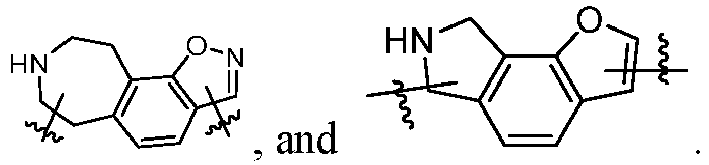
- In some embodiments, the structural moiety


- In some embodiments, the structural moiety





- In some embodiments, the structural moiety


- In some other embodiments, the structural moiety



- In some embodiments, L is selected from the group consisting of -Cy1-LNK-Cy2-LNK-, -Cy1-LNK-Cy2-, and -Cy1-Cy2-LNK-; in some embodiments, L is selected from -Cy1-LNK-Cy2-; in some embodiments, Cy1, LNK, Cy2, -Cy'-LNK-, -LNK-Cy2-, -Cy1-Cy2-, or -Cy1-LNK-Cy2- is as described herein; further, in some embodiments, the moiety


- Further, in some other embodiments, the moiety





- In some embodiments, the PTM is as described herein.
- In some embodiments, PTM is selected from

- In some embodiments, PTM is selected from

- In another aspect, the present application relates to a compound of formula III below, a moiety, an isomer (e.g., a stereoisomer) thereof, a derivative (such as a Protac molecule) thereof, or a pharmaceutically acceptable salt thereof:

- wherein ring A is selected from the group consisting of C5-10 cycloalkenyl and 5- to 10-membered heterocycloalkenyl;
- ring B is selected from phenyl;
- ring C is selected from the group consisting of isoxazolyl and furanyl;
- n is as defined herein;
- each R' is independently selected from the group consisting of halogen, -OH, -NH2, -CN, =O, C1-4 alkoxy, -CHO, C3-6 cycloalkyl, 3- to 10-membered heterocycloalkyl, and C1-4 alkyl, wherein the C3-6 cycloalkyl, 3- to 10-membered heterocycloalkyl, or C1-4 alkyl is optionally substituted with halogen, -OH, -NH2, or C1-4 alkyl-OH. In some embodiments, the compound of formula III is not selected from the following compound:

- In some embodiments, the heterocycloalkenyl comprises at least one N atom.
- In some embodiments, ring A is selected from the group consisting of C5-8 cycloalkenyl and 5- to 10-membered heterocycloalkenyl; or
- ring A is selected from the group consisting of C5-7 cycloalkenyl and 5- to 10-membered heterocycloalkenyl; or
- ring A is selected from the group consisting of C5-6 cycloalkenyl and 5- to 10-membered heterocycloalkenyl; or,
- ring A is selected from the group consisting of C5-6 cycloalkenyl and 5- to 9-membered heterocycloalkenyl.
- In some embodiments, the structural moiety


- In some embodiments, the structural moiety


- In some embodiments, the structural moiety


- In some embodiments, the structural moiety


- In some specific embodiments, the structural moiety


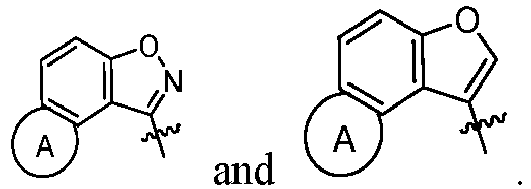
- In some embodiments, the structural moiety


- In another aspect, the present application relates to a compound of formula III-1 below, a moiety, an isomer (e.g., a stereoisomer) thereof, a derivative (such as a Protac molecule) thereof, or a pharmaceutically acceptable salt thereof:
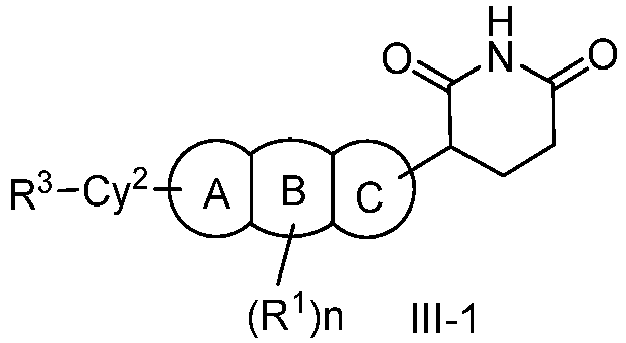
- In another aspect, the present application relates to a compound of formula I‴-1a or I‴-2a below, a moiety, an isomer (e.g., a stereoisomer) thereof, a derivative (such as a Protac molecule) thereof, or a pharmaceutically acceptable salt thereof:

- ring A is selected from the group consisting of C5-10 cycloalkenyl and 5- to 10-membered heterocycloalkenyl; or,
- ring A is selected from the group consisting of C5-8 cycloalkenyl and 5- to 10-membered heterocycloalkenyl; or,
- ring A is selected from the group consisting of C5-7 cycloalkenyl and 5- to 10-membered heterocycloalkenyl; or,
- ring A is selected from the group consisting of C5-6 cycloalkenyl and 5- to 10-membered heterocycloalkenyl;
- n is as defined herein;
- each R' is independently selected from the group consisting of halogen, -OH, -NH2, -CN, =O, C1-4 alkoxy, -CHO, C3-6 cycloalkyl, 3- to 10-membered heterocycloalkyl, and C1-4 alkyl, wherein the C3-6 cycloalkyl, 3- to 10-membered heterocycloalkyl, or C1-4 alkyl is optionally substituted with halogen, -OH, -NH2, or C1-4 alkyl-OH; or, each R' is independently selected from the group consisting of halogen, -OH, -NH2, -CN, =O, C1-4 alkoxy, -CHO, C3-6 cycloalkyl, and C1-4 alkyl, wherein the C3-6 cycloalkyl or C1-4 alkyl is optionally substituted with halogen, -OH, -NH2, or C1-4 alkyl-OH;
- X2 is selected from the group consisting of CH and N.
- In some embodiments, each R' is independently selected from the group consisting of halogen, -OH, -NH2, -CN, =O, C1-3 alkoxy, -CHO, C3-4 cycloalkyl, and C1-3 alkyl, wherein the C3-4 cycloalkyl or C1-3 alkyl is optionally substituted with halogen, -OH, -NH2, or C1-3 alkyl-OH.
- In some embodiments, each R' is independently selected from the group consisting of halogen, -OH, -NH2, -CN, =O, methoxy, -CHO, cyclobutyl, and methyl, wherein the cyclobutyl or methyl is optionally substituted with halogen, -OH, -NH2, or CH2OH.
- In some embodiments, each R' is independently selected from the group consisting of F, -OH, -NH2, -CH2OH, =O, -CHO, -CH2NH2, and

- In some specific embodiments, each R' is independently selected from the group consisting of halogen, -OH, -NH2, -CN, =O, methoxy, -CHO, and C1-3 alkyl, wherein the C1-3 alkyl is optionally substituted with halogen, -OH, or -NH2.
- In some specific embodiments, each R' is independently selected from the group consisting of halogen, -OH, -NH2, -CN, =O, methoxy, -CHO, and methyl, wherein the methyl is optionally substituted with -OH or -NH2.
- In some specific embodiments, each R' is independently selected from the group consisting of F, -OH, -NH2, -CH2OH, =O, -CHO, and -CH2NH2.
- In some embodiments, the moiety


- In another aspect, the present application relates to a compound of formula I‴-1 or I‴-2 below, a moiety, an isomer (e.g., a stereoisomer) thereof, a derivative (such as a Protac molecule) thereof, or a pharmaceutically acceptable salt thereof:

- ring A is selected from the group consisting of C5-10 cycloalkenyl and 5- to 10-membered heterocycloalkenyl; or,
- ring A is selected from the group consisting of C5-8 cycloalkenyl and 5- to 10-membered heterocycloalkenyl; or,
- ring A is selected from the group consisting of C5-7 cycloalkenyl and 5- to 10-membered heterocycloalkenyl; or,
- ring A is selected from the group consisting of C5-6 cycloalkenyl and 5- to 10-membered heterocycloalkenyl; R' and n are as defined herein.
- In some embodiments, ring A is selected from the group consisting of C5-6 cycloalkenyl and 5- to 9-membered heterocycloalkenyl. In some embodiments, ring A is selected from the group consisting of C5 cycloalkenyl, C6 cycloalkenyl, 5-, 6-, 7-, 8-, and 9-membered heterocycloalkenyl.
- In some embodiments, ring A is selected from the group consisting of cyclopentenyl, bicyclohexenyl, dihydropyrrolyl, tetrahydropyridinyl, tetrahydroazepinyl, dihydrooxazinyl, azaspirooctenyl, and azaspirononenyl. In some embodiments, ring A is selected from the group consisting of cyclopentenyl and bicyclohexenyl. In some embodiments, ring A is selected from the group consisting of dihydropyrrolyl, tetrahydropyridinyl, tetrahydroazepinyl, dihydrooxazinyl, azaspirooctenyl, and azaspirononenyl.
- In some embodiments, ring A is selected from the group consisting of
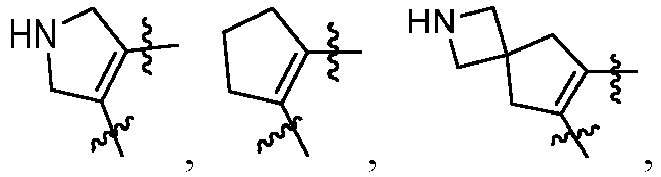

- In some embodiments, ring A is selected from the group consisting of


- In some other embodiments, ring A is selected from the group consisting of C5-8 cycloalkenyl and 5- to 8-membered heterocycloalkenyl. In some other embodiments, ring A is selected from the group consisting of C5-6 cycloalkenyl and 5- to 8-membered heterocycloalkenyl. In some embodiments, ring A is selected from the group consisting of C5 cycloalkenyl, 5-, 6-, 7-, and 8-membered heterocycloalkenyl.
- In some other embodiments, ring A is selected from the group consisting of cyclopentenyl, dihydropyrrolyl, tetrahydropyridinyl, tetrahydroazepinyl, and azaspirooctene.
- In some other embodiments, ring A is selected from cyclopentenyl. In some embodiments, ring A is selected from the group consisting of dihydropyrrolyl, tetrahydropyridinyl, tetrahydroazepinyl, and azaspirooctene.
- In some other embodiments, ring A is selected from the group consisting of


- The present application relates to the following compound, a moiety, a stereoisomer thereof, a derivative (such as a Protac molecule) thereof, or a pharmaceutically acceptable salt thereof:


- In another aspect, the present application relates to a compound of formula I‴-1c or I‴-2d below, a moiety, a stereoisomer thereof, a derivative (such as a Protac molecule) thereof, or a pharmaceutically acceptable salt thereof:

- ring A, n, and R1 are as defined herein;
- X2 is selected from the group consisting of CH and N;
- L' is selected from C0-3 alkylene;
- Cy3 is selected from the group consisting of C3-8 cycloalkyl and 3- to 8-membered heterocycloalkyl;
- R2 is selected from the group consisting of -CHO, OH, SH, NH2, COOH, and C1-6 alkyl substituted with one or more SH, OH, or NH2;
- p is selected from the group consisting of 0, 1, 2, and 3.
- In some embodiments, ring A is selected from the group consisting of C5-9 cycloalkenyl, 5- to 9-membered heterocycloalkenyl, phenyl, and 5- to 6-membered heteroaryl.
- In some embodiments, ring A is selected from the group consisting of C5-7 cycloalkenyl, 5- to 9-membered heterocycloalkenyl, phenyl, and 5- to 6-membered heteroaryl.
- In some embodiments, ring A is selected from the group consisting of C5-6 cycloalkenyl, 5- to 9-membered heterocycloalkenyl, phenyl, and 5- to 6-membered heteroaryl.
- In some embodiments, ring A is selected from the group consisting of 5- to 6-membered heterocycloalkenyl, phenyl, and 5-membered heteroaryl.
- In some embodiments, ring A is selected from the group consisting of dihydropyrrolyl, tetrahydropyridinyl, dihydrooxazinyl, phenyl, pyrrolyl, pyrazolyl, and furanyl.
- In some embodiments, the moiety

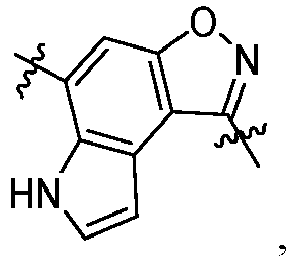


- In some embodiments, L' is selected from the group consisting of a bond and -CH2-.
- In some embodiments, Cy3 is selected from the group consisting of C3-6 cycloalkyl and 4- to 6-membered heterocycloalkyl.
- In some embodiments, Cy3 is selected from the group consisting of C4-6 cycloalkyl, 4-membered heterocycloalkyl, and 6-membered heterocycloalkyl.
- In some embodiments, Cy3 is selected from the group consisting of cyclobutyl, cyclopentyl, cyclohexyl, azetidinyl, and piperidinyl.
- In some embodiments, R2 is selected from the group consisting of -CHO, OH, and C1-3 alkyl substituted with one or more OH or NH2.
- In some embodiments, R2 is selected from the group consisting of -CHO, OH, and methyl substituted with one or more OH.
- In some embodiments, R2 is selected from the group consisting of -CHO, OH, and -CH2OH.
- In some embodiments, X2 is selected from CH.
- In some embodiments, p is selected from the group consisting of 0, 1, and 2.
- In some embodiments, p is selected from the group consisting of 0 and 1. In some embodiments, p is selected from 0. In some embodiments, p is selected from 1.
- In some embodiments, the structural moiety


- The present application relates to the following compound, a moiety, a stereoisomer thereof, a derivative (such as a Protac molecule) thereof, or a pharmaceutically acceptable salt thereof,




- The present application relates to the following compound, a moiety, a stereoisomer thereof, a derivative (such as a Protac molecule) thereof, or a pharmaceutically acceptable salt thereof,


- In another aspect, the present application relates to use of the compound (e.g., formula III, III-1, I‴-1a, I‴-2a, I‴-1, I‴-2, I‴-1c, I‴-2d, or a specific compound), the moiety, the isomer (e.g., a stereoisomer) thereof, and the derivative thereof in a Protac molecule. In another aspect, the present application relates to use of the compound (e.g., formula III, III-1, I‴-1a, I‴-2a, I‴-1, I‴-2, I‴-1c, I‴-2d, or a specific compound), the moiety, the isomer (e.g., a stereoisomer) thereof, and the derivative thereof for constituting part of a Protac molecule. In another aspect, the present application relates to the compound (e.g., formula III, III-1, I‴-1a, I‴-2a, I‴-1, I‴-2, I‴-1c, I‴-2d, or a specific compound), the moiety, the isomer (e.g., a stereoisomer) thereof, and the derivative thereof present in the form of a Protac molecule. In another aspect, the present application relates to use of the compound (e.g., formula III, III-1, I‴-1a, I‴-2a, I‴-1, I‴-2, I‴-1c, I‴-2d, or a specific compound), the moiety, the isomer (e.g., a stereoisomer) thereof, and the derivative thereof for degrading a protein. For example, the compound (e.g., formula III, III-1, I‴-1a, I‴-2a, I‴-1, I‴-2, I‴-1c, I‴-2d, or a specific compound), the moiety, the isomer (e.g., a stereoisomer) thereof, and the derivative thereof degrade the protein in the form of a Protac molecule. In another aspect, the present application relates to use of the compound (e.g., formula III, III-1, I‴-1a, I‴-2a, I‴-1, I‴-2, I‴-1c, I‴-2d, or a specific compound), the moiety, the isomer (e.g., a stereoisomer) thereof, and the derivative thereof for degrading a protein in the form of a Protac molecule. The present application relates to use of the compound (e.g., formula III, III-1, I‴-1a, I‴-2a, I‴-1, I‴-2, I‴-1c, I‴-2d, or a specific compound), the moiety, the isomer (e.g., a stereoisomer) thereof, and the derivative thereof (e.g., as a preparation intermediate) for preparing a Protac molecule. The present application relates to use of the compound (e.g., formula III, III-1, I‴-1a, I‴-2a, I‴-1, I‴-2, I‴-1c, I‴-2d, or a specific compound), the moiety, the isomer (e.g., a stereoisomer) thereof, and the derivative thereof (e.g., as a preparation intermediate) for preparing a protein degrader. Optionally, the Protac molecule may not include a Protac molecule that relates to AR.
- Specifically, for example, in some embodiments, the present application relates to use of the following compound, a moiety thereof, a stereoisomer thereof, or a pharmaceutically acceptable salt thereof for preparing a Protac molecule:

- ring A is selected from the group consisting of C5-10 cycloalkenyl and 5- to 10-membered heterocycloalkenyl; or,
- ring A is selected from the group consisting of C5-8 cycloalkenyl and 5- to 10-membered heterocycloalkenyl; or,
- ring A is selected from the group consisting of C5-7 cycloalkenyl and 5- to 10-membered heterocycloalkenyl; or,
- ring A is selected from the group consisting of C5-6 cycloalkenyl and 5- to 10-membered heterocycloalkenyl;
- preferably, ring A is selected from the group consisting of cyclopentenyl, dihydropyrrolyl, tetrahydropyridinyl, and tetrahydroazepinyl;
- n is selected from the group consisting of 0, 1, 2, and 3; preferably, n is selected from the group consisting of 0, 1, and 2;
- each R' is independently selected from the group consisting of halogen, -OH, -NH2, -CN, =O, C1-4 alkoxy, -CHO, C3-6 cycloalkyl, and C1-4 alkyl, wherein the C3-6 cycloalkyl or C1-4 alkyl is optionally substituted with halogen, -OH, -NH2, or C1-4 alkyl-OH; preferably, each R' is independently selected from the group consisting of fluorine, chlorine, and bromine;
- X2 is selected from the group consisting of CH and N; preferably, X2 is CH;
- the moiety of the compound may be


- In some embodiments, the present application relates to a method for preparing a Protac molecule, comprising: reacting the following compound, a moiety thereof, a stereoisomer thereof, or a pharmaceutically acceptable salt thereof to prepare the Protac molecule:

- ring A is selected from the group consisting of C5-10 cycloalkenyl and 5- to 10-membered heterocycloalkenyl; or,
- ring A is selected from the group consisting of C5-8 cycloalkenyl and 5- to 10-membered heterocycloalkenyl; or,
- ring A is selected from the group consisting of C5-7 cycloalkenyl and 5- to 10-membered heterocycloalkenyl; or,
- ring A is selected from the group consisting of C5-6 cycloalkenyl and 5- to 10-membered heterocycloalkenyl;
- preferably, ring A is selected from the group consisting of cyclopentenyl, dihydropyrrolyl, tetrahydropyridinyl, and tetrahydroazepinyl;
- n is selected from the group consisting of 0, 1, 2, and 3; preferably, n is selected from the group consisting of 0, 1, and 2;
- each R' is independently selected from the group consisting of halogen, -OH, -NH2, -CN, =O, C1-4 alkoxy, -CHO, C3-6 cycloalkyl, and C1-4 alkyl, wherein the C3-6 membered cycloalkyl or C1-4 alkyl is optionally substituted with halogen, -OH, -NH2, or C1-4 alkyl-OH; preferably, each R' is independently selected from the group consisting of fluorine, chlorine, and bromine;
- X2 is selected from the group consisting of CH and N; preferably, X2 is CH;
- the moiety of the compound may be


- The present application relates to use of the compound (e.g., formula III, III-1, I‴-1a, I‴-2a, I‴-1, I‴-2, I‴-1c, I‴-2d, or a specific compound), the moiety, the isomer (e.g., a stereoisomer) thereof, and the derivative thereof for degrading BTK protein. For example, the compound, the moiety, the isomer (e.g., a stereoisomer) thereof, and the derivative thereof degrade the BTK protein in the form of a Protac molecule. In another aspect, the present application relates to use of the compound (e.g., formula III, III-1, I‴-1a, I‴-2a, I‴-1, I‴-2, I‴-1c, I‴-2d, or a specific compound), the moiety, the isomer (e.g., a stereoisomer) thereof, and the derivative thereof for degrading BTK protein in the form of a Protac molecule.
- In some embodiments, the Protac molecule or protein degrader is selected from a BTK protein degrader/molecule. In another aspect, the present application relates to a pharmaceutical composition comprising the compound, the moiety, the stereoisomer thereof, the derivative thereof, or the pharmaceutically acceptable salt thereof of the present application described above. The pharmaceutical composition of the present application also comprises a pharmaceutically acceptable excipient.
- In another aspect, the present application relates to use of the compound, the moiety, the stereoisomer thereof, the derivative thereof or the pharmaceutically acceptable salt thereof, or the pharmaceutical composition thereof described above for preparing a medicament for preventing or treating a disorder treated by degrading a target protein that binds to a targeting ligand.
- In another aspect, the present application relates to use of the compound, the moiety, the stereoisomer thereof, the derivative thereof or the pharmaceutically acceptable salt thereof, or the pharmaceutical composition thereof described above for preparing a medicament for preventing or treating a disorder treated by binding to cereblon protein in vivo.
- In another aspect, the present application relates to use of the compound, the moiety, the stereoisomer thereof, the derivative thereof or the pharmaceutically acceptable salt thereof, or the pharmaceutical composition thereof described above for preparing a medicament for preventing or treating a BTK-related disease.
- The present application relates to a method for treating or preventing a disorder treated by degrading a target protein that binds to a targeting ligand in a mammal, comprising administering to a mammal, preferably a human, in need of such treatment a therapeutically effective amount of the compound, the stereoisomer thereof, the derivative thereof or the pharmaceutically acceptable salt thereof, or the pharmaceutical composition thereof of the present application described above.
- The present application relates to a method for treating or preventing a disorder treated by binding to cereblon protein in vivo, comprising administering to a mammal, preferably a human, in need of such treatment a therapeutically effective amount of the compound, the stereoisomer thereof, the derivative thereof or the pharmaceutically acceptable salt thereof, or the pharmaceutical composition thereof of the present application described above.
- In another aspect, the present application relates to a method for treating a BTK-related disease in a mammal, comprising administering to a mammal, preferably a human, in need of such treatment a therapeutically effective amount of the compound, the stereoisomer thereof, the derivative thereof or the pharmaceutically acceptable salt thereof, or the pharmaceutical composition thereof of the present application described above.
- In another aspect, the present application relates to the compound, the moiety, the stereoisomer thereof, the derivative thereof or the pharmaceutically acceptable salt thereof, or the pharmaceutical composition thereof described above for use in preventing or treating a disorder treated by degrading a target protein that binds to a targeting ligand.
- In another aspect, the present application relates to the compound, the moiety, the stereoisomer thereof, the derivative thereof or the pharmaceutically acceptable salt thereof, or the pharmaceutical composition thereof described above for use in preventing or treating a disorder treated by binding to cereblon protein in vivo.
- In another aspect, the present application relates to the compound, the moiety, the stereoisomer thereof, the derivative thereof or the pharmaceutically acceptable salt thereof, or the pharmaceutical composition thereof described above for use in preventing or treating a BTK-related disease.
- In another aspect, the present application relates to use of the compound, the moiety, the stereoisomer thereof, the derivative thereof or the pharmaceutically acceptable salt thereof, or the pharmaceutical composition thereof described above for preventing or treating a disorder treated by degrading a target protein that binds to a targeting ligand.
- In another aspect, the present application relates to use of the compound, the moiety, the stereoisomer thereof, the derivative thereof or the pharmaceutically acceptable salt thereof, or the pharmaceutical composition thereof described above for preventing or treating a disorder treated by binding to cereblon protein in vivo.
- In another aspect, the present application relates to use of the compound, the moiety, the stereoisomer thereof, the derivative thereof or the pharmaceutically acceptable salt thereof, or the pharmaceutical composition thereof described above for preventing or treating a BTK-related disease. In some specific embodiments, the BTK-related disease described above is selected from a disorder treated by degrading a protein that binds to a ligand of a BTK target protein; in some specific embodiments, the BTK-related disease described above is selected from a disorder treated by binding to cereblon protein in vivo; in some embodiments, the disease or disorder described above is selected from the group consisting of autoimmune diseases, inflammatory diseases, and cancer.
- In some specific embodiments, the disorder treated by binding to cereblon protein in vivo and/or the disorder treated by binding to cereblon protein in vivo described above is selected from a BTK-related disease; in some specific embodiments, the BTK-related disease described above is selected from the group consisting of autoimmune diseases, inflammatory diseases, and cancer.
- In some embodiments, the "one or more" is selected from the group consisting of one, two, three, four, five, and six. In some embodiments, the "one or more" is selected from the group consisting of one, two, and three. In some embodiments, the "one or more" is selected from the group consisting of one and two.
- In some embodiments, the present application encompasses the variables defined above and embodiments thereof, as well as any combination thereof.
- The compound of the present application has a degradation effect on BTK of OCI-LY10 cells, can inhibit cell (OCI-LY10 cells, TMD8-BTKC481S cells, or OCI-LY10-BTKC481S cells) proliferation in vitro, has selectivity for BTK and/or BTKC481S kinase as compared to EGFR and TEC kinases, has stable in vitro metabolism and good in vivo pharmacokinetic properties, has an inhibition effect on mouse TMD-8 xenograft tumor in vivo, has binding activity to CRBN protein, and can exhibit the desired IKZF1, IKZF3, and GSPT1 protein degradation activity. The compound provided by the present application can bind to a cereblon receptor of a CRL4CRBN E3 ubiquitin ligase, so that a new binding site is generated on a protein new substrate serving as a human disease medium, thereby causing the protein degradation of the new substrate. The new morphology surface generated by these compounds can interact directly with a target protein or target protein complex, thereby directly or indirectly reducing protein levels. In various embodiments, the compound of the present application can produce a reduction in the level of a new substrate target protein through direct ubiquitination of the target protein, or ubiquitinate a new substrate target protein cofactor or target protein complex or other proteins responsible for controlling target protein homeostasis. These compounds may lead to degradation of a new substrate target protein of cerebrum that binds to a direct binding ligand, degradation of a new substrate that acts as a cofactor for the binding ligand to bind to cerebrum, degradation of cerebrum that binds to a complex cofactor and target protein surface binding ligand, degradation of a new substrate target protein complex of CRBN that binds to a binding ligand, or reduce the target protein levels by degrading the cofactor of a protein or new substrate protein not in the complex.
- Unless otherwise stated, the following terms used in the present application shall have the following meanings. A certain term, unless otherwise specifically defined, should not be considered ambiguous or unclear, but construed according to its common meaning in the art. When referring to a trade name, it is intended to refer to its corresponding commercial product or its active ingredient.
- The term "substituted" means that any one or more hydrogen atoms on a specific atom are substituted with substituents, as long as the valence of the specific atom is normal and the resulting compound is stable. When the substituent is oxo (i.e., =O), it means that two hydrogen atoms are substituted and oxo is not possible on an aromatic group.
- The term "optional" or "optionally" means that the subsequently described event or circumstance may, but does not necessarily, occur. The description includes instances where the event or circumstance occurs and instances where it does not. An "optionally substituted" group means that the group is substituted or unsubstituted. For example, ethyl being "optionally" substituted with halogen means that the ethyl may be unsubstituted (CH2CH3), monosubstituted (for example, CH2CH2F), polysubstituted (for example, CHFCH2F, CH2CHF2, and the like), or fully substituted (CF2CF3). It will be appreciated by those skilled in the art that for any groups comprising one or more substituents, any substitutions or substituting patterns that may not exist spatially and/or cannot be synthesized are not introduced.
- Cm-n as used herein means that the portion has an integer number of carbon atoms in the given range (m-n). For example, "C1-6" means that the group may have 1 carbon atom, 2 carbon atoms, 3 carbon atoms, 4 carbon atoms, 5 carbon atoms, or 6 carbon atoms.
- When any variable (e.g., R) occurs once or more in the constitution or structure of a compound, the definition of the variable in each case is independent. For example, if a group comprises 2 R, the definition of each R is independent.
- When a bond is crosslinked to two atoms of a ring (including monocyclic, fused or spiro ring), the bond may be bonded to any atom on the ring (including monocyclic, fused or spiro ring). For example, the structural unit


- The term "halo-" or "halogen" refers to fluorine, chlorine, bromine, and iodine.
- The term "hydroxy" refers to -OH group.
- The term "amino" refers to -NH2 group.
- The term "alkyl" refers to hydrocarbyl with a general formula of CnH2n+1. The alkyl may be linear or branched. For example, the term "C1-6 alkyl" refers to alkyl containing 1 to 6 carbon atoms (for example, methyl, ethyl, n-propyl, isopropyl, n-butyl, isobutyl, sec-butyl, tert-butyl, n-pentyl, 1-methylbutyl, 2-methylbutyl, 3-methylbutyl, neopentyl, hexyl, 2-methylpentyl, and the like). The alkyl moieties (i.e., alkyl) of alkoxy, alkylamino, dialkylamino, alkylsulfonyl, and alkylthio are similarly defined as above.
- The term "alkylene" is alkyl which has lost one hydrogen.
- The term "heteroalkylene" refers to alkylene in which one or more C atoms are substituted with a heteroatom and which comprises at least one C atom. Specific heteroatoms may be selected from the group consisting of N, NH, O, S, S(O), and S(O)2. The number of the heteroatom is selected from the group consisting of 1, 2, 3, 4, 5, and 6. For example, C1-12 heteroalkylene means that the heteroalkylene comprises 1 to 12 C atoms and one or more heteroatoms (e.g., 1-6, 1-3, 1, 2, or 3 heteroatoms). For example, C1-6 heteroalkylene means that the heteroalkylene comprises 1 to 6 C atoms and one or more heteroatoms.
- The term "alkoxyl" refers to -O-alkyl.
- The term "alkenyl" refers to linear or branched unsaturated aliphatic hydrocarbyl consisting of carbon atoms and hydrogen atoms with at least one double bond. Non-limiting examples of alkenyl include, but are not limited to, ethenyl, 1-propenyl, 2-propenyl, 1-butenyl, isobutenyl, 1,3-butadienyl, and the like.
- The term "cycloalkenyl" refers to a non-aromatic carbon ring that is not fully saturated and may exist as a monocyclic, (e.g., bicyclic) bridged cyclic or spiro cyclic structure. Unless otherwise specified, the carbon ring is usually a 4- to 12-membered ring, a 4- to 10-membered ring, or a 4- to 8-membered ring. Non-limiting examples of cycloalkenyl include, but are not limited to, cyclopentenyl, cyclopentadienyl, cyclohexenyl, cyclohexadienyl, cycloheptenyl, cycloheptadienyl, and the like.
- Non-limiting examples of "benzocycloalkenyl" include benzo 4- to 12-membered cycloalkenyl, benzo 4- to 10-membered cycloalkenyl, or benzo 4- to 8-membered (e.g., 4-, 5-, 6-, 7-, or 8-membered) cycloalkenyl.
- The term "cycloalkyl" refers to a carbon ring that is fully saturated and may exist as a single ring, a bridged ring, or a spiro ring. Unless otherwise specified, the carbon ring is usually a 3- to 10-membered ring (e.g., a 5- to 8-membered ring). Non-limiting examples of cycloalkyl include, but are not limited to, cyclopropyl, cyclobutyl, cyclopentyl, cyclohexyl, norbornyl(bicyclo[2.2.1]heptyl), bicyclo[2.2.2]octyl, adamantyl, and the like.
- The term "heterocycloalkyl" refers to a fully saturated cyclic group that may exist in the form of a monocyclic, bridged cyclic, or spiro cyclic structure. Unless otherwise specified, the heterocyclyl is usually a 3- to 12-membered, 3- to 10-membered, 3- to 8-membered, 3- to 7-membered, 3- to 6-membered, or 3- to 5-membered ring containing 1 to 3 heteroatoms (preferably 1 or 2 heteroatoms) independently selected from the group consisting of sulfur, oxygen, and nitrogen. Examples of 3-membered heterocycloalkyl include, but are not limited to, oxiranyl, thiiranyl, and aziranyl; non-limiting examples of 4-membered heterocycloalkyl include, but are not limited to, azetidinyl, oxetanyl, and thietanyl; examples of 5-membered heterocycloalkyl include, but are not limited to, tetrahydrofuranyl, tetrahydrothienyl, pyrrolidinyl, isoxazolidinyl, oxazolidinyl, isothiazolidinyl, thiazolidinyl, imidazolidinyl, and tetrahydropyrazolyl; examples of 6-membered heterocycloalkyl include, but are not limited to, piperidinyl, tetrahydropyranyl, tetrahydrothiopyranyl, morpholinyl, piperazinyl, 1,4-oxathianyl, 1,4-dioxanyl, thiomorpholinyl, 1,3-dithianyl, and 1,4-dithianyl; examples of 7-membered heterocycloalkyl include, but are not limited to, azacycloheptanyl, oxacycloheptanyl, and thiocycloheptanyl. Monocyclic heterocycloalkyl having 5 or 6 ring atoms is preferred.
- The term "heterocycloalkenyl" includes cycloalkenyl in which one or more carbon atoms are substituted with a heteroatom, such as, specifically, cycloalkenyl in which up to 3 carbon atoms, in one embodiment up to 2 carbon atoms, and in another embodiment 1 carbon atom, are each independently replaced by O, S(O), NH, or N, provided that at least one cycloalkenyl carbon-carbon double bond is preserved. A cyclic group that may exist in the form of a monocyclic, bridged cyclic, or spiro cyclic structure may be a 3- to 12-membered ring (e.g., a 5- to 8-membered ring). Examples of heterocycloalkenyl include, but are not limited to, dihydropyrrolyl, tetrahydropyridinyl, tetrahydroazepinyl, or azaspirooctene.
- Non-limiting examples of "benzoheterocycloalkenyl" include benzo 4- to 12-membered heterocycloalkenyl (e.g., 5-, 6-, 10-, or 11-membered), benzo 5- to 11-membered heterocycloalkenyl, or benzo 5- to 8-membered (e.g., 4-, 5-, 6-, 7-, or 8-membered) heterocycloalkenyl. Specific examples are


- Unless otherwise specified, the carbon ring is usually a 4- to 8-membered ring. Non-limiting examples of cycloalkenyl include, but are not limited to, cyclopentenyl, cyclopentadienyl, cyclohexenyl, cyclohexadienyl, cycloheptenyl, cycloheptadienyl, and the like.
- The term "heteroaryl" refers to a monocyclic or fused polycyclic system which comprises at least one ring atom selected from the group consisting of N, O and S, with the remaining ring atoms being C, and which has at least one aromatic ring. Preferably, the heteroaryl has a single 4- to 8-membered ring, in particular a 5- to 8-membered ring, or has a plurality of fused rings comprising 6-14 ring atoms, in particular 6-10 ring atoms. Non-limiting examples of heteroaryl include, but are not limited to, pyrrolyl, furanyl, thienyl, imidazolyl, oxazolyl, pyrazolyl, pyridinyl, pyrimidinyl, pyrazinyl, quinolyl, isoquinolyl, tetrazolyl, triazolyl, triazinyl, benzofuranyl, benzothienyl, indolyl, isoindolyl, and the like.
- In the present application, one of the absolute configurations (e.g., one of


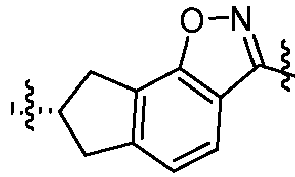


- Unless otherwise specified, the compounds disclosed herein include both E and Z geometric isomers when they contain olefinic double bonds or other centers of geometric asymmetry. Likewise, all tautomeric forms are included within the scope of the present application.
- The group or moiety in the present application such as LNK, Cy1, Cy2, -Cy1-LNK-Cy2-, -Cy'-LNK-, or -LNK-Cy2-, and specific options thereof, optionally can be linked to the left group and the right group of the group or moiety respectively in the general formula in a left-to-right reading order. For example, when Cy1 is selected from


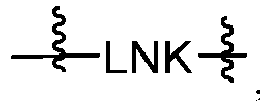


- The term "proteolysis targeting chimera (Protac) molecule" is a bifunctional compound capable of combining a target protein and E3 ubiquitin ligase simultaneously. Such compounds can induce the target protein to be recognized by proteasomes of cells, cause the degradation of the target protein and effectively reduce the content of the target protein in the cells.
- The term "derivative" refers to one or a group of new compounds produced by substituting or replacing one or more hydrogen atoms in the basic structure of the parent compound with other groups or structural moieties. The derivative of the present application refers to a derivative compound that retains the parent structure. For example, the parent compound is derived into a Protac molecule, in particular a PTM-linker-ULM molecule, wherein PTM is a protein target moiety binding to the target protein and target polypeptide; the linker is a connecting group, and ULM refers to a moiety binding to a ubiquitin ligase.
- The term "protein-targeting drug or derivative thereof' or PTM is used to describe small molecules that bind to a target protein or other proteins or polypeptides of interest and bring the localization/presence of the protein or polypeptide close to the ubiquitin ligase so that degradation of the protein or polypeptide by the ubiquitin ligase can occur. Non-limiting examples of small molecule target protein binding moieties include drugs or derivatives thereof, among numerous others, that target AR, ER, kinase, phosphatase, MDM2, human BET bromodomain protein, Hsp90, HDAC, human lysine methyltransferase, RAF receptor, FKBP, angiogenic factor, immunosuppression-related receptor or protein, arene receptor, thyroid hormone receptor, HIV protease, HIV integrase, HCV protease, HBV protease, or acyl protein thioesterase 1 and/or 2, or include drugs or derivatives thereof, among numerous others, that target ALK, BET, CDK, PARP, EGFR, γ-secretase, CBFβ-SMMHC, WEE1, MEK, BCR-ABL, MET, RAS, BTK, VEGFR, JAK, HER2, HDAC, Akt, PI3K, mTOR, AR, ER, PDEδ, SRC, MDM2, RAF, IRAK4, STAT3, and c-Myc, or include drugs or derivatives thereof, among numerous others, that target ALK, BRD4, CDK4/6, PARP, EGFR, γ-secretase, CBFβ-SMMHC, WEEl, MEK, BCR-ABL, MET, KRAS, EGFR, BTK, AR, ER, PDEδ, JAK, MDM2, or RAF
- The term "PTM group" is a drug or a derivative thereof that binds to a target protein. There are many types of targets of PTM groups, and the PTM groups are selected from the group consisting of proteins that are expressed in a cell such that at least a portion of the sequence is found in the cell, and the protein can bind to the PTM group. The term "protein" includes oligopeptide and polypeptide sequences with sufficient length that can bind to the PTM group according to the present application. Any protein in eukaryotic systems or microbial systems (including viruses, bacteria, or fungi) as further described herein is a target for ubiquitination mediated by the compounds according to the present application. The target protein is preferably a eukaryotic protein.
- "Target proteins" are used to describe below as proteins or polypeptides that bind to the compounds according to the present application and are targets for degradation by ubiquitin ligases. Such small molecule target protein binding moieties also include pharmaceutically acceptable salts, enantiomers, solvates, and polymorphs of the compositions, and other small molecules that can target the protein of interest. The binding moieties are linked to the group

- Unless otherwise specified,


- The term "treat" or "treatment" means administering a compound or formulation described herein to ameliorate or eliminate a disease or one or more symptoms associated with the disease, including:
- (i) inhibiting a disease or disease state, i.e., arresting its progression; and
- (ii) alleviating a disease or disease state, i.e., causing its regression.
- The term "prevent", "preventing", or "prevention" means administering the compound or formulation of the present application to prevent a disease or one or more symptoms associated with the disease, and includes: preventing the occurrence of the disease or disease state in a mammal, particularly when such a mammal is predisposed to the disease state but has not yet been diagnosed with it.
- The term "therapeutically effective amount" refers to an amount of the compound disclosed herein for (i) treating or preventing a specific disease, condition, or disorder; (ii) alleviating, ameliorating, or eliminating one or more symptoms of a specific disease, condition or disorder, or (iii) preventing or delaying onset of one or more symptoms of a specific disease, condition, or disorder described herein. The amount of the compound disclosed herein composing the "therapeutically effective amount" varies depending on the compound, the disease state and its severity, the administration regimen, and the age of the mammal to be treated, but can be determined routinely by those skilled in the art in accordance with their knowledge and the present disclosure.
- The term "pharmaceutically acceptable" is used herein for those compounds, materials, compositions, and/or dosage forms that are, within the scope of sound medical judgment, suitable for use in contact with the tissues of human beings and animals without excessive toxicity, irritation, allergic response, or other problems or complications, and commensurate with a reasonable benefit/risk ratio.
- A pharmaceutically acceptable salt, for example, may be a metal salt, an ammonium salt, a salt formed with an organic base, a salt formed with an inorganic acid, a salt formed with an organic acid, a salt formed with a basic or acidic amino acid, and the like.
- The term "pharmaceutical composition" refers to a mixture consisting of one or more of the compounds or the salts thereof of the present application and a pharmaceutically acceptable excipient. The pharmaceutical composition is intended to facilitate the administration of the compound of the present application to an organism. The term "pharmaceutically acceptable excipient" refers to those that do not have a significant irritating effect on an organism and do not impair the biological activity and properties of the active compound. Suitable excipients are well known to those skilled in the art, for example, carbohydrate, wax, water-soluble and/or water-swellable polymers, hydrophilic or hydrophobic material, gelatin, oil, solvent, or water.
- The word "comprise" and variations thereof such as "comprises" or "comprising" will be understood in an open, non-exclusive sense, i.e., "including but not limited to".
- The compounds and intermediates disclosed herein may also exist in different tautomeric forms, and all such forms are included within the scope of the present application. The term "tautomer" or "tautomeric form" refers to structural isomers of different energies that can interconvert via a low energy barrier. For example, a proton tautomer (also referred to as prototropic tautomer) includes interconversion via proton transfer, such as keto-enol isomerism and imine-enamine isomerization. A specific example of a proton tautomer is an imidazole moiety where a proton can transfer between two ring nitrogens. A valence tautomer includes the interconversion via recombination of some bonding electrons.
- Unless otherwise specified clearly herein, singular terms encompass plural terms, and vice versa. Similarly, unless otherwise specified clearly herein, the word "or" is intended to include "and".
- Unless otherwise stated herein, parameter values representing amounts of ingredients or physicochemical properties or reaction conditions and the like are to be understood as being modified in all cases by the term "about". When the term "about" is used to describe the present application, the term "about" indicates that there is an error value; for example, it means varying within a range of ±5%, such as ±1% or ±0.1%, of a particular value. The present application also comprises isotopically labeled compounds of the present application which are identical to those recited herein but have one or more atoms replaced by an atom having an atomic mass or mass number different from the atomic mass or mass number generally found in nature. Examples of isotopes that can be incorporated into the compounds of the present application include isotopes of hydrogen, carbon, nitrogen, oxygen, phosphorus, sulfur, fluorine, iodine and chlorine, such as 2H, 3H, 11C, 13C, 14C, 13N, 15N, 15O, 17O, 18O, 31P, 32P, 35S, 18F, 123I, 125I, and 36Cl.
- Certain isotopically labeled compounds disclosed herein (e.g., those labeled with 3H and 14C) can be used to analyze compounds and/or substrate tissue distribution. Tritiated (i.e., 3H) and carbon-14 (i.e., 14C) isotopes are particularly preferred for their ease of preparation and detectability. Positron emitting isotopes, such as 15O, 13N, 11C, and 18F, can be used in positron emission tomography (PET) studies to determine substrate occupancy. Isotopically labeled compounds of the present application can generally be prepared by following procedures analogous to those disclosed in the schemes and/or examples below while substituting a non-isotopically labeled reagent with an isotopically labeled reagent.
- Furthermore, substitution with heavier isotopes such as deuterium (i.e., 2H) may provide certain therapeutic advantages (e.g., increased in vivo half-life or reduced dosage requirement) resulting from greater metabolic stability and hence may be preferred in some circumstances in which deuterium substitution may be partial or complete, wherein partial deuterium substitution refers to substitution of at least one hydrogen with at least one deuterium.
- The compound disclosed herein can be asymmetrical, for example, having one or more stereoisomers. Unless otherwise stated, all stereoisomers include, for example, enantiomers and diastereoisomers. The compound with asymmetrical carbon atoms disclosed herein can be separated in an optically pure form or in a racemic form. The optically pure form can be separated from a racemic mixture or can be synthesized using a chiral raw material or a chiral reagent.
- The pharmaceutical composition of the present application can be prepared by combining the compound of the present application with a suitable pharmaceutically acceptable excipient, and can be formulated, for example, into a solid, semisolid, liquid or gaseous formulation such as tablet, pill, capsule, powder, granule, ointment, emulsion, suspension, suppository, injection, inhalant, gel, microsphere, and aerosol.
- Typical routes of administration of the compound or the pharmaceutically acceptable salt thereof or the pharmaceutical composition thereof of the present application include, but are not limited to, oral, rectal, local, inhalation, parenteral, sublingual, intravaginal, intranasal, intraocular, intraperitoneal, intramuscular, subcutaneous and intravenous administration.
- The pharmaceutical composition of the present application can be manufactured using methods well known in the art, such as conventional mixing, dissolving, granulating, dragee-making, levigating, emulsifying and lyophilizing.
- In some embodiments, the pharmaceutical composition is in an oral form. For oral administration, the pharmaceutical composition can be formulated by mixing the active compounds with pharmaceutically acceptable excipients well known in the art. These excipients enable the compounds of the present application to be formulated into tablets, pills, pastilles, dragees, capsules, liquids, gels, slurries, suspensions, and the like for oral administration to a patient.
- A solid oral composition can be prepared by conventional mixing, filling or tableting. For example, it can be obtained by the following method: mixing the active compounds with solid excipients, optionally grinding the resulting mixture, adding additional suitable excipients if desired, and processing the mixture into granules to get the core parts of tablets or dragees. Suitable excipients include, but are not limited to: binders, diluents, disintegrants, lubricants, glidants, sweeteners or flavoring agents, and the like.
- The pharmaceutical composition may also be suitable for parenteral administration, such as a sterile solution, a suspension, or a lyophilized product in a suitable unit dosage form.
- In all of the administration methods of the compound of general formula I described herein, the daily dose administered is from 0.01 to 200 mg/kg body weight, given in individual or separated doses.
- The compounds disclosed herein can be prepared using a variety of synthetic methods well known to those skilled in the art, including the specific embodiments listed below, embodiments formed by combinations thereof with other chemical synthetic methods, and equivalents thereof known to those skilled in the art. The preferred embodiments include, but are not limited to, the examples of the present application.
- The chemical reactions of the embodiments of the present application are carried out in a proper solvent that should be suitable for the chemical changes in the present application and the reagents and materials required. In order to obtain the compounds of the present application, it is sometimes necessary for those skilled in the art to modify or select a synthesis procedure or a reaction process based on the existing embodiments.
- An important consideration in synthetic route planning in the art is the selection of suitable protecting groups for reactive functional groups (e.g., amino in the present application). For example, reference may be made to Greene's Protective Groups in Organic Synthesis (4th Ed.) Hoboken, New Jersey: John Wiley & Sons, Inc.
- In some embodiments, the compound of formula I disclosed herein can be prepared by one skilled in the art of organic synthesis through the following routes:

- A compound of general formula (I-1) is subjected to a coupling reaction to give a compound of general formula (I-2), the compound of general formula (I-2) is subjected to a hydrolysis reaction to give a compound of general formula (I-3), and then a protecting group is removed to give a compound of general formula (I-4).
- A compound of general formula (I-5) is subjected to a coupling reaction with hydroxy-substituted Cy2 to give a compound of general formula (I-6), and the compound of general formula (I-6) is subjected to an addition reaction with acrylamide and then an amine-ester exchange reaction to give a compound of general formula (I-7). The compound of general formula (I-7) is subjected to an oxidation reaction to give a compound of general formula (I-8). The compound of general formula (I-4) and the compound of general formula (I-8) are subjected to a reductive amination reaction to give a compound of general formula I.
- The compound of general formula (I-5) is subjected to a coupling reaction with hydroxymethyl-substituted Cy2 to give a compound of general formula (I-9), and the compound of general formula (I-9) is subjected to an addition reaction with acrylamide and then an amine-ester exchange reaction to give a compound of general formula (I-10). The compound of general formula (I-10) is subjected to an oxidation reaction to give a compound of general formula (I-11). The compound of general formula (I-4) and the compound of general formula (I-11) are subjected to a reductive amination reaction to give a compound of general formula I.
- The following abbreviations are used in this application:
Boc represents tert-butyloxycarbonyl; Et represents ethyl; EA represents ethyl acetate; DMSO represents dimethyl sulfoxide; DMF represents N,N-dimethylformamide; BINAP represents 2,2'-bis(diphenylphosphino)-1,1'-binaphthyl; DCM represents dichloromethane; Pd2(dba)3 represents tris(dibenzylideneacetone)dipalladium; THF represents tetrahydrofuran; MeOH represents methanol; PE represents petroleum ether; IBX represents 2-iodoxybenzoic acid; DIPEA represents N,N'-diisopropylethylamine; DIBAL-H represents diisobutylaluminum hydride; NIS represents N-iodosuccinimide; NBS represents N-bromosuccinimide; Tf represents -OSO2CF3; H2O2 represents hydrogen peroxide; Pd(OAc)2 represents palladium acetate; DMA represents N,N-dimethylacetamide; TBSCl represents tert-butyldimethylsilyl chloride; TFA represents trifluoroacetic acid; PdCl2(dppf) represents [1,1'-bis(diphenylphosphino)ferrocene]palladium dichloride; Ruphos represents 2-dicyclohexylphosphino-2',6'-diisopropoxybiphenyl. - All patents, patent applications and other identified publications are explicitly incorporated herein by reference for the purpose of description and disclosure. These publications are provided solely because they were disclosed prior to the filing date of the present application. All statements as to the dates of these documents or descriptions as to the contents of these documents are based on the information available to the applicant and do not constitute any admission as to the correctness of the dates or the content of these documents. Moreover, in any country or region, any reference to these publications herein is not to be construed as an admission that the publications form part of the commonly recognized knowledge in the art.
- For clarity, the present application is further described with the following examples, which are, however, not intended to limit the scope of the present application. All reagents used in the present application are commercially available and can be used without further purification.
-

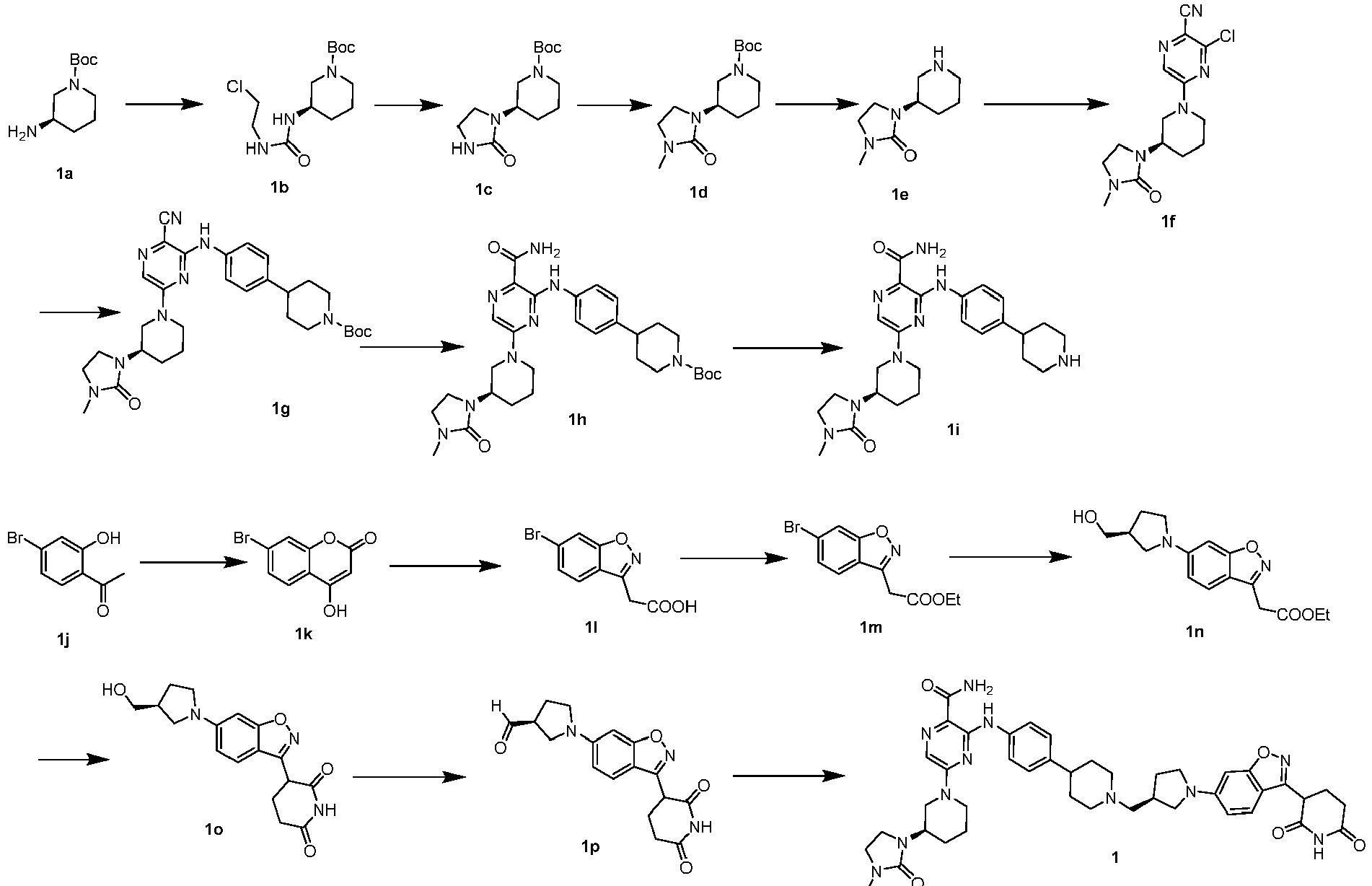
- Intermediate 1a (25 g), triethylamine (25.3 g, 34.8 mL), and dichloromethane (250 mL) were added to a reaction flask in sequence. 1-Chloro-2-isocyanate (15.81 g) was slowly added dropwise, and after the dropwise addition was carried out for 20 min and completed, the mixture was reacted at room temperature for 4 h. 500 mL of water was added to the reaction system, the organic phase was separated, and the aqueous phase was extracted 2 times with 200 mL of dichloromethane. The organic phases were combined, dried over sodium sulfate, and filtered. The filtrate was distilled under reduced pressure to remove the solvent, and the crude product was separated by silica gel column chromatography (eluent: EA) to give the target intermediate 1b (40.8 g).
- 1H NMR (500 MHz, DMSO-d 6) δ 6.11 (q, J = 7.1, 6.5 Hz, 2H), 3.56 (s, 1H), 3.43 (dq, J = 8.6, 4.5 Hz, 1H), 3.33 - 3.27 (m, 2H), 3.14 - 2.84 (m, 1H), 1.80 - 1.71 (m, 1H), 1.60 (ddq, J = 12.2, 6.0, 3.5, 3.0 Hz, 1H), 1.38 (s, 9H), 1.37 - 1.24 (m, 2H).
- Sodium hydride (10.31 g) was slowly added to a stirred solution of intermediate 1b (40 g) in tetrahydrofuran (300 mL) at 0 °C. After the addition was completed, the mixture was reacted overnight at room temperature. After the reaction was completed, 75 mL of water was added to the reaction solution to quench the reaction. After the mixture was vigorously stirred for 10 min, liquid separation was performed. The aqueous phase was extracted 3 times with 200 mL of dichloromethane, dried over anhydrous sodium sulfate, and concentrated by rotary evaporation. The concentrate was extracted with 300 mL of acetonitrile and 300 mL of petroleum ether, and liquid separation was performed. The acetonitrile phase was subjected to rotary evaporation to give intermediate 1c (32.2 g).
- Sodium hydride (5.71 g) was slowly added to a stirred solution of intermediate 1c (20 g) in tetrahydrofuran (200 mL) at 0 °C. After the mixture was stirred for 5 min, ice bath was removed. After the mixture was stirred at room temperature for 1 h, ice bath was added. Iodomethane (15.21 g, 6.70 mL) was slowly added dropwise to the reaction system, and after the dropwise addition was completed, the mixture was reacted overnight at room temperature. After the reaction was completed, 75 mL of water was added to the reaction solution to quench the reaction. After the mixture was vigorously stirred for 10 min, liquid separation was performed. The aqueous phase was extracted 3 times with 200 mL of dichloromethane, dried over anhydrous sodium sulfate, and concentrated by rotary evaporation. The concentrate was extracted with 300 mL of acetonitrile and 300 mL of petroleum ether, and liquid separation was performed. The acetonitrile phase was subjected to rotary evaporation to give intermediate 1d (22.5 g).
- Intermediate 1d (20 g) and a solution of 4 M hydrochloric acid in dioxane (25.7 g, 176 mL, 705 mmol) were added to a single-necked flask in sequence, and the mixture was reacted at room temperature. After the reaction was completed, the solvent was removed by evaporation at reduced pressure to give intermediate 1e (15.5 g).
- 3,5-Dichloropyrazine-2-carbonitrile (11.82 g) was added to a stirred solution of intermediate 1e (15 g) and N,N-diisopropylethylamine (35.1 g, 47.5 mL) in DMF (300 mL) at 0 °C. Ice bath was removed after 15 min, and the mixture was stirred at room temperature overnight. 300 mL of ethyl acetate and 300 mL of water were added to the reaction solution. The organic phase was separated, extracted 2 times with 100 mL of ethyl acetate, washed with 200 mL of saturated brine, dried over anhydrous sodium sulfate, filtered, and concentrated by evaporation at reduced pressure to remove the solvent, and the crude product was separated by silica gel column chromatography (eluent: dichloromethane/methanol = 100:1, v/v) to give the target intermediate 1f (14.5 g).
- MS(ESI, [M+H]+) m/z: 321.2.
- 1H NMR (500 MHz, DMSO-d 6) δ 7.94 (s, 1H), 3.30 (dtd, J = 14.7, 7.5, 6.8, 4.9 Hz, 2H), 3.25 - 3.22 (m, 1H), 2.89 (s, 4H), 2.73 (s, 3H), 2.65 (s, 2H), 1.92 - 1.69 (m, 3H), 1.62 - 1.48 (m, 1H).
- Intermediate 1f (13 g), tert-butyl 4-(4-aminophenyl)piperidine-1-carboxylate (9.61 g), cesium carbonate (34.0 g), BINAP (2.166 g), palladium acetate (0.781 g), and 1,4-dioxane (200 mL) were added to a single-necked flask in sequence, and the mixture was heated to 100 °C and reacted under N2 atmosphere. After the reaction was completed, the reaction solution was cooled to room temperature and filtered, and the filter cake was washed with 150 mL of dichloromethane. The filtrate was concentrated by evaporation at reduced pressure to remove the solvent, and the crude product was separated by silica gel column chromatography (eluent: dichloromethane/methanol = 100:1, v/v) to give the target intermediate 1g (14.2 g).
- MS(ESI, [M+H]+) m/z: 561.5
- 1H NMR (500 MHz, DMSO-d 6) δ 8.97 (s, 1H), 7.82 (s, 1H), 7.48 - 7.43 (m, 2H), 7.16 - 7.10 (m, 2H), 4.37 - 4.19 (m, 2H), 4.07 (d, J = 13.1 Hz, 2H), 3.64 - 3.59 (m, 2H), 3.42 (dq, J = 11.6, 3.0 Hz, 3H), 3.34 - 3.29 (m, 1H), 3.26 - 3.23 (m, 2H), 2.94 (d, J = 12.9 Hz, 1H), 2.71 (s, 3H), 2.62 (ddt, J = 15.5, 12.0, 3.3 Hz, 1H), 1.82 - 1.71 (m, 5H), 1.58 - 1.43 (m, 3H), 1.42 (s, 9H).
- Intermediate 1g (8 g), DMSO (25 mL), and cesium carbonate (4.08 g) were added to a single-necked flask in sequence. Hydrogen peroxide (21.32 g, 19.21 mL) was added under an ice bath. After the mixture was stirred for 5 min, the ice bath was removed, and the mixture was reacted at room temperature. After the reaction was completed, 300 mL of a saturated sodium sulfite solution was added to the residue to quench the reaction. The color was not changed as detected using a potassium iodide starch reagent, and then 300 mL of ethyl acetate was added for extraction. 100 mL of ethyl acetate was then added for 3 times of extraction. The organic phases were combined, dried over anhydrous sodium sulfate, filtered, and concentrated by evaporation at reduced pressure to remove the solvent, and the crude product was separated by silica gel column chromatography (eluent: dichloromethane/methanol = 100:1, v/v) to give the target intermediate 1h (7.22 g).
- MS(ESI, [M+H]+) m/z: 579.51.
- 1H NMR (500 MHz, DMSO-d 6) δ11.19 (s, 1H), 7.75 (d, J = 2.8 Hz, 1H), 7.66 (s, 1H), 7.55 - 7.46 (m, 2H), 7.32 (d, J = 2.8 Hz, 1H), 7.15 (d, J = 8.6 Hz, 2H), 4.36 (d, J = 12.4 Hz, 1H), 4.27 (d, J = 13.4 Hz, 1H), 4.06 (d, J = 12.8 Hz, 2H), 3.61 (tt, J = 11.0, 4.0 Hz, 1H), 3.25 (dd, J = 9.5, 7.2 Hz, 2H), 3.06 - 2.91 (m, 2H), 2.70 (s, 3H), 2.62 (tt, J = 12.1, 3.6 Hz, 1H), 2.54 (s, 4H), 1.82 (dt, J = 14.8, 3.5 Hz, 2H), 1.79 - 1.70 (m, 3H), 1.54 (s, 1H), 1.45 (dq, J = 12.9, 4.2 Hz, 2H), 1.42 (s, 9H).
- Intermediate 1h (3 g), dichloromethane (30 mL), and trifluoroacetic acid (17.06 g, 11.53 mL) were added to a single-necked flask in sequence, and the mixture was reacted at room temperature. After the reaction was completed, the solvent was removed by evaporation at reduced pressure to give a product of trifluoroacetate salt. 50 mL of dichloromethane was added to dissolve the crude product, and a saturated aqueous sodium bicarbonate solution was slowly added. After the system was adjusted to weak alkalinity, liquid separation was performed. The organic phase was concentrated by evaporation at reduced pressure to remove the solvent, thus giving intermediate 1i (2.4 g).
- MS(ESI, [M+H]+) m/z: 479.44
- 1H NMR (500 MHz, DMSO-d 6) δ 11.25 (s, 1H), 7.77 (d, J = 2.8 Hz, 1H), 7.67 (s, 1H), 7.54 (d, J = 8.3 Hz, 2H), 7.34 (d, J = 2.8 Hz, 1H), 7.19 - 7.12 (m, 2H), 4.32 (dd, J = 33.8, 12.7 Hz, 2H), 3.62 (tt, J = 11.0, 4.0 Hz, 2H), 3.39 - 3.31 (m, 3H), 3.30 - 3.23 (m, 3H), 3.05 (t, J = 11.7 Hz, 1H), 3.00 - 2.88 (m, 3H), 2.72 (s, 3H), 1.95 - 1.86 (m, 2H), 1.85 - 1.79 (m, 2H), 1.79 - 1.64 (m, 3H), 1.57 (dtd, J = 16.9, 8.4, 3.7 Hz, 1H).
- A solution of intermediate 1j (30 g) in toluene (100 mL) was slowly added dropwise to a solution of sodium hydride (27.9 g) in toluene (50 mL) at 0 °C. After the dropwise addition was completed, the mixture was stirred at 0 °C for 15 min. Dimethyl carbonate (126 g) was added dropwise to the reaction solution. After the dropwise addition was completed and the mixture was stirred at 0 °C for 15 min, the mixture was heated to 100 °C and reacted for 2 h. The reaction solution was washed once with water (500 mL). The organic layer was discarded, and the aqueous layer was adjusted to pH = 2 to 3 with diluted hydrochloric acid (3 mol/L) at a low temperature, and a large amount of solid was precipitated. After filtration under vacuum and drying, 30.63 g of intermediate 1k was obtained.
- MS (ESI, [M-H]-) m/z: 239.0
- 1H NMR (500 MHz, DMSO-d 6) δ 12.74 (s, 1H), 7.77 - 7.65 (m, 2H), 7.54 (dd, J = 8.4, 1.9 Hz, 1H), 5.63 (s, 1H).
- Intermediate 1k (29.5 g), hydroxylamine hydrochloride (15.85 g), sodium ethoxide (15.52 g), and ethanol (150 mL) were added to a reaction flask in sequence, and the mixture was heated to 85 °C for 2 h under N2 atmosphere. The reaction solution was subjected to rotary evaporation to dryness, 500 mL of a saturated sodium carbonate solution was added to the residue, and the mixture was extracted with DCM (300 mL × 2). The organic layer was discarded. The pH of the aqueous layer was adjusted to < 3 with diluted hydrochloric acid (3 mol/L). A large amount of solid was precipitated. Filter under vacuum was performed, and the resulting filter cake was washed with water and dried under atmospheric pressure to give 26.53 g of intermediate 1l.
- MS (ESI, [M-H]-) m/z: 254.0.
- 1H NMR (500 MHz, DMSO-d 6) δ 12.95 (s, 1H), 8.12 (d, J = 1.5 Hz, 1H), 7.82 (d, J = 8.4 Hz, 1H), 7.59 (dd, J = 8.4, 1.6 Hz, 1H), 4.12 (s, 2H).
- Intermediate 1l (26.5 g), and ethanol (530 mL) were added to a reaction flask in sequence. After concentrated sulfuric acid (49.9 g, 27.1 mL, 508 mmol) was slowly added dropwise, the mixture was heated to 85 °C and reacted for 4 h. The reaction solution was subjected to rotary evaporation to dryness. After ice water was added to the residue, an NaOH solution was added dropwise at a low temperature to adjust the pH to be approximately equal to 9, and then the mixture was extracted 2 times with 300 mL of ethyl acetate. The organic layers were combined, dried over anhydrous sodium sulfate, and filtered under vacuum. The filtrate was subjected to rotary evaporation to dryness to give 24.87 g of intermediate 1m.
- MS (ESI, [M-H]-) m/z: 282.0
- 1H NMR (500 MHz, DMSO-d 6) δ 8.13 (d, J = 1.5 Hz, 1H), 7.82 (d, J = 8.4 Hz, 1H), 7.60 (dd, J = 8.4, 1.5 Hz, 1H), 4.23 (s, 2H), 4.15 (q, J = 7.1 Hz, 2H), 1.19 (t, J = 7.1 Hz, 3H).
- Intermediate 1m (2 g) and (S)-pyrrolidine-3-methanol (2.087 g) were added in sequence to a reaction flask. Pd2(dba)3 (1.260 g) and potassium phosphate (5.84 g) were then added, and finally toluene (60 mL) was added. The mixture was heated at 80 °C for 4 h under N2 atmosphere. The reaction solution was washed twice with 100 mL of water. The organic layer was dried over anhydrous sodium sulfate and filtered under vacuum, and the resulting filtrate was concentrated, separated and purified by silica gel column chromatography to give intermediate 1n (0.35 g).
- MS (ESI, [M+H]+) m/z: 305.20.
- Intermediate 1n (360 mg) and THF (30 mL) were first added to a reaction flask, acrylamide (101 mg) and potassium tert-butoxide (199 mg) were added at 0 °C, and the mixture was slowly warmed to 10 °C under N2 atmosphere and stirred. After the reaction was completed, 100 mL of a saturated ammonium chloride solution was added to the reaction solution at a low temperature, and the mixture was extracted twice with EA (50 mL). The organic layer was dried over anhydrous sodium sulfate and filtered, the filtrate was subjected to rotary evaporation to dryness and purified by silica gel column chromatography (eluent: DCM:MeOH = 95:5, v/v) to give 245 mg of intermediate 1o.
MS (ESI, [M+H]+) m/z: 330.1 - Intermediate 1o (330 mg) and DCM (30 mL) were added to a reaction flask in sequence, Dess-Martin reagent (1.224 g) was added with stirring, and the mixture was reacted at room temperature under N2 atmosphere. After the reaction was completed, an aqueous NazSzOs solution (30 mL) was added at a low temperature to quench the reaction solution, and the mixture was extracted with an aqueous NaHCO3 solution (30 mL). The organic layer was dried over anhydrous sodium sulfate and filtered under vacuum, and the resulting filtrate was subjected to rotary evaporation to dryness to give 290 mg of intermediate 1p, which was directly used in the next step.
- Intermediate 1i (150 mg), intermediate 1p (103 mg), DCM (10 mL), and glacial acetic acid (31.4 mg, 0.030 mL) were added to a reaction flask in sequence. After the mixture was stirred at room temperature for 20 min, sodium cyanoborohydride (59.1 mg) was added, and the mixture was stirred at room temperature. After the reaction was completed, 20 mL of a saturated NaHCO3 solution was added to the reaction solution, and the mixture was extracted twice with 20 mL of DCM-MeOH (10:1). The extracts were combined, dried over anhydrous sodium sulfate, and filtered under vacuum, and the resulting filtrate was subjected to rotary evaporation to dryness and purified by C18 reversed-phase column (10 nM aqueous ammonium acetate solution-acetonitrile = 50%:50%, v/v) to give 55 mg of compound 1.
- Q-TOF (ESI, [M+H]+) m/z: 790.4146
- 1H NMR (500 MHz, DMSO-d 6) δ 11.18 (s, 1H), 11.02 (s, 1H), 7.75 (d, J = 2.8 Hz, 1H), 7.66 (s, 1H), 7.52 (dd, J = 13.9, 8.4 Hz, 3H), 7.35 - 7.30 (m, 1H), 7.17 (d, J = 8.1 Hz, 2H), 6.66 (dd, J = 8.9, 1.8 Hz, 1H), 6.58 (d, J = 1.8 Hz, 1H), 4.45 - 4.34 (m, 2H), 4.28 (d, J = 13.3 Hz, 1H), 3.62 (dt, J = 11.1, 7.0 Hz, 1H), 3.48 (t, J = 8.5 Hz, 1H), 3.41 (d, J = 4.7 Hz, 1H), 3.26 (dd, J = 10.3, 7.0 Hz, 3H), 3.12 - 2.92 (m, 5H), 2.73 (s, 4H), 2.60 (ddd, J = 21.9, 12.8, 5.5 Hz, 2H), 2.41 (ddd, J = 25.0, 11.8, 4.7 Hz, 4H), 2.20 - 2.10 (m, 2H), 1.87 - 1.51 (m, 10H).
-
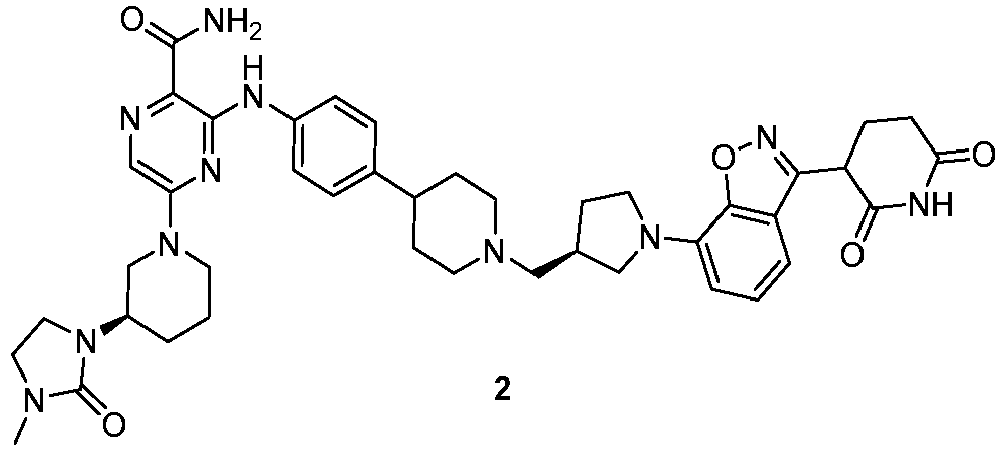

- Intermediate 14d (2 g) and (S)-pyrrolidine-3-methanol (1.424 g) were added in sequence to a reaction flask. Pd2(dba)3 (1.289 g) and potassium phosphate (5.98 g) were then added, and finally toluene (50 mL) was added. The mixture was reacted at 80 °C under N2 atmosphere. After the reaction was completed, the reaction solution was washed twice with 50 mL of water. The organic layer was dried over anhydrous sodium sulfate and filtered under vacuum, and the filtrate was subjected to rotary evaporation to dryness, purified by silica gel column (PE-EA = 95:5, v/v, 1500 mL), and further purified by C18 reversed-phase column (10 nM aqueous ammonium acetate solution-acetonitrile = 50%:50%, v/v) to give 480 mg of intermediate 2b.
- MS (ESI, [M+H]+) m/z: 305.1.
- 1H NMR (500 MHz, DMSO-d 6) δ 7.17 (t, J = 7.8 Hz, 1H), 6.96 (dd, J = 7.9, 0.8 Hz, 1H), 6.58 (dd, J = 7.8, 0.9 Hz, 1H), 4.73 (t, J = 5.2 Hz, 1H), 4.17 - 4.09 (m, 4H), 3.67 (dd, J = 9.7, 7.5 Hz, 1H), 3.60 (ddd, J = 9.5, 8.1, 5.0 Hz, 1H), 3.56 - 3.35 (m, 4H), 2.45 (dq, J = 14.0, 7.0 Hz, 1H), 2.10 - 2.01 (m, 1H), 1.76 (dq, J = 12.2, 7.5 Hz, 1H), 1.18 (t, J = 7.1 Hz, 3H).
- Intermediate 2b (450 mg) and THF (40 mL) were first added to a reaction flask, acrylamide (126 mg) and potassium tert-butoxide (249 mg) were added at 0 °C, and the mixture was slowly warmed to 10 °C under N2 atmosphere and stirred. After the reaction was completed, 100 mL of a saturated ammonium chloride solution was added to the reaction solution at a low temperature, and the mixture was extracted twice with EA (50 mL). The organic layer was dried over anhydrous sodium sulfate and filtered under vacuum, the filtrate was subjected to rotary evaporation to dryness and purified by silica gel column (DCM:MeOH = 95:5, v/v) to give 450 mg of intermediate 2c.
- MS (ESI, [M+H]+) m/z: 330.1.
- Intermediate 2c (440 mg) and DCM (30 mL) were added to a reaction flask in sequence, Dess-Martin reagent (1.7 g) was added with stirring, and the mixture was reacted at room temperature under N2 atmosphere. After the reaction was completed, an aqueous NazSzOs solution (30 mL) was added at a low temperature to quench the reaction, and the organic layer separated by extraction was washed with an aqueous NaHCO3 solution (30 mL). The separated organic layer was dried over anhydrous sodium sulfate and filtered under vacuum, and the resulting filtrate was subjected to rotary evaporation to dryness to give 342 mg of intermediate 2d, which was directly used in the next step.
- Intermediate 1i (250 mg), intermediate 2d (171 mg), DCM (10 mL), and glacial acetic acid (31.4 mg, 0.030 mL) were added to a reaction flask in sequence. After the mixture was stirred at room temperature for 20 min, sodium cyanoborohydride (197 mg) was added, and the mixture was stirred at room temperature. After the reaction was completed, 20 mL of a saturated NaHCO3 solution was added to the reaction solution, and the mixture was extracted twice with 20 mL of DCM-MeOH (10:1). The extracts were combined, dried over anhydrous sodium sulfate, and filtered under vacuum, and the resulting filtrate was subjected to rotary evaporation to dryness and purified by C18 reversed-phase column (10 nM aqueous ammonium acetate solution-acetonitrile = 50%:50%, v/v) to give 60 mg of compound 2.
- Q-TOF(ESI, [M+H]+) m/z: 790.4157.
- 1H NMR (500 MHz, DMSO-d 6) δ 11.17 (s, 1H), 11.07 (s, 1H), 7.74 (d, J = 2.8 Hz, 1H), 7.65 (s, 1H), 7.52 - 7.47 (m, 2H), 7.32 (d, J = 2.8 Hz, 1H), 7.20 - 7.12 (m, 3H), 6.97 (d, J = 7.9 Hz, 1H), 6.59 (d, J = 7.7 Hz, 1H), 4.53 (dd, J = 11.6, 5.0 Hz, 1H), 4.37 (d, J = 12.6 Hz, 1H), 4.28 (d, J = 13.3 Hz, 1H), 3.74 (ddd, J = 9.9, 7.2, 2.6 Hz, 1H), 3.67 - 3.59 (m, 2H), 3.55 (qd, J = 7.4, 3.7 Hz, 1H), 3.40 - 3.32 (m, 3H), 3.30 - 3.23 (m, 3H), 3.07 (d, J = 10.9 Hz, 1H), 3.04 - 2.90 (m, 3H), 2.77 (td, J = 11.8, 6.0 Hz, 1H), 2.67 - 2.55 (m, 2H), 2.48 - 2.34 (m, 4H), 2.21 - 1.97 (m, 4H), 1.85 - 1.52 (m, 9H).
- 13C NMR (126 MHz, DMSO) δ 173.58, 171.99, 169.70, 160.77, 157.13, 154.01, 153.30, 150.98, 140.44, 137.77, 134.30, 127.46, 125.70, 122.03, 120.33, 118.64, 114.69, 111.16, 108.46, 62.25, 55.11, 54.25, 54.10, 49.11, 48.88, 47.20, 45.46, 44.86, 41.79, 36.13, 33.90, 31.55, 31.41, 29.70, 28.25, 24.50, 23.23.
-

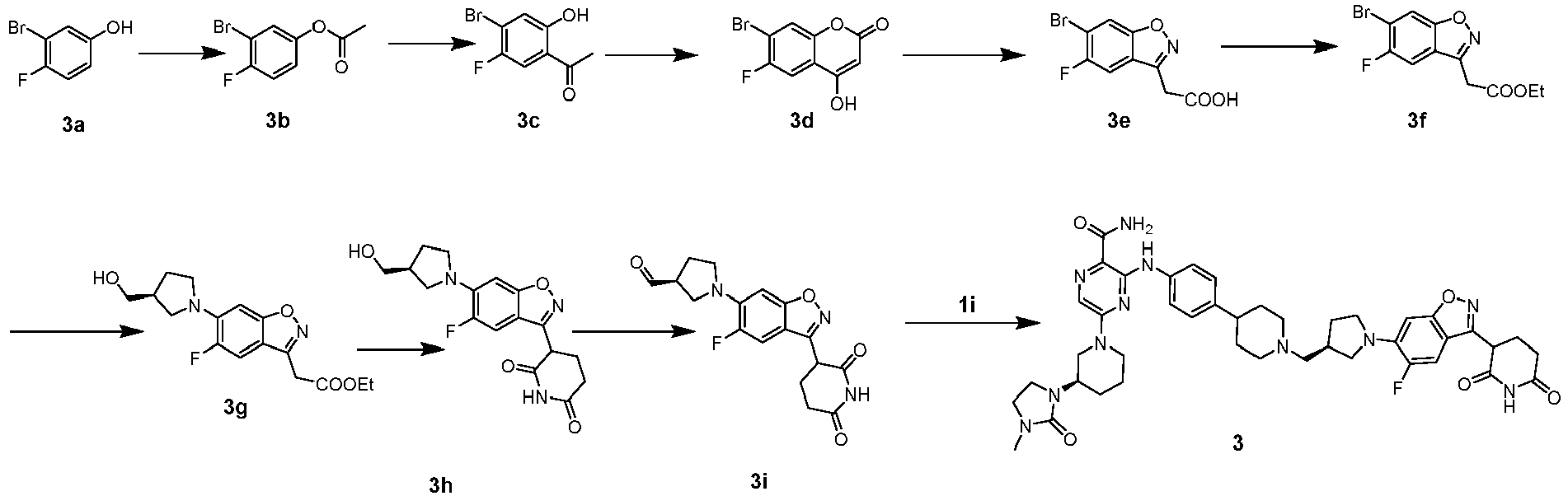
- In a single-necked flask, intermediate 3a (20 g) was dissolved in dichloromethane (200 mL). Triethylamine (15.89 g, 21.89 mL) was added at 0 °C, and acetyl chloride (12.33 g) was slowly added dropwise. After the addition was completed, the mixture was reacted at room temperature for 1 h. After the reaction was completed, 300 mL of dichloromethane was added to the system for dilution, and a 3 M aqueous hydrochloric acid solution was then added to adjust the pH of the system to weak acidity. Extraction and liquid separation were performed, and the organic phase was collected. The pH of the organic phase was adjusted to weak alkalinity with a saturated aqueous sodium bicarbonate solution. Extraction and liquid separation were performed, and the organic phase was collected. The organic phase was dried over anhydrous sodium sulfate, filtered and concentrated by evaporation at reduced pressure to remove the solvent, thus giving intermediate 3b (28.5 g).
- 1H NMR (500 MHz, DMSO-d 6) δ 7.60 (dd, J = 5.9, 2.7 Hz, 1H), 7.44 (t, J = 8.7 Hz, 1H), 7.23 (ddd, J = 8.9, 4.1, 2.8 Hz, 1H), 2.26 (s, 3H).
- Intermediate 3b (8.61 g) and aluminum trichloride (8.92 g) were added to a single-necked flask in sequence, and the mixture was heated to 170 °C and reacted for 2 h. The reaction solution was cooled to room temperature, 50 mL of dichloromethane was added, and about 500 mL of 3 M hydrochloric acid was slowly added. Liquid separation was performed, the organic phase was collected, and the aqueous phase was then extracted 2 times with 250 mL of dichloromethane. The organic phases were combined, dried over anhydrous sodium sulfate, filtered and concentrated by evaporation at reduced pressure to remove the solvent, thus giving intermediate 3c (11.8 g).
- MS(ESI, [M-H]+) m/z: 231.0
- 1H NMR (500 MHz, DMSO-d 6) δ 11.64 (s, 1H), 7.79 (d, J = 9.3 Hz, 1H), 7.33 (d, J = 5.8 Hz, 1H), 2.62 (s, 3H).
- Intermediate 3c (10 g), diethyl carbonate (25.3 g), and toluene (100 mL) were added to a single-necked flask in sequence. The reaction solution was cooled to 0 °C and sodium hydride (8.58 g) was added in portions. The mixture was first heated to 90 °C and then heated to 120 °C and reacted for 5 h. After the reaction was completed, the reaction solution was cooled to room temperature and slowly poured into 1 L of stirred ice water. The mixture was extracted with 500 mL of ethyl acetate, and the organic phase was discarded. The aqueous phase was adjusted to pH = 3 with 3 N hydrochloric acid, the mixture was extracted 3 times with 300 mL of ethyl acetate, and the organic phases were combined. The organic phase was dried over anhydrous sodium sulfate, filtered and concentrated by evaporation at reduced pressure to remove the solvent, thus giving intermediate 3d (9.8 g).
- MS(ESI, [M-H]+) m/z: 256.95.
- 1H NMR (500 MHz, DMSO-d 6) δ 12.86 (s, 1H), 7.88 (d, J = 5.6 Hz, 1H), 7.67 (d, J = 8.5 Hz, 1H), 5.65 (s, 1H).
- Intermediate 3d (9 g), hydroxylamine hydrochloride (7.95 g), sodium ethoxide (2.224 g), and ethanol (50 mL) were added to a single-necked flask in sequence, and the mixture was heated to 85 °C and reacted overnight. The reaction solution was cooled to room temperature, 3 N hydrochloric acid was added to adjust the pH to 5, the mixture was concentrated by evaporation at reduced pressure to remove the solvent, 100 L of water was added, the mixture was cooled, and meanwhile the pH was adjusted to 3 with 3 N hydrochloric acid. The mixture was stirred for 30 min and filtered. The filter cake was collected and dried to give intermediate 3e (8.1 g).
- MS(ESI, [M+H]+) m/z: 273.86.
- 1H NMR (500 MHz, DMSO-d 6) δ 12.97 (s, 1H), 8.30 (d, J = 5.3 Hz, 1H), 7.93 (d, J = 7.9 Hz, 1H), 4.12 (s, 2H).
- Intermediate 3e (6 g), ethanol (40 mL), and sulfuric acid (9.27 g, 5.04 mL) were added to a single-necked flask in sequence, and the mixture was heated to 90 °C and reacted for 2 h. The reaction solution was cooled to room temperature and concentrated by evaporation at reduced pressure to remove the solvent, and 100 mL of ethyl acetate and 100 mL of water were added to the residue for dilution. A saturated aqueous sodium bicarbonate solution was added to adjust the pH to 7, and the organic phase was separated. The aqueous phase was extracted 2 times with 100 mL of ethyl acetate, and the organic phases were combined, dried over anhydrous sodium sulfate, filtered and concentrated by evaporation at reduced pressure to remove the solvent, thus giving intermediate 3f (5.4 g).
- MS(ESI, [M+H]+) m/z: 302.21.
- 1H NMR (500 MHz, DMSO-d 6) δ 8.32 (d, J = 5.3 Hz, 1H), 7.94 (d, J = 8.0 Hz, 1H), 4.22 (s, 2H), 4.16 (q, J = 7.1 Hz, 2H), 1.21 (t, J = 7.1 Hz, 3H).
- Intermediate 3f (4 g), (S)-pyrrolidine-3-methanol (2.68 g), palladium acetate (0.595 g), potassium phosphate (8.43 g), and 1,4-dioxane (20 mL) were added to a single-necked flask in sequence, and the mixture was heated to 100 °C and reacted under N2 atmosphere overnight. The reaction solution was cooled to room temperature and concentrated by evaporation at reduced pressure to remove the solvent, and the crude product was separated by silica gel column chromatography (eluent: petroleum ether/ethyl acetate = 1:1, v/v) to give the target intermediate 3g (0.5 g).
- MS(ESI, [M+H]+) m/z: 323.11.
- 1H NMR (500 MHz, DMSO-d 6) δ 7.45 (d, J = 13.3 Hz, 1H), 6.81 (d, J = 7.0 Hz, 1H), 4.73 (t, J = 5.2 Hz, 1H), 4.13 (q, J = 7.2 Hz, 2H), 4.03 (s, 2H), 3.52 (ddd, J = 10.5, 7.4, 3.2 Hz, 1H), 3.49 - 3.38 (m, 4H), 3.27 (ddd, J = 10.0, 6.7, 3.1 Hz, 1H), 2.41 (td, J = 14.9, 14.1, 7.9 Hz, 1H), 2.01 (dtd, J = 12.2, 7.9, 7.5, 5.3 Hz, 1H), 1.72 (dq, J = 12.2, 7.7 Hz, 1H), 1.19 (t, J = 7.1 Hz, 3H).
- Intermediate 3g (500 mg), acrylamide (98 mg), and anhydrous tetrahydrofuran (5 mL) were added to a three-necked flask in sequence. Potassium tert-butoxide (233 mg) was slowly added at -15 °C, and the mixture was reacted at -15 °C for 2 h. A saturated aqueous ammonium chloride solution was added dropwise to the reaction solution to quench the reaction, and the mixture was extracted with 50 mL of ethyl acetate. The organic phase was separated. The aqueous phase was extracted 3 times with 50 mL of ethyl acetate, the organic phases were combined, dried over anhydrous sodium sulfate, filtered and concentrated by evaporation at reduced pressure to remove the solvent, thus giving intermediate 3h (120 mg).
- MS(ESI, [M-H]+) m/z: 345.9.
- 1H NMR (500 MHz, DMSO-d 6) δ 11.03 (s, 1H), 7.52 (d, J = 13.3 Hz, 1H), 6.82 (d, J = 6.9 Hz, 1H), 4.72 (t, J = 5.3 Hz, 1H), 4.41 (dd, J = 11.6, 5.0 Hz, 1H), 3.45 (td, J = 11.7, 6.2 Hz, 5H), 2.72 (ddd, J = 17.8, 12.3, 5.7 Hz, 1H), 2.57 (dt, J = 17.3, 4.1 Hz, 1H), 2.39 (tq, J = 13.0, 7.7, 6.9 Hz, 2H), 2.14 (dt, J = 13.5, 4.6 Hz, 1H), 2.00 (tq, J = 13.4, 8.3, 7.1 Hz, 2H), 1.77 - 1.67 (m, 1H).
- Intermediate 3h (80 mg), acetonitrile (5 mL), and IBX (129 mg) were added to a single-necked flask in sequence, and the mixture was heated to 85 °C and reacted for 1 h. The reaction solution was cooled to room temperature and filtered, and the filtrate was collected. The resulting solution (containing intermediate 3i) was directly used in the next step.
- Intermediate 3i (the solution of intermediate 3i obtained in the previous step), intermediate 1i (60 mg), and methanol (1 mL) were added to a single-necked flask in sequence, and 1 drop of acetic acid was added dropwise. After the mixture was stirred at room temperature for 1 h, sodium cyanoborohydride (23.63 mg) was added, and the mixture was reacted at room temperature for 2 h. The mixture was concentrated by evaporation at reduced pressure to remove the solvent and purified by preparative liquid chromatography. Compound 3 (25 mg) was obtained.
- MS(ESI, [M+H]+) m/z: 808.6.
- 1H NMR (500 MHz, DMSO-d 6) δ 11.18 (s, 1H), 11.03 (s, 1H), 7.75 (s, 1H), 7.66 (s, 1H), 7.51 (dd, J = 18.1, 10.6 Hz, 3H), 7.33 (s, 1H), 7.17 (d, J = 8.1 Hz, 2H), 6.84 (d, J = 7.0 Hz, 1H), 4.51 - 4.33 (m, 2H), 4.28 (d, J = 13.3 Hz, 1H), 3.60 (dd, J = 25.9, 10.7 Hz, 2H), 3.47 (d, J = 9.5 Hz, 2H), 3.26 (t, J = 8.1 Hz, 3H), 2.98 (dt, J = 32.9, 12.0 Hz, 4H), 2.73 (s, 4H), 2.57 (dt, J = 17.3, 4.1 Hz, 2H), 2.42 - 2.30 (m, 2H), 2.21 - 1.96 (m, 4H), 1.91 - 1.45 (m, 10H).
- 13C NMR (126 MHz, DMSO-d 6) δ 173.59, 172.00, 169.71, 161.59, 160.79, 156.67, 154.02, 152.29, 150.98, 148.61, 127.45, 120.32, 118.68, 114.69, 109.76, 109.50, 106.13, 93.49, 54.85, 54.21, 49.77, 49.10, 47.19, 45.46, 44.85, 39.00, 35.05, 34.96, 33.69, 31.76, 31.62, 31.55, 31.45, 30.86, 30.30, 29.71, 29.46, 28.24, 24.50, 23.01.
-


- 4a (25 g), diethyl carbonate (68.7 g), and toluene (200 mL) were added to a reaction flask in sequence. The reaction solution was cooled to 0 °C and sodium hydride (23.25 g) was added in portions. The mixture was heated to 120 °C and reacted for 5 h. The reaction was stopped, the reaction solution was cooled to room temperature and slowly poured into 1.5 L of stirred ice water. The mixture was extracted with 400 mL of ethyl acetate. The aqueous phase was adjusted to pH = 3 with 3 N hydrochloric acid, the mixture was extracted 3 times with 400 mL of ethyl acetate, and the organic phases were combined. The organic phase was dried over anhydrous sodium sulfate, filtered and concentrated by evaporation at reduced pressure to remove the solvent, thus giving 25 g of intermediate 4b.
- MS(ESI, [M-H]+) m/z: 239.0
- 1H NMR (500 MHz, DMSO-d 6) δ 12.78 (s, 1H), 7.90 (d, J = 2.4 Hz, 1H), 7.80 (dd, J = 8.8, 2.5 Hz, 1H), 7.36 (d, J = 8.8 Hz, 1H), 5.62 (s, 1H).
- 4b (13 g), hydroxylamine hydrochloride (7.50 g), sodium methoxide (5.83 g), and ethanol (100 mL) were added to a reaction flask in sequence, and the reaction solution was heated to 85 °C and reacted for 15.5 h under N2 atmosphere. The reaction solution was cooled to room temperature and concentrated by evaporation at reduced pressure to remove the solvent. After 200 mL of water was added to the residue, 3 M hydrochloric acid was added. The mixture was filtered, and the filter cake was purified by silica gel column chromatography (eluent: DCM:CH3OH = 9:1, v/v) to give 5.5 g of intermediate 4c.
- MS(ESI, [M-H]+) m/z: 254.1.
- 1H NMR (500 MHz, DMSO-d 6) δ 12.96 (s, 1H), 8.14 (d, J = 2.0 Hz, 1H), 7.81 (dd, J = 8.9, 2.0 Hz, 1H), 7.75 (d, J = 8.8 Hz, 1H), 4.13 (s, 2H).
- 4c (5.5 g), ethanol (50 mL), and concentrated sulfuric acid (12.64 g, 6.87 mL) were added to a reaction flask in sequence, and the mixture was heated to 90 °C and reacted for 15 h. The reaction solution was cooled to room temperature and concentrated by evaporation at reduced pressure to remove the solvent, and 250 mL of ethyl acetate and 250 mL of water were added to the residue. A saturated aqueous sodium bicarbonate solution was added to adjust the pH to 7, and the organic phase was separated. The aqueous phase was extracted 2 times with 280 mL of ethyl acetate, the organic phases were combined, dried over anhydrous sodium sulfate, filtered and concentrated by evaporation at reduced pressure to remove the solvent, thus giving 5.65 g of intermediate 4d.
- MS(ESI, [M+H]+) m/z: 282.0
- 1H NMR (500 MHz, DMSO-d 6) δ 8.16 (dd, J = 2.0, 0.6 Hz, 1H), 7.82 (dd, J= 8.9, 1.9 Hz, 1H), 7.76 (dd, J = 8.9, 0.6 Hz, 1H), 4.23 (s, 2H), 4.15 (q, J = 7.1 Hz, 2H), 1.21 (t, J = 7.1 Hz, 3H).
- (S)-Pyrrolidine-3-methanol (3.52 g) and intermediate 4d (3.3 g) were added in sequence to a reaction flask. Pd2(dba)3 (2.127 g) and potassium phosphate (9.86 g) were then added, and finally toluene (100 mL) was added. The mixture was heated to 80 °C for 3.5 h under N2 atmosphere. The reaction solution was cooled to room temperature with stirring and filtered, and the filtrate was purified by silica gel column chromatography (PE:EA = 3:2, v/v) to give 0.8 g of intermediate 4e.
- MS(ESI, [M+H]+) m/z: 305.2.
- 1H NMR (500 MHz, DMSO-d 6) δ 7.54 (d, J = 9.0 Hz, 1H), 6.98 (dd, J = 9.0, 2.4 Hz, 1H), 6.70 (d, J = 2.3 Hz, 1H), 4.72 (t, J = 5.2 Hz, 1H), 4.14 (q, J = 7.1 Hz, 2H), 3.51 - 3.37 (m, 2H), 3.31 - 3.21 (m, 2H), 3.06 (dd, J = 9.3, 6.2 Hz, 1H), 2.48 - 2.40 (m, 1H), 2.06 (dtd, J = 12.3, 7.3, 4.9 Hz, 1H), 1.76 (dq, J = 12.3, 7.5 Hz, 1H), 120 (t, J = 7.1 Hz, 3H).
- Intermediate 4e (800 mg) and THF (20 mL) were added to a reaction flask. Acrylamide (185 mg) and potassium tert-butoxide (292 mg) were then added in sequence at 0 °C, and the mixture was reacted for 3 h under an ice-water bath under N2 atmosphere. The reaction solution was added dropwise to an aqueous ammonium chloride solution, and the reaction was neutralized. After 100 mL of ethyl acetate was added, the mixture was extracted, the organic phase was washed with saturated brine, dried over anhydrous sodium sulfate and filtered, and the filtrate was purified by silica gel column chromatography (eluent EA) to give 0.4 g of intermediate 4f.
- MS(ESI, [M+H]+) m/z: 330.2.
- 1H NMR (500 MHz, DMSO-d 6) δ 11.10 - 10.97 (m, 1H), 7.55 (d, J = 9.0 Hz, 1H), 6.98 (dd, J = 9.1, 2.3 Hz, 1H), 6.68 (t, J = 2.5 Hz, 1H), 4.72 (td, J = 5.2, 1.6 Hz, 1H), 4.52 (ddd, J = 11.4, 5.0, 1.2 Hz, 1H), 3.51 - 3.39 (m, 2H), 3.31 - 3.18 (m, 2H), 3.05 (ddd, J = 17.5, 9.5, 6.2 Hz, 1H), 2.75 (ddd, J = 16.9, 11.5, 5.4 Hz, 1H), 2.62 - 2.51 (m, 2H), 2.45 (dt, J = 13.9, 7.0 Hz, 1H), 2.19 - 2.01 (m, 2H), 1.76 (ddt, J = 12.0, 7.6, 3.4 Hz, 1H), 1.19 (dt, J = 11.6, 7.1 Hz, 1H).
- Intermediate 4f (200 mg) and DCM (2 mL) were added to a reaction flask, Dess-Martin periodinane (515 mg) was added at 0 °C reaction, and the mixture was reacted at room temperature for 1 h. The reaction solution was filtered. After the filtrate was evaporated under reduced pressure to remove part of the solvent, methanol (5 mL), sodium cyanoborohydride (76 mg), and intermediate 1i (291 mg) were directly added, and the mixture was reacted at room temperature for 2 h. The reaction solution was purified by silica gel column chromatography (DCM:CH3OH = 10:1, v/v) and then purified by C18 reversed-phase column (H2O (1 vol% ammonium acetate):CH3CN = 40%:60%, v/v) to give 0.44 g of compound 4.
- MS(ESI, [M+H]+) m/z: 790.46.
- 1H NMR (500 MHz, DMSO-d 6) δ 11.20 (s, 1H), 11.05 (s, 1H), 7.76 (d, J = 2.9 Hz, 1H), 7.66 (s, 1H), 7.56 (d, J = 9.0 Hz, 1H), 7.50 (d, J = 8.1 Hz, 2H), 7.33 (d, J = 2.8 Hz, 1H), 7.17 (d, J = 8.1 Hz, 2H), 6.98 (dd, J = 9.2, 2.3 Hz, 1H), 6.70 (d, J = 2.4 Hz, 1H), 4.54 (dd, J = 11.5, 5.0 Hz, 1H), 4.32 (dd, J = 36.1, 11.7 Hz, 2H), 3.62 (tt, J = 11.3, 4.0 Hz, 1H), 3.44 - 3.35 (m, 2H), 3.26 (ddd, J = 16.0, 13.1, 7.5 Hz, 4H), 3.09 - 2.90 (m, 5H), 2.80 - 2.74 (m, 1H), 2.72 (s, 3H), 2.67 - 2.51 (m, 3H), 2.47 - 2.28 (m, 3H), 2.23 - 2.09 (m, 2H), 2.07 - 1.92 (m, 2H), 1.87 - 1.46 (m, 10H).
- 13C NMR (126 MHz, DMSO-d 6) δ 173.67, 172.08, 169.70, 160.78, 156.52, 156.26, 154.02, 150.97, 145.56, 137.82, 127.44, 122.01, 121.98, 120.28, 118.66, 117.61, 114.70, 110.26, 100.53, 62.34, 55.38, 54.42, 53.24, 49.11, 48.14, 47.21, 45.45, 44.85, 39.01, 36.21, 33.75, 31.57, 31.47, 29.98, 28.22, 24.47, 22.96.
-

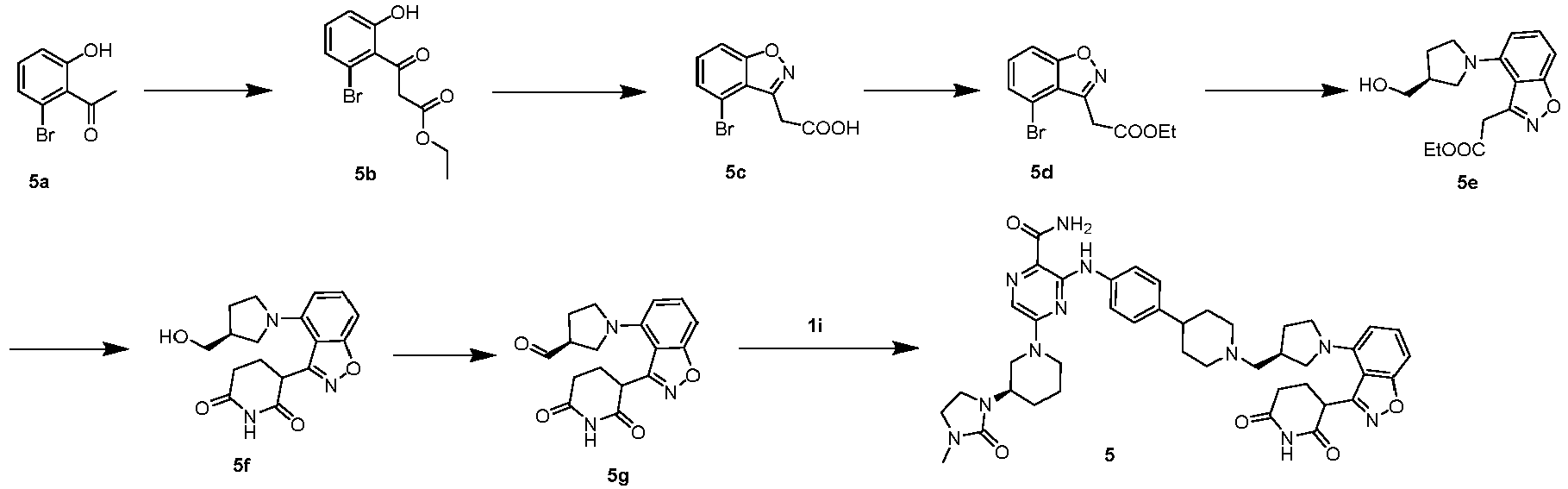
- 1-(2-Bromo-6-hydroxyphenyl)ethan-1-one (9.5 g), diethyl carbonate (26.1 g), and toluene (200 mL) were added to a reaction flask in sequence. The reaction solution was cooled to 0 °C, and sodium hydride (8.83 g, 60%, 221 mmol) was added in portions. The mixture was heated to 120 °C and reacted overnight, cooled to room temperature, and slowly poured into 1.5 L of stirred ice water. The mixture was extracted with 400 mL of ethyl acetate. The aqueous phase was adjusted to pH = 3 with 3 N hydrochloric acid and extracted 3 times with 400 mL of ethyl acetate, the organic phases were combined, washed once with saturated brine, dried over anhydrous sodium sulfate, filtered, and concentrated by evaporation at reduced pressure to remove the solvent, thus giving intermediate 5b (12.4 g).
- MS(ESI, [M-H]-) m/z: 285.0.
- 1H NMR (500 MHz, DMSO-d6) δ 10.60 (s, 1H), 7.19 (t, J = 8.2 Hz, 1H), 7.09 (dd, J = 7.9, 0.9 Hz, 1H), 6.91 (dd, J = 8.2, 0.9 Hz, 1H), 4.09 (q, J = 7.1 Hz, 2H), 3.87 (s, 2H), 1.20 - 1.14 (m, 3H).
- Intermediate 5b (11.2 g), MeOH (200 mL), hydroxylamine hydrochloride (9.49 g), and sodium acetate (11.20 g) were added to a reaction flask in sequence, and the mixture was heated to 80 °C and reacted for 3 h. The reaction solution was cooled to room temperature, 3 N hydrochloric acid was added to adjust the pH to 5, the mixture was concentrated by evaporation at reduced pressure to remove the solvent, 1 L of water was added, the reaction flask was placed under an ice-water bath to cool, and meanwhile the pH was adjusted to 3 with 3 N hydrochloric acid. The mixture was stirred for 30 min and filtered. The filter cake was collected and dried to give intermediate 5c (8.0 g).
- 1H NMR (500 MHz, DMSO-d6) δ 12.99 (s, 1H), 7.81 (dd, J = 8.2, 0.8 Hz, 1H), 7.66 - 7.55 (m, 2H), 4.15 (s, 2H).
- Intermediate 5c (8 g), ethanol (100 mL), and concentrated sulfuric acid (6.13 g, 3.33 mL) were added to a reaction flask in sequence, and the mixture was heated to 90 °C and reacted overnight. The reaction solution was cooled to room temperature and concentrated by evaporation at reduced pressure to remove the solvent, and 250 mL of ethyl acetate and 250 mL of water were added to the residue for dilution. A saturated aqueous sodium bicarbonate solution was added to adjust the pH to 7, and the organic phase was separated. The aqueous phase was extracted 2 times with 250 mL of ethyl acetate to give intermediate 5d (8.64 g).
- 1H NMR (500 MHz, DMSO-d6) δ 7.83 (dd, J = 8.1, 0.9 Hz, 1H), 7.69 - 7.56 (m, 2H), 4.25 (s, 2H), 4.16 (q, J = 7.1 Hz, 2H), 1.20 (t, J = 7.1 Hz, 3H).
- Intermediate 5d (500 mg), (S)-pyrrolidin-3-ylmethanol (267 mg), palladium acetate (39.5 mg), and potassium phosphate (747 mg) were added to a reaction flask in sequence, a solvent 1,4-dioxane (30 mL) was added, and the mixture was heated to 100 °C and reacted under nitrogen atmosphere overnight. The above reaction procedure was repeated 4 times. After the reaction was completed, the mixtures were cooled to room temperature, combined, filtered under vacuum, concentrated, and purified by silica gel column chromatography to give intermediate 5e (240 mg).
- MS(ESI, [M+H]+) m/z: 305.0.
- 1H NMR (500 MHz, DMSO-d6) δ 7.44 (t, J = 8.0 Hz, 1H), 7.15 (d, J = 8.2 Hz, 1H), 6.73 (d, J = 7.8 Hz, 1H), 4.68 (t, J = 5.2 Hz, 1H), 4.18 (s, 2H), 4.10 (q, J = 7.1 Hz, 2H), 3.46 - 3.37 (m, 2H), 3.30 - 3.20 (m, 3H), 3.08 - 3.01 (m, 1H), 2.45 - 2.33 (m, 1H), 2.04 - 1.94 (m, 1H), 1.69 - 1.58 (m, 1H), 1.16 (t, J = 7.1 Hz, 3H).
- Intermediate 5e (120 mg), acrylamide (32.2 mg), and THF (5 mL) were added to a reaction flask in sequence. After the mixture was cooled to an internal temperature of -10 °C, a potassium tert-butoxide solution (88 mg, 0.784 mL, 0.784 mmol) was slowly added, and the mixture was reacted at -10 °C. After the reaction was completed, the reaction was quenched with saturated ammonium chloride. The mixture was extracted with 20 mL of EA, washed once with saturated brine, dried over anhydrous sodium sulfate, filtered, concentrated, and purified by silica gel column chromatography to give intermediate 5f (46 mg).
- MS(ESI, [M+H]+) m/z: 330.0.
- Intermediate 5f (57 mg), acetonitrile (5 mL), and IBX (145 mg) were added to a reaction flask in sequence, and the mixture was reacted at 85 °C for 1 h. After the reaction was completed, the mixture was cooled to room temperature, and filtered under vacuum, and the filtrate was directly used in the next step (the filtrate contained 5 g of the intermediate). MeOH (5 mL) was added to the filtrate. Intermediate 1i (68.7 mg) and acetic acid (4.31 mg) were then added in sequence. After the mixture was stirred at room temperature for 20 min, sodium cyanoborohydride (27.1 mg) was added, and the mixture was reacted at room temperature for another 3 h. After the reaction was completed, 5 mL of a saturated sodium bicarbonate solution was added to the reaction solution. The mixture was extracted with DCM, washed once with saturated sodium chloride, dried over anhydrous sodium sulfate, filtered, concentrated, and purified by normal-phase silica gel column chromatography and C18 reversed-phase column chromatography in sequence to give compound 5 (28 mg).
- MS(ESI, [M+H]+) m/z: 790.6.
- 1H NMR (500 MHz, DMSO-d6) δ 11.19 (s, 1H), 11.08 (d, J = 17.4 Hz, 1H), 7.83 - 7.73 (m, 1H), 7.66 (s, 1H), 7.58 - 7.47 (m, 3H), 7.39 - 7.27 (m, 2H), 7.19 - 7.13 (m, 2H), 7.04 (s, 1H), 4.63 - 4.56 (m, 1H), 4.42 - 4.25 (m, 2H), 3.65 - 3.56 (m, 1H), 3.31 - 3.14 (m, 6H), 3.12 - 2.88 (m, 5H), 2.81 - 2.73 (m, 1H), 2.69 (s, 3H), 2.63 - 2.54 (m, 1H), 2.48 - 2.22 (m, 5H), 2.16 - 1.90 (m, 3H), 1.89 - 1.43 (m, 9H).
-


- Intermediate 6a (3.0 g), DIPEA (5.73 g), and DCM (30 mL) were added to a reaction flask, trifluoromethanesulfonic anhydride (11.31 g) was slowly added under an ice bath, and then the mixture was slowly warmed to room temperature and reacted for 2 h. 100 mL of water and 100 mL of DCM were added to the reaction solution. The organic phase was separated, washed with 100 mL of a saturated sodium chloride solution, dried over anhydrous sodium sulfate, filtered, and concentrated. The concentrate was separated and purified by silica gel column chromatography to give mixture intermediate 6b (5.2 g).
- 1H NMR (500 MHz, Chloroform-d) δ 5.59 (p, J = 2.3 Hz, 1H), 3.73 (s, 3H), 3.29 (ddt, J = 10.1, 8.6, 7.0 Hz, 1H), 2.98 (ddq, J = 16.3, 6.7, 2.7 Hz, 1H), 2.76 - 2.70 (m, 2H), 2.37 - 2.26 (m, 1H).
- Intermediate 6b (2.6 g), bis(pinacolato)diboron (2.89 g), potassium acetate (0.694 g), and 1,4-dioxane (30 mL) were added to a reaction flask in sequence, [1,1'-bis(diphenylphosphino)ferrocene]palladium dichloride dichloromethane complex (0.265 g) was added, and the mixture was purged with N2 3 times. The mixture was then heated to 85 °C and reacted for 2 h, and the heating was stopped. 200 mL of water was added to the reaction solution, and the mixture was extracted 2 times with 100 mL of EA. The combined organic layers were washed twice with 100 mL of a saturated sodium chloride solution. The mixture was washed, dried over anhydrous sodium sulfate, filtered, and concentrated. The concentrate was separated and purified by silica gel column chromatography to give mixture intermediate 6c (2.1 g).
- Intermediate 6c (1.22 g), intermediate 1m (1.0 g), potassium carbonate (1.34 g), H2O (3 mL), and 1,4-dioxane (15 mL) were added to a reaction flask in sequence, [1,1'-bis(diphenylphosphino)ferrocene]palladium dichloride dichloromethane complex (0.355 g) was added, and the mixture was purged with N2 3 times. The mixture was then heated to 70 °C and reacted for 2 h, and the heating was stopped. 200 mL of water was added to the reaction solution, and the mixture was extracted 2 times with 100 mL of DCM. The combined organic layers were washed twice with 100 mL of a saturated sodium chloride solution. The mixture was washed, dried over anhydrous sodium sulfate, filtered, and concentrated. The concentrate was separated and purified by silica gel column chromatography to give mixture intermediate 6d (0.328 g).
- MS (ESI, [M-H]-) m/z: 353.2.
- Intermediate 6d (0.32 g), palladium on carbon catalyst (0.032 g), and MeOH (10 mL) were added to a reaction flask in sequence, and the mixture was reacted at room temperature for 16 h under H2 atmosphere. After the reaction was completed, the reaction solution was filtered, and the filtrate was concentrated to give intermediate 6e (0.17 g).
- MS (ESI, [M-H]-) m/z: 355.2.
- Intermediate 6e (0.9 g) was resolved by preparative SFC to give intermediate 6f-1 (0.17 g) with S configuration and intermediate 6f-2 (0.1 g) with R configuration.
- MS (ESI, [M-H]-) m/z: 355.2.
- Intermediate 6f-1 (0.17 g) and THF (10 mL) were added to a reaction flask, lithium aluminum hydride (0.02 g) was slowly added under an ice bath, and then the mixture was slowly warmed to room temperature and reacted for 1 h. After the reaction was completed, a small amount of ice water was added to the reaction solution under an ice bath to quench the reaction, and 100 mL of DCM and 100 mL of water were then added. The mixture was filtered, and the organic phase of the filtrate was separated, washed with 100 mL of a saturated sodium chloride solution, dried over anhydrous sodium sulfate, filtered, and concentrated. The concentrate was separated and purified by silica gel column chromatography to give intermediate 6g (0.093 g).
- MS (ESI, [M-H]-) m/z: 327.1.
- Intermediate 6g (0.09 g) and dichloromethane (5 mL) were added to a reaction flask, Dess-Martin periodinane (0.233 g) was added, and the mixture was reacted at room temperature for 1 h. After the reaction was completed, dichloromethane (50 mL) and water (50 mL) were added to the system. The organic phase was separated, and the aqueous phase was extracted 2 times with 50 mL of dichloromethane. The organic phases were combined, dried over anhydrous sodium sulfate, filtered and concentrated to give intermediate 6h (0.08 g).
- MS (ESI, [M-H]-) m/z: 325.1.
- Intermediate 6h (0.09 g), intermediate 1i (0.12 g), and methanol (5 mL) were added to a reaction flask, 1 drop of acetic acid was added, and sodium cyanoborohydride (0.032 g) was then added. The mixture was reacted at room temperature for 2 h. After the reaction was completed, 50 mL of dichloromethane and 50 mL of water were added to the system. The organic phase was separated, and the aqueous phase was extracted 2 times with 50 mL of dichloromethane. The organic phases were combined, dried over anhydrous sodium sulfate, filtered and concentrated. The concentrate was separated and purified by silica gel column chromatography to give compound 6 (0.08 g).
- MS (ESI, [M+H]+) m/z: 789.5.
- 1H NMR (500 MHz, DMSO-d 6) δ 11.18 (s, 1H), 11.09 (s, 1H), 7.75 (d, J = 8.6 Hz, 2H), 7.64 (d, J = 17.9 Hz, 2H), 7.49 (d, J = 8.0 Hz, 2H), 7.32 (d, J = 8.2 Hz, 2H), 7.16 (d, J = 8.1 Hz, 2H), 4.56 (dd, J = 11.9, 5.0 Hz, 1H), 4.39 - 4.33 (m, 1H), 4.31 - 4.24 (m, 1H), 3.64 - 3.58 (m, 1H), 3.27 - 3.22 (m, 4H), 3.05 - 2.91 (m, 4H), 2.78 (td, J = 11.9, 6.1 Hz, 1H), 2.70 (s, 3H), 2.64 - 2.59 (m, 1H), 2.46 (s, 2H), 2.39 - 2.31 (m, 2H), 2.21 (ddt, J = 13.7, 9.5, 5.7 Hz, 3H), 2.12 - 2.01 (m, 3H), 1.90 (s, 3H), 1.84 - 1.74 (m, 8H), 1.55 (d, J = 12.6 Hz, 2H).
-
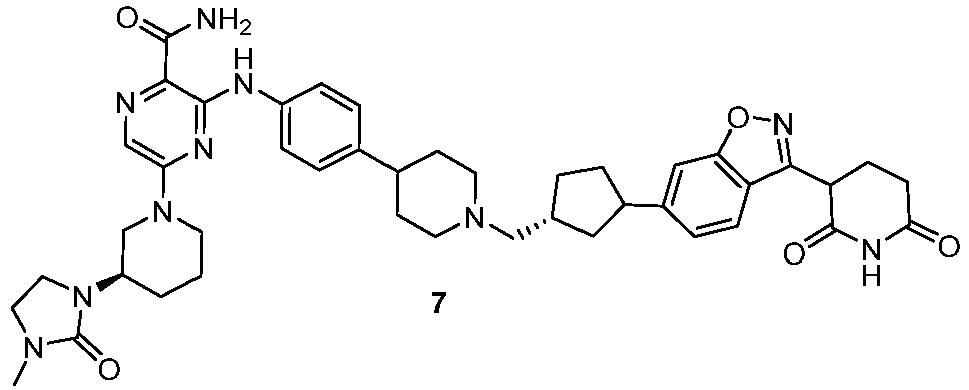

- Referring to the procedures of the first step to the eighth step in Example 6, Example 7 was synthesized, except that intermediate 6a was replaced by intermediate 7a as a starting material.
- MS (ESI, [M+H]+) m/z: 789.5.
- 1H NMR (500 MHz, DMSO-d 6) δ 11.20 (s, 1H), 11.09 (s, 1H), 7.78 - 7.72 (m, 2H), 7.64 (d, J = 16.6 Hz, 2H), 7.50 (d, J = 8.1 Hz, 2H), 7.36 - 7.29 (m, 2H), 7.16 (d, J = 8.1 Hz, 2H), 4.57 (dd, J = 11.9, 5.0 Hz, 1H), 4.36 (d, J = 12.2 Hz, 1H), 4.28 (d, J = 13.1 Hz, 1H), 3.60 (ddt, J = 12.0, 5.3, 2.9 Hz, 1H), 3.30 (s, 2H), 3.27 - 3.19 (m, 3H), 2.99 (dt, J = 37.1, 11.7 Hz, 4H), 2.78 (ddd, J = 17.2, 12.0, 5.3 Hz, 1H), 2.70 (d, J = 2.4 Hz, 3H), 2.61 (dt, J = 17.3, 4.3 Hz, 1H), 2.49 - 2.44 (m, 1H), 2.19 (dq, J = 13.8, 5.0 Hz, 2H), 2.08 (d, J = 8.6 Hz, 2H), 2.00 (d, J = 7.5 Hz, 1H), 1.91 (s, 1H), 1.86 - 1.62 (m, 8H), 1.56 (d, J = 13.2 Hz, 2H).
-


- Intermediate 8b (27 g), benzyl bromide (36.8 g), potassium carbonate (29.8 g), and 700 mL of acetonitrile were added to a single-necked flask in sequence, and the mixture was heated to 80 °C and reacted for 5 h. After the reaction solution was concentrated by evaporation at reduced pressure to remove the solvent, the crude product was separated by silica gel column chromatography (eluent: EA) to give 2.06 g of intermediate 8c as the target product.
- MS(ESI, [M+H]+) m/z: 331.03.
- 1H NMR (500 MHz, DMSO-d 6) δ 7.76 - 7.70 (m, 2H), 7.54 (dt, J = 7.8, 1.8 Hz, 3H), 7.49 - 7.43 (m, 2H), 7.43 - 7.38 (m, 1H), 6.09 (s, 1H), 5.35 (s, 2H).
- Intermediate 8c (4 g), 4-hydroxymethylpiperidine (2.77 g), cesium carbonate (7.82 g), palladium chloride (0.213 g), and 1,4-dioxane (150 mL) were added to a single-necked flask in sequence, and the mixture was reacted at 80 °C for 16 h under N2 atmosphere. The reaction solution was cooled to room temperature and concentrated by evaporation at reduced pressure to remove the solvent, and the crude product was separated and purified by silica gel column chromatography (eluent: PE:EA = 1:1, v/v) to give 4.82 g of intermediate 8d.
- MS(ESI, [M+H]+) m/z: 366.
- 1H NMR (500 MHz, DMSO-d 6) δ 7.55 (d, J = 9.0 Hz, 1H), 7.53 - 7.47 (m, 3H), 7.46 - 7.42 (m, 2H), 7.40 (dd, J = 3.8, 2.0 Hz, 1H), 6.93 (dd, J = 9.1, 2.5 Hz, 1H), 5.70 (s, 1H), 5.30 (s, 2H), 4.49 (t, J = 5.3 Hz, 1H), 3.93 (dt, J = 13.3, 3.5 Hz, 2H), 3.27 (t, J = 5.8 Hz, 2H), 2.84 (td, J = 12.7, 2.7 Hz, 2H), 1.76 - 1.69 (m, 2H), 1.65 - 1.58 (m, 1H), 1.21 - 1.15 (m, 2H).
- Intermediate 8d (4.00 g), palladium on carbon (2.0 g), and methanol (300 mL) were added to a single-necked flask in sequence. After the mixture was purged several times with H2, the mixture was reacted at room temperature for 16 h. The mixture was filtered under vacuum, the filtrate was concentrated by evaporation at reduced pressure to remove the solvent, and the crude product was separated by silica gel column chromatography (PE:EA = 2:1, v/v) to give 1.70 g of intermediate 8e.
- MS(ESI, [M+H]+) m/z: 276.1
- 1H NMR (500 MHz, DMSO-d 6)δ 12.01 (s, 1H), 7.56 (d, J = 8.9 Hz, 1H), 6.92 (dd, J = 9.0, 2.4 Hz, 1H), 6.73 (d, J = 2.4 Hz, 1H), 5.31 (s, 1H), 4.46 (s, 1H), 3.93 (dt, J = 13.2, 3.2 Hz, 2H), 3.27 (d, J = 6.2 Hz, 2H), 2.84 (td, J = 12.7, 2.7 Hz, 2H), 1.76 - 1.69 (m, 2H), 1.66 - 1.57 (m, 1H), 1.18 (qd, J = 12.4, 4.1 Hz, 2H).
- Intermediate 8e (1.9 g), hydroxylamine hydrochloride (1.555 g), sodium ethoxide (1.523 g), and ethanol (150 mL) were added to a single-necked flask in sequence, and the mixture was reacted at 85 °C for 22 h. The reaction solution was cooled to room temperature and concentrated by evaporation at reduced pressure to remove the solvent. Dichloromethane and a saturated aqueous sodium carbonate solution were added to the crude product. The mixture was extracted and separated, the organic phase was discarded, and the pH of the aqueous phase was adjusted with 6 M HCl to 6. The mixture was extracted several times with dichloromethane. The organic phases were combined, washed with saturated brine, dried over anhydrous sodium sulfate, and filtered. The filtrate was concentrated by evaporation at reduced pressure to remove the solvent, thus giving 1.32 g of intermediate 8f. MS(ESI, [M+H]-) m/z: 289.1.
- 1H NMR (500 MHz, DMSO-d 6) δ 12.74 (s, 1H), 7.53 (d, J = 8.9 Hz, 1H), 7.07 (dd, J = 8.9, 2.1 Hz, 1H), 7.01 (d, J = 2.0 Hz, 1H), 4.49 (t, J = 5.4 Hz, 1H), 3.94 - 3.87 (m, 4H), 3.34 (s, 2H), 2.80 (td, J = 12.5, 2.6 Hz, 2H), 1.77 - 1.71 (m, 2H), 1.63 - 1.57 (m, 1H), 1.22 (dd, J = 12.4, 3.7 Hz, 2H).
- Intermediate 8f (1.3 g), ethanol (100 mL), and sulfuric acid (1.471 g, 15.00 mmol) were added to a single-necked flask in sequence, and the mixture was reacted at 85 °C for 5 h. The reaction solution was cooled to room temperature, and dichloromethane and a saturated aqueous sodium bicarbonate solution were added to the reaction solution to adjust the pH to 8. The organic phase was separated, and the aqueous phase was extracted with dichloromethane. The organic phases were combined, washed with saturated brine, dried over anhydrous sodium sulfate, and filtered. The filtrate was concentrated by evaporation at reduced pressure to remove the solvent, and the crude product was purified by silica gel column chromatography (PE:EA = 1:4, v/v) to give 1.01 g of intermediate 8g.
- MS(ESI, [M+H]+) m/z: 319.16.
- 1H NMR (500 MHz, DMSO-d 6) δ 7.53 (d, J = 9.0 Hz, 1H), 7.08 (dd, J = 9.0, 2.1 Hz, 1H), 7.02 (d, J = 2.1 Hz, 1H), 4.49 (t, J = 5.3 Hz, 1H), 4.13 (q, J = 7.1 Hz, 2H), 4.04 (s, 2H), 3.89 (dt, J = 12.2, 3.4 Hz, 2H), 3.28 (t, J = 5.8 Hz, 2H), 3.17 (d, J = 5.2 Hz, 1H), 2.81 (td, J = 12.6, 2.7 Hz, 2H), 1.74 (dd, J = 13.7, 3.7 Hz, 2H), 1.26 - 1.17 (m, 5H).
- Acrylamide (48.7 mg) was slowly added dropwise to a stirred solution of intermediate 8g (200 mg) in THF (50 mL) at 0 °C under N2 atmosphere. After the dropwise addition was carried out for 1 min and completed, a solution of potassium tert-butoxide in THF (1 M) (0.935 mL) was added dropwise, and after the dropwise addition was carried out for about 1 min and completed, the mixture was stirred and reacted at 0 °C for 3 h. The reaction solution was poured into an aqueous ammonium chloride solution. After the mixture was vigorously stirred for 1 min, the mixture was extracted with EA, washed with saturated brine, dried over anhydrous sodium sulfate, and filtered. The filtrate was concentrated by evaporation at reduced pressure to remove the solvent, and the crude product was separated by silica gel column chromatography (PE:EA = 1:4, v/v) to give 0.06 g of intermediate 8h. MS(ESI, [M+H]+) m/z: 344.20.
- Intermediate 8h (45 mg), IBX oxidant (108 mg), and acetonitrile (10 mL) were added to a single-necked flask in sequence, and the mixture was reacted at 85 °C for 0.5 h. The reaction solution was cooled to room temperature and filtered, and the filtrate (containing intermediate 8i) was directly used in the next step.
- MS(ESI, [M+H]+) m/z: 342.16.
- The intermediate 8i reaction solution (the solution of intermediate 8i obtained in the previous step) and MeOH (10.00 mL) were added to a single-necked flask. Intermediate 1i (68.7 mg) and acetic acid (3.85 mg) were added in sequence with stirring at room temperature. After the mixture was stirred at room temperature for 30 min, sodium cyanoborohydride (16.11 mg) was added, and the mixture was reacted at room temperature for 21 h. The reaction solution was poured into a mixed solution of dichloromethane and water, and the pH was adjusted to 8 with saturated sodium bicarbonate. The organic phase was separated, and the aqueous phase was extracted several times with dichloromethane. The organic phases were combined, washed with saturated brine, dried over anhydrous sodium sulfate, and filtered. The filtrate was concentrated by evaporation at reduced pressure to remove the solvent, and the crude product was dissolved in DMSO, purified by C18 reversed-phase column, and purified by Biotage medium and low pressure chromatography (1 mM aqueous ammonium acetate solution:acetonitrile = 1:1, v/v) to give 27.6 mg of compound 8.
- HR-MS(ESI, [M+H]+) m/z: 804.43146.
- 1H NMR (500 MHz, DMSO-d 6)δ 11.21 (s, 1H), 11.05 (s, 1H), 7.79 - 7.73 (m, 1H), 7.66 (s, 1H), 7.53 (dd, J = 22.1, 8.4 Hz, 3H), 7.36 - 7.32 (m, 1H), 7.17 (d, J = 8.1 Hz, 2H), 7.09 - 7.04 (m, 2H), 4.45 (dd, J = 11.4, 5.0 Hz, 1H), 4.39 - 4.32 (m, 1H), 4.29 (d, J = 13.1 Hz, 1H), 3.90 (d, J = 12.3 Hz, 2H), 3.62 (dq, J = 11.2, 6.6, 5.5 Hz, 1H), 3.26 (dd, J = 11.5, 5.1 Hz, 4H), 3.06 - 2.81 (m, 6H), 2.61 - 2.56 (m, 1H), 2.54 - 2.36 (m, 5H), 2.18 (dt, J = 13.2, 5.0 Hz, 2H), 1.99 - 1.68 (m, 11H), 1.64 - 1.51 (m, 2H), 1.24 (q, J = 11.4, 9.3 Hz, 4H).
-


- Intermediate 10f (10 g), azetidin-3-ylmethanol (3.51 g), L-proline (1.547 g), copper(I) iodide (1.280 g), DMF (100 mL), and sodium carbonate (8.55 g) were added to a reaction flask in sequence, and the mixture was heated to 100 °C and reacted for 4 h under N2 atmosphere. The reaction was stopped, and the reaction solution was cooled to room temperature and extracted three times with the organic solvent DCM (200 mL) and water (500 mL). The organic phase was separated, washed with 500 mL of water, washed with 500 mL of saturated brine, dried over anhydrous sodium sulfate, and filtered. The filtrate was purified by silica gel column chromatography (eluent: EA) to give 2.16 g of intermediate 9d.
- MS(ESI, [M+H]+) m/z: 291.2.
- 1H NMR (500 MHz, DMSO-d 6) δ 7.45 - 7.38 (m, 1H), 7.36 (ddt, J = 6.6, 4.9, 2.6 Hz, 1H), 6.37 (d, J = 7.9 Hz, 1H), 4.73 (t, J = 5.3 Hz, 1H), 4.02 (q, J = 7.1 Hz, 2H), 3.91 (s, 1H), 3.83 (t, J = 7.9 Hz, 1H), 3.55 (dd, J = 7.8, 5.4 Hz, 2H), 3.52 - 3.46 (m, 2H), 2.71 (ttd, J = 12.4, 8.6, 7.2, 4.3 Hz, 1H), 1.08 (t, J = 7.1 Hz, 3H).
- Intermediate 9d (200 mg) and THF (10 mL) were added to a reaction flask in sequence. The mixture was cooled to about 0 °C, acrylamide (53.9 mg) and potassium tert-butoxide (116 mg) were added, and the mixture was reacted at 0 °C for 3.5 h under N2 atmosphere. The reaction was stopped, and the reaction solution was added dropwise to a saturated aqueous ammonium chloride solution. The mixture was extracted with 50 mL of ethyl acetate, the organic phase was separated, washed with 50 mL of saturated brine, dried over anhydrous sodium sulfate and filtered, and the filtrate was purified by silica gel column chromatography (eluent EA) to give 0.035 g of intermediate 9e.
- MS(ESI, [M+H]+) m/z: 316.1.
- 1H NMR (500 MHz, DMSO-d 6) δ 11.03 (s, 1H), 7.53 (d, J = 8.6 Hz, 1H), 6.49 (d, J = 1.8 Hz, 1H), 6.46 (dd, J = 8.6, 1.9 Hz, 1H), 4.80 (t, J = 5.2 Hz, 1H), 4.42 (dd, J = 11.3, 5.0 Hz, 1H), 3.94 (t, J = 7.8 Hz, 2H), 3.65 (dd, J = 7.7, 5.4 Hz, 2H), 3.59 (t, J = 5.8 Hz, 2H), 2.82 (tdd, J = 8.2, 6.8, 6.0, 3.6 Hz, 1H), 2.73 (ddd, J = 17.0, 11.5, 5.3 Hz, 1H), 2.58 (dt, J = 17.2, 4.4 Hz, 1H), 2.41 (dtd, J = 13.1, 11.4, 4.6 Hz, 1H), 2.16 (dq, J = 13.3, 5.0 Hz, 1H).
- Intermediate 9e (200 mg), acetonitrile (10.00 mL), and IBX oxidant (533 mg) were added to a reaction flask in sequence, and the mixture was reacted at 80 °C for 1 h. The reaction solution was filtered and evaporated to remove a small amount of the solvent (containing intermediate 9f). MeOH (10 mL), intermediate 1i (304 mg), and glacial acetic acid (19.04 mg) were added. After the mixture was stirred at room temperature for 30 min, sodium cyanoborohydride (80 mg) was added, and the mixture was reacted at room temperature for 3 h. The mixture was purified by silica gel column chromatography (DCM:CH3OH = 10:1, v/v). The mixture was then purified by 120 g C18 reversed-phase column (10 mM aqueous ammonium acetate solution:CH3CN = 40%:60%) to give 0.09 g of compound 9.
- MS(ESI, [M+H]+) m/z: 776.5.
- 1H NMR (500 MHz, DMSO-d 6) δ 11.20 (s, 1H), 11.04 (s, 1H), 7.76 (d, J = 2.9 Hz, 1H), 7.66 (s, 1H), 7.52 (dd, J = 22.5, 8.4 Hz, 3H), 7.33 (d, J = 2.9 Hz, 1H), 7.16 (d, J = 8.2 Hz, 2H), 6.53 - 6.45 (m, 2H), 4.43 (dd, J = 11.4, 5.0 Hz, 1H), 4.35 (d, J = 12.2 Hz, 1H), 4.29 (d, J = 13.4 Hz, 1H), 4.04 (t, J = 7.7 Hz, 2H), 3.60 (ddd, J = 13.0, 8.6, 5.4 Hz, 3H), 3.32 - 3.23 (m, 4H),3.04 (d, J = 11.8 Hz, 1H), 3.01 - 2.91 (m, 4H), 2.72 (s, 4H), 2.64 - 2.52 (m, 3H), 2.48 - 2.36 (m, 2H), 2.17 (dq, J = 13.2, 5.0 Hz, 1H), 2.05 (t, J = 11.6 Hz, 2H), 1.87 - 1.80 (m, 2H), 1.80 - 1.70 (m, 3H), 1.67 - 1.52 (m, 3H).
- 13C NMR (126 MHz, DMSO-d 6) δ 173.60, 172.48, 172.09, 169.70, 165.08, 160.79, 156.41, 154.04, 154.02, 150.98, 140.26, 137.83, 127.44, 122.90, 120.26, 118.66, 114.71, 111.21, 110.23, 89.41, 56.68, 55.38, 54.31, 49.12, 47.24, 45.46, 44.85, 41.51, 39.03, 33.59, 31.56, 31.40, 28.21, 27.80, 24.45, 23.29, 21.54.
-


- Intermediate 10a (100 g), triethylamine (92 g), and DCM (1 L) were added to a single-necked flask in sequence, acetyl chloride (39.2 g) was added at 0 °C, and the mixture was reacted at room temperature for 2.5 h. The system was concentrated to remove DCM, 300 mL × 3 of petroleum ether was added to the system, and the mixture was extracted with 1000 mL of saturated brine. The organic phase was separated, dried over anhydrous sodium sulfate, filtered, and concentrated to give 123 g of intermediate 10b.
- MS(ESI, [M+H]+) m/z: 263.0.
- Intermediate 10b (123 g) and anhydrous aluminum trichloride (94 g) were added to a single-necked flask in sequence, and the mixture was heated to 170 °C and reacted for 3 h. The reaction solution was cooled to room temperature. About 500 mL of 6 M hydrochloric acid was slowly added to quench the reaction. After a solid present therein was crushed, the mixture was extracted with DCM and filtered. Liquid separation was performed, the organic phase was collected, and the aqueous phase was then extracted 2 times with 250 mL of dichloromethane. The organic phases were combined, dried over anhydrous sodium sulfate, filtered and concentrated by evaporation at reduced pressure to remove the solvent, thus giving 112 g of intermediate 10c.
- MS(ESI, [M+H]+) m/z: 263.1.
- Intermediate 10c (107 g), diethyl carbonate (174 g), and toluene (1000 mL) were added to a three-necked flask in sequence. After dissolution, the mixture was cooled to about 0 °C. Sodium hydride (58.8 g) was added in portions, and the mixture was warmed to 100 °C. The mixture was warmed to 120 °C and reacted for about 1.5 h after the system was stable. The reaction solution was cooled to room temperature and slowly poured into 2 L of stirred ice water. The mixture was extracted with 500 mL of ethyl acetate, and the organic phase was discarded. The aqueous phase was adjusted to pH = 1-2 with 3 N hydrochloric acid and filtered to give 90 g of intermediate 10d.
- MS(ESI, [M+H]+) m/z: 289.1.
- Intermediate 10d (90 g), hydroxylamine hydrochloride (43.4 g), and absolute ethanol (1000 mL) were added to a single-necked flask in sequence at 0 °C. After dissolution, sodium ethoxide (42.5 g) was added in portions under N2 atmosphere, and the mixture was heated to 90 °C and reacted for 4.5 h. The reaction solution was cooled to room temperature, and 3 N hydrochloric acid was added to adjust the pH to 1-3. The mixture was concentrated by evaporation at reduced pressure to remove the solvent, 500 mL of water was added to the residue, and the mixture was stirred at room temperature for 30 min and filtered. The filter cake was washed with 200 mL of water and then transferred to a reduced-pressure oven to be dried, thus giving 91.6 g of intermediate 10e.
- MS(ESI, [M+H]+) m/z: 304.1.
- 1H NMR (500 MHz, DMSO-d 6) δ 8.22 (d, J = 1.2 Hz, 1H), 7.71 (dd, J = 8.3, 1.3 Hz, 1H), 7.64 (d, J = 8.3 Hz, 1H), 4.00 (s, 2H).
- Intermediate 10e (91.6 g) and absolute ethanol (1000 mL) were added to a single-necked flask in sequence, concentrated sulfuric acid (148 g, 1511 mmol) was added dropwise at 0 °C over about 3 min (the system was about 50 °C), and the mixture was heated to 85 °C and reacted for 3.5 h under N2 atmosphere. The reaction solution was cooled to room temperature with stirring. The solvent was removed from the reaction solution, 1500 mL of ice water and 1000 mL of ethyl acetate were added to the residue, a 10% aqueous NaOH solution was added dropwise under an ice-water bath, and the pH was adjusted to about 9 (internal temperature < 5 °C). The mixture was extracted and separated three times by a separating funnel, and the organic phases were combined, washed with saturated brine, dried over anhydrous sodium sulfate, and subjected to rotary evaporation to remove the solvent, thus giving 102.6 g of intermediate 10f.
- MS(ESI, [M+H]+) m/z: 332.0.
- Intermediate 10f (30 g), azetidin-3-ol (7.29 g), L-proline (5.22 g), copper(I) iodide (4.31 g), anhydrous sodium carbonate (28.8 g), and DMF (300 mL) were added to a single-necked flask in sequence, and the mixture was heated to 100 °C and reacted for 2.5 h under N2 atmosphere. The reaction solution was cooled to room temperature and extracted three times with 200 mL × 3 of the organic solvent ethyl acetate and 1000 mL of water. After the organic phases were separated and combined, the organic phase was washed with 500 mL of water, washed with 500 mL of saturated brine, dried over anhydrous sodium sulfate, and filtered. The filtrate was concentrated by evaporation at reduced pressure to remove the solvent, thus giving a crude product, which was purified by silica gel column chromatography to give 12 g of intermediate 10g.
- MS(ESI, [M-H]-) m/z: 275.1.
- Intermediate 10g (10 g) and anhydrous tetrahydrofuran (200 mL) were added to a three-necked flask in sequence. After dissolution, acrylamide (1.976 g) was added. Under N2 atmosphere, the mixture was cooled to about -15 °C, potassium tert-butoxide (3.894 g) was added dropwise, and the system was kept at -15 °C and reacted for about 1.5 h. The reaction solution was added dropwise to a saturated ammonium chloride solution to quench the reaction, and the mixture was extracted with 100 mL × 3 of ethyl acetate. The organic phase was separated, washed with 100 mL of saturated brine, dried over anhydrous sodium sulfate, concentrated by evaporation at reduced pressure to remove the solvent, and purified by silica gel column chromatography to give 6.3 g of intermediate 10h.
- MS(ESI, [M+H]+) m/z: 302.1.
- At room temperature, 2-iodoxybenzoic acid (IBX, 9.32 g) was added to a stirred solution of intermediate 10h in anhydrous acetonitrile (50 mL), and the mixture was reacted at 90 °C for about 3.5 h and filtered. After the filter cake was washed twice with acetonitrile, the filtrates were combined, concentrated by evaporation at reduced pressure to remove the solvent, and purified by silica gel column chromatography to give 4.6 g of intermediate 10i.
- MS(ESI, [M+H]+) m/z: 300.1.
- Intermediate 1i (150 mg), intermediate 10i (133 mg), dichloromethane (10 mL), and glacial acetic acid (50.4 mg, 0.048 mL) were first added to a reaction flask. After the mixture was stirred at room temperature for 30 min, sodium cyanoborohydride (70.3 mg) was added, and the mixture was stirred at room temperature overnight. After the reaction was completed, 20 mL of a saturated aqueous NaHCO3 solution was added to the reaction solution, and the mixture was extracted twice with 20 mL of DCM-MeOH (10:1). The extracts were combined, dried over anhydrous sodium sulfate, and filtered under vacuum, and the resulting filtrate was subjected to rotary evaporation to dryness and purified by C18 reversed-phase column (10 nM aqueous ammonium acetate solution-acetonitrile = 50%:50%, v/v) to give 59 mg of compound 10.
- Q-TOF(ESI, [M+H]+) m/z: 762.3847.
- 1H NMR (500 MHz, DMSO-d 6)δ 11.20 (s, 1H), 11.04 (s, 1H), 7.76 (d, J = 2.5 Hz, 1H), 7.65 (s, 1H), 7.56 (d, J = 8.6 Hz, 1H), 7.49 (d, J = 8.3 Hz, 2H), 7.33 (d, J = 2.8 Hz, 1H), 7.16 (d, J = 8.2 Hz, 2H), 6.56 - 6.47 (m, 2H), 4.44 (dd, J = 11.4, 5.0 Hz, 1H), 4.34 (d, J = 12.6 Hz, 1H), 4.28 (d, J = 13.2 Hz, 1H), 4.04 (t, J = 7.3 Hz, 2H), 3.72 (dd, J = 8.0, 5.3 Hz, 2H), 3.61 (td, J = 11.8, 10.6, 5.1 Hz, 1H), 3.32 - 3.20 (m, 4H), 3.03 (t, J = 11.8 Hz, 1H), 2.99 - 2.90 (m, 3H), 2.70 (s, 4H), 2.59 (dt, J = 17.4, 4.5 Hz, 1H), 2.49 - 2.37 (m, 2H), 2.17 (dq, J = 14.1, 4.9 Hz, 1H), 1.96 (t, J = 11.2 Hz, 2H), 1.85 - 1.69 (m, 5H), 1.59 (dq, J = 15.5, 12.0 Hz, 3H).
- 13C NMR (126 MHz, DMSO-d 6) δ 173.61, 172.09, 169.70, 165.06, 160.78, 156.44, 154.04, 153.82, 150.97, 140.19, 137.84, 127.43, 122.97, 120.26, 118.67, 114.71, 111.34, 110.33, 89.58, 56.40, 54.97, 50.51, 49.13, 47.25, 45.44, 44.85, 41.48, 33.25, 31.55, 31.41, 28.19, 24.44, 23.29.
-


- Lithium bis(trimethylsilyl)amide (9.44 g) was slowly added dropwise to a stirred solution of intermediate 11a (9 g) in THF (150 mL) at -78 °C under N2 atmosphere. After the dropwise addition was carried out for 5 min and completed, the mixture was stirred and reacted at -78 °C for 0.5 h. A solution of N phenylbis(trifluoromethanesulfonyl)imide (17.47 g) in THF (150 mL) was slowly added to the reaction solution, and the temperature was controlled below -60 °C. After the addition was completed, the mixture was reacted at -78 °C for 3.5 h. After the reaction was completed, the reaction solution was poured into a saturated ammonium chloride crushed ice solution, and the mixture was extracted twice with 200 mL of EA. The organic phases were combined, washed once with saturated brine, dried over anhydrous sodium sulfate, filtered, concentrated, and purified by silica gel column chromatography (PE:EA = 3:2, v/v) to give 13 g of intermediate 11b.
- 1H NMR (500 MHz, DMSO-d6) δ 5.87 - 5.77 (m, 1H), 3.57 (d, J = 51.4 Hz, 4H), 2.40 (d, J = 4.3 Hz, 4H), 1.90 (t, J = 6.3 Hz, 2H), 1.38 (s, 9H).
- 4-Nitrophenylboronic acid pinacol ester (10.06 g), intermediate 11b (10 g), potassium carbonate (11.16 g), [1,1'-bis(diphenylphosphino)ferrocene]palladium dichloride dichloromethane complex (4.40 g), 1,4-dioxane (300 mL), and water (50 mL) were added to a single-necked flask in sequence. After the mixture was purged several times with N2, the mixture was heated to 90 °C and reacted for 5 h. After the reaction was completed, the reaction solution was filtered, the filter cake was washed several times with EA, and 500 mL of EA and 200 mL of water were added to the filtrate. The organic phase was separated, washed with 500 mL of saturated brine, dried over anhydrous sodium sulfate, and filtered. The filtrate was purified by silica gel column chromatography (PE:EA = 4:1, v/v). 5.58 g of intermediate 11c was obtained.
- MS(ESI, [M+H]+) m/z: 345.05
- 1H NMR (500 MHz, DMSO-d6)δ 8.26 - 8.15 (m, 2H), 7.75 - 7.61 (m, 2H), 6.43 - 6.33 (m, 1H), 3.60 (d, J = 49.0 Hz, 4H), 2.52 (d, J = 3.8 Hz, 2H), 2.46 (dt, J = 4.5, 2.4 Hz, 2H), 1.89 (t, J = 6.2 Hz, 2H), 1.38 (s, 9H).
- Pd/C (10%, 0.015 g) was added to a solution of intermediate 11c (1 g) in MeOH (50 mL). The reaction solution was first purged 2-3 times with nitrogen, then purged 2-3 times with hydrogen, and stirred at room temperature and reacted for 90 min. After the reaction was completed, the reaction solution was filtered, and the filter cake was rinsed with 50 mL of DCM solvent. The filtrate was concentrated by evaporation at reduced pressure to remove the solvent, thus giving 1.013 g of intermediate 11d.
- MS(ESI, [M+H]+) m/z: 317.2.
- 1H NMR (500 MHz, DMSO-d6)δ 6.87 - 6.79 (m, 2H), 6.51 - 6.42 (m, 2H), 4.79 (s, 2H), 3.58 (d, J = 13.2 Hz, 2H), 3.47 (s, 2H), 2.24 (tt, J = 11.9, 3.4 Hz, 1H), 1.87 (dd, J = 12.9, 3.8 Hz, 2H), 1.66 - 1.57 (m, 2H), 1.48 (td, J = 13.0, 3.5 Hz, 2H), 1.38 (s, 9H), 1.35 - 1.27 (m, 2H).
- Intermediate 1f (1.1 g), intermediate 11d (1.053 g), BINAP (0.207 g), Cs2CO3 (3.25 g), Pd(OAc)2 (0.075 g), and 1,4-dioxane (50 mL) were added to a single-necked flask in sequence, and the mixture was heated to 100 °C and reacted under N2 atmosphere for 1.5 h. The reaction was stopped, the reaction solution was cooled to room temperature and filtered, and the filter cake was washed with 150 mL of dichloromethane. The filtrate was concentrated by evaporation at reduced pressure to remove the solvent and purified by silica gel column chromatography (DCM:CH3OH = 10:1). 1.2 g of intermediate 11e was obtained.
- MS(ESI, [M+H]+) m/z: 601.6.
- 1H NMR (500 MHz, DMSO-d6)δ 8.93 (s, 1H), 7.81 (s, 1H), 7.47 - 7.41 (m, 2H), 7.10 (d, J = 8.6 Hz, 2H), 4.24 (d, J = 13.1 Hz, 1H), 3.66 - 3.43 (m, 6H), 3.25 (s, 4H), 3.00 - 2.86 (m, 2H), 2.71 (d, J = 2.2 Hz, 3H), 2.37 (d, J = 12.2 Hz, 1H), 1.91 (d, J = 12.7 Hz, 2H), 1.82 - 1.65 (m, 6H), 1.53 (td, J = 12.9, 3.5 Hz, 4H), 1.38 (s, 9H).
- Intermediate 11e (1.2 g), DMSO (100 mL), MeOH (50 mL), and Cs2CO3 (0.532 g) were added to a single-necked flask in sequence. H2O2 (0.926 g) was added under an ice bath. After the mixture was stirred for 5 min, the ice bath was removed, and the mixture was reacted at room temperature for 1.5 h. The reaction was stopped, 100 mL of a saturated sodium sulfite solution was added to the reaction solution to quench the reaction. The color was not changed as detected using a potassium iodide starch reagent, and then 100 mL of ethyl acetate was added for extraction. The organic phases were combined, dried over anhydrous sodium sulfate, filtered and concentrated by evaporation at reduced pressure to remove the solvent, thus giving 1.2 g of intermediate 11f.
- MS(ESI, [M+H]+) m/z: 619.41.
- Intermediate 11f (1 g), DCM (20 mL), and trifluoroacetic acid (5.53 g, 3.74 mL) were added to a reaction flask in sequence, and the mixture was reacted at room temperature for 3 h. The solvent was removed by evaporation at reduced pressure to give a product of trifluoroacetate salt. A saturated aqueous sodium bicarbonate solution was slowly added. After the system was adjusted to weak alkalinity, the mixture was stirred for 1 h. The mixture was filtered, and the filter cake was washed with a small amount of water and dried in a vacuum drying oven to give 0.8 g of intermediate 11g.
- MS(ESI, [M+H]+) m/z: 519.4.
- 1H NMR (500 MHz, DMSO-d6) δ 11.22 (s, 1H), 7.76 (d, J = 2.7 Hz, 1H), 7.66 (s, 1H), 7.52 - 7.46 (m, 2H), 7.33 (d, J = 2.8 Hz, 1H), 7.15 - 7.10 (m, 2H), 4.41 - 4.26 (m, 2H), 3.77 (s, 2H), 3.65 (s, 2H), 3.60 (dt, J = 10.9, 4.0 Hz, 1H), 3.40 - 3.33 (m, 2H), 3.30 - 3.23 (m, 2H), 3.05 (t, J = 11.8 Hz, 1H), 2.95 (t, J = 12.2 Hz, 1H), 2.71 (s, 3H), 2.39 (tt, J = 11.8, 3.0 Hz, 1H), 2.08 (d, J = 12.8 Hz, 2H), 1.86 - 1.69 (m, 5H), 1.54 (td, J = 13.3, 3.6 Hz, 3H), 1.38 (qd, J = 13.1, 3.1 Hz, 2H).
- Intermediate 9f (50 mg), intermediate 11g (82 mg), MeOH (5 mL), and acetic acid (4.76 mg) were added to a reaction flask in sequence. After the mixture was stirred at room temperature for 30 min, sodium cyanoborohydride (19.93 mg) was added, and the mixture was stirred at room temperature for 3.5 h. The reaction solution was purified by silica gel column chromatography (DCM:CH3OH = 10:1) to give 0.07 g of Example 11.
- MS(ESI, [M+H]+) m/z: 816.7.
- 1H NMR (500 MHz, DMSO-d6 ) δ 11.20 (s, 1H), 11.04 (s, 1H), 7.75 (d, J = 2.9 Hz, 1H), 7.65 (s, 1H), 7.54 (d, J= 8.6 Hz, 1H), 7.49 (d, J = 8.2 Hz, 2H), 7.33 (d, J = 2.9 Hz, 1H), 7.12 (d, J = 8.2 Hz, 2H), 6.52 - 6.43 (m, 2H), 4.43 (dd, J = 11.4, 5.0 Hz, 1H), 4.37 (d, J = 12.2 Hz, 1H), 4.28 (d, J = 12.7 Hz, 1H), 3.99 (t, J = 7.5 Hz, 2H), 3.67 - 3.55 (m, 3H), 3.36 - 3.30 (m, 6H), 3.26 (dd, J = 9.2, 7.2 Hz, 2H), 2.98 (dt, J = 35.3, 11.6 Hz, 4H), 2.75 (dd, J = 11.8, 5.5 Hz, 2H), 2.72 (s, 3H), 2.58 (dt, J = 17.2, 4.4 Hz, 1H), 2.45 - 2.33 (m, 2H), 2.16 (dq, J = 13.0, 5.0 Hz, 1H), 1.96 (d, J = 11.0 Hz, 2H), 1.85 - 1.73 (m, 3H), 1.69 (d, J = 12.4 Hz, 2H), 1.59 - 1.45 (m, 3H), 1.37 (q, J = 11.1, 9.5 Hz, 2H).
- 13C NMR (126 MHz, DMSO-d6 ) δ 173.60, 172.08, 169.70, 165.05, 160.78, 156.42, 154.03, 154.01, 150.97, 140.88, 137.73, 127.40, 122.90, 120.14, 118.61, 114.69, 111.25, 110.24, 89.45, 65.83, 56.17, 55.39, 49.12, 47.19, 45.45, 44.85, 42.69, 39.02, 35.91, 31.54, 31.40, 30.98, 28.22, 24.47, 23.29.
-


- Intermediate 11g (200 mg), DCM (30 mL), intermediate 10i (115 mg), and 3 drops of acetic acid were added to a single-necked flask in sequence. The mixture was reacted at room temperature for 1 h and cooled under an ice bath. NaBH4 (36.5 mg) was added, and the mixture was reacted at room temperature for 20 h. The reaction solution was poured into a mixed solvent of a DCM/MeOH = 10/1 solution and water, and the pH was adjusted to 8 with a saturated aqueous sodium bicarbonate solution. The organic phase was separated, and the aqueous phase was extracted several times with DCM/MeOH = 10/1. The organic phases were combined, washed with saturated brine, dried over anhydrous sodium sulfate, and filtered. The filtrate was concentrated by evaporation at reduced pressure to remove the solvent, and the crude product was purified by silica gel column chromatography (dichloromethane:methanol = 20:1, v/v). The resulting purified product was dissolved in DMSO, purified by (120 g) commercial C18 reversed-phase column, and purified by Biotage medium and low pressure chromatography (1 M aqueous ammonium acetate solution:acetonitrile = 1:1, v/v) to give 61 mg of compound 12.
- HRMS (ESI) m/z [M+H]+:802.41917.
- 1H NMR (500 MHz, DMSO-d6 )δ 11.20 (s, 1H), 11.04 (s, 1H), 7.75 (d, J = 2.9 Hz, 1H), 7.65 (s, 1H), 7.55 (d, J = 8.6 Hz, 1H), 7.48 (d, J = 8.3 Hz, 2H), 7.33 (d, J = 2.9 Hz, 1H), 7.11 (d, J = 8.3 Hz, 2H), 6.52 (d, J = 1.8 Hz, 1H), 6.48 (dd, J = 8.6, 1.9 Hz, 1H), 4.43 (dd, J = 11.4, 5.0 Hz, 1H), 4.36 (d, J = 12.5 Hz, 1H), 4.28 (d, J = 13.3 Hz, 1H), 3.94 (t, J = 7.6 Hz, 2H), 3.77 - 3.68 (m, 2H), 3.61 (ddt, J = 15.4, 11.2, 4.6 Hz, 2H), 3.32 - 3.20 (m, 4H), 3.08 - 2.92 (m, 5H), 2.74 (td, J = 11.5, 5.7 Hz, 1H), 2.69 (s, 3H), 2.58 (dt, J = 17.3, 4.5 Hz, 1H), 2.41 (dddt, J = 20.9, 14.7, 9.7, 3.9 Hz, 2H), 2.17 (dq, J = 13.3, 5.0 Hz, 1H), 1.97 (d, J = 12.3 Hz, 2H), 1.84 - 1.66 (m, 5H), 1.59 - 1.47 (m, 3H), 1.42 - 1.33 (m, 2H), 1.23 (s, 1H).
- 13C NMR (126 MHz, DMSO-d 6) δ 173.62, 172.10, 169.71, 165.08, 160.78, 156.44, 154.04, 153.66, 150.98, 140.92, 137.72, 127.42, 122.93, 120.16, 118.62, 114.69, 111.25, 110.34, 89.52, 61.21, 59.19, 55.12, 53.85, 49.11, 47.18, 45.44, 44.85, 42.71, 39.01, 36.60, 35.11, 31.51, 31.40, 31.01, 28.22, 24.47, 23.29.
-
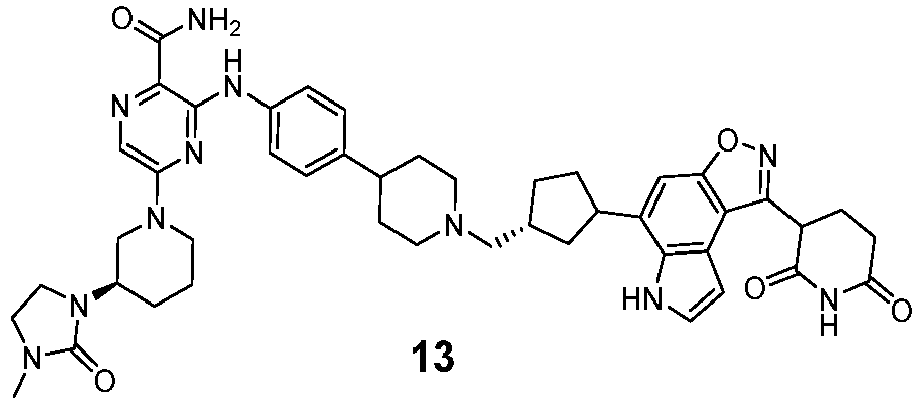

- DIBAL-H (0.311 g) was slowly added dropwise to a stirred solution of intermediate 7c (0.5 g) in DCM (10 mL) at -78 °C under N2 atmosphere. After the dropwise addition was carried out for 3 min and completed, the mixture was stirred and reacted at -78 °C for 1 h. 2 mL of methanol was slowly added to the reaction solution at -78 °C to quench the reaction. The reaction solution was placed at room temperature, diluted with 20 mL of petroleum ether, stirred for 5 min, and filtered. The filtrate was concentrated to give mixture intermediate 13b (0.4 g).
- Intermediate 13b (0.4 g), trimethyl orthoformate (0.261 g), p-toluenesulfonic acid (0.028 g), and methanol (10 mL) were added to a reaction flask in sequence, and the mixture was reacted at room temperature overnight. About 100 mL of a saturated aqueous sodium bicarbonate solution was added to the system, and the mixture was extracted 3 times with 50 mL of ethyl acetate. The organic phases were combined, dried over anhydrous sodium sulfate, filtered, and concentrated. The concentrate was separated and purified by silica gel column chromatography to give mixture intermediate 13c (0.32 g).
- 1H NMR (500 MHz, DMSO-d6) δ 6.33 - 6.28 (m, 1H), 4.13 (d, J = 7.6 Hz, 1H), 3.23 (d, J = 1.3 Hz, 6H), 2.50 - 2.47 (m, 1H), 2.40 (dddt, J = 18.3, 15.5, 8.8, 2.4 Hz, 2H), 2.27 - 2.14 (m, 2H), 1.19 (s, 12H).
- Intermediate 1m (57 g) and sulfuric acid (200 mL) were added to a reaction flask in sequence, and a mixed solution of nitric acid (25.28 g, 401.25 mmol) and sulfuric acid (20 mL) was slowly added under an ice bath. After the dropwise addition was completed, the mixture was slowly warmed to room temperature and reacted for 1 h. The reaction solution was slowly poured into 2 L of ice water, the mixture was extracted with 500 mL of ethyl acetate, the organic phase was collected, and the aqueous phase was extracted 2 times with 500 m of ethyl acetate. The organic phases were combined, dried over anhydrous sodium sulfate, filtered, and concentrated. The concentrate was separated and purified by silica gel column chromatography to give intermediate 13d (53.3 g).
- MS (ESI, [M-H]-) m/z: 326.9.
- 1H NMR (500 MHz, DMSO-d6 ) δ 8.75 (s, 1H), 8.51 (s, 1H), 4.29 (s, 2H), 4.15 (q, J = 7.1 Hz, 2H), 1.20 (t, J= 7.1 Hz, 3H).
- Intermediate 13d (40 g), ethanol (400 mL), and stannous chloride dihydrate (115 g) were added to a reaction flask in sequence, and the mixture was stirred at room temperature for 4 h. The reaction solution was concentrated, and 2 L of dichloromethane and 2 L of water were added to the residue. A saturated aqueous sodium bicarbonate solution was slowly added under an ice bath to adjust the pH to 9-10. The mixture was filtered, and the organic phase of the filtrate was separated, dried over anhydrous sodium sulfate, filtered, and concentrated. The concentrate was separated and purified by silica gel column chromatography to give intermediate 13e (35.1 g).
- MS(ESI, [M+H]+) m/z: 299.0.
- 1H NMR (500 MHz, DMSO-d6 ) δ 7.93 (s, 1H), 7.04 (s, 1H), 5.35 (s, 2H), 4.14 (q, J = 7.1 Hz, 2H), 4.09 (s, 2H), 1.20 (t, J = 7.1 Hz, 3H).
- Silver sulfate (29.46 g), elemental iodine (23.98 g), and acetonitrile (300 mL) were added to a reaction flask in sequence, intermediate 13e (35 g) was then added, and the mixture was reacted at room temperature for 1 h. The reaction solution was filtered, and after the filtrate was concentrated, 500 mL of ethyl acetate and 500 mL of water were added. The organic phase was separated, dried over anhydrous sodium sulfate, filtered, and concentrated. The concentrate was separated and purified by silica gel column chromatography to give intermediate 13f (27.1 g).
- MS(ESI, [M+H]+) m/z: 423.0.
- 1H NMR (500 MHz, DMSO-d6) δ 8.10 (s, 1H), 5.27 (s, 2H), 4.15 (d, J = 6.6 Hz, 4H), 1.22 (t, J = 7.1 Hz, 3H).
- Intermediate 13f (26.8 g), (E)-1-ethoxyvinyl-2-boronic acid pinacol ester (14.99 g), [1,1'-bis(diphenylphosphino)ferrocene]palladium dichloride dichloromethane complex (4.61 g), potassium carbonate (26.14 g), 1,4-dioxane (200 mL), and water (30.00 mL) were added to a reaction flask in sequence, and the mixture was heated to 70 °C and reacted under N2 atmosphere for 6 h. The reaction solution was cooled to room temperature, and 500 mL of ethyl acetate and 500 mL of water were added. The organic phase was separated, dried over anhydrous sodium sulfate, filtered, and concentrated. The concentrate was separated and purified by silica gel column chromatography to give intermediate 13g (17 g).
- MS(ESI, [M+H]+) m/z: 369.1.
- Intermediate 13g (17 g), DCM (200 mL), hydrochloric acid (57.55 mL, 4 mol/L, 230.22 mmol) were added to a reaction flask in sequence, and the mixture was reacted at room temperature for 5 h. 200 mL of DCM and 200 mL of a saturated sodium bicarbonate solution were added to the system. The organic phase was separated, and the aqueous phase was then extracted 2 times with 50 mL of dichloromethane. The organic phases were combined, dried over anhydrous sodium sulfate, filtered and concentrated. The concentrate was separated and purified by silica gel column chromatography to give intermediate 13h (7.1 g).
- MS(ESI, [M+H]+) m/z: 323.0.
- 1H NMR (500 MHz, DMSO-d 6) δ 11.89 (s, 1H), 7.84 (d, J = 1.7 Hz, 1H), 7.63 (t, J = 2.8 Hz, 1H), 6.77 (dd, J = 2.9, 1.6 Hz, 1H), 4.29 (s, 2H), 4.13 (q, J = 7.1 Hz, 2H), 1.19 - 1.16 (m, 3H).
- Intermediate 13h (3 g), acrylamide (0.792 g), and anhydrous tetrahydrofuran (50 mL) were added to a reaction flask in sequence. Potassium tert-butoxide (1.56 g) was slowly added at 0 °C, and the mixture was reacted for 2 h. 200 mL of a saturated aqueous ammonium chloride solution was added to the reaction solution to quench the reaction, and the mixture was extracted with 200 mL of DCM. The organic phase was separated, and the aqueous phase was extracted 2 times with 50 mL of DCM. The organic phases were combined, dried over anhydrous sodium sulfate, filtered and concentrated. The concentrate was separated and purified by silica gel column chromatography to give intermediate 13i (1.34 g).
- MS(ESI, [M-H]-) m/z: 345.9.
- 1H NMR (500 MHz, DMSO-d6 ) δ 11.91 (s, 1H), 11.19 (s, 1H), 7.86 (s, 1H), 7.63 (t, J = 2.9 Hz, 1H), 6.71 (dd, J = 3.0, 1.8 Hz, 1H), 4.72 (dd, J = 12.0, 5.1 Hz, 1H), 2.85 (ddd, J = 17.5, 12.2, 5.4 Hz, 1H), 2.64 (dt, J = 17.3, 4.1 Hz, 1H), 2.48 - 2.36 (m, 1H), 2.24 (dtd, J = 13.7, 5.2, 3.6 Hz, 1H).
- Intermediate 13i (0.2 g), intermediate 13c (0.185 g), [1,1'-bis(diphenylphosphino)ferrocene]palladium dichloride dichloromethane complex (0.042 g), potassium carbonate (0.183 g), 1,4-dioxane (10 mL), and water (2.00 mL) were added to a reaction flask in sequence, and the mixture was heated to 120 °C and reacted under N2 atmosphere for 3 h. The reaction solution was cooled to room temperature, and 500 mL of ethyl acetate and 500 mL of water were added. The organic phase was separated, dried over anhydrous sodium sulfate, filtered, and concentrated. The concentrate was separated and purified by silica gel column chromatography to give mixture intermediate 13j (0.205 g).
- MS (ESI, [M-H]-) m/z: 408.2.
- Intermediate 13j (0.39 g), palladium on carbon catalyst (0.039 g), and MeOH (20 mL) were added to a reaction flask in sequence, and the mixture was reacted at room temperature overnight under H2 atmosphere. The reaction solution was filtered, and the filtrate was concentrated to give intermediate 13k (0.36 g).
- MS (ESI, [M-H]-) m/z: 410.2.
- 1H NMR (500 MHz, DMSO-d6 ) δ 11.61 (s, 1H), 11.17 (s, 1H), 7.52 (t, J = 2.8 Hz, 1H), 7.33 (d, J = 9.7 Hz, 1H), 6.57 - 6.52 (m, 1H), 4.64 (dd, J = 11.8, 5.1 Hz, 1H), 4.29 (d, J = 7.6 Hz, 1H), 3.61 (ddd, J = 24.3, 10.6, 5.4 Hz, 1H), 3.28 (dd, J = 7.6, 5.4 Hz, 6H), 2.84 (ddd, J = 17.2, 12.0, 5.4 Hz, 1H), 2.62 (dt, J = 17.3, 4.2 Hz, 1H), 2.43 (tt, J= 12.1, 7.0 Hz, 2H), 2.22 (dq, J = 13.8, 7.7, 5.9 Hz, 2H), 2.16 - 2.09 (m, 1H), 1.87 - 1.67 (m, 3H), 1.60 - 1.51 (m, 1H).
- Intermediate 13k (0.1 g), acetone (5 mL), and p-toluenesulfonic acid (0.021 g) were added to a reaction flask in sequence, and the mixture was reacted at room temperature for 2 h. 50 mL of a saturated aqueous sodium bicarbonate solution and 50 mL of DCM were added to the system. The organic phase was separated, dried over anhydrous sodium sulfate, filtered, and concentrated to give intermediate 13l (0.085 g).
- MS (ESI, [M-H]-) m/z: 364.2.
- Intermediate 13l (0.08 g), intermediate 1i (0.104 g), and dichloroethane (5 mL) were added to a reaction flask, 1 drop of acetic acid was added, and sodium cyanoborohydride (0.026 g) was then added. The mixture was reacted at room temperature for 2 h. After the reaction was completed, dichloromethane (50 mL) and water (50 mL) were added to the system. The organic phase was separated, and the aqueous phase was extracted 2 times with dichloromethane (50 mL). The organic phases were combined, dried over anhydrous sodium sulfate, filtered and concentrated. The concentrate was separated and purified by silica gel column chromatography to give compound 13 (0.042 g).
- MS (ESI, [M+H]+) m/z: 828.4.
- 1H NMR (500 MHz, DMSO-d6) δ 11.73 (d, J = 27.7 Hz, 1H), 11.28 (s, 1H), 11.17 (s, 1H), 7.78 (s, 1H), 7.67 (s, 1H), 7.56 (d, J = 7.5 Hz, 3H), 7.40 (s, 1H), 7.35 (s, 1H), 7.18 (d, J = 8.0 Hz, 2H), 6.56 (s, 1H), 4.66 (dd, J = 11.7, 5.2 Hz, 1H), 4.39 - 4.27 (m, 2H), 3.71 (s, 1H), 3.62 (s, 3H), 3.26 (s, 3H), 3.07 (d, J = 11.6 Hz, 2H), 2.97 (t, J = 12.5 Hz, 1H), 2.84 (d, J = 14.6 Hz, 1H), 2.71 (s, 3H), 2.63 (d, J = 16.9 Hz, 2H), 2.43 (s, 1H), 2.23 (s, 2H), 2.00 (s, 3H), 1.82 (d, J = 12.9 Hz, 4H), 1.62 (d, J = 45.5 Hz, 4H).
-


- 14a (50 g), diethyl carbonate (137 g), and toluene (200 mL) were added to a single-necked flask in sequence. The reaction solution was cooled to 0 °C and sodium hydride (46.5 g) was added in portions. The mixture was first heated to 80 °C and reacted for about 10 min. The mixture was heated to 120 °C and reacted for 5 h. The reaction solution was cooled to room temperature and slowly poured into 2 L of stirred ice water. The mixture was extracted with 1 L of ethyl acetate, and the organic phase was discarded. The aqueous phase was adjusted to pH = 3 with 3 N hydrochloric acid, the mixture was extracted 3 times with 500 mL of ethyl acetate, and the organic phases were combined. The organic phase was dried over anhydrous sodium sulfate, filtered and concentrated by evaporation at reduced pressure to remove the solvent, thus giving intermediate 14b (52 g).
- MS(ESI, [M-H]+) m/z: 239.0.
- 1H NMR (500 MHz, DMSO-d6) δ 12.77 (s, 1H), 7.94 (dd, J = 7.8, 1.5 Hz, 1H), 7.83 (dd, J = 7.9, 1.5 Hz, 1H), 7.29 (t, J = 7.9 Hz, 1H), 5.64 (s, 1H).
- Intermediate 14b (52 g), methanol (300 mL), hydroxylamine hydrochloride (52.5 g), and sodium ethoxide (61.9 g) were added to a single-necked flask in sequence, and the mixture was heated to 80 °C and reacted overnight. The reaction solution was cooled to room temperature, 3 N hydrochloric acid was added to adjust the pH to 5, the mixture was concentrated by evaporation at reduced pressure to remove the solvent, 2 L of water was added, the reaction flask was placed under an ice-water bath to cool, and meanwhile the pH was adjusted to 3 with 3 N hydrochloric acid. The mixture was stirred for 30 min and filtered. The filter cake was collected and dried to give intermediate 14c (46 g).
- MS(ESI, [M-H]+) m/z: 254.0.
- Intermediate 14c (46 g), ethanol (400 mL), and sulfuric acid (106 g, 57.5 mL, 1078 mmol) were added to a single-necked flask in sequence, and the mixture was heated to 90 °C and reacted for 2 h. The reaction solution was cooled to room temperature and concentrated by evaporation at reduced pressure to remove the solvent, and 1 L of ethyl acetate and 1 L of water were added to the residue for dilution. A saturated aqueous sodium bicarbonate solution was added to adjust the pH to 7, and the organic phase was separated. The aqueous phase was extracted 2 times with 500 mL of ethyl acetate, the organic phases were combined, dried over anhydrous sodium sulfate, filtered and concentrated by evaporation at reduced pressure to remove the solvent, thus giving intermediate 14d (51 g).
- MS(ESI, [M+H]+) m/z: 283.0.
- 1H NMR (500 MHz, DMSO-d6) δ 7.93 (dd, J = 7.6, 0.9 Hz, 1H), 7.89 (dd, J = 7.9, 0.9 Hz, 1H), 7.38 (t, J = 7.8 Hz, 1H), 4.26 (s, 2H), 4.15 (q, J = 7.1 Hz, 2H), 1.20 (t, J = 7.1 Hz, 3H).
- Intermediate 14d (51 g), sulfuric acid (176 g, 96 mL, 1795 mmol), and potassium nitrate (27.2 g) were added to a single-necked flask in sequence under an ice bath. After the feeding was completed, the mixture was reacted at room temperature for 1 h. The reaction solution was slowly poured into 2 L of ice water, the mixture was extracted with 500 mL of ethyl acetate, the organic phase was collected, and the aqueous phase was extracted 2 times with 500 mL of ethyl acetate. The organic phases were combined, dried over anhydrous sodium sulfate, filtered, and concentrated by evaporation at reduced pressure to remove the solvent. The crude product was separated by silica gel column chromatography (petroleum ether/ethyl acetate = 20:1, v/v) to give the target intermediate 14e (40 g).
- 1H NMR (500 MHz, DMSO-d6 ) δ 8.98 (d, J = 2.1 Hz, 1H), 8.75 (d, J = 2.1 Hz, 1H), 4.38 (s, 2H), 4.17 (q, J = 7.1 Hz, 2H), 1.22 (t, J = 7.1 Hz, 3H).
- Intermediate 14e (40 g), ethanol (400 mL), and stannous chloride dihydrate (115 g) were added to a single-necked flask in sequence, and the mixture was stirred at room temperature for 4 h. The mixture was concentrated by evaporation at reduced pressure to remove the solvent, and 2 L of dichloromethane and 2 L of water were added to the residue. A saturated aqueous sodium bicarbonate solution was slowly added under an ice bath to adjust the pH to weak alkalinity. The mixture was filtered, the filter cake was washed 2 times with 500 mL of dichloromethane, and the filtrate was collected. After liquid separation was performed, the organic phase was collected, and the aqueous phase was then extracted 2 times with 500 mL of dichloromethane. The organic phases were combined, dried over anhydrous sodium sulfate, filtered, and concentrated by evaporation at reduced pressure to remove the solvent. The crude product was separated by silica gel column chromatography (petroleum ether/ethyl acetate = 2:1, v/v) to give the target intermediate 14f (23 g).
- MS(ESI, [M+H]+) m/z: 299.0.
- Intermediate 14f (6 g), DMF (50 mL), and NIS (4.51 g) were added to a single-necked flask in sequence, and the mixture was reacted at room temperature for 1 h. 100 mL of ethyl acetate and 200 mL of water were added to the system. The organic phase was separated. The aqueous phase was then extracted 2 times with 50 mL of ethyl acetate, and the organic phases were combined, dried over anhydrous sodium sulfate, filtered and concentrated by evaporation at reduced pressure to remove the solvent. The crude product was separated by silica gel column chromatography (petroleum ether/ethyl acetate = 4:1, v/v) to give the target intermediate 14g (8 g).
- MS(ESI, [M-H]+) m/z: 423.0.
- 1H NMR (500 MHz, DMSO-d6 ) δ 7.36 (s, 1H), 5.54 (s, 2H), 4.21 - 4.10 (m, 4H), 1.22 (t, J = 7.1 Hz, 3H).
- Intermediate 14g (4 g), (E)-1-ethoxyvinyl-2-boronic acid pinacol ester (2.237 g), [1,1'-bis(diphenylphosphino)ferrocene]palladium dichloride dichloromethane complex (1.377 g), potassium carbonate (3.90 g), 1,4-dioxane (40 mL), and water (10.00 mL) were added to a single-necked flask in sequence, and the mixture was heated to 80 °C and reacted under N2 atmosphere overnight. The reaction solution was cooled to room temperature, and ethyl acetate (100 mL) and water (100 mL) were added to the system. The organic phase was separated and then extracted 3 times with 50 mL of ethyl acetate, and the organic phases were combined, dried over anhydrous sodium sulfate, filtered and concentrated by evaporation at reduced pressure to remove the solvent. The crude product was separated by silica gel column chromatography (petroleum ether/ethyl acetate = 4:1, v/v) to give the target intermediate 14h (2.4 g).
- MS(ESI, [M+H]+) m/z: 369.1.
- Intermediate 14h (1 g), dichloromethane (10 mL), and trifluoroacetic acid (1.544 g, 1.043 mL) were added to a single-necked flask in sequence, and the mixture was reacted at room temperature overnight. Dichloromethane (100 mL) and water (100 mL) were added to the system. The organic phase was separated. The aqueous phase was then extracted 2 times with dichloromethane (50 mL), and the organic phases were combined, dried over anhydrous sodium sulfate, filtered and concentrated by evaporation at reduced pressure to remove the solvent. The crude product was separated by silica gel column chromatography (petroleum ether/ethyl acetate = 4:1, v/v) to give the target intermediate 14i (0.5 g).
- MS(ESI, [M+H]+) m/z: 323.0.
- 1H NMR (500 MHz, DMSO-d6 ) δ 11.78 (s, 1H), 7.96 (s, 1H), 7.61 (t, J = 2.9 Hz, 1H), 6.66 (t, J = 2.3 Hz, 1H), 4.31 (s, 2H), 4.14 (q, J = 7.1 Hz, 2H), 1.16 (t, J = 7.1 Hz, 3H).
- Intermediate 14i (300 mg), acrylamide (66 mg), and anhydrous tetrahydrofuran (5 mL) were added to a three-necked flask in sequence. Potassium tert-butoxide (208 mg) was slowly added at 0 °C, and the mixture was reacted at 0 °C for 2 h. A saturated aqueous ammonium chloride solution was added dropwise to the reaction solution to quench the reaction, and the mixture was extracted with 50 mL of ethyl acetate. The organic phase was separated. The aqueous phase was extracted 3 times with ethyl acetate (50 mL), the organic phases were combined, dried over anhydrous sodium sulfate, filtered and concentrated by evaporation at reduced pressure to remove the solvent. The crude product was separated by silica gel column chromatography (petroleum ether/ethyl acetate = 3:2, v/v) to give the target intermediate 14j (0.18 g).
- MS(ESI, [M-H]+) m/z: 345.9.
- 1H NMR (500 MHz, DMSO-d6 ) δ 11.80 (s, 1H), 11.20 (s, 1H), 7.97 (d, J = 0.8 Hz, 1H), 7.61 (t, J = 2.8 Hz, 1H), 6.60 (t, J = 2.3 Hz, 1H), 4.73 (dd, J = 12.2, 5.1 Hz, 1H), 2.86 (ddd, J = 17.5, 12.3, 5.4 Hz, 1H), 2.65 (dt, J = 17.3, 4.0 Hz, 1H), 2.45 (qd, J = 12.5, 4.4 Hz, 1H), 2.25 (dtd, J = 13.6, 5.2, 3.4 Hz, 1H).
- Intermediate 14j (480 mg), intermediate 13c (370 mg), [1,1'-bis(diphenylphosphino)ferrocene]palladium dichloride dichloromethane complex (202 mg), potassium carbonate (572 mg), 1,4-dioxane (5 mL), and water (0.5 mL) were added to a single-necked flask in sequence, and the mixture was heated to 85 °C and reacted under N2 atmosphere for 2 h. The reaction solution was cooled to room temperature, and ethyl acetate (50 mL) and water (100 mL) were added to the system for extraction. The organic phase was separated, then extracted 3 times with ethyl acetate (50 mL), dried over anhydrous sodium sulfate, filtered, and concentrated by evaporation at reduced pressure to remove the solvent. The crude product was separated by silica gel column chromatography (dichloromethane/methanol = 60:1, v/v) to give mixture intermediate 14k (0.35 g).
- MS(ESI, [M-H]+) m/z: 408.19.
- 1H NMR (500 MHz, DMSO-d6) δ 11.63 (d, J = 30.9 Hz, 1H), 11.18 (s, 1H), 7.57 (dt, J = 9.7, 3.5 Hz, 2H), 6.64 (d, J = 6.3 Hz, 1H), 6.62 - 6.48 (m, 1H), 4.71 (dt, J = 11.4, 5.0 Hz, 1H), 4.38 - 4.21 (m, 1H), 3.33 - 3.25 (m, 6H), 3.00 - 2.79 (m, 2H), 2.79 - 2.58 (m, 3H), 2.44 (tt, J = 12.2, 6.3 Hz, 1H), 2.25 (dp, J = 13.1, 5.2 Hz, 1H), 2.16 - 1.96 (m, 1H), 1.88 - 1.72 (m, 1H).
- Intermediate 14k (50 mg), methanol (3 mL), and Pd/C (10 mg) were added to a single-necked flask in sequence, and the mixture was purged 3 times with hydrogen and reacted at room temperature for 3 h. The reaction solution was filtered to remove palladium on carbon, the filter cake was washed with 5 mL each of dichloromethane, methanol, and ethyl acetate, and the filtrate was distilled under reduced pressure to remove the solvent, thus giving intermediate 14l (40 mg).
- MS(ESI, [M-H]+) m/z: 410.21.
- 1H NMR (500 MHz, DMSO-d6) δ 11.52 (d, J = 2.3 Hz, 1H), 11.18 (s, 1H), 7.54 (s, 1H), 7.47 (t, J = 2.8 Hz, 1H), 6.49 (q, J= 2.3 Hz, 1H), 4.68 (ddd, J = 11.9, 9.1, 5.2 Hz, 1H), 4.28 (d, J= 7.5 Hz, 1H), 3.55 - 3.41 (m, 1H), 3.29 (dd, J = 7.2, 2.3 Hz, 6H), 2.86 (ddd, J = 17.3, 12.1, 5.4 Hz, 1H), 2.64 (dt, J = 17.3, 4.2 Hz, 1H), 2.49 - 2.38 (m, 2H), 2.29 - 2.09 (m, 3H), 1.89 - 1.75 (m, 2H), 1.74 - 1.61 (m, 2H).
- Intermediate 14l (100 mg), bis(acetonitrile) palladium dichloride (31.5 mg), and acetone (10 mL) were added to a single-necked flask in sequence, and the mixture was reacted at room temperature for 1 h. Ethyl acetate (30 mL) and water (50 mL) were added to the system for extraction. The organic phase was separated. The aqueous phase was then extracted 3 times with ethyl acetate (30 mL), and the organic phases were combined, dried over anhydrous sodium sulfate, filtered and concentrated by evaporation at reduced pressure to remove the solvent, thus giving intermediate 14m (70 mg).
MS(ESI, [M-H]+) m/z: 364.11 - Intermediate 1i (90 mg), intermediate 14m (68.7 mg), and 1,2-dichloroethane (2 mL) were added to a single-necked flask in sequence, 1 drop of acetic acid was added dropwise, and the mixture was stirred at room temperature for 20 min. Sodium cyanoborohydride (35.5 mg) was added, and the mixture was reacted at room temperature. Dichloromethane (20 mL) and water (50 mL) were added to the system for extraction. The organic phase was separated, and the aqueous phase was extracted 3 times with DCM/MeOH = 10:1 (30 mL). The organic phases were combined, dried over anhydrous sodium sulfate, filtered, concentrated by evaporation at reduced pressure to remove the solvent, and purified by silica gel column chromatography to give compound 14 (20 mg).
- MS(ESI, [M+H]+) m/z: 828.52.
- 1H NMR (500 MHz, DMSO-d6 ) δ 11.62 (d, J = 27.7 Hz, 1H), 11.28 (s, 1H), 11.19 (s, 1H), 7.89 (s, 1H), 7.68 (s, 1H), 7.56 (d, J = 7.5 Hz, 3H), 7.49 (s, 1H), 7.35 (s, 1H), 7.18 (d, J = 8.0 Hz, 2H), 6.51 (s, 1H), 4.68 (dd, J = 11.7, 5.2 Hz, 1H), 4.35 - 4.25 (m, 2H), 3.76 (s, 1H), 3.61 (s, 3H), 3.31 (s, 3H), 3.13 (d, J = 11.6 Hz, 2H), 2.91 (t, J = 12.5 Hz, 1H), 2.79 (d, J = 14.6 Hz, 1H), 2.79 (s, 3H), 2.59 (d, J = 16.9 Hz, 2H), 2.49 (s, 1H), 2.26 (s, 2H), 2.05 (s, 3H), 1.83 (d, J = 12.9 Hz, 4H), 1.66 (d, J = 45.5 Hz, 4H).
-


- 15a (50 g), diethyl carbonate (216.9 g), and toluene (500 mL) were added to a reaction flask in sequence. The reaction solution was cooled to 0 °C and sodium hydride (44.06 g) was added in portions. The mixture was first heated to 70 °C and reacted for about 10 min. The mixture was heated to 120 °C and reacted for 5 h. The reaction solution was cooled to room temperature and slowly poured into 2 L of stirred ice water. The mixture was extracted with 1 L of ethyl acetate, and the organic phase was discarded. The aqueous phase was adjusted to pH = 3 with 3 N hydrochloric acid, the mixture was extracted 3 times with 500 mL of ethyl acetate, and the organic phases were combined. The organic phase was dried over anhydrous sodium sulfate, filtered and concentrated to give intermediate 15b (55 g).
- 1H NMR (500 MHz, DMSO-d 6) δ 12.52 (s, 1H), 7.83 (dd, J = 7.8, 1.7 Hz, 1H), 7.65 (ddd, J = 8.6, 7.2, 1.7 Hz, 1H), 7.43 - 7.32 (m, 2H), 5.61 (s, 1H).
- Intermediate 15b (55 g), methanol (500 mL), hydroxylamine hydrochloride (63.5 g), and sodium ethoxide (80.8 g) were added to a reaction flask in sequence, and the mixture was heated to 80 °C and reacted overnight. The reaction solution was cooled to room temperature, 3 N hydrochloric acid was added to adjust the pH to 5, the mixture was concentrated, 2 L of water was added, the reaction flask was placed under an ice-water bath to cool, and meanwhile the pH was adjusted to 3 with 3 N hydrochloric acid. The mixture was stirred for 30 min and filtered. The filter cake was collected and dried to give intermediate 15c (54.5 g).
- 1H NMR (500 MHz, DMSO-d6) δ 12.90 (s, 1H), 7.86 (dt, J = 7.9, 1.0 Hz, 1H), 7.74 (d, J = 8.4 Hz, 1H), 7.66 (ddd, J = 8.3, 7.0, 1.2 Hz, 1H), 7.40 (td, J = 7.4, 7.0, 0.9 Hz, 1H), 4.11 (s, 2H).
- Intermediate 15c (54 g), ethanol (400 mL), and sulfuric acid (106 g) were added to a reaction flask in sequence, and the mixture was heated to 90 °C and reacted for 2 h. The reaction solution was cooled to room temperature and concentrated by evaporation at reduced pressure to remove the solvent, and 1 L of ethyl acetate and 1 L of water were added to the residue for dilution. A saturated aqueous sodium bicarbonate solution was added to adjust the pH to 7, and the organic phase was separated. The aqueous phase was extracted 2 times with 500 mL of ethyl acetate, the organic phases were combined, dried over anhydrous sodium sulfate, filtered and concentrated to give intermediate 15d (62 g).
- MS(ESI, [M+H]+) m/z: 206.1.
- Intermediate 15d (30 g) and sulfuric acid (200 mL) were added to a reaction flask in sequence, and a mixed solution of nitric acid (11.05 g) and sulfuric acid (4 mL) was slowly added under an ice bath. After the dropwise addition was completed, the mixture was slowly warmed to room temperature and reacted for 1 h. The reaction solution was slowly poured into 2 L of ice water, the mixture was extracted with 300 mL of ethyl acetate, the organic phase was collected, and the aqueous phase was extracted 2 times with 100 m of ethyl acetate. The organic phases were combined, dried over anhydrous sodium sulfate, filtered, and concentrated. The concentrate was separated and purified by silica gel column chromatography to give intermediate 15e (29.3 g).
- MS(ESI, [M+H]+) m/z: 251.1.
- Intermediate 15e (29 g), ethanol (300 mL), and stannous chloride dihydrate (130.76 g) were added to a reaction flask in sequence, and the mixture was stirred at room temperature for 4 h. The reaction solution was concentrated, and 1 L of dichloromethane and 0.5 L of water were added to the residue. A saturated aqueous sodium bicarbonate solution was slowly added under an ice bath to adjust the pH to 9-10. The mixture was filtered, and the organic phase of the filtrate was separated, dried over anhydrous sodium sulfate, filtered, and concentrated. The concentrate was separated and purified by silica gel column chromatography to give intermediate 15f (24.3 g).
- MS(ESI, [M-H]-) m/z: 219.1.
- Intermediate 15f (24 g) and DCM (200 mL) were added to a reaction flask in sequence, NBS (21.34 g) was added at 0 °C, and the mixture was reacted at room temperature for 1 h. 500 mL of DCM and 500 mL of water were added to the reaction solution. The organic phase was separated, washed with a saturated sodium chloride solution, dried over anhydrous sodium sulfate, filtered, and concentrated. The concentrate was separated and purified by silica gel column chromatography to give intermediate 15g (22.4 g).
- MS(ESI, [M+H]+) m/z: 299.2.
- 1H NMR (500 MHz, DMSO-d6 ) δ 7.52 (d, J = 8.9 Hz, 1H), 7.17 (d, J = 8.9 Hz, 1H), 4.87 (s, 2H), 4.19 - 4.11 (m, 4H), 1.20 (t, J = 7.1 Hz, 3H).
- Intermediate 7a (5 g), trimethyl orthoformate (11.2 g), p-toluenesulfonic acid (0.606 g), and ethanol (50 mL) were added to a reaction flask in sequence, and the mixture was reacted at room temperature overnight. About 100 mL of a saturated aqueous sodium bicarbonate solution was added to the system, and the mixture was extracted 3 times with 100 mL of ethyl acetate. The organic phases were combined, dried over anhydrous sodium sulfate, filtered, and concentrated. The concentrate was separated and purified by silica gel column chromatography to give intermediate 15h (4.5 g).
- 1H NMR (500 MHz, Chloroform-d) δ 4.14 (q, J = 7.1 Hz, 2H), 3.21 (d, J = 10.6 Hz, 6H), 2.92 - 2.81 (m, 1H), 2.14 - 2.03 (m, 2H), 2.01 - 1.91 (m, 2H), 1.91 - 1.78 (m, 2H), 1.25 (t, J = 7.1 Hz, 3H).
- Intermediate 15h (4.5 g) and THF (50 mL) were added to a reaction flask, lithium aluminum hydride (0.998 g) was slowly added under an ice bath, and then the mixture was slowly warmed to room temperature and reacted for 1 h. After the reaction was completed, a small amount of ice water was added to the reaction solution under an ice bath to quench the reaction, and 200 mL of DCM and 200 mL of water were then added. The mixture was filtered, and the organic phase of the filtrate was separated, washed with 200 mL of a saturated sodium chloride solution, dried over anhydrous sodium sulfate, filtered, and concentrated to give intermediate 15i (3.9 g).
- 1H NMR (500 MHz, Chloroform-d) δ 3.55 (dhept, J = 15.8, 5.4, 4.9 Hz, 2H), 3.21 (d, J = 3.0 Hz, 6H), 2.28 (dddd, J = 15.1, 8.8, 7.6, 3.9 Hz, 1H), 2.05 - 1.96 (m, 1H), 1.90 (dddd, J = 10.2, 8.8, 3.7, 1.5 Hz, 2H), 1.85 - 1.81 (m, 1H), 1.80 - 1.73 (m, 1H), 1.58 (ddd, J = 13.4, 7.3, 1.3 Hz, 1H), 1.51 - 1.40 (m, 1H).
- Intermediate 15g (2.2 g), intermediate 15i (1.3 g), triethylsilane (1.71 g), and acetonitrile (20 mL) were added to a reaction flask, elemental iodine (1.87 g) was then added, and the mixture was warmed to 90 °C and reacted overnight. The reaction solution was cooled to room temperature and concentrated, and 200 mL of DCM and 200 mL of water were added. The organic phase was separated, washed with 200 mL of a saturated sodium chloride solution, dried over anhydrous sodium sulfate, filtered, and concentrated. The concentrate was separated and purified by silica gel column chromatography to give intermediate 15j (1.9 g).
- MS (ESI, [M+H]+) m/z: 319.2.
- Intermediate 15j (1.9 g) and DCM (30 mL) were added to a reaction flask in sequence, NBS (1.06 g) was then added, and the mixture was reacted at room temperature for 1 h. 100 mL of DCM and 100 mL of water were added to the reaction solution. The organic phase was separated, washed with a saturated sodium chloride solution, dried over anhydrous sodium sulfate, filtered, and concentrated. The concentrate was separated and purified by silica gel column chromatography to give intermediate 15k (0.75 g).
- MS(ESI, [M+H]+) m/z: 397.2.
- 1H NMR (500 MHz, DMSO-d6 ) δ 7.63 (dd, J = 9.0, 7.4 Hz, 1H), 7.18 (dd, J = 9.2, 3.4 Hz, 1H), 4.96 (d, J = 7.6 Hz, 1H), 4.70 - 4.63 (m, 1H), 4.19 - 4.12 (m, 4H), 3.92 (hept, J = 6.3 Hz, 1H), 3.40 - 3.36 (m, 1H), 2.18 (ddd, J = 12.4, 8.4, 6.6 Hz, 1H), 2.14 - 2.02 (m, 1H), 1.94 - 1.76 (m, 1H), 1.75 - 1.61 (m, 1H), 1.51 (dddd, J = 20.0, 15.4, 10.7, 6.6 Hz, 2H), 1.35 - 1.23 (m, 1H), 1.20 (t, J = 7.1 Hz, 3H).
- Intermediate 15k (0.7 g), (E)-1-ethoxyvinyl-2-boronic acid pinacol ester (0.419 g), [1,1'-bis(diphenylphosphino)ferrocene]palladium dichloride dichloromethane complex (0.129 g), potassium carbonate (0.731 g), 1,4-dioxane (10 mL), and water (2 mL) were added to a microwave tube in sequence, N2 was bubbled, and the mixture was microwaved at 120 °C and reacted for 2 h. The reaction solution was cooled to room temperature, and 100 mL of ethyl acetate and 100 mL of water were added. The organic phase was separated, dried over anhydrous sodium sulfate, filtered, and concentrated. The concentrate was separated and purified by silica gel column chromatography to give intermediate 15l (0.51 g).
- MS(ESI, [M+H]+) m/z: 389.2.
- Intermediate 15l (0.5 g), DCM (20 mL), hydrochloric acid (0.644 mL, 4 mol/L, 2.57 mmol) were added to a reaction flask in sequence, and the mixture was reacted at room temperature for 5 h. 100 mL of DCM and 100 mL of a saturated sodium bicarbonate solution were added to the system. The organic phase was separated, and the aqueous phase was then extracted 2 times with DCM (50 mL). The organic phases were combined, dried over anhydrous sodium sulfate, filtered and concentrated. The concentrate was separated and purified by silica gel column chromatography to give intermediate 15m (0.24 g).
MS(ESI, [M+H]+) m/z: 343.1 - Intermediate 15m (0.18 g), acrylamide (0.041 g), and anhydrous tetrahydrofuran (10 mL) were added to a reaction flask in sequence. Potassium tert-butoxide (0.071 g) was slowly added at 0 °C, and the mixture was reacted for 1 h. 50 mL of a saturated aqueous ammonium chloride solution was added to the reaction solution to quench the reaction, and the mixture was extracted with 50 mL of DCM. The organic phase was separated, dried over anhydrous sodium sulfate, filtered and concentrated. The concentrate was separated and purified by silica gel column chromatography to give intermediate 15n (0.095 g).
- MS(ESI, [M+H]+) m/z: 368.2.
- Intermediate 15n (0.09 g) and dichloromethane (5 mL) were added to a reaction flask, Dess-Martin periodinane (0.233 g) was added, and the mixture was reacted at room temperature for 1 h. After the reaction was completed, dichloromethane (50 mL) and water (50 mL) were added to the system. The organic phase was separated, and the aqueous phase was extracted 2 times with dichloromethane (50 mL). The organic phases were combined, dried over anhydrous sodium sulfate, filtered and concentrated to give intermediate 15o (0.08 g).
- MS (ESI, [M-H]-) m/z: 364.1.
- Intermediate 15o (0.08 g), intermediate 1i (0.104 g), and dichloroethane (5 mL) were added to a reaction flask, 1 drop of acetic acid was added, and sodium cyanoborohydride (0.026 g) was then added. The mixture was reacted at room temperature for 2 h. After the reaction was completed, dichloromethane (50 mL) and water (50 mL) were added to the system. The organic phase was separated, and the aqueous phase was extracted 2 times with dichloromethane (50 mL). The organic phases were combined, dried over anhydrous sodium sulfate, filtered and concentrated. The concentrate was separated and purified by silica gel column chromatography to give compound 15 (0.042 g).
- MS (ESI, [M+H]+) m/z: 828.4.
- 1H NMR (500 MHz, DMSO-d6) δ 11.18 (s, 2H), 7.91 (dd, J = 9.2, 2.0 Hz, 1H), 7.80 - 7.69 (m, 2H), 7.66 (s, 1H), 7.56 - 7.42 (m, 3H), 7.37 - 7.29 (m, 1H), 7.15 (d, J = 8.1 Hz, 2H), 6.58 (dd, J = 7.9, 3.0 Hz, 1H), 5.09 (d, J = 38.6 Hz, 1H), 4.69 (dd, J = 11.9, 5.1 Hz, 1H), 4.31 (dd, J = 38.9, 12.7 Hz, 2H), 3.60 (dq, J = 10.9, 5.8, 4.5 Hz, 1H), 3.30 (d, J = 7.9 Hz, 2H), 3.23 (d, J = 8.1 Hz, 2H), 3.05 - 2.92 (m, 3H), 2.85 (ddd, J = 17.4, 12.1, 5.5 Hz, 1H), 2.68 (s, 3H), 2.63 (dt, J = 17.2, 4.2 Hz, 1H), 2.47 - 2.33 (m, 4H), 2.28 - 2.19 (m, 2H), 1.99 (s, 4H), 1.85 - 1.70 (m, 5H), 1.58 (d, J = 36.0 Hz, 3H).
-
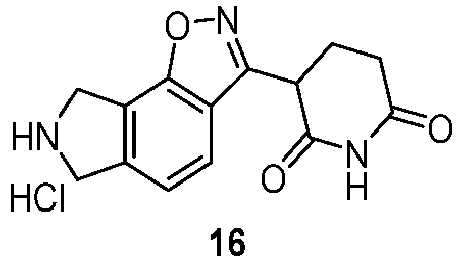

- At 10 °C, 16a (81 g), 2,4-dimethoxybenzylamine (83 g), and acetic acid (500 mL) were added to a reaction flask in sequence, and the mixture was warmed to 80 °C and reacted. After the reaction was completed, as confirmed by TLC, water was added to the reaction solution, and a solid was precipitated. Filter under vacuum was performed, and the filter cake was washed with water and dried to give (95.78 g) intermediate 16b.
- MS (ESI, [M+H]-) m/z: 312.02
- 1H NMR (500 MHz, DMSO-d6 ) δ 11.03 (s, 1H), 7.62 (dd, J = 8.4, 7.1 Hz, 1H), 7.29 (d, J = 7.1 Hz, 1H), 7.22 (d, J = 8.4 Hz, 1H), 6.90 (d, J = 8.4 Hz, 1H), 6.56 (d, J = 2.4 Hz, 1H), 6.43 (dd, J = 8.4, 2.4 Hz, 1H), 4.60 (s, 2H), 3.80 (s, 3H), 3.73 (s, 3H).
- At 10 °C, a 2.5 M solution of lithium aluminum hydride in tetrahydrofuran (227 mL) was slowly added dropwise to a solution of 16b (96.00 g) in tetrahydrofuran (1000 mL), and the mixture was reacted at 80 °C. After the reaction was completed, as confirmed by TLC, a 15 wt% aqueous sodium hydroxide solution and water were added to the reaction solution. Filter under vacuum was performed, the filter cake was washed with a dichloromethane:MeOH = 1:1 solution, the filtrate was concentrated, and the crude product was separated and purified by silica gel column chromatography to give (55.87 g) intermediate 16c.
- MS (ESI, [M+H]+) m/z: 286.01
- 1H NMR (500 MHz, DMSO-d6) δ 9.28 (s, 1H), 7.24 (d, J = 8.3 Hz, 1H), 6.97 (t, J = 7.7 Hz, 1H), 6.64 (d, J = 7.4 Hz, 1H), 6.59 (d, J = 8.0 Hz, 1H), 6.55 (d, J = 2.4 Hz, 1H), 6.51 (dd, J = 8.3, 2.4 Hz, 1H), 3.81 - 3.71 (m, 12H). Step 3: Preparation of intermediate 16d
- 16c (48.00 g), methanol (350 mL), palladium hydroxide (4.8 g), and di-tert-butyl dicarbonate (41.4 g) were added to a reaction flask in sequence, and the mixture was reacted at 25 °C under hydrogen atmosphere. After the reaction was completed, as confirmed by TLC, the reaction solution was filtered under vacuum. The filtrate was concentrated, extracted with water and ethyl acetate, washed with saturated brine, dried over anhydrous sodium sulfate, and filtered. The filtrate was concentrated, and the crude product was separated by silica gel column chromatography and purified to give 34.43 g of intermediate 16d.
- 1H NMR (500 MHz, DMSO-d6 ) δ 7.07 (t, J = 7.7 Hz, 1H), 6.68 (ddd, J = 18.9, 7.8, 2.7 Hz, 2H), 4.56 - 4.50 (m, 2H), 4.48 - 4.42 (m, 2H), 1.45 (s, 9H).
- 16d (35.00 g), methanol (250 mL), and a solution of 4 M hydrochloric acid in dioxane (123 mL) were added to a reaction flask in sequence, and the mixture was reacted at 25 °C. After the reaction was completed, as confirmed by TLC, the reaction solution was concentrated, pyridine (200 mL) and trifluoroacetic anhydride (25.20 g) were added, and the mixture was stirred and reacted at 25 °C. After the reaction was completed, as confirmed by TLC, the reaction solution was poured into a 3 M aqueous hydrochloric acid solution, vigorously stirred, extracted with ethyl acetate, washed with saturated brine, dried over anhydrous sodium sulfate, and filtered. The filtrate was concentrated and dried to give 32.48 g of intermediate 16e.
- MS (ESI, [M+H]-) m/z: 229.99
- 1H NMR (500 MHz, DMSO-d 6)δ 9.82 (d, J = 24.4 Hz, 1H), 7.16 (td, J = 7.7, 3.7 Hz, 1H), 6.81 (dd, J = 11.5, 7.5 Hz, 1H), 6.74 (d, J = 8.0 Hz, 1H), 4.99 (s, 1H), 4.89 (s, 1H), 4.80 (s, 1H), 4.70 (s, 1H).
- 16e (32.48 g), dichloromethane (300 mL), triethylamine (28.40 g), 4-dimethylaminopyridine (1.72 g), and acetic anhydride (15.78 g) were added to a reaction flask in sequence, and the mixture was reacted at 25 °C. After the reaction was completed, as confirmed by TLC, the reaction solution was poured into water, vigorously stirred, extracted with dichloromethane, washed with saturated brine, dried over anhydrous sodium sulfate, and filtered. The filtrate was concentrated, and the crude product was separated by silica gel column chromatography and purified to give 33.82 g net weight of intermediate 16f.
- 1H NMR (500 MHz, DMSO-d 6)δ 7.41 (td, J = 7.8, 2.3 Hz, 1H), 7.30 (t, J = 8.5 Hz, 1H), 7.12 (dd, J = 7.9, 2.9 Hz, 1H), 5.09 (s, 1H), 4.90 (d, J = 12.3 Hz, 2H), 4.72 (s, 1H), 2.31 (d, J = 3.4 Hz, 3H).
- 16f (30.00 g), aluminum trichloride (29.30 g), and orthodichlorobenzene (200 mL) were added to a reaction flask in sequence, and the mixture was reacted at 150 °C. After the reaction was completed, as confirmed by TLC, the reaction solution was poured into an aqueous citric acid solution, vigorously stirred, extracted with ethyl acetate, washed with saturated brine, dried over anhydrous sodium sulfate, and filtered. The filtrate was concentrated, and the crude product was separated by silica gel column chromatography and purified to give (18.19 g) net weight of intermediate 16g.
- 1H NMR (500 MHz, DMSO-d6) δ 12.38 (s, 1H), 7.94 (dd, J = 8.2, 4.7 Hz, 1H), 7.01 (dd, J = 12.7, 8.1 Hz, 1H), 5.07 (s, 1H), 4.94 (s, 1H), 4.86 (s, 1H), 4.74 (d, J = 1.6 Hz, 1H), 2.66 (d, J = 1.0 Hz, 3H).
- 16g (18.19 g), sodium hydroxide (7.56 g), methanol (150 mL), and water (150 mL) were added to a reaction flask in sequence, and the mixture was reacted at 25 °C for 2.5 h. The reaction solution was concentrated to remove methanol, 1,4-dioxane (150 mL) and di-tert-butyl dicarbonate (15.14 g) were added to the residue, and the mixture was stirred and reacted at 25 °C for 2 h. The reaction solution was poured into water, vigorously stirred, extracted with ethyl acetate, washed with saturated brine, dried over anhydrous sodium sulfate, and filtered. The filtrate was concentrated, and the crude product was separated by silica gel column chromatography and purified to give (14.10 g) intermediate 16h.
- MS (ESI, [M+H]-) m/z: 276.07
- 1H NMR (500 MHz, DMSO-d6) δ 12.36 (s, 1H), 7.89 (dd, J = 8.1, 2.9 Hz, 1H), 6.95 (t, J = 8.0 Hz, 1H), 4.62 (dt, J = 13.4, 2.2 Hz, 2H), 4.51 (dt, J = 13.9, 2.3 Hz, 2H), 2.65 (s, 3H), 1.46 (s, 9H).
- 16h (14.10 g), diethyl carbonate (27.00 g), and toluene (200 mL) were added to a reaction flask in sequence, and the mixture was cooled to 0 °C. After 60 wt% sodium hydride (9.16 g) was added, the mixture was warmed to 120 °C, stirred, and reacted. After the reaction was completed, as confirmed by TLC, the reaction solution was poured into a 3 M aqueous hydrochloric acid solution, vigorously stirred, extracted with ethyl acetate, washed with saturated brine, dried over anhydrous sodium sulfate, and filtered. The filtrate was concentrated, and the crude product was separated by silica gel column chromatography and purified to give (14.96 g) net weight of intermediate 16i.
- MS (ESI, [M+H]+) m/z: 250.20
- 1H NMR (500 MHz, DMSO-d6) δ 11.72 (d, J = 9.6 Hz, 1H), 7.82 (dd, J = 8.2, 4.7 Hz, 1H), 6.97 (t, J = 8.4 Hz, 1H), 4.63 (dt, J = 12.4, 2.1 Hz, 2H), 4.53 (dt, J = 13.7, 2.1 Hz, 2H), 4.22 (d, J = 2.5 Hz, 2H), 4.13 (q, J = 7.1 Hz, 2H), 1.46 (d, J = 1.9 Hz, 9H), 1.19 (t, J = 7.1 Hz, 3H).
- 16i (14.96 g), a 50% aqueous hydroxylamine solution (6.36 g), and ethanol (150 mL) were added to a reaction flask in sequence, and the mixture was stirred and reacted at 85 °C. After the reaction was completed, as confirmed by TLC, the reaction solution was concentrated, and water and ethyl acetate were then added. The mixture was extracted and separated, and the organic phase was washed with saturated brine, dried over anhydrous sodium sulfate, and filtered. The filtrate was concentrated to give a crude product of intermediate 16j (10.13 g).
- MS (ESI, [M+H]-) m/z: 317.20
- 1H NMR (500 MHz, DMSO-d6) δ 12.59 (s, 1H), 7.78 (d, J = 8.2 Hz, 1H), 7.38 (t, J = 7.6 Hz, 1H), 4.85 (dt, J = 13.5, 2.5 Hz, 2H), 4.75 (dt, J = 12.2, 2.4 Hz, 2H), 4.11 (s, 2H), 1.49 (d, J = 2.1 Hz, 9H).
- 16j (10.13 g), potassium carbonate (12.55 g), N,N-dimethylacetamide (150 mL), and iodoethane (7.08 g) were added to a reaction flask in sequence, and the mixture was stirred and reacted at 80 °C. After the reaction was completed, as confirmed by TLC, the reaction solution was poured into water, vigorously stirred, extracted with ethyl acetate, washed with saturated brine, dried over anhydrous sodium sulfate, and filtered. The filtrate was concentrated, and the crude product was separated by silica gel column chromatography and purified to give (11.22 g) net weight of intermediate 16k.
- MS (ESI, [M+H]+) m/z: 247.16
- 1H NMR (500 MHz, DMSO-d6)δ 7.78 (d, J = 8.0 Hz, 1H), 7.39 (t, J = 7.5 Hz, 1H), 4.89 - 4.82 (m, 2H), 4.75 (dd, J = 11.8, 2.8 Hz, 2H), 4.22 (d, J = 4.3 Hz, 2H), 4.13 (p, J = 7.2 Hz, 2H), 1.48 (d, J = 2.1 Hz, 9H), 1.21 - 1.17 (m, 3H).
- Acrylamide (1.32 g) was slowly added to a stirred solution of 16k (10.72 g) in tetrahydrofuran (50 mL) at 0 °C under N2 atmosphere, a 1 M solution of potassium tert-butoxide in tetrahydrofuran (18.63 mL) was then added dropwise, and the mixture was stirred and reacted at 0 °C. After the reaction was completed, as confirmed by TLC, the reaction solution was poured into an aqueous ammonium chloride solution, vigorously stirred, extracted with ethyl acetate, washed with saturated brine, dried over anhydrous sodium sulfate, and filtered. The filtrate was concentrated, and the crude product was separated by silica gel column chromatography and purified to give (7.52 g) net weight of intermediate 16l.
- MS (ESI, [M+H]+) m/z: 272.02
- 1H NMR (500 MHz, DMSO-d6) δ 11.11 (s, 1H), 7.80 (dd, J = 8.1, 2.7 Hz, 1H), 7.37 (t, J = 7.9 Hz, 1H), 4.85 (dd, J = 12.2, 2.6 Hz, 2H), 4.75 (dt, J = 12.0, 2.3 Hz, 2H), 4.63 (dd, J = 12.1, 4.9 Hz, 1H), 2.78 (ddd, J = 17.3, 12.1, 5.3 Hz, 1H), 2.67 - 2.51 (m, 2H), 2.20 (dq, J = 13.5, 4.7 Hz, 1H), 1.49 (d, J = 2.6 Hz, 9H).
- 16l (1.00 g), a solution of 4 M hydrochloric acid in dioxane (10 mL), and ethyl acetate (50 mL) were added to a reaction flask in sequence, and the mixture was reacted at 25 °C. After the reaction was completed, as confirmed by TLC, the reaction solution was directly filtered, and the filter cake was washed with ethyl acetate and dried to give 0.83 g of compound 16.
- MS (ESI, [M+H]+) m/z: 272.11
- 1H NMR (500 MHz, DMSO-d6 ) δ 11.13 (s, 1H), 10.36 (s, 2H), 7.90 (d, J = 8.1 Hz, 1H), 7.45 (d, J = 8.2 Hz, 1H), 4.81 (s, 2H), 4.70 - 4.63 (m, 3H), 2.79 (ddd, J = 17.4, 12.2, 5.3 Hz, 1H), 2.62 (dt, J = 17.3, 4.0 Hz, 1H), 2.59 - 2.52 (m, 1H), 2.21 (ddt, J = 13.2, 5.1, 2.5 Hz, 1H).
-


- 17a (18 g), AIBN (0.738 g), carbon tetrachloride (500 mL), and NBS (47.8 g) were added to a reaction flask in sequence, and the mixture was warmed to 60 °C and reacted. After the reaction was completed, as confirmed by TLC, the reaction solution was cooled to room temperature and concentrated by evaporation at reduced pressure to remove the solvent, and dichloromethane was added to the residue. The mixture was washed with saturated brine, dried over anhydrous sodium sulfate, and filtered. The filtrate was concentrated by evaporation at reduced pressure to remove the solvent and purified by silica gel column chromatography to give intermediate 17b (18.7 g).
- 17b (18.7 g), benzylamine (1.78 mL), N,N-diisopropylethylamine (7.13 mL), and toluene (50 mL) were added to a reaction flask in sequence, and the mixture was warmed to 50 °C and reacted. After the reaction was completed, as confirmed by TLC, the reaction solution was cooled to room temperature. After the reaction was completed, the stirring was stopped, and the reaction was carried out at room temperature for a total of 2 h. Ethyl acetate and 1 M solution of HCl in ice water were added to the reaction solution for extraction. The aqueous phase was collected, the pH was adjusted to about 9 with sodium bicarbonate solid, and ethyl acetate was added for extraction. The organic phase was collected, dried over anhydrous sodium sulfate, filtered, and concentrated by evaporation at reduced pressure to remove the solvent, thus giving intermediate 17c (9.6 g).
- MS(ESI, [M+H]+) m/z: 240.1.
- 17c (9.6 g), methanol (200 mL), 10% palladium on carbon (5 g), and toluene (50 mL) were added to a reaction flask in sequence, and the mixture was purged 3 times with hydrogen and reacted at room temperature under hydrogen atmosphere. The mixture was reacted at room temperature. After the reaction was completed, as confirmed by TLC, the palladium on carbon was filtered, and the filter cake was washed 2 times with methanol. The filtrate was collected and concentrated by evaporation at reduced pressure to remove the solvent, thus giving 17d (4.5 g).
- MS(ESI, [M+H]+) m/z: 149.9.
- 17d (4 g), tetrahydrofuran (50 mL), and trifluoroacetic anhydride (5.63 g) were added to a reaction flask in sequence, and the mixture was reacted at room temperature. After the reaction was completed, as confirmed by TLC, an aqueous solution was added to the reaction solution to quench the reaction, and ethyl acetate was then added for extraction. The organic phase was separated, dried over anhydrous sodium sulfate, and purified by silica gel column chromatography to give 17e (4.58 g).
- 1H NMR (500 MHz, DMSO-d6) δ 7.29 (t, J = 9.3 Hz, 1H), 6.98 (d, J = 8.6 Hz, 1H), 6.93 - 6.86 (m, 1H), 4.97 (d, J = 21.7 Hz, 2H), 4.77 (dd, J = 21.4, 5.2 Hz, 2H), 3.76 (dd, J = 3.6, 1.6 Hz, 3H).
- 17e (4.6 g), dichloromethane (200 mL), and boron tribromide (1 M, 18.76 mL) were added to a reaction flask in sequence, and the mixture was reacted at room temperature. After the reaction was completed, as confirmed by TLC, water was added to the reaction solution under an ice bath to quench the reaction. The organic phase was separated, and the aqueous phase was extracted with dichloromethane. The organic phases were combined, dried over anhydrous sodium sulfate, and concentrated by evaporation at reduced pressure to remove the solvent, thus giving 17f (4.2 g).
- 1H NMR (500 MHz, DMSO-d6) δ 7.16 (t, J = 8.8 Hz, 1H), 6.87 - 6.59 (m, 2H), 4.92 (d, J = 20.8 Hz, 2H), 4.72 (d, J = 19.9 Hz, 2H).
- 17f (6.5 g), dichloromethane (60 mL), triethylamine (7.8 mL), and acetic anhydride (2.94 mL) were added to a reaction flask in sequence, and the mixture was reacted at room temperature. After the reaction was completed, as confirmed by TLC, dichloromethane and water were added to the reaction solution. The organic phase was separated, washed with saturated brine, dried over anhydrous sodium sulfate, filtered, and concentrated by evaporation at reduced pressure to remove the solvent, thus giving 17g (7 g).
- 1H NMR (500 MHz, DMSO-d6) δ 7.42 (dd, J = 10.0, 8.3 Hz, 1H), 7.17 (dd, J = 14.0, 2.1 Hz, 1H), 7.09 (d, J = 8.2 Hz, 1H), 5.03 (d, J = 6.6 Hz, 2H), 4.83 (d, J = 6.9 Hz, 2H), 2.27 (s, 3H).
- 17g (6 g) and aluminum trichloride (4.39 g) were added to a reaction flask in sequence, and the mixture was gradually heated from room temperature to 150 °C and reacted. After the reaction was completed, as confirmed by TLC, the reaction solution was cooled to room temperature, and water and a 3 M aqueous hydrochloric acid solution were added to the residue. The organic phase was separated, washed with saturated brine, dried over anhydrous sodium sulfate, and filtered. The filtrate was concentrated under reduced pressure to remove the solvent and purified by silica gel column chromatography to give 17h (3.78 g).
- MS(ESI, [M-H]-) m/z: 271.9.
- 17h (550 mg), MeOH (5.00 mL), and an aqueous solution (5.00 mL) of sodium hydroxide (242 mg) were added to a reaction flask in sequence, and the mixture was reacted at room temperature. After the reaction was completed, as confirmed by TLC, the reaction solution was concentrated to remove methanol, and the aqueous phase was retained. 17i was obtained. 1,4-Dioxane (5 mL) and Boc anhydride (439 mg, 0.462 mL) were added to the system, and the mixture was reacted at room temperature. After the reaction was completed, as confirmed by TLC, the reaction solution was extracted with ethyl acetate and saturated brine, and the organic phase was dried over anhydrous sodium sulfate, filtered, and concentrated to give 17j (200 mg).
- 1H NMR (500 MHz, DMSO-d6) δ 12.11 (d, J = 19.3 Hz, 1H), 7.88 (d, J = 9.5 Hz, 1H), 6.74 - 6.56 (m, 1H), 4.60 - 4.50 (m, 4H), 2.63 (d, J = 6.5 Hz, 3H), 1.45 (s, 9H).
- 17j (3.5 g) and THF (300 mL) were added to a reaction flask in sequence, and diethyl carbonate (14.91 g, 15.29 mL) was added. The mixture was cooled to about 0 °C, and 60 wt% sodium hydride (5.05 g, 126 mmol) was added in portions. The mixture was heated to 85 °C and reacted. After the reaction was completed, as confirmed by TLC, the reaction solution was cooled to room temperature and slowly poured into ice water. The mixture was extracted with ethyl acetate, and the organic phase was discarded. The aqueous phase was adjusted to pH = 1-2 with 3 M hydrochloric acid, then extracted with ethyl acetate, dried over anhydrous sodium sulfate, filtered, and concentrated by evaporation at reduced pressure to remove the solvent, thus giving 17k (7.0 g).
- MS(ESI, [M-H]-) m/z: 348.3.
- 17k (4.4 g), an aqueous hydroxylamine solution (4.16 g, 63.0 mmol), and ethanol (50 mL) were added to a reaction flask in sequence, and the mixture was reacted at 85 °C. After the reaction was completed, as confirmed by TLC, the reaction solution was cooled to room temperature, ethyl acetate and a saturated aqueous sodium carbonate solution were added to the residue for extraction, and the organic phase was discarded. The aqueous phase was adjusted to pH = 2-3 with a 1 M aqueous HCl solution, extracted with ethyl acetate, dried over anhydrous sodium sulfate, filtered, and concentrated by evaporation at reduced pressure to remove the solvent, thus giving 17l (3.25 g).
- 1H NMR (500 MHz, DMSO-d6) δ 12.83 (s, 1H), 7.74 (d, J = 13.0 Hz, 1H), 7.68 (d, J = 3.5 Hz, 1H), 4.71 (d, J = 13.6 Hz, 2H), 4.66 (d, J = 11.4 Hz, 2H), 4.07 (s, 2H), 1.47 (s, 9H).
- 17l (3.14 g), potassium carbonate (1.500 g), DMA (5 mL), and iodoethane (2.308 g, 1.183 mL) were added to a reaction flask in sequence, and the mixture was heated to 80 °C and reacted. After the reaction was completed, as confirmed by TLC, the reaction solution was cooled to room temperature and poured into a mixed solution of ethyl acetate and water. The organic phase was separated, dried over anhydrous sodium sulfate, and filtered. The filtrate was concentrated by evaporation at reduced pressure to remove the solvent, thus giving 17m (2.47 g).
- 1H NMR (500 MHz, DMSO-d 6) δ 7.73 (d, J = 15.9 Hz, 1H), 7.69 (d, J = 3.5 Hz, 1H), 4.69 (dd, J = 23.8, 12.4 Hz, 4H), 4.19 - 4.11 (m, 4H), 1.47 (s, 9H), 1.20 (t, J = 7.1 Hz, 3H).
- 17m (1.5 g) and THF (75 mL) were added to a reaction flask in sequence, acrylamide (0.215 g) was added, and the mixture was cooled to about -15 °C. A 1 M solution of potassium tert-butoxide in tetrahydrofuran (2.60 mL) was added, and the system was warmed to 0 °C and reacted. After the reaction was completed, as confirmed by TLC, the mixture was added dropwise to an ammonium chloride solution to quench the reaction and extracted with ethyl acetate. The organic phase was separated, dried over anhydrous sodium sulfate, and filtered, and the filtrate was concentrated and purified by silica gel column chromatography to give 17n (0.88 g).
- 1H NMR (500 MHz, DMSO-d6) δ 11.11 (d, J = 3.4 Hz, 1H), 7.78 (d, J = 12.4 Hz, 1H), 7.70 (s, 1H), 4.68 (dd, J = 29.4, 13.3 Hz, 4H), 4.58 (dd, J = 12.0, 4.9 Hz, 1H), 2.79 (ddd, J = 17.3, 12.1, 5.3 Hz, 1H), 2.62 (dt, J = 17.3, 4.1 Hz, 1H), 2.56 - 2.50 (m, 1H), 2.31 - 2.14 (m, 1H), 1.47 (d, J = 1.5 Hz, 9H).
- 17n (0.428 g) and dichloromethane (10.00 mL) were added to a reaction flask in sequence, then trifluoroacetic acid (3.29 g, 2.211 mL) was added, and the mixture was reacted at room temperature. After the reaction was completed, as confirmed by TLC, water was added to the reaction solution, and the pH was adjusted to 7-8 with saturated sodium bicarbonate. The mixture was extracted with dichloromethane, dried over anhydrous sodium sulfate, and subjected to rotary evaporation to remove the solvent, thus giving 17 (0.439 g).
- MS(ESI, [M+H]+) m/z: 272.24.
- 1H NMR (500 MHz, DMSO-d6) δ 7.81 - 7.77 (m, 1H), 7.74 (s, 1H), 4.59 (dd, J = 12.1, 5.0 Hz, 1H), 4.49 (s, 2H), 4.43 (s, 2H), 2.79 (ddd, J = 17.4, 12.2, 5.3 Hz, 1H), 2.62 (dt, J = 17.3, 4.0 Hz, 1H), 2.47 (dd, J = 12.4, 4.4 Hz, 1H), 2.20 (ddt, J = 13.3, 5.2, 2.6 Hz, 1H).
-


- Intermediate 18a (25 g) was completely dissolved in methanol (1000 mL) and acetic acid (103 g, 99 mL) and then added to a high pressure reactor under a hydrogen pressure of 3 Mpa and a temperature of 110 °C. After the reaction was completed, as confirmed by TLC, the reaction solution was concentrated by evaporation at reduced pressure to remove the solvent, and a solution of hydrochloric acid in dioxane (4 mol/L, 100 mL, 400 mmol) was added to the residue. The mixture was concentrated by evaporation at reduced pressure to remove the solvent, the residue was slurried with ethyl acetate and filtered, and the filter cake was collected to give the target intermediate 18b (28.97 g).
- MS(ESI, [M+H]+) m/z: 150.0.
- 1H NMR (500 MHz, DMSO-d6) δ 10.01 (s, 1H), 7.06 (t, J = 7.8 Hz, 1H), 6.76 (d, J = 8.0 Hz, 1H), 6.64 (d, J = 7.6 Hz, 1H), 4.01 (t, J = 4.9 Hz, 2H), 3.33 - 3.25 (m, 2H), 2.94 (t, J = 6.2 Hz, 2H).
- Intermediate 18b (28.97 g) and tetrahydrofuran (300 mL) were added to a reaction flask in sequence, and trifluoroacetic anhydride (27.0 mL) was added under an ice bath. The mixture was reacted at room temperature. After the reaction was completed, as confirmed by TLC, the reaction solution was extracted with ethyl acetate and water. The organic phase was separated, and the aqueous phase was extracted twice with ethyl acetate. The organic phases were combined, washed with saturated brine, dried over anhydrous sodium sulfate, filtered, and concentrated by evaporation at reduced pressure to remove the solvent, and the filter cake was collected by filtration to give the target intermediate 18c (22.67 g).
- MS(ESI, [M+H]-) m/z: 244.0.
- 1H NMR (500 MHz, DMSO-d6) δ 7.03 (q, J = 7.9 Hz, 1H), 6.74 - 6.68 (m, 1H), 6.64 (t, J = 6.9 Hz, 1H), 4.61 (d, J = 23.5 Hz, 2H), 3.78 (td, J = 6.0, 3.7 Hz, 2H), 2.84 (dt, J = 16.8, 5.9 Hz, 2H).
- Intermediate 18c (22.67 g), dichloromethane (200 mL), triethylamine (28.1 g, 38.6 mL), and DMAP (0.282 g, 2.311 mmol) were added to a reaction flask in sequence, and acetic anhydride (10.38 g, 9.68 mL) was added under an ice bath. The mixture was allowed to return to room temperature and react. After the reaction was completed, as confirmed by TLC, the reaction solution was concentrated by evaporation at reduced pressure to remove the solvent, and the residue was extracted with ethyl acetate and water. The organic phase was separated, washed with a saturated ammonium chloride solution and saturated brine, dried over anhydrous sodium sulfate, and filtered, and the filtrate was concentrated by evaporation at reduced pressure to remove the solvent, thus giving the target intermediate 18d (21.94 g).
- 1H NMR (500 MHz, DMSO-d6) δ 7.30 (dt, J = 11.1, 7.8 Hz, 1H), 7.18 - 7.11 (m, 1H), 7.05 (dt, J = 8.0, 2.2 Hz, 1H), 4.59 (s, 2H), 3.81 (q, J = 6.1 Hz, 2H), 2.95 (dt, J = 10.1, 6.0 Hz, 2H), 2.33 (d, J = 9.5 Hz, 3H).
- Intermediate 18d (21 g) and aluminum trichloride (14.62 g) were added to a reaction flask in sequence and the mixture was heated to 170 °C and reacted under N2 atmosphere. After the reaction was completed, as confirmed by TLC, the reaction solution was cooled to room temperature, water was added to quench the reaction, and dichloromethane was added for extraction. The organic phase was separated, washed with 500 mL of saturated brine, dried over anhydrous sodium sulfate, and filtered, and the filtrate was purified by silica gel column chromatography to give the target intermediate 18e (10.16 g).
- MS(ESI, [M+H]-) m/z: 286.0.
- 1H NMR (500 MHz, DMSO-d6) δ 12.76 (d, J = 8.4 Hz, 1H), 7.83 (t, J = 8.8 Hz, 1H), 6.86 (dd, J = 8.3, 5.7 Hz, 1H), 4.67 (d, J = 25.1 Hz, 2H), 3.86 - 3.78 (m, 2H), 2.94 (dt, J = 13.3, 5.9 Hz, 2H), 2.64 (d, J = 1.2 Hz, 3H).
- Intermediate 18e (10.16 g) and MeOH (100 mL) were added to a reaction flask in sequence, and a solution of sodium hydroxide (4.24 g) in water (100 mL) was added dropwise under an ice bath. The mixture was allowed to return to room temperature and react. After the reaction was completed, as confirmed by TLC, the reaction solution was concentrated by evaporation at reduced pressure to remove methanol, and 1,4-dioxane (100 mL) and di-tert-butyl dicarbonate (8.49 g, 9.03 mL) were added. The mixture was allowed to return to room temperature and react. After the reaction was completed, as confirmed by TLC, the reaction solution was extracted with ethyl acetate and water. The organic phase was separated, washed with 1000 mL of saturated brine, dried over anhydrous sodium sulfate, and filtered, and the filtrate was concentrated by evaporation at reduced pressure to remove the solvent, thus giving the target intermediate 18f (8.96 g).
- MS(ESI, [M+H]+) m/z: 192.0.
- 1H NMR (500 MHz, DMSO-d6) δ 12.72 (s, 1H), 7.76 (d, J = 8.2 Hz, 1H), 6.80 (d, J = 8.2 Hz, 1H), 4.41 (s, 2H), 3.55 (t, J = 5.8 Hz, 2H), 2.80 (t, J = 5.8 Hz, 2H), 2.63 (s, 3H), 1.43 (s, 9H).
- Intermediate 18f (8.76 g), diethyl carbonate (17.76 g, 18.21 mL), and toluene (90 mL) were added to a reaction flask in sequence, 60 wt% sodium hydride (6.01 g, 150 mmol) was added in portions under an ice bath. The mixture was heated to 120 °C and reacted. After the reaction was completed, as confirmed by TLC, the reaction solution was cooled to room temperature and poured into ice water to quench the reaction. The pH was adjusted to 1-2 with a 1 M hydrochloric acid solution, and ethyl acetate was added for extraction. The organic phase was separated, washed with 600 mL of saturated brine, dried over anhydrous sodium sulfate, and filtered, and the filtrate was concentrated by evaporation at reduced pressure to remove the solvent. The residue was slurried with petroleum ether and filtered, and the filter cake was collected to give the target intermediate 18g (12.03 g).
- Intermediate 18g (9.54 g), EtOH (100 mL), and an aqueous hydroxylamine solution (9.93 g, 9.21 mL, 150 mmol) were added to a reaction flask in sequence, and the mixture was heated to 85 °C and reacted. After the reaction was completed, as confirmed by TLC, a saturated sodium carbonate solution was added to the reaction solution to adjust the pH to 8, and ethyl acetate was added for extraction. The organic phase was separated and extracted twice with water. Then the organic phases were combined, the pH was adjusted to 3 with 1 M hydrochloric acid, and ethyl acetate was added for extraction three times. The organic phases were combined, washed with saturated brine, dried over anhydrous sodium sulfate, and filtered, and the filtrate was concentrated by evaporation at reduced pressure to remove the solvent, thus giving the target intermediate 18h (9.01 g).
- MS(ESI, [M+H]-) m/z: 331.0.
- Intermediate 18h (9.01 g), potassium carbonate (11.24 g), DMA (90 mL), and iodoethane (5.07 g, 2.63 mL, 32.5 mmol) were added to a reaction flask in sequence, and the mixture was heated to 80 °C and reacted under N2 atmosphere. After the reaction was completed, as confirmed by TLC, the reaction solution was cooled to room temperature and extracted with ethyl acetate and water. The organic phase was separated, washed with saturated brine, dried over anhydrous sodium sulfate, and filtered, and the filtrate was purified by silica gel column chromatography to give the target intermediate 18i (7.33 g).
- MS(ESI, [M+H]+) m/z: 361.0.
- 1H NMR (500 MHz, DMSO-d6) δ 7.63 (d, J = 8.1 Hz, 1H), 7.21 (d, J = 8.2 Hz, 1H), 4.76 (s, 2H), 4.18 (s, 2H), 4.13 (q, J = 7.1 Hz, 2H), 3.66 (t, J = 5.8 Hz, 2H), 2.93 (t, J = 5.8 Hz, 2H), 1.45 (s, 9H), 1.19 (t, J = 7.1 Hz, 3H).
- Intermediate 18i (7.3 g), tetrahydrofuran (80 mL), and acrylamide (0.864 g, 12.15 mmol) were added to a reaction flask in sequence, the mixture was cooled to -15 °C under N2 atmosphere, and then a solution of potassium tert-butoxide in tetrahydrofuran (1 mol/L, 11.14 mL, 11.14 mmol) was added dropwise. After the dropwise addition was completed, the mixture was warmed to 0 °C and reacted. After the reaction was completed, as confirmed by TLC, the system was added to a saturated ammonium chloride solution and extracted with ethyl acetate. The organic phase was separated, dried over anhydrous sodium sulfate, and filtered, and the filtrate was purified by silica gel column chromatography to give the target intermediate 18j (4.54 g).
- MS(ESI, [M+H]-) m/z: 384.3
- 1H NMR (500 MHz, DMSO-d6) δ 11.09 (s, 1H), 7.65 (d, J = 8.1 Hz, 1H), 7.20 (d, J = 8.2 Hz, 1H), 4.76 (s, 2H), 4.58 (dd, J = 12.0, 5.0 Hz, 1H), 3.66 (t, J = 5.8 Hz, 2H), 2.93 (t, J = 5.8 Hz, 2H), 2.77 (ddd, J = 17.3, 12.1, 5.3 Hz, 1H), 2.61 (dt, J = 17.3, 4.1 Hz, 1H), 2.54 (d, J = 4.5 Hz, 1H), 2.18 (dtd, J = 13.5, 5.2, 3.6 Hz, 1H), 1.45 (s, 9H).
- Intermediate 18j (300 mg) and ethyl acetate (5 mL) were added to a reaction flask in sequence, and a solution of hydrochloric acid in dioxane (4 moL/L, 3.89 mL, 15.58 mmol) was added. The mixture was reacted at room temperature. After the reaction was completed, as confirmed by TLC, the reaction solution was concentrated to give compound 18 (235 mg).
- MS(ESI, [M+H]+) m/z: 286.10.
- 1H NMR (500 MHz, DMSO-d6) δ 11.08 (s, 1H), 7.55 (d, J = 8.1 Hz, 1H), 7.10 (d, J = 8.2 Hz, 1H), 4.55 (dd, J = 11.9, 5.0 Hz, 1H), 4.07 (s, 2H), 3.00 (t, J = 5.7 Hz, 2H), 2.81 (t, J = 5.7 Hz, 2H), 2.78 - 2.71 (m, 1H), 2.60 (dt, J = 17.3, 4.2 Hz, 1H), 2.46 (dd, J = 12.2, 4.5 Hz, 1H), 2.18 (dq, J = 13.6, 4.9 Hz, 1H).
-


- Intermediate 19a was completely dissolved in methanol (1680 mL) and acetic acid (166 mL) and then added to a high pressure reactor under a hydrogen pressure of 3 Mpa and a temperature of 110 °C. After the reaction was completed, as confirmed by TLC, the reaction solution was concentrated by evaporation at reduced pressure to remove the solvent, and a solution of hydrochloric acid in dioxane (4 moL/L, 200 mL, 798 mmol) was added to the residue. The mixture was concentrated by evaporation at reduced pressure to remove the solvent, the residue was slurried with ethyl acetate and filtered, and the filter cake was collected to give the target intermediate 19b (46.96 g).
- MS(ESI, [M+H]+) m/z: 150.0.
- 1H NMR (500 MHz, DMSO-d6) δ 9.81 (s, 1H), 7.03 (t, J = 7.7 Hz, 1H), 6.78 (d, J = 7.8 Hz, 1H), 6.62 (d, J = 7.6 Hz, 1H), 4.15 (s, 2H), 3.35 (s, 2H), 2.79 (s, 2H).
- Intermediate 19b (40 g) and tetrahydrofuran (400 mL) were added to a reaction flask in sequence, and trifluoroacetic anhydride (61.9 g, 41.0 mL, 295 mmol) was added under an ice bath. The mixture was allowed to return to room temperature and react. After the reaction was completed as confirmed by TLC, the reaction solution was extracted with ethyl acetate and water. The organic phase was separated, washed with 1000 mL of saturated brine, dried over anhydrous sodium sulfate, and filtered, and the filtrate was concentrated by evaporation at reduced pressure to remove the solvent, thus giving the target intermediate 19c (81 g).
- MS(ESI, [M+H]-) m/z: 244.04.
- Intermediate 19c (65.3 g), dichloromethane (650 mL), triethylamine (81 g, 111 mL, 799 mmol), and DMAP (0.813 g) were added to a reaction flask in sequence, and acetic anhydride (29.9 g, 27.9 mL, 293 mmol) was added under an ice bath. The mixture was allowed to return to room temperature and react. After the reaction was completed, as confirmed by TLC, the reaction solution was concentrated by evaporation at reduced pressure to remove the solvent, and the residue was extracted with ethyl acetate and water. The organic phase was separated, washed with a saturated ammonium chloride solution and saturated brine, dried over anhydrous sodium sulfate, and filtered, and the filtrate was concentrated by evaporation at reduced pressure to remove the solvent, thus giving the target intermediate 19d (55.6 g).
- 1H NMR (500 MHz, Chloroform-d) δ 7.28 (d, J = 7.9 Hz, 1H), 7.10 - 7.02 (m, 1H), 7.02 - 6.95 (m, 1H), 4.79 (d, J = 27.0 Hz, 2H), 3.92 - 3.78 (m, 2H), 2.82 - 2.72 (m, 2H), 2.33 (d, J = 2.0 Hz, 3H).
- Intermediate 19d (30.73 g) and aluminum trichloride (21.40 g) were added to a reaction flask in sequence and the mixture was heated to 170 °C and reacted under N2 atmosphere. After the reaction was completed, as confirmed by TLC, the reaction solution was cooled to room temperature, water was added to quench the reaction, and dichloromethane was added for extraction. The organic phase was separated, and the aqueous phase was extracted twice with dichloromethane. The organic phases were combined, washed with saturated brine, dried over anhydrous sodium sulfate, and filtered, and the filtrate was purified by silica gel column chromatography to give the target intermediate 19e (16.21 g).
- MS(ESI, [M+H]-) m/z: 286.0.
- 1H NMR (500 MHz, DMSO-d6) δ 12.74 (d, J = 11.3 Hz, 1H), 7.82 (d, J = 8.3 Hz, 1H), 6.91 (dd, J = 14.9, 8.3 Hz, 1H), 4.80 (d, J = 9.9 Hz, 2H), 3.86 (dt, J = 8.2, 5.9 Hz, 2H), 2.77 (dt, J = 17.7, 6.1 Hz, 2H), 2.64 (s, 3H).
- Intermediate 19e (15.7 g) and MeOH (160 mL) were added to a reaction flask in sequence, and a solution of sodium hydroxide (6.56 g) in water (160 mL) was added dropwise under an ice bath. The mixture was allowed to return to room temperature and react. After the reaction was completed, as confirmed by TLC, the reaction solution was concentrated by evaporation at reduced pressure to remove methanol, and 1,4-dioxane (160 mL) and di-tert-butyl dicarbonate (13.12 g, 13.96 mL) were added. The mixture was reacted at room temperature. After the reaction was completed, as confirmed by TLC, the reaction solution was extracted with ethyl acetate and water. The organic phase was separated, and the aqueous phase was extracted twice with ethyl acetate. The organic phases were combined, washed with saturated brine, dried over anhydrous sodium sulfate, and filtered, and the filtrate was concentrated by evaporation at reduced pressure to remove the solvent, thus giving the target intermediate 19f (19.83 g).
- MS(ESI, [M+H]+) m/z: 192.0.
- 1H NMR (500 MHz, DMSO-d6) δ 12.76 (s, 1H), 7.76 (d, J = 8.3 Hz, 1H), 6.80 (d, J = 8.3 Hz, 1H), 4.52 (s, 2H), 3.57 (d, J = 1.8 Hz, 2H), 2.64 (d, J = 6.1 Hz, 5H), 1.43 (s, 9H).
- Intermediate 19f (15.92 g, 54.6 mmol), diethyl carbonate (32.3 g, 33.1 mL), and toluene (200 mL) were added to a reaction flask in sequence, 60 wt% sodium hydride (10.93 g, 273 mmol) was added in portions under an ice bath. The mixture was heated to 120 °C and reacted. After the reaction was completed, as confirmed by TLC, the reaction solution was cooled to room temperature and poured into ice water to quench the reaction. The pH was adjusted to 1-2 with a 1 M hydrochloric acid solution, and ethyl acetate was added for extraction. The organic phase was separated, and the aqueous phase was extracted twice with ethyl acetate. The organic phases were combined, washed with saturated brine, dried over anhydrous sodium sulfate, and filtered, and the filtrate was concentrated by evaporation at reduced pressure to remove the solvent. The residue was slurried with petroleum ether and filtered, and the filter cake was collected to give the target intermediate 19g (12 g).
- 1H NMR (500 MHz, DMSO-d6) δ 12.46 (s, 1H), 7.64 (d, J = 8.1 Hz, 1H), 7.17 (d, J = 8.2 Hz, 1H), 5.56 (s, 1H), 4.60 (s, 2H), 3.62 (t, J = 6.0 Hz, 2H), 2.83 (t, J = 5.8 Hz, 2H), 1.44 (s, 9H).
- Intermediate 19g (12 g), EtOH (120 mL), and an aqueous hydroxylamine solution (12.49 g, 11.59 mL, 189 mmol) were added to a reaction flask in sequence, and the mixture was heated to 85 °C and reacted. After the reaction was completed, as confirmed by TLC, a saturated sodium bicarbonate solution was added to the reaction solution to adjust the pH to 8, and ethyl acetate was added for extraction. The organic phase was separated, and the aqueous phase was adjusted to pH of 3 with 1 M hydrochloric acid and extracted three times with ethyl acetate. The organic phases were combined, washed with saturated brine, dried over anhydrous sodium sulfate, and filtered, and the filtrate was concentrated by evaporation at reduced pressure to remove the solvent, thus giving the target intermediate 19h (10.44 g).
- MS(ESI, [M+H]-) m/z: 331.0.
- 1H NMR (500 MHz, DMSO-d6) δ 12.85 (s, 1H), 7.63 (d, J = 8.1 Hz, 1H), 7.21 (d, J = 8.2 Hz, 1H), 4.67 (s, 2H), 4.07 (s, 2H), 3.69 (t, J = 5.9 Hz, 2H), 2.98 (t, J = 5.9 Hz, 2H), 1.44 (s, 9H).
- Intermediate 19h (10.44 g), potassium carbonate (13.02 g), DMA (110 mL), and iodoethane (5.88 g, 3.05 mL, 37.7 mmol) were added to a reaction flask in sequence, and the mixture was heated to 80 °C and reacted under N2 atmosphere. After the reaction was completed, as confirmed by TLC, the reaction solution was cooled to room temperature and extracted with ethyl acetate and water. The organic phase was separated, washed with 800 mL of saturated brine, dried over anhydrous sodium sulfate, and filtered, and the filtrate was purified by silica gel column chromatography to give the target intermediate 19i (8.31 g).
- MS(ESI, [M+H]+) m/z: 361.2.
- Intermediate 19i (5.5 g), tetrahydrofuran (50 mL), and acrylamide (0.759 g, 10.68 mmol) were added to a reaction flask in sequence, the mixture was cooled to -15 °C under N2 atmosphere, and then a solution of potassium tert-butoxide in tetrahydrofuran (1 mol/L, 9.92 mL, 9.92 mmol) was added dropwise. After the dropwise addition was completed, the mixture was warmed to 0 °C and reacted. After the reaction was completed, as confirmed by TLC, the system was added to a saturated ammonium chloride solution and extracted with ethyl acetate. The organic phase was separated, dried over anhydrous sodium sulfate, and filtered, and the filtrate was purified by silica gel column chromatography to give the target intermediate 19j (2.81 g).
- MS(ESI, [M+H]-) m/z: 384.34.
- 1H NMR (500 MHz, DMSO-d6) δ 11.09 (s, 1H), 7.64 (d, J = 8.2 Hz, 1H), 7.20 (d, J = 8.3 Hz, 1H), 4.67 (s, 2H), 4.57 (dd, J = 12.0, 5.0 Hz, 1H), 3.69 (t, J = 5.9 Hz, 2H), 2.98 (t, J = 5.9 Hz, 2H), 2.77 (ddd, J = 17.3, 12.1, 5.3 Hz, 1H), 2.61 (dt, J = 17.3, 4.1 Hz, 1H), 2.54 (d, J = 4.5 Hz, 1H), 2.18 (dtd, J = 13.5, 5.2, 3.7 Hz, 1H), 1.44 (s, 9H).
- Intermediate 19j (850 mg) and ethyl acetate (20 mL) were added to a reaction flask in sequence, and a solution of hydrochloric acid in dioxane (4 moL/L, 11.03 mL, 44.1 mmol) was added. The mixture was reacted at room temperature. After the reaction was completed, as confirmed by TLC, the reaction solution was concentrated to give compound 19 (760 mg).
- MS(ESI, [M+H]+) m/z: 286.12.
- 1H NMR (500 MHz, DMSO-d6) δ 11.08 (s, 1H), 7.54 (d, J = 8.1 Hz, 1H), 7.05 (d, J = 8.2 Hz, 1H), 4.54 (dd, J = 11.8, 5.0 Hz, 1H), 3.97 (s, 2H), 3.03 (t, J = 5.8 Hz, 2H), 2.86 (t, J = 5.8 Hz, 2H), 2.76 (td, J = 12.0, 5.9 Hz, 1H), 2.60 (dt, J = 17.3, 4.2 Hz, 1H), 2.46 (dd, J = 12.2, 4.4 Hz, 1H), 2.18 (dq, J = 13.5, 4.8 Hz, 1H).
-


- Liquid bromine (55.5 g) was added dropwise into a solution of 20a (50 g) in acetic acid (180 mL) at 15 °C. After the dropwise addition was completed, the mixture was allowed to react at room temperature. After the reaction was completed, as confirmed by TLC, methyl tert-butyl ether was added dropwise to the reaction solution, and the mixture was stirred and filtered. The filter cake was collected and dried to give intermediate 20b (95 g).
- MS(ESI, [M+H]+) m/z: 231.9.
- 20b (80 g), glyoxal dimethyl acetal (66.9 g), triethylamine (27.3 g), anhydrous sodium sulfate (80 g), and methanol (600 mL) were added to a reaction flask in sequence, and the mixture was reacted overnight at room temperature. The reaction solution was cooled to -15 °C, and sodium borohydride (14.6 g) was added in portions. After the addition was completed, the mixture was allowed to react at room temperature. After the reaction was completed, as confirmed by TLC, the reaction solution was concentrated to remove about half of the methanol, and dichloromethane and water were added to the reaction solution. The organic phase was separated, washed with a saturated sodium chloride solution, dried over anhydrous sodium sulfate, filtered, and concentrated. The concentrate was separated and purified by silica gel column chromatography to give intermediate 20c (60 g).
- MS(ESI, [M+H]+) m/z: 319.9.
- 20c (47 g) was added dropwise to trifluoroacetic anhydride (148 g) at 0 °C under nitrogen atmosphere. After the dropwise addition was completed, the mixture was allowed to react at room temperature for 1 h. Trifluoroacetic acid (87 g) was added dropwise, and the mixture was warmed to 40 °C and reacted for 1 h. Triethylsilane (68 g) was added dropwise, and the mixture was warmed to 60 °C and reacted. After the reaction was completed, as confirmed by TLC, 400 mL of ethyl acetate and 600 mL of water were added to the reaction solution. The organic phase was separated, washed three times with a saturated sodium chloride solution, dried over anhydrous sodium sulfate, filtered, and concentrated. The concentrate was separated and purified by silica gel column chromatography to give intermediate 20d (20.5 g).
- 1H NMR (500 MHz, DMSO-d6) δ 7.46 (dd, J = 8.9, 1.7 Hz, 1H), 6.87 (d, J = 8.9 Hz, 1H), 3.77 (d, J = 2.8 Hz, 3H), 3.67 (ddt, J = 14.4, 5.7, 3.4 Hz, 4H), 3.22 (ddd, J = 11.9, 6.4, 4.6 Hz, 2H), 3.16 - 3.06 (m, 2H).
- A solution of boron tribromide in dichloromethane (146 mL, 1 M) was slowly added dropwise to a stirred solution of 20d (20.5 g) in dichloroethane (200 mL) at 0 °C under nitrogen atmosphere. After the dropwise addition was completed, the mixture was allowed to react at room temperature. After the reaction was completed, as confirmed by TLC, the reaction solution was slowly poured into ice water, stirred for 10 min, and filtered, and the filter cake was collected and dried to give 20e (18.5 g).
- MS(ESI, [M-H]+) m/z: 337.9.
- 1H NMR (500 MHz, DMSO-d6) δ 9.74 (s, 1H), 7.26 (dd, J= 8.7, 1.3 Hz, 1H), 6.68 (dd, J= 8.7, 3.1 Hz, 1H), 3.73 - 3.61 (m, 4H), 3.23 - 3.13 (m, 2H), 3.12 - 3.02 (m, 2H).
- Acetic anhydride (5.65 g) was slowly added dropwise to a stirred solution of 20e (17.0 g) and triethylamine (7.63 g) in dichloroethane (200 mL) at 0 °C under nitrogen atmosphere. After the dropwise addition was completed, the mixture was allowed to react at room temperature. After the reaction was completed, as confirmed by TLC, the reaction solution was slowly poured into water. The organic phase was separated, washed with a saturated sodium chloride solution, dried over anhydrous sodium sulfate, filtered, and concentrated to give 20f (19.8 g).
- MS(ESI, [M+H]+) m/z: 381.7.
- 20f (19.5 g), aluminum trichloride (18.7 g), and orthodichlorobenzene (80 mL) were added to a reaction flask in sequence, and the mixture was warmed to 150 °C and reacted. After the reaction was completed, as confirmed by TLC, the reaction solution was cooled to room temperature, and 250 mL of 3 N diluted hydrochloric acid was added, followed by extraction with ethyl acetate. The organic phases were combined, washed with saturated brine, dried over anhydrous sodium sulfate, and filtered. The concentrate was separated and purified by silica gel column chromatography to give intermediate 20g (11.2 g).
- MS(ESI, [M-H]+) m/z: 300.0.
- 1H NMR (500 MHz, DMSO-d6) δ 12.83 (d, J = 4.8 Hz, 1H), 7.78 (dd, J = 8.1, 3.5 Hz, 1H), 6.83 (t, J = 8.3 Hz, 1H), 3.69 (ddd, J = 12.9, 9.6, 5.9 Hz, 4H), 3.11 - 3.00 (m, 4H), 2.64 (s, 3H).
- 20g (9.5 g), methanol (100 mL), water (20 mL), and sodium hydroxide (1.9 g) were added to a reaction flask in sequence, and the mixture was reacted at room temperature for 1 h. Di-tert-butyl dicarbonate (8.2 g) was added, and the mixture was reacted at room temperature. After the reaction was completed, as confirmed by TLC, ethyl acetate and water were added to the reaction solution. The organic phase was separated, washed with saturated brine, dried over anhydrous sodium sulfate, and filtered. The concentrate was separated and purified by silica gel column chromatography to give intermediate 20h (8.5 g).
- 1H NMR (500 MHz, DMSO-d 6) δ 12.80 (s, 1H), 7.74 (d, J = 8.1 Hz, 1H), 6.79 (d, J = 8.2 Hz, 1H), 3.45 (dt, J = 11.6, 5.0 Hz, 4H), 2.92 (q, J = 5.0 Hz, 4H), 2.63 (s, 3H), 1.38 (s, 9H).
- 20h (8.5 g), diethyl carbonate (16.4 g), and toluene (100 mL) were added to a reaction flask in sequence, and 60 wt% sodium hydride (5.57 g) was added in portions. The reaction solution was warmed to 115 °C and reacted. After the reaction was completed, as confirmed by TLC, the reaction solution was cooled to room temperature, and ethyl acetate and water were added to the reaction solution. The organic phase was separated, washed with saturated brine, dried over anhydrous sodium sulfate, and filtered. The concentrate was separated and purified by silica gel column chromatography to give intermediate 20i (9.0 g).
- MS(ESI, [M-H]+) m/z: 330.1.
- 20i (9.0 g), an aqueous hydroxylamine solution (8.7 g), and ethanol (100 mL) were added to a reaction flask in sequence, and the reaction solution was warmed to 80 °C and reacted. After the reaction was completed, as confirmed by TLC, the reaction solution was cooled to room temperature, and ethyl acetate and water were added to the reaction solution. The organic phase was separated, washed with saturated brine, dried over anhydrous sodium sulfate, and filtered. The concentrate was separated and purified by silica gel column chromatography to give intermediate 20j (8.5 g).
- MS(ESI, [M-H]+) m/z: 345.4.
- 1H NMR (500 MHz, DMSO-d 6) δ 7.53 (d, J = 8.0 Hz, 1H), 7.12 (d, J = 8.0 Hz, 1H), 3.73 (q, J = 13.9, 11.5 Hz, 2H), 3.59 - 3.54 (m, 2H), 3.52 - 3.47 (m, 2H), 3.13 (t, J = 5.2 Hz, 2H), 3.07 - 2.98 (m, 2H), 1.40 (s, 9H).
- 20j (8.5 g), potassium carbonate (3.3 g), iodoethane (5.1 g), and DMA (70 mL) were added to a reaction flask in sequence, and the reaction solution was warmed to 80 °C and reacted. After the reaction was completed, as confirmed by TLC, the reaction solution was cooled to room temperature, and ethyl acetate and water were added to the reaction solution. The organic phase was separated, washed with saturated brine, dried over anhydrous sodium sulfate, and filtered. The concentrate was separated and purified by silica gel column chromatography to give intermediate 20k (6.5 g).
- MS(ESI, [M-H]+) m/z: 373.1.
- 1H NMR (500 MHz, DMSO-d 6) δ 7.56 (d, J = 8.0 Hz, 1H), 7.22 (d, J = 8.0 Hz, 1H), 4.13 (dd, J = 13.7, 6.6 Hz, 4H), 3.55 (dt, J = 28.2, 5.0 Hz, 4H), 3.17 (s, 2H), 3.05 (t, J = 5.2 Hz, 2H), 1.38 (dd, J = 9.3, 4.4 Hz, 9H), 1.19 (t, J = 6.5 Hz, 3H).
- A solution of sodium tert-butoxide in tetrahydrofuran (14 mL, 1 M) was slowly added dropwise to a stirred solution of 20k (5.6 g) in tetrahydrofuran (70 mL) at -10 °C under nitrogen atmosphere. After the dropwise addition was completed, the mixture was maintained at this temperature and reacted for 30 min. Acrylamide (0.71 g) was weighed out and dissolved in 5 mL of tetrahydrofuran, and the solution was added dropwise to the reaction solution. The mixture was reacted. After the reaction was completed, as confirmed by TLC, the reaction solution was slowly poured into saturated ammonium chloride, and ethyl acetate was added. The organic phase was separated, washed with a saturated sodium chloride solution, dried over anhydrous sodium sulfate, and filtered. The concentrate was separated and purified by silica gel column chromatography to give intermediate 20l (2.5 g). MS(ESI, [M-H]+) m/z: 397.9.
- 1H NMR (500 MHz, DMSO-d 6) δ 11.08 (s, 1H), 7.58 (d, J = 8.0 Hz, 1H), 7.21 (d, J = 8.1 Hz, 1H), 4.55 (dd, J = 12.0, 4.9 Hz, 1H), 3.55 (dt, J = 31.4, 5.0 Hz, 4H), 3.22 - 3.00 (m, 4H), 2.77 (ddd, J = 17.3, 12.0, 5.3 Hz, 1H), 2.60 (dt, J = 17.3, 4.1 Hz, 1H), 2.46 (dd, J = 12.2, 4.4 Hz, 1H), 2.20 - 2.12 (m, 1H), 1.38 (d, J = 6.3 Hz, 9H).
- 20l (2.5 g), ethyl acetate (30 mL), and a solution of hydrochloric acid in dioxane (15 mL, 4 M) were added to a reaction flask in sequence, and the mixture was reacted at room temperature. After the reaction was completed, as confirmed by TLC, the reaction solution was filtered, and the filter cake was collected and dried to give compound 20 (18.5 g).
- MS(ESI, [M+H]+) m/z: 300.2.
- 1H NMR (500 MHz, DMSO-d6) δ 11.10 (s, 1H), 9.53 (s, 2H), 7.65 (d, J = 8.1 Hz, 1H), 7.27 (d, J = 8.1 Hz, 1H), 4.59 (dd, J = 12.1, 4.9 Hz, 1H), 3.43 (dd, J = 7.0, 3.3 Hz, 2H), 3.37 - 3.19 (m, 6H), 2.78 (ddd, J = 17.3, 12.1, 5.3 Hz, 1H), 2.61 (dt, J = 17.3, 4.1 Hz, 1H), 2.17 (dtd, J = 13.4, 5.2, 3.6 Hz, 1H).
-


- 21a (33.3 g), MeOH (500 mL), iodobenzenediacetic acid (82 g, 246 mmol), and potassium hydroxide (127 g) were added to a reaction flask in sequence under an ice bath, and the mixture was reacted at room temperature. After the reaction was completed, as confirmed by TLC, the reaction solution was concentrated by evaporation at reduced pressure to remove the solvent, and the residue was extracted with ethyl acetate and a sodium bicarbonate solution. The organic phase was separated, dried over anhydrous sodium sulfate, filtered, and concentrated by evaporation at reduced pressure to remove the solvent. The residue was dissolved in THF (500 mL), and hydrochloric acid (6 M, 68.4 mL) was added. The mixture was reacted at room temperature for 0.5 h, and the reaction solution was adjusted to pH of 8 with a saturated sodium bicarbonate solution, extracted with 200 mL of ethyl acetate, dried over anhydrous sodium sulfate, concentrated, and purified by silica gel column chromatography to give 21b (16 g).
- MS(ESI, [M+H]+) m/z: 178.9.
- 21b (80 g) and MeOH (1000 mL) were added to a reaction flask in sequence, and after complete dissolution, sodium borohydride (17.83 g, 471 mmol) was added. The mixture was reacted at room temperature. After the reaction was completed, as confirmed by TLC, a saturated ammonium chloride solution was added dropwise to the reaction solution to quench the reaction, and ethyl acetate was added for extraction. The organic phase was dried over anhydrous sodium sulfate, filtered, and concentrated by evaporation at reduced pressure to remove the solvent, thus giving 21c (82 g).
- 1H NMR (500 MHz, DMSO-d6) δ 7.17 (t, J = 7.8 Hz, 1H), 6.87 (d, J = 7.4 Hz, 1H), 6.80 (d, J = 8.1 Hz, 1H), 5.34 (d, J = 6.3 Hz, 1H), 5.13 (d, J = 5.0 Hz, 1H), 4.67 (t, J = 5.8 Hz, 1H), 4.06 (ddd, J = 12.0, 6.8, 5.1 Hz, 1H), 3.75 (s, 3H), 3.03 (dd, J = 15.8, 7.1 Hz, 1H), 2.43 (dd, J = 15.8, 6.5 Hz, 1H).
- 21c (35 g), toluene (300 mL), and p-toluenesulfonic acid (66.9 g) were added to a reaction flask in sequence, and the mixture was heated to 120 °C and reacted. After the reaction was completed, as confirmed by TLC, the reaction solution was cooled to room temperature, and the organic solvent ethyl acetate and water were added to quench the reaction. The organic phase was separated, dried over anhydrous sodium sulfate, filtered, and concentrated by evaporation at reduced pressure to remove the solvent, thus giving 21d (35.5 g).
- 1H NMR (500 MHz, DMSO-d6) δ 7.26 - 7.22 (m, 1H), 6.93 - 6.87 (m, 2H), 3.79 (s, 3H), 3.53 (s, 2H), 3.37 (s, 2H).
- 21d (35 g), MeOH (400 mL), and sodium borohydride (5.83 g) were added to a reaction flask in sequence, and the mixture was reacted at room temperature. After the reaction was completed, as confirmed by TLC, a saturated ammonium chloride solution was added dropwise to the reaction solution to quench the reaction, and ethyl acetate was added for extraction. The organic phase was dried over anhydrous sodium sulfate, filtered, and concentrated by evaporation at reduced pressure to remove the solvent, thus giving 21e (18 g).
- 1H NMR (500 MHz, DMSO-d6) δ 7.13 - 7.07 (m, 1H), 6.83 - 6.78 (m, 1H), 6.74 (d, J = 8.1 Hz, 1H), 4.81 (d, J = 3.8 Hz, 1H), 4.49 (tq, J = 6.5, 3.4 Hz, 1H), 3.75 (s, 3H), 3.04 (dd, J = 16.1, 6.1 Hz, 1H), 2.94 (dd, J = 16.3, 6.2 Hz, 1H), 2.79 - 2.61 (m, 2H).
- 21e (60 g), dichloromethane (500 mL), triethylamine (111 g, 152 mL), and acetic anhydride (41.0 g, 38.2 mL) were added to a reaction flask in sequence, and the mixture was reacted at room temperature. After the reaction was completed, as confirmed by TLC, the reaction solution was washed with a saturated ammonium chloride solution and saturated brine, dried over anhydrous sodium sulfate, filtered, and concentrated under reduced pressure to give 21f (37.2 g).
- 1H NMR (500 MHz, DMSO-d6) δ 7.22 - 7.06 (m, 1H), 6.82 (dd, J = 27.3, 8.3 Hz, 2H), 5.41 (s, 1H), 3.78 (d, J = 13.2 Hz, 3H), 3.32 - 3.20 (m, 1H), 3.18 - 3.09 (m, 1H), 2.85 (dd, J = 34.6, 17.1 Hz, 2H), 1.97 (d, J = 15.3 Hz, 3H).
- Boron trichloride (19.22 g, 164 mL) was slowly added dropwise to a stirred solution of 21f (17 g) in dichloromethane (500 mL) under an ice bath. After the dropwise addition was completed, the mixture was naturally warmed to room temperature and reacted. After the reaction was completed, as confirmed by TLC, 160 mL of 1 M HCl and 200 mL of an aqueous solution were added to the reaction solution to quench the reaction, followed by extraction with dichloromethane. The organic phase was separated, dried over anhydrous sodium sulfate, and concentrated by evaporation at reduced pressure to remove the solvent, thus giving 21g (15 g).
- MS(ESI, [M-H]-) m/z: 190.9.
- 21g (16 g), dichloromethane (200 mL), triethylamine (9.50 g, 13.01 mL), and acetic anhydride (5.27 g, 4.91 mL) were added to a reaction flask in sequence, and the mixture was reacted at room temperature. After the reaction was completed, as confirmed by TLC, the reaction solution was washed with a saturated ammonium chloride solution and saturated brine, dried over anhydrous sodium sulfate, filtered, and concentrated under reduced pressure to give 21h (14.8 g).
- MS(ESI, [M-H]-) m/z: 233.01.
- 21h (11.6 g), dichloromethane (300 mL), and zirconium tetrachloride (46.2 g, 198 mmol) were added to a reaction flask in sequence, and the mixture was reacted at 50 °C. After the reaction was completed, as confirmed by TLC, the reaction solution was cooled to room temperature, and a 3 M aqueous hydrochloric acid solution, water, and dichloromethane were added to the residue. The organic phase was separated, dried over anhydrous sodium sulfate, filtered, and concentrated by evaporation at reduced pressure to remove the solvent, thus giving 21i (11.4 g).
- 1H NMR (500 MHz, DMSO-d6) δ 12.34 (s, 1H), 7.80 (d, J = 8.0 Hz, 1H), 6.91 (d, J = 8.0 Hz, 1H), 5.45 (tt, J = 6.3, 2.2 Hz, 1H), 3.37 - 3.33 (m, 1H), 3.19 (dd, J = 17.3, 6.3 Hz, 1H), 2.95 (dd, J = 17.9, 2.2 Hz, 1H), 2.86 (dd, J = 17.3, 2.1 Hz, 1H), 2.63 (s, 3H), 1.97 (s, 3H).
- 21i (15.4 g), ethanol (200 mL), and an aqueous solution (10.00 mL) of sodium hydroxide (2.63 g) were added to a reaction flask in sequence, and the mixture was reacted at room temperature. After the reaction was completed, as confirmed by TLC, the reaction solution was adjusted to pH of 2-3 with a 2 M aqueous HCl solution, extracted with ethyl acetate and water, dried over anhydrous sodium sulfate, filtered, and concentrated by evaporation at reduced pressure to remove the solvent, thus giving the crude intermediate 21j. Dichloroethane (200 mL), imidazole (17.90 g), and TBSCl (39.6 g) were added, and the mixture was reacted overnight under reflux. The reaction solution was cooled to room temperature, and 100 mL of dichloromethane and 300 mL of water were added for extraction. The organic phase was dried over anhydrous sodium sulfate, filtered, and concentrated by evaporation at reduced pressure to remove the solvent, thus giving 21k (15.4 g).
- 1H NMR (500 MHz, DMSO-d6) δ 12.25 (s, 1H), 7.69 (d, J = 8.0 Hz, 1H), 6.79 (d, J = 8.0 Hz, 1H), 4.64 (dq, J = 6.2, 3.2 Hz, 1H), 3.05 (ddd, J = 56.3, 16.6, 6.2 Hz, 2H), 2.71 (dd, J = 17.0, 3.6 Hz, 1H), 2.61 (dd, J = 16.3, 3.5 Hz, 1H), 2.51 (s, 3H), 0.78 (s, 9H), 0.00 (s, 6H).
- 21k (8.4 g) and THF (300 mL) were added to a reaction flask in sequence, and diethyl carbonate (16.19 g, 16.52 mL) was added. The mixture was cooled to about 0 °C, and 60 wt% sodium hydride (5.48 g, 137 mmol) was added in portions. The mixture was heated to 85 °C and reacted. After the reaction was completed, as confirmed by TLC, the reaction solution was cooled to room temperature and slowly poured into ice water. The mixture was extracted with ethyl acetate, and the organic phase was discarded. The aqueous phase was adjusted to pH = 1-2 with 3 M hydrochloric acid, then extracted with ethyl acetate, dried over anhydrous sodium sulfate, filtered, and concentrated by evaporation at reduced pressure to remove the solvent, thus giving 21l (10 g).
- MS(ESI, [M-H]-) m/z: 331.2.
- 21l (10 g), an aqueous hydroxylamine solution (9.93 g, 9.93 mL, 150 mmol), and ethanol (100 mL) were added to a reaction flask in sequence, and the mixture was reacted at 85 °C. After the reaction was completed, as confirmed by TLC, the reaction solution was cooled to room temperature, ethyl acetate and a saturated aqueous sodium carbonate solution were added to the residue for extraction, and the organic phase was discarded. The aqueous phase was adjusted to pH = 2-3 with a 1 M aqueous HCl solution, extracted with ethyl acetate, dried over anhydrous sodium sulfate, filtered, and concentrated by evaporation at reduced pressure to remove the solvent, thus giving 21m (11 g).
- MS(ESI, [M-H]-) m/z: 346.2.
- 21m (10 g), ethanol (150 mL), and sulfuric acid (14.40 g, 7.83 mL, 144 mmol) were added to a reaction flask in sequence, and the mixture was reacted at 85 °C. After the reaction was completed, as confirmed by TLC, the reaction solution was cooled to room temperature and adjusted to pH = 7 with dichloromethane and saturated aqueous sodium bicarbonate. The organic phase was separated, dried over anhydrous sodium sulfate, filtered, and concentrated by evaporation at reduced pressure to remove the solvent, thus giving 21n (5.8 g).
- MS(ESI, [M+H]+) m/z: 261.97.
- 1H NMR (500 MHz, DMSO-d6) δ 7.65 (d, J = 8.0 Hz, 1H), 7.33 (d, J = 8.0 Hz, 1H), 5.09 (d, J = 4.0 Hz, 1H), 4.71 (dt, J = 6.4, 3.1 Hz, 1H), 4.26 - 4.12 (m, 4H), 3.30 (ddd, J = 31.0, 16.5, 6.0 Hz, 2H), 2.98 (ddd, J = 31.6, 16.5, 3.0 Hz, 2H), 1.22 (t, J = 7.1 Hz, 3H).
- Compound 21n (300 mg), dichloromethane (10 mL), and Dess-Martin periodinane (974 mg) were added to a reaction flask in sequence, and the mixture was stirred and reacted at room temperature. After the reaction was completed, as confirmed by TLC, the reaction solution was poured into a saturated sodium sulfite solution to quench the reaction, and ethyl acetate was added for extraction. The organic phase was separated, washed with 200 mL of a saturated sodium bicarbonate solution and 200 mL of saturated brine, dried over anhydrous sodium sulfate, and filtered, and the filtrate was concentrated by evaporation at reduced pressure to remove the solvent, thus giving compound 21 (320 mg).
- MS(ESI, [M+H]+) m/z: 260.0.
- 1H NMR (500 MHz, DMSO-d6) δ 7.74 (d, J = 8.1 Hz, 1H), 7.38 (d, J = 8.1 Hz, 1H), 4.21 (s, 2H), 4.14 (q, J = 7.1 Hz, 2H), 3.79 (s, 2H), 3.72 (s, 2H), 1.19 (t, J = 7.1 Hz, 3H).
-


- CCl4 (6750 mL), 22a (450 g), 2,2-azobisisobutyronitrile (18.45 g), and N-bromosuccinimide (1194 g) were added to a reaction flask in sequence. The mixture was heated to 80 °C and reacted under reflux. After the reaction was completed, as confirmed by TLC, the reaction solution was filtered, and the filtrate was concentrated by evaporation at reduced pressure to remove the solvent. The residue was slurried with petroleum ether and filtered, and the filter cake was collected to give intermediate 22b (833 g).
- 1H NMR (500 MHz, DMSO-d6) δ 7.34 (d, J = 8.1 Hz, 1H), 7.06 (ddd, J = 17.8, 8.1, 1.1 Hz, 2H), 4.77 (d, J = 9.5 Hz, 4H), 3.87 (s, 3H).
- 60 wt% NaH (187 g) and THF (2000 mL) were added to a reaction flask in sequence, and diethyl malonate (300 g, 284 mL) was added under an ice bath. The mixture was stirred at room temperature for 30 min, and then 22b (606 g) was added. The mixture was stirred and reacted at room temperature. After the reaction was completed, as confirmed by TLC, the reaction solution was slowly added dropwise to a saturated ammonium chloride solution to quench the reaction, and 2000 mL of petroleum ether and 2000 mL of water were added for extraction. The aqueous phase was extracted twice with 1000 mL of petroleum ether, and the organic phases were combined, washed twice with 500 mL of a saturated ammonium chloride solution, washed with saturated brine, dried over anhydrous sodium sulfate, and filtered. The filtrate was concentrated by evaporation at reduced pressure to remove the solvent, and the residue was purified by silica gel column chromatography to give 262 g of intermediate 22c.
- MS(ESI, [M-H]+) m/z: 293.2
- 1H NMR (500 MHz, DMSO-d6) δ 7.16 (t, J = 7.8 Hz, 1H), 6.80 (dd, J = 15.3, 7.8 Hz, 2H), 4.14 (q, J = 7.1 Hz, 4H), 3.77 (s, 3H), 3.48 (s, 2H), 3.38 (s, 2H), 1.17 (t, J = 7.0 Hz, 6H).
- 22c (130 g), DMSO (1000 mL), H2O (300 mL), and lithium chloride (42.6 g) were added to a reaction flask, and the mixture was stirred at 180 °C. After the reaction was completed, as confirmed by TLC, the reaction solution was poured into 1000 mL of ice water to quench the reaction, adjusted to pH = 2-3 with 1 M hydrochloric acid, extracted 3 times with 1 L of ethyl acetate, washed with saturated brine, dried over anhydrous sodium sulfate, and filtered, and the filtrate was concentrated by evaporation at reduced pressure to remove the solvent, thus giving 191 g of intermediate 22d.
MS(ESI, [M+H]+) m/z: 193.05 - 22d (85 g), ethanol (1000 mL), and concentrated sulfuric acid (44 g) were added to a reaction flask in sequence, and the mixture was heated to 70 °C and reacted. After the reaction was completed, as confirmed by TLC, the reaction solution was cooled to room temperature and concentrated by evaporation at reduced pressure to remove the solvent. The residue was poured into ice water and neutralized with a saturated aqueous sodium bicarbonate solution. After neutralization, the mixture was extracted 3 times with 1000 mL of petroleum ether. The organic phase was separated, washed with saturated brine, dried over anhydrous sodium sulfate, and filtered, and the filtrate was concentrated by evaporation at reduced pressure to remove the solvent, thus giving 99 g of intermediate 22e.
- MS(ESI, [M+H]+) m/z: 221.1
- 1H NMR (500 MHz, DMSO-d6) δ 7.13 (t, J = 7.8 Hz, 1H), 6.81 (d, J = 7.5 Hz, 1H), 6.76 (d, J = 8.2 Hz, 1H), 4.09 (q, J = 7.1 Hz, 2H), 3.76 (s, 3H), 3.36 - 3.31 (m, 1H), 3.20 - 3.10 (m, 2H), 3.10 - 2.96 (m, 2H), 1.20 (t, J = 7.1 Hz, 3H).
- In a reaction flask, boron tribromide (415 g, 1657 mL) was added dropwise to a stirred solution of 22e (150 g) in dichloromethane (750 mL) under N2 atmosphere, and the reaction was carried out at a temperature of not higher than 0 °C. MeOH (500 mL) was added at 0 °C, and the mixture was reacted for 30 min, then gradually allowed to return to room temperature, and stirred for 2 h. After the reaction was completed, the reaction solution was poured into a mixed solvent of 1000 mL of ice water and 1000 mL of dichloromethane, and the mixture was stirred, separated by a separating funnel, washed with saturated brine, dried over anhydrous sodium sulfate, and filtered, and the filtrate was concentrated by evaporation at reduced pressure to remove the solvent, thus giving 122 g of intermediate 22f.
- 1H NMR (500 MHz, DMSO-d6) δ 9.24 (s, 1H), 6.95 (t, J = 7.7 Hz, 1H), 6.70 - 6.60 (m, 1H), 6.62 - 6.52 (m, 1H), 4.10 (q, J = 7.1 Hz, 2H), 3.33 - 3.27 (m, 1H), 3.13 - 3.01 (m, 3H), 2.96 (dd, J = 16.1, 7.1 Hz, 1H), 1.20 (t, J = 7.1 Hz, 3H).
- 22f (130 g) and tetrahydrofuran (2000 mL) were added to a reaction flask in sequence at 0 °C under N2 atmosphere, and a solution of lithium aluminum hydride in tetrahydrofuran (1 M, 438 mL) was slowly added dropwise. The mixture was reacted under an ice-water bath. After the reaction was completed, as confirmed by TLC, 3 L of water was slowly added dropwise to quench the reaction. The reaction solution was adjusted to pH = 1-2 with concentrated hydrochloric acid and extracted 3 times with 2 L of ethyl acetate. The organic phases were combined, washed with saturated brine, dried over anhydrous sodium sulfate, and filtered, and the filtrate was concentrated by evaporation at reduced pressure to remove the solvent, thus giving 129 g of intermediate 22g.
- 1H NMR (500 MHz, DMSO-d6) δ 6.88 (t, J = 7.7 Hz, 1H), 6.58 (d, J = 7.3 Hz, 1H), 6.52 (d, J = 7.9 Hz, 1H), 3.38 - 3.32 (m, 2H), 2.84 (ddd, J = 33.5, 16.2, 8.3 Hz, 2H), 2.60 (dq, J = 13.9, 8.1, 6.6 Hz, 1H), 2.55 - 2.49 (m, 3H).
- 22g (120 g), 4-dimethylaminopyridine (7.14 g), dichloromethane (2000 mL), and triethylamine (177 g, 244 mL) were added to a reaction flask in sequence, and acetyl chloride (101 g, 91 mL) was slowly added dropwise at 0 °C. After the dropwise addition was completed, the mixture was reacted at room temperature. After the reaction was completed as confirmed by TLC, the reaction solution was poured into a mixed solvent of dichloromethane and water. The organic phase was separated, and the aqueous phase was extracted with dichloromethane. The organic phases were combined, washed with saturated brine, dried over anhydrous sodium sulfate, and filtered, and the filtrate was purified by silica gel column chromatography to give 127 g of intermediate 22h.
- MS(ESI, [M+H]+) m/z: 249.3
- 1H NMR (500 MHz, DMSO-d6) δ 7.18 (t, J = 7.7 Hz, 1H), 7.11 (d, J = 7.4 Hz, 1H), 6.88 (d, J = 7.9 Hz, 1H), 4.07 - 3.96 (m, 2H), 3.11 - 3.00 (m, 1H), 2.87 (dd, J = 15.9, 7.8 Hz, 1H), 2.81 - 2.69 (m, 2H), 2.56 - 2.50 (m, 1H), 2.27 (s, 3H), 2.02 (s, 3H).
- 22h (91 g), dichloromethane (2000 mL), and zirconium tetrachloride (342 g) were added to a reaction flask in sequence, and the mixture was stirred and reacted overnight at 50 °C under N2 atmosphere. After the reaction was completed, the reaction solution was cooled to room temperature and then poured into a mixed solvent of 1000 mL of ice water and 1000 mL of dichloromethane. The organic phase was separated, and the aqueous phase was extracted with dichloromethane. The organic phases were combined, dried over anhydrous sodium sulfate, and filtered, and the filtrate was purified by silica gel column chromatography to give 90 g of intermediate 22i.
- MS(ESI, [M-H]+) m/z: 247.2
- 1H NMR (500 MHz, DMSO-d6) δ 12.34 (s, 1H), 7.73 (d, J = 8.0 Hz, 1H), 6.83 (d, J = 8.0 Hz, 1H), 4.68 (t, J = 5.3 Hz, 1H), 3.36 (ddd, J = 7.1, 5.3, 2.0 Hz, 2H), 3.03 - 2.94 (m, 1H), 2.92 - 2.82 (m, 1H), 2.76 - 2.68 (m, 1H), 2.61 (s, 3H).
- 22i (95 g) and ethanol (900 mL) were added to a reaction flask in sequence, and a solution of sodium hydroxide (77 g) in H2O (800 mL) was added dropwise under an ice bath. The mixture was reacted at room temperature under N2 atmosphere. After the reaction was completed, as confirmed by TLC, the reaction solution was diluted with 2 L of ethyl acetate and 1 L of water, 3 M hydrochloric acid was slowly added to adjust pH = 3, and liquid separation was performed. The aqueous phase was extracted 3 times with ethyl acetate, the organic phases were combined, washed with saturated brine, dried over anhydrous sodium sulfate, and filtered, and the filtrate was concentrated by evaporation at reduced pressure to remove the solvent, thus giving 86 g of intermediate 22j.
- MS(ESI, [M-H]+) m/z: 205.1
- 1H NMR (500 MHz, DMSO-d6) δ 12.34 (s, 1H), 7.73 (d, J = 8.0 Hz, 1H), 6.84 (d, J = 8.0 Hz, 1H), 4.68 (t, J = 5.3 Hz, 1H), 3.36 (ddd, J = 7.0, 5.2, 2.0 Hz, 2H), 2.98 (dd, J = 17.0, 8.2 Hz, 1H), 2.92 - 2.82 (m, 1H), 2.72 (dd, J = 16.9, 5.6 Hz, 1H), 2.61 (s, 3H), 2.61 - 2.53 (m, 2H).
- 22j (37 g), 1,2-dichloroethane (700 mL), imidazole (36.6 g), and tert-butyldimethylsilyl chloride (29.7 g) were added to a reaction flask in sequence, and the mixture was reacted at 75 °C. After the reaction was completed, as confirmed by TLC, the reaction solution was cooled to room temperature, and dichloromethane and water were added. The organic phase was separated, washed with saturated brine, dried over anhydrous sodium sulfate, and filtered, and the filtrate was concentrated by evaporation at reduced pressure to remove the solvent, thus giving 60 g of intermediate 22k.
- 1H NMR (500 MHz, DMSO-d6) δ 12.31 (s, 1H), 7.71 (d, J = 8.0 Hz, 1H), 6.82 (d, J = 8.0 Hz, 1H), 3.52 (d, J = 6.4 Hz, 2H), 2.97 (dd, J = 16.9, 8.0 Hz, 1H), 2.85 (dd, J = 15.4, 7.5 Hz, 1H), 2.69 (dd, J = 16.9, 5.6 Hz, 1H), 2.64 - 2.59 (m, 1H), 2.58 (s, 3H), 2.55 (d, J = 5.6 Hz, 1H), 0.82 (s, 9H), 0.00 (s, 6H).
- 22k (55 g), diethyl carbonate (101 g, 103 mL), and toluene (1000 mL) were added to a reaction flask in sequence. The reaction solution was cooled to 0 °C, and 60 wt% sodium hydride (34.3 g, 858 mmol) was added in portions. After the addition was completed, the mixture was slowly heated to 120 °C and reacted. After the reaction was completed as confirmed by TLC, the reaction solution was slowly poured into ice water and extracted with ethyl acetate. The aqueous phase was adjusted to pH = 3 with 3 N hydrochloric acid and extracted 3 times with ethyl acetate, and the organic phases were combined, dried over anhydrous sodium sulfate, filtered, and concentrated by evaporation at reduced pressure to remove the solvent, thus giving 53.6 g of intermediate 22l.
- MS(ESI, [M-H]+) m/z: 345.1.
- 1H NMR (500 MHz, DMSO-d6) δ 12.31 (s, 1H), 7.57 (d, J = 7.9 Hz, 1H), 7.16 (d, J = 7.9 Hz, 1H), 5.49 (s, 1H), 3.56 (d, J = 6.4 Hz, 2H), 3.04 (ddd, J = 16.0, 13.3, 8.1 Hz, 2H), 2.75 (td, J = 14.8, 13.3, 4.4 Hz, 2H), 2.71 - 2.63 (m, 1H), 0.81 (s, 9H), 0.00 (s, 6H).
- 22l (51 g), hydroxylamine hydrochloride (61.4 g), sodium ethoxide (61.1 g), and ethanol (2000 mL) were added to a reaction flask in sequence, and the mixture was heated to 85 °C and reacted under N2 atmosphere. After the reaction was completed, as confirmed by TLC, the reaction solution was concentrated by evaporation at reduced pressure to remove the solvent, 2 L of water was added, the pH was adjusted to 8-9 with a saturated sodium carbonate solution, and ethyl acetate was added for extraction. The aqueous phase was collected, adjusted to pH = 6-7 with 1 M hydrochloric acid, and extracted with ethyl acetate. The organic phase was collected, washed with saturated brine, dried over anhydrous sodium sulfate, and filtered, and the filtrate was concentrated by evaporation at reduced pressure to remove the solvent, thus giving 47 g of intermediate 22m.
- MS(ESI, [M-H]+) m/z: 360.2.
- 1H NMR (500 MHz, DMSO-d6) δ 7.55 (d, J = 8.0 Hz, 1H), 7.22 (d, J = 8.0 Hz, 1H), 3.97 (s, 2H), 3.57 (d, J = 6.6 Hz, 2H), 3.16 - 3.07 (m, 2H), 2.88 - 2.72 (m, 3H), 0.81 (s, 9H), 0.00 (s, 6H).
- 22m (47 g), ethanol (1500 mL), and concentrated sulfuric acid (65.1 g, 35.4 mL) were added to a reaction flask in sequence, and the mixture was heated to 85 °C under N2 atmosphere. After the reaction was completed, as confirmed by TLC, the reaction solution was cooled to room temperature and subjected to rotary evaporation to remove the solvent. Dichloromethane was added, and a saturated aqueous sodium bicarbonate solution was added dropwise for neutralization. The mixture was washed with saturated brine, dried over anhydrous sodium sulfate, and filtered, and the filtrate was concentrated by evaporation at reduced pressure to remove the solvent, thus giving 43 g of intermediate 22n.
- MS(ESI, [M-H]+) m/z: 276.1
- 1H NMR (500 MHz, DMSO-d6) δ 7.58 (d, J = 8.0 Hz, 1H), 7.27 (d, J = 8.0 Hz, 1H), 4.74 (q, J = 4.9 Hz, 1H), 4.16 (s, 2H), 4.12 (t, J = 7.1 Hz, 2H), 3.43 (dd, J = 6.8, 5.3 Hz, 2H), 3.15 (ddd, J = 29.7, 16.4, 8.3 Hz, 2H), 2.93 - 2.81 (m, 2H), 2.79 - 2.70 (m, 1H), 1.19 (t, J = 7.1 Hz, 3H).
- Preparative resolution was performed. 43 g of intermediate 22n was dissolved in 430 mL of a solution of dichloromethane in ethanol, the concentration was about 100.0 mg/mL, and the mixture was filtered through a 0.45 µm organic filter membrane and the filtrate was collected. Instrument: YMC high pressure preparative chromatograph; chromatographic column: CHIRALPAK IG (30*250 mm, S-10 µm); mobile phases: A: ethanol, B: n-hexane. The prepeak gave 9.057 g of intermediate 22o-1 and the postpeak gave 8.833 g of intermediate 22o-2.
- 22o-1: MS(ESI, [M-H]+) m/z: 276.1.
- 22o-2: MS(ESI, [M-H]+) m/z: 276.1.
- 22o-1 (11.93 g), THF (200 mL), and acrylamide (3.39 g) were added to a reaction flask in sequence under N2 atmosphere. After the mixture was cooled to 0 °C, potassium tert-butoxide (3.89 g, 34.7 mL) was added. The mixture was reacted at 0 °C. After the reaction was completed, as confirmed by TLC, the reaction solution was added dropwise to an icy saturated aqueous ammonium chloride solution, and ethyl acetate was added for extraction. The aqueous phase was extracted twice with ethyl acetate, and the organic phases were combined, washed with saturated brine, dried over anhydrous sodium sulfate, and filtered. The filtrate was concentrated by evaporation at reduced pressure to remove the solvent and filtered, and the filter cake was collected to give 6.77 g of compound 22.
- 1H NMR (500 MHz, DMSO-d6) δ 11.08 (s, 1H), 7.60 (d, J = 8.0 Hz, 1H), 7.25 (d, J = 8.1 Hz, 1H), 4.74 (td, J = 5.3, 2.2 Hz, 1H), 4.56 (dd, J = 11.8, 5.0 Hz, 1H), 3.43 (dd, J = 6.8, 5.3 Hz, 2H), 3.22 - 3.09 (m, 2H), 2.94 - 2.83 (m, 2H), 2.76 (dq, J = 16.9, 6.3 Hz, 2H), 2.60 (dt, J = 17.3, 4.2 Hz, 1H), 2.50 - 2.44 (m, 1H), 2.23 - 2.13 (m, 1H).
- 22o-2 (12.83 g), THF (200 mL), and acrylamide (3.64 g) were added to a reaction flask in sequence. After the mixture was cooled to 0 °C, potassium tert-butoxide (4.18 g, 37.3 mL) was added. The mixture was reacted at 0 °C under N2 atmosphere. After the reaction was completed, as confirmed by TLC, the reaction solution was added dropwise to an icy saturated aqueous ammonium chloride solution, and ethyl acetate was added for extraction. The aqueous phase was extracted twice with ethyl acetate, and the organic phases were combined, washed with saturated brine, dried over anhydrous sodium sulfate, and filtered. The filtrate was concentrated by evaporation at reduced pressure to remove the solvent and filtered, and the filter cake was collected to give 7.454 g of the compound of Example 23.
- 1H NMR (500 MHz, DMSO-d6) δ 11.08 (s, 1H), 7.60 (d, J = 8.2 Hz, 1H), 7.25 (d, J = 8.1 Hz, 1H), 4.74 (td, J = 5.3, 2.2 Hz, 1H), 4.56 (dd, J = 11.8, 5.0 Hz, 1H), 3.43 (dd, J = 6.8, 5.2 Hz, 2H), 3.21 - 3.09 (m, 2H), 2.94 - 2.83 (m, 2H), 2.80 - 2.71 (m, 2H), 2.60 (dt, J = 17.3, 4.2 Hz, 1H), 2.46 (dd, J = 12.1, 4.5 Hz, 1H), 2.23 - 2.15 (m, 1H).
-


- 24a (7.00 g), 4-piperidinemethanol (6.86 g), N,N-diisopropylethylamine (9.62 g), and dimethyl sulfoxide (70 mL) were added to a reaction flask in sequence, and the mixture was heated to 100 °C and reacted. After the reaction was completed, as confirmed by TLC, the reaction solution was cooled to room temperature, and water was added to the reaction solution. The mixture was stirred for 10 min and filtered, and the filter cake was collected and dried to give intermediate 24b (13.7 g).
- MS(ESI, [M+H]+) m/z: 237.1.
- Intermediate 24b (13.5 g), 10% palladium on carbon (2.70 g), and methanol (200 mL) were added to a reaction flask in sequence, and the mixture was purged three times with hydrogen and reacted overnight. The palladium on carbon was removed by filtration under vacuum, and the residue was concentrated to give intermediate 24c (9.0 g).
- MS(ESI, [M+H]+) m/z: 207.3.
- 1H NMR (500 MHz, DMSO-d6) δ 6.68 (d, J = 8.2 Hz, 2H), 6.47 (d, J = 8.2 Hz, 2H), 4.59 (s, 2H), 4.45 (t, J = 5.3 Hz, 1H), 3.34 (s, 2H), 3.28 (dd, J = 6.5, 3.1 Hz, 2H), 2.44 (t, J = 11.7 Hz, 2H), 1.71 (d, J = 12.5 Hz, 2H), 1.40 (ddt, J = 11.5, 8.6, 4.1 Hz, 1H), 1.23 (qd, J = 12.2, 4.0 Hz, 2H).
- Intermediate 1f (6.0 g), 24c (3.86 g), BINAP (1.16 g), cesium carbonate (18.28 g), palladium acetate (0.42 g), and 1,4-dioxane (80 mL) were added to a reaction flask in sequence, and the mixture was purged three times with nitrogen, heated to 100 °C, and reacted. After the reaction was completed, as confirmed by TLC, the reaction solution was cooled to room temperature, and ethyl acetate and water were added to the residue. The organic phase was separated, washed with a saturated sodium chloride solution, dried over anhydrous sodium sulfate, filtered, and concentrated. The concentrate was separated and purified by silica gel column chromatography to give intermediate 24d (7.1 g).
- MS(ESI, [M+H]+) m/z: 491.5.
- 1H NMR (500 MHz, DMSO-d 6) δ 8.79 (s, 1H), 7.75 (s, 1H), 7.42 - 7.31 (m, 2H), 6.92 - 6.79 (m, 2H), 4.47 (t, J = 5.3 Hz, 1H), 4.39 - 4.17 (m, 2H), 3.66 - 3.52 (m, 3H), 3.31 - 3.21 (m, 5H), 2.99 - 2.86 (m, 2H), 2.70 (s, 3H), 2.61 - 2.53 (m, 2H), 1.81 - 1.69 (m, 5H), 1.57 - 1.43 (m, 2H), 1.29 - 1.16 (m, 3H).
- Intermediate 24d (6.9 g), cesium carbonate (4.58 g), water (20 mL), DMSO (20 mL), and methanol (70 mL) were added to a reaction flask in sequence. The reaction solution was cooled to 0 °C, and 30 wt% hydrogen peroxide (4.78 g) was added dropwise. After the dropwise addition was completed, the mixture was allowed to react at room temperature. After the reaction was completed as confirmed by TLC, water and a saturated aqueous sodium sulfite solution were added to the reaction solution. The mixture was stirred for 10 min and filtered, and the filter cake was collected and dried to give intermediate 24e (6.0 g).
- MS(ESI, [M+H]+) m/z: 509.5.
- 1H NMR (500 MHz, DMSO-d 6) δ 10.97 (s, 1H), 7.70 (d, J = 2.8 Hz, 1H), 7.60 (s, 1H), 7.44 - 7.36 (m, 2H), 7.27 (d, J = 2.8 Hz, 1H), 6.91 - 6.83 (m, 2H), 4.47 (t, J = 5.3 Hz, 1H), 4.31 (dd, J = 49.3, 12.9 Hz, 2H), 3.66 - 3.54 (m, 3H), 3.32 - 3.21 (m, 6H), 3.03 - 2.88 (m, 2H), 2.70 (s, 3H), 2.57 (td, J = 12.1, 2.6 Hz, 2H), 1.84 - 1.72 (m, 5H), 1.59 - 1.44 (m, 2H), 1.25 (tt, J = 12.1, 2.7 Hz, 2H).
- Intermediate 24e (2.0 g), dichloromethane (30 mL), and N,N-diisopropylethylamine (1.36 g) were added to a reaction flask in sequence, and the mixture was cooled to 0 °C. Sulfur trioxide pyridine (1.88 g) was dissolved in DMSO (6 mL), and the solution was added dropwise to the reaction solution. After the dropwise addition was completed, the mixture was allowed to react at room temperature. After the reaction was completed, as confirmed by TLC, ethyl acetate and water were added to the reaction solution. The organic phase was separated, washed with a saturated sodium chloride solution, dried over anhydrous sodium sulfate, filtered, and concentrated. The concentrate was separated and purified by silica gel column chromatography to give intermediate 24f (1.1 g).
- MS(ESI, [M+H]+) m/z: 507.4.
- Intermediate 24f (165 mg), 16 (100 mg), sodium acetate (26.7 mg), and dichloroethane/isopropanol (5:1, 20 mL) were added to a reaction flask in sequence. After the mixture was stirred at room temperature for 30 min, sodium cyanoborohydride (40.8 mg) was added, and the mixture was reacted at room temperature. After the reaction was completed as confirmed by TLC, dichloromethane and water were added to the reaction solution. The organic phase was separated, washed with a saturated sodium chloride solution, dried over anhydrous sodium sulfate, filtered, and concentrated. The concentrate was separated and purified by silica gel column chromatography to give compound 24 (100 mg).
- MS(ESI, [M+H]+) m/z: 761.6.
- 1H NMR (500 MHz, DMSO-d6) δ 11.10 (s, 1H), 10.98 (s, 1H), 7.72 (d, J = 7.9 Hz, 2H), 7.60 (s, 1H), 7.47 - 7.37 (m, 2H), 7.35 - 7.21 (m, 2H), 6.93 - 6.85 (m, 2H), 4.60 (dd, J = 11.9, 5.0 Hz, 1H), 4.32 (dd, J = 50.6, 12.8 Hz, 2H), 4.15 (s, 2H), 4.04 (t, J = 2.4 Hz, 2H), 3.69 - 3.55 (m, 3H), 3.35 (dd, J = 8.6, 6.2 Hz, 1H), 3.32 - 3.19 (m, 3H), 2.96 (dt, J = 28.7, 11.7 Hz, 2H), 2.77 (ddd, J = 17.2, 12.0, 5.3 Hz, 1H), 2.70 (s, 3H), 2.68 - 2.54 (m, 5H), 2.53 (s, 1H), 2.20 (dq, J = 13.5, 4.3 Hz, 1H), 1.96 - 1.64 (m, 6H), 1.61 - 1.48 (m, 1H), 1.36 - 1.27 (m, 2H).
-


- 25a (5.0 g), tetrahydropyridine (3.49 g), DMF (40 mL), and N,N-diisopropylethylamine (18.57 g, 25.10 mL) were added to a reaction flask in sequence, and the mixture was reacted at room temperature. After the reaction was completed, as confirmed by TLC, water was added to quench the reaction, and ethyl acetate was added for extraction. The organic phase was dried over anhydrous sodium sulfate, filtered, and concentrated by evaporation at reduced pressure to remove the solvent, thus giving 25b (6.6 g).
- MS(ESI, [M+H]+) m/z: 223.23.
- 25b (2.00 g), 24c (6.86 g), BINAP (0.51 g), cesium carbonate (8.12 g), palladium acetate (0.18 g), and 1,4-dioxane (50 mL) were added to a reaction flask in sequence, and the mixture was purged three times with nitrogen, heated to 100 °C, and reacted. After the reaction was completed, as confirmed by TLC, the reaction solution was cooled to room temperature, and ethyl acetate and water were added to the residue. The organic phase was separated, washed with a saturated sodium chloride solution, dried over anhydrous sodium sulfate, filtered, and concentrated. The concentrate was separated and purified by silica gel column chromatography to give intermediate 25c (2.3 g).
- MS(ESI, [M+H]+) m/z: 393.4.
- Intermediate 25c (2.1 g), cesium carbonate (1.74 g), water (10 mL), DMSO (15 mL), and methanol (30 mL) were added to a reaction flask in sequence. The reaction solution was cooled to 0 °C, and 30 wt% hydrogen peroxide (1.82 g) was added dropwise. After the dropwise addition was completed, the mixture was allowed to react at room temperature. After the reaction was completed, as confirmed by TLC, water and a saturated aqueous sodium sulfite solution were added to the reaction solution. The mixture was stirred for 10 min and filtered, and the filter cake was collected and dried to give intermediate 25d (2.1 g).
- MS(ESI, [M+H]+) m/z: 411.3.
- Intermediate 25d (0.75 g), dichloromethane (20 mL), and N,N-diisopropylethylamine (0.63 g) were added to a reaction flask in sequence, and the mixture was cooled to 0 °C. Sulfur trioxide pyridine (0.87 g) was dissolved in DMSO (2 mL), and the solution was added dropwise to the reaction solution. After the dropwise addition was completed, the mixture was allowed to react at room temperature. After the reaction was completed, as confirmed by TLC, ethyl acetate and water were added to the reaction solution. The organic phase was separated, washed with a saturated sodium chloride solution, dried over anhydrous sodium sulfate, filtered, and concentrated. The concentrate was separated and purified by silica gel column chromatography to give intermediate 25e (0.45 g).
- MS(ESI, [M+H]+) m/z: 409.3.
- Intermediate 25e (80 mg), 16 (50 mg), sodium acetate (13.3 mg), and dichloroethane/isopropanol (5:1, 20 mL) were added to a reaction flask in sequence. After the mixture was stirred at room temperature for 30 min, sodium cyanoborohydride (20.4 mg) was added, and the mixture was reacted at room temperature. After the reaction was completed, as confirmed by TLC, dichloromethane and water were added to the reaction solution. The organic phase was separated, washed with a saturated sodium chloride solution, dried over anhydrous sodium sulfate, filtered, and concentrated. The concentrate was separated and purified by silica gel column chromatography to give compound 25 (25 mg).
- MS(ESI, [M+H]+) m/z: 644.4.
- 1H NMR (500 MHz, DMSO-d6) δ 11.10 (s, 1H), 11.06 (s, 1H), 7.75 - 7.66 (m, 2H), 7.60 (s, 1H), 7.43 (d, J = 8.6 Hz, 2H), 7.31 (d, J = 8.1 Hz, 1H), 7.26 (d, J = 2.9 Hz, 1H), 6.92 (d, J = 8.6 Hz, 2H), 4.60 (dd, J = 11.9, 5.0 Hz, 1H), 4.16 (s, 2H), 4.05 (s, 2H), 3.73 - 3.55 (m, 6H), 2.77 (ddd, J = 17.3, 12.0, 5.4 Hz, 1H), 2.63 (ddd, J = 24.4, 12.5, 5.4 Hz, 5H), 2.55 (d, J = 4.9 Hz, 1H), 2.21 (dt, J = 13.3, 4.6 Hz, 1H), 1.93 - 1.85 (m, 2H), 1.74 - 1.62 (m, 3H), 1.57 (p, J = 5.5, 5.1 Hz, 4H), 1.31 (td, J = 11.7, 3.3 Hz, 2H).
-


- Compound 18 (107 mg), intermediate 24f (60 mg), acetic acid (6.31 mg, 6.02 µL), 1,2-dichloroethane (5 mL), and isopropanol (2 mL) were added to a reaction flask in sequence. After the mixture was stirred and reacted at room temperature for 0.5 h, sodium cyanoborohydride (39.6 mg) was added, and the mixture was stirred and reacted at room temperature. After the reaction was completed, as confirmed by TLC, a saturated sodium bicarbonate solution was added to the reaction solution to neutralize acetic acid, and then 50 mL of dichloromethane and 100 mL of water were added for extraction. The organic phase was separated, and the aqueous phase was extracted twice with 20 mL of dichloromethane. The organic phases were combined, washed with saturated brine, dried over anhydrous sodium sulfate, and filtered, and the filtrate was purified by silica gel column chromatography to give compound 26 (124 mg).
- MS(ESI, [M+H]+) m/z: 776.58.
- 1H NMR (500 MHz, DMSO-d6) δ 11.09 (s, 1H), 10.97 (s, 1H), 7.71 (d, J = 2.9 Hz, 1H), 7.63 - 7.56 (m, 2H), 7.41 (d, J = 8.6 Hz, 2H), 7.28 (d, J = 2.9 Hz, 1H), 7.15 (d, J = 8.2 Hz, 1H), 6.87 (d, J = 8.6 Hz, 2H), 4.56 (dd, J = 11.9, 5.0 Hz, 1H), 4.36 (d, J = 12.6 Hz, 1H), 4.26 (d, J = 13.2 Hz, 1H), 3.81 (s, 2H), 3.64 - 3.56 (m, 3H), 3.27 (ddd, J = 29.3, 13.9, 6.4 Hz, 4H), 3.02 - 2.89 (m, 4H), 2.81 - 2.72 (m, 3H), 2.70 (s, 3H), 2.62 (ddd, J = 21.5, 10.8, 7.6 Hz, 3H), 2.53 (d, J = 4.9 Hz, 1H), 2.45 (d, J = 6.5 Hz, 2H), 2.18 (dq, J = 13.6, 4.8 Hz, 1H), 1.90 - 1.69 (m, 6H), 1.59 - 1.49 (m, 1H), 1.27 (d, J = 12.3 Hz, 2H).
-


- Intermediate 24f (113 mg), 20 (75 mg), sodium acetate (18.3 mg), and dichloroethane/isopropanol (5:1, 20 mL) were added to a reaction flask in sequence. After the mixture was stirred at room temperature for 30 min, sodium cyanoborohydride (28.1 mg) was added, and the mixture was reacted at room temperature for 1 h. 50 mL of dichloromethane and 100 mL of water were added to the reaction solution. The organic phase was separated, washed with a saturated sodium chloride solution, dried over anhydrous sodium sulfate, filtered, and concentrated. The concentrate was separated and purified by silica gel column chromatography to give compound 27 (90 mg).
- MS(ESI, [M+H]+) m/z: 790.6.
- 1H NMR (500 MHz, DMSO-d6) δ 11.09 (s, 1H), 10.98 (s, 1H), 7.71 (d, J = 3.0 Hz, 1H), 7.60 (s, 1H), 7.54 (d, J = 8.0 Hz, 1H), 7.45 - 7.39 (m, 2H), 7.28 (d, J = 2.9 Hz, 1H), 7.18 (d, J = 8.2 Hz, 1H), 6.88 (d, J = 9.0 Hz, 2H), 4.55 (dd, J = 11.9, 5.0 Hz, 1H), 4.32 (dd, J = 47.1, 12.9 Hz, 2H), 3.61 (dd, J = 9.7, 5.8 Hz, 3H), 3.35 (dd, J = 7.4, 2.1 Hz, 1H), 3.31 - 3.22 (m, 3H), 3.16 (dd, J = 6.9, 2.9 Hz, 2H), 3.05 (dd, J = 6.5, 3.3 Hz, 2H), 2.97 (dt, J = 32.0, 12.3 Hz, 2H), 2.71 (s, 4H), 2.70 - 2.55 (m, 7H), 2.47 (dd, J = 12.2, 4.4 Hz, 1H), 2.36 (d, J = 7.1 Hz, 2H), 2.18 (dt, J = 9.1, 3.1 Hz, 1H), 1.88 - 1.63 (m, 6H), 1.61 - 1.50 (m, 1H), 1.32 - 1.24 (m, 2H).
-


- Compound 19 (107 mg), intermediate 24f (60 mg), acetic acid (6.31 mg, 6.02 µL, 0.105 mmol), 1,2-dichloroethane (5 mL), and isopropanol (2 mL) were added to a reaction flask in sequence. After the mixture was stirred and reacted at room temperature for 0.5 h, sodium cyanoborohydride (39.6 mg) was added, and the mixture was stirred and reacted at room temperature for 1 h. After the reaction was completed, 2 mL of a saturated sodium bicarbonate solution was added to the reaction solution to neutralize acetic acid, and then 50 mL of dichloromethane and 100 mL of water were added for extraction. The organic phase was separated, and the aqueous phase was extracted twice with 20 mL of dichloromethane. The organic phases were combined, washed with saturated brine, dried over anhydrous sodium sulfate, and filtered, and the filtrate was purified by silica gel column chromatography (DCM:MeOH = 10:1, v/v) to give compound 28 (96 mg).
- MS(ESI, [M+H]+) m/z: 776.40.
- 1H NMR (500 MHz, DMSO-d6) δ 11.09 (s, 1H), 10.98 (s, 1H), 7.71 (d, J = 3.0 Hz, 1H), 7.58 (d, J = 14.0 Hz, 2H), 7.41 (d, J = 8.5 Hz, 2H), 7.28 (d, J = 2.9 Hz, 1H), 7.11 (d, J = 8.2 Hz, 1H), 6.87 (d, J = 8.5 Hz, 2H), 4.56 (dd, J = 11.9, 5.0 Hz, 1H), 4.36 (d, J = 12.5 Hz, 1H), 4.26 (d, J = 13.3 Hz, 1H), 3.70 (s, 2H), 3.65 - 3.55 (m, 3H), 3.27 (ddd, J = 28.5, 15.0, 7.7 Hz, 4H), 3.05 - 2.88 (m, 4H), 2.77 (p, J = 6.4 Hz, 3H), 2.69 (s, 3H), 2.66 - 2.57 (m, 3H), 2.49 - 2.44 (m, 1H), 2.40 (d, J = 6.8 Hz, 2H), 2.19 (dt, J = 13.2, 4.7 Hz, 1H), 1.88 - 1.69 (m, 6H), 1.61 - 1.49 (m, 1H), 1.27 (q, J = 8.8, 5.1 Hz, 2H).
-


- Intermediate 24f (118 mg), 17 (100 mg), sodium acetate (21.2 mg), and dichloroethane/isopropanol (5:1, 20 mL) were added to a reaction flask in sequence. After the mixture was stirred at room temperature for 30 min, sodium cyanoborohydride (32.6 mg) was added, and the mixture was reacted at room temperature for 1 h. 50 mL of dichloromethane and 100 mL of water were added to the reaction solution. The organic phase was separated, washed with a saturated sodium chloride solution, dried over anhydrous sodium sulfate, filtered, and concentrated. The concentrate was separated and purified by silica gel column chromatography to give compound 29 (60 mg).
- MS(ESI, [M+H]+) m/z: 762.5.
- 1H NMR (500 MHz, DMSO-d6) δ 11.09 (s, 1H), 10.98 (s, 1H), 7.71 (d, J = 2.9 Hz, 1H), 7.65 (s, 1H), 7.60 (d, J = 2.9 Hz, 2H), 7.45 - 7.38 (m, 2H), 7.28 (d, J = 2.9 Hz, 1H), 6.94 - 6.83 (m, 2H), 4.55 (dd, J = 11.9, 5.0 Hz, 1H), 4.45 - 4.20 (m, 2H), 3.91 (d, J = 25.4 Hz, 4H), 3.60 (dd, J = 9.9, 5.9 Hz, 3H), 3.32 - 3.21 (m, 4H), 2.96 (dt, J = 28.1, 11.7 Hz, 2H), 2.77 (ddd, J = 17.3, 12.0, 5.4 Hz, 1H), 2.70 (s, 3H), 2.67 - 2.56 (m, 5H), 2.53 (d, J = 4.6 Hz, 1H), 2.19 (dq, J = 13.6, 4.9 Hz, 1H), 1.93 - 1.71 (m, 5H), 1.70 - 1.49 (m, 2H), 1.35 - 1.26 (m, 2H).
-


- 30a (6.5 g), DMSO (50 mL), piperidin-4-ol (5.13 g, 50.7 mmol), and N,N-diisopropylethylamine (17.86 g, 138 mmol) were added to a reaction flask in sequence, and the mixture was heated to 100 °C and reacted. The reaction solution was poured into ice water and filtered under vacuum, and the filter cake was dried to give 30b (10.13 g).
- MS(ESI, [M+H]+) m/z: 223.2.
- 30b (10 g), 10% palladium on carbon (0.3 g, 0.282 mmol), and methanol (100 mL) were added to a reaction flask in sequence, and the mixture was purged 3 times with hydrogen and reacted at room temperature under hydrogen atmosphere. After the reaction was completed, as confirmed by TLC, palladium on carbon was removed by filtration under vacuum, and the filtrate was concentrated to give 30c (8.45 g).
- 1H NMR (500 MHz, DMSO-d6) δ 6.70 - 6.62 (m, 2H), 6.53 - 6.37 (m, 2H), 4.59 (d, J = 4.2 Hz, 1H), 4.51(s, 2H), 3.52 (tq, J = 8.5, 4.1 Hz, 1H), 3.20 (ddd, J = 12.4, 6.4, 2.7 Hz, 2H), 2.58 (ddd, J = 12.6, 10.4, 2.9 Hz, 2H), 1.84 - 1.70 (m, 2H), 1.47 (dtd, J = 13.0, 9.7, 3.8 Hz, 2H).
- Intermediate 1f (5 g), 30c (3.00 g), cesium carbonate (15.24 g), BINAP (0.971 g), palladium acetate (0.350 g), and 1,4-dioxane (100 mL) were added to a single-necked flask in sequence, and the mixture was heated to 100 °C and reacted under nitrogen atmosphere. After the reaction was completed, the reaction solution was cooled to room temperature, mixed with silica gel, and then purified by column chromatography to give 30d (6.6 g).
- 1H NMR (500 MHz, DMSO-d6) δ 8.78 (s, 1H), 7.75 (s, 1H), 7.40 - 7.29 (m, 2H), 7.00 - 6.78 (m, 2H), 4.66 (d, J = 4.2 Hz, 1H), 4.41 - 4.13 (m, 2H), 3.71 - 3.49 (m, 2H), 3.44 (dt, J= 12.3, 4.3 Hz, 2H), 3.31 - 3.19 (m, 4H), 3.00 - 2.83 (m, 2H), 2.77 (ddd, J = 12.6, 10.1, 2.9 Hz, 2H), 2.70 (s, 3H), 1.84 - 1.68 (m, 5H), 1.48 (tdd, J = 12.8, 9.3, 5.9 Hz, 3H).
- Intermediate 30d (6.6 g), DMSO (25 mL), and cesium carbonate (4.08 g) were added to a single-necked flask in sequence. 30 wt% hydrogen peroxide (4.24 mL) was added under an ice bath. After the mixture was stirred for 5 min, the ice bath was removed, and the mixture was reacted at room temperature. After the reaction was completed, 300 mL of a saturated sodium sulfite solution was added to the residue to quench the reaction. The color was not changed as detected using a potassium iodide starch reagent, and then 300 mL of ethyl acetate was added for extraction. 100 mL of ethyl acetate was then added for 3 times of extraction. The organic phases were combined, dried over anhydrous sodium sulfate, filtered, and concentrated by evaporation at reduced pressure to remove the solvent. The crude product was separated by silica gel column chromatography to give the target intermediate 30e (6.4 g).
MS(ESI, [M+H]+) m/z: 495.19 - N,N-diisopropylethylamine (8.49 g, 65.7 mmol) was added to a stirred solution of 30e (6.5 g) in dichloromethane (60 mL) under an ice bath, and then a solution of sulfur trioxide pyridine (6.27 g) in DMSO (5 mL) was added. The mixture was reacted at room temperature. After the reaction was completed, 300 mL of a saturated sodium sulfite solution was added to the reaction solution to quench the reaction, and ethyl acetate was added for extraction. The organic phase was dried over anhydrous sodium sulfate and concentrated by evaporation at reduced pressure to remove the solvent, thus giving 30f (5.9 g).
- MS(ESI, [M+H]+) m/z: 492.47.
- 30f (0.15 g), isopropanol (1 mL), 1,2-dichloroethane (5.00 mL), and 16 (0.141 g) were added to a reaction flask in sequence, and sodium cyanoborohydride (0.057 g) was added. The mixture was reacted at room temperature. After the reaction was completed, the reaction solution was purified by silica gel column chromatography to give 30 (15 mg).
- MS(ESI, [M+H]+) m/z: 748.35.
- 1H NMR (500 MHz, DMSO-d6) δ 11.10 (s, 1H), 10.98 (s, 1H), 7.72 (d, J= 8.3 Hz, 2H), 7.60 (s, 1H), 7.43 (d, J = 8.4 Hz, 2H), 7.32 (d, J = 8.2 Hz, 1H), 7.29 - 7.22 (m, 1H), 6.91 (d, J = 8.6 Hz, 2H), 4.60 (dd, J = 11.9, 5.0 Hz, 1H), 4.36 (d, J = 12.4 Hz, 1H), 4.27 (d, J = 13.5 Hz, 1H), 4.22 (s, 2H), 4.11 (s, 2H), 3.58 (d, J = 12.1 Hz, 3H), 3.27 (dq, J= 15.0, 8.1, 7.2 Hz, 3H), 2.97 (dt, J = 32.4, 12.1 Hz, 2H), 2.77 (t, J = 11.8 Hz, 3H), 2.71 (m, 4H), 2.61 (dt, J = 17.3, 4.5 Hz, 2H), 2.57 - 2.52 (m, 1H), 2.25 - 2.14 (m, 1H), 2.04 (d, J = 12.3 Hz, 2H), 1.86 - 1.71 (m, 3H), 1.70 - 1.50 (m, 3H).
-


- Intermediate 25b (1 g), 30c (0.859 g), cesium carbonate (4.39 g), BINAP (0.280 g), palladium acetate (0.101 g), and 1,4-dioxane (10 mL) were added to a single-necked flask in sequence, and the mixture was heated to 100 °C and reacted under nitrogen atmosphere. After the reaction was completed, the reaction solution was cooled to room temperature, mixed with silica gel, and then purified by column chromatography to give 31a (0.85 g).
- MS(ESI, [M+H]+) m/z: 378.43.
- Intermediate 31a (2.8 g), DMSO (10 mL), and cesium carbonate (2.4 g) were added to a single-necked flask in sequence. 30 wt% hydrogen peroxide (2.52 mL) was added under an ice bath. After the mixture was stirred for 5 min, the ice bath was removed, and the mixture was reacted at room temperature. After the reaction was completed, 300 mL of a saturated sodium sulfite solution was added to the residue to quench the reaction. The color was not changed as detected using a potassium iodide starch reagent, and then 300 mL of ethyl acetate was added for extraction. 100 mL of ethyl acetate was then added for 3 times of extraction. The organic phases were combined, dried over anhydrous sodium sulfate, filtered, and concentrated by evaporation at reduced pressure to remove the solvent. The crude product was separated by silica gel column chromatography to give the target intermediate 31b (2.85 g).
- MS(ESI, [M+H]+) m/z: 396.37.
- N,N-diisopropylethylamine (2.54 g) was added to a stirred solution of 31b (2.6 g) in dichloromethane (30 mL) under an ice bath, and then a solution of sulfur trioxide pyridine (1.56 g) in DMSO (5 mL) was added. The mixture was reacted at room temperature. After the reaction was completed, 300 mL of a saturated sodium sulfite solution was added to the reaction solution to quench the reaction, and 200 mL of ethyl acetate was added for extraction. The organic phase was dried over anhydrous sodium sulfate and concentrated by evaporation at reduced pressure to remove the solvent, thus giving 31c (1.85 g).
- 1H NMR (500 MHz, DMSO-d6) δ 11.11 (s, 1H), 7.70 (d, J = 2.9 Hz, 1H), 7.61 (s, 1H), 7.52 - 7.43 (m, 2H), 7.27 (d, J= 3.0 Hz, 1H), 7.06 - 6.96 (m, 2H), 3.66 (t, J= 5.4 Hz, 4H), 3.53 (t, J= 6.0 Hz, 4H), 2.42 (t, J= 6.0 Hz, 4H), 1.62 (dq, J = 34.2, 5.9 Hz, 6H).
- 31c (0.1 g), isopropanol (1 mL), 1,2-dichloroethane (5.00 mL), and 16 (0.117 g) were added to a reaction flask in sequence, and sodium cyanoborohydride (0.048 g) was added. The mixture was reacted at room temperature. After the reaction was completed, the reaction solution was purified by silica gel column chromatography to give 31 (60 mg).
- MS(ESI, [M+H]+) m/z: 649.44.
- 1H NMR (500 MHz, DMSO-d6) δ 11.08 (d, J = 15.0 Hz, 2H), 7.72 (d, J = 8.0 Hz, 1H), 7.69 (d, J = 2.9 Hz, 1H), 7.60 (s, 1H), 7.47 - 7.41 (m, 2H), 7.32 (d, J = 8.2 Hz, 1H), 7.26 (d, J = 2.9 Hz, 1H), 6.97 - 6.92 (m, 2H), 4.60 (dd, J = 11.9, 5.0 Hz, 1H), 4.22 (s, 2H), 4.11 (s, 2H), 3.66 (t, J = 5.5 Hz, 4H), 3.59 (d, J = 12.0 Hz, 2H), 2.83 - 2.72 (m, 3H), 2.68 - 2.58 (m, 2H), 2.54 (dd, J = 10.0, 3.6 Hz, 1H), 2.26 - 2.15 (m, 1H), 2.04 (d, J = 12.2 Hz, 2H), 1.73 - 1.50 (m, 8H).
-


- 32a (10 g), dichloromethane (100 mL), and sulfuric acid (11.26 g, 6.15 mL, 115 mmol) were added to a reaction flask in sequence, and nitric acid (4.70 g, 3.11 mL, 74.6 mmol) was added under an ice bath. The mixture was reacted at room temperature. After the reaction was completed, the reaction solution was added to a saturated sodium bicarbonate solution to quench the reaction, and 200 mL of ethyl acetate was added for extraction. The organic phase was dried over anhydrous sodium sulfate, filtered, and concentrated to give a crude product, and the crude product was slurried with a small amount of methyl tert-butyl ether and filtered under vacuum to give 32b (7.43 g).
- 1H NMR (500 MHz, DMSO-d6) δ 8.24 - 8.14 (m, 2H), 7.64 - 7.57 (m, 2H), 3.25 (tt, J = 12.1, 3.4 Hz, 1H), 2.61 (td, J= 14.2, 6.0 Hz, 2H), 2.29 (ddt, J= 14.6, 4.3, 2.1 Hz, 2H), 2.09 (ddd, J = 12.8, 6.1, 3.1 Hz, 2H), 1.94 (qd, J = 13.0, 4.2 Hz, 2H).
- 30b (7.4 g), MeOH (70 mL), and sodium borohydride (1.277 g) were added to a reaction flask in sequence under an ice bath, and the mixture was reacted at room temperature. After the reaction was completed, the reaction solution was added to a saturated ammonium chloride solution to quench the reaction, and 200 mL of ethyl acetate was added for extraction. The organic phase was dried over anhydrous sodium sulfate, filtered, and concentrated to give 32c (6.05 g).
- 1H NMR (500 MHz, DMSO-d6) δ 8.20 - 8.11 (m, 2H), 7.52 (dd, J = 8.8, 1.9 Hz, 2H), 4.61 (dd, J = 4.4, 1.8 Hz, 1H), 3.48 (ddt, J= 10.9, 6.6, 4.5 Hz, 1H), 2.63 (tt, J = 12.1, 3.4 Hz, 1H), 1.99 - 1.89 (m, 2H), 1.83 - 1.75 (m, 2H), 1.51 (qd, J = 13.0, 11.0, 3.4 Hz, 2H), 1.37 - 1.25 (m, 2H).
- 32c (6 g), iron powder (4.54 g), ammonium chloride (6 g), MeOH (60 mL), and 20 mL of water were added to a reaction flask in sequence, and the mixture was warmed to 80 °C and reacted. After the reaction was completed, the solid was removed by filtration under vacuum, 200 mL of ethyl acetate was added to the filtrate, and 200 mL of a saturated sodium carbonate solution was added for extraction. The organic phase was dried over anhydrous sodium sulfate, filtered, and concentrated to give 32d (2.35 g).
- 1H NMR (500 MHz, DMSO-d6) δ 6.93 - 6.80 (m, 2H), 6.54 - 6.41 (m, 2H), 4.77 (s, 2H), 4.50 (d, J = 4.4 Hz, 1H), 3.40 (ddt, J = 15.0, 10.7, 4.3 Hz, 1H), 2.24 (tt, J = 12.0, 3.5 Hz, 1H), 1.92 - 1.81 (m, 2H), 1.68 (dt, J = 12.8, 2.9 Hz, 2H), 1.43 - 1.30 (m, 2H), 1.30 - 1.19 (m, 2H).
- Intermediate 1f (1 g), 32d (0.775 g), cesium carbonate (3.05 g), BINAP (0.194 g), palladium acetate (0.070 g), and 1,4-dioxane (10 mL) were added to a single-necked flask in sequence, and the mixture was heated to 100 °C and reacted under nitrogen atmosphere. After the reaction was completed, the reaction solution was cooled to room temperature, mixed with silica gel, and then purified by column chromatography to give 32e (1.31 g).
- MS(ESI, [M+H]+) m/z: 476.50.
- Intermediate 32e (1.3 g), DMSO (5 mL), and cesium carbonate (0.891 g) were added to a single-necked flask in sequence. 30 wt% hydrogen peroxide (0.930 mL) was added under an ice bath. After the mixture was stirred for 5 min, the ice bath was removed, and the mixture was reacted at room temperature. After the reaction was completed, 300 mL of a saturated sodium sulfite solution was added to the residue to quench the reaction. The color was not changed as detected using a potassium iodide starch reagent, and then 300 mL of ethyl acetate was added for extraction. 100 mL of ethyl acetate was then added for 3 times of extraction. The organic phases were combined, dried over anhydrous sodium sulfate, filtered, and concentrated by evaporation at reduced pressure to remove the solvent. The crude product was separated by silica gel column chromatography to give the target intermediate 32f (1.21 g).
- MS(ESI, [M+H]+) m/z: 494.47.
- 32f (1.5 g), IBX (1.702 g), and DMSO (15 mL) were added to a reaction flask in sequence, and the mixture was reacted at room temperature. After the reaction was completed, 200 mL of ethyl acetate was added, and 200 mL of a saturated sodium bicarbonate solution was added for extraction. The organic phase was dried over anhydrous sodium sulfate, filtered, and concentrated to give 32g (1.02 g).
- MS(ESI, [M+H]+) m/z: 492.40.
- 32g (200 mg), isopropanol (1 mL), 1,2-dichloroethane (5.00 mL), and 16 (188 mg) were added to a reaction flask in sequence, and sodium cyanoborohydride (77 mg) was added. The mixture was reacted at room temperature. After the reaction was completed, the reaction solution was purified by silica gel column chromatography (polarity of developing solvents: MeOH:DCM = 0:100 → 1:25) to give 32 (21 mg) and 33 (26 mg) in sequence.
- 32: MS(ESI, [M+H]+) m/z: 747.39.-
- 1H NMR (500 MHz, DMSO-d6) δ 11.16 (s, 1H), 11.10 (s, 1H), 7.78 - 7.69 (m, 2H), 7.63 (s, 1H), 7.46 (d, J = 8.2 Hz, 2H), 7.39 - 7.28 (m, 2H), 7.12 (d, J = 8.3 Hz, 2H), 4.61 (dd, J = 11.9, 4.9 Hz, 1H), 4.44 - 4.33 (m, 1H), 4.24 (d, J = 13.5 Hz, 1H), 4.17 (s, 2H), 4.06 (s, 2H), 3.56 (dq, J = 11.0, 5.6, 4.3 Hz, 1H), 3.26 (dd, J = 9.3, 6.9 Hz, 2H), 3.05 (t, J = 7.7 Hz, 2H), 2.94 (q, J = 13.3 Hz, 2H), 2.78 (dq, J = 17.1, 5.7, 5.2 Hz, 2H), 2.66 - 2.60 (m, 1H), 2.60 - 2.53 (m, 2H), 2.45 (s, 3H), 2.27 - 2.15 (m, 1H), 2.06 (d, J = 13.3 Hz, 2H), 1.82 (dt, J = 37.4, 12.5 Hz, 4H), 1.68 (dt, J = 26.8, 12.6 Hz, 3H), 1.54 (t, J = 14.8 Hz, 3H).
- 33: MS(ESI, [M+H]+) m/z: 747.55.
- 1H NMR (500 MHz, DMSO-d6) δ 11.20 (s, 1H), 11.10 (s, 1H), 7.76 (d, J = 2.9 Hz, 1H), 7.72 (d, J = 8.0 Hz, 1H), 7.66 (s, 1H), 7.50 (d, J = 8.2 Hz, 2H), 7.36 - 7.29 (m, 2H), 7.17 (d, J = 8.2 Hz, 2H), 4.60 (dd, J = 11.9, 5.0 Hz, 1H), 4.32 (dd, J = 33.0, 12.7 Hz, 2H), 4.23 (s, 2H), 4.12 (s, 2H), 3.62 (ddt, J = 11.2, 8.6, 4.2 Hz, 1H), 3.38 - 3.33 (m, 2H), 3.30 - 3.22 (m, 2H), 3.00 (dt, J = 40.8, 11.5 Hz, 2H), 2.82 - 2.68 (m, 4H), 2.66 - 2.59 (m, 1H), 2.58 - 2.51 (m, 2H), 2.47 (d, J= 11.2 Hz, 1H), 2.26 - 2.11 (m, 3H), 1.93 - 1.72 (m, 5H), 1.48 (dp, J = 49.1, 12.0 Hz, 5H).
-

- Compound 18 (116 mg), intermediate 30f (200 mg), acetic acid (12.21 mg, 0.012 mL, 0.203 mmol), 1,2-dichloroethane (10 mL), and isopropanol (3 mL) were added to a reaction flask in sequence. After the mixture was stirred and reacted at room temperature for 0.5 h, sodium cyanoborohydride (77 mg, 1.220 mmol) was added, and the mixture was stirred and reacted at room temperature. After the reaction was completed, as confirmed by TLC, 2 mL of a saturated sodium bicarbonate solution was added to the reaction solution to neutralize acetic acid, and then 50 mL of dichloromethane and 100 mL were added for extraction. The organic phase was separated, and the aqueous phase was extracted twice with 20 mL of dichloromethane. The organic phases were combined, washed with 100 mL of saturated brine, dried over anhydrous sodium sulfate, and filtered, and the filtrate was purified by silica gel column chromatography to give compound 34 (84 mg).
- MS(ESI, [M+H]+) m/z: 761.55.
- 1H NMR (500 MHz, DMSO-d6) δ 11.09 (s, 1H), 10.99 (s, 1H), 7.71 (d, J = 2.9 Hz, 1H), 7.59 (d, J = 14.5 Hz, 2H), 7.43 (d, J = 8.7 Hz, 2H), 7.28 (d, J = 3.0 Hz, 1H), 7.14 (d, J = 8.2 Hz, 1H), 6.91 (d, J = 8.7 Hz, 2H), 4.56 (dd, J = 11.9, 5.0 Hz, 1H), 4.41 - 4.32 (m, 1H), 4.27 (d, J = 13.3 Hz, 1H), 3.98 (s, 2H), 3.68 (d, J = 11.7 Hz, 2H), 3.60 (dq, J = 8.1, 5.3, 4.1 Hz, 1H), 3.32 - 3.20 (m, 4H), 3.02 - 2.85 (m, 6H), 2.80 - 2.74 (m, 1H), 2.71 (s, 3H), 2.70 - 2.65 (m, 2H), 2.60 (dt, J = 17.3, 4.3 Hz, 2H), 2.47 (dd, J = 12.3, 4.5 Hz, 1H), 2.19 (dq, J = 13.7, 4.8 Hz, 1H), 1.97 (d, J = 11.9 Hz, 2H), 1.81 (d, J = 11.4 Hz, 2H), 1.78 - 1.63 (m, 3H), 1.59 - 1.50 (m, 1H).
-


- Compound 19 (113 mg), intermediate 30f (195 mg), acetic acid (71.4 mg, 0.068 mL, 1.188 mmol), 1,2-dichloroethane (10 mL), and isopropanol (3 mL) were added to a reaction flask in sequence. After the mixture was stirred and reacted at room temperature for 0.5 h, sodium cyanoborohydride (74.7 mg, 1.188 mmol) was added, and the mixture was stirred and reacted at room temperature for 1 h. After the reaction was completed, 2 mL of a saturated sodium bicarbonate solution was added to the reaction solution to neutralize acetic acid, and then 50 mL of dichloromethane and 100 mL of water were added for extraction. The organic phase was separated, and the aqueous phase was extracted twice with 20 mL of dichloromethane. The organic phases were combined, washed with saturated brine, dried over anhydrous sodium sulfate, and filtered, and the filtrate was purified by silica gel column chromatography to give compound 35 (80 mg).
- MS(ESI, [M+H]+) m/z: 761.44.
- 1H NMR (500 MHz, DMSO-d6) δ 11.08 (s, 1H), 10.99 (s, 1H), 7.71 (d, J = 2.9 Hz, 1H), 7.58 (d, J = 21.1 Hz, 2H), 7.43 (d, J = 8.6 Hz, 2H), 7.28 (d, J = 3.0 Hz, 1H), 7.12 (d, J = 8.3 Hz, 1H), 6.90 (d, J = 8.6 Hz, 2H), 4.56 (dd, J = 11.8, 5.0 Hz, 1H), 4.36 (d, J = 12.5 Hz, 1H), 4.27 (d, J = 13.3 Hz, 1H), 3.88 (s, 2H), 3.67 (d, J = 11.7 Hz, 2H), 3.61 (dq, J = 8.0, 5.3, 4.1 Hz, 1H), 3.32 - 3.20 (m, 4H), 3.03 - 2.87 (m, 6H), 2.80 - 2.74 (m, 1H), 2.71 (s, 3H), 2.69 - 2.57 (m, 4H), 2.50 - 2.43 (m, 1H), 2.19 (dq, J = 13.6, 4.8 Hz, 1H), 1.99 - 1.90 (m, 2H), 1.81 (d, J = 10.9 Hz, 2H), 1.75 (dd, J = 11.6, 3.6 Hz, 1H), 1.69 (t, J = 12.3 Hz, 2H), 1.59 - 1.51 (m, 1H).
-


- 30f (150 mg), isopropanol (1 mL), 1,2-dichloroethane (5.00 mL), and 20 (102 mg) were added to a reaction flask in sequence, and sodium cyanoborohydride (57 mg) was added. The mixture was reacted at 80 °C. After the reaction was completed, the reaction solution was purified by silica gel column chromatography to give 36 (15 mg).
- MS(ESI, [M+H]+) m/z: 776.59.
- 1H NMR (500 MHz, DMSO-d6) δ 11.09 (s, 1H), 10.98 (s, 1H), 7.71 (d, J = 2.9 Hz, 1H), 7.60 (s, 1H), 7.54 (d, J = 8.0 Hz, 1H), 7.41 (d, J= 8.6 Hz, 2H), 7.28 (d, J= 2.8 Hz, 1H), 7.19 (d, J= 8.1 Hz, 1H), 6.88 (d, J= 8.5 Hz, 2H), 4.55 (dd, J= 11.9, 5.0 Hz, 1H), 4.31 (dd, J = 44.9, 11.8 Hz, 2H), 3.68 - 3.55 (m, 3H), 3.27 (dq, J = 20.6, 8.1, 7.7 Hz, 4H), 3.19 - 3.10 (m, 2H), 3.03 (s, 2H), 3.00 - 2.87 (m, 2H), 2.75 (dq, J = 22.8, 6.1, 5.7 Hz, 5H), 2.70 (s, 4H), 2.66 - 2.55 (m, 3H), 2.49 (s, 1H), 2.18 (dt, J= 13.4, 4.6 Hz, 1H), 1.86 - 1.68 (m, 5H), 1.58 (dd, J= 35.3, 12.4 Hz, 3H).
-


- 30f (150 mg), isopropanol (1 mL), 1,2-dichloroethane (5.00 mL), and 17 (140 mg) were added to a reaction flask in sequence, and sodium cyanoborohydride (57 mg) was added. The mixture was reacted at 80 °C. After the reaction was completed, the reaction solution was purified by silica gel column chromatography to give 37 (25 mg).
- MS(ESI, [M+H]+) m/z: 748.53.
- 1H NMR (500 MHz, DMSO-d6) δ 11.09 (s, 1H), 10.98 (s, 1H), 7.71 (d, J= 2.9 Hz, 1H), 7.67 (s, 1H), 7.61 (d, J = 9.2 Hz, 2H), 7.47 - 7.40 (m, 2H), 7.28 (d, J = 2.9 Hz, 1H), 6.95 - 6.87 (m, 2H), 4.56 (dd, J = 11.9, 5.0 Hz, 1H), 4.31 (dd, J = 44.1, 12.7 Hz, 2H), 4.02 (s, 2H), 3.96 (s, 2H), 3.67 - 3.52 (m, 3H), 3.34 (d, J = 4.9 Hz, 1H), 3.26 (ddd, J = 13.9, 11.1, 6.9 Hz, 3H), 2.97 (dt, J = 33.5, 12.0 Hz, 2H), 2.77 (td, J = 11.8, 11.4, 4.7 Hz, 3H), 2.71 (s, 3H), 2.65 - 2.52 (m, 3H), 2.19 (dq, J = 13.7, 5.0 Hz, 1H), 2.00 (dd, J = 10.6, 5.3 Hz, 2H), 1.85 - 1.71 (m, 3H), 1.59 (p, J = 16.0, 13.3 Hz, 3H).
-
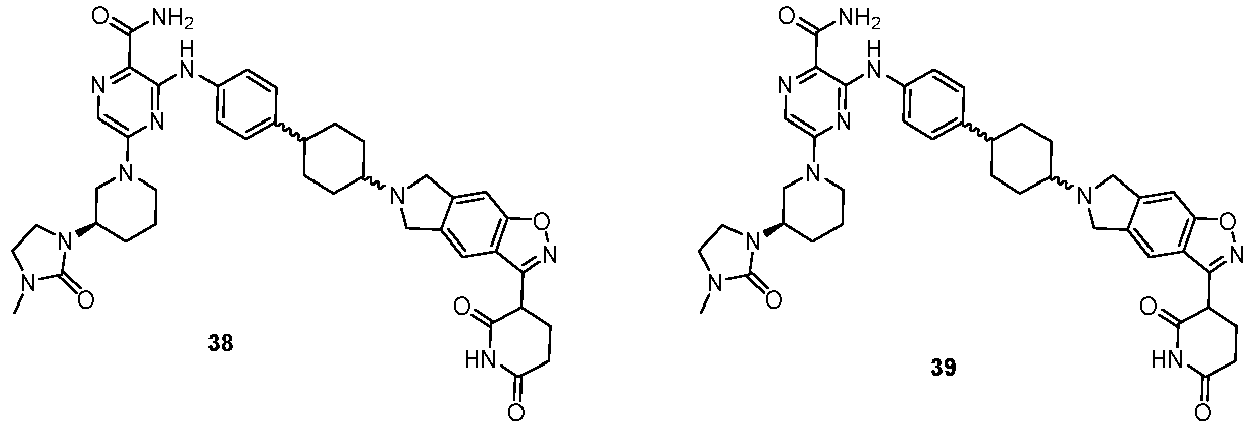

- 32g (130 mg), isopropanol (1 mL), 1,2-dichloroethane (5.00 mL), and 17 (122 mg) were added to a reaction flask in sequence, and sodium cyanoborohydride (49.9 mg) was added. The mixture was reacted at room temperature. After the reaction was completed, the reaction solution was mixed with silica gel and purified by column chromatography (MeOH:DCM = 0:100 → 1:25) to give 38 (17 mg) and 39 (20 mg) in sequence.
- 38: MS(ESI, [M+H]+) m/z: 747.54.
- 1H NMR (500 MHz, DMSO-d6) δ 11.16 (s, 1H), 11.09 (s, 1H), 7.73 (s, 1H), 7.68 (s, 1H), 7.64 (d, J = 4.6 Hz, 2H), 7.45 (d, J = 8.2 Hz, 2H), 7.31 (s, 1H), 7.11 (d, J = 8.2 Hz, 2H), 4.61 - 4.53 (m, 1H), 4.38 (d, J = 12.5 Hz, 1H), 4.24 (d, J = 13.4 Hz, 1H), 3.95 (d, J = 27.6 Hz, 4H), 3.62 - 3.52 (m, 1H), 3.30 - 3.22 (m, 2H), 3.07 (t, J = 7.7 Hz, 2H), 2.94 (q, J = 12.8, 12.3 Hz, 2H), 2.84 - 2.69 (m, 2H), 2.65 - 2.59 (m, 1H), 2.59 - 2.53 (m, 2H), 2.47 (d, J = 3.1 Hz, 3H), 2.25 - 2.17 (m, 1H), 2.02 (d, J = 13.6 Hz, 2H), 1.78 (tt, J = 26.4, 12.2 Hz, 5H), 1.63 (t, J = 13.3 Hz, 2H), 1.54 (d, J = 11.7 Hz, 3H).
- 39: MS(ESI, [M+H]+) m/z: 747.53.
- 1H NMR (500 MHz, DMSO-d6) δ 11.20 (s, 1H), 11.09 (s, 1H), 7.76 (d, J = 2.9 Hz, 1H), 7.66 (d, J = 2.5 Hz, 2H), 7.61 (s, 1H), 7.50 (d, J = 8.1 Hz, 2H), 7.33 (d, J = 2.8 Hz, 1H), 7.17 (d, J = 8.4 Hz, 2H), 4.56 (dd, J = 11.9, 5.0 Hz, 1H), 4.32 (dd, J = 32.1, 12.1 Hz, 2H), 3.99 (d, J = 26.3 Hz, 4H), 3.61 (tt, J = 10.0, 3.9 Hz, 1H), 3.38 - 3.33 (m, 2H), 3.26 (dd, J = 10.1, 7.1 Hz, 2H), 3.00 (dt, J = 42.5, 12.1 Hz, 2H), 2.83 - 2.69 (m, 4H), 2.61 (dt, J = 17.3, 4.4 Hz, 1H), 2.46 (d, J = 11.6 Hz, 2H), 2.24 - 2.07 (m, 3H), 1.94 - 1.73 (m, 5H), 1.62 - 1.31 (m, 6H).
-


- Intermediate 1f (1.5 g), intermediate 40a (1.161 g), BINAP (0.291 g), cesium carbonate (4.57 g), palladium acetate (0.105 g, 0.468 mmol), and 1,4-dioxane (20 mL) were added to a reaction flask in sequence, and the mixture was heated to 100 °C and reacted under N2 atmosphere. After the reaction was completed, as confirmed by TLC, the reaction solution was diluted with 20 mL of dichloromethane and purified by silica gel column chromatography to give the target intermediate 40b (2.2 g).
- MS(ESI, [M+H]+) m/z: 533.4.
- 1H NMR (500 MHz, DMSO-d6) δ 8.98 (s, 1H), 7.83 (s, 1H), 7.43 (d, J = 2.2 Hz, 1H), 7.29 (dd, J = 8.3, 2.2 Hz, 1H), 7.05 (d, J = 8.3 Hz, 1H), 4.44 (s, 2H), 4.38 - 4.19 (m, 2H), 3.57 (dt, J = 11.6, 5.5 Hz, 1H), 3.52 (t, J = 6.0 Hz, 2H), 3.28 (td, J = 6.8, 3.7 Hz, 3H), 3.24 - 3.18 (m, 1H), 2.99 (s, 1H), 2.95 - 2.87 (m, 1H), 2.68 (s, 5H), 1.83 - 1.77 (m, 1H), 1.77 - 1.68 (m, 2H), 1.56 - 1.49 (m, 1H), 1.43 (s, 9H).
- Intermediate 40b (2.2 g), DMSO (8 mL), methanol (20 mL), cesium carbonate (1.346 g), and water (8 mL) were added to a reaction flask in sequence, and 30 wt% hydrogen peroxide (1.405 g, 1.405 mL, 12.39 mmol) was added under an ice bath. The mixture was allowed to return to room temperature and react. After the reaction was completed, as confirmed by TLC, the reaction solution was poured into an icy saturated sodium sulfite solution to quench the reaction, and ethyl acetate was added for extraction. The organic phase was separated, washed with a saturated sodium chloride solution, dried over anhydrous sodium sulfate, and filtered, and the filtrate was concentrated by evaporation at reduced pressure to remove the solvent, thus giving the target intermediate 40c (2.1 g).
- MS(ESI, [M+H]+) m/z: 551.40.
- 1H NMR (500 MHz, DMSO-d6) δ 11.28 (s, 1H), 7.81 - 7.75 (m, 1H), 7.70 - 7.60 (m, 2H), 7.38 (s, 1H), 7.23 - 7.16 (m, 1H), 7.06 (d, J = 8.5 Hz, 1H), 4.44 (s, 2H), 4.38 (d, J = 12.5 Hz, 1H), 4.26 (d, J = 13.3 Hz, 1H), 3.63 (dq, J = 11.4, 5.9, 5.2 Hz, 1H), 3.53 (t, J = 5.8 Hz, 2H), 3.35 (s, 1H), 3.33 - 3.20 (m, 3H), 3.01 (t, J = 12.0 Hz, 1H), 2.96 - 2.87 (m, 1H), 2.69 (d, J = 3.9 Hz, 5H), 1.77 (dddd, J = 27.7, 23.7, 12.4, 3.9 Hz, 3H), 1.63 - 1.51 (m, 1H), 1.43 (s, 9H).
- Intermediate 40c (2.1 g) and TFA (8.70 g, 5.88 mL, 76 mmol) were added to a reaction flask in sequence, and the mixture was reacted at room temperature. After the reaction was completed, as confirmed by TLC, the reaction solution was concentrated by evaporation at reduced pressure to remove the solvent, 20 mL of dichloromethane was added, and the mixture was subjected to rotary evaporation. The process was repeated 2 times. The residue was completely dissolved in 10 mL of dichloromethane, then the solution was added dropwise to 100 mL of an icy 1 M sodium hydroxide solution, and 100 mL of dichloromethane was added for extraction. The organic phase was separated, and the aqueous phase was extracted twice with 50 mL of dichloromethane. The organic phases were combined, washed with saturated brine, dried over anhydrous sodium sulfate, and filtered, and the filtrate was concentrated by evaporation at reduced pressure to remove the solvent, thus giving the target intermediate 40d (1.7 g).
- MS(ESI, [M+H]+) m/z: 451.45.
- 1H NMR (500 MHz, DMSO-d6) δ 11.25 (d, J = 19.0 Hz, 1H), 7.77 (dd, J = 5.6, 2.8 Hz, 1H), 7.67 (d, J = 6.0 Hz, 1H), 7.57 (dd, J = 7.5, 2.2 Hz, 1H), 7.36 (dq, J = 6.2, 3.1 Hz, 1H), 7.16 (ddd, J = 34.2, 8.2, 2.3 Hz, 1H), 6.98 (dd, J = 11.8, 8.3 Hz, 1H), 4.37 (d, J = 12.5 Hz, 1H), 4.28 (d, J = 13.3 Hz, 1H), 3.94 (s, 1H), 3.61 (tdd, J = 15.2, 9.5, 5.2 Hz, 2H), 3.37 - 3.18 (m, 5H), 3.10 - 3.04 (m, 2H), 2.94 (td, J = 12.8, 2.8 Hz, 1H), 2.75 (d, J = 8.0 Hz, 2H), 2.68 (s, 2H), 2.64 (s, 1H), 2.51 (s, 1H), 1.87 - 1.70 (m, 3H), 1.64 - 1.50 (m, 1H).
- Intermediate 22 (50 mg), Dess-Martin periodinane (141 mg, 0.333 mmol), dichloromethane (5 mL), and DMF (1 mL) were added to a reaction flask in sequence, and the mixture was reacted at room temperature. After the reaction was completed, as confirmed by TLC, the reaction solution was extracted three times with 50 mL of water and 20 mL of ethyl acetate. The organic phases were combined, washed with 50 mL of a saturated sodium chloride solution, dried over anhydrous sodium sulfate, and filtered, and the filtrate was concentrated by evaporation at reduced pressure to remove the solvent, thus giving the target intermediate 40e (50 mg).
- MS(ESI, [M+H]+) m/z: 298.31.
- Intermediate 40e (50 mg), 1,2-dichloroethane (6 mL), isopropanol (2 mL), intermediate 40d (83 mg), acetic acid (5.00 mg, 0.083 mmol), and sodium cyanoborohydride (20.93 mg, 0.333 mmol) were added to a reaction flask in sequence, and the mixture was stirred and reacted at room temperature. After the reaction was completed, as confirmed by TLC, 2 mL of a saturated sodium bicarbonate solution was added to the reaction solution to neutralize acetic acid, and then 50 mL of dichloromethane and 100 mL were added for extraction. The organic phase was separated, and the aqueous phase was extracted twice with 20 mL of dichloromethane. The organic phases were combined, washed with saturated brine, dried over anhydrous sodium sulfate, and filtered, and the filtrate was purified by silica gel column chromatography to give compound 40 (26 mg).
- MS(ESI, [M+H]+) m/z: 733.42.
- 1H NMR (500 MHz, DMSO-d6) δ 11.23 (s, 1H), 11.08 (d, J = 1.8 Hz, 1H), 7.77 (d, J = 2.8 Hz, 1H), 7.67 (s, 1H), 7.61 (d, J = 8.1 Hz, 1H), 7.58 (s, 1H), 7.35 (d, J = 2.9 Hz, 1H), 7.27 (d, J = 8.1 Hz, 1H), 7.17 - 7.10 (m, 1H), 6.97 (d, J = 8.3 Hz, 1H), 4.57 (ddd, J = 11.9, 4.9, 1.7 Hz, 1H), 4.38 (d, J = 12.5 Hz, 1H), 4.32 - 4.24 (m, 1H), 3.66 - 3.53 (m, 3H), 3.35 (s, 1H), 3.31 - 3.13 (m, 5H), 3.10 - 2.83 (m, 6H), 2.76 (dt, J = 17.2, 5.8 Hz, 3H), 2.67 (s, 5H), 2.63 (t, J = 3.6 Hz, 1H), 2.59 (s, 1H), 2.46 (d, J = 5.8 Hz, 1H), 2.18 (dt, J = 13.1, 4.5 Hz, 1H), 1.78 (dtd, J = 22.0, 11.4, 6.5 Hz, 3H), 1.57 (q, J = 12.3, 11.5 Hz, 1H).
-


- Intermediate 23 (50 mg), Dess-Martin periodinane (141 mg, 0.333 mmol), dichloromethane (5 mL), and DMF (1 mL) were added to a reaction flask in sequence, and the mixture was reacted at room temperature. After the reaction was completed, as confirmed by TLC, the reaction solution was extracted three times with 50 mL of water and 20 mL of ethyl acetate. The organic phases were combined, washed with a saturated sodium chloride solution, dried over anhydrous sodium sulfate, and filtered, and the filtrate was concentrated by evaporation at reduced pressure to remove the solvent, thus giving the target intermediate 41a (50 mg).
- MS(ESI, [M+H]+) m/z: 298.29.
- Intermediate 41a (50 mg), 1,2-dichloroethane (6 mL), isopropanol (2 mL), intermediate 40d (83 mg), acetic acid (5.00 mg, 0.083 mmol), and sodium cyanoborohydride (20.93 mg, 0.333 mmol) were added to a reaction flask in sequence, and the mixture was stirred and reacted at room temperature. After the reaction was completed, as confirmed by TLC, 2 mL of a saturated sodium bicarbonate solution was added to the reaction solution to neutralize acetic acid, and then 50 mL of dichloromethane and 100 mL of water were added for extraction. The organic phase was separated, and the aqueous phase was extracted twice with 20 mL of dichloromethane. The organic phases were combined, washed with saturated brine, dried over anhydrous sodium sulfate, and filtered, and the filtrate was purified by silica gel column chromatography to give compound 41 (26 mg).
- MS(ESI, [M+H]+) m/z: 733.40.
- 1H NMR (500 MHz, DMSO-d6) δ 11.23 (s, 1H), 11.09 (s, 1H), 7.79 - 7.74 (m, 1H), 7.67 (s, 1H), 7.63 - 7.56 (m, 2H), 7.38 - 7.33 (m, 1H), 7.27 (d, J = 8.1 Hz, 1H), 7.14 (d, J = 8.2 Hz, 1H), 6.97 (d, J = 8.3 Hz, 1H), 4.57 (dd, J = 12.0, 4.9 Hz, 1H), 4.38 (d, J = 12.5 Hz, 1H), 4.32 - 4.25 (m, 1H), 3.67 - 3.52 (m, 3H), 3.30 - 3.14 (m, 5H), 3.12 - 2.84 (m, 6H), 2.83 - 2.68 (m, 5H), 2.67 (s, 3H), 2.64 - 2.61 (m, 1H), 2.59 (s, 1H), 2.47 (d, J = 14.4 Hz, 1H), 2.18 (dt, J = 13.4, 4.6 Hz, 1H), 1.86 - 1.72 (m, 3H), 1.57 (d, J = 12.7 Hz, 1H).
-


- 42a (1.16 g), 1f (1.50 g), BINAP (0.29 g), cesium carbonate (4.57 g), palladium acetate (0.10 g), and 1,4-dioxane (50 mL) were added to a reaction flask in sequence, and the mixture was purged three times with nitrogen, heated to 100 °C, and reacted. After the reaction was completed, as confirmed by TLC, the reaction solution was cooled to room temperature, and 80 L of ethyl acetate and 140 mL of water were added to the residue. The organic phase was separated, washed with a saturated sodium chloride solution, dried over anhydrous sodium sulfate, filtered, and concentrated. The concentrate was separated and purified by silica gel column chromatography to give intermediate 42b (2.2 g).
- MS(ESI, [M+H]+) m/z: 533.5.
- Intermediate 42b (2.2 g), cesium carbonate (1.34 g), water (10 mL), DMSO (30 mL), and methanol (10 mL) were added to a reaction flask in sequence. The reaction solution was cooled to 0 °C, and 30 wt% hydrogen peroxide (1.40 g) was added dropwise. After the dropwise addition was completed, the mixture was allowed to react at room temperature. After the reaction was completed, as confirmed by TLC, 100 mL of water was added to the reaction solution, and then a saturated aqueous sodium sulfite solution was added to neutralize hydrogen peroxide. The mixture was stirred for 10 min and filtered, and the filter cake was collected and dried to give intermediate 42c (1.9 g).
- MS(ESI, [M+H]+) m/z: 551.4.
- Intermediate 42c (0.30 g), dichloromethane (20 mL), and trifluoroacetic acid (1 mL) were added to a reaction flask in sequence, and the mixture was reacted at room temperature. After the reaction was completed, as confirmed by TLC, 50 mL of water was added to the reaction solution, the pH was adjusted to about 8 with a saturated aqueous sodium bicarbonate solution, and the product was extracted with DCM: MEOH = 10:1. The organic phase was separated, dried over anhydrous sodium sulfate, filtered, and concentrated to give intermediate 42d (0.20 g).
- MS(ESI, [M+H]+) m/z: 451.2.
- Intermediate 42d (76 mg), 40e (50 mg), dichloroethane/isopropanol (5:1, 20 mL), glacial acetic acid (10 mg), and sodium cyanoborohydride (21 mg) were added to a reaction flask in sequence, and the mixture was reacted at room temperature. After the reaction was completed, as confirmed by TLC, dichloromethane and water were added to the reaction solution. The organic phase was separated, washed with a saturated sodium chloride solution, dried over anhydrous sodium sulfate, filtered, and concentrated. The concentrate was separated and purified by silica gel column chromatography to give compound 42 (20 mg).
- MS(ESI, [M+H]+) m/z: 733.5.
- 1H NMR (500 MHz, DMSO-d6) δ 11.22 (s, 1H), 11.08 (d, J = 1.8 Hz, 1H), 7.76 (d, J = 2.8 Hz, 1H), 7.66 (s, 1H), 7.62 (d, J = 8.0 Hz, 1H), 7.44 (d, J = 2.2 Hz, 1H), 7.34 (d, J = 2.8 Hz, 1H), 7.27 (d, J = 8.1 Hz, 1H), 7.21 (d, J = 8.6 Hz, 1H), 7.03 (d, J= 8.3 Hz, 1H), 4.57 (ddd, J = 11.9, 5.0, 2.5 Hz, 1H), 4.30 (dd, J = 31.6, 12.6 Hz, 2H), 3.63 - 3.48 (m, 3H), 3.31 - 3.22 (m, 3H), 3.19 (dd, J = 9.0, 6.6 Hz, 2H), 3.12 (d, J = 8.4 Hz, 1H), 3.06 (t, J = 11.8 Hz, 1H), 2.99 (d, J = 6.9 Hz, 1H), 2.97 - 2.91 (m, 2H), 2.88 (dd, J = 16.5, 4.7 Hz, 1H), 2.81 - 2.72 (m, 4H), 2.68 (d, J = 5.1 Hz, 1H), 2.65 - 2.61 (m, 1H), 2.59 (d, J = 1.2 Hz, 3H), 2.18 (dq, J = 8.7, 4.2 Hz, 1H), 1.83 - 1.73 (m, 3H), 1.61 - 1.52 (m, 1H).
-


- Intermediate 42d (76 mg), 41a (50 mg), dichloroethane/isopropanol (5:1, 20 mL), glacial acetic acid (10 mg), and sodium cyanoborohydride (21 mg) were added to a reaction flask in sequence, and the mixture was reacted at room temperature. After the reaction was completed, as confirmed by TLC, dichloromethane and water were added to the reaction solution. The organic phase was separated, washed with a saturated sodium chloride solution, dried over anhydrous sodium sulfate, filtered, and concentrated. The concentrate was separated and purified by silica gel column chromatography to give compound 43 (24 mg).
- MS(ESI, [M+H]+) m/z: 733.5.
- 1H NMR (500 MHz, DMSO-d6) δ 11.22 (s, 1H), 11.08 (s, 1H), 7.76 (d, J = 2.8 Hz, 1H), 7.66 (s, 1H), 7.62 (d, J = 8.0 Hz, 1H), 7.44 (d, J= 2.2 Hz, 1H), 7.35 (d, J= 2.8 Hz, 1H), 7.27 (d, J= 8.1 Hz, 1H), 7.21 (d, J= 8.3 Hz, 1H), 7.03 (d, J = 8.3 Hz, 1H), 4.57 (ddd, J = 11.9, 5.0, 2.6 Hz, 1H), 4.30 (dd, J = 31.1, 12.8 Hz, 2H), 3.64 - 3.55 (m, 2H), 3.51 (d, J = 15.2 Hz, 1H), 3.31 - 3.25 (m, 2H), 3.25 - 3.21 (m, 1H), 3.21 - 3.14 (m, 2H), 3.13 - 3.02 (m, 2H), 2.99 (d, J = 6.5 Hz, 1H), 2.96 (s, 1H), 2.94 - 2.85 (m, 2H), 2.83 - 2.71 (m, 4H), 2.67 (t, J = 5.7 Hz, 1H), 2.62 (t, J = 3.8 Hz, 1H), 2.59 (d, J = 2.8 Hz, 3H), 2.18 (dq, J = 8.6, 4.5 Hz, 1H), 1.83 - 1.71 (m, 3H), 1.56 (d, J = 14.2 Hz, 2H).
-
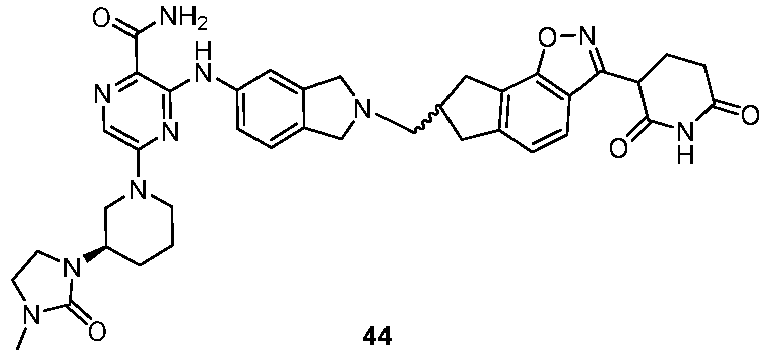
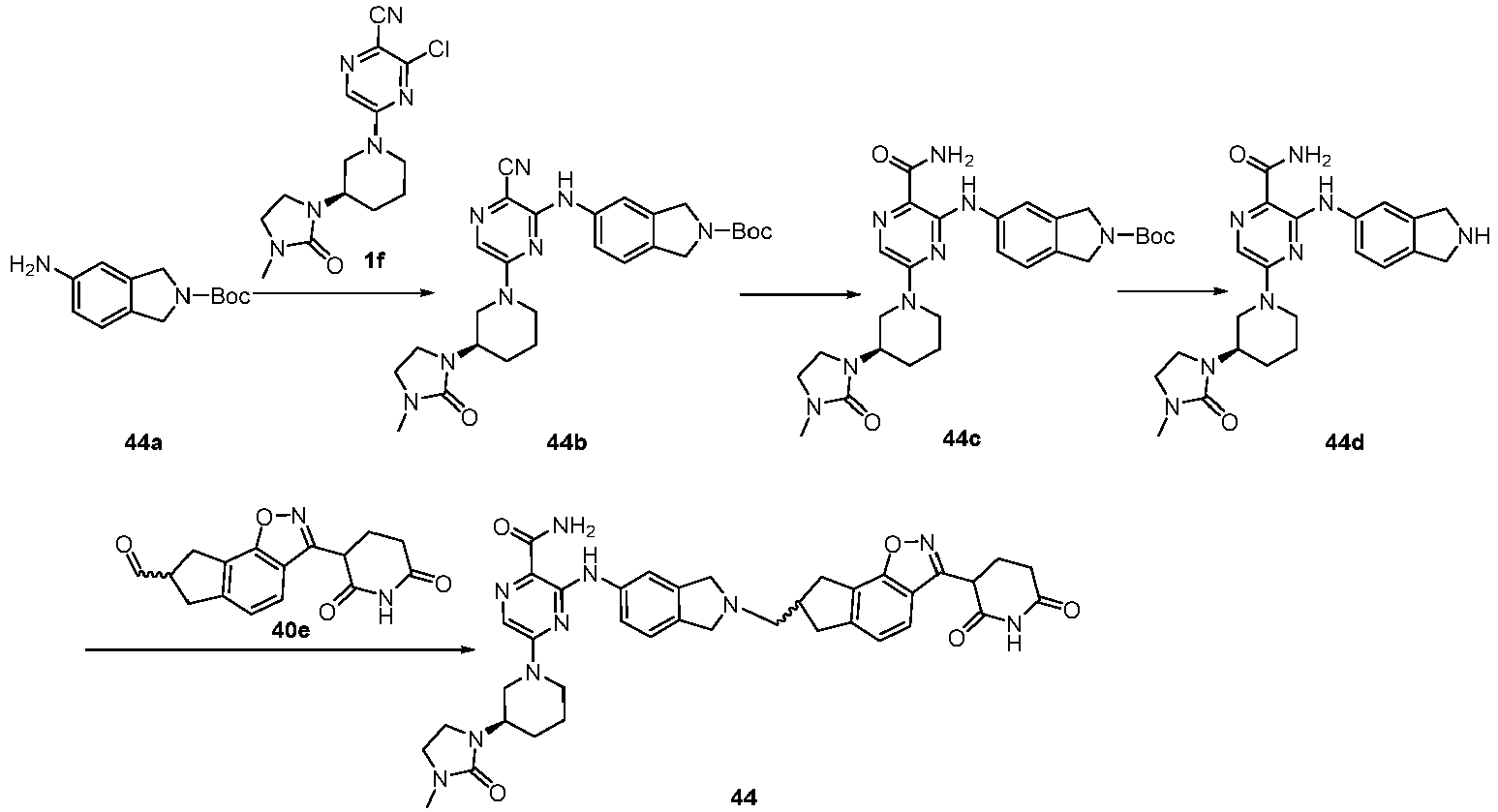
- Intermediate 1f (1.5 g), intermediate 44a (1.315 g), BINAP (0.291 g, 0.468 mmol), cesium carbonate (4.57 g), palladium acetate (0.105 g, 0.468 mmol), and 1,4-dioxane (20 mL) were added to a reaction flask in sequence, and the mixture was heated to 100 °C and reacted under N2 atmosphere. After the reaction was completed, as confirmed by TLC, the reaction solution was diluted with 20 mL of dichloromethane and purified by silica gel column chromatography to give the target intermediate 44b (1.99 g).
- MS(ESI, [M+H]+) m/z: 519.34.
- Intermediate 44b (1.99 g), DMSO (8 mL), methanol (20 mL), cesium carbonate (1.250 g), and water (8 mL) were added to a reaction flask in sequence, and 30 wt% hydrogen peroxide (1.305 g, 1.305 mL, 11.51 mmol) was added under an ice bath. The mixture was allowed to return to room temperature and react. After the reaction was completed, as confirmed by TLC, the reaction solution was poured into 200 mL of an icy saturated sodium sulfite solution to quench the reaction, and 200 mL of ethyl acetate was added for extraction. The organic phase was separated, and the aqueous phase was extracted twice with 50 mL of ethyl acetate. The organic phases were combined, washed with a saturated sodium chloride solution, dried over anhydrous sodium sulfate, and filtered, and the filtrate was concentrated by evaporation at reduced pressure to remove the solvent, thus giving the target intermediate 44c (1.8 g).
- MS(ESI, [M+H]+) m/z: 537.40.
- 1H NMR (500 MHz, DMSO-d6) δ 11.35 (d, J = 3.5 Hz, 1H), 7.79 (d, J = 2.6 Hz, 1H), 7.69 (d, J = 2.5 Hz, 1H), 7.36 (dd, J = 12.2, 2.6 Hz, 2H), 7.23 (q, J = 8.3 Hz, 2H), 4.53 (q, J = 11.5, 10.6 Hz, 4H), 4.39 (d, J = 14.0 Hz, 1H), 4.25 (t, J = 13.3 Hz, 1H), 3.67 - 3.57 (m, 1H), 3.34 (d, J = 5.9 Hz, 1H), 3.28 (h, J = 5.7 Hz, 2H), 3.04 (td, J = 11.7, 6.7 Hz, 1H), 2.96 (td, J = 12.9, 2.5 Hz, 1H), 2.70 (d, J = 10.8 Hz, 3H), 1.78 (h, J = 12.7, 11.1 Hz, 3H), 1.57 (dt, J = 15.8, 4.9 Hz, 1H), 1.46 (d, J = 4.7 Hz, 9H).
- Intermediate 44c (1.8 g) and TFA (7.65 g, 5.17 mL, 67.1 mmol) were added to a reaction flask in sequence, and the mixture was reacted at room temperature. After the reaction was completed, as confirmed by TLC, the reaction solution was concentrated by evaporation at reduced pressure to remove the solvent. The residue was completely dissolved in 10 mL of dichloromethane, then the solution was added dropwise to 100 mL of an icy 1 M sodium hydroxide solution, and 100 mL of dichloromethane was added for extraction. The organic phase was separated, and the aqueous phase was extracted twice with 50 mL of dichloromethane. The organic phases were combined, washed with saturated brine, dried over anhydrous sodium sulfate, and filtered, and the filtrate was concentrated by evaporation at reduced pressure to remove the solvent, thus giving the target intermediate 44d (1.36 g).
- MS(ESI, [M+H]+) m/z: 437.30.
- 1H NMR (500 MHz, DMSO-d6) δ 11.28 (s, 1H), 7.77 (d, J = 2.8 Hz, 1H), 7.67 (s, 1H), 7.63 (d, J = 2.0 Hz, 1H), 7.35 (d, J = 3.1 Hz, 1H), 7.23 (dd, J = 8.0, 2.0 Hz, 1H), 7.15 (d, J = 8.0 Hz, 1H), 4.36 (d, J = 12.8 Hz, 1H), 4.27 (d, J = 13.4 Hz, 1H), 4.02 (s, 4H), 3.60 (dtd, J = 14.9, 10.6, 5.2 Hz, 1H), 3.30 - 3.20 (m, 3H), 3.04 (t, J = 11.8 Hz, 1H), 2.94 (td, J = 12.9, 2.6 Hz, 1H), 2.69 (s, 3H), 1.83 - 1.73 (m, 3H), 1.60 - 1.52 (m, 1H).
- Intermediate 40e (50 mg), 1,2-dichloroethane (6 mL), isopropanol (2 mL), intermediate 44d (72.7 mg), acetic acid (5.00 mg, 0.083 mmol), and sodium cyanoborohydride (20.93 mg, 0.333 mmol) were added to a reaction flask in sequence, and the mixture was stirred and reacted at room temperature. After the reaction was completed, as confirmed by TLC, 2 mL of a saturated sodium bicarbonate solution was added to the reaction solution, and then 50 mL of dichloromethane and 100 mL of water were added for extraction. The organic phase was separated, and the aqueous phase was extracted twice with 20 mL of dichloromethane. The organic phases were combined, washed with saturated brine, dried over anhydrous sodium sulfate, and filtered, and the filtrate was purified by silica gel column chromatography to give compound 44 (40 mg).
- MS(ESI, [M+H]+) m/z: 719.50.
- 1H NMR (500 MHz, DMSO-d6) δ 11.30 (d, J = 3.0 Hz, 1H), 11.09 (s, 1H), 7.77 (d, J = 2.9 Hz, 1H), 7.67 (d, J = 4.0 Hz, 2H), 7.62 (d, J = 8.0 Hz, 1H), 7.36 (d, J = 2.9 Hz, 1H), 7.28 (d, J = 8.1 Hz, 1H), 7.22 (d, J = 8.3 Hz, 1H), 7.15 (d, J = 8.1 Hz, 1H), 4.57 (dd, J = 11.9, 4.9 Hz, 1H), 4.37 (d, J = 12.7 Hz, 1H), 4.26 (d, J = 13.3 Hz, 1H), 3.87 (s, 4H), 3.61 (tt, J = 10.3, 4.7 Hz, 1H), 3.29 (d, J = 9.6 Hz, 2H), 3.22 (t, J = 7.4 Hz, 3H), 3.05 - 2.86 (m, 5H), 2.77 (ddt, J = 18.5, 12.1, 5.9 Hz, 3H), 2.64 - 2.58 (m, 4H), 2.46 (d, J = 4.3 Hz, 1H), 2.23 - 2.15 (m, 1H), 1.86 - 1.69 (m, 3H), 1.61 -1.51 (m, 1H), 1.24 (d, J = 6.3 Hz, 3H).
-

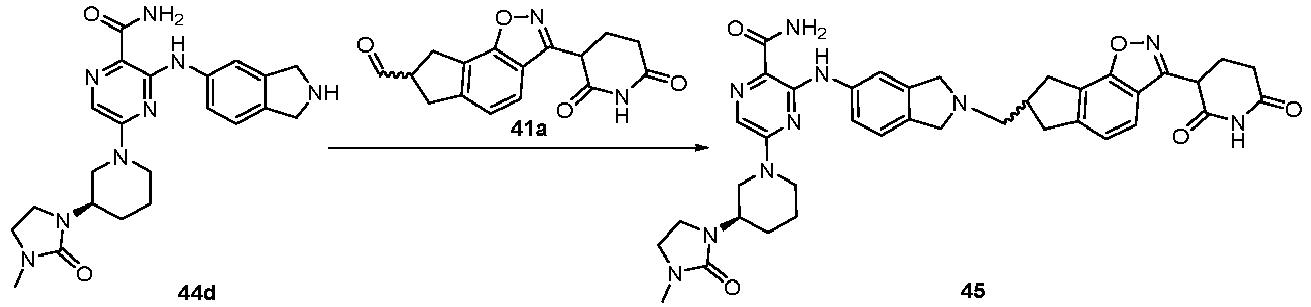
- Intermediate 41a (50 mg), 1,2-dichloroethane (6 mL), isopropanol (2 mL), intermediate 44d (72.7 mg), acetic acid (5.00 mg, 0.083 mmol), and sodium cyanoborohydride (20.93 mg, 0.333 mmol) were added to a reaction flask in sequence, and the mixture was stirred and reacted at room temperature. After the reaction was completed, as confirmed by TLC, 2 mL of a saturated sodium bicarbonate solution was added to the reaction solution, and then 50 mL of dichloromethane and 100 mL of water were added for extraction. The organic phase was separated, and the aqueous phase was extracted twice with 20 mL of dichloromethane. The organic phases were combined, washed with saturated brine, dried over anhydrous sodium sulfate, and filtered, and the filtrate was purified by silica gel column chromatography to give compound 45 (60 mg).
- MS(ESI, [M+H]+) m/z: 719.40.
- 1H NMR (500 MHz, DMSO-d6) δ 11.30 (d, J = 2.9 Hz, 1H), 11.09 (s, 1H), 7.77 (d, J = 2.8 Hz, 1H), 7.67 (d, J = 4.0 Hz, 2H), 7.62 (d, J = 8.0 Hz, 1H), 7.36 (d, J = 2.9 Hz, 1H), 7.28 (d, J = 8.1 Hz, 1H), 7.22 (d, J = 8.3 Hz, 1H), 7.15 (d, J = 8.1 Hz, 1H), 4.57 (dd, J = 11.9, 5.0 Hz, 1H), 4.37 (d, J = 12.6 Hz, 1H), 4.26 (d, J = 13.3 Hz, 1H), 3.87 (s, 4H), 3.61 (dq, J = 11.0, 5.5, 5.0 Hz, 1H), 3.31 - 3.25 (m, 2H), 3.25 - 3.16 (m, 3H), 3.12 - 2.82 (m, 6H), 2.81 - 2.70 (m, 3H), 2.65 - 2.58 (m, 4H), 2.49 - 2.44 (m, 1H), 2.19 (dp, J = 12.9, 4.5 Hz, 1H), 1.85 - 1.71 (m, 3H), 1.56 (qd, J = 13.0, 12.4, 6.2 Hz, 1H).
-


- Intermediate 44d (700 mg), 1-Boc-3-azetidinone (549 mg), 1,2-dichloroethane (3 mL), isopropanol (1 mL), acetic acid (48.1 mg, 0.802 mmol), and sodium cyanoborohydride (202 mg, 3.21 mmol) were added to a reaction flask in sequence, and the mixture was stirred and reacted at room temperature. After the reaction was completed, as confirmed by TLC, 20 mL of a saturated sodium bicarbonate solution was added to the reaction solution, and then 100 mL of dichloromethane and 100 mL of water were added for extraction. The organic phase was separated, and the aqueous phase was extracted twice with 20 mL of dichloromethane. The organic phases were combined, washed with saturated brine, dried over anhydrous sodium sulfate, and filtered, and the filtrate was purified by silica gel column chromatography to give the target intermediate 46a (601 mg).
- MS(ESI, [M+H]+) m/z: 592.51.
- Intermediate 46a (601 mg) and TFA (2316 mg, 1565 µL, 20.31 mmol) were added to a reaction flask in sequence, and the mixture was reacted at room temperature for 1 h. After the reaction was completed, the reaction solution was concentrated by evaporation at reduced pressure to remove the solvent. The residue was completely dissolved in 10 mL of dichloromethane, then the solution was added dropwise to 100 mL of an icy 1 M sodium hydroxide solution, and 100 mL of dichloromethane was added for extraction. The organic phase was separated, and the aqueous phase was extracted twice with 50 mL of dichloromethane. The organic phases were combined, washed with saturated brine, dried over anhydrous sodium sulfate, and filtered, and the filtrate was concentrated by evaporation at reduced pressure to remove the solvent, thus giving the target intermediate 46b (434 mg).
- MS(ESI, [M+H]+) m/z: 492.30.
- 1H NMR (500 MHz, DMSO-d6) δ 11.30 (d, J = 6.8 Hz, 1H), 7.77 (dd, J = 5.3, 2.8 Hz, 1H), 7.70 - 7.61 (m, 2H), 7.35 (t, J = 2.9 Hz, 1H), 7.29 - 7.18 (m, 1H), 7.14 (dd, J = 11.9, 8.1 Hz, 1H), 4.35 (d, J = 12.6 Hz, 1H), 4.27 (d, J = 11.8 Hz, 1H), 3.87 - 3.69 (m, 8H), 3.63 - 3.58 (m, 1H), 3.36 - 3.29 (m, 3H), 3.28 - 3.23 (m, 2H), 3.03 (qd, J = 10.2, 8.9, 5.7 Hz, 2H), 2.99 - 2.92 (m, 1H), 2.68 (s, 3H), 1.84 - 1.74 (m, 3H), 1.60 - 1.52 (m, 1H).
- Intermediate 40e (50 mg), 1,2-dichloroethane (6 mL), isopropanol (2 mL), intermediate 46b (83 mg), acetic acid (5.00 mg, 0.083 mmol), and sodium cyanoborohydride (20.93 mg, 0.333 mmol) were added to a reaction flask in sequence, and the mixture was stirred and reacted at room temperature. After the reaction was completed, as confirmed by TLC, 2 mL of a saturated sodium bicarbonate solution was added to the reaction solution to neutralize acetic acid, and then 50 mL of dichloromethane and 100 mL of water were added for extraction. The organic phase was separated, and the aqueous phase was extracted twice with 20 mL of dichloromethane. The organic phases were combined, washed with saturated brine, dried over anhydrous sodium sulfate, and filtered, and the filtrate was purified by silica gel column chromatography to give compound 46 (20 mg).
- MS(ESI, [M+H]+) m/z: 774.47.
- 1H NMR (500 MHz, DMSO-d6) δ 11.31 (s, 1H), 11.08 (s, 1H), 7.80 - 7.74 (m, 1H), 7.66 (d, J = 8.8 Hz, 2H), 7.61 (d, J = 8.0 Hz, 1H), 7.39 - 7.33 (m, 1H), 7.25 (d, J = 8.1 Hz, 1H), 7.21 (d, J = 8.2 Hz, 1H), 7.14 (d, J = 8.1 Hz, 1H), 4.56 (dd, J = 11.8, 5.0 Hz, 1H), 4.37 (d, J = 12.4 Hz, 1H), 4.26 (d, J = 13.4 Hz, 1H), 3.83 - 3.73 (m, 4H), 3.61 (dt, J = 10.9, 5.7 Hz, 1H), 3.49 (d, J = 15.5 Hz, 3H), 3.28 - 3.11 (m, 5H), 2.99 (dt, J = 42.1, 11.7 Hz, 4H), 2.90 - 2.72 (m, 4H), 2.69 (s, 3H), 2.62 (q, J = 4.2 Hz, 2H), 2.59 (d, J = 4.0 Hz, 1H), 2.49 - 2.43 (m, 1H), 2.18 (dq, J = 13.7, 4.8 Hz, 1H), 1.84 - 1.74 (m, 3H), 1.56 (d, J = 12.8 Hz, 1H).
-


- Intermediate 41a (50 mg), 1,2-dichloroethane (6 mL), isopropanol (2 mL), intermediate 46b (83 mg), acetic acid (5.00 mg, 0.083 mmol), and sodium cyanoborohydride (20.93 mg, 0.333 mmol) were added to a reaction flask in sequence, and the mixture was stirred and reacted at room temperature. After the reaction was completed, as confirmed by TLC, 2 mL of a saturated sodium bicarbonate solution was added to the reaction solution, and then 50 mL of dichloromethane and 100 mL of water were added for extraction. The organic phase was separated, and the aqueous phase was extracted twice with 20 mL of dichloromethane. The organic phases were combined, washed with saturated brine, dried over anhydrous sodium sulfate, and filtered, and the filtrate was purified by silica gel column chromatography to give compound 47 (30 mg).
- MS(ESI, [M+H]+) m/z: 774.49.
- 1H NMR (500 MHz, DMSO-d6) δ 11.31 (s, 1H), 11.08 (s, 1H), 7.77 (d, J = 2.8 Hz, 1H), 7.66 (d, J = 8.4 Hz, 2H), 7.61 (d, J = 8.0 Hz, 1H), 7.36 (d, J = 2.9 Hz, 1H), 7.23 (dd, J = 19.6, 8.1 Hz, 2H), 7.14 (d, J = 8.2 Hz, 1H), 4.56 (dd, J = 11.8, 5.0 Hz, 1H), 4.37 (d, J = 12.6 Hz, 1H), 4.26 (d, J = 13.4 Hz, 1H), 3.78 (d, J = 11.1 Hz, 4H), 3.60 (dq, J = 10.1, 5.4, 4.8 Hz, 1H), 3.47 (s, 3H), 3.35 (s, 1H), 3.30 - 3.12 (m, 5H), 2.99 (dt, J = 41.9, 11.7 Hz, 4H), 2.91 - 2.71 (m, 4H), 2.69 (s, 3H), 2.61 (q, J = 4.2 Hz, 2H), 2.58 (t, J = 4.1 Hz, 1H), 2.49 - 2.42 (m, 1H), 2.18 (dq, J = 14.0, 5.0 Hz, 1H), 1.84 - 1.73 (m, 3H), 1.57 (t, J = 12.1 Hz, 1H).
-


- Lithium bis(trimethylsilyl)amide (26.6 mL) was added dropwise to a stirred solution of 48a (1.16 g) in THF (30 mL) at -78 °C, and the mixture was maintained at this temperature and reacted for 1 h. N-phenylbis(trifluoromethanesulfonyl)imide (1.50 g) was dissolved in THF (30 mL), and the solution was added dropwise to the reaction solution. After the dropwise addition was completed, the mixture was allowed to react at room temperature. After the reaction was completed, as confirmed by TLC, the reaction solution was poured into 100 mL of water and extracted twice with petroleum ether (100 mL each time). The organic phases were combined, washed with saturated sodium chloride, dried over anhydrous sodium sulfate, filtered, and concentrated to give intermediate 48b (6.2 g).
- 1H NMR (500 MHz, DMSO-d 6) δ 5.76 (d, J = 2.0 Hz, 1H), 3.51 (dd, J = 11.3, 8.5 Hz, 1H), 3.29 (q, J = 7.4 Hz, 3H), 3.00 (dd, J= 11.3, 6.1 Hz, 1H), 2.93 - 2.77 (m, 2H), 2.35 - 2.28 (m, 1H), 1.33 (s, 9H).
- Intermediate 48b (5.0 g), 4-nitrophenylboronic acid (2.33 g), potassium carbonate (3.87 g), PdCl2(dppf) (0.51 g), water (10 mL), and 1,4-dioxane (50 mL) were added to a reaction flask in sequence, and the mixture was purged three times with nitrogen, heated to 100 °C and reacted. After the reaction was completed, as confirmed by TLC, the reaction solution was cooled to room temperature, and 80 L of ethyl acetate and 140 mL of water were added to the residue. The organic phase was separated, washed with a saturated sodium chloride solution, dried over anhydrous sodium sulfate, filtered, and concentrated. The concentrate was separated and purified by silica gel column chromatography to give intermediate 48c (4.2 g).
- MS(ESI, [M+H]+) m/z: 330.21.
- Intermediate 48c (0.30 g), 10% palladium on carbon (0.84 g), methanol (60 mL), and dichloromethane (30 mL) were added to a reaction flask in sequence, and the mixture was purged three times with hydrogen and reacted at room temperature. After the reaction was completed, as confirmed by TLC, palladium on carbon was removed by filtration under vacuum, and the residue was concentrated to give intermediate 48d (3.72 g).
- MS(ESI, [M+H]+) m/z: 302.21.
- Intermediate 48d (1.88 g), 1f (2.0 g), BINAP (0.39 g), cesium carbonate (6.09 g), palladium acetate (0.14 g), and dioxane (50 mL) were added to a reaction flask in sequence, and the mixture was purged three times with nitrogen, heated to 100 °C, and reacted. After the reaction was completed, as confirmed by TLC, the reaction solution was cooled to room temperature, and 80 L of ethyl acetate and 140 mL of water were added to the residue. The organic phase was separated, washed with a saturated sodium chloride solution, dried over anhydrous sodium sulfate, filtered, and concentrated. The concentrate was separated and purified by silica gel column chromatography to give intermediate 48e (3.0 g).
- MS(ESI, [M+H]+) m/z: 587.3.
- Intermediate 48e (3.0 g), cesium carbonate (1.43 g), water (10 mL), DMSO (35 mL), and methanol (20 mL) were added to a reaction flask in sequence. The reaction solution was cooled to 0 °C, and 30 wt% hydrogen peroxide (1.49 g) was added dropwise. After the dropwise addition was completed, the mixture was allowed to react at room temperature. After the reaction was completed, as confirmed by TLC, 100 mL of water was added to the reaction solution, and then a saturated aqueous sodium sulfite solution was added to neutralize hydrogen peroxide. The mixture was stirred for 10 min and filtered, and the filter cake was collected and dried to give intermediate 48f (2.0 g).
- MS(ESI, [M+H]+) m/z: 605.4.
- Intermediate 48f (0.45 g), dichloromethane (20 mL), and trifluoroacetic acid (3 mL) were added to a reaction flask in sequence, and the mixture was reacted at room temperature. After the reaction was completed, as confirmed by TLC, water (50 mL) was added to the reaction solution, and the pH was adjusted to about 8 with a saturated aqueous sodium bicarbonate solution. The mixture was stirred for 10 min and filtered, and the filter cake was collected and dried to give intermediate 48g (0.20 g).
- MS(ESI, [M+H]+) m/z: 505.5.
- Intermediate 48g (85 mg), 40e (50 mg), dichloroethane/isopropanol (5:1, 20 mL), glacial acetic acid (10 mg), and sodium cyanoborohydride (21 mg) were added to a reaction flask in sequence, and the mixture was reacted at room temperature. After the reaction was completed, as confirmed by TLC, 50 mL of dichloromethane and 100 mL of water were added to the reaction solution. The organic phase was separated, washed with a saturated sodium chloride solution, dried over anhydrous sodium sulfate, filtered, and concentrated. The concentrate was separated and purified by silica gel column chromatography to give compound 48 (32 mg).
- MS(ESI, [M+H]+) m/z: 787.5.
- 1H NMR (500 MHz, DMSO-d6) δ 11.22 (s, 1H), 11.08 (s, 1H), 7.76 (d, J = 2.9 Hz, 1H), 7.66 (s, 1H), 7.60 (d, J = 8.0 Hz, 1H), 7.52 (d, J = 8.3 Hz, 2H), 7.34 (d, J = 2.8 Hz, 1H), 7.26 (d, J = 8.0 Hz, 1H), 7.18 (d, J = 8.1 Hz, 2H), 4.56 (dd, J = 11.8, 5.0 Hz, 1H), 4.40 (d, J = 12.4 Hz, 1H), 4.34 - 4.26 (m, 1H), 3.68 - 3.58 (m, 1H), 3.28 - 3.14 (m, 4H), 3.03 (t, J = 12.0 Hz, 1H), 3.00 - 2.90 (m, 2H), 2.90 - 2.74 (m, 4H), 2.72 (d, J = 3.0 Hz, 3H), 2.66 (d, J = 8.9 Hz, 2H), 2.59 (dd, J = 17.7, 4.8 Hz, 3H), 2.48 - 2.42 (m, 2H), 2.30 - 2.13 (m, 5H), 1.89 - 1.72 (m, 3H), 1.65 - 1.53 (m, 1H), 1.41 (d, J= 8.1 Hz, 2H).
-


- Intermediate 48g (85 mg), 41a (50 mg), dichloroethane/isopropanol (5:1, 20 mL), glacial acetic acid (10 mg), and sodium cyanoborohydride (21 mg) were added to a reaction flask in sequence, and the mixture was reacted at room temperature. After the reaction was completed, as confirmed by TLC, 50 mL of dichloromethane and 100 mL of water were added to the reaction solution. The organic phase was separated, washed with a saturated sodium chloride solution, dried over anhydrous sodium sulfate, filtered, and concentrated. The concentrate was separated and purified by silica gel column chromatography to give compound 49 (50 mg).
- MS(ESI, [M+H]+) m/z: 787.5.
- 1H NMR (500 MHz, DMSO-d6) δ 11.22 (s, 1H), 11.08 (s, 1H), 7.76 (d, J = 2.8 Hz, 1H), 7.66 (s, 1H), 7.60 (d, J = 8.0 Hz, 1H), 7.56 - 7.46 (m, 2H), 7.34 (d, J = 2.8 Hz, 1H), 7.27 (d, J = 8.0 Hz, 1H), 7.18 (d, J = 8.6 Hz, 2H), 4.56 (dd, J = 11.8, 4.9 Hz, 1H), 4.39 (d, J = 12.6 Hz, 1H), 4.34 - 4.26 (m, 1H), 3.63 (t, J = 11.5 Hz, 1H), 3.29 - 3.13 (m, 4H), 3.04 (t, J = 11.7 Hz, 1H), 2.99 - 2.90 (m, 2H), 2.89 - 2.74 (m, 4H), 2.72 (d, J = 3.0 Hz, 3H), 2.66 (d, J = 8.8 Hz, 2H), 2.63 - 2.54 (m, 3H), 2.46 (d, J = 12.4 Hz, 2H), 2.27 - 2.14 (m, 5H), 1.90 - 1.72 (m, 3H), 1.60 - 1.54 (m, 1H), 1.47 - 1.32 (m, 3H).
-
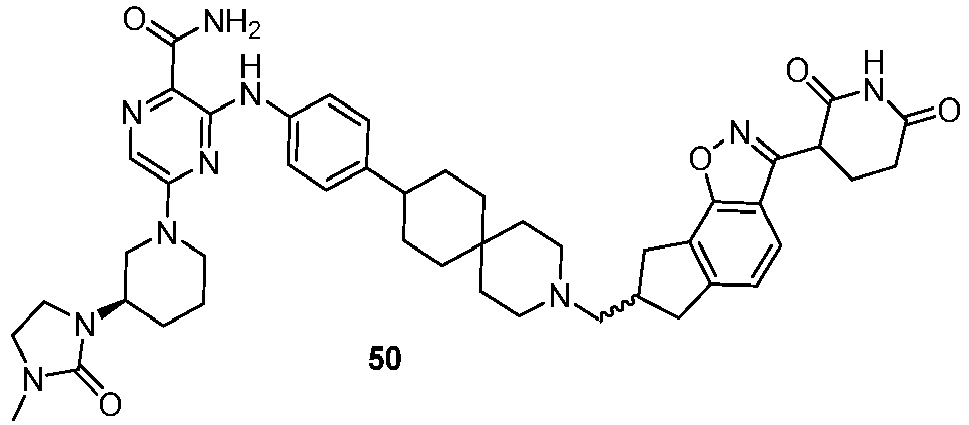

- Lithium bis(trimethylsilyl)amide (2.82 g, 16.85 mL) was slowly added dropwise to a solution of 50a (3 g) in THF (30 mL) at -78 °C under nitrogen atmosphere. After the dropwise addition was completed, the mixture was reacted at -78 °C for 1 h. A solution of N-phenylbis(trifluoromethanesulfonyl)imide (4.81 g) in THF (30 mL) was slowly added to the reaction solution. After the addition was completed, the mixture was warmed to room temperature and reacted. After the reaction was completed, 200 mL of petroleum ether was added to the system, and 200 mL of saturated brine was added for extraction. The organic phase was dried over anhydrous sodium sulfate, filtered, and concentrated to give 50b (4.51 g).
- 1H NMR (500 MHz, DMSO-d6) δ 5.64 (td, J = 4.1, 2.0 Hz, 1H), 3.18 (dd, J = 13.6, 5.9 Hz, 2H), 3.11 (dd, J = 13.3, 6.4 Hz, 2H), 2.13 (tq, J = 6.4, 2.0 Hz, 2H), 1.91 (dt, J = 4.9, 2.7 Hz, 2H), 1.46 (t, J = 6.5 Hz, 2H), 1.22 (s, 9H), 1.14 (t, J = 5.9 Hz, 4H).
- 4-nitrophenylboronic acid (1.6 g), 50b (4.59 g), potassium carbonate (3.97 g), Pd(dppf)2Cl2 (0.783 g), 1,4-dioxane (30 mL), and water (8 mL) were added to a reaction flask in sequence, and the mixture was purged several times with nitrogen, heated to 90 °C and reacted. After the reaction was completed, about 200 mL of methyl tert-butyl ether was added, and the mixture was washed with saturated brine. The organic phase was dried over anhydrous sodium sulfate, filtered, and concentrated to give a crude product, and the crude product was slurried with petroleum ether to give 50c (3.83 g).
- 1H NMR (500 MHz, DMSO-d6) δ 8.08 - 7.94 (m, 2H), 7.59 - 7.46 (m, 2H), 6.24 (td, J = 4.1, 2.0 Hz, 1H), 3.23 (dt, J = 11.9, 5.6 Hz, 2H), 3.11 (d, J = 7.4 Hz, 2H), 2.29 - 2.18 (m, 2H), 1.98 (dt, J = 4.6, 2.5 Hz, 2H), 1.46 (t, J = 6.4 Hz, 2H), 1.23 (s, 9H), 1.17 (t, J = 5.8 Hz, 4H).
- 50c (3.83 g), 10% palladium on carbon (1 g), and methanol (50 mL) were added to a reaction flask in sequence, and the mixture was purged 3 times with hydrogen and reacted overnight at room temperature under hydrogen atmosphere. After the reaction was completed, the reaction solution was filtered under vacuum, and the filtrate was concentrated to give 50d (3.6 g).
- 1H NMR (500 MHz, DMSO-d6) δ 6.87 (d, J= 8.1 Hz, 2H), 6.47 (d, J= 8.0 Hz, 2H), 4.85 (s, 2H), 3.30 (q, J= 5.9 Hz, 4H), 2.26 (tt, J= 10.2, 4.8 Hz, 1H), 1.73 (d, J= 13.0 Hz, 2H), 1.50 (pd, J= 7.7, 7.1, 2.8 Hz, 6H), 1.39 (s, 9H), 124 (dd, J = 7.0, 4.5 Hz, 2H), 1.16 (td, J = 13.0, 5.1 Hz, 2H).
- Intermediate 1f (1.6 g), 50d (2.84 g), cesium carbonate (4.88 g), BINAP (0.311 g), palladium acetate (0.112 g), and 1,4-dioxane (10 mL) were added to a single-necked flask in sequence, and the mixture was heated to 100 °C and reacted under nitrogen atmosphere. After the reaction was completed, the reaction solution was cooled to room temperature and purified by silica gel column chromatography to give 50e (2.6 g).
- 1H NMR (500 MHz, DMSO-d6) δ 8.93 (s, 1H), 7.81 (s, 1H), 7.48 - 7.41 (m, 2H), 7.13 (d, J= 8.5 Hz, 2H), 4.41 - 4.16 (m, 2H), 3.56 (q, J = 6.0, 4.9 Hz, 1H), 3.23 (ddd, J = 10.9, 7.6, 4.7 Hz, 8H), 2.91 (dd, J = 21.2, 9.0 Hz, 2H), 2.70 (s, 3H), 2.45 - 2.35 (m, 1H), 1.83 - 1.70 (m, 5H), 1.64 - 1.46 (m, 7H), 1.39 (s, 9H), 1.30 - 1.17 (m, 4H).
- Intermediate 50e (2.5 g), DMSO (10 mL), and cesium carbonate (1.29 g) were added to a single-necked flask in sequence. 30 wt% hydrogen peroxide (2.254 mL) was added under an ice bath. After the mixture was stirred for 5 min, the ice bath was removed, and the mixture was reacted at room temperature. After the reaction was completed, 300 mL of a saturated sodium sulfite solution was added to the residue to quench the reaction. The color was not changed as detected using a potassium iodide starch reagent, and then 300 mL of ethyl acetate was added for extraction. 100 mL of ethyl acetate was then added for 3 times of extraction. The organic phases were combined, dried over anhydrous sodium sulfate, filtered, and concentrated by evaporation at reduced pressure to remove the solvent. The crude product was separated by silica gel column chromatography to give the target intermediate 50f (2.41 g).
- MS(ESI, [M+H]+) m/z: 647.47.
- 50f (2.4 g), dichloromethane (10 mL), and TFA (8.46 g, 5.72 mL, 74.2 mmol) were added to a single-necked flask in sequence, and the mixture was reacted at room temperature. After the reaction was completed, the system was added to 200 mL of a saturated sodium bicarbonate solution, and then 200 mL of dichloromethane was added for extraction. The organic phase was dried over anhydrous sodium sulfate, filtered, and concentrated by evaporation at reduced pressure to remove the solvent, thus giving 50g (1.73 g).
- MS(ESI, [M+H]+) m/z: 547.48.
- 40e (60 mg), isopropanol (1 mL), 1,2-dichloroethane (5.00 mL), and 50g (109 mg) were added to a reaction flask in sequence, and sodium cyanoborohydride (25.1 mg) was added. The mixture was reacted at room temperature. After the reaction was completed, the reaction solution was purified by silica gel column chromatography to give 50 (56 mg).
- MS(ESI, [M+H]+) m/z: 829.57
- 1H NMR (500 MHz, DMSO-d6) δ 11.20 (s, 1H), 11.09 (s, 1H), 7.75 (d, J = 2.9 Hz, 1H), 7.65 (s, 1H), 7.61 (d, J = 8.1 Hz, 1H), 7.49 (d, J= 8.1 Hz, 2H), 7.33 (d, J= 2.9 Hz, 1H), 7.27 (d, J= 8.1 Hz, 1H), 7.16 (d, J= 8.2 Hz, 2H), 4.63 - 4.51 (m, 1H), 4.44 - 4.23 (m, 2H), 3.61 (dt, J = 11.1, 6.6 Hz, 1H), 3.30 (d, J= 8.0 Hz, 1H), 3.27 - 3.13 (m, 5H), 3.11 - 2.73 (m, 7H), 2.71 (s, 3H), 2.66 - 2.52 (m, 4H), 2.49 - 2.33 (m, 4H), 2.18 (dt, J = 13.2, 4.6 Hz, 1H), 1.90 - 1.71 (m, 5H), 1.70 - 1.47 (m, 7H), 1.41 (s, 2H), 1.26 - 1.15 (m, 2H).
-


- 41a (60 mg), isopropanol (1 mL), 1,2-dichloroethane (5.00 mL), and 50g (109 mg) were added to a reaction flask in sequence, and sodium cyanoborohydride (25.1 mg) was added. The mixture was reacted at room temperature. After the reaction was completed, the reaction solution was purified by silica gel column chromatography to give 51 (42 mg).
- MS(ESI, [M+H]+) m/z: 829.59.
- 1H NMR (500 MHz, DMSO-d6) δ 11.20 (s, 1H), 11.09 (s, 1H), 7.75 (d, J = 2.9 Hz, 1H), 7.65 (s, 1H), 7.61 (d, J = 8.1 Hz, 1H), 7.49 (d, J = 8.1 Hz, 2H), 7.33 (d, J = 2.9 Hz, 1H), 7.27 (d, J = 8.1 Hz, 1H), 7.16 (d, J = 8.2 Hz, 2H), 4.63 - 4.51 (m, 1H), 4.44 - 4.23 (m, 2H), 3.61 (dt, J = 11.1, 6.6 Hz, 1H), 3.30 (d, J = 8.0 Hz, 1H), 3.27 - 3.13 (m, 5H), 3.11 - 2.73 (m, 7H), 2.71 (s, 3H), 2.66 - 2.52 (m, 4H), 2.49 - 2.33 (m, 4H), 2.18 (dt, J = 13.2, 4.6 Hz, 1H), 1.90 - 1.71 (m, 5H), 1.70 - 1.47 (m, 7H), 1.41 (s, 2H), 1.26 - 1.15 (m, 2H).
-


- Lithium bis(trimethylsilyl)amide (1 M, 21.75 mL) was slowly added dropwise to a solution of 52a (4 g) in THF (30 mL) at -78 °C under nitrogen atmosphere. After the dropwise addition was completed, the mixture was reacted at -78 °C for 1 h. A solution of N-phenylbis(trifluoromethanesulfonyl)imide (7.17 g) in THF (30 mL) was slowly added to the reaction solution. After the addition was completed, the mixture was warmed to room temperature and reacted. After the reaction was completed, 200 mL of petroleum ether was added to the system, and 200 mL of saturated brine was added for extraction. The organic phase was dried over anhydrous sodium sulfate, filtered, and concentrated to give 52b (5 g).
- 1H NMR (500 MHz, DMSO-d6) δ 5.88 - 5.77 (m, 1H), 3.62 (s, 2H), 3.52 (d, J = 8.1 Hz, 2H), 2.40 (d, J = 4.2 Hz, 4H), 1.90 (t, J = 6.1 Hz, 2H), 1.37 (s, 9H).
- 4-nitrophenylboronic acid (5.03 g), 52b (5 g), potassium carbonate (5.58 g), Pd(dppf)2Cl2 (2.199 g), 1,4-dioxane (50 mL), and water (10 mL) were added to a reaction flask in sequence, and the mixture was purged several times with nitrogen, heated to 90 °C, and reacted. After the reaction was completed, about 200 mL of methyl tert-butyl ether was added, and the mixture was extracted with 200 mL of saturated brine. The organic phase was dried over anhydrous sodium sulfate, filtered, and concentrated to give a crude product, and the crude product was slurried with petroleum ether to give 50c (4 g).
- 1H NMR (500 MHz, DMSO-d6) δ 8.23 - 8.12 (m, 2H), 7.75 - 7.62 (m, 2H), 6.37 (td, J = 3.9, 1.9 Hz, 1H), 3.65 (s, 2H), 3.56 (d, J = 6.8 Hz, 2H), 2.52 (t, J = 4.2 Hz, 2H), 2.46 (dt, J = 4.6, 2.4 Hz, 2H), 1.89 (t, J = 6.3 Hz, 2H), 1.38 (s, 9H).
- 52c (2 g), 10% palladium on carbon (300 mg), and methanol (30 mL) were added to a reaction flask in sequence, and the mixture was purged 3 times with hydrogen and reacted overnight at room temperature under hydrogen atmosphere. After the reaction was completed, palladium on carbon was removed by filtration under vacuum, and the filtrate was concentrated to give 52d (1.92 g).
- 1H NMR (500 MHz, DMSO-d6) δ 6.89 - 6.80 (m, 2H), 6.52 - 6.41 (m, 2H), 4.79 (s, 2H), 3.59 (s, 2H), 3.52 - 3.40 (m, 2H), 2.24 (ddd, J = 12.0, 8.6, 3.4 Hz, 1H), 1.87 (d, J = 12.7 Hz, 2H), 1.67 - 1.56 (m, 2H), 1.48 (td, J = 12.9, 3.5 Hz, 2H), 1.38 (s, 9H), 1.31 (qd, J = 12.9, 3.0 Hz, 2H).
- Intermediate 1f (2 g), 52d (1.915 g), cesium carbonate (5.91 g), BINAP (0.377 g), palladium acetate (0.136 g), and 1,4-dioxane (20 mL) were added to a single-necked flask in sequence, and the mixture was heated to 100 °C and reacted under nitrogen atmosphere. After the reaction was completed, the reaction solution was cooled to room temperature and purified by silica gel column chromatography to give 52e (2.58 g).
- 1H NMR (500 MHz, DMSO-d6) δ 8.93 (s, 1H), 7.81 (s, 1H), 7.44 (d, J= 8.3 Hz, 2H), 7.10 (d, J= 8.2 Hz, 2H), 5.76 (s, 2H), 4.23 (d, J = 13.2 Hz, 2H), 3.70 - 3.42 (m, 5H), 3.28 - 3.19 (m, 4H), 2.94 (d, J = 14.8 Hz, 2H), 2.71 (s, 3H), 2.43 - 2.29 (m, 1H), 1.91 (d, J = 12.7 Hz, 2H), 1.82 - 1.66 (m, 5H), 1.59 - 1.47 (m, 3H), 1.38 (s, 9H).
- Intermediate 52e (2.5 g), DMSO (10 mL), and cesium carbonate (1.36 g) were added to a single-necked flask in sequence. 30 wt% hydrogen peroxide (2.3 mL) was added under an ice bath. After the mixture was stirred for 5 min, the ice bath was removed, and the mixture was reacted at room temperature. After the reaction was completed, 300 mL of a saturated sodium sulfite solution was added to the residue to quench the reaction. The color was not changed as detected using a potassium iodide starch reagent, and then 300 mL of ethyl acetate was added for extraction. 100 mL of ethyl acetate was then added for 3 times of extraction. The organic phases were combined, dried over anhydrous sodium sulfate, filtered, and concentrated by evaporation at reduced pressure to remove the solvent. The crude product was separated by silica gel column chromatography to give the target intermediate 52f (1.86 g).
- MS(ESI, [M+H]+) m/z: 619.44.
- 52f (1.86 g), dichloromethane (20 mL), and TFA (6.95 mL) were added to a single-necked flask in sequence, and the mixture was reacted at room temperature. After the reaction was completed, the system was added to 200 mL of a saturated sodium bicarbonate solution, and then 200 mL of dichloromethane was added for extraction. The organic phase was dried over anhydrous sodium sulfate, filtered, and concentrated by evaporation at reduced pressure to remove the solvent, thus giving 52g (1.6 g).
- MS(ESI, [M+H]+) m/z: 519.35.
- 40e (60 mg), isopropanol (1 mL), 1,2-dichloroethane (5.00 mL), and 52g (104 mg) were added to a reaction flask in sequence, and sodium cyanoborohydride (25.1 mg) was added. The mixture was reacted at room temperature. After the reaction was completed, the reaction solution was purified by silica gel column chromatography to give 52 (35 mg).
- MS(ESI, [M+H]+) m/z: 801.66.
- 1H NMR (500 MHz, DMSO-d 6) δ 11.20 (s, 1H), 11.09 (s, 1H), 7.75 (d, J = 2.8 Hz, 1H), 7.65 (s, 1H), 7.61 (d, J = 8.1 Hz, 1H), 7.49 (d, J= 8.2 Hz, 2H), 7.33 (d, J= 2.9 Hz, 1H), 7.26 (d, J= 8.1 Hz, 1H), 7.13 (d, J= 8.2 Hz, 2H), 4.57 (dd, J= 11.8, 5.0 Hz, 1H), 4.33 (dd, J = 41.6, 13.0 Hz, 2H), 3.61 (ddt, J= 11.2, 8.4, 4.6 Hz, 1H), 3.45 - 3.33 (m, 3H), 3.30 - 3.09 (m, 5H), 3.09 - 2.91 (m, 4H), 2.91 - 2.82 (m, 2H), 2.72 (s, 5H), 2.60 (dt, J = 17.1, 4.3 Hz, 2H), 2.55 - 2.51 (m, 1H), 2.49 - 2.44 (m, 1H), 2.44 - 2.35 (m, 1H), 2.22 - 2.14 (m, 1H), 1.99 (s, 2H), 1.86 - 1.79 (m, 2H), 1.79 - 1.73 (m, 1H), 1.71 (dd, J= 12.2, 7.7 Hz, 2H), 1.61 - 1.47 (m, 3H), 1.39 (d, J= 12.7 Hz, 2H).
-


- 41a (60 mg), isopropanol (1 mL), 1,2-dichloroethane (5.00 mL), and 52g (104 mg) were added to a reaction flask in sequence, and sodium cyanoborohydride (25.1 mg) was added. The mixture was reacted at room temperature. After the reaction was completed, the reaction solution was purified by silica gel column chromatography to give 53 (45 mg).
- MS(ESI, [M+H]+) m/z: 801.53.
- 1H NMR (500 MHz, DMSO-d 6) δ 11.20 (s, 1H), 11.09 (s, 1H), 7.75 (d, J = 2.8 Hz, 1H), 7.65 (s, 1H), 7.61 (d, J= 8.1 Hz, 1H), 7.49 (d, J= 8.2 Hz, 2H), 7.33 (d, J= 2.9 Hz, 1H), 7.26 (d, J= 8.1 Hz, 1H), 7.13 (d, J= 8.2 Hz, 2H), 4.57 (dd, J= 11.8, 5.0 Hz, 1H), 4.33 (dd, J = 41.6, 13.0 Hz, 2H), 3.61 (ddt, J= 11.2, 8.4, 4.6 Hz, 1H), 3.45 - 3.33 (m, 3H), 3.30 - 3.09 (m, 5H), 3.09 - 2.91 (m, 4H), 2.91 - 2.82 (m, 2H), 2.72 (s, 5H), 2.60 (dt, J = 17.1, 4.3 Hz, 2H), 2.55 - 2.51 (m, 1H), 2.49 - 2.44 (m, 1H), 2.44 - 2.35 (m, 1H), 2.22 - 2.14 (m, 1H), 1.99 (s, 2H), 1.86 - 1.79 (m, 2H), 1.79 - 1.73 (m, 1H), 1.71 (dd, J= 12.2, 7.7 Hz, 2H), 1.61 - 1.47 (m, 3H), 1.39 (d, J= 12.7 Hz, 2H).
-


- Intermediate 21 (300 mg), intermediate 52g (600 mg), 1,2-dichloroethane (10 mL), isopropanol (3 mL), and sodium cyanoborohydride (291 mg) were added to a reaction flask in sequence, and the mixture was reacted overnight at room temperature. After the reaction was completed, 5 mL of a saturated sodium bicarbonate solution was added to the reaction solution, and then dichloromethane and saturated brine were added for extraction. The organic phase was separated, and the aqueous phase was extracted with dichloromethane. The organic phases were combined, washed with saturated brine, dried over anhydrous sodium sulfate, and concentrated, and the residue was purified by silica gel column chromatography to give 54a. 54a was separated by high performance liquid chromatography to give intermediate prepeak 54a-1 (170 mg) and postpeak 54a-2 (160 mg) in sequence. The conditions of preparative chromatography were as follows: instrument and preparative column: YMC high pressure preparative chromatograph was used, and the preparative column was CHIRALART Cellulose-SC. Mobile phase system: ethanol-dichloromethane (15:70)/n-hexane-0.1% diethylamine, isocratic elution: ethanol-dichloromethane (3:2)/n-hexane-0.1% diethylamine = 85/15.
- 54a-1,, 54a-2: MS(ESI, [M+H]+) m/z: 762.59.
- Intermediate 54a-1 (100 mg), acrylamide (15 mg) and tetrahydrofuran (5 mL) were added to a reaction flask in sequence, and the mixture was cooled to 0 °C under N2 atmosphere. Potassium tert-butoxide (1 M, 0.079 mL) was added, and the mixture was reacted at 0 °C. After the reaction was completed, as confirmed by TLC, the reaction solution was added dropwise to an icy saturated aqueous ammonium chloride solution, and 50 mL of ethyl acetate was added for extraction. The organic phase was dried over anhydrous sodium sulfate, filtered, and concentrated, and the residue was purified by silica gel column chromatography to give compound 54 (25 mg).
- MS(ESI, [M+H]+) m/z: 787.36.
- 1H NMR (500 MHz, DMSO-d6) δ 11.20 (s, 1H), 11.09 (d, J= 1.5 Hz, 1H), 7.75 (d, J= 2.8 Hz, 1H), 7.65 (s, 1H), 7.62 (d, J = 7.4 Hz, 1H), 7.48 (d, J = 8.3 Hz, 2H), 7.33 (d, J = 2.8 Hz, 1H), 7.26 (d, J = 8.0 Hz, 1H), 7.12 (d, J = 8.2 Hz, 2H), 4.57 (dd, J = 11.9, 5.0 Hz, 1H), 4.32 (dd, J = 40.5, 12.7 Hz, 2H), 3.65 - 3.56 (m, 1H), 3.43 - 3.33 (m, 2H), 3.26 (dd, J = 9.0, 7.3 Hz, 2H), 3.18 - 2.89 (m, 9H), 2.77 (ddd, J = 17.1, 11.9, 5.2 Hz, 3H), 2.71 (s, 3H), 2.60 (dq, J = 17.4, 4.0 Hz, 1H), 2.51-2.53 (m, 1H), 2.42 - 2.33 (m, 1H), 2.25 - 2.13 (m, 1H), 1.99 - 1.86 (m, 2H), 1.85 - 1.79 (m, 2H), 1.76 (dt, J = 7.0, 3.1 Hz, 1H), 1.67 (d, J = 12.1 Hz, 2H), 1.61 - 1.44 (m, 3H), 1.44 - 1.32 (m, 2H).
-


- Intermediate 54a-2 (100 mg), acrylamide (15 mg) and tetrahydrofuran (5 mL) were added to a reaction flask in sequence, and the mixture was cooled to 0 °C under N2 atmosphere. Potassium tert-butoxide (1 M, 0.079 mL) was added, and the mixture was reacted at 0 °C. After the reaction was completed, as confirmed by TLC, the reaction solution was added dropwise to an icy saturated aqueous ammonium chloride solution, and 50 mL of ethyl acetate was added for extraction. The organic phase was dried over anhydrous sodium sulfate, filtered, and concentrated, and the residue was purified by silica gel column chromatography to give compound 55 (33 mg).
- MS(ESI, [M+H]+) m/z: 787.46.
- 1H NMR (500 MHz, DMSO-d6) δ 11.20 (s, 1H), 11.09 (d, J= 1.5 Hz, 1H), 7.75 (d, J= 2.8 Hz, 1H), 7.65 (s, 1H), 7.62 (d, J = 7.4 Hz, 1H), 7.48 (d, J = 8.3 Hz, 2H), 7.33 (d, J = 2.8 Hz, 1H), 7.26 (d, J = 8.0 Hz, 1H), 7.12 (d, J = 8.2 Hz, 2H), 4.57 (dd, J = 11.9, 5.0 Hz, 1H), 4.32 (dd, J = 40.5, 12.7 Hz, 2H), 3.65 - 3.56 (m, 1H), 3.43 - 3.33 (m, 2H), 3.26 (dd, J = 9.0, 7.3 Hz, 2H), 3.18 - 2.89 (m, 9H), 2.77 (ddd, J = 17.1, 11.9, 5.2 Hz, 3H), 2.71 (s, 3H), 2.60 (dq, J = 17.4, 4.0 Hz, 1H), 2.51-2.53 (m, 1H), 2.42 - 2.33 (m, 1H), 2.25 - 2.13 (m, 1H), 1.99 - 1.86 (m, 2H), 1.85
- - 1.79 (m, 2H), 1.76 (dt, J = 7.0, 3.1 Hz, 1H), 1.67 (d, J= 12.1 Hz, 2H), 1.61 - 1.44 (m, 3H), 1.44 - 1.32 (m, 2H).
-


- Lithium diisopropylamide (2 M, 21.52 mL) was slowly added dropwise to a stirred solution of methyl triphenyl phosphonium bromide (13.33 g, 37.3 mmol) in THF (50 mL) at 0 °C under nitrogen atmosphere, and the mixture was reacted at room temperature for 10 min. 56a (5 g, 28.7 mmol) was added to the above reaction solution, and the mixture was reacted at room temperature. After the reaction was completed, 200 mL of petroleum ether and 100 mL of water were added to the reaction solution for extraction. The organic phase was dried over anhydrous sodium sulfate, filtered, and concentrated to give 56b (4.6 g).
- 56b (7.43 g), Cu-Zn (16.68 g, 129 mmol), and 100 mL of diethyl ether were added to a reaction flask in sequence. After the mixture was purged with nitrogen, trichloroacetyl chloride (9.63 mL) was added, and the mixture was reacted under an ice bath. After the reaction was completed, the reaction solution was added to about 300 mL of a saturated sodium bicarbonate solution to quench the reaction, and the mixture was slurried with 200 mL of ethyl acetate. The solid was removed by filtration under vacuum, and the mother liquor was extracted. The organic phase was dried over anhydrous sodium sulfate, filtered, and concentrated. Zinc powder (8.46 g, 129 mmol) was added to the concentrate, 30 mL of acetic acid and 15 mL of water were added, and the mixture was reacted under reflux. After the reaction was completed, the reaction solution was poured into 300 mL of a saturated sodium bicarbonate solution, and the mixture was slurried with 200 mL of petroleum ether. Filtration under vacuum was performed, and the mother liquor was extracted for liquid separation. The organic phase was dried over anhydrous sodium sulfate, filtered, and concentrated to give 56c (4.5 g).
- 1H NMR (500 MHz, DMSO-d6) δ 7.31 - 7.25 (m, 2H), 7.25 - 7.21 (m, 2H), 7.20 - 7.14 (m, 1H), 2.83 (q, J= 2.7, 2.0 Hz, 2H), 2.80 - 2.74 (m, 2H), 2.57 - 2.51 (m, 1H), 1.83 - 1.74 (m, 4H), 1.70 (td, J = 13.6, 12.6, 3.6 Hz, 2H), 1.52 - 1.40 (m, 2H).
- 56c (4.5 g), dichloromethane (50 mL), and sulfuric acid (2.251 mL) were added to a reaction flask in sequence, and nitric acid (1.62 mL) was added under an ice bath. The mixture was reacted at room temperature. After the reaction was completed, the reaction solution was added to a saturated sodium bicarbonate solution, and 200 mL of ethyl acetate was added for extraction. The organic phase was dried over anhydrous sodium sulfate, filtered, and concentrated, and the concentrate was slurried with a small amount of methyl tert-butyl ether and filtered under vacuum to give 56d (1.68 g).
- 1H NMR (500 MHz, DMSO-d6) δ 7.28 (t, J = 7.5 Hz, 2H), 7.25 - 7.21 (m, 2H), 2.82 (d, J = 2.8 Hz, 2H), 2.78 - 2.75 (m, 2H), 2.54 (dt, J = 12.2, 3.3 Hz, 1H), 1.85 - 1.69 (m, 8H).
- 56d (1.68 g), MeOH (20 mL), and sodium borohydride (0.245 g) were added to a reaction flask in sequence under an ice bath, and the mixture was reacted at room temperature. After the reaction was completed, the reaction solution was added to a saturated ammonium chloride solution, and 200 mL of ethyl acetate was added for extraction. The organic phase was dried over anhydrous sodium sulfate, filtered, and concentrated to give 56e (1.75 g).
- 1H NMR (500 MHz, DMSO-d6) δ 8.21 - 8.12 (m, 2H), 7.55 - 7.47 (m, 2H), 4.87 (d, J = 6.3 Hz, 1H), 4.11 - 4.07 (m, 1H), 2.60 (tt, J = 11.7, 3.2 Hz, 1H), 2.27 (td, J = 7.2, 3.6 Hz, 1H), 2.01 (dq, J= 7.4, 4.1, 3.6 Hz, 1H), 1.68 - 1.46 (m, 10H).
- 56e (3.2 g), iron powder (2.5 g), ammonium chloride (3 g), 30 mL of MeOH, and 10 mL of water were added to a reaction flask in sequence, and the mixture was warmed to 80 °C and reacted. After the reaction was completed, the solid was removed by filtration under vacuum, 200 mL of ethyl acetate was added to the mother liquor, and 200 mL of a saturated sodium carbonate solution was added for extraction. The organic phase was dried over anhydrous sodium sulfate, filtered, and concentrated to give 56f (2.09 g).
- MS(ESI, [M+H]+) m/z: 232.05.
- Intermediate 1f (1.4 g), 56f (1.363 g), cesium carbonate (4.27 g), BINAP (0.272 g), palladium acetate (0.098 g), and 1,4-dioxane (10 mL) were added to a single-necked flask in sequence, and the mixture was heated to 100 °C and reacted under nitrogen atmosphere. After the reaction was completed, the reaction solution was cooled to room temperature, mixed with silica gel, and then purified by column chromatography to give 56g (1.5 g).
- MS(ESI, [M+H]+) m/z: 516.48.
- Intermediate 56g (1.5 g), DMSO (5 mL), and cesium carbonate (0.948 g) were added to a single-necked flask in sequence. 30 wt% hydrogen peroxide (2 mL) was added under an ice bath. After the mixture was stirred for 5 min, the ice bath was removed, and the mixture was reacted at room temperature. After the reaction was completed, 300 mL of a saturated sodium sulfite solution was added to the residue to quench the reaction. The color was not changed as detected using a potassium iodide starch reagent, and then 300 mL of ethyl acetate was added for extraction. 100 mL of ethyl acetate was then added for 3 times of extraction. The organic phases were combined, dried over anhydrous sodium sulfate, filtered, and concentrated by evaporation at reduced pressure to remove the solvent. The crude product was separated by silica gel column chromatography to give the target intermediate 56h (1.35 g).
- MS(ESI, [M+H]+) m/z: 534.50.
- 56h (1 g), IBX (1.574 g), and DMSO (15 mL) were added to a reaction flask in sequence, and the mixture was reacted at room temperature. After the reaction was completed, 200 mL of ethyl acetate was added, and 200 mL of a saturated sodium bicarbonate solution was added for extraction. The organic phase was dried over anhydrous sodium sulfate, filtered, and concentrated to give 56i (980 mg).
- MS(ESI, [M+H]+) m/z: 532.49.
- 56i (70 mg), isopropanol (1 mL), 1,2-dichloroethane (5.00 mL), and 16 (60.9 mg) were added to a reaction flask in sequence, and sodium cyanoborohydride (25 mg) was added. The mixture was reacted at room temperature. After the reaction was completed, the reaction solution was mixed with silica gel and purified by column chromatography to give 56 (21 mg).
- MS(ESI, [M+H]+) m/z: 787.48.
- 1H NMR (500 MHz, DMSO-d6) δ 11.20 (s, 1H), 11.10 (s, 1H), 7.79 - 7.74 (m, 1H), 7.72 (d, J = 8.1 Hz, 1H), 7.65 (s, 1H), 7.49 (d, J = 8.0 Hz, 2H), 7.38 - 7.27 (m, 2H), 7.14 (d, J = 8.1 Hz, 2H), 4.60 (dd, J = 11.9, 5.0 Hz, 1H), 4.33 (dd, J = 47.2, 12.8 Hz, 2H), 4.10 (s, 2H), 4.07 - 3.91 (m, 2H), 3.61 (q, J = 9.2, 6.4 Hz, 1H), 3.42 - 3.34 (m, 2H), 3.27 (d, J = 7.0 Hz, 2H), 2.99 (dt, J = 34.2, 11.8 Hz, 2H), 2.85 - 2.69 (m, 4H), 2.61 (dt, J = 17.4, 4.2 Hz, 1H), 2.56 - 2.51 (m, 1H), 2.39 (t, J = 11.0 Hz, 1H), 2.25 - 2.08 (m, 2H), 1.97 - 1.32 (m, 16H).
-
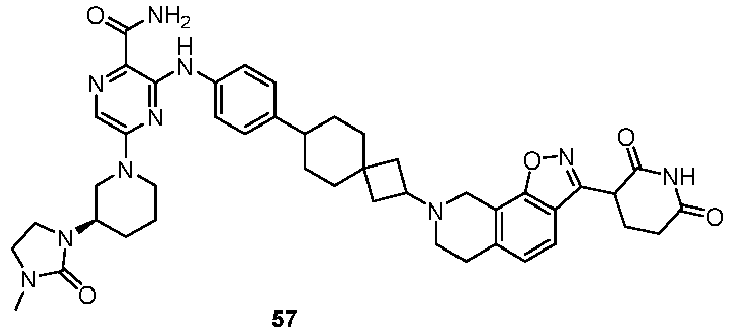

- 56i (70 mg), isopropanol (1 mL), 1,2-dichloroethane (5.00 mL), and 18 (50 mg) were added to a reaction flask in sequence, and sodium cyanoborohydride (25 mg) was added. The mixture was reacted at room temperature. After the reaction was completed, the reaction solution was mixed with silica gel and purified by column chromatography to give 57 (28 mg).
- MS(ESI, [M+H]+) m/z: 801.49.
- 1H NMR (500 MHz, DMSO-d6) δ 11.20 (d, J= 2.3 Hz, 1H), 11.09 (s, 1H), 7.75 (d, J= 2.8 Hz, 1H), 7.65 (s, 1H), 7.59 (d, J = 8.1 Hz, 1H), 7.49 (d, J = 8.2 Hz, 2H), 7.33 (d, J = 2.8 Hz, 1H), 7.14 (dd, J = 8.4, 3.7 Hz, 3H), 4.56 (dd, J = 11.9, 5.0 Hz, 1H), 4.33 (dd, J = 44.6, 13.0 Hz, 2H), 3.69 (s, 2H), 3.61 (t, J = 7.6 Hz, 1H), 3.39 - 3.32 (m, 2H), 3.28 (qd, J= 8.0, 4.1 Hz, 2H), 3.06 - 2.90 (m, 5H), 2.82 - 2.70 (m, 4H), 2.67 - 2.57 (m, 3H), 2.44 - 2.35 (m, 1H), 2.25 - 2.15 (m, 2H), 2.01 - 1.94 (m, 1H), 1.91 -1.32 (m, 15H).
-


- 56i (70 mg), isopropanol (1 mL), 1,2-dichloroethane (5.00 mL), and 19 (50 mg) were added to a reaction flask in sequence, and sodium cyanoborohydride (25 mg) was added. The mixture was reacted at room temperature. After the reaction was completed, the reaction solution was mixed with silica gel and purified by column chromatography to give 58 (15 mg).
- MS(ESI, [M+H]+) m/z: 801.47.
- 1H NMR (500 MHz, DMSO-d6) δ 11.28 - 11.14 (m, 1H), 11.09 (s, 1H), 7.75 (d, J = 2.9 Hz, 1H), 7.65 (s, 1H), 7.58 (d, J= 8.0 Hz, 1H), 7.49 (d, J = 8.1 Hz, 2H), 7.33 (d, J = 3.0 Hz, 1H), 7.14 (d, J = 8.4 Hz, 3H), 4.56 (dd, J = 11.9, 5.1 Hz, 1H), 4.37 (d, J= 12.6 Hz, 1H), 4.29 (d, J= 13.2 Hz, 1H), 3.68 - 3.51 (m, 3H), 3.45 - 3.24 (m, 6H), 3.15 - 2.84 (m, 5H), 2.80 - 2.56 (m, 6H), 2.38 (d, J = 14.4 Hz, 1H), 2.19 (dq, J = 15.9, 7.2, 5.9 Hz, 2H), 1.95 (s, 1H), 1.87 - 1.33 (m, 14H).
-


- 56i (70 mg), isopropanol (1 mL), 1,2-dichloroethane (5.00 mL), and 20 (53 mg) were added to a reaction flask in sequence, and sodium cyanoborohydride (25 mg) was added. The mixture was reacted at room temperature. After the reaction was completed, the reaction solution was mixed with silica gel and purified by column chromatography to give 59 (24 mg).
- MS(ESI, [M+H]+) m/z: 815.42.
- 1H NMR (500 MHz, DMSO-d6) δ 11.20 (d, J = 2.4 Hz, 1H), 11.08 (s, 1H), 7.75 (d, J = 2.9 Hz, 1H), 7.65 (s, 1H), 7.54 (d, J = 8.0 Hz, 1H), 7.49 (d, J = 8.2 Hz, 2H), 7.33 (d, J = 2.9 Hz, 1H), 7.19 (d, J = 8.1 Hz, 1H), 7.13 (d, J = 8.2 Hz, 2H), 4.55 (dd, J= 11.9, 5.0 Hz, 1H), 4.47 - 4.23 (m, 2H), 3.62 (ddt, J= 11.3, 8.6, 4.0 Hz, 1H), 3.37 (d, J = 8.3 Hz, 2H), 3.31 - 3.24 (m, 2H), 3.19 - 3.11 (m, 2H), 3.09 - 2.92 (m, 4H), 2.84 - 2.71 (m, 5H), 2.60 (dt, J = 17.3, 4.2 Hz, 1H), 2.49 - 2.33 (m, 5H), 2.22 - 2.10 (m, 2H), 1.93 - 1.38 (m, 16H).
-


- 31c (100 mg), isopropanol (1 mL), 1,2-dichloroethane (5.00 mL), and 18 (82 mg) were added to a reaction flask in sequence, and sodium cyanoborohydride (31 mg) was added. The mixture was reacted at room temperature. After the reaction was completed, the reaction solution was mixed with silica gel and purified by column chromatography to give 60 (45 mg).
- MS(ESI, [M+H]+) m/z: 664.4.
- 1H NMR (500 MHz, DMSO-d6) δ 11.08 (d, J = 6.4 Hz, 2H), 7.69 (d, J = 2.9 Hz, 1H), 7.60 (s, 1H), 7.58 (d, J = 8.1 Hz, 1H), 7.48 - 7.39 (m, 2H), 7.26 (d, J = 3.0 Hz, 1H), 7.14 (d, J = 8.2 Hz, 1H), 6.97 - 6.89 (m, 2H), 4.56 (dd, J = 11.9, 5.0 Hz, 1H), 3.98 (s, 2H), 3.70 (d, J = 11.7 Hz, 2H), 3.65 (t, J = 5.4 Hz, 4H), 2.94 (t, J = 5.4 Hz, 2H), 2.87 (t, J = 5.6 Hz, 2H), 2.76 (td, J = 12.0, 5.9 Hz, 1H), 2.72 - 2.57 (m, 4H), 2.48 (d, J = 4.1 Hz, 1H), 2.24 - 2.13 (m, 1H), 1.97 (d, J = 11.7 Hz, 2H), 1.68 (ddt, J = 22.6, 11.1, 4.6 Hz, 4H), 1.58 (h, J = 5.5, 4.4 Hz, 4H).
-
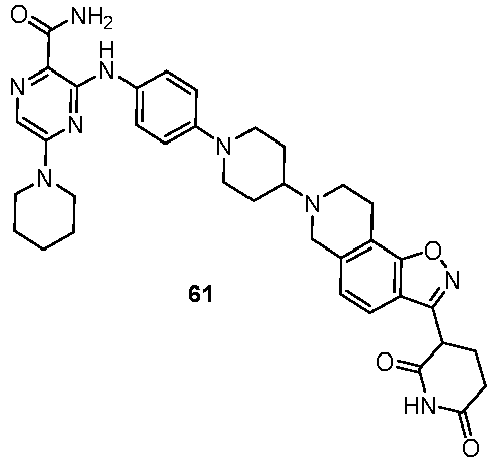

- 31c (100 mg), isopropanol (1 mL), 1,2-dichloroethane (5.00 mL), and 19 (82 mg) were added to a reaction flask in sequence, and sodium cyanoborohydride (31 mg) was added. The mixture was reacted at room temperature. After the reaction was completed, the reaction solution was mixed with silica gel and purified by column chromatography to give 61 (41 mg).
- MS(ESI, [M+H]+) m/z: 664.78.
- 1H NMR (500 MHz, DMSO-d6) δ 11.08 (d, J = 4.3 Hz, 2H), 7.69 (d, J = 3.0 Hz, 1H), 7.61 (s, 1H), 7.57 (d, J = 8.2 Hz, 1H), 7.44 (d, J = 8.7 Hz, 2H), 7.26 (d, J = 2.9 Hz, 1H), 7.12 (d, J = 8.3 Hz, 1H), 6.93 (d, J = 8.7 Hz, 2H), 4.55 (dd, J = 11.9, 5.0 Hz, 1H), 3.89 (s, 2H), 3.70 (d, J = 11.7 Hz, 2H), 3.66 (t, J = 5.3 Hz, 4H), 2.97 (d, J = 5.7 Hz, 2H), 2.90 (t, J = 5.7 Hz, 2H), 2.77 (ddd, J = 17.2, 11.9, 5.3 Hz, 1H), 2.71 - 2.56 (m, 4H), 2.49 - 2.43 (m, 1H), 2.19 (dt, J= 13.4, 4.6 Hz, 1H), 1.97 - 1.88 (m, 2H), 1.66 (td, J = 12.0, 4.5 Hz, 4H), 1.58 (q, J= 5.7, 5.2 Hz, 4H).
-


- 31c (100 mg), isopropanol (1 mL), 1,2-dichloroethane (5.00 mL), and 20 (85 mg) were added to a reaction flask in sequence, and sodium cyanoborohydride (31 mg) was added. The mixture was reacted at 80 °C. After the reaction was completed, the reaction solution was mixed with silica gel and purified by column chromatography to give 62 (23 mg).
- MS(ESI, [M+H]+) m/z: 678.81.
- 1H NMR (500 MHz, DMSO-d6) δ 11.07 (d, J = 13.3 Hz, 2H), 7.69 (s, 1H), 7.60 (s, 1H), 7.54 (d, J = 8.0 Hz, 1H), 7.42 (d, J = 8.4 Hz, 2H), 7.26 (s, 1H), 7.19 (d, J = 8.1 Hz, 1H), 6.90 (d, J = 8.4 Hz, 2H), 4.55 (dd, J = 11.9, 4.9 Hz, 1H), 3.66 (q, J = 7.1, 5.2 Hz, 6H), 3.14 (d, J = 5.2 Hz, 2H), 3.08 - 2.97 (m, 2H), 2.86 - 2.70 (m, 5H), 2.68 - 2.56 (m, 5H), 2.18 (dd, J= 13.3, 5.8 Hz, 1H), 1.76 (d, J= 11.9 Hz, 2H), 1.69 - 1.48 (m, 8H).
-

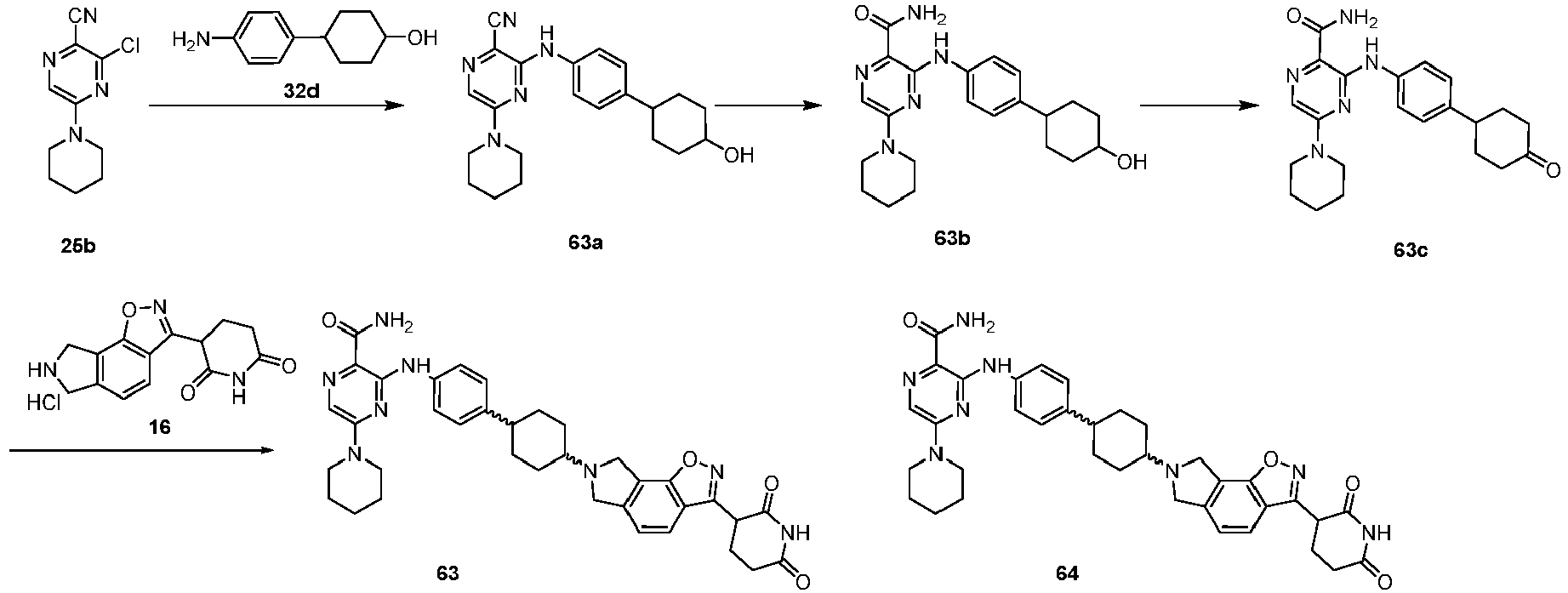
- Intermediate 25b (2 g), 32d (2.58 g), cesium carbonate (5.85 g), BINAP (0.559 g), palladium acetate (0.202 g), and 1,4-dioxane (20 mL) were added to a single-necked flask in sequence, and the mixture was heated to 100 °C and reacted under nitrogen atmosphere. After the reaction was completed, the reaction solution was cooled to room temperature, mixed with silica gel, and then purified by column chromatography to give 63a (3.2 g).
- MS(ESI, [M+H]+) m/z: 378.25.
- Intermediate 63a (3.2 g), DMSO (30 mL), and cesium carbonate (2.76 g) were added to a single-necked flask in sequence. 30 wt% hydrogen peroxide (2.88 mL) was added under an ice bath. After the mixture was stirred for 5 min, the ice bath was removed, and the mixture was reacted at room temperature. After the reaction was completed, 300 mL of a saturated sodium sulfite solution was added to the residue. The color was not changed as detected using a potassium iodide starch reagent, and then 300 mL of ethyl acetate was added for extraction. 100 mL of ethyl acetate was then added for 3 times of extraction. The organic phases were combined, dried over anhydrous sodium sulfate, filtered, and concentrated by evaporation at reduced pressure to remove the solvent. The crude product was separated by silica gel column chromatography to give the target intermediate 63b (3.3 g). MS(ESI, [M+H]+) m/z: 396.18.
- 63b (3.3 g), IBX (7.01 g), and DMSO (30 mL) were added to a reaction flask in sequence, and the mixture was reacted at room temperature. After the reaction was completed, 200 mL of ethyl acetate was added, and 200 mL of a saturated sodium bicarbonate solution was added for extraction. The organic phase was dried over anhydrous sodium sulfate, filtered, and concentrated to give 63c (770 mg).
- MS(ESI, [M+H]+) m/z: 394.21.
- 63c (0.22 g), isopropanol (1 mL), 1,2-dichloroethane (5.00 mL), and 16 (0.172 g) were added to a reaction flask in sequence, and sodium cyanoborohydride (0.105 g) was added. The mixture was reacted at room temperature. After the reaction was completed, the reaction solution was mixed with silica gel and purified by column chromatography (ratio of developing solvents: MeOH:DCM = 0:100 → 1:25) to give 63 (32 mg) and 64 (82 mg) in sequence.
- 63: MS(ESI, [M+H]+) m/z: 649.55.
- 1H NMR (500 MHz, DMSO-d6) δ 11.28 (s, 1H), 11.10 (s, 1H), 8.01 - 7.60 (m, 3H), 7.52 (d, J = 8.4 Hz, 2H), 7.37 - 7.25 (m, 2H), 7.20 (d, J= 8.2 Hz, 2H), 4.60 (dd, J= 11.9, 5.0 Hz, 1H), 4.16 (d, J = 53.1 Hz, 4H), 3.68 (t, J = 5.4 Hz, 4H), 2.77 (td, J = 12.0, 5.9 Hz, 1H), 2.67 - 2.51 (m, 4H), 2.28 - 2.09 (m, 3H), 1.88 (d, J = 12.4 Hz, 2H), 1.73 - 1.33 (m, 10H).
- 64: MS(ESI, [M+H]+) m/z: 649.53.
- 1H NMR (500 MHz, DMSO-d6) δ 11.26 (s, 1H), 11.10 (s, 1H), 7.73 (d, J = 8.4 Hz, 2H), 7.64 (d, J = 4.9 Hz, 1H), 7.48 (d, J = 7.9 Hz, 2H), 7.38 - 7.22 (m, 2H), 7.15 (d, J= 8.0 Hz, 2H), 4.61 (dd, J = 11.7, 4.9 Hz, 1H), 4.18 (s, 2H), 4.08 (d, J = 5.2 Hz, 2H), 3.73 - 3.56 (m, 4H), 2.91 - 2.70 (m, 2H), 2.60 (ddd, J = 31.6, 17.5, 8.7 Hz, 3H), 2.32 - 2.18 (m, 1H), 2.06 (d, J= 13.3 Hz, 2H), 1.87 (p, J = 12.2, 9.0 Hz, 2H), 1.76 - 1.43 (m, 10H).
-


- 63c (150 mg), isopropanol (1 mL), 1,2-dichloroethane (5.00 mL), and 18 (123 mg) were added to a reaction flask in sequence, and sodium cyanoborohydride (71.9 mg) was added. The mixture was reacted at room temperature. After the reaction was completed, the reaction solution was mixed with silica gel and purified by column chromatography (ratio of developing solvents: MeOH:DCM = 0:100 → 1:25) to give 65 (33 mg) and 66 (29 mg) in sequence.
- 65: MS(ESI, [M+H]+) m/z: 663.34.
- 1H NMR (500 MHz, DMSO-d6) δ 11.25 (s, 1H), 11.08 (s, 1H), 7.71 (d, J = 2.8 Hz, 1H), 7.64 (s, 1H), 7.60 (d, J = 8.1 Hz, 1H), 7.48 (d, J= 8.2 Hz, 2H), 7.29 (d, J= 2.8 Hz, 1H), 7.16 (d, J = 8.2 Hz, 3H), 4.56 (dd, J= 11.9, 5.0 Hz, 1H), 3.91 (s, 2H), 3.65 (t, J = 5.4 Hz, 4H), 2.97 (s, 2H), 2.84 (t, J = 5.5 Hz, 2H), 2.77 (ddd, J = 17.2, 12.0, 5.3 Hz, 1H), 2.70 - 2.60 (m, 2H), 2.60 - 2.53 (m, 1H), 2.49 - 2.44 (m, 1H), 2.23 - 2.09 (m, 3H), 1.87 (q, J= 14.1, 11.7 Hz, 2H), 1.70 - 1.50 (m, 10H).
- 66: MS(ESI, [M+H]+) m/z: 663.56.
- 1H NMR (500 MHz, DMSO-d6) δ 11.28 (s, 1H), 11.09 (s, 1H), 7.73 (d, J = 2.8 Hz, 1H), 7.66 (s, 1H), 7.58 (d, J = 8.1 Hz, 1H), 7.55 - 7.49 (m, 2H), 7.31 (d, J = 2.8 Hz, 1H), 7.24 - 7.16 (m, 2H), 7.14 (d, J = 8.2 Hz, 1H), 4.56 (dd, J = 11.9, 5.0 Hz, 1H), 3.99 (s, 2H), 3.68 (t, J = 5.4 Hz, 4H), 2.94 (d, J = 5.7 Hz, 2H), 2.88 (t, J= 5.5 Hz, 2H), 2.77 (ddd, J = 17.2, 12.0, 5.3 Hz, 1H), 2.71 - 2.56 (m, 2H), 2.53 (s, 1H), 2.47 (dd, J = 12.3, 4.3 Hz, 1H), 2.19 (dq, J = 13.6, 4.8 Hz, 1H), 2.00 (s, 2H), 1.91 (d, J= 7.3 Hz, 2H), 1.72 - 1.48 (m, 10H).
-


- 63c (200 mg), isopropanol (1 mL), 1,2-dichloroethane (5.00 mL), and 20 (171 mg) were added to a reaction flask in sequence, and sodium cyanoborohydride (96 mg) was added. The mixture was reacted at 80 °C. After the reaction was completed, the reaction solution was mixed with silica gel and purified by column chromatography (ratio of developing solvents: MeOH:DCM = 0:100 → 1:25) to give 67 (18 mg) and 68 (42 mg) in sequence.
- 67: MS(ESI, [M+H]+) m/z: 677.52.
- 1H NMR (500 MHz, DMSO-d6) δ 11.27 (s, 1H), 11.08 (s, 1H), 7.73 (d, J = 2.8 Hz, 1H), 7.65 (s, 1H), 7.54 (d, J = 8.0 Hz, 1H), 7.50 (d, J = 8.3 Hz, 2H), 7.31 (d, J = 2.8 Hz, 1H), 7.17 (dd, J = 15.3, 8.2 Hz, 3H), 5.76 (s, 1H), 4.55 (dd, J = 11.9, 5.0 Hz, 1H), 3.67 (t, J = 5.4 Hz, 4H), 3.19 - 3.10 (m, 2H), 3.08 - 2.98 (m, 2H), 2.76 (dtd, J = 20.0, 11.1, 10.1, 4.9 Hz, 4H), 2.61 (dt, J = 17.3, 4.3 Hz, 2H), 2.53 (d, J = 4.6 Hz, 1H), 2.40 (d, J = 3.3 Hz, 1H), 2.18 (dq, J = 13.5, 4.8 Hz, 1H), 1.82 (d, J = 11.5 Hz, 4H), 1.62 (dq, J = 33.7, 5.9, 5.4 Hz, 6H), 1.46 (q, J = 10.2 Hz, 4H).
- 68: MS(ESI, [M+H]+) m/z: 677.49.
- 1H NMR (500 MHz, DMSO-d6) δ 11.27 (s, 1H), 11.08 (s, 1H), 7.73 (d, J = 2.8 Hz, 1H), 7.66 (s, 1H), 7.52 (dd, J = 8.3, 2.0 Hz, 3H), 7.31 (d, J = 2.9 Hz, 1H), 7.20 (d, J = 8.3 Hz, 2H), 7.15 (d, J = 8.1 Hz, 1H), 4.53 (dd, J = 11.9, 5.0 Hz, 1H), 3.67 (t, J = 5.4 Hz, 4H), 3.21 - 3.10 (m, 2H), 3.03 (d, J = 8.1 Hz, 2H), 2.94 - 2.68 (m, 7H), 2.60 (dt, J = 17.3, 4.2 Hz, 1H), 2.46 (dd, J = 12.2, 4.3 Hz, 1H), 2.18 (dt, J = 13.3, 4.6 Hz, 1H), 2.01 - 1.79 (m, 4H), 1.60 (ddt, J = 22.5, 16.9, 8.6 Hz, 10H).
-


- Intermediate 25b (4.77 g), intermediate 69a (5.92 g), cesium carbonate (20.94 g), palladium acetate (0.481 g, 2.14 mmol), BINAP (1.334 g), and 1,4-dioxane (100 mL) were added to a reaction flask in sequence, and the mixture was heated at 100 °C under nitrogen atmosphere. After the reaction was completed, 200 mL of water was added to the reaction solution, and 200 mL of ethyl acetate was added for extraction twice. The organic phases were combined and washed with saturated brine once, and the extract was dried over anhydrous sodium sulfate, filtered, subjected to rotary evaporation, mixed with silica gel, and purified by column chromatography to give the target intermediate 69b (5.53 g).
- 1H NMR (500 MHz, DMSO-d6) δ 8.91 (s, 1H), 7.82 (s, 1H), 7.50 - 7.44 (m, 2H), 7.18 - 7.12 (m, 2H), 4.14 - 4.02 (m, 2H), 3.62 (t, J = 5.4 Hz, 4H), 2.79 (s, 2H), 2.63 (tt, J = 12.1, 3.5 Hz, 1H), 1.78 - 1.70 (m, 2H), 1.63 (q, J = 6.4 Hz, 2H), 1.54 (dt, J = 9.6, 5.4 Hz, 4H), 1.46 (dd, J = 12.5, 4.1 Hz, 2H), 1.42 (s, 9H).
- Intermediate 69b (5.40 g), cesium carbonate (3.60 g), dimethyl sulfoxide (20 mL), and methanol (40 mL) were added to a reaction flask in sequence, and 30 wt% hydrogen peroxide (1.305 g, 1.305 mL, 11.51 mmol) was added under an ice bath. The mixture was stirred and reacted at room temperature. After the reaction was completed, 100 mL of a sodium thiosulfate solution was added to the reaction solution. The reaction solution was subjected to rotary evaporation, water (100 mL) was added to the residue, and 200 mL of dichloromethane was added for extraction twice. The organic phases were combined and washed with saturated brine, the extract was dried over anhydrous sodium sulfate, filtered, and subjected to rotary evaporation to dryness, thus giving the target intermediate 69c (5.60 g).
- 1H NMR (500 MHz, DMSO-d6) δ 11.29 (s, 1H), 7.78 - 7.71 (m, 1H), 7.66 (s, 1H), 7.52 (d, J = 8.1 Hz, 2H), 7.32 (s, 1H), 7.18 (d, J = 8.1 Hz, 2H), 4.04 (d, J = 8.0 Hz, 2H), 3.67 (t, J = 5.3 Hz, 4H), 2.79 (s, 2H), 2.66 - 2.59 (m, 1H), 1.74 (d, J = 12.8 Hz, 2H), 1.66 (q, J = 5.6 Hz, 2H), 1.62 - 1.55 (m, 4H), 1.51 - 1.44 (m, 2H), 1.42 (s, 9H).
- Intermediate 69c (5.55 g) and dichloromethane (30 mL) were added to a reaction flask, and trifluoroacetic acid (35.87 g, 24.07 mL, 314.6 mmol) was added dropwise under an ice-water bath. After the dropwise addition was completed, the mixture was stirred at room temperature. After the reaction was completed, the reaction solution was subjected to rotary evaporation to remove most trifluoroacetic acid, 100 mL of water was added to the residue, a saturated sodium carbonate solution was added until no obvious bubbles were present, and the mixture was extracted 3-4 times with 200 mL of a mixed solvent of dichloromethane and methanol (10:1, v/v). The organic phases were combined, and the extract was dried over anhydrous sodium sulfate, filtered, and subjected to rotary evaporation to dryness, thus giving the target intermediate 69d (4.30 g).
- 1H NMR (500 MHz, DMSO-d6) δ 11.32 (s, 1H), 7.77 - 7.73 (m, 1H), 7.68 (s, 1H), 7.56 (d, J = 8.1 Hz, 2H), 7.35 - 7.31 (m, 1H), 7.17 (d, J = 8.1 Hz, 2H), 3.68 (t, J = 5.4 Hz, 4H), 3.36 (s, 2H), 2.97 (td, J = 12.8, 2.9 Hz, 2H), 2.78 (dt, J = 24.5, 3.6 Hz, 1H), 1.92 (d, J = 13.5 Hz, 2H), 1.81 - 1.53 (m, 9H).
- Intermediate 21 (167 mg), intermediate 69d (245 mg), 1,2-dichloroethane (10 mL), isopropanol (3 mL), acetic acid (38.7 mg, 0.644 mmol), and sodium cyanoborohydride (121 mg, 1.932 mmol) were added to a reaction flask in sequence, and the mixture was reacted overnight at room temperature. After the reaction was completed, 5 mL of a saturated sodium bicarbonate solution was added to the reaction solution to neutralize acetic acid, and then 100 mL of dichloromethane and 100 mL of water were added for extraction. The organic phase was separated, and the aqueous phase was extracted twice with 50 mL of dichloromethane. The organic phases were combined, washed with saturated brine, dried over anhydrous sodium sulfate, and filtered, and the filtrate was purified by silica gel column chromatography (dichloromethane:MeOH) to give the target intermediate 69i (211 mg). Intermediate 69i was separated by high performance liquid chromatography to give intermediates 69e-1 (54 mg) and 69e-2 (56 mg) in sequence. The conditions of preparative chromatography were as follows:
- Instrument and preparative column: YMC K-prep Lab100g high pressure preparative chromatograph was used, and the preparative column was Whelk-01 (10 µm, 30*250 mm). Mobile phase system: ethanol-dichloromethane (3:2)/n-hexane-0.1% diethylamine, isocratic elution: ethanol-dichloromethane (3:2)/n-hexane-0.1% diethylamine = 50/50.
- Intermediate 69e-1: MS(ESI, [M+H]+) m/z: 624.55.
- Intermediate 69e-2: MS(ESI, [M+H]+) m/z: 624.54.
- Intermediate 69e-1 (54 mg), acrylamide (6.15 mg, 0.087 mmol), and tetrahydrofuran (5 mL) were added to a reaction flask in sequence, and the mixture was cooled to 0 °C under N2 atmosphere. Potassium tert-butoxide (1 moL/L, 0.061 mL, 0.061 mmol) was added, and the mixture was reacted at 0 °C for 1 h. After the reaction was completed, the reaction solution was added dropwise to an icy saturated aqueous ammonium chloride solution, and 50 mL of ethyl acetate was added for extraction. The organic phase was separated, and the aqueous phase was extracted twice with 20 mL of ethyl acetate. The organic phases were combined, washed with saturated brine, dried over anhydrous sodium sulfate, and filtered, and the filtrate was purified by silica gel column chromatography (dichloromethane:MeOH = 0-4%) to give compound 69 (14 mg).
- MS(ESI, [M+H]+) m/z: 649.62.
- 1H NMR (500 MHz, DMSO-d6) δ 11.28 (s, 1H), 11.09 (s, 1H), 7.73 (s, 1H), 7.69 - 7.59 (m, 2H), 7.52 (d, J = 8.0 Hz, 2H), 7.35 - 7.24 (m, 2H), 7.19 (d, J = 8.1 Hz, 2H), 4.57 (d, J = 11.7 Hz, 1H), 3.67 (s, 4H), 3.46 - 3.38 (m, 1H), 3.29 (s, 1H), 3.21 (d, J = 16.1 Hz, 1H), 3.02 (t, J = 11.8 Hz, 4H), 2.76 (d, J = 14.0 Hz, 1H), 2.60 (d, J = 19.9 Hz, 1H), 2.16 (dd, J = 24.4, 12.4 Hz, 3H), 1.70 (dd, J = 76.6, 23.6 Hz, 11H).
-


- Intermediate 69e-2 (56 mg), acrylamide (6.38 mg, 0.090 mmol), and tetrahydrofuran (5 mL) were added to a reaction flask in sequence, and the mixture was cooled to 0 °C under N2 atmosphere. Potassium tert-butoxide (1 moL/L, 0.063 mL, 0.063 mmol) was added, and the mixture was reacted at 0 °C. After the reaction was completed, as confirmed by TLC, the reaction solution was added dropwise to an icy saturated aqueous ammonium chloride solution, and 50 mL of ethyl acetate was added for extraction. The organic phase was separated, and the aqueous phase was extracted twice with 20 mL of ethyl acetate. The organic phases were combined, washed with saturated brine, dried over anhydrous sodium sulfate, and filtered, and the filtrate was purified by silica gel column chromatography (dichloromethane:MeOH = 0-4%) to give compound 70 (25 mg).
- MS(ESI, [M+H]+) m/z: 649.56.
- 1H NMR (500 MHz, DMSO-d6) δ 11.28 (s, 1H), 11.09 (s, 1H), 7.73 (d, J = 2.9 Hz, 1H), 7.66 (s, 1H), 7.63 (d, J = 8.0 Hz, 1H), 7.52 (d, J = 8.1 Hz, 2H), 7.31 (d, J = 2.9 Hz, 1H), 7.27 (d, J = 8.1 Hz, 1H), 7.19 (d, J = 8.2 Hz, 2H), 4.57 (dd, J = 11.8, 5.0 Hz, 1H), 3.67 (t, J = 5.3 Hz, 4H), 3.43 (p, J = 7.6 Hz, 1H), 3.29 (d, J = 7.7 Hz, 1H), 3.21 (dd, J = 16.3, 7.6 Hz, 1H), 3.05 - 2.97 (m, 4H), 2.77 (ddd, J = 17.2, 11.9, 5.3 Hz, 1H), 2.61 (dt, J = 17.3, 4.3 Hz, 1H), 2.48 - 2.44 (m, 1H), 2.22 - 2.10 (m, 3H), 1.81 - 1.74 (m, 2H), 1.72 - 1.53 (m, 9H).
-


- Intermediate 25e (138 mg), 17 (80 mg), sodium acetate (24 mg), and dichloroethane/isopropanol (5:1, 25 mL) were added to a reaction flask in sequence. After the mixture was stirred at room temperature for 30 min, sodium cyanoborohydride (21 mg) was added, and the mixture was reacted at room temperature. After the reaction was completed, as confirmed by TLC, 50 mL of dichloromethane and 100 mL of water were added to the reaction solution. The organic phase was separated, washed with a saturated sodium chloride solution, dried over anhydrous sodium sulfate, filtered, and concentrated. The concentrate was separated and purified by silica gel column chromatography to give compound 71a (72 mg).
- MS(ESI, [M+H]+) m/z: 664.5.
- Intermediate 71a (72 mg), methanesulfonic acid (11 mg), and methanol (20 mL) were added to a reaction flask in sequence, and the mixture was reacted at room temperature. After the reaction was completed, as confirmed by TLC, the reaction solution was concentrated to give compound 71 (83 mg).
- MS(ESI, [M+H]+) m/z: 664.5.
- 1H NMR (500 MHz, DMSO-d6) δ 11.14 (s, 1H), 10.49 (s, 1H), 7.89 (d, J= 5.0 Hz, 1H), 7.86 (s, 1H), 7.69 (d, J = 39.8 Hz, 2H), 7.52 (s, 2H), 7.36 - 7.24 (m, 1H), 7.00 (s, 1H), 5.12 - 4.88 (m, 2H), 4.80 - 4.57 (m, 3H), 3.75 - 3.61 (m, 6H), 3.17 (s, 1H), 2.87 - 2.59 (m, 3H), 2.31 (s, 3H), 2.27 - 2.17 (m, 1H), 1.98 (s, 3H), 1.73 - 1.53 (m, 6H), 1.47 (s, 1H).
-

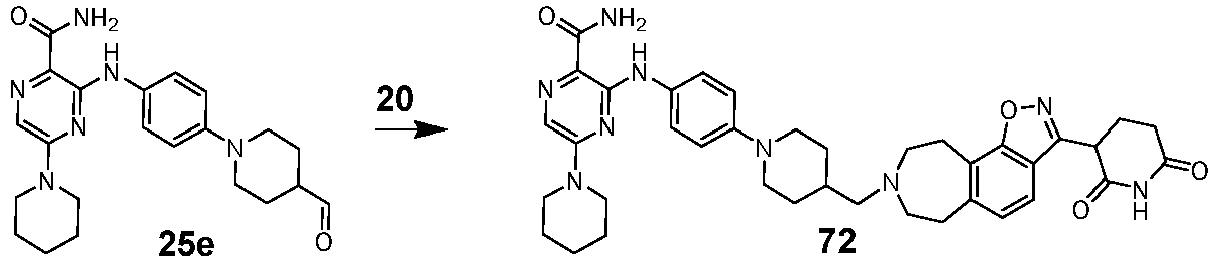
- Intermediate 25e (102 mg), 20 (84 mg), dichloroethane/isopropanol (5:1, 25 mL), and sodium acetate (20 mg) were added to a reaction flask in sequence. After the mixture was stirred at room temperature for 30 min, sodium cyanoborohydride (31 mg) was added, and the mixture was reacted at room temperature. After the reaction was completed, as confirmed by TLC, 50 mL of dichloromethane and 100 mL of water were added to the reaction solution. The organic phase was separated, washed with a saturated sodium chloride solution, dried over anhydrous sodium sulfate, filtered, and concentrated. The concentrate was separated and purified by silica gel column chromatography to give compound 72 (65 mg).
- MS(ESI, [M+H]+) m/z: 692.4.
- 1H NMR (500 MHz, DMSO-d6) δ 11.07 (d, J = 10.7 Hz, 2H), 7.69 (d, J = 2.9 Hz, 1H), 7.60 (s, 1H), 7.54 (d, J = 7.9 Hz, 1H), 7.47 - 7.39 (m, 2H), 7.26 (d, J = 2.8 Hz, 1H), 7.18 (d, J = 8.1 Hz, 1H), 6.97 - 6.87 (m, 2H), 4.55 (dd, J= 11.9, 5.0 Hz, 1H), 3.69 - 3.58 (m, 6H), 3.20 - 3.12 (m, 2H), 3.10 - 2.98 (m, 2H), 2.77 (ddd, J= 17.2, 12.0, 5.3 Hz, 1H), 2.69 - 2.58 (m, 6H), 2.47 (dd, J = 12.2, 4.2 Hz, 1H), 2.35 (d, J= 7.1 Hz, 2H), 2.18 (dq, J = 13.7, 5.0 Hz, 1H), 1.88 - 1.80 (m, 2H), 1.65 (q, J= 6.2 Hz, 3H), 1.58 (q, J = 5.6, 5.2 Hz, 4H), 1.31 - 1.25 (m, 2H).
-
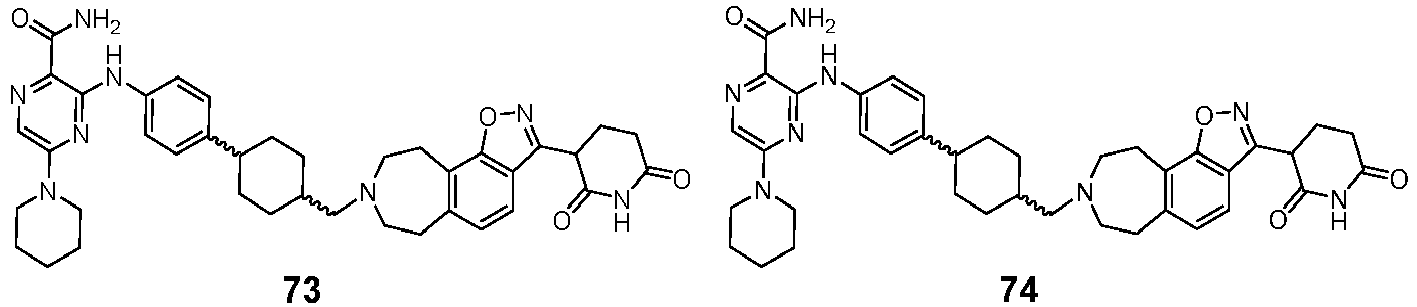

- Intermediate 73a (2.0 g), ethyl 4-(4,4,5,5-tetramethyl-1,3,2-dioxolan-2-yl)benzoate (3.26 g), potassium carbonate (3.21 g), PdCl2(dppf) (0.85 g), water (5 mL), and 1,4-dioxane (25 mL) were added to a reaction flask in sequence, and the mixture was purged three times with nitrogen, heated to 100 °C, and reacted. After the reaction was completed, as confirmed by TLC, the reaction solution was cooled to room temperature, and 80 L of ethyl acetate and 140 mL of water were added to the residue. The organic phase was separated, washed with a saturated sodium chloride solution, dried over anhydrous sodium sulfate, filtered, and concentrated. The concentrate was separated and purified by silica gel column chromatography to give intermediate 73b (2.0 g).
- MS(ESI, [M+H]+) m/z: 246.1.
- 1H NMR (500 MHz, DMSO-d6) δ 7.11 - 7.05 (m, 2H), 6.54 - 6.47 (m, 2H), 5.89 (td, J = 3.3, 1.5 Hz, 1H), 4.08 (qd, J = 7.1, 2.1 Hz, 2H), 2.58 - 2.52 (m, 1H), 2.45 - 2.23 (m, 4H), 2.08 - 2.01 (m, 1H), 1.66 (dddd, J = 12.8, 11.0, 9.9, 5.8 Hz, 1H), 1.19 (t, J = 7.1 Hz, 3H), 1.07 (s, 2H).
- A solution of lithium aluminum hydride in tetrahydrofuran (9.8 mL, 1 M) was added dropwise to a stirred solution of 73b in tetrahydrofuran (20 mL) at 0 °C. After the dropwise addition was completed, the mixture was reacted at 0 °C. After the reaction was completed, as confirmed by TLC, the reaction solution was slowly added dropwise to 100 mL of ice water, and 60 mL of ethyl acetate was added. The organic phase was separated, washed with a saturated sodium chloride solution, dried over anhydrous sodium sulfate, filtered, and concentrated to give intermediate 73c (0.68 g).
- MS(ESI, [M+H]+) m/z: 204.4.
- Intermediate 73c (0.6 g), 10% palladium on carbon (0.3 g), glacial acetic acid (0.1 g), and methanol (30 mL) were added to a reaction flask in sequence, and the mixture was purged three times with hydrogen and reacted overnight. The palladium on carbon was removed by filtration under vacuum, and the residue was concentrated to give intermediate 73d (0.62 g).
- MS(ESI, [M+H]+) m/z: 206.1.
- 25b (0.4 g), 73d (0.62 g), BINAP (0.11 g), cesium carbonate (1.75 g), palladium acetate (0.04 g), and 1,4-dioxane (30 mL) were added to a reaction flask in sequence, and the mixture was purged three times with nitrogen, heated to 100 °C, and reacted. After the reaction was completed, as confirmed by TLC, the reaction solution was cooled to room temperature, and 80 L of ethyl acetate and 140 mL of water were added to the residue. The organic phase was separated, washed with a saturated sodium chloride solution, dried over anhydrous sodium sulfate, filtered, and concentrated. The concentrate was separated and purified by silica gel column chromatography to give intermediate 73e (0.63 g).
- MS(ESI, [M+H]+) m/z: 392.3.
- 1H NMR (500 MHz, DMSO-d6) δ 8.87 (s, 1H), 7.82 (s, 1H), 7.47 - 7.41 (m, 2H), 7.18 - 7.09 (m, 2H), 4.43 - 4.29 (m, 1H), 3.62 (t, J= 5.5 Hz, 4H), 3.45 (dd, J= 7.3, 5.4 Hz, 1H), 3.25 (t, J= 5.8 Hz, 1H), 1.86 - 1.77 (m, 2H), 1.76 - 1.66 (m, 2H), 1.63 (q, J= 6.5 Hz, 3H), 1.58 - 1.49 (m, 6H), 1.46 - 1.35 (m, 1H), 1.02 (qd, J= 13.1, 3.7 Hz, 1H), 0.90 - 0.79 (m, 1H).
- Intermediate 73e (0.63 g), cesium carbonate (0.52 g), water (5 mL), DMSO (20 mL), and methanol (5 mL) were added to a reaction flask in sequence. The reaction solution was cooled to 0 °C, and 30 wt% hydrogen peroxide (0.54 g) was added dropwise. After the dropwise addition was completed, the mixture was allowed to react at room temperature. After the reaction was completed, as confirmed by TLC, 50 mL of water was added to the reaction solution, and then a saturated aqueous sodium sulfite solution was added to neutralize 30 wt% hydrogen peroxide. The mixture was stirred for 10 min and filtered, and the filter cake was collected and dried to give intermediate 73f (0.55 g).
- MS(ESI, [M+H]+) m/z: 410.4.
- Intermediate 73f (0.55 g), dichloromethane (25 mL), and N,N-diisopropylethylamine (0.46 g) were added to a reaction flask in sequence, and the mixture was cooled to 0 °C. Sulfur trioxide pyridine (0.87 g) was weighed out and dissolved in DMSO (2 mL), and the solution was added dropwise to the reaction solution. After the dropwise addition was completed, the mixture was allowed to react at room temperature. After the reaction was completed, as confirmed by TLC, ethyl acetate (80 mL) and water (120 mL) were added to the reaction solution to separate the organic phase of the filtrate. The organic phase was separated, washed with a saturated sodium chloride solution, dried over anhydrous sodium sulfate, filtered, and concentrated. The concentrate was separated and purified by silica gel column chromatography to give intermediate 73g (0.38 g).
- MS(ESI, [M+H]+) m/z: 408.3.
- Intermediate 73g (250 mg), 20 (206 mg), dichloroethane/isopropanol (5:1, 25 mL), and sodium acetate (50 mg) were added to a reaction flask in sequence. After the mixture was stirred at room temperature for 30 min, sodium cyanoborohydride (77 mg) was added, and the mixture was reacted at room temperature. After the reaction was completed, as confirmed by TLC, 50 mL of dichloromethane and 100 mL of water were added to the reaction solution. The organic phase was separated, washed with a saturated sodium chloride solution, dried over anhydrous sodium sulfate, filtered, and concentrated. The concentrate was separated and purified by silica gel column chromatography to give a mixture of compounds 73 and 74, which was subjected to preparative resolution to give compound 73 (15 mg) and compound 74 (20 mg) in sequence.
- The conditions of preparative chromatography were as follows: instrument and preparative column: YMC high pressure preparative chromatograph was used, and the preparative column was Ulitimate Polar RP. Mobile phase system: acetonitrile/10 nM aqueous ammonium acetate solution; isocratic elution: acetonitrile/10 nM aqueous ammonium acetate solution = 45/55.
- MS(ESI, [M+H]+) m/z: 691.5.
- 1H NMR (500 MHz, DMSO-d6) δ 11.27 (s, 1H), 11.08 (s, 1H), 7.69 (d, J = 36.5 Hz, 2H), 7.53 (dd, J = 13.3, 8.0 Hz, 3H), 7.31 (s, 1H), 7.18 (d, J= 8.0 Hz, 3H), 4.55 (dd, J= 11.9, 50 Hz, 1H), 3.68 (t, J= 5.3 Hz, 4H), 3.10 (dt, J = 56.7, 4.7 Hz, 4H), 2.77 (ddd, J = 17.1, 12.2, 5.4 Hz, 1H), 2.63 (dd, J = 18.8, 7.7 Hz, 5H), 2.43 (d, J = 12.4 Hz, 2H), 2.30 (d, J = 6.8 Hz, 2H), 2.22 - 2.12 (m, 1H), 1.88 (dd, J = 51.3, 12.7 Hz, 4H), 1.72 - 1.63 (m, 2H), 1.65 - 1.52 (m, 5H), 1.46 (q, J = 12.6 Hz, 2H), 1.03 (q, J = 12.6 Hz, 2H).
- MS(ESI, [M+H]+) m/z: 691.5.
- 1H NMR (500 MHz, DMSO-d6) δ 11.29 (s, 1H), 11.09 (s, 1H), 7.73 (d, J = 2.9 Hz, 1H), 7.66 (s, 1H), 7.53 (t, J = 8.5 Hz, 3H), 7.31 (d, J = 2.9 Hz, 1H), 7.20 (dd, J = 17.3, 8.1 Hz, 3H), 4.55 (dd, J = 11.9, 5.0 Hz, 1H), 3.68 (t, J = 5.3 Hz, 4H), 3.11 (dt, J = 56.6, 5.0 Hz, 4H), 2.77 (ddd, J = 17.1, 12.0, 5.3 Hz, 1H), 2.72 - 2.56 (m, 5H), 2.52 (s, 2H), 2.47 (dd, J = 12.2, 4.3 Hz, 2H), 2.18 (dt, J = 13.0, 4.9 Hz, 1H), 1.96 (s, 1H), 1.72 (d, J = 7.4 Hz, 2H), 1.66 (dt, J = 11.1, 5.6 Hz, 4H), 1.63 - 1.54 (m, 8H).
-


- Intermediate 40e (80 mg), 1,2-dichloroethane (6 mL), isopropanol (2 mL), intermediate 69d (101 mg), acetic acid (8.00 mg, 0.133 mmol), and sodium cyanoborohydride (33.5 mg, 0.533 mmol) were added to a reaction flask in sequence, and the mixture was stirred and reacted at room temperature. After the reaction was completed, 2 mL of a saturated sodium bicarbonate solution was added to the reaction solution to neutralize acetic acid, and then 50 mL of dichloromethane and 100 mL of water were added for extraction. The organic phase was separated, and the aqueous phase was extracted twice with 20 mL of dichloromethane. The organic phases were combined, washed with saturated brine, dried over anhydrous sodium sulfate, and filtered, and the filtrate was purified by silica gel column chromatography (dichloromethane:MeOH = 0-5%) to give compound 75 (40 mg).
- MS(ESI, [M+H]+) m/z: 663.4.
- 1H NMR (500 MHz, DMSO-d6) δ 11.29 (s, 1H), 11.09 (s, 1H), 7.74 (d, J = 2.9 Hz, 1H), 7.66 (s, 1H), 7.62 (d, J = 8.0 Hz, 1H), 7.53 (d, J = 8.1 Hz, 2H), 7.32 (d, J = 2.9 Hz, 1H), 7.27 (d, J = 8.1 Hz, 1H), 7.20 (d, J = 8.1 Hz, 2H), 4.57 (dd, J = 11.8, 5.0 Hz, 1H), 3.68 (t, J = 5.2 Hz, 4H), 3.20 (td, J = 17.8, 15.2, 7.4 Hz, 2H), 3.02 (s, 2H), 2.97 - 2.68 (m, 5H), 2.60 (dd, J = 17.6, 4.4 Hz, 1H), 2.46 (d, J = 4.3 Hz, 1H), 2.37 (s, 2H), 2.19 (dq, J = 13.5, 4.5 Hz, 1H), 2.13 - 1.94 (m, 2H), 1.85 - 1.71 (m, 3H), 1.66 (q, J = 6.0 Hz, 3H), 1.60 (q, J = 5.5, 5.1 Hz, 4H).
-


- Intermediate 41a (80 mg), 1,2-dichloroethane (6 mL), isopropanol (2 mL), intermediate 69d (101 mg), acetic acid (8.00 mg, 0.133 mmol), and sodium cyanoborohydride (33.5 mg, 0.533 mmol) were added to a reaction flask in sequence, and the mixture was stirred and reacted at room temperature. After the reaction was completed, 2 mL of a saturated sodium bicarbonate solution was added to the reaction solution to neutralize acetic acid, and then 50 mL of dichloromethane and 100 mL of water were added for extraction. The organic phase was separated, and the aqueous phase was extracted twice with 20 mL of dichloromethane. The organic phases were combined, washed with saturated brine, dried over anhydrous sodium sulfate, and filtered, and the filtrate was purified by silica gel column chromatography (dichloromethane:MeOH = 0-5%) to give compound 76 (62 mg).
- MS(ESI, [M+H]+) m/z: 663.4.
- 1H NMR (500 MHz, DMSO-d6) δ 11.30 (s, 1H), 11.09 (s, 1H), 7.74 (d, J = 2.9 Hz, 1H), 7.66 (s, 1H), 7.62 (d, J = 8.0 Hz, 1H), 7.54 (d, J = 8.1 Hz, 2H), 7.32 (d, J = 2.9 Hz, 1H), 7.28 (d, J = 8.1 Hz, 1H), 7.21 (d, J = 8.1 Hz, 2H), 4.57 (ddd, J = 11.9, 5.0, 1.5 Hz, 1H), 3.68 (t, J = 5.4 Hz, 4H), 3.21 (dd, J = 26.7, 12.2 Hz, 2H), 3.05 (s, 2H), 2.98 - 2.74 (m, 5H), 2.64 - 2.59 (m, 1H), 2.49 - 2.45 (m, 1H), 2.19 (dp, J = 13.3, 4.4 Hz, 3H), 2.14 - 1.88 (m, 2H), 1.78 (s, 3H), 1.66 (q, J = 5.9, 5.5 Hz, 3H), 1.59 (dq, J = 8.4, 5.4, 4.9 Hz, 4H).
-


- 77a (10 g), tert-butyl 4-oxopiperidine-1-carboxylate (11.00 g), pyrrolidine (1.178 g), and toluene (180 mL) were added to a reaction flask in sequence, and the mixture was reacted at 120 °C. After the reaction was completed, a mixed solvent of 500 mL of ethyl acetate and 300 mL of water was poured into the reaction solution. The organic phase was separated, dried over anhydrous sodium sulfate, filtered, and concentrated by evaporation at reduced pressure to remove the solvent, and the residue was purified by silica gel column chromatography to give 77b (16.57 g).
- 1H NMR (500 MHz, DMSO) δ 8.47 (d, J = 2.9 Hz, 1H), 8.42 (dd, J = 9.0, 2.9 Hz, 1H), 7.34 (d, J = 9.1 Hz, 1H), 3.74 (d, J= 13.4 Hz, 2H), 3.13 (s, 2H), 3.01 (s, 2H), 1.91 (dq, J = 14.8, 3.0 Hz, 2H), 1.70 (ddd, J= 13.9, 11.6, 4.7 Hz, 2H), 1.40 (s, 9H).
- 77b (16 g), THF (80 mL), and sodium borohydride (3.34 g, 88 mmol) were added to a reaction flask in sequence under nitrogen atmosphere, and the mixture was reacted at room temperature. After the reaction was completed, the reaction solution was poured into a mixed solution of water (200 mL) and ethyl acetate (300 mL) containing crushed ice. The organic phase was separated, dried over anhydrous sodium sulfate, filtered, and concentrated to give 77c (19.28 g).
- 1H NMR (500 MHz, DMSO) δ 8.34 (dd, J = 3.0, 0.9 Hz, 1H), 8.05 (dd, J = 9.1, 2.9 Hz, 1H), 7.01 (d, J = 9.0 Hz, 1H), 5.83 (d, J = 6.0 Hz, 1H), 4.79 (dt, J = 9.5, 5.9 Hz, 1H), 3.70 (dd, J = 25.1, 13.6 Hz, 2H), 3.33 (s, 1H), 3.08 (s, 1H), 2.22 (dd, J = 13.6, 6.1 Hz, 1H), 1.84 - 1.68 (m, 4H), 1.61 (ddd, J = 13.7, 11.1, 4.6 Hz, 1H), 1.41 (s, 9H). Step 3: Preparation of intermediate 77d
- 77c (5 g), trifluoroacetic acid (40 mL), and triethylsilane (18.46 g, 25.4 mL, 159 mmol) were added to a reaction flask in sequence, and the mixture was heated to 70 °C and reacted. After the reaction was completed, the reaction solution was concentrated by evaporation at reduced pressure to remove the solvent, 200 mL of dichloromethane and 200 mL of water were added to the residue, and the pH was adjusted to 11-12 with sodium hydroxide. The organic phase was separated, dried over anhydrous sodium sulfate, filtered, and concentrated by evaporation at reduced pressure to remove the solvent, and the residue was purified by silica gel column chromatography to give 77d (3.18 g).
- MS(ESI, [M+H]+) m/z: 247.1.
- 77d (3 g), dichloromethane (100 mL), triethylamine (5.71 mL), and Boc anhydride (3.29 g) were added to a reaction flask, and the mixture was reacted at room temperature. After the reaction was completed, the reaction solution was mixed with silica gel and purified by column chromatography to give 77e (4.25 g).
- MS(ESI, [M+H]+) m/z: 347.2.
- 77e (4.25 g), 10% palladium on carbon (500 mg), and methanol (20 mL) were added to a reaction flask in sequence, and the mixture was purged with hydrogen and reacted overnight at room temperature. After the reaction was completed, the reaction solution was filtered under vacuum, and the filtrate was concentrated to give 77f (3.02 g).
- MS(ESI, [M+H]+) m/z: 319.3.
- Intermediate 1f (1 g), 77f (1.191 g), cesium carbonate (3.05 g), BINAP (0.194 g), palladium acetate (0.070 g), and 1,4-dioxane (20 mL) were added to a single-necked flask in sequence, and the mixture was heated to 100 °C and reacted under nitrogen atmosphere. After the reaction was completed, the reaction solution was cooled to room temperature, mixed with silica gel, and then purified by column chromatography to give 77g (1.6 g).
- 1H NMR (500 MHz, DMSO-d6) δ 8.80 (s, 1H), 7.77 (s, 1H), 7.30 (d, J = 2.6 Hz, 1H), 7.16 (dd, J = 8.7, 2.6 Hz, 1H), 6.70 (d, J = 8.8 Hz, 1H), 4.36 - 4.16 (m, 2H), 3.70 (d, J = 12.8 Hz, 2H), 3.60 - 3.50 (m, 1H), 3.25 (dddd, J = 23.3, 21.0, 11.5, 6.5 Hz, 4H), 3.17 - 2.79 (m, 4H), 2.67 (s, 5H), 1.82 - 1.63 (m, 7H), 1.57 - 1.46 (m, 3H), 1.41 (s, 9H).
- Intermediate 77g (1.6 g), DMSO (20 mL), and cesium carbonate (1.03 g) were added to a single-necked flask in sequence. 30 wt% hydrogen peroxide (0.9 mL) was added under an ice bath. After the mixture was stirred for 5 min, the ice bath was removed, and the mixture was reacted at room temperature. After the reaction was completed, 300 mL of a saturated sodium sulfite solution was added to the residue. The color was not changed as detected using a potassium iodide starch reagent, and then 300 mL of ethyl acetate was added for extraction. 100 mL of ethyl acetate was then added for 3 times of extraction. The organic phases were combined, dried over anhydrous sodium sulfate, filtered, and concentrated by evaporation at reduced pressure to remove the solvent. The crude product was separated by silica gel column chromatography to give the target intermediate 77h (1.73 g).
- MS(ESI, [M+H]+) m/z: 621.55.
- 77h (1.7 g), dichloromethane (20 mL), and TFA (5 mL) were added to a single-necked flask in sequence, and the mixture was reacted at room temperature. After the reaction was completed, the system was added to 200 mL of a saturated sodium bicarbonate solution, and then 200 mL of dichloromethane was added for extraction. The organic phase was dried over anhydrous sodium sulfate, filtered, and concentrated by evaporation at reduced pressure to remove the solvent, thus giving 77i (1.21 g).
- MS(ESI, [M+H]+) m/z: 521.49.
- 40e (60 mg), isopropanol (1 mL), 1,2-dichloroethane (5.00 mL), and 77i (104 mg) were added to a reaction flask in sequence, and sodium cyanoborohydride (37 mg) was added. The mixture was reacted at room temperature. After the reaction was completed, the reaction solution was mixed with silica gel and purified by column chromatography to give 77 (23 mg).
- MS(ESI, [M+H]+) m/z: 803.64.
- 1H NMR (500 MHz, DMSO-d6) δ 11.08 (s, 1H), 11.04 (s, 1H), 7.73 (s, 1H), 7.61 (d, J = 10.4 Hz, 2H), 7.48 (s, 1H), 7.37 - 7.22 (m, 2H), 7.10 (d, J = 8.5 Hz, 1H), 6.69 (d, J= 8.6 Hz, 1H), 4.56 (dd, J = 11.5, 50 Hz, 1H), 4.31 (dd, J = 56.0, 12.6 Hz, 2H), 3.61 (dt, J = 11.3, 6.6 Hz, 1H), 3.35 (s, 2H), 3.30 - 3.13 (m, 4H), 2.93 (ddd, J = 53.2, 41.3, 14.0 Hz, 5H), 2.79 - 2.55 (m, 9H), 2.45 (d, J = 4.0 Hz, 1H), 2.37 (s, 4H), 2.18 (d, J= 13.8 Hz, 1H), 1.90 - 1.53 (m, 10H).
-

- 41a (60 mg), isopropanol (1 mL), 1,2-dichloroethane (5.00 mL), and 77i (104 mg) were added to a reaction flask in sequence, and sodium cyanoborohydride (37 mg) was added. The mixture was reacted at room temperature. After the reaction was completed, the reaction solution was mixed with silica gel and purified by column chromatography to give 78 (10 mg).
- MS(ESI, [M+H]+) m/z: 803.69.
- 1H NMR (500 MHz, DMSO-d6) δ 11.08 (s, 1H), 11.04 (s, 1H), 7.73 (s, 1H), 7.61 (d, J = 10.4 Hz, 2H), 7.48 (s, 1H), 7.37 - 7.22 (m, 2H), 7.10 (d, J= 8.5 Hz, 1H), 6.69 (d, J= 8.6 Hz, 1H), 4.56 (dd, J = 11.5, 50 Hz, 1H), 4.31 (dd, J = 56.0, 12.6 Hz, 2H), 3.61 (dt, J = 11.3, 6.6 Hz, 1H), 3.35 (s, 2H), 3.30 - 3.13 (m, 4H), 2.93 (ddd, J = 53.2, 41.3, 14.0 Hz, 5H), 2.79 - 2.55 (m, 9H), 2.45 (d, J = 4.0 Hz, 1H), 2.37 (s, 4H), 2.18 (d, J = 13.8 Hz, 1H), 1.90 - 1.53 (m, 10H).
-


- Lithium bis(trimethylsilyl)amide (1 M, 16.3 mL) was slowly added dropwise to a solution of 79a (3 g) in THF (30 mL) at -78 °C under nitrogen atmosphere. After the dropwise addition was completed, the mixture was reacted at -78 °C for 1 h. A solution of N-phenylbis(trifluoromethanesulfonyl)imide (5.37 g) in THF (30 mL) was slowly added to the reaction solution. After the addition was completed, the mixture was warmed to room temperature and reacted. After the reaction was completed, 200 mL of petroleum ether was added to the system, and saturated brine was added for extraction. The organic phase was dried over anhydrous sodium sulfate, filtered, and concentrated to give 79b (9 g).
- 1H NMR (500 MHz, DMSO-d6) δ 6.03 (d, J = 5.9 Hz, 1H), 4.71 (d, J = 26.5 Hz, 1H), 4.41 (d, J = 21.2 Hz, 1H), 2.80 - 2.67 (m, 1H), 2.23 (d, J= 18.0 Hz, 1H), 1.72 - 1.46 (m, 6H), 1.39 (s, 9H).
- 4-nitrophenylboronic acid (2.82 g), 79b (7 g), potassium carbonate (3.91 g), Pd(dppf)2Cl2 (0.7 g), 1,4-dioxane (50 mL), and water (10 mL) were added to a reaction flask in sequence, and the mixture was purged several times with nitrogen, heated to 90 °C, and reacted. After the reaction was completed, about 200 mL of methyl tert-butyl ether and 200 mL of saturated brine were added for extraction. The organic phase was dried over anhydrous sodium sulfate, filtered, and concentrated to give a crude product, and the crude product was slurried with petroleum ether and filtered under vacuum to give 79c (4 g).
- 1H NMR (500 MHz, DMSO-d6) δ 8.29 - 8.09 (m, 2H), 7.82 - 7.61 (m, 2H), 6.50 (dd, J = 11.0, 5.7 Hz, 1H), 4.84 - 4.59 (m, 1H), 4.46 (dd, J = 21.3, 7.3 Hz, 1H), 2.84 (ddt, J = 17.8, 7.5, 1.7 Hz, 1H), 2.42 (d, J = 17.8 Hz, 1H), 1.77 - 1.54 (m, 5H), 1.49 (dd, J= 6.7, 3.2 Hz, 1H), 1.42 (d, J= 1.6 Hz, 9H).
- 79c (4 g), 10% palladium on carbon (2 g), and methanol (30 mL) were added to a reaction flask in sequence, and the mixture was purged with hydrogen and reacted overnight at room temperature. After the reaction was completed, the reaction solution was filtered under vacuum, and the filtrate was concentrated to give 79d (2.3 g). 1H NMR (500 MHz, DMSO-d6) δ 6.96 - 6.87 (m, 2H), 6.53 - 6.37 (m, 2H), 5.05 (s, 2H), 4.37 - 4.25 (m, 2H), 2.16 (tt, J = 13.1, 5.3 Hz, 1H), 2.01 (dttt, J= 13.3, 7.8, 5.2, 3.2 Hz, 3H), 1.56 - 1.34 (m, 16H).
- Intermediate 1f (2.3 g), 79d (2.2 g), cesium carbonate (6.8 g), BINAP (0.4 g), palladium acetate (0.15 g), and 1,4-dioxane (20 mL) were added to a single-necked flask in sequence, and the mixture was heated to 100 °C and reacted under nitrogen atmosphere. After the reaction was completed, the reaction solution was cooled to room temperature, mixed with silica gel, and then purified by column chromatography to give 79e (2.58 g).
- MS(ESI, [M+H]+) m/z: 601.5.
- Intermediate 79e (3.2 g), DMSO (30 mL), and cesium carbonate (1.73 g) were added to a single-necked flask in sequence. 30 wt% hydrogen peroxide (2 mL) was added under an ice bath. After the mixture was stirred for 5 min, the ice bath was removed, and the mixture was reacted at room temperature. After the reaction was completed, 300 mL of a saturated sodium sulfite solution was added to the residue. The color was not changed as detected using a potassium iodide starch reagent, and then 300 mL of ethyl acetate was added for extraction. 100 mL of ethyl acetate was then added for 3 times of extraction. The organic phases were combined, dried over anhydrous sodium sulfate, filtered, and concentrated by evaporation at reduced pressure to remove the solvent. The crude product was separated by silica gel column chromatography to give the target intermediate 79f (4.3 g).
- MS(ESI, [M+H]+) m/z: 619.44.
- 79f (3.5 g), dichloromethane (20 mL), and TFA (5 mL) were added to a single-necked flask in sequence, and the mixture was reacted at room temperature. After the reaction was completed, the system was added to 200 mL of a saturated sodium bicarbonate solution, and then 200 mL of dichloromethane was added for extraction. The organic phase was dried over anhydrous sodium sulfate, filtered, and concentrated by evaporation at reduced pressure to remove the solvent, thus giving 79g (2.5 g).
- MS(ESI, [M+H]+) m/z: 519.39.
- Intermediate 21 (300 mg), intermediate 79g (600 mg), 1,2-dichloroethane (10 mL), isopropanol (3 mL), and sodium cyanoborohydride (291 mg) were added to a reaction flask in sequence, and the mixture was reacted overnight at room temperature. After the reaction was completed, 5 mL of a saturated sodium bicarbonate solution was added to the reaction solution to neutralize acetic acid, and then 100 mL of dichloromethane and 100 mL of water were added for extraction. The organic phase was separated, and the aqueous phase was extracted twice with 50 mL of dichloromethane. The organic phases were combined, washed with saturated brine, dried over anhydrous sodium sulfate, and concentrated, and the residue was purified by silica gel column chromatography to give 79h. 79h was separated by high performance liquid chromatography to give intermediates 79h-1 (163 mg) and 79h-2 (155 mg) in sequence.
- The conditions of preparative chromatography were as follows: instrument and preparative column: YMC high pressure preparative chromatograph was used, and the preparative column was REFLECTI-Cellulose-SC. Mobile phase system: ethanol-dichloromethane (1:7)/n-hexane-0.1% diethylamine, isocratic elution: ethanol-dichloromethane (1:7)/n-hexane-0.1% diethylamine = 50/50.
- 79h-1, 79h-2: MS(ESI, [M+H]+) m/z: 762.64.
- Intermediate 79h-1 (100 mg), acrylamide (7.46 mg) and tetrahydrofuran (5 mL) were added to a reaction flask in sequence, and the mixture was cooled to 0 °C under N2 atmosphere. Potassium tert-butoxide (1 M, 0.079 mL) was added, and the mixture was reacted at 0 °C for 1 h. After the reaction was completed, the reaction solution was added dropwise to an icy saturated aqueous ammonium chloride solution, and 50 mL of ethyl acetate was added for extraction. The organic phase was dried over anhydrous sodium sulfate, filtered, and concentrated, and the residue was purified by silica gel column chromatography to give compound 79 (50 mg).
- MS(ESI, [M+H]+) m/z: 787.50.
- 1H NMR (500 MHz, DMSO-d6) δ 11.23 (s, 1H), 11.09 (s, 1H), 7.76 (d, J = 3.0 Hz, 1H), 7.65 (d, J = 7.6 Hz, 2H), 7.51 (d, J= 8.0 Hz, 2H), 7.37 - 7.30 (m, 1H), 7.26 (t, J= 6.0 Hz, 3H), 4.58 (dd, J= 12.0, 5.0 Hz, 1H), 4.34 (dd, J = 45.6, 12.7 Hz, 2H), 4.10 (s, 1H), 3.62 (tt, J= 11.1, 4.0 Hz, 1H), 3.48 - 3.33 (m, 4H), 3.30 - 3.20 (m, 3H), 3.15 - 2.89 (m, 3H), 2.71 (s, 8H), 2.61 (dt, J= 17.4, 4.2 Hz, 1H), 2.31 - 1.90 (m, 6H), 1.87 - 1.71 (m, 3H), 1.63 - 1.43 (m, 4H), 1.00 (s, 2H).
-
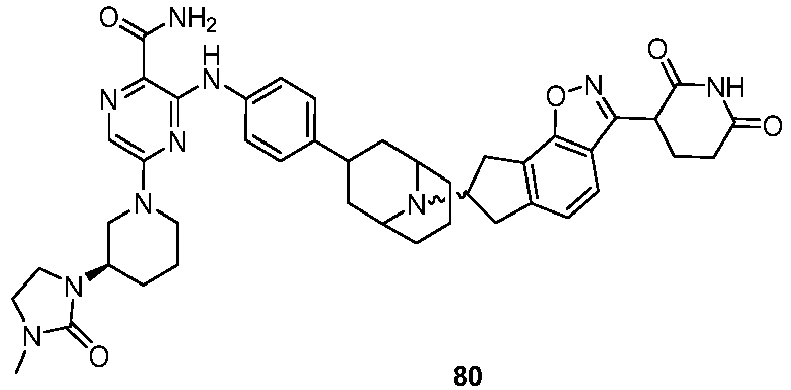

- Intermediate 79h-2 (100 mg), acrylamide (7.46 mg) and tetrahydrofuran (5 mL) were added to a reaction flask in sequence, and the mixture was cooled to 0 °C under N2 atmosphere. Potassium tert-butoxide (1 M, 0.079 mL) was added, and the mixture was reacted at 0 °C. After the reaction was completed, the reaction solution was added dropwise to an icy saturated aqueous ammonium chloride solution, and 50 mL of ethyl acetate was added for extraction. The organic phase was dried over anhydrous sodium sulfate, filtered, and concentrated, and the residue was purified by silica gel column chromatography to give compound 80 (45 mg).
- MS(ESI, [M+H]+) m/z: 787.49.
- 1H NMR (500 MHz, DMSO-d6) δ 11.23 (s, 1H), 11.09 (s, 1H), 7.76 (d, J = 3.0 Hz, 1H), 7.65 (d, J = 7.6 Hz, 2H), 7.51 (d, J = 8.0 Hz, 2H), 7.37 - 7.30 (m, 1H), 7.26 (t, J = 6.0 Hz, 3H), 4.58 (dd, J = 12.0, 5.0 Hz, 1H), 4.34 (dd, J = 45.6, 12.7 Hz, 2H), 4.10 (s, 1H), 3.62 (tt, J = 11.1, 4.0 Hz, 1H), 3.48 - 3.33 (m, 4H), 3.30 - 3.20 (m, 3H), 3.15 - 2.89 (m, 3H), 2.71 (s, 8H), 2.61 (dt, J= 17.4, 4.2 Hz, 1H), 2.31 - 1.90 (m, 6H), 1.87 - 1.71 (m, 3H), 1.63 - 1.43 (m, 4H), 1.00 (s, 2H).
-


- 40e (100 mg), isopropanol (1 mL), 1,2-dichloroethane (5.00 mL), and 79g (190 mg) were added to a reaction flask in sequence, and sodium cyanoborohydride (63 mg) was added. The mixture was reacted at room temperature. After the reaction was completed, the reaction solution was mixed with silica gel and purified by column chromatography to give 81 (35 mg).
- MS(ESI, [M+H]+) m/z: 801.63.
- 1H NMR (500 MHz, DMSO-d6) δ 11.21 (s, 1H), 11.09 (s, 1H), 7.81 - 7.72 (m, 1H), 7.66 (s, 1H), 7.61 (d, J = 8.0 Hz, 1H), 7.52 (d, J = 8.1 Hz, 2H), 7.34 (s, 1H), 7.26 (dd, J = 16.3, 8.1 Hz, 3H), 4.57 (dd, J = 11.8, 5.0 Hz, 1H), 4.35 (dd, J= 61.3, 12.9 Hz, 2H), 3.63 (td, J= 10.9, 10.3, 5.5 Hz, 1H), 3.34 (d, J= 7.2 Hz, 2H), 3.27 (dd, J= 10.6, 7.1 Hz, 2H), 3.24 - 2.91 (m, 8H), 2.91 - 2.56 (m, 10H), 2.23 - 1.99 (m, 4H), 1.80 (dd, J= 33.4, 12.5 Hz, 5H), 1.63 - 1.42 (m, 4H), 1.01 (d, J= 12.4 Hz, 2H).
-


- 41a (100 mg), isopropanol (1 mL), 1,2-dichloroethane (5.00 mL), and 79g (190 mg) were added to a reaction flask in sequence, and sodium cyanoborohydride (18 mg) was added. The mixture was reacted at room temperature. After the reaction was completed, the reaction solution was mixed with silica gel and purified by column chromatography to give 82 (35 mg).
- MS(ESI, [M+H]+) m/z: 801.51.
- 1H NMR (500 MHz, DMSO-d6) δ 11.21 (s, 1H), 11.09 (s, 1H), 7.81 - 7.72 (m, 1H), 7.66 (s, 1H), 7.61 (d, J = 8.0 Hz, 1H), 7.52 (d, J = 8.1 Hz, 2H), 7.34 (s, 1H), 7.26 (dd, J = 16.3, 8.1 Hz, 3H), 4.57 (dd, J = 11.8, 5.0 Hz, 1H), 4.35 (dd, J = 61.3, 12.9 Hz, 2H), 3.63 (td, J= 10.9, 10.3, 5.5 Hz, 1H), 3.34 (d, J= 7.2 Hz, 2H), 3.27 (dd, J = 10.6, 7.1 Hz, 2H), 3.24 - 2.91 (m, 8H), 2.91 - 2.56 (m, 10H), 2.23 - 1.99 (m, 4H), 1.80 (dd, J= 33.4, 12.5 Hz, 5H), 1.63 - 1.42 (m, 4H), 1.01 (d, J= 12.4 Hz, 2H).
-


- Intermediate 83a (2.7 g), 3,4-difluoronitrobenzene (2.0 g), potassium hydroxide (2.1 g), and dimethyl sulfoxide (25 mL) were added to a reaction flask in sequence, and the mixture was reacted at room temperature for 4 h. 60 mL of ethyl acetate and 100 mL of water were added to the reaction solution. The organic phase was separated, washed with a saturated sodium chloride solution, dried over anhydrous sodium sulfate, filtered, and concentrated. The concentrate was separated and purified by silica gel column chromatography to give intermediate 83b (3.4 g). MS(ESI, [M+H]+) m/z: 356.1.
- 1H NMR (500 MHz, DMSO-d6) δ 8.16 (dd, J = 11.0, 2.8 Hz, 1H), 8.14 - 8.09 (m, 1H), 7.44 (t, J = 8.8 Hz, 1H), 4.14 (d, J = 6.1 Hz, 2H), 3.99 (d, J = 6.1 Hz, 1H), 3.72 (d, J = 12.6 Hz, 1H), 3.00 - 2.79 (m, 3H), 2.59 (tt, J = 11.1, 4.6 Hz, 2H), 1.39 (s, 9H).
- Intermediate 83b (2.0 g), potassium hydroxide (0.95 g), and dimethyl sulfoxide (25 mL) were added to a reaction flask in sequence, and the mixture was heated to 70 °C and reacted for 16 h. The reaction solution was cooled to room temperature, and 50 mL of ethyl acetate and 100 mL of water were added to the reaction solution. The organic phase was separated, washed with a saturated sodium chloride solution, dried over anhydrous sodium sulfate, filtered, and concentrated. The concentrate was separated and purified by silica gel column chromatography to give intermediate 83c (2.1 g).
- 1H NMR (500 MHz, DMSO-d6) δ 7.77 (dd, J = 9.1, 2.6 Hz, 1H), 7.51 (d, J = 2.6 Hz, 1H), 7.04 (d, J = 9.2 Hz, 1H), 4.41 (dd, J = 11.1, 3.2 Hz, 1H), 4.05 - 3.92 (m, 4H), 3.37 (ddd, J = 14.9, 7.4, 3.5 Hz, 3H), 2.91 (td, J = 12.2, 3.3 Hz, 1H), 1.43 (s, 9H).
- Intermediate 83c (2.1 g), 10% palladium on carbon (1.0 g), and methanol (30 mL) were added to a reaction flask in sequence, and the mixture was purged with hydrogen and reacted overnight. The reaction solution was filtered under vacuum, and the filtrate was concentrated to give intermediate 83d (1.8 g).
- MS(ESI, [M+H]+) m/z: 306.2.
- 1f (1.50 g), 83d (1.57 g), BINAP (0.29 g), cesium carbonate (4.57 g), palladium acetate (0.11 g), and 1,4-dioxane (40 mL) were added to a reaction flask in sequence, and the mixture was purged three times with nitrogen, heated to 100 °C, and reacted for 4 h. The reaction solution was cooled to room temperature, and 50 mL of ethyl acetate and 100 mL of water were added to the residue. The organic phase was separated, washed with a saturated sodium chloride solution, dried over anhydrous sodium sulfate, filtered, and concentrated. The concentrate was separated and purified by silica gel column chromatography to give intermediate 83e (1.67 g).
- MS(ESI, [M+H]+) m/z: 590.4.
- 1H NMR (500 MHz, DMSO-d6) δ 8.75 (s, 1H), 7.76 (s, 1H), 7.04 (dd, J = 8.8, 2.5 Hz, 1H), 6.92 (d, J = 2.4 Hz, 1H), 6.79 (d, J = 8.9 Hz, 1H), 4.28 (dd, J = 10.8, 2.7 Hz, 3H), 4.05 - 3.82 (m, 3H), 3.70 (d, J = 11.9 Hz, 1H), 3.52 (td, J = 10.3, 4.8 Hz, 1H), 3.30 - 3.20 (m, 4H), 3.07 - 2.85 (m, 4H), 2.67 (s, 3H), 2.62 - 2.52 (m, 1H), 2.48 (d, J = 3.4 Hz, 2H), 1.82 - 1.70 (m, 3H), 1.42 (s, 9H).
- Intermediate 83e (0.90 g), cesium carbonate (0.50 g), water (5 mL), DMSO (20 mL), and methanol (5 mL) were added to a reaction flask in sequence. The reaction solution was cooled to 0 °C, and 30 wt% hydrogen peroxide (0.52 g) was added dropwise. After the dropwise addition was completed, the mixture was allowed to react at room temperature for 1 h. 50 mL of water was added to the reaction solution, and then a saturated aqueous sodium sulfite solution was added to neutralize hydrogen peroxide. The mixture was stirred for 10 min and filtered, and the filter cake was collected and dried to give intermediate 83f (0.85 g).
- MS(ESI, [M+H]+) m/z: 608.51.
- Intermediate 83f (0.85 g) and trifluoroacetic acid (15 mL) were added to a reaction flask in sequence, and the mixture was reacted at room temperature for 2 h. The pH was adjusted to about 8 with a saturated aqueous sodium bicarbonate solution. The mixture was stirred for 10 min and filtered, and the filter cake was collected and dried to give intermediate 83g (0.70 g).
- MS(ESI, [M+H]+) m/z: 508.4.
- 1H NMR (500 MHz, DMSO-d6) δ 11.05 (s, 1H), 7.73 (d, J = 2.9 Hz, 1H), 7.61 (s, 1H), 7.30 (d, J = 2.8 Hz, 1H), 7.07 (d, J = 2.4 Hz, 1H), 6.98 (dd, J = 8.8, 2.5 Hz, 1H), 6.80 (d, J = 8.9 Hz, 1H), 4.30 (d, J = 13.0 Hz, 2H), 4.20 (dd, J = 10.7, 2.7 Hz, 1H), 3.89 (dd, J = 10.7, 8.7 Hz, 1H), 3.67 (d, J = 11.9 Hz, 1H), 3.56 (tt, J = 10.3, 4.2 Hz, 1H), 3.36 - 3.29 (m, 3H), 3.25 (dt, J = 8.3, 2.9 Hz, 2H), 3.19 - 2.98 (m, 5H), 2.97 - 2.82 (m, 2H), 2.67 (s, 3H), 2.60 (td, J = 12.0, 3.1 Hz, 1H), 1.79 (q, J = 6.7, 4.9 Hz, 3H), 1.60 - 1.50 (m, 1H).
- Intermediate 83g (0.44 g), 21 (206 mg), dichloroethane/isopropanol (5:1, 25 mL), and glacial acetic acid (10 mg) were added to a reaction flask in sequence. After the mixture was stirred at room temperature for 30 min, sodium cyanoborohydride (0.11 g) was added, and the mixture was reacted at room temperature for 2 h. 50 mL of DCM and 100 mL of water were added to the reaction solution. The organic phase was separated, washed with a saturated sodium chloride solution, dried over anhydrous sodium sulfate, filtered, and concentrated. The concentrate was separated and purified by silica gel column chromatography to give a mixture of intermediates 83h and 83i (0.32 g), which was subjected to resolution by preparative chromatography to give the prepeak 83h (0.13 g) and the postpeak 83i (0.14 g) in sequence.
- The conditions of preparative chromatography were as follows: instrument and preparative column: YMC high pressure preparative chromatograph was used, and the preparative column was REGIS Cellulose-C. Mobile phase system: dichloromethane/n-hexane/ethanol; isocratic elution: dichloromethane/n-hexane/ethanol = 45/40/15. MS(ESI, [M+H]+) m/z: 751.6.
- Intermediate 83i (120 mg) and acrylamide (22 mg) were added to a reaction flask in sequence, and the mixture was cooled to 0 °C. A solution of potassium tert-butoxide in tetrahydrofuran (0.25 mL, 1 M) was added dropwise, and the mixture was reacted at 0 °C. After the reaction was completed, as confirmed by TLC, the reaction solution was poured into 40 mL of a cold aqueous ammonium chloride solution, and dichloroethane (40 mL each time) was added for three times of extraction. The organic phases were combined, washed with water and saturated sodium chloride, dried over anhydrous sodium sulfate, and filtered, and the concentrate was separated and purified by silica gel column chromatography to give compound 83 (20 mg).
- MS(ESI, [M+H]+) m/z: 776.4.
- 1H NMR (500 MHz, DMSO-d6) δ 11.09 (s, 1H), 11.04 (s, 1H), 7.73 (d, J = 2.9 Hz, 1H), 7.67 - 7.58 (m, 2H), 7.32 - 7.24 (m, 2H), 7.05 (d, J = 2.4 Hz, 1H), 6.98 (dd, J = 8.7, 2.5 Hz, 1H), 6.79 (d, J = 9.0 Hz, 1H), 4.57 (dd, J = 11.9, 5.0 Hz, 1H), 4.33 - 4.20 (m, 3H), 3.91 (dd, J = 10.6, 8.9 Hz, 1H), 3.68 (d, J = 11.3 Hz, 1H), 3.55 (dq, J = 10.5, 5.9 Hz, 1H), 3.45 (q, J = 7.7 Hz, 1H), 3.28 - 3.15 (m, 4H), 3.12 - 3.00 (m, 5H), 3.01 - 2.86 (m, 3H), 2.77 (ddd, J = 17.2, 11.9, 5.4 Hz, 1H), 2.68 (s, 3H), 2.61 (ddd, J = 13.4, 7.2, 3.4 Hz, 2H), 2.53 (d, J = 5.6 Hz, 1H), 2.47 (d, J = 8.3 Hz, 1H), 2.29 (dd, J = 12.2, 9.0 Hz, 1H), 2.19 (dt, J = 13.8, 5.4 Hz, 1H), 1.89 (t, J = 10.5 Hz, 1H), 1.78 (dq, J = 10.8, 5.8, 3.2 Hz, 3H), 1.55 (d, J = 12.4 Hz, 1H).
-
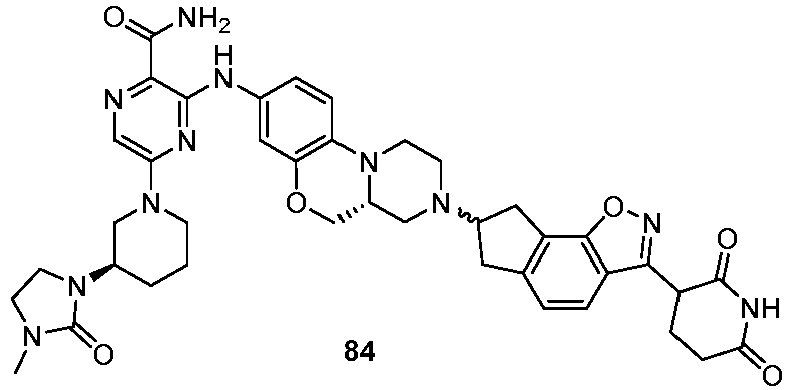

- Intermediate 83h (130 mg) and acrylamide (22 mg) were added to a reaction flask in sequence, and the mixture was cooled to 0 °C. A solution of potassium tert-butoxide in tetrahydrofuran (0.26 mL, 1 M) was added dropwise, and the mixture was reacted at 0 °C. After the reaction was completed, as confirmed by TLC, the reaction solution was poured into 40 mL of a cold aqueous ammonium chloride solution, and dichloroethane (40 mL each time) was added for three times of extraction. The organic phases were combined, washed with water and saturated sodium chloride, dried over anhydrous sodium sulfate, and filtered, and the concentrate was separated and purified by silica gel column chromatography to give compound 84 (18 mg).
- MS(ESI, [M+H]+) m/z: 776.4.
- 1H NMR (500 MHz, DMSO-d6) δ 11.09 (s, 1H), 11.04 (s, 1H), 7.77 - 7.69 (m, 1H), 7.68 - 7.58 (m, 2H), 7.33 - 7.24 (m, 2H), 7.06 (d, J= 2.5 Hz, 1H), 6.97 (dd, J= 8.8, 2.5 Hz, 1H), 6.79 (d, J= 8.8 Hz, 1H), 4.57 (dd, J= 11.9, 5.0 Hz, 1H), 4.34 - 4.21 (m, 3H), 3.92 (t, J = 9.7 Hz, 1H), 3.68 (d, J = 11.2 Hz, 1H), 3.55 (td, J = 10.5, 10.1, 5.7 Hz, 1H), 3.42 (t, J= 7.7 Hz, 1H), 3.36 (d, J= 5.3 Hz, 2H), 3.28 - 3.20 (m, 3H), 3.05 (dd, J= 19.7, 11.7 Hz, 6H), 2.93 (t, J= 12.7 Hz, 1H), 2.77 (ddd, J= 17.2, 11.9, 5.3 Hz, 1H), 2.68 (s, 3H), 2.62 (td, J= 12.9, 11.9, 7.0 Hz, 2H), 2.53 (d, J= 6.9 Hz, 1H), 2.47 (d, J= 9.5 Hz, 1H), 2.28 (t, J = 10.7 Hz, 1H), 2.19 (q, J= 8.0, 6.6 Hz, 1H), 1.89 (t, J = 10.9 Hz, 1H), 1.79 (q, J = 13.5, 10.7 Hz, 3H), 1.55 (d, J = 11.6 Hz, 1H).
-


- Intermediate 83g (102 mg), 40e (60 mg), dichloroethane/isopropanol (5:1, 25 mL), and glacial acetic acid (10 mg) were added to a reaction flask in sequence. After the mixture was stirred at room temperature for 30 min, sodium cyanoborohydride (13 mg) was added, and the mixture was reacted at room temperature for 2 h. 50 mL of dichloromethane and 100 mL of water were added to the reaction solution. The organic phase was separated, washed with a saturated sodium chloride solution, dried over anhydrous sodium sulfate, filtered, and concentrated. The concentrate was separated and purified by silica gel column chromatography to give compound 85 (42 mg).
- MS(ESI, [M+H]+) m/z: 790.4.
- 1H NMR (500 MHz, DMSO-d6) δ 11.08 (s, 1H), 11.03 (s, 1H), 7.73 (d, J= 2.9 Hz, 1H), 7.61 (d, J= 7.5 Hz, 2H), 7.32 - 7.25 (m, 2H), 7.05 (d, J= 2.4 Hz, 1H), 6.98 (dd, J= 8.8, 2.4 Hz, 1H), 6.79 (d, J= 8.8 Hz, 1H), 4.57 (ddd, J = 11.8, 4.9, 1.5 Hz, 1H), 4.29 (s, 2H), 4.22 (dd, J = 10.6, 2.7 Hz, 1H), 3.94 - 3.87 (m, 1H), 3.65 (d, J = 11.5 Hz, 1H), 3.59 - 3.52 (m, 1H), 3.34 (d, J= 8.1 Hz, 3H), 3.24 (dd, J= 9.1, 7.2 Hz, 3H), 3.17 (d, J= 5.3 Hz, 1H), 3.08 (t, J = 11.8 Hz, 1H), 3.04 - 2.98 (m, 2H), 2.98 - 2.88 (m, 4H), 2.84 (dd, J = 16.2, 5.1 Hz, 1H), 2.77 (ddd, J = 17.1, 11.9, 5.3 Hz, 1H), 2.67 (s, 3H), 2.64 - 2.57 (m, 2H), 2.40 (t, J = 7.3 Hz, 2H), 2.22 - 2.13 (m, 2H), 1.78 (p, J = 10.7, 9.8 Hz, 4H), 1.55 (d, J = 14.9 Hz, 1H).
-


- Intermediate 83g (102 mg), 41a (60 mg), dichloroethane/isopropanol (5:1, 25 mL), and glacial acetic acid (10 mg) were added to a reaction flask in sequence. After the mixture was stirred at room temperature for 30 min, sodium cyanoborohydride (13 mg) was added, and the mixture was reacted at room temperature for 2 h. 50 mL of dichloromethane and 100 mL of water were added to the reaction solution. The organic phase was separated, washed with a saturated sodium chloride solution, dried over anhydrous sodium sulfate, filtered, and concentrated. The concentrate was separated and purified by silica gel column chromatography to give compound 86 (38 mg).
- MS(ESI, [M+H]+) m/z: 790.4.
- 1H NMR (500 MHz, DMSO-d6) δ 11.08 (d, J= 1.6 Hz, 1H), 11.03 (s, 1H), 7.73 (d, J = 2.9 Hz, 1H), 7.61 (d, J = 7.7 Hz, 2H), 7.32 - 7.24 (m, 2H), 7.05 (d, J = 2.4 Hz, 1H), 6.97 (dd, J = 8.8, 2.5 Hz, 1H), 6.79 (d, J = 8.9 Hz, 1H), 4.57 (ddd, J = 11.9, 5.0, 1.8 Hz, 1H), 4.29 (s, 2H), 4.21 (dd, J = 10.5, 2.7 Hz, 1H), 3.90 (dd, J = 10.7, 9.0 Hz, 1H), 3.65 (d, J = 11.4 Hz, 1H), 3.59 - 3.52 (m, 1H), 3.34 (d, J = 8.1 Hz, 3H), 3.28 - 3.22 (m, 3H), 3.20 - 3.15 (m, 1H), 3.08 (t, J= 11.8 Hz, 1H), 3.01 (d, J= 10.3 Hz, 2H), 2.93 (t, J= 15.0 Hz, 4H), 2.84 (dd, J = 16.0, 5.1 Hz, 1H), 2.77 (ddd, J = 17.1, 11.9, 5.3 Hz, 1H), 2.67 (s, 3H), 2.65 - 2.57 (m, 2H), 2.40 (dd, J = 7.6, 4.4 Hz, 2H), 2.17 (ddd, J = 14.7, 10.1, 3.5 Hz, 2H), 1.77 (q, J = 11.3, 10.4 Hz, 4H), 1.55 (d, J= 11.3 Hz, 1H).
-


- Intermediate 21 (300 mg), intermediate 1i (600 mg), 1,2-dichloroethane (10 mL), isopropanol (3 mL), and sodium cyanoborohydride (291 mg) were added to a reaction flask in sequence, and the mixture was reacted overnight at room temperature. After the reaction was completed, 5 mL of a saturated sodium bicarbonate solution was added to the reaction solution to neutralize acetic acid, and then 100 mL of dichloromethane and 100 mL of water were added for extraction. The organic phase was separated, and the aqueous phase was extracted twice with 50 mL of dichloromethane. The organic phases were combined, washed with saturated brine, dried over anhydrous sodium sulfate, and concentrated, and the residue was purified by silica gel column chromatography to give a racemic modification. The racemic modification was separated by high performance liquid chromatography to give intermediates 87a-1 (150 mg) and 87a-2 (130 mg) in sequence.
- The conditions of preparative chromatography were as follows: instrument and preparative column: YMC high pressure preparative chromatograph was used, and the preparative column was (R,R)-Whelk-O1 (4.6×250 mm, 5 µm). Mobile phase system: ethanol-dichloromethane (3:2)/n-hexane-0.1% diethylamine, isocratic elution: ethanol-dichloromethane (3:2)/n-hexane-0.1% diethylamine = 50/50.
- 87a-1, 87a-2: MS(ESI, [M+H]+) m/z: 722. 70.
- Intermediate 87a-1 (100 mg), acrylamide (15 mg) and tetrahydrofuran (5 mL) were added to a reaction flask in sequence, and the mixture was cooled to 0 °C under N2 atmosphere. Potassium tert-butoxide (1 M, 0.079 mL) was added, and the mixture was reacted at 0 °C. After the reaction was completed, the reaction solution was added dropwise to an icy saturated aqueous ammonium chloride solution, and 50 mL of ethyl acetate was added for extraction. The organic phase was dried over anhydrous sodium sulfate, filtered, and concentrated, and the residue was purified by silica gel column chromatography to give compound 87 (35 mg).
- MS(ESI, [M+H]+) m/z: 747.61.
- 1H NMR (500 MHz, DMSO-d6) δ 11.20 (s, 1H), 11.09 (s, 1H), 7.76 (d, J= 2.8 Hz, 1H), 7.70 - 7.58 (m, 2H), 7.50 (d, J= 8.3 Hz, 2H), 7.38 - 7.31 (m, 1H), 7.27 (d, J= 8.1 Hz, 1H), 7.17 (d, J= 8.3 Hz, 2H), 4.57 (dd, J= 11.8, 5.0 Hz, 1H), 4.32 (dd, J = 31.0, 12.8 Hz, 2H), 3.61 (dt, J = 11.0, 6.1 Hz, 1H), 3.50 - 3.39 (m, 1H), 3.35 (d, J = 6.9 Hz, 3H), 3.25 (ddt, J = 26.3, 15.8, 7.7 Hz, 4H), 3.00 (dq, J = 33.1, 12.2, 11.6 Hz, 6H), 2.84 - 2.67 (m, 4H), 2.61 (dt, J = 17.4, 4.3 Hz, 1H), 2.46 (s, 1H), 2.26 - 2.09 (m, 3H), 1.88 - 1.49 (m, 8H).
-


- Intermediate 87a-2 (100 mg), acrylamide (15 mg), and tetrahydrofuran (5 mL) were added to a reaction flask in sequence, and the mixture was cooled to 0 °C under N2 atmosphere. Potassium tert-butoxide (1 M, 0.079 mL) was added, and the mixture was reacted at 0 °C. After the reaction was completed, the reaction solution was added dropwise to an icy saturated aqueous ammonium chloride solution, and 50 mL of ethyl acetate was added for extraction. The organic phase was dried over anhydrous sodium sulfate, filtered, and concentrated, and the residue was purified by silica gel column chromatography to give compound 88 (50 mg).
- MS(ESI, [M+H]+) m/z: 747.55.
- 1H NMR (500 MHz, DMSO-d6) δ 11.20 (s, 1H), 11.09 (s, 1H), 7.76 (d, J= 2.8 Hz, 1H), 7.70 - 7.58 (m, 2H), 7.50 (d, J= 8.3 Hz, 2H), 7.38 - 7.31 (m, 1H), 7.27 (d, J= 8.1 Hz, 1H), 7.17 (d, J= 8.3 Hz, 2H), 4.57 (dd, J= 11.8, 5.0 Hz, 1H), 4.32 (dd, J = 31.0, 12.8 Hz, 2H), 3.61 (dt, J = 11.0, 6.1 Hz, 1H), 3.50 - 3.39 (m, 1H), 3.35 (d, J = 6.9 Hz, 3H), 3.25 (ddt, J = 26.3, 15.8, 7.7 Hz, 4H), 3.00 (dq, J = 33.1, 12.2, 11.6 Hz, 6H), 2.84 - 2.67 (m, 4H), 2.61 (dt, J = 17.4, 4.3 Hz, 1H), 2.46 (s, 1H), 2.26 - 2.09 (m, 3H), 1.88 - 1.49 (m, 8H).
-


- Intermediate 1i (96 mg), 40e (60 mg), dichloroethane/isopropanol (5:1, 25 mL), and glacial acetic acid (10 mg) were added to a reaction flask in sequence. After the mixture was stirred at room temperature for 30 min, sodium cyanoborohydride (25.3 mg) was added, and the mixture was reacted at room temperature for 2 h. 50 mL of DCM and 100 mL of water were added to the reaction solution. The organic phase was separated, washed with a saturated sodium chloride solution, dried over anhydrous sodium sulfate, filtered, and concentrated. The concentrate was separated and purified by silica gel column chromatography to give compound 89 (25 mg).
- MS(ESI, [M+H]+) m/z: 761.6.
- 1H NMR (500 MHz, DMSO-d6) δ 11.18 (s, 1H), 11.08 (s, 1H), 7.75 (s, 1H), 7.66 (s, 1H), 7.61 (d, J = 7.9 Hz, 1H), 7.50 (d, J = 8.0 Hz, 2H), 7.32 (s, 1H), 7.27 (d, J = 8.1 Hz, 1H), 7.18 (d, J = 8.2 Hz, 2H), 4.56 (dd, J = 11.5, 4.9 Hz, 1H), 4.37 (d, J = 12.1 Hz, 1H), 4.29 (d, J = 12.9 Hz, 1H), 3.62 (d, J = 12.6 Hz, 1H), 3.35 (s, 2H), 3.26 (d, J = 10.2 Hz, 4H), 3.24 - 3.12 (m, 2H), 3.05 - 2.97 (m, 3H), 2.97 - 2.81 (m, 4H), 2.74 (s, 3H), 2.63 (s, 1H), 2.44 (s, 1H), 2.36 (d, J = 7.1 Hz, 2H), 2.24 - 2.14 (m, 1H), 2.03 (t, J = 11.4 Hz, 2H), 1.87 - 1.72 (m, 5H), 1.65 (d, J = 13.4 Hz, 2H), 1.57 (s, 1H).
-


- Intermediate 1i (110 mg), 41a (65 mg), dichloroethane/isopropanol (5:1, 25 mL), and glacial acetic acid (10 mg) were added to a reaction flask in sequence. After the mixture was stirred at room temperature for 30 min, sodium cyanoborohydride (27.6 mg) was added, and the mixture was reacted at room temperature for 2 h. 50 mL of DCM and 100 mL of water were added to the reaction solution. The organic phase was separated, washed with a saturated sodium chloride solution, dried over anhydrous sodium sulfate, filtered, and concentrated. The concentrate was separated and purified by silica gel column chromatography to give compound 90 (31 mg).
- MS(ESI, [M+H]+) m/z: 761.6.
- 1H NMR (500 MHz, DMSO-d6) δ 11.18 (s, 1H), 11.08 (s, 1H), 7.75 (d, J = 2.8 Hz, 1H), 7.66 (s, 1H), 7.61 (d, J = 8.0 Hz, 1H), 7.53 - 7.47 (m, 2H), 7.32 (d, J = 2.9 Hz, 1H), 7.27 (d, J= 8.1 Hz, 1H), 7.18 (d, J = 8.2 Hz, 2H), 4.57 (ddd, J = 11.8, 5.0, 1.5 Hz, 1H), 4.37 (d, J = 12.5 Hz, 1H), 4.29 (d, J = 13.3 Hz, 1H), 3.62 (dq, J = 8.2, 5.5, 4.1 Hz, 1H), 3.38 - 3.32 (m, 2H), 3.31 - 3.24 (m, 4H), 3.24 - 3.14 (m, 2H), 3.01 (dd, J = 14.6, 6.2 Hz, 3H), 2.97 - 2.82 (m, 4H), 2.75 (s, 3H), 2.64 - 2.57 (m, 1H), 2.47 - 2.41 (m, 1H), 2.36 (d, J = 7.3 Hz, 2H), 2.19 (dq, J = 8.6, 4.4, 3.8 Hz, 1H), 2.03 (t, J = 11.4 Hz, 2H), 1.86 - 1.72 (m, 5H), 1.66 (dd, J = 16.9, 7.3 Hz, 2H), 1.57 (q, J = 12.2 Hz, 1H).
-


- Intermediate 69d (150 mg), intermediate 10i (177 mg), dichloroethane (10 mL), isopropanol (2 mL), and glacial acetic acid (11.84 mg, 0.011 mL) were added to a reaction flask. After the mixture was stirred at room temperature for 30 min, sodium cyanoborohydride (74.3 mg) was added, and the mixture was stirred overnight at room temperature. After the reaction was completed, 100 mL of water was added to the reaction solution, and the mixture was extracted twice with 100 mL of dichloromethane. The extracts were combined, dried over anhydrous sodium sulfate, filtered under vacuum, and concentrated, and the residue was purified by silica gel column chromatography to give compound 91 (50 mg).
- Q-TOF(ESI, [M+H]+) m/z: 664.3371
- 1H NMR (500 MHz, DMSO-d6) δ 11.28 (s, 1H), 11.04 (s, 1H), 7.73 (s, 1H), 7.66 (s, 1H), 7.56 (d, J = 8.6 Hz, 1H), 7.51 (d, J = 8.1 Hz, 2H), 7.31 (s, 1H), 7.18 (d, J = 8.1 Hz, 2H), 6.56 - 6.47 (m, 2H), 4.44 (dd, J = 11.4, 5.0 Hz, 1H), 4.04 (t, J = 7.4 Hz, 2H), 3.73 (t, J = 6.5 Hz, 2H), 3.67 (t, J = 5.2 Hz, 4H), 2.93 (d, J = 10.5 Hz, 2H), 2.74 (ddd, J = 17.1, 11.5, 5.3 Hz, 1H), 2.58 (dt, J = 17.4, 4.5 Hz, 1H), 2.43 (ddt, J = 16.1, 11.8, 4.2 Hz, 2H), 2.22 - 2.13 (m, 1H), 1.96 (t, J = 11.4 Hz, 2H), 1.78 (d, J= 12.4 Hz, 2H), 1.68 - 1.62 (m, 3H), 1.62 - 1.55 (m, 5H).
-


- Intermediate 92a (20 g), 1,2-dichloroethane (200 mL), acetyl chloride (7.04 g), and aluminum trichloride (17.93 g) were added to a reaction flask in sequence, and the mixture was heated to 85 °C and reacted. After the reaction was completed, as confirmed by TLC, the reaction solution was cooled to room temperature, slowly added to 1 M diluted hydrochloric acid with ice, and extracted with 200 mL dichloromethane. The organic phase was separated, and the aqueous phase was extracted twice with dichloromethane. The organic phases were combined, dried over anhydrous sodium sulfate, and filtered, and the filtrate was concentrated by evaporation at reduced pressure to remove the solvent. The residue was separated by silica gel column chromatography to give intermediate 92b (21.1 g).
- MS(ESI, [M-H]+) m/z: 262.9
- 1H NMR (500 MHz, DMSO-d6) δ 10.81 (s, 1H), 8.10 - 8.04 (m, 1H), 7.73 (dt, J = 8.5, 1.0 Hz, 1H), 7.62 (s, 1H), 7.56 (ddd, J = 8.4, 6.7, 1.4 Hz, 1H), 7.49 (ddd, J = 8.1, 6.8, 1.2 Hz, 1H), 2.61 (s, 3H).
- Intermediate 92b (21 g), diethyl carbonate (46.4 g), and toluene (200 mL) were added to a reaction flask in sequence. The reaction solution was cooled to 0 °C, and sodium hydride (9.43 g) was added in portions. The mixture was heated to 120 °C and reacted. After the reaction was completed, as confirmed by TLC, the reaction solution was cooled to room temperature and slowly poured into 1 L of stirred ice water. The mixture was extracted with 500 mL of ethyl acetate, and the organic phase was discarded. The aqueous phase was adjusted to pH = 3 with 3 N hydrochloric acid, the mixture was extracted 3 times with 500 mL of ethyl acetate, and the organic phases were combined. The organic phase was dried over anhydrous sodium sulfate, filtered and concentrated by evaporation at reduced pressure to remove the solvent, thus giving intermediate 92c (20.2 g).
- MS(ESI, [M-H]+) m/z: 288.9
- 1H NMR (500 MHz, DMSO-d6) δ 8.07 (dd, J = 8.4, 1.2 Hz, 1H), 7.85 - 7.81 (m, 1H), 7.62 - 7.56 (m, 2H), 7.50 (ddd, J = 8.2, 6.9, 1.3 Hz, 1H), 4.08 (s, 2H).
- Intermediate 92c (20 g), an aqueous hydroxylamine solution (21.05 mL), and ethanol (200 mL) were added to a reaction flask in sequence, and the mixture was reacted at 85 °C. After the reaction was completed, as confirmed by TLC, the reaction solution was cooled to room temperature and concentrated by evaporation at reduced pressure to remove the solvent, and 200 mL of ethyl acetate and 200 mL of a saturated aqueous sodium carbonate solution were added to the residue for extraction. The organic phase was separated and the aqueous phase was collected, adjusted to pH of 2-3 with a 3 M aqueous HCl solution, and extracted with 300 mL of ethyl acetate. The organic phase was collected, dried over anhydrous sodium sulfate, filtered, and concentrated by evaporation at reduced pressure to remove the solvent, thus giving intermediate 92d (18.5 g).
- MS(ESI, [M-H]+) m/z: 303.9
- 1H NMR (500 MHz, DMSO-d6) δ 13.09 (s, 1H), 8.51 (s, 1H), 8.37 (dd, J = 8.4, 1.2 Hz, 1H), 8.28 - 8.21 (m, 1H), 7.87 (ddd, J = 8.3, 7.0, 1.3 Hz, 1H), 7.79 (ddd, J = 8.3, 7.0, 1.3 Hz, 1H), 4.43 (s, 2H).
- Intermediate 92d (18 g), ethanol (150 mL), and sulfuric acid (3.13 mL) were added to a reaction flask in sequence, and the mixture was heated to 85 °C and reacted. After the reaction was completed, as confirmed by TLC, the reaction solution was cooled to room temperature and concentrated by evaporation at reduced pressure to remove the solvent. 300 mL of ethyl acetate and 300 mL of water were added to the residue for dilution, and a saturated aqueous sodium bicarbonate solution was added to adjust pH = 7. The organic phase was separated, and the aqueous phase was extracted twice with 500 mL of ethyl acetate. The organic phases were combined, dried over anhydrous sodium sulfate, filtered, and concentrated by evaporation at reduced pressure to remove the solvent, thus giving intermediate 92e (17.42 g).
- MS(ESI, [M+H]+) m/z: 334.12
- 1H NMR (500 MHz, DMSO-d6) δ 8.52 (s, 1H), 8.38 (dd, J = 8.4, 1.2 Hz, 1H), 8.19 (dd, J = 8.1, 1.0 Hz, 1H), 7.86 (ddd, J = 8.2, 7.0, 1.3 Hz, 1H), 7.79 (ddd, J = 8.2, 7.0, 1.2 Hz, 1H), 4.54 (s, 2H), 4.15 (q, J = 7.1 Hz, 2H), 1.16 (t, J = 7.1 Hz, 3H).
- Intermediate 92e (4 g), azetidin-3-ol (1.050 g), palladium acetate (0.537 g), xantphos (2.77 g), potassium phosphate (7.62 g), and 1,4-dioxane (30 mL) were added to a reaction flask in sequence, and the mixture was heated to 100 °C and reacted under N2 atmosphere. After the reaction was completed, as confirmed by TLC, the reaction solution was cooled to room temperature, and 100 mL of ethyl acetate and 200 mL of water were added to the system. The organic phase was separated, and the aqueous phase was extracted 3 times with 50 mL of ethyl acetate. The organic phases were combined, dried over anhydrous sodium sulfate, and filtered, and the filtrate was concentrated by evaporation at reduced pressure to remove the solvent. The crude product was separated by silica gel column chromatography to give intermediate 92f (3.03 g).
- MS(ESI, [M+H]+) m/z: 327.28
- 1H NMR (500 MHz, DMSO-d6) δ 8.07 (dd, J = 44.6, 8.4 Hz, 2H), 7.59 (dt, J = 77.7, 7.6 Hz, 2H), 6.78 (s, 1H), 5.74 (d, J = 6.4 Hz, 1H), 4.64 (h, J = 5.9 Hz, 1H), 4.52 (t, J = 7.3 Hz, 2H), 4.14 (q, J = 7.1 Hz, 2H), 3.93 (dd, J = 8.2, 4.7 Hz, 2H), 1.17 (t, J = 7.0 Hz, 3H).
- Intermediate 92f (580 mg), acrylamide (250 mg), and tetrahydrofuran (10 mL) were added to a reaction flask in sequence. The mixture was purged 3 times with nitrogen, and potassium tert-butoxide (299 mg) was added at -15 °C. The mixture was reacted at room temperature. After the reaction was completed, as confirmed by TLC, the reaction solution was added dropwise to a saturated aqueous ammonium chloride solution to quench the reaction, and 50 mL of ethyl acetate was added for extraction. The organic phase was separated, and the aqueous phase was extracted 3 times with 50 mL of ethyl acetate. The organic phases were combined, dried over anhydrous sodium sulfate, filtered, and concentrated by evaporation at reduced pressure to remove the solvent. The residue was separated by silica gel column chromatography to give intermediate 92g (0.41 g).
- MS(ESI, [M-H]+) m/z: 350.12
- 1H NMR (500 MHz, DMSO-d6) δ 8.11 (t, J = 7.6 Hz, 2H), 7.66 (ddd, J= 8.2, 6.9, 1.2 Hz, 1H), 7.53 (ddd, J = 8.3, 6.9, 1.2 Hz, 1H), 6.80 (s, 1H), 5.74 (d, J = 6.4 Hz, 1H), 4.91 (dd, J = 10.9, 4.9 Hz, 1H), 4.64 (ddd, J = 11.4, 6.5, 4.9 Hz, 1H), 4.52 (dt, J = 9.8, 7.5 Hz, 2H), 3.92 (dt, J = 8.0, 5.2 Hz, 2H), 2.81 (ddd, J = 16.9, 11.2, 5.3 Hz, 1H), 2.68 - 2.58 (m, 2H), 2.41 - 2.27 (m, 2H).
- Intermediate 92g (410 mg), acetonitrile (10 mL), and IBX (980 mg) were added to a reaction flask in sequence, and the mixture was heated to 85 °C and reacted under N2 atmosphere. After the reaction was completed, as confirmed by TLC, the reaction solution was cooled to room temperature and filtered, and the filtrate was concentrated by evaporation at reduced pressure to remove the solvent. The crude product was separated by silica gel column chromatography to give intermediate 92h (0.39 g).
- MS(ESI, [M-H]+) m/z: 348.21
- 1H NMR (500 MHz, DMSO-d 6) δ 11.11 (s, 1H), 8.22 - 8.14 (m, 2H), 7.70 (ddd, J = 8.2, 6.9, 1.2 Hz, 1H), 7.57 (ddd, J = 8.4, 7.0, 1.2 Hz, 1H), 7.14 (s, 1H), 5.21 - 5.08 (m, 4H), 4.96 (dd, J = 11.1, 4.8 Hz, 1H), 2.82 (ddd, J = 17.0, 11.5, 5.3 Hz, 1H), 2.61 (dt, J = 17.2, 4.4 Hz, 1H), 2.57 - 2.52 (m, 1H), 2.36 (dt, J = 13.1, 4.7 Hz, 1H).
- Intermediate 92h (100 mg), intermediate 69d (110 mg), and 1,2-dichloroethane (10 mL) were added to a reaction flask in sequence, acetic acid (15.78 mg) was added dropwise, and the mixture was stirred at room temperature for 20 min. Sodium cyanoborohydride (49.5 mg) was added, and the mixture was reacted at room temperature. After the reaction was completed, as confirmed by TLC, 20 mL of dichloromethane and 50 mL of water were added to the system for extraction. The organic phase was separated, and the aqueous phase was extracted 3 times with dichloromethane/MeOH = 10:1. The organic phases were combined, dried over anhydrous sodium sulfate, filtered, concentrated by evaporation at reduced pressure to remove the solvent, and separated and purified by silica gel column chromatography to give compound 92 (40 mg).
- Q-TOF (ESI, [M+H]+) m/z: 714.3511
- 1H NMR (500 MHz, DMSO-d6) δ 11.29 (d, J = 5.0 Hz, 1H), 11.10 (s, 1H), 8.14 (dd, J = 22.1, 8.3 Hz, 2H), 7.73 (s, 1H), 7.71 - 7.60 (m, 2H), 7.52 (dd, J = 8.6, 5.0 Hz, 3H), 7.31 (s, 1H), 7.19 (d, J = 8.2 Hz, 2H), 6.82 (d, J = 5.4 Hz, 1H), 4.92 (dd, J = 10.9, 5.0 Hz, 1H), 4.41 (q, J = 8.0 Hz, 2H), 4.05 (q, J = 6.5 Hz, 2H), 3.76 - 3.62 (m, 4H), 3.34 (d, J = 3.3 Hz, 2H), 2.99 (d, J = 10.4 Hz, 2H), 2.81 (ddd, J = 16.9, 11.1, 5.1 Hz, 1H), 2.60 (dt, J = 17.1, 4.1 Hz, 1H), 2.47 (s, 1H), 2.42 - 2.29 (m, 1H), 1.99 (t, J = 11.1 Hz, 2H), 1.79 (d, J = 12.4 Hz, 2H), 1.62 (dp, J = 26.5, 5.3, 4.6 Hz, 8H).
-


- Intermediate 92h (100 mg), intermediate 1i (88 mg), 1,2-dichloroethane (10 mL), and isopropanol (1.000 mL) were added to a reaction flask in sequence, acetic acid (12.55 mg) was added dropwise, and the mixture was stirred at room temperature for 20 min. Sodium cyanoborohydride (39.4 mg) was added, and the mixture was reacted at room temperature. After the reaction was completed, as confirmed by TLC, 20 mL of dichloromethane and 50 mL of water were added to the system for extraction. The organic phase was separated, and the aqueous phase was extracted 3 times with dichloromethane/MeOH = 10:1. The organic phases were combined, dried over anhydrous sodium sulfate, filtered, concentrated by evaporation at reduced pressure to remove the solvent, and separated and purified by silica gel column chromatography to give compound 93 (40 mg).
- Q-TOF (ESI, [M+H]+) m/z: 812.3996
- 1H NMR (500 MHz, DMSO-d 6) δ 11.20 (s, 1H), 11.10 (s, 1H), 8.14 (dd, J = 21.3, 8.0 Hz, 2H), 7.75 (d, J = 2.7 Hz, 1H), 7.66 (d, J = 5.6 Hz, 2H), 7.51 (dd, J = 15.8, 8.1 Hz, 3H), 7.33 (d, J = 2.7 Hz, 1H), 7.16 (d, J = 8.3 Hz, 2H), 6.81 (s, 1H), 4.92 (dd, J = 10.8, 5.0 Hz, 1H), 4.41 (q, J = 8.0 Hz, 2H), 4.31 (dd, J = 30.8, 12.8 Hz, 2H), 4.10 - 4.00 (m, 2H), 3.37-3.33 (m, 2H), 3.32-3.29 (m, 2H), 3.28 - 3.19 (m, 2H), 3.10 - 2.90 (m, 4H), 2.81 (ddd, J = 16.9, 11.2, 5.5 Hz, 1H), 2.69 (s, 3H), 2.60 (dt, J = 17.3, 4.5 Hz, 1H), 2.55-2.52 (m, 1H), 2.49-2.45 (m, 1H), 2.34 (dd, J = 11.9, 7.4 Hz, 1H), 2.06 - 1.94 (m, 2H), 1.80 (d, J = 11.4 Hz, 5H), 1.70 - 1.50 (m, 3H).
-


- Intermediate 69d (80 mg), intermediate 9f (99 mg), dichloromethane (5 mL), and methanol (1 mL) were first added to the reaction solution, and then glacial acetic acid (12.6 mg, 12 µL) was added. After the mixture was stirred for 10 min, sodium cyanoborohydride (26.4 mg) was added. The mixture was stirred overnight at room temperature. A small amount of a NaHCOs solution was added to the reaction solution to quench the reaction, and then the mixture was purified by silica gel column chromatography to give compound 94 (80 mg).
- MS(ESI, [M+H]+) m/z: 677.96
- 1H NMR (500 MHz, DMSO-d6) δ 11.30 (s, 1H), 11.04 (s, 1H), 7.74 (d, J = 2.9 Hz, 1H), 7.66 (s, 1H), 7.54 (t, J = 9.3 Hz, 3H), 7.32 (d, J = 3.0 Hz, 1H), 7.19 (d, J = 8.1 Hz, 2H), 6.54 - 6.46 (m, 2H), 4.44 (dd, J = 11.4, 5.0 Hz, 1H), 4.06 (t, J= 7.8 Hz, 2H), 3.72 - 3.59 (m, 6H), 3.34 (s, 3H), 2.74 (ddd, J= 17.0, 11.5, 5.3 Hz, 2H), 2.63 - 2.52 (m, 2H), 2.42 (qd, J = 12.0, 4.6 Hz, 2H), 2.17 (dq, J = 14.1, 5.0 Hz, 2H), 1.78 (s, 3H), 1.62 (dq, J = 32.7, 5.6, 5.2 Hz, 8H).
-

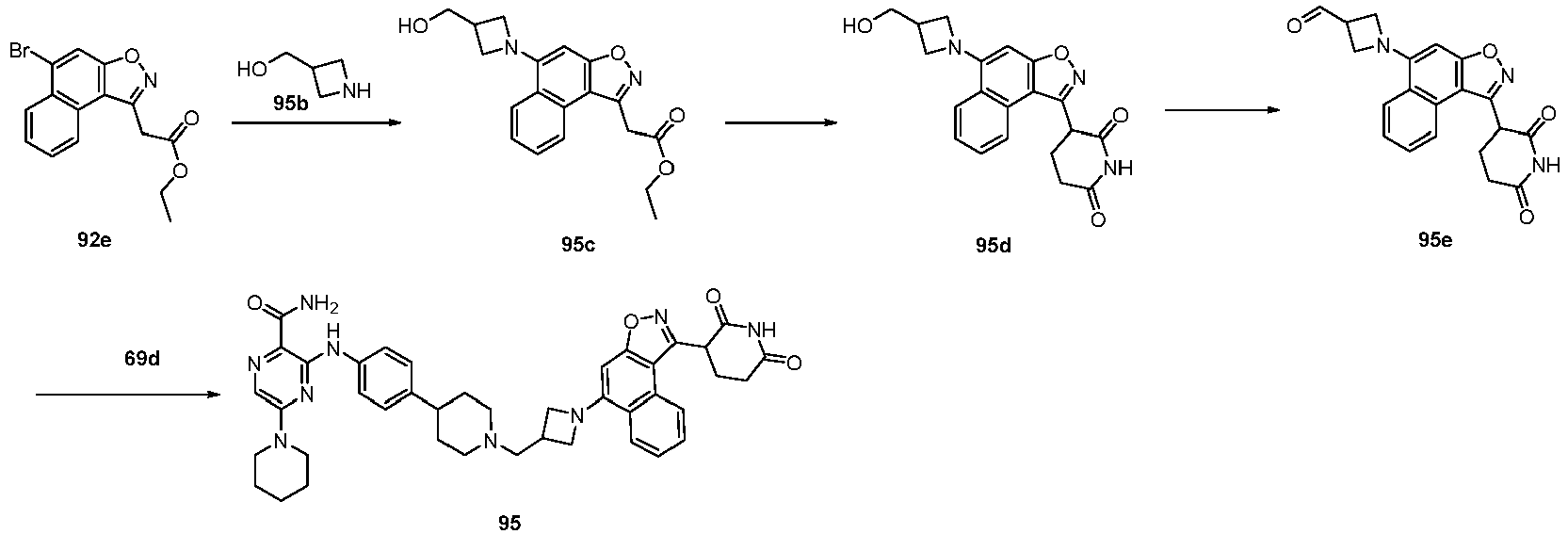
- Intermediate 92e (3.0 g), intermediate 95b (1.173 g), potassium phosphate (5.72 g), palladium acetate (0.302 g), xantphos (1.558 g), and 1,4-dioxane (50 mL) were added to a reaction flask, and the mixture was heated at 100 °C under nitrogen atmosphere. After the reaction was completed, 10 mL of water was added to the reaction solution, and 30 mL of ethyl acetate was added for extraction. The organic phases were combined and washed with saturated brine, and the extract was dried over anhydrous sodium sulfate, filtered, subjected to rotary evaporation, mixed with silica gel, and purified by column chromatography to give intermediate 95c (3.0 g).
- MS(ESI, [M+H]+) m/z: 341.30
- 1H NMR (500 MHz, DMSO-d6) δ 8.13 (dd, J = 8.6, 1.2 Hz, 1H), 8.01 (dd, J= 8.3, 1.2 Hz, 1H), 7.66 (ddd, J= 8.2, 5.7, 1.2 Hz, 1H), 7.50 (ddd, J = 8.4, 6.9, 1.3 Hz, 1H), 7.35 - 7.25 (m, 1H), 6.70 (s, 1H), 4.83 (t, J = 5.3 Hz, 1H), 4.31 (t, J = 8.0 Hz, 4H), 4.14 (q, J= 7.1 Hz, 2H), 4.01 (dd, J = 7.8, 5.5 Hz, 2H), 3.68 - 3.60 (m, 1H), 2.85 (tt, J = 8.1, 5.7 Hz, 1H), 1.17 (t, J = 7.1 Hz, 3H).
- Intermediate 95c (1.5 g) and acrylamide (0.5 g) were added to a reaction flask. The reaction apparatus was sealed, then anhydrous tetrahydrofuran (30 mL) was added, and a solution of potassium tert-butoxide in THF was slowly added dropwise (the internal temperature was controlled at 0 °C). After the dropwise addition was completed, the temperature was maintained at 0 °C and the mixture was reacted for 30 min, and then the mixture was reacted at room temperature. After the reaction was completed, as confirmed by TLC, the reaction solution was added dropwise to a mixed system of a saturated ammonium chloride solution-ethyl acetate under stirring. The organic phase was separated, dried over anhydrous sodium sulfate, filtered, mixed with silica gel, and purified by column chromatography to give intermediate 95d (581 mg).
- MS(ESI, [M+H]+) m/z: 366.30
- 1H NMR (500 MHz, DMSO-d6) δ 11.09 (s, 1H), 8.16 - 8.11 (m, 1H), 7.65 (ddd, J = 8.2, 6.9, 1.2 Hz, 1H), 7.54 - 7.47 (m, 2H), 6.73 (s, 1H), 4.90 (dd, J = 10.9, 4.9 Hz, 1H), 4.82 (t, J = 5.4 Hz, 1H), 4.31 (q, J= 7.9 Hz, 2H), 4.01 (td, J = 7.9, 5.4 Hz, 2H), 3.65 (t, J = 5.8 Hz, 2H), 2.89 - 2.75 (m, 2H), 2.59 (dt, J = 17.3, 4.6 Hz, 1H), 2.46 (dd, J = 10.9, 4.3 Hz, 1H), 2.33 (dq, J = 13.8, 5.0 Hz, 1H).
- Intermediate 95d (280 mg), Dess-Martin periodinane (584 mg), and dichloromethane (20 mL) were added to a reaction flask, and the mixture was stirred at room temperature. After the reaction was completed, the reaction solution was filtered under vacuum, and the filter cake was washed with dichloromethane. The filtrate and the washing solution were combined and subjected to rotary evaporation to dryness, thus giving intermediate 95e (300 mg).
MS(ESI, [M+H]+) m/z: 364.2 - 69d (100 mg), intermediate 95e (150 mg), 1,2-dichloroethane (10 mL), and isopropanol (2 mL) were first added to the reaction solution, and then glacial acetic acid (14.2 mg, 14 µL) was added. After the mixture was stirred for 10 min, sodium cyanoborohydride (29.7 mg) was added. The mixture was stirred at room temperature. After the reaction was completed, a small amount of a NaHCOs solution was added to the reaction solution to quench the reaction, and then the mixture was purified by silica gel column chromatography to give compound 95 (32 mg).
- MS(ESI, [M+H]+) m/z: 728.40
- 1H NMR (500 MHz, DMSO-d 6) δ 11.29 (s, 1H), 11.10 (s, 1H), 8.12 (dd, J = 18.8, 8.4 Hz, 2H), 7.74 (s, 1H), 7.66 (q, J = 7.1, 5.8 Hz, 2H), 7.52 (d, J = 8.1 Hz, 3H), 7.32 (s, 1H), 7.19 (d, J = 8.2 Hz, 2H), 6.76 (s, 1H), 4.91 (dd, J = 10.9, 4.9 Hz, 1H), 4.42 (q, J = 8.6 Hz, 2H), 3.93 (q, J = 6.7 Hz, 2H), 3.68 (t, J = 5.4 Hz, 4H), 3.00 (t, J = 12.8 Hz, 3H), 2.81 (ddd, J = 17.1, 11.0, 5.2 Hz, 2H), 2.59 (dt, J = 17.4, 4.6 Hz, 2H), 2.47 - 2.43 (m, 1H), 2.33 (q, J = 6.4, 5.8 Hz, 1H), 2.09 (s, 2H), 1.76 (d, J = 11.0 Hz, 2H), 1.66 (q, J = 8.0 Hz, 4H), 1.61 - 1.56 (m, 4H).
-


- Intermediate 1i (120 mg), intermediate 95e (150 mg), 1,2-dichloroethane (10 mL), and isopropanol (2 mL) were first added to the reaction solution, and then glacial acetic acid (13.5 mg, 13 µL) was added. After the mixture was stirred for 10 min, sodium cyanoborohydride (28.4 mg) was added. The mixture was stirred at room temperature. After the reaction was completed, a small amount of a NaHCOs solution was added to the reaction solution to quench the reaction, and then the mixture was purified by silica gel column chromatography to give compound 96 (65 mg).
- MS(ESI, [M+H]+) m/z: 826.52
- 1H NMR (500 MHz, DMSO-d6) δ 11.20 (s, 1H), 11.10 (s, 1H), 8.12 (dd, J = 19.4, 8.4 Hz, 2H), 7.76 (d, J= 2.9 Hz, 1H), 7.65 (d, J= 9.4 Hz, 2H), 7.51 (dd, J = 11.1, 8.1 Hz, 3H), 7.33 (d, J= 2.9 Hz, 1H), 7.17 (d, J= 8.3 Hz, 2H), 6.75 (s, 1H), 4.91 (dd, J= 10.8, 5.0 Hz, 1H), 4.46 - 4.32 (m, 3H), 4.29 (d, J = 13.3 Hz, 1H), 3.92 (q, J = 6.6 Hz, 2H), 3.62 (ddt, J= 11.0, 8.7, 4.0 Hz, 1H), 3.31 - 3.22 (m, 3H), 3.08 - 2.91 (m, 4H), 2.81 (ddd, J= 16.8, 11.2, 5.3 Hz, 1H), 2.72 (s, 3H), 2.66 (d, J = 7.3 Hz, 2H), 2.63 - 2.51 (m, 2H), 2.45 (ddt, J = 24.5, 12.0, 2.9 Hz, 3H), 2.37 - 2.29 (m, 1H), 2.07 (td, J= 11.6, 2.4 Hz, 2H), 1.86 - 1.71 (m, 5H), 1.68 - 1.52 (m, 3H).
-


- Intermediate 69d (100 mg), intermediate 15o (144 mg), dichloromethane (10 mL), and MeOH (1.000 mL) were added to a reaction flask in sequence, acetic acid (15.78 mg) was added dropwise, and the mixture was stirred at room temperature for 20 min. Sodium cyanoborohydride (49.5 mg) was added, and the mixture was reacted at room temperature. After the reaction was completed, as confirmed by TLC, 20 mL of dichloromethane and 50 mL of water were added to the system for extraction. The organic phase was separated, and the aqueous phase was extracted 3 times with dichloromethane/MeOH = 10:1. The organic phases were combined, dried over anhydrous sodium sulfate, filtered, and concentrated by evaporation at reduced pressure to remove the solvent, and the crude product was separated by silica gel column chromatography to give compound 97 (40 mg).
- Q-TOF (ESI, [M+H]+) m/z: 730.3822
- 1H NMR (500 MHz, DMSO-d6) δ 11.28 (s, 1H), 11.18 (s, 1H), 7.91 (dd, J= 9.2, 2.2 Hz, 1H), 7.78 - 7.69 (m, 2H), 7.66 (s, 1H), 7.50 (dd, J= 10.9, 8.6 Hz, 3H), 7.31 (d, J= 2.9 Hz, 1H), 7.17 (d, J= 8.3 Hz, 2H), 6.58 (dd, J = 7.8, 3.1 Hz, 1H), 5.04 (p, J= 8.0 Hz, 1H), 4.69 (dd, J = 11.8, 5.1 Hz, 1H), 3.67 (t, J= 5.3 Hz, 4H), 3.01 (s, 2H), 2.85 (ddd, J= 17.4, 12.1, 5.4 Hz, 1H), 2.63 (dt, J= 17.2, 4.2 Hz, 1H), 2.48 - 2.39 (m, 3H), 2.38 (s, 3H), 2.23 (ddt, J = 15.5, 11.3, 6.7 Hz, 2H), 2.09 - 1.87 (m, 5H), 1.74 (d, J= 11.5 Hz, 2H), 1.69 - 1.54 (m, 9H).
-


- Intermediate 15g (30.0 g), ethoxyvinyl borate (24.83 g), cesium carbonate (94.25 g), palladium acetate (2.16 g), Ruphos (9.00 g), and 1,4-dioxane (500 mL) were added to a reaction flask, and the mixture was stirred at 100 °C. After the reaction was completed, as confirmed by TLC, 1000 mL of water was added to the reaction solution, and the mixture was extracted twice with 500 mL of ethyl acetate. The organic phases were combined, dried over anhydrous sodium sulfate, filtered under vacuum and concentrated, and the residue was purified by silica gel column chromatography to give intermediate 98b (14.50 g).
- MS(ESI, [M+H]+) m/z: 291.11.
- 1H NMR (500 MHz, DMSO-d6) δ 7.29 (d, J = 8.8 Hz, 1H), 7.01 (d, J = 8.8 Hz, 1H), 6.70 (d, J = 13.1 Hz, 1H), 5.64 (d, J= 13.1 Hz, 1H), 4.89 (s, 2H), 4.11 - 4.04 (m, 2H), 3.95 - 3.89 (m, 2H), 1.29 (t, J = 7.0 Hz, 3H), 1.18 (t, J = 7.1 Hz, 3H).
- Intermediate 98b (5.0 g), 3-(benzyloxymethyl)-1-cyclobutanone (4.42 g), methanol (50 mL), and glacial acetic acid (0.465 g, 7.75 mmol) were added to a reaction flask. After the mixture was stirred at room temperature for 5 min, sodium cyanoborohydride (1.606 g, 25.6 mmol) was added, and the mixture was heated at 60 °C. After the reaction was completed, the reaction solution was extracted twice with 300 mL of water and 300 mL of dichloromethane. The extracts were combined, dried over anhydrous sodium sulfate, filtered under vacuum, and concentrated, and the residue was purified by silica gel column chromatography to give intermediate 98c (4.73 g). MS(ESI, [M+H]+) m/z: 465.30.
- Intermediate 98c (4.60 g), dichloromethane (50 mL), and hydrochloric acid (5.94 mL, 4 mol/L, 23.76 mmol) were added to a reaction flask in sequence, and the mixture was reacted at room temperature. After the reaction was completed, as confirmed by TLC, 200 mL of an aqueous NaHCOs solution and 200 mL of dichloromethane were added to the reaction solution. The organic phase was separated, dried over anhydrous sodium sulfate, filtered, and concentrated. The concentrate was separated and purified by silica gel column chromatography to give intermediate 98d (3.56 g).
MS(ESI, [M+H]+) m/z: 419.33 - Intermediate 98d (3.50 g), 10% palladium on carbon catalyst (1.75 g), MeOH (35 mL), and hydrochloric acid (2.01 mL, 4 mol/L) were added to a reaction flask in sequence, and the mixture was reacted at room temperature under H2 atmosphere. After the reaction was completed, as confirmed by TLC, the reaction solution was filtered under vacuum, and the filtrate was concentrated and separated and purified by silica gel column chromatography to give intermediate 98e (2.05 g).
MS(ESI, [M+H]+) m/z: 329.32 - Intermediate 98e (2.0 g), acrylamide (0.9 g), and anhydrous tetrahydrofuran (30 mL) were added to a reaction flask in sequence. A solution of potassium tert-butoxide in THF (1.03 g, 9.14 mL, 9.14 mmol) was slowly added under an ice bath, and the mixture was reacted for 1 h. The reaction solution was added to 100 mL of a saturated aqueous ammonium chloride solution to quench the reaction, and the mixture was extracted with 100 mL of dichloromethane. The organic phase was separated, dried over anhydrous sodium sulfate, filtered, and concentrated. The concentrate was separated and purified by silica gel column chromatography to give intermediate 98f (1.40 g).
- MS(ESI, [M+H]+) m/z: 354.35.
- 1H NMR (500 MHz, DMSO-d6) δ 11.18 (s, 1H), 7.89 - 7.70 (m, 2H), 7.48 (dd, J= 9.1, 1.5 Hz, 1H), 6.60 (dd, J = 6.2, 3.1 Hz, 1H), 5.27 - 4.93 (m, 1H), 4.76 - 4.62 (m, 2H), 3.55 (dt, J = 79.3, 5.5 Hz, 2H), 3.30 (d, J = 9.6 Hz, 1H), 2.85 (ddd, J = 17.4, 12.1, 5.4 Hz, 1H), 2.67 - 2.51 (m, 3H), 2.47 - 2.38 (m, 2H), 2.22 (ddd, J = 13.6, 10.8, 6.6 Hz, 2H).
- Intermediate 98f (1.2 g), acetonitrile (10.00 mL), and IBX oxidant (1.43 g) were added to a reaction flask in sequence, and the mixture was reacted at 80 °C. After the reaction was completed, as confirmed by TLC, the reaction solution was filtered, and the filtrate was concentrated to give intermediate 98g (1.39 g).
- MS(ESI, [M+H]+) m/z: 352.36.
- Intermediate 1i (480 mg), intermediate 98g (500 mg), dichloroethane (10 mL), isopropanol (2 mL), and glacial acetic acid (35.6 mg, 0.034 mL) were added to a reaction flask. After the mixture was stirred at room temperature for 30 min, sodium triacetoxyborohydride (503 mg) was added, and the mixture was stirred overnight at room temperature. After the reaction was completed, 100 mL of water was added to the reaction solution, and the mixture was extracted twice with 100 mL of dichloromethane. The extracts were combined, dried over anhydrous sodium sulfate, filtered under vacuum, and concentrated, and the residue was purified by silica gel column chromatography to give compound 98h (544 mg). Compound 98h was separated by high performance liquid chromatography to give compound 98-1 (248 mg) and compound 98-2 (165 mg) in sequence. The conditions of preparative chromatography were as follows:
- Instrument and preparative column: Shimadzu LC-20AD high performance liquid chromatograph was used, and the preparative column was Uitimate XB-Phenyl (4.6×250 mm, 10 µm). Mobile phase system: acetonitrile/10 mM ammonium acetate, isocratic elution: acetonitrile/10 mM ammonium acetate = 60/40.
- MS(ESI, [M+H]+) m/z: 814.66.
- Compound 98-1: 1H NMR (500 MHz, DMSO-d6) δ 11.20 (d, J = 19.5 Hz, 2H), 7.84 (d, J = 9.1 Hz, 1H), 7.78 (dd, J = 12.5, 3.0 Hz, 2H), 7.66 (s, 1H), 7.51 (dd, J = 11.1, 8.3 Hz, 3H), 7.36 - 7.31 (m, 1H), 7.17 (d, J= 8.2 Hz, 2H), 6.61 (d, J = 3.1 Hz, 1H), 5.05 - 4.95 (m, 1H), 4.70 (dd, J = 11.8, 5.1 Hz, 1H), 4.35 (d, J = 12.3 Hz, 1H), 4.32 - 4.25 (m, 1H), 3.62 (tt, J = 10.8, 4.3 Hz, 1H), 3.30 - 3.20 (m, 4H), 3.04 (t, J = 11.7 Hz, 2H), 2.96 (t, J = 12.5 Hz, 2H), 2.86 (ddd, J = 17.2, 12.1, 5.4 Hz, 2H), 2.76 (s, 2H), 2.71 (s, 3H), 2.63 (dt, J = 17.1, 4.2 Hz, 2H), 2.43 (td, J = 12.6, 4.6 Hz, 2H), 2.23 (dq, J = 13.6, 4.8 Hz, 2H), 2.15 (s, 3H), 1.87 - 1.65 (m, 7H), 1.56 (d, J = 12.1 Hz, 2H). Compound 98-2: 1H NMR (500 MHz, DMSO-d6) δ 11.19 (d, J = 4.6 Hz, 2H), 7.89 - 7.83 (m, 2H), 7.76 (d, J = 2.9 Hz, 1H), 7.66 (s, 1H), 7.49 (dd, J = 8.7, 5.8 Hz, 3H), 7.33 (d, J = 2.9 Hz, 1H), 7.17 (d, J = 8.2 Hz, 2H), 6.61 (d, J = 3.1 Hz, 1H), 5.30 (p, J = 7.6 Hz, 1H), 4.70 (dd, J= 11.9, 5.1 Hz, 1H), 4.36 (d, J = 12.4 Hz, 1H), 4.28 (d, J = 13.2 Hz, 1H), 3.61 (ddt, J = 11.1, 8.5, 4.2 Hz, 1H), 3.29 (d, J = 7.7 Hz, 2H), 3.25 (dd, J = 9.7, 7.2 Hz, 2H), 2.99 (dt, J = 37.5, 12.1 Hz, 4H), 2.85 (ddd, J = 17.3, 12.2, 5.4 Hz, 1H), 2.71 (s, 3H), 2.66 - 2.60 (m, 3H), 2.59 - 2.54 (m, 2H), 2.47 - 2.35 (m, 4H), 2.23 (dq, J = 13.7, 4.9 Hz, 1H), 2.05 (d, J= 27.3 Hz, 2H), 1.85 - 1.72 (m, 5H), 1.70 - 1.50 (m, 4H).
-

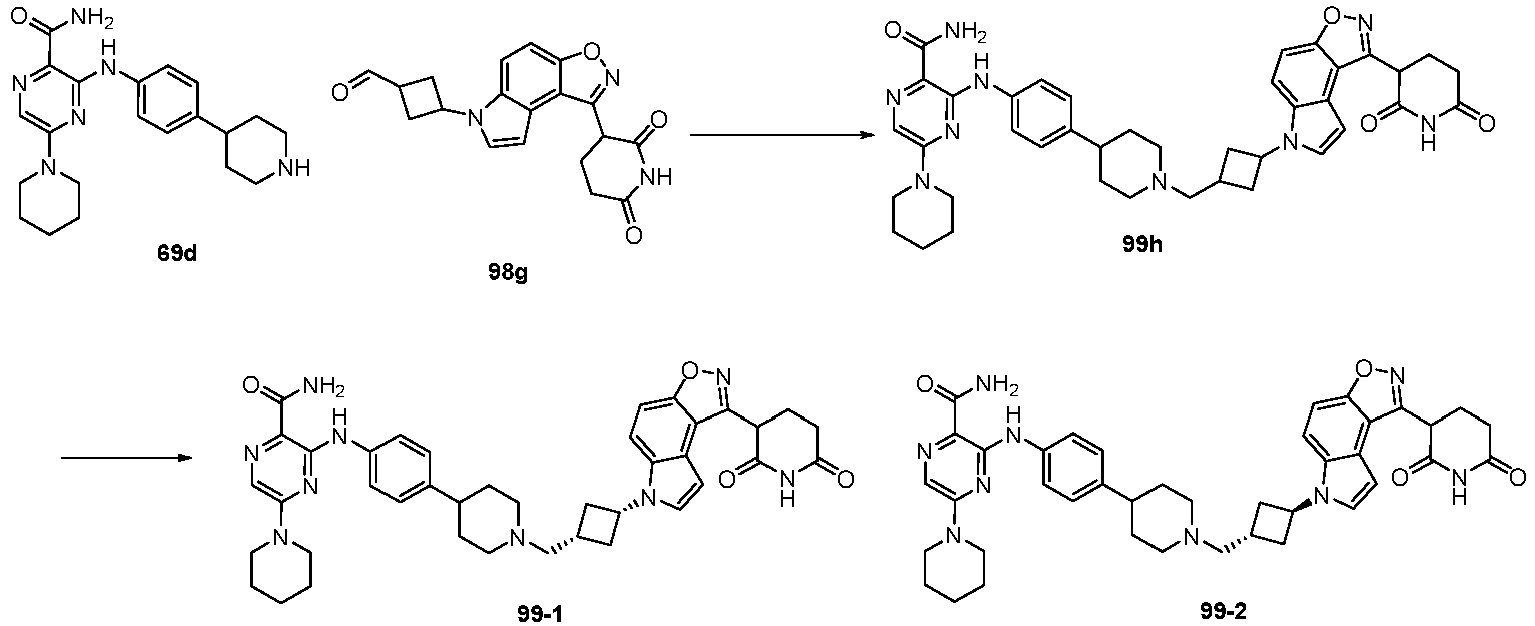
- Intermediate 69d (200 mg), intermediate 98g (200 mg), dichloroethane (10 mL), isopropanol (2 mL), and glacial acetic acid (14.2 mg, 0.013 mL) were added to a reaction flask. After the mixture was stirred at room temperature (30 min), sodium cyanoborohydride (503 mg) was added, and the mixture was stirred overnight at room temperature. After the reaction was completed, 100 mL of water was added to the reaction solution, and the mixture was extracted twice with 100 mL of dichloromethane. The extracts were combined, dried over anhydrous sodium sulfate, filtered under vacuum, and concentrated, and the residue was purified by silica gel column chromatography to give compound 99h (200 mg). Compound 99h was separated by high performance liquid chromatography to give compound 99-1 (95 mg) and compound 99-2 (37 mg) in sequence. The conditions of preparative chromatography were as follows:
- Instrument and preparative column: Shimadzu LC-20AD high performance liquid chromatograph was used, and the preparative column was Uitimate XB-Phenyl (4.6×250 mm, 10 µm). Mobile phase system: acetonitrile/10 mM ammonium acetate, isocratic elution: acetonitrile/10 mM ammonium acetate = 60/40.
- MS(ESI, [M+H]+) m/z: 716.44
- Compound 99-1: 1H NMR (500 MHz, DMSO-d6) δ 11.29 (s, 1H), 11.18 (s, 1H), 7.87 - 7.77 (m, 2H), 7.74 (d, J= 2.9 Hz, 1H), 7.66 (s, 1H), 7.51 (dd, J = 19.4, 8.5 Hz, 3H), 7.32 (d, J = 2.9 Hz, 1H), 7.19 (d, J = 8.1 Hz, 2H), 6.60 (d, J = 3.1 Hz, 1H), 4.99 (p, J = 8.5 Hz, 1H), 4.70 (dd, J = 11.9, 5.1 Hz, 1H), 3.67 (t, J = 5.3 Hz, 4H), 2.98 (s, 2H), 2.85 (td, J = 12.1, 6.0 Hz, 1H), 2.74 (d, J = 9.5 Hz, 2H), 2.63 (dt, J = 17.1, 4.2 Hz, 1H), 2.43 (tt, J = 12.2, 6.2 Hz, 3H), 2.23 (dq, J = 13.8, 4.9 Hz, 1H), 2.18 - 1.97 (m, 4H), 1.76 (s, 2H), 1.66 (q, J = 6.0 Hz, 4H), 1.59 (q, J = 5.5 Hz, 4H), 1.23 (s, 2H).
- Compound 99-2: 1H NMR (500 MHz, DMSO-d6) δ 11.29 (s, 1H), 11.19 (s, 1H), 7.85 (d, J = 9.5 Hz, 2H), 7.74 (s, 1H), 7.66 (s, 1H), 7.51 (dd, J = 18.6, 8.4 Hz, 3H), 7.32 (s, 1H), 7.19 (d, J = 8.1 Hz, 2H), 6.61 (d, J = 3.3 Hz, 1H), 5.29 (p, J = 7.5 Hz, 1H), 4.70 (dd, J = 11.7, 5.1 Hz, 1H), 3.68 (d, J = 5.5 Hz, 4H), 3.04 (s, 2H), 2.86 (ddd, J = 17.1, 11.7, 5.3 Hz, 1H), 2.73 - 2.60 (m, 6H), 2.42 (dt, J= 19.5, 11.1 Hz, 3H), 2.28 - 2.20 (m, 1H), 2.04 (d, J = 52.3 Hz, 2H), 1.78 (d, J = 11.3 Hz, 2H), 1.72 - 1.63 (m, 4H), 1.59 (s, 4H).
-


- Intermediate 98b (5.3 g), 3-(benzyloxy)-1-cyclobutanone (3.38 g), methanol (50 mL), and glacial acetic acid (0.384 g) were added to a reaction flask. After the mixture was stirred at room temperature for 5 min, sodium cyanoborohydride (1.606 g) was added, and the mixture was stirred overnight at room temperature. After the reaction was completed, the reaction solution was extracted twice with 300 mL of water and 300 mL of dichloromethane. The extracts were combined, dried over anhydrous sodium sulfate, filtered under vacuum, and concentrated, and the residue was purified by silica gel column chromatography to give intermediate 100b (3.95 g).
- MS(ESI, [M+H]+) m/z: 451.38.
- 1H NMR (500 MHz, DMSO-d6) δ 7.41 - 7.37 (m, 1H), 7.35 - 7.32 (m, 4H), 7.30 - 7.28 (m, 1H), 6.91 - 6.76 (m, 1H), 6.67 (t, J = 13.3 Hz, 1H), 5.65 (dd, J = 13.0, 7.8 Hz, 1H), 4.92 (dd, J = 10.5, 6.5 Hz, 1H), 4.42 - 4.37 (m, 2H), 4.21 - 4.11 (m, 2H), 4.10 - 4.04 (m, 4H), 3.94 (q, J = 7.0 Hz, 2H), 2.73 (dtdd, J = 9.2, 6.7, 4.8, 2.9 Hz, 2H), 2.37 (tt, J = 10.7, 4.9 Hz, 1H), 1.85 (qd, J= 8.5, 2.8 Hz, 1H), 1.30 (td, J= 7.0, 1.6 Hz, 3H), 1.20 - 1.17 (m, 3H).
- Intermediate 100b (3.95 g), dichloromethane (40 mL), and hydrochloric acid (6.58 mL, 4 mol/L) were added to a reaction flask in sequence, and the mixture was reacted at room temperature. After the reaction was completed, as confirmed by TLC, 200 mL of an aqueous NaHCOs solution and 200 mL of dichloromethane were added to the reaction solution. The organic phase was separated, dried over anhydrous sodium sulfate, filtered, and concentrated. The concentrate was separated and purified by silica gel column chromatography to give intermediate 100c (2.51 g).
- MS(ESI, [M+H]+) m/z: 405.3
- 1H NMR (500 MHz, DMSO-d6) δ 7.87 - 7.75 (m, 2H), 7.47 (dd, J= 9.1, 7.2 Hz, 1H), 7.41 - 7.27 (m, 6H), 6.69 (t, J = 3.6 Hz, 1H), 4.48 (s, 2H), 4.42 - 4.33 (m, 1H), 4.26 (d, J = 1.4 Hz, 2H), 4.14 (qd, J = 7.1, 2.3 Hz, 2H), 4.05 - 3.96 (m, 1H), 2.97 (dtd, J = 9.1, 6.7, 2.9 Hz, 1H), 2.69 (dt, J = 8.5, 5.4 Hz, 1H), 2.34 (ddd, J = 11.7, 9.1, 7.4 Hz, 1H), 1.18 (td, J = 7.1, 3.0 Hz, 3H).
- Intermediate 100c (1.5 g), 10% palladium on carbon catalyst (0.75 g), MeOH (30 mL), and hydrochloric acid (0.926 mL, 4 mol/L) were added to a reaction flask in sequence, and the mixture was reacted at room temperature under H2 atmosphere. After the reaction was completed, as confirmed by TLC, the reaction solution was filtered under vacuum, and the filtrate was concentrated and separated and purified by silica gel column chromatography to give intermediate 100d (0.765 g).
- MS(ESI, [M+H]+) m/z: 315.2
- 1H NMR (500 MHz, DMSO-d 6) δ 7.83 - 7.77 (m, 1H), 7.77 - 7.71 (m, 1H), 7.46 (dd, J = 9.1, 4.1 Hz, 1H), 6.67 (t, J = 2.8 Hz, 1H), 5.25 (tt, J = 8.2, 5.8 Hz, 1H), 4.61 (tt, J = 9.3, 7.2 Hz, 1H), 4.31 - 4.24 (m, 2H), 4.12 (dq, J = 13.5, 7.1 Hz, 2H), 4.07 - 4.00 (m, 1H), 2.93 (dtd, J = 9.7, 6.9, 2.9 Hz, 1H), 2.71 - 2.59 (m, 1H), 2.53 (dd, J = 8.2, 4.2 Hz, 1H), 2.29 - 2.22 (m, 1H), 1.18 (td, J= 7.1, 1.5 Hz, 3H).
- Intermediate 100d (1.7 g), acrylamide (0.461 g), and anhydrous tetrahydrofuran (30 mL) were added to a reaction flask in sequence. Potassium tert-butoxide (0.91 g) was slowly added under an ice bath, and the mixture was reacted for 1 h. The reaction solution was added to 100 mL of a saturated aqueous ammonium chloride solution to quench the reaction, and the mixture was extracted with 100 mL of dichloromethane. The organic phase was separated, dried over anhydrous sodium sulfate, filtered, and concentrated. The concentrate was separated and purified by silica gel column chromatography to give intermediate 100e (0.84 g).
- MS(ESI, [M+H]+) m/z: 340.2.
- Intermediate 100e (400 mg), acetonitrile (10.00 mL), and IBX oxidant (353 mg) were added to a reaction flask in sequence, and the mixture was reacted at 80 °C. After the reaction was completed, as confirmed by TLC, the reaction solution was directly filtered to remove solids, and the filtrate was concentrated to give intermediate 100f (410 mg).
- MS(ESI, [M+H]+) m/z: 338.3.
- Intermediate 1i (200 mg), intermediate 100f (165 mg), dichloroethane (10 mL), isopropanol (2 mL), and glacial acetic acid (11.29 mg, 0.011 mL) were added to a reaction flask. After the mixture was stirred at room temperature for 15 min, sodium cyanoborohydride (47.27 mg) was added, and the mixture was stirred overnight at room temperature. After the reaction was completed, 100 mL of water was added to the reaction solution, and the mixture was extracted twice with 100 mL of dichloromethane. The extracts were combined, dried over anhydrous sodium sulfate, filtered under vacuum, and concentrated, and the residue was purified by silica gel column chromatography to give 160 mg of a mixture. The mixture was separated by high performance liquid chromatography to give compound 100 (62 mg). The conditions of preparative chromatography were as follows: Instrument and preparative column: Shimadzu LC-20AD high performance liquid chromatograph was used, and the preparative column was Uitimate XB-Phenyl (4.6×250 mm, 10 µm). Mobile phase system: acetonitrile/10 mM ammonium acetate, isocratic elution: acetonitrile/10 mM ammonium acetate = 60/40.
- MS(ESI, [M+H]+) m/z: 800.43.
- 1H NMR (500 MHz, DMSO-d6) δ 11.20 (d, J = 11.3 Hz, 2H), 7.87 (d, J = 8.7 Hz, 1H), 7.77 (s, 2H), 7.66 (s, 1H), 7.51 (d, J= 8.2 Hz, 3H), 7.34 (s, 1H), 7.17 (d, J= 8.0 Hz, 2H), 6.62 (s, 1H), 4.87 (s, 1H), 4.70 (dd, J= 11.8, 5.1 Hz, 1H), 4.35 (d, J = 12.7 Hz, 1H), 4.29 (d, J = 12.7 Hz, 1H), 3.66 - 3.58 (m, 1H), 3.26 (p, J = 7.6, 6.6 Hz, 2H), 3.11 - 2.94 (m, 4H), 2.93 - 2.75 (m, 4H), 2.75 - 2.67 (m, 4H), 2.64 (dd, J = 17.3, 3.9 Hz, 1H), 2.44 (dd, J = 12.6, 4.6 Hz, 2H), 2.30 - 2.16 (m, 3H), 2.08 (d, J= 1.8 Hz, 1H), 1.92 (s, 2H), 1.79 (d, J= 14.8 Hz, 5H), 1.68 - 1.53 (m, 3H).
-


- Intermediate 69d (150 mg), intermediate 100f (160 mg), dichloroethane (10 mL), isopropanol (2 mL), and glacial acetic acid (11.84 mg, 0.011 mL) were added to a reaction flask. After the mixture was stirred at room temperature (30 min), sodium cyanoborohydride (74.3 mg) was added, and the mixture was stirred overnight at room temperature. After the reaction was completed, 100 mL of water was added to the reaction solution, and the mixture was extracted twice with 100 mL of dichloromethane. The extracts were combined, dried over anhydrous sodium sulfate, filtered under vacuum, and concentrated, and the residue was purified by silica gel column chromatography to give 120 mg of a mixture. The mixture was separated by high performance liquid chromatography to give compound 101 (49 mg). The conditions of preparative chromatography were as follows: Instrument and preparative column: Shimadzu LC-20AD high performance liquid chromatograph was used, and the preparative column was Uitimate XB-Phenyl (4.6×250 mm, 10 µm). Mobile phase system: acetonitrile/10 mM ammonium acetate, isocratic elution: acetonitrile/10 mM ammonium acetate = 60/40.
- MS(ESI, [M+H]+) m/z: 702.38.
- 1H NMR (500 MHz, DMSO-d6) δ 11.29 (s, 1H), 11.19 (s, 1H), 7.87 (d, J = 9.2 Hz, 1H), 7.75 (dd, J = 15.7, 3.0 Hz, 2H), 7.66 (s, 1H), 7.51 (dd, J = 10.3, 8.7 Hz, 3H), 7.31 (d, J = 2.7 Hz, 1H), 7.19 (d, J = 8.3 Hz, 2H), 6.61 (d, J = 3.1 Hz, 1H), 4.85 (p, J = 8.5 Hz, 1H), 4.70 (dd, J = 11.9, 5.1 Hz, 1H), 3.67 (t, J = 5.3 Hz, 4H), 2.98 (d, J = 10.6 Hz, 2H), 2.86 (td, J = 12.0, 6.0 Hz, 1H), 2.79 (q, J = 9.8, 8.1 Hz, 2H), 2.65 (ddd, J = 17.4, 12.7, 5.7 Hz, 2H), 2.49 - 2.38 (m, 2H), 2.28 - 2.16 (m, 3H), 1.91 (t, J= 11.2 Hz, 2H), 1.78 (d, J= 11.5 Hz, 2H), 1.65 (dd, J= 9.5, 4.7 Hz, 3H), 1.59 (h, J = 5.0, 4.5 Hz, 5H).
-


- Intermediate 98b (1.0 g), 4-hydroxycyclohexanone (0.662 g), methanol (20 mL), and glacial acetic acid (0.384 g) were added to a reaction flask. After the mixture was stirred at room temperature for 5 min, sodium cyanoborohydride (1.606 g) was added, and the mixture was stirred overnight at room temperature. After the reaction was completed, 100 mL of water was added to the reaction solution, and the mixture was extracted twice with 100 mL of dichloromethane. The extracts were combined, dried over anhydrous sodium sulfate, filtered under vacuum, and concentrated, and the residue was purified by silica gel column chromatography to give intermediate 102b (0.71 g).
- MS(ESI, [M+H]+) m/z: 389.31.
- 1H NMR (500 MHz, DMSO-d6) δ 7.44 - 7.38 (m, 1H), 7.05 (d, J = 9.1 Hz, 1H), 6.66 (d, J = 13.1 Hz, 1H), 5.63 (d, J = 13.1 Hz, 1H), 4.47 - 4.38 (m, 1H), 4.27 (d, J = 8.5 Hz, 1H), 4.11 - 4.04 (m, 4H), 3.94 (q, J = 7.1 Hz, 2H), 3.70 (q, J = 4.0 Hz, 1H), 3.38 (d, J = 7.4 Hz, 1H), 2.37 (ddd, J = 14.0, 8.2, 5.9 Hz, 1H), 2.22 (ddd, J= 15.8, 8.5, 5.8 Hz, 1H), 1.95 - 1.86 (m, 1H), 1.77 - 1.70 (m, 1H), 1.62 (q, J = 6.4, 6.0 Hz, 2H), 1.54 (dt, J = 6.7, 3.5 Hz, 2H), 1.30 (t, J = 7.1 Hz, 3H), 1.19 (d, J = 6.9 Hz, 3H).
- Intermediate 102b (0.45 g), dichloromethane (10 mL), and hydrochloric acid (0.87 mL, 4 mol/L) were added to a reaction flask in sequence, and the mixture was reacted at room temperature for 4 h. 50 mL of an aqueous NaHCOs solution and 50 mL of dichloromethane were added to the reaction solution. The organic phase was separated, dried over anhydrous sodium sulfate, filtered, and concentrated. The concentrate was separated and purified by silica gel column chromatography to give intermediate 102c (0.24 g).
- MS(ESI, [M+H]+) m/z: 343.3
- 1H NMR (500 MHz, DMSO-d6) δ 7.90 (d, J = 9.1 Hz, 1H), 7.67 (d, J = 3.1 Hz, 1H), 7.50 - 7.44 (m, 1H), 6.64 (d, J = 3.1 Hz, 1H), 4.56 - 4.48 (m, 2H), 4.26 (s, 2H), 4.14 (d, J = 7.1 Hz, 2H), 3.94 (p, J = 3.1 Hz, 1H), 2.16 (qd, J = 12.9, 3.6 Hz, 2H), 1.82 (dt, J= 9.5, 3.1 Hz, 2H), 1.78 - 1.70 (m, 4H), 1.20 - 1.17 (m, 3H).
- Intermediate 102c (0.25 g), acrylamide (0.057 g), and anhydrous tetrahydrofuran (10 mL) were added to a reaction flask in sequence. Potassium tert-butoxide (0.09 g) was slowly added under an ice bath, and the mixture was reacted for 1 h. The reaction solution was added to 50 mL of a saturated aqueous ammonium chloride solution to quench the reaction, and the mixture was extracted with 50 mL of dichloromethane. The organic phase was separated, dried over anhydrous sodium sulfate, filtered, and concentrated. The concentrate was separated and purified by silica gel column chromatography to give intermediate 102d (0.21 g).
- MS(ESI, [M+H]+) m/z: 368.2.
- 1H NMR (500 MHz, DMSO-d6) δ 11.18 (s, 1H), 7.92 (d, J = 9.2 Hz, 1H), 7.70 - 7.66 (m, 1H), 7.50 - 7.46 (m, 1H), 6.56 (d, J= 3.1 Hz, 1H), 4.68 (dd, J = 11.9, 5.1 Hz, 1H), 4.57 - 4.50 (m, 2H), 3.94 (q, J = 3.0 Hz, 1H), 2.85 (ddd, J = 17.4, 12.2, 5.4 Hz, 1H), 2.63 (dt, J = 17.3, 4.1 Hz, 1H), 2.43 (td, J = 12.7, 4.6 Hz, 1H), 2.27 - 2.09 (m, 4H), 1.83 (d, J = 13.0 Hz, 3H), 1.78 - 1.69 (m, 2H).
- Intermediate 102d (2.3 g), acetonitrile (10.00 mL), and IBX oxidant (2.104 g, 7.51 mmol) were added to a reaction flask in sequence, and the mixture was reacted at 80 °C for 1 h. The reaction solution was directly filtered to remove solids, and the filtrate was concentrated to give intermediate 102e (1.63 g).
- MS(ESI, [M+H]+) m/z: 366.3.
- 1H NMR (500 MHz, DMSO-d6) δ 11.18 (s, 1H), 8.04 (d, J= 9.1 Hz, 1H), 7.76 - 7.71 (m, 1H), 7.54 (d, J= 9.1 Hz, 1H), 6.59 (dd, J = 8.9, 3.2 Hz, 1H), 5.15 (tt, J = 11.1, 4.2 Hz, 1H), 4.73 - 4.64 (m, 1H), 3.17 (d, J = 3.7 Hz, 1H), 2.90 - 2.75 (m, 3H), 2.63 (dt, J = 16.3, 3.7 Hz, 1H), 2.44 (tt, J = 12.3, 6.1 Hz, 1H), 2.38 - 2.29 (m, 3H), 2.24 (tt, J = 9.1, 3.9 Hz, 3H).
- Intermediate 1i (200 mg), intermediate 102e (183 mg), dichloroethane (10 mL), isopropanol (2 mL), and glacial acetic acid (13 mg, 0.209 mmol) were added to a reaction flask. After the mixture was stirred at room temperature for 5 min, sodium cyanoborohydride (53 mg, 0.836 mmol) was added, and the mixture was stirred overnight at room temperature. After the reaction was completed, 100 mL of water was added to the reaction solution, and the mixture was extracted twice with 100 mL of dichloromethane. The extracts were combined, dried over anhydrous sodium sulfate, filtered under vacuum, and concentrated, and the residue was purified by silica gel column chromatography to give compound 102f (110 mg), which was then purified by C18 reversed-phase column chromatography (10 nM aqueous ammonium acetate solution-acetonitrile = 90%:10% → 10%:90%) to give compound 102-1 (34 mg) and compound 102-2 (35 mg) in sequence.
- Compound 102-1:
Q-TOF(ESI, [M+H]+) m/z: 828.4345 - 1H NMR (500 MHz, DMSO-d6) δ 11.19 (d, J = 12.7 Hz, 2H), 7.94 (d, J = 9.3 Hz, 1H), 7.76 (d, J = 2.9 Hz, 1H), 7.72 - 7.64 (m, 2H), 7.50 (dd, J = 8.8, 6.6 Hz, 3H), 7.34 (d, J = 2.9 Hz, 1H), 7.17 (d, J = 8.2 Hz, 2H), 6.57 (d, J = 3.1 Hz, 1H), 4.68 (dd, J = 11.9, 5.2 Hz, 1H), 4.54 (dq, J = 11.6, 6.7, 5.6 Hz, 1H), 4.36 (d, J = 11.4 Hz, 1H), 4.29 (d, J = 12.7 Hz, 1H), 3.62 (tt, J = 10.6, 4.3 Hz, 1H), 3.26 (dd, J = 9.7, 7.2 Hz, 2H), 3.00 (dt, J = 41.7, 12.9 Hz, 4H), 2.85 (td, J = 12.2, 6.1 Hz, 1H), 2.73 (d, J = 3.9 Hz, 3H), 2.63 (dt, J = 17.1, 4.1 Hz, 2H), 2.43 (td, J = 12.6, 4.5 Hz, 3H), 2.22 (dq, J = 13.7, 4.6 Hz, 1H), 2.10 - 2.03 (m, 2H), 2.02 - 1.85 (m, 5H), 1.80 (q, J= 12.2 Hz, 5H), 1.73 - 1.51 (m, 6H).
- Compound 102-2:
Q-TOF(ESI, [M+H]+) m/z: 828.4330 - 1H NMR (500 MHz, DMSO-d6) δ 11.20 (d, J = 11.9 Hz, 2H), 7.97 (d, J= 9.2 Hz, 1H), 7.76 (s, 1H), 7.67 (s, 2H), 7.51 (dd, J = 18.0, 8.5 Hz, 3H), 7.34 (d, J = 2.9 Hz, 1H), 7.21 (d, J = 8.1 Hz, 2H), 6.59 (d, J = 3.0 Hz, 1H), 4.70 (dd, J = 11.8, 5.2 Hz, 2H), 4.38 (s, 1H), 4.30 (d, J = 13.1 Hz, 1H), 3.67 - 3.59 (m, 1H), 3.39 - 3.33 (m, 2H), 3.28 - 3.21 (m, 3H), 3.00 (dt, J = 34.4, 12.0 Hz, 2H), 2.86 (ddd, J = 17.3, 12.0, 5.3 Hz, 1H), 2.71 (s, 3H), 2.63 (dt, J = 17.1, 4.2 Hz, 1H), 2.43 (td, J = 12.2, 11.7, 3.7 Hz, 2H), 2.30 (s, 1H), 2.23 (dt, J = 13.6, 4.8 Hz, 2H), 2.14 (d, J = 14.1 Hz, 3H), 2.04 - 1.91 (m, 3H), 1.87 - 1.73 (m, 7H), 1.68 (s, 3H), 1.57 (d, J = 12.3 Hz, 1H).
-


- Intermediate 69d (220 mg), intermediate 102e (254 mg), dichloroethane (10 mL), isopropanol (2 mL), and glacial acetic acid (17 mg, 0.289 mmol) were added to a reaction flask. After the mixture was stirred at room temperature for 5 min, sodium cyanoborohydride (73 mg, 1.156 mmol) was added, and the mixture was stirred overnight at room temperature. After the reaction was completed, 100 mL of water was added to the reaction solution, and the mixture was extracted twice with 100 mL of dichloromethane. The extracts were combined, dried over anhydrous sodium sulfate, filtered under vacuum, and concentrated, and the residue was purified by silica gel column chromatography to give compound 103 (180 mg), which was then purified by C18 reversed-phase column chromatography (10 nM aqueous ammonium acetate solution-acetonitrile = 90%:10% → 10%:90%) to give compound 103-1 (68 mg) and compound 103-2 (48 mg) in sequence.
- Compound 103-1:
Q-TOF(ESI, [M+H]+) m/z: 730.3833 - 1H NMR (500 MHz, DMSO-d6) δ 11.30 (s, 1H), 11.19 (s, 1H), 7.97 (d, J = 9.2 Hz, 1H), 7.74 (d, J = 2.8 Hz, 1H), 7.67 (s, 2H), 7.55 (d, J= 8.1 Hz, 2H), 7.49 (d, J= 9.0 Hz, 1H), 7.32 (d, J= 2.8 Hz, 1H), 7.23 (d, J= 8.2 Hz, 2H), 6.58 (d, J = 3.1 Hz, 1H), 4.69 (dt, J = 18.4, 9.2 Hz, 2H), 3.69 (t, J = 5.4 Hz, 4H), 3.20 (d, J = 22.9 Hz, 2H), 2.86 (ddd, J= 17.2, 12.0, 5.4 Hz, 1H), 2.63 (dt, J= 17.2, 4.2 Hz, 1H), 2.44 (tt, J= 12.4, 6.4 Hz, 2H), 2.30 (s, 1H), 2.28 - 2.20 (m, 2H), 2.15 (dd, J= 29.5, 11.9 Hz, 4H), 1.95 (s, 2H), 1.84 - 1.75 (m, 4H), 1.67 (q, J = 5.9 Hz, 5H), 1.60 (t, J = 5.5 Hz, 4H).
- Compound 103-2:
Q-TOF(ESI, [M+H]+) m/z: 730.3840 - 1H NMR (500 MHz, DMSO-d6) δ 11.30 (s, 1H), 11.18 (s, 1H), 7.94 (d, J = 9.2 Hz, 1H), 7.74 (d, J = 3.0 Hz, 1H), 7.72 - 7.65 (m, 2H), 7.52 (dd, J = 19.2, 8.6 Hz, 3H), 7.32 (d, J = 2.9 Hz, 1H), 7.20 (d, J = 8.2 Hz, 2H), 6.57 (d, J = 3.1 Hz, 1H), 4.68 (dd, J = 11.9, 5.2 Hz, 1H), 4.54 (s, 1H), 3.68 (t, J = 5.3 Hz, 4H), 2.91 (s, 2H), 2.85 (ddd, J = 17.3, 12.1, 5.4 Hz, 1H), 2.63 (dt, J = 17.2, 4.2 Hz, 1H), 2.43 (td, J = 12.5, 4.4 Hz, 2H), 2.22 (dq, J = 13.8, 4.9 Hz, 1H), 2.06 (s, 2H), 2.04 - 1.94 (m, 2H), 1.90 (d, J = 11.2 Hz, 5H), 1.81 (s, 3H), 1.71 - 1.63 (m, 4H), 1.60 (q, J = 5.6 Hz, 4H).
-


- Intermediate 15m was separated by high performance liquid chromatography to give intermediates 104b-1 (0.77 g) and 104b-2 (1.51 g) in sequence. The conditions of preparative chromatography were as follows:
Instrument and preparative column: YMC K-prep Lab100g high pressure preparative chromatograph was used, and the preparative column was YMC Sil SLG12S11-2530 (30×250 mm, 10 µm). Mobile phase system: ethanol/n-hexane, isocratic elution: ethanol/n-hexane = 60/40. - Intermediate 104b-1:
- MS(ESI, [M+H]+) m/z: 343.3.
- 1H NMR (500 MHz, DMSO-d6) δ 7.91 - 7.84 (m, 1H), 7.68 (d, J = 3.1 Hz, 1H), 7.47 (d, J = 9.1 Hz, 1H), 6.65 (d, J = 3.1 Hz, 1H), 5.05 (p, J = 7.1 Hz, 1H), 4.61 (t, J = 5.3 Hz, 1H), 4.26 (s, 2H), 4.14 (q, J = 7.1 Hz, 2H), 3.40 (ddd, J = 6.7, 5.2, 1.5 Hz, 2H), 2.42 - 2.31 (m, 1H), 2.22 (tdd, J = 13.3, 9.0, 6.0 Hz, 1H), 2.01 - 1.89 (m, 4H), 1.46 (tdd, J= 13.4, 7.5, 4.5 Hz, 1H), 1.18 (td, J = 7.1, 3.8 Hz, 3H).
- Intermediate 104b-2:
- MS(ESI, [M+H]+) m/z: 343.2.
- 1H NMR (500 MHz, DMSO-d6) δ 7.90 (d, J = 9.0 Hz, 1H), 7.72 (d, J= 3.2 Hz, 1H), 7.46 (d, J= 9.1 Hz, 1H), 6.65 (d, J = 3.1 Hz, 1H), 5.02 (dq, J = 9.5, 7.6 Hz, 1H), 4.62 (t, J = 5.2 Hz, 1H), 4.26 (s, 2H), 4.16 - 4.12 (m, 2H), 3.44 (ddd, J= 6.5, 5.2, 1.6 Hz, 2H), 2.32 (dt, J= 12.4, 7.3 Hz, 1H), 2.20 (dddd, J= 25.0, 12.5, 8.0, 6.0 Hz, 2H), 1.97 - 1.75 (m, 2H), 1.72 - 1.59 (m, 2H), 1.18 (t, J = 7.1 Hz, 3H).
- Intermediate 104b-1 (0.63 g), acrylamide (0.128 g), and anhydrous tetrahydrofuran (20 mL) were added to a reaction flask in sequence. Potassium tert-butoxide (0.203 g, 1.805 mmol) was slowly added under an ice bath, and the mixture was reacted for 1 h. The reaction solution was added to 100 mL of a saturated aqueous ammonium chloride solution to quench the reaction, and the mixture was extracted with 100 mL of dichloromethane. The organic phase was separated, dried over anhydrous sodium sulfate, filtered, and concentrated. The concentrate was separated and purified by silica gel column chromatography to give intermediate 104c (0.45 g).
- MS(ESI, [M+H]+) m/z: 368.2.
- 1H NMR (500 MHz, DMSO-d6) δ 11.18 (s, 1H), 7.89 (d, J= 9.2 Hz, 1H), 7.69 (d, J= 3.1 Hz, 1H), 7.49 (d, J= 9.1 Hz, 1H), 6.56 (d, J = 3.1 Hz, 1H), 5.05 (p, J = 7.1 Hz, 1H), 4.69 (dd, J = 11.9, 5.1 Hz, 1H), 4.64 - 4.57 (m, 1H), 3.40 (ddd, J = 6.7, 5.3, 1.5 Hz, 2H), 2.85 (ddd, J = 17.3, 12.1, 5.4 Hz, 1H), 2.63 (dt, J = 17.3, 4.2 Hz, 1H), 2.44 (qd, J = 12.4, 4.4 Hz, 1H), 2.35 (dq, J = 13.4, 6.8, 6.3 Hz, 1H), 2.27 - 2.18 (m, 2H), 2.04 - 1.89 (m, 4H), 1.47 (tt, J = 11.9, 3.8 Hz, 1H).
- Intermediate 104c (0.45 g), acetonitrile (20.00 mL), and IBX oxidant (0.514 g) were added to a reaction flask in sequence, and the mixture was reacted at 80 °C for 1 h. The reaction solution was directly filtered, and the filtrate was concentrated to give intermediate 104d (0.56 g).
- MS(ESI, [M+H]+) m/z: 366.3.
- Intermediate 69d (400 mg), intermediate 104d (499 mg), dichloroethane (20 mL), and isopropanol (4 mL) were added to a reaction flask, and then sodium triacetoxyborohydride (334 mg, 1.577 mmol) was added. The mixture was stirred overnight at room temperature. After the reaction was completed, 100 mL of water was added to the reaction solution, and the mixture was extracted twice with 100 mL of dichloromethane. The extracts were combined, dried over anhydrous sodium sulfate, filtered under vacuum, and concentrated, and the residue was purified by silica gel column chromatography and C18 reversed-phase column chromatography to give compound 104 (266 mg).
- Q-TOF(ESI, [M+H]+) m/z: 730.3839
- 1H NMR (500 MHz, DMSO-d6) δ 11.28 (s, 1H), 11.18 (s, 1H), 7.91 (d, J = 9.1 Hz, 1H), 7.72 (dd, J = 10.2, 3.0 Hz, 2H), 7.66 (s, 1H), 7.50 (dd, J = 8.8, 6.8 Hz, 3H), 7.31 (d, J = 2.9 Hz, 1H), 7.18 (d, J = 8.3 Hz, 2H), 6.57 (d, J = 3.1 Hz, 1H), 5.12 (p, J = 7.1 Hz, 1H), 4.69 (dd, J = 11.9, 5.1 Hz, 1H), 3.67 (t, J = 5.3 Hz, 4H), 3.00 (s, 2H), 2.85 (ddd, J = 17.3, 12.1, 5.4 Hz, 1H), 2.63 (dt, J = 17.1, 4.2 Hz, 1H), 2.43 (td, J = 12.5, 4.5 Hz, 3H), 2.34 (s, 2H), 2.25 (tp, J = 14.0, 5.1, 4.3 Hz, 2H), 1.98 (tdd, J = 22.0, 13.4, 6.9 Hz, 6H), 1.73 (s, 2H), 1.68 - 1.53 (m, 8H), 1.44 (dq, J = 11.9, 8.0 Hz, 1H).
-


- Intermediate 104b-2 (0.35 g), acrylamide (0.078 g), and anhydrous tetrahydrofuran (20 mL) were added to a reaction flask in sequence. Potassium tert-butoxide (0.123 g, 1.1 mmol) was slowly added under an ice bath, and the mixture was reacted for 1 h. The reaction solution was added to 100 mL of a saturated aqueous ammonium chloride solution to quench the reaction, and the mixture was extracted with 100 mL of dichloromethane. The organic phase was separated, dried over anhydrous sodium sulfate, filtered, and concentrated. The concentrate was separated and purified by silica gel column chromatography to give intermediate 105b (0.27 g).
- MS(ESI, [M+H]+) m/z: 368.2.
- 1H NMR (500 MHz, DMSO-d6) δ 11.18 (s, 1H), 7.91 (d, J = 9.2 Hz, 1H), 7.72 (d, J = 3.2 Hz, 1H), 7.48 (d, J = 9.1 Hz, 1H), 6.57 (d, J = 3.1 Hz, 1H), 5.02 (p, J = 8.1 Hz, 1H), 4.69 (dd, J = 11.9, 5.1 Hz, 1H), 4.62 (t, J = 5.2 Hz, 1H), 3.46 - 3.41 (m, 2H), 2.85 (ddd, J = 17.4, 12.1, 5.4 Hz, 1H), 2.63 (dt, J = 17.2, 4.2 Hz, 1H), 2.44 (qd, J = 12.2, 4.4 Hz, 1H), 2.31 (dt, J = 12.2, 7.3 Hz, 1H), 2.21 (ddt, J = 26.5, 12.5, 5.5 Hz, 3H), 1.94 - 1.79 (m, 2H), 1.64 (tdd, J = 12.4, 5.9, 3.3 Hz, 2H).
- Intermediate 105b (0.27 g), acetonitrile (20.00 mL), and IBX oxidant (0.309 g) were added to a reaction flask in sequence, and the mixture was reacted at 80 °C for 1 h. The reaction solution was directly filtered, and the filtrate was concentrated to give intermediate 105c (0.25 g).
- MS(ESI, [M+H]+) m/z: 366.3.
- Intermediate 69d (270 mg), intermediate 105c (389 mg), dichloroethane (20 mL), and isopropanol (4 mL) were added to a reaction flask, and then sodium triacetoxyborohydride (301 mg, 1.419 mmol) was added. The mixture was stirred overnight at room temperature. After the reaction was completed, 100 mL of water was added to the reaction solution, and the mixture was extracted twice with 100 mL of dichloromethane. The extracts were combined, dried over anhydrous sodium sulfate, filtered under vacuum, and concentrated, and the residue was purified by silica gel column chromatography and C18 reversed-phase column chromatography to give compound 105 (181 mg).
- Q-TOF(ESI, [M+H]+) m/z: 730.3855
- 1H NMR (500 MHz, DMSO-d6) δ 11.28 (s, 1H), 11.18 (s, 1H), 7.91 (d, J = 9.2 Hz, 1H), 7.74 (t, J = 3.8 Hz, 2H), 7.66 (s, 1H), 7.50 (dd, J = 12.1, 8.6 Hz, 3H), 7.31 (d, J = 2.9 Hz, 1H), 7.18 (d, J = 8.1 Hz, 2H), 6.59 (d, J = 3.1 Hz, 1H), 5.04 (q, J = 8.2 Hz, 1H), 4.69 (dd, J = 11.8, 5.1 Hz, 1H), 3.67 (t, J = 5.2 Hz, 4H), 3.01 (s, 2H), 2.85 (ddd, J = 17.4, 12.0, 5.4 Hz, 1H), 2.63 (dt, J = 17.2, 4.2 Hz, 1H), 2.49 - 2.29 (m, 6H), 2.23 (dq, J = 14.3, 5.9, 5.1 Hz, 2H), 2.09 - 1.88 (m, 4H), 1.75 (s, 2H), 1.65 (q, J = 6.0, 5.6 Hz, 4H), 1.58 (h, J = 7.1, 5.6 Hz, 6H).
- The detection was carried out using the Total-BTK Kits (cisbio, 63ADK064PEH), and 4× Supplemented Lysis buffer was prepared using the Blocking reagent stock solution (100×) and Lysis buffer stock solution (4×). Premixed antibody solutions were prepared using the Detection buffer, Total-BTK d2 antibody, and Total-BTK Eu Cryptate antibody.
- OCI-LY10 cells in a good growth state were collected and added to a centrifuge tube, adjusted to a cell density of 4.17 × 10⁶ cells/mL, and seeded in a 384-well plate (12 µL/well). The cells were incubated overnight in a cell incubator. Compounds were added using a nanoliter pipettor such that the final concentrations of the compounds were 100 nM-0.098 nM; the addition was performed in duplicate, and meanwhile, a control was set. After another 24 (or 6) h of incubation in the cell incubator, the 4× Supplemented Lysis buffer was added at 4 µL/well to lyse the cells. After the cells were shaken for 40 min at room temperature, the Premixed antibody solutions were added at 4 µL/well, and the cells were left to stand overnight at room temperature. Fluorescence values of the cells were detected at 665 nm/620 nm using an Envision microplate reader, the four-parameter analysis was performed, the dose-response curves were fit, and DC50 (the concentration of the drug when the degradation rate reaches 50%) and Dmax (the maximum degradation rate) were calculated. The experimental results are shown in Table 1.
Table 1 Compound OCI-LY10 cell Compound BTK Compound BTK Compound BTK BTK degradation degradation in OCI-LY10 cells degradation in OCI-LY10 cells degradation in OCI-LY10 cells DC50 (nM) Dmax (%) Dmax (%) Dmax (%) Dmax (%) 1 <0.098 99 24 >90 52 >90 88 >90 2 <0.098 99 26 >90 54 >90 89 >90 3 <0.098 99 28 >90 55 >90 90 >90 6 <0.098 99 29 >90 56 >90 93 >90 7 <0.098 99 30 >90 57 >90 94 >90 8 <0.098 99 31 >90 58 >90 96 >90 9 <0.098 99 33 >90 59 >90 97 >90 10 <0.098 99 35 >90 62 >90 100 >90 11 <0.098 99 40 >90 72 >90 102-1 >90 12 0.098 99 41 >90 76 >90 103-2 >90 13 <0.098 100 44 >90 77 >90 98-1 >90 14 <0.098 100 45 >90 78 >90 98-2 >90 15 <0.098 100 46 >90 79 >90 99-1 >90 27 <0.098 97 47 >90 80 >90 34 <0.098 97 48 >90 81 >90 36 <0.098 95 49 >90 82 >90 53 <0.098 95.97 50 >90 86 >90 102-2 <0.098 97.11 51 >90 87 >90 - OCI-LY10 cells in a good growth state were collected and added to a centrifuge tube, adjusted to a cell density of 1 × 10⁵ cells/mL, and seeded in a 96-well plate (100 µL/well). The cells were incubated overnight in a cell incubator. Compounds were added using a nanoliter pipettor such that the final concentrations of the compounds were 5000 nM-0.31 nM; the addition was performed in duplicate, and meanwhile, a control was set. After another 72 h of incubation in the cell incubator, 10 µL of CCK-8 (CK04, PP799) was added. After 2.5 h of incubation in the cell incubator, absorbance values were detected at 450 nm using an Envision microplate reader, the four-parameter analysis was performed, the dose-response curves were fit, and IC50 was calculated.
- TMD8-BTK(C481S) cells in a good growth state were collected and added to a centrifuge tube, adjusted to a cell density of 8 × 10⁴ cells/mL, and seeded in a 96-well plate (100 µL/well). The cells were incubated overnight in a cell incubator. Compounds were added using a nanoliter pipettor such that the final concentrations of the compounds were 5000 nM-0.31 nM; the addition was performed in duplicate, and meanwhile, a control was set. After another 72 h of incubation in the cell incubator, 10 µL of CCK-8 (CK04, PP799) was added. After 4 h of incubation in the cell incubator, absorbance values were detected at 450 nm using an Envision microplate reader, the four-parameter analysis was performed, the dose-response curves were fit, and IC50 was calculated.
- OCI-LY10(C481S) cells in the logarithmic growth phase were collected and added to a centrifuge tube, adjusted to a cell density of 5 × 10⁴ cells/mL, and seeded in a 96-well plate (100 µL/well). Meanwhile, compounds were added using a nanoliter pipettor such that the final concentrations of the compounds were 5000 nM-0.31 nM; the addition was performed in duplicate, and meanwhile, a control was set. After another 72 h of incubation in the cell incubator, the detection reagent CCK-8 (manufacturer: Dojindo Laboratories, Beijing; 10 µL/well) was added. After 3 h of incubation in the cell incubator, absorbance values were detected at 450 nm using a PerkinElmer Envision microplate reader, the four-parameter analysis was performed, the dose-response curves were fit, and IC50 was calculated. The results are shown in Table 2.
Table 2 Compound OCI-LY10 TMD8-BTKC481S OCI-LY10-BTKC481S IC50 (nM) IC50 (nM) 1 <0.31 35 2 18 3 <0.31 4 27 6 <0.31 27 7 <0.31 8 <0.31 6.9 9 <0.31 1.2 10 <0.31 2.4 11 <0.31 14 13 <0.31 <0.31 14 <0.31 <0.31 15 <0.31 <0.31 24 <0.31 0.5 26 <0.31 0.26 27 <0.31 0.062 28 <0.31 0.29 29 <0.31 0.35 30 <0.31 0.44 33 <0.31 0.37 34 <0.31 0.19 35 <0.31 0.12 36 <0.31 0.024 40 0.51 41 <0.31 0.34 44 0.56 46 0.66 47 0.62 48 5.7 49 6.8 50 4 51 4.7 52 3.7 53 <0.31 2.8 54 9.7 55 6.1 56 33 58 21 59 12 60 9.4 61 13 62 <0.31 8.2 67 32 69 5.7 70 15 72 2.6 74 23 75 9.8 76 11 77 <0.31 23 79 <0.31 12 80 <0.31 11 81 <0.31 11 82 <0.31 11 87 <0.31 11 88 29 89 <0.31 20 90 <0.31 1.2 93 0.7 94 <0.31 0.53 96 <0.31 0.31 97 0.78 100 <0.31 0.57 104 16 105 6.9 - The Asssy Buffer was prepared, and the composition of the Asssy Buffer was 50 mM Hepes (Gibco, 15630), 10 mM MgCl2, 2 mM DTT, 1 mM EGTA, and 0.010% Tween 20. BTK(WT) kinase (Life, PR5442A), ATP (Sigma, A7699), and ULight-poly GT (PE, TRF0100-M) working solutions were prepared using the Asssy Buffer. EDTA and Eu-labeled anti-phosphotyrosine (PT66) antibody (PE, AD0069) working solutions were prepared using the Detection Buffer (PE, CR97-100). 6 µL of BTK(WT) kinase at the corresponding concentration (final concentration: 0.003 ng/µL) was added to the compound groups and the control group, while 6 µL of the Asssy Buffer was added to the blank group, and then the compounds (with the concentration set to 1000 nM at the maximum, 4-fold dilution, 7 concentration gradients) were each added using a nanoliter pipettor. The mixture was incubated at room temperature for 30 min, and then 4 µL of the mixture of ATP (final concentration: 10 µM) and ULight-poly GT (final concentration: 100 nM) was added. After incubation at room temperature for 2 h, 5 µL of EDTA (final concentration: 10 mM) was added to stop the reaction, and finally 5 µL of antibody (final concentration: 2 nM) was added. After incubation at room temperature for 1 h, signal values were detected at 665/615 nM, the four-parameter analysis was performed, the dose-response curves were fit, and IC50 was calculated.
- The Asssy Buffer was prepared, and the composition of the Asssy Buffer was 50 mM Hepes (Gibco, 15630), 10 mM MgCl2, 2 mM DTT, 1 mM EGTA, and 0.010% Tween 20. BTK(C481S) kinase (Carna Biosciences, 08-547), ATP (Sigma, A7699), and ULight-poly GT (PE, TRF0100-M) working solutions were prepared using the Asssy Buffer. EDTA and Eu-labeled anti-phosphotyrosine (PT66) antibody (PE, AD0069) working solutions were prepared using the Detection Buffer. 6 µL of BTK(C481S) kinase at the corresponding concentration (final concentration: 0.005 ng/µL) was added to the compound groups and the control group, while 6 µL of the Asssy Buffer was added to the blank group, and then the compounds (with the concentration set to 1000 nM at the maximum, 4-fold dilution, 7 concentration gradients) were added using a nanoliter pipettor. The mixture was incubated at room temperature for 30 min, and then 4 µL of the mixture of ATP (final concentration: 10 µM) and ULight-poly GT (final concentration: 100 nM) was added. After incubation at room temperature for 2 h, 5 µL of EDTA (final concentration: 10 mM) was added to stop the reaction, and finally 5 µL of antibody (final concentration: 2 nM) was added. After incubation at room temperature for 1 h, signal values were detected at 665/615 nM, the four-parameter analysis was performed, the dose-response curves were fit, and IC50 was calculated.
- The Asssy Buffer was prepared, and the composition of the Asssy Buffer was 50 mM Hepes (Gibco, 15630), 10 mM MgCl2, 2 mM DTT, 1 mM EGTA, and 0.010% Tween 20. EGFR kinase (Carna, 08-115), ATP (Sigma, A7699), and ULight-poly GT (PE, TRF0100-M) working solutions were prepared using the Asssy Buffer. EDTA and Eu-labeled anti-phosphotyrosine (PT66) antibody (PE, AD0069) working solutions were prepared using the Detection Buffer. 6 µL of EGFR kinase at the corresponding concentration (final concentration: 0.006 ng/µL) was added to the compound groups and the control group, while 6 µL of the Asssy Buffer was added to the blank group, and then the compounds (with the concentration set to 1000 nM at the maximum, 4-fold dilution, 7 concentration gradients) were added using a nanoliter pipettor. The mixture was incubated at room temperature for 30 min, and then 4 µL of the mixture of ATP (final concentration: 5 µM) and ULight-poly GT (final concentration: 100 nM) was added. After incubation at room temperature for 2 h, 5 µL of EDTA (final concentration: 10 mM) was added to stop the reaction, and finally 5 µL of antibody (final concentration: 2 nM) was added. After incubation at room temperature for 1 h, signal values were detected at 665/615 nM, the four-parameter analysis was performed, the dose-response curves were fit, and IC50 was calculated.
- The Asssy Buffer was prepared, and the composition of the Asssy Buffer was 50 mM Hepes (Gibco, 15630), 10 mM MgCl2, 2 mM DTT, 1 mM EGTA, and 0.010% Tween 20. TEC kinase (Carna, 08-115), ATP (Sigma, A7699), and ULight-poly GT (PE, TRF0100-M) working solutions were prepared using the Asssy Buffer. EDTA and Eu-labeled anti-phosphotyrosine (PT66) antibody (PE, AD0069) working solutions were prepared using the Detection Buffer. 6 µL of TEC kinase at the corresponding concentration (final concentration: 0.01 ng/µL) was added to the compound groups and the control group, while 6 µL of the Asssy Buffer was added to the blank group, and then the compounds (with the concentration set to 1000 nM at the maximum, 4-fold dilution, 7 concentration gradients) were added using a nanoliter pipettor. The mixture was incubated at room temperature for 30 min, and then 4 µL of the mixture of ATP (final concentration: 10 µM) and ULight-poly GT (final concentration: 100 nM) was added. After incubation at room temperature for 2 h, 5 µL of EDTA (final concentration: 10 mM) was added to stop the reaction, and finally 5 µL of antibody (final concentration: 2 nM) was added. After incubation at room temperature for 1 h, signal values were detected at 665/615 nM, the four-parameter analysis was performed, the dose-response curves were fit, and IC50 was calculated. The results are shown in Table 3.
Table 3 Compound BTK BTKC481S EGFR IC50 (nM) 10 7.1 19.6 3317 27 0.96 9 109 33 11 22 785 50 0.42 0.81 69 59 5.4 9.1 279 - Liver microsome incubation samples were prepared by mixing a PBS buffer (pH 7.4), a liver microsome solution (0.5 mg/mL), a test compound, and an NADPH + MgCl2 solution and incubated at 37 °C and 300 rpm for 1 h. Zero-hour samples were prepared by mixing a PBS buffer (pH 7.4), a liver microsome solution (0.5 mg/mL), and a test compound. An acetonitrile solution containing an internal standard was added to the samples, and supernatants were prepared by protein precipitation, diluted, and then assayed by LC/MS/MS. The results are shown in Table 4.
Table 4. In vitro metabolic stability of related compounds in liver microsomes of various species Compound Mouse liver microsome Human liver microsome Residuals at 60 min (%) 7 42.7% 8 54.7% 10 65.4% 13 56.41% 14 62.41% 27 56.0% 33 71.0% 55.0% 50 63.1% 59 47.0% 69 85.0% 80.0% 72 94.0% 79 61.19% 80 51.56% 90 54.63% 93 72.0% 53.0% 94 75.0% 81.0% - ICR mice weighing 18-22 g were randomized into groups of 9 after 3-5 days of acclimatization and then intragastrically given the test compound solution at a dose of 10 mg/kg. Plasma samples to be tested were prepared by taking blood from the orbit at time points of 15 min, 30 min, 1 h, 2 h, 3 h, 4 h, 6 h, 8 h, 10 h, and 24 h. 20 µL of each plasma sample to be detected and a standard curve sample were taken, and an acetonitrile solution containing an internal standard was added. Supernatants were obtained by protein precipitation, diluted, and then assayed by LC/MS/MS. Pharmacokinetic parameters were fitted using a non-compartmental model (see Table 5).
Table 5 Compound Mouse i.v. 1 mpk Mouse i.g. 10 mpk AUC (ng*h/mL) t1/2 (h) Cl (L/hr/kg) AUC (ng*h/mL) t1/2 (h) Cmax (ng/mL) F (%) 9 2971 1.5 0.331 13697 2.6 1392 46.10% 10 6138 1.6 0.159 35589 2.9 3848 57.98% 27 1758 1.4 0.56 7687 2.4 766 44.0% 33 7987 2.6 0.13 20971 3.2 1555 26.0% 69 8033 2.6 0.12 41431 7 2732 51.6% 72 1287 2.3 0.72 8301 4.6 634 64.50% 89 9703 2.8 0.103 23740 3 1881 24.5% 90 8882 2.7 0.11 18944 3 2550 21.0% - TMD-8 mouse subcutaneous xenograft tumors: TMD-8 (WT) cells at a concentration of 1 × 10⁸/mL were inoculated under aseptic conditions into the right side armpit of NOD-SCID mice at 0.1 mL/mouse. After subcutaneous grafting, the animals were divided into groups with 6 animals in each group when the tumor volume reached about 188 mm3 (or 200mm3):
model group: vehicle, 6 mice; compound administration groups: 30 mg/kg, qd, i.g., 6 mice. - The vehicle or the test compound was intragastrically given at a volume of 4mL/kg, once daily for 16 consecutive days. The tumor volume was measured 2-3 times a week, and meanwhile, the mice were weighed and the data were recorded; the general behaviors of the animals were observed every day. After all dosing was complete, the animals were sacrificed on day 17, and the tumors were removed and weighed. The results are shown in Table 6. The tumor volume and the tumor growth inhibition were calculated using the following formulae:


Table 6 Therapeutic effect of compounds on mouse TMD-8 xenograft tumors Compound TV on d0 (mm3) Mean±SD TV on d12 (mm3) Mean±SD TV on d15 (mm3) Mean±SD TGI (%) d17 Model group 226±27 1347±290 1629±252 - 10 226±29 235±57 209±60 97.5% 105 226±28 253±36 229±49 95.4% 104 226±27 286±77 269±61 96.0% 69 226±21 246±56 199±72 96.4% 72 226±21 246±52 122±78 97.9% - The Human Cereblon WT GST-tagged protein stock solution was diluted from 45X to 1/2X with the PROTAC binding Buffer
-
- a. preparing 1X GST Eu Cryptate Antibody: the GST Eu Cryptate Antibody stock solution was diluted from 50X to 1X with the PROTAC binding Buffer;
- b. preparing 1X Thalidomide-Red reagent: the Thalidomide-Red reagent stock solution was diluted from 50X to 1X with the PROTAC binding Buffer;
- c. sufficiently mixing 1X GST Eu Cryptate Antibody and 1X Thalidomide-Red reagent at a ratio of 1:1.
- Test process: the whole experiment was carried out at room temperature. A 384-well white low-volume microplate was used; for the experimental groups and the negative group, the 1/2X Human Cereblon WT GST-tagged protein working solution was added at 5 µL/well, and for the blank group, the PROTAC binding Buffer was added at 5 µL/well. Then, the compounds (at an initial concentration of 10 µM, 7 concentration gradients by 1:3 serial dilution) were added to the experimental groups using an ultra microsyringe. Finally, 10 µL of GST Eu Cryptate Antibody+Thalidomide-Red reagent working solution was added to all groups, and after incubation for 3 h at room temperature, signal values were detected at 665 nm/620 nm using a PerkinElmer Envision HTS multi-label plate reader. The inhibition rate was calculated by the following formula: inhibition rate (%) = (mean value of negative control group - mean value of experimental group)/(mean value of negative control group - mean value of blank group) × 100%. The curves were fit using the four-parameter logistic model with the logarithm of the compound concentration as the abscissa and the inhibition rate as the ordinate, and IC50 values were calculated. The test compounds of the present application have binding activity for CRBN protein (IC50 < 5 µM).
- The regulation of the levels of proteins IKZF1/IKZF3/GSPT1 in multiple myeloma cell MM.1S by compounds was studied by using the Western Blot method.
- Experimental scheme: MM.1S cells were seeded in a 6-well plate and then treated with the test compounds, and the cells were collected and lysed on ice with RIPA buffer containing a compound protease inhibitor (Roche). Supernatants were collected by centrifugation and protein quantification was performed (BCA protein assay kit, Thermo). An equal amount of 20 µg of total protein was separated by SDS-PAGE, transferred to a PVDF membrane, and then blocked at room temperature by the addition of 5% skimmed milk powder (prepared with 0.1% TBS-T). Primary antibodies anti-IKZF1, anti-IKZF-3, anti-GSPT1, and anti-Actin were each diluted with 5% BSA (prepared with 0.1% TBS-T) according to a ratio, and the PVDF membrane was incubated in the primary antibody overnight at 4 °C. The next day, after incubation with a HRP-labeled secondary antibody at room temperature for a period of time, the band on the membrane was detected using the ECL chemiluminescent substrate (Thermo) to determine whether the compound had the ability to degrade IKZF1/IKZF3/GSPT1 protein. The test compounds of the present application have the activity in degrading IKZF1, IKZF3, and GSPT1 proteins. The above examples are only preferred examples of the present application and are not intended to limit the scope of the present application. It will be appreciated by those skilled in the art that various modifications and changes may be made based on the examples described above, and any modifications, substitutions, combinations, etc., made within the spirit and conception of the present application shall all fall within the protection scope of the present application.
Claims (43)
- A compound of formula I, a stereoisomer thereof, or a pharmaceutically acceptable salt thereof,
 ring A is absent or selected from the group consisting of C5-10 cycloalkenyl, 5- to 10-membered heterocycloalkenyl, phenyl, and 5- to 6-membered heteroaryl, orring B is selected from phenyl;ring C is selected from the group consisting of isoxazolyl and furanyl;each R' is independently selected from the group consisting of halogen, -OH, -NH2, -CN, C1-4 alkyl, C1-4 alkoxy, and C1-4 haloalkyl;n is selected from the group consisting of 0, 1, 2, and 3;Cy1 is selected from the group consisting of a bond, C3-12 cycloalkyl, and 4- to 12-membered heterocycloalkyl, wherein the C3-12 cycloalkyl or 4- to 12-membered heterocycloalkyl is optionally substituted with one or more Ra; LNK is selected from the group consisting of a bond, C1-12 alkylene, and C1-12 heteroalkylene;Cy2 is absent or selected from the group consisting of C3-12 cycloalkyl and 4- to 12-membered heterocycloalkyl, wherein the cycloalkyl or heterocycloalkyl is optionally substituted with one or more Rb;each Ra and each Rb are independently selected from the group consisting of halogen, -OH, -NH2, -CN, C1-4 alkyl, C1-4 alkoxy, C1-4 haloalkyl, C1-4 alkylamino, and di-C1-4 alkylamino;PTM is selected from the group consisting of drugs and derivatives thereof that bind to a target protein.
 - The compound, the stereoisomer thereof, or the pharmaceutically acceptable salt thereof according to claim 1, wherein PTM is selected from the group consisting of drugs and derivatives thereof that act on AR, ER, kinase, phosphatase, MDM2, human BET bromodomain protein, Hsp90, HDAC, human lysine methyltransferase, RAF receptor, FKBP, angiogenic factor, immunosuppression-related receptor or protein, arene receptor, thyroid hormone receptor, HIV protease, HIV integrase, HCV protease, HBV protease, or acyl protein thioesterase 1 and/or 2;optionally, PTM is selected from the group consisting of drugs and derivatives thereof that act on ALK, BET, CDK, PARP, EGFR, γ-secretase, CBFβ-SMMHC, WEE1, MEK, BCR-ABL, MET, RAS, BTK, VEGFR, JAK, HER2, HDAC, Akt, PI3K, mTOR, AR, ER, PDEδ, SRC, MDM2, RAF, IRAK4, STATS and c-Myc; orPTM is selected from the group consisting of drugs and derivatives thereof that act on ALK, BRD4, CDK4/6, PARP, EGFR, γ-secretase, CBFβ-SMMHC, WEEl, MEK, BCR-ABL, MET, KRAS, EGFR, BTK, AR, ER, PDEδ, JAK, MDM2 or RAF; orPTM is selected from the group consisting of drugs and derivatives thereof that act on BTK or WEE1; orPTM is selected from the group consisting of drugs and derivatives thereof that act on BTK.
- A compound of formula II-1, a stereoisomer thereof, or a pharmaceutically acceptable salt thereof,
 T is selected from the group consisting of CH and N;R is selected from the group consisting of hydrogen and 5- to 6-membered heterocycloalkyl, wherein the heterocycloalkyl is optionally substituted with =O or C1-6 alkyl;ring E is selected from the group consisting of phenyl, benzocycloalkenyl, and benzoheterocycloalkenyl;X2 is selected from the group consisting of CH and N;L is selected from a connecting group,wherein ring A, ring B, ring C, R1, or n is as defined in claim 1.
 - The compound, the stereoisomer thereof, or the pharmaceutically acceptable salt thereof according to claim 3, wherein L is selected from the group consisting of -Cy1-LNK-Cy2-LNK-, -Cy1-LNK-Cy2-, and -Cy1-Cy2-LNK-, wherein Cy1, LNK, and Cy2 are as defined in claim 1.
- The compound, the stereoisomer thereof, or the pharmaceutically acceptable salt thereof according to any one of claims 1-4, being selected from a compound of formula I'a, a stereoisomer thereof, or a pharmaceutically acceptable salt thereof,
 T is selected from the group consisting of CH and N;R is selected from the group consisting of hydrogen and 5- to 6-membered heterocycloalkyl, wherein the heterocycloalkyl is optionally substituted with =O or C1-6 alkyl;ring E is selected from the group consisting of phenyl, benzocycloalkenyl, and benzoheterocycloalkenyl;X2 is selected from the group consisting of CH and N;ring A, ring B, ring C, R1, n, Cy1, LNK, and Cy2 are as defined in claim 1 or 3.
 - The compound, the stereoisomer thereof, or the pharmaceutically acceptable salt thereof according to any one of claims 1-5, wherein X2 is selected from CH; or, X2 is selected from N.
- The compound, the stereoisomer thereof, or the pharmaceutically acceptable salt thereof according to any one of claims 1-6, wherein ring E is selected from the group consisting of phenyl, benzo C5-12 cycloalkenyl, and benzo 5- to 12-membered heterocycloalkenyl; orring E is selected from the group consisting of phenyl, benzo C5-6 cycloalkenyl, and benzo 5- to 11-membered heterocycloalkenyl; orring E is selected from the group consisting of phenyl, benzo 5-membered heterocycloalkenyl, benzo 6-membered heterocycloalkenyl, benzo 10-membered heterocycloalkenyl, and benzo 11-membered heterocycloalkenyl.
- The compound, the stereoisomer thereof, or the pharmaceutically acceptable salt thereof according to any one of claims 1-7, being selected from a compound of formula I', a stereoisomer thereof, or a pharmaceutically acceptable salt thereof,
 T is selected from the group consisting of CH and N;R is selected from the group consisting of hydrogen and 5- to 6-membered heterocycloalkyl, wherein the heterocycloalkyl is optionally substituted with =O or C1-6 alkyl.
 - The compound, the stereoisomer thereof, or the pharmaceutically acceptable salt thereof according to any one of claims 1-8, wherein ring A is absent or selected from the group consisting of C5-8 cycloalkenyl, 5- to 10-membered heterocycloalkenyl, phenyl, and 5-membered heteroaryl; ring A is absent or selected from the group consisting of C5-7 cycloalkenyl, 5- to 9-membered heterocycloalkenyl, phenyl, and 5-membered heteroaryl; ring A is absent or selected from the group consisting of C5-6 cycloalkenyl, 5- to 9-membered heterocycloalkenyl, phenyl, and 5-membered heteroaryl; orring A is absent or selected from the group consisting of C5-6 cycloalkenyl, 5- to 9-membered heterocycloalkenyl, phenyl, pyrrolyl, pyrazolyl, furanyl, and oxazolyl; orring A is absent or selected from the group consisting of C5 cycloalkenyl, C6 cycloalkenyl, 5-, 6-, 7-, 8-, or 9-membered heterocycloalkenyl, phenyl, pyrrolyl, pyrazolyl, furanyl, and oxazolyl; orring A is absent or selected from the group consisting of cyclopentenyl, bicyclohexenyl, dihydropyrrolyl, tetrahydropyridinyl, tetrahydroazepinyl, dihydrooxazinyl, azaspirooctenyl, azaspirononenyl, phenyl, pyrrolyl, pyrazolyl, furanyl, and oxazolyl; orring A is selected from the group consisting of C5-6 cycloalkenyl and 5- to 9-membered heterocycloalkenyl; orring A is selected from the group consisting of cyclopentenyl, bicyclohexenyl, dihydropyrrolyl, tetrahydropyridinyl, tetrahydroazepinyl, dihydrooxazinyl, azaspirooctenyl, and azaspirononenyl.
- The compound, the stereoisomer thereof, or the pharmaceutically acceptable salt thereof according to any one of claims 1-9, wherein the structural moiety

 the structural moiety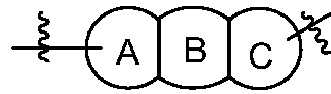

 the structural moiety


 the structural moiety


- The compound, the stereoisomer thereof, or the pharmaceutically acceptable salt thereof according to any one of claims 1-10, wherein each R' is independently selected from the group consisting of halogen, -OH, -NH2, -CN, C1-3 alkyl, C1-3 alkoxy, and C1-3 haloalkyl; oreach R' is independently selected from the group consisting of fluorine, chlorine, bromine, -OH, -NH2, and -CN; oreach R' is independently selected from the group consisting of fluorine, chlorine, and bromine; oreach R' is independently selected from fluorine.
- The compound, the stereoisomer thereof, or the pharmaceutically acceptable salt thereof according to any one of claims 1-11, wherein n is selected from the group consisting of 0, 1, and 2; or, n is selected from the group consisting of 0 and 1.
- The compound, the stereoisomer thereof, or the pharmaceutically acceptable salt thereof according to any one of claims 1-12, wherein the structural moiety





- The compound, the stereoisomer thereof, or the pharmaceutically acceptable salt thereof according to any one of claims 1-13, wherein the structural moiety -Cy1-LNK-Cy2- is selected from the group consisting of -Cy1-, -Cy1-LNK, -Cy1-Cy2-, -Cy1-LNK-Cy2-, -Cy2-, and -LNK-Cy2-; or
the structural moiety -Cy1-LNK-Cy2- is selected from the group consisting of -Cy1-, -Cy2-Cy2-, and -Cy2-. - The compound, the stereoisomer thereof, or the pharmaceutically acceptable salt thereof according to any one of claims 1-14, wherein Cy1 is selected from the group consisting of a bond and the following groups optionally substituted with one or more Ra: C4-11 cycloalkyl or 4- to 11-membered heterocycloalkyl; orCy1 is selected from the group consisting of a bond and the following groups optionally substituted with one or more Ra: C6-9 cycloalkyl or 4- to 11-membered heterocycloalkyl; orCy1 is selected from the group consisting of a bond and the following groups optionally substituted with one or more Ra: C6 cycloalkyl, C9 cycloalkyl, and 4-, 5-, 6-, 7-, 8-, 9-, 10-, or 11-membered heterocycloalkyl; orCy1 is selected from the group consisting of a bond and the following groups optionally substituted with one or more Ra: C6 cycloalkyl, C9 cycloalkyl, and 4-, 6-, or 8- to 11-membered heterocycloalkyl; orCy1 is selected from a bond; orCy1 is selected from the group consisting of C6 cycloalkyl and C9 cycloalkyl optionally substituted with one or more Ra; orCy1 is selected from the group consisting of 4-, 6-, and 8- to 11-membered heterocycloalkyl optionally substituted with one or more Ra; orCy1 is selected from the group consisting of 8-, 9-, 10-, and 11-membered heterocycloalkyl optionally substituted with one or more Ra; orCy1 is selected from the group consisting of a bond and the following groups optionally substituted with one or more Ra: cyclohexyl, spirononanyl, azetidinyl, octahydrocyclopentapyrrolyl, piperidinyl, monoazaspirononanyl, diazaspirononanyl, azabicyclononanyl, monoazaspiroundecanyl, or diazaspiroundecanyl.
- The compound, the stereoisomer thereof, or the pharmaceutically acceptable salt thereof according to any one of claims 1-15, wherein LNK is selected from the group consisting of a bond, C1-6 alkylene, and C1-6 heteroalkylene; orLNK is selected from the group consisting of a bond and C1-4 alkylene; orLNK is selected from the group consisting of a bond and C1-3 alkylene; orLNK is selected from the group consisting of a bond and -CH2-.
- The compound, the stereoisomer thereof, or the pharmaceutically acceptable salt thereof according to any one of claims 1-16, wherein Cy2 is absent or selected from the group consisting of C4-11 cycloalkyl and 4- to 11-membered heterocycloalkyl, wherein the cycloalkyl or heterocycloalkyl is optionally substituted with one or more Rb; orCy2 is absent or selected from the group consisting of C4-6 cycloalkyl and 4- to 6-membered heterocycloalkyl, wherein the cycloalkyl or heterocycloalkyl is optionally substituted with one or more Rb; orCy2 is absent or selected from the group consisting of cyclobutyl, cyclopentyl, cyclohexyl, azetidinyl, pyrrolidinyl, and piperidinyl, wherein the cyclobutyl, cyclopentyl, azetidinyl, pyrrolidinyl, or piperidinyl is optionally substituted with one or more Rb; orCy2 is selected from the group consisting of


- The compound, the stereoisomer thereof, or the pharmaceutically acceptable salt thereof according to any one of claims 1-17, wherein Ra and Rb are each independently selected from the group consisting of halogen, -OH, -NH2, -CN, C1-3 alkyl, C1-3 alkoxy, C1-3 haloalkyl, C1-3 alkylamino, and di-C1-3 alkylamino; orRa and Rb are each independently selected from the group consisting of halogen, -OH, -NH2, -CN, and C1-3 alkyl; orRa and Rb are each independently selected from the group consisting of halogen, -OH, -NH2, and -CN.
- The compound, the stereoisomer thereof, or the pharmaceutically acceptable salt thereof according to any one of claims 1-18, wherein R is selected from the group consisting of hydrogen and 5- to 6-membered heterocycloalkyl, wherein the heterocycloalkyl is optionally substituted with =O or C1-3 alkyl; orR is selected from the group consisting of hydrogen and 5-membered heterocycloalkyl, wherein the heterocycloalkyl is optionally substituted with =O or C1-3 alkyl; orR is selected from the group consisting of hydrogen and imidazolinyl, wherein the imidazolinyl is optionally substituted with =O or methyl; orR is selected from the group consisting of hydrogen and

- The compound, the stereoisomer thereof, or the pharmaceutically acceptable salt thereof according to any one of claims 1-19, wherein the compound of formula I, formula II, formula I'a, or formula I' is selected from the group consisting of compounds of formula I'-1A, formula I'-2A, formula I'-1A-1, formula I'-2A-1, formula I'-3A-1, formula I'-3A-2, formula I'-4A-1, and formula I'-4A-2, wherein


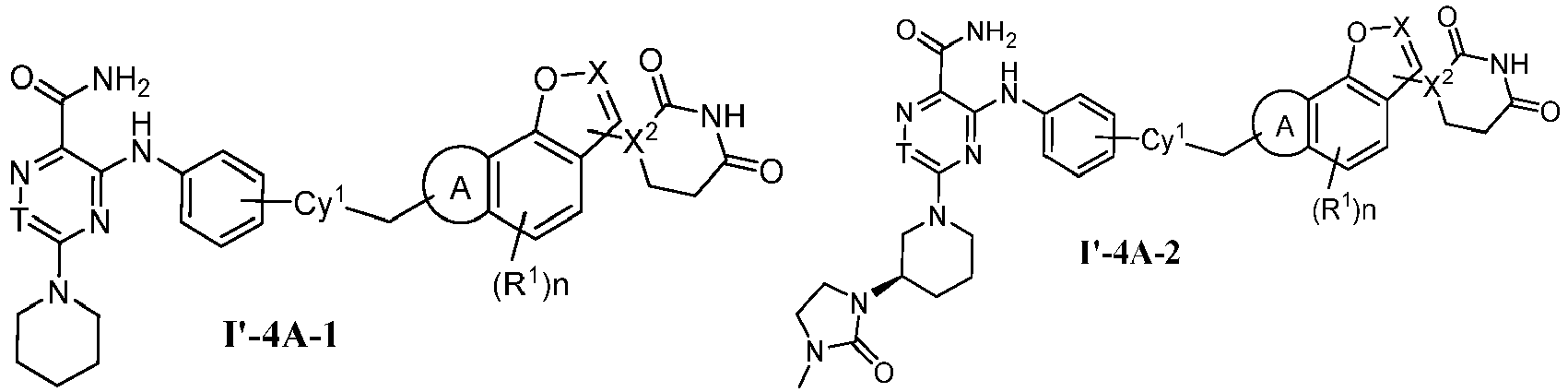
- A compound of the following formula, a stereoisomer thereof, or a pharmaceutically acceptable salt thereof:









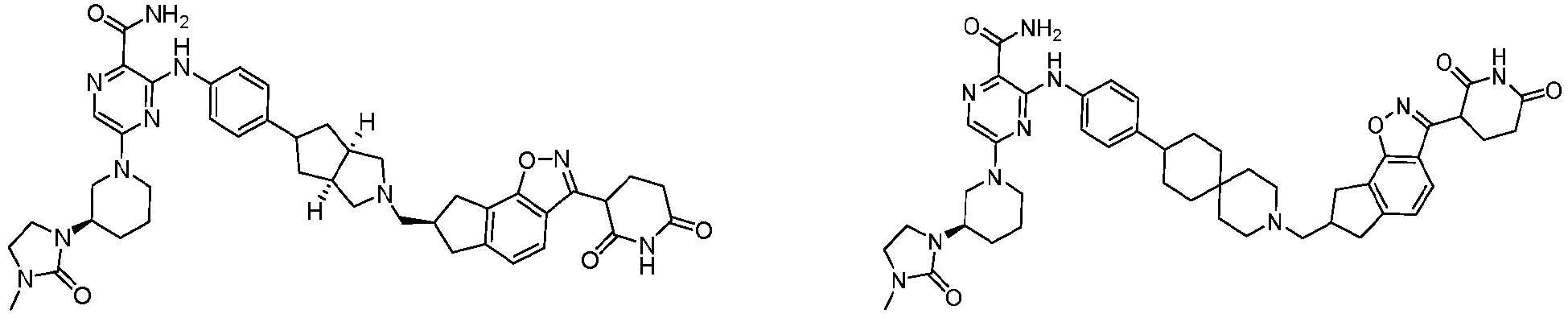





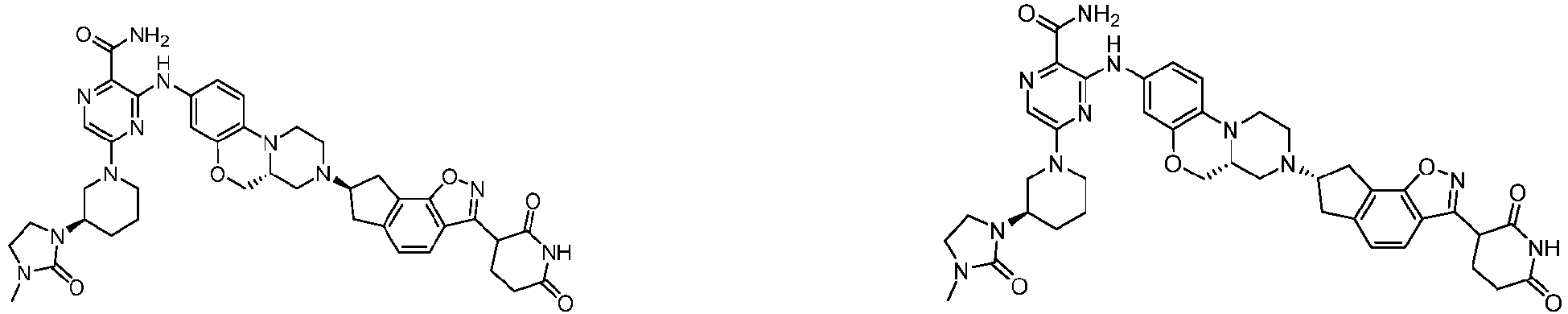


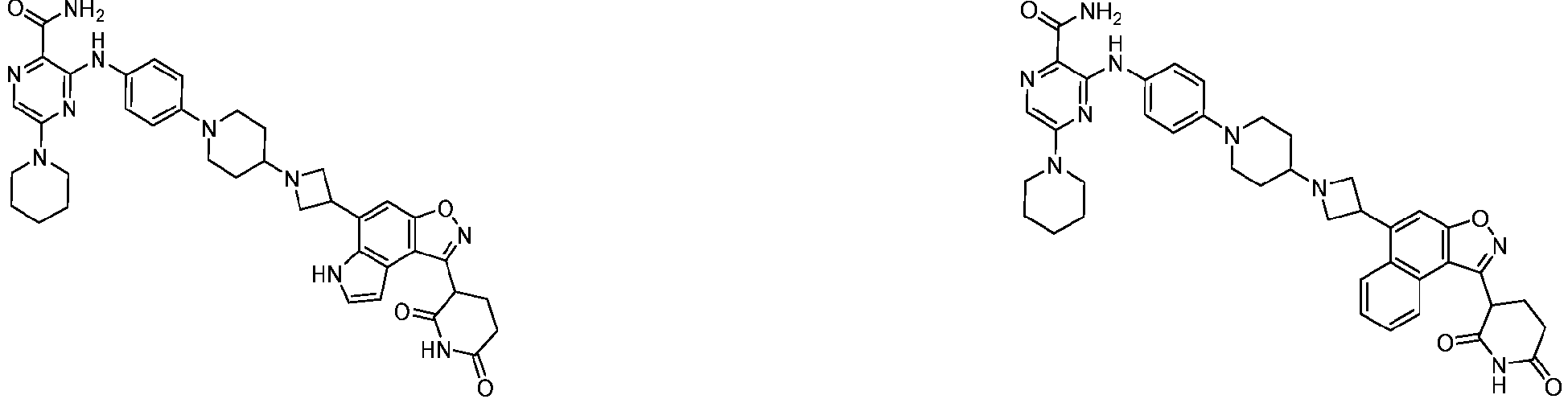


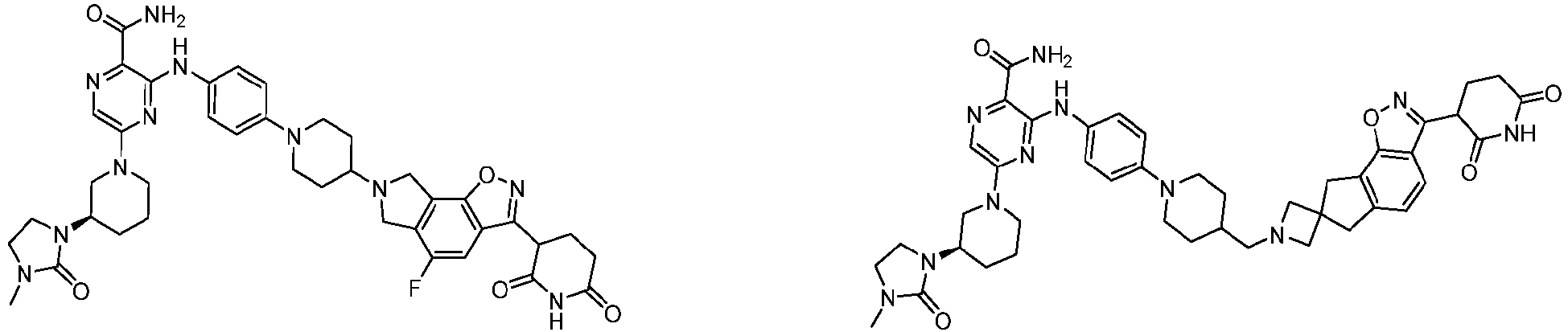


- A compound of formula I", a stereoisomer thereof, or a pharmaceutically acceptable salt thereof,


 ring A is selected from the group consisting of C5-10 cycloalkenyl, 5- to 10-membered heterocycloalkenyl, phenyl, and 5- to 6-membered heteroaryl;PTM is as defined in claim 1 or 2;L is selected from a connecting group;R' and n are as defined in any one of claims 1 and 9-10.
 - The compound, the stereoisomer thereof, or the pharmaceutically acceptable salt thereof according to claim 22, wherein ring A is selected from the group consisting of C5-8 cycloalkenyl, 5- to 10-membered heterocycloalkenyl, phenyl, and 5- to 6-membered heteroaryl; or ring A is selected from the group consisting of C5-7 cycloalkenyl, 5- to 10-membered heterocycloalkenyl, phenyl, and 5- to 6-membered heteroaryl; or ring A is selected from the group consisting of C5-6 cycloalkenyl, 5- to 10-membered heterocycloalkenyl, phenyl, and 5- to 6-membered heteroaryl; or ring A is selected from the group consisting of C5-6 cycloalkenyl, 5- to 9-membered heterocycloalkenyl, phenyl, pyrrolyl, pyrazolyl, furanyl, and oxazolyl; orring A is selected from the group consisting of C5 cycloalkenyl, C6 cycloalkenyl, 5-, 6-, 7-, 8-, or 9-membered heterocycloalkenyl, phenyl, pyrrolyl, pyrazolyl, furanyl, and oxazolyl; orring A is selected from the group consisting of cyclopentenyl, bicyclohexenyl, dihydropyrrolyl, tetrahydropyridinyl, tetrahydroazepinyl, azaspirooctenyl, dihydrooxazinyl, azaspirononenyl, phenyl, pyrrolyl, pyrazolyl, furanyl, and oxazolyl; orring A is selected from the group consisting of C5-6 cycloalkenyl and 5- to 9-membered heterocycloalkenyl; orring A is selected from the group consisting of cyclopentenyl, bicyclohexenyl, dihydropyrrolyl, tetrahydropyridinyl, dihydrooxazinyl, tetrahydroazepinyl, azaspirooctenyl, and azaspirononenyl.
- The compound, the stereoisomer thereof, or the pharmaceutically acceptable salt thereof according to any one of claims 1-23, wherein PTM is selected from


- A compound of formula I‴-1a or I‴-2a, a moiety, a stereoisomer thereof, a derivative thereof, or a pharmaceutically acceptable salt thereof: wherein,
 ring A is selected from the group consisting of C5-10 cycloalkenyl and 5- to 10-membered heterocycloalkenyl;n is as defined in claim 1 or 12;each R' is independently selected from the group consisting of halogen, -OH, -NH2, -CN, =O, C1-4 alkoxy, -CHO, C3-6 cycloalkyl, 3- to 10-membered heterocycloalkyl, and C1-4 alkyl, wherein the C3-6 cycloalkyl, 3- to 10-membered heterocycloalkyl, or C1-4 alkyl is optionally substituted with halogen, -OH, -NH2, or C1-4 alkyl-OH; or, each R' is independently selected from the group consisting of halogen, -OH, -NH2, -CN, =O, C1-4 alkoxy, -CHO, C3-6 cycloalkyl, and C1-4 alkyl, wherein the C3-6 cycloalkyl or C1-4 alkyl is optionally substituted with halogen, -OH, -NH2, or C1-4 alkyl-OH;X2 is selected from the group consisting of CH and N.
 - The compound, the stereoisomer thereof, the derivative thereof, or the pharmaceutically acceptable salt thereof according to claim 25, wherein each R' is independently selected from the group consisting of halogen, -OH, -NH2, -CN, =O, C1-3 alkoxy, -CHO, C3-4 cycloalkyl, and C1-3 alkyl, wherein the C3-4 cycloalkyl or C1-3 alkyl is optionally substituted with halogen, -OH, -NH2, or C1-3 alkyl-OH; oreach R' is independently selected from the group consisting of halogen, -OH, -NH2, -CN, =O, methoxy, -CHO, cyclobutyl, and methyl, wherein the cyclobutyl or methyl is optionally substituted with halogen, -OH, -NH2, or CH2OH; oreach R' is independently selected from the group consisting of F, -OH, -NH2, -CH2OH, =O, -CHO, -CH2NH2, and

- The compound, the moiety, the stereoisomer thereof, the derivative thereof, or the pharmaceutically acceptable salt thereof according to claim 25, wherein the compound of formula I‴-1a or I‴-2a is selected from a compound of formula 1‴-1 or 1‴-2, respectively:
 ring A is selected from the group consisting of C5-10 cycloalkenyl and 5- to 10-membered heterocycloalkenyl;optionally, R' and n are as defined in any one of claims 1 and 11-12.
 - The compound, the moiety, the isomer thereof, the derivative thereof, or the pharmaceutically acceptable salt thereof according to claim 27, wherein ring A is selected from the group consisting of C5-8 cycloalkenyl and 5- to 10-membered heterocycloalkenyl; or ring A is selected from the group consisting of C5-7 cycloalkenyl and 5- to 10-membered heterocycloalkenyl; or ring A is selected from the group consisting of C5-6 cycloalkenyl and 5- to 10-membered heterocycloalkenyl; or ring A is selected from the group consisting of C5-6 cycloalkenyl and 5- to 9-membered heterocycloalkenyl; orring A is selected from the group consisting of C5 cycloalkenyl, C6 cycloalkenyl, and 5-, 6-, 7-, 8-, or 9-membered heterocycloalkenyl; orring A is selected from the group consisting of cyclopentenyl, bicyclohexenyl, dihydropyrrolyl, tetrahydropyridinyl, tetrahydroazepinyl, dihydrooxazinyl, azaspirooctenyl, and azaspirononenyl; orring A is selected from the group consisting of

 ring A is selected from the group consisting of

- A compound of the following formula, a moiety, a stereoisomer thereof, a derivative thereof, or a pharmaceutically acceptable salt thereof:




- A compound of formula I‴-1c or I‴-2d, a moiety, a stereoisomer thereof, a derivative thereof, or a pharmaceutically acceptable salt thereof:
 ring A, n, and R1 are as defined in any one of claims 1-2, 9, 11-12, 22-23, 25, and 27-28;X2 is selected from the group consisting of CH and N;L' is selected from C0-3 alkylene;Cy3 is selected from the group consisting of C3-8 cycloalkyl and 3- to 8-membered heterocycloalkyl;R2 is selected from the group consisting of -CHO, OH, SH, NH2, COOH, and C1-6 alkyl substituted with one or more SH, OH, or NH2;p is selected from the group consisting of 0, 1, 2, and 3.
 - The compound, the moiety, the stereoisomer thereof, the derivative thereof, or the pharmaceutically acceptable salt thereof according to claim 30, wherein ring A is selected from the group consisting of C5-9 cycloalkenyl, 5- to 9-membered heterocycloalkenyl, phenyl, and 5- to 6-membered heteroaryl; ring A is selected from the group consisting of C5-7 cycloalkenyl, 5- to 9-membered heterocycloalkenyl, phenyl, and 5- to 6-membered heteroaryl; ring A is selected from the group consisting of 5- to 9-membered heterocycloalkenyl, phenyl, and 5- to 6-membered heteroaryl; orring A is selected from the group consisting of 5- to 6-membered heterocycloalkenyl, phenyl, and 5-membered heteroaryl; orring A is selected from the group consisting of dihydropyrrolyl, tetrahydropyridinyl, dihydrooxazinyl, phenyl, pyrrolyl, pyrazolyl, and furanyl.
- The compound, the moiety, the stereoisomer thereof, the derivative thereof, or the pharmaceutically acceptable salt thereof according to claim 30 or 31, wherein the moiety


- The compound, the moiety, the stereoisomer thereof, the derivative thereof, or the pharmaceutically acceptable salt thereof according to any one of claims 30-32, wherein L' is selected from the group consisting of a bond and -CH2-.
- The compound, the moiety, the stereoisomer thereof, the derivative thereof, or the pharmaceutically acceptable salt thereof according to any one of claims 30-33, wherein Cy3 is selected from the group consisting of C3-6 cycloalkyl and 4- to 6-membered heterocycloalkyl; orCy3 is selected from the group consisting of C4-6 cycloalkyl, 4-membered heterocycloalkyl, and 6-membered heterocycloalkyl; orCy3 is selected from the group consisting of cyclobutyl, cyclopentyl, cyclohexyl, azetidinyl, and piperidinyl.
- The compound, the moiety, the stereoisomer thereof, the derivative thereof, or the pharmaceutically acceptable salt thereof according to any one of claims 30-34, wherein R2 is selected from the group consisting of -CHO, OH, and C1-3 alkyl substituted with one or more OH or NH2; orR2 is selected from the group consisting of -CHO, OH, and methyl substituted with one or more OH; orR2 is selected from the group consisting of -CHO, OH, and -CH2OH.
- The compound, the moiety, the stereoisomer thereof, the derivative thereof, or the pharmaceutically acceptable salt thereof according to any one of claims 30-35, wherein p is selected from the group consisting of 0, 1 and 2; orp is selected from the group consisting of 0 and 1; orp is selected from 0; or, p is selected from 1.
- The compound, the moiety, the stereoisomer thereof, the derivative thereof, or the pharmaceutically acceptable salt thereof according to claim 30, wherein the structural moiety


- A compound of the following formula, a moiety, a stereoisomer thereof, a derivative thereof, or a pharmaceutically acceptable salt thereof,


- Use of the compound, the moiety, the stereoisomer thereof, or the derivative thereof according to any one of claims 25-38 in a Protac molecule;optionally use of the compound, the moiety, the stereoisomer thereof, or the derivative thereof for constituting part of a Protac molecule;optionally the compound, the moiety, the stereoisomer thereof, or the derivative thereof present in the form of a Protac molecule;optionally use of the compound, the moiety, the stereoisomer thereof, or the derivative thereof for degrading a protein, wherein the compound, the moiety, the stereoisomer thereof, or the derivative thereof degrading the protein in the form of a Protac molecule;optionally use of the compound, the moiety, the stereoisomer thereof, or the derivative thereof for degrading a protein in the form of a Protac molecule; oruse of the compound, the moiety, the stereoisomer thereof, or the derivative thereof for preparing a protein degrader; oruse of the compound, the moiety, the stereoisomer thereof, or the derivative thereof for preparing a Protac molecule.
- A pharmaceutical composition, comprising the compound, the moiety, the stereoisomer thereof, the derivative thereof, or the pharmaceutically acceptable salt thereof according to any one of claims 1-38.
- Use of the compound, the moiety, the stereoisomer thereof, the derivative thereof, or the pharmaceutically acceptable salt thereof according to any one of claims 1-38 or the pharmaceutical composition thereof according to claim 40 for preparing a medicament for preventing or treating a disorder treated by degrading a target protein that binds to a targeting ligand.
- Use of the compound, the moiety, the stereoisomer thereof, the derivative thereof, or the pharmaceutically acceptable salt thereof according to any one of claims 1-38 or the pharmaceutical composition thereof according to claim 40 for preparing a medicament for preventing or treating a disorder treated by binding to cereblon protein in vivo.
- Use of the compound, the moiety, the stereoisomer thereof, the derivative thereof, or the pharmaceutically acceptable salt thereof according to any one of claims 1-38 or the pharmaceutical composition thereof according to claim 40 for preparing a medicament for preventing or treating a BTK-related disease, whereinoptionally, the BTK-related disease is selected from the group consisting of disorders treated by degrading a protein that binds to a BTK target protein ligand;optionally, the BTK-related disease is selected from the group consisting of disorders treated by binding to cereblon protein in vivo;optionally, the disease is selected from the group consisting of autoimmune diseases, inflammatory diseases, and cancer.
Applications Claiming Priority (5)
| Application Number | Priority Date | Filing Date | Title |
|---|---|---|---|
| CN202111371514 | 2021-11-18 | ||
| CN202210824373 | 2022-07-13 | ||
| CN202211378992 | 2022-11-04 | ||
| CN202211413934 | 2022-11-11 | ||
| PCT/CN2022/132769 WO2023088406A1 (en) | 2021-11-18 | 2022-11-18 | Fused imide derivative |
Publications (2)
| Publication Number | Publication Date |
|---|---|
| EP4434992A1 true EP4434992A1 (en) | 2024-09-25 |
| EP4434992A4 EP4434992A4 (en) | 2026-02-11 |
Family
ID=86396288
Family Applications (1)
| Application Number | Title | Priority Date | Filing Date |
|---|---|---|---|
| EP22894936.8A Pending EP4434992A4 (en) | 2021-11-18 | 2022-11-18 | CONDENSED IMIDE DERIVATIVE |
Country Status (11)
| Country | Link |
|---|---|
| US (1) | US20250152719A1 (en) |
| EP (1) | EP4434992A4 (en) |
| JP (1) | JP2024542178A (en) |
| KR (1) | KR20240107324A (en) |
| CN (2) | CN119823111B (en) |
| AU (1) | AU2022393875A1 (en) |
| CA (1) | CA3238118A1 (en) |
| IL (1) | IL312763A (en) |
| MX (1) | MX2024005702A (en) |
| TW (1) | TW202325300A (en) |
| WO (1) | WO2023088406A1 (en) |
Families Citing this family (7)
| Publication number | Priority date | Publication date | Assignee | Title |
|---|---|---|---|---|
| CN121652167A (en) * | 2022-08-19 | 2026-03-13 | 正大天晴药业集团股份有限公司 | Cyclohexyl containing compounds |
| WO2024114639A1 (en) * | 2022-11-28 | 2024-06-06 | Shanghai Degron Biomedical Technology Co., Ltd. | Compounds for modulating hur (elavl1) |
| TW202510854A (en) | 2023-08-03 | 2025-03-16 | 大陸商西藏海思科製藥有限公司 | Polycyclic BTK degraders and their applications in medicine |
| CN121712778A (en) | 2023-08-23 | 2026-03-20 | 正大天晴药业集团股份有限公司 | Cyclobutyl-containing compounds |
| WO2025162254A1 (en) * | 2024-02-03 | 2025-08-07 | 正大天晴药业集团股份有限公司 | Compound containing tricyclic ring |
| WO2025232887A1 (en) * | 2024-05-10 | 2025-11-13 | Shanghai Degron Biomedical Technology Co., Ltd. | Wee1 degraders and uses thereof |
| WO2026008044A1 (en) * | 2024-07-05 | 2026-01-08 | 正大天晴药业集团股份有限公司 | Fused imide compound and use thereof |
Family Cites Families (14)
| Publication number | Priority date | Publication date | Assignee | Title |
|---|---|---|---|---|
| AU2017363252B2 (en) * | 2016-11-22 | 2021-08-19 | Dana-Farber Cancer Institute, Inc. | Degradation of Bruton's tyrosine kinase (BTK) by conjugation of BTK inhibitors with E3 ligase ligand and methods of use |
| EP3577109A4 (en) * | 2017-01-31 | 2020-11-18 | Arvinas Operations, Inc. | CEREBLON LIGANDS AND BIFUNCTIONAL CONNECTIONS THEREOF |
| US11319330B2 (en) * | 2018-09-07 | 2022-05-03 | Medshine Discovery Inc. | Tricyclic furan-substituted piperidinedione compound |
| WO2020048548A1 (en) * | 2018-09-07 | 2020-03-12 | 正大天晴药业集团股份有限公司 | Tricyclic compounds acting on crbn proteins |
| US20210317109A1 (en) * | 2018-09-07 | 2021-10-14 | Medshine Discovery Inc. | Tricyclic substituted piperidine dione compound |
| CN113412259B (en) * | 2018-10-15 | 2024-07-16 | 紐力克斯治疗公司 | Bifunctional compounds that degrade BTK via the ubiquitin proteasome pathway |
| WO2020167518A1 (en) * | 2019-02-13 | 2020-08-20 | Nurix Therapeutics, Inc. | Bifunctional compounds for degrading btk via ubiquitin proteosome pathway |
| CN114174299B (en) * | 2019-07-26 | 2024-10-25 | 百济神州有限公司 | Degradation of Bruton's tyrosine kinase (BTK) by conjugating BTK inhibitors to E3 ligase ligands and methods of use |
| US20220388978A1 (en) * | 2019-08-27 | 2022-12-08 | Regents Of The University Of Michigan | Cereblon e3 ligase inhibitors |
| CN114521196A (en) * | 2019-09-16 | 2022-05-20 | 诺华股份有限公司 | Bifunctional group degradation agent and use method thereof |
| WO2021091575A1 (en) * | 2019-11-08 | 2021-05-14 | Nurix Therapeutics, Inc. | Bifunctional compounds for degrading btk via ubiquitin proteosome pathway |
| CN112812100B (en) * | 2019-11-18 | 2022-04-05 | 四川海思科制药有限公司 | Compound capable of degrading BTK kinase, preparation method and pharmaceutical application thereof |
| MX2022006672A (en) * | 2019-12-04 | 2022-08-08 | Nurix Therapeutics Inc | Bifunctional compounds for degrading btk via ubiquitin proteosome pathway. |
| WO2021185291A1 (en) * | 2020-03-17 | 2021-09-23 | 南京明德新药研发有限公司 | Proteolysis regulator and method for using same |
-
2022
- 2022-11-18 EP EP22894936.8A patent/EP4434992A4/en active Pending
- 2022-11-18 IL IL312763A patent/IL312763A/en unknown
- 2022-11-18 KR KR1020247019045A patent/KR20240107324A/en active Pending
- 2022-11-18 JP JP2024527695A patent/JP2024542178A/en active Pending
- 2022-11-18 CN CN202411790610.6A patent/CN119823111B/en active Active
- 2022-11-18 AU AU2022393875A patent/AU2022393875A1/en active Pending
- 2022-11-18 CN CN202280074055.XA patent/CN118201935A/en active Pending
- 2022-11-18 TW TW111144228A patent/TW202325300A/en unknown
- 2022-11-18 MX MX2024005702A patent/MX2024005702A/en unknown
- 2022-11-18 WO PCT/CN2022/132769 patent/WO2023088406A1/en not_active Ceased
- 2022-11-18 CA CA3238118A patent/CA3238118A1/en active Pending
- 2022-11-18 US US18/708,972 patent/US20250152719A1/en active Pending
Also Published As
| Publication number | Publication date |
|---|---|
| WO2023088406A1 (en) | 2023-05-25 |
| CN119823111B (en) | 2026-05-05 |
| CN119823111A (en) | 2025-04-15 |
| JP2024542178A (en) | 2024-11-13 |
| EP4434992A4 (en) | 2026-02-11 |
| CA3238118A1 (en) | 2023-05-25 |
| MX2024005702A (en) | 2024-06-26 |
| KR20240107324A (en) | 2024-07-09 |
| TW202325300A (en) | 2023-07-01 |
| US20250152719A1 (en) | 2025-05-15 |
| IL312763A (en) | 2024-07-01 |
| AU2022393875A1 (en) | 2024-06-13 |
| CN118201935A (en) | 2024-06-14 |
Similar Documents
| Publication | Publication Date | Title |
|---|---|---|
| EP3710439B1 (en) | Kras g12c inhibitors | |
| EP3978496B1 (en) | Btk inhibitor ring derivative, preparation method therefor and pharmaceutical application thereof | |
| EP3121175B1 (en) | 1,3-benzodioxole derivatives as ezh1 and/or ezh2 inhibitors | |
| EP3068785B1 (en) | Substituted 4,5,6,7-tetrahydropyrazolo[1,5-a]pyrazine derivatives as casein kinase 1 d/e inhibitors | |
| EP3138842B1 (en) | Polyfluorinated compounds acting as bruton's tyrosine kinase inhibitors | |
| EP2872514B1 (en) | Imidazotriazinecarbonitriles useful as kinase inhibitors | |
| KR20240107324A (en) | Fused imide derivatives | |
| EP4570805A1 (en) | Tricyclic compounds and medical use thereof | |
| EP4592296A1 (en) | Novel tetraheterocycle compound | |
| EP3533796B1 (en) | Amino pyrazolopyrimidine compound used as neurotrophic factor tyrosine kinase receptor inhibitor | |
| EP4137491A1 (en) | Imidazolinone derivative and use thereof in medicine | |
| EP4223754A1 (en) | Compound as akt kinase inhibitor | |
| EP4108663A1 (en) | Substituted aryl compound | |
| EP3992193A1 (en) | Pyrazolopyrimidine compound, preparation method for same, and applications thereof | |
| CA3226162A1 (en) | Aryl compounds and pharmaceutical compositions that modulate ikzf2 | |
| EP4667469A1 (en) | Compound containing trifluoromethylsulfonyl | |
| EP4378943A1 (en) | 8-oxo-3-azabicyclo[3.2.1]octane compound or salt thereof, and preparation method therefor and use thereof | |
| EP4424676A1 (en) | Pyridyl-containing compound | |
| HK40112613A (en) | Fused imide derivative | |
| EP4617272A1 (en) | Fused bicyclic compound | |
| EP4574829A1 (en) | Compound containing cyclohexyl | |
| EP3712157A1 (en) | Pyridopyrimidine compounds acting as mtorc 1/2 double-kinase inhibitors | |
| EP4431504A1 (en) | Aromatic heterocyclic compound and application thereof | |
| HK40111379A (en) | Pyridyl-containing compound | |
| EP4442690A1 (en) | Compound containing cycloalkyl or haloalkyl |
Legal Events
| Date | Code | Title | Description |
|---|---|---|---|
| STAA | Information on the status of an ep patent application or granted ep patent |
Free format text: STATUS: THE INTERNATIONAL PUBLICATION HAS BEEN MADE |
|
| PUAI | Public reference made under article 153(3) epc to a published international application that has entered the european phase |
Free format text: ORIGINAL CODE: 0009012 |
|
| STAA | Information on the status of an ep patent application or granted ep patent |
Free format text: STATUS: REQUEST FOR EXAMINATION WAS MADE |
|
| 17P | Request for examination filed |
Effective date: 20240603 |
|
| AK | Designated contracting states |
Kind code of ref document: A1 Designated state(s): AL AT BE BG CH CY CZ DE DK EE ES FI FR GB GR HR HU IE IS IT LI LT LU LV MC ME MK MT NL NO PL PT RO RS SE SI SK SM TR |
|
| REG | Reference to a national code |
Ref country code: HK Ref legal event code: DE Ref document number: 40112613 Country of ref document: HK |
|
| DAV | Request for validation of the european patent (deleted) | ||
| DAX | Request for extension of the european patent (deleted) | ||
| REG | Reference to a national code |
Ref country code: DE Ref legal event code: R079 Free format text: PREVIOUS MAIN CLASS: C07D0498040000 Ipc: A61K0031423000 |
|
| RIC1 | Information provided on ipc code assigned before grant |
Ipc: A61K 31/423 20060101AFI20251010BHEP Ipc: A61K 31/343 20060101ALI20251010BHEP Ipc: A61K 31/4523 20060101ALI20251010BHEP Ipc: A61K 31/4525 20060101ALI20251010BHEP Ipc: A61P 35/00 20060101ALI20251010BHEP Ipc: A61P 37/00 20060101ALI20251010BHEP Ipc: C07D 498/04 20060101ALI20251010BHEP Ipc: C07D 498/00 20060101ALI20251010BHEP Ipc: C07D 491/04 20060101ALI20251010BHEP |
|
| A4 | Supplementary search report drawn up and despatched |
Effective date: 20260109 |
|
| RIC1 | Information provided on ipc code assigned before grant |
Ipc: A61K 31/423 20060101AFI20260102BHEP Ipc: A61K 31/343 20060101ALI20260102BHEP Ipc: A61K 31/4523 20060101ALI20260102BHEP Ipc: A61K 31/4525 20060101ALI20260102BHEP Ipc: A61P 35/00 20060101ALI20260102BHEP Ipc: A61P 37/00 20060101ALI20260102BHEP Ipc: C07D 498/04 20060101ALI20260102BHEP Ipc: C07D 498/00 20060101ALI20260102BHEP Ipc: C07D 491/04 20060101ALI20260102BHEP |