EP4434977A1 - Method for producing 2-heteroarylpyridine compound - Google Patents
Method for producing 2-heteroarylpyridine compound Download PDFInfo
- Publication number
- EP4434977A1 EP4434977A1 EP22895625.6A EP22895625A EP4434977A1 EP 4434977 A1 EP4434977 A1 EP 4434977A1 EP 22895625 A EP22895625 A EP 22895625A EP 4434977 A1 EP4434977 A1 EP 4434977A1
- Authority
- EP
- European Patent Office
- Prior art keywords
- group
- formula
- substituted
- unsubstituted
- compound
- Prior art date
- Legal status (The legal status is an assumption and is not a legal conclusion. Google has not performed a legal analysis and makes no representation as to the accuracy of the status listed.)
- Pending
Links
Classifications
-
- C—CHEMISTRY; METALLURGY
- C07—ORGANIC CHEMISTRY
- C07D—HETEROCYCLIC COMPOUNDS
- C07D233/00—Heterocyclic compounds containing 1,3-diazole or hydrogenated 1,3-diazole rings, not condensed with other rings
- C07D233/54—Heterocyclic compounds containing 1,3-diazole or hydrogenated 1,3-diazole rings, not condensed with other rings having two double bonds between ring members or between ring members and non-ring members
- C07D233/64—Heterocyclic compounds containing 1,3-diazole or hydrogenated 1,3-diazole rings, not condensed with other rings having two double bonds between ring members or between ring members and non-ring members with substituted hydrocarbon radicals attached to ring carbon atoms, e.g. histidine
-
- C—CHEMISTRY; METALLURGY
- C07—ORGANIC CHEMISTRY
- C07D—HETEROCYCLIC COMPOUNDS
- C07D401/00—Heterocyclic compounds containing two or more hetero rings, having nitrogen atoms as the only ring hetero atoms, at least one ring being a six-membered ring with only one nitrogen atom
- C07D401/02—Heterocyclic compounds containing two or more hetero rings, having nitrogen atoms as the only ring hetero atoms, at least one ring being a six-membered ring with only one nitrogen atom containing two hetero rings
- C07D401/04—Heterocyclic compounds containing two or more hetero rings, having nitrogen atoms as the only ring hetero atoms, at least one ring being a six-membered ring with only one nitrogen atom containing two hetero rings directly linked by a ring-member-to-ring-member bond
Definitions
- the present invention relates to a method for producing a 2-heteroarylpyridine compound.
- Nitrogen-containing heterocycles are a major partial structure (building blocks) constituting compounds that serve as active ingredients for pharmaceuticals and agricultural chemicals.
- arthropod pest control agents having a pyridine ring have been actively developed.
- Patent Documents 1 to 5 describe pyridine compounds having a 5-membered heteroaryl group and a sulfur-containing hydrocarbon group.
- Non-Patent Document 1 discloses that a 3-phenyl-5-chloro-2-pyridone (4g) and a 3-hydroxycarbonyl-5-chloro-2-pyridone (4h) were produced by reacting a 2-chloro-N,N-dimethylamino trimethinium hexafluorophosphate with a methylphenylacetate and a 3-methoxy-3-oxopropanoic acid.
- Patent Document 6 discloses a method for constructing a pyridine ring according to the following scheme.
- Q represents a pyridyl group or the like
- R 1 represents a C1-C6 alkyl group which may have one or more halogen atoms
- R 2 represents a C1-C6 alkyl group or the like which may have one or more halogen atoms
- R 3 , R 4 and R 5 each represent a hydrogen atom
- n represents 0 or the like.
- Non-Patent Document 1 Jean-Francuois Marcoux et al. "A General Preparation of Pyridines and Pyridones via the Annulation of Ketones and Esters” J. Org. Chem., Vol. 66, No. 12, 2001, 4194-4199 .
- An object of the present invention is to provide a method for producing a 2-heteroarylpyridine compound having a sulfur-containing functional group, which is one of the building blocks.
- a compound represented by formula (3) and a compound represented by formula (4) can be obtained in high yield.
- the term "unsubstituted” refers to a group having only a mother nucleus. When “substituted” is not mentioned and only the name of the mother nucleus is described, it means “unsubstituted” unless otherwise specified.
- substituted means that any hydrogen atom of the group serving as a mother nucleus is substituted with a group (substituent) having the same or different structure from the mother nucleus. Therefore, a “substituent” is another group bonded to the mother nucleus.
- the number of substituents may be one, or two, or more. Two or more substituents may be the same or different.
- C1-6 indicates that the number of carbon atoms in the group serving as a mother nucleus is 1 to 6. This number of carbon atoms does not include the number of carbon atoms present in the substituents.
- a butyl group having an ethoxy group as a substituent is classified as a C2 alkoxy C4 alkyl group.
- substituted is not particularly limited as long as it is chemically permissible and has the effects of the present invention.
- any hydrogen atom in these "substituents” may be substituted with a group having a different structure.
- substituents in this case include a C1-6 alkyl group, a C1-6 haloalkyl group, a C1-6 alkoxy group, a C1-6 haloalkoxy group, a halogeno group, a cyano group and a nitro group.
- the above-mentioned "3- to 6-membered heterocyclyl group” includes 1 to 4 heteroatoms selected from the group consisting of a nitrogen atom, an oxygen atom and a sulfur atom as a ring constituent atom.
- the heterocyclyl group may be monocyclic or polycyclic. In the polycyclic heterocyclyl group, as long as at least one ring is a heterocyclic ring, the remaining rings may be any of a saturated alicyclic ring, an unsaturated alicyclic ring or an aromatic ring.
- Examples of the "3- to 6-membered heterocyclyl group” include a 3- to 6-membered saturated heterocyclyl group, a 5- to 6-membered heteroaryl group, a 5- to 6-membered partially unsaturated heterocyclyl group and the like.
- Examples of the 3- to 6-membered saturated heterocyclyl group include an aziridinyl group, an epoxy group, a pyrrolidinyl group, a tetrahydrofuranyl group, a thiazolidinyl group, a piperidyl group, a piperazinyl group, a morpholinyl group, a dioxolanyl group, a dioxanyl group and the like.
- Examples of the 5-membered heteroaryl group include a pyrrolyl group, a furyl group, a thienyl group, an imidazolyl group, a pyrazolyl group, an oxazolyl group, an isoxazolyl group, a thiazolyl group, an isothiazolyl group, a triazolyl group, an oxadiazolyl group, a thiadiazolyl group, a tetrazolyl group and the like.
- 6-membered heteroaryl group examples include a pyridyl group, a pyrazinyl group, a pyrimidinyl group, a pyridazinyl group, and a triazinyl group.
- Examples of the 5-membered partially unsaturated heterocyclyl group include a pyrrolinyl group, a dihydrofuranyl group, an imidazolinyl group, a pyrazolinyl group, an oxazolinyl group, an isoxazolinyl group and the like.
- 6-membered partially unsaturated heterocyclyl group examples include a dihydropyranyl group and the like.
- the method for producing compound (3) according to the present invention includes chemically reacting compound (1) with compound (2) in the presence of a metal alkoxide or a base (hereinafter sometimes referred to as the first reaction).
- Compound (1) is represented by formula (1).
- R 1 represents a C1-6 alkyl group.
- the C1-6 alkyl group for R 1 may be linear or branched.
- Examples of the C1-6 alkyl group for R 1 include a methyl group, an ethyl group, an n-propyl group, an n-butyl group, an n-pentyl group, an n-hexyl group, an i-propyl group, an i-butyl group, an s-butyl group, a t-butyl group, an i-pentyl group, a neopentyl group, a 2-methylbutyl group, a 2,2-dimethylpropyl group, an i-hexyl group and the like.
- Q represents a substituted or unsubstituted 5- to 6-membered or 9- to 10-membered heteroaryl group.
- Examples of the "5-membered heteroaryl group” include a pyrrolyl group, a furyl group, a thienyl group, an imidazolyl group, a pyrazolyl group, an oxazolyl group, an isoxazolyl group, a thiazolyl group, an isothiazolyl group, a triazolyl group, an oxadiazolyl group, a thiadiazolyl group, a tetrazolyl group and the like.
- Examples of the "6-membered heteroaryl group” include a pyridyl group, a pyrazinyl group, a pyrimidinyl group, a pyridazinyl group, a triazinyl group and the like.
- Examples of the "9-membered heteroaryl group” include an indolyl group, an isoindolyl group, a benzofuranyl group, a benzothienyl group, an indazolyl group, a benzimidazolyl group, a benzoxazolyl group, a benzisoxaozolyl group, a benzothiazolyl group, a benzisothiazolyl group and the like.
- Examples of the "10-membered heteroaryl group” include an isoquinolinyl group, a quinazolinyl group, a 1,2,4-benzotriazinyl group, a 1,2,3,4-benzotetrazinyl group, and the like.
- Substituents on the "5- to 6-membered or 9- to 10-membered heteroaryl group" for Q include halogeno groups such as a fluoro group, a chloro group, a bromo group, an iodo group or the like; C1-6 alkyl groups such as a methyl group, an ethyl group, an n-propyl group, an i-propyl group, an n-butyl group, an s-butyl group, an i-butyl group, a t-butyl group, an n-pentyl group, an n-hexyl group or the like; C1-6 haloalkyl groups such as a difluoromethyl group, a trifluoromethyl group, a perfluoroethyl group, a 1,2,2,3,3,3-hexafluoropropyl group, a perfluoropropyl group, a 1,2,3,3,3-pentaflu
- Q is preferably a group represented by formula (5).
- * represents a bonding site
- R 3 represents a C1-6 alkyl group
- R 4 represents a hydrogen atom, a substituted or unsubstituted C1-6 alkyl group, a substituted or unsubstituted C2-6 alkenyl group or a 1,3-dioxolan-2-yl group.
- compound (1) is preferably a compound represented by formula (1a) (hereinafter sometimes referred to as compound (1a)).
- R 1 represents a C1-6 alkyl group
- R 3 represents a C1-6 alkyl group
- R 4 represents a hydrogen atom, a substituted or unsubstituted C1-6 alkyl group, a substituted or unsubstituted C2-6 alkenyl group or a 1,3-dioxolan-2-yl group.
- Compound (1a) is particularly useful as a substrate in the production method of the present invention.
- the C1-6 alkyl group for R 3 and R 4 can be the same as that for R 1 .
- Examples of the C2-6 alkenyl group for R 4 include a vinyl group, a 1-propenyl group, a 2-propenyl group, a 1-butenyl group, a 2-butenyl group, a 3-butenyl group, a 1-methyl-2-propenyl group, a 2-methyl-2-propenyl group, a 1-pentenyl group, a 2-pentenyl group, a 3-pentenyl group, a 4-pentenyl group, a 1-methyl-2-butenyl group, a 2-methyl-2-butenyl group, a 1-hexenyl group, a 2-hexenyl group, a 3-hexenyl group, a 4-hexenyl group, a 5-hexenyl group and the like.
- Substituents on the "C1-6 alkyl group” and the "C2-6 alkenyl group” for R 4 include halogeno groups such as a fluoro group, a chloro group, a bromo group, an iodo group or the like; a hydroxyl group; C1-6 alkoxy groups such as a methoxy group, an ethoxy group, an n -propoxy group, an i-propoxy group, an n-butoxy group, an s-butoxy group, an i-butoxy group, a t-butoxy group or the like; C1-6 haloalkoxy groups such as a 2-chloro-n-propoxy group, a 2,3-dichloro butoxy group, a trifluoromethoxy group or the like; a phenyl group; phenyl groups substituted with a halogeno group, a C1-6 haloalkyl group or a C1-6 haloalkyl group, such as a
- Examples of the halogeno-substituted C1-6 alkyl group for R 4 include a fluoromethyl group, a difluoromethyl group, a trifluoromethyl group, a 2,2,2-trifluoroethyl group, a pentafluoroethyl group, a 3,3,3-trifluoro propyl group, a 2,2,3,3,3-pentafluoropropyl group, a 1-chloro-2,2,3,3,3-pentafluoropropyl group, a 1,2,2,3,3,3-hexafluoropropyl group, a perfluoropropyl group, a 2,2,2-trifluoro-1-trifluoromethylethyl group, a perfluoroisopropyl group, a 4-fluorobutyl group, a 1,4,4,4-tetrafluorobutyl group, a 2,2,3,3,4,4,4-heptafluorobutyl group, a 1,
- Examples of the halogeno-substituted C2-6 alkenyl group for R 4 include C2-6 haloalkenyl groups such as a 2,3,3,3-tetrafluoro-1-propenyl group, a 3,3,3-trifluoro-1-propenyl group, a 2-chloro-3, 3,3-trifluoro-1-propenyl group, a 2-bromo-3,3,3-trifluoro-1-propenyl group, a 3,3,3-trifluoro-2-trifluoromethyl-1-propenyl group, a 3,3,4,4,4-pentafluoro-1-butenyl group, a 2,3,3,4,4,4-hexafluoro-1-butenyl group, a 2-chloro-3,3,4,4, 4-pentafluoro-1-butenyl group or the like, and the like.
- C2-6 haloalkenyl groups such as a 2,3,3,3-tetrafluoro
- R 4 is preferably a 2-chloro-3,3,3-trifluoro-1-propenyl group.
- the stereoisomerism of the 2-chloro-3,3,3-trifluoro-1-propenyl group may be a mixture of E form/Z form, or may be a Z form alone or an E form alone.
- Compound (1) used in the present invention may be one synthesized using a known method, or may be one synthesized by another method and commercially available. Specifically, the following compounds can be mentioned.
- Compound (2) is represented by formula (2).
- R 2 is a hydrogen atom, substituted or unsubstituted C1-6 alkyl group, a substituted or unsubstituted C3-6 cycloalkyl group, a substituted or unsubstituted phenyl group, or a substituted or unsubstituted 5- to 6-membered heteroaryl group.
- the C1-6 alkyl group for R 2 can be the same as the C1-6 alkyl group for R 1 .
- substituents on the "C1-6 alkyl group" for R 2 include halogeno groups such as a fluoro, a chloro, a bromo, an iodo group or the like; a hydroxyl group; C1-6 alkoxy groups such as a methoxy group, an ethoxy group, an n-propoxy group, an i-propoxy group, an n-butoxy group, an s-butoxy group, an i-butoxy group, a t-butoxy group or the like; C1-6 haloalkoxy groups such as a 2-chloro-n-propoxy group, a 2,3-dichlorobutoxy group, a trifluoromethoxy group or the like; a phenyl group; phenyl groups substituted with a halogeno group, a C1-6 haloalkyl group or a C1-6 haloalkoxy group, such as a 4-chlorophenyl group, a 4-trifluoromethyl
- halogeno-substituted C1-6 alkyl group examples include a fluoromethyl group, a difluoromethyl group, a trifluoromethyl group, a 2,2,2-trifluoroethyl group, a pentafluoroethyl group, a 3,3,3-trifluoropropyl group, a 2,2,3,3,3-pentafluoropropyl group, a 1-chloro-2,2,3,3,3-pentafluoropropyl group, a 1,2,2,3,3,3-hexafluoropropyl group, a perfluoropropyl group, a 2,2,2-trifluoro-1-trifluoromethylethyl group, a perfluoroisopropyl group, a 4-fluorobutyl group, a 1,4,4,4-tetrafluorobutyl group, a 2,2,3,3,4,4,4-heptafluorobutyl group, a 1,2,2,3,3,3,
- Examples of the C3-6 cycloalkyl group for R 2 include a cyclopropyl group, a cyclobutyl group, a cyclopentyl group, a cyclohexyl group and the like.
- the 5- to 6-membered heteroaryl group for R 2 is a 5- or 6-membered ring containing 1, 2, 3, or 4 heteroatoms selected from the group consisting of a nitrogen atom, an oxygen atom and a sulfur atom as a ring-constituting atom. When there are two or more heteroatoms, they may be the same or different.
- Examples of the 5-membered heteroaryl group include a pyrrolyl group, a furyl group, a thienyl group, an imidazolyl group, a pyrazolyl group, an oxazolyl group, an isoxazolyl group, a thiazolyl group, an isothiazolyl group, a triazolyl group, an oxadiazolyl group, a thiadiazolyl group, a tetrazolyl group and the like.
- 6-membered heteroaryl group examples include a pyridyl group, a pyrazinyl group, a pyrimidinyl group, a pyridazinyl group, a triazinyl group and the like.
- Examples of the substituents on the "C3-6 cycloalkyl group", the "phenyl group”, or the “5-6 membered heteroaryl group” for R 2 include halogeno groups such as a fluoro group, a chloro group, a bromo group, an iodo group or the like; C1-6 alkyl groups such as a methyl group, an ethyl group, an n-propyl group, an i-propyl group, an n-butyl group, an s-butyl group, an i-butyl group, a t-butyl group, an n-pentyl group, an n-hexyl group or the like; C1-6 haloalkyl groups such as a chloromethyl group, a chloroethyl group, a trifluoromethyl group, a 1,2-dichloro-n-propyl group, a 1-fluoro-n-butyl group or the like; a
- Examples of the metal alkoxide present in the first reaction include a sodium methoxide, a sodium ethoxide, a potassium t-butoxide and the like.
- compound (1) or compound (1') is liquid at the reaction temperature, a solvent may not be used. Considering operability, it is preferable to carry out the first reaction in an organic solvent.
- the organic solvent is not particularly limited as long as it is inert to compound (1) or compound (1').
- organic solvent examples include ethers such as a diethyl ether, a diisopropyl ether, a diethylene glycol dimethyl ether (product name: Diglyme), a tetrahydrofuran (abbreviation: THF) or the like; halogenated hydrocarbons such as a dichloromethane, a chloroform, a 1,2-dichloroethane (abbreviation: DCE) or the like; aliphatic hydrocarbons such as a pentane, a hexane, a cyclohexane, a heptane, an octane or the like; aromatic hydrocarbons such as a toluene, a xylene or the like; aprotic polar solvents such as an N,N-dimethylformamide (abbreviation: DMF), an N,N'-dimethylpropylene urea (abbreviation: DMPU), a hexan
- the order of addition of compound (1), compound (2), a metal alkoxide or a base, and optionally an organic solvent to the first reaction system is not particularly limited.
- Compound (3) is represented by formula (3).
- Compound (3) can be obtained, for example, by the first reaction.
- Compound (3) is preferably a compound represented by formula (3a) (compound (3a)).
- R 1 represents a C1-6 alkyl group
- R 2 represents a hydrogen atom, a substituted or unsubstituted C1-6 alkyl group, a substituted or unsubstituted C3-6 cycloalkyl group, a substituted or an unsubstituted phenyl group, or a substituted or unsubstituted 5- to 6-membered heteroaryl group
- R 3 represents a C1-6 alkyl group
- R 4 represents a hydrogen atom, a substituted or unsubstituted C1-6 alkyl group, a substituted or unsubstituted C2-6 alkenyl group, or a 1,3-dioxolan-2- yl group.
- Compound (3) is a useful intermediate in the production of 2-heteroarylpyridine compounds.
- Compound (4) is preferably a compound represented by formula (4a) (compound (4a)).
- R 1 represents a C1-6 alkyl group
- R 2 represents a hydrogen atom, a substituted or unsubstituted C1-6 alkyl group, a substituted or unsubstituted C3-6 cycloalkyl group, a substituted or an unsubstituted phenyl group, or a substituted or unsubstituted 5- to 6-membered heteroaryl group
- R 3 represents a C1-6 alkyl group
- R 4 represents a hydrogen atom, a substituted or unsubstituted C1-6 It represents an alkyl group, a substituted or unsubstituted C2-6 alkenyl group, or a 1,3-dioxolan-2-yl group.
- Compound (4) is the target compound of this production method and is a compound useful as a raw material for agricultural chemicals.
- One of the methods for producing compound (4) of the present invention including chemically reacting compound (3) with a hydroxylamine or a salt thereof (hereinafter sometimes referred to as the second reaction (A)); and subjecting the product of second reaction (A) to a dehydration reaction.
- the hydroxylamine used in the second reaction (A) is an inorganic compound represented by the rational formula NH 2 OH.
- the hydroxylamine salt used in the second reaction (A) is a compound produced by a neutralization reaction between a hydroxylamine and an acid.
- Specific examples of the hydroxylamine salts include a hydroxylamine sulfate, a hydroxylamine hydrochloride, a hydroxylamine oxalate, a hydroxylamine phosphate and the like.
- the amount of the hydroxylamine to be used is not particularly limited, it is, for example, 1.0 to 5.0 mol, preferably 1.1 to 2.0 mol, with respect to 1 mol of compound (3).
- a solvent can be used in the second reaction (A).
- the solvents that can be used include water, organic solvents, mixed solvents of water and organic solvents, mixed solvents of organic solvents, and the like.
- organic solvent examples include alcohols such as a methanol, an ethanol or the like; ethers such as a diethyl ether, a diisopropyl ether, a diethylene glycol dimethyl ether (product name: Diglyme), a tetrahydrofuran (abbreviation: THF) or the like; esters such as an ethyl acetate or the like; halogenated hydrocarbons such as a dichloromethane, a chloroform, a 1,2-dichloroethane (abbreviation: DCE) or the like; aliphatic hydrocarbons such as a pentane, a hexane, a cyclohexane, a heptane, an octane or the like; aromatic hydrocarbons such as a toluene, a xylene or the like; aprotic polar solvents such as an N,N-dimethylformamide (abbreviation
- the amount of the solvent to be used is preferably 5 to 500 parts by weight with respect to 1 part by weight of compound (3).
- the order of addition of compound (3), a hydroxylamine or a hydroxylamine salt, and optionally a solvent to the second reaction (A) system is not particularly limited.
- One embodiment includes obtaining a mixed solution by mixing compound (1) and compound (2) together in an organic solvent or without a solvent, completing the first reaction by adding a metal alkoxide or a base to the mixed solution and stirring, completing the second reaction (A) by adding a hydroxylamine or a hydroxylamine salt to a liquid containing the product of the first reaction (compound (3)) and stirring, followed by subjecting to a dehydration reaction.
- Each substance may be added in its entirety at once or in small amounts gradually.
- the reaction may be carried out in such a manner that the first reaction, the second reaction (A) and the dehydration reaction are carried out sequentially in a single reactor, or may be carried out in such a manner that the first reaction is carried out in a first reactor, the product of the first reaction is transferred to a second reactor to carry out the second reaction (A) in the second reactor, and the product of the second reaction (A) is transferred to a third reactor to carry out the dehydration reaction in the third reactor.
- the product of the first reaction may be purified by recrystallization, chromatography or the like.
- the temperature during the first reaction is not particularly limited, and is, for example, 0°C to 50°C.
- the pressure during the first reaction is not particularly limited, and is, for example, 0.1 to 1 MPa, and preferably 0.1 to 0.5 MPa.
- the reaction time is not particularly limited, and is, for example, 0.5 to 24 hours.
- the first reaction is preferably carried out under an inert gas atmosphere.
- the temperature during the second reaction (A) can be selected as appropriate, and is for example, 50°C to 120°C. To obtain a high temperature, heating may be carried out under reflux. In the heating under reflux, the low-boiling substances generated in the first reaction or the like may be distilled off.
- the pressure during the second reaction (A) is not particularly limited, it is, for example, 0.1 to 1 MPa, and preferably 0.1 to 0.5 MPa.
- the time for the second reaction (A) is, for example, 1 hour to 24 hours.
- the second reaction is preferably carried out under an inert gas atmosphere.
- Compound (4) can be obtained by subjecting the product of the second reaction (A) to a dehydration reaction.
- the dehydration reaction may proceed simply by applying heat, that is, by heating, it is preferable to use a dehydrating agent to promote the dehydration reaction.
- the dehydrating agent is not particularly limited as long as it has the effect of desorbing hydrogen atoms and oxygen atoms in the product of the second reaction (A) as water molecules.
- the dehydrating agents include a concentrated sulfuric acid, a diphosphorous pentoxide, an anhydrous zinc chloride, an acetyl chloride, an acetic anhydride, an oxalic acid, a polyphosphoric acid, a magnesium sulfate, a zinc chloride, an alumina, a molecular sieve and the like.
- the amount of the dehydrating agent to be used is not particularly limited, it is, for example, 1.0 to 5.0 mol, and preferably 1.1 to 2.0 mol, with respect to 1 mol of compound (3).
- the temperature during the dehydration reaction is not particularly limited, it is, for example, from 60°C to the boiling point of the solvent used.
- the pressure during the dehydration reaction is not particularly limited, it is, for example, 0.1 to 1 MPa, and preferably 0.1 to 0.5 MPa.
- the reaction time is not particularly limited, it is, for example, 1 hour to 24 hours.
- the dehydration reaction can be performed under an inert gas atmosphere.
- Another one of the methods for producing compound (4) of the present invention includes chemically reacting a compound represented by formula (3) with an ammonia or an ammonium salt in the presence of an alcohol (hereinafter sometimes referred to as second reaction (B)), and oxidizing the product of the above chemical reaction in the presence of an organic oxidizing agent.
- B second reaction
- ammonia used in the second reaction (B) in addition to ammonia gas, a methanol solution of ammonia, an ethanol solution of ammonia, an isopropanol solution of ammonia, a 1,4-dioxane solution of ammonia, or a tetrahydrofuran solution of ammonia may also be used.
- ammonium salt used in the second reaction (B) include an ammonium chloride, an ammonium acetate, an ammonium carbamate, an ammonium formate, an ammonium hydrogen carbonate, ammonium carbonate and the like.
- the amount of the ammonia or the ammonium salt to be used is not particularly limited, it is, for example, 1.0 to 5.0 mol, and preferably 1.1 to 4.0 mol, with respect to 1 mol of compound (3).
- An alcohol is used in the second reaction (B).
- Specific examples include a methanol, an ethanol, an n-propanol, an isopropanol and the like.
- the amount of the alcohol to be used is not particularly limited, it is preferably 5 to 100 parts by weight with respect to 1 part by weight of compound (3).
- organic solvents may be used in addition to the alcohol. Said other organic solvents are not particularly limited as long as they are inert to compound (3).
- An acid may be added to accelerate the reaction.
- the acid include carboxylic acids such as an acetic acid, a formic acid, an oxalic acid, a benzoic acid, 4-chlorobenzoic acid or the like; a phosphoric acid; sulfonic acids such as a methanesulfonic acid, a 4-toluenesulfonic acid monohydrate, a trifluoromethanesulfonic acid or the like; hydrogen halides such as a hydrogen chloride, a hydrogen bromide, a hydrogen iodide, hydrogen fluoride or the like; a sulfuric acid, a nitric acid, a tetrafluoroboric acid, and the like, and a carboxylic acid is preferable, and an acetic acid is more preferable.
- the amount of the acid to be used is not particularly limited, it is usually 0.1 to 10 mol with respect to 1 mol of compound (3).
- the order of addition of compound (3), an alcohol, an ammonia or an ammonium salt, and optionally an organic solvent to the second reaction (B) system is not particularly limited.
- One embodiment includes obtaining a mixed solution by mixing compound (1) and compound (2) together in an organic solvent or without a solvent, completing the first reaction by adding a metal alkoxide or a base to the mixed solution and stirring, completing the second reaction (B) by adding an alcohol and an ammonia or an ammonium salt to a liquid containing the product of the first reaction (compound (3)) and stirring, followed by oxidizing.
- Each substance may be added in its entirety at once or in small amounts gradually.
- the reaction may be carried out in such a manner that the first reaction, the second reaction (B) and the oxidizing are carried out sequentially in a single reactor, or may be carried out in such a manner that the first reaction is carried out in a first reactor, the product of the first reaction is transferred to a second reactor to carry out the second reaction (B) in the second reactor, and the product of the second reaction (A) is transferred to a third reactor to carry out the oxidizing in the third reactor.
- the product of the first reaction may be purified by recrystallization, chromatography or the like.
- the temperature during the first reaction is not particularly limited, and is, for example, 0°C to 50°C.
- the pressure during the first reaction is not particularly limited, and is, for example, 0.1 to 1 MPa, and preferably 0.1 to 0.5 MPa.
- the reaction time is not particularly limited, and is, for example, 0.5 to 24 hours.
- the first reaction is preferably carried out under an inert gas atmosphere.
- the temperature during the second reaction (B) can be selected as appropriate, and is for example, 50°C to 120°C. The temperature depends on the boiling point of the alcohol to be used. To obtain a high temperature, heating may be carried out under reflux. In the heating under reflux, the low-boiling substances generated in the first reaction or the like may be distilled off.
- the pressure during the second reaction (B) is not particularly limited, it is, for example, 0.1 to 1 MPa, and preferably 0.1 to 0.5 MPa.
- the time for the second reaction (B) is, for example, 1 hour to 24 hours.
- the second reaction (B) is preferably carried out under an inert gas atmosphere.
- R in the formula is an alkyl group derived from the alcohol used. If the alcohol used is a methanol, it is a methyl group, and if the alcohol used is an ethanol, it is an ethyl group.
- Compound (4) can be obtained by oxidizing the product of the second reaction (B) in the presence of an organic oxidizing agent.
- organic oxidizing agent examples include p-quinone oxidizing agents such as a p-benzoquinone, a chloranil, and 2,3-dichloro-5,6-dicyano-1,4-benzoquinone (DDQ) or the like; o-quinone oxidizing agents such as an o-benzoquinone or the like; N-halosuccinimide oxidizing agents such as an N-chlorosuccinimide, an N-bromosuccinimide or the like; hypervalent iodine oxidizing agents such as a ( diacetoxyiodo)benzene, a 2-iodoxybenzoic acid or the like; N-oxide compounds such as a pyridine N-oxide, a 4-chloropyridine N-oxide, a 2,6-lutidine N-oxide or the like; and the like.
- a p-quinone oxidizing agent is preferable.
- the amount of the organic oxidizing agent to be used is not particularly limited, it is, for example, 1.0 to 10.0 mol, and preferably 1.0 to 5.0 mol, with respect to 1 mol of compound (3).
- the oxidation reaction is usually carried out in an organic solvent.
- the organic solvent is not particularly limited as long as it is inert to the product of the second reaction (B).
- alcohols such as a methanol, an ethanol, an isopropanol or the like
- ethers such as a diethyl ether, a diisopropyl ether, a diethylene glycol dimethyl ether (product name: Diglyme), a tetrahydrofuran (abbreviation: THF) or the like
- halogenated hydrocarbons such as a dichloromethane, a chloroform, a 1,2-dichloroethane (abbreviation: DCE) or the like
- aliphatic hydrocarbons such as a pentane, a hexane, a cyclohexane, a heptane, an octane or the like
- aromatic hydrocarbons such as a toluene, a
- An acid may be added to accelerate the reaction.
- the acid include carboxylic acids such as an acetic acid, a formic acid, an oxalic acid, a benzoic acid, 4-chlorobenzoic acid or the like; a phosphoric acid; sulfonic acids such as a methanesulfonic acid, a 4-toluenesulfonic acid monohydrate, a trifluoromethanesulfonic acid or the like; hydrogen halides such as a hydrogen chloride, a hydrogen bromide, a hydrogen iodide, hydrogen fluoride or the like; a sulfuric acid, a nitric acid, a tetrafluoroboric acid, and the like, and a carboxylic acid is preferable, and an acetic acid is more preferable.
- the amount of the acid to be used is not particularly limited, it is usually 0.01 to 100 mol with respect to 1 mol of compound (3).
- the temperature at which the oxidation reaction is carried out is not particularly limited, it is, for example, between -20°C and 120°C, or between -20°C and the boiling point of the solvent to be used.
- the pressure when carrying out the oxidation reaction is not particularly limited, it is, for example, 0.1 to 1 MPa, and preferably 0.1 to 0.5 MPa.
- the reaction time is not particularly limited, it is, for example, 0.5 to 24 hours.
- the oxidation reaction can be carried out under an inert gas atmosphere.
- sulfuric acid (36.6 ⁇ L, 0.69 mmol) was added and the resulting mixture was refluxed for 3.0 hours, and further sulfuric acid (36.6 ⁇ L, 0.69 mmol) was added and the resulting mixture was refluxed for 2.5 hours.
- the resulting liquid was cooled to room temperature. Thereafter, water (10 mL) and 28% aqueous sodium hydroxide solution (600 ⁇ L) were added, and the organic phase was separated. The aqueous phase was extracted twice with chloroform (10 mL) and the organic phase was separated. The separated organic phases were combined and washed with water (10 mL) and saturated brine (10 mL). Thereafter, the organic phase was concentrated and purified by silica gel column chromatography (developing solvent: chloroform/ethyl acetate). The obtained fraction was concentrated to obtain 0.121 g of the target compound (purity: 100%, 0.29 mmol, yield: 22%).
- the obtained liquid was cooled to room temperature. Then, saturated sodium bicarbonate solution (10 mL) was added, and the resulting mixture was extracted twice with dichloromethane (10 mL). The organic phases were combined, dried over sodium sulfate and filtered. The filtrate was concentrated and purified by silica gel column chromatography (developing solvent: chloroform/acetonitrile). The obtained fraction was concentrated to obtain 0.078 g of the target compound (purity: 100%, 0.24 mmol, yield: 16%).
- benzoquinone (0.22 g, 2.00 mmol) was added and stirred at room temperature for 2 hours.
- the production method of the present invention can efficiently obtain a 2-heteroarylpyridine compound having a sulfur-containing functional group, which is a major partial structure constituting compounds that serve as active ingredients for pharmaceuticals and agricultural chemicals.
Landscapes
- Chemical & Material Sciences (AREA)
- Organic Chemistry (AREA)
- Plural Heterocyclic Compounds (AREA)
- Pyridine Compounds (AREA)
Abstract

Description
- The present invention relates to a method for producing a 2-heteroarylpyridine compound.
- Nitrogen-containing heterocycles are a major partial structure (building blocks) constituting compounds that serve as active ingredients for pharmaceuticals and agricultural chemicals. In recent years, arthropod pest control agents having a pyridine ring have been actively developed. For example, Patent Documents 1 to 5 describe pyridine compounds having a 5-membered heteroaryl group and a sulfur-containing hydrocarbon group.
- In addition, Non-Patent Document 1 discloses that a 3-phenyl-5-chloro-2-pyridone (4g) and a 3-hydroxycarbonyl-5-chloro-2-pyridone (4h) were produced by reacting a 2-chloro-N,N-dimethylamino trimethinium hexafluorophosphate with a methylphenylacetate and a 3-methoxy-3-oxopropanoic acid.


- Patent Document 6 discloses a method for constructing a pyridine ring according to the following scheme.

- In the above scheme, Q represents a pyridyl group or the like, R1 represents a C1-C6 alkyl group which may have one or more halogen atoms, R2 represents a C1-C6 alkyl group or the like which may have one or more halogen atoms, R3 , R4 and R5 each represent a hydrogen atom, and n represents 0 or the like.
-
- [Patent Document 1]
WO 2017/016910 A - [Patent Document 2]
WO 2017/050685 A - [Patent Document 3]
WO 2020/050212 A - [Patent Document 4]
WO 2020/071304 A - [Patent Document 5]
WO 2020/090585 A - [Patent Document 6]
WO 2018/194077 A - [Non-Patent Document 1] Jean-Francuois Marcoux et al. "A General Preparation of Pyridines and Pyridones via the Annulation of Ketones and Esters" J. Org. Chem., Vol. 66, No. 12, 2001, 4194-4199.
- An object of the present invention is to provide a method for producing a 2-heteroarylpyridine compound having a sulfur-containing functional group, which is one of the building blocks.
- As a result of repeated studies to achieve the above object, the present invention including the following aspects has been completed.
- [1] A method for producing a compound represented by formula (3) (hereinafter sometimes referred to as compound (3)), comprising:
chemically reacting a compound represented by formula (1) (hereinafter sometimes referred to as compound (1)) with a compound represented by formula (2) (hereinafter sometimes referred to as compound (2)) in the presence of a metal alkoxide or a base.


- [2] The method according to [1], wherein Q in formula (1) and formula (3) is a group represented by formula (5).

- [3] A method for producing a compound represented by formula (4) (hereinafter sometimes referred to as compound (4)), comprising:
- chemically reacting a compound represented by formula (3) (hereinafter sometimes referred to as compound (3)) with a hydroxylamine or a salt thereof, and
- subjecting a product of the above chemical reaction to a dehydration reaction.


- [4] A method for producing a compound represented by formula (4), comprising:
- chemically reacting a compound represented by formula (3) with an ammonia or an ammonium salt in the presence of an alcohol, and
- oxidizing a product of the above chemical reaction in the presence of an organic oxidizing agent.


- [5] The method according to [3] or [4], wherein Q in formula (3) and formula (4) is a group represented by formula (5).

- [6] A compound represented by formula (3a).

- According to the production method of the present invention, a compound represented by formula (3) and a compound represented by formula (4) can be obtained in high yield.
- In the present invention, the term "unsubstituted" refers to a group having only a mother nucleus. When "substituted" is not mentioned and only the name of the mother nucleus is described, it means "unsubstituted" unless otherwise specified.
- On the other hand, the term "substituted" means that any hydrogen atom of the group serving as a mother nucleus is substituted with a group (substituent) having the same or different structure from the mother nucleus. Therefore, a "substituent" is another group bonded to the mother nucleus. The number of substituents may be one, or two, or more. Two or more substituents may be the same or different.
- A term such as "C1-6" indicates that the number of carbon atoms in the group serving as a mother nucleus is 1 to 6. This number of carbon atoms does not include the number of carbon atoms present in the substituents. For example, a butyl group having an ethoxy group as a substituent is classified as a C2 alkoxy C4 alkyl group.
- The "substituent" is not particularly limited as long as it is chemically permissible and has the effects of the present invention.
- Examples of the groups that can be the "substituent" are shown below.
- C1-6 alkyl groups such as a methyl group, an ethyl group, an n-propyl group, an i-propyl group, an n-butyl group, an s-butyl group, an i-butyl group, a t-butyl group, an n-pentyl group, an n-hexyl group or the like;
- C2-6 alkenyl groups such as a vinyl group, a 1-propenyl group, a 2-propenyl group (allyl group), a 1-butenyl group, a 2-butenyl group, a 3-butenyl group, a 1-methyl-2-propenyl group, a 2-methyl-2-propenyl group or the like;
- C2-6 alkynyl groups such as an ethynyl group, a 1-propynyl group, a 2-propynyl group, a 1-butynyl group, a 2-butynyl group, a 3-butynyl group, a 1-methyl-2-propynyl group or the like;
- C3-6 cycloalkyl groups such as a cyclopropyl group, a cyclobutyl group, cyclopentyl group, a cyclohexyl group or the like;
- a phenyl group;
- 3- to 6-membered heterocyclyl groups;
- C1-6 alkoxy groups such as a methoxy group, an ethoxy group, an n-propoxy group, an i-propoxy group, an n-butoxy group, an s-butoxy group, an i-butoxy group, a t-butoxy group or the like;
- C6-10 aryloxy groups such as a phenoxy group, a naphthoxy group or the like;
- 5- to 6-membered heteroaryloxy groups such as a thiazolyloxy group, a pyridyloxy group or the like;
- C1-6 alkoxycarbonyl groups such as a methoxycarbonyl group, an ethoxycarbonyl group, an n-propoxycarbonyl group, an i-propoxycarbonyl group, an n-butoxycarbonyl group, a t-butoxycarbonyl group or the like;
- halogeno groups such as a fluoro group, a chloro group, a bromo group, an iodo group or the like;
- C1-6 haloalkyl groups such as a chloromethyl group, a chloroethyl group, a trifluoromethyl group, a 1,2-dichloro-n-propyl group, a 1-fluoro-n-butyl group, a perfluoro-n-pentyl group or the like;
- C1-6 haloalkoxy groups such as a trifluoromethoxy group, a 2-chloro-n-propoxy group, a 2,3-dichlorobutoxy group or the like;
- a formylamino group;
- C1-6 alkylcarbonylamino groups such as an acetylamino group, a propanoylamino group, a butyrylamino group, an i-propylcarbonylamino group or the like;
- C1-6 alkoxycarbonylamino groups such as a methoxycarbonylamino group, an ethoxycarbonylamino group, an n-propoxycarbonylamino group, an i-propoxycarbonylamino group or the like;
- Unsubstituted or substituted aminocarbonyl groups such as an aminocarbonyl group, a dimethylaminocarbonyl group, a phenylaminocarbonyl group, an N-phenyl-N-methylaminocarbonyl group or the like;
- C1-6 alkylthio groups such as a methylthio group, an ethylthio group, an n-propylthio group, an i-propylthio group, an n-butylthio group, an i-butylthio group, an s-butylthio group, a t-butylthio group or the like;
- C 1-6 haloalkylthio groups such as a trifluoromethylthio group, a 2,2,2-trifluoroethylthio group or the like;
- C1-6 alkylsulfonyl groups such as a methylsulfonyl group, an ethylsulfonyl group, a t-butylsulfonyl group or the like;
- C1-6 haloalkylsulfonyl groups such as a trifluoromethylsulfonyl group, a 2,2,2-trifluoroethylsulfonyl group or the like;
- a cyano group; a nitro group;
- Moreover, any hydrogen atom in these "substituents" may be substituted with a group having a different structure. Examples of the substituent in this case include a C1-6 alkyl group, a C1-6 haloalkyl group, a C1-6 alkoxy group, a C1-6 haloalkoxy group, a halogeno group, a cyano group and a nitro group.
- Furthermore, the above-mentioned "3- to 6-membered heterocyclyl group" includes 1 to 4 heteroatoms selected from the group consisting of a nitrogen atom, an oxygen atom and a sulfur atom as a ring constituent atom. The heterocyclyl group may be monocyclic or polycyclic. In the polycyclic heterocyclyl group, as long as at least one ring is a heterocyclic ring, the remaining rings may be any of a saturated alicyclic ring, an unsaturated alicyclic ring or an aromatic ring. Examples of the "3- to 6-membered heterocyclyl group" include a 3- to 6-membered saturated heterocyclyl group, a 5- to 6-membered heteroaryl group, a 5- to 6-membered partially unsaturated heterocyclyl group and the like.
- Examples of the 3- to 6-membered saturated heterocyclyl group include an aziridinyl group, an epoxy group, a pyrrolidinyl group, a tetrahydrofuranyl group, a thiazolidinyl group, a piperidyl group, a piperazinyl group, a morpholinyl group, a dioxolanyl group, a dioxanyl group and the like.
- Examples of the 5-membered heteroaryl group include a pyrrolyl group, a furyl group, a thienyl group, an imidazolyl group, a pyrazolyl group, an oxazolyl group, an isoxazolyl group, a thiazolyl group, an isothiazolyl group, a triazolyl group, an oxadiazolyl group, a thiadiazolyl group, a tetrazolyl group and the like.
- Examples of the 6-membered heteroaryl group include a pyridyl group, a pyrazinyl group, a pyrimidinyl group, a pyridazinyl group, and a triazinyl group.
- Examples of the 5-membered partially unsaturated heterocyclyl group include a pyrrolinyl group, a dihydrofuranyl group, an imidazolinyl group, a pyrazolinyl group, an oxazolinyl group, an isoxazolinyl group and the like.
- Examples of the 6-membered partially unsaturated heterocyclyl group include a dihydropyranyl group and the like.
- The method for producing compound (3) according to the present invention includes chemically reacting compound (1) with compound (2) in the presence of a metal alkoxide or a base (hereinafter sometimes referred to as the first reaction).
- Compound (1) is represented by formula (1).

- In formula (1), R1 represents a C1-6 alkyl group.
- The C1-6 alkyl group for R1 may be linear or branched. Examples of the C1-6 alkyl group for R1 include a methyl group, an ethyl group, an n-propyl group, an n-butyl group, an n-pentyl group, an n-hexyl group, an i-propyl group, an i-butyl group, an s-butyl group, a t-butyl group, an i-pentyl group, a neopentyl group, a 2-methylbutyl group, a 2,2-dimethylpropyl group, an i-hexyl group and the like.
- In formula (1), Q represents a substituted or unsubstituted 5- to 6-membered or 9- to 10-membered heteroaryl group.
- Examples of the "5-membered heteroaryl group" include a pyrrolyl group, a furyl group, a thienyl group, an imidazolyl group, a pyrazolyl group, an oxazolyl group, an isoxazolyl group, a thiazolyl group, an isothiazolyl group, a triazolyl group, an oxadiazolyl group, a thiadiazolyl group, a tetrazolyl group and the like.
- Examples of the "6-membered heteroaryl group" include a pyridyl group, a pyrazinyl group, a pyrimidinyl group, a pyridazinyl group, a triazinyl group and the like.
- Examples of the "9-membered heteroaryl group" include an indolyl group, an isoindolyl group, a benzofuranyl group, a benzothienyl group, an indazolyl group, a benzimidazolyl group, a benzoxazolyl group, a benzisoxaozolyl group, a benzothiazolyl group, a benzisothiazolyl group and the like.
- Examples of the "10-membered heteroaryl group" include an isoquinolinyl group, a quinazolinyl group, a 1,2,4-benzotriazinyl group, a 1,2,3,4-benzotetrazinyl group, and the like.
- Substituents on the "5- to 6-membered or 9- to 10-membered heteroaryl group" for Q include halogeno groups such as a fluoro group, a chloro group, a bromo group, an iodo group or the like; C1-6 alkyl groups such as a methyl group, an ethyl group, an n-propyl group, an i-propyl group, an n-butyl group, an s-butyl group, an i-butyl group, a t-butyl group, an n-pentyl group, an n-hexyl group or the like; C1-6 haloalkyl groups such as a difluoromethyl group, a trifluoromethyl group, a perfluoroethyl group, a 1,2,2,3,3,3-hexafluoropropyl group, a perfluoropropyl group, a 1,2,3,3,3-pentafluoro-2-(trifluoromethyl)propyl group or the like; C2-6 alkynyl groups such as an ethynyl group, a 1-propynyl group, a 2-propynyl group, a 1-butynyl group, a 2-butynyl group, a 3-butynyl group, a 1-methyl-2-propynyl group or the like; C2-6 haloalkynyl groups such as a 3,3,4,4,4-pentafluorobut-1-en-1-yl group, a 2-chloro-3,3,3-trifluoroprop-1-en-1-yl group, a 2,2-dichloroethynyl group, a 2,3,3,4,4,4-hexafluorobut-1-en-1-yl group, a 2-chloro-3,3,4,4,4-pentafluorobut-1-en-1-yl group or the like; C1-6 alkoxy groups such as a methoxy group, an ethoxy group, an n-propoxy group, an i-propoxy group, an n-butoxy group, an s-butoxy group, an i-butoxy group, a t-butoxy group or the like; C1-6 haloalkoxy groups such as a difluoromethoxy group, a trifluoromethoxy group, a 2,2-difluoroethyl group, a 2,2,2-trifluoroethyl group or the like; a phenyl group; phenyl groups substituted with a halogeno group, a C1-6 alkyl group, a C1-6 haloalkyl group or a C1-6 haloalkoxy group, such as a 4-chlorophenyl, a 4-methylphenyl group, a 4-trifluoromethylphenyl group, a 4-trifluoromethoxyphenyl group or the like; a formyl group, a dimethoxymethyl group, a diethoxymethyl group, a 1,3-dioxolan-2-yl group or a cyano group; and the like.
- In the present invention, Q is preferably a group represented by formula (5).

- In formula (5), * represents a bonding site, R3 represents a C1-6 alkyl group, R4 represents a hydrogen atom, a substituted or unsubstituted C1-6 alkyl group, a substituted or unsubstituted C2-6 alkenyl group or a 1,3-dioxolan-2-yl group.
- Specifically, compound (1) is preferably a compound represented by formula (1a) (hereinafter sometimes referred to as compound (1a)).

- In formula (1a), R1 represents a C1-6 alkyl group, R3 represents a C1-6 alkyl group, R4 represents a hydrogen atom, a substituted or unsubstituted C1-6 alkyl group, a substituted or unsubstituted C2-6 alkenyl group or a 1,3-dioxolan-2-yl group.
- Compound (1a) is particularly useful as a substrate in the production method of the present invention.
- The C1-6 alkyl group for R3 and R4 can be the same as that for R1.
- Examples of the C2-6 alkenyl group for R4 include a vinyl group, a 1-propenyl group, a 2-propenyl group, a 1-butenyl group, a 2-butenyl group, a 3-butenyl group, a 1-methyl-2-propenyl group, a 2-methyl-2-propenyl group, a 1-pentenyl group, a 2-pentenyl group, a 3-pentenyl group, a 4-pentenyl group, a 1-methyl-2-butenyl group, a 2-methyl-2-butenyl group, a 1-hexenyl group, a 2-hexenyl group, a 3-hexenyl group, a 4-hexenyl group, a 5-hexenyl group and the like.
- Substituents on the "C1-6 alkyl group" and the "C2-6 alkenyl group" for R4 include halogeno groups such as a fluoro group, a chloro group, a bromo group, an iodo group or the like; a hydroxyl group; C1-6 alkoxy groups such as a methoxy group, an ethoxy group, an n -propoxy group, an i-propoxy group, an n-butoxy group, an s-butoxy group, an i-butoxy group, a t-butoxy group or the like; C1-6 haloalkoxy groups such as a 2-chloro-n-propoxy group, a 2,3-dichloro butoxy group, a trifluoromethoxy group or the like; a phenyl group; phenyl groups substituted with a halogeno group, a C1-6 haloalkyl group or a C1-6 haloalkyl group, such as a 4-chlorophenyl group, a 4-trifluoromethylphenyl group, a 4-trifluoromethoxyphenyl group or the like; and a cyano group. Among these, halogeno groups are preferred.
- Examples of the halogeno-substituted C1-6 alkyl group for R4 include a fluoromethyl group, a difluoromethyl group, a trifluoromethyl group, a 2,2,2-trifluoroethyl group, a pentafluoroethyl group, a 3,3,3-trifluoro propyl group, a 2,2,3,3,3-pentafluoropropyl group, a 1-chloro-2,2,3,3,3-pentafluoropropyl group, a 1,2,2,3,3,3-hexafluoropropyl group, a perfluoropropyl group, a 2,2,2-trifluoro-1-trifluoromethylethyl group, a perfluoroisopropyl group, a 4-fluorobutyl group, a 1,4,4,4-tetrafluorobutyl group, a 2,2,3,3,4,4,4-heptafluorobutyl group, a 1,2,2,3,3,4,4,4-octafluorobutyl group, a perfluorobutyl group, a 3,3,3-trifluoro-2-trifluoromethylpropyl group, a 1-chloro-2,3,3,3-tetrafluoro-2-trifluoromethylpropyl group, a 1,2,3,3,3-pentafluoro-2-trifluoromethylpropyl group, a perfluoropentyl group, a perfluorohexyl group and the like.
- Examples of the halogeno-substituted C2-6 alkenyl group for R4 include C2-6 haloalkenyl groups such as a 2,3,3,3-tetrafluoro-1-propenyl group, a 3,3,3-trifluoro-1-propenyl group, a 2-chloro-3, 3,3-trifluoro-1-propenyl group, a 2-bromo-3,3,3-trifluoro-1-propenyl group, a 3,3,3-trifluoro-2-trifluoromethyl-1-propenyl group, a 3,3,4,4,4-pentafluoro-1-butenyl group, a 2,3,3,4,4,4-hexafluoro-1-butenyl group, a 2-chloro-3,3,4,4, 4-pentafluoro-1-butenyl group or the like, and the like.
- R4 is preferably a 2-chloro-3,3,3-trifluoro-1-propenyl group. The stereoisomerism of the 2-chloro-3,3,3-trifluoro-1-propenyl group may be a mixture of E form/Z form, or may be a Z form alone or an E form alone.
- Compound (1) used in the present invention may be one synthesized using a known method, or may be one synthesized by another method and commercially available. Specifically, the following compounds can be mentioned.

- The following notation in the chemical formula is an undefined double stereo bond.

- Compound (2) is represented by formula (2).

- In formula (2), R2 is a hydrogen atom, substituted or unsubstituted C1-6 alkyl group, a substituted or unsubstituted C3-6 cycloalkyl group, a substituted or unsubstituted phenyl group, or a substituted or unsubstituted 5- to 6-membered heteroaryl group.
- The C1-6 alkyl group for R2 can be the same as the C1-6 alkyl group for R1.
- Examples of the substituents on the "C1-6 alkyl group" for R2 include halogeno groups such as a fluoro, a chloro, a bromo, an iodo group or the like; a hydroxyl group; C1-6 alkoxy groups such as a methoxy group, an ethoxy group, an n-propoxy group, an i-propoxy group, an n-butoxy group, an s-butoxy group, an i-butoxy group, a t-butoxy group or the like; C1-6 haloalkoxy groups such as a 2-chloro-n-propoxy group, a 2,3-dichlorobutoxy group, a trifluoromethoxy group or the like; a phenyl group; phenyl groups substituted with a halogeno group, a C1-6 haloalkyl group or a C1-6 haloalkoxy group, such as a 4-chlorophenyl group, a 4-trifluoromethylphenyl group, a 4-trifluoromethoxyphenyl group or the like; and a cyano group. Among these, a halogeno group is preferable.
- Examples of the halogeno-substituted C1-6 alkyl group include a fluoromethyl group, a difluoromethyl group, a trifluoromethyl group, a 2,2,2-trifluoroethyl group, a pentafluoroethyl group, a 3,3,3-trifluoropropyl group, a 2,2,3,3,3-pentafluoropropyl group, a 1-chloro-2,2,3,3,3-pentafluoropropyl group, a 1,2,2,3,3,3-hexafluoropropyl group, a perfluoropropyl group, a 2,2,2-trifluoro-1-trifluoromethylethyl group, a perfluoroisopropyl group, a 4-fluorobutyl group, a 1,4,4,4-tetrafluorobutyl group, a 2,2,3,3,4,4,4-heptafluorobutyl group, a 1,2,2,3,3,4,4,4-octafluorobutyl group, a perfluorobutyl group, a 3,3,3-trifluoro-2-trifluoromethylpropyl group, a 1-chloro-2,3,3,3-tetrafluoro-2-trifluoromethylpropyl group, a 1,2,3,3,3-pentafluoro-2-trifluoromethylpropyl group, a perfluoropentyl group, a perfluorohexyl group and the like.
- Examples of the C3-6 cycloalkyl group for R2 include a cyclopropyl group, a cyclobutyl group, a cyclopentyl group, a cyclohexyl group and the like.
- The 5- to 6-membered heteroaryl group for R2 is a 5- or 6-membered ring containing 1, 2, 3, or 4 heteroatoms selected from the group consisting of a nitrogen atom, an oxygen atom and a sulfur atom as a ring-constituting atom. When there are two or more heteroatoms, they may be the same or different.
- Examples of the 5-membered heteroaryl group include a pyrrolyl group, a furyl group, a thienyl group, an imidazolyl group, a pyrazolyl group, an oxazolyl group, an isoxazolyl group, a thiazolyl group, an isothiazolyl group, a triazolyl group, an oxadiazolyl group, a thiadiazolyl group, a tetrazolyl group and the like.
- Examples of the 6-membered heteroaryl group include a pyridyl group, a pyrazinyl group, a pyrimidinyl group, a pyridazinyl group, a triazinyl group and the like.
- Examples of the substituents on the "C3-6 cycloalkyl group", the "phenyl group", or the "5-6 membered heteroaryl group" for R2 include halogeno groups such as a fluoro group, a chloro group, a bromo group, an iodo group or the like; C1-6 alkyl groups such as a methyl group, an ethyl group, an n-propyl group, an i-propyl group, an n-butyl group, an s-butyl group, an i-butyl group, a t-butyl group, an n-pentyl group, an n-hexyl group or the like; C1-6 haloalkyl groups such as a chloromethyl group, a chloroethyl group, a trifluoromethyl group, a 1,2-dichloro-n-propyl group, a 1-fluoro-n-butyl group or the like; a hydroxyl group; C1-6 alkoxy groups such as a methoxy group, an ethoxy group, an n-propoxy group, an i-propoxy group, an n-butoxy group, an s-butoxy group, an i-butoxy group, a t-butoxy group or the like; C1-6 haloalkoxy groups such as a 2-chloro-n-propoxy group, a 2,3-dichloro a butoxy group, trifluoromethoxy group or the like; and a cyano group.
- Compound (2) used in the present invention may be one synthesized by a known method, or may be a commercially available one which is synthesized by another method.
- Although the amount of compound (2) to be used is not particularly limited, it is, for example, 1.0 to 5.0 mol, and preferably 1.5 to 2.0 mol, with respect to 1 mol of compound (1).
- Examples of the base present in the first reaction include inorganic bases such as a sodium carbonate, a sodium hydrogen carbonate, a potassium carbonate, a potassium hydrogen carbonate, a sodium hydroxide, a potassium hydroxide, a sodium hydride, a potassium hydride or the like; and organic bases such as a triethylamine, a tetramethylethylenediamine, an N,N-diisopropylamine, an N,N-dimethylaniline, an N,N-diethylaniline, a 4-methylmorpholine, a 1-azabicyclo[2.2.2]octane, a 1,4-diazabicyclo[2.2.2]octane (abbreviation: DABCO), a 1,8-diazabicyclo[5.4.0]undec-7-ene, a 1,5-diazabicyclo[4.3.0]non-5-ene, a pyridine, a 4-(dimethylamino)pyridine, a 2,6-dimethylpyridine or the like.
- Examples of the metal alkoxide present in the first reaction include a sodium methoxide, a sodium ethoxide, a potassium t-butoxide and the like.
- Although the amount of the metal alkoxide and the base to be used is not particularly limited, it is, for example, 0.1 to 5.0 mol, preferably 0.2 to 1.0 mol, with respect to 1 mol of compound (1).
- Due to the coexistence of the metal alkoxide or the inorganic base with compound (1), some or all of compound (1) may change to compound (1') (enolate-formation), but this has no effect on the first reaction.

- In formula (1'), M+ represents a counter cation, and Q and R1 represent the same as those in formula (1).
- The first reaction can be performed without a solvent or in a solvent.
- If compound (1) or compound (1') is liquid at the reaction temperature, a solvent may not be used. Considering operability, it is preferable to carry out the first reaction in an organic solvent. The organic solvent is not particularly limited as long as it is inert to compound (1) or compound (1'). Examples of the organic solvent include ethers such as a diethyl ether, a diisopropyl ether, a diethylene glycol dimethyl ether (product name: Diglyme), a tetrahydrofuran (abbreviation: THF) or the like; halogenated hydrocarbons such as a dichloromethane, a chloroform, a 1,2-dichloroethane (abbreviation: DCE) or the like; aliphatic hydrocarbons such as a pentane, a hexane, a cyclohexane, a heptane, an octane or the like; aromatic hydrocarbons such as a toluene, a xylene or the like; aprotic polar solvents such as an N,N-dimethylformamide (abbreviation: DMF), an N,N'-dimethylpropylene urea (abbreviation: DMPU), a hexamethylphosphoric acid triamide (abbreviation: HMPA) or the like; an acetonitrile; and the like. Although the amount of the organic solvent to be used is not particularly limited, it is preferably 5 to 500 parts by weight with respect to 1 part by weight of compound (1) or compound (1').
- The order of addition of compound (1), compound (2), a metal alkoxide or a base, and optionally an organic solvent to the first reaction system is not particularly limited.
- Compound (3) is represented by formula (3). Compound (3) can be obtained, for example, by the first reaction.

- In formula (3), Q, R1 and R2 are the same as those in formula (1) and formula (2).
- Compound (3) is preferably a compound represented by formula (3a) (compound (3a)).

- In formula (3a), R1 represents a C1-6 alkyl group, R2 represents a hydrogen atom, a substituted or unsubstituted C1-6 alkyl group, a substituted or unsubstituted C3-6 cycloalkyl group, a substituted or an unsubstituted phenyl group, or a substituted or unsubstituted 5- to 6-membered heteroaryl group, R3 represents a C1-6 alkyl group, and R4 represents a hydrogen atom, a substituted or unsubstituted C1-6 alkyl group, a substituted or unsubstituted C2-6 alkenyl group, or a 1,3-dioxolan-2- yl group.
- Compound (3), especially compound (3a), is a useful intermediate in the production of 2-heteroarylpyridine compounds.
- Compound (4) is represented by formula (4).

- In formula (4), Q, R1 and R2 are the same as those in formula (3).
- Compound (4) is preferably a compound represented by formula (4a) (compound (4a)).

- In formula (4a), R1 represents a C1-6 alkyl group, R2 represents a hydrogen atom, a substituted or unsubstituted C1-6 alkyl group, a substituted or unsubstituted C3-6 cycloalkyl group, a substituted or an unsubstituted phenyl group, or a substituted or unsubstituted 5- to 6-membered heteroaryl group, R3 represents a C1-6 alkyl group, and R4 represents a hydrogen atom, a substituted or unsubstituted C1-6 It represents an alkyl group, a substituted or unsubstituted C2-6 alkenyl group, or a 1,3-dioxolan-2-yl group.
- Compound (4), especially compound (4a), is the target compound of this production method and is a compound useful as a raw material for agricultural chemicals.
- One of the methods for producing compound (4) of the present invention including chemically reacting compound (3) with a hydroxylamine or a salt thereof (hereinafter sometimes referred to as the second reaction (A)); and subjecting the product of second reaction (A) to a dehydration reaction.
- The hydroxylamine used in the second reaction (A) is an inorganic compound represented by the rational formula NH2 OH.
- The hydroxylamine salt used in the second reaction (A) is a compound produced by a neutralization reaction between a hydroxylamine and an acid. Specific examples of the hydroxylamine salts include a hydroxylamine sulfate, a hydroxylamine hydrochloride, a hydroxylamine oxalate, a hydroxylamine phosphate and the like.
- Although the amount of the hydroxylamine to be used is not particularly limited, it is, for example, 1.0 to 5.0 mol, preferably 1.1 to 2.0 mol, with respect to 1 mol of compound (3).
- Although the amount of the hydroxylamine salt to be used is not particularly limited, it is, for example, 1.0 to 5.0 mol, and preferably 1.1 to 2.0 mol with respect to 1 mol of compound (3) if it is a monovalent acid salt, and 0.5 to 2.5 mol, and preferably 0.55 to 1.0 mol with respect to 1 mol of compound (3) if it is a divalent acid salt.
- A solvent can be used in the second reaction (A). Examples of the solvents that can be used include water, organic solvents, mixed solvents of water and organic solvents, mixed solvents of organic solvents, and the like.
- Examples of the organic solvent include alcohols such as a methanol, an ethanol or the like; ethers such as a diethyl ether, a diisopropyl ether, a diethylene glycol dimethyl ether (product name: Diglyme), a tetrahydrofuran (abbreviation: THF) or the like; esters such as an ethyl acetate or the like; halogenated hydrocarbons such as a dichloromethane, a chloroform, a 1,2-dichloroethane (abbreviation: DCE) or the like; aliphatic hydrocarbons such as a pentane, a hexane, a cyclohexane, a heptane, an octane or the like; aromatic hydrocarbons such as a toluene, a xylene or the like; aprotic polar solvents such as an N,N-dimethylformamide (abbreviation: DMF), an N,N'-dimethylpropylene urea (abbreviation: DMPU), a hexamethylphosphoric acid triamide (abbreviation: HMPA) or the like; an acetonitrile; and the like.
- The amount of the solvent to be used is preferably 5 to 500 parts by weight with respect to 1 part by weight of compound (3).
- The order of addition of compound (3), a hydroxylamine or a hydroxylamine salt, and optionally a solvent to the second reaction (A) system is not particularly limited.
- One embodiment includes obtaining a mixed solution by mixing compound (1) and compound (2) together in an organic solvent or without a solvent, completing the first reaction by adding a metal alkoxide or a base to the mixed solution and stirring, completing the second reaction (A) by adding a hydroxylamine or a hydroxylamine salt to a liquid containing the product of the first reaction (compound (3)) and stirring, followed by subjecting to a dehydration reaction.
- Each substance may be added in its entirety at once or in small amounts gradually.
- The reaction may be carried out in such a manner that the first reaction, the second reaction (A) and the dehydration reaction are carried out sequentially in a single reactor, or may be carried out in such a manner that the first reaction is carried out in a first reactor, the product of the first reaction is transferred to a second reactor to carry out the second reaction (A) in the second reactor, and the product of the second reaction (A) is transferred to a third reactor to carry out the dehydration reaction in the third reactor.
- After the first reaction or the second reaction (A) is completed, extraction is performed with an organic solvent, and the resulting organic layer is subjected to post-treatments such as drying and concentration. Furthermore, if necessary, the product of the first reaction may be purified by recrystallization, chromatography or the like.
- The temperature during the first reaction is not particularly limited, and is, for example, 0°C to 50°C. The pressure during the first reaction is not particularly limited, and is, for example, 0.1 to 1 MPa, and preferably 0.1 to 0.5 MPa. The reaction time is not particularly limited, and is, for example, 0.5 to 24 hours. The first reaction is preferably carried out under an inert gas atmosphere.
- The temperature during the second reaction (A) can be selected as appropriate, and is for example, 50°C to 120°C. To obtain a high temperature, heating may be carried out under reflux. In the heating under reflux, the low-boiling substances generated in the first reaction or the like may be distilled off. Although the pressure during the second reaction (A) is not particularly limited, it is, for example, 0.1 to 1 MPa, and preferably 0.1 to 0.5 MPa. The time for the second reaction (A) is, for example, 1 hour to 24 hours. The second reaction is preferably carried out under an inert gas atmosphere.
- Although the details are unknown, it is presumed that the products of the second reaction (A) are represented by formulas (6), (7) or the like.


- In formulas (6) and (7), Q, R1 and R2 are the same as those in formula (3).
- Compound (4) can be obtained by subjecting the product of the second reaction (A) to a dehydration reaction.
- Although the dehydration reaction may proceed simply by applying heat, that is, by heating, it is preferable to use a dehydrating agent to promote the dehydration reaction.
- The dehydrating agent is not particularly limited as long as it has the effect of desorbing hydrogen atoms and oxygen atoms in the product of the second reaction (A) as water molecules. Examples of the dehydrating agents include a concentrated sulfuric acid, a diphosphorous pentoxide, an anhydrous zinc chloride, an acetyl chloride, an acetic anhydride, an oxalic acid, a polyphosphoric acid, a magnesium sulfate, a zinc chloride, an alumina, a molecular sieve and the like.
- Although the amount of the dehydrating agent to be used is not particularly limited, it is, for example, 1.0 to 5.0 mol, and preferably 1.1 to 2.0 mol, with respect to 1 mol of compound (3).
- Although the temperature during the dehydration reaction is not particularly limited, it is, for example, from 60°C to the boiling point of the solvent used. Although the pressure during the dehydration reaction is not particularly limited, it is, for example, 0.1 to 1 MPa, and preferably 0.1 to 0.5 MPa. Although the reaction time is not particularly limited, it is, for example, 1 hour to 24 hours. The dehydration reaction can be performed under an inert gas atmosphere.
- After the completion of the dehydration reaction, post-treatments such as extraction with an organic solvent and drying and concentration of the resulting organic layer are performed. Further, if necessary, purification can be performed by recrystallization, chromatography or the like.
- Another one of the methods for producing compound (4) of the present invention includes chemically reacting a compound represented by formula (3) with an ammonia or an ammonium salt in the presence of an alcohol (hereinafter sometimes referred to as second reaction (B)), and oxidizing the product of the above chemical reaction in the presence of an organic oxidizing agent.
- As the ammonia used in the second reaction (B), in addition to ammonia gas, a methanol solution of ammonia, an ethanol solution of ammonia, an isopropanol solution of ammonia, a 1,4-dioxane solution of ammonia, or a tetrahydrofuran solution of ammonia may also be used.
- Specific examples of the ammonium salt used in the second reaction (B) include an ammonium chloride, an ammonium acetate, an ammonium carbamate, an ammonium formate, an ammonium hydrogen carbonate, ammonium carbonate and the like.
- Although the amount of the ammonia or the ammonium salt to be used is not particularly limited, it is, for example, 1.0 to 5.0 mol, and preferably 1.1 to 4.0 mol, with respect to 1 mol of compound (3).
- An alcohol is used in the second reaction (B). Specific examples include a methanol, an ethanol, an n-propanol, an isopropanol and the like. Although the amount of the alcohol to be used is not particularly limited, it is preferably 5 to 100 parts by weight with respect to 1 part by weight of compound (3).
- Other organic solvents may be used in addition to the alcohol. Said other organic solvents are not particularly limited as long as they are inert to compound (3).
- An acid may be added to accelerate the reaction. Examples of the acid include carboxylic acids such as an acetic acid, a formic acid, an oxalic acid, a benzoic acid, 4-chlorobenzoic acid or the like; a phosphoric acid; sulfonic acids such as a methanesulfonic acid, a 4-toluenesulfonic acid monohydrate, a trifluoromethanesulfonic acid or the like; hydrogen halides such as a hydrogen chloride, a hydrogen bromide, a hydrogen iodide, hydrogen fluoride or the like; a sulfuric acid, a nitric acid, a tetrafluoroboric acid, and the like, and a carboxylic acid is preferable, and an acetic acid is more preferable.
- Although the amount of the acid to be used is not particularly limited, it is usually 0.1 to 10 mol with respect to 1 mol of compound (3).
- The order of addition of compound (3), an alcohol, an ammonia or an ammonium salt, and optionally an organic solvent to the second reaction (B) system is not particularly limited.
- One embodiment includes obtaining a mixed solution by mixing compound (1) and compound (2) together in an organic solvent or without a solvent, completing the first reaction by adding a metal alkoxide or a base to the mixed solution and stirring, completing the second reaction (B) by adding an alcohol and an ammonia or an ammonium salt to a liquid containing the product of the first reaction (compound (3)) and stirring, followed by oxidizing.
- Each substance may be added in its entirety at once or in small amounts gradually.
- The reaction may be carried out in such a manner that the first reaction, the second reaction (B) and the oxidizing are carried out sequentially in a single reactor, or may be carried out in such a manner that the first reaction is carried out in a first reactor, the product of the first reaction is transferred to a second reactor to carry out the second reaction (B) in the second reactor, and the product of the second reaction (A) is transferred to a third reactor to carry out the oxidizing in the third reactor.
- After the first reaction or the second reaction (B) is completed, extraction is performed with an organic solvent, and the resulting organic layer is subjected to post-treatments such as drying and concentration. Furthermore, if necessary, the product of the first reaction may be purified by recrystallization, chromatography or the like.
- The temperature during the first reaction is not particularly limited, and is, for example, 0°C to 50°C. The pressure during the first reaction is not particularly limited, and is, for example, 0.1 to 1 MPa, and preferably 0.1 to 0.5 MPa. The reaction time is not particularly limited, and is, for example, 0.5 to 24 hours. The first reaction is preferably carried out under an inert gas atmosphere.
- The temperature during the second reaction (B) can be selected as appropriate, and is for example, 50°C to 120°C. The temperature depends on the boiling point of the alcohol to be used. To obtain a high temperature, heating may be carried out under reflux. In the heating under reflux, the low-boiling substances generated in the first reaction or the like may be distilled off. Although the pressure during the second reaction (B) is not particularly limited, it is, for example, 0.1 to 1 MPa, and preferably 0.1 to 0.5 MPa. The time for the second reaction (B) is, for example, 1 hour to 24 hours. The second reaction (B) is preferably carried out under an inert gas atmosphere.
- Although the details are unknown, it is presumed that the products of the second reaction (B) are represented by formulas (8), (9) or the like.


- In formulas (8) and (9), Q, R1 and R2 are the same as those in formula (3). R in the formula is an alkyl group derived from the alcohol used. If the alcohol used is a methanol, it is a methyl group, and if the alcohol used is an ethanol, it is an ethyl group.
- Compound (4) can be obtained by oxidizing the product of the second reaction (B) in the presence of an organic oxidizing agent.
- Examples of the organic oxidizing agent include p-quinone oxidizing agents such as a p-benzoquinone, a chloranil, and 2,3-dichloro-5,6-dicyano-1,4-benzoquinone (DDQ) or the like; o-quinone oxidizing agents such as an o-benzoquinone or the like; N-halosuccinimide oxidizing agents such as an N-chlorosuccinimide, an N-bromosuccinimide or the like; hypervalent iodine oxidizing agents such as a ( diacetoxyiodo)benzene, a 2-iodoxybenzoic acid or the like; N-oxide compounds such as a pyridine N-oxide, a 4-chloropyridine N-oxide, a 2,6-lutidine N-oxide or the like; and the like. As the oxidizing agent, a p-quinone oxidizing agent is preferable.
- Although the amount of the organic oxidizing agent to be used is not particularly limited, it is, for example, 1.0 to 10.0 mol, and preferably 1.0 to 5.0 mol, with respect to 1 mol of compound (3).
- The oxidation reaction is usually carried out in an organic solvent. The organic solvent is not particularly limited as long as it is inert to the product of the second reaction (B). For example, alcohols such as a methanol, an ethanol, an isopropanol or the like; ethers such as a diethyl ether, a diisopropyl ether, a diethylene glycol dimethyl ether (product name: Diglyme), a tetrahydrofuran (abbreviation: THF) or the like; halogenated hydrocarbons such as a dichloromethane, a chloroform, a 1,2-dichloroethane (abbreviation: DCE) or the like; aliphatic hydrocarbons such as a pentane, a hexane, a cyclohexane, a heptane, an octane or the like; aromatic hydrocarbons such as a toluene, a xylene or the like; aprotic polar solvents such as an N,N-dimethylformamide (abbreviation: DMF), an N,N'-dimethylpropylene urea (abbreviation: DMPU), a hexamethylphosphoric acid triamide (abbreviation: HMPA) or the like; an acetonitrile; and the like. Although the amount of the organic solvent to be used is not particularly limited, it is preferably 10 to 500 parts by weight with respect to 1 part by weight of compound (3).
- An acid may be added to accelerate the reaction. Examples of the acid include carboxylic acids such as an acetic acid, a formic acid, an oxalic acid, a benzoic acid, 4-chlorobenzoic acid or the like; a phosphoric acid; sulfonic acids such as a methanesulfonic acid, a 4-toluenesulfonic acid monohydrate, a trifluoromethanesulfonic acid or the like; hydrogen halides such as a hydrogen chloride, a hydrogen bromide, a hydrogen iodide, hydrogen fluoride or the like; a sulfuric acid, a nitric acid, a tetrafluoroboric acid, and the like, and a carboxylic acid is preferable, and an acetic acid is more preferable.
- Although the amount of the acid to be used is not particularly limited, it is usually 0.01 to 100 mol with respect to 1 mol of compound (3).
- Although the temperature at which the oxidation reaction is carried out is not particularly limited, it is, for example, between -20°C and 120°C, or between -20°C and the boiling point of the solvent to be used. Although the pressure when carrying out the oxidation reaction is not particularly limited, it is, for example, 0.1 to 1 MPa, and preferably 0.1 to 0.5 MPa. Although the reaction time is not particularly limited, it is, for example, 0.5 to 24 hours. The oxidation reaction can be carried out under an inert gas atmosphere.
- After the oxidation reaction is completed, post-treatments such as extraction with an organic solvent and drying and concentration of the resulting organic layer are performed. Further, if necessary, purification can be performed by recrystallization, chromatography or the like.
- The present invention will be described in more detail with reference to the Examples below. Note that the present invention is not limited to the following Examples.
- 2-(5-(2-chloro-3,3,3-trifluoroprop-1-en-1-yl)-1-methyl-1H-imidazol-2-yl)-5-cyclopropyl-3-(ethylsulfonyl)pyridine] was obtained using the following procedure.
-

- 1-[5-(2-chloro-3,3,3-trifluoroprop-1-en-1-yl)-1-methyl-1H-imidazol-2-yl]-2-(ethylsulfonyl)ethan-1-one] (0.697g, purity: 93.0%, 1.88 mmol) and 2-cyclopropylacrylaldehyde (0.884g, purity: 40.3%, 3.71mmol) were dissolved in a mixture of toluene (3.8 mL) and methanol (3.8 mL). The resulting solution was cooled in an ice water bath. Thereafter, sodium methoxide (74.8 µL, 28% methanol solution, 0.38 mmol) was added, and the resulting mixture was stirred for 3.4 hours while cooling in an ice water bath. Thereafter, the temperature was raised to room temperature and stirred for 3.0 hours.
- To this was added a half-saturated aqueous solution of ammonium chloride (10 mL), and the organic phase was separated. The aqueous phase was extracted with toluene (10 mL) and the organic phase was separated. The separated organic phases were combined and washed with saturated brine (10 mL). The aqueous phase was separated. The remaining organic phase was dried over sodium sulfate and filtered. The filtrate was concentrated and purified by silica gel column chromatography (developing solvent: hexane/ethyl acetate). The obtained fraction was concentrated to obtain 0.641 g of the target compound (purity: 89.3%, 1.30 mmol, yield: 69%).
-

- 5-[5-(2-chloro-3,3,3-trifluoroprop-1-en-1-yl)-1-methyl-1H-imidazol-2-yl]-2-cyclopropyl-4-(ethylsulfonyl)-5-oxopentanal (0.641 g, purity: 89.3%, 1.30 mmol) was dissolved in a mixture of acetonitrile (5.2 mL) and water (1.3 mL). Hydroxylamine sulfate (0.116 g, 0.71 mmol) was added to the resulting solution, heated in a 100°C oil bath, and refluxed for 4.0 hours.
- Next, sulfuric acid (36.6 µL, 0.69 mmol) was added and the resulting mixture was refluxed for 3.0 hours, and further sulfuric acid (36.6 µL, 0.69 mmol) was added and the resulting mixture was refluxed for 2.5 hours.
- The resulting liquid was cooled to room temperature. Thereafter, water (10 mL) and 28% aqueous sodium hydroxide solution (600 µL) were added, and the organic phase was separated. The aqueous phase was extracted twice with chloroform (10 mL) and the organic phase was separated. The separated organic phases were combined and washed with water (10 mL) and saturated brine (10 mL). Thereafter, the organic phase was concentrated and purified by silica gel column chromatography (developing solvent: chloroform/ethyl acetate). The obtained fraction was concentrated to obtain 0.121 g of the target compound (purity: 100%, 0.29 mmol, yield: 22%).
- 2-(5-(1,3-dioxolan-2-yl)-1-methyl-1H-imidazol-2-yl)-5-cyclopropyl-3-(ethylsulfonyl)pyridine was obtained using the following procedure.
-

- 1-[5-(1,3-dioxolan-2-yl)-1-methyl-1H-imidazol-2-yl]-2-(ethylsulfonyl)ethan-1-one (1.445g, purity: 100%, 5.01mmol ) and 2-cyclopropylacrylaldehyde (2.485 g, purity: 38.5%, 9.95 mmol) were dissolved in a mixture of toluene (10 mL) and methanol (10 mL). Sodium methoxide (200 µL, 28% methanol solution, 1.00 mmol) was added to this, and the resulting mixture was stirred at room temperature for 3.9 hours.
- To this, a half-saturated aqueous ammonium chloride solution (25 mL) was added, and the organic phase was separated. The aqueous phase was extracted twice with chloroform (25 mL) and the organic phase was separated. The separated organic phases were combined, washed with saturated brine (25 mL), and the aqueous phase was separated. The organic phase that remained was dried over sodium sulfate and filtered. The filtrate was concentrated and purified by silica gel column chromatography (developing solvent: chloroform/acetonitrile). The obtained fraction was concentrated to obtain 1.783 g of the target compound (purity: 100%, 4.63 mmol, yield: 93%).
-

- An aqueous hydroxylamine solution (88.4 µL, purity: 50%, 1.50 mmol) was added to an acetonitrile solution of 5-[5-(1,3-dioxolan-2-yl)-1-methyl-1H-imidazol-2-yl]-2-cyclopropyl-4-(ethylsulfonyl)-5-oxopentanal (6.267 g, purity: 9.2%, 1.50 mmol), and the resulting mixture was stirred at room temperature for 2.5 hours.
- To this, sulfuric acid (42.2 µL, 0.75 mmol) was added, and the resulting mixture was refluxed for 4.3 hours, and water (300 µL) and sulfuric acid (42.2 µL, 0.75 mmol) were further added, and the resulting mixture was refluxed for 3.2 hours.
- The obtained liquid was cooled to room temperature. Then, saturated sodium bicarbonate solution (10 mL) was added, and the resulting mixture was extracted twice with dichloromethane (10 mL). The organic phases were combined, dried over sodium sulfate and filtered. The filtrate was concentrated and purified by silica gel column chromatography (developing solvent: chloroform/acetonitrile). The obtained fraction was concentrated to obtain 0.078 g of the target compound (purity: 100%, 0.24 mmol, yield: 16%).
- 2-(5-(2-chloro-3,3,3-trifluoroprop-1-en-1-yl)-1-methyl-1H-imidazol-2-yl)-5-cyclopropyl-3-(ethylsulfonyl)pyridine] was obtained using the following procedure.

- Methanol (2 mL) and acetic acid (0.12 g, 4.00 mmol) were added to a methanol solution of 5-[5-(2-chloro-3,3,3-trifluoroprop-1-en-1-yl)-1-methyl-1H-imidazol-2-yl]-2-cyclopropyl-4-(ethylsulfonyl)-5-oxopentanal (2.393 g, purity 36.85%, 2.00 mmol), and the resulting mixture was refluxed. An ammonium acetate aqueous solution (0.37 g, purity: 50%, 2.40 mmol)) was added dropwise thereto, and the resulting mixture was refluxed for 1 hour.
- Then, benzoquinone (0.22 g, 2.00 mmol) was added and stirred at room temperature for 2 hours.
- Thereafter, acetonitrile (10 mL) was added and dissolved, to obtain 11.91 g of a solution containing the target compound (purity: 4.99%, 1.42 mmol, yield: 70.8%).
- The production method of the present invention can efficiently obtain a 2-heteroarylpyridine compound having a sulfur-containing functional group, which is a major partial structure constituting compounds that serve as active ingredients for pharmaceuticals and agricultural chemicals.
Claims (6)
- A method for producing a compound represented by formula (3), comprising:chemically reacting a compound represented by formula (1) with a compound represented by formula (2) in the presence of a metal alkoxide or a base,
 in formula (1), Q represents a substituted or unsubstituted 5- to 6-membered or 9- to 10-membered heteroaryl group, and R1 represents a C1-6 alkyl group,
 in formula (2), R2 represents a hydrogen atom, a substituted or unsubstituted C1-6 alkyl group, a substituted or unsubstituted C3-6 cycloalkyl group, a substituted or unsubstituted phenyl group, or a substituted or unsubstituted 5- to 6-membered heteroaryl group,
 in formula (3), Q, R1 and R2 are the same as those in formula (1) and formula (2).
 - The method according to Claim 1, wherein Q in formula (1) and formula (3) is a group represented by formula (5),

- A method for producing a compound represented by formula (4), comprising:chemically reacting a compound represented by formula (3) with a hydroxylamine or a salt thereof, andsubjecting a product of the chemical reaction to a dehydration reaction,
 in formula (3), Q represents a substituted or unsubstituted 5- to 6-membered or 9- to 10-membered heteroaryl group, R1 represents a C1-6 alkyl group, and R2 represents a hydrogen atom, a substituted or an unsubstituted C1-6 alkyl group, a substituted or unsubstituted C3-6 cycloalkyl group, a substituted or unsubstituted phenyl group, or a substituted or unsubstituted 5- to 6-membered heteroaryl group,
 in formula (4), Q, R1 and R2 are the same as those in formula (3).
 - A method for producing a compound represented by formula (4), comprising:chemically reacting a compound represented by formula (3) with an ammonia or an ammonium salt in the presence of an alcohol, andoxidizing a product of the chemical reaction in the presence of an organic oxidizing agent,
 in formula (3), Q represents a substituted or unsubstituted 5- to 6-membered or 9- to 10-membered heteroaryl group, R1 represents a C1-6 alkyl group, and R2 represents a hydrogen atom, a substituted or an unsubstituted C1-6 alkyl group, a substituted or unsubstituted C3-6 cycloalkyl group, a substituted or unsubstituted phenyl group, or a substituted or unsubstituted 5- to 6-membered heteroaryl group,
 in formula (4), Q, R1 and R2 are the same as those in formula (3).
 - The method according to Claim 3 or 4, wherein Q in formula (3) and formula (4) is a group represented by formula (5),
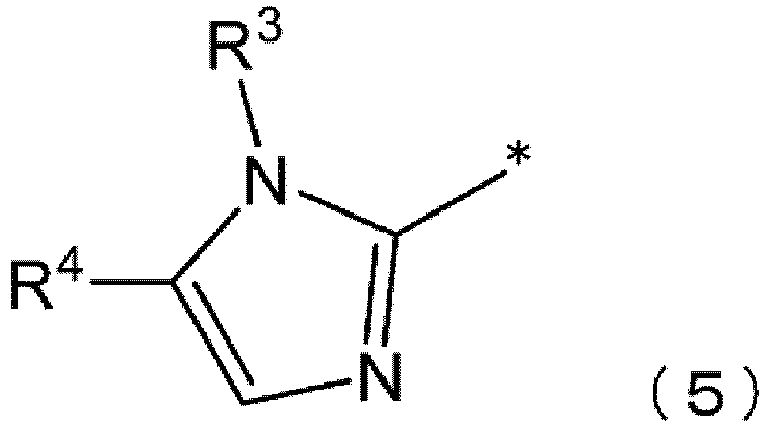
- A compound represented by formula (3a),

Applications Claiming Priority (2)
| Application Number | Priority Date | Filing Date | Title |
|---|---|---|---|
| JP2021188982 | 2021-11-19 | ||
| PCT/JP2022/042495 WO2023090344A1 (en) | 2021-11-19 | 2022-11-16 | Method for producing 2-heteroarylpyridine compound |
Publications (2)
| Publication Number | Publication Date |
|---|---|
| EP4434977A1 true EP4434977A1 (en) | 2024-09-25 |
| EP4434977A4 EP4434977A4 (en) | 2025-11-12 |
Family
ID=86397077
Family Applications (1)
| Application Number | Title | Priority Date | Filing Date |
|---|---|---|---|
| EP22895625.6A Pending EP4434977A4 (en) | 2021-11-19 | 2022-11-16 | METHOD FOR PREPARING A 2-HETEROARYLPYRIDINE COMPOUND |
Country Status (7)
| Country | Link |
|---|---|
| US (1) | US20240391894A1 (en) |
| EP (1) | EP4434977A4 (en) |
| JP (1) | JP7855013B2 (en) |
| KR (1) | KR20240108377A (en) |
| CN (1) | CN118201913A (en) |
| TW (1) | TW202334110A (en) |
| WO (1) | WO2023090344A1 (en) |
Families Citing this family (1)
| Publication number | Priority date | Publication date | Assignee | Title |
|---|---|---|---|---|
| EP4680028A1 (en) | 2023-03-14 | 2026-01-21 | Syngenta Crop Protection AG | Control of pests resistant to insecticides |
Family Cites Families (7)
| Publication number | Priority date | Publication date | Assignee | Title |
|---|---|---|---|---|
| WO2017016910A1 (en) | 2015-07-24 | 2017-02-02 | Syngenta Participations Ag | Pesticidally active 1,2,4-triazole derivatives with sulphur containing substituents |
| WO2017050685A1 (en) | 2015-09-25 | 2017-03-30 | Syngenta Participations Ag | Pesticidally active polycyclic derivatives with 5-membered sulfur containing heterocyclic ring systems |
| AR111473A1 (en) | 2017-04-19 | 2019-07-17 | Sumitomo Chemical Co | METHOD FOR THE PREPARATION OF PIRIDINE COMPOUND |
| US12180178B2 (en) | 2018-09-03 | 2024-12-31 | Nippon Soda Co., Ltd. | Heteroaryl azole compound and pest control agent |
| AU2019355455A1 (en) | 2018-10-02 | 2021-03-18 | Nippon Soda Co., Ltd. | Heteroarylazole compound and pest control agent |
| DK3878842T3 (en) | 2018-10-29 | 2025-02-03 | Nippon Soda Co | (HETERO)ARYLIMIDAZOLE COMPOUNDS AND AGENTS FOR CONTROLLING HARMFUL ORGANISMS |
| JP2019065018A (en) * | 2018-12-03 | 2019-04-25 | 住友化学株式会社 | Harmful arthropod controlling method using heterocyclic compound |
-
2022
- 2022-11-16 WO PCT/JP2022/042495 patent/WO2023090344A1/en not_active Ceased
- 2022-11-16 JP JP2023562366A patent/JP7855013B2/en active Active
- 2022-11-16 EP EP22895625.6A patent/EP4434977A4/en active Pending
- 2022-11-16 TW TW111143657A patent/TW202334110A/en unknown
- 2022-11-16 CN CN202280069721.0A patent/CN118201913A/en active Pending
- 2022-11-16 US US18/696,186 patent/US20240391894A1/en active Pending
- 2022-11-16 KR KR1020247011670A patent/KR20240108377A/en active Pending
Also Published As
| Publication number | Publication date |
|---|---|
| EP4434977A4 (en) | 2025-11-12 |
| JP7855013B2 (en) | 2026-05-07 |
| US20240391894A1 (en) | 2024-11-28 |
| TW202334110A (en) | 2023-09-01 |
| WO2023090344A1 (en) | 2023-05-25 |
| KR20240108377A (en) | 2024-07-09 |
| JPWO2023090344A1 (en) | 2023-05-25 |
| CN118201913A (en) | 2024-06-14 |
Similar Documents
| Publication | Publication Date | Title |
|---|---|---|
| ES2625744T3 (en) | Imidazo [1,2-a] pyridines substituted with 3-aryl and their use | |
| EP4434976A1 (en) | Method for producing 2-heteroarylpyridine compound | |
| JP7855013B2 (en) | Method for producing 2-heteroarylpyridine compounds | |
| JP2008514713A (en) | Production of 4,5-dihydro-pyrazolo [3,4-c] pyrid-2-ones | |
| JP7855012B2 (en) | Method for producing halovinylimidazole compounds | |
| JP7855014B2 (en) | Method for producing 2-alkylthio-1-imidazoylethanone compounds | |
| WO2016045416A1 (en) | Intermediate for use in synthesizing paroxetine, preparation method for the intermediate, and uses thereof | |
| Nodzewska et al. | Environmentally benign diastereoselective synthesis of granatane and tropane aldol derivatives | |
| JP2022038431A (en) | Method for producing 2-heteroaryl pyridine compound | |
| TWI916623B (en) | Method for preparing 2-alkylthio-1-imidazolium ketone compound | |
| WO2025022915A1 (en) | Method for producing 2-ethylsulfonyl-1-heteroarylethanone compound | |
| JP2025184297A (en) | Method for producing imidazole-2-carbonyl halide or imidazole-2-carbonothioyl halide | |
| EP1812392B1 (en) | Process for preparation of isonicotinic acid derivatives | |
| EP2009002A1 (en) | New process for the manufacture of 1H-imidazo [4,5-c]-quinoline ring systems | |
| JP2022029799A (en) | Production method of 2-pyridone compound | |
| JP2022038430A (en) | Method for producing 3-nitro-2-pyridine amine compound | |
| JP2022029800A (en) | Method for Producing Cyclopropyl Pyridine Compound | |
| JP2022029797A (en) | Production method of 2-aminopyridine compound | |
| WO2011027865A1 (en) | Novel 2-aza-adamantane compound and method for producing the same | |
| JP2022029798A (en) | Production method of 2-pyridone compound | |
| MX2008013408A (en) | 2-alkenyl-3-aminothiophene derivative and method for producing the same. | |
| RU2577537C1 (en) | Method for producing 4-oxoalkane-1,1,2,2-tetracarbonitriles | |
| KR20260045783A (en) | Method for preparing amide compounds | |
| WO2025144882A1 (en) | Enantioselective remote methylene c-h (hetero)arylation of cycloalkane carboxylic acids |
Legal Events
| Date | Code | Title | Description |
|---|---|---|---|
| STAA | Information on the status of an ep patent application or granted ep patent |
Free format text: STATUS: THE INTERNATIONAL PUBLICATION HAS BEEN MADE |
|
| PUAI | Public reference made under article 153(3) epc to a published international application that has entered the european phase |
Free format text: ORIGINAL CODE: 0009012 |
|
| STAA | Information on the status of an ep patent application or granted ep patent |
Free format text: STATUS: REQUEST FOR EXAMINATION WAS MADE |
|
| 17P | Request for examination filed |
Effective date: 20240430 |
|
| AK | Designated contracting states |
Kind code of ref document: A1 Designated state(s): AL AT BE BG CH CY CZ DE DK EE ES FI FR GB GR HR HU IE IS IT LI LT LU LV MC ME MK MT NL NO PL PT RO RS SE SI SK SM TR |
|
| DAV | Request for validation of the european patent (deleted) | ||
| DAX | Request for extension of the european patent (deleted) | ||
| A4 | Supplementary search report drawn up and despatched |
Effective date: 20251014 |
|
| RIC1 | Information provided on ipc code assigned before grant |
Ipc: C07D 401/04 20060101AFI20251008BHEP Ipc: C07D 233/64 20060101ALI20251008BHEP |