EP4432693A1 - Fiber-to-the-room bandwidth allocation method, optical gateway, and computer-readable storage medium - Google Patents
Fiber-to-the-room bandwidth allocation method, optical gateway, and computer-readable storage medium Download PDFInfo
- Publication number
- EP4432693A1 EP4432693A1 EP22891612.8A EP22891612A EP4432693A1 EP 4432693 A1 EP4432693 A1 EP 4432693A1 EP 22891612 A EP22891612 A EP 22891612A EP 4432693 A1 EP4432693 A1 EP 4432693A1
- Authority
- EP
- European Patent Office
- Prior art keywords
- bandwidth
- service
- optical
- optical router
- bandwidth allocation
- Prior art date
- Legal status (The legal status is an assumption and is not a legal conclusion. Google has not performed a legal analysis and makes no representation as to the accuracy of the status listed.)
- Granted
Links
Images


Classifications
-
- H—ELECTRICITY
- H04—ELECTRIC COMMUNICATION TECHNIQUE
- H04Q—SELECTING
- H04Q11/00—Selecting arrangements for multiplex systems
- H04Q11/0001—Selecting arrangements for multiplex systems using optical switching
- H04Q11/0062—Network aspects
-
- H—ELECTRICITY
- H04—ELECTRIC COMMUNICATION TECHNIQUE
- H04L—TRANSMISSION OF DIGITAL INFORMATION, e.g. TELEGRAPHIC COMMUNICATION
- H04L47/00—Traffic control in data switching networks
- H04L47/70—Admission control; Resource allocation
-
- H—ELECTRICITY
- H04—ELECTRIC COMMUNICATION TECHNIQUE
- H04Q—SELECTING
- H04Q11/00—Selecting arrangements for multiplex systems
-
- H—ELECTRICITY
- H04—ELECTRIC COMMUNICATION TECHNIQUE
- H04Q—SELECTING
- H04Q11/00—Selecting arrangements for multiplex systems
- H04Q11/0001—Selecting arrangements for multiplex systems using optical switching
- H04Q11/0005—Switch and router aspects
-
- H—ELECTRICITY
- H04—ELECTRIC COMMUNICATION TECHNIQUE
- H04Q—SELECTING
- H04Q11/00—Selecting arrangements for multiplex systems
- H04Q11/0001—Selecting arrangements for multiplex systems using optical switching
- H04Q11/0062—Network aspects
- H04Q11/0067—Provisions for optical access or distribution networks, e.g. Gigabit Ethernet Passive Optical Network (GE-PON), ATM-based Passive Optical Network (A-PON), PON-Ring
-
- H—ELECTRICITY
- H04—ELECTRIC COMMUNICATION TECHNIQUE
- H04Q—SELECTING
- H04Q11/00—Selecting arrangements for multiplex systems
- H04Q11/0001—Selecting arrangements for multiplex systems using optical switching
- H04Q11/0062—Network aspects
- H04Q2011/0064—Arbitration, scheduling or medium access control aspects
-
- H—ELECTRICITY
- H04—ELECTRIC COMMUNICATION TECHNIQUE
- H04Q—SELECTING
- H04Q2213/00—Indexing scheme relating to selecting arrangements in general and for multiplex systems
- H04Q2213/1301—Optical transmission, optical switches
-
- H—ELECTRICITY
- H04—ELECTRIC COMMUNICATION TECHNIQUE
- H04Q—SELECTING
- H04Q2213/00—Indexing scheme relating to selecting arrangements in general and for multiplex systems
- H04Q2213/13196—Connection circuit/link/trunk/junction, bridge, router, gateway
-
- H—ELECTRICITY
- H04—ELECTRIC COMMUNICATION TECHNIQUE
- H04Q—SELECTING
- H04Q2213/00—Indexing scheme relating to selecting arrangements in general and for multiplex systems
- H04Q2213/13332—Broadband, CATV, dynamic bandwidth allocation
Definitions
- Embodiments of the present disclosure relate to, but not limited to, the technical field of optical communication, and in particular, to a Fiber to The Room (FTTR) bandwidth allocation method, an optical gateway, and a computer-readable storage medium.
- FTTR Fiber to The Room
- FSG Fixed 5th-Generation
- PON 10G Passive Optical Network
- Wi-Fi Wireless Fidelity
- An FSG home private network is an extension of an optical fiber to a room based on Fiber To The Home (FTTH) to realize all-optical networking in the home, and is used in combination with the 10G PON and Wi-Fi 6 technologies to achieve gigabit coverage of the entire house and solve the problems such as insufficient Wi-Fi signal coverage and unsatisfactory rate in the room, thereby achieving safe and reliable gigabit coverage throughout the house.
- FTTH Fiber To The Home
- a P2MP networking method is as follows.
- a wide area network (WAN) side of a P2MP optical gateway is generally a 10G PON, and a local area network (LAN) side of the P2MP optical gateway may be a Gigabit-Capable PON (GPON) or a 10G PON, which is connected to one or more optical routers through an optical splitter for networking.
- a WAN side of the optical router is a GPON or a 10G PON.
- the P2MP technical scheme offers advantages of a large number of connected devices, convenient capacity expansion, and a measured rate over one gigabit at a single point. However, it also has disadvantages, including two levels of bandwidth scheduling, uneven bandwidth allocation, and high delay, which can affect the user experience.
- an embodiment provides an FTTR bandwidth allocation method, applied to an optical gateway, the method including: acquiring a packet from an optical router; identifying a service type of the optical router according to a protocol type of the packet; determining a service requirement type according to a delay and a bandwidth requirement of the service type; analyzing a bandwidth allocation slot of an Optical Line Terminal (OLT) and an internal delay of the optical gateway; and allocating a bandwidth to the optical router according to the service requirement type, the bandwidth allocation slot, and the internal delay.
- OLT Optical Line Terminal
- an embodiment provides an optical gateway, including: a memory, a processor, and a computer program stored in the memory and executable by the processor, where the computer program, when executed by the processor, causes the processor to carry out the FTTR bandwidth allocation method in accordance with the first aspect.
- an embodiment provides an electronic device, including: a memory, a processor, and a computer program stored in the memory and executable by the processor, where the computer program, when executed by the processor, causes the processor to carry out the FTTR bandwidth allocation method in accordance with the first aspect.
- an embodiment provides a computer-readable storage medium, storing a computer-executable program which, when executed by a processor, causes the processor to carry out the FTTR bandwidth allocation method in accordance with the first aspect.
- the embodiments of the present disclosure include: acquiring, by an optical gateway, a packet from an optical router; identifying a service type of the optical router according to a protocol type of the packet; determining a service requirement type according to a delay and a bandwidth requirement of the service type; analyzing a bandwidth allocation slot of an OLT and an internal delay of the optical gateway; and allocating a bandwidth to the optical router according to the service requirement type, the bandwidth allocation slot, and the internal delay.
- the term “plurality of” means at least two, the term such as “greater than”, “less than”, “exceed” or variants thereof prior to a number or series of numbers is understood to not include the number adjacent to the term.
- the term “at least” prior to a number or series of numbers is understood to include the number adjacent to the term “at least”, and all subsequent numbers or integers that could logically be included, as clear from context.
- the terms such as “first” and “second” are merely used for distinguishing technical features, and are not intended to indicate or imply relative importance, or implicitly point out the number of the indicated technical features, or implicitly point out the order of the indicated technical features.
- An FSG home private network is an extension of an optical fiber to a room based on FTTH to realize all-optical networking in the home, and is used in combination with the 10G PON and Wi-Fi 6 technologies to achieve gigabit coverage of the entire house and solve the problems such as insufficient Wi-Fi signal coverage and unsatisfactory rate in the room, thereby achieving safe and reliable gigabit coverage throughout the house.
- a P2MP networking method is as follows.
- a WAN side of a P2MP optical gateway is generally a 10G PON, and a LAN side of the P2MP optical gateway may be a GPON or a 10G PON, which is connected to one or more optical routers through an optical splitter for networking.
- a WAN side of the optical router is a GPON or a 10G PON.
- the P2MP technical scheme has the advantages of a large number of connected devices, convenient capacity expansion, and a measured rate over one gigabit at a single point, but also has the disadvantages such as two levels of bandwidth scheduling, uneven bandwidth allocation, and high delay, affecting user experience.
- An optical gateway acquires a packet from an optical router; identifies a service type of the optical router according to a protocol type of the packet; determines a service requirement type according to a delay and a bandwidth requirement of the service type; analyzes a bandwidth allocation slot of an OLT and an internal delay of the optical gateway; and allocates a bandwidth to the optical router according to the service requirement type, the bandwidth allocation slot, and the internal delay.
- the optical gateway identifies the service requirement type of the optical router and the bandwidth allocation size and slot of the OLT, to achieve service classification and sorting of the optical router and bandwidth analysis and adjustment of the OLT.
- the optical gateway allocates the bandwidth to the optical router according to the service requirement type and slots of two levels of bandwidth allocation, to realize the seamless connection in the two levels of bandwidth scheduling, thereby reducing the service delay and improving bandwidth utilization.
- the bandwidth of the optical router can be fully utilized to improve user experience. Based on this, the present disclosure can reduce the service delay in FTTR P2MP scenarios, improve bandwidth utilization, and thereby improve user experience.
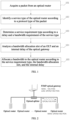
- FIG. 1 is a main flowchart of an FTTR bandwidth allocation method according to an embodiment of the present disclosure.
- the FTTR bandwidth allocation method includes, but not limited to, the following steps.
- a packet is acquired from an optical router.
- a service type of the optical router is identified according to a protocol type of the packet.
- a service requirement type is determined according to a delay and a bandwidth requirement of the service type.
- a bandwidth allocation slot of an OLT and an internal delay of the optical gateway are analyzed.
- a bandwidth is allocated to the optical router according to the service requirement type, the bandwidth allocation slot, and the internal delay.
- an optical gateway acquires a packet from an optical router; identifies a service type of the optical router according to a protocol type of the packet; determines a service requirement type according to a delay and a bandwidth requirement of the service type; analyzes a bandwidth allocation slot of an OLT and an internal delay of the optical gateway; and allocates a bandwidth to the optical router according to the service requirement type, the bandwidth allocation slot, and the internal delay.
- the optical gateway identifies the service requirement type of the optical router and the bandwidth allocation size and slot of the OLT, to achieve service classification and sorting of the optical router and bandwidth analysis and adjustment of the OLT.
- the optical gateway allocates the bandwidth to the optical router according to the service requirement type and slots of two levels of bandwidth allocation, to realize the seamless connection in the two levels of bandwidth scheduling, thereby reducing the service delay and improving bandwidth utilization.
- the bandwidth of the optical router can be fully utilized to improve user experience.
- the optical gateway may be connected to one or more optical routers.
- a service requirement type of an optical router is identified through Artificial Intelligence (AI) according to a protocol type of a packet sent by the optical router. For example, if the optical router sends a Highway Addressable Remote Transducer (HART) packet, the optical gateway may identify that the user is performing VR interaction through the optical router. If the optical router sends a multicast join packet, the optical gateway may identify that the user is watching IPTV video through the optical router. If the optical router sends a Session Initiation Protocol (SIP) packet, the optical gateway may identify that the user is making a voice call through the optical router.
- HART Highway Addressable Remote Transducer
- SIP Session Initiation Protocol
- a single optical router may perform a single or multiple services at the same time.
- service types may include, but not limited to, VR, IPTV, and voice.
- services can be divided into four service requirement types.
- the service requirement types include a low-latency high-bandwidth service, a low-latency low-bandwidth service, a high-latency high-bandwidth service, and a high-latency low-bandwidth service.
- the optical gateway may classify the services as the corresponding service requirement types and sort the services. For example, VR interaction may be classified as a low-latency high-bandwidth service, an IPTV video may be classified as a high-latency high-bandwidth service, and a voice call may be classified as a low-latency low-bandwidth service.
- VR > voice > IPTV.
- VR > IPTV > voice.
- VR, IPTV, and voice are used as examples only, and there may also be other service requirement types, such as cloud gaming, cloud education, remote maintenance, etc.
- the optical gateway needs to record and analyze the bandwidth size and allocation slot of the OLT, and determine through calculation whether a current bandwidth allocated by the OLT meets all service requirements of the optical router connected to the optical gateway. If the bandwidth allocation slot does not meet the service requirements, the optical gateway may send a private Physical Layer Operation Administration and Maintenance (PLOAM) or Optical Network Unit (ONU) Management And Control Interface (OMCI) message to instruct the OLT to reduce a bandwidth allocation cycle or perform bandwidth allocation multiple times within one frame to reduce the delay. If the bandwidth size does not meet the service requirements, the optical gateway may send a private PLOAM or OMCI message to instruct the OLT to increase the allocated bandwidth. In a Status Reporting (SR) mode, the optical gateway may also apply for a larger bandwidth by increasing a Dynamic Bandwidth Report Upstream (DBRu) value.
- PLOAM Physical Layer Operation Administration and Maintenance
- ONU Optical Network Unit
- OMCI Management And Control Interface
- the optical gateway may also apply for a larger bandwidth by increasing a Dynamic Bandwidth Report
- the optical gateway there are two levels of bandwidth scheduling in the P2MP networking mode of the optical gateway, and the difference between time of arrival of bandwidth delivered by the OLT and time of arrival of bandwidth delivered by the optical gateway is likely to cause nonalignment between the two levels of bandwidth allocation. If the delivery of the bandwidth by the optical gateway is earlier than the delivery of the bandwidth by the OLT, a packet backlog may occur at the optical gateway, leading to an increased service delay. If the delivery of the bandwidth by the optical gateway is later than the delivery of the bandwidth by the OLT, the optical gateway may miss part of the bandwidth allocation slot of the OLT, resulting in a decrease in bandwidth utilization. The optical gateway analyzes the bandwidth allocation slot of the OLT and the internal delay of the optical gateway.
- the bandwidth allocation slot of the OLT includes StartTime olt , GrantSize olt , and the bandwidth allocation cycle of the bandwidth delivered by the OLT.
- the internal delay of the optical gateway mainly refers to a packet forwarding delay InsideDelay.
- a line propagation delay Propagation Delay i of the optical router also needs to be considered.
- the bandwidth allocation size GrantSize i and the bandwidth allocation cycle of the optical router are adjusted according to the service requirement type. For example, for a low-latency high-bandwidth service, GrantSize i is increased, and at the same time, the bandwidth allocation cycle is reduced or bandwidth allocation is performed multiple times within one frame to reduce the delay. For a high-latency high-bandwidth service, GrantSize i is increased, and at the same time, the bandwidth allocation cycle is increased. For a low-latency low-bandwidth service, GrantSize i is reduced, and at the same time, the bandwidth allocation cycle is reduced or bandwidth allocation is performed multiple times within one frame to reduce the delay.
- the optical gateway may further improve the bandwidth allocation precision for the optical router through AI learning based on the above bandwidth allocation policy.
- the method may further include, but not limited to, the following steps.
- a bandwidth allocation priority of the service type is determined according to the service requirement type.
- allocating a bandwidth to the optical router according to the service requirement type, the bandwidth allocation slot, and the internal delay includes: allocating the bandwidth to the optical router according to the bandwidth allocation priority of the service type, the bandwidth allocation slot, and the internal delay.
- the optical gateway may classify the services as the corresponding service requirement types and sort the services to determine bandwidth allocation priorities corresponding to the service types, and then allocate the bandwidth to the optical router according to the bandwidth allocation priorities corresponding to the service types. For example, VR interaction may be classified as a low-latency high-bandwidth service, an IPTV video may be classified as a high-latency high-bandwidth service, and a voice call may be classified as a low-latency low-bandwidth service.
- VR > voice IPTV.
- VR > IPTV > voice voice.
- VR, IPTV, and voice are used as examples only, and there may also be other service requirement types, such as cloud gaming, cloud education, remote maintenance, etc.
- the optical router also has an active bandwidth release mechanism.
- the optical gateway when an optical router does not need to send service data, the optical gateway usually still allocates an OMCI bandwidth and a service bandwidth to the optical router periodically, resulting in a waste of bandwidth.
- the optical router may regularly detect whether there is service data to send.
- the optical router may send a private PLOAM or OMCI message to instruct the optical gateway to stop the allocation of the OMCI bandwidth and the service bandwidth for a period of time, or the optical gateway may instruct the optical router to switch from a normal state to an energy-saving state.
- the optical router may send a private PLOAM or OMCI message to instruct the optical gateway to resume the bandwidth allocation, or the optical gateway may instruct the optical router to switch from the energy-saving state to the normal state.
- the bandwidth actively released by the optical router may be allocated to other optical routers having a data service, to improve the bandwidth utilization of the optical routers.
- step 105 may include, but not limited to, the following steps.
- a bandwidth allocation size and a bandwidth allocation cycle of the optical router are adjusted according to the service requirement type.
- a bandwidth allocation start time of the optical router is determined according to the bandwidth allocation slot and the internal delay.
- the bandwidth allocation size N2 and the bandwidth allocation cycle of the optical router may be adjusted according to the service requirement type.
- the bandwidth of the optical router is increased when it is determined that the service requirement type is a low-latency high-bandwidth service or a high-latency high-bandwidth service; the bandwidth of the optical router is reduced when it is determined that the service requirement type is a low-latency low-bandwidth service or a high-latency low-bandwidth service; the bandwidth allocation cycle of the optical router is reduced when it is determined that the service requirement type is a low-latency high-bandwidth service or a low-latency low-bandwidth service; and the bandwidth allocation cycle of the optical router is increased when it is determined that the service requirement type is a high-latency high-bandwidth service or a high-latency low-bandwidth service.
- N2 may be increased, and at the same time, the bandwidth allocation cycle may be reduced or bandwidth allocation may be performed multiple times within one frame; for a high-latency high-bandwidth service, N2 may be increased, and at the same time, the bandwidth allocation cycle may be increased; for a low-latency low-bandwidth service, N2 may be reduced, and at the same time, the bandwidth allocation cycle may be reduced or bandwidth allocation may be performed multiple times within one frame; and for a high-latency low-bandwidth service, N2 may be reduced, and at the same time, the bandwidth allocation cycle may be increased.
- the optical gateway may further improve the bandwidth allocation precision for the optical router through AI learning.
- the optical gateway there are two levels of bandwidth scheduling in the P2MP networking mode of the optical gateway, and the difference between time of arrival of bandwidth delivered by the OLT and time of arrival of bandwidth delivered by the optical gateway is likely to cause nonalignment between the two levels of bandwidth allocation. If the delivery of the bandwidth by the optical gateway is earlier than the delivery of the bandwidth by the OLT bandwidth, a packet backlog may occur at the optical gateway, leading to an increased service delay. If the delivery of the bandwidth by the optical gateway is later than the delivery of the bandwidth by the OLT, the optical gateway may miss part of the bandwidth allocation slot of the OLT, resulting in a decrease in bandwidth utilization. The optical gateway analyzes the bandwidth allocation slot of the OLT and the internal delay of the optical gateway.
- the bandwidth allocation slot of the OLT includes StartTime olt , GrantSize olt , and the bandwidth allocation cycle of the bandwidth delivered by the OLT.
- the internal delay of the optical gateway mainly refers to a packet forwarding delay InsideDelay.
- a line propagation delay Propagation Delay i of the optical router also needs to be considered.
- the optical router has three services: VR, IPTV, and voice.
- the optical gateway may identify service requirement types of the services of the optical router through AI according to protocol types of packets sent by the optical router, and classify and sort the services. To realize the distinguishing and scheduling of the three services of the optical router, the optical gateway may configure three separate sending channels for the optical router.
- an optical router 1 has an IPTV service
- an optical router 2 has two services, i.e., VR and voice.
- the optical gateway may identify service requirement types of the services of the two optical routers through AI according to protocol types of packets sent by the optical routers, and classify and sort the services. To realize the distinguishing and scheduling of the two services of the optical router 2, the optical gateway may configure two separate sending channels for the optical router 2.
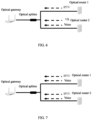
- an optical router 1 has two services, i.e., IPTV and voice
- an optical router 2 also has two services, i.e., VR and voice.
- the optical gateway may identify service requirement types of the services of the two optical routers through AI according to protocol types of packets sent by the optical routers, and classify and sort the services.
- the optical gateway may configure two separate sending channels for each of the optical router 1 and the optical router 2.
- the internal delay InsideDelay of the optical gateway is a packet forwarding delay.
- a line propagation delay of the optical router is defined as PDi.
- the bandwidth allocation size N2 and the bandwidth allocation cycle of the optical router may be adjusted according to the service requirement type. For a low-latency high-bandwidth service, N2 may be increased, and at the same time, the bandwidth allocation cycle may be reduced or bandwidth allocation may be performed multiple times within one frame; for a high-latency high-bandwidth service, N2 may be increased, and at the same time, the bandwidth allocation cycle may be increased; for a low-latency low-bandwidth service, N2 may be reduced, and at the same time, the bandwidth allocation cycle may be reduced or bandwidth allocation may be performed multiple times within one frame; and for a high-latency low-bandwidth service, N2 may be reduced, and at the same time, the bandwidth allocation cycle may be increased.
- the optical gateway may further improve the bandwidth allocation precision for the optical router through AI learning.
- an FTTR bandwidth allocation method includes the following steps.
- an optical gateway identifies a service requirement type of an optical router connected thereto and a bandwidth of an OLT through AI.
- the optical gateway determines whether the service requirement type of the optical router is a low-latency high-bandwidth service. If yes, S506 is executed; otherwise, S503 is executed.
- the optical gateway determines whether the service requirement type of the optical router is a low-latency low-bandwidth service. If yes, S507 is executed; otherwise, S504 is executed.
- the optical gateway determines whether the service requirement type of the optical router is a high-latency high-bandwidth service. If yes, S508 is executed; otherwise, S505 is executed.
- the optical gateway calculates slots of two levels of bandwidth allocation and allocates a high-latency small bandwidth to a corresponding service of the optical router.
- the optical gateway calculates slots of two levels of bandwidth allocation and allocates a low-latency large bandwidth to a corresponding service of the optical router.
- the optical gateway calculates slots of two levels of bandwidth allocation and allocates a low-latency small bandwidth to a corresponding service of the optical router.
- the optical gateway calculates slots of two levels of bandwidth allocation and allocates a high-latency large bandwidth to a corresponding service of the optical router.
- the optical gateway further improves the bandwidth allocation precision through AI learning.
- the optical gateway identifies the service requirement type of the optical router and the bandwidth allocation size and slot of the OLT, to achieve service classification and sorting of the optical router and bandwidth analysis and adjustment of the OLT.
- the optical gateway allocates the bandwidth to the optical router according to the service requirement type and slots of two levels of bandwidth allocation, to realize the seamless connection in the two levels of bandwidth scheduling, thereby reducing the service delay and improving bandwidth utilization.
- the bandwidth of the optical router can be fully utilized to improve user experience.
- an embodiment of the present disclosure provides an optical gateway.
- the optical gateway includes one or more processors and one or more memories.
- FIG. 10 uses one processor and one memory as an example.
- the processor and the memory may be connected by a bus or in other ways. Connection by a bus is used as an example in FIG. 10 .
- the memory as a non-transitory computer-readable storage medium, may be configured for storing a non-transitory software program and a non-transitory computer-executable program, for example, the FTTR bandwidth allocation method in the embodiments of the present disclosure.
- the processor executes the non-transitory software program and the non-transitory computer-executable program stored in the memory, to carry out the FTTR bandwidth allocation method in the embodiments of the present disclosure.
- the memory may include a program storage area and a data storage area.
- the program storage area may store an operating system, and an application required by at least one function.
- the data storage area may store data and the like required for executing the FTTR bandwidth allocation method in the embodiments of the present disclosure.
- the memory may include a high-speed random access memory, and may also include a non-transitory memory, e.g., at least one magnetic disk storage device, flash memory device, or other non-transitory solid-state storage device.
- the memory includes memories located remotely from the processor, and the remote memories may be connected to the optical gateway via a network. Examples of the network include, but not limited to, the Internet, an intranet, a local area network, a mobile communication network, and combinations thereof.
- the non-transitory software program and the non-transitory computer-executable program required for carrying out the FTTR bandwidth allocation method in the embodiments of the present disclosure are stored in the memory which, when executed by one or more processors, cause the one or more processors to carry out the FTTR bandwidth allocation method in the embodiments of the present disclosure, for example, carry out the method steps 101 to 105 in FIG. 1 , the method steps 1031 to 1032 in FIG. 3 , or the method steps 1051 to 1052 in FIG. 4 .
- the optical gateway acquires a packet from an optical router; identifies a service type of the optical router according to a protocol type of the packet; determines a service requirement type according to a delay and a bandwidth requirement of the service type; analyzes a bandwidth allocation slot of an OLT and an internal delay of the optical gateway; and allocates a bandwidth to the optical router according to the service requirement type, the bandwidth allocation slot, and the internal delay.
- the optical gateway identifies the service requirement type of the optical router and the bandwidth allocation size and slot of the OLT, to achieve service classification and sorting of the optical router and bandwidth analysis and adjustment of the OLT.
- the optical gateway allocates the bandwidth to the optical router according to the service requirement type and slots of two levels of bandwidth allocation, to realize the seamless connection in the two levels of bandwidth scheduling, thereby reducing the service delay and improving bandwidth utilization.
- the bandwidth of the optical router can be fully utilized to improve user experience.
- an embodiment of the present disclosure provides an electronic device.
- the electronic device includes one or more processors and one or more memories.
- FIG. 11 uses one processor and one memory as an example.
- the processor and the memory may be connected by a bus or in other ways. Connection by a bus is used as an example in FIG. 11 .
- the memory as a non-transitory computer-readable storage medium, may be configured for storing a non-transitory software program and a non-transitory computer-executable program, for example, the FTTR bandwidth allocation method in the embodiments of the present disclosure.
- the processor executes the non-transitory software program and the non-transitory computer-executable program stored in the memory, to carry out the FTTR bandwidth allocation method in the embodiments of the present disclosure.
- the memory may include a program storage area and a data storage area.
- the program storage area may store an operating system, and an application required by at least one function.
- the data storage area may store data and the like required for executing the FTTR bandwidth allocation method in the embodiments of the present disclosure.
- the memory may include a high-speed random access memory, and may also include a non-transitory memory, e.g., at least one magnetic disk storage device, flash memory device, or other non-transitory solid-state storage device.
- the memory includes memories located remotely from the processor, and the remote memories may be connected to the optical gateway via a network. Examples of the network include, but are not limited to, the Internet, an intranet, a local area network, a mobile communication network, and combinations thereof.
- the non-transitory software program and the non-transitory computer-executable program required for carrying out the FTTR bandwidth allocation method in the embodiments of the present disclosure are stored in the memory which, when executed by one or more processors, cause the one or more processors to carry out the FTTR bandwidth allocation method in the embodiments of the present disclosure, for example, carry out the method steps 101 to 105 in FIG. 1 , the method steps 1031 to 1032 in FIG. 3 , or the method steps 1051 to 1052 in FIG. 4 .
- the electronic device acquires a packet from an optical router; identifies a service type of the optical router according to a protocol type of the packet; determines a service requirement type according to a delay and a bandwidth requirement of the service type; analyzes a bandwidth allocation slot of an OLT and an internal delay of the optical gateway; and allocates a bandwidth to the optical router according to the service requirement type, the bandwidth allocation slot, and the internal delay.
- the optical gateway identifies the service requirement type of the optical router and the bandwidth allocation size and slot of the OLT, to achieve service classification and sorting of the optical router and bandwidth analysis and adjustment of the OLT.
- the optical gateway allocates the bandwidth to the optical router according to the service requirement type and slots of two levels of bandwidth allocation, to realize the seamless connection in the two levels of bandwidth scheduling, thereby reducing the service delay and improving bandwidth utilization.
- the bandwidth of the optical router can be fully utilized to improve user experience.
- an embodiment of the present disclosure provides a computer-readable storage medium, storing a computer-executable program which, when executed by one or more control processors, for example, by a processor in FIG. 10 , may cause the one or more processors to carry out the FTTR bandwidth allocation method in the embodiments of the present disclosure, for example, carry out the method steps 101 to 105 in FIG. 1 , the method steps 1031 to 1032 in FIG. 3 , or the method steps 1051 to 1052 in FIG. 4 .
- An optical gateway acquires a packet from an optical router; identifies a service type of the optical router according to a protocol type of the packet; determines a service requirement type according to a delay and a bandwidth requirement of the service type; analyzes a bandwidth allocation slot of an OLT and an internal delay of the optical gateway; and allocates a bandwidth to the optical router according to the service requirement type, the bandwidth allocation slot, and the internal delay.
- the optical gateway identifies the service requirement type of the optical router and the bandwidth allocation size and slot of the OLT, to achieve service classification and sorting of the optical router and bandwidth analysis and adjustment of the OLT.
- the optical gateway allocates the bandwidth to the optical router according to the service requirement type and slots of two levels of bandwidth allocation, to realize the seamless connection in the two levels of bandwidth scheduling, thereby reducing the service delay and improving bandwidth utilization.
- the bandwidth of the optical router can be fully utilized to improve user experience.
- the embodiments of the present disclosure provide an FTTR bandwidth allocation method, an optical gateway, and a computer-readable storage medium, which can reduce the service delay in FTTR P2MP scenarios, improve bandwidth utilization, and thereby improve user experience.
- computer storage medium includes volatile and nonvolatile, removable and non-removable media implemented in any method or technology for storage of information (such as a computer-readable program, data structures, program modules, or other data).
- the computer storage medium includes, but not limited to, a Random Access Memory (RAM), a Read-Only Memory (ROM), an Electrically Erasable Programmable Read-Only Memory (EEPROM), a flash memory or other memory technology, a Compact Disc Read-Only Memory (CD-ROM), a Digital Versatile Disc (DVD) or other optical storage, a cassette, a magnetic tape, a magnetic disk storage or other magnetic storage device, or any other medium which can be used to store the desired information and can be accessed by a computer.
- the communication medium typically includes a computer-readable program, data structures, program modules, or other data in a modulated data signal such as a carrier or other transport mechanism, and can include any information delivery medium.
Landscapes
- Engineering & Computer Science (AREA)
- Computer Networks & Wireless Communication (AREA)
- Signal Processing (AREA)
- Data Exchanges In Wide-Area Networks (AREA)
- Small-Scale Networks (AREA)
Abstract
Description
- This application is filed on the basis of
Chinese patent application No. 202111347076.8 filed November 15, 2021 - Embodiments of the present disclosure relate to, but not limited to, the technical field of optical communication, and in particular, to a Fiber to The Room (FTTR) bandwidth allocation method, an optical gateway, and a computer-readable storage medium.
- With the continuous development of optical networks, bandwidth network services are evolving towards the Fixed 5th-Generation (FSG) era with 10G Passive Optical Network (PON) and Wireless Fidelity (Wi-Fi) 6 as the mainstream. Compared to previous generations of fixed access technologies, FSG offers several excellent features, such as ultra-high network access rate, all-optical connection, and excellent network experience. An FSG home private network is an extension of an optical fiber to a room based on Fiber To The Home (FTTH) to realize all-optical networking in the home, and is used in combination with the 10G PON and Wi-Fi 6 technologies to achieve gigabit coverage of the entire house and solve the problems such as insufficient Wi-Fi signal coverage and unsatisfactory rate in the room, thereby achieving safe and reliable gigabit coverage throughout the house.
- FTTR can be achieved using two technical schemes: Point to Point (P2P) and Point to Multi Point (P2MP). A P2MP networking method is as follows. A wide area network (WAN) side of a P2MP optical gateway is generally a 10G PON, and a local area network (LAN) side of the P2MP optical gateway may be a Gigabit-Capable PON (GPON) or a 10G PON, which is connected to one or more optical routers through an optical splitter for networking. A WAN side of the optical router is a GPON or a 10G PON. The P2MP technical scheme offers advantages of a large number of connected devices, convenient capacity expansion, and a measured rate over one gigabit at a single point. However, it also has disadvantages, including two levels of bandwidth scheduling, uneven bandwidth allocation, and high delay, which can affect the user experience.
- The following is a summary of the subject matter set forth in this description. This summary is not intended to limit the scope of protection of the claims.
- In accordance with a first aspect of the present disclosure, an embodiment provides an FTTR bandwidth allocation method, applied to an optical gateway, the method including: acquiring a packet from an optical router; identifying a service type of the optical router according to a protocol type of the packet; determining a service requirement type according to a delay and a bandwidth requirement of the service type; analyzing a bandwidth allocation slot of an Optical Line Terminal (OLT) and an internal delay of the optical gateway; and allocating a bandwidth to the optical router according to the service requirement type, the bandwidth allocation slot, and the internal delay.
- In accordance with a second aspect of the present disclosure, an embodiment provides an optical gateway, including: a memory, a processor, and a computer program stored in the memory and executable by the processor, where the computer program, when executed by the processor, causes the processor to carry out the FTTR bandwidth allocation method in accordance with the first aspect.
- In accordance with a third aspect of the present disclosure, an embodiment provides an electronic device, including: a memory, a processor, and a computer program stored in the memory and executable by the processor, where the computer program, when executed by the processor, causes the processor to carry out the FTTR bandwidth allocation method in accordance with the first aspect.
- In accordance with a fourth aspect of the present disclosure, an embodiment provides a computer-readable storage medium, storing a computer-executable program which, when executed by a processor, causes the processor to carry out the FTTR bandwidth allocation method in accordance with the first aspect.
- The embodiments of the present disclosure include: acquiring, by an optical gateway, a packet from an optical router; identifying a service type of the optical router according to a protocol type of the packet; determining a service requirement type according to a delay and a bandwidth requirement of the service type; analyzing a bandwidth allocation slot of an OLT and an internal delay of the optical gateway; and allocating a bandwidth to the optical router according to the service requirement type, the bandwidth allocation slot, and the internal delay.
- Additional features and advantages of the present disclosure will be set forth in the description which follows, and in part will be obvious from the description, or may be learned by the practice of the present disclosure. The objects and other advantages of the present disclosure can be realized and obtained by the structures particularly pointed out in the description, claims, and drawings.
- The drawings are provided for a further understanding of the technical schemes of the present disclosure, and constitute a part of the description. The drawings and the embodiments of the present disclosure are used to illustrate the technical schemes of the present disclosure, but are not intended to limit the technical schemes of the present disclosure.
-
FIG. 1 is a main flowchart of an FTTR bandwidth allocation method according to an embodiment of the present disclosure; -
FIG. 2 is a schematic structural diagram of FTTR networking according to an embodiment of the present disclosure; -
FIG. 3 is a detailed flowchart of an FTTR bandwidth allocation method according to an embodiment of the present disclosure; -
FIG. 4 is a detailed flowchart ofstep 105 according to an embodiment of the present disclosure; -
FIG. 5 is a schematic diagram of different service systems of a single optical router according to an embodiment of the present disclosure; -
FIG. 6 is a schematic diagram of different service systems of a plurality of optical routers according to an embodiment of the present disclosure; -
FIG. 7 is another schematic diagram of different service systems of a plurality of optical routers according to an embodiment of the present disclosure; -
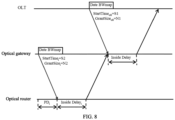
FIG. 8 is a schematic diagram of an implementation of two levels of bandwidth scheduling according to an embodiment of the present disclosure; -
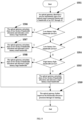
FIG. 9 is a flowchart of an FTTR bandwidth allocation method according to an embodiment of the present disclosure; -
FIG. 10 is a schematic structural diagram of an optical gateway according to an embodiment of the present disclosure; and -
FIG. 11 is a schematic structural diagram of an electronic device according to an embodiment of the present disclosure. - To make the objects, technical schemes, and advantages of the present disclosure clear, the present disclosure is described in further detail in conjunction with accompanying drawings and examples. It should be understood that the specific embodiments described herein are merely used for illustrating the present disclosure, and are not intended to limit the present disclosure.
- It should be understood that in the description of the embodiments of the present disclosure, the term "plurality of" (or multiple) means at least two, the term such as "greater than", "less than", "exceed" or variants thereof prior to a number or series of numbers is understood to not include the number adjacent to the term. The term "at least" prior to a number or series of numbers is understood to include the number adjacent to the term "at least", and all subsequent numbers or integers that could logically be included, as clear from context. If used herein, the terms such as "first" and "second" are merely used for distinguishing technical features, and are not intended to indicate or imply relative importance, or implicitly point out the number of the indicated technical features, or implicitly point out the order of the indicated technical features.
- With the continuous development of optical networks, bandwidth network services are developing towards the FSG era with 10G PON and Wi-Fi 6 as the mainstream. Compared with previous generations of fixed access technologies, FSG has a series of excellent features such as ultra-high network access rate, all-optical connection, and excellent network experience. An FSG home private network is an extension of an optical fiber to a room based on FTTH to realize all-optical networking in the home, and is used in combination with the 10G PON and Wi-Fi 6 technologies to achieve gigabit coverage of the entire house and solve the problems such as insufficient Wi-Fi signal coverage and unsatisfactory rate in the room, thereby achieving safe and reliable gigabit coverage throughout the house.
- FTTR can be achieved using two technical schemes: P2P and P2MP. A P2MP networking method is as follows. A WAN side of a P2MP optical gateway is generally a 10G PON, and a LAN side of the P2MP optical gateway may be a GPON or a 10G PON, which is connected to one or more optical routers through an optical splitter for networking. A WAN side of the optical router is a GPON or a 10G PON. The P2MP technical scheme has the advantages of a large number of connected devices, convenient capacity expansion, and a measured rate over one gigabit at a single point, but also has the disadvantages such as two levels of bandwidth scheduling, uneven bandwidth allocation, and high delay, affecting user experience.
- In recent years, with the rapid development of smart home, Virtual Reality (VR) technology, telemedicine, and other services, telecommunication operators, home users, and enterprise users have increasingly higher requirements for the bandwidth and user experience of optical fiber access. For example, 4K video streams require a bandwidth of 30 Mbps/person, voice streams require a delay of less than 30 ms, and VR streams require a bandwidth of 50 Mbps/person and a delay of less than 15 ms. Such streams are very sensitive to bandwidth and delay. The uneven bandwidth allocation and delay problems brought about by P2MP networking have great impact on user experience.
- Existing related technologies fail to provide an effective scheme to solve the above problems, and how to solve the above problems in practical applications has become a problem that needs to be solved in FTTR scenarios.
- To solve the uneven bandwidth allocation and delay problems brought about by P2MP networking, embodiments of the present disclosure provide an FTTR bandwidth allocation method, an optical gateway, and a computer-readable storage medium. An optical gateway acquires a packet from an optical router; identifies a service type of the optical router according to a protocol type of the packet; determines a service requirement type according to a delay and a bandwidth requirement of the service type; analyzes a bandwidth allocation slot of an OLT and an internal delay of the optical gateway; and allocates a bandwidth to the optical router according to the service requirement type, the bandwidth allocation slot, and the internal delay. The optical gateway identifies the service requirement type of the optical router and the bandwidth allocation size and slot of the OLT, to achieve service classification and sorting of the optical router and bandwidth analysis and adjustment of the OLT. The optical gateway allocates the bandwidth to the optical router according to the service requirement type and slots of two levels of bandwidth allocation, to realize the seamless connection in the two levels of bandwidth scheduling, thereby reducing the service delay and improving bandwidth utilization. Through the active bandwidth release mechanism of the optical router, the bandwidth of the optical router can be fully utilized to improve user experience. Based on this, the present disclosure can reduce the service delay in FTTR P2MP scenarios, improve bandwidth utilization, and thereby improve user experience.
-
FIG. 1 is a main flowchart of an FTTR bandwidth allocation method according to an embodiment of the present disclosure. The FTTR bandwidth allocation method includes, but not limited to, the following steps. - In a step of 101, a packet is acquired from an optical router.
- In a step of 102, a service type of the optical router is identified according to a protocol type of the packet.
- In a step of 103, a service requirement type is determined according to a delay and a bandwidth requirement of the service type.
- In a step of 104, a bandwidth allocation slot of an OLT and an internal delay of the optical gateway are analyzed.
- In a step of 105, a bandwidth is allocated to the optical router according to the service requirement type, the bandwidth allocation slot, and the internal delay.
- It can be understood that an optical gateway acquires a packet from an optical router; identifies a service type of the optical router according to a protocol type of the packet; determines a service requirement type according to a delay and a bandwidth requirement of the service type; analyzes a bandwidth allocation slot of an OLT and an internal delay of the optical gateway; and allocates a bandwidth to the optical router according to the service requirement type, the bandwidth allocation slot, and the internal delay. The optical gateway identifies the service requirement type of the optical router and the bandwidth allocation size and slot of the OLT, to achieve service classification and sorting of the optical router and bandwidth analysis and adjustment of the OLT. The optical gateway allocates the bandwidth to the optical router according to the service requirement type and slots of two levels of bandwidth allocation, to realize the seamless connection in the two levels of bandwidth scheduling, thereby reducing the service delay and improving bandwidth utilization. Through the active bandwidth release mechanism of the optical router, the bandwidth of the optical router can be fully utilized to improve user experience.
- It can be understood that as shown in
FIG. 2 , the optical gateway may be connected to one or more optical routers. A service requirement type of an optical router is identified through Artificial Intelligence (AI) according to a protocol type of a packet sent by the optical router. For example, if the optical router sends a Highway Addressable Remote Transducer (HART) packet, the optical gateway may identify that the user is performing VR interaction through the optical router. If the optical router sends a multicast join packet, the optical gateway may identify that the user is watching IPTV video through the optical router. If the optical router sends a Session Initiation Protocol (SIP) packet, the optical gateway may identify that the user is making a voice call through the optical router. A single optical router may perform a single or multiple services at the same time. - It can be understood that service types may include, but not limited to, VR, IPTV, and voice.
- It can be understood that according to delay and bandwidth requirements of service types, services can be divided into four service requirement types. The service requirement types include a low-latency high-bandwidth service, a low-latency low-bandwidth service, a high-latency high-bandwidth service, and a high-latency low-bandwidth service.
- It can be understood that after identifying service types of services of the optical router through AI, the optical gateway may classify the services as the corresponding service requirement types and sort the services. For example, VR interaction may be classified as a low-latency high-bandwidth service, an IPTV video may be classified as a high-latency high-bandwidth service, and a voice call may be classified as a low-latency low-bandwidth service. When the services are sorted according to latency, VR > voice > IPTV. When the services are sorted according to bandwidth requirements, VR > IPTV > voice. In the present disclosure, VR, IPTV, and voice are used as examples only, and there may also be other service requirement types, such as cloud gaming, cloud education, remote maintenance, etc.
- It can be understood that while identifying the service of the optical router through AI, the optical gateway needs to record and analyze the bandwidth size and allocation slot of the OLT, and determine through calculation whether a current bandwidth allocated by the OLT meets all service requirements of the optical router connected to the optical gateway. If the bandwidth allocation slot does not meet the service requirements, the optical gateway may send a private Physical Layer Operation Administration and Maintenance (PLOAM) or Optical Network Unit (ONU) Management And Control Interface (OMCI) message to instruct the OLT to reduce a bandwidth allocation cycle or perform bandwidth allocation multiple times within one frame to reduce the delay. If the bandwidth size does not meet the service requirements, the optical gateway may send a private PLOAM or OMCI message to instruct the OLT to increase the allocated bandwidth. In a Status Reporting (SR) mode, the optical gateway may also apply for a larger bandwidth by increasing a Dynamic Bandwidth Report Upstream (DBRu) value.
- It can be understood that there are two levels of bandwidth scheduling in the P2MP networking mode of the optical gateway, and the difference between time of arrival of bandwidth delivered by the OLT and time of arrival of bandwidth delivered by the optical gateway is likely to cause nonalignment between the two levels of bandwidth allocation. If the delivery of the bandwidth by the optical gateway is earlier than the delivery of the bandwidth by the OLT, a packet backlog may occur at the optical gateway, leading to an increased service delay. If the delivery of the bandwidth by the optical gateway is later than the delivery of the bandwidth by the OLT, the optical gateway may miss part of the bandwidth allocation slot of the OLT, resulting in a decrease in bandwidth utilization. The optical gateway analyzes the bandwidth allocation slot of the OLT and the internal delay of the optical gateway. The bandwidth allocation slot of the OLT includes StartTimeolt, GrantSizeolt, and the bandwidth allocation cycle of the bandwidth delivered by the OLT. The internal delay of the optical gateway mainly refers to a packet forwarding delay InsideDelay. A line propagation delay Propagation Delayi, of the optical router also needs to be considered. A start time StartTimei of bandwidth allocation for the optical router may be calculated by the following formula:

- It can be understood that the bandwidth allocation size GrantSizei and the bandwidth allocation cycle of the optical router are adjusted according to the service requirement type. For example, for a low-latency high-bandwidth service, GrantSizei is increased, and at the same time, the bandwidth allocation cycle is reduced or bandwidth allocation is performed multiple times within one frame to reduce the delay. For a high-latency high-bandwidth service, GrantSizei is increased, and at the same time, the bandwidth allocation cycle is increased. For a low-latency low-bandwidth service, GrantSizei is reduced, and at the same time, the bandwidth allocation cycle is reduced or bandwidth allocation is performed multiple times within one frame to reduce the delay. For a high-latency low-bandwidth service, GrantSizei is reduced, and at the same time, the bandwidth allocation cycle is increased. It should be noted that the optical gateway may further improve the bandwidth allocation precision for the optical router through AI learning based on the above bandwidth allocation policy.
- As shown in
FIG. 3 , afterstep 103, the method may further include, but not limited to, the following steps. - In a step of 1031, a bandwidth allocation priority of the service type is determined according to the service requirement type.
- In a step of 1032, allocating a bandwidth to the optical router according to the service requirement type, the bandwidth allocation slot, and the internal delay includes: allocating the bandwidth to the optical router according to the bandwidth allocation priority of the service type, the bandwidth allocation slot, and the internal delay.
- It can be understood that after identifying service types of services of the optical router through AI, the optical gateway may classify the services as the corresponding service requirement types and sort the services to determine bandwidth allocation priorities corresponding to the service types, and then allocate the bandwidth to the optical router according to the bandwidth allocation priorities corresponding to the service types. For example, VR interaction may be classified as a low-latency high-bandwidth service, an IPTV video may be classified as a high-latency high-bandwidth service, and a voice call may be classified as a low-latency low-bandwidth service. When the services are sorted according to latency, VR > voice > IPTV. When the services are sorted according to bandwidth requirements, VR > IPTV > voice. In the present disclosure, VR, IPTV, and voice are used as examples only, and there may also be other service requirement types, such as cloud gaming, cloud education, remote maintenance, etc.
- It can be understood that the optical router also has an active bandwidth release mechanism. In the P2MP networking scenario where the optical gateway is connected to a plurality of optical routers, when an optical router does not need to send service data, the optical gateway usually still allocates an OMCI bandwidth and a service bandwidth to the optical router periodically, resulting in a waste of bandwidth. In view of this, the optical router may regularly detect whether there is service data to send. When the optical router determines that a duration during which there is no data to send reaches a time length, the optical router may send a private PLOAM or OMCI message to instruct the optical gateway to stop the allocation of the OMCI bandwidth and the service bandwidth for a period of time, or the optical gateway may instruct the optical router to switch from a normal state to an energy-saving state. When the optical router determines that there is data to send, the optical router may send a private PLOAM or OMCI message to instruct the optical gateway to resume the bandwidth allocation, or the optical gateway may instruct the optical router to switch from the energy-saving state to the normal state. The bandwidth actively released by the optical router may be allocated to other optical routers having a data service, to improve the bandwidth utilization of the optical routers.
- As shown in
FIG. 4 , step 105 may include, but not limited to, the following steps. - In a step of 1051, a bandwidth allocation size and a bandwidth allocation cycle of the optical router are adjusted according to the service requirement type.
- In a step of 1052, a bandwidth allocation start time of the optical router is determined according to the bandwidth allocation slot and the internal delay.
- It can be understood that the bandwidth allocation size N2 and the bandwidth allocation cycle of the optical router may be adjusted according to the service requirement type. In an embodiment, the bandwidth of the optical router is increased when it is determined that the service requirement type is a low-latency high-bandwidth service or a high-latency high-bandwidth service; the bandwidth of the optical router is reduced when it is determined that the service requirement type is a low-latency low-bandwidth service or a high-latency low-bandwidth service; the bandwidth allocation cycle of the optical router is reduced when it is determined that the service requirement type is a low-latency high-bandwidth service or a low-latency low-bandwidth service; and the bandwidth allocation cycle of the optical router is increased when it is determined that the service requirement type is a high-latency high-bandwidth service or a high-latency low-bandwidth service.
- It can be understood that for a low-latency high-bandwidth service, N2 may be increased, and at the same time, the bandwidth allocation cycle may be reduced or bandwidth allocation may be performed multiple times within one frame; for a high-latency high-bandwidth service, N2 may be increased, and at the same time, the bandwidth allocation cycle may be increased; for a low-latency low-bandwidth service, N2 may be reduced, and at the same time, the bandwidth allocation cycle may be reduced or bandwidth allocation may be performed multiple times within one frame; and for a high-latency low-bandwidth service, N2 may be reduced, and at the same time, the bandwidth allocation cycle may be increased. It should be noted that the optical gateway may further improve the bandwidth allocation precision for the optical router through AI learning.
- It can be understood that there are two levels of bandwidth scheduling in the P2MP networking mode of the optical gateway, and the difference between time of arrival of bandwidth delivered by the OLT and time of arrival of bandwidth delivered by the optical gateway is likely to cause nonalignment between the two levels of bandwidth allocation. If the delivery of the bandwidth by the optical gateway is earlier than the delivery of the bandwidth by the OLT bandwidth, a packet backlog may occur at the optical gateway, leading to an increased service delay. If the delivery of the bandwidth by the optical gateway is later than the delivery of the bandwidth by the OLT, the optical gateway may miss part of the bandwidth allocation slot of the OLT, resulting in a decrease in bandwidth utilization. The optical gateway analyzes the bandwidth allocation slot of the OLT and the internal delay of the optical gateway. The bandwidth allocation slot of the OLT includes StartTimeolt, GrantSizeolt, and the bandwidth allocation cycle of the bandwidth delivered by the OLT. The internal delay of the optical gateway mainly refers to a packet forwarding delay InsideDelay. A line propagation delay Propagation Delayi, of the optical router also needs to be considered. A start time StartTimei of bandwidth allocation for the optical router may be calculated by the following formula:

- The FTTR bandwidth allocation method provided in the present disclosure is further described below in conjunction with specific embodiments.
- As shown in
FIG. 5 , in a P2MP networking scenario where the optical gateway is connected to a single optical router, the optical router has three services: VR, IPTV, and voice. The optical gateway may identify service requirement types of the services of the optical router through AI according to protocol types of packets sent by the optical router, and classify and sort the services. To realize the distinguishing and scheduling of the three services of the optical router, the optical gateway may configure three separate sending channels for the optical router. - As shown in
FIG. 6 , in a P2MP networking scenario where the optical gateway is connected to two optical routers, anoptical router 1 has an IPTV service, and anoptical router 2 has two services, i.e., VR and voice. The optical gateway may identify service requirement types of the services of the two optical routers through AI according to protocol types of packets sent by the optical routers, and classify and sort the services. To realize the distinguishing and scheduling of the two services of theoptical router 2, the optical gateway may configure two separate sending channels for theoptical router 2. - As shown in
FIG. 7 , in a P2MP networking scenario where the optical gateway is connected to two optical routers, anoptical router 1 has two services, i.e., IPTV and voice, and anoptical router 2 also has two services, i.e., VR and voice. The optical gateway may identify service requirement types of the services of the two optical routers through AI according to protocol types of packets sent by the optical routers, and classify and sort the services. To realize the distinguishing and scheduling of the two services of each of theoptical router 1 and theoptical router 2, the optical gateway may configure two separate sending channels for each of theoptical router 1 and theoptical router 2. - As shown in
FIG. 8 , there are two levels of bandwidth scheduling in the P2MP networking mode of the optical gateway. A first level of scheduling includes StartTimeolt=S1, GrantSizeolt=N1, and a bandwidth allocation cycle of the bandwidth delivered by the OLT. A second level of scheduling includes StartTimei=S2, GrantSizei=N2, and a bandwidth allocation cycle of the bandwidth delivered by the optical gateway. The internal delay InsideDelay of the optical gateway is a packet forwarding delay. A line propagation delay of the optical router is defined as PDi. The start time S2 of bandwidth allocation for the optical router may be calculated by the following formula:
- The bandwidth allocation size N2 and the bandwidth allocation cycle of the optical router may be adjusted according to the service requirement type. For a low-latency high-bandwidth service, N2 may be increased, and at the same time, the bandwidth allocation cycle may be reduced or bandwidth allocation may be performed multiple times within one frame; for a high-latency high-bandwidth service, N2 may be increased, and at the same time, the bandwidth allocation cycle may be increased; for a low-latency low-bandwidth service, N2 may be reduced, and at the same time, the bandwidth allocation cycle may be reduced or bandwidth allocation may be performed multiple times within one frame; and for a high-latency low-bandwidth service, N2 may be reduced, and at the same time, the bandwidth allocation cycle may be increased. The optical gateway may further improve the bandwidth allocation precision for the optical router through AI learning.
- As shown in
FIG. 9 , an FTTR bandwidth allocation method includes the following steps. - In a step of S501, an optical gateway identifies a service requirement type of an optical router connected thereto and a bandwidth of an OLT through AI.
- In a step of S502, the optical gateway determines whether the service requirement type of the optical router is a low-latency high-bandwidth service. If yes, S506 is executed; otherwise, S503 is executed.
- In the step of S503, the optical gateway determines whether the service requirement type of the optical router is a low-latency low-bandwidth service. If yes, S507 is executed; otherwise, S504 is executed.
- In the step of S504, the optical gateway determines whether the service requirement type of the optical router is a high-latency high-bandwidth service. If yes, S508 is executed; otherwise, S505 is executed.
- In the step of S505, the optical gateway calculates slots of two levels of bandwidth allocation and allocates a high-latency small bandwidth to a corresponding service of the optical router.
- In the step of S506, the optical gateway calculates slots of two levels of bandwidth allocation and allocates a low-latency large bandwidth to a corresponding service of the optical router.
- In the step of S507, the optical gateway calculates slots of two levels of bandwidth allocation and allocates a low-latency small bandwidth to a corresponding service of the optical router.
- In the step of S508, the optical gateway calculates slots of two levels of bandwidth allocation and allocates a high-latency large bandwidth to a corresponding service of the optical router.
- In a step of S509, the optical gateway further improves the bandwidth allocation precision through AI learning.
- Based on this, the optical gateway identifies the service requirement type of the optical router and the bandwidth allocation size and slot of the OLT, to achieve service classification and sorting of the optical router and bandwidth analysis and adjustment of the OLT. The optical gateway allocates the bandwidth to the optical router according to the service requirement type and slots of two levels of bandwidth allocation, to realize the seamless connection in the two levels of bandwidth scheduling, thereby reducing the service delay and improving bandwidth utilization. Through the active bandwidth release mechanism of the optical router, the bandwidth of the optical router can be fully utilized to improve user experience.
- As shown in
FIG. 10 , an embodiment of the present disclosure provides an optical gateway. - In an embodiment, the optical gateway includes one or more processors and one or more memories.
FIG. 10 uses one processor and one memory as an example. The processor and the memory may be connected by a bus or in other ways. Connection by a bus is used as an example inFIG. 10 . - The memory, as a non-transitory computer-readable storage medium, may be configured for storing a non-transitory software program and a non-transitory computer-executable program, for example, the FTTR bandwidth allocation method in the embodiments of the present disclosure. The processor executes the non-transitory software program and the non-transitory computer-executable program stored in the memory, to carry out the FTTR bandwidth allocation method in the embodiments of the present disclosure.
- The memory may include a program storage area and a data storage area. The program storage area may store an operating system, and an application required by at least one function. The data storage area may store data and the like required for executing the FTTR bandwidth allocation method in the embodiments of the present disclosure. In addition, the memory may include a high-speed random access memory, and may also include a non-transitory memory, e.g., at least one magnetic disk storage device, flash memory device, or other non-transitory solid-state storage device. In some implementations, the memory includes memories located remotely from the processor, and the remote memories may be connected to the optical gateway via a network. Examples of the network include, but not limited to, the Internet, an intranet, a local area network, a mobile communication network, and combinations thereof.
- The non-transitory software program and the non-transitory computer-executable program required for carrying out the FTTR bandwidth allocation method in the embodiments of the present disclosure are stored in the memory which, when executed by one or more processors, cause the one or more processors to carry out the FTTR bandwidth allocation method in the embodiments of the present disclosure, for example, carry out the method steps 101 to 105 in
FIG. 1 , the method steps 1031 to 1032 inFIG. 3 , or the method steps 1051 to 1052 inFIG. 4 . The optical gateway acquires a packet from an optical router; identifies a service type of the optical router according to a protocol type of the packet; determines a service requirement type according to a delay and a bandwidth requirement of the service type; analyzes a bandwidth allocation slot of an OLT and an internal delay of the optical gateway; and allocates a bandwidth to the optical router according to the service requirement type, the bandwidth allocation slot, and the internal delay. The optical gateway identifies the service requirement type of the optical router and the bandwidth allocation size and slot of the OLT, to achieve service classification and sorting of the optical router and bandwidth analysis and adjustment of the OLT. The optical gateway allocates the bandwidth to the optical router according to the service requirement type and slots of two levels of bandwidth allocation, to realize the seamless connection in the two levels of bandwidth scheduling, thereby reducing the service delay and improving bandwidth utilization. Through the active bandwidth release mechanism of the optical router, the bandwidth of the optical router can be fully utilized to improve user experience. - As shown in
FIG. 11 , an embodiment of the present disclosure provides an electronic device. - In an embodiment, the electronic device includes one or more processors and one or more memories.
FIG. 11 uses one processor and one memory as an example. The processor and the memory may be connected by a bus or in other ways. Connection by a bus is used as an example inFIG. 11 . - The memory, as a non-transitory computer-readable storage medium, may be configured for storing a non-transitory software program and a non-transitory computer-executable program, for example, the FTTR bandwidth allocation method in the embodiments of the present disclosure. The processor executes the non-transitory software program and the non-transitory computer-executable program stored in the memory, to carry out the FTTR bandwidth allocation method in the embodiments of the present disclosure.
- The memory may include a program storage area and a data storage area. The program storage area may store an operating system, and an application required by at least one function. The data storage area may store data and the like required for executing the FTTR bandwidth allocation method in the embodiments of the present disclosure. In addition, the memory may include a high-speed random access memory, and may also include a non-transitory memory, e.g., at least one magnetic disk storage device, flash memory device, or other non-transitory solid-state storage device. In some implementations, the memory includes memories located remotely from the processor, and the remote memories may be connected to the optical gateway via a network. Examples of the network include, but are not limited to, the Internet, an intranet, a local area network, a mobile communication network, and combinations thereof.
- The non-transitory software program and the non-transitory computer-executable program required for carrying out the FTTR bandwidth allocation method in the embodiments of the present disclosure are stored in the memory which, when executed by one or more processors, cause the one or more processors to carry out the FTTR bandwidth allocation method in the embodiments of the present disclosure, for example, carry out the method steps 101 to 105 in
FIG. 1 , the method steps 1031 to 1032 inFIG. 3 , or the method steps 1051 to 1052 inFIG. 4 . The electronic device acquires a packet from an optical router; identifies a service type of the optical router according to a protocol type of the packet; determines a service requirement type according to a delay and a bandwidth requirement of the service type; analyzes a bandwidth allocation slot of an OLT and an internal delay of the optical gateway; and allocates a bandwidth to the optical router according to the service requirement type, the bandwidth allocation slot, and the internal delay. The optical gateway identifies the service requirement type of the optical router and the bandwidth allocation size and slot of the OLT, to achieve service classification and sorting of the optical router and bandwidth analysis and adjustment of the OLT. The optical gateway allocates the bandwidth to the optical router according to the service requirement type and slots of two levels of bandwidth allocation, to realize the seamless connection in the two levels of bandwidth scheduling, thereby reducing the service delay and improving bandwidth utilization. Through the active bandwidth release mechanism of the optical router, the bandwidth of the optical router can be fully utilized to improve user experience. - In addition, an embodiment of the present disclosure provides a computer-readable storage medium, storing a computer-executable program which, when executed by one or more control processors, for example, by a processor in
FIG. 10 , may cause the one or more processors to carry out the FTTR bandwidth allocation method in the embodiments of the present disclosure, for example, carry out the method steps 101 to 105 inFIG. 1 , the method steps 1031 to 1032 inFIG. 3 , or the method steps 1051 to 1052 inFIG. 4 . An optical gateway acquires a packet from an optical router; identifies a service type of the optical router according to a protocol type of the packet; determines a service requirement type according to a delay and a bandwidth requirement of the service type; analyzes a bandwidth allocation slot of an OLT and an internal delay of the optical gateway; and allocates a bandwidth to the optical router according to the service requirement type, the bandwidth allocation slot, and the internal delay. The optical gateway identifies the service requirement type of the optical router and the bandwidth allocation size and slot of the OLT, to achieve service classification and sorting of the optical router and bandwidth analysis and adjustment of the OLT. The optical gateway allocates the bandwidth to the optical router according to the service requirement type and slots of two levels of bandwidth allocation, to realize the seamless connection in the two levels of bandwidth scheduling, thereby reducing the service delay and improving bandwidth utilization. Through the active bandwidth release mechanism of the optical router, the bandwidth of the optical router can be fully utilized to improve user experience. - Therefore, the embodiments of the present disclosure provide an FTTR bandwidth allocation method, an optical gateway, and a computer-readable storage medium, which can reduce the service delay in FTTR P2MP scenarios, improve bandwidth utilization, and thereby improve user experience.
- Those having ordinary skills in the art can understand that all or some of the steps in the methods disclosed above and the functional modules/units in the system and the apparatus can be implemented as software, firmware, hardware, and appropriate combinations thereof. Some or all physical components may be implemented as software executed by a processor, such as a central processing unit, a digital signal processor, or a microprocessor, or as hardware, or as an integrated circuit, such as an application-specific integrated circuit. Such software may be distributed on a computer-readable medium, which may include a computer storage medium (or non-transitory medium) and a communication medium (or transitory medium). As is known to those having ordinary skills in the art, the term "computer storage medium" includes volatile and nonvolatile, removable and non-removable media implemented in any method or technology for storage of information (such as a computer-readable program, data structures, program modules, or other data). The computer storage medium includes, but not limited to, a Random Access Memory (RAM), a Read-Only Memory (ROM), an Electrically Erasable Programmable Read-Only Memory (EEPROM), a flash memory or other memory technology, a Compact Disc Read-Only Memory (CD-ROM), a Digital Versatile Disc (DVD) or other optical storage, a cassette, a magnetic tape, a magnetic disk storage or other magnetic storage device, or any other medium which can be used to store the desired information and can be accessed by a computer. In addition, as is known to those having ordinary skills in the art, the communication medium typically includes a computer-readable program, data structures, program modules, or other data in a modulated data signal such as a carrier or other transport mechanism, and can include any information delivery medium.
- Although some embodiments of the present disclosure have been described above, the present disclosure is not limited to the implementations described above. Those having ordinary skills in the art can make various equivalent modifications or replacements without departing from the scope of the present disclosure. Such equivalent modifications or replacements fall within the scope defined by the claims of the present disclosure.
Claims (10)
- A Fiber to The Room (FTTR) bandwidth allocation method, applied to an optical gateway, the method comprising:acquiring a packet from an optical router;identifying a service type of the optical router according to a protocol type of the packet;determining a service requirement type according to a delay and a bandwidth requirement of the service type;analyzing a bandwidth allocation slot of an Optical Line Terminal (OLT) and an internal delay of the optical gateway; andallocating a bandwidth to the optical router according to the service requirement type, the bandwidth allocation slot, and the internal delay.
- The method of claim 1, wherein the service requirement type comprises a low-latency high-bandwidth service, a low-latency low-bandwidth service, a high-latency high-bandwidth service, and a high-latency low-bandwidth service.
- The method of claim 1, wherein after determining a service requirement type according to a delay and a bandwidth requirement of the service type, the method further comprises:determining a bandwidth allocation priority of the service type according to the service requirement type; andallocating a bandwidth to the optical router according to the service requirement type, the bandwidth allocation slot, and the internal delay comprises:
allocating the bandwidth to the optical router according to the bandwidth allocation priority of the service type, the bandwidth allocation slot, and the internal delay. - The method of claim 1, further comprising:stopping the allocation of the bandwidth to the optical router in response to determining that the optical router has not sent service data within a preset time period; andresuming the allocation of the bandwidth to the optical router in response to determining that the optical router sends service data again.
- The method of claim 1, further comprising:sending a first notification instruction to the optical router in response to determining that the optical router has not sent service data within a preset time period, to cause the optical router to switch from a normal mode to an energy-saving mode according to the first notification instruction; andsending a second notification instruction to the optical router in response to determining that the optical router sends service data again, to cause the optical router to switch from the energy-saving mode to the normal mode according to the second notification instruction.
- The method of claim 1, wherein allocating a bandwidth to the optical router according to the service requirement type, the bandwidth allocation slot, and the internal delay comprises:adjusting a bandwidth allocation size and a bandwidth allocation cycle of the optical router according to the service requirement type; anddetermining a bandwidth allocation start time of the optical router according to the bandwidth allocation slot and the internal delay.
- The method of claim 6, wherein adjusting a bandwidth allocation size and a bandwidth allocation cycle of the optical router according to the service requirement type comprises:increasing the bandwidth of the optical router in response to determining that the service requirement type is a low-latency high-bandwidth service or a high-latency high-bandwidth service;reducing the bandwidth of the optical router in response to determining that the service requirement type is a low-latency low-bandwidth service or a high-latency low-bandwidth service;reducing the bandwidth allocation cycle of the optical router in response to determining that the service requirement type is a low-latency high-bandwidth service or a low-latency low-bandwidth service; andincreasing the bandwidth allocation cycle of the optical router in response to determining that the service requirement type is a high-latency high-bandwidth service or a high-latency low-bandwidth service.
- An optical gateway, comprising: a memory, a processor, and a computer program stored in the memory and executable by the processor, wherein the computer program, when executed by the processor, causes the processor to carry out the FTTR bandwidth allocation method of any one of claims 1 to 7.
- An electronic device, comprising: a memory, a processor, and a computer program stored in the memory and executable by the processor, wherein the computer program, when executed by the processor, causes the processor to carry out the FTTR bandwidth allocation method of any one of claims 1 to 7.
- A computer-readable storage medium, storing a computer-executable program which, when executed by a computer, causes the computer to carry out the FTTR bandwidth allocation method of any one of claims 1 to 7.
Applications Claiming Priority (2)
| Application Number | Priority Date | Filing Date | Title |
|---|---|---|---|
| CN202111347076.8A CN116132852B (en) | 2021-11-15 | 2021-11-15 | All-optical network bandwidth allocation method, optical gateway and computer-readable storage medium |
| PCT/CN2022/117388 WO2023082807A1 (en) | 2021-11-15 | 2022-09-06 | Fiber-to-the-room bandwidth allocation method, optical gateway, and computer-readable storage medium |
Publications (3)
| Publication Number | Publication Date |
|---|---|
| EP4432693A1 true EP4432693A1 (en) | 2024-09-18 |
| EP4432693A4 EP4432693A4 (en) | 2025-04-09 |
| EP4432693B1 EP4432693B1 (en) | 2026-02-11 |
Family
ID=86310483
Family Applications (1)
| Application Number | Title | Priority Date | Filing Date |
|---|---|---|---|
| EP22891612.8A Active EP4432693B1 (en) | 2021-11-15 | 2022-09-06 | Fiber-to-the-room bandwidth allocation method, optical gateway, and computer-readable storage medium |
Country Status (4)
| Country | Link |
|---|---|
| EP (1) | EP4432693B1 (en) |
| CN (1) | CN116132852B (en) |
| ES (1) | ES3065873T3 (en) |
| WO (1) | WO2023082807A1 (en) |
Families Citing this family (3)
| Publication number | Priority date | Publication date | Assignee | Title |
|---|---|---|---|---|
| CN117098171B (en) * | 2023-08-11 | 2024-03-29 | 武汉博易讯信息科技有限公司 | FTTR network user identification method, system, computer device and readable medium |
| CN117135056B (en) * | 2023-10-23 | 2023-12-26 | 深圳市兆能讯通科技有限公司 | Permission configuration method and device applied to FTTR |
| CN117544877B (en) * | 2024-01-10 | 2024-04-30 | 中兴通讯股份有限公司 | Low-delay communication method based on all-optical network |
Family Cites Families (10)
| Publication number | Priority date | Publication date | Assignee | Title |
|---|---|---|---|---|
| CN101197627B (en) * | 2007-12-24 | 2012-04-18 | 中兴通讯股份有限公司 | Energy-saving operation method and system for passive optical network service |
| CN101677415B (en) * | 2008-09-19 | 2013-04-17 | 华为技术有限公司 | Optical network system data link switching method, optical network unit and system |
| CN102821029B (en) * | 2011-06-08 | 2015-11-11 | 上海贝尔股份有限公司 | Multi-service bandwidth allocation method in a kind of Ethernet passive optical network and device thereof |
| CN102497604B (en) * | 2011-12-14 | 2015-03-04 | 重庆邮电大学 | Auxiliary node equipment in EPON (Ethernet passive optical network) |
| CN102523539A (en) * | 2011-12-15 | 2012-06-27 | 北京讯风光通信技术开发有限责任公司 | Passive optical network system having dynamic bandwidth allocation function |
| CN105933064B (en) * | 2016-07-05 | 2019-03-15 | 北京邮电大学 | A kind of dynamic bandwidth allocation method and device |
| KR102398021B1 (en) * | 2018-09-19 | 2022-05-17 | 한국전자통신연구원 | Method and apparatus for allocating bandwidth based on machine learning in passive optical network |
| CN111586501B (en) * | 2019-02-19 | 2024-05-28 | 中兴通讯股份有限公司 | Data transmission method, device, AP, ONU PON, networking and storage medium |
| CN113055205A (en) * | 2019-12-27 | 2021-06-29 | 中国电信股份有限公司 | Bandwidth adjusting method and device and computer storage medium |
| CN112887851B (en) * | 2021-01-13 | 2021-10-08 | 烽火通信科技股份有限公司 | A kind of home all-optical network system and its realization method |
-
2021
- 2021-11-15 CN CN202111347076.8A patent/CN116132852B/en active Active
-
2022
- 2022-09-06 WO PCT/CN2022/117388 patent/WO2023082807A1/en not_active Ceased
- 2022-09-06 ES ES22891612T patent/ES3065873T3/en active Active
- 2022-09-06 EP EP22891612.8A patent/EP4432693B1/en active Active
Also Published As
| Publication number | Publication date |
|---|---|
| EP4432693A4 (en) | 2025-04-09 |
| EP4432693B1 (en) | 2026-02-11 |
| WO2023082807A1 (en) | 2023-05-19 |
| CN116132852A (en) | 2023-05-16 |
| CN116132852B (en) | 2024-10-01 |
| ES3065873T3 (en) | 2026-05-08 |
Similar Documents
| Publication | Publication Date | Title |
|---|---|---|
| EP4432693B1 (en) | Fiber-to-the-room bandwidth allocation method, optical gateway, and computer-readable storage medium | |
| US9819599B2 (en) | Method and system for improving bandwidth allocation efficiency | |
| US11329720B2 (en) | Ranging method for optical network, OLT, ONU, and optical network system | |
| CN101888342B (en) | Bandwidth allocation methods and device | |
| US20100008379A1 (en) | Dynamic bandwidth allocation device for an optical network and method thereof | |
| CN112887107B (en) | Bandwidth allocation method and system and optical line terminal | |
| CN102523539A (en) | Passive optical network system having dynamic bandwidth allocation function | |
| KR20140124378A (en) | Method and apparatus for dynamically allocating bandwidth to a client in a passive optical network | |
| CN108370270A (en) | Dynamic bandwidth allocation method, device and passive optical network system | |
| CN111083581B (en) | ONU service transmission configuration adjustment method, device and equipment | |
| EP4657777A1 (en) | Method for implementing time-sensitive network by means of passive optical network system, device, and medium | |
| WO2017166546A1 (en) | Method and device for detecting continuously emitting optical network unit and optical line terminal | |
| JP2020502952A (en) | Data communication system, optical line terminal and baseband unit | |
| EP3985991A1 (en) | Bandwidth assignment method and apparatus, and bandwidth check method and apparatus | |
| WO2025148659A1 (en) | Low-delay communication method based on all-optical network | |
| US8078057B2 (en) | Centralized congestion avoidance in a passive optical network | |
| US8948586B2 (en) | Method and apparatus for laser overlap detection | |
| KR102025426B1 (en) | Traffic control method and apparatus for solving service quality degradation according to traffic overhead in sdn-based communication node | |
| US20240365029A1 (en) | Optimal balancing of latency and bandwidth efficiency | |
| CN117354651B (en) | Quick registration methods, apparatus, devices and readable storage media | |
| Nikoukar et al. | An adaptive two-stage energy-efficiency mechanism for the doze mode in EPON | |
| EP4489426B1 (en) | L4s service in a passive optical network | |
| CN104618139B (en) | A kind of ethernet passive optical network medium-length hair light optical network unit determines method and apparatus | |
| CN118870232A (en) | Bandwidth allocation method, device, communication equipment and storage medium | |
| JP6787853B2 (en) | Communication system, subscriber line termination device and subscriber line end station device |
Legal Events
| Date | Code | Title | Description |
|---|---|---|---|
| STAA | Information on the status of an ep patent application or granted ep patent |
Free format text: STATUS: THE INTERNATIONAL PUBLICATION HAS BEEN MADE |
|
| PUAI | Public reference made under article 153(3) epc to a published international application that has entered the european phase |
Free format text: ORIGINAL CODE: 0009012 |
|
| STAA | Information on the status of an ep patent application or granted ep patent |
Free format text: STATUS: REQUEST FOR EXAMINATION WAS MADE |
|
| 17P | Request for examination filed |
Effective date: 20240612 |
|
| AK | Designated contracting states |
Kind code of ref document: A1 Designated state(s): AL AT BE BG CH CY CZ DE DK EE ES FI FR GB GR HR HU IE IS IT LI LT LU LV MC MK MT NL NO PL PT RO RS SE SI SK SM TR |
|
| DAV | Request for validation of the european patent (deleted) | ||
| DAX | Request for extension of the european patent (deleted) | ||
| A4 | Supplementary search report drawn up and despatched |
Effective date: 20250312 |
|
| RIC1 | Information provided on ipc code assigned before grant |
Ipc: H04L 47/70 20220101ALI20250306BHEP Ipc: H04Q 11/00 20060101AFI20250306BHEP |
|
| GRAP | Despatch of communication of intention to grant a patent |
Free format text: ORIGINAL CODE: EPIDOSNIGR1 |
|
| STAA | Information on the status of an ep patent application or granted ep patent |
Free format text: STATUS: GRANT OF PATENT IS INTENDED |
|
| INTG | Intention to grant announced |
Effective date: 20251120 |
|
| GRAS | Grant fee paid |
Free format text: ORIGINAL CODE: EPIDOSNIGR3 |
|
| GRAA | (expected) grant |
Free format text: ORIGINAL CODE: 0009210 |
|
| STAA | Information on the status of an ep patent application or granted ep patent |
Free format text: STATUS: THE PATENT HAS BEEN GRANTED |
|
| AK | Designated contracting states |
Kind code of ref document: B1 Designated state(s): AL AT BE BG CH CY CZ DE DK EE ES FI FR GB GR HR HU IE IS IT LI LT LU LV MC MK MT NL NO PL PT RO RS SE SI SK SM TR |
|
| REG | Reference to a national code |
Ref country code: CH Ref legal event code: F10 Free format text: ST27 STATUS EVENT CODE: U-0-0-F10-F00 (AS PROVIDED BY THE NATIONAL OFFICE) Effective date: 20260211 Ref country code: GB Ref legal event code: FG4D |
|
| REG | Reference to a national code |
Ref country code: DE Ref legal event code: R096 Ref document number: 602022030357 Country of ref document: DE |
|
| REG | Reference to a national code |
Ref country code: IE Ref legal event code: FG4D |
|
| REG | Reference to a national code |
Ref country code: ES Ref legal event code: FG2A Ref document number: 3065873 Country of ref document: ES Kind code of ref document: T3 Effective date: 20260508 |
|
| REG | Reference to a national code |
Ref country code: NL Ref legal event code: MP Effective date: 20260211 |
|
| PG25 | Lapsed in a contracting state [announced via postgrant information from national office to epo] |
Ref country code: RS Free format text: LAPSE BECAUSE OF FAILURE TO SUBMIT A TRANSLATION OF THE DESCRIPTION OR TO PAY THE FEE WITHIN THE PRESCRIBED TIME-LIMIT Effective date: 20260511 |
|
| PG25 | Lapsed in a contracting state [announced via postgrant information from national office to epo] |
Ref country code: PL Free format text: LAPSE BECAUSE OF FAILURE TO SUBMIT A TRANSLATION OF THE DESCRIPTION OR TO PAY THE FEE WITHIN THE PRESCRIBED TIME-LIMIT Effective date: 20260211 |
|
| PG25 | Lapsed in a contracting state [announced via postgrant information from national office to epo] |
Ref country code: GR Free format text: LAPSE BECAUSE OF FAILURE TO SUBMIT A TRANSLATION OF THE DESCRIPTION OR TO PAY THE FEE WITHIN THE PRESCRIBED TIME-LIMIT Effective date: 20260512 |
|
| REG | Reference to a national code |
Ref country code: LT Ref legal event code: MG9D |
|
| PG25 | Lapsed in a contracting state [announced via postgrant information from national office to epo] |
Ref country code: LT Free format text: LAPSE BECAUSE OF FAILURE TO SUBMIT A TRANSLATION OF THE DESCRIPTION OR TO PAY THE FEE WITHIN THE PRESCRIBED TIME-LIMIT Effective date: 20260211 |
|
| PG25 | Lapsed in a contracting state [announced via postgrant information from national office to epo] |
Ref country code: NO Free format text: LAPSE BECAUSE OF FAILURE TO SUBMIT A TRANSLATION OF THE DESCRIPTION OR TO PAY THE FEE WITHIN THE PRESCRIBED TIME-LIMIT Effective date: 20260511 |
|
| PG25 | Lapsed in a contracting state [announced via postgrant information from national office to epo] |
Ref country code: AT Free format text: LAPSE BECAUSE OF FAILURE TO SUBMIT A TRANSLATION OF THE DESCRIPTION OR TO PAY THE FEE WITHIN THE PRESCRIBED TIME-LIMIT Effective date: 20260211 Ref country code: FI Free format text: LAPSE BECAUSE OF FAILURE TO SUBMIT A TRANSLATION OF THE DESCRIPTION OR TO PAY THE FEE WITHIN THE PRESCRIBED TIME-LIMIT Effective date: 20260211 Ref country code: SE Free format text: LAPSE BECAUSE OF FAILURE TO SUBMIT A TRANSLATION OF THE DESCRIPTION OR TO PAY THE FEE WITHIN THE PRESCRIBED TIME-LIMIT Effective date: 20260211 |
|
| REG | Reference to a national code |
Ref country code: AT Ref legal event code: MK05 Ref document number: 1886813 Country of ref document: AT Kind code of ref document: T Effective date: 20260211 |
|
| PG25 | Lapsed in a contracting state [announced via postgrant information from national office to epo] |
Ref country code: HR Free format text: LAPSE BECAUSE OF FAILURE TO SUBMIT A TRANSLATION OF THE DESCRIPTION OR TO PAY THE FEE WITHIN THE PRESCRIBED TIME-LIMIT Effective date: 20260211 |
|
| PG25 | Lapsed in a contracting state [announced via postgrant information from national office to epo] |
Ref country code: IS Free format text: LAPSE BECAUSE OF FAILURE TO SUBMIT A TRANSLATION OF THE DESCRIPTION OR TO PAY THE FEE WITHIN THE PRESCRIBED TIME-LIMIT Effective date: 20260611 Ref country code: PT Free format text: LAPSE BECAUSE OF FAILURE TO SUBMIT A TRANSLATION OF THE DESCRIPTION OR TO PAY THE FEE WITHIN THE PRESCRIBED TIME-LIMIT Effective date: 20260611 |
|
| PG25 | Lapsed in a contracting state [announced via postgrant information from national office to epo] |
Ref country code: NL Free format text: LAPSE BECAUSE OF FAILURE TO SUBMIT A TRANSLATION OF THE DESCRIPTION OR TO PAY THE FEE WITHIN THE PRESCRIBED TIME-LIMIT Effective date: 20260211 |
|
| PG25 | Lapsed in a contracting state [announced via postgrant information from national office to epo] |
Ref country code: LV Free format text: LAPSE BECAUSE OF FAILURE TO SUBMIT A TRANSLATION OF THE DESCRIPTION OR TO PAY THE FEE WITHIN THE PRESCRIBED TIME-LIMIT Effective date: 20260211 |
|
| PG25 | Lapsed in a contracting state [announced via postgrant information from national office to epo] |
Ref country code: BG Free format text: LAPSE BECAUSE OF FAILURE TO SUBMIT A TRANSLATION OF THE DESCRIPTION OR TO PAY THE FEE WITHIN THE PRESCRIBED TIME-LIMIT Effective date: 20260211 |