EP4431815B1 - Method for detecting burner failure - Google Patents
Method for detecting burner failure Download PDFInfo
- Publication number
- EP4431815B1 EP4431815B1 EP24157231.2A EP24157231A EP4431815B1 EP 4431815 B1 EP4431815 B1 EP 4431815B1 EP 24157231 A EP24157231 A EP 24157231A EP 4431815 B1 EP4431815 B1 EP 4431815B1
- Authority
- EP
- European Patent Office
- Prior art keywords
- temperature
- validated
- temperature signals
- signals
- mean
- Prior art date
- Legal status (The legal status is an assumption and is not a legal conclusion. Google has not performed a legal analysis and makes no representation as to the accuracy of the status listed.)
- Active
Links
Images





Classifications
-
- F—MECHANICAL ENGINEERING; LIGHTING; HEATING; WEAPONS; BLASTING
- F23—COMBUSTION APPARATUS; COMBUSTION PROCESSES
- F23N—REGULATING OR CONTROLLING COMBUSTION
- F23N5/00—Systems for controlling combustion
- F23N5/24—Preventing development of abnormal or undesired conditions, i.e. safety arrangements
- F23N5/242—Preventing development of abnormal or undesired conditions, i.e. safety arrangements using electronic means
-
- G—PHYSICS
- G01—MEASURING; TESTING
- G01M—TESTING STATIC OR DYNAMIC BALANCE OF MACHINES OR STRUCTURES; TESTING OF STRUCTURES OR APPARATUS, NOT OTHERWISE PROVIDED FOR
- G01M15/00—Testing of engines
- G01M15/14—Testing gas-turbine engines or jet-propulsion engines
-
- F—MECHANICAL ENGINEERING; LIGHTING; HEATING; WEAPONS; BLASTING
- F01—MACHINES OR ENGINES IN GENERAL; ENGINE PLANTS IN GENERAL; STEAM ENGINES
- F01D—NON-POSITIVE DISPLACEMENT MACHINES OR ENGINES, e.g. STEAM TURBINES
- F01D21/00—Shutting-down of machines or engines, e.g. in emergency; Regulating, controlling, or safety means not otherwise provided for
- F01D21/003—Arrangements for testing or measuring
-
- F—MECHANICAL ENGINEERING; LIGHTING; HEATING; WEAPONS; BLASTING
- F01—MACHINES OR ENGINES IN GENERAL; ENGINE PLANTS IN GENERAL; STEAM ENGINES
- F01D—NON-POSITIVE DISPLACEMENT MACHINES OR ENGINES, e.g. STEAM TURBINES
- F01D21/00—Shutting-down of machines or engines, e.g. in emergency; Regulating, controlling, or safety means not otherwise provided for
- F01D21/12—Shutting-down of machines or engines, e.g. in emergency; Regulating, controlling, or safety means not otherwise provided for responsive to temperature
-
- F—MECHANICAL ENGINEERING; LIGHTING; HEATING; WEAPONS; BLASTING
- F02—COMBUSTION ENGINES; HOT-GAS OR COMBUSTION-PRODUCT ENGINE PLANTS
- F02C—GAS-TURBINE PLANTS; AIR INTAKES FOR JET-PROPULSION PLANTS; CONTROLLING FUEL SUPPLY IN AIR-BREATHING JET-PROPULSION PLANTS
- F02C9/00—Controlling gas-turbine plants; Controlling fuel supply in air- breathing jet-propulsion plants
- F02C9/26—Control of fuel supply
- F02C9/263—Control of fuel supply by means of fuel metering valves
-
- F—MECHANICAL ENGINEERING; LIGHTING; HEATING; WEAPONS; BLASTING
- F02—COMBUSTION ENGINES; HOT-GAS OR COMBUSTION-PRODUCT ENGINE PLANTS
- F02C—GAS-TURBINE PLANTS; AIR INTAKES FOR JET-PROPULSION PLANTS; CONTROLLING FUEL SUPPLY IN AIR-BREATHING JET-PROPULSION PLANTS
- F02C9/00—Controlling gas-turbine plants; Controlling fuel supply in air- breathing jet-propulsion plants
- F02C9/26—Control of fuel supply
- F02C9/28—Regulating systems responsive to plant or ambient parameters, e.g. temperature, pressure, rotor speed
-
- F—MECHANICAL ENGINEERING; LIGHTING; HEATING; WEAPONS; BLASTING
- F23—COMBUSTION APPARATUS; COMBUSTION PROCESSES
- F23R—GENERATING COMBUSTION PRODUCTS OF HIGH PRESSURE OR HIGH VELOCITY, e.g. GAS-TURBINE COMBUSTION CHAMBERS
- F23R3/00—Continuous combustion chambers using liquid or gaseous fuel
- F23R3/42—Continuous combustion chambers using liquid or gaseous fuel characterised by the arrangement or form of the flame tubes or combustion chambers
- F23R3/46—Combustion chambers comprising an annular arrangement of several essentially tubular flame tubes within a common annular casing or within individual casings
-
- G—PHYSICS
- G01—MEASURING; TESTING
- G01K—MEASURING TEMPERATURE; MEASURING QUANTITY OF HEAT; THERMALLY-SENSITIVE ELEMENTS NOT OTHERWISE PROVIDED FOR
- G01K1/00—Details of thermometers not specially adapted for particular types of thermometer
- G01K1/02—Means for indicating or recording specially adapted for thermometers
- G01K1/026—Means for indicating or recording specially adapted for thermometers arrangements for monitoring a plurality of temperatures, e.g. by multiplexing
-
- F—MECHANICAL ENGINEERING; LIGHTING; HEATING; WEAPONS; BLASTING
- F05—INDEXING SCHEMES RELATING TO ENGINES OR PUMPS IN VARIOUS SUBCLASSES OF CLASSES F01-F04
- F05D—INDEXING SCHEME FOR ASPECTS RELATING TO NON-POSITIVE-DISPLACEMENT MACHINES OR ENGINES, GAS-TURBINES OR JET-PROPULSION PLANTS
- F05D2260/00—Function
- F05D2260/80—Diagnostics
-
- F—MECHANICAL ENGINEERING; LIGHTING; HEATING; WEAPONS; BLASTING
- F05—INDEXING SCHEMES RELATING TO ENGINES OR PUMPS IN VARIOUS SUBCLASSES OF CLASSES F01-F04
- F05D—INDEXING SCHEME FOR ASPECTS RELATING TO NON-POSITIVE-DISPLACEMENT MACHINES OR ENGINES, GAS-TURBINES OR JET-PROPULSION PLANTS
- F05D2270/00—Control
- F05D2270/30—Control parameters, e.g. input parameters
- F05D2270/303—Temperature
- F05D2270/3032—Temperature excessive temperatures, e.g. caused by overheating
-
- F—MECHANICAL ENGINEERING; LIGHTING; HEATING; WEAPONS; BLASTING
- F23—COMBUSTION APPARATUS; COMBUSTION PROCESSES
- F23N—REGULATING OR CONTROLLING COMBUSTION
- F23N2225/00—Measuring
- F23N2225/08—Measuring temperature
- F23N2225/21—Measuring temperature outlet temperature
-
- F—MECHANICAL ENGINEERING; LIGHTING; HEATING; WEAPONS; BLASTING
- F23—COMBUSTION APPARATUS; COMBUSTION PROCESSES
- F23N—REGULATING OR CONTROLLING COMBUSTION
- F23N2227/00—Ignition or checking
- F23N2227/12—Burner simulation or checking
- F23N2227/16—Checking components, e.g. electronic
-
- F—MECHANICAL ENGINEERING; LIGHTING; HEATING; WEAPONS; BLASTING
- F23—COMBUSTION APPARATUS; COMBUSTION PROCESSES
- F23N—REGULATING OR CONTROLLING COMBUSTION
- F23N2231/00—Fail safe
- F23N2231/06—Fail safe for flame failures
-
- F—MECHANICAL ENGINEERING; LIGHTING; HEATING; WEAPONS; BLASTING
- F23—COMBUSTION APPARATUS; COMBUSTION PROCESSES
- F23N—REGULATING OR CONTROLLING COMBUSTION
- F23N2241/00—Applications
- F23N2241/20—Gas turbines
Definitions
- the present disclosure relates to a method for detecting a burner failure in a gas turbine engine.
- a burner fault detection may be temperature-based and may be accomplished by using temperature sensors (e.g., thermocouples).
- temperature sensors such as thermocouples
- the temperature readings of the temperature sensors may further vary with swirl of the hot gases in turbines of the turbine system.
- the swirl may vary with the speed and acceleration of the engine.
- such methods and systems may further detect positions of burner failure.
- detecting positions of the burner failure may not be required for hazard protection.
- Such methods and systems may be complex and therefore may take more time to execute. This may be undesirable in a hazardous situation and may delay the hazard protection.
- information related to the positions of the burner failure may be required for maintenance benefit only and would need a swirl calculation.
- United States patent US 9790834 B2 discloses a method of monitoring for combustion anomalies in a gas turbomachine.
- the method includes sensing an exhaust gas temperature at each of a plurality of temperature sensors arranged in an exhaust system of the gas turbomachine, comparing the exhaust gas temperature at each of the plurality of temperature sensors with a mean exhaust gas temperature, determining whether the exhaust gas temperature at one or more of the plurality of temperature sensors deviates from the mean exhaust temperature by a predetermined threshold value, and identifying an instantaneous combustion anomaly at one or more of the temperature sensors sensing a temperature deviating from the mean exhaust temperature by more than the predetermined threshold value.
- European patent EP 3757460 B1 discloses a gas turbine engine that has an annular first combustor assembly and a second combustor assembly. At least three flame detectors are arranged to monitor flame presence in the first combustor assembly and supply respective flame monitoring signals indicating flame presence.
- a temperature monitoring assembly detects a control temperature of hot gas flowing from the first combustor assembly to the second combustor assembly downstream of the first combustor assembly.
- a processing unit determines dangerous flame failure based, at least in a control range of operating conditions, on the flame monitoring signals and a control function of the control temperature and based on M-out-of-N activation redundancy with Hardware Failure Tolerance of at least 1, wherein M is at least 3 and N is at least 4.
- United States patent US 10895872 B2 discloses a method of detecting a temperature sensor failure in a turbine system. The method includes obtaining individual measurement values from each temperature sensor in a group of temperature sensors, calculating a characteristic value for each temperature sensor in the group based on the measurement values for the corresponding temperature sensor, selecting a first characteristic value among the calculated characteristic values, determining a first maximum value as the maximum of the characteristic values except for the first characteristic value, and determining that the temperature sensor corresponding to the first characteristic value is defective if the first characteristic value is larger than the first maximum value multiplied by a predetermined factor.
- the method of the present disclosure may eliminate invalid signals.
- the method is not solely based upon comparison of the plurality of individual temperature signals with a mean. Further, the method may be simple and may not require determining a temperature spread and/or step(s) for detecting position(s) of the burner failure. The detection of the position(s) of the burner failure may not be necessary for hazard protection. Thus, the method of the present disclosure may be robust, simple to implement, and quicker to execute.
- the method of the present disclosure may prevent tripping any alarm or shutdown criterion on the basis of a single temperature signal.
- the method may help to determine an anomaly, for example, whether a condition would become potentially-hazardous within a current flight, further performing at least one hazard protection action at least when the condition would become potentially-hazardous.
- steps B), C), D), and E) are cyclically repeated in time.
- the method proceeds to at least one of steps E) and F) when the temperature focus is outside the tolerance range for a predefined number of consecutive cycles.
- the method may detect an anomaly and may either improve the temperature focus or perform the at least one hazard protection action.
- the tolerance range for a predefined number of consecutive cycles is a standard fault integrator with a threshold from 50 to 200, an up-count from 5 to 20 per cycle of exceedance, and/or a down-count from 1 to 4 per cycle of compliance with the temperature focus threshold.
- a set of values may be 100, 10, and 2 respectively.
- step C) includes the sub-steps of: C1) eliminating one or more temperature signals from the plurality of temperature signals to determine the plurality of validated temperature signals, such that the plurality of validated temperature signals are within respective temperature ranges of the respective temperature sensors; C2) determining a location of each of the plurality of respective sensors generating the plurality of validated temperature signals; and C3) selecting one validated temperature signal from each location from which two or more of the plurality of validated temperature signals are received, wherein the selection is based on at least one of a channel based selection, a temperature value based selection, a mean based selection, and a model based selection.
- the method may screen out outliers among the temperature values which may be due to a fault or a defect in the respective temperature sensors. This may help to reduce occurrence of an inadvertent trip which, in turn, may trigger an alarm, or any other hazard protection action due to the fault or the defect in the temperature sensors.
- the method proceeds to at least one of steps E) and F) when a number of the plurality of validated temperature signals is less than a predetermined number.
- the total number of temperature sensors around the turbine is from 4 to 20, for example from 6 to 12. In some embodiments for a small engine, the total number of temperature sensors around the turbine may be from 6 to 8. In some embodiments for a large engine, the total number of temperature sensors around the turbine may be from 10 to 12. In some embodiments, at least half the total number of temperature sensors provide a validated temperature signal (optionally with redundancy at each location) else reporting as "Faulty".
- the method proceeds to at least one of steps E) and F) when the plurality of validated temperature signals is absent in a predetermined angular range. For example, from 60 to 180 degrees.
- the useful range may depend on the number of temperature sensors. In some embodiments, two adjacently placed temperature sensors failing to provide a validated temperature signal is sufficient to provide a report of "Faulty".
- step D) includes the sub-steps of: D1) determining a whole mean of the plurality of validated temperature signals; D2) determining a subset of the plurality of validated temperature signals by eliminating one or more of the plurality of validated temperature signals having corresponding temperature values less than a low threshold from the whole mean; D3) determining a focused mean of the subset; and D4) determining the temperature focus as a difference between the focused mean and the whole mean.
- the low threshold is from 20 to 100 K below, for example from 30 to 70 K below the whole mean. In some embodiments, the low threshold is approximately 50 K below the whole mean.
- the method may screen out low outliers among the temperature values. Further, if a burner is blocked then the corresponding temperature value will be a low outlier and will be eliminated. Thus, the focused mean will be higher than the whole mean.
- the method may therefore be designed to work with a variable number of validated temperature signals, with one or more being eliminated and restored as the validated temperature signals may vary.
- the method may also work with some temperature sensors having failed on a permanent basis.
- step D2) further includes the sub-step of: D2a) eliminating one or more of the plurality of validated temperature signals having corresponding temperature values greater than a high threshold from the whole mean from the subset.
- the method may further screen out high outliers among the temperature values. This may help to reduce occurrence of an inadvertent trip which, in turn, may trigger an alarm, or any other hazard protection action. Further, the method recognizes that high temperatures owing to multiple blocked burners may cause turbine degradation, leading to high energy debris release and may be considered as potentially-hazardous.
- the high threshold is from 50 to 200 K, for example from 60 to 140 K above the whole mean. In some embodiments, the high threshold is approximately 100 K above the whole mean.
- step D) includes the sub-steps of: D1) determining a whole mean of the plurality of validated temperature signals; D2) comparing each of the plurality of validated temperature signals to a standard distribution; D3) determining a subset of the plurality of validated temperature signals by eliminating one or more of the plurality of validated temperature signals having corresponding temperature values below a standard deviation threshold from the whole mean; D4) eliminating one or more of the plurality of validated temperature signals having corresponding temperature values above the standard deviation threshold from the whole mean from the subset; D5) determining a focused mean of the subset; and D6) determining the temperature focus as a difference between the focused mean and the whole mean.
- the standard deviation threshold typically depends on the distribution and on real data from tests to show the grouping of signal values.
- the standard deviation threshold is from 0.5 to 3, for example approximately 1 with a Normal distribution.
- the standard distribution is selected from at least one of Exponential distribution, Normal distribution, Lognormal distribution, Poisson distribution, and Weibull distribution.
- the method may also screen out the low and high outliers according to a shape of the standard distribution.
- the shape of the standard distribution may be determined and chosen based on historical data/tests.
- the method proceeds at least one of steps E) and F) when a number of the plurality of validated temperature signals remaining in the subset after eliminating the one or more of the plurality of validated temperature signals having the corresponding temperature values less than the low threshold is less than a predetermined number.
- the predetermined number is from four to eight, of which two, three, four or five should be above the low threshold to remain valid, for example the predetermined number is six, of which four should be above the low threshold to remain valid.
- Such a predetermined number typically depends on how many temperature signals are valid. In some embodiments, for example, when only six temperature signals are valid the predetermined number is two, leaving four to compose the focused mean. Large engines may lose up to eight of twelve temperature signals and still have four temperature signals to compose the focused mean, whereas small engines with seven temperature signals may only lose one temperature signal before reporting as "Faulty".
- the method proceeds to at least one of steps E) and F) when a number of the plurality of validated temperature signals remaining in the subset after eliminating the one or more of the plurality of validated temperature signals having the corresponding temperature values greater than the high threshold is less than a predetermined number.
- the method proceeds to at least one of steps E) and F) when a number of the plurality of validated temperature signals remaining in the subset is less than a predetermined number.
- the method proceeds to at least one of steps E) and F).
- steps E) and F there may be a potential for an engine control system to prevent the dispatch of an aircraft or prohibit restarting the gas turbine engine in a land-based or marine application.
- further operation may be determined by evaluating risk to the gas turbine engine from the detected anomaly. Further, this may also allow dispatchability with a number of faults sufficient to provide planned maintenance, such as when the aircraft visits a main base or when a power plant or oil & gas platform is shut down for long-term maintenance.
- a moderate temperature focus (i.e., a difference between the focused mean and the whole mean) may indicate that cleaning the gas turbine engine may suffice to ensure that any blocked burners are unblocked, and this may alleviate the difference between the focused mean and the whole mean.
- the temperature focus may be improved such that the temperature focus is within the tolerance range.
- step E) includes transmitting a command to a fuel staging control system to increase a fuel flow to at least one burner from the plurality of burners.
- a high temperature focus may indicate that the gas turbine engine may have a limited life if it were to continue running at the same conditions.
- a higher temperature focus may indicate that the predicted engine life may be no more than the current mission, in which case the gas turbine engine should not be run again.
- the thrust limit e.g., by modifying the fuel flow
- the thrust limit may accommodate anomalies of moderate severity.
- step F) includes transmitting a warning to a cockpit of an aircraft powered by the gas turbine engine.
- step F) further includes transmitting a command to reduce the fuel flow to a lower point within the operating range.
- step F) further includes transmitting a command to shut down the gas turbine engine.
- the function may warn the pilot, driver, or operator to reduce engine power straight away or to shut down the gas turbine engine straight away.
- the predetermined threshold is from 10 to 100 K, for example from 20 to 60 K, more particularly a value of approximately 30 K.
- the gas turbine engine further includes a final stage turbine disposed downstream of the turbine.
- step A) includes providing the plurality of temperature sensors upstream of the final stage turbine.
- Such a gas turbine engine may include an engine core comprising a turbine, a combustor, a compressor, and a core shaft connecting the turbine to the compressor.
- a gas turbine engine may comprise a fan (having fan blades) located upstream of the engine core.
- the gas turbine engine may comprise a gearbox that receives an input from the core shaft and outputs drive to the fan so as to drive the fan at a lower rotational speed than the core shaft.
- the input to the gearbox may be directly from the core shaft, or indirectly from the core shaft, for example via a spur shaft and/or gear.
- the core shaft may rigidly connect the turbine and the compressor, such that the turbine and compressor rotate at the same speed (with the fan rotating at a lower speed).
- the gearbox may be a reduction gearbox (in that the output to the fan is a lower rotational rate than the input from the core shaft). Any type of gearbox may be used.
- the gas turbine engine as described herein may have any suitable general architecture.
- the gas turbine engine may have any desired number of shafts that connect turbines and compressors, for example one, two or three shafts.
- the turbine connected to the core shaft may be a first turbine
- the compressor connected to the core shaft may be a first compressor
- the core shaft may be a first core shaft.
- the engine core may further include a second turbine, a second compressor, and a second core shaft connecting the second turbine to the second compressor.
- the second turbine, second compressor, and second core shaft may be arranged to rotate at a higher rotational speed than the first core shaft.
- the second compressor may be positioned axially downstream of the first compressor.
- the second compressor may be arranged to receive (for example directly receive, for example via a generally annular duct) flow from the first compressor.
- a combustor may be provided axially downstream of the fan and compressor(s).
- the combustor may be directly downstream of (for example at the exit of) the second compressor, where a second compressor is provided.
- the flow at the exit to the combustor may be provided to the inlet of the second turbine, where a second turbine is provided.
- the combustor may be provided upstream of the turbine(s).
- each compressor may comprise any number of stages, for example multiple stages.
- Each stage may comprise a row of rotor blades and a row of stator vanes, which may be variable stator vanes (in that their angle of incidence may be variable).
- the row of rotor blades and the row of stator vanes may be axially offset from each other.
- each turbine may comprise any number of stages, for example multiple stages.
- Each stage may comprise a row of rotor blades and a row of stator vanes.
- the row of rotor blades and the row of stator vanes may be axially offset from each other.
- Gas turbine engines in accordance with the present disclosure may have any desired bypass ratio, where the bypass ratio is defined as the ratio of the mass flow rate of the flow through the bypass duct to the mass flow rate of the flow through the core at cruise conditions.
- the bypass duct may be substantially annular.
- the bypass duct may be radially outside the engine core.
- the radially outer surface of the bypass duct may be defined by a nacelle and/or a fan case.
- Specific thrust of an engine may be defined as the net thrust of the gas turbine engine divided by the total mass flow through the gas turbine engine. At cruise conditions, the specific thrust of an engine described herein may be less than (or on the order of) any of the following: 110 Nkg -1 s, 105 Nkg -1 s, 100 Nkg -1 s, 95 Nkg -1 s, 90 Nkg -1 s, 85 Nkg -1 s or 80 Nkg -1 s.
- the specific thrust may be in an inclusive range bounded by any two of the values in the previous sentence (i.e., the values may form upper or lower bounds), for example in the range of from 80 Nkg -1 s to 100 Nkg -1 s, or 85 Nkg -1 s to 95 Nkg -1 s.
- Such engines may be particularly efficient in comparison with conventional gas turbine engines.
- a fan blade and/or aerofoil portion of a fan blade described herein may be manufactured from any suitable material or combination of materials.
- at least a part of the fan blade and/or aerofoil may be manufactured at least in part from a composite, for example a metal matrix composite and/or an organic matrix composite, such as carbon fibre.
- the fan of a gas turbine as described herein may have any desired number of fan blades, for example 14, 16, 18, 20, 22, 24 or 26 fan blades.
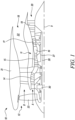
- FIG. 1 illustrates a gas turbine engine 10 having a principal rotational axis 9.
- the gas turbine engine 10 includes an air intake 12 and a propulsive fan 23 that generates two airflows: a core airflow A and a bypass airflow B.
- the gas turbine engine 10 includes an engine core 11 that receives the core airflow A.
- the engine core 11 includes, in axial flow series, a low-pressure compressor 14, a high-pressure compressor 15, a combustor 16, a high-pressure turbine 17, a low-pressure turbine 19, and a core exhaust nozzle 20.
- a nacelle 21 surrounds the gas turbine engine 10 and defines a bypass duct 22 and a bypass exhaust nozzle 18.
- the bypass airflow B flows through the bypass duct 22.
- the fan 23 is attached to and driven by the low-pressure turbine 19 via a shaft 26 and an epicyclic gearbox 30.
- the core airflow A is accelerated and compressed by the low-pressure compressor 14 and directed into the high-pressure compressor 15 where further compression takes place.
- the compressed air exhausted from the high-pressure compressor 15 is directed into the combustor 16 where it is mixed with fuel and the mixture is combusted.
- the resultant hot combustion products then expand through, and thereby drive, the high-pressure and low-pressure turbines 17, 19 before being exhausted through the core exhaust nozzle 20 to provide some propulsive thrust.
- the high pressure turbine 17 drives the high pressure compressor 15 by a suitable interconnecting shaft 27.
- the fan 23 generally provides the majority of the propulsive thrust.
- the epicyclic gearbox 30 is a reduction gearbox.
- low-pressure turbine and “low-pressure compressor” as used herein may be taken to mean the lowest pressure turbine stages and lowest pressure compressor stages (i.e., not including the fan 23) respectively and/or the turbine and compressor stages that are connected together by the interconnecting shaft 26 with the lowest rotational speed in the gas turbine engine (i.e., not including the gearbox output shaft that drives the fan 23).
- the "low-pressure turbine” and “low-pressure compressor” referred to herein may alternatively be known as the “intermediate-pressure turbine” and “intermediate-pressure compressor”. Where such alternative nomenclature is used, the fan 23 may be referred to as a first, or lowest pressure, compression stage.
- gas turbine engines to which the present disclosure may be applied may have alternative configurations.
- such engines may have an alternative number of compressors and/or turbines and/or an alternative number of interconnecting shafts.
- the gas turbine engine 10 shown in FIG. 1 has a split flow nozzle 18, 20 meaning that the flow through the bypass duct 22 has its own nozzle 18 that is separate to and radially outside the core exhaust nozzle 20.
- this is not limiting, and any aspect of the present disclosure may also apply to engines in which the flow through the bypass duct 22 and the flow through the core 11 are mixed, or combined, before (or upstream of) a single nozzle, which may be referred to as a mixed flow nozzle.
- One or both nozzles may have a fixed or variable area.
- the described example relates to a turbofan engine, the disclosure may apply, for example, to any type of gas turbine engine, such as an open rotor (in which the fan stage is not surrounded by a nacelle) or turboprop engine, for example.
- the gas turbine engine 10 may not include a gearbox 30.
- the geometry of the gas turbine engine 10, and components thereof, is defined by a conventional axis system, including an axial direction (which is aligned with the rotational axis 9), a radial direction (in the bottom-to-top direction in FIG. 1 ), and a circumferential direction (perpendicular to the page in the FIG. 1 view).
- the axial, radial, and circumferential directions are mutually perpendicular.
- FIG. 2 illustrates a detailed schematic exploded side view of a portion of the gas turbine engine 10 in accordance with an embodiment of the present disclosure.
- the gas turbine engine 10 incudes the combustor 16.
- the combustor 16 includes a plurality of burners 50. Specifically, the combustor 16 has the plurality of burners 50 arranged annularly. As illustrated in FIG. 2 , the gas turbine engine 10 further incudes a turbine 40 disposed downstream of the combustor 16.
- the turbine 40 may be the high-pressure turbine 17 (shown in FIG. 1 ). In some cases, the turbine 40 may be the low-pressure turbine 19 (shown in FIG. 1 ).
- the gas turbine engine 10 further includes a plurality of temperature sensors 60. Specifically, the gas turbine engine 10 further includes the plurality of temperature sensors 60 arranged annularly at an outlet 45 of the turbine 40.
- the gas turbine engine 10 further includes a final stage turbine 42 disposed downstream of the turbine 40.
- the plurality of temperature sensors 60 is disposed upstream of the final stage turbine 42. The temperature sensors 60 are therefore disposed between the turbine 40 and the final stage turbine 42.
- the turbine 40 may be the high-pressure turbine 17 (shown in FIG. 1 ) and the final stage turbine 42 may be the low-pressure turbine 19 (shown in FIG. 1 ).
- the plurality of temperature sensors 60 is configured to generate a plurality of temperature signals 62. In some embodiments, each of the plurality of temperature sensors 60 is configured to generate one or more temperature signals 62. In the illustrated example of FIG. 2 , each of the plurality of temperature sensors 60 generates one temperature signal 62. In some other examples, each of the plurality of temperature sensors 60 is configured to generate two temperature signals 62. The number of temperature signals 62 generated by a temperature sensor 60 may be based on the type of the temperature sensor 60.
- the gas turbine engine 10 further incudes a controller 55.
- the controller 55 may be configured for detecting a burner failure in the gas turbine engine 10 (shown in FIG. 1 ).
- the controller 55 may include one or more processors and one or more memories.
- the one or more processors may embody a single microprocessor or multiple microprocessors for receiving various input signals. Numerous commercially available microprocessors may be configured to perform the functions of the one or more processors.
- Each processor may further include a general processor, a central processing unit, an application specific integrated circuit (ASIC), a digital signal processor, a field programmable gate array (FPGA), a digital circuit, an analog circuit, a controller, a microcontroller, any other type of processor, or any combination thereof.
- ASIC application specific integrated circuit
- FPGA field programmable gate array
- Each processor may include one or more components that may be operable to execute computer executable instructions or computer code that may be stored and retrieved from the one or more memories.
- the controller 55 is communicably coupled to each of the plurality of temperature sensors 60.
- the controller 55 obtains the plurality of temperature signals 62 from the plurality of temperature sensors 60.
- the gas turbine engine 10 further includes a fuel staging control system 80.
- the fuel staging control system 80 may control a fuel flow to the at least one burner 50 from the plurality of burners 50.
- the fuel staging control system 80 may control the fuel flow to the at least one burner 50 from the plurality of burners 50 via a fuel staging valve (not shown).
- the controller 55 may be configured to determine a staging state of the gas turbine engine 10 based on a state of the fuel staging valve.
- a fuel flow sensing valve may be used to determine the staging state of the engine 10.
- the staging state of the gas turbine engine 10 may be determined so that the burner failure is not confused with a normal operation condition of the turbine system during which one or more burners 50 may be purposely inactive.
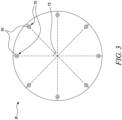
- FIG. 3 illustrates a schematic front view of the combustor 16 of the gas turbine engine 10 shown in FIG. 1 in accordance with an embodiment of the present disclosure.
- the plurality of temperature sensors 60 is arranged annularly at respective locations 70.
- the plurality of temperature sensors 60 includes 8 temperature sensors.
- the plurality of temperature sensors 60 may include 4, 6, 7, 8, 9, 10, 11, 12, 14, 16, or 18 temperature sensors.
- the plurality of temperature sensors 60 may include any number of temperature sensors 60, as per desired application attributes.
- the plurality of temperature sensors 60 arranged annularly at respective locations 70 is substantially equally angularly spaced apart from each other. However, in some other embodiments, the plurality of temperature sensors 60 arranged annularly at respective locations 70 may not be equally angularly spaced apart from each other.
- FIG. 4A illustrates a graph depicting the plurality of temperature signals 62 in accordance with an embodiment of the present disclosure. Specifically, the graph depicts a plot of temperature signals versus time.
- the plurality of temperature sensors 60 has respective temperature ranges 63.
- the plurality of temperature sensors 60 may have similar respective temperature ranges 63.
- the plurality of temperature sensors 60 may have different respective temperature ranges 63.
- the temperature ranges 63 of the temperature sensors 60 may be based on the type of the temperature sensors 60.
- the controller 55 may be configured to determine a plurality of validated temperature signals 64 from the plurality of temperature signals 62.
- the plurality of validated temperature signals 64 is within the respective temperature ranges 63 of the respective temperature sensors 60.
- the controller 55 may eliminate one or more temperature signals 62 from the plurality of temperature signals 62 to determine the plurality of validated temperature signals 64, such that the plurality of validated temperature signals 64 is within respective temperature ranges 63 of the respective temperature sensors 60.
- the controller 55 may screen out outliers among the temperature values which may be due to a fault or a defect in the respective temperature sensors 60. This may help to reduce occurrence of an inadvertent trip which, in turn, may trigger an alarm, or any other hazard protection action due to the fault or the defect in the temperature sensors 60.
- the controller 55 may further determine the location 70 (shown in FIG. 3 ) of each of the plurality of respective sensors 60 generating the plurality of validated temperature signals 64.
- the controller 55 may further select one validated temperature signal 64 from each location 70 from which two or more of the plurality of validated temperature signals 64 are received. In some embodiments, the selection is based on at least one of a channel based selection, a temperature value based selection, a mean based selection, and a model based selection.
- the controller 55 may be a dual channel controller. In some cases, each of the plurality of temperature sensors 60 may be connected to both channels of the controller 55. In some cases, one channel from the dual channels may have a higher priority. The one validated temperature signal 64 from that channel may then be selected by the controller 55. In some embodiments, the controller 55 may be configured to select the one validated temperature signal 64 having a higher temperature value. In some other embodiments, the controller 55 may be configured to select the one validated temperature signal 64 having a lower temperature value. In some embodiments, the controller 55 may be configured to select a mean of the two or more of the plurality of validated temperature signals 64 that are received. In some embodiments, the controller 55 may be configured to select the one validated temperature signal 64 closer to a model value or a model distribution. In some embodiments, the model may be a standard distribution.
- FIG. 4B illustrates a graph depicting a temperature focus 65 in accordance with an embodiment of the present disclosure. Specifically, the graph depicts a plot of temperature focus versus time.
- the controller 55 may be configured to determine the temperature focus 65 at least based on the plurality of validated temperature signals 64.
- the controller 55 may be configured to improve the temperature focus 65 such that the temperature focus 65 is within a tolerance range 66. This can involve, for example, eliminating outliers and/or smoothing the validated temperature signals.
- a moderate temperature focus 65 may indicate that cleaning the gas turbine engine may suffice to ensure that any blocked burners 50 are unblocked, and this may alleviate the difference between the focused mean and the whole mean.
- the temperature focus 65 may be improved such that the temperature focus 65 is within the tolerance range 66.
- the controller 55 may be configured to transmit a command 92. In some embodiments, the controller 55 may be configured to transmit the command 92 to the fuel staging control system 80 to increase the fuel flow to at least one burner 50 from the plurality of burners 50 to improve the temperature focus 65 such that the temperature focus 65 is within the tolerance range 66.
- a high temperature focus 65 may indicate that the gas turbine engine 10 may have a limited life if it were to continue running at the same conditions.
- a higher temperature focus 65 may indicate that the predicted engine life may be no more than the current mission, in which case the gas turbine engine 10 should not be run again.
- the thrust limit e.g., by modifying the fuel flow
- the controller 55 may be configured to perform at least one hazard protection action 90 at least when the temperature focus 65 crosses a predetermined threshold 68.
- the at least one hazard protection action 90 may include transmitting a warning 94 to a cockpit of an aircraft powered by the gas turbine engine 10.
- the at least one hazard protection action 90 may include transmitting the command 92 to reduce the fuel flow to a lower point within the operating range.
- the at least one hazard protection action 90 may include transmitting the command 92 to shut down the gas turbine engine 10.
- the function may warn the pilot, driver, or operator to reduce engine power straight away or to shut down the gas turbine engine 10 straight away.
- the controller 55 may improve the temperature focus 65 such that the temperature focus 65 is within the tolerance range 66. In some embodiments, when the number of the plurality of validated temperature signals 64 is less than the predetermined number, the controller 55 may perform the at least one hazard protection action 90.
- the predetermined number may be 75% of the total number of the plurality of temperature signals 62. In some embodiments, the predetermined number may be 70%, 60%, 50%, 40%, or 30% of the total number of the plurality of temperature signals 62. In some embodiments, the predetermined number may be a minimum number of validated temperature signals 64 required by the controller 55 to detect the burner failure in the gas turbine engine 10. In some embodiments, the predetermined number may be any number based on desired application attributes.
- the controller 55 may improve the temperature focus 65 such that the temperature focus 65 is within the tolerance range 66. In some embodiments, when the plurality of validated temperature signals 64 is absent in the predetermined angular range 72, the controller 55 may perform the at least one hazard protection action 90.
- the predetermined angular range 72 may be about 45 degrees, about 60 degrees, about 90 degrees, about 120 degrees, about 135 degrees, about 150 degrees, or about 180 degrees. In some embodiments, the predetermined angular range 72 may be based on the arrangement of the plurality of temperature sensors 60. In some embodiments, the predetermined angular range 72 may be based on the total number of the plurality of temperature sensors 60. In some embodiments, the predetermined angular range 72 may be any angular range based on desired application attributes.
- the controller 55 may determine a whole mean of the plurality of validated temperature signals 64.
- the whole mean is an arithmetic mean of the plurality of validated temperature signals 64.
- the controller 55 may determine a subset of the plurality of validated temperature signals 64.
- the controller 55 may determine the subset of the plurality of validated temperature signals 64 by eliminating one or more of the plurality of validated temperature signals 64 having corresponding temperature values less than a low threshold from the whole mean.
- the low threshold may be from about 10 Kelvin (K) to about 100K from the whole mean. In some embodiments, the low threshold may from about 30K to about 50K from the whole mean. In some embodiments, the low threshold may be any threshold temperature based on desired application attributes.
- the controller 55 may screen out low outliers among the temperature values. Further, if a burner 50 is blocked then the corresponding temperature value will be a low outlier and will be eliminated. Thus, the focused mean will be higher than the whole mean.
- the controller 55 may therefore work with a variable number of validated temperature signals 64, with one or more being eliminated and restored as the validated temperature signals 64 may vary.
- the controller 55 may also work with some temperature sensors 60 having failed on a permanent basis.
- the controller 55 may improve the temperature focus 65 such that the temperature focus 65 is within the tolerance range 66 or perform the at least one hazard protection action 90.
- the predetermined number may be 75% of the total number of the plurality of temperature signals 62.
- the predetermined number may be 70%, 60%, 50%, 40%, or 30% of the total number of the plurality of temperature signals 62.
- the predetermined number may be a minimum number of validated temperature signals 64 required by the controller 55 to detect the burner failure in the gas turbine engine 10.
- the predetermined number may be any number based on desired application attributes.
- the controller 55 may further eliminate one or more of the plurality of validated temperature signals 64 having corresponding temperature values greater than a high threshold from the whole mean from the subset.
- the high threshold may be from about 50K to about 200K from the whole mean. In some embodiments, the high threshold may from about 100K to about 150K from the whole mean. In some embodiments, the high threshold may be any threshold temperature from the whole mean based on desired application attributes.
- the controller 55 may further screen out high outliers among the temperature values. This may help to reduce occurrence of an inadvertent trip which, in turn, may trigger an alarm, or any other hazard protection action 90. Further, high temperatures owing to multiple blocked burners may cause turbine degradation, leading to High Energy Debris release and may be considered as potentially-hazardous.
- the controller 55 may improve the temperature focus 65 such that the temperature focus 65 is within the tolerance range 66 or perform the at least one hazard protection action 90.
- the predetermined number may be 75% of the total number of the plurality of temperature signals 62. In some embodiments, the predetermined number may be 70%, 60%, 50%, 40%, or 30% of the total number of the plurality of temperature signals 62. In some embodiments, the predetermined number may be a minimum number of validated temperature signals 64 required by the controller 55 to detect the burner failure in the gas turbine engine 10. In some embodiments, the predetermined number may be any number based on desired application attributes.
- the controller 55 may compare each of the plurality of validated temperature signals 64 to a standard distribution.
- the standard distribution is selected from at least one of Exponential distribution, Normal distribution, Lognormal distribution, Poisson distribution, and Weibull distribution.
- the controller 55 may determine the subset of the plurality of validated temperature signals 64 by eliminating one or more of the plurality of validated temperature signals 64 having corresponding temperature values below a standard deviation threshold from the whole mean. Further, the controller 55 may eliminate one or more of the plurality of validated temperature signals 64 having corresponding temperature values above the standard deviation threshold from the whole mean from the subset.
- the standard deviation threshold may be about 0.5 from the whole mean. In some embodiments, the standard deviation threshold may be about 1, 1.5, 2, 2.5, or 3 from the whole mean. In some embodiments, the standard deviation threshold may be based on desired application attributes.
- the controller 55 may also screen out the low and high outliers according to a shape of the standard distribution.
- the shape of the standard distribution may be determined and chosen based on historical data/tests.
- the controller 55 may improve the temperature focus 65 such that the temperature focus 65 is within the tolerance range 66 or perform the at least one hazard protection action 90.
- the predetermined number may be 75% of the total number of the plurality of temperature signals 62. In some embodiments, the predetermined number may be 70%, 60%, 50%, 40%, or 30% of the total number of the plurality of temperature signals 62. In some embodiments, the predetermined number may be a minimum number of validated temperature signals 64 required by the controller 55 to detect the burner failure in the gas turbine engine 10. In some embodiments, the predetermined number may be any number based on desired application attributes.
- the controller may improve the temperature focus 65 such that the temperature focus 65 is within the tolerance range 66 or perform the at least one hazard protection action 90.
- the controller 55 may prevent the dispatch of the aircraft or prohibit restarting the gas turbine engine 10 in a land-based or marine application.
- further operation may be determined by evaluating risk to the gas turbine engine 10 from the detected anomaly. Further, this may also allow dispatchability with a number of faults sufficient to provide planned maintenance, such as when the aircraft visits a main base or when a power plant or oil & gas platform is shut down for long-term maintenance.
- the controller 55 may further determine a focused mean of the subset.
- the focused mean is an arithmetic mean of the plurality of validated temperature signals 64 remaining in the subset.
- the controller 55 may determine the temperature focus 65 as a difference between the focused mean and the whole mean.
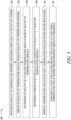
- FIG. 5 illustrates a flow chart for a method 100 for detecting the burner failure in the gas turbine engine 10 (shown in FIG. 1 ) in accordance with an embodiment of the present disclosure. The method 100 will be described with reference to FIGS. 1 to 4B .
- the method 100 includes providing the plurality of temperature sensors 60 arranged annularly at the outlet 45 of the turbine 40.
- the plurality of temperature sensors 60 has respective temperature ranges 63.
- the gas turbine engine 10 further includes the final stage turbine 42 disposed downstream of the turbine 40.
- step 102 includes providing the plurality of temperature sensors 60 upstream of the final stage turbine 42.
- providing the plurality of temperature sensors 60 arranged annularly at the outlet 45 of the turbine 40 includes providing the plurality of temperature sensors 60 upstream of the final stage turbine 42.
- the method 100 includes obtaining the plurality of temperature signals 62 from the plurality of temperature sensors 60.
- the method 100 includes determining the plurality of validated temperature signals 64 from the plurality of temperature signals 62.
- the plurality of validated temperature signals 64 is within the respective temperature ranges 63 of the respective temperature sensors 60.
- the method 100 may include determining the staging state of the gas turbine engine 10.
- the staging state of the gas turbine engine 10 may be determined so that the burner failure condition is not confused with the normal operation condition of the turbine system during which the one or more burners 50 may be purposely inactive.
- the method 100 includes determining the temperature focus 65 at least based on the plurality of validated temperature signals 64.
- the method 100 includes improving the temperature focus 65 such that the temperature focus 65 is within the tolerance range 66.
- step 110 includes transmitting the command 92 to the fuel staging control system 80 to increase the fuel flow to at least one burner 50 from the plurality of burners 50.
- improving the temperature focus 65 such that the temperature focus 65 is within the tolerance range 66 includes transmitting the command 92 to the fuel staging control system 80 to increase the fuel flow to at least one burner 50 from the plurality of burners 50.
- the method 100 includes performing the at least one hazard protection action 90 at least when the temperature focus 65 crosses the predetermined threshold 68.
- step 112 includes transmitting the warning 94 to the cockpit of the aircraft powered by the gas turbine engine 10.
- performing the at least one hazard protection action 90 at least when the temperature focus 65 crosses the predetermined threshold 68 includes transmitting the warning 94 to the cockpit of the aircraft powered by the gas turbine engine 10.
- step 112 includes transmitting the command 92 to reduce the fuel flow to the lower point within the operating range.
- performing the at least one hazard protection action 90 at least when the temperature focus 65 crosses the predetermined threshold 68 includes transmitting the command 92 to reduce the fuel flow to the lower point within the operating range.
- step 112 includes transmitting the command 92 to shut down the gas turbine engine 10.
- performing the at least one hazard protection action 90 at least when the temperature focus 65 crosses the predetermined threshold 68 includes transmitting the command 92 to shut down the gas turbine engine 10.
- steps 104, 106, 108, and 110 are cyclically repeated in time.
- the method 100 proceeds to at least one of steps 110 and 112 when the temperature focus 65 is outside the tolerance range 66 for a predefined number of consecutive cycles.
- the method 100 may detect an anomaly and may either improve the temperature focus 65 or perform the at least one hazard protection action 90.
- the method 100 of the present disclosure may eliminate invalid signals. Further, the method 100 is not solely based upon comparison of the plurality of individual temperature signals 62 with a mean. Further, the method 100 may be simple and may not require determining a temperature spread and/or step(s) for detecting location(s) 70 of the burner failure. The detection of the location(s) 70 of the burner failure may not be necessary for hazard protection. Thus, the method 100 may be robust, simple to implement, and quicker to execute.
- FIG. 6 illustrates a flow chart for a method 200 for determining the plurality of validated temperature signals 64 from the plurality of temperature signals 62 in accordance with an embodiment of the present disclosure.
- FIG. 6 illustrates the flow chart for the method 200 including sub-steps for step 106 of the method 100, according to an embodiment of the present disclosure.
- the method 200 includes eliminating the one or more temperature signals 62 from the plurality of temperature signals 62 to determine the plurality of validated temperature signals 64, such that the plurality of validated temperature signals 64 are within the respective temperature ranges 63 of the respective temperature sensors 60.
- the method 200 includes determining the location 70 of each of the plurality of respective sensors 60 generating the plurality of validated temperature signals 64.
- the method 200 includes selecting the one validated temperature signal 64 from each location 70 from which two or more of the plurality of validated temperature signals 64 are received.
- the selection is based on at least one of the channel based selection, the temperature value based selection, the mean based selection, and the model based selection.
- the method 200 includes proceeding to at least one of steps 110 and 112 when the number of the plurality of validated temperature signals 64 is less than the predetermined number.
- the method 200 includes proceeding to at least one of steps 110 and 112 when the plurality of validated temperature signals 64 is absent in the predetermined angular range 72.
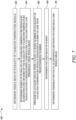
- FIG. 7 illustrates a flow chart for a method 300 for determining the temperature focus 65 at least based on the plurality of validated temperature signals 64 in accordance with an embodiment of the present disclosure.
- FIG. 7 illustrates the flow chart for the method 300 including sub-steps for step 108 of the method 100, according to an embodiment of the present disclosure.
- the method 300 includes determining the whole mean of the plurality of validated temperature signals 64.
- the method 300 includes determining the subset of the plurality of validated temperature signals 64 by eliminating the one or more of the plurality of validated temperature signals 64 having corresponding temperature values less than the low threshold from the whole mean.
- the method 300 includes proceeding to at least one of steps 110 and 112 when the number of the plurality of validated temperature signals 64 remaining in the subset is less than the predetermined number. Specifically, in some embodiments, the sub-step 306 includes proceeding to at least one of steps 110 and 112 when the number of the plurality of validated temperature signals 64 remaining in the subset after eliminating the one or more of the plurality of validated temperature signals 64 having the corresponding temperature values less than the low threshold is less than the predetermined number.
- the method 300 includes determining the focused mean of the subset.
- the method 300 includes determining the temperature focus 65 as the difference between the focused mean and the whole mean.
- FIG. 8 illustrates a flow chart for a method 400 for determining the temperature focus 65 at least based on the plurality of validated temperature signals 64 in accordance with another embodiment of the present disclosure.
- the method 400 is substantially similar to the method 300 shown in FIG. 7 . However, the method 400 includes an additional sub-step 402 of eliminating the one or more of the plurality of validated temperature signals 64 having corresponding temperature values greater than the high threshold from the whole mean from the subset. Further, the method 400 includes sub-step 404 instead of sub-step 306.
- the method 400 includes proceeding to at least one of steps 110 and 112 when the number of the plurality of validated temperature signals 64 remaining in the subset is less than the predetermined number. Specifically, in some embodiments, the sub-step 404 includes proceeding to at least one of steps 110 and 112 when the number of the plurality of validated temperature signals 64 remaining in the subset after eliminating the one or more of the plurality of validated temperature signals 64 having the corresponding temperature values greater than the high threshold is less than the predetermined number.
- FIG. 9 illustrates a flow chart for a method 500 for determining the temperature focus 65 at least based on the plurality of validated temperature signals 64 in accordance with another embodiment of the present disclosure.
- the method 500 includes determining the whole mean of the plurality of validated temperature signals 64.
- the method 500 includes comparing each of the plurality of validated temperature signals 64 to the standard distribution.
- the standard distribution is selected from at least one of Exponential distribution, Normal distribution, Lognormal distribution, Poisson distribution, and Weibull distribution.
- the method 500 includes determining the subset of the plurality of validated temperature signals 64 by eliminating the one or more of the plurality of validated temperature signals 64 having corresponding temperature values below the standard deviation threshold from the whole mean.
- the method 500 includes eliminating the one or more of the plurality of validated temperature signals 64 having corresponding temperature values above the standard deviation threshold from the whole mean from the subset.
- the method 500 includes proceeding to at least one of steps 110 and 112 when the number of the plurality of validated temperature signals 64 remaining in the subset is less than the predetermined number.
- the method 500 includes determining the focused mean of the subset.
- the method 500 includes determining the temperature focus 65 as the difference between the focused mean and the whole mean.
- the method 100 of the present invention may prevent tripping any alarm or shutdown criterion on the basis of a single temperature signal (e.g., the temperature signal 62).
- the method 100 may help to determine an anomaly, for example, whether a condition would become potentially-hazardous within a current flight, further performing the at least one hazard protection action 90 at least when the condition would become potentially-hazardous.
Landscapes
- Engineering & Computer Science (AREA)
- Chemical & Material Sciences (AREA)
- Combustion & Propulsion (AREA)
- Mechanical Engineering (AREA)
- General Engineering & Computer Science (AREA)
- Physics & Mathematics (AREA)
- General Physics & Mathematics (AREA)
- Control Of Turbines (AREA)
- Control Of Combustion (AREA)
Description
- The present disclosure relates to a method for detecting a burner failure in a gas turbine engine.
- During operation of a turbine system of an engine (e.g., a gas turbine engine), one or more burners of a combustor of the turbine system may fail. For example, flames of the one or more burners may unexpectedly extinguish. In some cases, a burner fault detection may be temperature-based and may be accomplished by using temperature sensors (e.g., thermocouples).
- Current temperature-based burner fault detection method and systems may not be immune to a single sensor failure and therefore cause inadvertent alarms. This may also lead to unnecessary shutdowns. Further, temperature sensors, such as thermocouples, may not be the most reliable of sensors and automated hazard protection (e.g., reduction of thrust) based on temperature readings alone should be avoided. The temperature readings of the temperature sensors may further vary with swirl of the hot gases in turbines of the turbine system. The swirl may vary with the speed and acceleration of the engine.
- In some cases, such methods and systems may further detect positions of burner failure. However, detecting positions of the burner failure may not be required for hazard protection. Such methods and systems may be complex and therefore may take more time to execute. This may be undesirable in a hazardous situation and may delay the hazard protection. Further, information related to the positions of the burner failure may be required for maintenance benefit only and would need a swirl calculation.
- United States patent
US 9790834 B2 - European patent
EP 3757460 B1 discloses a gas turbine engine that has an annular first combustor assembly and a second combustor assembly. At least three flame detectors are arranged to monitor flame presence in the first combustor assembly and supply respective flame monitoring signals indicating flame presence. A temperature monitoring assembly detects a control temperature of hot gas flowing from the first combustor assembly to the second combustor assembly downstream of the first combustor assembly. A processing unit determines dangerous flame failure based, at least in a control range of operating conditions, on the flame monitoring signals and a control function of the control temperature and based on M-out-of-N activation redundancy with Hardware Failure Tolerance of at least 1, wherein M is at least 3 and N is at least 4. - United States patent
US 10895872 B2 - There remains a need for a simple method of burner fault detection that is robust to multiple sensor failures and the effects of swirl of hot gases around the turbines, which may cause variability in temperature readings.
- According to a first aspect of the invention there is provided method for detecting a burner failure in a gas turbine engine as set out in claim 1.
- The method of the present disclosure may eliminate invalid signals. The method is not solely based upon comparison of the plurality of individual temperature signals with a mean. Further, the method may be simple and may not require determining a temperature spread and/or step(s) for detecting position(s) of the burner failure. The detection of the position(s) of the burner failure may not be necessary for hazard protection. Thus, the method of the present disclosure may be robust, simple to implement, and quicker to execute.
- Further, the method of the present disclosure may prevent tripping any alarm or shutdown criterion on the basis of a single temperature signal. The method may help to determine an anomaly, for example, whether a condition would become potentially-hazardous within a current flight, further performing at least one hazard protection action at least when the condition would become potentially-hazardous.
- In some embodiments, steps B), C), D), and E) are cyclically repeated in time. In some embodiments, the method proceeds to at least one of steps E) and F) when the temperature focus is outside the tolerance range for a predefined number of consecutive cycles.
- Therefore, if the temperature focus is outside the tolerance range for the predefined number of consecutive cycles, the method may detect an anomaly and may either improve the temperature focus or perform the at least one hazard protection action.
- In some embodiments, the tolerance range for a predefined number of consecutive cycles is a standard fault integrator with a threshold from 50 to 200, an up-count from 5 to 20 per cycle of exceedance, and/or a down-count from 1 to 4 per cycle of compliance with the temperature focus threshold. For example, a set of values may be 100, 10, and 2 respectively.
- In some embodiments, step C) includes the sub-steps of: C1) eliminating one or more temperature signals from the plurality of temperature signals to determine the plurality of validated temperature signals, such that the plurality of validated temperature signals are within respective temperature ranges of the respective temperature sensors; C2) determining a location of each of the plurality of respective sensors generating the plurality of validated temperature signals; and C3) selecting one validated temperature signal from each location from which two or more of the plurality of validated temperature signals are received, wherein the selection is based on at least one of a channel based selection, a temperature value based selection, a mean based selection, and a model based selection.
- Therefore, the method may screen out outliers among the temperature values which may be due to a fault or a defect in the respective temperature sensors. This may help to reduce occurrence of an inadvertent trip which, in turn, may trigger an alarm, or any other hazard protection action due to the fault or the defect in the temperature sensors.
- In some embodiments, the method proceeds to at least one of steps E) and F) when a number of the plurality of validated temperature signals is less than a predetermined number.
- In some embodiments, the total number of temperature sensors around the turbine is from 4 to 20, for example from 6 to 12. In some embodiments for a small engine, the total number of temperature sensors around the turbine may be from 6 to 8. In some embodiments for a large engine, the total number of temperature sensors around the turbine may be from 10 to 12. In some embodiments, at least half the total number of temperature sensors provide a validated temperature signal (optionally with redundancy at each location) else reporting as "Faulty".
- In some embodiments, the method proceeds to at least one of steps E) and F) when the plurality of validated temperature signals is absent in a predetermined angular range. For example, from 60 to 180 degrees.
- The useful range may depend on the number of temperature sensors. In some embodiments, two adjacently placed temperature sensors failing to provide a validated temperature signal is sufficient to provide a report of "Faulty".
- In some embodiments, step D) includes the sub-steps of: D1) determining a whole mean of the plurality of validated temperature signals; D2) determining a subset of the plurality of validated temperature signals by eliminating one or more of the plurality of validated temperature signals having corresponding temperature values less than a low threshold from the whole mean; D3) determining a focused mean of the subset; and D4) determining the temperature focus as a difference between the focused mean and the whole mean.
- In some embodiments, the low threshold is from 20 to 100 K below, for example from 30 to 70 K below the whole mean. In some embodiments, the low threshold is approximately 50 K below the whole mean.
- Therefore, the method may screen out low outliers among the temperature values. Further, if a burner is blocked then the corresponding temperature value will be a low outlier and will be eliminated. Thus, the focused mean will be higher than the whole mean. The method may therefore be designed to work with a variable number of validated temperature signals, with one or more being eliminated and restored as the validated temperature signals may vary. The method may also work with some temperature sensors having failed on a permanent basis.
- In some embodiments, step D2) further includes the sub-step of: D2a) eliminating one or more of the plurality of validated temperature signals having corresponding temperature values greater than a high threshold from the whole mean from the subset.
- Therefore, the method may further screen out high outliers among the temperature values. This may help to reduce occurrence of an inadvertent trip which, in turn, may trigger an alarm, or any other hazard protection action. Further, the method recognizes that high temperatures owing to multiple blocked burners may cause turbine degradation, leading to high energy debris release and may be considered as potentially-hazardous.
- In some embodiments, the high threshold is from 50 to 200 K, for example from 60 to 140 K above the whole mean. In some embodiments, the high threshold is approximately 100 K above the whole mean.
- In some embodiments, step D) includes the sub-steps of: D1) determining a whole mean of the plurality of validated temperature signals; D2) comparing each of the plurality of validated temperature signals to a standard distribution; D3) determining a subset of the plurality of validated temperature signals by eliminating one or more of the plurality of validated temperature signals having corresponding temperature values below a standard deviation threshold from the whole mean; D4) eliminating one or more of the plurality of validated temperature signals having corresponding temperature values above the standard deviation threshold from the whole mean from the subset; D5) determining a focused mean of the subset; and D6) determining the temperature focus as a difference between the focused mean and the whole mean.
- The standard deviation threshold typically depends on the distribution and on real data from tests to show the grouping of signal values. In some embodiments, the standard deviation threshold is from 0.5 to 3, for example approximately 1 with a Normal distribution.
- In some embodiments, the standard distribution is selected from at least one of Exponential distribution, Normal distribution, Lognormal distribution, Poisson distribution, and Weibull distribution.
- Therefore, the method may also screen out the low and high outliers according to a shape of the standard distribution. The shape of the standard distribution may be determined and chosen based on historical data/tests.
- In some embodiments, the method proceeds at least one of steps E) and F) when a number of the plurality of validated temperature signals remaining in the subset after eliminating the one or more of the plurality of validated temperature signals having the corresponding temperature values less than the low threshold is less than a predetermined number.
- In some embodiments, the predetermined number is from four to eight, of which two, three, four or five should be above the low threshold to remain valid, for example the predetermined number is six, of which four should be above the low threshold to remain valid.
- Such a predetermined number typically depends on how many temperature signals are valid. In some embodiments, for example, when only six temperature signals are valid the predetermined number is two, leaving four to compose the focused mean. Large engines may lose up to eight of twelve temperature signals and still have four temperature signals to compose the focused mean, whereas small engines with seven temperature signals may only lose one temperature signal before reporting as "Faulty".
- In some embodiments, the method proceeds to at least one of steps E) and F) when a number of the plurality of validated temperature signals remaining in the subset after eliminating the one or more of the plurality of validated temperature signals having the corresponding temperature values greater than the high threshold is less than a predetermined number.
- In some embodiments, the method proceeds to at least one of steps E) and F) when a number of the plurality of validated temperature signals remaining in the subset is less than a predetermined number.
- Therefore, when the number of the plurality of validated temperature signals is insufficient or the number of the plurality of validated temperature signals that are not outliers is insufficient, the method proceeds to at least one of steps E) and F). In some cases, there may be a potential for an engine control system to prevent the dispatch of an aircraft or prohibit restarting the gas turbine engine in a land-based or marine application. In some cases, upon detecting the anomaly, further operation may be determined by evaluating risk to the gas turbine engine from the detected anomaly. Further, this may also allow dispatchability with a number of faults sufficient to provide planned maintenance, such as when the aircraft visits a main base or when a power plant or oil & gas platform is shut down for long-term maintenance.
- A moderate temperature focus (i.e., a difference between the focused mean and the whole mean) may indicate that cleaning the gas turbine engine may suffice to ensure that any blocked burners are unblocked, and this may alleviate the difference between the focused mean and the whole mean. In other words, the temperature focus may be improved such that the temperature focus is within the tolerance range.
- In some embodiments, step E) includes transmitting a command to a fuel staging control system to increase a fuel flow to at least one burner from the plurality of burners.
- A high temperature focus may indicate that the gas turbine engine may have a limited life if it were to continue running at the same conditions. A higher temperature focus may indicate that the predicted engine life may be no more than the current mission, in which case the gas turbine engine should not be run again. However, in order to continue the current mission, there may be further accommodation, such as applying a thrust limit to the gas turbine engine. This would apply differently to the aircraft than to other applications because the total thrust provision must remain sufficient. Therefore, the thrust limit (e.g., by modifying the fuel flow) may accommodate anomalies of moderate severity.
- In some embodiments, step F) includes transmitting a warning to a cockpit of an aircraft powered by the gas turbine engine.
- In some embodiments, step F) further includes transmitting a command to reduce the fuel flow to a lower point within the operating range.
- In some embodiments, step F) further includes transmitting a command to shut down the gas turbine engine.
- Therefore, when the temperature focus is greater than the predetermined threshold, it may indicate that the predicted engine life may be less than the length of the current mission, in which case the function may warn the pilot, driver, or operator to reduce engine power straight away or to shut down the gas turbine engine straight away.
- In some embodiments the predetermined threshold is from 10 to 100 K, for example from 20 to 60 K, more particularly a value of approximately 30 K.
- In some embodiments, the gas turbine engine further includes a final stage turbine disposed downstream of the turbine. In some embodiments, step A) includes providing the plurality of temperature sensors upstream of the final stage turbine.
- As noted elsewhere herein, the present disclosure relates to a gas turbine engine, which is not subject-matter of the claims. Such a gas turbine engine may include an engine core comprising a turbine, a combustor, a compressor, and a core shaft connecting the turbine to the compressor. Such a gas turbine engine may comprise a fan (having fan blades) located upstream of the engine core.
- Arrangements of the present disclosure may be particularly, although not exclusively, beneficial for fans that are driven via a gearbox. Accordingly, the gas turbine engine may comprise a gearbox that receives an input from the core shaft and outputs drive to the fan so as to drive the fan at a lower rotational speed than the core shaft. The input to the gearbox may be directly from the core shaft, or indirectly from the core shaft, for example via a spur shaft and/or gear. The core shaft may rigidly connect the turbine and the compressor, such that the turbine and compressor rotate at the same speed (with the fan rotating at a lower speed). The gearbox may be a reduction gearbox (in that the output to the fan is a lower rotational rate than the input from the core shaft). Any type of gearbox may be used.
- The gas turbine engine as described herein may have any suitable general architecture. For example, the gas turbine engine may have any desired number of shafts that connect turbines and compressors, for example one, two or three shafts. Purely by way of example, the turbine connected to the core shaft may be a first turbine, the compressor connected to the core shaft may be a first compressor, and the core shaft may be a first core shaft. The engine core may further include a second turbine, a second compressor, and a second core shaft connecting the second turbine to the second compressor. The second turbine, second compressor, and second core shaft may be arranged to rotate at a higher rotational speed than the first core shaft.
- In such an arrangement, the second compressor may be positioned axially downstream of the first compressor. The second compressor may be arranged to receive (for example directly receive, for example via a generally annular duct) flow from the first compressor.
- In any gas turbine engine as described herein, a combustor may be provided axially downstream of the fan and compressor(s). For example, the combustor may be directly downstream of (for example at the exit of) the second compressor, where a second compressor is provided. By way of further example, the flow at the exit to the combustor may be provided to the inlet of the second turbine, where a second turbine is provided. The combustor may be provided upstream of the turbine(s).
- The or each compressor (for example the first compressor and second compressor as described above) may comprise any number of stages, for example multiple stages. Each stage may comprise a row of rotor blades and a row of stator vanes, which may be variable stator vanes (in that their angle of incidence may be variable). The row of rotor blades and the row of stator vanes may be axially offset from each other.
- The or each turbine (for example the first turbine and second turbine as described above) may comprise any number of stages, for example multiple stages. Each stage may comprise a row of rotor blades and a row of stator vanes. The row of rotor blades and the row of stator vanes may be axially offset from each other.
- Gas turbine engines in accordance with the present disclosure may have any desired bypass ratio, where the bypass ratio is defined as the ratio of the mass flow rate of the flow through the bypass duct to the mass flow rate of the flow through the core at cruise conditions. The bypass duct may be substantially annular. The bypass duct may be radially outside the engine core. The radially outer surface of the bypass duct may be defined by a nacelle and/or a fan case.
- Specific thrust of an engine may be defined as the net thrust of the gas turbine engine divided by the total mass flow through the gas turbine engine. At cruise conditions, the specific thrust of an engine described herein may be less than (or on the order of) any of the following: 110 Nkg-1s, 105 Nkg-1s, 100 Nkg-1s, 95 Nkg-1s, 90 Nkg-1s, 85 Nkg-1s or 80 Nkg-1s. The specific thrust may be in an inclusive range bounded by any two of the values in the previous sentence (i.e., the values may form upper or lower bounds), for example in the range of from 80 Nkg-1s to 100 Nkg-1s, or 85 Nkg-1s to 95 Nkg-1s. Such engines may be particularly efficient in comparison with conventional gas turbine engines.
- A fan blade and/or aerofoil portion of a fan blade described herein may be manufactured from any suitable material or combination of materials. For example, at least a part of the fan blade and/or aerofoil may be manufactured at least in part from a composite, for example a metal matrix composite and/or an organic matrix composite, such as carbon fibre.
- The fan of a gas turbine as described herein may have any desired number of fan blades, for example 14, 16, 18, 20, 22, 24 or 26 fan blades.
- Embodiments will now be described by way of example only, with reference to the Figures, in which:
-
FIG. 1 is a sectional side view of a gas turbine engine; -
FIG. 2 is a detailed schematic exploded side view of a portion of the gas turbine engine in accordance with an embodiment of the present disclosure; -
FIG. 3 is a schematic front view of a combustor of the gas turbine engine in accordance with an embodiment of the present disclosure; -
FIG. 4A is a graph depicting a plurality of temperature signals in accordance with an embodiment of the present invention; -
FIG. 4B is a graph depicting a temperature focus in accordance with an embodiment of the present invention; -
FIG. 5 is a flowchart for a method for detecting a burner failure in a gas turbine engine in accordance with an embodiment of the present invention; -
FIG. 6 is a flow chart for a method for determining a plurality of validated temperature signals in accordance with an embodiment of the present invention; -
FIG. 7 is a flow chart for a method for determining the temperature focus in accordance with an embodiment of the present invention; -
FIG. 8 is a flow chart for a method for determining the temperature focus in accordance with another embodiment of the present invention; and -
FIG. 9 is a flow chart for a method for determining the temperature focus in accordance with yet another embodiment of the present invention. - Aspects and embodiments of the present invention will now be discussed with reference to the accompanying figures. Further aspects and embodiments will be apparent to those skilled in the art.
-
FIG. 1 illustrates agas turbine engine 10 having a principalrotational axis 9. Thegas turbine engine 10 includes anair intake 12 and apropulsive fan 23 that generates two airflows: a core airflow A and a bypass airflow B. Thegas turbine engine 10 includes anengine core 11 that receives the core airflow A. Theengine core 11 includes, in axial flow series, a low-pressure compressor 14, a high-pressure compressor 15, acombustor 16, a high-pressure turbine 17, a low-pressure turbine 19, and acore exhaust nozzle 20. Anacelle 21 surrounds thegas turbine engine 10 and defines abypass duct 22 and abypass exhaust nozzle 18. The bypass airflow B flows through thebypass duct 22. Thefan 23 is attached to and driven by the low-pressure turbine 19 via ashaft 26 and anepicyclic gearbox 30. - In use, the core airflow A is accelerated and compressed by the low-
pressure compressor 14 and directed into the high-pressure compressor 15 where further compression takes place. The compressed air exhausted from the high-pressure compressor 15 is directed into thecombustor 16 where it is mixed with fuel and the mixture is combusted. The resultant hot combustion products then expand through, and thereby drive, the high-pressure and low-pressure turbines core exhaust nozzle 20 to provide some propulsive thrust. Thehigh pressure turbine 17 drives thehigh pressure compressor 15 by a suitable interconnectingshaft 27. Thefan 23 generally provides the majority of the propulsive thrust. Theepicyclic gearbox 30 is a reduction gearbox. - Note that the terms "low-pressure turbine" and "low-pressure compressor" as used herein may be taken to mean the lowest pressure turbine stages and lowest pressure compressor stages (i.e., not including the fan 23) respectively and/or the turbine and compressor stages that are connected together by the interconnecting
shaft 26 with the lowest rotational speed in the gas turbine engine (i.e., not including the gearbox output shaft that drives the fan 23). In some literature, the "low-pressure turbine" and "low-pressure compressor" referred to herein may alternatively be known as the "intermediate-pressure turbine" and "intermediate-pressure compressor". Where such alternative nomenclature is used, thefan 23 may be referred to as a first, or lowest pressure, compression stage. - Other gas turbine engines to which the present disclosure may be applied may have alternative configurations. For example, such engines may have an alternative number of compressors and/or turbines and/or an alternative number of interconnecting shafts. By way of further example, the
gas turbine engine 10 shown inFIG. 1 has asplit flow nozzle bypass duct 22 has itsown nozzle 18 that is separate to and radially outside thecore exhaust nozzle 20. However, this is not limiting, and any aspect of the present disclosure may also apply to engines in which the flow through thebypass duct 22 and the flow through the core 11 are mixed, or combined, before (or upstream of) a single nozzle, which may be referred to as a mixed flow nozzle. One or both nozzles (whether mixed or split flow) may have a fixed or variable area. Whilst the described example relates to a turbofan engine, the disclosure may apply, for example, to any type of gas turbine engine, such as an open rotor (in which the fan stage is not surrounded by a nacelle) or turboprop engine, for example. In some arrangements, thegas turbine engine 10 may not include agearbox 30. - The geometry of the
gas turbine engine 10, and components thereof, is defined by a conventional axis system, including an axial direction (which is aligned with the rotational axis 9), a radial direction (in the bottom-to-top direction inFIG. 1 ), and a circumferential direction (perpendicular to the page in theFIG. 1 view). The axial, radial, and circumferential directions are mutually perpendicular. -
FIG. 2 illustrates a detailed schematic exploded side view of a portion of thegas turbine engine 10 in accordance with an embodiment of the present disclosure. - As discussed above, the
gas turbine engine 10 incudes thecombustor 16. Thecombustor 16 includes a plurality ofburners 50. Specifically, thecombustor 16 has the plurality ofburners 50 arranged annularly. As illustrated inFIG. 2 , thegas turbine engine 10 further incudes aturbine 40 disposed downstream of thecombustor 16. - In some cases, the
turbine 40 may be the high-pressure turbine 17 (shown inFIG. 1 ). In some cases, theturbine 40 may be the low-pressure turbine 19 (shown inFIG. 1 ). - The
gas turbine engine 10 further includes a plurality oftemperature sensors 60. Specifically, thegas turbine engine 10 further includes the plurality oftemperature sensors 60 arranged annularly at anoutlet 45 of theturbine 40. - In some embodiments, the
gas turbine engine 10 further includes afinal stage turbine 42 disposed downstream of theturbine 40. In some embodiments, the plurality oftemperature sensors 60 is disposed upstream of thefinal stage turbine 42. Thetemperature sensors 60 are therefore disposed between theturbine 40 and thefinal stage turbine 42. In some cases, theturbine 40 may be the high-pressure turbine 17 (shown inFIG. 1 ) and thefinal stage turbine 42 may be the low-pressure turbine 19 (shown inFIG. 1 ). - The plurality of
temperature sensors 60 is configured to generate a plurality of temperature signals 62. In some embodiments, each of the plurality oftemperature sensors 60 is configured to generate one or more temperature signals 62. In the illustrated example ofFIG. 2 , each of the plurality oftemperature sensors 60 generates onetemperature signal 62. In some other examples, each of the plurality oftemperature sensors 60 is configured to generate two temperature signals 62. The number of temperature signals 62 generated by atemperature sensor 60 may be based on the type of thetemperature sensor 60. - The
gas turbine engine 10 further incudes acontroller 55. Thecontroller 55 may be configured for detecting a burner failure in the gas turbine engine 10 (shown inFIG. 1 ). Thecontroller 55 may include one or more processors and one or more memories. It should be noted that the one or more processors may embody a single microprocessor or multiple microprocessors for receiving various input signals. Numerous commercially available microprocessors may be configured to perform the functions of the one or more processors. Each processor may further include a general processor, a central processing unit, an application specific integrated circuit (ASIC), a digital signal processor, a field programmable gate array (FPGA), a digital circuit, an analog circuit, a controller, a microcontroller, any other type of processor, or any combination thereof. Each processor may include one or more components that may be operable to execute computer executable instructions or computer code that may be stored and retrieved from the one or more memories. - In some embodiments, the
controller 55 is communicably coupled to each of the plurality oftemperature sensors 60. Thecontroller 55 obtains the plurality of temperature signals 62 from the plurality oftemperature sensors 60. - In some embodiments, the
gas turbine engine 10 further includes a fuelstaging control system 80. The fuelstaging control system 80 may control a fuel flow to the at least oneburner 50 from the plurality ofburners 50. Specifically, the fuelstaging control system 80 may control the fuel flow to the at least oneburner 50 from the plurality ofburners 50 via a fuel staging valve (not shown). In some embodiments, thecontroller 55 may be configured to determine a staging state of thegas turbine engine 10 based on a state of the fuel staging valve. In some embodiments, a fuel flow sensing valve may be used to determine the staging state of theengine 10. The staging state of thegas turbine engine 10 may be determined so that the burner failure is not confused with a normal operation condition of the turbine system during which one ormore burners 50 may be purposely inactive. -
FIG. 3 illustrates a schematic front view of thecombustor 16 of thegas turbine engine 10 shown inFIG. 1 in accordance with an embodiment of the present disclosure. - As illustrated in
FIG. 3 , the plurality oftemperature sensors 60 is arranged annularly atrespective locations 70. In the illustrated embodiment ofFIG. 3 , the plurality oftemperature sensors 60 includes 8 temperature sensors. In some embodiments, the plurality oftemperature sensors 60 may include 4, 6, 7, 8, 9, 10, 11, 12, 14, 16, or 18 temperature sensors. The plurality oftemperature sensors 60 may include any number oftemperature sensors 60, as per desired application attributes. - Further, in the illustrated embodiment of
FIG. 3 , the plurality oftemperature sensors 60 arranged annularly atrespective locations 70 is substantially equally angularly spaced apart from each other. However, in some other embodiments, the plurality oftemperature sensors 60 arranged annularly atrespective locations 70 may not be equally angularly spaced apart from each other. -
FIG. 4A illustrates a graph depicting the plurality of temperature signals 62 in accordance with an embodiment of the present disclosure. Specifically, the graph depicts a plot of temperature signals versus time. - Referring to
FIGS. 1 to 4A , the plurality oftemperature sensors 60 has respective temperature ranges 63. In some embodiments, the plurality oftemperature sensors 60 may have similar respective temperature ranges 63. However, in some other embodiments, the plurality oftemperature sensors 60 may have different respective temperature ranges 63. The temperature ranges 63 of thetemperature sensors 60 may be based on the type of thetemperature sensors 60. - The
controller 55 may be configured to determine a plurality of validated temperature signals 64 from the plurality of temperature signals 62. The plurality of validated temperature signals 64 is within the respective temperature ranges 63 of therespective temperature sensors 60. - In some embodiments, the
controller 55 may eliminate one or more temperature signals 62 from the plurality of temperature signals 62 to determine the plurality of validated temperature signals 64, such that the plurality of validated temperature signals 64 is within respective temperature ranges 63 of therespective temperature sensors 60. - Therefore, the
controller 55 may screen out outliers among the temperature values which may be due to a fault or a defect in therespective temperature sensors 60. This may help to reduce occurrence of an inadvertent trip which, in turn, may trigger an alarm, or any other hazard protection action due to the fault or the defect in thetemperature sensors 60. - In some embodiments, the
controller 55 may further determine the location 70 (shown inFIG. 3 ) of each of the plurality ofrespective sensors 60 generating the plurality of validated temperature signals 64. - In some embodiments, the
controller 55 may further select one validated temperature signal 64 from eachlocation 70 from which two or more of the plurality of validated temperature signals 64 are received. In some embodiments, the selection is based on at least one of a channel based selection, a temperature value based selection, a mean based selection, and a model based selection. - In some embodiments, the
controller 55 may be a dual channel controller. In some cases, each of the plurality oftemperature sensors 60 may be connected to both channels of thecontroller 55. In some cases, one channel from the dual channels may have a higher priority. The one validated temperature signal 64 from that channel may then be selected by thecontroller 55. In some embodiments, thecontroller 55 may be configured to select the one validated temperature signal 64 having a higher temperature value. In some other embodiments, thecontroller 55 may be configured to select the one validated temperature signal 64 having a lower temperature value. In some embodiments, thecontroller 55 may be configured to select a mean of the two or more of the plurality of validated temperature signals 64 that are received. In some embodiments, thecontroller 55 may be configured to select the one validated temperature signal 64 closer to a model value or a model distribution. In some embodiments, the model may be a standard distribution. -
FIG. 4B illustrates a graph depicting atemperature focus 65 in accordance with an embodiment of the present disclosure. Specifically, the graph depicts a plot of temperature focus versus time. - Referring to
FIGS. 1 to 4B , thecontroller 55 may be configured to determine thetemperature focus 65 at least based on the plurality of validated temperature signals 64. - Further, the
controller 55 may be configured to improve thetemperature focus 65 such that thetemperature focus 65 is within atolerance range 66. This can involve, for example, eliminating outliers and/or smoothing the validated temperature signals. Amoderate temperature focus 65 may indicate that cleaning the gas turbine engine may suffice to ensure that any blockedburners 50 are unblocked, and this may alleviate the difference between the focused mean and the whole mean. In other words, thetemperature focus 65 may be improved such that thetemperature focus 65 is within thetolerance range 66. - In some embodiments, the
controller 55 may be configured to transmit a command 92. In some embodiments, thecontroller 55 may be configured to transmit the command 92 to the fuelstaging control system 80 to increase the fuel flow to at least oneburner 50 from the plurality ofburners 50 to improve thetemperature focus 65 such that thetemperature focus 65 is within thetolerance range 66. - A
high temperature focus 65 may indicate that thegas turbine engine 10 may have a limited life if it were to continue running at the same conditions. Ahigher temperature focus 65 may indicate that the predicted engine life may be no more than the current mission, in which case thegas turbine engine 10 should not be run again. However, in order to continue the current mission, there may be further accommodation, such as applying a thrust limit to thegas turbine engine 10. This would apply differently to the aircraft than to other applications because the total thrust provision must remain sufficient. Therefore, the thrust limit (e.g., by modifying the fuel flow) may accommodate anomalies of moderate severity. - Furthermore, the
controller 55 may be configured to perform at least one hazard protection action 90 at least when thetemperature focus 65 crosses apredetermined threshold 68. In some embodiments, the at least one hazard protection action 90 may include transmitting a warning 94 to a cockpit of an aircraft powered by thegas turbine engine 10. In some embodiments, the at least one hazard protection action 90 may include transmitting the command 92 to reduce the fuel flow to a lower point within the operating range. In some embodiments, the at least one hazard protection action 90 may include transmitting the command 92 to shut down thegas turbine engine 10. - Therefore, when the
temperature focus 65 is greater than thepredetermined threshold 68, it may indicate that the predicted engine life may be less than the length of the current mission, in which case the function may warn the pilot, driver, or operator to reduce engine power straight away or to shut down thegas turbine engine 10 straight away. - In some embodiments, when a number of the plurality of validated temperature signals 64 is less than a predetermined number, the
controller 55 may improve thetemperature focus 65 such that thetemperature focus 65 is within thetolerance range 66. In some embodiments, when the number of the plurality of validated temperature signals 64 is less than the predetermined number, thecontroller 55 may perform the at least one hazard protection action 90. In some embodiments, the predetermined number may be 75% of the total number of the plurality of temperature signals 62. In some embodiments, the predetermined number may be 70%, 60%, 50%, 40%, or 30% of the total number of the plurality of temperature signals 62. In some embodiments, the predetermined number may be a minimum number of validated temperature signals 64 required by thecontroller 55 to detect the burner failure in thegas turbine engine 10. In some embodiments, the predetermined number may be any number based on desired application attributes. - In some embodiments, when the plurality of validated temperature signals 64 is absent in a predetermined angular range 72 (shown in
FIG. 3 ), thecontroller 55 may improve thetemperature focus 65 such that thetemperature focus 65 is within thetolerance range 66. In some embodiments, when the plurality of validated temperature signals 64 is absent in the predeterminedangular range 72, thecontroller 55 may perform the at least one hazard protection action 90. - In some embodiments, the predetermined
angular range 72 may be about 45 degrees, about 60 degrees, about 90 degrees, about 120 degrees, about 135 degrees, about 150 degrees, or about 180 degrees. In some embodiments, the predeterminedangular range 72 may be based on the arrangement of the plurality oftemperature sensors 60. In some embodiments, the predeterminedangular range 72 may be based on the total number of the plurality oftemperature sensors 60. In some embodiments, the predeterminedangular range 72 may be any angular range based on desired application attributes. - In some embodiments, the
controller 55 may determine a whole mean of the plurality of validated temperature signals 64. Specifically, the whole mean is an arithmetic mean of the plurality of validated temperature signals 64. - In some embodiments, the
controller 55 may determine a subset of the plurality of validated temperature signals 64. - In some embodiments, the
controller 55 may determine the subset of the plurality of validated temperature signals 64 by eliminating one or more of the plurality of validated temperature signals 64 having corresponding temperature values less than a low threshold from the whole mean. In some embodiments, the low threshold may be from about 10 Kelvin (K) to about 100K from the whole mean. In some embodiments, the low threshold may from about 30K to about 50K from the whole mean. In some embodiments, the low threshold may be any threshold temperature based on desired application attributes. - Therefore, the
controller 55 may screen out low outliers among the temperature values. Further, if aburner 50 is blocked then the corresponding temperature value will be a low outlier and will be eliminated. Thus, the focused mean will be higher than the whole mean. Thecontroller 55 may therefore work with a variable number of validated temperature signals 64, with one or more being eliminated and restored as the validated temperature signals 64 may vary. Thecontroller 55 may also work with sometemperature sensors 60 having failed on a permanent basis. - In some embodiments, when a number of the plurality of validated temperature signals 64 remaining in the subset after eliminating the one or more of the plurality of validated temperature signals 64 having the corresponding temperature values less than the low threshold is less than a predetermined number, the
controller 55 may improve thetemperature focus 65 such that thetemperature focus 65 is within thetolerance range 66 or perform the at least one hazard protection action 90. In some embodiments, the predetermined number may be 75% of the total number of the plurality of temperature signals 62. In some embodiments, the predetermined number may be 70%, 60%, 50%, 40%, or 30% of the total number of the plurality of temperature signals 62. In some embodiments, the predetermined number may be a minimum number of validated temperature signals 64 required by thecontroller 55 to detect the burner failure in thegas turbine engine 10. In some embodiments, the predetermined number may be any number based on desired application attributes. - In some embodiments, the
controller 55 may further eliminate one or more of the plurality of validated temperature signals 64 having corresponding temperature values greater than a high threshold from the whole mean from the subset. In some embodiments, the high threshold may be from about 50K to about 200K from the whole mean. In some embodiments, the high threshold may from about 100K to about 150K from the whole mean. In some embodiments, the high threshold may be any threshold temperature from the whole mean based on desired application attributes. - Therefore, the
controller 55 may further screen out high outliers among the temperature values. This may help to reduce occurrence of an inadvertent trip which, in turn, may trigger an alarm, or any other hazard protection action 90. Further, high temperatures owing to multiple blocked burners may cause turbine degradation, leading to High Energy Debris release and may be considered as potentially-hazardous. - In some embodiments, when a number of the plurality of validated temperature signals 64 remaining in the subset after eliminating the one or more of the plurality of validated temperature signals 64 having the corresponding temperature values greater than the high threshold is less than a predetermined number, the
controller 55 may improve thetemperature focus 65 such that thetemperature focus 65 is within thetolerance range 66 or perform the at least one hazard protection action 90. In some embodiments, the predetermined number may be 75% of the total number of the plurality of temperature signals 62. In some embodiments, the predetermined number may be 70%, 60%, 50%, 40%, or 30% of the total number of the plurality of temperature signals 62. In some embodiments, the predetermined number may be a minimum number of validated temperature signals 64 required by thecontroller 55 to detect the burner failure in thegas turbine engine 10. In some embodiments, the predetermined number may be any number based on desired application attributes. - In some other embodiments, the
controller 55 may compare each of the plurality of validated temperature signals 64 to a standard distribution. In some embodiments, the standard distribution is selected from at least one of Exponential distribution, Normal distribution, Lognormal distribution, Poisson distribution, and Weibull distribution. - In some embodiments, the
controller 55 may determine the subset of the plurality of validated temperature signals 64 by eliminating one or more of the plurality of validated temperature signals 64 having corresponding temperature values below a standard deviation threshold from the whole mean. Further, thecontroller 55 may eliminate one or more of the plurality of validated temperature signals 64 having corresponding temperature values above the standard deviation threshold from the whole mean from the subset. - In some embodiments, the standard deviation threshold may be about 0.5 from the whole mean. In some embodiments, the standard deviation threshold may be about 1, 1.5, 2, 2.5, or 3 from the whole mean. In some embodiments, the standard deviation threshold may be based on desired application attributes.
- Therefore, the
controller 55 may also screen out the low and high outliers according to a shape of the standard distribution. The shape of the standard distribution may be determined and chosen based on historical data/tests. - In some other embodiments, when a number of the plurality of validated temperature signals 64 remaining in the subset is less than a predetermined number, the
controller 55 may improve thetemperature focus 65 such that thetemperature focus 65 is within thetolerance range 66 or perform the at least one hazard protection action 90. In some embodiments, the predetermined number may be 75% of the total number of the plurality of temperature signals 62. In some embodiments, the predetermined number may be 70%, 60%, 50%, 40%, or 30% of the total number of the plurality of temperature signals 62. In some embodiments, the predetermined number may be a minimum number of validated temperature signals 64 required by thecontroller 55 to detect the burner failure in thegas turbine engine 10. In some embodiments, the predetermined number may be any number based on desired application attributes. - Therefore, when the number of the plurality of validated temperature signals 64 is insufficient or the number of the plurality of validated temperature signals 64 that are not outliers is insufficient, the controller may improve the
temperature focus 65 such that thetemperature focus 65 is within thetolerance range 66 or perform the at least one hazard protection action 90. In some cases, there may be a potential for thecontroller 55 to prevent the dispatch of the aircraft or prohibit restarting thegas turbine engine 10 in a land-based or marine application. In some cases, upon detecting the anomaly, further operation may be determined by evaluating risk to thegas turbine engine 10 from the detected anomaly. Further, this may also allow dispatchability with a number of faults sufficient to provide planned maintenance, such as when the aircraft visits a main base or when a power plant or oil & gas platform is shut down for long-term maintenance. - In some embodiments, the
controller 55 may further determine a focused mean of the subset. Specifically, the focused mean is an arithmetic mean of the plurality of validated temperature signals 64 remaining in the subset. - In some embodiments, the
controller 55 may determine thetemperature focus 65 as a difference between the focused mean and the whole mean. -
FIG. 5 illustrates a flow chart for amethod 100 for detecting the burner failure in the gas turbine engine 10 (shown inFIG. 1 ) in accordance with an embodiment of the present disclosure. Themethod 100 will be described with reference toFIGS. 1 to 4B . - At
step 102, themethod 100 includes providing the plurality oftemperature sensors 60 arranged annularly at theoutlet 45 of theturbine 40. As discussed above, the plurality oftemperature sensors 60 has respective temperature ranges 63. Further, as discussed above, in some embodiments, thegas turbine engine 10 further includes thefinal stage turbine 42 disposed downstream of theturbine 40. - In some embodiments,
step 102 includes providing the plurality oftemperature sensors 60 upstream of thefinal stage turbine 42. In other words, providing the plurality oftemperature sensors 60 arranged annularly at theoutlet 45 of theturbine 40 includes providing the plurality oftemperature sensors 60 upstream of thefinal stage turbine 42. - At
step 104, themethod 100 includes obtaining the plurality of temperature signals 62 from the plurality oftemperature sensors 60. - At
step 106, themethod 100 includes determining the plurality of validated temperature signals 64 from the plurality of temperature signals 62. The plurality of validated temperature signals 64 is within the respective temperature ranges 63 of therespective temperature sensors 60. - In some embodiments, the
method 100 may include determining the staging state of thegas turbine engine 10. The staging state of thegas turbine engine 10 may be determined so that the burner failure condition is not confused with the normal operation condition of the turbine system during which the one ormore burners 50 may be purposely inactive. - At
step 108, themethod 100 includes determining thetemperature focus 65 at least based on the plurality of validated temperature signals 64. - At
step 110, themethod 100 includes improving thetemperature focus 65 such that thetemperature focus 65 is within thetolerance range 66. - In some embodiments,
step 110 includes transmitting the command 92 to the fuelstaging control system 80 to increase the fuel flow to at least oneburner 50 from the plurality ofburners 50. In other words, in some embodiments, improving thetemperature focus 65 such that thetemperature focus 65 is within thetolerance range 66 includes transmitting the command 92 to the fuelstaging control system 80 to increase the fuel flow to at least oneburner 50 from the plurality ofburners 50. - At
step 112, themethod 100 includes performing the at least one hazard protection action 90 at least when thetemperature focus 65 crosses thepredetermined threshold 68. In some embodiments,step 112 includes transmitting the warning 94 to the cockpit of the aircraft powered by thegas turbine engine 10. In other words, in some embodiments, performing the at least one hazard protection action 90 at least when thetemperature focus 65 crosses thepredetermined threshold 68 includes transmitting the warning 94 to the cockpit of the aircraft powered by thegas turbine engine 10. - In some embodiments,
step 112 includes transmitting the command 92 to reduce the fuel flow to the lower point within the operating range. In other words, in some embodiments, performing the at least one hazard protection action 90 at least when thetemperature focus 65 crosses thepredetermined threshold 68 includes transmitting the command 92 to reduce the fuel flow to the lower point within the operating range. - In some embodiments,
step 112 includes transmitting the command 92 to shut down thegas turbine engine 10. In other words, in some embodiments, performing the at least one hazard protection action 90 at least when thetemperature focus 65 crosses thepredetermined threshold 68 includes transmitting the command 92 to shut down thegas turbine engine 10. - In some embodiments,
steps method 100 proceeds to at least one ofsteps temperature focus 65 is outside thetolerance range 66 for a predefined number of consecutive cycles. - Therefore, if the
temperature focus 65 is outside thetolerance range 66 for the predefined number of consecutive cycles, themethod 100 may detect an anomaly and may either improve thetemperature focus 65 or perform the at least one hazard protection action 90. - The
method 100 of the present disclosure may eliminate invalid signals. Further, themethod 100 is not solely based upon comparison of the plurality of individual temperature signals 62 with a mean. Further, themethod 100 may be simple and may not require determining a temperature spread and/or step(s) for detecting location(s) 70 of the burner failure. The detection of the location(s) 70 of the burner failure may not be necessary for hazard protection. Thus, themethod 100 may be robust, simple to implement, and quicker to execute. -
FIG. 6 illustrates a flow chart for amethod 200 for determining the plurality of validated temperature signals 64 from the plurality of temperature signals 62 in accordance with an embodiment of the present disclosure. In other words,FIG. 6 illustrates the flow chart for themethod 200 including sub-steps forstep 106 of themethod 100, according to an embodiment of the present disclosure. - Referring to
FIGS. 5 and6 , atsub-step 202, themethod 200 includes eliminating the one or more temperature signals 62 from the plurality of temperature signals 62 to determine the plurality of validated temperature signals 64, such that the plurality of validated temperature signals 64 are within the respective temperature ranges 63 of therespective temperature sensors 60. - At
sub-step 204, themethod 200 includes determining thelocation 70 of each of the plurality ofrespective sensors 60 generating the plurality of validated temperature signals 64. - At
sub-step 206, themethod 200 includes selecting the one validated temperature signal 64 from eachlocation 70 from which two or more of the plurality of validated temperature signals 64 are received. In some embodiments, the selection is based on at least one of the channel based selection, the temperature value based selection, the mean based selection, and the model based selection. - At
sub-step 208, themethod 200 includes proceeding to at least one ofsteps - At
sub-step 210, themethod 200 includes proceeding to at least one ofsteps angular range 72. -
FIG. 7 illustrates a flow chart for amethod 300 for determining thetemperature focus 65 at least based on the plurality of validated temperature signals 64 in accordance with an embodiment of the present disclosure. In other words,FIG. 7 illustrates the flow chart for themethod 300 including sub-steps forstep 108 of themethod 100, according to an embodiment of the present disclosure. - Referring to
FIGS. 5 and7 , atsub-step 302, themethod 300 includes determining the whole mean of the plurality of validated temperature signals 64. - At
sub-step 304, themethod 300 includes determining the subset of the plurality of validated temperature signals 64 by eliminating the one or more of the plurality of validated temperature signals 64 having corresponding temperature values less than the low threshold from the whole mean. - At
sub-step 306, themethod 300 includes proceeding to at least one ofsteps steps - At
sub-step 308, themethod 300 includes determining the focused mean of the subset. - At
sub-step 310, themethod 300 includes determining thetemperature focus 65 as the difference between the focused mean and the whole mean. -
FIG. 8 illustrates a flow chart for amethod 400 for determining thetemperature focus 65 at least based on the plurality of validated temperature signals 64 in accordance with another embodiment of the present disclosure. - The
method 400 is substantially similar to themethod 300 shown inFIG. 7 . However, themethod 400 includes anadditional sub-step 402 of eliminating the one or more of the plurality of validated temperature signals 64 having corresponding temperature values greater than the high threshold from the whole mean from the subset. Further, themethod 400 includes sub-step 404 instead of sub-step 306. - At
sub-step 404, themethod 400 includes proceeding to at least one ofsteps steps -
FIG. 9 illustrates a flow chart for amethod 500 for determining thetemperature focus 65 at least based on the plurality of validated temperature signals 64 in accordance with another embodiment of the present disclosure. - At
sub-step 502, themethod 500 includes determining the whole mean of the plurality of validated temperature signals 64. - At
sub-step 504, themethod 500 includes comparing each of the plurality of validated temperature signals 64 to the standard distribution. As discussed above, in some embodiments, the standard distribution is selected from at least one of Exponential distribution, Normal distribution, Lognormal distribution, Poisson distribution, and Weibull distribution. - At
sub-step 506, themethod 500 includes determining the subset of the plurality of validated temperature signals 64 by eliminating the one or more of the plurality of validated temperature signals 64 having corresponding temperature values below the standard deviation threshold from the whole mean. - At
sub-step 508, themethod 500 includes eliminating the one or more of the plurality of validated temperature signals 64 having corresponding temperature values above the standard deviation threshold from the whole mean from the subset. - At
sub-step 510, themethod 500 includes proceeding to at least one ofsteps - At
sub-step 512, themethod 500 includes determining the focused mean of the subset. - At
sub-step 514, themethod 500 includes determining thetemperature focus 65 as the difference between the focused mean and the whole mean. - Therefore, the
method 100 of the present invention may prevent tripping any alarm or shutdown criterion on the basis of a single temperature signal (e.g., the temperature signal 62). Themethod 100 may help to determine an anomaly, for example, whether a condition would become potentially-hazardous within a current flight, further performing the at least one hazard protection action 90 at least when the condition would become potentially-hazardous.
Claims (15)
- A method (100) for detecting a burner failure in a gas turbine engine (10) having a combustor (16) and a turbine (40) disposed downstream of the combustor (16), the combustor (16) having a plurality of burners (50) arranged annularly, the method comprising the steps of:A) providing a plurality of temperature sensors (60) arranged annularly at an outlet (45) of the turbine (40), the plurality of temperature sensors (60) having respective temperature ranges (63);B) obtaining a plurality of temperature signals (62) from the plurality of temperature sensors (60);C) determining a plurality of validated temperature signals (64) from the plurality of temperature signals (62), wherein the plurality of validated temperature signals (64) is within the respective temperature ranges (63) of the respective temperature sensors (60);D) determining a temperature focus (65) at least based on the plurality of validated temperature signals (64);E) improving the temperature focus (65) such that the temperature focus (65) is within a tolerance range (66); andF) performing at least one hazard protection action (90) at least when the temperature focus (65) crosses a predetermined threshold (68).
- The method of claim 1, wherein steps B), C), D), and E) are cyclically repeated in time, and wherein the method proceeds to at least one of steps E) and F) when the temperature focus (65) is outside the tolerance range (66) for a predefined number of consecutive cycles.
- The method of claim 1 or 2, wherein step C) comprises the sub-steps of:C1) eliminating one or more temperature signals (62) from the plurality of temperature signals (62) to determine the plurality of validated temperature signals (64), such that the plurality of validated temperature signals (64) is within respective temperature ranges (63) of the respective temperature sensors (60);C2) determining a location (70) of each of the plurality of respective sensors (60) generating the plurality of validated temperature signals (64); andC3) selecting one validated temperature signal (64) from each location (70) from which two or more of the plurality of validated temperature signals (64) are received, wherein the selection is based on at least one of a channel based selection, a temperature value based selection, a mean based selection, and a model based selection.
- The method of any preceding claim, wherein the method proceeds to at least one of steps E) and F) when a number of the plurality of validated temperature signals (64) is less than a predetermined number.
- The method of any preceding claim, wherein the method proceeds to at least one of steps E) and F) when the plurality of validated temperature signals (64) is absent in a predetermined angular range (72).
- The method of any preceding claim, wherein step D) comprises the sub-steps of:D1) determining a whole mean of the plurality of validated temperature signals (64);D2) determining a subset of the plurality of validated temperature signals (64) by eliminating one or more of the plurality of validated temperature signals (64) having corresponding temperature values less than a low threshold from the whole mean;D3) determining a focused mean of the subset; andD4) determining the temperature focus (65) as a difference between the focused mean and the whole mean.
- The method of claim 6, wherein step D2) further comprises the sub-step of: D2a) eliminating one or more of the plurality of validated temperature signals (64) having corresponding temperature values greater than a high threshold from the whole mean from the subset.
- The method of any one of claims 1 to 5, wherein step D) comprises the sub-steps of:D1) determining a whole mean of the plurality of validated temperature signals (64);D2) comparing each of the plurality of validated temperature signals (64) to a standard distribution;D3) determining a subset of the plurality of validated temperature signals (64) by eliminating one or more of the plurality of validated temperature signals (64) having corresponding temperature values below a standard deviation threshold from the whole mean;D4) eliminating one or more of the plurality of validated temperature signals (64) having corresponding temperature values above the standard deviation threshold from the whole mean from the subset;D5) determining a focused mean of the subset; andD6) determining the temperature focus (65) as a difference between the focused mean and the whole mean.
- The method of claim 8, wherein the standard distribution is selected from at least one of Exponential distribution, Normal distribution, Lognormal distribution, Poisson distribution, and Weibull distribution.
- The method of claim 6, wherein the method proceeds at least one of steps E) and F) when a number of the plurality of validated temperature signals (64) remaining in the subset after eliminating the one or more of the plurality of validated temperature signals (64) having the corresponding temperature values less than the low threshold is less than a predetermined number.
- The method of claim 7, wherein the method proceeds to at least one of steps E) and F) when a number of the plurality of validated temperature signals (64) remaining in the subset after eliminating the one or more of the plurality of validated temperature signals (64) having the corresponding temperature values greater than the high threshold is less than a predetermined number.
- The method of claim 8, wherein the method proceeds to at least one of steps E) and F) when a number of the plurality of validated temperature signals (64) remaining in the subset is less than a predetermined number.
- The method of any preceding claim, wherein step E) comprises transmitting a command (92) to a fuel staging control system (80) to increase a fuel flow to at least one burner (50) from the plurality of burners (50), and/or step F) comprises transmitting a warning (94) to a cockpit of an aircraft powered by the gas turbine engine (10).
- The method of any preceding claim, wherein step F) further comprises: transmitting a command (92) to reduce the fuel flow to a lower point within the operating range, and/or transmitting a command (92) to shut down the gas turbine engine (10).
- The method of any preceding claim, wherein the gas turbine engine (10) further comprises a final stage turbine (42) disposed downstream of the turbine (40), and step A) comprises providing the plurality of temperature sensors (60) upstream of the final stage turbine (42).
Applications Claiming Priority (1)
| Application Number | Priority Date | Filing Date | Title |
|---|---|---|---|
| GBGB2303645.2A GB202303645D0 (en) | 2023-03-13 | 2023-03-13 | Method for detecting burner failure |
Publications (3)
| Publication Number | Publication Date |
|---|---|
| EP4431815A2 EP4431815A2 (en) | 2024-09-18 |
| EP4431815A3 EP4431815A3 (en) | 2024-10-23 |
| EP4431815B1 true EP4431815B1 (en) | 2025-05-07 |
Family
ID=86052822
Family Applications (1)
| Application Number | Title | Priority Date | Filing Date |
|---|---|---|---|
| EP24157231.2A Active EP4431815B1 (en) | 2023-03-13 | 2024-02-13 | Method for detecting burner failure |
Country Status (3)
| Country | Link |
|---|---|
| US (1) | US12517015B2 (en) |
| EP (1) | EP4431815B1 (en) |
| GB (1) | GB202303645D0 (en) |
Family Cites Families (14)
| Publication number | Priority date | Publication date | Assignee | Title |
|---|---|---|---|---|
| US3150709A (en) | 1962-09-20 | 1964-09-29 | Honeywell Inc | Burner control apparatus |
| DE50115614D1 (en) * | 2001-04-17 | 2010-10-14 | Alstom Technology Ltd | Method for suppressing combustion fluctuations in a gas turbine |
| EP1953454A1 (en) | 2007-01-30 | 2008-08-06 | Siemens Aktiengesellschaft | Method of detecting a partial flame failure in a gas turbine engine and a gas turbine engine |
| US8297036B2 (en) | 2008-06-11 | 2012-10-30 | United Technologies Corporation | Method and apparatus for determining failures of gas shutoff valves in gas turbines |
| GB201205971D0 (en) | 2012-04-03 | 2012-05-16 | Rolls Royce Goodrich Engine Control Systems Ltd | Apparatus for fluid temperature measurement |
| EP2889467B1 (en) * | 2013-12-30 | 2016-09-28 | Rolls-Royce Corporation | Fuel flow splitter and gas turbine fuel system health monitoring |
| US9790834B2 (en) * | 2014-03-20 | 2017-10-17 | General Electric Company | Method of monitoring for combustion anomalies in a gas turbomachine and a gas turbomachine including a combustion anomaly detection system |
| EP3206093A1 (en) * | 2016-02-09 | 2017-08-16 | Siemens Aktiengesellschaft | Detection of temperature sensor failure in turbine systems |
| IT201700028071A1 (en) | 2017-03-14 | 2018-09-14 | Nuovo Pignone Tecnologie Srl | METHODS FOR DETECTING A FAULT IN A BURNER OF A COMBUSTOR AND TURBINE SYSTEM |
| US10422287B2 (en) * | 2017-03-20 | 2019-09-24 | General Electric Company | Systems and methods for closed loop control of OBB valve for power generation systems |
| US11047309B2 (en) * | 2017-07-26 | 2021-06-29 | Pratt & Whitney Canada Corp. | Method and system for detecting an abnormal engine start |
| EP3757460B1 (en) * | 2019-06-28 | 2022-06-22 | Ansaldo Energia Switzerland AG | Gas turbine engine with active protection from flame extinction and method of operating a gas turbine engine |
| EP4015783B1 (en) | 2020-12-18 | 2025-01-29 | Ansaldo Energia Switzerland AG | Gas turbine engine with flame failure protection base on exhaust gas temperature and method of operating a gas turbine engine |
| US12486783B2 (en) * | 2022-10-04 | 2025-12-02 | Pratt & Whitney Canada Corp. | Systems and methods for identifying a condition of gas turbine engine seals |
-
2023
- 2023-03-13 GB GBGB2303645.2A patent/GB202303645D0/en not_active Ceased
-
2024
- 2024-02-13 EP EP24157231.2A patent/EP4431815B1/en active Active
- 2024-03-01 US US18/592,725 patent/US12517015B2/en active Active
Also Published As
| Publication number | Publication date |
|---|---|
| EP4431815A2 (en) | 2024-09-18 |
| GB202303645D0 (en) | 2023-04-26 |
| US12517015B2 (en) | 2026-01-06 |
| US20250180435A1 (en) | 2025-06-05 |
| EP4431815A3 (en) | 2024-10-23 |
Similar Documents
| Publication | Publication Date | Title |
|---|---|---|
| CA2881700C (en) | Model based engine inlet condition estimation | |
| US10371002B2 (en) | Control system for a gas turbine engine | |
| EP3287629A1 (en) | Gas turbine engine health monitoring system with shaft-twist sensors | |
| US11739656B2 (en) | In-flight monitoring of aero engine health | |
| US20170254216A1 (en) | Method and system for piping failure detection | |
| CA2220172C (en) | Control system for a ducted fan gas turbine engine | |
| CN108204872A (en) | For the torque monitoring device of gas-turbine unit | |
| EP3608516B1 (en) | Monitoring and control system for a flow duct | |
| EP3715964B1 (en) | Distributed control modules with built-in tests and control-preserving fault responses | |
| EP3266990B1 (en) | A turbine arrangement | |
| EP3671132A1 (en) | Shaft monitoring system | |
| EP3686561B1 (en) | Shaft monitoring system | |
| EP2589782B1 (en) | Aircraft jet engine system for optimizing power usage from damaged fan blades and corresponding method | |
| CN111720218B (en) | Signal response monitoring for turbine engines | |
| EP4431815B1 (en) | Method for detecting burner failure | |
| EP1937941B1 (en) | Inter-turbine temperature display compensation method | |
| EP4465003A1 (en) | Identifying fault in torque signal/torque sensor for aircraft system | |
| US20210239277A1 (en) | Sensor device and sensing method | |
| EP4276294B1 (en) | Method of optimising gas turbine engine combustion equipment performance | |
| US12612865B2 (en) | Detecting gas or fuel leaks in a gas turbine engine | |
| US20250109695A1 (en) | System and method for overspeed detection and protection in an engine | |
| US20240368999A1 (en) | Turbine overspeed protection |
Legal Events
| Date | Code | Title | Description |
|---|---|---|---|
| PUAI | Public reference made under article 153(3) epc to a published international application that has entered the european phase |
Free format text: ORIGINAL CODE: 0009012 |
|
| STAA | Information on the status of an ep patent application or granted ep patent |
Free format text: STATUS: THE APPLICATION HAS BEEN PUBLISHED |
|
| AK | Designated contracting states |
Kind code of ref document: A2 Designated state(s): AL AT BE BG CH CY CZ DE DK EE ES FI FR GB GR HR HU IE IS IT LI LT LU LV MC ME MK MT NL NO PL PT RO RS SE SI SK SM TR |
|
| PUAL | Search report despatched |
Free format text: ORIGINAL CODE: 0009013 |
|
| STAA | Information on the status of an ep patent application or granted ep patent |
Free format text: STATUS: REQUEST FOR EXAMINATION WAS MADE |
|
| AK | Designated contracting states |
Kind code of ref document: A3 Designated state(s): AL AT BE BG CH CY CZ DE DK EE ES FI FR GB GR HR HU IE IS IT LI LT LU LV MC ME MK MT NL NO PL PT RO RS SE SI SK SM TR |
|
| RIC1 | Information provided on ipc code assigned before grant |
Ipc: F23N 5/24 20060101ALI20240916BHEP Ipc: F23R 3/46 20060101AFI20240916BHEP |
|
| 17P | Request for examination filed |
Effective date: 20240926 |
|
| RBV | Designated contracting states (corrected) |
Designated state(s): AL AT BE BG CH CY CZ DE DK EE ES FI FR GB GR HR HU IE IS IT LI LT LU LV MC ME MK MT NL NO PL PT RO RS SE SI SK SM TR |
|
| GRAP | Despatch of communication of intention to grant a patent |
Free format text: ORIGINAL CODE: EPIDOSNIGR1 |
|
| STAA | Information on the status of an ep patent application or granted ep patent |
Free format text: STATUS: GRANT OF PATENT IS INTENDED |
|
| GRAS | Grant fee paid |
Free format text: ORIGINAL CODE: EPIDOSNIGR3 |
|
| INTG | Intention to grant announced |
Effective date: 20250227 |
|
| GRAA | (expected) grant |
Free format text: ORIGINAL CODE: 0009210 |
|
| STAA | Information on the status of an ep patent application or granted ep patent |
Free format text: STATUS: THE PATENT HAS BEEN GRANTED |
|
| P01 | Opt-out of the competence of the unified patent court (upc) registered |
Free format text: CASE NUMBER: APP_10717/2025 Effective date: 20250304 |
|
| AK | Designated contracting states |
Kind code of ref document: B1 Designated state(s): AL AT BE BG CH CY CZ DE DK EE ES FI FR GB GR HR HU IE IS IT LI LT LU LV MC ME MK MT NL NO PL PT RO RS SE SI SK SM TR |
|
| REG | Reference to a national code |
Ref country code: GB Ref legal event code: FG4D |
|
| REG | Reference to a national code |
Ref country code: CH Ref legal event code: EP |
|
| REG | Reference to a national code |
Ref country code: DE Ref legal event code: R096 Ref document number: 602024000101 Country of ref document: DE |
|
| REG | Reference to a national code |
Ref country code: IE Ref legal event code: FG4D |
|
| REG | Reference to a national code |
Ref country code: NL Ref legal event code: MP Effective date: 20250507 |
|
| PG25 | Lapsed in a contracting state [announced via postgrant information from national office to epo] |
Ref country code: PT Free format text: LAPSE BECAUSE OF FAILURE TO SUBMIT A TRANSLATION OF THE DESCRIPTION OR TO PAY THE FEE WITHIN THE PRESCRIBED TIME-LIMIT Effective date: 20250908 Ref country code: FI Free format text: LAPSE BECAUSE OF FAILURE TO SUBMIT A TRANSLATION OF THE DESCRIPTION OR TO PAY THE FEE WITHIN THE PRESCRIBED TIME-LIMIT Effective date: 20250507 Ref country code: ES Free format text: LAPSE BECAUSE OF FAILURE TO SUBMIT A TRANSLATION OF THE DESCRIPTION OR TO PAY THE FEE WITHIN THE PRESCRIBED TIME-LIMIT Effective date: 20250507 |
|
| REG | Reference to a national code |
Ref country code: LT Ref legal event code: MG9D |
|
| PG25 | Lapsed in a contracting state [announced via postgrant information from national office to epo] |
Ref country code: NO Free format text: LAPSE BECAUSE OF FAILURE TO SUBMIT A TRANSLATION OF THE DESCRIPTION OR TO PAY THE FEE WITHIN THE PRESCRIBED TIME-LIMIT Effective date: 20250807 Ref country code: GR Free format text: LAPSE BECAUSE OF FAILURE TO SUBMIT A TRANSLATION OF THE DESCRIPTION OR TO PAY THE FEE WITHIN THE PRESCRIBED TIME-LIMIT Effective date: 20250808 |
|
| PG25 | Lapsed in a contracting state [announced via postgrant information from national office to epo] |
Ref country code: PL Free format text: LAPSE BECAUSE OF FAILURE TO SUBMIT A TRANSLATION OF THE DESCRIPTION OR TO PAY THE FEE WITHIN THE PRESCRIBED TIME-LIMIT Effective date: 20250507 Ref country code: NL Free format text: LAPSE BECAUSE OF FAILURE TO SUBMIT A TRANSLATION OF THE DESCRIPTION OR TO PAY THE FEE WITHIN THE PRESCRIBED TIME-LIMIT Effective date: 20250507 |
|
| REG | Reference to a national code |
Ref country code: AT Ref legal event code: MK05 Ref document number: 1792828 Country of ref document: AT Kind code of ref document: T Effective date: 20250507 |
|
| PG25 | Lapsed in a contracting state [announced via postgrant information from national office to epo] |
Ref country code: BG Free format text: LAPSE BECAUSE OF FAILURE TO SUBMIT A TRANSLATION OF THE DESCRIPTION OR TO PAY THE FEE WITHIN THE PRESCRIBED TIME-LIMIT Effective date: 20250507 |
|
| PG25 | Lapsed in a contracting state [announced via postgrant information from national office to epo] |
Ref country code: HR Free format text: LAPSE BECAUSE OF FAILURE TO SUBMIT A TRANSLATION OF THE DESCRIPTION OR TO PAY THE FEE WITHIN THE PRESCRIBED TIME-LIMIT Effective date: 20250507 |
|
| PG25 | Lapsed in a contracting state [announced via postgrant information from national office to epo] |
Ref country code: AT Free format text: LAPSE BECAUSE OF FAILURE TO SUBMIT A TRANSLATION OF THE DESCRIPTION OR TO PAY THE FEE WITHIN THE PRESCRIBED TIME-LIMIT Effective date: 20250507 |
|
| PG25 | Lapsed in a contracting state [announced via postgrant information from national office to epo] |
Ref country code: RS Free format text: LAPSE BECAUSE OF FAILURE TO SUBMIT A TRANSLATION OF THE DESCRIPTION OR TO PAY THE FEE WITHIN THE PRESCRIBED TIME-LIMIT Effective date: 20250807 |
|
| PG25 | Lapsed in a contracting state [announced via postgrant information from national office to epo] |
Ref country code: IS Free format text: LAPSE BECAUSE OF FAILURE TO SUBMIT A TRANSLATION OF THE DESCRIPTION OR TO PAY THE FEE WITHIN THE PRESCRIBED TIME-LIMIT Effective date: 20250907 |
|
| PG25 | Lapsed in a contracting state [announced via postgrant information from national office to epo] |
Ref country code: LV Free format text: LAPSE BECAUSE OF FAILURE TO SUBMIT A TRANSLATION OF THE DESCRIPTION OR TO PAY THE FEE WITHIN THE PRESCRIBED TIME-LIMIT Effective date: 20250507 |
|
| PG25 | Lapsed in a contracting state [announced via postgrant information from national office to epo] |
Ref country code: DK Free format text: LAPSE BECAUSE OF FAILURE TO SUBMIT A TRANSLATION OF THE DESCRIPTION OR TO PAY THE FEE WITHIN THE PRESCRIBED TIME-LIMIT Effective date: 20250507 Ref country code: SM Free format text: LAPSE BECAUSE OF FAILURE TO SUBMIT A TRANSLATION OF THE DESCRIPTION OR TO PAY THE FEE WITHIN THE PRESCRIBED TIME-LIMIT Effective date: 20250507 |
|
| PG25 | Lapsed in a contracting state [announced via postgrant information from national office to epo] |
Ref country code: CZ Free format text: LAPSE BECAUSE OF FAILURE TO SUBMIT A TRANSLATION OF THE DESCRIPTION OR TO PAY THE FEE WITHIN THE PRESCRIBED TIME-LIMIT Effective date: 20250507 |
|
| PG25 | Lapsed in a contracting state [announced via postgrant information from national office to epo] |
Ref country code: EE Free format text: LAPSE BECAUSE OF FAILURE TO SUBMIT A TRANSLATION OF THE DESCRIPTION OR TO PAY THE FEE WITHIN THE PRESCRIBED TIME-LIMIT Effective date: 20250507 |
|
| PG25 | Lapsed in a contracting state [announced via postgrant information from national office to epo] |
Ref country code: SK Free format text: LAPSE BECAUSE OF FAILURE TO SUBMIT A TRANSLATION OF THE DESCRIPTION OR TO PAY THE FEE WITHIN THE PRESCRIBED TIME-LIMIT Effective date: 20250507 |
|
| PG25 | Lapsed in a contracting state [announced via postgrant information from national office to epo] |
Ref country code: IT Free format text: LAPSE BECAUSE OF FAILURE TO SUBMIT A TRANSLATION OF THE DESCRIPTION OR TO PAY THE FEE WITHIN THE PRESCRIBED TIME-LIMIT Effective date: 20250507 |
|
| REG | Reference to a national code |
Ref country code: DE Ref legal event code: R097 Ref document number: 602024000101 Country of ref document: DE |
|
| PLBE | No opposition filed within time limit |
Free format text: ORIGINAL CODE: 0009261 |
|
| STAA | Information on the status of an ep patent application or granted ep patent |
Free format text: STATUS: NO OPPOSITION FILED WITHIN TIME LIMIT |
|
| REG | Reference to a national code |
Ref country code: CH Ref legal event code: L10 Free format text: ST27 STATUS EVENT CODE: U-0-0-L10-L00 (AS PROVIDED BY THE NATIONAL OFFICE) Effective date: 20260318 |
|
| PGFP | Annual fee paid to national office [announced via postgrant information from national office to epo] |
Ref country code: DE Payment date: 20260220 Year of fee payment: 3 |
|
| 26N | No opposition filed |
Effective date: 20260210 |
|
| PGFP | Annual fee paid to national office [announced via postgrant information from national office to epo] |
Ref country code: FR Payment date: 20260224 Year of fee payment: 3 |